EP2313406B1 - Napththyridines substituées par 4-diméthylaminophényle et leur utilisation en tant que médicament - Google Patents
Napththyridines substituées par 4-diméthylaminophényle et leur utilisation en tant que médicament Download PDFInfo
- Publication number
- EP2313406B1 EP2313406B1 EP09780981.8A EP09780981A EP2313406B1 EP 2313406 B1 EP2313406 B1 EP 2313406B1 EP 09780981 A EP09780981 A EP 09780981A EP 2313406 B1 EP2313406 B1 EP 2313406B1
- Authority
- EP
- European Patent Office
- Prior art keywords
- alkylene
- alkyl
- amino
- compounds
- acid
- Prior art date
- Legal status (The legal status is an assumption and is not a legal conclusion. Google has not performed a legal analysis and makes no representation as to the accuracy of the status listed.)
- Active
Links
- ZTPDFLXYFOQAGP-UHFFFAOYSA-N C(C=C1)NC=C1[O]1C=CC=CC1 Chemical compound C(C=C1)NC=C1[O]1C=CC=CC1 ZTPDFLXYFOQAGP-UHFFFAOYSA-N 0.000 description 1
- XYNBEQAWBCGIMD-UHFFFAOYSA-N C1=CNC=CN1 Chemical compound C1=CNC=CN1 XYNBEQAWBCGIMD-UHFFFAOYSA-N 0.000 description 1
- ZOXMLSDKXHNVOQ-UHFFFAOYSA-N C1=CSC=CN1 Chemical compound C1=CSC=CN1 ZOXMLSDKXHNVOQ-UHFFFAOYSA-N 0.000 description 1
- YEEGQDGJIXWFIQ-UHFFFAOYSA-N C1NC=COC1 Chemical compound C1NC=COC1 YEEGQDGJIXWFIQ-UHFFFAOYSA-N 0.000 description 1
- FVNLUSRWSDHIHP-UHFFFAOYSA-N C1NC=COC=C1 Chemical compound C1NC=COC=C1 FVNLUSRWSDHIHP-UHFFFAOYSA-N 0.000 description 1
- KQCIGBVYXYMHGH-UHFFFAOYSA-N Cc(cc(cc1)-c2cc(nccc3)c3c(O)n2)c1N(C)C Chemical compound Cc(cc(cc1)-c2cc(nccc3)c3c(O)n2)c1N(C)C KQCIGBVYXYMHGH-UHFFFAOYSA-N 0.000 description 1
- HNTZKNJGAFJMHQ-UHFFFAOYSA-N Cc1ncccc1C(O)=O Chemical compound Cc1ncccc1C(O)=O HNTZKNJGAFJMHQ-UHFFFAOYSA-N 0.000 description 1
- PBMFSQRYOILNGV-UHFFFAOYSA-N c1ccnnc1 Chemical compound c1ccnnc1 PBMFSQRYOILNGV-UHFFFAOYSA-N 0.000 description 1
- KYQCOXFCLRTKLS-UHFFFAOYSA-N c1cnccn1 Chemical compound c1cnccn1 KYQCOXFCLRTKLS-UHFFFAOYSA-N 0.000 description 1
- CZPWVGJYEJSRLH-UHFFFAOYSA-N c1cncnc1 Chemical compound c1cncnc1 CZPWVGJYEJSRLH-UHFFFAOYSA-N 0.000 description 1
- FYADHXFMURLYQI-UHFFFAOYSA-N c1cnncn1 Chemical compound c1cnncn1 FYADHXFMURLYQI-UHFFFAOYSA-N 0.000 description 1
- JIHQDMXYYFUGFV-UHFFFAOYSA-N c1ncncn1 Chemical compound c1ncncn1 JIHQDMXYYFUGFV-UHFFFAOYSA-N 0.000 description 1
Classifications
-
- C—CHEMISTRY; METALLURGY
- C07—ORGANIC CHEMISTRY
- C07D—HETEROCYCLIC COMPOUNDS
- C07D471/00—Heterocyclic compounds containing nitrogen atoms as the only ring hetero atoms in the condensed system, at least one ring being a six-membered ring with one nitrogen atom, not provided for by groups C07D451/00 - C07D463/00
- C07D471/02—Heterocyclic compounds containing nitrogen atoms as the only ring hetero atoms in the condensed system, at least one ring being a six-membered ring with one nitrogen atom, not provided for by groups C07D451/00 - C07D463/00 in which the condensed system contains two hetero rings
- C07D471/04—Ortho-condensed systems
-
- A—HUMAN NECESSITIES
- A61—MEDICAL OR VETERINARY SCIENCE; HYGIENE
- A61P—SPECIFIC THERAPEUTIC ACTIVITY OF CHEMICAL COMPOUNDS OR MEDICINAL PREPARATIONS
- A61P1/00—Drugs for disorders of the alimentary tract or the digestive system
- A61P1/04—Drugs for disorders of the alimentary tract or the digestive system for ulcers, gastritis or reflux esophagitis, e.g. antacids, inhibitors of acid secretion, mucosal protectants
-
- A—HUMAN NECESSITIES
- A61—MEDICAL OR VETERINARY SCIENCE; HYGIENE
- A61P—SPECIFIC THERAPEUTIC ACTIVITY OF CHEMICAL COMPOUNDS OR MEDICINAL PREPARATIONS
- A61P1/00—Drugs for disorders of the alimentary tract or the digestive system
- A61P1/16—Drugs for disorders of the alimentary tract or the digestive system for liver or gallbladder disorders, e.g. hepatoprotective agents, cholagogues, litholytics
-
- A—HUMAN NECESSITIES
- A61—MEDICAL OR VETERINARY SCIENCE; HYGIENE
- A61P—SPECIFIC THERAPEUTIC ACTIVITY OF CHEMICAL COMPOUNDS OR MEDICINAL PREPARATIONS
- A61P11/00—Drugs for disorders of the respiratory system
-
- A—HUMAN NECESSITIES
- A61—MEDICAL OR VETERINARY SCIENCE; HYGIENE
- A61P—SPECIFIC THERAPEUTIC ACTIVITY OF CHEMICAL COMPOUNDS OR MEDICINAL PREPARATIONS
- A61P11/00—Drugs for disorders of the respiratory system
- A61P11/02—Nasal agents, e.g. decongestants
-
- A—HUMAN NECESSITIES
- A61—MEDICAL OR VETERINARY SCIENCE; HYGIENE
- A61P—SPECIFIC THERAPEUTIC ACTIVITY OF CHEMICAL COMPOUNDS OR MEDICINAL PREPARATIONS
- A61P11/00—Drugs for disorders of the respiratory system
- A61P11/06—Antiasthmatics
-
- A—HUMAN NECESSITIES
- A61—MEDICAL OR VETERINARY SCIENCE; HYGIENE
- A61P—SPECIFIC THERAPEUTIC ACTIVITY OF CHEMICAL COMPOUNDS OR MEDICINAL PREPARATIONS
- A61P13/00—Drugs for disorders of the urinary system
- A61P13/12—Drugs for disorders of the urinary system of the kidneys
-
- A—HUMAN NECESSITIES
- A61—MEDICAL OR VETERINARY SCIENCE; HYGIENE
- A61P—SPECIFIC THERAPEUTIC ACTIVITY OF CHEMICAL COMPOUNDS OR MEDICINAL PREPARATIONS
- A61P17/00—Drugs for dermatological disorders
-
- A—HUMAN NECESSITIES
- A61—MEDICAL OR VETERINARY SCIENCE; HYGIENE
- A61P—SPECIFIC THERAPEUTIC ACTIVITY OF CHEMICAL COMPOUNDS OR MEDICINAL PREPARATIONS
- A61P17/00—Drugs for dermatological disorders
- A61P17/06—Antipsoriatics
-
- A—HUMAN NECESSITIES
- A61—MEDICAL OR VETERINARY SCIENCE; HYGIENE
- A61P—SPECIFIC THERAPEUTIC ACTIVITY OF CHEMICAL COMPOUNDS OR MEDICINAL PREPARATIONS
- A61P19/00—Drugs for skeletal disorders
-
- A—HUMAN NECESSITIES
- A61—MEDICAL OR VETERINARY SCIENCE; HYGIENE
- A61P—SPECIFIC THERAPEUTIC ACTIVITY OF CHEMICAL COMPOUNDS OR MEDICINAL PREPARATIONS
- A61P19/00—Drugs for skeletal disorders
- A61P19/02—Drugs for skeletal disorders for joint disorders, e.g. arthritis, arthrosis
-
- A—HUMAN NECESSITIES
- A61—MEDICAL OR VETERINARY SCIENCE; HYGIENE
- A61P—SPECIFIC THERAPEUTIC ACTIVITY OF CHEMICAL COMPOUNDS OR MEDICINAL PREPARATIONS
- A61P19/00—Drugs for skeletal disorders
- A61P19/08—Drugs for skeletal disorders for bone diseases, e.g. rachitism, Paget's disease
- A61P19/10—Drugs for skeletal disorders for bone diseases, e.g. rachitism, Paget's disease for osteoporosis
-
- A—HUMAN NECESSITIES
- A61—MEDICAL OR VETERINARY SCIENCE; HYGIENE
- A61P—SPECIFIC THERAPEUTIC ACTIVITY OF CHEMICAL COMPOUNDS OR MEDICINAL PREPARATIONS
- A61P21/00—Drugs for disorders of the muscular or neuromuscular system
- A61P21/04—Drugs for disorders of the muscular or neuromuscular system for myasthenia gravis
-
- A—HUMAN NECESSITIES
- A61—MEDICAL OR VETERINARY SCIENCE; HYGIENE
- A61P—SPECIFIC THERAPEUTIC ACTIVITY OF CHEMICAL COMPOUNDS OR MEDICINAL PREPARATIONS
- A61P25/00—Drugs for disorders of the nervous system
-
- A—HUMAN NECESSITIES
- A61—MEDICAL OR VETERINARY SCIENCE; HYGIENE
- A61P—SPECIFIC THERAPEUTIC ACTIVITY OF CHEMICAL COMPOUNDS OR MEDICINAL PREPARATIONS
- A61P27/00—Drugs for disorders of the senses
- A61P27/02—Ophthalmic agents
-
- A—HUMAN NECESSITIES
- A61—MEDICAL OR VETERINARY SCIENCE; HYGIENE
- A61P—SPECIFIC THERAPEUTIC ACTIVITY OF CHEMICAL COMPOUNDS OR MEDICINAL PREPARATIONS
- A61P29/00—Non-central analgesic, antipyretic or antiinflammatory agents, e.g. antirheumatic agents; Non-steroidal antiinflammatory drugs [NSAID]
-
- A—HUMAN NECESSITIES
- A61—MEDICAL OR VETERINARY SCIENCE; HYGIENE
- A61P—SPECIFIC THERAPEUTIC ACTIVITY OF CHEMICAL COMPOUNDS OR MEDICINAL PREPARATIONS
- A61P31/00—Antiinfectives, i.e. antibiotics, antiseptics, chemotherapeutics
- A61P31/12—Antivirals
- A61P31/14—Antivirals for RNA viruses
-
- A—HUMAN NECESSITIES
- A61—MEDICAL OR VETERINARY SCIENCE; HYGIENE
- A61P—SPECIFIC THERAPEUTIC ACTIVITY OF CHEMICAL COMPOUNDS OR MEDICINAL PREPARATIONS
- A61P35/00—Antineoplastic agents
- A61P35/02—Antineoplastic agents specific for leukemia
-
- A—HUMAN NECESSITIES
- A61—MEDICAL OR VETERINARY SCIENCE; HYGIENE
- A61P—SPECIFIC THERAPEUTIC ACTIVITY OF CHEMICAL COMPOUNDS OR MEDICINAL PREPARATIONS
- A61P37/00—Drugs for immunological or allergic disorders
- A61P37/08—Antiallergic agents
-
- A—HUMAN NECESSITIES
- A61—MEDICAL OR VETERINARY SCIENCE; HYGIENE
- A61P—SPECIFIC THERAPEUTIC ACTIVITY OF CHEMICAL COMPOUNDS OR MEDICINAL PREPARATIONS
- A61P7/00—Drugs for disorders of the blood or the extracellular fluid
-
- A—HUMAN NECESSITIES
- A61—MEDICAL OR VETERINARY SCIENCE; HYGIENE
- A61P—SPECIFIC THERAPEUTIC ACTIVITY OF CHEMICAL COMPOUNDS OR MEDICINAL PREPARATIONS
- A61P7/00—Drugs for disorders of the blood or the extracellular fluid
- A61P7/06—Antianaemics
-
- A—HUMAN NECESSITIES
- A61—MEDICAL OR VETERINARY SCIENCE; HYGIENE
- A61P—SPECIFIC THERAPEUTIC ACTIVITY OF CHEMICAL COMPOUNDS OR MEDICINAL PREPARATIONS
- A61P9/00—Drugs for disorders of the cardiovascular system
-
- C—CHEMISTRY; METALLURGY
- C07—ORGANIC CHEMISTRY
- C07D—HETEROCYCLIC COMPOUNDS
- C07D519/00—Heterocyclic compounds containing more than one system of two or more relevant hetero rings condensed among themselves or condensed with a common carbocyclic ring system not provided for in groups C07D453/00 or C07D455/00
Definitions
- the invention relates to novel substituted naphthyridines of the formula 1 , as well as pharmacologically acceptable salts, diastereomers, enantiomers, racemates, hydrates or solvates thereof, in which R 1 is a radical A selected from the group consisting of -OR 3 , -NR 3 R 4 , wherein R 3 , R 4 , R 6 and m may have the meanings described in claim 1, as well as pharmaceutical compositions containing these compounds.
- the present invention discloses novel substituted naphthyridines that inhibit the protein kinase Syk (s Pielen t yrosine k INASE), their production and formulation and their use for preparing a medicament.
- Syk is an intracellular tyrosine kinase that has an important mediator function in the signal transduction of various receptors in B cells, mast cells, monocytes, macrophages, neutrophils, T cells, dendritic cells and epithelial cells.
- the receptors in which Syk plays an important function in signal transduction include, for example, the receptors for IgE (Fc ⁇ RI) and IgG (Fc ⁇ R1) on mast cells and B cells, the B cell receptor (BCR) and the T cell receptor (TCR) on B and T cells, the ICAM1 receptor (ICAM1 R) on respiratory epithelial cells, the DAP12 receptor on natural killer cells, dendritic cells and osteoclasts, the Dectin 1 receptor on a subpopulation of T helper Cells (Th-17 cells), as well as the integrin receptors for ⁇ 1, ⁇ 2, and ⁇ 3 integrins on neutrophils, monocytes and macrophages ( Wong et al .; Expert Opinion.
- Lyn a tyrosine kinase from the Src family.
- Active Lyn phosphorylates so-called ITAM motifs found in many of the receptors listed above, thereby generating binding sites for the Syk SH2 domain.
- ITAM motif As a result of binding to the ITAM motif, Syk is activated and subsequently phosphorylates various substrates responsible for the release of allergic and inflammatory mediators such as histamine and ⁇ -hexosamidase ( ⁇ HA), as well as for the synthesis of lipid mediators such as prostaglandins and leukotrienes, needed.
- ⁇ HA histamine and ⁇ -hexosamidase
- Syk Due to its central function in different signal transduction pathways Syk is discussed as a therapeutic target for various diseases such as allergic rhinitis, asthma, autoimmune diseases, rheumatoid arthritis, osteopenia, osteoporosis, COPD, as well as various leukemias and lymphomas ( Wong et al .; Expert Opinion. Investig. Drugs (2004) 13 (7), 743-762 ; Ulanova et al .; Expert Opion. Ther. Target (2005) 9 (5); 901-921 ; Sigh and Masuda. Annual Reports in Medicinal Chemistry (2007) Vol. 42; 379-391 ; Bajpai et al .; Expert Opin. Investig. Drugs (2008) Vol 15 (5); 641-659 ; Masuda and Schmitz; PPT (2008) Vol 21; 461-467 ).
- Allergic rhinitis and asthma are diseases associated with allergic reactions and inflammatory processes involving various cell types, e.g. Mast cells, eosinophils, T cells and dendritic cells.
- the high affinity immunoglobulin receptors for IgE (Fc ⁇ RI) and IgG (Fc ⁇ R1) are activated and induce the release of pro-inflammatory mediators and bronchoconstrictors.
- An inhibitor of Syk kinase activity should thus be able to inhibit these steps.
- RA Rheumatoid arthritis
- B cells play a significant role, as evidenced, for example, by the therapeutic benefit of rituximab, a B cell-depleting antibody.
- Syk In addition to Syk's role in BCR signal transduction (which also induces the deposition of pro-inflammatory mediators after its stimulation, Syk also plays an important role in the maturation and proliferation of B cells ( Cheng et al. Nature (1995) 378, 303-306 . Cornall et al., PNAS (2000) 97 (4), 1713-1718 ).
- An inhibitor of Syk kinase activity could thus provide a therapeutic option for the treatment of autoimmune diseases such as RA and diseases with increased proliferation of B cells, such as B cell lymphocytes.
- COPD Chronic obstructive pulmonary disease
- T lymphocytes T lymphocytes
- neutrophils neutrophils
- macrophages granulocytes
- the number of CD8-positive lymphocytes is increased, which is directly linked to the deterioration of lung function.
- COPD chronic deterioration of pulmonary function (exacerbations) characterized by viral (e.g., rhinovirus) or bacterial (e.g., Streptococcus pneumoniae, Haemophilus influenzae, and Moraxella catarrhalis) infections.
- viral e.g., rhinovirus
- bacterial e.g., Streptococcus pneumoniae, Haemophilus influenzae, and Moraxella catarrhalis
- an inhibitor of Syk kinase activity may be a novel therapeutic approach to the treatment of inflammatory processes underlying COPD.
- Syk is involved in the respiratory epithelial cells in the ICAM1 R mediated uptake and subsequent rhinovirus replication and that si RNA against Syk blocks these steps ( Wang et al .; J. Immunol. (2006) 177, 6859-6870 ; Lau et al .; J. Immunol. (2008) 180, 870-880 ).
- an inhibitor of Syk kinase activity could also be used therapeutically in exacerbations caused by rhinoviruses.
- BE 835770 describes 5-amino-1,6-naphthyridines with antimicrobial activity.
- US 4,115,395 and US 4,260,759 describe 5-amino-1,6-naphthyridines with antifungal and antibacterial activity.
- WO 9918077 describe 5-piperazinyl-1,6-naphthyridines as serotonin antagonists.
- US patent US 7,321,041 describes substituted [1,6] -naphthyridines as SYK inhibitors, which, however, have a completely different substitution pattern from the compounds according to the invention.
- Other naphthyridines as SYK inhibitors are out WO 03/057695 known.
- the present invention furthermore preferably relates to compounds of the formula I having the meanings of the individual variables mentioned above, wherein R 1 is -OR 3 or -NR 3 R 4 and where (Het) for a three- to seven-membered, saturated or partially saturated, monocyclic, optionally with 1-3 radicals selected from methyl, ethyl, propyl, isopropyl, F, Cl, Br, CH 2 -NH 2 , NH 2 , OH, CO -NH 2 and oxo substituted heterocycle containing 1, 2 or 3 heteroatoms independently selected from the group consisting of N, O and S, and wherein (Hetaryl) for a five- to six-membered, monocyclic, optionally with 1, 2 or 3 radicals selected from methyl, ethyl, propyl, isopropyl, F, Cl, Br, CH 2 -NH 2 , NH 2 , OH, CO-NH 2 and oxo-substituted heteroaryl containing
- the present invention relates to compounds of the formula 1 with the meanings of the individual variables mentioned above, wherein R 1 is selected from the group consisting of wherein X 1 denotes the point of attachment of R 1 to the structure of the formula 1 and R 6 is methyl. and pharmaceutically acceptable salts thereof.
- Another object of the invention are the above compounds of formula 1 with the above meanings of the individual variables as a drug.
- Another object of the invention is the use of the above compounds of formula 1 with the above meanings of the individual variables for the preparation of a medicament for the treatment of diseases which can be treated by the inhibition of the SYK enzyme.
- a medicament for the treatment of diseases selected from the group consisting of allergic rhinitis, asthma, COPD, adult respiratory distress syndrome, bronchitis, dermatitis and contact dermatitis, allergic dermatitis, allergic rhinoconjunctivitis, rheumatoid arthritis, anti-phospholipid syndrome, Berger's disease, Evans Syndrome, Colitis Ulcerosa, Allergic Antibody-Based Glomerulonephritis, Granulocytopenia, Goodpasture Syndrome, Hepatitis, Henoch-Schonlein Purpura, Hypersensitivity Vasculitis, Immunohemolytic Anemia, Idiopathic Thrombocytopenic Purpura, Kawasaki Syndrome, Allergic Conjunctivitis, Lupus Erythematosus, Neutropenia, Non Familial Later Sclerosis, Morbus Crohn's disease, multiple sclerosis, myasthenia gravis, osteoporosis, osteolytic diseases, osteopenia, psiorasis, sjö
- Another particularly preferred object of the present invention is the use of the above compounds of formula 1 having the above meanings of the individual variables for the manufacture of a medicament for the treatment of diseases selected from the group consisting of asthma, COPD, allergic rhinitis, adult respiratory distress syndrome , Bronchitis, allergic dermatitis, contact dermatitis, idiopathic thrombocytopenic purpura, rheumatoid arthritis and allergic rhinoconjunctivitis.
- the present invention relates to the use of the above compounds of formula 1 having the meanings given above of the individual variables for the production of a medicament for the treatment of diseases selected from the group consisting of asthma, COPD, allergic rhinitis, allergic dermatitis and rheumatoid arthritis.
- the present invention preferably relates to pharmaceutical formulations which have a content of one or more compounds of the formula 1 with the meanings of the individual variables mentioned above.
- the invention furthermore relates to pharmaceutical formulations which have a content of one or more compounds of the formula 1 with the meanings of the individual variables mentioned above, in combination with an active substance selected from the group consisting of betamimetics, corticosteroids, PDE4 inhibitors, EGFR Inhibitors and LTD4 antagonists, CCR3 inhibitors, iNOS inhibitors and other SYK inhibitors.
- an active substance selected from the group consisting of betamimetics, corticosteroids, PDE4 inhibitors, EGFR Inhibitors and LTD4 antagonists, CCR3 inhibitors, iNOS inhibitors and other SYK inhibitors.
- a further preferred subject of the invention is the following intermediates in the preparation of the above compounds of formula 1 selected from the group consisting of and and pharmaceutically acceptable salts, diastereomers, enantiomers, racemates, hydrates and solvates thereof.
- each hydrogen atom can be removed from the substituent and the valence thus liberated can serve as a binding site to the remainder of a molecule.
- VI have the meaning of 2-tolyl, 3-tolyl, 4-tolyl and benzyl.
- X 1 is also understood as a point of attachment of the radical R 1 to the structure of the formula 1 and X 2 as a point of attachment of the radical R 2 to the structure of the formula 1 .
- C 1-6 -alkyl (including those which are part of other radicals) are branched and unbranched alkyl groups having 1 to 6 carbon atoms, the term “C 1-3 -alkyl” accordingly branched and unbranched alkyl groups having 1 to 3 carbon atoms understood. "C 1-4 -alkyl” accordingly stands for branched and unbranched alkyl groups having 1 to 4 carbon atoms. Preferred are alkyl groups having 1 to 4 carbon atoms.
- Examples include: methyl, ethyl, n- propyl, iso- propyl, n- butyl, iso- butyl, sec- butyl, tert- butyl, n- pentyl, iso- pentyl, neo- pentyl or hexyl.
- the abovementioned groups also have the abbreviations Me, Et, n -Pr, i -Pr, n -Bu, i -Bu, t -Bu, etc. used.
- the definitions of propyl, butyl, pentyl and hexyl include all conceivable isomeric forms of the respective radicals.
- propyl includes n- propyl and iso -propyl
- butyl includes iso -butyl, sec -butyl and tert- butyl, etc.
- C 1-6 -alkylene (including those which are part of other radicals) are to be understood as meaning branched and unbranched alkylene groups having 1 to 6 carbon atoms and branched and unbranched alkylene groups having 1 to 10 by the term “C 1-4 -alkylene” 4 carbon atoms understood.
- alkylene groups having 1 to 4 carbon atoms examples include: methylene, ethylene, propylene, 1-methylethylene, butylene, 1-methylpropylene, 1,1-dimethylethylene, 1,2-dimethylethylene, pentylene, 1,1-dimethylpropylene, 2,2, - dimethylpropylene, 1, 2-dimethylpropylene, 1, 3-dimethylpropylene or hexylene.
- propylene, butylene, pentylene and hexylene include all conceivable isomeric forms of the respective radicals of the same carbon number.
- propyl also includes 1-methylethylene and butylene includes 1-methylpropylene, 1,1-dimethylethylene, 1,2-dimethylethylene.
- C 2-6 alkenyl (including those which are part of other radicals) are branched and unbranched alkenyl groups having 2 to 6 carbon atoms and the term “C 2-4 alkenyl” branched and unbranched alkenyl groups having 2 to 4 Carbon atoms understood, as far as they have at least one double bond.
- alkenyl groups having 2 to 4 carbon atoms examples include: ethenyl or vinyl, propenyl, butenyl, pentenyl, or hexenyl. Unless otherwise described, the definitions propenyl, butenyl, pentenyl and hexenyl include all conceivable isomeric forms of the respective radicals.
- propenyl includes 1-propenyl and 2-propenyl
- butenyl includes 1-, 2- and 3-butenyl, 1-methyl-1-propenyl, 1-methyl-2-propenyl, etc.
- C 2-6 alkenylene (including those which are part of other radicals) is understood as meaning branched and unbranched alkenylene groups having 2 to 6 carbon atoms and branched and unbranched alkylene groups having 2 to 6 under the term "C 2-4 alkenylene” 4 Understood carbon atoms. Alkenylene groups having 2 to 4 carbon atoms are preferred.
- Examples include: ethenylene, propenylene, 1-methylethenylene, butenylene, 1-methylpropenylene, 1,1-dimethylethenylene, 1,2-dimethylethenylene, pentenylene, 1,1-dimethylpropenylene, 2,2-dimethylpropenylene, 1,2- Dimethylpropenylene, 1,3-dimethylpropenylene or hexenylene.
- the definitions propenylene, butenylene, pentenylene and hexenylene include all conceivable isomeric forms of the respective radicals of equal carbon number.
- propenyl also includes 1-methylethenylene and butenylene includes 1-methylpropenylene, 1,1-dimethylethenylene, 1,2-dimethylethenylene.
- C 2-6 -alkynyl (including those which are part of other radicals) are branched and unbranched alkynyl groups having 2 to 6 carbon atoms and the term “C 2-4 -alkynyl” branched and unbranched alkynyl groups having 2 to 4 Carbon atoms understood as far as they have at least one triple bond.
- alkynyl groups having 2 to 4 carbon atoms examples include: ethynyl, propynyl, butynyl, pentynyl, or hexynyl.
- propynyl includes 1-propynyl and 2-propynyl
- butinyl includes 1-, 2- and 3-butynyl, 1-methyl-1-propynyl, 1-methyl-2-propynyl, etc.
- C 2-6 -alkynylene (even if they are part of other groups) are branched and unbranched alkynylene groups having 2 to 6 carbon atoms and the term “C 2-4 -alkynylene” branched and unbranched alkylene groups having 2 to 4 carbon atoms understood. Alkynylene groups having 2 to 4 carbon atoms are preferred.
- Examples include: ethynylene, propynylene, 1-methylethynylene, butynylene, 1-methylpropynylene, 1, 1-dimethylethynylene, 1, 2-dimethylethynylene, pentynylene, 1, 1-dimethylpropynylene, 2, 2, -Dimethylpropinylen, 1, 2 Dimethylpropynylene, 1, 3-dimethylpropynylene or hexynylene.
- the definitions propynylene, butynylene, pentynylene and hexynylene include all conceivable isomeric forms of the respective radicals of the same carbon number.
- propynyl also includes 1-methylethynylene and butynylene includes 1-methylpropynylene, 1, 1-dimethylethynylene, 1, 2-dimethylethynylene.
- aryl (even if they are part of other radicals) are understood to mean aromatic ring systems having 6 to 10 carbon atoms. For example: phenyl or naphthyl, more preferably aryl is phenyl. Unless otherwise stated, the aromatics may be substituted with one or more radicals selected from the group consisting of methyl, ethyl, iso -propyl, tert- butyl, hydroxy, fluorine, chlorine, bromine and iodine.
- aryl-C 1-6 -alkylene (including those which are part of other radicals) are to be understood as meaning branched and unbranched alkylene groups having 1 to 6 carbon atoms which are substituted by an aromatic ring system having 6 or 10 carbon atoms.
- aromatics may be substituted with one or more radicals selected from the group consisting of methyl, ethyl, iso -propyl, tert- butyl, hydroxy, fluorine, chlorine, bromine and iodine.
- heteroaryl-C 1-6 -alkylene (even if they are part of other radicals) - although already “aryl-C 1-6 -alkylene includes - understood branched and unbranched alkylene groups having 1 to 6 carbon atoms, which are substituted with a heteroaryl.
- Such a heteroaryl includes five- or six-membered heterocyclic aromatics or 5-10 membered bicyclic heteroaryl rings which may contain one, two, three or four heteroatoms selected from the group consisting of oxygen, sulfur and nitrogen and contain as many conjugated double bonds as form an aromatic system becomes.
- five- or six-membered heterocyclic aromatic compounds there are mentioned:
- heteroaryls may be substituted with one or more radicals selected from the group consisting of methyl, ethyl, iso-propyl, tert-butyl, hydroxy, fluorine, chlorine, bromine and iodine.
- heteroaryl C 1-6 -alkylenes the following examples are:
- C 1-6 -haloalkyl (including those which are part of other groups) means branched and unbranched alkyl groups having 1 to 6 carbon atoms which are substituted by one or more halogen atoms.
- C 1-4 -alkyl is meant branched and unbranched alkyl groups having from 1 to 4 carbon atoms which are substituted by one or more halogen atoms.
- Preferred are alkyl groups having 1 to 4 carbon atoms. For example: CF 3 , CHF 2 , CH 2 F, CH 2 CF 3 .
- C 3-7 -cycloalkyl (including those which are part of other groups) are meant cyclic alkyl groups having 3 to 7 carbon atoms. Examples include: cyclopropyl, cyclobutyl, cyclopentyl, cyclohexyl or cycloheptyl. Unless otherwise stated, the cyclic alkyl groups may be substituted with one or more radicals selected from the group consisting of methyl, ethyl, iso -propyl, tert- butyl, hydroxy, fluorine, chlorine, bromine and iodine.
- C 3-10 -cycloalkyl also monocyclic alkyl groups having 3 to 7 carbon atoms and bicyclic alkyl groups having 7 to 10 carbon atoms or monocyclic alkyl groups, which are bridged by at least one C 1-3 carbon bridge.
- heterocyclic rings or “heterocycle” are, unless otherwise stated, five-, six- or seven-membered, saturated, partially saturated or unsaturated heterocyclic rings understood the one, two or three heteroatoms selected from the group oxygen, In this case, the ring may be linked to the molecule via a carbon atom or, if present, via a nitrogen atom.
- saturated heterocycle defines five-, six- or seven-membered saturated rings. Examples are:
- heterocyclic rings or “heterocycle”
- partially saturated heterocycle defines five-, six- or seven-membered partially saturated rings containing one or two double bonds without so many conjugated double bonds being formed aromatic system is formed. Examples are:
- heterocyclic rings or “heterocycle”
- heterocyclic aromatic rings unsaturatedheterocycle or “heteroaryl”
- heteroaryl defines five- or six-membered heterocyclic aromatics or 5-10 membered bicyclic heteroaryl rings which include one, two, may contain three or four heteroatoms selected from the group consisting of oxygen, sulfur and nitrogen, and contain as many conjugated double bonds that an aromatic system is formed.
- five- or six-membered heterocyclic aromatic compounds there are mentioned:
- heterocyclic ring (or “heterocycle”) may be provided with a keto group, for example.
- cycloalkyl Although already included under “cycloalkyl”, the sub-term “bicyclic cycloalkyl” is generally understood to mean eight, nine or ten membered bicyclic carbon rings. Examples include:
- bicyclic heterocycles is generally understood to mean eight-, nine- or ten-membered bicyclic rings containing one or more heteroatoms, preferably 1-4, more preferably 1-3 more preferably 1-2, in particular a heteroatom selected from the group consisting of oxygen, sulfur and Contain nitrogen.
- the ring may be linked to the molecule via a carbon atom of the ring or, if present, via a nitrogen atom of the ring.
- aryl already includes, "bicyclic aryl” means a 5-10 membered bicyclic aryl ring containing so many conjugated double bonds that an aromatic system is formed.
- An example of a bicyclic aryl is naphthyl.
- a “bicyclic heteroaryl” means a 5-10 membered bicyclic heteroaryl ring which may contain one, two, three or four heteroatoms selected from the group consisting of oxygen, sulfur and nitrogen, and so many Conjugated double bonds contain that an aromatic system is formed.
- bicyclic cycloalkyl or "bicyclic aryl” includes, the term “fused cycloalkyl” or “fused aryl” defines bicyclic rings in which the bridge separating the rings is a direct single bond.
- fused, bicyclic cycloalkyl
- bicyclic heterocycles or "bicyclic heteroaryls”
- the "fused, bicyclic heteroaryls” also contain so many conjugated double bonds that an aromatic system is formed.
- Examples include pyrrolizine, indole, indolizine, isoindole, indazole, purine, quinoline, isoquinoline, benzimidazole, benzofuran, benzopyran, benzothiazole, benzothiazole, benzoisothiazole, pyridopyrimidine, pteridine, pyrimidopyrimidine,
- spiro group (spiro) 5-10 membered spirocyclic rings understood which may optionally contain one, two or three heteroatoms selected from the group consisting of oxygen, sulfur and nitrogen, while the ring via a carbon atom or if be linked via a nitrogen atom to the molecule. Unless otherwise stated, a spirocyclic ring may be provided with an oxo, methyl or ethyl group. As examples are mentioned:
- Halogen in the context of the present invention is fluorine, chlorine, bromine or iodine. Unless otherwise indicated, fluorine, chlorine and bromine are preferred halogens.
- Compounds of general formula 1 may have acid groups, mainly carboxyl groups, and / or basic groups such as amino functions.
- Compounds of general formula 1 can therefore be used as internal salts, as salts with pharmaceutically acceptable inorganic acids such as hydrochloric acid, sulfuric acid, phosphoric acid, sulfonic acid or organic acids (such as maleic acid, fumaric acid, citric acid, tartaric acid or acetic acid) or as salts with pharmaceutically acceptable bases such as Alkali metal or alkaline earth metal hydroxides or carbonates, zinc or ammonium hydroxides or organic amines such as diethylamine, triethylamine, triethanolamine, among others.
- pharmaceutically acceptable inorganic acids such as hydrochloric acid, sulfuric acid, phosphoric acid, sulfonic acid or organic acids (such as maleic acid, fumaric acid, citric acid, tartaric acid or acetic acid)
- pharmaceutically acceptable bases such as Alkali metal or alkaline earth metal hydro
- the compounds of the formula 1 can be converted into their salts, in particular for the pharmaceutical application, into their physiologically and pharmacologically tolerable salts. These salts may be present on the one hand as physiologically and pharmacologically acceptable acid addition salts of the compounds of formula 1 with inorganic or organic acids.
- the compound of formula 1 in the case of R equal to hydrogen by reaction with inorganic bases, can also be converted into physiologically and pharmacologically acceptable salts with alkali metal or alkaline earth metal cations as the counterion.
- Hydrochloric acid hydrobromic acid, sulfuric acid, phosphoric acid, methanesulfonic acid, acetic acid, fumaric acid, succinic acid, lactic acid, citric acid, tartaric acid or maleic acid are suitable for the preparation of the acid addition salts. Furthermore, mixtures of the abovementioned acids can be used.
- the alkali metal and alkaline earth metal salts of the compound of formula 1 in which R is hydrogen preferably the alkali metal and alkaline earth metal hydroxides and hydrides are suitable, wherein the Hydroxides and hydrides of the alkali metals, especially of sodium and potassium are preferred, sodium and potassium hydroxide are particularly preferred.
- the compounds of general formula 1 can be converted into their salts, in particular for pharmaceutical use, into their pharmacologically acceptable acid addition salts with an inorganic or organic acid.
- suitable acids are succinic acid, hydrobromic acid, acetic acid, fumaric acid, maleic acid, methanesulfonic acid, lactic acid, phosphoric acid, hydrochloric acid, sulfuric acid, tartaric acid or citric acid.
- mixtures of the abovementioned acids can be used.
- the invention relates to the respective compounds optionally in the form of the individual optical isomers, mixtures of the individual enantiomers or racemates, in the form of tautomers and in the form of the free bases or the corresponding acid addition salts with pharmacologically acceptable acids - such as acid addition salts with hydrohalic acids - for example chlorine or hydrobromic acid - or organic acids - such as oxalic, fumaric, diglycolic or methanesulfonic acid.
- pharmacologically acceptable acids - such as acid addition salts with hydrohalic acids - for example chlorine or hydrobromic acid - or organic acids - such as oxalic, fumaric, diglycolic or methanesulfonic acid.
- the compounds of the invention may optionally be present as racemates, but may also be present as pure enantiomers, i. in (R) or (S) form.
- the invention relates to the respective compounds optionally in the form of the individual optical isomers, diastereomers, mixtures of diastereomers, mixtures of the individual enantiomers or racemates, in the form of tautomers and in the form of the free bases or the corresponding acid addition salts with pharmacologically acceptable acids - such as acid addition salts with hydrohalic acids - for example hydrochloric or hydrobromic acid - or organic acids - such as oxalic, fumaric, diglycol or methanesulfonic acid.
- pharmacologically acceptable acids - such as acid addition salts with hydrohalic acids - for example hydrochloric or hydrobromic acid - or organic acids - such as oxalic, fumaric, diglycol or methanesulfonic acid.
- the invention relates to the respective compounds of formula 1 in the form of their pharmacologically acceptable salts.
- These pharmacologically acceptable salts of the compounds of formula 1 may also be present in the form of their respective hydrates (eg, monohydrates, dihydrates, etc.) as well as in the form of their respective solvates.
- a hydrate of the compound according to formula 1 is understood as meaning a crystalline salt of the formula 1 compound containing water of crystallization.
- a solvate of the compound according to formula 1 is understood as meaning a crystalline salt of the compound according to formula 1 which contains solvent molecule molecules (for example ethanol, methanol, etc.) in the crystal lattice.
- solvent molecule molecules for example ethanol, methanol, etc.
- the skilled worker is familiar with standard processes for obtaining hydrates and solvates (for example recrystallization from the corresponding solvent or from water).
- radicals R 1 or R 2 can be changed subsequently, for example by reductive amination or amide linkage.
- 4- (2-aminoethyl) -3-hydroxy-1H-pyrazole was prepared according to the following procedure: Kralj, David; Groselj, Uros; Meden, Anton; Dahmann, George; Stanovnik, Branko; Svete, Yuri.
- a simple synthesis of 4- (2-aminoethyl) -5-hydroxy-1H-pyrazoles Tetrahedron (2007), 63 (45), 11213-11222 .
- the reaction was carried out under argon atmosphere. 4.40 g (31 mmol) of 2-methyl-nicotinic acid was suspended in 75 ml of tetrahydrofuran and cooled to 80 ° C. 49 ml (98 mmol) of lithium diisopropylamide (2.0 mol / l in tetrahydrofuran) was added dropwise within 30 minutes and stirred at -60 ° C for 2 h. Thereafter, a solution of 5.0 g (31 mmol) of 4-dimethylamino-3-methylbenzonitrile in tetrahydrofuran was added dropwise again at -60 ° C within 30 minutes. Thereafter, the reaction mixture was stirred for 4 h at 0 ° C.
- Example 7 was prepared analogously to Examples 1 + 2.
- Example 14 Example 14, 15, 18, 19.
- Example 23 was obtained analogously to Example 21.
- the stationary phase is a column Merck Chromolith TM Flash RP-18e, 3 mm x 100 mm (column temperature: constant at 25 ° C).
- the diode array detection took place in the wavelength range 210-400 nm.
- Recombinant human Syk was expressed as a fusion protein with an N-terminal GST tag, affinity purified and assayed at a concentration of approximately 50-100 ⁇ M in the assay buffer (25 mM HEPES pH 7.5, 25 mM MgCl 2 , 5 mM MnCl 2 ; 50 mM KCl; 0.2% BSA; 0.01% CHAPS; 100 ⁇ M Na 3 VO 4 ; 0.5 mM DTT) and 10% glycerol at -80 ° C until frozen.
- the catalytic activity of GST-Syk kinase fusion protein was determined using the Kinase Glo ® luminescence kinase assay from Promega.
- the amount of ATP remaining after the kinase reaction is quantitated via a luciferin-luciferase reaction by luminescence.
- the luminescence signal obtained correlates with the remaining ATP amount and thus correlates inversely with the activity of the protein kinase.
- the output file of the "MicroBeta TRILUX" is a text file containing the hole number and the measured values.
- the value of the negative control was set as 100% inhibition and the value of the positive control as 0% inhibition.
- the% Inh. Value was calculated by means of an "MS Excel VB macro”. Normally, the calculated% inhibition values are between 100% and 0% inhibition, but in individual cases, values outside of these limits may also occur.
- the IC 50 values were calculated from the% inhibition values with the software "GraphPadPrism" (version 5) (GraphPad Software Inc.).
- the compounds of formula 1 are characterized by a variety of possible applications in the therapeutic field. Particularly noteworthy are those applications for which the compounds of the formula 1 according to the invention can preferably be used as a SYK inhibitor due to their pharmaceutical activity. Examples include respiratory diseases, allergic diseases, osteoporosis, gastrointestinal diseases or disorders, immune or autoimmune diseases, allergic diseases, inflammatory diseases, such as inflammatory diseases of the joints, the skin and the eyes and diseases of the peripheral or central nervous system.
- respiratory or lung diseases which are associated with increased mucus production, inflammation and / or obstructive diseases of the respiratory tract.
- these include asthma, pediatric asthma, ARDS (adult respiratory distress syndrome), acute, allergic or chronic bronchitis, chronic obstructive pulmonary disease (COPD) (including the treatment of rhinovirus-induced exacerbations), cough, allergic rhinitis or sinusitis, allergic rhinoconjunctivitis, chronic rhinitis or sinusitis, alveolitis, farmers' disease, hyperresponsive respiratory tract, infectious bronchitis or pneumonitis, bronchiectasis, pulmonary fibrosis, bronchial edema, pulmonary edema, pneumonia or interstitial pneumonia triggered by various causes such as aspiration, inhalation of toxic gases or bronchitis, pneumonia or inter
- the compounds according to the invention are also preferably suitable for the treatment of allergic diseases such as allergic rhinitis, allergic rhinoconjunctivitis, allergic conjunctivitis, allergic dermatitis and contact dermatitis, urticaria / angioedema and allergic dermatitis.
- allergic diseases such as allergic rhinitis, allergic rhinoconjunctivitis, allergic conjunctivitis, allergic dermatitis and contact dermatitis, urticaria / angioedema and allergic dermatitis.
- inflammatory diseases of the gastrointestinal tract examples of this are called Crohn's disease and ulcerative colitis.
- the compounds according to the invention are also preferably suitable for the treatment of inflammatory diseases of the joints or inflammatory diseases of the skin and the eyes.
- inflammatory diseases of the joints or inflammatory diseases of the skin and the eyes examples include rheumatoid arthritis, antibody-based glomerulonephritis, Psiorasis, Kawasaki syndrome, celiac disease (Sprue) and Wegener's granulomatosis.
- the compounds according to the invention are likewise preferably used for the treatment of autoimmune diseases.
- autoimmune diseases include hepatitis (autoimmune-based), lupus erythematosus, anti-phospholipid syndrome, Berger's disease, Evans syndrome, immunohemolytic anemia, ITP (idiopathic thrombocytopenic purpura, adult, neonatal and peadriatic), Myastenia gravis, Sjögren syndrome and scleroderma.
- the compounds according to the invention are likewise preferably suitable for the treatment of B-cell lymphomas.
- osteoporotic diseases such as, for example, disease-associated osteopenia, osteoporosis and osteolytic diseases.
- the present invention relates to the use of compounds of formula 1 for the manufacture of a medicament for the treatment of diseases selected from the group consisting of asthma, COPD, allergic rhinitis, adult respiratory distress syndrome, bronchitis, allergic dermatitis, contact dermatitis, ITP, rheumatoid Arthritis and allergic rhinoconjunctivitis.
- diseases selected from the group consisting of asthma, COPD, allergic rhinitis, adult respiratory distress syndrome, bronchitis, allergic dermatitis, contact dermatitis, ITP, rheumatoid Arthritis and allergic rhinoconjunctivitis.
- the compounds of formula 1 for the treatment of a disease selected from the group consisting of asthma, allergic rhinitis, rheumatoid arthritis, allergic dermatitis and COPD.
- Preferred betamimetics for this purpose are compounds selected from the group consisting of albuterol, bambuterol, bitolterol, broxaterol, carbuterol, carmoterol, indacaterol, clenbuterol, fenoterol, formoterol, arformoterol, zinterol, hexoprenaline, Ibuterol, Isoetharine, Isoprenaline, Levosalbutamol, Mabuterol, Meluadrine, Metaproterenol, Orciprenaline, Pirbuterol, Procaterol, Reproterol, Rimiterol, Ritodrine, Salmeterol, Salmefamol, Soterenol, Sulphoneterol, Tiaramide, Terbutaline, Tolubuterol, CHF-1035, HOKU-81, KUL- 1248, 3- (4- ⁇ 6- [2-hydroxy-2- (4-hydroxy-3-hydroxymethylphenyl) -ethyla
- betamimetics particularly preferred according to the invention are formoterol, salmeterol, 3- (4- ⁇ 6- [2-hydroxy-2- (4-hydroxy-3-hydroxymethyl-phenyl) -ethylamino] -hexyloxy ⁇ -butyl) -benzenesulfoneamide, 6 -Hydroxy-8- ⁇ 1-hydroxy-2- [2- (4-methoxy-phenyl) -1,1-dimethyl-ethylamino] -ethyl ⁇ -4 H -benzo [1,4] oxazin-3-one, 6 -Hydroxy-8- ⁇ 1-hydroxy-2- [2- (4-phenoxy-acetic acid ethyl ester) -1,1-dimethyl-ethylamino] -ethyl ⁇ -4 H -benzo [1,4] oxazin-3-one, 6 -Hydroxy-8- ⁇ 1-hydroxy-2- [2- (4-phenoxy-ace
- the acid addition salts of the betamimetics are selected from the group consisting of hydrochloride, hydrobromide, hydroiodide, hydrosulfate, hydrophosphate, hydromethanesulfonate, hydronitrate, hydromaleate, hydroacetate, hydrobenzoate, hydrocitrate, hydrofumarate, hydrotartrate, hydroxalate, hydrosuccinate, hydrobenzoate and hydro-p-toluenesulfonate , preferably hydrochloride, hydrobromide, hydrosulfate, hydrophosphate, hydrofumarate and hydromethanesulfonate understood.
- the salts of hydrochloric acid, methanesulfonic acid, benzoic acid and acetic acid are particularly preferred in the present invention.
- Preferred anticholinergic compounds here are compounds which are selected from the group consisting of tiotropium salts, oxitropium salts, flutropium salts, ipratropium salts, glycopyrronium salts, acidinium bromide, trospium salts, 2,2-diphenylpropionic acid tropol ester methobromide, 2,2-diphenylpropionic acid cophenestermethobromide, 2-fluoro-2 , 2-Diphenylacetic acid copoprene methobromide, 2-fluoro-2,2-diphenylacetic acid tropol ester methobromide, 3,3 ', 4,4'-tetrafluorobenzilic acid-tropol ester methobromide, 3,3', 4,4'-tetrafluorobenzilate copoprene methobromide, 4,4 '-Difluorobenzylic acid tropol ester methobromide, 4,4'-difluor
- the cations tiotropium, oxitropium, flutropium, ipratropium, glycopyrronium, aclidinium and trospium represent the pharmacologically active constituents.
- the abovementioned salts may preferably contain chloride, bromide, iodide, sulphate, phosphate, methanesulphonate, nitrate, Maleate, acetate, citrate, fumarate, tartrate, oxalate, succinate, benzoate or p-toluenesulfonate, with chloride, bromide, iodide, sulfate, methanesulfonate or p-toluenesulfonate being preferred as counterions.
- the chlorides, bromides, iodide and methanesulfonate are particularly preferred.
- the drug combinations according to the invention preferably contain this in the form of the crystalline tiotropium bromide monohydrate, which consists of WO 02/30928 is known. If the tiotropium bromide is used in anhydrous form in the medicament combinations according to the invention, the anhydrous crystalline tiotropium bromide is preferably used, which consists of WO 03/000265 is known.
- Preferred corticosteroids are compounds selected from the group consisting of prednisolone, prednisone, butixocortepionate, flunisolide, beclomethasone, triamcinolone, budesonide, fluticasone, mometasone, ciclesonide, rofleponide, dexamethasone, betamethasone, deflazacort, RPR-106541, NS -126,6,9-Difluoro-17 - [(2-furanylcarbonyl) oxy] -11-hydroxy-16-methyl-3-oxo-androsta-1,4-diene-17-carbothionic acid (S) -fluoromethyl ester and 6 , 9-Difluoro-11-hydroxy-16-methyl-3-oxo-17-propionyloxy-androsta-1,4-diene-17-carbothionic acid (S) - (2-oxo-tetrahydrofuran-3S-yl) ester optional
- the steroid is more preferably selected from the group consisting of budesonide, fluticasone, mometasone, ciclesonide and 6,9-difluoro-17 - [(2-furanylcarbonyl) oxy] -11-hydroxy-16-methyl-3-oxo-androsta- 1,4-diene-17-carbothionic acid (S) -fluoromethyl ester, optionally in the form of their racemates, enantiomers or diastereomers and optionally in the form of their salts and derivatives, their solvates and / or hydrates.
- any reference to steroids includes reference to their optional salts or derivatives, hydrates or solvates.
- Examples of possible salts and derivatives of the steroids may be: alkali metal salts, for example sodium or potassium salts, sulphobenzoates, phosphates, isonicotinates, acetates, propionates, dihydrogen phosphates, palmitates, pivalates or even furoates.
- Preferred PDE4 inhibitors are compounds selected from the group consisting of enprofylline, theophylline, roflumilast, ariflo (cilomilast), tofimilast, pumafentrin, lirimilast, arofylline, atizoram, D-4396 (Sch-351591), AWD -12-281 (GW-842470), NCS-613, CDP-840, D-4418, PD-168787, T-440, T-2585, V-11294A, CI-1018, CDC-801, CDC-3052, D-22888, YM-58997, Z-15370, N- (3,5-dichloro-1-oxopyridin-4-yl) -4-difluoromethoxy-3-cyclopropylmethoxybenzamide, (-) p - [(4aR *, 10bS *) - 9-ethoxy-1,2,3,4,4a, 10b-hexahydro-8
- the PDE4 inhibitor is selected from the group consisting of roflumilast, ariflo (cilomilast), arofylline, AWD-12-281 (GW-842470), 2-carbomethoxy-4-cyano-4- (3-cyclopropylmethoxy-4- difluoromethoxyphenyl) cyclohexan-1-one, cis [4-cyano-4- (3-cyclopropylmethoxy-4-difluoromethoxyphenyl) cyclohexan-1-ol], Atizoram, Z-15370, 9-cyclopentyl-5,6-dihydro-7- ethyl 3- (2-thienyl) -9H-pyrazolo [3,4-c] -1,2,4-triazolo [4,3-a] pyridine and 9-cyclopentyl-5,6-dihydro-7-ethyl -3- (tert-butyl) -9H-pyrazolo [3,4-
- salts are selected from the group consisting of hydrochloride, hydrobromide, hydroiodide, hydrosulfate, hydrophosphate, hydromethanesulfonate, hydronitrate, hydromaleate, hydroacetate, hydrobenzoate, hydrocitrate .
- Hydrofumarate, hydrotartrate, hydrooxalate, hydrosuccinate, hydrobenzoate and hydro-p-toluenesulfonate preferably hydrochloride, hydrobromide, hydrosulfate, hydrophosphate, hydrofumarate and hydromethanesulfonate understood.
- Preferred LTD4 antagonists here are compounds selected from the group consisting of montelukast, pranlukast, zafirlukast, MCC-847 (ZD-3523), MN-001, MEN-91507 (LM-1507), VUF-5078 , VUF-K-8707, L-733321, 1 - (((R) - (3- (2- (6,7-Difluoro-2-quinolinyl) ethenyl) phenyl) -3- (2- (2-hydroxy -2-propyl) phenyl) thio) -methylcyclopropane-acetic acid, 1 - (((1 (R) -3 (3- (2- (2- (2,3-dichlorothieno [3,2-b] pyridin-5-yl) (E) -ethenyl) phenyl) -3- (2- (1-hydroxy-1-methylethyl) phenyl) propyl) thio)
- the LTD4 antagonist is particularly preferably selected from the group consisting of montelukast, pranlukast, zafirlukast, MCC-847 (ZD-3523), MN-001 and MEN-91507 (LM-1507), optionally in the form of their racemates, enantiomers or diastereomers, optionally in the form of their pharmacologically acceptable acid addition salts and optionally in the form of their salts and derivatives, their solvates and / or hydrates.
- Acid addition salts with pharmacologically acceptable acids for which the LTD4 antagonists are optionally capable of being used are, for example, salts selected from the group consisting of hydrochloride, hydrobromide, hydroiodide, hydrosulfate, hydrophosphate, hydromethanesulfonate, hydronitrate, hydromaleate, hydroacetate, hydrobenzoate, hydrocitrate, Hydrofumarate, hydrotartrate, hydrooxalate, hydrosuccinate, hydrobenzoate and hydro-p-toluenesulfonate, preferably hydrochloride, hydrobromide, hydrosulfate, hydrophosphate, hydrofumarate and hydromethanesulfonate understood.
- salts or derivatives which the LTD4-antagonists are capable of forming include: alkali metal salts, such as sodium or potassium salts, alkaline earth salts, sulfobenzoates, phosphates, isonicotinates, acetates, propionates, dihydrogen phosphates, palmitates, pivalates or furoates ,
- Compounds which are preferably selected from the group consisting of 4 - [(3-chloro-4-fluorophenyl) amino] -6 - ⁇ [4- (morpholin-4-yl) -1] are preferably used as EGFR inhibitors.
- salts are selected from the group consisting of hydrochloride, hydrobromide, hydroiodide, hydrosulfate, hydrophosphate, hydromethanesulfonate, hydronitrate, hydromaleate, hydroacetate, hydrobenzoate, hydrocitrate, Hydrofumarate, hydrotartrate, hydrooxalate, hydrosuccinate, hydrobenzoate and hydro-p-toluenesulfonate, preferably hydrochloride, hydrobromide, hydrosulfate, hydrophosphate, hydrofumarate and hydromethanesulfonate understood.
- Preferred dopamine agonists are compounds selected from the group consisting of bromocriptine, cabergoline, alpha-dihydroergocryptine, lisuride, pergolide, pramipexole, roxindole, ropinirole, talipexole, terguride and viozan.
- a reference to the above-mentioned dopamine agonists in the context of the present invention includes a reference to their possibly existing pharmacologically acceptable acid addition salts and optionally their hydrates.
- physiologically acceptable acid addition salts which can be formed from the aforementioned dopamine agonists are, for example, pharmaceutically acceptable salts selected from the salts of hydrochloric, hydrobromic, sulfuric, phosphoric, methanesulfonic, acetic, fumaric, succinic, lactic, citric , Tartaric acid and maleic acid are.
- H1 antihistamines are compounds selected from the group consisting of epinastin, cetirizine, azelastine, fexofenadine, levocabastine, loratadine, mizolastine, ketotifen, emedastine, dimetinden, clemastine, bamipine, cexchlorpheniramine, pheniramine, doxylamine, chlorphenoxamine , Dimenhydrinate, diphenhydramine, promethazine, ebastine, desloratidine and meclozin.
- Reference to the above-mentioned H1-antihistamines in the context of the present invention includes a reference to their optionally existing pharmacologically acceptable acid addition salts.
- Preferred PAF antagonists here are compounds which are selected from the group consisting of 4- (2-chlorophenyl) -9-methyl-2- [3 (4-morpholinyl) -3-propanone-1-yl] - 6H-thieno [3,2-f] - [1,2,4] triazolo [4,3-a] [1,4] diazepine, 6- (2-chlorophenyl) -8,9-dihydro-1 methyl-8 - [(4-morpholinyl) carbonyl] -4H, 7H-cyclo-penta [4,5] thieno [3,2-f] [1,2,4] triazolo [4,3-a] [1,4] diazepine.
- a reference to the aforementioned PAF antagonists in the context of the present invention includes a reference to their optionally existing pharmacologically acceptable acid addition salts.
- Preferred MRP4 inhibitors are compounds selected from the group consisting of N- acetyl-dinitrophenyl-cysteines, cGMP, cholates, diclofenac, dehydroepiandrosterones, 3-glucuronides, dehydroepiandrosterones, 3-sulphates, dilazep, dinitrophenyl-S-glutathione , Estradiol 17-beta-glucuronide, estradiol 3,17-disulphate, estradiol 3-glucuronide, estradiol 3-sulphate, estrone 3-sulphate, flurbiprofen, folate, N5-formyltetrahydrofolate, glycocholate, glycolithocholic acid sulphate, ibuprofen, indomethacin, Indoprofen, Ketoprofen, Lithocholic acid sulphate, Methotrexate, MK571 (( E ) -3 - [[[
- the invention relates to the use of MRP4 inhibitors for the manufacture of a pharmaceutical composition for the treatment of respiratory disorders comprising the SYK inhibitors and MRP4 inhibitors according to the invention, wherein the MRP4 inhibitors are preferably selected from the group consisting of Dehydroepiandrosterones 3-sulphates, estradiol 3,17-disulphates, flurbiprofen, indomethacin, indoprofen, MK571, taurocholates, optionally in the form of their racemates, enantiomers, diastereomers and their pharmacologically acceptable acid addition salts and hydrates.
- the separation of enantiomers from the racemates can be carried out by known methods of the prior art (eg by chromatography on chiral phases etc.).
- Acid addition salts with pharmacologically acceptable acids include, for example, salts selected from the group consisting of hydrochlorides, hydrobromides, hydroiodides, hydrosulphates, hydrophosphates, hydromethanesulphonates, hydronitrates, hydromaleates, hydroacetates, hydrobenzoates, hydrocitrates, hydrofumarates, hydrotartrates, hydrooxalates, hydrosuccinates, hydrobenzoates and hydro p -toluenesulphonates, preferably hydrochlorides, hydrobromides, hydrosulphates, hydrophosphates, hydrofumarates and hydromethanesulphonates.
- Another object of the invention are pharmaceutical preparations, the triple combinations of the SYK inhibitors of the invention, MRP4 inhibitors and another active substance such. an anticholinergic, a PDE4 inhibitor, a steroid, a LTD4 antagonist or a betamimetic, as well as their preparation and their use for the treatment of respiratory diseases.
- compounds are preferably used which are selected from the group consisting of: S- (2-aminoethyl) isothiourea, aminoguanidine, 2-aminomethylpyridine, AMT, L-canavanine, 2-iminopiperidine, S-isopropylisothiourea, S Methylisothiourea, S-ethylisothiourea, S-methyltiocitrulline, S-ethylthiocitrulline, L-NA (N ⁇ - nitro-L-arginine), L-NAME (N ⁇ - nitro-L-arginine methyl ester), L-NMMA (N G - monomethyl-L-arginine), L-NIO (N ⁇ -Iminoethyl-L-ornithine), L-NIL (N ⁇ -Iminoethyl-lysine), (S) -6-Acetimidoylamino
- Antisense oligonucleotides in particular those antisense oligonucleotides which bind iNOS-encoding nucleic acids, can furthermore be used as iNOS inhibitors in the context of the present invention.
- iNOS antisense oligonucleotides as in particular in WO 01/52902 Therefore, because of their similar effect as the iNOS inhibitors, they can also be combined with the PDE4 inhibitors of the present invention.
- Suitable application forms are, for example, tablets, capsules, solutions, juices, emulsions or inhalable powders or aerosols.
- the proportion of the pharmaceutically active compound (s) in each case in the range of 0, 1 to 90 wt .-%, preferably 0, 5 to 50 wt .-% of the total composition, i. in amounts sufficient to reach the dosage range given below.
- Oral administration may be in the form of a tablet, as a powder, as a powder in a capsule (e.g., hard gelatin capsule), as a solution or suspension.
- the active substance combination can be carried out as a powder, as an aqueous or aqueous-ethanolic solution or by means of a propellant gas formulation.
- pharmaceutical formulations are preferably characterized by the content of one or more compounds of formula 1 according to the above preferred embodiments.
- Corresponding tablets can be prepared, for example, by mixing the active substance (s) with known excipients, for example inert diluents such as calcium carbonate, calcium phosphate or lactose, disintegrants such as corn starch or alginic acid, binders such as starch or gelatin, lubricants such as magnesium stearate or talc, and / or agents to obtain the depot effect, such as carboxymethyl cellulose, cellulose acetate phthalate, or polyvinyl acetate.
- the tablets can also consist of several layers.
- Coated tablets can accordingly be produced by coating cores produced analogously to the tablets with agents customarily used in tablet coatings, for example collidone or shellac, gum arabic, talc, titanium dioxide or sugar.
- the core can also be made consist of several layers.
- the dragee sheath to achieve a depot effect of several layers may consist of the above mentioned in the tablets excipients can be used.
- Juices of the active compounds or active compound combinations according to the invention may additionally contain a sweetening agent, such as saccharin, cyclamate, glycerol or sugar, and a taste-improving agent, for example flavorings, such as vanillin or orange extract.
- a sweetening agent such as saccharin, cyclamate, glycerol or sugar
- a taste-improving agent for example flavorings, such as vanillin or orange extract.
- the capsules containing one or more active ingredients or combinations of active substances can be prepared, for example, by mixing the active ingredients with inert carriers, such as lactose or sorbitol, and encapsulating them in gelatine capsules.
- suitable suppositories can be prepared, for example, by mixing with suitable carriers, such as neutral fats or polyethylene glycol or its derivatives.
- adjuvants there may be mentioned, for example, water, pharmaceutically acceptable organic solvents such as paraffins (e.g., petroleum fractions), oils of vegetable origin (e.g., peanut or sesame oil), mono- or polyfunctional alcohols (e.g., ethanol or glycerin), carriers such as e.g.
- paraffins e.g., petroleum fractions
- oils of vegetable origin e.g., peanut or sesame oil
- mono- or polyfunctional alcohols e.g., ethanol or glycerin
- carriers such as e.g.
- ground natural minerals eg kaolins, clays, talc, chalk
- synthetic minerals eg fumed silica and silicates
- sugars eg pipe, milk and dextrose
- emulsifiers eg lignin, liquors, methylcellulose, starch and polyvinylpyrrolidone
- lubricants eg Magnesium stearate, talc, stearic acid and sodium lauryl sulfate.
- the tablets may also contain additives other than those mentioned.
- Sodium citrate, calcium carbonate and dicalcium phosphate together with various additives such as starch, preferably potato starch, gelatin and the like.
- lubricants such as magnesium stearate, sodium lauryl sulfate and talc may be used for tableting.
- the active ingredients may be added to the abovementioned excipients with various flavor enhancers or dyes.
- the compounds of the formula 1 are administered by inhalation, it being particularly preferred if the administration is carried out once or twice daily.
- the compounds of formula 1 must be provided in inhaled dosage forms.
- inhalable dosage forms come inhalation powder, propellant-containing Metered aerosols or propellant-free inhalable solutions, which are optionally present in admixture with conventional physiologically acceptable excipients.
- propellant-free inhalable solutions also includes concentrates or sterile, ready-to-use inhalable solutions.
- the administration forms which can be used in the context of the present invention will be described in detail in the following part of the description.
- the following physiologically acceptable excipients can be used to prepare the inhalable powders according to the invention: monosaccharides (eg glucose or arabinose), disaccharides (eg lactose, sucrose, maltose), oligo- and Polysaccharides (eg dextrans), polyalcohols (eg sorbitol, mannitol, xylitol), salts (eg sodium chloride, calcium carbonate) or mixtures of these excipients with each other.
- monosaccharides eg glucose or arabinose
- disaccharides eg lactose, sucrose, maltose
- oligo- and Polysaccharides eg dextrans
- polyalcohols eg sorbitol, mannitol, xylitol
- salts eg sodium chloride, calcium carbonate
- Lactose most preferably lactose monohydrate, is used as adjuvant for the purposes of the invention.
- Methods for producing the inhalable powders according to the invention by grinding and micronizing as well as by final mixing of the constituents are known from the prior art.
- the propellant-containing inhalable aerosols which can be used in the context of the use according to the invention can be used to dissolve the compounds of the formula 1 in propellant gas or to contain them in dispersed form.
- the propellant gases which can be used for the preparation of the inhalation aerosols are known from the prior art. Suitable propellant gases are selected from the group consisting of hydrocarbons such as n-propane, n-butane or isobutane and halohydrocarbons such as preferably fluorinated derivatives of methane, ethane, propane, butane, cyclopropane or cyclobutane.
- the abovementioned propellant gases can be used alone or in mixtures thereof.
- propellant gases are fluorinated alkane derivatives selected from TG134a (1,1,1,2-tetrafluoroethane), TG227 (1,1,2,3,3,3-heptafluoropropane) and mixtures thereof.
- the propellant-containing inhalation aerosols which can be used in the context of the use according to the invention may also contain further constituents, such as co-solvents, stabilizers, surfactants, antioxidants, lubricants and pH-adjusting agents. All of these ingredients are known in the art.
- Suitable solvents for this purpose are aqueous or alcoholic, preferably ethanolic solutions.
- the solvent may be water only or it may be a mixture of water and ethanol.
- the solutions or suspensions are adjusted to a pH of from 2 to 7, preferably from 2 to 5, with suitable acids.
- acids selected from inorganic or organic acids can be used. Examples of particularly suitable inorganic acids are hydrochloric acid, hydrobromic acid, nitric acid, sulfuric acid and / or phosphoric acid.
- organic acids examples include: ascorbic acid, citric acid, malic acid, tartaric acid, maleic acid, succinic acid, fumaric acid, acetic acid, formic acid and / or propionic acid and others.
- Preferred inorganic acids are hydrochloric acid, sulfuric acid. It is also possible to use the acids which already form an acid addition salt with one of the active substances.
- organic acids ascorbic acid, fumaric acid and citric acid are preferable.
- mixtures of the abovementioned acids in particular in the case of acids which, in addition to their acidification properties, also possess other properties, for example as flavorings, antioxidants or complexing agents, for example citric acid or ascorbic acid.
- Hydrochloric acid is particularly preferably used according to the invention for adjusting the pH.
- Co-solvents and / or further auxiliaries can be added to the propellant-free inhalable solutions which can be used in the context of the inventive use.
- Preferred co-solvents are those which contain hydroxyl groups or other polar groups, for example alcohols - in particular isopropyl alcohol, glycols - in particular propylene glycol, polyethylene glycol, polypropylene glycol, glycol ethers, glycerol, polyoxyethylene alcohols and polyoxyethylene fatty acid esters.
- auxiliaries and additives is meant in this context any pharmacologically acceptable substance which is not an active ingredient but which can be formulated together with the active ingredient (s) in the pharmacologically suitable solvent in order to improve the qualitative properties of the active ingredient formulation.
- auxiliaries and additives include, for example, surfactants such as soybean lecithin, oleic acid, sorbitan esters such as polysorbates, polyvinylpyrrolidone other stabilizers, complexing agents, antioxidants and / or preservatives that ensure or prolong the useful life of the finished drug formulation, flavorings, vitamins and / or other additives known in the art.
- the additives also include pharmacologically acceptable salts such as sodium chloride as isotonants.
- Excipients include antioxidants, such as ascorbic acid, if not already used to adjust the pH, vitamin A, vitamin E, tocopherols, and similar vitamins or provitamins found in the human body.
- Preservatives may be used to protect the formulation from contamination by germs. Suitable preservatives are those known in the art, in particular cetylpyridinium chloride, benzalkonium chloride or benzoic acid or benzoates such as sodium benzoate in the concentration known from the prior art.
- ready-to-use packs of a medicament for treating respiratory disorders including an enclosed description including, for example, the words respiratory disease, COPD or asthma, a naphthyridine of Formula 1 and one or more combination partners selected from the group described above are provided ,
Landscapes
- Health & Medical Sciences (AREA)
- Chemical & Material Sciences (AREA)
- Organic Chemistry (AREA)
- Life Sciences & Earth Sciences (AREA)
- Medicinal Chemistry (AREA)
- Chemical Kinetics & Catalysis (AREA)
- General Chemical & Material Sciences (AREA)
- Nuclear Medicine, Radiotherapy & Molecular Imaging (AREA)
- Pharmacology & Pharmacy (AREA)
- Animal Behavior & Ethology (AREA)
- General Health & Medical Sciences (AREA)
- Public Health (AREA)
- Veterinary Medicine (AREA)
- Bioinformatics & Cheminformatics (AREA)
- Engineering & Computer Science (AREA)
- Physical Education & Sports Medicine (AREA)
- Pulmonology (AREA)
- Rheumatology (AREA)
- Orthopedic Medicine & Surgery (AREA)
- Hematology (AREA)
- Neurology (AREA)
- Diabetes (AREA)
- Dermatology (AREA)
- Virology (AREA)
- Oncology (AREA)
- Immunology (AREA)
- Ophthalmology & Optometry (AREA)
- Gastroenterology & Hepatology (AREA)
- Heart & Thoracic Surgery (AREA)
- Pain & Pain Management (AREA)
- Cardiology (AREA)
- Biomedical Technology (AREA)
- Communicable Diseases (AREA)
- Neurosurgery (AREA)
- Molecular Biology (AREA)
- Otolaryngology (AREA)
- Urology & Nephrology (AREA)
- Pharmaceuticals Containing Other Organic And Inorganic Compounds (AREA)
- Nitrogen Condensed Heterocyclic Rings (AREA)
- Nitrogen And Oxygen Or Sulfur-Condensed Heterocyclic Ring Systems (AREA)
Claims (10)
- Composés de formule 1
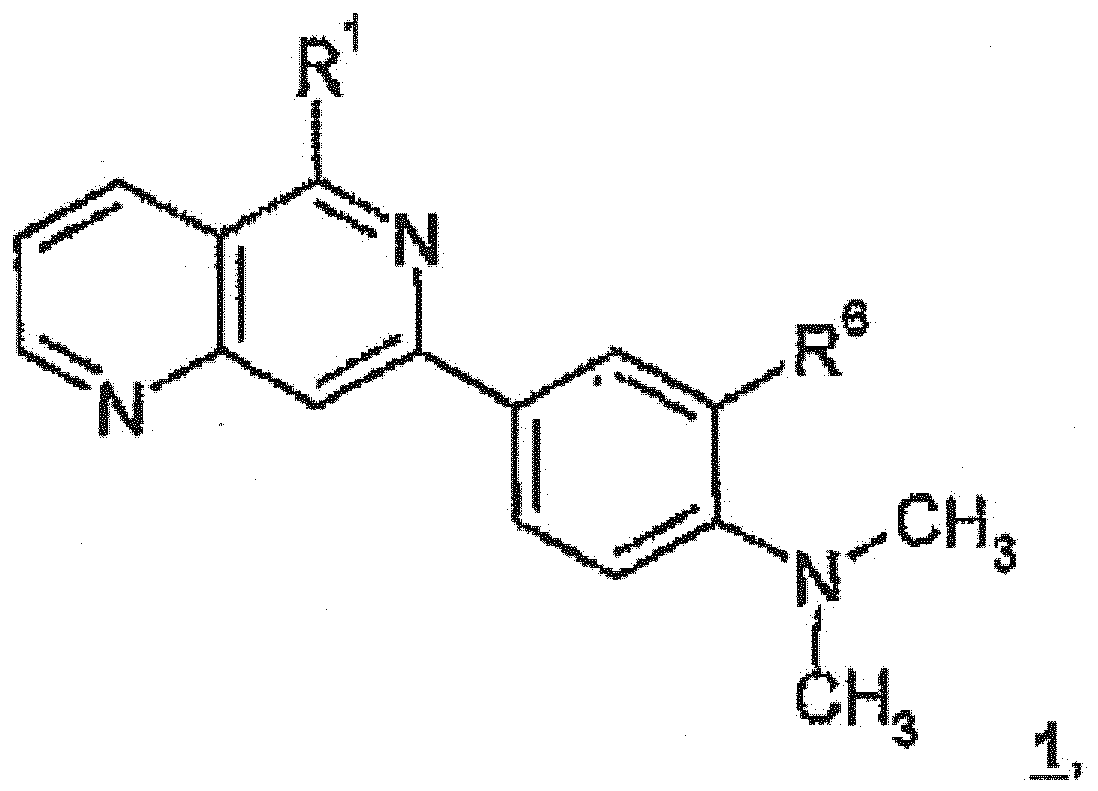 R1 représente un radical A choisi dans le groupe comprenant -O-R3, -NR3R4,R3 représente un radical choisi dans le groupe comprenant un groupe -C1-6-alkyle, -C1-6-fluoroalkyle, - (C1-5-alkyle) -OH, -C6-10-aryle, - (C1-4-alkylène) - (C6-10-aryle), -éthényle, -(C1-4-alkylène)-(éthène), éthinyle, -(C1-4-alkylène)-(éthine), -(C1-4-alkylène)-(éthine)-NH2, - (C1-4-alkylène) - (éthine) - (C1-4-alkylène) -NH2, -NR(C1-3-alkyle), -(C1-4-alkylène)-NH(C1-3-alkyle), -CHOH-(C1-4-alkylène) -NH2, -(C1-4-alkylène) -CHOH-(C1-4-alkylène)-NH2, -(C1-4-alkylène)-CHOH-NH2, -CHOH-NH2, -C3-10-cycloalkyle monocyclique ou bicyclique saturé ou partiellement saturé, -(C1-4-alkylène)-C3-10-cycloalkyle monocyclique ou bicyclique, saturé ou partiellement saturé, -(het), -(C1-4-alkylène)-(het), -(hétaryle) et -(C1-4-alkylène)-(hétaryle),dans laquelle ce radical
peut être substitué éventuellement par un ou plusieurs radicaux choisis indépendamment les uns des autres dans le groupe comprenant H, -OH, -oxo, -COOH, -halogéno, - C1-3-alkyle, C1-3-halogénoalkyle, C1-3-alkyle-OH, -C3-7-cycloalkyle, -O- (C1-4-alkyle), -NH (C1-4-alkyle), - (C1-4-alkylène)-NH (C1-4-alkyle) , N(C1-4-alkyle)2, -(C1-4-alkylène)-N(C1-4-alkyle)2, -NH-CO-NH2, -(C1-4-alkylène)-NH-CO-NH2, -CO-NH2, -(C1-4-alkyléne)-CO-NH2, -CO-NH(C1-3-alkyle), -(C1-4-alkylène)-CO-NH(C1-3-alkyle), -CO-N(C1-3-allyle)2, -(C1-4-alkylène)-CO-N(C1-3-alkyle)2, -NH(CO)m-NH2, -NH-(C1-4-alkylène)-(CO)m-NH2, -NH-(CO)m-NH(C1-3-alkyle), -NH-(C1-4-alkylène)-(CO)m-NH(C1-3-alkyle), -NH-(CO)m-N(C1-3-alkyle)2, -NH-(C1-4-alkylène)-(CO)m-N(C1-3-allyle)2, -O-(C2-4-alkylène)-NH2, -O-(C2-4-alylène)-NH(C1-3-alkyle), -O- (C2-4-alkylène) -N(C1-3-alkyle)2, -NH-CO- (C1-3-alkyle), - (C1-4-alkylène) -NH-CO- (C1-3-alkyle), C3-5-cycloalkyle, -SO2-(C1-4-alkyle), -NH-(hétaryle), -NH-(C1-4-alkylène)-(hétaryle), -(het) et - (C1-4-alkylène)-(het),
dans laquelle (het) représente un hétérocycle de trois à dix chaînons, saturé ou partiellement saturé, monocyclique ou bicyclique, substitué éventuellement par 1 à 3 radicaux choisis parmi les groupes C1-3-alkyle, halogéno, CH2-NH2, NH2, OH, CO-NH2 et oxo, qui contient 1, 2 ou 3 hétéroatomes choisis indépendamment les uns des autres dans le groupe comprenant N, O et S, et
dans laquelle le groupe (hétaryle) représente un groupe hétéroaryle de cinq à dix chaînons, monocyclique ou bicyclique, substitué éventuellement par 1, 2 ou 3 radicaux choisis parmi les groupes C1-3-alkyle, halogéno, CH2-NH2, NH2, OH, CO-NH2 et oxo, qui contient 1 à 3 hétéroatomes choisis indépendamment les uns des autres dans le groupe comprenant N, O et S,
m = 0 ou 1,R4 représente H, un groupe méthyle ou éthyle,R6 représente un groupe méthyle,et leurs sels pharmaceutiquement acceptables. - Composés de formule 1 selon la revendication 1, dans laquelle R1 est -O-R3 ou -NR3R4
et dans laquelle
(het) représente un hétérocycle de trois à sept chaînons, saturé ou partiellement saturé, monocyclique, substitué éventuellement par 1 à 3 radicaux choisis parmi les groupes méthyle, éthyle, propyle, isopropyle, F, Cl, Br, CH2-NH2, NH2, OH, CO-NH2 et oxo, qui contient 1, 2 ou 3 hétéroatomes choisis indépendamment les uns des autres dans le groupe comprenant N, O et S,
et dans laquelle
(hétaryle) représente un groupe hétéroaryle de cinq à six chaînons, monocyclique, éventuellement substitué par 1, 2 ou 3 radicaux choisis parmi les groupes méthyle, éthyle, propyle, isopropyle, F, Cl, Br, CH2-NH2, NH2, OH, CO-NH2 et oxo, qui contient 1 à 3 hétéroatomes choisis indépendamment les uns des autres dans le groupe comprenant N, O et S,
et leurs sels pharmaceutiquement acceptables. - Composés de formule 1 selon l'une des revendications 1 à 2,
dans laquelle R1 est choisi dans le groupe comprenant

dans laquelle M6 est un groupe méthyle,
et leurs sels pharmaceutiquement acceptables. - Composés selon l'une des revendications 1 à 3 comme médicaments.
- Utilisation de composés selon l'une des revendications 1 à 3, pour la production d'un médicament pour le traitement de maladies choisies dans le groupe comprenant la rhinite allergique, l'asthme, la BPCO, le syndrome de détresse respiratoire de l'adulte, la bronchite, le lymphome à cellules B, la dermatite et la dermatite de contact, la dermatite allergique, la rhinoconjonctivite allergique, l'arthrite rhumatoïde, le syndrome anti-phospholipide, la maladie de Berger, le syndrome d'Evans, la rectocolite hémorragique, la glomérulonéphrite allergique liée aux anticorps, la granulocytopénie, le syndrome de Goodpasture, l'hépatite, le purpura de Henoch-Schönlein, la vascularite d'hypersensibilité, l'anémie immuno-hémolytique, le purpura thrombopénique idiopathique, le syndrome de Kawasaki, la conjonctive allergique, le lupus érythémateux, le lymphome de Mantelzell, la neutropénie, la sclérose latérale non familiale, la maladie de Crohn, la sclérose en plaques, la myasténie grave, le syndrome myéloplastique, l'ostéoporose, les maladies ostéolytiques, l'ostéopénie, le psoriasis, le syndrome de Sjögren, la sclérodermie, le lymphome à cellules T, l'urticaire/ l'angio-oedème, la granulomatose de Wegener et la maladie coeliaque.
- Utilisation selon la revendication 5, dans laquelle la maladie est choisie dans le groupe comprenant l'asthme, la BPCO, la rhinite allergique, le syndrome de détresse respiratoire de l'adulte, la bronchite, la dermatite allergique, la dermatite de contact, le purpura thrombopénique idiopathique, l'arthrite rhumatoïde et la rhinoconjonctivite allergique.
- Utilisation de composés selon l'une des revendications 5 ou 6, dans laquelle la maladie est choisie dans le groupe comprenant l'asthme, la BPCO, la
rhinite allergique, la dermatite allergique et l'arthrite rhumatoïde. - Formulations pharmaceutiques caractérisées par la teneur en un ou plusieurs composés de formule 1 selon l'une des revendications 1 à 3.
- Formulations pharmaceutiques, caractérisées par la teneur en un ou plusieurs composés de formule 1 selon l'une des revendications 1 à 3, en combinaison avec une substance active choisie dans le groupe comprenant les bêtamimétiques, les corticoïdes, les inhibiteurs de PDE4, les inhibiteurs de l'EGFR et les antagonistes du LTD4, les inhibiteurs de CCR3, les inhibiteurs de l'iNOS et les inhibiteurs de SYK.
- Composés choisis dans le groupe comprenant


Priority Applications (1)
| Application Number | Priority Date | Filing Date | Title |
|---|---|---|---|
| EP09780981.8A EP2313406B1 (fr) | 2008-08-05 | 2009-07-23 | Napththyridines substituées par 4-diméthylaminophényle et leur utilisation en tant que médicament |
Applications Claiming Priority (3)
| Application Number | Priority Date | Filing Date | Title |
|---|---|---|---|
| EP08161843 | 2008-08-05 | ||
| PCT/EP2009/059493 WO2010015518A2 (fr) | 2008-08-05 | 2009-07-23 | Naphtyridines à substitution 4-diméthylamino-phényle, et leur utilisation en tant que médicaments |
| EP09780981.8A EP2313406B1 (fr) | 2008-08-05 | 2009-07-23 | Napththyridines substituées par 4-diméthylaminophényle et leur utilisation en tant que médicament |
Publications (2)
| Publication Number | Publication Date |
|---|---|
| EP2313406A2 EP2313406A2 (fr) | 2011-04-27 |
| EP2313406B1 true EP2313406B1 (fr) | 2015-02-25 |
Family
ID=40090412
Family Applications (1)
| Application Number | Title | Priority Date | Filing Date |
|---|---|---|---|
| EP09780981.8A Active EP2313406B1 (fr) | 2008-08-05 | 2009-07-23 | Napththyridines substituées par 4-diméthylaminophényle et leur utilisation en tant que médicament |
Country Status (5)
| Country | Link |
|---|---|
| US (2) | US8604049B2 (fr) |
| EP (1) | EP2313406B1 (fr) |
| JP (1) | JP5754568B2 (fr) |
| CA (1) | CA2731926A1 (fr) |
| WO (1) | WO2010015518A2 (fr) |
Families Citing this family (17)
| Publication number | Priority date | Publication date | Assignee | Title |
|---|---|---|---|---|
| EP2313406B1 (fr) | 2008-08-05 | 2015-02-25 | Boehringer Ingelheim International GmbH | Napththyridines substituées par 4-diméthylaminophényle et leur utilisation en tant que médicament |
| GB0905955D0 (en) | 2009-04-06 | 2009-05-20 | Respivert Ltd | Novel compounds |
| DK2516434T3 (en) | 2009-12-23 | 2015-08-31 | Takeda Pharmaceutical | FUSED HETEROAROMATIC PYRROLIDINONS AS SICK INHIBITORS |
| CN102822172A (zh) * | 2010-01-29 | 2012-12-12 | 贝林格尔.英格海姆国际有限公司 | 取代的二氮杂萘及其作为syk 激酶抑制剂的用途 |
| GB201007203D0 (en) | 2010-04-29 | 2010-06-16 | Glaxo Group Ltd | Novel compounds |
| GB201010196D0 (en) * | 2010-06-17 | 2010-07-21 | Respivert Ltd | Methods |
| EP2489663A1 (fr) | 2011-02-16 | 2012-08-22 | Almirall, S.A. | Composés en tant qu'inhibiteurs de la syk kinase |
| GB201104153D0 (en) * | 2011-03-11 | 2011-04-27 | Glaxo Group Ltd | Novel compounds |
| EP2683716A1 (fr) | 2011-03-11 | 2014-01-15 | Glaxo Group Limited | Dérivés pyrido[3,4-b]pyrazine en tant qu'inhibiteurs de syk |
| WO2012177714A1 (fr) | 2011-06-22 | 2012-12-27 | Takeda Pharmaceutical Company Limited | Dérivés de 6-aza-isoindolin-1-one substitués |
| CA2843022C (fr) | 2011-07-26 | 2019-09-24 | Boehringer Ingelheim International Gmbh | Quinoleines substituees et leur utilisation comme medicaments |
| US20150307491A1 (en) * | 2012-12-07 | 2015-10-29 | Hutchison Medipharma Limited | Substituted pyridopyrazines as syk inhibitors |
| NZ718576A (en) | 2013-10-21 | 2019-11-29 | Genosco | Substituted pyrimidine compounds and their use as syk inhibitors |
| CA2942997C (fr) | 2014-03-19 | 2022-09-13 | Boehringer Ingelheim International Gmbh | Inhibiteurs de sik de type heteroaryle |
| KR20180051624A (ko) | 2015-09-11 | 2018-05-16 | 베링거 인겔하임 인터내셔날 게엠베하 | 피라졸릴 치환된 헤테로아릴 및 의약으로서의 이의 용도 |
| KR20210108414A (ko) | 2018-12-25 | 2021-09-02 | 솔-겔 테크놀로지스 리미티드 | Egfr 억제제를 포함하는 조성물에 의한 피부 장애 치료 |
| JP7566753B2 (ja) * | 2019-01-03 | 2024-10-15 | ユニバーシティ オブ ピッツバーグ -オブ ザ コモンウェルス システム オブ ハイヤー エデュケイション | 転写因子ebポリペプチドレベルを増加させるための方法および材料 |
Family Cites Families (10)
| Publication number | Priority date | Publication date | Assignee | Title |
|---|---|---|---|---|
| US4329349A (en) | 1979-07-25 | 1982-05-11 | Sandoz, Inc. | 6-C1-4 Alkyl-7-phenyl or substituted phenyl-1,6-naphthyridine-5(6H)-ones |
| DE3027619A1 (de) * | 1979-07-25 | 1981-02-19 | Sandoz Ag | 6-alkyl-7-phenyl-1,6-naphtyradin- 5(6h)-on-derivate |
| EP1396488A1 (fr) | 2001-05-23 | 2004-03-10 | Mitsubishi Pharma Corporation | Compose heterocyclique condense et son utilisation medicale |
| US20030158195A1 (en) * | 2001-12-21 | 2003-08-21 | Cywin Charles L. | 1,6 naphthyridines useful as inhibitors of SYK kinase |
| US8236950B2 (en) | 2006-12-20 | 2012-08-07 | Abbott Laboratories | Anti-viral compounds |
| DK2118074T3 (en) | 2007-02-01 | 2014-03-10 | Resverlogix Corp | Compounds for the prevention and treatment of cardiovascular diseases |
| WO2010015520A1 (fr) | 2008-08-05 | 2010-02-11 | Boehringer Ingelheim International Gmbh | Naphtyridines substituées et leur utilisation en tant que médicaments |
| EP2313406B1 (fr) | 2008-08-05 | 2015-02-25 | Boehringer Ingelheim International GmbH | Napththyridines substituées par 4-diméthylaminophényle et leur utilisation en tant que médicament |
| FR2949465B1 (fr) | 2009-09-01 | 2011-08-12 | Pf Medicament | Derives chromones, leur procede de preparation et leurs applications therapeutiques |
| CN102822172A (zh) | 2010-01-29 | 2012-12-12 | 贝林格尔.英格海姆国际有限公司 | 取代的二氮杂萘及其作为syk 激酶抑制剂的用途 |
-
2009
- 2009-07-23 EP EP09780981.8A patent/EP2313406B1/fr active Active
- 2009-07-23 CA CA2731926A patent/CA2731926A1/fr not_active Abandoned
- 2009-07-23 WO PCT/EP2009/059493 patent/WO2010015518A2/fr not_active Ceased
- 2009-07-23 US US13/057,330 patent/US8604049B2/en active Active
- 2009-07-23 JP JP2011521515A patent/JP5754568B2/ja active Active
-
2013
- 2013-11-04 US US14/071,016 patent/US8957088B2/en active Active
Also Published As
| Publication number | Publication date |
|---|---|
| WO2010015518A2 (fr) | 2010-02-11 |
| US8604049B2 (en) | 2013-12-10 |
| US20110263549A1 (en) | 2011-10-27 |
| JP2011529931A (ja) | 2011-12-15 |
| US20140142135A1 (en) | 2014-05-22 |
| JP5754568B2 (ja) | 2015-07-29 |
| WO2010015518A3 (fr) | 2010-07-08 |
| EP2313406A2 (fr) | 2011-04-27 |
| US8957088B2 (en) | 2015-02-17 |
| CA2731926A1 (fr) | 2010-02-11 |
Similar Documents
| Publication | Publication Date | Title |
|---|---|---|
| EP2215092B1 (fr) | Pipéridino-dihydrothiénopyrimidines substituées | |
| EP2215093B1 (fr) | Nouveaux dérivés de pipérazino-dihydrothiénopyrimidine | |
| EP2205609B1 (fr) | Composés pipérazino-dihydro-thiénopyrimidine substituées par un hétérocycle | |
| EP2324022A1 (fr) | Naphtyridines substituées et leur utilisation en tant que médicaments | |
| WO2010015518A2 (fr) | Naphtyridines à substitution 4-diméthylamino-phényle, et leur utilisation en tant que médicaments | |
| EP2214673B1 (fr) | Pipérazino-dihydrothiénopyrimidines phényl-substituées | |
| EP2010185B1 (fr) | Dihydrothiénopyrimidines destinées au traitement de maladies inflammatoires | |
| EP1874781A1 (fr) | Dihydrothienopyrimidines destines au traitement de maladies inflammatoires | |
| EP2018387A1 (fr) | Thiazolyl-dihydro-indazoles | |
| WO2007115932A1 (fr) | Thiazolyl-dihydro-quinazolines | |
| WO2007115931A1 (fr) | Thiazolyl-dihydrocyclopentapyrazoles pour une utilisation en tant qu'inhibiteurs de la p13 kinase | |
| EP2018386A1 (fr) | Thiazolyl-dihydro-indazoles | |
| EP1877376A1 (fr) | Nouveaux composes destines au traitement de maladies inflammatoires | |
| DE102005019718A1 (de) | Neue Verbindungen zur Behandlung von entzündlichen Erkrankungen | |
| DE102005035575A1 (de) | Neue Verbindungen zur Behandlung von entzündlichen Erkrankungen | |
| DE102005023207A1 (de) | Neue Verbindungen zur Behandlung von entzündlichen Erkrankungen | |
| DE102005005813A1 (de) | PI3-Kinasen |
Legal Events
| Date | Code | Title | Description |
|---|---|---|---|
| PUAI | Public reference made under article 153(3) epc to a published international application that has entered the european phase |
Free format text: ORIGINAL CODE: 0009012 |
|
| 17P | Request for examination filed |
Effective date: 20110307 |
|
| AK | Designated contracting states |
Kind code of ref document: A2 Designated state(s): AT BE BG CH CY CZ DE DK EE ES FI FR GB GR HR HU IE IS IT LI LT LU LV MC MK MT NL NO PL PT RO SE SI SK SM TR |
|
| AX | Request for extension of the european patent |
Extension state: AL BA RS |
|
| DAX | Request for extension of the european patent (deleted) | ||
| 17Q | First examination report despatched |
Effective date: 20131104 |
|
| GRAP | Despatch of communication of intention to grant a patent |
Free format text: ORIGINAL CODE: EPIDOSNIGR1 |
|
| INTG | Intention to grant announced |
Effective date: 20141106 |
|
| GRAS | Grant fee paid |
Free format text: ORIGINAL CODE: EPIDOSNIGR3 |
|
| GRAA | (expected) grant |
Free format text: ORIGINAL CODE: 0009210 |
|
| AK | Designated contracting states |
Kind code of ref document: B1 Designated state(s): AT BE BG CH CY CZ DE DK EE ES FI FR GB GR HR HU IE IS IT LI LT LU LV MC MK MT NL NO PL PT RO SE SI SK SM TR |
|
| REG | Reference to a national code |
Ref country code: GB Ref legal event code: FG4D Free format text: NOT ENGLISH |
|
| REG | Reference to a national code |
Ref country code: CH Ref legal event code: EP |
|
| REG | Reference to a national code |
Ref country code: IE Ref legal event code: FG4D Free format text: LANGUAGE OF EP DOCUMENT: GERMAN |
|
| REG | Reference to a national code |
Ref country code: DE Ref legal event code: R096 Ref document number: 502009010679 Country of ref document: DE Effective date: 20150409 |
|
| REG | Reference to a national code |
Ref country code: AT Ref legal event code: REF Ref document number: 711878 Country of ref document: AT Kind code of ref document: T Effective date: 20150415 |
|
| REG | Reference to a national code |
Ref country code: FR Ref legal event code: PLFP Year of fee payment: 7 |
|
| REG | Reference to a national code |
Ref country code: NL Ref legal event code: VDEP Effective date: 20150225 |
|
| REG | Reference to a national code |
Ref country code: LT Ref legal event code: MG4D |
|
| PG25 | Lapsed in a contracting state [announced via postgrant information from national office to epo] |
Ref country code: SE Free format text: LAPSE BECAUSE OF FAILURE TO SUBMIT A TRANSLATION OF THE DESCRIPTION OR TO PAY THE FEE WITHIN THE PRESCRIBED TIME-LIMIT Effective date: 20150225 Ref country code: NO Free format text: LAPSE BECAUSE OF FAILURE TO SUBMIT A TRANSLATION OF THE DESCRIPTION OR TO PAY THE FEE WITHIN THE PRESCRIBED TIME-LIMIT Effective date: 20150525 Ref country code: FI Free format text: LAPSE BECAUSE OF FAILURE TO SUBMIT A TRANSLATION OF THE DESCRIPTION OR TO PAY THE FEE WITHIN THE PRESCRIBED TIME-LIMIT Effective date: 20150225 Ref country code: LT Free format text: LAPSE BECAUSE OF FAILURE TO SUBMIT A TRANSLATION OF THE DESCRIPTION OR TO PAY THE FEE WITHIN THE PRESCRIBED TIME-LIMIT Effective date: 20150225 Ref country code: ES Free format text: LAPSE BECAUSE OF FAILURE TO SUBMIT A TRANSLATION OF THE DESCRIPTION OR TO PAY THE FEE WITHIN THE PRESCRIBED TIME-LIMIT Effective date: 20150225 Ref country code: HR Free format text: LAPSE BECAUSE OF FAILURE TO SUBMIT A TRANSLATION OF THE DESCRIPTION OR TO PAY THE FEE WITHIN THE PRESCRIBED TIME-LIMIT Effective date: 20150225 |
|
| PG25 | Lapsed in a contracting state [announced via postgrant information from national office to epo] |
Ref country code: LV Free format text: LAPSE BECAUSE OF FAILURE TO SUBMIT A TRANSLATION OF THE DESCRIPTION OR TO PAY THE FEE WITHIN THE PRESCRIBED TIME-LIMIT Effective date: 20150225 Ref country code: IS Free format text: LAPSE BECAUSE OF FAILURE TO SUBMIT A TRANSLATION OF THE DESCRIPTION OR TO PAY THE FEE WITHIN THE PRESCRIBED TIME-LIMIT Effective date: 20150625 Ref country code: GR Free format text: LAPSE BECAUSE OF FAILURE TO SUBMIT A TRANSLATION OF THE DESCRIPTION OR TO PAY THE FEE WITHIN THE PRESCRIBED TIME-LIMIT Effective date: 20150526 |
|
| PG25 | Lapsed in a contracting state [announced via postgrant information from national office to epo] |
Ref country code: NL Free format text: LAPSE BECAUSE OF FAILURE TO SUBMIT A TRANSLATION OF THE DESCRIPTION OR TO PAY THE FEE WITHIN THE PRESCRIBED TIME-LIMIT Effective date: 20150225 |
|
| PG25 | Lapsed in a contracting state [announced via postgrant information from national office to epo] |
Ref country code: SK Free format text: LAPSE BECAUSE OF FAILURE TO SUBMIT A TRANSLATION OF THE DESCRIPTION OR TO PAY THE FEE WITHIN THE PRESCRIBED TIME-LIMIT Effective date: 20150225 Ref country code: RO Free format text: LAPSE BECAUSE OF FAILURE TO SUBMIT A TRANSLATION OF THE DESCRIPTION OR TO PAY THE FEE WITHIN THE PRESCRIBED TIME-LIMIT Effective date: 20150225 Ref country code: EE Free format text: LAPSE BECAUSE OF FAILURE TO SUBMIT A TRANSLATION OF THE DESCRIPTION OR TO PAY THE FEE WITHIN THE PRESCRIBED TIME-LIMIT Effective date: 20150225 Ref country code: DK Free format text: LAPSE BECAUSE OF FAILURE TO SUBMIT A TRANSLATION OF THE DESCRIPTION OR TO PAY THE FEE WITHIN THE PRESCRIBED TIME-LIMIT Effective date: 20150225 Ref country code: CZ Free format text: LAPSE BECAUSE OF FAILURE TO SUBMIT A TRANSLATION OF THE DESCRIPTION OR TO PAY THE FEE WITHIN THE PRESCRIBED TIME-LIMIT Effective date: 20150225 |
|
| REG | Reference to a national code |
Ref country code: DE Ref legal event code: R097 Ref document number: 502009010679 Country of ref document: DE |
|
| PG25 | Lapsed in a contracting state [announced via postgrant information from national office to epo] |
Ref country code: PL Free format text: LAPSE BECAUSE OF FAILURE TO SUBMIT A TRANSLATION OF THE DESCRIPTION OR TO PAY THE FEE WITHIN THE PRESCRIBED TIME-LIMIT Effective date: 20150225 |
|
| PG25 | Lapsed in a contracting state [announced via postgrant information from national office to epo] |
Ref country code: IT Free format text: LAPSE BECAUSE OF FAILURE TO SUBMIT A TRANSLATION OF THE DESCRIPTION OR TO PAY THE FEE WITHIN THE PRESCRIBED TIME-LIMIT Effective date: 20150225 |
|
| PLBE | No opposition filed within time limit |
Free format text: ORIGINAL CODE: 0009261 |
|
| STAA | Information on the status of an ep patent application or granted ep patent |
Free format text: STATUS: NO OPPOSITION FILED WITHIN TIME LIMIT |
|
| 26N | No opposition filed |
Effective date: 20151126 |
|
| PG25 | Lapsed in a contracting state [announced via postgrant information from national office to epo] |
Ref country code: MC Free format text: LAPSE BECAUSE OF FAILURE TO SUBMIT A TRANSLATION OF THE DESCRIPTION OR TO PAY THE FEE WITHIN THE PRESCRIBED TIME-LIMIT Effective date: 20150225 Ref country code: SI Free format text: LAPSE BECAUSE OF FAILURE TO SUBMIT A TRANSLATION OF THE DESCRIPTION OR TO PAY THE FEE WITHIN THE PRESCRIBED TIME-LIMIT Effective date: 20150225 |
|
| REG | Reference to a national code |
Ref country code: CH Ref legal event code: PL |
|
| PG25 | Lapsed in a contracting state [announced via postgrant information from national office to epo] |
Ref country code: LU Free format text: LAPSE BECAUSE OF FAILURE TO SUBMIT A TRANSLATION OF THE DESCRIPTION OR TO PAY THE FEE WITHIN THE PRESCRIBED TIME-LIMIT Effective date: 20150723 |
|
| PG25 | Lapsed in a contracting state [announced via postgrant information from national office to epo] |
Ref country code: CH Free format text: LAPSE BECAUSE OF NON-PAYMENT OF DUE FEES Effective date: 20150731 Ref country code: LI Free format text: LAPSE BECAUSE OF NON-PAYMENT OF DUE FEES Effective date: 20150731 |
|
| REG | Reference to a national code |
Ref country code: FR Ref legal event code: PLFP Year of fee payment: 8 |
|
| PG25 | Lapsed in a contracting state [announced via postgrant information from national office to epo] |
Ref country code: IE Free format text: LAPSE BECAUSE OF NON-PAYMENT OF DUE FEES Effective date: 20150723 |
|
| REG | Reference to a national code |
Ref country code: AT Ref legal event code: MM01 Ref document number: 711878 Country of ref document: AT Kind code of ref document: T Effective date: 20150723 |
|
| PG25 | Lapsed in a contracting state [announced via postgrant information from national office to epo] |
Ref country code: AT Free format text: LAPSE BECAUSE OF NON-PAYMENT OF DUE FEES Effective date: 20150723 |
|
| PG25 | Lapsed in a contracting state [announced via postgrant information from national office to epo] |
Ref country code: MT Free format text: LAPSE BECAUSE OF FAILURE TO SUBMIT A TRANSLATION OF THE DESCRIPTION OR TO PAY THE FEE WITHIN THE PRESCRIBED TIME-LIMIT Effective date: 20150225 |
|
| PG25 | Lapsed in a contracting state [announced via postgrant information from national office to epo] |
Ref country code: SM Free format text: LAPSE BECAUSE OF FAILURE TO SUBMIT A TRANSLATION OF THE DESCRIPTION OR TO PAY THE FEE WITHIN THE PRESCRIBED TIME-LIMIT Effective date: 20150225 Ref country code: BG Free format text: LAPSE BECAUSE OF FAILURE TO SUBMIT A TRANSLATION OF THE DESCRIPTION OR TO PAY THE FEE WITHIN THE PRESCRIBED TIME-LIMIT Effective date: 20150225 Ref country code: HU Free format text: LAPSE BECAUSE OF FAILURE TO SUBMIT A TRANSLATION OF THE DESCRIPTION OR TO PAY THE FEE WITHIN THE PRESCRIBED TIME-LIMIT; INVALID AB INITIO Effective date: 20090723 |
|
| PG25 | Lapsed in a contracting state [announced via postgrant information from national office to epo] |
Ref country code: CY Free format text: LAPSE BECAUSE OF FAILURE TO SUBMIT A TRANSLATION OF THE DESCRIPTION OR TO PAY THE FEE WITHIN THE PRESCRIBED TIME-LIMIT Effective date: 20150225 |
|
| REG | Reference to a national code |
Ref country code: FR Ref legal event code: PLFP Year of fee payment: 9 |
|
| PG25 | Lapsed in a contracting state [announced via postgrant information from national office to epo] |
Ref country code: BE Free format text: LAPSE BECAUSE OF NON-PAYMENT OF DUE FEES Effective date: 20150731 |
|
| PG25 | Lapsed in a contracting state [announced via postgrant information from national office to epo] |
Ref country code: TR Free format text: LAPSE BECAUSE OF FAILURE TO SUBMIT A TRANSLATION OF THE DESCRIPTION OR TO PAY THE FEE WITHIN THE PRESCRIBED TIME-LIMIT Effective date: 20150225 |
|
| PG25 | Lapsed in a contracting state [announced via postgrant information from national office to epo] |
Ref country code: MK Free format text: LAPSE BECAUSE OF FAILURE TO SUBMIT A TRANSLATION OF THE DESCRIPTION OR TO PAY THE FEE WITHIN THE PRESCRIBED TIME-LIMIT Effective date: 20150225 Ref country code: PT Free format text: LAPSE BECAUSE OF FAILURE TO SUBMIT A TRANSLATION OF THE DESCRIPTION OR TO PAY THE FEE WITHIN THE PRESCRIBED TIME-LIMIT Effective date: 20150225 |
|
| REG | Reference to a national code |
Ref country code: FR Ref legal event code: PLFP Year of fee payment: 10 |
|
| PGFP | Annual fee paid to national office [announced via postgrant information from national office to epo] |
Ref country code: DE Payment date: 20250722 Year of fee payment: 17 |
|
| PGFP | Annual fee paid to national office [announced via postgrant information from national office to epo] |
Ref country code: GB Payment date: 20250722 Year of fee payment: 17 |
|
| PGFP | Annual fee paid to national office [announced via postgrant information from national office to epo] |
Ref country code: FR Payment date: 20250725 Year of fee payment: 17 |