EP2315174A1 - Système et procédé pour supporter une procédure d'agrégation de consommateur dans un réseau électronique - Google Patents
Système et procédé pour supporter une procédure d'agrégation de consommateur dans un réseau électronique Download PDFInfo
- Publication number
- EP2315174A1 EP2315174A1 EP10172692A EP10172692A EP2315174A1 EP 2315174 A1 EP2315174 A1 EP 2315174A1 EP 10172692 A EP10172692 A EP 10172692A EP 10172692 A EP10172692 A EP 10172692A EP 2315174 A1 EP2315174 A1 EP 2315174A1
- Authority
- EP
- European Patent Office
- Prior art keywords
- information
- group
- metadata
- consumer
- user
- Prior art date
- Legal status (The legal status is an assumption and is not a legal conclusion. Google has not performed a legal analysis and makes no representation as to the accuracy of the status listed.)
- Withdrawn
Links
Images






Classifications
-
- G—PHYSICS
- G06—COMPUTING OR CALCULATING; COUNTING
- G06Q—INFORMATION AND COMMUNICATION TECHNOLOGY [ICT] SPECIALLY ADAPTED FOR ADMINISTRATIVE, COMMERCIAL, FINANCIAL, MANAGERIAL OR SUPERVISORY PURPOSES; SYSTEMS OR METHODS SPECIALLY ADAPTED FOR ADMINISTRATIVE, COMMERCIAL, FINANCIAL, MANAGERIAL OR SUPERVISORY PURPOSES, NOT OTHERWISE PROVIDED FOR
- G06Q30/00—Commerce
-
- G—PHYSICS
- G06—COMPUTING OR CALCULATING; COUNTING
- G06Q—INFORMATION AND COMMUNICATION TECHNOLOGY [ICT] SPECIALLY ADAPTED FOR ADMINISTRATIVE, COMMERCIAL, FINANCIAL, MANAGERIAL OR SUPERVISORY PURPOSES; SYSTEMS OR METHODS SPECIALLY ADAPTED FOR ADMINISTRATIVE, COMMERCIAL, FINANCIAL, MANAGERIAL OR SUPERVISORY PURPOSES, NOT OTHERWISE PROVIDED FOR
- G06Q30/00—Commerce
- G06Q30/02—Marketing; Price estimation or determination; Fundraising
- G06Q30/0241—Advertisements
- G06Q30/0251—Targeted advertisements
- G06Q30/0254—Targeted advertisements based on statistics
Definitions
- This invention relates generally to techniques for distributing electronic information, and relates more particularly but not exclusively to a system and method for supporting a consumer aggregation procedure in an electronic network.
- enhanced system capability to perform various advanced distribution operations may provide additional benefits to a system user, but may also place increased demands on the control and management of various system components.
- an electronic system that effectively manages electronic advertising information may benefit from an effective implementation because of the large amount and complexity of the digital data involved.
- a distribution system automatically provides various types of appropriate information for utilization by device users of corresponding user devices.
- the distributed information may include, but is not limited to, commercial advertising information that is targeted towards specific device users.
- the foregoing distribution system supports a "push" model that automatically selects and transmits appropriate advertising information to targeted device users based upon corresponding metadata files that define both the device users and the various advertisers.
- the distribution system may support and utilize one or more transport structures that automatically transport various types of relevant information to and from appropriate entities in the distribution system.
- the transport structures may be utilized to gather and transfer metadata regarding the various device users, the user devices, the electronic network, and respective advertisers from an information service.
- the transport structures may also be utilized to provide links to targeted advertisements and/or electronic content to appropriate user devices.
- the information service may advantageously provide a bid server that supports a consumer aggregation procedure during which certain device users and their corresponding user devices are aggregated into one or more consumer groups. Advertisers or other appropriate entities may then bid or otherwise make offers to acquire advertising access rights to the consumer groups to more accurately and effectively target relevant advertising and other information.
- a group aggregator may analyze information from a metadata database or other data source(s) to identify one or more consumer groups.
- the group aggregator may continually analyze various types of metadata to recognize group patterns for device users and their corresponding user devices.
- the group aggregator may keep a running tally of various predefined grouping factors to create corresponding consumer groups.
- consumer groups may be populated by calculating weighted sums of the grouping factors for the various device users.
- the grouping factors may include, but are not limited to, user metadata, device metadata, user preferences, user behavior patterns, geographic location information, Internet browsing patterns, and user purchasing behavior.
- the group aggregator may also identify appropriate target advertisers or advertisements by using any effective techniques. For example, the group aggregator may analyze various predefined targeting factors to identify target advertisers.
- the targeting factors may include, but are not limited to, advertising goals, product characteristics, product pricing information, and advertisement characteristics. The group aggregator may then compare the characteristics of the consumer groups to the target advertisers/advertisements, and offer the appropriate target advertisers an opportunity to make bids for sending advertisements to the respective consumer groups.
- a bid manager may coordinate a bidding procedure during which advertisers or other appropriate entities may bid or otherwise make offers to acquire access to one or more consumer groups.
- the bid manager may analyze bid information in light of specific predefined bidding rules to determine one or more bidding winners.
- the bidding winners may then be notified and allowed to provide advertising information for transmission to the consumer group(s) through the information service.
- the various device users may then individually decide whether to participate in the bulk purchase opportunity that is being offered to the consumer group(s).
- the present invention may thus advantageously create targeted pools of consumers that have asked to see product ads regarding goods or services for which the consumers are seeking information and/or purchase opportunities.
- the present invention aggregates these consumers, and provides ad placement and interactive dialogue connections to the advertisers through the use of appropriate metadata.
- the advertisers then bid on the right to deliver their ad-sets to the consumer groups based on the collection, analysis, and aggregation of the collected metadata.
- the present invention therefore provides an improved system and method for supporting a consumer aggregation procedure in an electronic network.
- the present invention relates to an improvement in electronic data distribution techniques.
- the following description is presented to enable one of ordinary skill in the art to make and use the invention, and is provided in the context of a patent application and its requirements.
- Various modifications to the disclosed embodiments will be apparent to those skilled in the art, and the generic principles herein may be applied to other embodiments. Therefore, the present invention is not intended to be limited to the embodiments shown, but is to be accorded the widest scope consistent with the principles and features described herein.
- the present invention comprises a system and method for implementing an information distribution network, and includes an information service that is configured to provide information distribution services through the information distribution network.
- User devices are utilized by device users to communicate with the information service for receiving the information distribution services.
- One or more transport structures are implemented to collect appropriate metadata from various entities in the information distribution network.
- a group aggregator analyzes predefined grouping factors from the collected metadata to create at least one consumer group from among the devices users.
- Various advertisers may then communicate with a bid manager to participate in a bidding procedure for obtaining advertising rights to provide selected information to the consumer group.
- distribution system 110 may include, but is not limited to, one or more user devices 122, an information service 118, and a network 126.
- distribution system 110 may be implemented by utilizing components and configurations in addition to, or instead of, certain of those components and configurations discussed in conjunction with the FIG. 1A embodiment.
- distribution system 110 advantageously supports a distribution procedure that automatically provides various types of appropriate information for utilization by device users of corresponding user devices 122.
- the distributed information may include, but is not limited to, commercial advertising information that is specifically targeted towards appropriate device users of user devices 122.
- the FIG. 1A distribution system 110 supports a "push" model that automatically selects and transmits appropriate advertising information to targeted device users based upon corresponding metadata that defines the device users and the various advertisers.
- distribution system 110 may be implemented and supported by a distribution control entity that offers distribution services to the advertisers and device users in return for financial or other compensation.
- the distribution control entity may be a commercial enterprise that maintains and controls key elements of distribution system 110 such as the information service 118.
- distribution system 110 may advantageously support and utilize one or more transport structures (see FIG. 2A ) that automatically transport various types of relevant information to and from appropriate entities in distribution system 110.
- the transport structures may be utilized to gather and transfer metadata regarding the various device users, the user devices 122, the network 126, and respective advertisers from information service 118.
- the transport structures may also be utilized to transport or provide links to targeted advertisements and/or electronic content for appropriate user devices 122.
- information service 118 may advantageously provide a bid server (see FIGS. 8A-8B ) that supports a consumer aggregation procedure during which certain device users and their corresponding user devices 122 are aggregated into targeted consumer groups. Advertisers or other appropriate entities may then bid or otherwise make offers to acquire advertising rights for the consumer groups to more accurately and effectively target relevant advertising and other information.
- the present invention thus proves an improved system and method for supporting a consumer aggregation procedure in an electronic network. Further details regarding the implementation and utilization of transport structures in the FIG. 1A distribution system 110 are discussed below in conjunction with FIGS. 2A-8B .
- consumer group 150 may include, but is not limited to, individual device users represented by respective user devices 122(a) through 122(m).
- the user devices 122 may be the same or similar to correspondingly-numbered user devices 122(a) through 122(m) from FIG. 1A .
- the various user devices 122 may each perform bi-directional communications with any or all of the other user devices 122 in consumer group 150 by using any effective communication techniques.
- consumer group 150 is presented for purposes of illustration, and in alternate embodiments, consumer group 150 may be implemented by utilizing components and configurations in addition to, or instead of, certain of those components and configurations discussed in conjunction with the FIG. 1B embodiment.
- consumer group 150 may be defined or created by utilizing any effective techniques.
- the present invention may thus create targeted pools of consumers that have asked to see product ads regarding goods or services for which the consumers are seeking information and/or purchase opportunities.
- the present invention aggregates these consumers, and provides ad placement and interactive dialogue connections to the advertisers through the use of appropriate metadata.
- the advertisers bid on delivering their ad-sets to the consumer groups based on the collection, analysis, and aggregation of the collected metadata. This could include paying the aggregator greater access fees or provide the consumer with better economic or value terms, or a combination of both.
- the aggregator pools metadata concerning real estate agents, buyers, and sellers to help expedite the sale for mortgage lenders who will bid for ad space that the aggregator holds for buyers looking for mortgages.
- the information provided by the aggregator might include, but is not limited to, consumer profiles and behavior trends that grade the level of interest in securing a mortgage, geographic information, credit information, and desired real estate values.
- the packaged real estate advertisement is sent to the consumer in a portfolio that is offered by the mortgage lender based upon the aggregated consumer metadata and the potential agents and/or sellers.
- the device users thus have a type of consumer union opportunity to create buying blocks to leverage bulk purchases.
- This can occur by information service 118 ( FIG. 1 ) or other appropriate entity noticing advertiser services or goods delivery patterns that could be creating a buying block opportunity for the user/purchasers, or conversely, the advertiser can offer a bulk purchase opportunity to the information service 118 to try and form a buyers group by searching the metadata for interested subscribers.
- the information service 118 in both cases is a centralized aggregator to form these types of leveraged user purchases or advertiser offered bulk sales opportunities.
- the present invention supports the ability of information service 118 to form buyer purchasing blocks (consumer groups 150), either through the monitoring of user requests or in forming the pooled group of buyers at the request of an advertiser. Further details regarding the implementation and utilization of consumer groups 150 in the FIG. 1A distribution system 110 are discussed below in conjunction with FIGS. 2A-8B .
- FIG. 2A a block diagram for one embodiment of a transport structure 210 is shown, in accordance with the present invention.
- the FIG. 2A embodiment is presented for purposes of illustration, and in alternate embodiments, transport structures 210 may be implemented by utilizing components and configurations in addition to, or instead of, certain of those components and configurations discussed in conjunction with the FIG. 2A embodiment.
- user metadata 222 may include information regarding one or more device users of user devices 122 ( FIG. 1A ). In certain embodiments, user metadata 222 may be selectively compiled from one or more appropriate user profiles 430 (see FIG. 4 ). Similarly, device metadata 226 may include information regarding one or more user devices 122. In certain embodiments, device metadata 226 may be selectively compiled from one or more appropriate device profiles 434 (see FIG. 4 ). In the FIG. 2A embodiment, network metadata 230 may include information regarding various attributes or entities of electronic network 126 ( FIG. 1A ).
- advertiser metadata 234 may include information regarding one or more advertisements or advertisers that are associated with distribution system 110. In certain embodiments, the advertisers may be associated with ad sources 540 ( FIG. 5 ).
- content renderer metadata 238 may include information regarding one or more content renderers that are associated with distribution system 110. In certain embodiments, the content renderers may be associated with content sources 542 ( FIG. 5 ).
- consumer group metadata 238 may include any appropriate types of information regarding the identification, population, or utilization of one or more consumer groups 150 ( FIG. 1B ) in distribution system 110.
- miscellaneous information 242 may include any additional data or other appropriate information.
- Media link 246 may include appropriate information to indicate a location or a connection means for accessing one or more media files, as discussed below in conjunction with FIG. 2B .
- Feedback metadata 248 in the transport structures 210 may be updated to reflect any relevant information from the user devices 122 of the targeted device users for transmission back to information service 118 or other appropriate entities.
- information stored in transport structures 210 may include any appropriate type of software instructions for providing intelligent functionality and control for transport structure 210.
- these software instructions may interact with, or be executed by, an external entity such as a processor of a user device 122 or other appropriate electronic device.
- Various entities in distribution system 110 may utilize the information in transport structure 210 in any appropriate manner.
- a consumer aggregation procedure may be performed by matching compatible elements of user metadata 222, device metadata 226, and advertiser metadata 234 to thereby identify one or more consumer groups 150 for providing appropriate types of relevant advertising information for automatic transmission to targeted device users in the consumer groups 150.
- Transport structures 210 may be originated in any effective manner from any appropriate source.
- transport structures 210 may be embedded in user devices 122 ( FIG. 1A ), and activated by device users if desired.
- various entities in network 126 or information service 118 may create or activate transport structures 210.
- a transport server (see FIG. 6A ) may manage the origination and operation of transport structures 210. Further details regarding the implementation and utilization of the FIG. 2A transport structure 210 are discussed below in conjunction with FIGS. 2B-8B .
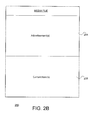
- FIG. 2B a block diagram for one embodiment of a media file 250 is shown, in accordance with the present invention.
- the FIG. 2B embodiment is presented for purposes of illustration, and in alternate embodiments, media file 250 may be implemented by utilizing components and configurations in addition to, or instead of, certain of those components and configurations discussed in conjunction with the FIG. 2B embodiment.
- the FIG. 2B media file 250 is shown as a separate entity that is accessible by utilizing the media link 246 of FIG. 2A .
- media file 250 may be implemented as an integral part of transport structure 210 of FIG. 2A .
- advertisements (ads) 254 may include any appropriate type of targeted advertising information that has been selected for transmission to appropriate ones of the user devices 122 in a consumer group 150 ( FIG. 1B ).
- content items 258 may include any appropriate type of electronic content information that has been selected for transmission to appropriate ones of the user devices 122 in a consumer group 150.
- content 258 may include, but is not limited to, video data, audio data, graphics, text, movies, music recordings, and computer programs. Further information for providing appropriate media files 250 to targeted consumer groups 150 is further discussed below in conjunction with FIGS. 3-8B .
- FIG. 3 a block diagram for one embodiment of a FIG. 1A user device 122 is shown, in accordance with the present invention.
- user device 122 includes, but is not limited to, a central processing unit (CPU) 314, a memory 318, a display 338, and one or more input/output interface(s) (I/O interface(s)) 340.
- CPU central processing unit
- memory 318 a memory 318
- display 338 a display 338
- I/O interface(s) input/output interface(s)
- I/O interface(s) input/output interface(s)
- FIG. 3 embodiment is presented for purposes of illustration, and in alternate embodiments, a user device 122 may be implemented using components and configurations in addition to, or instead of, certain of those components and configurations discussed in conjunction with the FIG. 3 embodiment.
- user device 122 may be implemented as any type of portable or non-portable electronic device, including, but not limited to, a desktop computer, a personal digital assistant, a
- CPU 314 may be implemented to include any appropriate and compatible microprocessor device that preferably executes software instructions to thereby control and manage the operation of user device 122.
- CPU 314 may execute software instructions that are stored in device memory 318 of FIG. 4 to collect, exchange, and utilize various types of relevant metadata between user device 122, third party devices, and various appropriate entities from information service 118 ( FIG. 1A ).
- CPU 314 may communicate with one or more transport structures 210.
- a device user may be utilizing a user device 122 (such as a cellular telephone) at a commercial sales location, such as a grocery store or a gasoline station.
- the cellular telephone may automatically collect and exchange various types of relevant information and metadata with one or more other third party devices (such as a merchant's smart electronic cash-register device) by utilizing any effective techniques, including by exchanging transport structures 210 back and forth using appropriate handshaking techniques.
- the cellular telephone may then transmit the metadata to an information service 118 ( FIG. 1A ) by utilizing any effective transmission techniques.
- the metadata may be transmitted to the information service 118 either directly, or attached to a transport structure 210.
- the cellular telephone may transfer the metadata/transport structure 210 to a network portal device (such as a computer) that then transmits the metadata/transport structure 210 to the information service 118.
- the information service 118 may analyze the received metadata to more accurately provide targeted advertisements to appropriate device users.
- the FIG. 3 display 338 may include any effective type of display technology including a cathode-ray-tube monitor or a liquid-crystal display device with an appropriate screen for displaying various information to a device user.
- I/O interface(s) 340 may include one or more input and/or output interfaces to receive and/or transmit any required types of information by user device 122.
- memory 318 may be implemented to include any combination of desired storage devices, including, but not limited to, read-only memory (ROM), random-access memory (RAM), and various types of non-volatile memory, such as floppy disks, memory sticks, compact disks, or hard disks. Additional details for the utilization of user device 122 are further discussed below in conjunction with FIGS. 4-8B .
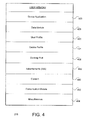
- FIG. 4 a block diagram for one embodiment of the FIG. 3 user memory 318 is shown, in accordance with the present invention.
- user memories 318 may be implemented by utilizing components and configurations in addition to, or instead of, certain of those components and configurations discussed in conjunction with the FIG. 4 embodiment.
- device application 422 may include program instructions that are preferably executed by CPU 314 to perform various functions and operations for user device 122.
- the particular nature and functionality of device application 422 typically varies depending upon factors such as the specific type and particular functionality of the corresponding user device 122.
- user device 122 utilizes data module 426 to manage a user profile 430 and a device profile 434 that collectively describe any desired attributes or characteristics related to user device 122 or a device user of user device 122.
- user profile 430 may include, but is not limited to, information regarding a device user's name, gender, age, religion, hobbies, interests, occupation, marital status, residence, income, Internet browsing history, geographic location, and credit-card transaction records.
- device profile 434 may include, but is not limited to, a device type, a device manufacturer, supported device functionalities, a device location, and a device configuration.
- docking port 438 may Include any appropriate type of interface means to facilitate bi-directional communications between one or more transport structures 210 ( FIG. 2 ) and a user device 122.
- advertisements (ads) 442 may include targeted advertising information that has been received via distribution system 110 ( FIG. 1A ) specifically for a device user of user device 122.
- content 446 may include targeted electronic content information that has been received via distribution system 110 ( FIG. 1A ) specifically for a device user of user device 122.
- a user device 122 may utilize communication module 450 to perform bi-directional electronic communication procedures with any appropriate remote entity.
- Communication module 450 may utilize any effective communication techniques. For example, in certain embodiments, communication module 450 may perform short-distance communications in a merchandise store or other sales environment by utilizing short-range wireless techniques that are similar to known or enhanced Bluetooth® technologies. In other embodiments, communication module 450 may perform long-distance communications in a home or office environment by utilizing long-range wireless techniques that are similar to known or enhanced WiFi technologies.
- miscellaneous information 454 may include any appropriate additional information or data for utilization by user device 122.
- miscellaneous information 454 may include various types of metadata relating to other entities in distribution system 110 that was downloaded from one or more transport structures 210. Further details regarding the implementation and utilization of the FIG. 4 user memory 318 are discussed below in conjunction with FIGS. 5-8B .
- information service 118 includes, but is not limited to, a controller 514, a transport server 518, an ad server 538, one or more ad sources 540, one or more content sources 542, and a bid server 546.
- a controller 514 controls the transport server 518
- ad server 538 controls the transport server 518
- ad sources 540 controls the transport servers 518
- a bid server 546 receives bids from a bid server 542
- FIG. 5 embodiment is presented for purposes of illustration, and in alternate embodiments, information service 118 may be implemented using components and configurations in addition to, or instead of, certain of those components and configurations discussed in conjunction with the FIG. 5 embodiment.
- controller 514 may he implemented to include any effective control means for coordinating and monitoring operating functionalities of information service 118.
- controller 514 may be implemented as a computer device with a corresponding control application program that manages the operation of information service 118.
- controller 514 may be implemented as a central processing unit that includes any appropriate and compatible microprocessor device for executing software instructions to thereby control and manage the operation of information service 118.
- transport server 518 may include any effective means for communicating with and controlling one or more transport structures 210 ( FIG. 2 ), in accordance with the present invention. Additional details regarding the implementation and utilization of transport server 518 are further discussed below in conjunction with FIGS. 6A-6B .
- ad source(s) 540 may include one or more appropriate entities for providing advertisement information for dissemination through distribution system 110 ( FIG. 1A ).
- ad sources 540 may include various commercial enterprises, specific advertisers, or advertising developers.
- content source(s) 542 may include one or more appropriate entities for providing electronic content for dissemination through distribution system 110.
- content sources 542 may include various commercial enterprises, specific advertisers, or content producers.
- ad server 538 may include any effective means for identifying and aggregating appropriate advertising information and/or electronic content for providing to targeted device users of user devices 122 ( FIG. 1A ) by utilizing metadata from one or more transport structures 210 ( FIG. 2A ).
- One embodiment of ad server 538 is further discussed below in conjunction with FIG. 7 .
- bid server 546 may include any effective means for supporting a consumer aggregation procedure that creates one or more consumer groups 150 ( FIG. 1B ), and then allows advertisers or other appropriate entities to bid or otherwise make offers to acquire advertising rights for said consumer groups 150.
- One embodiment of bid server 546 is further discussed below in conjunction with FIGS. 8A-8B . Additional details for the implementation and utilization of information service 118 are further discussed below in conjunction with FIGS. 6A-8B .
- transport server 518 includes, but is not limited to, a central processing unit (CPU) 614, a memory 618, a display 638, and one or more input/output interface(s) (I/O interface(s)) 640.
- CPU central processing unit
- memory 618 includes, but is not limited to, a graphics processing unit (GPU)
- display 638 includes, but is not limited to, a graphics processing unit (GPU)
- I/O interface(s) input/output interface(s)
- FIG. 6A embodiment is presented for purposes of illustration, and in alternate embodiments, transport servers 518 may be implemented using components and configurations in addition to, or instead of, certain of those components and configurations discussed in conjunction with the FIG. 6A embodiment.
- CPU 614 may be implemented to include any appropriate and compatible microprocessor device that preferably executes software instructions to thereby control and manage the operation of transport server 518.
- the FIG. 6A display 638 may include any effective type of display technology including a cathode-ray-tube monitor or a liquid-crystal display device with an appropriate screen for displaying various information to a device user.
- I/O interface(s) 640 may include one or more input and/or output interfaces to receive and/or transmit any required types of information by user device 122.
- FIG. 6A I/O interface(s) 640 may include one or more input and/or output interfaces to receive and/or transmit any required types of information by user device 122.
- transport server memory 618 may be implemented to include any combination of desired storage devices, including, but not limited to, read-only memory (ROM), random-access memory (RAM), and various types of non-volatile memory, such as floppy disks, memory sticks, compact disks, or hard disks.
- ROM read-only memory
- RAM random-access memory
- non-volatile memory such as floppy disks, memory sticks, compact disks, or hard disks.
- transport server memories 618 may be implemented by utilizing components and configurations in addition to, or instead of, certain of those components and configurations discussed in conjunction with the FIG. 6B embodiment.
- transport server memory 618 may include, but is not limited to, a number of software programs and data that are disclosed below.
- transport server memory 618 may include a transport server application 644 of program instructions that are preferably executed by CPU 614 to perform various functions and operations for transport server 518.
- the particular nature and functionality of server application typically varies depending upon factors such as the specific type and particular functionality of the corresponding transport server 518.
- the transport server 518 may utilize a TS manager 648 to manage and coordinate various functions for one or more transport structures 210 ( FIG. 2A ), in accordance with the present invention.
- the TS manager 648 may include a registration module for coordinating registration procedures to register device users of user devices 122 for participating in various authorized distribution services from distribution system 110 ( FIG. 1A ).
- a TS database 652 may include any appropriate information regarding the transport structures 210 that provide distribution services to various entities in distribution system 10.
- the TS manager 648 may continually update respective transport structure information in the TS database 652 to reflect the current status of transport structures 210 in distribution system 110.
- the transport server 518 may utilize a communication module 656 to perform bi-directional electronic communication procedures with any appropriate remote entity.
- the communication module 656 may be utilized to remotely communicate with transport structures 210 in distribution system 110.
- Feedback metadata 248 may include any relevant information received from device users of respective user devices 122.
- a metadata manager 664 or other appropriate entity may perform a metadata analysis/aggregation procedure upon metadata from transport structures 210 by utilizing any effective techniques.
- the metadata analysis/aggregation procedure identifies various types and categories of aggregated metadata 668 for use in creating consumer groups 150 ( FIG. 1B ).
- metadata manager 664 may analyze the metadata gathered from user devices 122 and corresponding device users in light of certain predefined criteria to identify specific targeting characteristics and parameters in aggregated metadata 668.
- targeting characteristics may include, but are not limited to, selected characteristics from user metadata 222, device metadata 226, network metadata 230, and advertiser metadata 234 (see FIG. 2A ).
- miscellaneous information 672 may include any desired type of information or data for utilization by transport server 518.
- ad server 538 includes, but is not limited to, a central processing unit (CPU) 714, a memory 718, a display 738, and one or more input/output interface(s) (I/O interface(s)) 740.
- CPU central processing unit
- memory 718 a memory 718
- display 738 a display 738
- I/O interface(s) input/output interface(s)
- FIG. 7 embodiment is presented for purposes of illustration, and in alternate embodiments, ad server 538 may be implemented using components and configurations in addition to, or instead of, certain of those components and configurations discussed in conjunction with the FIG. 7 embodiment.
- CPU 714 may be implemented to include any appropriate and compatible microprocessor device that preferably executes software instructions to thereby control and manage the operation of ad server 538.
- the FIG. 7 display 738 may include any effective type of display technology including a cathode-ray-tube monitor or a liquid-crystal display device with an appropriate screen for displaying various information to a device user.
- I/O interface(s) 740 may include one or more input and/or output interfaces to receive and/or transmit any required types of information by ad server 538.
- memory 718 may be implemented to include any combination of desired storage devices, including, but not limited to, read-only memory (ROM), random-access memory (RAM), and various types of non-volatile memory, such as floppy disks, memory sticks, compact disks, or hard disks.
- ROM read-only memory
- RAM random-access memory
- non-volatile memory such as floppy disks, memory sticks, compact disks, or hard disks.
- memory 718 includes, but is not limited to, a server application 722, a docking port 726, ads 730, and content 734.
- server application 722 may include program instructions that are preferably executed by CPU 714 to perform various functions and operations for ad server 538.
- the particular nature and functionality of server application 722 typically varies depending upon factors such as the specific type and particular functionality of the corresponding ad server 538.
- server application 722 may analyze metadata from transport structures 210 ( FIG. 2A ) to match appropriate media files 250 ( FIG. 2B ) with targeted consumer groups 150 comprised of device users of user devices 122 ( FIG. 1B ).
- docking port 726 may include any effective interface means for ad server 538 to bi-directionally communicate with one or more transport structures 210 ( FIG. 2 ) to transfer ads 730 and/or content 734.
- ads 730 include advertising information that is provided to ad server 538 from any appropriate entities, such as ad sources 540 ( FIG. 5 ).
- content 734 includes electronic content that is provided to ad server 538 from any appropriate entities, such as content sources 542 ( FIG. 5 ).
- ad server 538 or other appropriate entity may utilize a media match formula for evaluating and quantifying the potential effectiveness of advertising from a given advertiser to a given device user or consumer group 150.
- an advertiser validation values may be calculated with certain match variables that include, one or more behavioral sculpting variables, one or more advertising medium variables, one or more product profile variables, and one or more advertiser connect variables.
- Advertiser Validation is a number that is the result of utilizing the above relationship variables in the media match formula.
- the user product fit is then multiplied by taking the strength and reach of the advertiser's established use of media platforms and dividing that by the frequency and style of messaging that the advertiser has driven into the Advertiser Medium for the product, which then equals the advertiser foundation number.
- the multiplication of the user product fit with the advertiser foundation then equals the Advertiser Validation number, which represents a pricing constant that can be used in rate carding the users, the advertisers, and the product.
- Table I Advertising Validation (Good Will): • Sales increases tied to messaging. • Volume trends when cutting back on messaging. • Consumer Choice between similar products as a percentage of industry sales (rating versus share). • Advertising effect on consumer product recall. • Advertising driving generic buys based upon cost versus brand-the spill over effect. • The amount of complaints versus buyers acceptance, or the number of returns and/or warranty claims. • Consumer interest in collateral advertiser products, brand lift. • Survey of consumers.
- Behavioral Sculpture is the sifting of an individual's behavioral beacons through a grate of questions that is designed to identify key characteristics that can be associated with life style choices and consumer values (beacons). These questions will dynamically change based upon the respondents sequence of answers which will then constantly refine the subsequent questions to continually narrow the focus of respondents answers for each beacon. The result will be a clear identification of the desired consumption perspectives and values held by the respondent.
- Product Profile identifies the product touch points that relate to the Behavioral Sculpture beacons (product touch points). It identifies how socially significant the identified product is. It calls out the utility and public or private usage perspective of the product. It defines the product in terms of the generally held public values related to each product. The Product Profile is set and maintained by the Network Operator to provide a constant product touch point value.
- Advertising Medium outlines the type of advertising media that has populated the product message to the consumer. It identifies by advertising medium categories of messaging and the reach values that are already established with the product and the consumer. In certain embodiments, Advertising Connect defines the prior messaging experience between the advertiser and the consumer. It identifies frequency of messaging, style of messaging, and the existing strategy for communicating the message to the consumer.
- Behavioral Sculpting the purpose is to push out advertising messages for viewing only to recipients where the advertising is relevant and of interest, and at the same time, reduce the advertising traffic that is irrelevant to other recipients.
- the recipient/device user provides the initial profile to a sponsor agency that is willing to take the time to work with the consumer (the "Client”).
- a better lifestyle opportunity, extended warranties and/or product discounts may also provide the consideration.
- These profiles are updated and refreshed based upon transactional access to the Client's behavior (constantly updating consumer meta data diaries) every quarter.
- the Behavioral Sculptures may be layered to include not only the client but, when appropriate, the nuclear family members affected by the messaging opportunity ("Family Lacing"). Along with the Agency/Client dialogue, the Behavioral Sculptures also will track credit card purchases, movie ticket purchases, entertainment program choices, viewed publications, and website searches/surfing habits. The level of lifestyle audit will be up to the Client based on upon value received.
- Behavioral Sculpting provides the Client with a profile they approve and updates the profile based upon the actual Client's consumer activities. Furthermore, the Client owns the Behavioral Sculpture which is licensed for exclusive or non-exclusive use by the originating advertising agency or agency association for specific periods of time. The Client can also license these Behavioral Sculptures to programming service providers to continually generate updated viewing logs for the Client's DVR.
- all these variables of the media match formula have defined units within each category, and the units have numerically weighted values that are added up within each category and the applicable sum is plugged into the media match formula for the resulting overall pricing value/advertiser validation.
- Tables II-IV are examples of such variables with given numerical values (0 to 100) that will change based upon the advertiser messaging impact on the consumer as reflected by the Client's Behavioral Sculpture.
- Program sponsorship creates enhanced brand loyalty by creating a co-branding relationship to the content itself.
- Program Ownership creates a institutional tie-in for the advertiser to both the content viewer and the product consumer.
- Institutional Advertising on stadiums and other social icons creates institutional tie-ins creating society valued associations.
- (35) • Static advertising messaging on billboards, magazines, and coupons reinforce more dynamic messaging in other mediums.
- (25) • Public dynamic messaging with digital signage in retail, highway, and IP creates additional geographic messaging clusters.
- (25) • Generic advertising in the form of trade associations and group distributor messaging.
- (35) • Personal advertising in the form of emails, bills, and mailers.
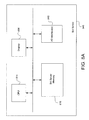
- bid server 546 includes, but is not limited to, a central processing unit (CPU) 814, a bid server memory 818, a display 838, and one or more input/output interface(s) (I/O interface(s)) 840.
- CPU central processing unit
- CPU 814 may be implemented to include any appropriate and compatible microprocessor device that preferably executes software instructions to thereby control and manage the operation of bid server 546.
- the FIG. 8A display 838 may include any effective type of display technology including a cathode-ray-tube monitor or a liquid-crystal display device with an appropriate screen for displaying various information to a device user.
- I/O interface(s) 840 may include one or more input and/or output interfaces to receive and/or transmit any required types of information by bid server 546.
- FIG. 8A display 838 may include any effective type of display technology including a cathode-ray-tube monitor or a liquid-crystal display device with an appropriate screen for displaying various information to a device user.
- I/O interface(s) 840 may include one or more input and/or output interfaces to receive and/or transmit any required types of information by bid server 546.
- bid server memory 818 may be implemented to include any combination of desired storage devices, including, but not limited to, read-only memory (ROM), random-access memory (RAM), and various types of non-volatile memory, such as floppy disks, memory sticks, compact disks, or hard disks.
- ROM read-only memory
- RAM random-access memory
- non-volatile memory such as floppy disks, memory sticks, compact disks, or hard disks.
- FIG. 8B a block diagram for one embodiment of the FIG. 8A bid server memory 818 is shown, in accordance with the present invention.
- marketplace memories 818 may he implemented by utilizing components and configurations in addition to, or instead of, certain of those components and configurations discussed in conjunction with the FIG. 8B embodiment.
- bid server memory 818 may include, but is not limited to, a number of software programs and data that are disclosed below.
- bid server memory 818 may include a bid server application 844 of program instructions that are preferably executed by CPU 814 to perform various functions and operations for bid server 546.
- the particular nature and functionality of bid server application 844 typically varies depending upon factors such as the specific type and particular functionality of the corresponding bid server 546.
- the bid server 546 may utilize a communication module 856 to perform bi-directional electronic communication procedures with any appropriate remote entity.
- miscellaneous information 872 may include any desired type of information or data for utilization by bid server 546.
- a group aggregator 846 may analyze information from a metadata database 860 or other data source(s) to identify one or more consumer groups 150, as discussed above in conjunction with FIG. 1B .
- Consumer groups 150 may be defined in any appropriate manner, including manual definition by one or more device users or other entities, or by performing an automatic group creation procedure with group aggregator 846.
- group aggregator 846 may continually analyze various types of metadata (such as aggregated metadata 668 of FIG. 6B ) to recognize group patterns for device users and their corresponding user devices 122.
- group aggregator 846 may keep a running tally of various predefined grouping factors to create corresponding consumer groups 150.
- consumer groups 150 may be populated by calculated weighted sums of the grouping factors for various device users.
- the grouping factors may include, but are not limited to, user metadata 222, device metadata 226, user preferences, user behavior patterns, geographic location information, Internet browsing patterns, and user purchasing behavior.
- the group aggregator 846 may also identify appropriate target advertisers or advertisements by using any effective techniques. For example, group aggregator 846 may analyze various predefined targeting factors to identify target advertisers. The targeting factors may include, but are not limited to, advertising goals, product characteristics, product pricing information, and advertisement characteristics. The group aggregator 846 may then compare the characteristics of the consumer groups 150 to the target advertisers and advertisements, and offer the appropriate target advertisers an opportunity to make bids for sending advertisements to the respective consumer groups 150.
- a bid manager 848 may coordinate a bidding procedure during which advertisers or other appropriate entities may bid or otherwise make offers to acquire access to one or more consumer groups 150.
- bid manager 848 may analyze bid information 852 in light of specific predefined bidding rules 864 to determine one or more bidding winners.
- the advertising value of a consumer group 150 is proportional to the number of device users represented.
- the results of the bidding procedure may be stored as bid results 868.
- the bidding winners may then be notified and allowed to provide advertising information for transmission to the consumer group(s) 150 by information service 118 ( FIG. 1 ).
- the various device users may then individually decide whether to participate in the bulk purchase opportunity that is being offered to the consumer group(s) 150.
- the present invention therefore provides an improved system and method for supporting a consumer aggregation procedure in an electronic network.
Landscapes
- Business, Economics & Management (AREA)
- Finance (AREA)
- Physics & Mathematics (AREA)
- Engineering & Computer Science (AREA)
- Accounting & Taxation (AREA)
- Development Economics (AREA)
- Strategic Management (AREA)
- General Business, Economics & Management (AREA)
- Economics (AREA)
- Marketing (AREA)
- General Physics & Mathematics (AREA)
- Theoretical Computer Science (AREA)
- Game Theory and Decision Science (AREA)
- Entrepreneurship & Innovation (AREA)
- Probability & Statistics with Applications (AREA)
- Management, Administration, Business Operations System, And Electronic Commerce (AREA)
- Information Transfer Between Computers (AREA)
- Information Retrieval, Db Structures And Fs Structures Therefor (AREA)
Applications Claiming Priority (1)
| Application Number | Priority Date | Filing Date | Title |
|---|---|---|---|
| US12/583,905 US20110055011A1 (en) | 2009-08-27 | 2009-08-27 | System and method for supporting a consumer aggregation procedure in an electronic network |
Publications (1)
| Publication Number | Publication Date |
|---|---|
| EP2315174A1 true EP2315174A1 (fr) | 2011-04-27 |
Family
ID=43502704
Family Applications (1)
| Application Number | Title | Priority Date | Filing Date |
|---|---|---|---|
| EP10172692A Withdrawn EP2315174A1 (fr) | 2009-08-27 | 2010-08-12 | Système et procédé pour supporter une procédure d'agrégation de consommateur dans un réseau électronique |
Country Status (6)
| Country | Link |
|---|---|
| US (1) | US20110055011A1 (fr) |
| EP (1) | EP2315174A1 (fr) |
| JP (1) | JP5498899B2 (fr) |
| CN (1) | CN102004753A (fr) |
| RU (1) | RU2483474C2 (fr) |
| TW (1) | TW201120785A (fr) |
Cited By (2)
| Publication number | Priority date | Publication date | Assignee | Title |
|---|---|---|---|---|
| WO2012162427A2 (fr) | 2011-05-25 | 2012-11-29 | Google Inc. | Mécanisme d'incorporation de métadonnées dans une vidéo ou une émission de télévision |
| CN110267411A (zh) * | 2014-11-10 | 2019-09-20 | 施雷德公司 | 用于控制灯、特别是路灯的控制模块以及灯网络 |
Families Citing this family (11)
| Publication number | Priority date | Publication date | Assignee | Title |
|---|---|---|---|---|
| US8533048B2 (en) * | 2009-09-16 | 2013-09-10 | Verizon Patent And Licensing Inc. | Advertisement revenue management |
| US20110125554A1 (en) * | 2009-11-23 | 2011-05-26 | At&T Mobility Ii Llc | System and method for implementing a dynamic market |
| US20120330764A1 (en) * | 2011-06-22 | 2012-12-27 | Broadcom Corporation | Point of Sale System for Transaction Payment Delegation |
| US9767465B2 (en) * | 2011-10-28 | 2017-09-19 | Excalibur Ip, Llc | Methods and systems for facilitating caching of advertisements |
| US20140025734A1 (en) * | 2012-07-18 | 2014-01-23 | Cisco Technology, Inc. | Dynamic Community Generation Based Upon Determined Trends Within a Social Software Environment |
| CN103888344B (zh) * | 2014-03-20 | 2017-07-14 | 小米科技有限责任公司 | 群组创建方法、群组退出方法和装置 |
| US10079787B2 (en) | 2014-03-20 | 2018-09-18 | Xiaomi Inc. | Method and apparatus for creating group and exiting group |
| KR20160124481A (ko) * | 2015-04-20 | 2016-10-28 | 삼성에스디에스 주식회사 | 홈 데이터 중개 시스템 및 방법 |
| EP3625748B1 (fr) * | 2017-05-19 | 2023-06-07 | LiveRamp, Inc. | Grappe de noeuds distribués pour établir un point de contact numérique sur de multiples dispositifs sur un réseau de communication numérique |
| RU2649797C1 (ru) * | 2017-06-14 | 2018-04-04 | Общество С Ограниченной Ответственностью "Центр Разработки И Внедрения Инновационных Технологий" | Интерактивная система, способ и считываемый компьютером носитель данных представления рекламного контента |
| RU2675334C1 (ru) * | 2017-11-21 | 2018-12-18 | СтикерРайд Лимитед | Система и способ определения эффективности внешней или внутренней рекламы |
Family Cites Families (35)
| Publication number | Priority date | Publication date | Assignee | Title |
|---|---|---|---|---|
| US6260024B1 (en) * | 1998-12-02 | 2001-07-10 | Gary Shkedy | Method and apparatus for facilitating buyer-driven purchase orders on a commercial network system |
| US6560578B2 (en) * | 1999-03-12 | 2003-05-06 | Expanse Networks, Inc. | Advertisement selection system supporting discretionary target market characteristics |
| US20040205132A1 (en) * | 1999-10-07 | 2004-10-14 | Czerwonka Larry R. | Assignment of screen space for input of information by multiple independent users from different locations simultaneously |
| US6505169B1 (en) * | 2000-01-26 | 2003-01-07 | At&T Corp. | Method for adaptive ad insertion in streaming multimedia content |
| TR200402184T4 (tr) * | 2000-04-13 | 2004-10-21 | Qvc, Inc. | Dijital yayın ses içerik kodlaması için sistem ve metot. |
| JP2001312508A (ja) * | 2000-04-28 | 2001-11-09 | Toshiba Corp | 情報ネットワークを使用したサービス提供方法 |
| JP2002175333A (ja) * | 2000-09-27 | 2002-06-21 | Matsushita Electric Ind Co Ltd | コンテンツ提示順序情報作成装置およびコンテンツ提示装置、並びにコンテンツ提示順序システム |
| US20030236708A1 (en) * | 2002-06-19 | 2003-12-25 | Marsh David J. | Electronic program guides utilizing demographic stereotypes |
| RU2254611C2 (ru) * | 2003-03-13 | 2005-06-20 | Общество с ограниченной ответственностью "Мобилити" | Способ предоставления пользователям мобильных устройств электронной связи актуальной коммерческой информации на альтернативной основе (варианты) и информационная система для его осуществления (варианты) |
| US9118812B2 (en) * | 2003-08-01 | 2015-08-25 | Advertising.Com Llc | Audience server |
| US7516086B2 (en) * | 2003-09-24 | 2009-04-07 | Idearc Media Corp. | Business rating placement heuristic |
| US20040107283A1 (en) * | 2003-10-06 | 2004-06-03 | Trilibis Inc. | System and method for the aggregation and matching of personal information |
| US20060224447A1 (en) * | 2005-03-31 | 2006-10-05 | Ross Koningstein | Automated offer management using audience segment information |
| EP1722324A1 (fr) * | 2005-05-13 | 2006-11-15 | Bipbip Holding ApS | Systèm et procédé de distribution électronique d'information à un groupe choisi de personnes |
| JP2009519652A (ja) * | 2005-12-16 | 2009-05-14 | ノキア コーポレイション | 通信イベントを制御しその標示を提供するための方法およびデバイス |
| US20070157230A1 (en) * | 2005-12-29 | 2007-07-05 | Technology Patents Llc | Selective television advertising |
| JP2007188150A (ja) * | 2006-01-11 | 2007-07-26 | Media Ring:Kk | 携帯電話機、広告配信装置、広告配信サーバ、広告配信システム |
| US20070179846A1 (en) * | 2006-02-02 | 2007-08-02 | Microsoft Corporation | Ad targeting and/or pricing based on customer behavior |
| JP2008083763A (ja) * | 2006-09-26 | 2008-04-10 | Bridge International Corp | 広告提供システム、広告提供サーバおよび広告のオークション管理装置 |
| EP3709248A1 (fr) * | 2006-10-02 | 2020-09-16 | Segmint Inc. | Placement publicitaire de consommation personnalisé |
| KR20080097250A (ko) * | 2006-12-28 | 2008-11-05 | 김중일 | 사용자 정의 메타 정보를 이용한 광고 시스템 및 방법 |
| US8566164B2 (en) * | 2007-12-31 | 2013-10-22 | Intent IQ, LLC | Targeted online advertisements based on viewing or interacting with television advertisements |
| US20090094114A1 (en) * | 2007-10-03 | 2009-04-09 | Rice Daniel J | Systems and methods for optimized addressable advertising |
| US7849081B1 (en) * | 2007-11-28 | 2010-12-07 | Adobe Systems Incorporated | Document analyzer and metadata generation and use |
| JP4808207B2 (ja) * | 2007-12-11 | 2011-11-02 | ヤフー株式会社 | 広告配信装置、広告配信方法、広告配信プログラム及び広告入札方法 |
| US8375131B2 (en) * | 2007-12-21 | 2013-02-12 | Yahoo! Inc. | Media toolbar and aggregated/distributed media ecosystem |
| FR2926154A1 (fr) * | 2008-01-08 | 2009-07-10 | Alcatel Lucent Sas | Procede de fournitures d'annonces publicitaires personnalisees. |
| US20090198608A1 (en) * | 2008-02-01 | 2009-08-06 | Qualcomm Incorporated | Systems and methods for auctioning wireless device assets and providing wireless devices with an asset allocation option |
| US8429009B2 (en) * | 2008-07-16 | 2013-04-23 | Paycode Inc. | Universal affinity system |
| US8694496B2 (en) * | 2008-11-26 | 2014-04-08 | At&T Intellectual Property I, L.P. | Harvesting application metadata |
| US8862524B2 (en) * | 2012-08-01 | 2014-10-14 | Yahoo! Inc. | System and method for identifying abusive account registration |
| US9141958B2 (en) * | 2012-09-26 | 2015-09-22 | Trimble Navigation Limited | Method for providing data to a user |
| US9336435B1 (en) * | 2012-11-21 | 2016-05-10 | Ozog Media, LLC | System, method, and computer program product for performing processing based on object recognition |
| US9172808B2 (en) * | 2013-02-22 | 2015-10-27 | Verint Americas Inc. | Systems and methods for identifying a caller |
| WO2014157886A1 (fr) * | 2013-03-27 | 2014-10-02 | Samsung Electronics Co., Ltd. | Procédé et dispositif permettant d'exécuter une application |
-
2009
- 2009-08-27 US US12/583,905 patent/US20110055011A1/en not_active Abandoned
-
2010
- 2010-07-23 TW TW099124328A patent/TW201120785A/zh unknown
- 2010-08-12 EP EP10172692A patent/EP2315174A1/fr not_active Withdrawn
- 2010-08-26 RU RU2010135838/07A patent/RU2483474C2/ru not_active IP Right Cessation
- 2010-08-27 JP JP2010190651A patent/JP5498899B2/ja not_active Expired - Fee Related
- 2010-08-27 CN CN2010102664206A patent/CN102004753A/zh active Pending
Non-Patent Citations (1)
| Title |
|---|
| "STATEMENT IN ACCORDANCE WITH THE NOTICE FROM THE EUROPEAN PATENT OFFICE DATED 1 OCTOBER 2007 CONCERNING BUSINESS METHODS - EPC / ERKLAERUNG GEMAESS DER MITTEILUNG DES EUROPAEISCHEN PATENTAMTS VOM 1.OKTOBER 2007 UEBER GESCHAEFTSMETHODEN - EPU / DECLARATION CONFORMEMENT AU COMMUNIQUE DE L'OFFICE EUROP", 20071101, 1 November 2007 (2007-11-01), XP002456252 * |
Cited By (2)
| Publication number | Priority date | Publication date | Assignee | Title |
|---|---|---|---|---|
| WO2012162427A2 (fr) | 2011-05-25 | 2012-11-29 | Google Inc. | Mécanisme d'incorporation de métadonnées dans une vidéo ou une émission de télévision |
| CN110267411A (zh) * | 2014-11-10 | 2019-09-20 | 施雷德公司 | 用于控制灯、特别是路灯的控制模块以及灯网络 |
Also Published As
| Publication number | Publication date |
|---|---|
| JP2011048831A (ja) | 2011-03-10 |
| RU2010135838A (ru) | 2012-03-10 |
| US20110055011A1 (en) | 2011-03-03 |
| RU2483474C2 (ru) | 2013-05-27 |
| CN102004753A (zh) | 2011-04-06 |
| JP5498899B2 (ja) | 2014-05-21 |
| TW201120785A (en) | 2011-06-16 |
Similar Documents
| Publication | Publication Date | Title |
|---|---|---|
| EP2315174A1 (fr) | Système et procédé pour supporter une procédure d'agrégation de consommateur dans un réseau électronique | |
| US7403906B2 (en) | Method and system for delivery of targeted commercial messages | |
| CN101536024B (zh) | 个人化的消费者广告布置 | |
| US20200286121A1 (en) | Network based system and method for managing and implementing online commerce | |
| US20120179536A1 (en) | System and method for management and optimization of off-line advertising campaigns with a consumer call to action | |
| US20080082397A1 (en) | Vendor selection based on auction of client marketing categories | |
| US20050131757A1 (en) | System for permission-based communication and exchange of information | |
| US20110295694A1 (en) | System and method for an individual data marketplace and monetization | |
| RU2498406C2 (ru) | Система и способ распространения купонной информации в электронной сети | |
| US20170213246A1 (en) | Systems and method for combining real-time behavior data with previously-modeled data to prioritize media content | |
| EP2434448A2 (fr) | Système et procédé d'exécution efficace d'une procédure de sélection de publicités | |
| CA2360304A1 (fr) | Systeme et procede de publicite permettant une transaction | |
| US9760893B2 (en) | System and method for effectively supporting an advertising catalog in an electronic network | |
| JP5207692B2 (ja) | サービス利用ポイント流通と連動する電子広告配信装置 | |
| TWI480818B (zh) | 支援電子網路中之競標程序的系統及方法 | |
| JP2010140472A (ja) | 電子バックボーンを使用して配信手順を効率的に実行するためのシステム及び方法 | |
| AU2003247258B2 (en) | System for permission-based communication and exchange of information | |
| HK1150212A (en) | System and method for effectively supporting a catalog in an electronic network | |
| WO2015048128A1 (fr) | Système et procédé de distribution améliorée d'applications | |
| WO2015009906A2 (fr) | Système et procédé pour réseau de syndication pour acquisition de clients et gestion d'offres partagées |
Legal Events
| Date | Code | Title | Description |
|---|---|---|---|
| PUAI | Public reference made under article 153(3) epc to a published international application that has entered the european phase |
Free format text: ORIGINAL CODE: 0009012 |
|
| AK | Designated contracting states |
Kind code of ref document: A1 Designated state(s): AL AT BE BG CH CY CZ DE DK EE ES FI FR GB GR HR HU IE IS IT LI LT LU LV MC MK MT NL NO PL PT RO SE SI SK SM TR |
|
| AX | Request for extension of the european patent |
Extension state: BA ME RS |
|
| 17P | Request for examination filed |
Effective date: 20111021 |
|
| STAA | Information on the status of an ep patent application or granted ep patent |
Free format text: STATUS: THE APPLICATION HAS BEEN WITHDRAWN |
|
| 18W | Application withdrawn |
Effective date: 20150401 |