EP2318892B2 - Activation et désactivation par radio d'un fonctionnement en mode veille sans énergie de systèmes d'automatisation - Google Patents
Activation et désactivation par radio d'un fonctionnement en mode veille sans énergie de systèmes d'automatisation Download PDFInfo
- Publication number
- EP2318892B2 EP2318892B2 EP08801503.7A EP08801503A EP2318892B2 EP 2318892 B2 EP2318892 B2 EP 2318892B2 EP 08801503 A EP08801503 A EP 08801503A EP 2318892 B2 EP2318892 B2 EP 2318892B2
- Authority
- EP
- European Patent Office
- Prior art keywords
- automation
- sensor
- functional unit
- automation component
- actuator
- Prior art date
- Legal status (The legal status is an assumption and is not a legal conclusion. Google has not performed a legal analysis and makes no representation as to the accuracy of the status listed.)
- Not-in-force
Links
Images
Classifications
-
- G—PHYSICS
- G05—CONTROLLING; REGULATING
- G05B—CONTROL OR REGULATING SYSTEMS IN GENERAL; FUNCTIONAL ELEMENTS OF SUCH SYSTEMS; MONITORING OR TESTING ARRANGEMENTS FOR SUCH SYSTEMS OR ELEMENTS
- G05B19/00—Program-control systems
- G05B19/02—Program-control systems electric
- G05B19/04—Program control other than numerical control, i.e. in sequence controllers or logic controllers
- G05B19/042—Program control other than numerical control, i.e. in sequence controllers or logic controllers using digital processors
- G05B19/0423—Input/output
-
- G—PHYSICS
- G05—CONTROLLING; REGULATING
- G05B—CONTROL OR REGULATING SYSTEMS IN GENERAL; FUNCTIONAL ELEMENTS OF SUCH SYSTEMS; MONITORING OR TESTING ARRANGEMENTS FOR SUCH SYSTEMS OR ELEMENTS
- G05B2219/00—Program-control systems
- G05B2219/20—Pc systems
- G05B2219/25—Pc structure of the system
- G05B2219/25279—Switch on power, awake device from standby if detects action on device
-
- G—PHYSICS
- G05—CONTROLLING; REGULATING
- G05B—CONTROL OR REGULATING SYSTEMS IN GENERAL; FUNCTIONAL ELEMENTS OF SUCH SYSTEMS; MONITORING OR TESTING ARRANGEMENTS FOR SUCH SYSTEMS OR ELEMENTS
- G05B2219/00—Program-control systems
- G05B2219/20—Pc systems
- G05B2219/25—Pc structure of the system
- G05B2219/25286—Switch on power, awake controlled machine from standby if command signal
-
- G—PHYSICS
- G05—CONTROLLING; REGULATING
- G05B—CONTROL OR REGULATING SYSTEMS IN GENERAL; FUNCTIONAL ELEMENTS OF SUCH SYSTEMS; MONITORING OR TESTING ARRANGEMENTS FOR SUCH SYSTEMS OR ELEMENTS
- G05B2219/00—Program-control systems
- G05B2219/20—Pc systems
- G05B2219/25—Pc structure of the system
- G05B2219/25289—Energy saving, brown out, standby, sleep, powerdown modus for microcomputer
Definitions
- the invention relates to a method for radio-based activation and deactivation of an energy-free standby operation of automation components and electrical automation components.
- Automation systems have a wide variety of automation components for performing automation tasks.
- the components may be, for example, sensors, actuators or controllers or drives.
- the automation components like all electrical or electronic devices, need to be powered up to perform their task. Apart from a few shots, the power supply via cable, radio or batteries is usually guaranteed. For two reasons, it is desirable to reduce the power consumption of the electrical and electronic equipment. On the one hand, rising energy costs are forcing a more economical consumption of electricity and on the other hand, the maintenance of battery-operated components should be kept as low as possible.
- radio-based system components which are powered by a battery, often have only a very limited operating time.
- sensor / actuator networks in automation systems may be mentioned here. These are a large number of small, intelligent, interconnected sensor / actuator nodes, which as a group can perform complex tasks and communicate with each other via radio communication. These components consume energy continuously unless they are explicitly (manually) disabled via a switch.
- Radio-based components are usually powered by a switch by connecting to the power source (inserting batteries). There are various mechanisms for energy saving depending on connection quality or utilization. A standby requiring no power does not exist with radio-based devices (e.g., devices that are remotely controllable via radio, infrared, or similar techniques). If the elements are not separated from the power source, for example by a switch or the removal of the energy source, so that has a continuous energy consumption.
- the US 2007/0205873 A1 describes a method for activating an RFID tag.
- a passive RFID tag is activated with the aid of the energy which is transmitted in the radio signal which is sent to the RFID tag.
- the RFID tag then activates a circuit that can automatically power itself due to a battery.
- only the activation of the RFID tag itself takes place.
- the EP 1 857 911 A1 describes a method for controlling an electronic consumer electronics device. The control takes place in such a way that a powerless standby operation is achieved. It is described that this standby operation can be terminated by receiving a corresponding radio signal which also provides the required power to terminate standby operation.
- a sensor circuit array, a control device for operating a sensor circuit array, and a sensor system shows individual automation components that can be activated and deactivated in a radio-controlled manner by a base station.
- the object of the present invention is to propose automation components which, in an improved mode of operation, can be switched over by radio into an energy-free standby mode and can be reactivated from an energy-free standby mode via radio.
- the object is achieved by a method for radio-based activation and deactivation according to claim 1, an automation component according to claim 9, and a system according to claim 15.
- the invention is based on the finding that a passive unit or a passive element, such as an RFID tag can be addressed via radio and that in this case sufficient energy is transmitted with the radio signal to actuate a coupled with the passive unit electronic switch ,
- the switch is inserted in a circuit, by means of which a functional unit, which acts as a consumer, is connected to a power supply, for example a battery.
- the circuit can be closed or opened, for example, and the energy supply from the power source, for example the battery, for the functional unit of an automation component is interrupted (when the switch is opened) or restored (when closing) of the switch).
- the functional unit of the automation component can thus be placed in a simple manner by transmitting a radio signal in a standby mode or reactivated from a standby mode again.
- the fact that the switch disconnects the functional unit in the standby mode from the power supply the transfer to a standby mode is possible at the no power from the functional unit is consumed.
- the passive unit itself requires no power supply, so that the entire automation component with the functional unit and the passive unit in standby mode gets along completely without energy consumption.
- the energy required for reactivation can be transmitted exclusively by means of the radio signal. After activation of the passive element and the operation of the switch thus the actual functional unit is over supplies the energy source.
- the energy saving is particularly advantageous because no energy is consumed by the functional unit in standby mode at all. Furthermore, there is an increase in the operating time when using an internal power source. The energy of a battery is not consumed as fast as normal, when an automation component or an electrical device still consumes energy in standby mode. In addition, no manual intervention by a user is necessary, since the system can selectively switch and reactivate it even when individual components are not being used. The automation components are therefore self-sufficient and can be installed via cable without application.
- a further advantageous embodiment of the invention is characterized in that the power supply is interrupted or restored by a CMOS switch.
- a CMOS switch is a semiconductor element which has a particularly low energy threshold to switch. The circuit is done electronically, so that no mechanical wear occurs.
- a further advantageous embodiment of the invention is characterized in that the radio signal is received by an RFID tag. It is advantageous that a simple standard component, which is provided anyway for the reception of radio signals, can be used for the wireless activation or deactivation of the automation component.
- a further advantageous embodiment of the invention is characterized in that the sensor / actuator nodes of a sensor network are activated and deactivated.
- the sensor / actuator nodes of a sensor network are activated and deactivated.
- cabling for the power supply is extremely complex.
- Such sensors are thus often supplied by means of a self-sufficient energy source.
- a further advantageous embodiment of the invention is characterized in that a specific signal for activating and deactivating the functional unit is transmitted with the radio signal.
- a specific signal for activating and deactivating the functional unit is transmitted with the radio signal.
- a further advantageous embodiment of the invention is characterized in that an ID is transmitted with the radio signal and that the functional unit is activated or deactivated when the transmitted ID matches an ID of the automation component.
- a further advantageous embodiment of the invention is characterized in that the automation component transmits and receives data via radio as soon as the functional unit is active.
- the automation component is thus not only activated and deactivated by means of radio signals and the energy transmitted with it, it also uses the radio possibility for general communication with other automation components or with the central control of the automation system, thereby enabling general communication based on the same infrastructure as the method for activating and deactivating the automation component. As a result, the infrastructural effort is minimized as much as possible.
- the automation components communicate with each other via radio signals, so that the automation components mutually activate and deactivate by means of the radio signals.
- the activation and deactivation therefore does not have to be done from a central location. If the automation components are distributed over the system over a larger area, the automation components, if they are mutually within reach for the radio signals, can autonomously activate and deactivate adjacent automation components.
- a further advantageous embodiment of the invention is characterized in that a plurality of sensor / actuator nodes form a sensor / actuator network.
- a plurality of sensor / actuator nodes form a sensor / actuator network.
- a further advantageous embodiment of the invention is characterized in that at least two sensor / actuator networks have different automation tasks and that the functional unit has at least one automation component of the second sensor / actuator network by receiving a radio signal from an automation component of the first sensor / actuator. Network is activated.
- Network is activated.
- different sensor / actuator networks for example, have different tasks on a production line, are activated one after the other.
- Radio signal can be activated in an automation component of the second sensor / actuator network. The activation of only one automation component in the second network is then sufficient to trigger a chain reaction again in the second network and to activate all the automation components involved in the network.
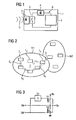
- FIG. 1 shows the schematic structure of an electrical automation component 1.
- the automation component has a functional unit 3 and a passive unit 2.
- the functional unit is intended to perform automation tasks.
- the functional unit may be, for example, a sensor or an actuator.
- the functional unit requires a power supply to perform its tasks. This is provided directly in the automation component 1.
- it is a local power source 4, which is designed for example as a battery.
- the power source 4 the functional unit is supplied with the necessary energy.
- a switch 5 is inserted in the circuit 6 which is formed from the functional unit and the battery.
- the switch is an electronic switch, for example a CMOS switch, that is, for example, a switch which is designed as a semiconductor element. If the electronic switch is open, the functional unit will not be powered.
- the automation component 1 furthermore has a passive component or a passive unit 2.
- This may be an RFID tag which is designed as a passive RFID tag.
- the RFID tag is connected or coupled to the electronic switch. If the RFID tag receives a radio signal, energy is also transmitted to the RFID tag with this radio signal. The passive RFID tag is activated and the received energy is forwarded to the electronic switch 5, whereby the switch can be actuated. By receiving the radio signal, the switch can be closed and the functional unit of the automation component is then supplied with energy from the battery. Now the entire automation component is in an active state and can perform automation tasks.
- the electronic switch can be opened again and the automation component is put back into a standby mode, in which it consumes no energy.
- a simple activation and deactivation via the transmission of a radio signal or from the automation component from the receipt of a radio signal with the energy contained therein is possible in this way.
- the radio signal also transmits data to the automation component.
- user data can be transmitted but also signals which, in addition to the energy, for example contain an activation or deactivation information or an identification, for example an identifier for a specific automation component, so that the automation component reacts only if its own identifier matches the transmitted identifier.
- FIG. 2 shows a schematic structure of an automation system with two sensor / actuator networks.
- the networks can perform different automation tasks here.
- the individual components of the networks N1, N2 are in this case electrical automation components 1 1... N , which have the described functionality and can be put into an energy-free standby mode and can also be reactivated from this by means of radio signals.
- the example concerns sensor / actuator nodes A to F of a first sensor network N1 and sensor / actuator nodes of a second network N2 of an automation system.
- each node can communicate with every other node, is equipped with sensor / actuator functionality and has corresponding processing algorithms, depending on the design.
- the energy supply of the individual nodes is provided here by a battery, which contain the individual nodes as automation components.
- the nodes A, B, C, D and F are activated. If it is detected that the node E is to be activated, then this is activated by emitting a radio signal of one of the other nodes.
- a deactivation of a node is carried out according to or by the node itself. In this case, as already explained, the respective sensor / actuator node is put into an energy-free standby mode, since it is completely switched off and no further energy consumption takes place. The connection and disconnection takes place only via the radio signal of the other nodes, with sufficient energy for actuating the electronic switch in the node and for activating the main circuit (battery and functional unit) is provided.
- the energy required for this is provided by one or more nodes or automation components in range in the form of electromagnetic waves or magnetic fields (inductive coupling). This energy only has to be made available until the main circuit is activated, after which each node can be operated autonomously by the local power supply.
- FIG. 2 shows another sensor / actuator network N2, which is not needed at a certain time on the automation system, since it does not have to perform any automation tasks. For example, a particular network may become relevant only when other networks have done their work almost or completely. In this case, it is advantageous if the network is not activated until it is supposed to do its job.
- the second network consists of the nodes H, I, J and K.
- the system should only be activated with its sensor / actuator node, if something is to be processed by the system.
- the system is connected to at least one active node from the sensor / actuator network 1. This node, for example node F then supplies the activation energy for at least one node H of the sensor / actuator network N2.
- a node of the second sensor / actuator network N2 can activate the entire system since each activated node in turn can exchange radio signals with other nodes and, during the transmission of these radio signals, also the necessary energy of further nodes or automation components of the second sensor / Actor network is provided. If the entire sensor / actuator network is activated, the automation task can be executed. If the entire system is no longer needed, it can be switched back to standby mode. Activation of entire sensor / actuator networks and their deactivation is thus possible without the intervention of the system operator.
- the activation and deactivation is very fast, because the radio signals are transmitted without time delay and the kaskard Schlierende activation of a large number of nodes, a fast start-up of an entire sensor / actuator network is possible.
- the entire system is energy-efficient, as it creates a low-power standby state for the automation components, and minimizes overall maintenance for such automation systems.
- FIG. 3 an exemplary circuit diagram for the realization of an electronic switch 5 in CMOS design is shown.
Landscapes
- Physics & Mathematics (AREA)
- General Physics & Mathematics (AREA)
- Engineering & Computer Science (AREA)
- Automation & Control Theory (AREA)
- Arrangements For Transmission Of Measured Signals (AREA)
- Selective Calling Equipment (AREA)
Claims (17)
- Procédé d'activation de désactivation par radio d'un fonctionnement en mode veille sans énergie de composants (1) d'automatisation, dans lequel- une unité (2) passive, constituée en étiquette RFID du composant d'automatisation, reçoit un signal (S) radio,- on utilise l'énergie transmise par le signal (S) radio pour l'actionnement d'un commutateur (5) électronique,- par l'actionnement du commutateur (5) électronique on interrompt ou on rétablit l'alimentation en énergie d'une unité (3) fonctionnelle du composant (1) d'automatisation, l'unité (3) fonctionnelle du composant (1) d'automatisation étant ainsi activée ou désactivée,
caractérisé en ce que
plusieurs composants (11...n) d'automatisation communiquent entre eux par des signaux (S1...n) radio et dans lequel les composants (11...n) d'automatisation s'activent et se désactivent réciproquement au moyen des signaux (S1...n) radio. - Procédé suivant la revendication 1, dans lequel on interrompt ou on rétablit l'alimentation en énergie par un commutateur CMOS.
- Procédé suivant la revendication 1 ou 2, dans lequel on active et on désactive les unités (3) fonctionnelles constituées en noeuds de capteur/actionneur d'un réseau de capteurs.
- Procédé suivant l'une des revendications 1 à 3, dans lequel on transmet par le signal (S) radio un signal spécifique d'activation et de désactivation de l'unité (3) fonctionnelle.
- Procédé suivant l'une des revendications 1 à 4, dans lequel on transmet par le signal (S) radio une ID et dans lequel on active ou on désactive l'unité (3) fonctionnelle si l'ID transmise correspond à une ID du composant (1) d'automatisation.
- Procédé suivant l'une des revendications 1 à 5, dans lequel le composant (1) d'automatisation envoie et reçoit des données par radio dès que l'unité (3) fonctionnelle est active.
- Procédé suivant l'une des revendications 1 à 6, dans lequel plusieurs noeuds de capteur/actionneur forment un réseau de capteur/actionneur.
- Procédé suivant l'une des revendications 1 à 7, dans lequel au moins deux réseaux (N1, N2) de capteur/actionneur ont des tâches d'automatisation différentes et dans lequel l'unité (3) fonctionnelle d'au moins un composant (1) d'automatisation du deuxième réseau (N2) de capteur/actionneur est activée par la réception d'un signal (S) radio d'un composant (1) d'automatisation du premier réseau (N1) de capteur/actionneur.
- Composant (1) électrique d'automatisation comprenant- une unité (2) passive qui est prévue pour la réception d'un signal (S) radio,- une unité (3) fonctionnelle pour la réalisation d'une fonctionnalité d'automatisation,- une source (4) locale d'énergie pour l'alimentation de l'unité (3) fonctionnelle et- un commutateur (5) électronique monté entre la source (4) d'énergie et l'unité (3) fonctionnelle,- dans lequel le commutateur (5) électronique est couplé à l'unité (2) passive de manière à ce que de l'énergie reçue par le signal (S) radio de l'unité (2) passive conduise à l'actionnement du commutateur (5) électronique, l'unité (3) fonctionnelle du composant d'automatisation pouvant être ainsi activée et désactivée,- dans lequel l'unité (2) passive est constituée en étiquette RFID
caractérisé en ce que
le composant (11...n) d'automatisation est conformé de manière à ce que plusieurs composants (11...n) d'automatisation communiquent entre eux par des signaux (S1...n) radio et dans lequel les composants (11...n) d'automatisation s'activent et se désactivent réciproquement au moyen des signaux (S1...n) radio. - Composant d'automatisation suivant la revendication 9, dans lequel le commutateur (5) électronique est constitué sous la forme d'un commutateur CMOS.
- Composant d'automatisation suivant la revendication 9 ou 10, dans lequel l'unité (3) fonctionnelle est constituée sous la forme d'un noeud de capteur/actionneur d'un réseau de capteur.
- Composant d'automatisation suivant l'une des revendications 9 à 11, dans lequel il est prévu un signal spécifique d'activation et de désactivation de l'unité (3) fonctionnelle, le signal spécifique pouvant être transmis par le signal (S) radio.
- Composant d'automatisation suivant l'une des revendications 9 à 12, dans lequel le composant (1) d'automatisation a une ID et dans lequel l'activation et la désactivation de l'unité (3) fonctionnelle est prévue s'il y a coïncidence d'une ID transmise par le signal (S) radio avec l'ID du composant (1) d'automatisation.
- Composant d'automatisation suivant l'une des revendications 9 à 13, dans lequel le composant (1) d'automatisation est prévu pour la réception et l'émission de données par radio dès que le commutateur (5) électronique est fermé et que l'unité (3) fonctionnelle est active.
- Système constitué de composant (11...n) d'automatisation suivant l'une des revendications 9 à 14,- dans lequel les composants (11...n) d'automatisation sont prévus pour la communication entre eux par des signaux (S1...n) radio, et- dans lequel il est prévu des signaux (S1...n) radio pour l'activation et la désactivation réciproque des composants (11...n) d'automatisation.
- Système suivant la revendication 15, dans lequel les composants (1i...n) d'automatisation sont constitués en noeuds de capteur/actionneur d'un réseau (N1/N2) de capteur/actionneur.
- Système suivant la revendication 15 ou 16, comprenant au moins deux réseaux (N1, N2) de capteur/actionneur, les réseaux de capteur/actionneur étant prévu pour la réalisation de tâches d'automatisation différentes et l'unité (3) fonctionnelle d'au moins un composant (1) d'automatisation du deuxième réseau de capteur/actionneur étant prévue pour l'activation par réception d'un signal (S) radio d'un composant (1) d'automatisation du premier réseau (N1) de capteur/actionneur.
Applications Claiming Priority (1)
| Application Number | Priority Date | Filing Date | Title |
|---|---|---|---|
| PCT/EP2008/006323 WO2010012292A1 (fr) | 2008-07-31 | 2008-07-31 | Activation et désactivation par radio d'un fonctionnement en mode veille sans énergie de systèmes d'automatisation |
Publications (3)
| Publication Number | Publication Date |
|---|---|
| EP2318892A1 EP2318892A1 (fr) | 2011-05-11 |
| EP2318892B1 EP2318892B1 (fr) | 2012-11-21 |
| EP2318892B2 true EP2318892B2 (fr) | 2015-07-22 |
Family
ID=40626768
Family Applications (1)
| Application Number | Title | Priority Date | Filing Date |
|---|---|---|---|
| EP08801503.7A Not-in-force EP2318892B2 (fr) | 2008-07-31 | 2008-07-31 | Activation et désactivation par radio d'un fonctionnement en mode veille sans énergie de systèmes d'automatisation |
Country Status (4)
| Country | Link |
|---|---|
| US (1) | US20110133900A1 (fr) |
| EP (1) | EP2318892B2 (fr) |
| CN (1) | CN102099756B (fr) |
| WO (1) | WO2010012292A1 (fr) |
Families Citing this family (8)
| Publication number | Priority date | Publication date | Assignee | Title |
|---|---|---|---|---|
| EP2708967B1 (fr) * | 2012-09-13 | 2016-04-27 | Fabian Sacharowitz | Dispositif d'actionnement électrique décentralisé |
| US20140081155A1 (en) * | 2012-09-14 | 2014-03-20 | Scott R. Coggins | Methods And Apparatus for Wireless Electrode Having Power Conservation |
| WO2015127132A1 (fr) * | 2014-02-19 | 2015-08-27 | Remy Technologies, Llc | Procédé permettant d'optimiser l'efficacité d'un système de générateurs raccordés en parallèle |
| CN106656230A (zh) * | 2016-12-28 | 2017-05-10 | 上海谱翱数据科技有限公司 | 通信节点和网关设备 |
| WO2018130308A1 (fr) * | 2017-01-16 | 2018-07-19 | Nokia Solutions And Networks Oy | Dispositif activable par rayonnement rf |
| US10652096B2 (en) * | 2017-02-22 | 2020-05-12 | University Of Notre Dame Du Lac | Methods and systems for inferring network structure from cascades |
| DE102017218841A1 (de) * | 2017-10-23 | 2019-04-25 | Robert Bosch Gmbh | Elektronisches Bauteil und Verfahren zu dessen Aktivierung |
| DE102018202154A1 (de) * | 2018-02-13 | 2019-08-14 | Robert Bosch Gmbh | Autonomes Agrarsystem, Verfahren zum Betreiben |
Citations (1)
| Publication number | Priority date | Publication date | Assignee | Title |
|---|---|---|---|---|
| WO2006079946A2 (fr) † | 2005-01-25 | 2006-08-03 | Nxp B.V. | Reseau de circuits de detection, dispositif de commande pour faire fonctionner un reseau de circuits de detection et systeme de detection |
Family Cites Families (8)
| Publication number | Priority date | Publication date | Assignee | Title |
|---|---|---|---|---|
| JP2000092754A (ja) * | 1998-09-14 | 2000-03-31 | Toshiba Corp | 電気機器の電源回路 |
| US7348875B2 (en) * | 2004-05-04 | 2008-03-25 | Battelle Memorial Institute | Semi-passive radio frequency identification (RFID) tag with active beacon |
| US20060192653A1 (en) * | 2005-02-18 | 2006-08-31 | Paul Atkinson | Device and method for selectively controlling the utility of an integrated circuit device |
| US7876225B2 (en) * | 2006-02-23 | 2011-01-25 | University Of Pittsburgh - Of The Commonwealth System Of Higher Education | Methods and apparatus for switching a transponder to an active state, and asset management systems employing same |
| EP1857911A1 (fr) * | 2006-05-17 | 2007-11-21 | Sony Deutschland Gmbh | Procédé d'actionnement d'un dispositif électronique, dispositif électronique et montage électronique |
| US7385503B1 (en) * | 2006-08-03 | 2008-06-10 | Rosemount, Inc. | Self powered son device network |
| US20080155241A1 (en) * | 2006-12-22 | 2008-06-26 | Shrikant Hanumantha Varku | Method and apparatus to facilitate logic control and interface communication |
| US8023244B2 (en) * | 2008-06-06 | 2011-09-20 | Xerox Corporation | Energy preserving wireless remote control system |
-
2008
- 2008-07-31 WO PCT/EP2008/006323 patent/WO2010012292A1/fr not_active Ceased
- 2008-07-31 US US13/056,865 patent/US20110133900A1/en not_active Abandoned
- 2008-07-31 EP EP08801503.7A patent/EP2318892B2/fr not_active Not-in-force
- 2008-07-31 CN CN2008801303682A patent/CN102099756B/zh not_active Expired - Fee Related
Patent Citations (1)
| Publication number | Priority date | Publication date | Assignee | Title |
|---|---|---|---|---|
| WO2006079946A2 (fr) † | 2005-01-25 | 2006-08-03 | Nxp B.V. | Reseau de circuits de detection, dispositif de commande pour faire fonctionner un reseau de circuits de detection et systeme de detection |
Also Published As
| Publication number | Publication date |
|---|---|
| CN102099756A (zh) | 2011-06-15 |
| CN102099756B (zh) | 2013-11-20 |
| US20110133900A1 (en) | 2011-06-09 |
| EP2318892A1 (fr) | 2011-05-11 |
| WO2010012292A1 (fr) | 2010-02-04 |
| EP2318892B1 (fr) | 2012-11-21 |
Similar Documents
| Publication | Publication Date | Title |
|---|---|---|
| EP2318892B2 (fr) | Activation et désactivation par radio d'un fonctionnement en mode veille sans énergie de systèmes d'automatisation | |
| EP2202599B1 (fr) | Commande industrielle en réseau et procédé d'échange du mode de fonctionnement d'une telle commande industrielle | |
| DE102013207760B4 (de) | Elektrisches Interfacemodul | |
| EP2948857B1 (fr) | Noeud de bus et système de bus ainsi que procédé d'identification des noeud de bus du système de bus | |
| DE112020007356T5 (de) | Simo-dc-dc-wandler | |
| EP3984288B1 (fr) | Système d'étiquetage électronique pour étagères avec protocole de communication radio standardisé | |
| EP0899018B1 (fr) | Réseau de contrôle d'une installation de revêtement | |
| WO2002012109A1 (fr) | Dispositif de surveillance pour ascenseur | |
| WO2002014614A1 (fr) | Systeme de commande et de surveillance de robinetterie sanitaire | |
| WO2009030533A1 (fr) | Procédé d'identification de composants dans un circuit électrique basse tension | |
| DE102018102067A1 (de) | Drahtloses IO-Link-Kommunikationsnetzwerk mit einem zusätzlichen Master und Verfahren zu dessen Betrieb | |
| EP0863637A2 (fr) | Equipement de communication avec bus optique et procédé de commande du fonctionnement de cet equiprment | |
| EP3944565B1 (fr) | Système et procédé d'établissement d'une connexion de données selon la norme io-link entre une unité maîtrisasse et au moins un appareil dispositif | |
| EP3847760B1 (fr) | Procédé et dispositif pour la transmission de données à bord d'un véhicule aquatique | |
| DE102018005149A1 (de) | Analog gesteuerte Fördervorrichtung mit Datenauslesung | |
| EP3983944B1 (fr) | Système électronique d'étiquettes de rayons à alimentation en énergie | |
| EP3080748B1 (fr) | Système de communication rfid et procédé de commande | |
| EP0582961B1 (fr) | Dispositif de traitement de données avec procédé de fonctionnement et application préférentielle à l'identification de pièces | |
| DE60200059T2 (de) | Vervaltung eines Kabellosse Beleuchtungsnetzwerk | |
| AT507822B1 (de) | Verteilerbox zum verteilen von elektrischer energie im modellbau | |
| EP3737196A1 (fr) | Procédé d'établissement d'une connexion de communication entre des composants sélectionnés d'un système de travail et de communication | |
| EP2448000A2 (fr) | Installation photovoltaïque | |
| DE102023208067A1 (de) | Energiesparender Betrieb von Hausgeräten in einem Heimnetzwerk | |
| DE102006032354A1 (de) | Funk-Steuerungssystem | |
| EP3001737B1 (fr) | N ud de reseau, reseau de communication et procede de fonctionnement d'un noeud de reseau et d'un reseau de communication |
Legal Events
| Date | Code | Title | Description |
|---|---|---|---|
| PUAI | Public reference made under article 153(3) epc to a published international application that has entered the european phase |
Free format text: ORIGINAL CODE: 0009012 |
|
| 17P | Request for examination filed |
Effective date: 20110103 |
|
| AK | Designated contracting states |
Kind code of ref document: A1 Designated state(s): AT BE BG CH CY CZ DE DK EE ES FI FR GB GR HR HU IE IS IT LI LT LU LV MC MT NL NO PL PT RO SE SI SK TR |
|
| AX | Request for extension of the european patent |
Extension state: AL BA MK RS |
|
| DAX | Request for extension of the european patent (deleted) | ||
| GRAP | Despatch of communication of intention to grant a patent |
Free format text: ORIGINAL CODE: EPIDOSNIGR1 |
|
| GRAS | Grant fee paid |
Free format text: ORIGINAL CODE: EPIDOSNIGR3 |
|
| GRAA | (expected) grant |
Free format text: ORIGINAL CODE: 0009210 |
|
| AK | Designated contracting states |
Kind code of ref document: B1 Designated state(s): AT BE BG CH CY CZ DE DK EE ES FI FR GB GR HR HU IE IS IT LI LT LU LV MC MT NL NO PL PT RO SE SI SK TR |
|
| REG | Reference to a national code |
Ref country code: GB Ref legal event code: FG4D Free format text: NOT ENGLISH |
|
| REG | Reference to a national code |
Ref country code: CH Ref legal event code: EP |
|
| REG | Reference to a national code |
Ref country code: AT Ref legal event code: REF Ref document number: 585376 Country of ref document: AT Kind code of ref document: T Effective date: 20121215 |
|
| REG | Reference to a national code |
Ref country code: IE Ref legal event code: FG4D Free format text: LANGUAGE OF EP DOCUMENT: GERMAN |
|
| REG | Reference to a national code |
Ref country code: DE Ref legal event code: R096 Ref document number: 502008008712 Country of ref document: DE Effective date: 20130117 |
|
| RAP2 | Party data changed (patent owner data changed or rights of a patent transferred) |
Owner name: SIEMENS AKTIENGESELLSCHAFT |
|
| REG | Reference to a national code |
Ref country code: NL Ref legal event code: VDEP Effective date: 20121121 |
|
| REG | Reference to a national code |
Ref country code: LT Ref legal event code: MG4D |
|
| PG25 | Lapsed in a contracting state [announced via postgrant information from national office to epo] |
Ref country code: NO Free format text: LAPSE BECAUSE OF FAILURE TO SUBMIT A TRANSLATION OF THE DESCRIPTION OR TO PAY THE FEE WITHIN THE PRESCRIBED TIME-LIMIT Effective date: 20130221 Ref country code: ES Free format text: LAPSE BECAUSE OF FAILURE TO SUBMIT A TRANSLATION OF THE DESCRIPTION OR TO PAY THE FEE WITHIN THE PRESCRIBED TIME-LIMIT Effective date: 20130304 Ref country code: SE Free format text: LAPSE BECAUSE OF FAILURE TO SUBMIT A TRANSLATION OF THE DESCRIPTION OR TO PAY THE FEE WITHIN THE PRESCRIBED TIME-LIMIT Effective date: 20121121 Ref country code: FI Free format text: LAPSE BECAUSE OF FAILURE TO SUBMIT A TRANSLATION OF THE DESCRIPTION OR TO PAY THE FEE WITHIN THE PRESCRIBED TIME-LIMIT Effective date: 20121121 Ref country code: HR Free format text: LAPSE BECAUSE OF FAILURE TO SUBMIT A TRANSLATION OF THE DESCRIPTION OR TO PAY THE FEE WITHIN THE PRESCRIBED TIME-LIMIT Effective date: 20121121 Ref country code: LT Free format text: LAPSE BECAUSE OF FAILURE TO SUBMIT A TRANSLATION OF THE DESCRIPTION OR TO PAY THE FEE WITHIN THE PRESCRIBED TIME-LIMIT Effective date: 20121121 |
|
| PG25 | Lapsed in a contracting state [announced via postgrant information from national office to epo] |
Ref country code: PT Free format text: LAPSE BECAUSE OF FAILURE TO SUBMIT A TRANSLATION OF THE DESCRIPTION OR TO PAY THE FEE WITHIN THE PRESCRIBED TIME-LIMIT Effective date: 20130321 Ref country code: PL Free format text: LAPSE BECAUSE OF FAILURE TO SUBMIT A TRANSLATION OF THE DESCRIPTION OR TO PAY THE FEE WITHIN THE PRESCRIBED TIME-LIMIT Effective date: 20121121 Ref country code: GR Free format text: LAPSE BECAUSE OF FAILURE TO SUBMIT A TRANSLATION OF THE DESCRIPTION OR TO PAY THE FEE WITHIN THE PRESCRIBED TIME-LIMIT Effective date: 20130222 Ref country code: LV Free format text: LAPSE BECAUSE OF FAILURE TO SUBMIT A TRANSLATION OF THE DESCRIPTION OR TO PAY THE FEE WITHIN THE PRESCRIBED TIME-LIMIT Effective date: 20121121 Ref country code: SI Free format text: LAPSE BECAUSE OF FAILURE TO SUBMIT A TRANSLATION OF THE DESCRIPTION OR TO PAY THE FEE WITHIN THE PRESCRIBED TIME-LIMIT Effective date: 20121121 |
|
| PG25 | Lapsed in a contracting state [announced via postgrant information from national office to epo] |
Ref country code: SK Free format text: LAPSE BECAUSE OF FAILURE TO SUBMIT A TRANSLATION OF THE DESCRIPTION OR TO PAY THE FEE WITHIN THE PRESCRIBED TIME-LIMIT Effective date: 20121121 Ref country code: DK Free format text: LAPSE BECAUSE OF FAILURE TO SUBMIT A TRANSLATION OF THE DESCRIPTION OR TO PAY THE FEE WITHIN THE PRESCRIBED TIME-LIMIT Effective date: 20121121 Ref country code: CZ Free format text: LAPSE BECAUSE OF FAILURE TO SUBMIT A TRANSLATION OF THE DESCRIPTION OR TO PAY THE FEE WITHIN THE PRESCRIBED TIME-LIMIT Effective date: 20121121 Ref country code: BG Free format text: LAPSE BECAUSE OF FAILURE TO SUBMIT A TRANSLATION OF THE DESCRIPTION OR TO PAY THE FEE WITHIN THE PRESCRIBED TIME-LIMIT Effective date: 20130221 Ref country code: EE Free format text: LAPSE BECAUSE OF FAILURE TO SUBMIT A TRANSLATION OF THE DESCRIPTION OR TO PAY THE FEE WITHIN THE PRESCRIBED TIME-LIMIT Effective date: 20121121 |
|
| PLBI | Opposition filed |
Free format text: ORIGINAL CODE: 0009260 |
|
| PG25 | Lapsed in a contracting state [announced via postgrant information from national office to epo] |
Ref country code: NL Free format text: LAPSE BECAUSE OF FAILURE TO SUBMIT A TRANSLATION OF THE DESCRIPTION OR TO PAY THE FEE WITHIN THE PRESCRIBED TIME-LIMIT Effective date: 20121121 Ref country code: RO Free format text: LAPSE BECAUSE OF FAILURE TO SUBMIT A TRANSLATION OF THE DESCRIPTION OR TO PAY THE FEE WITHIN THE PRESCRIBED TIME-LIMIT Effective date: 20121121 |
|
| PLAX | Notice of opposition and request to file observation + time limit sent |
Free format text: ORIGINAL CODE: EPIDOSNOBS2 |
|
| 26 | Opposition filed |
Opponent name: FESTO AG & CO. KG Effective date: 20130821 |
|
| REG | Reference to a national code |
Ref country code: DE Ref legal event code: R026 Ref document number: 502008008712 Country of ref document: DE Effective date: 20130821 |
|
| PLAF | Information modified related to communication of a notice of opposition and request to file observations + time limit |
Free format text: ORIGINAL CODE: EPIDOSCOBS2 |
|
| BERE | Be: lapsed |
Owner name: SIEMENS A.G. Effective date: 20130731 |
|
| PG25 | Lapsed in a contracting state [announced via postgrant information from national office to epo] |
Ref country code: MC Free format text: LAPSE BECAUSE OF FAILURE TO SUBMIT A TRANSLATION OF THE DESCRIPTION OR TO PAY THE FEE WITHIN THE PRESCRIBED TIME-LIMIT Effective date: 20121121 |
|
| REG | Reference to a national code |
Ref country code: CH Ref legal event code: PL |
|
| PLBB | Reply of patent proprietor to notice(s) of opposition received |
Free format text: ORIGINAL CODE: EPIDOSNOBS3 |
|
| REG | Reference to a national code |
Ref country code: IE Ref legal event code: MM4A |
|
| PG25 | Lapsed in a contracting state [announced via postgrant information from national office to epo] |
Ref country code: CH Free format text: LAPSE BECAUSE OF NON-PAYMENT OF DUE FEES Effective date: 20130731 Ref country code: BE Free format text: LAPSE BECAUSE OF NON-PAYMENT OF DUE FEES Effective date: 20130731 Ref country code: LI Free format text: LAPSE BECAUSE OF NON-PAYMENT OF DUE FEES Effective date: 20130731 |
|
| PG25 | Lapsed in a contracting state [announced via postgrant information from national office to epo] |
Ref country code: IE Free format text: LAPSE BECAUSE OF NON-PAYMENT OF DUE FEES Effective date: 20130731 |
|
| REG | Reference to a national code |
Ref country code: AT Ref legal event code: MM01 Ref document number: 585376 Country of ref document: AT Kind code of ref document: T Effective date: 20130731 |
|
| PG25 | Lapsed in a contracting state [announced via postgrant information from national office to epo] |
Ref country code: AT Free format text: LAPSE BECAUSE OF NON-PAYMENT OF DUE FEES Effective date: 20130731 |
|
| PLAB | Opposition data, opponent's data or that of the opponent's representative modified |
Free format text: ORIGINAL CODE: 0009299OPPO |
|
| R26 | Opposition filed (corrected) |
Opponent name: FESTO AG & CO. KG Effective date: 20130821 |
|
| PUAH | Patent maintained in amended form |
Free format text: ORIGINAL CODE: 0009272 |
|
| STAA | Information on the status of an ep patent application or granted ep patent |
Free format text: STATUS: PATENT MAINTAINED AS AMENDED |
|
| PG25 | Lapsed in a contracting state [announced via postgrant information from national office to epo] |
Ref country code: TR Free format text: LAPSE BECAUSE OF FAILURE TO SUBMIT A TRANSLATION OF THE DESCRIPTION OR TO PAY THE FEE WITHIN THE PRESCRIBED TIME-LIMIT Effective date: 20121121 Ref country code: CY Free format text: LAPSE BECAUSE OF FAILURE TO SUBMIT A TRANSLATION OF THE DESCRIPTION OR TO PAY THE FEE WITHIN THE PRESCRIBED TIME-LIMIT Effective date: 20121121 Ref country code: MT Free format text: LAPSE BECAUSE OF FAILURE TO SUBMIT A TRANSLATION OF THE DESCRIPTION OR TO PAY THE FEE WITHIN THE PRESCRIBED TIME-LIMIT Effective date: 20121121 |
|
| 27A | Patent maintained in amended form |
Effective date: 20150722 |
|
| AK | Designated contracting states |
Kind code of ref document: B2 Designated state(s): AT BE BG CH CY CZ DE DK EE ES FI FR GB GR HR HU IE IS IT LI LT LU LV MC MT NL NO PL PT RO SE SI SK TR |
|
| REG | Reference to a national code |
Ref country code: DE Ref legal event code: R102 Ref document number: 502008008712 Country of ref document: DE |
|
| PG25 | Lapsed in a contracting state [announced via postgrant information from national office to epo] |
Ref country code: LU Free format text: LAPSE BECAUSE OF NON-PAYMENT OF DUE FEES Effective date: 20130731 Ref country code: HU Free format text: LAPSE BECAUSE OF FAILURE TO SUBMIT A TRANSLATION OF THE DESCRIPTION OR TO PAY THE FEE WITHIN THE PRESCRIBED TIME-LIMIT; INVALID AB INITIO Effective date: 20080731 |
|
| REG | Reference to a national code |
Ref country code: FR Ref legal event code: PLFP Year of fee payment: 9 |
|
| PG25 | Lapsed in a contracting state [announced via postgrant information from national office to epo] |
Ref country code: IS Free format text: LAPSE BECAUSE OF FAILURE TO SUBMIT A TRANSLATION OF THE DESCRIPTION OR TO PAY THE FEE WITHIN THE PRESCRIBED TIME-LIMIT Effective date: 20121121 |
|
| PGFP | Annual fee paid to national office [announced via postgrant information from national office to epo] |
Ref country code: GB Payment date: 20160713 Year of fee payment: 9 Ref country code: DE Payment date: 20160920 Year of fee payment: 9 Ref country code: IT Payment date: 20160727 Year of fee payment: 9 |
|
| PGFP | Annual fee paid to national office [announced via postgrant information from national office to epo] |
Ref country code: FR Payment date: 20160725 Year of fee payment: 9 |
|
| REG | Reference to a national code |
Ref country code: DE Ref legal event code: R119 Ref document number: 502008008712 Country of ref document: DE |
|
| GBPC | Gb: european patent ceased through non-payment of renewal fee |
Effective date: 20170731 |
|
| REG | Reference to a national code |
Ref country code: FR Ref legal event code: ST Effective date: 20180330 |
|
| PG25 | Lapsed in a contracting state [announced via postgrant information from national office to epo] |
Ref country code: DE Free format text: LAPSE BECAUSE OF NON-PAYMENT OF DUE FEES Effective date: 20180201 Ref country code: GB Free format text: LAPSE BECAUSE OF NON-PAYMENT OF DUE FEES Effective date: 20170731 |
|
| PG25 | Lapsed in a contracting state [announced via postgrant information from national office to epo] |
Ref country code: FR Free format text: LAPSE BECAUSE OF NON-PAYMENT OF DUE FEES Effective date: 20170731 |
|
| PG25 | Lapsed in a contracting state [announced via postgrant information from national office to epo] |
Ref country code: IT Free format text: LAPSE BECAUSE OF NON-PAYMENT OF DUE FEES Effective date: 20170731 |