EP2320611A1 - Automatisches nummernroutingverfahren, aktualisierungsverfahren, entfernungsverfahren, router und vorrichtung - Google Patents
Automatisches nummernroutingverfahren, aktualisierungsverfahren, entfernungsverfahren, router und vorrichtung Download PDFInfo
- Publication number
- EP2320611A1 EP2320611A1 EP09807806A EP09807806A EP2320611A1 EP 2320611 A1 EP2320611 A1 EP 2320611A1 EP 09807806 A EP09807806 A EP 09807806A EP 09807806 A EP09807806 A EP 09807806A EP 2320611 A1 EP2320611 A1 EP 2320611A1
- Authority
- EP
- European Patent Office
- Prior art keywords
- address
- nlri
- route
- router
- route information
- Prior art date
- Legal status (The legal status is an assumption and is not a legal conclusion. Google has not performed a legal analysis and makes no representation as to the accuracy of the status listed.)
- Granted
Links
Images


Classifications
-
- H—ELECTRICITY
- H04—ELECTRIC COMMUNICATION TECHNIQUE
- H04L—TRANSMISSION OF DIGITAL INFORMATION, e.g. TELEGRAPHIC COMMUNICATION
- H04L45/00—Routing or path finding of packets in data switching networks
- H04L45/02—Topology update or discovery
- H04L45/04—Interdomain routing, e.g. hierarchical routing
-
- H—ELECTRICITY
- H04—ELECTRIC COMMUNICATION TECHNIQUE
- H04L—TRANSMISSION OF DIGITAL INFORMATION, e.g. TELEGRAPHIC COMMUNICATION
- H04L45/00—Routing or path finding of packets in data switching networks
- H04L45/50—Routing or path finding of packets in data switching networks using label swapping, e.g. multi-protocol label switch [MPLS]
-
- H—ELECTRICITY
- H04—ELECTRIC COMMUNICATION TECHNIQUE
- H04L—TRANSMISSION OF DIGITAL INFORMATION, e.g. TELEGRAPHIC COMMUNICATION
- H04L45/00—Routing or path finding of packets in data switching networks
- H04L45/52—Multiprotocol routers
-
- H—ELECTRICITY
- H04—ELECTRIC COMMUNICATION TECHNIQUE
- H04L—TRANSMISSION OF DIGITAL INFORMATION, e.g. TELEGRAPHIC COMMUNICATION
- H04L45/00—Routing or path finding of packets in data switching networks
- H04L45/74—Address processing for routing
- H04L45/741—Routing in networks with a plurality of addressing schemes, e.g. with both IPv4 and IPv6
Definitions
- the present invention relates to the field of computer networks, particularly to an extended MP-BGP and more particularly to a number automatic routing method and router based upon the extended MP-BGP in a communication network.
- a traditional Border Gateway Protocol (simply BGP) defined in the standard of RFC1771, i.e., BGP-4, is only capable of managing route information in a network layer protocol IPv4 but is restricted in terms of propagation across autonomous systems in other network layer protocols, e.g., IPv6, IPX, L3VPN, etc.
- the IETF has published the standards of RFC2858 (Multi-protocol Extensions to the BGP-4) and RFC4760 in which a Multi-Protocol-BGP (simply MP-BGP) is defined.
- the MP-BGP is capable of supporting multiple network protocols, e.g., IPv6, IPX, L3VPN, etc, and is backward compatible, that is, an MP-BGP enabled router may work with a non MP-BGP enabled router.
- IPv4 related information are carried in an UPDATE message, i.e., Network Layer Reachability Information (simply NLRI), NEXT-HOP attribute among path attributes (NEXT-HOP) and AGGREGATOR attribute among the path attributes (simply AGGREGATOR).
- Network Layer Reachability Information implies NLRI
- NEXT-HOP NEXT-HOP
- AGGREGATOR attribute among the path attributes
- a path attribute is included in the UPDATE message regardless of whether route information forwarded in the UPDATE message includes the NLRI information or only withdrawn route information.
- next-hop information (provided in the NEXT-HOP attribute) makes sense only when a destination address is reachable or otherwise makes no sense when a destination address s is unreachable (i.e., withdrawn). Therefore, an announcement of destination reachability information shall be associated with that of the next-hop information related thereto and isolated from that of the route withdrawn information.
- the BGP-4 shall reflect information of the protocols at the network layer into the NLRI and the NEXT-HOP.
- the MP-BGP in the RFC2858 has defined two new path attributes, i.e., a Multi-protocol Reachable NLRI (simply MP_REACH_NLRI) attribute and a Multi-protocol Unreachable NLRI (simply MP_UNREACH_NLRI) attribute respectively.
- the MP_REACH_NLRI attribute is configured to carry a set of reachable destination information and next-hop information providing forwarding of the reachable destination information.
- the MP_UNREACH_NLRI attribute is configured to carry a set of unreachable destination information.
- Both of the attributes are optional non-transitive. If a BGP speaker is not capable of supporting multiple protocols, then information with these attributes is simply ignored and will not be passed to another BGP speaker.
- the MP_REACH_NLRI attribute, the MP_UNREACH_NLRI attribute, an NLRI encoding process, an error process and the use of a BGP capability advertisement involved in the MP-BGP are detailed below.
- the MP_REACH_NLRI attribute is of a type code 14 and is an optional non-transitive attribute used in the following scenarios that: (a) an available route is announced to a neighbor; (b) a router is allowed to announce its network layer address which, like next-hop information, is configured to indicate a destination listed in the field of network layer reachability information of the MP_NLRI attribute. Encoding structures of the MP_REACH_NLRI attribute is illustrated as in Fig. 1 . The usages and meanings of respective fields are as follows.
- the Address Family Identifier (simply AFI): this field carries the identifier of a connection of a network layer protocol with a network address.
- the MP-BGP distinguishes different network layer protocols with an address family. With reference to values taken by the address family, reference may be made to the RFC1700 (see the section of Address Family Numbers).
- various extended MP-BGP applications have been achieved in a system, including an extension to the IPv6, an extension to the IPX, an extension to the Framework for a Layer 3 Virtual Private network (simply L3VPN), etc., and the different extended applications are configured in their own address family views.
- the Subsequent Address Family Identifier (simply SAFI): this field carries supplementary information of the type of Network Layer Reachability Information (NLRI) included in the attribute.
- NLRI Network Layer Reachability Information
- next-hop address length indicates the length of a next-hop address.
- the network Address of Next Hop this field is variable in length and includes the address of a next router to a destination system.
- the network Layer Reachability Information (simply NLRI): this field is variable in length and lists NLRI information of an available route to be announced in the present attribute.
- SAFI is set to be a certain value defined in the standard of RFC4760, all of the NLRI will be subject to an encoding process as specified in the "NLRI encoding".
- the MP_REACH_NLRI attribute includes the next-hop information (e.g., the Length of the Next Hop Network Address, the Network Address of the Next Hop, etc.) and the NLRI, the NLRI and the NEXT-HOP attribute in the BGP-4 protocol are not carried directly in the UPDATE message with the MP_REACH_NLRI attribute any longer. If the UPDATE message received in an MP-BGP protocol enabled router includes directly the NEXT-HOP attribute, then the router shall ignore the UPDATE message.
- the next-hop information e.g., the Length of the Next Hop Network Address, the Network Address of the Next Hop, etc.
- the MP_UNREACH_NLRI attribute is of a type code 15 and is an optional non-transitive attribute used in a scenario where multiple unavailable routes are withdrawn. Encoding structures of the MP_UNREACH_NLRI attribute is illustrated as in Fig. 2 . The usages and meanings of respective fields are as follows.
- the Address Family Identifier (simply AFI): this field carries the identifier of a network layer protocol related to lower NLRI. At present, this field has a defined value as specified in the RFC1700 (see the section of Address Family Numbers).
- the Subsequent Address Family Identifier (simply SAFI): this field carries supplementary information of the type of Network Layer Reachability Information (NLRI) included in the attribute.
- NLRI Network Layer Reachability Information
- this field is variable in length and lists NLRI of a route to be withdrawn from a service.
- SAFI is set to be a certain value defined in the RFC4760, each piece of NLRI is subject to an encoding process as specified in the section of "NLRI encoding".
- the UPDATE message with the MP_UNREACH_NLRI attribute is not necessarily carry another patch attribute.
- the NLRI encoding process the network layer reachability information is encoded into one or several sets of two elements similarly as illustrated in Fig. 3 .
- the usages and meanings of respective fields are as follows.
- this field indicates the length of an address prefix in bit. If it is all zero, then this indicates a match to any address.
- this field includes an address prefix which is supplemented in bit to a full byte(s) without influencing any true value of the prefix.
- the error process if a BGP speaker receives an UPDATE message with the MP_REACH_NLRI or MP_UNREACH_NLRI attribute from a neighbor and determines that the MP_REACH_NLRI or MP_UNREACH_NLRI attribute in the UPDATE message is incorrect, then the BGP speaker removes all of BGP routes published from the neighbor; if the BGP speaker receives such an UPDATE message in a session duration, then the BGP speaker may ignore all incorrect AFI/SAFI subsequent routes received in the session; further, if the BGP speaker receives such an UPDATE message, then the BGP speaker may terminate a BGP session process.
- An error process message (e.g., the NOTIFICATION message, etc.) indicates an error code and an error sub-code respectively as "Update Message Error" and "Optional Attribute Error".
- an MP-BGP enabled BGP speaker shall use a capability advertisement process [BGP-CAP] to test whether the speaker can use a multi-protocol extension method with a specific peer.
- the capability optional parameter field is configured such that the Capability Code is set to be 1 (indicating a multi-protocol extension capability), the Capability Length is set to be 4, and the Capability value fields include the fields of "AFI", "Res.” and "SAFI" in sequence.
- the AFI field - an address family identifier (16 bits). Encoding way of the AFI field is the same way as that preset in a multi-protocol extension.
- the RES. field - a reserved (8-bit) area. It shall be set by a transmitting party as 0 and ignored by a receiving party.
- the SAFI field - a subsequent address family identifier (8 bits). Encoding way of the SAFI field is the same as that preset in a multi-protocol extension.
- each of the BGP speakers shall announce its support for such a special route to the other one through a capability announcement mechanism.
- the standard of RFC2547bis defines a mechanism allowing a service provider to use its own IP backbone and to provide a customer with a Virtual Personal Network (VPN) service.
- the RFC 2547bis VPN is also referred to as the BGP/MPLS VPN because it uses the BGP to distribute VPN route information over the backbone of the provider and uses Multi-Protocol Label Switching (MPLS) to forward a VPN traffic from one site to another one.
- MPLS Multi-Protocol Label Switching
- a VPN customer often manages its own network and uses an RFC1918 private address space. If different VPN customers use the same private IPv4 address, then an address overlap may arise, thus resulting in the difficulty of BGP routing because the BGP assumes that each carried IPv4 address shall be globally unique.
- the BGP/MPLS VPN supports a mechanism through which a non-unique IP address is converted into a globally unique address by using a VPN-IPv4 address family and deploying an extension to the Multi-Protocol-BGP (MP-BGP).
- MP-BGP Multi-Protocol-BGP
- a space of overlapping addresses proposes a challenge that if the traditional BGP sees two different routes for the same IPv4 address prefix (the prefix is assigned to systems in different VPNs), then the BGP will process the prefix as if there were only one route. As a result, there is a VPN system unreachable. In order to address this issue, a mechanism is required to allow the BGP to disambiguate the prefix so that two totally different routes to the address can be deployed, each for respective one of the VPNs. Such a function may be supported in the standard of RFC2547bis by defining a VPN-IPv4 address family.
- a VPN-IPv4 address prefix is of 12 bytes in total and includes a 8-byte Route Distinguisher (simply RD) and a 4-byte IPv4 address prefix.
- a VPN-IPv4 address is structured as including:
- the 8-byte RD is consisted of the 2-byte type field and the 6-byte value field. A value taken by the value field is dependent upon a value of the type field. At present, there are three values of 0, 1 and 2 defined for the type field.
- a manager sub-field 2 bytes
- the manager sub-field shall include an Autonomous System Number (ASN), and if this ASN is taken from a public ASN space, then it shall be assigned from an appropriate authority; and the assigned number sub-field includes a number taken from a number space managed by an enterprise to which the ASN specified in the manager sub-field has been assigned from the appropriate authority.
- ASN Autonomous System Number
- a manager sub-field 4 bytes
- the manager sub-field shall include an IP address, and if this IP address is taken from a public IP address space, then it shall be assigned from an appropriate authority; and the assigned number sub-field includes a number taken from a number space managed by an enterprise to which the IP address specified in the manager sub-field has been assigned.
- a manager sub-field 4 bytes
- the manager sub-field shall include a 4-byte BGP-AS4 number, and if this ASN is taken from a public ASN space, then it shall be assigned from an appropriate authority; and the assigned number sub-field includes a number taken from a number space managed by an enterprise to which the ASN specified in the manager sub-field has been assigned from the appropriate authority.
- Such a structure of the RD ensure that a service provider providing a VPN backbone service can generate a unique RD, but such an RD per se makes no particular sense.
- each route (MP-BPG route) shall include the following contents:
- LSR Label Switching Router
- VPN-IPv4 address prefix has been described above and is to be encapsulated in the NLRI field of the MP_REACH_NLRI after being encoded.
- the NLRI is encoded as in the extended multi-protocol BGP, and the AFI field takes the value of 1 (because the network layer protocol associated with the NLRI is still the IP) to indicate that a VPN-IPv4 address is carried.
- the MP-BPG route further carries a label which is assigned from a PE to the route and is alike encapsulated in the NLRI field, thereby improving the NLRI encoding format in the RFC2858 by being converted into a set of three elements in the format.
- RFC3107 Carrying Label Information in BPG-4
- one or more labels can be carried, each of which has a length of only 3 bytes including upper 20 bits carrying the value of the label and lower 4 bits with three ones being reserved and the last one (S bit) being set to be 1 to indicate arrival at the bottom of a stack of the label (the label here is encoded slightly differently from a standard MPLS label in that no TTL field is included).
- the SAFI field of the MP_REACH_NLRI is configured to indicate that the attribute carries "Label" information (the value of the SAFI is set to be 4).
- a PE may distribute all of routes present in VRF or may firstly aggregate all these routes and then distribute an aggregation route. Assumed that the PE has assigned a label L to a route R and distributed such a label mapping in the BGP, so when the route R is a route resulting from aggregation of routes in VRF, the PE has to determine how to forward a message by searching for corresponding VRF, where the message carries the label for determining and searching for VRF of the final route, and a label information library reflects the correspondence relationship between the label and VRF; and if R is not an aggregation route, then an export interface and a link layer package type of the message are shown directly in the label information library, and in this case, there is no need to search for VRF.
- the format of NLRI encoding in the existing VPN-IPv4 protocol is as illustrated in Fig. 4 .
- the existing MP-BPG protocol supports routing in the protocols of IPv6, IPX, L3VPN, etc., but does not support routing of an E.164 number segment, E.214, an SP code assigned from an enterprise per se, etc., thus failing to perform a function of automatic routing of an E.164, E.124 and SP number.
- an object of an embodiment of the invention is to provide a number automatic routing method, updating method, withdrawing method, router and number router device to improve the existing MP-BGP, thereby performing automatic routing of a number while optimizing the structure of the network and improving the efficiency.
- An embodiment of the invention provides a number automatic routing method including: converting a number to be distributed into number route information and adding the number route information into a dynamic routing protocol; generating a message of the dynamic routing protocol from the number route information; and transmitting the message of the dynamic routing protocol over an IP network and distributing the number.
- An embodiment of the invention further provides a router including: a configuration module configured to add number route information into a dynamic routing protocol; a processing module configured to convert a number into number route information and to add the number route information into a message of the dynamic routing protocol; and a transmission module configured to transmit the message to a reflector.
- An embodiment of the invention further provides a router including: a reception module configured to receive a message of a dynamic routing protocol; a parsing module configured to parse a received message of the dynamic routing protocol to retrieve number route information and further a route of a number; and a processing module configured to remove the number route information from a route table when the received message is a withdrawn route message.
- An embodiment of the invention further provides a number routing device including: a storage module configured to store a number to be distributed; a configuration module configured to extend a dynamic routing protocol by converting the number to be distributed into number route information, adding the number route information into the dynamic routing protocol, and generating an encapsulated message of the dynamic routing protocol; and a transmission module configured to transmit the message of the dynamic routing protocol.
- an existing dynamic routing protocol e.g., the MP-BGP, etc.
- an existing dynamic routing protocol e.g., the MP-BGP, etc.
- automatic distribution of the number between the routers can be performed in the dynamic routing protocol, e.g., the extended MP-BGP, etc., to thereby optimize effectively the structure of a network and improve the efficiency.
- Fig. 1 illustrates a schematic diagram of encoding of the MP_REACH_NLRI attribute in the MP-BGP in the prior art
- Fig. 2 illustrates a schematic diagram of encoding of the MP_UNEACH_NLRI attribute in the MP-BGP in the prior art
- Fig. 3 illustrates a schematic diagram of encoding of NLRI in the MP-BGP in the prior art
- Fig. 4 illustrates a schematic diagram of encoding of NLRI for the VPN-IPv4 protocol in the MP-BGP in the prior art
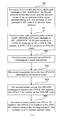
- Fig. 5 illustrates a flow chart of an embodiment of encoding NLRI in the MP-BGP in a number automatic routing method according to the invention
- Fig. 6 illustrates a schematic diagram of an embodiment of encoding of NLRI for the E.164 protocol in the MP-BGP in the number automatic routing method according to the invention
- Fig. 7 illustrates a schematic diagram of an embodiment applied to an MPLS/BGP VPN backbone network in the number automatic routing method according to the invention
- Fig. 8 illustrates a flow chart of an embodiment of the number automatic routing method in the MP-BGP according to the invention
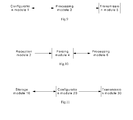
- Fig. 9 illustrates a schematic diagram of an embodiment of a router according to the invention.
- Fig. 10 illustrates a schematic diagram of an embodiment of another router according to the invention.
- Fig. 11 illustrates a schematic diagram of an embodiment of a number routing device according to the invention.
- An underlying idea of the invention is to propose a new method for configuring NLRI with a value taken for an Address Family Identifier (simply AFI) in the MP-BGP to perform a function of automatic routing of an E.164, E.214 and SP number, in the MP-BGP, where the NLRI is configured by configuring the MP_REACH_NLRI and the MP_UNREACH_NLRI.
- the MP_REACH_NLRI is configured by modifying the existing MP_REACH_NLRI route attribute correspondingly
- the MP_UNREACH_NLRI is configured by modifying the existing MP_UNREACH_NLRI route attribute correspondingly.
- the MP_REACH_NLRI route attribute, the MP_UNREACH_NLRI route attribute and the NLRL Encoding in the format of an MP-BGP message are described below.
- This field carries the identifier of a connection of a network layer protocol with a network address. At present, this field takes defined values which are specified in the RFC1700 (see the section of Address Family Numbers) as follow: Number Description 0 Reserved 1 IP (IP version 4) 2 IP6 (IP version 6) 3 NSAP 4 HDLC (8-bit multidrop) 5 BBN 1822 6 802 (includes all 802 media plus Ethernet "canonical format") 7 E.163 8 E.164 (SMDS, Frame Relay, ATM) 9 F.69 (Telex) 10 X.121 (X.25, Frame Relay) 11 IPX 12 Appletalk 13 Decnet IV 14 Banyan Vines 65535 Reserved
- the SAFI is used as follows: - SAFI 1 and 2 Assigned. - SAFI 3 Reserved. - SAFI 5 to 63 Used for the IANA. - SAFI 67 to 127 Assigned from the IANA on the principle of first come first served. See RFC2434 for specific definitions thereof. - SAFI 0 and 255 Reserved. - SAFI 128 to 240 A part therebetween has been kept for private use, and the remaining part thereof has been reclaimed by the IANA, including 130, 131, 135 to 139, and 141 to 240, which nevertheless are reserved to avoid any confliction. - SAFI 241 to 254 Allowed to be kept for private use and free from being assigned by the IANA.
- This field is variable in length and includes the address of a next router to a destination system.
- the existing MP-BGP requires that a next-hop Label Switching Router (LSR) address be in the same address format as the address prefix in the NLRI, and in the present embodiment, the IPv4 is adopted for the next-hop LSR address, and a 8-byte RD plus a length-variable E.164 (or E.214 or SP) number is adopted for the address prefix in the NLRI, so they are not in the same format.
- LSR Label Switching Router
- a length-variable area in which the NLRI information of an available route to be announced in the attribute is listed. All of the NLRI is subject to an encoding process as specified in the "NLRI encoding" below.
- a length-variable area in which the NLRI of a route to be withdrawn from a service is listed.
- Each piece of NLRI is subject to an encoding process as specified in the section of "NLRI encoding" below.
- Fig. 5 illustrates a flow chart of an embodiment of encoding NLRI in the MP-BGP in a number automatic routing method according to the invention. As illustrated in Fig. 5 , the present embodiment includes the following operations 501 and 502.
- the operation 501 is to set the value of the AFI in the MP_REACH_NLRI path attribute or the MP_UNREACH_NLRI path attribute to be an address family value corresponding to the E.164 protocol, the E.214 protocol or an SP code for a network layer address;
- the operation 502 is to set the address prefix of the NLRI in the MP_REACH_NLRI path attribute or the MP_UNREACH_NLRI path attribute to a VPN-E.164 number, a VPN-E.214 number or a VPN-SP number.
- the VPN-E.164 code may include a 8-byte RD and an E.164 number of a network layer address occupying a variable number of bytes; the VPN-E.214 code may include a 8-byte RD and an E.214 number of a network layer address occupying a variable number of bytes; and the VPN-SP number may include a 8-byte RD and a SP number of a network layer address occupying a variable number of bytes.
- a router may bear multiple E.164 addressed VPNs, for example, a mobile communication E.164 VPN is configured to set up a correspondence relationship between an E.164 number segment and the IP address of a Mobile Switching Center (MSC), and a color message E.164 VPN is configured to set up a correspondence relationship between an E.164 number segment and the IP address of a color message center.
- MSC Mobile Switching Center
- color message E.164 VPN is configured to set up a correspondence relationship between an E.164 number segment and the IP address of a color message center.
- the BGP assumes that each carried address shall be globally unique but E.164 numbers of different VPNs may overlap, so in order to address this issue, the MP-BGP in the present embodiment supports a mechanism through which a possibly overlapping E.164 number is converted into a globally unique address by using a VPN-E.164 address family and deploying an extension to the Multi-Protocol-BGP (MP-BGP).
- MP-BGP Multi-Protocol-BGP
- a space of overlapping addresses proposes a challenge that if the traditional BGP sees two different routes for the same E.164 address prefix (the prefix is assigned to systems in different VPNs) but with the same E.164 number, for example, one E.164 address prefix 1388/4 with a next hop to the IP address "A" of a home multimedia messaging service center of the number segment and the other E.164 address prefix 1388/4 with a next hop to the IP address "B" of an HLR of the number segment, then the BGP processes the prefix as if there were only one route. As a result, there may be a destination unreachable. In order to address this issue, it is required to allow the BGP to disambiguate the prefix, and this function can be supported by defining a VPN-E.164 number address family.
- VPN-E.164 number address The structure of a VPN-E.164 number address and a support of the MP-BGP for a VPN-E.164 number are detailed below.
- a VPN-E.164 number address includes a 8-byte Route Distinguisher (simply RD) and a length-variable E.164 number and is structured as follows:
- the 8-byte RD means the same as defined in the BGP/MPLS VPN and is consisted of a 2-byte type field and a 6-byte value field. Reference can be made to the RFC4364 [4.2 Encoding of Route Distinguishers] for details thereof.
- Such a structure of the RD ensure that a service provider providing a backbone service can generate a unique RD, but such an RD per se makes no particular sense.
- each route (MP-BPG route) shall include the following contents:
- VPN-E.164 number address of the router (a 8-byte RD plus a length-variable E.164 number address);
- the IP address of the router per se acts as an MP-BPG next-hop LSR address of the route, and since the existing MP-BGP requires that a next-hop LSR address be in the same address format as the address prefix in the NLRI, the existing MP-BGP is modified in the section 1.14 of the invention, and the MP-BPG next-hop LSR address as referred to in the invention is in the format of an IPv4 address;
- RT export Route Target
- VPN-E.164 number address has been described as above and is encapsulated in the NLRI attribute of the MP_REACH_NLRI after being encoded.
- the NLRI is encoded as in the extended multi-protocol BGP, and the AFI field takes the value of 8 (because the network layer protocol associated with the NLRI is still the E.164) to indicate that a VPN-E.164 number address is carried.
- an MP-BGP route according to the invention is configured for communication of an upper service of a user, it is not necessary to refer to a VPN route table after a data packet arrives at a router of the receiving party because different services are borne in different protocols over the application layer. Moreover if a label is distributed, then it is not necessarily required to perform end-to-end MPLS between a router of the transmitting party and that of the receiving party because the data packet can not be transmitted from the router of the transmitting party if it is labeled. In view of the foregoing two points, no label is distributed for an E.164 route. Then the SAFI can be set to be 1.
- routes are aggregated by reducing the number of digits of decimal numbers. Regardless of whether aggregation is made, the data packet can be transmitted from the router of the transmitting party only if the router knows that ⁇ a number segment hosted by the receiving party, and the address of the router of the receiving party> are correct.
- the receiving party distinguishes different services by different upper protocols without referring to the VPN route table for forwarding. Reception of different routes by different VPNs shall be distinguished with an RT value, so the RT value shall be reserved.
- a function of routing a number segment can also be performed without introducing any RD, but a router will not support a function of processing multiple upper telecommunication services.
- Table 1 Number segment route Next-hop address 1391178 10.1.1.1 (the IP address of a home multimedia messaging service center of the number segment of 1391178) 1391178 20.1.1.1 (the IP address of an HLR of the number segment of 1391178)
- Table 2 Number segment route Next-hop address RD1:1391178 10.1.1.1 (the IP address of a home multimedia messaging service center of the number segment) RD2: 1391178 20.1.1.1 (the IP address of an HLR of the number segment)
- NLRI encoding is as illustrated in Fig. 6 , and the usages and meanings of respective fields are as follows.
- this field indicates the length of an address prefix in bit. If it is all zero, then this indicates a match to any address.
- E.164 Number Address Prefix (E.164 Prefix): this field includes a number address prefix which is supplemented in bit to a full byte(s) without influencing any true value of the prefix.
- the export Route Target (simply export RT) is encapsulated in the "Community" attribute as defined in the VPN-IPv4, and reference can be made to the RFC4364 for details thereof.
- Fig. 7 illustrates a schematic diagram of an embodiment applied to an MPLS/BGP VPN backbone network in the number automatic routing method according to the invention.
- P1-P4 represent operator routers
- PE represents a provider edge router
- CE represents a customer edge router
- R1 and R2 represent routers complying with the MP-BGP extended according to the invention.
- RR1 and RR2 represent route reflectors of the R1 and the R2.
- R1 and R2 are located in the same Autonomous System (AS) domain.
- AS Autonomous System
- An extension to the MP-BPG according to the invention can coexist with the BGP-4 and the MP-BGP in a BGP instance of a router without mutual influence.
- ASBR Autonomous System Border Router
- RR Route Reflector
- a VPN100 route of the R1 is as depicted in Table 4: Table 4 VPN100 route table of R1 Route code Destination number prefix Length of number Next-hop address Aggregated or not S 000 3 Loopback100 address of R1 No S 001 3 Loopback100 address of R1 No S 002 3 Loopback100 address of R1 No S 003 3 Loopback100 address of R1 No S 004 3 Loopback100 address of R1 No S 005 3 Loopback100 address of R1 No S 006 3 Loopback100 address of R1 No S 007 3 Loopback100 address of R1 No S 008 3 Loopback100 address of R1 No S 009 3 Loopback100 address of R1 No S 01111 5 Loopback100 address of R1 No B 0574 4 Loopback100 address of R2 / B 010 3 Loopback100 address of R2 / B 020 3 Loopback100 address of R2 /
- a VPN200 route of the R1 is as depicted in Table 5: Table 5 VPN200 route table of R1 Route code Destination number prefix Length of number Next-hop address Aggregated or not S 13911178 8 Loopback200 address of R1 No S 13800001 8 Loopback200 address of R1 No S 13700001 8 Loopback200 address of R1 No S 13740001 8 Loopback200 address of R1 No S 15700001 8 Loopback200 address of R1 No S 15800001 8 Loopback200 address of R1 No B 133 3 Loopback200 address of R2 / B 130 3 Loopback200 address of R2 / B 131 3 Loopback200 address of R2 /
- a VPN100 route of the R2 is as depicted in Table 6: Table 6 VPN100 route table of R2 Route code Destination number prefix Length of number Next-hop address Aggregated or not B 00 2 Loopback100 address of R1 / B 01111 5 Loopback100 address of R1 / S 0574 4 Loopback100 address of R2 No S 010 3 Loopback100 address of R2 No S 020 3 Loopback100 address of R2 No
- a VPN200 route of the R2 is as depicted in Table 7: Table 7 VPN200 route table of R2 Route code Destination number prefix Length of number Next-hop address Aggregated or not B 13911178 8 Loopback200 address of R1 / B 13800001 8 Loopback200 address of R1 / B 13700001 8 Loopback200 address of R1 / B 13740001 8 Loopback200 address of R1 / B 15700001 8 Loopback200 address of R1 / B 15800001 8 Loopback200 address of R1 / S 1330 4 Loopback200 address of R2 No S 1331 4 Loopback200 address of R2 No S 1332 4 Loopback200 address of R2 No S 1333 4 Loopback200 address of R2 No S 1334 4 Loopback200 address of R2 No S 1335 4 Loopback200 address of R2 No S 1336 4 Loopback200 address of R2 No S 1337 4 Loopback200 address of R2 No S 1338 4 Loopback200 address of R2 No S 131 3 Loopback200 address of R2 No S
- the route code means the same as in the existing IP route table, where "S" represents a static route and "B" represents the BGP.
- the destination number prefix it means the same as the destination network prefix in the existing IP route table except for an E.164 number stored in the present embodiment and an IP network segment or address stored in the prior art.
- the length of number the length of a decimal number in bit in the field of destination number prefix. It corresponds to the length of a mask in the existing IP route table except for the latter representing the number of significant bits in the network prefix.
- Fig. 8 illustrates a flow chart of an embodiment of the number automatic routing method in the MP-BGP according to the invention.
- this method includes the following operations 801 to 806.
- the operation 801 is to set the value of the AFI in the MP_REACH_NLRI path attribute or the MP_UNREACH_NLRI path attribute in the first router and the second router to be an address family value corresponding to the E.164 protocol, the E.214 protocol or the SP code of a network layer address;
- the operation 802 is to set at the first router the address prefix of the NLRI in the MP_REACH_NLRI path attribute or the MP_UNREACH_NLRI path attribute in the UPDATE message to be a VPN-E.164 number, a VPN-E.214 number or a VPN-SP code;
- the operation 803 is to transmit the UPDATE message from the first router to a route transmitter
- the operation 804 is to transmit the UPDATE message from the route transmitter to the second router;
- the operation 805 is to parse the UPDATE message at the second router to retrieve the VPN-E.164 number, the VPN-E.214 number or the VPN-SP code;
- the operation 806 is to parse at the second router the VPN-E.164 number, the VPN-E.214 number or the VPN-SP code to retrieve the corresponding E.164 number, E.214 number and SP code.
- the foregoing operations can be divided into two parts: a preliminary configuration task and a route distribution flow.
- a BGP/MPLS VPN network in support of routing of an E.164 number is described by way of an example with reference to the network topology in Fig. 7 .
- the CE1-CE4 routers access two differently located VPNs, and the PE1 and the PE2 are connected over an MPLS backbone network.
- LSP MPLS specific Label Switching Path
- a peer relationship is also set up between the PE1 and the PE2 through the MP-BGP to publish a VPN-IPv4 route.
- An MP-BGP peer relationship extended according to the invention is set up between the R1 and the R2 through reflectors RR1 and RR2 to publish a VPN-E.164 number segment route.
- the first operation of the configuration task is to configure VRF on the PEs, where the PE1 and the PE2 set up VRF for the respective VPNs with respect to ports via which the CEs are connected;
- the second operation of the configuration task involves the BGP, that is, the MP-BGP protocol is configured between the PE1 and the PE2 to ensure proper distribution of a VPN-IPv4 route;
- the third operation of the task is to set up an LSP, where the PE1, the PE2 and another operator core router (a Provider Router or a P router) in the MPLS backbone network requests for an LSP in the label Distribution Protocol (LDP) so that an exchange path is set up between the PE1 and the PE2 and all of data packets are forwarded therebetween in the label switching mode of MPLS.
- LDP label Distribution Protocol
- the fourth operation is to configure an Interior Gateway Protocol (IGP) between the CEs and the PEs (typically over an Open Shortest path First (OSPF)) so as to notify the PEs about a route in the VPNs;
- IGP Interior Gateway Protocol
- OSPF Open Shortest path First
- the fifth operation is to configure VRF on the R1 and the R2, where the R1 and the R2 set up VRF for the respective VPNs with respect to respective applications to ensure security of information in the VPNs;
- the sixth operation of the configuration task involves the BGP, that is, the MP-BGP protocol extended according to the invention is configured between the R1 and the R2 to ensure proper distribution of a VPN-E. 164 number route;
- the entire network operates normally, and after the R1 and the R2 are connected, the flow of distributing a VPN-E.164 number route includes route updating and withdrawing flows.
- the R1 set ups a neighbor relationship with the R2 as in the BGP and tests the R2 in the BGP capability announcement process (BGP-CAP) about whether it supports the extension made to the MP-BGP.
- BGP-CAP BGP capability announcement process
- the capability optional parameter field is configured such that the Capability Code is set to be 1 (indicating a multi-protocol extension capability), the Capability Length is set to be4, and the Capability value fields include the fields of "AFI", "Res.” and "SAFI" in sequence.
- the AFI field - an address family identifier (16 bits).
- the AFI field is encoded in the way of encoding the AFI in the NLRI according to the invention.
- the RES. field - a reserved (8-bit) area. It shall be set by the transmitting party as 0 and ignored by the receiving party;
- the SAFI field - a subsequent address family identifier (8 bits). It is encoded as preset in the NLRI according to the invention.
- each of the BGP speakers shall announce its support for such a special route to the other one through a capability announcement mechanism;
- the VPN100 puts the number segment routes 000, 001, 002, ..., 009, 01111 (these routes shall be VPN tagged) into VRF100 preset for the VPN100;
- the number segment routes 000, 001, 002, ..., 009, 01111 are fetched from VRF100 and converted into VPN-E.164 routes, which in turn are encapsulated into the MP_REACH_NLRI attribute while encapsulating the RT information into the "Community" attribute.
- the RT is encapsulated as in the BGP/MPLS VPN, so a repeated description thereof is omitted here;
- the loopback100 addresses of the R1 are set to be next hops of the VPN-E.164 routes, and it is determined whether aggregation is required, and if so, the operation 6) is performed on the MP_REACH_NLRI attribute of those number segment routes which are not aggregated; otherwise the operation 7) is performed;
- the MP_REACH_NLRI attribute is populated particularly as follows.
- the AFI field set to be a value assigned from the IANA to the invention.
- the SAFI field set to be a value assigned from the IANA to the invention.
- the Length of Next Hop network Address field set to be 4 indicating that a next-hop network address is the IPv4 and has a length of 4.
- the Network Address of Next Hop (variable) field set to be the loopback100 address 10.10.10.100 of the R1. This value can be modified via the configuration interface, e.g., to an interface address, another loopback address or alike.
- the Length field of the NLRI set to be 76 and calculated particularly as follows: the 000 number segment is converted into a 12-bit binary number based on BCD coding, and since the 8-byte RD occupies 64 bits, the valid length of the 000 number segment is 76 bits.
- the Type field of the NLRI set to be 2, where the Type of the RD is encoded in the present embodiment as the AS plus the number (reference can be made to the description of the section C in "(21) The structure of an VPN-IPv4 address" in this context for details thereof)
- the Value field of the NLRI the upper 4 bytes are set to be 100 and the lower 2 bytes are set to be 1.
- the E.164 Prefix field of the NLRI set to be the decimal number 000. Particularly with respect to the number length field equal to 3 in the VPN 100 of Table 2, a router takes the first 3 decimal digits 000 from the prefix field of a destination number and converts it into binary 0000, 0000, 0000, 0000 on the principle of supplementing in bit to a full byte(s).
- the NLRI of the other number segment routes 001, 002, ..., 009, 01111 is populated similarly to 000, so a repeated description thereof is omitted here.
- the populated MP_REACH NLRI is depicted as follows: Table 8 Address Family Identifier (2 octets) A value assigned from the IANA to the invention Subsequent Address Family Identifier (1 octet) A value assigned from the IANA to the invention Length of Next Hop Network Address (1 octet) 4 Network Address of Next Hop (variable) 10.10.10.100 (loopback100 of R1) Reserved (1 octet) Length (1 Octet) 76 Type Field (2 Octets) 2 Value Field (6 Octets) 100:1 E.164 Prefix (variable) 000 (the decimal number segment 000 is compact BCD-encoded and supplemented in bits to full bytes encoded as 2-byte binary: 0000, 0000, 0000,0000) Network Layer Reachability Information (variable) Length (1 octet) 76 Type Field (2 Octets) 2 Value Field (6 Octets) 100:1 E.164 Prefix (variable) 001
- the R1 reduces the number of digits in the existing algorithm of reducing the number of digits of a decimal number segment, which is a recursive algorithm to aggregate number segment routes by reducing the number of digits of the number segments.
- all of the number segments 001 to 009 are present, so they can be reduced in digit into the number segment 00.
- Aggregation of the number segments can reduce the number of number segment routes to improve the efficiency of updating the number segment routes in the BGP.
- the MP_REACH_NLRI is populated similarly to the operation 6) except for the reduced number of number segment routes.
- the populated MP_REACH NLRI is depicted as follows: Table 9 Address Family Identifier (2 octets) A value assigned from the IANA to the invention Subsequent Address Family Identifier (1 octet) A value assigned from the IANA to the invention Length of Next Hop Network Address (1 octet) 4 Network Address of Next Hop (variable) 10.10.10.100 (loopback100 of R1) Reserved (1 octet) Length (1 Octet) 76 Type Field (2 Octets) 2 Value Field (6 Octets) 100:1 Network Layer Reachability Information (variable) E.164 Prefix (variable) 00 (binary: 0000, 0000, 0000, 0000) Length (1 octet) 84 Type Field (2 Octets) 2 Value Field (6 Octets) 100:1 E.164 Prefix (variable) 01111 (binary: 0000, 0001, 0001, 0001,0000)
- the R1 transmits the BGP UPDATE message to the route reflectors RR1 and RR2 in the TCP protocol, and the RR1 and the RR2 reflect the BGP UPDATE message to the R2.
- the process of transporting this message over CE->PE->P-PE-CE complies with the existing transport over the GP-MPLS VPN, so a repeated description thereof is omitted in the present embodiment;
- the Length field of the NLRI equal to 72 bits minus the 64-bit (8-byte) RD can result in the E.164 prefix length of 8 bits, and the 8-bit binary value 0000000 following the Value field is fetched and converted into the decimal system by being compact decimal BCD-encoded, thereby resulting in the number segment route 00.
- the 8-bit E.164 prefix length can be converted into decimal 2 by being compact decimal BCD-encoded.
- the R2 receives only the number segment routes 00 and 01111 published from the R1 and therefore puts them as optimal routes into the BGP route table as depicted in Table 10. Assumed the R2 also receives the number segment routes 00 and 01111 published from another router, e.g., the R3, at this time the R2 selects optimal one of the routes as in the operation of deciding a preferred route in the existing BGP and puts it in the BGP route table.
- Table 10 Route code Destination number prefix Length of number Next-hop address Aggregated or not B 00 2 10.10.10.100 (loopback100 address of R1) / B 01111 5 10.10.10.100 (loopback100 address of R1) /
- the R2 compares the Import RTs of the respective VPNs of the R2 with the Export RT attributes of the number segment routes 00 and 01111 and puts the number segment routes 00 and 01111 from the BGP route table into the route table of the VRF100.
- the VPN100 route table of the R2 is as depicted in Table 6.
- the invention also withdraws a route through the MP_UNREACH_NLRI attribute, and the NLRI thereof is populated in the same way as the MP_REACH_NLRI attribute.
- the R1 composes the Withdrawn message with the MP_UNREACH_NLRI attribute by encapsulating therein respective fields in substantially the same way as the MP_REACH_NLRI, so a repeated description thereof is omitted here.
- the MP_UNREACH_NLRI attribute is as depicted in Table 11: Table 11 Address Family Identifier (2 octets) A value assigned from the IANA to the invention Subsequent Address Family Identifier (1 octet) A value assigned from the IANA to the invention Withdrawn Routes (variable) Length (1 Octet) 72 Type Field (2 Octets) 2 Value Field (6 Octets) 100:1 E.164 Prefix (variable) 00 (binary: 0000, 0000) Length (1 octet) 84 Type Field (2 Octets) 2 Value Field (6 Octets) 100:1 E.164 Prefix (variable) 01111 (binary: 0000, 0001, 0001, 0001, 0000)
- the R1 encapsulates the MP_UNREACH_NLRI into a BGP message transmitted to the R2 as in the existing MP-BGP.
- the R2 de-encapsulates the BGP message into the number segment routes 00 and 01111 in the similar way that the MP_REACH_NLRI attribute is de-encapsulated.
- the R2 removes the number segment routes 00 and 01111 from the BGP route table, and the R2 removes the routes in VPN as in the existing BGP.
- an upper service can be communicated over an E.164 number segment route in the VPN100.
- a route distribution process in the VPN200 is similar thereto, so a repeated description thereof is omitted here.
- a flow of making a BICC call to 02010086 in the R1 includes the following operations:
- the R1 searches the route table of the VPN100 for the "loopback100" address of the R2 as a next-hop address of the service on the principle of a longest match;
- the R2 performs some upper processes and composes a BICC response packet
- the R2 searches the route table of the VPN100 for the "loopback100" address of the R1 in response to a caller number and fills it into the destination IP address;
- Fig. 9 illustrates a schematic diagram of an embodiment of a router according to the invention. As illustrated in Fig. 9 , the present embodiment includes:
- a configuration module 1 configured to add number route information into a dynamic routing protocol (reference can be made to the relevant descriptions of the foregoing method embodiments for details thereof), for example, by setting the value of the AFI in the MP_REACH_NLRI path attribute or the MP_UNREACH_NLRI path attribute to be an E.164 number, an E.214 number or an SP code of a network layer address and setting the address prefix of the NLRI in the MP_REACH_NLRI path attribute or the MP_UNREACH_NLRI path attribute to be a VPN-E.164 number, a VPN-E.214 number, a VPN-SP code, etc;
- a processing module 3 configured to convert a number into number route information and to add the number route information into a message of the dynamic routing protocol
- a transmission module 5 configured to transmit the message to a reflector.
- the processing module 3 mayn further include: a detection sub-module configured to test in a capability announcement process of the dynamic routing protocol whether a receiving party supports automatic routing of the number; and an execution sub-module configured to convert the number into the number route information and add the number route information into the message of the dynamic routing protocol when a result of the test indicates a support of automatic routing of the number.
- a detection sub-module configured to test in a capability announcement process of the dynamic routing protocol whether a receiving party supports automatic routing of the number
- an execution sub-module configured to convert the number into the number route information and add the number route information into the message of the dynamic routing protocol when a result of the test indicates a support of automatic routing of the number.
- the router in the present embodiment may be applied particularly as the R1 in Fig. 7 by setting the MP_REACH_NLRI path attribute or the MP_UNREACH_NLRI path attribute and supporting routing of an E.164 number, an E.214 number, an SP code, etc.
- Fig. 10 illustrates a schematic diagram of an embodiment of another router according to the invention. As illustrated in Fig. 10 , the present embodiment includes:
- a reception module 2 configured to receive a message of a dynamic routing protocol
- a parsing module 4 configured to parse a received message of the dynamic routing protocol to retrieve number route information and further a route of a number when automatic routing of the number is supported;
- a processing module 6 configured to remove the number route information from a route table when the received message is a withdrawn route message.
- the router in the present embodiment may be applied particularly as the R2 in Fig. 7 by parsing a message with the MP_REACH_NLRI path attribute or the MP_UNREACH_NLRI path attribute to retrieve a route of an E.164 number, an E.214 number, an SP code, etc., or removing the corresponding number route from a route table.
- Fig. 11 illustrates a schematic diagram of an embodiment of a number routing device according to the invention. As illustrated in Fig. 11 , the present embodiment includes:
- a storage module 10 configured to store a number for distribution
- a configuration module 20 configured to extend a dynamic routing protocol, to convert the number for distribution into number route information, to add the number route information into the dynamic routing protocol, and to generate a message of the dynamic routing protocol through encapsulation;
- a transmission module 30 configured to transmit the message of the dynamic routing protocol.
- the configuration module 20 may include:
- an attribute sub-module configured to add new values taken respectively for the AFI and the SAFI in the MP_REACH_NLRI path attribute or the MP_UNREACH_NLRI path attribute to indicate that route information carried in the NLRI is number route information;
- a prefix sub-module configured to set the address prefix of the NLRI in the MP_REACH_NLRI path attribute or the MP_UNREACH_NLRI path attribute to be the number for distribution;
- a generation sub-module configured to generate a message corresponding to the extended Borden Gateway Protocol MP-BGP from the path attribute in the attribute sub-module and the prefix sub-module.
- the configuration module can further include an identification sub-module configured to distinguish different upper services to which the same number belongs to by adding a Route Distinguisher (RD) in the MP-BGP when the same number belongs to different next-hop service addresses.
- RD Route Distinguisher
- the foregoing respective embodiments of the invention propose a solution of extending the existing MP-BPG to perform automatic routing and distribution of a number, e.g., an E.164 number, an E.214 number, an SP code, etc., by carrying number route information in the MP-BPG protocol so that the extended MP-BGP protocol supports routing of an E.164 number, an E.214 number, an SP code, etc., to thereby perform automatic distribution of the number between routers.
- a number e.g., an E.164 number, an E.214 number, an SP code, etc.
Landscapes
- Engineering & Computer Science (AREA)
- Computer Networks & Wireless Communication (AREA)
- Signal Processing (AREA)
- Data Exchanges In Wide-Area Networks (AREA)
Applications Claiming Priority (2)
| Application Number | Priority Date | Filing Date | Title |
|---|---|---|---|
| CN200810118760A CN101340372B (zh) | 2008-08-21 | 2008-08-21 | 号码自动路由方法、更新方法、撤销方法、路由器及设备 |
| PCT/CN2009/000846 WO2010020107A1 (zh) | 2008-08-21 | 2009-07-29 | 号码自动路由方法、更新方法、撤销方法、路由器及设备 |
Publications (3)
| Publication Number | Publication Date |
|---|---|
| EP2320611A1 true EP2320611A1 (de) | 2011-05-11 |
| EP2320611A4 EP2320611A4 (de) | 2014-01-22 |
| EP2320611B1 EP2320611B1 (de) | 2018-01-31 |
Family
ID=40214329
Family Applications (1)
| Application Number | Title | Priority Date | Filing Date |
|---|---|---|---|
| EP09807806.6A Active EP2320611B1 (de) | 2008-08-21 | 2009-07-29 | Automatisches nummernroutingverfahren, aktualisierungsverfahren, entfernungsverfahren, router und vorrichtung |
Country Status (4)
| Country | Link |
|---|---|
| US (1) | US8665887B2 (de) |
| EP (1) | EP2320611B1 (de) |
| CN (1) | CN101340372B (de) |
| WO (1) | WO2010020107A1 (de) |
Cited By (1)
| Publication number | Priority date | Publication date | Assignee | Title |
|---|---|---|---|---|
| CN104836901A (zh) * | 2015-04-02 | 2015-08-12 | 深圳市金立通信设备有限公司 | 一种终端 |
Families Citing this family (37)
| Publication number | Priority date | Publication date | Assignee | Title |
|---|---|---|---|---|
| EP2227883B1 (de) * | 2008-01-09 | 2012-05-02 | Telefonaktiebolaget L M Ericsson (publ) | Einrichten eines virtuellen privaten Netzwerks |
| CN101340372B (zh) | 2008-08-21 | 2012-09-19 | 中国移动通信集团公司 | 号码自动路由方法、更新方法、撤销方法、路由器及设备 |
| CN101674245B (zh) * | 2009-10-10 | 2012-06-06 | 华为技术有限公司 | 出口路由过滤方法及装置 |
| US8411667B2 (en) * | 2009-12-15 | 2013-04-02 | At&T Intellectual Property I, L.P. | Methods, apparatus and articles of manufacture to manipulate packet routing |
| CN102316018B (zh) * | 2010-07-09 | 2014-12-31 | 中国移动通信集团公司 | 一种网络节点设备中路由表的更新方法以及网络节点设备 |
| CN102710800B (zh) * | 2011-03-28 | 2015-01-21 | 华为技术有限公司 | 一种配置路由标识符rd的方法和网络设备 |
| CN102143077B (zh) * | 2011-03-29 | 2014-12-10 | 中兴通讯股份有限公司 | 路由设备多业务链接实现方法、系统及路由设备 |
| US10432587B2 (en) | 2012-02-21 | 2019-10-01 | Aventail Llc | VPN deep packet inspection |
| CN103475581B (zh) * | 2012-06-06 | 2017-08-25 | 华为技术有限公司 | 一种网络标签分配方法、设备与系统 |
| US9019973B1 (en) * | 2012-09-28 | 2015-04-28 | Juniper Networks, Inc. | Static MAC address propagation in multipoint network services |
| JP5949491B2 (ja) * | 2012-11-20 | 2016-07-06 | 富士ゼロックス株式会社 | 情報処理装置及びプログラム |
| US9621460B2 (en) * | 2013-01-14 | 2017-04-11 | Versa Networks, Inc. | Connecting multiple customer sites over a wide area network using an overlay network |
| CN104734929B (zh) * | 2013-12-18 | 2019-03-01 | 华为技术有限公司 | 路由扩散的方法及装置 |
| US9634936B2 (en) * | 2014-06-30 | 2017-04-25 | Juniper Networks, Inc. | Service chaining across multiple networks |
| CN105634940B (zh) * | 2014-10-27 | 2020-06-16 | 中兴通讯股份有限公司 | Sr信息获取方法及建立段路由网络的方法 |
| US10015073B2 (en) | 2015-02-20 | 2018-07-03 | Cisco Technology, Inc. | Automatic optimal route reflector root address assignment to route reflector clients and fast failover in a network environment |
| US20170005992A1 (en) * | 2015-03-09 | 2017-01-05 | Vadium Technology Corporation | Secure message transmission using dynamic segmentation and encryption |
| US9749225B2 (en) | 2015-04-17 | 2017-08-29 | Huawei Technologies Co., Ltd. | Software defined network (SDN) control signaling for traffic engineering to enable multi-type transport in a data plane |
| CN106936713B (zh) | 2015-12-30 | 2020-02-21 | 华为技术有限公司 | 一种标签管理方法,数据流处理方法及设备 |
| CN105939262B (zh) * | 2016-05-09 | 2020-03-06 | 杭州迪普科技股份有限公司 | 标签分配的方法及装置 |
| CN107404439B (zh) * | 2016-05-18 | 2020-02-21 | 华为技术有限公司 | 用于重定向数据流的方法和系统、网络设备和控制设备 |
| EP3468112B1 (de) * | 2016-07-01 | 2025-06-25 | Huawei Technologies Co., Ltd. | Verfahren, vorrichtung und system zur weiterleitung eines pakets in dienstfunktionsverkettung |
| US10594514B2 (en) | 2017-03-29 | 2020-03-17 | At&T Intellectual Property I, L.P. | Method and apparatus for creating border gateway protocol reachability on demand in a multi-protocol label switching network |
| CN108989208B (zh) * | 2017-05-31 | 2021-08-10 | 中兴通讯股份有限公司 | 一种标识分配方法和装置 |
| US10873473B2 (en) * | 2017-07-17 | 2020-12-22 | Nicira, Inc. | Distributed multicast logical router |
| US10218523B2 (en) | 2017-07-17 | 2019-02-26 | Nicira, Inc. | Using a central controller cluster to configure a distributed multicast logical router |
| US10523455B2 (en) | 2017-07-17 | 2019-12-31 | Nicira, Inc. | Distributed multicast logical router |
| CN110875882B (zh) * | 2018-08-30 | 2021-07-20 | 华为技术有限公司 | 通信方法和通信设备 |
| US10769092B2 (en) * | 2018-12-20 | 2020-09-08 | Dell Products, L.P. | Apparatus and method for reducing latency of input/output transactions in an information handling system using no-response commands |
| CN116782336B (zh) * | 2019-10-22 | 2024-07-19 | 华为技术有限公司 | 一种通信方法及装置 |
| US11252672B1 (en) * | 2020-12-18 | 2022-02-15 | Versa Networks, Inc. | Access point radio channel configuration using multiprotocol border gateway protocol |
| US12316471B2 (en) | 2021-01-21 | 2025-05-27 | VMware LLC | Distributing multicast receiver information across multi-tier edge gateways |
| US11595296B2 (en) | 2021-06-29 | 2023-02-28 | Vmware, Inc. | Active-active support of multicast streams in virtualized environment |
| US11895010B2 (en) | 2021-06-29 | 2024-02-06 | VMware LLC | Active-active support of multicast streams in virtualized environment |
| US11784926B2 (en) | 2021-11-22 | 2023-10-10 | Vmware, Inc. | Optimized processing of multicast data messages in a host |
| CN118869588A (zh) * | 2023-04-28 | 2024-10-29 | 中国电信股份有限公司 | 数据处理方法、装置、设备及介质 |
| US12199942B1 (en) * | 2023-10-11 | 2025-01-14 | Cisco Technology, Inc. | NAT route distribution based on tag information in an SDWAN overlay network |
Family Cites Families (15)
| Publication number | Priority date | Publication date | Assignee | Title |
|---|---|---|---|---|
| US7366894B1 (en) * | 2002-06-25 | 2008-04-29 | Cisco Technology, Inc. | Method and apparatus for dynamically securing voice and other delay-sensitive network traffic |
| US6970464B2 (en) * | 2003-04-01 | 2005-11-29 | Cisco Technology, Inc. | Method for recursive BGP route updates in MPLS networks |
| US7925778B1 (en) * | 2004-02-13 | 2011-04-12 | Cisco Technology, Inc. | Method and apparatus for providing multicast messages across a data communication network |
| US8068408B2 (en) * | 2004-11-01 | 2011-11-29 | Alcatel Lucent | Softrouter protocol disaggregation |
| US8953432B2 (en) * | 2004-11-01 | 2015-02-10 | Alcatel Lucent | Softrouter dynamic binding protocol |
| US7978708B2 (en) | 2004-12-29 | 2011-07-12 | Cisco Technology, Inc. | Automatic route tagging of BGP next-hop routes in IGP |
| US7408941B2 (en) * | 2005-06-14 | 2008-08-05 | Cisco Technology, Inc. | Method for auto-routing of multi-hop pseudowires |
| CN1893419A (zh) * | 2005-07-06 | 2007-01-10 | 华为技术有限公司 | 一种路由更新方法 |
| CN100571264C (zh) * | 2005-10-31 | 2009-12-16 | 中兴通讯股份有限公司 | 一种多协议标记交换虚拟专用网络跨域连接方法 |
| CN101052207B (zh) * | 2006-04-05 | 2011-04-20 | 华为技术有限公司 | 一种可移动虚拟专用网的实现方法及系统 |
| US9264355B2 (en) * | 2006-09-05 | 2016-02-16 | Telefonaktiebolaget L M Ericsson (Publ) | Name-address management and routing in communication networks |
| CN101155119B (zh) * | 2006-09-28 | 2012-05-23 | 华为技术有限公司 | 一种确定自治系统边界节点的方法、装置及路径计算方法 |
| CN100372347C (zh) | 2006-11-10 | 2008-02-27 | 清华大学 | 扩展边界网关协议的4over6隧道封装及解封装方法 |
| CN100405797C (zh) * | 2006-12-01 | 2008-07-23 | 清华大学 | BGP协议软件的IPv4 over IPv6扩展方法 |
| CN101340372B (zh) | 2008-08-21 | 2012-09-19 | 中国移动通信集团公司 | 号码自动路由方法、更新方法、撤销方法、路由器及设备 |
-
2008
- 2008-08-21 CN CN200810118760A patent/CN101340372B/zh active Active
-
2009
- 2009-07-29 EP EP09807806.6A patent/EP2320611B1/de active Active
- 2009-07-29 US US13/059,934 patent/US8665887B2/en active Active
- 2009-07-29 WO PCT/CN2009/000846 patent/WO2010020107A1/zh not_active Ceased
Cited By (1)
| Publication number | Priority date | Publication date | Assignee | Title |
|---|---|---|---|---|
| CN104836901A (zh) * | 2015-04-02 | 2015-08-12 | 深圳市金立通信设备有限公司 | 一种终端 |
Also Published As
| Publication number | Publication date |
|---|---|
| US20110286466A1 (en) | 2011-11-24 |
| WO2010020107A1 (zh) | 2010-02-25 |
| EP2320611A4 (de) | 2014-01-22 |
| CN101340372B (zh) | 2012-09-19 |
| US8665887B2 (en) | 2014-03-04 |
| CN101340372A (zh) | 2009-01-07 |
| EP2320611B1 (de) | 2018-01-31 |
Similar Documents
| Publication | Publication Date | Title |
|---|---|---|
| US8665887B2 (en) | Number automatic routing method, updating method, withdrawing method, router and device | |
| CN110832813B (zh) | 使用分段路由的以太网虚拟专用网 | |
| CN109218178B (zh) | 一种报文处理方法及网络设备 | |
| CN101960785B (zh) | 在链路状态协议受控以太网网络上实现vpn | |
| US10164838B2 (en) | Seamless segment routing | |
| US6526056B1 (en) | Virtual private network employing tag-implemented egress-channel selection | |
| US8761043B2 (en) | Setting up a virtual private network | |
| US7751405B1 (en) | Automatic configuration of label switched path tunnels using BGP attributes | |
| CN101401083B (zh) | 在ospf配置的网络中散布bgp属性信息来防止路由环的技术 | |
| CN101044728B (zh) | Rfc 2574网络边缘处的快速重路由(frr)保护 | |
| EP3905609A1 (de) | Verfahren zur weiterleitung von dienstdaten, netzwerkvorrichtung und netzwerksystem | |
| US7969867B2 (en) | Backup route generation in border gateway protocol | |
| US8923162B2 (en) | Management of private virtual networks | |
| WO2007125433A2 (en) | Ethernet vll spoke termination at an ip interface | |
| US11362954B2 (en) | Tunneling inter-domain stateless internet protocol multicast packets | |
| EP2087419B1 (de) | Unterstützung von bgp-basiertem ip-vpn in einem gerouteten netz | |
| CN115460140B (zh) | 网络互通方法及装置 | |
| CN115460141B (zh) | 网络互通方法及装置 | |
| HK1133933B (en) | Supporting bgp based ip-vpn in a routed network |
Legal Events
| Date | Code | Title | Description |
|---|---|---|---|
| PUAI | Public reference made under article 153(3) epc to a published international application that has entered the european phase |
Free format text: ORIGINAL CODE: 0009012 |
|
| 17P | Request for examination filed |
Effective date: 20110315 |
|
| AK | Designated contracting states |
Kind code of ref document: A1 Designated state(s): AT BE BG CH CY CZ DE DK EE ES FI FR GB GR HR HU IE IS IT LI LT LU LV MC MK MT NL NO PL PT RO SE SI SK SM TR |
|
| AX | Request for extension of the european patent |
Extension state: AL BA RS |
|
| DAX | Request for extension of the european patent (deleted) | ||
| A4 | Supplementary search report drawn up and despatched |
Effective date: 20140107 |
|
| RIC1 | Information provided on ipc code assigned before grant |
Ipc: H04L 12/70 20130101AFI20131219BHEP |
|
| REG | Reference to a national code |
Ref country code: DE Ref legal event code: R079 Ref document number: 602009050646 Country of ref document: DE Free format text: PREVIOUS MAIN CLASS: H04L0012560000 Ipc: H04L0012700000 |
|
| RIC1 | Information provided on ipc code assigned before grant |
Ipc: H04L 12/715 20130101ALI20161129BHEP Ipc: H04L 12/70 20130101AFI20161129BHEP Ipc: H04L 12/781 20130101ALI20161129BHEP Ipc: H04L 12/723 20130101ALI20161129BHEP |
|
| GRAP | Despatch of communication of intention to grant a patent |
Free format text: ORIGINAL CODE: EPIDOSNIGR1 |
|
| INTG | Intention to grant announced |
Effective date: 20170203 |
|
| GRAS | Grant fee paid |
Free format text: ORIGINAL CODE: EPIDOSNIGR3 |
|
| GRAA | (expected) grant |
Free format text: ORIGINAL CODE: 0009210 |
|
| AK | Designated contracting states |
Kind code of ref document: B1 Designated state(s): AT BE BG CH CY CZ DE DK EE ES FI FR GB GR HR HU IE IS IT LI LT LU LV MC MK MT NL NO PL PT RO SE SI SK SM TR |
|
| REG | Reference to a national code |
Ref country code: GB Ref legal event code: FG4D Ref country code: CH Ref legal event code: EP |
|
| REG | Reference to a national code |
Ref country code: AT Ref legal event code: REF Ref document number: 968272 Country of ref document: AT Kind code of ref document: T Effective date: 20180215 |
|
| REG | Reference to a national code |
Ref country code: IE Ref legal event code: FG4D |
|
| REG | Reference to a national code |
Ref country code: DE Ref legal event code: R096 Ref document number: 602009050646 Country of ref document: DE |
|
| REG | Reference to a national code |
Ref country code: NL Ref legal event code: FP |
|
| REG | Reference to a national code |
Ref country code: LT Ref legal event code: MG4D |
|
| REG | Reference to a national code |
Ref country code: AT Ref legal event code: MK05 Ref document number: 968272 Country of ref document: AT Kind code of ref document: T Effective date: 20180131 |
|
| REG | Reference to a national code |
Ref country code: FR Ref legal event code: PLFP Year of fee payment: 10 |
|
| PG25 | Lapsed in a contracting state [announced via postgrant information from national office to epo] |
Ref country code: NO Free format text: LAPSE BECAUSE OF FAILURE TO SUBMIT A TRANSLATION OF THE DESCRIPTION OR TO PAY THE FEE WITHIN THE PRESCRIBED TIME-LIMIT Effective date: 20180430 Ref country code: ES Free format text: LAPSE BECAUSE OF FAILURE TO SUBMIT A TRANSLATION OF THE DESCRIPTION OR TO PAY THE FEE WITHIN THE PRESCRIBED TIME-LIMIT Effective date: 20180131 Ref country code: FI Free format text: LAPSE BECAUSE OF FAILURE TO SUBMIT A TRANSLATION OF THE DESCRIPTION OR TO PAY THE FEE WITHIN THE PRESCRIBED TIME-LIMIT Effective date: 20180131 Ref country code: LT Free format text: LAPSE BECAUSE OF FAILURE TO SUBMIT A TRANSLATION OF THE DESCRIPTION OR TO PAY THE FEE WITHIN THE PRESCRIBED TIME-LIMIT Effective date: 20180131 Ref country code: HR Free format text: LAPSE BECAUSE OF FAILURE TO SUBMIT A TRANSLATION OF THE DESCRIPTION OR TO PAY THE FEE WITHIN THE PRESCRIBED TIME-LIMIT Effective date: 20180131 |
|
| PG25 | Lapsed in a contracting state [announced via postgrant information from national office to epo] |
Ref country code: PL Free format text: LAPSE BECAUSE OF FAILURE TO SUBMIT A TRANSLATION OF THE DESCRIPTION OR TO PAY THE FEE WITHIN THE PRESCRIBED TIME-LIMIT Effective date: 20180131 Ref country code: BG Free format text: LAPSE BECAUSE OF FAILURE TO SUBMIT A TRANSLATION OF THE DESCRIPTION OR TO PAY THE FEE WITHIN THE PRESCRIBED TIME-LIMIT Effective date: 20180430 Ref country code: IS Free format text: LAPSE BECAUSE OF FAILURE TO SUBMIT A TRANSLATION OF THE DESCRIPTION OR TO PAY THE FEE WITHIN THE PRESCRIBED TIME-LIMIT Effective date: 20180531 Ref country code: SE Free format text: LAPSE BECAUSE OF FAILURE TO SUBMIT A TRANSLATION OF THE DESCRIPTION OR TO PAY THE FEE WITHIN THE PRESCRIBED TIME-LIMIT Effective date: 20180131 Ref country code: GR Free format text: LAPSE BECAUSE OF FAILURE TO SUBMIT A TRANSLATION OF THE DESCRIPTION OR TO PAY THE FEE WITHIN THE PRESCRIBED TIME-LIMIT Effective date: 20180501 Ref country code: LV Free format text: LAPSE BECAUSE OF FAILURE TO SUBMIT A TRANSLATION OF THE DESCRIPTION OR TO PAY THE FEE WITHIN THE PRESCRIBED TIME-LIMIT Effective date: 20180131 Ref country code: AT Free format text: LAPSE BECAUSE OF FAILURE TO SUBMIT A TRANSLATION OF THE DESCRIPTION OR TO PAY THE FEE WITHIN THE PRESCRIBED TIME-LIMIT Effective date: 20180131 |
|
| PG25 | Lapsed in a contracting state [announced via postgrant information from national office to epo] |
Ref country code: EE Free format text: LAPSE BECAUSE OF FAILURE TO SUBMIT A TRANSLATION OF THE DESCRIPTION OR TO PAY THE FEE WITHIN THE PRESCRIBED TIME-LIMIT Effective date: 20180131 Ref country code: RO Free format text: LAPSE BECAUSE OF FAILURE TO SUBMIT A TRANSLATION OF THE DESCRIPTION OR TO PAY THE FEE WITHIN THE PRESCRIBED TIME-LIMIT Effective date: 20180131 Ref country code: IT Free format text: LAPSE BECAUSE OF FAILURE TO SUBMIT A TRANSLATION OF THE DESCRIPTION OR TO PAY THE FEE WITHIN THE PRESCRIBED TIME-LIMIT Effective date: 20180131 |
|
| REG | Reference to a national code |
Ref country code: DE Ref legal event code: R097 Ref document number: 602009050646 Country of ref document: DE |
|
| PG25 | Lapsed in a contracting state [announced via postgrant information from national office to epo] |
Ref country code: CZ Free format text: LAPSE BECAUSE OF FAILURE TO SUBMIT A TRANSLATION OF THE DESCRIPTION OR TO PAY THE FEE WITHIN THE PRESCRIBED TIME-LIMIT Effective date: 20180131 Ref country code: DK Free format text: LAPSE BECAUSE OF FAILURE TO SUBMIT A TRANSLATION OF THE DESCRIPTION OR TO PAY THE FEE WITHIN THE PRESCRIBED TIME-LIMIT Effective date: 20180131 Ref country code: SK Free format text: LAPSE BECAUSE OF FAILURE TO SUBMIT A TRANSLATION OF THE DESCRIPTION OR TO PAY THE FEE WITHIN THE PRESCRIBED TIME-LIMIT Effective date: 20180131 Ref country code: SM Free format text: LAPSE BECAUSE OF FAILURE TO SUBMIT A TRANSLATION OF THE DESCRIPTION OR TO PAY THE FEE WITHIN THE PRESCRIBED TIME-LIMIT Effective date: 20180131 |
|
| PLBE | No opposition filed within time limit |
Free format text: ORIGINAL CODE: 0009261 |
|
| STAA | Information on the status of an ep patent application or granted ep patent |
Free format text: STATUS: NO OPPOSITION FILED WITHIN TIME LIMIT |
|
| 26N | No opposition filed |
Effective date: 20181102 |
|
| PG25 | Lapsed in a contracting state [announced via postgrant information from national office to epo] |
Ref country code: SI Free format text: LAPSE BECAUSE OF FAILURE TO SUBMIT A TRANSLATION OF THE DESCRIPTION OR TO PAY THE FEE WITHIN THE PRESCRIBED TIME-LIMIT Effective date: 20180131 |
|
| REG | Reference to a national code |
Ref country code: CH Ref legal event code: PL |
|
| GBPC | Gb: european patent ceased through non-payment of renewal fee |
Effective date: 20180729 |
|
| PG25 | Lapsed in a contracting state [announced via postgrant information from national office to epo] |
Ref country code: LU Free format text: LAPSE BECAUSE OF NON-PAYMENT OF DUE FEES Effective date: 20180729 Ref country code: MC Free format text: LAPSE BECAUSE OF FAILURE TO SUBMIT A TRANSLATION OF THE DESCRIPTION OR TO PAY THE FEE WITHIN THE PRESCRIBED TIME-LIMIT Effective date: 20180131 |
|
| REG | Reference to a national code |
Ref country code: BE Ref legal event code: MM Effective date: 20180731 |
|
| PG25 | Lapsed in a contracting state [announced via postgrant information from national office to epo] |
Ref country code: GB Free format text: LAPSE BECAUSE OF NON-PAYMENT OF DUE FEES Effective date: 20180729 Ref country code: CH Free format text: LAPSE BECAUSE OF NON-PAYMENT OF DUE FEES Effective date: 20180731 Ref country code: LI Free format text: LAPSE BECAUSE OF NON-PAYMENT OF DUE FEES Effective date: 20180731 |
|
| REG | Reference to a national code |
Ref country code: IE Ref legal event code: MM4A |
|
| PG25 | Lapsed in a contracting state [announced via postgrant information from national office to epo] |
Ref country code: BE Free format text: LAPSE BECAUSE OF NON-PAYMENT OF DUE FEES Effective date: 20180731 |
|
| PG25 | Lapsed in a contracting state [announced via postgrant information from national office to epo] |
Ref country code: IE Free format text: LAPSE BECAUSE OF NON-PAYMENT OF DUE FEES Effective date: 20180729 |
|
| PG25 | Lapsed in a contracting state [announced via postgrant information from national office to epo] |
Ref country code: MT Free format text: LAPSE BECAUSE OF NON-PAYMENT OF DUE FEES Effective date: 20180729 |
|
| PG25 | Lapsed in a contracting state [announced via postgrant information from national office to epo] |
Ref country code: TR Free format text: LAPSE BECAUSE OF FAILURE TO SUBMIT A TRANSLATION OF THE DESCRIPTION OR TO PAY THE FEE WITHIN THE PRESCRIBED TIME-LIMIT Effective date: 20180131 |
|
| PG25 | Lapsed in a contracting state [announced via postgrant information from national office to epo] |
Ref country code: PT Free format text: LAPSE BECAUSE OF FAILURE TO SUBMIT A TRANSLATION OF THE DESCRIPTION OR TO PAY THE FEE WITHIN THE PRESCRIBED TIME-LIMIT Effective date: 20180131 Ref country code: HU Free format text: LAPSE BECAUSE OF FAILURE TO SUBMIT A TRANSLATION OF THE DESCRIPTION OR TO PAY THE FEE WITHIN THE PRESCRIBED TIME-LIMIT; INVALID AB INITIO Effective date: 20090729 |
|
| PG25 | Lapsed in a contracting state [announced via postgrant information from national office to epo] |
Ref country code: CY Free format text: LAPSE BECAUSE OF FAILURE TO SUBMIT A TRANSLATION OF THE DESCRIPTION OR TO PAY THE FEE WITHIN THE PRESCRIBED TIME-LIMIT Effective date: 20180131 Ref country code: MK Free format text: LAPSE BECAUSE OF NON-PAYMENT OF DUE FEES Effective date: 20180131 |
|
| PGFP | Annual fee paid to national office [announced via postgrant information from national office to epo] |
Ref country code: NL Payment date: 20250722 Year of fee payment: 17 |
|
| PGFP | Annual fee paid to national office [announced via postgrant information from national office to epo] |
Ref country code: DE Payment date: 20250724 Year of fee payment: 17 |
|
| PGFP | Annual fee paid to national office [announced via postgrant information from national office to epo] |
Ref country code: FR Payment date: 20250722 Year of fee payment: 17 |