EP2321104B1 - Procédé pour le stockage de déchets intégré - Google Patents
Procédé pour le stockage de déchets intégré Download PDFInfo
- Publication number
- EP2321104B1 EP2321104B1 EP09771018.0A EP09771018A EP2321104B1 EP 2321104 B1 EP2321104 B1 EP 2321104B1 EP 09771018 A EP09771018 A EP 09771018A EP 2321104 B1 EP2321104 B1 EP 2321104B1
- Authority
- EP
- European Patent Office
- Prior art keywords
- waste
- type
- waste constituents
- constituents
- materials
- Prior art date
- Legal status (The legal status is an assumption and is not a legal conclusion. Google has not performed a legal analysis and makes no representation as to the accuracy of the status listed.)
- Not-in-force
Links
- 239000002699 waste material Substances 0.000 title claims description 232
- 238000000034 method Methods 0.000 title claims description 104
- 238000003860 storage Methods 0.000 title description 22
- 229920003023 plastic Polymers 0.000 claims description 98
- 239000004033 plastic Substances 0.000 claims description 98
- 239000000463 material Substances 0.000 claims description 95
- 239000000470 constituent Substances 0.000 claims description 78
- 239000000203 mixture Substances 0.000 claims description 77
- 239000000126 substance Substances 0.000 claims description 48
- 239000010813 municipal solid waste Substances 0.000 claims description 33
- 239000002910 solid waste Substances 0.000 claims description 13
- 229920001971 elastomer Polymers 0.000 claims description 10
- 239000005060 rubber Substances 0.000 claims description 10
- 229910001868 water Inorganic materials 0.000 claims description 10
- 239000010812 mixed waste Substances 0.000 claims description 9
- XLYOFNOQVPJJNP-UHFFFAOYSA-N water Substances O XLYOFNOQVPJJNP-UHFFFAOYSA-N 0.000 claims description 8
- 239000010925 yard waste Substances 0.000 claims description 8
- 238000002156 mixing Methods 0.000 claims description 7
- 239000003921 oil Substances 0.000 claims description 7
- 238000004064 recycling Methods 0.000 claims description 7
- 239000003925 fat Substances 0.000 claims description 5
- 239000004753 textile Substances 0.000 claims description 5
- 239000000654 additive Substances 0.000 claims description 4
- 239000010802 sludge Substances 0.000 claims description 4
- 239000004519 grease Substances 0.000 claims description 3
- 239000003208 petroleum Substances 0.000 claims description 3
- 229920002209 Crumb rubber Polymers 0.000 claims description 2
- 230000000996 additive effect Effects 0.000 claims 2
- OKTJSMMVPCPJKN-UHFFFAOYSA-N Carbon Chemical compound [C] OKTJSMMVPCPJKN-UHFFFAOYSA-N 0.000 description 76
- 229910052799 carbon Inorganic materials 0.000 description 76
- 241000273930 Brevoortia tyrannus Species 0.000 description 68
- 238000002309 gasification Methods 0.000 description 65
- CURLTUGMZLYLDI-UHFFFAOYSA-N Carbon dioxide Chemical compound O=C=O CURLTUGMZLYLDI-UHFFFAOYSA-N 0.000 description 62
- 239000000446 fuel Substances 0.000 description 55
- 239000001257 hydrogen Substances 0.000 description 54
- 229910052739 hydrogen Inorganic materials 0.000 description 54
- VNWKTOKETHGBQD-UHFFFAOYSA-N methane Chemical compound C VNWKTOKETHGBQD-UHFFFAOYSA-N 0.000 description 52
- 230000008569 process Effects 0.000 description 44
- IJGRMHOSHXDMSA-UHFFFAOYSA-N Atomic nitrogen Chemical compound N#N IJGRMHOSHXDMSA-UHFFFAOYSA-N 0.000 description 40
- 230000003287 optical effect Effects 0.000 description 40
- 239000001569 carbon dioxide Substances 0.000 description 39
- 229910002092 carbon dioxide Inorganic materials 0.000 description 39
- 238000006243 chemical reaction Methods 0.000 description 37
- 239000007789 gas Substances 0.000 description 35
- UGFAIRIUMAVXCW-UHFFFAOYSA-N Carbon monoxide Chemical compound [O+]#[C-] UGFAIRIUMAVXCW-UHFFFAOYSA-N 0.000 description 30
- 229910002091 carbon monoxide Inorganic materials 0.000 description 30
- 238000004519 manufacturing process Methods 0.000 description 29
- UFHFLCQGNIYNRP-UHFFFAOYSA-N Hydrogen Chemical compound [H][H] UFHFLCQGNIYNRP-UHFFFAOYSA-N 0.000 description 27
- 150000002431 hydrogen Chemical class 0.000 description 27
- QVGXLLKOCUKJST-UHFFFAOYSA-N atomic oxygen Chemical compound [O] QVGXLLKOCUKJST-UHFFFAOYSA-N 0.000 description 26
- 239000001301 oxygen Substances 0.000 description 26
- 229910052760 oxygen Inorganic materials 0.000 description 26
- 239000002956 ash Substances 0.000 description 23
- 239000000835 fiber Substances 0.000 description 23
- 238000002485 combustion reaction Methods 0.000 description 21
- 229910052757 nitrogen Inorganic materials 0.000 description 20
- 229920001903 high density polyethylene Polymers 0.000 description 17
- 239000004700 high-density polyethylene Substances 0.000 description 17
- 239000005431 greenhouse gas Substances 0.000 description 16
- 239000008188 pellet Substances 0.000 description 15
- 239000002245 particle Substances 0.000 description 14
- 239000000047 product Substances 0.000 description 14
- NINIDFKCEFEMDL-UHFFFAOYSA-N Sulfur Chemical compound [S] NINIDFKCEFEMDL-UHFFFAOYSA-N 0.000 description 13
- 239000000123 paper Substances 0.000 description 13
- 239000011593 sulfur Substances 0.000 description 13
- 229910052717 sulfur Inorganic materials 0.000 description 13
- GQPLMRYTRLFLPF-UHFFFAOYSA-N Nitrous Oxide Chemical compound [O-][N+]#N GQPLMRYTRLFLPF-UHFFFAOYSA-N 0.000 description 11
- 239000002803 fossil fuel Substances 0.000 description 11
- 229920000139 polyethylene terephthalate Polymers 0.000 description 11
- -1 and Substances 0.000 description 10
- 230000015572 biosynthetic process Effects 0.000 description 10
- 239000011521 glass Substances 0.000 description 10
- 238000000197 pyrolysis Methods 0.000 description 10
- 239000003245 coal Substances 0.000 description 9
- 238000012545 processing Methods 0.000 description 9
- CWYNVVGOOAEACU-UHFFFAOYSA-N Fe2+ Chemical compound [Fe+2] CWYNVVGOOAEACU-UHFFFAOYSA-N 0.000 description 8
- MWUXSHHQAYIFBG-UHFFFAOYSA-N nitrogen oxide Inorganic materials O=[N] MWUXSHHQAYIFBG-UHFFFAOYSA-N 0.000 description 8
- 238000011084 recovery Methods 0.000 description 8
- 230000009467 reduction Effects 0.000 description 8
- 230000000694 effects Effects 0.000 description 7
- 238000010438 heat treatment Methods 0.000 description 7
- 239000003348 petrochemical agent Substances 0.000 description 7
- 239000011269 tar Substances 0.000 description 7
- ZAMOUSCENKQFHK-UHFFFAOYSA-N Chlorine atom Chemical compound [Cl] ZAMOUSCENKQFHK-UHFFFAOYSA-N 0.000 description 6
- 230000008901 benefit Effects 0.000 description 6
- 230000005587 bubbling Effects 0.000 description 6
- 230000008859 change Effects 0.000 description 6
- 239000000460 chlorine Substances 0.000 description 6
- 229910052801 chlorine Inorganic materials 0.000 description 6
- 239000003344 environmental pollutant Substances 0.000 description 6
- 231100000719 pollutant Toxicity 0.000 description 6
- 239000002994 raw material Substances 0.000 description 6
- 238000000926 separation method Methods 0.000 description 6
- 239000002023 wood Substances 0.000 description 6
- 230000005611 electricity Effects 0.000 description 5
- 239000002737 fuel gas Substances 0.000 description 5
- 229910052751 metal Inorganic materials 0.000 description 5
- 239000002184 metal Substances 0.000 description 5
- 239000001272 nitrous oxide Substances 0.000 description 5
- 239000007787 solid Substances 0.000 description 5
- 238000003786 synthesis reaction Methods 0.000 description 5
- 238000012546 transfer Methods 0.000 description 5
- 238000010586 diagram Methods 0.000 description 4
- 239000007788 liquid Substances 0.000 description 4
- 230000001590 oxidative effect Effects 0.000 description 4
- 230000002829 reductive effect Effects 0.000 description 4
- 229910052815 sulfur oxide Inorganic materials 0.000 description 4
- 238000010792 warming Methods 0.000 description 4
- MYMOFIZGZYHOMD-UHFFFAOYSA-N Dioxygen Chemical compound O=O MYMOFIZGZYHOMD-UHFFFAOYSA-N 0.000 description 3
- 229910002089 NOx Inorganic materials 0.000 description 3
- 239000003086 colorant Substances 0.000 description 3
- 238000009264 composting Methods 0.000 description 3
- 150000001875 compounds Chemical class 0.000 description 3
- 238000001035 drying Methods 0.000 description 3
- 239000010794 food waste Substances 0.000 description 3
- 229920001684 low density polyethylene Polymers 0.000 description 3
- 239000004702 low-density polyethylene Substances 0.000 description 3
- 239000010815 organic waste Substances 0.000 description 3
- 239000007800 oxidant agent Substances 0.000 description 3
- 239000002918 waste heat Substances 0.000 description 3
- 239000002028 Biomass Substances 0.000 description 2
- PEDCQBHIVMGVHV-UHFFFAOYSA-N Glycerine Chemical compound OCC(O)CO PEDCQBHIVMGVHV-UHFFFAOYSA-N 0.000 description 2
- CBENFWSGALASAD-UHFFFAOYSA-N Ozone Chemical compound [O-][O+]=O CBENFWSGALASAD-UHFFFAOYSA-N 0.000 description 2
- 229910000831 Steel Inorganic materials 0.000 description 2
- RAHZWNYVWXNFOC-UHFFFAOYSA-N Sulphur dioxide Chemical compound O=S=O RAHZWNYVWXNFOC-UHFFFAOYSA-N 0.000 description 2
- 230000009471 action Effects 0.000 description 2
- 208000006673 asthma Diseases 0.000 description 2
- 239000006227 byproduct Substances 0.000 description 2
- 238000004364 calculation method Methods 0.000 description 2
- 239000011111 cardboard Substances 0.000 description 2
- 239000000356 contaminant Substances 0.000 description 2
- 230000003247 decreasing effect Effects 0.000 description 2
- 230000029087 digestion Effects 0.000 description 2
- 230000009977 dual effect Effects 0.000 description 2
- 238000005265 energy consumption Methods 0.000 description 2
- 239000010419 fine particle Substances 0.000 description 2
- 230000006870 function Effects 0.000 description 2
- 229930195733 hydrocarbon Natural products 0.000 description 2
- 150000002430 hydrocarbons Chemical class 0.000 description 2
- 230000006872 improvement Effects 0.000 description 2
- 238000010169 landfilling Methods 0.000 description 2
- 239000000178 monomer Substances 0.000 description 2
- 239000003345 natural gas Substances 0.000 description 2
- 239000010899 old newspaper Substances 0.000 description 2
- 230000003389 potentiating effect Effects 0.000 description 2
- 238000010248 power generation Methods 0.000 description 2
- 230000005855 radiation Effects 0.000 description 2
- 239000000376 reactant Substances 0.000 description 2
- 230000002441 reversible effect Effects 0.000 description 2
- 238000012216 screening Methods 0.000 description 2
- 239000010959 steel Substances 0.000 description 2
- 238000012360 testing method Methods 0.000 description 2
- SENMPMXZMGNQAG-UHFFFAOYSA-N 3,4-dihydro-2,5-benzodioxocine-1,6-dione Chemical group O=C1OCCOC(=O)C2=CC=CC=C12 SENMPMXZMGNQAG-UHFFFAOYSA-N 0.000 description 1
- MGWGWNFMUOTEHG-UHFFFAOYSA-N 4-(3,5-dimethylphenyl)-1,3-thiazol-2-amine Chemical compound CC1=CC(C)=CC(C=2N=C(N)SC=2)=C1 MGWGWNFMUOTEHG-UHFFFAOYSA-N 0.000 description 1
- 239000004215 Carbon black (E152) Substances 0.000 description 1
- VGGSQFUCUMXWEO-UHFFFAOYSA-N Ethene Chemical compound C=C VGGSQFUCUMXWEO-UHFFFAOYSA-N 0.000 description 1
- LOTCVJJDZFMQGB-UHFFFAOYSA-N [N].[O].[S] Chemical compound [N].[O].[S] LOTCVJJDZFMQGB-UHFFFAOYSA-N 0.000 description 1
- 238000005054 agglomeration Methods 0.000 description 1
- 230000002776 aggregation Effects 0.000 description 1
- 229910052782 aluminium Inorganic materials 0.000 description 1
- XAGFODPZIPBFFR-UHFFFAOYSA-N aluminium Chemical compound [Al] XAGFODPZIPBFFR-UHFFFAOYSA-N 0.000 description 1
- PNEYBMLMFCGWSK-UHFFFAOYSA-N aluminium oxide Inorganic materials [O-2].[O-2].[O-2].[Al+3].[Al+3] PNEYBMLMFCGWSK-UHFFFAOYSA-N 0.000 description 1
- 239000002802 bituminous coal Substances 0.000 description 1
- 238000009835 boiling Methods 0.000 description 1
- 238000007707 calorimetry Methods 0.000 description 1
- 230000000747 cardiac effect Effects 0.000 description 1
- 239000000969 carrier Substances 0.000 description 1
- 230000005465 channeling Effects 0.000 description 1
- 238000004140 cleaning Methods 0.000 description 1
- 239000010883 coal ash Substances 0.000 description 1
- 230000000052 comparative effect Effects 0.000 description 1
- 238000010276 construction Methods 0.000 description 1
- 239000004035 construction material Substances 0.000 description 1
- 238000011109 contamination Methods 0.000 description 1
- 230000001276 controlling effect Effects 0.000 description 1
- 238000001816 cooling Methods 0.000 description 1
- 238000000354 decomposition reaction Methods 0.000 description 1
- 230000007423 decrease Effects 0.000 description 1
- 238000000280 densification Methods 0.000 description 1
- 238000011161 development Methods 0.000 description 1
- 230000004069 differentiation Effects 0.000 description 1
- 150000002013 dioxins Chemical class 0.000 description 1
- 238000006073 displacement reaction Methods 0.000 description 1
- 238000009826 distribution Methods 0.000 description 1
- 239000010791 domestic waste Substances 0.000 description 1
- 239000000428 dust Substances 0.000 description 1
- 230000007613 environmental effect Effects 0.000 description 1
- 230000003628 erosive effect Effects 0.000 description 1
- 238000000605 extraction Methods 0.000 description 1
- 230000002349 favourable effect Effects 0.000 description 1
- 239000003337 fertilizer Substances 0.000 description 1
- 238000010304 firing Methods 0.000 description 1
- 238000005243 fluidization Methods 0.000 description 1
- 235000013305 food Nutrition 0.000 description 1
- 235000011187 glycerol Nutrition 0.000 description 1
- 230000003760 hair shine Effects 0.000 description 1
- 239000008240 homogeneous mixture Substances 0.000 description 1
- 239000012535 impurity Substances 0.000 description 1
- 238000011065 in-situ storage Methods 0.000 description 1
- 229910052500 inorganic mineral Inorganic materials 0.000 description 1
- 239000010985 leather Substances 0.000 description 1
- 238000005259 measurement Methods 0.000 description 1
- 150000002739 metals Chemical class 0.000 description 1
- QGBPKJFJAVDUNC-UHFFFAOYSA-N methyl 4-methoxy-3-oxobutanoate Chemical group COCC(=O)CC(=O)OC QGBPKJFJAVDUNC-UHFFFAOYSA-N 0.000 description 1
- 239000011707 mineral Substances 0.000 description 1
- 239000002362 mulch Substances 0.000 description 1
- 238000003947 neutron activation analysis Methods 0.000 description 1
- JCXJVPUVTGWSNB-UHFFFAOYSA-N nitrogen dioxide Inorganic materials O=[N]=O JCXJVPUVTGWSNB-UHFFFAOYSA-N 0.000 description 1
- 238000005457 optimization Methods 0.000 description 1
- 150000002894 organic compounds Chemical class 0.000 description 1
- 235000013348 organic food Nutrition 0.000 description 1
- 239000011368 organic material Substances 0.000 description 1
- 230000036961 partial effect Effects 0.000 description 1
- 238000005453 pelletization Methods 0.000 description 1
- 239000003209 petroleum derivative Substances 0.000 description 1
- 239000002985 plastic film Substances 0.000 description 1
- 229920006255 plastic film Polymers 0.000 description 1
- 239000002243 precursor Substances 0.000 description 1
- 238000011946 reduction process Methods 0.000 description 1
- 238000002407 reforming Methods 0.000 description 1
- 230000001105 regulatory effect Effects 0.000 description 1
- 238000011160 research Methods 0.000 description 1
- 230000000241 respiratory effect Effects 0.000 description 1
- 238000005070 sampling Methods 0.000 description 1
- 239000004576 sand Substances 0.000 description 1
- 238000005201 scrubbing Methods 0.000 description 1
- 238000001179 sorption measurement Methods 0.000 description 1
- 238000009987 spinning Methods 0.000 description 1
- XTQHKBHJIVJGKJ-UHFFFAOYSA-N sulfur monoxide Chemical class S=O XTQHKBHJIVJGKJ-UHFFFAOYSA-N 0.000 description 1
- 150000003467 sulfuric acid derivatives Chemical class 0.000 description 1
- 238000002411 thermogravimetry Methods 0.000 description 1
- 239000003981 vehicle Substances 0.000 description 1
- 230000002747 voluntary effect Effects 0.000 description 1
- 238000005303 weighing Methods 0.000 description 1
- 239000002916 wood waste Substances 0.000 description 1
Images





Classifications
-
- C—CHEMISTRY; METALLURGY
- C10—PETROLEUM, GAS OR COKE INDUSTRIES; TECHNICAL GASES CONTAINING CARBON MONOXIDE; FUELS; LUBRICANTS; PEAT
- C10J—PRODUCTION OF PRODUCER GAS, WATER-GAS, SYNTHESIS GAS FROM SOLID CARBONACEOUS MATERIAL, OR MIXTURES CONTAINING THESE GASES; CARBURETTING AIR OR OTHER GASES
- C10J3/00—Production of combustible gases containing carbon monoxide from solid carbonaceous fuels
- C10J3/72—Other features
-
- B—PERFORMING OPERATIONS; TRANSPORTING
- B29—WORKING OF PLASTICS; WORKING OF SUBSTANCES IN A PLASTIC STATE IN GENERAL
- B29B—PREPARATION OR PRETREATMENT OF THE MATERIAL TO BE SHAPED; MAKING GRANULES OR PREFORMS; RECOVERY OF PLASTICS OR OTHER CONSTITUENTS OF WASTE MATERIAL CONTAINING PLASTICS
- B29B17/00—Recovery of plastics or other constituents of waste material containing plastics
- B29B17/02—Separating plastics from other materials
-
- C—CHEMISTRY; METALLURGY
- C22—METALLURGY; FERROUS OR NON-FERROUS ALLOYS; TREATMENT OF ALLOYS OR NON-FERROUS METALS
- C22B—PRODUCTION AND REFINING OF METALS; PRETREATMENT OF RAW MATERIALS
- C22B1/00—Preliminary treatment of ores or scrap
- C22B1/14—Agglomerating; Briquetting; Binding; Granulating
- C22B1/24—Binding; Briquetting ; Granulating
-
- C—CHEMISTRY; METALLURGY
- C22—METALLURGY; FERROUS OR NON-FERROUS ALLOYS; TREATMENT OF ALLOYS OR NON-FERROUS METALS
- C22B—PRODUCTION AND REFINING OF METALS; PRETREATMENT OF RAW MATERIALS
- C22B7/00—Working up raw materials other than ores, e.g. scrap, to produce non-ferrous metals and compounds thereof; Methods of a general interest or applied to the winning of more than two metals
- C22B7/005—Separation by a physical processing technique only, e.g. by mechanical breaking
-
- B—PERFORMING OPERATIONS; TRANSPORTING
- B29—WORKING OF PLASTICS; WORKING OF SUBSTANCES IN A PLASTIC STATE IN GENERAL
- B29K—INDEXING SCHEME ASSOCIATED WITH SUBCLASSES B29B, B29C OR B29D, RELATING TO MOULDING MATERIALS OR TO MATERIALS FOR MOULDS, REINFORCEMENTS, FILLERS OR PREFORMED PARTS, e.g. INSERTS
- B29K2023/00—Use of polyalkenes or derivatives thereof as moulding material
- B29K2023/04—Polymers of ethylene
- B29K2023/06—PE, i.e. polyethylene
- B29K2023/0608—PE, i.e. polyethylene characterised by its density
- B29K2023/065—HDPE, i.e. high density polyethylene
-
- B—PERFORMING OPERATIONS; TRANSPORTING
- B29—WORKING OF PLASTICS; WORKING OF SUBSTANCES IN A PLASTIC STATE IN GENERAL
- B29K—INDEXING SCHEME ASSOCIATED WITH SUBCLASSES B29B, B29C OR B29D, RELATING TO MOULDING MATERIALS OR TO MATERIALS FOR MOULDS, REINFORCEMENTS, FILLERS OR PREFORMED PARTS, e.g. INSERTS
- B29K2067/00—Use of polyesters or derivatives thereof, as moulding material
-
- C—CHEMISTRY; METALLURGY
- C10—PETROLEUM, GAS OR COKE INDUSTRIES; TECHNICAL GASES CONTAINING CARBON MONOXIDE; FUELS; LUBRICANTS; PEAT
- C10J—PRODUCTION OF PRODUCER GAS, WATER-GAS, SYNTHESIS GAS FROM SOLID CARBONACEOUS MATERIAL, OR MIXTURES CONTAINING THESE GASES; CARBURETTING AIR OR OTHER GASES
- C10J2300/00—Details of gasification processes
- C10J2300/09—Details of the feed, e.g. feeding of spent catalyst, inert gas or halogens
- C10J2300/0913—Carbonaceous raw material
- C10J2300/0946—Waste, e.g. MSW, tires, glass, tar sand, peat, paper, lignite, oil shale
-
- Y—GENERAL TAGGING OF NEW TECHNOLOGICAL DEVELOPMENTS; GENERAL TAGGING OF CROSS-SECTIONAL TECHNOLOGIES SPANNING OVER SEVERAL SECTIONS OF THE IPC; TECHNICAL SUBJECTS COVERED BY FORMER USPC CROSS-REFERENCE ART COLLECTIONS [XRACs] AND DIGESTS
- Y02—TECHNOLOGIES OR APPLICATIONS FOR MITIGATION OR ADAPTATION AGAINST CLIMATE CHANGE
- Y02E—REDUCTION OF GREENHOUSE GAS [GHG] EMISSIONS, RELATED TO ENERGY GENERATION, TRANSMISSION OR DISTRIBUTION
- Y02E20/00—Combustion technologies with mitigation potential
- Y02E20/16—Combined cycle power plant [CCPP], or combined cycle gas turbine [CCGT]
- Y02E20/18—Integrated gasification combined cycle [IGCC], e.g. combined with carbon capture and storage [CCS]
-
- Y—GENERAL TAGGING OF NEW TECHNOLOGICAL DEVELOPMENTS; GENERAL TAGGING OF CROSS-SECTIONAL TECHNOLOGIES SPANNING OVER SEVERAL SECTIONS OF THE IPC; TECHNICAL SUBJECTS COVERED BY FORMER USPC CROSS-REFERENCE ART COLLECTIONS [XRACs] AND DIGESTS
- Y02—TECHNOLOGIES OR APPLICATIONS FOR MITIGATION OR ADAPTATION AGAINST CLIMATE CHANGE
- Y02P—CLIMATE CHANGE MITIGATION TECHNOLOGIES IN THE PRODUCTION OR PROCESSING OF GOODS
- Y02P10/00—Technologies related to metal processing
- Y02P10/20—Recycling
-
- Y—GENERAL TAGGING OF NEW TECHNOLOGICAL DEVELOPMENTS; GENERAL TAGGING OF CROSS-SECTIONAL TECHNOLOGIES SPANNING OVER SEVERAL SECTIONS OF THE IPC; TECHNICAL SUBJECTS COVERED BY FORMER USPC CROSS-REFERENCE ART COLLECTIONS [XRACs] AND DIGESTS
- Y02—TECHNOLOGIES OR APPLICATIONS FOR MITIGATION OR ADAPTATION AGAINST CLIMATE CHANGE
- Y02W—CLIMATE CHANGE MITIGATION TECHNOLOGIES RELATED TO WASTEWATER TREATMENT OR WASTE MANAGEMENT
- Y02W30/00—Technologies for solid waste management
- Y02W30/50—Reuse, recycling or recovery technologies
-
- Y—GENERAL TAGGING OF NEW TECHNOLOGICAL DEVELOPMENTS; GENERAL TAGGING OF CROSS-SECTIONAL TECHNOLOGIES SPANNING OVER SEVERAL SECTIONS OF THE IPC; TECHNICAL SUBJECTS COVERED BY FORMER USPC CROSS-REFERENCE ART COLLECTIONS [XRACs] AND DIGESTS
- Y02—TECHNOLOGIES OR APPLICATIONS FOR MITIGATION OR ADAPTATION AGAINST CLIMATE CHANGE
- Y02W—CLIMATE CHANGE MITIGATION TECHNOLOGIES RELATED TO WASTEWATER TREATMENT OR WASTE MANAGEMENT
- Y02W30/00—Technologies for solid waste management
- Y02W30/50—Reuse, recycling or recovery technologies
- Y02W30/62—Plastics recycling; Rubber recycling
Definitions
- the present invention generally relates to alternative energy, fuels, and petrochemicals. More particularly, the present invention is concerned with the recovery of energy and/or raw materials from waste materials stored in an integrated bunker storage system, and provides a process for generating feed stock from the waste streams for optimum conversion to energy, fuel, or petrochemicals.
- Combustion and gasification are thermochemical processes that are used to release the energy stored within the fuel source. Combustion takes place in a reactor in the presence of excess air, or an excess of oxygen. Combustion is generally used for generating steam which in turn is used to generate electricity through steam turbines.
- the brute force nature of complete combustion of fuel causes significant amounts of pollutants to be generated in the gas given off during combustion. For example, combustion in an oxidizing atmosphere of, for example, coal releases nitrogen oxides, a precursor to ground level ozone which can stimulate asthma attacks.
- Combustion of high sulfur containing fossil fuels, such as coal is also the largest source of sulfur dioxide which in turn produces sulfates that are very fine particulates. Fine particle pollution from U.S. power plants cuts short the lives of over 30,000 people each year. Hundreds of thousands of Americans suffer from asthma attacks, cardiac problems and upper and lower respiratory problems associated with fine particles from power plants.
- Gasification also takes place in a reactor, although in the absence of air, or in the presence of substochiometric amounts of oxygen.
- the thermochemical reactions that take place in the absence of oxygen or under substochiometric amounts of oxygen do not result in the formation of nitrogen oxides or sulfur oxides.
- Gasification generates a gaseous fuel rich product.
- two processes take place that convert the fuel source into a useable fuel gas.
- the feed stock releases volatile components of the fuel at temperatures below 600°C (1112°F); a process known as devolatization.
- the by-product of pyrolysis that is not vaporized is called char and consists mainly of fixed carbon and ash.
- the carbon remaining after pyrolysis undergoes a reduction processes by reacting either with steam and/or hydrogen. Gasification with pure oxygen results in a high quality mixture of carbon monoxide and hydrogen and virtually no nitrogen.
- gasifier types have been developed. They can be grouped into four major classifications: fixed-bed updraft, fixed-bed downdraft, bubbling fluidized-bed and circulating fluidized bed. Differentiation is based on the means of supporting the fuel source in the reactor vessel, the direction of flow of both the fuel and oxidant, and the way heat is supplied to the reactor.
- the updraft gasifier also known as counterflow gasification, is the oldest and simplest form of gasifier; it is still used for coal gasification.
- the fuel is introduced at the top of the reactor, and a grate at the bottom of the reactor supports the reacting bed.
- the oxidant in the form of air or oxygen and/or steam are introduced below the grate and flow up through the bed of fuel and char.
- complete conversion of char would occur at the bottom of the bed, liberating CO 2 and H 2 O.
- the reducing gases H 2 and CO
- the reducing gases pyrolyse the descending dry fuel and finally dry any incoming wet fuel, leaving the reactor at a low temperature ( ⁇ 500°C).
- the advantages of updraft gasification are: simple, higher thermal efficiency, low cost process that is able to handle fuel with a high moisture and high inorganic content.
- the primary disadvantage of updraft gasification is that the synthesis gas contains 10-20% tar by weight, requiring extensive syngas cleanup before engine, turbine or synthesis applications.
- the downdraft gasification also known as cocurrent-flow gasification, has the same mechanical configuration as the updraft gasifier except that the oxidant and product gases flow down the reactor, in the same direction as the fuel. A major difference is that this process can crack up to 99.9% of the tars formed.
- Low moisture fuel ( ⁇ 20%) and air or oxygen are ignited in the reaction zone at the top of the reactor. The flame generates pyrolysis gas/vapor, which burns intensely leaving 5 to 15% char and hot gas. These gases flow downward and react with the char at 800 to 1200°C, generating more CO and H 2 while being cooled to below 800°C. Finally, unconverted char and ash pass through the bottom of the grate and are sent to disposal.
- the advantages of downdraft gasification are: up to 99.9% of the tar formed is consumed, requiring minimal or no tar cleanup Minerals remain with the char/ash, reducing the need for a cyclone.
- the disadvantages of downdraft gasification are: requires feed drying to a low moisture content ( ⁇ 20%). The syngas exiting the reactor is at high temperature, requiring a secondary heat recovery system; and 4-7% of the carbon remains unconverted.
- the bubbling fluidized bed consists of fine, inert particles of sand or alumina, which have been selected for size, density, and thermal characteristics.
- gas oxygen, air or steam
- a point is reached when the frictional force between the particles and the gas counterbalances the weight of the solids.
- minimum fluidization velocity bubbling and channeling of gas through the media may occur, such that the particles remain in the reactor and appear to be in a "boiling state".
- the fluidized particles tend to break up the biomass fed to the bed and ensure good heat transfer throughout the reactor.
- bubbling fluidized-bed gasification yields a uniform product gas; exhibits a nearly uniform temperature distribution throughout the reactor; able to accept a wide range of fuel particle sizes, including fines; provides high rates of heat transfer between inert material, fuel and gas; high conversion possible with low tar and unconverted carbon.
- the disadvantages of bubbling fluidized-bed gasification are: lower gas-solid contact efficiency due to formation of bubbles, and increased attrition and dust entrainment rates. large bubble size may result in gas bypass through the bed.
- the circulating fluidized bed gasifiers operate at gas velocities higher than the so-called transport velocity, resulting in significant entrainment of the particles in the gas stream.
- the advantages of circulating fluidized-bed gasification are: it is suitable for rapid reactions; high heat transport rates possible due to high heat capacity of bed material; high conversion rates possible with low tar and unconverted carbon. It also makes production of higher energy content syngas possible because heat required for gasification can be transferred from outside through circulating particles acting as heat carriers.
- the disadvantages of circulating fluidized-bed gasification are: temperature gradients occur in the direction of solid flow; smaller particles are required; high velocities may result in equipment erosion; and heat exchange is less efficient than bubbling fluidized-bed.
- Waste such as municipal solid waste is presently often disposed of or used in incineration processes to generate heat and/or steam for use in -turbines.
- Incineration is a combustion process and the negative drawbacks for combustion have been described above.
- GHGs greenhouse gases
- CHGs such as carbon dioxide, methane, nitrous oxide, water vapor, carbon monoxide, nitrogen oxide, nitrogen dioxide, and ozone
- GHGs in the atmosphere result in the trapping of absorbed heat and warming of the earth's surface.
- GHG emissions come mostly from energy use driven largely by economic growth, fuel used for electricity generation, and weather patterns affecting heating and cooling needs.
- Energy-related carbon dioxide emissions, resulting from petroleum and natural gas represent 82 percent of total U.S. human-made GHG emissions.
- Landfills can also be significant sources of GHG emissions if no or poor landfill gas connection system is in place, mostly because of methane released during decomposition of waste, such as, for example, municipal solid waste (MSW). Compared with carbon dioxide, methane is twenty-one times stronger than carbon dioxide as a GHG. Today, landfills are responsible for about 4 % of the anthropogenic emissions. Considerable reductions in methane emissions can be achieved by combustion of waste and by collecting methane from landfills. The methane collected from the landfill can either be used directly in energy production or flared off, i.e., eliminated through combustion without energy production. Combustion Of Waste May Reduce Greenhouse Gas Emissions, Science Daily (Dec. 8, 2007 ).
- CO 2 carbon dioxide
- the carbon footprint can be seen as the total amount of carbon dioxide and other GHGs emitted over the full life cycle of a product or service.
- a carbon footprint is usually expressed as a CO 2 equivalent (usually in kilograms or tons), which accounts for the same global warming effects of different GHGs.
- Carbon footprints can be calculated using a Life Cycle Assessment method, or can be restricted to the immediately attributable emissions from energy use of fossil fuels.
- Carbon footprint is the total amount of CO 2 attributable to the actions of an individual (mainly through their energy use) over a period of one year. This definition underlies the personal carbon calculators. The term owes its origins to the idea that a footprint is what has been left behind as a result of the individual's activities. Carbon footprints can either consider only direct emissions (typically from energy used in the home and in transport, including travel by cars, airplanes, rail and other public transport), or can also include indirect emissions which include CO 2 emissions as a result of goods and services consumed, along with the concomitant waste produced.
- the carbon footprint can be efficiently and effectively reduced by applying the following steps: (i) life cycle assessment to accurately determine the current carbon footprint; (ii) identification of hot-spots in terms of energy consumption and associated CO 2 -emissions; (iii) optimization of energy efficiency and, thus, reduction of CO 2 -emissions and reduction of other GHG emissions contributed from production processes; and (iv) identification of solutions to neutralize the CO 2 emissions that cannot be eliminated by energy saving measures.
- the last step includes carbon offsetting, and investment in projects that aim at the reducing CO 2 emissions.
- carbon offsets are another way to reduce a carbon footprint.
- One carbon offset represents the reduction of one ton of CO 2 -eq.
- Companies that sell carbon offsets invest in projects such as renewable energy research, agricultural and landfill gas capture, and tree-planting.
- Emissions trading schemes provide a financial incentive for organizations and corporations to reduce their carbon footprint. Such schemes exist under cap-and-trade systems, where the total carbon emissions for a particular country, region, or sector are capped at a certain value, and organizations are issued permits to emit a fraction of the total emissions. Organizations that emit less carbon than their emission target can then sell their "excess" carbon emissions.
- waste management affects GHGs by affecting energy consumption (specifically, combustion of fossil fuels) associated with making, transporting, using, and disposing the product or material that becomes a waste and emissions from the waste in landfills where the waste is disposed.
- Incineration typically reduces the volume of the MSW by about 90% with the remaining 10% of the volume of the original MSW often being landfilled. This incineration process produces large quantities of the GHG CO 2 . Typically, the joules of energy produced per equivalents CO 2 expelled during incineration are very low. Thus, incineration of MSW for energy production releases GHG into the atmosphere with comparatively little energy return. Therefore, if GHGs are to be avoided, new solutions for the disposal of wastes, such as MSW, other than landfilling and incineration, are needed.
- Each material disposed of as waste has a different GHG impact depending on how it is made and disposed.
- the most important GHGs for waste management options are carbon dioxide, methane, nitrous oxide, and perfluorocarbons.
- carbon dioxide CO 2
- CO 2 is by far the most common GHG emitted in the US.
- Most carbon dioxide emissions result from energy use, particularly fossil fuel combustion.
- Carbon dioxide is the reference gas for measurement of the heat-trapping potential (also known as global warming potential or GWP).
- GWP heat-trapping potential
- Methane has a GWP of 21, meaning that one kg of methane has the same heat-trapping potential as 21 kg of CO2.
- Nitrous oxide has a GWP of 310.
- Perfluorocarbons are the most potent GHGs with GWPs of 6,500 for CF 4 and 9,200 for C 2 F 6 . Emissions of carbon dioxide, methane, nitrous oxide, and perfluorocarbons are usually expressed in "carbon equivalents.” Because CO 2 is 12/44 carbon by weight, one metric ton of CO 2 is equal to 12/44 or 0.27 metric tons of carbon equivalent (MTCE). The MTCE value for one metric ton of each of the other gases is determined by multiplying its GWP by a factor of 12/44 ( The Intergovernmental Panel on climate Change (IPCC), climate Change 1995: The Science of climate Change, 1996, p. 121 ). Methane (CH 4 ), a more potent GHG, is produced when organic waste decomposes in an oxygen free (anaerobic) environment, such as a landfill. Methane from landfills is the largest source of methane in the US.
- the greater GHG emission reductions are usually obtained when recycled waste materials are processed and used to replace fossil fuels. If the replaced material is biotic (material derived from living organisms), it is not always possible to obtain reductions of emissions. Even other factors, such as the treatment of the waste material and the fate of the products after the use, affect the emission balance. For example, the recycling of oil-absorbing sheets made of recycled textiles lead to emission reductions compared with the use of virgin plastic. In another example, the use of recycled plastic as raw material for construction material was found to be better than the use of impregnated wood. This is because the combustion of plastic causes more emissions than impregnated wood for reducing emissions. If the replaced material had been fossil fuel-based, or concrete, or steel, the result would probably have been more favorable to the recycling of plastic.
- RGGI Regional Greenhouse Gas Initiative
- RGGI is a market-based program designed to reduce global warming pollution from electric power plants in the Northeast.
- Other such initiatives are being considered in different sections of the U.S. and on the federal level.
- RGGI is a government mandated GHG trading system in the Northeastern U.S. This program will require, for example, that coal-fired power plants aggressively reduce their GHG emissions by on average 2.5 % per year.
- One way to do this is by changing the fuel source used or scrubbing the emissions to remove the pollutants.
- An alternative is to purchase carbon credits generated by others which can offset their emissions into the atmosphere.
- the present invention provides integrated bunker storage systems for waste streams based on the composition and characteristics of waste streams.
- the present invention provides a process for generating individual waste streams based on a set of material characteristics.
- individual waste streams from wastes stored in bunkers are mixed in a given feed ratio to generate a feed stock that will produce a desired output from a chemical conversion process, e.g., gasification.
- a systems includes a first bunker of waste constituents of a first type separated from a mixed municipal solid waste stream and a second bunker of waste constituents of a second type separated from the mixed municipal solid waste stream.
- the waste constituents of the first type are differentiated from the waste constituents of the second type based on the chemical composition of the waste constituents.
- the waste types are also differentiated based on how a blended feed stock comprising a combination of the waste constituents from the first and second bunkers affects at least one of (i) a hydrogen to carbon monoxide gas production ratio and (ii) a total quantity of hydrogen and carbon monoxide produced by a gasification process when said blended feed stock is converted in said gasification process.
- a system includes a first bunker of waste constituents of a first type separated from a solid waste stream and a second bunker of waste constituents of a second type separated from the solid waste stream.
- the waste constituents of the first type are differentiated from the waste constituents of the second type based on at least one of physical characteristics and chemical characteristics of the waste constituents.
- the waste types are also differentiated based on how a blended feed stock comprising a combination of the waste constituents from the first and second bunkers affects an output of a chemical conversion process when said blended feed stock is converted in said chemical conversion process.
- the solid waste stream comprises mixed municipal solid waste.
- the solid waste stream comprises a source segregated stream.
- the source segregated stream can comprise recyclable materials, and the source segregated stream can comprise recycling residue.
- the waste constituents of the first type comprise materials including one of high density polyethylene, low density polyethylene, polyethylene terepthalate, fibers, paper, newsprint, wood, and fats, oils, and greases (FOGs).
- the waste constituents of the second type can differ from that of the first type and comprise materials including one of high density polyethylene, low density polyethylene, polyethylene terepthalate, fibers, paper, newsprint, wood, and fats, oils, and greases (FOGs).
- the waste constituents of the first type are differentiated from the waste constituents of the second type based on at least one of the carbon, hydrogen, oxygen, sulfur, nitrogen, chlorine, and ash content of the waste constituents.
- the waste constituents of the first type are differentiated from the waste constituents of the second type based on the moisture content of the waste constituents.
- a method includes providing a first and second bunker and differentiating between mixed solid waste constituents of a first type and a second type based on at least one of physical characteristics and chemical characteristics of the waste constituents and based on how the waste constituents affect an output of a chemical conversion process when the waste constituents of the first and second types are combined into a blended feed stock for conversion in the chemical conversion process.
- the method also includes placing the waste constituents of the first type into the first bunker and placing the waste constituents of the second type into the second bunker.
- the method includes blending waste constituents of the first type with waste constituents of the second type to form the blended feed stock.
- the method can include densifying the blended feed stock.
- a method of producing an engineered feed stock of a desired chemical composition includes providing a first bunker of waste constituents of a first type separated from a mixed solid waste stream and providing a second bunker of waste constituents of a second type separated from the mixed solid waste stream.
- the method also includes determining a chemical composition of the waste constituents of the first bunker and determining a chemical composition of the waste constituents of the second bunker.
- the method further includes determining a quantitative ratio between the waste constituents of the first bunker and the waste constituents of the second bunkers that, when the waste constituents are combined in the quantitative ratio, provides the engineered feed stock of the desired chemical composition.
- the method also include mixing the waste constituents of the first bunker and the second bunker according to the quantitative ratio to provide the engineered feed stock of the desired chemical composition.
- At least one of determining a chemical composition of the waste constituents of the first bunker and determining a chemical composition of the waste constituents of the second bunker is based on a collection of chemical composition information associated with waste types commonly occurring in the municipal solid waste stream.
- the collection of chemical composition information associated with waste types commonly occurring in the municipal solid waste stream can be a lookup table.
- optical sorters collect data pertaining to at least one of a volume and a weight of the waste constituents in at least one of the bunkers and/or mixed into a blended feed stock.
- this data can be certified to a third party.
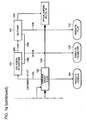
- Figure 1a and Figure 1b show an exemplary process for separating and sorting waste material.
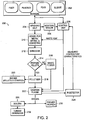
- Figure 2 shows an exemplary flow diagram for processing sorted and separated waste as feed stock for gasification.
- Figure 3 shows a flow diagram for processing waste feeds from multiple sources.
- Figure 4 shows estimates of typical waste composition in communities in the United States.
- Figure 5 illustrates effects of moisture on heating value of waste materials.
- Figure 6 shows heating values of waste feed stocks.
- Figure 7 shows a flow diagram for processing waste feeds into a homogeneous fuel having a desired energy content suitable for gasification.
- Gasification is a thermochemical process that generates a gaseous, fuel rich product. Regardless of how the gasifier is designed, two processes must take place in order to produce a useable fuel gas. In the first stage, pyrolysis releases the volatile components of the fuel at temperatures below 600°C (1112°F). The by-product of pyrolysis that is not vaporized, typically called char, consists mainly of fixed carbon and ash. In the second gasification stage, the carbon remaining after pyrolysis is either reacted with steam, hydrogen, air, or pure oxygen. Gasification with air results in a nitrogen-rich, low energy content fuel gas. Gasification with pure oxygen results in a higher quality mixture of carbon monoxide and hydrogen and virtually no nitrogen. Gasification with steam is more commonly called “reforming” and results in a hydrogen and carbon dioxide rich "synthesis" gas (syngas). Typically, the exothermic reaction between carbon and oxygen provides the heat energy required to drive the pyrolysis and char gasification reactions.
- the basic gasification reactions that must be considered include: 1) C +1/2 O 2 ⁇ CO -110.5 kJ/mol (exothermic) 2) C + H 2 O ⁇ CO + H 2 +131 kJ /mol (endothermic) 3) C + CO 2 ⁇ 2CO +172 kJ/mol (endothermic) 4) C + 2H 2 ⁇ CH 4 -74 kJ/mol (exothermic) 5) CO + H 2 0 ⁇ CO 2 + H 2 -41 kJ/mol (exothermic) 6) CO + 3H 2 ⁇ CH 4 + H 2 0 -205 kJ/mol (exothermic)
- a potential source of feed stock for producing syngas via gasification is waste.
- Gasification process devolatilizes and gasifies solid or liquid hydrocarbons in waste, and converts them into a low or medium energy content gas.
- Gasification has several advantages over traditional combustion of waste. It takes place in a reducing environment that limits the formation of dioxins and of SO x and NO x . Furthermore, it requires just a fraction of the stoichiometric amount of oxygen necessary for combustion. As a result, the volume of process gas is low, requiring smaller and less expensive gas cleaning equipment, and heat exchanger devices.
- gasification generates a fuel gas that can be integrated with combined cycle turbines, reciprocating engines and, potentially, with fuel cells that convert fuel energy to electricity more efficiently than conventional steam boilers.
- waste materials can be, for example, a mixed MSW stream, a source segregated stream (e.g ., a stream of recyclable materials segregated from non-recyclable materials at the waste source), and/or a recycling stream residue, that is, a stream of materials remaining after some quantity of recyclable materials has been removed from a waste stream.
- Waste materials are brought into a large reception area by waste collection vehicles as either single stream or as multiple streams.
- the waste streams may be bagged, unbagged, or construction and demolition (C&D) stream.
- Unbagged waste materials include, for example, commingled waste material, single stream waste material and old corrugated cardboards (OCC). Waste materials are dumped on a tipping floor 102 and are then pushed onto a conveyor by a payloader. In one embodiment, unbagged waste materials are presorted by customers. In another embodiment, unbagged waste materials are presorted by collection service at customer sites. From tipping floor 102, unbagged waste materials are transferred to presorting station 104 by the conveyor. Presorting station 104 sorts the unbagged waste material into large ferrous, large plastic (e.g., large hard plastics), and plastic film substreams. Each of the substreams from presorting station 104 is further subdivided into two streams 104a and 104b. Clean and sorted waste materials from presorting station 104 are included in first stream 104a, and are then transferred to bunker 106. In one embodiment, bunkers 106 may include compartments designated for each of the material in the first stream 104a.
- OCC old corrug
- OCC screen 114 screens out, for example, paper, bags, and corrugated fiber from stream 104b.
- OCC screen 114 is an OCC disc screen, which includes multiple discs that rotate and impart, for example, a wavelike motion that causes larger object such as OCC to move upwards, away from the remainder of stream 104b.
- OCC screen 114 will be utilized to remove mixed and office paper from OCC.
- OCC screen 114 can utilize, for example, serrated elliptical disks made out of 1/2-inch thick steel plate.
- OCC screen 114 includes three decks for removing OCC fibers, non-OCC fibers, and containers that are sized at about 8 inches by 12 inches. Negatively sorted OCC stream 114a from OCC screen 114 are transferred to picking platform 118, where fiber shreds and trash are removed from OCC stream 114a. Fiber shreds, trash, and OCC from picking platform 118 are then transferred to bunkers 120.
- the conveyor carries the bagged waste materials for bag breaking/splitting. Before transferring the material for bag splitting, the material may be weighed using a scale.
- a bag splitter 108 tears the bags open and transfers the waste material to other units in the process for separation and sorting. Each unit in the process removes a particular type of material from the waste materials.
- the material from bag breaker 108 are transferred to a stringer screening unit 110.
- the stringer screening unit 110 removes long strands (e.g., threads, strings, wires, tapes, ropes, etc.) that could damage downstream equipment.
- waste materials are transferred to trommel 112, where oversized materials are removed to prevent damage of downstream sorting equipment.
- a trommel is a rotating cylindrical screen that is inclined at a downward angle from a horizontal axis.
- the cylindrical screen may include 8 inch holes, which allows material that are less than 8 inches to fall through while retaining material larger than 8 inches within the cylinder. Material is fed into a trommel at the elevated end, and separation occurs while the material moves down the drum.
- the tumbling action of the trommel separates materials that may be attached to each other.
- sorting process may be rearranged such that bagged waste materials are directly fed into a trommel with picks.
- Trommel picks may be attached to the insides of the cylindrical screen, and may be used to gently open bags and then disperse the material without resizing the material. Sorted waste materials from the trommel are then passed through a stringer unit to remove the strings from the waste materials.
- Negatively sorted stream 112a (e.g., trommel overs greater than 8 inches) from trommel screen 112 are mixed with unbagged waste materials from tipping floor 102, and then provided as input to presorting station 104.
- negatively sorted stream 112a may include materials that are greater than 8 inches and have high fiber content.
- Positively sorted stream 112a (e.g., trommel unders greater than 8 inches) from trommel screen 112 are mixed with positively sorted stream 114b (e.g., OCC screen unders) from OCC screen 114, and then provided as input to disc screen 116.
- an additional picking platform can be provided after trommel screen 112 to remove waste items that are problematic, or that can not be otherwise processed by process 100.
- Disc screen 116 sorts containers from fibers in input stream 114b, and divides the sorted material into output streams 116a-c.
- disc screen 116 is similar to OCC screen 114 but with smaller gaps between the discs.
- disc screen 116 may include discs with gaps between them to allow container sizes smaller than about 2.5 inches by 3 inches to fall through.
- systems such as those disclosed in U.S. Provisional Patent Application No. 61/098,525, filed September 19, 2008 , entitled System And Method For Sorting Of Mixed Materials Using Air Currents are used to sort containers from fibers or further separate paper and/or fibers from other materials. Specifically, air jets can be placed beneath OCC screen 114 to remove paper and/or fibers from the balance of the stream.
- Output stream 116a from disc screen and/or other container / fiber separation devices is provided as input to overhead magnet line 122.
- Output stream 116a may include trommel unders, OCC screen unders, majority of glass materials, and containers that fall through the gaps between the discs in disc screen 116.
- Positively sorted output stream 116a is provided as input to overhead magnet line 122 to separate ferrous metals from output stream 116a. Negatively sorted materials may be further divided into dual line output streams 116b-c is also provided as input to overhead magnet line 122 to separate ferrous metals from output stream 116b. Output streams 116a-c reduce burden depth, increase recovery, and reduce contamination levels.
- Overhead magnet line 122 includes a belt magnet suspended above a conveyor to pick up ferrous materials and transfer them onto a conveyor which deposits the ferrous material to a ferrous storage bunker 124. Remaining waste stream of nonferrous material from overhead magnet line 122 is split into substreams 122a-b.
- First substream 122a may comprise bulk light materials, predominantly broken particles of glass, and plastics and non-ferrous containers of size less than about 3 inches by 3 inches.
- Substream 122a is provided as input to disc screen 126 to break and separate glass from plastics.
- disc screen 126 separates particles less than 3/8 inches from the substream 122a. Separated glass particles from disc screen 126 are stored in bunker 128.
- Disc screen overs 126a comprising predominantly plastics, and small amounts of glass and airborne enabled material are provided as input to de-stoner 130 (e.g., vibrating air classifier) for separating more dense material such as glass and the airborne enabled material from the plastics.
- de-stoner 130 e.g., vibrating air classifier
- the waste material travels across a vibrating screen of de-stoner 130 and denser material such as the glass and the airborne enabled material fall through openings in the screen while the remaining lighter material are maintained above the screen by air supplied from a fan.
- Output stream 130b comprising separated glass from de-stoner 130 are mixed with glass particles in output stream 126b, and then transported to storage bunker 128.
- Output stream 130c comprising separated airborne enabled material fall from de-stoner 130 are transported to storage bunker 132.
- Remaining output stream 130a from de-stoner 130 are provided as input to optical sorter 146 ( Figure 1b ).
- Second substream 122b comprising predominantly fiber and reduced levels of plastics, is provided as input to optical sorter 134.
- Optical sorter 134 is used to remove all plastics from fiber browns.
- Optical sorter 134 shines light onto the conveyor, and a sensor detects the reflected light from plastic materials. Using this information, the sensor locates the plastic material, targets a jet of air to hit the plastic material at the location, and removes it from the conveyor.
- optical sorter 134 is capable of detecting plastic materials on an eight feet wide conveyor. Remaining stream from optical sorter 134, predominantly comprising fibers, is divided into fiber browns and remaining fibers.
- Removed fiber browns are stored in bunker 136, and the remaining fibers are provided as input to picking platform 138, where browns, old newspaper (ONP), plastics and trash are removed.
- remaining fibers are provided as dual line input to picking platform 138. Browns, ONP, and trash from picking platform 138 are then transferred to bunkers 140.
- a cascading set of optical sorters are used to sort plastics of different colors and sizes. Sensors in these cascading set of optical sorters are capable of identifying plastics of different colors and sizes.
- Ejected plastics larger than a predetermined size, from optical sorter 134, are provided as input to optical sorter 142. For example, ejected plastics larger than 3 inches are provided as input to optical sorter 142.
- Optical sorter 142 detects and removes high density polyethylene (HDPE) color plastics from stream.
- HDPE high density polyethylene
- optical sorter 142 is capable of detecting HDPE color on an eight feet wide conveyor. Output stream 142a comprising ejected HDPE color plastics are transferred to bunker 144 for storage.
- optical sorter 142 detects plastics of a predetermined size and ejects the detected plastics in a downward trajectory. In one example, sorted plastics smaller than 3 inches are ejected in a downward trajectory. In another example, sorted plastics from about 3 inches to about 7 inches are ejected in a downward trajectory. Output stream 142b comprising ejected plastics of the predetermined size are then transported to bunker 160 for storage. All remaining plastics larger than the predetermined size are provided as input to optical sorter 148.
- Optical sorter 148 detects and removes polyethylene terepthalate (PET) plastics from stream.
- optical sorter 148 is capable of detecting PET on an eight feet wide conveyor.
- Output stream 148a comprising ejected PET plastics are transferred to bunker 150 for storage.
- optical sorter 148 detects plastics of a predetermined size and ejects the detected plastics in a downward trajectory.
- sorted plastics smaller than 3 inches are ejected in a downward trajectory.
- sorted plastics from about 3 inches to about 7 inches are ejected in a downward trajectory.
- Output stream 148a comprising ejected plastics of the predetermined size are mixed with output stream 142b, and then transported to bunker 160 for storage. Remaining plastics larger than the predetermined size are provided as input to optical sorter 154.
- Optical sorter 154 detects and removes all HDPE natural plastics from stream.
- optical sorter 154 is capable of detecting HDPE natural on an six feet wide conveyor.
- Output stream 154a comprising ejected HDPE natural plastics are transferred to bunker 156 for storage.
- optical sorter 154 detects plastics of a predetermined size and ejects the detected plastics in a downward trajectory.
- sorted plastics smaller than 3 inches are ejected in a downward trajectory.
- sorted plastics from about 3 inches to about 7 inches are ejected in a downward trajectory.
- Output stream 154b comprising ejected plastics of the predetermined size are mixed with output stream 142b, and then transported to bunker 160 for storage.
- optical sorter 146 detects and removes all high density polyethylene (HDPE) color plastics from output stream 130c.
- HDPE high density polyethylene
- optical sorter 146 is capable of detecting HDPE color plastics on a four feet wide conveyor.
- Output stream 146a comprising ejected HDPE color plastics are mixed with output stream 142a, which is then transferred to bunker 144 for storage.
- optical sorter 146 detects plastics of a predetermined size and ejects the detected plastics in a downward trajectory. In one example, sorted plastics smaller than 3 inches are ejected in a downward trajectory.
- sorted plastics from about 3 inches to about 7 inches are ejected in a downward trajectory.
- Output stream 146b comprising ejected plastics of the predetermined size are mixed with output stream 142b, which is then transported to bunker 160 for storage.
- Output stream 146c comprising all remaining plastics larger than the predetermined size are provided as input to optical sorter 152.
- Optical sorter 152 detects and removes all high polyethylene terepthalate (PET) plastics from output stream 146c.
- optical sorter 152 is capable of detecting PET on a four feet wide conveyor. Output stream 152a comprising ejected PET plastics are mixed with output stream 148a, which is then transferred to bunker 150 for storage. In the remaining plastics, optical sorter 152 detects plastics of a predetermined size and ejects the detected plastics in a downward trajectory. In one example, sorted plastics smaller than 3 inches are ejected in a downward trajectory. In another example, sorted plastics from about 3 inches to about 7 inches are ejected in a downward trajectory.
- PET polyethylene terepthalate
- Output stream 152b comprising ejected plastics of the predetermined size are mixed with output stream 142b, which is then transported to bunker 160 for storage.
- Output stream 152c comprising all remaining plastics larger than the predetermined size are provided as input to optical sorter 158,
- Optical sorter 158 detects and removes all high density polyethylene (HDPE) natural plastics from output stream 152c.
- optical sorter 158 is capable of detecting HDPE natural plastics on a four feet wide conveyor.
- Output stream 158a comprising ejected HDPE natural plastics are mixed with output stream 154a, which is then transferred to bunker 156 for storage.
- optical sorter 158 detects plastics of a predetermined size and ejects the detected plastics in a downward trajectory.
- sorted plastics smaller than 3 inches are ejected in a downward trajectory.
- sorted plastics from about 3 inches to about 7 inches are ejected in a downward trajectory.
- Output stream 158b comprising ejected plastics of the predetermined size are re-sorted by mixing with output stream 130c, which is then provided as input to optical sorter 146.
- Output stream 158c comprising all remaining plastics larger than the predetermined size are provided as input to eddy current separator 162.
- Eddy current separator 162 separates the non-ferrous metals from output stream 158c.
- An eddy current separator includes spinning magnets that eject non-ferrous metals - such as aluminum - off the conveyor. The separator injects the non-ferrous material with the same charge that small magnets in the drum carry. Like charges repel, and the non-ferrous material bounce off the magnets into a chute.
- Output stream 162a comprising sorted non-ferrous material is transported to bunker 164 for storage. Remaining materials from eddy current separator 166 are disposed as residue in bunker 166.
- an additional de-stoner such as de-stoner 130, can be included after eddy current separator 166 to separate generally light material from generally heavy material.
- the residue remaining after the various separation operations can be recirculated through process 100 to increase the amount of material diverted to the bunkers.
- Sorted wastes may generally be classified as fibers, plastics, fats/oils/grease (FOG), and sludge.
- FOG fats/oils/grease
- sludge a class of sorted wastes may be used to produce engineered feed stock having a predetermined composition to achieve a desired output from a chemical conversion operation.
- desired outputs can include one or many aspects of the product of the chemical conversion operation.
- desired outputs include, but are not limited to, total quantity of material produced by the operation, the quantity of a particular material present in the entire output from the operation, the ratio of particular materials produced by the operation, the quantity of certain impurities in the entire output from the operation, and the higher heating value of the material produced by the operation.
- a gasification unit can advantageously utilize various engineered feed stocks.
- gasification as the chemical conversion operation is described below.
- other chemical conversion operations are understood to be within the scope of the invention.
- Engineered feed stock may then be, for example, used in the gasification unit to convert the feed stock into synthesis gas (syngas). Syngas may then be used in boilers to produce steam to run turbines or maybe used in Fischer-Tropsch process to produce fuel.
- FIG. 2 shows an exemplary flow diagram for processing sorted and separated waste as feed stock for gasification.
- each type of waste withdrawn from bunkers 202 are weighed, and its moisture content measured by a moisture sensor 206.
- feed moisture content may be determined using an infrared detector or a microwave detector.
- Control unit 208 receives information regarding the moisture content from moisture sensor 206 for each type of waste, and then adjusts the withdrawal rate of the waste accordingly.
- Control unit 208 specifies the quantity and type of waste to be withdrawn based on a predetermined recipe, which, in turn, is based on the chemical and physical characteristics of the various types of waste. For example, the heating value and/or the chemical composition of the type of waste can be taken into account.
- the absolute elemental (e.g ., carbon, hydrogen, sulfur, and/or nitrogen) content of the waste, as well as ratios of particular compounds or elements present in the waste, can be used to determine the quantity and type of waste to be withdrawn.
- the wastes are transferred to vessel 210 for mixing and drying.
- mixing in vessel 210 is performed by an auger.
- waste heat from either gasifier 222 or Fischer-Tropsch equipment 230 may be used for drying waste in vessel 210.
- control unit 208 determines amount of waste heat needed to adjust the moisture content in the waste mixture in vessel 210.
- Control unit 208 redirects waste heat either from gasifier 224 or from Fischer-Tropsch equipment 230 to vessel 210 until a desired moisture content is reached.
- Shredder 212 shreds the waste material to obtain a predetermined size corresponding to a desired gasifier output.
- the desired gasifier output is determined by control unit 208, and shredding rate in shredder 212 is adjusted by the control unit 208.
- Control unit 208 can also take into account the cost of shredding the waste material, as decreases in shred size can result in higher operational costs.
- control unit 208 determines at step 214 whether to convert shredded waste to pellets. If control unit 208 determines not to convert shredded waste to pellets, shredded waste is fed to waste feeder 216.
- Waste feeder 216 processes shredded waste into densified feed stock with the optimum characteristics to achieve the desired gasifier output values, and feeds the densified waste directly into gasifier 222.
- Waste feeder 216 provides a process to drive densified wastes into a reactor vessel (any type) that requires temperature or pressure differentials to be maintained for the reactor to perform at optimal levels. This process will also allow the reactor to receive a uniform rate of feed stock into the reactor. The process has minimal mechanical moving parts and takes advantage of waste properties to seal the reactor.
- an engineered feed stock not only provides the ability to achieve desired gasifier outputs, but the engineered feed stock also enables an otherwise heterogeneous collection of waste to be used as though the waste were homogeneous.
- the deconstruction and reconstruction of the waste into engineered feed stock does not change the heterogeneous nature of the waste, rather, embodiments of the invention make the resultant engineered feed stock consistent.
- Such consistency provides for increased controllability of the gasification process.
- a gasification operation may experience unpredictable variations in output as the characteristics of the reactor feed change.
- the engineered feed stock reduces this variability of the waste feed, thereby adding to the stability of the reaction feed system.
- embodiments of the invention enable precise levels of mixing of various solid wastes and liquids to optimize discharge characteristics required for optimal reaction and fuel requirements. Moreover, embodiments of the invention enable the creation of engineered feed stocks having chemical compositions that do not occur in nature, thereby reducing undesirable effects that occur with the gasification of natural fuels, e.g ., the formation of SO x and NO x .
- pelletizer 218 converts shredded waste to pellets capable of undergoing pyrolysis at a predetermined rate.
- a Lundell 850 densifier (available from Lundell Manufacturing Company, Inc., of Cherokee, Iowa) can be used as pelletizer 218.
- the Lundell densifier can produce a pellet of about 2 inches to about 6 inches in length and having a bulk density of about 45 lb/ft 3 to about 60 lb/ft 3 .
- pelletizer 2148 can produce pellets having greater or lesser length and greater or lesser bulk density and remain within the scope of the invention.
- Pellets from pelletizer 218 are fed into gasifier 222 based on a feedrate requirement determined by control unit 208. Excess pellets from pelletizer 218 are modified to include identifiers, and then transferred to bunker 220 for storage.
- Pellets fed into gasifier 222 undergo pyrolytic conversion to syngas.
- Infrared detector 224 determines the composition of syngas and transfers the information to control unit 208. Composition information from infrared detector 224 is used by control unit 208 to adjust withdrawal rate of wastes from bunkers 202, and adjust moisture content in waste mixture to obtain the desired gasification outputs.
- the feedrate into gasifier 222 can also be determined, at least in part, by the rate of consumption of the pellets, e.g. , the feedrate may be controlled in order to maintain a steady level of material in gasifier 222.
- Syngas produced by gasifier 222 may either be used in boilers 226 to produce steam to run turbines 232, or be used in Fischer-Tropsch process 230 to produce fuel.
- Figure 3 generally at 300, shows an exemplary method of processing different waste types stored in bunkers to generate feed stocks suitable for gasification and having a particular composition and characteristics to achieve a desired gasifier output, e.g. , a gas of given energy content, a specified molar ratio of carbon to hydrogen content, and/or other characteristics as set forth herein.
- Figure 3 also illustrates a method of adjusting the quantity of each type of waste to be combined into a feed stock based on the desired composition and characteristics of the feed stock to achieve the desired gasifier output, e.g. , syngas energy content, syngas hydrogen to carbon monoxide ratio, and/or total hydrogen and carbon monoxide production rate.
- Waste that is sorted into fibers, plastics, FOG, and sludge and stored in bunkers 202 may contain components of different compositions and moisture content. Further, the comingled waste can be sorted into specific types of waste other than those illustrated in Figure 3 , e.g ., paper, newsprint, magazines, specific plastic types, textiles, yard waste, and rubber. The composition and moisture content of each type of waste can vary based on their source and time of year, but the overall differences are not substantial.
- Figure 4 shows estimates of the typical MSW composition in communities in the United States. In particular, Figure 4 illustrates that total MSW Generation in communities in the United States before recycling is equal to 246 million tons.
- Heat content of raw waste depends on the concentration of combustible organic materials in the waste and its ash and moisture content. Similarly, different types of waste have different chemical compositions. Table 1 shows exemplary data on the combustible composition of waste. TABLE 1 Percent by weight (dry basis) Component Carbon Hydrogen Oxygen Nitrogen Sulfur Ash Organic Food wastes 48.0 6.4 37.6 2.6 0.4 5.0 Paper 43.5 6.0 44.0 0.3 0.2 6.0 Cardboard 44.0 5.9 44.6 0.3 0.2 5.0 Plastics 60.0 7.2 22.8 - - 10.0 Textiles 55.0 6.6 31.2 4.6 0.15 2.5 Rubber 78.0 10.0 - 2.0 - 10.0 Leather 60.0 8.0 11.6 10.0 0.4 10.0 Yard wastes 47.8 6.0 38.0 3.4 0.3 4.5 Wood 49.5 6.0 42.7 0.2 0.1 1.5 Inorganic Glass 0.5 0.1 0.4 ⁇ 0.1 - 98.9 Metals 4.5 0.6 4.3 ⁇ 0.1 - 90.5 Dirt, ash, etc. 26.3 3.0
- compositions of each waste component are determined. Exemplary methods of determining the compositions include thermo gravimetric analysis, Prompt Gamma Neutron Activation Analysis (PGNAA), Dual-Energy Gamma Attenuation, and the like. Feed composition can also be determined from a lookup table (for example, Table 1).
- the moisture content in each type of waste is measured at step 304. In one embodiment, moisture content is determined using an infrared detector. In another embodiment, moisture content is determined using a microwave detector. Once the moisture content and compositions are determined, the composition and characteristics of each type of waste is determined at step 306.
- An exemplary method of calculating the energy content of the waste types includes calorimetry. The energy content can be expressed in kJ per kilogram (kJ/kg).
- the chemical formula for PET monomer is C 10 H 8 O 4
- the chemical formula for LDPE monomer is C 2 H 4
- those materials have different energy content.
- a sorting process diverts items of different plastic types to a single bunker
- the ratio of carbon to hydrogen, in the aggregate changes as the different items are added to the bunker.
- the aggregate energy content changes as different items are added.
- the controllers take the quantity and particular type of plastic into account in determining the overall composition and energy content of the material in the bunker.
- This aggregate composition information can then be used, as set forth below, to determine the quantity of mixed plastic to use in order to achieve a feed stock of desired composition.
- the control of feed stock composition and characteristics is not limited carbon to hydrogen ratio and energy content, but can include, and is not limited to, total hydrogen and carbon monoxide production, total contaminate content, total pollutant content, content of a particular compound, ash characteristics, etc.
- a feed ratio is set based on the overall characteristics, including composition, of each type of waste, and the overall desired characteristics corresponding to the final feed stock ratio is calculated at step 310.
- the method determines whether the calculated characteristics are equal to the desired characteristics needed to achieve the desired gasification outputs. If at step 312 the method determines that the calculated characteristics equal the desired characteristics needed for gasification, then at step 316, the waste types are mixed according the feed ratio set at step 310. If at step 312 the method determines that the calculated characteristics are not equal to the desired characteristics needed for gasification, then at step 314, the feed ratio is adjusted until the calculated characteristics correspond to the desired characteristics of feed required by the gasification unit.
- the mixed waste types can be densified, such as in a pelletizer, as set forth above.
- the disclosure herein in combination with techniques, devices, and systems described in U.S. Pat. No. 7,341,156 , incorporated above, also enable the data regarding the final composition of the engineered feed stock to be certified, which can then be provided to a third party.
- the aggregate composition of the material in a particular bunker can be determined using, for example, the optical sorters and composition recorders.
- the final composition of the engineered feed stock is known.
- an operator of the systems described herein can certify the composition of the engineered feed stock to a third party, such as a syngas producer, electrical power producer, and/ other party using the engineered feed stock.
- the contents of each bunker can be similarly certified.
- Such a certification enables third parties to improve the control of chemical conversion processes that consume the engineered feed stocks by providing information about the composition and characteristics of the feed stocks prior to their use.
- the certification data can be used to establish pricing for the various engineered feed stocks and to facilitate calculation of feed stock generation and usage on a volumetric and/or weight basis.
- the techniques set forth herein also enable the feed stocks to be classified and ranked relative to each other.
- the feed stock could be ranked and classified according to the energy content of the feed stocks that is released during combustion.
- the feed stocks could be ranked on the basis of various pollutants that are generated during combustion or gasification.
- existing classification methods could be applied to the feed stocks to obtain comparative data.
- the Parr formulas used to classify and rank coal can be applied to the feed stocks, thereby enabling the estimation of certain properties associated therewith.
- the Parr formulas are set forth in Equations 1-3.
- F ⁇ 100 ⁇ F - 0.15 ⁇ S 100 - M + 1.08 ⁇ A + 0.55 ⁇ S
- the feeds of waste are further mixed with at least one component that contributes to increasing the energy content of the overall feed stock.
- the overall feed stock energy content is adjusted by decreasing the moisture content of at least one component of the feed.
- raw MSW has an energy content of roughly 13,000 kJ/kg or about half that of bituminous coal, and the moisture content of raw MSW is 20% on average.
- Figure 5 shows an exemplary illustration of how the energy content of MSW and its components change with moisture content. Points shown are experimental values, and solid lines show the thermochemical calculations for various organic compounds. Figure 5 shows that mixed plastics and rubber contribute the highest energy content to municipal solid waste. Moist food and yard wastes have the lowest energy content and are better suited for composting, rather than for combustion or gasification.
- Figure 6 shows exemplary energy content of various materials, including raw MSW. Based on the thermodynamic properties of the combustible components of municipal solid waste, the following are exemplary molecular formulas for the key components of MSW:
- hydrocarbon formula that most closely approximates the mix of organic wastes in MSW is C 6 H 10 O 4 .
- Ash composition and concentration of a fuel can result in agglomeration in a gasification vessel leading to clogging of gasifiers and increased tar formation. In general, slagging does not occur with fuels having an ash content below 5%.
- MSW has high ash content (10-12%), versus coal ash (5-10%) and wood wastes (1-5% ash). Raw MSW can be converted into a better fuel for power generation by making it more homogeneous.
- FIG. 7 illustrates an exemplary method 700 of processing waste types received from various sources on different days into a homogeneous fuel having a desired energy content suitable for gasification to produce a fuel gas.
- each waste type is withdrawn from bunkers 202 based on a feed ratio, as determined at step 310 in Figure 3 . Withdrawn waste types can be reduced in size by a shredder, as set forth above.
- shredded wastes are mixed into a homogeneous mixture.
- energy content in the mixed feed is calculated based on the feed ratio and energy content of the feed components.
- calculated energy content is compared with the desired energy content of feed stock for gasification. If the energy content of the mixed feed does not equal the desired energy content, then at step 710, feed ratio of the waste types is adjusted based on the deviation of mixed feed energy content from desired energy content.
- mixed waste is densified for optimum volatilization during gasification.
- the mixed feed is densified (e.g ., into pellets) to achieve a higher density feed. This, in turn, can increase the capacity of the gasifier and/or aid in reducing the required residence time in the gasification reactor, thereby allowing for complete conversion.
- Table 2 illustrates exemplary specifications of a MSW feed for a gasification system.
- the mixed waste feed stock is densified into pellets. While a range of values for thermal diffusivity is provided, this characteristic can be outside of the range stated when pelletized feed stock has sufficient porosity.
- the densified feed stock undergoes gasification.
- the energy content of syngas generated is determined at step 720.
- Calculated syngas energy content from step 720 is compared with the desired energy content for the syngas at step 722. If the energy content generated is less than the desired energy content, then at step 724, the deviation from the desired energy content is calculated.
- the method determines whether the deviation from the desired energy content is greater than a predetermined threshold value. For example, the threshold value may vary from about 5% to about 20%. If the deviation from the desired value is greater than a predetermined threshold value, then at step 710 feed ratios of waste types are adjusted using this deviation.
- New waste types are withdrawn at step 702 using this adjusted feed ratio from step 710.
- energy content of mixed feed is adjusted by addition of additives.
- additives include fats, oils, grease, yard waste, sludge, glycerin, tires, crumb rubber, petroleum waste, and the like.
- feed rates of densified feed e.g. , pellets
- the syngas is processed further to generate fuel.
- manipulating feed stock composition and characteristics to control for energy content is merely an illustrative example of one embodiment of the invention.
- Other characteristics of the mixed feed stock can be manipulate to control for other desired gasifier outputs.
- These desired outputs can include, but are not limited to, carbon monoxide to hydrogen ratio in syngas production, low contaminate content in syngas production, and/or overall syngas production.
- method 700 can be modified to achieve homogeneous feed stock having a chemical composition suitable for gasification to produce a syngas of a desired composition.
- the aggregate chemical composition of the material in a particular bunker can be determined.
- method 700 controls for aggregate chemical composition of the mixture in order to achieve a feed stock that produces a syngas of desired composition when the feed stock is gasified.
- the methods set forth herein can produce a feed stock with a particular composition and characteristics so as to produce a desired output from another type of chemical conversion.
- a feed stock yielding a relatively high amount of heat when burned, while emitting a relatively low amount of pollutants e.g ., SO x , NO x , chlorine, etc.
- pollutants e.g ., SO x , NO x , chlorine, etc.
- certain chemical compounds e.g. , CaO, ZnO, etc.
- CaO, ZnO, etc. can be added at step 714 to react in-situ with potential pollutants in the feed stock mixture.
- the following tables provide illustrative examples of engineered feed stocks that have been created using the techniques described herein. The following are examples only, and other feed stocks, composed of other waste types and having different compositions, are within the scope of the invention.
- the tables provide the quantitative ratios, e.g ., weight percentage, volumetric percentage, etc., of particular types of waste that were blended to produce the particular feed stock.
- feed stock #1 was produced from 82 wt % newsprints and 18 wt % plastics - thus, the quantitative ratio is 82 parts newsprints to 18 parts plastics.
- the data in the column labeled "AR” represents the composition as received by a gasification process (set forth in more detail below), and the data in the column labeled "MF” represents a moisture free composition.
- the illustrative feed stocks were gasified, and the output results were obtained. This information is also included in the tables below.
- the feed stocks were gasified using the following procedure. Gasification tests were performed at a laboratory scale stratified downdraft gasifier. The gasifier has an inside diameter of 6 inches and a height of 24 inches above a perforated grate. There are four Type-K thermocouples installed along the gasifier, 1", 7", 19" above the grate and 4" below the grate. The real-time temperatures are recorded by a data logger thermometer (OMEGA, HH309A).
- a syngas sampling train consisting of two water scrubbers, and a vacuum pump is used for taking syngas samples, which is analyzed by a HP5890A gas chromatograph to obtain volumetric fractions of H2, N2, CO, CO2 and CH4.
- a dry gas test meter is installed in the air entrance to measure the air intake rate. As shown in the tables below, the output from the gasifier can be affected by manipulating the types of waste that are blended into the feed stock to be processed by the gasifier.
- Table 3 Feed stock #1 FS#1 82 wt % Newsprints, 18 wt % Plastics AR MF Moisture, wt % 3.25 Ash, wt % 4.51 4.66 Volatile, wt % 86.43 89.33 Fixed Carbon, wt % 5.81 6.01 Sulfur, WT % 0 0.01 Hydrogen, wt % 7.57 7.82 Carbon, wt % 51.88 53.62 Nitrogen, wt % 0.06 0.06 wt % 32.65 33.75 Carbon/Hydrogen 6.9 6.9 Carbon/Oxygen 1.6 1.6 HHV (BTU/lb) 9,552 9,873 HHV (BTU/lb), Calculated 10,696 Density (lb/cu.
Landscapes
- Engineering & Computer Science (AREA)
- Chemical & Material Sciences (AREA)
- Environmental & Geological Engineering (AREA)
- Mechanical Engineering (AREA)
- Organic Chemistry (AREA)
- General Life Sciences & Earth Sciences (AREA)
- Life Sciences & Earth Sciences (AREA)
- Geology (AREA)
- Manufacturing & Machinery (AREA)
- Materials Engineering (AREA)
- Metallurgy (AREA)
- Geochemistry & Mineralogy (AREA)
- Oil, Petroleum & Natural Gas (AREA)
- Combustion & Propulsion (AREA)
- Processing Of Solid Wastes (AREA)
- Refuse Collection And Transfer (AREA)
Claims (14)
- Procédé de production d'une matière première traitée d'une composition chimique souhaitée, le procédé comprenant :la réception de constituants de déchets d'un premier type et d'un second type qui ont été séparés d'un flux de déchets solides mélangés ;la détermination d'une composition chimique comprenant la teneur en humidité des constituants de déchets du premier type ;la détermination d'une composition chimique comprenant la teneur en humidité des constituants de déchets du second type ;la détermination d'un rapport quantitatif entre les constituants de déchets du premier type et les constituants de déchets du second type de sorte que, lorsque les constituants de déchets sont combinés dans le rapport quantitatif, les constituants de déchets combinés fournissent la matière première traitée ayant une teneur en humidité prédéterminée ; etle mélange des constituants de déchets du premier type et du second type selon le rapport quantitatif pour fournir la matière première traitée ayant la teneur en humidité souhaitée.
- Procédé selon la revendication 1, dans lequel le flux de déchets solides mélangés comprend des déchets solides municipaux, ou dans lequel le flux de déchets solides mélangés comprend un flux trié à la source.
- Procédé selon la revendication 2, dans lequel le flux trié à la source comprend des matériaux recyclables, ou dans lequel le flux trié à la source comprend un résidu de recyclage.
- Procédé selon la revendication 1 comprenant en outre la formation des constituants de déchets mélangés en une matière première densifiée.
- Procédé selon la revendication 1, dans lequel au moins une parmi la détermination d'une composition chimique des constituants de déchets du premier type et la détermination d'une composition chimique des constituants de déchets du second type est basée sur une collecte d'informations de composition chimique associées à des types de déchets couramment trouvés dans le flux de déchets solides municipaux ; de préférence, dans lequel la collecte d'informations de composition chimique associées aux types de déchets couramment trouvés dans le flux de déchets solides municipaux est une table de référence.
- Procédé selon la revendication 5, comprenant en outre la collecte de données concernant une composition chimique des constituants de déchets mélangés du premier type et du second type ; de préférence, dans lequel les données sont certifiées pour usage par un tiers.
- Procédé selon la revendication 1, comprenant en outre la combinaison des constituants de déchets mélangés avec un additif.
- Procédé selon la revendication 7, dans lequel l'additif est au moins un parmi une matière grasse, une huile, une graisse lubrifiante, des déchets de jardin, une boue de station d'épuration, des pneus, du caoutchouc granulaire et des déchets pétroliers.
- Procédé selon la revendication 1, dans lequel le premier type de constituants de déchets consiste essentiellement en des matériaux de papier journal, le second type de constituants de déchets consiste essentiellement en des matières plastiques, et le rapport quantitatif est d'environ 82 parties de constituants de déchets du premier type pour environ 18 parties de constituants de déchets du second type.
- Procédé selon la revendication 1, dans lequel le premier type de constituants de déchets consiste essentiellement en des matériaux de magazines, le second type de constituants de déchets consiste essentiellement en des matières plastiques, et le rapport quantitatif est d'environ 36 parties de constituants de déchets du premier type pour environ 64 parties de constituants de déchets du second type.
- Procédé selon la revendication 1, dans lequel le premier type de constituants de déchets consiste essentiellement en des matériaux de papier, le second type de constituants de déchets consiste essentiellement en des matières textiles, et le rapport quantitatif est d'environ 24,5 parties de constituants de déchets du premier type pour environ 75,5 parties de constituants de déchets du second type.
- Procédé selon la revendication 1, dans lequel le premier type de constituants de déchets consiste essentiellement en des matériaux de papier journal, le second type de constituants de déchets consiste essentiellement en des matières plastiques, et le rapport quantitatif est d'environ 91,8 parties de constituants de déchets du premier type pour environ 2,2 parties de constituants de déchets du second type, et le procédé comprenant en outre la combinaison des constituants de déchets mélangés avec 6,0 parties de déchets de jardin.
- Procédé selon la revendication 1, dans lequel le premier type de constituants de déchets consiste essentiellement en des matériaux de papier, le second type de constituants de déchets consiste essentiellement en des matériaux de caoutchouc, et le rapport quantitatif est d'environ 68,0 parties de constituants de déchets du premier type pour environ 32,0 parties de constituants de déchets du second type.
- Procédé selon la revendication 1, dans lequel le premier type de constituants de déchets consiste essentiellement en des matériaux de caoutchouc, le second type de constituants de déchets consiste essentiellement en des matériaux de papier, et le rapport quantitatif est d'environ 80,0 parties de constituants de déchets du premier type pour environ 20,0 parties de constituants de déchets du second type, et le procédé comprenant en outre la combinaison des constituants de déchets mélangés avec 13,0 parties d'eau.
Applications Claiming Priority (2)
| Application Number | Priority Date | Filing Date | Title |
|---|---|---|---|
| US7598808P | 2008-06-26 | 2008-06-26 | |
| PCT/US2009/048638 WO2009158486A1 (fr) | 2008-06-26 | 2009-06-25 | Système et procédé pour le stockage de déchets intégré |
Publications (3)
| Publication Number | Publication Date |
|---|---|
| EP2321104A1 EP2321104A1 (fr) | 2011-05-18 |
| EP2321104A4 EP2321104A4 (fr) | 2012-05-16 |
| EP2321104B1 true EP2321104B1 (fr) | 2013-10-09 |
Family
ID=41444941
Family Applications (1)
| Application Number | Title | Priority Date | Filing Date |
|---|---|---|---|
| EP09771018.0A Not-in-force EP2321104B1 (fr) | 2008-06-26 | 2009-06-25 | Procédé pour le stockage de déchets intégré |
Country Status (7)
| Country | Link |
|---|---|
| US (3) | US9217188B2 (fr) |
| EP (1) | EP2321104B1 (fr) |
| JP (1) | JP2011526320A (fr) |
| CN (2) | CN102083601A (fr) |
| CA (1) | CA2728705A1 (fr) |
| MX (1) | MX2010014188A (fr) |
| WO (1) | WO2009158486A1 (fr) |
Cited By (1)
| Publication number | Priority date | Publication date | Assignee | Title |
|---|---|---|---|---|
| EP4482077A1 (fr) * | 2023-06-20 | 2024-12-25 | Basf Se | Procédé et système mis en uvre par ordinateur pour le traitement numérique de produits fabriqués industriellement à base de déchets |
Families Citing this family (56)
| Publication number | Priority date | Publication date | Assignee | Title |
|---|---|---|---|---|
| US7987613B2 (en) * | 2004-10-12 | 2011-08-02 | Great River Energy | Control system for particulate material drying apparatus and process |
| US8444721B2 (en) | 2008-06-26 | 2013-05-21 | Re Community Energy, Llc | Engineered fuel feed stock |
| EP2321104B1 (fr) | 2008-06-26 | 2013-10-09 | Re Community Energy, LLC | Procédé pour le stockage de déchets intégré |
| WO2011057122A1 (fr) * | 2009-11-06 | 2011-05-12 | Verdeo Group, Inc. | Système intégré d'extraction, d'incinération et de contrôle de gaz résiduaires ou rejetés |
| US8382862B2 (en) * | 2009-12-22 | 2013-02-26 | Re Community Energy, Llc | Sorbent containing engineered fuel feed stock |
| JP2011225844A (ja) * | 2010-03-30 | 2011-11-10 | Mitsui Eng & Shipbuild Co Ltd | ガス化装置及びガス化装置の運転方法 |
| FI20105342L (fi) * | 2010-04-01 | 2011-06-30 | Upm Kymmene Corp | Menetelmä ja järjestelmä biomassaa sisältävän materiaalin käsittelemiseksi, biomassaa sisältävän materiaalin laatupalautejärjestelmä, sekä menetelmä ja järjestelmä materiaalin eneregiasisällön määrittämiseksi |
| WO2011133612A1 (fr) * | 2010-04-20 | 2011-10-27 | Rhatigan William F | Système et procédé de conversion de déchets divers et de déchets ménagers solides pour la production d'un combustible solide |
| JP6385059B2 (ja) * | 2010-09-03 | 2018-09-05 | リサーチ・トライアングル・インスティチュート | 酸‐ガス分離のための再生可能なイオン液体溶媒 |
| CN107513443A (zh) | 2011-06-03 | 2017-12-26 | 谐和能源有限责任公司 | 由废物材料制备过程设计燃料原料的系统和方法 |
| US10192037B2 (en) | 2011-08-26 | 2019-01-29 | Elwah LLC | Reporting system and method for ingestible product preparation system and method |
| US8989895B2 (en) | 2011-08-26 | 2015-03-24 | Elwha, Llc | Substance control system and method for dispensing systems |
| US9947167B2 (en) | 2011-08-26 | 2018-04-17 | Elwha Llc | Treatment system and method for ingestible product dispensing system and method |
| US10239256B2 (en) | 2012-06-12 | 2019-03-26 | Elwha Llc | Food printing additive layering substrate structure ingestible material preparation system and method |
| US20130054255A1 (en) | 2011-08-26 | 2013-02-28 | Elwha LLC, a limited liability company of the State of Delaware | Controlled substance authorization and method for ingestible product preparation system and method |
| US9037478B2 (en) | 2011-08-26 | 2015-05-19 | Elwha Llc | Substance allocation system and method for ingestible product preparation system and method |
| US10115093B2 (en) | 2011-08-26 | 2018-10-30 | Elwha Llc | Food printing goal implementation substrate structure ingestible material preparation system and method |
| US10121218B2 (en) | 2012-06-12 | 2018-11-06 | Elwha Llc | Substrate structure injection treatment system and method for ingestible product system and method |
| US20130330451A1 (en) | 2012-06-12 | 2013-12-12 | Elwha LLC, a limited liability company of the State of Delaware | Substrate Structure Duct Treatment System and Method for Ingestible Product System and Method |
| US9111256B2 (en) | 2011-08-26 | 2015-08-18 | Elwha Llc | Selection information system and method for ingestible product preparation system and method |
| US9997006B2 (en) | 2011-08-26 | 2018-06-12 | Elwha Llc | Treatment system and method for ingestible product dispensing system and method |
| US20130331981A1 (en) | 2012-06-12 | 2013-12-12 | Elwha LLC, a limited liability company of the State of Delaware | Substrate Structure Deposition Treatment System And Method For Ingestible Product System And Method |
| US10026336B2 (en) * | 2011-08-26 | 2018-07-17 | Elwha Llc | Refuse intelligence acquisition system and method for ingestible product preparation system and method |
| US20130054384A1 (en) * | 2011-08-26 | 2013-02-28 | Elwha LLC, a limited liability company of the State of Delaware | Refuse intelligence acquisition system and method for ingestible product preparation system and method |
| US9785985B2 (en) | 2011-08-26 | 2017-10-10 | Elwha Llc | Selection information system and method for ingestible product preparation system and method |
| US9240028B2 (en) | 2011-08-26 | 2016-01-19 | Elwha Llc | Reporting system and method for ingestible product preparation system and method |
| US8892249B2 (en) | 2011-08-26 | 2014-11-18 | Elwha Llc | Substance control system and method for dispensing systems |
| US9922576B2 (en) | 2011-08-26 | 2018-03-20 | Elwha Llc | Ingestion intelligence acquisition system and method for ingestible material preparation system and method |
| US20140223908A1 (en) * | 2012-02-14 | 2014-08-14 | Coldunell Limited | Waste Management System |
| US9126204B1 (en) | 2013-01-24 | 2015-09-08 | Wm Intellectual Property Holdings L.L.C. | Process and system for producing engineered fuel |
| TWI695882B (zh) | 2014-10-30 | 2020-06-11 | 美商艾科詹瑟斯有限公司 | 自混合固態廢棄物形成固態燃料組合物之系統 |
| PT3212741T (pt) | 2014-10-30 | 2021-03-12 | EcoGensus LLC | Processo de formação de uma composição de combustível sólido a partir de resíduos sólidos mistos |
| TWI687511B (zh) | 2014-10-30 | 2020-03-11 | 美商艾科詹瑟斯有限公司 | 由混合固體廢棄物形成之固體燃料組合物 |
| WO2016210326A1 (fr) | 2015-06-24 | 2016-12-29 | Wm Intellectual Property Holdings, L.L.C. | Procédé de production de carburant élaboré |
| WO2018218115A1 (fr) * | 2017-05-26 | 2018-11-29 | Novelis Inc. | Système et procédé d'agglomération de poussière de cyclone à partir de systèmes de décapage |
| EP3706927A4 (fr) * | 2017-11-08 | 2021-07-21 | Continuus Materials Holdings, LLC | Conversion de matériaux recyclables en produits de fabrication |
| US10618025B2 (en) | 2018-04-04 | 2020-04-14 | EcoGensus LLC | Process vessel for forming fuel compositions and related systems and methods |
| US11255777B2 (en) * | 2018-06-04 | 2022-02-22 | Daniel W Chambers | Automated remote gas monitoring and flare control system |
| US10850314B2 (en) * | 2018-06-04 | 2020-12-01 | Daniel W. Chambers | Remote gas monitoring and flare control system |
| NL2021726B1 (en) * | 2018-09-28 | 2020-05-07 | Milgro Groep B V | Method of recircling |
| US10835927B2 (en) | 2018-11-29 | 2020-11-17 | Wm Intellectual Property Holdings Llc | System and process for sorting and recovery of recyclable materials from mixed waste |
| US11312914B2 (en) | 2019-02-04 | 2022-04-26 | Eastman Chemical Company | Gasification of plastics and solid fossil fuels to produce organic compounds |
| US11447576B2 (en) | 2019-02-04 | 2022-09-20 | Eastman Chemical Company | Cellulose ester compositions derived from recycled plastic content syngas |
| IT201900014157A1 (it) * | 2019-08-06 | 2021-02-06 | I Blu S R L | Procedimento per la produzione di prodotti liquidi o gassosi |
| CN114302898B (zh) | 2019-08-26 | 2023-06-30 | 伊士曼化工公司 | 2-乙基己酰基取代的纤维素酯 |
| CN115210503B (zh) * | 2019-11-29 | 2026-03-13 | 皇家墨尔本理工大学 | 用于热解的系统和方法 |
| WO2021195250A1 (fr) * | 2020-03-24 | 2021-09-30 | EcoGensus LLC | Centre de traitement de déchets solides pour l'atténuation de la propagation d'agents pathogènes infectieux |
| US20230212469A1 (en) * | 2020-04-13 | 2023-07-06 | Eastman Chemical Company | Partial oxidation gasification of wet waste plastic |
| CZ309677B6 (cs) * | 2020-10-16 | 2023-07-12 | Terdesol Se | Variabilní systém zpracování, úpravy a využití odpadů |
| GB2612221B (en) * | 2020-12-03 | 2024-11-06 | Velocys Tech Ltd | Process |
| US12189355B2 (en) * | 2021-03-11 | 2025-01-07 | Microbeam Technologies, Inc. | Energy system performance manager |
| US11707747B1 (en) | 2021-08-05 | 2023-07-25 | Wm Intellectual Property Holdings, L.L.C. | System and process for sorting and recovery of recyclable materials from mixed municipal solid waste |
| CN113698965B (zh) * | 2021-08-17 | 2022-04-22 | 中国石油大学(华东) | 基于高温固体颗粒热载体的太阳能气化系统 |
| US11359862B1 (en) * | 2022-02-11 | 2022-06-14 | Evan Nyer | Method of carbon sequestering |
| US12539532B2 (en) * | 2022-08-29 | 2026-02-03 | Continuus Materials Intellectual Property, Llc | Combining wet paper and plastic to a controlled dry weight ratio |
| CN117548465B (zh) * | 2023-12-29 | 2026-02-06 | 太仓金马智能装备有限公司 | 一种用于可回收物资源化处置的智能处理系统及方法 |
Family Cites Families (156)
| Publication number | Priority date | Publication date | Assignee | Title |
|---|---|---|---|---|
| US3429805A (en) | 1967-03-10 | 1969-02-25 | Joseph T Karbosky | B.t.u. regulation of a material stream |
| US3759036A (en) * | 1970-03-01 | 1973-09-18 | Chevron Res | Power generation |
| US4072273A (en) | 1974-01-07 | 1978-02-07 | Southeast Sbic, Inc. | Process for dry recovery of materials from solid refuse |
| US3905556A (en) | 1974-05-20 | 1975-09-16 | Air Prod & Chem | Method and apparatus for recovery of metals from scrap |
| US4052173A (en) * | 1974-07-29 | 1977-10-04 | Dynecology Incorporated | Simultaneous gasification of coal and pyrolysis of organic solid waste materials |
| US3946680A (en) * | 1974-12-23 | 1976-03-30 | The Firestone Tire & Rubber Company | Burning used tires, etc. and apparatus therefor |
| US4153514A (en) | 1975-02-27 | 1979-05-08 | Occidental Petroleum Corporation | Pyrolysis process for solid wastes |
| US4010098A (en) * | 1975-05-29 | 1977-03-01 | Barber-Colman Company | Resource recovery from disposal of solid waste and sewage sludge |
| US4077847A (en) | 1975-08-11 | 1978-03-07 | Occidental Petroleum Corporation | Solid waste disposal system |
| CS201120B1 (en) | 1976-07-27 | 1980-10-31 | Svetozar Vagac | Method of and apparatus for reclaiming individual components of papermaking combined waste materials |
| US4152119A (en) | 1977-08-01 | 1979-05-01 | Dynecology Incorporated | Briquette comprising caking coal and municipal solid waste |
| US4236897A (en) | 1978-09-18 | 1980-12-02 | Johnston Ian F | Fuel pellets |
| US4208226A (en) | 1978-05-01 | 1980-06-17 | Cundari Sante M | Energy producing waste material composition |
| US4245999A (en) | 1978-08-25 | 1981-01-20 | Kenneth S. Safe, Jr. | Method and apparatus for obtaining low ash content refuse fuel, paper and plastic products from municipal solid waste and said products |
| US4440635A (en) | 1979-03-29 | 1984-04-03 | Haigh M. Reiniger | Process and apparatus for the recovery of cellulose fibers from paper-plastic mixtures |
| US4561860A (en) | 1980-03-24 | 1985-12-31 | The Secretary Of State For The Environment In Her Britannic Majesty's Government Of The United Kingdom Of Great Britain And Northern Ireland | Process and apparatus for production of refuse derived fuel |
| US4529407A (en) | 1981-06-25 | 1985-07-16 | Pickering Fuel Resources, Inc. | Fuel pellets |
| US4395958A (en) | 1981-12-21 | 1983-08-02 | Industronics, Inc. | Incineration system |
| US4515601A (en) | 1982-05-03 | 1985-05-07 | Charters John E | Carbonaceous briquette |
| DE3529445A1 (de) | 1985-08-16 | 1987-02-26 | Pyrolyse Kraftanlagen Pka | Verfahren zur rueckgewinnung von verwertbarem gas aus muell |
| FR2599236B1 (fr) | 1986-05-30 | 1989-03-10 | Olivier Ets Georges | Suceur d'aspirateur avec arrache-fils. |
| US4919686A (en) * | 1986-10-14 | 1990-04-24 | Co-Gen Power Corporation | Process for the pyrolytic production of synthetic gas |
| US4859211A (en) | 1987-02-17 | 1989-08-22 | Materials Recycling Management Ltd. | Waste reclamation system for pelletizing fuel pellets |
| DE3728899A1 (de) | 1987-08-29 | 1989-03-16 | Saarberg Fernwaerme Gmbh | Verfahren zur gewinnung verwertbarer produkte aus einem gemenge von festen abfallstoffen und anlage zur durchfuehrung des verfahrens |
| US4891099A (en) | 1988-01-25 | 1990-01-02 | Beloit Corporation | Apparatus for secondary fibre processing |
| US4913069A (en) | 1989-03-17 | 1990-04-03 | Surface Combustion, Inc. | Batch pyrolysis system |
| US5082525A (en) | 1990-01-30 | 1992-01-21 | Hea Associates, Inc. | Method and apparatus for improving the performance of liquid waste evaporators |
| US5040972A (en) | 1990-02-07 | 1991-08-20 | Systech Environmental Corporation | Pyrolyzer-kiln system |
| US5104419A (en) | 1990-02-28 | 1992-04-14 | Funk Harald F | Solid waste refining and conversion to methanol |
| US5464760A (en) | 1990-04-04 | 1995-11-07 | University Of Chicago | Fermentation and recovery process for lactic acid production |
| US5342418A (en) | 1990-04-25 | 1994-08-30 | Jesse Albert H | Method of making pelletized fuel |
| US5104047A (en) | 1990-08-21 | 1992-04-14 | Simmons Leonard E | Wet process recovery system for solid waste |
| US5133505A (en) | 1990-10-31 | 1992-07-28 | Reynolds Metals Company | Separation of aluminum alloys |
| US5429645A (en) | 1990-12-06 | 1995-07-04 | Benson; Peter H. | Solid fuel and process for combustion of the solid fuel |
| US5134944A (en) | 1991-02-28 | 1992-08-04 | Keller Leonard J | Processes and means for waste resources utilization |
| US5356082A (en) | 1991-06-21 | 1994-10-18 | Resource Recycling, Inc. | Incinerated waste material treatment |
| US5288413A (en) | 1991-10-24 | 1994-02-22 | Shell Oil Company | Treatment of a waste sludge to produce a non-sticking fuel |
| DE69215345T2 (de) | 1991-12-30 | 1997-03-13 | Texaco Development Corp | Behandlung von Synthesegas |
| US5413487A (en) | 1992-10-02 | 1995-05-09 | Lundell; Vernon J. | Densifier and cooling elevator |
| US5265635A (en) | 1992-10-13 | 1993-11-30 | Texaco Inc. | Control means and method for controlling feed gases |
| US5348163A (en) | 1993-01-19 | 1994-09-20 | Cabot Corporation | Method and apparatus for separating fine particles |
| US5397066A (en) | 1993-01-22 | 1995-03-14 | Mobil Oil Corporation | Separation of plastic materials |
| US5649785A (en) | 1993-03-03 | 1997-07-22 | Djerf; Tobin | Method of treating solid waste, recovering the constituent materials for recycling and reuse, and producing useful products therefrom |
| US5341935A (en) | 1993-04-29 | 1994-08-30 | Evergreen Global Resources, Inc. | Method of separating resource materials from solid waste |
| US5660282A (en) | 1993-04-29 | 1997-08-26 | Evergreen Global Resources, Inc. | Method and apparatus for separating resource materials from solid waste |
| AU6828494A (en) | 1993-05-07 | 1994-12-12 | Nalco Fuel Tech | Process and apparatus for enhancing distribution of nox-reducing chemicals in a high-solids environment |
| US5798497A (en) | 1995-02-02 | 1998-08-25 | Battelle Memorial Institute | Tunable, self-powered integrated arc plasma-melter vitrification system for waste treatment and resource recovery |
| US6018471A (en) | 1995-02-02 | 2000-01-25 | Integrated Environmental Technologies | Methods and apparatus for treating waste |
| US5568996A (en) | 1995-07-11 | 1996-10-29 | Organic Resource Management Inc. | Storage and disposal of organic waste |
| FR2736660B1 (fr) | 1995-07-13 | 1997-08-22 | Lamort E & M | Procede de separation des fibres de papier et des contaminants et appareil pour la mise en oeuvre de ce procede |
| US5643342A (en) | 1995-08-02 | 1997-07-01 | Pelletech Fuels, Inc. | Fuel pellet and method of making the fuel pellet |
| US6216463B1 (en) * | 1995-10-19 | 2001-04-17 | Leonard Leroux Stewart | Method of combining waste water treatment and power generation technologies |
| KR100445363B1 (ko) | 1995-11-28 | 2004-11-03 | 가부시키 가이샤 에바라 세이사꾸쇼 | 기화를통한폐기물처리장치및방법 |
| DE19606415A1 (de) | 1996-02-21 | 1997-08-28 | Deutz Ag | Effektive Kunststoffsortierung |
| US6271270B1 (en) | 1996-04-25 | 2001-08-07 | Georgia Composites | Fiber-reinforced recycled thermoplastic composite |
| US7014132B2 (en) | 1996-07-22 | 2006-03-21 | Antoine Vandeputte | Method and plant for separating polymeric materials |
| US7172143B2 (en) | 1996-07-22 | 2007-02-06 | Antoine Vandeputte | Method and plant for separating polymeric materials |
| US5888256A (en) * | 1996-09-11 | 1999-03-30 | Morrison; Garrett L. | Managed composition of waste-derived fuel |
| US5992335A (en) | 1996-09-13 | 1999-11-30 | Nkk Corporation | Method of blowing synthetic resin into furnace and apparatus therefor |
| DE19701669A1 (de) | 1997-01-18 | 1998-07-23 | Kloeckner Humboldt Wedag | Verfahren und Anlage zur Aufbereitung von kunststoffreichen Müllgemischen |
| JP3916179B2 (ja) | 1997-05-13 | 2007-05-16 | 株式会社荏原製作所 | 廃棄物の高温ガス化方法及び装置 |
| US5916826A (en) | 1997-12-05 | 1999-06-29 | Waste Technology Transfer, Inc. | Pelletizing and briquetting of coal fines using binders produced by liquefaction of biomass |
| FR2773736B1 (fr) | 1998-01-22 | 2000-05-26 | Galloo Plastics | Procede et installation pour separer toutes categories de materiaux polymeres |
| US5910454A (en) | 1998-05-29 | 1999-06-08 | Sprules; Rodney K. | Coffee-based solid fuel composition |
| US6270655B1 (en) | 1998-06-19 | 2001-08-07 | Hydrocarbon Technologies, Inc. | Catalytic hydroconversion of chemically digested organic municipal solid waste materials |
| US6000639A (en) | 1998-06-19 | 1999-12-14 | Hydrocarbon Technologies, Inc. | Treating municipal solid waste for producing hydrocarbon fuel products |
| US6005149A (en) | 1998-08-18 | 1999-12-21 | Engineering, Separation & Recycling, Ltd. Co. | Method and apparatus for processing organic materials to produce chemical gases and carbon char |
| JP2000227211A (ja) * | 1999-02-04 | 2000-08-15 | Dowa Mining Co Ltd | 産業廃棄物の処理設備及び処理方法 |
| US6165238A (en) | 1999-06-14 | 2000-12-26 | Cq Inc. | Fuel pellet and method for its production |
| NL1013007C2 (nl) | 1999-09-09 | 2001-03-12 | Dsm Nv | Werkwijze voor het vervaardigen van brandstofkorrels. |
| US6182584B1 (en) | 1999-11-23 | 2001-02-06 | Environmental Solutions & Technology, Inc. | Integrated control and destructive distillation of carbonaceous waste |
| US6945484B1 (en) | 2000-02-02 | 2005-09-20 | Robert Terzini | Method and apparatus for processing municipal waste |
| US6692544B1 (en) | 2000-04-12 | 2004-02-17 | Ecosystems Projects, Llc | Municipal waste briquetting system and method of filling land |
| FI121060B (fi) * | 2000-05-22 | 2010-06-30 | Metso Paper Inc | Menetelmä jätteen käsittelemiseksi ja jätteenkäsittelylaitos |
| FR2810910B1 (fr) * | 2000-06-28 | 2003-03-21 | Boucou Ets | Procede de valorisation de dechets industriels en chaudiere et composition adaptee |
| US7252691B2 (en) * | 2001-03-06 | 2007-08-07 | John Philipson | Conversion of municipal solid waste to high fuel value |
| US7229483B2 (en) | 2001-03-12 | 2007-06-12 | Frederick Michael Lewis | Generation of an ultra-superheated steam composition and gasification therewith |
| JP3862513B2 (ja) * | 2001-03-30 | 2006-12-27 | 日立造船株式会社 | ごみ焼却施設 |
| US6653517B2 (en) | 2001-04-03 | 2003-11-25 | Billy P Bullock | Hydrocarbon conversion apparatus and method |
| US6619214B2 (en) * | 2001-06-20 | 2003-09-16 | Karen Meyer Bertram | Method and apparatus for treatment of waste |
| US6655137B1 (en) | 2001-06-25 | 2003-12-02 | Amir A. Sardari | Advanced combined cycle co-generation abatement system |
| JP3733045B2 (ja) * | 2001-09-21 | 2006-01-11 | 新日本製鐵株式会社 | 廃棄プラスチック粒状化物の製造方法およびその熱分解方法 |
| US7302897B2 (en) * | 2001-10-24 | 2007-12-04 | Pallett Richard B | MSW disposal process and apparatus using gasification |
| US20030153797A1 (en) | 2001-10-30 | 2003-08-14 | Onsite Technolgy Llc | Process for producing a liquid fuel composition |
| BR0215051A (pt) | 2001-12-18 | 2004-12-07 | Jerrel Dale Branson | Sistema e método para extração de energia a partir de resìduo agrìcola |
| JP2003212303A (ja) * | 2002-01-17 | 2003-07-30 | Nisscom Corp | 廃棄物処理情報システム |
| JP3982291B2 (ja) | 2002-03-18 | 2007-09-26 | Jfeエンジニアリング株式会社 | 廃棄物処理方法及び装置 |
| CA2418601A1 (fr) | 2002-03-25 | 2003-09-25 | Industrial Energy Management Solutions, Inc. | Systeme de gazeification |
| GB2403284A (en) | 2002-05-17 | 2004-12-29 | Senreq Llc | Improved apparatus for waste gasification |
| CN1224683C (zh) | 2002-08-27 | 2005-10-26 | 王和勋 | 利用生活垃圾生产高热值低污染固体燃料的方法 |
| DE10346892B4 (de) * | 2002-12-23 | 2007-03-01 | Bernd Rüdiger Kipper | Verfahren und Vorrichtung zur Aufbereitung von organische Bestandteile enthaltenden festen und flüssigen Abfallgemischen |
| US8318064B2 (en) | 2003-01-15 | 2012-11-27 | Balcones Recycling, Inc. | Method for manufacturing combustible products |
| JP2004239515A (ja) | 2003-02-06 | 2004-08-26 | Jfe Steel Kk | ガス化溶融炉ガスの利用方法 |
| US6818027B2 (en) | 2003-02-06 | 2004-11-16 | Ecoem, L.L.C. | Organically clean biomass fuel |
| US20050080520A1 (en) * | 2003-09-22 | 2005-04-14 | Robert Kline | Waste recovery and material handling process to replace the traditional trash transfer station and landfil by extracting reusable material and energy from joined refuse streams to include; office waste, dry waste, wet garbage and the special hazardous material handling of biological, chemical, and nuclear waste |
| FR2860994B1 (fr) | 2003-10-15 | 2007-07-13 | Galloo Plastics | Procede de separation selective de materiaux organiques usages fragmentes au moyen de suspensions aqueuses denses |
| US7967877B2 (en) | 2003-11-13 | 2011-06-28 | Biomass Worldwide Group Limited | Biomass energy product and processing method |
| US7341156B2 (en) | 2003-11-17 | 2008-03-11 | Casella Waste Systems, Inc. | Systems and methods for sorting, collecting data pertaining to and certifying recyclables at a material recovery facility |
| US7264124B2 (en) | 2003-11-17 | 2007-09-04 | Casella Waste Systems, Inc. | Systems and methods for sorting recyclables at a material recovery facility |
| US7452392B2 (en) * | 2003-11-29 | 2008-11-18 | Nick Peter A | Process for pyrolytic heat recovery enhanced with gasification of organic material |
| FR2863509B1 (fr) | 2003-12-10 | 2007-07-13 | Galloo Plastics | Procede de separation selective de materiaux polymeres fragmentes en particulier usages, au moyen de suspensions aqueuses denses dynamiquement stabilises |
| US7028478B2 (en) * | 2003-12-16 | 2006-04-18 | Advanced Combustion Energy Systems, Inc. | Method and apparatus for the production of energy |
| US7674303B2 (en) | 2003-12-17 | 2010-03-09 | Kela Energy, Llc | Methods for binding particulate solids |
| US20090235577A1 (en) | 2003-12-17 | 2009-09-24 | Kela Energy, Llc | Methods For Binding Particulate Solids And Particulate Solid Compositions |
| US7105088B2 (en) * | 2004-03-29 | 2006-09-12 | Innoventor Engineering, Inc. | Methods and systems for converting waste into energy |
| GB2412889B (en) | 2004-05-29 | 2006-06-07 | Fairport Engineering Group Ltd | Biomass material |
| EP1765981A4 (fr) | 2004-06-11 | 2007-09-12 | Victorian Tissue Engineering C | Materiau tissulaire et matrice d'origine musculaire |
| US7024800B2 (en) | 2004-07-19 | 2006-04-11 | Earthrenew, Inc. | Process and system for drying and heat treating materials |
| EP1669434A1 (fr) | 2004-12-13 | 2006-06-14 | NedCoal Patent B.V. i/o | Procédé et installation pour la conversion de matière organique, par example d'ordures ménagères, en combustible |
| CA2601239C (fr) | 2005-03-17 | 2013-07-16 | Nox Ii, Ltd. | Reduction des emissions de mercure resultant de la combustion de charbon |
| DE102005013693A1 (de) * | 2005-03-21 | 2006-09-28 | Cvp Clean Value Plastics Gmbh | Verfahren und Anlage zur Herstellung eines Faserstoffes aus agglomeriertem Mischkunststoff |
| US20060280669A1 (en) * | 2005-06-10 | 2006-12-14 | Jones Fred L | Waste conversion process |
| CA2515879A1 (fr) | 2005-08-05 | 2007-02-05 | Mark A. Dupuis | Systeme de densification |
| CN1915635A (zh) | 2005-08-18 | 2007-02-21 | 徐考伸 | 废弃铝塑复合材料分离回收方法 |
| US7355521B2 (en) | 2005-09-30 | 2008-04-08 | Balcones Fuel Technology, Inc. | Method and system for heating dies |
| US20070078524A1 (en) | 2005-09-30 | 2007-04-05 | Balcones Fuel Technology, Inc. | Cuber feeder system and method |
| MX2008005448A (es) * | 2005-10-24 | 2008-11-06 | Thomas A Valerio | Proceso, sistema y aparato de clasificacion de materiales disimilares. |
| US7869900B2 (en) | 2005-12-12 | 2011-01-11 | Balcones Fuel Technology, Inc. | Integrated cuber management system |
| US20070182776A1 (en) | 2006-02-08 | 2007-08-09 | Bart Parish | Optical sensing equipment |
| US8585788B2 (en) | 2006-03-31 | 2013-11-19 | Coaltek, Inc. | Methods and systems for processing solid fuel |
| US20070266751A1 (en) * | 2006-05-16 | 2007-11-22 | Blackstone Business Group, Inc. | Biosolid waste transformation process |
| US7497392B2 (en) | 2006-07-17 | 2009-03-03 | Alliance Technology Group, Inc. | Process and apparatus for transforming waste materials into fuel |
| US20110283705A1 (en) * | 2006-07-24 | 2011-11-24 | Troy Oliver | EXPLO-DYNAMICS™: a method, system, and apparatus for the containment and conversion of explosive force into a usable energy resource |
| US20080041982A1 (en) | 2006-07-31 | 2008-02-21 | Environmental Reclamation And Recycling, L.C. | Construction and demolition waste recycling system and method |
| US8444897B2 (en) | 2006-10-30 | 2013-05-21 | University Of Utah Research Foundation | Blending plastic and cellulose waste products for alternative uses |
| US7503513B2 (en) | 2006-11-08 | 2009-03-17 | Royal Green, Llc | Method for sorting recyclable products |
| US20080110090A1 (en) | 2006-11-15 | 2008-05-15 | C166, An Llc Registered In Florida | Gasification of fuel in a slagging gasifier |
| MX2009011169A (es) | 2007-04-18 | 2009-11-02 | Thomas A Valerio | Metodo y sistema para clasificacion y procesamiento de materiales reciclados. |
| US8459466B2 (en) | 2007-05-23 | 2013-06-11 | Re Community Energy, Llc | Systems and methods for optimizing a single-stream materials recovery facility |
| WO2009018469A1 (fr) * | 2007-07-31 | 2009-02-05 | Hoffman Richard B | Système et procédé de préparation de stock d'alimentation de bioraffinerie prétraité provenant d'une biomasse cellulosique de déchets bruts et recyclés |
| US7811456B2 (en) | 2007-10-11 | 2010-10-12 | Recology Inc. | Systems and methods for combining and converting solid and liquid organic waste materials into useful products |
| FR2923403B1 (fr) * | 2007-11-13 | 2011-06-03 | Veolia Proprete | Procede de traitement automatique de dechets |
| US8617492B2 (en) | 2008-01-08 | 2013-12-31 | Carbonxt Group Limited | System and method for making low volatile carboneaceous matter with supercritical CO2 |
| DE102008026416A1 (de) | 2008-04-12 | 2009-10-15 | Sicon Gmbh | Verfahren und Anlage zur Aufbereitung von Kunststoffabfällen |
| CN101280237A (zh) | 2008-05-27 | 2008-10-08 | 付志明 | 一种制作压缩垃圾煤的方法 |
| WO2009145884A1 (fr) * | 2008-05-30 | 2009-12-03 | Natural State Research, Inc. | Méthodes et dispositifs de dégagement des obstructions de tubes médicaux |
| EP2321104B1 (fr) | 2008-06-26 | 2013-10-09 | Re Community Energy, LLC | Procédé pour le stockage de déchets intégré |
| US8444721B2 (en) | 2008-06-26 | 2013-05-21 | Re Community Energy, Llc | Engineered fuel feed stock |
| US8349034B2 (en) | 2008-06-26 | 2013-01-08 | Re Community Energy, Llc | Engineered fuel feed stock useful for displacement of coal in coal firing plants |
| EP3181665A1 (fr) | 2008-06-26 | 2017-06-21 | Accordant Energy, LLC | Utilisation d'un matière première biologique traitée convenant comme combustible pour simuler le bois |
| NL1035778C2 (nl) | 2008-07-31 | 2009-06-03 | Qlyte Technologies B V | Werkwijze voor het verwerken van een mengsel van cellulose/plastic afvaldeeltjes. |
| CN101508928B (zh) | 2009-03-16 | 2012-07-25 | 陈华峰 | 一种垃圾制煤的方法 |
| US20100294794A1 (en) * | 2009-05-20 | 2010-11-25 | W. R. Grace & Co. - Conn. | Solids injection process for adding predetermined amounts of solids |
| US8382862B2 (en) | 2009-12-22 | 2013-02-26 | Re Community Energy, Llc | Sorbent containing engineered fuel feed stock |
| US8393558B2 (en) | 2009-12-30 | 2013-03-12 | Organic Energy Corporation | Mechanized separation and recovery system for solid waste |
| US8632024B2 (en) | 2010-01-25 | 2014-01-21 | Organic Energy Corporation | Systems and methods for processing mixed solid waste |
| US8322639B2 (en) | 2010-11-24 | 2012-12-04 | Organic Energy Corporation | Mechanized separation of mixed solid waste and recovery of recyclable products |
| US8398006B2 (en) | 2010-11-24 | 2013-03-19 | Organic Energy Corporation | Mechanized separation of mixed solid waste and recovery of recyclable products |
| CN101787315B (zh) | 2010-02-10 | 2013-01-09 | 姜景文 | 棉秆芯生物质压缩燃料及其制备方法及棉秆的综合利用方法 |
| US8146841B2 (en) | 2010-07-26 | 2012-04-03 | Glass Processing Solutions, Llc | Production of clean glass particles from post-consumer waste |
| US9523652B2 (en) * | 2010-10-08 | 2016-12-20 | Poet Research, Inc. | Method and apparatus for measuring moisture content |
| EP2643102A4 (fr) | 2010-11-24 | 2017-12-27 | Organic Energy Corporation | Séparation mécanisée de matériaux humides et secs dans un courant de déchets solides |
| US8544772B2 (en) | 2011-05-27 | 2013-10-01 | Ginn Mineral Technology, Inc. | Method for the recovery of minerals |
| CN107513443A (zh) | 2011-06-03 | 2017-12-26 | 谐和能源有限责任公司 | 由废物材料制备过程设计燃料原料的系统和方法 |
| WO2012173615A1 (fr) | 2011-06-15 | 2012-12-20 | Steven Viny | Appareil et procédé pour séparer des déchets solides |
| US9126204B1 (en) | 2013-01-24 | 2015-09-08 | Wm Intellectual Property Holdings L.L.C. | Process and system for producing engineered fuel |
-
2009
- 2009-06-25 EP EP09771018.0A patent/EP2321104B1/fr not_active Not-in-force
- 2009-06-25 CN CN2009801251767A patent/CN102083601A/zh active Pending
- 2009-06-25 JP JP2011516656A patent/JP2011526320A/ja active Pending
- 2009-06-25 CN CN201610596372.4A patent/CN106079159A/zh active Pending
- 2009-06-25 WO PCT/US2009/048638 patent/WO2009158486A1/fr not_active Ceased
- 2009-06-25 US US12/491,650 patent/US9217188B2/en not_active Expired - Fee Related
- 2009-06-25 MX MX2010014188A patent/MX2010014188A/es not_active Application Discontinuation
- 2009-06-25 CA CA2728705A patent/CA2728705A1/fr not_active Abandoned
-
2015
- 2015-09-29 US US14/869,027 patent/US9765269B2/en not_active Expired - Fee Related
-
2017
- 2017-06-21 US US15/629,608 patent/US10519389B2/en not_active Expired - Fee Related
Cited By (2)
| Publication number | Priority date | Publication date | Assignee | Title |
|---|---|---|---|---|
| EP4482077A1 (fr) * | 2023-06-20 | 2024-12-25 | Basf Se | Procédé et système mis en uvre par ordinateur pour le traitement numérique de produits fabriqués industriellement à base de déchets |
| WO2024260917A1 (fr) * | 2023-06-20 | 2024-12-26 | Basf Se | Procédé et système mis en œuvre par ordinateur pour le traitement numérique de produits produits industriellement sur la base de déchets |
Also Published As
| Publication number | Publication date |
|---|---|
| CN102083601A (zh) | 2011-06-01 |
| WO2009158486A1 (fr) | 2009-12-30 |
| US10519389B2 (en) | 2019-12-31 |
| US20160090540A1 (en) | 2016-03-31 |
| EP2321104A1 (fr) | 2011-05-18 |
| CN106079159A (zh) | 2016-11-09 |
| US9217188B2 (en) | 2015-12-22 |
| CA2728705A1 (fr) | 2009-12-30 |
| JP2011526320A (ja) | 2011-10-06 |
| US9765269B2 (en) | 2017-09-19 |
| US20180037830A1 (en) | 2018-02-08 |
| EP2321104A4 (fr) | 2012-05-16 |
| US20100038594A1 (en) | 2010-02-18 |
| MX2010014188A (es) | 2011-03-29 |
Similar Documents
| Publication | Publication Date | Title |
|---|---|---|
| US10519389B2 (en) | System and method for integrated waste storage | |
| EP2300575B1 (fr) | Charge de carburants techniques utile pour le remplacement de charbon dans des installations brûlant du charbon | |
| US10329501B2 (en) | Engineered fuel feed stock | |
| US20150089863A1 (en) | Engineered fuel feed stock | |
| WO2007037768A1 (fr) | Gazeification de dechets solides | |
| Adeleke et al. | Formed Coke from Coal and Plastic: A Review | |
| Weichgrebe et al. | Solid Waste (MSW) in India | |
| Sonker¹ et al. | Steam-Enhanced Gasification of Municipal Solid Waste (MSW)/Refuse Derived Fuel (RDF) | |
| Teka | Utilization of Alternative Fuels in Cement Pyroprocessing: the Messebo Factory case study in Ethiopia | |
| Boutsen et al. | Report on best available technologies for the production of RDF from the municipal waste streams | |
| HK40006538A (en) | Engineered fuel feed stock useful for displacement of coal in coal firing plants |
Legal Events
| Date | Code | Title | Description |
|---|---|---|---|
| PUAI | Public reference made under article 153(3) epc to a published international application that has entered the european phase |
Free format text: ORIGINAL CODE: 0009012 |
|
| 17P | Request for examination filed |
Effective date: 20110121 |
|
| AK | Designated contracting states |
Kind code of ref document: A1 Designated state(s): AT BE BG CH CY CZ DE DK EE ES FI FR GB GR HR HU IE IS IT LI LT LU LV MC MK MT NL NO PL PT RO SE SI SK TR |
|
| AX | Request for extension of the european patent |
Extension state: AL BA RS |
|
| DAX | Request for extension of the european patent (deleted) | ||
| A4 | Supplementary search report drawn up and despatched |
Effective date: 20120416 |
|
| RIC1 | Information provided on ipc code assigned before grant |
Ipc: C22B 1/00 20060101ALI20120410BHEP Ipc: B29B 17/02 20060101AFI20120410BHEP Ipc: C22B 7/00 20060101ALI20120410BHEP Ipc: C22B 1/24 20060101ALI20120410BHEP |
|
| RAP1 | Party data changed (applicant data changed or rights of an application transferred) |
Owner name: RE COMMUNITY ENERGY, LLC |
|
| 17Q | First examination report despatched |
Effective date: 20130124 |
|
| REG | Reference to a national code |
Ref country code: DE Ref legal event code: R079 Ref document number: 602009019362 Country of ref document: DE Free format text: PREVIOUS MAIN CLASS: B29B0017020000 Ipc: B29K0067000000 |
|
| GRAP | Despatch of communication of intention to grant a patent |
Free format text: ORIGINAL CODE: EPIDOSNIGR1 |
|
| INTG | Intention to grant announced |
Effective date: 20130516 |
|
| RIC1 | Information provided on ipc code assigned before grant |
Ipc: B29B 17/02 20060101ALI20130507BHEP Ipc: B29K 67/00 20060101AFI20130507BHEP Ipc: C22B 1/24 20060101ALI20130507BHEP Ipc: C22B 7/00 20060101ALI20130507BHEP |
|
| GRAS | Grant fee paid |
Free format text: ORIGINAL CODE: EPIDOSNIGR3 |
|
| GRAA | (expected) grant |
Free format text: ORIGINAL CODE: 0009210 |
|
| AK | Designated contracting states |
Kind code of ref document: B1 Designated state(s): AT BE BG CH CY CZ DE DK EE ES FI FR GB GR HR HU IE IS IT LI LT LU LV MC MK MT NL NO PL PT RO SE SI SK TR |
|
| REG | Reference to a national code |
Ref country code: GB Ref legal event code: FG4D |
|
| REG | Reference to a national code |
Ref country code: AT Ref legal event code: REF Ref document number: 635369 Country of ref document: AT Kind code of ref document: T Effective date: 20131015 Ref country code: CH Ref legal event code: EP |
|
| REG | Reference to a national code |
Ref country code: IE Ref legal event code: FG4D |
|
| REG | Reference to a national code |
Ref country code: DE Ref legal event code: R096 Ref document number: 602009019362 Country of ref document: DE Effective date: 20131128 |
|
| REG | Reference to a national code |
Ref country code: AT Ref legal event code: MK05 Ref document number: 635369 Country of ref document: AT Kind code of ref document: T Effective date: 20131009 |
|
| REG | Reference to a national code |
Ref country code: NL Ref legal event code: VDEP Effective date: 20131009 |
|
| PG25 | Lapsed in a contracting state [announced via postgrant information from national office to epo] |
Ref country code: SI Free format text: LAPSE BECAUSE OF FAILURE TO SUBMIT A TRANSLATION OF THE DESCRIPTION OR TO PAY THE FEE WITHIN THE PRESCRIBED TIME-LIMIT Effective date: 20131009 |
|
| REG | Reference to a national code |
Ref country code: LT Ref legal event code: MG4D |
|
| PG25 | Lapsed in a contracting state [announced via postgrant information from national office to epo] |
Ref country code: IS Free format text: LAPSE BECAUSE OF FAILURE TO SUBMIT A TRANSLATION OF THE DESCRIPTION OR TO PAY THE FEE WITHIN THE PRESCRIBED TIME-LIMIT Effective date: 20140209 Ref country code: FI Free format text: LAPSE BECAUSE OF FAILURE TO SUBMIT A TRANSLATION OF THE DESCRIPTION OR TO PAY THE FEE WITHIN THE PRESCRIBED TIME-LIMIT Effective date: 20131009 Ref country code: HR Free format text: LAPSE BECAUSE OF FAILURE TO SUBMIT A TRANSLATION OF THE DESCRIPTION OR TO PAY THE FEE WITHIN THE PRESCRIBED TIME-LIMIT Effective date: 20131009 Ref country code: SE Free format text: LAPSE BECAUSE OF FAILURE TO SUBMIT A TRANSLATION OF THE DESCRIPTION OR TO PAY THE FEE WITHIN THE PRESCRIBED TIME-LIMIT Effective date: 20131009 Ref country code: NO Free format text: LAPSE BECAUSE OF FAILURE TO SUBMIT A TRANSLATION OF THE DESCRIPTION OR TO PAY THE FEE WITHIN THE PRESCRIBED TIME-LIMIT Effective date: 20140109 Ref country code: LT Free format text: LAPSE BECAUSE OF FAILURE TO SUBMIT A TRANSLATION OF THE DESCRIPTION OR TO PAY THE FEE WITHIN THE PRESCRIBED TIME-LIMIT Effective date: 20131009 Ref country code: NL Free format text: LAPSE BECAUSE OF FAILURE TO SUBMIT A TRANSLATION OF THE DESCRIPTION OR TO PAY THE FEE WITHIN THE PRESCRIBED TIME-LIMIT Effective date: 20131009 Ref country code: BE Free format text: LAPSE BECAUSE OF FAILURE TO SUBMIT A TRANSLATION OF THE DESCRIPTION OR TO PAY THE FEE WITHIN THE PRESCRIBED TIME-LIMIT Effective date: 20131009 |
|
| PG25 | Lapsed in a contracting state [announced via postgrant information from national office to epo] |
Ref country code: ES Free format text: LAPSE BECAUSE OF FAILURE TO SUBMIT A TRANSLATION OF THE DESCRIPTION OR TO PAY THE FEE WITHIN THE PRESCRIBED TIME-LIMIT Effective date: 20131009 Ref country code: CY Free format text: LAPSE BECAUSE OF FAILURE TO SUBMIT A TRANSLATION OF THE DESCRIPTION OR TO PAY THE FEE WITHIN THE PRESCRIBED TIME-LIMIT Effective date: 20131009 Ref country code: LV Free format text: LAPSE BECAUSE OF FAILURE TO SUBMIT A TRANSLATION OF THE DESCRIPTION OR TO PAY THE FEE WITHIN THE PRESCRIBED TIME-LIMIT Effective date: 20131009 Ref country code: AT Free format text: LAPSE BECAUSE OF FAILURE TO SUBMIT A TRANSLATION OF THE DESCRIPTION OR TO PAY THE FEE WITHIN THE PRESCRIBED TIME-LIMIT Effective date: 20131009 Ref country code: PL Free format text: LAPSE BECAUSE OF FAILURE TO SUBMIT A TRANSLATION OF THE DESCRIPTION OR TO PAY THE FEE WITHIN THE PRESCRIBED TIME-LIMIT Effective date: 20131009 |
|
| PG25 | Lapsed in a contracting state [announced via postgrant information from national office to epo] |
Ref country code: PT Free format text: LAPSE BECAUSE OF FAILURE TO SUBMIT A TRANSLATION OF THE DESCRIPTION OR TO PAY THE FEE WITHIN THE PRESCRIBED TIME-LIMIT Effective date: 20140210 |
|
| REG | Reference to a national code |
Ref country code: DE Ref legal event code: R097 Ref document number: 602009019362 Country of ref document: DE |
|
| PG25 | Lapsed in a contracting state [announced via postgrant information from national office to epo] |
Ref country code: EE Free format text: LAPSE BECAUSE OF FAILURE TO SUBMIT A TRANSLATION OF THE DESCRIPTION OR TO PAY THE FEE WITHIN THE PRESCRIBED TIME-LIMIT Effective date: 20131009 |
|
| PLBE | No opposition filed within time limit |
Free format text: ORIGINAL CODE: 0009261 |
|
| STAA | Information on the status of an ep patent application or granted ep patent |
Free format text: STATUS: NO OPPOSITION FILED WITHIN TIME LIMIT |
|
| PG25 | Lapsed in a contracting state [announced via postgrant information from national office to epo] |
Ref country code: SK Free format text: LAPSE BECAUSE OF FAILURE TO SUBMIT A TRANSLATION OF THE DESCRIPTION OR TO PAY THE FEE WITHIN THE PRESCRIBED TIME-LIMIT Effective date: 20131009 Ref country code: CZ Free format text: LAPSE BECAUSE OF FAILURE TO SUBMIT A TRANSLATION OF THE DESCRIPTION OR TO PAY THE FEE WITHIN THE PRESCRIBED TIME-LIMIT Effective date: 20131009 Ref country code: RO Free format text: LAPSE BECAUSE OF FAILURE TO SUBMIT A TRANSLATION OF THE DESCRIPTION OR TO PAY THE FEE WITHIN THE PRESCRIBED TIME-LIMIT Effective date: 20131009 Ref country code: IT Free format text: LAPSE BECAUSE OF FAILURE TO SUBMIT A TRANSLATION OF THE DESCRIPTION OR TO PAY THE FEE WITHIN THE PRESCRIBED TIME-LIMIT Effective date: 20131009 |
|
| 26N | No opposition filed |
Effective date: 20140710 |
|
| PG25 | Lapsed in a contracting state [announced via postgrant information from national office to epo] |
Ref country code: DK Free format text: LAPSE BECAUSE OF FAILURE TO SUBMIT A TRANSLATION OF THE DESCRIPTION OR TO PAY THE FEE WITHIN THE PRESCRIBED TIME-LIMIT Effective date: 20131009 |
|
| REG | Reference to a national code |
Ref country code: DE Ref legal event code: R097 Ref document number: 602009019362 Country of ref document: DE Effective date: 20140710 |
|
| REG | Reference to a national code |
Ref country code: DE Ref legal event code: R119 Ref document number: 602009019362 Country of ref document: DE |
|
| PG25 | Lapsed in a contracting state [announced via postgrant information from national office to epo] |
Ref country code: LU Free format text: LAPSE BECAUSE OF FAILURE TO SUBMIT A TRANSLATION OF THE DESCRIPTION OR TO PAY THE FEE WITHIN THE PRESCRIBED TIME-LIMIT Effective date: 20140625 Ref country code: MC Free format text: LAPSE BECAUSE OF FAILURE TO SUBMIT A TRANSLATION OF THE DESCRIPTION OR TO PAY THE FEE WITHIN THE PRESCRIBED TIME-LIMIT Effective date: 20131009 |
|
| REG | Reference to a national code |
Ref country code: CH Ref legal event code: PL |
|
| GBPC | Gb: european patent ceased through non-payment of renewal fee |
Effective date: 20140625 |
|
| REG | Reference to a national code |
Ref country code: IE Ref legal event code: MM4A |
|
| REG | Reference to a national code |
Ref country code: DE Ref legal event code: R119 Ref document number: 602009019362 Country of ref document: DE Effective date: 20150101 |
|
| REG | Reference to a national code |
Ref country code: FR Ref legal event code: ST Effective date: 20150227 |
|
| PG25 | Lapsed in a contracting state [announced via postgrant information from national office to epo] |
Ref country code: CH Free format text: LAPSE BECAUSE OF NON-PAYMENT OF DUE FEES Effective date: 20140630 Ref country code: LI Free format text: LAPSE BECAUSE OF NON-PAYMENT OF DUE FEES Effective date: 20140630 Ref country code: IE Free format text: LAPSE BECAUSE OF NON-PAYMENT OF DUE FEES Effective date: 20140625 Ref country code: DE Free format text: LAPSE BECAUSE OF NON-PAYMENT OF DUE FEES Effective date: 20150101 |
|
| PG25 | Lapsed in a contracting state [announced via postgrant information from national office to epo] |
Ref country code: FR Free format text: LAPSE BECAUSE OF NON-PAYMENT OF DUE FEES Effective date: 20140630 Ref country code: GB Free format text: LAPSE BECAUSE OF NON-PAYMENT OF DUE FEES Effective date: 20140625 |
|
| PG25 | Lapsed in a contracting state [announced via postgrant information from national office to epo] |
Ref country code: MT Free format text: LAPSE BECAUSE OF FAILURE TO SUBMIT A TRANSLATION OF THE DESCRIPTION OR TO PAY THE FEE WITHIN THE PRESCRIBED TIME-LIMIT Effective date: 20131009 |
|
| PG25 | Lapsed in a contracting state [announced via postgrant information from national office to epo] |
Ref country code: GR Free format text: LAPSE BECAUSE OF FAILURE TO SUBMIT A TRANSLATION OF THE DESCRIPTION OR TO PAY THE FEE WITHIN THE PRESCRIBED TIME-LIMIT Effective date: 20140110 Ref country code: BG Free format text: LAPSE BECAUSE OF FAILURE TO SUBMIT A TRANSLATION OF THE DESCRIPTION OR TO PAY THE FEE WITHIN THE PRESCRIBED TIME-LIMIT Effective date: 20131009 |
|
| PG25 | Lapsed in a contracting state [announced via postgrant information from national office to epo] |
Ref country code: HU Free format text: LAPSE BECAUSE OF FAILURE TO SUBMIT A TRANSLATION OF THE DESCRIPTION OR TO PAY THE FEE WITHIN THE PRESCRIBED TIME-LIMIT; INVALID AB INITIO Effective date: 20090625 Ref country code: TR Free format text: LAPSE BECAUSE OF FAILURE TO SUBMIT A TRANSLATION OF THE DESCRIPTION OR TO PAY THE FEE WITHIN THE PRESCRIBED TIME-LIMIT Effective date: 20131009 |
|
| PG25 | Lapsed in a contracting state [announced via postgrant information from national office to epo] |
Ref country code: MK Free format text: LAPSE BECAUSE OF FAILURE TO SUBMIT A TRANSLATION OF THE DESCRIPTION OR TO PAY THE FEE WITHIN THE PRESCRIBED TIME-LIMIT Effective date: 20131009 |