EP2321996B1 - Procédé pour prendre en charge des mécanismes de transfert - Google Patents
Procédé pour prendre en charge des mécanismes de transfert Download PDFInfo
- Publication number
- EP2321996B1 EP2321996B1 EP09776548.1A EP09776548A EP2321996B1 EP 2321996 B1 EP2321996 B1 EP 2321996B1 EP 09776548 A EP09776548 A EP 09776548A EP 2321996 B1 EP2321996 B1 EP 2321996B1
- Authority
- EP
- European Patent Office
- Prior art keywords
- flows
- attachment
- poas
- user equipment
- handover
- Prior art date
- Legal status (The legal status is an assumption and is not a legal conclusion. Google has not performed a legal analysis and makes no representation as to the accuracy of the status listed.)
- Not-in-force
Links
- 238000000034 method Methods 0.000 title claims description 48
- 230000007246 mechanism Effects 0.000 title claims description 12
- 230000011664 signaling Effects 0.000 claims description 26
- 230000008569 process Effects 0.000 claims description 21
- 230000006854 communication Effects 0.000 claims description 20
- 238000004891 communication Methods 0.000 claims description 19
- 230000004044 response Effects 0.000 claims description 6
- 230000006855 networking Effects 0.000 claims description 4
- 230000001960 triggered effect Effects 0.000 claims description 4
- 238000012360 testing method Methods 0.000 claims description 3
- 238000005516 engineering process Methods 0.000 description 5
- 230000008859 change Effects 0.000 description 4
- 238000013475 authorization Methods 0.000 description 2
- 230000009286 beneficial effect Effects 0.000 description 2
- 230000000977 initiatory effect Effects 0.000 description 2
- 238000012986 modification Methods 0.000 description 2
- 230000004048 modification Effects 0.000 description 2
- 235000008694 Humulus lupulus Nutrition 0.000 description 1
- 230000008901 benefit Effects 0.000 description 1
- 230000001413 cellular effect Effects 0.000 description 1
- 239000008358 core component Substances 0.000 description 1
- 230000001419 dependent effect Effects 0.000 description 1
- 238000013461 design Methods 0.000 description 1
- 238000011161 development Methods 0.000 description 1
- 230000018109 developmental process Effects 0.000 description 1
- 230000002349 favourable effect Effects 0.000 description 1
- 230000006872 improvement Effects 0.000 description 1
- 230000010354 integration Effects 0.000 description 1
- 238000007726 management method Methods 0.000 description 1
- 208000022737 midline interhemispheric variant of holoprosencephaly Diseases 0.000 description 1
- 238000010295 mobile communication Methods 0.000 description 1
- 238000005457 optimization Methods 0.000 description 1
- 230000001953 sensory effect Effects 0.000 description 1
- 230000003068 static effect Effects 0.000 description 1
Images
Classifications
-
- H—ELECTRICITY
- H04—ELECTRIC COMMUNICATION TECHNIQUE
- H04W—WIRELESS COMMUNICATION NETWORKS
- H04W36/00—Hand-off or reselection arrangements
- H04W36/0005—Control or signalling for completing the hand-off
- H04W36/005—Control or signalling for completing the hand-off involving radio access media independent information, e.g. MIH [Media independent Hand-off]
-
- H—ELECTRICITY
- H04—ELECTRIC COMMUNICATION TECHNIQUE
- H04W—WIRELESS COMMUNICATION NETWORKS
- H04W36/00—Hand-off or reselection arrangements
- H04W36/14—Reselecting a network or an air interface
-
- H—ELECTRICITY
- H04—ELECTRIC COMMUNICATION TECHNIQUE
- H04W—WIRELESS COMMUNICATION NETWORKS
- H04W88/00—Devices specially adapted for wireless communication networks, e.g. terminals, base stations or access point devices
- H04W88/005—Data network PoA devices
Definitions
- the present invention relates to a method for supporting handover mechanisms, in particular Media Independent Handover (MIH) mechanism according to the IEEE 802.21 standard, wherein a user equipment attaches to an access network via points of attachment, wherein signalling messages are exchanged between the entities participating in said handover process, in particular between said user equipment and said points of attachment, and wherein said handover mechanism supports changing the network connection of said user equipment from one of said points of attachment - current point of attachment - to another one of said points of attachment - target point of attachment - while maintaining all ongoing communication of said user equipment, and wherein information about said user equipment's ongoing communication is added to said signalling messages exchanged in said handover process such that individual flow related information of said user equipment's ongoing flows is included in said signalling messages.
- MIH Media Independent Handover
- WLAN wireless local area networks
- UMTS Universal Mobile Telecommunication Systems
- WiMAX World Wide Interoperability for Microwave Access
- a mobile node like a user's communication device/terminal in the following referred to as user equipment UE, is attached to an access network via a point of attachment PoA.
- PoAs constitute a UE's point of network connection and act as a kind of relay node enabling data communication between the UE and the access network.
- the term PoA is used in a generic sense and may include for example access points (e.g. in WLANs) or a base stations (e.g. in UMTS networks).
- a PoA may be any device that is able to allow for data exchange between a UE and a network.
- Handover mechanisms usually support changing the network connection of the UE - which may include for example, but not limited to, a personal digital assistant (PDA), a mobile phone, a notebook, a home network - from one PoA (current PoA) to a different PoA (target PoA) while maintaining all ongoing data communication.
- PDA personal digital assistant
- Such a handover may be executed for several reasons, e.g. in order to change to a more economic access network, to change from a wired Digital Subscriber Line (DSL) to a wireless UMTS connection or to change the wireless access point because of poor radio signal conditions.
- DSL Digital Subscriber Line
- the change of - wired or wireless - links between the UE and the PoA is typically realised as a link-layer handover, possibly followed by further handover-related procedures at higher layers, and is facilitated by a number of mechanisms.
- Handovers may be initiated from the UE or the access network and may be performed in a number of different ways. Notwithstanding specific differences, handovers essentially include the following steps:
- the IEEE 802.21 MIH specification has been developed.
- the scope of the IEEE 802.21 standard is to develop a specification that provides link layer intelligence and other related network information to upper layers to help mobility decision functions (located both in the UE and in the network) and to optimize handovers between heterogeneous media.
- media refers to the method or mode of accessing a telecommunication system (e.g. cable, radio, satellite, etc.), as opposed to sensory aspects of communication (e.g. audio, video, etc.).
- the MIH Function (MIHF) is the core component of the 802.21 standard.
- SIH_LINK_SAP link layer
- MIH_SAP Service Access Points
- the standard aims at providing means to improve handovers across heterogeneous networks, including 802.X family of networks, 3GPP and 3GPP2 networks, by sharing information, events and commands between MIH peers.
- the messages exchanged between the entities participating in the handover contain the resource and Quality of Service (QoS) demands of the UE as well as administrative information such as the UE's identity and security credentials. This information is used to filter out candidate PoAs that do not have sufficient resources to support the UE. If at the time of handover no target PoA with sufficient resources is available, all communication of the UE will be dropped. Thus, the refusal of the communication results in a low effectiveness and causes poor user experience.
- QoS Quality of Service
- the aforementioned object is accomplished by a method comprising the features of claim 1.
- a method comprising the features of claim 1.
- said information is employed to treat individual traffic flows of said user equipment's ongoing communication selectively during said handover process such that the entity preparing the handover may decide that only a subset of said user equipment's currently active flows is handed over, while the rest is being dropped.
- the invention takes into consideration that UEs typically have concurrently established multiple data flows between different applications and/or with different communication partners.
- flows are widely independent of each other and that it is more beneficial, in particular from a user experience point of view, to keep at least a few flows than dropping all of them.
- handover optimizations can be achieved by adding information about a UE's ongoing data flows to the messages exchanged in the handover process, which enables data flows to be treated selectively during and after the handover process.
- handover optimizations can be achieved by adding information about a UE's ongoing data flows to the messages exchanged in the handover process, which enables data flows to be treated selectively during and after the handover process.
- the adaption of the signalling messages by including individual flow related information provides an effective preserving of ongoing flows, minimizes the number of flows that have to be dropped and thereby implies a significant enhancement of user experience.
- the method according to the invention can be suitably applied, for instance, in MIH environments according to the IEEE 802.21 standard.
- the invention is applicable in any scenario in which a handover mechanism supports changing the network connection of a UE to a different PoA while maintaining ongoing data communication. Consequently, when the invention is described with respect to MIH in the following, this reference is to be understood as an exemplary reference only, and it is to be expressly pointed out that it is in no way intended to limit the invention in any way.
- the information added to the signalling messages includes information regarding each flows resource requirements and/or QoS demands, for example but not limited to bandwidth, delay, jitter (delay variation) or (packet) loss parameters. This information may support the decision process for selectively treating flows in a way that is most favourable adapted to specific characteristics of individual or group of flows.
- the signalling messages may contain information regarding the type of each flow, for example audio/video or web traffic. For instance, short-lived sessions such as accessing a single web page typically do not require handover or QoS. Longer duration sessions, which may well require handover, such as VoIP, audio/video streaming (including live TV and Video-on-Demand), and VPNs (Virtual Private Networks), typically have QoS requirements like those mentioned before.
- the information regarding the type of each flow added to the signalling messages may guarantee that each flow's individual QoS demands are maintained, not only before and after a handover, but also during the handover.
- the signalling messages may contain additional information regarding the priority and/or importance of each flow as absolute value or relative to other flows. For example, based on such information a PoA could preferentially offer to take over the UE's of higher priority, like real-time multimedia applications, than flows of lower priority, like e.g. accessing a single web page, and send a pertinent notification/message to the UE.
- a PoA could preferentially offer to take over the UE's of higher priority, like real-time multimedia applications, than flows of lower priority, like e.g. accessing a single web page, and send a pertinent notification/message to the UE.
- the inclusion of priority and/or importance related information supports the observance of time limits of real-time based flows and assures that the handover process is performed in a smooth flowing way.
- the information added to the signalling messages may include information regarding dependencies between individual flows and/or groups of flows. For instance, the video channel and the audio channel of a multimedia session, e.g. a movie stream, could be indicated as being dependent on each other. By using such dependency information, the handover process can be performed in an optimized way in as much as a dismembering of two or more flows that depend on each other by handing them over to different entities could be avoided as far as possible.
- the information added to the signalling messages may include information on individual flows from protocols of various higher levels of the networking stack, e.g. information on the multimedia streams encoded inside flows.
- individual layers of the networking stack are, in general, implemented separately and independent from each other. Since the handover process is typically provided by the lower layers, in particular by the link layer, it may be beneficial to use certain information about flows from higher layers in order to facilitate a higher selectivity. For example, considering the case of watching a video, for some reason, it may be preferable to provide the images of the video only without the associated audio/sound information, or vice versa. Then either image or audio/sound related information may be handed down from higher layers to lower layers for performing the handover.
- a trigger may be provided either by the UE itself - e.g. in case of poor connectivity - or from a network side. If the handover process is triggered from a network side, the trigger may be originated by the current - serving - PoA of the access network, for example.
- the access network is connected to a core network, wherein the access network constitutes the part of a communications network that connects subscribers to their service providers.
- the core network for example the Networking Switching Subsystem (NSS) in GSM (Global System for Mobile Communications), is the counterpart of the access network. Therefore the reason for the handover may come from the access network or the core network. For example, the reason may come from a function located in the core network, which performs resource management or load balancing for the purpose of increasing system throughput and reducing application response time.
- the handover process can be triggered for all traffic flows of the UE together or for single or groups of flows of the UE individually.
- an extended handover preparation and execution on the basis of per-flow information is possible, such as resource reservations on the access links or within the access network, or admitting only a subset of flows due to resource constraints.
- the signalling messages may contain individual identifiers or a list of identifiers for all or for a subset of the UE's currently active flows.
- the identifier may function as reference to an entry in a table that contains summarized flow information.
- a set of one or more candidate PoAs is determined from the PoAs to which the UE's traffic flows may potentially hand over.
- Signalling messages may be sent to a candidate PoA directly or to another entity acting as a proxy for that candidate PoA.
- each of the candidate PoAs may be queried to determine whether single flows or groups of flows of the UE are eligible to hand over.
- the query may include a demand to determine whether sufficient resources are available to support singles or groups of flows of the UE at each candidate PoA. It is to be noted that this resource check performed by the candidate PoAs includes the case of determining whether they can support all flows of the UE. In this special case all flows of the UE would be eligible to hand over to a single candidate PoA.
- the candidate PoAs in particular upon being queried, perform various tasks. For example, but not limited to, the candidate PoAs may perform admission control tests and resource availability checks for the access links, the backhaul links or for both on each flow individually or on a group of flows. Based on the results of the tests/checks carried out by the candidate PoAs, it may be provided that the candidate PoAs respond with a signalling message indicating a subset of flows they may support. With respect to higher overall flexibility, a candidate PoA's response may additionally include a list of alternative subsets of flows it may as well support. Different possible subsets may be coequal or may have unequal priorities.
- the entity preparing the handover decides on which candidate PoAs are selected as target PoAs to which individual flows or set of flows are handed over. The decision may be based on the responses received from, the candidate PoAs.
- the entity preparing the handover may be, for example, but not limited to, the UE itself (typically in a WLAN), the currently serving PoA or a central coordinator implemented e.g. in the access network.
- the entity preparing and making decisions on the handover may be the mobile network operator.
- the entity preparing the handover may. decide that only a subset of the UE's currently active flows is handed over, while the rest is being dropped.
- the entity preparing the handover may decide to hand over some of the UE's currently active flows to one target PoA and others to one or more other target PoAs. For instance, this could be the case if there is currently no target PoA available which has sufficient resources for all currently active flows of the UE.
- the UE may be connected to multiple PoAs after the handover, if it is supported by the UE and the according access network.
- the UE may be connected to multiple PoAs. This may be a result of previous handovers.
- the signalling messages used to signal a handover execution to the target PoAs or to signal the release of resources to formerly active PoAs or candidate PoAs also carry information on the individual flows to hand over or not to handover, respectively.
- This information may be contained either explicitly or implicitly by adding information that facilitates the PoAs to recover this information from previous message exchanges.
- the entity preparing the handover decides on the concrete realisation of the handover.
- the entity that makes the decision takes into consideration the credentials and/or authorizations of the UE concerning the utilization of the resources.
- the result of the decision process may be sent to the neighbouring entities on a per-flow basis.
- the information on the individual flows added to the signalling messages may be used by the target PoAs to reserve resources for each flow on the access link and inside the access network. Furthermore, the information on the individual flows may be used by the target PoAs to map flows to routes through the access network.
- the respective resources may be allocated by the target PoAs for individual flows or set of flows and the necessary state may be installed e.g. in the MIHF.
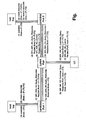
- the only Fig. shows an example application scenario in the context of the IEEE 802.21 standard.
- user equipment UE is connected to an access network via a point of attachment, which is denoted current point of attachment PoA.
- PoA point of attachment
- two further points of attachment which are denoted candidate PoA1 and candidate PoA2
- candidate PoA1 and candidate PoA2 provide the UE potential access to the same or another access network.
- the only Fig. illustrates a possible handover scenario and shows how IEEE 802.21 messages may be extended according to the invention, so that candidate PoAs may check resource availability both on the access link and in the backhaul on a per-flow basis. This allows PoAs to communicate that they only have resources available for a subset of flows.
- the PoAs may offer alternative subsets of flows, too.
- the UE in turn may request handovers for subsets of its flows, even to multiple PoAs.
- a UE which may be a PDA, a notebook or a home network
- a PoA which may be an access point or a base station and which in the following will be referred to as current PoA.
- the current PoA provides the communication between the UE and the network for the flows F1, F2 and F3.
- the UE or more precisely an MIH user on the UE, wishes to perform a handover to other PoAs, e.g. due to a suboptimal connectivity situation.
- the primitive MIH_MN_HO_Candidate_Query Request is generated by the UE to inform the MIHF to query candidate PoAs for possible handover initiation.
- the MIH_MN_HO_Candidate_Query Request answers the purpose to get information of whether the QoS resources of the ongoing data sessions can be supported in the candidate networks.
- the MIH_MN_HO_Candidate_Query Request contains the usual parameters according to the IEEE 802.21 standard together with additional parameters concerning the currently active flows F1, F2 and F3 of the UE.
- the primitive MIH_N2N_HO_Query_Resources Request is used by an MIHF on the serving network, i.e. on the current PoA, to communicate with its peer MIHFs on the candidate network. In the embodiment illustrated in the Fig. this communication is established with the MIHF on the candidate points of attachment PoA1 and PoA2 (2).
- the MIH_N2N_HO_Query_Resources Request is generated by the current PoA after having received the MIH_MN_HO_Candidate_Query Request message from the UE and is sent to one or multiple candidate PoAs.
- the MIH_N2N_HO_Query_Resources Request is used to prepare new link resources for the impending handover and to query the available link resource of the candidate networks.
- the MIH_N2N_HO_Query_Resources Request includes information about the individual flows F1, F2, and F3.
- the candidate PoAs - candidate PoA1 and candidate PoA2 - check the resource availability on a per-flow basis in the respective candidate networks, in this exemplary embodiment by contacting the nodes of the respective candidate networks that constitute the next hops.
- the respective availability information could also already be stored on the candidate PoAs themselves or retrieved by them from any other candidate network entity, for example a centralized one that stores resource availability information for multiple PoAs or next-hop entities of the same candidate network.
- the candidate PoAs receive the respective availability information from the candidate networks. Specifically, candidate PoA1 receives information that flow F2 can be supported, and candidate PoA2 receives information that flows F1 and F3 can be supported.
- the candidate PoAs respond the results of their resource availability checks to the current PoA by means of an MIH_N2N_HO_Query_Resources Response (5).
- the current PoA notifies the UE of the resulting resource availability at the candidate networks through an MIH_MN_HO_Candidate Query Response (6).
- PoA1 is able to support flow F2 only
- PoA2 is able to support flows F1 and F3.
- the UE may choose to attach to PoA2 only, thereby effectively dropping flow F2, or to attach to both PoA1 and PoA2 concurrently in order to sustain all three flows.
- the decision of how to handle individual flows may be left to a network entity, e.g. a PoA such as an access point or a base station.
- the UE decides to elect only PoA2 as target PoA of the handover and requests from the current PoA a handover to the elected target PoA by sending the MIH_MN_HO_Commit Request (7).
- the serving PoA detects the need for a handover by receiving a local or remote (MIH_)Link_Handover_Imminent Indication and itself elects the target PoA(s) based on the collected flow and availability information. Subsequently, the serving current PoA sends the MIH_N2N_HO_Commit Request to the target PoA (8) to request resource preparation at the target network, which in the embodiment illustrated in the Fig. is accessible via candidate PoA2.
- MIH_ local or remote
Landscapes
- Engineering & Computer Science (AREA)
- Computer Networks & Wireless Communication (AREA)
- Signal Processing (AREA)
- Mobile Radio Communication Systems (AREA)
Claims (15)
- Procédé de prise en charge de mécanismes de transfert intercellulaire, en particulier d'un mécanisme de transfert intercellulaire indépendant du support (MIH) selon la norme IEEE 802.21,
dans lequel un équipement d'utilisateur (UE) se rattache à un réseau d'accès par l'intermédiaire de points de rattachement (PoA) ;
dans lequel des messages de signalisation sont échangés entre les entités prenant part audit processus de transfert intercellulaire, dans lequel lesdites entités incluent ledit équipement d'utilisateur (UE) et lesdits points de rattachement (PoA) ;
dans lequel ledit mécanisme de transfert intercellulaire prend en charge le remplacement de la connexion réseau dudit équipement d'utilisateur (UE), de l'un desdits points de rattachement (PoA) - le point de rattachement en cours (PoA) - à un autre desdits points de rattachement (PoA) - le point de rattachement cible (PoA) -, tout en conservant la totalité des communications en cours dudit équipement d'utilisateur (UE) ; et
dans lequel des informations concernant la communication en cours dudit équipement d'utilisateur (UE) sont ajoutées auxdits messages de signalisation échangés dans le cadre dudit processus de transfert intercellulaire, de sorte que des informations connexes aux flux individuels des flux en cours dudit équipement d'utilisateur (UE) sont incluses dans lesdits messages de signalisation ;
caractérisé en ce que lesdites informations sont employées en vue de traiter des flux de trafic individuels de la communication en cours dudit équipement d'utilisateur (UE) sélectivement au cours dudit processus de transfert intercellulaire, de sorte que l'entité préparant le transfert intercellulaire peut décider que seul un sous-ensemble des flux actifs en cours dudit équipement d'utilisateur (UE) est transféré, tandis que le reste est abandonné. - Procédé selon la revendication 1, dans lequel lesdites informations ajoutées auxdits messages de signalisation incluent des informations concernant les exigences en ressources et/ou les demandes de qualité de service (QoS) de chaque flux, en particulier les paramètres de bande passante, de retard, de gigue et de perte ; et/ou
dans lequel lesdites informations ajoutées auxdits messages de signalisation incluent des informations concernant le type des flux dudit équipement d'utilisateur (UE). - Procédé selon la revendication 1 ou 2, dans lequel lesdites informations ajoutées auxdits messages de signalisation incluent des informations concernant la priorité et/ou l'importance de chaque flux en valeur absolue ou relativement à d'autres flux ; et/ou
dans lequel lesdites informations ajoutées auxdits messages de signalisation incluent des informations concernant les dépendances entre des flux individuels et/ou des groupes de flux. - Procédé selon l'une quelconque des revendications 1 à 3, dans lequel lesdites informations ajoutées auxdits messages de signalisation incluent des informations sur des flux individuels en provenance de protocoles d'un ou plusieurs niveaux supérieurs de la pile de mise en réseau.
- Procédé selon l'une quelconque des revendications 1 à 4, dans lequel ledit processus de transfert intercellulaire est déclenché par ledit équipement d'utilisateur (UE) ou à partir d'un côté du réseau, en particulier par ledit point de rattachement en cours (PoA) ; et/ou
dans lequel le motif dudit transfert intercellulaire provient dudit réseau d'accès ou d'un réseau central (CN) auquel ledit réseau d'accès est connecté. - Procédé selon l'une quelconque des revendications 1 à 5, dans lequel ledit processus de transfert intercellulaire est déclenché en même temps pour tous les flux de trafic dudit équipement d'utilisateur (UE), ou individuellement pour des groupes de flux ou des flux uniques dudit équipement d'utilisateur (UE).
- Procédé selon l'une quelconque des revendications 1 à 6, dans lequel lesdits messages de signalisation contiennent des identifiants individuels ou une liste d'identifiants pour la totalité ou un sous-ensemble des flux actifs en cours de l'équipement d'utilisateur (UE).
- Procédé selon l'une quelconque des revendications 1 à 7, dans lequel, à partir desdits points de rattachement (PoA), un ensemble de points de rattachement candidats (PoA) est déterminé, auquel les flux de trafic dudit équipement d'utilisateur (UE) peuvent être transférés.
- Procédé selon la revendication 8, dans lequel lesdits points de rattachement candidats (PoA) sont interrogés en vue de déterminer si des flux uniques ou des groupes de flux dudit équipement d'utilisateur (UE) sont admissibles à un transfert intercellulaire, en particulier en vue de déterminer si des ressources suffisantes sont disponibles pour prendre en charge des flux uniques ou des groupes de flux dudit équipement d'utilisateur (UE) au niveau de chaque point de rattachement candidat (PoA).
- Procédé selon la revendication 8 ou 9, dans lequel lesdits points de rattachement candidats (PoA) mettent en oeuvre différentes tâches, en particulier des tests de commande d'admission et des vérifications de disponibilité de ressources pour les liaisons d'accès et/ou la liaison de raccordement sur chaque flux individuellement ou sur un groupe de flux.
- Procédé selon la revendication 9 ou 10, dans lequel lesdits points de rattachement candidats (PoA) répondent par un message de signalisation indiquant un sous-ensemble de flux ou une liste de sous-ensembles de flux alternatifs qu'ils peuvent prendre en charge.
- Procédé selon l'une quelconque des revendications 8 à 11, dans lequel l'entité préparant le transfert intercellulaire, de préférence sur la base des réponses en provenance desdits points de rattachement candidats (PoA), détermine quels points de rattachement candidats (PoA) sont sélectionnés en qualité de points de rattachement cibles auxquels des flux individuels ou un ensemble de flux sont transférés.
- Procédé selon l'une quelconque des revendications 1 à 12, dans lequel l'entité préparant le transfert intercellulaire décide de transférer certains des flux actifs en cours de l'équipement d'utilisateur (UE) à un point de rattachement cible (PoA), et d'autres à un ou plusieurs autres points de rattachement cibles (PoA) ; et/ou
dans lequel ledit équipement d'utilisateur (UE) est connecté à de multiples points de rattachement (PoA) avant et après le transfert intercellulaire. - Procédé selon l'une quelconque des revendications 1 à 13, dans lequel lesdits messages de signalisation utilisés pour signaler l'exécution de transfert intercellulaire auxdits points de rattachement cibles (PoA) ou la libération de ressources sur des points de rattachement candidats ou anciens (PoA) transportent à nouveau des informations sur les flux individuels à transférer ;
dans lequel lesdites informations peuvent être contenues explicitement ou implicitement en ajoutant des informations qui facilitent la récupération, par lesdits points de rattachement (PoA), de ces informations, à partir d'échanges de messages précédents ; et/ou
dans lequel lesdites informations sur les flux individuels peuvent être utilisées par les points de rattachement cibles (PoA) en vue de réserver des ressources pour chaque flux sur la liaison d'accès et au sein du réseau d'accès ; et/ou
dans lequel lesdites informations sur les flux individuels peuvent être utilisées par les points de rattachement cibles (PoA) en vue de mettre en correspondance des flux avec des chemins à travers le réseau d'accès. - Procédé selon l'une quelconque des revendications 9 à 14, dans lequel les ressources respectives sont allouées par lesdits points de rattachement cibles (PoA) pour des flux individuels ou un ensemble de flux.
Priority Applications (1)
| Application Number | Priority Date | Filing Date | Title |
|---|---|---|---|
| EP09776548.1A EP2321996B1 (fr) | 2008-09-01 | 2009-04-20 | Procédé pour prendre en charge des mécanismes de transfert |
Applications Claiming Priority (3)
| Application Number | Priority Date | Filing Date | Title |
|---|---|---|---|
| EP08015390 | 2008-09-01 | ||
| PCT/EP2009/002865 WO2010022804A1 (fr) | 2008-09-01 | 2009-04-20 | Procédé pour prendre en charge des mécanismes de transfert |
| EP09776548.1A EP2321996B1 (fr) | 2008-09-01 | 2009-04-20 | Procédé pour prendre en charge des mécanismes de transfert |
Publications (2)
| Publication Number | Publication Date |
|---|---|
| EP2321996A1 EP2321996A1 (fr) | 2011-05-18 |
| EP2321996B1 true EP2321996B1 (fr) | 2015-10-07 |
Family
ID=40943520
Family Applications (1)
| Application Number | Title | Priority Date | Filing Date |
|---|---|---|---|
| EP09776548.1A Not-in-force EP2321996B1 (fr) | 2008-09-01 | 2009-04-20 | Procédé pour prendre en charge des mécanismes de transfert |
Country Status (5)
| Country | Link |
|---|---|
| US (1) | US8908514B2 (fr) |
| EP (1) | EP2321996B1 (fr) |
| JP (1) | JP5266387B2 (fr) |
| KR (1) | KR101258337B1 (fr) |
| WO (1) | WO2010022804A1 (fr) |
Family Cites Families (10)
| Publication number | Priority date | Publication date | Assignee | Title |
|---|---|---|---|---|
| KR100640344B1 (ko) | 2003-03-08 | 2006-10-30 | 삼성전자주식회사 | 광대역 무선 접속 통신 시스템의 기지국에서 핸드오버 시스템 및 방법 |
| JP4496733B2 (ja) * | 2003-08-06 | 2010-07-07 | 日本電気株式会社 | 移動通信システム及びそれに用いるハンドオーバ方法 |
| US7809381B2 (en) * | 2004-07-16 | 2010-10-05 | Bridgeport Networks, Inc. | Presence detection for cellular and internet protocol telephony |
| US7496364B2 (en) * | 2004-11-05 | 2009-02-24 | Freescale Semiconductor, Inc. | Media-independent handover (MIH) method featuring a simplified beacon |
| WO2006118410A2 (fr) | 2005-05-02 | 2006-11-09 | Lg Electronics Inc. | Procede permettant de prendre en charge le transfert dans une station mobile multimode |
| KR101084137B1 (ko) * | 2005-05-02 | 2011-11-17 | 엘지전자 주식회사 | 멀티모드 이동단말의 핸드오버 지원 방법 |
| US7551648B2 (en) | 2005-08-22 | 2009-06-23 | Nec Laboratories America, Inc. | Superimposed training for multiple antenna communications |
| GB0517246D0 (en) * | 2005-08-24 | 2005-09-28 | Siemens Ag | Prioritisation scheme |
| JP4373475B2 (ja) * | 2005-12-27 | 2009-11-25 | 株式会社日立コミュニケーションテクノロジー | 無線システムにおけるアクセスゲートウェイおよびフロー制御方法 |
| KR100819055B1 (ko) * | 2006-12-08 | 2008-04-02 | 한국전자통신연구원 | 이동 IPv6 네트워크에서 플로우 기반 QoS 보장을위한 3 계층 핸드오버 경로 설정 방법 |
-
2009
- 2009-04-20 EP EP09776548.1A patent/EP2321996B1/fr not_active Not-in-force
- 2009-04-20 JP JP2011522389A patent/JP5266387B2/ja active Active
- 2009-04-20 KR KR1020117007538A patent/KR101258337B1/ko not_active Expired - Fee Related
- 2009-04-20 WO PCT/EP2009/002865 patent/WO2010022804A1/fr not_active Ceased
- 2009-04-20 US US13/061,531 patent/US8908514B2/en active Active
Also Published As
| Publication number | Publication date |
|---|---|
| KR20110049908A (ko) | 2011-05-12 |
| JP2011530908A (ja) | 2011-12-22 |
| EP2321996A1 (fr) | 2011-05-18 |
| KR101258337B1 (ko) | 2013-04-25 |
| US20110216742A1 (en) | 2011-09-08 |
| JP5266387B2 (ja) | 2013-08-21 |
| WO2010022804A1 (fr) | 2010-03-04 |
| US8908514B2 (en) | 2014-12-09 |
Similar Documents
| Publication | Publication Date | Title |
|---|---|---|
| CN1188010C (zh) | 移动通信 | |
| KR101207856B1 (ko) | 다중―모드 모바일 유닛들에 대한 무선 베어러 및 mip 세션 연속성을 유지하기 위한 최선형 핸드오프의 방법 | |
| JP4963116B2 (ja) | 無線通信システムにおける基地局の動作方法及びその装置 | |
| JP4422100B2 (ja) | 異種ネットワークにおけるシームレスハンドオーバ | |
| US20110122812A1 (en) | Seamless service method controlled by user terminal | |
| US20080222294A1 (en) | Managing Communications Using a Mobile Device | |
| US7496363B2 (en) | Method of changing access point for a mobile node in a wireless access network | |
| CA2683556A1 (fr) | Gestion de session inactive associee a un transfert | |
| KR100960124B1 (ko) | 이동단말 및 그 핸드오버방법 | |
| CA2614856A1 (fr) | Systeme de tamponnage dynamique de paquets destine au transfert mobile | |
| JP4422101B2 (ja) | 途切れずに引渡しを行うためのコンテキスト転送 | |
| CN101394359B (zh) | 一种异构无线网络中支持端到端服务质量的通信系统和方法 | |
| Wang et al. | Security context transfer in vertical handover | |
| KR20210041491A (ko) | 차세대 이동 통신 시스템에서 음성 통화 서비스를 지원하는 방법 및 장치 | |
| Daoud et al. | UFA: Ultra Flat Architecture for high bitrate services in mobile networks | |
| Angoma et al. | HaVe-2W3G: A vertical handoff solution between WLAN, WiMAX and 3G networks | |
| EP2321996B1 (fr) | Procédé pour prendre en charge des mécanismes de transfert | |
| KR20090015786A (ko) | 무선통신시스템에서 서비스 플로우의 서비스품질 관리 장치및 방법 | |
| EP2319266B1 (fr) | Procédé permettant de prendre en charge des mécanismes de qualité de service pendant un processus de transfert ou lors de la préparation d'un processus de transfert | |
| Reynolds | Mobility management for the support of handover within a heterogeneous mobile environment | |
| Anand et al. | Unified protocol stack architecture for 4G mobile terminals to support multiple radio access technologies | |
| Yadav et al. | Vertical handover over intermediate switching framework: Assuring service quality for mobile users | |
| EP2413632A1 (fr) | Procédé et appareil pour la fourniture d'un flux de données vers un dispositif de communication mobile | |
| Akkari et al. | Vertical-to-Horizontal Handovers: Architecture and Mobility Management | |
| Tharwal et al. | Location Management in GSM |
Legal Events
| Date | Code | Title | Description |
|---|---|---|---|
| PUAI | Public reference made under article 153(3) epc to a published international application that has entered the european phase |
Free format text: ORIGINAL CODE: 0009012 |
|
| 17P | Request for examination filed |
Effective date: 20110119 |
|
| AK | Designated contracting states |
Kind code of ref document: A1 Designated state(s): AT BE BG CH CY CZ DE DK EE ES FI FR GB GR HR HU IE IS IT LI LT LU LV MC MK MT NL NO PL PT RO SE SI SK TR |
|
| AX | Request for extension of the european patent |
Extension state: AL BA RS |
|
| RIN1 | Information on inventor provided before grant (corrected) |
Inventor name: STUPAR, PATRICK Inventor name: ZDARSKY, FRANK |
|
| DAX | Request for extension of the european patent (deleted) | ||
| 17Q | First examination report despatched |
Effective date: 20131126 |
|
| GRAP | Despatch of communication of intention to grant a patent |
Free format text: ORIGINAL CODE: EPIDOSNIGR1 |
|
| INTG | Intention to grant announced |
Effective date: 20150317 |
|
| GRAP | Despatch of communication of intention to grant a patent |
Free format text: ORIGINAL CODE: EPIDOSNIGR1 |
|
| INTG | Intention to grant announced |
Effective date: 20150504 |
|
| GRAS | Grant fee paid |
Free format text: ORIGINAL CODE: EPIDOSNIGR3 |
|
| GRAA | (expected) grant |
Free format text: ORIGINAL CODE: 0009210 |
|
| RAP1 | Party data changed (applicant data changed or rights of an application transferred) |
Owner name: NEC CORPORATION |
|
| AK | Designated contracting states |
Kind code of ref document: B1 Designated state(s): AT BE BG CH CY CZ DE DK EE ES FI FR GB GR HR HU IE IS IT LI LT LU LV MC MK MT NL NO PL PT RO SE SI SK TR |
|
| REG | Reference to a national code |
Ref country code: GB Ref legal event code: FG4D |
|
| REG | Reference to a national code |
Ref country code: AT Ref legal event code: REF Ref document number: 754355 Country of ref document: AT Kind code of ref document: T Effective date: 20151015 Ref country code: CH Ref legal event code: EP |
|
| REG | Reference to a national code |
Ref country code: IE Ref legal event code: FG4D |
|
| REG | Reference to a national code |
Ref country code: DE Ref legal event code: R096 Ref document number: 602009034057 Country of ref document: DE |
|
| REG | Reference to a national code |
Ref country code: NL Ref legal event code: MP Effective date: 20151007 |
|
| REG | Reference to a national code |
Ref country code: AT Ref legal event code: MK05 Ref document number: 754355 Country of ref document: AT Kind code of ref document: T Effective date: 20151007 |
|
| REG | Reference to a national code |
Ref country code: LT Ref legal event code: MG4D |
|
| REG | Reference to a national code |
Ref country code: FR Ref legal event code: PLFP Year of fee payment: 8 |
|
| PG25 | Lapsed in a contracting state [announced via postgrant information from national office to epo] |
Ref country code: NL Free format text: LAPSE BECAUSE OF FAILURE TO SUBMIT A TRANSLATION OF THE DESCRIPTION OR TO PAY THE FEE WITHIN THE PRESCRIBED TIME-LIMIT Effective date: 20151007 Ref country code: LT Free format text: LAPSE BECAUSE OF FAILURE TO SUBMIT A TRANSLATION OF THE DESCRIPTION OR TO PAY THE FEE WITHIN THE PRESCRIBED TIME-LIMIT Effective date: 20151007 Ref country code: HR Free format text: LAPSE BECAUSE OF FAILURE TO SUBMIT A TRANSLATION OF THE DESCRIPTION OR TO PAY THE FEE WITHIN THE PRESCRIBED TIME-LIMIT Effective date: 20151007 Ref country code: IT Free format text: LAPSE BECAUSE OF FAILURE TO SUBMIT A TRANSLATION OF THE DESCRIPTION OR TO PAY THE FEE WITHIN THE PRESCRIBED TIME-LIMIT Effective date: 20151007 Ref country code: ES Free format text: LAPSE BECAUSE OF FAILURE TO SUBMIT A TRANSLATION OF THE DESCRIPTION OR TO PAY THE FEE WITHIN THE PRESCRIBED TIME-LIMIT Effective date: 20151007 Ref country code: NO Free format text: LAPSE BECAUSE OF FAILURE TO SUBMIT A TRANSLATION OF THE DESCRIPTION OR TO PAY THE FEE WITHIN THE PRESCRIBED TIME-LIMIT Effective date: 20160107 Ref country code: IS Free format text: LAPSE BECAUSE OF FAILURE TO SUBMIT A TRANSLATION OF THE DESCRIPTION OR TO PAY THE FEE WITHIN THE PRESCRIBED TIME-LIMIT Effective date: 20160207 |
|
| PG25 | Lapsed in a contracting state [announced via postgrant information from national office to epo] |
Ref country code: PT Free format text: LAPSE BECAUSE OF FAILURE TO SUBMIT A TRANSLATION OF THE DESCRIPTION OR TO PAY THE FEE WITHIN THE PRESCRIBED TIME-LIMIT Effective date: 20160208 Ref country code: FI Free format text: LAPSE BECAUSE OF FAILURE TO SUBMIT A TRANSLATION OF THE DESCRIPTION OR TO PAY THE FEE WITHIN THE PRESCRIBED TIME-LIMIT Effective date: 20151007 Ref country code: SE Free format text: LAPSE BECAUSE OF FAILURE TO SUBMIT A TRANSLATION OF THE DESCRIPTION OR TO PAY THE FEE WITHIN THE PRESCRIBED TIME-LIMIT Effective date: 20151007 Ref country code: GR Free format text: LAPSE BECAUSE OF FAILURE TO SUBMIT A TRANSLATION OF THE DESCRIPTION OR TO PAY THE FEE WITHIN THE PRESCRIBED TIME-LIMIT Effective date: 20160108 Ref country code: AT Free format text: LAPSE BECAUSE OF FAILURE TO SUBMIT A TRANSLATION OF THE DESCRIPTION OR TO PAY THE FEE WITHIN THE PRESCRIBED TIME-LIMIT Effective date: 20151007 Ref country code: LV Free format text: LAPSE BECAUSE OF FAILURE TO SUBMIT A TRANSLATION OF THE DESCRIPTION OR TO PAY THE FEE WITHIN THE PRESCRIBED TIME-LIMIT Effective date: 20151007 Ref country code: PL Free format text: LAPSE BECAUSE OF FAILURE TO SUBMIT A TRANSLATION OF THE DESCRIPTION OR TO PAY THE FEE WITHIN THE PRESCRIBED TIME-LIMIT Effective date: 20151007 |
|
| REG | Reference to a national code |
Ref country code: DE Ref legal event code: R097 Ref document number: 602009034057 Country of ref document: DE |
|
| PG25 | Lapsed in a contracting state [announced via postgrant information from national office to epo] |
Ref country code: CZ Free format text: LAPSE BECAUSE OF FAILURE TO SUBMIT A TRANSLATION OF THE DESCRIPTION OR TO PAY THE FEE WITHIN THE PRESCRIBED TIME-LIMIT Effective date: 20151007 |
|
| PLBE | No opposition filed within time limit |
Free format text: ORIGINAL CODE: 0009261 |
|
| STAA | Information on the status of an ep patent application or granted ep patent |
Free format text: STATUS: NO OPPOSITION FILED WITHIN TIME LIMIT |
|
| PG25 | Lapsed in a contracting state [announced via postgrant information from national office to epo] |
Ref country code: DK Free format text: LAPSE BECAUSE OF FAILURE TO SUBMIT A TRANSLATION OF THE DESCRIPTION OR TO PAY THE FEE WITHIN THE PRESCRIBED TIME-LIMIT Effective date: 20151007 Ref country code: RO Free format text: LAPSE BECAUSE OF FAILURE TO SUBMIT A TRANSLATION OF THE DESCRIPTION OR TO PAY THE FEE WITHIN THE PRESCRIBED TIME-LIMIT Effective date: 20151007 Ref country code: SK Free format text: LAPSE BECAUSE OF FAILURE TO SUBMIT A TRANSLATION OF THE DESCRIPTION OR TO PAY THE FEE WITHIN THE PRESCRIBED TIME-LIMIT Effective date: 20151007 Ref country code: EE Free format text: LAPSE BECAUSE OF FAILURE TO SUBMIT A TRANSLATION OF THE DESCRIPTION OR TO PAY THE FEE WITHIN THE PRESCRIBED TIME-LIMIT Effective date: 20151007 Ref country code: BE Free format text: LAPSE BECAUSE OF NON-PAYMENT OF DUE FEES Effective date: 20160430 |
|
| 26N | No opposition filed |
Effective date: 20160708 |
|
| PG25 | Lapsed in a contracting state [announced via postgrant information from national office to epo] |
Ref country code: SI Free format text: LAPSE BECAUSE OF FAILURE TO SUBMIT A TRANSLATION OF THE DESCRIPTION OR TO PAY THE FEE WITHIN THE PRESCRIBED TIME-LIMIT Effective date: 20151007 |
|
| REG | Reference to a national code |
Ref country code: CH Ref legal event code: PL |
|
| PG25 | Lapsed in a contracting state [announced via postgrant information from national office to epo] |
Ref country code: LU Free format text: LAPSE BECAUSE OF FAILURE TO SUBMIT A TRANSLATION OF THE DESCRIPTION OR TO PAY THE FEE WITHIN THE PRESCRIBED TIME-LIMIT Effective date: 20160420 Ref country code: BE Free format text: LAPSE BECAUSE OF FAILURE TO SUBMIT A TRANSLATION OF THE DESCRIPTION OR TO PAY THE FEE WITHIN THE PRESCRIBED TIME-LIMIT Effective date: 20151007 |
|
| REG | Reference to a national code |
Ref country code: IE Ref legal event code: MM4A |
|
| PG25 | Lapsed in a contracting state [announced via postgrant information from national office to epo] |
Ref country code: LI Free format text: LAPSE BECAUSE OF NON-PAYMENT OF DUE FEES Effective date: 20160430 Ref country code: CH Free format text: LAPSE BECAUSE OF NON-PAYMENT OF DUE FEES Effective date: 20160430 |
|
| REG | Reference to a national code |
Ref country code: FR Ref legal event code: PLFP Year of fee payment: 9 |
|
| PG25 | Lapsed in a contracting state [announced via postgrant information from national office to epo] |
Ref country code: IE Free format text: LAPSE BECAUSE OF NON-PAYMENT OF DUE FEES Effective date: 20160420 |
|
| REG | Reference to a national code |
Ref country code: FR Ref legal event code: PLFP Year of fee payment: 10 |
|
| PG25 | Lapsed in a contracting state [announced via postgrant information from national office to epo] |
Ref country code: CY Free format text: LAPSE BECAUSE OF FAILURE TO SUBMIT A TRANSLATION OF THE DESCRIPTION OR TO PAY THE FEE WITHIN THE PRESCRIBED TIME-LIMIT Effective date: 20151007 Ref country code: HU Free format text: LAPSE BECAUSE OF FAILURE TO SUBMIT A TRANSLATION OF THE DESCRIPTION OR TO PAY THE FEE WITHIN THE PRESCRIBED TIME-LIMIT; INVALID AB INITIO Effective date: 20090420 |
|
| PG25 | Lapsed in a contracting state [announced via postgrant information from national office to epo] |
Ref country code: MT Free format text: LAPSE BECAUSE OF NON-PAYMENT OF DUE FEES Effective date: 20160430 Ref country code: TR Free format text: LAPSE BECAUSE OF FAILURE TO SUBMIT A TRANSLATION OF THE DESCRIPTION OR TO PAY THE FEE WITHIN THE PRESCRIBED TIME-LIMIT Effective date: 20151007 Ref country code: MK Free format text: LAPSE BECAUSE OF FAILURE TO SUBMIT A TRANSLATION OF THE DESCRIPTION OR TO PAY THE FEE WITHIN THE PRESCRIBED TIME-LIMIT Effective date: 20151007 Ref country code: MC Free format text: LAPSE BECAUSE OF FAILURE TO SUBMIT A TRANSLATION OF THE DESCRIPTION OR TO PAY THE FEE WITHIN THE PRESCRIBED TIME-LIMIT Effective date: 20151007 |
|
| PG25 | Lapsed in a contracting state [announced via postgrant information from national office to epo] |
Ref country code: BG Free format text: LAPSE BECAUSE OF FAILURE TO SUBMIT A TRANSLATION OF THE DESCRIPTION OR TO PAY THE FEE WITHIN THE PRESCRIBED TIME-LIMIT Effective date: 20151007 |
|
| PGFP | Annual fee paid to national office [announced via postgrant information from national office to epo] |
Ref country code: FR Payment date: 20230425 Year of fee payment: 15 Ref country code: DE Payment date: 20230420 Year of fee payment: 15 |
|
| PGFP | Annual fee paid to national office [announced via postgrant information from national office to epo] |
Ref country code: GB Payment date: 20230419 Year of fee payment: 15 |
|
| REG | Reference to a national code |
Ref country code: DE Ref legal event code: R119 Ref document number: 602009034057 Country of ref document: DE |
|
| GBPC | Gb: european patent ceased through non-payment of renewal fee |
Effective date: 20240420 |
|
| PG25 | Lapsed in a contracting state [announced via postgrant information from national office to epo] |
Ref country code: DE Free format text: LAPSE BECAUSE OF NON-PAYMENT OF DUE FEES Effective date: 20241105 |
|
| PG25 | Lapsed in a contracting state [announced via postgrant information from national office to epo] |
Ref country code: GB Free format text: LAPSE BECAUSE OF NON-PAYMENT OF DUE FEES Effective date: 20240420 |
|
| PG25 | Lapsed in a contracting state [announced via postgrant information from national office to epo] |
Ref country code: FR Free format text: LAPSE BECAUSE OF NON-PAYMENT OF DUE FEES Effective date: 20240430 |
|
| PG25 | Lapsed in a contracting state [announced via postgrant information from national office to epo] |
Ref country code: GB Free format text: LAPSE BECAUSE OF NON-PAYMENT OF DUE FEES Effective date: 20240420 Ref country code: FR Free format text: LAPSE BECAUSE OF NON-PAYMENT OF DUE FEES Effective date: 20240430 Ref country code: DE Free format text: LAPSE BECAUSE OF NON-PAYMENT OF DUE FEES Effective date: 20241105 |