EP2326112A2 - Verfahren zur Steuerung des MBMS-Modus einer MBMS-Sitzung in einem Kommunikationssystem - Google Patents
Verfahren zur Steuerung des MBMS-Modus einer MBMS-Sitzung in einem Kommunikationssystem Download PDFInfo
- Publication number
- EP2326112A2 EP2326112A2 EP10014748A EP10014748A EP2326112A2 EP 2326112 A2 EP2326112 A2 EP 2326112A2 EP 10014748 A EP10014748 A EP 10014748A EP 10014748 A EP10014748 A EP 10014748A EP 2326112 A2 EP2326112 A2 EP 2326112A2
- Authority
- EP
- European Patent Office
- Prior art keywords
- mbms
- mode
- network element
- session
- plane data
- Prior art date
- Legal status (The legal status is an assumption and is not a legal conclusion. Google has not performed a legal analysis and makes no representation as to the accuracy of the status listed.)
- Withdrawn
Links
- 238000004891 communication Methods 0.000 title claims abstract description 45
- 238000000034 method Methods 0.000 title claims abstract description 44
- 230000011664 signaling Effects 0.000 claims abstract description 39
- 238000005457 optimization Methods 0.000 claims description 7
- 230000001360 synchronised effect Effects 0.000 claims description 4
- 230000005540 biological transmission Effects 0.000 description 21
- 230000008901 benefit Effects 0.000 description 8
- 238000010586 diagram Methods 0.000 description 6
- 230000006870 function Effects 0.000 description 5
- 230000008569 process Effects 0.000 description 4
- 230000009471 action Effects 0.000 description 3
- 230000008859 change Effects 0.000 description 3
- 238000012986 modification Methods 0.000 description 3
- 230000004048 modification Effects 0.000 description 3
- 208000037924 multicystic encephalomalacia Diseases 0.000 description 3
- 238000007726 management method Methods 0.000 description 2
- 239000000523 sample Substances 0.000 description 2
- 238000013459 approach Methods 0.000 description 1
- 238000003491 array Methods 0.000 description 1
- 238000013461 design Methods 0.000 description 1
- 238000005516 engineering process Methods 0.000 description 1
- 230000007774 longterm Effects 0.000 description 1
- 238000012423 maintenance Methods 0.000 description 1
- 230000003287 optical effect Effects 0.000 description 1
- 238000012545 processing Methods 0.000 description 1
- 238000010187 selection method Methods 0.000 description 1
Images


Classifications
-
- H—ELECTRICITY
- H04—ELECTRIC COMMUNICATION TECHNIQUE
- H04W—WIRELESS COMMUNICATION NETWORKS
- H04W4/00—Services specially adapted for wireless communication networks; Facilities therefor
- H04W4/06—Selective distribution of broadcast services, e.g. multimedia broadcast multicast service [MBMS]; Services to user groups; One-way selective calling services
-
- H—ELECTRICITY
- H04—ELECTRIC COMMUNICATION TECHNIQUE
- H04W—WIRELESS COMMUNICATION NETWORKS
- H04W72/00—Local resource management
- H04W72/30—Resource management for broadcast services
Definitions
- the present disclosure relates generally to communication systems and more particularly to a method to control a multimedia broadcast multicast service (MBMS) mode of a MBMS session in a communication system.
- MBMS multimedia broadcast multicast service
- Multimedia Broadcast Multicast Services are being implemented in communication systems.
- data for a service is transmitted in one or more consecutive MBMS sessions of finite duration.
- MBMS data for such a session can be transmitted using an MBMS mode across a set of cells called a service area.
- MBMS data can be transmitted in several modes.
- MBMS data can be transmitted in synchronized fashion in multiple cells in a service area in what is called a single frequency network (SFN) MBMS mode or SFN mode.
- SFN single frequency network
- MBMS data can also be transmitted independently in non-synchronized fashion in multiple cells in a service area in what is called a single cell (SC) MBMS mode or SC mode.
- SFN single frequency network
- SC single cell
- the base stations in the service area transmit identical MBMS user plane data at the same time and at the same frequency in each of the cells of the service area.
- the base stations schedule and transmit the user plane data independently in some or all of the cells of the service area.
- the decision whether to transmit MBMS data for a service using SFN mode or SC mode is normally determined by pre-configuration.
- the operator may configure a mode for a service which typically is defined for an entire period of the MBMS service.
- the decision on whether to transmit the data in SFN mode or SC mode may be made by a network element (NE) in a radio access network (RAN).
- NE network element
- RAN radio access network
- the network element located in the RAN may instruct the base stations that are under the NE's control to probe for interested radio terminals.
- the term 'interested' denotes those radio terminals that should or will receive user plane data for the MBMS session.
- the base stations wake up the radio terminals, perform counting procedures to estimate the number of interested terminals, and then report the results of the counting to the network element, which in turn decides the MBMS mode.
- Counting procedures are described in the "3rd Generation Partnership Project; Technical Specification Group Radio Access Network; Introduction of the Multimedia Broadcast Multicast Service (MBMS) in the Radio Access Network (RAN)" [3GPP TS 25.345] which is included here by reference.
- MBMS Multimedia Broadcast Multicast Service
- RAN Radio Access Network
- This advanced implementation may lead to increased system efficiency, but has a much longer setup time.
- the decision may not be always optimal when the network element decides to use a particular MBMS mode based on fixed parameters.
- additional communication is needed between those NEs, which lead to increased system complexity.
- a fast setup of the session may be more important than efficiency. Examples are a Tsunami warning or an emergency video transmission to a public safety group.
- the network elements located within the radio access network may not have enough information about the importance or nature of the data to be transmitted and may decide to use a MBMS mode which may not be optimal for the service.
- terminals wishing to receive the MBMS service may be highly mobile and may require a specific MBMS mode that supports such high mobility.
- An example of such an application is the transmission of data to ambulances and fire trucks, where ambulances and fire trucks will be making many cell changes and will benefit from the uniform coverage provided by SFN mode.
- the automatic selection method used by the network element located in the RAN may incorrectly decide to use SC mode based on the sparse distribution of terminals in the service area.
- Yet other applications may require low latency, for example transmission of real time voice to a public safety group.
- the service provider may prefer to use the smaller buffer size of a MBMS mode.
- existing communication systems does not facilitate a service provider to control the MBMS mode of a MBMS session other than through pre-configuration.
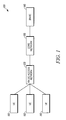
- FIG. 1 is a block diagram illustrating basic structure of a communication system employing a method to control a multimedia broadcast multicast service mode of a multimedia broadcast multicast service (MBMS) session in accordance with some embodiments.
- MBMS multimedia broadcast multicast service
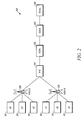
- FIG. 2 is a block diagram of a UTRAN based communication system employing a method to control a MBMS mode of a MBMS session in accordance with some embodiments.
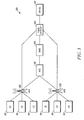
- FIG. 3 is a block diagram of an LTE based communication system employing a method to control a MBMS mode of a MBMS session in accordance with some embodiments.
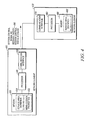
- FIG. 4 is a block diagram illustrating further detail of a first network element that is located outside a radio access network and a second network element that is located inside the radio access network employed in the communication system shown in FIG. 1 .
- FIG. 5 is a flowchart illustrating a method of operation of a radio network element that is located outside a radio network to control the MBMS mode of a MBMS session in the communication system in accordance with some embodiments.
- FIG. 6 is a flowchart illustrating a method of operation of a radio network element that is located outside a radio network to control the MBMS mode of a MBMS session in the communication system in accordance with some embodiments.
- a method to control a multimedia broadcast multicast service (MBMS) mode of a MBMS session in a communication system is provided herein.
- a first network element that is located outside a radio access network determines to use one of a single frequency network MBMS mode and a single cell MBMS mode for the MBMS session based on a property of the MBMS session.
- the first network element then transmits a session control signaling message to a second network element that is located inside the radio access network.
- the session control signaling message instructs the second network element that user plane data for the MBMS session shall be transmitted using the determined MBMS mode.
- the base stations then transmit the user plane data to one or user equipments in a target service area according to the determined MBMS mode.
- FIG. 1 is a block diagram illustrating a basic structure of a communication system 100 employing a method to control a multimedia broadcast multicast service (MBMS) mode of a MBMS session in accordance with some embodiments.
- the communication system 100 comprises a plurality of radio terminals or user equipments (UE) 110, a radio access network (RAN) 120, a core network 130, and a broadcast multicast service center (BM-SC) 140.
- the radio access network 120 provides wireless access to the user equipments 110.
- the core network 130 provides communication services to the user equipments 110 via the radio access network 120.
- the core network 130 provides different functionalities including, but not limited to providing authentication to user equipments 110 for services, call control/switching, and maintenance of a subscriber database.
- the broadcast multicast service center (BM-SC) 140 is additionally included to mediate between content providers and/or service providers (not shown) for the MBMS services and the network (core network 130 and RAN 120).
- the BM-SC 140 is overall responsible for both control plane data and user plane data of an MBMS service.
- the control plane data which is also signaling data or signaling, refers to transmission of control information across an interface of a network, for example for the management of MBMS data sessions.
- the user plane data refers to payload information for a UE 110 and eventually for its user, for example, video data, voice data, application data and multimedia content for the MBMS service.
- the BM-SC 140 is also responsible for authenticating and authorizing the content providers and/or service providers, receiving and possibly modifying the data, for example, by encrypting the content received from the content/service providers and transmitting the encrypted data to the core network 130 for further transmission to user equipments 110 via the radio access network 120.
- the BM-SC 140 also may provide information about its services for both service announcement and bearer setup purposes, authenticate UEs 110 wishing to join a multicast session, and initiate MBMS session start, modify, and stop signaling.
- the BM-SC 140 is shown as physically separated from the core network, the BM-SC 140 can also be implemented as a part of the core network 130. In one embodiment, the BM-SC 140 may be implemented as a single server or a network element. In one embodiment, the BM-SC 140 is implemented in distributed fashion, where different servers or different network elements perform the different functionalities of the BM-SC 140. In any embodiment, the functionality of BM-SC 140 is performed by one or more network elements that are located outside the RAN 120. Some or all of the functionality may be provided, for example, by a dispatch console or dispatch server in a Public Safety system, a server connected to an emergency warning system, or by a video server in a mobile television (TV) system.
- TV mobile television
- MBMS refers to a downlink transmission service for providing data services such as, streaming services (e.g., multimedia, video on demand, webcast) or background services (e.g., warning messages, bulk e-mail, short message services (SMS), downloading, local information, advertisements), to a plurality of user equipments 110 by employing a downlink dedicated MBMS bearer service.
- MBMS user plane data can be transmitted in either a single frequency network (SFN) MBMS mode or a single cell (SC) MBMS mode.
- SFN single frequency network
- SC single cell
- the transmission is directed at a set of cells, which is referred to as a MBMS service area or a service area or a target service area.
- MBMS user plane data is transmitted in synchronized fashion (simulcast) in the cells of the target service area in multi-cell transmission.
- the multi-cell simulcast transmission area is called as a single frequency network.
- base stations also referred to as Node-Bs or eNBs, see FIGs. 2 and 3
- SC mode MBMS data is transmitted independently in multiple cells.
- the user plane data is scheduled and transmitted independently in each of the cells of the service area. In some embodiments, the user plane data is not transmitted when there is no UE 110 in the cell that is interested in receiving the MBMS data.
- the RAN 120 and the core network 130 include one or more network elements to perform its various functionalities.
- FIG. 2 shows a UTRAN based communication system 200 employing a method to control a multimedia broadcast multicast service (MBMS) mode of a MBMS session.
- MBMS multimedia broadcast multicast service
- UTRAN refers to UMTS (Universal Mobile Telecommunication System) Terrestrial Radio Access Network.
- the RAN 120 comprises network elements such as a radio network controller 210 and a plurality of Node-Bs 220. Each Node-B 220 provides coverage area to zero or more user equipments 110. Such coverage area is referred to as a cell.
- the single base station (Node-B 220) services multiple cells or sectors.
- the radio network controller (RNC) 210 provides control functionalities for one or more Node-Bs 220. Control functionalities include assigning and managing of radio resources.
- the system 200 can comprise multiple radio network controllers 210, where each RNC 210 provides control functionalities to a different group of Node-Bs 220.
- the UMTS core network 130 comprises network elements such as a Serving GPRS (general packet radio service) Support Node (SGSN) 230 and a Gateway GPRS Support Node (GGSN) 240.
- the RNC 210 is connected to a SGSN 230, which in turn is connected to a GGSN 240.
- the SGSN 230 is capable of communicating with multiple RNCs 210.
- the GGSN 240 is capable of communicating with multiple SGSNs 230.
- GGSN 240 is in communication with the BM-SC 140 that interacts with the content providers and/or service providers.
- the communication system 200 utilizes multiple GGSNs 240.
- the GGSN 240 receives MBMS user plane data and control plane data for an MBMS session from the BM-SC 140 and transmits the data to one or more SGSNs 230, where each SGSN 230 in turn sends the MBMS data to one or more RNCs 210 for further transmission to node-Bs 220.
- the Node-Bs 220 transmit the user plane data and some of the control plane data to the user equipments 110.
- FIG. 3 shows an LTE based communication system employing a method to control a multimedia broadcast multicast service (MBMS) mode of a MBMS session.
- LTE refers to Long Term Evolution.
- the Node-B 220 of UTRAN communication system 200 is replaced by evolved Node-B (eNB).
- the radio access network 120 of LTE system 300 comprises a multicast coordination entity (MCE) 310 and a plurality of eNBs 320.
- the eNBs 320 control the allocation of radio resources in the LTE system 300.
- the MCE 310 coordinates the usage of the part of radio resources that is used for MBMS between different eNBs 320.
- the LTE system 300 can include multiple MCEs 310, where each MCE 310 controls a different logical group of eNBs.
- the core network 130 of LTE system 300 comprises a mobile management entity (MME) 330 and an MBMS gateway 340.
- the MCE 310 is connected to a MME 330 which is in communication with an MBMS gateway 340.
- the MBMS gateway 340 is in communication with the BM-SC 140.
- the LTE system 300 includes multiple MMEs 330 and multiple MBMS gateways 340.
- the MBMS gateway 340 receives MBMS control plane data (signaling) for an MBMS session from the BM-SC 140 and transmits the control plane data to one or more MMEs 330, where each MME 330 in turn sends the MBMS control plane data to one or more MCEs 310 for further transmission to eNBs 320.
- the eNBs 320 transmit some of the control plane data to the user equipments 110.
- the MBMS gateway 340 receives MBMS user plane data for an MBMS session from the BM-SC 140 and transmits the user plane data to one or more eNBs 320.
- the eNBs 320 in turn transmit the MBMS user plane data in the cells to the UEs 110.
- the MBMS user plane data is distributed to the eNBs 320 using internet protocol (IP) multicast and the eNBs 320 join the IP multicast distribution if there is a need to transmit the MBMS user plane data to the UEs 110.
- IP internet protocol
- MBMS control plane data is transmitted in the form of control messages over the interfaces between the network elements and then between the Node-Bs 220 (or eNBs 320) and the UEs 110.
- Such messages may be session control signaling messages that, for example, define the start and the end of a session of a MBMS service, or may convey that a MBMS session is being modified.
- a signaling message is targeted to a specific service area and the target service area is identified in the signaling message.
- the signaling message is sent to each GGSN 240/MBMS gateway 340 that serves the service area.
- the GGSN 240/MBMS gateway 340 in turn forwards the signaling message to each SGSN 230/MME 320 that serves the service area.
- the SGSN 230/MME 330 then forwards the message to the RNCs 210/MCEs 310 for the service area.
- the RNC 210/MCE 310 then sends the signaling message to each Node-B 220/eNB 320 that serves a cell in the target service area.
- the signaling messages from the RNC 210/ MCE 310 which are located in the RAN 120, instruct the base stations (Node-Bs 220/eNBs 320) to use the SFN mode or the SC mode for the transmission of the user plane data of a MBMS session.
- different MBMS sessions that overlap in time uses different MBMS modes.
- the service provider and/or content provider uses a network element 400 that is located outside of the radio access network 120 to control an MBMS mode to be used for transmitting user plane data from the Node-Bs 220 or eNBs 320 to the user equipments 110.
- FIG. 4 is a block diagram illustrating further detail of a first network element 400 that is located outside a radio access network 120 and a second network element 450 that is located inside the radio access network 120 employed in the communication system 100 shown in FIG. 1 .
- the network element 400 that is located outside the radio access network 120 can refer to one of the BM-SC 140, GGSN 240, SGSN 230, MME 330, and MBMS gateway 340, and herein after referred to as network element 400.
- the network element 450 located inside the radio access network 120 can refer to one of RNC 210, MCE 310, Node-B 220, and eNB 320, and herein after referred to as network element 450.
- the network element 400 includes a processor 410, a communication interface 420, and a memory 430.
- the network element 450 includes a processor 460, a communication interface 470, and a memory 480.
- the processor 410, 460 includes one or more microprocessors, microcontrollers, DSPs (digital signal processors), state machines, logic circuitry, or any other device or devices that process information based on operational or programming instructions in accordance with embodiments. Such operational or programming instructions are stored in the memory 430, 480.
- the memory 430, 480 can be an IC (integrated circuit) memory chip containing any form of RAM (random-access memory) or ROM (read-only memory), a floppy disk, a CD-ROM (compact disk read-only memory), a hard disk drive, a DVD (digital video disc), a flash memory card, external subscriber identity module (SIM) card or any other medium for storing digital information.
- RAM random-access memory
- ROM read-only memory
- CD-ROM compact disk read-only memory
- hard disk drive a DVD (digital video disc)
- SIM subscriber identity module
- the communication interface 420, 470 includes appropriate hardware and software architecture in accordance with known techniques that enable communication of control and/or user plane data between the network element 400 outside the RAN 120 and the network element 450 inside the RAN 120.
- the communication interface 470 comprises a wireless interface for transmitting user plane data and/or control plane to the user equipments 110 and a wired interface for communication with the RNC 210/MCE 310.
- the communication interface 470 includes an antenna (not shown) that comprises any known or developed structure for radiating and receiving electromagnetic energy in the frequency range containing the wireless carrier frequencies.
- the memory 430 stores information related to MBMS session properties 432.
- the MBMS session properties 432 include one or more of: a number of user equipments 110 that will receive user plane data for the MBMS session, locations of the user equipments 110 that will receive the user plane data, mobility of the user equipments 110 that will receive the user plane data, priority level of the user plane data, and media type of the user plane data.
- the network element 400 located outside a radio access network 120 determines to use the SFN mode or the SC mode based on the MBMS session properties 432 stored in the memory 430.
- the memory 430 included in the network element 400 optionally stores service area definition information 434.
- a service area defines a set of cells to which the user plane data for a MBMS session should be directed.
- a service area that is used to cover the geographic area of downtown Amsterdam in SC mode may contain all cells with a transmitter that is located within the perimeter of the Herengracht.
- the service area definition information 434 includes information about multiple service areas and in particular information related to a group of service areas that substantially comprise a same set of cells.
- a service area definition may be represented by a unique service area value, code, or identifier.
- the network element 450 also maintains corresponding service area definition information 482 in the memory 480.
- Service area definition information 434 and 482 may be stored in identical form, but may also use different representations.
- service area definition information 434 in network element 400 may be stored as a name (e.g. "downtown Amsterdam SC) while service area definition information 482 in network element 450 may be stored as a list of cell identification numbers.
- the network element 400 uses this service area definition information 434 to instruct the network element 450 about the determined MBMS mode.
- the network element 450 identifies the MBMS mode determined by the network element 400 using the maintained service area definition 482 which is discussed in detail with reference to FIG. 6 .
- Network element 400 and network element 450 may use communication interfaces 420, 470 to communicate session control signaling messages/modify session control signaling message 490 over a network (not shown).
- the session control signaling message/modify session control signal message 490 instructs the network element 450 that user plane data for the MBMS session shall be transmitted using an MBMS mode determined by the network element 400.
- FIG. 5 is a flowchart illustrating one method 500 of operation of a network element 400 that is located outside a radio access network 120 to control the MBMS mode of a MBMS session in the communication system 100, 200.
- the method 500 may be initiated either before or at the beginning of, or during a MBMS session for a MBMS service.
- the network element 400 is provided with one or more properties of the MBMS data for a MBMS session, referred to as MBMS session properties 432 which are discussed with reference to step 520.
- the network element 400 stores the MBMS session properties 432 in the memory 430.
- the network element 400 determines to use a SFN mode or SC mode based on the MBMS session properties 432.
- step 530 when the network element 400 decides to use SFN mode for the MBMS session, the network element 400 proceeds to step 540 to transmit a session control signaling message 490 associated with the start of the session to instruct one or more network elements 450 (e.g. the RNC 210/MCE 310 or the Node-B 220/eNB 320) inside the RAN 120 to use the SFN mode when a user plane data is transmitted from the Node-B 220 or eNB 320 to user equipments 110 in the target service area.
- network elements 450 e.g. the RNC 210/MCE 310 or the Node-B 220/eNB 320
- the network element 400 when the network element 400 decides to use SC mode for the MBMS session, the network element 400 proceeds to step 550 to transmit a session control signaling message 490 associated with the start of the session to instruct one or more network elements 450 (e.g. the RNC 210/MCE 310 or the Node-B 220/eNB 320) inside the RAN 120 to use the SC mode when a user plane data is transmitted from the Node-B 220 or eNB 320 to user equipments 110 in the target service area.
- the network element 450 located inside the RAN 120 uses the session control signaling message 490 received from the network element 400 to instruct the base stations (Node-B 220/eNB 320) to transmit user plane data using the determined MBMS mode.
- the further details and alternative implementations of some of the steps of the method 500 are discussed below.
- the network element 400 receives signaling from a content and/or service provider that includes one or more MBMS session properties 432, such as overall bit rate, latency requirements, video and voice encoders that are to be used, jitter requirements, and the like.
- the network element 400 obtains some or all of this information, for example, from real time protocol (RTP) specification in the session setup messages received.
- RTP real time protocol
- the network element 400 determines (step 520) to use the SFN mode and when the network element 400 detects voice communication, the network element 400 may determine to use the SC mode.
- the network element 400 obtains (step 510) information about the urgency of the delivery of the user plane data for a MBMS session.
- the network element 400 derives this information from a priority identifier or an urgency identifier that is present in the user plane data or the control plane data of the MBMS session.
- the network element 400 derives this information from a source identity that identifies a source of the data. For example, data from an emergency room of a hospital would be considered to have higher priority than data from an advertizing agency.
- the network element 400 determines (step 520) the MBMS mode, based on the urgency of the session.
- the network element 400 may also base its determination (step 520) of MBMS mode on the time of day.
- the network element 400 receives (step 510) information on the number of user equipments 110 in a session's service area that is interested in or subscribing to the MBMS session and that will be receiving user plane data for the MBMS session.
- a content/service provider may derive that information by tracking the locations of all interested user equipments 110 or of a representative subset of user equipments 110.
- the network element 400 uses this information to estimate the average number of user equipments 110 per cell and base the determination of the MBMS mode on the average number of user equipments 110 per cell. For example, when the density of user equipments 110 is low, the network element 400 biases its determination (step 520) towards the use of the SC mode.
- the network element 400 obtains (step 510) information about mobility of the user equipments 110 that will be receiving user plane data for the MBMS session.
- the network element 400 determines, for example an average rate at which the user equipments 110 change cells. When the determined rate is low, the network element 400 may bias its determination (step 520) towards the use of the SC mode.
- the network element 400 determines (step 520) to use SFN mode or SC mode based on more than one kind of information. Some of the information on which a decision to use SFN mode or SC mode is based may change during a session.
- the mobility of the user equipments 110 may decrease, for example when most user equipments that are interested in a session arrive at a work place. Also the number of interested user equipments 110 may increase, for example, when user equipments 110 that will be receiving user plane data associated with the MBMS session are switched on (or active) in a particular time period (e.g. morning) of a day.
- the network element 400 also decides to change the MBMS mode of a session.
- the network element 400 informs one or more network elements 450 inside the RAN 120 of the new MBMS mode that shall be applied to the session, for example, by transmitting a modify session control message 490 to the network element 450.
- the network element 450 then instructs the Node-Bs 220/eNBs 320 to transmit the user plane data to the user equipments 110 using the modified MBMS mode.
- the network element 400 determines (step 520) to use the SFN mode or the SC mode while a session is in progress and dynamically changes the initially determined MBMS mode of the session.
- the network element 400 sends a modify session control signal message 490 to the network element 450 inside the RAN 120.
- the modify session control signal message 490 instructs the network element 450 to modify the MBMS mode for transmitting the MBMS user plane data from the Node-Bs 220/eNB 320 to the user equipments 110.
- the network element 400 determines to use SC mode for the MBMS session while the session is in progress using the SFN mode.
- the network element 400 may decide to switch the MBMS mode from SFN mode to SC mode when the total number of interested UEs 110 in the service area falls below a certain threshold.
- the SC mode may be more efficient because the Node-B 220/eNB 320 does not have to transmit the MBMS user plane data in a cell without UEs. Switching from SFN mode to SC mode is not trivial, because in SFN mode the system typically does not track the locations of the interested UEs 110 at the cell level.
- the switching from SC mode to SFN mode can be performed as follows: After determining that the switching is appropriate, the network element 400 sends a modify session control signal message 490 to the network element 450 to instruct the network element 450 to transmit the user plane data for the MBMS session in SC mode. Upon reception of the session control signaling message 490, the network element 450 establishes transmission of the user plane data in SC mode in all cells it serves or controls in the service area associated with the MBMS session. Next, to improve the efficiency for the session, the network element 450 uses known counting methods to determine or estimate the properties of the population of user equipments 110 that will receive the user plane data for the MBMS session in each controlled cell.
- the network element 450 compares the estimated properties of the user equipment population in that cell with one or more criteria to decide whether transmission of the user plane data in SC mode shall be ceased or continued.
- One criterion to cease transmission in SC mode may be that the population comprises less than one user equipment 110. If this criterion is met, transmission of the user plane data is ceased altogether in the cell.
- Another criterion to cease transmission in SC mode may be that the population includes less than a specific small number of user equipments 110. If this criterion is met, transmission may be continued in unicast mode for each of the user equipments 110. More elaborate criteria involve the quality of the wireless connections of the user equipments 110.
- the network element 400 instructs one or more network elements 450 located in the RAN 120 that user plane data for the MBMS session shall be transmitted using one of a SFN mode and a SC mode.
- the network element 400 instructs the one or more network elements 450 in the RAN 120 to use a local optimization MBMS mode specifying to the one or more network element in the radio access network to select one of the SFN mode or the SC mode based on local optimization.
- the one or more network elements 450 in the RAN 120 use information obtained within the RAN 120 such as the average number of interested user equipments 110 per cell or the mobility of the interested user equipments 110.
- a session control signaling message 490 is defined on the interfaces between the network element 400 outside the RAN 120 and a network element 450 inside the RAN 12.
- the session control signaling message 490 explicitly instructs the network element 450 that for a specified session (e.g. identified by a session ID) the user plane data shall be transmitted in one of a SFN mode, a SC mode and a local optimization MBMS mode.
- an information element is added to one or more existing session control signaling messages 490 on the interfaces between the network element 400 and the network element 450, for example, interface between the BM-SC 140 and the GGSN 240/MBMS gateway 340.
- the information element explicitly instructs the network element 450 that the user plane data for a specified session shall be transmitted in one of a single frequency network (SFN) MBMS mode, a single cell MBMS mode, and a local optimization MBMS mode.
- SFN single frequency network
- the new information element could be added, for example, to the Session Start request control and a Session Modification request control message.
- the network element 400 implicitly encodes the determined MBMS mode into one of the existing information elements in existing messages.
- FIG. 6 is a flowchart illustrating another method 600 of operation of a network element 400 that is located outside a radio access network 120 to control the MBMS mode of a MBMS session in the communication system 100, 200, 300.
- the method 600 describes the alternative embodiment of implicitly instructing the determined MBMS mode to the network element 450 based on the service area definition information 434, 482 maintained in both the network element 400 and network element 450.
- the MBMS mode may be encoded in a value/code/identifier that is used to represent the service area.
- the network element 400 specifies one service area value/code/identifier for SFN mode and another service area value/code/identifier for SC mode.
- both the service areas values/codes/identifiers are mapped into a set of cells that cover essentially the same geographic area.
- the network element 400 can instruct a network element 450 in the RAN 120 to use the SFN mode in the geographic area and by specifying another service area value/code/identifier, the network element 400 can instruct the network element 450 to use SC mode in the geographic area.
- the network element 400 outside the RAN 120 maintains service area definition information 434 related to a first service area identifying a first set of cells and a second service area identifying a second set of cells, where the first set of cells substantially comprises the second set of cells.
- service area definition information 434 is also stored in the network element 450 inside the RAN 120 as service area definition information 482.
- the network element 400 maintains further information that MBMS user plane data corresponding to the first service area shall be transmitted in SFN mode and that MBMS user plane data corresponding to the second service area code shall be transmitted in single cell MBMS mode. Such information is also maintained in the network element 450.
- the network element 400 determines to use a SFN mode or SC mode based on one or more MBMS session properties 432.
- the step 630 may be initiated either before an MBMS session, or at the beginning of a MBMS session, or during a MBMS session for a MBMS service.
- step 640 when the network element 400 determines to use the SFN mode for a MBMS session based on a property of the MBMS session, the network element 400 proceeds to step 650 to transmit a session control signaling message 490 to a network element 450 in the RAN 120 (e.g.
- step 640 when the network element 400 determines to use the SC mode for the MBMS session, the network element 400 proceeds to step 660 to transmit a session control signaling message 490 to the network element 450 and instructs the network element 450 to transmit the MBMS user plane data for the MBMS session in a second service area.
- the network element 450 may then use service area definition information 482 maintained in the memory 480 to identify that MBMS user plane data corresponding to the first service area shall be transmitted in single frequency network (SFN) MBMS mode and that the MBMS user plane data corresponding to the second service area code shall be transmitted in single cell MBMS mode.
- the network element 450 applies service area definition information 482 and instructs the base stations (e.g. Node-Bs 220/eNBs 320) corresponding respectively to the first or the second service area to transmit user plane data for the session in the determined MBMS mode.
- a base station (Node-B 220/eNB 320) can transmit user plane data at full signal strength, so that the user plane data can be received in the complete coverage area of its cells, including the edges of the cells.
- the base station In SFN mode, the base station (Node-B 220/eNB 320) typically uses a signal strength lower than the signal strength normally used because the user equipment 110 at the edge of a cell can combine the signals it simultaneously receives from multiple base stations. This combining of signals works well when the user equipment 110 is in a location between two cells that are part of the service area.
- the communication system 100 may need more cells than it needs to cover that same geographic area in SC mode.
- a service area that is used to cover the geographic area of downtown Amsterdam in SFN mode may contain all the cells that are used to cover downtown Amsterdam in SC mode, plus a few cells with transmitters that are located just outside the Herengracht perimeter.
- relational terms such as first and second, top and bottom, and the like may be used solely to distinguish one entity or action from another entity or action without necessarily requiring or implying any actual such relationship or order between such entities or actions.
- the terms “comprises,” “comprising,” “has”, “having,” “includes”, “including,” “contains”, “containing” or any other variation thereof, are intended to cover a non-exclusive inclusion, such that a process, method, or article that comprises, has, includes, contains a list of elements does not include only those elements but may include other elements not expressly listed or inherent to such process, method, or article.
- processors such as microprocessors, digital signal processors, customized processors and field programmable gate arrays (FPGAs) and unique stored program instructions (including both software and firmware) that control the one or more processors to implement, in conjunction with certain non-processor circuits, some, most, or all of the functions of the method described herein.
- processors or “processing devices”
- FPGAs field programmable gate arrays
- unique stored program instructions including both software and firmware
- an embodiment can be implemented as a computer-readable storage medium having computer readable code stored thereon for programming a computer (e.g., comprising a processor) to perform a method as described and claimed herein.
- Examples of such computer-readable storage mediums include, but are not limited to, a hard disk, a CD-ROM, an optical storage device, a magnetic storage device, a ROM (Read Only Memory), a PROM (Programmable Read Only Memory), an EPROM (Erasable Programmable Read Only Memory), an EEPROM (Electrically Erasable Programmable Read Only Memory) and a Flash memory.
Landscapes
- Engineering & Computer Science (AREA)
- Computer Networks & Wireless Communication (AREA)
- Signal Processing (AREA)
- Multimedia (AREA)
- Mobile Radio Communication Systems (AREA)
Applications Claiming Priority (1)
| Application Number | Priority Date | Filing Date | Title |
|---|---|---|---|
| US12/620,685 US8320292B2 (en) | 2009-11-18 | 2009-11-18 | Method to control a multimedia broadcast multicast service(MBMS) mode of a MBMS session in a communication system |
Publications (2)
| Publication Number | Publication Date |
|---|---|
| EP2326112A2 true EP2326112A2 (de) | 2011-05-25 |
| EP2326112A3 EP2326112A3 (de) | 2013-10-30 |
Family
ID=43569680
Family Applications (1)
| Application Number | Title | Priority Date | Filing Date |
|---|---|---|---|
| EP10014748.7A Withdrawn EP2326112A3 (de) | 2009-11-18 | 2010-11-18 | Verfahren zur Steuerung des MBMS-Modus einer MBMS-Sitzung in einem Kommunikationssystem |
Country Status (2)
| Country | Link |
|---|---|
| US (1) | US8320292B2 (de) |
| EP (1) | EP2326112A3 (de) |
Cited By (5)
| Publication number | Priority date | Publication date | Assignee | Title |
|---|---|---|---|---|
| KR20170137075A (ko) * | 2015-04-09 | 2017-12-12 | 삼성전자주식회사 | 그룹 통신 서비스 데이터를 송신하기 위한 방법, 시스템 및 장치 |
| EP3281424A4 (de) * | 2015-04-09 | 2018-02-14 | Samsung Electronics Co., Ltd. | Verfahren, system und vorrichtung zur übertragung von gruppenkommunikationdienstdaten |
| EP3270623A4 (de) * | 2015-04-10 | 2018-04-11 | Kyocera Corporation | Netzwerkvorrichtung, benutzerendgerät und basisstation |
| WO2018165988A1 (zh) * | 2017-03-17 | 2018-09-20 | 华为技术有限公司 | 网络数据处理方法及装置 |
| WO2020002374A1 (en) * | 2018-06-26 | 2020-01-02 | Huawei Technologies Co., Ltd. | Entities and methods for providing multicast/broadcast services in 5g networks |
Families Citing this family (40)
| Publication number | Priority date | Publication date | Assignee | Title |
|---|---|---|---|---|
| KR100812995B1 (ko) * | 2006-09-18 | 2008-03-13 | 한국전자통신연구원 | Mbms 멀티캐스트 베어러를 이용한 서비스 공지 방법 및시스템 |
| WO2011097763A1 (zh) * | 2010-02-12 | 2011-08-18 | 上海贝尔股份有限公司 | Mbms会话更新处理方法 |
| JP5471707B2 (ja) * | 2010-03-29 | 2014-04-16 | 富士通株式会社 | 基地局装置及びマルチキャスト信号の配信方法 |
| EP2600539B1 (de) * | 2010-07-26 | 2019-01-16 | Electronics And Telecommunications Research Institute | Verfahren zur übertragung von steuersignalen über eine uplink-verbindung |
| US20130279394A1 (en) * | 2010-11-08 | 2013-10-24 | Sharp Kabushiki Kaisha | Mobile communication system, mobile station device, base station device, sgsn, ggsn, mme, mbms gw and mobile communication method |
| KR101990134B1 (ko) | 2011-08-10 | 2019-06-17 | 삼성전자주식회사 | 듀얼 모드 단말의 성능 정보 보고 방법 및 장치 |
| EP3429307B1 (de) | 2011-08-10 | 2022-06-15 | Samsung Electronics Co., Ltd. | Verfahren und vorrichtung zur übertragung von daten mit einem mehrträger in einem mobilen kommunikationssystem |
| KR102247818B1 (ko) | 2011-08-10 | 2021-05-04 | 삼성전자 주식회사 | 이동통신 시스템에서 복수의 캐리어를 이용해서 데이터를 전송하는 방법 및 장치 |
| KR101967721B1 (ko) | 2011-08-10 | 2019-04-10 | 삼성전자 주식회사 | 무선 통신 시스템에서 확장 접속 차단 적용 방법 및 장치 |
| KR102092579B1 (ko) | 2011-08-22 | 2020-03-24 | 삼성전자 주식회사 | 이동통신 시스템에서 복수 개의 주파수 밴드 지원 방법 및 장치 |
| IN2014KN00763A (de) | 2011-10-05 | 2015-10-02 | Samsung Electronics Co Ltd | |
| EP3349396B1 (de) | 2011-10-10 | 2021-05-05 | Samsung Electronics Co., Ltd. | Verfahren und vorrichtung für random access einer sekundärzelle |
| WO2013055099A2 (ko) * | 2011-10-10 | 2013-04-18 | 삼성전자 주식회사 | 이동통신 시스템에서 멀티 미디어 방송 서비스를 수신 방법 및 장치 |
| CN103052045B (zh) * | 2011-10-17 | 2019-03-12 | 中兴通讯股份有限公司 | 一种消息类型的指示方法、系统及装置 |
| CN104137600B (zh) | 2012-01-09 | 2018-10-12 | 三星电子株式会社 | 用于记录的方法和装置 |
| KR102106989B1 (ko) | 2012-01-27 | 2020-05-06 | 삼성전자 주식회사 | 이동 통신 시스템에서 시스템 부하를 조절하기 위해, 엑세스를 효율적으로 제어하는 방법 및 장치 |
| WO2013112021A1 (ko) | 2012-01-27 | 2013-08-01 | 삼성전자 주식회사 | 이동통신 시스템에서 복수의 캐리어를 이용해서 데이터를 송수신하는 방법 및 장치 |
| WO2013118978A1 (ko) | 2012-02-06 | 2013-08-15 | 삼성전자 주식회사 | 무선 통신 시스템에서 small data를 효율적으로 전송하는 방법 및 장치 |
| US9414409B2 (en) | 2012-02-06 | 2016-08-09 | Samsung Electronics Co., Ltd. | Method and apparatus for transmitting/receiving data on multiple carriers in mobile communication system |
| CN103428856B (zh) * | 2012-05-21 | 2018-03-30 | 中兴通讯股份有限公司 | 实现多媒体广播多播业务连续性的方法及系统 |
| WO2014000287A1 (zh) * | 2012-06-29 | 2014-01-03 | 华为技术有限公司 | 基于mbms技术的紧急通信方法和装置 |
| WO2014059607A1 (zh) * | 2012-10-16 | 2014-04-24 | 华为技术有限公司 | 群组区域管理方法、设备及系统 |
| US9191922B2 (en) | 2013-01-04 | 2015-11-17 | Qualcomm Incorporated | Evolved multimedia broadcast/multicast services (eMBMS) cluster management |
| US10028107B1 (en) * | 2013-07-09 | 2018-07-17 | Sprint Spectrum L.P. | Dynamic MBMS network reconfiguration |
| WO2015122747A1 (en) * | 2014-02-17 | 2015-08-20 | Lg Electronics Inc. | Apparatus for processing a hybrid broadcast service, and method for processing a hybrid broadcast service |
| CN105376718B (zh) * | 2014-08-25 | 2020-03-31 | 中兴通讯股份有限公司 | Lte集群通信的方法、用户设备及第一网元设备 |
| EP3273710B1 (de) * | 2015-03-17 | 2020-04-29 | LG Electronics Inc. | Verfahren und vorrichtung zum senden und empfangen einer liste von zellen zur bereitstellung eines scptm-dienstes |
| CN106162566B (zh) * | 2015-04-15 | 2019-08-27 | 中国电信股份有限公司 | 向用户终端发送eMBMS业务宣告短信的方法、装置和系统 |
| EP3301997B1 (de) * | 2015-07-06 | 2019-09-11 | Huawei Technologies Co., Ltd. | Verbessertes multimedia-broadcast- und multicast-dienst-embms-system und verwaltungsverfahren dafür |
| CN107925845B (zh) * | 2015-08-27 | 2021-05-28 | 高通股份有限公司 | 用于高效内容递送的方法和装置 |
| CN107734702A (zh) * | 2016-08-11 | 2018-02-23 | 中兴通讯股份有限公司 | 会话停止的指示、处理方法及装置 |
| CN108024311B (zh) * | 2016-11-04 | 2021-06-22 | 华为技术有限公司 | 一种系统信息更新方法及装置 |
| CN109673027B (zh) * | 2017-10-16 | 2023-01-10 | 中兴通讯股份有限公司 | 多集中单元cu融合方法、相应设备及系统 |
| CN109982266B (zh) | 2017-12-28 | 2021-05-11 | 华为技术有限公司 | 一种通信方法、及相关产品 |
| TWI672960B (zh) * | 2018-08-02 | 2019-09-21 | 財團法人資訊工業策進會 | 為多媒體廣播多播服務之通訊系統、方法及協調實體 |
| US11228870B2 (en) * | 2019-12-17 | 2022-01-18 | Industrial Technology Research Institute | Method and device for dynamically adjusting broadcast area |
| CN115023973B (zh) | 2020-01-03 | 2024-12-24 | 中兴通讯股份有限公司 | 用于管理多媒体广播多播服务(mbms)连续性的系统和方法 |
| JP7353502B2 (ja) | 2020-01-08 | 2023-09-29 | 中興通訊股▲ふん▼有限公司 | マルチキャスト/ブロードキャストサービスデータのためのシステムおよび方法 |
| CN113498147B (zh) * | 2020-04-03 | 2022-09-20 | 维沃移动通信有限公司 | 业务发送方法、业务发送模式配置方法及相关设备 |
| CN113676846B (zh) * | 2020-05-15 | 2023-04-11 | 大唐移动通信设备有限公司 | 一种传输方式确定方法、装置、设备及存储介质 |
Family Cites Families (11)
| Publication number | Priority date | Publication date | Assignee | Title |
|---|---|---|---|---|
| GB2364478A (en) * | 2000-06-30 | 2002-01-23 | Nokia Oy Ab | Cellular broadcast system responsive to distribution of demand |
| WO2006105010A1 (en) | 2005-03-25 | 2006-10-05 | Neocific, Inc. | Methods and apparatus for cellular broadcasting and communication system |
| KR100866210B1 (ko) * | 2005-01-03 | 2008-10-30 | 삼성전자주식회사 | 무선 통신 시스템에서 동일 주파수를 이용한 서비스 제공 시스템 및 방법 |
| EP1708413A1 (de) | 2005-03-29 | 2006-10-04 | Lg Electronics Inc. | Zell-Rekonfiguration für den Multimedialen Broadcast/Multicast-Dienst (MBMS) |
| US8150410B2 (en) * | 2006-06-16 | 2012-04-03 | Samsung Electronics Co., Ltd. | System and method for a fractional loading scheme for broadcast/multicast traffic |
| CN101272520B (zh) * | 2007-03-21 | 2011-04-13 | 上海贝尔阿尔卡特股份有限公司 | 在系统架构演进中支持多媒体广播组播业务的方法和装置 |
| WO2008135934A1 (en) * | 2007-05-04 | 2008-11-13 | Nokia Corporation | System and method for controlling base stations for multimedia broadcast communications |
| CN102318232B (zh) * | 2007-06-15 | 2014-12-10 | Lg电子株式会社 | 用于通过单频网络模式的点对多点业务的网络信令 |
| WO2008155698A1 (en) * | 2007-06-18 | 2008-12-24 | Nokia Corporation | Determining a transmission window for transmission bursts of broadcast service |
| EP2007151B1 (de) * | 2007-06-19 | 2009-05-20 | Alcatel Lucent | Auswahlverfahren zwischen mehreren Betriebsmodi für die Bereitstellung eines Rundfunk- oder Multicast-Dienstes |
| US8532683B2 (en) * | 2007-10-01 | 2013-09-10 | Nokia Corporation | Simple distributed coordination among cells to achieve efficient dynamic single-frequency network (SFN) operation |
-
2009
- 2009-11-18 US US12/620,685 patent/US8320292B2/en not_active Expired - Fee Related
-
2010
- 2010-11-18 EP EP10014748.7A patent/EP2326112A3/de not_active Withdrawn
Non-Patent Citations (1)
| Title |
|---|
| None |
Cited By (12)
| Publication number | Priority date | Publication date | Assignee | Title |
|---|---|---|---|---|
| KR20170137075A (ko) * | 2015-04-09 | 2017-12-12 | 삼성전자주식회사 | 그룹 통신 서비스 데이터를 송신하기 위한 방법, 시스템 및 장치 |
| EP3281424A4 (de) * | 2015-04-09 | 2018-02-14 | Samsung Electronics Co., Ltd. | Verfahren, system und vorrichtung zur übertragung von gruppenkommunikationdienstdaten |
| US10506387B2 (en) | 2015-04-09 | 2019-12-10 | Samsung Electronics Co., Ltd. | Method, system, and apparatus for transmitting group communication service data |
| US10993086B2 (en) | 2015-04-09 | 2021-04-27 | Samsung Electronics Co., Ltd. | Method, system, and apparatus for transmitting group communication service data |
| KR102362973B1 (ko) | 2015-04-09 | 2022-02-15 | 삼성전자 주식회사 | 그룹 통신 서비스 데이터를 송신하기 위한 방법, 시스템 및 장치 |
| EP3270623A4 (de) * | 2015-04-10 | 2018-04-11 | Kyocera Corporation | Netzwerkvorrichtung, benutzerendgerät und basisstation |
| WO2018165988A1 (zh) * | 2017-03-17 | 2018-09-20 | 华为技术有限公司 | 网络数据处理方法及装置 |
| US11438187B2 (en) | 2017-03-17 | 2022-09-06 | Huawei Technologies Co., Ltd. | Network data processing method and apparatus |
| WO2020002374A1 (en) * | 2018-06-26 | 2020-01-02 | Huawei Technologies Co., Ltd. | Entities and methods for providing multicast/broadcast services in 5g networks |
| CN112313922A (zh) * | 2018-06-26 | 2021-02-02 | 华为技术有限公司 | 用于在5g网络中提供多播/广播服务的实体和方法 |
| CN112313922B (zh) * | 2018-06-26 | 2022-01-07 | 华为技术有限公司 | 用于在5g网络中提供多播/广播服务的实体和方法 |
| US11683855B2 (en) | 2018-06-26 | 2023-06-20 | Huawei Technologies Co., Ltd. | Entities and methods for providing multicast/broadcast services in 5G networks |
Also Published As
| Publication number | Publication date |
|---|---|
| US8320292B2 (en) | 2012-11-27 |
| EP2326112A3 (de) | 2013-10-30 |
| US20110116433A1 (en) | 2011-05-19 |
Similar Documents
| Publication | Publication Date | Title |
|---|---|---|
| US8320292B2 (en) | Method to control a multimedia broadcast multicast service(MBMS) mode of a MBMS session in a communication system | |
| US7299062B2 (en) | Apparatus and method for controlling access to network in wireless communication system | |
| US7546132B2 (en) | Communication of point to multipoint service information in wireless communication system | |
| EP2050209B1 (de) | Punkt-zu-punkt-funkträger für einen ausstrahlungsdienst | |
| US9473994B2 (en) | Method and system for selecting a target cell for handover of user equipment in a long term evolution system | |
| US8195166B1 (en) | Methods for mobility management of user equipment in a long term evolution system | |
| KR100932485B1 (ko) | 방송 및/또는 멀티캐스트 서비스를 제공하는 방법 | |
| CN102036180A (zh) | 处理多媒体广播群播单频网络中移动性的方法及相关装置 | |
| US20250142294A1 (en) | Method and apparatus for transmitting and receiving data in wireless communication system | |
| EP1553721A1 (de) | Verfahren und Vorrichtung für konvergierende Rundsendedienste und Multicastdienste in einem Mobilfunkkommunikationssystem | |
| US10015218B2 (en) | System and method for adjusting transmission parameters of multicast content data | |
| US20100157969A1 (en) | Method and device for paging and media services on a single carrier frequency | |
| CN101444114A (zh) | 无线资源控制 | |
| EP3422804B1 (de) | Multicast-übertragungsverfahren, basisstation und benutzergerät | |
| US9877166B2 (en) | Providing broadcast service in broadcast service reserved cells | |
| CN106993275A (zh) | 多媒体广播多播业务mbms的发送处理方法及装置 | |
| CN1863405B (zh) | 通信系统、移动无线电用户设备、服务器单元和相关方法 | |
| US20190116468A1 (en) | Efficient broadcast to mobile device operating independently of a sim | |
| CN118120262A (zh) | 点对多点通信 | |
| US20170238336A1 (en) | Group communication method and apparatus |
Legal Events
| Date | Code | Title | Description |
|---|---|---|---|
| PUAI | Public reference made under article 153(3) epc to a published international application that has entered the european phase |
Free format text: ORIGINAL CODE: 0009012 |
|
| AK | Designated contracting states |
Kind code of ref document: A2 Designated state(s): AL AT BE BG CH CY CZ DE DK EE ES FI FR GB GR HR HU IE IS IT LI LT LU LV MC MK MT NL NO PL PT RO RS SE SI SK SM TR |
|
| AX | Request for extension of the european patent |
Extension state: BA ME |
|
| RAP1 | Party data changed (applicant data changed or rights of an application transferred) |
Owner name: MOTOROLA MOBILITY LLC |
|
| PUAL | Search report despatched |
Free format text: ORIGINAL CODE: 0009013 |
|
| AK | Designated contracting states |
Kind code of ref document: A3 Designated state(s): AL AT BE BG CH CY CZ DE DK EE ES FI FR GB GR HR HU IE IS IT LI LT LU LV MC MK MT NL NO PL PT RO RS SE SI SK SM TR |
|
| AX | Request for extension of the european patent |
Extension state: BA ME |
|
| RIC1 | Information provided on ipc code assigned before grant |
Ipc: H04W 72/00 20090101AFI20130924BHEP Ipc: H04W 4/06 20090101ALN20130924BHEP |
|
| 17P | Request for examination filed |
Effective date: 20140430 |
|
| RBV | Designated contracting states (corrected) |
Designated state(s): AL AT BE BG CH CY CZ DE DK EE ES FI FR GB GR HR HU IE IS IT LI LT LU LV MC MK MT NL NO PL PT RO RS SE SI SK SM TR |
|
| 17Q | First examination report despatched |
Effective date: 20151130 |
|
| RAP1 | Party data changed (applicant data changed or rights of an application transferred) |
Owner name: GOOGLE TECHNOLOGY HOLDINGS LLC |
|
| GRAP | Despatch of communication of intention to grant a patent |
Free format text: ORIGINAL CODE: EPIDOSNIGR1 |
|
| RIC1 | Information provided on ipc code assigned before grant |
Ipc: H04W 72/00 20090101AFI20160701BHEP Ipc: H04W 4/06 20090101ALN20160701BHEP |
|
| INTG | Intention to grant announced |
Effective date: 20160718 |
|
| STAA | Information on the status of an ep patent application or granted ep patent |
Free format text: STATUS: THE APPLICATION IS DEEMED TO BE WITHDRAWN |
|
| 18D | Application deemed to be withdrawn |
Effective date: 20161129 |
|
| P01 | Opt-out of the competence of the unified patent court (upc) registered |
Effective date: 20230524 |