EP2330199B1 - Cellulase tolérante aux tensioactifs et procédé de modification associé - Google Patents
Cellulase tolérante aux tensioactifs et procédé de modification associé Download PDFInfo
- Publication number
- EP2330199B1 EP2330199B1 EP10180094.4A EP10180094A EP2330199B1 EP 2330199 B1 EP2330199 B1 EP 2330199B1 EP 10180094 A EP10180094 A EP 10180094A EP 2330199 B1 EP2330199 B1 EP 2330199B1
- Authority
- EP
- European Patent Office
- Prior art keywords
- protein
- amino acid
- terminus
- seq
- stce1
- Prior art date
- Legal status (The legal status is an assumption and is not a legal conclusion. Google has not performed a legal analysis and makes no representation as to the accuracy of the status listed.)
- Expired - Lifetime
Links
Images
Classifications
-
- C—CHEMISTRY; METALLURGY
- C12—BIOCHEMISTRY; BEER; SPIRITS; WINE; VINEGAR; MICROBIOLOGY; ENZYMOLOGY; MUTATION OR GENETIC ENGINEERING
- C12N—MICROORGANISMS OR ENZYMES; COMPOSITIONS THEREOF; PROPAGATING, PRESERVING, OR MAINTAINING MICROORGANISMS; MUTATION OR GENETIC ENGINEERING; CULTURE MEDIA
- C12N9/00—Enzymes; Proenzymes; Compositions thereof; Processes for preparing, activating, inhibiting, separating or purifying enzymes
- C12N9/14—Hydrolases (3)
- C12N9/24—Hydrolases (3) acting on glycosyl compounds (3.2)
- C12N9/2402—Hydrolases (3) acting on glycosyl compounds (3.2) hydrolysing O- and S- glycosyl compounds (3.2.1)
- C12N9/2405—Glucanases
- C12N9/2434—Glucanases acting on beta-1,4-glucosidic bonds
- C12N9/2437—Cellulases (3.2.1.4; 3.2.1.74; 3.2.1.91; 3.2.1.150)
-
- C—CHEMISTRY; METALLURGY
- C12—BIOCHEMISTRY; BEER; SPIRITS; WINE; VINEGAR; MICROBIOLOGY; ENZYMOLOGY; MUTATION OR GENETIC ENGINEERING
- C12Y—ENZYMES
- C12Y302/00—Hydrolases acting on glycosyl compounds, i.e. glycosylases (3.2)
- C12Y302/01—Glycosidases, i.e. enzymes hydrolysing O- and S-glycosyl compounds (3.2.1)
- C12Y302/01004—Cellulase (3.2.1.4), i.e. endo-1,4-beta-glucanase
Definitions
- the present invention relates to a method for modifying the N-terminus of a protein having an endoglucanase activity (particularly, cellulase belonging to family 45 and having an endoglucanase activity) to pyroglutamic acid, to convert the protein into cellulase having an endoglucanase activity whose reduction in the presence of a surfactant is small, and relates to the cellulase.
- Cellulose biomass is said to be the most abundant resource in natural resources, and thus an efficient application of cellulase systems which decompose the cellulose biomass is desired in various fields.
- various cellulases were purified and characterized, and further, various cellulase genes were cloned, and classified into families by analyzing the sequence homology (see non-patent reference 1).
- cellulases are utilized, based on their properties, in various industrial fields, particularly the field of fabric processing. For example, treatment with cellulase is carried out to improve the touch and/or appearance of cellulose-containing fabric, or for a "biowash", which imparts a "stonewash” appearance to colored cellulose-containing fabric, thereby providing the fabric with localized color variations. Further, in the process for manufacturing lyocell, cellulase is used for removing the fuzz generated in the process from the fabric surface. In this connection, lyocell is a regenerated cellulose fabric derived from wood pulp, and has recently attracted attention for its properties (such as high strength or water absorption) and as a production process that causes less environmental pollution.
- cellulase decomposes cellulose by the collaborative effect of plural enzymes, i.e., synergy effect.
- the cellulase group consisting of plural enzymes contains enzymes having properties inappropriate for the field of fabric processing (such as an enzyme which lowers a fiber strength). Therefore, an attempt to separate enzyme components appropriate for fabric processing from the cellulase group, and to produce the enzyme components, has been carried out by utilizing protein separation techniques and/or genetic engineering techniques.
- cellulases derived from microorganisms belonging to filamentous fungi such as genus Trichoderma or genus Humicola have been subjected to serious study.
- cellulase components CBH I, EG V (see patent reference 1), NCE2, NCE4, and NCE5 in genus Humicola, and CBH I, CBH II, EG II, and EG III in genus Trichoderma were isolated, and thus, cellulase preparations containing as the major components one or more specific cellulase components appropriate for each purpose can be produced by preparing overexpressed enzymes or monocomponent enzymes using genetic engineering techniques. Further, it is clarified that cellulases belonging to family 45, such as NCE4 (see patent reference 2), NCE5 (see patent reference 3), RCE1 (see patent reference 4), or STCE1 (see International Application No. PCT/JP2004/15733 ), are very useful in the above fields.
- NCE4 see patent reference 2
- NCE5 see patent reference 3
- RCE1 see patent reference 4
- STCE1 see International Application No. PCT/JP2004/15733
- cellulases when used as a detergent for clothing, not only quantitative improvement of cellulase components used but also qualitative one is desired. More particularly, a detergent for clothing contains various surfactants, and a solution obtained by solubilizing the detergent for clothing in water is alkaline (pH10 to ph11). Therefore, it is necessary that cellulases contained in a detergent for clothing should be resistant to various surfactants under alkaline conditions. As a report in which a reduction in an activity in the presence of a surfactant is suppressed, it was reported by Otzen, D.E. et al.
- WO 94/07998 refers to a cellulase variant derived from a parent cellulase, e.g. belonging to familiy 45 such as a Humicola insolens 43 kD endoglucanase.
- familiy 45 such as a Humicola insolens 43 kD endoglucanase.
- properties of the cellulase variant such as e.g.
- alkaline activity, compatibility with detergent composition ingredients, particulate soil removal, colour clarification, defuzzing, depiling, harshness reduction and sensitivity to anionic surfactants and peroxidise bleaching systems are improved by deleting or substituting one or more amino acids of the catalytically active domain (CAD), the cellulase binding domain (CBD), or the linking region between both domains and/or by addition of one or more amino acids to the linking region and/or by addition of another CBD at the opposite end of the CAD.
- CAD catalytically active domain
- CBD cellulase binding domain
- An object of the present invention is to provide a method for converting a protein having an endoglucanase activity (particularly, a protein belonging to family 45 and having an endoglucanase activity) to a protein having an endoglucanase activity whose reduction in the presence of a surfactant is small; a vector used in the method; a protein having an endoglucanase activity whose reduction in the presence of a surfactant is small; and a polynucleotide encoding the same.
- a further object of the present invention is to provide, using the above, a microorganism which efficiently produces a useful protein as an enzyme for the washing of clothing.
- the present inventors conducted intensive studies, and as a result, found that proteins in which pyroglutamic acid (hereinafter sometimes referred to as pQ) or a peptide containing pQ was added to the N-terminus of each protein belonging to family 45 and having an endoglucanase, i.e., N-terminus-added cellulases, had an endoglucanases activity exhibiting no significant reduction in the activity in the presence of a surfactant, in comparison with wild-type cellulases.
- pQ pyroglutamic acid
- a peptide containing pQ was added to the N-terminus of each protein belonging to family 45 and having an endoglucanase, i.e., N-terminus-added cellulases
- the present invention includes the following:
- Protein belonging to family 45 and having endoglucanase activity (hereinafter sometimes referred to as "cellulase belonging to family 45")
- family 45 means a protein classified into family 45 in accordance with the hydrophobic cluster analysis of carbohydrate activating enzymes by B. Henrissat and A. Bairoch [ Henrissat B., Bairoch A. Updating the sequence-based classification of glycosyl hydrolyses. Biochem.J. 316: 695-696 (1996 )].
- protein having an endoglucanase activity means an enzyme exhibiting an endoglucanase activity, i.e., endo-1,4- ⁇ -glucanase (EC3.2.1.4), which hydrolyzes the ⁇ -1,4-glucopyranosyl bond in ⁇ -1,4-glucan.
- surfactant is a detergent component contained in a detergent for clothing, and broadly classified into anionic, cationic, and nonionic surfactants.
- Anionic surfactants are commonly used.
- anionic surfactants used in the present invention there may be mentioned, for example, linear alkyl benzene sulfonate (hereinafter sometimes referred to as LAS).
- EGU enzyme activity
- an anionic surfactant linear alkyl benzene sulf
- Having an endoglucanase activity whose reduction in the presence of a surfactant is small means that, when the protein in which the N-terminus thereof is modified (N-terminus-modification-type protein) according to the present invention is compared to the original protein before performing the modification (hereinafter simply referred to as the original protein) with respect to the endoglucanase activity in the presence of the surfactant, the endoglucanase activity of the N-terminus-modification-type protein is higher than that of the original protein.
- the original protein which may be applied to the method of the present invention is not particularly limited, so long as it is a protein having an endoglucanase activity in which the N-terminus is an amino acid other than pyroglutamic acid.
- the original protein there may be mentioned, for example, a cellulase (for example, endoglucanase, cellobiohydrolase, or ⁇ -gulucosidase), and a cellulase belonging to family 45 is preferable.
- the original protein may be a protein having only the endoglucanase activity, or a protein having one or more other enzyme activities in addition to the endoglucanase activity.
- the original protein may be a naturally occurring protein or a genetically modified protein.
- the cellulase belonging to family 45 may be generated by commonly used genetic engineering techniques, such as recombinant DNA techniques or polypeptide synthesis techniques, or may be obtained from an isolated wild-type strain. Further the cellulases include variants of wild-type cellulases belonging to family 45.
- the cellulase belonging to family 45 may be obtained from a microorganism such as filamentous fungus or zygomycetes.
- a microorganism such as filamentous fungus or zygomycetes.
- filamentous fungus there may be mentioned, for example, microorganisms belonging to genus Humicola (such as Humicola insolens ), genus Trichoderma (such as Trichoderma viride), genus Staphylotrichum (such as Staphylotrichum coccosporum ), or genus Myriococcum (such as Myriococcum thermophilum ).
- cellulases derived from genus Humicola include, for example, CBH I, EG V, NCE2, NCE4, and NCE5; cellulases derived from genus Trichoderma include, for example, CBH I, CBH II, EG II, and EG III; cellulases derived from genus Staphylotrichum include, for example, STCE1 and STCE3; and cellulase derived from genus Myriococcum include, for example, MTE1.
- microorganisms belonging to genus Rhizopus such as Rhizopus oryzae
- genus Mucor such as Mucor circinelloides
- genus Phycomyces such as Phycomyces nitens
- RCE I, RCE II, or RCE III derived from Rhizopus oryzae
- MCE I or MCE II derived from Mucor circinelloides
- PCE I derived from Phycomyces nitens ( WO00/24879 ).
- pyroglutamic acid as used herein means pyroglutamic acid generated by cyclization of N-terminal glutamine or glutamic acid of a mature protein. Pyroglutamic acid has the feature that the N-terminal amino group is not exposed. Pyroglutamate formation can be performed in vivo or in vitro. In vivo, a polynucleotide encoding a modified protein, which is genetically designed so that the N-terminus of a mature protein is glutamine or glutamic acid, may be expressed in a host cell to obtain a pyroglutamate cyclation protein. In vitro, a protein having the N-terminus of glutamine or glutamic acid may be treated with an acidic solution such as formic acid to obtain a protein having the N-terminus of pyroglutamic acid.
- peptide as used herein means a compound consisting of one or plural amino acids in which the amino acids are polymerized by peptide bonds. Therefore, the term "peptide containing pyroglutamic acid” as used herein means a peptide in which the N-terminal amino acid is pyroglutamic acid.
- the peptide containing pyroglutamic acid consists of two or more (plural) crosslinked amino acids, for example, 2 to 40 amino acids, preferably 2 to 30 amino acids, more preferably 2 to 20 amino acids, still further preferably 2 to 10, still further preferably 2 to 5, most preferably 2 to 4 amino acids.
- the amino acids are not particularly limited, so long as they can be used by those skilled in the art for the stated purpose.
- a method for modifying an original protein to a protein having the N-terminus of pyroglutamic acid is not particularly limited, so long as the protein modification can be performed.
- the method there may be mentioned, for example, genetic engineering techniques or chemical techniques.
- an original protein can be modified, for example, by carrying out a genetically engineered addition and/or substitution of an appropriate amino acid or amino acid sequence.
- the protein modification can be carried out by genetically adding pyroglutamic acid or a peptide having the N-terminus of pyroglutamic acid, to the N-terminus of an original protein (i.e., a protein having an endoglucanase activity in which the N-terminus is not pyroglutamic acid).
- the embodiment utilizing the genetically engineered addition may comprise, for example, the steps of:
- the protein modification can be carried out by genetically substituting pyroglutamic acid or a peptide having the N-terminus of pyroglutamic acid, for the N-terminus amino acid or an N-terminal region of an original protein.
- the embodiment utilizing the genetically engineered substitution may comprise, for example, the steps of:
- a method for adding pyroglutamic acid or a peptide containing pyroglutamic acid to the N-terminal side of cellulase belonging to family 45 may be carried out by genetic engineering techniques.
- a coding region of a polynucleotide encoding desired cellulase may be operably linked between a promoter and a terminator functionable in a host such as a filamentous fungus, and then the resulting expression cassette may be introduced into the host.
- a polynucleotide encoding a signal sequence for secretion functionable in the host cell may be added to the cassette.
- a desired amino acid can be added to the N-terminus of cellulase, by adding a polynucleotide encoding the amino acid immediately downstream from the signal sequence for secretion. Further, the modification of the amino group in the N-terminal amino acid may be carried out by utilizing a signal sequence for secretion in a host.
- modified cellulase belonging to family 45 prepared as described above exhibits an advantageous feature, i.e., it has an endoglucanase activity whose reduction in the presence of a surfactant is small.
- the whole can be chemically synthesized, within the scope of technical common knowledge of those skilled in the art.
- the synthesis may be carried out using part of a naturally-occurring protein.
- the protein of the present invention is prepared by modifying the N-terminus of an original protein having an endoglucanase activity to pyroglutamic acid [for example, prepared by obtaining cellulase belonging to family 45 and adding pyroglutamic acid (pQ) or a peptide containing pyroglutamic acid to the N-terminal amino acid side of the mature protein thereof], and has an endoglucanase activity whose reduction in the presence of a surfactant is small.
- the present invention includes a protein which may be prepared by the above-described method and has an endoglucanase activity whose reduction in the presence of a surfactant is small.
- the protein of the present invention includes a protein selected from the group consisting of the following proteins:
- the amino acid sequence of SEQ ID NO: 2 is the amino acid sequence of N-terminus-modified NCE4 (see Example A2) in which a peptide consisting of five amino acids (N-terminus: pyroglutamic acid) is added to the N-terminus of endoglucanase NCE4 derived from Humicola insolens MN200-1.
- the amino acid sequence of SEQ ID NO: 4 is the amino acid sequence of N-terminus-modified STCE1 (see Example B2) in which a peptide consisting of four amino acids (N-terminus: pyroglutamic acid) is substituted for the N-terminal amino acid (Ala) of endoglucanase STCE1 derived from Staphylotrichum coccosporum IFO 31817.
- the amino acid sequence of SEQ ID NO: 38 is the amino acid sequence of N-terminus-modified STCE1 (see Example B3) in which pyroglutamic acid is added to the N-terminus of endoglucanase STCE1 derived from Staphylotrichum coccosporum IFO 31817.
- the amino acid sequence of SEQ ID NO: 40 is the amino acid sequence of N-terminus-modified STCE1 (see Example B4) in which a peptide consisting of four amino acids (N-terminus: pyroglutamic acid) is added to the N-terminus of endoglucanase STCE1 derived from Staphylotrichum coccosporum IFO 31817.
- modified protein means a protein comprising an amino acid sequence in which one or plural amino acids (for example, one or several amino acids) are deleted, substituted, inserted, or added in the amino acid sequence of SEQ ID NO: 2, 4, 38, or 40, and having an endoglucanase activity whose reduction in the presence of a surfactant is small.
- the number of amino acids to be modified is preferably 1 to 30, more preferably 1 to 10, most preferably 1 to 6.
- the modified protein includes a protein comprising an amino acid sequence in which one or plural amino acids are conservatively substituted in the amino acid sequence of SEQ ID NO: 2, 4, 38, or 40, and having an endoglucanase activity whose reduction in the presence of a surfactant is small.
- conservative substitution means that one or plural amino acid residues contained in a protein are replaced with different amino acids having similar chemical properties so that the activities of the protein are not substantially changed.
- conservative substitution there may be mentioned, for example, a substitution of a hydrophobic amino acid residue for another hydrophobic amino acid residue, or a substitution of a polar amino acid residue for another polar amino acid residue having the same charge.
- Amino acids which have similar chemical properties and can be conservatively substituted with each other are known to those skilled in the art. More particularly, as nonpolar (hydrophobic) amino acids, there may be mentioned, for example, alanine, valine, isoleucine, leucine, proline, tryptophan, phenylalanine, or methionine. As polar (neutral) amino acids, there may be mentioned, for example, glycine, serine, threonine, tyrosine, glutamine, asparagine, or cysteine. As basic amino acids having a positive charge, there may be mentioned, for example, arginine, histidine, or lysine. As acidic amino acids having a negative charge, there may be mentioned, for example, aspartic acid or glutamic acid.
- homologous protein means a protein comprising an amino acid sequence having at least 85% (preferably 90% or more, most preferably 95% or more) homology (sequence identity) with a protein comprising the amino acid sequence of SEQ ID NO: 2, 4, 38, or 40, and having an endoglucanase activity whose reduction in the presence of a surfactant is small.
- the homology as used herein is shown as the value (identity) calculated by FASTA3 [ Science, 227, 1435-1441(1985 ); Proc.Natl.Acad.Sci.USA, 85, 2444-2448(1988); http://www.ddbj.nig.ac.jp/E-mail/homology-j.html ], a known homology search program, in accordance with default parameters.
- the portion except the N-terminal peptide consisting of five amino acids is derived from endoglucanase NCE4.
- the portion except the N-terminal amino acid or peptide is derived from endoglucanase STCE1.
- Endoglucanases NCE4 and STCE1 belong to family 45.
- endoglucanase belonging to family 45 there may be mentioned, for example, NCE5 derived from genus Humicola ( WO01/90375 ).
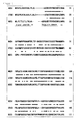
- Figure 1 shows the alignment of the N-terminal half
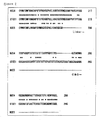
- Figure 2 shows that of the C-terminal half
- the symbol "*" in Figures 1 and 2 indicates an amino acid common to that in STCE1.
- endoglucanases belonging to family 45 contain the catalytic domain (1st to 207th) as a common domain, and sometimes contain the Linker region (208th to 258th) and/or the cellulose-binding domain (CBD) (259th to 295th).
- the numbers in parentheses after the above domains represent the amino acid numbers in the amino acid sequence (SEQ ID NO: 44) of endoglucanase STCE1.
- the modified or homologous protein of the present invention includes a protein in which one or more amino acids contained in any region, such as the catalytic domain, Linker region, or cellulose-binding domain, are modified, so long as it exhibits an endoglucanase activity.
- a polynucleotide encoding a protein comprising the amino acid sequence of SEQ ID NO: 2, 4, 38, or 40, or a modified or homologous protein thereof (hereinafter collectively referred to as the protein of the present invention) may be provided.
- a nucleotide sequence encoding the amino acid sequence can be easily selected, and thus various nucleotide sequences encoding the protein of the present invention can be selected.
- the term "polynucleotide” as used herein includes DNA and RNA, and DNA is preferable.
- the polynucleotide of the present invention includes a polynucleotide selected from the group consisting of the following polynucleotides:
- the number of nucleotides to be depleted, substituted, inserted, or added is, for example, 1 to 90, preferably 1 to 30, more preferably 1 to 18, most preferably 1 to 9.
- under stringent conditions means the following conditions.
- a polynucleotide to be tested is prehybridized at 42°C for an hour, a polynucleotide consisting of the nucleotide sequence of SEQ ID NO: 1, 3, 37, or 39 is added, and hybridization is carried out at 42°C for 14 so 16 hours.
- the polynucléotide of the present invention includes a naturally-occurring polynucléotide. Further, the whole can be synthesized. Furthermore, the synthesis may be carried out using part of the naturally-occurring polynucléotide.
- the polynucleotide of the present invention may be obtained by screening a genomic library derived from a desired microorganism in accordance with an ordinary method commonly used in genetic engineering, for example, using an appropriate DNA probe designed on the basis of information of a partial amino acid sequence.
- the protein of the present invention can be produced in host cells by transforming the host cell with a polynucleotide molecule (particularly as a form of expression vector) comprising a polynucleotide fragment encoding the protein so that the polynucleotide molecule may be replicated and the gene may be expressed in the host cell.
- an expression vector comprising a polynucleotide fragment encoding the protein of the present invention so that the polynucleotide fragment may be replicated and the protein may be expressed in a host microorganism, is provided.
- the expression vector of the present invention can be constructed on the basis of a self-replicating vector (such as a plasmid), which exists as an extrachromosomal element and can replicate independently of the replication of chromosomes.
- a self-replicating vector such as a plasmid
- the expression vector of the present invention may be a vector which is integrated into the chromosome of the host microorganism and replicated together with chromosomes, when the host is transformed with the vector.
- the construction of the vector of the present invention can be carried out by ordinary procedures or methods commonly used in genetic engineering.
- the expression vector contains, for example, a polynucleotide capable of controlling the expression, or a genetic marker to select transformants, in addition to the polynucleotide fragment of the present invention.
- polynucleotide capable of regulating the gene expression various signals for the transcription or translation regulation, such as a promoter, a terminator, or a polynucleotide encoding a signal peptide for secretion, may be used in the present invention.
- signals for the transcription or translation regulation such as a promoter, a terminator, or a polynucleotide encoding a signal peptide for secretion.
- the ligation of these polynucleotides and the insertion thereof to a vector can be carried out by an ordinary method.
- the promoter which can be used in the present invention is not particularly limited, so long as it shows a transcriptional activity in a host microorganism.
- the promoter can be obtained as a polynucleotide which regulates the expression of a gene encoding a protein the same as or different from that derived from the host microorganism.
- a promoter such as lactose operon or a tryptophan operon can be used in Escherichia coli; a promoter of an alcohol dehydrogenase gene, an acid phosphatase gene, a galactose utilization gene, or a glyceraldehyde 3-phosphate dehydrogenase gene can be used in a yeast; and a promoter of an ⁇ -amylase gene, a glucoamylase gene, a cellobiohydrolase gene, or a glyceraldehyde 3-phosphate dehydrogenase gene can be used in a filamentous fungus.
- the signal peptide is not particularly limited, so long as it contributes to the protein secretion in a host microorganism.
- the signal peptide can be obtained as a polynucleotide derived from a gene encoding a protein same as or different from that derived from the host microorganism.
- the selectable marker can be appropriately selected in accordance with the method for selecting a transformant.
- a drug resistance gene or a gene complementing an auxotrophic mutation can be used in the present invention.
- a host is a bacterium, for example, an ampicillin resistance gene, a kanamycin resistance gene, or a tetracycline resistance gene can be used.
- a host is a yeast, for example, a tryptophan biosynthesis gene ( trpI, trpC ), an uracil biosynthesis gene (ura3), a leucine biosynthesis gene ( leu2 ), or a histidine biosynthesis gene ( his3 ) can be used.
- a host is a filamentous fungus
- a destomycin resistance gene for example, a destomycin resistance gene, a nitrate utilization gene ( niaD ), an arginine biosynthesis gene ( argB ), an uracil biosynthesis gene ( pyr4 ) , a hygromycin resistance gene, a bialaphos resistance gene, a bleomycin resistance gene, or an aureobasidin resistance gene
- niaD nitrate utilization gene
- argB arginine biosynthesis gene
- pyr4 uracil biosynthesis gene
- a microorganism transformed with the expression vector is provided.
- a host-vector system which can be used in the present invention is not particularly limited.
- a system utilizing E. coli, Actinomycetes, yeasts, or filamentous fungi, or a system for the expression of a fusion protein using such a microorganism can be used.
- a yeast is used as a host, there may be mentioned, for example, a microorganism belonging to genus Saccharomyces, Hansenula, or Pichia, preferably Saccharomyces cerevisiae.
- any filamentous fungus preferably a microorganism belonging to genus Humicola, Trichoderma, Aspergillus, Acremonium, or Fusarium, more preferably a microorganism belonging to genus Humicola or Trichoderma, may be used.
- Humicola insolens preferably Humicola thermoidea, Trichoderma viride, Trichoderma reesei, Trichoderma longibrachiatum, Staphylotrichum coccosporum, Aspergillus niger, Aspergillus oryzae, Fusarium oxysporum, or Acremonium cellulolyticus, preferably Humicola insolens or Trichoderma viride, may be used.
- Transformation of a microorganism with the expression vector can be carried out in accordance with an ordinary method such as a calcium ion method, a lithium ion method, an electroporation method, a PEG method, an Agrobacterium method, or a particle gun method, and an appropriate method can be selected in accordance with a host to be transformed.
- an ordinary method such as a calcium ion method, a lithium ion method, an electroporation method, a PEG method, an Agrobacterium method, or a particle gun method, and an appropriate method can be selected in accordance with a host to be transformed.
- the transformant of the present invention is cultured, and the resulting culture is used to obtain the protein of the present invention of interest.
- the transformant of the present invention can be cultured in accordance with an ordinary method by appropriately selecting, for example, a medium or culture conditions.
- the medium can be supplemented with, for example, carbon sources or nitrogen sources which can be anabolized or utilized, respectively, by the transformant of the present invention, inorganic salts, various vitamins, various amino acids such as glutamic acid or asparagine, trace nutrients such as nucleotides, or selective agents such as antibiotics. Further, organic and/or inorganic substances which help the growth of the transformant of the present invention or promote the production of the protein of the present invention can be appropriately added. Further, if necessary, a natural medium or synthetic medium which appropriately contains other nutrients can be used.
- any kind of carbon source and nitrogen source can be used in the medium as long as it can be utilized by the transformant of the present invention.
- anabolizable carbon source various carbohydrates, for example, sucrose, starch, glycerin, glucose, fructose, maltose, lactose, cellulose, cellobiose, dextrin, animal oils, or plant oils, or hydrolysates thereof, can be used.
- the concentration thereof to the medium is preferably 0.1% to 5%.
- the utilizable nitrogen source for example, animal or plant components or extracts thereof, such as peptone, meat extract, corn steep liquor, or defatted soybean powder, organic acid ammonium salts such as succinic acid ammonium salts or tartaric acid ammonium salts, urea, or other various nitrogen-containing compounds such as inorganic or organic acids, can be used.
- organic acid ammonium salts such as succinic acid ammonium salts or tartaric acid ammonium salts, urea, or other various nitrogen-containing compounds such as inorganic or organic acids
- the inorganic salts for example, those which can produce sodium, potassium, calcium, magnesium, cobalt, chlorine, phosphoric acid, sulfuric acid, or other ions can be appropriately used.
- Any medium which contains other components for example, cells, exudates, or extracts of microorganisms such as yeast, or fine plant powders, can be appropriately used, as long as they don't interfere with the growth of the transformant of the present invention and with the production and accumulation of the protein of the present invention.
- a mutant strain having a nutritional requirement is cultured, a substance to satisfy its nutritional requirement is generally added to the medium.
- such a nutrient may not necessarily be added when a medium containing natural substances is used.
- the culture conditions such as the medium component, medium fluidity, incubation temperature, agitation speed, or aeration rate, can be appropriately selected and controlled in accordance with the transformant to be used and the exterior conditions so as to obtain preferable results.
- a defoaming agent such as silicone oils, vegetable oils, mineral oils, or surfactants can be appropriately used.
- the protein of the present invention accumulated in the resulting culture is contained in the transformant of the present invention and the culture filtrate. Accordingly, it is possible to recover the protein of the present invention from both culture filtrate and transformant cells by separating the culture into each fraction by centrifugation.
- the protein of the present invention can be recovered from the culture filtrate according to an ordinary method.
- Procedures for recovering the protein of the present invention from the culture can be carried out singly, in combination in a certain order, or repeatedly.
- extraction filtration, centrifugation, dialysis, concentration, drying, freezing, adsorption, desorption, means for separation based on the difference in solubility in various solvents such as precipitation, salting out, crystallization, recrystallization, reverse solution, or chromatography
- the protein of the present invention can be obtained from the culture inside the transformant of the present invention.
- extraction from the culture for example, grinding treatment or disruption by pressure
- recovery for example, filtration or centrifugation
- purification for example, salting out or solvent precipitation
- the resulting crude substance can be purified according to an ordinary method, for example, by a column chromatography using a carrier such as dextran, cellulose, agarose, synthetic polymers, or silica gel.
- a pure protein of the present invention of interest can be obtained from the culture of the transformant of the present invention using the above-mentioned methods, either singly or in an appropriate combination.
- the process for producing the novel protein of the present invention can be provided. Cultivation of the transformant (including culturing conditions) can be carried out in a fashion substantially similar to that of the original host used to prepare the transformant. As the method for recovering the protein of interest after the cultivation of the transformant, commonly used procedures can be carried out.
- Escherichia coli JM109 transformed with expression vector pEG01 of the present invention (FERM BP-5973) was domestically deposited in the International Patent Organism Depositary National Institute of Advanced Industrial Science and Technology [(Former Name) National Institute of Bioscience and Human-Technology Agency of Industrial Science and Technology (Address: AIST Tsukuba Central 6, 1-1, Higashi 1-chome Tukuba-shi, Ibaraki-ken 305-8566 Japan)] on July 12, 1996, and was transferred to an international deposit on June 13, 1997.
- the international deposit number (a number in parenthesis [] following the international deposit number is a domestic deposit number) is FERM BP-5973 [FERM P-15729].
- Escherichia coli JM109 transformed with expression vector pMKD01 of the present invention (FERM BP-5974) was domestically deposited in the International Patent Organism Depositary National Institute of Advanced Industrial Science and Technology [(Former Name) National Institute of Bioscience and Human-Technology Agency of Industrial Science and Technology (Address: AIST Tsukuba Central 6, 1-1, Higashi 1-chome Tukuba-shi, Ibaraki-ken 305-8566 Japan)] on July 12, 1996, and was transferred to an international deposit on June 13, 1997.
- the international deposit number (a number in parenthesis [] following the international deposit number is a domestic deposit number) is FERM BP-5974 [FERM P-15730].
- Escherichia coli JM109 transformed with expression vector pCB1-M2XR of the present invention (FERM BP-6045) was domestically deposited in the International Patent Organism Depositary National Institute of Advanced Industrial Science and Technology [(Former Name) National Institute of Bioscience and Human-Technology Agency of Industrial Science and Technology (Address: AIST Tsukuba Central 6, 1-1, Higashi 1-chome Tukuba-shi, Ibaraki-ken 305-8566 Japan)] on September 9, 1996, and was transferred to an international deposit on August 11, 1997.
- the international deposit number (a number in parenthesis [] following the international deposit number is a domestic deposit number) is FERM BP-6045 [FERM P-15840].
- plasmid pCB1-M2 of the present invention can be obtained, not only by the method described in EXAMPLES, but also by self-ligation of the plasmid pCB1-M2XR previously digested with restriction enzyme XbaI.
- Humicola insolens MN200-1 (FERM BP-5977), which may be used as a host for the expression vector of the present invention, was domestically deposited in the International Patent Organism Depositary National Institute of Advanced Industrial Science and Technology [(Former Name) National Institute of Bioscience and Human-Technology Agency of Industrial Science and Technology (Address: AIST Tsukuba Central 6, 1-1, Higashi 1-chome Tukuba-shi, Ibaraki-ken 305-8566 Japan)] on July 15, 1996, and was transferred to an international deposit on June 13, 1997.
- the international deposit number (a number in parenthesis [] following the international deposit number is a domestic deposit number) is FERM BP-5977 [FERM P-15736].
- Trichoderma viride MC300-1 (FERM BP-6047), which may be used as a host for the expression vector of the present invention, was domestically deposited in the International Patent Organism Depositary National Institute of Advanced Industrial Science and Technology [(Former Name) National Institute of Bioscience and Human-Technology Agency of Industrial Science and Technology (Address: AIST Tsukuba Central 6, 1-1, Higashi 1-chome Tukuba-shi, Ibaraki-ken 305-8566 Japan)] on September 9, 1996, and was transferred to an international deposit on August 11, 1997.
- the international deposit number (a number in parenthesis [] following the international deposit number is a domestic deposit number) is FERM BP-6047 [FERM P-15842].
- Escherichia coli DH5 ⁇ transformed with expression vector pUC118-STCEex of the present invention (FERM BP-10127) was domestically deposited in the International Patent Organism Depositary National Institute of Advanced Industrial Science and Technology (Address: AIST Tsukuba Central 6, 1-1, Higashi 1-chome Tukuba-shi, Ibaraki-ken 305-8566 Japan) on December 1, 2003, and was transferred to an international deposit on September 15, 2004.
- the international deposit number (a number in parenthesis [] following the international deposit number is a domestic deposit number) is FERM BP-10127 [FERM P-19602].
- plasmid pUC118-STCEex is a plasmid obtained by inserting the STCE gene into the Bam HI site of plasmid pUC118.
- the endoglucanse STCE1 gene present in the Bam HI fragment contains an intron and has the sequence of SEQ ID NO: 5.
- Example A1 Construction of expression vectors for expressing N-terminus-modified cellulase and wild-type cellulase in Humicola insolens
- Plasmid pUC118 (Takara Bio) was digested with Bam HI. The resulting fragment was blunted with a DNA blunting kit (Takara Bio), and self-ligated with a DNA ligation kit (Takara Bio) to obtain pUC118-BN. The pUC118-BN was digested with Sph I, blunted, and self-ligated to obtain pUC118BSN. Next, a 3.4-kb Pst I- Xba I fragment comprising the cellulase NCE2 gene was obtained from Humicola insolens MN200-1 (FERM BP-5977) in accordance with the method described in Japanese Unexamined Patent Publication (Kokai) No.
- oligonucleotides for mutagenesis oligonucleotides MNC-02 and MNC-03 were used.
- the plasmid pM21 was digested with Bam HI, and ligated with a Bam HI-digested PCR fragment of a cellobiohydrolase gene (NCE3) derived from Humicola insolens MN200-1 to obtain plasmid pKM04.
- NCE3 cellobiohydrolase gene
- the PCR fragment of the NCE3 was amplified using genomic DNA ( WO98/03640 ) from Humicola insolens MN200-1 (FERM BP-5977) as a template and the following primers MKA-05 and MKA-06.
- a promoter and a terminator ( Mullaney,E.J. et. al., Mol.Gen.Genet., 199, 37-45, 1985 ) of the trpC gene derived from Aspergillus nidulans were used to prepare a gene capable of expressing a destomycin resistance gene in Humicola insolens.
- the resulting gene was ligated with plasmid pKM04 previously digested with Xba I to construct expression vector pMKD01 (FERM BP-5974) for expressing N-terminus-modified cellulase.
- the Bam HI recognition sites were introduced at the 10 bp downstream from the N-terminus of the mature protein of the NCE2 gene and at the 3 bp downstream from the stop codon thereof, and thus five amino acid residues can be added to the N-terminus of a desired cellulase belonging to family 45.
- Site-directed mutation was introduced, using oligonucleotide pMN-Bam, into plasmid pM21 obtained in the above item (1) to obtain plasmid pM21-m-A1.
- Plasmid pM21-m-A1 was digested with restriction enzymes Hind III and Bam HI, and the resulting fragment of approximately 1 kb was recovered.
- pMKD01 obtained in Example A1(1) was digested with Hind III and Bam HI, and a fragment of approximately 7 kb was recovered. These fragments were ligated to obtain plasmid pJD01.
- the Bam HI recognition sites were introduced at the 15 bp upstream from the translation initiation site of the NCE2 gene and at the 3 bp downstream from the stop codon thereof, and thus a desired cellulase belonging to family 45 was expressed from the transcription initiation point.
- Example A2 Construction of expression vectors for expressing wild-type NCE4 and N-terminus-modified NCE4, transformation of Humicola insolens therewith, and evaluation of activities
- the coding region of the NCE4 gene was ligated with pJD01 obtained in Example A1(2) to construct pN2EX-N4.
- the coding region of the NCE4 gene was amplified by carrying out PCR using genomic DNA from Humicola insolens MN200-1 as a template and NCE4-Ne and NCE4-Ce as primers.
- the resulting PCR product of approximately 0.9 kbp was digested with Bam HI, and ligated with pJD01 previously digested with the same restriction enzyme to construct pN2EX-N4.
- the coding region of the mature protein in which the signal sequence for secretion was deleted in the NCE4 gene was ligated with pMKD01(FERM BP-5974) obtained in Example A1(1) to construct pEGD01 (FERM BP-5973).
- the coding region of the mature protein part of the NCE4 gene was amplified by carrying out PCR using genomic DNA from Humicola insolens MN200-1 as a template and NCE4-Ns and NCE4-Cs as primers.
- the resulting PCR product of approximately 0.8 kbp was digested with Bam HI, and ligated with pMKD01 previously digested with the same restriction enzyme to construct pEGD01.
- Humicola insolens MN200-1 was cultured in an S medium (3.0% glucose, 2.0% yeast extract, 0.1% polypeptone, 0.03% calcium chloride, and 0.03% magnesium sulfate; pH6.8) at 37°C for 24 hours.
- the resulting mycelia were collected by centrifugation, washed with 0.5 mol/L sucrose, and suspended in 0.5 mol/L sucrose solution containing 3 mg/mL ⁇ -glucuronidase (Sigma), 1 mg/mL chitinase, and 1 mg/mL zymolyase 20T (Seikagaku Corp.). The suspension was gently shaken at 30°C for 60 to 90 minutes to generate protoplasts.
- the resulting protoplasts were collected by filtration and centrifugation, washed with an SUTC buffer (0.5 mol/L sucrose, 10 mmol/L calcium chloride, and 10 mmol/L Tris-HCl; pH7.5), and resuspended in SUTC to prepare a protoplast suspension.
- SUTC buffer 0.5 mol/L sucrose, 10 mmol/L calcium chloride, and 10 mmol/L Tris-HCl; pH7.5
- each DNA solution (pEGD01 or pN2EX-N4) was added. After each was allowed to stand on ice for 5 minutes, 400 ⁇ L of a PEG solution (60% polyethylene glycol 4000, 10 mmol/L calcium chloride, and 10 mmol/L Tris-HCl; pH7.5) was added, and the whole was allowed to stand on ice for 20 minutes.
- a PEG solution 50% polyethylene glycol 4000, 10 mmol/L calcium chloride, and 10 mmol/L Tris-HCl; pH7.5
- a YMG medium 1% glucose, 0.4% yeast extract, 0.2% malt extract, and 1% agar; pH6.8 containing 200 ⁇ g/mL hygromycin B was overlaid with the protoplast suspension together with YMG soft agar. The plate was incubated at 37°C for 5 days to obtain transformants as colonies.
- the resulting transformants were cultured in accordance with the method described in WO98/03667 , to obtain culture supernatants.
- the culture supernatants were subjected to SDS-PAGE, to select culture supernatants in which the NCE4 band of approximately 43 kDa was clearly detected.
- the endoglucanase activities in the culture supernatants at pH10 in the absence and presence of LAS were measured, and the degrees of a reduction in the activity in the presence of LAS were compared. The results are shown in Table 3.
- the endoglucanase activities are represented by percentages when each endoglucanase activity at pH10 is regarded as 100.
- the culture supernatant obtained from the N-terminus-modified NCE4 transformant exhibited a small reduction in the activity in the presence of LAS.
- the endoglucanase activity of N-terminus-modified NCE4 was 2.1 times higher than that of wild-type NCE4.
- the endoglucanase activity of Humicola insolens MN200-1 accounted for approximately 4% of the transformant, and thus it was found that almost all of the endoglucanase activities were derived from the recombinant enzymes expressed by the incorporated expression vectors.
- N-terminus-modified NCE4 obtained from the pEGD01 transformant could not be determined in the above procedure.
- a Pfu pyroglutamate aminopeptidase (Takara Bio) was used to remove the modified N-terminus from N-terminus-modified NCE4, and then the amino acid was determined (SEQ NO: 2).
- Example B1 Construction of expression vectors for Trichoderma viride for expressing N-terminus-modified cellulase and wild-type cellulase
- phosphorylated oligonucleotides CBn-Stu and CBc-Xho were annealed, and mutations were introduced by a Sculptor in vitro mutagenesis system (Amersham Bioscience), to construct plasmids pCB1H4-19 and pCB1S1-17, respectively.
- plasmid pCB1-SalM an approximately 2.7 kb fragment obtained by digesting pCB1-M with Sal I was cloned into plasmid pUC119 to construct plasmid pCB1-SalM.
- phosphorylated oligonucleotides CB1-SmSph, CB1-Bam, and CB1-Pst were annealed, and mutations were introduced by the Sculptor in vitro mutagenesis system.
- plasmid pUC118 was digested with Xba I and EcoRI, blunted with the DNA blunting kit, and self-ligated, to construct plasmid pUC118-SBN.
- pUC118-SBN digested with Hind III and Sal I
- the cbh1 promoter fragment of approximately 1.4 kb previously digested with the same restriction enzymes was inserted.
- the resulting plasmid was digested with Sal I, and ligated with the mutations-introduced cbh1 coding region and terminator region of approximately 2.8 kb, to construct pCB1-M2.
- the introduced mutations (excluding the Bam HI mutation) are shown in Table 5.
- Example B2 Construction of expression vectors for expressing N-terminus-modified STCE1 and wild-type STCE1, transformation of Trichoderma viride therewith, and evaluation of activities
- the coding region of the STCE1 gene was ligated with plasmid pCB1-M2 obtained in Example B1 to construct pCB-Ste.
- the coding region of the STCE1 gene was amplified by carrying out PCR using plasmid pUC118-STCEex (FERM BP-10127) as a template and the combination of primers STCE1-TNERV and STCE1-TCET22I.
- the resulting PCR product of approximately 1 kbp was digested with Eco RV and Eco T22I, and ligated with pCB1-M2 previously digested with StuI and Pst I to construct pCB-Ste.
- the coding region of the mature protein in which the signal sequence for secretion was deleted in the STCE1 gene was ligated with pCB1-M2 obtained in Example B1 to construct pCB-Sts.
- the coding region of the mature protein of the STCE1 gene was amplified by carrying out PCR using plasmid pUC118-STCEex (FERM BP-10127) as a template and STCE1-TmNSph and STCE1-TCET22I as primers.
- the resulting PCR product of approximately 1 kbp was digested with Sph I and Eco T22I, and ligated with pCB1-M2 previously digested with SphI and PstI to construct pCB-Sts.
- a suspension (approximately 10 9 CFU/mL) of spores of Trichoderma viride MC300-1 (FERM BP-6047) was irradiated with UV from two UV lamps located at a height of 30 cm thereabove while gently shaking. The suspension was spread on a selection medium, and cultured at 28°C for 7 days. The grown strains were selected to obtain Trichoderma viride strain 2 showing uracil requirement.
- the selection medium was a minimal medium [0.2% potassium dihydrogenphosphate, 0.4% ammonium sulfate, 0.03% urea, 0.03% magnesium sulfate heptahydrate, 0.03% calcium chloride, 0.5% glucose, 2.5% agar, and 0.01% trace elements (prepared by dissolving 5mg iron sulfate heptahydrate, 1.56 mg manganese sulfate heptahydrate, 1.4mg zinc sulfate heptahydrate, and 2mg cobalt chloride in 1 L of water)] supplemented with 10 ⁇ g/mL uridine and 1 mg/mL 5-fluoroorotic acid.
- trace elements prepared by dissolving 5mg iron sulfate heptahydrate, 1.56 mg manganese sulfate heptahydrate, 1.4mg zinc sulfate heptahydrate, and 2mg cobalt chloride in 1 L of water
- Trichoderma viride was transformed with pCB-Ste or pCB-Sts obtained in Example B2(1), by carrying out a co-transformation method using Trichoderma viride strain 2 obtained in Example B2(2).and marker plasmid pPYR4 containing the pyr4 gene derived from Neurospora crassa, to obtain transformants as strains grown in the minimal medium.
- Trichoderma viride strain 2 was inoculated in a 200 mL conical flask containing 50 mL of a mycelium formation medium [1% yeast extract, 1% malt extract, 2% polypeptone, 2.5% glucose, 0.1% dipotassium hydrogenphosphate, 0.05% magnesium sulfate heptahydrate, and 0.0001% uridine (pH7.0)], and cultured at 28°C for 2 days.
- a mycelium formation medium 1% yeast extract, 1% malt extract, 2% polypeptone, 2.5% glucose, 0.1% dipotassium hydrogenphosphate, 0.05% magnesium sulfate heptahydrate, and 0.0001% uridine (pH7.0)
- the resulting cells were collected by centrifugation, washed with 0.5 mol/L sucrose, and suspended in 0.5 mol/L sucrose solution containing 3 mg/mL ⁇ -glucuronidase (Sigma), 1 mg/mL chitinase, and 1 mg/mL zymolyase 20T (Seikagaku Corp.). The suspension was gently shaken at 30°C for 60 to 90 minutes to generate protoplasts. The resulting protoplasts were collected by filtration and centrifugation, washed with the SUTC buffer, and resuspended in SUTC to prepare a protoplast suspension.
- each DNA solution (pCB-Ste or pCB-Sts) was added. After each was allowed to stand on ice for 5 minutes, 400 ⁇ L of the PEG solution was added, and the whole was allowed to stand on ice for 20 minutes. After the resulting protoplast suspension was washed with the SUTC buffer, the minimal medium containing 0.5 mol/L sucrose was overlaid with the protoplast suspension together with soft agar. The plate was incubated at 28°C for 5 days, and then grown colonies were transferred on the minimal medium, to obtain transformants as colonies grown thereon.
- the resulting transformants were cultured in accordance with the method described in WO98/11239 , to obtain culture supernatants.
- the culture supernatants were subjected to SDS-PAGE, to select culture supernatants in which the STCE1 band of approximately 45 kDa was clearly detected.
- the endoglucanase activities in the culture supernatants at pH10 in the absence and presence of LAS were measured, and the degrees of a reduction in the activity in the presence of LAS were compared. The results are shown in Table 6.
- the endoglucanase activities are represented by percentages when each endoglucanase activity at pH10 is regarded as 100.
- the elution was carried out with three BVs of 0.05 mol/L Tris-HCl (pH8.0)/0.5 mol/L sodium sulfate, and, the eluted solution was concentrated by Pellicon XL (cut 5000; Millipore) and Ultrafree-15 (cut 5000; Millipore). From the obtaining concentrate, a solution thereof containing 0.1 mol/L sodium phosphate (pH5.8)/1 mol/L ammonium sulfate was prepared. The resulting solution was subjected to a hydrophobic chromatography using Resource PHE (6 mL; Amersham Bioscience), to recover a non-adsorption fraction.
- the non-adsorption fraction was concentrated, and desalted by PD-10 (Amersham Bioscience), and, from the fraction, a solution thereof containing 0.05 mol/L Tris-HCl (pH7.5) solution was prepared.
- the solution was subjected to Resource Q (6 mL; Amersham Bioscience), to recover a non-adsorption fraction.
- the non-adsorption fraction was desalted and, from the fraction, a solution thereof containing 0.05 mol/L sodium acetate (pH5.0) solution was prepared.
- the solution was subjected to Resource S (6 mL; Amersham Bioscience), to recover a non-adsorption fraction.
- the non-adsorption fraction was concentrated and subjected to a gel chromatography using Superdex 75pg (16 ⁇ 60 mm; Amersham Bioscience) to recover a fraction having a fractionated molecular weight of approximately 45000.
- Each fraction (derived from each culture supernatant of the above transformants) contained only the single band of 45 kDa.
- the purified fractions were subjected to SDS-PAGE, and the electrophoresed proteins were electrically transferred on a PVDF membrane.
- the STCE1 bands of approximately 45 kDa were excised from the blot, and subjected to Protein Sequencer Model 492 (Applied Biosystems) to analyze the amino acid sequences.
- amino acid sequence of STCE1 obtained from the N-terminus-modified STCE1 transformant could not be determined in the above procedure.
- a Pfu pyroglutamate aminopeptidase (Takara Bio) was used to remove the modified N-terminus from N-terminus-modified STCE1, and then the amino acid was determined (SEQ NO: 4).
- Example B3 Change of N-terminal sequence added to STCE1, construction of vector, transformation of Trichcderma viride therewith, and evaluation of activities
- the coding region of the mature protein in which the signal sequence for secretion was deleted in the STCE1 gene was ligated with plasmid pCB1-M2 obtained in Example B1 to construct pCB-Stm11.
- the coding region of the mature protein of the STCE1 gene was amplified by carrying out PCR using plasmid pUC118-STCEex (FERM BP-10127) as a template and STCE-TmNSma and STCE1-TCET22I as primers.
- the resulting PCR product of approximately 1 kbp was digested with Sma I and Eco T22I, and ligated with pCB1-M2 previously digested with Sma I and Pst I to construct pCB-Stm11.
- Trichoderma viride transformed with vector pCB-Stm11 constructed as above produces STCE1 having the N-terminal amino acid sequence of pQADGKSTR (SEQ ID NO: 41) [i.e., the sequence in which one pyroglutamic acid (pQ) is added to the N-terminus of wild-type STCE1].
- Trichoderma viride strain 2 was transformed with pCB-Stm11 in accordance with the procedure described in Example B2(3).
- the resulting transformants were cultured in accordance with WO98/11239 to obtain culture supernatants.
- the culture supernatants were subjected to SDS-PAGE, to select a culture supernatant in which the STCE1 band of approximately 45 kDa was clearly detected.
- the endoglucanase activity in the culture supernatant at pH10 in the absence and presence of LAS were measured, and the degree of a reduction in the activity in the presence of LAS was compared to that of wild-type STCE1 in Example B2(4). The results are shown in Table 9.
- Example B4 Change of N-terminal sequence added to STCE1, construction of vector, transformation of Trichoderma viride therewith, and evaluation of activities
- the coding region of the mature protein in which the signal sequence for secretion was deleted in the STCE1 gene was ligated with plasmid pCB1-M2 obtained in Example B1 to construct pCB-Stm12.
- the coding region of the mature protein of the STCE1 gene was amplified by carrying out PCR using plasmid pUC118-STCEex (FERM BP-10127) as a template and STCE-TmNSph-2 and STCE1-TCET22I as primers.
- the resulting PCR product of approximately 1 kbp was digested with SphI and Eco T22I, and ligated with pCB1-M2 previously digested with SphI and Pst I to construct pCB-Stm12.
- Trichoderma viride transformed with vector pCB-Stm12 constructed as above produces STCE1 having the N-terminal amino acid sequence of pQSACADGKSTR (SEQ ID NO: 42) [i.e., the sequence in which a peptide consisting of 4 amino acids (the N-terminus is pyroglutamic acid) is added to the N-terminus of wild-type STCE1].
- Trichoderma viride strain 2 was transformed with pCB-Stm12 in accordance with the procedure described in Example B2(3).
- the resulting transformants were cultured in accordance with WO98/11239 to obtain culture supernatants.
- the culture supernatants were subjected to SDS-PAGE, to select a culture supernatant in which the STCE1 band of approximately 45 kDa was clearly detected.
- the endoglucanase activity in the culture supernatant at pH10 in the absence and presence of LAS were measured, and the degree of a reduction in the activity in the presence of LAS was compared to that of wild-type STCE1 in Example B2(4). The results are shown in Table 10.
- the protein of the present invention exhibits a small reduction in an endoglucanase activity in the presence of a surfactant, in comparison with wild-type cellulases, and thus is useful as a component of a detergent for clothing.
- Each of the nucleotide sequences of SEQ ID NOS: 6-10, 12-13, 15-18, 21-26, 28, 30-32, and 35-36 is primer MNC-02, primer MNC-03, primer MKA-05, primer MKA-06, pMKD01, primer pMN-Bam, pJD01, primer NCE4-Ne, primer NCE4-Ce, primer NCE4-Ns, primer NCE4-Cs, primer CBn-Stu, primer CBc-Xho, primer CB1-SmSph, primer CB1-Bam, primer CB1-Pst, pCB1-M2, pCB1-M2, primer STCE1-TNERV, primer STCE1-TCET22I, primer STCE1-TmNSph, primer STCE1-TmNSma, and primer STCE1-Tm
Landscapes
- Chemical & Material Sciences (AREA)
- Life Sciences & Earth Sciences (AREA)
- Health & Medical Sciences (AREA)
- Organic Chemistry (AREA)
- Wood Science & Technology (AREA)
- Bioinformatics & Cheminformatics (AREA)
- Genetics & Genomics (AREA)
- Engineering & Computer Science (AREA)
- Zoology (AREA)
- General Engineering & Computer Science (AREA)
- General Health & Medical Sciences (AREA)
- Biochemistry (AREA)
- Molecular Biology (AREA)
- Medicinal Chemistry (AREA)
- Biomedical Technology (AREA)
- Biotechnology (AREA)
- Microbiology (AREA)
- Enzymes And Modification Thereof (AREA)
- Micro-Organisms Or Cultivation Processes Thereof (AREA)
- Detergent Compositions (AREA)
- Measuring Or Testing Involving Enzymes Or Micro-Organisms (AREA)
- Processing Of Solid Wastes (AREA)
Claims (7)
- Combinaison d'un polynucléotide et d'une cellule hôte, où le polynucléotide est choisi parmi le groupe consistant en :(a) un polynucléotide comprenant la séquence des nucléotides de SEQ ID N°1, 3, 37 ou 39 ;(b) un polynucléotide comprenant une séquence des nucléotides, dans laquelle 1 à 90 nucléotides ont été délétés, substitués, insérés ou ajoutés dans la séquence des nucléotides de SEQ ID N°1, 3, 37 ou 39, qui code une protéine dans laquelle l'extrémité N est l'acide glutamique ou la glutamine et qui a une activité d'endoglucanase,(c) un polynucléotide s'hybridant dans des conditions rigoureuses à un polynucléotide consistant en la séquence des nucléotides de SEQ ID N°1, 3, 37 ou 39, qui code une protéine dans laquelle l'extrémité N est l'acide glutamique ou la glutamine et qui a une activité d'endoglucanase, etoù la cellule hôte est un hôte dans lequel la formation du pyroglutamate de l'acide aminé N-terminal est effectuée.
- Combinaison de la cellule hôte selon la revendication 1 et d'un vecteur d'expression comprenant le polynucléotide selon la revendication 1.
- Cellule hôte transformée par le vecteur d'expression comprenant le polynucléotide selon la revendication 1, où la cellule hôte est un hôte dans lequel la formation du pyroglutamate de l'acide aminé N-terminal est effectuée.
- Cellule hôte selon la revendication 3, où la cellule hôte est une levure ou un champignon filamenteux.
- Cellule hôte selon la revendication 4, où le champignon filamenteux est un microorganisme appartenant au genre Humicola ou Trichoderma.
- Cellule hôte selon la revendication 5, où le champignon filamenteux est Humicola insolens ou Trichoderma viride.
- Procédé de production d'une protéine choisie parmi le groupe consistant en :(a) une protéine comprenant la séquence des acides aminés de SEQ ID N°2, 4, 38 ou 40, où l'extrémité N est l'acide pyroglutamique ;(b) une protéine modifiée comprenant une séquence des acides aminés, dans laquelle l'extrémité N est l'acide pyroglutamique et dans laquelle 1 à 30 acides aminés sont délétés, substitués, insérés ou ajoutés dans la séquence des acides aminés de SEQ ID N°2, 4, 38 ou 40, et qui a une activité d'endoglucanase ; et(c) une protéine comprenant une séquence des acides aminés ayant au moins 85% d'identité avec une protéine comprenant la séquence des acides aminés de SEQ ID N°2, 4, 38 ou 40, dans laquelle l'extrémité N est l'acide pyroglutamique, et qui a une activité d'endoglucanase, comprenant :la culture d'une cellule hôte selon l'une quelconque des revendications 3 à 6, etla récupération de la protéine depuis la cellule hôte ou la culture obtenue par la mise en culture.
Applications Claiming Priority (2)
| Application Number | Priority Date | Filing Date | Title |
|---|---|---|---|
| JP2003409692 | 2003-12-08 | ||
| EP04820192A EP1702981B1 (fr) | 2003-12-08 | 2004-12-07 | Cellulase supportant les tensioactifs et procede de transformation associe |
Related Parent Applications (4)
| Application Number | Title | Priority Date | Filing Date |
|---|---|---|---|
| EP04820192A Division EP1702981B1 (fr) | 2003-12-08 | 2004-12-07 | Cellulase supportant les tensioactifs et procede de transformation associe |
| EP04820192.5 Division | 2004-12-07 | ||
| WOPCT/JP2004/018184 Previously-Filed-Application | 2004-12-07 | ||
| PCT/JP2004/018184 Previously-Filed-Application WO2005056787A1 (fr) | 2003-12-08 | 2004-12-07 | Cellulase supportant les tensioactifs et procede de transformation associe |
Publications (3)
| Publication Number | Publication Date |
|---|---|
| EP2330199A2 EP2330199A2 (fr) | 2011-06-08 |
| EP2330199A3 EP2330199A3 (fr) | 2012-06-13 |
| EP2330199B1 true EP2330199B1 (fr) | 2015-04-08 |
Family
ID=34674905
Family Applications (2)
| Application Number | Title | Priority Date | Filing Date |
|---|---|---|---|
| EP10180094.4A Expired - Lifetime EP2330199B1 (fr) | 2003-12-08 | 2004-12-07 | Cellulase tolérante aux tensioactifs et procédé de modification associé |
| EP04820192A Expired - Lifetime EP1702981B1 (fr) | 2003-12-08 | 2004-12-07 | Cellulase supportant les tensioactifs et procede de transformation associe |
Family Applications After (1)
| Application Number | Title | Priority Date | Filing Date |
|---|---|---|---|
| EP04820192A Expired - Lifetime EP1702981B1 (fr) | 2003-12-08 | 2004-12-07 | Cellulase supportant les tensioactifs et procede de transformation associe |
Country Status (8)
| Country | Link |
|---|---|
| US (2) | US8569033B2 (fr) |
| EP (2) | EP2330199B1 (fr) |
| JP (1) | JP4644603B2 (fr) |
| CN (2) | CN103103171A (fr) |
| AT (1) | ATE522612T1 (fr) |
| DK (2) | DK2330199T3 (fr) |
| ES (2) | ES2539955T3 (fr) |
| WO (1) | WO2005056787A1 (fr) |
Families Citing this family (95)
| Publication number | Priority date | Publication date | Assignee | Title |
|---|---|---|---|---|
| CN1902315B (zh) * | 2003-12-03 | 2012-05-02 | 明治制果药业株式会社 | 内切葡聚糖酶stce和含有内切葡聚糖酶的纤维素酶配制品 |
| DK2046819T3 (da) * | 2006-07-21 | 2015-06-22 | Novozymes Inc | Fremgangsmåder til forøgelse af secernering af polypeptider med biologisk aktivitet |
| ES2556728T3 (es) | 2007-03-12 | 2016-01-19 | Meiji Seika Pharma Co., Ltd. | Endoglucanasa PPCE y preparación de celulasa que contiene la misma |
| US8575426B2 (en) * | 2007-12-19 | 2013-11-05 | Novozymes, Inc. | Polypeptides having cellulolytic enhancing activity and polynucleotides encoding same |
| US8455233B2 (en) * | 2007-12-19 | 2013-06-04 | Novozymes A/S | Polypeptides having cellulolytic enhancing activity and polynucleotides encoding same |
| WO2010101867A1 (fr) | 2009-03-03 | 2010-09-10 | Danisco Us Inc. | Décoloration par oxydation de colorants à l'aide d'un peracide généré par action enzymatique, méthode, composition et trousse d'éléments |
| EP2450438B1 (fr) * | 2009-07-03 | 2015-09-30 | Meiji Seika Pharma Co., Ltd. | Préparation de cellulase contenant des endoglucanases issus de deux différents types de microorganismes |
| JP5745411B2 (ja) | 2009-08-20 | 2015-07-08 | Meiji Seikaファルマ株式会社 | β−グルコシダーゼ活性を有する新規タンパク質およびその用途 |
| US20120149269A1 (en) | 2009-08-27 | 2012-06-14 | Danisco Us Inc. | Combined Textile Abrading And Color Modification |
| WO2013077432A1 (fr) | 2011-11-25 | 2013-05-30 | 三井化学株式会社 | Xylanase mutante, procédé de fabrication et utilisation de celle-ci, et procédé de fabrication de lignocellulose saccharifiée |
| JP6110375B2 (ja) | 2012-05-31 | 2017-04-05 | Meiji Seikaファルマ株式会社 | 糸状菌を用いた西洋ワサビ由来ペルオキシダーゼ組換えタンパク質の製造方法 |
| DK3882346T3 (da) | 2013-05-29 | 2025-12-22 | Danisco Us Inc | Hidtil ukendte metalloproteaser |
| EP3004342B1 (fr) | 2013-05-29 | 2023-01-11 | Danisco US Inc. | Métalloprotéases inédites |
| WO2014194032A1 (fr) | 2013-05-29 | 2014-12-04 | Danisco Us Inc. | Métalloprotéases inédites |
| WO2014194034A2 (fr) | 2013-05-29 | 2014-12-04 | Danisco Us Inc. | Métalloprotéases inédites |
| CN103343111B (zh) * | 2013-07-05 | 2015-08-26 | 山东尤特尔生物科技有限公司 | 一种嗜热毛壳菌纤维素酶及其制备方法和应用 |
| US20160312204A1 (en) | 2013-12-13 | 2016-10-27 | Danisco Us Inc. | Serine proteases of bacillus species |
| EP3080263B1 (fr) | 2013-12-13 | 2019-07-03 | Danisco US Inc. | Sérines protéases du clade du bacillus gibsonii |
| US10005850B2 (en) | 2013-12-16 | 2018-06-26 | E I Du Pont De Nemours And Company | Use of poly alpha-1,3-glucan ethers as viscosity modifiers |
| US9957334B2 (en) | 2013-12-18 | 2018-05-01 | E I Du Pont De Nemours And Company | Cationic poly alpha-1,3-glucan ethers |
| JP6244198B2 (ja) * | 2013-12-24 | 2017-12-06 | 株式会社ベネフィット | 布製身の回り品 |
| WO2015123323A1 (fr) | 2014-02-14 | 2015-08-20 | E. I. Du Pont De Nemours And Company | Poly-alpha-1,3-1,6-glucanes utilisables en vue de la modification de la viscosité |
| EP3116914B8 (fr) | 2014-03-11 | 2021-04-21 | E. I. du Pont de Nemours and Company | Poly-1,3-alpha-glucan oxydé an tant qu'agent de renforcement pour détergents |
| MX2016012044A (es) | 2014-03-21 | 2017-06-29 | Danisco Us Inc | Serina proteasas de especies de bacillus. |
| EP3919599A1 (fr) | 2014-06-19 | 2021-12-08 | Nutrition & Biosciences USA 4, Inc. | Compositions contenant un ou plusieurs composés d'éther de poly alpha-1,3-glucane |
| US9714403B2 (en) | 2014-06-19 | 2017-07-25 | E I Du Pont De Nemours And Company | Compositions containing one or more poly alpha-1,3-glucan ether compounds |
| DK3207129T3 (da) | 2014-10-17 | 2020-02-24 | Danisco Us Inc | Serinproteaser af bacillus-arten |
| DK3212662T3 (da) | 2014-10-27 | 2020-07-20 | Danisco Us Inc | Serinproteaser |
| EP3212783B1 (fr) | 2014-10-27 | 2024-06-26 | Danisco US Inc. | Sérines protéases |
| WO2016069569A2 (fr) | 2014-10-27 | 2016-05-06 | Danisco Us Inc. | Sérine protéases |
| EP3212781B1 (fr) | 2014-10-27 | 2019-09-18 | Danisco US Inc. | Sérine-protéases |
| CN107148472A (zh) | 2014-10-27 | 2017-09-08 | 丹尼斯科美国公司 | 芽孢杆菌属物种的丝氨酸蛋白酶 |
| US10059779B2 (en) | 2014-11-05 | 2018-08-28 | E I Du Pont De Nemours And Company | Enzymatically polymerized gelling dextrans |
| WO2016133734A1 (fr) | 2015-02-18 | 2016-08-25 | E. I. Du Pont De Nemours And Company | Éthers polysaccharidiques de soja |
| CN107580606B (zh) | 2015-04-03 | 2021-06-08 | 营养与生物科学美国4公司 | 凝胶化右旋糖酐醚 |
| JP2018513249A (ja) | 2015-04-03 | 2018-05-24 | イー・アイ・デュポン・ドウ・ヌムール・アンド・カンパニーE.I.Du Pont De Nemours And Company | 酸化デキストラン |
| EP4219704A3 (fr) | 2015-05-13 | 2023-08-23 | Danisco US Inc | Variants de protéase aprl-clade et leurs utilisations |
| WO2016201069A1 (fr) | 2015-06-09 | 2016-12-15 | Danisco Us Inc | Particules contenant une enzyme basse densité |
| WO2016201040A1 (fr) | 2015-06-09 | 2016-12-15 | Danisco Us Inc. | Suspension d'enzyme activée par l'eau |
| EP3307427B1 (fr) | 2015-06-09 | 2023-08-16 | Danisco US Inc. | Produits encapsulés osmotiques à éclatement |
| JP7015695B2 (ja) | 2015-06-17 | 2022-02-03 | ダニスコ・ユーエス・インク | バチルス・ギブソニイ(Bacillus gibsonii)クレードセリンプロテアーゼ |
| CN108603183B (zh) | 2015-11-05 | 2023-11-03 | 丹尼斯科美国公司 | 类芽孢杆菌属物种和芽孢杆菌属物种甘露聚糖酶 |
| EP3371308B1 (fr) | 2015-11-05 | 2022-05-11 | Danisco US Inc. | Mannanases de paenibacillus sp. |
| WO2017083229A1 (fr) | 2015-11-13 | 2017-05-18 | E. I. Du Pont De Nemours And Company | Compositions de fibres de glucane utiles pour la lessive et l'entretien des tissus |
| EP3374488B1 (fr) | 2015-11-13 | 2020-10-14 | DuPont Industrial Biosciences USA, LLC | Compositions de fibre de glucane à utiliser dans l'entretien du linge et l'entretien de tissu |
| WO2017083228A1 (fr) | 2015-11-13 | 2017-05-18 | E. I. Du Pont De Nemours And Company | Compositions de fibres de glucane utiles pour la lessive et l'entretien des tissus |
| US20180362946A1 (en) | 2015-12-18 | 2018-12-20 | Danisco Us Inc. | Polypeptides with endoglucanase activity and uses thereof |
| BR112018072530A2 (pt) | 2016-05-03 | 2019-03-26 | Danisco Us Inc | variantes de protease e usos das mesmas |
| BR112018072586A2 (pt) | 2016-05-05 | 2019-02-19 | Danisco Us Inc | variantes de protease e usos das mesmas |
| CA3026064A1 (fr) | 2016-05-31 | 2017-12-07 | Danisco Us Inc. | Variants de protease et leurs utilisations |
| CA3027745A1 (fr) | 2016-06-17 | 2017-12-21 | Danisco Us Inc. | Variants de protease et leurs utilisations |
| WO2018085524A2 (fr) | 2016-11-07 | 2018-05-11 | Danisco Us Inc | Composition détergente pour le linge |
| CN110291195B (zh) * | 2016-12-15 | 2024-10-15 | 丹尼斯科美国公司 | 具有内切葡聚糖酶活性的多肽及其用途 |
| EP4520820A3 (fr) | 2016-12-21 | 2025-04-16 | Danisco Us Inc | Variants de protéase et leurs utilisations |
| US11946081B2 (en) | 2016-12-21 | 2024-04-02 | Danisco Us Inc. | Bacillus gibsonii-clade serine proteases |
| EP3583210B1 (fr) | 2017-03-15 | 2021-07-07 | Danisco US Inc. | Sérine protéases de type trypsine et leurs utilisations |
| US20200040283A1 (en) | 2017-03-31 | 2020-02-06 | Danisco Us Inc | Delayed release enzyme formulations for bleach-containing detergents |
| DK3601553T3 (da) | 2017-03-31 | 2026-02-16 | Danisco Us Inc | Alfa-amylase-kombinationsvarianter |
| CA3067837A1 (fr) | 2017-06-30 | 2019-01-03 | Danisco Us Inc | Particules contenant une enzyme a faible agglomeration |
| EP3668973A2 (fr) | 2017-08-18 | 2020-06-24 | Danisco US Inc. | Variants d'alpha-amylases |
| EP3717643A1 (fr) | 2017-11-29 | 2020-10-07 | Danisco US Inc. | Variants de subtilisine à stabilité améliorée |
| EP3728543B1 (fr) | 2017-12-21 | 2025-10-29 | Danisco US Inc. | Granulés thermofusibles contenant des enzymes, comprenant un déshydratant thermotolérant |
| US20200359656A1 (en) | 2018-02-08 | 2020-11-19 | Danisco Us Inc. | Thermally-resistant wax matrix particles for enzyme encapsulation |
| WO2019245704A1 (fr) | 2018-06-19 | 2019-12-26 | Danisco Us Inc | Variantes de subtilisine |
| EP3799601A1 (fr) | 2018-06-19 | 2021-04-07 | Danisco US Inc. | Variants de subtilisine |
| US12584119B2 (en) | 2018-07-31 | 2026-03-24 | Danisco Us Inc | Variant alpha-amylases having amino acid substitutions that lower the PKA of the general acid |
| EP3844255A1 (fr) | 2018-08-30 | 2021-07-07 | Danisco US Inc. | Granulés contenant des enzymes |
| JP2022503923A (ja) | 2018-09-27 | 2022-01-12 | ダニスコ・ユーエス・インク | 医療用器具を洗浄するための組成物 |
| WO2020077331A2 (fr) | 2018-10-12 | 2020-04-16 | Danisco Us Inc | Alpha-amylases présentant des mutations qui améliorent la stabilité en présence de chélateurs |
| EP3887515A1 (fr) | 2018-11-28 | 2021-10-06 | Danisco US Inc. | Variants de subtilisine à stabilité améliorée |
| CN114174504B (zh) | 2019-05-24 | 2026-04-17 | 丹尼斯科美国公司 | 枯草杆菌蛋白酶变体和使用方法 |
| WO2020247582A1 (fr) | 2019-06-06 | 2020-12-10 | Danisco Us Inc | Procédés et compositions de nettoyage |
| EP4048683A2 (fr) | 2019-10-24 | 2022-08-31 | Danisco US Inc | Alpha-amylases formant des variants de maltopentaose/maltohexaose |
| US20240034960A1 (en) | 2020-08-27 | 2024-02-01 | Danisco Us Inc | Enzymes and enzyme compositions for cleaning |
| EP4284906A1 (fr) | 2021-01-29 | 2023-12-06 | Danisco US Inc. | Compositions pour le nettoyage et procédés associés |
| WO2023278297A1 (fr) | 2021-06-30 | 2023-01-05 | Danisco Us Inc | Variants de lipases et leurs utilisations |
| EP4396320A2 (fr) | 2021-09-03 | 2024-07-10 | Danisco US Inc. | Compositions de blanchisserie pour le nettoyage |
| EP4402258A2 (fr) | 2021-09-13 | 2024-07-24 | Danisco US Inc. | Granulés contenant un agent bioactif |
| EP4448750A2 (fr) | 2021-12-16 | 2024-10-23 | Danisco US Inc. | Variants de subtilisine et procédés d'utilisation |
| WO2023114988A2 (fr) | 2021-12-16 | 2023-06-22 | Danisco Us Inc. | Alpha-amylases formant des variants de maltopentaose/maltohexaose |
| EP4448751A2 (fr) | 2021-12-16 | 2024-10-23 | Danisco US Inc. | Variants de subtilisine et procédés d'utilisation |
| WO2023114939A2 (fr) | 2021-12-16 | 2023-06-22 | Danisco Us Inc. | Variants de subtilisine et procédés d'utilisation |
| WO2023168234A1 (fr) | 2022-03-01 | 2023-09-07 | Danisco Us Inc. | Enzymes et compositions enzymatiques pour le nettoyage |
| CN119630280A (zh) | 2022-05-14 | 2025-03-14 | 诺维信公司 | 用于预防、处理、抑制和/或消除植物病原性侵染和感染的组合物和方法 |
| CN119487167A (zh) | 2022-06-21 | 2025-02-18 | 丹尼斯科美国公司 | 用于清洁的包含具有嗜热菌蛋白酶活性的多肽的组合物和方法 |
| EP4581137A1 (fr) | 2022-09-02 | 2025-07-09 | Danisco Us Inc | Variants de mannanases et procédés d'utilisation |
| EP4581119A1 (fr) | 2022-09-02 | 2025-07-09 | Danisco US Inc. | Compositions détergentes et procédés associés |
| CN120112635A (zh) | 2022-09-02 | 2025-06-06 | 丹尼斯科美国公司 | 枯草杆菌蛋白酶变体及其相关方法 |
| CN120303400A (zh) | 2022-11-09 | 2025-07-11 | 丹尼斯科美国公司 | 枯草杆菌蛋白酶变体和使用方法 |
| WO2024163584A1 (fr) | 2023-02-01 | 2024-08-08 | Danisco Us Inc. | Variants de subtilisine et procédés d'utilisation |
| EP4677080A1 (fr) | 2023-03-06 | 2026-01-14 | Danisco US Inc. | Variants de subtilisine et procédés d'utilisation |
| WO2025071996A1 (fr) | 2023-09-28 | 2025-04-03 | Danisco Us Inc. | Variant d'enzymes cutinases à solubilité améliorée et leurs utilisations |
| WO2025085351A1 (fr) | 2023-10-20 | 2025-04-24 | Danisco Us Inc. | Variants de subtilisine et procédés d'utilisation |
| WO2026024921A1 (fr) | 2024-07-25 | 2026-01-29 | The Procter & Gamble Company | Composition détergente comprenant un variant de subtilisine et procédés d'utilisation |
| WO2026050315A1 (fr) | 2024-08-29 | 2026-03-05 | Danisco Us Inc. | Variants de subtilisine et procédés d'utilisation |
Family Cites Families (11)
| Publication number | Priority date | Publication date | Assignee | Title |
|---|---|---|---|---|
| CA2082279C (fr) | 1990-05-09 | 2007-09-04 | Grethe Rasmussen | Preparation de cellulase renfermant une endoglucanase |
| US20010036910A1 (en) | 1990-05-09 | 2001-11-01 | Grethe Rasmussen | Cellulase preparation comprising an endoglucanase enzyme |
| EP1431389A3 (fr) | 1992-10-06 | 2004-06-30 | Novozymes A/S | Variants de cellulases |
| JPH08126492A (ja) | 1994-11-02 | 1996-05-21 | Meiji Seika Kaisha Ltd | 新規セルラーゼ成分nce2およびそれを用いた育種法 |
| DK0898618T3 (da) * | 1996-05-10 | 2008-02-25 | Novozymes As | Fremgangsmåde til tilvejebringelse af hidtil ukendte DNA-sekvenser |
| CN1154739C (zh) | 1996-07-24 | 2004-06-23 | 明治制果株式会社 | 利用腐质霉属微生物大量生产蛋白南或肽的体系 |
| US6159720A (en) | 1996-07-24 | 2000-12-12 | Meiji Seika Kaisha, Ltd. | Enzyme endoglucanase and cellulase preparations containing the same |
| ATE346942T1 (de) | 1996-09-13 | 2006-12-15 | Meiji Seika Kaisha | Regulatorische sequenzen des cellulasegens cbh1 aus trichoderma viridae und darauf basierendes system zur massenproduktion von proteinen und peptiden |
| ATE466934T1 (de) | 1998-10-23 | 2010-05-15 | Meiji Seika Kaisha | Endoglukanase und zellulase enthaltende präparate |
| JP4230149B2 (ja) | 2000-05-22 | 2009-02-25 | 明治製菓株式会社 | エンドグルカナーゼ酵素nce5及びそれを含んでなるセルラーゼ調製物 |
| JP4040368B2 (ja) | 2002-06-11 | 2008-01-30 | Dxアンテナ株式会社 | アンテナ |
-
2004
- 2004-12-07 EP EP10180094.4A patent/EP2330199B1/fr not_active Expired - Lifetime
- 2004-12-07 DK DK10180094.4T patent/DK2330199T3/en active
- 2004-12-07 AT AT04820192T patent/ATE522612T1/de not_active IP Right Cessation
- 2004-12-07 ES ES10180094.4T patent/ES2539955T3/es not_active Expired - Lifetime
- 2004-12-07 DK DK04820192.5T patent/DK1702981T3/da active
- 2004-12-07 ES ES04820192T patent/ES2371916T3/es not_active Expired - Lifetime
- 2004-12-07 CN CN2012103508933A patent/CN103103171A/zh active Pending
- 2004-12-07 EP EP04820192A patent/EP1702981B1/fr not_active Expired - Lifetime
- 2004-12-07 CN CN2004800364534A patent/CN1890367B/zh not_active Expired - Lifetime
- 2004-12-07 JP JP2005516114A patent/JP4644603B2/ja not_active Expired - Lifetime
- 2004-12-07 US US10/582,002 patent/US8569033B2/en active Active
- 2004-12-07 WO PCT/JP2004/018184 patent/WO2005056787A1/fr not_active Ceased
-
2013
- 2013-09-19 US US14/031,616 patent/US8796005B2/en not_active Expired - Lifetime
Also Published As
| Publication number | Publication date |
|---|---|
| DK2330199T3 (en) | 2015-05-18 |
| DK1702981T3 (da) | 2011-10-17 |
| ES2371916T3 (es) | 2012-01-11 |
| US8569033B2 (en) | 2013-10-29 |
| ES2539955T3 (es) | 2015-07-07 |
| EP1702981A4 (fr) | 2007-09-26 |
| EP2330199A2 (fr) | 2011-06-08 |
| EP1702981B1 (fr) | 2011-08-31 |
| WO2005056787A1 (fr) | 2005-06-23 |
| ATE522612T1 (de) | 2011-09-15 |
| JPWO2005056787A1 (ja) | 2007-12-06 |
| JP4644603B2 (ja) | 2011-03-02 |
| US20070099265A1 (en) | 2007-05-03 |
| US8796005B2 (en) | 2014-08-05 |
| EP1702981A1 (fr) | 2006-09-20 |
| CN1890367A (zh) | 2007-01-03 |
| CN103103171A (zh) | 2013-05-15 |
| US20140051147A1 (en) | 2014-02-20 |
| EP2330199A3 (fr) | 2012-06-13 |
| CN1890367B (zh) | 2012-11-14 |
Similar Documents
| Publication | Publication Date | Title |
|---|---|---|
| EP2330199B1 (fr) | Cellulase tolérante aux tensioactifs et procédé de modification associé | |
| EP2135944B1 (fr) | Ppce endoglucanase et preparation de cellulase contenant celle-ci | |
| EP1276876B1 (fr) | Sequences de regulation de l'expression des champignons filamenteux chrysosporium | |
| CN102482665B (zh) | 具有β-葡糖苷酶活性的新蛋白质及其用途 | |
| US5328841A (en) | Methods for isolating EG III cellulase component and EG III cellulase in polyethylene glycol using inorganic salt and polyethylene glycol | |
| CA2591221A1 (fr) | Noyau catalytique de cellulase neutre et procede d'elaboration | |
| US7741093B2 (en) | Cellulases and their uses | |
| EP3802815A1 (fr) | Bêta-glucosidase ayant une tolérance élevée au glucose, une stabilité thermique élevée et un large spectre d'activité de ph | |
| US20230407273A1 (en) | Glycosyltransferase variants for improved protein production | |
| WO2019234295A1 (fr) | Bêta-glucosidase ayant une tolérance élevée au glucose, une stabilité thermique élevée et un large spectre d'activité de ph | |
| HK1110354A (en) | Expression-regulating sequences and expression products in chrysosporium |
Legal Events
| Date | Code | Title | Description |
|---|---|---|---|
| PUAI | Public reference made under article 153(3) epc to a published international application that has entered the european phase |
Free format text: ORIGINAL CODE: 0009012 |
|
| AC | Divisional application: reference to earlier application |
Ref document number: 1702981 Country of ref document: EP Kind code of ref document: P |
|
| AK | Designated contracting states |
Kind code of ref document: A2 Designated state(s): AT BE BG CH CY CZ DE DK EE ES FI FR GB GR HU IE IS IT LI LT LU MC NL PL PT RO SE SI SK TR |
|
| PUAL | Search report despatched |
Free format text: ORIGINAL CODE: 0009013 |
|
| AK | Designated contracting states |
Kind code of ref document: A3 Designated state(s): AT BE BG CH CY CZ DE DK EE ES FI FR GB GR HU IE IS IT LI LT LU MC NL PL PT RO SE SI SK TR |
|
| RIC1 | Information provided on ipc code assigned before grant |
Ipc: C12N 1/19 20060101ALI20120510BHEP Ipc: C12N 9/42 20060101ALI20120510BHEP Ipc: C12N 15/63 20060101ALI20120510BHEP Ipc: C12N 1/15 20060101ALI20120510BHEP Ipc: C12N 15/56 20060101AFI20120510BHEP |
|
| RAP1 | Party data changed (applicant data changed or rights of an application transferred) |
Owner name: MEIJI SEIKA PHARMA CO., LTD. |
|
| 17P | Request for examination filed |
Effective date: 20121212 |
|
| 17Q | First examination report despatched |
Effective date: 20130925 |
|
| GRAP | Despatch of communication of intention to grant a patent |
Free format text: ORIGINAL CODE: EPIDOSNIGR1 |
|
| INTG | Intention to grant announced |
Effective date: 20140911 |
|
| GRAS | Grant fee paid |
Free format text: ORIGINAL CODE: EPIDOSNIGR3 |
|
| GRAP | Despatch of communication of intention to grant a patent |
Free format text: ORIGINAL CODE: EPIDOSNIGR1 |
|
| RIN1 | Information on inventor provided before grant (corrected) |
Inventor name: TSUYUKI, YUMIKO Inventor name: WATANABE, MANABU Inventor name: YANAI, KOJI |
|
| GRAA | (expected) grant |
Free format text: ORIGINAL CODE: 0009210 |
|
| INTG | Intention to grant announced |
Effective date: 20150216 |
|
| AC | Divisional application: reference to earlier application |
Ref document number: 1702981 Country of ref document: EP Kind code of ref document: P |
|
| AK | Designated contracting states |
Kind code of ref document: B1 Designated state(s): AT BE BG CH CY CZ DE DK EE ES FI FR GB GR HU IE IS IT LI LT LU MC NL PL PT RO SE SI SK TR |
|
| REG | Reference to a national code |
Ref country code: GB Ref legal event code: FG4D |
|
| REG | Reference to a national code |
Ref country code: CH Ref legal event code: EP |
|
| REG | Reference to a national code |
Ref country code: IE Ref legal event code: FG4D |
|
| REG | Reference to a national code |
Ref country code: AT Ref legal event code: REF Ref document number: 720619 Country of ref document: AT Kind code of ref document: T Effective date: 20150515 |
|
| REG | Reference to a national code |
Ref country code: DK Ref legal event code: T3 Effective date: 20150512 |
|
| REG | Reference to a national code |
Ref country code: DE Ref legal event code: R096 Ref document number: 602004046988 Country of ref document: DE Effective date: 20150521 |
|
| REG | Reference to a national code |
Ref country code: NL Ref legal event code: T3 |
|
| REG | Reference to a national code |
Ref country code: ES Ref legal event code: FG2A Ref document number: 2539955 Country of ref document: ES Kind code of ref document: T3 Effective date: 20150707 |
|
| REG | Reference to a national code |
Ref country code: AT Ref legal event code: MK05 Ref document number: 720619 Country of ref document: AT Kind code of ref document: T Effective date: 20150408 |
|
| REG | Reference to a national code |
Ref country code: LT Ref legal event code: MG4D |
|
| PG25 | Lapsed in a contracting state [announced via postgrant information from national office to epo] |
Ref country code: PT Free format text: LAPSE BECAUSE OF FAILURE TO SUBMIT A TRANSLATION OF THE DESCRIPTION OR TO PAY THE FEE WITHIN THE PRESCRIBED TIME-LIMIT Effective date: 20150810 Ref country code: LT Free format text: LAPSE BECAUSE OF FAILURE TO SUBMIT A TRANSLATION OF THE DESCRIPTION OR TO PAY THE FEE WITHIN THE PRESCRIBED TIME-LIMIT Effective date: 20150408 |
|
| PG25 | Lapsed in a contracting state [announced via postgrant information from national office to epo] |
Ref country code: IS Free format text: LAPSE BECAUSE OF FAILURE TO SUBMIT A TRANSLATION OF THE DESCRIPTION OR TO PAY THE FEE WITHIN THE PRESCRIBED TIME-LIMIT Effective date: 20150808 Ref country code: AT Free format text: LAPSE BECAUSE OF FAILURE TO SUBMIT A TRANSLATION OF THE DESCRIPTION OR TO PAY THE FEE WITHIN THE PRESCRIBED TIME-LIMIT Effective date: 20150408 Ref country code: GR Free format text: LAPSE BECAUSE OF FAILURE TO SUBMIT A TRANSLATION OF THE DESCRIPTION OR TO PAY THE FEE WITHIN THE PRESCRIBED TIME-LIMIT Effective date: 20150709 |
|
| REG | Reference to a national code |
Ref country code: DE Ref legal event code: R097 Ref document number: 602004046988 Country of ref document: DE |
|
| PG25 | Lapsed in a contracting state [announced via postgrant information from national office to epo] |
Ref country code: EE Free format text: LAPSE BECAUSE OF FAILURE TO SUBMIT A TRANSLATION OF THE DESCRIPTION OR TO PAY THE FEE WITHIN THE PRESCRIBED TIME-LIMIT Effective date: 20150408 |
|
| PLBE | No opposition filed within time limit |
Free format text: ORIGINAL CODE: 0009261 |
|
| STAA | Information on the status of an ep patent application or granted ep patent |
Free format text: STATUS: NO OPPOSITION FILED WITHIN TIME LIMIT |
|
| PG25 | Lapsed in a contracting state [announced via postgrant information from national office to epo] |
Ref country code: CZ Free format text: LAPSE BECAUSE OF FAILURE TO SUBMIT A TRANSLATION OF THE DESCRIPTION OR TO PAY THE FEE WITHIN THE PRESCRIBED TIME-LIMIT Effective date: 20150408 Ref country code: SK Free format text: LAPSE BECAUSE OF FAILURE TO SUBMIT A TRANSLATION OF THE DESCRIPTION OR TO PAY THE FEE WITHIN THE PRESCRIBED TIME-LIMIT Effective date: 20150408 Ref country code: PL Free format text: LAPSE BECAUSE OF FAILURE TO SUBMIT A TRANSLATION OF THE DESCRIPTION OR TO PAY THE FEE WITHIN THE PRESCRIBED TIME-LIMIT Effective date: 20150408 Ref country code: RO Free format text: LAPSE BECAUSE OF NON-PAYMENT OF DUE FEES Effective date: 20150408 |
|
| 26N | No opposition filed |
Effective date: 20160111 |
|
| PG25 | Lapsed in a contracting state [announced via postgrant information from national office to epo] |
Ref country code: BE Free format text: LAPSE BECAUSE OF NON-PAYMENT OF DUE FEES Effective date: 20151231 Ref country code: SI Free format text: LAPSE BECAUSE OF FAILURE TO SUBMIT A TRANSLATION OF THE DESCRIPTION OR TO PAY THE FEE WITHIN THE PRESCRIBED TIME-LIMIT Effective date: 20150408 |
|
| PG25 | Lapsed in a contracting state [announced via postgrant information from national office to epo] |
Ref country code: LU Free format text: LAPSE BECAUSE OF FAILURE TO SUBMIT A TRANSLATION OF THE DESCRIPTION OR TO PAY THE FEE WITHIN THE PRESCRIBED TIME-LIMIT Effective date: 20151207 Ref country code: MC Free format text: LAPSE BECAUSE OF FAILURE TO SUBMIT A TRANSLATION OF THE DESCRIPTION OR TO PAY THE FEE WITHIN THE PRESCRIBED TIME-LIMIT Effective date: 20150408 |
|
| REG | Reference to a national code |
Ref country code: CH Ref legal event code: PL |
|
| PG25 | Lapsed in a contracting state [announced via postgrant information from national office to epo] |
Ref country code: BE Free format text: LAPSE BECAUSE OF FAILURE TO SUBMIT A TRANSLATION OF THE DESCRIPTION OR TO PAY THE FEE WITHIN THE PRESCRIBED TIME-LIMIT Effective date: 20150408 |
|
| REG | Reference to a national code |
Ref country code: IE Ref legal event code: MM4A |
|
| REG | Reference to a national code |
Ref country code: FR Ref legal event code: ST Effective date: 20160831 |
|
| PG25 | Lapsed in a contracting state [announced via postgrant information from national office to epo] |
Ref country code: CH Free format text: LAPSE BECAUSE OF NON-PAYMENT OF DUE FEES Effective date: 20151231 Ref country code: IE Free format text: LAPSE BECAUSE OF NON-PAYMENT OF DUE FEES Effective date: 20151207 Ref country code: LI Free format text: LAPSE BECAUSE OF NON-PAYMENT OF DUE FEES Effective date: 20151231 |
|
| PG25 | Lapsed in a contracting state [announced via postgrant information from national office to epo] |
Ref country code: FR Free format text: LAPSE BECAUSE OF NON-PAYMENT OF DUE FEES Effective date: 20151231 |
|
| PG25 | Lapsed in a contracting state [announced via postgrant information from national office to epo] |
Ref country code: BG Free format text: LAPSE BECAUSE OF FAILURE TO SUBMIT A TRANSLATION OF THE DESCRIPTION OR TO PAY THE FEE WITHIN THE PRESCRIBED TIME-LIMIT Effective date: 20150408 Ref country code: HU Free format text: LAPSE BECAUSE OF FAILURE TO SUBMIT A TRANSLATION OF THE DESCRIPTION OR TO PAY THE FEE WITHIN THE PRESCRIBED TIME-LIMIT; INVALID AB INITIO Effective date: 20041207 |
|
| PG25 | Lapsed in a contracting state [announced via postgrant information from national office to epo] |
Ref country code: CY Free format text: LAPSE BECAUSE OF FAILURE TO SUBMIT A TRANSLATION OF THE DESCRIPTION OR TO PAY THE FEE WITHIN THE PRESCRIBED TIME-LIMIT Effective date: 20150408 Ref country code: SE Free format text: LAPSE BECAUSE OF FAILURE TO SUBMIT A TRANSLATION OF THE DESCRIPTION OR TO PAY THE FEE WITHIN THE PRESCRIBED TIME-LIMIT Effective date: 20150408 |
|
| PG25 | Lapsed in a contracting state [announced via postgrant information from national office to epo] |
Ref country code: TR Free format text: LAPSE BECAUSE OF FAILURE TO SUBMIT A TRANSLATION OF THE DESCRIPTION OR TO PAY THE FEE WITHIN THE PRESCRIBED TIME-LIMIT Effective date: 20150408 |
|
| P01 | Opt-out of the competence of the unified patent court (upc) registered |
Effective date: 20230307 |
|
| PGFP | Annual fee paid to national office [announced via postgrant information from national office to epo] |
Ref country code: GB Payment date: 20231220 Year of fee payment: 20 |
|
| PGFP | Annual fee paid to national office [announced via postgrant information from national office to epo] |
Ref country code: NL Payment date: 20231220 Year of fee payment: 20 Ref country code: IT Payment date: 20231228 Year of fee payment: 20 Ref country code: FI Payment date: 20231220 Year of fee payment: 20 Ref country code: DK Payment date: 20231227 Year of fee payment: 20 Ref country code: DE Payment date: 20231214 Year of fee payment: 20 |
|
| PGFP | Annual fee paid to national office [announced via postgrant information from national office to epo] |
Ref country code: ES Payment date: 20240126 Year of fee payment: 20 |
|
| REG | Reference to a national code |
Ref country code: DE Ref legal event code: R071 Ref document number: 602004046988 Country of ref document: DE |
|
| REG | Reference to a national code |
Ref country code: DK Ref legal event code: EUP Expiry date: 20241207 |
|
| REG | Reference to a national code |
Ref country code: NL Ref legal event code: MK Effective date: 20241206 |
|
| REG | Reference to a national code |
Ref country code: GB Ref legal event code: PE20 Expiry date: 20241206 |
|
| PG25 | Lapsed in a contracting state [announced via postgrant information from national office to epo] |
Ref country code: GB Free format text: LAPSE BECAUSE OF EXPIRATION OF PROTECTION Effective date: 20241206 |
|
| PG25 | Lapsed in a contracting state [announced via postgrant information from national office to epo] |
Ref country code: GB Free format text: LAPSE BECAUSE OF EXPIRATION OF PROTECTION Effective date: 20241206 |
|
| REG | Reference to a national code |
Ref country code: ES Ref legal event code: FD2A Effective date: 20250203 |
|
| PG25 | Lapsed in a contracting state [announced via postgrant information from national office to epo] |
Ref country code: ES Free format text: LAPSE BECAUSE OF EXPIRATION OF PROTECTION Effective date: 20241208 |