EP2330838A1 - Verfahren zur Verwaltung des Empfangs von Warnmeldungsmittelungen zu Naturkatastrophen für drahtlose Kommunikationssysteme - Google Patents
Verfahren zur Verwaltung des Empfangs von Warnmeldungsmittelungen zu Naturkatastrophen für drahtlose Kommunikationssysteme Download PDFInfo
- Publication number
- EP2330838A1 EP2330838A1 EP11001777A EP11001777A EP2330838A1 EP 2330838 A1 EP2330838 A1 EP 2330838A1 EP 11001777 A EP11001777 A EP 11001777A EP 11001777 A EP11001777 A EP 11001777A EP 2330838 A1 EP2330838 A1 EP 2330838A1
- Authority
- EP
- European Patent Office
- Prior art keywords
- notification message
- reception
- message reception
- network
- secondary notification
- Prior art date
- Legal status (The legal status is an assumption and is not a legal conclusion. Google has not performed a legal analysis and makes no representation as to the accuracy of the status listed.)
- Granted
Links
Images




Classifications
-
- H—ELECTRICITY
- H04—ELECTRIC COMMUNICATION TECHNIQUE
- H04H—BROADCAST COMMUNICATION
- H04H20/00—Arrangements for broadcast or for distribution combined with broadcast
- H04H20/53—Arrangements specially adapted for specific applications, e.g. for traffic information or for mobile receivers
- H04H20/59—Arrangements specially adapted for specific applications, e.g. for traffic information or for mobile receivers for emergency or urgency
-
- H—ELECTRICITY
- H04—ELECTRIC COMMUNICATION TECHNIQUE
- H04W—WIRELESS COMMUNICATION NETWORKS
- H04W4/00—Services specially adapted for wireless communication networks; Facilities therefor
- H04W4/90—Services for handling of emergency or hazardous situations, e.g. earthquake and tsunami warning systems [ETWS]
-
- H—ELECTRICITY
- H04—ELECTRIC COMMUNICATION TECHNIQUE
- H04W—WIRELESS COMMUNICATION NETWORKS
- H04W76/00—Connection management
- H04W76/50—Connection management for emergency connections
-
- H—ELECTRICITY
- H04—ELECTRIC COMMUNICATION TECHNIQUE
- H04W—WIRELESS COMMUNICATION NETWORKS
- H04W72/00—Local resource management
- H04W72/30—Resource management for broadcast services
Definitions
- the present invention relates to a method of managing notification message reception corresponding to natural disaster warning for a wireless communication system and related communication device.
- the ETWS is a natural disaster warning system for delivering Warning Notification simultaneously to many mobile users who should evacuate from approaching Earthquake or Tsunami.
- the ETWS consists of a PLMN (Public Land Mobile Network) that is capable to deliver Warning Notification and user equipments (UEs) that are capable to receive Warning Notification.
- the PLMN of the ETWS can be a GERAN (GSM/EDEG radio access network) of a 2G/2.5G GSM system, a UTRAN (UMTS radio access network) of a 3G UMTS system, or a EUTRAN (evolved-UTAN) of a long term evolution (LTE) system.
- Warning Notification Providers which are usually run by local governments, produce Warning Notification to PLMN operator when an earthquake or tsunami event occurs.
- Warning Notification is classified into two types depending on the purpose and urgency of the notification.
- the first type of Notification is called Primary Notification that delivers the most important information of the threat that is approaching to users (e.g. the imminent occurrence of Earthquake or Tsunami) and shall be delivered to the users as soon as possible.
- the second type of Notification is called Secondary Notification that delivers additional information, such as instructions on what to do or where to get help.
- the Warning Notification Provider publishes a Primary Notification to PLMN and specifies the Notification Area where the Warning Notification is expected to be distributed when occurrence of a natural disaster is detected. Single or multiple Secondary Notifications are published following the Primary Notification. Finally, the Warning Notification Provider may request dissemination of notification to the PLMN to stop.
- the GERAN, the UTRAN, or the EUTRAN can use paging message to send a primary notification message since the primary notification message shall be delivered to the UE within 4 seconds.
- system information is utilized to send the primary notification message, and a paging message is then sent to notify UE to receive the primary notification message by receiving the broadcasted system information in a serving cell.
- BMC Broadcast/Multicast Control
- SMS-CB Short Message Service - Cell Broadcast
- an ETWS capable UE in an idle mode starts to receive the secondary notification messages once one or more primary notification messages are received.
- the prior art neither specifies when the ETWS capable UE shall stop receiving the secondary notification messages if the warning notification providers stop delivering secondary notification messages nor specifies UE reactions to secondary notification message reception when cell selection or reselection, out of service, a RAT (Radio Access Technology) change, and other situation occurs.
- the main drawback is that the UE power drains if the UE cannot stop receiving secondary notification messages when no secondary notification message is delivered.
- the UE receives a paging message including a primary notification message from a warning notification provider in a GREAN cell.
- the UE starts to receive cell broadcast (CB) messages including secondary notification messages by listening to CBCH (Cell Broadcast Channel).
- CB cell broadcast
- the warning notification provider stops delivering the secondary notification messages.
- the UE still keeps receiving CB messages on CBCH.
- the UE receives a paging message including a primary notification message from a warning notification provider in a UTRAN cell.
- the UE starts to receive cell broadcast (CB) messages including secondary notification messages by listening to SCCPCH (Secondary Common Control Physical Channel).
- CB cell broadcast
- SCCPCH Secondary Common Control Physical Channel
- the warning notification provider stops delivering the secondary notification messages.
- the UE still keeps receiving CB messages on SCCPCH.
- the UE receives a paging message including a primary notification message from a warning notification provider in a EUTRAN cell.
- the UE starts to receive system information message including secondary notification messages. After a while, the warning notification provider stops delivering the secondary notification messages. However, the UE still keeps receiving system information.
- the UE After the UE receives a primary notification message and then enters RR (radio resource) dedicated mode or a packet transfer mode in a GERAN cell or RRC (radio resource control) connected mode in a UTRAN/EUTRAN cell due to a MT (Mobile Terminated) call or web browsing, the UE cannot receive the secondary notification messages.
- RR radio resource
- RRC radio resource control
- the UE enters the idle mode the prior art does not specify if the UE continues to receive secondary notification messages or not. If the base station (GERAN/UTRAN/EUTRAN) has stopped sending secondary notification messages but the UE keeps secondary notification message reception, the UE power drains.
- Issue 6 is described in this paragraph.
- the prior art not specify if the UE continues to receive secondary notification messages or not. If the reselected cell belongs to a different RAT, the secondary notification messages may not be sent. If the UE keeps receiving secondary notification messages, the UE power drains.
- the UE may miss primary notification messages (e.g. paging messages) due to cell reselection or a short interruption of service (e.g. entering elevator). In this case, the UE will not receive secondary notification messages after reselecting or re-entering the service area until the UE receives a primary notification message.
- primary notification messages e.g. paging messages
- a short interruption of service e.g. entering elevator
- the UE may not be able to receive paging and secondary notification messages simultaneously. For example, the reception of paging message has higher priority than normal CB (cell broadcast) messages in the GERAN/UTRAN.
- CB cell broadcast
- this specification may not be proper for CB messages including secondary notification messages because the secondary notification messages may contain more important information.
- a UE camps on a cell that the system information does not have configuration for secondary notification message.
- the warning notification provider requests to activate ETWS and provides primary notification and secondary notification messages.
- the base station controlling the cell changes system information to include configuration for UE to receive secondary notification messages.
- the base station sends a system information change notification message to notify UEs system information changed.
- the UE receives the changed system information.
- the base station sends a primary notification message.
- the UE receives a primary notification message and then receives secondary notification messages. This delivery is not efficient because the base station has to send a system information change notification message in advance of the primary notification message.
- the LTE base station i.e. eNB
- LTE cells with a small bandwidth e.g. 1.25 MHz
- the present invention aims at providing a method for managing notification message reception corresponding to natural disaster warning for a wireless communication system and related communication device that can prevent a power waste on the notification message reception and missing the notification messages.
- the claimed method of managing notification message reception corresponding to natural disaster warning for a user equipment of a wireless communication system includes executing the notification message reception, and stopping the notification message reception when a reception termination message for notifying termination of the notification message reception is received from the network.
- Fig. 1 illustrates a schematic diagram of a wireless communication system 10 according to an embodiment of the present invention.
- the wireless communication system 10 is an Earthquake and Tsunami Warning System based on a 2.5G/3G (Generation) mobile telecommunication system, an LTE (long-term evolution) system or other mobile communication systems, and is briefly composed of a network and a plurality of UEs.
- the network and the UEs are simply utilized for illustrating the structure of the wireless communication system 10.
- the network may be a public land mobile network (PLMN), such as a GERAN (GSM/EDEG radio access network) of a 2G/2.5G GSM system, a UTRAN (UMTS radio access network) of a 3G UMTS system, or a EUTRAN (evolved-UTAN) of the LTE system, comprising a plurality of base stations (i.e. BTSs, Node-Bs, or eNBs), network controllers (i.e. Base Station Controllers or Radio Network Controllers ) and so on according to actual demands.
- the UEs can be devices such as mobile phones, computer systems, etc.
- the network and the UE can be seen as a transmitter or receiver according to transmission direction, e.g., for uplink, the UE is the transmitter and the network is the receiver, and for downlink, the network is the transmitter and the UE is the receiver.
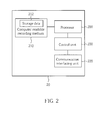
- Fig. 2 illustrates a schematic diagram of a communication device 20 according to embodiments of the present invention.
- the communication device 20 is utilized for realizing the network or the UEs shown in Fig. 1 and includes a processor 200, a computer readable recording medium 210, a communication interfacing unit 220 and a control unit 230.
- the computer readable recording medium 210 is any data storage device that stores storage data 212, including program code and corresponding parameters (i.e. a timer or a flag if necessary), and the storage data 212 is thereafter read and processed by the processor 200.
- the control unit 230 controls the communication interfacing unit 220 and related operations and states of the communication device 20 according to processed results of the process 200.
- the communication interfacing unit 220 is responsible for exchanging wireless signals with a peer communication device.
- the network of the wireless communication system 10 receives a Primary Notification and one or more following Secondary Notifications published by a Warning Notification Provider and thereby generates Primary Notification message and the Secondary Notification messages delivered to the UE in page type message or system information form.
- the UE has to receive one or more secondary notification messages when a primary notification message is received.
- the network can send configuration information to the UE in a broadcast (e.g. system information) or paging (e.g. paging messages) way.
- the following processes are provided a user equipment of a wireless communication system to managing the notification message reception (e.g. secondary notification message reception or related configuration information reception) according to a reception property of the notification message reception, configuration information broadcasted or paged by a network of the wireless communication system, or a connection state of the user equipment.
- the notification message reception e.g. secondary notification message reception or related configuration information reception
- a reception property of the notification message reception e.g. secondary notification message reception or related configuration information reception
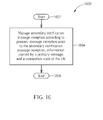
- FIG. 16 illustrates a flowchart of a process 1600 according to an embodiment of the present invention.
- the process 1600 is utilized for managing the secondary notification message reception of a UE in a wireless communication system and can be compiled into the program code of the storage data 212 stored in the computer readable recording medium 210.
- the process 1600 includes the following steps:
- the secondary notification message reception of the UE is managed according to the primary message reception, information carried by the primary message, or a connection state of the UE. For example, the UE stops the secondary notification message reception when the primary message does not include any information about the secondary notification message delivery. On the contrary, the UE begins or resumes the secondary notification message reception when the primary message includes information about the secondary notification message delivery.
- the connection state of the UE includes the connection state of the UE corresponding to radio resource control (e.g. a packet transfer mode), the connection state of the UE corresponding to a radio access technology (RAT), and the connection state of the UE corresponding to cell selection or cell reselection.
- radio resource control e.g. a packet transfer mode
- RAT radio access technology
- the UE neither wastes power on the secondary notification message reception nor misses any secondary notification message.
- the reception properties of the notification message reception can be a predetermined time of the notification message reception.
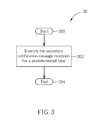
- Fig. 3 illustrates a flowchart of a process 30 according to an embodiment of the present invention.
- the process 30 is utilized for managing the secondary notification message reception for a UE of a wireless communication system and can be compiled into the program code of the storage data 212 stored in the computer readable recording medium 210.
- the process 30 includes the following steps:
- the present invention specifies the UE to execute the secondary notification message reception for a predetermined time.
- the UE stops the secondary notification message reception when the predetermined time expires.
- the UE further receives an indication message, which indicates continuation or stop of the secondary notification message reception, from the network and thereby determines whether to continue or stop the notification message according to the indication message.
- the predetermined time is 50s.
- a timer stored in the UE i.e. the storage data 212 is configured by the UE or the network for setting the predetermined time.
- the UE starts the timer when the primary notification message, a complete secondary notification message, or part of a secondary notification message is received.
- the timer value is preferably sent in a primary notification message, a secondary notification message, a complete secondary notification message, part of the secondary notification message or system information.
- the process 30 can solve the issues 1-6 of the prior art and thereby prevent the UE from wasting power on the secondary notification message reception when no more secondary notification message may be delivered to the UE.
- the configuration information broadcasted or paged by the network of the wireless communication system can be a notification message including scheduling information used for indicating a termination time of notification message delivery.
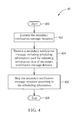
- Fig. 4 illustrates a flowchart of a process 40 according to an embodiment of the present invention.
- the process 40 is utilized for managing the secondary notification message reception for a UE of a wireless communication system and can be compiled into the program code of the storage data 212.
- the process 40 includes the following steps:
- the process 40 he UE executes the secondary notification message reception, preferably after the primary notification message is received.
- the UE stops the secondary notification message reception according to the termination time of the scheduling information.
- the process 40 can solve the issues 1-3 of the prior art.
- the scheduling information is included in one of a plurality of secondary notification messages generated by the network.
- the reception properties of the notification message reception can be a fixed number of received secondary notification messages.
- Fig. 5 illustrates a flowchart of a process 50 according to an embodiment of the present invention.
- the process 50 is utilized for managing the secondary notification message reception for a UE of a wireless communication system and can be compiled into the program code of the storage data 212.
- the process 50 includes the following steps:
- the present invention specifies the UE to stop the secondary notification message reception when a fixed number of secondary notification messages are received.
- the process 50 can solve the issues 1-6 of the prior art.
- the configuration of the fixed number is included in a primary notification message.
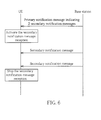
- Fig. 6 illustrates a sequence diagram of a UE and a base station of a network according to the process 50.
- the UE receives the primary notification message from the base station and then retrieves a number of 2 corresponding to the secondary notification message reception from the primary notification message. Then, the UE stops the secondary notification message reception when two consecutive secondary notification messages are received.
- the fixed number is predetermined in the UE before the notification message reception is executed. For example, if the fixed number is set to 3, the UE automatically starts to receive three secondary notification messages when a primary notification message is received.
- Fig. 7 illustrates a flowchart of a process 70 according to an embodiment of the present invention.
- the process 70 is utilized for managing the secondary notification message reception for a UE of a wireless communication system and can be compiled into the program code of the storage data 212.
- the process 70 includes the following steps:
- the UE stops the secondary notification message reception when the reception termination message is received.
- the network controls the UE to stop the secondary notification message reception via the reception termination message.
- the process 70 can solve the issues 1-3 of the prior art.
- the reception termination message is a paging message with specific content.
- the UE immediately stops the secondary notification message reception when receiving a paging message with such content.
- the reception termination message is a secondary notification message including reception termination information indicating the UE whether to continue the secondary notification message reception or not.
- FIG. 8 illustrates a flowchart of a process 80 according to an embodiment of the present invention.
- the process 80 is utilized for managing the secondary notification message reception for a UE of a wireless communication system and can be compiled into the program code of the storage data 212.
- the process 80 includes the following steps:
- the UE activates the secondary notification message reception when the reception indication message sent by the network is received.
- the UE suspends the secondary notification message reception when entering the disaster notification disallowing mode where secondary notification messages are not allowed to be sent.
- the embodiment of the present invention specifies that the UE terminates the secondary notification message reception when switching from the disaster notification disallowing mode to a disaster notification allowing mode.
- the reception indication message is a primary notification message indicating that the UE is allowed to receive the secondary notification messages.
- the UE switches from the disaster notification disallowing mode to the disaster notification allowing mode when a mode change message sent by the network is received.
- a reception termination indicator is preferably included in the mode change message.
- the disaster notification allowing mode is an idle mode.
- the disaster notification disallowing modes are different.
- the disaster notification disallowing mode is a radio resource (RR) dedicated mode or a packet transfer mode when the UE operates under the GERAN.
- the disaster notification disallowing mode is a CELL_DCH state or a CELL_FACH state for the UTRAN.
- the disaster notification disallowing mode is a radio resource control (RRC) connected mode for the EUTRAN.
- RRC radio resource control
- the Packet transfer mode is information transfer by means of packet transmission and packet switching, thereby permitting dynamic sharing of network resources among many connections.
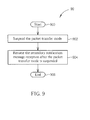
- Fig. 9 illustrates a flowchart of a process 90 according to an embodiment of the present invention.
- the process 90 is utilized for managing the secondary notification message reception for a UE of a wireless communication system and can be compiled into the program code of the storage data 212.
- the process 90 includes the following steps:
- the UE suspends the packet transfer mode after entering the packet transfer mode, and then resumes the secondary notification message reception after the packet transfer mode is suspended.
- Unscheduled notification message reception described herein means that the network discontinuously sends the notification messages to the UE.
- the UE has to enter the packet transfer mode when activating a web browsing service and then suspends the packet transfer mode for the secondary notification message reception.
- the network schedules discontinuous transmission for the secondary notification message. Each transmission can include a complete secondary notification message or part of the secondary notification message. Due to discontinuous transmission, system resources of the UE are not used for the notification message reception between two consecutive transmissions for the secondary notification message. The periods between the consecutive transmissions are seen as that the notification message reception is not scheduled. The UE resumes the packet transfer mode for unfinished reception of the web browsing service during the periods.
- the UE activates the secondary notification message reception when the primary notification message as well as the abovementioned reception indication message is received.
- the UE may select or reselect a cell due to bad communication quality with the current serving cell or better communication quality with the selected cell.
- the UE receives system information corresponding to the selected cell after cell selection or reselection is performed.
- the embodiment of the present invention provides reception managing program code in the storage data 212 to prevent power waste.
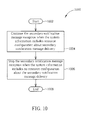
- Fig. 10 illustrates a flowchart of a process 1000 according to an embodiment of the present invention.
- the process 1000 is utilized for managing the secondary notification message reception for a UE of a wireless communication system and can be compiled into the reception managing program code.
- the process 1000 includes the following steps:
- the UE determines execution of the secondary notification message reception according to the system information of the selected cell.
- the system information includes the resource configuration about secondary notification message delivery, this means that secondary notification message delivery is supported in the selected cell.
- the UE continues the secondary notification message reception.
- the UE stops the secondary notification message reception since the system information without the abovementioned resource configuration indicates that the selected cell does not support the secondary notification message delivery.
- the UE keeps receiving system information during the activation of secondary notification message reception or receives the system information when a system information change message is received.
- the UE can further start a timer corresponding to the secondary notification message reception when the system information includes the resource configuration, and stops the secondary notification message reception at expiration of the timer when none of secondary notification message is received before the timer expires. In addition, the UE restarts the timer when a primary notification message, a complete notification message or part of a notification message is received.
- the process 1000 provides a criteria for the UE using the secondary notification message reception to deal with the cell selection and reselection and thus can solve the issues 5 and 6 of the prior art.
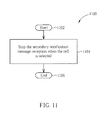
- FIG. 11 illustrates a flowchart of a process 1100 according to an embodiment of the present invention.
- the process 1100 is utilized for managing the secondary notification message reception for a UE of a wireless communication system and can be compiled into the reception managing program code.
- the process 1100 includes the following steps:
- the embodiment of the present invention specifies that the UE stops the secondary notification message reception after the completion of selecting the cell, irrespective of whether the secondary notification message delivery is supported in the selected cell.
- the process 1100 can solve the issues 5 and 6 of the prior art as well.
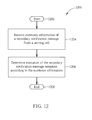
- Fig. 12 illustrates a flowchart of a process 1200 according to an embodiment of the present invention.
- the process 1200 is utilized for managing the secondary notification message reception for a UE of a wireless communication system and can be compiled into the program code of the storage data 212.
- the process 1200 includes the following steps:
- the serving cell sends existence information of a secondary notification message, and accordingly the UE determines execution of the secondary notification message reception according to content of the existence information after receiving the existence information.
- the ordinary skill in the art can determine what kind of existence information the serving cell sends and what way to send the existence information.
- the serving cell can include a flag in broadcast system information.
- the flag is used for indicating the UE of a broadcast state of the notification message.
- the flag set to '1' indicates that the secondary notification messages are broadcasted in the serving cell, whereas the set to '0' indicates that none of the secondary notification messages are broadcasted.
- the UE determines to receive the secondary notification messages when the received flag is "1", and not to execution the secondary notification message reception when the received flag is "0".
- the process 1200 can solve the issues 5-7 of the prior art.
- the serving cell can include the existence information in the primary notification message.
- the UE can certainly obtain the existence information before the secondary notification message reception is activated and thereby can timely control the secondary notification message reception.
- the process 1200 can solve the issue 8 of the prior art.
- the existence information of the primary notification message can be a broadcast scope of the secondary notification message, indicating a cell-wide, routing-area-wide, location-area-wide, tracking-area-wide, or public-land-mobile-network-wide scope.
- the broadcast scope information the UE can know whether it locates within the broadcast coverage and thereby determines whether to activate the secondary notification message reception.
- the process 1200 can solve the issues 5 and 6 of the prior art.
- the embodiment of the present invention provides reception priority program code in the storage data 212 to prevent the UE from missing the secondary notification message.
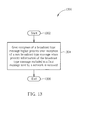
- Fig. 13 illustrates a flowchart of a process 1300 according to an embodiment of the present invention.
- the process 1300 is utilized for managing the secondary notification message reception for a UE of a wireless communication system and can be compiled into the reception priority program code.
- the process 1300 includes the following steps:
- the priority information of the broadcast type message is included in a first message by the network. That is, the network, through the first message, indicates the UE that the broadcast type message, used for the secondary notification message, is the most important, urgent message to receive.
- the UE thus gives reception of the broadcast type message higher priority over reception of any non broadcast type messages when the priority information of the first message is received. In this situation, when the broadcast and non-broadcast type messages reception collides, the UE receives the broadcast type message.
- the network uses a primary notification message as the first message.
- the non-broadcast type message is a paging message for the UE in the idle mode.
- the process 1300 can prevent the UE from missing the secondary notification message and can solve the issue 9 of the prior art.
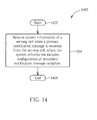
- Fig. 14 illustrates a flowchart of a process 1400 according to an embodiment of the present invention.
- the process 1400 is utilized for managing the secondary notification message reception for a UE of a wireless communication system and can be compiled into the program code of the storage data 212.
- the process 1400 includes the following steps:
- the UE receives system information of the serving cell when the primary notification message is received.
- the serving cell includes configuration of secondary notification message reception in the system information.
- the UE may include no configuration of the secondary notification message reception before the primary notification message is received.
- the serving cell does not need to send an extra message (i.e. a system information change message) to notify the UE of the configuration of the secondary notification message.
- an extra message i.e. a system information change message
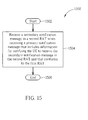
- Fig. 15 illustrates a flowchart of a process 1500 according to an embodiment of the present invention.
- the process 1500 is utilized for managing the secondary notification message reception for a UE operating in a first RAT and can be compiled into the program code of the storage data 212.
- the process 1500 includes the following steps:
- the network with the first RAT sends the primary notification message to notify the UE operating in the first RAT to receive the secondary notification message in the second RAT, and the UE accordingly receives the secondary notification message in the second RAT when receiving the primary notification message.
- the second RAT is a GERAN or a UTRAN when the first RAT is a LTE system.
- the UE in the LTE system can switch to other RAT, such as UMTS, to receive secondary notification message when the LTE system does not have enough radio resources.
- the process 1500 can solve the issue 11 of the prior art.
- the embodiments of the present invention provides criteria for the UE in the ETWS to manage the secondary notification message reception according to the primary message reception, the information carried by a primary message, or the connection state of the UE to prevent the UE from wasting power on useless reception of secondary notification messages and from missing the secondary notification messages.
Landscapes
- Engineering & Computer Science (AREA)
- Signal Processing (AREA)
- Business, Economics & Management (AREA)
- Emergency Management (AREA)
- Computer Networks & Wireless Communication (AREA)
- Health & Medical Sciences (AREA)
- Environmental & Geological Engineering (AREA)
- Public Health (AREA)
- Mobile Radio Communication Systems (AREA)
- Telephonic Communication Services (AREA)
- Alarm Systems (AREA)
Applications Claiming Priority (2)
| Application Number | Priority Date | Filing Date | Title |
|---|---|---|---|
| US8798608P | 2008-08-11 | 2008-08-11 | |
| EP09007786.8A EP2154915B1 (de) | 2008-08-11 | 2009-06-12 | Verwaltung des Empfangs von Warnmeldungsmittelungen zu Naturkatastrophen für drahtlose Kommunikationssysteme |
Related Parent Applications (3)
| Application Number | Title | Priority Date | Filing Date |
|---|---|---|---|
| EP09007786.8 Division | 2009-06-12 | ||
| EP09007786.8A Division-Into EP2154915B1 (de) | 2008-08-11 | 2009-06-12 | Verwaltung des Empfangs von Warnmeldungsmittelungen zu Naturkatastrophen für drahtlose Kommunikationssysteme |
| EP09007786.8A Division EP2154915B1 (de) | 2008-08-11 | 2009-06-12 | Verwaltung des Empfangs von Warnmeldungsmittelungen zu Naturkatastrophen für drahtlose Kommunikationssysteme |
Publications (2)
| Publication Number | Publication Date |
|---|---|
| EP2330838A1 true EP2330838A1 (de) | 2011-06-08 |
| EP2330838B1 EP2330838B1 (de) | 2014-04-02 |
Family
ID=41202274
Family Applications (8)
| Application Number | Title | Priority Date | Filing Date |
|---|---|---|---|
| EP12007396.0A Active EP2560417B1 (de) | 2008-08-11 | 2009-06-12 | Verwaltung des Empfangs von Warnmeldungsmitteilungen zu Naturkatastrophen für drahtlose Kommunikationssysteme |
| EP11001778.7A Active EP2330839B1 (de) | 2008-08-11 | 2009-06-12 | Verfahren zur Verwaltung des Empfangs von Warnmeldungsmittelungen zu Naturkatastrophen für drahtlose Kommunikationssysteme |
| EP11003267.9A Active EP2367369B1 (de) | 2008-08-11 | 2009-06-12 | Verfahren zur Empfangsverwaltung von Warnmeldungsmitteilungen zu Naturkatastrophen in einem drahtlosen Kommunikationssystem und Kommunikationsvorrichtung damit |
| EP11001777.9A Active EP2330838B1 (de) | 2008-08-11 | 2009-06-12 | Verfahren zur Verwaltung des Empfangs von Warnmeldungsmittelungen zu Naturkatastrophen für drahtlose Kommunikationssysteme |
| EP09007786.8A Active EP2154915B1 (de) | 2008-08-11 | 2009-06-12 | Verwaltung des Empfangs von Warnmeldungsmittelungen zu Naturkatastrophen für drahtlose Kommunikationssysteme |
| EP12007395.2A Active EP2560416B1 (de) | 2008-08-11 | 2009-06-12 | Verwaltung des Empfangs von Warnmeldungsmitteilungen zu Naturkatastrophen für drahtlosen Kommunikationssysteme |
| EP12007397.8A Active EP2557822B1 (de) | 2008-08-11 | 2009-06-12 | Verwaltung des Empfangs von Warnmeldungsmitteilungen zu Naturkatastrophen in drahtlosen Kommunikationssysteme |
| EP11001776.1A Active EP2360954B1 (de) | 2008-08-11 | 2009-06-12 | Verwaltung des Empfangs von Warnmeldungsmittelungen zu Naturkatastrophen für drahtlose Kommunikationssysteme |
Family Applications Before (3)
| Application Number | Title | Priority Date | Filing Date |
|---|---|---|---|
| EP12007396.0A Active EP2560417B1 (de) | 2008-08-11 | 2009-06-12 | Verwaltung des Empfangs von Warnmeldungsmitteilungen zu Naturkatastrophen für drahtlose Kommunikationssysteme |
| EP11001778.7A Active EP2330839B1 (de) | 2008-08-11 | 2009-06-12 | Verfahren zur Verwaltung des Empfangs von Warnmeldungsmittelungen zu Naturkatastrophen für drahtlose Kommunikationssysteme |
| EP11003267.9A Active EP2367369B1 (de) | 2008-08-11 | 2009-06-12 | Verfahren zur Empfangsverwaltung von Warnmeldungsmitteilungen zu Naturkatastrophen in einem drahtlosen Kommunikationssystem und Kommunikationsvorrichtung damit |
Family Applications After (4)
| Application Number | Title | Priority Date | Filing Date |
|---|---|---|---|
| EP09007786.8A Active EP2154915B1 (de) | 2008-08-11 | 2009-06-12 | Verwaltung des Empfangs von Warnmeldungsmittelungen zu Naturkatastrophen für drahtlose Kommunikationssysteme |
| EP12007395.2A Active EP2560416B1 (de) | 2008-08-11 | 2009-06-12 | Verwaltung des Empfangs von Warnmeldungsmitteilungen zu Naturkatastrophen für drahtlosen Kommunikationssysteme |
| EP12007397.8A Active EP2557822B1 (de) | 2008-08-11 | 2009-06-12 | Verwaltung des Empfangs von Warnmeldungsmitteilungen zu Naturkatastrophen in drahtlosen Kommunikationssysteme |
| EP11001776.1A Active EP2360954B1 (de) | 2008-08-11 | 2009-06-12 | Verwaltung des Empfangs von Warnmeldungsmittelungen zu Naturkatastrophen für drahtlose Kommunikationssysteme |
Country Status (5)
| Country | Link |
|---|---|
| US (5) | US8433280B2 (de) |
| EP (8) | EP2560417B1 (de) |
| CN (3) | CN102638766B (de) |
| DE (1) | DE202009018278U1 (de) |
| TW (1) | TWI421802B (de) |
Families Citing this family (28)
| Publication number | Priority date | Publication date | Assignee | Title |
|---|---|---|---|---|
| US8433280B2 (en) * | 2008-08-11 | 2013-04-30 | Htc Corporation | Method of managing reception of natural disaster warning notification messages for a wireless communication system and related communication device |
| WO2010088970A1 (en) * | 2009-02-09 | 2010-08-12 | Nokia Siemens Networks Oy | Apparatus for controlling spectrum exploitation utilising overlapping channel bandwidths |
| US8463260B2 (en) * | 2009-04-01 | 2013-06-11 | Htc Corporation | Method of handling system information reception and related communication device |
| US20110188437A1 (en) * | 2009-08-07 | 2011-08-04 | Qualcomm Incorporated | Reception of parallel warning messages |
| CA2776802C (en) * | 2009-10-06 | 2023-03-28 | Jean-Luc Rochet | Human security and survival system |
| US8868743B2 (en) | 2010-04-30 | 2014-10-21 | Sharp Kabushiki Kaisha | Modified access classes for machine type communication (MTC) devices during emergencies |
| US8837443B2 (en) | 2010-08-13 | 2014-09-16 | Sharp Kabushiki Kaisha | Reducing congestion in wireless communication networks |
| US8792338B2 (en) * | 2011-03-31 | 2014-07-29 | Lg Electronic Inc. | Method and apparatus for processing signal associated with warning notification in wireless communication system |
| KR101932107B1 (ko) | 2011-05-02 | 2018-12-24 | 삼성전자 주식회사 | 단말의 access 수행 및 제어 방법과 장치 |
| US9026112B2 (en) * | 2011-05-25 | 2015-05-05 | Qualcomm Incorporated | Transitioning of mobile devices within a wireless communication network between multiple radio access technologies |
| US9124376B2 (en) * | 2011-06-30 | 2015-09-01 | Ntt Docomo, Inc. | Communication device and communication method |
| EP2728911A4 (de) * | 2011-06-30 | 2015-05-27 | Ntt Docomo Inc | Kommunikationsvorrichtung und kommunikationsverfahren |
| EP2740251B1 (de) * | 2011-08-05 | 2017-06-21 | BlackBerry Limited | Verfahren und vorrichtung zur verwaltung von warnmeldungen |
| CN103177543A (zh) * | 2011-12-22 | 2013-06-26 | 成都市美幻科技有限公司 | 地震预警接收终端与预警服务器之间网络连接断开的提示方法 |
| EP2620926B1 (de) * | 2012-01-24 | 2015-08-19 | Telefonaktiebolaget L M Ericsson (publ) | Verbesserte Handhabung öffentlicher Warnmeldungen in einem mobilen Kommunikationssystem |
| CN102724637B (zh) * | 2012-05-25 | 2015-09-16 | 中兴通讯股份有限公司 | 一种停止发送地震海啸告警系统主通知的方法、装置和eNB |
| US9301308B2 (en) | 2012-12-21 | 2016-03-29 | Telefonaktiebolaget L M Ericsson (Publ) | Determining a cluster set of mobile devices |
| US10136276B2 (en) | 2013-06-25 | 2018-11-20 | Siemens Schweiz Ag | Modality-centric mass notification system |
| US9641692B2 (en) | 2013-06-25 | 2017-05-02 | Siemens Schweiz Ag | Incident-centric mass notification system |
| WO2016203291A1 (en) * | 2015-06-15 | 2016-12-22 | Telefonaktiebolaget Lm Ericsson (Publ) | File transfer by mobile user collaboration |
| KR102552289B1 (ko) * | 2015-08-06 | 2023-07-06 | 삼성전자주식회사 | 인터 캐리어 d2d 통신을 수행하기 위한 방법 및 장치 |
| CN106993280A (zh) * | 2016-01-20 | 2017-07-28 | 中兴通讯股份有限公司 | 一种辅助消息的发送方法和装置 |
| US10812435B2 (en) | 2018-02-28 | 2020-10-20 | Ringcentral, Inc. | Systems and methods for suppressing repetitive notifications about messages in messaging groups |
| US11178719B2 (en) * | 2018-05-07 | 2021-11-16 | Htc Corporation | Device and method of handling an radio resource control resume procedure |
| EP3858005A4 (de) * | 2018-09-27 | 2022-07-06 | INTEL Corporation | Systeme und verfahren zur benachrichtigung und erfassung von öffentlichen warnmeldungen des mobilfunknetzes im verbundenen modus für reichweitenverbesserte benutzergeräte |
| WO2020107476A1 (zh) * | 2018-11-30 | 2020-06-04 | 北京小米移动软件有限公司 | 传输寻呼信令的方法及装置 |
| TWI751459B (zh) * | 2019-12-11 | 2022-01-01 | 中華電信股份有限公司 | 訊息發送系統及其方法 |
| US12470910B2 (en) | 2020-02-10 | 2025-11-11 | Nokia Technologies Oy | User equipment and method for warning messages delivery in private networks |
Citations (4)
| Publication number | Priority date | Publication date | Assignee | Title |
|---|---|---|---|---|
| US20020034955A1 (en) * | 1998-02-26 | 2002-03-21 | Yasunori Kobayashi | Selective radio paging receiver |
| EP1739868A1 (de) * | 2005-07-01 | 2007-01-03 | NEC Corporation | Rundfunkempgangssystem, Rundfunkempfangsverfahren, Relaisstation, Mobilstation und Steuerprogramm dafür |
| WO2007039890A1 (en) * | 2005-10-04 | 2007-04-12 | Markport Limited | A cell broadcast control system and method |
| EP1816766A2 (de) * | 2006-02-01 | 2007-08-08 | Samsung Electronics Co., Ltd. | Vorrichtung und Verfahren zum Senden und Empfangen einer Mitteilungsbenachrichtigung in einem mobilen Funkystem |
Family Cites Families (29)
| Publication number | Priority date | Publication date | Assignee | Title |
|---|---|---|---|---|
| US5152003A (en) * | 1989-10-18 | 1992-09-29 | Tour-Mate Systems Canada Limited | Record message delivery system |
| JP3108567B2 (ja) * | 1993-08-27 | 2000-11-13 | 株式会社エヌ・ティ・ティ・ドコモ | 移動無線方式および移動受信機 |
| CN1100416C (zh) * | 1996-03-15 | 2003-01-29 | Ntt移动通信网株式会社 | 移动通信系统 |
| US7330693B1 (en) | 1999-09-17 | 2008-02-12 | Lucent Technologies Inc. | Broadcast channels for wireless telephony |
| JP4140340B2 (ja) | 2002-10-24 | 2008-08-27 | 日本電気株式会社 | 移動通信システム、移動局、基地局及びそれらに用いるパケット通信方法 |
| US20040180675A1 (en) * | 2002-11-06 | 2004-09-16 | Samsung Electronics Co., Ltd. | Method for transmitting and receiving control messages in a mobile communication system providing MBMS service |
| US7054612B2 (en) | 2003-06-20 | 2006-05-30 | Lucent Technologies Inc. | Message broadcast to mobile station in wireless network |
| US7912485B2 (en) | 2003-09-11 | 2011-03-22 | Qualcomm Incorporated | Method and system for signaling in broadcast communication system |
| KR100842548B1 (ko) | 2004-03-05 | 2008-07-01 | 삼성전자주식회사 | 긴급 호출 시스템 및 그 제어 방법 |
| JP2005267586A (ja) * | 2004-03-18 | 2005-09-29 | Shoji Endo | 緊急事態通知システム |
| JP2005332933A (ja) * | 2004-05-19 | 2005-12-02 | Seiko Epson Corp | 製造装置及びその固定方法 |
| JP4898667B2 (ja) | 2004-06-16 | 2012-03-21 | エルジー エレクトロニクス インコーポレイティド | ユーザ位置情報に基づくブロードキャスト/マルチキャストサービス方法 |
| US20060005219A1 (en) * | 2004-07-02 | 2006-01-05 | Garry Owens | Standby television warning system |
| JP2006191474A (ja) | 2005-01-07 | 2006-07-20 | Oki Electric Ind Co Ltd | 緊急通報システム |
| KR20060118642A (ko) * | 2005-05-16 | 2006-11-24 | 엘지전자 주식회사 | 이중 전송 모드에 적용되는 핸드오버 수행 방법 |
| KR101270275B1 (ko) | 2005-08-17 | 2013-05-31 | 삼성전자주식회사 | 방송 시스템에서의 통지 메시지 제공 방법 및 장치 |
| JP2007142744A (ja) * | 2005-11-17 | 2007-06-07 | Matsushita Electric Ind Co Ltd | 携帯無線通信端末及び緊急放送送受信システム |
| KR101177948B1 (ko) | 2006-01-13 | 2012-08-28 | 삼성전자주식회사 | PoC 시스템에서 미디어 전송 시간 정보 제공을 위한단말 장치 및 방법과 미디어 전송 시간 정보 제공을 위한PoC 시스템 |
| US7916687B2 (en) * | 2006-03-03 | 2011-03-29 | Qualcomm Incorporated | Standby time improvements |
| EP1848135B1 (de) * | 2006-04-19 | 2012-02-22 | Motorola Mobility, Inc. | Verfahren zur mehrfachzeitschlitzigen Paket-Datenübertragung |
| US7860063B2 (en) | 2006-08-31 | 2010-12-28 | Via Telecom Co., Ltd. | Systems and methods for wireless access terminal command processing |
| US8433316B2 (en) | 2006-11-03 | 2013-04-30 | Qualcomm Incorporated | Efficient search for wireless networks in connected mode |
| US8296816B2 (en) * | 2006-11-06 | 2012-10-23 | At&T Intellectual Property I, L.P. | Method and system for updating digital video recorder scheduling |
| US8335202B2 (en) * | 2006-11-20 | 2012-12-18 | Qualcomm Incorporated | Sending pilots on secondary channels for improved acquisition and handoff in cellular communication |
| KR20080086045A (ko) * | 2007-03-21 | 2008-09-25 | 엘지전자 주식회사 | 무선통신 시스템의 호출정보 송수신 방법 |
| US20080232313A1 (en) | 2007-03-23 | 2008-09-25 | Richard Lee-Chee Kuo | Method for Enhancing Data Transmission Efficiency for a Radio Resource Control Procedure for a Wireless Communications System and Related Apparatus |
| US8433280B2 (en) * | 2008-08-11 | 2013-04-30 | Htc Corporation | Method of managing reception of natural disaster warning notification messages for a wireless communication system and related communication device |
| US8731511B2 (en) * | 2008-09-21 | 2014-05-20 | Htc Corporation | Method and related communication device for transmission and reception of natural disaster warning notification message in a wireless communication system |
| US8805318B2 (en) * | 2009-04-24 | 2014-08-12 | Htc Corporation | Method of handling data transmission associated with natural disaster notification in a wireless communication system and related apparatus |
-
2008
- 2008-12-31 US US12/346,847 patent/US8433280B2/en active Active
-
2009
- 2009-06-12 EP EP12007396.0A patent/EP2560417B1/de active Active
- 2009-06-12 EP EP11001778.7A patent/EP2330839B1/de active Active
- 2009-06-12 EP EP11003267.9A patent/EP2367369B1/de active Active
- 2009-06-12 EP EP11001777.9A patent/EP2330838B1/de active Active
- 2009-06-12 DE DE202009018278U patent/DE202009018278U1/de not_active Expired - Lifetime
- 2009-06-12 EP EP09007786.8A patent/EP2154915B1/de active Active
- 2009-06-12 EP EP12007395.2A patent/EP2560416B1/de active Active
- 2009-06-12 EP EP12007397.8A patent/EP2557822B1/de active Active
- 2009-06-12 EP EP11001776.1A patent/EP2360954B1/de active Active
- 2009-08-11 TW TW098126923A patent/TWI421802B/zh active
- 2009-08-11 CN CN201210040741.3A patent/CN102638766B/zh active Active
- 2009-08-11 CN CN201210040725.4A patent/CN102595334B/zh active Active
- 2009-08-11 CN CN2009101633706A patent/CN101651927B/zh active Active
-
2013
- 2013-04-25 US US13/870,000 patent/US9307382B2/en active Active
- 2013-04-25 US US13/869,997 patent/US9215580B2/en active Active
- 2013-04-25 US US13/869,992 patent/US9179281B2/en active Active
- 2013-04-25 US US13/870,953 patent/US9131362B2/en active Active
Patent Citations (4)
| Publication number | Priority date | Publication date | Assignee | Title |
|---|---|---|---|---|
| US20020034955A1 (en) * | 1998-02-26 | 2002-03-21 | Yasunori Kobayashi | Selective radio paging receiver |
| EP1739868A1 (de) * | 2005-07-01 | 2007-01-03 | NEC Corporation | Rundfunkempgangssystem, Rundfunkempfangsverfahren, Relaisstation, Mobilstation und Steuerprogramm dafür |
| WO2007039890A1 (en) * | 2005-10-04 | 2007-04-12 | Markport Limited | A cell broadcast control system and method |
| EP1816766A2 (de) * | 2006-02-01 | 2007-08-08 | Samsung Electronics Co., Ltd. | Vorrichtung und Verfahren zum Senden und Empfangen einer Mitteilungsbenachrichtigung in einem mobilen Funkystem |
Non-Patent Citations (1)
| Title |
|---|
| "3rd Generation Partnershop Project; Technical Specification Group Services and System Aspects; Earthquake and Tsunami Warning System Requirements and Solution (ETWS); Solution Placeholder (Release 8)", 3RD GENERATION PARTNERSHIP PROJECT (3GPP); TECHNICAL REPORT (TR), XX, XX, no. TR 23.828 V0.1.0, 1 January 2008 (2008-01-01), pages 1 - 17, XP002540086 * |
Also Published As
Similar Documents
| Publication | Publication Date | Title |
|---|---|---|
| EP2330838B1 (de) | Verfahren zur Verwaltung des Empfangs von Warnmeldungsmittelungen zu Naturkatastrophen für drahtlose Kommunikationssysteme | |
| EP2512160B1 (de) | Empfangsverfahren, empfangsvorrichtung und benutzerendgerät für informationen über multicast-steuerkanäle (mcchs) | |
| US20100233990A1 (en) | Mobile communication system, mobile communication method, radio network controller, radio base station and mobile station | |
| JP2015500578A (ja) | マルチメディア・ブロードキャスト・マルチキャスト・サービス(mbms)アイドルモードカウント手順 | |
| EP3764675B1 (de) | Verbessertes öffentliches informationssystem | |
| US10516973B2 (en) | Method of providing seamless reception of broadcast service in UE | |
| US9124376B2 (en) | Communication device and communication method | |
| US20140128119A1 (en) | Communication device and communication method |
Legal Events
| Date | Code | Title | Description |
|---|---|---|---|
| PUAI | Public reference made under article 153(3) epc to a published international application that has entered the european phase |
Free format text: ORIGINAL CODE: 0009012 |
|
| 17P | Request for examination filed |
Effective date: 20110303 |
|
| AC | Divisional application: reference to earlier application |
Ref document number: 2154915 Country of ref document: EP Kind code of ref document: P |
|
| AK | Designated contracting states |
Kind code of ref document: A1 Designated state(s): AT BE BG CH CY CZ DE DK EE ES FI FR GB GR HR HU IE IS IT LI LT LU LV MC MK MT NL NO PL PT RO SE SI SK TR |
|
| 17Q | First examination report despatched |
Effective date: 20110513 |
|
| RIC1 | Information provided on ipc code assigned before grant |
Ipc: H04W 4/22 20090101AFI20130903BHEP Ipc: H04W 76/00 20090101ALI20130903BHEP Ipc: H04W 72/00 20090101ALI20130903BHEP |
|
| GRAP | Despatch of communication of intention to grant a patent |
Free format text: ORIGINAL CODE: EPIDOSNIGR1 |
|
| INTG | Intention to grant announced |
Effective date: 20131015 |
|
| RIN1 | Information on inventor provided before grant (corrected) |
Inventor name: WU, CHIH-HSIANG |
|
| GRAS | Grant fee paid |
Free format text: ORIGINAL CODE: EPIDOSNIGR3 |
|
| GRAA | (expected) grant |
Free format text: ORIGINAL CODE: 0009210 |
|
| AC | Divisional application: reference to earlier application |
Ref document number: 2154915 Country of ref document: EP Kind code of ref document: P |
|
| AK | Designated contracting states |
Kind code of ref document: B1 Designated state(s): AT BE BG CH CY CZ DE DK EE ES FI FR GB GR HR HU IE IS IT LI LT LU LV MC MK MT NL NO PL PT RO SE SI SK TR |
|
| REG | Reference to a national code |
Ref country code: GB Ref legal event code: FG4D |
|
| REG | Reference to a national code |
Ref country code: CH Ref legal event code: EP Ref country code: AT Ref legal event code: REF Ref document number: 660741 Country of ref document: AT Kind code of ref document: T Effective date: 20140415 |
|
| REG | Reference to a national code |
Ref country code: IE Ref legal event code: FG4D |
|
| REG | Reference to a national code |
Ref country code: DE Ref legal event code: R096 Ref document number: 602009023034 Country of ref document: DE Effective date: 20140515 |
|
| REG | Reference to a national code |
Ref country code: NL Ref legal event code: T3 |
|
| REG | Reference to a national code |
Ref country code: AT Ref legal event code: MK05 Ref document number: 660741 Country of ref document: AT Kind code of ref document: T Effective date: 20140402 |
|
| REG | Reference to a national code |
Ref country code: LT Ref legal event code: MG4D |
|
| PG25 | Lapsed in a contracting state [announced via postgrant information from national office to epo] |
Ref country code: CZ Free format text: LAPSE BECAUSE OF FAILURE TO SUBMIT A TRANSLATION OF THE DESCRIPTION OR TO PAY THE FEE WITHIN THE PRESCRIBED TIME-LIMIT Effective date: 20140402 Ref country code: CY Free format text: LAPSE BECAUSE OF FAILURE TO SUBMIT A TRANSLATION OF THE DESCRIPTION OR TO PAY THE FEE WITHIN THE PRESCRIBED TIME-LIMIT Effective date: 20140402 Ref country code: GR Free format text: LAPSE BECAUSE OF FAILURE TO SUBMIT A TRANSLATION OF THE DESCRIPTION OR TO PAY THE FEE WITHIN THE PRESCRIBED TIME-LIMIT Effective date: 20140703 Ref country code: LT Free format text: LAPSE BECAUSE OF FAILURE TO SUBMIT A TRANSLATION OF THE DESCRIPTION OR TO PAY THE FEE WITHIN THE PRESCRIBED TIME-LIMIT Effective date: 20140402 Ref country code: FI Free format text: LAPSE BECAUSE OF FAILURE TO SUBMIT A TRANSLATION OF THE DESCRIPTION OR TO PAY THE FEE WITHIN THE PRESCRIBED TIME-LIMIT Effective date: 20140402 Ref country code: IS Free format text: LAPSE BECAUSE OF FAILURE TO SUBMIT A TRANSLATION OF THE DESCRIPTION OR TO PAY THE FEE WITHIN THE PRESCRIBED TIME-LIMIT Effective date: 20140802 Ref country code: BG Free format text: LAPSE BECAUSE OF FAILURE TO SUBMIT A TRANSLATION OF THE DESCRIPTION OR TO PAY THE FEE WITHIN THE PRESCRIBED TIME-LIMIT Effective date: 20140702 Ref country code: NO Free format text: LAPSE BECAUSE OF FAILURE TO SUBMIT A TRANSLATION OF THE DESCRIPTION OR TO PAY THE FEE WITHIN THE PRESCRIBED TIME-LIMIT Effective date: 20140702 |
|
| PG25 | Lapsed in a contracting state [announced via postgrant information from national office to epo] |
Ref country code: LV Free format text: LAPSE BECAUSE OF FAILURE TO SUBMIT A TRANSLATION OF THE DESCRIPTION OR TO PAY THE FEE WITHIN THE PRESCRIBED TIME-LIMIT Effective date: 20140402 Ref country code: HR Free format text: LAPSE BECAUSE OF FAILURE TO SUBMIT A TRANSLATION OF THE DESCRIPTION OR TO PAY THE FEE WITHIN THE PRESCRIBED TIME-LIMIT Effective date: 20140402 Ref country code: AT Free format text: LAPSE BECAUSE OF FAILURE TO SUBMIT A TRANSLATION OF THE DESCRIPTION OR TO PAY THE FEE WITHIN THE PRESCRIBED TIME-LIMIT Effective date: 20140402 Ref country code: PL Free format text: LAPSE BECAUSE OF FAILURE TO SUBMIT A TRANSLATION OF THE DESCRIPTION OR TO PAY THE FEE WITHIN THE PRESCRIBED TIME-LIMIT Effective date: 20140402 Ref country code: ES Free format text: LAPSE BECAUSE OF FAILURE TO SUBMIT A TRANSLATION OF THE DESCRIPTION OR TO PAY THE FEE WITHIN THE PRESCRIBED TIME-LIMIT Effective date: 20140402 Ref country code: SE Free format text: LAPSE BECAUSE OF FAILURE TO SUBMIT A TRANSLATION OF THE DESCRIPTION OR TO PAY THE FEE WITHIN THE PRESCRIBED TIME-LIMIT Effective date: 20140402 |
|
| PG25 | Lapsed in a contracting state [announced via postgrant information from national office to epo] |
Ref country code: PT Free format text: LAPSE BECAUSE OF FAILURE TO SUBMIT A TRANSLATION OF THE DESCRIPTION OR TO PAY THE FEE WITHIN THE PRESCRIBED TIME-LIMIT Effective date: 20140804 |
|
| REG | Reference to a national code |
Ref country code: DE Ref legal event code: R097 Ref document number: 602009023034 Country of ref document: DE |
|
| PG25 | Lapsed in a contracting state [announced via postgrant information from national office to epo] |
Ref country code: BE Free format text: LAPSE BECAUSE OF FAILURE TO SUBMIT A TRANSLATION OF THE DESCRIPTION OR TO PAY THE FEE WITHIN THE PRESCRIBED TIME-LIMIT Effective date: 20140402 Ref country code: MC Free format text: LAPSE BECAUSE OF FAILURE TO SUBMIT A TRANSLATION OF THE DESCRIPTION OR TO PAY THE FEE WITHIN THE PRESCRIBED TIME-LIMIT Effective date: 20140402 Ref country code: EE Free format text: LAPSE BECAUSE OF FAILURE TO SUBMIT A TRANSLATION OF THE DESCRIPTION OR TO PAY THE FEE WITHIN THE PRESCRIBED TIME-LIMIT Effective date: 20140402 Ref country code: DK Free format text: LAPSE BECAUSE OF FAILURE TO SUBMIT A TRANSLATION OF THE DESCRIPTION OR TO PAY THE FEE WITHIN THE PRESCRIBED TIME-LIMIT Effective date: 20140402 Ref country code: RO Free format text: LAPSE BECAUSE OF FAILURE TO SUBMIT A TRANSLATION OF THE DESCRIPTION OR TO PAY THE FEE WITHIN THE PRESCRIBED TIME-LIMIT Effective date: 20140402 Ref country code: LU Free format text: LAPSE BECAUSE OF FAILURE TO SUBMIT A TRANSLATION OF THE DESCRIPTION OR TO PAY THE FEE WITHIN THE PRESCRIBED TIME-LIMIT Effective date: 20140612 Ref country code: SK Free format text: LAPSE BECAUSE OF FAILURE TO SUBMIT A TRANSLATION OF THE DESCRIPTION OR TO PAY THE FEE WITHIN THE PRESCRIBED TIME-LIMIT Effective date: 20140402 |
|
| REG | Reference to a national code |
Ref country code: CH Ref legal event code: PL |
|
| PLBE | No opposition filed within time limit |
Free format text: ORIGINAL CODE: 0009261 |
|
| STAA | Information on the status of an ep patent application or granted ep patent |
Free format text: STATUS: NO OPPOSITION FILED WITHIN TIME LIMIT |
|
| 26N | No opposition filed |
Effective date: 20150106 |
|
| REG | Reference to a national code |
Ref country code: IE Ref legal event code: MM4A |
|
| PG25 | Lapsed in a contracting state [announced via postgrant information from national office to epo] |
Ref country code: IT Free format text: LAPSE BECAUSE OF FAILURE TO SUBMIT A TRANSLATION OF THE DESCRIPTION OR TO PAY THE FEE WITHIN THE PRESCRIBED TIME-LIMIT Effective date: 20140402 |
|
| REG | Reference to a national code |
Ref country code: DE Ref legal event code: R097 Ref document number: 602009023034 Country of ref document: DE Effective date: 20150106 |
|
| PG25 | Lapsed in a contracting state [announced via postgrant information from national office to epo] |
Ref country code: IE Free format text: LAPSE BECAUSE OF NON-PAYMENT OF DUE FEES Effective date: 20140612 Ref country code: LI Free format text: LAPSE BECAUSE OF NON-PAYMENT OF DUE FEES Effective date: 20140630 Ref country code: CH Free format text: LAPSE BECAUSE OF NON-PAYMENT OF DUE FEES Effective date: 20140630 |
|
| PG25 | Lapsed in a contracting state [announced via postgrant information from national office to epo] |
Ref country code: SI Free format text: LAPSE BECAUSE OF FAILURE TO SUBMIT A TRANSLATION OF THE DESCRIPTION OR TO PAY THE FEE WITHIN THE PRESCRIBED TIME-LIMIT Effective date: 20140402 |
|
| PG25 | Lapsed in a contracting state [announced via postgrant information from national office to epo] |
Ref country code: MT Free format text: LAPSE BECAUSE OF FAILURE TO SUBMIT A TRANSLATION OF THE DESCRIPTION OR TO PAY THE FEE WITHIN THE PRESCRIBED TIME-LIMIT Effective date: 20140402 |
|
| REG | Reference to a national code |
Ref country code: FR Ref legal event code: PLFP Year of fee payment: 8 |
|
| PG25 | Lapsed in a contracting state [announced via postgrant information from national office to epo] |
Ref country code: TR Free format text: LAPSE BECAUSE OF FAILURE TO SUBMIT A TRANSLATION OF THE DESCRIPTION OR TO PAY THE FEE WITHIN THE PRESCRIBED TIME-LIMIT Effective date: 20140402 Ref country code: HU Free format text: LAPSE BECAUSE OF FAILURE TO SUBMIT A TRANSLATION OF THE DESCRIPTION OR TO PAY THE FEE WITHIN THE PRESCRIBED TIME-LIMIT; INVALID AB INITIO Effective date: 20090612 |
|
| REG | Reference to a national code |
Ref country code: FR Ref legal event code: PLFP Year of fee payment: 9 |
|
| REG | Reference to a national code |
Ref country code: DE Ref legal event code: R079 Ref document number: 602009023034 Country of ref document: DE Free format text: PREVIOUS MAIN CLASS: H04W0004220000 Ipc: H04W0004900000 |
|
| REG | Reference to a national code |
Ref country code: FR Ref legal event code: PLFP Year of fee payment: 10 |
|
| PG25 | Lapsed in a contracting state [announced via postgrant information from national office to epo] |
Ref country code: MK Free format text: LAPSE BECAUSE OF FAILURE TO SUBMIT A TRANSLATION OF THE DESCRIPTION OR TO PAY THE FEE WITHIN THE PRESCRIBED TIME-LIMIT Effective date: 20140402 |
|
| REG | Reference to a national code |
Ref country code: FR Ref legal event code: PLFP Year of fee payment: 15 |
|
| P01 | Opt-out of the competence of the unified patent court (upc) registered |
Effective date: 20230602 |
|
| PGFP | Annual fee paid to national office [announced via postgrant information from national office to epo] |
Ref country code: NL Payment date: 20250409 Year of fee payment: 17 |
|
| PGFP | Annual fee paid to national office [announced via postgrant information from national office to epo] |
Ref country code: DE Payment date: 20250402 Year of fee payment: 17 |
|
| PGFP | Annual fee paid to national office [announced via postgrant information from national office to epo] |
Ref country code: GB Payment date: 20250401 Year of fee payment: 17 |
|
| PGFP | Annual fee paid to national office [announced via postgrant information from national office to epo] |
Ref country code: FR Payment date: 20250401 Year of fee payment: 17 |