EP2332048B1 - Création de sandboxes par jetons altérés - Google Patents
Création de sandboxes par jetons altérés Download PDFInfo
- Publication number
- EP2332048B1 EP2332048B1 EP09810664.4A EP09810664A EP2332048B1 EP 2332048 B1 EP2332048 B1 EP 2332048B1 EP 09810664 A EP09810664 A EP 09810664A EP 2332048 B1 EP2332048 B1 EP 2332048B1
- Authority
- EP
- European Patent Office
- Prior art keywords
- token
- naked
- impersonation
- module
- module configured
- Prior art date
- Legal status (The legal status is an assumption and is not a legal conclusion. Google has not performed a legal analysis and makes no representation as to the accuracy of the status listed.)
- Active
Links
Images



Classifications
-
- G—PHYSICS
- G06—COMPUTING OR CALCULATING; COUNTING
- G06F—ELECTRIC DIGITAL DATA PROCESSING
- G06F21/00—Security arrangements for protecting computers, components thereof, programs or data against unauthorised activity
- G06F21/50—Monitoring users, programs or devices to maintain the integrity of platforms, e.g. of processors, firmware or operating systems
- G06F21/52—Monitoring users, programs or devices to maintain the integrity of platforms, e.g. of processors, firmware or operating systems during program execution, e.g. stack integrity ; Preventing unwanted data erasure; Buffer overflow
- G06F21/53—Monitoring users, programs or devices to maintain the integrity of platforms, e.g. of processors, firmware or operating systems during program execution, e.g. stack integrity ; Preventing unwanted data erasure; Buffer overflow by executing in a restricted environment, e.g. sandbox or secure virtual machine
Definitions
- Embodiments of the present invention relate to software applications and security.
- Untrusted code such as spyware, viruses or adware
- Untrusted code may be received through the Internet and executed on a computer system. During execution, these software processes may be able to unsafely access and use system resources. Executing untrusted software can compromise or destroy an unprotected computer. Untrusted software may also compromise the privacy of a computer's users.
- a token may encapsulate a user identity and specific rights allowed or denied to that user.
- a token is like a badge that identifies the bearer.
- Each object of an operating system is annotated with a list of users or groups that can access the object.
- An operating system will create a handle based on an object and a token when a desired action is granted. The handle will include the user's identity and an action the user may perform. A system may look at this handle, determine if a user can take a requested action, and then either allow or deny the requested action.
- Tokens may be altered to provide a limited set of privileges. These limitations may leave a process with access to either too many or too few resources.
- Multi-threaded systems allowed processes to spawn sub processes, or threads, that can be run concurrently.
- a process may limit the actions its threads may take.
- a process can copy and alter the original process token so that a more restrictive token can be attached to each thread. These token copies could be altered to restrict certain actions by the thread.
- Sandboxing has been developed to secure these holes.
- Sandboxing may be defined as a mechanism which allows a host system to execute guest code in a confined environment, so that the guest code can only affect the host system according to a defined policy.
- Sandboxing may be performed in kernel mode or user mode.
- Kernel mode sandboxing may modify an operating system by adding additional device drivers. These device drivers provide additional privilege checking to restrict guest code from affecting the host system. Because this method deals with manipulating the operating system directly, it does not require a lot of overhead or significantly affect the performance of applications. Kernel mode sandboxing also allows users to run any application without requiring application code to be rewritten. However, kernel mode sandboxing is highly risky. A designer must write or rewrite portions of the operating system. This is a highly sensitive area, and any mistake can have drastic consequences.
- sandboxing may take place in user mode.
- User mode sandboxing may be implemented as a program that can be loaded by any user, not just a privileged user.
- User mode sandboxing may include dynamic translation. Dynamic translation involves rewriting instruction code at execution time into a safe form before executing the code. Dynamic translation is performed, for example, with VMWARE. Because the operating system is not reconfigured or added to, user mode sandboxing is safer than kernel mode. However, user mode sandboxing reduces application performance because of the overhead involved in rewriting code during execution.
- VX32 is a user-level sandbox which uses segmentation and dynamic translation.
- Vx32 Lightweight, User-level Sandboxing on the x86", Massachusetts Institute of Technology, PDOS, http://pdos.csail.mit.edu/papers/vx32:usenix08 / ).
- Segmentation is implemented by cordoning off memory access for specific applications. This implementation of sandboxing requires rewriting the software code depending on the application and the operating system. It is also limited in the security it can provide. While memory cannot be accessed outside of specified regions, this system only provides memory protection. Applications may still spawn other processes and have access to other system resources.
- a first embodiment of the invention provides a method for altered token sandboxing in accordance with Claim 1 appended hereto.
- a second embodiment of the invention provides a system for altered token sandboxing in accordance with Claim 7 appended hereto.
- Embodiments described herein refer to systems and methods for user-mode, altered token sandboxing.
- sandboxing allows a process to get access to safe handles. If a process gets a handle that is dangerously privileged, malicious code can destroy a program or computer or access confidential files. Some developers could be more careful. Coding bugs may provide such dangerous handles. These bugs may exist in an operating system API or in a third party component. Some software gives users handles with more privilege than is necessary. Most WINDOWS users run programs with Admin-level privileges. Application installers sometimes create objects with a security descriptor that gives everyone full access to it. Many handles allow users to modify objects.
- sandboxing may prevent malicious code from obtaining bad handles and affecting a host system or reading a user's personal files.
- Sandboxing may protect against things such as buffer overflows, integer overflows, and format parsing/decoding flaws that could be exploited.
- User mode, altered token sandboxing works within the framework of the operating system.
- an example operating system may be, but is not limited to, WINDOWS VISTA, WINDOWS XP, or other MICROSOFT operating system.
- User mode, altered token sandboxing does not require modification of the operating system, and it does not inspect or rewrite pieces of code. It leverages the operating system to keep things safe.
- Handles may be provided based on altered tokens, or tokens with a different set of privileges than the user. These less-privileged tokens may limit what processes may be effected. For instance, plug-ins may be given lesser rights to the file system or registry and no rights to operating system services. However, limited privileges are often not limited enough as these less-privileged processes may still be able to access the file system and registry. Some operating system engineers have created least-privilege tokens, or tokens with a minimum amount of privileges. To start a process, the operating system requires the parent process to have access to certain key components. Some privileges are required during some periods of processing or else a process will fail.
- all privileges and effective groups may be removed from a token in order to produce a naked token.
- a naked token has no privileges.
- a naked token would have no access, for example, to the file system, registry, operating systems services or APIs.
- Engineers previously have not used naked tokens because they believed that naked tokens would have resulted in many process request denials upon execution of a new process. These denials would cause an operating system to forcefully abort process creation or the process would crash. This might have been the case if a process had a naked token during its entire lifetime. Typically, once a process is started, its rights may not change.
- a sandboxed application may require two processes, a parent process and a child process. These processes may be referred to as a broker and a target. These can both have the same process image. Both processes may use a sandbox library, which provides a high-level API for managing sandboxing.
- a broker may be, for example, a browser.
- Figure 1 shows browser 110 in exemplary system 100, illustrating a multi-process application, according to an embodiment.
- a target process may be a renderer.
- the browser may run trusted code while each renderer may run guest code or untrusted code.
- renderer 120 may execute JAVASCRIPT.
- Renderer 130 might perform HTML rendering or image decoding.
- Renderer 140 may run a plug-in or a flash object. These renderer processes may be locked down with sandboxing. That is, the sandboxing will secure the processes.
- the privilege perimeter will ensure that any external code that gets loaded will fail if it tries to create or open objects.
- FIG. 2 illustrates an exemplary system 200 for altered token sandboxing, according to an embodiment.
- System 200 includes security module 220, acquisition module 240 and replacement module 250.
- Broker 210 may be a process that starts with a logged on user's privileges or token. Broker 210 initiates sandboxing using a broker services API. It may also use a sandboxing library. Broker 210 may use security module 220.
- Security module 220 is configured to create and suspend a process based on a naked token. This process may be represented by target 230.
- Target 230 may also be a sub-process or a thread.
- Target 230 may have a naked token.
- a naked token removes all access privileges from the target process.
- an operating system security manager may compare the principals listed in the thread's access token against the rights defined on the object's discretionary access control list (DACL).
- a naked token may not allow actions based on a DACL.
- a target process running with a naked token cannot access any object with a non-NULL DACL.
- Objects with NULL DACLs cannot be secured either, because a security manager skips the access check.
- a token may be made naked in at least three ways.
- a token may enumerate all SIDs in the original token and mark them DENY_ONLY, according to an embodiment.
- a security manager will only use the SID to check if access is denied; the SID cannot be used to grant access to an object.
- an SID may be added to the Restricted_SIDs list, according to a further embodiment. This is needed where all SIDs are not marked DENY_ONLY.
- a security manager may do a two-pass authorization check. Access is first checked using the regular SIDs list and then the Restricted_SIDs list. Access must be granted in for a thread to get access to an object. Third, all privileges and SIDs may be removed, according to an embodiment.
- Target 230 may also be associated with a job object, according to an embodiment. This restricts behaviors that are not subject to security manager checks. The job prevents target 230 from: sending window messages to processes outside the job, creating new processes, creating or changing desktops, changing display settings, calling an exit function, using the global Atoms table, using user handles owned by other processes, reading/writing the clipboard, changing system parameters, or excessively using a CPU or memory.
- Security module 220 may set the security level of a job object to which a target process will belong. The job object's security level cannot be changed once the target process is spawned.
- Security module 220 then resumes target 230.
- Security module 220 may resume target 230 with an impersonation token, according to an embodiment.
- the impersonation token may have a user's privileges so it can access objects. It may be based on a user token of broker 210.
- the impersonation token may also be a token with full privileges. According to an embodiment, this token may have some restricted privileges. It may also include one or more handles required to acquire the resources necessary for the process.
- a token may have just enough privilege to acquire resources and proceed to a main function, and no more.
- the impersonation token may not have administrator rights but may do work as needed.
- a handle of a process may be duplicated. The handle may then be transferred to a thread of the process, such as target 230. According to a further embodiment, target 230 may resume with an impersonation token. Initialization or further initialization of the process may take place before approaching the main function on the thread. Acquisition module 240 may be called by target 230. Acquisition module 240 may be coupled to security module 220 directly or through API intercepts.
- acquisition module 240 is configured to use an impersonation token to acquire resources needed for the process.
- a necessary handle, a dynamic link library (DLL), a plug-in, an interface, or a memory allocation may be acquired.
- Acquisition module 240 may also acquire resources necessary to execute the operating system (OS) loader, find a main function of an application, proceed to a main function of a process, execute a main function of a process, or execute a run-time library.
- OS operating system
- replacement module 250 may be configured to replace the impersonation token with a naked token.
- the impersonation token may be released.
- a naked token may then be the remaining token.
- the naked token may also be a default token.
- replacement module 250 may also be configured to lower the token to be naked.
- Replacement module 250 may be an API call by target 230 to lower its token.
- target 230 may not make explicit calls to the broker. The calls may be made from API intercepts when the sandbox policy allows it.
- FIG. 3 illustrates an exemplary system 300 for altered token sandboxing with additional modules for assisting sandboxing, according to an embodiment.
- System 300 may include security module 220, acquisition module 240 and replacement module 250.
- Security module 220 may include spawn module 310.
- Spawn module 310 may be configured to create a process using a naked token and suspend the process. The process may be suspended prior to executing a first instruction of the process. Suspension may also take place prior to a specified instruction of the process.
- Security module 220 may replace a create process function with a spawn target function, such as spawn module 310.
- the created process may have a thread. In this case, it may be the thread of this created process that is suspended.
- Security module 220 may also include resume module 314, according to an embodiment.
- Resume module 314 may be configured to resume the suspended process.
- Resume module 314 may replace a user token with an impersonation token prior to resuming the process. This replacement may also be performed by security module 220, spawn module 310 or replacement module 250.
- resume module 314 may resume the process for acquisition module 240.
- broker 230 may make calls to the sandbox API to set up a sandbox.
- Broker 210 and target 230 may use API intercepts for communication. Such communication may be prepared by security module 220.
- security module 220 may include patch module 312. Patch module 312 may be configured to generate at least one API wrapper. Patch module 312 may also be configured to set up API patches.
- target 230 may not contain code that makes explicit calls to broker 210 from target 230. The calls may be made from API intercepts when the sandbox policy or configuration allows it.
- target 230 may not open files and network ports. If target 230 needs any such resources, it may request the resources from broker 210. Interception capabilities allow for flexibility in dealing with low privilege applications. However, user mode interceptions are not the place to enforce security as they can be bypassed by malicious code.
- a sandboxing inter-process communication may be a low-level, high-performance IPC crafted to perform same machine cross-process call invocations. Such an IPC can occur at the NTDLL layer.
- An IPC may be blocking on a target side but multiple target-side threads can have IPC serviced simultaneously.
- An IPC may also be designed for small payloads that can be expanded to handle larger payloads.
- an IPC may be a channel.
- a channel may include a shared memory section and two events. Each channel can only service one IPC at a time, but between broker 210 and a target 230, there may be several channels, all lined up in a larger memory section. The two events are used to signal three different phases of an IPC.
- Target 230 initiates IPC by copying data into the section. When broker 210 is signaled by target 230, broker 210 copies the data out, processes it and fills the section with the result. Broker 210 signals to target 230 that the IPC result is ready. Target 230 is awakened.
- Replacement module 250 may include API module 316, according to an embodiment.
- API module 316 may be configured to replace an impersonation token with a naked token.
- replacement module 250 may include lower token module 318.
- Lower token module 318 may be configured to lower the impersonation token to the naked token.
- Replacement module 250 may have either API module 316 or lower token module 318. According to a further embodiment, replacement module 250 may have both.
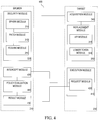
- FIG. 4 illustrates an exemplary system 400 for altered token sandboxing, according to an embodiment.
- System 400 may include the components of system 300 but further include execution module 410.
- Execution module 410 may be configured to execute the process with the naked token and the acquired resources.
- Execution module 410 may be configured to execute the process with the naked token prior to the main function of the process. Execution may also take place at the main function.
- the acquired resources should allow for complete execution of the main function.
- execution module 410 may include request module 420.
- Request module 420 may be configured to generate a request for additional resources. This request may take place after acquiring resources with an impersonation token and then dropping the impersonation token.
- broker 210 may include intercept module 430, policy evaluation module 440 and result module 450, according to an embodiment.
- Intercept module 430 may be configured to intercept a request for additional resources.
- Policy evaluation module 440 may be configured to receive the intercepted request, evaluate the intercepted request against a policy, and return a policy evaluation result.
- the policy may include privilege information, a DACL, or use any other common methods for access verification.
- policy evaluation may involve code generation on the fly. Policy op codes may be used. A mini-program may be used to generate the code. Performance may be improved using such pre-compiled code.
- Results module 450 may be configured to receive the policy evaluation result from the evaluation module, execute at least one requested operation, and return at least one additional resource to the execution module.
- FIG. 5 illustrates an exemplary method 500 for altered token sandboxing (502-514), according to an embodiment.
- a process is created based on a naked token.
- the process may be suspended.
- an impersonation token may be obtained.
- the process may be resumed with the impersonation token.
- Steps 502-508 may be performed by security module 220.
- step 502 may be performed by spawn module 310.
- Step 508 may also be performed by resume module 314.
- a job may be assigned after step 504.
- intercepts may also be setup after step 504.
- Steps 502-508 may be performed by a parent process, such as broker 210.
- the impersonation token may be used to acquire resources needed for the process. These include resources needed to load any necessary resources to prepare to start the main function. Other resources that may be acquired are described above. For instance, target 230 may be bootstrapped. DLLs or plug-ins may be loaded. An interface may also be retrieved. Step 510 may be performed by acquisition module 340. After which, the target process may enter the main function. The code of main function may be under more control by the host system.
- the impersonation token may be replaced with a naked token. This step may be performed by replacement module 250.
- the impersonation token may be removed and a naked token used in its place. This may be performed by replacement module 250 or API module 316.
- the impersonation token may be lowered to be naked. This may be performed by security module 250 or lower token module 318.
- An IPC communication channel may be setup between processes before the token is dropped.
- step 514 the child process is executed with the naked token and the acquired resources. This step may be performed with execution module 410.
- target 230 may revert to a naked token following a global initialization function. Untrusted code may start running only after the global initialization function returns. Steps 510 to 514 may be performed by a child process or thread, such as target 230.
- Embodiments of the present invention may be used for many and different applications.
- Altered token sandboxing such as user mode, may be used for, but not limited to, web browsers. Loading and executing untrusted code may take place when a browser goes to a new website. Though a browser's code may be trusted, renderers may be sandboxed for each new website, aspect of a website, or content associated with a website. Such sandboxing may provide for better host system security. This may result in a better experience for both the user of the browser and for legitimate providers of web content.
- aspects of the present invention for exemplary system 100, system 200, system 300, system 400 and/or method 500 or any part(s) or function(s) thereof may be implemented using hardware, software modules, firmware, tangible computer readable media having instructions stored thereon, or a combination thereof and may be implemented in one or more computer systems or other processing systems.
- Examples of computer systems include, but are not limited to, a computer, mobile device (such as a handheld mobile phone, smart phone, personal data assistant, or laptop), workstation, server, cluster of computers, embedded system, game console, kiosk, set-top box, or television.
Landscapes
- Engineering & Computer Science (AREA)
- Computer Security & Cryptography (AREA)
- Software Systems (AREA)
- Theoretical Computer Science (AREA)
- Computer Hardware Design (AREA)
- Physics & Mathematics (AREA)
- General Engineering & Computer Science (AREA)
- General Physics & Mathematics (AREA)
- Storage Device Security (AREA)
Claims (13)
- Un procédé pour une mise en sandbox par jeton modifié, comprenant :le fait de créer un processus basé sur un jeton nu n'ayant aucun privilège ;après que le processus ait été créé avec le jeton nu, le fait de suspendre le processus ;le fait d'obtenir un jeton d'usurpation d'identité ayant plus de privilèges que le jeton nu ; le fait de reprendre le processus avec le jeton d'usurpation d'identité ;après la reprise du processus, le fait d'acquérir une ou de plusieurs ressources nécessaires au processus en utilisant le jeton d'usurpation d'identité ;après que la ou les ressources aient été acquises, le fait de remplacer, dans le processus repris, le jeton d'usurpation d'identité par le jeton nu ;et le fait d'exécuter le processus repris avec le jeton nu et les ressources acquises.
- Le procédé selon la revendication 1, dans lequel, lors de l'exécution du processus repris avec le jeton nu, le procédé comprend en outre :le fait d'intercepter une requête lorsqu'au moins une ressource supplémentaire est requise après l'étape de remplacement ;le fait d'évaluer une politique sur la base de la demande ; etle fait d'acquérir au moins une ressource supplémentaire pour le processus repris sur la base de l'évaluation de la politique.
- Le procédé selon la revendication 1, dans lequel l'étape consistant à acquérir comprend en outre le fait d'acquérir au moins une ressource gérée par un système d'exploitation nécessaire pour exécuter une fonction principale du processus, et ladite au moins une ressource nécessaire peut comprendre au moins une parmi : une ressource requise pour exécuter un chargeur de système d'exploitation, une bibliothèque de liens dynamiques (DLL) ou un plug-in.
- Le procédé selon la revendication 1, dans lequel le jeton d'usurpation d'identité comprend une ou plusieurs poignées requises pour acquérir les ressources nécessaires au processus, ou
dans lequel l'étape de remplacement comprend en outre :le fait de supprimer le jeton d'usurpation d'identité du processus repris ; etle fait d'utiliser le jeton nu dans le processus repris, oul'étape de remplacement comprend en outre l'abaissement du jeton d'usurpation d'identité de façon qu'il soit nu. - Le procédé selon la revendication 1, comprenant en outre l'octroi d'un canal de communication inter-processus (IPC) sécurisé entre le processus et un deuxième processus avant l'étape de remplacement.
- Le procédé selon la revendication 1, dans lequel le processus est un processus fils d'un processus parent ayant un jeton d'utilisateur, et dans lequel le jeton d'usurpation d'identité peut être basé sur le jeton d'utilisateur.
- Un système de mise en sandbox par jeton modifié comprenant :un module de sécurité configuré pour créer un processus suspendu en utilisant un jeton nu n'ayant aucun privilège ;un module d'acquisition configuré, lors de la création d'un processus suspendu, pour utiliser un jeton d'usurpation d'identité afin d'acquérir une ou plusieurs ressources nécessaires au processus, le jeton d'usurpation d'identité ayant plus de privilèges que le jeton nu ;un module de remplacement configuré pour remplacer le jeton d'usurpation d'identité par le jeton nu ;et un module d'exécution configuré pour mettre en oeuvre le processus avec le jeton nu et les ressources acquises.
- Le système selon la revendication 7, dans lequel le processus est un processus fils d'un processus parent ayant un jeton d'utilisateur, et dans lequel le jeton d'usurpation d'identité peut être basé sur le jeton d'utilisateur.
- Le système selon la revendication 7, dans lequel le module de sécurité comprend :un module d'engendrement configuré pour créer un processus utilisant le jeton nu et pour suspendre le processus avant qu'une première instruction ne soit exécutée ;et un module de reprise configuré pour reprendre le processus suspendu pour le module d'acquisition.
- Le système selon la revendication 9, dans lequel le module de sécurité comprend en outre un module de patch configuré pour générer au moins une enveloppe API, ou le jeton d'usurpation d'identité comprend une ou plusieurs poignées requises pour acquérir les ressources nécessaires au processus, ou le module d'acquisition en outre configuré pour acquérir au moins une ressource gérée par un système d'exploitation nécessaire pour exécuter une fonction principale du processus, ou le module de remplacement comprend en outre un module de jeton abaissé configuré pour abaisser le jeton d'usurpation en le jeton nu, ou le module de remplacement comprend en outre un module API configuré pour remplacer le jeton d'usurpation d'identité par le jeton nu.
- Le système selon la revendication 7, dans lequel le module d'exécution comprend en outre un module de requête configuré pour générer une requête pour des ressources supplémentaires.
- Le système selon la revendication 11, comprenant en outre :un module d'interception configuré pour intercepter la demande de ressources supplémentaires ;un module d'évaluation de politique configuré pour recevoir la demande interceptée, évaluer la demande interceptée par rapport à une politique et retourner un résultat d'évaluation de politique ; etun module de résultats configuré pour recevoir le résultat d'évaluation de politique du module d'évaluation, exécuter au moins une opération demandée, et renvoyer au moins une ressource supplémentaire au module d'exécution.
- Un support supportant un code lisible par ordinateur pour commander un ordinateur afin de mettre en oeuvre le procédé de l'une quelconque des revendications 1 à 6.
Applications Claiming Priority (2)
| Application Number | Priority Date | Filing Date | Title |
|---|---|---|---|
| US12/201,967 US8429741B2 (en) | 2008-08-29 | 2008-08-29 | Altered token sandboxing |
| PCT/US2009/055379 WO2010025377A1 (fr) | 2008-08-29 | 2009-08-28 | Création de sandboxes par jetons altérés |
Publications (3)
| Publication Number | Publication Date |
|---|---|
| EP2332048A1 EP2332048A1 (fr) | 2011-06-15 |
| EP2332048A4 EP2332048A4 (fr) | 2012-03-21 |
| EP2332048B1 true EP2332048B1 (fr) | 2017-12-27 |
Family
ID=41721955
Family Applications (1)
| Application Number | Title | Priority Date | Filing Date |
|---|---|---|---|
| EP09810664.4A Active EP2332048B1 (fr) | 2008-08-29 | 2009-08-28 | Création de sandboxes par jetons altérés |
Country Status (3)
| Country | Link |
|---|---|
| US (1) | US8429741B2 (fr) |
| EP (1) | EP2332048B1 (fr) |
| WO (1) | WO2010025377A1 (fr) |
Families Citing this family (29)
| Publication number | Priority date | Publication date | Assignee | Title |
|---|---|---|---|---|
| US8910165B2 (en) * | 2009-10-14 | 2014-12-09 | Lenovo Enterprise Solutions (Singapore) Pte. Ltd. | Providing thread specific protection levels |
| US8775802B1 (en) | 2009-10-23 | 2014-07-08 | Secure Vector | Computer security system and method |
| US10242182B2 (en) * | 2009-10-23 | 2019-03-26 | Secure Vector, Llc | Computer security system and method |
| US9454652B2 (en) * | 2009-10-23 | 2016-09-27 | Secure Vector, Llc | Computer security system and method |
| US8429429B1 (en) | 2009-10-23 | 2013-04-23 | Secure Vector, Inc. | Computer security system and method |
| US9003517B2 (en) * | 2009-10-28 | 2015-04-07 | Microsoft Technology Licensing, Llc | Isolation and presentation of untrusted data |
| US20110154376A1 (en) * | 2009-12-17 | 2011-06-23 | Microsoft Corporation | Use of Web Services API to Identify Responsive Content Items |
| US8621647B1 (en) * | 2010-01-11 | 2013-12-31 | Google Inc. | Restricting privileges of first privileged process in operating system using second privileged process |
| CA2759612C (fr) * | 2010-11-23 | 2018-10-23 | EMC IP Holding Company LLC | Procede et systeme pour securiser les donnees |
| US8438640B1 (en) * | 2010-12-21 | 2013-05-07 | Adobe Systems Incorporated | Method and apparatus for reverse patching of application programming interface calls in a sandbox environment |
| US8671385B2 (en) | 2011-01-07 | 2014-03-11 | Mastercard International Incorporated | Methods and systems for throttling calls to a service application through an open API |
| US9083534B2 (en) | 2011-01-07 | 2015-07-14 | Mastercard International Incorporated | Method and system for propagating a client identity |
| US8707276B2 (en) | 2011-01-07 | 2014-04-22 | Mastercard International Incorporated | Method and system for managing programmed applications in an open API environment |
| US9032204B2 (en) | 2011-01-07 | 2015-05-12 | Mastercard International Incorporated | Methods and systems for providing a signed digital certificate in real time |
| US8677308B2 (en) | 2011-01-07 | 2014-03-18 | Mastercard International Incorporated | Method and system for generating an API request message |
| GB2490374B (en) * | 2011-09-30 | 2013-08-07 | Avecto Ltd | Method and apparatus for controlling access to a resource in a computer device |
| US9075985B2 (en) | 2013-05-31 | 2015-07-07 | Microsoft Technology Licensing, Llc | Restricted transmogrifying driver platform |
| US9563488B2 (en) | 2014-05-29 | 2017-02-07 | Apple Inc. | Sharing extension points to allow an application to share content via a sharing extension |
| DE102015111625A1 (de) * | 2015-07-17 | 2017-01-19 | Backes Srt Gmbh | Verfahren zur Bildung einer virtuellen Umgebung in einem Betriebssystem eines Computers |
| US11201876B2 (en) | 2015-12-24 | 2021-12-14 | British Telecommunications Public Limited Company | Malicious software identification |
| US10839077B2 (en) | 2015-12-24 | 2020-11-17 | British Telecommunications Public Limited Company | Detecting malicious software |
| WO2017109129A1 (fr) * | 2015-12-24 | 2017-06-29 | British Telecommunications Public Limited Company | Sécurité logicielle |
| US10268816B2 (en) | 2016-03-31 | 2019-04-23 | Microsoft Technology Licensing, Llc | Dynamic updating of process policies |
| US11423144B2 (en) | 2016-08-16 | 2022-08-23 | British Telecommunications Public Limited Company | Mitigating security attacks in virtualized computing environments |
| US11562076B2 (en) | 2016-08-16 | 2023-01-24 | British Telecommunications Public Limited Company | Reconfigured virtual machine to mitigate attack |
| US11082491B2 (en) | 2016-10-07 | 2021-08-03 | Microsoft Technology Licensing, Llc | Propagating origin information for applications during application installation |
| JP6104447B1 (ja) * | 2016-10-31 | 2017-03-29 | 株式会社ソリトンシステムズ | プログラム動作監視制御装置、分散オブジェクト生成管理装置、プログラム、及びプログラム動作監視システム |
| US10999272B2 (en) * | 2018-03-30 | 2021-05-04 | Lendingclub Corporation | Authenticating and authorizing users with JWT and tokenization |
| CN112084491A (zh) * | 2020-08-26 | 2020-12-15 | 天津七一二通信广播股份有限公司 | 一种基于沙箱机制的集群虚拟用户系统实现方法 |
Family Cites Families (11)
| Publication number | Priority date | Publication date | Assignee | Title |
|---|---|---|---|---|
| US5974549A (en) * | 1997-03-27 | 1999-10-26 | Soliton Ltd. | Security monitor |
| US6308274B1 (en) * | 1998-06-12 | 2001-10-23 | Microsoft Corporation | Least privilege via restricted tokens |
| US6505300B2 (en) | 1998-06-12 | 2003-01-07 | Microsoft Corporation | Method and system for secure running of untrusted content |
| US7451484B1 (en) * | 1999-05-27 | 2008-11-11 | International Business Machines Corporation | Method for enabling a program written in untrusted code to interact with a security subsystem of a hosting operating system |
| US6731756B1 (en) * | 1999-06-21 | 2004-05-04 | Elisar Software Corporation, Inc. | Method for securing video images |
| US7191469B2 (en) * | 2002-05-13 | 2007-03-13 | Green Border Technologies | Methods and systems for providing a secure application environment using derived user accounts |
| EP1525522A2 (fr) * | 2002-06-06 | 2005-04-27 | Green Border Technologies | Procedes et systemes d'etablissement d'un environnement securise d'execution d'applications utilisant la technique des comptes derives d'utilisateurs |
| US20050182958A1 (en) * | 2004-02-17 | 2005-08-18 | Duc Pham | Secure, real-time application execution control system and methods |
| US7665143B2 (en) * | 2005-05-16 | 2010-02-16 | Microsoft Corporation | Creating secure process objects |
| WO2008063185A1 (fr) | 2006-10-14 | 2008-05-29 | Xeriton Corporation | Commande d'accès d'application à des ressources de système |
| US7917724B2 (en) * | 2007-12-28 | 2011-03-29 | Intel Corporation | Protection of user-level applications based on page table information |
-
2008
- 2008-08-29 US US12/201,967 patent/US8429741B2/en not_active Expired - Fee Related
-
2009
- 2009-08-28 EP EP09810664.4A patent/EP2332048B1/fr active Active
- 2009-08-28 WO PCT/US2009/055379 patent/WO2010025377A1/fr not_active Ceased
Non-Patent Citations (1)
| Title |
|---|
| None * |
Also Published As
| Publication number | Publication date |
|---|---|
| EP2332048A4 (fr) | 2012-03-21 |
| US8429741B2 (en) | 2013-04-23 |
| US20100057774A1 (en) | 2010-03-04 |
| WO2010025377A1 (fr) | 2010-03-04 |
| EP2332048A1 (fr) | 2011-06-15 |
Similar Documents
| Publication | Publication Date | Title |
|---|---|---|
| EP2332048B1 (fr) | Création de sandboxes par jetons altérés | |
| US8893225B2 (en) | Method and apparatus for secure web widget runtime system | |
| KR102255767B1 (ko) | 가상 머신 감사를 위한 시스템 및 방법들 | |
| KR101970744B1 (ko) | 신뢰 레벨 활성화 기법 | |
| US7665143B2 (en) | Creating secure process objects | |
| Wang et al. | Compac: Enforce component-level access control in android | |
| DE202009019137U1 (de) | Apparat für die Validierung eines nicht vertrauenswürdigen Nativen Code-Moduls | |
| KR101665894B1 (ko) | 가상 머신 내의 강제적 보호 제어 | |
| EP3308274B1 (fr) | Exécution de services dans des contenants | |
| Xu et al. | Condo: enhancing container isolation through kernel permission data protection | |
| Sensaoui et al. | An in-depth study of MPU-based isolation techniques | |
| Khan et al. | Silver lining: Enforcing secure information flow at the cloud edge | |
| CN119105802A (zh) | 一种优化方法、优化装置和计算设备 | |
| US11132437B2 (en) | Secure computer operating system through interpreted user applications | |
| EP2581853B1 (fr) | Procédé et appareil pour système d'exécution de gadget logiciel web sécurisé | |
| Klinkoff et al. | Extending. NET security to unmanaged code | |
| US12393671B2 (en) | Privilege metric for evaluating the security of a library | |
| US20250384122A1 (en) | Thread-based sandboxing for untrusted software execution | |
| US12229249B1 (en) | Protection of process memory against foreign code injection | |
| EP3591555B1 (fr) | Procédé et système pour fournir des applications exécutables améliorées | |
| US12462035B1 (en) | Dynamic kernel security module | |
| Runge | SELinux: A new approach to secure systems | |
| Sfyrakis et al. | Virtuscap: capability-based access control for unikernels | |
| Kuzuno et al. | KPRM: Kernel Page Restriction Mechanism to Prevent Kernel Memory Corruption | |
| Blaak et al. | Towards Least-Privilege WebAssembly Applications: Transparent Interposition for WebAssembly Components |
Legal Events
| Date | Code | Title | Description |
|---|---|---|---|
| PUAI | Public reference made under article 153(3) epc to a published international application that has entered the european phase |
Free format text: ORIGINAL CODE: 0009012 |
|
| 17P | Request for examination filed |
Effective date: 20110323 |
|
| AK | Designated contracting states |
Kind code of ref document: A1 Designated state(s): AT BE BG CH CY CZ DE DK EE ES FI FR GB GR HR HU IE IS IT LI LT LU LV MC MK MT NL NO PL PT RO SE SI SK SM TR |
|
| AX | Request for extension of the european patent |
Extension state: AL BA RS |
|
| DAX | Request for extension of the european patent (deleted) | ||
| A4 | Supplementary search report drawn up and despatched |
Effective date: 20120217 |
|
| RIC1 | Information provided on ipc code assigned before grant |
Ipc: G06F 21/00 20060101AFI20120213BHEP |
|
| 17Q | First examination report despatched |
Effective date: 20130405 |
|
| REG | Reference to a national code |
Ref country code: DE Ref legal event code: R079 Ref document number: 602009050143 Country of ref document: DE Free format text: PREVIOUS MAIN CLASS: G06F0011300000 Ipc: G06F0021530000 |
|
| GRAP | Despatch of communication of intention to grant a patent |
Free format text: ORIGINAL CODE: EPIDOSNIGR1 |
|
| RIC1 | Information provided on ipc code assigned before grant |
Ipc: G06F 21/53 20130101AFI20170620BHEP |
|
| INTG | Intention to grant announced |
Effective date: 20170704 |
|
| RAP1 | Party data changed (applicant data changed or rights of an application transferred) |
Owner name: GOOGLE LLC |
|
| GRAS | Grant fee paid |
Free format text: ORIGINAL CODE: EPIDOSNIGR3 |
|
| GRAA | (expected) grant |
Free format text: ORIGINAL CODE: 0009210 |
|
| AK | Designated contracting states |
Kind code of ref document: B1 Designated state(s): AT BE BG CH CY CZ DE DK EE ES FI FR GB GR HR HU IE IS IT LI LT LU LV MC MK MT NL NO PL PT RO SE SI SK SM TR |
|
| REG | Reference to a national code |
Ref country code: GB Ref legal event code: FG4D |
|
| REG | Reference to a national code |
Ref country code: CH Ref legal event code: EP |
|
| REG | Reference to a national code |
Ref country code: AT Ref legal event code: REF Ref document number: 958881 Country of ref document: AT Kind code of ref document: T Effective date: 20180115 |
|
| REG | Reference to a national code |
Ref country code: IE Ref legal event code: FG4D |
|
| REG | Reference to a national code |
Ref country code: DE Ref legal event code: R096 Ref document number: 602009050143 Country of ref document: DE |
|
| REG | Reference to a national code |
Ref country code: NL Ref legal event code: FP |
|
| PG25 | Lapsed in a contracting state [announced via postgrant information from national office to epo] |
Ref country code: LT Free format text: LAPSE BECAUSE OF FAILURE TO SUBMIT A TRANSLATION OF THE DESCRIPTION OR TO PAY THE FEE WITHIN THE PRESCRIBED TIME-LIMIT Effective date: 20171227 Ref country code: FI Free format text: LAPSE BECAUSE OF FAILURE TO SUBMIT A TRANSLATION OF THE DESCRIPTION OR TO PAY THE FEE WITHIN THE PRESCRIBED TIME-LIMIT Effective date: 20171227 Ref country code: NO Free format text: LAPSE BECAUSE OF FAILURE TO SUBMIT A TRANSLATION OF THE DESCRIPTION OR TO PAY THE FEE WITHIN THE PRESCRIBED TIME-LIMIT Effective date: 20180327 |
|
| REG | Reference to a national code |
Ref country code: LT Ref legal event code: MG4D |
|
| REG | Reference to a national code |
Ref country code: AT Ref legal event code: MK05 Ref document number: 958881 Country of ref document: AT Kind code of ref document: T Effective date: 20171227 |
|
| PG25 | Lapsed in a contracting state [announced via postgrant information from national office to epo] |
Ref country code: GR Free format text: LAPSE BECAUSE OF FAILURE TO SUBMIT A TRANSLATION OF THE DESCRIPTION OR TO PAY THE FEE WITHIN THE PRESCRIBED TIME-LIMIT Effective date: 20180328 Ref country code: BG Free format text: LAPSE BECAUSE OF FAILURE TO SUBMIT A TRANSLATION OF THE DESCRIPTION OR TO PAY THE FEE WITHIN THE PRESCRIBED TIME-LIMIT Effective date: 20180327 Ref country code: LV Free format text: LAPSE BECAUSE OF FAILURE TO SUBMIT A TRANSLATION OF THE DESCRIPTION OR TO PAY THE FEE WITHIN THE PRESCRIBED TIME-LIMIT Effective date: 20171227 Ref country code: HR Free format text: LAPSE BECAUSE OF FAILURE TO SUBMIT A TRANSLATION OF THE DESCRIPTION OR TO PAY THE FEE WITHIN THE PRESCRIBED TIME-LIMIT Effective date: 20171227 |
|
| PG25 | Lapsed in a contracting state [announced via postgrant information from national office to epo] |
Ref country code: ES Free format text: LAPSE BECAUSE OF FAILURE TO SUBMIT A TRANSLATION OF THE DESCRIPTION OR TO PAY THE FEE WITHIN THE PRESCRIBED TIME-LIMIT Effective date: 20171227 Ref country code: CZ Free format text: LAPSE BECAUSE OF FAILURE TO SUBMIT A TRANSLATION OF THE DESCRIPTION OR TO PAY THE FEE WITHIN THE PRESCRIBED TIME-LIMIT Effective date: 20171227 Ref country code: SK Free format text: LAPSE BECAUSE OF FAILURE TO SUBMIT A TRANSLATION OF THE DESCRIPTION OR TO PAY THE FEE WITHIN THE PRESCRIBED TIME-LIMIT Effective date: 20171227 Ref country code: CY Free format text: LAPSE BECAUSE OF FAILURE TO SUBMIT A TRANSLATION OF THE DESCRIPTION OR TO PAY THE FEE WITHIN THE PRESCRIBED TIME-LIMIT Effective date: 20171227 Ref country code: EE Free format text: LAPSE BECAUSE OF FAILURE TO SUBMIT A TRANSLATION OF THE DESCRIPTION OR TO PAY THE FEE WITHIN THE PRESCRIBED TIME-LIMIT Effective date: 20171227 |
|
| REG | Reference to a national code |
Ref country code: FR Ref legal event code: PLFP Year of fee payment: 10 |
|
| PG25 | Lapsed in a contracting state [announced via postgrant information from national office to epo] |
Ref country code: IS Free format text: LAPSE BECAUSE OF FAILURE TO SUBMIT A TRANSLATION OF THE DESCRIPTION OR TO PAY THE FEE WITHIN THE PRESCRIBED TIME-LIMIT Effective date: 20180427 Ref country code: SM Free format text: LAPSE BECAUSE OF FAILURE TO SUBMIT A TRANSLATION OF THE DESCRIPTION OR TO PAY THE FEE WITHIN THE PRESCRIBED TIME-LIMIT Effective date: 20171227 Ref country code: PL Free format text: LAPSE BECAUSE OF FAILURE TO SUBMIT A TRANSLATION OF THE DESCRIPTION OR TO PAY THE FEE WITHIN THE PRESCRIBED TIME-LIMIT Effective date: 20171227 Ref country code: IT Free format text: LAPSE BECAUSE OF FAILURE TO SUBMIT A TRANSLATION OF THE DESCRIPTION OR TO PAY THE FEE WITHIN THE PRESCRIBED TIME-LIMIT Effective date: 20171227 Ref country code: AT Free format text: LAPSE BECAUSE OF FAILURE TO SUBMIT A TRANSLATION OF THE DESCRIPTION OR TO PAY THE FEE WITHIN THE PRESCRIBED TIME-LIMIT Effective date: 20171227 Ref country code: RO Free format text: LAPSE BECAUSE OF FAILURE TO SUBMIT A TRANSLATION OF THE DESCRIPTION OR TO PAY THE FEE WITHIN THE PRESCRIBED TIME-LIMIT Effective date: 20171227 |
|
| REG | Reference to a national code |
Ref country code: DE Ref legal event code: R097 Ref document number: 602009050143 Country of ref document: DE |
|
| PLBE | No opposition filed within time limit |
Free format text: ORIGINAL CODE: 0009261 |
|
| STAA | Information on the status of an ep patent application or granted ep patent |
Free format text: STATUS: NO OPPOSITION FILED WITHIN TIME LIMIT |
|
| PG25 | Lapsed in a contracting state [announced via postgrant information from national office to epo] |
Ref country code: DK Free format text: LAPSE BECAUSE OF FAILURE TO SUBMIT A TRANSLATION OF THE DESCRIPTION OR TO PAY THE FEE WITHIN THE PRESCRIBED TIME-LIMIT Effective date: 20171227 |
|
| 26N | No opposition filed |
Effective date: 20180928 |
|
| PG25 | Lapsed in a contracting state [announced via postgrant information from national office to epo] |
Ref country code: SI Free format text: LAPSE BECAUSE OF FAILURE TO SUBMIT A TRANSLATION OF THE DESCRIPTION OR TO PAY THE FEE WITHIN THE PRESCRIBED TIME-LIMIT Effective date: 20171227 |
|
| PG25 | Lapsed in a contracting state [announced via postgrant information from national office to epo] |
Ref country code: MC Free format text: LAPSE BECAUSE OF FAILURE TO SUBMIT A TRANSLATION OF THE DESCRIPTION OR TO PAY THE FEE WITHIN THE PRESCRIBED TIME-LIMIT Effective date: 20171227 |
|
| REG | Reference to a national code |
Ref country code: CH Ref legal event code: PL |
|
| PG25 | Lapsed in a contracting state [announced via postgrant information from national office to epo] |
Ref country code: CH Free format text: LAPSE BECAUSE OF NON-PAYMENT OF DUE FEES Effective date: 20180831 Ref country code: LI Free format text: LAPSE BECAUSE OF NON-PAYMENT OF DUE FEES Effective date: 20180831 Ref country code: LU Free format text: LAPSE BECAUSE OF NON-PAYMENT OF DUE FEES Effective date: 20180828 |
|
| REG | Reference to a national code |
Ref country code: BE Ref legal event code: MM Effective date: 20180831 |
|
| PG25 | Lapsed in a contracting state [announced via postgrant information from national office to epo] |
Ref country code: BE Free format text: LAPSE BECAUSE OF NON-PAYMENT OF DUE FEES Effective date: 20180831 |
|
| PG25 | Lapsed in a contracting state [announced via postgrant information from national office to epo] |
Ref country code: MT Free format text: LAPSE BECAUSE OF NON-PAYMENT OF DUE FEES Effective date: 20180828 |
|
| PG25 | Lapsed in a contracting state [announced via postgrant information from national office to epo] |
Ref country code: TR Free format text: LAPSE BECAUSE OF FAILURE TO SUBMIT A TRANSLATION OF THE DESCRIPTION OR TO PAY THE FEE WITHIN THE PRESCRIBED TIME-LIMIT Effective date: 20171227 |
|
| PG25 | Lapsed in a contracting state [announced via postgrant information from national office to epo] |
Ref country code: HU Free format text: LAPSE BECAUSE OF FAILURE TO SUBMIT A TRANSLATION OF THE DESCRIPTION OR TO PAY THE FEE WITHIN THE PRESCRIBED TIME-LIMIT; INVALID AB INITIO Effective date: 20090828 Ref country code: PT Free format text: LAPSE BECAUSE OF FAILURE TO SUBMIT A TRANSLATION OF THE DESCRIPTION OR TO PAY THE FEE WITHIN THE PRESCRIBED TIME-LIMIT Effective date: 20171227 |
|
| PG25 | Lapsed in a contracting state [announced via postgrant information from national office to epo] |
Ref country code: MK Free format text: LAPSE BECAUSE OF NON-PAYMENT OF DUE FEES Effective date: 20171227 Ref country code: SE Free format text: LAPSE BECAUSE OF FAILURE TO SUBMIT A TRANSLATION OF THE DESCRIPTION OR TO PAY THE FEE WITHIN THE PRESCRIBED TIME-LIMIT Effective date: 20171227 |
|
| P01 | Opt-out of the competence of the unified patent court (upc) registered |
Effective date: 20230506 |
|
| PGFP | Annual fee paid to national office [announced via postgrant information from national office to epo] |
Ref country code: NL Payment date: 20250826 Year of fee payment: 17 |
|
| PGFP | Annual fee paid to national office [announced via postgrant information from national office to epo] |
Ref country code: DE Payment date: 20250827 Year of fee payment: 17 |
|
| PGFP | Annual fee paid to national office [announced via postgrant information from national office to epo] |
Ref country code: GB Payment date: 20250827 Year of fee payment: 17 |
|
| PGFP | Annual fee paid to national office [announced via postgrant information from national office to epo] |
Ref country code: FR Payment date: 20250825 Year of fee payment: 17 |
|
| PGFP | Annual fee paid to national office [announced via postgrant information from national office to epo] |
Ref country code: IE Payment date: 20250827 Year of fee payment: 17 |