EP2332465A1 - Procédé et appareil permettant une détection objective des troubles auditifs - Google Patents
Procédé et appareil permettant une détection objective des troubles auditifs Download PDFInfo
- Publication number
- EP2332465A1 EP2332465A1 EP09799996A EP09799996A EP2332465A1 EP 2332465 A1 EP2332465 A1 EP 2332465A1 EP 09799996 A EP09799996 A EP 09799996A EP 09799996 A EP09799996 A EP 09799996A EP 2332465 A1 EP2332465 A1 EP 2332465A1
- Authority
- EP
- European Patent Office
- Prior art keywords
- osseous
- air way
- potentials
- stable state
- auditive
- Prior art date
- Legal status (The legal status is an assumption and is not a legal conclusion. Google has not performed a legal analysis and makes no representation as to the accuracy of the status listed.)
- Ceased
Links
Images


Classifications
-
- A—HUMAN NECESSITIES
- A61—MEDICAL OR VETERINARY SCIENCE; HYGIENE
- A61B—DIAGNOSIS; SURGERY; IDENTIFICATION
- A61B5/00—Measuring for diagnostic purposes; Identification of persons
- A61B5/24—Detecting, measuring or recording bioelectric or biomagnetic signals of the body or parts thereof
- A61B5/316—Modalities, i.e. specific diagnostic methods
- A61B5/369—Electroencephalography [EEG]
- A61B5/377—Electroencephalography [EEG] using evoked responses
- A61B5/38—Acoustic or auditory stimuli
-
- A—HUMAN NECESSITIES
- A61—MEDICAL OR VETERINARY SCIENCE; HYGIENE
- A61B—DIAGNOSIS; SURGERY; IDENTIFICATION
- A61B5/00—Measuring for diagnostic purposes; Identification of persons
- A61B5/12—Audiometering
- A61B5/121—Audiometering evaluating hearing capacity
Definitions
- the invention relates to the field of the objective evaluation of hearing by means of brain electrical responses caused by sound stimulation, also known as stable state evoked auditory potentials, to be used with newborn babies, small children and individuals who do not cooperate during a conventional audiometric examination.
- SSEAP Steady state auditory potentials
- Document US #7,014613 B2 also claims a series of methods to render the calculation of the SSEAP more efficient, and proposes to use the weighted averaging method, so that the most noisy records have less weight for the calculation of the multiple SSEAP.
- this method is useful only to reduce the effect of temporary noise contamination (as opposed to the stationary one) and is not appropriate for other sources of noise that re constant along the time (stationary) and that are also present at the SSEAP.
- the method used to calculate the amplitude of the noise (within the desired range of 70 to 110 Hz) does not allow to accurately ascertain what is happening in the vicinity of each one of the evoked signals or multiple SSEAPs.
- the object of this invention is to propose a method and an apparatus, automated and easy to operate, that - through the recording and analysis of stable state evoked auditory potentials - allows to discriminate between the normal and abnormal hearing, identifying, in this latter case, whether the hearing disorder is of a conductive or sensorineural type.
- an apparatus and a method are proposed, integrating the following elements: 1) means to independently generate two different continuous acoustic stimuli and to present them simultaneously to the patient through electro-acoustic osseous and air transducers at different intensities; 2) means to measure the ambient noise and, on the basis of the level measured, to regulate the execution of the screening test and the intensity of the air way stimulation; 3) means to evaluate on an on-going basis the contact of the electrodes or sensors used to record the electric activity of the brain; 4) means to control the process used to collect the bioelectric activity of the patient, in a synchronous manner with the generated sound stimuli; 5) means for the wireless digital transfer of the bioelectric activity collected towards a computer.
- a computer-based methodology is implemented to efficiently detect both responses (osseous and air way), which improves the signal-to-noise ratio and minimizes the duration of the hearing test, and a procedure for the automated operation that, on the basis of both responses (osseous and air way) will discriminate between children without hearing disorders and those who show hearing disorders of a conductive or sensorineural type.
- One of the novelties of this invention is the use of the simultaneous stimulation through the osseous and air ways, as the basis for a system of stable state evoked auditive potentials, in order to carry out a primary hearing test (screening) among neonates, that may distinguish between a conductive hearing loss and a sensorineural loss (if any).
- Another novelty in the context of the design of the method and apparatus herein proposed, is the manner in which the recording conditions are monitored on an on-going basis (ambient noise levels and the contact impedance of the electrodes) to interact with the operator and/or the operation of the apparatus. More precisely, the use of the own active electric circuit of the neutral electrode for the on-going measuring of impedance is an original technological solution for this purpose.
- the system proposed implements an original method of selective averaging, with an independent assessment of the signal-to-noise ratio and the application of a autoregressive statistical model, known as GARCH (English acronym of "Generalized Autoregressive Conditional Heteroskedasticity") to achieve a more efficient detection of the brain responses, which is an essential aspect, according to the invention.
- GARCH autoregressive statistical model
- the method used is also original, since, on the basis of the result of the detection of one or another SSEAP response (air way and osseous way) a conclusion can be reached in connection with the primary test, thus making a difference between normal or abnormal hearing, identifying, in this latter case, the type of disorder and the validity of the result.
- the parameter A is used to weigh the amplitude of the modulated tone.
- at least a low frequency tone is generated for the osseous way ( ⁇ 500 ⁇ 1000 Hz) which is amplitude-modulated (100% depth) with a modulation frequency of 90 Hz, while another high frequency tone ( ⁇ 2000 Hz ⁇ 4000 Hz) is simultaneously generated for the air way, which it is amplitude-modulated (100% depth) with a modulation frequency of 110 Hz.
- These stimuli are intensity-weighed according to the electro-acoustic characteristics of each transducer (osseous and air ways) and presented to the patient at constant (but different) intensities for each way.
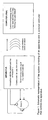
- the apparatus also includes a channel for the collection of the neuroelectric activity (active element G1 of figure 2 ) which is collected from the patient by means of 2 sensors or recording electrodes, which are placed on specific points of the scalp.
- This channel implements the necessary means to amplify such neuroelectric activity in a differentiated manner, filtering it within the desired frequency range.
- a third recording electrode neutral
- G2 is connected through a second active element (G2) to attenuate the interference caused by the power distribution network.
- G2 which is used to actively control the neutral electrode (or "Patient's ground”) is also used to introduce in the patient, through such neutral electrode, a signal generated internally by the apparatus.
- the object of such signal is to evaluate the contact impedance of the recording electrodes (Za and Zb) and of the neutral electrode (Zt).
- the output (S1) of the active element G2 is recorded by another signal collection channel of the apparatus, and is used as the basis for the on-going impedance monitoring methodology which is claimed as part of this invention.
- the apparatus includes a microphone that picks up the ambient noise level, which is recorded by the G3 channel through the active element.
- the control block of the apparatus allows the synchronization between the stimuli generation process and the collection of the neuroelectric activity, so that, at each digitized time window or interval corresponding to such neuroelectric activity there is an exact number of cycles of tone stimuli generated, to allow the subsequent detection of the signal or SSEAP.
- This block also controls the real time, 2-way and wireless transmission between the apparatus and the computer.
- the method used in this invention guarantees the automatic operation of this apparatus, so that it can be used with neonates to assess the auditory sensitiveness and to early detect eventual disorders, differentiating them from a diagnostic point of view. It consists of the following stages:
- Steps 1 to 5 are performed by the apparatus, and steps 6 to 9 are carried out by programming a proprietary methodology in a general purpose portable computer. This allows to update and/or improve the method used by this invention to detect the responses.
- the selective averaging method used in this invention consists of collecting and averaging, on an independent basis for each response or SSEAP, only those neuroelectric records which have an adequate signal-to-noise ratio.
- One of the peculiarities of this method consists of the fact that, on the basis of the spectrum analysis of each recorded interval, the validity of the record is independently determined for each SSEAP, by comparing the amplitude of the spectrum component of the response (at the relevant modulating frequency) with that of the residual noise measured from N spectrum components found around it.
- the rejection criterion is based on a value of the signal-to-noise ratio that is lower than one. This is independently performed for each SSEAP (osseous and air way), so that the same neuroelectric record collected might be valid for a signal and rejected for the other one.
- a method is used to model the noise present at the artifact-free averaged neuroelectric records, based on a autoregressive statistical model, AR/GARCH.
- the following step of the method consists of detecting the signal. Once the coefficients of the model have been calculated, we can separate the autoregressive process from the GARCH process that is responsible for the background noise. This way, if we calculate the spectrum of the autoregressive process only, we will obtain a spectrum which is free from background noise, which simplifies that identification of the signal.
- T2H Hotelling's T2 stadigraph whose degrees of freedom have been modified according to the number of spectrum components used for the calculation, in order to determine whether the spectrum component at the modulation frequency of the stimulus (SSEAP) is significantly different from the adjacent spectrum components (noise corresponding to that signal), and therefore, to determine the presence or absence of response.
Landscapes
- Health & Medical Sciences (AREA)
- Life Sciences & Earth Sciences (AREA)
- Physics & Mathematics (AREA)
- Engineering & Computer Science (AREA)
- Audiology, Speech & Language Pathology (AREA)
- Biomedical Technology (AREA)
- Veterinary Medicine (AREA)
- Acoustics & Sound (AREA)
- Biophysics (AREA)
- Pathology (AREA)
- Public Health (AREA)
- Heart & Thoracic Surgery (AREA)
- Medical Informatics (AREA)
- Molecular Biology (AREA)
- Surgery (AREA)
- Animal Behavior & Ethology (AREA)
- General Health & Medical Sciences (AREA)
- Otolaryngology (AREA)
- Multimedia (AREA)
- Psychiatry (AREA)
- Psychology (AREA)
- Measurement And Recording Of Electrical Phenomena And Electrical Characteristics Of The Living Body (AREA)
- Measurement Of The Respiration, Hearing Ability, Form, And Blood Characteristics Of Living Organisms (AREA)
Applications Claiming Priority (2)
| Application Number | Priority Date | Filing Date | Title |
|---|---|---|---|
| CU20080141A CU23466A1 (es) | 2008-07-24 | 2008-07-24 | Metodología y aparato para la detección objetiva de trastornos auditivos |
| PCT/CU2009/000005 WO2010009681A1 (fr) | 2008-07-24 | 2009-07-24 | Procédé et appareil permettant une détection objective des troubles auditifs |
Publications (2)
| Publication Number | Publication Date |
|---|---|
| EP2332465A1 true EP2332465A1 (fr) | 2011-06-15 |
| EP2332465A4 EP2332465A4 (fr) | 2012-12-26 |
Family
ID=41570030
Family Applications (1)
| Application Number | Title | Priority Date | Filing Date |
|---|---|---|---|
| EP20090799996 Ceased EP2332465A4 (fr) | 2008-07-24 | 2009-07-24 | Procédé et appareil permettant une détection objective des troubles auditifs |
Country Status (15)
| Country | Link |
|---|---|
| US (1) | US9345419B2 (fr) |
| EP (1) | EP2332465A4 (fr) |
| JP (1) | JP2011528587A (fr) |
| CN (1) | CN102137624B (fr) |
| AR (1) | AR074044A1 (fr) |
| CA (1) | CA2731874A1 (fr) |
| CL (1) | CL2009001646A1 (fr) |
| CU (1) | CU23466A1 (fr) |
| EC (1) | ECSP11010775A (fr) |
| MX (1) | MX2011004103A (fr) |
| NI (1) | NI201100027A (fr) |
| PE (1) | PE20110653A1 (fr) |
| RU (1) | RU2481789C2 (fr) |
| WO (1) | WO2010009681A1 (fr) |
| ZA (1) | ZA201101448B (fr) |
Cited By (2)
| Publication number | Priority date | Publication date | Assignee | Title |
|---|---|---|---|---|
| EP2613695A4 (fr) * | 2010-09-10 | 2014-06-25 | Neuronetrix Solutions Llc | Système d'électrode ayant une fonction de détection d'impédance intrabande |
| US12551157B2 (en) | 2020-02-07 | 2026-02-17 | Universiteit Gent | Method and system for determining the integrity of auditory nerve fibers and synapses |
Families Citing this family (16)
| Publication number | Priority date | Publication date | Assignee | Title |
|---|---|---|---|---|
| EP2572640B1 (fr) * | 2011-09-21 | 2014-10-29 | Jacoti BVBA | Procédé et dispositif de conduite d'un criblage d'audiométrie à tonalité pure |
| KR102444607B1 (ko) * | 2014-04-07 | 2022-09-20 | 조세린 포베르 | 대상의 자극 감도를 평가하기 위한 구성 가능한 시스템 및 그 이용 방법 |
| FR3039955A1 (fr) * | 2015-08-04 | 2017-02-10 | Dreem | Procede et systeme de stimulation acoustique des ondes cerebrales d'une personne. |
| FR3039773A1 (fr) * | 2015-08-04 | 2017-02-10 | Dreem | Procedes et systemes de stimulation acoustique des ondes cerebrales. |
| CN106648037A (zh) * | 2015-10-29 | 2017-05-10 | 深圳市虚拟现实科技有限公司 | 背景降噪的方法和头戴式显示器 |
| CN105662338B (zh) * | 2015-12-30 | 2018-07-06 | 南方医科大学 | 一种刺激序列的去噪性能判断处理方法及系统 |
| CN106073796A (zh) * | 2016-05-27 | 2016-11-09 | 深圳市易特科信息技术有限公司 | 基于骨传导的听力健康检测系统及方法 |
| CN205795706U (zh) * | 2016-05-28 | 2016-12-14 | 深圳市易特科信息技术有限公司 | 基于骨传导的听力检测装置 |
| RU2725746C2 (ru) * | 2016-08-12 | 2020-07-03 | Интеракустикс А/С | Система и способ формирования и записи стабильных слуховых реакций с помощью речеподобного стимула |
| EP3335625B1 (fr) * | 2016-12-14 | 2024-10-16 | Interacoustics A/S | Sonde auriculaire pour test auditif |
| CN113834560B (zh) * | 2020-06-08 | 2023-08-15 | 浙江大学 | 一种动物听觉评估检测装置及方法 |
| CN112022155A (zh) * | 2020-07-27 | 2020-12-04 | 广东食品药品职业学院 | 能对意识障碍患者进行听觉行为评估的脑机接口系统 |
| CN112270991A (zh) * | 2020-11-13 | 2021-01-26 | 深圳镭洱晟科创有限公司 | 一种老年人听力康复用的听觉功能评估耳机及其评估方法 |
| CN112349418A (zh) * | 2020-11-25 | 2021-02-09 | 深圳市艾利特医疗科技有限公司 | 一种听觉功能异常监测方法、装置、设备及存储介质 |
| US11825281B1 (en) | 2021-09-24 | 2023-11-21 | Apple Inc. | Adaptive equalization compensation for earbuds |
| CN116982973B (zh) * | 2023-07-21 | 2026-04-17 | 华东师范大学 | 骨振器激励额头位置进行骨导听阈测量的方法 |
Family Cites Families (20)
| Publication number | Priority date | Publication date | Assignee | Title |
|---|---|---|---|---|
| RU2018297C1 (ru) * | 1990-12-20 | 1994-08-30 | Нижегородский государственный медицинский институт | Способ диагностики отоневрологических синдромов и устройство для его осуществления |
| DE29615656U1 (de) * | 1996-09-07 | 1997-01-02 | Finkenzeller, Peter, Prof. Dr.rer.nat., 91054 Erlangen | Gerät zur Ableitung akustisch evozierter Gehirnpotentiale |
| AU1024600A (en) * | 1998-11-09 | 2000-05-29 | Hans Kunov | System and method for processing low signal-to-noise ratio signals |
| DE19954666B4 (de) | 1999-11-13 | 2004-05-06 | Pilot Blankenfelde Medizinisch-Elektronische Geräte GmbH | Verfahren zur objektiven frequenzspezifischen Hörschwellenbestimmung mittels der Amplitude Modulation Following Response (AMFR) |
| US7399282B2 (en) | 2000-05-19 | 2008-07-15 | Baycrest Center For Geriatric Care | System and method for objective evaluation of hearing using auditory steady-state responses |
| ATE311813T1 (de) * | 2001-03-09 | 2005-12-15 | Maico Diagnostic Gmbh | Vorrichtung zur bestimmung akustisch evozierter gehirnpotentiale und polsterung dafür |
| WO2004071280A2 (fr) * | 2003-02-07 | 2004-08-26 | Michael Sasha John | Depistage rapide, seuil et tests de diagnostic pour evaluer l'audition |
| US7695441B2 (en) * | 2002-05-23 | 2010-04-13 | Tympany, Llc | Automated diagnostic hearing test |
| EP1444951A1 (fr) * | 2003-02-07 | 2004-08-11 | Stürzebecher Ekkehard | Appareil pour détection objective de "Auditory Steady-State Responses" (ASSR) dans le domaine de fréquentiel |
| DK1611846T3 (en) * | 2004-07-02 | 2016-02-15 | Maico Diagnostic Gmbh | Method of designing acoustic stimuli in the spectral range for the recording of Auditory Steady-State Responses (ASSR) |
| US20060073819A1 (en) * | 2004-10-04 | 2006-04-06 | Research In Motion Limited | Automatic audio intensity adjustment |
| DE102005061150A1 (de) * | 2005-07-23 | 2007-02-01 | Kurz, Hans-Rainer | Vorrichtung und Verfahren zum Konfigurieren eines Hörgerätes |
| AU2006287713B2 (en) * | 2005-08-31 | 2013-05-16 | Tympany, Llc. | Stenger screening in automated diagnostic hearing test |
| RU2297111C1 (ru) * | 2005-11-01 | 2007-04-10 | Федеральное государственное учреждение Санкт-Петербургский научно-исследовательский институт уха, горла, носа и речи Федерального агентства по здравоохранению и социальному развитию (СПб НИИ ЛОР Росздрава) | Способ настройки кохлеарного импланта |
| US7370533B2 (en) * | 2006-03-01 | 2008-05-13 | Otovation, Llc | Portable audiometer enclosed within a patient response mechanism housing |
| JP4764768B2 (ja) * | 2006-05-11 | 2011-09-07 | リオン株式会社 | オージオメータ用受話器及びオージオメータ |
| KR100857877B1 (ko) * | 2006-09-14 | 2008-09-17 | 유메디칼 주식회사 | 자동차폐가 가능한 순음청력검사장치 |
| AU2007313412A1 (en) * | 2006-10-13 | 2008-04-24 | The University Of North Carolina At Chapel Hill | Apparatus and methods for acoustically or mechanically stimulating a cochlea and intracochlear recording of mechanically or acoustically evoked auditory potentials in the cochlea |
| US20090259137A1 (en) * | 2007-11-14 | 2009-10-15 | Emotiv Systems Pty Ltd | Determination of biosensor contact quality |
| JP5386511B2 (ja) * | 2008-02-13 | 2014-01-15 | ニューロスカイ インコーポレイテッド | 生体信号センサを備えたオーディオヘッドセット |
-
2008
- 2008-07-24 CU CU20080141A patent/CU23466A1/es unknown
-
2009
- 2009-07-24 EP EP20090799996 patent/EP2332465A4/fr not_active Ceased
- 2009-07-24 CN CN200980132882.4A patent/CN102137624B/zh not_active Expired - Fee Related
- 2009-07-24 RU RU2011107092/14A patent/RU2481789C2/ru not_active IP Right Cessation
- 2009-07-24 CL CL2009001646A patent/CL2009001646A1/es unknown
- 2009-07-24 MX MX2011004103A patent/MX2011004103A/es unknown
- 2009-07-24 PE PE2011000075A patent/PE20110653A1/es not_active Application Discontinuation
- 2009-07-24 CA CA2731874A patent/CA2731874A1/fr not_active Abandoned
- 2009-07-24 US US13/055,545 patent/US9345419B2/en not_active Expired - Fee Related
- 2009-07-24 WO PCT/CU2009/000005 patent/WO2010009681A1/fr not_active Ceased
- 2009-07-24 AR ARP090102819A patent/AR074044A1/es active IP Right Grant
- 2009-07-24 JP JP2011519019A patent/JP2011528587A/ja active Pending
-
2011
- 2011-01-21 EC EC2011010775A patent/ECSP11010775A/es unknown
- 2011-01-21 NI NI201100027A patent/NI201100027A/es unknown
- 2011-02-23 ZA ZA2011/01448A patent/ZA201101448B/en unknown
Cited By (2)
| Publication number | Priority date | Publication date | Assignee | Title |
|---|---|---|---|---|
| EP2613695A4 (fr) * | 2010-09-10 | 2014-06-25 | Neuronetrix Solutions Llc | Système d'électrode ayant une fonction de détection d'impédance intrabande |
| US12551157B2 (en) | 2020-02-07 | 2026-02-17 | Universiteit Gent | Method and system for determining the integrity of auditory nerve fibers and synapses |
Also Published As
| Publication number | Publication date |
|---|---|
| CN102137624B (zh) | 2014-09-10 |
| US9345419B2 (en) | 2016-05-24 |
| NI201100027A (es) | 2011-09-26 |
| MX2011004103A (es) | 2012-10-23 |
| RU2011107092A (ru) | 2012-08-27 |
| PE20110653A1 (es) | 2011-09-16 |
| EP2332465A4 (fr) | 2012-12-26 |
| CN102137624A (zh) | 2011-07-27 |
| CU23466A1 (es) | 2009-12-17 |
| RU2481789C2 (ru) | 2013-05-20 |
| ZA201101448B (en) | 2011-10-26 |
| CL2009001646A1 (es) | 2010-09-10 |
| US20110144529A1 (en) | 2011-06-16 |
| WO2010009681A1 (fr) | 2010-01-28 |
| ECSP11010775A (es) | 2011-05-31 |
| JP2011528587A (ja) | 2011-11-24 |
| AR074044A1 (es) | 2010-12-22 |
| CA2731874A1 (fr) | 2010-01-28 |
| WO2010009681A8 (fr) | 2011-03-10 |
Similar Documents
| Publication | Publication Date | Title |
|---|---|---|
| US9345419B2 (en) | Method and apparatus for the objective detection of auditive disorders | |
| KR101325828B1 (ko) | 뇌파를 탐지하도록 적응된 보청기 및 보청기 적응 방법 | |
| US7223245B2 (en) | Method and apparatus for automatic non-cooperative frequency specific assessment of hearing impairment and fitting of hearing aids | |
| US8277390B2 (en) | Method for automatic non-cooperative frequency specific assessment of hearing impairment and fitting of hearing aids | |
| EP2740279B1 (fr) | Prothèse auditive dotée d'une capacité de réglage automatique | |
| Ozdek et al. | Comparison of pure tone audiometry and auditory steady-state responses in subjects with normal hearing and hearing loss | |
| Hayes | Screening methods: current status | |
| Ching et al. | Acoustic change complex for assessing speech discrimination in normal-hearing and hearing-impaired infants | |
| Núñez-Batalla et al. | Auditory-steady-state response reliability in the audiological diagnosis after neonatal hearing screening | |
| Linares et al. | Auditory steady state response in pediatric audiology | |
| Prieve et al. | Observations of distortion product otoacoustic emission components in adults with hearing loss | |
| CN202179545U (zh) | 基于过采样多频多幅联合估计听觉诱发电位的测听装置 | |
| McPherson et al. | Hearing screening for school children with otitis media using otoacoustic emission measures | |
| EP1259154B1 (fr) | Appareil audiometrique et procede de depistage associe | |
| US20250057465A1 (en) | Instrument for detecting auditory evoked neural responses | |
| Lutman | The scientific basis for the assessment of hearing | |
| Bundy | An evaluation of speed and sensitivity of audiometry via the auditory steady state response and the auditory brainstem response. | |
| AU2001236922A1 (en) | Audiometric apparatus and associated screening method | |
| De Koker | The clinical value of auditory steady state responses in the audiological assessment of pseudohypacusic workers with noise-induced hearing loss in the South African mining industry | |
| CA2475368A1 (fr) | Depistage auditif et evaluation du niveau auditif rapides | |
| BASCHIR et al. | EARLY DETECTION OF HEARING LOSS–A CONDITION FOR A GOOD RECOVERY OF THE DEAF CHILD | |
| WO2006102711A1 (fr) | Test oto-acoustique de base |
Legal Events
| Date | Code | Title | Description |
|---|---|---|---|
| PUAI | Public reference made under article 153(3) epc to a published international application that has entered the european phase |
Free format text: ORIGINAL CODE: 0009012 |
|
| 17P | Request for examination filed |
Effective date: 20110222 |
|
| AK | Designated contracting states |
Kind code of ref document: A1 Designated state(s): AT BE BG CH CY CZ DE DK EE ES FI FR GB GR HR HU IE IS IT LI LT LU LV MC MK MT NL NO PL PT RO SE SI SK SM TR |
|
| AX | Request for extension of the european patent |
Extension state: AL BA RS |
|
| DAX | Request for extension of the european patent (deleted) | ||
| A4 | Supplementary search report drawn up and despatched |
Effective date: 20121126 |
|
| RIC1 | Information provided on ipc code assigned before grant |
Ipc: A61B 5/12 20060101AFI20121120BHEP |
|
| 17Q | First examination report despatched |
Effective date: 20130726 |
|
| REG | Reference to a national code |
Ref country code: DE Ref legal event code: R003 |
|
| STAA | Information on the status of an ep patent application or granted ep patent |
Free format text: STATUS: THE APPLICATION HAS BEEN REFUSED |
|
| 18R | Application refused |
Effective date: 20150323 |