EP2333104A1 - Procédé analytique pour ARN - Google Patents
Procédé analytique pour ARN Download PDFInfo
- Publication number
- EP2333104A1 EP2333104A1 EP09178923A EP09178923A EP2333104A1 EP 2333104 A1 EP2333104 A1 EP 2333104A1 EP 09178923 A EP09178923 A EP 09178923A EP 09178923 A EP09178923 A EP 09178923A EP 2333104 A1 EP2333104 A1 EP 2333104A1
- Authority
- EP
- European Patent Office
- Prior art keywords
- nucleic acid
- sequence
- subpools
- nucleic acids
- fragments
- Prior art date
- Legal status (The legal status is an assumption and is not a legal conclusion. Google has not performed a legal analysis and makes no representation as to the accuracy of the status listed.)
- Withdrawn
Links
Images






Classifications
-
- C—CHEMISTRY; METALLURGY
- C12—BIOCHEMISTRY; BEER; SPIRITS; WINE; VINEGAR; MICROBIOLOGY; ENZYMOLOGY; MUTATION OR GENETIC ENGINEERING
- C12Q—MEASURING OR TESTING PROCESSES INVOLVING ENZYMES, NUCLEIC ACIDS OR MICROORGANISMS; COMPOSITIONS OR TEST PAPERS THEREFOR; PROCESSES OF PREPARING SUCH COMPOSITIONS; CONDITION-RESPONSIVE CONTROL IN MICROBIOLOGICAL OR ENZYMOLOGICAL PROCESSES
- C12Q1/00—Measuring or testing processes involving enzymes, nucleic acids or microorganisms; Compositions therefor; Processes of preparing such compositions
- C12Q1/68—Measuring or testing processes involving enzymes, nucleic acids or microorganisms; Compositions therefor; Processes of preparing such compositions involving nucleic acids
- C12Q1/6869—Methods for sequencing
-
- C—CHEMISTRY; METALLURGY
- C12—BIOCHEMISTRY; BEER; SPIRITS; WINE; VINEGAR; MICROBIOLOGY; ENZYMOLOGY; MUTATION OR GENETIC ENGINEERING
- C12Q—MEASURING OR TESTING PROCESSES INVOLVING ENZYMES, NUCLEIC ACIDS OR MICROORGANISMS; COMPOSITIONS OR TEST PAPERS THEREFOR; PROCESSES OF PREPARING SUCH COMPOSITIONS; CONDITION-RESPONSIVE CONTROL IN MICROBIOLOGICAL OR ENZYMOLOGICAL PROCESSES
- C12Q1/00—Measuring or testing processes involving enzymes, nucleic acids or microorganisms; Compositions therefor; Processes of preparing such compositions
- C12Q1/68—Measuring or testing processes involving enzymes, nucleic acids or microorganisms; Compositions therefor; Processes of preparing such compositions involving nucleic acids
- C12Q1/6809—Methods for determination or identification of nucleic acids involving differential detection
-
- C—CHEMISTRY; METALLURGY
- C12—BIOCHEMISTRY; BEER; SPIRITS; WINE; VINEGAR; MICROBIOLOGY; ENZYMOLOGY; MUTATION OR GENETIC ENGINEERING
- C12Q—MEASURING OR TESTING PROCESSES INVOLVING ENZYMES, NUCLEIC ACIDS OR MICROORGANISMS; COMPOSITIONS OR TEST PAPERS THEREFOR; PROCESSES OF PREPARING SUCH COMPOSITIONS; CONDITION-RESPONSIVE CONTROL IN MICROBIOLOGICAL OR ENZYMOLOGICAL PROCESSES
- C12Q1/00—Measuring or testing processes involving enzymes, nucleic acids or microorganisms; Compositions therefor; Processes of preparing such compositions
- C12Q1/68—Measuring or testing processes involving enzymes, nucleic acids or microorganisms; Compositions therefor; Processes of preparing such compositions involving nucleic acids
- C12Q1/6806—Preparing nucleic acids for analysis, e.g. for polymerase chain reaction [PCR] assay
Definitions
- the present invention relates to the field of analyzing complex mixtures of nucleic acids and sample preparation for characterization methods and sequencing, especially high throughput sequencing techniques, such as Next Generation Sequencing (NGS).
- NGS Next Generation Sequencing
- NGS is currently the foremost complete analyzing method.
- Next Generation Sequencing is a generic term for parallelized sequencing through polymerization as high-throughput DNA sequencing method.
- NGS reads sequences of up to many million fragments which are typically between 10 to several hundred base-pairs long. The complete sequence is obtained by alignment of those reads which is a challenging task.
- Some NGS methods rely on a consensus blue print held in genomic and/or transcriptomic databases. The quality of the results depends on length and number of reads, reading accuracy, quality of information in the reference database and applied bioinformatics algorithms. To date many reads provide just limited information. For instance many of the reads cannot be assigned uniquely and therefore are discarded.
- RNA in samples, which contain a multitude of different RNA molecules of different cells or cell populations or disease organisms, rare RNA or parts thereof are less likely to be retrieved. In fact, in transcriptomics rare RNA transcripts of even a simple organism are less likely to be detected and quantified.
- Emulsion polymerase chain reaction isolates individual DNA molecules using primer-coated beads in aqueous bubbles within an oil phase. Singularizing of DNA molecules, e.g. by rigorous dilution is another option.
- Another method for in vitro clonal amplification is bridge PCR, where fragments are amplified upon primers attached to a solid surface. Another option is to skip this amplification step, directly fixing DNA molecules to a surface. Such DNA molecules or above mentioned DNA coated beads are immobilized to a surface, and sequenced in parallel.
- Sequencing by synthesis uses a DNA polymerase to determine the base sequence.
- Reversible terminator methods use reversible versions of dye-terminators, adding one nucleotide at a time, detecting fluorescence at each position, by repeated removal of the blocking group to allow polymerization of another nucleotide.
- Pyrosequencing also uses DNA polymerization, adding one nucleotide species at a time and detecting and quantifying the number of nucleotides added to a given location through the light emitted by the release of attached pyrophosphates.
- the sequencing by ligation method uses a DNA ligase to determine the target sequence.
- oligonucleotide Used in the polony method and in the SOLiD ® technology, it employs a partition of all possible oligonucleotides of a fixed length, labeled according to the sequenced position. Oligonucleotides are annealed and ligated. The preferential ligation by DNA ligase for matching sequences results in a dinucleotide encoded colour space signal at that position.
- NGS technologies are essentially based on random amplification of input DNA. This simplifies preparation but the sequencing remains undirected.
- the sheer complexity of the sample information - simultaneously obtained - is the key hindrance for unambiguous alignment of the reads. Therefore, complexity reduction is essential for increasing the quality of the results.
- BAC bacterial artificial chromosome
- RNA sequencing approaches employ this method in order to obtain e.g. a fraction of RNA molecules called micro RNA (miRNA) sized between 15 and 30 nucleotides.
- a different method for reducing the amount of input nucleic acid to below the amount contained within a single cell sometimes is termed limited dilution.
- a genomic nucleic acid sample is first fragmented and then diluted to an extent where spatial distribution of the nucleic acid fragments within the sample volume becomes significant. Then subpools are created by taking such small volumes from the total sample volume that most sub-pools contain no nucleic acids, a few subpools contain one nucleic acid each and even less subpools contain two nucleic acids. This leads to singularization of nucleic acids and therefore to complexity reduction compared to the full length genome as each singularized nucleic acid is a fragment of a genome. Therefore an increased sequence assembly efficiency for the individual nucleic acid fragments containing sub-pools is gained.
- transcriptome analysis such a limited dilution approach will not reduce the complexity introduced through variations in expression of different genes as each transcript molecule will occupy one subpool and therefore as many subpools are needed as molecules in the sample to display the entire transcriptome of a sample.
- a further option is to sequence-specifically reject RNA, e.g. in a hybridization-based approach that removes ribosomal RNA from the entire RNA sample.
- RNA fractionation methods that rely either on prior sequence information or are directed towards a certain RNA fraction (e.g. polyA selection)
- removal of rRNA does not bias the sequencing sample if e.g. mRNA is investigated.
- the mere removal of ribosomal RNA is restricted to RNA samples and cannot be scaled in terms of complexity reduction.
- sequence-specific selection methods e.g. by targeted sequencing of genomic regions such as particular exons.
- the idea behind such capture arrays is to insert a selection step prior to sequencing. Those arrays are programmed to capture only the genomic regions of interest and thus enabling users to utilize the full capacity of the NGS machines in the sequencing of the specific genomic regions of interest. Low density, on array capture hybridization is used for sequencing approaches. Such technology is not "hypothesis neutral", as specific sequence information is required for the selection process.
- a similar positive selection can be used for targeted resequencing.
- biotinylated RNA strands of high specificity for their complementary genomic targets can be used to extract DNA fragments for subsequent amplification and sequence determination. This form of complexity reduction is necessarily based on available sequence information and therefore not hypothesis neutral.
- AFLP has also been applied to double stranded cDNA that is derived from RNA.
- double stranded cDNA is first cut by a restriction enzyme and then fragments are segregated.
- the complexity of the nucleic acid fragments contained in each subpool decreases, in the majority of the cases each fragment of a nucleic acid will be segregated into at least two different subpools. This means e.g. that the subpool information cannot be used for assembly of the nucleic acids of the sample after sequencing, as likely each restriction fragment of a nucleic acid is in a different subpool.
- Sequencing of 16S rDNA or 16S rRNA sequences from mixed samples of microorganisms is in general employed for detection of rare species within these samples. By restricting the sequencing approach to a specific signature of microorganisms both complexity and information content are reduced. Frequently only phylogenetic information is obtained.
- Tag-based identification of transcripts includes SAGE (Serial Analysis of Gene Expression) wherein sequence tags of defined length are extracted and sequenced. Since the initial creation of tag concatemers is a disadvantage for NGS, derived protocols are used omitting this step.
- CAGE Cap Analysis of Gene Expression
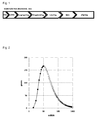
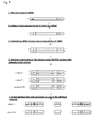
- the present invention provides a method of ordering nucleic acid molecule fragment sequences derived from a pool of potentially diverse RNA molecules comprising
- the inventive segregation step has the advantage that sub-pools of nucleic acids are provided and this subpool information can be used to improve further sequencing reactions, e.g. Next Generation Sequencing which is based on obtaining reads of small fragments of the nucleic acids or other nucleic acid characterization methods. It is possible with the inventive method that the subpool information can accompany the nucleic acids and the fragments and this information is used for alignment of the sequencing reads and the determination of the concentration of an individual nucleic acid sequence within the subpool.
- Next Generation Sequencing which is based on obtaining reads of small fragments of the nucleic acids or other nucleic acid characterization methods. It is possible with the inventive method that the subpool information can accompany the nucleic acids and the fragments and this information is used for alignment of the sequencing reads and the determination of the concentration of an individual nucleic acid sequence within the subpool.
- subpooling can reduce complexity to such a degree that transcripts of an organism and/or transcripts of different cells or cell populations and/or transcripts of different organisms that are present in a sample in different concentrations can be segregated in order to increase the likelihood of detecting rare nucleic acids within the sample of abundant RNA entities.
- the method is suitable to measure quantitatively sequences and fragments thereof from the very rare to the highly abundant forms.
- the core of this invention is the sorting of a nucleic acid pool into sub-pools prior the fragmentation step (e.g. required by NGS), where all nucleic acids fragments acquire the additional sub-pool information of their parental molecule.
- This information can be maintained throughout the sequence reading, e.g. partial sequence determination.
- every read contains the sequence and the sub-pool information, which provides main advantages during the read alignment procedures.
- the sub-pooling of transcripts pools can be achieved through sub-pools with different additional information content.
- the gained benefits depend on the chosen methods.
- Segregation into subpools can be performed by exploiting transcript properties as distinctive nucleic acid feature which are directly or indirectly sequence related.
- Such properties are for example the affinity to adsorbing matters like various column materials (e.g. silica gel) or the solubility in the presence of salts, polymers or other additives.
- the required information on the sample nucleic acids is limited, e.g. precipitation depends predominantly on length, the GC-content and secondary structures.
- the distinctive nucleic acid feature can be an adsorption or solubility property.
- sub-pools can be generated through methods which utilize distinctive sequence information like i) partial internal or terminal sequences or/and ii) transcript size.
- Segregation by selecting for a distinctive nucleic acid feature like a distinctive sequence can be performed by either selecting such nucleic acids with the distinctive sequence or by specifically amplifying nucleic acids with said distinctive sequence and further utilising these amplicons in the inventive method.
- a preferred segregation method uses the sequence information of both termini, thus start and end site of the nucleic acids. After termini-specific amplification and if the redundancy in the sequence specificity is zero (no mismatch allowed), then all sub-pools contain amplicons, e.g. PCR products, with exactly those termini. Hence, sub-pools can contain several nucleic acids of RNA molecules such as transcripts, but each nucleic acid is only presented in one sub-pool. By this means, the complexity of the alignment procedure is largely reduced.
- nucleic acid molecule derived from an RNA molecule refers to a nucleic acid of any type with the same sequence as the RNA from the sample.
- full length or complete nucleic acids are segregated or selected from the template RNA or cDNA pool. Segregation of full length or complete nucleic acids at this step, prior to fragmenting, has the benefit that each segregated pool contains the sequence information of entire nucleic acids - even after fragmenting - which improves assembly of the sequence after sequence determination. "Full length” or “complete” in this context reads on the complete nucleic acids that are to be sequenced, e.g. as obtained after reverse transcription.
- RNA may comprise sequences of RNA starting from the 5' cap end up to the, but in most cases excluding the poly A tail, but may also relate to nucleic acids that are incompletely (reverse) transcribed, however without being artificially cut, e.g. by using endonucleases.
- the RNA was degraded or fragmented or digested by nuclease activity and the cDNA molecules derived from such RNA is only a partial sequence.
- the cDNA can be a partial copy of the RNA, e.g. oligo dT primed reverse transcription of mRNA is stopped before a full length cDNA copy is polymerized. This can be achieved through e.g. time restriction or through conditions where the reverse transcriptase stops polymerization at regions of secondary structure.
- a fragment can then be segregated by a common feature, e.g. the sequence preceding the poly A tail of an mRNA.
- the pool of cDNA contains nucleotides of the transcription start and/or end site, e.g. the first 25 and/or last 25 nucleotides.
- the pool of cDNA may also only consist of such first and/or end nucleotides.
- CAGE Shiraki-2003
- 20 nucleotide tags are created that represent the 5' end of mRNAs.
- such an approach will preclude the assembly of full length transcripts or the determination of their concentration.
- tags can be used to determine expression on a whole gene level, meaning the concentration of all transcription start sites can be measured. As only a short portion of an RNA will be sequenced sequencing depth increases and low level expressed genes will be more likely represented in the reads.
- RNA, a cDNA thereof or other nucleic acids e.g. RNA fragments, cDNA fragments or amplified nucleic acids therefrom.
- the segregation step can be optionally repeated to obtain a different subpool with a different characterizing nucleic acid feature.
- This generation of further subpools can be performed sequentially or parallel to the generation of the first or other subpools.
- the present invention in essence is a combination of selecting a pool of diverse RNA molecules, optionally generating cDNA, segregating the RNA or the cDNA, or any other nucleic acid derived therefrom, e.g. after amplification, optionally repeating the segregation for different parameters and fragmenting these segregated nucleic acids obtaining a pool of fragments.
- a fragment is considered a nucleic acid portion of shorter length than the complete nucleic acid molecule from which it is derived.
- Such fragments can be e.g. forwarded to Next Generation Sequencing approaches or other nucleic acid characterization methods.
- NGS is currently the foremost complete analysing method.
- the present invention is neither limited nor dependent on NGS.
- Other sequencing technologies can similarly benefit from the inventive segregation method.
- the invention improves the alignment of large numbers of individual sequencing reads to determine the sequence of nucleic acids and/or their copy number.
- the generation of fragment (partial) sequences is done during the sequencing step, rather than first fragmenting and then sequencing such fragments.
- a random (universal) primer is used to prime the sequencing reaction within a single molecule. Therefore the sequencing reaction will in most cases create a fragment sequence from within the molecule. If the molecule had a subpool specific label this label could be read out after the sequencing reaction, providing the fragment sequence with the subpool specific label.
- the same molecule could be subjected to further sequencing, thus providing a multitude of fragment sequences that can be assembled to a contig or a full length sequence of the nucleic acid molecule, the RNA or transcribed cDNA. As a specific nucleic acid can be present in multiple copies, such sequencing could be done also in parallel.
- a multitude of random (or universal) primers prime the sequencing reaction of a multitude of nucleic acid molecules producing a multitude of fragment sequences that as a whole can be used to align or assemble the sequence of the segregated nucleic acids.
- fragments are ligated to each other prior to sequencing.
- Nucleic acids are linear polymers of single nucleotides. These molecules carry genetic information (see triplet code) or form structures which fulfill other functions in the cell (e.g. regulation).
- the nucleic acids which are analyzed by the present invention are ribonucleic acid (RNA).
- RNA (sequencing) analytics is a particular difficult task due to the complexity of RNA populations in single cells.
- the invention relates to the identification (particular sequence determination) of all types of RNA in a cell, including mRNA (transcripts), microRNA, ribosomal RNA, siRNA, snoRNA.
- the transcriptome is the set of all RNA molecules, or "transcripts", produced in cells. Unlike the genome, which is roughly fixed for a given cell line, the transcriptome varies with the kind of cell, tissue, organ and the stage of development. It can alter with external environmental conditions. Because it includes all transcripts in the cell, the transcriptome reflects the genes that are being actively expressed at any given time, and it includes degradation phenomena such as transcriptional attenuation. Transcriptomics is the study of transcripts, also referred to as expression profiling.
- An inventive benefit in using the inventive segregation method on RNA samples is that transcripts with low copy numbers or any other type of RNA which is present in the sample in a low concentration has an increased chance to be sequenced and analyzed in the subpool.
- next Generation Sequencing is that highly abundant nucleic acids reduce the chance that fragments of low concentration are sequenced.
- inventive segregation allows the differentiation of high copy number entities with low copy nucleic acids. Thus preventing that such low copy nucleic acids are excluded from detection - or in any other preceding step such as e.g. during amplification.
- the general principle is to reduce the complexity of a pool of nucleic acids by sequencing smaller segregated portions. These smaller portions are called sub-pools. In a preferred embodiment all sub-pools together contain all nucleic acids to be analyzed of the original pool. However, it is in principle not necessary to analyze all RNA molecules and thus some sub-pools can be ignored or are not even created/may remain empty. There are three main factors that contribute to the complexity of nucleic acids pools.
- the first factor is determined by the combined length of the individual different sequences. Because the sequence is encoded through 4 bases (T and U are considered equivalent for carrying the same information) the complexity increases as a variation, equal to four to the power of length. However genomes contain redundant information like repeats or any other kind of order, e.g. that arises through the evolution of genes. Therefore different genes can contain stretches of the same or very similar sequences. This creates ambiguity in the de novo assembly of contigs or full length transcript sequences and limits the length of contigs that can be built. Even in alignment processes where a reference sequence is available such ambiguity restricts the alignment of individual reads. This ambiguity increases with decreasing read length of the sequencing process.
- the second factor is determined by the number of different sequences within a sample.
- the complexity increases with the number of permutations, therefore with the factorial of different sequences. Two sequences have two possibilities to arrange, three sequences have six possibilities and so forth.
- the third factor is the difference in copy numbers (transcript concentrations) and to lesser degree the amount of precognition about these differences, e.g. if it is known that the difference of certain copies is in the order of 1/1.000.
- Each different sequence belongs to a group which is characterized of having one particular copy number. The level of distribution of these groups determines the complexity which is introduced through concentration differences.
- the inventive segregation can help to distinguish different RNA molecules of the original sample pool.
- This segregation step can also be repeated once or more.
- Repetition herein shall not be interpreted that additional segregation steps have to be performed after the first segregation step - which is of course one option - but also relates to performing one or more segregation steps simultaneously.
- one or more subpools are generated and in each subpool specific nucleic acids are present (or enriched) which share a common feature and all other nucleic acids without that shared distinctive nucleic acid feature can be excluded from each pool (or at least are not enriched).
- the general principal of the present invention is the constituting of sub-pools where these factors can be controlled, and simultaneously the complexity of the pool reduced, before sequencing reads are generated. Thus, the method simplifies the in-line sequence alignment. Sub-pools emerge through segregation methods which are within the scope of this invention.
- the method further comprises determining the sequence or a partial sequence of the fragments of the first subpool and optionally further subpools.
- This sequence of the fragments or a portion thereof can be determined by any suitable method known in the art. Preferred are sequence determination methods that can be scaled to high throughput sequencing methods, in particular Next Generation Sequencing. In such a method sequence length of at least 5, preferably at least 8, at least, 10, at least 15, at least 18, at least 20, at least 22 nucleotides of the fragments or more can be determined. Preferably the full length sequence of the fragments are determined. If only portions of the fragments are sequenced this can be either portions of the 5' or the 3' end or internal portions which can be selected for with specific or unspecific (e.g. random) primers.
- Determining a partial sequence of a nucleic acid preferably comprises determining a sequence portion of at least 10, preferably at least 15, at least 18, in particular preferred at least 20, even more preferred at least 25, nucleotides but excludes determining the complete sequence of the nucleic acid. According to the present invention it is possible to either generate fragments of the segregated nucleic acid molecules by fragmenting or obtaining fragment copies (e.g. amplifying portions of the nucleic acid molecules) and subsequently determine the sequences thereof or to determine a sequence or partial sequence of a fragment of said segregated nucleic acid molecule and, preferably align at least 2, preferably at least 3, in particular preferred at least 4, at least 6 or at least 8 sequences or partial sequences to a joined sequence.
- the information about the sub-pool origin escorts the nucleic acid molecule and each of its fragments during the sequencing run.
- the sub-pool information can be passed on through labeling. Every fragment may receive an identifying nucleotide sequence (e.g. adding a subpool specific sequence tag of e.g. 1, 2, 3, 4, 5, 6, 7, 8 or more subpool related nucleotides), reporter module like a fluorescent dye, nano-dots, or others.
- the subpool specific label is a nucleotide sequence (barcode) that is added to the fragment.
- the barcode is read out after or during sequencing the nucleic acid fragment.
- the sub-pool information can be perpetuated through spatial or temporal separation, which means that each sub-pool is sequenced in a different area (cluster on a slide) in the machine or discriminating time slot, e.g. each subpool may be sequenced sequentially. No additional process conduct is needed for most of those procedures.
- the reporter signal has to be identified and connected to the read.
- the individual sub-pools can be sequenced separately. Reads of each sub-pool are aligned either to the genomic blue print, or they are aligned de novo by comparing them with all other reads within the same sub-pool and not the total pool. Therefore, the complexity of the original sample pool is greatly reduced.
- RNA molecules in particular transcripts, interfere only in one sub-pool of their appearance and so compromise its reading depth, but not the rest of the subpools. Because the probability of reading individual fragments is proportional to their relative concentration within the pool or sub-pool respectively, fragments which are present in just a thousandth will on average only be read once while having read the other fragment(s) thousand times.
- all reads are grouped, and where possible oriented according to their sub-pool address.
- all reads are aligned to each other or to the blue-print sequence data base.
- the alignment must fulfill all boundary conditions, if e.g. further information of the complete sequence such as length is known in addition to the sub-pool information.
- fragments i.e. smaller nucleic acid molecules with portions of the original nucleic acid, and determine the sequence or a portion therefrom.
- "Generating fragments of said segmented nucleic acid molecules” thus, also relates to obtaining a fragment which contains any kind of sequence portion. Fragmenting can be by e.g. physical means be either in a sequence dependent way, e.g by endonuclease digestion or by sequence independent means such as by a physical means like sonication or shearing. Generating the fragments further relates to obtaining fragment copies.
- the nucleic acid molecule can be e.g. amplified to further copies which are in turn fragmented.
- fragments or determined partial sequences are e.g. at least 10, at least 20, at least 25, at least 30, at least 35, at least 40 nucleotides.
- Fragments or determined partial sequences can be up to 20,000, up to 10,000, up to 5,000, up to 4,000, up to 3,000, up to 2,000, up to 1,000, up to 800, up to 700, up to 600, up to 500, or up to 400 nucleotides long.
- the preferred ranges are of 10 to 10,000 nucleotides, preferably of 25 to 500 nucleotides.
- fragments are joined prior to sequencing. It is preferred that such joined fragments are interspersed by different sequence stretches that allow sequencing primers to prime consecutive rounds of sequencing.
- the segregated nucleic acid molecule or the nucleic acid molecule to be segregated can be either single stranded or double stranded. In cases where single stranded molecules are segregated the strandedness of a fragment in relation to its parent molecule is clear as it has a 5' and a 3' end. When double stranded nucleic acid molecules are used then there needs to be a distinguishing property on one strand but not the other (e.g. methylation) as the double strand has a 5' and 3' end on both strands.
- one of the two strands can be used for fragmentation.
- One of the two strands can be selected for by any means known to the art. E.g. the end of one strand can be labeled during the segregation.
- one of the PCR primers may contain a labeling group such as biotin and be selected for afterwards using column chromatography with an avidin coupled matrix.
- Another possibility is to use one primer that has a 5' phosphate and another primer that has no 5' phosphate and subject the PCR products to a lambda exonuclease that preferentially will digest the strand that has a 5' phosphate.
- the performance of subsequent assembly or alignment is improved. For instance if the strandednesss of the fragments is preserved, each fragment can be aligned to the plus or minus strand of the genome, thereby distinguishing between sense and antisense transcripts. The same holds true for cluster building or the de novo assembly of transcripts as again sense and antisense clusters/transcripts can be distinguished.
- the strandedness or strand information is preserved, preferably by selecting for one strand, e.g. through a lambda nuclease digest of the other strand. It is possible during segregation to select one strand to be segregated (either the sense or anti-sense strand) or to label the selected strand in order to maintain strand information. Preferably the fragments of the selected strand are labeled according to the strand information and possibly also for pooling information (e.g. bar-coding as mentioned above).
- At least 2, 4, 5, 6, 7, 8, 9, 10, 12, 14, 16, 18, or at least 20 nucleotides, in particular consecutive nucleotides of these fragments are sequenced.
- the original pool of potentially diverse RNA molecules can be of any source, in particular of any biological sample, preferably of a virus, prokaryote or eukaryote.
- the inventive complexity reduction method is important for any sorts of RNA sequencing approach, even when using a single cell which contains a diverse transcriptome but of course also samples which contain more than one cell, in particular samples of diverse origin, e.g. containing many different cells of diverse organisms or similar cells with different or modified gene expression (e.g. tumor cells).
- the nucleic acid feature used for segregation is a given nucleotide type, preferably selected from any one of A, T, U, G, C, at a certain position in the nucleic acid molecule, preferably the position being within 100 nucleotides from either the 5' or 3' terminus of the nucleic acid molecule.
- Such methods that select for one specific nucleotides, e.g. to obtain full length sequence source disclosed in the WO 2007/062445 (incorporated herein by reference).
- RNA or cDNA one end (either the 3' or 5' end) of the RNA or cDNA and containing one or more further nucleotides specificities which act to segregate the nucleic acid molecules according to the complementary nucleotides after the (universal or wobble) primer portion.
- primer specific for the ends e.g. the polyA-tail (or polyT-tail on a cDNA corresponding thereto) or to attaching artificial tails onto the RNA or cDNA and using primers specific for this tail.
- the primers can be specific for the next 1 to 100, preferably 1 to 10 nucleotides, e.g. the next 1, 2, 3, 4, 5, 6, 7, 8, 9 or 10 nucleotides.
- the specific distinguishing nucleotides are within the first 100 nucleotides from either the 5' or 3' terminus of the nucleic acid molecule. It is of course also possible to use primers to select any internal region wherein the nucleic acid molecules can be separated in the segregation step.
- the nucleic acid molecules are selected for common nucleotides within the 10 nucleotides next to the 5' and/or 3' terminus, preferably for one or more common 5' and/or 3' terminal nucleotide types.
- primers or probes preferably are used in combination with primers or probes which are selected for a different nucleic acid feature.
- Such primers can e.g. be used separately or sequentially to generate subpools specific for the nucleic acid feature.
- primers or oligonucleotides used in a combination can e.g. be primers which have a universal part and a distinguishing part wherein the distinguishing part is e.g. A in the first primer, T in the second primer, G in the third primer and C in the fourth primer.
- the combination can e.g.
- nucleic acid feature contains 3 or more, e.g. 4, 5, 6, 7, 8, or more specific nucleotide types.
- combinations of primers are oligonucleotides selecting for distinguishing nucleotides at both the 5' and/or 3' terminus, e.g. both primers or probes being specific for the two or more 5' nucleotides and the two or more 3' nucleotides.
- Internal regions can alternatively also be selected for by using end-specific primers or probes having a certain number of unspecific nucleotides (e.g. wobble or universal nucleotides) prior to the complementary nucleotides for the specific internal region.
- the nucleic acid feature that is used for segregation is used during the assembly (or alignment) of short reads as a qualifying property of the assembled (or aligned) sequence. For instance if the nucleic acid feature was a certain length or length range then the qualifier for a correctly assembled sequence would be such length or length range. If the nucleic acid feature was a certain sequence then when sequencing fragments of this nucleic acid, that are e.g. 36 bases long, then in addition to the 36 bases another n bases are known for each fragment, where n is the number of bases of the nucleic acid feature.
- nucleic acid feature was 6 known bases on the 5' side and 6 bases on the 3' side of the molecule then in addition to the 36 bases of each fragment 2x6 bases are known to be within a certain distance (the length of the fragmented molecule) from the sequenced fragment. Therefore if the nucleic acid feature was a certain sequence then this sequence must be again contained within the assembled sequence. It is preferred that the nucleic acid feature is at a certain position of the segregated nucleic acids, preferably at a certain distance from the 5' or 3' end of the template RNA or cDNA. Preferably the nucleic acid feature is a sequence and the sequence is used during assembly. The nucleic acid feature may comprise two sequence portions, e.g.
- nucleotides positioned in a certain base distance, e.g. in a distance of e.g. 20 to 10000 nts, preferably 30 to 5000 nts, in particular preferred 50 to 1000 nts.
- the segregated nucleic acids contain the full length sequence of the template RNA or cDNA. This will greatly increase the de novo assembly of contigs or even full length sequences as all fragment reads generated during a sequencing process can be aligned within a subpool, i.e. with the fragment or partial sequences obtained from one subpool.
- the nucleotides of the 5' and/or 3' end of the template full length RNA were used as the nucleic acid feature(s)for segregation, the nucleotides of the start and/or end site of the full length RNA molecule are known for all fragments of such subpool. Such information allows e.g. to position fragments or their assembled contigs correctly on the plus or minus strand of the genomic DNA, thus separating sense and antisense transcripts of a gene.
- the RNA molecule used according to the inventive method is a full length RNA. Full length RNA can e.g. be selected with the above mentioned method. The same also applies to full length cDNA corresponding to the full length RNA.
- full length RNA or “full length cDNA” is defined as RNA or DNA that includes a sequence complementary to the RNA sequence from the first base to the last base of the RNA.
- amplification selective for end specific nucleic acid features e.g. by performing a segregated amplification or selection (as described herein) on full length RNA.
- full length RNA is defined as RNA that includes a sequence complementary to the RNA sequence for the first base after the cap e.g. the RNA 7-methylguanusin cap to the last base before the tail, polyA-tail, of the RNA template.
- RNA molecules By ordering a pool of RNA molecules into the inventive sub-pools it is possible to highly decrease complexity of the original sample, generating subpools with fewer nucleic acid entities and therefore increase the chance of successful sequencing and assembling afterwards.
- the nucleic acids are divided into subpools wherein at least 10% of all subpools comprise the average amount of nucleic acids of all subpools +/- 50%.
- the complexity reduction method is sufficiently used.
- further subpools may exist wherein fewer nucleic acids are present, e.g. even empty subpools without any nucleic acids of the original pool which can be used as control reference.
- at least 15%, at least 20%, at least 25%, at least 30%, at least 35%, at least 40% of all subpools comprise the average amount of nucleic acids of all subpools +/- 50%.
- This error margin of +/-50% is in preferred embodiment up to +/- 50%, up to +/- 45%, up to +/- 40%, up to +/- 35%, up to +/- 30%, up to +/- 25%, up to +/- 20%.
- the sample comprises at least one, preferably two, 3, 4, 5, 6, 7 or 8 rare RNA molecules.
- Rare can mean a concentration of below 1%, below 0.5%, below 0.1%, below 0.05%, below 0.01% (100ppm), preferably below 50ppm, below 10ppm, below 5ppm, below 1ppm, below 500ppb, below 100ppb or below 50ppb.
- at least 1, preferably 2, at least 4, at least 6 or at least 8 rare nucleic acids are in the sample to be analyzed.
- nucleic acids are divided in subpools wherein at least 10% of subpools contain 2 or less nucleic acids, preferably 1 nucleic acid.
- Such a high dilution is in particular favorable for very rare nucleic acids that would be hard to detect if further nucleic acids would be present from the original pool, in particular in the original concentration.
- the step of segregating the nucleic acids comprises specifically amplifying the nucleic acids from said template pool.
- the amplification is performed by nucleotide extension from a primer, preferably by PCR, in particular preferred wherein the amplification is performed by nucleotide extension from a primer, preferably by PCR, in particular preferred wherein the amplification is performed by using primers which select for at least one, preferably at least two, in particular at least two adjacent, different nucleotides after an unspecific primer portion whereby nucleic acid molecules are amplified which comprise the selected nucleotide as the nucleic acid feature specific for a subpool.
- the above mentioned fragmentation step of the inventive method may be the first step used for sequence determination steps.
- Determining the sequence of the nucleic acids of the sub-pool may comprise, fragmenting the nucleotide molecules of the subpool as mentioned above, attaching a subpool specific label to each fragment of a given subpool, determining nucleotide sequences of fragmented polynucleotides of combined pools (or alternatively determining nucleotide sequences of separate pools with or without attaching a label), assigning fragment sequences to a nucleotide molecule depending on a subpool-specific label and overlapping sequences with other fragments, thereby determining the sequence of the nucleic acids.
- subpool-specific labels are attached to the fragments.
- the subpool-specific labels can be nucleotides, which are preferably co-determined during sequence determination.
- nucleic acids of the original pool are divided into at least 2, preferably at least 3, at least 4, at least 5, at least 6, at least 7, at least 8 subpools during the segregation step, which nucleotides each share a different nucleotide characteristic for each subpool.
- primers or probes used for selecting nucleic acids in the segregation step are preferably immobilized on a solid surface, in particular a microarray or chip.
- the same type of segregation as described above for the distinguishing the nucleic acids can also be performed for distinguishing different fragments during the sequencing step.
- the inventive method further comprises amplifying the nucleic acid molecules, preferably after segregation, prior to determining the sequence, in particular preferred wherein said amplification is by PCR and at least one nucletide molecule is amplified to the saturation phase of the PCR. In particular preferred at least 10% of the different nucleotide molecules are amplified to the saturation phase of the PCR.
- Such an amplification reaction can be used to normalise the concentration of nucleic acid molecules in the pool or sub-pool.
- a PCR reaction e.g. has an exponential phase in which the nucleic acid molecules are essentially doubled in each PCR cycle. After the nucleic acid molecules reach a certain concentration in relation to the primer concentration, competitive reactions start to inhibit the amplification. Thus, amplification of abundant nucleic acid molecules starts to slow down due to the self inhibition of the nucleic acid molecules which can prevent primer binding. This phase is called the saturation-phase.
- telomeres Preferably, highly abundant nucleic acid molecules reach this saturation phase and are inhibited from amplification whereas low abundant molecules continue amplifying exponentially. Preferably at least 10%, in particular preferably at least 20% of the different nucleic acid molecules enter this saturation phase.
- qPCR quantitative PCR
- said reactions occur in normal PCR reactions (but may be unmonitored) or other amplification reactions with self inhibition, e.g. after 20, 22, 24, 26, 28, or 30 amplification cycle, which are preferred minimum cycle numbers for the inventive amplification.
- the inventive sub-pooling procedure can also be used to remove high copy transcripts, e.g. exclude sub-pools with high abundant nucleic acid molecules from sequence determination.
- such sub-pools with high abundant nucleic acid molecules that are excluded from sequence determination are sub-pools comprising more than 100%, particularly preferred more than 150%, even more preferred than 200%, particularly preferred more than 300%, e.g. more than 400%, such as more than 500%, particular preferred more than 1000%, nucleic acid molecules above the average amount of all sub-pools which may contain all the nucleic acid molecules of the sample.
- Such sub-pools can e.g. be subpools which comprise nucleic acid molecules that constitute e.g.
- Abundant transcripts to be excluded or normalized by this way are e.g. of housekeeping genes, GAPDH, actin, tubulin, RPL1, ribosomal proteins, or PGK1.
- Example 1 cDNA segregation by end-specific matrix separation followed by NGS analysis
- RNA of a mouse (C57Bl/6) liver sample was primed by an oligo that contains a V (being either C,G or A) anchored oligo-dT sequence (Linker2-T 27 -V) at its 3' end and reverse transcribed to generate cDNA.
- a linker sequence was added during reverse transcription reaction to the 3' end of the cDNA through reverse transcribing a 29 nucleotide long template switch oligo (Linker1) ( US 5962271 , US 5962372 ).
- the 5' end of the generated cDNA comprises a polyT-stretch introduced by the oligo which corresponds to the mRNA's original polyA-tail plus the Linker2 sequence.
- the 3' end of the cDNA comprises the reverse complement to the Linker1 sequence. Two different sets of samples were prepared for sequencing.
- the single sample of comparative set A (without segregation) was prepared by PCR-amplifying in a 50 ⁇ l reaction about 27 pg of cDNA to a level of about 800 ng using primers that hybridize to the template switch sequence (Linker1) at the 3' end and the polyT sequence at the 5' end of the cDNA (Linker2-T 27 ).
- Linker1 template switch sequence
- Linker2-T 27 primers that hybridize to the template switch sequence at the 3' end and the polyT sequence at the 5' end of the cDNA
- eight purified PCR reactions were mixed and about 5 ⁇ g are further processed. In its essence, this sample contained a non-specific matrix with only one field therefore representing an amplification where the whole cDNA could have serve as a template.
- Set B (with segregation) consists of 6 samples that correspond to 6 subpools of a 12 subpool matrix (4x3).
- To generate 12 subpools one of four primers with a 3'-terminal A, G, C or T specific for the 3' end of the cDNA and one of three primers with a 3'-terminal A, G or C specific for the 5' end of the cDNA was applied to selectively amplify in each matrix field only cDNA molecules with one specific termini combination.
- each of the 6 PCR samples of set B on average used a 1/12 of the cDNA as a template.
- each of the PCR sample was fragmented (by sonication) into fragments which are on average 200-1000 bp long.
- the samples were subjected to a standard Illumina genomic DNA sequencing sample preparation pipeline using an Illumina Genomic Prep Kit (#FC-102-1001; Illumina Inc., USA).
- adapters were added to the ends of the fragments, which are used to bind the samples to the flow cell, allow for cluster generation and enable the hybridization of a sequencing primer to start the sequencing run.
- the 6 samples of set B were bar-coded with standard Illumina multiplex tags using the Multiplexing Sample Preparation Oligonucleotide Kit (#PE-400-2002; Illumina Inc., USA).
- Adapter ligated fragments in a size range of 200-600 bp were size selected for sequencing.
- the single sample of set A was loaded onto one channel of the flow cell and the 6 samples of set B mixed in equal amounts and loaded onto a second channel.
- Cluster generation was carried out on a cBot Instrument (Illumina Inc., USA) using the Cluster generation Kit(#GD-203-2001,version 2; Illumina Inc., USA).
- a 76 bp sequencing run was carried out on a GenomeAnalyzer II (Illumina Inc.) using the Sequencing Reagent Kit (#FC-104-3002, version 3; Illumina Inc., USA).
- the multiplex tags of the 6 samples of set B were read out using Multiplex Sequencing Primer and PhiX Control Kit (#PE400-2002,version 2; Illumina Inc., USA).
- the 5' primer sequences were trimmed off the reads, all erroneous nucleotides (N's) were clipped off the reads and reads below a threshold length of 20 nucleotides were excluded from further analysis.
- Set A (without segregation) detected 15652 mRNA's. An increase to 15702 detected mRNA's could be observed for data set B. As data set B contained only 6 out of 12 possible subpools this slight increase is significant.
- 328358 GenBank mRNA sequences [5] were downloaded [2] on October 4 th , 2009 from the UCSC genomics browser database [6]. Applying the same CLC parameters as in a) set A and set B were aligned to these 328358 GenBank mRNA sequences. Using set A 83199 sequences could be detected and using set B 87794 sequences could be detected. This amounts to about 5% more mRNA molecules that could be detected when segregation was carried out before sequencing.
- the complete reference mouse genome was downloaded [3] on the 4 th of October 2009 from UCSC genome browser database [6]. Alignments were made using the same CLC parameters as in a) and resulted in a genomic coverage of 0.494% for data set A and 0.561% for data set B. Therefore, set B detects about 13.5% percent more of the genome compared to set A. This translates to about 1835663 additionally mapped nucleotides. If the mean exon size for mouse is about 300-400 bases then about 4589 to 6118 additional exons can be detected.
- experiment 1 shows that segregating mRNA employing even a small matrix (12 subpools) and furthermore using only half of such a matrix (6 out of 12 subpools) the detection of mRNAs significantly improves in a genomic as well as transcriptomic context.
- Example 2 cDNA segregation through selective precipitation and downstream NGS.
- a first step purified mRNA of a tissue sample becomes reverse transcribed and pre-amplified.
- the pre-amplified cDNA is precipitated into different fractions by increasing PEG concentrations [8].
- 10 pools are prepared which contain cDNA with different solubility. The solubility is manly influenced through the length of the cDNA.
- the cDNA of the 10 different sub-pools is processed separately which involves fragmentation and labeling of each sub-pool with a sub-pool specific sequence tag. All fragments are transferred to the NGS platform and sequenced, reading out in addition the tag.
- the reads are segregated according to the 10 different sub-pool tags. Now, in a first assembly contigs are built by aligning reads within each subpool. In comparison, in a second assembly contigs are built neglecting the sub-pool information. More and longer contigs can be assembled using in the first assembly when contig building was done within each subpool, compared to the second assembly, where the reads where not separated into subpools.
- Example 3 mRNA segregation through size separation and downstream NGS
- mRNA of a tissue sample is electrophoretically separated on an agarose gel. After the densitometric characterization of the gel picture 12 bands are cut out. The bands hold about the same amount of mRNA. Each band is defined through one lower and one higher cut-off length according to the weight marker. The bands segregate all mRNA according to 1) 25-100bp, 2) 100-500bp, ... 12) 12000- ⁇ bp. The mRNA is purified from the gel bands, prepared separately for NGS sequencing adding a sequence tag to each of the 12 subpools. The 12 tagged subpools are mixed in equal amounts and sequenced in one lane on an Illumina Genome Analyzer II instrument.
- the NGS provides 12 times 0.8 Mio reads.
- the reads are aligned to each other under guidance of the known consensus genome with the aim to construct complete transcripts.
- Transcripts not only have to oblige the sequence matches, in addition, each transcript must have a certain lower length and is not allowed to exceed a maximum length with respect to its band size sub-pool.
- a second alignment is done neglecting the sub-pool and size information.
- the mean contig length of the first alignment is higher and the first alignment contains more full length sequences than the second alignment.
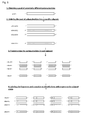
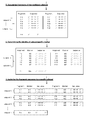
- Random sequences were generated using a Random Letter Sequence Generator (http://www.dave-reed.com/Nifty/randSeq.html) and arranged in a data base, e.g because of the small size it could be done in a spreadsheet, assembling the genes of the model genome. All randomized numbers (e.g. gene and number of transcripts) were generated using a randomizer. Then, the genes were used to generate the model transcriptome according to the statistical requirements illustrated trough the graphs in fig.2 to 4 . Their total number is listed in column "trans" in tab.2. To simplify matter, all transcripts are complete copies of their parental gene, so no variants are introduced yet.
- a Random Letter Sequence Generator http://www.dave-reed.com/Nifty/randSeq.html
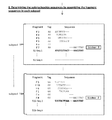
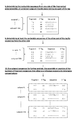
- transcripts were ordered into 16 (4x4) different pools according to their terminal bases (tab. 3).
- transcriptome Because one particular transcriptome (all reads align to the blue print) is selected and any reading errors are excluded, a simple alignment algorithm (simple search function which provides the number of sequence matches) could be used to probe the genome/transcriptome. It selects all reads that have a perfect k-mer match to the reference sequence (transcriptome). So, 24 permutations of 4bp fragments (without any base repeats like AATG) were taken and aligned, once against the entire model genome/transcriptome (tab. 2) and once against the segregated genome/transcriptome (tab. 3). The number of unique hits is shown in both tables in the right column.
Landscapes
- Chemical & Material Sciences (AREA)
- Life Sciences & Earth Sciences (AREA)
- Organic Chemistry (AREA)
- Proteomics, Peptides & Aminoacids (AREA)
- Zoology (AREA)
- Wood Science & Technology (AREA)
- Health & Medical Sciences (AREA)
- Engineering & Computer Science (AREA)
- Analytical Chemistry (AREA)
- Microbiology (AREA)
- Immunology (AREA)
- Molecular Biology (AREA)
- Biotechnology (AREA)
- Biophysics (AREA)
- Physics & Mathematics (AREA)
- Biochemistry (AREA)
- Bioinformatics & Cheminformatics (AREA)
- General Engineering & Computer Science (AREA)
- General Health & Medical Sciences (AREA)
- Genetics & Genomics (AREA)
- Measuring Or Testing Involving Enzymes Or Micro-Organisms (AREA)
Priority Applications (8)
| Application Number | Priority Date | Filing Date | Title |
|---|---|---|---|
| EP09178923A EP2333104A1 (fr) | 2009-12-11 | 2009-12-11 | Procédé analytique pour ARN |
| EP10788340.7A EP2510114B1 (fr) | 2009-12-11 | 2010-12-10 | Procédé analytique pour ARN |
| PCT/EP2010/069382 WO2011070155A1 (fr) | 2009-12-11 | 2010-12-10 | Procédé analytique concernant l'arn |
| JP2012542561A JP5926189B2 (ja) | 2009-12-11 | 2010-12-10 | Rna分析方法 |
| US13/511,961 US20120238457A1 (en) | 2009-12-11 | 2010-12-10 | Rna analytics method |
| AU2010329825A AU2010329825B2 (en) | 2009-12-11 | 2010-12-10 | RNA analytics method |
| CN2010800561858A CN102782152A (zh) | 2009-12-11 | 2010-12-10 | Rna分析方法 |
| CA2782766A CA2782766A1 (fr) | 2009-12-11 | 2010-12-10 | Procede analytique concernant l'arn |
Applications Claiming Priority (1)
| Application Number | Priority Date | Filing Date | Title |
|---|---|---|---|
| EP09178923A EP2333104A1 (fr) | 2009-12-11 | 2009-12-11 | Procédé analytique pour ARN |
Publications (1)
| Publication Number | Publication Date |
|---|---|
| EP2333104A1 true EP2333104A1 (fr) | 2011-06-15 |
Family
ID=41796563
Family Applications (2)
| Application Number | Title | Priority Date | Filing Date |
|---|---|---|---|
| EP09178923A Withdrawn EP2333104A1 (fr) | 2009-12-11 | 2009-12-11 | Procédé analytique pour ARN |
| EP10788340.7A Active EP2510114B1 (fr) | 2009-12-11 | 2010-12-10 | Procédé analytique pour ARN |
Family Applications After (1)
| Application Number | Title | Priority Date | Filing Date |
|---|---|---|---|
| EP10788340.7A Active EP2510114B1 (fr) | 2009-12-11 | 2010-12-10 | Procédé analytique pour ARN |
Country Status (7)
| Country | Link |
|---|---|
| US (1) | US20120238457A1 (fr) |
| EP (2) | EP2333104A1 (fr) |
| JP (1) | JP5926189B2 (fr) |
| CN (1) | CN102782152A (fr) |
| AU (1) | AU2010329825B2 (fr) |
| CA (1) | CA2782766A1 (fr) |
| WO (1) | WO2011070155A1 (fr) |
Cited By (1)
| Publication number | Priority date | Publication date | Assignee | Title |
|---|---|---|---|---|
| WO2016005524A1 (fr) * | 2014-07-09 | 2016-01-14 | Lexogen Gmbh | Procédés et produits pour la quantification de variants de produits de transcription d'arn |
Families Citing this family (5)
| Publication number | Priority date | Publication date | Assignee | Title |
|---|---|---|---|---|
| PL2756098T3 (pl) | 2011-09-16 | 2018-12-31 | Lexogen Gmbh | Sposób wytwarzania biblioteki cząsteczek kwasów nukleinowych |
| CA2877864C (fr) * | 2012-06-28 | 2019-05-14 | James Douglas Watson | Methodes ciblees connues sous le nom d'arn-seq et materiaux pour le diagnostic du cancer de la prostate |
| AU2014219180A1 (en) * | 2013-02-20 | 2015-10-08 | Emory University | Methods of sequencing nucleic acids in mixtures and compositions related thereto |
| EP2868752A1 (fr) | 2013-10-31 | 2015-05-06 | Lexogen GmbH | Détermination du nombre de copies d'acide nucléique sur la base des estimations de fragment |
| US20230399693A1 (en) * | 2020-11-03 | 2023-12-14 | Act Genomics (Ip) Co., Limited | Targeted sequencing method and kit thereof for detecting gene alteration |
Citations (1)
| Publication number | Priority date | Publication date | Assignee | Title |
|---|---|---|---|---|
| WO2007073171A2 (fr) * | 2005-12-22 | 2007-06-28 | Keygene N.V. | Strategies ameliorees pour etablir des profils de produits de transcription au moyen de technologies de sequençage a rendement eleve |
Family Cites Families (9)
| Publication number | Priority date | Publication date | Assignee | Title |
|---|---|---|---|---|
| HU223760B1 (hu) | 1991-09-24 | 2005-01-28 | Keygene N.V. | Szelektív restrikciós fragmentumsokszorosítás, általános módszer DNS-fingerprint analízisére |
| US5962372A (en) | 1994-04-25 | 1999-10-05 | Bayer Aktiengesellschaft | N-cyanoaryl nitrogen heterocycles |
| US5962271A (en) | 1996-01-03 | 1999-10-05 | Cloutech Laboratories, Inc. | Methods and compositions for generating full-length cDNA having arbitrary nucleotide sequence at the 3'-end |
| US6261770B1 (en) * | 1997-05-13 | 2001-07-17 | Display Systems Biotech Aps | Method to clone mRNAs |
| CA2330277A1 (fr) * | 1998-04-27 | 1999-11-04 | Sidney Kimmel Cancer Center | Cibles d'acide nucleique de moindre complexite et leurs methodes d'utilisation |
| DE602006013831D1 (de) | 2005-06-23 | 2010-06-02 | Keygene Nv | Verbesserte strategien zur sequenzierung komplexer genome unter verwendung von sequenziertechniken mit hohem durchsatz |
| AT502823B1 (de) | 2005-11-29 | 2007-06-15 | Seitz Alexander Dr | Polynukleotid-amplifikation |
| WO2008093098A2 (fr) * | 2007-02-02 | 2008-08-07 | Illumina Cambridge Limited | Procedes pour indexer des echantillons et sequencer de multiples matrices nucleotidiques |
| US8298768B2 (en) * | 2007-11-29 | 2012-10-30 | Complete Genomics, Inc. | Efficient shotgun sequencing methods |
-
2009
- 2009-12-11 EP EP09178923A patent/EP2333104A1/fr not_active Withdrawn
-
2010
- 2010-12-10 WO PCT/EP2010/069382 patent/WO2011070155A1/fr not_active Ceased
- 2010-12-10 CN CN2010800561858A patent/CN102782152A/zh active Pending
- 2010-12-10 US US13/511,961 patent/US20120238457A1/en not_active Abandoned
- 2010-12-10 CA CA2782766A patent/CA2782766A1/fr not_active Abandoned
- 2010-12-10 JP JP2012542561A patent/JP5926189B2/ja active Active
- 2010-12-10 AU AU2010329825A patent/AU2010329825B2/en active Active
- 2010-12-10 EP EP10788340.7A patent/EP2510114B1/fr active Active
Patent Citations (1)
| Publication number | Priority date | Publication date | Assignee | Title |
|---|---|---|---|---|
| WO2007073171A2 (fr) * | 2005-12-22 | 2007-06-28 | Keygene N.V. | Strategies ameliorees pour etablir des profils de produits de transcription au moyen de technologies de sequençage a rendement eleve |
Non-Patent Citations (5)
| Title |
|---|
| ARMOUR CHRISTOPHER D ET AL: "Digital transcriptome profiling using selective hexamer priming for cDNA synthesis", NATURE METHODS, vol. 6, no. 9, September 2009 (2009-09-01), pages 647, XP009125354, ISSN: 1548-7091 * |
| BREYNE P ET AL: "Quantitative cDNA-AFLP analysis for genome-wide expression studies.", MGG MOLECULAR GENETICS AND GENOMICS, vol. 269, no. 2, May 2003 (2003-05-01), pages 173 - 179, XP002573151, ISSN: 1617-4615 * |
| MATZ M ET AL: "ORDERED DIFFERENTIAL DISPLAY: A SIMPLE METHOD FOR SYSTEMATIC COMPARISON OF GENE EXPRESSION PROFILES", NUCLEIC ACIDS RESEARCH, OXFORD UNIVERSITY PRESS, SURREY, GB, vol. 25, no. 12, 1 January 1997 (1997-01-01), XP002911919, ISSN: 0305-1048 * |
| NAGALAKSHMI UGRAPPA ET AL: "The transcriptional landscape of the yeast genome defined by RNA sequencing", SCIENCE (WASHINGTON D C), vol. 320, no. 5881, June 2008 (2008-06-01), pages 1344 - 1349, XP002573150, ISSN: 0036-8075 * |
| WILHELM BRIAN T ET AL: "RNA-Seq-quantitative measurement of expression through massively parallel RNA-sequencing", METHODS (AMSTERDAM), vol. 48, no. 3, July 2009 (2009-07-01), pages 249 - 257, XP026284846, ISSN: 1046-2023 * |
Cited By (2)
| Publication number | Priority date | Publication date | Assignee | Title |
|---|---|---|---|---|
| WO2016005524A1 (fr) * | 2014-07-09 | 2016-01-14 | Lexogen Gmbh | Procédés et produits pour la quantification de variants de produits de transcription d'arn |
| JP2021153588A (ja) * | 2014-07-09 | 2021-10-07 | レクソジェン・ゲゼルシャフト・ミット・ベシュレンクテル・ハフツングLEXOGEN GmbH | Rna転写産物バリアントを定量するための方法及び製品 |
Also Published As
| Publication number | Publication date |
|---|---|
| CN102782152A (zh) | 2012-11-14 |
| US20120238457A1 (en) | 2012-09-20 |
| JP5926189B2 (ja) | 2016-05-25 |
| EP2510114A1 (fr) | 2012-10-17 |
| EP2510114B1 (fr) | 2016-04-20 |
| AU2010329825A1 (en) | 2012-06-21 |
| CA2782766A1 (fr) | 2011-06-16 |
| AU2010329825B2 (en) | 2015-05-28 |
| JP2013513373A (ja) | 2013-04-22 |
| WO2011070155A1 (fr) | 2011-06-16 |
Similar Documents
| Publication | Publication Date | Title |
|---|---|---|
| US9334532B2 (en) | Complexity reduction method | |
| Wong et al. | Multiplex Illumina sequencing using DNA barcoding | |
| JP5389638B2 (ja) | 制限断片に基づく分子マーカーのハイスループットな検出 | |
| EP3177740B1 (fr) | Mesures numériques à partir de séquençage ciblé | |
| CN110546272B (zh) | 将衔接子附接至样品核酸的方法 | |
| US11549139B2 (en) | Chemical compositions and methods of using same | |
| CN118638898A (zh) | 用于靶向核酸序列富集的方法及在错误纠正的核酸测序中的应用 | |
| US20230416806A1 (en) | Polymorphism detection with increased accuracy | |
| CN110291207A (zh) | 用于长程测序的条形码化dna | |
| CN111808854B (zh) | 带有分子条码的平衡接头及快速构建转录组文库的方法 | |
| US12286670B2 (en) | Full-length RNA sequencing | |
| JP2009542256A (ja) | Aflpを使用したハイスループット物理地図 | |
| EP2510114B1 (fr) | Procédé analytique pour ARN | |
| JP2018527928A (ja) | 次世代シークエンシングのための高分子量dnaサンプル追跡タグ | |
| US20140336058A1 (en) | Method and kit for characterizing rna in a composition | |
| AU2023288777A1 (en) | Methods and compositions for nucleic acid sequencing | |
| CN108359723B (zh) | 一种降低深度测序错误的方法 | |
| WO2018235938A1 (fr) | Procédé pour séquençage et procédé pour analyse d'acides nucléiques | |
| US20220177964A1 (en) | A high throughput sequencing method and kit | |
| Bhattacharya et al. | Experimental toolkit to study RNA level regulation | |
| US20240052339A1 (en) | Rna probe for mutation profiling and use thereof | |
| CN116065240A (zh) | 一种高通量构建rna测序文库的方法及试剂盒 | |
| JP7152599B2 (ja) | 塩基配列決定のためのモジュール式およびコンビナトリアル核酸試料調製のためのシステムおよび方法 | |
| US20240124930A1 (en) | Diagnostic and/or Sequencing Method and Kit | |
| KR101967879B1 (ko) | 핵산 서열분석에서 uid 핵산 서열의 순결도를 측정하는 방법 |
Legal Events
| Date | Code | Title | Description |
|---|---|---|---|
| PUAI | Public reference made under article 153(3) epc to a published international application that has entered the european phase |
Free format text: ORIGINAL CODE: 0009012 |
|
| AK | Designated contracting states |
Kind code of ref document: A1 Designated state(s): AT BE BG CH CY CZ DE DK EE ES FI FR GB GR HR HU IE IS IT LI LT LU LV MC MK MT NL NO PL PT RO SE SI SK SM TR |
|
| STAA | Information on the status of an ep patent application or granted ep patent |
Free format text: STATUS: THE APPLICATION IS DEEMED TO BE WITHDRAWN |
|
| 18D | Application deemed to be withdrawn |
Effective date: 20111216 |