EP2333148A2 - Verfahren zum Reinigen einer Prozessluft eines Wäschetrocknungsgeräts und Wäschetrocknungsgerät - Google Patents
Verfahren zum Reinigen einer Prozessluft eines Wäschetrocknungsgeräts und Wäschetrocknungsgerät Download PDFInfo
- Publication number
- EP2333148A2 EP2333148A2 EP10190076A EP10190076A EP2333148A2 EP 2333148 A2 EP2333148 A2 EP 2333148A2 EP 10190076 A EP10190076 A EP 10190076A EP 10190076 A EP10190076 A EP 10190076A EP 2333148 A2 EP2333148 A2 EP 2333148A2
- Authority
- EP
- European Patent Office
- Prior art keywords
- lint
- process air
- hair
- filter
- lint filter
- Prior art date
- Legal status (The legal status is an assumption and is not a legal conclusion. Google has not performed a legal analysis and makes no representation as to the accuracy of the status listed.)
- Granted
Links
- 238000000034 method Methods 0.000 title claims abstract description 65
- 238000004140 cleaning Methods 0.000 title claims description 7
- 238000001035 drying Methods 0.000 claims abstract description 26
- 239000000463 material Substances 0.000 claims abstract description 8
- 210000004209 hair Anatomy 0.000 claims description 44
- 230000014759 maintenance of location Effects 0.000 claims description 3
- 239000002657 fibrous material Substances 0.000 abstract 1
- 239000000835 fiber Substances 0.000 description 5
- 238000010438 heat treatment Methods 0.000 description 4
- XLYOFNOQVPJJNP-UHFFFAOYSA-N water Substances O XLYOFNOQVPJJNP-UHFFFAOYSA-N 0.000 description 4
- 239000004753 textile Substances 0.000 description 3
- OKTJSMMVPCPJKN-UHFFFAOYSA-N Carbon Chemical compound [C] OKTJSMMVPCPJKN-UHFFFAOYSA-N 0.000 description 2
- 239000003599 detergent Substances 0.000 description 2
- 238000001914 filtration Methods 0.000 description 2
- 239000002245 particle Substances 0.000 description 2
- 230000000717 retained effect Effects 0.000 description 2
- 238000000926 separation method Methods 0.000 description 2
- 235000008733 Citrus aurantifolia Nutrition 0.000 description 1
- 241001465754 Metazoa Species 0.000 description 1
- 235000011941 Tilia x europaea Nutrition 0.000 description 1
- 239000000853 adhesive Substances 0.000 description 1
- 230000001070 adhesive effect Effects 0.000 description 1
- 238000009833 condensation Methods 0.000 description 1
- 230000005494 condensation Effects 0.000 description 1
- 230000001419 dependent effect Effects 0.000 description 1
- 230000008021 deposition Effects 0.000 description 1
- 239000011888 foil Substances 0.000 description 1
- 239000004571 lime Substances 0.000 description 1
- 230000002123 temporal effect Effects 0.000 description 1
Images
Classifications
-
- D—TEXTILES; PAPER
- D06—TREATMENT OF TEXTILES OR THE LIKE; LAUNDERING; FLEXIBLE MATERIALS NOT OTHERWISE PROVIDED FOR
- D06F—LAUNDERING, DRYING, IRONING, PRESSING OR FOLDING TEXTILE ARTICLES
- D06F58/00—Domestic laundry dryers
- D06F58/20—General details of domestic laundry dryers
- D06F58/22—Lint collecting arrangements
Definitions
- the invention relates to a method for cleaning a process air of a laundry drying apparatus by means of at least one lint filter and a laundry drying apparatus, which is set up for carrying out the method.
- a lint filter for a clothes dryer e.g. a washer-dryer or a tumble dryer
- a process air duct of the laundry dryer to retain from a load laundry or textiles in a drying process entrained finely divided particles and fibers, referred to collectively as fluff, so that they are not also located in the process air duct functional units such as blower , Contaminate or even clog pumps, heaters, heat exchangers, waterways, airways, etc.
- lint filters have hitherto been a flat lint filter made of material, in particular plastic gauze, a small-pored foil or a lattice.
- the lint filter is usually removable and can be cleaned after removal by a user.
- a lint filter of this type is from the Scriptures WO 2007/057264 A1 known, where there is additionally an odor filter, eg with activated carbon, is present.
- WO 2008/110451 A1 shows an arrangement comprising a first lint filter and a second lint filter, wherein the first lint filter and the second lint filter are arranged one behind the other and to flow through successively process air.
- the second lint filter forms a permeable for the process air wall of a filter cartridge.
- a disadvantage of the conventional lint filters is that still a certain amount of lint and the like foreign bodies such as long fibers and especially hair can pass through the lint filter. This is because the filter material for retaining lint must be designed so that a free passage area of about 35% to 45% and a mesh size of 100 to 200 microns are guaranteed because otherwise the lint filter is added too quickly and the air resistance becomes too high. A significantly finer filter material would cause the drying process would extend significantly, since the heater due to the high air resistance and the associated low volume flow heats up strongly towards the end and therefore must be operated with a significantly reduced heating power.
- Finer filter material with a mesh size significantly less than 150 ⁇ m also tends to become clogged during the drying process by particles from detergent or lime residues in the laundry.
- the hair in the process air which have a diameter between 10 microns and 60 microns, especially in domestic animals and 35 microns to 120 microns in humans, through the conventional filter material and into the downstream air ducts and components (eg heating, Heat exchanger, blower, etc.) can enter and enter the water supply and cause problems in the usually very simple condensate pumps (eg blockages through hair bundles).
- hair can wrap around a drive shaft of a blower and block this blower.
- the object is achieved according to the invention by a method for cleaning a process air of a laundry dryer by means of at least one lint filter in which a process air stream is alternately passed through a plurality of lint screens, wherein at least one lint filter is arranged for retaining hair and at least one other lint filter for retaining lint ,
- a method for cleaning a process air of a laundry dryer by means of at least one lint filter in which a process air stream is alternately passed through a plurality of lint screens, wherein at least one lint filter is arranged for retaining hair and at least one other lint filter for retaining lint ,
- hair can be removed separately from lint from the process air stream.
- the lint-retaining lint may retain the lint without an increased risk of clogging, while the lint-retaining lint may effectively remove it from the process air stream.
- the lint filters have different mesh sizes, wherein the at least one lint filter for retaining hair has a mesh width of less than 60 ⁇ m. Through this mesh size, a large part of the hair can be filtered out.
- the at least one lint filter for retaining the hair has a mesh size of more than 20 microns. This prevents clogging of this lint filter from filtering out the hair in practice.
- the lint screens have gauze as the filter material.
- At least one air guide in particular air guide plate, is adjusted for alternately passing the process air flow through the plurality of lint filters.
- the at least one lint filter for retaining the hair is flowed through by the process air and then the at least one other lint filter for retaining the lint.
- This embodiment makes the property of hair own, that although they are hygroscopic (and therefore adhere well to damp, to be dried laundry), but the water is bound to the surface of the hair only relatively weak. It follows that on the laundry to be dried adhesive hair after dried in the drying process on their surfaces and can be easily detached from the laundry by the volume flow of the process air. Consequently, the hair gets to the lint filter before other lint from the textiles get there.
- the process air stream is first passed over the at least one lint filter to hold the hair, almost all of the hairs can be retained there without this lint filter being clogged with lint.
- the mesh size can be kept comparatively small, which further increases a retention effectiveness for the hair.
- the lint filter used thereafter for retaining the lint filters a process air substantially free of hair.
- the at least one lint filter for retaining the hair is flowed through by the process air for 5 to 15 minutes, in particular about 10 minutes. It has been found that essentially all hair reaches the lint filter during this time, as long as they are not held in place by mechanical forces (jamming in gaps, etc.). As a result, a precise temporal separation between the separation of the hair and the deposition of the lint and other residues (detergent residues, etc.) is possible.
- the at least one lint filter is preferably traversed by the process air to retain the hair from the beginning of the drying process.
- a laundry drying apparatus which is adapted to perform such a method, and which comprises: a process air duct with at least two parallel branches, each of the branches has a respective lint filter, and a controllable air guide for deflecting a in the process air duct guided process air between the branches.
- the controllable air guiding means is controllable, for example, by means of a central control unit of the laundry drying apparatus.
- the time-controlled guidance system makes the filtering of hair even more effective. Hair tends to thread into the mesh of the gauze and work its way through the gauze slowly through process air support. By the timed control system, this behavior is advantageously interrupted, so that even threaded hair stuck in the gauze and can be easily removed by the user after drying.
- a drying process of the clothes dryer 1 is started.
- a process air blower 2 is activated in the tumble dryer 1, which circulates process air P in a process air duct K.
- the process air channel K comprises in succession, but not necessarily in this order, a - e.g. rotatable - drying drum 3 for holding laundry to be dried, a heater for heating the process air (not shown) and a condensation unit for condensing out of the wash water (not shown), both of which are also activated.
- a tumble dryer with these components is known.
- the process air duct K of the tumble dryer 1 shown here is provided with two parallel branches Ka and Kb, each of the branches Ka, Kb having a respective lint filter 4, 5.
- a first lint filter 4 which is set up for retaining hair, is introduced into a first branch Ka.
- a second lint filter 5 is introduced, which is adapted to retain lint.
- the first lint filter 4 is extensively equipped with a plastic gauze, which has a mesh size of more than 20 microns and less than 60 microns. This hair can be retained particularly effective.
- the second lint filter 5 is flat with a conventionally used one Plastic gauze equipped, which has a passage area of about 36 - 45% and a mesh size of 100 microns to 200 microns.
- the tumble dryer 1 further comprises an air guide in the form of a movable air baffle 6, by means of which the process air flow can be selectively directed either by the first branch Ka or by the second branch Kb.
- the air guide plate 6 is set so that the process air P flows through the first branch Ka and thus through the first lint filter 4.
- the second branch Kb is blocked.
- the surface of the laundry or textiles is first dried, so that typically adhering hair can dissolve there and be entrained with the process air P. Fluffs, on the other hand, still stick in practice.
- the offset with the hair air flows through the first lint filter 4, where the hair is held back. Since virtually no lint is present in the process air P, the first lint filter 4 does not clog up, and a sufficiently high volume flow can be maintained.
- step S3 the air baffle 6 is switched or changed so that the process air P now flows through the second branch Kb and thus through the second lint filter 5.
- the first branch Ka is blocked.
- the lint-laden process air P is guided in a conventional manner by the second lint filter 5 and filtered there, but the process air is hair-free.
- step S4 the drying process can be ended.
- a step S5 the lint filters 4 and 5 are removed for cleaning. Since the lint screens 4, 5 are combined in a common, removable unit, for example, have a common frame, the removal and cleaning are user friendly.
- the lint filter or the lint filters can also be accommodated in a door of the drying device. Also, the lint filter or the lint filters can be arranged above or next to the drying drum.
Landscapes
- Engineering & Computer Science (AREA)
- Textile Engineering (AREA)
- Detail Structures Of Washing Machines And Dryers (AREA)
Abstract
Description
- Die Erfindung betrifft ein Verfahren zum Reinigen einer Prozessluft eines Wäschetrocknungsgeräts mittels mindestens eines Flusensiebes und ein Wäschetrocknungsgerät, das zur Durchführung des Verfahrens eingerichtet ist.
- Ein Flusenfilter für ein Wäschetrocknungsgerät, z.B. einen Waschtrockner oder einen Wäschetrockner, wird typischerweise in einen Prozessluftkanal des Wäschetrocknungsgeräts eingesetzt, um von einer Ladung Wäsche bzw. Textilien bei einem Trocknungsprozess mitgenommene feinteilige Partikel und Fasern, summarisch als Flusen bezeichnet, zurückzuhalten, damit diese keine ebenfalls in dem Prozessluftkanal befindlichen Funktionseinheiten wie Gebläse, Pumpen, Heizung, Wärmetauscher, Wasserwege, Luftwege usw. verunreinigen oder sogar verstopfen können. Dazu weisen Flusenfilter bisher ein flächiges Flusensieb aus Stoff, insbesondere Kunststoffgaze, einer kleinporigen Folie oder einem Gitter auf. Zum Entfernen der an dem Flusensieb anhaftenden Flusen ist das Flusensieb zumeist entnehmbar und kann nach einer Entnahme von einem Benutzer gereinigt werden.
- Ein Flusenfilter solcher Gattung ist aus der Schrift
WO 2007/057264 A1 bekannt, wobei dort zusätzlich ein Geruchsfilter, z.B. mit Aktivkohle, vorhanden ist. - Aus der Schrift
WO 2008/110451 A1 geht eine Anordnung umfassend ein erstes Flusenfilter und ein zweites Flusenfilter hervor, wobei das erste Flusenfilter und das zweite Flusenfilter hintereinander angeordnet und nacheinander von Prozessluft zu durchströmen sind. Das zweite Flusenfilter bildet dabei eine für die Prozessluft durchlässige Wand einer Filterkassette. - Nachteilig bei den herkömmlichen Flusenfiltern ist, dass immer noch eine bestimmte Menge an Flusen und dergleichen Fremdkörpern wie Langfasern und vor allem Haaren das Flusensieb passieren können. Dies liegt daran, dass das Filtermaterial zum Zurückhalten von Flusen so ausgelegt werden muss, dass eine freie Durchtrittsfläche von ca. 35 % bis 45% und eine Maschenweite von 100 bis 200 µm gewährleistet sind, da sich ansonsten das Flusensieb zu schnell zusetzt und der Luftwiderstand zu hoch wird. Ein deutlich feineres Filtermaterial würde dazu führen, dass sich der Trocknungsprozess deutlich verlängern würde, da die Heizung durch den hohen Luftwiderstand und dem damit verbundenen geringen Volumenstrom gerade zum Ende hin stark aufheizt und deshalb mit einer deutlich reduzierten Heizleistung betrieben werden muss. Feineres Filtermaterial mit einer Maschenweite von erheblich weniger als 150 µm neigt auch zu einem schnellen Zusetzen während des Trocknungsprozesses durch Partikel aus Rückständen von Waschmittel oder Kalk in der Wäsche. Das bedeutet jedoch, dass die Haare in der Prozessluft, die einen Durchmesser zwischen 10 µm und 60 µm vor allem bei Haustieren und 35 µm bis 120 µm bei Menschen aufweisen, durch das herkömmliche Filtermaterial durchtreten und in die nachgelagerten Luftkanäle und Bauteile (z.B. Heizung, Wärmetauscher, Gebläse usw.) gelangen können sowie in die Wasserführung eintreten und dort Probleme in den meist sehr einfachen Kondensatpumpen hervorrufen können (z.B. Verstopfungen durch Haarbündel). Auch können Haare sich um eine Antriebswelle eines Gebläses wickeln und dieses Gebläse blockieren. Außerdem neigen Haare im Wasser dazu, aneinander zu kleben und Knäule zu bilden so dass sich an diesen auch kurzfasrige Flusen ansetzen können, wodurch sich Knäule aus Haaren und Flusen bilden, die zu Verstopfungen in Pumpen und dahinter befindlichen Rohrleitungen führen. Während also kurzfasrige Flusen allein meist problemlos durch die Pumpe gelangen, stellen vor allem langfasrige Fremdkörper und insbesondere Haare ein extremes Problem dar.
- Es ist die Aufgabe der vorliegenden Erfindung, die oben genannten Nachteile zu vermeiden und insbesondere eine Möglichkeit zur effektiven Rückhaltung von Haaren in einem Prozessluftkanal eines Wäschetrocknungsgeräts bereitzustellen.
- Diese Aufgabe wird durch ein Verfahren und ein Wäschetrocknungsgerät gemäß den Merkmalen des jeweiligen unabhängigen Patentanspruchs gelöst. Bevorzugte Ausführungsformen sind den jeweiligen abhängigen Patentansprüchen sowie der nachfolgenden Beschreibung und der beigefügten Zeichnung entnehmbar; bevorzugten Ausgestaltungen des Verfahrens entsprechen bevorzugte Ausgestaltungen des Wäschetrocknungsgeräts und umgekehrt, und dies auch dann, wenn darauf hierin nicht explizit hingewiesen ist.
- Die Aufgabe wird erfindungsgemäß demnach gelöst durch ein Verfahren zum Reinigen einer Prozessluft eines Wäschetrocknungsgeräts mittels mindestens eines Flusensiebes, bei dem ein Prozessluftstrom abwechselnd durch mehrere Flusensiebe geleitet wird, wobei mindestens ein Flusensieb zum Zurückhalten von Haaren und mindestens ein anderes Flusensieb zum Zurückhalten von Flusen eingerichtet ist. Dadurch können Haare getrennt von Flusen aus dem Prozessluftstrom entfernt werden. Das Flusensieb zum Zurückhalten der Flusen kann die Flusen ohne eine erhöhte Gefahr einer Zusetzung zurückhalten, während das Flusensieb zum Zurückhalten der Haare diese effektiv aus dem Prozessluftstrom entfernen kann. Hier und im Folgenden können unter Haaren und anderem Tierhaare, Menschenhaare und/oder langfasrige Flusen verstanden werden.
- Es ist eine bevorzugte Ausgestaltung, dass die Flusensiebe unterschiedliche Maschenweiten aufweisen, wobei das mindestens eine Flusensieb zum Zurückhalten von Haaren eine Maschenweite von weniger als 60 µm aufweist. Durch diese Maschenweite kann ein Großteil der Haare herausgefiltert werden.
- Es ist noch eine bevorzugte Ausgestaltung, dass das mindestens eine Flusensieb zum Zurückhalten der Haare eine Maschenweite von mehr als 20 µm aufweist. Dadurch wird in der Praxis ein Zusetzen dieses Flusensiebs vor einem Herausfiltern der Haare verhindert.
- Es ist auch eine bevorzugte Ausgestaltung, dass die Flusensiebe Gaze als Filtermaterial aufweisen.
- Es ist zudem eine bevorzugte Ausgestaltung, dass zum abwechselnden Leiten des Prozessluftstroms durch die mehreren Flusensiebe mindestens ein Luftleitmittel, insbesondere Luftleitblech, verstellt wird.
- Es ist ferner eine bevorzugte Ausgestaltung, dass während eines Trocknungsvorgangs zuerst das mindestens eine Flusensieb zum Zurückhalten der Haare von der Prozessluft durchströmt wird und danach das mindestens eine andere Flusensieb zum Zurückhalten der Flusen. Diese Ausgestaltung macht sich die Eigenschaft von Haaren zu Eigen, dass diese zwar hygroskopisch sind (und also gut an feuchter, zu trocknender Wäsche haften), jedoch das Wasser an der Oberfläche der Haare nur relativ schwach gebunden ist. Daraus ergibt sich, dass an der zu trocknenden Wäsche klebende Haare schon nach kurzer Dauer im Trocknungsprozess an ihren Oberflächen abgetrocknet sind und leicht durch den Volumenstrom der Prozessluft von der Wäsche abgelöst werden können. Folglich gelangen die Haare zu dem Flusensieb, bevor andere Flusen aus den Textilien dorthin gelangen. Somit können dann, wenn der Prozessluftstrom zuerst über das mindestens eine Flusensieb zum Zurückhalten der Haare geleitet wird, dort fast sämtliche Haare zurückgehalten werden, ohne dass dieses Flusensieb durch Flusen verstopft wird. Dadurch kann auch die Maschenweite vergleichsweise klein gehalten werden, was eine Rückhalteeffektivität für die Haare weiter steigert. Das danach verwendete Flusensieb zum Zurückhalten der Flusen filtert eine von Haaren im Wesentlichen freie Prozessluft.
- Es ist eine besondere bevorzugte Ausgestaltung, dass das mindestens eine Flusensieb zum Zurückhalten der Haare 5 bis 15 Minuten von der Prozessluft durchströmt wird, insbesondere ca. 10 Minuten. Es hat sich herausgestellt, dass in dieser Zeit im Wesentlichen alle Haare zum Flusensieb gelangen, soweit sie nicht durch mechanische Kräfte (Verklemmen in Spalten etc.) festgehalten werden. Dadurch ist eine präzise zeitliche Trennung zwischen der Abscheidung der Haare und der Abscheidung der Flusen sowie anderer Rückstände (Waschmittelrückstände etc.) möglich.
- Das mindestens eine Flusensieb wird zum Zurückhalten der Haare vorzugsweise von Beginn des Trocknungsvorgangs an von der Prozessluft durchströmt.
- Die Aufgabe wird erfindungsgemäß auch gelöst durch ein Wäschetrocknungsgerät, das dazu eingerichtet ist, ein solches Verfahren durchzuführen, und welches dazu aufweist: einen Prozessluftkanal mit mindestens zwei parallelen Zweigen, wobei jeder der Zweige ein jeweiliges Flusensieb aufweist, und ein steuerbares Luftleitmittel zum Umlenken einer in dem Prozessluftkanal geführten Prozessluft zwischen den Zweigen. Das steuerbare Luftleitmittel ist beispielsweise mittels einer zentralen Steuereinheit des Wäschetrocknungsgeräts steuerbar. Durch das zeitlich gesteuerte Leitsystem kann die Filterung der Haare noch effektiver gestaltet werden. Haare neigen dazu, sich in die Maschen der Gaze einzufädeln und sich durch Prozessluftunterstützung langsam durch die Gaze durchzuarbeiten. Durch das zeitlich angesteuerte Leitsystem wird dieses Verhalten vorteilhafterweise unterbrochen, so dass selbst eingefädelte Haare in der Gaze hängenbleiben und durch den Nutzer nach der Trocknung problemlos entfernt werden können.
- Es ist eine zur einfachen Handhabung und Reinigung bevorzugte und vorteilhafte Weiterbildung, dass die Flusensiebe in einer gemeinsamen, entnehmbaren Einheit zusammengefasst sind.
- In den Figuren der beigefügten Zeichnung ist ein bevorzugtes Ausführungsbeispiel der Erfindung schematisch dargestellt und wird nachfolgend beschrieben. In der Zeichnung sind zur Übersichtlichkeit gleiche oder gleichwirkende Elemente jeweils mit gleichen Bezugszeichen versehen. In der Zeichnung zeigen:
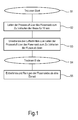
- Fig.1
- ein mögliches Ablaufdiagramm zur Implementierung des Verfahrens; und
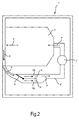
- Fig.2
- eine skizzierte Schnittdarstellung einer Seitenansicht eines Wäschetrocknungsgeräts, das dazu eingerichtet ist, das Verfahren aus
Fig.1 durchzuführen. - Bezug nehmend auf beide Figuren wird in einem ersten Schritt S1 ein Trocknungsvorgang des Wäschetrockners 1 gestartet. Dabei wird in dem Wäschetrockner 1 ein Prozessluftgebläse 2 aktiviert, welches Prozessluft P in einem Prozessluftkanal K umwälzt. Der Prozessluftkanal K umfasst hintereinander, aber nicht unbedingt in dieser Reihenfolge, eine - z.B. drehbare - Trocknertrommel 3 zur Aufnahme von zu trocknender Wäsche, eine Heizung zur Erwärmung der Prozessluft (ohne Abb.) und eine Kondensationseinheit zum Auskondensieren von aus der Wäsche entfernten Wassers (ohne Abb.), welche beide ebenfalls aktiviert werden. Ein Wäschetrockner mit diesen Komponenten ist bekannt.
- Im Gegensatz zu bekannten Wäschetrocknern ist der Prozessluftkanal K des vorliegend gezeigten Wäschetrockners 1 mit zwei parallelen Zweigen Ka und Kb ausgestattet, wobei jeder der Zweige Ka, Kb ein jeweiliges Flusensieb 4, 5 aufweist. Im Einzelnen ist in einen ersten Zweig Ka ein erstes Flusensieb 4 eingebracht, das zum Zurückhalten von Haaren eingerichtet ist. In einen zweiten Zweig Kb ist ein zweites Flusensieb 5 eingebracht, das zum Zurückhalten von Flusen eingerichtet ist. Das erste Flusensieb 4 ist flächig mit einer Kunststoffgaze ausgerüstet, welche eine Maschenweite von mehr als 20 µm und weniger als 60 µm aufweist. Dadurch können Haare besonders wirksam zurückgehalten werden. Das zweite Flusensieb 5 ist flächig mit einer herkömmlicherweise verwendeten Kunststoffgaze ausgerüstet, welche eine Durchtrittsfläche von ca. 36 - 45% und eine Maschenweite von 100 µm bis 200 µm aufweist.
- Der Wäschetrockner 1 weist ferner ein Luftleitmittel in Form eines beweglichen Luftleitblechs 6 auf, mittels welchen der Prozessluftstrom wahlweise entweder durch den ersten Zweig Ka oder durch den zweiten Zweig Kb gelenkt werden kann.
- Nach oder mit dem Starten des Trocknungsvorgangs in Schritt S1 wird das Luftleitblech 6 so gestellt, dass die Prozessluft P durch den ersten Zweig Ka und damit durch das erste Flusensieb 4 strömt. Der zweite Zweig Kb ist blockiert. Zu Beginn des Trocknungsablaufs wird zunächst die Oberfläche der Wäsche bzw. der Textilien getrocknet, so dass sich dort typischerweise anhaftende Haare lösen können und mit der Prozessluft P mitgerissen werden. Flusen hingegen bleiben in der Praxis noch haften. Die mit den Haaren versetzte Luft strömt durch das erste Flusensieb 4, an dem die Haare zurückgehalten werden. Da noch so gut wie keine Flusen in der Prozessluft P vorhanden sind, verstopft das erste Flusensieb 4 nicht, und es kann ein ausreichend hoher Volumenstrom aufrechterhalten werden.
- Nach ca. 10 Minuten (abhängig z.B. von der Wäscheart und der Heizstufe) sind die meisten Haare aus der Wäsche entfernt und haben sich an dem ersten Flusensieb 4 abgelagert. Nun beginnen auch die Flusen, sich aus der Wäsche zu lösen. Daher wird in einem Schritt S3 das Luftleitblech 6 so umgeschaltet bzw. umgestellt, dass die Prozessluft P nun durch den zweiten Zweig Kb strömt und damit durch das zweite Flusensieb 5. Der erste Zweig Ka ist hingegen blockiert. Nun wird die flusenbehaftete Prozessluft P auf herkömmliche Weise durch das zweite Flusensieb 5 geführt und dort gefiltert, wobei die Prozessluft jedoch haarfrei ist.
- In einem folgenden Schritt S4 kann der Trocknungsablauf beendet werden.
- Danach können in einem Schritt S5 die Flusensiebe 4 und 5 zur Reinigung entnommen werden. Weil die Flusensiebe 4, 5 in einer gemeinsamen, entnehmbaren Einheit zusammengefasst sind, z.B. einen gemeinsamen Rahmen aufweisen, sind die Entnahme und Reinigung benutzerfreundlich.
- Selbstverständlich ist die vorliegende Erfindung nicht auf das gezeigte Ausführungsbeispiel beschränkt.
- So kann das Flusensieb oder können die Flusensiebe auch in einer Tür des Trocknungsgeräts untergebracht sein. Auch kann das Flusensieb oder können die Flusensiebe oberhalb oder neben der Trocknertrommel angeordnet sein.
-
- 1
- Wäschetrockner
- 2
- Prozessluftgebläse
- 3
- Trocknertrommel
- 4
- erstes Flusensieb
- 5
- zweites Flusensieb
- 6
- Luftleitblech
- P
- Prozessluft
- K
- Prozessluftkanal
- Ka
- erster Zweig
- Kb
- zweiter Zweig
Claims (9)
- Verfahren zum Reinigen einer Prozessluft (P) eines Wäschetrocknungsgeräts (1) mittels mindestens eines Flusensiebs (4, 5), bei dem ein Prozessluftstrom (P) abwechselnd durch mehrere Flusensiebe (4, 5) geleitet wird, wobei mindestens ein Flusensieb (4) zum Zurückhalten von Haaren und mindestens ein anderes Flusensieb (5) zum Zurückhalten von Flusen eingerichtet ist.
- Verfahren nach Anspruch 1, bei dem die Flusensiebe (4, 5) eine unterschiedliche Maschenweite aufweisen, wobei das mindestens eine Flusensieb (4) zum Zurückhalten von Haaren eine Maschenweite von weniger als 60 µm aufweist.
- Verfahren nach Anspruch 1, bei dem das mindestens eine Flusensieb (4) zum Zurückhalten von Haaren eine Maschenweite von mehr als 20 µm aufweist.
- Verfahren nach einem der vorhergehenden Ansprüche, bei dem die Flusensiebe (4, 5) Gaze als Filtermaterial aufweisen.
- Verfahren nach einem der vorhergehenden Ansprüche, bei dem zum abwechselnden Leiten des Prozessluftstroms (P) durch die mehreren Flusensiebe (4,5) mindestens ein Luftleitmittel (6), insbesondere Luftleitblech (6), verstellt wird.
- Verfahren nach einem der vorhergehenden Ansprüche, bei dem während eines Trocknungsvorgangs zuerst das mindestens eine Flusensieb (4) zum Zurückhalten der Haare von der Prozessluft (P) durchströmt wird und danach das mindestens eine andere Flusensieb (5) zum Zurückhalten der Flusen.
- Verfahren nach Anspruch 6, bei dem das mindestens eine Flusensieb (4) zum Zurückhalten der Haare 5 bis 15 Minuten von der Prozessluft (P) durchströmt wird, insbesondere ca. 10 Minuten.
- Wäschetrocknungsgerät (1), das dazu eingerichtet ist, ein Verfahren nach einem der vorhergehenden Ansprüche durchzuführen, und welches aufweist:- einen Prozessluftkanal (K) mit mindestens zwei parallelen Zweigen (Ka, Kb), wobei jeder der Zweige (Ka, Kb) ein jeweiliges Flusensieb (4, 5) aufweist, und- ein steuerbares Luftleitmittel (6) zum Umlenken einer in dem Prozessluftkanal (K) geführten Prozessluft (P) zwischen den Zweigen (Ka, Kb).
- Wäschetrocknungsgerät nach Anspruch 8, bei dem die Flusensiebe in einer gemeinsamen, entnehmbaren Einheit zusammengefasst sind.
Priority Applications (1)
| Application Number | Priority Date | Filing Date | Title |
|---|---|---|---|
| PL10190076T PL2333148T3 (pl) | 2009-11-20 | 2010-11-05 | Sposób oczyszczania powietrza procesowego urządzenia do suszenia bielizny, oraz urządzenie do suszenia bielizny |
Applications Claiming Priority (1)
| Application Number | Priority Date | Filing Date | Title |
|---|---|---|---|
| DE102009046920A DE102009046920A1 (de) | 2009-11-20 | 2009-11-20 | Verfahren zum Reinigen einer Prozessluft eines Wäschetrocknungsgeräts und Wäschetrocknungsgerät |
Publications (3)
| Publication Number | Publication Date |
|---|---|
| EP2333148A2 true EP2333148A2 (de) | 2011-06-15 |
| EP2333148A3 EP2333148A3 (de) | 2013-06-05 |
| EP2333148B1 EP2333148B1 (de) | 2015-01-07 |
Family
ID=43899671
Family Applications (1)
| Application Number | Title | Priority Date | Filing Date |
|---|---|---|---|
| EP10190076.9A Not-in-force EP2333148B1 (de) | 2009-11-20 | 2010-11-05 | Verfahren zum Reinigen einer Prozessluft eines Wäschetrocknungsgeräts und Wäschetrocknungsgerät |
Country Status (3)
| Country | Link |
|---|---|
| EP (1) | EP2333148B1 (de) |
| DE (1) | DE102009046920A1 (de) |
| PL (1) | PL2333148T3 (de) |
Cited By (3)
| Publication number | Priority date | Publication date | Assignee | Title |
|---|---|---|---|---|
| EP2441879A1 (de) * | 2010-09-30 | 2012-04-18 | Panasonic Corporation | Wäschetrocknungsprozessor und Entnahmevorrichtung mit einem Filterelement |
| EP3246455A1 (de) * | 2016-05-17 | 2017-11-22 | Electrolux Appliances Aktiebolag | Wäschebehandlungsmaschine mit einem herausnehmbaren entflusungsfilter |
| EP2647755B1 (de) * | 2013-03-13 | 2018-10-24 | V-Zug AG | Wäschebehandlungsvorrichtung mit zuschaltbarem Filter |
Families Citing this family (2)
| Publication number | Priority date | Publication date | Assignee | Title |
|---|---|---|---|---|
| EP3467187B1 (de) | 2017-10-09 | 2021-12-22 | Whirlpool Corporation | Zur verwendung in einer maschine zum trocknen von wäsche konfigurierter filter und mit solch einem filter ausgestattete maschine zum trocknen von wäsche |
| DE102018221092A1 (de) * | 2018-12-06 | 2020-06-10 | BSH Hausgeräte GmbH | Wasserführendes Haushaltsgerät |
Citations (2)
| Publication number | Priority date | Publication date | Assignee | Title |
|---|---|---|---|---|
| WO2007057264A1 (de) | 2005-11-18 | 2007-05-24 | BSH Bosch und Siemens Hausgeräte GmbH | Flusenfiltereinrichtung |
| WO2008110451A1 (de) | 2007-03-13 | 2008-09-18 | BSH Bosch und Siemens Hausgeräte GmbH | Wäschetrockner mit verbesserter flusenbeseitigung sowie verfahren zu seinem betrieb |
Family Cites Families (7)
| Publication number | Priority date | Publication date | Assignee | Title |
|---|---|---|---|---|
| US3085348A (en) * | 1957-01-23 | 1963-04-16 | Oxy Catalyst Inc | Lint remover for fabric dryer |
| DE3418836A1 (de) * | 1984-05-07 | 1985-12-12 | Multimatic Maschinen GmbH & Co, 4520 Melle | Flusenfilter einer chemischreinigungsmaschine |
| DE3831722A1 (de) * | 1988-09-17 | 1990-03-22 | Dieter Uhrner Stahlbau Gmbh | Anlage fuer die chemische loesemittelreinigung von kleidungsstuecken und dergleichen |
| US5236478A (en) * | 1993-01-28 | 1993-08-17 | Lewis Keith B | Lint trap unit |
| DE19705616A1 (de) * | 1997-02-14 | 1998-08-20 | Miele & Cie | Flusenfiltereinrichtung für einen Wäschetrockner |
| DE19952751B4 (de) * | 1999-11-02 | 2009-01-02 | BSH Bosch und Siemens Hausgeräte GmbH | Wäschetrockner mit einem selbstreinigenden Flusenfilter |
| DE102008057460B4 (de) * | 2008-11-14 | 2011-04-28 | Miele & Cie. Kg | Wäschebehandlungsmaschine insbesondere Wäschetrockner und selbstreinigende Flusenfiltereinrichtung |
-
2009
- 2009-11-20 DE DE102009046920A patent/DE102009046920A1/de not_active Withdrawn
-
2010
- 2010-11-05 EP EP10190076.9A patent/EP2333148B1/de not_active Not-in-force
- 2010-11-05 PL PL10190076T patent/PL2333148T3/pl unknown
Patent Citations (2)
| Publication number | Priority date | Publication date | Assignee | Title |
|---|---|---|---|---|
| WO2007057264A1 (de) | 2005-11-18 | 2007-05-24 | BSH Bosch und Siemens Hausgeräte GmbH | Flusenfiltereinrichtung |
| WO2008110451A1 (de) | 2007-03-13 | 2008-09-18 | BSH Bosch und Siemens Hausgeräte GmbH | Wäschetrockner mit verbesserter flusenbeseitigung sowie verfahren zu seinem betrieb |
Cited By (3)
| Publication number | Priority date | Publication date | Assignee | Title |
|---|---|---|---|---|
| EP2441879A1 (de) * | 2010-09-30 | 2012-04-18 | Panasonic Corporation | Wäschetrocknungsprozessor und Entnahmevorrichtung mit einem Filterelement |
| EP2647755B1 (de) * | 2013-03-13 | 2018-10-24 | V-Zug AG | Wäschebehandlungsvorrichtung mit zuschaltbarem Filter |
| EP3246455A1 (de) * | 2016-05-17 | 2017-11-22 | Electrolux Appliances Aktiebolag | Wäschebehandlungsmaschine mit einem herausnehmbaren entflusungsfilter |
Also Published As
| Publication number | Publication date |
|---|---|
| DE102009046920A1 (de) | 2011-05-26 |
| PL2333148T3 (pl) | 2015-05-29 |
| EP2333148B1 (de) | 2015-01-07 |
| EP2333148A3 (de) | 2013-06-05 |
Similar Documents
| Publication | Publication Date | Title |
|---|---|---|
| EP2334864B1 (de) | Trockner mit einem flusenfilter und einer reinigungsvorrichtung | |
| EP2202348A2 (de) | Hausgerätesieb, Hausgerät mit einem solchen Sieb und Verfahren zum Herstellen eines solchen Siebs | |
| EP2333148B1 (de) | Verfahren zum Reinigen einer Prozessluft eines Wäschetrocknungsgeräts und Wäschetrocknungsgerät | |
| DE10135471A1 (de) | Wäschetrockner mit herausnehmbarem Filter | |
| DE102009046921A1 (de) | Trockner mit einem Flusenfilter und einer Reinigungsvorrichtung | |
| DE69418133T2 (de) | Einrichtung zur Reinigung eines Filters für das System zum Trocknen von einer Maschine | |
| EP3380662A1 (de) | Betreiben eines wäschetrocknungsgeräts mit einem flusensieb und einer flusenfalle | |
| EP3696311A1 (de) | Haushaltsgerät zum behandeln von wäsche | |
| DE102012103805A1 (de) | Wäschetrockner mit einer Wärmepumpe | |
| DE102008041474A1 (de) | Haushaltstrockungsgerät und Verfahren zum Reinigen eines Bauteiles, insbesonder eines Verdampfers einer Kondensatoreinrichtung eines solchen Haushaltstrocknungsgerätes | |
| EP2496756B1 (de) | Wäschetrocknungsgerät mit einem flusenfilter und verfahren zum reinigen eines flusenfilters | |
| EP3172372B1 (de) | Haushaltsgerät mit einer flüssigkeitsleitung | |
| DE29608272U1 (de) | Kombinierte Maschine zum Waschen und Trocknen von Wäsche | |
| EP3608465B1 (de) | Haushaltsgerät zur behandlung von wäsche | |
| EP2392724A2 (de) | Haushaltsgerät, insbesondere Wäschetrockner, mit Filtereinrichtung | |
| EP4101970B1 (de) | Wäschepflegegerät und verfahren zur behandlung von gegenständen | |
| DE102008026788A1 (de) | Verfahren zum Reinigen des Wärmetauschers eines Trockners | |
| DE102009001323A1 (de) | Vorrichtung und Verfahren zum Schleudern von Wäsche | |
| DE102017116611A1 (de) | Flusenabscheidevorrichtung für einen Trockner und Verfahren zum Betreiben einer Flusenabscheidevorrichtung | |
| DE102017116618A1 (de) | Bodenelement für einen Wäschetrockner zum Auffangen von Flusenpartikeln | |
| DE102014222400A1 (de) | Haushaltsgerät zum Trocknen von Wäsche | |
| DE102011082892A1 (de) | Verfahren zum Reinigen eines Flusensiebs eines Wäschetrocknungsgeräts und Wäschetrocknungsgerät | |
| EP3828320A1 (de) | Gegenstromwäsche | |
| DE112012004355B4 (de) | Waschmaschine und Verfahren zu deren Steuerung | |
| DE209208C (de) |
Legal Events
| Date | Code | Title | Description |
|---|---|---|---|
| PUAI | Public reference made under article 153(3) epc to a published international application that has entered the european phase |
Free format text: ORIGINAL CODE: 0009012 |
|
| AK | Designated contracting states |
Kind code of ref document: A2 Designated state(s): AL AT BE BG CH CY CZ DE DK EE ES FI FR GB GR HR HU IE IS IT LI LT LU LV MC MK MT NL NO PL PT RO RS SE SI SK SM TR |
|
| AX | Request for extension of the european patent |
Extension state: BA ME |
|
| PUAL | Search report despatched |
Free format text: ORIGINAL CODE: 0009013 |
|
| AK | Designated contracting states |
Kind code of ref document: A3 Designated state(s): AL AT BE BG CH CY CZ DE DK EE ES FI FR GB GR HR HU IE IS IT LI LT LU LV MC MK MT NL NO PL PT RO RS SE SI SK SM TR |
|
| AX | Request for extension of the european patent |
Extension state: BA ME |
|
| RIC1 | Information provided on ipc code assigned before grant |
Ipc: D06F 58/22 20060101AFI20130429BHEP |
|
| 17P | Request for examination filed |
Effective date: 20131205 |
|
| RBV | Designated contracting states (corrected) |
Designated state(s): AL AT BE BG CH CY CZ DE DK EE ES FI FR GB GR HR HU IE IS IT LI LT LU LV MC MK MT NL NO PL PT RO RS SE SI SK SM TR |
|
| GRAP | Despatch of communication of intention to grant a patent |
Free format text: ORIGINAL CODE: EPIDOSNIGR1 |
|
| INTG | Intention to grant announced |
Effective date: 20140814 |
|
| GRAS | Grant fee paid |
Free format text: ORIGINAL CODE: EPIDOSNIGR3 |
|
| GRAA | (expected) grant |
Free format text: ORIGINAL CODE: 0009210 |
|
| AK | Designated contracting states |
Kind code of ref document: B1 Designated state(s): AL AT BE BG CH CY CZ DE DK EE ES FI FR GB GR HR HU IE IS IT LI LT LU LV MC MK MT NL NO PL PT RO RS SE SI SK SM TR |
|
| REG | Reference to a national code |
Ref country code: GB Ref legal event code: FG4D Free format text: NOT ENGLISH |
|
| REG | Reference to a national code |
Ref country code: CH Ref legal event code: EP |
|
| REG | Reference to a national code |
Ref country code: IE Ref legal event code: FG4D Free format text: LANGUAGE OF EP DOCUMENT: GERMAN |
|
| REG | Reference to a national code |
Ref country code: AT Ref legal event code: REF Ref document number: 705830 Country of ref document: AT Kind code of ref document: T Effective date: 20150215 |
|
| REG | Reference to a national code |
Ref country code: DE Ref legal event code: R096 Ref document number: 502010008660 Country of ref document: DE Effective date: 20150226 |
|
| REG | Reference to a national code |
Ref country code: CH Ref legal event code: PFA Owner name: BSH HAUSGERAETE GMBH, DE Free format text: FORMER OWNER: BSH BOSCH UND SIEMENS HAUSGERAETE GMBH, DE |
|
| RAP2 | Party data changed (patent owner data changed or rights of a patent transferred) |
Owner name: BSH HAUSGERAETE GMBH |
|
| REG | Reference to a national code |
Ref country code: NL Ref legal event code: VDEP Effective date: 20150107 |
|
| REG | Reference to a national code |
Ref country code: DE Ref legal event code: R081 Ref document number: 502010008660 Country of ref document: DE Owner name: BSH HAUSGERAETE GMBH, DE Free format text: FORMER OWNER: BSH BOSCH UND SIEMENS HAUSGERAETE GMBH, 81739 MUENCHEN, DE Effective date: 20150409 |
|
| REG | Reference to a national code |
Ref country code: PL Ref legal event code: T3 |
|
| REG | Reference to a national code |
Ref country code: LT Ref legal event code: MG4D |
|
| PG25 | Lapsed in a contracting state [announced via postgrant information from national office to epo] |
Ref country code: FI Free format text: LAPSE BECAUSE OF FAILURE TO SUBMIT A TRANSLATION OF THE DESCRIPTION OR TO PAY THE FEE WITHIN THE PRESCRIBED TIME-LIMIT Effective date: 20150107 Ref country code: BG Free format text: LAPSE BECAUSE OF FAILURE TO SUBMIT A TRANSLATION OF THE DESCRIPTION OR TO PAY THE FEE WITHIN THE PRESCRIBED TIME-LIMIT Effective date: 20150407 Ref country code: SE Free format text: LAPSE BECAUSE OF FAILURE TO SUBMIT A TRANSLATION OF THE DESCRIPTION OR TO PAY THE FEE WITHIN THE PRESCRIBED TIME-LIMIT Effective date: 20150107 Ref country code: NO Free format text: LAPSE BECAUSE OF FAILURE TO SUBMIT A TRANSLATION OF THE DESCRIPTION OR TO PAY THE FEE WITHIN THE PRESCRIBED TIME-LIMIT Effective date: 20150407 Ref country code: ES Free format text: LAPSE BECAUSE OF FAILURE TO SUBMIT A TRANSLATION OF THE DESCRIPTION OR TO PAY THE FEE WITHIN THE PRESCRIBED TIME-LIMIT Effective date: 20150107 Ref country code: HR Free format text: LAPSE BECAUSE OF FAILURE TO SUBMIT A TRANSLATION OF THE DESCRIPTION OR TO PAY THE FEE WITHIN THE PRESCRIBED TIME-LIMIT Effective date: 20150107 Ref country code: LT Free format text: LAPSE BECAUSE OF FAILURE TO SUBMIT A TRANSLATION OF THE DESCRIPTION OR TO PAY THE FEE WITHIN THE PRESCRIBED TIME-LIMIT Effective date: 20150107 |
|
| PG25 | Lapsed in a contracting state [announced via postgrant information from national office to epo] |
Ref country code: LV Free format text: LAPSE BECAUSE OF FAILURE TO SUBMIT A TRANSLATION OF THE DESCRIPTION OR TO PAY THE FEE WITHIN THE PRESCRIBED TIME-LIMIT Effective date: 20150107 Ref country code: RS Free format text: LAPSE BECAUSE OF FAILURE TO SUBMIT A TRANSLATION OF THE DESCRIPTION OR TO PAY THE FEE WITHIN THE PRESCRIBED TIME-LIMIT Effective date: 20150107 Ref country code: IS Free format text: LAPSE BECAUSE OF FAILURE TO SUBMIT A TRANSLATION OF THE DESCRIPTION OR TO PAY THE FEE WITHIN THE PRESCRIBED TIME-LIMIT Effective date: 20150507 Ref country code: NL Free format text: LAPSE BECAUSE OF FAILURE TO SUBMIT A TRANSLATION OF THE DESCRIPTION OR TO PAY THE FEE WITHIN THE PRESCRIBED TIME-LIMIT Effective date: 20150107 Ref country code: GR Free format text: LAPSE BECAUSE OF FAILURE TO SUBMIT A TRANSLATION OF THE DESCRIPTION OR TO PAY THE FEE WITHIN THE PRESCRIBED TIME-LIMIT Effective date: 20150408 |
|
| REG | Reference to a national code |
Ref country code: DE Ref legal event code: R097 Ref document number: 502010008660 Country of ref document: DE |
|
| PG25 | Lapsed in a contracting state [announced via postgrant information from national office to epo] |
Ref country code: RO Free format text: LAPSE BECAUSE OF FAILURE TO SUBMIT A TRANSLATION OF THE DESCRIPTION OR TO PAY THE FEE WITHIN THE PRESCRIBED TIME-LIMIT Effective date: 20150107 Ref country code: EE Free format text: LAPSE BECAUSE OF FAILURE TO SUBMIT A TRANSLATION OF THE DESCRIPTION OR TO PAY THE FEE WITHIN THE PRESCRIBED TIME-LIMIT Effective date: 20150107 Ref country code: DK Free format text: LAPSE BECAUSE OF FAILURE TO SUBMIT A TRANSLATION OF THE DESCRIPTION OR TO PAY THE FEE WITHIN THE PRESCRIBED TIME-LIMIT Effective date: 20150107 Ref country code: CZ Free format text: LAPSE BECAUSE OF FAILURE TO SUBMIT A TRANSLATION OF THE DESCRIPTION OR TO PAY THE FEE WITHIN THE PRESCRIBED TIME-LIMIT Effective date: 20150107 Ref country code: SK Free format text: LAPSE BECAUSE OF FAILURE TO SUBMIT A TRANSLATION OF THE DESCRIPTION OR TO PAY THE FEE WITHIN THE PRESCRIBED TIME-LIMIT Effective date: 20150107 |
|
| PLBE | No opposition filed within time limit |
Free format text: ORIGINAL CODE: 0009261 |
|
| STAA | Information on the status of an ep patent application or granted ep patent |
Free format text: STATUS: NO OPPOSITION FILED WITHIN TIME LIMIT |
|
| 26N | No opposition filed |
Effective date: 20151008 |
|
| PG25 | Lapsed in a contracting state [announced via postgrant information from national office to epo] |
Ref country code: IT Free format text: LAPSE BECAUSE OF FAILURE TO SUBMIT A TRANSLATION OF THE DESCRIPTION OR TO PAY THE FEE WITHIN THE PRESCRIBED TIME-LIMIT Effective date: 20150107 |
|
| PG25 | Lapsed in a contracting state [announced via postgrant information from national office to epo] |
Ref country code: SI Free format text: LAPSE BECAUSE OF FAILURE TO SUBMIT A TRANSLATION OF THE DESCRIPTION OR TO PAY THE FEE WITHIN THE PRESCRIBED TIME-LIMIT Effective date: 20150107 |
|
| PG25 | Lapsed in a contracting state [announced via postgrant information from national office to epo] |
Ref country code: LU Free format text: LAPSE BECAUSE OF FAILURE TO SUBMIT A TRANSLATION OF THE DESCRIPTION OR TO PAY THE FEE WITHIN THE PRESCRIBED TIME-LIMIT Effective date: 20151105 Ref country code: MC Free format text: LAPSE BECAUSE OF FAILURE TO SUBMIT A TRANSLATION OF THE DESCRIPTION OR TO PAY THE FEE WITHIN THE PRESCRIBED TIME-LIMIT Effective date: 20150107 |
|
| REG | Reference to a national code |
Ref country code: CH Ref legal event code: PL |
|
| PG25 | Lapsed in a contracting state [announced via postgrant information from national office to epo] |
Ref country code: CH Free format text: LAPSE BECAUSE OF NON-PAYMENT OF DUE FEES Effective date: 20151130 Ref country code: LI Free format text: LAPSE BECAUSE OF NON-PAYMENT OF DUE FEES Effective date: 20151130 |
|
| REG | Reference to a national code |
Ref country code: IE Ref legal event code: MM4A |
|
| REG | Reference to a national code |
Ref country code: FR Ref legal event code: ST Effective date: 20160729 |
|
| PG25 | Lapsed in a contracting state [announced via postgrant information from national office to epo] |
Ref country code: IE Free format text: LAPSE BECAUSE OF NON-PAYMENT OF DUE FEES Effective date: 20151105 |
|
| PG25 | Lapsed in a contracting state [announced via postgrant information from national office to epo] |
Ref country code: FR Free format text: LAPSE BECAUSE OF NON-PAYMENT OF DUE FEES Effective date: 20151130 |
|
| REG | Reference to a national code |
Ref country code: AT Ref legal event code: MM01 Ref document number: 705830 Country of ref document: AT Kind code of ref document: T Effective date: 20151105 |
|
| PG25 | Lapsed in a contracting state [announced via postgrant information from national office to epo] |
Ref country code: AT Free format text: LAPSE BECAUSE OF NON-PAYMENT OF DUE FEES Effective date: 20151105 |
|
| PGFP | Annual fee paid to national office [announced via postgrant information from national office to epo] |
Ref country code: PL Payment date: 20161026 Year of fee payment: 7 |
|
| REG | Reference to a national code |
Ref country code: DE Ref legal event code: R084 Ref document number: 502010008660 Country of ref document: DE |
|
| PG25 | Lapsed in a contracting state [announced via postgrant information from national office to epo] |
Ref country code: SM Free format text: LAPSE BECAUSE OF FAILURE TO SUBMIT A TRANSLATION OF THE DESCRIPTION OR TO PAY THE FEE WITHIN THE PRESCRIBED TIME-LIMIT Effective date: 20150107 Ref country code: HU Free format text: LAPSE BECAUSE OF FAILURE TO SUBMIT A TRANSLATION OF THE DESCRIPTION OR TO PAY THE FEE WITHIN THE PRESCRIBED TIME-LIMIT; INVALID AB INITIO Effective date: 20101105 |
|
| PG25 | Lapsed in a contracting state [announced via postgrant information from national office to epo] |
Ref country code: CY Free format text: LAPSE BECAUSE OF FAILURE TO SUBMIT A TRANSLATION OF THE DESCRIPTION OR TO PAY THE FEE WITHIN THE PRESCRIBED TIME-LIMIT Effective date: 20150107 |
|
| PG25 | Lapsed in a contracting state [announced via postgrant information from national office to epo] |
Ref country code: BE Free format text: LAPSE BECAUSE OF NON-PAYMENT OF DUE FEES Effective date: 20151130 |
|
| PG25 | Lapsed in a contracting state [announced via postgrant information from national office to epo] |
Ref country code: MT Free format text: LAPSE BECAUSE OF FAILURE TO SUBMIT A TRANSLATION OF THE DESCRIPTION OR TO PAY THE FEE WITHIN THE PRESCRIBED TIME-LIMIT Effective date: 20150107 Ref country code: TR Free format text: LAPSE BECAUSE OF FAILURE TO SUBMIT A TRANSLATION OF THE DESCRIPTION OR TO PAY THE FEE WITHIN THE PRESCRIBED TIME-LIMIT Effective date: 20150107 |
|
| PG25 | Lapsed in a contracting state [announced via postgrant information from national office to epo] |
Ref country code: PT Free format text: LAPSE BECAUSE OF FAILURE TO SUBMIT A TRANSLATION OF THE DESCRIPTION OR TO PAY THE FEE WITHIN THE PRESCRIBED TIME-LIMIT Effective date: 20150107 Ref country code: MK Free format text: LAPSE BECAUSE OF FAILURE TO SUBMIT A TRANSLATION OF THE DESCRIPTION OR TO PAY THE FEE WITHIN THE PRESCRIBED TIME-LIMIT Effective date: 20150107 |
|
| PG25 | Lapsed in a contracting state [announced via postgrant information from national office to epo] |
Ref country code: AL Free format text: LAPSE BECAUSE OF FAILURE TO SUBMIT A TRANSLATION OF THE DESCRIPTION OR TO PAY THE FEE WITHIN THE PRESCRIBED TIME-LIMIT Effective date: 20150107 |
|
| PGFP | Annual fee paid to national office [announced via postgrant information from national office to epo] |
Ref country code: DE Payment date: 20181130 Year of fee payment: 9 |
|
| PGFP | Annual fee paid to national office [announced via postgrant information from national office to epo] |
Ref country code: GB Payment date: 20181126 Year of fee payment: 9 |
|
| PG25 | Lapsed in a contracting state [announced via postgrant information from national office to epo] |
Ref country code: PL Free format text: LAPSE BECAUSE OF NON-PAYMENT OF DUE FEES Effective date: 20171105 |
|
| REG | Reference to a national code |
Ref country code: DE Ref legal event code: R119 Ref document number: 502010008660 Country of ref document: DE |
|
| GBPC | Gb: european patent ceased through non-payment of renewal fee |
Effective date: 20191105 |
|
| PG25 | Lapsed in a contracting state [announced via postgrant information from national office to epo] |
Ref country code: DE Free format text: LAPSE BECAUSE OF NON-PAYMENT OF DUE FEES Effective date: 20200603 Ref country code: GB Free format text: LAPSE BECAUSE OF NON-PAYMENT OF DUE FEES Effective date: 20191105 |