EP2333268A2 - Kühlsystem für einen Motor - Google Patents
Kühlsystem für einen Motor Download PDFInfo
- Publication number
- EP2333268A2 EP2333268A2 EP10191902A EP10191902A EP2333268A2 EP 2333268 A2 EP2333268 A2 EP 2333268A2 EP 10191902 A EP10191902 A EP 10191902A EP 10191902 A EP10191902 A EP 10191902A EP 2333268 A2 EP2333268 A2 EP 2333268A2
- Authority
- EP
- European Patent Office
- Prior art keywords
- coolant
- engine
- flow
- circulation flow
- warming
- Prior art date
- Legal status (The legal status is an assumption and is not a legal conclusion. Google has not performed a legal analysis and makes no representation as to the accuracy of the status listed.)
- Granted
Links
- 238000001816 cooling Methods 0.000 title claims abstract description 74
- 239000002826 coolant Substances 0.000 claims abstract description 205
- 230000001276 controlling effect Effects 0.000 claims abstract description 18
- 230000001105 regulatory effect Effects 0.000 claims abstract description 13
- XLYOFNOQVPJJNP-UHFFFAOYSA-N water Substances O XLYOFNOQVPJJNP-UHFFFAOYSA-N 0.000 claims description 78
- 230000005855 radiation Effects 0.000 claims description 12
- 238000001914 filtration Methods 0.000 claims description 9
- 238000010276 construction Methods 0.000 description 18
- 238000000034 method Methods 0.000 description 13
- 230000000694 effects Effects 0.000 description 7
- 238000001514 detection method Methods 0.000 description 6
- 238000010438 heat treatment Methods 0.000 description 5
- 238000009835 boiling Methods 0.000 description 2
- 238000002485 combustion reaction Methods 0.000 description 2
- 239000000446 fuel Substances 0.000 description 2
- 238000002347 injection Methods 0.000 description 2
- 239000007924 injection Substances 0.000 description 2
- 230000007423 decrease Effects 0.000 description 1
- 230000003111 delayed effect Effects 0.000 description 1
- 238000002474 experimental method Methods 0.000 description 1
- 230000002349 favourable effect Effects 0.000 description 1
- 239000000203 mixture Substances 0.000 description 1
- 239000007858 starting material Substances 0.000 description 1
- 238000010257 thawing Methods 0.000 description 1
Images



Classifications
-
- F—MECHANICAL ENGINEERING; LIGHTING; HEATING; WEAPONS; BLASTING
- F01—MACHINES OR ENGINES IN GENERAL; ENGINE PLANTS IN GENERAL; STEAM ENGINES
- F01P—COOLING OF MACHINES OR ENGINES IN GENERAL; COOLING OF INTERNAL-COMBUSTION ENGINES
- F01P7/00—Controlling of coolant flow
- F01P7/14—Controlling of coolant flow the coolant being liquid
- F01P7/16—Controlling of coolant flow the coolant being liquid by thermostatic control
- F01P7/162—Controlling of coolant flow the coolant being liquid by thermostatic control by cutting in and out of pumps
-
- F—MECHANICAL ENGINEERING; LIGHTING; HEATING; WEAPONS; BLASTING
- F01—MACHINES OR ENGINES IN GENERAL; ENGINE PLANTS IN GENERAL; STEAM ENGINES
- F01P—COOLING OF MACHINES OR ENGINES IN GENERAL; COOLING OF INTERNAL-COMBUSTION ENGINES
- F01P2023/00—Signal processing; Details thereof
-
- F—MECHANICAL ENGINEERING; LIGHTING; HEATING; WEAPONS; BLASTING
- F01—MACHINES OR ENGINES IN GENERAL; ENGINE PLANTS IN GENERAL; STEAM ENGINES
- F01P—COOLING OF MACHINES OR ENGINES IN GENERAL; COOLING OF INTERNAL-COMBUSTION ENGINES
- F01P2037/00—Controlling
- F01P2037/02—Controlling starting
-
- F—MECHANICAL ENGINEERING; LIGHTING; HEATING; WEAPONS; BLASTING
- F01—MACHINES OR ENGINES IN GENERAL; ENGINE PLANTS IN GENERAL; STEAM ENGINES
- F01P—COOLING OF MACHINES OR ENGINES IN GENERAL; COOLING OF INTERNAL-COMBUSTION ENGINES
- F01P2060/00—Cooling circuits using auxiliaries
- F01P2060/08—Cabin heater
Definitions
- This disclosure relates to a cooling system for cooling an engine by circulating a coolant. More particularly, the disclosure pertains to a cooling system for an engine which includes a heat exchanging device which uses the heat of a coolant.
- Patent reference 1 JPH08-14043A discloses a cooling system of this kind which enhances an efficiency of warming-up without circulating a coolant until the water temperature reaches a predetermined level at an warming-up of an engine.
- an electric motor is applied to a water pump for circulating a coolant, and the electric motor is controlled by a control means in accordance with the temperature of the coolant detected by a temperature sensor positioned in the vicinity of an outlet port for the coolant.
- an operation of the water pump is stopped when the temperature of the coolant is equal to or lower than a lower limit temperature required for a normal start of the engine.
- the water pump is rotated at high speeds.
- Patent reference 2 JP2008-303775A discloses a cooling system for an internal combustion which includes a water level detection means provided at a portion of a coolant conduit, and a boiling detection means which detects that the coolant boils based on an increasing rate of the water level.
- Patent reference 2 discloses that a response of the detection that the coolant boils based on the water level is faster than a response of the detection that the coolant boils based on the temperature.
- the detection based on the water level is notably more responsive than the detection based on the temperature when the water pump is stopped during the warming-up of the engine, or the like.
- the boiling state of the coolant can be detected promptly to increase a flow of the coolant thus to decline the water temperature when the water pump is stopped. Namely, reliability when performing a warm-up of the engine while stopping the water pump is enhanced according to the disclosure of Patent reference 2.
- Patent reference 1 includes an air conditioner for heating besides a radiator for radiating the heat of the coolant.
- the air conditioner for heating uses a part of the coolant as a heat source.
- a trouble may be caused if the coolant is circulated in response to the request of the heat exchanging means.
- Conditions for the warming-up when warming-up the engine for example, idle speed, fuel injection amount, an ignition timing, or the like, are determined in accordance with the temperature of the coolant to be controlled.
- the temperature of the coolant is generally detected at a point of a coolant temperature sensitive sensor portion positioned at an outlet port of an engine cooling portion, and a high temperature coolant in the engine flows to the sensor portion first after starting a circulation and next a lower temperature coolant outside the engine flows to the sensor portion.
- a fluctuation of the detected water temperature is increased so that the conditions for the warming-up when warming-up the engine are assumed to be unstable and a control for the warming-up is assumed to be difficult.
- the detected water temperature is largely fluctuated, which may influence the engine.
- the fluctuation of the water temperature may be reduced if the warming-up is performed while circulating the coolant.
- the efficiency of the warming-up is declined by a degree that the heat is radiated from the coolant by the circulation of the coolant.
- the disclosure provides a cooling system for an engine, which includes a cooling portion formed at the engine for flowing a coolant therethrough, a coolant sensitive sensor portion detecting a temperature of the coolant, a heat exchanging device using a heat of the coolant, a circulation flow varying device for varying a circulation flow of the coolant, a circulation path for flowing the coolant therethrough via the cooling portion, the coolant sensitive sensor portion, the heat exchanging device, and the circulation flow varying device, and a controller for regulating the circulation flow of the coolant by controlling the circulation flow varying device while referring to the temperature of the coolant upon a receipt of a request for a requested flow from the heat exchanging device.
- the controller determines a condition for warming-up the engine when the warming-up of the engine is performed in accordance with the temperature of the coolant, controls the circulation flow varying device for warming-up the engine without circulating the coolant, and increases the circulation flow to the requested flow for a predetermined period of time in a case where the requested flow is requested during the warming-up operation of the engine.
- the cooling system for the engine includes cooling portion of the engine, the coolant sensitive sensor portion, the heat exchanging device, the circulation flow varying device, the circulation path, and the controller.
- the controller determines the condition for warming-up the engine when warming-up the engine in accordance with the temperature of the coolant, warms-up the engine without circulating the coolant by controlling the circulation flow varying device, and increases the circulation flow to the requested flow for the predetermined period of time when receiving a request of the requested flow from the heat exchanging device during the warming-up of the engine. Namely, the circulation flow of the coolant less than the requested flow starts to flow after receiving the request.
- the coolant positioned outside the engine which is not warmed by the warming-up of the engine slowly passes through cooling portion of the engine and reaches the coolant sensitive sensor portion after being warmed-up.
- the coolant positioned outside the engine passes through cooling portion of the engine at a speed that is too fast to warm up the coolant sufficiently.
- a difference between the temperature of the coolant warmed up in the engine from the start of the warming-up of the engine and the temperature of the coolant initially portioned outside the engine and warmed up after passing through cooling portion of the engine is assumed to be smaller compared to the known apparatuses.
- the fluctuation of the water temperature detected at the coolant sensitive sensor portion is assumed to be smaller, the control of the warming-up operation of the engine is assumed to be stable, which does not influence the engine.
- the controller increases the circulation flow stepwise. According to still another aspect of the disclosure, the controller increases the circulation flow proportionally to an elapsed time. According to further aspect of the disclosure, the controller increases the circulation flow in accordance with a characteristic of a first order lag filter.
- the controller increases the circulation flow stepwise. According to the disclosure, the controller increases the circulation flow proportionally to the elapsed time. Further, according to the disclosure, the controller increases the circulation flow in accordance with the characteristic of the first order lag filter. According to the foregoing constructions of the disclosure, the circulation flow of the coolant less than the requested flow is started to flow after receiving the request of the requested flow from the heat exchanging device, and the circulation flow of the coolant is increased to the requested flow amount for the predetermined period of time.
- the coolant positioned outside the engine which is not warmed by the warming-up of the engine slowly, passes through cooling portion of the engine and reaches the coolant sensitive sensor portion after being warmed-up.
- a difference between the temperature of the coolant warmed up in the engine and the temperature of the coolant initially positioned outside the engine and warmed up after passing through cooling portion of the engine is assumed to be smaller compared to the known apparatuses. Further, according to the construction of the disclosure, the fluctuation of the water temperature detected at the coolant sensitive sensor portion is assumed to be smaller, the control of the warming-up operation of the engine is assumed to be stable, which does not influence the engine.
- the controller regulates the circulation flow with a feedback control to limit a fluctuation of the temperature of the coolant.
- the controller regulates the circulation flow by a feedback control to restrict the fluctuation of the temperature of the coolant. This enables to securely restrict the fluctuation of the temperature of the coolant within a range which does not influence the control of the warming-up of the engine and to respond to the request from the heat exchanging device by swiftly increasing the circulation flow within the range which does not influence the control of the warming-up of the engine.
- the controller determines the condition for warming-up the engine in accordance with an amended temperature of the coolant which is obtained by filtering the temperature of the coolant after increasing the circulation flow to the requested flow.
- the cooling system for the engine includes the cooling portion of the engine, the coolant sensitive sensor portion, the heat exchanging device, the circulation flow varying device, the circulation path, and the controller.
- the controller determines the condition for warming-up the engine when warming-up the engine in accordance with the temperature of the coolant, warms-up the engine without circulating the coolant by controlling the circulation flow varying device, and increases the circulation flow to the requested flow immediately when receiving a request of the requested flow from the heat exchanging device during the warming-up of the engine, and determines the condition for warming-up in accordance with the modified temperature of the coolant which changes gradually compared to the actually detected temperature of the coolant by applying the filtering processing to the temperature of the coolant thereafter.
- the condition for the warming-up operation of the engine is determined in accordance with the modified temperature of the coolant which changes more gradually compared to the actually detected temperature of the coolant after staring the circulation of the coolant, the control of the warming-up is not influenced. Further, by immediately increasing the circulation flow to the requested flow, the cooling system for the engine respond to the request from the heat exchanging device.
- a cooling system for an engine includes a cooling portion formed at the engine for flowing a coolant therethrough, a coolant sensitive sensor portion detecting a temperature of the coolant, a heat exchanging device using a heat of the coolant, a circulation flow varying device for varying a circulation flow of the coolant, a circulation path for flowing the coolant therethrough via the cooling portion, the coolant sensitive sensor portion, the heat exchanging device, and the circulation flow varying device, and a controller for regulating the circulation flow of the coolant by controlling the circulation flow varying device while referring to the temperature of the coolant upon a receipt of a request for a requested flow from the heat exchanging device.
- the controller determines a condition for warming-up the engine when the warming-up of the engine is performed in accordance with the temperature of the coolant, controls the circulation flow varying device for warming-up the engine without circulating the coolant, and increases the circulation flow to the requested flow immediately in a case where the requested flow is requested during the warming-up operation of the engine, and determines the condition for the warming-up of the engine in accordance with an amended temperature of the coolant which is obtained by filtering the temperature of the coolant and changes gradually thereafter.
- the circulation flow varying device corresponds to an electric water pump which varies a flow amount, a mechanical water pump actuated by the engine, or a flow regulating valve.
- the electric water pump which can change the flow amount, the mechanical water pump actuated by the engine, or the flow regulating valve may be applied as the circulation flow varying device.
- the construction of the cooling system for the engine is not limited to the structures and variations of the water pump and is applicable to a wide range.
- the cooling system for the engine includes a heat radiation path being branched from the circulation path between the coolant sensitive sensor portion and the heat exchanging device and joining the circulation path at a suction port of the electric water pump, a radiator provided within the heat radiation path, and a thermostat valve.
- the circulation flow varying device corresponds to an electric water pump which varies a flow amount
- the coolant sensitive sensor portion is positioned at an outlet port of the cooling portion of the engine
- an outlet port of the electric water pump is positioned at an inlet port of the cooling portion.
- the electric water pump which varies the flow amount is applied as the circulation flow varying device.
- the cooling system includes the heat radiation path which branches from the circulation path and joins the circulation path after passing through the radiator and the thermostat valve.
- the thermostat valve automatically adjusts an opening degree thereof in accordance with the temperature of the coolant, the flow of the coolant in the heat radiation path increases as the temperature of the coolant increases to increase the heat radiation from the radiator. Accordingly, the heat of the coolant is preferentially radiated at the heat exchanging device, and the excessive heat which is not radiated at the heat exchanging device is radiated at the radiator.
- the constructions of the cooling system according to the disclosure may be varied with the construction which radiates the heat only with the heat exchanging device, the construction in which the heat is preferentially radiated at the heat exchanging device and the excessive heat which is not radiated at the heat exchanging device is radiated at the radiator, and the construction which radiates the heat by both of the heat exchanging device and the radiator.
- the engine is mounted to a vehicle and the heat exchanging device corresponds to either a heater or a defroster.
- the engine is mounted to the vehicle, and the heater or the defroster is applied as the heat exchanging device.
- the cooling system of the disclosure is applicable to the cooling system which is configured to cool the engine mounted to the vehicle.
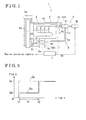
- Fig. 1 is a schematic view of a cooling system for an engine according to a first embodiment disclosed here;
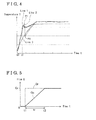
- Fig. 2 is an explanatory graph of a first controlling method for increasing a circulation flow of coolant for a predetermined period of time by an engine control ECU according to the first embodiment
- Fig. 3 shows a flow for a cooling control when warming-up the engine by the engine control ECU according to the first embodiment
- Fig. 4 is an explanatory graph showing effects when the circulation flow of the coolant is increased for the predetermined period of time by the engine control ECU as shown in Fig. 2 ;
- Fig. 5 is an explanatory graph of a second controlling method for increasing a circulation flow of coolant proportionally to an elapsed time by the engine control ECU according to the first embodiment
- Fig. 6 is an explanatory graph of a third controlling method for increasing a circulation flow of coolant in accordance with characteristics of a first order lag filter by the engine control ECU according to the first embodiment;
- Fig. 7 shows a flow for a cooling control when warming-up the engine by the engine control ECU according to a second embodiment
- Fig. 8 is an explanatory graph showing effects when obtaining a modified water temperature by applying a filtering processing to the temperature of the coolant.
- a cooling system 1 is configured to cool an engine mounted to a vehicle and to heat a vehicle compartment using a heat of a coolant.
- the cooling system 1 includes a water jacket 2, a coolant temperature sensitive sensor portion 3, a heater 4, an electric water pump 5, a circulation water path 6, an engine control ECU 7, a radiation water path 81, a radiator 82, and a thermostat valve 83.
- the water jacket 2 serves as a cooling portion of the engine.
- the water jacket 2 is formed surrounding a cylinder of the engine and a coolant flows inside the water jacket 2.
- the coolant sensitive sensor portion 3, which detects a temperature T of the coolant, is positioned at an outlet port 21 of the water jacket 2.
- the heater 4 serves as a heat exchanging device.
- the heater 4 includes a heater core (i.e., serving as a heat exchanging body) 41 which takes in the heat of the coolant and a control unit 42 controlling an operation of the heater core 41.
- the electric power pump 5 serves as a circulation flow varying device which varies circulation flow Qc by controlling an input electric power.
- a vane pump, or a centrifugal pump, or the like, may be applied as the electric water pump 5.
- An outlet port 51 of the electric water pump 5 is connected to an inlet port 22 of the water jacket 2.
- the circulation water path 6 is configured to allow the coolant to circulate through the water jacket 2, the coolant sensitive sensor portion 3, the heater core 41 of the heater 4, and the electric water pump 5.
- a flowing direction of the coolant is indicated with an arrow F in Fig. 1 .
- the circulation water path 6 includes a first path 61 which connects the coolant sensitive sensor portion 3 and an inlet port 411 of the heater core 41 and a second path 62 which connects an outlet port 412 of the heater core 41 and a confluence portion 63.
- a heat radiation path 81 joins the circulation water path 6 at the confluence portion 63.
- the confluence portion 63 is connected to an inlet port 52 of the electric water pump 5.
- the heat radiation path 81 branches from the first path 61 of the circulation path 6 and is connected to the thermostat valve 83 via the radiator 82.
- the heater core 41 of the heater 4 and the radiator 82 are arranged in parallel to each other with respect to the electric water pump 5.
- the radiator 82 includes an internal path through which the coolant passes to radiate the heat.
- the thermostat valve 83 is configured to automatically adjusting an opening degree thereof in accordance with the temperature of the coolant.
- An outlet port 831 whose opening degree is variable of the thermostat valve 83 opens to the confluence portion 63.
- a temperature sensitive portion of the thermostat valve 83 is positioned within the confluence portion 63.
- the thermostat valve 83 is configured to be closed at a low water temperature during the warming-up of the engine.
- the thermostat valve 83 is configured to automatically open when the water temperature rises in response to the operation of the engine thus to flow the coolant to the heat radiation path 81. Accordingly, the heat is radiated by the radiator 82. Further, a reservoir tank 84 which is connected to the heat radiation path 81 and the radiator 82 is provided to absorb changes in a level of the coolant in response to changes in temperature and to compensate for a shortage of the coolant.
- the engine control ECU 7 is an electronic control unit for controlling an operation of the engine and serves as a controller for adjusting/regulating the circulation flow Qc of the coolant.
- the engine control ECU 7 is configured to receive information of the temperature T of the coolant from the coolant temperature sensitive sensor portion 3 and to receive information of a requested flow Qr necessary for heating the vehicle compartment from the control unit 42 of the heater 4. Further, the engine control ECU 7 controls the input electric power supplied to the electric water pump 5 to regulate the circulation flow Qc.
- the engine control ECU 7 controls the operation of the engine based on operational conditions of the engine in accordance with the temperature T. Control amounts controlled by the engine control ECU 7 includes the engine rotation speed, the fuel injection amount, and the ignition timing.
- the foregoing warming-up operation is defined as a warming-up without coolant circulation.
- the engine control ECU 7 circulates the coolant by controlling the electric water pump 5 to continue the warming-up operation so that an entire system including the circulation path 6 is warmed-up.
- the foregoing warming-up operation is defined as a warming-up with coolant.
- the engine control ECU 7 includes a timer for timing an elapsed time tx from a request time t1 at which the requested flow Qr is requested.
- a horizontal axis indicates a time t
- a vertical axis indicates a flow Q
- a dotted line indicates the requested flow Qr
- a solid line indicates the circulation flow Qc.
- the engine control ECU 7 does not increase the circulation flow Qc to the requested flow Qr immediately at the request time t1 and increases the circulation flow Qc to a reduced flow Qd which is less than the requested flow Qr.
- the circulation flow Qc is increased from the reduced flow Qd to the requested flow Qr at a time t2 at which the elapsed time tx reaches a predetermined period of time tr.
- the engine control ECU 7 increases the circulation flow Qc stepwise as a transitional transaction when increasing the circulation flow Qc to the requested flow Qr.
- the requested flow Qr is equal to or less than a predetermined flow Q0
- the reduced flow Qd, the predetermined period of time tr, and the predetermined flow QO may be defined as fixed amounts, however, preferably, may be defined to be variable in accordance with the temperature T and the requested flow Qr at the timing.
- the reduced flow Qd may be reduced, the predetermined period of time tr is elongated, and the predetermined flow Q0 may be determined to be greater.
- the foregoing settings do not meet the request from the heater 4 and a start of the heater 4 is delayed.
- the appropriate reduced flow Qd, the predetermined period of time tr, and the predetermined flow Q0 which enable to start the heater 4 swiftly while restricting the fluctuation of the temperature T to be equal to or less than a predetermined level are determined so as not to influence the control of the warming-up of the engine.
- Those appropriate values may be obtained by experiments performed by changing various conditions, and may further be memorized as a map in the engine control ECU 7.
- Step S1 when the warming-up of the engine is started at Step S1, whether the control ECU 7 operates the warming-up without coolant circulation or the warming-up with coolant circulation is judged at Step S2.
- Step S8 When the warming-up with coolant circulation is operated, whether the requested flow Qr is requested from the heater 4 is judged at Step S3.
- Step S7 When the requested flow Qr is not requested, the transaction advances to Step S7.
- Step S4 is started and the transaction advances to Step S4 after start timing the elapsed time tx.
- the transaction also advances to Step S4.
- step S4 whether the requested flow Qr exceeds the predetermined flow Q0 is judged at step S4.
- the transaction advances to step S7.
- step S5 whether the elapsed time tx timed by the timer is equal to or greater than the predetermined period of time tr is judged at Step S5.
- the transaction advances to step S8, and the transaction advances to step S6 when the elapsed time tx is less than the predetermined period of time tr. Accordingly, the transaction reaches one of Steps S6 to S8 eventually.
- Step S8 Under the conditions that the warming-up with coolant circulation is operated or when the requested flow Qr exceeds the predetermined flow Q0 and the elapsed time tx is equal to or greater than the predetermined period of time tr, the transaction reaches Step S8.
- the condition that the requested flow Qr exceeds the predetermined flow Q0 and the elapsed time tx is equal to or greater than the predetermined period of time tr corresponds to a situation after the transitional transaction with the reduced flow Qd for the predetermined period of time tr is completed.
- the engine control ECU 7 performs a control for a normal warming-up with coolant circulation. In other words, the engine control ECU 7 controls the circulation flow Qc to immediately respond to changes in the requested flow Qr.
- One cycle of the control is completed at one of Steps S6 to S8, and the transaction returns to Step S2 to repeat the transactions of the control.
- FIG. 4 Effects when the circulation flow Qc is increased for the predetermined period of time based on Fig. 2 are shown in Fig. 4 .
- the horizontal axis in Fig. 4 indicates time t and the vertical axis in Fig. 4 indicates the temperature T of the coolant detected by the coolant sensitive sensor portion 3.
- Fig. 4 shows an example in which the warming-up of the engine starts at a warm-up starting time t0 and a request of the requested flow Qr is received at a request time t1.
- a solid line i.e., hereinafter referred to as line 1 in Fig.
- FIG. 4 shows changes of the temperature T of the coolant when the circulation flow Qc is increased stepwise to the requested flow Qr via the reduced flow Qd from a state of the warming-up without coolant circulation based on Fig. 2 .
- a dotted line i.e., hereinafter referred to as line 2) in Fig. 4 shows changes of the temperature T of the coolant when a known control method for immediately increasing the circulation flow Qc to the requested flow Qr at the request time t1 in the state of warming-up without coolant circulation.
- a double chain dotted line i.e., hereinafter referred to as line 3 in Fig. 4 shows changes of the temperature of the coolant when a known control method for circulating the coolant is applied from the warm-up starting time t0.
- the engine control ECU 7 increases the circulation flow Qc to the reduced flow Qd immediately after the request time t1.
- the coolant positioned at the second path 62 outside the engine at the start of the operation of the engine reaches the coolant sensitive sensor portion 3 after being warmed up by slowly passing through the water jacket 2.
- the fluctuation of the temperature T of the line 1 is assumed to be smaller than the fluctuation at the line 2, stable conditions for the warming-up can be determined, which does not influence the engine.
- the reduced flow Qd for increasing the circulation flow Qc stepwise for the predetermined period of time tr includes one step.
- the circulation flow Qc may be increased stepwise with plural steps.
- other methods may also be applied.
- Figs. 5 and 6 show examples of alternative methods for increasing the circulation flow Qc for the predetermined period of time tr.
- the circulation flow Qc may be increased proportionally to the elapsed time tx by the engine control ECU 7.
- the engine control ECU 7 controls the electric water pump 5 to increase the circulation flow Qc immediately after the request time t1 with a constant inclination so as to reach the requested flow Qr at time t3 after elapsing the predetermined period of time tr.
- Fig. 6 shows another control method for increasing the circulation flow Qc in accordance with characteristics of a first order lag filter by the engine control ECU 7.
- the engine control ECU 7 controls the electric water pump 5 to increase the circulation flow Qc with certain increment amounts when starting to follow the characteristics of the first order lag filter immediately after the request time t1 and to gradually reduce the increment amount to approximate the requested flow Qr.
- the circulation flow Qc and the requested flow Qr do not come to be equal to each other.
- a time during which the circulation flow Qc and the requested flow Qr are assumed to be substantially the same values in other words, a time during which the circulation flow Qc reaches a value within a range by which stable conditions for the warming-up are attained may be defined as the predetermined time.
- a second embodiment for the cooling system for the engine will be explained with reference to Fig. 7 .
- a feedback control is applied for controlling the circulation flow Qc of the coolant.
- Constructions of the cooling system according to the second embodiment are the same to the cooling system 1 according to the first embodiment shown in Fig. 1 .
- a difference of the second embodiment from the first embodiment is a control method of the engine control ECU 7, that is, software. The constructions common to the first embodiment will not be repeated and only the differences of the second embodiment from the first embodiment will be explained hereinafter.
- the engine control ECU 7 compares the requested flow Qr of the heater 4 to the circulation flow Qc at the time at Step S12.
- the transaction advances to Step S17 to control the electric water pump 5 to maintain the circulation flow Qc.
- the transaction advances to Step S13 to compare a fluctuation ⁇ T of the temperature T of the coolant detected by the coolant sensitive sensor portion 3 to an allowable upper limit value ⁇ TU.
- the fluctuation ⁇ T is assumed to be excessive exceeding the allowable upper limit value ⁇ TU, the transaction advances to Step S15 to control the electric water pump 5 to reduce the circulation flow Qc. Accordingly, the fluctuation ⁇ T of the temperature T is restrained.
- Step S13 When the fluctuation ⁇ T is equal to or less than the allowable upper limit value ⁇ TU at Step S13, the transaction advances to Step S14 to compare the fluctuation ⁇ T of the temperature T to an allowable lower limit value ⁇ TL which is smaller than the allowable upper limit value ⁇ TU (i.e., ⁇ TL ⁇ ⁇ TU).
- Step S16 When the fluctuation ⁇ T is assumed to be excessively small to be less than the allowable lower limit value ⁇ TL, the transaction advances to Step S16 to control the electric water pump 5 to increase the circulation flow Qc. Accordingly, the cooling system 1 is responsive to the request from the heater 4 quickly.
- Step S17 when the fluctuation ⁇ T is equal to or higher than the allowable upper limit value ⁇ TU, the transaction advances to Step S17 because the fluctuation ⁇ T of the temperature T is appropriately maintained to control the electric water pump 5 to maintain the circulation flow Qc. Because one cycle of the control is completed by one of Steps S15 to S17, the transaction returns to Step S12 to repeat the transactions of the control.
- the fluctuation ⁇ T of the temperature T of the coolant is securely controlled to be within the range between the allowable upper limit value ⁇ TU and the allowable lower limit value ⁇ TL, which do not influence the control of the warming-up of the engine.
- the cooling system 1 is responsive to the request from the heater 4 by swiftly increasing the circulation flow Qc within an allowable range.
- a third embodiment of the cooling system for the engine will be explained with reference to Fig. 8 as follows.
- the temperature T to be detected is modified.
- Constructions of the cooling system according to the third embodiment are the same as the cooling system 1 according to the first embodiment shown in Fig. 1 .
- a difference of the third embodiment compared to the first and second embodiments is a control method of the engine control ECU 7, that is, software. The constructions common to the first embodiment will not be repeated and only the differences of the third embodiment from the first and second embodiments will be explained hereinafter.
- the engine control ECU 7 controls the electric water pump 5 to increase the circulation flow Qc to the requested flow Qr immediately when receiving the request of the requested flow Qr from the heater 4 during the warming-up without coolant circulation. Thereafter, the temperature T of the coolant detected by the coolant sensitive sensor portion 3 is filtered to determine conditions for warming-up the engine in accordance with a gradually changing amended coolant temperature TA of the coolant which is obtained by the filtering.
- FIG. 8 Effects of obtaining the amended temperature TA of the coolant by filtering the temperature T of the coolant according to the third embodiment are shown in Fig. 8 .
- Horizontal axes in Fig. 8 indicate time t.
- An upper portion of the graph in Fig. 8 shows changes in the circulation flow Qc, and a lower portion of the graph in Fig. 8 shows changes in the temperature T of the coolant and the amended temperature TA of the coolant.
- the request of the requested flow Qr is received at a request time t1, and the requested flow Qr returns to zero (0) at time t4.
- the engine control ECU 7 controls the electric water pump 5 so that the circulation flow Qc immediately follows the requested flow Qr in response to the changes in the requested flow Qr.
- the engine control ECU 7 obtains the amended temperature TA of the coolant (i.e., indicated with a dotted line) by filtering the detected temperature T (i.e., indicated with a solid line).
- the engine control ECU 7 determines conditions for the warming-up in accordance with the amended temperature TA of the coolant which gradually changes after the request time t1.
- the control of the warming-up is not influenced. Further, by immediately increasing the circulation flow Qc to the requested flow Qr at the request time t1, the cooling system 1 is responsive to the request from the heater 4.
- the electric water pump 5 is applied to the embodiments of the cooling system 1.
- a mechanical water pump or a flow regulating valve, or the like may also be applied.
- an electrically controllable needle valve may be applied as the flow regulating valve to be controlled by the engine control ECU 7.
- the circulation flow Qc can be regulated as desired within a range of an output amount of the mechanical water pump which is defined depending on a rotation speed of the engine.
- a bypass water path which allows the coolant to return immediately from the outlet port 21 of the water jacket 2 to the confluence portion 63, may be provided to enhance the efficiency of the warming-up of the engine.
- the constructions of the embodiments are applicable to other structures.
- the heater 4 serving as the heat exchanging device is provided.
- a defroster may be applied as the heat exchanging device instead of the heater and the defroster may be applied as a defroster 4 in Fig. 1 .
Landscapes
- Engineering & Computer Science (AREA)
- Chemical & Material Sciences (AREA)
- Combustion & Propulsion (AREA)
- Mechanical Engineering (AREA)
- General Engineering & Computer Science (AREA)
- Combined Controls Of Internal Combustion Engines (AREA)
- Air-Conditioning For Vehicles (AREA)
- Control Of Temperature (AREA)
Applications Claiming Priority (1)
| Application Number | Priority Date | Filing Date | Title |
|---|---|---|---|
| JP2009266408A JP4860746B2 (ja) | 2009-11-24 | 2009-11-24 | エンジンの冷却装置 |
Publications (3)
| Publication Number | Publication Date |
|---|---|
| EP2333268A2 true EP2333268A2 (de) | 2011-06-15 |
| EP2333268A3 EP2333268A3 (de) | 2012-01-04 |
| EP2333268B1 EP2333268B1 (de) | 2013-05-01 |
Family
ID=43736042
Family Applications (1)
| Application Number | Title | Priority Date | Filing Date |
|---|---|---|---|
| EP10191902.5A Not-in-force EP2333268B1 (de) | 2009-11-24 | 2010-11-19 | Kühlsystem für einen Motor |
Country Status (4)
| Country | Link |
|---|---|
| US (1) | US20110120394A1 (de) |
| EP (1) | EP2333268B1 (de) |
| JP (1) | JP4860746B2 (de) |
| CN (1) | CN102072007A (de) |
Cited By (3)
| Publication number | Priority date | Publication date | Assignee | Title |
|---|---|---|---|---|
| FR3002281A1 (fr) * | 2013-02-19 | 2014-08-22 | Peugeot Citroen Automobiles Sa | Circuit de refroidissement pilote pour moteur thermique de vehicule automobile et moteur thermique de vehicule automobile correspondant |
| EP3088715A1 (de) * | 2015-04-28 | 2016-11-02 | Toyota Jidosha Kabushiki Kaisha | Steuerungssystem für einen verbrennungsmotor |
| EP3369906A1 (de) * | 2017-03-02 | 2018-09-05 | Toyota Jidosha Kabushiki Kaisha | Kühlmittelkreislaufsystem für einen fahrzeugmontierten verbrennungsmotor |
Families Citing this family (21)
| Publication number | Priority date | Publication date | Assignee | Title |
|---|---|---|---|---|
| WO2013003950A1 (en) * | 2011-07-04 | 2013-01-10 | Litens Automotive Partnership | System and method for pumping coolant through an internal combustion engine for a vehicle |
| JP5892469B2 (ja) * | 2012-03-09 | 2016-03-23 | スズキ株式会社 | 車両用内燃機関の冷却装置 |
| US9562534B2 (en) | 2012-05-04 | 2017-02-07 | Ghsp, Inc. | In-line dual pump and motor with control device |
| US9115720B2 (en) | 2012-05-04 | 2015-08-25 | Ghsp, Inc. | Dual pump and motor with control device |
| US9869232B2 (en) * | 2012-06-27 | 2018-01-16 | Ford Global Technologies, Llc | Variable-speed pump control for engine coolant system with variable restriction |
| US9752590B2 (en) | 2013-03-13 | 2017-09-05 | Ghsp, Inc. | Two pump design with coplanar interface surface |
| US8960134B1 (en) * | 2013-07-31 | 2015-02-24 | GM Global Technology Operations LLC | Targeted cooling with individualized feeding ports to cylinders |
| US11015585B2 (en) | 2014-05-01 | 2021-05-25 | Ghsp, Inc. | Submersible pump assembly |
| US10087927B2 (en) | 2014-05-01 | 2018-10-02 | Ghsp, Inc. | Electric motor with flux collector |
| US9869223B2 (en) * | 2014-08-22 | 2018-01-16 | GM Global Technology Operations LLC | Flexible engine metal warming system and method for an internal combustion engine |
| US9964022B2 (en) * | 2015-03-26 | 2018-05-08 | GM Global Technology Operations LLC | Engine off cooling strategy |
| CN106150824A (zh) * | 2015-03-30 | 2016-11-23 | 长城汽车股份有限公司 | 发动机的暖机控制方法和装置 |
| JP6701715B2 (ja) * | 2015-12-21 | 2020-05-27 | 株式会社デンソー | 車両の空調装置 |
| JP6790901B2 (ja) * | 2017-02-17 | 2020-11-25 | スズキ株式会社 | 内燃機関の冷却装置 |
| CN107271163B (zh) * | 2017-06-16 | 2018-09-28 | 英特尔产品(成都)有限公司 | 用于冷却器的本地诊断和验证系统及方法 |
| US10119454B1 (en) * | 2017-11-13 | 2018-11-06 | GM Global Technology Operations LLC | Flow model inversion using a multi-dimensional search algorithm |
| JP6848828B2 (ja) | 2017-11-24 | 2021-03-24 | トヨタ自動車株式会社 | 回転電機の冷却装置 |
| CN109281747A (zh) * | 2018-11-09 | 2019-01-29 | 东风商用车有限公司 | 一种带温控装置的冷却液适配单元 |
| CN112829567B (zh) * | 2019-11-25 | 2022-06-17 | 江铃汽车股份有限公司 | 一种电动汽车冷却系统控制方法 |
| CN114837792A (zh) | 2021-03-10 | 2022-08-02 | 美普盛(上海)汽车零部件有限公司 | 一种带膨胀补偿密封件的电动冷却液泵 |
| CN113775405A (zh) * | 2021-11-11 | 2021-12-10 | 潍坊力创电子科技有限公司 | 一种可调水泵功耗的发动机冷却系统及其控制方法 |
Citations (1)
| Publication number | Priority date | Publication date | Assignee | Title |
|---|---|---|---|---|
| JP2008303775A (ja) | 2007-06-07 | 2008-12-18 | Nippon Soken Inc | 内燃機関の冷却装置 |
Family Cites Families (15)
| Publication number | Priority date | Publication date | Assignee | Title |
|---|---|---|---|---|
| JPS58124017A (ja) * | 1982-01-19 | 1983-07-23 | Nippon Denso Co Ltd | エンジンの冷却系制御装置 |
| DE3810174C2 (de) * | 1988-03-25 | 1996-09-19 | Hella Kg Hueck & Co | Einrichtung zur Regelung der Kühlmitteltemperatur einer Brennkraftmaschine, insbesondere in Kraftfahrzeugen |
| DE4109498B4 (de) * | 1991-03-22 | 2006-09-14 | Robert Bosch Gmbh | Vorrichtung und Verfahren zur Regelung der Temperatur einer Brennkraftmaschine |
| JP3513919B2 (ja) * | 1994-06-30 | 2004-03-31 | いすゞ自動車株式会社 | 内燃機関のウォーターポンプ制御装置 |
| DE19508102C1 (de) * | 1995-03-08 | 1996-07-25 | Volkswagen Ag | Verfahren zur Regelung eines Kühlkreislaufes eines Verbrennungskraftmotors, insbesondere für Kraftfahrzeuge |
| JP2000303841A (ja) * | 1999-04-20 | 2000-10-31 | Honda Motor Co Ltd | エンジンの冷却制御装置 |
| EP1239129B1 (de) * | 2001-03-06 | 2007-10-31 | Calsonic Kansei Corporation | Kühlungssystem für eine wassergekühlte Brennkraftmaschine und Steuerverfahren dafür |
| DE10154091A1 (de) * | 2001-11-02 | 2003-05-15 | Bayerische Motoren Werke Ag | Verfahren und Vorrichtung zur Regelung eines Kühlsystems einer Verbrennungskraftmaschine |
| US6745726B2 (en) * | 2002-07-29 | 2004-06-08 | Visteon Global Technologies, Inc. | Engine thermal management for internal combustion engine |
| JP3932277B2 (ja) * | 2002-10-18 | 2007-06-20 | 日本サーモスタット株式会社 | 電子制御サーモスタットの制御方法 |
| JP2004316472A (ja) * | 2003-04-14 | 2004-11-11 | Nissan Motor Co Ltd | 内燃機関の冷却装置 |
| JP2004360509A (ja) * | 2003-06-03 | 2004-12-24 | Nissan Motor Co Ltd | 内燃機関の冷却装置 |
| DE10332947A1 (de) * | 2003-07-19 | 2005-02-03 | Daimlerchrysler Ag | Brennkraftmaschine für ein Kraftfahrzeug |
| JP4529709B2 (ja) * | 2005-02-01 | 2010-08-25 | マツダ株式会社 | エンジンの冷却装置 |
| JP2007016718A (ja) * | 2005-07-08 | 2007-01-25 | Toyota Motor Corp | エンジンの冷却装置 |
-
2009
- 2009-11-24 JP JP2009266408A patent/JP4860746B2/ja not_active Expired - Fee Related
-
2010
- 2010-11-19 EP EP10191902.5A patent/EP2333268B1/de not_active Not-in-force
- 2010-11-23 US US12/952,827 patent/US20110120394A1/en not_active Abandoned
- 2010-11-24 CN CN201010566219XA patent/CN102072007A/zh active Pending
Patent Citations (1)
| Publication number | Priority date | Publication date | Assignee | Title |
|---|---|---|---|---|
| JP2008303775A (ja) | 2007-06-07 | 2008-12-18 | Nippon Soken Inc | 内燃機関の冷却装置 |
Cited By (4)
| Publication number | Priority date | Publication date | Assignee | Title |
|---|---|---|---|---|
| FR3002281A1 (fr) * | 2013-02-19 | 2014-08-22 | Peugeot Citroen Automobiles Sa | Circuit de refroidissement pilote pour moteur thermique de vehicule automobile et moteur thermique de vehicule automobile correspondant |
| EP3088715A1 (de) * | 2015-04-28 | 2016-11-02 | Toyota Jidosha Kabushiki Kaisha | Steuerungssystem für einen verbrennungsmotor |
| US10280859B2 (en) | 2015-04-28 | 2019-05-07 | Toyota Jidosha Kabushiki Kaisha | Control system for internal combustion engine |
| EP3369906A1 (de) * | 2017-03-02 | 2018-09-05 | Toyota Jidosha Kabushiki Kaisha | Kühlmittelkreislaufsystem für einen fahrzeugmontierten verbrennungsmotor |
Also Published As
| Publication number | Publication date |
|---|---|
| EP2333268B1 (de) | 2013-05-01 |
| JP4860746B2 (ja) | 2012-01-25 |
| CN102072007A (zh) | 2011-05-25 |
| JP2011111910A (ja) | 2011-06-09 |
| US20110120394A1 (en) | 2011-05-26 |
| EP2333268A3 (de) | 2012-01-04 |
Similar Documents
| Publication | Publication Date | Title |
|---|---|---|
| EP2333268B1 (de) | Kühlsystem für einen Motor | |
| JP6241435B2 (ja) | 内燃機関の温度制御装置 | |
| EP2441930B1 (de) | Steuerungsvorrichtung für einen verbrennungsmotor | |
| KR101875620B1 (ko) | 엔진 냉각 시스템과 전자식 서모스탯 제어장치 및 방법 | |
| US9324199B2 (en) | Method and system for controlling an engine cooling system | |
| JP6264443B2 (ja) | 冷却システム制御装置及び冷却システム制御方法 | |
| US9217689B2 (en) | Engine cooling system control | |
| RU2620928C2 (ru) | Способ для системы охлаждения двигателя (варианты) и система транспортного средства | |
| US9982587B2 (en) | Cooling system for engine | |
| JP5618945B2 (ja) | 内燃機関の冷却制御装置 | |
| US10647177B2 (en) | Control apparatus of heat exchanging system | |
| KR20200014539A (ko) | 차량용 냉각 시스템의 제어방법 | |
| JP2004353602A (ja) | 電子制御サーモスタットの制御方法 | |
| US10190479B2 (en) | Cooling system with a coolant pump for an internal combustion engine | |
| US6772716B2 (en) | Method and system for controlling a cooling system of an internal-combustion engine | |
| JP6447721B2 (ja) | 車両用空調システム | |
| KR102041920B1 (ko) | 터보차져 냉각 시스템 및 그 방법 | |
| JP2573870B2 (ja) | 内燃機関の冷却水流量制御装置 | |
| JP2005188327A (ja) | 車両冷却装置 | |
| GB2581479A (en) | Engine cooling circuit and method of cooling an engine | |
| JP2003269167A (ja) | エンジンの冷却装置 | |
| JP2012102628A (ja) | 内燃機関の冷却システム |
Legal Events
| Date | Code | Title | Description |
|---|---|---|---|
| PUAI | Public reference made under article 153(3) epc to a published international application that has entered the european phase |
Free format text: ORIGINAL CODE: 0009012 |
|
| AK | Designated contracting states |
Kind code of ref document: A2 Designated state(s): AL AT BE BG CH CY CZ DE DK EE ES FI FR GB GR HR HU IE IS IT LI LT LU LV MC MK MT NL NO PL PT RO RS SE SI SK SM TR |
|
| AX | Request for extension of the european patent |
Extension state: BA ME |
|
| PUAL | Search report despatched |
Free format text: ORIGINAL CODE: 0009013 |
|
| AK | Designated contracting states |
Kind code of ref document: A3 Designated state(s): AL AT BE BG CH CY CZ DE DK EE ES FI FR GB GR HR HU IE IS IT LI LT LU LV MC MK MT NL NO PL PT RO RS SE SI SK SM TR |
|
| AX | Request for extension of the european patent |
Extension state: BA ME |
|
| RIC1 | Information provided on ipc code assigned before grant |
Ipc: F01P 7/16 20060101AFI20111201BHEP |
|
| 17P | Request for examination filed |
Effective date: 20120703 |
|
| GRAP | Despatch of communication of intention to grant a patent |
Free format text: ORIGINAL CODE: EPIDOSNIGR1 |
|
| GRAS | Grant fee paid |
Free format text: ORIGINAL CODE: EPIDOSNIGR3 |
|
| GRAA | (expected) grant |
Free format text: ORIGINAL CODE: 0009210 |
|
| AK | Designated contracting states |
Kind code of ref document: B1 Designated state(s): AL AT BE BG CH CY CZ DE DK EE ES FI FR GB GR HR HU IE IS IT LI LT LU LV MC MK MT NL NO PL PT RO RS SE SI SK SM TR |
|
| REG | Reference to a national code |
Ref country code: GB Ref legal event code: FG4D |
|
| REG | Reference to a national code |
Ref country code: AT Ref legal event code: REF Ref document number: 610096 Country of ref document: AT Kind code of ref document: T Effective date: 20130515 Ref country code: CH Ref legal event code: EP |
|
| REG | Reference to a national code |
Ref country code: IE Ref legal event code: FG4D |
|
| REG | Reference to a national code |
Ref country code: DE Ref legal event code: R096 Ref document number: 602010006636 Country of ref document: DE Effective date: 20130627 |
|
| REG | Reference to a national code |
Ref country code: AT Ref legal event code: MK05 Ref document number: 610096 Country of ref document: AT Kind code of ref document: T Effective date: 20130501 |
|
| REG | Reference to a national code |
Ref country code: NL Ref legal event code: VDEP Effective date: 20130501 |
|
| REG | Reference to a national code |
Ref country code: LT Ref legal event code: MG4D |
|
| PG25 | Lapsed in a contracting state [announced via postgrant information from national office to epo] |
Ref country code: IS Free format text: LAPSE BECAUSE OF FAILURE TO SUBMIT A TRANSLATION OF THE DESCRIPTION OR TO PAY THE FEE WITHIN THE PRESCRIBED TIME-LIMIT Effective date: 20130901 Ref country code: SI Free format text: LAPSE BECAUSE OF FAILURE TO SUBMIT A TRANSLATION OF THE DESCRIPTION OR TO PAY THE FEE WITHIN THE PRESCRIBED TIME-LIMIT Effective date: 20130501 Ref country code: PT Free format text: LAPSE BECAUSE OF FAILURE TO SUBMIT A TRANSLATION OF THE DESCRIPTION OR TO PAY THE FEE WITHIN THE PRESCRIBED TIME-LIMIT Effective date: 20130902 Ref country code: ES Free format text: LAPSE BECAUSE OF FAILURE TO SUBMIT A TRANSLATION OF THE DESCRIPTION OR TO PAY THE FEE WITHIN THE PRESCRIBED TIME-LIMIT Effective date: 20130812 Ref country code: SE Free format text: LAPSE BECAUSE OF FAILURE TO SUBMIT A TRANSLATION OF THE DESCRIPTION OR TO PAY THE FEE WITHIN THE PRESCRIBED TIME-LIMIT Effective date: 20130501 Ref country code: GR Free format text: LAPSE BECAUSE OF FAILURE TO SUBMIT A TRANSLATION OF THE DESCRIPTION OR TO PAY THE FEE WITHIN THE PRESCRIBED TIME-LIMIT Effective date: 20130802 Ref country code: LT Free format text: LAPSE BECAUSE OF FAILURE TO SUBMIT A TRANSLATION OF THE DESCRIPTION OR TO PAY THE FEE WITHIN THE PRESCRIBED TIME-LIMIT Effective date: 20130501 Ref country code: AT Free format text: LAPSE BECAUSE OF FAILURE TO SUBMIT A TRANSLATION OF THE DESCRIPTION OR TO PAY THE FEE WITHIN THE PRESCRIBED TIME-LIMIT Effective date: 20130501 Ref country code: NO Free format text: LAPSE BECAUSE OF FAILURE TO SUBMIT A TRANSLATION OF THE DESCRIPTION OR TO PAY THE FEE WITHIN THE PRESCRIBED TIME-LIMIT Effective date: 20130801 Ref country code: FI Free format text: LAPSE BECAUSE OF FAILURE TO SUBMIT A TRANSLATION OF THE DESCRIPTION OR TO PAY THE FEE WITHIN THE PRESCRIBED TIME-LIMIT Effective date: 20130501 |
|
| PG25 | Lapsed in a contracting state [announced via postgrant information from national office to epo] |
Ref country code: BG Free format text: LAPSE BECAUSE OF FAILURE TO SUBMIT A TRANSLATION OF THE DESCRIPTION OR TO PAY THE FEE WITHIN THE PRESCRIBED TIME-LIMIT Effective date: 20130801 Ref country code: PL Free format text: LAPSE BECAUSE OF FAILURE TO SUBMIT A TRANSLATION OF THE DESCRIPTION OR TO PAY THE FEE WITHIN THE PRESCRIBED TIME-LIMIT Effective date: 20130501 Ref country code: HR Free format text: LAPSE BECAUSE OF FAILURE TO SUBMIT A TRANSLATION OF THE DESCRIPTION OR TO PAY THE FEE WITHIN THE PRESCRIBED TIME-LIMIT Effective date: 20130501 Ref country code: RS Free format text: LAPSE BECAUSE OF FAILURE TO SUBMIT A TRANSLATION OF THE DESCRIPTION OR TO PAY THE FEE WITHIN THE PRESCRIBED TIME-LIMIT Effective date: 20130501 Ref country code: CY Free format text: LAPSE BECAUSE OF FAILURE TO SUBMIT A TRANSLATION OF THE DESCRIPTION OR TO PAY THE FEE WITHIN THE PRESCRIBED TIME-LIMIT Effective date: 20130501 |
|
| PG25 | Lapsed in a contracting state [announced via postgrant information from national office to epo] |
Ref country code: LV Free format text: LAPSE BECAUSE OF FAILURE TO SUBMIT A TRANSLATION OF THE DESCRIPTION OR TO PAY THE FEE WITHIN THE PRESCRIBED TIME-LIMIT Effective date: 20130501 |
|
| PG25 | Lapsed in a contracting state [announced via postgrant information from national office to epo] |
Ref country code: DK Free format text: LAPSE BECAUSE OF FAILURE TO SUBMIT A TRANSLATION OF THE DESCRIPTION OR TO PAY THE FEE WITHIN THE PRESCRIBED TIME-LIMIT Effective date: 20130501 Ref country code: SK Free format text: LAPSE BECAUSE OF FAILURE TO SUBMIT A TRANSLATION OF THE DESCRIPTION OR TO PAY THE FEE WITHIN THE PRESCRIBED TIME-LIMIT Effective date: 20130501 Ref country code: EE Free format text: LAPSE BECAUSE OF FAILURE TO SUBMIT A TRANSLATION OF THE DESCRIPTION OR TO PAY THE FEE WITHIN THE PRESCRIBED TIME-LIMIT Effective date: 20130501 Ref country code: CZ Free format text: LAPSE BECAUSE OF FAILURE TO SUBMIT A TRANSLATION OF THE DESCRIPTION OR TO PAY THE FEE WITHIN THE PRESCRIBED TIME-LIMIT Effective date: 20130501 Ref country code: BE Free format text: LAPSE BECAUSE OF FAILURE TO SUBMIT A TRANSLATION OF THE DESCRIPTION OR TO PAY THE FEE WITHIN THE PRESCRIBED TIME-LIMIT Effective date: 20130501 |
|
| PG25 | Lapsed in a contracting state [announced via postgrant information from national office to epo] |
Ref country code: IT Free format text: LAPSE BECAUSE OF FAILURE TO SUBMIT A TRANSLATION OF THE DESCRIPTION OR TO PAY THE FEE WITHIN THE PRESCRIBED TIME-LIMIT Effective date: 20130501 Ref country code: NL Free format text: LAPSE BECAUSE OF FAILURE TO SUBMIT A TRANSLATION OF THE DESCRIPTION OR TO PAY THE FEE WITHIN THE PRESCRIBED TIME-LIMIT Effective date: 20130501 Ref country code: RO Free format text: LAPSE BECAUSE OF FAILURE TO SUBMIT A TRANSLATION OF THE DESCRIPTION OR TO PAY THE FEE WITHIN THE PRESCRIBED TIME-LIMIT Effective date: 20130501 |
|
| PLBE | No opposition filed within time limit |
Free format text: ORIGINAL CODE: 0009261 |
|
| STAA | Information on the status of an ep patent application or granted ep patent |
Free format text: STATUS: NO OPPOSITION FILED WITHIN TIME LIMIT |
|
| 26N | No opposition filed |
Effective date: 20140204 |
|
| REG | Reference to a national code |
Ref country code: DE Ref legal event code: R097 Ref document number: 602010006636 Country of ref document: DE Effective date: 20140204 |
|
| PG25 | Lapsed in a contracting state [announced via postgrant information from national office to epo] |
Ref country code: MC Free format text: LAPSE BECAUSE OF FAILURE TO SUBMIT A TRANSLATION OF THE DESCRIPTION OR TO PAY THE FEE WITHIN THE PRESCRIBED TIME-LIMIT Effective date: 20130501 |
|
| REG | Reference to a national code |
Ref country code: IE Ref legal event code: MM4A |
|
| PG25 | Lapsed in a contracting state [announced via postgrant information from national office to epo] |
Ref country code: IE Free format text: LAPSE BECAUSE OF NON-PAYMENT OF DUE FEES Effective date: 20131119 |
|
| PG25 | Lapsed in a contracting state [announced via postgrant information from national office to epo] |
Ref country code: SM Free format text: LAPSE BECAUSE OF FAILURE TO SUBMIT A TRANSLATION OF THE DESCRIPTION OR TO PAY THE FEE WITHIN THE PRESCRIBED TIME-LIMIT Effective date: 20130501 |
|
| PG25 | Lapsed in a contracting state [announced via postgrant information from national office to epo] |
Ref country code: TR Free format text: LAPSE BECAUSE OF FAILURE TO SUBMIT A TRANSLATION OF THE DESCRIPTION OR TO PAY THE FEE WITHIN THE PRESCRIBED TIME-LIMIT Effective date: 20130501 |
|
| REG | Reference to a national code |
Ref country code: CH Ref legal event code: PL |
|
| GBPC | Gb: european patent ceased through non-payment of renewal fee |
Effective date: 20141119 |
|
| PG25 | Lapsed in a contracting state [announced via postgrant information from national office to epo] |
Ref country code: CH Free format text: LAPSE BECAUSE OF NON-PAYMENT OF DUE FEES Effective date: 20141130 Ref country code: HU Free format text: LAPSE BECAUSE OF FAILURE TO SUBMIT A TRANSLATION OF THE DESCRIPTION OR TO PAY THE FEE WITHIN THE PRESCRIBED TIME-LIMIT; INVALID AB INITIO Effective date: 20101119 Ref country code: LU Free format text: LAPSE BECAUSE OF NON-PAYMENT OF DUE FEES Effective date: 20131119 Ref country code: MK Free format text: LAPSE BECAUSE OF FAILURE TO SUBMIT A TRANSLATION OF THE DESCRIPTION OR TO PAY THE FEE WITHIN THE PRESCRIBED TIME-LIMIT Effective date: 20130501 Ref country code: LI Free format text: LAPSE BECAUSE OF NON-PAYMENT OF DUE FEES Effective date: 20141130 |
|
| PG25 | Lapsed in a contracting state [announced via postgrant information from national office to epo] |
Ref country code: MT Free format text: LAPSE BECAUSE OF FAILURE TO SUBMIT A TRANSLATION OF THE DESCRIPTION OR TO PAY THE FEE WITHIN THE PRESCRIBED TIME-LIMIT Effective date: 20130501 |
|
| REG | Reference to a national code |
Ref country code: FR Ref legal event code: PLFP Year of fee payment: 6 |
|
| PG25 | Lapsed in a contracting state [announced via postgrant information from national office to epo] |
Ref country code: GB Free format text: LAPSE BECAUSE OF NON-PAYMENT OF DUE FEES Effective date: 20141119 |
|
| REG | Reference to a national code |
Ref country code: FR Ref legal event code: PLFP Year of fee payment: 7 |
|
| REG | Reference to a national code |
Ref country code: FR Ref legal event code: PLFP Year of fee payment: 8 |
|
| REG | Reference to a national code |
Ref country code: FR Ref legal event code: PLFP Year of fee payment: 9 |
|
| PG25 | Lapsed in a contracting state [announced via postgrant information from national office to epo] |
Ref country code: AL Free format text: LAPSE BECAUSE OF FAILURE TO SUBMIT A TRANSLATION OF THE DESCRIPTION OR TO PAY THE FEE WITHIN THE PRESCRIBED TIME-LIMIT Effective date: 20130501 |
|
| PGFP | Annual fee paid to national office [announced via postgrant information from national office to epo] |
Ref country code: DE Payment date: 20191105 Year of fee payment: 10 |
|
| PGFP | Annual fee paid to national office [announced via postgrant information from national office to epo] |
Ref country code: FR Payment date: 20191014 Year of fee payment: 10 |
|
| REG | Reference to a national code |
Ref country code: DE Ref legal event code: R119 Ref document number: 602010006636 Country of ref document: DE |
|
| PG25 | Lapsed in a contracting state [announced via postgrant information from national office to epo] |
Ref country code: FR Free format text: LAPSE BECAUSE OF NON-PAYMENT OF DUE FEES Effective date: 20201130 |
|
| PG25 | Lapsed in a contracting state [announced via postgrant information from national office to epo] |
Ref country code: DE Free format text: LAPSE BECAUSE OF NON-PAYMENT OF DUE FEES Effective date: 20210601 |