EP2340123B1 - Cuve de réaction apte à détecter des agglutinats érythrocytaires chargées d'anticorps, procédé pour la détection des agglutinats érythrocytaires chargées d'anticorps et coffret d'éléments - Google Patents
Cuve de réaction apte à détecter des agglutinats érythrocytaires chargées d'anticorps, procédé pour la détection des agglutinats érythrocytaires chargées d'anticorps et coffret d'éléments Download PDFInfo
- Publication number
- EP2340123B1 EP2340123B1 EP08801905.4A EP08801905A EP2340123B1 EP 2340123 B1 EP2340123 B1 EP 2340123B1 EP 08801905 A EP08801905 A EP 08801905A EP 2340123 B1 EP2340123 B1 EP 2340123B1
- Authority
- EP
- European Patent Office
- Prior art keywords
- antibodies
- erythrocytes
- antibody
- compartment
- loaded
- Prior art date
- Legal status (The legal status is an assumption and is not a legal conclusion. Google has not performed a legal analysis and makes no representation as to the accuracy of the status listed.)
- Active
Links
Images



Classifications
-
- G—PHYSICS
- G01—MEASURING; TESTING
- G01N—INVESTIGATING OR ANALYSING MATERIALS BY DETERMINING THEIR CHEMICAL OR PHYSICAL PROPERTIES
- G01N33/00—Investigating or analysing materials by specific methods not covered by groups G01N1/00 - G01N31/00
- G01N33/48—Biological material, e.g. blood, urine; Haemocytometers
- G01N33/50—Chemical analysis of biological material, e.g. blood, urine; Testing involving biospecific ligand binding methods; Immunological testing
- G01N33/53—Immunoassay; Biospecific binding assay; Materials therefor
- G01N33/5302—Apparatus specially adapted for immunological test procedures
- G01N33/5304—Reaction vessels, e.g. agglutination plates
-
- B—PERFORMING OPERATIONS; TRANSPORTING
- B01—PHYSICAL OR CHEMICAL PROCESSES OR APPARATUS IN GENERAL
- B01L—CHEMICAL OR PHYSICAL LABORATORY APPARATUS FOR GENERAL USE
- B01L3/00—Containers or dishes for laboratory use, e.g. laboratory glassware; Droppers
- B01L3/50—Containers for the purpose of retaining a material to be analysed, e.g. test tubes
- B01L3/502—Containers for the purpose of retaining a material to be analysed, e.g. test tubes with fluid transport, e.g. in multi-compartment structures
- B01L3/5021—Test tubes specially adapted for centrifugation purposes
-
- B—PERFORMING OPERATIONS; TRANSPORTING
- B01—PHYSICAL OR CHEMICAL PROCESSES OR APPARATUS IN GENERAL
- B01L—CHEMICAL OR PHYSICAL LABORATORY APPARATUS FOR GENERAL USE
- B01L3/00—Containers or dishes for laboratory use, e.g. laboratory glassware; Droppers
- B01L3/50—Containers for the purpose of retaining a material to be analysed, e.g. test tubes
- B01L3/502—Containers for the purpose of retaining a material to be analysed, e.g. test tubes with fluid transport, e.g. in multi-compartment structures
- B01L3/5025—Containers for the purpose of retaining a material to be analysed, e.g. test tubes with fluid transport, e.g. in multi-compartment structures for parallel transport of multiple samples
-
- B—PERFORMING OPERATIONS; TRANSPORTING
- B01—PHYSICAL OR CHEMICAL PROCESSES OR APPARATUS IN GENERAL
- B01L—CHEMICAL OR PHYSICAL LABORATORY APPARATUS FOR GENERAL USE
- B01L3/00—Containers or dishes for laboratory use, e.g. laboratory glassware; Droppers
- B01L3/50—Containers for the purpose of retaining a material to be analysed, e.g. test tubes
- B01L3/508—Rigid containers without fluid transport within
- B01L3/5082—Test tubes per se
-
- B—PERFORMING OPERATIONS; TRANSPORTING
- B01—PHYSICAL OR CHEMICAL PROCESSES OR APPARATUS IN GENERAL
- B01L—CHEMICAL OR PHYSICAL LABORATORY APPARATUS FOR GENERAL USE
- B01L2300/00—Additional constructional details
- B01L2300/08—Geometry, shape and general structure
- B01L2300/0809—Geometry, shape and general structure rectangular shaped
- B01L2300/0829—Multi-well plates; Microtitration plates
-
- B—PERFORMING OPERATIONS; TRANSPORTING
- B01—PHYSICAL OR CHEMICAL PROCESSES OR APPARATUS IN GENERAL
- B01L—CHEMICAL OR PHYSICAL LABORATORY APPARATUS FOR GENERAL USE
- B01L2400/00—Moving or stopping fluids
- B01L2400/04—Moving fluids with specific forces or mechanical means
- B01L2400/0403—Moving fluids with specific forces or mechanical means specific forces
- B01L2400/0409—Moving fluids with specific forces or mechanical means specific forces centrifugal forces
Definitions
- the present invention relates to a micro column capable of detecting carrier-bound analyte complexes, and, more particularly, erythrocyte-bound antibody complexes or agglutinates. Further, the present invention relates to a method for detecting carrier-bound analyte complexes, and, particularly, erythrocyte-bound antibody complexes, comprising the use of the present micro column. Furthermore, the present invention relates to a kit of parts comprising the present micro column for use in the present method. The present micro column, method, and kit of parts are preferably used in the field of blood group serology, and, especially, blood group assays and antibody detection.
- a major objective of blood group serology is to obtain compatible red blood cell or erythrocyte preparations from a donor for blood transfusion of an acceptor.
- assays are routinely performed such as blood group typing, antibody screening and identification, and (blood) compatibility assays by performing cross matches.
- the majority of these assays are based on the principle of agglutination, i.e., the formation of carrier-bound analyte complexes, such as erythrocyte-bound antibodies complexes.
- carrier-bound analyte complexes such as erythrocyte-bound antibodies complexes.
- Such complexes clearly microscopically visible or, in some cases, already visible by the naked eye, can comprise from about 50 up to thousands of carrier-bound analytes, such as erythrocyte-bound antibodies.
- specific antigenic determinants on the cell membrane of red blood cells, or erythrocytes are characterizing the so-called blood group of said mammal.
- the information for expressing blood group antigens is generally genetically determined at the genomic level.
- a well known, and generally used, blood group system is the so-called A, B, AB, and O system (AB0-system), discovered in 1900 by Karl Landsteiner.
- A, B, AB, and O Different blood groups in this system are designated A, B, AB, and O.
- red blood cell blood groups In addition to the ABO-system, more than 400 red blood cell blood groups are known, the majority of these being clustered in blood group systems with diverging clinical significance. Specific antibodies to these other blood group systems can be formed after immunization with the corresponding blood group antigen, for example during blood transfusion or pregnancy, and may cause problems during a blood transfusion or pregnancy thereafter.
- the ABO-system is the most important blood group system. This because every individual, characterized by a specific blood group, has antibodies in his serum against the blood group(s) that are not present. For example, an individual characterized as blood group A, will have anti-B antibodies in his serum, and vice versa.
- the IgM antibodies are so-called “naturally occurring” antibodies and are in general strong IgM type antibodies.
- the IgM antibodies are capable of causing a direct, i.e., without a bridging reagent, such as an anti-IgM antibody, complex formation or agglutination of, for example, erythrocytes exposing a blood group antigen against which the antibody is directed.
- hemolytic transfusion reactions Blood transfusion reactions in an individual (recipient) induced by allo-antibodies, raised against foreign erythrocytes or red blood cells are called hemolytic transfusion reactions. This because they are generally accompanied by a strongly accelerated, and often deadly, breakdown of erythrocytes. Therefore, it of major importance to prevent hemolytic transfusion reactions by careful serological examination before a blood transfusion is performed. For this, several types of tests are generally carried out.
- both donor and recipient are typed for the AB0-blood group system and Rhesus D antigen. These must be identical, or compatible, for both the donor and recipient.
- the AB0-blood group found on the red blood cells can, for example, be confirmed by performing a so-called reverse AB0 typing test on the antibodies present in the serum.
- a screening of the serum of the recipient is performed for the presence of red blood cell antibodies directed against all other blood groups beside the AB0-system. If an antibody is found, it must be identified in order to select donor blood which is negative for the corresponding blood group antigen.
- donor red blood cells and recipient serum can be performed to find out whether the donor and the recipient are in deed compatible.
- blood group antibodies are immunoglobulins of the IgG or IgM type.
- the antigen-antibody reaction such as the present carrier-analyte reaction forming carrier-bound analytes, is dependent, amongst others, on ionic binding, hydrogen bridges and hydrophobic effects (displacement of water).
- the strength of the binding between the binding pocket of an antibody and an epitope is designated as "affinity".
- Antibodies which are capable of agglutinating red blood cells under all conditions are designated agglutinins or complete antibodies (in general IgM antibodies).
- Antibodies which bind to (sensitize) red blood cells, but cause no direct agglutination, are called incomplete antibodies (in general IgG antibodies).
- Red blood cell antigens and their corresponding antibodies are often detected by means of agglutination reactions, which can take place in a physiological salt solution.
- agglutination tests can be rendered more sensitive by using, for example, a medium having a low ionic strength, proteolytic enzymes (e.g. bromelin, papain or ficin), polycations (e.g. polybrene), macromolecules (e.g. albumin), or polymers (e.g. polyethylene glycol (PEG) or dextrane).
- proteolytic enzymes e.g. bromelin, papain or ficin
- polycations e.g. polybrene
- macromolecules e.g. albumin
- polymers e.g. polyethylene glycol (PEG) or dextrane
- serological tests are the tube method, micro column tests, and tests in micro plates. These techniques can be further divided into techniques based on agglutination, i.e. complex formation, and techniques based on a solid-phase (affinity) principle.
- the tube method is a widely used test allowing prolonged incubations with antibodies.
- Red blood cells after a reaction with antibodies, can be sedimented, or centrifuged, to accelerate the agglutination reaction.
- the tube method test is the antiglobulin test or Coombs test, described by Moreschi in 1908 (Zbl. Bakt. 46: 49, 1908 ) and reintroduced in 1945 by Coombs et al. (Lancet 2: 15, 1945 and Brit. J. Exp. Path. 26: 255, 1945 ).
- the Coombs test is based on the principle that red blood cells loaded with, for example, incomplete antibodies of the IgG type can be agglutinated through the addition of antiglobulin serum. In the test, three phases can be distinguished.
- the first phase is the sensitization phase. During this phase, antibodies bind to the corresponding antigen structures on the red blood cells (sensitization of red blood cells). When binding, thereby forming carrier (erythrocyte)-bound analytes (antibodies), has occurred, a second phase is initiated, also designated as the wash phase. In this wash phase, substantially all non-bound antibodies are removed from the incubation mixture.
- carrier erythrocyte-bound analytes
- the third phase is designated as the antiglobulin phase, in which antiglobulin serum is added to the washed sensitized, i.e., antibody loaded, cells. This causes binding of sensitized cells to each other resulting in the formation of complexes or agglutinates comprised of clustered, i.e., from about 50 to thousands, red blood cells.
- red blood cells are separated from the serum by means of a centrifugation step.
- the separation is based on the observation that the specific gravity of serum is lower than that of red cells. If a mixture of cells and serum is applied on top of a layer of medium with a density between the density of the cells and that of the serum, the (sensitized) red blood cells will be separated in a sedimentation or centrifugation step from the serum (containing the non-bound antibodies). Thus, the red blood cells are sedimentated or centrifuged out of the incubation mixture. In this way, a triple or quadruple washing step, needed in the Coombs test, is reduced to a single centrifugation step. Thereafter, the sensitized cells are incubated with antiglobulin serum and the formation of complexes or agglutinates is detected.
- a further improvement of the test is provided by centrifuging red blood cells through a column of transparent, inert, solid particles (micro column test) such as a Sephadex® gel or glass beads (Dalton et al., 1970, (Beckton Dickinson & Co., U.S. Pat. No. 3,492,396 ). Because of their size, in theory, agglutinates are not capable to pass through the column in contrast to the non-agglutinated (individual) cells. As a consequence, agglutinates will be retained on top, in the upper part, or in the remainder, of the column depending on the column material used and/or the size of the agglutinates. This in contrast with non-agglutinated cells that readily pass through the column.
- micro column test such as a Sephadex® gel or glass beads
- DiaMed AG DiaMed-ID Microtyping System
- Grifols DianaGel, DG Gel® cards
- Bio-Rad/Sanofi ScanGel® cards
- a number of drawbacks are associated with the above micro column systems. For example, a special centrifuge is required for correct performance of the test. Also, special reading equipment is required for automatic reading of the test as well as special equipment for automation of the entire test.
- a general disadvantage of the above micro column agglutination tests is the occurrence of "smear formation", especially when weak reactions are tested, resulting in uncertainty when reading and interpreting the strength of the reaction results, both at reading by the naked eye and at automated reading of the results.
- a red smear of red blood cells mostly small red blood cell clusters comprised of 2 to less than 50 cells, also designated as rosettes
- These smears are, for example, caused when:
- Another general drawback of the above micro column agglutination tests is that problems often occur when demonstrating weak agglutinates, for instance in the case of weak AB0-incompatibilities or in the case of some other weak IgM antibodies reactive at 37 °C, like anti-P1 and anti-Lea ( Cummins & Downham, Lancet 343: 1649, 1994 ; Philips et al., Transfusion Medicine 7: 47-53, 1997 ; Cheng et al., Clin. Lab. Haem. 17: 81-84, 1995 ).
- the shear forces during centrifugation can cause weak agglutinates to disintegrate into several small red blood cell clusters or rosettes (or, in extreme cases, into individual (sensitized) red cells), that will not be detected since they are too small to be sieved by the gel particles and therefore will sediment, resulting in an increase of the number of false negative reactions.
- Microplates in combination with the solid-phase principle are used by, among others, Biotest AG (Erytype for typing of red cell antigens and Solidscreen II for antibody diagnostics), Immucor Inc. (Capture-R systems for antibody screening and identification) and Sanquin (Microtype for typing of red cell antigens) and have further been described by Llopis et al. (Vox Sanguinis 70: 152-156, 1996 and Vox Sanguinis 72: 26-30, 1997 ), Ohgama et al. (Transfusion Medicine 6: 351-359, 1996 ), Chateau et al. (La Gazette de la Transfusion 131: 38-41, 1997 and French Patent 94 05123 ) and Den Boer et al. (US Patent 6,303,390 ).
- the solid-phase affinity tests are not limited to microplates.
- Pernell Sudofi Pasteur/BioRad, European Patent 0 594 506 ) describes an affinity gel test in which an immunoglobulin-binding substance (such as protein A, protein G or anti-human IgG) is immobilized on the gel matrix. Incubation of red blood cells and antibodies occurs above the gel matrix. After this incubation phase, centrifugation of the gel column takes place. If antibodies are bound to the red blood cells, these sensitized red cells will bind to the immunoglobulin-binding gel matrix and, hence, will bind to the upper part of the gel column. Red blood cells to which no antibodies are bound will not be bound and end up at the bottom of the column.
- an immunoglobulin-binding substance such as protein A, protein G or anti-human IgG
- the test described by Sanofi Pasteur is a combination of this principle and the centrifugation step for separating red blood cells, whether sensitized or not, and non-bound antibodies as used, for example, in the micro column system of DiaMed.
- a comparable system has also been described by Gamma/Immucor ( WO 95/31731 and WO 98/16831 and US Patents 5,665,558 and 5,905,028 ) using micro tubes containing two layers of immunoreactive gel particles, a first layer having protein G coupled to the surface of the particles and a second layer having protein A coupled to the particles.
- Two types of assays can be carried out: 1. a direct assay, where antibodies specific for blood group antigens to be tested are coupled to the protein G and a sample of red cells being added to the reaction tube above the gel; 2. an indirect assay, where samples of red blood cells, serum or plasma are incubated with a known antibody or antigen reagent in the reaction tube above the gel. In both assay types the reaction tube is subsequently centrifuged to force to the bottom of the reaction tube red blood cells that do not attach to the immunoreactive gel particles.
- IgM type anti-Le or anti-P1 antibodies when detecting weak AB0 incompatibilities, or IgM type anti-Le or anti-P1 antibodies; 2. when typing weak expressions of blood group antigens or variants thereof, using typing reagents containing monoclonal IgM antibodies.
- An improved sensitivity is also observed for detection of complement dependent (IgG) antibodies, some of which have been described to be detectable only by means of anti-complement activity ( Mollison et al., Blood Transfusion in Clinical Medicine, Blackwell Scientific Publications, 1992 ) .
- Another disadvantage is that a-specific interactions can occur between (non sensitized) red blood cells and the gel matrix and/or the immobilized ligands, resulting in apparent binding of red blood cells to the gel matrix and thereby in an increase in the amount of false positive reactions.
- micro column capable of detecting carrier-bound-analyte complexes, comprising at least three fluid communicating elongated compartments, wherein said micro column comprises:
- carrier-bound analyte complexes and, particularly, agglutinated antibody loaded erythrocytes are defined as complexes comprising at least 50 carrier-bound analytes and agglutinated antibody loaded erythrocytes, respectively.
- the carrier such as red blood cells
- analyte such as antibodies
- carrier-bound analytes such as antibody sensitized red blood cells. It is of importance to note that substantially no complex formation, i.e., agglutination, occurs in the first compartment.
- IgG sensitized erythrocytes are inherently substantially not capable of forming complexes or agglutinates without the further addition of a bridging reagent, such as an anti-IgG antibody.
- the analyte such as antibodies
- the analyte are capable of binding the carriers, such as red blood cells, without being hindered by a premature contact with free antibodies present in the second compartment.
- the optional free antibodies present in the second compartment cannot be inactivated by a premature contact with the analyte, such as an antibody containing sample.
- the unbound analyte will be effectively separated from the carrier.
- Red blood cells sensitized with analyte such as complement factors and/or IgG antibodies and/or IgM antibodies and/or IgA antibodies, are allowed to react with the optional free antibodies present in the second compartment, thereby reinforcing sensitized red blood cells into a loosely associated 3-dimensional network of red blood cells, followed by subsequent formation of complexes or agglutinates of sensitized red blood cells upon landing on the top of the third compartment.
- the second compartment has a sufficient length in relation to the third compartment in combination with a sufficient density of the medium in the second compartment.
- the present inventors have surprisingly found that when the fluid density is between 1.01 to 1.09 g/ml and the ratio of the length of the elongated second compartment to the third elongated compartment is between 1.1 to 1.7, complex formation and agglutination is provided at the interface of the compartments, thereby providing the observed increased sensitivity of the present micro column over the prior art systems.
- micro column according to the present invention it was found possible to demonstrate, in addition to IgG antibodies, complement-dependent antibodies with a high sensitivity.
- IgM antibodies including weak IgM antibodies, reactive at 37 °C, with a high sensitivity.
- the second fluid density is between 1.02 and 1.06 g/ml, more preferably between 1.02 and 1.04 g/ml.
- the ratio of the length of the elongated second compartment to the third elongated compartment is between 1.3 to 1.5.
- the top-end diameter of the first elongated compartment is larger than the bottom-end diameter of the first elongated compartment for facilitating sample receiving, i.e., carrier and analyte.
- the diameter of the second and third elongated compartment is substantially equal to the diameter of the bottom-end diameter of the first elongated compartment.
- the present medium defining the second elongated compartment comprises 2% to 4% of dextran and 1% to 3% serum albumin with a pH of at least 6, and, more preferably, further comprises a physiological salt solution, a chelator and a mono- or disaccharide.
- the presence of macromolecules and polymers in the present medium defining the second compartment increases the interaction between the red blood cell antigens and antibodies and between (optionally) free anti-human antibodies and red blood cell antibodies present on the red blood cells. In this way association of sensitized red blood cells is promoted and, subsequently, complex formation or agglutination of red blood cells takes place upon sedimentation on top of the gel matrix in stead of inside the gel matrix (in the case of IgG-type antibodies and/or weak IgM-type antibodies).
- the present medium defining the second elongated compartment further comprises 15 to 25 mM EDTA, 60 to 80 mM NaCl, 20 to 40 mM glucose in a phosphate buffered solution (PBS).
- PBS phosphate buffered solution
- the present medium defining the second elongated compartment, comprises 2.5% dextran, 2% serum albumin, 20 mM EDTA, 70 mM NaCl, and 30 mM glucose in a phosphate buffered solution (PBS).
- PBS phosphate buffered solution
- the above medium, defining the second elongated compartment further comprises at least one compound selected from the group consisting of anti-IgG antibodies, anti-IgM antibodies, anti-C3d antibodies, anti-IgA antibodies, and anti-C3c antibodies, more preferably anti-IgG antibodies, anti-IgM antibodies, and anti-C3d antibodies.
- the above addition of antibodies strongly increases the sensitivity, and especially the sensitivity for weak IgM-type antibodies (reactive at 37°C), complement-dependent antibodies, and normal IgG-type antibodies.
- the presence of anti-human IgG antibodies, anti-human IgM antibodies and anti-human complement antibodies in the medium defining the second elongated compartment reinforces the network of sensitized red blood cells before the actual complex forming or agglutination reaction takes place.
- the inert beads comprised in the medium as defined above and defining the third elongated compartment, have an average diameter of between 10 to 150 ⁇ m, preferably between 20 to 50 ⁇ m.
- the inert beads comprised in the medium as defined above and defining the third elongated compartment, are selected from the group consisting of glass, sepharose, acryl, crosslinked agarose, and sephadex beads.
- the carrier and analyte are erythrocytes and antibody, respectively.
- the carrier-bound analytes and the carrier-bound analyte complexes are antibody loaded erythrocytes and agglutinated antibody loaded erythrocytes, respectively.
- the present micro column as defined above provides many advantages over the serology test systems of the prior art, especially with respect to an increased sensitivity and the absence of "smear" formation in the column compartment, not only allowing an increased sensitivity, but also reducing the number of false negative results, and a high automation potential of the test.
- the present invention also relates to a method for detecting agglutinated antibody-loaded-erythrocytes as defined in claim 10.
- the incubation comprises 1 second to 30 minutes at 15 to 37 °C.
- the centrifugation according to the present method preferably comprises 1 to 3 minutes at 50 to 100xg; 0.5 to 1.5 minutes at 150 to 250xg; and 5-10 minutes at 1500 to 2000xg, more preferably, 2 minutes at 75xg; 1 minute at 200xg; and 7 minutes at 1790xg.
- the analyte is antibody; the carrier is erythrocytes; the carrier-bound analyte is antibody loaded erythrocytes; and the carrier-bound analyte complex is agglutinated antibody loaded erythrocytes.
- the present invention also relates to a kit of parts for carrying out the present method comprising:
- Sepharose HP 10 ml Sepharose HP (GE Healthcare/Amersham, Uppsala, Sweden) was washed according to the instructions of the supplier and included in a 20 mM phosphate buffer, further containing 70 mM NaCl, 20 mM EDTA, 30 mM glucose, 2.5% dextran, 2.0% BSA, pH 8.8 (gel buffer).
- polyclonal goat serum directed to human IgG (diluted 100-fold in the final gel suspension)
- monoclonal mouse IgG directed to human IgM (final concentration of 1 pg/ml)
- monoclonal mouse IgG directed to human C3d (final concentration of 5 pg/ml).
- Red blood cells of blood group 0+ i.e. blood group 0, Rhesus D positive
- IgG type anti-D antibodies were sensitized with IgG type anti-D antibodies and then 3 times washed in a modified LISS (low ionic strength solution).
- LISS low ionic strength solution
- a 0.5% suspension was made in LISS.
- 1 drop of this suspension was introduced into the incubation compartment of the micro column.
- 1 drop of normal serum from a donor of blood group 0+ 1 drop of normal serum from a donor of blood group 0+.
- the micro column was centrifuged using the following protocol: 2 min at 75xg, followed by 1 min at 200xg, followed by 7 min at 1790xg.
- a micro column card as described in Example 1 was prepared. Of Duffy-a (Fya) positive red blood cells (phenotype Fya+b+), a 0.5% suspension in LISS was made. Then 1 drop of this suspension was introduced into the incubation compartment of the micro column. To this was added 1 drop of anti-Fya (polyclonal IgG antiserum, Sanquin Reagents, Amsterdam, Netherlands).
- the micro column was centrifuged according to the protocol of Example 1.
- a micro column card as described in Example 1 was prepared. Of red blood cells carrying the A antigen (A positive cells), a 0.5% suspension in LISS was made. Then 1 drop of this suspension was introduced into the incubation compartment of the micro column. To this was added 1 drop of anti-A (monoclonal IgM reagent, Sanquin Reagents, Amsterdam, Netherlands). Next, the micro column was centrifuged according to the protocol of Example 1.
- test systems were assayed:
- test system as described in Example 1 having free anti-human IgG, anti-human IgM and anti-human C3d in the high density medium.
- DiaMed ID LISS/Coombs micro column test card containing free anti-human IgG and anti-human C3d in the gel matrix.
- test systems were examined for their ability to demonstrate red cells loaded with complement-components in vitro (C3b cells, C3d cells) or in vivo (patient samples).
- C3b cells, C3d cells complement-components in vitro
- patient samples fresh citrate-blood and an MgCl 2 -solution were added to a cold sucrose-solution.
- the resulting C3b cells were washed 4 times with cold PBS. A part of the C3b cells was treated with trypsin after which the resulting C3d cells were washed 3 times with an excess of PBS.
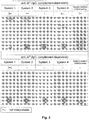
- systems 1 and 2 provide a clear (positive) read out shown at two levels. This in contrast with the system according to the prior art showing a diffuse smear over at least part of the column length (upper part of Figure 3 ), or a false negative reaction (lower part Figure 3 ).
- systems 1 and 2 according to the present invention provide a clear (positive) read out shown at two levels. This in contrast with the system according to the prior art showing a diffuse smear over at least part of the column length.
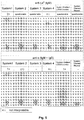
- systems 1 and 2 according to the present invention provide a clear (positive) read out shown at two levels. This in contrast with the systems according to the prior art maximally showing a diffuse smear over at least part of the column length or a false negative reaction.
- system 1 provides a clear (positive) read out shown at two levels. This in contrast with the systems according to the prior art maximally only showing false negative reactions.
Landscapes
- Health & Medical Sciences (AREA)
- Chemical & Material Sciences (AREA)
- Hematology (AREA)
- Immunology (AREA)
- Life Sciences & Earth Sciences (AREA)
- General Health & Medical Sciences (AREA)
- Analytical Chemistry (AREA)
- Chemical Kinetics & Catalysis (AREA)
- Engineering & Computer Science (AREA)
- Clinical Laboratory Science (AREA)
- Biomedical Technology (AREA)
- Molecular Biology (AREA)
- Urology & Nephrology (AREA)
- Microbiology (AREA)
- Medicinal Chemistry (AREA)
- Physics & Mathematics (AREA)
- Food Science & Technology (AREA)
- Biochemistry (AREA)
- Cell Biology (AREA)
- General Physics & Mathematics (AREA)
- Pathology (AREA)
- Biotechnology (AREA)
- Investigating Or Analysing Biological Materials (AREA)
Claims (13)
- Micro-colonne (7) apte à détecter des agglutinats d'érythrocytes chargés d'anticorps comprenant au moins trois compartiments allongés en communication fluidique (1, 2 et 3), dans laquelle ladite micro-colonne (7) comprend :a) un premier compartiment allongé (3) apte à recevoir des érythrocytes et/ou des anticorps, fournissant ainsi un échantillon ayant une première masse volumique de liquide, pour former des érythrocytes chargés d'anticorps, mais pas d'agglutinats d'érythrocytes chargés d'anticorps, dans laquelle ledit premier compartiment (3) est en communication liquide avec ;b) un deuxième compartiment allongé (2) d'environ 17 µl constitué d'un milieu ayant une seconde masse volumique de liquide, dans laquelle ladite seconde masse volumique de liquide est supérieure à ladite première masse volumique de liquide, dans laquelle ledit milieu comprend au moins un composé choisi dans le groupe constitué d'anticorps anti-IgG, d'anticorps anti-IgM, d'anticorps anti-C3d, d'anticorps anti-IgA, d'anticorps anti-C3c, et de fragments fonctionnels de ceux-ci et dans laquelle ladite seconde masse volumique de liquide est entre 1,01 et 1,09 g/ml, de préférence entre 1,02 et 1,06 g/ml, de manière davantage préférée entre 1,02 et 1,04 g/ml, pour former des agglutinats d'érythrocytes chargés d'anticorps, et dans laquelle ledit deuxième compartiment (2) est en communication liquide avec ;c) un troisième compartiment allongé (1) d'environ 5 µl constitué de billes inertes, comprises dans le milieu selon (b), apte à fournir une barrière pour lesdits agglutinats d'érythrocytes chargés d'anticorps et pas pour lesdits érythrocytes chargés d'anticorps, érythrocytes et/ou anticorps ;dans laquelle le rapport de la longueur dudit deuxième compartiment allongé (2) audit troisième compartiment allongé (1) est entre 1,1 et 1,7 fournissant ainsi une formation de complexes et une agglutination desdits érythrocytes chargés d'anticorps au niveau de l'interface dudit deuxième (2) et dudit troisième (1) compartiment allongé.
- Micro-colonne (7) selon la revendication 1, dans laquelle le diamètre de l'extrémité supérieure dudit premier compartiment allongé (3) est plus grand que le diamètre de l'extrémité inférieure dudit premier compartiment allongé (3).
- Micro-colonne (7) selon l'une quelconque des revendications 1 à 2, dans laquelle ledit milieu ayant une seconde masse volumique de liquide comprend de 2 % à 4 % de dextrane et de 1 % à 3 % de sérumalbumine à un pH d'au moins 6.
- Micro-colonne (7) selon la revendication 3, dans laquelle ledit milieu ayant une seconde masse volumique de liquide comprend en outre une solution saline physiologique, un chélateur et un mono- ou disaccharide.
- Micro-colonne (7) selon la revendication 3 ou la revendication 4, dans laquelle ledit milieu ayant une seconde masse volumique de liquide comprend en outre 15 à 25 mM d'EDTA, 60 à 80 mM de NaCl, 20 à 40 mM de glucose dans une solution tamponnée au phosphate (PBS).
- Micro-colonne (7) selon l'une quelconque des revendications 3 à 5, dans laquelle ledit milieu ayant une seconde masse volumique de liquide comprend 2,5 % de dextrane, 2 % de sérumalbumine, 20 mM d'EDTA, 70 mM de NaCl et 30 mM de glucose dans une solution tamponnée au phosphate (PBS).
- Micro-colonne (7) selon la revendication 1 comprenant des anticorps anti-IgG, des anticorps anti-IgM, des anticorps anti-C3d.
- Micro-colonne (7) selon l'une quelconque des revendications 1 à 7, dans laquelle lesdites billes inertes, comprises dans le milieu selon (b), ont un diamètre moyen entre 10 et 150 µm, de préférence entre 20 et 50 µm.
- Micro-colonne (7) selon l'une quelconque des revendications 1 à 8, dans laquelle lesdites billes inertes, comprises dans le milieu selon (b), sont choisies dans le groupe constitué de billes de verre, de sépharose, d'acryle, d'agarose réticulé et de Sephadex.
- Procédé de détection d'agglutinats d'érythrocytes chargés d'anticorps comprenant :a) le chargement d'érythrocytes et d'anticorps dans un premier compartiment allongé (3) d'une micro-colonne (7) selon l'une quelconque des revendications 1 à 9 ;b) l'incubation desdits anticorps et desdits érythrocytes dans ledit premier compartiment allongé (3) pour former des érythrocytes chargés d'anticorps ;c) l'introduction, par centrifugation, desdits érythrocytes chargés d'anticorps dans un deuxième compartiment allongé (2) d'une micro-colonne (7) selon l'une quelconque des revendications 1 à 9 pour former des agglutinats d'érythrocytes chargés d'anticorps ;d) la séparation, par centrifugation, desdits agglutinats d'érythrocytes chargés d'anticorps desdits érythrocytes chargés d'anticorps et desdits érythrocytes dans un troisième compartiment allongé (1) d'une micro-colonne (7) selon l'une quelconque des revendications 1 à 9 ;e) la détection de la présence d'agglutinats d'érythrocytes chargés d'anticorps au niveau de l'interface dudit deuxième (2) et dudit troisième (1) compartiment allongé d'une micro-colonne (7) selon l'une quelconque des revendications 1 à 9.
- Procédé selon la revendication 10, dans lequel l'incubation comprend 1 seconde à 30 minutes de 15 à 37 °C.
- Procédé selon la revendication 10 ou la revendication 11, dans lequel la centrifugation telle que définie dans les étapes (c) et (d) comprend 1 à 3 minutes de 50 à 100xg ; 0,5 à 1,5 minute de 150 à 250xg ; et 5 à 10 minutes de 1 500 à 2 000xg, de préférence dans lequel la centrifugation telle que définie dans les étapes (c) et (d) comprend 2 minutes à 75xg ; 1 minute à 200xg ; et 7 minutes à 1790xg.
- Kit d'éléments pour réaliser un procédé selon l'une quelconque des revendications 10 à 12 comprenant :a) au moins une micro-colonne (7) selon l'une quelconque des revendications 1 à 9 ;b) des instructions d'utilisation ; etc) facultativement, un ou plusieurs analytes témoins et/ou supports.
Applications Claiming Priority (1)
| Application Number | Priority Date | Filing Date | Title |
|---|---|---|---|
| PCT/EP2008/007325 WO2010025756A1 (fr) | 2008-09-03 | 2008-09-03 | Cuve de réaction apte à détecter des complexes d’analytes fixés sur un support, procédé pour la détection de complexes d’analytes fixés sur un support et coffret d'éléments |
Publications (2)
| Publication Number | Publication Date |
|---|---|
| EP2340123A1 EP2340123A1 (fr) | 2011-07-06 |
| EP2340123B1 true EP2340123B1 (fr) | 2019-06-26 |
Family
ID=40194551
Family Applications (1)
| Application Number | Title | Priority Date | Filing Date |
|---|---|---|---|
| EP08801905.4A Active EP2340123B1 (fr) | 2008-09-03 | 2008-09-03 | Cuve de réaction apte à détecter des agglutinats érythrocytaires chargées d'anticorps, procédé pour la détection des agglutinats érythrocytaires chargées d'anticorps et coffret d'éléments |
Country Status (2)
| Country | Link |
|---|---|
| EP (1) | EP2340123B1 (fr) |
| WO (1) | WO2010025756A1 (fr) |
Families Citing this family (3)
| Publication number | Priority date | Publication date | Assignee | Title |
|---|---|---|---|---|
| CN111398578A (zh) * | 2019-12-31 | 2020-07-10 | 珠海朗泰生物科技有限公司 | 一种布鲁氏菌抗体凝胶检测试剂盒 |
| CN112379100B (zh) * | 2020-10-13 | 2024-01-23 | 中国科学院苏州生物医学工程技术研究所 | 血小板抗人球蛋白实验免疫区带分布检测方法 |
| CN115267181A (zh) * | 2022-07-26 | 2022-11-01 | 广州市第一人民医院(广州消化疾病中心、广州医科大学附属市一人民医院、华南理工大学附属第二医院) | 一种用于冷凝集血常规标本检测的试剂及其检测方法和应用 |
Family Cites Families (5)
| Publication number | Priority date | Publication date | Assignee | Title |
|---|---|---|---|---|
| NL9400777A (nl) * | 1994-05-10 | 1995-12-01 | Stichting Centraal Lab | Vaste-fase filtratiemethode voor antigeen- en antistofbepalingen in de bloedgroepserologie, en testkit. |
| US5905028A (en) * | 1994-05-17 | 1999-05-18 | Gamma Biologicals, Inc. | Method and apparatus useful for detecting bloodgroup antigens and antibodies |
| PT849595E (pt) * | 1996-12-18 | 2001-10-31 | Stiftung Fur Diagnostische For | Particulas sinteticas como reagentes de aglutinacao |
| NL1008738C2 (nl) * | 1998-03-27 | 1999-09-28 | Stichting Bloedvoorziening | Vaste-fase methode voor antigeen- en antistof bepalingen in de bloedgroepserologie, en testkit. |
| US7449329B2 (en) * | 2006-03-31 | 2008-11-11 | Hale Anne S | Blood test kit |
-
2008
- 2008-09-03 EP EP08801905.4A patent/EP2340123B1/fr active Active
- 2008-09-03 WO PCT/EP2008/007325 patent/WO2010025756A1/fr not_active Ceased
Non-Patent Citations (1)
| Title |
|---|
| None * |
Also Published As
| Publication number | Publication date |
|---|---|
| EP2340123A1 (fr) | 2011-07-06 |
| WO2010025756A1 (fr) | 2010-03-11 |
Similar Documents
| Publication | Publication Date | Title |
|---|---|---|
| JP2854058B2 (ja) | アッセイを実施するための方法及び装置 | |
| US7087203B2 (en) | Methods and apparatus for blood typing with optical bio-disc | |
| EP0755719B1 (fr) | Essai d'agglutination en colonnes et dispositif | |
| US5552064A (en) | Column agglutination assay and device using biphasic centrifugation | |
| NL1003570C2 (nl) | Methode voor antigeen- en antistofbepaling in de bloedgroepserologie. | |
| US7824873B2 (en) | Blood test kit | |
| US20100216171A1 (en) | Reducing Time to Result for Blood Bank Diagnostic Testing | |
| EA017186B1 (ru) | Множественный анализ образцов крови | |
| EP1064556B1 (fr) | Methode en phase solide pour determinations d'antigenes et d'anticorps en serologie des groupes sanguins et kit de test | |
| JP2001502795A (ja) | 血液型抗原および抗体の検出に有用な方法および装置 | |
| EP0760103B1 (fr) | Procede de filtration en phase solide pour dosages d'antigenes et d'anticorps en serologie de groupes sanguins, et necessaire d'essai | |
| EP2340123B1 (fr) | Cuve de réaction apte à détecter des agglutinats érythrocytaires chargées d'anticorps, procédé pour la détection des agglutinats érythrocytaires chargées d'anticorps et coffret d'éléments | |
| Knight et al. | New technologies for red-cell serology | |
| Sigdel et al. | Comparison between the manual method of indirect Coombs via gel technology and solid phase red cell adherence | |
| Judd et al. | Reactivity of FDA-approved anti-D reagents with partial D red blood cells | |
| Trudell | Detection and identification of antibodies | |
| US20220252622A1 (en) | Single tube preparation comprising a panel of differently labeled cells for serology | |
| Ajmani | Blood test in immunohematology and blood banking | |
| Finck et al. | Performance of an automated solid-phase red cell adherence system compared with that of a manual gel microcolumn assay for the identification of antibodies eluted from red blood cells | |
| Surase et al. | Improving Crossmatching Efficiency: A Comparative Study of Gel Card Versus Conventional Tube Method in A Tertiary Care Blood Bank | |
| Lamy et al. | Red cell antibody screening, red cell antibody identification and compatibility testing with the Column Agglutination Technology (CAT). The BioVue system | |
| WO2002059622A1 (fr) | Procedes et appareil de determination de groupes sanguins a l'aide de disques biologiques optiques | |
| Spada et al. | Comparison of cross-matching methodology for detection of DEA 7 blood incompatibility | |
| LOT | Coombs and Neutral Gel Card |
Legal Events
| Date | Code | Title | Description |
|---|---|---|---|
| PUAI | Public reference made under article 153(3) epc to a published international application that has entered the european phase |
Free format text: ORIGINAL CODE: 0009012 |
|
| 17P | Request for examination filed |
Effective date: 20110329 |
|
| AK | Designated contracting states |
Kind code of ref document: A1 Designated state(s): AT BE BG CH CY CZ DE DK EE ES FI FR GB GR HR HU IE IS IT LI LT LU LV MC MT NL NO PL PT RO SE SI SK TR |
|
| AX | Request for extension of the european patent |
Extension state: AL BA MK RS |
|
| DAX | Request for extension of the european patent (deleted) | ||
| 17Q | First examination report despatched |
Effective date: 20120905 |
|
| STAA | Information on the status of an ep patent application or granted ep patent |
Free format text: STATUS: EXAMINATION IS IN PROGRESS |
|
| GRAP | Despatch of communication of intention to grant a patent |
Free format text: ORIGINAL CODE: EPIDOSNIGR1 |
|
| STAA | Information on the status of an ep patent application or granted ep patent |
Free format text: STATUS: GRANT OF PATENT IS INTENDED |
|
| INTG | Intention to grant announced |
Effective date: 20181219 |
|
| GRAS | Grant fee paid |
Free format text: ORIGINAL CODE: EPIDOSNIGR3 |
|
| GRAA | (expected) grant |
Free format text: ORIGINAL CODE: 0009210 |
|
| STAA | Information on the status of an ep patent application or granted ep patent |
Free format text: STATUS: THE PATENT HAS BEEN GRANTED |
|
| RAP1 | Party data changed (applicant data changed or rights of an application transferred) |
Owner name: SANQUIN REAGENTS B.V. |
|
| AK | Designated contracting states |
Kind code of ref document: B1 Designated state(s): AT BE BG CH CY CZ DE DK EE ES FI FR GB GR HR HU IE IS IT LI LT LU LV MC MT NL NO PL PT RO SE SI SK TR |
|
| REG | Reference to a national code |
Ref country code: GB Ref legal event code: FG4D |
|
| REG | Reference to a national code |
Ref country code: CH Ref legal event code: EP |
|
| REG | Reference to a national code |
Ref country code: AT Ref legal event code: REF Ref document number: 1147684 Country of ref document: AT Kind code of ref document: T Effective date: 20190715 |
|
| REG | Reference to a national code |
Ref country code: DE Ref legal event code: R096 Ref document number: 602008060524 Country of ref document: DE |
|
| REG | Reference to a national code |
Ref country code: IE Ref legal event code: FG4D Ref country code: NL Ref legal event code: FP |
|
| PG25 | Lapsed in a contracting state [announced via postgrant information from national office to epo] |
Ref country code: NO Free format text: LAPSE BECAUSE OF FAILURE TO SUBMIT A TRANSLATION OF THE DESCRIPTION OR TO PAY THE FEE WITHIN THE PRESCRIBED TIME-LIMIT Effective date: 20190926 Ref country code: HR Free format text: LAPSE BECAUSE OF FAILURE TO SUBMIT A TRANSLATION OF THE DESCRIPTION OR TO PAY THE FEE WITHIN THE PRESCRIBED TIME-LIMIT Effective date: 20190626 Ref country code: SE Free format text: LAPSE BECAUSE OF FAILURE TO SUBMIT A TRANSLATION OF THE DESCRIPTION OR TO PAY THE FEE WITHIN THE PRESCRIBED TIME-LIMIT Effective date: 20190626 Ref country code: FI Free format text: LAPSE BECAUSE OF FAILURE TO SUBMIT A TRANSLATION OF THE DESCRIPTION OR TO PAY THE FEE WITHIN THE PRESCRIBED TIME-LIMIT Effective date: 20190626 Ref country code: LT Free format text: LAPSE BECAUSE OF FAILURE TO SUBMIT A TRANSLATION OF THE DESCRIPTION OR TO PAY THE FEE WITHIN THE PRESCRIBED TIME-LIMIT Effective date: 20190626 |
|
| REG | Reference to a national code |
Ref country code: LT Ref legal event code: MG4D |
|
| PG25 | Lapsed in a contracting state [announced via postgrant information from national office to epo] |
Ref country code: BG Free format text: LAPSE BECAUSE OF FAILURE TO SUBMIT A TRANSLATION OF THE DESCRIPTION OR TO PAY THE FEE WITHIN THE PRESCRIBED TIME-LIMIT Effective date: 20190926 Ref country code: LV Free format text: LAPSE BECAUSE OF FAILURE TO SUBMIT A TRANSLATION OF THE DESCRIPTION OR TO PAY THE FEE WITHIN THE PRESCRIBED TIME-LIMIT Effective date: 20190626 Ref country code: GR Free format text: LAPSE BECAUSE OF FAILURE TO SUBMIT A TRANSLATION OF THE DESCRIPTION OR TO PAY THE FEE WITHIN THE PRESCRIBED TIME-LIMIT Effective date: 20190927 |
|
| REG | Reference to a national code |
Ref country code: AT Ref legal event code: MK05 Ref document number: 1147684 Country of ref document: AT Kind code of ref document: T Effective date: 20190626 |
|
| PG25 | Lapsed in a contracting state [announced via postgrant information from national office to epo] |
Ref country code: RO Free format text: LAPSE BECAUSE OF FAILURE TO SUBMIT A TRANSLATION OF THE DESCRIPTION OR TO PAY THE FEE WITHIN THE PRESCRIBED TIME-LIMIT Effective date: 20190626 Ref country code: SK Free format text: LAPSE BECAUSE OF FAILURE TO SUBMIT A TRANSLATION OF THE DESCRIPTION OR TO PAY THE FEE WITHIN THE PRESCRIBED TIME-LIMIT Effective date: 20190626 Ref country code: EE Free format text: LAPSE BECAUSE OF FAILURE TO SUBMIT A TRANSLATION OF THE DESCRIPTION OR TO PAY THE FEE WITHIN THE PRESCRIBED TIME-LIMIT Effective date: 20190626 Ref country code: AT Free format text: LAPSE BECAUSE OF FAILURE TO SUBMIT A TRANSLATION OF THE DESCRIPTION OR TO PAY THE FEE WITHIN THE PRESCRIBED TIME-LIMIT Effective date: 20190626 Ref country code: CZ Free format text: LAPSE BECAUSE OF FAILURE TO SUBMIT A TRANSLATION OF THE DESCRIPTION OR TO PAY THE FEE WITHIN THE PRESCRIBED TIME-LIMIT Effective date: 20190626 Ref country code: PT Free format text: LAPSE BECAUSE OF FAILURE TO SUBMIT A TRANSLATION OF THE DESCRIPTION OR TO PAY THE FEE WITHIN THE PRESCRIBED TIME-LIMIT Effective date: 20191028 |
|
| PG25 | Lapsed in a contracting state [announced via postgrant information from national office to epo] |
Ref country code: IS Free format text: LAPSE BECAUSE OF FAILURE TO SUBMIT A TRANSLATION OF THE DESCRIPTION OR TO PAY THE FEE WITHIN THE PRESCRIBED TIME-LIMIT Effective date: 20191026 Ref country code: IT Free format text: LAPSE BECAUSE OF FAILURE TO SUBMIT A TRANSLATION OF THE DESCRIPTION OR TO PAY THE FEE WITHIN THE PRESCRIBED TIME-LIMIT Effective date: 20190626 Ref country code: ES Free format text: LAPSE BECAUSE OF FAILURE TO SUBMIT A TRANSLATION OF THE DESCRIPTION OR TO PAY THE FEE WITHIN THE PRESCRIBED TIME-LIMIT Effective date: 20190626 |
|
| PG25 | Lapsed in a contracting state [announced via postgrant information from national office to epo] |
Ref country code: TR Free format text: LAPSE BECAUSE OF FAILURE TO SUBMIT A TRANSLATION OF THE DESCRIPTION OR TO PAY THE FEE WITHIN THE PRESCRIBED TIME-LIMIT Effective date: 20190626 |
|
| PG25 | Lapsed in a contracting state [announced via postgrant information from national office to epo] |
Ref country code: PL Free format text: LAPSE BECAUSE OF FAILURE TO SUBMIT A TRANSLATION OF THE DESCRIPTION OR TO PAY THE FEE WITHIN THE PRESCRIBED TIME-LIMIT Effective date: 20190626 Ref country code: DK Free format text: LAPSE BECAUSE OF FAILURE TO SUBMIT A TRANSLATION OF THE DESCRIPTION OR TO PAY THE FEE WITHIN THE PRESCRIBED TIME-LIMIT Effective date: 20190626 |
|
| PG25 | Lapsed in a contracting state [announced via postgrant information from national office to epo] |
Ref country code: IS Free format text: LAPSE BECAUSE OF FAILURE TO SUBMIT A TRANSLATION OF THE DESCRIPTION OR TO PAY THE FEE WITHIN THE PRESCRIBED TIME-LIMIT Effective date: 20200224 Ref country code: MC Free format text: LAPSE BECAUSE OF FAILURE TO SUBMIT A TRANSLATION OF THE DESCRIPTION OR TO PAY THE FEE WITHIN THE PRESCRIBED TIME-LIMIT Effective date: 20190626 |
|
| REG | Reference to a national code |
Ref country code: CH Ref legal event code: PL |
|
| REG | Reference to a national code |
Ref country code: DE Ref legal event code: R097 Ref document number: 602008060524 Country of ref document: DE |
|
| PLBE | No opposition filed within time limit |
Free format text: ORIGINAL CODE: 0009261 |
|
| STAA | Information on the status of an ep patent application or granted ep patent |
Free format text: STATUS: NO OPPOSITION FILED WITHIN TIME LIMIT |
|
| PG2D | Information on lapse in contracting state deleted |
Ref country code: IS |
|
| PG25 | Lapsed in a contracting state [announced via postgrant information from national office to epo] |
Ref country code: LI Free format text: LAPSE BECAUSE OF NON-PAYMENT OF DUE FEES Effective date: 20190930 Ref country code: CH Free format text: LAPSE BECAUSE OF NON-PAYMENT OF DUE FEES Effective date: 20190930 Ref country code: LU Free format text: LAPSE BECAUSE OF NON-PAYMENT OF DUE FEES Effective date: 20190903 Ref country code: IE Free format text: LAPSE BECAUSE OF NON-PAYMENT OF DUE FEES Effective date: 20190903 |
|
| 26N | No opposition filed |
Effective date: 20200603 |
|
| PG25 | Lapsed in a contracting state [announced via postgrant information from national office to epo] |
Ref country code: SI Free format text: LAPSE BECAUSE OF FAILURE TO SUBMIT A TRANSLATION OF THE DESCRIPTION OR TO PAY THE FEE WITHIN THE PRESCRIBED TIME-LIMIT Effective date: 20190626 |
|
| GBPC | Gb: european patent ceased through non-payment of renewal fee |
Effective date: 20190926 |
|
| PG25 | Lapsed in a contracting state [announced via postgrant information from national office to epo] |
Ref country code: GB Free format text: LAPSE BECAUSE OF NON-PAYMENT OF DUE FEES Effective date: 20190926 |
|
| PG25 | Lapsed in a contracting state [announced via postgrant information from national office to epo] |
Ref country code: CY Free format text: LAPSE BECAUSE OF FAILURE TO SUBMIT A TRANSLATION OF THE DESCRIPTION OR TO PAY THE FEE WITHIN THE PRESCRIBED TIME-LIMIT Effective date: 20190626 |
|
| PG25 | Lapsed in a contracting state [announced via postgrant information from national office to epo] |
Ref country code: HU Free format text: LAPSE BECAUSE OF FAILURE TO SUBMIT A TRANSLATION OF THE DESCRIPTION OR TO PAY THE FEE WITHIN THE PRESCRIBED TIME-LIMIT; INVALID AB INITIO Effective date: 20080903 Ref country code: MT Free format text: LAPSE BECAUSE OF FAILURE TO SUBMIT A TRANSLATION OF THE DESCRIPTION OR TO PAY THE FEE WITHIN THE PRESCRIBED TIME-LIMIT Effective date: 20190626 |
|
| P01 | Opt-out of the competence of the unified patent court (upc) registered |
Effective date: 20230526 |
|
| PGFP | Annual fee paid to national office [announced via postgrant information from national office to epo] |
Ref country code: DE Payment date: 20250919 Year of fee payment: 18 |
|
| PGFP | Annual fee paid to national office [announced via postgrant information from national office to epo] |
Ref country code: NL Payment date: 20250922 Year of fee payment: 18 |
|
| PGFP | Annual fee paid to national office [announced via postgrant information from national office to epo] |
Ref country code: BE Payment date: 20250919 Year of fee payment: 18 |
|
| PGFP | Annual fee paid to national office [announced via postgrant information from national office to epo] |
Ref country code: FR Payment date: 20250926 Year of fee payment: 18 |