EP2341128A1 - Verfahren zur Elimination der Mannosylphosphorylierung von Glykanen bei der Herstellung von Glykoproteinen - Google Patents
Verfahren zur Elimination der Mannosylphosphorylierung von Glykanen bei der Herstellung von Glykoproteinen Download PDFInfo
- Publication number
- EP2341128A1 EP2341128A1 EP10180809A EP10180809A EP2341128A1 EP 2341128 A1 EP2341128 A1 EP 2341128A1 EP 10180809 A EP10180809 A EP 10180809A EP 10180809 A EP10180809 A EP 10180809A EP 2341128 A1 EP2341128 A1 EP 2341128A1
- Authority
- EP
- European Patent Office
- Prior art keywords
- seq
- pichia
- acid sequence
- nucleic acid
- gene
- Prior art date
- Legal status (The legal status is an assumption and is not a legal conclusion. Google has not performed a legal analysis and makes no representation as to the accuracy of the status listed.)
- Withdrawn
Links
Images









Classifications
-
- C—CHEMISTRY; METALLURGY
- C12—BIOCHEMISTRY; BEER; SPIRITS; WINE; VINEGAR; MICROBIOLOGY; ENZYMOLOGY; MUTATION OR GENETIC ENGINEERING
- C12N—MICROORGANISMS OR ENZYMES; COMPOSITIONS THEREOF; PROPAGATING, PRESERVING, OR MAINTAINING MICROORGANISMS; MUTATION OR GENETIC ENGINEERING; CULTURE MEDIA
- C12N9/00—Enzymes; Proenzymes; Compositions thereof; Processes for preparing, activating, inhibiting, separating or purifying enzymes
- C12N9/10—Transferases (2.)
- C12N9/1048—Glycosyltransferases (2.4)
- C12N9/1051—Hexosyltransferases (2.4.1)
-
- C—CHEMISTRY; METALLURGY
- C07—ORGANIC CHEMISTRY
- C07K—PEPTIDES
- C07K14/00—Peptides having more than 20 amino acids; Gastrins; Somatostatins; Melanotropins; Derivatives thereof
- C07K14/37—Peptides having more than 20 amino acids; Gastrins; Somatostatins; Melanotropins; Derivatives thereof from fungi
- C07K14/39—Peptides having more than 20 amino acids; Gastrins; Somatostatins; Melanotropins; Derivatives thereof from fungi from yeasts
-
- C—CHEMISTRY; METALLURGY
- C12—BIOCHEMISTRY; BEER; SPIRITS; WINE; VINEGAR; MICROBIOLOGY; ENZYMOLOGY; MUTATION OR GENETIC ENGINEERING
- C12P—FERMENTATION OR ENZYME-USING PROCESSES TO SYNTHESISE A DESIRED CHEMICAL COMPOUND OR COMPOSITION OR TO SEPARATE OPTICAL ISOMERS FROM A RACEMIC MIXTURE
- C12P21/00—Preparation of peptides or proteins
- C12P21/005—Glycopeptides, glycoproteins
Definitions
- the present invention relates to the elimination of mannosylphosphate transfer on glycans of glycoproteins, and further relates to eliminating genes responsible for the addition of mannnosylphosphate residues on glycans in yeast and filamentous fungal cells.
- the invention relates to engineering yeast and filamentous fungal host cells to produce glycans without mannosylphosphate residues.
- glycoproteins are produced having oligosaccharides which are different from those of mammalian-derived glycoproteins.
- outer chain oligosaccharides are hypermannosylated consisting of 3-150 mannose residues ( Kukuruzinska et al., 19987, Annu. Rev. Biochem. 56: 915-944 ).
- mannosylphosphate is often transferred to both the core and outer sugar chains of glycoproteins produced in yeast ( Ballou, 1990, Methods Enzynol. 185: 440-470 ).
- MNN6 encodes a type II membrane protein homologous to the Kre2p/Mntlp family of proteins which has been characterized as Golgi a-1,2-mannosyl-transferases involved in O -mamiosylation and N -glycosylation ( Lussier et al., 1997, JBC, 272: 15527-15331 ).
- the Dmnn6 mutant does not show a defect in the mannosylphosphorylation of the core glycans in vivo, but exhibits a decrease in mannosylphosphate transferase activity in vitro ( Wang et al., 1997, JBC, 272:18117-18124 ).
- Mnn4p is also a putative type II membrane protein which is 33% identical to the S. cerevisiae Yjr061p( Odani et al., 1996, Glycobiology,6; 805 -810 ; Hunter and Plowman, 1997, Trends in Biochem. Sci., 22:18-22 ). Both the Dmnn6 and Dmnn4 mutants decrease the transfer of mannosylphosphate. However, the Dmnn6 Dmnn4 double mutant does not further reduce this activity. These observations suggest the presence of additional mannosyltransferases that add mannosylphosphate to the core glycans.
- Vrg4p is involved in nucleotide-sugar transport in the Golgi ( Dean et al., 1997, JBC, 272: 31908-31914 ), and Mnn2p and Mnn5p are a1,2-mannosyltransferases responsible for the initiation of branching in the outer chain of N -linked glycans ( Rayner and Munro,1998, JBC, 273: 23836-23843 ).
- Proteins expressed in the methylotrophic yeast, Pichia pastoris contain mannosylphosphorylated glycans ( Miele, et al., 1997, Biotech. Appl Biochem., 2:79-83 ).
- Miura et al. reported the identification of the PNOl ( P hosphorylmannosylation of N- linked Oligosaccharides) gene which upon disruption confers an attenuation of mannosylphosphorylation on glycoproteins ( WO 01/88143 ; Miura et al., 2004, Gene, 324: 129-137 ).
- the PNO1 gene encodes for a protein involved in the transfer of mannosylphosphate to glycans in P. pastoris. Its specific function, however, is unknown.
- the Dpnol mutant decreases but does not abolish mannosylphosphorylation on N -glycans relative to a P. pastoris strain having wild-type Pnolp.
- the present invention provides a method for eliminating mannosylphosphate residues on glycans of glycoproteins in a yeast or filamentous fungal host (e.g., P. pastoris).
- the present invention also provides a fungal host which normally produces mannosylphosphorylated glycoproteins or a fraction thereof, in which the fungal host is modified to produce glycoproteins essentially free of mannosylphosphate residues.
- the present invention provides a null mutant lacking one or more genes homologous to MNN4.
- the present invention provides a host of the genus Pichia comprising a disruption, deletion or mutation of mnn4B and pnol. The resulting host strain is essentially free of mannosylphosphorylation on glycans of glycoproteins.
- the present invention further provides glycoprotein compositions that are essentially free of mannosylphosphorylated glycoproteins.
- Such glycoprotein compositions comprise complex N-glycans that may be used for therapeutic applications.
- the present invention also provides isolated polynucleotides comprising or consisting of nucleic acid sequences selected from the group consisting of the coding sequences of the P. pastoris MNN4A, MNN4B and MNNC; nucleic acid sequences that are degenerate variants of these sequences; and related nucleic acid sequences and fragments.
- the invention also provides isolated polypeptides comprising or consisting of polypeptide sequences selected from the group consisting of sequences encoded by the P. pastoris MNN4A, MNN4B, MNN4C; related polypeptide sequences, fragments and fusions. Antibodies that specifically bind to the isolated polypeptides of the invention are also provided.
- the present invention also provides host cells comprising a disruption, deletion or mutation of a nucleic acid sequence selected from the group consisting of the coding sequence of the P. pastoris MNN4A, MNN4B and MNNC gene, a nucleic acid sequence that is a degenerate variant of the coding sequence of the P. pastoris MNN4A, MNN4B and MMVC gene and related nucleic acid sequences and fragments, in which the host cells have a reduced activity of the polypeptide encoded by the nucleic acid sequence compared to a host cell without the disruption, deletion or mutation.
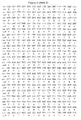
- Figure 1 depicts the nucleic acid and amino acid sequence of P . pastoris MNN4A.
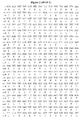
- Figure 2 depicts the nucleic acid and amino acid sequence of P. pastoris MNN4B.
- Figure 3 depicts the nucleic acid and amino acid sequence of P . pastoris MNN4C.
- Figure 4 illustrates the fusion PCR knock-out strategy of P. pastoris MNN4B using a drug resistance marker.
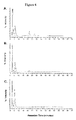
- Figure 5A shows a high performance liquid chromatogram for the negative experimental control using H 2 O as the sample.
- B. shows a high performance liquid chromatogram for the sample containing N -linked glycans from K3 purified from P. pastoris YSH-44 supernatant. Glycans with mannosylphosphate elute between 20 - 30 mins.
- C . shows a high performance liquid chromatogram for a sample containing N- linked glycans from K3 purified from P. pastors YSH-49 (#pnol) supernatant. Glycans with mannosylphosphate elute between 20 - 30 mins.
- Figure 6A shows a high performance liquid chromatogram for the sample containing N -linked glycans from K3 purified from P. pastors YSH-1 ( D ochl ) supernatant. Glycans with mannosylphosphate elute between 20-30 mms.
- B shows a high performance liquid chromatogram for a sample containing N -linked glycans from K3 purified from P. pastoris YAS-164 ( D ochl Dmnn4A D pnol ) supernatant. Glycans with mannosylphosphate elute between 20 - 30 mins.
- C shows a high performance liquid chromatogram for the sample containing N -linked glycans from K3 purified from P. pastoris YAS-164 ( D ochl Dmnn4A D pnol ) supernatant. Glycans with mannosylphosphate elute between 20 - 30 mins.
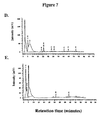
- Figure 7A shows a high performance liquid chromatogram for the negative experimental control sample containing H 2 O B. shows a high performance liquid chromatogram for the sample containing N -linlced glycans from erythropoietin expressed from pBK291 (His-EPO) produced in P . pastoris strain BK248 C. shows a high performance liquid chromatogram for the sample containing N -linlced glycans from His-EPO produced in P. pastoris strain BK244 D . shows a high performance liquid chromatogram for the sample containing N -linked glycans from CD40 expressed from pJC33 (His-CL740) produced in P. pastoris strai n YJC12 E . shows a high performance liquid chromatogram for the YAS252 . Note: Glycans with mannosylphosphate elute between 20 - 30 mins.
- Figure 8 A shows a high performance liquid chromatogram for the sample containing N- linked glycan from invertase expressed from pPB147 produced in P . pastoris strain YAS252.
- 'polynucleotide' or 'nucleic acid molecule' refers to a polymeric form of nucleotides of at least 10 bases in length.
- the term includes DNA molecules (e.g., cDNA or genomic or synthetic DNA) and RNA molecules (e.g., mRNA or synthetic RNA), as well as analogs of DNA or RNA containing non-natural nucleotide analogs, non-native internucleoside bonds, or both.
- the nucleic acid can be in any topological conformation. For instance, the nucleic acid can be single-stranded, double-stranded, triple-stranded, quadruplexed, partially double-stranded, branched, hairpinned, circular, or in a padlocked conformation.
- a 'nucleic acid comprising SEQ LID NO:X' refers to a nucleic acid, at least a portion of which has either (i) the sequence of SEQ ID NO:X, or (ii) a sequence complementary to SEQ ID NO:X.
- the choice between the two is dictated by the context. For instance, if the nucleic acid is used as a probe, the choice between the two is dictated by the requirement that the probe be complementary to the desired target.
- An 'isolated' or 'substantially pure' nucleic acid or polynucleotide is one which is substantially separated from other cellular components that naturally accompany the native polynucleotide in its natural host cell, e.g., ribosomes, polymerases and genomic sequences with which it is naturally associated.
- the term embraces a nucleic acid or polynucleotide that (1) has been removed from its naturally occurring environment, (2) is not associated with all or a portion of a polynucleotide in which the 'isolated polynucleotide' is found in nature, (3) is operatively linked to a polynucleotide which it is not linked to in nature, or (4) does not occur in nature.
- the term 'isolated' or 'substantially pure' also can be used in reference to recombinant or cloned DNA isolates, chemically synthesized polynucleotide analogs, or polynucleotide analogs that are biologically synthesized by heterologous systems.
- 'isolated' does not necessarily require that the nucleic acid or polynucleotide so described has itself been physically removed from its native environment.
- an endogenous nucleic acid sequence in the genome of an organism is deemed 'isolated' herein if a heterologous sequence is placed adjacent to the endogenous nucleic acid sequence, such that the expression of this endogenous nucleic acid sequence is altered.
- a heterologous sequence is a sequence that is not naturally adjacent to the endogenous nucleic acid sequence, whether or not the heterologous sequence is itself endogenous (originating from the same host cell or progeny thereof) or exogenous (originating from a different host cell or progeny thereof).
- a promoter sequence can be substituted ( e.g ., by homologous recombination) for the native promoter of a gene in the genome of a host cell, such that this gene has an altered expression pattern.
- This gene would now become 'isolated' because it is separated from at least some of the sequences that naturally flank it.
- a nucleic acid is also considered 'isolated' if it contains any modifications that do not naturally occur to the corresponding nucleic acid in a genome.
- an endogenous coding sequence is considered 'isolated' if it contains an insertion, deletion or a point mutation introduced artificially, e.g ., by human intervention.
- An'isolated nucleic acid' also includes a nucleic acid integrated into a host cell chromosome at a heterologous site and a nucleic acid construct present as an episome.
- an 'isolated nucleic acid' can be substantially free of other cellular material, or substantially free of culture medium when produced by recombinant techniques, or substantially free of chemical precursors or other chemicals when chemically synthesized.
- the phrase 'degenerate variant' of a reference nucleic acid sequence encompasses nucleic acid sequences that can be translated, according to the standard genetic code, to provide an amino acid sequence identical to that translated from the reference nucleic acid sequence.
- the term 'degenerate oligonucleotide' or 'degenerate primed is used to signify an oligonucleotide capable of hybridizing with target nucleic acid sequences that are not necessarily identical in sequence but that are homologous to one another within one or more particular segments.
- sequence identity' or 'identical' in the context of nucleic acid sequences refers to the residues in the two sequences which are the same when aligned for maximum correspondence.
- the length of sequence identity comparison may be over a stretch of at least about nine nucleotides, usually at least about 20 nucleotides, more usually at least about 24 nucleotides, typically at least about 28 nucleotides, more typically at least about 32 nucleotides,and preferably at least about 36 or more nucleotides.
- polynucleotide sequences can be compared using FASTA, Gap or Bestfit, which are programs in Wisconsin Package Version 10.0, Genetics Computer Group (GCG), Madison, Wisconsin.
- FASTA provides alignments and percent sequence identity of the regions of the best overlap between the query and search sequences. Pearson, Methods Enzymol. 183:63-98 (1990 ) (hereby incorporated by reference in its entirety).
- percent sequence identity between nucleic acid sequences can be determined using FASTA with its default-parameters (a word size of 6 and the NOPAM factor for the scoring matrix) or using Gap with its default parameters as provided in GCG Versions 6.1, herein incorporated by reference.
- sequences can be compared using the computer program, BLAST ( Altschul et al., J. Mol. Biol, 215:403-410 (1990 ); Gish and States, Nature Genet. 3:266-272 (1993 ); Madden et al., Meth. Enzymol. 266:131-141 (199b ); Altschul et al., Nucleic Acids Res. 25:3389-3402 (1997 ); Zhang and Madden, Genome Res. 7:649-656 (1997 )), especially blastp or tblastn ( Altschul et al., Nucleic Acids Res. 25:3389-3402 (1997 )).
- nucleic acid or fragments thereof indicates that, when optimally aligned with appropriate nucleotide insertions or deletions with another nucleic acid (or its complementary strand), there is nucleotide sequence identity in at least about 50%, more preferably 60% of the nucleotide bases, usually at least about 70%, more usually at least about 80%, preferably at least about 90%, and more preferably at least about 95%, 96%, 97%, 98% or 99% of the nucleotide bases, as measured by any well-known algorithm of sequence identity, such as FASTA, BLAST or Gap, as discussed above.
- nucleic acid or fragment thereof hybridizes to another nucleic acid, to a strand of another nucleic acid, or to the complementary strand thereof, under stringent hybridization conditions.
- stringent hybridization conditions and 'stringent wash conditions' in the context of nucleic acid hybridization experiments depend upon a number of different physical parameters. Nucleic acid hybridization will be affected by such conditions as salt concentration, temperature, solvents, the base composition of the hybridizing species, length of the complementary regions, and the number of nucleotides base mismatches between the hybridizing nucleic acids, as will be readily appreciated by those skilled in the art.
- One having ordinary skill in the art snows how to vary these parameters to achieve a particular stringency of hybridization.
- 'stringent hybridization' is performed at about 25 °C below the thermal melting point (T m ) for the specific DNA hybrid under a particular set of conditions.
- 'Stringent washing' is performed at temperatures about 5 °C lower than the T m for the specific DNA hybrid under a particular set of conditions.
- the T m is the temperature at which 50% of the target sequence hybridizes to a perfectly matched probe.
- 'stringent conditions' are defined for solution phase hybridization as aqueous hybridization (i.e .,free of formamide) in 6X SSC (where 20X SSC contains 3.0 M NaCl and 0.3 M sodium citrate), 1% SDS at 65 °C for 8-12 hours, followed by two washes in 0.2X SSC, 0.1 % SDS at 65°C for 20 minutes. It will be appreciated by the skilled worker that hybridization at 65 °C will occur at different rates depending on a number of factors including the length and percent identity of the sequences which are hybridizing.
- nucleic acids also referred to as polynucleotides
- the nucleic acids may include both sense, and antisense strands of RNA, cDNA, genomic DNA, and synthetic forms and mixed polymers of the above. They may be modified chemically or biochemically or may contain non#natural or derivatized nucleotide bases, as will be readily appreciated by those of skill in the art.
- Such modifications include, for example, labels, methylation, substitution of one or more of the naturally occurring nucleotides with an analog, internucleotide modifications such as uncharged linkages (e.g., methyl phosphonates, phosphotriesters, phosphoramidates, carbamates, etc.), charged linkages (e.g., phosphorothioates, phosphorodithioates, etc.), pendent moieties ( e.g., polypeptides), intercalators ( e.g ., acridine, psoralen, etc.), chelators, alkylators, and modified linkages (e.g., alpha anomeric nucleic acids, etc.) Also included are synthetic molecules that mimic polynucleotides in their ability to bind to a designated sequence via hydrogen bonding and other chemical interactions.
- internucleotide modifications such as uncharged linkages (e.g., methyl phosphonates, phosphotriesters, phosphoramidate
- Such molecules are known in the art and include, for example, those in which peptide linkages substitute for phosphate linkages in the backbone of the molecule.
- Other modifications can include, for example, analogs in which the ribose ring contains a bridging moiety or other structure such as the modifications found in 'locked' nucleic acids.
- nucleic acid sequences may be inserted, deleted or changed compared to a reference nucleic acid sequence.
- a single alteration may be made at a locus (a point mutation) or multiple nucleotides may be inserted, deleted or changed at a single locus.
- one or more alterations may be made at any number of loci within a nucleic acid sequence.
- a nucleic acid sequence may be mutated by any method known in the art including but not limited to mutagenesis techniques such as 'error-prone PCR' (a process for performing PCR under conditions where the copying fidelity of the DNA polymerase is low, such that a high rate of point mutations is obtained along the entire length of the PCR product; see, e.g., Leung et al., Technique, 1:11-15 (1989 ) and Caldwell and Joyce, PCR Methods Applic.
- mutagenesis techniques such as 'error-prone PCR' (a process for performing PCR under conditions where the copying fidelity of the DNA polymerase is low, such that a high rate of point mutations is obtained along the entire length of the PCR product; see, e.g., Leung et al., Technique, 1:11-15 (1989 ) and Caldwell and Joyce, PCR Methods Applic.
- vector' as used herein is intended to refer to a nucleic acid molecule capable of transporting another nucleic acid to which it has been linked.
- a 'plasmid' which refers to a circular double stranded DNA loop into which additional DNA segments may be ligated
- Other vectors include cosmids, bacterial artificial chromosomes (BAC) and yeast artificial chromosomes (YAC).
- BAC bacterial artificial chromosome
- YAC yeast artificial chromosome
- viral vector Another types of vector, wherein additional DNA segments may be ligated into the viral genome (discussed in more detail below).
- Certain vectors are capable of autonomous replication in a host cell into which they are introduced (e.g ., vectors having an origin of replication which functions in the host cell).
- vectors can be integrated into the genome of a host cell upon introduction into the host cell, and are thereby replicated along with the host genome.
- certain preferred vectors are capable of directing the expression of genes to which they are operatively linked. Such vectors are referred to herein as 'recombinant expression vectors' (or simply, 'expression vectors').
- the term 'marker sequence' or 'marker gene' refers to a nucleic acid sequence capable of expressing an activity that allows either positive or negative selection for the presence or absence of the sequence within a host cell.
- the P. pastoris URA5 gene is a marker gene because its presence can be selected for by the ability of cells containing the gene to grow in the absence of uracil. Its presence can also be selected against by the inability of cells containing the gene to grow in the presence of 5-FOA. Marker sequences or genes do not necessarily need to display both positive and negative selectability.
- Non-limiting examples of marker sequences or genes from P. pastoris include ADE1, ARG4, HIS4 and URA3.
- 'Operatively linked' expression control sequences refers to a linkage in which the expression control sequence is contiguous with the gene of interest to control the gene of interest, as well as expression control sequences that act in trans or at a distance to control the gene of interest.
- expression control sequence' refers to polynucleotide sequences which are necessary to affect the expression of coding sequences to which they are operatively linked.
- Expression control sequences are sequences which control the transcription, post-transcriptional events and translation of nucleic acid sequences.
- Expression control sequences include appropriate transcription initiation, termination, promoter and enhancer sequences; efficient RNA processing signals such as splicing and polyadenylation signals; sequences that stabilize cytoplasmic mRNA; sequences that enhance translation efficiency (e.g., ribosome binding sites); sequences that enhance protein stability; and when desired, sequences that enhance protein secretion.
- control sequences differs depending upon the host organism; in prokaryotes, such control sequences generally include promoter, ribosomal binding site, and transcription germination sequence.
- control sequences' is intended to include, at a minimum, all components whose presence is essential for expression, and can also include additional components whose presence is advantageous, for example, leader sequences and fusion partner sequences.
- 'recombinant host cell' (or simply 'host cell'), as used herein, is intended to refer to a cell into which a recombinant vector has been introduced. It should be understood that such terms are intended to refer not only to the particular subject,cell but to the progeny of such a cell. Because certain modifications may occur in succeeding generations due to either mutation or environmental influences, such progeny may not, in fact, be identical to the parent cell, but are still included within the scope of the term 'host cell' as used herein.
- a recombinant host cell may be an isolated cell or cell line grown in culture or may be a cell which resides in a living tissue or organism.
- 'peptide' refers to a short polypeptide, e.g ., one that is typically less than about 50 amino acids long and more typically less than about 30 amino acids long.
- the term as used herein encompasses analogs and mimetics that mimic structural and thus biological function.
- polypeptide' encompasses both naturally-occurring and non-naturally-occurring proteins, and fragments, mutants, derivatives and analogs thereof.
- a polypeptide may be monomeric or polymeric. Further, a polypeptide may comprise a number of different domains each of which has one or more distinct activities.
- the term 'isolated protein' or 'isolated polypeptide' is a protein or polypeptide that by virtue of its origin or source of derivation (1) is not associated with naturally associated components that accompany it in its native state, (2) exists in a purity not found in nature, where purity can be adjudged with respect to the presence of other cellular material ( e.g ., is free of other proteins from the same species) (3) is expressed by a cell from a different species, or (4) does not occur in nature (e.g., it is a fragment of a polypeptide found in nature or it includes amino acid analogs or derivatives not found in nature or linkages other than standard peptide bonds).
- polypeptide that is chemically synthesized or synthesized in a cellular system different from the cell from which it naturally originates will be 'isolated' from its naturally associated components.
- a polypeptide or protein may also be rendered substantially free of naturally associated components by isolation, using protein purification techniques well known in the art. As thus defined, 'isolated' does not necessarily require that the protein, polypeptide, peptide or oligopeptide so described has been physically removed from its native environment.
- polypeptide fragment refers to a polypeptide that has a deletion, e.g ., an amino#terminal and/or carboxy#terminal deletion compared to a full-length polypeptide.
- the polypeptide fragment is a contiguous sequence in which the amino acid sequence of the fragment is identical to the corresponding positions in the naturally#occurring sequence. Fragments typically are at least 5, 6, 7, 8, 9 or 10 amino acids long, preferably at least 12,14,16 or is 18 amino acids long, more preferably at least 20 amino acids long, more preferably at least 25, 30,35,40 or 45, amino acids, even more preferably at least 50 or 60 amino acids long, and even more preferably at least 70 amino acids long.
- a 'modified derivative' refers to polypeptides or fragments thereof that are substantially homologous in primary structural sequence but which include, e.g., in vivo or in vitro chemical and biochemical modifications or which incorporate amino acids that are not found in the native polypeptide.
- modifications include, for example, acetylation, carboxylation, phosphorylation, glycosylation, ubiquitination, labeling e.g ., with radionuclides, and various enzymatic modifications, as will be readily appreciated by those skilled in the art.
- a variety of methods for labeling polypeptides and of substituents or labels useful for such purposes are well known in the art, and include radioactive isotopes such as 125 I, 32 P, 35 S, and 3 H, ligands which bind to labeled antiligands ( e.g ., antibodies), fluorophores, chemiluminescent agents, enzymes, and an tiligands which can serve as specific binding pair members for a labeled ligand.
- the choice of label depends on the sensitivity required, ease of conjugation with the primer, stability requirements, and available instrumentation.
- Methods for labeling polypeptides are well known in the art. See, e.g., Ausubel et al., Current Protocols in Molecular Biology, Greene Publishing Associates (1992, and Supplements to 2002 ) (hereby incorporated by reference).
- the term 'fusion protein' refers to a polypeptide comprising a polypeptide or fragment coupled to heterologous amino acid sequences. Fusion proteins are useful because they can be constructed to contain two or more desired functional elements from two or more different proteins.
- a fusion protein comprises at least 10 contiguous amino acids from a polypeptide of interest, more preferably at least 20 or 30 amino acids, even more preferably at least 40, 50 or 60 amino acids, yet more preferably at least 75,100 or 125 amino acids. Fusions that include the entirety of the proteins of the present invention have particular utility.
- the heterologous polypeptide included within the fusion protein of the present invention is at least 6 amino acids in length, often at least 8 amino acids in length, and usefully at least 15, 20, and 25 amino acids in length.
- Fusions that include larger polypeptides, such as an IgG Fc region, and even entire proteins, such as the green fluorescent protein ('GFP') chromophore-containing proteins, have particular utility. Fusion proteins can be produced recombinantly by constructing a nucleic acid sequence which encodes the polypeptide or a fragment thereof in frame with a nucleic acid sequence encoding a different protein or peptide and then expressing the fusion protein. Alternatively, a fusion protein can be produced chemically by crosslinking the polypeptide or a fragment thereof to another protein.
- 'non-peptide analog' refers to a compound with properties that are analogous to those of a reference polypeptide.
- a on#peptide compound may also be termed a 'peptide mimetic' or a 'peptidomimetic'. See, e.g., Jones, Amino Acid and Peptide Synthesis, Oxford University Press (1992 ); Jung, Combinatorial Peptide and Nonpeptide Libraries: A Handbook, John Wiley (1997 ); Bodanszky et al., Peptide Chemistry--A Practical Textbook, Springer Verlag (1993 ); Synthetic Peptides: A Users Guide, (Grant, ed., W. H. Freeman and Co., 1992 ); Evans et al., J. Med.
- a 'polypeptide mutant' or 'mutein' refers to a polypeptide whose sequence contains an insertion, duplication, deletion, rearrangement or substitution of one or more amino acids compared to the amino acid sequence of a native or wild-type protein.
- a mutein may have one or more amino acid point substitutions, in which a single amino acid at a position has been changed to another amino acid, one or more insertions are/or deletions, in which one or more amino acids are inserted or deleted, respectively, in the sequence of the naturally-occurring protein, and/or truncations of the amino acid sequence at either or both the amino or carboxy termini.
- a mutein may have the same but preferably has a different biological activity compared to the naturally-occurring protein.
- a mutein has at least 50% overall sequence homology to its wild-type counterpart. Even more preferred are muteins having at least 70%, 75%, 80%, 85% or 90% overall sequence homology to the wild-type protein. In an even more preferred embodiment, a mutein exhibits at least 95% sequence identity, even more preferably 98%, even more preferably 99% and even more preferably 99.9% overall sequence identity. Sequence homology may be measured by any common sequence analysis algorithm, such as Gap or Bestfit.
- Amino acid substitutions can include those which: (1) reduce susceptibility to proteolysis, (2) reduce susceptibility to oxidation, (3) alter binding affinity for forming protein complexes, (4) alter binding affinity or enzymatic activity, and (5) confer or modify other physicochemical or functional properties of such analogs.
- Examples of unconventional amino acids include: 4#lZydroxyproline, ##carboxyglutamate, ## N,N,N #trimethyllysine, ##N #acetyllysine, O #phosphoserine, N #acetylserine, N#formylmethionme, 3#anethylhistidine, 5#hydraxylysine, N #methylarginine, and other similar amino acids and imino acids (e.g., 4#hydroxyproline).
- the left-hand end corresponds to the amino terminal end and the right-hand end corresponds to the carboxy#tenninal end, in accordance with standard usage and convention.
- a protein has 'homology' or is 'homologous' to a second protein if the nucleic acid sequence that encodes the protein has a similar sequence to the nucleic acid sequence that encodes the second protein.
- a protein has homology to a second : protein if the two proteins have 'similar' amino acid sequences. (Thus, the term 'homologous proteins' is defined to mean that the two proteins have similar amino acid sequences.)
- a homologous protein is one that exhibits at least 65% sequence homology to the wild type protein, more preferred is at least 70% sequence homology. Even more preferred are homologous proteins that exhibit at least 75%, 80%, 85% or 90% sequence homology to the wild type protein.
- a homologous protein exhibits at least 95%, 98%, 99% or 99.9% sequence identity.
- homology between two regions of amino acid sequence is interpreted as implying similarity in function.
- a 'conservative amino acid substitution' is one in which an amino acid residue is substituted by another amino acid residue having a side chain (R group) with similar chemical properties (e.g., charge or hydrophobicity).
- R group side chain
- a conservative amino acid substitution will not substantially change the functional properties of a protein.
- the percent sequence identity or degree of homology may be adjusted upwards to correct for the conservative nature of the substitution. Means for making this adjustment are well known to those of skill in the art. See, e.g., Pearson, 1994, Methods Mol. Biol.24:307-31 and 2,5:3b5-89 (herein incorporated by reference).
- the following six groups each contain amino acids that are conservative substitutions for one another: 1) Serine (S), Threonine (T); 2) Aspartic Acid (D), Glutamic Acid (E); 3) Asparagine (N), Glutamine (Q); 4) Arginine (R), Lysine (K); 5) Isoleucine (I), Leucine (L), Methionine (M), Alanine (A), Valine (V), and 6) Phenylalanine (F), Tyrosine (Y), Tryptophan (W).
- Sequence homology for polypeptides is typically measured using sequence analysis software.
- sequence analysis software See, e.g., the Sequence Analysis Software Package of the Genetics Computer Group (GCG), University of Wisconsin Biotechnology Center, 910 University Avenue, Madison, Wisconsin 53705.
- GCG Genetics Computer Group
- Protein analysis software matches similar sequences using a measure of homology assigned to various substitutions, deletions and other modifications, including conservative amino acid substitutions.
- GCG contains programs such as 'Gap' and 'Bestfit' which can be used with default parameters to detennine sequence homology or sequence identity between closely related polypeptides, such as homologous polypeptides from different species of organisms or between a wild-type protein and a mutein thereof. See, e.g., GCG Version 6.1.
- a preferred algorithm when comparing a particular polypepitde sequence to a database containing a large number of sequences from different organisms is the computer program BLAST ( Altschul et al., J. Mol. Biol. 215:403-4113 (1990 ); Gish and States, Nature Genet. 3:266-272 (1993 ); Madden et al., Meth. Enzymol. 266:131-141 (1996 ); Altschul et al., Nucleic Acids Res. 25:3389-3402 (1997 ); Zhang and Madden, Genome Res. 7:649-656 (1997 )), especially blastp or tblastn ( Altschul et al., Nucleic Acids Res. 25:3389-3402 (1997 )).
- Expectation.value 10 (default); Filter: seg (default); Cost to open a gap: 11 (default); Cost to extend a gap: 1 (default); Max. alignments: 100 (default); Word size: 11 (default); No. of descriptions: 100 (default); Penalty Matrix: BLOWSUM62.
- polypeptide sequences compared for homology will generally be at least about 16 amino acid residues, usually at least about 20 residues, more usually at least about 24 residues, typically at least about 28 residues, and preferably more than about 35 residues.
- database searching using amino acid sequences can be measured by algorithms other than blastp known in the art.
- polypeptide sequences can be compared using FASTA, a program in GCG Version 6.1.
- FASTA provides alignments and percent sequence identity of the regions of the best overlap between the query and search sequences. Pearson, Methods Enzymol. 183:63-98 (1990 ) (herein incorporated by reference).
- percent sequence identity between amino acid sequences can be determined using FASTA with its default parameters (a word size of 2 and the PAM250 scoring matrix), as provided in GCG Version 6.1, herein incorporated by reference.
- region' refers to a physically contiguous portion of the primary structure of a biomolecule. In the case of proteins, a region is defined by a contiguous portion of the amino acid sequence of that protein.
- domain' refers to a structure of a biomolecule that contributes to a known or suspected function of the biomolecule. Domains may be coextensive with regions or portions thereof; domains may also include distinct, non-contiguous regions of a biomolecule. Examples of protein domains include, but are not limited to, an Ig domain, an extracellular domain, a transmembrane domain, and a cytoplasmic domain.
- the term 'molecule' means any compound, including, but not limited to, a small molecule, peptide, protein, sugar, nucleotide, nucleic acid, lipid, etc., and such a compound can be natural or synthetic.
- mannosylphosphorylation refers to mannosphosphorylated glycan detection levels indicating no apparent detectable mannosylphosphate residues using HPLC under the stated setting.
- the present invention provides methods for eliminating mannosylphosphate transfer on glycans of glycoproteins in yeast or filamentous fungal host cells which normally produce glycoproteins having mannosylphosphorylation.
- yeast or filamentous fungal host cell which normally produces glycoproteins having mannosylphosphorylation is engineered so that it is essentially free of mannosylphosphorylation on glycans of glycoproteins.
- the fungal hosts are genetically modified to have disrupted, attenuated or mutated at least one gene encoding a protein participating in mannosylphosphate transferase.
- the method involves disruption, attenuation or mutation of one or more genes selected from MNN4A, MNN4B, MNN4C and PNOI.
- the present invention provides a nucleic acid molecule comprising or consisting of a sequence which is a variant of the P . pastoris MNN4 A gene having at least 50% identity to SEQ ID N0:1.
- the nucleic acid sequence can preferably have at least 65%, 70%, 75% or 80% identity to the wild-type gene. Even more preferably, the nucleic acid sequence can have 85%, 90%, 95%, 98%, 99%, 99.9% or even higher identity to the SEQ ID NO: 1,
- the present invention also provides polypeptide comprising or consisting of a sequence which is a variant of the P. pastoris MNN4A gene having at least 50% identity to SEQ ID N0:2.
- the amino acid sequence can preferably have at least 65%, 70%, 75% or 80% identity to the wild-type gene. Even more preferably, the amino acid sequence can have 85%, 90%, 95%, 98%, 99%, 99.9% or even higher identity to the SEQ ID NO:2.
- the P. pastoris MNN4B gene is particularly useful in the elimination of mannosylphosphate transfer on glycans of glycoproteins in a yeast strain.
- the present invention provides a nucleic acid molecule comprising or consisting of a sequence which is a variant of the P . pastoris MNN4 B gene having at least 50% identity to SEQ ID NO:3.
- the nucleic acid sequence can preferably have at least 65%, 70%, 75% or 80% identity to the wild-type gene. Even more preferably, the nucleic acid sequence can have 85%, 90%, 95%, 98%, 99%, 99.9% or even higher identity to the SEQ ID NO: 3.
- the present invention also provides polypeptide comprising or consisting of a sequence which is a variant of the P.
- the amino acid sequence can preferably have at least 65%, 70%, 75% or 80% identity to the wild-type gene. Even more preferably, the amino acid sequence can have 85%, 90%, 95%, 98%, 99%, 99.9% or even higher identity to the SEQ ID NO: 4.
- the present invention provides a nucleic acid molecule comprising or consisting of a sequence which is a variant of the P. pastoris MNN4 C gene having at least 50% identity to SEQ ID NO:5.
- the nucleic acid sequence can preferably have at least 65%, 70%, 75% or 80% identity to the wild-type gene. Even more preferably, the nucleic acid sequence can have 85%, 90%, 95%, 98%, 99%, 99.9% or even higher identity to the SEQ ID NO:5.
- the present invention also provides an polypeptide comprising or consisting of a sequence which is a variant of the P. pastoris MNN4C gene having at least 50% identity to SEQ ID NO:6 .
- the amino acid sequence can preferably have at least 65%, 70%, 75% or 80% identity to the wild-type gene. Even more preferably, the amino acid sequence can have 85%, 90%, 95%, 98%, 99%, 99.9% or even higher identity to the SEQ ID NO:6 .
- a knock-out vector comprising a MNN4A, MNN4B or MNN4C may be used to disrupt the MNN4A, MNN4B or MNN4C gene locus.
- an integration vector comprising a drug resistance marker or an auxotrophic marker is used to disrupt the MNN4 gene locus.
- Each of the three newly identified P . pastoris genes, MMV4A, MNN4B, MNN4C, is disrupted using the PCR overlap strategy as shown in Fig. 4 to determine the effect on mannosylphosphorylation.
- the individual Dmnn4A, Dmnn4B, and Dmnn4C mutants did not show a significant decrease in mannosylphosphorylation transfer activity on glycans of the kringle 3 domain of human plasminogen (K3) protein, whereas the Dpno1 mutant (YSH-49) displayed only an attenuation in mannosylphosphorylation transfer-decreased to 6% ( Fig. 5C ) - but not to the levels described previously in Miura et al.
- glycoproteins may display varying degrees and types of glycosylation in the same host cell ( Montesino et al, 1998, Prot. Expr. Purif. 14: 197-207 ).
- combinations of null mutants were constructed, one of which, the double mutant Dpno Dmnn4b in P. pastoris resulted in undetectable levels of mannosylphosphorylation on glycans of the K3 reporter protein ( Fig. 5D ).
- other glycoproteins e.g, CD40 and invertase
- a method for disrupting a combination of genes involved in the transfer of mannosylphoshate residues on glycans of glycoproteins in a host e.g., Pichia sp.
- the combination includes disruption of MNN4B and PNO1.
- the disruption of the P. pastoris MNN4B locus is in combination with at least a second gene involved in mannosylphosphate transfer, such as MNN4A, MNN4B, MNN4C or PN01.
- the second gene in this case is preferably the P . pastoris PNO1 gene (Genbank accession #BD105434).
- the method provides for disrupting a gene encoding MNN4B (SEQ ID NO: 3) in a host (e.g., P. pastoris ) that already has attenuated mannosylphosphate transferase activity. Additionally, it is contemplated that the elimination of mannosylphosphate transfer to glycans in other Pichia species involves the disruption or mutation of any combination of genes having homology to Man4,4, MNN4B, MNN4C, or PNO 1.
- each of the three newly identified P. pastoris genes, MNN4A, MNN4B, MNN4C was disrupted using a fusion knock out strategy as described in Example 3 in order determine if any combination of gene knockouts had an effect on mannosylphosphorylation of glycoproteins expressed in this mutant strain.
- the individual Dmnn4A, Dmnn4B, and Dmnn4C mutants as with the PCR overlap knockout strategy ( Fig. 4 ) did not show a decrease in mannosylphosphorylation transfer activity on glycans of the kringle 3 domain of human plasminogen (K3) protein (data not shown).
- the K3 reporter protein expressed in a Dpno1 Dmnn4b double null mutant (YAS 174) is essentially free of any mannosylphosphorylation ( Fig. 6C , compare with Fig. 6A, B) . Note the absence of mannosylphosphorylated glycans between 20 and 30 mins.
- a fungal recombinant protein expression system may typically include promoters such as AOXI, AOX2, or other inducible promoters, transcriptional terminators such as CYC, selectable markers such as URA3, URA5, G418, ADEI, ARG4, HIS4, Zeocin and secretion signals such as S. cerevisiae #MF.
- this expression system is modified to be at least a mnn4B mutant.
- the glycoproteins are produced in P. pastoris having at least #mnn4B.
- Glycoproteins of interest can be produced by any means through the use of the methods disclosed herein.
- Glycoprotein production can be provided by any means in a host cell, including accumulation in an intracellular compartment or secretion from the cell into a culture supernatant.
- Host cells of the present invention may be propagated or cultured by any method known or contemplated in the art, including but not limited to growth in culture tubes, flasks, roller bottles, shake flasks or fermentors.
- Isolation and/or purification of the glycoprotein products may be conducted by any means known or contemplated in the art such as fractionation, ion exchange, gel filtration, hydrophobic chromatography and affinity chromatography.
- An example of glycoprotein production and purification is disclosed in Example 7.
- glycoproteins expressed without mannosylphosphorylated glycans using the methods described herein can include but are not limited to: erythropoietin, cytokines such as interferon# a, interferon-# b , interferon# g , interferon# w , TNF- # , granulocyte-CSF, GM-CSF, interleukins such as IL-lra, coagulation factors such as factor VIII, factor IX, human protein C, antithrombin III and thrombopoeitin antibodies; IgG, IgA, IgD, IgE, IgM and fragments thereof, Fc and Fab regions, soluble IgE receptor a -chain, urokinase, chymase, and urea trypsin inhibitor, IGF-binding protein, epidermal growth factor, growth hormone-releasing factor, FSH, annexin V fusion protein, angiostatin, vascular endothelial
- the present invention provides methods for producing complex N-linked glycans in fungi and yeast (e.g., P. pastoris ) that comprises eliminating mannosylphosphate transfer to glycans on glycoproteins.
- Such method provides a glycoprotein composition that is essentially free of mannosylphosphate residues on glycoproteins.
- the invention provides less than 1 % mannosylphosphorylated glycoproteins of total N-glycans.
- the invention provides less than 0.5% mannosylphosphorylated glycoproteins of total lo1-glycans.
- the glycoprotein compositions are essentially free of mannosylphosphate residues on complex N-glycans.
- the method to produce such glycans involve disrupting the PNO1 and MNN4B genes in a host strain expressing complex N-glycans (e.g., P. pastoris YSH-44 expressing K3 reporter protein) ( Hamilton et al., 2003, Science, 301: 1244-1246 ).
- the engineered strain comprising pno1 nmn4B disruptions, designated as YAS- 130 lacks mannosylphosphate residues on glycans of glycoproteins (Example 5).
- YSH-49 a genetic disruption of the PNO1 gene in YSH-44 (designated YSH-49) reduces the mole % of glycans exhibiting mannosylphosphorylation (acidic fraction), mannosylphosphate residues still remain ( Fig. 5C ).
- Treatment of the glycans from YSH-44 with mild acid hydrolysis followed by alkaline phosphatase demonstrates that the acidic fraction is comprised of about 5-15% of total glycans.
- This YSH-49 strain shows an acidic fraction of about 6%, which does compare favorably with the about 9% acidic fraction of the YSH-44 ( Fig. 5B ).
- Fig. 5D shows elimination of mannosylphosphate transfer to glycan in P. pastoris YAS-130 ( Dpno1 D mnn4B ) in comparison to Fig. 5A control (H 2 O), Fig. 5B YSH-44 with about 9% mannosylphosphorylation, and Fig. 5C YSH-49 ( Dpno1 ) with about 6% mannosylphosphorylation.
- Fig. 5C shows elimination of mannosylphosphate transfer to glycan in P. pastoris YAS-130 ( Dpno1 D mnn4B ) in comparison to Fig. 5A control (H 2 O), Fig. 5B YSH-44 with about 9% mannosylphosphorylation, and Fig. 5C YSH-49 ( Dpno1 ) with about 6% mannosylphosphorylation.
- a yeast strain engineered to be essentially free of mannosylphosphorylated glycans is described
- Pichia pastoris is the preferred host strain for producing complex N-linked glycoproteins lacking mannosylphosphate residues
- the following host cells may be also engineered: Pichia finlandica, Pichia trehalophila, Pichia koclamae, Pichia membranaefaciens, Pichia methanolica, Pichia minuta (Ogataea minuta,Pichia lindneri), Pichia opuntiae, Pichia thermotolerans, Pichi salictaria, Pichia guercum, Pichia pijperi, Pichia stiptis, and Pichia angusta ( Hansenula polymorpha ) .
- Glycoproteins Produced in Yeast e.g., P. pastoris
- the present invention provides methods for producing various glycoproteins in a recombinant yeast strain that essentially lack mannosylphosphorylation.
- the method involves engineering expression of a heterologous glycoprotein in P. pastoris Dpno1 Dmnn4B.
- the present invention demonstrates elimination of mannosylphosphorylation from glycans on various therapeutic glycoproteins ( Fig. 7A-E , Fig. 8 ) .
- the reporter protein K3 contains a single N-linked glycosylation site
- the reporter protein His-erythropoietin (EPO) disclosed herein contains three N -linked glycosylations sites
- the reporter protein His-CD40 disclosed herein contains two glycosylation sites
- the His-invertase protein disclosed herein contains up to 24 glycosylation sites.
- His-tagged erythropoietin (His-EPO) is expressed from P. pastors strain expressing mannosylphosphorylation in Fig. 7B and a P. pastoris Dpno1 Dmn n4B strain lacking mannosylphosphorylation in Fig. 7C .
- His-tagged CD40 (His-CD40) is expressed from P.
- a method for identifying the homologs to a MNN4 gene in any yeast preferably Pichia sp. or filamentous fungi.
- a skilled artisan can perform a BLAST database search using the amino acid sequence of MNN4A, MNN4B, MNN4C or PNO1 (Genbank accession #BD105434) against the genome of any yeast, preferably Pichia and obtain the homologs to any of these genes.
- MNN4 / PNO1 homologs in Pichia yeast one skilled in the art can subsequently disrupt or mutate any combination of these homologous genes.
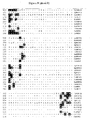
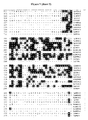
- An alignment is shown in Figure 9 of MNN4 / PNO1 homologs in P. pastoris, S.
- the disrupted genes or genes which encode for proteins participating in the transfer of mannosylphosphate to glycans of glycoproteins are preferably from a yeast strain belonging to the genus Pichia.
- Yeasts belonging to the genus Pichia according to the present invention include, but are not limited to: Pichia pastoris, Pichia finlandica, Pichia trehalophila, Pichia koclamae, Pichia membranaefaciens, Pichia methanolica, Pichia minuta (Ogataea minuta ,Pichia lindneri), Pichia opuntiae, Pichia thermotolerans, Pichi salictaria, Pichia guercum, Pichia pijperi, Pichia stiptis, and Pichia angusta ( Hansenula polyinorpha ).
- Pichia pastoris is preferably used among these.
- Other yeast and filamentous fungi include Saccharomyces cerevisiae, Schizosaccharomyces pombe, Saccharomyce sp. Hansenula polymorpha, Kluyveromyces sp., Candida sp., Candida albicans, Aspergillus nidulans, Aspergillus niger, Aspergillus oryzae, Trichoderma reesei, Chrysosporium lucknowense, Fusarium sp., Fusarium gramineum, Fusarium venenatum and Neurospora crassa.
- the Saccharomyces cerevisiae MNN4 protein sequence (Genbank accession # P36044) was blasted against a Pichia pastoris genomic sequence (Integrated Genomics, Chicago, IL) for open reading frames encoding for proteins with homology.
- This search identified three ORFs with regions of homology to MNN4p. These ORFs were designated MNN4A, MNN4B and MNN4C. Each of these three genes was subsequently.sequenced.
- the MNN4A gene was found to contain an open reading frame containing 2580 nucleotide bases coding for 860 amino acids ( Fig. 1 ).
- the MNN4B. gene was found to contain an open reading frame containing 1956 nucleotide bases coding for 652 amino acids ( Fig. 2 ), and the MNN4C gene was found to contain an open reading frame containing 2289 nucleotides bases coding for 763 amino acids ( Fig. 3 ).
- P. pastoris YSH-44 and YSH-1 were engineered from BK64-1, an Annumeric glycosylation site ( Choi et al., 2003, PNAS, 100: 5022-5027 ; Hamilton et al., 2003, Science, 301: 1244-1246 ).
- YSH-1 expresses glycoproteins having predominantly GlcNAcMan 5 GlcNAc 2 N-glycans and YSH-44 expresses glycoproteins having predominantly GIcNAc 2 Man 3 GlcNAc 2 N -glycans.
- the pno1 deletion allele (pno1::Hyg R ) in YSH-44 was generated by the PCR overlap method ( Davidson et al., 1999, Microbiol. 148; 2607-2615 ).
- Primers PNK1 (5'-CATAGCCCACTGCTAAGCC-AGAATTCTAATATG-3') (SEQ ID NO:7) paired with PNK2 PNK3 paired with PNK4 (5'-TCTTGAAGTAGATTTGGAGA-TTTTGCGCTATG-3') (SEQ ID NO: 10) were used to amplify the 5' and 3' flanking regions of the PNO1 gene from genomic DNA (NRRL-Y11430).
- Primers KAN1 (5'-AGCTGAAGCT-TCGTACGCTGC-3') (SEQ ID NO: 11) paired with KAN2 (5'-GCATAGGCCACTAGTGGATCTG-3') (SEQ ID NO:12) were used to amplify the Hyg resistance marker from vector pAG32 ( Goldstein and McCusker, 1999, Yeast, 14:1541-1553 ).
- Primers PNK1 and PNK4 were then used in a second reaction with all three products from first round of PCR reactions to generate an overlap product.
- the resulting fusion PCR product was used to transform strain YSH-44, an engineered P. pastoris strain expressing predominantly-GlcNAc2Man3GlcNAc2.
- Transformants were selected on YPD (1% yeast extract, 2% peptone, 2% dextrose) medium containing 200 mg/ml of hygromycin B. Proper integration of deletion allele pno1:: Hyg R was confirmed by PCR. This Dpnol strain was designated YSH-49.
- YAS-130 (Dpnol Dmnn4b) double mutant strain was achieved by PCR overlap in YSH-49.
- the TAS54 (TTCAACGAGTGACCAATGTAGA) ( SEQ ID NO: 13 ) and TAS51 (CCAT-CCAGTGTCGAAAACGAGCTGGCGAACTTTTCTGGGTCGAAG) (SEQ ID NO.14) primers were used to amplify the 521 bp DNA fragment 5' of the predicted start codon from Pichia pastoris genomic DNA (NRRL-Y 11430).
- TAS51. contains a 22 bp overhang that is complimentary to the 5' end of a drug resistance marker.
- TAS49 (TGAAGACGTCCCCTTTGAACA) ( SEQ ID NO:15 ) and TAS52 (ACGAGGCAAGCTAAACAGATCTAGTTGTTTTTTCTATATAAAAC) (SEQ ID N0 : 16) were used to amplify the 503 bp DNA fragment 3' of the predicted stop codon.
- TAS52 also contains a 22 bp overhang that is complimentary to the 3' end of the drug resistance marker.
- PCR of the drug resistance marker used pAG29 (contains pat ORF) as the DNA source (Goldstein and McCuster, 1999).
- the drug resistance marker was amplified using primers TAS53 (CTTCGACCCAGAAAAGTTCGCCAGCTCG-TTTTCGACACTGGATGG) (SEQ ID NO:17) and TAS50 (GTTTTATATAG-AAAAAACAACTAGATCTGTTTAGCTTGCCTCGT) (SEQ ID NO:14).
- TAS53 has a 22 bp overhang that is complimentary to the 22 bp 5' to the predicted MNN4B start codon.
- TAS50 has a 22 bp overhang that is complimentary to the 22 bp 3' to the predicted MNN4B stop codon.
- the 5' MMN4B fragment, 3'MNN4B fragment, and the gene that confers resistance to a selectable marker were combined in an equimolar ratio and used as template DNA with primers TAS54 and TAS49 for the PCR overlap reaction.
- YSH-1 was transformed by electroporation with SfiI-digested pJN503b (Dmnn4A D pnol::URA3) to yield the D ochl D mnn4A D pno1 strain YAS159.
- the URA3 selectable marker was recovered in this strain by 5-FOA counterselection.
- YAS164 D och1; Dmnn4A D pno1; ura3;his4;adel;arg4
- Sfi I-digested pas19 D mnn4B::URA3
- the YASI70 strain was subsequently counterselected on 5-FOA to yield the strain YAS174 ( D och1 Dmnn4A D pno1 D mnn4B;ura3;his4;adel; arg4 ) .
- YAS 174 thus represents a Pichia pastoris strain that is deficient in mannose outer chain formation and void of mannosylphosphate on N - linked glycans.
- PCR reactions contained template DNA, 125 mM dNTPs, 0.2 mM each of forward and reverse primer, Ex Taq polymerase buffer (Takara Bio Inc.), and Ex Taq polymerase.
- the DNA fragments 5' to the predicted MNN4B ORF, 3' to the predicted MNNV4B ORF, and the drug resistance marker were amplified with 30 cycles of 15 sec at 97°C, 15 sec at 55°C and 90 sec at 72°C with an initial denaturation step of 2 min at 97°C and a final extension step of 7 min at 72°C.
- PCR samples were separated by agarose gel electrophoresis and the DNA bands were extracted and purified using a Gel Extraction Kit from Qiagen. All DNA purifications were eluted in 10 mM Tris, pH 8.0 except for the final PCR (overlap of all three fragments) which was eluted in deionized H 2 O.
- DNA for transformation was prepared by adding sodium acetate to a final concentration of 0.3 M. One hundred percent ice cold ethanol was then added to a final concentration of 70% to the DNA sample. DNA was pelleted by centrifugation (12000g x 10 min) and washed twice with 70% ice cold ethanol. The DNA was dried and then resuspended in 50 ml of 10mM Tris, pH 8.0.
- YSH-49 and YAS-130 were prepared by expanding a yeast culture in BMGY (buffered minimal glycerol: 100 mM potassium phosphate, pH 6.0; 1.34% yeast nitrogen base; 4xl0 . 5 % biotin; 1% glycerol) to an O.D. of-2-6.
- the yeast were made electrocompetent by washing 3 times in 1M sorbitol and resuspending in -1-2 mls 1M sorbitol. DNA (1-2 mg) was mixed with 100 ml of competent yeast and incubated on ice for 10 min. Yeast were then electroporated with a BTX Electrocell Manipulator 600 using the following parameters; 1.5 kV, 129 ohms, and 25 mF. One milliliter of YPDS (1% yeast extract, 2% peptone, 2% dextrose, 1M sorbitol) was added to the electroporated cells. Transformed yeast were subsequently plated on selective agar plates.
- YPDS 1% yeast extract, 2% peptone, 2% dextrose, 1M sorbitol
- YPD Y+ 1% yeast extract, 2% peptone, 2% dextrose, 1.34% yeast nitrogen base without amino acids
- agar plates containing 0.4 mg/ml hygromycin B Cells transformed with knockout constructs containing the pat resistance gene were spread onto defined medium (1.34% yeast nitrogen base lacking amino acids and NH 4 SO 4 , 2% dextrose, 0.1°/m L-proline, 4x10- 5 % biotin) agar plates containing 0.6 mg/ml glufosinate. Colonies were patched onto another plate containing the same drug selection. DNA was isolated from these patches and analyzed by PCR for replacement of the wild-type MNN4B ORF with the drug resistance marker.
- TAS81. (TAGTCCAAGTACGA-AACGACACTATCG) (SEQ ID NO:19) and TAS08 (AGCTGCCCACGTCAAGAC-TGTCAAG) (SEQ ID NO:20) primers were used to screen the 5' portion of the knockout construct while TAS82 (ACGACGGTGAGTTCAAACAGTTTGGTT) (SEQ ID NO: 21) and TAS07 (TCGCTATACTGCTGTCGATTCGATAC) (SEQ ID NO:22) primers were used to screen the 3' portion of the knockout construct.
- EPO His-tagged erythropoietin
- BK248 ura3, his4, ade1, arg4, D ochl:: URA3
- BK244 [YSH44 transformed with pBK116 and pBK284 having the pno1mnn4b ( pnol::Hyg R ) (mnn4b::Kan R ) knockouts as described and shown in Example 2, Figure 4 .
- pBK116 results from a 1551 bp AOX1 3'UTR DNA fragment isolated from NRRL11430 (ATCC) inserted into Invitrogen pPIC6A plasmid at the AflIII site and a 1952bp AOX1 5'UTR DNA fragment isolated from NRRL 11430 inserted into the same pPIC6A plasmid at the BglII and BamHI sites with the removal of the 573 bp PmeI/BamHI DNA fragments.
- This pBK116 was then digested with NotI and the resulting NotI fragments were transformed into YSH44 in order to knock out the reporter K3 protein.
- pBK284 results from a 3196 bp DNA fragment including the AOX1 promoter, SOX1 ORF and SOX1 terminator sequence isolated from NRRL114330 (ATCC) and cloned into the multiple cloning site of the Invitrogen plasmid pCR2.1-TOPO. This plasmid was then digested with MscI and BssHI in order to delete the kanamycin gene. This resulted in pBK284 which was digested with PmeI prior to transformation into the YSH44 strain transformed with pBK116 for integration into the AOXI promoter locus. HPLC glycan analysis of EPO-6His in BK248 and BK244 is shown in Fig.
- the human CD40 DNA was amplified by PCR from phCD40/GemT ( Pullen et al., 1999, JBC, 274: 14246-14254 ) using a 5' EcoRI primer and a 3' His10-KpnI primer for cloning into pPICZ aA resulting in pJC33.
- pJC33 was expressed in P.
- YJC12 ura3, his4, ade1, arg4
- YAS252-2 YAS-130 transformed with pBK116, pBK284 and pRCD465 ( USSN 60/562424 ) containing galactosyltransferase
- HPLC glycan analysis of CD49-6His in YJC12 and YAS252 is shown in Fig. 7D , E.
- His-tagged-invertase the full length invertase sequence was amplified by PCR from Kluyveromyces lactis genomic DNA, strain CBS683, purchased from Centraalbureau voor Schimmelcultures.
- the invertase ORF was amplified using blunt ended 5' and 3' primers for insertion into pPICZA plasmid (providing the C-terminal 6His tag) at the Pm1I site.
- This pPB147 was transformed into the P. pastoris strain YAS245-2 (YA5130 transformed with pBK116, pBK284, and pRCD465 ( USSN 60/562424 ) resulting in YAS253.
- HPLC glycan analysis of invertase-6His in YAS253 is shown in Fig. 8 .
- the extent of mannosylphosphate transfer to N -linked glycans in the strains shown in Figs. 5-8 was determined by secreting a His-tagged reporter protein (kringle 3 protein in Figs. 5 , 6 ; erythropoietin protein and CD40 protein in Fig. 7 and invertase protein in Fig. 8 ) expressed under the control of the methanol inducible AOX1 promoter. Briefly, a shake flask containing BMGY was inoculated with a fresh yeast culture (e.g., YAS-130) and grown to an O.D. of ⁇ 20.
- a fresh yeast culture e.g., YAS-130
- the culture was centrifuged and the cell pellet washed with BMMY (buffered minimal methanol: same as BMGY except 0.5% methanol instead of 1% glycerol).
- BMMY buffered minimal methanol
- the cell pellet was resuspended in BMMY to a volume 1/5 of the original BMGY culture and placed in a shaker for 24 h.
- the secreted protein was harvested by pelleting the biomass by centrifugation and transferring the culture medium to a fresh tube.
- the His-tagged K3, EPO, CD40 and invertase proteins were then purified on a Ni-affinity column and digested with PNGase (Choi et al., 2003). Glycan was separated from protein and then labeled with 2-amino-benzamide (2-AB).
- the 2-AB-labeled glycan was lyophilized, resuspended in HPLC grade water and subjected to HPLC using a GlycoSep C column (Glyco, Novato, CA). This analysis allows separation of neutral and acidic glycans. These glycans were determined to be phosphorylated from experiments with mild acid hydrolysis which removes the terminal mannose group, exposing the phosphate. With subsequent alkaline phosphatase treatment, the terminal phosphate group can be cleaved, leaving a neutral glycan. Successive experiments showed that phosphorylated N -linked glycans (acidic glycans) in all strains migrated between 20 and 30 minutes. Baseline conditions were assessed using dH 2 O as a blank. The percentage of phosphorylation was calculated by dividing the acidic peak areas by the sum of the neutral and the acidic peaks. This HPLC analysis was performed under the conditions below.
- the HPLC conditions are as follows: Solvent A (acetonitrile), solvent B (500mM ammonium acetate, 500 mM, pH 4.5) and solvent C (water). The flow rate was 0.4 mL/min for 50 min. After eluting isocratically (20% A:80% C) for 10 min a linear solvent gradient (20% A:0% B:80% C to 20% A:50% B: 30%C) was employed over 30 min to elute the glycans. The column was equilibrated with solvent (20% A: 80%C) for 20 min between runs.
- PNK1 CATAGCCCACTGCTAAGCCAGAATTCTAATiATG
- SEQ ID NO:12 KAN2 GCATAGGCCACTAGTGGATCTG
- TAS5A TTCAACGAGTGACCAATGTAGA
Landscapes
- Chemical & Material Sciences (AREA)
- Life Sciences & Earth Sciences (AREA)
- Health & Medical Sciences (AREA)
- Organic Chemistry (AREA)
- Genetics & Genomics (AREA)
- Zoology (AREA)
- Wood Science & Technology (AREA)
- Engineering & Computer Science (AREA)
- Biochemistry (AREA)
- Molecular Biology (AREA)
- General Health & Medical Sciences (AREA)
- Microbiology (AREA)
- Bioinformatics & Cheminformatics (AREA)
- Biotechnology (AREA)
- Medicinal Chemistry (AREA)
- General Engineering & Computer Science (AREA)
- Mycology (AREA)
- Biophysics (AREA)
- Biomedical Technology (AREA)
- Gastroenterology & Hepatology (AREA)
- Proteomics, Peptides & Aminoacids (AREA)
- Chemical Kinetics & Catalysis (AREA)
- General Chemical & Material Sciences (AREA)
- Micro-Organisms Or Cultivation Processes Thereof (AREA)
- Preparation Of Compounds By Using Micro-Organisms (AREA)
- Peptides Or Proteins (AREA)
- Enzymes And Modification Thereof (AREA)
Applications Claiming Priority (2)
| Application Number | Priority Date | Filing Date | Title |
|---|---|---|---|
| US53246103P | 2003-12-24 | 2003-12-24 | |
| EP04806613.8A EP1696864B1 (de) | 2003-12-24 | 2004-12-22 | Verfahren zur elimination der mannosylphosphorylierung von glykanen bei der herstellung von glykoproteinen |
Related Parent Applications (2)
| Application Number | Title | Priority Date | Filing Date |
|---|---|---|---|
| EP04806613.8 Division | 2004-12-22 | ||
| EP04806613.8A Division-Into EP1696864B1 (de) | 2003-12-24 | 2004-12-22 | Verfahren zur elimination der mannosylphosphorylierung von glykanen bei der herstellung von glykoproteinen |
Publications (1)
| Publication Number | Publication Date |
|---|---|
| EP2341128A1 true EP2341128A1 (de) | 2011-07-06 |
Family
ID=34748799
Family Applications (2)
| Application Number | Title | Priority Date | Filing Date |
|---|---|---|---|
| EP10180809A Withdrawn EP2341128A1 (de) | 2003-12-24 | 2004-12-22 | Verfahren zur Elimination der Mannosylphosphorylierung von Glykanen bei der Herstellung von Glykoproteinen |
| EP04806613.8A Expired - Lifetime EP1696864B1 (de) | 2003-12-24 | 2004-12-22 | Verfahren zur elimination der mannosylphosphorylierung von glykanen bei der herstellung von glykoproteinen |
Family Applications After (1)
| Application Number | Title | Priority Date | Filing Date |
|---|---|---|---|
| EP04806613.8A Expired - Lifetime EP1696864B1 (de) | 2003-12-24 | 2004-12-22 | Verfahren zur elimination der mannosylphosphorylierung von glykanen bei der herstellung von glykoproteinen |
Country Status (7)
| Country | Link |
|---|---|
| US (1) | US7259007B2 (de) |
| EP (2) | EP2341128A1 (de) |
| JP (1) | JP4861830B2 (de) |
| AU (2) | AU2004311545B2 (de) |
| CA (1) | CA2551484C (de) |
| ES (1) | ES2528739T3 (de) |
| WO (1) | WO2005065019A2 (de) |
Families Citing this family (52)
| Publication number | Priority date | Publication date | Assignee | Title |
|---|---|---|---|---|
| US20060034830A1 (en) * | 2000-06-28 | 2006-02-16 | Gerngross Tillman U | Immunoglobulins comprising predominantly a GalGlcNAcMan5GLcNAc2 glycoform |
| US7863020B2 (en) | 2000-06-28 | 2011-01-04 | Glycofi, Inc. | Production of sialylated N-glycans in lower eukaryotes |
| US7449308B2 (en) | 2000-06-28 | 2008-11-11 | Glycofi, Inc. | Combinatorial DNA library for producing modified N-glycans in lower eukaryotes |
| US20060034828A1 (en) * | 2000-06-28 | 2006-02-16 | Gerngross Tillman U | Immunoglobulins comprising predominantly a GlcNAcMAN5GLCNAC2 glycoform |
| US7598055B2 (en) * | 2000-06-28 | 2009-10-06 | Glycofi, Inc. | N-acetylglucosaminyltransferase III expression in lower eukaryotes |
| US20060029604A1 (en) * | 2000-06-28 | 2006-02-09 | Gerngross Tillman U | Immunoglobulins comprising predominantly a GlcNAc2Man3GlcNAc2 glycoform |
| US7625756B2 (en) | 2000-06-28 | 2009-12-01 | GycoFi, Inc. | Expression of class 2 mannosidase and class III mannosidase in lower eukaryotic cells |
| US7795002B2 (en) * | 2000-06-28 | 2010-09-14 | Glycofi, Inc. | Production of galactosylated glycoproteins in lower eukaryotes |
| US8697394B2 (en) * | 2000-06-28 | 2014-04-15 | Glycofi, Inc. | Production of modified glycoproteins having multiple antennary structures |
| EP2322644A1 (de) * | 2000-06-28 | 2011-05-18 | GlycoFi, Inc. | Verfahren für die Herstellung modifizierter Glykoproteine |
| US20060024304A1 (en) * | 2000-06-28 | 2006-02-02 | Gerngross Tillman U | Immunoglobulins comprising predominantly a Man5GlcNAc2 glycoform |
| US20060034829A1 (en) * | 2001-12-27 | 2006-02-16 | Gerngross Tillman U | Immunoglobulins comprising predominantly a MAN3GLCNAC2 glycoform |
| JP4820055B2 (ja) * | 2001-12-27 | 2011-11-24 | グライコフィ, インコーポレイテッド | 哺乳動物型糖質構造を操作するための方法 |
| US20060024292A1 (en) * | 2001-12-27 | 2006-02-02 | Gerngross Tillman U | Immunoglobulins comprising predominantly a Gal2GlcNAc2Man3GlcNAc2 glycoform |
| US6964784B2 (en) * | 2002-03-07 | 2005-11-15 | Optigenex, Inc. | Method of preparation and composition of a water soluble extract of the bioactive component of the plant species uncaria for enhancing immune, anti-inflammatory, anti-tumor and dna repair processes of warm blooded animals |
| US7332299B2 (en) | 2003-02-20 | 2008-02-19 | Glycofi, Inc. | Endomannosidases in the modification of glycoproteins in eukaryotes |
| EP1730293A2 (de) * | 2004-03-17 | 2006-12-13 | Glycofi, Inc. | Verfahren zur konstruktion eines cytidinmonophosphat-sialinsäure-synthesewegs in pilzen und hefen |
| US7465577B2 (en) * | 2004-04-29 | 2008-12-16 | Glycofi, Inc. | Methods for reducing or eliminating α-mannosidase resistant glycans for the production of glycoproteins |
| AU2006287173A1 (en) * | 2005-09-02 | 2007-03-08 | Glycofi, Inc | Immunoglobulins comprising predominantly a GICNAcMan3GIcNAc2 glycoform |
| JP2009507482A (ja) * | 2005-09-09 | 2009-02-26 | グライコフィ, インコーポレイテッド | 主にman7glcnac2、man8glcnac2グリコフォームを含むイムノグロブリン |
| CA2623197A1 (en) * | 2005-09-22 | 2007-03-29 | Prosci Incorporated | Glycosylated polypeptides produced in yeast mutants and methods of use thereof |
| EP1954815B1 (de) * | 2005-11-15 | 2015-02-25 | GlycoFi, Inc. | Herstellung von glycoproteinen mit reduzierter o-glycosylierung |
| CA2651456A1 (en) * | 2006-05-19 | 2007-11-29 | Glycofi, Inc. | Recombinant vectors |
| AU2008227024A1 (en) * | 2007-03-07 | 2008-09-18 | Glycofi, Inc. | Production of glycoproteins with modified fucosylation |
| WO2008120107A2 (en) | 2007-04-03 | 2008-10-09 | Oxyrane (Uk) Limited | Glycosylation of molecules |
| WO2008136564A1 (en) * | 2007-05-04 | 2008-11-13 | Korea Research Institute Of Bioscience And Biotechnology | A novel ylmpo1 gene derived from yarrowia lipolytica and a process for preparing a glycoprotein not being mannosylphosphorylated by using a mutated yarrowia lipolytica in which ylmpo1 gene is disrupted |
| KR100915670B1 (ko) * | 2007-05-04 | 2009-09-04 | 한국생명공학연구원 | 야로위아 리폴리티카 유래의 신규 YlMPO1 유전자 및이의 파쇄 균주를 이용한 만노스 인산이 제거된 당단백질생산 방법 |
| US8637435B2 (en) * | 2007-11-16 | 2014-01-28 | Merck Sharp & Dohme Corp. | Eukaryotic cell display systems |
| EP2245151B1 (de) | 2008-02-20 | 2014-12-24 | GlycoFi, Inc. | Vektoren und hefestämme für die proteinproduktion |
| CA2715212A1 (en) | 2008-03-03 | 2009-09-11 | Glycofi, Inc. | Surface display of recombinant proteins in lower eukaryotes |
| US8067339B2 (en) | 2008-07-09 | 2011-11-29 | Merck Sharp & Dohme Corp. | Surface display of whole antibodies in eukaryotes |
| CA2733567A1 (en) | 2008-08-12 | 2010-02-18 | Glycofi, Inc. | Improved vectors and yeast strains for protein production: ca2+ atpase overexpression |
| CA2751730A1 (en) | 2009-02-25 | 2010-09-02 | Merck Sharp & Dohme Corp. | Metabolic engineering of a galactose assimilation pathway in the glycoengineered yeast pichia pastoris |
| US9598682B2 (en) | 2009-09-29 | 2017-03-21 | Vib Vzw | Hydrolysis of mannose-1-phospho-6-mannose linkage to phospho-6-mannose |
| WO2011046855A1 (en) | 2009-10-16 | 2011-04-21 | Merck Sharp & Dohme Corp. | Method for producing proteins in pichia pastoris that lack detectable cross binding activity to antibodies against host cell antigens |
| EP2494053A4 (de) | 2009-10-30 | 2013-10-30 | Merck Sharp & Dohme | Verfahren zur herstellung rekombinanter proteine mit erhöhter sekretionseffizienz |
| CN102725396A (zh) | 2009-10-30 | 2012-10-10 | 默沙东公司 | 在缺乏二肽基氨肽酶活性的巴斯德毕赤酵母中生产治疗性蛋白的方法 |
| US20130053550A1 (en) | 2009-11-19 | 2013-02-28 | Oxyrane Uk Limited | Yeast strains producing mammalian-like complex n-glycans |
| BR112012020882A2 (pt) | 2010-02-24 | 2015-11-03 | Merck Sharp & Dohme | métodos para produzir uma glicoproteína heteróloga e para produzir uma composição de glicoproteína, célula hospedeira, composição de glicoproteína, e, uso da pichia pastoris recombinante. |
| CA2799595C (en) | 2010-05-27 | 2022-08-16 | Merck Sharp & Dohme Corp. | Method for preparing antibodies having improved properties |
| WO2012042387A2 (en) | 2010-09-29 | 2012-04-05 | Oxyrane Uk Limited | De-mannosylation of phosphorylated n-glycans |
| US9347050B2 (en) | 2010-09-29 | 2016-05-24 | Oxyrane Uk Limited | Mannosidases capable of uncapping mannose-1-phospho-6-mannose linkages and demannosylating phosphorylated N-glycans and methods of facilitating mammalian cellular uptake of glycoproteins |
| CN107459577A (zh) | 2010-12-01 | 2017-12-12 | 默沙东公司 | 表面锚定的fc‑诱饵抗体展示系统 |
| KR20140114278A (ko) * | 2011-02-25 | 2014-09-26 | 머크 샤프 앤드 돔 코포레이션 | 변형된 o-글리코실화를 갖는 단백질의 생산을 위한 효모 균주 |
| US9328170B2 (en) | 2011-05-25 | 2016-05-03 | Merck Sharp & Dohme Corp. | Method for preparing Fc containing polypeptides having improved properties |
| EP2771461B1 (de) | 2011-10-28 | 2019-12-04 | Merck Sharp & Dohme Corp. | Manipulierte niedrig-eukaryotische wirtsstämme für rekombinante proteinexpression |
| EP3628326B1 (de) | 2012-03-15 | 2024-02-28 | Oxyrane UK Limited | Verfahren und materialien zur behandlung von morbus pompe |
| US9890378B2 (en) | 2012-05-11 | 2018-02-13 | Merck Sharp & Dohme Corp. | Surface anchored light chain bait antibody display system |
| WO2013174927A1 (en) | 2012-05-23 | 2013-11-28 | Novartis International Pharmaceutical Limited | Production of fucosylated glycoproteins |
| CN104736694B (zh) | 2012-10-22 | 2020-08-11 | 默沙东公司 | Crz1突变型真菌细胞 |
| US9707276B2 (en) | 2012-12-03 | 2017-07-18 | Merck Sharp & Dohme Corp. | O-glycosylated carboxy terminal portion (CTP) peptide-based insulin and insulin analogues |
| SG11201700446XA (en) | 2014-07-21 | 2017-02-27 | Glykos Finland Oy | Production of glycoproteins with mammalian-like n-glycans in filamentous fungi |
Citations (6)
| Publication number | Priority date | Publication date | Assignee | Title |
|---|---|---|---|---|
| US532461A (en) | 1895-01-15 | Surgical splint | ||
| EP0984062A1 (de) * | 1998-09-04 | 2000-03-08 | Cytos Biotechnology AG | Herstellung von menschlichem Erythropoietin |
| WO2001058493A1 (en) * | 2000-02-11 | 2001-08-16 | Maxygen Aps | Conjugates of follicle stimulating hormones |
| US20020137134A1 (en) * | 2000-06-28 | 2002-09-26 | Gerngross Tillman U. | Methods for producing modified glycoproteins |
| EP1283265A1 (de) * | 2000-05-17 | 2003-02-12 | Mitsubishi Pharma Corporation | Verfahren zur herstellung von proteinen unter reduktion einer zuckerkette und dadurch hergestelltes glykoprotein |
| WO2008136564A1 (en) * | 2007-05-04 | 2008-11-13 | Korea Research Institute Of Bioscience And Biotechnology | A novel ylmpo1 gene derived from yarrowia lipolytica and a process for preparing a glycoprotein not being mannosylphosphorylated by using a mutated yarrowia lipolytica in which ylmpo1 gene is disrupted |
Family Cites Families (32)
| Publication number | Priority date | Publication date | Assignee | Title |
|---|---|---|---|---|
| US605050A (en) * | 1898-05-31 | Machine for making metal spokes | ||
| CH586901A5 (de) * | 1975-09-22 | 1977-04-15 | Contraves Ag | |
| DE2707231C3 (de) * | 1977-02-19 | 1981-09-24 | Hellma GmbH u.Co KG Glastechnische-optische Werkstätten, 7840 Müllheim | Halter für Küvetten |
| DE2832091A1 (de) * | 1978-07-21 | 1980-01-31 | Eidenschink Henning | Optisches verfahren zur bestimmung der teilchengroesse kolloidaler loesungen und messgeraet zur durchfuehrung des verfahrens |
| US4278437A (en) * | 1979-04-09 | 1981-07-14 | Jan Haggar | Fluid specimen holder for biological fluid testing |
| USD271335S (en) * | 1981-03-16 | 1983-11-08 | Simons Sanford L | Cuvette holder |
| JPH01291830A (ja) * | 1988-05-20 | 1989-11-24 | Terumo Corp | 採血管ホルダー |
| JP3199850B2 (ja) * | 1992-08-04 | 2001-08-20 | 興和株式会社 | 血小板凝集能測定装置 |
| US5530540A (en) * | 1994-08-03 | 1996-06-25 | Wyatt Technology Corporation | Light scattering measurement cell for very small volumes |
| US5900132A (en) * | 1995-03-23 | 1999-05-04 | Beckman Coulter, Inc. | Capillary holder |
| SE504193C2 (sv) * | 1995-04-21 | 1996-12-02 | Hemocue Ab | Kapillär mikrokyvett |
| US5733507A (en) * | 1995-06-07 | 1998-03-31 | Inphocyte, Inc. | Biological cell sample holder for use in infrared and/or Raman spectroscopy analysis holder |
| HUP0003903A1 (en) * | 1995-11-16 | 2000-10-28 | Process for settling down particles floating in liquid and for observing them optically | |
| JP2000500581A (ja) * | 1995-11-17 | 2000-01-18 | ネーデルランセ オルハニサチエ フォール トゥーヘパスト−ナツールウェーテンシャッペルック オンデルズク テーエヌオー | 光度測定システムおよびそのようなシステム用の保持器 |
| US5817519A (en) * | 1995-12-28 | 1998-10-06 | Bayer Corporation | Automated method and device for identifying and quantifying platelets and for determining platelet activation state using whole blood samples |
| DE29607239U1 (de) * | 1996-04-23 | 1996-06-05 | J & M Analytische Mess- und Regeltechnik GmbH, 73431 Aalen | Kapillarhalter |
| US6043871A (en) * | 1997-03-03 | 2000-03-28 | Brigham Young University | System and method for measuring blood platelet function |
| US6004818A (en) * | 1997-08-07 | 1999-12-21 | Chrono-Log Corporation | Aggregometer with disposable test cell |
| WO1999054711A1 (en) * | 1998-04-17 | 1999-10-28 | Ljl Biosystems, Inc. | Sample-holding devices and systems |
| DE69910006T2 (de) * | 1998-05-13 | 2004-05-27 | Bayer Corp. | Durchflussküvette zur spektroskopischen untersuchung einer probe |
| US6016193A (en) * | 1998-06-23 | 2000-01-18 | Awareness Technology, Inc. | Cuvette holder for coagulation assay test |
| GB2339019B (en) * | 1998-06-30 | 2000-06-14 | Khaled Karrai | Sample holder apparatus |
| US6228652B1 (en) * | 1999-02-16 | 2001-05-08 | Coulter International Corp. | Method and apparatus for analyzing cells in a whole blood sample |
| WO2001029534A1 (en) * | 1999-10-15 | 2001-04-26 | The Administrators Of The Tulane Educational Fund | Device for and method of simultaneously measuring light scatter from multiple liquid samples |
| USD442287S1 (en) * | 1999-11-11 | 2001-05-15 | Hemocue Ab | Cuvette holder |
| US6375027B1 (en) * | 1999-11-18 | 2002-04-23 | Harvey M. Thomas | Holder for blood sample tubes |
| JP2001349825A (ja) * | 2000-06-06 | 2001-12-21 | Kowa Co | キュベット・スタンド及びキュベット付きスタンド |
| US6798520B2 (en) * | 2002-03-22 | 2004-09-28 | Diversa Corporation | Method for intensifying the optical detection of samples that are held in solution in the through-hole wells of a holding tray |
| US6992759B2 (en) * | 2002-10-21 | 2006-01-31 | Nippon Shokubai Co., Ltd. | Sample holder for spectrum measurement and spectrophotometer |
| US6867857B2 (en) * | 2002-10-29 | 2005-03-15 | Nanostream, Inc. | Flow cell for optical analysis of a fluid |
| US6774994B1 (en) * | 2003-08-13 | 2004-08-10 | Wyatt Technology Corporation | Method and apparatus for determining absolute number densities of particles in suspension |
| US7671974B2 (en) * | 2003-10-29 | 2010-03-02 | Chf Solutions Inc. | Cuvette apparatus and system for measuring optical properties of a liquid such as blood |
-
2004
- 2004-12-22 EP EP10180809A patent/EP2341128A1/de not_active Withdrawn
- 2004-12-22 AU AU2004311545A patent/AU2004311545B2/en not_active Ceased
- 2004-12-22 EP EP04806613.8A patent/EP1696864B1/de not_active Expired - Lifetime
- 2004-12-22 JP JP2006546463A patent/JP4861830B2/ja not_active Expired - Lifetime
- 2004-12-22 ES ES04806613.8T patent/ES2528739T3/es not_active Expired - Lifetime
- 2004-12-22 CA CA2551484A patent/CA2551484C/en not_active Expired - Fee Related
- 2004-12-22 WO PCT/IB2004/052887 patent/WO2005065019A2/en not_active Ceased
- 2004-12-22 US US11/020,808 patent/US7259007B2/en not_active Expired - Lifetime
-
2008
- 2008-11-25 AU AU2008249203A patent/AU2008249203B2/en not_active Ceased
Patent Citations (6)
| Publication number | Priority date | Publication date | Assignee | Title |
|---|---|---|---|---|
| US532461A (en) | 1895-01-15 | Surgical splint | ||
| EP0984062A1 (de) * | 1998-09-04 | 2000-03-08 | Cytos Biotechnology AG | Herstellung von menschlichem Erythropoietin |
| WO2001058493A1 (en) * | 2000-02-11 | 2001-08-16 | Maxygen Aps | Conjugates of follicle stimulating hormones |
| EP1283265A1 (de) * | 2000-05-17 | 2003-02-12 | Mitsubishi Pharma Corporation | Verfahren zur herstellung von proteinen unter reduktion einer zuckerkette und dadurch hergestelltes glykoprotein |
| US20020137134A1 (en) * | 2000-06-28 | 2002-09-26 | Gerngross Tillman U. | Methods for producing modified glycoproteins |
| WO2008136564A1 (en) * | 2007-05-04 | 2008-11-13 | Korea Research Institute Of Bioscience And Biotechnology | A novel ylmpo1 gene derived from yarrowia lipolytica and a process for preparing a glycoprotein not being mannosylphosphorylated by using a mutated yarrowia lipolytica in which ylmpo1 gene is disrupted |
Non-Patent Citations (51)
| Title |
|---|
| "Essentials of Glycobiology", 1999, COLD SPRING HARBOR LABORATORY PRESS |
| "Handbook of Biochemistry: Section A Proteins", vol. I, 1976, CRC PRESS |
| "Handbook of Biochemistry: Section A Proteins", vol. II, 1976, CRC PRESS |
| ALTSCHUL ET AL., J. MOL. BIOL., vol. 215, 1990, pages 403 - 410 |
| ALTSCHUL ET AL., NUCLEIC ACIDS RES., vol. 25, 1997, pages 3389 - 3402 |
| ANTEBI; FINK, MOL. BIOL. CELL, vol. 3, 1992, pages 633 - 654 |
| AUSUBEL ET AL.: "Current Protocols in Molecular Biology", 1992, GREENE PUBLISHING ASSOCIATES |
| BALLOU, METHODS ENZYMOL., vol. 185, 1990, pages 440 - 470 |
| BODANSZKY ET AL.: "Peptide Chemistry--A Practical Textbook", 1993, SPRINGER VERLAG |
| BRETTHAUER R K: "Genetic engineering of Pichia pastoris to humanize N-glycosylation of proteins", TRENDS IN BIOTECHNOLOGY, ELSEVIER PUBLICATIONS, CAMBRIDGE, GB, vol. 21, no. 11, 1 November 2003 (2003-11-01), pages 459 - 462, XP004467488, ISSN: 0167-7799, DOI: 10.1016/J.TIBTECH.2003.09.005 * |
| CALDWELL; JOYCE, PCR METHODS APPLIC., vol. 2, 1992, pages 28 - 33 |
| CHOI ET AL., PNAS, vol. 100, 2003, pages 5022 - 5027 |
| DAVIDSON ET AL., MICROBIOL., vol. 148, 1999, pages 2607 - 2615 |
| DEAN ET AL., JBC, vol. 272, 1997, pages 31908 - 31914 |
| EVANS ET AL., J. MED. CHEM., vol. 30, 1987, pages 1229 |
| FAUCHERE, J. ADV. DRUG RES., vol. 15, 1986, pages 29 |
| FREEHOLD, NJ;: "Worthington Enzyne Manual", BIOCHEMICAL CORP. |
| GISH; STATES, NATURE GENET., vol. 3, 1993, pages 266 - 272 |
| GOLDSTEIN; MCCUSKER, YEAST, vol. 14, 1999, pages 1541 - 1553 |
| GOLUB AND GREN: "Immunology #A Synthesis., 2" ed.", 1991, SINAUER ASSOCIATES |
| GRANT,: "Synthetic Peptides: A Users. Guide", 1992, W. H. FREEMAN AND CO. |
| HAMILTON ET AL., SCIENCE, vol. 301, 2003, pages 1244 - 1246 |
| HARLOW; LANE: "Antibodies: A Laboratory Manual", 1990, COLD SPRING HARBOR LABORATORY PRESS |
| HIROSE M ET AL: "CHARACTERIZATION OF N-LINKED OLIGOSACCHARIDES ATTACHED TO RECOMBINANT HUMAN ANTITHROMBIN EXPRESSED IN THE YEAST PICHIA PASTORIS", YEAST, JOHN WILEY & SONS LTD, GB, vol. 19, no. 14, 1 October 2002 (2002-10-01), pages 1191 - 1202, XP008032784, ISSN: 0749-503X, DOI: 10.1002/YEA.914 * |
| HUNTER; PLOWMAN, TRENDS IN BIOCHEIN. SCI., vol. 22, 1997, pages 18 - 22 |
| JIGAMI; ODANI, BIOCHIM. BIOPHYS. ACTA, vol. 1426, 1999, pages 333 - 345 |
| JONES: "Amino Acid and Peptide Synthesis", 1992, OXFORD UNIVERSITY PRESS |
| JUNG: "Combinatorial Peptide and Nonpeptide Libraries: A Handbook", 1997, JOHN WILEY |
| KUKURUZINSKA ET AL., ANNU. REV. BIOCHEM., vol. 56, 1987, pages 915 - 944 |
| LEUNG ET AL., TECHNIQUE, vol. 1, 1989, pages 11 - 15 |
| LUSSIER ET AL., JBC, vol. 272, 1997, pages 15527 - 15531 |
| MADDEN ET AL., METH. ENZYMOL., vol. 266, 1996, pages 131 - 141 |
| MADDEN, METH. ENZYMOL., vol. 266, 1996, pages 131 - 141 |
| MIELE ET AL., BIOTECH. APPL BIOCHEM., vol. 2, 1997, pages 79 - 83 |
| MIURA ET AL., GENE, vol. 324, 2004, pages 129 - 137 |
| MIURA M ET AL: "Cloning and characterization in Pichia pastoris of PNO1 gene required for phosphomannosylation of N-linked oligosaccharides", GENE, ELSEVIER, AMSTERDAM, NL, vol. 324, 7 January 2004 (2004-01-07), pages 129 - 137, XP004482481, ISSN: 0378-1119, DOI: 10.1016/J.GENE.2003.09.023 * |
| MONTESINO ET AL., PROTO EXPR. PURIF, vol. 14, 1998, pages 197 - 207 |
| ODANI ET AL., GLYCOBIOLOGY, vol. 6, 1996, pages 805 - 810 |
| PEARSON, METHODS ENZYMOL., vol. 183, 1990, pages 63 - 98 |
| PEARSON, METHODS MOL. BIOL., vol. 24, 25, 1994, pages 307 - 31,365-89 |
| PULLEN ET AL., JBC, vol. 274, 1999, pages 14246 - 14254 |
| RAYNER; MUNRO, JBC, vol. 273, 1998, pages 23836 - 23843 |
| REIDHAAR-OLSON; SAUER, SCIENCE, vol. 241, 1988, pages 53 - 57 |
| ROSENFELD; BALLOU, JBC, vol. 249, 1974, pages 2319 - 2321 |
| SAMBROOK ET AL.: "Molecular Cloning: A Laboratory Manual, 2d ed.,", 1989, COLD SPRING HARBOR LABORATORY PRESS |
| SAMBROOK ET AL.: "Molecular Cloning: A Laboratory Manual, 2d ed.,", 1989, COLD SPRING HARBOR LABORATORY PRESS, pages: 9.51 |
| TAYLOR; DRICKAMER: "Introduction to Gly- cobiology", 2003, OXFORD UNIV. PRESS |
| VEBER; FREIDINGER, TRENDS NEUROSCI., vol. 8, 1985, pages 392 - 396 |
| WANG ET AL., JBC, vol. 272, 1997, pages 18117 - 18124 |
| ZANG M ET AL: "PRODUCTION OF RECOMBINANT PROTEINS IN CHINESE HAMSTER OVARY CELLS USING A PROTEIN-FREE CELL CULTURE MEDIUM", BIOTECHNOLOGY. THE INTERNATIONAL MONTHLY FOR INDUSTRIAL BIOLOGY, NEW YORK, NY : NATURE PUBL. CO, 1983-1996, US, vol. 13, 1 April 1995 (1995-04-01), pages 389 - 392, XP002032677, ISSN: 0733-222X, DOI: 10.1038/NBT0495-389 * |
| ZHANG; MADDEN, GENOME RES., vol. 7, 1997, pages 649 - 656 |
Also Published As
| Publication number | Publication date |
|---|---|
| WO2005065019A2 (en) | 2005-07-21 |
| US20060160179A1 (en) | 2006-07-20 |
| AU2008249203B2 (en) | 2012-08-16 |
| AU2004311545A1 (en) | 2005-07-21 |
| JP4861830B2 (ja) | 2012-01-25 |
| EP1696864A4 (de) | 2008-03-26 |
| JP2007530014A (ja) | 2007-11-01 |
| US7259007B2 (en) | 2007-08-21 |
| WO2005065019A3 (en) | 2007-01-25 |
| AU2004311545B2 (en) | 2008-11-06 |
| EP1696864B1 (de) | 2014-11-12 |
| CA2551484A1 (en) | 2005-07-21 |
| CA2551484C (en) | 2015-03-31 |
| ES2528739T3 (es) | 2015-02-12 |
| EP1696864A2 (de) | 2006-09-06 |
| AU2008249203A1 (en) | 2008-12-18 |
Similar Documents
| Publication | Publication Date | Title |
|---|---|---|
| EP1696864B1 (de) | Verfahren zur elimination der mannosylphosphorylierung von glykanen bei der herstellung von glykoproteinen | |
| JP4954866B2 (ja) | 糖タンパク質の作製においてアルファ−マンノシダーゼ抵抗性グリカンを減少させるか又は排除する方法 | |
| EP1283265B1 (de) | Verfahren zur herstellung von proteinen unter reduktion von mannosephosphat in der zuckerkette und dadurch hergestelltes glykoprotein | |
| JP2007534330A5 (de) | ||
| JP2011115182A (ja) | 酵母への安定な遺伝子組み込みのためのura5遺伝子および方法 | |
| JP2012506710A (ja) | 宿主細胞中での糖鎖付加タンパク質の産生のための新規ツール | |
| MX2012004994A (es) | Metodo para producir proteinas terapeuticas en pichia pastoris que carecen de actividad de dipeptidil aminopeptidasa. | |
| KR20140091018A (ko) | 재조합 단백질 발현을 위한 조작된 하등 진핵 숙주 균주 | |
| KR20140114278A (ko) | 변형된 o-글리코실화를 갖는 단백질의 생산을 위한 효모 균주 | |
| US8003349B2 (en) | YLMPO1 gene derived from yarrowia lipolytica and a process for preparing a glycoprotein not being mannosylphosphorylated by using a mutated yarrowia lipolytica in which YLMPO1 gene is disrupted | |
| CA2876864A1 (en) | Methods for eliminating mannosylphosphorylation of glycans in the production of glycoproteins | |
| JP5752582B2 (ja) | 糖タンパク質の作製においてアルファ−マンノシダーゼ抵抗性グリカンを減少させるか又は排除する方法 | |
| WO2012064619A1 (en) | Pichia pastoris loci encoding enzymes in the proline biosynthetic pathway |
Legal Events
| Date | Code | Title | Description |
|---|---|---|---|
| PUAI | Public reference made under article 153(3) epc to a published international application that has entered the european phase |
Free format text: ORIGINAL CODE: 0009012 |
|
| AC | Divisional application: reference to earlier application |
Ref document number: 1696864 Country of ref document: EP Kind code of ref document: P |
|
| AK | Designated contracting states |
Kind code of ref document: A1 Designated state(s): AT BE BG CH CY CZ DE DK EE ES FI FR GB GR HU IE IS IT LI LT LU MC NL PL PT RO SE SI SK TR |
|
| 17P | Request for examination filed |
Effective date: 20120109 |
|
| 17Q | First examination report despatched |
Effective date: 20120731 |
|
| STAA | Information on the status of an ep patent application or granted ep patent |
Free format text: STATUS: THE APPLICATION HAS BEEN WITHDRAWN |
|
| 18W | Application withdrawn |
Effective date: 20150513 |