EP2343674A2 - Procédé et système permettant d'obtenir une session d'aide de télécommande sur un dispositif informatique - Google Patents
Procédé et système permettant d'obtenir une session d'aide de télécommande sur un dispositif informatique Download PDFInfo
- Publication number
- EP2343674A2 EP2343674A2 EP10252198A EP10252198A EP2343674A2 EP 2343674 A2 EP2343674 A2 EP 2343674A2 EP 10252198 A EP10252198 A EP 10252198A EP 10252198 A EP10252198 A EP 10252198A EP 2343674 A2 EP2343674 A2 EP 2343674A2
- Authority
- EP
- European Patent Office
- Prior art keywords
- computing device
- service
- remote
- service provider
- datacenter
- Prior art date
- Legal status (The legal status is an assumption and is not a legal conclusion. Google has not performed a legal analysis and makes no representation as to the accuracy of the status listed.)
- Withdrawn
Links
Images


Classifications
-
- G—PHYSICS
- G06—COMPUTING OR CALCULATING; COUNTING
- G06Q—INFORMATION AND COMMUNICATION TECHNOLOGY [ICT] SPECIALLY ADAPTED FOR ADMINISTRATIVE, COMMERCIAL, FINANCIAL, MANAGERIAL OR SUPERVISORY PURPOSES; SYSTEMS OR METHODS SPECIALLY ADAPTED FOR ADMINISTRATIVE, COMMERCIAL, FINANCIAL, MANAGERIAL OR SUPERVISORY PURPOSES, NOT OTHERWISE PROVIDED FOR
- G06Q10/00—Administration; Management
- G06Q10/10—Office automation; Time management
-
- G—PHYSICS
- G06—COMPUTING OR CALCULATING; COUNTING
- G06F—ELECTRIC DIGITAL DATA PROCESSING
- G06F11/00—Error detection; Error correction; Monitoring
- G06F11/07—Responding to the occurrence of a fault, e.g. fault tolerance
- G06F11/0703—Error or fault processing not based on redundancy, i.e. by taking additional measures to deal with the error or fault not making use of redundancy in operation, in hardware, or in data representation
- G06F11/0706—Error or fault processing not based on redundancy, i.e. by taking additional measures to deal with the error or fault not making use of redundancy in operation, in hardware, or in data representation the processing taking place on a specific hardware platform or in a specific software environment
- G06F11/0748—Error or fault processing not based on redundancy, i.e. by taking additional measures to deal with the error or fault not making use of redundancy in operation, in hardware, or in data representation the processing taking place on a specific hardware platform or in a specific software environment in a remote unit communicating with a single-box computer node experiencing an error/fault
-
- G—PHYSICS
- G06—COMPUTING OR CALCULATING; COUNTING
- G06F—ELECTRIC DIGITAL DATA PROCESSING
- G06F16/00—Information retrieval; Database structures therefor; File system structures therefor
- G06F16/90—Details of database functions independent of the retrieved data types
- G06F16/95—Retrieval from the web
- G06F16/955—Retrieval from the web using information identifiers, e.g. uniform resource locators [URL]
-
- G—PHYSICS
- G06—COMPUTING OR CALCULATING; COUNTING
- G06F—ELECTRIC DIGITAL DATA PROCESSING
- G06F21/00—Security arrangements for protecting computers, components thereof, programs or data against unauthorised activity
- G06F21/30—Authentication, i.e. establishing the identity or authorisation of security principals
- G06F21/305—Authentication, i.e. establishing the identity or authorisation of security principals by remotely controlling device operation
-
- G—PHYSICS
- G06—COMPUTING OR CALCULATING; COUNTING
- G06F—ELECTRIC DIGITAL DATA PROCESSING
- G06F21/00—Security arrangements for protecting computers, components thereof, programs or data against unauthorised activity
- G06F21/30—Authentication, i.e. establishing the identity or authorisation of security principals
- G06F21/31—User authentication
-
- G—PHYSICS
- G06—COMPUTING OR CALCULATING; COUNTING
- G06F—ELECTRIC DIGITAL DATA PROCESSING
- G06F21/00—Security arrangements for protecting computers, components thereof, programs or data against unauthorised activity
- G06F21/30—Authentication, i.e. establishing the identity or authorisation of security principals
- G06F21/44—Program or device authentication
-
- G—PHYSICS
- G06—COMPUTING OR CALCULATING; COUNTING
- G06F—ELECTRIC DIGITAL DATA PROCESSING
- G06F8/00—Arrangements for software engineering
- G06F8/60—Software deployment
- G06F8/65—Updates
-
- G—PHYSICS
- G06—COMPUTING OR CALCULATING; COUNTING
- G06F—ELECTRIC DIGITAL DATA PROCESSING
- G06F9/00—Arrangements for program control, e.g. control units
- G06F9/06—Arrangements for program control, e.g. control units using stored programs, i.e. using an internal store of processing equipment to receive or retain programs
- G06F9/46—Multiprogramming arrangements
- G06F9/54—Interprogram communication
- G06F9/547—Remote procedure calls [RPC]; Web services
Definitions
- the present invention is generally related to the field of remote computer repair services. More particularly, the present invention is related to a method and apparatus for achieving a remote control help session on a computing device.
- SW-based software-based
- PC personal computer
- OS Operating System
- Embodiments of the disclosure may be implemented in hardware, firmware, software, or any combination thereof.
- Embodiments of the disclosure implemented in a computer system may include one or more bus-based interconnects between components and/or one or more point-to-point interconnects between components.
- Embodiments of the invention may also be implemented as instructions stored on a machine-readable, tangible medium, which may be read and executed by one or more processors.
- a machine-readable, tangible medium may include any tangible mechanism for storing or transmitting information in a form readable by a machine (such as, a computing device).
- a machine-readable, tangible medium may include read only memory (ROM); random access memory (RAM); magnetic disk storage media; optical storage media; flash memory devices; and other tangible mediums.
- Embodiments of the present invention are directed to a method and system for providing assistance to end users in finding, enrolling and connecting with remote service providers that utilize embedded computing device technologies to diagnose, repair and/or optimize the end user's computing device experience.
- Embodiments of the present invention provide a way for end users to receive service without prior provisioning/configuration steps on their computing device, and works even when the user's OS is non-functional.
- an end user computing device having an Out-Of-Band (OOB) processor implemented using Intel® Active Management Technology (Intel® AMT) and an Intel® Management Engine (Intel® ME), all available from Intel Corporation of Santa Clara, California, and/or within chipsets sold by Intel Corporation; a connectivity service capable of operating with two different user interfaces on the end user computing device; firmware on the end user computer device having specific connection and trust settings hardcoded into the firmware to allow an end user computing device to create a trusted connection to the connectivity service; and a pass code, provided to the user of the end user computing device, to complete the secure connection through the connectivity service to a service provider.
- One user interface is an OS-resident user interface that runs in the user's OS to interact with the connectivity service.
- the second user interface is a pre-OS/BIOS-based user interface implemented in the management engine BIOS extensions (MEBx) module specific to operations with the connectivity service.
- Embodiments of the present invention are described with respect to a consumer PC with hardware, firmware, BIOS and software capabilities to interact with the connectivity service, the invention is not limited to consumer PCs. Embodiments of the invention may also be applicable to mobile computing devices, such as, but not limited to, notebooks, laptops, netbooks, mobile internet devices (MIDs), and ultra mobile PCs, and desktop computing devices, such as, but not limited to, workstations, PCs in entertainment centers, nettops, and set top boxes. Although embodiments of the present invention are not necessarily limited to OOB connections, embodiments of the present invention may be enhanced by OOB connections.
- the RPAT end to end service architecture 100 is configured to provide assistance to end users in finding, enrolling and connecting with remote service providers to diagnose, repair and/or optimize an end user computing device that is malfunctioning.
- the RPAT end to end service architecture 100 includes one or more computing devices, such as computing device 102, an RPAT service online infrastructure 104, remote console components 106, and a network 108 that communicatively couples the remote console components 106 to the computing devices 102 via the RPAT online service infrastructure 104.
- the network 108 may be embodied as any type of wired and/or wireless network such as a local area network, a wide area network, a publicly available global network (such as, for example, the Internet), or other networks. Additionally, the network 108 may include any number of additional devices (not shown) to facilitate the communication between the computing device 102, the RPAT online service infrastructure 104, and the remote console components 106, such as routers, switches, intervening computers, and the like.
- the computing device 102 may be embodied as any type of electronic device capable of performing the functions described herein.
- the computing device 102 may be embodied as a personal computer, a workstation, a laptop computer, a handheld computer, a mobile internet device, a cellular phone, a personal data assistant, a telephony device, a network appliance, a virtualization device, a storage controller, or other computer-based device.
- An exemplary computing device 102 includes an in-band processor 120, an out-of-band (OOB) processor 122, a chipset 126, a memory 128, communication circuitry 130, and power circuitry 140.
- the computing device 102 may also include one or more data storage devices 150 and/or one or more additional peripheral devices 152.
- several of the foregoing components may be incorporated on a motherboard of the computing device 102, while other components may be communicatively coupled to the motherboard via, for example, a peripheral port.
- the computing device 102 may include other components, sub-components, and devices commonly found in a computer and/or computing device, which are not illustrated in FIG. 1 for clarity of the description.
- the in-band processor 120 of the computing device 102 may be any type of processor capable of executing software/firmware, such as a microprocessor, digital signal processor, microcontroller, or the like.
- the in-band processor 120 is illustratively embodied as a single core processor having a processor core 124. However, in other embodiments, the in-band processor 120 may be embodied as a multi-core processor having multiple processor cores 124. Additionally, the computing device 102 may include additional in-band processors 120 having one or more processor cores 124.
- the in-band processor 120 is generally responsible for executing a software stack, which may include an operating system and various applications, programs, libraries, and drivers resident on the computing device 102.
- the chipset 126 of the computing device 102 may include a memory controller hub (MCH or "northbridge"), an input/output controller hub (ICH or “southbridge”), and a firmware device.
- the firmware device may be embodied as a memory storage device for storing Basic Input/Output System (BIOS) data and/or instructions and/or other information.
- BIOS Basic Input/Output System
- chipsets having other configurations may be used.
- the chipset 126 may be embodied as a platform controller hub (PCH).
- the memory controller hub (MCH) may be incorporated in or otherwise associated with the in-band processor 120.
- the chipset 126 is communicatively coupled to the in-band processor 120 via a number of signal paths.
- These signal paths may be embodied as any type of signal paths capable of facilitating communication between the components of the computing device 102.
- the signal paths may be embodied as any number of wires, cables, light guides, printed circuit board traces, vias, buses, intervening devices, and/or the like.
- the memory 128 of the computing device 102 is also communicatively coupled to the chipset 126 via a number of signal paths.
- the memory 128 may be embodied as one or more memory devices or data storage locations including, for example, dynamic random access memory devices (DRAM), synchronous dynamic random access memory devices (SDRAM), double-data rate synchronous dynamic random access memory device (DDR SDRAM), flash memory devices, and/or other volatile memory devices.
- DRAM dynamic random access memory devices
- SDRAM synchronous dynamic random access memory devices
- DDR SDRAM double-data rate synchronous dynamic random access memory device
- flash memory devices and/or other volatile memory devices.
- the computing device 102 may include additional memory devices.
- the operating system, applications, programs, libraries, and drivers that make up the software stack executed by the in-band processor 120 may reside in memory 128 during execution.
- software and data stored in memory 128 may be swapped between memory 128 and one or more data storage devices 150 as part of memory management operations.
- a user interface referred to as an OS-resident remote PC assist wizard may run in the operating system (not shown) of computing device 102.
- the OS-resident remote PC assist wizard enables an end user to interact and connect with the RPAT online service infrastructure 104.
- the operating system of computing device 102 may also include a Managed Service Provider (MSP) agent to facilitate remote access to computing device 102 from the MSP.
- MSP Managed Service Provider
- the MSP agent also gathers data about the computing device 102 and transfers files for the purpose of repairing the operating system of the computing device 102.
- the operating system of computing device 102 may also include an RPAT software development kit to integrate ISV (Independent Software Vendor) agents on the computing device 102, allow the redirection of TCP/IP level agents to remote console 106 through the RPAT online service infrastructure 104, and provide programmatic access to RPAT functions, such as, for example, enroll, connect, pass data to remote console, etc.
- ISV Independent Software Vendor
- the computing device 102 also includes communication circuitry 130 for communicating with RPAT online service infrastructure 104 and remote console components 106 over network 108.
- the communication circuitry 130 may be embodied as any number of devices and circuitry for enabling communications between the computing device 102 and RPAT online service infrastructure 104 and remote console components 106.
- the communication circuitry 130 may be embodied as one or more wired or wireless network interface cards (NICs) or other network communication cards, modules, or circuits for communicating with RPAT online service infrastructure 104, remote console components 106, or any other remote computing devices (not shown) over the network 108.
- Communication circuitry 130 is also communicatively coupled to the chipset 126 via a number of signal paths, allowing the in-band processor 120 to access the network 108.
- the components of computing device 102 are also operably coupled to power circuitry 140.
- the power circuitry 140 may be embodied as a circuit capable of drawing power from an AC commercial power source 144, a DC battery power source 142, or both.
- the computing device 102 may be placed in several reduced-power operational states when not being actively used. For example, the computing device 102 may be placed in a powered down or "off' state in which few, if any, components of the computing device 102 receive power from the power circuitry 140.
- the computing device 102 may be placed into various "sleep” or “hibernate” states in which some, but not all, components of computing device 102 receive power from the power circuitry 140.
- a "sleep" state may provide power to a volatile memory 128 (in order to retain data) but not to the in-band processor 120.
- Such a reduced-power operational state conserves energy while allowing the computing device 102 to return quickly to a full-power operational state.
- the out-of-band (OOB) processor 122 is distinct from and generally operates independently of the in-band processor 120.
- the OOB processor 122 may also be embodied as any type of processor capable of executing software, such as a microprocessor, digital signal processor, microcontroller, or the like, including one or more processors having one or more processor cores (not shown).
- the OOB processor 122 may be integrated into the chipset 126 on the motherboard or may be embodied as one or more separate integrated circuits disposed on an expansion board that is communicatively coupled to the chipset 126 via a number of signal paths.
- the OOB processor 122 may also be communicatively coupled to various components of the computing device 102, such as the memory 128 and the communication circuitry 130, via a number of signal paths. Alternatively or additionally, the OOB processor 122 may include built-in components with similar functionality, such as a dedicated memory and/or dedicated communication circuitry (not shown).
- the OOB processor 122 is configured for managing particular functions of the computing device 102 irrespective of the operational state of the in-band processor 120. To facilitate such independent operation, the OOB processor 122 may be provided with an independent connection to the power circuitry 140, allowing the OOB processor 122 to retain power even when other components of the computing device 102 are powered down or turned off. Furthermore, the OOB processor 122 may be provided with one or more independent network interfaces via communication circuitry 130, which is also provided with an independent connection to the power circuitry 140, allowing out-of-band communications over the network 108.
- the OOB processor 122 is able to communicate directly with devices on the network 108, (such as RPAT online service infrastructure 104 and remote console components 106), outside of the operating system running on in-band processor 120. In fact, this communication may take place without the user's knowledge.
- the OOB processor 122 is also capable of causing the computing device 102 to return to a full-power operational state, including booting the operating system.
- the OOB processor 122 may operate intelligently based on incoming queries/commands and communicate across the network 108 whether the in-band processor 120 is turned off, running on standby, being initialized, or in regular operation and whether the operating system is booting, running, crashed, or otherwise.
- the OOB processor 122 may be implemented using Intel® Active Management Technology (Intel® AMT) and Intel® Management Engine (Intel® ME), all available from Intel Corporation of Santa Clara, California, and/or within chipsets sold by Intel Corporation.
- Intel AMT® embedded platform technology enables out-of-band access to hardware and software information stored in non-volatile memory on each endpoint device, eliminating the need for a functioning operating system and many of the software agents found in other management tools.
- the OOB processor 122 may also include a Basic Input/Output System (BIOS) 160, a Management Engine BIOS Extension (MEBx), 162, and AMT Firmware 164 running on the ME 166.
- the AMT Firmware 164 may include firmware enhancements specific to operations with the RPAT online service infrastructure 104. For example, specific connection and trust settings may be hardcoded into the AMT Firmware 164 to allow a computing device 102 to create a trusted connection to the RPAT online service infrastructure 104.
- a BIOS-based user interface may be implemented as an enhancement to the Management Engine BIOS extension (MEBx) module specific to operations with the RPAT online service infrastructure 104.
- the BIOS-based user interface may be used as a Pre-OS remote wizard to enable access to the RPAT online service infrastructure even when the user's operating system is non-functional.
- the computing device 102 may also include one or more data storage devices 150 and one or more peripheral devices 152.
- the chipset 126 is also communicatively coupled to the one or more data storage devices 150 and the one or more peripheral devices 152 via a number of signal paths.
- the data storage device(s) 150 may be embodied as any type of device configured for the short-term or long-term storage of data such as, for example, memory devices and circuits, memory cards, hard disk drives, solid-state drives, or other data storage devices.
- the peripheral device(s) 152 may include any number of peripheral devices including input devices, output devices, and other interface devices.
- the peripheral devices 152 may include a display, a mouse, a keyboard, and/or one or more external speakers of the computing device 102. The particular devices included in the peripheral devices 152 may depend upon, for example, the intended use of the computing device.
- RPAT online service infrastructure 104 is a connectivity service that routes connectivity requests to the right datacenters based on geographic locality or other performance considerations, such as, but not limited to, latency, congestion, etc.
- RPAT online service infrastructure 104 enables remote console components 106 to be coupled to computing devices 102 to diagnose, repair and/or optimize an end user's malfunctioning computing device 102.
- RPAT online service infrastructure 104 also handles billing transaction services for the RPAT online service infrastructure 104.
- the RPAT online service infrastructure 104 includes an internet load balancing module 170, one or more hosted datacenter(s) 172, a file transfer service 174, and an onsite datacenter 176.
- the Internet load balancing module 170 is communicatively coupled to the one or more hosted datacenter(s) 172.
- the one or more hosted data center(s) 172 is communicatively coupled to the file transfer service 174.
- the file transfer service 174 is communicatively coupled to the onsite datacenter 176.
- the RPAT online service infrastructure 104 is designed so that several data centers can be used for scalability, even though the firmware only knows one root Internet address and one root certificate.
- Internet load balancing module 170 is used to achieve scalability across datacenters by load balancing the Internet domain name across multiple datacenters around the world, with each datacenter housing multiple servers and other computer equipment (not shown).
- the Internet load balancing module 170 routes connectivity requests to the right datacenter based on either geographic location relative to specific datacenters as well as current localized Internet congestion, and/or other performance considerations, such as, for example, latency, etc.
- the one or more hosted datacenter(s) 172 is a primary datacenter that houses servers and other computing equipment (not shown) for the RPAT online service infrastructure 104 running on the Internet.
- the one or more hosted datacenter(s) 172 may be rented space in third party hosting facilities.
- FIG. 2 is a simplified block diagram of a hosted datacenter 172 in an RPAT service end to end architecture according to an embodiment of the present invention.
- the host datacenter 172 comprises, inter alia, network load balancers 200, web service 202, gateways 204, a billing transaction batch forwarding service 206, a back office portal 208, and one or more service database(s) 210.
- the hosted datacenter 172 is designed for internal load balancing.
- Network load balancers 200 reside on each hosted datacenter network and are used to load balance incoming requests to multiple servers in the hosted data center 172 for redundancy and scalability.
- Web service 202 is a function hosted on web servers (not shown) in the datacenter 172.
- Web service 202 supports all interactions with the RPAT online service infrastructure 104 except the actual connections to the computing devices 102 seeking assistance.
- the supported interactions may include, but are not limited to, providing pass codes, creating Managed Service Providers (MSPs) (discussed below with reference to remote console components 106), registering and enrolling computing devices 102 and service providers, allowing Independent Service Vendors (ISVs) to add service providers for ISV bundled solutions, etc.
- MSPs Managed Service Providers
- ISVs Independent Service Vendors
- Gateways 204 are used for tunneling data between MSP consoles (discussed below with reference to remote console components 106) and computing devices 102 and for negotiating peer to peer sessions (when possible, given network conditions). For example, gateways 204 may tunnel data from MSP consoles to a gateway 204, in-band data from computing device 102 to a gateway 204, and OOB data from the AMT firmware of the computing device 102 to a gateway 204. Gateways 204 also help clients discover their public NAT IP address and port information in order to facilitate the direct connection between peer clients. Gateways 204 may be implemented in hardware, software, or a combination thereof.
- Billing transactions batch forwarding service 206 comprises a service for forwarding connectivity data records from the one or more hosted datacenter(s) 172 to the onsite datacenter 176.
- Billing transactions batch forwarding service 206 may be implemented in hardware, software, or a combination thereof.
- Back office portal 208 is a web portal for the administration of RPAT service data, such as, for example, adding/changing MSP accounts, marketplace semantics, etc.
- Back office portal 208 may be implemented in hardware, software, or a combination thereof.
- the one or more service database(s) 210 comprises a repository of all data for the service to operate to connect computing devices 102 with remote console components 106, such as data regarding MSPs, PCs, enrollments, pass codes, connection history, etc.
- file transfer service (FTS) 174 is used for secure file transfer between the one or more hosted datacenter(s) 172 and the onsite datacenter 176.
- Onsite datacenter 176 is a datacenter located on the site of the RPAT service (that is, a site that is owned by the RPAT service, not a rented location). Onsite datacenter 176 is a facility used to host sensitive customer data and processes such as, for example, billing terms, payment history, etc.
- FIG. 3 is a simplified block diagram of an onsite datacenter 176 according to an embodiment of the present invention.
- Onsite datacenter 176 comprises a billing transactions batch receive service 300, a Billing admin portal 302, a billing database 304, and a VAR portal 306.
- Billing transactions batch receive service 300 is used to receive billing records from the externally hosted portion (that is, the billing transaction batch forwarding service 206) of the RPAT service infrastructure 104.
- Billing admin portal 302 is used to administer billing such as setting billing terms, generating bills, etc.
- Billing database 304 is a repository of the complete set of data required to charge customers of the service. Connectivity data is forwarded from the one or more service databases 210 and processed along with per-customer billing terms (which are only stored in the billing database 304) to allow invoices and reports to be generated.
- VAR portal 306 is a separate portal used to facilitate partners signing up for the service.
- the remote console components 106 are components of a service provider that enable the service provider to provide services to the remote computing devices 102 in need of assistance.
- the remote console components 106 comprise one or more service technician PCs 180 and optional ISV (Independent Service Vendor) components 182.
- Optional ISV components 182 may include ISV software and/or equipment that reside in the service provider's datacenter.
- the service technician PCs 180 are PCs that technicians from the service providers may use to remotely access computing devices 102 via RPAT service online infrastructure 104.
- Service technician PCs 180 may be built by a third party, such as, for example, a PC manufacturer, and owned by a service provider.
- the PC manufacturer and the service provider may be the same entity. In another embodiment, the PC manufacturer and the service provider may be separate entities.
- the service technician PCs 180 may be embodied as a type of computing device separate from the computing device 102.
- the service technician PCs 180 may be embodied as one or more personal computers, workstations, laptop computers, or other computer-based devices configured to provide assistance to computing devices 102.
- the service technician PCs 180 may include similar components to that of the computing device 102, such as, but not limited to, for example, a processor 184, memory 186 (having stored thereon an OS 188), and communication circuitry 190.
- FIG. 4 is a simplified block diagram of a software environment for the service technician PC 180 according to an embodiment of the present invention.
- Service technician PC 180 comprises, inter alia, operating system 188 having a managed service provider (MSP) console 400, an RPAT Software Development Kit (SDK) 402, an Active Management Technology (AMT) Software Development Kit (SDK) 404, and a network stack 406.
- MSP managed service provider
- SDK RPAT Software Development Kit
- AMT Active Management Technology
- SDK Software Development Kit
- Operating system 188 is an operating system that runs on the service technician PC 180.
- the operating system 188 may be an operating system manufactured by Microsoft® Corporation, located in Redmond, Washington.
- other operating systems may be used, such as, but not limited to, Linux operating systems.
- the MSP (Managed Service Provider) console 400 is a remote console application used by a service technician to connect the service technician PC 180 through the RPAT online service infrastructure 104 to the computing devices 102 requesting assistance.
- MSP console 400 runs in the operating system 188, and is programmatically integrated to the RPAT online service infrastructure 104 using the RPAT SDK 402.
- the RPAT SDK 402 is a software development kit that contains binary executables, reference/example code, and documentation to enable an ISV to integrate their MSP console 400 with the RPAT service infrastructure 104.
- the AMT SDK 404 comprises a building block that, in conjunction with the RPAT SDK 402, interacts with the manageability features on the computing device 102 to enable remote operations of components on the computing device 102, such as, but are not limited to, remote operations of the keyboard, video, and mouse.
- the network stack 406 comprises software running in the operating system 188 that provides network connectivity for service technician PCs 180.
- Network connectivity may be wired connectivity as well as wireless connectivity.
- remote console components 106 may comprise an optional SaaS (software as a service) ISV hosted application.
- the SaaS ISV hosted application may comprise ISV datacenter(s) in instances where an ISV has its own infrastructure and prefers to utilize its own infrastructure rather than the infrastructure of the remote console components 106.
- Computing devices 102 may be end user PCs that comprise, inter alia, PC platform components that act as a system and are entirely independent of the presence and state of the operating system and software installed on the computing devices 102.
- the computing device 102 includes a tamper resistant component (the AMT firmware running on a Management Engine (ME)) that allows computing device 102 to create a trusted connection to the RPAT online service infrastructure 104, even when the OS is non-functional.
- ME Management Engine
- all that is required of the end user of the computing device 102 is to enter a single string of digits referred to as a pass code, and the RPAT online service infrastructure 104, in turn, will complete the secure connection to a service provider for assistance with the diagnosis and repair of the computing device 102.
- FIG. 5 is a flow diagram 500 describing an exemplary method for remote PC assist technology (RPAT) services according to an embodiment of the present invention.
- the invention is not limited to the embodiment described herein with respect to flow diagram 500. Rather, it will be apparent to persons skilled in the relevant art(s) after reading the teachings provided herein that other functional flow diagrams are within the scope of the invention.
- the process begins with block 502, where the process immediately proceeds to block 504.
- the RPAT online service infrastructure 104 receives a request from a service provider to obtain a pass code for an end user who had previously contacted the service provider to obtain assistance with their computing device 102 that is experiencing computer problems.
- the service provider may receive the notification of the problematic computing device 102 from the end user via telephone, email, or an instant message.
- the service provider may be known to the end user. For instance, the service provider may have been known by the end user because of a warrantee or extended service plan. In this instance, the service provider is typically the manufacturer and/or retailer of the computing device 102. The process then proceeds to block 506.
- the RPAT online service provides a pass code to the service provider for the end user.
- the service provider in turn provides the pass code to the end user of the problematic computing device 102.
- the process then proceeds to block 508.
- the RPAT online service infrastructure 104 is securely connected to the end user computing device 102.
- the end user To securely connect to the RPAT online service infrastructure 104, the end user must enter the pass code when prompted by a remote PC assist wizard user interface.
- a remote PC assist wizard user interface As previously indicated, there are two remote PC assist wizard user interfaces, an OS-resident remote PC assist wizard and a pre-OS remote pc assist wizard (which is a BIOS-based user interface).
- the end user To start an interaction with the RPAT online service, the end user must press a CTRL-ALT-F1 key sequence. If the OS of the computing device 102 is operable, the OS-resident remote PC assist wizard user interface will be presented to the end user.
- FIG. 6 is a screen shot illustrating a boot screen with a message indicating to an end user how to enter the pre-OS remote PC assist wizard user interface by simultaneously pressing the CTRL-ALT-F1 keys. In either case, the user will be prompted for the pass code that was received from the service provider.
- FIG. 7 is a screen shot illustrating a prompt for the pass code entry according to an embodiment of the present invention.
- the pass code not only allows the end user computing device 102 to be securely connected to the RPAT online service infrastructure 104, it also uniquely identifies which service provider and technician session the end user computing device 102 is trying to connect with to enable the service provider technician to use its remote console application to diagnose repair, and/or optimize the end user computing device 102 that is malfunctioning.
- the process proceeds to block 510.
- the RPAT online service is securely connected to the service technician PC 180 of the service provider.
- the service provider technician must also provide the pass code to the RPAT online service in order to obtain a secure, trusted connection to a known pre-programmed location. The process then proceeds to block 512.
- the RPAT online service links the service technician PC 180 to a PC session indicated by the pass code. The process then proceeds to block 514.
- the RPAT online service enables the service technician PC 180 to connect through the RPAT online service infrastructure 104 to the problematic computing device 102.
- the service technician having remote access to the computing device 102 via the service technician PC 180, can now assist the end user in the diagnosis and repair of the problematic computing device 102.
- the present invention provides an end user with the ability to locate a valid, applicable service provider that can help the end user with computer problem(s) that the end user is encountering with his/her computing device 102.
- the end user may find the service provider regardless of the state of his/her computing device 102, even when the user's operating system will not boot, the computer is having blue screen problems, etc., and even when the end user has had no interaction with the RPAT online service and/or a service provider.
- Embodiments of the present invention use a centralized rendezvous point as a trusted jumping off point for providing the user a list of relevant and trusted service providers to choose from, without complicated user configuration steps.
- RPAT online service infrastructure 104 will provide an end user with a list of qualified service providers that can help the end user with his/her problematic computing device 102 when the user enters the remote PC assist wizard user interface and selects "search for service providers.”
- This provides non-technical users as well as technical users, and particularly small business users without IT departments as well as consumer PC users, access to the emerging outsourced/remote service provider businesses, such as, for example, GeekSquad, Firedog, PlumChoice, HiWired, etc.
- Embodiments of the present invention also provide the ability for the end user to select from a broader set of service providers than their warrantee and extended service plan provides, particularly when either of those relationships have expired or the end user's issue(s) are outside of the scope of those service providers' coverage.
- FIG. 8 is a flow diagram 800 describing another exemplary method for remote PC assist technology (RPAT) services according to an embodiment of the present invention.
- the invention is not limited to the embodiment described herein with respect to flow diagram 800. Rather, it will be apparent to persons skilled in the relevant art(s) after reading the teachings provided herein that other functional flow diagrams are within the scope of the invention.
- the process begins with block 802, where the process immediately proceeds to block 804.
- the RPAT online service receives a request for a secure, trusted connection to the RPAT online service at a known pre-programmed location. This is accomplished by an end user pressing and simultaneously holding a CTRL-ALT-F1 key sequence in a BIOS boot screen and selecting "start remote assistance and search for service providers.”
- the CTRL-ALT-F1 key sequence causes the AMT firmware to make the secure, trusted connection to the RPAT online service. The process then proceeds to block 806.
- the RPAT online service sends the end user a service provider marketplace list over the secure, trusted connection to enable the end user to select a service provider.
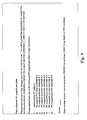
- FIG. 9 is an exemplary screen shot of a provider marketplace list selection.
- the marketplace list of service providers may have the following additional capabilities/benefits, all of which may be managed by the RPAT online service infrastructure 104 without subsequent modifications to firmware on the computing devices 102:
- the RPAT online service will receive a request for a pass code from the selected service provider. The process proceeds to block 810.
- the RPAT online service will provide the service provider with the pass code to be used by the end user.
- the service provider Upon receiving the pass code, the service provider will provide the end user with the pass code, which the end user will enter into the pre-OS remote PC assist wizard user interface. The process then proceeds to block 8i2.
- the RPAT online service infrastructure 104 receives the request for a secure, trusted connection to the service from the AMT at the known, pre-programmed location, along with the pass code. The process then proceeds to block 814.
- the RPAT online service infrastructure 104 validates the pass code and allows the secure connection. The end user may now wait for the service provider technician connection. The process proceeds to block 816.
- the RPAT online service infrastructure 104 receives a request from the service provider technician PC 180 to make a secure, trusted connection to the RPAT online service at a known pre-programmed location, along with the pass code. The process proceeds to block 818.
- the RPAT online service infrastructure 104 links the service provider technician PC 180 to the session indicated by the pass code and the service provider technician PC 180 connects through the RPAT online service infrastructure 104 to computing device 102.
- the service provider technician Via the computing device AMT/ME firmware, the service provider technician is able to perform remote control/assistance/diagnostics/repair functions on the computing device 102.
- BIOS screens pre-OS remote PC assist wizard user interface
- OS-resident remote PC assist wizard user interface OS-resident remote PC assist wizard user interface
Landscapes
- Engineering & Computer Science (AREA)
- Theoretical Computer Science (AREA)
- Physics & Mathematics (AREA)
- General Physics & Mathematics (AREA)
- Business, Economics & Management (AREA)
- General Engineering & Computer Science (AREA)
- Computer Security & Cryptography (AREA)
- Software Systems (AREA)
- Strategic Management (AREA)
- Entrepreneurship & Innovation (AREA)
- Human Resources & Organizations (AREA)
- Quality & Reliability (AREA)
- Computer Hardware Design (AREA)
- Data Mining & Analysis (AREA)
- Tourism & Hospitality (AREA)
- Operations Research (AREA)
- Marketing (AREA)
- Economics (AREA)
- General Business, Economics & Management (AREA)
- Databases & Information Systems (AREA)
- Debugging And Monitoring (AREA)
- Computer And Data Communications (AREA)
- Management, Administration, Business Operations System, And Electronic Commerce (AREA)
- Information Transfer Between Computers (AREA)
- Test And Diagnosis Of Digital Computers (AREA)
Applications Claiming Priority (1)
| Application Number | Priority Date | Filing Date | Title |
|---|---|---|---|
| US12/655,461 US20110161721A1 (en) | 2009-12-30 | 2009-12-30 | Method and system for achieving a remote control help session on a computing device |
Publications (2)
| Publication Number | Publication Date |
|---|---|
| EP2343674A2 true EP2343674A2 (fr) | 2011-07-13 |
| EP2343674A3 EP2343674A3 (fr) | 2012-01-25 |
Family
ID=44064675
Family Applications (1)
| Application Number | Title | Priority Date | Filing Date |
|---|---|---|---|
| EP10252198A Withdrawn EP2343674A3 (fr) | 2009-12-30 | 2010-12-22 | Procédé et système permettant d'obtenir une session d'aide de télécommande sur un dispositif informatique |
Country Status (5)
| Country | Link |
|---|---|
| US (1) | US20110161721A1 (fr) |
| EP (1) | EP2343674A3 (fr) |
| JP (1) | JP5027918B2 (fr) |
| KR (1) | KR101227277B1 (fr) |
| CN (1) | CN102118436B (fr) |
Cited By (1)
| Publication number | Priority date | Publication date | Assignee | Title |
|---|---|---|---|---|
| EP2875431A4 (fr) * | 2012-07-17 | 2016-04-13 | Hewlett Packard Development Co | Système et procédé de validation de matériel sans connaissance du système d'exploitation |
Families Citing this family (15)
| Publication number | Priority date | Publication date | Assignee | Title |
|---|---|---|---|---|
| US8726069B2 (en) * | 2010-10-27 | 2014-05-13 | Red Hat Israel, Ltd. | Highly available file system in a directly attached storage |
| US9160615B2 (en) | 2011-08-10 | 2015-10-13 | Corvo Technologies Llc | Device and method for remote computer operation |
| US9256717B2 (en) * | 2012-03-02 | 2016-02-09 | Verizon Patent And Licensing Inc. | Managed mobile media platform systems and methods |
| US9483344B2 (en) | 2012-04-05 | 2016-11-01 | Assurant, Inc. | System, method, apparatus, and computer program product for providing mobile device support services |
| US9413893B2 (en) | 2012-04-05 | 2016-08-09 | Assurant, Inc. | System, method, apparatus, and computer program product for providing mobile device support services |
| JP6203370B2 (ja) * | 2013-03-15 | 2017-09-27 | アメリカン メガトレンズ インコーポレイテッド | ウェブベースの仮想媒体リダイレクトのシステムおよび方法 |
| US10318459B2 (en) | 2015-04-30 | 2019-06-11 | Hewlett Packard Enterprise Development Lp | Peripheral device server access |
| JP6701863B2 (ja) | 2016-03-24 | 2020-05-27 | 日本電気株式会社 | ファームウェア配信システム、配信装置、ファームウェア配信方法およびファームウェア配信プログラム |
| CN105791409B (zh) * | 2016-03-30 | 2020-12-18 | 北京小米移动软件有限公司 | 远程连接建立方法及装置 |
| EP3759662A4 (fr) * | 2018-03-02 | 2021-12-15 | General Electric Company | Système et procédé de maintenance d'un parc de machines |
| US12314126B2 (en) * | 2020-08-18 | 2025-05-27 | Hewlett-Packard Development Company, L.P. | Repair commands for electronic devices |
| KR102780025B1 (ko) * | 2020-10-27 | 2025-03-12 | 삼성에스디에스 주식회사 | 원격 지원 시스템 및 방법과 이를 수행하기 위한 웹 애플리케이션 서버 |
| US20220413950A1 (en) * | 2021-06-24 | 2022-12-29 | Softiron Limited | Automated Media Maintenance |
| US20240048382A1 (en) | 2022-08-03 | 2024-02-08 | 1080 Network, Llc | Systems, methods, and computing platforms for executing credential-less network-based communication exchanges |
| CN116204266A (zh) * | 2023-05-04 | 2023-06-02 | 深圳市联合信息技术有限公司 | 远程协助的信息创建运维系统及其方法 |
Family Cites Families (25)
| Publication number | Priority date | Publication date | Assignee | Title |
|---|---|---|---|---|
| US5978912A (en) * | 1997-03-20 | 1999-11-02 | Phoenix Technologies Limited | Network enhanced BIOS enabling remote management of a computer without a functioning operating system |
| WO2000017766A2 (fr) | 1998-09-22 | 2000-03-30 | Cybex Computer Products Corporation | Systeme et procede permettant l'acces et l'exploitation a distance sur ordinateur personnel |
| JP3723375B2 (ja) * | 1999-03-26 | 2005-12-07 | 富士通株式会社 | 自動取引装置 |
| JP2003178118A (ja) * | 2001-12-12 | 2003-06-27 | Hitachi Ltd | 上下水道維持管理システム及びコンピュータ・ソフトウエア |
| US7496950B2 (en) * | 2002-06-13 | 2009-02-24 | Engedi Technologies, Inc. | Secure remote management appliance |
| EP1484682B1 (fr) * | 2003-06-02 | 2012-12-05 | Hewlett-Packard Development Company, L.P. | Procédé et système pour supporter un appareil électronique |
| US7398470B2 (en) * | 2003-08-22 | 2008-07-08 | Vistaprint Technologies Limited | System and method for remote assistance |
| US7409575B2 (en) * | 2004-12-31 | 2008-08-05 | Intel Corporation | Recovery of computer systems |
| US7581047B2 (en) * | 2005-01-25 | 2009-08-25 | American Megatrends, Inc. | Usage of keyboard driver in extensible firmware interface for adding new hot keys at firmware level |
| JP4649253B2 (ja) * | 2005-03-30 | 2011-03-09 | 株式会社野村総合研究所 | ログ取得プログラムおよび方法 |
| CN100359850C (zh) * | 2005-05-17 | 2008-01-02 | 北京软通科技有限责任公司 | 远程计算机服务的系统及方法 |
| US20070011507A1 (en) * | 2005-06-03 | 2007-01-11 | Intel Corporation | System and method for remote system support |
| US7792276B2 (en) * | 2005-09-13 | 2010-09-07 | Language Line Services, Inc. | Language interpretation call transferring in a telecommunications network |
| US8218566B2 (en) * | 2005-10-07 | 2012-07-10 | Hewlett-Packard Development Company, L.P. | Systems and methods for making serial ports of existing computers available over a network |
| US7933815B2 (en) * | 2006-11-01 | 2011-04-26 | Intellifix (Uk) Limited | System and method for obtaining technical support services over a network |
| CN100438473C (zh) * | 2007-01-29 | 2008-11-26 | 成都金山数字娱乐科技有限公司 | 一种通过网络数据包控制输入的远程协助其他网络用户的方法 |
| EP2111594B1 (fr) * | 2007-02-14 | 2017-11-08 | Leica Geosystems AG | Système et procédé de télédiagnostic |
| US20080195460A1 (en) * | 2007-02-14 | 2008-08-14 | Kivin Varghese | Attention Marketplace with Individualized Advertisements |
| US7836442B2 (en) * | 2007-03-15 | 2010-11-16 | Lenovo (Singapore) Pte. Ltd. | Out-of-band patch management system |
| US7783872B2 (en) * | 2007-03-30 | 2010-08-24 | Dell Products, Lp | System and method to enable an event timer in a multiple event timer operating environment |
| CA2693595A1 (fr) * | 2007-07-13 | 2009-01-22 | Plumchoice, Inc. | Systemes et procedes pour distribuer un support technique eloigne via un service centralise |
| KR101540129B1 (ko) * | 2007-07-20 | 2015-07-28 | 퀄컴 인코포레이티드 | 원격 액세스 진단 디바이스 및 이의 방법들 |
| DE102007046079A1 (de) * | 2007-09-26 | 2009-04-02 | Siemens Ag | Verfahren zur Herstellung einer sicheren Verbindung von einem Service Techniker zu einer von einem Störfall betroffenen Komponente einer ferndiagnostizierbaren und/oder fernwartbaren Automatisierungs-Umgebung |
| JP4859067B2 (ja) * | 2008-02-12 | 2012-01-18 | Kddi株式会社 | 端末に生じた障害に対する遠隔障害対応方法及びシステム |
| US8700761B2 (en) * | 2008-09-04 | 2014-04-15 | At&T Intellectual Property I, L.P. | Method and system for detecting and managing a fault alarm storm |
-
2009
- 2009-12-30 US US12/655,461 patent/US20110161721A1/en not_active Abandoned
-
2010
- 2010-12-10 JP JP2010276086A patent/JP5027918B2/ja not_active Expired - Fee Related
- 2010-12-22 EP EP10252198A patent/EP2343674A3/fr not_active Withdrawn
- 2010-12-24 KR KR1020100135052A patent/KR101227277B1/ko not_active Expired - Fee Related
- 2010-12-24 CN CN201010625054.9A patent/CN102118436B/zh not_active Expired - Fee Related
Non-Patent Citations (1)
| Title |
|---|
| None |
Cited By (1)
| Publication number | Priority date | Publication date | Assignee | Title |
|---|---|---|---|---|
| EP2875431A4 (fr) * | 2012-07-17 | 2016-04-13 | Hewlett Packard Development Co | Système et procédé de validation de matériel sans connaissance du système d'exploitation |
Also Published As
| Publication number | Publication date |
|---|---|
| CN102118436B (zh) | 2015-04-29 |
| US20110161721A1 (en) | 2011-06-30 |
| CN102118436A (zh) | 2011-07-06 |
| EP2343674A3 (fr) | 2012-01-25 |
| KR20110079524A (ko) | 2011-07-07 |
| KR101227277B1 (ko) | 2013-01-29 |
| JP2011175622A (ja) | 2011-09-08 |
| JP5027918B2 (ja) | 2012-09-19 |
Similar Documents
| Publication | Publication Date | Title |
|---|---|---|
| EP2343674A2 (fr) | Procédé et système permettant d'obtenir une session d'aide de télécommande sur un dispositif informatique | |
| CN106462467B (zh) | 在不同分布式网络上针对消费服务的集成api和ui | |
| JP6564050B2 (ja) | 仮想マシンインスタンスの中でのコマンドの実行 | |
| JP5476487B2 (ja) | クラウド・コンピューティング環境内における仮想インスタンスの起動 | |
| CN102549561B (zh) | 远程装置诊断和修复设备和方法 | |
| US9092243B2 (en) | Managing a software appliance | |
| JP6291034B2 (ja) | 仮想マシンインスタンスの、ユーザから影響を受けた配置 | |
| US7818559B2 (en) | Boot negotiation among multiple boot-capable devices | |
| CN104660669B (zh) | 针对应用模式组件从多个主机选择一个主机的方法和系统 | |
| US10855777B2 (en) | Declarative security management plugins | |
| CN102084351B (zh) | 远程计算服务 | |
| TWM394537U (en) | A system for providing web cloud integrated services | |
| US10360606B2 (en) | Crowd-sourced cloud computing in a multiple resource provider environment | |
| US20170270524A1 (en) | Electronic device for performing secure payment and method thereof | |
| US20090204667A1 (en) | User-Initiated Computer Support Using Out-Of-Band Network | |
| CN104932926A (zh) | 智能操作系统平台中实现设备与驱动动态匹配的系统及方法 | |
| US20170171211A1 (en) | Connecting and Retrieving Security Tokens Based on Context | |
| US10684666B2 (en) | Startup orchestration of a chassis system | |
| KR20180032119A (ko) | 가상화폐 채굴방법 및 서버 | |
| US10587725B2 (en) | Enabling a traditional language platform to participate in a Java enterprise computing environment | |
| CN113296740A (zh) | 一种服务对象的处理方法、装置、设备和机器可读介质 | |
| CN120981794A (zh) | 平台无关的计算实例启动 | |
| US11429396B1 (en) | Validating and enumerating device partitions in a computing environment | |
| US20170111171A1 (en) | Systems and methods for revoking and replacing signing keys | |
| KR101717772B1 (ko) | 멀티 디바이스 기반 앱마켓 플레이스 시스템 |
Legal Events
| Date | Code | Title | Description |
|---|---|---|---|
| PUAI | Public reference made under article 153(3) epc to a published international application that has entered the european phase |
Free format text: ORIGINAL CODE: 0009012 |
|
| 17P | Request for examination filed |
Effective date: 20110120 |
|
| AK | Designated contracting states |
Kind code of ref document: A2 Designated state(s): AL AT BE BG CH CY CZ DE DK EE ES FI FR GB GR HR HU IE IS IT LI LT LU LV MC MK MT NL NO PL PT RO RS SE SI SK SM TR |
|
| AX | Request for extension of the european patent |
Extension state: BA ME |
|
| PUAL | Search report despatched |
Free format text: ORIGINAL CODE: 0009013 |
|
| AK | Designated contracting states |
Kind code of ref document: A3 Designated state(s): AL AT BE BG CH CY CZ DE DK EE ES FI FR GB GR HR HU IE IS IT LI LT LU LV MC MK MT NL NO PL PT RO RS SE SI SK SM TR |
|
| AX | Request for extension of the european patent |
Extension state: BA ME |
|
| RIC1 | Information provided on ipc code assigned before grant |
Ipc: G06Q 10/00 20120101AFI20111222BHEP Ipc: G06F 11/22 20060101ALI20111222BHEP |
|
| 17Q | First examination report despatched |
Effective date: 20120111 |
|
| STAA | Information on the status of an ep patent application or granted ep patent |
Free format text: STATUS: EXAMINATION IS IN PROGRESS |
|
| STAA | Information on the status of an ep patent application or granted ep patent |
Free format text: STATUS: THE APPLICATION IS DEEMED TO BE WITHDRAWN |
|
| 18D | Application deemed to be withdrawn |
Effective date: 20180703 |