EP2345248B1 - Procédé et appareil pour fournir une télévision interactive - Google Patents
Procédé et appareil pour fournir une télévision interactive Download PDFInfo
- Publication number
- EP2345248B1 EP2345248B1 EP08875249.8A EP08875249A EP2345248B1 EP 2345248 B1 EP2345248 B1 EP 2345248B1 EP 08875249 A EP08875249 A EP 08875249A EP 2345248 B1 EP2345248 B1 EP 2345248B1
- Authority
- EP
- European Patent Office
- Prior art keywords
- interactive object
- user terminal
- content
- server
- television
- Prior art date
- Legal status (The legal status is an assumption and is not a legal conclusion. Google has not performed a legal analysis and makes no representation as to the accuracy of the status listed.)
- Not-in-force
Links
Images


Classifications
-
- H—ELECTRICITY
- H04—ELECTRIC COMMUNICATION TECHNIQUE
- H04L—TRANSMISSION OF DIGITAL INFORMATION, e.g. TELEGRAPHIC COMMUNICATION
- H04L65/00—Network arrangements, protocols or services for supporting real-time applications in data packet communication
- H04L65/10—Architectures or entities
- H04L65/1016—IP multimedia subsystem [IMS]
-
- H—ELECTRICITY
- H04—ELECTRIC COMMUNICATION TECHNIQUE
- H04L—TRANSMISSION OF DIGITAL INFORMATION, e.g. TELEGRAPHIC COMMUNICATION
- H04L65/00—Network arrangements, protocols or services for supporting real-time applications in data packet communication
- H04L65/60—Network streaming of media packets
- H04L65/61—Network streaming of media packets for supporting one-way streaming services, e.g. Internet radio
- H04L65/611—Network streaming of media packets for supporting one-way streaming services, e.g. Internet radio for multicast or broadcast
-
- H—ELECTRICITY
- H04—ELECTRIC COMMUNICATION TECHNIQUE
- H04N—PICTORIAL COMMUNICATION, e.g. TELEVISION
- H04N21/00—Selective content distribution, e.g. interactive television or video on demand [VOD]
- H04N21/20—Servers specifically adapted for the distribution of content, e.g. VOD servers; Operations thereof
- H04N21/23—Processing of content or additional data; Elementary server operations; Server middleware
- H04N21/239—Interfacing the upstream path of the transmission network, e.g. prioritizing client content requests
- H04N21/2393—Interfacing the upstream path of the transmission network, e.g. prioritizing client content requests involving handling client requests
-
- H—ELECTRICITY
- H04—ELECTRIC COMMUNICATION TECHNIQUE
- H04N—PICTORIAL COMMUNICATION, e.g. TELEVISION
- H04N21/00—Selective content distribution, e.g. interactive television or video on demand [VOD]
- H04N21/20—Servers specifically adapted for the distribution of content, e.g. VOD servers; Operations thereof
- H04N21/23—Processing of content or additional data; Elementary server operations; Server middleware
- H04N21/242—Synchronisation processes, e.g. processing of PCR [Programme Clock References]
-
- H—ELECTRICITY
- H04—ELECTRIC COMMUNICATION TECHNIQUE
- H04N—PICTORIAL COMMUNICATION, e.g. TELEVISION
- H04N21/00—Selective content distribution, e.g. interactive television or video on demand [VOD]
- H04N21/40—Client devices specifically adapted for the reception of or interaction with content, e.g. set-top-box [STB]; Operations thereof
- H04N21/43—Processing of content or additional data, e.g. demultiplexing additional data from a digital video stream; Elementary client operations, e.g. monitoring of home network or synchronising decoder's clock; Client middleware
- H04N21/4302—Content synchronisation processes, e.g. decoder synchronisation
- H04N21/4307—Synchronising the rendering of multiple content streams or additional data on devices, e.g. synchronisation of audio on a mobile phone with the video output on the TV screen
- H04N21/43074—Synchronising the rendering of multiple content streams or additional data on devices, e.g. synchronisation of audio on a mobile phone with the video output on the TV screen of additional data with content streams on the same device, e.g. of EPG data or interactive icon with a TV programme
-
- H—ELECTRICITY
- H04—ELECTRIC COMMUNICATION TECHNIQUE
- H04N—PICTORIAL COMMUNICATION, e.g. TELEVISION
- H04N21/00—Selective content distribution, e.g. interactive television or video on demand [VOD]
- H04N21/40—Client devices specifically adapted for the reception of or interaction with content, e.g. set-top-box [STB]; Operations thereof
- H04N21/47—End-user applications
- H04N21/475—End-user interface for inputting end-user data, e.g. personal identification number [PIN], preference data
- H04N21/4758—End-user interface for inputting end-user data, e.g. personal identification number [PIN], preference data for providing answers, e.g. voting
-
- H—ELECTRICITY
- H04—ELECTRIC COMMUNICATION TECHNIQUE
- H04N—PICTORIAL COMMUNICATION, e.g. TELEVISION
- H04N21/00—Selective content distribution, e.g. interactive television or video on demand [VOD]
- H04N21/40—Client devices specifically adapted for the reception of or interaction with content, e.g. set-top-box [STB]; Operations thereof
- H04N21/47—End-user applications
- H04N21/478—Supplemental services, e.g. displaying phone caller identification, shopping application
- H04N21/4781—Games
-
- H—ELECTRICITY
- H04—ELECTRIC COMMUNICATION TECHNIQUE
- H04N—PICTORIAL COMMUNICATION, e.g. TELEVISION
- H04N21/00—Selective content distribution, e.g. interactive television or video on demand [VOD]
- H04N21/40—Client devices specifically adapted for the reception of or interaction with content, e.g. set-top-box [STB]; Operations thereof
- H04N21/47—End-user applications
- H04N21/478—Supplemental services, e.g. displaying phone caller identification, shopping application
- H04N21/4784—Supplemental services, e.g. displaying phone caller identification, shopping application receiving rewards
-
- H—ELECTRICITY
- H04—ELECTRIC COMMUNICATION TECHNIQUE
- H04N—PICTORIAL COMMUNICATION, e.g. TELEVISION
- H04N21/00—Selective content distribution, e.g. interactive television or video on demand [VOD]
- H04N21/60—Network structure or processes for video distribution between server and client or between remote clients; Control signalling between clients, server and network components; Transmission of management data between server and client, e.g. sending from server to client commands for recording incoming content stream; Communication details between server and client
- H04N21/61—Network physical structure; Signal processing
- H04N21/6106—Network physical structure; Signal processing specially adapted to the downstream path of the transmission network
- H04N21/6125—Network physical structure; Signal processing specially adapted to the downstream path of the transmission network involving transmission via Internet
-
- H—ELECTRICITY
- H04—ELECTRIC COMMUNICATION TECHNIQUE
- H04N—PICTORIAL COMMUNICATION, e.g. TELEVISION
- H04N21/00—Selective content distribution, e.g. interactive television or video on demand [VOD]
- H04N21/60—Network structure or processes for video distribution between server and client or between remote clients; Control signalling between clients, server and network components; Transmission of management data between server and client, e.g. sending from server to client commands for recording incoming content stream; Communication details between server and client
- H04N21/61—Network physical structure; Signal processing
- H04N21/6156—Network physical structure; Signal processing specially adapted to the upstream path of the transmission network
- H04N21/6175—Network physical structure; Signal processing specially adapted to the upstream path of the transmission network involving transmission via Internet
-
- H—ELECTRICITY
- H04—ELECTRIC COMMUNICATION TECHNIQUE
- H04N—PICTORIAL COMMUNICATION, e.g. TELEVISION
- H04N21/00—Selective content distribution, e.g. interactive television or video on demand [VOD]
- H04N21/60—Network structure or processes for video distribution between server and client or between remote clients; Control signalling between clients, server and network components; Transmission of management data between server and client, e.g. sending from server to client commands for recording incoming content stream; Communication details between server and client
- H04N21/63—Control signaling related to video distribution between client, server and network components; Network processes for video distribution between server and clients or between remote clients, e.g. transmitting basic layer and enhancement layers over different transmission paths, setting up a peer-to-peer communication via Internet between remote STB's; Communication protocols; Addressing
- H04N21/643—Communication protocols
- H04N21/64322—IP
-
- H—ELECTRICITY
- H04—ELECTRIC COMMUNICATION TECHNIQUE
- H04N—PICTORIAL COMMUNICATION, e.g. TELEVISION
- H04N21/00—Selective content distribution, e.g. interactive television or video on demand [VOD]
- H04N21/60—Network structure or processes for video distribution between server and client or between remote clients; Control signalling between clients, server and network components; Transmission of management data between server and client, e.g. sending from server to client commands for recording incoming content stream; Communication details between server and client
- H04N21/65—Transmission of management data between client and server
- H04N21/658—Transmission by the client directed to the server
- H04N21/6583—Acknowledgement
-
- H—ELECTRICITY
- H04—ELECTRIC COMMUNICATION TECHNIQUE
- H04N—PICTORIAL COMMUNICATION, e.g. TELEVISION
- H04N21/00—Selective content distribution, e.g. interactive television or video on demand [VOD]
- H04N21/80—Generation or processing of content or additional data by content creator independently of the distribution process; Content per se
- H04N21/81—Monomedia components thereof
- H04N21/8166—Monomedia components thereof involving executable data, e.g. software
- H04N21/8173—End-user applications, e.g. Web browser, game
-
- H—ELECTRICITY
- H04—ELECTRIC COMMUNICATION TECHNIQUE
- H04N—PICTORIAL COMMUNICATION, e.g. TELEVISION
- H04N21/00—Selective content distribution, e.g. interactive television or video on demand [VOD]
- H04N21/80—Generation or processing of content or additional data by content creator independently of the distribution process; Content per se
- H04N21/85—Assembly of content; Generation of multimedia applications
- H04N21/854—Content authoring
- H04N21/8545—Content authoring for generating interactive applications
-
- H—ELECTRICITY
- H04—ELECTRIC COMMUNICATION TECHNIQUE
- H04N—PICTORIAL COMMUNICATION, e.g. TELEVISION
- H04N21/00—Selective content distribution, e.g. interactive television or video on demand [VOD]
- H04N21/80—Generation or processing of content or additional data by content creator independently of the distribution process; Content per se
- H04N21/85—Assembly of content; Generation of multimedia applications
- H04N21/854—Content authoring
- H04N21/8547—Content authoring involving timestamps for synchronizing content
-
- H—ELECTRICITY
- H04—ELECTRIC COMMUNICATION TECHNIQUE
- H04N—PICTORIAL COMMUNICATION, e.g. TELEVISION
- H04N7/00—Television systems
- H04N7/16—Analogue secrecy systems; Analogue subscription systems
- H04N7/173—Analogue secrecy systems; Analogue subscription systems with two-way working, e.g. subscriber sending a programme selection signal
- H04N7/17309—Transmission or handling of upstream communications
- H04N7/17318—Direct or substantially direct transmission and handling of requests
Definitions
- the present invention relates to a method and apparatus for providing interactive television, and in particular to providing interactive content during an IPTV transmission.
- IP-based TV offers significant advantages over conventional TV transmissions, including the ability to deliver more content and functionality.
- IPTV provides an opportunity for the introduction of an interactive component to passive TV transmissions that may increase the viewers' interest in actively watching and enhance the viewer experience. This could be particularly useful during commercials; as for those viewers that choose to participate the interactive component would contribute to an increased awareness of the products being advertised. This interest could be further increased by combining this interactivity with a possibility for viewers to win prizes or receive discounts related to the programme being shown or product being advertised.
- a method of providing interactive IP Television to a user terminal over an IP Multimedia Subsystem comprises, at a content server, sending the IP Television content and an interactive object to the user terminal via the IP Multimedia Subsystem.
- a content server sending the IP Television content and an interactive object to the user terminal via the IP Multimedia Subsystem.
- the user terminal displaying graphical components of the interactive object together with the IP Television content, accepting user input to the interactive object and sending the input to an evaluation server via the IP Multimedia Subsystem.
- the evaluation server comparing the user input with answer information associated with the interactive object and sending a result of the comparison to the user terminal via the IP Multimedia Subsystem.
- the content server may send the interactive object such that that the display of the graphical components of the interactive object at the user terminal is time synchronised with the display the IP Television content.
- the content server may also send display information to the user terminal, such that the user terminal displays the graphical components of the interactive object during a time period defined by the display information.
- the content server may send participation information to the user terminal such that the user terminal accepts user input to the interactive object during a time period defined by the participation information.
- the content server can also send content information to the evaluation server such that the evaluation server can use this content information to determine the timing of the user input in relation to the IP Television content.
- the interactive object may be sent from the content server to the user terminal using the Session Initiation Protocol for Instant Messaging and Presence Leveraging Extensions (SIMPLE) protocol for instant messaging.
- Session Initiation Protocol for Instant Messaging and Presence Leveraging Extensions
- the user input may be sent from the user terminal to the evaluation server using the Session Initiation Protocol for Instant Messaging and Presence Leveraging Extensions (SIMPLE) protocol for instant messaging.
- Session Initiation Protocol for Instant Messaging and Presence Leveraging Extensions
- the result of the comparison may be sent from the evaluation server to the user terminal using the Session Initiation Protocol for Instant Messaging and Presence Leveraging Extensions (SIMPLE) protocol for instant messaging.
- Session Initiation Protocol for Instant Messaging and Presence Leveraging Extensions
- an apparatus configured to operate as an IP Television content server.
- the apparatus comprises an IP Multimedia Subsystem (IMS) client for enabling a communication with a user terminal, an interactivity unit for providing an interactive object, an encoder for encoding IP Television content and an interactive object, and a transmitter for sending the IP Television content and interactive object, to the user terminal via the IP Multimedia Subsystem.
- the apparatus may also comprise a synchronisation unit for timing the delivery of the interactive object such that display of graphical components of the interactive object at the user terminal is time synchronised with display of the IP Television content, and may also comprise a transmitter for sending content information to an evaluation server, wherein the content information is used by the evaluation server to determine the timing of the user input in relation to the IP Television content.
- the interactivity unit may also provide display information associated with the interactive object, for transmission to the user terminal, the display information defining a time period during which graphical components of the interactive object are to be displayed by the user terminal.
- the interactivity unit may provide participation information associated with the interactive object, for transmission to the user terminal, the participation information defining a time period during which user input to the interactive object will be accepted by the user terminal.
- a user terminal comprises an IP Multimedia Subsystem (IMS) client for enabling communication with an IP Television content server and an evaluation server, a receiver for receiving IP Television content and an interactive object, from the IP Television content server via the IP Multimedia Subsystem.
- IMS IP Multimedia Subsystem
- the user terminal further comprises an IP Television client for decoding the IP Television content and interactive object, a display for displaying the IP Television content and graphical components of the interactive object, a user input device for accepting user input to the interactive object, a transmitter for sending the user input to an evaluation server via the IP Multimedia Subsystem, and a receiver for receiving a result of the user input from the evaluation server via the IP Multimedia Subsystem.
- IMS IP Multimedia Subsystem
- the IP Television client may only allow graphical components of the interactive object to be displayed during a time period defined in display information associated with the interactive object received from the IP Television content server.
- the IP Television client may only accept user input to the interactive object during a time period defined in participation information associated with the interactive object received from the IP Television content server.
- an apparatus configured to operate as an interactive content evaluation server.
- the apparatus comprises an IP Multimedia Subsystem (IMS) client for enabling a communication with a user terminal, a receiver for receiving user input data from the user terminal via the IP Multimedia Subsystem, a database for storing answer information associated with an interactive object, an evaluation unit for comparing the user input to the answer information, and a transmitter for sending a result of the comparison to the user terminal via the IP Multimedia Subsystem.
- the apparatus may also comprise a receiver for receiving content information from an IP Television content server, wherein the content information is used to determine the timing of the user input in relation to the IP Television content.
- IPTV IP Television
- this interest can be further increased by providing the possibility for participating viewers to win prizes or receive discounts related to the programme being shown or product being advertised.
- IPTV is typically broadcast using a broadband access network, in which channels are transmitted over a broadband network from a head-end to an end-user's user terminal.
- the user terminal can be a set top box (STB) connected to a television, or a television or PC with a built in IPTV client.
- STB set top box
- TV services may be provided to a user's mobile terminal, such as a mobile phone, PDA or laptop computer, over a cellular network. This is termed Mobile TV (MTV).
- MTV Mobile TV
- IMS IP Multimedia Subsystem
- PSTN/ISDN Public Switched Telephone Network/Integrated Services Digital Network
- IMS provides session establishment, QoS parameter negotiation, authentication and accounting, and session signalling for IPTV services, and both ITU-T and ETSI are working on so-called "IMS-based IPTV" standards (see ETSI TS 182 027).
- the IMS makes use of the Session Initiation Protocol (SIP) to set up and control calls or sessions between user terminals (or user terminals and application servers).
- SIP Session Initiation Protocol
- the Session Initiation Protocol is a text-based protocol specified by the Internet Engineering Task Force (IETF) in RFC 3261, similar to Hypertext Transfer Protocol (HTTP) and Simple Mail Transfer Protocol (SMTP), for initiating interactive communication sessions between users. Such sessions include voice, video, chat, interactive games, and virtual reality. Extensions to SIP are also specified in several other IETF specifications.
- SIP makes it possible for a calling party to establish a packet switched session to a called party (using so-called SIP User Agents (UA) installed in the User Equipment (UE)) even though the calling party does not know the current IP address of the called party prior to initiating the call.
- SIP Session Description Protocol
- SIP was created as a user-to-user protocol, IMS allows operators and service providers to control user access to services and to charge users accordingly.
- IPTV IP Television
- IMS IP Multimedia Subsystem
- IPTV IP Multimedia Subsystem
- a user of the IMS-based IPTV solution is registered and authenticated within the IMS.
- This authentication provides trusted and verified user identification to the provider of the content in order for the users to take part in interactive events such as interactive TV commercials.
- the users known to the content provider it allows for personalization of the interactive content. This personalisation can be based on any information known about the user such as the user's location, age, sex or interests.
- the IMS is used to deliver the interactive content to the user, together with the TV content, to return the user's input to the provider and to return feedback on the user input, from the provider to the user.
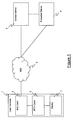
- Figure 1 illustrates schematically a system for providing interactive content during an IPTV transmission according to an embodiment of the present invention and which comprises a user terminal 1 connected over an IMS network 2 to a content server 3 providing an IPTV transmission and an interactive object, and an evaluation server 4 that stores answer information associated with the interactive object.
- the user terminal 1 has an IMS client 5 for supporting IMS applications and IMS instant messaging, an IPTV client 6 for supporting the IPTV service and a display 7.
- IMS messaging can be used to initially query users to determine if they are interested in participating, typically using a Picture-in-Picture "PiP" on the display. If a user is interested in participating and answers the query with a "yes", an IMS message is returned to the network and the interactive content is sent by the content server to the user terminal. This interactive content is also typically presented as a "PiP" to allow participation without interrupting the ongoing TV transmission.
- any input they have made is returned to the provider of the content where it can be analysed and evaluated.
- the provider can then determine if the user has qualified for some reward for participation or, if the interaction is in the form of a competition, whether or not the user is a winner.
- the reward or prize can then be delivered through IMS messaging to the user terminal.
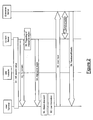
- FIG. 2 is a simplified signalling flow example of providing interactive content during an IPTV transmission according to an embodiment of the present invention. The steps performed are as follows:
- the interactive object can be delivered with IMS instant messaging.
- IMS instant messaging follows the principles defined by the Open Mobile Alliance (OMA) in "Instant Messaging using SIMPLE” (OMA-TS-SIMPLE_IM-V1) and the control signalling procedures for session-less transfer with the SIP MESSAGE method (see IETF RFC 3428, Session Initiation Protocol (SIP) Extension for Instant Messaging), or session-oriented transfer with the SIP INVITE method (see IETF RFC 4975, The Message Session Relay Protocol (MSRP) and RFC 4976, Relay Extensions for the Message Session Relay Protocol (MSRP). Both session-less and session oriented transfer are performed with the help of an IMS Messaging Server in the IMS network.
- OMA Open Mobile Alliance
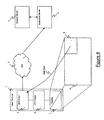
- Figure 3 illustrates schematically the transmission of TV content and an interactive object from a content server 3 to an IPTV client 6 over an IMS network according to an embodiment of the present invention.
- the delivery of the content comprises synchronized transmissions of audio and video using RTP streams (over UDP), and the interactive object using the SIMPLE protocol for interactive messaging.
- the audio media is played by the user terminal, the video media is displayed as the main picture 8 on the user terminal's display 7 and the SIMPLE delivered interactive object opens as a picture-in-picture 9 on the display 7 such that it does not interfere with the TV content that is shown in the main part of the display.
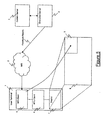
- FIG. 4 illustrates schematically the use of IMS messaging to return any user input, from the IMS Client 5, to an evaluation server 4 according to an embodiment of the invention.
- the address of the evaluation server 4 (i.e. a SIP-URI or TEL-URI) is received as part of the interactive object.
- the evaluation server 4 stores answer information associated with the interactive object, and holds the business rules and evaluation logic for determining the result of any user input.
- the evaluation server 4 may have an interface with the content server 3 in order to obtain information regarding the status of the TV transmission. This is particularly useful if the timing of the answer with respect to the TV transmission is critical for the evaluation of the input, and could be implemented either by the evaluation server 4 simply subscribing to the media stream, or by using some business-to-business interface, such as web services.
- Figure 5 illustrates schematically use of IMS messaging to send the feedback/results of the evaluation of the user input, from an evaluation server 4, to the IMS Client 5, according to an embodiment of the invention.
- this feedback could comprise a reward for participation or a competition prize, in the form of a voucher or coupon delivered to the user terminal, or a notification that the user has been unsuccessful.
- FIG. 6 illustrates schematically an IPTV content server 3 suitable for facilitating the interactive TV service described above.
- the content server 3 is implemented as a combination of computer hardware and software.
- the IPTV content server 3 comprises an IMS client 10 for establishing the IMS session with the user terminal 1, an interactivity unit 11 for providing an interactive object, an encoder 12 for encoding the IPTV content and the interactive object media streams, and a transmitter 13 for sending the IPTV content and interactive object, to the user terminal, over the IMS.
- the IPTV content server 3 may also comprise a synchronisation unit 14.
- the synchronisation unit 14 is responsible for timing the delivery of the interactive object such that display of graphical components of the interactive object at the user terminal 1 is time synchronised with display of the IP Television content.
- the interactivity unit 11 can also provide information to the user terminals 1 defining a time period during which graphical components of the interactive object are to be displayed, and defining a time period during which user input to the interactive object will be accepted by the user terminal 1.
- the IPTV content server 3 can also communicate with the evaluation server 4, transmitting information to the evaluation server 4 to enable it to determine the timing of any received user input in relation to the IP Television content.
- FIG. 7 illustrates schematically a user terminal 1 suitable for receiving the interactive TV service described above.
- the user terminal 1 is implemented as a combination of computer hardware and software.
- the user terminal 1 comprises an IMS client 5 for establishing the IMS session with the IPTV content server 3, a receiver 15 for receiving the IPTV transmission together with the interactive object from the IPTV content server, an IPTV client 6 for decoding the IPTV content and interactive object, and a display 7 for displaying the IPTV transmission and the interactive object.
- the user terminal also comprises a user input device 16 for accepting user input to the interactive object and a transmitter 17 for sending the user input to an evaluation server, the feedback/results of the evaluation of the user's input are then returned by the evaluation to the receiver 13.
- the user terminal 1 may receive information from the content server 3, defining the time period during which the interactive object may be displayed. In addition, the user terminal 1 may also receive information from the content server 3, defining the time period during which user input to the interactive object will be accepted. This information will be provided to the IPTV 5 client to enforce these times.
- FIG 8 illustrates schematically an evaluation server 4 suitable for evaluating user input to the interactive object as described above.
- the evaluation server 4 is implemented as a combination of computer hardware and software.
- the evaluation server 4 comprises an IMS client 16 for supporting communication over the IMS, a receiver 17 for receiving user input data from the user terminal, a database 18 for storing answer information relating to the expected user input to the interactive object, an evaluation unit 19 for comparing the user input to the answer information and a transmitter 20 for sending the feedback/results of the evaluation to the user terminal 1.
- the evaluation server 4 may also comprise an interface with the content server. Although the evaluation server 4 and content server 3 have been described as separate entities, the functionality of the content server and the evaluation server may be provided by a single entity.
- the evaluation server 4 may also receive information from a IP Television content server 3, to enable it to determine the timing of any received user input in relation to the IP Television content.
- the methods described are particularly useful for encouraging users to actively watch commercials and thereby contribute to an increased awareness of the products being advertised.
- a TV commercial is transmitted to together with an interactive object in the form of a questionnaire about the advertised product.
- a user chooses to participate and answers the questions.
- the user's input is returned to the provider and the answers are checked to determine if they are correct.
- the selection of any winners may then be made based on any number of different criteria, such as the first returned correct results, or by randomly selecting a number of winners from those having answered the questions correctly.
- the reward or prize can take the form of a voucher or coupon that can be delivered to the user terminal.
- the voucher or coupon could then be used or redeemed directly from the user terming), for example, by displaying the voucher or coupon on the user terminal to a retailer or service provider, or alternatively, by forwarding the voucher or coupon electronically to a retailer or service provider.
- the user terminal could be connected to a printer to enable the user to print the voucher or coupon for later use.
- the interactive object could also be used to encourage the user to watch more of a particular TV transmission, whether it is a commercial or some other programming, by including questions for which the answer will come in a later part of the transmission.
- the interactive object may take the form of a short film clip related to a programme or an advertised product and delivered as Video-on-Demand. This could be sold as premium content, where the user is charged for the accessing the content. This could also be used to provide users who do not want to view commercials with alternative TV content during a commercial break, wherein the premium content charge serves as a ticket to commercial-free programming.
Landscapes
- Engineering & Computer Science (AREA)
- Multimedia (AREA)
- Signal Processing (AREA)
- Computer Networks & Wireless Communication (AREA)
- Computer Security & Cryptography (AREA)
- General Engineering & Computer Science (AREA)
- Software Systems (AREA)
- Human Computer Interaction (AREA)
- Two-Way Televisions, Distribution Of Moving Picture Or The Like (AREA)
Claims (17)
- Procédé pour fournir une télévision sur IP interactive à un terminal utilisateur sur un sous-système multimédia IP, le procédé comprenant :au niveau d'un serveur de contenu, l'envoi du contenu de télévision sur IP et d'un objet interactif au terminal utilisateur par le biais du sous-système multimédia IP (S2, S4) ;au niveau du terminal utilisateur, l'affichage de composantes graphiques de l'objet interactif conjointement avec le contenu de télévision sur IP (S5), l'acceptation de l'entrée utilisateur dans l'objet interactif et l'envoi de l'entrée à un serveur d'évaluation par le biais du sous-système multimédia IP (S6) ; etau niveau du serveur d'évaluation, la comparaison de l'entrée utilisateur aux informations de réponse associées à l'objet interactif (S7) et l'envoi d'un résultat de la comparaison au terminal utilisateur par le biais du sous-système multimédia IP (S8),caractérisé en ce que l'objet interactif est envoyé du serveur de contenu vers le terminal utilisateur en utilisant le protocole d'ouverture de session pour messagerie instantanée et d'extensions de gestion de présence (SIMPLE - SIP for Instant Messaging and Presence Leveraging Extensions).
- Procédé selon la revendication 1, et comprenant :au niveau du serveur de contenu, l'envoi de l'objet interactif de telle sorte que l'affichage des composantes graphiques de l'objet interactif au niveau du terminal utilisateur est synchronisé dans le temps avec l'affichage du contenu de télévision sur IP.
- Procédé selon la revendication 1, et comprenant :au niveau du serveur de contenu, l'envoi d'informations d'affichage au terminal utilisateur ; etau niveau du terminal utilisateur, l'affichage des composantes graphiques de l'objet interactif au cours d'une période de temps définie par les informations d'affichage.
- Procédé selon l'une quelconque des revendications précédentes, et comprenant :au niveau du serveur de contenu, l'envoi d'informations de participation vers le terminal utilisateur ; etau niveau du terminal utilisateur, l'acceptation d'une entrée utilisateur dans l'objet interactif au cours d'une période de temps définie par les informations de participation.
- Procédé selon l'une quelconque des revendications précédentes, et comprenant :au niveau du serveur de contenu, l'envoi d'informations de contenu vers le serveur d'évaluation ; etau niveau du serveur d'évaluation, l'utilisation des informations de contenu pour déterminer le moment de l'entrée utilisateur en fonction du contenu de télévision IP.
- Procédé selon l'une quelconque des revendications précédentes, dans lequel l'entrée utilisateur est envoyée du terminal utilisateur vers le serveur d'évaluation en utilisant le Protocole d'Ouverture de Session de Messagerie Instantanée et protocole d'Extensions de Gestion de Présence de messagerie instantanée (Session Initiation Protocol for Instant Messaging and Presence Leveraging Extensions protocol, SIMPLE).
- Procédé selon l'une quelconque des revendications précédentes, dans lequel le résultat de la comparaison est envoyé depuis le serveur d'évaluation vers le terminal utilisateur en utilisant le protocole d'ouverture de session pour messagerie instantanée et d'extensions de gestion de présence (SIMPLE - SIP for Instant Messaging and Presence Leveraging Extensions).
- Appareil configuré pour avoir la fonction de serveur de contenu de télévision sur IP (3), et comprenant :un client de sous-système multimédia IP (10) pour permettre une communication avec un terminal utilisateur ;une unité d'interactivité (11) pour fournir un objet interactif ;un codeur (12) pour coder le contenu de télévision sur IP et l'objet interactif ; etun émetteur (13) pour envoyer le contenu de télévision sur IP et l'objet interactif, vers le terminal utilisateur, par le biais du sous-système multimédia IP, caractérisé en ce que l'émetteur est configuré pour envoyer l'objet interactif en utilisant le protocole d'ouverture de session pour messagerie instantanée et d'extensions de gestion de présence (SIMPLE - SIP for Instant Messaging and Presence Leveraging Extensions).
- Appareil selon la revendication 8, et comprenant :une unité de synchronisation (14) pour synchroniser la livraison de l'objet interactif de telle sorte que l'affichage des composantes graphiques de l'objet interactif au niveau du terminal utilisateur est synchronisé dans le temps avec l'affichage du contenu de télévision sur IP.
- Appareil selon l'une quelconque des revendications 8 ou 9, dans lequel l'unité d'interactivité (11) fournit des informations d'affichage associées à l'objet interactif, destinées à la transmission vers le terminal utilisateur, les informations d'affichage définissant une période de temps au cours de laquelle des composantes graphiques de l'objet interactif doivent être affichées par le terminal utilisateur.
- Appareil selon l'une quelconque des revendications 8 à 10, dans lequel l'unité d'interactivité (11) fournit des informations de participation associées à l'objet interactif, destinées à être transmises au terminal utilisateur, les informations de participation définissant une période de temps au cours de laquelle l'entrée d'utilisateur dans l'objet interactif sera acceptée par le terminal utilisateur.
- Appareil selon l'une quelconque des revendications 8 à 10, et comprenant :un émetteur (13) destiné à envoyer des informations de contenu à un serveur d'évaluation, les informations de contenu étant utilisées par le serveur d'évaluation pour déterminer le moment de l'entrée d'utilisateur en fonction du contenu de télévision sur IP.
- Terminal utilisateur (1) comprenant :un client de sous-système multimédia IP (5) pour permettre la communication avec un serveur de contenu de télévision sur IP et un serveur d'évaluation ;un récepteur (15) pour recevoir le contenu de télévision sur IP et un objet interactif, du serveur de contenu de télévision sur IP, par le biais du sous-système multimédia IP ;un client de télévision sur IP (6) pour décoder le contenu de télévision sur IP et l'objet interactif ;un affichage (7) pour afficher le contenu de télévision sur IP et les composantes graphiques de l'objet interactif ;un dispositif d'entrée utilisateur (16) pour accepter une entrée utilisateur dans l'objet interactif ;un émetteur (17) pour envoyer l'entrée utilisateur vers un serveur d'évaluation, par le biais du sous-système multimédia IP ; etun récepteur (15) pour recevoir un résultat de l'entrée utilisateur du serveur d'évaluation, par le biais du sous-système multimédia IP,caractérisé en ce que ledit récepteur (15) est configuré pour gérer ledit objet interactif selon le protocole d'ouverture de session pour messagerie instantanée et d'extensions de gestion de présence (SIMPLE - SIP for Instant Messaging and Presence Leveraging Extensions).
- Terminal utilisateur selon la revendication 13, dans lequel le client de télévision sur IP (6) permet uniquement aux composantes graphiques de l'objet interactif de s'afficher pendant une période de temps définie dans les informations d'affichage associées à l'objet interactif reçu du serveur de contenu de télévision sur IP.
- Terminal utilisateur selon l'une quelconque des revendications 13 ou 14, dans lequel le client de télévision sur IP (6) accepte uniquement une entrée utilisateur dans l'objet interactif pendant une période de temps définie dans les informations de participation associées à l'objet interactif reçu du serveur de contenu de télévision sur IP.
- Appareil configuré pour avoir la fonction de serveur d'évaluation de contenu interactif (4), et comprenant :un client de sous-système multimédia IP (18) pour permettre une communication avec un terminal utilisateur ;un récepteur (19) pour recevoir des données d'entrée d'utilisateur du terminal utilisateur, par le biais du sous-système multimédia IP ;une base de données (20) pour stocker des informations de réponse associées à un objet interactif ;une unité d'évaluation (21) pour comparer l'entrée utilisateur aux informations de réponse ; etun émetteur (22) pour envoyer un résultat de la comparaison au terminal utilisateur, par le biais du sous-système multimédia IP.
- Appareil selon la revendication 16, et comprenant en outre :un récepteur (19) pour recevoir des informations de contenu d'un serveur de contenu de télévision sur IP, les informations de contenu étant utilisées pour déterminer le moment de l'entrée utilisateur en fonction du contenu de télévision sur IP.
Applications Claiming Priority (1)
| Application Number | Priority Date | Filing Date | Title |
|---|---|---|---|
| PCT/EP2008/064733 WO2010048997A1 (fr) | 2008-10-30 | 2008-10-30 | Procédé et appareil pour fournir une télévision interactive |
Publications (2)
| Publication Number | Publication Date |
|---|---|
| EP2345248A1 EP2345248A1 (fr) | 2011-07-20 |
| EP2345248B1 true EP2345248B1 (fr) | 2013-12-25 |
Family
ID=40801852
Family Applications (1)
| Application Number | Title | Priority Date | Filing Date |
|---|---|---|---|
| EP08875249.8A Not-in-force EP2345248B1 (fr) | 2008-10-30 | 2008-10-30 | Procédé et appareil pour fournir une télévision interactive |
Country Status (4)
| Country | Link |
|---|---|
| US (1) | US20110219417A1 (fr) |
| EP (1) | EP2345248B1 (fr) |
| CN (1) | CN102197657A (fr) |
| WO (1) | WO2010048997A1 (fr) |
Families Citing this family (6)
| Publication number | Priority date | Publication date | Assignee | Title |
|---|---|---|---|---|
| CN101873313B (zh) * | 2010-05-25 | 2016-01-20 | 中兴通讯股份有限公司 | 应用于机顶盒的消息发送、接收方法及机顶盒 |
| CN101951381A (zh) * | 2010-09-26 | 2011-01-19 | 深圳市同洲电子股份有限公司 | 数字电视接收终端及其实现多媒体即时通讯的方法 |
| JP2014531952A (ja) * | 2011-10-13 | 2014-12-04 | コーニンクレッカ フィリップス エヌ ヴェ | 自動メディアファイルベースクイズ出題システム及び方法 |
| FR2987198A1 (fr) | 2012-02-21 | 2013-08-23 | Neotion | Procede de transmission d'un message au sein d'un flux d'informations numerique. |
| CN105407388A (zh) * | 2015-10-28 | 2016-03-16 | 天脉聚源(北京)科技有限公司 | 一种用于互动电视系统的互动信息配置的方法及装置 |
| US20220150570A1 (en) * | 2020-11-06 | 2022-05-12 | Charter Communications Operating, Llc | Apparatus and methods for digital ledger-based integrated interactive digital tv applications |
Family Cites Families (12)
| Publication number | Priority date | Publication date | Assignee | Title |
|---|---|---|---|---|
| US20020124247A1 (en) * | 1999-08-03 | 2002-09-05 | Houghton William C. | Polling interactive television viewers |
| US7409700B1 (en) * | 2000-11-03 | 2008-08-05 | The Walt Disney Company | System and method for enhanced broadcasting and interactive |
| US7409203B2 (en) * | 2003-11-12 | 2008-08-05 | Redknee Inc. | Method and system for the prevention of unwanted wireless telecommunications |
| GB2419975A (en) * | 2004-11-09 | 2006-05-10 | Nokia Corp | Auxiliary content handling |
| FR2890505B1 (fr) * | 2005-09-08 | 2007-10-26 | Alcatel Sa | Systeme et procede de diffusion de contenus personnalises et eventuellement interactifs a destination de terminaux rattaches a un reseau de communication |
| US8041800B2 (en) * | 2005-11-08 | 2011-10-18 | International Business Machines Corporation | Automatic orchestration of dynamic multiple party, multiple media communications |
| CN101438256B (zh) * | 2006-03-07 | 2011-12-21 | 索尼株式会社 | 信息处理设备、信息通信系统、信息处理方法 |
| US20070240189A1 (en) * | 2006-04-06 | 2007-10-11 | Nokia Corporation | Utilizing presence service for service discovery in mobile broadcast |
| US20070300273A1 (en) * | 2006-06-21 | 2007-12-27 | Gary Turner | Interactive television application and content enhancement |
| US20080016157A1 (en) * | 2006-06-29 | 2008-01-17 | Centraltouch Technology Inc. | Method and system for controlling and monitoring an apparatus from a remote computer using session initiation protocol (sip) |
| EP1881667A1 (fr) * | 2006-07-17 | 2008-01-23 | Motorola, Inc., A Corporation of the State of Delaware; | Dispositif et procédé de présentation d'un événement pendant la radiodiffusion |
| US20080243602A1 (en) * | 2007-03-28 | 2008-10-02 | Telefonaktiebolaget Lm Ericsson (Publ) | Systems and methods for providing iptv advertisements |
-
2008
- 2008-10-30 EP EP08875249.8A patent/EP2345248B1/fr not_active Not-in-force
- 2008-10-30 US US13/125,615 patent/US20110219417A1/en not_active Abandoned
- 2008-10-30 WO PCT/EP2008/064733 patent/WO2010048997A1/fr not_active Ceased
- 2008-10-30 CN CN200880131831.5A patent/CN102197657A/zh active Pending
Also Published As
| Publication number | Publication date |
|---|---|
| EP2345248A1 (fr) | 2011-07-20 |
| CN102197657A (zh) | 2011-09-21 |
| US20110219417A1 (en) | 2011-09-08 |
| WO2010048997A1 (fr) | 2010-05-06 |
Similar Documents
| Publication | Publication Date | Title |
|---|---|---|
| CN101573943B (zh) | 媒体频道管理 | |
| CN105208020B (zh) | 用于发送多媒体流的方法和系统 | |
| US8752107B2 (en) | Time-shifting and chase-play for an IPTV system | |
| US8650603B2 (en) | Playing out interludes based on predicted duration of channel-switching delay or of invoked pause | |
| EP2282525A1 (fr) | Procédé, dispositif et système permettant de réaliser l insertion de contenu dans la télévision sur ip | |
| CN101583016B (zh) | 业务状态信息显示和发送方法、用户终端设备和业务处理单元 | |
| US20070174886A1 (en) | Method for supporting services in an ip-based video network on the basis of subscriber-controlled status information | |
| US20110219417A1 (en) | Method and Apparatus For Providing Interactive Television | |
| CN101313567B (zh) | 电子节目单提供方法、电子节目单系统及业务功能单元 | |
| US20090055878A1 (en) | Accessing interactive services over internet | |
| US20080243602A1 (en) | Systems and methods for providing iptv advertisements | |
| RU2571370C2 (ru) | Различение уведомлений iptv | |
| JP5332303B2 (ja) | サービス提供方法、ストリーミングサーバ、ストリーミング送信方法及びプログラム | |
| EP2288108B1 (fr) | Procédé et équipement de réseau permettant l établissement de canal de distribution de contenu individualisé | |
| US9191418B2 (en) | Method and terminal for applying background skin in internet protocol network | |
| KR100801612B1 (ko) | 디지털 멀티미디어 방송과 동기화된 실시간 쌍방향 통신 방법 | |
| Friedrich et al. | A platform and services for standardized IPTV ecosystems | |
| HK1171882B (en) | Method of user equipment presenting an iptv notification | |
| HK1149861B (en) | Method and system for transmitting a multimedia stream | |
| HK1171882A (en) | Method of user equipment presenting an iptv notification |
Legal Events
| Date | Code | Title | Description |
|---|---|---|---|
| PUAI | Public reference made under article 153(3) epc to a published international application that has entered the european phase |
Free format text: ORIGINAL CODE: 0009012 |
|
| 17P | Request for examination filed |
Effective date: 20110428 |
|
| AK | Designated contracting states |
Kind code of ref document: A1 Designated state(s): AT BE BG CH CY CZ DE DK EE ES FI FR GB GR HR HU IE IS IT LI LT LU LV MC MT NL NO PL PT RO SE SI SK TR |
|
| AX | Request for extension of the european patent |
Extension state: AL BA MK RS |
|
| DAX | Request for extension of the european patent (deleted) | ||
| REG | Reference to a national code |
Ref country code: DE Ref legal event code: R079 Ref document number: 602008029581 Country of ref document: DE Free format text: PREVIOUS MAIN CLASS: H04N0007173000 Ipc: H04N0021854500 |
|
| GRAP | Despatch of communication of intention to grant a patent |
Free format text: ORIGINAL CODE: EPIDOSNIGR1 |
|
| RIC1 | Information provided on ipc code assigned before grant |
Ipc: H04L 29/06 20060101ALI20130415BHEP Ipc: H04N 21/8545 20110101AFI20130415BHEP Ipc: H04N 21/61 20110101ALI20130415BHEP |
|
| INTG | Intention to grant announced |
Effective date: 20130429 |
|
| GRAP | Despatch of communication of intention to grant a patent |
Free format text: ORIGINAL CODE: EPIDOSNIGR1 |
|
| INTG | Intention to grant announced |
Effective date: 20130711 |
|
| GRAS | Grant fee paid |
Free format text: ORIGINAL CODE: EPIDOSNIGR3 |
|
| GRAA | (expected) grant |
Free format text: ORIGINAL CODE: 0009210 |
|
| AK | Designated contracting states |
Kind code of ref document: B1 Designated state(s): AT BE BG CH CY CZ DE DK EE ES FI FR GB GR HR HU IE IS IT LI LT LU LV MC MT NL NO PL PT RO SE SI SK TR |
|
| REG | Reference to a national code |
Ref country code: GB Ref legal event code: FG4D |
|
| REG | Reference to a national code |
Ref country code: CH Ref legal event code: EP |
|
| REG | Reference to a national code |
Ref country code: AT Ref legal event code: REF Ref document number: 647125 Country of ref document: AT Kind code of ref document: T Effective date: 20140115 |
|
| REG | Reference to a national code |
Ref country code: IE Ref legal event code: FG4D |
|
| REG | Reference to a national code |
Ref country code: DE Ref legal event code: R096 Ref document number: 602008029581 Country of ref document: DE Effective date: 20140213 |
|
| PG25 | Lapsed in a contracting state [announced via postgrant information from national office to epo] |
Ref country code: SE Free format text: LAPSE BECAUSE OF FAILURE TO SUBMIT A TRANSLATION OF THE DESCRIPTION OR TO PAY THE FEE WITHIN THE PRESCRIBED TIME-LIMIT Effective date: 20131225 Ref country code: NO Free format text: LAPSE BECAUSE OF FAILURE TO SUBMIT A TRANSLATION OF THE DESCRIPTION OR TO PAY THE FEE WITHIN THE PRESCRIBED TIME-LIMIT Effective date: 20140325 Ref country code: FI Free format text: LAPSE BECAUSE OF FAILURE TO SUBMIT A TRANSLATION OF THE DESCRIPTION OR TO PAY THE FEE WITHIN THE PRESCRIBED TIME-LIMIT Effective date: 20131225 Ref country code: HR Free format text: LAPSE BECAUSE OF FAILURE TO SUBMIT A TRANSLATION OF THE DESCRIPTION OR TO PAY THE FEE WITHIN THE PRESCRIBED TIME-LIMIT Effective date: 20131225 Ref country code: LT Free format text: LAPSE BECAUSE OF FAILURE TO SUBMIT A TRANSLATION OF THE DESCRIPTION OR TO PAY THE FEE WITHIN THE PRESCRIBED TIME-LIMIT Effective date: 20131225 |
|
| REG | Reference to a national code |
Ref country code: NL Ref legal event code: VDEP Effective date: 20131225 |
|
| REG | Reference to a national code |
Ref country code: AT Ref legal event code: MK05 Ref document number: 647125 Country of ref document: AT Kind code of ref document: T Effective date: 20131225 |
|
| REG | Reference to a national code |
Ref country code: LT Ref legal event code: MG4D |
|
| PG25 | Lapsed in a contracting state [announced via postgrant information from national office to epo] |
Ref country code: LV Free format text: LAPSE BECAUSE OF FAILURE TO SUBMIT A TRANSLATION OF THE DESCRIPTION OR TO PAY THE FEE WITHIN THE PRESCRIBED TIME-LIMIT Effective date: 20131225 |
|
| PG25 | Lapsed in a contracting state [announced via postgrant information from national office to epo] |
Ref country code: EE Free format text: LAPSE BECAUSE OF FAILURE TO SUBMIT A TRANSLATION OF THE DESCRIPTION OR TO PAY THE FEE WITHIN THE PRESCRIBED TIME-LIMIT Effective date: 20131225 Ref country code: IS Free format text: LAPSE BECAUSE OF FAILURE TO SUBMIT A TRANSLATION OF THE DESCRIPTION OR TO PAY THE FEE WITHIN THE PRESCRIBED TIME-LIMIT Effective date: 20140425 Ref country code: BE Free format text: LAPSE BECAUSE OF FAILURE TO SUBMIT A TRANSLATION OF THE DESCRIPTION OR TO PAY THE FEE WITHIN THE PRESCRIBED TIME-LIMIT Effective date: 20131225 |
|
| PG25 | Lapsed in a contracting state [announced via postgrant information from national office to epo] |
Ref country code: CY Free format text: LAPSE BECAUSE OF FAILURE TO SUBMIT A TRANSLATION OF THE DESCRIPTION OR TO PAY THE FEE WITHIN THE PRESCRIBED TIME-LIMIT Effective date: 20131225 Ref country code: ES Free format text: LAPSE BECAUSE OF FAILURE TO SUBMIT A TRANSLATION OF THE DESCRIPTION OR TO PAY THE FEE WITHIN THE PRESCRIBED TIME-LIMIT Effective date: 20131225 Ref country code: NL Free format text: LAPSE BECAUSE OF FAILURE TO SUBMIT A TRANSLATION OF THE DESCRIPTION OR TO PAY THE FEE WITHIN THE PRESCRIBED TIME-LIMIT Effective date: 20131225 Ref country code: PL Free format text: LAPSE BECAUSE OF FAILURE TO SUBMIT A TRANSLATION OF THE DESCRIPTION OR TO PAY THE FEE WITHIN THE PRESCRIBED TIME-LIMIT Effective date: 20131225 Ref country code: PT Free format text: LAPSE BECAUSE OF FAILURE TO SUBMIT A TRANSLATION OF THE DESCRIPTION OR TO PAY THE FEE WITHIN THE PRESCRIBED TIME-LIMIT Effective date: 20140428 Ref country code: AT Free format text: LAPSE BECAUSE OF FAILURE TO SUBMIT A TRANSLATION OF THE DESCRIPTION OR TO PAY THE FEE WITHIN THE PRESCRIBED TIME-LIMIT Effective date: 20131225 Ref country code: CZ Free format text: LAPSE BECAUSE OF FAILURE TO SUBMIT A TRANSLATION OF THE DESCRIPTION OR TO PAY THE FEE WITHIN THE PRESCRIBED TIME-LIMIT Effective date: 20131225 Ref country code: SK Free format text: LAPSE BECAUSE OF FAILURE TO SUBMIT A TRANSLATION OF THE DESCRIPTION OR TO PAY THE FEE WITHIN THE PRESCRIBED TIME-LIMIT Effective date: 20131225 Ref country code: RO Free format text: LAPSE BECAUSE OF FAILURE TO SUBMIT A TRANSLATION OF THE DESCRIPTION OR TO PAY THE FEE WITHIN THE PRESCRIBED TIME-LIMIT Effective date: 20131225 |
|
| REG | Reference to a national code |
Ref country code: DE Ref legal event code: R097 Ref document number: 602008029581 Country of ref document: DE |
|
| PG25 | Lapsed in a contracting state [announced via postgrant information from national office to epo] |
Ref country code: DK Free format text: LAPSE BECAUSE OF FAILURE TO SUBMIT A TRANSLATION OF THE DESCRIPTION OR TO PAY THE FEE WITHIN THE PRESCRIBED TIME-LIMIT Effective date: 20131225 |
|
| PLBE | No opposition filed within time limit |
Free format text: ORIGINAL CODE: 0009261 |
|
| STAA | Information on the status of an ep patent application or granted ep patent |
Free format text: STATUS: NO OPPOSITION FILED WITHIN TIME LIMIT |
|
| 26N | No opposition filed |
Effective date: 20140926 |
|
| REG | Reference to a national code |
Ref country code: DE Ref legal event code: R097 Ref document number: 602008029581 Country of ref document: DE Effective date: 20140926 |
|
| REG | Reference to a national code |
Ref country code: DE Ref legal event code: R119 Ref document number: 602008029581 Country of ref document: DE |
|
| PG25 | Lapsed in a contracting state [announced via postgrant information from national office to epo] |
Ref country code: LU Free format text: LAPSE BECAUSE OF FAILURE TO SUBMIT A TRANSLATION OF THE DESCRIPTION OR TO PAY THE FEE WITHIN THE PRESCRIBED TIME-LIMIT Effective date: 20141030 Ref country code: SI Free format text: LAPSE BECAUSE OF FAILURE TO SUBMIT A TRANSLATION OF THE DESCRIPTION OR TO PAY THE FEE WITHIN THE PRESCRIBED TIME-LIMIT Effective date: 20131225 Ref country code: MC Free format text: LAPSE BECAUSE OF FAILURE TO SUBMIT A TRANSLATION OF THE DESCRIPTION OR TO PAY THE FEE WITHIN THE PRESCRIBED TIME-LIMIT Effective date: 20131225 |
|
| REG | Reference to a national code |
Ref country code: CH Ref legal event code: PL |
|
| REG | Reference to a national code |
Ref country code: IE Ref legal event code: MM4A |
|
| PG25 | Lapsed in a contracting state [announced via postgrant information from national office to epo] |
Ref country code: DE Free format text: LAPSE BECAUSE OF NON-PAYMENT OF DUE FEES Effective date: 20150501 Ref country code: CH Free format text: LAPSE BECAUSE OF NON-PAYMENT OF DUE FEES Effective date: 20141031 Ref country code: LI Free format text: LAPSE BECAUSE OF NON-PAYMENT OF DUE FEES Effective date: 20141031 |
|
| REG | Reference to a national code |
Ref country code: FR Ref legal event code: ST Effective date: 20150630 |
|
| PG25 | Lapsed in a contracting state [announced via postgrant information from national office to epo] |
Ref country code: FR Free format text: LAPSE BECAUSE OF NON-PAYMENT OF DUE FEES Effective date: 20141031 |
|
| PG25 | Lapsed in a contracting state [announced via postgrant information from national office to epo] |
Ref country code: IE Free format text: LAPSE BECAUSE OF NON-PAYMENT OF DUE FEES Effective date: 20141030 |
|
| PG25 | Lapsed in a contracting state [announced via postgrant information from national office to epo] |
Ref country code: BG Free format text: LAPSE BECAUSE OF FAILURE TO SUBMIT A TRANSLATION OF THE DESCRIPTION OR TO PAY THE FEE WITHIN THE PRESCRIBED TIME-LIMIT Effective date: 20131225 |
|
| PG25 | Lapsed in a contracting state [announced via postgrant information from national office to epo] |
Ref country code: IT Free format text: LAPSE BECAUSE OF FAILURE TO SUBMIT A TRANSLATION OF THE DESCRIPTION OR TO PAY THE FEE WITHIN THE PRESCRIBED TIME-LIMIT Effective date: 20131225 Ref country code: GR Free format text: LAPSE BECAUSE OF FAILURE TO SUBMIT A TRANSLATION OF THE DESCRIPTION OR TO PAY THE FEE WITHIN THE PRESCRIBED TIME-LIMIT Effective date: 20140326 |
|
| PG25 | Lapsed in a contracting state [announced via postgrant information from national office to epo] |
Ref country code: MT Free format text: LAPSE BECAUSE OF FAILURE TO SUBMIT A TRANSLATION OF THE DESCRIPTION OR TO PAY THE FEE WITHIN THE PRESCRIBED TIME-LIMIT Effective date: 20131225 Ref country code: HU Free format text: LAPSE BECAUSE OF FAILURE TO SUBMIT A TRANSLATION OF THE DESCRIPTION OR TO PAY THE FEE WITHIN THE PRESCRIBED TIME-LIMIT; INVALID AB INITIO Effective date: 20081030 Ref country code: TR Free format text: LAPSE BECAUSE OF FAILURE TO SUBMIT A TRANSLATION OF THE DESCRIPTION OR TO PAY THE FEE WITHIN THE PRESCRIBED TIME-LIMIT Effective date: 20131225 |
|
| PGFP | Annual fee paid to national office [announced via postgrant information from national office to epo] |
Ref country code: GB Payment date: 20161027 Year of fee payment: 9 |
|
| GBPC | Gb: european patent ceased through non-payment of renewal fee |
Effective date: 20171030 |
|
| PG25 | Lapsed in a contracting state [announced via postgrant information from national office to epo] |
Ref country code: GB Free format text: LAPSE BECAUSE OF NON-PAYMENT OF DUE FEES Effective date: 20171030 |