EP2347535B1 - Systèmes et procédés d'adaptation de liaison - Google Patents
Systèmes et procédés d'adaptation de liaison Download PDFInfo
- Publication number
- EP2347535B1 EP2347535B1 EP08876284.4A EP08876284A EP2347535B1 EP 2347535 B1 EP2347535 B1 EP 2347535B1 EP 08876284 A EP08876284 A EP 08876284A EP 2347535 B1 EP2347535 B1 EP 2347535B1
- Authority
- EP
- European Patent Office
- Prior art keywords
- rank
- value
- time
- communication device
- criterion
- Prior art date
- Legal status (The legal status is an assumption and is not a legal conclusion. Google has not performed a legal analysis and makes no representation as to the accuracy of the status listed.)
- Not-in-force
Links
- 238000000034 method Methods 0.000 title claims description 44
- 230000006978 adaptation Effects 0.000 title description 18
- 238000004891 communication Methods 0.000 claims description 42
- 230000003247 decreasing effect Effects 0.000 claims description 21
- 230000004044 response Effects 0.000 claims description 7
- 230000008569 process Effects 0.000 description 30
- 230000005540 biological transmission Effects 0.000 description 16
- 230000007423 decrease Effects 0.000 description 10
- 230000003044 adaptive effect Effects 0.000 description 8
- 238000010586 diagram Methods 0.000 description 5
- 238000005259 measurement Methods 0.000 description 5
- 238000005562 fading Methods 0.000 description 4
- 230000001788 irregular Effects 0.000 description 4
- 230000009286 beneficial effect Effects 0.000 description 2
- 230000008859 change Effects 0.000 description 2
- 230000000694 effects Effects 0.000 description 2
- 238000005516 engineering process Methods 0.000 description 2
- 239000011159 matrix material Substances 0.000 description 2
- 230000003595 spectral effect Effects 0.000 description 2
- 238000012360 testing method Methods 0.000 description 2
- 238000013459 approach Methods 0.000 description 1
- 238000007796 conventional method Methods 0.000 description 1
- 238000012937 correction Methods 0.000 description 1
- 125000004122 cyclic group Chemical group 0.000 description 1
- 238000013500 data storage Methods 0.000 description 1
- 230000001419 dependent effect Effects 0.000 description 1
- 238000011156 evaluation Methods 0.000 description 1
- 238000012545 processing Methods 0.000 description 1
- 230000009467 reduction Effects 0.000 description 1
- 238000004088 simulation Methods 0.000 description 1
- 238000012546 transfer Methods 0.000 description 1
Images




Classifications
-
- H—ELECTRICITY
- H04—ELECTRIC COMMUNICATION TECHNIQUE
- H04L—TRANSMISSION OF DIGITAL INFORMATION, e.g. TELEGRAPHIC COMMUNICATION
- H04L1/00—Arrangements for detecting or preventing errors in the information received
- H04L1/0001—Systems modifying transmission characteristics according to link quality, e.g. power backoff
- H04L1/0023—Systems modifying transmission characteristics according to link quality, e.g. power backoff characterised by the signalling
- H04L1/0026—Transmission of channel quality indication
-
- H—ELECTRICITY
- H04—ELECTRIC COMMUNICATION TECHNIQUE
- H04B—TRANSMISSION
- H04B7/00—Radio transmission systems, i.e. using radiation field
- H04B7/02—Diversity systems; Multi-antenna system, i.e. transmission or reception using multiple antennas
- H04B7/04—Diversity systems; Multi-antenna system, i.e. transmission or reception using multiple antennas using two or more spaced independent antennas
- H04B7/0413—MIMO systems
-
- H—ELECTRICITY
- H04—ELECTRIC COMMUNICATION TECHNIQUE
- H04B—TRANSMISSION
- H04B7/00—Radio transmission systems, i.e. using radiation field
- H04B7/02—Diversity systems; Multi-antenna system, i.e. transmission or reception using multiple antennas
- H04B7/04—Diversity systems; Multi-antenna system, i.e. transmission or reception using multiple antennas using two or more spaced independent antennas
- H04B7/0413—MIMO systems
- H04B7/0452—Multi-user MIMO systems
-
- H—ELECTRICITY
- H04—ELECTRIC COMMUNICATION TECHNIQUE
- H04L—TRANSMISSION OF DIGITAL INFORMATION, e.g. TELEGRAPHIC COMMUNICATION
- H04L1/00—Arrangements for detecting or preventing errors in the information received
- H04L1/0001—Systems modifying transmission characteristics according to link quality, e.g. power backoff
- H04L1/0015—Systems modifying transmission characteristics according to link quality, e.g. power backoff characterised by the adaptation strategy
-
- H—ELECTRICITY
- H04—ELECTRIC COMMUNICATION TECHNIQUE
- H04L—TRANSMISSION OF DIGITAL INFORMATION, e.g. TELEGRAPHIC COMMUNICATION
- H04L1/00—Arrangements for detecting or preventing errors in the information received
- H04L1/0001—Systems modifying transmission characteristics according to link quality, e.g. power backoff
- H04L1/0015—Systems modifying transmission characteristics according to link quality, e.g. power backoff characterised by the adaptation strategy
- H04L1/0019—Systems modifying transmission characteristics according to link quality, e.g. power backoff characterised by the adaptation strategy in which mode-switching is based on a statistical approach
- H04L1/002—Algorithms with memory of the previous states, e.g. Markovian models
-
- H—ELECTRICITY
- H04—ELECTRIC COMMUNICATION TECHNIQUE
- H04L—TRANSMISSION OF DIGITAL INFORMATION, e.g. TELEGRAPHIC COMMUNICATION
- H04L1/00—Arrangements for detecting or preventing errors in the information received
- H04L1/0001—Systems modifying transmission characteristics according to link quality, e.g. power backoff
- H04L1/0023—Systems modifying transmission characteristics according to link quality, e.g. power backoff characterised by the signalling
- H04L1/0025—Transmission of mode-switching indication
-
- H—ELECTRICITY
- H04—ELECTRIC COMMUNICATION TECHNIQUE
- H04L—TRANSMISSION OF DIGITAL INFORMATION, e.g. TELEGRAPHIC COMMUNICATION
- H04L5/00—Arrangements affording multiple use of the transmission path
- H04L5/003—Arrangements for allocating sub-channels of the transmission path
- H04L5/0058—Allocation criteria
- H04L5/006—Quality of the received signal, e.g. BER, SNR, water filling
Definitions
- the present invention relates to wireless communications and, more specifically, to systems and methods related to link adaptation.
- Channel fading is a fundamental characteristic of a wireless communication channel.
- Channel fading is the variability overtime of the instantaneous conditions of the wireless communication channel.
- Channel-dependent adaptation of a transmission is one way to handle channel fading.
- When a channel is in a good state it is possible to transmit data using a low level of error protection on the channel.
- the level of error protection may, for example, be varied by changing the modulation format and channel coding rate.
- the information data rate is the number of transmitted information bits per second.
- a transmission is divided into blocks. It is possible to detect erroneous reception of a block, usually through a cyclic redundancy check (CRC). The ratio of incorrectly received blocks, either including or not including retransmitted blocks, is called the block-error rate (BLER).
- CRC cyclic redundancy check
- link adaptation In order to maximize the information data rate, the error protection level of the transmission should be adapted to the instantaneous channel conditions. This is often called “link adaptation.” In practice, link adaptation is often implemented by aiming at a fixed BLER (e.g., a target BLER).
- the forward channel many parameters of the communication channel used by a transmitting device to transmit data to a receiving device (a.k.a., the forward channel) can not be reliably estimated from parameters of the reverse channel (i.e., the channel used by the receiving device to transmit data to the transmitting device).
- the receiving device may be able to directly determine the instantaneous channel conditions of the forward channel, but the transmitting device is not able to do so.
- the receiver needs to provide feedback (e.g., transmit) to the transmitter information indicating the quality of the channel.
- the parameters of the forward communication channel can be reliably estimated directly at the transmitter, the channel quality can be directly computed at the transmitter, without the need of feedback.
- a receiving device indicates the quality of a channel to the transmitter by transmitting to the transmitter one or more scalar quantities known as channel quality indicator (CQI) values, which indicate the quality of a channel for the purpose of describing the channel's ability to support information transfer.
- CQI channel quality indicator
- a CQI value can indicate a recommended modulation format and code-rate based on channel measurements.
- the CQI value can be a signal to interference plus noise power ratio (SINR) value computed by the receiving device based on channel measurements.
- SINR signal to interference plus noise power ratio
- the CQI values are estimated (or predicted) at the receiver.
- the estimation involves the estimation of the instantaneous communication channel properties as well as computations based on a model of parts of the transmitter and a model of parts of the receiver.
- the channel estimation is noisy and the models of parts of the transmitter and the receiver may be inaccurate.
- the delay between channel estimation or prediction and the adaptation of the link induces additional inaccuracies in the CQI estimation. Therefore, it is common practice to obtain a back-off value and modify an estimated CQI using the back-off value, either at the receiver or at the transmitter or on both sides.
- Using a back-off value to modify a CQI value may increase the level of error protection compared to the originally computed CQI, but it may also decrease the level of error protection. For example, if the CQI is in the form of a modulation and coding scheme, the back-off may decrease the code-rate of the coding scheme, thereby increasing the level of error protection, compared to the originally computed modulation and coding scheme.
- the back-off value affects a computed CQI so that a larger back-off yields a higher level of error protection, and a smaller back-off yields a lower level of error protection.
- the computed CQI may be quantized so that a range of back-off values yields the same level of error protection.
- the back-off value may be applied to any step in the computation of the CQI, not necessarily the final result.
- the CQI is a modulation and coding scheme, which is selected based on the computation of one or many SINRs
- the back-off value may be applied to the one or many SINRs.
- the back-off value may be adaptively adjusted over time in order to meet the target.
- One example implementation of such an adaptive back-off is that the receiver continuously estimates the BLER and changes the back-off with a term proportional to the difference between the estimated BLER and the target BLER.
- Another example implementation is that the back-off value is increased or decreased depending on whether the latest block was correctly received. By proper assignment of the increase step-size and the decrease step-size, the target BLER can be approximately met.
- a back-off value may also be used in a system where the channel quality can be directly estimated at the transmitter.
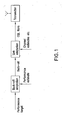
- FIG. 1 is a functional block diagram illustrating a link adaptation system having an adaptive back-off module.
- the adaptive back-off module compares an estimated performance indicator to a target performance indicator in order to decide how to adapt a back-off value.
- the back-off value is used by the link adaptation module in a process of selecting (e.g., computing or generating) a CQI value. Because performance of a link typically depends on the selected CQI, the link adaptation system implements a control loop that aims at meeting the performance target.
- the communication link may often be represented by a plurality of links, here called "layers.”
- Each layer may have an individual channel quality or the layers may have the same channel quality.
- rank the number of layers that are used in the transmission, here called the "rank,” in addition to the level of error protection on each layer.
- Some aspects in the selection of the CQIs may depend on the selected rank.
- the link adaptation system illustrated in FIG. 1 is still applicable to the case with adaptive rank-specific back-off, but with rank-specific performance target, performance estimate and back-off values, and a back-off adaptation box per rank. Note that the rank, as used here, is not necessarily related to the rank of a MIMO channel matrix.
- a MIMO system with rank-specific back-off values that are adaptively adjusted to meet one or many performance targets e.g., a target BLER
- a target BLER performance targets
- US2006285585 discloses systems and methodologies that facilitate performing interference nulling and rank prediction in an access terminal.
- Multiple receiver demodulator types may be implemented at the access terminal, and an interference covariance matrix may be estimated thereat. SNRs may be calculated for the various receiver demodulator types, and an optimum rank and associated CQI information may be identified and generated, respectively, which information may then be transmitted to an access point.
- At least one of the receiver demodulator types may perform an interference nulling protocol.
- the receiver demodulator types may comprise at least one minimum mean-squared error interference-nulling (MMSE-IN) demodulator, along with and one or more of a maximal ratio combining (MRC) demodulator and a minimum mean-squared error (MMSE) demodulator
- Performance metrics for a plurality of ranks are initially determined. Each rank is indicative of a different number of data streams to send simultaneously via a MIMO channel.
- the performance metrics may relate to the capacity or signal quality of the MIMO channel or the throughput of data transmission sent via the MIMO channel.
- Adjustments are applied to the performance metrics for the ranks to obtain adjusted performance metrics. The adjustments account for system losses such as losses due to an error correction code used for data transmission, channel estimation errors at a receiver, variation in interference observed by the receiver, variability in transmit power due to power control, and/or other factors.
- a rank is selected for use based on the adjusted performance metrics for the ranks.
- CQI single channel quality indicator
- rank 1 CQI rank 1 CQI
- an efficient CQI update scheme at node B based on statistical characteristics of CQI of various ranks is firstly proposed.
- an adaptive CQI feedback scheme is then proposed in which single CQI with the rank same as previously scheduled is fed back. Simulation results show that the proposed CQI update scheme can achieve some performance gain compared with conventional method with fixed back-off. Moreover, with the proposed adaptive feedback scheme, much additional performance gain can be obtained and the performance can approach the upper bound.
- the set of back-off values that would enable the system to meet the targets may depend on the radio propagation environment and other time-variant parameters (e.g., a changing radio environment may affect the appropriate back-off values differently).
- time-variant parameters e.g., a changing radio environment may affect the appropriate back-off values differently.
- the back-off value for a particular rank may remain in an unnecessarily large state, resulting in that the rank is underutilized (e.g., not used or rarely used) for an unnecessarily long time period of time due to its unnecessarily large back-off value.
- the back-off values of the used ranks are decreased, thereby further favoring these ranks over the underutilized ranks in the link adaptation (e.g., rank selection) process.
- This may significantly degrade performance.
- the back-off value of a rank that has been underutilized for a long time period may be too small. Once this underutilized rank is selected, a period of many block errors may immediately follow the selection before the back-off value is adjusted to an appropriate higher value. This may also significantly degrade performance. Accordingly, we have developed improved link adaptation systems and methods for overcoming the above and/or other disadvantages, see the appended claims.
- a solution to the first problem discussed above includes determining all of the ranks that have not been used for at least a certain amount of time (e.g., 2 seconds) or determining all of the ranks that have been rarely used during a certain amount of time (e.g., ranks used less than X% of the time within a certain time period, where X is a configurable parameter), and, for each of these "underutilized” ranks, decreasing a back-off value for the rank as a function of time while the rank remains underutilized. For example, for a rank that has been idle (i.e,. not used) for at least a certain amount of time, a back-off value for the rank may be decreased at regular or irregular time intervals until the rank is selected again.
- a back-off value for the rank may be decreased at regular or irregular time intervals until the rank is selected again.
- a back-off value for the rank may be decreased at regular or irregular time intervals until the rank is no longer a rarely used rank. This will have the effect of favoring the underutilized ranks in a rank selection process.
- One solution to the second problem discussed above includes: selecting a rank, determining whether immediately prior to the selection of the rank, the rank was underutilized (e.g., idle or only rarely used) for at least a certain period of time, and if the selected rank was underutilized for at least the certain period of time, then adding an offset value to an original back-off value for the rank and using the increased back-off value in a CQI computation.
- the offset value is applied during an additional back-off duration, in order to enable a correct adaptation of the back-off value for the rank.
- the offset value may be successively decreased until it has no effect on the original back-off value.
- test for determining whether a rank is underutilized with respect to the solution to the second problem may be different than the test for determining whether a rank is underutilized with respect to the solution to the first problem.
- FIG. 2 illustrates a system 200 in which embodiments of the present invention may be employed.
- System 200 includes a first communication device 202 in communication with a second communication device 204.
- devices 202, 204 communicate with each other using a MIMO communication link 205.
- MIMO communication link 205 includes a set of layers 205a, 205b, ..., 205n. As described above, the number of layers that are used is referred to as the "rank" of the communication link.
- a back-off value is associated with each rank.
- the back-off value affects a computed channel quality indicator so that a larger back-off yields a higher level of error protection, and a smaller back-off yields a lower level of error protection.
- the computed channel quality indicator may be quantized so that a range of back-off values yields the same level of error protection.
- the back-off values are also used in a process that results in a selection (or recommendation) of a rank to be used in the transmission.
- a smaller back-off value for a rank favors the selection of the rank, whereas a larger back-off penalizes the rank in the selection.
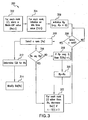
- FIG. 3 is a flow chart illustrating a process 300, according to some embodiments, for implementing the first solution.
- Process 300 may be performed by device 202 or 204.
- Process 300 may begin in step 302, where, for each rank r of a MIMO communication link, an original back-off value (Bo) associated with the rank is stored (Bo(r) is the original back-off value for rank r).
- a variable Ti(r) is initialized.
- Ti(r) identifies the time at which rank r transitioned from the non-idle statue to the idle state.
- Ti(r), for each rank may be initialized to zero (0).
- Ti(r) identifies the total amount of time rank r has been idle since last transitioning from a non-idle state to the idle state.
- step 306 variables Rs and Rp may be initialized to zero (0).
- Rp is used to identify the previously selected rank and Rs is used to identify the currently selected rank.
- a rank is selected.
- the selected rank is denoted Rs.
- a rank is selected in dependence on, at least in part, the back-off values Bo for each rank. The selection may also depend on other parameters.
- process 300 may proceed to steps 312 and 316.
- a CQI value is determined for Rs.
- the CQI value may depend on, among other things, Bo(Rs).
- Bo(Rs) may be modified as soon as one or more performance measurements are obtained for Rs.
- step 316 a determination is made as to whether Rs equals Rp. If it does, step 322 is performed, otherwise step 318 is performed.
- step 318 Ti(Rp) is set equal to t (e.g., the current time). Alternatively, Ti(Rp) may be set to zero.
- step 320 Rp is set equal to Rs.
- Bo(r) is decreased if, and only if, the rank r has been idle for at least a threshold amount of time (T1).
- a rank that has not been used for at least a certain period of time (T1) is determined and the rank's corresponding back-off value is then successively decreased until the rank is selected again, thereby favoring the rank in the adaptation process.
- the period of time may be arbitrarily small or large.
- the back-off may decrease linearly with time or may follow some other decreasing function of time.
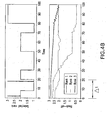
- FIG. 4A exemplifies the above described process.
- the upper figure shows the selection of ranks over time (i.e., for each point in time, the upper figure shows the rank that is selected at that point in time).
- the back-off for rank 3 starts to be successively decreased (linearly in this example), even though rank 3 is not selected for transmission.
- the back-off for rank 3 starts to be successively decreased because (t1-Ti(3)) > T1 or, at time t1, Ti(3) > T1, depending on whether (a) Ti(3) equals the time at which rank 3 last transitioned from the non-idle state to the idle state or (b) Ti(3) identifies the total amount of time rank 3 has been idle since last transitioning from a non-idle state to the idle state, respectively.
- rank 3 is selected for transmission again, and the successive decrease of the rank 3 back-off is turned off. Instead, the back-off is adapted based on the rank 3 transmission.
- FIG. 4B illustrates that once the system determines that a rank was rarely used within a certain historical period of time, the system decreases the back-off value for the rank until the rank is selected again.
- rank 3 was rarely used.
- FIGS. 4A and 4B illustrate that, once the system determines that a rank is underutilized, the system can automatically increase the likelihood that the rank will be selected by a rank selection process by, for example, periodically decreasing a back-off value for the rank while the rank remains underutilized.
- FIG. 5 is a flow chart illustrating a process 500, according to some embodiments, for implementing the second solution.
- Process 500 may be performed by device 202 or 204.
- the first five steps of process 500 may be the same as the first five steps of process 300. That is, process 500 may begin my performing steps 302-310. After step 310, process 500 proceeds to step 516 and step 308.
- step 516 a determination is made as to whether Rs equals Rp. If Rs equals Rp, then step 524 is performed, otherwise step 518 is performed.
- the variable Ts is set equal to the current time (t). Accordingly, the variable Ts stores the time at which the rank Rs was selected.
- Ti(Rp) is set equal to t. As described above, Ti(r) is a variable that stores the time at which rank r transitioned from the non-idle state to the idle state.
- step 522 Rp is set equal to Rs.
- step 524 a determination is made as to whether (Ts - Ti(Rs)) > T2, where T2 is a threshold value. That is, in step 524, a determination is made as to whether the selected rank was first selected after being idle for at least some amount of time. If (Ts - Ti(Rs)) is greater than T2, then process 500 proceeds to step 526, otherwise it proceeds to step 530.
- step 526 a determination is made as to whether (t - Ts) > T3, where T3 is a threshold and t represents the current time. That is, in step 526, a determination is made as whether a specified amount of time (e.g., T3) has elapsed since the selected rank transitioned from the idle state to the non-idle state. If (t- Ts) is greater than T3, then process 500 proceeds to step 530, otherwise it proceeds to step 528.
- T3 is a threshold and t represents the current time. That is, in step 526, a determination is made as whether a specified amount of time (e.g., T3) has elapsed since the selected rank transitioned from the idle state to the non-idle state. If (t- Ts) is greater than T3, then process 500 proceeds to step 530, otherwise it proceeds to step 528.
- a value Beqi(Rs) is set equal to f1(Bo(Rs),f2(t-Ts)), which, in some examples, equals Bo(Rs) + f2(t-Ts), where Bo(Rs) is the back-off value associated with the selected rank, and f2(x), in some examples, is of the form (-a*x/T3+a), where "a" is a constant.
- Bcqi(Rs) is set equal to Bo(Rs).
- a CQI value for the selected rank is determined based, at least in part, on Bcqi(Rs).
- Bo(Rs) may be modified as soon as one or more performance measurements are obtained for Rs.
- a resulting back-off value (Bcqi), an original back-off value (Bo), and an offset value (O).
- the resulting back-off value is used in a channel quality indicator computation, instead of the original back-off value.
- the original back-off value is used.
- the resulting back-off value for a particular rank is a function of the original back-off value and offset for the particular rank, while in other conditions the resulting back-off value simply equals the original back-off value. There may be different functions for different ranks.
- the offset is designed to reduce the risk of a period of many block errors due to an incorrectly adapted original back-off.
- the offset value is a function of time. This function may be such that, for a constant original back-off, the resulting back-off initially is higher than the original back-off, but then decreases with time.
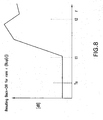
- the offset value for a rank may equal the following function: (((-a)(t-Ts)/T3)+a), which is illustrated in FIG. 6 .
- the back-off is applied to an SNR in dB scale.
- the offset value for a rank is used only when Ts(r) - Ti(r) > T2 and, furthermore, is only used for a certain period of time (e.g., T3 amount of time).
- Ts(r) is the time at which the rank transitioned from the idle state to the used state (i.e., non-idle state)
- Ti(r) is the time at which the rank transitioned from the non-idle state to the idle state.
- FIG. 7 This example is illustrated in FIG. 7 , which assumes that Ts(r) - Ti(r) > T2 and also assumes that the offset value is a decreasing function of time as shown in FIG. 6 . As shown in FIG.
- Bcqi(r)(Ts) Bo(r)(Ts) + Offset(r)(Ts)
- the rank is selected again after a long time period of not being selected.
- the starting back-off for the rank at time Ts is too low, resulting in unnecessarily low performance (e.g. a large number of block errors) following time Ts. Due to the inherent time delay between transmission and performance evaluation, the back-off is not increased until after time t1.
- the back-off is successively adapted to higher values, due to the performance estimates (e.g. block errors) based on the transmissions between times Ts and t1. After time t2, the back-off stabilizes to a value that yields the target performance estimate, for instance the target BLER.
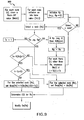
- FIG. 9 is a flow chart illustrating that the two above described improvements may be employed together.
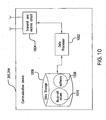
- FIG. 10 is a functional block diagram of a communication device 202, 204 according to embodiments of the invention.
- the communicate device may comprise a CPU 1002, a data storage unit 1006 (e.g., a non-volatile storage device) and computer software 1008 stored on the storage unit 1006.
- a set of back-off values may also be stored in storage unit 1006, as well as other parameters.
- the communication device may also comprise transmit/receive (Tx/Rx) circuitry 1004 for transmitting data to and receiving data from another communication device.
- Software 1008 is configured such that when processor 1002 executes software 1008, the device performs steps described above with reference to the flow charts shown in FIGs. 3 , 5 and 8 .
- software 1008 may include computer instructions for, among other things, (a) determining whether a rank has not been used for at least a certain period of time, and (b) decreasing, at regular or irregular intervals, a back-off value associated with the rank while the rank remains unused in response to determining that the rank has not been used for at least the certain period of time.
Landscapes
- Engineering & Computer Science (AREA)
- Computer Networks & Wireless Communication (AREA)
- Signal Processing (AREA)
- Quality & Reliability (AREA)
- Artificial Intelligence (AREA)
- Physics & Mathematics (AREA)
- Probability & Statistics with Applications (AREA)
- Mobile Radio Communication Systems (AREA)
- Radio Transmission System (AREA)
- Detection And Prevention Of Errors In Transmission (AREA)
Claims (16)
- Procédé pour ajuster une première valeur de retour associée à un rang, la première valeur de retour étant utilisée pour une sélection de rang pour une liaison de communication (205) établie entre un premier dispositif de communication (202) et un deuxième dispositif de communication (204), dans lequel une première valeur de retour plus petite pour le rang favorise la sélection du rang, tandis qu'une première valeur de retour plus grande pénalise le rang lors de la sélection, le procédé comprenant :b) la détermination si un critère est satisfait en déterminant si le rang est sous-utilisé, dans lequel l'étape de détermination si le rang est sous-utilisé comprend la détermination si le rang n'a pas été utilisé pendant une certaine période de temps au cours de la période de temps d'historique ou si le rang a été utilisé moins qu'un certain pourcentage pendant une certaine période de temps au cours de la période de temps d'historique ; etc) en réponse à la détermination que le critère est satisfait, la favorisation du rang lors d'une sélection de rang en diminuant la première valeur de retour associée au rang en fonction du temps jusqu'à ce que le rang soit sélectionné.
- Procédé selon la revendication 1, dans lequel une première valeur de retour plus petite correspond à un niveau plus faible de protection contre les erreurs lors de la sélection de CQI et/ou à la favorisation du rang associé lors de la sélection de rang par rapport à une première valeur de retour plus grande, et l'étape de favorisation du rang lors de la sélection de rang comprend la diminution de la première valeur de retour associée au rang en fonction du temps jusqu'à ce que le critère ne soit plus satisfait.
- Procédé selon les revendications 1 ou 2, comprenant en outre :d) la détermination si un deuxième critère est satisfait sur la base, au moins en partie, de ladite détermination si le rang est sous-utilisé ;e) en réponse à la détermination que le deuxième critère n'est pas satisfait, le calcul d'une valeur de CQI sur la base de la première valeur de retour ; etf) en réponse à la détermination que le deuxième critère est satisfait, le calcul de la valeur de CQI sur la base d'une deuxième valeur de retour associée au rang, dans lequel la deuxième valeur de retour est supérieure à la première valeur de retour.
- Procédé selon la revendication 3, dans lequel la deuxième valeur de retour est plus grande que la première valeur de retour pour garantir un niveau suffisant de protection contre les erreurs.
- Procédé selon l'une quelconque des revendications 1 à 4, dans lequel l'étape de détermination si le deuxième critère est satisfait comprend en outre la détermination si une certaine quantité de temps s'est écoulée depuis la première fois que le rang a été sélectionné après avoir été déterminé comme étant sous-utilisé.
- Procédé selon l'une quelconque des revendications 3 à 5, dans lequel l'étape de calcul de la valeur de CQI sur la base de la deuxième valeur de retour comprend le calcul de la deuxième valeur de retour, dans lequel la deuxième valeur de retour est fonction du temps.
- Procédé selon l'une quelconque des revendications 3 à 6, dans lequel la deuxième valeur de retour est fonction de la quantité de temps écoulée depuis la première fois que le rang a été sélectionné après avoir été déterminé comme étant sous-utilisé ou est fonction du temps accumulé pendant lequel le rang a été utilisé depuis la première fois que le rang a été sélectionné après avoir été déterminé comme étant sous-utilisé.
- Procédé selon l'une quelconque des revendications 3 à 7, dans lequel la deuxième valeur de retour est fonction de ladite première valeur de retour.
- Dispositif de communication (202, 204) configuré pour ajuster une première valeur de retour associée à un rang, dans lequel une première valeur de retour plus petite pour le rang favorise la sélection du rang, tandis qu'une première valeur de retour plus grande pénalise le rang lors de la sélection, dans lequel le dispositif de communication (202, 204) est configuré pour :b) déterminer si un critère est satisfait en déterminant si le rang est sous-utilisé, dans lequel le dispositif de communication (202, 204) est configuré pour déterminer si le rang est sous-utilisé en déterminant si le rang n'a pas été utilisé pendant une certaine période de temps au cours de la période de temps d'historique ou si le rang a été utilisé moins qu'un certain pourcentage pendant une certaine période de temps au cours de la période de temps d'historique ; etc) favoriser le rang lors d'une sélection de rang, en diminuant la première valeur de retour associée au rang en fonction du temps jusqu'à ce que le rang soit sélectionné, en réponse à la détermination que le critère est satisfait.
- Dispositif de communication (202, 204) selon la revendication 9, dans lequel le dispositif de communication (202, 204) est configuré pour favoriser le rang lors de la sélection de rang en diminuant une première valeur de retour associée au rang en fonction du temps jusqu'à ce que le critère ne soit plus satisfait, et dans lequel une première valeur de retour plus petite correspond à un niveau plus faible de protection contre les erreurs lors de la sélection de CQI et/ou à la favorisation du rang lors de la sélection de rang par rapport à une première valeur de retour plus grande.
- Dispositif de communication (202, 204) selon la revendication 9 ou 10, dans lequel le dispositif de communication (202, 204) est en outre configuré pour :d) déterminer si un deuxième critère est satisfait sur la base, au moins en partie, de ladite détermination si le rang est sous-utilisé ;e) calculer une valeur de CQI sur la base de la première valeur de retour en réponse à la détermination que le deuxième critère n'est pas satisfait ; etf) calculer la valeur de CQI sur la base d'une deuxième valeur de retour associée au rang en réponse à la détermination que le deuxième critère est satisfait, dans lequel la deuxième valeur de retour est plus grande que la première valeur de retour.
- Dispositif de communication (202, 204) selon la revendication 11, dans lequel la deuxième valeur de retour est plus grande que la première valeur de retour pour garantir un niveau suffisant de protection contre les erreurs.
- Dispositif de communication (202, 204) selon la revendication 11 ou 12, dans lequel le dispositif de communication (202, 204) est configuré pour déterminer si le deuxième critère est satisfait en déterminant si une certaine quantité de temps s'est écoulée depuis la première fois que le rang a été sélectionné après avoir été déterminé comme étant sous-utilisé.
- Dispositif de communication (202, 204) selon l'une quelconque des revendications 11 à 13, dans lequel le dispositif de communication (202, 204) est configuré pour calculer la valeur de CQI sur la base de la deuxième valeur de retour en calculant d'abord la deuxième valeur de retour, dans lequel la deuxième valeur de retour est fonction du temps.
- Dispositif de communication (202, 204) selon l'une quelconque des revendications 11 à 14, dans lequel la deuxième valeur de retour est fonction de la quantité de temps écoulée depuis la première fois que le rang a été sélectionné après avoir été déterminé comme étant sous-utilisé ou est fonction du temps accumulé pendant lequel le rang a été utilisé depuis la première fois que le rang a été sélectionné après avoir été déterminé comme étant sous-utilisé.
- Dispositif de communication (202, 204) selon l'une quelconque des revendications 11 à 15, dans lequel la deuxième valeur de retour est fonction de ladite première valeur de retour.
Applications Claiming Priority (1)
| Application Number | Priority Date | Filing Date | Title |
|---|---|---|---|
| PCT/SE2008/051298 WO2010056161A1 (fr) | 2008-11-12 | 2008-11-12 | Systèmes et procédés d'adaptation de liaison |
Publications (2)
| Publication Number | Publication Date |
|---|---|
| EP2347535A1 EP2347535A1 (fr) | 2011-07-27 |
| EP2347535B1 true EP2347535B1 (fr) | 2015-07-29 |
Family
ID=41175695
Family Applications (1)
| Application Number | Title | Priority Date | Filing Date |
|---|---|---|---|
| EP08876284.4A Not-in-force EP2347535B1 (fr) | 2008-11-12 | 2008-11-12 | Systèmes et procédés d'adaptation de liaison |
Country Status (4)
| Country | Link |
|---|---|
| US (1) | US9960882B2 (fr) |
| EP (1) | EP2347535B1 (fr) |
| JP (1) | JP5335095B2 (fr) |
| WO (1) | WO2010056161A1 (fr) |
Families Citing this family (5)
| Publication number | Priority date | Publication date | Assignee | Title |
|---|---|---|---|---|
| CN101998498B (zh) * | 2009-08-19 | 2013-11-06 | 中兴通讯股份有限公司 | 一种秩自适应方法及装置 |
| US9750030B2 (en) | 2011-08-03 | 2017-08-29 | Qualcomm Incorporated | Enhanced downlink rate adaptation for LTE heterogeneous network base stations |
| WO2015032038A1 (fr) * | 2013-09-04 | 2015-03-12 | 华为技术有限公司 | Procédé de mesure de canal, dispositif terminal et station de base |
| EP4340243A4 (fr) * | 2021-05-26 | 2024-11-13 | Samsung Electronics Co., Ltd. | Dispositif électronique permettant de déterminer une dimension de réception, et procédé de fonctionnement du dispositif électronique |
| US12574129B2 (en) * | 2022-08-25 | 2026-03-10 | Qualcomm Incorporated | Interference measurements configuration for assessing impact of network entity backoff adaptation relaxation |
Family Cites Families (16)
| Publication number | Priority date | Publication date | Assignee | Title |
|---|---|---|---|---|
| US7277413B2 (en) * | 2001-07-05 | 2007-10-02 | At & T Corp. | Hybrid coordination function (HCF) access through tiered contention and overlapped wireless cell mitigation |
| US6982987B2 (en) * | 2002-01-10 | 2006-01-03 | Harris Corporation | Wireless communication network including data prioritization and packet reception error determination features and related methods |
| US6912574B2 (en) * | 2002-05-29 | 2005-06-28 | Dhc, Llc | System and process for allocating flow capacity in a network |
| US7623490B2 (en) * | 2004-12-22 | 2009-11-24 | Qualcomm Incorporated | Systems and methods that utilize a capacity-based signal-to-noise ratio to predict and improve mobile communication |
| US8599945B2 (en) * | 2005-06-16 | 2013-12-03 | Qualcomm Incorporated | Robust rank prediction for a MIMO system |
| US8064837B2 (en) * | 2005-06-16 | 2011-11-22 | Qualcomm Incorporated | Method and apparatus for optimum selection of MIMO and interference cancellation |
| US8098603B2 (en) * | 2005-09-30 | 2012-01-17 | Intel Corporation | Bandwidth adaptation in a wireless network |
| WO2007086131A1 (fr) * | 2006-01-27 | 2007-08-02 | Fujitsu Limited | Station de base, système de communications sans fil et procédé de décision du motif pilote |
| US8116267B2 (en) * | 2006-02-09 | 2012-02-14 | Samsung Electronics Co., Ltd. | Method and system for scheduling users based on user-determined ranks in a MIMO system |
| US20070263654A1 (en) * | 2006-05-12 | 2007-11-15 | Nokia Corporation | Pro-active congestion mitigation for wireless networks |
| US8948093B2 (en) * | 2007-10-02 | 2015-02-03 | Apple Inc. | Rank adaptation for an open loop multi-antenna mode of wireless communication |
| US7817575B2 (en) * | 2007-10-10 | 2010-10-19 | Intel Corporation | Method for achieving fairness in a network |
| US8155033B2 (en) * | 2007-11-28 | 2012-04-10 | Motorola Solutions, Inc. | Opportunistic spectrum sensing optimization for a communication system |
| US8195099B2 (en) * | 2007-12-28 | 2012-06-05 | Qualcomm Incorporated | Speed estimation and power control based on CQI reports |
| US20090238086A1 (en) * | 2008-03-19 | 2009-09-24 | Telefonaktiebolaget Lm Ericsson (Publ) | Rank Dependent CQI Back-Off |
| TWI506976B (zh) * | 2008-07-02 | 2015-11-01 | Interdigital Patent Holdings | 多輸入多輸出通信的秩及預編碼矩陣測量及報告方法及裝置 |
-
2008
- 2008-11-12 EP EP08876284.4A patent/EP2347535B1/fr not_active Not-in-force
- 2008-11-12 US US13/125,368 patent/US9960882B2/en active Active
- 2008-11-12 WO PCT/SE2008/051298 patent/WO2010056161A1/fr not_active Ceased
- 2008-11-12 JP JP2011535534A patent/JP5335095B2/ja not_active Expired - Fee Related
Also Published As
| Publication number | Publication date |
|---|---|
| JP5335095B2 (ja) | 2013-11-06 |
| US9960882B2 (en) | 2018-05-01 |
| US20110194596A1 (en) | 2011-08-11 |
| JP2012508995A (ja) | 2012-04-12 |
| EP2347535A1 (fr) | 2011-07-27 |
| WO2010056161A1 (fr) | 2010-05-20 |
Similar Documents
| Publication | Publication Date | Title |
|---|---|---|
| US8532081B1 (en) | Data rate adaptation in multiple-in-multiple-out systems | |
| JP5301612B2 (ja) | Mimo通信システムのための閉ループレート制御 | |
| KR101536551B1 (ko) | Mimo 시스템에서 피드백 레이트를 감소시키는 피드백 스케줄링 | |
| EP1386438B1 (fr) | Adaptation des liaisons pour systemes de transmission mimo sans fil | |
| CA2607606C (fr) | Selection de debit pour guidage en mode propre dans un systeme de telecommunications mimo | |
| US8498215B2 (en) | Open-loop rate control for a TDD communication system | |
| US9125196B2 (en) | Method and system for link adaptation at a mobile station | |
| US8331426B2 (en) | Method, system and apparatus for improving throughput performance of space division multiple access system | |
| US8787480B2 (en) | Method of determining channel state information | |
| WO2011009647A1 (fr) | Rétroaction adaptative d'émission | |
| EP2347535B1 (fr) | Systèmes et procédés d'adaptation de liaison | |
| JP5069579B2 (ja) | 無線通信システム、無線通信装置および無線通信方法 | |
| EP3811534A1 (fr) | Technique de sélection d'un format de transport mimo | |
| KR20090100721A (ko) | 다중 안테나 다중 사용자 통신 시스템에서 빔 포밍 방법 및장치 | |
| CN101171817B (zh) | 用于多输入多输出通信系统中的波束成形和速率控制的系统和方法 | |
| CA2787662A1 (fr) | Une methode pour determiner l'information d'etat d'un canal | |
| US20110002237A1 (en) | Wireless communication system, transmission apparatus and communication control method | |
| US20110007833A1 (en) | Wireless communication system, transmission apparatus and communication control method | |
| US20230067808A1 (en) | Feedback generation for link adaptation | |
| US20110051617A1 (en) | Wireless communication system, transmission apparatus and communication control method | |
| CN101933269B (zh) | 无线通信系统、无线通信设备和通信控制方法 | |
| EP1633069A1 (fr) | Unités de communication, système, et procédé d'adaptation de liaison | |
| Ho et al. | A robust and low complexity adaptive algorithm for MIMO eigenmode transmission system under practical conditions | |
| CN101523758B (zh) | 在多天线系统中发送和接收信号的适配方法、相应的发送和接收装置、计算机程序产品和信号 |
Legal Events
| Date | Code | Title | Description |
|---|---|---|---|
| PUAI | Public reference made under article 153(3) epc to a published international application that has entered the european phase |
Free format text: ORIGINAL CODE: 0009012 |
|
| 17P | Request for examination filed |
Effective date: 20110413 |
|
| AK | Designated contracting states |
Kind code of ref document: A1 Designated state(s): AT BE BG CH CY CZ DE DK EE ES FI FR GB GR HR HU IE IS IT LI LT LU LV MC MT NL NO PL PT RO SE SI SK TR |
|
| AX | Request for extension of the european patent |
Extension state: AL BA MK RS |
|
| DAX | Request for extension of the european patent (deleted) | ||
| 17Q | First examination report despatched |
Effective date: 20120709 |
|
| GRAP | Despatch of communication of intention to grant a patent |
Free format text: ORIGINAL CODE: EPIDOSNIGR1 |
|
| INTG | Intention to grant announced |
Effective date: 20150227 |
|
| GRAS | Grant fee paid |
Free format text: ORIGINAL CODE: EPIDOSNIGR3 |
|
| GRAA | (expected) grant |
Free format text: ORIGINAL CODE: 0009210 |
|
| AK | Designated contracting states |
Kind code of ref document: B1 Designated state(s): AT BE BG CH CY CZ DE DK EE ES FI FR GB GR HR HU IE IS IT LI LT LU LV MC MT NL NO PL PT RO SE SI SK TR |
|
| REG | Reference to a national code |
Ref country code: GB Ref legal event code: FG4D |
|
| REG | Reference to a national code |
Ref country code: CH Ref legal event code: EP |
|
| REG | Reference to a national code |
Ref country code: AT Ref legal event code: REF Ref document number: 739995 Country of ref document: AT Kind code of ref document: T Effective date: 20150815 |
|
| REG | Reference to a national code |
Ref country code: IE Ref legal event code: FG4D |
|
| REG | Reference to a national code |
Ref country code: DE Ref legal event code: R096 Ref document number: 602008039335 Country of ref document: DE |
|
| REG | Reference to a national code |
Ref country code: AT Ref legal event code: MK05 Ref document number: 739995 Country of ref document: AT Kind code of ref document: T Effective date: 20150729 |
|
| REG | Reference to a national code |
Ref country code: NL Ref legal event code: FP |
|
| REG | Reference to a national code |
Ref country code: LT Ref legal event code: MG4D |
|
| PG25 | Lapsed in a contracting state [announced via postgrant information from national office to epo] |
Ref country code: NO Free format text: LAPSE BECAUSE OF FAILURE TO SUBMIT A TRANSLATION OF THE DESCRIPTION OR TO PAY THE FEE WITHIN THE PRESCRIBED TIME-LIMIT Effective date: 20151029 Ref country code: LT Free format text: LAPSE BECAUSE OF FAILURE TO SUBMIT A TRANSLATION OF THE DESCRIPTION OR TO PAY THE FEE WITHIN THE PRESCRIBED TIME-LIMIT Effective date: 20150729 Ref country code: FI Free format text: LAPSE BECAUSE OF FAILURE TO SUBMIT A TRANSLATION OF THE DESCRIPTION OR TO PAY THE FEE WITHIN THE PRESCRIBED TIME-LIMIT Effective date: 20150729 Ref country code: GR Free format text: LAPSE BECAUSE OF FAILURE TO SUBMIT A TRANSLATION OF THE DESCRIPTION OR TO PAY THE FEE WITHIN THE PRESCRIBED TIME-LIMIT Effective date: 20151030 Ref country code: LV Free format text: LAPSE BECAUSE OF FAILURE TO SUBMIT A TRANSLATION OF THE DESCRIPTION OR TO PAY THE FEE WITHIN THE PRESCRIBED TIME-LIMIT Effective date: 20150729 |
|
| PG25 | Lapsed in a contracting state [announced via postgrant information from national office to epo] |
Ref country code: ES Free format text: LAPSE BECAUSE OF FAILURE TO SUBMIT A TRANSLATION OF THE DESCRIPTION OR TO PAY THE FEE WITHIN THE PRESCRIBED TIME-LIMIT Effective date: 20150729 Ref country code: PL Free format text: LAPSE BECAUSE OF FAILURE TO SUBMIT A TRANSLATION OF THE DESCRIPTION OR TO PAY THE FEE WITHIN THE PRESCRIBED TIME-LIMIT Effective date: 20150729 Ref country code: SE Free format text: LAPSE BECAUSE OF FAILURE TO SUBMIT A TRANSLATION OF THE DESCRIPTION OR TO PAY THE FEE WITHIN THE PRESCRIBED TIME-LIMIT Effective date: 20150729 Ref country code: AT Free format text: LAPSE BECAUSE OF FAILURE TO SUBMIT A TRANSLATION OF THE DESCRIPTION OR TO PAY THE FEE WITHIN THE PRESCRIBED TIME-LIMIT Effective date: 20150729 Ref country code: IS Free format text: LAPSE BECAUSE OF FAILURE TO SUBMIT A TRANSLATION OF THE DESCRIPTION OR TO PAY THE FEE WITHIN THE PRESCRIBED TIME-LIMIT Effective date: 20151129 Ref country code: HR Free format text: LAPSE BECAUSE OF FAILURE TO SUBMIT A TRANSLATION OF THE DESCRIPTION OR TO PAY THE FEE WITHIN THE PRESCRIBED TIME-LIMIT Effective date: 20150729 Ref country code: PT Free format text: LAPSE BECAUSE OF FAILURE TO SUBMIT A TRANSLATION OF THE DESCRIPTION OR TO PAY THE FEE WITHIN THE PRESCRIBED TIME-LIMIT Effective date: 20151130 |
|
| PG25 | Lapsed in a contracting state [announced via postgrant information from national office to epo] |
Ref country code: IT Free format text: LAPSE BECAUSE OF FAILURE TO SUBMIT A TRANSLATION OF THE DESCRIPTION OR TO PAY THE FEE WITHIN THE PRESCRIBED TIME-LIMIT Effective date: 20150729 Ref country code: SK Free format text: LAPSE BECAUSE OF FAILURE TO SUBMIT A TRANSLATION OF THE DESCRIPTION OR TO PAY THE FEE WITHIN THE PRESCRIBED TIME-LIMIT Effective date: 20150729 Ref country code: DK Free format text: LAPSE BECAUSE OF FAILURE TO SUBMIT A TRANSLATION OF THE DESCRIPTION OR TO PAY THE FEE WITHIN THE PRESCRIBED TIME-LIMIT Effective date: 20150729 Ref country code: EE Free format text: LAPSE BECAUSE OF FAILURE TO SUBMIT A TRANSLATION OF THE DESCRIPTION OR TO PAY THE FEE WITHIN THE PRESCRIBED TIME-LIMIT Effective date: 20150729 Ref country code: CZ Free format text: LAPSE BECAUSE OF FAILURE TO SUBMIT A TRANSLATION OF THE DESCRIPTION OR TO PAY THE FEE WITHIN THE PRESCRIBED TIME-LIMIT Effective date: 20150729 |
|
| REG | Reference to a national code |
Ref country code: DE Ref legal event code: R097 Ref document number: 602008039335 Country of ref document: DE |
|
| PG25 | Lapsed in a contracting state [announced via postgrant information from national office to epo] |
Ref country code: RO Free format text: LAPSE BECAUSE OF FAILURE TO SUBMIT A TRANSLATION OF THE DESCRIPTION OR TO PAY THE FEE WITHIN THE PRESCRIBED TIME-LIMIT Effective date: 20150729 |
|
| PLBE | No opposition filed within time limit |
Free format text: ORIGINAL CODE: 0009261 |
|
| STAA | Information on the status of an ep patent application or granted ep patent |
Free format text: STATUS: NO OPPOSITION FILED WITHIN TIME LIMIT |
|
| PG25 | Lapsed in a contracting state [announced via postgrant information from national office to epo] |
Ref country code: MC Free format text: LAPSE BECAUSE OF FAILURE TO SUBMIT A TRANSLATION OF THE DESCRIPTION OR TO PAY THE FEE WITHIN THE PRESCRIBED TIME-LIMIT Effective date: 20150729 Ref country code: LU Free format text: LAPSE BECAUSE OF FAILURE TO SUBMIT A TRANSLATION OF THE DESCRIPTION OR TO PAY THE FEE WITHIN THE PRESCRIBED TIME-LIMIT Effective date: 20151112 |
|
| REG | Reference to a national code |
Ref country code: CH Ref legal event code: PL |
|
| 26N | No opposition filed |
Effective date: 20160502 |
|
| PG25 | Lapsed in a contracting state [announced via postgrant information from national office to epo] |
Ref country code: CH Free format text: LAPSE BECAUSE OF NON-PAYMENT OF DUE FEES Effective date: 20151130 Ref country code: LI Free format text: LAPSE BECAUSE OF NON-PAYMENT OF DUE FEES Effective date: 20151130 |
|
| REG | Reference to a national code |
Ref country code: IE Ref legal event code: MM4A |
|
| REG | Reference to a national code |
Ref country code: FR Ref legal event code: ST Effective date: 20160729 |
|
| PG25 | Lapsed in a contracting state [announced via postgrant information from national office to epo] |
Ref country code: SI Free format text: LAPSE BECAUSE OF FAILURE TO SUBMIT A TRANSLATION OF THE DESCRIPTION OR TO PAY THE FEE WITHIN THE PRESCRIBED TIME-LIMIT Effective date: 20150729 |
|
| PG25 | Lapsed in a contracting state [announced via postgrant information from national office to epo] |
Ref country code: IE Free format text: LAPSE BECAUSE OF NON-PAYMENT OF DUE FEES Effective date: 20151112 |
|
| PG25 | Lapsed in a contracting state [announced via postgrant information from national office to epo] |
Ref country code: FR Free format text: LAPSE BECAUSE OF NON-PAYMENT OF DUE FEES Effective date: 20151130 |
|
| PG25 | Lapsed in a contracting state [announced via postgrant information from national office to epo] |
Ref country code: BE Free format text: LAPSE BECAUSE OF FAILURE TO SUBMIT A TRANSLATION OF THE DESCRIPTION OR TO PAY THE FEE WITHIN THE PRESCRIBED TIME-LIMIT Effective date: 20150729 |
|
| PG25 | Lapsed in a contracting state [announced via postgrant information from national office to epo] |
Ref country code: BG Free format text: LAPSE BECAUSE OF FAILURE TO SUBMIT A TRANSLATION OF THE DESCRIPTION OR TO PAY THE FEE WITHIN THE PRESCRIBED TIME-LIMIT Effective date: 20150729 Ref country code: HU Free format text: LAPSE BECAUSE OF FAILURE TO SUBMIT A TRANSLATION OF THE DESCRIPTION OR TO PAY THE FEE WITHIN THE PRESCRIBED TIME-LIMIT; INVALID AB INITIO Effective date: 20081112 |
|
| PG25 | Lapsed in a contracting state [announced via postgrant information from national office to epo] |
Ref country code: CY Free format text: LAPSE BECAUSE OF FAILURE TO SUBMIT A TRANSLATION OF THE DESCRIPTION OR TO PAY THE FEE WITHIN THE PRESCRIBED TIME-LIMIT Effective date: 20150729 |
|
| PG25 | Lapsed in a contracting state [announced via postgrant information from national office to epo] |
Ref country code: TR Free format text: LAPSE BECAUSE OF FAILURE TO SUBMIT A TRANSLATION OF THE DESCRIPTION OR TO PAY THE FEE WITHIN THE PRESCRIBED TIME-LIMIT Effective date: 20150729 Ref country code: MT Free format text: LAPSE BECAUSE OF FAILURE TO SUBMIT A TRANSLATION OF THE DESCRIPTION OR TO PAY THE FEE WITHIN THE PRESCRIBED TIME-LIMIT Effective date: 20150729 |
|
| PGFP | Annual fee paid to national office [announced via postgrant information from national office to epo] |
Ref country code: DE Payment date: 20191127 Year of fee payment: 12 Ref country code: NL Payment date: 20191126 Year of fee payment: 12 |
|
| PGFP | Annual fee paid to national office [announced via postgrant information from national office to epo] |
Ref country code: GB Payment date: 20191127 Year of fee payment: 12 |
|
| REG | Reference to a national code |
Ref country code: DE Ref legal event code: R119 Ref document number: 602008039335 Country of ref document: DE |
|
| REG | Reference to a national code |
Ref country code: NL Ref legal event code: MM Effective date: 20201201 |
|
| GBPC | Gb: european patent ceased through non-payment of renewal fee |
Effective date: 20201112 |
|
| PG25 | Lapsed in a contracting state [announced via postgrant information from national office to epo] |
Ref country code: NL Free format text: LAPSE BECAUSE OF NON-PAYMENT OF DUE FEES Effective date: 20201201 |
|
| PG25 | Lapsed in a contracting state [announced via postgrant information from national office to epo] |
Ref country code: GB Free format text: LAPSE BECAUSE OF NON-PAYMENT OF DUE FEES Effective date: 20201112 Ref country code: DE Free format text: LAPSE BECAUSE OF NON-PAYMENT OF DUE FEES Effective date: 20210601 |