EP2348504B1 - Kodierungs- und dekodierungsverfahren und -vorrichtung - Google Patents
Kodierungs- und dekodierungsverfahren und -vorrichtung Download PDFInfo
- Publication number
- EP2348504B1 EP2348504B1 EP09842069.8A EP09842069A EP2348504B1 EP 2348504 B1 EP2348504 B1 EP 2348504B1 EP 09842069 A EP09842069 A EP 09842069A EP 2348504 B1 EP2348504 B1 EP 2348504B1
- Authority
- EP
- European Patent Office
- Prior art keywords
- encoding
- layer
- enhancement
- sub
- generate
- Prior art date
- Legal status (The legal status is an assumption and is not a legal conclusion. Google has not performed a legal analysis and makes no representation as to the accuracy of the status listed.)
- Active
Links
Images






Classifications
-
- G—PHYSICS
- G10—MUSICAL INSTRUMENTS; ACOUSTICS
- G10L—SPEECH ANALYSIS TECHNIQUES OR SPEECH SYNTHESIS; SPEECH RECOGNITION; SPEECH OR VOICE PROCESSING TECHNIQUES; SPEECH OR AUDIO CODING OR DECODING
- G10L19/00—Speech or audio signals analysis-synthesis techniques for redundancy reduction, e.g. in vocoders; Coding or decoding of speech or audio signals, using source filter models or psychoacoustic analysis
- G10L19/04—Speech or audio signals analysis-synthesis techniques for redundancy reduction, e.g. in vocoders; Coding or decoding of speech or audio signals, using source filter models or psychoacoustic analysis using predictive techniques
- G10L19/16—Vocoder architecture
- G10L19/18—Vocoders using multiple modes
- G10L19/24—Variable rate codecs, e.g. for generating different qualities using a scalable representation such as hierarchical encoding or layered encoding
-
- G—PHYSICS
- G10—MUSICAL INSTRUMENTS; ACOUSTICS
- G10L—SPEECH ANALYSIS TECHNIQUES OR SPEECH SYNTHESIS; SPEECH RECOGNITION; SPEECH OR VOICE PROCESSING TECHNIQUES; SPEECH OR AUDIO CODING OR DECODING
- G10L19/00—Speech or audio signals analysis-synthesis techniques for redundancy reduction, e.g. in vocoders; Coding or decoding of speech or audio signals, using source filter models or psychoacoustic analysis
- G10L19/02—Speech or audio signals analysis-synthesis techniques for redundancy reduction, e.g. in vocoders; Coding or decoding of speech or audio signals, using source filter models or psychoacoustic analysis using spectral analysis, e.g. transform vocoders or subband vocoders
- G10L19/032—Quantisation or dequantisation of spectral components
Definitions
- the present invention relates to signal processing technologies, and in particular, to an encoding and decoding method and device.
- coded bits are generally added to improve the quality of speech/audio signals encoded by traditional encoding methods, such as the pulse code modulation (PCM) method and the adaptive differential pulse code modulation (ADPCM) method.
- PCM pulse code modulation
- ADPCM adaptive differential pulse code modulation
- a decoder After coded bits are added, if a decoder supports only the decoding of encoded signals of a low bit rate, or if the decoder receives only the encoded signals of the low bit rate due to insufficient network bandwidth and poor transmission quality, the decoder can only decode the encoded signals of the low bit rate, resulting in poor quality of decoded signals. For example, if the encoder and decoder use the traditional ADPCM encoding and decoding method, the encoded signals of a low bit rate decoded by the decoder are even worse than the decoded encoded signals that are generated without adding extra bits.
- GB 2073554A disclose a layered encoding method by using two level quantization. A sample of a signal is encoded to generate a residual, and the residual is further encoded with only one bit per sample to generate encoding result.
- WO 2005/036528 A1 also discloses a decoder.
- each element of the bit-plane decoded data vector can be scaled back to obtain a reconstructed data vector and the scaled data vector can be obtained by bit-shifting each element in the original data vector.
- EP 1619664 A1 also discloses an encoding section encodes an input signal to obtain base layer coded information.
- An adding section inverts the polarity of the base layer decoded signal to add to the input signal, and obtains a residual signal.
- An enhancement layer coding section encodes the residual signal to obtain enhancement layer coded information.
- Another adding section adds the base layer decoded signal and enhancement layer decoded signal to obtain a speech/sound signal. It is thereby possible to implement scalable coding with small amounts of calculation and coded information.
- the present invention provides an encoding method and device to improve decoding quality.
- the invention provides a method and device as defined in the claims.
- the encoder may encode each sample of the input signal to generate an encoded signal of the core layer; compare residuals of all or a part of the samples of the input signal with encoding thresholds, where the residuals are generated by core layer encoding, and perform encoding according to comparison results to generate an encoded signal of the enhancement layer, thus improving encoding quality; because the encoded signal of the enhancement layer is generated by comparing residuals of all or a part of the samples of the input signal with encoding thresholds, where the residuals are generated by core layer encoding, if the decoder supports only the decoding of encoded signals of a low bit rate, or if the decoder receives only the encoded signals of the low bit rate due to insufficient network bandwidth and poor transmission quality, the quality of the decoded signals generated by the decoder according to the encoded signals of the core layer may be the same as the quality of the encoded signals that are generated by low bit rate encoding, and therefore the decoding
- Embodiments of the present invention provide an encoding and decoding method and device to solve the following problem in the prior arts:
- coded bits are added to improve the encoding quality, if the decoder supports only the decoding of encoded signals of a low bit rate, or if the decoder receives only the encoded signals of the low bit rate due to insufficient network bandwidth and poor transmission quality, the quality of the decoded signals generated by the decoder is poor.
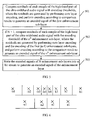
- the encoding method provided by an embodiment of the present invention includes:
- Step 101 Encode each sample of an input signal to generate an encoded signal of a core layer.
- Step 102 Compare residuals of all or a part of the samples of the input signal with encoding thresholds, where the residuals are generated by core layer encoding, and perform encoding according to comparison results to generate an encoded signal of an enhancement layer.
- Step 103 Write the encoded signal of the core layer and the encoded signal of the enhancement layer into a bitstream to generate an encoded signal of the input signal.
- the encoder encodes each sample of the input signal to generate an encoded signal of the core layer, compares residuals of all or a part of the samples of the input signal with encoding thresholds, where the residuals are generated by core layer encoding, and performs encoding according to comparison results to generate an encoded signal of the enhancement layer, thus improving encoding quality; because the encoded signal of the enhancement layer is generated by comparing residuals of all or a part of the samples of the input signal with encoding thresholds, where the residuals are generated by core layer encoding, if the decoder supports only the decoding of encoded signals of a low bit rate, or if the decoder receives only the encoded signals of the low bit rate due to insufficient network bandwidth and poor transmission quality, the quality of the decoded signals generated by the decoder according to the encoded signals of the core layer may be the same as the quality of the encoded signals that are generated by low bit rate encoding, and therefore the decoding
- the encoding method provided by the embodiment of the present invention may encode narrowband, wideband, ultra-wideband or full-band speech/audio signals.
- the following describes the technical solution by using the encoding method provided by an embodiment of the present invention to encode an ultra-wideband audio signal with the valid bandwidth being 14 KHz.
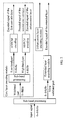
- An encoding method provided by another embodiment of the present invention may encode the ultra-wideband audio signal through three encoding modules. As shown in FIG. 2 , the three encoding modules are: core layer encoding module, enhancement layer encoding module, and extended layer encoding module.
- the steps of encoding the ultra-wideband audio signal by using the three encoding modules shown in FIG. 2 by using the encoding method provided by another embodiment of the present invention may include:
- Step 301 Use the core layer encoding module shown in FIG. 2 to encode the wideband part of the ultra-wideband audio signal to generate an encoded signal of a core layer.
- the wideband part of the ultra-wideband audio signal is the 0-8 KHz part of the ultra-wideband audio signal
- the encoder may divide the ultra-wideband audio signal to obtain the 0-8 KHz part of the ultra-wideband audio signal.
- step 301 may specifically include:
- Step 401 Divide the wideband part of the ultra-wideband audio signal to obtain the low-band part of 0-4 KHz and the high-band part of 4-8 KHz.
- Step 402 Encode the low-band part and high-band part of the ultra-wideband audio signal obtained in step 401 to generate an encoded signal of a first core sub-layer and an encoded signal of a second core sub-layer, respectively, where the encoded signal of the first core sub-layer is generated after encoding the low-band part of the ultra-wideband audio signal and the encoded signal of the second core sub-layer is generated after encoding the high-band part of the ultra-wideband audio signal.
- the encoder encodes the low-band part and high-band part of the ultra-wideband audio signal in the same way.
- the following describes the case that the encoder encodes the high-band part of the ultra-wideband audio signal.
- step 402 may use the ADPCM encoding method to encode each sample x Hi (i ⁇ [1, M]) of the high-band part X H of the ultra-wideband audio signal and include:
- each sample uses 2 bits for encoding, that is, the coded bit number of each sample is 2, and the quantized table corresponding to 2 bits includes 4 quantized values, represented by -a 1 , -a 2 , a 2 , and a 1 respectively; the mapping relation between the quantized value corresponding to 2 bits and the index may be shown in Table 1.
- Table 1 Index Quantized value 0 -a 1 1 -a 2 2 a 2 3 a 1
- the coded bit number of each sample may be not limited to 2 bits; when any other coded bit number is used to encode each sample, the specific implementation is the same as above, and therefore is not described here.
- step 402 may also encode the low-band part and high-band part of the ultra-wideband audio signal by using other encoding methods; for example, step 402 may encode the low-band part and high-band part of the ultra-wideband audio signal by using the ADPCM method with noise shaping or other methods similar to PCM.
- the encoder may also use different encoding methods to encode the low-band part and high-band part of the ultra-wideband audio signal; for example, the encoder may use the PCM encoding method to encode the low-band part of the ultra-wideband signal and use the ADPCM encoding method to encode the high-band part of the ultra-wideband signal.
- Step 403 Write the encoded signals of the first and second core sub-layers generated in step 402 into a bitstream to generate an encoded signal of the core layer.
- Step 302 Use the enhancement layer encoding module shown in FIG. 2 to compare residuals of all or a part of the samples of the input signal with encoding thresholds, where the residuals are generated by core layer encoding, and perform encoding according to comparison results to generate an encoded signal of the enhancement layer.
- step 302 specifically encodes the residuals of the high-band part of the ultra-wideband audio signal, where the residuals are generated by core layer encoding.
- the encoded signal of the enhancement layer is formed by encoded signals ofN enhancement sub-layers, where N is a natural number, and may be determined according to the available coded bit number after the encoding of the core layer.
- step 302 may specifically include:
- Step 501 Compare residuals of each sample of the high-band part of the ultra-wideband audio signal with encoding thresholds, where the residuals are generated by core layer encoding, and perform encoding according to comparison results to generate an encoded signal of the first enhancement sub-layer.
- This step includes:
- the encoder may use two methods to set an encoding threshold for the first enhancement sub-layer:
- the first method is: The encoder sets the encoding threshold for the first enhancement sub-layer by setting the encoding threshold to a constant; in this embodiment, the encoder may set the encoding threshold to 0.
- the second method is: The encoder sets the encoding threshold for the first enhancement sub-layer according to the quantized value; specifically, the encoder sets the encoding threshold for the first enhancement sub-layer according to the quantized value corresponding to the total coded bit number of the samples used in the core layer and the first enhancement sub-layer.
- the mapping relation between the encoding threshold 0 and the quantized value used in the core layer encoding may also be shown in Table 2; in this case, all encoding thresholds in Table 2 are 0.
- the mapping relation between the encoding threshold and the quantized value may not be established.
- the encoder may obtain the encoding threshold C Hi of the first enhancement sub-layer corresponding to each sample x Hi of the high-band part X H of the ultra-wideband audio signal from the pre-stored encoding thresholds or from the above step of setting the encoding threshold for the first enhancement sub-layer.
- x Hi is a sample to be encoded, and x ⁇ Li is a local decoding value of x Hi .
- t Hi e Hi - e ⁇ Hi e Hi is a predicated difference of x Hi and ê Hi is a local decoded signal of e Hi .
- the residual t Hi of each sample x Hi of the high-band part X H of the ultra-wideband audio signal by the core layer encoding may be obtained through other methods, and is not described here.
- this step may further include the following step: Perform noise shaping processing on the residual t Hi to generate the residual t ' Hi after noise shaping; in this case, the encoder may compare t' Hi with C Hi .
- tH i (or t' Hi ) or C Hi needs to be scaled up or down, and the value after scaling is used for comparison. Specifically, multiply C Hi by step information deth in the core layer encoding information and compare the result with t Hi (or t' Hi ), or, divide t Hi (or t' Hi ) by deth and compare the result with C Hi .
- t Hi (or t' Hi ) or C Hi may also be scaled up or down through other methods, which is not describe here.
- Step 502 If N > 1, compare residuals of each sample of the high-band part of the ultra-wideband audio signal with the encoding threshold of the n th enhancement sub-layer, where the residuals are generated by core layer encoding and the encoding of the first (n-1) enhancement sub-layers, and perform encoding according to the comparison result to generate an encoded signal of the n th enhancement sub-layer, where 1 ⁇ n ⁇ N .
- step 501 see step 501.
- Step 503 Write the encoded signals ofN enhancement sub-layers generated in steps 501 and 502 into a bitstream to generate an encoded signal of the enhancement layer.
- step 302 may encode not only the residual of the high-band part of the ultra-wideband audio signal but also the residual of the low-band part of the ultra-wideband audio signal, where the residuals are generated by core layer encoding, or encode the residuals of the low-band part and high-band part of the ultra-wideband audio signal generated after the core layer encoding, where the residuals are generated by core layer encoding.
- Step 303 Use the extended layer encoding module shown in FIG. 2 to encode the ultra-wideband part of the ultra-wideband audio signal to generate an encoded signal of an extended layer.
- the ultra-wideband part of the ultra-wideband audio signal is the 8-14 KHz part of the ultra-wideband audio signal
- the encoder may divide the ultra-wideband audio signal to obtain the 8-14 KHz part of the ultra-wideband audio signal.
- step 303 is basically the same as that of step 301 and is not described here.
- Step 304 Write the core layer encoded signal generated in step 301, the enhancement layer encoded signal generated in step 302, and the extended layer encoded signal generated in step 303 into a bitstream to generate an encoded signal of the ultra-wideband audio signal.
- the encoder encodes the wideband part of the ultra-wideband audio signal to generate an encoded signal of the core layer, compares residuals of the wideband part of the ultra-wideband audio signal by the core layer encoding with encoding thresholds, and performs encoding according to comparison results to generate an encoded signal of the enhancement layer, thus improving encoding quality; because the encoded signal of the enhancement layer is generated by comparing residuals of the wideband part of the ultra-wideband audio signal by the core layer encoding with encoding thresholds, if the decoder supports only the decoding of encoded signals of a low bit rate, or if the decoder receives only the encoded signals of the low bit rate due to insufficient network bandwidth and poor transmission quality, the quality of the decoded signals generated by the decoder according to the encoded signals of the core layer may be the same as the quality of the encoded signals that are generated by low bit rate encoding, and therefore the decoding quality is improved.
- an embodiment of the present invention further provides an encoding device, including:
- the encoded signal of the enhancement layer is formed by encoded signals of N enhancement sub-layers, where N is a natural number.
- the second encoding unit 702 may include:
- the first encoding sub-unit 801 may include:
- the first encoding sub-unit 801 may include:
- the obtaining unit 901 is further configured to obtain the encoding threshold of the first enhancement sub-layer corresponding to each sample in all or a part of the samples of the input signal according to the mapping relation between the encoding threshold of the first enhancement sub-layer and the quantized value used in the core layer encoding established by the relation establishing unit 904.
- the encoder encodes the input signal to generate an encoded signal of the core layer, compares residuals of all or a part of the samples of the input signal by the core layer encoding with encoding thresholds, and performs encoding according to comparison results to generate an encoded signal of the enhancement layer, thus improving encoding quality; because the encoded signal of the enhancement layer is generated by comparing residuals of all or a part of the samples of the input signal by the core layer encoding with encoding thresholds, if the decoder supports only the decoding of encoded signals of a low bit rate, or if the decoder receives only the encoded signals of the low bit rate due to insufficient network bandwidth and poor transmission quality, the quality of the decoded signals generated by the decoder according to the encoded signals of the core layer may be the same as the quality of the encoded signals that are generated by low bit rate encoding, and therefore the decoding quality is improved.
- an embodiment of the present invention further provides an decoding method, including:
- Step 1001 Obtain an encoded signal of a core layer from an encoded signal, and decode the encoded signal of the core layer to obtain each index corresponding to each sample, of a quantized table of the core layer.
- the encoded signal of the core layer X' ⁇ x' 1 ,x' 2 , ..., x' M ⁇ , where M is the number of encoded samples in the encoded signal X ', and step 1001 is: Decode each sample x; (i ⁇ [1, M]) sequentially to obtain the index of the quantized table of the core layer, and the index is corresponding to each encoded sample x' i .
- Step 1002 If the encoded signal further includes an encoded signal of an enhancement layer, use the encoded signal of the enhancement layer to modify the index corresponding to each sample, of the quantized table of the core layer, and obtain a quantized value to generate a decoded signal according to the modified index; if the encoded signal does not include the encoded signal of the enhancement layer, obtain the quantized value to generate the decoded signal according to the index corresponding to each sample, of the quantized table of the core layer.
- the process of modifying the index corresponding to each sample, of the quantized table of the core layer and obtaining the quantized value to generate a decoded signal according to the modified index including: Left shift the encoded signal of the core layer by n bits, and fill the encoded signal of the enhancement layer into the n bits to generate a modified encoded signal, wherein n is a coded bit number of the encoded sample in the enhancement layer; and decode the modified encoded signal to obtain the modified index, and obtain the quantized value to generate the decoded signal according to the modified index.
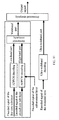
- the encoder may perform decoding to obtain the narrowband or wideband input signal by performing steps 1001 and 1002 illustrated in FIG. 10 ; if the input signal is an ultra-wideband or full-band signal, the encoded signal further carries an encoded signal of the extended layer, and the decoding method provided in the embodiment of the present invention may further decode the encoded signal of the extended layer to generate an ultra-wideband or full-band input signal, which may be implemented by the module illustrated in FIG. 11 .
- the quality of the decoded signals generated by the decoder according to the encoded signals of the core layer may be the same as the quality of the encoded signals that are generated by low bit rate encoding, and therefore the decoding quality is improved; if the encoded signal received by the decoder further includes the encoded signal of the enhancement layer, the encoded signal of the enhancement layer may be used to modify the encoded signal of the core layer to obtain an input signal of good quality, which further improves the quality of the decoded signal.
- an embodiment of the present invention further provides a decoding device, including:
- the generating unit 1202 may include:
- the quality of the decoded signals generated by the decoding device according to the encoded signals of the core layer may be the same as the quality of the encoded signals that are generated by low bit rate encoding, and therefore the decoding quality is improved; if the encoded signal received by the decoding device further includes the encoded signal of the enhancement layer, the encoded signal of the enhancement layer may be used to modify the encoded signal of the core layer to obtain an input signal of good quality, which further improves the quality of the decoded signal.
- the program may be stored in a computer readable storage medium.
- the storage medium may be a read only memory (ROM), a random access memory (RAM), a magnetic disk or a compact disk-read only memory (CD-ROM).
Landscapes
- Engineering & Computer Science (AREA)
- Quality & Reliability (AREA)
- Computational Linguistics (AREA)
- Signal Processing (AREA)
- Health & Medical Sciences (AREA)
- Audiology, Speech & Language Pathology (AREA)
- Human Computer Interaction (AREA)
- Physics & Mathematics (AREA)
- Acoustics & Sound (AREA)
- Multimedia (AREA)
- Compression, Expansion, Code Conversion, And Decoders (AREA)
Claims (9)
- Codierungsverfahren für Audiosignale, umfassend:Codieren (101) jedes Abtastwerts eines Eingangssignals, um ein codiertes Signal einer Kernschicht zu erzeugen;Vergleichen (102) von Resten von allen oder einem Teil der Abtastwerte des Eingangssignals mit Codierungsamplitudenschwellen, wobei die Reste durch Kernschichtcodierung erzeugt werden, und Durchführen von Codierung gemäß Vergleichsergebnissen, um ein codiertes Signal einer Erweiterungsschicht zu erzeugen, wobei die Erweiterungsschicht eine erste Erweiterungs-Subschicht umfasst und ein codierter Wert jedes Rests in einem codierten Signal der ersten Erweiterungs-Subschicht 1 oder 0 ist; undSchreiben (103) des codierten Signals der Kernschicht und des codierten Signals der Erweiterungsschicht in einen Bitstrom, um ein codiertes Signal des Eingangssignals zu erzeugen;dadurch gekennzeichnet, dass die Codierungsamplitudenschwelle der ersten Erweiterungs-Subschicht in den Codierungsamplitudenschwellen gemäß einem quantisierten Wert der Kernschicht gesetzt wird.
- Verfahren nach Anspruch 1, wobei das codierte Signal der Erweiterungsschicht durch codierte Signale von N Erweiterungs-Subschichten gebildet wird, wobei N eine natürliche Zahl ist; und
das Vergleichen von Resten von allen oder einem Teil der Abtastwerte des Eingangssignals mit Codierungsamplitudenschwellen, wobei die Reste durch Kernschichtcodierung erzeugt werden, und das Durchführen von Codierung gemäß Vergleichsergebnissen, um ein codiertes Signal einer Erweiterungsschicht zu erzeugen, Folgendes umfasst:Vergleichen von ersten Resten von allen oder einem Teil der Abtastwerte des Eingangssignals mit Codierungsamplitudenschwellen einer ersten Erweiterungs-Subschicht, um erste Vergleichsergebnisse zu erzeugen, wobei die ersten Reste durch Kernschichtcodierung erzeugt werden, und Durchführen von Codierung gemäß den ersten Vergleichsergebnissen, um das codierte Signal der ersten Erweiterungs-Subschicht zu erzeugen;im Fall N > 1 Vergleichen von zweiten Resten von allen oder einem Teil der Abtastwerte des Eingangssignals mit Codierungsamplitudenschwellen einer n-ten Erweiterungs-Subschicht, um zweite Vergleichsergebnisse zu erzeugen, wobei die zweiten Reste durch die Kernschichtcodierung und Codierung von ersten (n-1) Erweiterungs-Subschichten erzeugt werden, und Durchführen von Codierung gemäß den zweiten Vergleichsergebnissen, um das codierte Signal der n-ten Erweiterungs-Subschicht zu erzeugen, wobei 1 < n ≤ N ist; undSchreiben von codierten Signalen der N Erweiterungs-Subschichten in den Bitstrom, um das codierte Signal der Erweiterungsschicht zu erzeugen. - Verfahren nach Anspruch 2, wobei das Vergleichen (102) von ersten Resten aller oder eines Teils der Abtastwerte des Eingangssignals mit Codierungsamplitudenschwellen einer ersten Erweiterungs-Subschicht, um erste Vergleichsergebnisse zu erzeugen, wobei die ersten Reste durch Kernschichtcodierung erzeugt werden und das Durchführen von Codierung gemäß den ersten Vergleichsergebnissen, um das codierte Signal der ersten Erweiterungs-Subschicht zu erzeugen, Folgendes umfasst:Erhalten einer Codierungsamplitudenschwelle der ersten Erweiterungs-Subschicht, die jedem Abtastwert in allen oder einem Teil der Abtastwerte des Eingangssignals entspricht;Vergleichen eines ersten Rests jedes besagten Abtastwerts mit der codierten Amplitudenschwelle der ersten Erweiterungs-Subschicht, die dem besagten jeden Abtastwert entspricht, um ein erstes Vergleichsergebnis zu erzeugen, wobei der erste Rest des besagten jeden Abtastwerts durch Kernschichtcodierung erzeugt wird; undErzeugen eines codierten Werts für den ersten Rest des besagten jeden Abtastwerts gemäß dem ersten Vergleichsergebnis und sequenzielles Schreiben des codierten Werts in den Bitstrom, um das codierte Signal der ersten Erweiterungs-Subschicht zu erzeugen.
- Verfahren nach Anspruch 1 oder 3, wobei die Codierungsamplitudenschwelle der ersten Erweiterungs-Subschicht gemäß einem quantisierten Wert gesetzt wird, der einer gesamten codierten Bitzahl von Abtastwerten in der Kernschichtcodierung und der Codierung der ersten Erweiterungs-Subschicht entspricht.
- Verfahren nach Anspruch 3, ferner umfassend:Herstellen einer Abbildungsbeziehung zwischen der Codierungsamplitudenschwelle der ersten Erweiterungs-Subschicht und einem quantisierten Wert in der Kernschichtcodierung.
- Codierungseinrichtung für Audiosignale, umfassend:eine erste Codierungseinheit (701), ausgelegt zum Codieren jedes Abtastwerts eines Eingangssignals, um ein codiertes Signal einer Kernschicht zu erzeugen;eine zweite Codierungseinheit (702), ausgelegt zum Vergleichen von Resten von allen oder einem Teil der Abtastwerte des Eingangssignals mit Codierungsamplitudenschwellen, wobei die Reste durch Kernschichtcodierung erzeugt werden, und Durchführen von Codierung gemäß Vergleichsergebnissen, um ein codiertes Signal einer Erweiterungsschicht zu erzeugen, wobei die zweite Codierungseinheit (702) ausgelegt ist, die Erweiterungsschicht, die eine erste Erweiterungs-Subschicht umfasst, zu erzeugen und ein codierter Wert jedes Rests in einem codierten Signal der ersten Erweiterungs-Subschicht 1 oder 0 ist; undeine Erzeugungseinheit (703), ausgelegt zum Schreiben des codierten Signals der Kernschicht, das von der ersten Codierungseinheit erzeugt wird, und des codierten Signals der Erweiterungsschicht, das von der zweiten Codierungseinheit erzeugt wird, in einen Bitstrom, um ein codiertes Signal des Eingangssignals zu erzeugen;dadurch gekennzeichnet, dass die Codierungsamplitudenschwelle der ersten Erweiterungs-Subschicht in den von der zweiten Codierungseinheit (702) verwendeten Codierungsamplitudenschwellen gemäß einem quantisierten Wert der Kernschicht gesetzt wird.
- Einrichtung nach Anspruch 6, wobei das codierte Signal der Erweiterungsschicht durch codierte Signale von N Erweiterungs-Subschichten gebildet wird, wobei N eine natürliche Zahl ist; und die zweite Codierungseinheit (702) Folgendes umfasst:eine erste Codierungs-Subeinheit (801), ausgelegt zum Vergleichen von ersten Resten von allen oder einem Teil der Abtastwerte des Eingangssignals mit Codierungsamplitudenschwellen einer ersten Erweiterungs-Subschicht, um erste Vergleichsergebnisse zu erzeugen, wobei die ersten Reste durch Kernschichtcodierung erzeugt werden, und Durchführen von Codierung gemäß den ersten Vergleichsergebnissen, um ein codiertes Signal der ersten Erweiterungs-Subschicht zu erzeugen;eine zweite Codierungs-Subeinheit (802), ausgelegt zum Vergleichen von zweiten Resten von allen oder einem Teil der Abtastwerte des Eingangssignals mit Codierungsamplitudenschwellen einer n-ten Erweiterungs-Subschicht, um zweite Vergleichsergebnisse zu erzeugen, wobei die zweiten Reste durch Kernschichtcodierung und Codierung von ersten (n-1) Erweiterungs-Subschichten erzeugt werden, und Durchführen von Codierung gemäß den zweiten Vergleichsergebnissen, um ein codiertes Signal der n-ten Erweiterungs-Subschicht zu erzeugen, falls N > 1 ist, wobei 1 < n ≤ N ist; undeine erste Erzeugungs-Subeinheit (803), ausgelegt zum Schreiben von codierten Signalen der N Erweiterungs-Subschichten, die durch die erste Codierungs-Subeinheit und die zweite Codierungs-Subeinheit erzeugt werden, in den Bitstrom, um das codierte Signal der Erweiterungsschicht zu erzeugen.
- Einrichtung nach Anspruch 7, wobei die erste Codierungs-Subeinheit (801) Folgendes umfasst:eine Erhaltungseinheit (901), ausgelegt zum Erhalten einer Codierungsamplitudenschwelle der ersten Erweiterungs-Subschicht, die jedem Abtastwert in allen oder einem Teil der Abtastwerte des Eingangssignals entspricht;eine Vergleichseinheit (902), ausgelegt zum Vergleichen eines ersten Rests jedes Abtastwerts mit der codierten Amplitudenschwelle der ersten Erweiterungs-Subschicht, die dem besagten jeden Abtastwert entspricht, der von der Erhaltungseinheit (901) erhalten wird, um ein erstes Vergleichsergebnis zu erzeugen,wobei der erste Rest des besagten jeden Abtastwerts durch Kernschichtcodierung erzeugt wird; undeine zweite Erzeugungs-Subeinheit (903), ausgelegt zum Erzeugen eines codierten Werts für den ersten Rest des besagten jeden Abtastwerts gemäß dem ersten Vergleichsergebnis der Vergleichseinheit (902) und sequenzielles Schreiben des codierten Werts in den Bitstrom, um das codierte Signal der ersten Erweiterungs-Subschicht zu erzeugen.
- Einrichtung nach Anspruch 8, wobei die erste Codierungs-Subeinheit (801) ferner Folgendes umfasst:eine Beziehungsherstellungseinheit (904), ausgelegt zum Herstellen einer Abbildungsbeziehung zwischen der Codierungsamplitudenschwelle der ersten Erweiterungs-Subschicht und einem quantisierten Wert in der Kernschichtcodierung;wobeidie Erhaltungseinheit (901) ferner ausgelegt ist zum Erhalten der Codierungsamplitudenschwelle der ersten Erweiterungs-Subschicht gemäß der durch die Beziehungsherstellungseinheit hergestellten Abbildungsbeziehung.
Applications Claiming Priority (1)
| Application Number | Priority Date | Filing Date | Title |
|---|---|---|---|
| PCT/CN2009/071051 WO2010108332A1 (zh) | 2009-03-27 | 2009-03-27 | 编码和解码方法及装置 |
Publications (3)
| Publication Number | Publication Date |
|---|---|
| EP2348504A1 EP2348504A1 (de) | 2011-07-27 |
| EP2348504A4 EP2348504A4 (de) | 2012-05-16 |
| EP2348504B1 true EP2348504B1 (de) | 2014-01-08 |
Family
ID=42780147
Family Applications (1)
| Application Number | Title | Priority Date | Filing Date |
|---|---|---|---|
| EP09842069.8A Active EP2348504B1 (de) | 2009-03-27 | 2009-03-27 | Kodierungs- und dekodierungsverfahren und -vorrichtung |
Country Status (4)
| Country | Link |
|---|---|
| US (2) | US8436754B2 (de) |
| EP (1) | EP2348504B1 (de) |
| CN (1) | CN102239518B (de) |
| WO (1) | WO2010108332A1 (de) |
Families Citing this family (4)
| Publication number | Priority date | Publication date | Assignee | Title |
|---|---|---|---|---|
| EP2348504B1 (de) | 2009-03-27 | 2014-01-08 | Huawei Technologies Co., Ltd. | Kodierungs- und dekodierungsverfahren und -vorrichtung |
| WO2012122397A1 (en) | 2011-03-09 | 2012-09-13 | Srs Labs, Inc. | System for dynamically creating and rendering audio objects |
| WO2014165806A1 (en) | 2013-04-05 | 2014-10-09 | Dts Llc | Layered audio coding and transmission |
| WO2018233788A1 (en) * | 2017-06-19 | 2018-12-27 | Rtx A/S | AUDIO SIGNAL CODING AND DECODING |
Family Cites Families (26)
| Publication number | Priority date | Publication date | Assignee | Title |
|---|---|---|---|---|
| US4354057A (en) * | 1980-04-08 | 1982-10-12 | Bell Telephone Laboratories, Incorporated | Predictive signal coding with partitioned quantization |
| DE68911287T2 (de) * | 1988-06-08 | 1994-05-05 | Fujitsu Ltd | Codierer/decodierer. |
| JP3210996B2 (ja) * | 1993-07-30 | 2001-09-25 | 三菱電機株式会社 | 高能率符号化装置及び高能率復号化装置 |
| JP3277699B2 (ja) * | 1994-06-13 | 2002-04-22 | ソニー株式会社 | 信号符号化方法及び装置並びに信号復号化方法及び装置 |
| FR2805941B1 (fr) * | 2000-03-02 | 2002-08-09 | Canon Kk | Procede et dispositif de codage entropique |
| KR100382649B1 (ko) * | 2000-12-29 | 2003-05-09 | 삼성전자주식회사 | 하드 카피 장치용 데이타 압축 및 복원 방법들 및 장치들 |
| DE60208426T2 (de) * | 2001-11-02 | 2006-08-24 | Matsushita Electric Industrial Co., Ltd., Kadoma | Vorrichtung zur signalkodierung, signaldekodierung und system zum verteilen von audiodaten |
| US7142612B2 (en) * | 2001-11-16 | 2006-11-28 | Rambus, Inc. | Method and apparatus for multi-level signaling |
| DE10200653B4 (de) * | 2002-01-10 | 2004-05-27 | Fraunhofer-Gesellschaft zur Förderung der angewandten Forschung e.V. | Skalierbarer Codierer, Verfahren zum Codieren, Decodierer und Verfahren zum Decodieren für einen skalierten Datenstrom |
| JP4290917B2 (ja) * | 2002-02-08 | 2009-07-08 | 株式会社エヌ・ティ・ティ・ドコモ | 復号装置、符号化装置、復号方法、及び、符号化方法 |
| KR100908114B1 (ko) | 2002-03-09 | 2009-07-16 | 삼성전자주식회사 | 스케일러블 무손실 오디오 부호화/복호화 장치 및 그 방법 |
| EP1483759B1 (de) * | 2002-03-12 | 2006-09-06 | Nokia Corporation | Skalierbare audiokodierung |
| WO2004097796A1 (ja) | 2003-04-30 | 2004-11-11 | Matsushita Electric Industrial Co., Ltd. | 音声符号化装置、音声復号化装置及びこれらの方法 |
| US7563748B2 (en) | 2003-06-23 | 2009-07-21 | Cognis Ip Management Gmbh | Alcohol alkoxylate carriers for pesticide active ingredients |
| JP4849466B2 (ja) * | 2003-10-10 | 2012-01-11 | エージェンシー フォー サイエンス, テクノロジー アンド リサーチ | デジタル信号をスケーラブルビットストリームにエンコードする方法、及びスケーラブルビットストリームをデコードする方法 |
| WO2006063618A1 (en) * | 2004-12-15 | 2006-06-22 | Telefonaktiebolaget Lm Ericsson (Publ) | Method and device for encoding mode changing of encoded data streams |
| JP4640020B2 (ja) * | 2005-07-29 | 2011-03-02 | ソニー株式会社 | 音声符号化装置及び方法、並びに音声復号装置及び方法 |
| TW200801513A (en) | 2006-06-29 | 2008-01-01 | Fermiscan Australia Pty Ltd | Improved process |
| US8155454B2 (en) * | 2006-07-20 | 2012-04-10 | Qualcomm Incorporated | Method and apparatus for encoder assisted post-processing |
| CN101206860A (zh) | 2006-12-20 | 2008-06-25 | 华为技术有限公司 | 一种可分层音频编解码方法及装置 |
| TWI332766B (en) * | 2007-01-22 | 2010-11-01 | Realtek Semiconductor Corp | Time-interleaved analog-to-digital converter and self-calibration method thereof |
| US8135577B2 (en) * | 2007-06-09 | 2012-03-13 | Apple Inc. | Braille support |
| US8639519B2 (en) | 2008-04-09 | 2014-01-28 | Motorola Mobility Llc | Method and apparatus for selective signal coding based on core encoder performance |
| WO2010000020A1 (en) | 2008-06-30 | 2010-01-07 | Cathrx Ltd | A catheter |
| CN101771417B (zh) * | 2008-12-30 | 2012-04-18 | 华为技术有限公司 | 信号编码、解码方法及装置、系统 |
| EP2348504B1 (de) * | 2009-03-27 | 2014-01-08 | Huawei Technologies Co., Ltd. | Kodierungs- und dekodierungsverfahren und -vorrichtung |
-
2009
- 2009-03-27 EP EP09842069.8A patent/EP2348504B1/de active Active
- 2009-03-27 CN CN200980146905.7A patent/CN102239518B/zh active Active
- 2009-03-27 WO PCT/CN2009/071051 patent/WO2010108332A1/zh not_active Ceased
-
2011
- 2011-04-14 US US13/086,780 patent/US8436754B2/en active Active
- 2011-04-14 US US13/086,774 patent/US8134484B2/en active Active
Also Published As
| Publication number | Publication date |
|---|---|
| WO2010108332A1 (zh) | 2010-09-30 |
| CN102239518B (zh) | 2012-11-21 |
| EP2348504A1 (de) | 2011-07-27 |
| EP2348504A4 (de) | 2012-05-16 |
| US20110181449A1 (en) | 2011-07-28 |
| US8134484B2 (en) | 2012-03-13 |
| CN102239518A (zh) | 2011-11-09 |
| US8436754B2 (en) | 2013-05-07 |
| US20110187564A1 (en) | 2011-08-04 |
Similar Documents
| Publication | Publication Date | Title |
|---|---|---|
| RU2428748C2 (ru) | Кодирование аудиосигнала | |
| KR101180202B1 (ko) | 다중채널 오디오 코딩 시스템 내에 인핸스먼트 레이어를 생성하기 위한 방법 및 장치 | |
| EP1354315B1 (de) | Indizieren von impulspositionen und vorzeichen in algebraischen codebüchern zur codierung von breitbandsignalen | |
| US8639519B2 (en) | Method and apparatus for selective signal coding based on core encoder performance | |
| US20080208575A1 (en) | Split-band encoding and decoding of an audio signal | |
| CN103383846B (zh) | 改进语音丢包修补质量的语音编码方法 | |
| EP1093690B1 (de) | Verfahren und anordnung zur fehlerverdeckung | |
| CN101521010B (zh) | 一种音频信号的编解码方法和装置 | |
| CN101572087A (zh) | 嵌入式语音或音频信号编解码方法和装置 | |
| EP2798631B1 (de) | Adaptive codierung der sprachgrundfrequenz für stimmhafte sprache | |
| JP2007504503A (ja) | 低ビットレートオーディオ符号化 | |
| EP2348504A1 (de) | Kodierungs- und dekodierungsverfahren und -vorrichtung | |
| US20130218557A1 (en) | Adaptive Approach to Improve G.711 Perceptual Quality | |
| EP1676263B1 (de) | Audiocodierung | |
| EP2352230B1 (de) | Signalkodierungsverfahren und signalkodierungsvorrichtung für ein sprach- oder audiosignal | |
| CN107710324A (zh) | 音频编码器和用于对音频信号进行编码的方法 | |
| US7133823B2 (en) | System for an adaptive excitation pattern for speech coding | |
| CN101009097B (zh) | 1.2kb/s SELP低速率声码器抗信道误码保护方法 | |
| EP1859441B1 (de) | Wenig komplexe codeerregte linearprädiktions-codierung | |
| CN102571270A (zh) | 解码方法及装置 | |
| WO2008072524A1 (ja) | オーディオ信号符号化方法及び復号化方法 | |
| Hoang et al. | Embedded transform coding of audio signals by model-based bit plane coding. | |
| KR20000013870A (ko) | 음성 부호화기에서 피치 예측을 이용한 오류 프레임 처리 방법및 그를 이용한 음성 부호화 방법 | |
| HK1134369A (en) | Audio signal encoding |
Legal Events
| Date | Code | Title | Description |
|---|---|---|---|
| PUAI | Public reference made under article 153(3) epc to a published international application that has entered the european phase |
Free format text: ORIGINAL CODE: 0009012 |
|
| 17P | Request for examination filed |
Effective date: 20110517 |
|
| AK | Designated contracting states |
Kind code of ref document: A1 Designated state(s): AT BE BG CH CY CZ DE DK EE ES FI FR GB GR HR HU IE IS IT LI LT LU LV MC MK MT NL NO PL PT RO SE SI SK TR |
|
| AX | Request for extension of the european patent |
Extension state: AL BA RS |
|
| A4 | Supplementary search report drawn up and despatched |
Effective date: 20120416 |
|
| RIC1 | Information provided on ipc code assigned before grant |
Ipc: G10L 19/14 20060101AFI20120410BHEP Ipc: G10L 19/02 20060101ALN20120410BHEP |
|
| DAX | Request for extension of the european patent (deleted) | ||
| REG | Reference to a national code |
Ref country code: DE Ref legal event code: R079 Ref document number: 602009021402 Country of ref document: DE Free format text: PREVIOUS MAIN CLASS: G10L0019000000 Ipc: G10L0019240000 |
|
| GRAP | Despatch of communication of intention to grant a patent |
Free format text: ORIGINAL CODE: EPIDOSNIGR1 |
|
| RIC1 | Information provided on ipc code assigned before grant |
Ipc: G10L 19/032 20130101ALI20130703BHEP Ipc: G10L 19/24 20130101AFI20130703BHEP |
|
| INTG | Intention to grant announced |
Effective date: 20130723 |
|
| GRAS | Grant fee paid |
Free format text: ORIGINAL CODE: EPIDOSNIGR3 |
|
| GRAA | (expected) grant |
Free format text: ORIGINAL CODE: 0009210 |
|
| AK | Designated contracting states |
Kind code of ref document: B1 Designated state(s): AT BE BG CH CY CZ DE DK EE ES FI FR GB GR HR HU IE IS IT LI LT LU LV MC MK MT NL NO PL PT RO SE SI SK TR |
|
| REG | Reference to a national code |
Ref country code: GB Ref legal event code: FG4D |
|
| REG | Reference to a national code |
Ref country code: CH Ref legal event code: EP |
|
| REG | Reference to a national code |
Ref country code: IE Ref legal event code: FG4D |
|
| REG | Reference to a national code |
Ref country code: AT Ref legal event code: REF Ref document number: 649150 Country of ref document: AT Kind code of ref document: T Effective date: 20140215 |
|
| REG | Reference to a national code |
Ref country code: DE Ref legal event code: R096 Ref document number: 602009021402 Country of ref document: DE Effective date: 20140220 |
|
| REG | Reference to a national code |
Ref country code: NL Ref legal event code: T3 |
|
| REG | Reference to a national code |
Ref country code: SE Ref legal event code: TRGR |
|
| REG | Reference to a national code |
Ref country code: AT Ref legal event code: MK05 Ref document number: 649150 Country of ref document: AT Kind code of ref document: T Effective date: 20140108 |
|
| REG | Reference to a national code |
Ref country code: LT Ref legal event code: MG4D |
|
| PG25 | Lapsed in a contracting state [announced via postgrant information from national office to epo] |
Ref country code: NO Free format text: LAPSE BECAUSE OF FAILURE TO SUBMIT A TRANSLATION OF THE DESCRIPTION OR TO PAY THE FEE WITHIN THE PRESCRIBED TIME-LIMIT Effective date: 20140408 Ref country code: IS Free format text: LAPSE BECAUSE OF FAILURE TO SUBMIT A TRANSLATION OF THE DESCRIPTION OR TO PAY THE FEE WITHIN THE PRESCRIBED TIME-LIMIT Effective date: 20140508 Ref country code: LT Free format text: LAPSE BECAUSE OF FAILURE TO SUBMIT A TRANSLATION OF THE DESCRIPTION OR TO PAY THE FEE WITHIN THE PRESCRIBED TIME-LIMIT Effective date: 20140108 |
|
| PG25 | Lapsed in a contracting state [announced via postgrant information from national office to epo] |
Ref country code: AT Free format text: LAPSE BECAUSE OF FAILURE TO SUBMIT A TRANSLATION OF THE DESCRIPTION OR TO PAY THE FEE WITHIN THE PRESCRIBED TIME-LIMIT Effective date: 20140108 Ref country code: PT Free format text: LAPSE BECAUSE OF FAILURE TO SUBMIT A TRANSLATION OF THE DESCRIPTION OR TO PAY THE FEE WITHIN THE PRESCRIBED TIME-LIMIT Effective date: 20140508 Ref country code: FI Free format text: LAPSE BECAUSE OF FAILURE TO SUBMIT A TRANSLATION OF THE DESCRIPTION OR TO PAY THE FEE WITHIN THE PRESCRIBED TIME-LIMIT Effective date: 20140108 Ref country code: CY Free format text: LAPSE BECAUSE OF FAILURE TO SUBMIT A TRANSLATION OF THE DESCRIPTION OR TO PAY THE FEE WITHIN THE PRESCRIBED TIME-LIMIT Effective date: 20140108 Ref country code: ES Free format text: LAPSE BECAUSE OF FAILURE TO SUBMIT A TRANSLATION OF THE DESCRIPTION OR TO PAY THE FEE WITHIN THE PRESCRIBED TIME-LIMIT Effective date: 20140108 |
|
| PG25 | Lapsed in a contracting state [announced via postgrant information from national office to epo] |
Ref country code: LV Free format text: LAPSE BECAUSE OF FAILURE TO SUBMIT A TRANSLATION OF THE DESCRIPTION OR TO PAY THE FEE WITHIN THE PRESCRIBED TIME-LIMIT Effective date: 20140108 Ref country code: HR Free format text: LAPSE BECAUSE OF FAILURE TO SUBMIT A TRANSLATION OF THE DESCRIPTION OR TO PAY THE FEE WITHIN THE PRESCRIBED TIME-LIMIT Effective date: 20140108 Ref country code: BE Free format text: LAPSE BECAUSE OF FAILURE TO SUBMIT A TRANSLATION OF THE DESCRIPTION OR TO PAY THE FEE WITHIN THE PRESCRIBED TIME-LIMIT Effective date: 20140108 |
|
| REG | Reference to a national code |
Ref country code: DE Ref legal event code: R097 Ref document number: 602009021402 Country of ref document: DE |
|
| PG25 | Lapsed in a contracting state [announced via postgrant information from national office to epo] |
Ref country code: LU Free format text: LAPSE BECAUSE OF FAILURE TO SUBMIT A TRANSLATION OF THE DESCRIPTION OR TO PAY THE FEE WITHIN THE PRESCRIBED TIME-LIMIT Effective date: 20140327 Ref country code: CZ Free format text: LAPSE BECAUSE OF FAILURE TO SUBMIT A TRANSLATION OF THE DESCRIPTION OR TO PAY THE FEE WITHIN THE PRESCRIBED TIME-LIMIT Effective date: 20140108 Ref country code: EE Free format text: LAPSE BECAUSE OF FAILURE TO SUBMIT A TRANSLATION OF THE DESCRIPTION OR TO PAY THE FEE WITHIN THE PRESCRIBED TIME-LIMIT Effective date: 20140108 Ref country code: DK Free format text: LAPSE BECAUSE OF FAILURE TO SUBMIT A TRANSLATION OF THE DESCRIPTION OR TO PAY THE FEE WITHIN THE PRESCRIBED TIME-LIMIT Effective date: 20140108 Ref country code: RO Free format text: LAPSE BECAUSE OF FAILURE TO SUBMIT A TRANSLATION OF THE DESCRIPTION OR TO PAY THE FEE WITHIN THE PRESCRIBED TIME-LIMIT Effective date: 20140108 |
|
| REG | Reference to a national code |
Ref country code: CH Ref legal event code: PL |
|
| PLBE | No opposition filed within time limit |
Free format text: ORIGINAL CODE: 0009261 |
|
| STAA | Information on the status of an ep patent application or granted ep patent |
Free format text: STATUS: NO OPPOSITION FILED WITHIN TIME LIMIT |
|
| PG25 | Lapsed in a contracting state [announced via postgrant information from national office to epo] |
Ref country code: PL Free format text: LAPSE BECAUSE OF FAILURE TO SUBMIT A TRANSLATION OF THE DESCRIPTION OR TO PAY THE FEE WITHIN THE PRESCRIBED TIME-LIMIT Effective date: 20140108 Ref country code: SK Free format text: LAPSE BECAUSE OF FAILURE TO SUBMIT A TRANSLATION OF THE DESCRIPTION OR TO PAY THE FEE WITHIN THE PRESCRIBED TIME-LIMIT Effective date: 20140108 |
|
| 26N | No opposition filed |
Effective date: 20141009 |
|
| REG | Reference to a national code |
Ref country code: IE Ref legal event code: MM4A |
|
| REG | Reference to a national code |
Ref country code: DE Ref legal event code: R097 Ref document number: 602009021402 Country of ref document: DE Effective date: 20141009 |
|
| PG25 | Lapsed in a contracting state [announced via postgrant information from national office to epo] |
Ref country code: CH Free format text: LAPSE BECAUSE OF NON-PAYMENT OF DUE FEES Effective date: 20140331 Ref country code: IE Free format text: LAPSE BECAUSE OF NON-PAYMENT OF DUE FEES Effective date: 20140327 Ref country code: LI Free format text: LAPSE BECAUSE OF NON-PAYMENT OF DUE FEES Effective date: 20140331 |
|
| PG25 | Lapsed in a contracting state [announced via postgrant information from national office to epo] |
Ref country code: SI Free format text: LAPSE BECAUSE OF FAILURE TO SUBMIT A TRANSLATION OF THE DESCRIPTION OR TO PAY THE FEE WITHIN THE PRESCRIBED TIME-LIMIT Effective date: 20140108 |
|
| REG | Reference to a national code |
Ref country code: FR Ref legal event code: PLFP Year of fee payment: 8 |
|
| PG25 | Lapsed in a contracting state [announced via postgrant information from national office to epo] |
Ref country code: MT Free format text: LAPSE BECAUSE OF FAILURE TO SUBMIT A TRANSLATION OF THE DESCRIPTION OR TO PAY THE FEE WITHIN THE PRESCRIBED TIME-LIMIT Effective date: 20140108 |
|
| PG25 | Lapsed in a contracting state [announced via postgrant information from national office to epo] |
Ref country code: MC Free format text: LAPSE BECAUSE OF FAILURE TO SUBMIT A TRANSLATION OF THE DESCRIPTION OR TO PAY THE FEE WITHIN THE PRESCRIBED TIME-LIMIT Effective date: 20140108 |
|
| PG25 | Lapsed in a contracting state [announced via postgrant information from national office to epo] |
Ref country code: IT Free format text: LAPSE BECAUSE OF FAILURE TO SUBMIT A TRANSLATION OF THE DESCRIPTION OR TO PAY THE FEE WITHIN THE PRESCRIBED TIME-LIMIT Effective date: 20140108 Ref country code: GR Free format text: LAPSE BECAUSE OF FAILURE TO SUBMIT A TRANSLATION OF THE DESCRIPTION OR TO PAY THE FEE WITHIN THE PRESCRIBED TIME-LIMIT Effective date: 20140409 Ref country code: BG Free format text: LAPSE BECAUSE OF FAILURE TO SUBMIT A TRANSLATION OF THE DESCRIPTION OR TO PAY THE FEE WITHIN THE PRESCRIBED TIME-LIMIT Effective date: 20140108 |
|
| PG25 | Lapsed in a contracting state [announced via postgrant information from national office to epo] |
Ref country code: HU Free format text: LAPSE BECAUSE OF FAILURE TO SUBMIT A TRANSLATION OF THE DESCRIPTION OR TO PAY THE FEE WITHIN THE PRESCRIBED TIME-LIMIT; INVALID AB INITIO Effective date: 20090327 Ref country code: TR Free format text: LAPSE BECAUSE OF FAILURE TO SUBMIT A TRANSLATION OF THE DESCRIPTION OR TO PAY THE FEE WITHIN THE PRESCRIBED TIME-LIMIT Effective date: 20140108 |
|
| REG | Reference to a national code |
Ref country code: FR Ref legal event code: PLFP Year of fee payment: 9 |
|
| REG | Reference to a national code |
Ref country code: FR Ref legal event code: PLFP Year of fee payment: 10 |
|
| PG25 | Lapsed in a contracting state [announced via postgrant information from national office to epo] |
Ref country code: MK Free format text: LAPSE BECAUSE OF FAILURE TO SUBMIT A TRANSLATION OF THE DESCRIPTION OR TO PAY THE FEE WITHIN THE PRESCRIBED TIME-LIMIT Effective date: 20140108 |
|
| P01 | Opt-out of the competence of the unified patent court (upc) registered |
Effective date: 20230524 |
|
| PGFP | Annual fee paid to national office [announced via postgrant information from national office to epo] |
Ref country code: NL Payment date: 20260213 Year of fee payment: 18 |
|
| PGFP | Annual fee paid to national office [announced via postgrant information from national office to epo] |
Ref country code: SE Payment date: 20260211 Year of fee payment: 18 |
|
| PGFP | Annual fee paid to national office [announced via postgrant information from national office to epo] |
Ref country code: GB Payment date: 20260209 Year of fee payment: 18 |
|
| PGFP | Annual fee paid to national office [announced via postgrant information from national office to epo] |
Ref country code: DE Payment date: 20260204 Year of fee payment: 18 |
|
| PGFP | Annual fee paid to national office [announced via postgrant information from national office to epo] |
Ref country code: FR Payment date: 20260209 Year of fee payment: 18 |