EP2348699B1 - Dateneinfügung während lokaler Anrufe in zellularen Telekommunikationsnetzwerken - Google Patents
Dateneinfügung während lokaler Anrufe in zellularen Telekommunikationsnetzwerken Download PDFInfo
- Publication number
- EP2348699B1 EP2348699B1 EP20100151290 EP10151290A EP2348699B1 EP 2348699 B1 EP2348699 B1 EP 2348699B1 EP 20100151290 EP20100151290 EP 20100151290 EP 10151290 A EP10151290 A EP 10151290A EP 2348699 B1 EP2348699 B1 EP 2348699B1
- Authority
- EP
- European Patent Office
- Prior art keywords
- local
- cellular telecommunications
- command
- user plane
- network
- Prior art date
- Legal status (The legal status is an assumption and is not a legal conclusion. Google has not performed a legal analysis and makes no representation as to the accuracy of the status listed.)
- Not-in-force
Links
- 230000001413 cellular effect Effects 0.000 title claims description 73
- 238000003780 insertion Methods 0.000 title description 5
- 230000037431 insertion Effects 0.000 title description 5
- 238000000034 method Methods 0.000 claims description 63
- 238000004891 communication Methods 0.000 claims description 38
- 230000004044 response Effects 0.000 claims description 20
- 238000012545 processing Methods 0.000 claims description 18
- 230000005236 sound signal Effects 0.000 claims description 10
- 238000004590 computer program Methods 0.000 claims description 9
- 230000010267 cellular communication Effects 0.000 description 15
- 230000005540 biological transmission Effects 0.000 description 6
- 230000008901 benefit Effects 0.000 description 4
- 230000003993 interaction Effects 0.000 description 3
- 238000000926 separation method Methods 0.000 description 3
- 230000011664 signaling Effects 0.000 description 3
- 230000009471 action Effects 0.000 description 2
- 210000004271 bone marrow stromal cell Anatomy 0.000 description 2
- 238000013475 authorization Methods 0.000 description 1
- 230000001934 delay Effects 0.000 description 1
- 230000003111 delayed effect Effects 0.000 description 1
- 230000001419 dependent effect Effects 0.000 description 1
- 230000009977 dual effect Effects 0.000 description 1
- 230000000694 effects Effects 0.000 description 1
- 230000006870 function Effects 0.000 description 1
- 230000004807 localization Effects 0.000 description 1
- 238000012423 maintenance Methods 0.000 description 1
- 239000013307 optical fiber Substances 0.000 description 1
- 230000008520 organization Effects 0.000 description 1
- 230000000717 retained effect Effects 0.000 description 1
- 238000012546 transfer Methods 0.000 description 1
Images



Classifications
-
- H—ELECTRICITY
- H04—ELECTRIC COMMUNICATION TECHNIQUE
- H04M—TELEPHONIC COMMUNICATION
- H04M3/00—Automatic or semi-automatic exchanges
- H04M3/42—Systems providing special services or facilities to subscribers
- H04M3/487—Arrangements for providing information services, e.g. recorded voice services or time announcements
- H04M3/4872—Non-interactive information services
-
- H—ELECTRICITY
- H04—ELECTRIC COMMUNICATION TECHNIQUE
- H04M—TELEPHONIC COMMUNICATION
- H04M2203/00—Aspects of automatic or semi-automatic exchanges
- H04M2203/35—Aspects of automatic or semi-automatic exchanges related to information services provided via a voice call
- H04M2203/352—In-call/conference information service
-
- H—ELECTRICITY
- H04—ELECTRIC COMMUNICATION TECHNIQUE
- H04M—TELEPHONIC COMMUNICATION
- H04M2207/00—Type of exchange or network, i.e. telephonic medium, in which the telephonic communication takes place
- H04M2207/18—Type of exchange or network, i.e. telephonic medium, in which the telephonic communication takes place wireless networks
-
- H—ELECTRICITY
- H04—ELECTRIC COMMUNICATION TECHNIQUE
- H04W—WIRELESS COMMUNICATION NETWORKS
- H04W88/00—Devices specially adapted for wireless communication networks, e.g. terminals, base stations or access point devices
- H04W88/18—Service support devices; Network management devices
- H04W88/182—Network node acting on behalf of an other network entity, e.g. proxy
Definitions
- the present invention relates to local calls in cellular communications networks. More specifically, the present invention relates to a method of handling a local call between at least two terminals in a cellular communications network, methods of operating a switching entity in a base station subsystem of a cellular communications network and of operating a network entity for use in a network subsystem of a cellular telecommunications network, and to respective switching and network entities.
- BTS Base Transceiver Station
- BSC Base Station Controllers
- MSC Mobile-Services Switching Centers
- MGW Media Gateways
- Such networks are further organized as comprising several so-called subsystems, such as a Base Station Subsystem (BSS) and a Network Subsystem (NSS), wherein the former is mainly concerned with handling radio communication to the service terminals that in most cases belong to subscribers to a respective communications service.
- BSS Base Station Subsystem
- NSS Network Subsystem
- the service terminals are usually mobile devices, such as mobile phones, so-called Personal Digital Assistants (PDA), computer communications adapters, and the like.
- service terminals may also exist in the form of stationary communications equipment for use with cellular communications networks. Examples for the latter include stationary telephones, answering machines, and also communication modules as interfaces to control and/or supervision equipment as part of home or industrial control systems.
- the user plane carries all payload data, which consists of, for example, encoded speech data, encoded multimedia data, network or internet data, or any other form of payload data.
- the control plane carries respective data for controlling the data flow on the user plane, the communication toward and from service terminals, and/or network infrastructure equipment in general.
- network infrastructure equipment exchange signals on the control plane such to handle and control data flow on the user plane.
- the amount of data on the user plane substantially exceeds the respective amount of data on the control plane.
- respective signaling on the control plane for controlling the call may only require some hundreds of bytes (e.g. subscription data, location of the call destination terminal, etc.)
- network infrastructure equipment such as the aforementioned BSC, MSC, or MGW entities already well support interchangeability and interconnectivity.
- such entities may also allow for a distribution of tasks to two or more respective entities. For example, more than one MSC handle switching of one or more network services.
- network operators may prefer to locate one or more BTS at locations such to optimally meet service demand from the customers, and, at the same time, locate the respective BSC (and also other network infrastructure equipment) at other different locations.
- the latter may be chosen, for example, such to meet best economic, political, or other strategic requirements.
- Fig. 1A shows a possible configuration of a cellular communications network that provides network service to service terminals, for example, to the two depicted terminals 11 and 12.
- the network may employ various infrastructure equipment, such as base transceiver stations 21, 22, and 23, a switching entity 30, a base station controller 40, network entities 61, 62, and 63, and also respective gateway entities 51, 52, and 53.
- the switching entity 30 links the BTSs 21, 22, and 23 via respective links 321, 322, and 323 to the BSC 40 via one common link 432.
- the BSC 40 - in turn - is usually coupled to the one or more network entities 61, 62, 63, and the one or more gateway entities 51, 52, and 53 (MSCs and MGWs respectively).
- MSCs and MGWs gateway entities 51, 52, and 53.
- a separation into the aforementioned BSS and NSS may be drawn in that the BTSs 21, 22, 23, the switching entity 30, and the BSC 40 belong to the BSS, and the MSCs 61, 62, 63 and MGWs 51, 52, 53 belong to the NSS.
- modern cellular communication networks may also separate their data flow into two planes, such as the user plane 1 and the control plane 2.
- both planes 1, 2 are handled by the same equipment, whereas on the NSS side, the two planes may be handled by different equipment:
- the network entities 61, 62, 63 handle the control plane 2
- the gateway entities 51, 52, 53 handle the user plane 1.
- one gateway entity can be coupled to respective network entity, the latter is able, for example based on specific signaling on the control plane 2, to manipulate the user plane 1 by instructing the respective gateway entity accordingly.
- the switching entity 30 interconnects the plurality of these BTSs and is, therefore, usually located in the vicinity of the BTSs, such to allow for the respective links 321, 322, 323 to be realized as data cables, optical fiber cables, or microwave links.
- the remainder of the infrastructure equipment for example the base station controller 40 and the entities 51 to 63, is relatively independent from the actual location.
- a network operator may choose a location for all the remaining infrastructure equipment where, for example, the equipment can be run at lowest cost.
- BTSs 21, 22, 23 and the switching entity 30 are located in one town, the remainder of the infrastructure equipment may be located in another town, in another country, or even on another continent.
- the spatial separation of infrastructure equipment may, however, require data links, such as the link 430 that links the location of the BTSs 21, 22, 23 and the switching entity 30 to the respective other town, country, or continent.
- the link 430 may be realized as a long-distance cable link or even a satellite link.
- data flow over the link 430 may pose substantial cost to the network operator, who, in turn, may be willing to reduce data flow over the link 430 to a minimum.
- the link 430 may also introduce a transmission delay such that, for example, a speech carried over the user plane 2 can be noticeable delayed. This may be particularly pronounced in cases of the link 430 being realized as a satellite link.
- the scenario as shown in Figure 1A may, nevertheless, depict a usual situation in which the link 430 does not pose any serious limitations with respect to data flow, such that both the user plane 1 and the control plane 2 are handled over the link 430 between the switching entity 30 and the respective remainder of the network. If, however, call communication is effected between service terminals that are linked to the same switching entity 30 - via one or more BTSs - it may appear advantageous to short-cut the data-intense user plane 1, such that data flow over the link 430 can be substantially reduced. This can be of particular interest to the operator if data flow over the link 430 is associated with substantial cost.
- Figure 1B shows another scenario in which such a user plane short-cut is already effected in that a user plane 1' is routed directly between the terminals 11 and 12 via the switching entity 30. This may result in a situation in which it is only required to carry the control plane 2 via the link 430 between the switching entity 30 and the base station controller 40. Since the amount of data on the control plane 2 is often substantially lower than on the user plane 1, 1', such short-cutting may substantially relieve data flow load on the link 430. Since during a local-switched call the user plane 1' is handled only by local infrastructure, the concept of short-cutting the user plane 1' in cellular communications network is also known as a so-called "local call - local switch" (LCLS). Besides relief to network links, this concept may also improve speech quality in respective mobile-to-mobile speech calls (call communication), since end-to-end transcoding free operation is a pre-requisite for LCLS; also the speech path delay is often substantially reduced by LCLS.
- LCLS local call - local
- LCLS local call - local switch
- establishing and handling of these local calls may, however, also result in an unavailability of certain network services, such as necessary core network functions.
- single plane communication between the terminals 11 and 12 can still be effected even in a local call situation over both planes 1', 2, there may be situations which require an interaction between the planes, i.e. between the user plane 1' and the control plane 2. For example, such interaction may be required in response to certain commands CMD that are sent over the control plane 2.
- Modern networks support a variety of commands that are usually communicated via the control plane 2, and may, by their respective structure, also affect data flow on the respective user plane 1, 1' of the call communication.
- Such commands may include commands for inserting data into a data flow of the user plane 1, 1', such to, for example, insert specific sound signals into a data flow of one or more call communications on the respective user plane(s) 1.
- a command CMD may trigger the insertion of a prerecorded speech or voice message, a (warning) tone signal, or a so-called Dual Tone Multi-Frequency (DTMF) signal.
- DTMF Dual Tone Multi-Frequency
- Figure 1B shows the command CMD being sent from the terminal 11 over the control plane 2. Since the control plane 2 is routed over the link 430, the command CMD is forwarded by the BSC 40 to the network entities 61 to 63. If, for example, the command CMD requires manipulation of the user plane 1', one of the network entities 61 to 63 is supposed to execute the command CMD.
- one or more network entities 61, 62, 63 may be now required to establish a routing of the user plane 1' over the gateway entities 51, 52, 53, such that a specific network entity - here the network entity 63 - can successfully instruct the respective gateway entity 53 to manipulate the user plane 1 in accordance with the command CMD. In other words, it may be required to break the local switch and perform supplementary services within the core network as usual.
- Another problem may arise when execution of the command CMD is completed and it is now to be determined that a local call could be re-established in order to reduce network and link load and/or improve quality of service. For example, it is difficult or even impossible to determine when a user decides to launch a subsequent command for inserting a DTMF-tone, after the completion of preceding DTMF command. Therefore, it will be difficult to determine whether re-establishing of a local call is feasible or not.
- switching between a LCLS-call and a non-LCLS call could also result in a step-like increase and decrease of transmission delay.
- information could get lost or the execution of time-critical commands, such as inserting DTMF-tones, could be rendered unreliable and/or impossible.
- time scale of the command e.g. 100 ms per DTMF-tone
- delay-jump e.g. approx. 300ms of the one-way satellite link delay
- FIG. 1C This situation is shown in Figure 1C .
- the user plane 1 Prior to the establishing of a local call, or in response to the received command CMD, the user plane 1 is routed over the gateway entities 51, 52, 53 and over link 430 to the switching entity 30. In this way, both the user plane 1 and the control plane 2 between the switching entity 30 and the BSC 40 are routed via the link 430. Since the network entity 63 is now able to manipulate the user plane 1 - by means of the respective gateway entity 53 - this gateway entity 53 may now interrupt the user plane 1 and insert user data 101 into the data flow of the user plane 1.
- the gateway entity 53 may employ a processing and memory unit 530 which may, in turn, either retrieve or generate the user data 101 to be inserted in accordance with the command CMD.
- proxy switch between a base station subsystem and a mobile switching center. Only a subset of trunks carrying user traffic needs to be terminated on the proxy switch, while other trunks may directly connect the mobile switching center and the base station subsystem.
- a method of handling a local call between at least two terminals in a cellular telecommunications network comprising handling a user plane of a local call communication on a local side of the cellular telecommunications network; receiving, on the local side, a command from a remote side of the cellular telecommunications network; and in response to receiving the command, inserting local user data into a data flow of the user plane on the local side.
- a command is both received and executed on the local side of a cellular telecommunications network.
- the command is received on the local side and respective local user data is inserted into the data flow of the user plane also on the local side. Therefore, the user plane may remain on the local side during local calls even if the user plane is to be manipulated in response to commands that are received from or generated on a remote side of the cellular telecommunications network.
- re-establishing or establishing of a user plane on a remote side of the cellular telecommunications network is no longer necessary for manipulating data flow of the user plane.
- links between infrastructure equipment of the cellular telecommunications network need not to carry an increased amount of data which, in turn, can now be retained on the local side more often in network operation.
- core network functionality of supplementary service can now be provided on the local side of a cellular communications network, which both reduces network load in the core network and/or remote side and improves the quality of service for local calls.
- a method of operating a switching entity for use in a base station subsystem of a cellular telecommunications network comprising handling a user plane of a local call communication; receiving a command from a remote side of the cellular telecommunications network; and in response to receiving the command, inserting local user data into a data flow of the user plane.
- a method of operating a network entity for use in a network subsystem of a cellular telecommunications network comprising handling a control plane of a local call communication between at least two terminals; receiving a command for inserting user data into a data flow toward at least one of the terminals, the data flow being of a user plane of the local call communication on a local side of cellular telecommunications network; in response to receiving the command, determining whether the at least one terminal is located at the network entity; forwarding the received command to the local side, if the at least one terminal is located at the network entity.
- a computer program and a respective computer program product are provided, wherein the computer program is loadable into a processing unit and comprises code adapted to perform a method of any embodiment of the present invention.
- a switching entity for use in a base station subsystem of a cellular telecommunications network, the switching entity comprising a processing unit and a memory unit which are adapted to handle a user plane of a local call communication; to receive a command from a remote side of the cellular telecommunications network; and to insert local user data into a data flow of the user plane in response to received command.
- a network entity for use in a network subsystem of a cellular telecommunications network, the network entity comprising a processing unit and a memory unit which are adapted to handle a control plane of a local call communication between at least two terminals; to receive a command for inserting user data into a data flow toward at least one of the terminals, the data flow being of a user plane of the local call communication on a local side of cellular telecommunications network; to determine whether the at least one terminal is located at the network entity in response to the received command; to forward the received command to the local side, if the at least one terminal is located at the network entity.
- a cellular telecommunications network is separated at least into a local side and a remote side.
- These sides of a cellular telecommunications network may be defined in that entities of infrastructure equipment of one side and entities of infrastructure equipment of the other side communicate via one common link.
- the local side would then include a respective subset of infrastructure equipment that also handles the radio communication to the terminals, whereas the remote side would then include a remainder of infrastructure equipment of the cellular communications network, wherein the subset and the remainder of the infrastructure equipment communicate via one common link.
- the local side may be defined by any infrastructure equipment that is coupled to a switching entity, which - in turn - channels and routes data flow from and to remaining infrastructure equipment of the cellular telecommunications network.
- the local side may be determined by one side of a communications link that constitutes such a common data transfer channel.
- An example for a local side of cellular telecommunications networks may be the group of infrastructure equipment comprising BTSs that are coupled amongst each other by one or more switching entities which, in turn, collect and route data flow to the BSC.
- the link between the BSC and the one or more switching entities may constitute a boundary between the local side and the remote side.
- the remote side of a cellular telecommunications network may thus be the group of infrastructure equipment being connected by such a common link to infrastructure equipment of one or more local sides.
- the remote side may be again the link between the one or more switching entities and the BSC that constitutes the boundary of the remote side of the cellular telecommunications network.
- the remote side may be formed by one MSC, or a group thereof, and respective gateway entities such as the MGWs.
- a cellular telecommunications network may as well comprise a plurality of local sides, wherein one local side would then constitute a part of the remote side as seen from another local side, since the plurality of local sides may communicate amongst each other by the remote side.
- the local and remote sides of a cellular telecommunications network may also be defined in terms of data network spaces in that the user plane of a local call communication resides on the local side, whereas the control plane of the respective local call communication resides on both the local and the remote side.
- the local and remote sides of cellular telecommunications network may also be defined in geographic terms in that the local side is a certain location, a group of locations, or also a geographic area, whereas the remote side would then be any location or area different from the location(s) or area of the local side.
- a local call is a call or a call communication between at least two terminals being part of the same local side of the respective cellular telecommunications network.
- a local call may further be characterized in that the user plane of such a call is kept entirely on the respective local side, whereas the control plane may be routed along the local side and the remote side.
- the handling of a user plane may involve all actions necessary for establishing and/or maintaining data flow of a user plane between at least two terminals in a cellular telecommunications network. Said handling may, therefore, comprise the establishing of a user plane between the terminals in that respective infrastructure equipment, bandwidth, and radio resources are reserved and/or captured. This may occur, for example, in response to a call request from one of the involved service terminals.
- the handling of the user plane may also comprise forwarding, routing, and/or switching of data flow between two or more BTSs of a local side.
- handling of the user plane may also comprise forwarding back user plane data flow received from one BTS to the same BTS if, for example, the two or more service terminals communicate with the BTS.
- a service terminal should always be associated to at least one network entity.
- a subscription-based organization of the terminals within one or more cellular telecommunications networks there is one network entity, such as an MSC, that holds account and authorization data of a specific service terminal, enabling authorized access to the cellular telecommunications network and also allowing for accurate billing the respective subscription account.
- MSC mobile subscriber control
- one network entity may also be distinguished as the one entity to which a specific service terminal is associated in that this respective network entity is responsible for executing commands that affect user or control plane data flow to the respective service terminal.
- the associated network entity may be the one entity that is supposed to resolve and execute a received command requiring the manipulation of, for example, a user plane data flow toward the service terminal.
- the one network entity would, in response to receiving the command, instruct a gateway entity such to manipulate user plane data flow.
- FIG. 2 shows a schematic representation of handling a local call in a cellular telecommunications network according to a first embodiment of the present invention.
- the user plane 1' is handled on the local side by the switching entity 30'.
- a command CMD has been sent from the service terminal 11 via the control plane 2 such to manipulate user plane data flow.
- Said command CMD is for manipulating the user plane data flow of the respective call communication amongst the involved service terminals, i.e. in this example between the service terminal 11 and the service terminal 12.
- the command CMD is forwarded by at least the network entities 61, 62 that handle the control plane 2 on the remote side of the cellular communications network.
- the network entity 63' forwards the command CMD to the local side, instead of attempting an execution of the command CMD.
- Said forwarding may, however, comprise adaption of the command CMD or even the generation of a new command within the network entity 63'.
- the command CMD which usually only requires substantially less amount of data as compared to the amount of data on the user plane 1', or even compared to the amount of user data 101, can be handled via the control plane on both sides, namely the local and the remote side of the cellular telecommunications network. Due to relatively little amount of data in conjunction with the command CMD, the link 430 may not pose any substantial problems with regard to link bandwidth or cost.
- An illustrative example of the command CMD is a command for inserting DTMF-tones into user plane data flow.
- the user plane 1' may need to be manipulated according to a specific time schedule which could be rendered difficult or even impossible in case the user plane is handled also on the remote side and the time scale of the schedule is in the order of a transmission delay as introduced by the link 430.
- a transmission delay of approx. 500ms to 1s may severely effect a reliable insertion of DTMF-tones or sequences that, usually, only last for shorter times, e.g. below 100ms.
- the command CMD may well trigger also the insertion of another sound signal different from a DTMF-signal.
- the sound signal which is to be inserted as local user data may be any one of a music signal, a speech signal, a DTMF-signal, or an inband-modem signal, the latter being used, for example, for text telephony.
- a combination of any of the above signals may be a signal that is to be inserted.
- the network entities 61 and 62 would forward the command CMD without any further action.
- the network entity 63 may now be required to, firstly, re-establish the user plane 1 over the gateway entities 51 to 53 ( Fig. 1C ), such that the network entity 63 could then, subsequently, instruct the respective gateway entity 53 to insert and/or manipulate the user plane 1 accordingly.
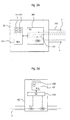
- FIG. 3A shows a schematic representation of a switching entity for use in a base station subsystem of a cellular telecommunications network according a second embodiment of the present invention.
- a switching entity 30' comprises at least one port 313 such to communicate with at least one BTS on the local side and a BSC on the remote side.
- the switching entity 30' handles both the user plane 1' as well as the signal plane 2 of a call communication between at least two service terminals on the respective local side of the cellular telecommunications network.
- the switching entity 30' further comprises a processing unit 300 and a memory unit 310 for handling the respective call planes.
- a processing unit 300 for handling the respective call planes.
- a memory unit 310 for handling the respective call planes.
- one or more program sections 311 may be stored for not only handling the respective call planes, but also for receiving a respective command CMD from the remote side, and, in accordance with this command CMD, for interrupting data flow of the user plane 1' and for inserting local user data 101.
- the memory unit 310 may further comprise another program section 311 for generating the local user data 101 in accordance with the received command CMD.
- the local user data 101 to be inserted into the user plane data flow may only be generated at the instance of receiving and/or executing the received command CMD.
- the switching entity 30' may, for example, generate encoded DTMF-sound data upon receiving the respective DTMF-command, e.g. in PCM-coding with ITU-T standard G.711 or also compressed data, compressed (encoded) with any of the 3GPP Codecs, such as GSM_FR, FR_AMR, etc, whatever is just used in this very moment on the User Plane.
- the memory unit 310 may also comprise a memory section 312 for storing pre-encoded local user data 101 that is to be inserted in response to a received command CMD.
- the memory section 312 may thus comprise pre-encoded data representing each of the possible DTMF-signals, which in turn, are encoded for each codec being handled by the switching entity 30'.
- the switching entity 30' between the service terminals interrupts locally only in one direction the user plane 1' for, e.g., the duration of a DTMF burst or tone. Subsequently, the switch entity 30' again locally switches the user plane 1'. As a consequence, it may not be required to have the user plane between BSS and the core network (e. g. NSS) or within the core network. In this way, no core network resources are needed, no jump in speech path delay occurs, and the speech path in the opposite direction is not disturbed.
- the core network e. g. NSS
- FIG. 3B shows a schematic representation of a network entity for use in a network subsystem of a cellular communications network according to a third embodiment of the present invention.
- a network entity 63' comprises a processing unit 630 and a memory unit 631.
- program units 632 may be stored such to instruct the processing unit 630 to receive a command CMD via a control plane 2.
- the processing unit 630 may optionally generate a new command CMD that may be suitable for execution on the local side of the cellular telecommunications network or just forward the command CMD to the local side.
- the network entity 63' may also forward the command CMD even in cases the service terminals, to which the user plane data flow is to be manipulated, are associated to the network entity 63'. In other words, the network entity 63' refrains from manipulating the user plane data flow and/or instructing other remote side infrastructure equipment accordingly, and only forwards the command CMD to the local side.
- Figure 4A shows a flowchart of a method of handling a local call in a cellular telecommunications network according to a fourth embodiment of the present invention.
- the method comprises a handling S100 of a user plane of a local call communication on a local side of the cellular telecommunications network.
- the method also comprises a receiving S110, on the local side, of a command from a remote side of the cellular telecommunications network and an inserting S120 of local user data into a data flow of the user plane on the local side.
- the inserting S120 may usually be performed only in response to the receiving S110 of the command.
- Figure 4B shows a flowchart of a method of operating a switching entity for use in a base station subsystem of a cellular telecommunications network according to a fifth embodiment of the present invention.
- the method comprises a handling S200 of a user plane of a local call communication.
- the method also comprises a receiving S210 of a command from a remote side of the cellular telecommunications network, and, in response to receiving S210 the command, an inserting S220 of local user data into a data flow of the user plane.
- the method may optionally comprise a generating S215 of the local user data in response to the receiving S210 of the respective command, and prior to inserting S220 the respective user data.
- Figure 4C shows a flowchart of a method of operating a network entity for use in a network subsystem of a cellular telecommunications network according to a fifth embodiment of the present invention.
- the method comprises a handling S300 of a control plane of a local call communication between at least two terminals.
- the method also comprises a receiving S310 of a command for inserting user data into a data flow toward at least one of the terminals, wherein said data flow is of a user plane of the local call communication on a local side of cellular telecommunications network.
- a check S320 is performed for determining whether the service terminal, to which user plane data flow is to be manipulated in accordance with the command, is associated to the network entity and/or whether a local call communication is taking place to this service terminal. If either association and/or a local call are determined, the received command is forwarded to the local side in step S330.
- the check S320 may be optional, such that the network entity directly forwards the command in step S330.
- the 16 different DTMF-tone-bursts can be generated offline and stored in speech-codec-compressed form in the BSS (in short SCC-DTMF).
- a required DTMF-symbol (x) can then be sent out-of-band from the MSC to the BSS, for example with a command such as "start DTMF(x)" and "stop DTMF(x)".
- the BSS may then take care that the correct SCC-DTMF-sequence (x) is inserted into the user plane data stream/flow towards the destination service terminal.
- the advantage of this method is that the BSS does not need to have detailed knowledge of the encoding algorithms and does not need expensive processing power for generating and encoding the ever identical data streams.
- DTMF-tone-bursts could be generated offline and stored in speech-codec-compressed form in a memory within the BSS.
- codec types or modes in GERAN i.e.
- Such DTMF-symbols or complete DTMF-Sequences may then be sent out-of-band in a protocol from the MSC to the BSC for the radio leg the DTMF are tailored to.
- Typical coding schemes for DTMF-sequences could use, for example, commands such as "start DTMF(x)" and "stop DTMF(x)", wherein exact start and stop timings, as well as the duration, are then known in an advantageous manner in advance.
- some new messages and information elements (IEs) could be implemented between the MSC and the BSC to tell the radio access network, when and which DTMF-symbols are to be inserted.
- the BSS could take care of that the correct SCC-DTMF-sequence is inserted into the user plane data stream/flow towards the desired destination service terminal.
- the local switch is then interrupted locally in the respective direction for the duration of the DTMF bursts. Subsequently, the local switch can be locally applied again, wherein the user plane is not needed between the BSS and NSS (e.g. the core network or within the core network).
- the local switch between the service terminals can be interrupted only locally and only in one direction and only exactly for the duration of the DTMF burst. Subsequently, the local switch can be locally applied again, so that the disturbance for the users is minimal.
- Another advantage is that the performance of the DTMF burst is optimal.
- the user plane between the BSS and the NSS e. g. the core network and within the core network
Landscapes
- Engineering & Computer Science (AREA)
- Signal Processing (AREA)
- Mobile Radio Communication Systems (AREA)
Claims (29)
- Verfahren zum Verwalten eines Ortsgesprächs zwischen mindestens zwei Endgeräten in einem Zell-Telekommunikationsnetz, wobei das Verfahren Folgendes umfasst:- Verwalten (S100) einer Benutzerebene des Ortsgesprächs, was das Herstellen und/oder Aufrechterhalten eines Datenflusses der Benutzerebene beinhaltet, wobei die Benutzerebene des Ortsgesprächs auf einer lokalen Seite des Zell-Telekommunikationsnetzes gehalten wird, wobei die lokale Seite Entitäten von Infrastrukturausrüstung umfasst, die über eine gemeinsame Verbindungsstrecke zu übrigen Entitäten von Infrastrukturausrüstung des Zell-Telekommunikationsnetzes kommuniziert, gekennzeichnet durch- Empfangen (S110) eines Befehls auf der lokale Seite; und- in Reaktion auf das Empfangen des Befehls, Einfügen (S120) lokaler Benutzerdaten in einen Datenfluss der Benutzerebene auf der lokalen Seite.
- Verfahren nach Anspruch 1, wobei der Befehl von einer räumlich abgesetzten Seite des Zell-Telekommunikationsnetzes kommend empfangen wird, wobei die räumlich abgesetzte Seite die übrigen Entitäten von Infrastrukturausrüstung des Zell-Telekommunikationsnetzes umfasst.
- Verfahren nach Anspruch 1 oder 2, wobei der Befehl von einem der mindestens zwei Endgeräte kommend empfangen wird.
- Verfahren nach einem der Ansprüche 1 bis 3, wobei das Verfahren das Verwalten einer Steuerungsebene auf der lokalen Seite des Zell-Telekommunikationsnetzes umfasst.
- Verfahren nach Anspruch 4, wobei der Befehl über die Steuerungsebene empfangen wird.
- Verfahren nach einem der Ansprüche 1 bis 5, wobei das Verfahren das Erzeugen der lokalen Benutzerdaten auf der lokalen Seite umfasst.
- Verfahren nach einem der Ansprüche 1 bis 6, wobei das Verfahren das Speichern zuvor festgelegter lokaler Benutzerdaten auf der lokalen Seite umfasst.
- Verfahren nach einem der Ansprüche 1 bis 7, wobei die lokalen Benutzerdaten ein Klangsignal darstellen.
- Verfahren nach Anspruch 8, wobei das Klangsignal eines von Folgendem ist: ein Musiksignal, ein Sprachsignal, ein Tonsignal, ein Dualton-Mehrfrequenzsignal oder ein Inband-Modemsignal.
- Verfahren nach einem der Ansprüche 1 bis 9, wobei mindestens ein Endgerät der mindestens zwei Endgeräte ein mobiles Endgerät ist.
- Verfahren zum Betreiben einer Vermittlungsentität zur Verwendung in einem Basisstations-Teilsystem eines Zell-Telekommunikationsnetzes, wobei das Verfahren Folgendes umfasst:- Verwalten (S200) einer Benutzerebene des Ortsgesprächs zwischen mindestens zwei Endgeräten, wobei das Verwalten (S200) das Herstellen und/oder Aufrechterhalten eines Datenflusses der Benutzerebene beinhaltet, wobei die Benutzerebene auf einer lokalen Seite gehalten wird, die Entitäten von Infrastrukturausrüstung umfasst, die über eine gemeinsame Verbindungsstrecke zu übrigen Entitäten von Infrastrukturausrüstung des Zell-Telekommunikationsnetzes kommuniziert, gekennzeichnet durch- Empfangen (S210) eines Befehls; und- in Reaktion auf das Empfangen des Befehls, Einfügen (S220) lokaler Benutzerdaten in einen Datenfluss der Benutzerebene.
- Verfahren nach Anspruch 11, wobei der Befehl von einer räumlich abgesetzten Seite des Zell-Telekommunikationsnetzes kommend empfangen wird, wobei die räumlich abgesetzte Seite die übrigen Entitäten von Infrastrukturausrüstung des Zell-Telekommunikationsnetzes umfasst.
- Verfahren nach Anspruch 11 oder 12, wobei der Befehl von einem der mindestens zwei Endgeräte kommend empfangen wird.
- Verfahren nach einem der Ansprüche 11 bis 13, wobei das Verfahren das Verwalten einer Steuerungsebene zwischen der lokalen Seite und einer räumlich abgesetzten Seite des Zell-Telekommunikationsnetzes umfasst.
- Verfahren nach Anspruch 14, wobei der Befehl über die Steuerungsebene empfangen wird.
- Verfahren nach einem der Ansprüche 11 bis 15, wobei das Verfahren das Erzeugen (S215) der lokalen Benutzerdaten umfasst.
- Verfahren nach einem der Ansprüche 11 bis 16, wobei das Verfahren das Abrufen zuvor festgelegter lokaler Benutzerdaten umfasst.
- Verfahren nach einem der Ansprüche 11 bis 17, wobei die lokalen Benutzerdaten ein Klangsignal darstellen.
- Verfahren nach Anspruch 18, wobei das Klangsignal eines von Folgendem ist: ein Musiksignal, ein Sprachsignal, ein Tonsignal, ein Dualton-Mehrfrequenzsignal oder ein Inband-Modemsignal.
- Verfahren zum Betreiben einer Netzwerkentität zur Verwendung in einem Netzwerk-Teilsystem eines Zell-Telekommunikationsnetzes, wobei das Verfahren Folgendes umfasst:- Verwalten einer Steuerungsebene eines Ortsgesprächs zwischen mindestens zwei Endgeräten, wobei die Benutzerebene des Ortsgesprächs auf einer lokalen Seite gehalten wird, die Entitäten von Infrastrukturausrüstung umfasst, die über eine gemeinsame Verbindungsstrecke zu übrigen Entitäten von Infrastrukturausrüstung des Zell-Telekommunikationsnetzes kommunizieren, gekennzeichnet durch- Empfangen eines Befehls zum Einfügen von Benutzerdaten in einen Datenfluss zu mindestens einem der Endgeräte, wobei der Datenfluss von einer Benutzerebene der Ortsgesprächskommunikation auf einer lokalen Seite des Zell-Telekommunikationsnetzes ist;- in Reaktion auf das Empfangen des Befehls, Feststellen, ob das mindestens eine Endgerät der Netzwerkentität zugeordnet ist;- Weiterleiten des empfangenen Befehls an die lokale Seite, wenn das mindestens eine Endgerät der Netzwerkentität zugeordnet ist.
- Verfahren nach Anspruch 20, wobei die Benutzerdaten ein Klangsignal darstellen.
- Verfahren nach Anspruch 21, wobei das Klangsignal eines von Folgendem ist: ein Musiksignal, ein Sprachsignal, ein Tonsignal, ein Dualton-Mehrfrequenzsignal oder ein Inband-Modemsignal.
- Verfahren nach einem der Ansprüche 20 bis 22, wobei das Verfahren das Weiterleiten des empfangenen Befehls an die lokale Seite umfasst, auch wenn das mindestens eine Endgerät nicht der Netzwerkentität zugeordnet ist.
- Computerprogramm, das in eine Verarbeitungseinheit geladen werden kann, wobei das Computerprogramm Code umfasst, der dafür ausgelegt ist, ein Verfahren nach einem der Ansprüche 1 bis 23 auszuführen.
- Computerprogrammprodukt, das ein Computerprogramm nach Anspruch 24 umfasst.
- Vermittlungsentität (30') zur Verwendung in einem Basisstations-Teilsystem eines Zell-Telekommunikationsnetzes, wobei die Vermittlungsentität (30') eine Verarbeitungseinheit (300) und eine Speichereinheit (310) umfasst, die für Folgendes ausgelegt sind:- Verwalten einer Benutzerebene eines Ortsgesprächs zwischen mindestens zwei Endgeräten, was das Herstellen und/oder Aufrechterhalten eines Datenflusses der Benutzerebene beinhaltet, wobei die Benutzerebene auf einer lokalen Seite gehalten wird, die Entitäten von Infrastrukturausrüstung umfasst, die über eine gemeinsame Verbindungsstrecke zu übrigen Entitäten von Infrastrukturausrüstung des Zell-Telekommunikationsnetzes kommuniziert, dadurch gekennzeichnet, dass die Verarbeitungseinheit und die Speichereinheit für Folgendes ausgelegt sind:- Empfangen eines Befehls; und- in Reaktion auf den empfangenen Befehl, Einfügen lokaler Benutzerdaten in einen Datenfluss der Benutzerebene.
- Vermittlungsentität nach Anspruch 26, die für ein Verfahren nach einem der Ansprüche 11 bis 19 ausgelegt ist.
- Netzwerkentität (63') zur Verwendung in einem Netzwerk-Teilsystem eines Zell-Telekommunikationsnetzes, wobei die Netzwerkentität eine Verarbeitungseinheit (630) und eine Speichereinheit (631) umfasst, die für Folgendes ausgelegt sind:- Verwalten einer Steuerungsebene eines Ortsgesprächs zwischen mindestens zwei Endgeräten, wobei die Benutzerebene des Ortsgesprächs auf einer lokalen Seite gehalten wird, die Entitäten von Infrastrukturausrüstung umfasst, die über eine gemeinsame Verbindungsstrecke zu übrigen Entitäten von Infrastrukturausrüstung des Zell-Telekommunikationsnetzes kommunizieren, dadurch gekennzeichnet, dass die Verarbeitungseinheit und die Speichereinheit für Folgendes ausgelegt sind:- Empfangen eines Befehls zum Einfügen von Benutzerdaten in einen Datenfluss zu mindestens einem der Endgeräte, wobei der Datenfluss von einer Benutzerebene der Ortsgesprächskommunikation auf einer lokalen Seite des Zell-Telekommunikationsnetzes ist;- in Reaktion auf den empfangenen Befehl, Feststellen, ob das mindestens eine Endgerät der Netzwerkentität zugeordnet ist;- Weiterleiten des empfangenen Befehls an die lokale Seite, wenn das mindestens eine Endgerät der Netzwerkentität zugeordnet ist.
- Netzwerkentität nach Anspruch 28, die für ein Verfahren nach einem der Ansprüche 20 bis 23 ausgelegt ist.
Priority Applications (1)
| Application Number | Priority Date | Filing Date | Title |
|---|---|---|---|
| EP20100151290 EP2348699B1 (de) | 2010-01-21 | 2010-01-21 | Dateneinfügung während lokaler Anrufe in zellularen Telekommunikationsnetzwerken |
Applications Claiming Priority (1)
| Application Number | Priority Date | Filing Date | Title |
|---|---|---|---|
| EP20100151290 EP2348699B1 (de) | 2010-01-21 | 2010-01-21 | Dateneinfügung während lokaler Anrufe in zellularen Telekommunikationsnetzwerken |
Publications (2)
| Publication Number | Publication Date |
|---|---|
| EP2348699A1 EP2348699A1 (de) | 2011-07-27 |
| EP2348699B1 true EP2348699B1 (de) | 2013-06-12 |
Family
ID=42409545
Family Applications (1)
| Application Number | Title | Priority Date | Filing Date |
|---|---|---|---|
| EP20100151290 Not-in-force EP2348699B1 (de) | 2010-01-21 | 2010-01-21 | Dateneinfügung während lokaler Anrufe in zellularen Telekommunikationsnetzwerken |
Country Status (1)
| Country | Link |
|---|---|
| EP (1) | EP2348699B1 (de) |
Cited By (1)
| Publication number | Priority date | Publication date | Assignee | Title |
|---|---|---|---|---|
| WO2021097858A1 (zh) * | 2019-11-22 | 2021-05-27 | 华为技术有限公司 | 一种通信方法及装置 |
Family Cites Families (3)
| Publication number | Priority date | Publication date | Assignee | Title |
|---|---|---|---|---|
| US6850763B1 (en) * | 2000-11-22 | 2005-02-01 | Winphoria Networks, Inc. | System and method of servicing mobile communications with a proxy switch |
| FR2870662B1 (fr) * | 2004-05-24 | 2006-08-18 | Alcatel Sa | Dispositif de routage local de trafics locaux au sein d'un reseau de communication radio |
| FR2994629B1 (fr) * | 2008-01-15 | 2017-04-21 | Cell & Sat | Procede d'optimisation des ressources de transmission par bouclage intercellulaire dans un reseau cellulaire de radiocommunication mobile, reseau et adaptateurs locaux correspondants. |
-
2010
- 2010-01-21 EP EP20100151290 patent/EP2348699B1/de not_active Not-in-force
Cited By (1)
| Publication number | Priority date | Publication date | Assignee | Title |
|---|---|---|---|---|
| WO2021097858A1 (zh) * | 2019-11-22 | 2021-05-27 | 华为技术有限公司 | 一种通信方法及装置 |
Also Published As
| Publication number | Publication date |
|---|---|
| EP2348699A1 (de) | 2011-07-27 |
Similar Documents
| Publication | Publication Date | Title |
|---|---|---|
| US5583914A (en) | Intelligent wireless signaling overlay for a telecommunication network | |
| EP1658548B1 (de) | Kommunikationssteuerung und verfahren zur aufrechterhaltung einer kommunikationsverbindung während einer zellenneuauswahl | |
| WO1995024789A2 (en) | Mobile communication system and call control method | |
| KR20000048730A (ko) | 호출 전송을 위한 시스템 및 이동국 | |
| USRE39990E1 (en) | Increasing channel capacity in fixed cellular networks | |
| US8301131B2 (en) | Method for optimizing the transmission resources by local loopback in a mobile radio communication cellular network, network and local adapters thereof | |
| JP3083852B2 (ja) | 遠距離リンクを介するリモートボコーディング | |
| WO2012113209A1 (zh) | 一种在窄带业务中实现宽带放音的方法及系统 | |
| EP2122943B1 (de) | Verfahren und knoten zur steuerung einer verbindung in einem kommunikationsnetz | |
| EP2348699B1 (de) | Dateneinfügung während lokaler Anrufe in zellularen Telekommunikationsnetzwerken | |
| EP1481518B1 (de) | Vorrichtung und verfahren zur änderung der priorität von bypass-paketen in einem paket-basierten kommunikationssystem | |
| US9774742B2 (en) | Call recording in a telecommunications network | |
| EP2211482B1 (de) | Verfahren zur codec-aushandlung zwischen einem drahtlosen netz und einem kernnetz in einer mobilen einrichtung | |
| CN107770175B (zh) | 一种软交换呼叫方法及系统 | |
| EP1038407B1 (de) | Verfahren und vorrichtung zum bereitstellen einer ausserband-zifferwahlsignalisierung für eine teilnehmerschnittstelle in einem festen zellularen kommunikationssystem | |
| EP1014737A2 (de) | Mehrfachtechnologie-Vocoder und ein übereinstimmendes Telekommunikationsnetzwerk | |
| EP2351418B1 (de) | Media-gateway-auswahl beim handover zwischen msc | |
| US8676185B2 (en) | Method for optimising transmission resources by inter-cellular loop in a mobile cellular radio-communication network and corresponding local network and adaptors | |
| CN101557565B (zh) | 终端在反向业务信道间的切换方法及集群通信系统 | |
| CN112087781B (zh) | 一种lte系统中确定语音编码方式的方法和设备 | |
| US7130407B1 (en) | Method for processing call establishment requests | |
| KR100553552B1 (ko) | Wcdma r4 분리형 구조 하에서의 호 처리 자원의감사 방법 및 시스템 | |
| US7881712B1 (en) | Generating and signaling tones in a communications network | |
| KR100400732B1 (ko) | 데이터 전송 방법 및 그를 위한 통신 시스템 | |
| WO2001010145A1 (en) | Method and system in a wireless communications system for making a multi-way data call |
Legal Events
| Date | Code | Title | Description |
|---|---|---|---|
| PUAI | Public reference made under article 153(3) epc to a published international application that has entered the european phase |
Free format text: ORIGINAL CODE: 0009012 |
|
| AK | Designated contracting states |
Kind code of ref document: A1 Designated state(s): AT BE BG CH CY CZ DE DK EE ES FI FR GB GR HR HU IE IS IT LI LT LU LV MC MK MT NL NO PL PT RO SE SI SK SM TR |
|
| AX | Request for extension of the european patent |
Extension state: AL BA RS |
|
| 17P | Request for examination filed |
Effective date: 20120123 |
|
| GRAP | Despatch of communication of intention to grant a patent |
Free format text: ORIGINAL CODE: EPIDOSNIGR1 |
|
| GRAS | Grant fee paid |
Free format text: ORIGINAL CODE: EPIDOSNIGR3 |
|
| GRAA | (expected) grant |
Free format text: ORIGINAL CODE: 0009210 |
|
| RAP1 | Party data changed (applicant data changed or rights of an application transferred) |
Owner name: TELEFONAKTIEBOLAGET LM ERICSSON (PUBL) |
|
| AK | Designated contracting states |
Kind code of ref document: B1 Designated state(s): AT BE BG CH CY CZ DE DK EE ES FI FR GB GR HR HU IE IS IT LI LT LU LV MC MK MT NL NO PL PT RO SE SI SK SM TR |
|
| RAP1 | Party data changed (applicant data changed or rights of an application transferred) |
Owner name: TELEFONAKTIEBOLAGET L M ERICSSON (PUBL) |
|
| REG | Reference to a national code |
Ref country code: GB Ref legal event code: FG4D |
|
| REG | Reference to a national code |
Ref country code: CH Ref legal event code: EP |
|
| REG | Reference to a national code |
Ref country code: AT Ref legal event code: REF Ref document number: 617068 Country of ref document: AT Kind code of ref document: T Effective date: 20130615 |
|
| REG | Reference to a national code |
Ref country code: IE Ref legal event code: FG4D |
|
| REG | Reference to a national code |
Ref country code: DE Ref legal event code: R096 Ref document number: 602010007743 Country of ref document: DE Effective date: 20130808 |
|
| PG25 | Lapsed in a contracting state [announced via postgrant information from national office to epo] |
Ref country code: ES Free format text: LAPSE BECAUSE OF FAILURE TO SUBMIT A TRANSLATION OF THE DESCRIPTION OR TO PAY THE FEE WITHIN THE PRESCRIBED TIME-LIMIT Effective date: 20130923 Ref country code: GR Free format text: LAPSE BECAUSE OF FAILURE TO SUBMIT A TRANSLATION OF THE DESCRIPTION OR TO PAY THE FEE WITHIN THE PRESCRIBED TIME-LIMIT Effective date: 20130913 Ref country code: LT Free format text: LAPSE BECAUSE OF FAILURE TO SUBMIT A TRANSLATION OF THE DESCRIPTION OR TO PAY THE FEE WITHIN THE PRESCRIBED TIME-LIMIT Effective date: 20130612 Ref country code: NO Free format text: LAPSE BECAUSE OF FAILURE TO SUBMIT A TRANSLATION OF THE DESCRIPTION OR TO PAY THE FEE WITHIN THE PRESCRIBED TIME-LIMIT Effective date: 20130912 Ref country code: FI Free format text: LAPSE BECAUSE OF FAILURE TO SUBMIT A TRANSLATION OF THE DESCRIPTION OR TO PAY THE FEE WITHIN THE PRESCRIBED TIME-LIMIT Effective date: 20130612 Ref country code: SE Free format text: LAPSE BECAUSE OF FAILURE TO SUBMIT A TRANSLATION OF THE DESCRIPTION OR TO PAY THE FEE WITHIN THE PRESCRIBED TIME-LIMIT Effective date: 20130612 Ref country code: SI Free format text: LAPSE BECAUSE OF FAILURE TO SUBMIT A TRANSLATION OF THE DESCRIPTION OR TO PAY THE FEE WITHIN THE PRESCRIBED TIME-LIMIT Effective date: 20130612 |
|
| REG | Reference to a national code |
Ref country code: AT Ref legal event code: MK05 Ref document number: 617068 Country of ref document: AT Kind code of ref document: T Effective date: 20130612 |
|
| REG | Reference to a national code |
Ref country code: NL Ref legal event code: VDEP Effective date: 20130612 |
|
| REG | Reference to a national code |
Ref country code: LT Ref legal event code: MG4D |
|
| PG25 | Lapsed in a contracting state [announced via postgrant information from national office to epo] |
Ref country code: BG Free format text: LAPSE BECAUSE OF FAILURE TO SUBMIT A TRANSLATION OF THE DESCRIPTION OR TO PAY THE FEE WITHIN THE PRESCRIBED TIME-LIMIT Effective date: 20130912 Ref country code: HR Free format text: LAPSE BECAUSE OF FAILURE TO SUBMIT A TRANSLATION OF THE DESCRIPTION OR TO PAY THE FEE WITHIN THE PRESCRIBED TIME-LIMIT Effective date: 20130612 |
|
| PG25 | Lapsed in a contracting state [announced via postgrant information from national office to epo] |
Ref country code: LV Free format text: LAPSE BECAUSE OF FAILURE TO SUBMIT A TRANSLATION OF THE DESCRIPTION OR TO PAY THE FEE WITHIN THE PRESCRIBED TIME-LIMIT Effective date: 20130612 |
|
| PG25 | Lapsed in a contracting state [announced via postgrant information from national office to epo] |
Ref country code: EE Free format text: LAPSE BECAUSE OF FAILURE TO SUBMIT A TRANSLATION OF THE DESCRIPTION OR TO PAY THE FEE WITHIN THE PRESCRIBED TIME-LIMIT Effective date: 20130612 Ref country code: CZ Free format text: LAPSE BECAUSE OF FAILURE TO SUBMIT A TRANSLATION OF THE DESCRIPTION OR TO PAY THE FEE WITHIN THE PRESCRIBED TIME-LIMIT Effective date: 20130612 Ref country code: IS Free format text: LAPSE BECAUSE OF FAILURE TO SUBMIT A TRANSLATION OF THE DESCRIPTION OR TO PAY THE FEE WITHIN THE PRESCRIBED TIME-LIMIT Effective date: 20131012 Ref country code: SK Free format text: LAPSE BECAUSE OF FAILURE TO SUBMIT A TRANSLATION OF THE DESCRIPTION OR TO PAY THE FEE WITHIN THE PRESCRIBED TIME-LIMIT Effective date: 20130612 Ref country code: AT Free format text: LAPSE BECAUSE OF FAILURE TO SUBMIT A TRANSLATION OF THE DESCRIPTION OR TO PAY THE FEE WITHIN THE PRESCRIBED TIME-LIMIT Effective date: 20130612 Ref country code: BE Free format text: LAPSE BECAUSE OF FAILURE TO SUBMIT A TRANSLATION OF THE DESCRIPTION OR TO PAY THE FEE WITHIN THE PRESCRIBED TIME-LIMIT Effective date: 20130612 Ref country code: PT Free format text: LAPSE BECAUSE OF FAILURE TO SUBMIT A TRANSLATION OF THE DESCRIPTION OR TO PAY THE FEE WITHIN THE PRESCRIBED TIME-LIMIT Effective date: 20131014 |
|
| PG25 | Lapsed in a contracting state [announced via postgrant information from national office to epo] |
Ref country code: RO Free format text: LAPSE BECAUSE OF FAILURE TO SUBMIT A TRANSLATION OF THE DESCRIPTION OR TO PAY THE FEE WITHIN THE PRESCRIBED TIME-LIMIT Effective date: 20130612 Ref country code: PL Free format text: LAPSE BECAUSE OF FAILURE TO SUBMIT A TRANSLATION OF THE DESCRIPTION OR TO PAY THE FEE WITHIN THE PRESCRIBED TIME-LIMIT Effective date: 20130612 Ref country code: NL Free format text: LAPSE BECAUSE OF FAILURE TO SUBMIT A TRANSLATION OF THE DESCRIPTION OR TO PAY THE FEE WITHIN THE PRESCRIBED TIME-LIMIT Effective date: 20130612 |
|
| PLBE | No opposition filed within time limit |
Free format text: ORIGINAL CODE: 0009261 |
|
| STAA | Information on the status of an ep patent application or granted ep patent |
Free format text: STATUS: NO OPPOSITION FILED WITHIN TIME LIMIT |
|
| PG25 | Lapsed in a contracting state [announced via postgrant information from national office to epo] |
Ref country code: DK Free format text: LAPSE BECAUSE OF FAILURE TO SUBMIT A TRANSLATION OF THE DESCRIPTION OR TO PAY THE FEE WITHIN THE PRESCRIBED TIME-LIMIT Effective date: 20130612 |
|
| 26N | No opposition filed |
Effective date: 20140313 |
|
| PG25 | Lapsed in a contracting state [announced via postgrant information from national office to epo] |
Ref country code: IT Free format text: LAPSE BECAUSE OF FAILURE TO SUBMIT A TRANSLATION OF THE DESCRIPTION OR TO PAY THE FEE WITHIN THE PRESCRIBED TIME-LIMIT Effective date: 20130612 |
|
| REG | Reference to a national code |
Ref country code: DE Ref legal event code: R082 Ref document number: 602010007743 Country of ref document: DE Representative=s name: HOFFMANN - EITLE, DE |
|
| REG | Reference to a national code |
Ref country code: DE Ref legal event code: R097 Ref document number: 602010007743 Country of ref document: DE Effective date: 20140313 |
|
| REG | Reference to a national code |
Ref country code: DE Ref legal event code: R082 Ref document number: 602010007743 Country of ref document: DE Representative=s name: HOFFMANN - EITLE, DE Effective date: 20140618 Ref country code: DE Ref legal event code: R081 Ref document number: 602010007743 Country of ref document: DE Owner name: OPTIS WIRELESS TECHNOLOGY, LLC, PLANO, US Free format text: FORMER OWNER: TELEFONAKTIEBOLAGET L M ERICSSON (PUBL), STOCKHOLM, SE Effective date: 20140618 Ref country code: DE Ref legal event code: R082 Ref document number: 602010007743 Country of ref document: DE Representative=s name: GRUENECKER, KINKELDEY, STOCKMAIR & SCHWANHAEUS, DE Effective date: 20140618 Ref country code: DE Ref legal event code: R082 Ref document number: 602010007743 Country of ref document: DE Representative=s name: GRUENECKER PATENT- UND RECHTSANWAELTE PARTG MB, DE Effective date: 20140618 |
|
| PG25 | Lapsed in a contracting state [announced via postgrant information from national office to epo] |
Ref country code: LU Free format text: LAPSE BECAUSE OF FAILURE TO SUBMIT A TRANSLATION OF THE DESCRIPTION OR TO PAY THE FEE WITHIN THE PRESCRIBED TIME-LIMIT Effective date: 20140121 |
|
| REG | Reference to a national code |
Ref country code: CH Ref legal event code: PL |
|
| GBPC | Gb: european patent ceased through non-payment of renewal fee |
Effective date: 20140121 |
|
| REG | Reference to a national code |
Ref country code: DE Ref legal event code: R082 Ref document number: 602010007743 Country of ref document: DE Representative=s name: GRUENECKER, KINKELDEY, STOCKMAIR & SCHWANHAEUS, DE Ref country code: DE Ref legal event code: R082 Ref document number: 602010007743 Country of ref document: DE Representative=s name: GRUENECKER PATENT- UND RECHTSANWAELTE PARTG MB, DE |
|
| PG25 | Lapsed in a contracting state [announced via postgrant information from national office to epo] |
Ref country code: CH Free format text: LAPSE BECAUSE OF NON-PAYMENT OF DUE FEES Effective date: 20140131 Ref country code: LI Free format text: LAPSE BECAUSE OF NON-PAYMENT OF DUE FEES Effective date: 20140131 |
|
| REG | Reference to a national code |
Ref country code: FR Ref legal event code: ST Effective date: 20140930 |
|
| REG | Reference to a national code |
Ref country code: DE Ref legal event code: R082 Ref document number: 602010007743 Country of ref document: DE Representative=s name: GRUENECKER, KINKELDEY, STOCKMAIR & SCHWANHAEUS, DE Ref country code: DE Ref legal event code: R082 Ref document number: 602010007743 Country of ref document: DE Representative=s name: GRUENECKER PATENT- UND RECHTSANWAELTE PARTG MB, DE |
|
| REG | Reference to a national code |
Ref country code: IE Ref legal event code: MM4A |
|
| PG25 | Lapsed in a contracting state [announced via postgrant information from national office to epo] |
Ref country code: FR Free format text: LAPSE BECAUSE OF NON-PAYMENT OF DUE FEES Effective date: 20140131 Ref country code: GB Free format text: LAPSE BECAUSE OF NON-PAYMENT OF DUE FEES Effective date: 20140121 |
|
| PG25 | Lapsed in a contracting state [announced via postgrant information from national office to epo] |
Ref country code: IE Free format text: LAPSE BECAUSE OF NON-PAYMENT OF DUE FEES Effective date: 20140121 |
|
| PG25 | Lapsed in a contracting state [announced via postgrant information from national office to epo] |
Ref country code: MC Free format text: LAPSE BECAUSE OF FAILURE TO SUBMIT A TRANSLATION OF THE DESCRIPTION OR TO PAY THE FEE WITHIN THE PRESCRIBED TIME-LIMIT Effective date: 20130612 |
|
| PG25 | Lapsed in a contracting state [announced via postgrant information from national office to epo] |
Ref country code: MT Free format text: LAPSE BECAUSE OF FAILURE TO SUBMIT A TRANSLATION OF THE DESCRIPTION OR TO PAY THE FEE WITHIN THE PRESCRIBED TIME-LIMIT Effective date: 20130612 |
|
| PG25 | Lapsed in a contracting state [announced via postgrant information from national office to epo] |
Ref country code: SM Free format text: LAPSE BECAUSE OF FAILURE TO SUBMIT A TRANSLATION OF THE DESCRIPTION OR TO PAY THE FEE WITHIN THE PRESCRIBED TIME-LIMIT Effective date: 20130612 |
|
| PG25 | Lapsed in a contracting state [announced via postgrant information from national office to epo] |
Ref country code: CY Free format text: LAPSE BECAUSE OF FAILURE TO SUBMIT A TRANSLATION OF THE DESCRIPTION OR TO PAY THE FEE WITHIN THE PRESCRIBED TIME-LIMIT Effective date: 20130612 |
|
| PG25 | Lapsed in a contracting state [announced via postgrant information from national office to epo] |
Ref country code: HU Free format text: LAPSE BECAUSE OF FAILURE TO SUBMIT A TRANSLATION OF THE DESCRIPTION OR TO PAY THE FEE WITHIN THE PRESCRIBED TIME-LIMIT; INVALID AB INITIO Effective date: 20100121 Ref country code: TR Free format text: LAPSE BECAUSE OF FAILURE TO SUBMIT A TRANSLATION OF THE DESCRIPTION OR TO PAY THE FEE WITHIN THE PRESCRIBED TIME-LIMIT Effective date: 20130612 |
|
| PGFP | Annual fee paid to national office [announced via postgrant information from national office to epo] |
Ref country code: DE Payment date: 20171218 Year of fee payment: 9 |
|
| PG25 | Lapsed in a contracting state [announced via postgrant information from national office to epo] |
Ref country code: MK Free format text: LAPSE BECAUSE OF FAILURE TO SUBMIT A TRANSLATION OF THE DESCRIPTION OR TO PAY THE FEE WITHIN THE PRESCRIBED TIME-LIMIT Effective date: 20130612 |
|
| REG | Reference to a national code |
Ref country code: DE Ref legal event code: R119 Ref document number: 602010007743 Country of ref document: DE |
|
| PG25 | Lapsed in a contracting state [announced via postgrant information from national office to epo] |
Ref country code: DE Free format text: LAPSE BECAUSE OF NON-PAYMENT OF DUE FEES Effective date: 20190801 |