EP2349224B1 - Oral verabreichbares immunstimulierendes produkt für aquakultur - Google Patents
Oral verabreichbares immunstimulierendes produkt für aquakultur Download PDFInfo
- Publication number
- EP2349224B1 EP2349224B1 EP08875709.1A EP08875709A EP2349224B1 EP 2349224 B1 EP2349224 B1 EP 2349224B1 EP 08875709 A EP08875709 A EP 08875709A EP 2349224 B1 EP2349224 B1 EP 2349224B1
- Authority
- EP
- European Patent Office
- Prior art keywords
- cytokine
- fish
- immunostimulant
- recombinant
- sbtnfα
- Prior art date
- Legal status (The legal status is an assumption and is not a legal conclusion. Google has not performed a legal analysis and makes no representation as to the accuracy of the status listed.)
- Not-in-force
Links
Images



Classifications
-
- A—HUMAN NECESSITIES
- A61—MEDICAL OR VETERINARY SCIENCE; HYGIENE
- A61K—PREPARATIONS FOR MEDICAL, DENTAL OR TOILETRY PURPOSES
- A61K9/00—Medicinal preparations characterised by special physical form
- A61K9/48—Preparations in capsules, e.g. of gelatin, of chocolate
- A61K9/50—Microcapsules having a gas, liquid or semi-solid filling; Solid microparticles or pellets surrounded by a distinct coating layer, e.g. coated microspheres, coated drug crystals
- A61K9/5005—Wall or coating material
- A61K9/5021—Organic macromolecular compounds
- A61K9/5026—Organic macromolecular compounds obtained by reactions only involving carbon-to-carbon unsaturated bonds, e.g. polyvinyl pyrrolidone, poly(meth)acrylates
-
- A—HUMAN NECESSITIES
- A23—FOODS OR FOODSTUFFS; TREATMENT THEREOF, NOT COVERED BY OTHER CLASSES
- A23K—FODDER
- A23K20/00—Accessory food factors for animal feeding-stuffs
- A23K20/10—Organic substances
- A23K20/142—Amino acids; Derivatives thereof
- A23K20/147—Polymeric derivatives, e.g. peptides or proteins
-
- A—HUMAN NECESSITIES
- A23—FOODS OR FOODSTUFFS; TREATMENT THEREOF, NOT COVERED BY OTHER CLASSES
- A23K—FODDER
- A23K40/00—Shaping or working-up of animal feeding-stuffs
- A23K40/30—Shaping or working-up of animal feeding-stuffs by encapsulating; by coating
-
- A—HUMAN NECESSITIES
- A23—FOODS OR FOODSTUFFS; TREATMENT THEREOF, NOT COVERED BY OTHER CLASSES
- A23K—FODDER
- A23K50/00—Feeding-stuffs specially adapted for particular animals
- A23K50/80—Feeding-stuffs specially adapted for particular animals for aquatic animals, e.g. fish, crustaceans or molluscs
-
- A—HUMAN NECESSITIES
- A61—MEDICAL OR VETERINARY SCIENCE; HYGIENE
- A61K—PREPARATIONS FOR MEDICAL, DENTAL OR TOILETRY PURPOSES
- A61K38/00—Medicinal preparations containing peptides
- A61K38/16—Peptides having more than 20 amino acids; Gastrins; Somatostatins; Melanotropins; Derivatives thereof
- A61K38/17—Peptides having more than 20 amino acids; Gastrins; Somatostatins; Melanotropins; Derivatives thereof from animals; from humans
- A61K38/1703—Peptides having more than 20 amino acids; Gastrins; Somatostatins; Melanotropins; Derivatives thereof from animals; from humans from vertebrates
- A61K38/1706—Peptides having more than 20 amino acids; Gastrins; Somatostatins; Melanotropins; Derivatives thereof from animals; from humans from vertebrates from fish
-
- A—HUMAN NECESSITIES
- A61—MEDICAL OR VETERINARY SCIENCE; HYGIENE
- A61K—PREPARATIONS FOR MEDICAL, DENTAL OR TOILETRY PURPOSES
- A61K38/00—Medicinal preparations containing peptides
- A61K38/16—Peptides having more than 20 amino acids; Gastrins; Somatostatins; Melanotropins; Derivatives thereof
- A61K38/17—Peptides having more than 20 amino acids; Gastrins; Somatostatins; Melanotropins; Derivatives thereof from animals; from humans
- A61K38/19—Cytokines; Lymphokines; Interferons
- A61K38/191—Tumor necrosis factors [TNF], e.g. lymphotoxin [LT], i.e. TNF-beta
-
- A—HUMAN NECESSITIES
- A61—MEDICAL OR VETERINARY SCIENCE; HYGIENE
- A61P—SPECIFIC THERAPEUTIC ACTIVITY OF CHEMICAL COMPOUNDS OR MEDICINAL PREPARATIONS
- A61P37/00—Drugs for immunological or allergic disorders
- A61P37/02—Immunomodulators
-
- A—HUMAN NECESSITIES
- A61—MEDICAL OR VETERINARY SCIENCE; HYGIENE
- A61P—SPECIFIC THERAPEUTIC ACTIVITY OF CHEMICAL COMPOUNDS OR MEDICINAL PREPARATIONS
- A61P37/00—Drugs for immunological or allergic disorders
- A61P37/02—Immunomodulators
- A61P37/04—Immunostimulants
Definitions
- Aquaculture production in Europe is only 3 percent of world production, but is leader in several species production, like atlantic salmon, trout, seabass, gilthead seabream, turbot and mussel.
- production was higher than 1,3 million tonnes with a value of €3280 million.
- the most important species in Mediterranean countries are gilthead seabream, seabass and turbot.
- Production of both gilthead seabream and seabass in 2002 was 181000 tonnes and principal producers were Greece, Turkey, Spain, Italy and France.
- Production of turbot in 2002 was 5320 tonnes from which a 75 percent was produced in Spain. All the data are from FAO.
- vaccines available for usual bacterial fish diseases, like vibriosis, photobacteriosis, furunculosis, flexibacteriosis, winter disease syndrome or streptococcosis and also for usual viral fish diseases, like IPNV or IHNV (reviewed by Toranzo et al ., 2005 and Sommerset et al. , 2005).
- Intraperitoneal injection is the most effective route for vaccination because it allows a better control of the dose and permits the use of adjuvant which results in better immune response.
- injection route due to the fact that fish sedation and manipulation can cause a stress in animals and can origin damage to fish when vaccine is not administered with care.
- small fish can not be vaccinated by this route.
- Immersion method is frequently used in farmer because is easy and fast but it does not allow a strict dosage control and is stressful for fish with consistent immune system depression.
- Oral administration of vaccines does not require fish manipulation and it is a suitable method for vaccination of all sizes animals, included juvenile fish that are starting to feed, which is very important because these fish are more susceptible to be infected by pathogens.
- Several disadvantages of oral route are that does not allow a strict dosage control and a large quantity of antigen is required for immunization.
- the most important obstacle for oral administration is that antigens are often inactivated in gut by acidic environment or protease activity and it prevent active antigens absorption by intestine. For this reason an effective oral administration requires the antigen protection, i.e: encapsulation, to avoid antigen degradation in gut (Hart et al ., 1988; Quentel and Vigneulle, 1997).
- Different approaches to protect the antigen from degradation have demonstrated some promising results such as entrapping in liposomes or alginate microparticles (Ire et al ., 2005; Maurice et al ., 2004).
- Immunostimulants are used in aquaculture to increase fish resistance to diseases.
- chemical nature and mode of action a number of different immunostimulants have been described, such as structural elements of bacteria (LPS), various ⁇ -1,3 glucan products from bacterial and mycelial fungi, ⁇ -1,3/1,6 glucans from the cell wall of yeast, complex carbohydrate structures (glycans) from various biological sources, peptides present in extracts of certain animals or made by enzymatic hydrolysis of fish protein, nucleotides, synthetic products (levamisole) and vitamin C (reviewed by Raa, 1996).
- Some of the used immunostimulants also enhance specific antibody responses (reviewed by Sakai, 1999).
- cytokine in fish in these groups are interleukin 2 (IL-2) in case of group b) and interferon gamma (IFN ⁇ ) and transforming growth factor beta (TGF ⁇ ) with respect to group c).
- IL-2 interleukin 2
- IFN ⁇ interferon gamma
- TGF ⁇ transforming growth factor beta
- TNF ⁇ is an inflammatory cytokine produced by monocytes/macrophages during acute inflammation and is responsible for a diverse range of signalling events within cells. TNF ⁇ plays a role as an important mediator in resistance against parasitic, bacterial and viral infections (Czarniecki, 1993; Goldfeld and Tsai, 1996; Steinshamn et al ., 1996). TNF ⁇ has also other important therapeutic functions, which include resistance to tumors (Vilcek and Lee, 1991), sleep regulation (Krueger et al., 1998) and embryonic development (Wride and Sanders, 1995).
- TNF ⁇ exerts many of these effects by binding, as a trimer, to a cell membrane receptor, TNFR-1 or TNFR-2 (Dembic et al ., 1990; Loetscher et al ., 1990), both receptors being present in great numbers on most cells (Letscher et al. , 1991; Schoenfeld et al ., 1991).
- TNF ⁇ mRNA seems to be transcribed in a wide variety of cells and it is largely regulated at the posttranscriptional level (Han et al ., 1990). TNF ⁇ exists in two forms, a membrane-bound and a soluble form, each form possibly having a distinct physiological role (Watts et al., 1997). TNF ⁇ is expressed as a 26 kDa membrane-bound precursor, which is proteolytically cleaved by a disintegrin metalloproteinase (TACE: TNF alpha converting enzyme) to give a 17 kDa C-terminal active form (Black et al ., 1997; Moss et al ., 1997).
- TACE disintegrin metalloproteinase
- TNF ⁇ gen of several mammalian have been sequenced totally o partially, which include human (Pennica et al., 1984), chimpanzee (Kulski et al., 2002), mouse (Shirai et al ., 1985), dog (Zucker et al ., 1994) or cat (McGraw et al ., 1990).
- TNF ⁇ gen or a TNF ⁇ gen fragment of several fish have been sequenced, such as black seabream (Cai et al ., 2003), rainbow trout (Laing et al ., 2001), carp (Saeij et al ., 2003) or zebra fish (Phelan et al ., 2003) or gilthead seabream (Garc ⁇ a-Castillo et al., 2002).
- TNF ⁇ gen of gilthead seabream has four exons and three introns and a length of 1244 pb.
- cDNA is composed of 1359 pb that include a open reading frame (ORF) of 762 pb, a 5' untranslated region (UTR) of 142 pb and a 3' UTR of 455 pb.
- Deduced protein has 253 amino acids, an estimated molecular weight of 28 kDa and present high sequence homology with other fish species TNF ⁇ , specially in C-terminal extreme involved in interaction with receptors.
- TNF ⁇ protein contains a transmembrane region between 37 and 54 residues and a conserved sequence Thr-Leu associated with TACE TNF ⁇ , TNF ⁇ , Lt ⁇ and Fas ligand, being TNF ⁇ most important member with regulatory functions in immune system;
- cytokine in fish in these groups are interleukin 2 (IL-2) in case of group b) and interferon gamma (IFN ⁇ ) and transforming growth factor beta (TGF ⁇ ) with respect to group c).
- IL-2 interleukin 2
- IFN ⁇ interferon gamma
- TGF ⁇ transforming growth factor beta
- TNF ⁇ is an inflammatory cytokine produced by monocytes/macrophages during acute inflammation and is responsible for a diverse range of signalling events within cells. TNF ⁇ plays a role as an important mediator in resistance against parasitic, bacterial and viral infections (Czarniecki, 1993; Goldfeld and Tsai, 1996; Steinshamn et al., 1996). TNF ⁇ has also other important therapeutic functions, which include resistance to tumors (Vilcek and Lee, 1991), sleep regulation (Krueger et al., 1998) and embryonic development (Wride and Sanders, 1995). TNF ⁇ exerts many of these effects by binding, as a trimer, to a cell membrane receptor, TNFR-1 or TNFR-2 (Dembic et al. , 1990; Loetscher et al., 1990), both receptors being present in great numbers on most cells (Letscher et al ., 1991; Schoenfeld et al., 1991).
- TNF ⁇ mRNA seems to be transcribed in a wide variety of cells and it is largely regulated at the posttranscriptional level (Han et al ., 1990). TNF ⁇ exists in two forms, a membrane-bound and a soluble form, each form possibly having a distinct physiological role (Watts et al ., 1997). TNF ⁇ is expressed as a 26 kDa membrane-bound precursor, which is proteolytically cleaved by a disintegrin metalloproteinase (TACE: TNF alpha converting enzyme) to give a 17 kDa C-terminal active form (Black et al., 1997; Moss et al., 1997).
- TACE disintegrin metalloproteinase
- TNF ⁇ gen of several mammalian have been sequenced totally o partially, which include human (Pennica et al ., 1984), chimpanzee (Kutsi et al ., 2002), mouse (Shirai et al., 1988), dog (Zucker et al., 1994) or cat (McGraw et al., 1990).
- TNF ⁇ gen or a TNF ⁇ gen fragment of several fish have been sequenced, such as black seabream (Cai et al ., 2003), rainbow trout (Laing et al ., 2001), carp (Saeij et al., 2003) or zebra fish (Phelan et al., 2003) or gilthead seabream (Garcia-Castillo et al ., 2002).
- TNF ⁇ gen of gilthead seabream has four exons and three introns and a length of 1244 pb.
- cDNA is composed of 1359 pb that include a open reading frame (ORF) of 762 pb, a 5' untranslated region (UTR) of 142 pb and a 3' UTR of 455 pb.
- Deduced protein has 253 amino acids, an estimated molecular weight of 28 kDa and present high sequence homology with other fish species TNF ⁇ , specially in C-terminal extreme involved in interaction with receptors.
- TNF ⁇ protein contains a transmembrane region between 37 and 54 residues and a conserved sequence Thr-Leu associated with TACE proteolytic cleavage (Garcia-Castillo et al ., 2002). Therefore it is possible to distinguish between a 253 amino acids membrane-bound protein (proTNF ⁇ ) and a 167 amino acids soluble protein (sbTNF ⁇ ).
- US 5871751 discloses a vaccine and method for treating fish susceptible to infection by Renibacterium salmoninarum.
- the vaccine comprises killed microorganism that lack intact cell-surface-associated protein p57 and may be enteric coated for oral delivery.
- the enteric coating comprises a polymer coating that is impervious to dissolution and/or degradation in the stomach, but is dissolved upon passing to the higher pH environments of the intestine.
- a preferred embodiment of the disclosed vaccine is made using spherical sugar microspheres, that are coated with a first layer comprising the killed microorganism that lack intact cell-surface-associated protein p57 and that is then coated with an enteric-coating second layer, comprising a material that is impervious to dissolution and/or degradation in the stomach of the fish.
- WO 03/020040 A1 discloses an oral vaccine that consists of a multiple-cell organism that encapsulates a single-cell organism containing an antigen.
- This vaccine is used to feed an aquatic animal (e.g., a fish) to be vaccinated.
- the antigen being expressed in the single-cell microorganism, is delivered to the aquatic animal via two steps of feeding i.e. the single-cell microorganism (containing the antigen) fed to the multiple-cell organism and the multiple-cell organism fed to the aquatic animal.
- the single-cell microorganism containing the antigen
- it is always required the contemporaneous presence of both the single-cell microorganism and the multiple-cell organism.
- the antigen to be expressed depends on whether the induced immune response is against a targeted pathogen.
- WO 03/020040 describes Pseudomonas exotoxin A (PE) as the bacterial antigen, E.coli as single-cell microorganism, Artemia nauplii as multiple-cell organism.
- PE Pseudomonas exotoxin A
- E.coli E.coli as single-cell microorganism
- Artemia nauplii Artemia nauplii as multiple-cell organism.
- the selected antigen strictly depends on the targeted pathogen against which the vaccine must be directed.
- ES 2189608 A1 discloses a process for the production of a recombinant IL-1 ⁇ of Sparus aurata L. and its use as vaccine adjuvant and immunostimulants in commercial fish.
- the production of recombinant IL-1 ⁇ according to ES 2189608 is carried out by cloning it into an Escherichia coli expression vector.
- the so obtained recombinant protein is purified and used as immunostimulator and vaccine adjuvant in fish industrial cultivations.
- Object of the present invention is to provide an immunostimulant product suitable to be orally administered that does not undergo to hydrolysis and/or degradation and that can be completely absorbed by the organism to which it is administered.
- An object of the present invention is to provide an immunostimulant product that can be directly administered to the target subject.
- an object of the present invention is to provide an immunostimulant product that can be absorbed by the organism to which it is administered in a great amount with respect to the initial administered quantity.
- Another object of the present invention is to provide an immunostimulant product that is not specifically directed against a selected pathogen or a pool of selected pathogens.
- Object of the invention is also to provide a process for the preparation of an orally administrable immunostimulant product and an immunostimulant product for the activation of the immune response in fish aquaculture.
- the present invention provides an orally administrable immunostimulant product comprising at least a microencapsulated recombinant fish cytokine, particularly tumor necrosis factor ⁇ (TNF ⁇ ), a process for the preparation of an orally administrable immunostimulant product comprising a microencapsulated recombinant fish cytokine and its use for the activation of the immune response in fish aquaculture.
- a microencapsulated recombinant fish cytokine particularly tumor necrosis factor ⁇ (TNF ⁇ )
- TNF ⁇ tumor necrosis factor ⁇
- the active molecule acting as immunostimulant i.e. the cytokine and particularly tumor necrosis factor ⁇ (TNF ⁇ ) is a cytokine belonging to the same fish species whose immune response is desirably to activate.
- TNF ⁇ tumor necrosis factor ⁇
- This aspect is very important, as it is therefore possible to activate the immune response of a certain species just enhancing a selected set of immunostimulators that already belongs to that specie. This means that no external factors, compounds or products are in any way administered to the specie, resulting in a great advantage in the obtained result as well as in a safer approach.
- the active molecule acting as immunostimulant is a cytokine obtained from the fish itself, tumor necrosis factor ⁇ (TNF ⁇ ). Therefore a strange substance is not introduced in the animals when the immunostimulant product is supplied and the possibility of adverse effects is avoided.
- the gene coding for the selected cytokine is isolated from a fish tissue and cloned in an expression vector for cytokine expression in an appropriate host microorganism.
- Host cells are cultured in a bioreactor using a suitable medium for optimal cytokine expression and high biomass production.
- the host microorganism is a yeast, preferred Pichia pastoris and Saccharomyces cerevisiae , most preferred Pichia pastoris.
- the choice of the yeast as host microorganism is not casual, as yeasts are eukaryotic microorganisms able to express the selected cytokine both outside or inside the cells, depending on the selected expression vectors. This aspect allows to decide how to express the recombinant protein, giving several advantages in the fermentation process and in the purification of the so obtained products.
- microencapsulation process it is meant any process that is suitable to provide an at least partial coating of the recombinant cytokine, said coating being suitable to protect the cytokine from enteric degradation.
- Microencapsulation is a technological process by which very tiny droplets or particles of liquid or solid material are surrounded or coated with a continuous film of polymeric material, thus obtaining microparticles.
- Microencapsulation techniques are very used in several biological and chemical systems and allow to produce a huge amount of products.
- the main techniques used for successfully obtaining microencapsulation of the interesting and selected cytokine, expecially TNF ⁇ , is atomization by spray dried.
- an active molecule is dissolved or suspended in a melt or polymer solution and becomes trapped in the dried particle.
- most useful polymers that have been used to protect microparticles of the recombinant protein from acidic pH present in gut,have been for example selected among: cellulose acetate phthalate, hydroxypropyl cellulose phthalate, carboxymetyl cellulose, methacrylic acid copolymers, namely methacrylic acid copolymer LS such as Eudragit L-30 and Kollicoat.
- Others polymers that can be used are for example selected among: maltodextrin, chitosan, gelatine, starch or arabic gum.
- TNF ⁇ has been used as an example of cytokine that is expressed in a microorganism and then mixed with polymers to protect the protein from acidic environment of gut and protease activity.
- the recombinant protein i.e. TNF ⁇
- TNF ⁇ can be used as such when the host microorganism allows its over-expression outside the cells.
- the host microorganism over-expresses the protein internally, the same microorganism is subjected to a microencapsulation process, thus obtaining a microencapsulated microorganism, able to be used as such and presenting all the advantages already explained.
- the result of over-expression of the protein is dried by spray dried and added to fish diet with beneficial effects to health fish. Products developed in the present invention have an enormous importance in aquaculture market to prevent fish diseases by infections, to protect fish in some stressful circumstances and as adjuvant of vaccines.
- the immunostimulant product when the immunostimulant product is directed to the treatment of adult fishes, it can be administered as such, due to the advantages given by the microencapsulation process.
- the immunostimulant product when the immunostimulant product is directed to the treatment of young fishes or fish larva, it can be possible to feed a multi-cellular organism such as for example Artemia Nauplii and subsequently feed the young fishes with this multi cellular organisms, easily eaten by the young fish populations.
- the microencapsulation of the immunostimulant product allows the safe maintenance of the main characteristics and activities of the product, resulting in a great advantage.
- recombinant sbTNF ⁇ of gilthead seabream has been purified and its biological activity has been assayed in vivo and in vitro.
- Recombinant protein contains a six histidines tag in N-terminal extreme for affinity chromatography purification and anti-polyhistidine mAb detection in immunoblotting.
- Intraperitoneal injection resulted in: a) priming of the respiratory burst of the peritoneal exudates and head-kidney (HK) leukocytes; b) rapid recruitment of phagocytic granulocytes to the injection site, and c) induction of granulopoiesis in the HK.
- sbTNF ⁇ was able to induce a strong proliferation of HK cells in vitro.
- Another advantage according to the present invention is represented by the fact that the host microorganism expressing TNF ⁇ cytokine can be itself act as additional source of immunostimulants substances.
- Some structural elements of bacteria, glucans from the cell wall of yeast, or complex carbohydrate structures (glycans) from various biological sources can be in fact used as immunostimulants.
- TNF ⁇ of several fish species of great importance in aquaculture TNF ⁇ of others fish species and others cytokines can be used when practicing the invention.
- the invention can be applied to cytokines extracted or obtained by synthesis.
- EXAMPLE 1 Expression of gilthead seabream TNF ⁇ in Escherichia coli. Cloning of sbTNF ⁇ into pET15b
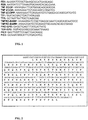
- LPS stimulated head-kidney cDNA was used as template in a PCR for amplification of sbTNF ⁇ with primers FE4 and RE5 ( Figure 1 ). Both primers include a Bam HI restriction site for posterior cloning PCR product in the same site of plasmid pET15b (Novagen). Amplification was performed in samples containing cDNA template, 50 ⁇ M of each dNTP, 0.2 mM of primers, 1X buffer PLUS containing MgCl 2 and 1 unit of Eco Taq PLUS DNA polymerase (Ecogen).
- the cycling reaction was performed in a Eppendorf Mastercycler Gradient for 1 cycle of 95 °C for 2 min, 25 cycles of 95 °C for 45 s, 60 °C for 45 s and 72 °C for 30 sec, followed by a cycle of 72 °C for 10 min.
- PCR product was purified with the QIAquick PCR Purification Kit (Qiagen) and ligated with plasmid pGEM-T Easy (Promega) in a relation insert:plasmid of 3:1 using 1 unit of T4 DNA ligase (New England BioLabs, Inc.) at room temperature for 16 hours.
- Ligation mixture was used to transformed Escherichia coli DH5 ⁇ competent cells and spread in LB plates containing ampicillin and X-Gal (Sigma). Plates were incubated at 37 °C and several resultant white colonies were selected to test for insert presence through plasmid isolation with QIAprep Spin Miniprep Kit (Qiagen) and digestion with Bam HI. A selected plasmid containing insert (sbTNF ⁇ with Bam HI ends; Figure 2 ) was denominated pVP81. This plasmid and 500 ng of pET15b were digested with 10 units of Bam HI for release sbTNF ⁇ of pVP81 and for pET15b linearization.
- Both insert and linear plasmid were purified after separation by electrophoresis in agarose low meelting (Pronadisa) gel with QIAquick Gel Extraction Kit (Qiagen) and ligated using 1 unit of T4 DNA ligase (New England BioLabs, Inc.) at room temperature for 16 hours. Ligation mixture was used to transformed Escherichia coli DH5 ⁇ competent cells and spread in LB plates containing ampicillin. Plates were incubated at 37 °C and plasmid of several resultant colonies was isolated to test for insert release with Bam HI digestion and insert orientation with Pvu II digestion. A selected plasmid was sequenced with an ABI Prism 377 genetic analyzer (CIB, CSIC).
- IPTG isopropyl-D-thiogalactoside
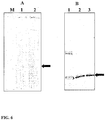
- Protein expression in whole-cell extracts was checked by centrifuging 0.1 ml of induced culture (14000 rpm) and cell pellet was lysed by boiling in SDS-loading buffer for analysis by SDS-PAGE and Western blotting using an antipolyhistidine mAb (Sigma).
- Plasmid pET15b containing sbTNF ⁇ was used as template in a PCR with TNF-ECOF and TNF-ECOR primers ( Figure 1 ) for amplification of a fragment including His 6 -sbTNF ⁇ of 613 pb. Both primers include an Eco RI restriction site for cloning PCR product in the same site of plasmid p424-GPD (ATCC 87357). Amplification was performed in samples containing 5 ng of template, 2.5 mM MgCl 2 , 50 ⁇ M of each dNTP, 0.2 mM of primers, 1X High Speec additive, 1X buffer PLUS and 2 units of Eco Taq PLUS DNA polymerase (Ecogen).
- the cycling reaction was performed in a Smart Cycler II (Cepheid) for 1 cycle of 95 °C for 5 min, 30 cycles of 95 °C for 30 s, 62 °C for 45 s and 72 °C for 2 min, followed by a cycle of 72 °C for 10 min.
- PCR product was separated by electrophoresis in a 0.8 % agarose (Pronadisa) gel containing 0.5 ⁇ g/ml ethidium bromide and purified with the QIAquick Gel Extraction Kit (Qiagen).
- Purified fragment and 250 ng of p424-GPD were digested with 10 units of Eco RI (Fermentas) at 37 °C previously to ligation with 5 units of T4 DNA ligase (Fermentas) at 22 °C.
- the ligation reaction was transformated into Escherichia coli DH5 ⁇ competent cells and colonies containing plasmid were selected in LB plates with 100 ⁇ g/ml of ampicillin. Recombinants were identified through colony PCR using 2X PCR Master Mix (Fermentas) and primers PRO-GPD and TER-GPD ( Figure 1 ).
- Resultant plasmid p424-GPD containing His 6 -sbTNF ⁇ was purified with QIAprep Spin Miniprep Kit (Qiagen) and tested for insert release after digestion with Eco RI and insert orientation through digestion Sma I and Nco I. Plasmid was also sequenced with an ABI Prism 3130 genetic analyzer (SACE, University of Murcia).
- Saccharomyces cerevisiae strain used for transformation was EGY48 (Invitrogen).
- YPD medium 2 % peptone, 1 % yeast extract, 2 % glucose
- 1X LiAc-TE 0.1 M lithium acetate, 10 mM Tris pH 7.5, 1 mM EDTA pH 8.0.
- SDC synthetic dextrose complete
- SDC synthetic dextrose complete
- EXAMPLE 3 Expression of gilthead seabream sbTNF ⁇ in Pichia pastoris.
- Plasmid pET15b containing sbTNF ⁇ was used as template in a PCR with TNF-ECOPP and TNF-ECOR primers ( Figure 1 ) for amplification of a fragment including His 6 -sbTNF ⁇ of 618 pb. Both primers include an Eco RI restriction site for cloning PCR product in the same site of plasmid pPICZA (Invitrogen). Amplification was performed in samples containing 5 ng of template, 2.5 mM MgCl 2 , 50 ⁇ M of each dNTP, 0.2 mM of primers, 1X High Speec additive, 1X buffer PLUS and 2 units of Eco Taq PLUS DNA polymerase (Ecogen).
- the cycling reaction was performed in a Smart Cycler II (Cepheid) for 1 cycle of 95 °C for 5 min, 30 cycles of 95 °C for 30 s, 55 °C for 45 s and 72 °C for 2 min, followed by a cycle of 72 °C for 10 min.
- PCR product was separated by electrophoresis in a 0.8 % agarose (Pronadisa) gel containing 0,5 ⁇ g/ml ethidium bromide and purified with the QIAquick Gel Extraction Kit (Qiagen).
- pPICZA Purified fragment and 200 ng of pPICZA were digested with 10 units of Eco RI (Fermentas) at 37 °C, previously to ligation with 5 units of T4 DNA ligase (Fermentas) at 22 °C.
- the ligation reaction was transformated into Escherichia coli TOP10F' competent cells and colonies containing plasmid were selected in LB low salt plates with 25 ⁇ g/ml of zeocin (Invitrogen). Recombinants were identified through colony PCR using 2X PCR Master Mix (Fermentas) and primers PIC5 and PIC3.
- the resultant plasmid pPICZA containing His 6 -sbTNF ⁇ was purified with QIAprep Spin Miniprep Kit (Qiagen) and tested for insert release through digestion with Eco RI and insert orientation through digestion with Xho I. Plasmid was also sequenced with an ABI Prism 3130 genetic analyzer (SACE, University of Murcia). In recombinant plasmid, star codon ATG of sbTNF ⁇ is in a yeast consensus sequence AAAA ATG TCT ( Figure 3 ), for foreign gene expression in yeast (Romanos et al., 1992). This consensus sequence was included in primer TNF-ECOPP.
- plasmid pPICZA containing His 6 -sbTNF ⁇ was linearized through digestion with Sac I or Pme I at 37 °C for latter recombination and integration in genomic DNA of Pichia pastoris .
- Total amount of 5 ⁇ g of linear plasmid were purified with the MiniElute Reaction Cleanup Kit (Qiagen) and eluted in 10 ⁇ l of sterile water.
- Recombinant Pichia pastoris strain with His 6 -sbTNF ⁇ was grown in 25 ml of minimal medium containing glycerol at 30 °C and 250 rpm to generate biomass prior to methanol induction, until culture reaches an OD 600 ⁇ 6.
- Cells were harvested by centrifuging at 3000 x g for 5 minutes and pellet was resuspended to an OD 600 ⁇ 1 in 200 ml of minimal medium containing 0,5 % methanol to induce expression. Culture was incubated as previously described and 0,5 % methanol was added every 24 hours to maintain induction. At several points it was recovery a sample for analyze protein expression.
- EXAMPLE 4 Expression of seabass sbTNF ⁇ in Escherichia coli.
- Seabass cDNA obtained from liver was used as template in a PCR for amplification of sbTNF ⁇ with primers FE4 and RE5. Both primers include a Bam HI restriction site for posterior cloning PCR product in the same site of plasmid pET15b (Novagen). Amplification was performed in samples containing cDNA template, 50 ⁇ M of each dNTP, 0.2 mM of primers, 1X buffer PLUS containing MgCl 2 and 1 unit of Eco Taq PLUS DNA polymerase (Ecogen).
- the cycling reaction was performed in a Smart Cycler (Cepheid) for 1 cycle of 95 °C for 5 min, 30 cycles of 95 °C for 45 s, 55 °C for 45 s and 72 °C for 90 sec, followed by a cycle of 72 °C for 10 min.
- PCR product was purified with the QIAquick Gel Extraction Kit (Qiagen) after separation by electrophoresis in 0.8 % agarose gel (Pronadisa).
- Purified fragment and plasmid pET15b were digested with 10 units of Bam HI for 37 °C for 2 hours and previous DNA purification with PCR Purification Kit were ligated using 1 unit of T4 DNA ligase (Fermentas) at 22 °C o/n. Ligation mixture was used to transformed Escherichia coli DH5 ⁇ competent cells and spread in LB plates containing ampicillin. Plates were incubated at 37 °C and recombinants were identified through colony PCR using 2X PCR Master Mix (Fermentas) and primers T7F and T7R ( Figure 1 ).
- Plasmid of several resultant colonies was isolated with QIAprep Spin Miniprep Kit (Qiagen) to test for insert release with Bam HI digestion and insert orientation with Pvu II digestion. Recombinant plasmid was sequenced with an ABI Prism 3130 genetic analyzer (SACE, University of Murcia).
- EXAMPLE 5 Expression of seabass sbTNF ⁇ in Pichia pastoris .
- Cloning of His 6 -sbTNF ⁇ of seabass into pPICZA was performed like in EXAMPLE 3.
- the resultant plasmid pPICZA containing His 6 -sbTNF ⁇ of seabass was sequenced with an ABI Prism 3130 genetic analyzer (SACE, University of Murcia).
- star codon ATG of sbTNF ⁇ is in a yeast consensus sequence AAAA ATG TCT ( Figure 4 ), for foreign gene expression in yeast (Romanos et al ., 1992). This consensus sequence was included in primer TNF-ECOPP.
- Electroporation was performed as in EXAMPLE 3, but plasmid linearization was performed with Pme I (Fermentas).
- DNA was isolated with the Genomic DNA Purification Kit (Fermentas) and DNA fragment containing His 6 -sbTNF ⁇ was amplified with EcoTaq PLUS DNA polymerase (Ecogen) for sequence with an ABI Prism 3130 genetic analyzer (SACE, University of Murcia).
- EXAMPLE 6 Expression of turbot sbTNF ⁇ in Escherichia coli.
- Turbot cDNA obtained from liver was used as template in a PCR for amplification of sbTNF ⁇ with primers TNFRO-BAMF and TNFRO-BAMR ( Figure 1 ). Both primers include a Bam HI restriction site for posterior cloning PCR product in the same site of plasmid pET15b (Novagen). Amplification was performed in samples containing cDNA template, 50 ⁇ M of each dNTP, 0.2 mM of primers, 1X buffer PLUS containing MgCl 2 and 1 unit of Eco Taq PLUS DNA polymerase (Ecogen).
- the cycling reaction was performed in a Smart Cycler (Cepheid) for 1 cycle of 95 °C for 5 min, 30 cycles of 95 °C for 45 s, 55 °C for 45 s and 72 °C for 90 sec, followed by a cycle of 72 °C for 10 min.
- PCR product was purified with the QIAquick Gel Extraction Kit (Qiagen) after separation by electrophoresis in 0.8 % agarose gel (Pronadisa).
- Purified fragment and plasmid pET15b were digested with 10 units of Bam HI for 37 °C for 2 hours and previous DNA purification with PCR Purification Kit were ligated using 1 unit of T4 DNA ligase (Fermetas) at 22 °C o/n. Ligation mixture was used to transformed Escherichia coli DH5 ⁇ competent cells and spread in LB plates containing ampicillin. Plates were incubated at 37 °C and recombinants were identified through colony PCR using 2X PCR Master Mix (Fermentas) and primers T7F and T7R. Plasmid of several resultant colonies was isolated to test for insert release with Bam HI digestion and insert orientation with Pvu II digestion. A selected plasmid was sequenced with an ABI Prism 377 genetic analyzer (CIB, CSIC).
- EXAMPLE 7 Expression of turbot sbTNF ⁇ in Pichia pastoris.
- Cloning of His 6 -sbTNF ⁇ of turbot into pPICZA was performed like in EXAMPLE 3.
- the resultant plasmid pPICZA containing His 6 -sbTNF ⁇ of turbot was sequenced with an ABI Prism 3130 genetic analyzer (SACE, University of Murcia).
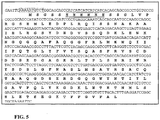
- star codon ATG of sbTNF ⁇ is in a yeast consensus sequence AAAA ATG TCT ( Figure 5 ), for foreign gene expression in yeast (Romanos et al ., 1992). This consensus sequence was included in primer TNF-ECOPP.
- Electroporation was performed as in EXAMPLE 3, but plasmid linearization was performed with Pme I (Fermentas).
- DNA was isolated with the Genomic DNA Purification Kit (Fermentas) and DNA fragment containing His 6 -sbTNF ⁇ was amplified with EcoTaq PLUS DNA polymerase (Ecogen) for sequence with an ABI Prism 3130 genetic analyzer (SACE, University of Murcia).
- His 6 -sbTNF ⁇ expressed in E. coli , S. cerevisiae or P. pastoris was purified by affinity chromatography using an AKTA Explorer FPLC (GE Healthcare). Purification was performed with HisTrap FF columns (GE Healthcare) by immobilized metal ion affinity chromatography (IMAC) with Ni 2+ , a method for purifying histidine-tagged proteins. Absorbance at 280 nm was measured by UNICORN 5.10. Column of 1 ml volume was equilibrated with at least 5 column volumes of binding buffer (20 mM sodium phosphate, 0.5 M NaCl, 5 mM imidazole, pH 7.4) with a flow rate of 1 ml/min.
- binding buffer 20 mM sodium phosphate, 0.5 M NaCl, 5 mM imidazole, pH 7.4
- Samples with His 6 -sbTNF ⁇ were analyzed by SDS-polyacrilamide gel electrophoresis (SDS-PAGE) with 12.5 % acrilamide/bisacrilamide. Gel was stained with coomassie 0.1 % for 30 min and a band of 21 kDa corresponding His 6 -sbTNF ⁇ was distinguished.
- Pichia pastoris strains were cultured in a flask with YPGly medium for 24 hours until culture reaches an OD 600 higher than 30. Then the grown culture was inoculated in a Bioreactor system containing MMG (minimal medium containing glycerol). Conditions of culture were: temperature at 30 °C, pH at 5.00 (controlled by addition of NH 3 ), stirred at 500-1250 rpm and oxygen at 30 % in cascade with stirred. Parameters were measured by BioXpert V2. Fermenation was carried out in batch modus until cultures had reached an OD 600 of 50-80.
- MMG minimum medium containing glycerol
- EXAMPLE 11 Microencapsulation of recombinant yeast.
- broth was aseptically harvested and was formulated with 20 % of malodextrin and 10 % protected polymer Kollicoat MAE 100 P (BASF).
- the formulated suspension was them pumped through a spray drier (Buchi), the inlet temperature was controlled at 120 °C and outlet temperature at 85 °C.
- the final microcapsules of recombinant yeast were analysed to determine the absence of cell viability and the presence of TNF His 6 -sbTNF ⁇ by immunoblotting (see example 10).
- EXAMPLE 12 Enrichment of artemia nauplii with microencapsulated recombinant yeast.
- Artemia nauplii were hatched (decapsulated eggs) overnight in a flask with 500 ml of sterile full-strength seawater, aerated through an air-hose connected to an aquarium air-pump and maintained at 28°C in a reciprocal-shaking water bath. Twenty four hours after hatching the nauplii were harvested to the enrichment system. This system consisted of flasks with 100 ml of clean seawater, placed in the same water bath and individually aerated. For all the experiments the percentage of hatching and the number of nauplii was estimated by taking ten samples of 0.5 ml of the seawater.
- the optimal time of preparation enriched artemia nauplii with microencapsulated recombinant yeast was evaluated staining the yeast with DTAF. Then, stained yeast were used to feed artemia nauplii. The artemia nuplii were killed at time 0, 30, 45, 60 and 120 min after feeding. The enrichment artemia was observed with a fluorescence microscopy.
- the optimal time to enrichment artemia nauplii was 60 min.
- EXAMPLE 13 Expression and secretion of gilthead seabream sbTNF ⁇ in Pichia pastoris.
- Plasmid pET15b containing sbTNF ⁇ was used as template in a PCR with TNF-ECOF and TNF-ECOR primers ( Figure 1 ) for amplification of a fragment including His 6 -sbTNF ⁇ of 615 pb. Both primers include an Eco RI restriction site for cloning PCR product in the same site of plasmid pPICZ ⁇ A (Invitrogen). Amplification was performed in samples containing 5 ng of template, 2.5 mM MgCl 2 , 50 ⁇ M of each dNTP, 0.2 mM of primers, 1X High Speec additive, 1X buffer PLUS and 2 units of Eco Taq PLUS DNA polymerase (Ecogen).
- the cycling reaction was performed in a Smart Cycler II (Cepheid) for 1 cycle of 95 °C for 5 min, 30 cycles of 95 °C for 30 s, 55 °C for 45 s and 72 °C for 2 min, followed by a cycle of 72 °C for 10 min.
- PCR product was separated by electrophoresis in a 0.8 % agarose (Pronadisa) gel containing 0,5 ⁇ g/ml ethidium bromide and purified with the QIAquick Gel Extraction Kit (Qiagen).
- pPICZA Purified fragment and 200 ng of pPICZA were digested with 10 units of Eco RI (Fermentas) at 37 °C, previously to ligation with 5 units of T4 DNA ligase (Fermentas) at 22 °C.
- the ligation reaction was transformated into Escherichia coli TOP10F' competent cells and colonies containing plasmid were selected in LB low salt plates with 25 ⁇ g/ml of zeocin (Invitrogen). Recombinants were identified through colony PCR using 2X PCR Master Mix (Fermentas) and primers PIC ⁇ and PIC3.
- the resultant plasmid pPICZ ⁇ A containing His 6 -sbTNF ⁇ was purified with QIAprep Spin Miniprep Kit (Qiagen) and tested for insert release through digestion with Eco RI and insert orientation through digestion with Nde I. Plasmid was also sequenced with an ABI Prism 3130 genetic analyzer (SACE, University of Murcia).
- plasmid pPICZ ⁇ A containing His 6 -sbTNF ⁇ was linearized through digestion with Sac I or Pme I at 37 °C for latter recombination and integration in genomic DNA of Pichia pastoris. Total amount of 5 ⁇ g of linear plasmid were purified with the MiniElute Reaction Cleanup Kit (Qiagen) and eluted in 10 ⁇ l of sterile water.
- Recombinant Pichia pastoris strain with His 6 -sbTNF ⁇ was grown in 25 ml of minimal medium containing glycerol at 30 °C and 250 rpm to generate biomass prior to methanol induction, until culture reaches an OD 600 ⁇ 6.
- Cells were harvested by centrifuging at 3000 x g for 5 minutes and pellet was resuspended to an OD 600 ⁇ 1 in 200 ml of minimal medium containing 0,5 % methanol to induce expression. Culture was incubated as previously described and 0,5 % methanol was added every 24 hours to maintain induction. At several points it was recovery a sample for analyze protein expression. To check protein expression, supernants of samples were assayed for His 6 -sbTNF ⁇ detection by boiling in SDS-loading buffer for analysis by SDS-PAGE and Western blotting using an antipolyhistidine mAb (Sigma).
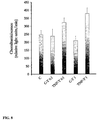
- EXAMPLE 14 Efficacy of microencapsulated recombinant yeast.
Landscapes
- Life Sciences & Earth Sciences (AREA)
- Health & Medical Sciences (AREA)
- Chemical & Material Sciences (AREA)
- Engineering & Computer Science (AREA)
- Polymers & Plastics (AREA)
- Zoology (AREA)
- Immunology (AREA)
- Animal Behavior & Ethology (AREA)
- Pharmacology & Pharmacy (AREA)
- Medicinal Chemistry (AREA)
- Bioinformatics & Cheminformatics (AREA)
- General Health & Medical Sciences (AREA)
- Public Health (AREA)
- Veterinary Medicine (AREA)
- Proteomics, Peptides & Aminoacids (AREA)
- Epidemiology (AREA)
- Marine Sciences & Fisheries (AREA)
- Food Science & Technology (AREA)
- Gastroenterology & Hepatology (AREA)
- Animal Husbandry (AREA)
- Birds (AREA)
- General Chemical & Material Sciences (AREA)
- Nuclear Medicine, Radiotherapy & Molecular Imaging (AREA)
- Insects & Arthropods (AREA)
- Chemical Kinetics & Catalysis (AREA)
- Organic Chemistry (AREA)
- Micro-Organisms Or Cultivation Processes Thereof (AREA)
- Fodder In General (AREA)
- Medicines Containing Antibodies Or Antigens For Use As Internal Diagnostic Agents (AREA)
- Medicines That Contain Protein Lipid Enzymes And Other Medicines (AREA)
- Feed For Specific Animals (AREA)
- Farming Of Fish And Shellfish (AREA)
- Medicinal Preparation (AREA)
Claims (17)
- Oral verabreichbares immunstimulierendes Produkt umfassend mindestens ein mikroeingekapseltes Cytokin und ein Polymer zur Magensaftresistenz, wobei das genannte Cytokin ein Fisch-Cytokin, oder Mollusken-Cytokin oder Krustentier-Cytokin ist.
- Immunstimulierendes Produkt nach Anspruch 1, wobei das genannte Cytokin ein rekombinantes Cytokin ist.
- Immunstimulierendes Produkt nach Anspruch 2, dadurch gekennzeichnet, dass das genannte mikroeingekapseltes rekombinantes Cytokin, Tumornekrosefaktor-α (TNF-α) ist.
- Immunstimulierendes Produkt nach Anspruch 2, dadurch gekennzeichnet, dass das genannte mikroeingekapseltes rekombinante Cytokin in einem Wirtsmikroorganismus, welcher Hefe ist, überexprimiert wird.
- Immunstimulierendes Produkt nach Anspruch 4, dadurch gekennzeichnet, dass die genannte Hefe Pichia pastoris ist.
- Immunstimulierendes Produkt nach einem der Ansprüche 1 bis 5, dadurch gekennzeichnet, dass das genannte Cytokin von einem zur Aquakultur geeignetem Meeresorganismus wie: Sparus aurata, Dicentrarchus labrax, Oncorhynchus mykiss, Psetta maxima, Dentex dentex, Diplodus puntazzo, Pagellus bogaraveo, Argyrosomus regius, Anguilla anguilla, Octopus sp. abgeleitet ist.
- Immunstimulierendes Produkt nach einem der vorhergehenden Ansprüche, dadurch gekennzeichnet, dass das genannte Produkt zur Fütterung eines multizellulären Organismus ausgewählt aus Artemia sp. oder dem Phylum Rotifera geeignet ist.
- Immunstimulierendes Produkt nach einem der Ansprüche 1 bis 5, dadurch gekennzeichnet, dass das genannte Cytokin und/oder der Wirtsmikroorganismus umfassend das rekombinante Cytokin mit einem Polymer zur Magensaftresistenz mikroeingekapselt sind.
- Verfahren zur Zubereitung eines immunstimulierenden Produktes nach Anspruch 2, dadurch gekennzeichnet, dass es die folgenden Schritte umfasst:- die Auswahl und Isolierung der cDNS die das ausgewählte Cytokin kodiert aus einem Fisch-, Mollusken- oder Krustentiergewebe- das Klonen der cDNS in mindestens einem Expressionsvektor zur Cytokinexpression in mindestens einem geeigneten Wirtsmikroorganismus- die Kultivierung der Wirtszellen des Wirtsmikroorganismus, so dass ein rekombinantes Cytokin oder eine Kultur des Wirtsmikroorganismus umfassend das rekombinante Cytokin erhalten wird- die Mikroeinkapselung des rekombinanten Cytokins oder des Wirtsmikroorganismus umfassend das rekombinante Cytokin, so dass ein mikroeingekapseltes rekombinantes Cytokin oder ein mikroeingekapseltes Wirtsmikroorganismus umfassend das rekombinante Cytokin erhalten wird.
- Verfahren nach Anspruch 9, dadurch gekennzeichnet, dass der genannte Wirtsmikroorganismus eine Hefe ausgewählt aus Pichia pastoris, Saccharomyces cerevisiae und Kluyveromyces lactis ist.
- Verfahren nach Anspruch 9, dadurch gekennzeichnet, dass der genannte Mikroeinkapselungsschritt durch Atomisierung mittels Sprühtrocknung in Anwesenheit eines Polymers zur Magensaftresistenz ausgewählt aus: Celluloseacetophthalat, Hydroxypropylcellulosephthalat, Carboxymethylcellulose, Methacrylsäure-Copolymere, Maltodextrin, Chitosan, Gelatine, Stärke, Gummiarabikum, durchgeführt wird.
- Oral verabreichbares immunstimulierendes Produkt mit mindestens ein mikroeingekapseltes Cytokin und ein Polymer zur Magensaftresistenz, wobei das genannte Cytokin ein Fisch-Cytokin, oder Mollusken-Cytokin oder Krustentier-Cytokin nach einem der Ansprüche 1 bis 5, ist, zur Verwendung bei der Immunstimulierung von Fischen, Mollusken oder Krustentieren in Aquakultur, wobei die genannten Fische, Mollusken oder Krustentiere aus: Sparus aurata, Dicentrarchus labrax, Oncorhynchus mykiss, Psetta maxima, Dentex dentex, Diplodus puntazzo, Pagellus bogaraveo, Argyrosomus regius, Anguilla anguilla, Octopus sp. ausgewählt werden.
- Oral verabreichbares immunstimulierendes Produkt zur Verwendung bei der Immunstimulierung von Fischen, Mollusken oder Krustentieren in Aquakultur nach Anspruch 12, wobei das genannte Cytokin von der gleichen Spezies von Fischen, Mollusken oder Krustentieren, die immunstimuliert werden, abgeleitet wird.
- Oral verabreichbares immunstimulierendes Produkt zur Verwendung bei der Immunstimulierung von Fischen, Mollusken oder Krustentieren in Aquakultur nach Anspruch 12, wobei die genannte Immunstimulierung durch die Verabreichung des Produktes zusammen mit Futter während der Fütterung durchgeführt wird.
- Oral verabreichbares immunstimulierendes Produkt zur Verwendung bei der Immunstimulierung von Fischen, Mollusken oder Krustentieren in Aquakultur nach Anspruch 12, wobei die genannte Immunstimulierung durch die Verabreichung des immunstimulierenden Produktes an einen multizellulären Organismus ausgewählt aus Artemia sp. oder dem Phylum Rotifera, und anschließend die Fütterung der genannten Fische, Mollusken oder Krustentiere mit dem genannten multizellulären Organismus durchgeführt wird.
- Oral verabreichbares immunstimulierendes Produkt nach einem der Ansprüche 1 bis 5, zur Verwendung als Adjuvans für Impfungen.
- Immunstimulierendes Produkt nach einem der Ansprüche 1 bis 5, zusätzlich umfassend eine Impfung für Fische, Mollusken oder Krustentiere, wobei die genannte Impfung mit dem genannten Cytokin mikroeingekapselt ist.
Applications Claiming Priority (1)
| Application Number | Priority Date | Filing Date | Title |
|---|---|---|---|
| PCT/IB2008/002697 WO2010041096A1 (en) | 2008-10-10 | 2008-10-10 | Orally administrable immunostimulant product for aquaculture |
Publications (2)
| Publication Number | Publication Date |
|---|---|
| EP2349224A1 EP2349224A1 (de) | 2011-08-03 |
| EP2349224B1 true EP2349224B1 (de) | 2017-05-10 |
Family
ID=40600289
Family Applications (1)
| Application Number | Title | Priority Date | Filing Date |
|---|---|---|---|
| EP08875709.1A Not-in-force EP2349224B1 (de) | 2008-10-10 | 2008-10-10 | Oral verabreichbares immunstimulierendes produkt für aquakultur |
Country Status (6)
| Country | Link |
|---|---|
| US (1) | US9155708B2 (de) |
| EP (1) | EP2349224B1 (de) |
| JP (1) | JP2012505193A (de) |
| CN (1) | CN102209530B (de) |
| CL (1) | CL2009001959A1 (de) |
| WO (1) | WO2010041096A1 (de) |
Families Citing this family (6)
| Publication number | Priority date | Publication date | Assignee | Title |
|---|---|---|---|---|
| CA2978050C (en) * | 2015-01-23 | 2019-10-15 | Shin Nippon Biomedical Laboratories, Ltd. | Micro-encapsulated aquaculture feed |
| CN104857507B (zh) * | 2015-05-22 | 2020-05-12 | 西北农林科技大学 | 一种口服酵母携带dna片段作为新型水产口服dna疫苗的制备方法及应用 |
| CN110856478A (zh) * | 2018-08-25 | 2020-03-03 | 谢金燕 | 一种脆肉鲩养殖方法 |
| KR102271052B1 (ko) * | 2018-12-13 | 2021-06-30 | 주식회사 준원지비아이 | 어류의 면역화 확인용 뮤신 18, 뮤신 2 라이크 및 IgM 프라이머 세트 |
| RU2734835C1 (ru) * | 2020-02-11 | 2020-10-23 | Федеральное государственное бюджетное учреждение науки Лимнологический институт Сибирского отделение Российской академии наук (ЛИН СО РАН) | Способ повышения жизнестойкости эмбрионов рыб в аквакультуре |
| CN120477115B (zh) * | 2025-07-14 | 2026-01-06 | 中国海洋大学 | 乳酸在卤虫养殖中的应用及一种卤虫的简便、健康养殖方法 |
Family Cites Families (14)
| Publication number | Priority date | Publication date | Assignee | Title |
|---|---|---|---|---|
| ATE154241T1 (de) * | 1991-10-01 | 1997-06-15 | Takeda Chemical Industries Ltd | Mikropartikeln-zusammenfassung zur verlängerten freigabe und herstellung derselbe |
| JPH05294997A (ja) * | 1991-11-12 | 1993-11-09 | Maruha Corp | 魚類のポリペプチド |
| US5871751A (en) | 1994-10-12 | 1999-02-16 | The State Of Oregon Acting By And Through The State Board Of Higher Education On Behalf Of Oregon State University | Renibacterium salmoninarum vaccine and method for its preparation |
| US7026156B1 (en) * | 1999-02-04 | 2006-04-11 | The University Of Georgia Research Foundation, Inc. | Diagnostic and protective antigen gene sequences of ichthyophthirius |
| JP2004510724A (ja) * | 2000-10-06 | 2004-04-08 | ヤゴテック アーゲー | 分子量の低下した澱粉からなる微粒子中に埋め込まれた免疫学的活性物質を含むワクチン組成物 |
| ES2189608B1 (es) | 2000-11-28 | 2005-01-01 | Universidad De Murcia | Procedimiento para la obtencion de la il-1 beta recombinante de dorada(sparus aurata l.)y su uso como inmunoestimulante y adyuvante en peces objeto de cultivo industrial. |
| GB0107106D0 (en) * | 2001-03-21 | 2001-05-09 | Boehringer Ingelheim Pharma | Powder inhaler formulations |
| US6872386B2 (en) * | 2001-09-05 | 2005-03-29 | Academia Sinica | Oral vaccines |
| CA2481752A1 (en) * | 2002-04-08 | 2003-10-23 | Peros Systemes Technologies Inc. | Composition for modulating a physiological reaction or inducing an immune response |
| WO2004002425A2 (en) | 2002-06-28 | 2004-01-08 | Bio Transplant, Inc. | Process for promoting graft acceptance by depletion of hematopoietic stem cells |
| BR0314356A (pt) * | 2002-09-16 | 2005-07-19 | Wyeth Corp | Formulações de liberação retardada para administração oral de um agente terapêutico polipetìdeo e métodos utilizando as mesmas |
| JP2004173693A (ja) * | 2002-11-15 | 2004-06-24 | Genichiro Soma | アユの腫瘍壊死因子及びそれをコードする遺伝子 |
| US20050244505A1 (en) * | 2003-12-11 | 2005-11-03 | Higbee Russell G | Immunotherapy compositions, method of making and method of use thereof |
| WO2006088473A2 (en) | 2004-04-23 | 2006-08-24 | Panduranga Rao Koritala | Microcapsules and nanocapsules for the transmucosal delivery of therapeutic and diagnostic agents |
-
2008
- 2008-10-10 JP JP2011530581A patent/JP2012505193A/ja active Pending
- 2008-10-10 US US13/123,295 patent/US9155708B2/en not_active Expired - Fee Related
- 2008-10-10 WO PCT/IB2008/002697 patent/WO2010041096A1/en not_active Ceased
- 2008-10-10 EP EP08875709.1A patent/EP2349224B1/de not_active Not-in-force
- 2008-10-10 CN CN2008801319356A patent/CN102209530B/zh not_active Expired - Fee Related
-
2009
- 2009-10-13 CL CL2009001959A patent/CL2009001959A1/es unknown
Also Published As
| Publication number | Publication date |
|---|---|
| EP2349224A1 (de) | 2011-08-03 |
| JP2012505193A (ja) | 2012-03-01 |
| CL2009001959A1 (es) | 2010-12-24 |
| CN102209530A (zh) | 2011-10-05 |
| CN102209530B (zh) | 2013-05-15 |
| US9155708B2 (en) | 2015-10-13 |
| WO2010041096A1 (en) | 2010-04-15 |
| US20110225660A1 (en) | 2011-09-15 |
Similar Documents
| Publication | Publication Date | Title |
|---|---|---|
| Song et al. | Lysozymes in fish | |
| Rodrigues et al. | Development of fish immunity and the role of β-glucan in immune responses | |
| Meena et al. | Beta-glucan: an ideal immunostimulant in aquaculture (a review) | |
| Ringø et al. | Use of immunostimulants and nucleotides in aquaculture: a review | |
| Aguirre-Guzman et al. | Penaeid shrimp immune system | |
| Saurabh et al. | Lysozyme: an important defence molecule of fish innate immune system | |
| Guzmán-Villanueva et al. | Effects of dietary β-1, 3/1, 6-glucan on the antioxidant and digestive enzyme activities of Pacific red snapper (Lutjanus peru) after exposure to lipopolysaccharides | |
| EP2349224B1 (de) | Oral verabreichbares immunstimulierendes produkt für aquakultur | |
| Kumar et al. | Enhanced immune response and resistance to white tail disease in chitin-diet fed freshwater prawn, Macrobrachium rosenbergii | |
| CN106540240B (zh) | 抗菌肽融合细胞因子CAMPILs共表达生物制剂的制备和应用 | |
| Deachamag et al. | Expression of a phagocytosis activating protein (PAP) gene in immunized black tiger shrimp | |
| Panase et al. | Influences of Bacillus subtilis and fructooligosaccharide on growth performances, immune responses, and disease resistance of Nile tilapia, Oreochromis niloticus | |
| Maftuch et al. | Improvement of innate immune responses and defense activity in tiger shrimp (Penaeus monodon Fab.) by intramuscular administration of the outer membrane protein Vibrio alginolyticus | |
| Luo et al. | Bitter peptides from enzymatically hydrolyzed protein increase the number of leucocytes and lysozyme activity of large yellow croaker (Larimichthys crocea) | |
| Yang et al. | Effect of mushroom beta glucan (MBG) on immune and haemocyte response in Pacific white shrimp (Litopenaeus vannamei) | |
| Han et al. | Effects of dietary Saccharomyces cerevisiae and β‐glucan on the growth performance, antioxidant capacity and immunity response in Macrobrachium rosenbergii | |
| Wang et al. | An IL-1β homologue induced inflammation and antibacterial immune defense in Siberian sturgeon (Acipenser baeri) | |
| Cigarroa-Ruiz et al. | Addition of β-glucans in diets for tropical gar (Atractosteus tropicus) larvae: Effects on growth, digestive enzymes and gene expression of intestinal epithelial integrity and immune system | |
| Preena et al. | Application of probiotics, prebiotics, and synbiotics in aquaculture | |
| Lakshmi et al. | Current advances in the protection of viral diseases in aquaculture with special reference to vaccination | |
| Ding et al. | Molecular characterization, expression and antimicrobial activity of complement factor D in Megalobrama amblycephala | |
| Chen et al. | Effects of dietary glycyrrhizin on growth and nonspecific immunity of white shrimp, Litopenaeus vannamei | |
| JP5913450B2 (ja) | 水産養殖用経口投与免疫賦活剤 | |
| Song et al. | Effects of different enzymatic hydrolysis methods on the bioactivity of peptidoglycan in Litopenaeus vannamei | |
| Yu et al. | Functional characterization of a grouper nklysin with antibacterial and antiviral activity |
Legal Events
| Date | Code | Title | Description |
|---|---|---|---|
| PUAI | Public reference made under article 153(3) epc to a published international application that has entered the european phase |
Free format text: ORIGINAL CODE: 0009012 |
|
| 17P | Request for examination filed |
Effective date: 20110505 |
|
| AK | Designated contracting states |
Kind code of ref document: A1 Designated state(s): AT BE BG CH CY CZ DE DK EE ES FI FR GB GR HR HU IE IS IT LI LT LU LV MC MT NL NO PL PT RO SE SI SK TR |
|
| DAX | Request for extension of the european patent (deleted) | ||
| 17Q | First examination report despatched |
Effective date: 20150929 |
|
| RIC1 | Information provided on ipc code assigned before grant |
Ipc: A23K 20/147 20160101ALI20160602BHEP Ipc: A23K 40/30 20160101ALI20160602BHEP Ipc: A61K 39/39 20060101ALI20160602BHEP Ipc: A23K 50/80 20160101ALI20160602BHEP Ipc: A61K 38/19 20060101ALI20160602BHEP Ipc: A61K 9/50 20060101AFI20160602BHEP Ipc: A61K 38/17 20060101ALI20160602BHEP |
|
| GRAP | Despatch of communication of intention to grant a patent |
Free format text: ORIGINAL CODE: EPIDOSNIGR1 |
|
| INTG | Intention to grant announced |
Effective date: 20160803 |
|
| STAA | Information on the status of an ep patent application or granted ep patent |
Free format text: STATUS: GRANT OF PATENT IS INTENDED |
|
| GRAS | Grant fee paid |
Free format text: ORIGINAL CODE: EPIDOSNIGR3 |
|
| GRAA | (expected) grant |
Free format text: ORIGINAL CODE: 0009210 |
|
| STAA | Information on the status of an ep patent application or granted ep patent |
Free format text: STATUS: THE PATENT HAS BEEN GRANTED |
|
| AK | Designated contracting states |
Kind code of ref document: B1 Designated state(s): AT BE BG CH CY CZ DE DK EE ES FI FR GB GR HR HU IE IS IT LI LT LU LV MC MT NL NO PL PT RO SE SI SK TR |
|
| REG | Reference to a national code |
Ref country code: GB Ref legal event code: FG4D |
|
| REG | Reference to a national code |
Ref country code: AT Ref legal event code: REF Ref document number: 891579 Country of ref document: AT Kind code of ref document: T Effective date: 20170515 Ref country code: CH Ref legal event code: EP |
|
| REG | Reference to a national code |
Ref country code: IE Ref legal event code: FG4D |
|
| REG | Reference to a national code |
Ref country code: DE Ref legal event code: R096 Ref document number: 602008050278 Country of ref document: DE |
|
| REG | Reference to a national code |
Ref country code: NL Ref legal event code: MP Effective date: 20170510 |
|
| REG | Reference to a national code |
Ref country code: LT Ref legal event code: MG4D |
|
| REG | Reference to a national code |
Ref country code: AT Ref legal event code: MK05 Ref document number: 891579 Country of ref document: AT Kind code of ref document: T Effective date: 20170510 |
|
| PG25 | Lapsed in a contracting state [announced via postgrant information from national office to epo] |
Ref country code: AT Free format text: LAPSE BECAUSE OF FAILURE TO SUBMIT A TRANSLATION OF THE DESCRIPTION OR TO PAY THE FEE WITHIN THE PRESCRIBED TIME-LIMIT Effective date: 20170510 Ref country code: FI Free format text: LAPSE BECAUSE OF FAILURE TO SUBMIT A TRANSLATION OF THE DESCRIPTION OR TO PAY THE FEE WITHIN THE PRESCRIBED TIME-LIMIT Effective date: 20170510 Ref country code: NO Free format text: LAPSE BECAUSE OF FAILURE TO SUBMIT A TRANSLATION OF THE DESCRIPTION OR TO PAY THE FEE WITHIN THE PRESCRIBED TIME-LIMIT Effective date: 20170810 Ref country code: HR Free format text: LAPSE BECAUSE OF FAILURE TO SUBMIT A TRANSLATION OF THE DESCRIPTION OR TO PAY THE FEE WITHIN THE PRESCRIBED TIME-LIMIT Effective date: 20170510 Ref country code: LT Free format text: LAPSE BECAUSE OF FAILURE TO SUBMIT A TRANSLATION OF THE DESCRIPTION OR TO PAY THE FEE WITHIN THE PRESCRIBED TIME-LIMIT Effective date: 20170510 Ref country code: ES Free format text: LAPSE BECAUSE OF FAILURE TO SUBMIT A TRANSLATION OF THE DESCRIPTION OR TO PAY THE FEE WITHIN THE PRESCRIBED TIME-LIMIT Effective date: 20170510 |
|
| PG25 | Lapsed in a contracting state [announced via postgrant information from national office to epo] |
Ref country code: PL Free format text: LAPSE BECAUSE OF FAILURE TO SUBMIT A TRANSLATION OF THE DESCRIPTION OR TO PAY THE FEE WITHIN THE PRESCRIBED TIME-LIMIT Effective date: 20170510 Ref country code: LV Free format text: LAPSE BECAUSE OF FAILURE TO SUBMIT A TRANSLATION OF THE DESCRIPTION OR TO PAY THE FEE WITHIN THE PRESCRIBED TIME-LIMIT Effective date: 20170510 Ref country code: BG Free format text: LAPSE BECAUSE OF FAILURE TO SUBMIT A TRANSLATION OF THE DESCRIPTION OR TO PAY THE FEE WITHIN THE PRESCRIBED TIME-LIMIT Effective date: 20170810 Ref country code: NL Free format text: LAPSE BECAUSE OF FAILURE TO SUBMIT A TRANSLATION OF THE DESCRIPTION OR TO PAY THE FEE WITHIN THE PRESCRIBED TIME-LIMIT Effective date: 20170510 Ref country code: IS Free format text: LAPSE BECAUSE OF FAILURE TO SUBMIT A TRANSLATION OF THE DESCRIPTION OR TO PAY THE FEE WITHIN THE PRESCRIBED TIME-LIMIT Effective date: 20170910 Ref country code: SE Free format text: LAPSE BECAUSE OF FAILURE TO SUBMIT A TRANSLATION OF THE DESCRIPTION OR TO PAY THE FEE WITHIN THE PRESCRIBED TIME-LIMIT Effective date: 20170510 |
|
| PG25 | Lapsed in a contracting state [announced via postgrant information from national office to epo] |
Ref country code: SK Free format text: LAPSE BECAUSE OF FAILURE TO SUBMIT A TRANSLATION OF THE DESCRIPTION OR TO PAY THE FEE WITHIN THE PRESCRIBED TIME-LIMIT Effective date: 20170510 Ref country code: CZ Free format text: LAPSE BECAUSE OF FAILURE TO SUBMIT A TRANSLATION OF THE DESCRIPTION OR TO PAY THE FEE WITHIN THE PRESCRIBED TIME-LIMIT Effective date: 20170510 Ref country code: EE Free format text: LAPSE BECAUSE OF FAILURE TO SUBMIT A TRANSLATION OF THE DESCRIPTION OR TO PAY THE FEE WITHIN THE PRESCRIBED TIME-LIMIT Effective date: 20170510 Ref country code: DK Free format text: LAPSE BECAUSE OF FAILURE TO SUBMIT A TRANSLATION OF THE DESCRIPTION OR TO PAY THE FEE WITHIN THE PRESCRIBED TIME-LIMIT Effective date: 20170510 Ref country code: RO Free format text: LAPSE BECAUSE OF FAILURE TO SUBMIT A TRANSLATION OF THE DESCRIPTION OR TO PAY THE FEE WITHIN THE PRESCRIBED TIME-LIMIT Effective date: 20170510 |
|
| REG | Reference to a national code |
Ref country code: DE Ref legal event code: R097 Ref document number: 602008050278 Country of ref document: DE |
|
| PG25 | Lapsed in a contracting state [announced via postgrant information from national office to epo] |
Ref country code: IT Free format text: LAPSE BECAUSE OF FAILURE TO SUBMIT A TRANSLATION OF THE DESCRIPTION OR TO PAY THE FEE WITHIN THE PRESCRIBED TIME-LIMIT Effective date: 20170510 |
|
| PLBE | No opposition filed within time limit |
Free format text: ORIGINAL CODE: 0009261 |
|
| STAA | Information on the status of an ep patent application or granted ep patent |
Free format text: STATUS: NO OPPOSITION FILED WITHIN TIME LIMIT |
|
| 26N | No opposition filed |
Effective date: 20180213 |
|
| REG | Reference to a national code |
Ref country code: DE Ref legal event code: R119 Ref document number: 602008050278 Country of ref document: DE |
|
| PG25 | Lapsed in a contracting state [announced via postgrant information from national office to epo] |
Ref country code: MC Free format text: LAPSE BECAUSE OF FAILURE TO SUBMIT A TRANSLATION OF THE DESCRIPTION OR TO PAY THE FEE WITHIN THE PRESCRIBED TIME-LIMIT Effective date: 20170510 Ref country code: SI Free format text: LAPSE BECAUSE OF FAILURE TO SUBMIT A TRANSLATION OF THE DESCRIPTION OR TO PAY THE FEE WITHIN THE PRESCRIBED TIME-LIMIT Effective date: 20170510 |
|
| REG | Reference to a national code |
Ref country code: CH Ref legal event code: PL |
|
| GBPC | Gb: european patent ceased through non-payment of renewal fee |
Effective date: 20171010 |
|
| REG | Reference to a national code |
Ref country code: IE Ref legal event code: MM4A |
|
| REG | Reference to a national code |
Ref country code: FR Ref legal event code: ST Effective date: 20180629 |
|
| PG25 | Lapsed in a contracting state [announced via postgrant information from national office to epo] |
Ref country code: GB Free format text: LAPSE BECAUSE OF NON-PAYMENT OF DUE FEES Effective date: 20171010 Ref country code: LI Free format text: LAPSE BECAUSE OF NON-PAYMENT OF DUE FEES Effective date: 20171031 Ref country code: DE Free format text: LAPSE BECAUSE OF NON-PAYMENT OF DUE FEES Effective date: 20180501 Ref country code: CH Free format text: LAPSE BECAUSE OF NON-PAYMENT OF DUE FEES Effective date: 20171031 Ref country code: LU Free format text: LAPSE BECAUSE OF NON-PAYMENT OF DUE FEES Effective date: 20171010 |
|
| REG | Reference to a national code |
Ref country code: BE Ref legal event code: MM Effective date: 20171031 |
|
| PG25 | Lapsed in a contracting state [announced via postgrant information from national office to epo] |
Ref country code: FR Free format text: LAPSE BECAUSE OF NON-PAYMENT OF DUE FEES Effective date: 20171031 Ref country code: BE Free format text: LAPSE BECAUSE OF NON-PAYMENT OF DUE FEES Effective date: 20171031 |
|
| PG25 | Lapsed in a contracting state [announced via postgrant information from national office to epo] |
Ref country code: MT Free format text: LAPSE BECAUSE OF NON-PAYMENT OF DUE FEES Effective date: 20171010 |
|
| PG25 | Lapsed in a contracting state [announced via postgrant information from national office to epo] |
Ref country code: IE Free format text: LAPSE BECAUSE OF NON-PAYMENT OF DUE FEES Effective date: 20171010 |
|
| PG25 | Lapsed in a contracting state [announced via postgrant information from national office to epo] |
Ref country code: HU Free format text: LAPSE BECAUSE OF FAILURE TO SUBMIT A TRANSLATION OF THE DESCRIPTION OR TO PAY THE FEE WITHIN THE PRESCRIBED TIME-LIMIT; INVALID AB INITIO Effective date: 20081010 |
|
| PG25 | Lapsed in a contracting state [announced via postgrant information from national office to epo] |
Ref country code: CY Free format text: LAPSE BECAUSE OF NON-PAYMENT OF DUE FEES Effective date: 20170510 |
|
| PG25 | Lapsed in a contracting state [announced via postgrant information from national office to epo] |
Ref country code: TR Free format text: LAPSE BECAUSE OF FAILURE TO SUBMIT A TRANSLATION OF THE DESCRIPTION OR TO PAY THE FEE WITHIN THE PRESCRIBED TIME-LIMIT Effective date: 20170510 |
|
| PG25 | Lapsed in a contracting state [announced via postgrant information from national office to epo] |
Ref country code: PT Free format text: LAPSE BECAUSE OF FAILURE TO SUBMIT A TRANSLATION OF THE DESCRIPTION OR TO PAY THE FEE WITHIN THE PRESCRIBED TIME-LIMIT Effective date: 20170510 |
|
| PG25 | Lapsed in a contracting state [announced via postgrant information from national office to epo] |
Ref country code: GR Free format text: LAPSE BECAUSE OF FAILURE TO SUBMIT A TRANSLATION OF THE DESCRIPTION OR TO PAY THE FEE WITHIN THE PRESCRIBED TIME-LIMIT Effective date: 20170510 |