EP2355446A2 - Zugriff auf eingeschränkte Dienste - Google Patents
Zugriff auf eingeschränkte Dienste Download PDFInfo
- Publication number
- EP2355446A2 EP2355446A2 EP11153089A EP11153089A EP2355446A2 EP 2355446 A2 EP2355446 A2 EP 2355446A2 EP 11153089 A EP11153089 A EP 11153089A EP 11153089 A EP11153089 A EP 11153089A EP 2355446 A2 EP2355446 A2 EP 2355446A2
- Authority
- EP
- European Patent Office
- Prior art keywords
- content
- user
- gateway
- server
- content provider
- Prior art date
- Legal status (The legal status is an assumption and is not a legal conclusion. Google has not performed a legal analysis and makes no representation as to the accuracy of the status listed.)
- Withdrawn
Links
- 238000004891 communication Methods 0.000 title claims abstract description 21
- 238000000034 method Methods 0.000 claims abstract description 58
- 230000005540 biological transmission Effects 0.000 claims description 9
- 238000012546 transfer Methods 0.000 claims description 8
- 230000010267 cellular communication Effects 0.000 claims description 4
- 238000005516 engineering process Methods 0.000 claims description 4
- 238000004590 computer program Methods 0.000 claims description 3
- 238000012790 confirmation Methods 0.000 claims description 2
- 238000009877 rendering Methods 0.000 claims description 2
- 230000001413 cellular effect Effects 0.000 description 49
- 230000008901 benefit Effects 0.000 description 5
- 230000003044 adaptive effect Effects 0.000 description 3
- 238000013475 authorization Methods 0.000 description 3
- 238000010586 diagram Methods 0.000 description 3
- 230000004044 response Effects 0.000 description 3
- 230000011664 signaling Effects 0.000 description 3
- 235000014510 cooky Nutrition 0.000 description 2
- 230000001419 dependent effect Effects 0.000 description 2
- 240000004759 Inga spectabilis Species 0.000 description 1
- 230000009286 beneficial effect Effects 0.000 description 1
- 230000008859 change Effects 0.000 description 1
- 238000010924 continuous production Methods 0.000 description 1
- 230000009977 dual effect Effects 0.000 description 1
- 230000006870 function Effects 0.000 description 1
- 230000003993 interaction Effects 0.000 description 1
- 238000010295 mobile communication Methods 0.000 description 1
- 230000006855 networking Effects 0.000 description 1
- 230000008569 process Effects 0.000 description 1
- 230000000750 progressive effect Effects 0.000 description 1
- 230000003014 reinforcing effect Effects 0.000 description 1
Images




Classifications
-
- H—ELECTRICITY
- H04—ELECTRIC COMMUNICATION TECHNIQUE
- H04L—TRANSMISSION OF DIGITAL INFORMATION, e.g. TELEGRAPHIC COMMUNICATION
- H04L63/00—Network architectures or network communication protocols for network security
- H04L63/10—Network architectures or network communication protocols for network security for controlling access to devices or network resources
- H04L63/107—Network architectures or network communication protocols for network security for controlling access to devices or network resources wherein the security policies are location-dependent, e.g. entities privileges depend on current location or allowing specific operations only from locally connected terminals
-
- H—ELECTRICITY
- H04—ELECTRIC COMMUNICATION TECHNIQUE
- H04L—TRANSMISSION OF DIGITAL INFORMATION, e.g. TELEGRAPHIC COMMUNICATION
- H04L63/00—Network architectures or network communication protocols for network security
- H04L63/18—Network architectures or network communication protocols for network security using different networks or channels, e.g. using out of band channels
-
- H—ELECTRICITY
- H04—ELECTRIC COMMUNICATION TECHNIQUE
- H04L—TRANSMISSION OF DIGITAL INFORMATION, e.g. TELEGRAPHIC COMMUNICATION
- H04L67/00—Network arrangements or protocols for supporting network services or applications
- H04L67/50—Network services
- H04L67/56—Provisioning of proxy services
- H04L67/563—Data redirection of data network streams
-
- H—ELECTRICITY
- H04—ELECTRIC COMMUNICATION TECHNIQUE
- H04W—WIRELESS COMMUNICATION NETWORKS
- H04W12/00—Security arrangements; Authentication; Protecting privacy or anonymity
- H04W12/08—Access security
- H04W12/084—Access security using delegated authorisation, e.g. open authorisation [OAuth] protocol
-
- H—ELECTRICITY
- H04—ELECTRIC COMMUNICATION TECHNIQUE
- H04L—TRANSMISSION OF DIGITAL INFORMATION, e.g. TELEGRAPHIC COMMUNICATION
- H04L63/00—Network architectures or network communication protocols for network security
- H04L63/08—Network architectures or network communication protocols for network security for authentication of entities
- H04L63/0853—Network architectures or network communication protocols for network security for authentication of entities using an additional device, e.g. smartcard, SIM or a different communication terminal
-
- H—ELECTRICITY
- H04—ELECTRIC COMMUNICATION TECHNIQUE
- H04W—WIRELESS COMMUNICATION NETWORKS
- H04W88/00—Devices specially adapted for wireless communication networks, e.g. terminals, base stations or access point devices
- H04W88/02—Terminal devices
- H04W88/06—Terminal devices adapted for operation in multiple networks or having at least two operational modes, e.g. multi-mode terminals
Definitions
- the present invention relates to a new method of accessing services in a communication network based on improvements in content delivery.
- the invention relates to improvements in content delivery networks.
- the invention likewise relates to a corresponding computer program product, to communication network elements and to a communication network.
- a content delivery network or content distribution network is a system of servers containing copies of data, placed at various points in a network so as to maximise bandwidth for access to the data from clients throughout the network.
- a client advantageously accesses a copy of the data near to the client, as opposed to all clients accessing the same central server, so as to avoid bottlenecks near that server.
- Content types include web objects, downloadable objects (media files, such as music and videos, software, documents), applications, real time media streams, etc.
- CDN nodes are normally deployed in multiple locations, often over multiple backbones. These nodes are arranged to cooperate with each other to satisfy requests for content by end users, transparently moving content to optimise the delivery process. Optimisation may take the form of reducing bandwidth costs, improving end-user performance (e.g. reducing page load times), or increasing global availability of content.
- CDNs Code Division Multiple Access
- CP content providers
- Geoblocking is a technology that is used to prevent access to web sites from visitors in certain countries or regions. Currently it is mainly used by traditional broadcast companies who are moving their television, radio and music content online. Because of distribution contracts with the producers of these programmes, many web sites limit access to people within their own country.
- IP internet protocol
- ISP internet service provider
- IP address spoofing refers to the creation of IP packets with a forged (spoofed) source IP address with the purpose of concealing the identity of the sender.
- geoblocking can be equally applied to subnetworks with restricted access, such as company networks, also known as intranets.
- IP address spoofing is not considered to be a solution to this problem.
- IP address spoofing is not considered to be a solution to this problem.
- some restricted services require proper user authentication, and in this case the IP address spoofing itself does not solve the problem of reliably accessing these services.
- Another problem relates to the distribution of the data in the CDNs. For instance, how should the data be distributed between network operators and CPs. Also currently the network operators and the CPs do not cooperate in an optimal way.
- the user experience is not always optimal when accessing data in the communication networks. For instance, streaming data on end user devices with limited capabilities does not always show in an optimal way on the screen of the device.
- the content provider has at least a first server and a second server.
- the present invention provides a reliable way for a user to access the content in the content provider's network even if the user does not know exactly in which server the actual content is located.
- the CDN determines where the content is located and sends a redirection request to the user.
- the proposed method does not require any complicated procedures from the end user. Furthermore, only one gateway is needed for several CPs.
- the gateway or the content provider in the CDN can also adapt the requested content to the user's needs. This has the advantage of greatly improving the user experience as the content is personalised to the user. Furthermore, the transmission parameters can also be adapted, either by the gateway or by the content provider.
- the actual data downloading or streaming can be done on an IP channel which is not a cellular network channel.
- users need to pay for local internet access only, which in many cases is a flat fee, for service access.
- the users get a higher speed in the connection, compared with solutions where content or services are accessed through a cellular network.
- the present invention is also advantageous for roaming customers, namely when roaming, the users have the same experience when accessing different services as in their homeland, corporate network or operator network by using an appropriate access method.
- the proposed method also provides facilitated access to user dedicated services.
- the teachings of the present invention can likewise be applied to virtual private networks (VPNs) to access services in private networks.
- VPNs virtual private networks
- the user Before the user can access the content, the user is advantageously authenticated by using the cellular network channel.
- GSM global system for mobile communications
- techniques to access the services are open (hypertext transfer protocol (HTTP) token, VPN (requiring operator intervention), Mobile IP (requiring operator intervention), internet protocol security (IPsec), hypertext transfer protocol secure / secure sockets layer (HTTPS/SSL), hypertext transfer protocol secure / transport layer security (HTTPS/TLS), HTTP digest, direct access with a cookie, etc.).
- HTTP hypertext transfer protocol
- SSL hypertext transfer protocol secure / secure sockets layer
- HTTPS/TLS hypertext transfer protocol secure / transport layer security
- HTTP digest direct access with a cookie, etc.
- the proposed method also allows users to access content (i.e. services), such as video stream, voice, video calls, etc., with the appropriate authentication methods, and when necessary with appropriate content protection methods. Meanwhile the user is benefiting from higher bandwidth available in the area (area where the user is located), as the content is not necessarily accessed via a cellular network.
- content i.e. services
- the user is benefiting from higher bandwidth available in the area (area where the user is located), as the content is not necessarily accessed via a cellular network.
- a computer program product for implementing the steps of a method according to the first aspect of the present invention when loaded and run on computer means of the content provider.
- a server system is provided as recited in claim 16.
- a communication network is provided as recited in claim 17.
- the invention discloses a solution for an end user device to access content in a communication network, such as a CDN.
- a communication network such as a CDN.
- One aspect of the invention is about the use of a mobile access (cellular network) for accessing restricted internet/intranet services by other communication means such as wireless fidelity (WiFi) or fixed line. Those services are granted by the homeland mobile operator.
- the purpose of this aspect of the invention is to enable roaming users to access the same type of service(s) as if they were located in their homeland, in a restricted zone such as a company, or at home.
- one aspect of the present invention allows a seamless authentication for the user to access a service for which access is restricted. For instance, the following situations become possible:
- this invention enables the user to access any services granted by his/her mobile operator by using a cellular network (such as GSM) authentication channel prior to the service authorisation.
- a cellular network such as GSM
- This authorisation will be executed and delivered for the access to the internet/intranet IP operator services.
- the cellular network channel is considered to be secure enough to communicate some sensitive authentication information.
- Figure 1 shows a simplified communication system block diagram according to the first embodiment of the present invention.
- Three different networks are referred to by N 1 (first network), N 2 (second network) and N 3 (third network).
- N 1 refers to the homeland network
- N 2 refers to the visited network, where the user of the communication device or network access device 101, in this example a laptop computer, is currently roaming
- N 3 refers to an operator cellular communication network.
- the first and second networks are characterised by their specific IP addresses.
- the first network N 1 is a homeland IP network
- the second network N 2 represents an IP network of another country.
- the third network N 3 can be considered to be a subnetwork of the first network N 1 .
- the laptop computer 101 is equipped with a specific hardware module 102, in this example a hardware card that can be removably connected to the laptop. On the laptop 101 there is provided a specific slot to accommodate the hardware card 102.
- the hardware card 102 contains a cellular access module (interface) 103 as well as an internet access module (interface) 104 and a software together with its driver, so that the software is arranged to centrally control the operation of these modules.
- the laptop 101 is arranged to access the internet wirelessly by using the internet access module 104, and the cellular network by using the cellular access module 103. Therefore, the card 102 is a dual WiFi/cellular network card with embedded software.
- the internet access module 104 is arranged to operate on a first type of channel, which is called an IP channel (and is not a cellular network channel), whereas the cellular access module 103 is arranged to operate on a second type of channel, which is called a cellular channel. Both channels can be operated based on IP.
- the cellular network can be e.g. any second generation (2G) network, such as a GSM, or third generation (3G) network, such as a universal mobile telecommunications system (UMTS), or any future cellular network.
- 2G second generation
- 3G third generation
- UMTS universal mobile telecommunications system
- Understood here by a cellular network is a radio network made up of a number of radio cells each served by at least one fixed-location transceiver known as a cell site or base station.
- Roaming agreements may stipulate how the data and signalling should flow between an end user and a home operator network when roaming.
- the related router or set-top box is also equipped with a new hardware module or card.
- the card would be an IP-Ethernet/cellular network card with embedded software.
- FIG. 1 there are further shown four network elements located in the homeland N 1 , namely a gateway (GW) 105, a first data server (S 1 ) 109 1 , a second data server (S 2 ) 109 2 and a GGSN 111.
- the servers 109 in the homeland network can be any entities offering a service or content to end users.
- the first and second servers 109 together are the content provider (CP).
- the gateway 105 is managed by a local internet service provider, and is an interface between the homeland network, the cellular network and external networks, such as N 2 .
- the first server 109 1 and/or the second server 109 2 can be hosted by the network operator.
- the GGSN 111 is arranged to communicate with the gateway 105.
- the GGSN is a main component of a general packet radio service (GPRS) network, which is an example of a cellular communication network.
- GPRS general packet radio service
- the GGSN is responsible, either alone or together with other network elements, for the interworking between the GPRS network and external packet switched networks, like the internet.
- the GGSN is a router to a subnetwork, because the GGSN hides the GPRS infrastructure from the external network.
- the GGSN is the anchor point that enables the mobility of the user terminals in the GPRS/UMTS networks. In essence, it carries out the role in GPRS equivalent to the home agent in Mobile IP.
- the GGSN is also responsible for IP address assignment, and is the default router for the connected user equipment (UE).
- the user is roaming in the second network N 2 and would like to access data stored on the servers 109 of the CP.
- step 201 by using the cellular access module 103 of the hardware card 102 of the laptop 101, the user requests a service or content directly (without passing through the gateway 105) from the first server 109 1 .
- this request is made by using the cellular channel, to access the desired service, such as streaming or progressive download, that the CP offers.
- the first server 109 1 detects, e.g. based on the IP address of the user, that the user most likely is a client of a certain network operator. Also in this step the first server 109 1 determines that it does not have the content requested by the user.
- the first server 109 1 also detects that the user is not located in the homeland network N 1 .
- the first server 109 1 informs the gateway 105 of the relevant cellular network operator about the user's request received in step 203.
- the gateway 105 opens a conditional access. In other words, the gateway 105 opens a ticket, and waits for a specified event defined in the ticket to come. Provisional session identifier (ID) would be the generic name associated with this ticket number. If the content is not known by the first server 109 1 , then in this step the gateway 105 also determines which server contains the content requested by the user. In this case the first server 109 1 would make the gateway 105 part of the CDN.
- the first server 109 1 and the second server 109 2 are part of the same CDN, and in this case the location information of the content is shared among them.
- the network operator has communicated this information to the servers. It is also possible that the same content is located on several servers.
- the gateway 105 informs the first server 109 1 about the provisional session ID. Also, if necessary, the gateway 105 tells the first server 109 1 to which server the user's request should be redirected. In the present example it is the second server 109 2 that contains the content requested by the user. The first server 109 1 can also be informed about the port number of the new server (109 2 ) to be connected.
- the first server 109 1 informs the hardware card 102 that the user's initial request has to be redirected.
- This redirection request can contain information about where the content is located, i.e. in this example the second server 109 2 . This information is sent on the IP channel. The user does not have to know about the redirection request.
- the software running on the hardware card 102 can take care of the steps that follow.
- the redirection request is sent from the first server 109 1 directly to the hardware card 102 without passing through the gateway 105.
- the redirection command is in this example a hypertext transfer protocol (HTTP) redirection request including a status code.
- HTTP hypertext transfer protocol
- the first server 109 1 informs the hardware card 102 also about the provisional session ID.
- the redirection message can be simply a link indicating for instance an address to be contacted by the hardware card 102.
- the cellular access module 103 or the internet access module 104 of the hardware card 102 contacts the gateway 105, and provides the gateway 105 with a session ID.
- the hardware card 102 requests a proxy service from the gateway 105.
- the hardware card uses the session ID instead of the provisional session ID, but the IDs here are the same. If the gateway 105 detects that for this user the provisional session ID and the session ID do not match, then the access is denied.
- the hardware card 102 either knows to which gateway 105 it should connect or this information is received from the first server 109 1 .
- the gateway 105 authenticates the user of the hardware card 102.
- the authentication procedure is described in more detail in the flow chart of Figure 3 . The authentication is done by using the cellular channel. Once the access is granted, the cellular channel, if used until now, can be changed to the IP channel in order to achieve a higher data speed when accessing the requested content (e.g. HTTP streaming).
- the gateway 105 forwards the user's request together with the session ID to the first server 109 1 .
- the gateway 105 can also give a unique user identifier to the user.
- This unique identifier is preferably anonymous to third parties, and is tied to the user or the mobile subscriber ISDN (MSISDN) number.
- MSISDN mobile subscriber ISDN
- the operator can however communicate, under or with the anonymous unique identifier, some useful information (e.g. profiling information) about this customer to the CP. It is up to the CP to use it, to better personalise the content.
- the profiling information may contain e.g. the location of the information of the user. This can be useful when the user is travelling so that he can receive (as will be explained later) useful information on the travel destination.
- the profiling information can also contain information on the user's hobbies so that he can then receive information related to his hobbies.
- the first server 109 1 adjusts in step 219 the content to the user's needs, i.e. the content is personalised based on the profiling information and the session ID and also possibly based the user identifier.
- the content personalising can also include choosing the right content from the second server 109 2 , for instance choosing the desired language version of a film.
- the first server 109 1 can change language settings of the content to correspond to the user's wishes.
- the first server 109 1 sends a resource query message to the second server 109 2 (part of the CDN) about the availability of the resources.
- the second server 109 2 sends a confirmation message to the first server 109 1 that the resource query sent in step 221 can be fulfilled.
- the second server 109 2 sends to the first server 109 1 a description how the content can be accessed.
- the first server 109 1 verifies that the information is correct and forwards this information to the gateway 105.
- the gateway 105 requests the content from the second server 109 2 .
- the second server 109 2 sends the personalised content (defined by the first server 109 1 ) to the gateway 105.
- the gateway 105 and the laptop 101 negotiate transmission parameters.
- the gateway 105 adjusts the transmission parameters to the user's needs.
- the content format is controlled by the gateway 105, which is responsible for the quality of service (QoS).
- QoS quality of service
- the gateway 105 selects the right packet format according to the available bandwidth or the size of the screen that is being played. Adjusting the QoS by the gateway 105 can include for example choosing an optimal transcoding scheme.
- the gateway 105 can decrease the quality of the fetched content so that this content can be properly viewed or used by the user.
- content rendering can also be done by the gateway 105.
- the procedure of adjusting the transmission parameters can be a continuous process, e.g. in case of adaptive streaming.
- the gateway 105 transfers the content to the laptop 101 by using the chosen data transfer technology.
- the proposed data access method offers a better user experience than the traditional access methods.
- the proposed method offers adaptive streaming to the user.
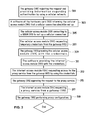
- the flow chart of Figure 3 illustrates the authentication procedure done in step 215.
- the gateway 105 rejects in step 301 the user request as the gateway 105 cannot authenticate the user as the user request is unknown.
- the gateway 105 also informs the hardware card 102 about what it should do next.
- the gateway 105 informs the hardware card 102 to authenticate itself through a specific realm, which can be a specific cellular network operator.
- the gateway 105 may also give a specific access point name (APN), which can be e.g. a specific cellular network operator proxy service. It is also possible for the gateway 105 to give to the hardware card 102 an internal universal resource locator (URL) of the gateway 105 or an internal IP address of the gateway 105, so that cellular network modules are able to find the gateway 105.
- URL universal resource locator
- a cellular network connection is already set up by the cellular access module 103. This would be beneficial as the delay in setting up the cellular network connection can be avoided at this stage of the procedure.
- the software of the hardware card 102 informs the cellular access module to set up the cellular network connection.
- a cellular communication channel such as a GSM or 3G channel, is then established in step 305 by the cellular access module between the laptop 101 and the GGSN 111.
- the cellular connection is set up as is known in the art, and is thus not described in more detail in this context.
- the GSM/3G channel plays the role of a mobile channel authenticator. In this example, this channel is a signalling channel, and is thus only used for transferring sensitive data or information.
- the GGSN 111 allows a relatively secure and proven cellular connection.
- the cellular access module 103 requests temporary credentials, such as identity information and password, from the gateway 105 in order to gain access to the proxy service.
- the gateway 105 responds to the cellular access module by providing the requested credentials.
- the gateway 105 authenticates the user and approves the request.
- step 213 the user contacts the gateway 105 on the cellular channel, then the flow chart of Figure 3 becomes simpler, namely the steps 303, 305 and 311 are not needed. Also, in steps 313 and 317 the internet access module 104 is replaced with the cellular access module 103.
- the hardware card 102 When accessing the service provided by the second server 109 2 , the hardware card 102 communicates with the gateway 105 (by using automated tunnelling techniques on the user and the gateway sides or automated proxying techniques on the user and the gateway sides) which, in turn, communicates with the correct server 109 2 , so that the user of the laptop 101 can access the data on the second server 109 2 .
- the requested information is then transferred to the gateway 105, which further forwards the information directly to the user on the IP channel, for instance.
- This so-called IP channel is a non-trusted channel such as WiFi, Ethernet-based, or similar. It is used as the bearer where user data will flow.
- the content can be split between the operator and the CP.
- the operator servers contain first type of content (e.g. content on demand), whereas the CP servers contain second type of content (e.g. real time content).
- first type of content e.g. content on demand
- second type of content e.g. real time content
- Many variants in the illustrated example are possible.
- replicated content exists on the operator side, and the CP knows the link to that content. The replicated content is ready to be distributed to end users.
- the gateway 105 can disconnect the hardware card 102 from the gateway 105. In this case the hardware card may have to start the whole access request procedure from the beginning.
- a certain threshold e.g. a couple of minutes
- the gateway 105 can disconnect the hardware card 102 from the gateway 105. In this case the hardware card may have to start the whole access request procedure from the beginning.
- the time can be set to run from the first communication received from the user by the gateway 105. It is also possible for the user to ask before the expiration of the time period for a new ticket to prolong the service period.
- Figure 4 illustrates the communication system where the teachings of the second embodiment of the present invention can be applied.
- the CP contains only one server, namely the first server 109 1 .
- a CDN network is not needed.
- the flow chart of Figures 5a and 5b explains how the user can access the content on the server 109 1 according to this embodiment. It can be noticed that the steps 201-219 correspond to steps 501-519, and the steps 231, 233 and 235 correspond to steps 523, 525 and 527, respectively. Also the steps 221, 223, 225 and 227 are not needed in the flow chart of the second embodiment. Furthermore, in step 521 it is the first server that sends the content to the gateway 105.
- cellular access i.e. mobile access as token (Secure ID token)
- Secure ID token can be used for authentication and authorising IP proxying, VPN, or IP tunnelling techniques for accessing internet/intranet IP operator services, for instance. These services can be granted by the homeland operator.
- the proposed solution can be used by any user having any IP connectivity combined with cellular network connectivity.
- an IP channel is not necessarily needed, but the user device can communicate only by using the cellular channel.
- the teachings of the present invention can be equally applied to access VPNs.
- a unique benefit is to avoid the use of extensible authentication protocol (EAP) subscriber identity modules (SIMs) in the customer devices, thereby offering better global security, since the international mobile subscriber identity (IMSI) is not revealed (on the IP channel).
- EAP extensible authentication protocol
- SIMs subscriber identity modules
- the proposed solution When used to overcome geoblocking, the proposed solution enables, operators to allow their customers to connect to services anywhere in the world as if they were in their homeland. The customers just need to buy a kit, including a special card and an SIM (linked to the operator), which could then just be used for internet purposes all over the world.
- the solution has the advantage of ease of use/access, thereby improving customer satisfaction.
- the gateway 105 can be physically at the same location where the CP is.
- some signalling data can be transmitted on the IP channel in combination with that transmitted over the cellular channel, with the purpose of reinforcing security and adding flexibility and scalability in the global implementation of the solution.
- the user identifier does not necessary have to be anonym, but it can be simply the MSISDN number. It is also possible that the content received on the network access device 101 can be transferred to a local device to displayed or used.
Landscapes
- Engineering & Computer Science (AREA)
- Computer Security & Cryptography (AREA)
- Computer Networks & Wireless Communication (AREA)
- Signal Processing (AREA)
- Computer Hardware Design (AREA)
- Computing Systems (AREA)
- General Engineering & Computer Science (AREA)
- Mobile Radio Communication Systems (AREA)
- Data Exchanges In Wide-Area Networks (AREA)
Priority Applications (1)
| Application Number | Priority Date | Filing Date | Title |
|---|---|---|---|
| EP11153089A EP2355446A3 (de) | 2010-02-02 | 2011-02-02 | Zugriff auf eingeschränkte Dienste |
Applications Claiming Priority (2)
| Application Number | Priority Date | Filing Date | Title |
|---|---|---|---|
| EP10152405A EP2355439A1 (de) | 2010-02-02 | 2010-02-02 | Zugriff auf eingeschränkte Dienste |
| EP11153089A EP2355446A3 (de) | 2010-02-02 | 2011-02-02 | Zugriff auf eingeschränkte Dienste |
Publications (2)
| Publication Number | Publication Date |
|---|---|
| EP2355446A2 true EP2355446A2 (de) | 2011-08-10 |
| EP2355446A3 EP2355446A3 (de) | 2011-11-23 |
Family
ID=42931876
Family Applications (2)
| Application Number | Title | Priority Date | Filing Date |
|---|---|---|---|
| EP10152405A Withdrawn EP2355439A1 (de) | 2010-02-02 | 2010-02-02 | Zugriff auf eingeschränkte Dienste |
| EP11153089A Withdrawn EP2355446A3 (de) | 2010-02-02 | 2011-02-02 | Zugriff auf eingeschränkte Dienste |
Family Applications Before (1)
| Application Number | Title | Priority Date | Filing Date |
|---|---|---|---|
| EP10152405A Withdrawn EP2355439A1 (de) | 2010-02-02 | 2010-02-02 | Zugriff auf eingeschränkte Dienste |
Country Status (1)
| Country | Link |
|---|---|
| EP (2) | EP2355439A1 (de) |
Cited By (8)
| Publication number | Priority date | Publication date | Assignee | Title |
|---|---|---|---|---|
| WO2017067373A1 (zh) * | 2015-10-23 | 2017-04-27 | 中兴通讯股份有限公司 | 数据推送方法及装置 |
| US9871722B2 (en) | 2011-12-02 | 2018-01-16 | Huawei Technologies Co., Ltd. | Content delivery network routing method, system and user terminal |
| US10038685B2 (en) | 2015-01-28 | 2018-07-31 | Alibaba Group Holding Limited | Service request authentication method and apparatus |
| CN109167850A (zh) * | 2018-09-13 | 2019-01-08 | 杭州安恒信息技术股份有限公司 | 一种确定cdn服务运营商的方法、装置和存储介质 |
| CN109558721A (zh) * | 2017-09-27 | 2019-04-02 | 思杰系统有限公司 | 客户端应用程序的安全单点登录和条件访问 |
| CN112311829A (zh) * | 2019-07-31 | 2021-02-02 | 贵州白山云科技股份有限公司 | 一种调度访问请求的方法、装置、介质及设备 |
| CN114245361A (zh) * | 2021-12-30 | 2022-03-25 | 影石创新科技股份有限公司 | 一种连接网络的方法、装置和电子设备 |
| EP4407999A3 (de) * | 2014-12-08 | 2024-09-04 | Umbra Technologies Ltd. | System und verfahren zum inhaltsabruf aus entfernten netzwerkregionen |
Families Citing this family (3)
| Publication number | Priority date | Publication date | Assignee | Title |
|---|---|---|---|---|
| EP2777239A1 (de) * | 2011-11-07 | 2014-09-17 | Option | Herstellung einer kommunikationssitzung |
| EP2899940B1 (de) * | 2014-01-23 | 2020-06-03 | Vodafone GmbH | Verbindungsverfahren für sichere verbindung eines mobilen vorrichtungssystems mit einem netzwerk |
| US9887957B2 (en) | 2015-06-03 | 2018-02-06 | Hughes Network Systems, Llc | Systems and methods for localization based on internet terminal location |
Family Cites Families (5)
| Publication number | Priority date | Publication date | Assignee | Title |
|---|---|---|---|---|
| US20030005152A1 (en) * | 2001-03-09 | 2003-01-02 | Arif Diwan | Content-request redirection method and system |
| US7389412B2 (en) * | 2001-08-10 | 2008-06-17 | Interactive Technology Limited Of Hk | System and method for secure network roaming |
| US7721106B2 (en) * | 2002-04-26 | 2010-05-18 | Thomson Licensing | Transitive authentication authorization accounting in the interworking between access networks |
| US7426543B2 (en) * | 2003-04-25 | 2008-09-16 | Sap Ag | Accessing data stored in multiple locations |
| US20060069914A1 (en) * | 2004-09-30 | 2006-03-30 | Alcatel | Mobile authentication for network access |
-
2010
- 2010-02-02 EP EP10152405A patent/EP2355439A1/de not_active Withdrawn
-
2011
- 2011-02-02 EP EP11153089A patent/EP2355446A3/de not_active Withdrawn
Non-Patent Citations (1)
| Title |
|---|
| None |
Cited By (13)
| Publication number | Priority date | Publication date | Assignee | Title |
|---|---|---|---|---|
| US9871722B2 (en) | 2011-12-02 | 2018-01-16 | Huawei Technologies Co., Ltd. | Content delivery network routing method, system and user terminal |
| EP4407999A3 (de) * | 2014-12-08 | 2024-09-04 | Umbra Technologies Ltd. | System und verfahren zum inhaltsabruf aus entfernten netzwerkregionen |
| US10038685B2 (en) | 2015-01-28 | 2018-07-31 | Alibaba Group Holding Limited | Service request authentication method and apparatus |
| CN106612311A (zh) * | 2015-10-23 | 2017-05-03 | 中兴通讯股份有限公司 | 数据推送方法及装置 |
| WO2017067373A1 (zh) * | 2015-10-23 | 2017-04-27 | 中兴通讯股份有限公司 | 数据推送方法及装置 |
| CN109558721B (zh) * | 2017-09-27 | 2023-08-08 | 思杰系统有限公司 | 客户端应用程序的安全单点登录和条件访问的方法和系统 |
| CN109558721A (zh) * | 2017-09-27 | 2019-04-02 | 思杰系统有限公司 | 客户端应用程序的安全单点登录和条件访问 |
| CN109167850A (zh) * | 2018-09-13 | 2019-01-08 | 杭州安恒信息技术股份有限公司 | 一种确定cdn服务运营商的方法、装置和存储介质 |
| CN112311829A (zh) * | 2019-07-31 | 2021-02-02 | 贵州白山云科技股份有限公司 | 一种调度访问请求的方法、装置、介质及设备 |
| CN112311829B (zh) * | 2019-07-31 | 2022-05-17 | 贵州白山云科技股份有限公司 | 一种调度访问请求的方法、装置、介质及设备 |
| US11706186B2 (en) | 2019-07-31 | 2023-07-18 | Guizhou Baishancloud Technology Co., Ltd. | Method, apparatus, medium, and device for scheduling access request |
| CN114172961A (zh) * | 2019-07-31 | 2022-03-11 | 贵州白山云科技股份有限公司 | 一种调度访问请求的方法、装置、介质及设备 |
| CN114245361A (zh) * | 2021-12-30 | 2022-03-25 | 影石创新科技股份有限公司 | 一种连接网络的方法、装置和电子设备 |
Also Published As
| Publication number | Publication date |
|---|---|
| EP2355446A3 (de) | 2011-11-23 |
| EP2355439A1 (de) | 2011-08-10 |
Similar Documents
| Publication | Publication Date | Title |
|---|---|---|
| EP2355446A2 (de) | Zugriff auf eingeschränkte Dienste | |
| US8174982B2 (en) | Integrated web cache | |
| RU2745719C2 (ru) | Реализация функции межсетевого взаимодействия с использованием недоверенной сети | |
| KR101545879B1 (ko) | 이용자 엔티티에 네트워크 액세스를 제공하기 위한 방법 및 장치 | |
| KR100967749B1 (ko) | 어드레스 관리방법, 어드레스 관리시스템, 이동 단말 및 홈 도메인 서버 | |
| CN101785358B (zh) | 异构无线自组织网络 | |
| CN102783218B (zh) | 用于重定向数据业务的方法和装置 | |
| US20100309878A1 (en) | Mobility access gateway | |
| TW201342863A (zh) | 允許對在3gpp hplmn中由服務傳遞平台傳遞服務,對在信任的非3gpp存取網路上連接的用戶設備之存取 | |
| US20070143470A1 (en) | Facilitating integrated web and telecommunication services with collaborating web and telecommunication clients | |
| JP4687788B2 (ja) | 無線アクセスシステムおよび無線アクセス方法 | |
| CN101180848A (zh) | 无线局域网络中的安全切换 | |
| WO2011026341A1 (zh) | 一种移动ip业务的接入方法和系统 | |
| US12363041B2 (en) | Policy provisioning to a mobile communication system | |
| Ferdi et al. | Dynamic Authorization for 5G Systems | |
| Panken et al. | Architecture for sharing residential access with roaming WLAN users | |
| US12089044B2 (en) | Content service accessibility for unauthenticated users | |
| Fries et al. | Secure and Flexible Establishment of Temporary WLAN Access | |
| Velayos et al. | Requirements for network services in BRAIN project | |
| Chaouchi et al. | Signalling analysis in integrated 4G networks | |
| CN101610151B (zh) | 一种发现通用业务接口服务器的方法和装置 | |
| van Kranenburg et al. | Federated Service Platform Solutions for Heterogeneous Wireless Networks | |
| Panken et al. | IST 6FP Contract No 001889 | |
| Mahmoud et al. | DEPARTMENT OF COMPUTER ENGINEERING | |
| Sur | Technical and business aspects of vertical handoffs |
Legal Events
| Date | Code | Title | Description |
|---|---|---|---|
| PUAI | Public reference made under article 153(3) epc to a published international application that has entered the european phase |
Free format text: ORIGINAL CODE: 0009012 |
|
| AK | Designated contracting states |
Kind code of ref document: A2 Designated state(s): AL AT BE BG CH CY CZ DE DK EE ES FI FR GB GR HR HU IE IS IT LI LT LU LV MC MK MT NL NO PL PT RO RS SE SI SK SM TR |
|
| AX | Request for extension of the european patent |
Extension state: BA ME |
|
| PUAL | Search report despatched |
Free format text: ORIGINAL CODE: 0009013 |
|
| AK | Designated contracting states |
Kind code of ref document: A3 Designated state(s): AL AT BE BG CH CY CZ DE DK EE ES FI FR GB GR HR HU IE IS IT LI LT LU LV MC MK MT NL NO PL PT RO RS SE SI SK SM TR |
|
| AX | Request for extension of the european patent |
Extension state: BA ME |
|
| RIC1 | Information provided on ipc code assigned before grant |
Ipc: H04L 29/06 20060101AFI20111020BHEP Ipc: H04L 29/08 20060101ALI20111020BHEP |
|
| 17P | Request for examination filed |
Effective date: 20120326 |
|
| STAA | Information on the status of an ep patent application or granted ep patent |
Free format text: STATUS: THE APPLICATION IS DEEMED TO BE WITHDRAWN |
|
| 18D | Application deemed to be withdrawn |
Effective date: 20160901 |