EP2360178B1 - Nouveau gène de lipase pour solvant organique - Google Patents
Nouveau gène de lipase pour solvant organique Download PDFInfo
- Publication number
- EP2360178B1 EP2360178B1 EP20100196762 EP10196762A EP2360178B1 EP 2360178 B1 EP2360178 B1 EP 2360178B1 EP 20100196762 EP20100196762 EP 20100196762 EP 10196762 A EP10196762 A EP 10196762A EP 2360178 B1 EP2360178 B1 EP 2360178B1
- Authority
- EP
- European Patent Office
- Prior art keywords
- lipase
- gene
- organic solvent
- dna
- pcr
- Prior art date
- Legal status (The legal status is an assumption and is not a legal conclusion. Google has not performed a legal analysis and makes no representation as to the accuracy of the status listed.)
- Not-in-force
Links
Images






Classifications
-
- C—CHEMISTRY; METALLURGY
- C07—ORGANIC CHEMISTRY
- C07K—PEPTIDES
- C07K14/00—Peptides having more than 20 amino acids; Gastrins; Somatostatins; Melanotropins; Derivatives thereof
- C07K14/435—Peptides having more than 20 amino acids; Gastrins; Somatostatins; Melanotropins; Derivatives thereof from animals; from humans
- C07K14/705—Receptors; Cell surface antigens; Cell surface determinants
- C07K14/71—Receptors; Cell surface antigens; Cell surface determinants for growth factors; for growth regulators
-
- C—CHEMISTRY; METALLURGY
- C12—BIOCHEMISTRY; BEER; SPIRITS; WINE; VINEGAR; MICROBIOLOGY; ENZYMOLOGY; MUTATION OR GENETIC ENGINEERING
- C12N—MICROORGANISMS OR ENZYMES; COMPOSITIONS THEREOF; PROPAGATING, PRESERVING, OR MAINTAINING MICROORGANISMS; MUTATION OR GENETIC ENGINEERING; CULTURE MEDIA
- C12N1/00—Microorganisms; Compositions thereof; Processes of propagating, maintaining or preserving microorganisms or compositions thereof; Processes of preparing or isolating a composition containing a microorganism; Culture media therefor
- C12N1/20—Bacteria; Culture media therefor
- C12N1/205—Bacterial isolates
-
- C—CHEMISTRY; METALLURGY
- C12—BIOCHEMISTRY; BEER; SPIRITS; WINE; VINEGAR; MICROBIOLOGY; ENZYMOLOGY; MUTATION OR GENETIC ENGINEERING
- C12N—MICROORGANISMS OR ENZYMES; COMPOSITIONS THEREOF; PROPAGATING, PRESERVING, OR MAINTAINING MICROORGANISMS; MUTATION OR GENETIC ENGINEERING; CULTURE MEDIA
- C12N9/00—Enzymes; Proenzymes; Compositions thereof; Processes for preparing, activating, inhibiting, separating or purifying enzymes
- C12N9/14—Hydrolases (3)
- C12N9/16—Hydrolases (3) acting on ester bonds (3.1)
- C12N9/18—Carboxylic ester hydrolases (3.1.1)
- C12N9/20—Triglyceride splitting, e.g. by means of lipase
-
- C—CHEMISTRY; METALLURGY
- C12—BIOCHEMISTRY; BEER; SPIRITS; WINE; VINEGAR; MICROBIOLOGY; ENZYMOLOGY; MUTATION OR GENETIC ENGINEERING
- C12R—INDEXING SCHEME ASSOCIATED WITH SUBCLASSES C12C - C12Q, RELATING TO MICROORGANISMS
- C12R2001/00—Microorganisms ; Processes using microorganisms
- C12R2001/01—Bacteria or Actinomycetales ; using bacteria or Actinomycetales
- C12R2001/44—Staphylococcus
- C12R2001/45—Staphylococcus epidermidis
Definitions
- the invention discloses an organic solvent tolerant lipase gene obtained from a microorganism. More particularly the present invention relates to a novel lipase gene produced from Staphylococcus epidermidis AT2.
- Lipases are obtained from a variety of sources like plants, animals, bacteria. Among all lipases microbial lipases are the most popular enzymes for industrial use as they are easy to produce and are comparatively stable. Bacterial lipases are glycoproteins, but some extracellular bacterial lipases are lipoproteins. The properties of bacterial lipases - optimum pH, molecular weight, heat stability and substrate specificity- differ from lipase to lipase. Lipases from microorganisms are used in various industries such as food, dairy, pharmaceutical, detergents, textile, biodiesel, and cosmetic industry, and in synthesis of fine chemicals, new polymeric materials, and environment industry (Hassan et al., 2006). Staphylococcus lipases are larger enzymes with approximate size of 75 kDa. These lipases are secreted in precursor form and processed by a specific lipase in the extracellular medium, yielding a mature protein.
- gehD in Staphylococcus epidermis was reported by Longshaw et al (Microbiology, 2000 ).
- the gehD lipase is a 360 amino acid long mature enzyme with a high degree of conservation in its lipase domain over a different species.
- Zhang and colleagues provided a complete sequencing of the genome of the Staphylococcus epidermis strain ATCC 12228 and show a lipase gene as a possible pathogenic factor of the strain ( Zhang et al., Molecular Microbiology 2003 ).
- Staphylococcus epidermis polypeptides and encoding DNA are disclosed in WO 01/34809 . Also disclosed are methods of their use for the treatment of infections. For example antagonists of their function are proposed as therapeutics in the treatment of infectious diseases.
- the objective of the present invention is to clone and to express organic solvent tolerant lipases from Staphylococcus epidermidis AT2 by using mesophilic hosts. Yet, the invention also discloses a tolerance organic solvent lipase high yield bacterial strain, lipase gene and the lipase application.
- the bacterial strain sorting naming is Staphylococcus epidermidis AT2, preserving registration number is EU 021221, and is gram positive bacterial strain and various organic solvent which can resist certain concentration.
- the organic solvent-tolerance lipase encode gene produced from the bacterium is separated and cloned by the invention which comprises nucleotide sequence showed as SEQ ID NO:2 and amino acid sequence showed as SEQ ID NO:3.
- Staphylococcus epidermidis AT2 is one of the extremophiles which is can survive and grow in toxic compound (organic solvents). In industrial point of view, if enzymes are naturally stable in the presence of organic solvents and do not require special stabilization, therefore the enzyme will be very useful in an industrial application .
- the present invention pertains to the subject matter as claimed in inpendent claim 1 and dependent claims 2 and 3.
- the present patent discloses a purified culture of Staphylococcus epidermidis strain AT2 that exhibits lipase activity in the presence of an organic solvent.
- the Staphylococcus epidermidis strain AT2 is an organic solvent-tolerant bacterial cell deposited with accession number EU 021221.
- the Staphylococcus epidermidis strain AT2 comprises a 16S rDNA nucleotide sequence of SEQ ID NO 1.
- novel organic solvent tolerant lipase gene obtained from Staphylococcus epidermidis strain AT2, deposited with accession number EU 814893.
- the novel organic tolerant solvent lipase gene comprising all or part of SEQ ID No:2 a nucleotide sequence and SEQ ID No 3 an amino acid sequence.
- the method that includes morphology identification of Staphylococcus epidermidis strain AT2 provides the following methods isolating the Staphylococcus epidermidis strain AT2 bacteria in a media, obtaining and screening the Staphylococcus epidermidis strain AT2 bacteria by performing morphological characterization, extracting genomic DNA, quantifying and purifying the genomic DNA, amplifying a target gene of 16S rDNA using polymerase chain reaction (PCR), obtaining a PCR product from step and purifying the PCR product.
- PCR polymerase chain reaction
- the 16S rDNA method of identifying Staphylococcus epidermidis strain AT2 comprises the followings amplifying using PCR and sequencing of 16S r DNA obtained from the Staphylococcus epidermidis strain AT2, cloning and transforming the 16S r DNA and obtaining positive clones, screening the positive clones and performing plasmid extraction ,obtaining a recombinant plasmid and performing PCR by using the plasmid as a template, sequencing the recombinant plasmid and obtaining a 16S rDNA nucleotide sequence of the organic solvent-tolerant Staphylococcus epidermidis strain AT2.
- the present disclosure further is extended to a method of obtaining Staphylococcus epidermidis strain AT2 organic solvent tolerant lipase gene, wherein the method comprising the provides the followings designing organic solvent tolerant lipase gene from Staphylococcus epidermidis strain AT2 primers, isolating the organic solvent tolerant lipase gene, designing organic solvent tolerant lipase gene from Staphylococcus epidermidis strain AT2 primers, performing amplification of the solvent tolerant lipase gene through PCR by using the primers, obtaining a PCR product, cloning the PCR product, obtaining a clone comprising the organic solvent tolerant lipase gene, transforming of the gene, performing plasmid isolation, obtaining a recombinant plasmid of organic solvent tolerant lipase and performing PCR by using the plasmid as a template, sequencing the recombinant plasmid and obtaining a nucleotide and amino acid sequence of
- the present disclosure shows AT2 lipase obtained from Staphylococcus epidermidis strain AT2, in which the AT2 lipase is capable of having stability in the presence of organic solvents including toluene, p -xylene and n-hexane.
- the AT2 lipase is capable of functioning as a catalyst or as an industrial enzyme.
- the present disclosure specifically shows a purified culture of Staphylococcus epidermidis strain AT2 that exhibits lipase activity, wherein the lipase is in the presence of an organic solvent, preferably wherein the Staphylococcus epidermidis strain AT2 is an organic solvent-tolerant bacterial cell deposited with accession number EU 021221.
- the AT2 lipase is capable of having stability in the presence of organic solvent(s) including toluene, p-xylene and n-hexane.
- the AT2 lipase is capable of functioning as a catalyst or as an industrial enzyme.
- a purified culture wherein the Staphylococcus epidermidis strain AT2 comprising a 16 S rDNA nucleotide sequence of SEQ ID NO 1.
- a novel organic tolerant solvent lipase gene obtained from Staphylococcus epidermidis strain AT2 is deposited with accession number EU 814893, preferably wherein the lipase gene comprising all or part of SEQ ID No:2 a nucleotide sequence and SEQ ID No 3 an amino acid sequence.
- the method in step a) further comprises the steps of: a) isolating the Staphylococcus epidermidis strain AT2 bacteria from step (a) in a media, b) obtaining and screening the Staphylococcus epidermidis strain AT2 bacteria by performing morphological characterization, c) extracting genomic DNA, d) quantifying and purifying the genomic DNA from step (d), e) amplifying a target gene of 16S r DNA using polymerase chain reaction (PCR), f) obtaining a PCR product from step and purifying the PCR product.
- a) isolating the Staphylococcus epidermidis strain AT2 bacteria from step (a) in a media b) obtaining and screening the Staphylococcus epidermidis strain AT2 bacteria by performing morphological characterization, c) extracting genomic DNA, d) quantifying and purifying the genomic DNA from step (d), e) amplifying a target gene of 16S r DNA using polymerase chain reaction (
- step b) 16S r DNA
- the method further comprises the steps of: a) amplifying using PCR and sequencing of 16S r DNA obtained from the Staphylococcus epidermidis strain AT2, b) cloning and transforming the 16S r DNA from step (a) and obtaining positive clones, c) screening the positive clones from step (b) and performing plasmid extraction, d) obtaining a recombinant plasmid from step (c) and performing PCR by using the plasmid as a template, e) sequencing the recombinant plasmid from step (d) and obtaining a 16S rDNA nucleotide sequence of the organic solvent-tolerant Staphylococcus epidermidis strain AT2.
- the disclosure also shows a method of identifying Staphylococcus epidermidis strain AT2 is preferred, wherein the Staphylococcus epidermidis strain AT2 is organic solvent-tolerant. Also preferred is that the 16S r DNA has an amplification size of 1500 base pairs.
- Another aspect of the disclosure relates to a method of obtaining Staphylococcus epidermidis strain AT2 organic solvent tolerant lipase gene, wherein the method comprising the steps of: a) designing organic solvent tolerant lipase gene from Staphylococcus epidermidis strain AT2 primers, b) isolating the organic solvent tolerant lipase gene , c) performing amplification of the solvent tolerant lipase gene through PCR by using the primers from step (b), d) obtaining a PCR product from step (c), e) cloning the PCR product from step (d), f) obtaining a clone comprising the organic solvent tolerant lipase gene, g) transforming of the gene from step (f), h) performing plasmid isolation from step (g), i) obtaining a recombinant plasmid of organic solvent tolerant lipase from step (h) and performing PCR by using the plasmid as a template,
- the lipase gene has an amplification size of 1666 base pairs.
- the lipase gene of the invention has a sequence which is preferably 80%, 85%, 90%, 95%, 96%, 97%, 98% or 99% identical to the sequence according to SEQ ID No. 2.
- the lipase gene consists of the sequence according to SEQ ID No. 2, preferably wherein the lipase gene is the gene deposited with the accession number EU 814893.
- the lipase gene as disclosed encodes an organic-solvent tolerant lipase enzyme, preferably wherein the lipase enzyme has an amino acid sequence according to SEQ ID No. 3 or a functional part or variant thereof. Functional variants can be confirmed by testing the enzymatic activity of the variant according to the methods as described in the example section of the present invention.
- a lipase gene is preferred in context of the present invention, wherein the lipase gene encodes for the enzyme according to SEQ ID No. 3 and has a nucleic acid sequence varying from SEQ ID No. 2 according to the degeneracy of the genetic code.
- the lipase gene according to the invention is obtained from the Staphylococcus epidermidis strain AT2. For example by an isolation method as described herein below.
- the lipase gene according to the herein described invention preferably encodes a gene product which exhibits lipase enzyme activity in the presence of organic solvents, preferably in the presence of toluene, p-xylene and/or n-hexane.
- novel lipase gene and lipase enzyme of the invention are related to enzymes harbouring a tolerance with respect to organic solvents. In particular the enzyme displays increased stability.
- Another aspect of the disclosure relates to a purified culture of Staphylococcus epidermidis strain AT2 that exhibits lipase activity, wherein the lipase is in the presence of an organic solvent.
- a purified culture of the invention wherein the Staphylococcus epidermidis strain AT2 is an organic solvent-tolerant bacterial cell deposited with accession number EU 021221.
- the purified culture preferably comprises a 16 S rDNA nucleotide sequence according to SEQ ID No. 1.
- a pure bacteria culture was obtained from stock culture of Enzyme and Microbial Technology laboratories, UPM. This isolate AT2 was tolerant towards Benzane, Toluene, Xylene and Ethylbenzene (BTEX). Staphylococcus sp. AT2 was revived from stock culture on nutrient agar plate. Single colonies of Staphylococcus sp AT2 was achieved by streak plate method. Figure 1 showed a pure culture of Staphylococcus sp. AT2 on nutrient agar. On the surface of nutrient agar, the isolate AT2 formed round, mucous, small, convex and white colonies. A single colony from 24 h culture was used for Gram staining as young cultures reduced ambiguity of results. The stain culture was observed under light microscope under 100, 400 and 1000 times resolution.
- Isolation was carried out by selecting colonies of lipolytic bacteria previously screened and each of these colonies were grown and cultured in 10 ml of Tryptic soy Broth for 24 hours at 37 °C. Tryptic soy broth (500 ml); 15g of tryptic soy broth powder is added to 500ml of distilled water prior to sterilization. The cultures were streaked onto various screening plates mentioned above in order to get single colonies. These steps were repeated many times to ensure purity of the isolated lipolytic bacteria colonies. At this stage, the morphology of the isolates was observed on nutrient agar plates. The isolates of the lipolytic bacteria obtained were then made into stock cultures.
- the isolated strain was identified according to the procedure described in the Bergey's Manual of Determinative Bacteriology (Doudoroff and Palleroni, 1974).
- the bacterium was grown on nutrient agar for 24h. The single colony was picked for Gram staining. The slide was observed under light microscope under 100x, 400x and 1000x resolution.
- the colonies on the nutrient plate were differentiated by the following morphologies; colony color and size, swarming or spreading, shiny or glossy, sticky and agar color change.
- Genomic DNA extraction of Staphylococcus sp. strain AT2 was carried out by using the conventional method of Sambrook et al., (1989). Overnight Staphylococcus sp. strain AT2 culture was centrifuged at 15000 x g for 10 min at 4 °C. Pellet of bacterial cells was washed twice with 500 ⁇ l of GTE buffer [0.2% Glucose, 10 mM Tris-Cl, 1mM EDTA, pH 8.0] and centrifuged at 14000 x g for 10 min. The pellet was resuspended in 300 ⁇ l GTE buffer and kept in ice for 5 min.
- 400 ⁇ l of the upper layer was transferred into a new appendorf tube and the DNA was precipitated with 400 ⁇ l of sodium acetate (3.0 M, pH 5.5) and 800 ⁇ l of isopropanol.
- the mixture was incubated at room temperature (25 -27 °C) for 10 min, and then centrifuged at 14000 x g for 5 min.
- the DNA pellet was washed with 500 ⁇ l of 80% (v/v) ice cold ethanol followed by centrifuged at 14000 x g for 10 min.
- the DNA pellet was air dried then dissolved in 50 ⁇ l of distilled water and stored at - 20 °C.
- Agarose gel electrophoresis was performed with horizontal gel. 1% (w/v) of agarose was dissolved in 1 x Tris-Acetate-EDTA buffer (TAE) and poured into the gel mold to make the horizontal gels. A comb was hanged into the agarose to form wells. After the agarose solidifies, the comb was removed and the gel was placed in container with 1 x TAE buffer covering the gel. The electrophoresis container was connected to the power supply and electrophoresed under a constant voltage at 80 mA for approximately 35 min and then the electrophoresed gel was stained in ethidium bromide (0.5 ⁇ g/ml) in dH 2 O for 15 min. The gel was placed on UV transilluminator and visualized under UV light.
- TAE Tris-Acetate-EDTA buffer
- PCR polymerase chain reactions
- the reactions were carried out for 30 cycles, each cycle with 4 min predenaturation at 94 °C, 1 min denaturation at 94 °C, 2 min annealing at specific temperature based on melting temperature (Tm) of primers, 2 min extension at 72 °C and the final 7 min elongation step at 72 °C for one cycle.
- the PCR was carried out in GeneAmp PCR system 9600 (Perkin-Elmer). The amplified products were electrophoresed on agarose gel (section 3.3.6).
- PCR products were purified by agarose gel electrophoresis (section 3.3.6). Each sample of PCR products (100 ⁇ l) were added and mixed with 10 ⁇ l of loading dye (6X). The mixtures were loaded into well of agarose gel and electrophoresed at 60 mA for approxiamately 1 hour and 30 min, then stained with ethidium bromide (0.5 ⁇ g/ml). Under UV light, the desired fragments were cut with a sterile blade and transferred into sterile appendorf tubes. The samples of PCR products were extracted from agarose gel by using QIAquick Gel Extraction Kit (QIAGEN, Germany) according to the manufacture's instruction. The purified product was sent to First Base Laboratories Sdn Bhd (Shah Alam, Selangor, Malaysia) for sequencing. Before DNA homology search on GenBank database ( http://www.ncbi.gov ) was performed.
- Competent cells of Escherichia coli strain Top 10 was prepared by using rubidium chloride method. The bacteria was revived from stocks by streaking on agar plate, followed by inoculating a single colony in 10 ml LB broth and incubated for 24 hours at 37 °C, 150 rpm. 1 ml of culture was subsequently transferred into 50 ml LB broth and incubated for approximately 4 hours at 37 °C under shaking at 150 rpm. During competent cell preparation, all procedures were handled in ice. When absorbance reading of the culture was around ⁇ 0.5 ( ⁇ 0.01) at wavelength 540 nm, the bacterial culture was centrifuged at 3000 rpm, 4 °C for 5 min.
- the supernatant was then discarded, having the bacterial pellet resuspended in 15 ml of ice cold TFB I [100 mM RbCl 2 , 50 mM MnCl 2 , 30 mM KAc, 10 mM CaCl 2 and 15% glycerol, pH 5.8 (adjusted with Acetic acid)] and was kept in ice for 1 hour and 30 min, before centrifuging the mixture at 3000 rpm for 5 min, at 4 °C.
- TFB I 100 mM RbCl 2 , 50 mM MnCl 2 , 30 mM KAc, 10 mM CaCl 2 and 15% glycerol, pH 5.8 (adjusted with Acetic acid)
- the bacterial pellet was added and mixed gently with 2 ml of ice cold TFB II [10 mM MOPS (PIPES), 10 mM RbCl 2 , 75 mM CaCl 2 and 15% glycerol, pH 6.8 (adjust with KOH)]. Next, the mixture was aliquoted into Eppendorf tube with 100 ⁇ l each and the competent cells were stored in -80 °C.
- Isolate AT2 was further identified by using 16S rDNA gene sequence.
- Genomic DNA was used as a template for PCR to amplify a segment of about 1500 bp of the 16S rDNA gene sequence.
- Universal primers complementary to the conserved region were used.
- the annealing temperature was at 58 °C based on two universal primers and the primers were:
- the 16S rDNA PCR products were electrophoresed on agarose gel and the amplified 16S rDNA PCR products were purified.
- Extracted genomic AT2 was electrophoresed through agarose gel and stained with ethidium bromide ( Figure 5 ). The band was intense in color indicating a high concentration of extracted genomic DNA.
- the DNA extractions contain pure DNA and eliminating all the cellular components. Pure DNA is important both for proper amplification of PCR and digestion by restriction enzymes.
- Purified 16S rDNA PCR product was cloned into pGem-T easy vector by using PCR Cloning Kit (Promega, USA) according to the manufacturer's instruction.
- the ligation mixture was incubated for 5 min at room temperature (25-27 °C).
- the ligation mixture (10 ⁇ l) was then transferred into chemically competent Escherichia coli strain Top 10 (section 3.3.9) and mixed gently.
- the mixture was incubated in ice for 30 min and heat shocked for 50 sec at 42 °C without shaking, and was immediately incubated in ice. 250 ⁇ l of SOC medium was added and mixed gently.
- the mixture was subsequently incubated at 37 °C under shaking condition for 1 hour in orbital shaker. After incubation, 100 ⁇ l of the mixture was spread on ampicillin LB agar plate with X-gal and incubated at 37 °C for 24 hours.
- Clones were screened on ampicillin LB agar spreaded with X-gal. White colonies were inoculated and grow in ampicillin LB broth for 6 hours and plasmid extraction was done by using QIAprep Miniprep Kit (QIAGEN, Germany) according to the manufacturer's instruction. The recombinant plasmid was electrophoresed on agarose gel and stained with ethidium bromide.
- Double digestion of the recombinant plasmid was done by using restriction enzymes.
- the digestion mixture consists of 5 ⁇ l extracted recombinant plasmids, 2 ⁇ l of buffer (Y tango) and 1.5 ⁇ l of restriction enzymes for final volume of 10 ⁇ l.
- the mixtures were incubated in water bath at 37 °C, for 1 hour for the digestion process to take place and the digestion process was terminated by incubating the digestion mixture at 65 °C for 20 min.
- the digested plasmids were electrophoresed on agarose gel for analysis.Then, the extracted plasmid was used as a template to run PCR under standard procedure using M13 forward primer and 16S universal reverse primer to double check the insert and orientation of the insert in vector.
- the PCR product was examined under agarose gel electrophoresis and then the positive recombinant plasmids were kept at 4 °C and sent for sequencing.
- the recombinant plasmids were sent for automated sequencing using M13 forward and reverse primers. Samples were sequenced using ABI Prism 377 Genetic Analyzer (Perkin-Elmer). The 16S rDNA gene was sequenced separately, generating both forward and reverse (complementary) sequences. The generated 16S rDNA sequence was assembled by aligning the forward and reverse sequences to locate the overlapping between the sequences. To identify the unknown bacterial isolates, 16S rDNA gene sequences of each unknown obtained was subjected to Blast search using NCBI database ( www.ncbi.nlm.nih.gov/BLAST ). The 16S rDNA sequence was aligned and compared with relevant 16S rDNA sequences currently available in the GenBank database.
- 16S rDNA gene was amplified with size around 1500 bp as shown in Figure 6 . Although 500 and 1,500 bp is common lengths to sequence and compare in 16S rDNA, sequencing the 1,500-bp region is necessary to distinguish between particular taxa or strains (Sacchi, 2002). Sequencing of the entire 1,500-bp sequence is also desirable and usually required when describing a new species (Clarridge, 2004).
- Figure 7 is the 16S rDNA gene sequence of Staphylococcus epidermidis AT2 with length of 1491 bp.
- the nucleotide sequence of the 16S rDNA gene of Staphylococcus epidermidis AT2 in this study has been deposited in the Genbank database under accession no EU021221.
- a phylogenetic tree based on comparison of 16S rDNA sequence of strain AT2 and other strains of Staphylococcus spp. was constructed ( Figure 8 ). All sequences were aligned with CLUSTALW 2.
- the phylogenetic tree was constructed using Treetop pyhlogenetic Tree Prediction ( http://www.genebee.msu.su ). 16S rDNA from other Staphylococcus spp. were obtained from Genbank database (http:// www.ncbi.nih.gov ).
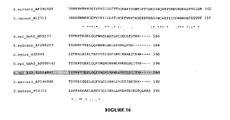
- Known lipase nucleotide sequences from Staphylococcus epidermidis (AF090142) and Staphylococcus aureas (AY028918) were obtained from GenBank database and were then aligned with CLUSTALW using software Biology Workbench 2.0 ( http://www.workbench.sdsc.edu/ ).
- a set of degenerate primer (F 1 and R 1 ) was designed based on the sequence of conserved region.
- Primer F 2 R 2 was designed based on the downstream sequence of S. epidermidis GehD., while primer F 3 R 3 was from the upstream of the same sequence.
- the R 4 was designed to be used with F 2 to amplify the downstream sequence.
- the oligonucleotide primers F 5 and R 5 were designed to amplify the full length organic solvent tolerant lipase gene.
- the PCR reaction was carried out in100 ⁇ l of reaction mixture containing 10X PCR buffer, 2 mM MgCl 2 , 10 mM dNTP mix, 2 unit of Taq DNA Polymerase, 10 pmol of each forward and reverse primers and genomic DNA as template (50-100ng).
- the PCR reaction was carried out using the following programmed: 4 min at 94 °C, 30 PCR cycles (94 °C 1min, 45 °C 1min and 72 °C 1min). This followed by 1 cycle of 7 min 72 °C and hold at 4 °C.
- the reaction was amplified in a thermocycler (GeneAmp PCR system 2400, Perkin Elmer, Foster, CA).
- the amplified products were examined by agarose gel electrophoresis (3.3.6).
- the PCR products were further purified using Gel Extraction kit (3.3.8). (Qiagen, USA).
- the purified product was sent to First BASE Laboratories Sdn Bhd (Shah Alam, Selangor, Malaysia) for sequencing.
- the first set of primer F 1 and R 1 successfully amplified a 1666 bp fragment ( Figure 9 ), and the second set F 2 and R 2 amplified at 1.2 kb fragment ( Figure 10a ).
- the upstream sequence of the open reading frame was amplified by F 3 and R 3 , which amplified 1790 bp fragment.
- the R 4 was designed to be used with F 2 to amplify the downstream sequence of about 850 bp to the stop codon TAA ( Figure 11b ).
- the oligonucleotide primers F 5 and R 5 were designed to amplify the full length organic solvent tolerant lipase gene which is 2300 bp in size ( Figure 11c ).
- the purified PCR product was cloned into the pGEM-Teasy vector (Promega, USA).
- the fresh PCR product (3 ⁇ l), pGEM-T easy vector (1 ⁇ l, 50 ng/ ⁇ l), 1 ⁇ l T4 DNA ligase, 5 ⁇ l 2x Rapid ligation buffer and, T4 DNA Ligase were transferred into 0.6 ml PCR tube.
- the ligation mixture was briefly mixed and incubated at 4 °C overnight in a thermocycler (Gene AMP PCR system 9600 Perkin-Elmer).
- Nine positive white colonies were extracted to check the size of the plasmids ( Figure 11 ).
- the plasmids revealed sizes of 4 to 5 kb after gel electrophoresis.
- the positive plasmids were amplified with primer F 1 and R 1 to confirm the insert.
- a 1.6 kb of PCR product was successfully amplified ( Figure 12 ).
- the plasmids from the positive clones were also double digested with restricted enzyme EcoR1 to check the insert ( Figure 13 ). Based on both RE digestion and PCR amplification, it was confirmed that the 1.6 kb insert was successfully cloned into plasmid and the recombination was successful.
- the ligated DNA (5 ⁇ l) was added to 200 ⁇ l of competent cells and kept on ice for 20 min. This mixture was subjected to heat shock for 50-60 s in water bath at 42 °C. The tube was returned immediately to ice for 2 min. After that, 0.9 ml of SOC was added and the mixture shaken at 37 °C for 1.5 h.
- the transformed cells (100 ⁇ l) were spread on pre-warmed LB plates containing tributyrin-LB agar plates containing ampicilin (50-100 ⁇ g/ml) and x-Gal, and then incubated overnight at 37 °C.
- the recombinant plasmids were isolated and purified using the QIAprep Miniprep Kit (Qiagen, Germany). The recombinant plasmid was electrophoresed on agarose gel and stained with ethidium bromide.
- the presence of the lipase gene (insert) was checked by double digestion.
- the plasmids were extracted and double digested by using two restriction enzymes.
- the volume of each reaction mixture was 10 ⁇ l, consisting of 1.5 ⁇ l Eco RI (10 u/ ⁇ l), 1.5 ⁇ l Bam HI (10 u/ ⁇ l), 2.0 ⁇ l (10x) Tango buffer, 2.0 ⁇ l deionized water and 3 ⁇ l extracted plasmids.
- the reaction mixtures were incubated in a water bath at 37 °C for 2 hours. To detect the plasmid and insert, the recombinant plasmid was electrophoresed on agarose gel and stained with ethidium bromide (section 3.3.6 and 3.3.8).
- the set of primers, (F 1 ) and (R 1 ) was used to set up a PCR cocktail reaction of PCR buffer, dNTP, Taq, polymerase and the extracted plasmids of expected positive colonies as template under conditions: 4 min at 94 °C, 30 PCR cycles (94 °C 1min, 45 °C 1min and 72 °C 1min). This was followed by 1 cycle of 7 min 72 °C and hold at 4 °C.
- the PCR product was electrophoresed on agarose gel and stained with ethidium bromide.
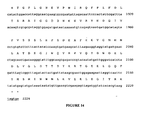
- Entire 2.3 kb containing the putative lipase gene was sequenced and was found to contain a single open reading frame (ORF) comprising of 1933 bp extending from 293 to 2226 ( Figure 14 ), which codes for 643 amino acids.
- ORF open reading frame
- the deduced molecular mass and pI were calculated to be 72.2 kDa and 8.1, respectively.
- the initiation codon was found to be preceded by a potential ribosome-binding site, AGAGGTG, identical to that found upstream of GehD.
- AGAGGTG a potential ribosome-binding site
- the region of DNA downstream of the predicted translational stop codon contained a palindromic sequence capable of forming a hairpin-loop structure which could act as a transcription terminator (Longshaw et al., 2000).
- Signal peptides control the entry of proteins to the secretory pathway and they comprise the N-terminal part of the amino acid chain and are cleaved off while the protein is translocated through the membrane (Nielsen et al., 1997).
- the N-terminal propeptide or signal peptide of Staphylococcus epidermidis AT2 lipase consisted of 37 amino acids (Met to Ala).
- the amino acids sequence which coded the signal peptide are;-'MKNNNETRRFSIRKYTVGVVSIITGITIFVSGQHAQAA-'.
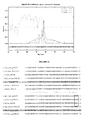
- the putative signal peptide cleavage site was located at between Ala-37 Ala-38 ( Figure 15 ) when predicted by using the SignalP V2.0 World Wide Web server.
- the complete sequence of the ORF of AT2 lipase gene was submitted to the GenBank and assigned an accession number EU814893.
- Table 1 shows amino acids compositions of other lipases. Out of the 643 amino acid residues deduced from nucleotide sequence of S . epidermidis AT2, 75 residues were negatively charge (Asp and Glu) and 77 were positively charge (Arg and Lys) at neutral pH. Charge residues (Arg, Asp, Glu, His and Lys) account for 172 (26.7%) of the amino acid residues in open reading frame of AT2 lipase. AT2 lipase contained 184 hydrophobic residues (Ala, Phe, Ile, leu, Met, Pro, Val, Trp), which corresponded to 28.6% of the total amino acids encountered.
- the AT2 lipase was classified as a stable protein since its instability index was computed to be 33.75 when calculated using the ProtParam tool in Expasy ( http://www.expasy.org/tools ).
- the organic solvent tolerant AT2 lipase consisting of 9982 atoms, is made up of carbon (3127), hydrogen (4899), nitrogen (915), oxygen (1028) and sulfur (13), and is represented by the formula C 3127 H 4899 N 915 O 1028 S 13 .
- Aliphatic index of AT2 lipase showed 57.28 based on the deduced sequence of polypeptide chain.
- Aliphatic index is defined as the relative volume of a protein occupied by aliphatic side chains (alanine, valine, isoloucine and leucine) through statistical analysis (Ikai, 1980). From the amino acids comparison study of eight lipases, it showed that Lys, Gly, Gln and Thr were abundant in these lipases ( Table 1 ). On the hand, residues Cys, His, Met, Trp and Phe were less abundant. All lipase have shown a low percentage of Cys molecules if not any. Low numbers of Cys residue are common in lipases. Protein lacking cyctine or with a low content of cysteine are generally more flexible molecules whose tertiary structure relies on weaker bonds.
- AT2 was bold.
- the part of the gene encoding the mature lipase was amplified by PCR from genomic DNA of S . epidermidis AT2 with a set of degenerated primers was designed based on sequence from S . epidermidis lipase precursor (GehD) (AF090142).
- Amplification process was carried out in reaction mixture containing 50-100 ng DNA template, 30 pmol each forward and reverse primers, 0.2 mM dNTP mix, 2 mM MgCl 2 , 2 ⁇ l Taq DNA polymerase (MBI Fermentas;St. Leon-Rot, Germany), 10x PCR buffer with the following PCR conditions: an initial denaturation step at 94 °C for 4 min, 35 cycles at 94 °C for 1 min, annealing at 45 °C for 1 min, and extension at 72 °C for 1 min, except for the final extension of 7 min, and preservation at 4 °C.
- the PCR product was electrophoresed using 1% (w/v) agarose gel and purified according to manufacturer's protocols.
- the purified PCR product of the mature lipase gene region was cloned into expression p Trc His2 TOPO vector, and the recombinant plasmids transformed into E . coli TOP 10.
- Fresh PCR product (4 ⁇ l) and pTrcHis vector (1 ⁇ l) were mixed gently and incubated for 5 min at room temperature.
- the ligated products were transformed with one shot chemically competent E . coli TOP 10.
- the mixture was incubated on ice for 30 min and heat-shocked for 30 sec at 42 °C and the tube was then immediately transferred into ice.
- SOC medium 250 ⁇ l was added before agitation (150 rpm) at 37 °C for 30 min.
- the transformed cells were plated onto tributyrin-LB agar plates containing ampicilin (50-100 ⁇ g/ml) before underwent incubation at 37 °C overnight.
- the transformed colonies were positive on triolein and Rhodamine B LB agar plates. Further confirmation was performed by PCR amplification of the insert and double digestion of the plasmids.
- a transformed colony harboring organic solvent tolerant mature region lipase gene was cultured in LB-ampicilin broth and the plasmids were extracted.
- Plasmid DNA was extracted by QIAprep Spin Kit by Qiagen. Cells harbouring the plasmid were grown in LB broth containing ampicilin (50 ⁇ l/ml) for 16 hours and pelleted by centrifugation. The cell pellet was resuspended in 250 ⁇ l of buffer P1. 250 ⁇ l of Buffer P2 was added and gently mixed. This followed by addition of 350 ⁇ l Buffer N3. The tube was inverted several times before centrifugation at 12,000 X g for 10 min. The supernatant was transferred to the QIAprep column and centrifuged for 60 sec. The flow-through was discarded.
- QIAprep column was washed by adding 0.5 ml Buffer PB and centrifuged for 30-60 sec and the flow-through was discarded.
- QIAprep column was washed by adding 0.75 ml Buffer PE and centrifuged for 30-60 sec. The flow-through was discarded and centrifuged for an additional 1 min to remove residual wash buffer.
- QIAprep column was placed in clean 1.5 ml microcentrifuge tube and DNA was eluted by adding 50 ⁇ l Buffer EB (10 mM Tris.Cl, pH 8.5) to the center of QIAprep column, stands for 1 min and followed by centrifugation for 1 min. The sample was loaded onto agarose gel to analyze the size of the extracted plasmid.
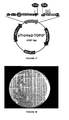
- pTrcHis2 TOPO vector Cloning of AT2 mature lipase gene in pTrcHis2 TOPO vector was conducted in the previous section through PCR cloning. The cloning of PCR products has become standard procedure in molecular biology. In this study, the pTrcHis2 TOPO vector (Invitrogen; Groningen, Netherlands) was used. pTrcHis2 TOPO vector designed for direct cloning of PCR products ( Figure 17 ). The mature sequence amplified by Fm and Rm, 21 primers were eluted from the gel and then ligated onto the vector.
- TOPO cloning technology exploits the fact that Taq DNA polymerase and other non-proofreading DNA polymerases add a 3'-end A overhang to the PCR products into the prelinearized pTrcHis2 TOPO vector, which has a U overhang on each 3' end. This eliminates the need for restriction digestion of the vector or insert, primers with built-in restriction site or specially designed adapters, resulting in a much more efficient and robust cloning procedure.
- the pTrcHis2 TOPO expression vector ( Figure 17 ) allows for ampicillin selection.
- the vector contains several unique restriction-endonuclease recognition sites around the cloning site allowing easy restriction analysis of the recombinant plasmids.
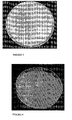
- the transformed cells were plated onto tributyrin-LB agar plates ( Figure 18 ) containing ampicillin (50-100 ⁇ g/ml) before underwent incubation at 37 °C overnight.
- the transformed colonies were positive on Rhodamine B LB-ampicillin ( Figure 19 ) and triolein LB- ampicillin agar plates ( Figure 20 ). Further confirmation was performed by PCR amplification of the insert and double digestion of the plasmids.
- a transformed colony harboring organic solvent tolerant mature region lipase gene was cultured in LB-ampicillin broth and the plasmids were extracted.
- a colony of E . coli TOP 10 harboring the lipase gene was inoculated into 10 ml LB broth containing 100 ⁇ g/ml ampicillin, and grown overnight at 37 °C.
- Each culture was subsequently induced with a different IPTG concentration 0.20 mM, 0.40 mM, 0.60 mM, 0.80 mM and 1.0 mM.
- the cultures were further incubated for 10 h before removing 10 ml aliquots of from each sampled and processed as described above.
- the pellets from 10 ml aliquots of zero time and 8 h cultures were suspended in 2 ml of 50 mM phosphate buffer.
- the cells were ultrasonically disintegrated by intermittent use of an UD-200 ultra sonic disruptor at 25W for 2 min in an ice bath.
- the mature lipase gene was cloned and expressed successfully in E. coli TOP 10 system using pTrcHis2 as expression vector carrying a trc promoter, which could be induced using the lactose analog Isopropyl ⁇ -D Thiogalactoside (IPTG).
- IPTG lactose analog Isopropyl ⁇ -D Thiogalactoside
- IPTG lactose analog Isopropyl ⁇ -D Thiogalactoside
- the highest lipase activity (5.3 U/ml) was detected after 8 h induction with 0.60 mM IPTG.
- the lipase activity without induction with IPTG was 0.32 U/ml and at 0.1 mM of IPTG the activity was 1.6 U/ml, which was enhanced to 500%.
- the lipase activity was enhanced to more than 50% with 0.4 mM of IPTG.
- the lipase activity was slightly decreased to 4.2 U/ml at higher concentration of inducer (0.8 mM IPTG) and decreased 100% to 2.1 U/ml at 1.0 mM IPTG.
- the required concentration of inducer to achieve maximal expression level was determined.
- IPTG 0.60 mM, which gave the maximal activity of recombinant AT2 mature lipase.
- Table 2 Lipase activity of AT2 mature/pTrcHis after 8 hours induction at different concentration of IPTG Concentration of IPTG (mM) Lipase activity (U/ml)* 0 0.32 ⁇ 0.007 0.1 1.6 ⁇ 0.008 0.2 2.5 ⁇ 0.005 0.4 3.2 ⁇ 0.006 0.6 5.3 ⁇ 0.007 0.8 4.2 ⁇ 0.008 1.0 2.1 ⁇ 0.009 *Data are means ⁇ standard deviation of three determinations.
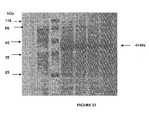
- the expression level of AT2 was also determined by SDS-PAGE method.
- the results from SDS-PAGE showed the bigger band with the presence of IPTG compared to its absence ( Figure 21 ).
- the optimal IPTG concentration when working with trc or other derived promoters for the expression of soluble cytoplasmic recombinant proteins has been widely reported to be around 1.00 mM (Durany et al., 2004). This concentration was considered very high for lipase expression.
- the amount of IPTG has to be reduced to minimum in order to ensure the economical feasibility.
- E. coli TOP 10 harboring recombinant plasmid p Trc His2/AT2 were induced with 0.60 mM of IPTG up to 24 h. Induction times ranging from 0-24 h at 4 h intervals were tested for lipase secretion study. The lipase activity was determined intra and extracellular.
- the cells were harvested by centrifugation at 5,000 x g and 4 °C for 10 min.
- the pellets were resuspended in 2 ml 50 mM phosphate buffer pH 7.0 and underwent sonication at 25W for 2 min in an ice bath.
- the disrupted cells were removed by centrifugation at 12,000 x g, 4 °C for 10 min.
- Liberated free fatty acids were determined colorimetrically according to Kwon and Rhee (1986) using olive oil as substrate.
- the culture filtrate (1 ml) was shaken with 2.5 ml of olive oil (70% oleate residues) emulsion (1:1, v/v) and 20 ul of 0.02 M CaCl 2 in water bath shaker at an agitation rate of 200 rpm.
- the emulsion was prepared by mixing together an equal volume of olive oil (Bertoli, Italy) and 50 mM phosphate buffer with a magnetic stirrer for 10 min.
- the reaction mixture was shaken for 30 min at 37 °C.
- the enzyme reaction in the emulsion system was stopped by adding 6N HCl (1 ml) and isooctane (5 ml), followed by mixing using a vortex mixer for 30 s.
- the upper isooctane layer (4 ml) containing the fatty acid was transferred to a test tube for analysis. Copper reagent (1 ml) was added before vortexing for 30 s. The reagent was prepared by adjusting the solution of 5% (w/v) copper (11) acetate-1-hydrate to pH 6.1 with pyridine. The absorbance of the upper layer was read at 715 nm. Lipase activity was measured by measuring the amount of free fatty acid released from the standard curves of free fatty acids. One unit of lipase activity was defined as the amount of enzyme releasing 1 ⁇ mole of fatty acid per minute.
- the free fatty acid released by the hydrolysis action of lipase was determined by measuring the absorbance of isooctane solution at 715 nm. Standard curve of oleic acid (Appendix B) was made in order to measure the amount of free fatty acid to determine the lipase activity.
- One unit of lipase activity (U) is defined as the amount of enzyme which released 1 ⁇ mole of free fatty acid in 1 min at 37 °C. All experiments were done in triplicate and average values were taken. The best incubation time for the highest production of lipase was determined.
- the optimal time evolution of intracellular recombinant lipase accumulation after induction was investigated.
- the optimization of the expression of recombinant lipase was carried out by varying the induction times with 0.60 mM IPTG.
- the recombinant clone was induced with IPTG after the culture growth was reaching OD 600 ⁇ 0.5.
- the culture was harvested at different time intervals to determine the optimum induction time for AT2 lipase.
- the cells were harvested and then lysed by mild sonication and assayed for lipase activity.
- the lipase activity versus time induction profile is presented in Figure 22 .
- the lipase activity was increased to 2.11 U/ml from 0.36 U/ml at 0 time induction.
- the lipase activity was increased drastically after 8 hours to about 5.01 U/ml and 5.58 after 10 hours time induction.
- the recombinant clone reached optimum level of expression at 10 hours after induction with IPTG.
- the lipase activity was about the same as 8 hours time induction and increased slightly at 16 hours.
- the expression level decreased gradually at 20 hours and 24 hours with 32% loses in lipase activity. A gradual drop of expression level in a later phase could be explained by the outgrowing of non-induced cells containing plasmid (Hahm et al., 1995).
- the expression band was detected on SDS-PAGE stained with comassie blue.
- the molecular mass of the target protein was determined by comparing with protein marker which was electrophoresed together.
- Figure 23 shows an expression band of AT2 mature lipase is about 43 kDa on SDS-PAGE.
- the intensity of expression band was observed at 6, 8 and 10 hours of induction time. Clear correlation was observed between the increases of intensity of expression band proposional with different induction times.
- AT2 mature lipase gene was successfully cloned and expressed in E. coli system with high level of protein expression ( ⁇ 18-mold) compared to wild type. As an overall comparison, the expression level of the recombinant AT2 lipase was higher compared to those reported by Oh et al., (1999) and Drouault et al., (2000). Oh et al., (1999), had reported that the expression of lipase S .
- haemolyticus L62 using pBluescript IISK expression vector and E. coli XL1 as a host have given low expression level although the N-terminal signal sequence of the expressed preproenzyme was correctly removed.
- Drouault et al., in (2000) reported that the expression of S . hycus using Lactococcus lactis as expression vector only 10-fold compared to wild type.
- the effect of various organic solvents with different Log P (Partition Coefficient) value on crude lipase stability was investigated.
- the cultures harboring recombinant plasmids pTrcHis2/AT2 were induced with 0.6 mM of isopropyl- ⁇ -D-thiogalactopyranoside (IPTG) at OD 600 nm ⁇ 0.5 for 10 h at 37 °C.
- IPTG isopropyl- ⁇ -D-thiogalactopyranoside
- the culture medium was centrifuged at 10,000 rpm, 4 °C for 10 min.
- the pallet was then resuspended with 2 ml of potassium phosphate buffer (pH 7.0) and the sonicated with Branson sonifier 250 (output: 2, duty cycle: 30 and 2 min).
- AT2 lipase was identified as an organic solvent tolerant enzyme.
- the stability of TOP 10/AT2/pTrcHis2 lipase in the presence and absence of organic solvents was determined. The enzyme was treated for 30 min in 25% (v/v) various organic solvents with log P values from -1.3 to 3.6 and assayed for lipase activity.
- the lipase had enhanced in the presence of DMSO, p-xylene, n-hexane, toluene and octanol being the most enhancing (- 190% increase activity).
- the enzyme activity was activated in the present of organic solvents tested with log P values of 2.0 to 3.6. Most the activity of the recombinant organic solvent tolerant AT2 lipase was inactivated in the presence of hydrophilic solvents (-1.22 ⁇ log P o/w ⁇ 0). However, the enzyme activity was activated in toluene, octanol, p-xylene and n-hexane with log P between 2.0 to 2.5. Table 3.
- Polyacryamide gel electrophoresis was carried out by using Mini-PROTEAN 3 cell electrophoresis system from Bio-Rad with gel size of 0.75 mm x 8.0 cm x 7.3 cm.
- the electrophoresis steps including sample buffer preparation, polyacrylamide gel casting, electrophoresis of sample and gel staining in staining solution [62.5 ml of 1% (w/v) Coomassie brilliant blue, 250 ml of 100% (v/v) methanol, 50 ml of 100% (v/v) acetic acid and 137.5 ml of dH 2 O] for 10 min and destained in destaining solution [ratio 1:1:8 of 100% (v/v) methanol: 100% (v/v) acetic acid: dH 2 O] for 1-2 hour to visualize and analyze the protein band.
- Protein sample was diluted with native PAGE sample buffer [1.25 ml of Tris-Cl (0.5 M, pH 6.8), 3.0 ml of 100% (v/v) glycerol, 0.2 ml of 0.5% (w/v) bromophenol blue and 5.55 ml of dH 2 O] with ratio of 1:2, thus 50 ⁇ l of sample was added to 100 ⁇ l of sample buffer.
- native polyacrylamide gel casting the ingredients were listed in Appendix C. 15 ⁇ l of protein in sample buffer was applied to each well of the gel and electrophoresed in native running buffer [g/l: Tris-Cl; 3.0 and Glycine; 14.4]. The electrophoresis was run under a constant voltage at 90 volt (13.5 mA) for approximately 3 hours. The electrophoresed gel was stained with Coomassie brilliant blue and destained.
- Each well of gel was loaded with 15 ⁇ l of protein in sample buffer and run in running buffer [g/L of Tris; 3.0, glycine; 14.4, and SDS; 1.0] under a constant voltage at 210 volt (30 mA) for approximately 1 hour and 15 min.
- the gel was stained with Coomassie brilliant blue and destained.
Landscapes
- Health & Medical Sciences (AREA)
- Chemical & Material Sciences (AREA)
- Life Sciences & Earth Sciences (AREA)
- Organic Chemistry (AREA)
- Genetics & Genomics (AREA)
- Engineering & Computer Science (AREA)
- Zoology (AREA)
- Bioinformatics & Cheminformatics (AREA)
- Wood Science & Technology (AREA)
- Biochemistry (AREA)
- Biotechnology (AREA)
- General Health & Medical Sciences (AREA)
- Medicinal Chemistry (AREA)
- Biomedical Technology (AREA)
- Molecular Biology (AREA)
- Microbiology (AREA)
- General Engineering & Computer Science (AREA)
- Proteomics, Peptides & Aminoacids (AREA)
- Biophysics (AREA)
- Gastroenterology & Hepatology (AREA)
- Toxicology (AREA)
- Immunology (AREA)
- Cell Biology (AREA)
- Tropical Medicine & Parasitology (AREA)
- Virology (AREA)
- Enzymes And Modification Thereof (AREA)
Claims (3)
- Utilisation d'une enzyme lipase selon la séquence SEQ ID N° 3, en présence d'un solvant organique, choisi parmi le toluène, le p-xylène et/ou le n-hexane.
- Utilisation selon la revendication 1, dans laquelle la lipase est codée par un gène constitué de la séquence selon la séquence SEQ ID N° 2.
- Utilisation selon l'une quelconque des revendications précédentes, dans laquelle le gène de lipase est obtenu à partir de la souche Staphylococcus epidermidis AT2.
Applications Claiming Priority (1)
| Application Number | Priority Date | Filing Date | Title |
|---|---|---|---|
| MYPI20097040A MY165191A (en) | 2009-12-30 | 2009-12-30 | Novel organic solvent lipase gene |
Publications (2)
| Publication Number | Publication Date |
|---|---|
| EP2360178A1 EP2360178A1 (fr) | 2011-08-24 |
| EP2360178B1 true EP2360178B1 (fr) | 2015-05-06 |
Family
ID=44121585
Family Applications (1)
| Application Number | Title | Priority Date | Filing Date |
|---|---|---|---|
| EP20100196762 Not-in-force EP2360178B1 (fr) | 2009-12-30 | 2010-12-23 | Nouveau gène de lipase pour solvant organique |
Country Status (3)
| Country | Link |
|---|---|
| EP (1) | EP2360178B1 (fr) |
| DK (1) | DK2360178T3 (fr) |
| MY (1) | MY165191A (fr) |
Family Cites Families (1)
| Publication number | Priority date | Publication date | Assignee | Title |
|---|---|---|---|---|
| WO2001034809A2 (fr) * | 1999-11-09 | 2001-05-17 | Glaxo Group Limited | Acides nucleiques et proteines de staphylococcus epidermidis |
-
2009
- 2009-12-30 MY MYPI20097040A patent/MY165191A/en unknown
-
2010
- 2010-12-23 EP EP20100196762 patent/EP2360178B1/fr not_active Not-in-force
- 2010-12-23 DK DK10196762.8T patent/DK2360178T3/en active
Also Published As
| Publication number | Publication date |
|---|---|
| MY165191A (en) | 2018-02-28 |
| DK2360178T3 (en) | 2015-07-20 |
| EP2360178A1 (fr) | 2011-08-24 |
Similar Documents
| Publication | Publication Date | Title |
|---|---|---|
| CA2112028C (fr) | Pullulanase, microorganismes la produisant, procedes de preparation de cette pullulanase et utilisations de celle-ci | |
| WO2020072248A1 (fr) | Système crispr-cas de type i recombinant | |
| AU2018354068B9 (en) | Method for production of recombinant E. coli asparaginase | |
| Furmanek-Blaszk | Phenotypic and molecular characteristics of an Aeromonas hydrophila strain isolated from the River Nile | |
| CN101918551B (zh) | 草酸脱羧酶的生产中利用的重组表达质粒载体及重组菌、以及重组草酸脱羧酶的生产方法 | |
| Burger et al. | Identification of homologues to the pathogenicity factor Pat-1, a putative serine protease of Clavibacter michiganensis subsp. michiganensis | |
| Kim et al. | Comparative analysis of two types of methanol dehydrogenase from Methylophaga aminisulfidivorans MPT grown on methanol | |
| EP1285069B1 (fr) | Bacteriocine anti-listeria | |
| WO2012036241A1 (fr) | Nouvelle nucléase sécrétée de façon extracellulaire | |
| Minami et al. | Cloning, sequencing, characterization, and expression of a β-glucosidase cDNA from the indigo plant | |
| JP5366222B2 (ja) | 殺藻活性タンパク質分解酵素、それをコーディングする遺伝子及びそれを含む殺藻製剤 | |
| EP2360178B1 (fr) | Nouveau gène de lipase pour solvant organique | |
| Lee et al. | RNase G controls tpiA mRNA abundance in response to oxygen availability in Escherichia coli | |
| Bolt et al. | Identification of three aspartic acid residues essential for catalysis by the RusA Holliday junction resolvase | |
| Vogl et al. | Identification and analysis of four candidate symbiosis genes from ‘Chlorochromatium aggregatum’, a highly developed bacterial symbiosis | |
| KR101065959B1 (ko) | 탄화수소계 유류 분해 아시네토박터 속 dr1 균주 및 이를 이용한 향상된 유류 분해 방법 | |
| Gomelsky et al. | Identification and characterization of the pqqDGC gene cluster involved in pyrroloquinoline quinone production in an obligate methylotroph Methylobacillus flagellatum | |
| Park et al. | Screening and identification of a novel esterase EstPE from a metagenomic DNA library | |
| PL237601B1 (pl) | Nowe szczepy bakteryjne, nowe białka, konstrukt kwasu nukleinowego, wektor, komórka gospodarz, sposób wytwarzania szczepów bakteryjnych i nowych białek, kompozycja, ich zastosowanie oraz sposób bioremediacji środowiska | |
| CN102812125B (zh) | 来自于稀脉萍的脂加氧酶 | |
| JP5354710B2 (ja) | 高活性カタラーゼ産生微生物及びその使用 | |
| JP5545562B2 (ja) | 自己溶菌耐性細胞及びこれを用いた物質生産方法 | |
| JP7194960B2 (ja) | 脂肪族アルコール合成細菌及び脂肪族アルコールの製造方法 | |
| Babic et al. | Molecular characterisation of the pifC gene encoding translation initiation factor 3, which is required for normal photosynthetic complex formation in Rhodobacter sphaeroides NCIB 8253 | |
| WO2024040043A1 (fr) | Systèmes d'expression pour phosphatases |
Legal Events
| Date | Code | Title | Description |
|---|---|---|---|
| PUAI | Public reference made under article 153(3) epc to a published international application that has entered the european phase |
Free format text: ORIGINAL CODE: 0009012 |
|
| AK | Designated contracting states |
Kind code of ref document: A1 Designated state(s): AL AT BE BG CH CY CZ DE DK EE ES FI FR GB GR HR HU IE IS IT LI LT LU LV MC MK MT NL NO PL PT RO RS SE SI SK SM TR |
|
| AX | Request for extension of the european patent |
Extension state: BA ME |
|
| 17P | Request for examination filed |
Effective date: 20120223 |
|
| 17Q | First examination report despatched |
Effective date: 20120509 |
|
| GRAP | Despatch of communication of intention to grant a patent |
Free format text: ORIGINAL CODE: EPIDOSNIGR1 |
|
| GRAJ | Information related to disapproval of communication of intention to grant by the applicant or resumption of examination proceedings by the epo deleted |
Free format text: ORIGINAL CODE: EPIDOSDIGR1 |
|
| GRAP | Despatch of communication of intention to grant a patent |
Free format text: ORIGINAL CODE: EPIDOSNIGR1 |
|
| INTG | Intention to grant announced |
Effective date: 20141110 |
|
| INTG | Intention to grant announced |
Effective date: 20141120 |
|
| GRAS | Grant fee paid |
Free format text: ORIGINAL CODE: EPIDOSNIGR3 |
|
| GRAA | (expected) grant |
Free format text: ORIGINAL CODE: 0009210 |
|
| AK | Designated contracting states |
Kind code of ref document: B1 Designated state(s): AL AT BE BG CH CY CZ DE DK EE ES FI FR GB GR HR HU IE IS IT LI LT LU LV MC MK MT NL NO PL PT RO RS SE SI SK SM TR |
|
| REG | Reference to a national code |
Ref country code: GB Ref legal event code: FG4D |
|
| REG | Reference to a national code |
Ref country code: CH Ref legal event code: EP |
|
| REG | Reference to a national code |
Ref country code: IE Ref legal event code: FG4D |
|
| REG | Reference to a national code |
Ref country code: AT Ref legal event code: REF Ref document number: 725644 Country of ref document: AT Kind code of ref document: T Effective date: 20150615 |
|
| REG | Reference to a national code |
Ref country code: DE Ref legal event code: R096 Ref document number: 602010024439 Country of ref document: DE Effective date: 20150618 |
|
| REG | Reference to a national code |
Ref country code: DK Ref legal event code: T3 Effective date: 20150714 |
|
| REG | Reference to a national code |
Ref country code: NL Ref legal event code: T3 |
|
| REG | Reference to a national code |
Ref country code: AT Ref legal event code: MK05 Ref document number: 725644 Country of ref document: AT Kind code of ref document: T Effective date: 20150506 |
|
| REG | Reference to a national code |
Ref country code: LT Ref legal event code: MG4D |
|
| PG25 | Lapsed in a contracting state [announced via postgrant information from national office to epo] |
Ref country code: FI Free format text: LAPSE BECAUSE OF FAILURE TO SUBMIT A TRANSLATION OF THE DESCRIPTION OR TO PAY THE FEE WITHIN THE PRESCRIBED TIME-LIMIT Effective date: 20150506 Ref country code: NO Free format text: LAPSE BECAUSE OF FAILURE TO SUBMIT A TRANSLATION OF THE DESCRIPTION OR TO PAY THE FEE WITHIN THE PRESCRIBED TIME-LIMIT Effective date: 20150806 Ref country code: PT Free format text: LAPSE BECAUSE OF FAILURE TO SUBMIT A TRANSLATION OF THE DESCRIPTION OR TO PAY THE FEE WITHIN THE PRESCRIBED TIME-LIMIT Effective date: 20150907 Ref country code: HR Free format text: LAPSE BECAUSE OF FAILURE TO SUBMIT A TRANSLATION OF THE DESCRIPTION OR TO PAY THE FEE WITHIN THE PRESCRIBED TIME-LIMIT Effective date: 20150506 Ref country code: LT Free format text: LAPSE BECAUSE OF FAILURE TO SUBMIT A TRANSLATION OF THE DESCRIPTION OR TO PAY THE FEE WITHIN THE PRESCRIBED TIME-LIMIT Effective date: 20150506 Ref country code: ES Free format text: LAPSE BECAUSE OF FAILURE TO SUBMIT A TRANSLATION OF THE DESCRIPTION OR TO PAY THE FEE WITHIN THE PRESCRIBED TIME-LIMIT Effective date: 20150506 |
|
| PG25 | Lapsed in a contracting state [announced via postgrant information from national office to epo] |
Ref country code: BG Free format text: LAPSE BECAUSE OF FAILURE TO SUBMIT A TRANSLATION OF THE DESCRIPTION OR TO PAY THE FEE WITHIN THE PRESCRIBED TIME-LIMIT Effective date: 20150806 Ref country code: AT Free format text: LAPSE BECAUSE OF FAILURE TO SUBMIT A TRANSLATION OF THE DESCRIPTION OR TO PAY THE FEE WITHIN THE PRESCRIBED TIME-LIMIT Effective date: 20150506 Ref country code: RS Free format text: LAPSE BECAUSE OF FAILURE TO SUBMIT A TRANSLATION OF THE DESCRIPTION OR TO PAY THE FEE WITHIN THE PRESCRIBED TIME-LIMIT Effective date: 20150506 Ref country code: LV Free format text: LAPSE BECAUSE OF FAILURE TO SUBMIT A TRANSLATION OF THE DESCRIPTION OR TO PAY THE FEE WITHIN THE PRESCRIBED TIME-LIMIT Effective date: 20150506 Ref country code: IS Free format text: LAPSE BECAUSE OF FAILURE TO SUBMIT A TRANSLATION OF THE DESCRIPTION OR TO PAY THE FEE WITHIN THE PRESCRIBED TIME-LIMIT Effective date: 20150906 Ref country code: GR Free format text: LAPSE BECAUSE OF FAILURE TO SUBMIT A TRANSLATION OF THE DESCRIPTION OR TO PAY THE FEE WITHIN THE PRESCRIBED TIME-LIMIT Effective date: 20150807 |
|
| PG25 | Lapsed in a contracting state [announced via postgrant information from national office to epo] |
Ref country code: EE Free format text: LAPSE BECAUSE OF FAILURE TO SUBMIT A TRANSLATION OF THE DESCRIPTION OR TO PAY THE FEE WITHIN THE PRESCRIBED TIME-LIMIT Effective date: 20150506 |
|
| REG | Reference to a national code |
Ref country code: DE Ref legal event code: R097 Ref document number: 602010024439 Country of ref document: DE |
|
| PG25 | Lapsed in a contracting state [announced via postgrant information from national office to epo] |
Ref country code: PL Free format text: LAPSE BECAUSE OF FAILURE TO SUBMIT A TRANSLATION OF THE DESCRIPTION OR TO PAY THE FEE WITHIN THE PRESCRIBED TIME-LIMIT Effective date: 20150506 Ref country code: CZ Free format text: LAPSE BECAUSE OF FAILURE TO SUBMIT A TRANSLATION OF THE DESCRIPTION OR TO PAY THE FEE WITHIN THE PRESCRIBED TIME-LIMIT Effective date: 20150506 Ref country code: SK Free format text: LAPSE BECAUSE OF FAILURE TO SUBMIT A TRANSLATION OF THE DESCRIPTION OR TO PAY THE FEE WITHIN THE PRESCRIBED TIME-LIMIT Effective date: 20150506 Ref country code: RO Free format text: LAPSE BECAUSE OF NON-PAYMENT OF DUE FEES Effective date: 20150506 |
|
| PLBE | No opposition filed within time limit |
Free format text: ORIGINAL CODE: 0009261 |
|
| STAA | Information on the status of an ep patent application or granted ep patent |
Free format text: STATUS: NO OPPOSITION FILED WITHIN TIME LIMIT |
|
| 26N | No opposition filed |
Effective date: 20160209 |
|
| PG25 | Lapsed in a contracting state [announced via postgrant information from national office to epo] |
Ref country code: IT Free format text: LAPSE BECAUSE OF FAILURE TO SUBMIT A TRANSLATION OF THE DESCRIPTION OR TO PAY THE FEE WITHIN THE PRESCRIBED TIME-LIMIT Effective date: 20150506 |
|
| PG25 | Lapsed in a contracting state [announced via postgrant information from national office to epo] |
Ref country code: BE Free format text: LAPSE BECAUSE OF NON-PAYMENT OF DUE FEES Effective date: 20151231 Ref country code: SI Free format text: LAPSE BECAUSE OF FAILURE TO SUBMIT A TRANSLATION OF THE DESCRIPTION OR TO PAY THE FEE WITHIN THE PRESCRIBED TIME-LIMIT Effective date: 20150506 |
|
| REG | Reference to a national code |
Ref country code: DE Ref legal event code: R119 Ref document number: 602010024439 Country of ref document: DE |
|
| PG25 | Lapsed in a contracting state [announced via postgrant information from national office to epo] |
Ref country code: MC Free format text: LAPSE BECAUSE OF FAILURE TO SUBMIT A TRANSLATION OF THE DESCRIPTION OR TO PAY THE FEE WITHIN THE PRESCRIBED TIME-LIMIT Effective date: 20150506 Ref country code: LU Free format text: LAPSE BECAUSE OF FAILURE TO SUBMIT A TRANSLATION OF THE DESCRIPTION OR TO PAY THE FEE WITHIN THE PRESCRIBED TIME-LIMIT Effective date: 20151223 |
|
| REG | Reference to a national code |
Ref country code: CH Ref legal event code: PL |
|
| GBPC | Gb: european patent ceased through non-payment of renewal fee |
Effective date: 20151223 |
|
| PG25 | Lapsed in a contracting state [announced via postgrant information from national office to epo] |
Ref country code: BE Free format text: LAPSE BECAUSE OF FAILURE TO SUBMIT A TRANSLATION OF THE DESCRIPTION OR TO PAY THE FEE WITHIN THE PRESCRIBED TIME-LIMIT Effective date: 20150506 |
|
| REG | Reference to a national code |
Ref country code: IE Ref legal event code: MM4A |
|
| REG | Reference to a national code |
Ref country code: FR Ref legal event code: ST Effective date: 20160831 |
|
| PG25 | Lapsed in a contracting state [announced via postgrant information from national office to epo] |
Ref country code: CH Free format text: LAPSE BECAUSE OF NON-PAYMENT OF DUE FEES Effective date: 20151231 Ref country code: LI Free format text: LAPSE BECAUSE OF NON-PAYMENT OF DUE FEES Effective date: 20151231 Ref country code: IE Free format text: LAPSE BECAUSE OF NON-PAYMENT OF DUE FEES Effective date: 20151223 Ref country code: DE Free format text: LAPSE BECAUSE OF NON-PAYMENT OF DUE FEES Effective date: 20160701 Ref country code: GB Free format text: LAPSE BECAUSE OF NON-PAYMENT OF DUE FEES Effective date: 20151223 |
|
| PG25 | Lapsed in a contracting state [announced via postgrant information from national office to epo] |
Ref country code: FR Free format text: LAPSE BECAUSE OF NON-PAYMENT OF DUE FEES Effective date: 20151231 |
|
| PG25 | Lapsed in a contracting state [announced via postgrant information from national office to epo] |
Ref country code: SM Free format text: LAPSE BECAUSE OF FAILURE TO SUBMIT A TRANSLATION OF THE DESCRIPTION OR TO PAY THE FEE WITHIN THE PRESCRIBED TIME-LIMIT Effective date: 20150506 Ref country code: HU Free format text: LAPSE BECAUSE OF FAILURE TO SUBMIT A TRANSLATION OF THE DESCRIPTION OR TO PAY THE FEE WITHIN THE PRESCRIBED TIME-LIMIT; INVALID AB INITIO Effective date: 20101223 |
|
| PG25 | Lapsed in a contracting state [announced via postgrant information from national office to epo] |
Ref country code: CY Free format text: LAPSE BECAUSE OF FAILURE TO SUBMIT A TRANSLATION OF THE DESCRIPTION OR TO PAY THE FEE WITHIN THE PRESCRIBED TIME-LIMIT Effective date: 20150506 Ref country code: SE Free format text: LAPSE BECAUSE OF FAILURE TO SUBMIT A TRANSLATION OF THE DESCRIPTION OR TO PAY THE FEE WITHIN THE PRESCRIBED TIME-LIMIT Effective date: 20150506 |
|
| PG25 | Lapsed in a contracting state [announced via postgrant information from national office to epo] |
Ref country code: TR Free format text: LAPSE BECAUSE OF FAILURE TO SUBMIT A TRANSLATION OF THE DESCRIPTION OR TO PAY THE FEE WITHIN THE PRESCRIBED TIME-LIMIT Effective date: 20150506 Ref country code: MT Free format text: LAPSE BECAUSE OF FAILURE TO SUBMIT A TRANSLATION OF THE DESCRIPTION OR TO PAY THE FEE WITHIN THE PRESCRIBED TIME-LIMIT Effective date: 20150506 |
|
| PG25 | Lapsed in a contracting state [announced via postgrant information from national office to epo] |
Ref country code: MK Free format text: LAPSE BECAUSE OF FAILURE TO SUBMIT A TRANSLATION OF THE DESCRIPTION OR TO PAY THE FEE WITHIN THE PRESCRIBED TIME-LIMIT Effective date: 20150506 |
|
| PG25 | Lapsed in a contracting state [announced via postgrant information from national office to epo] |
Ref country code: AL Free format text: LAPSE BECAUSE OF FAILURE TO SUBMIT A TRANSLATION OF THE DESCRIPTION OR TO PAY THE FEE WITHIN THE PRESCRIBED TIME-LIMIT Effective date: 20150506 |
|
| PGFP | Annual fee paid to national office [announced via postgrant information from national office to epo] |
Ref country code: DK Payment date: 20201216 Year of fee payment: 11 |
|
| PGFP | Annual fee paid to national office [announced via postgrant information from national office to epo] |
Ref country code: NL Payment date: 20201226 Year of fee payment: 11 |
|
| REG | Reference to a national code |
Ref country code: DK Ref legal event code: EBP Effective date: 20211231 |
|
| REG | Reference to a national code |
Ref country code: NL Ref legal event code: MM Effective date: 20220101 |
|
| PG25 | Lapsed in a contracting state [announced via postgrant information from national office to epo] |
Ref country code: NL Free format text: LAPSE BECAUSE OF NON-PAYMENT OF DUE FEES Effective date: 20220101 |
|
| PG25 | Lapsed in a contracting state [announced via postgrant information from national office to epo] |
Ref country code: DK Free format text: LAPSE BECAUSE OF NON-PAYMENT OF DUE FEES Effective date: 20211231 |