EP2360237A1 - Nouveau lactobacillus plantarum et composition le contenant - Google Patents
Nouveau lactobacillus plantarum et composition le contenant Download PDFInfo
- Publication number
- EP2360237A1 EP2360237A1 EP09830515A EP09830515A EP2360237A1 EP 2360237 A1 EP2360237 A1 EP 2360237A1 EP 09830515 A EP09830515 A EP 09830515A EP 09830515 A EP09830515 A EP 09830515A EP 2360237 A1 EP2360237 A1 EP 2360237A1
- Authority
- EP
- European Patent Office
- Prior art keywords
- lactobacillus plantarum
- cells
- lactobacillus
- plantarum cjlp56
- composition
- Prior art date
- Legal status (The legal status is an assumption and is not a legal conclusion. Google has not performed a legal analysis and makes no representation as to the accuracy of the status listed.)
- Granted
Links
Images




Classifications
-
- A—HUMAN NECESSITIES
- A61—MEDICAL OR VETERINARY SCIENCE; HYGIENE
- A61K—PREPARATIONS FOR MEDICAL, DENTAL OR TOILETRY PURPOSES
- A61K35/00—Medicinal preparations containing materials or reaction products thereof with undetermined constitution
- A61K35/66—Microorganisms or materials therefrom
- A61K35/74—Bacteria
- A61K35/741—Probiotics
- A61K35/744—Lactic acid bacteria, e.g. enterococci, pediococci, lactococci, streptococci or leuconostocs
- A61K35/747—Lactobacilli, e.g. L. acidophilus or L. brevis
-
- C—CHEMISTRY; METALLURGY
- C12—BIOCHEMISTRY; BEER; SPIRITS; WINE; VINEGAR; MICROBIOLOGY; ENZYMOLOGY; MUTATION OR GENETIC ENGINEERING
- C12N—MICROORGANISMS OR ENZYMES; COMPOSITIONS THEREOF; PROPAGATING, PRESERVING, OR MAINTAINING MICROORGANISMS; MUTATION OR GENETIC ENGINEERING; CULTURE MEDIA
- C12N1/00—Microorganisms; Compositions thereof; Processes of propagating, maintaining or preserving microorganisms or compositions thereof; Processes of preparing or isolating a composition containing a microorganism; Culture media therefor
- C12N1/20—Bacteria; Culture media therefor
-
- A—HUMAN NECESSITIES
- A23—FOODS OR FOODSTUFFS; TREATMENT THEREOF, NOT COVERED BY OTHER CLASSES
- A23K—FODDER
- A23K10/00—Animal feeding-stuffs
- A23K10/10—Animal feeding-stuffs obtained by microbiological or biochemical processes
- A23K10/16—Addition of microorganisms or extracts thereof, e.g. single-cell proteins, to feeding-stuff compositions
- A23K10/18—Addition of microorganisms or extracts thereof, e.g. single-cell proteins, to feeding-stuff compositions of live microorganisms
-
- A—HUMAN NECESSITIES
- A23—FOODS OR FOODSTUFFS; TREATMENT THEREOF, NOT COVERED BY OTHER CLASSES
- A23L—FOODS, FOODSTUFFS OR NON-ALCOHOLIC BEVERAGES, NOT OTHERWISE PROVIDED FOR; PREPARATION OR TREATMENT THEREOF
- A23L33/00—Modifying nutritive qualities of foods; Dietetic products; Preparation or treatment thereof
- A23L33/10—Modifying nutritive qualities of foods; Dietetic products; Preparation or treatment thereof using additives
- A23L33/135—Bacteria or derivatives thereof, e.g. probiotics
-
- A—HUMAN NECESSITIES
- A61—MEDICAL OR VETERINARY SCIENCE; HYGIENE
- A61K—PREPARATIONS FOR MEDICAL, DENTAL OR TOILETRY PURPOSES
- A61K35/00—Medicinal preparations containing materials or reaction products thereof with undetermined constitution
- A61K35/66—Microorganisms or materials therefrom
- A61K35/74—Bacteria
-
- A—HUMAN NECESSITIES
- A61—MEDICAL OR VETERINARY SCIENCE; HYGIENE
- A61K—PREPARATIONS FOR MEDICAL, DENTAL OR TOILETRY PURPOSES
- A61K39/00—Medicinal preparations containing antigens or antibodies
- A61K39/39—Medicinal preparations containing antigens or antibodies characterised by the immunostimulating additives, e.g. chemical adjuvants
-
- A—HUMAN NECESSITIES
- A61—MEDICAL OR VETERINARY SCIENCE; HYGIENE
- A61K—PREPARATIONS FOR MEDICAL, DENTAL OR TOILETRY PURPOSES
- A61K8/00—Cosmetics or similar toiletry preparations
- A61K8/18—Cosmetics or similar toiletry preparations characterised by the composition
- A61K8/96—Cosmetics or similar toiletry preparations characterised by the composition containing materials, or derivatives thereof of undetermined constitution
- A61K8/99—Cosmetics or similar toiletry preparations characterised by the composition containing materials, or derivatives thereof of undetermined constitution from microorganisms other than algae or fungi, e.g. protozoa or bacteria
-
- A—HUMAN NECESSITIES
- A61—MEDICAL OR VETERINARY SCIENCE; HYGIENE
- A61P—SPECIFIC THERAPEUTIC ACTIVITY OF CHEMICAL COMPOUNDS OR MEDICINAL PREPARATIONS
- A61P1/00—Drugs for disorders of the alimentary tract or the digestive system
-
- A—HUMAN NECESSITIES
- A61—MEDICAL OR VETERINARY SCIENCE; HYGIENE
- A61P—SPECIFIC THERAPEUTIC ACTIVITY OF CHEMICAL COMPOUNDS OR MEDICINAL PREPARATIONS
- A61P35/00—Antineoplastic agents
-
- A—HUMAN NECESSITIES
- A61—MEDICAL OR VETERINARY SCIENCE; HYGIENE
- A61P—SPECIFIC THERAPEUTIC ACTIVITY OF CHEMICAL COMPOUNDS OR MEDICINAL PREPARATIONS
- A61P37/00—Drugs for immunological or allergic disorders
-
- A—HUMAN NECESSITIES
- A61—MEDICAL OR VETERINARY SCIENCE; HYGIENE
- A61P—SPECIFIC THERAPEUTIC ACTIVITY OF CHEMICAL COMPOUNDS OR MEDICINAL PREPARATIONS
- A61P37/00—Drugs for immunological or allergic disorders
- A61P37/02—Immunomodulators
- A61P37/06—Immunosuppressants, e.g. drugs for graft rejection
-
- A—HUMAN NECESSITIES
- A61—MEDICAL OR VETERINARY SCIENCE; HYGIENE
- A61P—SPECIFIC THERAPEUTIC ACTIVITY OF CHEMICAL COMPOUNDS OR MEDICINAL PREPARATIONS
- A61P37/00—Drugs for immunological or allergic disorders
- A61P37/08—Antiallergic agents
-
- C—CHEMISTRY; METALLURGY
- C12—BIOCHEMISTRY; BEER; SPIRITS; WINE; VINEGAR; MICROBIOLOGY; ENZYMOLOGY; MUTATION OR GENETIC ENGINEERING
- C12N—MICROORGANISMS OR ENZYMES; COMPOSITIONS THEREOF; PROPAGATING, PRESERVING, OR MAINTAINING MICROORGANISMS; MUTATION OR GENETIC ENGINEERING; CULTURE MEDIA
- C12N1/00—Microorganisms; Compositions thereof; Processes of propagating, maintaining or preserving microorganisms or compositions thereof; Processes of preparing or isolating a composition containing a microorganism; Culture media therefor
-
- C—CHEMISTRY; METALLURGY
- C12—BIOCHEMISTRY; BEER; SPIRITS; WINE; VINEGAR; MICROBIOLOGY; ENZYMOLOGY; MUTATION OR GENETIC ENGINEERING
- C12N—MICROORGANISMS OR ENZYMES; COMPOSITIONS THEREOF; PROPAGATING, PRESERVING, OR MAINTAINING MICROORGANISMS; MUTATION OR GENETIC ENGINEERING; CULTURE MEDIA
- C12N1/00—Microorganisms; Compositions thereof; Processes of propagating, maintaining or preserving microorganisms or compositions thereof; Processes of preparing or isolating a composition containing a microorganism; Culture media therefor
- C12N1/20—Bacteria; Culture media therefor
- C12N1/205—Bacterial isolates
-
- A—HUMAN NECESSITIES
- A23—FOODS OR FOODSTUFFS; TREATMENT THEREOF, NOT COVERED BY OTHER CLASSES
- A23V—INDEXING SCHEME RELATING TO FOODS, FOODSTUFFS OR NON-ALCOHOLIC BEVERAGES AND LACTIC OR PROPIONIC ACID BACTERIA USED IN FOODSTUFFS OR FOOD PREPARATION
- A23V2002/00—Food compositions, function of food ingredients or processes for food or foodstuffs
-
- A—HUMAN NECESSITIES
- A23—FOODS OR FOODSTUFFS; TREATMENT THEREOF, NOT COVERED BY OTHER CLASSES
- A23V—INDEXING SCHEME RELATING TO FOODS, FOODSTUFFS OR NON-ALCOHOLIC BEVERAGES AND LACTIC OR PROPIONIC ACID BACTERIA USED IN FOODSTUFFS OR FOOD PREPARATION
- A23V2200/00—Function of food ingredients
- A23V2200/30—Foods, ingredients or supplements having a functional effect on health
- A23V2200/304—Foods, ingredients or supplements having a functional effect on health having a modulation effect on allergy and risk of allergy
-
- A—HUMAN NECESSITIES
- A23—FOODS OR FOODSTUFFS; TREATMENT THEREOF, NOT COVERED BY OTHER CLASSES
- A23V—INDEXING SCHEME RELATING TO FOODS, FOODSTUFFS OR NON-ALCOHOLIC BEVERAGES AND LACTIC OR PROPIONIC ACID BACTERIA USED IN FOODSTUFFS OR FOOD PREPARATION
- A23V2200/00—Function of food ingredients
- A23V2200/30—Foods, ingredients or supplements having a functional effect on health
- A23V2200/32—Foods, ingredients or supplements having a functional effect on health having an effect on the health of the digestive tract
- A23V2200/3204—Probiotics, living bacteria to be ingested for action in the digestive tract
-
- A—HUMAN NECESSITIES
- A23—FOODS OR FOODSTUFFS; TREATMENT THEREOF, NOT COVERED BY OTHER CLASSES
- A23V—INDEXING SCHEME RELATING TO FOODS, FOODSTUFFS OR NON-ALCOHOLIC BEVERAGES AND LACTIC OR PROPIONIC ACID BACTERIA USED IN FOODSTUFFS OR FOOD PREPARATION
- A23V2200/00—Function of food ingredients
- A23V2200/30—Foods, ingredients or supplements having a functional effect on health
- A23V2200/324—Foods, ingredients or supplements having a functional effect on health having an effect on the immune system
-
- A—HUMAN NECESSITIES
- A23—FOODS OR FOODSTUFFS; TREATMENT THEREOF, NOT COVERED BY OTHER CLASSES
- A23V—INDEXING SCHEME RELATING TO FOODS, FOODSTUFFS OR NON-ALCOHOLIC BEVERAGES AND LACTIC OR PROPIONIC ACID BACTERIA USED IN FOODSTUFFS OR FOOD PREPARATION
- A23V2400/00—Lactic or propionic acid bacteria
- A23V2400/11—Lactobacillus
- A23V2400/169—Plantarum
-
- A—HUMAN NECESSITIES
- A61—MEDICAL OR VETERINARY SCIENCE; HYGIENE
- A61K—PREPARATIONS FOR MEDICAL, DENTAL OR TOILETRY PURPOSES
- A61K35/00—Medicinal preparations containing materials or reaction products thereof with undetermined constitution
- A61K2035/11—Medicinal preparations comprising living procariotic cells
-
- A—HUMAN NECESSITIES
- A61—MEDICAL OR VETERINARY SCIENCE; HYGIENE
- A61K—PREPARATIONS FOR MEDICAL, DENTAL OR TOILETRY PURPOSES
- A61K35/00—Medicinal preparations containing materials or reaction products thereof with undetermined constitution
- A61K2035/11—Medicinal preparations comprising living procariotic cells
- A61K2035/115—Probiotics
-
- A—HUMAN NECESSITIES
- A61—MEDICAL OR VETERINARY SCIENCE; HYGIENE
- A61K—PREPARATIONS FOR MEDICAL, DENTAL OR TOILETRY PURPOSES
- A61K39/00—Medicinal preparations containing antigens or antibodies
- A61K2039/57—Medicinal preparations containing antigens or antibodies characterised by the type of response, e.g. Th1, Th2
-
- A—HUMAN NECESSITIES
- A61—MEDICAL OR VETERINARY SCIENCE; HYGIENE
- A61K—PREPARATIONS FOR MEDICAL, DENTAL OR TOILETRY PURPOSES
- A61K2800/00—Properties of cosmetic compositions or active ingredients thereof or formulation aids used therein and process related aspects
- A61K2800/10—General cosmetic use
-
- A—HUMAN NECESSITIES
- A61—MEDICAL OR VETERINARY SCIENCE; HYGIENE
- A61Q—SPECIFIC USE OF COSMETICS OR SIMILAR TOILETRY PREPARATIONS
- A61Q19/00—Preparations for care of the skin
-
- C—CHEMISTRY; METALLURGY
- C12—BIOCHEMISTRY; BEER; SPIRITS; WINE; VINEGAR; MICROBIOLOGY; ENZYMOLOGY; MUTATION OR GENETIC ENGINEERING
- C12R—INDEXING SCHEME ASSOCIATED WITH SUBCLASSES C12C - C12Q, RELATING TO MICROORGANISMS
- C12R2001/00—Microorganisms ; Processes using microorganisms
- C12R2001/01—Bacteria or Actinomycetales ; using bacteria or Actinomycetales
- C12R2001/225—Lactobacillus
- C12R2001/25—Lactobacillus plantarum
Definitions
- the present invention relates to novel Lactobacillus plantarum variant and a composition comprising the same. More particularly, the present invention relates to a novel Lactobacillus plantarum variant useful in the prevention and treatment of enteropathy and immune diseases and a composition comprising the same.
- Lactic acid bacteria are abundantly present in fermented foods such as Kimchi and usually dwell in the digestive tract, functioning to degrade fibroid materials and composite proteins into useful metabolites.
- live microorganisms that confer a health benefit on the host by improving the microbial environment in the gut are generally called probiotics.
- probiotics live microorganisms that confer a health benefit on the host by improving the microbial environment in the gut.
- probiotics live microorganisms that confer a health benefit on the host by improving the microbial environment in the gut are generally called probiotics.
- probiotics live microorganisms that confer a health benefit on the host by improving the microbial environment in the gut are generally called probiotics.
- probiotics To function as probiotics after oral uptake, microorganisms must reach the intestine alive and must stay on intestinal surfaces. Therefore, they are fundamentally required to have a tolerance to acid and bile acid and an ability to adhere to intestinal epithelial cells.
- Lactobacillus sp. microorganisms which are abundantly present in Korean conventional fermented foods such as Kimchi.
- Lactobacillus sp. microorganisms are homo- or hetero-fermentative lactic acid bacilli which can be readily found in human and animal guts or in the fermentation process of diary products or vegetables.
- Lactobacillus sp. microorganisms are known to have the beneficial functions of vitamin synthesis, anticancer activity and blood cholesterol reduction in addition to maintaining the intestines at an acidic pH that inhibits the excessive growth of harmful bacteria, such as E . coli, or Clostridium and improving diarrhea and constipation.
- Acidophilin produced by fermenting lactic acid bacilli, can act like an antibiotic and inhibit the growth of dysentery bacilli, salmonella, staphylococci, E. coli, etc. Reportedly, this natural antibiotic can bind the bowel by suppressing the growth of diarrhea-causing bacteria and normalizing the intestinal microfloral environment ( Michael and Philippe, Probiotics and prebiotics: Effects on diarrhea, The journal of nutrition, Volume 137, March 2007, pages 803S-811S ; Roberfroid, Prebiotics and probiotics: Are they functional foods?, American journal of clinical nutrition, Volume 71, June 2000, pages 1682S-1687S ).
- lactic acid bacteria such as Lactobacillus sp. microorganisms are known to exhibit immunopotentiating activity.
- aller and atopic diseases associated with abnormal immunomodulation have been increased rapidly over the world including Korea In Europe, keen attention has been paid to bacteriotherapy in which pathogenic microorganisms are displaced with beneficial bacteria by the oral administration of, for example, lactic acid bacteria, thereby treating or alleviating diseases.
- lactic acid bacteria have an influence on both innate immunity and adaptive immunity. In the intestinal immune system, the cells imparting innate immunity defend the host from infection of pathogens by recognizing and killing them.
- macrophages which plays a role in phagocytosing pathogens and presenting antigens, are activated to stimulate the production of various cytokines, inter alia, IL12 and IL-18.
- cytokines inter alia, IL12 and IL-18.
- some of the constituents of the cell wall of lactic acid bacteria are known to activate the NF- ⁇ B and STAT signaling pathway in macrophages and thereby stimulate the production of cytokines.
- lactic acid bacteria increase the production of IL-12, IL-18, and TNF- ⁇ in dendritic cells, which are specialized antigen-presenting cells abundantly found in the lymph nodes and the mucous membranes of the digestive tract, as well as the expression of T-lymphocyte activating surface molecules such as MHC class II and B7-2 ( Cross et. al., Anti-allergy properties of fermented foods: an important immunoregulatory mechanism of lactic acid bacteria?, International Immunopharmacology, Volume 1, May 2001, pages 891-901 ).
- T lymphocytes play a central role in adaptive immunity. There is a Th1 response leading to cell-mediated immunity and also a Th2 response leading to humoral immunity in the adaptive immunity.
- the cytokines produced by antigen-presenting cells differ between the Th1 response to Th2 response.
- IL-12, IL-18, and interferon (EFN) are predominantly produced in the Th1 response whereas the Th2 response predominantly results in the production of PGE2, IL-4, and IL-10.
- EFN interferon
- Th1 and Th2 responses For immune system homeostasis, there must be an appropriate balance between the Th1 and Th2 responses.
- the disruption of Th1/Th2 balance gives rise to immune-mediated diseases.
- Th1 cells are more effective against infection, while Th2 cells are responsible mainly for allergic and inflammatory responses.
- Th2 cells When acting normally, Th2 cells protect the body from dust and other undesired substances. When excessively activated, Th2 cells induce the hyperproduction of IgE antibodies, giving rise to allergic reactions to proteins which are not normally antigenic (e.g., pollen, foods). Th1 responses must be in balance with Th2 responses. A surplus or deficiency of either of them causes diseases.
- Chronic stress induces the continuous release of cortisol, which causes a decrease in Th2 response but an increase in Th1 response, resulting in the induction of cancer, atopy, allergy, and autoimmune diseases ( Elenkov and Chrousos, Stress hormones, Th1/Th2 patterns, pro/anti-inflammatory cytokines and susceptibility to disease, Trends in Endocrinology and Metabolism, Volume 10, November 1999, pages 359-368 ).
- Lactic acid bacteria stimulate the production of the Th1 cytokine IFN- ⁇ , but suppress the release of the Th2 cytokines IL-4 and IL-5 in T lymphocytes, as shown in an in vivo experiment ( Matsuzaki et. al., The effect of oral feeding of Lactobacillus casei strain Shirota on immunoglobulin E production in mice, Journal of Dairy Science, Volume 81, January 1998, pages 48-53 ).
- IL-12 and IL-18 which are cytoldnes playing an important role in differentiating Th0 lymphocytes into The lymphocytes, are produced in macrophages or dendritic cells.
- splenocytes or microphages are known to increase the production of IL-12, IL-18 and IFN- ⁇ in dose-dependent manners.
- lactic acid bacteria increases the production of 1L-12, IL-18 and IFN- ⁇ in macrophages, thus promoting differentiation into Th1 cells with the concomitant induction of IFN- ⁇ production, so that they can act to drive a Th2-predominant condition toward a Th1/Th2 balance
- lactic acid bacteria are reported to be useful in the prevention or treatment of immune-mediated diseases such as cancers, atopy, allergy and autoimmune diseases, which are caused by the disruption of the Th1/Th2 balance triggered by an excessive Th2 response.
- It is a further object of the present invention to provide an immunopotentiating composition comprising the novel Lactobacillus sp. strain.
- the present invention provides Lactobacillus plantarum CJLP56 (deposited with the Korean Collection for Type Cultures on Oct. 16,2008, with accession No. KCTC 11402BP).
- the present invention provides a composition for the prevention or treatment of enteropathy, comprising Lactobacillus plantarum CJLP56.
- the present invention provides an immunopotentiating composition comprising Lactobacillus plantarum CJLP56.
- Lactobacillus plantarum CJLP56 is a novel strain of Lactobacillus plantarum which was isolated and identified from Korean traditional fermented foods.
- traditional fermented foods include, but are not limited to, Kimchi, vegetable ferments, fermented soybean paste, soy source, fast-fermented soybean paste, and pickled seafoods.
- the novel strain according to the present invention was subjected to 16S rRNA base sequencing. As a result, it was found to have the highest molecular phylogenetic relationship with the reference strain Lactobacillus plantarum ( Lactobacillus plantarum NBRC15891 T , GenBank accession number AB326351) due to the highest homology (99.9%) therebetween. Therefore, the novel strain was identified as a strain of Lactobacillus plantarum, named Lactobacillus plantarum CJLP56, and deposited with the Korean Collection for Type Cultures on Oct. 16, 2008 (accession number KCTC 11402BP). The nucleotide sequence of 16S rRNA of Lactobacillus plantarum CJLP56 is represented by SEQ ID NO.1 as given in the following sequence list text.
- Lactobacillus plantarum CJLP56 is Gram positive and facultative anaerobic so that it can grow both aerobically and anaerobically.
- the novel bacteria does not form a spore nor move, and has a rod shape. More concrete morphological and physiological properties of Lactobacillus plantarum CJLP56 were analyzed using well-known methods and the results are summarized in Table 1, below.
- the inventive novel strain Lactobacillus plantarum CJLP56 may be cryopreserved with a storage solution prepared from a mixture of water and glycerol at -70°C or may be suspended in sterile 10% skim milk before lyophilization.
- inventive novel strain Lactobacillus plantarum CJLP56 serves as probiotics that show the activities of gastrointestinal protection and immunopotentiation.
- probiotic is understood to be a live microorganism that benefits the health on the host by improving the microbial environment in the gastrointestinal tract.
- Probiotics that is, live microorranisms with probiotic activity, may be single or composite strains and may beneficially affect intestinal flora in the host after uptake thereof in the form of dried cells or fermented products.
- probiotics first, microorganisms must pass through the stomach into the intestine in a living state and have a tolerance to gastric and bile juice. Also, they must settle down and inhabit the intestine and have a beneficial influence on intestinal microflora.
- Lactobacillus plantarum CJLP56 according to the present invention was observed to be negative to the gelatin liquefaction test, the phenylalanine deaminase test, and the ammonia formation test, as well as to show excellent tolerance to acid and bile acid and ability to adhere to intestinal epithelial cells. Also, ⁇ -hemolysis was observed, indicating that Lactobacillus plantarum CJLP56 is safe to the body.
- Lactobacillus plantarum CJLP56 according to the present invention is anticipated to have excellent gastrointestinal protecting effects. Therefore, in accordance with another aspect thereof, the present invention provides a composition for preventing or treating intestinal diseases, comprising Lactobacillus plantarum CJLP56.
- the composition for treatment of intestinal diseases comprising the inventive microorganism may be useful for the prevention or treatment of intestinal diseases of mammals including humans, such as livestock, e.g., cattle, horses, and pigs.
- intestinal diseases as used herein, is intended to refer to bacterial infectious or inflammatory diseases in the intestine.
- examples of the intestinal diseases include, but are not limited to, infectious diarrhea caused by pathogenic microorganisms (E. coli, salmonella, and clostridium), gastroenteritis, inflammatory bowel diseases, psychogenic enteritis syndrome, overgrowth of microorganisms in the small intestine, diarrhea, and the like.
- Lactobacillus plantarum CJLP56 contained in the composition for treating intestinal diseases may be alive or dead, and preferably alive.
- live bacteria have an ability to treat or improve general symptoms caused by the abnormal fermentation of intestinal flora, to inhabit the intestinal tracts with the concomitant prevention of allowing harmful bacteria to adhere to the intestinal tracts in humans and animal, and to produce lactic acid to lower the intestinal pH, thereby suppressing proliferation of harmful bacteria.
- the administered live bacteria produce bacteriocin and peroxides to suppress the proliferation of pathogens and promote the activity of intestinal villi to absorb nutrients.
- live bacteria may produce materials helpful for the absorption and utilization of nutrients, improve livestock feed requirements, and generate materials neutralizing the toxic materials of pathogens.
- composition for the prevention or treatment of intestinal diseases in accordance with the present invention may be preferably orally administered, but the method of administering the composition is not limited thereto.
- the dose may vary depending on various factors including the type and severity of intestinal diseases, the patient's age, gender and ethnicity, and the purpose of prevention.
- the bacteria may be administered in an amount of from 10 million to 100 billion cells a day to an adult
- Lactobacillus plantarum CJLP56 of the present invention has an excellent immunopotentiating effect compared to conventional lactic acid bacteria Lactobacillus plantarum CJLP56 is found to promote the production of IL-12 leading to a Th1 response, but suppress the production of IL-4 leading to Th2 responses in splenocytes. Further, the inventive novel strain stimulates immunomodulatory cells, such as macrophages and dendritic cells, which are antigen-presenting cells capable of modulating the immune responses of T cells, to produce cytokines that induce Th0 lymphocytes to differentiate into Th1 lymphocytes, thus driving the Th2-shifted Th1/Th2 imbalance toward Th1 responses.
- immunomodulatory cells such as macrophages and dendritic cells
- Lactobacillus plantarum CJLP56 induced the production of IL-12, a cytokine leading to Th1 response, at a level 5.8 - 8.4 times as high that of a negative control and suppressed the production of IL-4, a cytokine leading to Th2 response, at a level of 10.7 129 % as high as that of the negative control.
- OVA ovalbumin
- Lactobacillus plantarum CLP56 is highly immunomodulative such that it promotes Th1 responses with the concomitant suppression of Th2 responses, to modulate the Th1/Th2 imbalance in favor of a Th2 shift.
- the immunopotentiating activity of Lactobacillus plantarum CJLP56 was also proven in the microphage cell line RAW264.7 and the dendritic cell line JAWSII which were cultured together with the inventive novel strain.
- the microphage cell line RAW264.7 and the dendritic cell line JAWSII were induced to produce IL-12 and IL-18, cytokines dictating differentiation into Th1, at high levels, and suppress the production of IL-10, a cytokine inhibiting differentiation into Th1, to a level lower than that of IL-12, thus promoting differentiation into Th1. It was also understood from these results that Lactobacillus plantarum CJLP56 has an immunomodulatory activity of modulating a Th2-shifted Th1/Th2 imbalance by promoting Th1 responses and suppressing Th2 responses.
- IL-4 is produced by Th2 cells and plays a central role in Th2-specific cell-mediated immunity. It also functions as an anti-inflammatory cytokine, that is, it inhibits the production of IL-12, a cytokine of Th1 cells. Recently, it has been reported that the peripheral blood and skin lesions of atopic dermatitis patients are relatively increased in Th2 cells, which are responsible mainly for the production of IL-4 and IL-5 ( Miraglia et. al, Immune dysregulation in atopic dermatitis, Allergy and Asthma Proceedings, Volume 27, November-December 2006, pages 451-455 ). Thus, a Th1/Th2 imbalance in favor of Th2-mediated immune responses induces diseases such as atopic dermatitis.
- a surplus or deficiency of one of Th1 or Th2 over the other causes the outbreak of diseases.
- a relative decrease in Th1 response or a relative increase in Th2 response is known to induce the onset of immune cell-mediated diseases such as cancers, atopic diseases, allergies, and autoimmune diseases ( Elenkov and Chrousos, Stress hormones, Th1/Th2 patterns, pro/ anti-inflammatory cytokines and susceptibility to disease, Trends in Endocrinology and Metabolism, Volume 10, November 1999, pages 359-368 ).
- Lactobacillus plantarum CJLP56 may be applied to the prevention or treatment of atopic diseases and allergies as well as cancers and autoimmune diseases because Lactobacillus plantarum CJLP56 can modulate the production of cytokines from immunmodulatory cells such as Th1, Th2, macrophages and dendritic cells to drive a Th2-shifted Th1/Th2 imbalance toward Th1 responses.
- the present invention provides an immunopotentiating composition comprising Lactobacillus plantarum CJLP56.
- the immunopotentiating composition of the present invention is effective at enhancing immune response because Lactobacillus plantarum CJLP56 is a lactic acid bacterium that is effective for enhancing immune response as described above.
- the immunopotentiating composition of the present invention is effective at preventing or treating diseases caused by a Th1/Th2 imbalance in favor of a Th2 shift, because Lactobacillus plantarum CJLP56 can promote Th1 responses.
- the immunopotentiating composition of the present invention may be effectively used to prevent or treat atopic disease, allergies, cancer and autoimmune disease.
- the autoimmune diseases include asthma and hay fever, but are not limited thereto.
- the composition for enhancing an immune response may be orally administered, but the method of administering the composition is not limited thereto.
- the dose may vary depending on various factors including the type of the disease which needs immunopotentiation for its treatment, the severity of the disease, the patient's age, gender, and ethnicity, and the purpose of treatment or prevention In general, the bacteria is administered in an amount of 10 million to 100 billion cells a day to an adult.
- compositions for the prevention or treatment of intestinal diseases can be applied to pharmaceuticals, functional food, cosmetics, livestock feeds, or feed additives to livestock, without any concern about side effects.
- composition When used as pharmaceuticals, the composition may be formulated into pharmaceutical preparations that are commonly used in the art
- the pharmaceuticals may be formulations for oral dosage forms such as liquids, suspensions, powder, granules, tablets, capsules, pills, or extracts.
- formulations suitable for oral administration may include at least one carrier selected from the group consisting of a diluent, a lubricant, a binder, a disintegrant, a sweetener, a stabilizer, and a preservative, and at least one additive selected from the group consisting of a flavoring agent, a vitamin, and an antioxidant
- any excipient or additive may be used.
- a diluent may be lactic acid, corn starch, soybean oil, microcrystalline cellulose, or mannitol.
- the lubricant include magnesium stearate and talc.
- Polyvinyl pyrrolidone or hydroxypropylcellulose may be suitable as a binder.
- a disintegrant may be preferably selected from amongst calcium carboxymethylcellulose, sodium starch glycolate, polacrilin potassium, and crospovidone.
- the sweetener may be white sugar, fructose, sorbitol, or aspartame
- the stabilizer may be sodium carboxymethylcellulose, ⁇ -cyclodextrin, white wax, or xanthan gum
- the preservative may be methyl paraoxybenzoate, propyl paraoxybenzoate, or potassium sorbate.
- a natural flavor such as plum flavor, lemon flavor, pineapple flavor, or herb flavor, a natural fruit juice, a natural colorant such as chlorophylin or flavonoid, a sweetener agent such as fructose, honey, sugar alcohol, or sugar, or an acidifier such as citric acid or sodium citrate, or combinations thereof may be added to the formulation in order to improve the taste.
- a natural flavor such as plum flavor, lemon flavor, pineapple flavor, or herb flavor
- a natural fruit juice such as chlorophylin or flavonoid
- a sweetener agent such as fructose, honey, sugar alcohol, or sugar
- an acidifier such as citric acid or sodium citrate
- the composition of the present invention may also be used as a food.
- functional foods and everyday foods For use as a function food, the composition may be formulated into a variety of formulations that are commonly used in the art with sitologically acceptable excipients or additives.
- the functional food include powder, granules, tablets, capsules, suspensions, emulsions, syrups, liquids, extracts, tea, jelly, drinks, or the like. So long as it is well known in the art, any sitologically acceptable excipient or additive may be used.
- the composition of the present invention may be used in cosmetics.
- the composition used in cosmetics may be formulated into various cosmetic preparations that are commonly used in the art.
- excipients or additives acceptable for cosmetics may be added thereto.
- the composition may be used as a livestock feed or a feed additive.
- the composition may be formulated into a liquid with a high concentration of from 20 to 90% or may be prepared as a powder or granules.
- the feed additive may include at least one selected from the group consisting of an organic acid such as citric acid, fumaric acid, adipic acid, lactic acid, or malic acid, a phosphate salt such as sodium phosphate, potassium phosphate, acidic pyrrophosphate, or polyphosphate (polymerized phosphate), and a natural antioxidant such as polyphenol, catechin, ⁇ -tocopherol, rosemary extract, vitamin C, green tea extract, licorice extract, chitosan, tannic acid, or phytic acid.
- the composition used as livestock feed may be formulated into various forms that are commonly used in the art with ingredients commonly used in livestock feed.
- the feed additive and livestock feed may include grains such as powdered or pulverized wheat, oats, barley, corn, or rice; plant protein livestock feed containing rape, bean, or sunflower as a main ingredient; animal protein livestock feed such as blood powder, meat powder, bone powder, or fish powder; sugar; and dairy products such as powdered milk and whey powder.
- the feed additive and livestock feed may further include nutrient supplements, digestion and absorption-assisting agents, growth promoting substances, or the like.
- the livestock feed additive may be administered, alone or in combination with another edible excipient, to animals.
- the livestock feed additive may be administered as a top dressing to the livestock feed or as a mixture with the livestock feed, or in separate oral form. If the feed additive is administered separately from the livestock feed, it is combined with a pharmaceutically acceptable vehicle to prepare an immediate release or sustained release formulation.
- the edible vehicle may be solid or liquid, such as com starch, lactose, sucrose, bean flake, peanut oil, olive oil, sesame oil, or propylene glycol.
- the feed additive may be in the form of tablets, capsules, powder, troches or lozenges, or a non-dispersed top dressing.
- the feed additive may be in the form of gelatin soft capsules, a syrup suspension, an emulsion, or a solution.
- the livestock feed may include protein-containing organic cereal flour that is commonly used to satisfy the dietary demand of animals.
- the protein-containing cereal flour may comprise corn, bean flour, or a com/bean flour mix.
- the feed additive and livestock feed may include a supplement such as a preservative, a stabilizer, a wetting agent, an emulsifier, and a solubilizer.
- the feed additive may be added to the livestock feed in an infiltration, spraying, or mixing manner.
- the livestock feed or feed additive may be applied to meals for various animals such as mammals, poultry, and fish.
- the mammals include pigs, cows, sheep, goats, rodents for experimentation, and pets (e.g., dogs and cats).
- Examples of the poultry include chicken, turkeys, ducks, geese, pheasants, and quails, and the fish includes trout, but are not limited thereto.
- Lactobacillus plantarum CJLP56 Having excellent resistance to acid and bile acid and adhering strongly to intestinal epithelial cells, as described above, Lactobacillus plantarum CJLP56 according to the present invention can be used as a probiotic that provides effective gastrointestinal protection. Further, Lactobacillus plantarum CJLP56 promotes a Th1 response so that it is used to modulate a Th1/Th2 imbalance in favor of a Th2 shift. Therefore, Lactobacillus plantarum CJLP56 according to the present invention may be applied to a composition for treating intestinal diseases and an immunopotentiating composition. Particularly, Lactobacillus plantarum CJLP56 is effective at treating diseases induced by a Th1/Th2 imbalance in favor of a Th2 shift.
- EXAMPLE 1 Isolation and identification of Lactobacillus plantarum CJLP56 strains
- Lactobacillus plantarum CJLP56 strains isolated from kimchi were smeared onto 1.5% agar MRS plates (Difco, USA), and incubated at 37°C for 24 hours. Colonies that were proven to be pure were collected using a loop and incubated at 37°C for 18 to 24 hours in a liquid MRS medium (Difco, USA).
- the base sequence of a 16S rRNA gene was analyzed in order to identify and classify lactic acid bacteria.
- the base sequence of 16S rRNA gene was determined and analyzed using the method of Kim et. al. ( Kim et. al., Leuconostoc kimchii sp. nov., a new species from kimchi. International Journal of Systematic and Evolutional Microbiology, Volume 50, September 2000, pages 1915-1919 ).
- the determined base sequence of 16S MRNA gene of Lactobacillus plantarum CJLP56 is given in the sequence list text attached hereto (SEQ ID NO:1).
- the strain was found to have the highest homology (99.9%) with a Lactobacillus plantarum standard strain ( Lactobacillus plantarum NBRC15891 T , GenBank accession number AB326351), and was identified to be a Lactobacillus plantarum strain and named Lactobacillus plantarum CJLP56, and deposited with the Korean Collection for Type Cultures on Oct.16, 2008 (accession No.: KCTC11402BP).
- EXAMPLE 2 Assay of Lactobacillus plantarum CTLP56 for Resistance to Acid of Artificial Gastric Juice and to Bile Acid of Artificial Bile Juice
- an acid resistance test was conducted with an artificial gastric juice prepared by a modified method of Kobayashi et. al., ( Kobayashi et. al., Studies on biological characteristics of Lactobacillus: II. Tolerance of the multiple antibiotic resistance strain, L. casei PSR3002, to artificial digestive fluids. Japan Journal of Microbiology. Volume 29, July 1974, pages 691-697 ).
- the artificial gastric juice was prepared by adjusting the pH of a liquid MRS medium to 2.5 with IN HCl, adding pepsin in a concentration of 1000 unit/mL, and sterilizing the medium.
- Lactobacillus plantarum CJLP56 isolated and identified in Example 1, was incubated in an MRS medium at 37°C for 18 hours and centrifuged to precipitate a cell pellet This was washed twice with sterilized saline (0.85% NaCl) and the cell suspension was inoculated onto a control medium and the artificial gastric juice to a concentration of about 10 7 cfu//mL. During incubation at 37°C, viable cells were counted 0 and 3 hours after inoculation. The total count of the cells was measured by diluting the cells 10 times in a phosphate-buffered solution (pH 6.8) containing KH 2 PO4, Na 2 HPO, L-cysteine, HCl, and Tween 80.
- a phosphate-buffered solution pH 6.8 containing KH 2 PO4, Na 2 HPO, L-cysteine, HCl, and Tween 80.
- a bile resistance test in artificial bile juice was performed using the method of Casey et. al. ( Casey et. al., Isolation and characterization of anti Salmonella lactic acid bacteria from the porcine gastrointestinal tract, Letters in Applied Microbiology. Volume 39, 2004, pages 431-438 ).
- Lactobacillus plantarum CJLP56 was incubated in a medium which was prepared by adding 0.3 % bull bile to the liquid MRS medium used in the acid resistance test above.
- the cells were inoculated in the same manner as in the acid resistance test above, and viable cells were counted 0, 12 and 24 hours after inoculation.
- Lactobacillus casei (KCTC 3109), Lactobacillus sakei CJLS118 (KCTC13416), and Lactobacillus rhamnosus GG (KCTC 5033) were subjected to the same acid and bile acid resistance tests as described above.
- FIG.1 is a graph illustrating the acid resistance of Lactobacillus plantarum CJLP56.
- FIG. 2 is a graph illustrating the bile resistance of Lactobacillus plantarum CJLP56.
- Lactobacillus plantarum CJLP56 had equal or greater acid resistance and bile resistance compared to the comparative lactic acid bacteria strains. This result indicates that Lactobacillus plantarum CJLP56 of the present invention may be alive as it proceeds through gastric juice to the intestine and survives the bile within the intestine.
- EXAMPLE 3 Assay of Lactobacillus plantarum CTLP56 for Ability to Adhere to intestinal Epithelial Cells
- HT-29 was obtained from the Korean Cell Line Bank (KCLB), and the test was conducted using the methods of Kim et. al. ( Kim et. al., Probiotic properties of Lactobacillus and Bifidobacterium strains isolated from porcine gastrointestinal tract, Applied Microbiology and Biotechnology, Volume 74, April 2007, pages 1103-1111 ) and of Hirano et al. ( Hirano et. al., The effect of Lactobacillus rhamnosus on enterohemorrhagic Escherichia coli infection of human intestinal cells in vitro, Microbiology and Immunology, Volume 47,2003, pages 405-109 )
- HT-29 cells were cultured in a RPMI 1640 (Gibco, USA) medium containing heat-inactivated 10% fetal bovine serum (FBS), 1% L-glutamine, penicillin G (100 IU/mL), and streptomycin (100 mg/mL) at 37°C under a 5% CO 2 atmosphere.
- FBS fetal bovine serum
- 1% L-glutamine penicillin G
- streptomycin 100 mg/mL
- HT-29 cells were seeded at a density of 1.0 x 10 5 cells/mL per well in 24-well plates, and cultured to the extent of forming a complete monolayer, with the replacement of the medium with a fresh one on alternate days.
- the complete monolayer of HT-29 cells was washed five times with PBS buffer solution at 25°C, followed by the addition of 0.5 mL of an antibiotic-free RPMI 1640 medium thereto.
- Lactobacillus plantarum CJLP56 was suspended in an RPMI medium to a concentration of about 1.0 x 10 9 cfu/mL, and the suspension was inoculated into the 24-well plates and incubated at 37°C for 2 hours under a 5% CO 2 atmosphere. After the completion of incubation, the 24-well plates were washed three times with PBS buffer while stirring at 200 rpm for 3 min in order to remove the cells which remained unattached and to determine the adhesion ability over the washing. After washing, 0.2% trypsin-EDTA was added into the wells to detach the attached cells. The cells thus separated were diluted in peptone water in a serial dilution manner and smeared on MRS-agar plates, followed by incubation at 37°C for 24 hours. Thereafter, the cells were counted.
- a cover glass completely sterilized by immersion in 70% alcohol for one day was placed on the bottom of a petri-dish before HT-29 cells were incubated therein, along with the same amount of lactic acid bacteria as described above. Lactic acid bacteria that were not washed and remained adhering to the HT-29 cells were dried, Gram stained, observed under an optical microscope and counted. Lactobacillus sakei CJLS118, and Lactobacillus rhamnosusGG (KCTC 5033) were used for comparison in this experiment
- FIG. 3 is a graph illustrating the ability of Lactobacillus plantarum CjLP56 to adhere to intestinal epithelial cells.
- Lactobacillus plantarum CJLP56 was observed to have excellent ability to adhere to intestinal epithelial cells after 24 hours, compared to Lactobacillus rhamnosus GG (KCTC 5033) and Lactobacillus sakei CJLS118, both commercially well known as a probiotics, and particularly to the former. These results imply that Lactobacillus plantarum CJLP56 according to the present invention is capable of adhering to intestinal epithelial cells and thus of improving the intestinal environment
- Example 1 In order to evaluate the safety of the strains isolated in Example 1, a hemolysis test, a gelatin liquefaction test, a harmful metabolite (ammonia) formation test, and a phenylalanine deaminase test were preformed using the safety test methods according to a collective standard of the Korean Bio Venture Association.
- Lactobacillus plantarum CJLP56 was negative for the gelatin liquefaction test, the harmful metabolite (ammonia) formation test, and the phenylalanine deaminase test, and showed a-hemolysis which is regarded as not being a pathogen. Thus, Lactobacillus plantarum CJLP56 was proven as being safely administered to the body.
- mice After being incubated at room temperature, a mixture of 1.538 mL of 13 mg/mL alum hydroxide(Sigma), 10 mg of ovalbumin and 0.4615 mL of PBS was intraperitoneally injected into 5 6-week-old female Balb/c mice at a dose of 0.2 mL (1 mg OVA + 2 mg alum) per mouse, followed by intraperitoneal injection at the same dose on day 6 for boosting. The mice were sacrificed on day 13 and the spleens were excised.
- the splenocytes thus obtained were plated in an amount of 100 ⁇ L (4x10 6 cells/mL), along with 50 ⁇ L of dead cells of test and 50 ⁇ L of ovalbumin (4 mg/mL) into cell culture well plates and incubated for 7 days in DMEM-10 in a 10% CO 2 incubated. Thereafter, the supernatant was assayed for IL-12 level using an IL-12 ELISA kit (Biosource).
- the dead bacteria of the test were obtained as follows.
- Bacteria of the test was inoculated into MRS broth (Difco) and cultured at 37°C for 24 hours, followed by centrifugation at 13,000 rpm for 1 min to obtain cells as a pellet The cells were then washed twice with physiological saline and harvested For an animal cell inoculation test, the bacterial cells were heated at 100°C for 10 min in the same volume of sterilized distilled water as that of the original culture medium and harvested by centrifugation at 13,000 rpm for 1 min. The cells were diluted in DEEM to form a concentration of 50 ⁇ g/mL and 5 ⁇ g/mL of the cell culture medium.
- Lactobacillus plantarum CJLP56 was used as test bacteria The same experiment was performed with Lactobacillus rhamnosus GG (KCTC 5033), Lactobacillus casei (KCTC 3109), and Lactobacillus sakei CJLS118 (KCTC 13416) for comparison.
- the IL-12 assay was performed according to the instructions supplied for the IL-12 ELISA kit.
- the O.D. values measured in an ELISA reader were used to calculate the level of IL-12 by normalization to the IL-12 sample provided for the kit The measurements are shown in FIG. 4 .
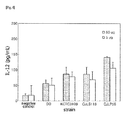
- FIG. 4 is a graph showing the concentrations of the Th1 response-inducing cytokine IL-12 produced in the splenocytes of the ovalbumin-primed mice which had a Th2 bias after they were treated with Lactobacillus plantarum CJLP56 and other comparative lactic acid bacteria
- Lactobacillus plantarum CJLP56 was found to remarkably promote the production of the Th1 response-inducing cytokine IL-12, compared to the other lactic acid bacteria. Therefore, Lactobacillus plantarum CJLP56 according to the present invention was identified to significantly induce Th1 responses in the mice with a Th2 bias.
- EXAMPLE 6 Assay for Inhibitory Activity against IL-4 Production In Treated Mouse Splenocytes
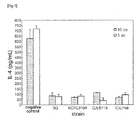
- FIG. 5 is a graph showing the concentrations of the Th2 response-inducing cytokine IL-4 produced in the splenocytes of the ovalbumin primed mice that had a Th2 bias after they were treated with Lactobacillus plantarum CJLP56 and other comparative lactic acid bacteria.
- Lactobacillus plantarum CJLP56 was found to inhibit the production of the Th2 response-inducing cytokine IL-4 to suppress Th2-biased mouse splenocytes from mediating Th2 responses.
- EXAMPLE 7 Assay for Expression of the Th1 Differentiation Inducing Cytokines IL-12p40 and IL-18 and the Th1 Differentiation Suppressing Cytokine IL- 10 in Macrophage and Dendritic Cells
- Antigen-presenting cells such as macrophages and dendritic cells produce IL-12 and IL-18 to induce Th0 to differentiate into Th1 while producing IL-10 to suppress differentiation into Th1.
- APCs Antigen-presenting cells
- IL-12, IL-10, and IL-18 To evaluate the effect of the lactic acid bacteria of the present invention on the production of IL-12, IL-10, and IL-18 in macrophages and dendritic cells, an experiment was performed as follows.
- Test bacteria cells were applied at a density of 5 ⁇ 10 7 cells/mL to the macrophage cell line RAW264.7 which was then cultured at 37°C for 48 hours in a 10% CO 2 incubator.
- the IL-12p40 and IL-10 levels of the supernatant were analyzed using ELISA.
- the test bacteria was Lactobacillus plantarum CJLP56, with lipopolysaccharide serving as a positive control.
- the same test was performed on Lactobacillus rhamnosus GG (KCTC 5033), Lactobacillus casei (KCTC 3109) and Lactobacillus sakei CJLS118 (KCTC 13416) for comparison.
- the concentrations were measured using an IL-12p40 kit (BD Biosciences, USA) for IL-12 and an IL-10 kit (BD Biosciences, USA) for IL-10 according to the instructions of the manufacturers. The results are shown in FIGS. 6 and 7 , respectively.
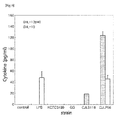
- FIG. 6 is a graph showing the concentrations of IL-12 and IL-10 produced in the macrophage cell strain RAW264.7 treated with Lactobacillus plantarum CJLP56 and other references, as measured by ELISA.
- FIG. 7 is a graph showing the concentrations of IL-12 and IL-10 produced in the dendritic cell line JAWSII treated with Lactobacillus plantarum CJLP56 and other references, as measured by ELISA.
- Lactobacillus plantarum CJLP56 promotes the production of the Th1 differentiation-inducing cytokine IL-12, but shows the production of the Th1 differentiation-suppressing cytokine to a significant less extent than that of IL-12, and has a higher potential of producing IL-12 compared to the other lactic acid bacteria.
- test bacteria was applied at a density of 5 ⁇ 10 7 cells/mL to the macrophage cell line RAW264.7 which was then cultured at 37°C for 6 hours in a 10% CO 2 incubator.
- Total RNA was isolated and used to determine the levels of IL-12 and IL-18 mRNA by RT-PCR.
- the dendritic cell line JAWSII was inoculated with the test bacteria, cultured and subjected to RNA isolation, followed by the determination of IL-12 and IL-18 mRNA levels by RT-PCR in the same manner as in the macrophages.
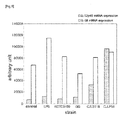
- FIG. 8 is a graph showing the expression levels of IL-12p40 and IL-18 mRNA in the macrophage cell line RAW264.7 treated with Lactobacillus plantarum CJLP56 and other references, as measured by RT-PCR.
- FIG. 9 is a graph showing the expression levels of IL-12p40 and IL-18 mRNA in the dendritic cell line JAWSII treated with Lactobacillus plantarum CJLP56 and other references, as measured by RT-PCR.
- Lactobacillus plantarum CJLP56 promotes the transcription of the mRNA dictating the production of the Th1 differentiation-inducing cytokines IL-12 and IL-18, and shows great superiority in promoting IL-12 mRNA expression to the other lactic acid bacteria.
- the probiotic Lactobacillus plantarum CJLP56 identified in Example 1 was produced on a mass scale and lyophilized to make probiotics suitable for use as a raw material of pharmaceuticals, food, livestock feed, feed additives, or cosmetics.
- the bacteria were incubated in MRS broth (Difco) at 37°C for 18 hours while its pH was adjusted to 6.0 with a 25% NaOH solution, followed by harvesting the cells by centrifugation.
- the cells were frozen at -40°C with 5% dextrin and 10% skim milk serving as cryoprotectants, and dried at 37°C.
- the cells thus lyophilized were powdered using a mixer.
- the powdered live bacteria were mixed with a suitable amount of an excipient, such as glucose, lactic acid, and skim milk, to adjust the number of bacteria to a desired level, and stored in a sealed aluminum pouch.
- the prepared probiotic agent may be mixed with grain powder used as a raw material of the livestock feed, with an excipient or additive for pharmaceuticals, such as tablets and capsules, or with raw materials of cosmetics.
Landscapes
- Health & Medical Sciences (AREA)
- Life Sciences & Earth Sciences (AREA)
- Chemical & Material Sciences (AREA)
- Engineering & Computer Science (AREA)
- General Health & Medical Sciences (AREA)
- Microbiology (AREA)
- Public Health (AREA)
- Veterinary Medicine (AREA)
- Animal Behavior & Ethology (AREA)
- Medicinal Chemistry (AREA)
- Organic Chemistry (AREA)
- Bioinformatics & Cheminformatics (AREA)
- Biotechnology (AREA)
- Pharmacology & Pharmacy (AREA)
- Zoology (AREA)
- Mycology (AREA)
- Polymers & Plastics (AREA)
- Epidemiology (AREA)
- General Chemical & Material Sciences (AREA)
- Chemical Kinetics & Catalysis (AREA)
- Immunology (AREA)
- Wood Science & Technology (AREA)
- Genetics & Genomics (AREA)
- Molecular Biology (AREA)
- Biochemistry (AREA)
- Biomedical Technology (AREA)
- Tropical Medicine & Parasitology (AREA)
- Nuclear Medicine, Radiotherapy & Molecular Imaging (AREA)
- Food Science & Technology (AREA)
- General Engineering & Computer Science (AREA)
- Virology (AREA)
- Nutrition Science (AREA)
- Animal Husbandry (AREA)
- Physiology (AREA)
- Birds (AREA)
- Transplantation (AREA)
- Pulmonology (AREA)
- Dermatology (AREA)
- Medicines Containing Material From Animals Or Micro-Organisms (AREA)
- Coloring Foods And Improving Nutritive Qualities (AREA)
Applications Claiming Priority (2)
| Application Number | Priority Date | Filing Date | Title |
|---|---|---|---|
| KR1020080122047A KR101075557B1 (ko) | 2008-12-03 | 2008-12-03 | 신규한 락토바실러스 플란타룸 및 이를 포함하는 조성물 |
| PCT/KR2009/004913 WO2010064777A1 (fr) | 2008-12-03 | 2009-09-01 | Nouveau lactobacillus plantarum et composition le contenant |
Publications (3)
| Publication Number | Publication Date |
|---|---|
| EP2360237A1 true EP2360237A1 (fr) | 2011-08-24 |
| EP2360237A4 EP2360237A4 (fr) | 2013-01-23 |
| EP2360237B1 EP2360237B1 (fr) | 2015-10-21 |
Family
ID=42233411
Family Applications (1)
| Application Number | Title | Priority Date | Filing Date |
|---|---|---|---|
| EP09830515.4A Active EP2360237B1 (fr) | 2008-12-03 | 2009-09-01 | Nouveau lactobacillus plantarum et composition le contenant |
Country Status (9)
| Country | Link |
|---|---|
| US (2) | US9572845B2 (fr) |
| EP (1) | EP2360237B1 (fr) |
| JP (1) | JP2012510291A (fr) |
| KR (1) | KR101075557B1 (fr) |
| CN (1) | CN102292431B (fr) |
| CA (1) | CA2745626C (fr) |
| DK (1) | DK2360237T3 (fr) |
| SG (1) | SG171922A1 (fr) |
| WO (1) | WO2010064777A1 (fr) |
Cited By (10)
| Publication number | Priority date | Publication date | Assignee | Title |
|---|---|---|---|---|
| CN102453689A (zh) * | 2011-12-06 | 2012-05-16 | 光明乳业股份有限公司 | 一株产胞外多糖的植物乳杆菌及其应用 |
| CN102533588A (zh) * | 2011-12-06 | 2012-07-04 | 光明乳业股份有限公司 | 一株产胞外多糖的短乳杆菌及其应用 |
| RU2624044C2 (ru) * | 2011-09-09 | 2017-06-30 | Пробиотикал С.п.А. | Применение фармацевтической или пищевой композиции или пищевой добавки для ингибирования или уменьшения роста патогенных бактерий |
| US9925224B2 (en) | 2011-05-09 | 2018-03-27 | Probiotical S.P.A. | Bacterial strains belonging to the genus bifidobacterium for use in the treatment of hypercholesterolaemia |
| US10028982B2 (en) | 2011-09-09 | 2018-07-24 | Probiotical North America Inc. | Composition comprising N-acetylcysteine and/or microencapsulated gastroprotected lysozyme in association with probiotic bacteria capable of restoring the stomach's own barrier effect which is lost during the pharmacological treatment of gastric hyperacidity |
| US10286017B2 (en) | 2011-05-09 | 2019-05-14 | Probiotical S.P.A. | Probiotic bacterial strains and symbiotic composition containing the same intended for infant food |
| US10384847B2 (en) | 2011-09-23 | 2019-08-20 | Probiotical North America Inc. | Material impermeable to humidity and oxygen for packaging dietary products, cosmetics and medicinal specialities |
| US10982184B2 (en) | 2011-05-09 | 2021-04-20 | Probiotical S.P.A. | Bacterial strains capable of metabolizing oxalates |
| US11110136B2 (en) | 2013-05-14 | 2021-09-07 | Probiotical S.P.A. | Composition comprising lactic acid bacteria for use in the preventive and/or curative treatment of recurrent cystitis |
| US12343363B2 (en) | 2016-03-24 | 2025-07-01 | Probiotical S.P.A. | Lactic acid bacterial composition for the treatment of bacterial vaginal infections by Gardnerella vaginalis and, if present, of concurrent fungal infections |
Families Citing this family (20)
| Publication number | Priority date | Publication date | Assignee | Title |
|---|---|---|---|---|
| KR101255050B1 (ko) | 2009-07-14 | 2013-04-16 | 씨제이제일제당 (주) | 신규한 락토바실러스 플란타룸 및 이를 포함하는 조성물 |
| KR101486999B1 (ko) | 2009-07-22 | 2015-01-28 | 씨제이제일제당 주식회사 | 신규한 락토바실러스 플란타룸 및 이를 포함하는 조성물 |
| JP5876214B2 (ja) * | 2010-07-15 | 2016-03-02 | 康友 荒島 | 乳酸菌共生培養抽出液の製造方法 |
| KR101426276B1 (ko) * | 2012-08-16 | 2014-08-05 | 주식회사한국야쿠르트 | 심장질환 및 뇌졸중을 유발하는 거품세포 형성 억제 및 혈관 병변 형성을 억제하는 활성을 가지는 락토바실러스 플란타룸 hy7712를 유효성분으로 함유하는 제품 |
| CN103013893A (zh) * | 2013-01-21 | 2013-04-03 | 黑龙江八一农垦大学 | 一株植物乳杆菌ccl67及其应用 |
| JP5830569B2 (ja) * | 2013-04-26 | 2015-12-09 | 株式会社ピックルスコーポレーション | 乳酸菌及びそれを用いた食品添加剤、漬物用発酵調味物、食品、漬物の製造方法 |
| CN104726360A (zh) * | 2014-11-14 | 2015-06-24 | 北京农学院 | 一种大肠杆菌和乳酸杆菌穿梭载体的构建及应用 |
| WO2017066777A1 (fr) * | 2015-10-15 | 2017-04-20 | Kemin Industries, Inc. | Compositions et procédés d'amélioration des performances et de la santé intestinale de la volaille |
| BE1023643B1 (nl) * | 2016-03-21 | 2017-06-01 | Yun NV | Vaginale preparaten voor het onderhouden en / of herstellen van een gezonde vrouwelijke microbiota |
| CN112533486A (zh) * | 2018-03-16 | 2021-03-19 | 味之素株式会社 | 饲料用添加剂及饲料 |
| KR20190127156A (ko) | 2018-05-03 | 2019-11-13 | 씨제이제일제당 (주) | 항바이러스 및 면역조절 효능을 가지는 락토바실러스 플란타럼 cjlp17 및 이를 포함하는 조성물 |
| AR119653A1 (es) | 2018-07-13 | 2022-01-05 | Cj Cheiljedang Corp | Cepa cjlp475 de lactobacillus plantarum que tiene efectos antivirales e inmunomoduladores y una composición que comprende la misma |
| AR115758A1 (es) | 2018-07-13 | 2021-02-24 | Cj Cheildang Corp | Composición que comprende la cepa de lactobacillus plantarum cjlp475 y la cepa de lactobacillus plantarum cjlp243 y uso de la misma |
| AR115757A1 (es) * | 2018-07-13 | 2021-02-24 | Cj Cheiljedang Corp | Composición que comprende la cepa cjlp475 de lactobacillus plantarum y la cepa cjlp17 de lactobacillus plantarum y el uso de la misma |
| WO2020091334A1 (fr) | 2018-10-30 | 2020-05-07 | 씨제이제일제당 (주) | Utilisation de cystéine ou d'un sel correspondant pour la cryoprotéction de bactéries lactiques |
| KR102447791B1 (ko) * | 2018-10-30 | 2022-10-04 | 씨제이웰케어 주식회사 | 유산균의 동결 보호를 위한 시스테인 또는 이의 염의 용도 |
| KR102263698B1 (ko) * | 2019-11-29 | 2021-06-09 | 롯데칠성음료주식회사 | 아토피 피부염 완화 또는 개선 효과를 가지는 락토바실러스 플랜타럼 lrcc5195 균주 및 이소말토올리고당 복합체 |
| CN112006286A (zh) * | 2020-09-22 | 2020-12-01 | 上海泓商生物科技有限公司 | 增强免疫力益生菌组合物 |
| KR102606626B1 (ko) * | 2021-04-15 | 2023-11-30 | (주)바이텍 | 상황버섯 유래 균주의 사균체 분말 제조방법, 사균체 분말 및 이의 용도 |
| NO348910B1 (en) * | 2021-05-10 | 2025-07-14 | Nord Univ | Fish feed comprising probiotics |
Family Cites Families (12)
| Publication number | Priority date | Publication date | Assignee | Title |
|---|---|---|---|---|
| US4713449A (en) * | 1985-08-06 | 1987-12-15 | Getty Scientific Development Company | Polysaccharide polymer made by xanthomonas |
| SE9501719D0 (sv) | 1995-05-09 | 1995-05-09 | Probi Ab | Pharmaceutical composition |
| KR19980078358A (ko) | 1997-04-28 | 1998-11-16 | 배순훈 | 고온시 시동 장치 및 그 제어 방법 |
| TWI277651B (en) * | 2002-09-02 | 2007-04-01 | Genmont Biotech Inc | New use of some lactobacillus strains in treating allergy |
| US20040047849A1 (en) * | 2002-09-11 | 2004-03-11 | Genmont Biotech Inc. | Use of some lactobacillus strains in treating allergy |
| US7740838B2 (en) * | 2002-12-05 | 2010-06-22 | Danisco A/S | Bacterial composition and its use |
| EP1759597B1 (fr) * | 2003-03-13 | 2009-01-21 | Kirin Holdings Kabushiki Kaisha | Composition probiotique |
| KR20050080630A (ko) * | 2004-02-10 | 2005-08-17 | 매일유업주식회사 | 비피도박테리움 인팬티스 Maeil-K9과 락토바실러스플란타눔을 이용한 암세포주 억제물 및 이를 함유하는위암 및 대장암의 예방용 및 치료용 조성물 |
| KR101260533B1 (ko) * | 2005-03-03 | 2013-05-06 | 가부시키가이샤 메이지 | 면역기능 조정제 |
| KR100745013B1 (ko) * | 2006-01-25 | 2007-08-10 | 주식회사 알엔에이 | 알러지 질환 예방 및 치료를 위한 유산균 |
| WO2007108763A1 (fr) * | 2006-03-17 | 2007-09-27 | Probac Ab | Utilisation de souches de lactobacillus permettant de favoriser l'immunotolérance dans une maladie autoimmune |
| CN1985854A (zh) * | 2006-12-22 | 2007-06-27 | 上海交大昂立股份有限公司 | 一种含有植物乳杆菌的组合物及其在增强肠道免疫屏障中的应用 |
-
2008
- 2008-12-03 KR KR1020080122047A patent/KR101075557B1/ko active Active
-
2009
- 2009-09-01 CA CA2745626A patent/CA2745626C/fr active Active
- 2009-09-01 US US13/132,412 patent/US9572845B2/en active Active
- 2009-09-01 JP JP2011539440A patent/JP2012510291A/ja active Pending
- 2009-09-01 DK DK09830515.4T patent/DK2360237T3/en active
- 2009-09-01 EP EP09830515.4A patent/EP2360237B1/fr active Active
- 2009-09-01 SG SG2011040284A patent/SG171922A1/en unknown
- 2009-09-01 WO PCT/KR2009/004913 patent/WO2010064777A1/fr not_active Ceased
- 2009-09-01 CN CN200980148796.2A patent/CN102292431B/zh active Active
-
2016
- 2016-09-01 US US15/254,806 patent/US9962418B2/en active Active
Cited By (12)
| Publication number | Priority date | Publication date | Assignee | Title |
|---|---|---|---|---|
| US9925224B2 (en) | 2011-05-09 | 2018-03-27 | Probiotical S.P.A. | Bacterial strains belonging to the genus bifidobacterium for use in the treatment of hypercholesterolaemia |
| US10286017B2 (en) | 2011-05-09 | 2019-05-14 | Probiotical S.P.A. | Probiotic bacterial strains and symbiotic composition containing the same intended for infant food |
| US10982184B2 (en) | 2011-05-09 | 2021-04-20 | Probiotical S.P.A. | Bacterial strains capable of metabolizing oxalates |
| RU2624044C2 (ru) * | 2011-09-09 | 2017-06-30 | Пробиотикал С.п.А. | Применение фармацевтической или пищевой композиции или пищевой добавки для ингибирования или уменьшения роста патогенных бактерий |
| US10028982B2 (en) | 2011-09-09 | 2018-07-24 | Probiotical North America Inc. | Composition comprising N-acetylcysteine and/or microencapsulated gastroprotected lysozyme in association with probiotic bacteria capable of restoring the stomach's own barrier effect which is lost during the pharmacological treatment of gastric hyperacidity |
| US10384847B2 (en) | 2011-09-23 | 2019-08-20 | Probiotical North America Inc. | Material impermeable to humidity and oxygen for packaging dietary products, cosmetics and medicinal specialities |
| CN102453689A (zh) * | 2011-12-06 | 2012-05-16 | 光明乳业股份有限公司 | 一株产胞外多糖的植物乳杆菌及其应用 |
| CN102533588A (zh) * | 2011-12-06 | 2012-07-04 | 光明乳业股份有限公司 | 一株产胞外多糖的短乳杆菌及其应用 |
| CN102533588B (zh) * | 2011-12-06 | 2013-12-11 | 光明乳业股份有限公司 | 一株产胞外多糖的短乳杆菌及其应用 |
| CN102453689B (zh) * | 2011-12-06 | 2014-04-09 | 光明乳业股份有限公司 | 一株产胞外多糖的植物乳杆菌及其应用 |
| US11110136B2 (en) | 2013-05-14 | 2021-09-07 | Probiotical S.P.A. | Composition comprising lactic acid bacteria for use in the preventive and/or curative treatment of recurrent cystitis |
| US12343363B2 (en) | 2016-03-24 | 2025-07-01 | Probiotical S.P.A. | Lactic acid bacterial composition for the treatment of bacterial vaginal infections by Gardnerella vaginalis and, if present, of concurrent fungal infections |
Also Published As
| Publication number | Publication date |
|---|---|
| KR101075557B1 (ko) | 2011-10-20 |
| EP2360237A4 (fr) | 2013-01-23 |
| JP2012510291A (ja) | 2012-05-10 |
| SG171922A1 (en) | 2011-07-28 |
| DK2360237T3 (en) | 2016-02-01 |
| US20160367608A1 (en) | 2016-12-22 |
| KR20100063500A (ko) | 2010-06-11 |
| CA2745626A1 (fr) | 2010-06-10 |
| CN102292431A (zh) | 2011-12-21 |
| US9572845B2 (en) | 2017-02-21 |
| CN102292431B (zh) | 2014-02-19 |
| CA2745626C (fr) | 2017-02-28 |
| WO2010064777A1 (fr) | 2010-06-10 |
| US9962418B2 (en) | 2018-05-08 |
| US20110312061A1 (en) | 2011-12-22 |
| EP2360237B1 (fr) | 2015-10-21 |
Similar Documents
| Publication | Publication Date | Title |
|---|---|---|
| US9962418B2 (en) | Lactobacillus plantarum and composition containing the same | |
| US9962417B2 (en) | Lactobacillus plantarum and composition containing same | |
| KR101486999B1 (ko) | 신규한 락토바실러스 플란타룸 및 이를 포함하는 조성물 | |
| EP2494031B1 (fr) | Nouveau lactobacillus plantarum et composition le comprenant | |
| KR101406168B1 (ko) | 신규한 락토바실러스 플란타룸 및 이를 포함하는 조성물 | |
| KR101075558B1 (ko) | 신규한 락토바실러스 플란타룸 및 이를 포함하는 조성물 | |
| KR20140048911A (ko) | 신규한 락토바실러스 플란타룸 및 이를 포함하는 조성물 | |
| HK1171474B (en) | Novel lactobacillus plantarum and composition comprising same | |
| HK1173468B (en) | Novel lactobacillus plantarum and composition comprising the same | |
| HK1171473B (en) | Novel lactobacillus plantarum and composition containing same |
Legal Events
| Date | Code | Title | Description |
|---|---|---|---|
| PUAI | Public reference made under article 153(3) epc to a published international application that has entered the european phase |
Free format text: ORIGINAL CODE: 0009012 |
|
| 17P | Request for examination filed |
Effective date: 20110617 |
|
| AK | Designated contracting states |
Kind code of ref document: A1 Designated state(s): AT BE BG CH CY CZ DE DK EE ES FI FR GB GR HR HU IE IS IT LI LT LU LV MC MK MT NL NO PL PT RO SE SI SK SM TR |
|
| DAX | Request for extension of the european patent (deleted) | ||
| RIC1 | Information provided on ipc code assigned before grant |
Ipc: A61K 35/74 20060101ALI20121203BHEP Ipc: C12R 1/25 20060101ALN20121203BHEP Ipc: A23L 1/30 20060101ALI20121203BHEP Ipc: C12N 1/20 20060101AFI20121203BHEP |
|
| A4 | Supplementary search report drawn up and despatched |
Effective date: 20130104 |
|
| RIC1 | Information provided on ipc code assigned before grant |
Ipc: C12R 1/25 20060101ALN20121218BHEP Ipc: C12N 1/20 20060101AFI20121218BHEP Ipc: A61K 35/74 20060101ALI20121218BHEP Ipc: A23L 1/30 20060101ALI20121218BHEP |
|
| 17Q | First examination report despatched |
Effective date: 20131015 |
|
| GRAP | Despatch of communication of intention to grant a patent |
Free format text: ORIGINAL CODE: EPIDOSNIGR1 |
|
| RIC1 | Information provided on ipc code assigned before grant |
Ipc: A23L 1/30 20060101ALI20150409BHEP Ipc: C12N 1/20 20060101AFI20150409BHEP Ipc: C12R 1/25 20060101ALN20150409BHEP Ipc: A61K 35/74 20150101ALI20150409BHEP |
|
| INTG | Intention to grant announced |
Effective date: 20150508 |
|
| GRAS | Grant fee paid |
Free format text: ORIGINAL CODE: EPIDOSNIGR3 |
|
| GRAA | (expected) grant |
Free format text: ORIGINAL CODE: 0009210 |
|
| AK | Designated contracting states |
Kind code of ref document: B1 Designated state(s): AT BE BG CH CY CZ DE DK EE ES FI FR GB GR HR HU IE IS IT LI LT LU LV MC MK MT NL NO PL PT RO SE SI SK SM TR |
|
| REG | Reference to a national code |
Ref country code: GB Ref legal event code: FG4D |
|
| REG | Reference to a national code |
Ref country code: CH Ref legal event code: EP |
|
| REG | Reference to a national code |
Ref country code: AT Ref legal event code: REF Ref document number: 756626 Country of ref document: AT Kind code of ref document: T Effective date: 20151115 |
|
| REG | Reference to a national code |
Ref country code: IE Ref legal event code: FG4D |
|
| REG | Reference to a national code |
Ref country code: DE Ref legal event code: R096 Ref document number: 602009034410 Country of ref document: DE |
|
| REG | Reference to a national code |
Ref country code: CH Ref legal event code: NV Representative=s name: OFFICE ERNEST T. FREYLINGER S.A., CH |
|
| REG | Reference to a national code |
Ref country code: DK Ref legal event code: T3 Effective date: 20160125 |
|
| REG | Reference to a national code |
Ref country code: SE Ref legal event code: TRGR |
|
| REG | Reference to a national code |
Ref country code: NL Ref legal event code: FP |
|
| REG | Reference to a national code |
Ref country code: LT Ref legal event code: MG4D |
|
| REG | Reference to a national code |
Ref country code: AT Ref legal event code: MK05 Ref document number: 756626 Country of ref document: AT Kind code of ref document: T Effective date: 20151021 |
|
| PG25 | Lapsed in a contracting state [announced via postgrant information from national office to epo] |
Ref country code: IS Free format text: LAPSE BECAUSE OF FAILURE TO SUBMIT A TRANSLATION OF THE DESCRIPTION OR TO PAY THE FEE WITHIN THE PRESCRIBED TIME-LIMIT Effective date: 20160221 Ref country code: NO Free format text: LAPSE BECAUSE OF FAILURE TO SUBMIT A TRANSLATION OF THE DESCRIPTION OR TO PAY THE FEE WITHIN THE PRESCRIBED TIME-LIMIT Effective date: 20160121 Ref country code: HR Free format text: LAPSE BECAUSE OF FAILURE TO SUBMIT A TRANSLATION OF THE DESCRIPTION OR TO PAY THE FEE WITHIN THE PRESCRIBED TIME-LIMIT Effective date: 20151021 Ref country code: LT Free format text: LAPSE BECAUSE OF FAILURE TO SUBMIT A TRANSLATION OF THE DESCRIPTION OR TO PAY THE FEE WITHIN THE PRESCRIBED TIME-LIMIT Effective date: 20151021 Ref country code: ES Free format text: LAPSE BECAUSE OF FAILURE TO SUBMIT A TRANSLATION OF THE DESCRIPTION OR TO PAY THE FEE WITHIN THE PRESCRIBED TIME-LIMIT Effective date: 20151021 Ref country code: IT Free format text: LAPSE BECAUSE OF FAILURE TO SUBMIT A TRANSLATION OF THE DESCRIPTION OR TO PAY THE FEE WITHIN THE PRESCRIBED TIME-LIMIT Effective date: 20151021 |
|
| PG25 | Lapsed in a contracting state [announced via postgrant information from national office to epo] |
Ref country code: LV Free format text: LAPSE BECAUSE OF FAILURE TO SUBMIT A TRANSLATION OF THE DESCRIPTION OR TO PAY THE FEE WITHIN THE PRESCRIBED TIME-LIMIT Effective date: 20151021 Ref country code: GR Free format text: LAPSE BECAUSE OF FAILURE TO SUBMIT A TRANSLATION OF THE DESCRIPTION OR TO PAY THE FEE WITHIN THE PRESCRIBED TIME-LIMIT Effective date: 20160122 Ref country code: AT Free format text: LAPSE BECAUSE OF FAILURE TO SUBMIT A TRANSLATION OF THE DESCRIPTION OR TO PAY THE FEE WITHIN THE PRESCRIBED TIME-LIMIT Effective date: 20151021 Ref country code: PL Free format text: LAPSE BECAUSE OF FAILURE TO SUBMIT A TRANSLATION OF THE DESCRIPTION OR TO PAY THE FEE WITHIN THE PRESCRIBED TIME-LIMIT Effective date: 20151021 Ref country code: FI Free format text: LAPSE BECAUSE OF FAILURE TO SUBMIT A TRANSLATION OF THE DESCRIPTION OR TO PAY THE FEE WITHIN THE PRESCRIBED TIME-LIMIT Effective date: 20151021 Ref country code: PT Free format text: LAPSE BECAUSE OF FAILURE TO SUBMIT A TRANSLATION OF THE DESCRIPTION OR TO PAY THE FEE WITHIN THE PRESCRIBED TIME-LIMIT Effective date: 20160222 |
|
| REG | Reference to a national code |
Ref country code: FR Ref legal event code: PLFP Year of fee payment: 8 |
|
| REG | Reference to a national code |
Ref country code: DE Ref legal event code: R097 Ref document number: 602009034410 Country of ref document: DE |
|
| PG25 | Lapsed in a contracting state [announced via postgrant information from national office to epo] |
Ref country code: CZ Free format text: LAPSE BECAUSE OF FAILURE TO SUBMIT A TRANSLATION OF THE DESCRIPTION OR TO PAY THE FEE WITHIN THE PRESCRIBED TIME-LIMIT Effective date: 20151021 |
|
| PLBE | No opposition filed within time limit |
Free format text: ORIGINAL CODE: 0009261 |
|
| STAA | Information on the status of an ep patent application or granted ep patent |
Free format text: STATUS: NO OPPOSITION FILED WITHIN TIME LIMIT |
|
| PG25 | Lapsed in a contracting state [announced via postgrant information from national office to epo] |
Ref country code: SK Free format text: LAPSE BECAUSE OF FAILURE TO SUBMIT A TRANSLATION OF THE DESCRIPTION OR TO PAY THE FEE WITHIN THE PRESCRIBED TIME-LIMIT Effective date: 20151021 Ref country code: SM Free format text: LAPSE BECAUSE OF FAILURE TO SUBMIT A TRANSLATION OF THE DESCRIPTION OR TO PAY THE FEE WITHIN THE PRESCRIBED TIME-LIMIT Effective date: 20151021 Ref country code: RO Free format text: LAPSE BECAUSE OF FAILURE TO SUBMIT A TRANSLATION OF THE DESCRIPTION OR TO PAY THE FEE WITHIN THE PRESCRIBED TIME-LIMIT Effective date: 20151021 Ref country code: EE Free format text: LAPSE BECAUSE OF FAILURE TO SUBMIT A TRANSLATION OF THE DESCRIPTION OR TO PAY THE FEE WITHIN THE PRESCRIBED TIME-LIMIT Effective date: 20151021 |
|
| 26N | No opposition filed |
Effective date: 20160722 |
|
| PG25 | Lapsed in a contracting state [announced via postgrant information from national office to epo] |
Ref country code: SI Free format text: LAPSE BECAUSE OF FAILURE TO SUBMIT A TRANSLATION OF THE DESCRIPTION OR TO PAY THE FEE WITHIN THE PRESCRIBED TIME-LIMIT Effective date: 20151021 |
|
| PG25 | Lapsed in a contracting state [announced via postgrant information from national office to epo] |
Ref country code: BE Free format text: LAPSE BECAUSE OF FAILURE TO SUBMIT A TRANSLATION OF THE DESCRIPTION OR TO PAY THE FEE WITHIN THE PRESCRIBED TIME-LIMIT Effective date: 20151021 |
|
| PG25 | Lapsed in a contracting state [announced via postgrant information from national office to epo] |
Ref country code: MC Free format text: LAPSE BECAUSE OF FAILURE TO SUBMIT A TRANSLATION OF THE DESCRIPTION OR TO PAY THE FEE WITHIN THE PRESCRIBED TIME-LIMIT Effective date: 20151021 |
|
| REG | Reference to a national code |
Ref country code: FR Ref legal event code: PLFP Year of fee payment: 9 |
|
| REG | Reference to a national code |
Ref country code: IE Ref legal event code: MM4A |
|
| PG25 | Lapsed in a contracting state [announced via postgrant information from national office to epo] |
Ref country code: IE Free format text: LAPSE BECAUSE OF NON-PAYMENT OF DUE FEES Effective date: 20160901 |
|
| PG25 | Lapsed in a contracting state [announced via postgrant information from national office to epo] |
Ref country code: LU Free format text: LAPSE BECAUSE OF NON-PAYMENT OF DUE FEES Effective date: 20160901 |
|
| PG25 | Lapsed in a contracting state [announced via postgrant information from national office to epo] |
Ref country code: HU Free format text: LAPSE BECAUSE OF FAILURE TO SUBMIT A TRANSLATION OF THE DESCRIPTION OR TO PAY THE FEE WITHIN THE PRESCRIBED TIME-LIMIT; INVALID AB INITIO Effective date: 20090901 Ref country code: CY Free format text: LAPSE BECAUSE OF FAILURE TO SUBMIT A TRANSLATION OF THE DESCRIPTION OR TO PAY THE FEE WITHIN THE PRESCRIBED TIME-LIMIT Effective date: 20151021 |
|
| REG | Reference to a national code |
Ref country code: FR Ref legal event code: PLFP Year of fee payment: 10 |
|
| PG25 | Lapsed in a contracting state [announced via postgrant information from national office to epo] |
Ref country code: TR Free format text: LAPSE BECAUSE OF FAILURE TO SUBMIT A TRANSLATION OF THE DESCRIPTION OR TO PAY THE FEE WITHIN THE PRESCRIBED TIME-LIMIT Effective date: 20151021 Ref country code: MT Free format text: LAPSE BECAUSE OF NON-PAYMENT OF DUE FEES Effective date: 20160930 Ref country code: MK Free format text: LAPSE BECAUSE OF FAILURE TO SUBMIT A TRANSLATION OF THE DESCRIPTION OR TO PAY THE FEE WITHIN THE PRESCRIBED TIME-LIMIT Effective date: 20151021 |
|
| PG25 | Lapsed in a contracting state [announced via postgrant information from national office to epo] |
Ref country code: BG Free format text: LAPSE BECAUSE OF FAILURE TO SUBMIT A TRANSLATION OF THE DESCRIPTION OR TO PAY THE FEE WITHIN THE PRESCRIBED TIME-LIMIT Effective date: 20151021 |
|
| REG | Reference to a national code |
Ref country code: DE Ref legal event code: R082 Ref document number: 602009034410 Country of ref document: DE Representative=s name: DOMPATENT VON KREISLER SELTING WERNER - PARTNE, DE |
|
| P01 | Opt-out of the competence of the unified patent court (upc) registered |
Effective date: 20230606 |
|
| PGFP | Annual fee paid to national office [announced via postgrant information from national office to epo] |
Ref country code: NL Payment date: 20250520 Year of fee payment: 17 |
|
| PGFP | Annual fee paid to national office [announced via postgrant information from national office to epo] |
Ref country code: FR Payment date: 20250521 Year of fee payment: 17 |
|
| PGFP | Annual fee paid to national office [announced via postgrant information from national office to epo] |
Ref country code: SE Payment date: 20250523 Year of fee payment: 17 |
|
| REG | Reference to a national code |
Ref country code: CH Ref legal event code: U11 Free format text: ST27 STATUS EVENT CODE: U-0-0-U10-U11 (AS PROVIDED BY THE NATIONAL OFFICE) Effective date: 20251001 |
|
| PGFP | Annual fee paid to national office [announced via postgrant information from national office to epo] |
Ref country code: DK Payment date: 20250709 Year of fee payment: 17 Ref country code: DE Payment date: 20250520 Year of fee payment: 17 |
|
| PGFP | Annual fee paid to national office [announced via postgrant information from national office to epo] |
Ref country code: GB Payment date: 20250707 Year of fee payment: 17 |
|
| PGFP | Annual fee paid to national office [announced via postgrant information from national office to epo] |
Ref country code: CH Payment date: 20251001 Year of fee payment: 17 |