EP2361114B1 - Systèmes et procédés de réglage très sûr de paramètres de dispositif - Google Patents
Systèmes et procédés de réglage très sûr de paramètres de dispositif Download PDFInfo
- Publication number
- EP2361114B1 EP2361114B1 EP09792533.3A EP09792533A EP2361114B1 EP 2361114 B1 EP2361114 B1 EP 2361114B1 EP 09792533 A EP09792533 A EP 09792533A EP 2361114 B1 EP2361114 B1 EP 2361114B1
- Authority
- EP
- European Patent Office
- Prior art keywords
- highly
- safe
- external programming
- patient
- programming device
- Prior art date
- Legal status (The legal status is an assumption and is not a legal conclusion. Google has not performed a legal analysis and makes no representation as to the accuracy of the status listed.)
- Active
Links
Images


Classifications
-
- A—HUMAN NECESSITIES
- A61—MEDICAL OR VETERINARY SCIENCE; HYGIENE
- A61N—ELECTROTHERAPY; MAGNETOTHERAPY; RADIATION THERAPY; ULTRASOUND THERAPY
- A61N1/00—Electrotherapy; Circuits therefor
- A61N1/18—Applying electric currents by contact electrodes
- A61N1/32—Applying electric currents by contact electrodes alternating or intermittent currents
- A61N1/36—Applying electric currents by contact electrodes alternating or intermittent currents for stimulation
- A61N1/372—Arrangements in connection with the implantation of stimulators
- A61N1/37211—Means for communicating with stimulators
- A61N1/37235—Aspects of the external programmer
- A61N1/37247—User interfaces, e.g. input or presentation means
-
- A—HUMAN NECESSITIES
- A61—MEDICAL OR VETERINARY SCIENCE; HYGIENE
- A61N—ELECTROTHERAPY; MAGNETOTHERAPY; RADIATION THERAPY; ULTRASOUND THERAPY
- A61N1/00—Electrotherapy; Circuits therefor
- A61N1/18—Applying electric currents by contact electrodes
- A61N1/32—Applying electric currents by contact electrodes alternating or intermittent currents
- A61N1/36—Applying electric currents by contact electrodes alternating or intermittent currents for stimulation
- A61N1/372—Arrangements in connection with the implantation of stimulators
- A61N1/37211—Means for communicating with stimulators
- A61N1/37252—Details of algorithms or data aspects of communication system, e.g. handshaking, transmitting specific data or segmenting data
- A61N1/37254—Pacemaker or defibrillator security, e.g. to prevent or inhibit programming alterations by hackers or unauthorised individuals
-
- G—PHYSICS
- G16—INFORMATION AND COMMUNICATION TECHNOLOGY [ICT] SPECIALLY ADAPTED FOR SPECIFIC APPLICATION FIELDS
- G16H—HEALTHCARE INFORMATICS, i.e. INFORMATION AND COMMUNICATION TECHNOLOGY [ICT] SPECIALLY ADAPTED FOR THE HANDLING OR PROCESSING OF MEDICAL OR HEALTHCARE DATA
- G16H40/00—ICT specially adapted for the management or administration of healthcare resources or facilities; ICT specially adapted for the management or operation of medical equipment or devices
- G16H40/60—ICT specially adapted for the management or administration of healthcare resources or facilities; ICT specially adapted for the management or operation of medical equipment or devices for the operation of medical equipment or devices
- G16H40/63—ICT specially adapted for the management or administration of healthcare resources or facilities; ICT specially adapted for the management or operation of medical equipment or devices for the operation of medical equipment or devices for local operation
-
- G—PHYSICS
- G16—INFORMATION AND COMMUNICATION TECHNOLOGY [ICT] SPECIALLY ADAPTED FOR SPECIFIC APPLICATION FIELDS
- G16Z—INFORMATION AND COMMUNICATION TECHNOLOGY [ICT] SPECIALLY ADAPTED FOR SPECIFIC APPLICATION FIELDS, NOT OTHERWISE PROVIDED FOR
- G16Z99/00—Subject matter not provided for in other main groups of this subclass
-
- G—PHYSICS
- G16—INFORMATION AND COMMUNICATION TECHNOLOGY [ICT] SPECIALLY ADAPTED FOR SPECIFIC APPLICATION FIELDS
- G16H—HEALTHCARE INFORMATICS, i.e. INFORMATION AND COMMUNICATION TECHNOLOGY [ICT] SPECIALLY ADAPTED FOR THE HANDLING OR PROCESSING OF MEDICAL OR HEALTHCARE DATA
- G16H50/00—ICT specially adapted for medical diagnosis, medical simulation or medical data mining; ICT specially adapted for detecting, monitoring or modelling epidemics or pandemics
- G16H50/50—ICT specially adapted for medical diagnosis, medical simulation or medical data mining; ICT specially adapted for detecting, monitoring or modelling epidemics or pandemics for simulation or modelling of medical disorders
Definitions
- This disclosure relates generally to medical systems and, more particularly, to medical systems that can be used to communicate with implanted medical devices, amongst other things.
- Implantable medical devices can be used to provide pacing therapy to patients who have cardiac rhythm problems.
- an implanted cardiac rhythm management (CRM) device can be used to provide pacing therapy to a patient with sinus node dysfunction, where the heart fails to properly initiate depolarization waves, or an atrio-ventricular conduction disturbance, where the conduction of depolarization waves through the heart tissue is impaired.
- CRM cardiac rhythm management
- Implanted medical devices frequently communicate with devices located outside of the body.
- an external programming device is capable of two-way communication with the implanted device and can not only receive information from the implanted device, but can also transmit operational parameters to the implanted device, that is, program the device.
- This type of device is typically used by a physician or other caregiver in a clinical or hospital setting. Improved programming options are desired.
- US 2003/0125776 A1 describes a system for representing parameter constraints that govern the values of interrelated parameters.
- the system includes displays corresponding to a plurality of parameters having a range of values represented by a dimension in the displays.
- the interrelationship of the parameter constraints is automatically maintained when one or more of the displays change in value.
- Embodiments of the invention are related to medical systems and methods that can be used to communicate with and collect information from implanted medical devices, amongst other things.
- a cardiac rhythm management (CRM) system for facilitating highly safe adjustments includes an implantable CRM device and an external programming device.
- the external programming device includes a communication module adapted to be communicatively coupled to the CRM device and to request information from and receive information from the CRM device during transmission sessions.
- the external programming device further includes a display device adapted to present a user of the programming device with a list of at least two highly-safe parameter adjustments, where each parameter adjustment on the list includes the parameter title and a maximum quantity of permitted change for the parameter title.
- the external programming device also includes a user input device adapted to accept input selecting one or more of the list of highly-safe parameter adjustments.
- the communication module is configured to transmit the one or more highly-safe parameter adjustments to the CRM device.
- a method of programming a cardiac rhythm management device (CRM device) using an external programming device includes the steps of presenting a user of the programming device with a list of highly-safe parameter adjustments, receiving input from the user selecting one or more of the highly-safe parameter adjustments, initiating a programming session wherein the programming device establishes communication with the CRM device, and transmitting the selected one or more highly-safe parameter adjustment to the CRM device.
- the CRM system for facilitating highly safe adjustments is configured so that the list of highly-safe parameter adjustments is presented simultaneously on a single screen of the programming device and labeled as highly-safe on the single screen;
- This disclosure relates generally to medical systems and, more particularly, to medical systems that can be used to communicate with implanted medical devices.
- this disclosure relates to the use of external programming devices to communicate with and provide programming parameters for the implanted medical device.
- this disclosure relates to a programmer capable of providing highly-safe parameter adjustment options which is particularly useful when programming an implanted medical device remotely and which is also particularly useful when addressing patient concerns.
- This invention is directed to systems and methods of facilitating the adjustment of certain device parameters that are highly safe for the patient.
- Highly safe parameter changes are appropriate for performing when a physician is remote from a patient.
- Some highly safe parameter changes have a positive impact on the therapy delivered for some patients.
- highly safe parameter changes can have a low chance of truly changing the therapy received by the patient from the implantable medical device.
- Physicians are frequently presented with the issue of addressing symptomatic complaints of their patients in the absence of specific data suggesting precisely what will be effective for the specific complaint. In many cases, the patient may not feel that the physician is adequately addressing their concern unless some concrete action is actually taken. In the context of implanted medical devices, this may put the physician in the difficult position of trying to decide what action to take.
- the system described herein can provide physicians with specific settings that can be adjusted to address symptomatic complaints, but that have no down-side risk to the patient.
- these particular highly-safe settings can be grouped in a specific area of the programmer interface to facilitate their use by the physician.
- these highly-safe settings can be suggested by the device in response to the physician inputting the particular symptomatic complaint. The net result of the change could be a positive impact on the patient's perception of the treatment. The physician would benefit as they would be able to provide the patient with peace of mind that they are being listened to and that something is being done in response to their concerns.
- MTR maximum tracking rate
- bpm beats per minute
- a highly-safe parameter adjustment is an adjustment of a previously-programmed parameter by a small increment. In other words, turning on or off a new programming option is not a highly-safe parameter change. But, if a programming option is already activated, then adjusting one of that programming option's parameters by a small amount may be a highly-safe parameter change. The exact amount of the small parameter change will vary depending on the parameter. But generally, changes of a parameter value of 1% or less compared to its current value are highly safe. For example, the following changes could be offered as highly safe programming options:
- the nominal value mentioned above is the pre-programmed value for a particular parameter in one or more typical CRM devices. If a clinician does not change a parameter value, it will remain at the nominal value after implantation and activation in a patient.
- the highly-safe parameter changes listed above will be allowed from the current settings for a particular patient, even if the current settings are different from the nominal settings.
- a parameter change that moves a parameter value toward a nominal value is generally considered safer than a parameter change that moves a parameter value away from a nominal value.
- the CRM system uses its knowledge of the patient to generate the list of highly-safe programming options. Further detailed embodiments will now be described with respect to the attached FIGS.
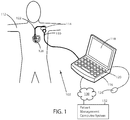
- FIG. 1 is a schematic of an exemplary CRM system 100, consistent with at least one embodiment of the invention.
- the system 100 can include an implantable medical device 114 disposed within a patient 112.
- the implantable medical device 114 can include pacing functionality.
- the implantable medical device 114 can be of various types such as, for example, a pacemaker, a cardioverter-defibrillator, a cardiac resynchronization device, or the like.
- the implantable medical device 114 can include one or more leads 122 disposed in or near the patient's heart 126.
- the implantable medical device 114 can include one or more implantable sensors in order to gather data regarding the patient 112.
- the implantable medical device 114 can include an activity level sensor, a respiration sensor, a blood pressure sensor, or other sensors.
- the implantable medical device 114 can be configured to store data over a period of time, and periodically communicate with the external programming device 116 in order to transmit some or all of the stored data.
- the implantable medical device 114 can be in communication with an external programming device 116.
- communication between the implantable medical device 114 and the external programming device 116 can be via inductive communication through a wand 110 held on the outside of the patient 112 near the implantable medical device 114.
- communication can be carried out via radiofrequency transmission, acoustically, or the like.
- the external programming system 116 can be for example, a programmer, a programmer/recorder/monitor device, a computer, an advanced patient management system, a personal digital assistant (PDA), or the like.
- the term programmer refers to a device that programs implanted devices, records data from implanted devices, and allows monitoring of the implanted device.
- Exemplary programmer/recorder/monitor devices include the Model 3120 Programmer, available from Boston Scientific Corporation, Natick, MA.
- the external programming device 116 can include a user input device, such as a keyboard 120 and/or a mouse 128.
- the external programming device 116 can include a video output channel and video output device, such as a video display 118 for displaying video output.
- the displayed video output can include a user interface screen.
- the video display 118 can also be equipped with a touch screen, making it into a user input device as well.
- the external programming device 116 can display real-time data and/or stored data graphically, such as in charts or graphs, and textually through the user interface screen.
- the external interface device 116 can present a programming menu question to a user along with several response options.
- the external programming device 116 can also input and store a user's response to the various programming prompts.
- the external programming device 116 is in communication with a patient management computer system 132.
- the communication link between the external programming device 116 and the patient management computer system 132 may be via phone lines, the Internet 130, or any other data connection.
- the external programming device 116 is not in direct communication with a patient management system.
- the external programming device 116 is capable of changing the operational parameters of the CRM device 114, and is therefore referred to as a programmer.
- programmers are used to interface with CRM devices in a clinic or hospital setting.
- the user of the external programming device is a clinician, physician or trained technician.
- a CRM system 200 is illustrated which is designed for use when the programmer and the patient are in different locations, so that the programmer is remote from the patient and not physically present in the same space as the patient.
- the patient may be at his or her home while the clinician is at a hospital which a few miles away or hundreds of miles away.
- a remote programming device 210 is in the patient's location and establishes communication with the implantable medical device 114. Communication between the remote programming device 210 and the implantable medical device 114 can be carried out by radiofrequency transmission, acoustically or by inductive communication using a wand held on the outside of the patient 112 near the device 114.
- the remote programming device 210 is in communication with an external programming device 116.
- the communication link between the external programming device 116 and the remote programming device 210 may be via phone lines, the Internet, or any other data connection.
- Other details of the external programming device 116 and the implantable medical device are similar to as described with respect to FIG. 2 .
- a transmission session is initiated at step 302 between an implantable or implanted medical device and an external programming device.
- the user may be presented with a menu of programming options in one embodiment at step 304, where one of those options is highly-safe parameter adjustments. If the user selects highly-safe parameter adjustments at step 306, then the user is presented with a list of highly-safe parameter changes at step 308.
- Steps 304 and 306 are optional, and it is also possible that the user is presented with a list of highly-safe parameter changes without having to select that option from a menu.
- the external programming device can be configured to recognize that the session is remote, and as a result, only present the highly-safe parameter adjustments to the user at step 308.
- the presentation of the list to the user can be accomplished on the display device 118 of the external programming device 116 shown in FIGS. 1 and 2 .
- the external programming device receives input selecting one or more of the highly-safe parameter adjustments at step 310.
- the user can provide input by using a keyboard or a mouse to check a box next to one of the parameter changes on the list, or in any number of other ways.
- the highly-safe parameter change is transmitted to the implantable medical device at step 312.
- FIG. 4 an example screen shot 400 of one embodiment is shown for presenting the highly-safe parameter adjustments to the user.
- the screen includes a title 404 indicating that the list is one of highly-safe parameter adjustments.
- the screen 400 also includes a list 408 of highly safe parameter adjustments 410, 412, 414, 416, 418, 420 and 422.
- Each of the highly-safe parameter adjustments has a checkbox 424 corresponding to it. If the checkbox is checked by a user for a particular adjustment, then additional details are shown related to that parameter. For example, in FIG. 4 , the parameter adjustment 410 for "Lower Rate Limit" has been checked.
- the current value 426 of 65 beats per minute (bpm) is shown
- the range of permissible adjustment 428 of plus or minus 5 bpm is shown
- a field 430 is provided for the user to enter the desired adjustment to the lower rate limit.
- patient specific information is an indication that is present for a particular patient.
- an "indication” includes a symptom or particular circumstance that indicates the advisability or necessity of a specific medical treatment or procedure.
- An "indication for use of an implantable medical device” or “device indication” includes a symptom or particular circumstance that indicates the advisability or necessity of one or more specific medical treatments that are deliverable by an implantable medical device or one or more specific medical procedures that are performable by the implantable medical device.
- U.S. Patent No. 7,257,447 discusses an indication-based programming method and programming device for an implantable medical device.
- the programming device collects patient-specific information including a patient's indications for use of the implantable medical device and automatically produces values for operational parameters enabling the implantable medical device to deliver one or more therapies according to the indications.
- the patient-specific information includes, but is not limited to, the patient's demographic data, cardiac history, electrogram, electrocardiogram (ECG), echocardiogram (indicative of ejection fraction, for example), physical attributes, non-cardiac disease history, and/or drug regimens. Further examples of such patient-specific information and an example of a system for determining patient-specific parameters for programming an implantable medical device are discussed in published patent application U.S. 2005/0256550 , entitled “Method and apparatus for question-based programming of cardiac rhythm management devices," filed on May 13, 2004, assigned to Cardiac Pacemakers, Inc., which is incorporated herein by reference in its entirety. The patient-specific information allows for optimization of therapy delivery for each individual patient.
- the values for the operational parameters produced by the programming device are then used to program the implantable medical device via telemetry.
- the programming device substantially automates the process between the diagnosis of the patient's indications and other conditions and the programming of the implantable medical device.
- the indication-based programming allows a user, such as a physician or other caregiver, to optimally utilize features and capabilities of an implantable medical device based on the patient's specific conditions.
- FIG. 5 is a flowchart of another method of programming an implantable medical device with highly-safe parameter changes.
- a transmission session is initiated at step 502 between an implantable or implanted medical device and an external programming device.
- the user is presented with a menu of programming options in one embodiment at step 506, where one of those options is highly-safe parameter adjustments. If the user selects highly-safe parameter adjustments at step 510, then the system draws on the patient-specific information that is available and determines a list of highly-safe parameter changes at step 514.
- the list of possible highly-safe parameter changes mentioned previously herein are candidates for inclusion, but some may be eliminated or modified based on the patient-specific information. For example, if the patient is known to have chronic atrial fibrillation then the system will not offer a change in the AV delay parameter. The system could, however, offer a larger range of adjustments to the ATR rate, such as +/- 10 bpm.
- the system might allow larger ranges of AV delay adjustment.
- the system could offer adjustments to the paced AV delay parameter of +/- 10 msec.
- the highly-safe parameters adjustments to paced AV delay will be limited to +/- 5 msec.
- Steps 506 and 510 are optional, and it is instead possible that the user is presented with a list of highly-safe parameter changes without having to select that option from a menu.
- the external programming device can be configured to recognize that the session is remote, and as a result, only present the highly-safe parameter adjustments to the user at step 518.
- the presentation of the list to the user can be accomplished on the display device 118 of the external programming device 116 shown in FIGS. 1 and 2 .
- the external programming device receives input selecting one or more of the highly-safe parameter adjustments at step 522.
- the user can provide input by using a keyboard or a mouse to check a box next to one of the parameter changes on the list, or in any number of other ways.
- the highly-safe parameter change is transmitted to the implantable medical device at step 526.
- patient-specific information can be input by the user during the programming session, such as by inputting a description of the patient's symptoms.
- the user can be prompted to input a patient concern that has not been satisfied by other programming changes.
- the user can be provided with a list of common concerns with checkboxes for being checked by the user, such as a concern that the device is not turned on, a complaint that the device is beeping or making other noises, or another concern that is difficult to address.
- the CRM system can select one of the highly-safe parameter changes, and can indicate to the user that a highly-safe parameter change has been made.
- External programming devices can include components common to many computing devices.
- FIG. 6 a diagram of various components is shown in accordance with some embodiments of the invention. However, it is not required that an external programming device have all of the components illustrated in FIG. 6 .
- the external programming device includes a central processing unit (CPU) 805 or processor, which may include a conventional microprocessor, random access memory (RAM) 810 for temporary storage of information, and read only memory (ROM) 815 for permanent storage of information.
- CPU central processing unit
- RAM random access memory
- ROM read only memory
- a memory controller 820 is provided for controlling system RAM 810.
- a bus controller 825 is provided for controlling data bus 830, and an interrupt controller 835 is used for receiving and processing various interrupt signals from the other system components.
- Mass storage can be provided by diskette drive 841, which is connected to bus 830 by controller 840, CD-ROM drive 846, which is connected to bus 830 by controller 845, and hard disk drive 851, which is connected to bus 830 by controller 850.
- User input to the programmer system may be provided by a number of devices. For example, a keyboard and mouse can connected to bus 830 by keyboard and mouse controller 855.
- DMA controller 860 is provided for performing direct memory access to system RAM 810.
- a visual display is generated by a video controller 865 or video output, which controls video display 870.
- the external system can also include a telemetry interface 890 or telemetry circuit which allows the external system to interface and exchange data with an implantable medical device. It will be appreciated that some embodiments may lack various elements illustrated in FIG. 6 .
- the implantable medical system 900 can include an implantable medical device 972 coupled to one or more stimulation leads 930 and 928.
- the implantable device 972 can also include other sensors such as activity sensor 962.
- the implantable device can include a microprocessor 948 (or processor) that communicates with a memory 946 via a bidirectional data bus.
- the memory 946 typically comprises ROM or RAM for program storage and RAM for data storage.
- the implantable device can be configured to execute various operations such as processing of signals and execution of methods as described herein.
- a telemetry interface 964 is also provided for communicating with an external unit, such as a programmer device or a patient management system.
- the implantable device can include ventricular sensing and pacing channels comprising sensing amplifier 952, output circuit 954, and a ventricular channel interface 950 which communicates bidirectionally with a port of microprocessor 948.
- the ventricular sensing and pacing channel can be in communication with stimulation lead 930 and electrode 934.
- the implantable device can include atrial sensing and pacing channels comprising sensing amplifier 958, output circuit 960, and an atrial channel interface 956 which communicates bidirectionally with a port of microprocessor 948.
- the atrial sensing and pacing channel can be in communication with stimulation lead 928 and electrode 932. For each channel, the same lead and electrode can be used for both sensing and pacing.
- the channel interfaces 950 and 956 can include analog-to-digital converters for digitizing sensing signal inputs from the sensing amplifiers and registers which can be written to by the microprocessor in order to output pacing pulses, change the pacing pulse amplitude, and adjust the gain and threshold values for the sensing amplifiers.
- the phrase “configured” describes a system, apparatus, or other structure that is constructed or configured to perform a particular task or adopt a particular configuration.
- the phrase “configured” can be used interchangeably with other similar phrases such as “arranged”, “arranged and configured”, “constructed and arranged”, “constructed”, “manufactured and arranged”, and the like.
- modules, circuitry, and methods shown and described herein with regard to various embodiments of the invention can be implemented using software, hardware, and combinations of software and hardware.
- the illustrated and/or described modules and circuitry are intended to encompass software implementations, hardware implementations, and software and hardware implementations.
Landscapes
- Health & Medical Sciences (AREA)
- Engineering & Computer Science (AREA)
- Biomedical Technology (AREA)
- Life Sciences & Earth Sciences (AREA)
- Public Health (AREA)
- General Health & Medical Sciences (AREA)
- Nuclear Medicine, Radiotherapy & Molecular Imaging (AREA)
- Animal Behavior & Ethology (AREA)
- Radiology & Medical Imaging (AREA)
- Veterinary Medicine (AREA)
- Human Computer Interaction (AREA)
- Business, Economics & Management (AREA)
- General Business, Economics & Management (AREA)
- Epidemiology (AREA)
- Medical Informatics (AREA)
- Primary Health Care (AREA)
- Biophysics (AREA)
- Heart & Thoracic Surgery (AREA)
- Electrotherapy Devices (AREA)
Claims (15)
- Système de gestion de rythme cardiaque (CRM) permettant des réglages très sûrs, comprenant :un dispositif CRM implantable (114) ; etun dispositif de programmation externe (116) comprenant :i. un module de communication conçu pour être couplé en communication avec le dispositif CRM (114) et pour demander des informations au dispositif CRM et en recevoir de celui-ci pendant des sessions de transmission,ii. un dispositif d'affichage (118) conçu pour présenter (304) à un utilisateur du dispositif de programmation externe (116) une liste (408) d'au moins deux réglages très sûrs de paramètres, chaque réglage de paramètre de la liste comprenant le titre du paramètre et une quantité maximale de changement autorisé pour le titre du paramètre, etiii. un dispositif d'entrée utilisateur conçu pour accepter une entrée en sélectionnant (306) un ou plusieurs des réglages très sûrs de paramètres de la liste ;dans lequel le module de communication est conçu pour transmettre le ou les réglages très sûrs de paramètres au dispositif CRM (114).
- Système selon la revendication 1 dans lequel le dispositif d'affichage est conçu pour présenter (304) la liste (408) d'au moins deux réglages très sûrs de paramètres (410 à 422) simultanément sur un écran unique (400) du dispositif de programmation (116) ; et dans lequel le dispositif d'affichage (118) est conçu pour marquer la liste de réglages très sûrs de paramètres comme étant très sûre sur l'écran unique.
- Système selon la revendication 1 dans lequel la liste de réglages très sûrs de paramètres est déterminée en partie sur la base d'informations spécifiques au patient.
- Système selon la revendication 1 dans lequel le dispositif d'entrée utilisateur est en outre conçu pour recevoir une entrée utilisateur qui décrit des informations spécifiques au patient, le dispositif de programmation externe (116) utilisant les informations spécifiques au patient pour déterminer la liste de réglages très sûrs de paramètres.
- Système selon la revendication 1 dans lequel le dispositif de programmation externe (116) est conçu pour identifier si le dispositif de programmation externe est ou non dans un emplacement différent d'un patient dans lequel est implanté le dispositif CRM (114) ; et
dans lequel si le dispositif de programmation externe est dans un emplacement différent du patient, alors le dispositif de programmation externe ne présentera à l'utilisateur que les options de réglage de paramètres qui sont des réglages très sûrs de paramètres. - Système selon la revendication 1 dans lequel le dispositif de programmation externe (116) est un dispositif de programmation externe distant qui ne présentera à l'utilisateur que les options de réglage de paramètres qui sont des options de réglages très sûrs de paramètres.
- Procédé de programmation d'un dispositif de gestion de rythme cardiaque (dispositif CRM) (114), utilisant un dispositif de programmation externe (116), comportant les étapes consistant à :présenter (308 ; 518) à un utilisateur le dispositif de programmation externe (116) une liste de réglages très sûrs de paramètres tels que définis selon la revendication 1 ;recevoir (310 ; 522) une entrée en provenance de l'utilisateur en sélectionnant un ou plusieurs des réglages très sûrs de paramètres ;lancer une session de programmation dans laquelle le dispositif de programmation externe (116) établit une communication avec le dispositif CRM (114) ;transmettre (312 ; 526) le ou les réglages très sûrs de paramètres sélectionnés au dispositif CRM (114).
- Procédé selon la revendication 7 dans lequel est présentée à l'utilisateur une liste d'au moins deux réglages très sûrs de paramètres simultanément sur un écran unique du dispositif de programmation externe (116) ; et dans lequel l'étape de présentation consiste en outre à marquer la liste de réglages très sûrs de paramètres comme étant très sûre sur l'écran unique.
- Procédé selon la revendication 7 dans lequel la liste de réglages très sûrs de paramètres est déterminée en partie sur la base d'informations spécifiques au patient.
- Procédé selon la revendication 7 comprenant en outre :la réception d'une entrée utilisateur qui décrit un symptôme de patient ;en réponse à l'entrée patient qui décrit les symptômes du patient, la présentation à l'utilisateur de la liste des réglages très sûrs de paramètres.
- Procédé selon la revendication 7 comportant en outre l'étape consistant à identifier si le dispositif de programmation externe est ou non dans un emplacement différent d'un patient dans lequel est implanté le dispositif CRM (114) ; et dans lequel si le dispositif de programmation externe (116) est dans un emplacement différent du patient, alors le dispositif de programmation externe ne présentera à l'utilisateur que les options de réglage de paramètres qui sont des réglages très sûrs de paramètres.
- Procédé selon la revendication 7 dans lequel le dispositif de programmation externe (116) est configuré pour une programmation externe distante et ne présentera à l'utilisateur que les options de réglages de paramètres qui sont des options de réglages très sûrs de paramètres.
- Système selon la revendication 1 dans lequel le module de communication est conçu pour transmettre le ou les réglages très sûrs de paramètres au dispositif CRM (114).
- Système selon la revendication 13 dans lequel la liste de réglages très sûrs de paramètres est déterminée en partie sur la base d'informations spécifiques au patient.
- Système selon la revendication 13 dans lequel le dispositif de programmation externe (116) est conçu pour identifier si le dispositif de programmation externe est ou non dans un emplacement différent d'un patient dans lequel est implanté le dispositif CRM (114), dans lequel si le dispositif de programmation externe est dans un emplacement différent du patient, alors le dispositif de programmation externe ne présentera à l'utilisateur que les options de réglage de paramètres qui sont des réglages très sûrs de paramètres.
Applications Claiming Priority (2)
| Application Number | Priority Date | Filing Date | Title |
|---|---|---|---|
| US9704708P | 2008-09-15 | 2008-09-15 | |
| PCT/US2009/056924 WO2010031033A1 (fr) | 2008-09-15 | 2009-09-15 | Systèmes et procédés de réglage très sûr de paramètres de dispositif |
Publications (2)
| Publication Number | Publication Date |
|---|---|
| EP2361114A1 EP2361114A1 (fr) | 2011-08-31 |
| EP2361114B1 true EP2361114B1 (fr) | 2018-04-25 |
Family
ID=41351660
Family Applications (1)
| Application Number | Title | Priority Date | Filing Date |
|---|---|---|---|
| EP09792533.3A Active EP2361114B1 (fr) | 2008-09-15 | 2009-09-15 | Systèmes et procédés de réglage très sûr de paramètres de dispositif |
Country Status (6)
| Country | Link |
|---|---|
| US (1) | US9259586B2 (fr) |
| EP (1) | EP2361114B1 (fr) |
| JP (1) | JP5457456B2 (fr) |
| CN (1) | CN102164630A (fr) |
| AU (1) | AU2009290594B2 (fr) |
| WO (1) | WO2010031033A1 (fr) |
Families Citing this family (4)
| Publication number | Priority date | Publication date | Assignee | Title |
|---|---|---|---|---|
| JP5457456B2 (ja) | 2008-09-15 | 2014-04-02 | カーディアック ペースメイカーズ, インコーポレイテッド | デバイスパラメータの高度に安全な調節のためのシステムおよび方法 |
| US9272152B2 (en) | 2011-08-31 | 2016-03-01 | Cardiac Pacemakers, Inc. | Remote programming of MRI settings of an implantable medical device |
| US9724520B2 (en) | 2014-01-30 | 2017-08-08 | Medtronic, Inc. | Methods, implantable medical devices, and systems to continue implementing a special mode of operation after experiencing a device reset |
| US20170259072A1 (en) * | 2016-03-14 | 2017-09-14 | Qualcomm Incorporated | System architecture for medical implant |
Family Cites Families (22)
| Publication number | Priority date | Publication date | Assignee | Title |
|---|---|---|---|---|
| US5345362A (en) * | 1993-04-29 | 1994-09-06 | Medtronic, Inc. | Portable computer apparatus with articulating display panel |
| US5716384A (en) * | 1996-07-08 | 1998-02-10 | Pacesetter, Inc. | Method and system for organizing, viewing and manipulating information in implantable device programmer |
| US7060031B2 (en) | 1999-12-17 | 2006-06-13 | Medtronic, Inc. | Method and apparatus for remotely programming implantable medical devices |
| US6497655B1 (en) | 1999-12-17 | 2002-12-24 | Medtronic, Inc. | Virtual remote monitor, alert, diagnostics and programming for implantable medical device systems |
| US6622050B2 (en) | 2000-03-31 | 2003-09-16 | Medtronic, Inc. | Variable encryption scheme for data transfer between medical devices and related data management systems |
| US6880085B1 (en) | 2000-11-01 | 2005-04-12 | Cardiac Pacemakers, Inc. | Security system for implantable medical devices |
| US6842644B2 (en) * | 2001-11-02 | 2005-01-11 | Cardiac Pacemakers, Inc. | User navigation and guidance during configuration and storage of parameters for medical device |
| US7085604B2 (en) | 2001-12-28 | 2006-08-01 | Medtronic, Inc. | Mechanical metaphor for representing parameter constraints graphically for medical devices |
| US7218968B2 (en) * | 2002-10-31 | 2007-05-15 | Medtronic, Inc. | User interface for programming rate response technical field |
| US7191006B2 (en) * | 2002-12-05 | 2007-03-13 | Cardiac Pacemakers, Inc. | Cardiac rhythm management systems and methods for rule-illustrative parameter entry |
| US20040128161A1 (en) | 2002-12-27 | 2004-07-01 | Mazar Scott T. | System and method for ad hoc communications with an implantable medical device |
| US7272444B2 (en) * | 2003-05-07 | 2007-09-18 | Cardiac Pacemakers, Inc. | Medical device interface system with automatic rate threshold adjustment |
| US7697993B2 (en) | 2004-05-13 | 2010-04-13 | Cardiac Pacemakers, Inc. | Method and apparatus for question-based programming of cardiac rhythm management devices |
| US7565197B2 (en) | 2004-06-18 | 2009-07-21 | Medtronic, Inc. | Conditional requirements for remote medical device programming |
| WO2006010166A2 (fr) | 2004-07-20 | 2006-01-26 | Medtronic, Inc. | Sequençage de commande et verrouillages de dispositif programmable implantable distant |
| US7257447B2 (en) | 2005-04-20 | 2007-08-14 | Cardiac Pacemakers, Inc. | Method and apparatus for indication-based programming of cardiac rhythm management devices |
| US7280810B2 (en) * | 2005-08-03 | 2007-10-09 | Kamilo Feher | Multimode communication system |
| DE212005000081U1 (de) | 2005-08-03 | 2008-03-27 | Feher, Kamilo, El Macero | Mehrzweck-Standortbestimmungs-, Kommunikations-, medizinisches und Steuersystem |
| US8588912B2 (en) | 2006-01-09 | 2013-11-19 | Cardiac Pacemakers, Inc. | System and method for remotely programming a patient medical device |
| US7613672B2 (en) * | 2006-04-27 | 2009-11-03 | Cardiac Pacemakers, Inc. | Medical device user interface automatically resolving interaction between programmable parameters |
| US20070299317A1 (en) | 2006-06-13 | 2007-12-27 | Hoyme Kenneth P | System and method for programming customized data collection for an autonomous medical device |
| JP5457456B2 (ja) | 2008-09-15 | 2014-04-02 | カーディアック ペースメイカーズ, インコーポレイテッド | デバイスパラメータの高度に安全な調節のためのシステムおよび方法 |
-
2009
- 2009-09-15 JP JP2011527037A patent/JP5457456B2/ja not_active Expired - Fee Related
- 2009-09-15 WO PCT/US2009/056924 patent/WO2010031033A1/fr not_active Ceased
- 2009-09-15 US US12/559,730 patent/US9259586B2/en active Active
- 2009-09-15 CN CN2009801369148A patent/CN102164630A/zh active Pending
- 2009-09-15 EP EP09792533.3A patent/EP2361114B1/fr active Active
- 2009-09-15 AU AU2009290594A patent/AU2009290594B2/en not_active Ceased
Non-Patent Citations (1)
| Title |
|---|
| None * |
Also Published As
| Publication number | Publication date |
|---|---|
| US9259586B2 (en) | 2016-02-16 |
| CN102164630A (zh) | 2011-08-24 |
| US20100069991A1 (en) | 2010-03-18 |
| WO2010031033A1 (fr) | 2010-03-18 |
| JP2012501814A (ja) | 2012-01-26 |
| AU2009290594B2 (en) | 2015-01-22 |
| AU2009290594A1 (en) | 2010-03-18 |
| JP5457456B2 (ja) | 2014-04-02 |
| EP2361114A1 (fr) | 2011-08-31 |
Similar Documents
| Publication | Publication Date | Title |
|---|---|---|
| EP1893287B1 (fr) | Systeme pour une programmation de dispositif medical fondee sur des indications | |
| EP3179908B1 (fr) | Système et procédé d'analyse de sonde implantée | |
| US9393429B2 (en) | Programming ambulatory optimization systems and methods for cardiac rhythm management | |
| US8600506B2 (en) | Systems and methods for collecting patient event information | |
| US9731137B2 (en) | Systems and methods to identify the inability to exercise to desired capacity | |
| EP2361114B1 (fr) | Systèmes et procédés de réglage très sûr de paramètres de dispositif | |
| US20130226263A1 (en) | Systems and methods of gathering data at the time of parameter overrides | |
| US10226634B2 (en) | System and method for analyzing medical device programming parameters | |
| US9440088B2 (en) | Implanted lead analysis system and method | |
| US9357935B2 (en) | Systems and methods to identify cardiac dysynchrony |
Legal Events
| Date | Code | Title | Description |
|---|---|---|---|
| PUAI | Public reference made under article 153(3) epc to a published international application that has entered the european phase |
Free format text: ORIGINAL CODE: 0009012 |
|
| 17P | Request for examination filed |
Effective date: 20110408 |
|
| AK | Designated contracting states |
Kind code of ref document: A1 Designated state(s): AT BE BG CH CY CZ DE DK EE ES FI FR GB GR HR HU IE IS IT LI LT LU LV MC MK MT NL NO PL PT RO SE SI SK SM TR |
|
| DAX | Request for extension of the european patent (deleted) | ||
| GRAP | Despatch of communication of intention to grant a patent |
Free format text: ORIGINAL CODE: EPIDOSNIGR1 |
|
| STAA | Information on the status of an ep patent application or granted ep patent |
Free format text: STATUS: GRANT OF PATENT IS INTENDED |
|
| INTG | Intention to grant announced |
Effective date: 20171213 |
|
| RIN1 | Information on inventor provided before grant (corrected) |
Inventor name: PERSCHBACHER, DAVID L. Inventor name: GILKERSON, JAMES O. Inventor name: HOYME, KENNETH P. Inventor name: KALGREN, JAMES |
|
| GRAS | Grant fee paid |
Free format text: ORIGINAL CODE: EPIDOSNIGR3 |
|
| GRAA | (expected) grant |
Free format text: ORIGINAL CODE: 0009210 |
|
| STAA | Information on the status of an ep patent application or granted ep patent |
Free format text: STATUS: THE PATENT HAS BEEN GRANTED |
|
| AK | Designated contracting states |
Kind code of ref document: B1 Designated state(s): AT BE BG CH CY CZ DE DK EE ES FI FR GB GR HR HU IE IS IT LI LT LU LV MC MK MT NL NO PL PT RO SE SI SK SM TR |
|
| REG | Reference to a national code |
Ref country code: GB Ref legal event code: FG4D |
|
| REG | Reference to a national code |
Ref country code: CH Ref legal event code: EP |
|
| REG | Reference to a national code |
Ref country code: AT Ref legal event code: REF Ref document number: 992244 Country of ref document: AT Kind code of ref document: T Effective date: 20180515 |
|
| REG | Reference to a national code |
Ref country code: IE Ref legal event code: FG4D |
|
| REG | Reference to a national code |
Ref country code: DE Ref legal event code: R096 Ref document number: 602009051995 Country of ref document: DE |
|
| REG | Reference to a national code |
Ref country code: FR Ref legal event code: PLFP Year of fee payment: 10 |
|
| REG | Reference to a national code |
Ref country code: NL Ref legal event code: FP |
|
| REG | Reference to a national code |
Ref country code: LT Ref legal event code: MG4D |
|
| PG25 | Lapsed in a contracting state [announced via postgrant information from national office to epo] |
Ref country code: BG Free format text: LAPSE BECAUSE OF FAILURE TO SUBMIT A TRANSLATION OF THE DESCRIPTION OR TO PAY THE FEE WITHIN THE PRESCRIBED TIME-LIMIT Effective date: 20180725 Ref country code: FI Free format text: LAPSE BECAUSE OF FAILURE TO SUBMIT A TRANSLATION OF THE DESCRIPTION OR TO PAY THE FEE WITHIN THE PRESCRIBED TIME-LIMIT Effective date: 20180425 Ref country code: NO Free format text: LAPSE BECAUSE OF FAILURE TO SUBMIT A TRANSLATION OF THE DESCRIPTION OR TO PAY THE FEE WITHIN THE PRESCRIBED TIME-LIMIT Effective date: 20180725 Ref country code: PL Free format text: LAPSE BECAUSE OF FAILURE TO SUBMIT A TRANSLATION OF THE DESCRIPTION OR TO PAY THE FEE WITHIN THE PRESCRIBED TIME-LIMIT Effective date: 20180425 Ref country code: SE Free format text: LAPSE BECAUSE OF FAILURE TO SUBMIT A TRANSLATION OF THE DESCRIPTION OR TO PAY THE FEE WITHIN THE PRESCRIBED TIME-LIMIT Effective date: 20180425 Ref country code: LT Free format text: LAPSE BECAUSE OF FAILURE TO SUBMIT A TRANSLATION OF THE DESCRIPTION OR TO PAY THE FEE WITHIN THE PRESCRIBED TIME-LIMIT Effective date: 20180425 Ref country code: ES Free format text: LAPSE BECAUSE OF FAILURE TO SUBMIT A TRANSLATION OF THE DESCRIPTION OR TO PAY THE FEE WITHIN THE PRESCRIBED TIME-LIMIT Effective date: 20180425 |
|
| PG25 | Lapsed in a contracting state [announced via postgrant information from national office to epo] |
Ref country code: HR Free format text: LAPSE BECAUSE OF FAILURE TO SUBMIT A TRANSLATION OF THE DESCRIPTION OR TO PAY THE FEE WITHIN THE PRESCRIBED TIME-LIMIT Effective date: 20180425 Ref country code: LV Free format text: LAPSE BECAUSE OF FAILURE TO SUBMIT A TRANSLATION OF THE DESCRIPTION OR TO PAY THE FEE WITHIN THE PRESCRIBED TIME-LIMIT Effective date: 20180425 Ref country code: GR Free format text: LAPSE BECAUSE OF FAILURE TO SUBMIT A TRANSLATION OF THE DESCRIPTION OR TO PAY THE FEE WITHIN THE PRESCRIBED TIME-LIMIT Effective date: 20180726 |
|
| REG | Reference to a national code |
Ref country code: AT Ref legal event code: MK05 Ref document number: 992244 Country of ref document: AT Kind code of ref document: T Effective date: 20180425 |
|
| PG25 | Lapsed in a contracting state [announced via postgrant information from national office to epo] |
Ref country code: PT Free format text: LAPSE BECAUSE OF FAILURE TO SUBMIT A TRANSLATION OF THE DESCRIPTION OR TO PAY THE FEE WITHIN THE PRESCRIBED TIME-LIMIT Effective date: 20180827 |
|
| REG | Reference to a national code |
Ref country code: DE Ref legal event code: R097 Ref document number: 602009051995 Country of ref document: DE |
|
| PG25 | Lapsed in a contracting state [announced via postgrant information from national office to epo] |
Ref country code: EE Free format text: LAPSE BECAUSE OF FAILURE TO SUBMIT A TRANSLATION OF THE DESCRIPTION OR TO PAY THE FEE WITHIN THE PRESCRIBED TIME-LIMIT Effective date: 20180425 Ref country code: SK Free format text: LAPSE BECAUSE OF FAILURE TO SUBMIT A TRANSLATION OF THE DESCRIPTION OR TO PAY THE FEE WITHIN THE PRESCRIBED TIME-LIMIT Effective date: 20180425 Ref country code: DK Free format text: LAPSE BECAUSE OF FAILURE TO SUBMIT A TRANSLATION OF THE DESCRIPTION OR TO PAY THE FEE WITHIN THE PRESCRIBED TIME-LIMIT Effective date: 20180425 Ref country code: AT Free format text: LAPSE BECAUSE OF FAILURE TO SUBMIT A TRANSLATION OF THE DESCRIPTION OR TO PAY THE FEE WITHIN THE PRESCRIBED TIME-LIMIT Effective date: 20180425 Ref country code: CZ Free format text: LAPSE BECAUSE OF FAILURE TO SUBMIT A TRANSLATION OF THE DESCRIPTION OR TO PAY THE FEE WITHIN THE PRESCRIBED TIME-LIMIT Effective date: 20180425 Ref country code: RO Free format text: LAPSE BECAUSE OF FAILURE TO SUBMIT A TRANSLATION OF THE DESCRIPTION OR TO PAY THE FEE WITHIN THE PRESCRIBED TIME-LIMIT Effective date: 20180425 |
|
| PG25 | Lapsed in a contracting state [announced via postgrant information from national office to epo] |
Ref country code: SM Free format text: LAPSE BECAUSE OF FAILURE TO SUBMIT A TRANSLATION OF THE DESCRIPTION OR TO PAY THE FEE WITHIN THE PRESCRIBED TIME-LIMIT Effective date: 20180425 |
|
| PLBE | No opposition filed within time limit |
Free format text: ORIGINAL CODE: 0009261 |
|
| STAA | Information on the status of an ep patent application or granted ep patent |
Free format text: STATUS: NO OPPOSITION FILED WITHIN TIME LIMIT |
|
| 26N | No opposition filed |
Effective date: 20190128 |
|
| PG25 | Lapsed in a contracting state [announced via postgrant information from national office to epo] |
Ref country code: MC Free format text: LAPSE BECAUSE OF FAILURE TO SUBMIT A TRANSLATION OF THE DESCRIPTION OR TO PAY THE FEE WITHIN THE PRESCRIBED TIME-LIMIT Effective date: 20180425 |
|
| REG | Reference to a national code |
Ref country code: CH Ref legal event code: PL |
|
| PG25 | Lapsed in a contracting state [announced via postgrant information from national office to epo] |
Ref country code: SI Free format text: LAPSE BECAUSE OF FAILURE TO SUBMIT A TRANSLATION OF THE DESCRIPTION OR TO PAY THE FEE WITHIN THE PRESCRIBED TIME-LIMIT Effective date: 20180425 |
|
| REG | Reference to a national code |
Ref country code: BE Ref legal event code: MM Effective date: 20180930 |
|
| REG | Reference to a national code |
Ref country code: IE Ref legal event code: MM4A |
|
| PG25 | Lapsed in a contracting state [announced via postgrant information from national office to epo] |
Ref country code: LU Free format text: LAPSE BECAUSE OF NON-PAYMENT OF DUE FEES Effective date: 20180915 |
|
| PG25 | Lapsed in a contracting state [announced via postgrant information from national office to epo] |
Ref country code: IE Free format text: LAPSE BECAUSE OF NON-PAYMENT OF DUE FEES Effective date: 20180915 |
|
| PG25 | Lapsed in a contracting state [announced via postgrant information from national office to epo] |
Ref country code: CH Free format text: LAPSE BECAUSE OF NON-PAYMENT OF DUE FEES Effective date: 20180930 Ref country code: LI Free format text: LAPSE BECAUSE OF NON-PAYMENT OF DUE FEES Effective date: 20180930 Ref country code: BE Free format text: LAPSE BECAUSE OF NON-PAYMENT OF DUE FEES Effective date: 20180930 |
|
| PGFP | Annual fee paid to national office [announced via postgrant information from national office to epo] |
Ref country code: IT Payment date: 20190917 Year of fee payment: 11 Ref country code: FR Payment date: 20190815 Year of fee payment: 11 |
|
| PG25 | Lapsed in a contracting state [announced via postgrant information from national office to epo] |
Ref country code: MT Free format text: LAPSE BECAUSE OF NON-PAYMENT OF DUE FEES Effective date: 20180915 |
|
| PG25 | Lapsed in a contracting state [announced via postgrant information from national office to epo] |
Ref country code: TR Free format text: LAPSE BECAUSE OF FAILURE TO SUBMIT A TRANSLATION OF THE DESCRIPTION OR TO PAY THE FEE WITHIN THE PRESCRIBED TIME-LIMIT Effective date: 20180425 |
|
| PG25 | Lapsed in a contracting state [announced via postgrant information from national office to epo] |
Ref country code: HU Free format text: LAPSE BECAUSE OF FAILURE TO SUBMIT A TRANSLATION OF THE DESCRIPTION OR TO PAY THE FEE WITHIN THE PRESCRIBED TIME-LIMIT; INVALID AB INITIO Effective date: 20090915 |
|
| PG25 | Lapsed in a contracting state [announced via postgrant information from national office to epo] |
Ref country code: CY Free format text: LAPSE BECAUSE OF FAILURE TO SUBMIT A TRANSLATION OF THE DESCRIPTION OR TO PAY THE FEE WITHIN THE PRESCRIBED TIME-LIMIT Effective date: 20180425 Ref country code: MK Free format text: LAPSE BECAUSE OF NON-PAYMENT OF DUE FEES Effective date: 20180425 |
|
| PG25 | Lapsed in a contracting state [announced via postgrant information from national office to epo] |
Ref country code: IS Free format text: LAPSE BECAUSE OF FAILURE TO SUBMIT A TRANSLATION OF THE DESCRIPTION OR TO PAY THE FEE WITHIN THE PRESCRIBED TIME-LIMIT Effective date: 20180825 |
|
| PG25 | Lapsed in a contracting state [announced via postgrant information from national office to epo] |
Ref country code: FR Free format text: LAPSE BECAUSE OF NON-PAYMENT OF DUE FEES Effective date: 20200930 |
|
| PG25 | Lapsed in a contracting state [announced via postgrant information from national office to epo] |
Ref country code: IT Free format text: LAPSE BECAUSE OF NON-PAYMENT OF DUE FEES Effective date: 20200915 |
|
| PGFP | Annual fee paid to national office [announced via postgrant information from national office to epo] |
Ref country code: NL Payment date: 20240820 Year of fee payment: 16 |
|
| PGFP | Annual fee paid to national office [announced via postgrant information from national office to epo] |
Ref country code: DE Payment date: 20250820 Year of fee payment: 17 |
|
| PGFP | Annual fee paid to national office [announced via postgrant information from national office to epo] |
Ref country code: GB Payment date: 20250822 Year of fee payment: 17 |