EP2361601A1 - Particules de verre et/ou de vitrocéramique dans une composition pour l'application sur un article dentaire, procédé et utilisation correspondants - Google Patents
Particules de verre et/ou de vitrocéramique dans une composition pour l'application sur un article dentaire, procédé et utilisation correspondants Download PDFInfo
- Publication number
- EP2361601A1 EP2361601A1 EP10154606A EP10154606A EP2361601A1 EP 2361601 A1 EP2361601 A1 EP 2361601A1 EP 10154606 A EP10154606 A EP 10154606A EP 10154606 A EP10154606 A EP 10154606A EP 2361601 A1 EP2361601 A1 EP 2361601A1
- Authority
- EP
- European Patent Office
- Prior art keywords
- composition
- dental
- glass
- facing
- precursor
- Prior art date
- Legal status (The legal status is an assumption and is not a legal conclusion. Google has not performed a legal analysis and makes no representation as to the accuracy of the status listed.)
- Ceased
Links
- 239000000203 mixture Substances 0.000 title claims abstract description 246
- 238000000034 method Methods 0.000 title claims abstract description 41
- 230000008569 process Effects 0.000 title claims abstract description 34
- 239000002245 particle Substances 0.000 title claims description 35
- 239000002241 glass-ceramic Substances 0.000 title claims description 22
- 239000002243 precursor Substances 0.000 claims abstract description 92
- 239000011521 glass Substances 0.000 claims abstract description 82
- 239000007788 liquid Substances 0.000 claims abstract description 54
- 239000011230 binding agent Substances 0.000 claims abstract description 53
- 239000006112 glass ceramic composition Substances 0.000 claims abstract description 49
- 238000006243 chemical reaction Methods 0.000 claims abstract description 26
- 239000000463 material Substances 0.000 claims description 60
- 239000000843 powder Substances 0.000 claims description 37
- 229920001223 polyethylene glycol Polymers 0.000 claims description 27
- 239000002202 Polyethylene glycol Substances 0.000 claims description 26
- 239000006254 rheological additive Substances 0.000 claims description 22
- 238000010438 heat treatment Methods 0.000 claims description 18
- 239000002562 thickening agent Substances 0.000 claims description 15
- 230000002378 acidificating effect Effects 0.000 claims description 14
- 229910010293 ceramic material Inorganic materials 0.000 claims description 11
- 239000007787 solid Substances 0.000 claims description 11
- 239000000049 pigment Substances 0.000 claims description 10
- 239000003086 colorant Substances 0.000 claims description 9
- 229910052751 metal Inorganic materials 0.000 claims description 9
- 239000002184 metal Substances 0.000 claims description 9
- NTHWMYGWWRZVTN-UHFFFAOYSA-N sodium silicate Chemical compound [Na+].[Na+].[O-][Si]([O-])=O NTHWMYGWWRZVTN-UHFFFAOYSA-N 0.000 claims description 8
- 229920002678 cellulose Polymers 0.000 claims description 7
- 239000001913 cellulose Substances 0.000 claims description 7
- 235000019353 potassium silicate Nutrition 0.000 claims description 7
- 239000003755 preservative agent Substances 0.000 claims description 7
- -1 hydroxyl propyl Chemical group 0.000 claims description 6
- 238000002844 melting Methods 0.000 claims description 6
- 230000008018 melting Effects 0.000 claims description 6
- 229920000609 methyl cellulose Polymers 0.000 claims description 6
- 239000001923 methylcellulose Substances 0.000 claims description 6
- 235000010981 methylcellulose Nutrition 0.000 claims description 6
- 238000009835 boiling Methods 0.000 claims description 5
- ZZSNKZQZMQGXPY-UHFFFAOYSA-N Ethyl cellulose Chemical compound CCOCC1OC(OC)C(OCC)C(OCC)C1OC1C(O)C(O)C(OC)C(CO)O1 ZZSNKZQZMQGXPY-UHFFFAOYSA-N 0.000 claims description 4
- RMAQACBXLXPBSY-UHFFFAOYSA-N silicic acid Chemical compound O[Si](O)(O)O RMAQACBXLXPBSY-UHFFFAOYSA-N 0.000 claims description 4
- 229920002134 Carboxymethyl cellulose Polymers 0.000 claims description 3
- 239000001856 Ethyl cellulose Substances 0.000 claims description 3
- 229920002472 Starch Polymers 0.000 claims description 3
- 239000006227 byproduct Substances 0.000 claims description 3
- 239000001768 carboxy methyl cellulose Substances 0.000 claims description 3
- 235000010948 carboxy methyl cellulose Nutrition 0.000 claims description 3
- 239000008112 carboxymethyl-cellulose Substances 0.000 claims description 3
- 229940105329 carboxymethylcellulose Drugs 0.000 claims description 3
- 239000007859 condensation product Substances 0.000 claims description 3
- 229920001249 ethyl cellulose Polymers 0.000 claims description 3
- 235000019325 ethyl cellulose Nutrition 0.000 claims description 3
- 229910052605 nesosilicate Inorganic materials 0.000 claims description 3
- 150000004762 orthosilicates Chemical class 0.000 claims description 3
- 229910052710 silicon Inorganic materials 0.000 claims description 3
- 239000008107 starch Substances 0.000 claims description 3
- 235000019698 starch Nutrition 0.000 claims description 3
- LNAZSHAWQACDHT-XIYTZBAFSA-N (2r,3r,4s,5r,6s)-4,5-dimethoxy-2-(methoxymethyl)-3-[(2s,3r,4s,5r,6r)-3,4,5-trimethoxy-6-(methoxymethyl)oxan-2-yl]oxy-6-[(2r,3r,4s,5r,6r)-4,5,6-trimethoxy-2-(methoxymethyl)oxan-3-yl]oxyoxane Chemical compound CO[C@@H]1[C@@H](OC)[C@H](OC)[C@@H](COC)O[C@H]1O[C@H]1[C@H](OC)[C@@H](OC)[C@H](O[C@H]2[C@@H]([C@@H](OC)[C@H](OC)O[C@@H]2COC)OC)O[C@@H]1COC LNAZSHAWQACDHT-XIYTZBAFSA-N 0.000 claims description 2
- 239000007864 aqueous solution Substances 0.000 claims description 2
- 238000004132 cross linking Methods 0.000 claims description 2
- 239000006185 dispersion Substances 0.000 claims description 2
- BPQQTUXANYXVAA-UHFFFAOYSA-N Orthosilicate Chemical compound [O-][Si]([O-])([O-])[O-] BPQQTUXANYXVAA-UHFFFAOYSA-N 0.000 claims 1
- 239000004053 dental implant Substances 0.000 claims 1
- MCMNRKCIXSYSNV-UHFFFAOYSA-N Zirconium dioxide Chemical compound O=[Zr]=O MCMNRKCIXSYSNV-UHFFFAOYSA-N 0.000 description 24
- XLYOFNOQVPJJNP-UHFFFAOYSA-N water Substances O XLYOFNOQVPJJNP-UHFFFAOYSA-N 0.000 description 24
- 239000002002 slurry Substances 0.000 description 22
- 230000013011 mating Effects 0.000 description 18
- 239000000919 ceramic Substances 0.000 description 16
- 239000011148 porous material Substances 0.000 description 16
- 239000000243 solution Substances 0.000 description 15
- 239000000126 substance Substances 0.000 description 15
- 238000004519 manufacturing process Methods 0.000 description 14
- 238000005245 sintering Methods 0.000 description 14
- VYPSYNLAJGMNEJ-UHFFFAOYSA-N Silicium dioxide Chemical compound O=[Si]=O VYPSYNLAJGMNEJ-UHFFFAOYSA-N 0.000 description 13
- 239000011351 dental ceramic Substances 0.000 description 11
- 230000009286 beneficial effect Effects 0.000 description 10
- 239000012071 phase Substances 0.000 description 10
- 229920001285 xanthan gum Polymers 0.000 description 10
- QTBSBXVTEAMEQO-UHFFFAOYSA-N Acetic acid Chemical compound CC(O)=O QTBSBXVTEAMEQO-UHFFFAOYSA-N 0.000 description 9
- PEDCQBHIVMGVHV-UHFFFAOYSA-N Glycerine Chemical compound OCC(O)CO PEDCQBHIVMGVHV-UHFFFAOYSA-N 0.000 description 9
- OKKJLVBELUTLKV-UHFFFAOYSA-N Methanol Chemical compound OC OKKJLVBELUTLKV-UHFFFAOYSA-N 0.000 description 9
- 239000002253 acid Substances 0.000 description 9
- 239000002904 solvent Substances 0.000 description 9
- 239000000230 xanthan gum Substances 0.000 description 9
- 229940082509 xanthan gum Drugs 0.000 description 9
- 235000010493 xanthan gum Nutrition 0.000 description 9
- PNEYBMLMFCGWSK-UHFFFAOYSA-N aluminium oxide Inorganic materials [O-2].[O-2].[O-2].[Al+3].[Al+3] PNEYBMLMFCGWSK-UHFFFAOYSA-N 0.000 description 8
- 239000008367 deionised water Substances 0.000 description 8
- 238000005259 measurement Methods 0.000 description 8
- 239000000047 product Substances 0.000 description 8
- 238000004062 sedimentation Methods 0.000 description 8
- LFQCEHFDDXELDD-UHFFFAOYSA-N tetramethyl orthosilicate Chemical compound CO[Si](OC)(OC)OC LFQCEHFDDXELDD-UHFFFAOYSA-N 0.000 description 8
- 229920003171 Poly (ethylene oxide) Polymers 0.000 description 7
- 238000002156 mixing Methods 0.000 description 7
- 238000003860 storage Methods 0.000 description 7
- BOTDANWDWHJENH-UHFFFAOYSA-N Tetraethyl orthosilicate Chemical compound CCO[Si](OCC)(OCC)OCC BOTDANWDWHJENH-UHFFFAOYSA-N 0.000 description 6
- 229910021641 deionized water Inorganic materials 0.000 description 6
- 238000001035 drying Methods 0.000 description 6
- 239000000178 monomer Substances 0.000 description 6
- 239000000377 silicon dioxide Substances 0.000 description 6
- 238000009736 wetting Methods 0.000 description 6
- 239000000654 additive Substances 0.000 description 5
- ODINCKMPIJJUCX-UHFFFAOYSA-N calcium oxide Inorganic materials [Ca]=O ODINCKMPIJJUCX-UHFFFAOYSA-N 0.000 description 5
- 239000000084 colloidal system Substances 0.000 description 5
- 150000001875 compounds Chemical class 0.000 description 5
- 230000001627 detrimental effect Effects 0.000 description 5
- 238000010304 firing Methods 0.000 description 5
- 238000001879 gelation Methods 0.000 description 5
- 239000003999 initiator Substances 0.000 description 5
- 230000002829 reductive effect Effects 0.000 description 5
- 241000183024 Populus tremula Species 0.000 description 4
- XLOMVQKBTHCTTD-UHFFFAOYSA-N Zinc monoxide Chemical compound [Zn]=O XLOMVQKBTHCTTD-UHFFFAOYSA-N 0.000 description 4
- 230000002776 aggregation Effects 0.000 description 4
- WPYMKLBDIGXBTP-UHFFFAOYSA-N benzoic acid Chemical compound OC(=O)C1=CC=CC=C1 WPYMKLBDIGXBTP-UHFFFAOYSA-N 0.000 description 4
- 230000015572 biosynthetic process Effects 0.000 description 4
- 238000002485 combustion reaction Methods 0.000 description 4
- 229910052593 corundum Inorganic materials 0.000 description 4
- 238000009826 distribution Methods 0.000 description 4
- 230000007062 hydrolysis Effects 0.000 description 4
- 238000006460 hydrolysis reaction Methods 0.000 description 4
- 230000036961 partial effect Effects 0.000 description 4
- 238000006068 polycondensation reaction Methods 0.000 description 4
- 229910001845 yogo sapphire Inorganic materials 0.000 description 4
- 229910052727 yttrium Inorganic materials 0.000 description 4
- VWQVUPCCIRVNHF-UHFFFAOYSA-N yttrium atom Chemical compound [Y] VWQVUPCCIRVNHF-UHFFFAOYSA-N 0.000 description 4
- CSCPPACGZOOCGX-UHFFFAOYSA-N Acetone Chemical compound CC(C)=O CSCPPACGZOOCGX-UHFFFAOYSA-N 0.000 description 3
- LFQSCWFLJHTTHZ-UHFFFAOYSA-N Ethanol Chemical compound CCO LFQSCWFLJHTTHZ-UHFFFAOYSA-N 0.000 description 3
- HEMHJVSKTPXQMS-UHFFFAOYSA-M Sodium hydroxide Chemical compound [OH-].[Na+] HEMHJVSKTPXQMS-UHFFFAOYSA-M 0.000 description 3
- 229910000831 Steel Inorganic materials 0.000 description 3
- 150000007513 acids Chemical class 0.000 description 3
- 238000005054 agglomeration Methods 0.000 description 3
- 239000000292 calcium oxide Substances 0.000 description 3
- 238000011960 computer-aided design Methods 0.000 description 3
- 238000006482 condensation reaction Methods 0.000 description 3
- 230000007547 defect Effects 0.000 description 3
- JKWMSGQKBLHBQQ-UHFFFAOYSA-N diboron trioxide Chemical compound O=BOB=O JKWMSGQKBLHBQQ-UHFFFAOYSA-N 0.000 description 3
- BEFDCLMNVWHSGT-UHFFFAOYSA-N ethenylcyclopentane Chemical compound C=CC1CCCC1 BEFDCLMNVWHSGT-UHFFFAOYSA-N 0.000 description 3
- 238000001704 evaporation Methods 0.000 description 3
- 230000008020 evaporation Effects 0.000 description 3
- 239000007789 gas Substances 0.000 description 3
- 239000003178 glass ionomer cement Substances 0.000 description 3
- 150000004676 glycans Chemical class 0.000 description 3
- 238000000227 grinding Methods 0.000 description 3
- MRELNEQAGSRDBK-UHFFFAOYSA-N lanthanum(3+);oxygen(2-) Chemical compound [O-2].[O-2].[O-2].[La+3].[La+3] MRELNEQAGSRDBK-UHFFFAOYSA-N 0.000 description 3
- FUJCRWPEOMXPAD-UHFFFAOYSA-N lithium oxide Chemical compound [Li+].[Li+].[O-2] FUJCRWPEOMXPAD-UHFFFAOYSA-N 0.000 description 3
- QSHDDOUJBYECFT-UHFFFAOYSA-N mercury Chemical compound [Hg] QSHDDOUJBYECFT-UHFFFAOYSA-N 0.000 description 3
- 229910052753 mercury Inorganic materials 0.000 description 3
- 239000011368 organic material Substances 0.000 description 3
- 229920000642 polymer Polymers 0.000 description 3
- CHWRSCGUEQEHOH-UHFFFAOYSA-N potassium oxide Chemical compound [O-2].[K+].[K+] CHWRSCGUEQEHOH-UHFFFAOYSA-N 0.000 description 3
- KKCBUQHMOMHUOY-UHFFFAOYSA-N sodium oxide Chemical compound [O-2].[Na+].[Na+] KKCBUQHMOMHUOY-UHFFFAOYSA-N 0.000 description 3
- 239000004334 sorbic acid Substances 0.000 description 3
- 235000010199 sorbic acid Nutrition 0.000 description 3
- 229940075582 sorbic acid Drugs 0.000 description 3
- 239000010959 steel Substances 0.000 description 3
- 238000012360 testing method Methods 0.000 description 3
- XOLBLPGZBRYERU-UHFFFAOYSA-N tin dioxide Chemical compound O=[Sn]=O XOLBLPGZBRYERU-UHFFFAOYSA-N 0.000 description 3
- 239000011787 zinc oxide Substances 0.000 description 3
- 229910011255 B2O3 Inorganic materials 0.000 description 2
- 239000005711 Benzoic acid Substances 0.000 description 2
- RTZKZFJDLAIYFH-UHFFFAOYSA-N Diethyl ether Chemical compound CCOCC RTZKZFJDLAIYFH-UHFFFAOYSA-N 0.000 description 2
- LYCAIKOWRPUZTN-UHFFFAOYSA-N Ethylene glycol Chemical compound OCCO LYCAIKOWRPUZTN-UHFFFAOYSA-N 0.000 description 2
- KFZMGEQAYNKOFK-UHFFFAOYSA-N Isopropanol Chemical compound CC(C)O KFZMGEQAYNKOFK-UHFFFAOYSA-N 0.000 description 2
- 229910018557 Si O Inorganic materials 0.000 description 2
- XUIMIQQOPSSXEZ-UHFFFAOYSA-N Silicon Chemical compound [Si] XUIMIQQOPSSXEZ-UHFFFAOYSA-N 0.000 description 2
- 229920002125 Sokalan® Polymers 0.000 description 2
- 239000000853 adhesive Substances 0.000 description 2
- 150000001298 alcohols Chemical class 0.000 description 2
- 150000004703 alkoxides Chemical class 0.000 description 2
- 238000013459 approach Methods 0.000 description 2
- 235000010233 benzoic acid Nutrition 0.000 description 2
- 230000001680 brushing effect Effects 0.000 description 2
- 238000004364 calculation method Methods 0.000 description 2
- 239000003153 chemical reaction reagent Substances 0.000 description 2
- 239000003795 chemical substances by application Substances 0.000 description 2
- 229910052804 chromium Inorganic materials 0.000 description 2
- 229910052681 coesite Inorganic materials 0.000 description 2
- 229910052906 cristobalite Inorganic materials 0.000 description 2
- 238000000280 densification Methods 0.000 description 2
- 210000004268 dentin Anatomy 0.000 description 2
- XUCJHNOBJLKZNU-UHFFFAOYSA-M dilithium;hydroxide Chemical compound [Li+].[Li+].[OH-] XUCJHNOBJLKZNU-UHFFFAOYSA-M 0.000 description 2
- 238000002845 discoloration Methods 0.000 description 2
- 238000002474 experimental method Methods 0.000 description 2
- 239000012467 final product Substances 0.000 description 2
- 239000011888 foil Substances 0.000 description 2
- 230000009477 glass transition Effects 0.000 description 2
- 125000002887 hydroxy group Chemical group [H]O* 0.000 description 2
- 238000005304 joining Methods 0.000 description 2
- 239000007791 liquid phase Substances 0.000 description 2
- 229910001947 lithium oxide Inorganic materials 0.000 description 2
- 239000011976 maleic acid Substances 0.000 description 2
- 238000010907 mechanical stirring Methods 0.000 description 2
- 239000007769 metal material Substances 0.000 description 2
- 238000003801 milling Methods 0.000 description 2
- 229910052759 nickel Inorganic materials 0.000 description 2
- 239000007793 ph indicator Substances 0.000 description 2
- 239000004584 polyacrylic acid Substances 0.000 description 2
- 238000006116 polymerization reaction Methods 0.000 description 2
- 230000000379 polymerizing effect Effects 0.000 description 2
- 229920001282 polysaccharide Polymers 0.000 description 2
- 239000005017 polysaccharide Substances 0.000 description 2
- 238000002459 porosimetry Methods 0.000 description 2
- 238000005488 sandblasting Methods 0.000 description 2
- 238000007789 sealing Methods 0.000 description 2
- 238000000926 separation method Methods 0.000 description 2
- 238000007493 shaping process Methods 0.000 description 2
- LIVNPJMFVYWSIS-UHFFFAOYSA-N silicon monoxide Inorganic materials [Si-]#[O+] LIVNPJMFVYWSIS-UHFFFAOYSA-N 0.000 description 2
- 229910052814 silicon oxide Inorganic materials 0.000 description 2
- 238000001778 solid-state sintering Methods 0.000 description 2
- 229910002076 stabilized zirconia Inorganic materials 0.000 description 2
- 238000003756 stirring Methods 0.000 description 2
- 229910052682 stishovite Inorganic materials 0.000 description 2
- 238000010998 test method Methods 0.000 description 2
- 229910052905 tridymite Inorganic materials 0.000 description 2
- 229910052725 zinc Inorganic materials 0.000 description 2
- 239000011701 zinc Substances 0.000 description 2
- 238000005133 29Si NMR spectroscopy Methods 0.000 description 1
- GJCOSYZMQJWQCA-UHFFFAOYSA-N 9H-xanthene Chemical compound C1=CC=C2CC3=CC=CC=C3OC2=C1 GJCOSYZMQJWQCA-UHFFFAOYSA-N 0.000 description 1
- OKTJSMMVPCPJKN-UHFFFAOYSA-N Carbon Chemical compound [C] OKTJSMMVPCPJKN-UHFFFAOYSA-N 0.000 description 1
- CURLTUGMZLYLDI-UHFFFAOYSA-N Carbon dioxide Chemical compound O=C=O CURLTUGMZLYLDI-UHFFFAOYSA-N 0.000 description 1
- WQZGKKKJIJFFOK-QTVWNMPRSA-N D-mannopyranose Chemical compound OC[C@H]1OC(O)[C@@H](O)[C@@H](O)[C@@H]1O WQZGKKKJIJFFOK-QTVWNMPRSA-N 0.000 description 1
- LCGLNKUTAGEVQW-UHFFFAOYSA-N Dimethyl ether Chemical compound COC LCGLNKUTAGEVQW-UHFFFAOYSA-N 0.000 description 1
- IAYPIBMASNFSPL-UHFFFAOYSA-N Ethylene oxide Chemical compound C1CO1 IAYPIBMASNFSPL-UHFFFAOYSA-N 0.000 description 1
- KRHYYFGTRYWZRS-UHFFFAOYSA-M Fluoride anion Chemical compound [F-] KRHYYFGTRYWZRS-UHFFFAOYSA-M 0.000 description 1
- IAJILQKETJEXLJ-UHFFFAOYSA-N Galacturonsaeure Natural products O=CC(O)C(O)C(O)C(O)C(O)=O IAJILQKETJEXLJ-UHFFFAOYSA-N 0.000 description 1
- WQZGKKKJIJFFOK-GASJEMHNSA-N Glucose Natural products OC[C@H]1OC(O)[C@H](O)[C@@H](O)[C@@H]1O WQZGKKKJIJFFOK-GASJEMHNSA-N 0.000 description 1
- 229920002153 Hydroxypropyl cellulose Polymers 0.000 description 1
- WHXSMMKQMYFTQS-UHFFFAOYSA-N Lithium Chemical compound [Li] WHXSMMKQMYFTQS-UHFFFAOYSA-N 0.000 description 1
- 238000005481 NMR spectroscopy Methods 0.000 description 1
- GRYLNZFGIOXLOG-UHFFFAOYSA-N Nitric acid Chemical compound O[N+]([O-])=O GRYLNZFGIOXLOG-UHFFFAOYSA-N 0.000 description 1
- 229920000604 Polyethylene Glycol 200 Polymers 0.000 description 1
- 229920002565 Polyethylene Glycol 400 Polymers 0.000 description 1
- 229910018540 Si C Inorganic materials 0.000 description 1
- 239000004115 Sodium Silicate Substances 0.000 description 1
- CZMRCDWAGMRECN-UGDNZRGBSA-N Sucrose Chemical compound O[C@H]1[C@H](O)[C@@H](CO)O[C@@]1(CO)O[C@@H]1[C@H](O)[C@@H](O)[C@H](O)[C@@H](CO)O1 CZMRCDWAGMRECN-UGDNZRGBSA-N 0.000 description 1
- 229930006000 Sucrose Natural products 0.000 description 1
- 241000589636 Xanthomonas campestris Species 0.000 description 1
- 239000002250 absorbent Substances 0.000 description 1
- 230000002745 absorbent Effects 0.000 description 1
- 239000012445 acidic reagent Substances 0.000 description 1
- 239000003929 acidic solution Substances 0.000 description 1
- 150000001252 acrylic acid derivatives Chemical class 0.000 description 1
- 230000006978 adaptation Effects 0.000 description 1
- 230000001070 adhesive effect Effects 0.000 description 1
- 238000004220 aggregation Methods 0.000 description 1
- IAJILQKETJEXLJ-QTBDOELSSA-N aldehydo-D-glucuronic acid Chemical compound O=C[C@H](O)[C@@H](O)[C@H](O)[C@H](O)C(O)=O IAJILQKETJEXLJ-QTBDOELSSA-N 0.000 description 1
- 125000000217 alkyl group Chemical group 0.000 description 1
- 239000000956 alloy Substances 0.000 description 1
- 229910045601 alloy Inorganic materials 0.000 description 1
- 229910052787 antimony Inorganic materials 0.000 description 1
- QVQLCTNNEUAWMS-UHFFFAOYSA-N barium oxide Inorganic materials [Ba]=O QVQLCTNNEUAWMS-UHFFFAOYSA-N 0.000 description 1
- 239000002585 base Substances 0.000 description 1
- 239000003637 basic solution Substances 0.000 description 1
- 238000005452 bending Methods 0.000 description 1
- 230000008901 benefit Effects 0.000 description 1
- WQZGKKKJIJFFOK-VFUOTHLCSA-N beta-D-glucose Chemical compound OC[C@H]1O[C@@H](O)[C@H](O)[C@@H](O)[C@@H]1O WQZGKKKJIJFFOK-VFUOTHLCSA-N 0.000 description 1
- 125000000188 beta-D-glucosyl group Chemical group C1([C@H](O)[C@@H](O)[C@H](O)[C@H](O1)CO)* 0.000 description 1
- 230000004071 biological effect Effects 0.000 description 1
- 230000000740 bleeding effect Effects 0.000 description 1
- 229910052810 boron oxide Inorganic materials 0.000 description 1
- 239000005388 borosilicate glass Substances 0.000 description 1
- BRPQOXSCLDDYGP-UHFFFAOYSA-N calcium oxide Chemical compound [O-2].[Ca+2] BRPQOXSCLDDYGP-UHFFFAOYSA-N 0.000 description 1
- 239000002775 capsule Substances 0.000 description 1
- 229910052799 carbon Inorganic materials 0.000 description 1
- 229910002090 carbon oxide Inorganic materials 0.000 description 1
- 239000004568 cement Substances 0.000 description 1
- CETPSERCERDGAM-UHFFFAOYSA-N ceric oxide Chemical compound O=[Ce]=O CETPSERCERDGAM-UHFFFAOYSA-N 0.000 description 1
- 229910000420 cerium oxide Inorganic materials 0.000 description 1
- 229910000422 cerium(IV) oxide Inorganic materials 0.000 description 1
- 230000008859 change Effects 0.000 description 1
- 238000010382 chemical cross-linking Methods 0.000 description 1
- 238000001311 chemical methods and process Methods 0.000 description 1
- 238000000224 chemical solution deposition Methods 0.000 description 1
- 230000000052 comparative effect Effects 0.000 description 1
- RKTYLMNFRDHKIL-UHFFFAOYSA-N copper;5,10,15,20-tetraphenylporphyrin-22,24-diide Chemical compound [Cu+2].C1=CC(C(=C2C=CC([N-]2)=C(C=2C=CC=CC=2)C=2C=CC(N=2)=C(C=2C=CC=CC=2)C2=CC=C3[N-]2)C=2C=CC=CC=2)=NC1=C3C1=CC=CC=C1 RKTYLMNFRDHKIL-UHFFFAOYSA-N 0.000 description 1
- 239000013078 crystal Substances 0.000 description 1
- 239000011222 crystalline ceramic Substances 0.000 description 1
- 229910002106 crystalline ceramic Inorganic materials 0.000 description 1
- 238000005520 cutting process Methods 0.000 description 1
- 230000002950 deficient Effects 0.000 description 1
- 238000001739 density measurement Methods 0.000 description 1
- 239000003564 dental alloy Substances 0.000 description 1
- 210000003298 dental enamel Anatomy 0.000 description 1
- 239000005548 dental material Substances 0.000 description 1
- 238000000151 deposition Methods 0.000 description 1
- 230000008021 deposition Effects 0.000 description 1
- WVMPCBWWBLZKPD-UHFFFAOYSA-N dilithium oxido-[oxido(oxo)silyl]oxy-oxosilane Chemical compound [Li+].[Li+].[O-][Si](=O)O[Si]([O-])=O WVMPCBWWBLZKPD-UHFFFAOYSA-N 0.000 description 1
- 238000007598 dipping method Methods 0.000 description 1
- 238000005516 engineering process Methods 0.000 description 1
- 239000003623 enhancer Substances 0.000 description 1
- 125000003700 epoxy group Chemical group 0.000 description 1
- 238000000855 fermentation Methods 0.000 description 1
- 230000004151 fermentation Effects 0.000 description 1
- 239000010419 fine particle Substances 0.000 description 1
- 238000009472 formulation Methods 0.000 description 1
- 230000008014 freezing Effects 0.000 description 1
- 238000007710 freezing Methods 0.000 description 1
- 230000004927 fusion Effects 0.000 description 1
- 239000008103 glucose Substances 0.000 description 1
- 125000002791 glucosyl group Chemical group C1([C@H](O)[C@@H](O)[C@H](O)[C@H](O1)CO)* 0.000 description 1
- 229940097043 glucuronic acid Drugs 0.000 description 1
- 150000002314 glycerols Chemical class 0.000 description 1
- 229910052737 gold Inorganic materials 0.000 description 1
- 235000012907 honey Nutrition 0.000 description 1
- 125000004435 hydrogen atom Chemical group [H]* 0.000 description 1
- WGCNASOHLSPBMP-UHFFFAOYSA-N hydroxyacetaldehyde Natural products OCC=O WGCNASOHLSPBMP-UHFFFAOYSA-N 0.000 description 1
- 239000001863 hydroxypropyl cellulose Substances 0.000 description 1
- 235000010977 hydroxypropyl cellulose Nutrition 0.000 description 1
- 229940071676 hydroxypropylcellulose Drugs 0.000 description 1
- 230000028993 immune response Effects 0.000 description 1
- 239000007943 implant Substances 0.000 description 1
- 230000006872 improvement Effects 0.000 description 1
- 239000012535 impurity Substances 0.000 description 1
- 239000004615 ingredient Substances 0.000 description 1
- 230000000977 initiatory effect Effects 0.000 description 1
- 238000002347 injection Methods 0.000 description 1
- 239000007924 injection Substances 0.000 description 1
- 230000000266 injurious effect Effects 0.000 description 1
- 238000005342 ion exchange Methods 0.000 description 1
- 229910052742 iron Inorganic materials 0.000 description 1
- 230000001788 irregular Effects 0.000 description 1
- 229960004592 isopropanol Drugs 0.000 description 1
- 229910000311 lanthanide oxide Inorganic materials 0.000 description 1
- 230000000670 limiting effect Effects 0.000 description 1
- PAZHGORSDKKUPI-UHFFFAOYSA-N lithium metasilicate Chemical compound [Li+].[Li+].[O-][Si]([O-])=O PAZHGORSDKKUPI-UHFFFAOYSA-N 0.000 description 1
- 229910052912 lithium silicate Inorganic materials 0.000 description 1
- 238000003754 machining Methods 0.000 description 1
- 229910052748 manganese Inorganic materials 0.000 description 1
- 238000004949 mass spectrometry Methods 0.000 description 1
- 239000011159 matrix material Substances 0.000 description 1
- 229910001510 metal chloride Inorganic materials 0.000 description 1
- 229910001092 metal group alloy Inorganic materials 0.000 description 1
- 229910044991 metal oxide Inorganic materials 0.000 description 1
- 150000004706 metal oxides Chemical class 0.000 description 1
- VUZPPFZMUPKLLV-UHFFFAOYSA-N methane;hydrate Chemical compound C.O VUZPPFZMUPKLLV-UHFFFAOYSA-N 0.000 description 1
- 125000000956 methoxy group Chemical group [H]C([H])([H])O* 0.000 description 1
- 125000002496 methyl group Chemical group [H]C([H])([H])* 0.000 description 1
- 239000010445 mica Substances 0.000 description 1
- 229910052618 mica group Inorganic materials 0.000 description 1
- 238000012986 modification Methods 0.000 description 1
- 230000004048 modification Effects 0.000 description 1
- 229910052750 molybdenum Inorganic materials 0.000 description 1
- BDERNNFJNOPAEC-UHFFFAOYSA-N n-propyl alcohol Natural products CCCO BDERNNFJNOPAEC-UHFFFAOYSA-N 0.000 description 1
- 239000002105 nanoparticle Substances 0.000 description 1
- 230000007935 neutral effect Effects 0.000 description 1
- 238000006386 neutralization reaction Methods 0.000 description 1
- 229910017604 nitric acid Inorganic materials 0.000 description 1
- 229910052574 oxide ceramic Inorganic materials 0.000 description 1
- TWNQGVIAIRXVLR-UHFFFAOYSA-N oxo(oxoalumanyloxy)alumane Chemical compound O=[Al]O[Al]=O TWNQGVIAIRXVLR-UHFFFAOYSA-N 0.000 description 1
- BMMGVYCKOGBVEV-UHFFFAOYSA-N oxo(oxoceriooxy)cerium Chemical compound [Ce]=O.O=[Ce]=O BMMGVYCKOGBVEV-UHFFFAOYSA-N 0.000 description 1
- KTUFCUMIWABKDW-UHFFFAOYSA-N oxo(oxolanthaniooxy)lanthanum Chemical compound O=[La]O[La]=O KTUFCUMIWABKDW-UHFFFAOYSA-N 0.000 description 1
- 238000001139 pH measurement Methods 0.000 description 1
- 238000012856 packing Methods 0.000 description 1
- 238000010422 painting Methods 0.000 description 1
- 229910052763 palladium Inorganic materials 0.000 description 1
- 238000003921 particle size analysis Methods 0.000 description 1
- 235000011837 pasties Nutrition 0.000 description 1
- 239000008188 pellet Substances 0.000 description 1
- VSAISIQCTGDGPU-UHFFFAOYSA-N phosphorus trioxide Inorganic materials O1P(O2)OP3OP1OP2O3 VSAISIQCTGDGPU-UHFFFAOYSA-N 0.000 description 1
- LFGREXWGYUGZLY-UHFFFAOYSA-N phosphoryl Chemical compound [P]=O LFGREXWGYUGZLY-UHFFFAOYSA-N 0.000 description 1
- 239000011505 plaster Substances 0.000 description 1
- 229910052697 platinum Inorganic materials 0.000 description 1
- 238000005498 polishing Methods 0.000 description 1
- 229920000573 polyethylene Polymers 0.000 description 1
- 150000004804 polysaccharides Polymers 0.000 description 1
- 229910052573 porcelain Inorganic materials 0.000 description 1
- NOTVAPJNGZMVSD-UHFFFAOYSA-N potassium monoxide Inorganic materials [K]O[K] NOTVAPJNGZMVSD-UHFFFAOYSA-N 0.000 description 1
- 229910001950 potassium oxide Inorganic materials 0.000 description 1
- 238000002203 pretreatment Methods 0.000 description 1
- ULWHHBHJGPPBCO-UHFFFAOYSA-N propane-1,1-diol Chemical compound CCC(O)O ULWHHBHJGPPBCO-UHFFFAOYSA-N 0.000 description 1
- 230000005855 radiation Effects 0.000 description 1
- 239000002994 raw material Substances 0.000 description 1
- 239000012966 redox initiator Substances 0.000 description 1
- 230000011514 reflex Effects 0.000 description 1
- 230000002441 reversible effect Effects 0.000 description 1
- 238000010008 shearing Methods 0.000 description 1
- 239000005368 silicate glass Substances 0.000 description 1
- 239000006017 silicate glass-ceramic Substances 0.000 description 1
- 239000010703 silicon Substances 0.000 description 1
- 229910010271 silicon carbide Inorganic materials 0.000 description 1
- 229910052709 silver Inorganic materials 0.000 description 1
- 238000002791 soaking Methods 0.000 description 1
- 239000005361 soda-lime glass Substances 0.000 description 1
- 229910001948 sodium oxide Inorganic materials 0.000 description 1
- 229910052911 sodium silicate Inorganic materials 0.000 description 1
- 238000003980 solgel method Methods 0.000 description 1
- 238000005507 spraying Methods 0.000 description 1
- 230000006641 stabilisation Effects 0.000 description 1
- 239000003381 stabilizer Substances 0.000 description 1
- IATRAKWUXMZMIY-UHFFFAOYSA-N strontium oxide Inorganic materials [O-2].[Sr+2] IATRAKWUXMZMIY-UHFFFAOYSA-N 0.000 description 1
- 239000000758 substrate Substances 0.000 description 1
- 239000005720 sucrose Substances 0.000 description 1
- 239000004094 surface-active agent Substances 0.000 description 1
- XQMTUIZTZJXUFM-UHFFFAOYSA-N tetraethoxy silicate Chemical compound CCOO[Si](OOCC)(OOCC)OOCC XQMTUIZTZJXUFM-UHFFFAOYSA-N 0.000 description 1
- 238000007669 thermal treatment Methods 0.000 description 1
- 229910052718 tin Inorganic materials 0.000 description 1
- 229910001887 tin oxide Inorganic materials 0.000 description 1
- 229910052719 titanium Inorganic materials 0.000 description 1
- 231100000331 toxic Toxicity 0.000 description 1
- 230000002588 toxic effect Effects 0.000 description 1
- 229910052721 tungsten Inorganic materials 0.000 description 1
- 229910052720 vanadium Inorganic materials 0.000 description 1
- 239000000080 wetting agent Substances 0.000 description 1
Images
Classifications
-
- A—HUMAN NECESSITIES
- A61—MEDICAL OR VETERINARY SCIENCE; HYGIENE
- A61K—PREPARATIONS FOR MEDICAL, DENTAL OR TOILETRY PURPOSES
- A61K6/00—Preparations for dentistry
- A61K6/80—Preparations for artificial teeth, for filling teeth or for capping teeth
- A61K6/831—Preparations for artificial teeth, for filling teeth or for capping teeth comprising non-metallic elements or compounds thereof, e.g. carbon
- A61K6/836—Glass
-
- A—HUMAN NECESSITIES
- A61—MEDICAL OR VETERINARY SCIENCE; HYGIENE
- A61K—PREPARATIONS FOR MEDICAL, DENTAL OR TOILETRY PURPOSES
- A61K6/00—Preparations for dentistry
- A61K6/30—Compositions for temporarily or permanently fixing teeth or palates, e.g. primers for dental adhesives
-
- A—HUMAN NECESSITIES
- A61—MEDICAL OR VETERINARY SCIENCE; HYGIENE
- A61K—PREPARATIONS FOR MEDICAL, DENTAL OR TOILETRY PURPOSES
- A61K6/00—Preparations for dentistry
- A61K6/80—Preparations for artificial teeth, for filling teeth or for capping teeth
- A61K6/849—Preparations for artificial teeth, for filling teeth or for capping teeth comprising inorganic cements
Definitions
- a support structure or frame may provide excellent structural support, and a facing may provide excellent aesthetics.
- the frame generally is a supporting structure for the dental restoration that provides mechanical stability and usually comprises an interface by which the restoration can be affixed to a prepared tooth of a patient.
- the facing typically provides for pleasing aesthetic characteristics that gives the restoration the shape and appearance of natural teeth.
- both the frame and the facing are shaped to fit well with the adjacent and opposed teeth in a patient's mouth.
- CIM Computer Integrated Manufacturing
- CIM systems would allow the manufacture of an integrated dental restoration (frame and facing together, in the example mentioned above), it is difficult to provide a single ceramic material that provides both the necessary structural durability and good aesthetics. Therefore the CIM system is normally used to manufacture the frame from a ceramic material that provides the required mechanical durability without regard to its aesthetic properties, after which a final layer or facing is applied to the frame to provide the necessary aesthetic properties.
- a facing of this type is very often manually prepared by skilled dental technicians, for example by manually applying several layers of a polymeric material or a glass-ceramic material, to provide the appropriate color, translucency, and other properties.
- a frame is manufactured as described above, and manually covered with a wax layer or "wax-up" with an outer surface that corresponds to the desired final shape of the tooth. That wax-up is used to form a pattern for a mold.
- the mold is then heated in a furnace so that the wax is burned off, and the frame remains as a core in the mold.
- the space between the core and the interior of the mold is then filled with a molten glass-ceramic material that is, for example, obtained from melting a ceramic pellet in channel or previously molten and poured into the channel, where it flows around the frame and fuses with the frame to form the facing.
- the restoration may then be removed from the mold, polished as necessary, and provided to the dentist for application to the patient's tooth.
- the dental facing can also be milled out of blocks and adhesively fixed on the dental support structure.
- WO 2006/120255 A2 relates to a method for production of a tooth replacement piece using CAD/CAM technology, wherein the tooth replacement piece comprises a skeleton as first component and a facing piece as a second component. Fixing of the first component to the second component can done by using a fixing composition comprising a low melting glass material or organic adhesive.
- US 5,346,397 describes a process for making artificial porcelain teeth comprising a joining step of a skeleton part and a facing piece with the help of small spheres of defined diameters in order to obtain a defined spacing between skeleton part and facing part.
- the small spheres are added into the gap between skeleton and facing so that their diameter rules the distance between them.
- US 6,371,762 B1 refers to a ceramic tooth restoration and method for manufacturing.
- the tooth restoration comprises two neighbouring tooth replacement elements, a connecting member and a glass paste for sintering said connecting members.
- DE 10 347 900 a pasty or gel-like mass used in dentistry is described.
- the paste is used for fitting caps, crowns and bridges and is arranged in a tube or cartridge and/or injection packing with an opening.
- WO 2008/144342 A2 describes a method for making a facing for a dental restoration. It is described that a facing precursor can be assembled to a frame using a slurry.
- the slurry used according to a specific example can comprises a glass ceramic powder material and a liquid comprising a certain amount of polyglykol 4000, a certain amount of propandiol and a certain amount of water.
- the invention also features a method for producing a container as described in the text of the invention, comprising the steps of combining a crosslinkable binder precursor with a composition comprising liquid and a glass and/or glass ceramic material and introducing the composition into a container.
- a further aspect of the invention is directed to the use of a crosslinkable binder precursor for producing a storage-stable composition.
- the invention also features a kit of parts comprising a container containing the composition as described in the text of the invention and an application device.
- a further aspect of the invention is directed to a kit of parts comprising at least two containers as described in the text of the invention, wherein at least one of the compositions contained or stored in the container comprises in addition a colorant.
- composition contained or stored in a container described in the text of the invention fulfils the practitioners ' needs especially with regard to storage stability.
- crosslinkable binder precursor usually prevents or at least significantly reduces or slows down the sedimentation or agglomeration tendency of the glass and/or glass ceramic particles having the result that an essentially homogeneous distribution of the particles in the slurry-like composition for a sufficient period of time without the need for stirring can be ensured.
- the slurry-like composition typically turns into a non-flowing composition which can be returned to its former flowing state if desired e.g. by applying shear forces.
- a simple means for achieving this is the application of the slurry through a nozzle.
- the composition is contained in a sealable container, it can be assured that the content of the composition does not severely change over time, e.g. due to evaporation of the liquid contained in the composition. Thus, the composition can always be provided in a sufficient quality.
- the composition typically also has beneficial rheological properties.
- the composition has a sufficient wetting behaviour especially with respect to articles comprising or essentially consisting of ceramic materials such as YTZP ceramic (Yttrium stabilized zirconia).
- the composition is typically also sufficiently viscous and sticky, thus, allowing the practitioner to shape and model the composition, if desired. Shaping or modelling of the composition might be desirable, if after the process of attaching a dental facing to a dental support structure it is realized, that at the edge or border of the articles to be attached or to be mated some mating material is missing.
- the inventive composition provides for the ability to correct or modify the mating layer.
- inventive composition can easily be modelled and does typically better adhere to the material a dental restoration is made of than to the application instrument (e.g. brush).
- compositions showing a decrease in viscosity at a constant shear rate were found to be beneficial, as well.
- inventive composition is particularly useful for attaching dental facing precursors comprising glass and/or glass ceramic materials to dental support structures comprising zirconia. Due to its open-celled structure dental facing precursors have a different and beneficial wetting behaviour and typically a different absorbing behaviour compared to dental facings having a closed-celled structure or having already been sintered to final density. The wetting behaviour can be analyzed by measuring the contact angle of a liquid drop on a surface.
- the composition can be combusted without leaving residues which might be detrimental to the performance of the resulting dental restoration. This typically facilitates a later sintering step of the composition or a product to which the composition has been applied.
- inventive composition does typically not require the addition of an organic binder.
- Glass-ceramic means an inorganic non-metallic material where one or more crystalline phases are surrounded by a glassy phase so that the material comprises a glass material and a ceramic material in a combination or mixture.
- a glass ceramic is a material sharing many properties with both glass and more traditional crystalline ceramics. It is formed as a glass, and then made to crystallize partly by heat treatment. Unlike sintered ceramics, glass-ceramics have no pores between crystals. Instead, the space between the crystallites is filled by the glassy matrix. Glass ceramics mainly refer to a mixture of lithium-, silicon-, and aluminium-oxides.
- Ceramic means an inorganic non-metallic material that is produced by application of heat. Ceramics are usually hard, porous and brittle and, in contrast to glasses or glass ceramics, display an essentially purely crystalline structure.
- proportionally enlarged means that each of the three dimensions of an enlarged object is enlarged relative to the corresponding dimension of the original object by preferably substantially the same magnification factor. Further, “proportionally enlarged” may include tolerances of the magnification factor in each dimension so that each of the three dimensions of the enlarged object may be enlarged relative to the corresponding dimension of the original object by three individual magnification factors with at least two of the individual magnification factors being different from each other by about 1% to about 5%.
- proportionally reduced means that each of the three dimensions of a shrunken object is reduced relative to the corresponding dimension of the original object by preferably substantially the same shrinkage factor. Further, “proportionally reduced” may include tolerances of the shrinkage factor in each dimension so that each of the three dimensions of the shrunken object may be reduced relative to the corresponding dimension of the original object by three individual shrinkage factors with at least two of the individual shrinkage factors being different from each other by about 1 % to about 5%.
- “Sintering” means making objects from a powder, by heating the material (typically below its melting point - solid state sintering) until its particles adhere to each other.
- a "powder” means a dry, bulk solid composed of a large number of very fine particles that may flow freely when shaken or tilted.
- a dental ceramic article or framework is classified as "presintered” within the meaning of the invention if the dental ceramic framework has been treated with heat (temperature range from about 900 to about 1100°C) for about 1 to about 3 hours to such an extend that the raw breaking resistance (Weibull strength Sigma 0) of the dental ceramic article or framework is within a range of about 15 to about 55 MPa or about 30 to about 50 MPa (measured according to the "punch on three ball test" (biaxial flexural strength) described in DIN EN ISO 6872, edition March 1999, with the following modifications: diameter of steel ball: 6 mm; diameter of support circle: 14 mm; diameter of flat punch: 3.6 mm; diameter of sample disc: 25 mm, thickness of sample disc: 2 mm; no grinding and polishing of samples.).
- Closed-celled relates to a "closed porosity". Closed cells are those cells which are not accessible from the outside and cannot be infiltrated by gases under ambient conditions.
- a “sol/gel reaction” is a wet-chemical technique (sometimes also referred to as “Chemical Solution Deposition”) for the fabrication of materials starting either from a chemical solution or colloidal particles (e.g. nanoscale particle) to produce an integrated network (gel).
- Typical precursors are metal alkoxides and metal chlorides, which undergo hydrolysis and polycondensation reactions to form a colloid, a system composed of solid particles (size ranging from 1 nm to 1 ⁇ m) dispersed in a solvent. The sol evolves then towards the formation of an inorganic continuous network containing a liquid phase (gel).
- composition without glass and/or glass ceramic material and without a crosslinkable binder precursor or with a precursor before starting the polymerisation reaction can be characterized by one or more of the following features:
- the viscosity measurement can be done as follows: A viscosimeter MCR301 (from Anton Paar Comp.) can be used. A portion of the liquid composition is placed between two steel discs with a diameter of 8 mm and a gap of 1 mm at a temperature of 23°C. The gap is filled completely with the liquid/powder composition. Excess liquid/powder composition is removed. To avoid an undesired drying of the slurry during the measurement a ribbon of wetted paper tissue is laid around the discs in order to raise the humidity. The shear rate between the rotating discs d(gamma)/dt is set constantly to 50 s -1 . The measurement is done 500 s after starting the shearing process of the composition.
- the composition comprises a liquid.
- the liquid used has similar properties as the by- or condensation products produced during the hardening process or condensing step of the inorganic binder.
- the liquid should be miscible with methanol as it is the case for water and alcohols.
- liquids which can be used include water, alcohols (including methanol, ethanol n- and iso-propanol), ketons (including acetone) and mixtures or combinations thereof.
- composition may comprise further liquids.
- the liquid can be present in an amount of at least about 15 wt.-% or at least about 20 wt.-% or at least about 25 wt.-% with respect to the whole composition or mixture, respectively.
- the composition comprises a glass and/or glass ceramic material.
- the shade or colour of the glass and/or glass ceramic material can be adjusted. This might facilitate the manufacturing of aesthetic dental restorations.
- Glass or glass ceramic materials which may, for example, be used are generally available under the designations: "VM 9” from Vita Zahnfabrik, Bad Sackingen, Germany, “Cerabien Zr” from Noritake Inc., Japan, “Vintage” from Shofu, Japan; “ZIROX” from Wieland GmbH & Co.KG, Pforzheim, Germany and LM-ZrO 2 from Chemichl, Liechtenstein.
- the crystalline phase of the glass ceramic material may comprise leucit, lithium disilicate, zirconia and/or mica crystallites.
- Suitable lithium silicate glass ceramic materials are described e.g. in US 7,452,836 B2 , US 6,306,784 B1 , US 6,121,175 . These references are herewith incorporated by reference.
- Preferred glasses and/or glass ceramic materials to be used according to the present invention comply with the requirements according to EN ISO 6872:2008.
- the glasses and/or glass ceramic materials to be used according to the present invention have a reduced solubility in diluted acetic acid, e.g. less than about 100 ⁇ g/cm 2 (measured according to EN ISO 6872:2008, Table 1, Chapter 7.6).
- the glass or glass ceramic powder can be present in an amount ranging from about 40 wt.-% to about 85 wt.-%, but preferred from about 60 wt.-% to about 80 wt.-% and most preferred from about 65 wt.-% to about 75 wt.-%, with respect to the whole composition or mixture, respectively.
- crosslinkable binder precursor is not particularly limited, either, unless the intended purpose cannot be achieved.
- the crosslinkable binder precursor is typically able to form an inorganic network upon initiating a curing or hardening reaction.
- Inorganic network means that the network formed primarily contains Si-O bonds, but essentially no C-C bonds.
- the curing or hardening reaction can be initiated e.g. by adjusting the pH value, either by adding acidic or basic reagents including those described in more detail below.
- the network of the binder has a similar or essentially identical chemical nature or composition as the chemical nature or composition of the glass/glass ceramic powder/particles used.
- the crosslinkable binder precursor is preferably able to undergo or harden via a sol/gel reaction. That is, the binder precursor can undergo a hydrolysis and/or polycondensation reaction, thereby forming a colloid.
- a colloid can be described as a system comprising particles (e.g. having a size ranging from about 1 nm to about 1 ⁇ m) dispersed in a solvent.
- the crosslinkable binder precursor is a liquid at ambient conditions (23°C; 1013 mbar) or applied as an aqueous solution and can be characterized by at least one of the following features:
- crosslinkable binder precursors which can be used include tetra alkyl (e.g. C1 to C4) orthosilicates (including tetramethyl orthosilicate (TMOS), tetraethyl orthosilicate (TEOS)), water glass and silica sol. That is, the binder precursor is preferably a material comprising Si-O moieties, but no Si-C moieties.
- crosslinkable binder precursors typically undergo a condensation reaction when the pH value is changed.
- orthosilicates typically start condensing at a pH value being in the basic range (e.g. from about 8 to about 14, or from about 10 to about 12), whereas water glass and silica sol start condensing at a pH value being in the acidic range (e.g. from about 0 to about 6 or from about 2 to about 4).
- the progress of the condensation reaction of the crosslinkable binder system can be monitored using NMR techniques (e.g. 29 Si NMR).
- the crosslinkable binder precursor is typically added in an amount ranging from about 0.1 wt.-% to about 40 wt.-%, but preferred from about 0.5 wt.-% to about 20 wt.-% and most preferred from about 1.0 wt.-% to about 10 wt.-%, with respect to the solids content of the mixture, respectively.
- the crosslinkable binder precursor is typically added in an amount of at least about 0.1 wt.-% or at least about 0.5 wt.-% or at least about 1.0 wt.-% with respect to the solids content of the mixture, respectively.
- the crosslinkable binder precursor is typically added in in an amount up to about 10 wt.-% or up to about 20 wt.-% or up to about 40 wt.-% with respect to the solids content of the mixture, respectively.
- the crosslinkable binder precursor typically starts forming a crosslinked network.
- the network forming rate typically depends on the amount of crosslinkable binder precursor used and the network-forming reaction conditions like the pH value. It can be sufficient if the pH value is slightly different from pH 7.
- the network-forming reaction can be accelerated if either acidic (H 3 O + producing substances) or basic (OH-producing substances) are added.
- the appropriate amount of the binder precursor typically depends on the mass content of the slurry and the diameter of the glass and/or glass ceramic particles.
- composition may also comprise a rheological modifier.
- a rheological modifier is optional but can be preferred in some embodiments.
- a rheological additive may facilitate the stabilisation of the composition, especially if the mean particle size of the glass and/or glass ceramic material is above about 1 to about 5 ⁇ m.
- rheological modifiers which can be used include xanthan gum, polyethylene oxide (PEO) and mixtures thereof.
- polyethylene oxide include PEO 1,000,000 and PEO 8,000,000.
- the rheological modifier is typically present in an amount of at least about 0.01 wt.-% or at least about 0.05 wt.-% or at least about 0.1 wt.-% with respect to the whole composition.
- Typical wt.-% ranges for the rheological modifier include from about 0.01 wt.-% to about 4 wt.-% or from about 0.05 wt.-% to about 2 wt.-%.
- a thickening agent there is no need for a thickening agent to be present, if, however, a thickening agent is present, it is typically present in an amount of at least about 0.01 wt.-% or at least about 0.05 wt.-% or at least about 0.1 wt.-% with respect to the whole composition.
- the thickening agent can be present in an amount up to about 4 wt.-% or up to about 2 wt.-% or up to about 1 wt.-% with respect to the whole composition.
- Thickening agents which can be used or added include starch, methyl cellulose (CAS number: 9004-64-2), ethyl cellulose (CAS number: 9004-57-3), hydroxyl propyl cellulose, carboxy methyl cellulose (CAS number 9000-11-7) and mixtures thereof.
- the molecular weight of the polyethylene glycol can be in a range from about 1,000 to below about 10,000 or in a range from about 2,000 to about 8,000 or in a range from about 3,000 to about 6,000.
- the composition may already have an appropriate pH value to promote hydrolysis of the precursor. It has been found that using deionized water as liquid or dispergent can be sufficient, since the dispersed glass or glass ceramic particles will by itself provide for a pH value in the required pH region (e.g. pH value above about 7).
- the inventive composition can be obtained by a process comprising the steps of:
- the invention is also directed to a process of forming shoulders, pontics and/or cusps on dental restorations, especially on dental support structures (including dental support structure comprising either metal or ceramic materials), thereby using the container comprising the composition as described in the text of the invention.
- the inventive mating composition can be applied on the lower surface of the dental facing only or on the upper surface of the dental frame only or on both, the lower surface of the dental facing and on the upper surface of the dental frame.
- the dental restoration intermediate can be placed on a soaking surface (e.g. paper tissue) and is typically left there for a couple of minutes.
- a soaking surface e.g. paper tissue
- the chemical composition of the material the dental facing is made of or comprised of often corresponds or is nearly identical to the chemical composition, the glass and/or glass ceramic material described in the text above is comprised of.
- the dental facing as it is referred to in this specification may be substantially free of cells, however may comprise up to about 16 cells per mm 2 .
- the dental facing may comprise about 4 to about 8 cells per mm 2 .
- the cells preferably have a diameter of less than about 150 ⁇ m, and more preferably a diameter of less than about 100 ⁇ m and most preferably a diameter of less than about 40 ⁇ m.
- the facing has less than about 16 cells per mm 2 with a diameter of less than about 150 ⁇ m, wherein not more than about 6 cells have a diameter of between about 40 and about 150 ⁇ m.
- the unit "cells per mm 2" is related to the number of cells present on a cross section according to the test method as defined in DIN 13925.
- the process described above can also comprise a heating step, wherein the heating step can be characterized by one or more of the following parameters:
- the dental restoration intermediate may be heated to a temperature of about 500 °C to about 1000 °C for a time period of about 30 s to about 10 min.
- the heating step may further be done at a pressure of between about 25 and about 1025 mbar.
- Heating the dental facing precursor to a sufficient high temperature typically results in densification of the porous material to a less porous material (or a material having less cells) having a higher density. In some cases the heating may also cause changes of the material phase composition (for example, a partial conversion of an amorphous phase toward a crystalline phase).
- the liquid components of the mating composition evaporate or are combusted and the remaining glass and/or glass ceramic material, if present, remains.
- the glass and/or glass ceramic material may fuse with material the dental facing is made of.
- the dental facing contains a porous and open-celled structure
- the gases created during the heating step may more easily migrate through the pores of the dental facing precursor and facilitate the provision of a homogeneous, essentially defect free interface layer between the dental support structure and the dental facing.
- the invention is also directed to a dental restoration obtainable or obtained by the process described above.
- a dental restoration typically shows less defects (e.g. voids, air bubbles, etc.) after a heating step in the region between the dental facing precursor and the dental facing precursor, that is the region where the inventive composition has been applied.
- the dental restoration intermediate is laid on a water absorbing paper. After about 2-3 min drying time, an excess of composition, if any, is removed and missing composition added, if desired. After drying, the dental restoration intermediate is fired in an oven to obtain a dental restoration.
- the outer surface of the obtained dental restoration can be glazed using a glazing composition, if desired.
- the invention also relates to a kit of parts comprising in separate parts
- Suitable application devices include brushes, spatulas and all means which allow for an application of the composition to small objects especially those having concave and/or convex surfaces.
- the container may have the shape of a bottle, (screw) tube, flasks, syringe, capsule, cartridge and the like. It can also be preferred, if the composition is stored in a receptacle (e.g. a blister package) which also allows for using the composition as it is, that is, without the need for an additional mixing step.
- a receptacle e.g. a blister package
- the container can be a disposable container ("single use container").
- the container is preferably sealed during storage and before use and re-sealable after use.
- Sealing of the container can be accomplished e.g. by using removable caps, stoppers or foils, including self-adhesive foils.
- the volume of the container is not particularly limited. Typically, the container has a volume in the range of about 0.1 to about 1 I or from about 0.5 ml to about 100 ml or from about 1 ml to about 10 ml.
- the container typically contains a delivery system like a nozzle.
- the invention also relates to a kit of parts comprising at least two containers as described in the text of the invention, wherein at least one of the compositions contained in the container comprises in addition a colorant or pigment.
- the kit may comprise a variety of different compositions e.g. in different volumes and/or shades.
- the kit may comprise 1 container comprising an uncoloured or unpigmented composition and from about 1 to about 20 containers comprising coloured or pigmented compositions (e.g. compositions adapted to different tooth colours).
- the kit may also comprise at least 2 containers comprising different coloured or pigmented compositions.
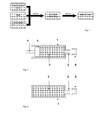
- FIG. 2 and 3 Suitable embodiments for containers which can be used are shown in Figures 2 and 3 .
- Fig. 2 shows a syringe like container (A) with a receptacle (1) having preferably a rigid hull.
- the composition (2) is stored until use.
- the container contains a nozzle (3) and a plunger (4) with sealing lips (5).
- the container (1) is sealed with a removable cap (6).
- Fig. 3 shows an alternative container, however, without a plunger.
- the receptacle is preferably made of a flexible material to facilitate delivery of the composition (2) through the nozzle (3) by using pressure on the outer walls of the receptacle (1).
- the inventive composition does typically not comprise one or more of the following components selected from the group consisting of: ethylenically unsaturated compounds with or without acid functionality, cross-linkable polyacid(s), initiator(s), fluoroaluminiasilicate glass(es) and mixtures thereof.
- Cross-linkable polyacids are e.g. polyacrylic acid, polygalaturonic acid, polyethylene-co-maleic acid, that is, acids which can be obtained by polymerizing polymerizable acidic monomers.
- polyacids bear a huge number of acidic groups, typically at least one acidic group per polymerized acidic monomer.
- the inventive composition does typically also not contain reactive organic monomers (e.g. monomers containing (meth)acrylates or epoxy groups).
- reactive organic monomers e.g. monomers containing (meth)acrylates or epoxy groups.
- inventive composition does typically not comprise one or more of the following components selected from: ethylenically unsaturated compounds with or without acid functionality, cross-linkable polyacid(s), initiator(s), fluoroalumina silicate glass(es) and mixtures thereof.
- Cross-linkable polyacids are e.g. polyacrylic acid, polygalaturonic acid, polyethylene-co-maleic acid, that is, acids which can be obtained by polymerizing polymerizable acidic monomers.
- polyacids bear a huge number of acidic groups, typically at least one acidic group per polymerized acidic monomer.
- the inventive composition can neither be regarded as a radical curable composition nor as a glass ionomer cement like composition.
- composition of the invention does typically also not contain components producing a toxic, injurious, or immunological response in living tissue or components or additives which jeopardize the intended purpose to be achieved with the present invention.
- an article is characterized as tooth coloured if it can be allocated a colour from the VitaTM colour code system, known to the person skilled in the art.
- density measurements can be performed by determination of the volume of symmetric blocks and their mass.
- the mean particle size can be determined using a commercially available granulometer (Laser Diffraction Particle Size Analysis Instrument, CILAS 1064; CILAS Comp.) according to the instruction of use provided by the manufacturer.
- the pH-value can be determined using a mobile pH-indicator paper available from Merck KGaA, Darmstadt Germany (pH 0-14, pH indicator strips, non bleeding, Art. No. 1.09535.0001). Additionally, pH measurements can be performed by employing a pH electrode and measurement device "744 pH meter" from Metrohm.
- the viscosity of a liquid/powder mixture prepared according to the examples below can be measured with a viscosimeter MCR301 (from Anton Paar Comp.).
- a portion of the liquid/powder mixture was placed between two steel discs with a diameter of 8 mm and a gap of 1 mm at a temperature of 23°C. The gap was filled completely with the liquid/powder mixture. Excess liquid/powder mixture was removed. The shear rate between the rotating discs d(gamma)/dt was set constantly to 50 s -1 . 100 measurements of the viscosity were performed, one every 4 seconds. To avoid an undesired drying of the slurry during the measurement a ribbon of wetted paper tissue is laid around the discs in order to raise the humidity.
- a decrease of viscosity during a constant shear stress is preferred, because such behaviour is typically beneficial when joining a dental support structure to a dental facing to produce a dental restoration.
- Table 1 describes some of the components used in the Examples below in more detail.
- Table 1 Name Description TMOS Tetra methyl orthosilicate TEOS Tetra ethoxy orthosilicate LM-ZrO 2 97-100 % SiO 2 , Al 2 O 3 , K 2 O, Na 2 O, CaO, La 2 O 3 , ZnO 2 , B 2 O 3 , CeO 2 , SrO, SnO 2 , Li 2 O, F, P 2 O 5 , 0-3 % shading components
- a solution was prepared by adding 0.012 g of xanthan gum (Jungbunzlauer) to 3.7 ml of deionized water. 10 g of glass powder (GM/LM-Zr Incisal 2, average particle diameter 19 ⁇ m, Chemichl, Liechtenstein) was dispersed into the solution and the slurry obtained was stirred at moderate speed. 0.4 ml of TMOS (tetramethyl orthosilicate) was added and the slurry was stirred more rapidly until the TMOS was distributed homogeneously in the reaction mass. Hereinafter, stirring was stopped and the composition was let alone for about 24 h during which gelation occurred. Finally, the composition was poured into a transparent tube and sealed and stored.
- a solution was prepared of 0.01 g xanthan gum (from Jungbunzlauer) and 3.1 ml of deionized water.
- xanthan gum from Jungbunzlauer
- 3.1 ml of deionized water To this solution 10.0 g of glass powder (GM/LM-Zr Incisal 2 from Chemichl, Liechtenstein; average particle diameter: 19 um) was added. The resulting slurry was stirred until the glass powder was distributed homogeneously. Then, 0.4 ml of TEOS (tetraethoxy silane, 98% from Fluka, Sigma-Aldrich, Germany) was added. The vessel with the slurry was covered to avoid evaporation of solvent. The mixture was stirred until the TEOS phase had disappeared. After that, the mixture was transferred to a sealable container and stored.
- TEOS tetraethoxy silane
- a solution was prepared of 1.1 ml acetic acid (32 %, from VWR, Germany) and 1.8 ml of deionized water.
- 10.0 g of glass powder (GM/LM-Zr Incisal 2 from Chemichl, Liechtenstein; average particle diameter: 19 ⁇ m) was added.
- the resulting slurry was stirred until the glass powder was distributed homogeneously.
- 0.4 ml of water glass sodium silicate solution, Sigma-Aldrich, Germany
- the vessel with the slurry was covered to avoid evaporation of solvent.
- the mixture was stirred until the water glass was distributed homogeneously. After that, the mixture was transferred to a sealable container and stored. Because the sol-gel reaction was proceeding so quickly, no rheological modifier had to be added.
Landscapes
- Health & Medical Sciences (AREA)
- Oral & Maxillofacial Surgery (AREA)
- General Health & Medical Sciences (AREA)
- Epidemiology (AREA)
- Life Sciences & Earth Sciences (AREA)
- Animal Behavior & Ethology (AREA)
- Public Health (AREA)
- Veterinary Medicine (AREA)
- Plastic & Reconstructive Surgery (AREA)
- Chemical & Material Sciences (AREA)
- Inorganic Chemistry (AREA)
- Dental Preparations (AREA)
- Glass Compositions (AREA)
Priority Applications (3)
| Application Number | Priority Date | Filing Date | Title |
|---|---|---|---|
| EP10154606A EP2361601A1 (fr) | 2010-02-25 | 2010-02-25 | Particules de verre et/ou de vitrocéramique dans une composition pour l'application sur un article dentaire, procédé et utilisation correspondants |
| EP11747841.2A EP2538870B1 (fr) | 2010-02-25 | 2011-02-02 | Composition contenant des particules de verre et/ou vitrocéramiques pour application sur article dentaire, son procédé et son utilisation |
| PCT/US2011/023422 WO2011106132A1 (fr) | 2010-02-25 | 2011-02-02 | Composition contenant des particules de verre et/ou vitrocéramiques pour application sur article dentaire, son procédé et son utilisation |
Applications Claiming Priority (1)
| Application Number | Priority Date | Filing Date | Title |
|---|---|---|---|
| EP10154606A EP2361601A1 (fr) | 2010-02-25 | 2010-02-25 | Particules de verre et/ou de vitrocéramique dans une composition pour l'application sur un article dentaire, procédé et utilisation correspondants |
Publications (1)
| Publication Number | Publication Date |
|---|---|
| EP2361601A1 true EP2361601A1 (fr) | 2011-08-31 |
Family
ID=42232734
Family Applications (2)
| Application Number | Title | Priority Date | Filing Date |
|---|---|---|---|
| EP10154606A Ceased EP2361601A1 (fr) | 2010-02-25 | 2010-02-25 | Particules de verre et/ou de vitrocéramique dans une composition pour l'application sur un article dentaire, procédé et utilisation correspondants |
| EP11747841.2A Active EP2538870B1 (fr) | 2010-02-25 | 2011-02-02 | Composition contenant des particules de verre et/ou vitrocéramiques pour application sur article dentaire, son procédé et son utilisation |
Family Applications After (1)
| Application Number | Title | Priority Date | Filing Date |
|---|---|---|---|
| EP11747841.2A Active EP2538870B1 (fr) | 2010-02-25 | 2011-02-02 | Composition contenant des particules de verre et/ou vitrocéramiques pour application sur article dentaire, son procédé et son utilisation |
Country Status (2)
| Country | Link |
|---|---|
| EP (2) | EP2361601A1 (fr) |
| WO (1) | WO2011106132A1 (fr) |
Cited By (4)
| Publication number | Priority date | Publication date | Assignee | Title |
|---|---|---|---|---|
| US20150216635A1 (en) * | 2012-09-03 | 2015-08-06 | Ludwig-Maximilians-Universität München | Blank and process for producing a dental restoration by subtractive machining |
| US10022206B2 (en) | 2004-09-30 | 2018-07-17 | Nobel Biocare Services Ag | Method and system for coloring or tinting a prosthesis, and such a prosthesis |
| US10548818B2 (en) | 2015-07-21 | 2020-02-04 | 3M Innovative Properties Company | Kit of parts for producing a glass ionomer cement, process of production and use thereof |
| US12496173B2 (en) | 2020-11-17 | 2025-12-16 | James R. Glidewell Dental Ceramics, Inc. | Method for coloring a dental prosthesis |
Families Citing this family (2)
| Publication number | Priority date | Publication date | Assignee | Title |
|---|---|---|---|---|
| US9345561B2 (en) | 2010-12-22 | 2016-05-24 | 3M Innovative Properties Company | Fireable dental blank assembly |
| WO2012087999A1 (fr) | 2010-12-22 | 2012-06-28 | 3M Innovative Properties Company | Procédés de fabrication d'appareils dentaires tout céramique, anatomiques, multicouches |
Citations (12)
| Publication number | Priority date | Publication date | Assignee | Title |
|---|---|---|---|---|
| GB907773A (en) * | 1959-03-19 | 1962-10-10 | Unilever Ltd | Processes for binding particulate solid materials |
| US5024711A (en) | 1988-01-25 | 1991-06-18 | Thera | Method for preparing a substrate surface for bonding with a synthetic resin by applying a layer by sand blasting |
| US5028638A (en) * | 1989-02-09 | 1991-07-02 | Bayer Aktiengesellschaft | Hybrid plastic filling material |
| US5346397A (en) | 1993-06-15 | 1994-09-13 | Braiman Kenneth S | Process for making ceramic dental crowns |
| US5558701A (en) * | 1993-01-08 | 1996-09-24 | British Technology Group Limited | Sol-gel composition for producing glassy coatings |
| US5874101A (en) * | 1997-04-14 | 1999-02-23 | Usbiomaterials Corp. | Bioactive-gel compositions and methods |
| US6121175A (en) | 1997-06-12 | 2000-09-19 | Ivoclar Ag | Alkali silicate glass |
| US6371762B1 (en) | 1998-11-23 | 2002-04-16 | Ivoclar Ag | Ceramic tooth restorations and method for manufacturing ceramic tooth restorations |
| DE10347900A1 (de) | 2003-10-09 | 2005-05-04 | Dfs Dental Forschung Schleiche | Dentalkeramik |
| WO2006120255A2 (fr) | 2005-05-13 | 2006-11-16 | Sirona Dental Systems Gmbh | Procede de fabrication d'une prothese dentaire, prothese dentaire, composant et ebauche destinee a cet effet |
| US7452836B2 (en) | 2005-02-08 | 2008-11-18 | Ivoclar Vivadent Ag | Lithium silicate glass ceramic |
| WO2008144342A2 (fr) | 2007-05-15 | 2008-11-27 | 3M Innovative Properties Company | Procédé de fabrication d'une facette prothétique destinée à une reconstitution dentaire, facette prothétique destinée à une reconstitution dentaire, et procédé de réalisation d'une reconstitution dentaire |
Family Cites Families (2)
| Publication number | Priority date | Publication date | Assignee | Title |
|---|---|---|---|---|
| GB9115154D0 (en) | 1991-07-12 | 1991-08-28 | Patel Bipin C M | Sol-gel composition for producing glassy coatings |
| WO2008140103A1 (fr) * | 2007-05-15 | 2008-11-20 | Sun Medical Co., Ltd. | Composition adhésive à durcissement par réaction, et coffret de matières adhésives pour des applications dentaires |
-
2010
- 2010-02-25 EP EP10154606A patent/EP2361601A1/fr not_active Ceased
-
2011
- 2011-02-02 WO PCT/US2011/023422 patent/WO2011106132A1/fr not_active Ceased
- 2011-02-02 EP EP11747841.2A patent/EP2538870B1/fr active Active
Patent Citations (13)
| Publication number | Priority date | Publication date | Assignee | Title |
|---|---|---|---|---|
| GB907773A (en) * | 1959-03-19 | 1962-10-10 | Unilever Ltd | Processes for binding particulate solid materials |
| US5024711A (en) | 1988-01-25 | 1991-06-18 | Thera | Method for preparing a substrate surface for bonding with a synthetic resin by applying a layer by sand blasting |
| US5028638A (en) * | 1989-02-09 | 1991-07-02 | Bayer Aktiengesellschaft | Hybrid plastic filling material |
| US5558701A (en) * | 1993-01-08 | 1996-09-24 | British Technology Group Limited | Sol-gel composition for producing glassy coatings |
| US5346397A (en) | 1993-06-15 | 1994-09-13 | Braiman Kenneth S | Process for making ceramic dental crowns |
| US5874101A (en) * | 1997-04-14 | 1999-02-23 | Usbiomaterials Corp. | Bioactive-gel compositions and methods |
| US6121175A (en) | 1997-06-12 | 2000-09-19 | Ivoclar Ag | Alkali silicate glass |
| US6306784B1 (en) | 1997-06-12 | 2001-10-23 | Ivoclar Ag | Alkali silicate glass |
| US6371762B1 (en) | 1998-11-23 | 2002-04-16 | Ivoclar Ag | Ceramic tooth restorations and method for manufacturing ceramic tooth restorations |
| DE10347900A1 (de) | 2003-10-09 | 2005-05-04 | Dfs Dental Forschung Schleiche | Dentalkeramik |
| US7452836B2 (en) | 2005-02-08 | 2008-11-18 | Ivoclar Vivadent Ag | Lithium silicate glass ceramic |
| WO2006120255A2 (fr) | 2005-05-13 | 2006-11-16 | Sirona Dental Systems Gmbh | Procede de fabrication d'une prothese dentaire, prothese dentaire, composant et ebauche destinee a cet effet |
| WO2008144342A2 (fr) | 2007-05-15 | 2008-11-27 | 3M Innovative Properties Company | Procédé de fabrication d'une facette prothétique destinée à une reconstitution dentaire, facette prothétique destinée à une reconstitution dentaire, et procédé de réalisation d'une reconstitution dentaire |
Cited By (4)
| Publication number | Priority date | Publication date | Assignee | Title |
|---|---|---|---|---|
| US10022206B2 (en) | 2004-09-30 | 2018-07-17 | Nobel Biocare Services Ag | Method and system for coloring or tinting a prosthesis, and such a prosthesis |
| US20150216635A1 (en) * | 2012-09-03 | 2015-08-06 | Ludwig-Maximilians-Universität München | Blank and process for producing a dental restoration by subtractive machining |
| US10548818B2 (en) | 2015-07-21 | 2020-02-04 | 3M Innovative Properties Company | Kit of parts for producing a glass ionomer cement, process of production and use thereof |
| US12496173B2 (en) | 2020-11-17 | 2025-12-16 | James R. Glidewell Dental Ceramics, Inc. | Method for coloring a dental prosthesis |
Also Published As
| Publication number | Publication date |
|---|---|
| WO2011106132A1 (fr) | 2011-09-01 |
| EP2538870B1 (fr) | 2020-01-01 |
| EP2538870A1 (fr) | 2013-01-02 |
| EP2538870A4 (fr) | 2013-11-06 |
Similar Documents
| Publication | Publication Date | Title |
|---|---|---|
| US8865033B2 (en) | Process for producing a dental appliance | |
| EP2387984A1 (fr) | Article dentaire en céramique, son procédé de fabrication et son utilisation | |
| US8813364B2 (en) | Methods for making layered dental appliances | |
| EP2637597B1 (fr) | Procédé de fabrication d'article dentaire, article pouvant être obtenu par ce procédé et ses utilisations | |
| Pereira et al. | An engineering perspective of ceramics applied in dental reconstructions | |
| Peumans et al. | Effects of ceramic surface treatments on the bond strength of an adhesive luting agent to CAD–CAM ceramic | |
| US5713994A (en) | Low-fusing temperature porcelain, compositions, prostheses, methods and kits | |
| EP2538870B1 (fr) | Composition contenant des particules de verre et/ou vitrocéramiques pour application sur article dentaire, son procédé et son utilisation | |
| EP2405883B1 (fr) | Composition pour la fixation d'une facette dentaire sur une structure de support dentaire, procédé et son utilisation | |
| JP7764248B2 (ja) | 歯科用ジルコニア物品のためのグレイジング組成物、焼結プロセス及びパーツキット | |
| JP2015536904A (ja) | ジルコニアセラミックスの着色 | |
| GB2355266A (en) | Dental paste-like porcelain | |
| EP0888107B1 (fr) | Porcelaines a basse temperature de fusion, compositions, protheses, procedes et necessaires correspondants | |
| JP2008088170A (ja) | 歯科適用のためのガラス | |
| KR20230116830A (ko) | 페이스트상 치과용 유리 조성물 | |
| Simasetha | Effect of different surface treatments on the shear bond strength between lithium disilicate glass-ceramic and resin cement | |
| US20210196579A1 (en) | Fluorescent glazing composition for a dental zirconia article, process of sintering and kit of parts | |
| Lenglerdphol | Effects of restorative primers on bond strength of polymer-infiltrated | |
| KR20230117580A (ko) | 치과용 유리 조성물 | |
| Al-Makramani | Clinical and mechanical evaluation of a new all-ceramic restorative material turkom-cera |
Legal Events
| Date | Code | Title | Description |
|---|---|---|---|
| PUAI | Public reference made under article 153(3) epc to a published international application that has entered the european phase |
Free format text: ORIGINAL CODE: 0009012 |
|
| AK | Designated contracting states |
Kind code of ref document: A1 Designated state(s): AT BE BG CH CY CZ DE DK EE ES FI FR GB GR HR HU IE IS IT LI LT LU LV MC MK MT NL NO PL PT RO SE SI SK SM TR |
|
| AX | Request for extension of the european patent |
Extension state: AL BA RS |
|
| STAA | Information on the status of an ep patent application or granted ep patent |
Free format text: STATUS: THE APPLICATION HAS BEEN REFUSED |
|
| 18R | Application refused |
Effective date: 20111014 |