EP2362647A2 - Videokonferenzsystem, darin verwendetes Verarbeitungsverfahren, und machinenlesbares Medium - Google Patents
Videokonferenzsystem, darin verwendetes Verarbeitungsverfahren, und machinenlesbares Medium Download PDFInfo
- Publication number
- EP2362647A2 EP2362647A2 EP20110152217 EP11152217A EP2362647A2 EP 2362647 A2 EP2362647 A2 EP 2362647A2 EP 20110152217 EP20110152217 EP 20110152217 EP 11152217 A EP11152217 A EP 11152217A EP 2362647 A2 EP2362647 A2 EP 2362647A2
- Authority
- EP
- European Patent Office
- Prior art keywords
- terminal device
- video
- video conference
- area
- remote terminal
- Prior art date
- Legal status (The legal status is an assumption and is not a legal conclusion. Google has not performed a legal analysis and makes no representation as to the accuracy of the status listed.)
- Withdrawn
Links
- 238000003672 processing method Methods 0.000 title claims abstract description 26
- 238000001514 detection method Methods 0.000 claims abstract description 47
- 238000007781 pre-processing Methods 0.000 claims abstract description 11
- 238000001914 filtration Methods 0.000 claims description 35
- 238000012545 processing Methods 0.000 claims description 21
- 238000012935 Averaging Methods 0.000 claims description 2
- 238000000034 method Methods 0.000 description 41
- 230000008569 process Effects 0.000 description 27
- 238000013459 approach Methods 0.000 description 17
- 230000003247 decreasing effect Effects 0.000 description 5
- 238000010586 diagram Methods 0.000 description 4
- 238000004590 computer program Methods 0.000 description 3
- 238000007796 conventional method Methods 0.000 description 3
- 230000000694 effects Effects 0.000 description 3
- 239000011159 matrix material Substances 0.000 description 3
- 230000006870 function Effects 0.000 description 2
- 230000004048 modification Effects 0.000 description 2
- 238000012986 modification Methods 0.000 description 2
- 230000004044 response Effects 0.000 description 2
- 230000009466 transformation Effects 0.000 description 2
- 230000008859 change Effects 0.000 description 1
- 238000011161 development Methods 0.000 description 1
- 230000018109 developmental process Effects 0.000 description 1
- 238000005516 engineering process Methods 0.000 description 1
- 230000006872 improvement Effects 0.000 description 1
- 239000004065 semiconductor Substances 0.000 description 1
- 239000007787 solid Substances 0.000 description 1
- 230000007480 spreading Effects 0.000 description 1
- 238000012546 transfer Methods 0.000 description 1
- 239000013598 vector Substances 0.000 description 1
Images


Classifications
-
- H—ELECTRICITY
- H04—ELECTRIC COMMUNICATION TECHNIQUE
- H04N—PICTORIAL COMMUNICATION, e.g. TELEVISION
- H04N7/00—Television systems
- H04N7/14—Systems for two-way working
- H04N7/15—Conference systems
- H04N7/152—Multipoint control units therefor
-
- H—ELECTRICITY
- H04—ELECTRIC COMMUNICATION TECHNIQUE
- H04N—PICTORIAL COMMUNICATION, e.g. TELEVISION
- H04N7/00—Television systems
- H04N7/14—Systems for two-way working
- H04N7/141—Systems for two-way working between two video terminals, e.g. videophone
- H04N7/142—Constructional details of the terminal equipment, e.g. arrangements of the camera and the display
-
- H—ELECTRICITY
- H04—ELECTRIC COMMUNICATION TECHNIQUE
- H04N—PICTORIAL COMMUNICATION, e.g. TELEVISION
- H04N7/00—Television systems
- H04N7/14—Systems for two-way working
- H04N7/141—Systems for two-way working between two video terminals, e.g. videophone
- H04N7/147—Communication arrangements, e.g. identifying the communication as a video-communication, intermediate storage of the signals
Definitions
- the present invention relates to a video conference system, a processing method used in the same, and a machine-readable medium, and more particularly relates to a video conference system, a processing method of processing at least one area of concern in the video conference system, and a machine-readable medium having machine-executable instructions for realizing the processing method.
- a technical proposal used for simulating an effect of shallow depth of field by dealing with a captured image or video is disclosed.
- the background of the image is separated out, and then a focus area (for example, a talker) is emphasized by applying fuzzy processing to the background.
- a convolution filter for example, a median filter, an averaging filter, a Gaussian filter, etc.
- a frequency filer for example, a low-pass filter
- this proposal a method and a device having a function of transformation along the time-line of a video are disclosed. As for an area of concern, this method uses a frame rate higher than that of an area of unconcern; as for an extended area of concern, this method uses a fuzzy filter.
- a processing technique able to pay attention to an area of concern in a video teleconference is provided.
- a receiving unit of a local terminal device transmits information of an area of concern to a sending unit of the remote terminal device.
- the sending unit of the remote terminal device applies high-priority encoding to an area of concern in a scene of a video by employing the information of the area of concern transmitted by the receiving unit of the local terminal device. Therefore the receiving unit of the local terminal device can remotely control the encoding of the area of concern in the video of the sending unit of the remote terminal device.
- the method intends to realize privacy protection in a cell-phone having a camera by carrying out the fuzzy processing, but is not used for a scene in a video conference. Therefore the features of the scene in the video conference are not properly processed in the method. For example, the method does not consider participants, a common focus area of concern of all the participants in the video conference at any time, optimum allocation and utilization of network bandwidth, etc.
- the technical proposal only considers letting its method be used at one end (i.e. one terminal device) of a video conference system, but does not consider the two ends of the video conference system nor optimum allocation and utilization of available network bandwidth.
- the area of concern is defined only by using a single rule; that is, a person in the video is defined as an area of concern.
- the processing technique does not set an area of concern of a video conference. And when separating an area of concern and area of unconcern, the processing technique only considers video at one end of a video conference system, but does not consider the two ends of the video conference system.
- Cited Reference No. 1 US Patent Application Publication NO. 2008/0259154 A1
- Cited Reference No. 2 International Publication No. WO 2007/007257 A1
- Cited Reference No. 3 US Patent Application Publication NO. 2006/0215753 A1
- the aim of the present invention is to propose a video conference system, a processing method used in the video conference system for processing at least one area of concern in the video conference system, and a machine-readable medium for realizing the processing method.
- a processing method of processing at least one area of concern in a video conference system including a local terminal device and at least one remote terminal device comprises a feature detection step of, when conducting a video conference by using the video conference system, carrying out a feature detection in the local terminal device and the remote terminal device of the video conference system, respectively; a conference mode setting step of, based on the feature detection results of the local terminal device and the remote terminal device, setting a conference mode with regard to a current video conference scene in the video conference system for the local terminal device and the remote terminal device, respectively; and a video encoding step of, based on the conference mode, carrying out a division of a video frame in the local terminal device and the remote terminal device, and then pre-processing the divided areas so as to carry out video encoding for encoding the pre-processed areas, respectively.
- a video conference system comprises a local terminal device and at least one remote terminal device.
- the local terminal device and the remote terminal device carry out feature detection, respectively; information related to the feature detection is transmitted between the local terminal device and the remote terminal device, and a conference mode with regard to a current video conference scene in the video conference system is set, based on the feature detection results of the local terminal device and the remote terminal device, for the local terminal device and the remote terminal device, respectively; and a division of a video frame, based on the current conference mode, is carried out in the local terminal device and the remote terminal device, and then the divided areas are pre-processed so as to carry out video encoding for encoding the pre-processed areas, respectively.
- the video conference system comprises a local terminal device; at least one remote terminal device; and a video conference control device.
- the local terminal device and the remote terminal device carry out feature detection, respectively;
- the local terminal device and the remote terminal device send information related to the feature detection to the video conference control device, and the video conference control device sets, based on the feature detection results of the local terminal device and the remote terminal device, a conference mode with regard to a current video conference scene in the video conference system for the local terminal device and the remote terminal device, respectively;
- the video conference control device sends information related to the set conference mode to the local terminal device and the remote terminal device, the local terminal device and the remote terminal device carry out a division of a video frame based on the current conference mode, and then pre-process the divided areas so as to carry out video encoding for encoding the pre-processed areas, respectively.
- a non-transitory machine-readable medium having machine-executable instructions for execution by a processing system.
- the machine-executable instructions are used for processing at least one area of concern in a video conference system including a local terminal device and at least one remote terminal device.
- the machine-executable instructions when executed, cause the processing system to carry out a feature detection step of, when conducting a video conference by using the video conference system, carrying out feature detection in the local terminal device and the remote terminal device of the video conference system, respectively; a conference mode setting step of, based on the feature detection results of the local terminal device and the remote terminal device, setting a conference mode with regard to a current video conference scene in the video conference system for the local terminal device and the remote terminal device, respectively; and a video encoding step of, based on the conference mode, carrying out a division of a video frame in the local terminal device and the remote terminal device, and then pre-processing the divided areas so as to carry out video encoding for encoding the pre-processed areas, respectively.
- two ends (i.e. the local terminal device and the remote terminal device) of the video conference are considered as a whole; based on the feature detection results in the two ends of the video conference, and processing such the division of video frames, the pre-processing applied to the divided areas is carried out. Furthermore a bit re-allocation is carried out at two levels (one is the level of video frames; another is the level of participants in a video conference (i.e. level of the local terminal device and the remote terminal device)), respectively, so that system resource can be optimized.
- the video conference is divided into various conference modes based on the feature detection results of the local terminal device and the remote terminal device. Then based on the conference mode, an area of concern is taken out by carrying out a division of video frames in the two ends of the video conference system, respectively.
- definition and selection of areas of concern are closely associated with the conference mode; therefore compared to the definition of areas of concern using the single rule in the conventional techniques, the technical proposal in the embodiments of the present invention can result in consistently presenting more clear and more accurate focus to the participants in the different video conference scenes.
- user interactivity is introduced in the whole system; that is, it is possible to adjust the quality of the video by adjusting parameters.
- FIG. 1 is a block diagram of a video conference system according to an embodiment of the present invention.
- the video conference system of the embodiment of the present invention comprises plural terminal devices 100 and a video conference control device 101 connected to the plural terminal devices 100.
- the plural terminal devices 100 may be divided into a local terminal device 100A and two remote terminal devices 100B based on positions of users.
- the local terminal device 100A and the remote terminal devices 100B may be collectively called the terminal devices 100.
- Each of the terminal devices 100 may be formed by any terminal able to support a video conference; an example of the terminal includes a personal computer (PC), a mobile terminal (for example, a cell phone, etc.), a personal digital assistance (PDA), etc.
- the video conference control device 101 may be formed by a server, a general-purpose personal computer, etc.
- one local terminal device 100A and two remote terminal devices 100B are shown in FIG. 1 , it is apparent that the numbers of the local terminal device and the remote terminal device are not limited to those shown in FIG. 1 .
- each of the terminal devices 100 may further comprise an internal or external video capture unit (for example, a camera) so as to cause each of the terminal devices 100 to be able to carry out an operation of building or adding a video conference.
- an internal or external video capture unit for example, a camera
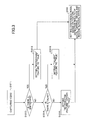
- FIG. 2 is a flowchart of a processing method of the video conference system according to the embodiment of the present invention.
- a video conference is built among the terminal devices 100 by using the video conference control device 101. Since it is a conventional technique to build a video conference among the terminal device 100s, here the concrete description about how to build the video conference among the terminal devices 100 is omitted.
- the connection among the terminal devices 100 of the video conference system may be realized by any connection approach such as a wired connection approach, a wireless connection approach, etc.
- STEP S101 After the video conference is built among the terminal devices 100, in STEP S101, a feature detection of video frame is carried out in the terminal devices 100, respectively.
- the terminal devices 100 send information related to the feature detection result to the video conference control device 101, and the video conference control device 101 sets a conference mode with respect to a current video conference scene of the terminal devices 100 in the video conference system entirely based on the feature detection results of the local terminal device 100A and the remote terminal devices 100B (i.e., the feature detection results of the local terminal device 100A and the remote terminal devices 100B are considered as a whole).
- technical terms "local terminal device,” and "remote terminal device are determined according to a positional relationship of users and the terminal devices 100. For example, for a user on one of the remote terminal devices 100B as shown in FIG. 1 , this remote terminal device 100B is the local terminal device, whereas the local terminal device 100A and another one of the remote terminal devices 100B are the remote terminal devices.
- the terminal devices 100 in the video conference system based on the set conference mode, carry out a division of video frame in the terminal devices 100 (i.e. the local terminal device 100A and the remote terminal devices 100B), respectively.
- each of the terminal devices 100 pre-processes the divided areas, and carries out video encoding for encoding the pre-processed areas. Then the encoded areas of each of the terminal devices 100 are sent to the other two terminal devices 100.
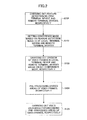
- FIG. 3 is a flow chart of the feature detection process.
- the feature detection process carried out in each of the terminal devices 100 of the video conference system includes following steps.
- each of the terminal devices 100 utilizes an internal or external capture unit (for example, a camera, etc.) or the like to capture a video.
- an internal or external capture unit for example, a camera, etc.
- each the terminal devices 100 first determines whether there is a whiteboard area in a created current video frame, and then calculates a ratio of the whiteboard area to the whole video frame are based on the result of determining whether there is a whiteboard in the current video frame.
- the feature detection process goes to STEP S1013, whereas if the ratio of the planar area of all the whiteboards to the planar area of the whole video frame is less than the predetermined threshold value, then the feature detection process goes to STEP S1014. Furthermore in a case where it is determined that there is no whiteboard area in the current video frame, the feature detection process goes to STEP S1014 too.
- the whiteboard is recognized as the feature of the current video frame, i.e., a "WHITBOARD” feature is set to "TRUE". That is, participants in the video conference are making a presentation or an explanation by using the whiteboard.
- the feature detection process goes to STEP S1014, and continues to detect other features in the current video frame. In this embodiment, it is determined at this time whether there is a talker in the current video frame. If it is determined that there is a talker, the feature detection process goes to STEP S1015; otherwise the feature detection process goes to STEP S1016.
- a "TALKER" feature in the current video frame is set to "TRUE" in STEP S1015. That is, a talker has been detected in the current video frame.
- a "NO DETECTED FEATURE" option in the current video frame is set to "TRUE". That is, there is no detected feature in the current video frame.
- the above-mentioned feature detection process is carried out in each of the terminal devices 100, and then the conference mode is set for all of the terminal devices 100 based on the features detected in each of the terminal devices 100.
- each of the respective terminal devices 100 After the feature detection carried out in each of the respective terminal devices 100 of the video conference system finishes, each of the respective terminal devices 100 sends information related to the features of the current video frame to the video conference control device 101 based on any protocol for transferring data (for example, the TCP/IP protocol, the UDP protocol, etc.).
- any protocol for transferring data for example, the TCP/IP protocol, the UDP protocol, etc.
- the video conference control device 101 After the video conference control device 101 receives the information related to the features of the current video frame of each of the terminal devices 100, the video conference control device 101 combines the information related to the features of the current video frame of each of the terminal devices 100, and sets the conference mode of the current video conference scene for all of the terminal devices 100 based on the combined result.
- the video conference control device 101 sets the conference mode of the current video conference scene to a "whiteboard mode” based on the above-mentioned information. Furthermore if a talker is continuously detected in the local terminal device 100A during a predetermined time period (it should be noted that the predetermined time period may be changed according to an actual situation) and there is no detected feature in the remote control devices 100B, the video conference control device 101 sets the conference mode of the current video conference scene to a "presentation mode" based on the above-mentioned information.
- the video conference control device 101 sets the conference mode of the current video conference scene to a "discussion mode" based on the above-mentioned information.
- How to set the conference mode of each of the terminal devices 100 i.e. the local terminal device 100A and the remote terminal devices 100B) according to the features of the video frame of each of the terminal devices 100 is not limited to the above-mentioned cases; for example, it is possible to flexibly set more conference modes based on more concrete circumstances. Furthermore users or participants of the video conference may also arbitrarily restrict a conference mode by using an input and output interface (not shown in the drawings) of the video conference control device 101 according to actual situations.
- the video conference control device 101 may set the mode of the current video conference scene to the "whiteboard mode” or the "presentation mode” based on the setting of the user.
- the video conference control device 101 may set the mode of the current video conference scene to the "discussion mode”.
- the video conference control device 101 After the corresponding conference mode is set by the video conference control devices 101 based on the features of the video frame of each of the terminal devices 100 (i.e. the local terminal device 100A and the remote terminal devices 100B), the video conference control device 101 sends information related to the set conference mode to the respective terminal devices 100, and then lets each of the terminal devices 100 carry out a division of the video frame based on the set conference mode.
- the divisions of video frames are associated with the conference modes; the focus area of the participants of the video conference include the features of "whiteboard”, "talker”, etc.
- the talker in the "presentation mode", if a talker is in the local terminal device 100A, the talker is a common focus area for the participants at two ends (i.e. the local terminal device 100A and the remote terminal devices 100B) of the video conference.
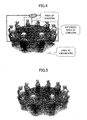
- the video frame of the local terminal device 100A the video frame may be divided into three areas based on the "presentation mode", the talker or the face of the talker may be divided as an "area of concern", an area outwardly extended a predetermined distance from the boundary of the area of concern may be divided as an "extended area of concern", and the remaining area may be divided as an "area of unconcern".
- FIG. 4 illustrates an example of the division of a video frame in the local terminal device 100A.
- the video frame of the remote terminal device 100B in the above-mentioned case, if there is a talker at the other end (i.e. the local terminal device 100A) and there is no detected feature in the remote terminal devices 100B, this means that the importance of all the contents in the video frames of the remote terminal devices 100B is lower than that of the focus area of the current video conference scene (i.e. the talker at the other end). Therefore, at the same time, all the video frames of the remote terminal devices 100B are set as "areas of unconcern" based on the "presentation mode".
- the video frame of the remote terminal device 100B is divided (i.e. divided into an "area of concern", an "extended area of concern", and an "area of unconcern") based on the "presentation mode".
- the whole video frame of the local terminal device 100A is set as an "area of unconcern”.
- the video frame of the local terminal device 100A is divided into three areas as follows: the content which is being written on the whiteboard is divided as an "area of concern", an area outwardly extended a predetermined distance from the boundary of the area of concern is divided as an "extended area of concern", and the remaining area is divided as an "area of unconcern".
- the video frames of the remote terminal devices 100B when the participant is writing something on the whiteboard at the other end (i.e.
- the content which is being written on the whiteboard is the focus of all the participants; therefore the importance of all the contents in the video frames of the remote terminal devices 100B is lower than that of the focus area (i.e. the whiteboard) of the current video conference.
- the whole video frames of the remote terminal devices 100B are set as "areas of unconcern" based on the "whiteboard mode".
- the video frame of the remote terminal device 100B is divided into an "area of concern", an "extended area of concern", and an "area of unconcern” based on the "whiteboard mode".
- the whole video frames of the local terminal device 100A and another remote terminal device 100B are set as an "area of unconcern”.
- the video frame of the local terminal device 100A is divided into three parts as follows: the talker taking part in the discussion is divided as an "area of concern,", an area outwardly extended a predetermined distance from boundary of the area of concern is divided as an "extended area of concern", and the remaining area is set as an "area of unconcern".
- the video frame of the remote terminal device 100B is divided similarly (i.e., divided into as an "area of concern", an "extended area of concern", and an "area of unconcern"). If there is no talker taking part in the discussion in another remote terminal device 100B, the whole video frame of this remote terminal device 100B is set as an "area of unconcern”.
- the video frame of each of the terminal devices 100 may be divided into three kinds of areas i.e. the "area of concern”, the “extended area of concern”, and the "area of unconcern” based on the features and the conference modes detected at the two ends (i.e. the local terminal device 100A and the remote terminal devices 100B) of the video conference system.
- Each kind of the areas i.e. the "area of concern”, the “extended area of concern”, and the "area of unconcern” is included in the divided area of the video frame from at least one terminal device 100.
- the aim of dividing the video frame according to the three kinds of areas is to reduce an edge effect between different areas, and to guarantee that the videos in the different areas of the video frame can be combined smoothly after carrying out the below-mentioned filtering approaches.
- each of the terminal devices 100 of the video conference system ranks the divided areas of the video frame. Since the area of concern generally includes a focal content area of common concern to all the participants, this area is given a high priority. Since the extended area of concern is an extension of the area of concern, its priority is lower than that of the area of concern. Furthermore, in general, since the importance of the content included in the area of unconcern is lowest, this area is given a low priority.
- the network bandwidth of the terminal devices 100 of the video conference system is re-allocated.
- the re-allocation of the network bandwidth may be carried out by exchanging information related to the ranked results of priority among the terminal devices 100 of the video conference system.
- one of the terminal devices 100 having the video frame whose priority is high may occupy relatively wide bandwidth
- one of the terminal devices 100 having the video frame whose priority is low may occupy relatively narrow bandwidth.
- the video conference control device 101 may collect the information related to the ranked result of priority of all the terminal devices 100 so as to allocate the bandwidth occupied by the terminal devices 100.
- the present invention is not limited to this; it is also possible to utilize any bandwidth setting techniques of a dynamic network to carry out the re-allocation of the terminal devices 100.
- each of the terminal devices 100 applies a fuzzy filtering approach to the extended area of concern and the area of unconcern in the region of space so as to decrease the high-frequency information of these two areas. Then a filtering approach is applied to the extended area of concern and the area of unconcern in the region of time so as to reduce the difference between two neighboring video frames.
- g(x,y) is the central pixel of a window having (2 n +1)x(2 n +1) pixels, w(i,j) is a weighted value, and f(x+i,y+ j) is the pixel value of the pixel in the window.
- the original value of the central pixel is replaced by the weighted average efficiency of the ( 2n +1)x( 2n +1) pixels in the window so as to carry out the weighted average efficiency filtering (i.e. the fuzzy filtering).
- weighted average efficiency filters applied to the extended area of concern and the area of unconcern may be different types of filters having different parameters.
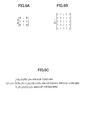
- a weighted average efficiency filter shown in FIG. 6A may be applied to the extended area of concern
- a weighted average efficiency filter shown in FIG. 6B may be applied to the area of unconcern; here matrixes shown in FIG. 6A and FIG. 6B are matrix formats of the weighted value w(i,j).
- the filtered result is shown in FIG. 5 .
- the median filtering approach and the Gaussian filtering approach may also be applied to the extended area of concern and the area of unconcern for carrying out the fuzzy filtering.
- the filtering of the extended area of concern may be obtained by calculating a linear interpolation value of the corresponding areas of concern in two neighboring video frames, whereas the filtering of the area of unconcern may be obtained by copying the content of the corresponding area in the previous video frame, i.e., as for every two or more than two video frames, the areas of unconcern in one or plural video frames therein are skipped, respectively.
- This filtering approach carried out in the region of time is shown in FIG. 6C .
- the video conference system and the processing method according to the embodiments of the present invention can build a stable and smooth video conference.
- Each of the terminal devices 100 carries out an encoding process applied to the pre-processed video frame. Since the ranking process, the filtering process, etc. are carried out in the pre-processing stage, the embodiments of the present invention may be applied to any conventional encoder and coder decoder (CODEC), and it is not necessary to make any modification to the conventional encoder and CODEC. Here, as a result, the concrete description of the structures and the operations of the conventional encoder and CODEC operations are omitted.
- FIG. 7 is a block diagram of the video conference system according to the other embodiment of the present invention.
- a conference mode is set based on a feature detection carried out in a local terminal devices 100A and a remote terminal devices 100B, respectively; here information related to the feature detection results are exchanged among the local terminal devices 100A and the remote terminal devices 100B, i.e., it is not necessary to use the video conference controller 101 as shown in FIG. 1 .
- the corresponding pre-processing process is carried out by the same way.
- processes except the information exchanging process among the local terminal device 100A and the remote terminal device 100B are the same with those illustrated in the above-mentioned embodiment, the processes are omitted.
- the local terminal device 100A after carrying out the feature detections in the local terminal device 100A and the remote terminal device 100B, the local terminal device 100A, based on any protocol (for example, the TCP/IP protocol , the UDP protocol, etc.) used for transferring data, sends a request to the remote terminal devices 100B for obtaining the features of the video frames of the remote terminal devices 100B, and then receives response information (i.e. the information related to the features of the video frames) from the remote terminal devices 100B, respectively; by the same way, the remote terminal devices 100B may also obtain response information from the local terminal device 100A, respectively.
- any protocol for example, the TCP/IP protocol , the UDP protocol, etc.
- the local terminal device 100A combines the information related to the features of the video frame of itself and the information related to the features of the video frames of the remote terminal devices 100B; then the local terminal device 100A sets the conference mode for the current video conference scene, and then carries out the corresponding pre-processing process based on the set conference mode.
- the remote terminal devices 100B may also set the conference mode for the current video conference scenes, and then carry out the corresponding processing process, respectively.
- a user may adjust the quality of the current video of the local terminal device 100A by exchanging information between an input/output interface (not shown in the drawings) disposed on the local terminal device 100A and the local terminal device 100A; by the same way, users may also adjust the qualities of the current videos of the remote terminal devices 100B, respectively.
- a user wants to adjust the quality of the current video in the local terminal device 100A, the user may adjust the parameters of the filters used in the region of space and the region of time, and then the local terminal device 100A carries out the filtering operations based on the adjusted parameters.
- a weighted average efficiency fuzzy filter shown in FIG. 3 (1) has the same attribute.
- the parameter n by increasing the value of the parameter n, it is possible to further decrease the qualities of the area of unconcern and the extended area of unconcern. As a result, the amount of data after encoding may be decreased, and the bandwidth may be saved. Consequently the quality of the area of concern may be increased, and the user may observe a more clear focal content.
- the conference mode can be set based on the results of feature detection carried out at the two ends (i.e. terminal devices) of the video conference system.
- the current focus may be changed too; therefore, as for each conference mode, the current focus (i.e. the area of concern) is taken out by carrying out a division, and given high priority.
- bit re-allocation is carried out at two levels based on the divisions of video frames, respectively, i.e., first the re-allocation of bandwidth is carried out at the level of the local terminal device and the remote terminal device; second the re-allocation of bits is carried out at the level of the video frame, and the current network bandwidth can be utilized efficiently by carrying out the above-mentioned operations; as a result, clear and high-quality video can be provided to the participants of the video conference.
- the embodiments of the present invention may be executed by various approaches such as a whole hardware approach, a whole software approach, or a combination of them.
- software such as firmware, built-in software, microcode, etc. may be used; however, the embodiments of the present invention are not limited to this.
- the embodiments of the present invention may be realized by a computer program according to the processing method of the embodiments of the present invention; the computer program can by executed by a computer or any instruction execution system.
- the computer program may be stored in a machine-readable medium such as a semiconductor or solid memory, a magnetic tape, a loadable disk, an un-installable computer magnetic disk, a random access memory (RAM), a read-only memory (ROM), a hard disk, a floppy disk, etc.
- a machine-readable medium such as a semiconductor or solid memory, a magnetic tape, a loadable disk, an un-installable computer magnetic disk, a random access memory (RAM), a read-only memory (ROM), a hard disk, a floppy disk, etc.
Landscapes
- Engineering & Computer Science (AREA)
- Multimedia (AREA)
- Signal Processing (AREA)
- Two-Way Televisions, Distribution Of Moving Picture Or The Like (AREA)
- Telephonic Communication Services (AREA)
- Compression Or Coding Systems Of Tv Signals (AREA)
Applications Claiming Priority (1)
| Application Number | Priority Date | Filing Date | Title |
|---|---|---|---|
| CN2010101164477A CN102170552A (zh) | 2010-02-25 | 2010-02-25 | 一种视频会议系统及其中使用的处理方法 |
Publications (2)
| Publication Number | Publication Date |
|---|---|
| EP2362647A2 true EP2362647A2 (de) | 2011-08-31 |
| EP2362647A3 EP2362647A3 (de) | 2017-04-26 |
Family
ID=43533017
Family Applications (1)
| Application Number | Title | Priority Date | Filing Date |
|---|---|---|---|
| EP11152217.3A Withdrawn EP2362647A3 (de) | 2010-02-25 | 2011-01-26 | Videokonferenzsystem, darin verwendetes Verarbeitungsverfahren, und machinenlesbares Medium |
Country Status (4)
| Country | Link |
|---|---|
| US (1) | US8493431B2 (de) |
| EP (1) | EP2362647A3 (de) |
| JP (1) | JP5772059B2 (de) |
| CN (1) | CN102170552A (de) |
Families Citing this family (13)
| Publication number | Priority date | Publication date | Assignee | Title |
|---|---|---|---|---|
| TWI513319B (zh) * | 2012-01-31 | 2015-12-11 | Quanta Comp Inc | 在視訊會議中切換分享內容之方法以及視訊會議系統 |
| CN103581603B (zh) * | 2012-07-24 | 2017-06-27 | 联想(北京)有限公司 | 一种多媒体数据的传输方法及电子设备 |
| US9124762B2 (en) | 2012-12-20 | 2015-09-01 | Microsoft Technology Licensing, Llc | Privacy camera |
| US9386272B2 (en) | 2014-06-27 | 2016-07-05 | Intel Corporation | Technologies for audiovisual communication using interestingness algorithms |
| CN104506852B (zh) * | 2014-12-25 | 2016-08-24 | 北京航空航天大学 | 一种面向视频会议编码的客观质量评估方法 |
| CN104751407B (zh) * | 2015-03-11 | 2019-01-25 | 百度在线网络技术(北京)有限公司 | 一种用于对图像进行虚化的方法和装置 |
| CN106161985B (zh) * | 2016-07-05 | 2019-08-27 | 宁波菊风系统软件有限公司 | 一种浸入式视频会议的实现方法 |
| EP3688982A4 (de) | 2017-09-27 | 2021-12-29 | Dolby Laboratories Licensing Corporation | Bearbeitung eines videos einschliesslich einer physikalischen schreibfläche |
| US10423821B2 (en) * | 2017-10-25 | 2019-09-24 | Microsoft Technology Licensing, Llc | Automated profile image generation based on scheduled video conferences |
| CN110536138B (zh) * | 2018-05-25 | 2021-11-09 | 杭州海康威视数字技术股份有限公司 | 一种有损压缩编码方法、装置和系统级芯片 |
| CN109582823A (zh) * | 2018-11-21 | 2019-04-05 | 平安科技(深圳)有限公司 | 视频信息链式存储方法、装置、计算机设备及存储介质 |
| CN112334942A (zh) * | 2019-11-26 | 2021-02-05 | 深圳市大疆创新科技有限公司 | 图像处理方法和装置 |
| US12437776B2 (en) * | 2022-09-19 | 2025-10-07 | SubStrata Ltd. | Automated classification of relative dominance based on reciprocal prosodic behaviour in an audio conversation |
Citations (4)
| Publication number | Priority date | Publication date | Assignee | Title |
|---|---|---|---|---|
| EP0676899A2 (de) * | 1994-04-06 | 1995-10-11 | AT&T Corp. | Audiovisuelles Kommunikationssystem mit integrierter, wahrnehmungsabhängiger Sprach- und Videokodierung |
| US20060215753A1 (en) | 2005-03-09 | 2006-09-28 | Yen-Chi Lee | Region-of-interest processing for video telephony |
| WO2007007257A1 (en) | 2005-07-13 | 2007-01-18 | Koninklijke Philips Electronics N.V. | Processing method and device with video temporal up-conversion |
| US20080259154A1 (en) | 2007-04-20 | 2008-10-23 | General Instrument Corporation | Simulating Short Depth of Field to Maximize Privacy in Videotelephony |
Family Cites Families (21)
| Publication number | Priority date | Publication date | Assignee | Title |
|---|---|---|---|---|
| JPH07274054A (ja) * | 1994-03-29 | 1995-10-20 | Nec Eng Ltd | テレビ会議端末のカメラ制御方式 |
| US6256423B1 (en) * | 1998-09-18 | 2001-07-03 | Sarnoff Corporation | Intra-frame quantizer selection for video compression |
| JP3558912B2 (ja) * | 1999-02-24 | 2004-08-25 | 日本電信電話株式会社 | 多地点会議装置 |
| WO2002045398A1 (en) * | 1999-06-14 | 2002-06-06 | Ginganet Corporation | Teleconferencing system |
| US7015954B1 (en) * | 1999-08-09 | 2006-03-21 | Fuji Xerox Co., Ltd. | Automatic video system using multiple cameras |
| JP4686854B2 (ja) * | 2000-12-08 | 2011-05-25 | 株式会社ニコン | 画像符号化装置、電子カメラ、および画像符号化プログラムの記録媒体 |
| JP4100146B2 (ja) * | 2002-11-27 | 2008-06-11 | ソニー株式会社 | 双方向コミュニケーションシステム,映像通信装置 |
| US20050013309A1 (en) * | 2003-07-14 | 2005-01-20 | Channasandra Ravishankar | System and method for high quality video conferencing with heterogeneous end-points and networks |
| US20050140781A1 (en) * | 2003-12-29 | 2005-06-30 | Ming-Chieh Chi | Video coding method and apparatus thereof |
| US8693537B2 (en) * | 2005-03-01 | 2014-04-08 | Qualcomm Incorporated | Region-of-interest coding with background skipping for video telephony |
| US8977063B2 (en) * | 2005-03-09 | 2015-03-10 | Qualcomm Incorporated | Region-of-interest extraction for video telephony |
| CN101167365A (zh) * | 2005-03-09 | 2008-04-23 | 高通股份有限公司 | 用于视频电话的感兴趣区域处理 |
| JP2006324986A (ja) * | 2005-05-19 | 2006-11-30 | Nec Corp | 通信制御装置、通信制御方法、通信制御プログラムおよびコミュニケーションシステム |
| WO2007015133A2 (en) * | 2005-08-01 | 2007-02-08 | Emitall Surveillance S.A. | Scrambling for anonymous visual communication |
| JP2007158860A (ja) * | 2005-12-06 | 2007-06-21 | Canon Inc | 撮影システム、撮影装置、画像切替装置、およびデータ保持装置 |
| US8150155B2 (en) * | 2006-02-07 | 2012-04-03 | Qualcomm Incorporated | Multi-mode region-of-interest video object segmentation |
| JP2007214803A (ja) * | 2006-02-08 | 2007-08-23 | Canon Inc | 撮影制御装置及び撮影制御方法 |
| CN100556151C (zh) * | 2006-12-30 | 2009-10-28 | 华为技术有限公司 | 一种视频终端以及一种音频码流处理方法 |
| US8274543B2 (en) * | 2007-07-02 | 2012-09-25 | Polycom, Inc. | Tag-aware multipoint switching for conferencing |
| CN101262604A (zh) * | 2008-04-23 | 2008-09-10 | 哈尔滨工程大学 | 一种感兴趣区优先传输的可伸缩视频编码方法 |
| US8270476B2 (en) * | 2008-12-31 | 2012-09-18 | Advanced Micro Devices, Inc. | Face detection system for video encoders |
-
2010
- 2010-02-25 CN CN2010101164477A patent/CN102170552A/zh active Pending
-
2011
- 2011-01-20 US US12/929,386 patent/US8493431B2/en not_active Expired - Fee Related
- 2011-01-26 EP EP11152217.3A patent/EP2362647A3/de not_active Withdrawn
- 2011-02-24 JP JP2011038746A patent/JP5772059B2/ja active Active
Patent Citations (4)
| Publication number | Priority date | Publication date | Assignee | Title |
|---|---|---|---|---|
| EP0676899A2 (de) * | 1994-04-06 | 1995-10-11 | AT&T Corp. | Audiovisuelles Kommunikationssystem mit integrierter, wahrnehmungsabhängiger Sprach- und Videokodierung |
| US20060215753A1 (en) | 2005-03-09 | 2006-09-28 | Yen-Chi Lee | Region-of-interest processing for video telephony |
| WO2007007257A1 (en) | 2005-07-13 | 2007-01-18 | Koninklijke Philips Electronics N.V. | Processing method and device with video temporal up-conversion |
| US20080259154A1 (en) | 2007-04-20 | 2008-10-23 | General Instrument Corporation | Simulating Short Depth of Field to Maximize Privacy in Videotelephony |
Also Published As
| Publication number | Publication date |
|---|---|
| US8493431B2 (en) | 2013-07-23 |
| JP2011176827A (ja) | 2011-09-08 |
| JP5772059B2 (ja) | 2015-09-02 |
| CN102170552A (zh) | 2011-08-31 |
| EP2362647A3 (de) | 2017-04-26 |
| US20110205330A1 (en) | 2011-08-25 |
Similar Documents
| Publication | Publication Date | Title |
|---|---|---|
| US8493431B2 (en) | Video conference system, processing method used in the same, and machine-readable medium | |
| US10999344B1 (en) | Dynamic video resolution and quality for improved video conferencing | |
| KR102189345B1 (ko) | 전화 통화 중의 화상 회의 설정 | |
| US8760489B1 (en) | Method and apparatus for dynamically adjusting aspect ratio of images during a video call | |
| CN112399123B (zh) | 视频清晰度的调整方法、装置、电子设备及存储介质 | |
| WO2020097888A1 (zh) | 视频处理方法、装置、电子设备及计算机可读存储介质 | |
| US8570359B2 (en) | Video region of interest features | |
| CN105554429A (zh) | 一种视频通话显示方法及视频通话设备 | |
| US9270713B2 (en) | Mechanism for compacting shared content in collaborative computing sessions | |
| KR20120078838A (ko) | 휴대단말의 영상통화 제공 방법 및 장치 | |
| US9354697B2 (en) | Detecting active region in collaborative computing sessions using voice information | |
| CN105430393B (zh) | 一种图片处理方法、图片处理装置、图片处理平台以及存储介质 | |
| CN109168041B (zh) | 一种移动终端监控方法及系统 | |
| JP7334470B2 (ja) | 映像処理装置、ビデオ会議システム、映像処理方法、およびプログラム | |
| EP2696338B1 (de) | Endgerät und Verfahren zur Erzeugung eines Live-Bildes | |
| CN111225254A (zh) | 一种视频传输方法、装置、终端设备及存储介质 | |
| EP2912844B1 (de) | Adaptives stereoskopisches 3d-streaming | |
| CN109669783B (zh) | 数据处理方法和设备 | |
| JP4839375B2 (ja) | 画像処理方法及び装置、画像処理用プログラム及びそのプログラムを記録した記録媒体 | |
| US9357170B2 (en) | Device and method for managing bandwidth of video conference | |
| EP3206387A1 (de) | Verfahren zur einstellung des dynamischen bereichs eines bildes, endgerät und speichermedium | |
| He et al. | Real-time whiteboard capture and processing using a video camera for teleconferencing | |
| US20200106821A1 (en) | Video processing apparatus, video conference system, and video processing method | |
| JP5274750B2 (ja) | 通信端末およびその表示方法 | |
| JP6078431B2 (ja) | 映像品質推定装置、映像品質推定方法及びプログラム |
Legal Events
| Date | Code | Title | Description |
|---|---|---|---|
| PUAI | Public reference made under article 153(3) epc to a published international application that has entered the european phase |
Free format text: ORIGINAL CODE: 0009012 |
|
| 17P | Request for examination filed |
Effective date: 20110126 |
|
| AK | Designated contracting states |
Kind code of ref document: A2 Designated state(s): AL AT BE BG CH CY CZ DE DK EE ES FI FR GB GR HR HU IE IS IT LI LT LU LV MC MK MT NL NO PL PT RO RS SE SI SK SM TR |
|
| AX | Request for extension of the european patent |
Extension state: BA ME |
|
| PUAL | Search report despatched |
Free format text: ORIGINAL CODE: 0009013 |
|
| AK | Designated contracting states |
Kind code of ref document: A3 Designated state(s): AL AT BE BG CH CY CZ DE DK EE ES FI FR GB GR HR HU IE IS IT LI LT LU LV MC MK MT NL NO PL PT RO RS SE SI SK SM TR |
|
| AX | Request for extension of the european patent |
Extension state: BA ME |
|
| RIC1 | Information provided on ipc code assigned before grant |
Ipc: H04N 7/15 20060101ALI20170323BHEP Ipc: H04N 7/14 20060101AFI20170323BHEP |
|
| 17Q | First examination report despatched |
Effective date: 20190507 |
|
| STAA | Information on the status of an ep patent application or granted ep patent |
Free format text: STATUS: THE APPLICATION IS DEEMED TO BE WITHDRAWN |
|
| 18D | Application deemed to be withdrawn |
Effective date: 20190918 |