EP2363588A2 - Pulsdetonationssystem für eine Gasturbine - Google Patents
Pulsdetonationssystem für eine Gasturbine Download PDFInfo
- Publication number
- EP2363588A2 EP2363588A2 EP11156782A EP11156782A EP2363588A2 EP 2363588 A2 EP2363588 A2 EP 2363588A2 EP 11156782 A EP11156782 A EP 11156782A EP 11156782 A EP11156782 A EP 11156782A EP 2363588 A2 EP2363588 A2 EP 2363588A2
- Authority
- EP
- European Patent Office
- Prior art keywords
- protective layer
- pulse detonation
- thermally protective
- tube
- approximately
- Prior art date
- Legal status (The legal status is an assumption and is not a legal conclusion. Google has not performed a legal analysis and makes no representation as to the accuracy of the status listed.)
- Withdrawn
Links
- 238000005474 detonation Methods 0.000 title claims abstract description 211
- 239000011241 protective layer Substances 0.000 claims abstract description 154
- 238000005524 ceramic coating Methods 0.000 claims abstract description 8
- 239000000463 material Substances 0.000 claims description 110
- 238000000576 coating method Methods 0.000 claims description 21
- 239000011248 coating agent Substances 0.000 claims description 20
- 238000006243 chemical reaction Methods 0.000 claims description 11
- 230000035515 penetration Effects 0.000 claims description 10
- 229910052751 metal Inorganic materials 0.000 claims description 7
- 239000002184 metal Substances 0.000 claims description 7
- 229910001092 metal group alloy Inorganic materials 0.000 claims description 3
- 239000007789 gas Substances 0.000 description 67
- 239000003570 air Substances 0.000 description 28
- 239000000446 fuel Substances 0.000 description 21
- 238000002485 combustion reaction Methods 0.000 description 15
- 239000010410 layer Substances 0.000 description 13
- 238000000034 method Methods 0.000 description 13
- 239000000203 mixture Substances 0.000 description 10
- 230000008569 process Effects 0.000 description 6
- 230000001052 transient effect Effects 0.000 description 6
- 230000000670 limiting effect Effects 0.000 description 5
- 241000725175 Caladium bicolor Species 0.000 description 4
- 235000015966 Pleurocybella porrigens Nutrition 0.000 description 4
- 230000003247 decreasing effect Effects 0.000 description 4
- 230000001965 increasing effect Effects 0.000 description 4
- 230000003647 oxidation Effects 0.000 description 4
- 238000007254 oxidation reaction Methods 0.000 description 4
- 229910045601 alloy Inorganic materials 0.000 description 3
- 239000000956 alloy Substances 0.000 description 3
- 239000011253 protective coating Substances 0.000 description 3
- 229910001233 yttria-stabilized zirconia Inorganic materials 0.000 description 3
- 241000879887 Cyrtopleura costata Species 0.000 description 2
- PXHVJJICTQNCMI-UHFFFAOYSA-N Nickel Chemical compound [Ni] PXHVJJICTQNCMI-UHFFFAOYSA-N 0.000 description 2
- GQPLMRYTRLFLPF-UHFFFAOYSA-N Nitrous Oxide Chemical compound [O-][N+]#N GQPLMRYTRLFLPF-UHFFFAOYSA-N 0.000 description 2
- 230000008901 benefit Effects 0.000 description 2
- 239000011153 ceramic matrix composite Substances 0.000 description 2
- 238000004200 deflagration Methods 0.000 description 2
- 238000013461 design Methods 0.000 description 2
- 238000010586 diagram Methods 0.000 description 2
- 238000005516 engineering process Methods 0.000 description 2
- 238000004519 manufacturing process Methods 0.000 description 2
- 239000011156 metal matrix composite Substances 0.000 description 2
- VNWKTOKETHGBQD-UHFFFAOYSA-N methane Chemical compound C VNWKTOKETHGBQD-UHFFFAOYSA-N 0.000 description 2
- -1 nickel chromium aluminum Chemical compound 0.000 description 2
- 238000010248 power generation Methods 0.000 description 2
- 230000035939 shock Effects 0.000 description 2
- 238000011144 upstream manufacturing Methods 0.000 description 2
- RUDFQVOCFDJEEF-UHFFFAOYSA-N yttrium(III) oxide Inorganic materials [O-2].[O-2].[O-2].[Y+3].[Y+3] RUDFQVOCFDJEEF-UHFFFAOYSA-N 0.000 description 2
- 241000196324 Embryophyta Species 0.000 description 1
- RTAQQCXQSZGOHL-UHFFFAOYSA-N Titanium Chemical compound [Ti] RTAQQCXQSZGOHL-UHFFFAOYSA-N 0.000 description 1
- 229910052782 aluminium Inorganic materials 0.000 description 1
- XAGFODPZIPBFFR-UHFFFAOYSA-N aluminium Chemical compound [Al] XAGFODPZIPBFFR-UHFFFAOYSA-N 0.000 description 1
- 239000012080 ambient air Substances 0.000 description 1
- QVGXLLKOCUKJST-UHFFFAOYSA-N atomic oxygen Chemical compound [O] QVGXLLKOCUKJST-UHFFFAOYSA-N 0.000 description 1
- 230000015572 biosynthetic process Effects 0.000 description 1
- AOWKSNWVBZGMTJ-UHFFFAOYSA-N calcium titanate Chemical compound [Ca+2].[O-][Ti]([O-])=O AOWKSNWVBZGMTJ-UHFFFAOYSA-N 0.000 description 1
- 239000000919 ceramic Substances 0.000 description 1
- 229910002086 ceria-stabilized zirconia Inorganic materials 0.000 description 1
- 229910017052 cobalt Inorganic materials 0.000 description 1
- 239000010941 cobalt Substances 0.000 description 1
- GUTLYIVDDKVIGB-UHFFFAOYSA-N cobalt atom Chemical compound [Co] GUTLYIVDDKVIGB-UHFFFAOYSA-N 0.000 description 1
- 239000000567 combustion gas Substances 0.000 description 1
- 238000001816 cooling Methods 0.000 description 1
- 230000008878 coupling Effects 0.000 description 1
- 238000010168 coupling process Methods 0.000 description 1
- 238000005859 coupling reaction Methods 0.000 description 1
- 230000007547 defect Effects 0.000 description 1
- 238000007598 dipping method Methods 0.000 description 1
- 238000005328 electron beam physical vapour deposition Methods 0.000 description 1
- 230000002708 enhancing effect Effects 0.000 description 1
- 230000004907 flux Effects 0.000 description 1
- 238000010438 heat treatment Methods 0.000 description 1
- 239000012212 insulator Substances 0.000 description 1
- 239000007788 liquid Substances 0.000 description 1
- 230000007246 mechanism Effects 0.000 description 1
- 150000002739 metals Chemical class 0.000 description 1
- 238000002156 mixing Methods 0.000 description 1
- 239000003345 natural gas Substances 0.000 description 1
- 229910052759 nickel Inorganic materials 0.000 description 1
- 239000001272 nitrous oxide Substances 0.000 description 1
- 239000007800 oxidant agent Substances 0.000 description 1
- 229910052760 oxygen Inorganic materials 0.000 description 1
- 239000001301 oxygen Substances 0.000 description 1
- 238000007750 plasma spraying Methods 0.000 description 1
- 230000002829 reductive effect Effects 0.000 description 1
- VEMKTZHHVJILDY-UHFFFAOYSA-N resmethrin Chemical compound CC1(C)C(C=C(C)C)C1C(=O)OCC1=COC(CC=2C=CC=CC=2)=C1 VEMKTZHHVJILDY-UHFFFAOYSA-N 0.000 description 1
- 239000007787 solid Substances 0.000 description 1
- 238000005507 spraying Methods 0.000 description 1
- 230000003068 static effect Effects 0.000 description 1
- 230000008646 thermal stress Effects 0.000 description 1
- 229910052719 titanium Inorganic materials 0.000 description 1
- 239000010936 titanium Substances 0.000 description 1
- WFKWXMTUELFFGS-UHFFFAOYSA-N tungsten Chemical compound [W] WFKWXMTUELFFGS-UHFFFAOYSA-N 0.000 description 1
- 229910052721 tungsten Inorganic materials 0.000 description 1
- 239000010937 tungsten Substances 0.000 description 1
- 238000007740 vapor deposition Methods 0.000 description 1
Images



Classifications
-
- F—MECHANICAL ENGINEERING; LIGHTING; HEATING; WEAPONS; BLASTING
- F02—COMBUSTION ENGINES; HOT-GAS OR COMBUSTION-PRODUCT ENGINE PLANTS
- F02K—JET-PROPULSION PLANTS
- F02K7/00—Plants in which the working fluid is used in a jet only, i.e. the plants not having a turbine or other engine driving a compressor or a ducted fan; Control thereof
- F02K7/02—Plants in which the working fluid is used in a jet only, i.e. the plants not having a turbine or other engine driving a compressor or a ducted fan; Control thereof the jet being intermittent, i.e. pulse-jet
-
- F—MECHANICAL ENGINEERING; LIGHTING; HEATING; WEAPONS; BLASTING
- F01—MACHINES OR ENGINES IN GENERAL; ENGINE PLANTS IN GENERAL; STEAM ENGINES
- F01D—NON-POSITIVE DISPLACEMENT MACHINES OR ENGINES, e.g. STEAM TURBINES
- F01D5/00—Blades; Blade-carrying members; Heating, heat-insulating, cooling or antivibration means on the blades or the members
- F01D5/12—Blades
- F01D5/28—Selecting particular materials; Particular measures relating thereto; Measures against erosion or corrosion
-
- F—MECHANICAL ENGINEERING; LIGHTING; HEATING; WEAPONS; BLASTING
- F02—COMBUSTION ENGINES; HOT-GAS OR COMBUSTION-PRODUCT ENGINE PLANTS
- F02K—JET-PROPULSION PLANTS
- F02K7/00—Plants in which the working fluid is used in a jet only, i.e. the plants not having a turbine or other engine driving a compressor or a ducted fan; Control thereof
- F02K7/08—Plants in which the working fluid is used in a jet only, i.e. the plants not having a turbine or other engine driving a compressor or a ducted fan; Control thereof the jet being continuous
-
- F—MECHANICAL ENGINEERING; LIGHTING; HEATING; WEAPONS; BLASTING
- F05—INDEXING SCHEMES RELATING TO ENGINES OR PUMPS IN VARIOUS SUBCLASSES OF CLASSES F01-F04
- F05D—INDEXING SCHEME FOR ASPECTS RELATING TO NON-POSITIVE-DISPLACEMENT MACHINES OR ENGINES, GAS-TURBINES OR JET-PROPULSION PLANTS
- F05D2230/00—Manufacture
- F05D2230/80—Repairing, retrofitting or upgrading methods
-
- F—MECHANICAL ENGINEERING; LIGHTING; HEATING; WEAPONS; BLASTING
- F05—INDEXING SCHEMES RELATING TO ENGINES OR PUMPS IN VARIOUS SUBCLASSES OF CLASSES F01-F04
- F05D—INDEXING SCHEME FOR ASPECTS RELATING TO NON-POSITIVE-DISPLACEMENT MACHINES OR ENGINES, GAS-TURBINES OR JET-PROPULSION PLANTS
- F05D2300/00—Materials; Properties thereof
- F05D2300/10—Metals, alloys or intermetallic compounds
- F05D2300/13—Refractory metals, i.e. Ti, V, Cr, Zr, Nb, Mo, Hf, Ta, W
-
- F—MECHANICAL ENGINEERING; LIGHTING; HEATING; WEAPONS; BLASTING
- F05—INDEXING SCHEMES RELATING TO ENGINES OR PUMPS IN VARIOUS SUBCLASSES OF CLASSES F01-F04
- F05D—INDEXING SCHEME FOR ASPECTS RELATING TO NON-POSITIVE-DISPLACEMENT MACHINES OR ENGINES, GAS-TURBINES OR JET-PROPULSION PLANTS
- F05D2300/00—Materials; Properties thereof
- F05D2300/10—Metals, alloys or intermetallic compounds
- F05D2300/13—Refractory metals, i.e. Ti, V, Cr, Zr, Nb, Mo, Hf, Ta, W
- F05D2300/133—Titanium
-
- F—MECHANICAL ENGINEERING; LIGHTING; HEATING; WEAPONS; BLASTING
- F05—INDEXING SCHEMES RELATING TO ENGINES OR PUMPS IN VARIOUS SUBCLASSES OF CLASSES F01-F04
- F05D—INDEXING SCHEME FOR ASPECTS RELATING TO NON-POSITIVE-DISPLACEMENT MACHINES OR ENGINES, GAS-TURBINES OR JET-PROPULSION PLANTS
- F05D2300/00—Materials; Properties thereof
- F05D2300/10—Metals, alloys or intermetallic compounds
- F05D2300/17—Alloys
- F05D2300/174—Titanium alloys, e.g. TiAl
-
- F—MECHANICAL ENGINEERING; LIGHTING; HEATING; WEAPONS; BLASTING
- F05—INDEXING SCHEMES RELATING TO ENGINES OR PUMPS IN VARIOUS SUBCLASSES OF CLASSES F01-F04
- F05D—INDEXING SCHEME FOR ASPECTS RELATING TO NON-POSITIVE-DISPLACEMENT MACHINES OR ENGINES, GAS-TURBINES OR JET-PROPULSION PLANTS
- F05D2300/00—Materials; Properties thereof
- F05D2300/10—Metals, alloys or intermetallic compounds
- F05D2300/17—Alloys
- F05D2300/176—Heat-stable alloys
-
- Y—GENERAL TAGGING OF NEW TECHNOLOGICAL DEVELOPMENTS; GENERAL TAGGING OF CROSS-SECTIONAL TECHNOLOGIES SPANNING OVER SEVERAL SECTIONS OF THE IPC; TECHNICAL SUBJECTS COVERED BY FORMER USPC CROSS-REFERENCE ART COLLECTIONS [XRACs] AND DIGESTS
- Y02—TECHNOLOGIES OR APPLICATIONS FOR MITIGATION OR ADAPTATION AGAINST CLIMATE CHANGE
- Y02T—CLIMATE CHANGE MITIGATION TECHNOLOGIES RELATED TO TRANSPORTATION
- Y02T50/00—Aeronautics or air transport
- Y02T50/60—Efficient propulsion technologies, e.g. for aircraft
Definitions
- the subject matter disclosed herein relates generally to a pulse detonation system and, more specifically, to enhancing the durability of pulse detonation tubes.
- Pulse detonation combustion can be utilized in various practical engine applications.
- An example of such an application is the development of a pulse detonation engine (PDE) where hot detonation products are directed through an exit nozzle to generate thrust for aerospace propulsion.
- Pulse detonation engines that include multiple combustor chambers are sometimes referred to as a "multi-tube" configuration for a pulse detonation engine.
- Another example is the development of a "hybrid” engine that uses both conventional gas turbine engine technology and pulse detonation (PD) technology to enhance operational efficiency.
- PDTE pulse detonation turbine engines
- PDTE pulse detonation turbine engines
- the combustion reaction is a detonation wave that moves at supersonic speed, thereby increasing the efficiency of the combustion process as compared to subsonic deflagration combustion.
- air and fuel are typically injected into the pulse detonation tube in discrete pulses.
- the fuel-air mixture is then detonated by an ignition source, thereby establishing a detonation wave that propagates downstream through the tube at a supersonic velocity.
- a weaker shock wave may propagate upstream toward the combustor inlet.
- the detonation process produces pressurized exhaust gas within the pulse detonation tube that may be used to produce thrust or be converted to work in a turbine.
- pulse detonation tubes and associated components e.g., air valve, nozzle, etc.
- longevity of the pulse detonation tubes and associated components may be significantly limited.
- Increasing the thickness and/or strength of the pulse detonation tubes and/or associated components may increase the operational life of a pulse detonation combustor, but may also increase weight to an undesirable level for typical applications.
- constructing the pulse detonation tubes and/or associated components from expensive high temperature materials may be economically unfeasible.
- a pulse detonation system in a first embodiment, includes a pulse detonation tube including a base tube and a thermally protective layer disposed adjacent to an inner surface of the base tube.
- the thermally protective layer is configured to limit temperature fluctuations at the inner surface of the base tube to less than approximately 20 degrees Celsius during operation of the pulse detonation system, and the thermally protective layer does not comprise a ceramic coating.
- a pulse detonation system in a second embodiment, includes a pulse detonation tube configured to resist a pressure associated with a detonation reaction.
- the pulse detonation system also includes a nozzle coupled to a downstream end of the pulse detonation tube and configured to receive a flow of exhaust gas from the pulse detonation tube.
- the pulse detonation system further includes a thermally protective layer disposed adjacent to an inner surface of the pulse detonation tube, to an inner surface of the nozzle, or a combination thereof.
- the thermally protective layer is configured to limit temperature fluctuations at the inner surface of the pulse detonation tube, at the inner surface of the nozzle, or a combination thereof, to less than approximately 20 degrees Celsius during operation of the pulse detonation system, and the thermally protective layer of the pulse detonation tube, if present, does not comprise a ceramic coating.
- a pulse detonation system in a third embodiment, includes a pulse detonation tube and a nozzle coupled to a downstream end of the pulse detonation tube.
- the pulse detonation system also includes a turbine coupled to a downstream end of the nozzle and configured to receive a flow of exhaust gas from the pulse detonation tube via the nozzle.
- At least one of the nozzle or at least one component of the turbine includes a base material and a thermally protective layer disposed adjacent to a surface of the base material facing the flow of exhaust gas.
- the thermally protective layer is configured to limit temperature fluctuations at the surface of the base material facing the flow of exhaust gas to less than approximately 20 degrees Celsius during operation of the pulse detonation system.
- a pulse detonation combustor is understood to mean any device or system that produces both a pressure rise and velocity increase from a series of repeated detonations or quasi-detonations within the combustor.
- a "quasi-detonation” is a supersonic turbulent combustion process that produces a pressure rise and velocity increase higher than the pressure rise and velocity increase produced by a deflagration wave.
- Embodiments of pulse detonation tubes include a means of igniting a fuel/oxidizer mixture, for example a fuel/air mixture, and a detonation chamber, in which pressure wave fronts initiated by the ignition process coalesce to produce a detonation wave or quasi-detonation.
- detonation or quasi-detonation is initiated either by external ignition, such as spark discharge or laser pulse, or by gas dynamic processes, such as shock focusing, auto ignition or by another detonation (i.e. cross-fire).
- detonation is used to mean either a detonation or quasi-detonation.
- Embodiments of the present disclosure may significantly reduce thermal loads applied to a pulse detonation tube by applying a thermally protective layer to an inner surface of the pulse detonation tube.
- the pulse detonation tube may include a thermally protective layer and a base tube.
- the thermally protective layer may be configured to limit temperature fluctuations at an inner surface of the base tube to less than approximately 20 degrees Celsius during operation of the pulse detonation tube.
- Such a configuration may serve to distribute the heat of detonation over time and insulate the base tube, thereby reducing both the mean and maximum transient temperatures of the base tube. In this manner, longevity of the base tube may be increased and/or the base tube may be constructed from thinner, lighter and/or less expensive materials.
- the thermally protective layer may be a coating applied to an inner surface of the base tube.
- the thermally protective layer may be a removable mechanical insert disposed within the base tube.
- a bonding material may be employed to secure the thermally protective layer to the base tube.
- a thermally protective layer may be disposed adjacent to a base material of a downstream component, such as a nozzle and/or turbine component, to protect the base material from temperature fluctuations associated with pulse detonation system operation.
- the turbine system 10 includes a fuel injector 12, a fuel supply 14, and a combustor 16.
- the fuel supply 14 routes a liquid fuel and/or gas fuel, such as natural gas, to the gas turbine system 10 through the fuel injector 12 into the combustor 16.
- the fuel injector 12 is configured to inject and mix the fuel with compressed air.
- the combustor 16 ignites and combusts the fuel-air mixture, and then passes hot pressurized exhaust gas into a turbine 18.
- the turbine 18 includes one or more stators having fixed vanes or blades, and one or more rotors having blades which rotate relative to the stators.
- the exhaust gas passes through the turbine rotor blades, thereby driving the turbine rotor to rotate.
- Coupling between the turbine rotor and a shaft 19 will cause the rotation of the shaft 19, which is also coupled to several components throughout the gas turbine system 10, as illustrated.
- the exhaust of the combustion process may exit the gas turbine system 10 via an exhaust outlet 20.
- a compressor 22 includes blades rigidly mounted to a rotor which is driven to rotate by the shaft 19. As air passes through the rotating blades, air pressure increases, thereby providing the combustor 16 with sufficient air for proper combustion.
- the compressor 22 may intake air to the gas turbine system 10 via an air intake 24.
- the shaft 19 may be coupled to a load 26, which may be powered via rotation of the shaft 19.
- the load 26 may be any suitable device that may use the power of the rotational output of the gas turbine system 10, such as a power generation plant or an external mechanical load.
- the load 26 may include an electrical generator, a propeller of an airplane, and so forth.
- the air intake 24 draws air 30 into the gas turbine system 10 via a suitable mechanism, such as a cold air intake.
- the air 30 then flows through blades of the compressor 22, which provides compressed air 32 to the combustor 16.
- the fuel injector 12 may inject the compressed air 32 and fuel 14, as a fuel-air mixture 34, into the combustor 16.
- the compressed air 32 and fuel 14 may be injected directly into the combustor for mixing and combustion.
- one or more pulse detonation tubes may be provided for use within the combustor 16.
- the tubes are configured to receive compressed air 32 and fuel 14 in discrete pulses. After a pulse detonation tube has been loaded with a fuel-air mixture, the mixture is detonated by an ignition source, thereby establishing a detonation wave that propagates through the tube at a supersonic velocity. The detonation process produces pressurized exhaust gas within the pulse detonation tube that ultimately drives the turbine 18 to rotate.
- Certain embodiments may include a thermally protective layer disposed within each pulse detonation tube. The thermally protective layer may be configured to limit temperature fluctuations at an inner surface of a base tube to less than approximately 20 degrees Celsius during operation of the pulse detonation tube.
- Such a configuration may increase the longevity of the pulse detonation tube and/or facilitate lighter, thinner and/or less expensive tubes.
- the pulse detonation tubes are described with reference to a gas turbine system 10, it should be appreciated that the presently disclosed embodiments may be utilized for other applications, such as "pure" pulse detonation engines in which the exhaust is directed through a converging-diverging nozzle directly to ambient to produce raw thrust, as well as other applications employing pulse detonation tubes.
- the present embodiments describe a combustion reaction involving fuel and air, it should be appreciated that alternative embodiments may react other oxidizers (e.g., oxygen, nitrous oxide, etc.) with the fuel to produce a combustion reaction.
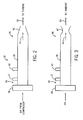
- FIG. 2 is a schematic view of a pulse detonation tube 36 that may be employed within the combustor 16 of FIG. 1 .
- the pulse detonation tube 36 includes at least one fuel injector 12 (e.g., 1, 2, 3, 4, 5, 6, 7, 8, 9, 10, or more), which feeds fuel to a combustion zone located within the pulse detonation tube 36.
- the pulse detonation tube 36 includes an air valve 38 disposed to an upstream end 40 of the tube 36.
- the air valve 38 is configured to inject discrete air pulses into the pulse detonation tube 36.
- the fuel injector 12 is configured to inject fuel into each of the air pulses to establish a fuel-air mixture suitable for detonation.
- An ignition source 42 then detonates the fuel-air mixture, thereby forming a detonation wave that propagates through the pulse detonation tube 36.
- Exhaust gas 44 from the detonation reaction flows into a nozzle 46 disposed to a downstream end 48 of the tube 36.
- the nozzle 46 is a converging nozzle configured to accelerate the flow of the exhaust gas 44. Consequently, the velocity of exhaust gas 50 emitted from the nozzle 46 may be greater than the velocity of the exhaust gas 44 within the tube 36.
- the exhaust gas 50 causes blades within the turbine 18 to rotate as the exhaust gas 50 flows toward the exhaust outlet 20.
- the pulse detonation tube 36 and/or the nozzle 46 includes a thermally protective layer configured to distribute the heat of the detonation reaction over time, thereby limiting the maximum exposure temperature of the tube 36 and/or the nozzle 46.
- FIG. 3 is a schematic view of another embodiment of the pulse detonation tube 36 coupled to a nozzle 47 to produce thrust.
- the nozzle 47 is a converging-diverging nozzle 47 configured to accelerate the flow of exhaust gas 44 toward the speed of sound within the converging section, and supersonically accelerate the flow within the diverging section. Consequently, a supersonic flow of exhaust gas 50 may be emitted from the nozzle 47.
- the exhaust gas 50 is directed to the ambient air such that the pulse detonation tube 36 generates thrust.
- Such a configuration may be known as a "pure" pulse detonation engine.
- the tube 36 and/or the nozzle 47 may include a thermally protective layer configured to distribute the heat of the detonation reaction over time, thereby limiting the maximum exposure temperature of the tube 36 and/or the nozzle 47.
- FIG. 4 is a cross-sectional view of a turbine section, illustrating various turbine components that may include a thermally protective layer configured to protect the components from high transient temperatures.
- the exhaust gas 50 from the nozzle 46 of the combustor 16 flows into the turbine 18 in an axial direction 52 and/or a circumferential direction 54.
- the present turbine 18 includes at least two stages, with the first two stages shown in FIG. 4 .
- Other turbine configurations may include more or fewer turbine stages.
- a turbine may include 1, 2, 3, 4, 5, 6, or more turbine stages.
- the first turbine stage includes vanes 56 and blades 58 substantially equally spaced in the circumferential direction 54 about the turbine 18.
- the first stage vanes 56 are rigidly mounted to the turbine 18 and configured to direct combustion gases toward the blades 58.
- the first stage blades 58 are mounted to a rotor 60 that is driven to rotate by exhaust gas 50 flowing through the blades 58.
- the rotor 60 is coupled to the shaft 19, which drives the compressor 22 and the load 26.
- the exhaust gas 50 then flows through second stage vanes 62 and second stage blades 64.
- the second stage blades 64 are also coupled to the rotor 60.
- energy from the gas is converted into rotational energy of the rotor 60.
- the exhaust gas 50 exits the turbine 18 in the axial direction 52.
- each first stage vane 56 extends outward from an endwall 66 in a radial direction 68.
- the endwall 66 is configured to block hot exhaust gas 50 from entering the rotor 60.
- a similar endwall may be present adjacent to the second stage vanes 62, and subsequent downstream vanes, if present.
- each first stage blade 58 extends outward from a platform 70 in the radial direction 68.
- the platform 70 is part of a shank 72 which couples the blade 58 to the rotor 60.
- the shank 72 also includes a seal, or angel wing, 74 configured to block hot exhaust gas 50 from entering the rotor 60.
- a shroud 76 is positioned radially outward from the first stage blades 58.
- the shroud 76 is configured to minimize the quantity of exhaust gas 50 that bypasses the blades 58. Gas bypass is undesirable because energy from the bypassing gas is not captured by the blades 58 and translated into rotational energy.
- At least one component of the turbine 18 may include a base material and a thermally protective layer disposed adjacent to a surface of the base material facing the flow of exhaust gas 50.
- the thermally protective layer may be configured to limit temperature fluctuations at the surface of the base material facing the flow of exhaust gas 50 to less than approximately 20 degrees Celsius during operation of the pulse detonation system.
- the first stage vanes 56 or blades 58 may include a base material with a thermally protective layer disposed adjacent to a surface of the base material facing the flow of exhaust gas 50 to protect the vanes 56 or blades 58 from the hot exhaust gas 50.
- the surface of the vanes 56 or blades 58 facing the flow of exhaust gas 50 is the outer surface of the vanes 56 or blades 58.
- a thermally protective layer may be disposed adjacent to a surface of the base material of the shroud 76, platform 70, or endwall 66 facing the flow of exhaust gas 50.
- the surface of the shroud 76, platform 70, or endwall 66 facing the flow of exhaust gas 50 is the inner surface of the respective component (i.e., surface facing the flow path through the turbine 18).
- all of the components described above may include the thermally protective layer.
- only certain components may include the thermally protective layer, while other components omit the layer.
- each first stage vane 56 and each first stage blade 58 may include the thermally protective layer, while the other components described above do not include the layer.
- only a portion of certain components may include the thermally protective layer.
- only a fraction of the first stage blades 58 may include the layer, while the remainder may omit the layer.
- any combination of components described above may include or omit the thermally protective layer.
- other components within the turbine 18 e.g., cover plate, shank 72, seals, etc.
- FIG. 5 is a cutaway perspective view of an embodiment of the pulse detonation tube 36, as shown in FIG. 2 , including a thermally protective layer configured to limit temperature fluctuations at an inner surface of a surrounding base tube.
- the depicted pulse detonation tube 36 includes a base tube 78, a bonding material 80, and a thermally protective layer 82.
- the thermally protective layer 82 is disposed adjacent to an inner surface 83 (e.g., surface facing the flow of exhaust gas) of the base tube 78.
- Alternative embodiments may omit the bonding material 80 and dispose the thermally protective layer 82 directly onto the inner surface 83 of the base tube 78.
- the thermally protective layer 82 is configured to distribute the heat of detonation over time, thereby decreasing the maximum exposure temperature of the base tube 78. While a single thermally protective layer 82 is illustrated in the present embodiment, it should be appreciated that alternative embodiments may include multiple sublayers (e.g., 2, 3, 4, 5, 6, or more) configured to protect the base tube 78 from temperature fluctuations. In certain embodiments, different materials may be selected for each sublayer to establish a desired temperature profile within the base tube 78.
- between 10 to 100 detonations per second may occur within a pulse detonation tube 36, thereby establishing a cycle time of approximately between 10 to 100 ms.
- the detonation wave may propagate through the pulse detonation tube 36 at approximately 2000 m/s. Therefore, the pulse detonation tube 36 may be exposed to high combustion temperatures for approximately between 0.5 to 4 ms.
- the pulse detonation tube 36 may be exposed to a temperature of approximately 2000 degrees Celsius.
- the interior of the tube 36 may be exposed to gas temperatures of approximately 350 degrees Celsius for the remainder of the 10 to 100 ms cycle.
- the pulse detonation tube 36 may be exposed to high pressures during operation.
- the detonation wave may apply more than approximately 18 times the static pressure (e.g., pressure prior to detonation) to the inner surface 83 of the base tube 78.
- the base tube 78 may be particularly configured to resist such pressures for extended periods of operation (e.g., approximately 20,000 hours). Consequently, the base tube 78 may be constructed from a metal, a metal matrix composite, or a ceramic matrix composite having material properties selected based on maximum expected pressure within the pulse detonation tube 36.
- a thickness 84 of the base tube 78 may be selected based on the structural properties of the base tube material. For example, stronger materials may have a lower thickness 84 to reduce weight.
- the pulse detonation tube 36 also includes a thermally protective layer 82 configured to distribute the heat of the detonation reaction over time and/or insulate the base tube 78.
- a thermally protective layer 82 configured to distribute the heat of the detonation reaction over time and/or insulate the base tube 78.
- high frequency cyclical variations in temperature may cause cracks and/or other defects to form within the base tube 78. Such cracks may form even when the base tube 78 experiences moderate variations in temperature. For example, a temperature variation of 20 degrees Celsius at a frequency of 50 Hz may rapidly degrade the structural integrity of the base tube 78 due to thermal stress and crack formation. Consequently, in certain embodiments, the thermally protective layer 82 may be configured to limit temperature fluctuations at the inner surface 83 of the base tube 78 to less than approximately 20 degrees Celsius during operation of the pulse detonation tube 36. In further embodiments, the thermally protective layer 82 may be configured to limit temperature fluctuations to less than approximately 15, 12, 10, 7, 5, or 2 degrees Celsius.
- the thermally protective layer 82 may be composed of a material having properties and/or a thickness sufficient to effectively distribute the heat of detonation over time.
- the thermally protective layer 82 may be composed of a material having a thermal conductivity less than approximately 9 W/mK.
- Alternative embodiments may employ materials having a thermal conductivity less than 7, 5, 3, 1, or 0.5 W/mK.
- Thermal conductivity is a material property that relates to the propensity of the material to conduct heat. Materials having a lower thermal conductivity are effective insulators because they resist the flow of heat.
- the lower thermal conductivity of the thermally protective layer 82 may serve to resist heat flux and dampen temperature fluctuations, thereby reducing the mean and maximum transient temperatures of the base tube 78.
- the thermally protective layer 82 may be composed of a material having a thermal diffusivity less than approximately 0.000002 m 2 /s.
- Alternative embodiments may employ materials having a thermal diffusivity less than 0.0000015, 0.000001, or 0.0000005 m 2 /s.
- the lower thermal diffusivity of the thermally protective layer 82 may serve to absorb the heat associated within the combustion process and evenly distribute the heat to the base tube 78 over a period of time, thereby reducing the maximum temperature of the base tube 78 and limiting temperature fluctuations.
- the ability of the thermally protective layer 82 to resist temperature fluctuations and/or insulate the base tube 78 may also be defined in terms of Biot number, Bi.
- the characteristic length may be the thickness of the thermally protective layer 82, for example. Materials having a higher Biot number facilitate slower heat conduction inside of the material than at its surface for a given heating or cooling condition, thereby reducing temperature fluctuations at the inner surface 83 of the base tube 78.
- the thermally protective layer 82 may be composed of a material having a Biot number greater than approximately 0.5. Alternative embodiments may employ materials having a Biot number greater than approximately 1, 1.5, 2, 2.5 or 3. The higher Biot number of the thermally protective layer 82 may serve to absorb the heat associated within the combustion process and evenly distribute the heat to the base tube 78 over a period of time, thereby reducing the maximum temperature of the base tube 78 and limiting temperature fluctuations.
- the thermally protective layer 82 may be composed of a material having a resistance to surface temperature fluctuations coefficient of less than approximately 55.
- Alternative embodiments may employ materials having a resistance to surface temperature fluctuations coefficient of less than approximately 50, 45, 40, 35, 30, 25, 20, 15, or 10.
- the lower resistance to surface temperature fluctuations coefficient of the thermally protective layer 82 may serve to absorb the heat associated within the combustion process and evenly distribute the heat to the base tube 78 over a period of time, thereby reducing the maximum temperature of the base tube 78 and limiting temperature fluctuations.
- Thermal conductivity and thermal diffusivity may also affect the penetration depth of detonation heat into the thermally protective layer 82.
- penetration depth x may be approximated according to the following formulae: x ⁇ k ⁇ c p ⁇ t , or x ⁇ ⁇ t , or x ⁇ hL c ⁇ t ⁇ c p ⁇ Bi where t is exposure time to the detonation wave.
- a thickness 88 of the thermally protective layer 82 may be selected. Specifically, the thickness 88 may be greater than the penetration depth x such that the heat of detonation does not penetrate the base tube 78.
- the thickness 88 of the thermally protective layer 82 may be approximate between 3 to 10 thousandths of an inch (i.e., approximately between 76 to 254 microns).
- the thermally protective layer 82 may include a thermally protective coating applied to the base tube 78.
- the coating may be applied by any suitable process, such as vapor deposition, dipping, spray coating, electron beam physical vapor deposition, or plasma spraying, for example.
- the coating may be configured to limit temperature fluctuations at the inner surface 83 of the base tube 78 to less than approximately 20 degrees Celsius during operation of the pulse detonation tube 36.
- a coating thickness may be selected based on the thermal conductivity of the coating and the approximate detonation wave exposure time. For example, the coating may be approximately between 1 to 15, 2 to 12, or about 3 to 10 thousandths of an inch thick.
- the coating may be composed of a ceramic, a metal, a metallic alloy, or any other suitable material.
- suitable ceramic coatings may include, but are not limited to, yttria stabilized zirconia (YSZ), ceria stabilized zirconia (CeO 2 -YSZ), or calcium titanate.
- Metallic coatings may include, but are not limited to, nickel, cobalt, tungsten, titanium, or alloys including these metals.
- a bonding material 80 may be disposed between the base tube 78 and the thermally protective layer 82 to secure the coating to the base tube 78.
- a thickness 86 of the bonding material 80 may be approximately 0.5 to 2 thousandths of an inch (i.e., approximately 12 to 51 microns).
- the bonding material 80 may be composed of an oxidation resistant metal such as a nickel chromium aluminum yttria (NiCrAlY) alloy or a nickel cobalt chromium aluminum yttria (NiCoCrAlY) alloy, for example.
- thermally-grown oxide may contain an aluminum rich oxide that serves to limit oxidation of the base tube 78.
- the TGO layer may be approximately between 1 to 10 microns thick.
- the thermally protective layer 82 may be an ablative coating configured to wear over time.
- the process of wearing the coating may serve to transfer heat away from the base tube 78, thereby decreasing its steady-state temperature.
- heat from the detonation reaction may cause the solid ablative material to vaporize, thereby forming a layer of gas adjacent to the thermally protective layer 82.
- This gas layer may serve to further insulate the base tube 78 from the hot detonation reaction.
- the ablative coating may be periodically reapplied at desired intervals to ensure a proper coating thickness is maintained.
- the thermally protective layer 82 may be a removable mechanical insert. Similar to the ablative coating, the mechanical insert may be configured to wear over time. Therefore, the mechanical insert may be periodically removed from the base tube 78 and replaced to ensure a proper thickness 88 of the thermally protective layer 82. In certain embodiments, the mechanical insert may be secured to the base tube 78 by a bonding material 80 similar to the bonding material described above with regard to the coating.
- the present pulse detonation tube 36 includes a converging nozzle 46 configured to accelerate and/or direct the flow of exhaust gas 50 from the tube 36 to the turbine 18. Similar to the pulse detonation tube 36 described above, the depicted nozzle 46 includes a base material 90, a bonding material 92 and a thermally protective layer 94. As illustrated, the thermally protective layer 94 is disposed adjacent to an inner surface 95 (e.g., surface facing the flow of exhaust gas) of the base material 90. Alternative embodiments may omit the bonding material 92 and dispose the thermally protective layer 94 directly onto the inner surface 95 of the base material 90.
- the thermally protective layer 94 is configured to distribute the heat of detonation over time, thereby decreasing the maximum exposure temperature of the base material 90. While a single thermally protective layer 94 is illustrated in the present embodiment, it should be appreciated that alternative embodiments may include multiple sublayers (e.g., 2, 3, 4, 5, 6, or more) configured to protect the base material 90 from temperature fluctuations. In certain embodiments, different materials may be selected for each sublayer to establish a desired temperature profile within the base material 90.
- a thickness 96 of the base material 90 may be selected based on the structural properties of the base material 90. For example, stronger materials may have a lower thickness 96 to reduce weight. Consequently, the base material 90 may be constructed from a metal, a metal matrix composite, or a ceramic matrix composite having material properties selected based on maximum expected pressure within the nozzle 46.
- the thermally protective layer 94 is configured to limit temperature fluctuations at the inner surface 95 of the base material 90 to less than approximately 20 degrees Celsius during operation of the pulse detonation tube 36. In further embodiments, the thermally protective layer 94 may be configured to limit temperature fluctuations to less than approximately 15, 12, 10, 7, 5, or 2 degrees Celsius. To achieve the desired temperature fluctuation limit, the thermally protective layer 94 may be composed of a material having properties and/or a thickness sufficient to effectively distribute the heat of detonation over time. For example, the thermally protective layer 94 may have a thermal conductivity, a thermal diffusivity, a Biot number and/or a resistance to surface temperature fluctuations coefficient within the ranges described above with reference to the thermally protective layer 82.
- a thickness 100 of the thermally protective layer 94 may be greater than the penetration depth of heat into the layer 94, such that the heat of detonation does not penetrate the base material 90.
- the thermally protective layer 94 may be a removable mechanical insert, an applied thermally protective coating or an ablative coating, such as those described above with regard to the thermally protective layer 82 of the pulse detonation tube 36.
- a bonding material 92 may be disposed between the base material 90 and the thermally protective layer 94 to secure the layer 94 to the base material 90.
- a thickness 98 of the bonding material 92 may be approximately 0.5 to 2 thousandths of an inch (i.e., approximately 12 to 51 microns), and serve to limit oxidation of the base material 90. While the thermally protective layer 94 and bonding material 92 are described above with reference to the converging nozzle 46, it should be appreciated that a similar thermally protective layer 94 and bonding material 92 may be applied to converging-diverging nozzles 47, such as the one illustrated in FIG. 3 .
- FIG. 6 is a cross-sectional view of a shroud 76, taken within line 6-6 of FIG. 4 , including a thermally protective layer configured to limit temperature fluctuations at a surface of the shroud 76 facing the flow of exhaust gas.
- the shroud 76 includes a base material 102, a bonding material 104 and a thermally protective layer 106.
- the thermally protective layer 106 is disposed adjacent to an inner surface 103 (e.g., surface facing the flow of exhaust gas) of the base material 102.
- Alternative embodiments may omit the bonding material 104 and dispose the thermally protective layer 106 directly onto the inner surface 103 of the base material 102.
- the thermally protective layer 106 is configured to distribute the heat of detonation over time, thereby decreasing the maximum exposure temperature of the base material 102. While a single thermally protective layer 106 is illustrated in the present embodiment, it should be appreciated that alternative embodiments may include multiple sublayers (e.g., 2, 3, 4, 5, 6, or more) configured to protect the base material 102 from temperature fluctuations. In certain embodiments, different materials may be selected for each sublayer to establish a desired temperature profile within the base material 102.
- the thermally protective layer 106 is configured to limit temperature fluctuations at the inner surface 103 of the base material 102 to less than approximately 20 degrees Celsius during operation of the turbine 18. In further embodiments, the thermally protective layer 106 may be configured to limit temperature fluctuations to less than approximately 15, 12, 10, 7, 5, or 2 degrees Celsius. To achieve the desired temperature fluctuation limit, the thermally protective layer 106 may be composed of a material having properties and/or a thickness sufficient to effectively distribute the heat of detonation over time. For example, the thermally protective layer 106 may have a thermal conductivity, a thermal diffusivity, a Biot number and/or a resistance to surface temperature fluctuations coefficient within the ranges described above with reference to the thermally protective layer 82.
- a thickness 110 of the thermally protective layer 106 may be greater than the penetration depth of heat into the layer 106, such that the heat of detonation does not penetrate the base material 102.
- the thermally protective layer 106 may be a removable mechanical insert, an applied thermally protective coating or an ablative coating, such as those described above with regard to the thermally protective layer 82 of the pulse detonation tube 36.
- a bonding material 104 may be disposed between the base material 102 and the thermally protective layer 106 to secure the layer 106 to the base material 102.
- a thickness 108 of the bonding material 104 may be approximately 0.5 to 2 thousandths of an inch (i.e., approximately 12 to 51 microns), and serve to limit oxidation of the base material 102. While the thermally protective layer 106 and bonding material 104 are described above with reference to the shroud 76, it should be appreciated that a similar thermally protective layer 106 and bonding material 104 may be applied to vanes 56 and 62, blades 58 and 64, endwalls 66, platforms 70, angel wings 76, or any other component within the turbine 18 to protect the turbine 18 from temperature fluctuations associated with operation of the pulse detonation combustor 16.
Landscapes
- Engineering & Computer Science (AREA)
- Chemical & Material Sciences (AREA)
- Mechanical Engineering (AREA)
- General Engineering & Computer Science (AREA)
- Combustion & Propulsion (AREA)
- Materials Engineering (AREA)
- Fluidized-Bed Combustion And Resonant Combustion (AREA)
- Turbine Rotor Nozzle Sealing (AREA)
Applications Claiming Priority (1)
| Application Number | Priority Date | Filing Date | Title |
|---|---|---|---|
| US12/717,799 US8955303B2 (en) | 2010-03-04 | 2010-03-04 | Pulse detonation system |
Publications (2)
| Publication Number | Publication Date |
|---|---|
| EP2363588A2 true EP2363588A2 (de) | 2011-09-07 |
| EP2363588A3 EP2363588A3 (de) | 2017-07-26 |
Family
ID=43797816
Family Applications (1)
| Application Number | Title | Priority Date | Filing Date |
|---|---|---|---|
| EP11156782.2A Withdrawn EP2363588A3 (de) | 2010-03-04 | 2011-03-03 | Pulsdetonationssystem für eine Gasturbine |
Country Status (4)
| Country | Link |
|---|---|
| US (1) | US8955303B2 (de) |
| EP (1) | EP2363588A3 (de) |
| JP (1) | JP5734706B2 (de) |
| CA (1) | CA2732899C (de) |
Cited By (1)
| Publication number | Priority date | Publication date | Assignee | Title |
|---|---|---|---|---|
| CN109028151A (zh) * | 2017-06-09 | 2018-12-18 | 通用电气公司 | 多室旋转爆轰燃烧器 |
Families Citing this family (13)
| Publication number | Priority date | Publication date | Assignee | Title |
|---|---|---|---|---|
| BR112013010886A2 (pt) | 2010-11-05 | 2016-08-02 | Thermochem Recovery Int Inc | sistema de circulação de sólidos e processo para captura e conversão de sólidos reativos |
| AU2012315914B2 (en) | 2011-09-27 | 2015-07-09 | Thermochem Recovery International, Inc. | System and method for syngas clean-up |
| WO2016049703A1 (en) * | 2014-10-02 | 2016-04-07 | Siddons Enertec Pty. Ltd. | Thermoacoustic refrigerator |
| ES2940894T3 (es) | 2016-02-16 | 2023-05-12 | Thermochem Recovery Int Inc | Sistema y método de generación de gas producto de energía integrada de dos etapas |
| EP3433340B1 (de) | 2016-03-25 | 2022-06-29 | ThermoChem Recovery International, Inc. | Dreistufiges energieintegriertes produktgaserzeugungssystem |
| US10364398B2 (en) | 2016-08-30 | 2019-07-30 | Thermochem Recovery International, Inc. | Method of producing product gas from multiple carbonaceous feedstock streams mixed with a reduced-pressure mixing gas |
| US9920926B1 (en) | 2017-07-10 | 2018-03-20 | Thermochem Recovery International, Inc. | Pulse combustion heat exchanger system and method |
| US10099200B1 (en) | 2017-10-24 | 2018-10-16 | Thermochem Recovery International, Inc. | Liquid fuel production system having parallel product gas generation |
| CH714304A1 (de) * | 2017-11-06 | 2019-05-15 | Explotechnik AG | Pulsantrieb. |
| US11105511B2 (en) * | 2018-12-14 | 2021-08-31 | General Electric Company | Rotating detonation propulsion system |
| US11572840B2 (en) * | 2019-12-03 | 2023-02-07 | General Electric Company | Multi-mode combustion control for a rotating detonation combustion system |
| US11555157B2 (en) | 2020-03-10 | 2023-01-17 | Thermochem Recovery International, Inc. | System and method for liquid fuel production from carbonaceous materials using recycled conditioned syngas |
| US11466223B2 (en) | 2020-09-04 | 2022-10-11 | Thermochem Recovery International, Inc. | Two-stage syngas production with separate char and product gas inputs into the second stage |
Family Cites Families (17)
| Publication number | Priority date | Publication date | Assignee | Title |
|---|---|---|---|---|
| US3449913A (en) | 1968-01-29 | 1969-06-17 | John J Grebe | Combustion process |
| JPH0628681B2 (ja) * | 1989-12-16 | 1994-04-20 | 大阪富士工業株式会社 | バルブレスパルス燃焼方法及びバルブレスパルス燃焼器 |
| US6003301A (en) * | 1993-04-14 | 1999-12-21 | Adroit Systems, Inc. | Exhaust nozzle for multi-tube detonative engines |
| US5345758A (en) * | 1993-04-14 | 1994-09-13 | Adroit Systems, Inc. | Rotary valve multiple combustor pulse detonation engine |
| US6787194B2 (en) * | 2002-04-17 | 2004-09-07 | Science Applications International Corporation | Method and apparatus for pulsed detonation coating of internal surfaces of small diameter tubes and the like |
| US7621118B2 (en) * | 2002-07-03 | 2009-11-24 | Rolls-Royce North American Technologies, Inc. | Constant volume combustor having a rotating wave rotor |
| US7160357B2 (en) * | 2003-08-14 | 2007-01-09 | Praxair Technology, Inc. | Oxygen transport membrane reactor and method |
| WO2006083320A2 (en) * | 2004-07-09 | 2006-08-10 | Board Of Trustees Of Michigan State University | Ultra micro gas turbine |
| US20060251821A1 (en) * | 2004-10-22 | 2006-11-09 | Science Applications International Corporation | Multi-sectioned pulsed detonation coating apparatus and method of using same |
| WO2006084925A1 (es) * | 2005-02-11 | 2006-08-17 | Fundacion Inasmet | Procedimiento para la proteccion de aleaciones de titanio frente a altas temperaturas y material obtenido |
| US7818956B2 (en) * | 2005-05-13 | 2010-10-26 | General Electric Company | Pulse detonation assembly and hybrid engine |
| US20060260291A1 (en) * | 2005-05-20 | 2006-11-23 | General Electric Company | Pulse detonation assembly with cooling enhancements |
| US7980056B2 (en) * | 2006-02-07 | 2011-07-19 | General Electric Company | Methods and apparatus for controlling air flow within a pulse detonation engine |
| US20080085368A1 (en) * | 2006-10-10 | 2008-04-10 | Gauthier Ben M | Method and Apparatus for Coating a Substrate |
| US20080155959A1 (en) * | 2006-12-22 | 2008-07-03 | General Electric Company | Detonation combustor to turbine transition piece for hybrid engine |
| EP2072205A1 (de) | 2007-12-17 | 2009-06-24 | Rovalma SA | Verfahren zum Herstellen von Teilen mit hoher mechanischer Belastung und insbesondere Werkzeuge aus kostengünstigen Keramiken oder Polymeren |
| US8661782B2 (en) * | 2009-11-30 | 2014-03-04 | General Electric Company | Rotating valve assembly for high temperature and high pressure operation |
-
2010
- 2010-03-04 US US12/717,799 patent/US8955303B2/en not_active Expired - Fee Related
-
2011
- 2011-02-24 CA CA2732899A patent/CA2732899C/en not_active Expired - Fee Related
- 2011-03-03 JP JP2011045865A patent/JP5734706B2/ja not_active Expired - Fee Related
- 2011-03-03 EP EP11156782.2A patent/EP2363588A3/de not_active Withdrawn
Non-Patent Citations (1)
| Title |
|---|
| None |
Cited By (1)
| Publication number | Priority date | Publication date | Assignee | Title |
|---|---|---|---|---|
| CN109028151A (zh) * | 2017-06-09 | 2018-12-18 | 通用电气公司 | 多室旋转爆轰燃烧器 |
Also Published As
| Publication number | Publication date |
|---|---|
| JP5734706B2 (ja) | 2015-06-17 |
| US8955303B2 (en) | 2015-02-17 |
| JP2011185268A (ja) | 2011-09-22 |
| CA2732899A1 (en) | 2011-09-04 |
| EP2363588A3 (de) | 2017-07-26 |
| CA2732899C (en) | 2018-02-13 |
| US20110214407A1 (en) | 2011-09-08 |
Similar Documents
| Publication | Publication Date | Title |
|---|---|---|
| US8955303B2 (en) | Pulse detonation system | |
| EP2518272B1 (de) | Gasturbinentriebwerk | |
| CN111306576B (zh) | 用于热力发动机的燃烧区段和燃料喷射器组件 | |
| US20140127006A1 (en) | Blade outer air seal | |
| EP3047128B1 (de) | Kontrollierte variation des druckabfalls durch effusionskühlung in einer doppelwandigen brennkammer eines gasturbinentriebwerks | |
| US20130205793A1 (en) | Gas turbine engine component with impingement and diffusive cooling | |
| CN111306575B (zh) | 用于热力发动机的燃料喷射器组件 | |
| US20180231256A1 (en) | Rotating Detonation Combustor | |
| US6889505B2 (en) | Pulse detonation system for a gas turbine engine | |
| CN113266850A (zh) | 可变几何形状的旋转爆震燃烧器及其操作方法 | |
| US20180356099A1 (en) | Bulk swirl rotating detonation propulsion system | |
| US20160153304A1 (en) | Low loss airfoil platform rim seal assembly | |
| US20180274442A1 (en) | Rotating detonation engine upstream wave arrestor | |
| US20130108438A1 (en) | Turbine bucket for use in gas turbine engines and methods for fabricating the same | |
| US20180230602A1 (en) | Coated combustor panel shell for a gas turbine engine combustor | |
| CA2960359A1 (en) | Component for a turbine engine with a film hole | |
| US20020108376A1 (en) | Thermal management system for turbomachinery | |
| US20120167572A1 (en) | Gas turbine engine and diffuser | |
| US20190360695A1 (en) | Rotating Detonation Combustion System | |
| CN120776295A (zh) | 一种用于燃气涡轮发动机中减少焦炭的涂层部件 | |
| US12352172B2 (en) | Seal slot with coating | |
| EP3537046A1 (de) | Gasturbinenbrennkammerträger mit einer thermischen sperrenbeschichtung | |
| US20240293892A1 (en) | Forming cooling aperture(s) in a turbine engine component | |
| EP4603687A1 (de) | Wärmekraftmaschine | |
| US12618563B2 (en) | Lean burn combustion system |
Legal Events
| Date | Code | Title | Description |
|---|---|---|---|
| PUAI | Public reference made under article 153(3) epc to a published international application that has entered the european phase |
Free format text: ORIGINAL CODE: 0009012 |
|
| AK | Designated contracting states |
Kind code of ref document: A2 Designated state(s): AL AT BE BG CH CY CZ DE DK EE ES FI FR GB GR HR HU IE IS IT LI LT LU LV MC MK MT NL NO PL PT RO RS SE SI SK SM TR |
|
| AX | Request for extension of the european patent |
Extension state: BA ME |
|
| PUAL | Search report despatched |
Free format text: ORIGINAL CODE: 0009013 |
|
| RIC1 | Information provided on ipc code assigned before grant |
Ipc: F02K 7/02 20060101AFI20170601BHEP |
|
| AK | Designated contracting states |
Kind code of ref document: A3 Designated state(s): AL AT BE BG CH CY CZ DE DK EE ES FI FR GB GR HR HU IE IS IT LI LT LU LV MC MK MT NL NO PL PT RO RS SE SI SK SM TR |
|
| AX | Request for extension of the european patent |
Extension state: BA ME |
|
| 17P | Request for examination filed |
Effective date: 20180126 |
|
| RBV | Designated contracting states (corrected) |
Designated state(s): AL AT BE BG CH CY CZ DE DK EE ES FI FR GB GR HR HU IE IS IT LI LT LU LV MC MK MT NL NO PL PT RO RS SE SI SK SM TR |
|
| 17Q | First examination report despatched |
Effective date: 20190614 |
|
| GRAP | Despatch of communication of intention to grant a patent |
Free format text: ORIGINAL CODE: EPIDOSNIGR1 |
|
| INTG | Intention to grant announced |
Effective date: 20191202 |
|
| STAA | Information on the status of an ep patent application or granted ep patent |
Free format text: STATUS: THE APPLICATION IS DEEMED TO BE WITHDRAWN |
|
| 18D | Application deemed to be withdrawn |
Effective date: 20200603 |