EP2364023B1 - Verfahren zur teilweisen Decodierung eines kodierten Bildes und Bildverarbeitungsvorrichtung - Google Patents
Verfahren zur teilweisen Decodierung eines kodierten Bildes und Bildverarbeitungsvorrichtung Download PDFInfo
- Publication number
- EP2364023B1 EP2364023B1 EP10189190.1A EP10189190A EP2364023B1 EP 2364023 B1 EP2364023 B1 EP 2364023B1 EP 10189190 A EP10189190 A EP 10189190A EP 2364023 B1 EP2364023 B1 EP 2364023B1
- Authority
- EP
- European Patent Office
- Prior art keywords
- image
- macroblock
- shrunken
- resolution
- data
- Prior art date
- Legal status (The legal status is an assumption and is not a legal conclusion. Google has not performed a legal analysis and makes no representation as to the accuracy of the status listed.)
- Not-in-force
Links
Images







Classifications
-
- G—PHYSICS
- G06—COMPUTING OR CALCULATING; COUNTING
- G06F—ELECTRIC DIGITAL DATA PROCESSING
- G06F3/00—Input arrangements for transferring data to be processed into a form capable of being handled by the computer; Output arrangements for transferring data from processing unit to output unit, e.g. interface arrangements
- G06F3/01—Input arrangements or combined input and output arrangements for interaction between user and computer
- G06F3/048—Interaction techniques based on graphical user interfaces [GUI]
- G06F3/0481—Interaction techniques based on graphical user interfaces [GUI] based on specific properties of the displayed interaction object or a metaphor-based environment, e.g. interaction with desktop elements like windows or icons, or assisted by a cursor's changing behaviour or appearance
- G06F3/0482—Interaction with lists of selectable items, e.g. menus
-
- G—PHYSICS
- G06—COMPUTING OR CALCULATING; COUNTING
- G06T—IMAGE DATA PROCESSING OR GENERATION, IN GENERAL
- G06T1/00—General purpose image data processing
- G06T1/0007—Image acquisition
-
- G—PHYSICS
- G06—COMPUTING OR CALCULATING; COUNTING
- G06T—IMAGE DATA PROCESSING OR GENERATION, IN GENERAL
- G06T1/00—General purpose image data processing
- G06T1/60—Memory management
-
- G—PHYSICS
- G06—COMPUTING OR CALCULATING; COUNTING
- G06T—IMAGE DATA PROCESSING OR GENERATION, IN GENERAL
- G06T3/00—Geometric image transformations in the plane of the image
- G06T3/40—Scaling of whole images or parts thereof, e.g. expanding or contracting
-
- G—PHYSICS
- G06—COMPUTING OR CALCULATING; COUNTING
- G06T—IMAGE DATA PROCESSING OR GENERATION, IN GENERAL
- G06T3/00—Geometric image transformations in the plane of the image
- G06T3/40—Scaling of whole images or parts thereof, e.g. expanding or contracting
- G06T3/4092—Image resolution transcoding, e.g. by using client-server architectures
-
- G—PHYSICS
- G06—COMPUTING OR CALCULATING; COUNTING
- G06T—IMAGE DATA PROCESSING OR GENERATION, IN GENERAL
- G06T9/00—Image coding
-
- H—ELECTRICITY
- H04—ELECTRIC COMMUNICATION TECHNIQUE
- H04N—PICTORIAL COMMUNICATION, e.g. TELEVISION
- H04N19/00—Methods or arrangements for coding, decoding, compressing or decompressing digital video signals
- H04N19/10—Methods or arrangements for coding, decoding, compressing or decompressing digital video signals using adaptive coding
- H04N19/169—Methods or arrangements for coding, decoding, compressing or decompressing digital video signals using adaptive coding characterised by the coding unit, i.e. the structural portion or semantic portion of the video signal being the object or the subject of the adaptive coding
- H04N19/17—Methods or arrangements for coding, decoding, compressing or decompressing digital video signals using adaptive coding characterised by the coding unit, i.e. the structural portion or semantic portion of the video signal being the object or the subject of the adaptive coding the unit being an image region, e.g. an object
-
- H—ELECTRICITY
- H04—ELECTRIC COMMUNICATION TECHNIQUE
- H04N—PICTORIAL COMMUNICATION, e.g. TELEVISION
- H04N19/00—Methods or arrangements for coding, decoding, compressing or decompressing digital video signals
- H04N19/10—Methods or arrangements for coding, decoding, compressing or decompressing digital video signals using adaptive coding
- H04N19/169—Methods or arrangements for coding, decoding, compressing or decompressing digital video signals using adaptive coding characterised by the coding unit, i.e. the structural portion or semantic portion of the video signal being the object or the subject of the adaptive coding
- H04N19/17—Methods or arrangements for coding, decoding, compressing or decompressing digital video signals using adaptive coding characterised by the coding unit, i.e. the structural portion or semantic portion of the video signal being the object or the subject of the adaptive coding the unit being an image region, e.g. an object
- H04N19/176—Methods or arrangements for coding, decoding, compressing or decompressing digital video signals using adaptive coding characterised by the coding unit, i.e. the structural portion or semantic portion of the video signal being the object or the subject of the adaptive coding the unit being an image region, e.g. an object the region being a block, e.g. a macroblock
-
- H—ELECTRICITY
- H04—ELECTRIC COMMUNICATION TECHNIQUE
- H04N—PICTORIAL COMMUNICATION, e.g. TELEVISION
- H04N19/00—Methods or arrangements for coding, decoding, compressing or decompressing digital video signals
- H04N19/46—Embedding additional information in the video signal during the compression process
-
- H—ELECTRICITY
- H04—ELECTRIC COMMUNICATION TECHNIQUE
- H04N—PICTORIAL COMMUNICATION, e.g. TELEVISION
- H04N19/00—Methods or arrangements for coding, decoding, compressing or decompressing digital video signals
- H04N19/50—Methods or arrangements for coding, decoding, compressing or decompressing digital video signals using predictive coding
- H04N19/59—Methods or arrangements for coding, decoding, compressing or decompressing digital video signals using predictive coding involving spatial sub-sampling or interpolation, e.g. alteration of picture size or resolution
-
- H—ELECTRICITY
- H04—ELECTRIC COMMUNICATION TECHNIQUE
- H04N—PICTORIAL COMMUNICATION, e.g. TELEVISION
- H04N19/00—Methods or arrangements for coding, decoding, compressing or decompressing digital video signals
- H04N19/60—Methods or arrangements for coding, decoding, compressing or decompressing digital video signals using transform coding
-
- H—ELECTRICITY
- H04—ELECTRIC COMMUNICATION TECHNIQUE
- H04N—PICTORIAL COMMUNICATION, e.g. TELEVISION
- H04N19/00—Methods or arrangements for coding, decoding, compressing or decompressing digital video signals
- H04N19/70—Methods or arrangements for coding, decoding, compressing or decompressing digital video signals characterised by syntax aspects related to video coding, e.g. related to compression standards
-
- G—PHYSICS
- G06—COMPUTING OR CALCULATING; COUNTING
- G06T—IMAGE DATA PROCESSING OR GENERATION, IN GENERAL
- G06T2200/00—Indexing scheme for image data processing or generation, in general
- G06T2200/16—Indexing scheme for image data processing or generation, in general involving adaptation to the client's capabilities
-
- G—PHYSICS
- G06—COMPUTING OR CALCULATING; COUNTING
- G06T—IMAGE DATA PROCESSING OR GENERATION, IN GENERAL
- G06T2200/00—Indexing scheme for image data processing or generation, in general
- G06T2200/24—Indexing scheme for image data processing or generation, in general involving graphical user interfaces [GUIs]
Definitions
- the present invention relates to a technology that expands only a part of an encoded image data. Especially it relates to a partial expansion method of an encoded image and an image processing apparatus that decodes (i.e. expands) a part of the encoded image data, such as in JPEG format, and outputs the partially decoded image to a display device according to user control request regarding display area, up/downscaling, scrolling or the like.
- a display device to view image data is usually limited up to 0.5 megapixels (VGA) - 2 megapixels (HDTV) in resolution.
- VGA 0.5 megapixels
- HDTV high definition television
- options are "to shrink the image to view its entire image” or “not to shrink the image (or to shrink the image but not enough to fit the display device) and to view a part of the image”.
- This image processing and image data storage requires significant volume of memory, but because of cost reduction needs and/or hardware restriction, its memory capacity is often restricted.
- Japanese Patent Publication No. 3108283 proposes a partial up/downscaling apparatus that designates start position and end position of up/downscaling according to an RST table storing RST positions which are inserted into encoded JPEG data, reads data from the read starting sector located before the up/downscaling start position to the read ending sector located after the up/downscaling end position out of a storage medium, and up/downscales the data from up/downscaling start position to the up/downscaling end position.
- Japanese Patent Publication No. 3399743 proposes a technology that, in order to decode a large encoded image data using small volume of memory with smooth display and scrolling of partially decoded image, a regularly skipped encoded data offset values are recorded from the starting position of encoded image datastream while encoding image data or decoding encoded image data where the encoded data offset values are stored by predetermined intervals, if partial area within source image is selected appropriate encoded data offset values are read out, and encoded image data is partially decoded in the middle of the encoded datastream to perform scrolling.
- Japanese Unexamined Patent Application Publication No. 2000-278685 describes a method in detail that partially expands a JPEG image using a scan table to partially expand the source image efficiently.
- Japanese Patent Publication No. 3747914 proposes a technology where a preview image data with reduced resolution is created from a captured source image, and a thumbnail image with further reduced resolution of predetermined size is created, and the source image data are all stored together as an image data set in memory card, and one of the image data in the image data set is selected and displayed from the memory card when in display mode, and if there is no preview image data in the image data set then the source image data or thumbnail image data are displayed on the display device instead.
- US 2006/215765 A1 discloses a method for encoding video comprising a step of capturing a video sequence at a full frame resolution, a step of identifying boundaries for an inner region within frames of the video sequence, a step of encoding the video sequence at the full frame resolution into a bitstream that includes a sub-bitstream encoding for the inner region and a step of embedding data within the bitstream, the data identifying the sub-bitstream within the bitstream.
- US 2008/199091 A1 discloses a method comprising receiving windowing information for a region of interest within an image, performing a first compressed domain operation comprising a crop operation, a flip operation or a rotation operation, and outputting a result of the first compressed domain operation.
- control data to partially expand an image and using the control data to partially expand the image require processing costs such as memory space and CPU load.
- processing costs such as memory space and CPU load.
- a control request such as displaying an image, scrolling, zoom in, or zoom out
- responses to the user control request may be delayed due to the control data creation.
- the speed of the partial decoding is faster than that of the entire decoding, the speed of processes such as scrolling may suffer due to such nature of partial decoding.
- the object of the present invention is to provide a partial expansion method of an encoded image and an image processing apparatus to reduce the CPU load of partial expansion processing, and to enable high quality image display while promptly responding to user control requests when displaying the partially decoded image.
- Overview of encoded image partial expansion method of this invention is to make it possible to promptly display an encoded image, by creating an image to be fully displayed (hereinafter called “high-resolution shrunken image”) and thumbnail images for visually-indexing multiple images (hereinafter called “low-resolution shrunken image”), by storing these images in a secondary memory (storage) in a file format when control data necessary for decoding the encoded image by blocks (hereinafter this control data is called “map data”) is created, by storing only the necessary data from the above created data in a main memory when there is a control request from a user, and by effectively outputting on the display device, the high-resolution shrunken image, the low-resolution shrunken image, or the image partially decoded using map data, according to control request details of the user control request.
- high-resolution shrunken image an image to be fully displayed
- thumbnail images for visually-indexing multiple images
- map data secondary memory
- cache data data containing this map data, the high-resolution shrunken image, and the low-resolution shrunken image are called “cache data”. Also, the cache data that is stored in a large capacity secondary memory such as flash memory in a file format is called “cache file”.
- the cache data can be created at any time during CPU idle time, during initial decoding of the encoded image, or during the encoding process when non-encoded image data is entered as its source image.
- first is “individual display mode”, which is to view an image by expanding/shrinking/scrolling
- second is “thumbnail index mode” which is to view multiple images in index mode in order to find a particular image.
- the individual display mode utilizes both the high-resolution shrunken image and the cache data
- the thumbnail index mode only utilizes the low-resolution shrunken images.
- the low-resolution shrunken image may be already within the image file.
- Exif thumbnail there is a 160 by 120 pixel thumbnail image called Exif thumbnail, which is normally added at the time of capturing images using digital camera or mobile phone.
- the individual display mode it is possible to do the processing with reduced volume of memory by discarding unnecessary parts of the image while decoding an image from top left to bottom right.
- the image is often scrolled, and that requires the entire image to be decoded every time of the scrolling, and that degrades the performance and slows the user operation responses.
- a position within the image and its relative position in the image data filestream are scanned and stored in advance, and thereby, based on this information, the partial decoding can be done promptly.
- JPEG data is a standard image encoding format where the source image is divided into units called macroblocks, and each macroblock is encoded to create the image data.
- JPEG performs frequency conversion, quantization, and entropy encoding for each macroblock, and encodes each macroblock from the top left of the image to the bottom right in order.
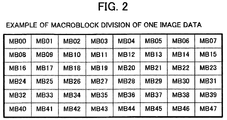
- the entire image is divided into 48 macroblocks of 8 by 6 pixels, and macrobocks MB00, MB01, ... MB47 are encoded in order.
- Encoded macroblock data exist in a bitstream order from the top left to the bottom right of the image displayed on a screen, and a DC component value of each macroblock is stored as the relative difference from the previous macroblock; therefore, to decode any macroblock, macroblocks from the start of the bitstream must be scanned in order. Therefore, the entire image must be decoded each time to decode one part of an image, which lowers the processing performance.
- processing speed is enhanced by scanning and storing map data containing image data filestream position and its relative internal image position, as well as the DC component values (each of YUV) for the macroblock.
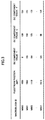
- FIG. 3 describes map data structure.
- map data is related to a filestream position, a DC component value Y, a DC component value U, and a DC component value V for each macroblock ID.
- encoding is done for each bit by using entropy encoding; therefore, filestream position is designated on a bit basis.
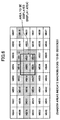
- the file stream position is extracted for the macroblocks to be displayed. Then, the decoding process is performed from the position of the extracted file stream position for the prompt decoding. For example, if the solid-line bold-framed area is the display area to be shown on a display device, only the shaded macroblocks, which are included in the area, are extracted and decoded.
- FIG. 5 shows a map data structure where the filestream position is recorded every five macroblocks.
- the macroblocks not stored in map data can be decoded by scanning based on the macroblocks recorded in the map data.
- the map data volume can be reduced, and further, it is possible to perform the decoding much faster than the case of decoding all the macroblocks.
- JPEG JPEG format
- the filestream thereof stores low-resolution data at its beginning part, and the data progressively increases in resolution further into the filestream.
- the data group of each frequency band is called scan, and this data structure is described in FIG. 7 .
- scan 0 indicates the lowest resolution (YUV DC components), and as the scan ID increases higher resolution data are stored.
- Each scan can contain header data, where the Huffman table for that scan is stored. This Huffman table is to be used for decoding Huffman code data.
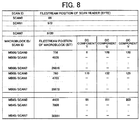
- Map data for Progressive JPEG stores a filestream position of scan header for each scan ID as indicated in FIG. 8 , and the filestream position is stored for each macroblock scan ID.
- scan 0 DC components
- Progressive JPEG map data stores a calculated cumulative value of DC components up to the current MCU of the filestream. This DC component values for each of the YUV do not exist for each scan, but exists for scan 0.
- FIG. 8 shows an example, there are eight scans and 48 macroblocks (8 by 6) where every fifth macroblock data is stored by skipping the macroblocks inbetween.
- map data is the addition of scan header of the filestream position, and macroblock filestream positions are stored for all the scans. This allows a prompt response of multiple position references within a file.
- Map data for Progressive JPEG must store the filestream positions for multiple scans, which increases data volume.
- a macroblock skipping interval needs to be adjusted to this effect.
- map data's upper limit data volume is Smap bytes
- the number of scans is Nscan
- storing scan filestream position takes Sscan byte per scan
- the number of macroblocks is Nmb
- storing macroblock filestream position takes Smb per macroblock
- storing DC component value for each YUV takes Sdc bytes
- a macroblock skipping interval X can be obtained by the formula below.
- X Nmb ⁇ Smb ⁇ Nscan + 3 ⁇ Sdc / Smap ⁇ Nscan ⁇ Sscan
- [v] is the smallest integer that is greater than or equal to v.
- a method for partially expanding an image encoded on a macroblock basis utilizing a computer includes a step of storing the encoded image in a storage device of the computer; a step of creating map data from bitstream of the encoded image, the map data being utilized to decode at least one macroblock of the encoded image, creating a shrunken image of a predetermined size based on a screen resolution of a display device, and storing the map data and the shrunken image so as to relate the map data and the shrunken image with the encoded image in the storage device; a step of outputting, to the display device, the shrunken image related with the encoded image to be displayed based on a control request received from an input device; a step of determining at least one macroblock to be decoded based on a display area of the shrunken image; a step of partially decoding the encoded image for the determined macroblock using the map data; and a step of outputting to the display device, the
- an image processing apparatus includes a image data registration unit for storing, in a storage device, an encoded image having been encoded on a macroblock basis; a cache file creation unit for creating map data from bitstream of the encoded image, the map data being utilized to decode at least one of macroblock of the encoded image, creating a shrunken image of a predetermined size based on a screen resolution of a display device, and storing the map data and the shrunken image so as to relate the map data and the shrunken image with the encoded image in the storage device; a shrunken image output unit for outputting, to the display device, the shrunken image related with the encoded image to be displayed based on a control request received from an input device, a used block determination unit for determining at least one macroblock to be decoded based on a display area of the shrunken image; a partial decoding unit for partially decoding the encoded image for the determined macroblock using the map data; and a partially de
- CPU processing costs are reduced by sharing a process that creates map data and also creates shrunken image that matches the screen size of a display device. Then, according to a user command (i.e. control request), display data created based on the shrunken image is output to a display device first, and then display data created based on the image data that is partially decoded using map data is output to the display device.
- a user command i.e. control request
- used block determination unit of the image processing apparatus of the present invention adds macroblocks that are to be partially decoded using the partial decode unit based on the display area and a content of the control request.
- the present invention not only determines macroblocks to decode from the current display area of the shrunken image, but predicts macroblocks to decode according to control request information regarding zoom-in, zoom-out, scroll direction, or the like.
- the partially decoded image output unit of the image processing apparatus of the present invention determines the existence of partially decoded image to be output to the display device, if such an image exists the shrunken image output unit process is terminated.
- the image processing apparatus of the present invention prohibits the shrunken image from outputting, and partially decoded image data is immediately output to the display, which reduces image quality fluctuations when a user inputs a control request, and realizes smooth controls of high quality display images such as scrolling.
- the image processing apparatus of the present invention comprises a partially decoded image deletion unit which deletes partially decoded image data on a macroblock basis according to user control request and displayed area.
- the present invention allows efficient memory utilization by deleting partially decoded image data that have been regarded as having low possibility for usage according to display area and user control request information.
- the present invention creates a shrunken image that fits on a display device screen size when map data is created, efficiently arranges the map data and partially-decoded image in main memory, which also reduces CPU load. Further, by first displaying the shrunken image before displaying partially-decoded image, it is possible to display a high quality image possible while promptly responding to the user control.
- FIG. 1 is a block diagram of the image processing apparatus to realize the partial image expansion method of the first embodiment.
- Image processing apparatus 1 contains input device 11 to input image data and user control requests, computational processing unit 20 to perform computational processing on input data by using the CPU, display device 12 to display processing results for images, etc., main memory 40 to write to directly from CPU, and secondary memory 60 which consists of large capacity memory such as flash memory.
- input device 11 can comprise imaging unit such as a camera, and an image captured by the imaging unit can be passed to computational processing unit 20.
- This image processing apparatus 1 can be realized with a general computer such as a personal computer or a mobile phone with camera as long as the above-mentioned functionalities are satisfied.
- Computational processing unit 20 contains input processing unit 21 to process input data passed from input device 11, memory interface unit 22 to write to secondary memory 60 and read from secondary memory 60 (hereinafter, called “memory I/F unit"), image data recording unit 23 to store image data in secondary memory 60 via memory interface unit 22, control request input unit 24 to accept user control requests such as to display and to scroll, cache file creation control unit 25 to control cache file creation timing, cache file creation unit 26 to create cache file, shrunken image output unit 27 to select and display low-resolution shrunken image 53 or high-resolution shrunken image 52 according to a control request from a user, used block determination unit 28 to identify macroblocks to decode in the encoded image, partial decode unit 29 to decode macroblocks that have been identified for decoding, partially decoded image output unit 30 to output partially decoded image to display device, and display process unit 31 executes display process for display device 12.
- encoded image data flows are indicated with broken line arrows, and the other data flows are indicated with solid line arrows
- Computational processing unit 20 of image processing apparatus 1 receives encoded image data from input device 11 via input process unit 21, which is passed to image data registration unit 23.
- Image data registration unit stores image data as a file in encoded image database 61 of secondary memory 60 via memory interface unit 22.
- ID indicating input order hereinafter called “image ID”
- input timestamp are attached to the image file.
- FIG. 1 does not include description for creating encoded image from non-encoded image; however, this feature can be included according to necessity. In this embodiment, the description is made under the assumption that non-encoded image will be input directly.
- Cache file creation control unit 25 activates cache file creation unit 26 during CPU idle time when user is not operating the viewing software.
- Cache file creation control unit 25 checks whether the image cache file exists in secondary memory 60 to display upon receiving user control request (such as zoom in, zoom out, or scroll) from control request input unit 24, and if there is no cache file corresponding to the image to display, activate cache file creation unit 26 even when there is user control request.
- shrunken image and map data 51 are created to make the image viewing experience smooth.
- Two types of shrunken images are created, one is the relatively high-resolution shrunken image 52 for individually displaying an image, and another is the low-resolution shrunken image 53 (also known as thumbnail image) to be used for viewing indices of multiple images shown on a single screen.
- the size of high-resolution shrunken image 52 depends on the display size of display device 12 (namely, screen resolution of the display device). That is, high resolution shrunken image is created in a resolution (such as 1024 by 768 pixels) that matches input resolution information (such as XGA mode) of the display device parameter of image processing apparatus 1.
- map data 51 requires scanning of the entire encoded image to extract scan positions and to perform cumulative calculation of DC components. On one hand, the entire encoded image must be scanned to create a high-resolution shrunken image. High-resolution shrunken image creation and map data creation require certain processing costs; therefore, it is preferable to reduce this processing load by simultaneously creating both the high-resolution shrunken image 52 and map data 51.
- Cache file creation unit 26 creates each of map data 51, high-resolution shrunken image 52, and low-resolution shrunken image 53, this cache data is stored in secondary memory 60 by associating it with the image ID of relevant image file.
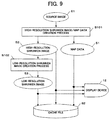
- cache data creation unit 26 creates cache data 50, displays the image using the cache data, then outputs the cache data 50 to cache file 62 of secondary memory 60. This allows prompt image display, with user operability improved. Creation process flow of cache data 50 and cache file 62 is indicated in FIG. 9 .
- cache file creation unit 26 simultaneously creates (in a single decode process) both high-resolution shrunken image 52 and map data 51 from source image (encoded image) 61 by using high-resolution shrunken image/map data creation process (S101). Further, low-resolution shrunken image creation process (S102) creates low-resolution shrunken image 53 from the high-resolution shrunken image.
- This map data 51, high-resolution shrunken image 52, and low-resolution shrunken image 53 are output to cache file 62 after these images are used for display output if a user requests the image to be displayed on display image 61.
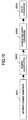
- JPEG data decoding is performed by steps indicated in FIG. 10 .
- entropy coding composite (S201) is a process to restore data from an encoded bitstream.
- Huffman coding is used for entropy encoding, and this process will be the decoding process for Huffman coded data.
- inverse quantization is performed (S202) to restore frequency data.
- Frequency data becomes YUV color space data (S203) through inverse frequency conversion (inverse DCT for JPEG).
- color conversion is performed (S204) to meet the color space (for example RGB) of display device 12, and decoding process is complete.
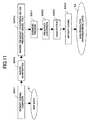
- the high-resolution shrunken image created is stored again in JPEG format. This reduces data volume. At this time, there is no need to perform inverse frequency conversion on all frequency bands. Therefore, only performing inverse frequency conversion on the low frequency bands necessary depending on the shrunken image size enhances processing speed. Also, map data 51 is created when entropy coding is composited.
- FIG. 11 indicates creation steps for high-resolution shrunken image and map data.
- Cache file creation unit 26 creates map data 51 when entropy coding is composited (S201) from encoded bitstream of encoded image.
- step S201 inverse quantization (S202) is performed, and then inverse frequency conversion (S203a) is performed on low frequency bands. Further, it is preferable in step S203a to prepare a table of relation values between display size and frequency band (scan number) where inverse frequency conversion is performed, and refer to the table to extract frequency bands that correspond to display size to perform inverse frequency conversion.
- step S203a shrinking process (S301), frequency conversion (S302), quantization (S303), entropy coding (S304) are performed to create high-resolution shrunken image 52 in JPEG format.
- Cache file 62 creation process is performed during idle periods between user control requests as described above. At this time, to achieve a smoother image viewing, importance is placed on deciding which images to create cache file for, and the order of cache file creation.
- cache file 62 is created in a different order depending on the user control request mode, namely the individual display mode where a selected image is displayed, and the thumbnail index mode where multiple images are displayed.
- FIG. 12 is used to describe cache file creation control unit 25.
- cache file creation control unit 25 When cache file creation control unit 25 is activated periodically or by activation command from control request input unit 24, the cache file creation control unit 25 first determines whether current control request mode is in individual display mode or not (S401).
- cache file creation control unit 25 first determines whether cache file 62 exists for the currently viewing image (S402). If there is no cache file 62 for the currently viewing image, then activate cache file creation unit 26, and first create cache data 50 for the image (S403). This cache file creation unit 26 outputs the created cache data 50 to display device 12, then writes the cache data 50 to cache file 62 of secondary memory 60.
- cache file creation control unit 25 determines whether or not a user is in mid-operation through GUI of input device 11 (S404). Here, after user control request input is recognized, the time period where this control request is still processing is considered to be in mid-operation of device.
- cache file creation control unit 25 terminates without creating cache data ("Yes" in S404) during device operation.
- cache file creation control unit 25 determines whether cache file 62 exists for images right before and right after the current image ID being viewed (S406), and if the corresponding cache file 62 does not exist, cache file creation unit 26 is activated, cache data 50 is created, and created cache data 50 is written to cache file 62 in secondary memory 60 (S407).
- cache file creation control unit 25 performs similar process (S406-S409) on images adjoining the images of which the cache files have been created. Therefore, cache file 62 is created (S410) by repeating S406-S409 processes while existence of user control request is confirmed each time, for each image within a certain range of image obtaining order from the currently viewing image.
- thumbnail index mode cache file creation order differs from that of individual display mode. This is due to the fact that if low-resolution shrunken image already exists it is just necessary to display the corresponding image, and therefore, its creation priority can be lowered. Below, thumbnail index mode cache file creation control unit 25 process steps are described.
- cache file creation control unit 25 first determines whether user is currently operating the device (S411), if the user is currently operating, cache data creation is not performed. On the other hand, if user is not currently operating the device ("No" in S411), then cache file creation control unit 25 determines whether cache file or low-resolution shrunken image is already stored (S412, S413). If cache file or low-resolution shrunken image is stored ("Yes" in S413), in this step cache file is not created. If neither the cache file nor the low-resolution shrunken image is stored (“No” in S413) then cache file creation control unit 25 activates cache file creation unit 26, cache file 50 is created and is written to cache file 60 (S414).
- cache file creation control unit 25 performs the same processes (S413, S414) on images adjoining the images of which the cache files have been created. Therefore, cache file 62 is created (S417) by repeating S413-S416 processes while existence of user control request is confirmed each time, for each image within a certain range of image obtainment order from the currently viewing image.
- cache file creation control unit 26 determines whether cache file of current image is stored, if the cache file is not stored, cache file creation unit 26 is activated to create cache file (S418-S420). At this step, even if low-resolution shrunken image exists, but if cache file does not exist, cache file is created.
- cache file creation control unit 25 performs the same processes (S419-420) on images adjoining the images of which the cache files have been created. Therefore, cache file 62 is created (S423) by repeating S419-S422 processes while existence of user control request is confirmed each time, for each image within a certain range of image obtainment order from the currently viewing image.
- Cache file 62 creation steps are as described above; however, creating cache file 62 for all images and storing them in secondary memory 60 uses significant amount of memory.
- cache file deletion unit 32 deletes unnecessary cache files if the number of cache files or cache files data volume total sum exceeds certain threshold value Sc. This determination is made immediately after each cache file creation where cache file deletion unit 32 is activated by cache file creation unit 26. The number of cache files increases only when cache data is created. Once cache file deletion unit 32 determines to delete cache file, deletion continues until the number of cache files or cache total file volume sum is below predetermined threshold Sc'( ⁇ Sc). The cache file deletion order is indicated below; however, in some cases the cache file created immediately before this cache file deletion may become the next cache file targeted to be deleted. In this case, the cache file is not deleted and cache file creation is terminated. However, in this case, when an image is displayed before or after the current image, the cache file creation status is reset to start the creating.
- the cache file deletion order of cache file deletion unit 32 first deletes images that are outside the specific range from the current image.
- the range can be defined arbitrarily, for example, it is possible to assign consecutive numbers when encoded images are registered, and to determine the numbers that are removed more than a certain number to be outside the range.
- Another method is to assign categories to encoded images and if the currently displayed image belongs to the same category then the images of the same category are within the range, but if images belong to a different category, such images are outside of the range.
- Cache file deletion unit 32 deletes files outside of the range, starting with the oldest creation date, and after all the images outside of the range are deleted, images within the range start being deleted. Cache file deletion unit 32 deletes images that are the furthermost located from the current image.
- a cache file deletion order is described in FIG. 13 . For example, priority of image deletion for images that are outside of the range from the current image and have old cache file creation timestamp are assigned higher deletion priority compared to other images.
- control request input unit 24 When a user requests a screen control requests, control request input unit 24 notifies that there was a control request to cache file creation control unit 25. Cache file creation control unit 25 halts activation of cache file creation unit 26 until control request process is completed.
- control request input unit 24 activates both shrunken image output unit 27 and partially decoded image output unit 30, and passes operation mode (individual display mode, thumbnail index mode), and control request information such as displayed image ID, scroll direction, scroll speed, and zoom in/out to the shrunken image output unit 27 and partially decoded image output unit 30.
- operation mode individual display mode, thumbnail index mode
- control request information such as displayed image ID, scroll direction, scroll speed, and zoom in/out to the shrunken image output unit 27 and partially decoded image output unit 30.
- Shrunken image output unit 27 is activated by control request input unit 24 and reads cache data 50 from cache file 62 for the image ID of image to be displayed.
- the read cache data is stored in main memory 40.
- shrunken image output unit 27 determines operation mode, and outputs low-resolution shrunken images of cache data 50 to the display if the operation mode is thumbnail index mode.
- shrunken image output unit 27 determines display area of high-resolution shrunken image from the control request information, and outputs image data of the display area determined by display processing unit 31 to display device 12. Specifying the display area is achieved using existing technologies, for example if top left corner of high-resolution shrunken image is the coordinate origin (0, 0), then the diagonally opposite corners of the rectangular display area (hereinafter called “diagonally opposite coordinate") are indicated as (x1, y1) (x2, y2), and the area data indicated in this style is passed to display device 12.
- shrunken image output unit 27 activates used block determination unit 28.
- used block determination unit 28 is activated, IDs of macroblocks included in the display area are calculated.
- FIG. 14(a) indicates high-resolution shrunken image and its display area
- FIG. 14(b) shows both the source image divided into macroblocks and the display area.
- high-resolution shrunken image size is a by b pixels
- macroblock ID corresponding to the high-resolution shrunken image coordinate (x, y) can be determined using the following formula.
- Macroblock ID ⁇ m * x / a > + m * ⁇ n * y / b >
- ⁇ v> is the largest integer being not less than v.
- used block determination unit 28 stores macroblock IDs belonging to rectangular display area to buffer 2 (42) of main memory 40. Afterwards, used block determination unit 28 activates partial decode unit 29.
- encoded image 61 is partially decoded by utilizing map data of macroblocks having IDs recorded in buffer 2 of encoded image map data 51. Partially decoded image data is stored in buffer 1 (41) of main memory 40. Partial decode unit 29 activates partially decoded image output unit 30 after decoding process of macroblocks having IDs stored in buffer 2 (42) is completed.
- ⁇ v> is the largest integer that is v or less.
- partially decoded image that corresponds to high-resolution shrunken image display area can be displayed by converting the coordinate system of the rectangular display area of high-resolution shrunken image to the partially decoded image coordinate system.
- image data output from shrunken image output unit 27 or partially decoded image output unit 30 is output to display device 12 through display process unit 31.
- high-resolution shrunken image is displayed first, then the encoded image is partially decoded and output to display device 12; therefore, partial decoding process is conducted smoothly without stressful user experience. Also, the entire encoded image does not have to be decoded upon user control request; therefore, memory resources are conserved.
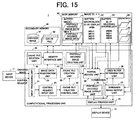
- FIG. 15 is the functional block diagram of the image processing apparatus to realize partial image expansion method of the second embodiment.
- the main difference from the image processing apparatus 1 of FIG. 1 is the addition of partially decoded image deletion unit 33 to delete partially decoded image in main memory, and the change to high-resolution shrunken image output process of shrunken image output unit 27 to allow receiving termination request of display output process by receiving process termination request from partial decode unit 29.
- This embodiment also includes buffer 1 to store in main memory 40 macroblock IDs and their partially decoded image data that are currently being used, buffer 2 to store macroblock IDs that correspond to the current display area of the high-resolution shrunken image, and buffer 3 to store macroblock IDs of macroblocks adjoining the buffer 2 macroblocks but are outside of current display area.
- used block determination unit 28 activated by shrunken image output unit 27 stores macroblock IDs corresponding to the current display area to buffer 2 of main memory 40, and partial decode unit 29 is activated. Then, after partial decoding process, macroblock addition routine described below is executed.
- partial decode unit 29 does not output termination command to shrunken image output unit 27.
- the missing macroblock ID blocks are partially decoded and added to buffer 1.
- partially decoded image output unit 30 is activated. Operation of partially decoded image output unit 30 is the same as in the first embodiment.
- FIG. 16 is used to describe the macroblock addition routine executed by used block determination unit 28.
- step S503 macroblock IDs stored in buffer 3 are extracted, and whether macroblocks of the extracted macroblock IDs exist in buffer 1 is determined (S503), if the macroblocks do not exist, partial decode unit 29 is used to partially decode blocks belonging to those macroblock IDs and they are added to buffer 1 (S504). After step S504 is completed for all macroblock IDs in buffer 3, partially decoded image deletion unit 33 is activated.
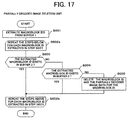
- the first macroblock ID is extracted from buffer 1 (S601), whether the extracted macroblock ID exists in buffer 2 is determined (S603), if such macroblock ID does not exist, whether such macroblock ID exists in buffer 3 is determined (S604), if such macroblock ID does not exist, the corresponding macroblock ID and the partially decoded image data for the macroblock ID are deleted (S605). Steps S603-S605 for all macroblock IDs extracted in step S601 are repeated (S602a, S602b).
- partially decoded image deletion unit 33 has lower priority than other units such as used block determination unit 28, partial decode unit 29, and partially decoded image output unit 30. This allows for control requests to activate other units that take precedence over and even interrupts partially decoded image deletion unit 33 even when it is active.
- partially decoded image data that is being currently displayed is always stored in main memory, and adjoining blocks are prepared in advance, it is possible to realize quick displays of high-resolution shrunken images in response to control requests such as scrolling. Also, since high-resolution shrunken images are displayed when processing becomes delayed, it is possible to realize more effective image display than that in the first embodiment. Further, since partially decoded image data of macroblocks that are positioned far from the currently displayed macroblocks are consecutively deleted rather than deleting adjoining macroblocks, main memory can be effectively used.
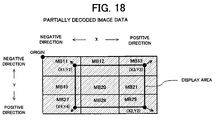
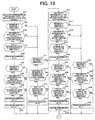
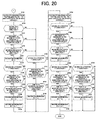
- FIG. 19 and FIG. 20 One example of predictive decoding steps in used block determination unit 28 is indicated in FIG. 19 and FIG. 20 . These example steps, as indicated in FIG. 18 , are to decode adjoining macroblocks that are in the direction of vertex movement if the distance between each vertex and image boundary of macroblocks satisfies certain conditions.
- Used block determination unit 28 calculates macroblock ID that belong to (X1, Y1) using above formula (2) and substitutes the calculated ID into variable I (S701). Then according to the control request information passed by control request input unit 24, if the vertex is moving in a negative X direction ("Yes" in S702), then whether distance between display area vertex coordinate (X1, Y1) and image boundary in the negative X direction of macroblock where the vertex belongs is below a certain value is determined (S703). If such distance is below a certain value ("Yes" in S703), then whether the ⁇ I- 1' macroblock exists in the negative X direction is determined (S704).
- used block determination unit 28 determines whether there is movement on the Y axis in the negative direction (S706), and determines whether the distance between the current display area vertex coordinate (X1, Y1) and the negative Y direction boundary of macroblock containing the vertex is equal or less than a certain value (S707). If such distance is equal to or less than a certain value, whether I-m macroblock exists in the negative Y direction is determined (S708). In other words, whether the macroblock containing the current (X1, Y1) is the upper edge or not is determined.
- step S703 If the determination is "No” in step S702, step S703, or step S704, then go to step S711 and similar process as steps S706-S709 is executed.
Landscapes
- Engineering & Computer Science (AREA)
- Multimedia (AREA)
- Signal Processing (AREA)
- Theoretical Computer Science (AREA)
- Physics & Mathematics (AREA)
- General Physics & Mathematics (AREA)
- General Engineering & Computer Science (AREA)
- Human Computer Interaction (AREA)
- Compression Or Coding Systems Of Tv Signals (AREA)
- Television Signal Processing For Recording (AREA)
- Compression Of Band Width Or Redundancy In Fax (AREA)
- Image Processing (AREA)
- Processing Or Creating Images (AREA)
Claims (5)
- Verfahren zum Teil-Vergrößern eines Bildes kodiert auf Macroblock-Basis unter Nutzung eines Computers, umfassend:einen Schritt Speichern des kodierten Bildes im JPEG-Format auf einem Speichergerät des Computers;einen Schritt Erstellen von Kartendaten umfassend, entweder in Bezug auf jeden Macroblock im kodierten Bild oder in Bezug auf jeden Makroblock in einer Reihe von Macroblocks, die in regelmäßigen Abständen im kodierten Bild beabstandet sind,- eine Macroblock-ID des Macroblocks;- eine File-Stream-Position des Macroblocks; und- einen Endwert, in dem alle DC-Komponenten des ersten Makroblocks im kodierten Bild bis zum Macroblock gesammelt werden,und gleichzeitig Erstellen eines hochauflösenden verkleinerten Bildes, wobei die Größe des hochauflösenden verkleinerten Bildes von der Anzeigegröße des Anzeigegeräts abhängt und/oder das hochauflösende verkleinerte Bild mit einer Auflösung erstellt wird, die der Eingangs-Auflösung des Anzeigegeräts entspricht;einen Schritt Speichern der Kartendaten und des verkleinerten Bildes zum In-Bezug-Setzen der Kartendaten und des verkleinerten Bildes mit dem kodierten Bild im Speichergerät; undeinen Schritt Ausgeben des verkleinerten Bildes bezogen auf das kodierte anzuzeigende Bild an das Anzeigegerät, wenn eine Steuerungsanforderung von einem Eingabegerät empfangen wird;dadurch gekennzeichnet, dass das Verfahren weiterhin umfasst:einen Schritt Bestimmen einer Vielzahl an Macroblocks, die auf der Grundlage eines anzuzeigenden Anzeigebereichs, der ein rechteckiger Unterbereich im verkleinerten Bild ist, und der Vielzahl an File-Stream-Positionen der Kartendaten zu dekodieren sind,einen Schritt Teil-Dekodieren des kodierten Bildes auf der Grundlage der gesammelten Werte entsprechend den bestimmten Macroblocks; undeinen Schritt Ausgeben des teil-dekodierten Bildes an den Anzeigebereich, so dass das verkleinerte Bild angezeigt im Anzeigebereich durch das ausgegebene teil-dekodierte Bild ersetzt wird.
- Bildverarbeitungsgerät umfassend:ein Mittel zum Speichern des kodierten Bildes im JPEG-Format auf einem Speichergerät des Computers,ein Mittel zum Erstellen von Kartendaten umfassend, entweder in Bezug auf jeden Macroblock im kodierten Bild oder in Bezug auf jeden Makroblock in einer Reihe von Macroblocks, die in regelmäßigen Abständen im kodierten Bild beabstandet sind,- eine Macroblock-ID des Macroblocks;- eine File-Stream-Position des Macroblocks; und- einen Endwert, in dem alle DC-Komponenten des ersten Makroblocks im kodierten Bild bis zum Macroblock gesammelt werden,und zum gleichzeitigen Erstellen eines hochauflösenden verkleinerten Bildes, wobei die Größe des hochauflösenden verkleinerten Bildes von der Anzeigegröße des Anzeigegeräts abhängt und/oder das hochauflösende verkleinerte Bild mit einer Auflösung erstellt wird, die der Eingangs-Auflösung des Anzeigegeräts entspricht;ein Mittel zum Speichern der Kartendaten und des verkleinerten Bildes zum In-Bezug-Setzen der Kartendaten und des verkleinerten Bildes mit dem kodierten Bild im Speichergerät; undein Mittel zum Ausgeben des verkleinerten Bildes bezogen auf das kodierte anzuzeigende Bild an das Anzeigegerät, wenn eine Steuerungsanforderung von einem Eingabegerät empfangen wird;dadurch gekennzeichnet, dass das Verfahren weiterhin umfasst:ein Mittel zum Bestimmen einer Vielzahl an Macroblocks, die auf der Grundlage eines anzuzeigenden Anzeigebereichs, der ein rechteckiger Unterbereich im verkleinerten Bild ist, und der Vielzahl an File-Stream-Positionen der Kartendaten zu dekodieren sind,ein Mittel zum Teil-Dekodieren des kodierten Bildes auf der Grundlage der gesammelten Werte entsprechend den bestimmten Macroblocks; undein Mittel zum Ausgeben des teil-dekodierten Bildes an den Anzeigebereich, so dass das verkleinerte Bild angezeigt im Anzeigebereich durch das ausgegebene teil-dekodierte Bild ersetzt wird.
- Bildverarbeitungsgerät nach Anspruch 2, wobei das macroblock-bestimmende Mittel weiterhin Macroblock(s) bestimmt zum Teil-Dekodieren durch die teil-dekodierenden Mittel auf der Grundlage des Anzeigebereichs und eines Inhalts der Steuerungsanforderung.
- Bildverarbeitungsgerät nach Anspruch 3, wobei das teil-dekodierende Mittel bestimmt, ob das teil-dekodierte an das Anzeigegerät auszugebende Bild existiert, und, falls es existiert, eine Tätigkeit des Ausgabemittels des verkleinerten Bildes beendet.
- Bildverarbeitungsgerät nach einem der Ansprüche 2 bis 4, weiterhin umfassend:ein teil-dekodiertes-Bild-Löschmittel zum Löschen, auf einer Macroblock-Grundlage, der teil-dekodierten-Bilddaten erstellt durch die teil-dekodierenden Mittel auf der Grundlage des Anzeigebereichs und des Inhalts der Steuerungsanforderung.
Applications Claiming Priority (1)
| Application Number | Priority Date | Filing Date | Title |
|---|---|---|---|
| JP2010048478A JP4848462B2 (ja) | 2010-03-04 | 2010-03-04 | 圧縮画像の部分伸長方法および画像処理装置 |
Publications (3)
| Publication Number | Publication Date |
|---|---|
| EP2364023A2 EP2364023A2 (de) | 2011-09-07 |
| EP2364023A3 EP2364023A3 (de) | 2011-09-21 |
| EP2364023B1 true EP2364023B1 (de) | 2016-04-13 |
Family
ID=44279026
Family Applications (1)
| Application Number | Title | Priority Date | Filing Date |
|---|---|---|---|
| EP10189190.1A Not-in-force EP2364023B1 (de) | 2010-03-04 | 2010-10-28 | Verfahren zur teilweisen Decodierung eines kodierten Bildes und Bildverarbeitungsvorrichtung |
Country Status (4)
| Country | Link |
|---|---|
| US (4) | US8532406B2 (de) |
| EP (1) | EP2364023B1 (de) |
| JP (1) | JP4848462B2 (de) |
| CN (2) | CN103957416B (de) |
Families Citing this family (14)
| Publication number | Priority date | Publication date | Assignee | Title |
|---|---|---|---|---|
| US20090037840A1 (en) * | 2007-08-03 | 2009-02-05 | Siemens Medical Solutions Usa, Inc. | Location Determination For Z-Direction Increments While Viewing Medical Images |
| JP4848462B2 (ja) * | 2010-03-04 | 2011-12-28 | 株式会社モルフォ | 圧縮画像の部分伸長方法および画像処理装置 |
| JP2011244031A (ja) * | 2010-05-14 | 2011-12-01 | Fujifilm Corp | 画像データ伸張装置および画像データ圧縮装置,ならびにそれらの動作制御方法 |
| US9697628B2 (en) * | 2011-03-18 | 2017-07-04 | Paypal, Inc. | On-demand image spriting |
| WO2012164806A1 (ja) * | 2011-06-03 | 2012-12-06 | 株式会社ソニー・コンピュータエンタテインメント | 電子メール受信装置および方法 |
| US9377940B2 (en) * | 2013-02-28 | 2016-06-28 | Facebook, Inc. | Predictive pre-decoding of encoded media item |
| US9854052B2 (en) * | 2013-09-27 | 2017-12-26 | Sap Se | Business object attachments and expiring URLs |
| US10757164B2 (en) | 2014-10-22 | 2020-08-25 | Paypal, Inc. | Performance improvement of web pages by on-demand generation of composite images |
| US10410398B2 (en) * | 2015-02-20 | 2019-09-10 | Qualcomm Incorporated | Systems and methods for reducing memory bandwidth using low quality tiles |
| US9930354B2 (en) * | 2015-12-11 | 2018-03-27 | Google Llc | Skip scanlines on JPEG image decodes |
| US10284861B2 (en) * | 2016-12-09 | 2019-05-07 | Advanced Micro Devices, Inc. | Concurrent image compression and thumbnail generation |
| EP3980965B1 (de) * | 2019-06-25 | 2025-09-24 | Huawei Technologies Co., Ltd. | Bildverarbeitungsverfahren und -vorrichtung und computerprogrammprodukt dafür |
| CN113283971A (zh) * | 2021-07-22 | 2021-08-20 | 北京达佳互联信息技术有限公司 | 信息显示方法和装置、电子设备和存储介质 |
| CN117528226B (zh) * | 2023-07-03 | 2024-08-30 | 荣耀终端有限公司 | 一种处理图像的方法、电子设备及存储介质 |
Family Cites Families (21)
| Publication number | Priority date | Publication date | Assignee | Title |
|---|---|---|---|---|
| US5065447A (en) * | 1989-07-05 | 1991-11-12 | Iterated Systems, Inc. | Method and apparatus for processing digital data |
| US4979915A (en) | 1989-09-20 | 1990-12-25 | Amp Incorporated | Wire to wire electrical connector with blade contact |
| JP3074914B2 (ja) | 1992-03-25 | 2000-08-07 | 富士通株式会社 | 光コネクタ |
| JP3108283B2 (ja) | 1994-08-29 | 2000-11-13 | 三洋電機株式会社 | 部分伸長装置及び方法 |
| JP3399743B2 (ja) | 1996-05-31 | 2003-04-21 | シャープ株式会社 | 画像圧縮データ処理装置 |
| US6008853A (en) * | 1996-11-15 | 1999-12-28 | Texas Instruments Incorporated | Sub-frame decoder with area dependent update rate for digital camcorder transmission standard |
| US6298166B1 (en) * | 1998-03-30 | 2001-10-02 | Seiko Epson Corporation | Image transformations in the compressed domain |
| US6466624B1 (en) * | 1998-10-28 | 2002-10-15 | Pixonics, Llc | Video decoder with bit stream based enhancements |
| US6381371B1 (en) | 1999-03-17 | 2002-04-30 | Hewlett-Packard Company | Method and apparatus for processing image files |
| JP2001148833A (ja) * | 1999-09-12 | 2001-05-29 | Sony Computer Entertainment Inc | 圧縮画像データを復号処理する方法及び電子装置、並びに補助記録装置 |
| US7100203B1 (en) * | 2000-04-19 | 2006-08-29 | Glenayre Electronics, Inc. | Operating session reauthorization in a user-operated device |
| FR2833796B1 (fr) * | 2001-12-19 | 2004-04-09 | Thomson Licensing Sa | Procede et dispositif de compression de donnees video codees par paquets video |
| JP3747914B2 (ja) | 2002-04-12 | 2006-02-22 | カシオ計算機株式会社 | 画像記録装置、画像記録方法及びプログラム |
| US20050055647A1 (en) * | 2003-09-05 | 2005-03-10 | Chung-Hui Chen | System and method for switching software functions |
| US7589738B2 (en) * | 2004-07-14 | 2009-09-15 | Integrated Device Technology, Inc. | Cache memory management system and method |
| JP4371982B2 (ja) * | 2004-11-08 | 2009-11-25 | キヤノン株式会社 | 画像処理装置及びその制御方法、並びに、コンピュータプログラム及びコンピュータ可読記憶媒体 |
| US7830409B2 (en) * | 2005-03-25 | 2010-11-09 | Cherng-Daw Hwang | Split screen video in a multimedia communication system |
| JP2006262496A (ja) * | 2006-04-03 | 2006-09-28 | Casio Comput Co Ltd | 画像記録再生装置、カメラ装置、画像記録再生方法及びプログラム |
| JP4706567B2 (ja) * | 2006-06-12 | 2011-06-22 | ソニー株式会社 | 画像処理方法、画像処理方法のプログラム、画像処理方法のプログラムを記録した記録媒体、画像処理装置 |
| US8515194B2 (en) * | 2007-02-21 | 2013-08-20 | Microsoft Corporation | Signaling and uses of windowing information for images |
| JP4848462B2 (ja) * | 2010-03-04 | 2011-12-28 | 株式会社モルフォ | 圧縮画像の部分伸長方法および画像処理装置 |
-
2010
- 2010-03-04 JP JP2010048478A patent/JP4848462B2/ja not_active Expired - Fee Related
- 2010-10-27 US US12/925,678 patent/US8532406B2/en active Active
- 2010-10-28 EP EP10189190.1A patent/EP2364023B1/de not_active Not-in-force
- 2010-12-01 CN CN201410140920.3A patent/CN103957416B/zh active Active
- 2010-12-01 CN CN2010105682441A patent/CN102196260A/zh active Pending
-
2013
- 2013-07-29 US US13/953,388 patent/US9275474B2/en active Active
-
2016
- 2016-01-06 US US14/989,624 patent/US9760251B2/en active Active
- 2016-02-03 US US15/014,019 patent/US9703453B2/en active Active
Also Published As
| Publication number | Publication date |
|---|---|
| CN103957416A (zh) | 2014-07-30 |
| JP4848462B2 (ja) | 2011-12-28 |
| US20160117801A1 (en) | 2016-04-28 |
| US9760251B2 (en) | 2017-09-12 |
| EP2364023A2 (de) | 2011-09-07 |
| CN103957416B (zh) | 2017-05-24 |
| US20140029861A1 (en) | 2014-01-30 |
| JP2011188041A (ja) | 2011-09-22 |
| US9703453B2 (en) | 2017-07-11 |
| CN102196260A (zh) | 2011-09-21 |
| US20160147394A1 (en) | 2016-05-26 |
| EP2364023A3 (de) | 2011-09-21 |
| US8532406B2 (en) | 2013-09-10 |
| US9275474B2 (en) | 2016-03-01 |
| US20110216981A1 (en) | 2011-09-08 |
Similar Documents
| Publication | Publication Date | Title |
|---|---|---|
| EP2364023B1 (de) | Verfahren zur teilweisen Decodierung eines kodierten Bildes und Bildverarbeitungsvorrichtung | |
| JP6780080B2 (ja) | 画像復号装置、画像復号方法及びプログラム | |
| US10096082B2 (en) | Upscaling and downscaling in a camera architecture | |
| KR20190043469A (ko) | 보조 프레임을 지원하는 비디오 코딩 포맷으로 비디오 스트림을 인코딩하기 위한 방법 및 인코더 | |
| EP1037165A2 (de) | Verfahren und Vorrichtung zur Verarbeitung von Bilddaten | |
| US20100158410A1 (en) | Image processing apparatus, image processing method and computer-readable storage medium | |
| US20100067810A1 (en) | Image encoding apparatus, image decoding apparatus, and methods of controlling the same | |
| US8514254B2 (en) | Apparatus and method for processing digital images | |
| JPWO2006072985A1 (ja) | 映像表示装置 | |
| US7747097B2 (en) | Method for simple hardware implementation of JPEG size limiter | |
| KR100487374B1 (ko) | 디지털 비디오의 썸네일 영상 생성 장치 | |
| KR100487330B1 (ko) | 디지털 비디오의 썸네일 영상 생성 장치 | |
| KR20060099026A (ko) | 영상의 확대 처리 방법 | |
| JP2006313415A (ja) | 画像処理装置 | |
| JP2008011224A (ja) | 画像処理装置、画像送受信システムおよび画像処理方法 |
Legal Events
| Date | Code | Title | Description |
|---|---|---|---|
| PUAI | Public reference made under article 153(3) epc to a published international application that has entered the european phase |
Free format text: ORIGINAL CODE: 0009012 |
|
| PUAL | Search report despatched |
Free format text: ORIGINAL CODE: 0009013 |
|
| AK | Designated contracting states |
Kind code of ref document: A2 Designated state(s): AL AT BE BG CH CY CZ DE DK EE ES FI FR GB GR HR HU IE IS IT LI LT LU LV MC MK MT NL NO PL PT RO RS SE SI SK SM TR |
|
| AX | Request for extension of the european patent |
Extension state: BA ME |
|
| AK | Designated contracting states |
Kind code of ref document: A3 Designated state(s): AL AT BE BG CH CY CZ DE DK EE ES FI FR GB GR HR HU IE IS IT LI LT LU LV MC MK MT NL NO PL PT RO RS SE SI SK SM TR |
|
| AX | Request for extension of the european patent |
Extension state: BA ME |
|
| RIC1 | Information provided on ipc code assigned before grant |
Ipc: H04N 7/30 20060101AFI20110816BHEP Ipc: H04N 7/46 20060101ALI20110816BHEP Ipc: H04N 7/26 20060101ALI20110816BHEP |
|
| 17P | Request for examination filed |
Effective date: 20120321 |
|
| 17Q | First examination report despatched |
Effective date: 20140805 |
|
| RAP1 | Party data changed (applicant data changed or rights of an application transferred) |
Owner name: MORPHO INC. |
|
| REG | Reference to a national code |
Ref country code: DE Ref legal event code: R079 Ref document number: 602010032195 Country of ref document: DE Free format text: PREVIOUS MAIN CLASS: H04N0007300000 Ipc: H04N0019176000 |
|
| RIC1 | Information provided on ipc code assigned before grant |
Ipc: H04N 19/59 20140101ALI20151028BHEP Ipc: H04N 19/46 20140101ALI20151028BHEP Ipc: G06T 9/00 20060101ALI20151028BHEP Ipc: H04N 19/60 20140101ALI20151028BHEP Ipc: H04N 19/176 20140101AFI20151028BHEP Ipc: H04N 19/17 20140101ALI20151028BHEP Ipc: H04N 19/70 20140101ALI20151028BHEP |
|
| GRAP | Despatch of communication of intention to grant a patent |
Free format text: ORIGINAL CODE: EPIDOSNIGR1 |
|
| INTG | Intention to grant announced |
Effective date: 20151210 |
|
| GRAS | Grant fee paid |
Free format text: ORIGINAL CODE: EPIDOSNIGR3 |
|
| GRAA | (expected) grant |
Free format text: ORIGINAL CODE: 0009210 |
|
| AK | Designated contracting states |
Kind code of ref document: B1 Designated state(s): AL AT BE BG CH CY CZ DE DK EE ES FI FR GB GR HR HU IE IS IT LI LT LU LV MC MK MT NL NO PL PT RO RS SE SI SK SM TR |
|
| REG | Reference to a national code |
Ref country code: GB Ref legal event code: FG4D |
|
| REG | Reference to a national code |
Ref country code: AT Ref legal event code: REF Ref document number: 791203 Country of ref document: AT Kind code of ref document: T Effective date: 20160415 Ref country code: CH Ref legal event code: EP |
|
| REG | Reference to a national code |
Ref country code: IE Ref legal event code: FG4D |
|
| REG | Reference to a national code |
Ref country code: DE Ref legal event code: R096 Ref document number: 602010032195 Country of ref document: DE |
|
| REG | Reference to a national code |
Ref country code: LT Ref legal event code: MG4D |
|
| REG | Reference to a national code |
Ref country code: AT Ref legal event code: MK05 Ref document number: 791203 Country of ref document: AT Kind code of ref document: T Effective date: 20160413 |
|
| REG | Reference to a national code |
Ref country code: FR Ref legal event code: PLFP Year of fee payment: 7 |
|
| REG | Reference to a national code |
Ref country code: NL Ref legal event code: MP Effective date: 20160413 |
|
| PG25 | Lapsed in a contracting state [announced via postgrant information from national office to epo] |
Ref country code: NL Free format text: LAPSE BECAUSE OF FAILURE TO SUBMIT A TRANSLATION OF THE DESCRIPTION OR TO PAY THE FEE WITHIN THE PRESCRIBED TIME-LIMIT Effective date: 20160413 Ref country code: PL Free format text: LAPSE BECAUSE OF FAILURE TO SUBMIT A TRANSLATION OF THE DESCRIPTION OR TO PAY THE FEE WITHIN THE PRESCRIBED TIME-LIMIT Effective date: 20160413 Ref country code: FI Free format text: LAPSE BECAUSE OF FAILURE TO SUBMIT A TRANSLATION OF THE DESCRIPTION OR TO PAY THE FEE WITHIN THE PRESCRIBED TIME-LIMIT Effective date: 20160413 Ref country code: NO Free format text: LAPSE BECAUSE OF FAILURE TO SUBMIT A TRANSLATION OF THE DESCRIPTION OR TO PAY THE FEE WITHIN THE PRESCRIBED TIME-LIMIT Effective date: 20160713 Ref country code: LT Free format text: LAPSE BECAUSE OF FAILURE TO SUBMIT A TRANSLATION OF THE DESCRIPTION OR TO PAY THE FEE WITHIN THE PRESCRIBED TIME-LIMIT Effective date: 20160413 |
|
| PG25 | Lapsed in a contracting state [announced via postgrant information from national office to epo] |
Ref country code: SE Free format text: LAPSE BECAUSE OF FAILURE TO SUBMIT A TRANSLATION OF THE DESCRIPTION OR TO PAY THE FEE WITHIN THE PRESCRIBED TIME-LIMIT Effective date: 20160413 Ref country code: RS Free format text: LAPSE BECAUSE OF FAILURE TO SUBMIT A TRANSLATION OF THE DESCRIPTION OR TO PAY THE FEE WITHIN THE PRESCRIBED TIME-LIMIT Effective date: 20160413 Ref country code: AT Free format text: LAPSE BECAUSE OF FAILURE TO SUBMIT A TRANSLATION OF THE DESCRIPTION OR TO PAY THE FEE WITHIN THE PRESCRIBED TIME-LIMIT Effective date: 20160413 Ref country code: ES Free format text: LAPSE BECAUSE OF FAILURE TO SUBMIT A TRANSLATION OF THE DESCRIPTION OR TO PAY THE FEE WITHIN THE PRESCRIBED TIME-LIMIT Effective date: 20160413 Ref country code: GR Free format text: LAPSE BECAUSE OF FAILURE TO SUBMIT A TRANSLATION OF THE DESCRIPTION OR TO PAY THE FEE WITHIN THE PRESCRIBED TIME-LIMIT Effective date: 20160714 Ref country code: PT Free format text: LAPSE BECAUSE OF FAILURE TO SUBMIT A TRANSLATION OF THE DESCRIPTION OR TO PAY THE FEE WITHIN THE PRESCRIBED TIME-LIMIT Effective date: 20160816 Ref country code: HR Free format text: LAPSE BECAUSE OF FAILURE TO SUBMIT A TRANSLATION OF THE DESCRIPTION OR TO PAY THE FEE WITHIN THE PRESCRIBED TIME-LIMIT Effective date: 20160413 Ref country code: LV Free format text: LAPSE BECAUSE OF FAILURE TO SUBMIT A TRANSLATION OF THE DESCRIPTION OR TO PAY THE FEE WITHIN THE PRESCRIBED TIME-LIMIT Effective date: 20160413 |
|
| PG25 | Lapsed in a contracting state [announced via postgrant information from national office to epo] |
Ref country code: IT Free format text: LAPSE BECAUSE OF FAILURE TO SUBMIT A TRANSLATION OF THE DESCRIPTION OR TO PAY THE FEE WITHIN THE PRESCRIBED TIME-LIMIT Effective date: 20160413 Ref country code: BE Free format text: LAPSE BECAUSE OF FAILURE TO SUBMIT A TRANSLATION OF THE DESCRIPTION OR TO PAY THE FEE WITHIN THE PRESCRIBED TIME-LIMIT Effective date: 20160413 |
|
| REG | Reference to a national code |
Ref country code: DE Ref legal event code: R097 Ref document number: 602010032195 Country of ref document: DE |
|
| PG25 | Lapsed in a contracting state [announced via postgrant information from national office to epo] |
Ref country code: RO Free format text: LAPSE BECAUSE OF FAILURE TO SUBMIT A TRANSLATION OF THE DESCRIPTION OR TO PAY THE FEE WITHIN THE PRESCRIBED TIME-LIMIT Effective date: 20160413 Ref country code: DK Free format text: LAPSE BECAUSE OF FAILURE TO SUBMIT A TRANSLATION OF THE DESCRIPTION OR TO PAY THE FEE WITHIN THE PRESCRIBED TIME-LIMIT Effective date: 20160413 Ref country code: SK Free format text: LAPSE BECAUSE OF FAILURE TO SUBMIT A TRANSLATION OF THE DESCRIPTION OR TO PAY THE FEE WITHIN THE PRESCRIBED TIME-LIMIT Effective date: 20160413 Ref country code: CZ Free format text: LAPSE BECAUSE OF FAILURE TO SUBMIT A TRANSLATION OF THE DESCRIPTION OR TO PAY THE FEE WITHIN THE PRESCRIBED TIME-LIMIT Effective date: 20160413 Ref country code: EE Free format text: LAPSE BECAUSE OF FAILURE TO SUBMIT A TRANSLATION OF THE DESCRIPTION OR TO PAY THE FEE WITHIN THE PRESCRIBED TIME-LIMIT Effective date: 20160413 |
|
| PLBE | No opposition filed within time limit |
Free format text: ORIGINAL CODE: 0009261 |
|
| STAA | Information on the status of an ep patent application or granted ep patent |
Free format text: STATUS: NO OPPOSITION FILED WITHIN TIME LIMIT |
|
| PG25 | Lapsed in a contracting state [announced via postgrant information from national office to epo] |
Ref country code: SM Free format text: LAPSE BECAUSE OF FAILURE TO SUBMIT A TRANSLATION OF THE DESCRIPTION OR TO PAY THE FEE WITHIN THE PRESCRIBED TIME-LIMIT Effective date: 20160413 |
|
| 26N | No opposition filed |
Effective date: 20170116 |
|
| PG25 | Lapsed in a contracting state [announced via postgrant information from national office to epo] |
Ref country code: SI Free format text: LAPSE BECAUSE OF FAILURE TO SUBMIT A TRANSLATION OF THE DESCRIPTION OR TO PAY THE FEE WITHIN THE PRESCRIBED TIME-LIMIT Effective date: 20160413 |
|
| REG | Reference to a national code |
Ref country code: CH Ref legal event code: PL |
|
| REG | Reference to a national code |
Ref country code: IE Ref legal event code: MM4A |
|
| PG25 | Lapsed in a contracting state [announced via postgrant information from national office to epo] |
Ref country code: LI Free format text: LAPSE BECAUSE OF NON-PAYMENT OF DUE FEES Effective date: 20161031 Ref country code: CH Free format text: LAPSE BECAUSE OF NON-PAYMENT OF DUE FEES Effective date: 20161031 |
|
| PG25 | Lapsed in a contracting state [announced via postgrant information from national office to epo] |
Ref country code: LU Free format text: LAPSE BECAUSE OF NON-PAYMENT OF DUE FEES Effective date: 20161028 |
|
| REG | Reference to a national code |
Ref country code: FR Ref legal event code: PLFP Year of fee payment: 8 |
|
| PG25 | Lapsed in a contracting state [announced via postgrant information from national office to epo] |
Ref country code: IE Free format text: LAPSE BECAUSE OF NON-PAYMENT OF DUE FEES Effective date: 20161028 |
|
| PG25 | Lapsed in a contracting state [announced via postgrant information from national office to epo] |
Ref country code: CY Free format text: LAPSE BECAUSE OF FAILURE TO SUBMIT A TRANSLATION OF THE DESCRIPTION OR TO PAY THE FEE WITHIN THE PRESCRIBED TIME-LIMIT Effective date: 20160413 Ref country code: HU Free format text: LAPSE BECAUSE OF FAILURE TO SUBMIT A TRANSLATION OF THE DESCRIPTION OR TO PAY THE FEE WITHIN THE PRESCRIBED TIME-LIMIT; INVALID AB INITIO Effective date: 20101028 |
|
| PG25 | Lapsed in a contracting state [announced via postgrant information from national office to epo] |
Ref country code: MK Free format text: LAPSE BECAUSE OF FAILURE TO SUBMIT A TRANSLATION OF THE DESCRIPTION OR TO PAY THE FEE WITHIN THE PRESCRIBED TIME-LIMIT Effective date: 20160413 Ref country code: MT Free format text: LAPSE BECAUSE OF NON-PAYMENT OF DUE FEES Effective date: 20161031 Ref country code: TR Free format text: LAPSE BECAUSE OF FAILURE TO SUBMIT A TRANSLATION OF THE DESCRIPTION OR TO PAY THE FEE WITHIN THE PRESCRIBED TIME-LIMIT Effective date: 20160413 Ref country code: IS Free format text: LAPSE BECAUSE OF FAILURE TO SUBMIT A TRANSLATION OF THE DESCRIPTION OR TO PAY THE FEE WITHIN THE PRESCRIBED TIME-LIMIT Effective date: 20160413 Ref country code: MC Free format text: LAPSE BECAUSE OF FAILURE TO SUBMIT A TRANSLATION OF THE DESCRIPTION OR TO PAY THE FEE WITHIN THE PRESCRIBED TIME-LIMIT Effective date: 20160413 |
|
| PG25 | Lapsed in a contracting state [announced via postgrant information from national office to epo] |
Ref country code: BG Free format text: LAPSE BECAUSE OF FAILURE TO SUBMIT A TRANSLATION OF THE DESCRIPTION OR TO PAY THE FEE WITHIN THE PRESCRIBED TIME-LIMIT Effective date: 20160413 |
|
| REG | Reference to a national code |
Ref country code: FR Ref legal event code: PLFP Year of fee payment: 9 |
|
| PG25 | Lapsed in a contracting state [announced via postgrant information from national office to epo] |
Ref country code: AL Free format text: LAPSE BECAUSE OF FAILURE TO SUBMIT A TRANSLATION OF THE DESCRIPTION OR TO PAY THE FEE WITHIN THE PRESCRIBED TIME-LIMIT Effective date: 20160413 |
|
| PGFP | Annual fee paid to national office [announced via postgrant information from national office to epo] |
Ref country code: GB Payment date: 20220908 Year of fee payment: 13 |
|
| PGFP | Annual fee paid to national office [announced via postgrant information from national office to epo] |
Ref country code: FR Payment date: 20220908 Year of fee payment: 13 |
|
| PGFP | Annual fee paid to national office [announced via postgrant information from national office to epo] |
Ref country code: DE Payment date: 20220831 Year of fee payment: 13 |
|
| REG | Reference to a national code |
Ref country code: DE Ref legal event code: R119 Ref document number: 602010032195 Country of ref document: DE |
|
| GBPC | Gb: european patent ceased through non-payment of renewal fee |
Effective date: 20231028 |
|
| PG25 | Lapsed in a contracting state [announced via postgrant information from national office to epo] |
Ref country code: GB Free format text: LAPSE BECAUSE OF NON-PAYMENT OF DUE FEES Effective date: 20231028 |
|
| PG25 | Lapsed in a contracting state [announced via postgrant information from national office to epo] |
Ref country code: GB Free format text: LAPSE BECAUSE OF NON-PAYMENT OF DUE FEES Effective date: 20231028 Ref country code: FR Free format text: LAPSE BECAUSE OF NON-PAYMENT OF DUE FEES Effective date: 20231031 Ref country code: DE Free format text: LAPSE BECAUSE OF NON-PAYMENT OF DUE FEES Effective date: 20240501 |