EP2364049A1 - Réduction de la consommation de puissance WLAN dans un dispositif mobile utilisant une interface radio cellulaire - Google Patents
Réduction de la consommation de puissance WLAN dans un dispositif mobile utilisant une interface radio cellulaire Download PDFInfo
- Publication number
- EP2364049A1 EP2364049A1 EP10154852A EP10154852A EP2364049A1 EP 2364049 A1 EP2364049 A1 EP 2364049A1 EP 10154852 A EP10154852 A EP 10154852A EP 10154852 A EP10154852 A EP 10154852A EP 2364049 A1 EP2364049 A1 EP 2364049A1
- Authority
- EP
- European Patent Office
- Prior art keywords
- wlan
- cellular
- signal quality
- subsystem
- indoor
- Prior art date
- Legal status (The legal status is an assumption and is not a legal conclusion. Google has not performed a legal analysis and makes no representation as to the accuracy of the status listed.)
- Granted
Links
Images




Classifications
-
- H—ELECTRICITY
- H04—ELECTRIC COMMUNICATION TECHNIQUE
- H04W—WIRELESS COMMUNICATION NETWORKS
- H04W48/00—Access restriction; Network selection; Access point selection
- H04W48/16—Discovering, processing access restriction or access information
-
- G—PHYSICS
- G01—MEASURING; TESTING
- G01C—MEASURING DISTANCES, LEVELS OR BEARINGS; SURVEYING; NAVIGATION; GYROSCOPIC INSTRUMENTS; PHOTOGRAMMETRY OR VIDEOGRAMMETRY
- G01C21/00—Navigation; Navigational instruments not provided for in groups G01C1/00 - G01C19/00
- G01C21/20—Instruments for performing navigational calculations
- G01C21/206—Instruments for performing navigational calculations specially adapted for indoor navigation
-
- H—ELECTRICITY
- H04—ELECTRIC COMMUNICATION TECHNIQUE
- H04W—WIRELESS COMMUNICATION NETWORKS
- H04W52/00—Power management, e.g. Transmission Power Control [TPC] or power classes
- H04W52/02—Power saving arrangements
- H04W52/0209—Power saving arrangements in terminal devices
- H04W52/0251—Power saving arrangements in terminal devices using monitoring of local events, e.g. events related to user activity
- H04W52/0254—Power saving arrangements in terminal devices using monitoring of local events, e.g. events related to user activity detecting a user operation or a tactile contact or a motion of the device
-
- H—ELECTRICITY
- H04—ELECTRIC COMMUNICATION TECHNIQUE
- H04W—WIRELESS COMMUNICATION NETWORKS
- H04W88/00—Devices specially adapted for wireless communication networks, e.g. terminals, base stations or access point devices
- H04W88/02—Terminal devices
- H04W88/06—Terminal devices adapted for operation in multiple networks or having at least two operational modes, e.g. multi-mode terminals
-
- Y—GENERAL TAGGING OF NEW TECHNOLOGICAL DEVELOPMENTS; GENERAL TAGGING OF CROSS-SECTIONAL TECHNOLOGIES SPANNING OVER SEVERAL SECTIONS OF THE IPC; TECHNICAL SUBJECTS COVERED BY FORMER USPC CROSS-REFERENCE ART COLLECTIONS [XRACs] AND DIGESTS
- Y02—TECHNOLOGIES OR APPLICATIONS FOR MITIGATION OR ADAPTATION AGAINST CLIMATE CHANGE
- Y02D—CLIMATE CHANGE MITIGATION TECHNOLOGIES IN INFORMATION AND COMMUNICATION TECHNOLOGIES [ICT], I.E. INFORMATION AND COMMUNICATION TECHNOLOGIES AIMING AT THE REDUCTION OF THEIR OWN ENERGY USE
- Y02D30/00—Reducing energy consumption in communication networks
- Y02D30/70—Reducing energy consumption in communication networks in wireless communication networks
Definitions
- the WLAN power consumption reduction mechanism relates to the field of data communications, and more particularly relates to a system and method for reducing WLAN power consumption on a mobile device using a cellular radio interface.
- Wireless mobile communication devices include microprocessors, memory, soundcards, and run one or more software applications in addition to providing for voice communications. Examples of software applications used in these wireless devices include micro-browsers, address books, email clients, instant messaging (IM) clients, and wavetable instruments. Additionally, wireless devices have access to a plurality of services via the Internet. A wireless device may, for example, be used to browse web sites on the Internet, to transmit and receive graphics, and to execute streaming audio and/or video applications. The transfer of Internet content to and from wireless device is typically facilitated by the Wireless Application Protocol (WAP), which integrates the Internet and other networks with wireless network platforms. Such wireless devices may operate on a cellular network, on a wireless local area network (WLAN), or on both of these types of networks.
- WAP Wireless Application Protocol
- Wi-Fi Wireless Fidelity
- IEEE Institute of Electrical and Electronics Engineers
- an access point is a station that transmits and receives data (sometimes referred to as a transceiver).
- An Access Point in an infrastructure BSS (or a client node acting as an AP in an Independent BSS) connects users to other users within the network and also can serve as the point of interconnection between the WLAN and a wired LAN.
- Each access point can serve multiple users within a defined network area. As users move beyond the range of one access point (i.e., when they roam), they are automatically handed over to the next one.
- a small WLAN may only require a single access point. The number of access points required increases as a function of the number of network users and the physical size of the network.
- the access point is typically an IEEE 802.11 (i.e. WLAN) radio receiver/transmitter (or transceiver) and functions as a gateway or bridge between a WLAN and a wired LAN.
- FIG. 1 A block diagram illustrating an example wireless communications system is shown in Figure 1 .
- the example system generally referenced 10, comprises one or more mobile devices 12 implementing a WLAN station connected to access point (AP) 14 which is connected to network 16.
- the system also comprises a cellular base station 20 in communication over an air interface to the mobile device.
- the base station is connected to a cellular network 22 which is also connected to network 16.
- a service set identifier identifies a particular IEEE 802.11 wireless LAN.
- a client device receives broadcast messages from all access points within range advertising their SSIDs. The client device can then either manually or automatically select the network with which to associate. It is legitimate for multiple access points to share the same SSID if they provide access to the same network as part of an extended service set.
- the basic service set is the basic building block of an IEEE 802.11 wireless LAN.
- one access point (AP) together with all associated stations (STAs) is called a BSS.
- An AP acts as a master to control the stations within that BSS.
- Each BSS is identified by a Basic Service Set Identifier (BSSID).
- BSSID Basic Service Set Identifier
- the most basic BSS is two STAs in Independent mode.
- a basic BSS consists of one AP and one STA.
- the BSSID uniquely identifies each BSS (the SSID however, can be used in multiple, possibly overlapping, BSSs).
- the BSSID is the MAC address of the wireless access point (WAP).
- the station When a station wants to access an existing BSS (such as after power-up, sleep mode or just entering a BSS area), the station must get synchronization information from the Access Point.
- the station obtains this information by either (1) passive scanning whereby the station waits to receive a Beacon frame (and/or Probe Responses sent in response to other stations' Probe Requests) from the Access Point; or (2) active scanning whereby the station attempts to find an Access Point by transmitting Probe Request frames and waiting for a Probe Response from the Access Point.
- the Beacon frame is a periodic frame sent by the Access Point containing synchronization information.
- the station Once the station has found an Access Point, in order to join the BSS, it must perform the Authentication Process which involves the exchange of information between the Access Point and the station, where each side shows knowledge of a shared credential(s).
- the station begins the Association Process which involves the exchange of information about the station and BSS capabilities. Only after the association process is complete, is the station permitted to transmit and receive data frames with the Access Point.
- a wireless local area network profile defines the parameters for the connection between the station and WLAN networks including access points.
- Profiles typically include connection related information including, for example, SSID, connection type (i.e., open or shared key), security, authentication, encryption, WEP shared keys, key length, frequency bands, roaming enable/disable, SSID broadcasted, etc.
- Wireless devices are typically battery operated. As such, conserving battery power is important as doing so allows the wireless device to operate for an extended period of time. To conserve battery power, the wireless device will typically enter a "sleep mode" when it is not actively participating in a communication. During this sleep mode the wireless device will still monitor activity on the WLAN to determine if it should "wake up” and enter into a communication.
- a system and method of reducing the WLAN power consumption and limiting battery drain of a mobile communications device is provided.
- the WLAN power consumption reduction mechanism is operative to monitor for changes in the WLAN and cellular signal strength.
- the mobile device modifies the WLAN profile scanning activity.
- a cellular/WLAN signal quality ratio is calculated based on RSSI values received from both air interfaces and its trend is monitored to detect transitions which indicate the approximate location of the mobile device (i.e. indoor or outdoor).
- An increase in cellular signal strength coupled with a decrease in WLAN signal strength indicates that the user might be moving to an outdoor environment where WLAN coverage may be sparse or limited.
- the device checks the scan results table for a time t and if no AP is found during that period it suspends the WLAN background/connectivity scan, thus significantly reducing battery power consumption.
- a decrease in cellular signal strength with an increase in WLAN signal strength indicate that the user is moving to an indoor environment.
- the WLAN background scanning frequency is increased in order to provide better coverage and short time access to the WLAN network for the user.
- Fig. 1 is a block diagram illustrating an example wireless communications system
- Fig. 2 is a block diagram illustrating an example wireless communication device incorporating the WLAN power consumption reduction mechanism
- Fig. 3 is an example graph of cellular/WLAN signal quality ratio for an indoor to outdoor and an outdoor to indoor transition of a mobile handheld device
- Fig. 4 is an example graph of WLAN/cellular signal quality ratio for an indoor to outdoor and an outdoor to indoor transition of a mobile handheld device
- Fig. 5 is a diagram illustrating the changes in background scanning frequency and device indoor/outdoor location based on the cellular/WLAN signal quality ratio
- Fig. 6 is a flow diagram illustrating an example method of detecting cellular and WLAN radios signal transitions
- Fig. 7 is a flow diagram illustrating an example method of detecting cellular signal transitions
- Fig. 8 is a flow diagram illustrating an example method of determining background scanning frequency and device location in a WLAN connected state
- Fig. 9 is a flow diagram illustrating an example method of determining background scanning frequency and device location in a WLAN disconnected state
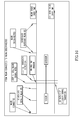
- Fig. 10 is a timing diagram illustrating an indoor WLAN connected state to an outdoor WLAN disconnected state transition
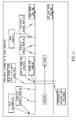
- Fig. 11 is a timing diagram illustrating an outdoor WLAN disconnected state to an indoor WLAN connected state transition
- Fig. 12 is a timing diagram illustrating an indoor WLAN disconnected state to an outdoor WLAN disconnected state transition.
- Fig. 13 is a timing diagram illustrating an outdoor WLAN disconnected state to an indoor WLAN disconnected state transition.
- a novel and useful system and method of reducing the WLAN power consumption and limiting battery drain of a mobile communications device is provided.
- the WLAN power consumption reduction mechanism is operative to monitor for changes in the WLAN and cellular signal strength (e.g., RSSI values).
- the mobile device modifies the WLAN profile scanning activity.
- a cellular/WLAN signal quality ratio is calculated based on RSSI values received from both air interfaces and its trend is monitored to detect transitions which indicate the approximate location of the mobile device (i.e. indoor or outdoor).
- An increase in cellular signal strength coupled with a decrease in WLAN signal strength i.e. ratio increases indicates that the user might be moving to an outdoor environment where WLAN coverage may be sparse or limited.
- the device checks the scan results table for a time t and if no AP is found during that period it suspends the WLAN background/connectivity scan, thus significantly reducing battery power consumption.
- a decrease in cellular signal strength with an increase in WLAN signal strength indicate that the user is moving to an indoor environment.
- the WLAN background scanning frequency is increased in order to provide better coverage and short time access to the WLAN network for the user. If no matching WLAN networks are present in the device saved WLAN profile list, however, the indoor background scanning frequency can be reduced gradually using a backoff timing algorithm until a new device transition is detected.
- a WLAN/cellular signal quality ratio i.e. the inverse
- the mechanism is described throughout this document using the cellular/WLAN ratio.
- DSP digital signal processor
- microcomputer microcomputer
- minicomputer minicomputer
- microprocessor etc. running a real-time operating system
- real-time operating system such as WinCE, Symbian, OSE, Embedded LINUX, etc.
- non-real time operating system such as Windows, UNIX, LINUX, etc.
- ASIC Application Specific Integrated Circuit
- FPGA Field Programmable Gate Array
- WLAN power consumption reduction mechanism Several advantages include: (1) conserving mobile device battery drain by preventing unnecessary power consumption due to the device being moved to an environment in which there is little or no WLAN connectivity; (2) the ability to determine the location of a mobile device; either indoors or outdoors; and (3) better matching the WLAN background scanning to the actual environment the device is in.
- the WLAN power consumption reduction mechanism may be implemented as a system, method, computer program product or any combination thereof. Accordingly, the WLAN power consumption reduction mechanism may take the form of an entirely hardware implementation, an entirely software implementation (including firmware, resident software, micro-code, etc.) or an implementation combining software and hardware aspects that may all generally be referred to herein as a "circuit,” "module” or “system.” Furthermore, the WLAN power consumption reduction mechanism may take the form of a computer program product implemented in any tangible medium of expression having computer usable program code implemented in the medium.
- the computer-usable or computer-readable medium may be, for example but not limited to, an electronic, magnetic, optical, electromagnetic, infrared, or semiconductor system, apparatus, device, or propagation medium.
- the computer-readable medium would include the following: an electrical connection having one or more wires, a portable computer diskette, a hard disk, a random access memory (RAM), a read-only memory (ROM), an erasable programmable read-only memory (EPROM or Flash memory), an optical fiber, a portable compact disc read-only memory (CDROM), an optical storage device, a transmission media such as those supporting the Internet or an intranet, or a magnetic storage device.
- a computer-usable or computer-readable medium could even be paper or another suitable medium upon which the program is printed, as the program can be electronically captured, via, for instance, optical scanning of the paper or other medium, then compiled, interpreted, or otherwise processed in a suitable manner, if necessary, and then stored in a computer memory.
- a computer-usable or computer-readable medium may be any medium that can contain, store, communicate, propagate, or transport the program for use by or in connection with the instruction execution system, apparatus, or device.
- the computer-usable medium may include a propagated data signal with the computer-usable program code implemented therewith, either in baseband or as part of a carrier wave.
- the computer usable program code may be transmitted using any appropriate medium, including but not limited to wireless, wireline, optical fiber cable, RF, etc.
- Computer program code for carrying out operations of the WLAN power consumption reduction mechanism may be written in any combination of one or more programming languages, including an object oriented programming language such as Java, Smalltalk, C++ or the like and conventional procedural programming languages, such as the "C" programming language or similar programming languages.
- the program code may execute entirely on the user's computer, partly on the user's computer, as a stand-alone software package, partly on the user's computer and partly on a remote computer or entirely on the remote computer or server.
- the remote computer may be connected to the user's computer through any type of network, including a local area network (LAN) or a wide area network (WAN), or the connection may be made to an external computer (for example, through the Internet using an Internet Service Provider).
- LAN local area network
- WAN wide area network
- Internet Service Provider for example, AT&T, MCI, Sprint, EarthLink, MSN, GTE, etc.
- the WLAN power consumption reduction mechanism is described below with reference to flowchart illustrations and/or block diagrams of methods, apparatus (systems) and computer program products according to implementations thereof. It will be understood that each block of the flowchart illustrations and/or block diagrams, and combinations of blocks in the flowchart illustrations and/or block diagrams, can be implemented or supported by computer program instructions. These computer program instructions may be provided to a processor of a general purpose computer, special purpose computer, or other programmable data processing apparatus to produce a machine, such that the instructions, which execute via the processor of the computer or other programmable data processing apparatus, create means for implementing the functions/acts specified in the flowchart and/or block diagram block or blocks.
- These computer program instructions may also be stored in a computer-readable medium that can direct a computer or other programmable data processing apparatus to function in a particular manner, such that the instructions stored in the computer-readable medium produce an article of manufacture including instruction means which implement the function/act specified in the flowchart and/or block diagram block or blocks.
- the computer program instructions may also be loaded onto a computer or other programmable data processing apparatus to cause a series of operational steps to be performed on the computer or other programmable apparatus to produce a computer implemented process such that the instructions which execute on the computer or other programmable apparatus provide processes for implementing the functions/acts specified in the flowchart and/or block diagram block or blocks.
- computer programs implementing the WLAN power consumption reduction mechanism can be distributed to users on a distribution medium such as floppy disk or CD-ROM or may be downloaded over a network such as the Internet using FTP, HTTP, or other suitable protocols. From there, they will often be copied to a hard disk or a similar intermediate storage medium. When the programs are to be run, they will be loaded either from their distribution medium or their intermediate storage medium into the execution memory of the computer, configuring the computer to act in accordance with the method of this mechanism. All these operations are well-known to those skilled in the art of computer systems.
- each block in the flowchart or block diagrams may represent a module, segment, or portion of code, which comprises one or more executable instructions for implementing the specified logical function(s).
- the functions noted in the block may occur out of the order noted in the figures. For example, two blocks shown in succession may, in fact, be executed substantially concurrently, or the blocks may sometimes be executed in the reverse order, depending upon the functionality involved.
- FIG. 2 A block diagram illustrating an example mobile communication device incorporating the WLAN power consumption reduction mechanism is shown in Figure 2 .
- the mobile communication device is preferably a two-way communication device having voice and data communication capabilities.
- the device optionally has the capability to communicate with other computer systems via the Internet.
- the mobile communications device may comprise any suitable wired or wireless device such as multimedia player, mobile communication device, cellular phone, smartphone, PDA, PNA, Bluetooth device, etc.
- the device is shown as a mobile device, such as a cellular based smartphone.
- this example is not intended to limit the scope of the mechanism as the WLAN power consumption reduction mechanism can be implemented in a wide variety of communication devices.
- the mobile device 30 shown is intentionally simplified to illustrate only certain components, as the mobile device may comprise other components and subsystems 64 beyond those shown.
- the mobile device generally referenced 30, comprises a processor 36 which may comprise a baseband processor, CPU, microprocessor, DSP, etc., optionally having both analog and digital portions.
- the mobile device may comprise a plurality of radios 34 and associated antennas 32. Radios for the basic cellular link and any number of other wireless standards and Radio Access Technologies (RATs) may be included.
- RATs Radio Access Technologies
- Examples include, but are not limited to, Global System for Mobile Communication (GSM)/GPRS/EDGE 3G; WCDMA; WiMAX for providing WiMAX wireless connectivity when within the range of a WiMAX wireless network; Bluetooth for providing Bluetooth wireless connectivity when within the range of a Bluetooth wireless network; WLAN for providing wireless connectivity when in a hot spot or within the range of an ad hoc, infrastructure or mesh based wireless LAN (WLAN) network; near field communications; UWB; GPS receiver for receiving GPS radio signals transmitted from one or more orbiting GPS satellites, FM transceiver provides the user the ability to listen to FM broadcasts as well as the ability to transmit audio over an unused FM station at low power, such as for playback over a car or home stereo system having an FM receiver, digital broadcast television, etc.
- the mobile device also comprises protocol stacks 66, which may or may not be entirely or partially implemented in the processor 36. The protocol stacks implemented will depend on the particular wireless protocols required.
- the mobile device may also comprise internal volatile storage 42 (e.g., RAM) and persistence storage 38 (e.g., ROM) and flash memory 40.
- Persistent storage 38 also stores applications executable by processor 36 including the related data files used by those applications to allow device 30 to perform its intended functions.
- a serial/USB or other interface connection 48 (e.g., SPI, SDIO, PCI, USD, etc.) provides a serial link to a user's PC or other device.
- SIM/RUIM card 72 provides the interface to a user's SIM or RUIM card for storing user data such as address book entries, user identification, etc.
- Portable power is provided by the battery 70 coupled to power management circuitry 68.
- External power is provided via USB power 60 or an AC/DC adapter 78 connected to the power management circuitry 68 which is operative to manage the charging and discharging of the battery 70.
- the mobile communications device is also adapted to implement the WLAN power consumption reduction mechanism 74.
- the WLAN power consumption reduction mechanism may be implemented as a task 74 stored in external memory executed by the processor 36 or may be implemented as a task 76 executed from memory embedded in processor 36.
- the WLAN power consumption reduction task blocks 74, 76 are adapted to implement the WLAN power consumption reduction mechanism as described in more detail infra.
- the WLAN power consumption reduction mechanism may be implemented as hardware, software or as a combination of hardware and software.
- the program code operative to implement the WLAN power consumption reduction mechanism is stored in one or more memories 38, 40, 42 or local memories within the processor 36.
- the IEEE 802.11 standard defines several services that govern how two IEEE 802.11 devices communicate.
- WLAN profiles play a vital role in WLAN connectivity.
- a profile is identified by a unique identifier, Service Set Identifier (SSID). It also specifies the frequency band of operation, data rates, transmit power levels and security methods used for authentication and encryption and the corresponding credentials.
- SSID Service Set Identifier
- a user can specify multiple profiles on his device that could be geographically collocated or they could map to WLAN networks installed in different areas (e.g., home vs. office, etc).
- Typical implementations of the WLAN algorithm include continuous scanning for saved WLAN profiles on regular intervals.
- a downside of the periodic connectivity scan is that the mobile device is not aware of its surrounding environment. In the case where the device is out of WLAN coverage, scanning is still performed which results in excessive consumption of battery power. This strongly affects both the battery life-time and talk-time otherwise possible.
- the amount of battery power used during this scanning period is directly proportional to the number of saved profiles and other factors, e.g., whether a saved profile is marked as "hidden” vs. "broadcast” SSID. As the number of saved profiles increases, the power consumption of the mobile device increases as well.
- the WLAN power consumption reduction mechanism is operative to use information from both the WLAN network and the cellular network to determine whether the mobile device (also referred to as handset, WLAN client, client, mobile communications device, handheld or device) is indoors or outdoors. If the mobile device is outdoors, then background scanning can be significantly reduced or stopped altogether, thereby conserving battery power.
- WLAN Wireless Fidelity
- a cellular/WLAN signal quality ratio is calculated, stored and tracked.
- WLAN and cellular RSSI information received from their respective air interfaces is used.
- the quantification of the above ratio between changes (i.e. drops or increases) of the signals received from both air-interfaces provides the trend in the cellular/WLAN signal quality ratio. It is this trend that is used to determine the user's approximate location (i.e. indoor or outdoor and transitions therefrom).
- WLAN Received Signal Strength Indicator RSSI
- a loss of WLAN connectivity causes the device to start scanning WLAN networks with a decreasing frequency.
- the mobile device is determined to be indoors, then scanning for WLAN networks can be made more frequently. Assuming the mobile device is currently scanning for WLAN networks with the outdoor frequency as described above, upon connecting to a WLAN network, the WLAN RSSI and the cellular RSSI are monitored. A transition from outdoors to indoors is detected by a deterioration in cellular RSSI with an accompanying increase in WLAN RSSI.
- Trace 80 represents the cellular/WLAN RSSI ratio values for the mobile device making a transition from an indoor location to an outdoor location over a period of time.
- Trace 82 represents the cellular/WLAN RSSI ratio values for the mobile device making a transition from an outdoor location to an indoor location over a period of time. Ratio values greater than one indicate the cellular RSSI is lesser than the WLAN RSSI. This typically indicates the mobile device is an indoor location. Conversely, ratio values less than one indicate a cellular RSSI greater than the WLAN RSSI. This typically indicates the mobile device is in an outdoor location.
- FIG. 4 A diagram illustrating the changes in background scanning frequency based on the cellular/WLAN signal quality ratio is shown in Figure 4 .
- RSSI values for both cellular and WLAN have been categorized and defined as below in Table 1.
- Table 1 Cellular and WLAN RSSI Category Definitions RSSI Value Category Representation Greater than -20 dBm Excellent E -21 to -45 dBm Very Good VG -46 to -65 dBm Good G -66 to -75 dBm Average A -76 to -85 dBm Bad B -86 to -90 dBm Poor P Lesser than -90 dBm Very Poor VP
- RSSI value definitions are used in the graph of Figure 4 to define the cellular/WLAN signal quality ratio levels as the mobile device moves between indoor (Zone B) and outdoor locations (Zone A).
- transitions, TR1 through TR6 are defined for the mobile device making a transition from an outdoor location to an indoor location (i.e., a transition from a low scanning frequency location to a high scanning frequency location).
- Table 3 Transitions for Indoor to Outdoor Transition (To Low Background Scanning Frequency) Step A Step B Cellular/WLAN Signal Quality Ratio Transition t 2 t 4 VP/E B/G TR 7 t 2 t 0 VP/E G/B TR 8 VP/E E/VP TR 9 t 4 t 0 B/G G/B TR 10 B/G E/VP TR 11 t 0 t 5 G/B E/VP TR 12
- transitions, TR7 through TR12 are defined for the mobile device making a transition from an indoor location to an outdoor location (i.e. a transition from a high scanning frequency location to a low scanning frequency location).
- transition thresholds provided in Tables 1, 2, 3 supra represent an example for illustration purposes. Numerous other threshold values and category definitions may be used depending on the particular implementation and design considerations.
- FIG. 6 A flow diagram illustrating an example method of detecting cellular and WLAN signal transitions is shown in Figure 6 .
- This method attempts to detect a cellular and WLAN signal transition and is periodically performed (i.e. continuous basis). Depending on whether WLAN is connected (step 90), the device attempts to detect either an indoor or an outdoor transition.
- a WLAN scan is performed and the resulting scan results list is sorted according to RSSI value.
- the WLAN signal quality level is read from the first WLAN network in the scan results list (i.e. the strongest signal) (step 108).
- a first cellular signal quality instantaneous reading is made and the cellular/WLAN signal quality ratio is calculated (step 110). This step is referred to as STEP A.
- the device then waits a waiting time window, e.g., 2 seconds (step 112) and a single WLAN passive scanning is performed (step 114). If the first WLAN network on the scan results list is different than that found during step 108 above, then no transition is declared (step 124).
- step 118 a second cellular signal quality instantaneous reading is made and the cellular/WLAN signal quality ratio is calculated (step 118).
- This step is referred to as STEP B. Note that STEP B can be repeated to increase the accuracy of device's location estimate. If a transition (TR1 to TR6) is detected (step 120) then an indoor transition is declared (step 122). If a transition (TR7 to TR12) is detected (step 120) then an outdoor transition is declared (step 126). If no transition TR1 to TR12 is detected (step 120) than 'no transition' is declared (step 124).
- step 90 the WLAN signal quality level is read from the currently connected WLAN network (step 92).
- a first cellular signal quality instantaneous reading is made and the cellular/WLAN signal quality ratio is calculated (step 94). This step is referred to as STEP A. If the number of iteration steps for calculating the cellular/WLAN signal quality ratio is less than 2 (step 96), then the device waits a waiting time window, e.g., 2 seconds (step 98). In the event of WLAN disconnection during the waiting time window, the transition algorithm resumes from the WLAN disconnected state (step 90).
- step 94 a second iteration of cellular signal quality instantaneous reading is made and the cellular/WLAN signal quality ratio is calculated (step 94).
- This step is referred to as STEP B. If a transition (TR1 to TR6) is detected (step 100) then an indoor transition is declared (104). If a transition (TR7 to TR12) is detected (step 100) then an outdoor transition is declared (106). If no transition (TR1 to TR12) is detected (step 100) then 'no transition' is declared (step 124).
- the number of iterations for calculating the cellular/WLAN signal quality ratio can be increased (e.g., 3, 4 or higher), for a more reliable confirmation of the cellular/WLAN signal trend during a transition to an indoor/outdoor environment.
- the mechanism since the instantaneous cellular RSSI values continuously change randomly due to fading, shadowing, multipath and path loss effects; in one implementation, the mechanism utilizes averaged RSSI values which compensate for these negative effects.
- other factors may be used to indicate the indoor/outdoor transitions.
- the AGC added offset to compensate for gain difference can be used as an indicator.
- the gain control is also modified accordingly, which can be used as an additional indication of the change in location.
- Time In Advance that the Cell Controller sends to mobile device for transmission time adjustments based on mobile's distance from tower can also be used.
- Other possible factors include power control measurements which also change according to the quality of cellular link.
- FIG. 7 A flow diagram illustrating an example method of detecting cellular signal transitions is shown in Figure 7 .
- This method is used in detecting a device's location when in a WLAN disconnected state.
- a first instantaneous cellular signal quality reading is made (step 130).
- a second instantaneous cellular signal quality reading is made (step 134).
- a cell transition is then detected if the difference between the two cellular signal quality readings exceeds a threshold (e.g., +/- 10 dBm) (step 136).
- a confirmed transition is declared if the difference exceeds the threshold (step 140), otherwise no transition is declared (step 138).
- FIG. 8 A flow diagram illustrating an example method of determining device location in a WLAN connected state is shown in Figure 8 .
- This method is used to determine the location of the device when in a WLAN connected state (step 170).
- the background scanning is used in the WLAN connected state only for the user display of saved WLAN profiles.
- the current WLAN network i.e. the connected SSID
- the method attempts to detect a cellular and WLAN signal transition (step 174) as described in connection with the flow diagram of Figure 6 . If no transition is detected (step 174), the background scanning scheme is left unchanged and the device location is left unchanged as well (step 176),
- the device sets the background scanning scheme to be used in the WLAN disconnected state to an "indoor” background scanning scheme and also sets the device location to "indoor” (step 184).
- An indoor scanning scheme comprises a more frequent scanning frequency than an outdoor scanning scheme, since the mobile device has been determined to be indoors.
- the device sets the background scanning scheme to be used in the WLAN disconnected state to an "outdoor” background scanning scheme and also sets the device location to "outdoor” (step 182).
- An outdoor scanning scheme comprises a less frequent scanning frequency than an indoor scanning scheme, since the mobile device has been determined to be outdoors. It is in this "outdoor” scanning scheme that results in significant power reduction for the mobile device since less frequent scanning is performed.
- step 178 Whether an indoor, outdoor or no transition is detected, it is then checked whether the WLAN is disconnected (step 178). If it is not disconnected, the method returns to step 172 and repeats. If WLAN is disconnected, device location detection in the WLAN disconnected state is performed (step 180), as described in connection with the flow diagram in Figure 9 , described infra.
- FIG. 9 A flow diagram illustrating an example method of determining device location in a WLAN disconnected state is shown in Figure 9 . It is assumed the device is in a WLAN disconnected state (step 190). The WLAN radio turning on will cause the device to set to the default background scanning scheme and indoor/outdoor location unknown. It is then determined whether a WLAN background scan is scheduled (according to the last selected background scanning scheme, i.e. high, low or normal (default) scan frequency) (step 192). If a scan is not scheduled, then the method continues with detect cellular radio signal transition (step 212) (described in connection with the flow diagram in Figure 7 ), since the device may be moving out of a WLAN coverage area. If no cellular radio transition is detected, the method returns to step 192.
- a WLAN background scan according to the last selected background scanning scheme, i.e. high, low or normal (default) scan frequency
- WLAN background scanning is performed (step 194). It is then determined whether the device is in WLAN coverage and tries to detect surrounding WLAN access points (step 196). If no surrounding WLAN access points are found, the method returns to step 192. If surrounding WLAN access points are found, the strongest WLAN signal (i.e. higher RSSI Beacon) from the scanning results list is selected (step 198). The device then attempts to detect cellular and WLAN signal transition (step 200) as described in detail in connection with the flow diagram of Figure 6 .
- the background scanning scheme and the device location are left unchanged (step 204). If an indoor transition is detected, the background scanning scheme is set to the indoor background scanning scheme and the device location is set to indoor location (step 214). Similarly, if an outdoor transition is detected, the background scanning scheme is set to the outdoor background scanning scheme and the device location is set to outdoor location (step 202).
- step 206 It is then determined whether the WLAN is connected (step 206). If it is not connected, the method continues with step 192. If it is connected, the background scanning is reset to the default scheme and the device location is left unchanged (step 208). The device location in WLAN connected state method is then performed (step 210) as described in detail in connection with the flow diagram of Figure 8 . Note that background scanning in the WLAN connected state does not trigger execution of the device location method.
- FIG. 10 A timing diagram illustrating an indoor WLAN connected state to an outdoor WLAN disconnected state transition is shown in Figure 10 .
- the device is assumed starting in an indoor location with WLAN connected and scheduled default background scanning set.
- a STEP A event is detected where a change in the cellular/WLAN signal quality ratio is detected along with the possible detection of a cellular signal transition.
- a second confirming transition is detected as well after the waiting time window period.
- WLAN becomes disconnected and outdoor WLAN background scanning is scheduled which results in a significant reduction in battery power consumption due to less frequent scanning.
- FIG. 11 A timing diagram illustrating an outdoor WLAN disconnected state to an indoor WLAN connected transition is shown in Figure 11 .
- the device is outdoors with WLAN disconnected and scheduled with outdoor WLAN background scanning.
- a WLAN passive scan detects a transition (STEP A) as the device is moved indoors, along with the possible detection of a cellular signal transition.
- a second confirming transition (STEP B) is detected as well after the waiting time window period.
- the device is set to indoor WLAN background scanning schedule (i.e. more frequent scanning) and eventually, WLAN is connected and the scheduling returns to default background scanning.
- FIG. 12 A timing diagram illustrating an indoor WLAN disconnected state to an outdoor WLAN disconnected state transition is shown in Figure 12 .
- the device is assumed starting in an indoor location with WLAN disconnected and scheduled indoor background scanning set.
- a WLAN passive scan detects a transition (STEP A event) where a change in the cellular/WLAN signal quality ratio is detected along with the possible detection of a cellular signal transition.
- a second confirming transition (STEP B) is detected as well after the waiting time window period.
- outdoor WLAN background scanning is scheduled which results in a significant reduction in battery power consumption due to less frequent scanning.
- FIG. 13 A timing diagram illustrating an outdoor WLAN disconnected state to an indoor WLAN disconnected transition is shown in Figure 13 .
- the device is outdoors with WLAN disconnected and scheduled with outdoor WLAN background scanning.
- a WLAN passive scan detects a transition (STEP A) as the device is moved indoors, along with the possible detection of a cellular signal transition.
- a second confirming transition (STEP B) is detected as well after the waiting time window period.
- the device is set to indoor WLAN background scanning schedule (i.e. more frequent scanning) and eventually and WLAN is disconnected.
Landscapes
- Engineering & Computer Science (AREA)
- Computer Security & Cryptography (AREA)
- Computer Networks & Wireless Communication (AREA)
- Signal Processing (AREA)
- Mobile Radio Communication Systems (AREA)
Priority Applications (3)
| Application Number | Priority Date | Filing Date | Title |
|---|---|---|---|
| EP10154852A EP2364049B1 (fr) | 2010-02-26 | 2010-02-26 | Réduction de la consommation de puissance WLAN dans un dispositif mobile utilisant une interface radio cellulaire |
| EP12164640.0A EP2480031B1 (fr) | 2010-02-26 | 2010-02-26 | Réduction de la consommation de puissance WLAN dans un dispositif mobile utilisant une interface radio cellulaire |
| CA2726753A CA2726753C (fr) | 2010-02-26 | 2010-12-24 | Reduction de la consommation en energie d'un reseau local sans fil sur un dispositif mobile utilisant une interface radio cellulaire |
Applications Claiming Priority (1)
| Application Number | Priority Date | Filing Date | Title |
|---|---|---|---|
| EP10154852A EP2364049B1 (fr) | 2010-02-26 | 2010-02-26 | Réduction de la consommation de puissance WLAN dans un dispositif mobile utilisant une interface radio cellulaire |
Related Child Applications (2)
| Application Number | Title | Priority Date | Filing Date |
|---|---|---|---|
| EP12164640.0A Division EP2480031B1 (fr) | 2010-02-26 | 2010-02-26 | Réduction de la consommation de puissance WLAN dans un dispositif mobile utilisant une interface radio cellulaire |
| EP12164640.0 Division-Into | 2012-04-18 |
Publications (2)
| Publication Number | Publication Date |
|---|---|
| EP2364049A1 true EP2364049A1 (fr) | 2011-09-07 |
| EP2364049B1 EP2364049B1 (fr) | 2012-06-06 |
Family
ID=42313037
Family Applications (2)
| Application Number | Title | Priority Date | Filing Date |
|---|---|---|---|
| EP10154852A Active EP2364049B1 (fr) | 2010-02-26 | 2010-02-26 | Réduction de la consommation de puissance WLAN dans un dispositif mobile utilisant une interface radio cellulaire |
| EP12164640.0A Active EP2480031B1 (fr) | 2010-02-26 | 2010-02-26 | Réduction de la consommation de puissance WLAN dans un dispositif mobile utilisant une interface radio cellulaire |
Family Applications After (1)
| Application Number | Title | Priority Date | Filing Date |
|---|---|---|---|
| EP12164640.0A Active EP2480031B1 (fr) | 2010-02-26 | 2010-02-26 | Réduction de la consommation de puissance WLAN dans un dispositif mobile utilisant une interface radio cellulaire |
Country Status (2)
| Country | Link |
|---|---|
| EP (2) | EP2364049B1 (fr) |
| CA (1) | CA2726753C (fr) |
Cited By (8)
| Publication number | Priority date | Publication date | Assignee | Title |
|---|---|---|---|---|
| EP2680039A1 (fr) * | 2012-06-29 | 2014-01-01 | Broadcom Corporation | Différenciation intérieure/extérieure utilisant des émetteurs de fréquence radio (RF) |
| WO2014164385A1 (fr) * | 2013-03-12 | 2014-10-09 | Qualcomm Incorporated | Procédé et appareil de réalisation d'opérations de balayage |
| TWI508587B (zh) * | 2011-12-30 | 2015-11-11 | Intel Corp | 用於行動裝置之智慧型資料連接技術 |
| CN105163368A (zh) * | 2015-07-31 | 2015-12-16 | 腾讯科技(深圳)有限公司 | 一种无线网络接入方法和装置 |
| WO2016118260A1 (fr) * | 2015-01-22 | 2016-07-28 | Qualcomm Incorporated | Balayage adaptatif à dispositif multi-radio |
| US9482739B2 (en) | 2012-06-29 | 2016-11-01 | Broadcom Corporation | Indoor/outdoor transition determination |
| CN107846723A (zh) * | 2017-12-13 | 2018-03-27 | 广东欧珀移动通信有限公司 | 无线局域网扫描方法、装置、计算机设备及存储介质 |
| WO2019158803A1 (fr) * | 2018-02-19 | 2019-08-22 | Indooratlas Oy | Appareil de commande, procédé et code de programme informatique pour commander des transitions de positionnement en intérieur |
Families Citing this family (4)
| Publication number | Priority date | Publication date | Assignee | Title |
|---|---|---|---|---|
| US9084165B2 (en) | 2013-10-02 | 2015-07-14 | Public Wireless, Inc. | Systems and methods for deployment operations for small cells in self-organizing networks |
| US10567554B2 (en) * | 2015-05-15 | 2020-02-18 | Hfi Innovation Inc. | Routing solutions for LTE-WLAN aggregation |
| CN114079908B (zh) * | 2020-08-14 | 2024-12-06 | 上海诺基亚贝尔股份有限公司 | 通信网络中的通信方法、设备、装置和存储介质 |
| US12206464B2 (en) * | 2021-09-24 | 2025-01-21 | Apple Inc. | Reducing errant measurement report timer deactivation using layer 3 filter augmentation |
Citations (4)
| Publication number | Priority date | Publication date | Assignee | Title |
|---|---|---|---|---|
| EP1069794A2 (fr) * | 1999-07-14 | 2001-01-17 | NTT DoCoMo, Inc. | Procédé, station mobile et système de communication pour la commande de la recherche de cellules |
| US7200397B1 (en) * | 2003-07-29 | 2007-04-03 | Sprint Spectrum L.P. | Method and system for determining availability of a radio network |
| US20080176579A1 (en) * | 2007-01-22 | 2008-07-24 | Research In Motion Limited | Scanning Cell-Dependent Groups of Profiles of Wireless Local Area Networks |
| EP2048798A1 (fr) | 2006-07-14 | 2009-04-15 | NEC Corporation | Terminal radio et procédé de recherche de station de base par voie de terminal radio |
-
2010
- 2010-02-26 EP EP10154852A patent/EP2364049B1/fr active Active
- 2010-02-26 EP EP12164640.0A patent/EP2480031B1/fr active Active
- 2010-12-24 CA CA2726753A patent/CA2726753C/fr active Active
Patent Citations (4)
| Publication number | Priority date | Publication date | Assignee | Title |
|---|---|---|---|---|
| EP1069794A2 (fr) * | 1999-07-14 | 2001-01-17 | NTT DoCoMo, Inc. | Procédé, station mobile et système de communication pour la commande de la recherche de cellules |
| US7200397B1 (en) * | 2003-07-29 | 2007-04-03 | Sprint Spectrum L.P. | Method and system for determining availability of a radio network |
| EP2048798A1 (fr) | 2006-07-14 | 2009-04-15 | NEC Corporation | Terminal radio et procédé de recherche de station de base par voie de terminal radio |
| US20080176579A1 (en) * | 2007-01-22 | 2008-07-24 | Research In Motion Limited | Scanning Cell-Dependent Groups of Profiles of Wireless Local Area Networks |
Cited By (15)
| Publication number | Priority date | Publication date | Assignee | Title |
|---|---|---|---|---|
| TWI508587B (zh) * | 2011-12-30 | 2015-11-11 | Intel Corp | 用於行動裝置之智慧型資料連接技術 |
| CN103513227B (zh) * | 2012-06-29 | 2017-04-12 | 安华高科技通用Ip(新加坡)公司 | 使用射频(rf)发射器的室内/室外区分 |
| US9008694B2 (en) | 2012-06-29 | 2015-04-14 | Broadcom Corporation | Indoor/outdoor differentiation using radio frequency (RF) transmitters |
| CN103513227A (zh) * | 2012-06-29 | 2014-01-15 | 美国博通公司 | 使用射频(rf)发射器的室内/室外区分 |
| US9482739B2 (en) | 2012-06-29 | 2016-11-01 | Broadcom Corporation | Indoor/outdoor transition determination |
| EP2680039A1 (fr) * | 2012-06-29 | 2014-01-01 | Broadcom Corporation | Différenciation intérieure/extérieure utilisant des émetteurs de fréquence radio (RF) |
| US10015728B2 (en) | 2013-03-12 | 2018-07-03 | Qualcomm Incorporated | Method and apparatus for performing scan operations |
| WO2014164385A1 (fr) * | 2013-03-12 | 2014-10-09 | Qualcomm Incorporated | Procédé et appareil de réalisation d'opérations de balayage |
| US9408136B2 (en) | 2013-03-12 | 2016-08-02 | Qualcomm Incorporated | Method and apparatus for performing scan operations |
| WO2016118260A1 (fr) * | 2015-01-22 | 2016-07-28 | Qualcomm Incorporated | Balayage adaptatif à dispositif multi-radio |
| CN107211355A (zh) * | 2015-01-22 | 2017-09-26 | 高通股份有限公司 | 利用多无线电设备的适应性扫描 |
| US10098016B2 (en) | 2015-01-22 | 2018-10-09 | Qualcomm Incorporated | Adaptive scanning with multi-radio device |
| CN105163368A (zh) * | 2015-07-31 | 2015-12-16 | 腾讯科技(深圳)有限公司 | 一种无线网络接入方法和装置 |
| CN107846723A (zh) * | 2017-12-13 | 2018-03-27 | 广东欧珀移动通信有限公司 | 无线局域网扫描方法、装置、计算机设备及存储介质 |
| WO2019158803A1 (fr) * | 2018-02-19 | 2019-08-22 | Indooratlas Oy | Appareil de commande, procédé et code de programme informatique pour commander des transitions de positionnement en intérieur |
Also Published As
| Publication number | Publication date |
|---|---|
| EP2364049B1 (fr) | 2012-06-06 |
| EP2480031A1 (fr) | 2012-07-25 |
| EP2480031B1 (fr) | 2016-02-03 |
| CA2726753A1 (fr) | 2011-08-26 |
| CA2726753C (fr) | 2015-02-10 |
Similar Documents
| Publication | Publication Date | Title |
|---|---|---|
| US8195251B2 (en) | Reducing WLAN power consumption on a mobile device utilizing a cellular radio interface | |
| EP2364049B1 (fr) | Réduction de la consommation de puissance WLAN dans un dispositif mobile utilisant une interface radio cellulaire | |
| US8750245B2 (en) | Methods and apparatus for use in initiating vertical handover based on comparative evaluation of WLAN and WWAN signal qualities | |
| EP2309805B1 (fr) | Traitement d'une mauvaise clé WEP, de l'épuisement de la batterie et des défaillances d'échange correspondantes | |
| EP3022960B1 (fr) | Procédé et système de prévention de localisation de dispositif mobile | |
| EP1925169B1 (fr) | Systeme et procede permettant de detecter un service uma (alliance mobile non autorisee) dans des reseaux de communication sans fil gsm | |
| CN101379868B (zh) | 便携通信终端、通信系统、通信方法以及控制程序 | |
| KR101065559B1 (ko) | Wlan 시스템 스캐닝 및 선택 | |
| US20050181734A1 (en) | Automatic connection of a mobile device to a wireless network | |
| CN104137497B (zh) | 基于位置信息来生成电视白空间信道的搜索集的方法和装置 | |
| US20050025181A1 (en) | Service advisor | |
| US8073436B2 (en) | Applications and/or situation responsive utilization of silent periods | |
| US20150138991A1 (en) | Relay capable wireless apparatuses | |
| JPWO2015072053A1 (ja) | 基地局、無線端末、通信システム、通信方法、プログラム | |
| CN103298080A (zh) | 通信设备中的增强的功率管理 | |
| US20050107038A1 (en) | Automatic connection of a mobile device to a wireless network | |
| CA2769368C (fr) | Appareillage et methode utilises pour amorcer un transfert vertical sur la base d'une evaluation comparative des qualites de signaux wlan et wwan | |
| CN116017624A (zh) | 一种发现消息的发送方法及装置 | |
| KR100747917B1 (ko) | 무선통신 단말기에서의 셀 재선택 방법 | |
| KR20080056895A (ko) | 무선랜 시스템에서의 통신 단말기의 핸드오버 수행 방법 |
Legal Events
| Date | Code | Title | Description |
|---|---|---|---|
| PUAI | Public reference made under article 153(3) epc to a published international application that has entered the european phase |
Free format text: ORIGINAL CODE: 0009012 |
|
| 17P | Request for examination filed |
Effective date: 20100226 |
|
| AK | Designated contracting states |
Kind code of ref document: A1 Designated state(s): AT BE BG CH CY CZ DE DK EE ES FI FR GB GR HR HU IE IS IT LI LT LU LV MC MK MT NL NO PL PT RO SE SI SK SM TR |
|
| AX | Request for extension of the european patent |
Extension state: AL BA RS |
|
| RIN1 | Information on inventor provided before grant (corrected) |
Inventor name: KHOLAIF, AHMAD M. Inventor name: MENDAHAWI, NAYEF Inventor name: BARBU, ION Inventor name: BAKTHAVATHSALU, KRISHNA KUMAR |
|
| RIC1 | Information provided on ipc code assigned before grant |
Ipc: H04W 52/02 20090101AFI20111014BHEP Ipc: H04W 88/06 20090101ALN20111014BHEP |
|
| GRAP | Despatch of communication of intention to grant a patent |
Free format text: ORIGINAL CODE: EPIDOSNIGR1 |
|
| RIN1 | Information on inventor provided before grant (corrected) |
Inventor name: KHOLAIF, AHMAD M. Inventor name: MENDAHAWI, NAYEF Inventor name: BARBU, ION Inventor name: BAKTHAVATHSALU, KRISHNA KUMAR |
|
| GRAS | Grant fee paid |
Free format text: ORIGINAL CODE: EPIDOSNIGR3 |
|
| GRAA | (expected) grant |
Free format text: ORIGINAL CODE: 0009210 |
|
| AK | Designated contracting states |
Kind code of ref document: B1 Designated state(s): AT BE BG CH CY CZ DE DK EE ES FI FR GB GR HR HU IE IS IT LI LT LU LV MC MK MT NL NO PL PT RO SE SI SK SM TR |
|
| REG | Reference to a national code |
Ref country code: GB Ref legal event code: FG4D |
|
| REG | Reference to a national code |
Ref country code: AT Ref legal event code: REF Ref document number: 561515 Country of ref document: AT Kind code of ref document: T Effective date: 20120615 Ref country code: CH Ref legal event code: EP |
|
| REG | Reference to a national code |
Ref country code: IE Ref legal event code: FG4D |
|
| REG | Reference to a national code |
Ref country code: DE Ref legal event code: R096 Ref document number: 602010001797 Country of ref document: DE Effective date: 20120802 |
|
| REG | Reference to a national code |
Ref country code: NL Ref legal event code: T3 |
|
| PG25 | Lapsed in a contracting state [announced via postgrant information from national office to epo] |
Ref country code: CY Free format text: LAPSE BECAUSE OF FAILURE TO SUBMIT A TRANSLATION OF THE DESCRIPTION OR TO PAY THE FEE WITHIN THE PRESCRIBED TIME-LIMIT Effective date: 20120606 Ref country code: FI Free format text: LAPSE BECAUSE OF FAILURE TO SUBMIT A TRANSLATION OF THE DESCRIPTION OR TO PAY THE FEE WITHIN THE PRESCRIBED TIME-LIMIT Effective date: 20120606 Ref country code: LT Free format text: LAPSE BECAUSE OF FAILURE TO SUBMIT A TRANSLATION OF THE DESCRIPTION OR TO PAY THE FEE WITHIN THE PRESCRIBED TIME-LIMIT Effective date: 20120606 Ref country code: SE Free format text: LAPSE BECAUSE OF FAILURE TO SUBMIT A TRANSLATION OF THE DESCRIPTION OR TO PAY THE FEE WITHIN THE PRESCRIBED TIME-LIMIT Effective date: 20120606 Ref country code: NO Free format text: LAPSE BECAUSE OF FAILURE TO SUBMIT A TRANSLATION OF THE DESCRIPTION OR TO PAY THE FEE WITHIN THE PRESCRIBED TIME-LIMIT Effective date: 20120906 |
|
| REG | Reference to a national code |
Ref country code: AT Ref legal event code: MK05 Ref document number: 561515 Country of ref document: AT Kind code of ref document: T Effective date: 20120606 |
|
| REG | Reference to a national code |
Ref country code: LT Ref legal event code: MG4D Effective date: 20120606 |
|
| PG25 | Lapsed in a contracting state [announced via postgrant information from national office to epo] |
Ref country code: SI Free format text: LAPSE BECAUSE OF FAILURE TO SUBMIT A TRANSLATION OF THE DESCRIPTION OR TO PAY THE FEE WITHIN THE PRESCRIBED TIME-LIMIT Effective date: 20120606 Ref country code: GR Free format text: LAPSE BECAUSE OF FAILURE TO SUBMIT A TRANSLATION OF THE DESCRIPTION OR TO PAY THE FEE WITHIN THE PRESCRIBED TIME-LIMIT Effective date: 20120907 Ref country code: HR Free format text: LAPSE BECAUSE OF FAILURE TO SUBMIT A TRANSLATION OF THE DESCRIPTION OR TO PAY THE FEE WITHIN THE PRESCRIBED TIME-LIMIT Effective date: 20120606 Ref country code: LV Free format text: LAPSE BECAUSE OF FAILURE TO SUBMIT A TRANSLATION OF THE DESCRIPTION OR TO PAY THE FEE WITHIN THE PRESCRIBED TIME-LIMIT Effective date: 20120606 |
|
| PG25 | Lapsed in a contracting state [announced via postgrant information from national office to epo] |
Ref country code: BE Free format text: LAPSE BECAUSE OF FAILURE TO SUBMIT A TRANSLATION OF THE DESCRIPTION OR TO PAY THE FEE WITHIN THE PRESCRIBED TIME-LIMIT Effective date: 20120606 Ref country code: AT Free format text: LAPSE BECAUSE OF FAILURE TO SUBMIT A TRANSLATION OF THE DESCRIPTION OR TO PAY THE FEE WITHIN THE PRESCRIBED TIME-LIMIT Effective date: 20120606 Ref country code: RO Free format text: LAPSE BECAUSE OF FAILURE TO SUBMIT A TRANSLATION OF THE DESCRIPTION OR TO PAY THE FEE WITHIN THE PRESCRIBED TIME-LIMIT Effective date: 20120606 Ref country code: EE Free format text: LAPSE BECAUSE OF FAILURE TO SUBMIT A TRANSLATION OF THE DESCRIPTION OR TO PAY THE FEE WITHIN THE PRESCRIBED TIME-LIMIT Effective date: 20120606 Ref country code: IS Free format text: LAPSE BECAUSE OF FAILURE TO SUBMIT A TRANSLATION OF THE DESCRIPTION OR TO PAY THE FEE WITHIN THE PRESCRIBED TIME-LIMIT Effective date: 20121006 Ref country code: SK Free format text: LAPSE BECAUSE OF FAILURE TO SUBMIT A TRANSLATION OF THE DESCRIPTION OR TO PAY THE FEE WITHIN THE PRESCRIBED TIME-LIMIT Effective date: 20120606 Ref country code: CZ Free format text: LAPSE BECAUSE OF FAILURE TO SUBMIT A TRANSLATION OF THE DESCRIPTION OR TO PAY THE FEE WITHIN THE PRESCRIBED TIME-LIMIT Effective date: 20120606 |
|
| PG25 | Lapsed in a contracting state [announced via postgrant information from national office to epo] |
Ref country code: IT Free format text: LAPSE BECAUSE OF FAILURE TO SUBMIT A TRANSLATION OF THE DESCRIPTION OR TO PAY THE FEE WITHIN THE PRESCRIBED TIME-LIMIT Effective date: 20120606 Ref country code: PT Free format text: LAPSE BECAUSE OF FAILURE TO SUBMIT A TRANSLATION OF THE DESCRIPTION OR TO PAY THE FEE WITHIN THE PRESCRIBED TIME-LIMIT Effective date: 20121008 Ref country code: PL Free format text: LAPSE BECAUSE OF FAILURE TO SUBMIT A TRANSLATION OF THE DESCRIPTION OR TO PAY THE FEE WITHIN THE PRESCRIBED TIME-LIMIT Effective date: 20120606 |
|
| PLBE | No opposition filed within time limit |
Free format text: ORIGINAL CODE: 0009261 |
|
| STAA | Information on the status of an ep patent application or granted ep patent |
Free format text: STATUS: NO OPPOSITION FILED WITHIN TIME LIMIT |
|
| PG25 | Lapsed in a contracting state [announced via postgrant information from national office to epo] |
Ref country code: DK Free format text: LAPSE BECAUSE OF FAILURE TO SUBMIT A TRANSLATION OF THE DESCRIPTION OR TO PAY THE FEE WITHIN THE PRESCRIBED TIME-LIMIT Effective date: 20120606 |
|
| 26N | No opposition filed |
Effective date: 20130307 |
|
| REG | Reference to a national code |
Ref country code: DE Ref legal event code: R097 Ref document number: 602010001797 Country of ref document: DE Effective date: 20130307 |
|
| PG25 | Lapsed in a contracting state [announced via postgrant information from national office to epo] |
Ref country code: BG Free format text: LAPSE BECAUSE OF FAILURE TO SUBMIT A TRANSLATION OF THE DESCRIPTION OR TO PAY THE FEE WITHIN THE PRESCRIBED TIME-LIMIT Effective date: 20120906 |
|
| PG25 | Lapsed in a contracting state [announced via postgrant information from national office to epo] |
Ref country code: MC Free format text: LAPSE BECAUSE OF NON-PAYMENT OF DUE FEES Effective date: 20130228 |
|
| PG25 | Lapsed in a contracting state [announced via postgrant information from national office to epo] |
Ref country code: ES Free format text: LAPSE BECAUSE OF FAILURE TO SUBMIT A TRANSLATION OF THE DESCRIPTION OR TO PAY THE FEE WITHIN THE PRESCRIBED TIME-LIMIT Effective date: 20120917 |
|
| REG | Reference to a national code |
Ref country code: IE Ref legal event code: MM4A |
|
| PG25 | Lapsed in a contracting state [announced via postgrant information from national office to epo] |
Ref country code: IE Free format text: LAPSE BECAUSE OF NON-PAYMENT OF DUE FEES Effective date: 20130226 |
|
| PG25 | Lapsed in a contracting state [announced via postgrant information from national office to epo] |
Ref country code: MT Free format text: LAPSE BECAUSE OF FAILURE TO SUBMIT A TRANSLATION OF THE DESCRIPTION OR TO PAY THE FEE WITHIN THE PRESCRIBED TIME-LIMIT Effective date: 20120606 |
|
| REG | Reference to a national code |
Ref country code: DE Ref legal event code: R082 Ref document number: 602010001797 Country of ref document: DE Representative=s name: MERH-IP MATIAS ERNY REICHL HOFFMANN, DE |
|
| REG | Reference to a national code |
Ref country code: CH Ref legal event code: PL |
|
| PG25 | Lapsed in a contracting state [announced via postgrant information from national office to epo] |
Ref country code: LI Free format text: LAPSE BECAUSE OF NON-PAYMENT OF DUE FEES Effective date: 20140228 Ref country code: CH Free format text: LAPSE BECAUSE OF NON-PAYMENT OF DUE FEES Effective date: 20140228 |
|
| REG | Reference to a national code |
Ref country code: DE Ref legal event code: R082 Ref document number: 602010001797 Country of ref document: DE Representative=s name: MERH-IP MATIAS ERNY REICHL HOFFMANN, DE Effective date: 20140925 Ref country code: DE Ref legal event code: R081 Ref document number: 602010001797 Country of ref document: DE Owner name: BLACKBERRY LIMITED, WATERLOO, CA Free format text: FORMER OWNER: RESEARCH IN MOTION LTD., WATERLOO, ONTARIO, CA Effective date: 20140925 Ref country code: DE Ref legal event code: R082 Ref document number: 602010001797 Country of ref document: DE Representative=s name: MERH-IP MATIAS ERNY REICHL HOFFMANN PATENTANWA, DE Effective date: 20140925 |
|
| PG25 | Lapsed in a contracting state [announced via postgrant information from national office to epo] |
Ref country code: SM Free format text: LAPSE BECAUSE OF FAILURE TO SUBMIT A TRANSLATION OF THE DESCRIPTION OR TO PAY THE FEE WITHIN THE PRESCRIBED TIME-LIMIT Effective date: 20120606 |
|
| PG25 | Lapsed in a contracting state [announced via postgrant information from national office to epo] |
Ref country code: TR Free format text: LAPSE BECAUSE OF FAILURE TO SUBMIT A TRANSLATION OF THE DESCRIPTION OR TO PAY THE FEE WITHIN THE PRESCRIBED TIME-LIMIT Effective date: 20120606 |
|
| PG25 | Lapsed in a contracting state [announced via postgrant information from national office to epo] |
Ref country code: MK Free format text: LAPSE BECAUSE OF FAILURE TO SUBMIT A TRANSLATION OF THE DESCRIPTION OR TO PAY THE FEE WITHIN THE PRESCRIBED TIME-LIMIT Effective date: 20120606 Ref country code: LU Free format text: LAPSE BECAUSE OF NON-PAYMENT OF DUE FEES Effective date: 20130226 Ref country code: HU Free format text: LAPSE BECAUSE OF FAILURE TO SUBMIT A TRANSLATION OF THE DESCRIPTION OR TO PAY THE FEE WITHIN THE PRESCRIBED TIME-LIMIT; INVALID AB INITIO Effective date: 20100226 |
|
| REG | Reference to a national code |
Ref country code: FR Ref legal event code: PLFP Year of fee payment: 7 |
|
| REG | Reference to a national code |
Ref country code: FR Ref legal event code: PLFP Year of fee payment: 8 |
|
| REG | Reference to a national code |
Ref country code: FR Ref legal event code: PLFP Year of fee payment: 9 |
|
| REG | Reference to a national code |
Ref country code: DE Ref legal event code: R082 Ref document number: 602010001797 Country of ref document: DE Ref country code: DE Ref legal event code: R081 Ref document number: 602010001797 Country of ref document: DE Owner name: MALIKIE INNOVATIONS LTD., IE Free format text: FORMER OWNER: BLACKBERRY LIMITED, WATERLOO, ONTARIO, CA |
|
| PGFP | Annual fee paid to national office [announced via postgrant information from national office to epo] |
Ref country code: NL Payment date: 20260220 Year of fee payment: 17 |
|
| PGFP | Annual fee paid to national office [announced via postgrant information from national office to epo] |
Ref country code: GB Payment date: 20260223 Year of fee payment: 17 |
|
| PGFP | Annual fee paid to national office [announced via postgrant information from national office to epo] |
Ref country code: DE Payment date: 20260220 Year of fee payment: 17 |
|
| PGFP | Annual fee paid to national office [announced via postgrant information from national office to epo] |
Ref country code: FR Payment date: 20260224 Year of fee payment: 17 |