EP2364548B1 - Système et procédé pour la reconfiguration d'un système de loisir - Google Patents
Système et procédé pour la reconfiguration d'un système de loisir Download PDFInfo
- Publication number
- EP2364548B1 EP2364548B1 EP09793375.8A EP09793375A EP2364548B1 EP 2364548 B1 EP2364548 B1 EP 2364548B1 EP 09793375 A EP09793375 A EP 09793375A EP 2364548 B1 EP2364548 B1 EP 2364548B1
- Authority
- EP
- European Patent Office
- Prior art keywords
- component
- configuration command
- remote control
- control device
- entertainment system
- Prior art date
- Legal status (The legal status is an assumption and is not a legal conclusion. Google has not performed a legal analysis and makes no representation as to the accuracy of the status listed.)
- Active
Links
Images



Classifications
-
- H—ELECTRICITY
- H04—ELECTRIC COMMUNICATION TECHNIQUE
- H04N—PICTORIAL COMMUNICATION, e.g. TELEVISION
- H04N5/00—Details of television systems
- H04N5/76—Television signal recording
- H04N5/765—Interface circuits between an apparatus for recording and another apparatus
-
- H—ELECTRICITY
- H04—ELECTRIC COMMUNICATION TECHNIQUE
- H04N—PICTORIAL COMMUNICATION, e.g. TELEVISION
- H04N21/00—Selective content distribution, e.g. interactive television or video on demand [VOD]
- H04N21/40—Client devices specifically adapted for the reception of or interaction with content, e.g. set-top-box [STB]; Operations thereof
- H04N21/41—Structure of client; Structure of client peripherals
- H04N21/422—Input-only peripherals, i.e. input devices connected to specially adapted client devices, e.g. global positioning system [GPS]
- H04N21/42204—User interfaces specially adapted for controlling a client device through a remote control device; Remote control devices therefor
-
- H—ELECTRICITY
- H04—ELECTRIC COMMUNICATION TECHNIQUE
- H04N—PICTORIAL COMMUNICATION, e.g. TELEVISION
- H04N21/00—Selective content distribution, e.g. interactive television or video on demand [VOD]
- H04N21/40—Client devices specifically adapted for the reception of or interaction with content, e.g. set-top-box [STB]; Operations thereof
- H04N21/41—Structure of client; Structure of client peripherals
- H04N21/4104—Peripherals receiving signals from specially adapted client devices
- H04N21/4112—Peripherals receiving signals from specially adapted client devices having fewer capabilities than the client, e.g. thin client having less processing power or no tuning capabilities
-
- H—ELECTRICITY
- H04—ELECTRIC COMMUNICATION TECHNIQUE
- H04N—PICTORIAL COMMUNICATION, e.g. TELEVISION
- H04N21/00—Selective content distribution, e.g. interactive television or video on demand [VOD]
- H04N21/40—Client devices specifically adapted for the reception of or interaction with content, e.g. set-top-box [STB]; Operations thereof
- H04N21/41—Structure of client; Structure of client peripherals
- H04N21/4104—Peripherals receiving signals from specially adapted client devices
- H04N21/4126—The peripheral being portable, e.g. PDAs or mobile phones
- H04N21/41265—The peripheral being portable, e.g. PDAs or mobile phones having a remote control device for bidirectional communication between the remote control device and client device
-
- H—ELECTRICITY
- H04—ELECTRIC COMMUNICATION TECHNIQUE
- H04N—PICTORIAL COMMUNICATION, e.g. TELEVISION
- H04N21/00—Selective content distribution, e.g. interactive television or video on demand [VOD]
- H04N21/40—Client devices specifically adapted for the reception of or interaction with content, e.g. set-top-box [STB]; Operations thereof
- H04N21/43—Processing of content or additional data, e.g. demultiplexing additional data from a digital video stream; Elementary client operations, e.g. monitoring of home network or synchronising decoder's clock; Client middleware
- H04N21/436—Interfacing a local distribution network, e.g. communicating with another STB or one or more peripheral devices inside the home
- H04N21/4363—Adapting the video stream to a specific local network, e.g. a Bluetooth® network
- H04N21/43637—Adapting the video stream to a specific local network, e.g. a Bluetooth® network involving a wireless protocol, e.g. Bluetooth®, RF or wireless LAN [IEEE 802.11]
-
- H—ELECTRICITY
- H04—ELECTRIC COMMUNICATION TECHNIQUE
- H04N—PICTORIAL COMMUNICATION, e.g. TELEVISION
- H04N21/00—Selective content distribution, e.g. interactive television or video on demand [VOD]
- H04N21/40—Client devices specifically adapted for the reception of or interaction with content, e.g. set-top-box [STB]; Operations thereof
- H04N21/47—End-user applications
- H04N21/482—End-user interface for programme selection
-
- H—ELECTRICITY
- H04—ELECTRIC COMMUNICATION TECHNIQUE
- H04N—PICTORIAL COMMUNICATION, e.g. TELEVISION
- H04N21/00—Selective content distribution, e.g. interactive television or video on demand [VOD]
- H04N21/40—Client devices specifically adapted for the reception of or interaction with content, e.g. set-top-box [STB]; Operations thereof
- H04N21/47—End-user applications
- H04N21/485—End-user interface for client configuration
Definitions
- the home entertainment business continues to grow, offering an ever-increasing array of entertainment products or components, such as televisions or video monitors, television set-top boxes, digital video recorders (DVRs), digital video disc (DVD) players, audio receivers/amplifiers, multiple-speaker systems, and the like.
- entertainment products or components such as televisions or video monitors, television set-top boxes, digital video recorders (DVRs), digital video disc (DVD) players, audio receivers/amplifiers, multiple-speaker systems, and the like.
- DVRs digital video recorders
- DVD digital video disc
- audio receivers/amplifiers multiple-speaker systems
- multiple-speaker systems and the like.
- Such components are designed to be connected together to create a single entertainment system capable of providing various forms of entertainment, such as broadcast television programming from satellite, cable, and/or terrestrial sources, broadcast radio content, DVD-based movies, music stored on Compact Disc (CD), and music recorded in Motion Picture Experts Group 1, Audio Layer 3 (MP3) format, to
- the components normally must be configured in a specific fashion.
- the television when an audio/video output of a television set-top box is connected to an input of a television, the television must be configured appropriately for content from the set-top box to be displayed on the television. More specifically, if the set-top box output is connected to a High Definition Multimedia Interface (HDMI) input of the television, the television must be configured to receive and process the audio/video signals from the HDMI input, as opposed to those associated with another input of the television. If, instead, a modulated output of the set-top box is connected to an input of the television, the tuner of the television must be set to the proper channel or frequency employed by the set-top box to transmit the content in order to present the content to the user.
- HDMI High Definition Multimedia Interface
- the possibility of inadvertently changing the configuration of one or more components, and thus accidentally terminating the delivery of content to the user is significant.
- a user may mistakenly press a button on a remote control that alters the configuration of the set-top or the television, thus terminating the display of the television content.
- the user is not familiar with the entertainment system, and how the various components are connected to each other, returning the entertainment system to its previously operational configuration may be difficult.
- US2007/0195195 describes a remote control system for an entertainment system comprising a television and multiple peripheral devcies.
- the remote control sends a command to the television, which responds by translating the command so as to be appropriate to the peripheral device which is currently displaying on the television display. This command is sent back to the remote control and then relayed to the peripheral device by the remote control.
- US2008/0225184 describes a system for configuring a remote control.
- the system enters a configuration mode, whereupon the television accesses a remote server to download remote control codes appropriate for the television and set top box. These are communicated to the remote control and updated in memory for future use.
- a method for reconfiguring an entertainment system to restore audio/video content to a user, by returning to a previously operational configuration of the entertainment system comprising:
- a component of an entertainment system comprising:
- a remote control device comprising:
- Fig. 1 is a block diagram of an entertainment system 100 including a first component 102 and a second component 106.
- the components 102, 106 may include a television set-top box, a television, an audio receiver, a DVD player, a DVR, a video cassette recorder (VCR), and other entertainment devices.
- a remote control device 104 capable of transmitting signals to both the first component 102 and the second component 106. Further, the remote control device 104 is configured to receive signals transmitted from the first component 102.
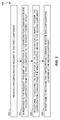
- Fig. 2 is a flow diagram describing a method 200 according to an embodiment of the invention for reconfiguring the entertainment system 100 of Fig. 1 to restore audio/video content to a user. While the entertainment system 100 of Fig. 1 is employed as the basis of the method 200, aspects of the method 200 may be utilized in conjunction with other entertainment systems not specifically discussed herein.
- reconfiguration of the entertainment system 100 involves the issuing of configuration commands to at least one of the components 102, 106 of the entertainment system 100 to allow audio and/or video content to be delivered or presented to a user. More specifically, the configuration commands alter operational settings of one or more of the components 102, 106, including, but not limited to, selecting or activating a particular audio/video input or output of a component, selecting a particular input or output programming channel of a component, selecting an audio level of a component, and selecting a power state (i.e., "on” or "off") of a component, which may affect whether the audio and/or video content is presented to the user, such as through a television, audio receiver, and the like.
- a request 110 to reconfigure the entertainment system 100 is received at the first component 102 (operation 202).
- the reconfiguration request 110 is transmitted by the remote control device 104 to the first component 102, possibly as the result of a user initiating the request by interaction with the remote control device 104.
- the reconfiguration request 110 may be generated in other ways, such as by way of the user initiating the request via a user control panel of the first component 102.
- the first component 102 transmits an indication 112 of a configuration command for the second component 106 to the remote control device 102 (operation 204).
- the remote control device 104 transmits the configuration command 114 to the second component 106 (operation 206).
- the second component 106 executes the configuration command 114 (operation 208).
- Fig. 2 indicates a specific order of execution of the operations 202-208, other possible orders of execution, including concurrent execution of one or more operations, may be undertaken in other implementations.
- a computer-readable storage medium may have encoded thereon instructions for one or more processors or other control logic to direct a device to implement the method 200.
- Fig. 3 presents a block diagram of another entertainment system 300 including at least a first component 302 (such as a television set-top box), a second component 306 (in this case, a television), and a third component 308 (for example, an audio receiver).
- Fig. 3 also illustrates the set-top box 302 being connected to the television 306 so that television signals received and processed by the set-top box 302 may be displayed, while the television 306 is connected to the audio receiver 308 to provide an enhanced audio experience for the user.
- the audio receiver 308 may be connected directly to the set-top box 302 instead of the television 306. Such alternate schemes may affect how each component 302, 306, 308 must be configured to present audio and/or video content to a user. Additional components may also be included in the entertainment system 300 in other embodiments, but such components are not specifically indicated in Fig. 3 to simplify and facilitate the following discussion.
- a remote control device 304 adapted to send communication signals to each of the components 302, 306, 308, as well as to receive communication signals from the first component 302.
- the remote control device 304 serves as a relay device for configuration commands specified by the first component 302 for execution by either or both of the second component 306 and the third component 308.
- the remote control device 304 communicates with the components 302, 306, 308 by way of wireless signals, such as infrared (IR) or radio frequency (RF) signals.
- IR infrared
- RF radio frequency
- Fig. 4 provides a block diagram of the remote control device 304 according to one embodiment.
- the remote control device 304 includes a transmitter 402, a receiver 404, a user interface 406, and control logic 408.
- the transmitter 402 is a wireless transmitter, such as an infrared transmitter, configured to transmit communication signals to any of the components 302, 306, 308 of the entertainment system 300.
- the receiver 404 is a wireless receiver, such as an infrared receiver, configured to receive communication signals from at least the first component 302 of the system 300. While the specific remote control device 304 discussed herein employs infrared communications, other types of optical or electromagnetic communication technologies may be employed in other implementations.
- the user interface 406 of the remote control device 304 may include keys, buttons, touchpads, joysticks, and/or other user input components, as well as light-emitting diodes (LEDs), liquid-crystal diode (LCD) displays, audio speakers, and/or other types of user output devices.
- LEDs light-emitting diodes
- LCD liquid-crystal diode
- Each of the transmitter 402, receiver 404, and user interface 406 is coupled with the control logic 408, which communicates with, and possibly controls, the other portions 402, 404, 406 of the remote control device 304.
- the control logic 408 may include any control circuitry capable of performing the various tasks described below in conjunction with the remote control device 304.
- the control logic 408 may be a processor, such as a microprocessor, microcontroller, or digital signal processor (DSP), configured to execute instructions directing the processor to perform the functions discussed in detail below.
- the control logic 408 may be hardware-based logic, or may include a combination of hardware, firmware, and/or software elements.
- a user may have inadvertently altered the configuration of one or more of the components 302, 306, 308, such as changing a channel of the television 306, modifying the current audio/video input of the television 306, or altering the audio input of the audio receiver 308, resulting in a loss of audio and/or video being presented at the television 306 and/or the audio receiver 308.
- the user may initiate a reconfiguration operation, alternately termed a "recover" operation or mode.
- the first component 302 (i.e., the set-top box 302) possesses the majority of the intelligence in the system 300 to perform the requested reconfiguration of the various components 302, 306, 308. While the first component 302 is specifically identified as a television set-top box, other types of entertainment system components, such as televisions, DVD players, audio receivers, and the like, may possess such intelligence in other implementations.
- Fig. 5 provides a block diagram of the first component (i.e., television set-top box) 302 of Fig. 3 .
- the set-top box 302 includes, in part, an audio video/input interface 502, a channel selector 504, and an audio/video output interface 506.
- the audio/video input interface 502 may receive multiple channels of audio/video content 520, such as that available by way of satellite antenna, terrestrial antenna, fiber optic connection, or cable.
- the audio/video input interface 502 may include circuitry to down-convert and otherwise process the multiple channels of content 520 before passing the content 520 to the channel selector 504, which selects one of the channels of content 520.
- the channel selector 504 forwards the content 530 of the selected channel to the audio/video output interface 506, which decodes and otherwise processes the content 530 for presentation as audio/video output 540 to the user by way of the television 306 and/or the audio receiver 308 of Fig. 3 .
- Other components may also be included for processing the received content 520, such as circuitry for decrypting and demultiplexing the content, but such components are not discussed herein to simplify the discussion below.
- the set-top box 302 of Fig. 5 also includes a remote control interface 508, data storage 510, control logic 514, and possibly a communication interface 516. Similar to the remote control device 304, the remote control interface 508 of the set-top box 302 may include a wireless receiver 518, such as an infrared receiver, for receiving communications from the remote control device 304, as well as a wireless transmitter 520, such as an infrared transmitter, for transmitting communications to the remote control device 304. As with the remote control device 304, the transmitter 520 and the receiver 518 of the set-top box 302 may utilize any type of communication technology in other implementations.
- a wireless receiver 518 such as an infrared receiver
- the data storage 510 may be any type of data storage for storing configuration command information 512, described more fully below. Examples of the data storage 510 may include random access memory (RAM), read-only memory (ROM), flash memory, or other integrated circuit (IC) based memory. In other implementations, the data storage 510 may include a magnetic disk drive, optical disk drive, or other device-centric data storage.
- RAM random access memory
- ROM read-only memory
- IC integrated circuit
- the data storage 510 may include a magnetic disk drive, optical disk drive, or other device-centric data storage.
- the configuration command information 512 may be any information allowing the set-top box 302 to initiate one or more configuration commands executable by other components of the entertainment system, such as the second component 306 and the third component 308 of Fig. 3 .
- the configuration information 512 may include a numeric or digital representation of each of the configuration commands, the actual infrared (IR) communication code associated with each of the configuration commands, and/or other related information.
- each of the configuration commands for a particular component 306, 308 may select or alter a function of the component 306, 308 that affects the ability to deliver audio and/or video content to the user.
- Such functions include audio or video input selection, audio or video output selection, audio level control, power control, and the like.
- the set-top box 302 may employ the communication interface 516 to download new or replacement configuration command information 512 from a communication network into the data storage 510.
- the communication interface 516 may be a telephone network interface adapted to communicate with a source of the configuration command information 512, such as a provider of audio/video programming associated with the set-top box 302.
- Other communication networks such as the Internet or other wide-area network (WAN) may be employed to similar end.
- the configuration command information 512 may be embedded within the audio/video content 520 received by the set-top box 302.
- the set-top box 302 may request updates to such information on a periodic basis from the source.
- the source may "push" such information to the set-top box 302 from time to time, or whenever new information becomes available.
- the configuration command information 512 may also include a "known-good" configuration for the entertainment system 300 as previously generated by the set-top box 302. For example, if a previous use of the reconfiguration mode yielded an operational configuration for the entertainment system 300, the set-top box 302 may store the resulting configuration of the various components 302, 306, 308 in the configuration command information 512. Thereafter, if the reconfiguration mode is initiated, the set-top box 302 may first issue configuration commands resulting in the saved configuration in an initial attempt to restore the entertainment system 300 to an operational configuration.
- the configuration command information 512 may include some indication of the identity of the other components 306, 308 residing within the entertainment system 300 along with the first component (set-top box) 302.
- the set-top box 302 by way of the connected television 306, may provide the user a selection menu through which the user may employ the remote control device 304 to select their particular television 306, audio receiver 308, and so on from a list of available entertainment component models.
- the set-top box 302 may then restrict the possible configuration commands to be issued to only those commands executable by the installed components 306, 308.
- the user may also be able to use the menu system of the set-top box 302 to specify how the components 306, 308 are coupled with the set-top box 302, such as serially or in parallel, as noted above.
- This additional information may further decrease the number of possible configuration commands to be issued by the set-top box 302, thus reducing the amount of time consumed by the set-top box 302 in stepping through all possible combinations of the component configurations.
- control logic of the first component 302 may generate a number of different configurations for the second component 306 and the third component 308, any of which may yield an operational configuration that delivers audio/video content to the user.
- Such information may also be stored in the configuration command information 512, or in some other area of the data storage 510.
- control logic 514 of the first component (set-top box) 302 communicates with and controls the various functional blocks of the set-top box 302 discussed above.
- the control logic 514 may include any control circuitry capable of performing the various tasks ascribed to the set-top box 302.
- the control logic 514 may be a processor, such as a microprocessor, microcontroller, or digital signal processor (DSP), configured to execute instructions directing the processor to perform the functions discussed in detail below.
- DSP digital signal processor
- the control logic 514 may be hardware-based logic, or may include a combination of hardware, firmware, and/or software elements.
- the first component 302 may include other circuits or functional blocks not explicitly shown in Fig. 5 , such as a DVR, a "smart card” interface, and other circuitry commonly associated with a television set-top box. Such items are omitted to simplify and focus the discussion presented below regarding reconfiguration of the entertainment system 300.
- Fig. 6 provides a messaging diagram depicting the various possible communications among the remote control device 304 and the entertainment system components 302, 306, 308 to allow reconfiguration of one or more of the components 302, 306, 308.
- the reconfiguration is initiated by way of a reconfiguration request 610 transferred from the remote control device 304 to the first component 302.
- the request 610 may result from the user interacting with a user panel located on the component 302.
- Other means of initiating the reconfiguration process are also possible.
- Such actions cause the remote control device 304 and the set-top box 302 to enter an initial "setup" phase 601 of the reconfiguration process or mode, as is shown in Fig. 6 .
- the user may press a specific button or key on the remote control device 304, such as a "recover" key, to enter the setup phase.
- the control logic 408 of the remote control device 304 may require the user to hold down the key for a predetermined amount of time, such as two or three seconds, to prevent inadvertent initiation of the reconfiguration process or mode.
- the remote control device 304 may signify to the user that the reconfiguration mode has been entered visually, such as by way of flashing one or more LEDs on the remote control device 304, causing the first component 302 to flash one or more LEDs in a similar manner, emitting an audible tone, or employing any other type of indication to alert the user that the system is entering the reconfiguration mode.
- the set-top box 302 upon receiving the reconfiguration request 610, may present a "recover" display screen to its audio/video outputs during the setup phase 601.
- the user will be able to view the recover screen and ascertain that the reconfiguration of the system 300 has been successful without relying on the presence of a particular broadcast channel or other video source.
- the remote control device 304 may be configured to ignore other user input by way of keys, buttons, or other input means while the setup phase 601 of the reconfiguration mode is occurring, thus preventing any confusion regarding whether the reconfiguration mode is still active.
- the user may press a key other than the "recover" key to exit the reconfiguration mode before entering the configuration phase 602 in one implementation. The user may be motivated to exit the reconfiguration mode at such an early stage if, for example, entering the reconfiguration was inadvertent.
- the remote control device 304 and the first component 302 may then enter the configuration phase 602, during which time one or more configuration commands are transmitted to the various components, such as the television 306 and the audio receiver 308, in an attempt to recover the audio/video content for presentation to the user by way of these two components 306, 308.
- the first component 302 may employ a list of configuration commands intended for one or more of the other components 306, 308 of the entertainment system. These commands may be derived from the configuration command information 512 stored in the data storage 510, as mentioned above.
- the configuration commands may be organized into groups of one or more commands intended to be executed as a set or sequence to place the entertainment system 300 in a desired state.
- the set-top box 302 may issue a configuration command to each of the television 306 and the audio receiver 308 to place those components in a particular state prior to allowing the user to indicate whether that state is operational.
- multiple commands may be issued to a single component 306, 308 in a sequence, and commands issued to each of multiple components 306, 308 may be included in a single sequence.
- a first configuration command 614 is issued to the second component 306, and a second configuration command 620 is transferred to the third component 308.
- a second configuration command 664 a third configuration command 634 is transmitted to the second component 306, after which a fourth configuration command 640 is issued to the third component 308.
- the set-top box 302 initiates the process by transmitting an indication 612 of the first configuration command 614 to the remote control device 304.
- the indication 612 may take any of a number of forms. For example, if the remote control device 304 includes the wireless communication codes, such as IR codes, for the intended destination component (i.e., the second component 306), the indication 612 may be represented by some numeric code representative of the configuration command 614 to be transferred. If, however, the remote control device 304 does not possess the IR codes or other communication codes required to transmit the desired command 614, the indication 612 may include the actual IR code or communication code associated with the first configuration command 614.
- the remote control device 304 In response to the first component 302 transmitting the indication 612 of the first configuration command 614 to the remote control device 304, such as by way of the first component transmitter 520 and the remote control receiver 404, the remote control device 304 employs its transmitter 402 to transmit the first configuration command 614 to the second component (i.e., the television) 306.
- the indication 612 is a numeric or digital representation of the command 614
- the remote control device 304 determines which communication or IR command code is associated with that representation, possibly by way of a data table residing within the remote control device 304.
- the remote control device 304 transmits the command 614 as embodied by the IR code to the second component 306 by way of its transmitter 402.
- the remote control device 304 may merely repeat, or "wrap", the indication 612 as the transmitted configuration command 614.
- the remote control device 304 may indicate to the user by way of visual or audio means, such as flashing LEDs, audible tones, or other actions, each configuration command being transmitted to one of the components 306, 308 to allow the user to correlate any changes in the configuration of the components 306, 308 with the transmissions of the remote control device 304.
- the first component 302 may provide such visual or audible feedback to the user.
- the remote control device 304 may transmit a first acknowledgment 616 associated with the command 614 to the first component 302, thus indicating that transmission of the first configuration command 614 to the second component 306 is complete.
- the first component 302 may then transmit an indication 618 of the second configuration command 620.
- the remote control device 304 After receiving this second indication 618, the remote control device 304 then transmits the associated second configuration command 620 to the third component (i.e., the audio receiver) 308.
- the remote control device 304 may then transmit a second acknowledgment 622 to the first component 302 to indication completion of the second configuration command 620 transmission.
- each of the communications may incorporate a device or component code embedded within the communication or IR code to signify which of the components 302, 306, 308 is the intended destination of the transmission.
- the communications between the remote control device 304 and at least one of the components 302, 306, 308 may involve one communication technology, such as RF communications, while communications between the remote control device 304 and at least one of the remaining components (e.g., the television 306 and the audio receiver 308) may be IR communications.
- the remote control device 304 may employ a timeout period within the configuration phase 602, during which the user is prevented from issuing commands to any of the components 302, 306, 308. For example, the remote control device 304 may begin ignoring user input beginning at the time the device 304 receives a command indication, such as the first indication 612 discussed above, thus allowing the remote control device 304 to transmit the associated command 614 and acknowledgment 616 without user interruption. Further, after the command 614 and its associated acknowledgment 616 are transmitted to their respective destinations, a first timeout period, such as a one-half second, may be initiated during which user input is still prohibited. This first timeout allows the entirety of the first command sequence 662 to be completed before user input is allowed.
- a command indication such as the first indication 612 discussed above
- the indication 618 of the second configuration command 620 may be issued before the expiration of the timeout period.
- the remote control device 304 upon receipt of the second indication 618, continues to ignore user input.
- a new timeout period may be initiated to allow yet another command to be issued. This extension of the timeout period may continue for each of the commands in the current command sequence, thus pacing the response of the user while in the recover or reconfiguration mode.
- the first component 302 may then await user input as to the effectiveness of the first command sequence 662 in reconfiguring the entertainment system 300 to an operational state. More specifically, once the first component 302 receives the second acknowledgment 622, indicating the last command 620 of the first command sequence 662 has been issued, the first component 302 may then wait for a second timeout period for the user to indicate whether a different configuration should be attempted. In one particular implementation, the second timeout period may be thirty seconds to allow the user ample time to respond. Further, either the remote control device 304 or the first component 302 may notify the user by way of a flashing LED or other means that the system 300 is in a stable configuration and is awaiting user input as to whether the configuration is operational.
- the user may press the same button of the user interface 406 of the remote control device 304 that was employed to initiate the recover mode (e.g., a "recover" key or button) to indicate a user response 625 (transmitted from the remote control device 304 to the first component 302) that the latest configuration is not operational (i.e., does not produce audio and/or video by way of the television 306 and/or the audio receiver 308). If the first component 302 receives this user input prior to the expiration of the second timeout period, the first component 302 may then proceed to the next command sequence (i.e., the second command sequence 664 of Fig. 6 ).
- the next command sequence i.e., the second command sequence 664 of Fig. 6 .
- the first component 302 may presume that the current configuration is operational and terminate the recover mode, as described more fully below. In another implementation, in the event the first component 302 does not receive any user input prior to the expiration of the second timeout, the first component 302 may instead presume that the current configuration is not operational and continue with the next command sequence.
- the user indicates by way of the user response 625 that the configuration resulting from the first command sequence 662 is not operational.
- the first component i.e., the set-top box
- the remote control device 304 begins the second command sequence 664 by transmitting an indication 632 of the third configuration command 634.
- the remote control device 304 issues a third configuration command 634 to the second component 306, followed by a third acknowledgment 636 to the first component 302 to signify that the third configuration command 634 was issued.
- the remote control device 304 may also utilize a timeout period during which user input is ignored, as described above.
- the first component 302 transmits to the remote control device 304 an indication 638 of a fourth configuration command 640, which the remote control device 304 transmits to the third component 308. After transmitting the fourth configuration command 640, the remote control device 304 transmits a fourth acknowledgment 642 to the first component 302.
- the first component 302 awaits user input regarding the effectiveness of the resulting system 300 configuration.
- the user employs a key other than the "recover" key to denote that the current configuration is operational (i.e. video and/or audio from the set-top box 302 is presented at the television 306 and/or the audio receiver 308), resulting in a user response 650 being transmitted from the remote control device 304 to the first component 302.
- the first component 302 may not receive any user input during the second timeout period described above, or the second command sequence 664 represents the last available command sequence produced by the first component 302. In each case, the first component 302 determines that the configuration phase 602 is ended, and that the termination phase 603 begins.
- the first component 302 may transmit a termination indication 652 to the remote control device 304 to signify termination of the reconfiguration mode in one embodiment.
- either or both of the first component 302 and the remote control device 304 may provide some audio or visual indication, such as flashing LEDs, audible tones, and the like, to notify the user of the end of the recover mode.
- either or both of the first component 302 and the remote control device 304 may alter their current state to return the system 300 to a standard operating environment.
- the remote control device 304 may alter its current operating mode to provide user-initiated commands to the set-top box (i.e., the first component) 302.
- the set-top box 302 may communicate with the remote control device 304 to cause the remote control device 304 to enter that mode.
- the first component 302 may also self-execute one or more commands in any command sequence to alter its own configuration or state. Depending on the implementation, the first component 302 may execute such commands before, during, or after any of the configuration commands intended for the other components 306, 308. Also, in one embodiment, such commands may be specified in the configuration command information 512 residing in the data storage 510 of the first component 302.
- one or more of the components 306, 308 may employ the Consumer Electronics Control (CEC) functionality specified by the HDMI 1.2 specification.
- CEC Consumer Electronics Control
- the first component 302 may issue a configuration command to the CEC-compliant component 306, 308 over the HDMI connection, thus obviating the use of the remote control device 304 for transmitting the command.
- the first component 302 may issue an "Active Source" CEC command to the component 306, 308, thus causing the component 306, 308 to select the input over which the Active Source command was received (i.e., the input coupled to the first component 302 by way of the HDMI connection).
- such a command may constitute part or all of the first command sequence or any subsequent command sequence initiated by the first component 302.
- the user may be required to point the remote control device 304 in the general direction of the components 302, 306, 308 so that the transmitter 402 and the receiver 404 of the device 304 are oriented properly to facilitate these communications during the recover mode.
- the remote control device 304 may increase the power of the transmitter 402 to allow greater freedom of orientation of the remote control device 304 with respect to at least the second component 306 and the third component 308 while still successfully transmitting the configuration commands to those components 306, 308.
- Various embodiments as described herein for reconfiguring an entertainment system to an operational state may provide several benefits.
- allowing the user of the entertainment system to recover the presentation of a lost audio and/or video signal by the simple and limited use of a remote control device may reduce the volume of customer service requests to a call center operated by a programming service provider, or a manufacturer of one or more of the components being employed.
- the scarce electronic resources of the remote control device may be reserved for other functions, while the extensive computational and data storage capability of the component may be utilized to implement the various functional aspects of the recover mode described above.
- presuming the component is coupled to a service provider or other online source the component may be able to upgrade the configuration command information to reflect new entertainment products, provide updated command sequences, or revise the reconfiguration mode algorithm at any time via that source.
Landscapes
- Engineering & Computer Science (AREA)
- Multimedia (AREA)
- Signal Processing (AREA)
- Human Computer Interaction (AREA)
- Computer Networks & Wireless Communication (AREA)
- Selective Calling Equipment (AREA)
- Details Of Television Systems (AREA)
Claims (14)
- Une méthode de reconfiguration d'un système de divertissement (300) pour le rétablissement d'un contenu audio/visuel pour un utilisateur, en retournant à une configuration précédemment opérationnelle du système de divertissement, la méthode comprenant :la réception, à un premier composant (302) du système de divertissement, d'une demande (610) pour reconfigurer le système de divertissement ;la transmission, en réponse à la demande (610), d'une indication (612) d'une première commande de configuration pour un deuxième composant (306) du système de divertissement du premier composant (302) à un dispositif de télécommande (304) ; etla transmission, en réponse à la réception de l'indication (612) de la première commande de configuration au dispositif de télécommande (304), de la première commande de configuration (614) du dispositif de télécommande au deuxième composant (306) ;après la transmission de la première commande de configuration (614), la transmission, du dispositif de télécommande (304), d'une première confirmation (616) associée à la première commande de configuration (614) au premier composant (302) ;la transmission, en réponse à la première confirmation (616), d'une indication (618) d'une deuxième commande de configuration (620) du premier composant (302) au dispositif de télécommande (304) ;après la réception de l'indication (618) de la deuxième commande de configuration, le dispositif de télécommande (304) transmet alors la deuxième commande de configuration (620) connexe au troisième composant (308) ; etla transmission, en réponse à la transmission de la deuxième commande de configuration (620),d'une deuxième confirmation (622) du dispositif de télécommande (304) au premier composant (302).
- La méthode selon la revendication 1, comprenant en outre :au premier composant (302), la transmission de l'indication (618) de la deuxième commande de configuration (620) pour le deuxième composant du premier composant (302) au dispositif de télécommande (304), si le premier composant reçoit, dans un délai prédéterminé, une réponse de l'utilisateur pour la poursuite de la reconfiguration du système de divertissement ; eten réponse à la réception de l'indication (618) de la deuxième commande de configuration (620) au dispositif de télécommande, la transmission de la deuxième commande de configuration (620) du dispositif de télécommande au deuxième composant (306).
- Une méthode selon la revendication 1, comprenant en outre :la transmission, au premier composant (302), de l'indication (618) de la deuxième commande de configuration (620) pour le troisième composant (308) du système de divertissement, depuis le premier composant au dispositif de télécommande, si le premier composant reçoit, dans un délai prédéterminé, une réponse de l'utilisateur pour la poursuite de la reconfiguration du système de divertissement ; etla transmission, en réponse à la réception de l'indication (618) de la deuxième commande de configuration (620) au dispositif de télécommande, de la deuxième commande de configuration (620) du dispositif de télécommande au troisième composant (308).
- Une méthode selon la revendication 1, comprenant en outre :au premier composant (302), en réponse à la demande (610), l'exécution d'une commande de configuration pour le premier composant.
- Une méthode selon la revendication 1, dans le cadre de la quelle on doit en outre :ignorer, au dispositif de télécommande (304), et après la réception de l'indication (612) de la première commande de configuration (614), l'entrée de l'utilisateur jusqu'à une période prédéterminée après la transmission de la première confirmation (616) au premier composant.
- Une méthode selon la revendication 1, comprenant en outre :la transmission, au premier composant (302), de la deuxième commande de configuration (620) pour le troisième composant (308), du premier composant (302) au troisième composant, tout en contournant le dispositif de télécommande (304).
- Une méthode selon la revendication 1, dans lequel :la première commande de configuration (614) comprend au moins une des suivantes : sélection d'un canal de programmation des entrées du deuxième composant, sélection d'un canal de programmation de sortie du deuxième composant, sélection d'une entrée vidéo du deuxième composant, sélection d'une sortie vidéo du deuxième composant, sélection d'une entrée audio du deuxième composant, sélection d'une sortie audio du deuxième composant, sélection d'un niveau audio pour le deuxième composant, et modification d'un état de mise sous tension du deuxième composant.
- Une méthode selon la revendication 1, comprenant en outre :la réception, au premier composant (302), d'informations de commandes de configuration pour le deuxième composant avant la réception de la demande ;l'indication de la commande de configuration étant basée sur des informations sur la commande de configuration.
- Un composant d'un système de divertissement, le composant (302) comprenant :une interface de télécommande (508) configurée pour communiquer avec un dispositif de télécommande (304) ;une mémoire (510) configurée pour stocker des informations de commande (512) de la première configuration pour un deuxième composant (306) du système de divertissement, et des informations de commande (512) de la deuxième configuration pour un troisième composant (308) du système de divertissement ; et une logique de commande (514) configurée pour :recevoir une demande (610) de reconfiguration du système de divertissement pour le rétablissement d'un contenu audio/vidéo pour un utilisateur, en retournant à une configuration précédemment opérationnelle du système de divertissement ; et, en réponse à la demande (610), transmettre une indication (612) d'une première commande de configuration pour le deuxième composant (306) au dispositif de télécommande (304) par le biais de l'interface de télécommande (508), l'indication (612) de la première commande de configuration (614) étant basée sur les informations de commande de la première configuration dans la mémoire ;recevoir, après la transmission de la première commande de configuration (614), une première confirmation (616) associée avec la première commande de configuration (614) ;transmettre, en réponse à la première confirmation (616), une indication (618) d'une deuxième commande de configuration (620) pour le troisième composant (308) au dispositif de télécommande (304) par le biais de l'interface de télécommande (508), l'indication (618) de la deuxième commande de configuration (620) étant basée sur les informations de commande de la deuxième configuration dans la mémoire ; etrecevoir, après la transmission de la deuxième commande de configuration (620), une deuxième confirmation (622) associée avec la deuxième commande de configuration (620).
- Un composant selon la revendication 9, dans lequel :l'indication (612) de la première commande de configuration (614) comprend un des suivants :représentation numérique de la commande de configuration ; code de communication de l'indication de commande de configuration.
- Un composant selon la revendication 9, comprenant en outre :une interface de communication de composant (516) configurée pour accoupler d'une manière communicative le composant avec un troisième composant (308) ;une logique de commande (514) étant configurée pour transmettre la deuxième commande de configuration (620) par le biais de l'interface de communication de composant au troisième composant (308).
- Un composant selon la revendication 9, comprenant en outre :une interface d'entrée audio/vidéo (502) configurée pour recevoir de multiples canaux de contenu audio/vidéo ;un sélecteur de canal (504) configuré pour sélectionner un des multiples canaux au contenu audio/vidéo ; etune interface de sortie audio/vidéo (506) configurée pour délivrer le canal sélectionné de contenu audio/vidéo à un dispositif de sortie pour la présentation à un utilisateur.
- Un composant selon la revendication 9, dans lequel :l'interface d'entrée audio/vidéo (502) comprend au moins une des suivantes : interface d'entrée de télévision par satellite ; interface d'entrée de télévision par câble ; interface d'entrée de télévision terrestre.
- Un dispositif de télécommande (304) comprenant :un récepteur (404) configuré pour recevoir des communications sans fil d'un premier composant (302) d'un système de divertissement ;un transmetteur (402) configuré pour transmettre des communications sans fil au premier composant (302), ainsi qu'à un deuxième composant (306) et à un troisième composant (308) du système de divertissement ;une logique de commande (408) configurée pour :transmettre au premier composant (302) du système de divertissement une demande (610) de reconfiguration du système de divertissement pour le rétablissement du contenu audio / vidéo pour un utilisateur en retournant à une configuration précédemment opérationnelle du système de divertissement ; recevoir une indication (612) d'une première commande de configuration (614) pour le deuxième composant (306) depuis le premier composant (302) par le biais du récepteur (404) ; ettransférer la première commande de configuration (614) au deuxième composant (306) par le biais du transmetteur (402) ; et la logique de commande (408) étant configurée en outre pour :transmettre, après la transmission de la première commande de configuration (614), une première confirmation (616), associée avec la première commande de configuration (614), au premier composant (302) ;recevoir, en réponse à la première confirmation (616), une indication (618) d'une deuxième commande de configuration (620) pour le troisième composant (308) du système de divertissement ;transmettre, après avoir reçu l'indication (618) de la deuxième commande de configuration, la deuxième commande de configuration (620) connexe au troisième composant (308) ; et transmettre, en réponse à la transmission d'une deuxième commande de configuration (620), d'une deuxième confirmation (622) du dispositif de télécommande (304) au premier composant (302).
Applications Claiming Priority (2)
| Application Number | Priority Date | Filing Date | Title |
|---|---|---|---|
| US12/330,368 US9210356B2 (en) | 2008-12-08 | 2008-12-08 | System and method for entertainment system reconfiguration |
| PCT/US2009/066998 WO2010077610A1 (fr) | 2008-12-08 | 2009-12-07 | Système et procédé pour la reconfiguration d'un système de loisir |
Publications (2)
| Publication Number | Publication Date |
|---|---|
| EP2364548A1 EP2364548A1 (fr) | 2011-09-14 |
| EP2364548B1 true EP2364548B1 (fr) | 2016-04-27 |
Family
ID=41650373
Family Applications (1)
| Application Number | Title | Priority Date | Filing Date |
|---|---|---|---|
| EP09793375.8A Active EP2364548B1 (fr) | 2008-12-08 | 2009-12-07 | Système et procédé pour la reconfiguration d'un système de loisir |
Country Status (6)
| Country | Link |
|---|---|
| US (1) | US9210356B2 (fr) |
| EP (1) | EP2364548B1 (fr) |
| CA (1) | CA2745907C (fr) |
| MX (1) | MX2011005941A (fr) |
| TW (1) | TWI419559B (fr) |
| WO (1) | WO2010077610A1 (fr) |
Families Citing this family (8)
| Publication number | Priority date | Publication date | Assignee | Title |
|---|---|---|---|---|
| US7805751B1 (en) * | 2004-04-28 | 2010-09-28 | Michael T Dugan | Automatic reconfiguration device |
| US9210356B2 (en) | 2008-12-08 | 2015-12-08 | Echostar Technologies L.L.C. | System and method for entertainment system reconfiguration |
| US9800837B2 (en) * | 2008-12-31 | 2017-10-24 | Echostar Technologies L.L.C. | Virtual control device |
| US8719885B2 (en) | 2009-11-30 | 2014-05-06 | Echostar Technologies L.L.C. | Systems and methods for accessing recoverable program content |
| CA2909570C (fr) * | 2013-04-16 | 2022-08-16 | Home Control Singapore Pte. Ltd. | Commande a distance pour des premier et second appareils |
| US20170161055A1 (en) * | 2014-09-11 | 2017-06-08 | Proeasy Network Solutions Co., Ltd. | Control module and control method of electronic device |
| KR102507161B1 (ko) | 2016-09-27 | 2023-03-07 | 삼성전자주식회사 | 주변 기기의 컨텐츠를 디스플레이하는 디스플레이 장치 및 제어 방법 |
| US11223521B2 (en) * | 2018-10-10 | 2022-01-11 | Sony Group Corporation | Setting up a new television linked with an existing television |
Family Cites Families (39)
| Publication number | Priority date | Publication date | Assignee | Title |
|---|---|---|---|---|
| JP2649948B2 (ja) | 1988-06-21 | 1997-09-03 | 株式会社ザナヴィ・インフォマティクス | 電子グライコ付オーディオ装置 |
| US5659883A (en) | 1992-08-24 | 1997-08-19 | General Instrument Corporation | Selection between separately received messages in diverse-frequency remote-control communication system |
| JPH0787411A (ja) | 1993-08-26 | 1995-03-31 | Gold Star Co Ltd | Tvとvcrのチャンネル自動切換装置及びチャンネル自動切換方法 |
| KR950020684A (ko) | 1993-12-22 | 1995-07-24 | 배순훈 | 브이씨알(vcr)의 티브이 작동제어장치 및 방법 |
| US6133910A (en) | 1996-09-20 | 2000-10-17 | Echostar Engineering Corp. | Apparatus and method for integrating a plurality of video sources |
| US5982445A (en) | 1996-10-21 | 1999-11-09 | General Instrument Corporation | Hypertext markup language protocol for television display and control |
| US5956487A (en) | 1996-10-25 | 1999-09-21 | Hewlett-Packard Company | Embedding web access mechanism in an appliance for user interface functions including a web server and web browser |
| US7103834B1 (en) | 1997-06-25 | 2006-09-05 | Samsung Electronics Co., Ltd. | Method and apparatus for a home network auto-tree builder |
| JP3832937B2 (ja) | 1997-08-26 | 2006-10-11 | キヤノン株式会社 | 制御装置 |
| AR019932A1 (es) | 1998-07-17 | 2002-03-27 | United Video Properties Inc | Una disposicion de guias de programacion televisiva interactivas que tiene multiples dispositivos dentro de una residencia de un grupo familiar y un método que la emplea |
| US20060244839A1 (en) | 1999-11-10 | 2006-11-02 | Logitech Europe S.A. | Method and system for providing multi-media data from various sources to various client applications |
| US20020057336A1 (en) | 2000-03-02 | 2002-05-16 | Gaul Michael A. | Interactive program guide configuration system |
| US8082572B1 (en) | 2000-06-08 | 2011-12-20 | The Directv Group, Inc. | Method and apparatus for transmitting, receiving, and utilizing audio/visual signals and other information |
| US6628344B1 (en) | 2000-07-12 | 2003-09-30 | Harold J. Weber | Remote control system providing an automatic assertion of a preset selection value concurrent with a submission of a user preferred selection value |
| WO2002027472A1 (fr) | 2000-09-27 | 2002-04-04 | Thomson Licensing S.A. | Architecture pour optimiser des etats de sortie audio et video de dispositifs multimedia |
| US7690017B2 (en) | 2001-05-03 | 2010-03-30 | Mitsubishi Digital Electronics America, Inc. | Control system and user interface for network of input devices |
| SE521421C2 (sv) * | 2002-03-15 | 2003-10-28 | Scania Cv Abp | Fjärrstyrning |
| EP1644904B1 (fr) * | 2003-06-25 | 2009-12-09 | Universal Electronics Inc. | Systeme et procede de surveillance de transmissions telecommandees |
| US7805751B1 (en) | 2004-04-28 | 2010-09-28 | Michael T Dugan | Automatic reconfiguration device |
| US7266777B2 (en) | 2004-09-08 | 2007-09-04 | Universal Electronics Inc. | Configurable controlling device having an associated editing program |
| US20080297369A1 (en) | 2004-10-12 | 2008-12-04 | Scope Seven Inc. | Remote Control System with Satellite Control Devices |
| US7375673B2 (en) | 2005-01-13 | 2008-05-20 | Netgear, Inc. | System and method for universal remote control configuration |
| US20060253874A1 (en) | 2005-04-01 | 2006-11-09 | Vulcan Inc. | Mobile interface for manipulating multimedia content |
| US8223001B2 (en) | 2005-07-19 | 2012-07-17 | Marvell International Ltd. | Two way remote control |
| US7907222B2 (en) | 2005-09-08 | 2011-03-15 | Universal Electronics Inc. | System and method for simplified setup of a universal remote control |
| KR100725919B1 (ko) | 2005-11-24 | 2007-06-11 | 한국전자통신연구원 | 홈네트워크 환경에서 방송용 미들웨어를 이용한 가전기기제어장치 및 그 방법 |
| US20070150924A1 (en) | 2005-12-06 | 2007-06-28 | Pioneer Corporation | Image display control apparatus, image display system, image display control method, computer program product, sub-display control apparatus for image display system, and image display method |
| US7782407B2 (en) * | 2006-02-21 | 2010-08-24 | Mitsubishi Digital Electronics America, Inc. | Smart remote control |
| US20070292135A1 (en) * | 2006-06-09 | 2007-12-20 | Yong Guo | Integrated remote control signaling |
| US9319741B2 (en) | 2006-09-07 | 2016-04-19 | Rateze Remote Mgmt Llc | Finding devices in an entertainment system |
| US20080147371A1 (en) | 2006-12-13 | 2008-06-19 | Gupton Kyle P | User Defined Virtual Instruments in a Simulation Environment |
| US8896764B2 (en) | 2007-03-13 | 2014-11-25 | Sony Corporation | System and method for effectively performing a remote control configuration procedure |
| US7886318B2 (en) | 2007-06-22 | 2011-02-08 | Morega Systems Inc. | Set top box with digital rights management for multiple devices and methods for use therewith |
| US8350971B2 (en) | 2007-10-23 | 2013-01-08 | Sling Media, Inc. | Systems and methods for controlling media devices |
| US9083914B2 (en) | 2007-12-27 | 2015-07-14 | Echostar Technologies Corporation | Electronic system informing a first electronic device of user remote control activity involving a second electronic device |
| KR101446090B1 (ko) | 2008-05-27 | 2014-10-02 | 삼성전자주식회사 | 제어 디바이스 및 그 ui 제공 방법 |
| US8319900B2 (en) | 2008-09-03 | 2012-11-27 | Sony Corporation | Remote control security |
| US9210356B2 (en) | 2008-12-08 | 2015-12-08 | Echostar Technologies L.L.C. | System and method for entertainment system reconfiguration |
| US9800837B2 (en) | 2008-12-31 | 2017-10-24 | Echostar Technologies L.L.C. | Virtual control device |
-
2008
- 2008-12-08 US US12/330,368 patent/US9210356B2/en active Active
-
2009
- 2009-11-25 TW TW098140184A patent/TWI419559B/zh active
- 2009-12-07 WO PCT/US2009/066998 patent/WO2010077610A1/fr not_active Ceased
- 2009-12-07 EP EP09793375.8A patent/EP2364548B1/fr active Active
- 2009-12-07 CA CA2745907A patent/CA2745907C/fr active Active
- 2009-12-07 MX MX2011005941A patent/MX2011005941A/es active IP Right Grant
Also Published As
| Publication number | Publication date |
|---|---|
| TWI419559B (zh) | 2013-12-11 |
| WO2010077610A1 (fr) | 2010-07-08 |
| TW201034456A (en) | 2010-09-16 |
| MX2011005941A (es) | 2011-07-28 |
| CA2745907A1 (fr) | 2010-07-08 |
| US9210356B2 (en) | 2015-12-08 |
| CA2745907C (fr) | 2014-08-19 |
| US20100146579A1 (en) | 2010-06-10 |
| EP2364548A1 (fr) | 2011-09-14 |
Similar Documents
| Publication | Publication Date | Title |
|---|---|---|
| EP2364548B1 (fr) | Système et procédé pour la reconfiguration d'un système de loisir | |
| US20250053296A1 (en) | System and method for appliance control via a personal communication or entertainment device | |
| EP2076029B1 (fr) | Procédé et système d'information d'un premier dispositif électronique du contrôle et de l'activité d'un second dispositif électronique | |
| US6759967B1 (en) | Remote control for activating household video products and services | |
| EP2258110B1 (fr) | Procédé pour une réduction d'un bruit infrarouge durant une communication entre des appareils clients | |
| US9852615B2 (en) | System and method for facilitating appliance control via a smart device | |
| US8564727B2 (en) | Remote control system, television receiver and pairing method | |
| EP2216989A2 (fr) | Système et procédé distant universel non programmable | |
| JP2008301232A (ja) | テレビジョン受像装置および機器制御方法 | |
| KR20070029408A (ko) | 멀티비젼 시스템의 제어장치 및 그 방법 | |
| US20040075777A1 (en) | Function control apparatus using remote control and method of controlling the same | |
| KR20180027901A (ko) | 원격 제어 장치 및 그 제어 방법 | |
| KR101018483B1 (ko) | 디지털 기기 시스템 | |
| US12610110B2 (en) | Remote application controller | |
| JP2012049741A (ja) | 画像信号供給装置 | |
| JP2012204976A (ja) | リモートコントロール装置および信号送信方法 | |
| JP2008244578A (ja) | リモート・コントロール・システム |
Legal Events
| Date | Code | Title | Description |
|---|---|---|---|
| PUAI | Public reference made under article 153(3) epc to a published international application that has entered the european phase |
Free format text: ORIGINAL CODE: 0009012 |
|
| 17P | Request for examination filed |
Effective date: 20110607 |
|
| AK | Designated contracting states |
Kind code of ref document: A1 Designated state(s): AT BE BG CH CY CZ DE DK EE ES FI FR GB GR HR HU IE IS IT LI LT LU LV MC MK MT NL NO PL PT RO SE SI SK SM TR |
|
| DAX | Request for extension of the european patent (deleted) | ||
| 17Q | First examination report despatched |
Effective date: 20150115 |
|
| GRAP | Despatch of communication of intention to grant a patent |
Free format text: ORIGINAL CODE: EPIDOSNIGR1 |
|
| RIC1 | Information provided on ipc code assigned before grant |
Ipc: H04N 21/485 20110101ALI20151130BHEP Ipc: H04N 21/4363 20110101ALI20151130BHEP Ipc: H04N 21/41 20110101ALI20151130BHEP Ipc: H04N 5/765 20060101ALI20151130BHEP Ipc: H04N 21/482 20110101ALI20151130BHEP Ipc: H04N 5/44 20060101AFI20151130BHEP |
|
| INTG | Intention to grant announced |
Effective date: 20160104 |
|
| GRAS | Grant fee paid |
Free format text: ORIGINAL CODE: EPIDOSNIGR3 |
|
| GRAA | (expected) grant |
Free format text: ORIGINAL CODE: 0009210 |
|
| AK | Designated contracting states |
Kind code of ref document: B1 Designated state(s): AT BE BG CH CY CZ DE DK EE ES FI FR GB GR HR HU IE IS IT LI LT LU LV MC MK MT NL NO PL PT RO SE SI SK SM TR |
|
| REG | Reference to a national code |
Ref country code: GB Ref legal event code: FG4D |
|
| REG | Reference to a national code |
Ref country code: CH Ref legal event code: EP |
|
| REG | Reference to a national code |
Ref country code: AT Ref legal event code: REF Ref document number: 795904 Country of ref document: AT Kind code of ref document: T Effective date: 20160515 |
|
| REG | Reference to a national code |
Ref country code: IE Ref legal event code: FG4D |
|
| REG | Reference to a national code |
Ref country code: DE Ref legal event code: R096 Ref document number: 602009038250 Country of ref document: DE |
|
| REG | Reference to a national code |
Ref country code: NL Ref legal event code: FP |
|
| REG | Reference to a national code |
Ref country code: LT Ref legal event code: MG4D |
|
| REG | Reference to a national code |
Ref country code: AT Ref legal event code: MK05 Ref document number: 795904 Country of ref document: AT Kind code of ref document: T Effective date: 20160427 |
|
| PG25 | Lapsed in a contracting state [announced via postgrant information from national office to epo] |
Ref country code: NO Free format text: LAPSE BECAUSE OF FAILURE TO SUBMIT A TRANSLATION OF THE DESCRIPTION OR TO PAY THE FEE WITHIN THE PRESCRIBED TIME-LIMIT Effective date: 20160727 Ref country code: FI Free format text: LAPSE BECAUSE OF FAILURE TO SUBMIT A TRANSLATION OF THE DESCRIPTION OR TO PAY THE FEE WITHIN THE PRESCRIBED TIME-LIMIT Effective date: 20160427 Ref country code: LT Free format text: LAPSE BECAUSE OF FAILURE TO SUBMIT A TRANSLATION OF THE DESCRIPTION OR TO PAY THE FEE WITHIN THE PRESCRIBED TIME-LIMIT Effective date: 20160427 Ref country code: PL Free format text: LAPSE BECAUSE OF FAILURE TO SUBMIT A TRANSLATION OF THE DESCRIPTION OR TO PAY THE FEE WITHIN THE PRESCRIBED TIME-LIMIT Effective date: 20160427 |
|
| REG | Reference to a national code |
Ref country code: FR Ref legal event code: PLFP Year of fee payment: 8 |
|
| PG25 | Lapsed in a contracting state [announced via postgrant information from national office to epo] |
Ref country code: AT Free format text: LAPSE BECAUSE OF FAILURE TO SUBMIT A TRANSLATION OF THE DESCRIPTION OR TO PAY THE FEE WITHIN THE PRESCRIBED TIME-LIMIT Effective date: 20160427 Ref country code: LV Free format text: LAPSE BECAUSE OF FAILURE TO SUBMIT A TRANSLATION OF THE DESCRIPTION OR TO PAY THE FEE WITHIN THE PRESCRIBED TIME-LIMIT Effective date: 20160427 Ref country code: SE Free format text: LAPSE BECAUSE OF FAILURE TO SUBMIT A TRANSLATION OF THE DESCRIPTION OR TO PAY THE FEE WITHIN THE PRESCRIBED TIME-LIMIT Effective date: 20160427 Ref country code: GR Free format text: LAPSE BECAUSE OF FAILURE TO SUBMIT A TRANSLATION OF THE DESCRIPTION OR TO PAY THE FEE WITHIN THE PRESCRIBED TIME-LIMIT Effective date: 20160728 Ref country code: HR Free format text: LAPSE BECAUSE OF FAILURE TO SUBMIT A TRANSLATION OF THE DESCRIPTION OR TO PAY THE FEE WITHIN THE PRESCRIBED TIME-LIMIT Effective date: 20160427 Ref country code: PT Free format text: LAPSE BECAUSE OF FAILURE TO SUBMIT A TRANSLATION OF THE DESCRIPTION OR TO PAY THE FEE WITHIN THE PRESCRIBED TIME-LIMIT Effective date: 20160829 Ref country code: ES Free format text: LAPSE BECAUSE OF FAILURE TO SUBMIT A TRANSLATION OF THE DESCRIPTION OR TO PAY THE FEE WITHIN THE PRESCRIBED TIME-LIMIT Effective date: 20160427 |
|
| PG25 | Lapsed in a contracting state [announced via postgrant information from national office to epo] |
Ref country code: IT Free format text: LAPSE BECAUSE OF FAILURE TO SUBMIT A TRANSLATION OF THE DESCRIPTION OR TO PAY THE FEE WITHIN THE PRESCRIBED TIME-LIMIT Effective date: 20160427 Ref country code: BE Free format text: LAPSE BECAUSE OF FAILURE TO SUBMIT A TRANSLATION OF THE DESCRIPTION OR TO PAY THE FEE WITHIN THE PRESCRIBED TIME-LIMIT Effective date: 20160427 |
|
| REG | Reference to a national code |
Ref country code: DE Ref legal event code: R097 Ref document number: 602009038250 Country of ref document: DE |
|
| PG25 | Lapsed in a contracting state [announced via postgrant information from national office to epo] |
Ref country code: RO Free format text: LAPSE BECAUSE OF FAILURE TO SUBMIT A TRANSLATION OF THE DESCRIPTION OR TO PAY THE FEE WITHIN THE PRESCRIBED TIME-LIMIT Effective date: 20160427 Ref country code: SK Free format text: LAPSE BECAUSE OF FAILURE TO SUBMIT A TRANSLATION OF THE DESCRIPTION OR TO PAY THE FEE WITHIN THE PRESCRIBED TIME-LIMIT Effective date: 20160427 Ref country code: EE Free format text: LAPSE BECAUSE OF FAILURE TO SUBMIT A TRANSLATION OF THE DESCRIPTION OR TO PAY THE FEE WITHIN THE PRESCRIBED TIME-LIMIT Effective date: 20160427 Ref country code: DK Free format text: LAPSE BECAUSE OF FAILURE TO SUBMIT A TRANSLATION OF THE DESCRIPTION OR TO PAY THE FEE WITHIN THE PRESCRIBED TIME-LIMIT Effective date: 20160427 Ref country code: CZ Free format text: LAPSE BECAUSE OF FAILURE TO SUBMIT A TRANSLATION OF THE DESCRIPTION OR TO PAY THE FEE WITHIN THE PRESCRIBED TIME-LIMIT Effective date: 20160427 |
|
| PG25 | Lapsed in a contracting state [announced via postgrant information from national office to epo] |
Ref country code: SM Free format text: LAPSE BECAUSE OF FAILURE TO SUBMIT A TRANSLATION OF THE DESCRIPTION OR TO PAY THE FEE WITHIN THE PRESCRIBED TIME-LIMIT Effective date: 20160427 |
|
| PLBE | No opposition filed within time limit |
Free format text: ORIGINAL CODE: 0009261 |
|
| STAA | Information on the status of an ep patent application or granted ep patent |
Free format text: STATUS: NO OPPOSITION FILED WITHIN TIME LIMIT |
|
| 26N | No opposition filed |
Effective date: 20170130 |
|
| PG25 | Lapsed in a contracting state [announced via postgrant information from national office to epo] |
Ref country code: SI Free format text: LAPSE BECAUSE OF FAILURE TO SUBMIT A TRANSLATION OF THE DESCRIPTION OR TO PAY THE FEE WITHIN THE PRESCRIBED TIME-LIMIT Effective date: 20160427 |
|
| REG | Reference to a national code |
Ref country code: CH Ref legal event code: PL |
|
| PG25 | Lapsed in a contracting state [announced via postgrant information from national office to epo] |
Ref country code: MC Free format text: LAPSE BECAUSE OF FAILURE TO SUBMIT A TRANSLATION OF THE DESCRIPTION OR TO PAY THE FEE WITHIN THE PRESCRIBED TIME-LIMIT Effective date: 20160427 |
|
| REG | Reference to a national code |
Ref country code: IE Ref legal event code: MM4A |
|
| PG25 | Lapsed in a contracting state [announced via postgrant information from national office to epo] |
Ref country code: LI Free format text: LAPSE BECAUSE OF NON-PAYMENT OF DUE FEES Effective date: 20161231 Ref country code: CH Free format text: LAPSE BECAUSE OF NON-PAYMENT OF DUE FEES Effective date: 20161231 Ref country code: LU Free format text: LAPSE BECAUSE OF NON-PAYMENT OF DUE FEES Effective date: 20161207 |
|
| REG | Reference to a national code |
Ref country code: FR Ref legal event code: PLFP Year of fee payment: 9 |
|
| PG25 | Lapsed in a contracting state [announced via postgrant information from national office to epo] |
Ref country code: IE Free format text: LAPSE BECAUSE OF NON-PAYMENT OF DUE FEES Effective date: 20161207 |
|
| PG25 | Lapsed in a contracting state [announced via postgrant information from national office to epo] |
Ref country code: CY Free format text: LAPSE BECAUSE OF FAILURE TO SUBMIT A TRANSLATION OF THE DESCRIPTION OR TO PAY THE FEE WITHIN THE PRESCRIBED TIME-LIMIT Effective date: 20160427 Ref country code: HU Free format text: LAPSE BECAUSE OF FAILURE TO SUBMIT A TRANSLATION OF THE DESCRIPTION OR TO PAY THE FEE WITHIN THE PRESCRIBED TIME-LIMIT; INVALID AB INITIO Effective date: 20091207 |
|
| PG25 | Lapsed in a contracting state [announced via postgrant information from national office to epo] |
Ref country code: MK Free format text: LAPSE BECAUSE OF FAILURE TO SUBMIT A TRANSLATION OF THE DESCRIPTION OR TO PAY THE FEE WITHIN THE PRESCRIBED TIME-LIMIT Effective date: 20160427 Ref country code: TR Free format text: LAPSE BECAUSE OF FAILURE TO SUBMIT A TRANSLATION OF THE DESCRIPTION OR TO PAY THE FEE WITHIN THE PRESCRIBED TIME-LIMIT Effective date: 20160427 Ref country code: IS Free format text: LAPSE BECAUSE OF FAILURE TO SUBMIT A TRANSLATION OF THE DESCRIPTION OR TO PAY THE FEE WITHIN THE PRESCRIBED TIME-LIMIT Effective date: 20160427 |
|
| PG25 | Lapsed in a contracting state [announced via postgrant information from national office to epo] |
Ref country code: BG Free format text: LAPSE BECAUSE OF FAILURE TO SUBMIT A TRANSLATION OF THE DESCRIPTION OR TO PAY THE FEE WITHIN THE PRESCRIBED TIME-LIMIT Effective date: 20160427 |
|
| PG25 | Lapsed in a contracting state [announced via postgrant information from national office to epo] |
Ref country code: MT Free format text: LAPSE BECAUSE OF NON-PAYMENT OF DUE FEES Effective date: 20161207 |
|
| REG | Reference to a national code |
Ref country code: DE Ref legal event code: R082 Ref document number: 602009038250 Country of ref document: DE Representative=s name: HERNANDEZ, YORCK, DIPL.-ING., DE Ref country code: DE Ref legal event code: R081 Ref document number: 602009038250 Country of ref document: DE Owner name: DISH TECHNOLOGIES L.L.C., ENGLEWOOD, US Free format text: FORMER OWNER: ECHOSTAR TECHNOLOGIES L.L.C., ENGLEWOOD, COL., US |
|
| REG | Reference to a national code |
Ref country code: NL Ref legal event code: HC Owner name: DISH TECHNOLOGIES L.L.C.; US Free format text: DETAILS ASSIGNMENT: CHANGE OF OWNER(S), CHANGE OF OWNER(S) NAME; FORMER OWNER NAME: ECHOSTAR TECHNOLOGIES L.L.C. Effective date: 20190829 |
|
| P01 | Opt-out of the competence of the unified patent court (upc) registered |
Effective date: 20230521 |
|
| PGFP | Annual fee paid to national office [announced via postgrant information from national office to epo] |
Ref country code: FR Payment date: 20250930 Year of fee payment: 17 |
|
| PGFP | Annual fee paid to national office [announced via postgrant information from national office to epo] |
Ref country code: NL Payment date: 20251003 Year of fee payment: 17 |
|
| PGFP | Annual fee paid to national office [announced via postgrant information from national office to epo] |
Ref country code: DE Payment date: 20250930 Year of fee payment: 17 |
|
| PGFP | Annual fee paid to national office [announced via postgrant information from national office to epo] |
Ref country code: GB Payment date: 20251001 Year of fee payment: 17 |