EP2364735A2 - Conjugé de GLP-1 et de PEG ramafié - Google Patents
Conjugé de GLP-1 et de PEG ramafié Download PDFInfo
- Publication number
- EP2364735A2 EP2364735A2 EP11165922A EP11165922A EP2364735A2 EP 2364735 A2 EP2364735 A2 EP 2364735A2 EP 11165922 A EP11165922 A EP 11165922A EP 11165922 A EP11165922 A EP 11165922A EP 2364735 A2 EP2364735 A2 EP 2364735A2
- Authority
- EP
- European Patent Office
- Prior art keywords
- glp
- moiety
- polymer
- conjugate
- water
- Prior art date
- Legal status (The legal status is an assumption and is not a legal conclusion. Google has not performed a legal analysis and makes no representation as to the accuracy of the status listed.)
- Withdrawn
Links
- DTHNMHAUYICORS-KTKZVXAJSA-N Glucagon-like peptide 1 Chemical compound C([C@@H](C(=O)N[C@@H]([C@@H](C)CC)C(=O)N[C@@H](C)C(=O)N[C@@H](CC=1C2=CC=CC=C2NC=1)C(=O)N[C@@H](CC(C)C)C(=O)N[C@@H](C(C)C)C(=O)N[C@@H](CCCCN)C(=O)NCC(=O)N[C@@H](CCCNC(N)=N)C(N)=O)NC(=O)[C@H](CCC(O)=O)NC(=O)[C@H](CCCCN)NC(=O)[C@H](C)NC(=O)[C@H](C)NC(=O)[C@H](CCC(N)=O)NC(=O)CNC(=O)[C@H](CCC(O)=O)NC(=O)[C@H](CC(C)C)NC(=O)[C@H](CC=1C=CC(O)=CC=1)NC(=O)[C@H](CO)NC(=O)[C@H](CO)NC(=O)[C@@H](NC(=O)[C@H](CC(O)=O)NC(=O)[C@H](CO)NC(=O)[C@@H](NC(=O)[C@H](CC=1C=CC=CC=1)NC(=O)[C@@H](NC(=O)CNC(=O)[C@H](CCC(O)=O)NC(=O)[C@H](C)NC(=O)[C@@H](N)CC=1N=CNC=1)[C@@H](C)O)[C@@H](C)O)C(C)C)C1=CC=CC=C1 DTHNMHAUYICORS-KTKZVXAJSA-N 0.000 title claims abstract description 854
- 102100025101 GATA-type zinc finger protein 1 Human genes 0.000 title claims abstract 13
- 101710198884 GATA-type zinc finger protein 1 Proteins 0.000 title claims abstract 13
- 229920000642 polymer Polymers 0.000 claims abstract description 310
- 229920003169 water-soluble polymer Polymers 0.000 claims abstract description 199
- 125000006850 spacer group Chemical group 0.000 claims description 59
- 125000000217 alkyl group Chemical group 0.000 claims description 45
- 125000003277 amino group Chemical group 0.000 claims description 45
- 101800000224 Glucagon-like peptide 1 Proteins 0.000 description 488
- 102400000322 Glucagon-like peptide 1 Human genes 0.000 description 487
- 239000000203 mixture Substances 0.000 description 143
- 229920001223 polyethylene glycol Polymers 0.000 description 135
- 239000000243 solution Substances 0.000 description 134
- 239000003153 chemical reaction reagent Substances 0.000 description 114
- 238000000034 method Methods 0.000 description 111
- 239000002202 Polyethylene glycol Substances 0.000 description 106
- -1 poly(alkylene glycols Chemical class 0.000 description 102
- 238000006243 chemical reaction Methods 0.000 description 95
- WQZGKKKJIJFFOK-GASJEMHNSA-N Glucose Natural products OC[C@H]1OC(O)[C@H](O)[C@@H](O)[C@@H]1O WQZGKKKJIJFFOK-GASJEMHNSA-N 0.000 description 90
- 239000008103 glucose Substances 0.000 description 89
- WQZGKKKJIJFFOK-VFUOTHLCSA-N beta-D-glucose Chemical compound OC[C@H]1O[C@@H](O)[C@H](O)[C@@H](O)[C@@H]1O WQZGKKKJIJFFOK-VFUOTHLCSA-N 0.000 description 88
- 210000004369 blood Anatomy 0.000 description 80
- 239000008280 blood Substances 0.000 description 80
- 239000000843 powder Substances 0.000 description 75
- 239000008194 pharmaceutical composition Substances 0.000 description 66
- 108090000765 processed proteins & peptides Proteins 0.000 description 60
- 239000012071 phase Substances 0.000 description 58
- 235000001014 amino acid Nutrition 0.000 description 55
- 229940024606 amino acid Drugs 0.000 description 55
- 125000004429 atom Chemical group 0.000 description 54
- 125000003118 aryl group Chemical group 0.000 description 52
- 150000001413 amino acids Chemical class 0.000 description 50
- 230000000694 effects Effects 0.000 description 49
- XLYOFNOQVPJJNP-UHFFFAOYSA-N water Substances O XLYOFNOQVPJJNP-UHFFFAOYSA-N 0.000 description 46
- NOESYZHRGYRDHS-UHFFFAOYSA-N insulin Chemical compound N1C(=O)C(NC(=O)C(CCC(N)=O)NC(=O)C(CCC(O)=O)NC(=O)C(C(C)C)NC(=O)C(NC(=O)CN)C(C)CC)CSSCC(C(NC(CO)C(=O)NC(CC(C)C)C(=O)NC(CC=2C=CC(O)=CC=2)C(=O)NC(CCC(N)=O)C(=O)NC(CC(C)C)C(=O)NC(CCC(O)=O)C(=O)NC(CC(N)=O)C(=O)NC(CC=2C=CC(O)=CC=2)C(=O)NC(CSSCC(NC(=O)C(C(C)C)NC(=O)C(CC(C)C)NC(=O)C(CC=2C=CC(O)=CC=2)NC(=O)C(CC(C)C)NC(=O)C(C)NC(=O)C(CCC(O)=O)NC(=O)C(C(C)C)NC(=O)C(CC(C)C)NC(=O)C(CC=2NC=NC=2)NC(=O)C(CO)NC(=O)CNC2=O)C(=O)NCC(=O)NC(CCC(O)=O)C(=O)NC(CCCNC(N)=N)C(=O)NCC(=O)NC(CC=3C=CC=CC=3)C(=O)NC(CC=3C=CC=CC=3)C(=O)NC(CC=3C=CC(O)=CC=3)C(=O)NC(C(C)O)C(=O)N3C(CCC3)C(=O)NC(CCCCN)C(=O)NC(C)C(O)=O)C(=O)NC(CC(N)=O)C(O)=O)=O)NC(=O)C(C(C)CC)NC(=O)C(CO)NC(=O)C(C(C)O)NC(=O)C1CSSCC2NC(=O)C(CC(C)C)NC(=O)C(NC(=O)C(CCC(N)=O)NC(=O)C(CC(N)=O)NC(=O)C(NC(=O)C(N)CC=1C=CC=CC=1)C(C)C)CC1=CN=CN1 NOESYZHRGYRDHS-UHFFFAOYSA-N 0.000 description 40
- 125000000524 functional group Chemical group 0.000 description 37
- 239000002245 particle Substances 0.000 description 37
- YMWUJEATGCHHMB-UHFFFAOYSA-N Dichloromethane Chemical compound ClCCl YMWUJEATGCHHMB-UHFFFAOYSA-N 0.000 description 36
- 239000003814 drug Substances 0.000 description 36
- 230000014759 maintenance of location Effects 0.000 description 36
- 238000007792 addition Methods 0.000 description 35
- NIHNNTQXNPWCJQ-UHFFFAOYSA-N fluorene Chemical compound C1=CC=C2CC3=CC=CC=C3C2=C1 NIHNNTQXNPWCJQ-UHFFFAOYSA-N 0.000 description 34
- 230000021615 conjugation Effects 0.000 description 33
- 239000000047 product Substances 0.000 description 32
- OKKJLVBELUTLKV-UHFFFAOYSA-N Methanol Chemical compound OC OKKJLVBELUTLKV-UHFFFAOYSA-N 0.000 description 30
- 239000000546 pharmaceutical excipient Substances 0.000 description 29
- 239000011541 reaction mixture Substances 0.000 description 29
- 238000006460 hydrolysis reaction Methods 0.000 description 28
- 229910001868 water Inorganic materials 0.000 description 28
- KFZMGEQAYNKOFK-UHFFFAOYSA-N Isopropanol Chemical compound CC(C)O KFZMGEQAYNKOFK-UHFFFAOYSA-N 0.000 description 27
- 230000007062 hydrolysis Effects 0.000 description 27
- 238000002360 preparation method Methods 0.000 description 27
- 238000000746 purification Methods 0.000 description 27
- 241001465754 Metazoa Species 0.000 description 26
- 238000001727 in vivo Methods 0.000 description 25
- 238000002415 sodium dodecyl sulfate polyacrylamide gel electrophoresis Methods 0.000 description 25
- 241000699666 Mus <mouse, genus> Species 0.000 description 24
- 230000006320 pegylation Effects 0.000 description 24
- 108090000623 proteins and genes Proteins 0.000 description 24
- RTZKZFJDLAIYFH-UHFFFAOYSA-N ether Substances CCOCC RTZKZFJDLAIYFH-UHFFFAOYSA-N 0.000 description 23
- 102000004169 proteins and genes Human genes 0.000 description 23
- XKRFYHLGVUSROY-UHFFFAOYSA-N Argon Chemical compound [Ar] XKRFYHLGVUSROY-UHFFFAOYSA-N 0.000 description 22
- 102000004877 Insulin Human genes 0.000 description 22
- 108090001061 Insulin Proteins 0.000 description 22
- 125000005647 linker group Chemical group 0.000 description 22
- 229920001427 mPEG Polymers 0.000 description 22
- 102000004196 processed proteins & peptides Human genes 0.000 description 22
- 235000018102 proteins Nutrition 0.000 description 22
- 230000002685 pulmonary effect Effects 0.000 description 22
- 230000002829 reductive effect Effects 0.000 description 22
- 229910052760 oxygen Inorganic materials 0.000 description 21
- 239000007974 sodium acetate buffer Substances 0.000 description 21
- FAPWRFPIFSIZLT-UHFFFAOYSA-M Sodium chloride Chemical compound [Na+].[Cl-] FAPWRFPIFSIZLT-UHFFFAOYSA-M 0.000 description 20
- 229940125396 insulin Drugs 0.000 description 20
- 241000699670 Mus sp. Species 0.000 description 19
- 206010012601 diabetes mellitus Diseases 0.000 description 19
- 125000000325 methylidene group Chemical group [H]C([H])=* 0.000 description 19
- 229910052717 sulfur Inorganic materials 0.000 description 19
- XEKOWRVHYACXOJ-UHFFFAOYSA-N Ethyl acetate Chemical compound CCOC(C)=O XEKOWRVHYACXOJ-UHFFFAOYSA-N 0.000 description 18
- 125000000539 amino acid group Chemical group 0.000 description 18
- 238000004458 analytical method Methods 0.000 description 18
- 150000002148 esters Chemical class 0.000 description 18
- 108010011459 Exenatide Proteins 0.000 description 17
- 229960001519 exenatide Drugs 0.000 description 17
- 125000003588 lysine group Chemical group [H]N([H])C([H])([H])C([H])([H])C([H])([H])C([H])([H])C([H])(N([H])[H])C(*)=O 0.000 description 17
- 238000003756 stirring Methods 0.000 description 17
- 238000013459 approach Methods 0.000 description 16
- 238000004128 high performance liquid chromatography Methods 0.000 description 16
- 125000002496 methyl group Chemical group [H]C([H])([H])* 0.000 description 16
- 239000003981 vehicle Substances 0.000 description 16
- WEVYAHXRMPXWCK-UHFFFAOYSA-N Acetonitrile Chemical compound CC#N WEVYAHXRMPXWCK-UHFFFAOYSA-N 0.000 description 15
- KXDHJXZQYSOELW-UHFFFAOYSA-M Carbamate Chemical compound NC([O-])=O KXDHJXZQYSOELW-UHFFFAOYSA-M 0.000 description 15
- KDXKERNSBIXSRK-UHFFFAOYSA-N Lysine Natural products NCCCCC(N)C(O)=O KDXKERNSBIXSRK-UHFFFAOYSA-N 0.000 description 15
- 150000001408 amides Chemical class 0.000 description 15
- 125000004435 hydrogen atom Chemical group [H]* 0.000 description 15
- 239000007787 solid Substances 0.000 description 15
- 238000007920 subcutaneous administration Methods 0.000 description 15
- 150000004043 trisaccharides Chemical class 0.000 description 15
- HTQBXNHDCUEHJF-XWLPCZSASA-N Exenatide Chemical compound C([C@@H](C(=O)N[C@@H]([C@@H](C)CC)C(=O)N[C@@H](CCC(O)=O)C(=O)N[C@@H](CC=1C2=CC=CC=C2NC=1)C(=O)N[C@@H](CC(C)C)C(=O)N[C@@H](CCCCN)C(=O)N[C@@H](CC(N)=O)C(=O)NCC(=O)NCC(=O)N1[C@@H](CCC1)C(=O)N[C@@H](CO)C(=O)N[C@@H](CO)C(=O)NCC(=O)N[C@@H](C)C(=O)N1[C@@H](CCC1)C(=O)N1[C@@H](CCC1)C(=O)N1[C@@H](CCC1)C(=O)N[C@@H](CO)C(N)=O)NC(=O)[C@H](CC(C)C)NC(=O)[C@H](CCCNC(N)=N)NC(=O)[C@@H](NC(=O)[C@H](C)NC(=O)[C@H](CCC(O)=O)NC(=O)[C@H](CCC(O)=O)NC(=O)[C@H](CCC(O)=O)NC(=O)[C@H](CCSC)NC(=O)[C@H](CCC(N)=O)NC(=O)[C@H](CCCCN)NC(=O)[C@H](CO)NC(=O)[C@H](CC(C)C)NC(=O)[C@H](CC(O)=O)NC(=O)[C@H](CO)NC(=O)[C@@H](NC(=O)[C@H](CC=1C=CC=CC=1)NC(=O)[C@@H](NC(=O)CNC(=O)[C@H](CCC(O)=O)NC(=O)CNC(=O)[C@@H](N)CC=1NC=NC=1)[C@@H](C)O)[C@@H](C)O)C(C)C)C1=CC=CC=C1 HTQBXNHDCUEHJF-XWLPCZSASA-N 0.000 description 14
- 101150046735 LEPR gene Proteins 0.000 description 14
- 101150063827 LEPROT gene Proteins 0.000 description 14
- 239000008367 deionised water Substances 0.000 description 14
- 229910021641 deionized water Inorganic materials 0.000 description 14
- 239000000126 substance Substances 0.000 description 14
- MTCFGRXMJLQNBG-REOHCLBHSA-N (2S)-2-Amino-3-hydroxypropansäure Chemical compound OC[C@H](N)C(O)=O MTCFGRXMJLQNBG-REOHCLBHSA-N 0.000 description 13
- QTBSBXVTEAMEQO-UHFFFAOYSA-N Acetic acid Chemical compound CC(O)=O QTBSBXVTEAMEQO-UHFFFAOYSA-N 0.000 description 13
- IJGRMHOSHXDMSA-UHFFFAOYSA-N Atomic nitrogen Chemical compound N#N IJGRMHOSHXDMSA-UHFFFAOYSA-N 0.000 description 13
- 230000015572 biosynthetic process Effects 0.000 description 13
- 239000000872 buffer Substances 0.000 description 13
- 150000001720 carbohydrates Chemical class 0.000 description 13
- 238000003776 cleavage reaction Methods 0.000 description 13
- 150000001875 compounds Chemical class 0.000 description 13
- 150000003254 radicals Chemical class 0.000 description 13
- 238000006722 reduction reaction Methods 0.000 description 13
- 238000004007 reversed phase HPLC Methods 0.000 description 13
- 230000007017 scission Effects 0.000 description 13
- 238000012360 testing method Methods 0.000 description 13
- 125000003396 thiol group Chemical class [H]S* 0.000 description 13
- 238000011282 treatment Methods 0.000 description 13
- WYURNTSHIVDZCO-UHFFFAOYSA-N Tetrahydrofuran Chemical compound C1CCOC1 WYURNTSHIVDZCO-UHFFFAOYSA-N 0.000 description 12
- 150000001412 amines Chemical class 0.000 description 12
- 238000005277 cation exchange chromatography Methods 0.000 description 12
- 210000004027 cell Anatomy 0.000 description 12
- 238000000338 in vitro Methods 0.000 description 12
- 210000004072 lung Anatomy 0.000 description 12
- 235000018977 lysine Nutrition 0.000 description 12
- 229920001184 polypeptide Polymers 0.000 description 12
- 230000009467 reduction Effects 0.000 description 12
- 238000006467 substitution reaction Methods 0.000 description 12
- LENZDBCJOHFCAS-UHFFFAOYSA-N tris Chemical compound OCC(N)(CO)CO LENZDBCJOHFCAS-UHFFFAOYSA-N 0.000 description 12
- BVKZGUZCCUSVTD-UHFFFAOYSA-L Carbonate Chemical compound [O-]C([O-])=O BVKZGUZCCUSVTD-UHFFFAOYSA-L 0.000 description 11
- CKLJMWTZIZZHCS-REOHCLBHSA-N L-aspartic acid Chemical compound OC(=O)[C@@H](N)CC(O)=O CKLJMWTZIZZHCS-REOHCLBHSA-N 0.000 description 11
- 229910052786 argon Inorganic materials 0.000 description 11
- 238000005859 coupling reaction Methods 0.000 description 11
- 229940079593 drug Drugs 0.000 description 11
- 239000007924 injection Substances 0.000 description 11
- 238000002347 injection Methods 0.000 description 11
- 230000000144 pharmacologic effect Effects 0.000 description 11
- 239000011780 sodium chloride Substances 0.000 description 11
- HEDRZPFGACZZDS-UHFFFAOYSA-N Chloroform Chemical compound ClC(Cl)Cl HEDRZPFGACZZDS-UHFFFAOYSA-N 0.000 description 10
- SRBFZHDQGSBBOR-IOVATXLUSA-N D-xylopyranose Chemical compound O[C@@H]1COC(O)[C@H](O)[C@H]1O SRBFZHDQGSBBOR-IOVATXLUSA-N 0.000 description 10
- DCXYFEDJOCDNAF-REOHCLBHSA-N L-asparagine Chemical compound OC(=O)[C@@H](N)CC(N)=O DCXYFEDJOCDNAF-REOHCLBHSA-N 0.000 description 10
- 239000004472 Lysine Substances 0.000 description 10
- 229910019142 PO4 Inorganic materials 0.000 description 10
- JUJWROOIHBZHMG-UHFFFAOYSA-N Pyridine Chemical compound C1=CC=NC=C1 JUJWROOIHBZHMG-UHFFFAOYSA-N 0.000 description 10
- 150000001299 aldehydes Chemical class 0.000 description 10
- 238000010168 coupling process Methods 0.000 description 10
- 239000012634 fragment Substances 0.000 description 10
- 230000010030 glucose lowering effect Effects 0.000 description 10
- 125000001072 heteroaryl group Chemical group 0.000 description 10
- 238000004255 ion exchange chromatography Methods 0.000 description 10
- 239000000178 monomer Substances 0.000 description 10
- VLKZOEOYAKHREP-UHFFFAOYSA-N n-Hexane Chemical class CCCCCC VLKZOEOYAKHREP-UHFFFAOYSA-N 0.000 description 10
- 239000002953 phosphate buffered saline Substances 0.000 description 10
- DHMQDGOQFOQNFH-UHFFFAOYSA-N Glycine Chemical compound NCC(O)=O DHMQDGOQFOQNFH-UHFFFAOYSA-N 0.000 description 9
- VEXZGXHMUGYJMC-UHFFFAOYSA-N Hydrochloric acid Chemical compound Cl VEXZGXHMUGYJMC-UHFFFAOYSA-N 0.000 description 9
- AYFVYJQAPQTCCC-GBXIJSLDSA-N L-threonine Chemical compound C[C@@H](O)[C@H](N)C(O)=O AYFVYJQAPQTCCC-GBXIJSLDSA-N 0.000 description 9
- HEMHJVSKTPXQMS-UHFFFAOYSA-M Sodium hydroxide Chemical compound [OH-].[Na+] HEMHJVSKTPXQMS-UHFFFAOYSA-M 0.000 description 9
- 239000007983 Tris buffer Substances 0.000 description 9
- 238000003556 assay Methods 0.000 description 9
- 230000027455 binding Effects 0.000 description 9
- JUFFVKRROAPVBI-PVOYSMBESA-N chembl1210015 Chemical compound C([C@@H](C(=O)N[C@@H]([C@@H](C)CC)C(=O)N[C@@H](CCC(O)=O)C(=O)N[C@@H](CC=1C2=CC=CC=C2NC=1)C(=O)N[C@@H](CC(C)C)C(=O)N[C@@H](CCCCN)C(=O)N[C@@H](CC(=O)N[C@H]1[C@@H]([C@@H](O)[C@H](O[C@H]2[C@@H]([C@@H](O)[C@@H](O)[C@@H](CO[C@]3(O[C@@H](C[C@H](O)[C@H](O)CO)[C@H](NC(C)=O)[C@@H](O)C3)C(O)=O)O2)O)[C@@H](CO)O1)NC(C)=O)C(=O)NCC(=O)NCC(=O)N1[C@@H](CCC1)C(=O)N[C@@H](CO)C(=O)N[C@@H](CO)C(=O)NCC(=O)N[C@@H](C)C(=O)N1[C@@H](CCC1)C(=O)N1[C@@H](CCC1)C(=O)N1[C@@H](CCC1)C(=O)N[C@@H](CO)C(N)=O)NC(=O)[C@H](CC(C)C)NC(=O)[C@H](CCCNC(N)=N)NC(=O)[C@@H](NC(=O)[C@H](C)NC(=O)[C@H](CCC(O)=O)NC(=O)[C@H](CCC(O)=O)NC(=O)[C@H](CCC(O)=O)NC(=O)[C@H](CCSC)NC(=O)[C@H](CCC(N)=O)NC(=O)[C@H](CCCCN)NC(=O)[C@H](CO)NC(=O)[C@H](CC(C)C)NC(=O)[C@H](CC(O)=O)NC(=O)[C@H](CO)NC(=O)[C@@H](NC(=O)[C@H](CC=1C=CC=CC=1)NC(=O)[C@@H](NC(=O)CNC(=O)[C@H](CCC(O)=O)NC(=O)CNC(=O)[C@@H](N)CC=1NC=NC=1)[C@@H](C)O)[C@@H](C)O)C(C)C)C1=CC=CC=C1 JUFFVKRROAPVBI-PVOYSMBESA-N 0.000 description 9
- 230000008878 coupling Effects 0.000 description 9
- KZNICNPSHKQLFF-UHFFFAOYSA-N dihydromaleimide Natural products O=C1CCC(=O)N1 KZNICNPSHKQLFF-UHFFFAOYSA-N 0.000 description 9
- 125000000623 heterocyclic group Chemical group 0.000 description 9
- 239000000463 material Substances 0.000 description 9
- 238000005259 measurement Methods 0.000 description 9
- 238000010647 peptide synthesis reaction Methods 0.000 description 9
- 239000010452 phosphate Substances 0.000 description 9
- ASUGWWOMVNVWAW-UHFFFAOYSA-N 1-(2-methoxyethyl)pyrrole-2,5-dione Chemical compound COCCN1C(=O)C=CC1=O ASUGWWOMVNVWAW-UHFFFAOYSA-N 0.000 description 8
- 238000005160 1H NMR spectroscopy Methods 0.000 description 8
- YBYIRNPNPLQARY-UHFFFAOYSA-N 1H-indene Chemical compound C1=CC=C2CC=CC2=C1 YBYIRNPNPLQARY-UHFFFAOYSA-N 0.000 description 8
- QOSSAOTZNIDXMA-UHFFFAOYSA-N Dicylcohexylcarbodiimide Chemical compound C1CCCCC1N=C=NC1CCCCC1 QOSSAOTZNIDXMA-UHFFFAOYSA-N 0.000 description 8
- 102100025012 Dipeptidyl peptidase 4 Human genes 0.000 description 8
- UFWIBTONFRDIAS-UHFFFAOYSA-N Naphthalene Chemical compound C1=CC=CC2=CC=CC=C21 UFWIBTONFRDIAS-UHFFFAOYSA-N 0.000 description 8
- 101100395023 Neurospora crassa (strain ATCC 24698 / 74-OR23-1A / CBS 708.71 / DSM 1257 / FGSC 987) his-7 gene Proteins 0.000 description 8
- DTQVDTLACAAQTR-UHFFFAOYSA-N Trifluoroacetic acid Chemical compound OC(=O)C(F)(F)F DTQVDTLACAAQTR-UHFFFAOYSA-N 0.000 description 8
- 125000003275 alpha amino acid group Chemical group 0.000 description 8
- 230000008901 benefit Effects 0.000 description 8
- 125000002915 carbonyl group Chemical group [*:2]C([*:1])=O 0.000 description 8
- 239000012043 crude product Substances 0.000 description 8
- 208000037265 diseases, disorders, signs and symptoms Diseases 0.000 description 8
- 102000037865 fusion proteins Human genes 0.000 description 8
- 108020001507 fusion proteins Proteins 0.000 description 8
- 229910052757 nitrogen Inorganic materials 0.000 description 8
- 230000003285 pharmacodynamic effect Effects 0.000 description 8
- 229920005862 polyol Polymers 0.000 description 8
- 238000001694 spray drying Methods 0.000 description 8
- 229960002317 succinimide Drugs 0.000 description 8
- 235000000346 sugar Nutrition 0.000 description 8
- 238000003786 synthesis reaction Methods 0.000 description 8
- GUBGYTABKSRVRQ-XLOQQCSPSA-N Alpha-Lactose Chemical compound O[C@@H]1[C@@H](O)[C@@H](O)[C@@H](CO)O[C@H]1O[C@@H]1[C@@H](CO)O[C@H](O)[C@H](O)[C@H]1O GUBGYTABKSRVRQ-XLOQQCSPSA-N 0.000 description 7
- WQZGKKKJIJFFOK-QTVWNMPRSA-N D-mannopyranose Chemical compound OC[C@H]1OC(O)[C@@H](O)[C@@H](O)[C@@H]1O WQZGKKKJIJFFOK-QTVWNMPRSA-N 0.000 description 7
- 108010067722 Dipeptidyl Peptidase 4 Proteins 0.000 description 7
- JOYRKODLDBILNP-UHFFFAOYSA-N Ethyl urethane Chemical compound CCOC(N)=O JOYRKODLDBILNP-UHFFFAOYSA-N 0.000 description 7
- LYCAIKOWRPUZTN-UHFFFAOYSA-N Ethylene glycol Chemical compound OCCO LYCAIKOWRPUZTN-UHFFFAOYSA-N 0.000 description 7
- 101800004266 Glucagon-like peptide 1(7-37) Proteins 0.000 description 7
- GUBGYTABKSRVRQ-QKKXKWKRSA-N Lactose Natural products OC[C@H]1O[C@@H](O[C@H]2[C@H](O)[C@@H](O)C(O)O[C@@H]2CO)[C@H](O)[C@@H](O)[C@H]1O GUBGYTABKSRVRQ-QKKXKWKRSA-N 0.000 description 7
- 239000000443 aerosol Substances 0.000 description 7
- PYMYPHUHKUWMLA-UHFFFAOYSA-N arabinose Natural products OCC(O)C(O)C(O)C=O PYMYPHUHKUWMLA-UHFFFAOYSA-N 0.000 description 7
- SRBFZHDQGSBBOR-UHFFFAOYSA-N beta-D-Pyranose-Lyxose Natural products OC1COC(O)C(O)C1O SRBFZHDQGSBBOR-UHFFFAOYSA-N 0.000 description 7
- 125000000753 cycloalkyl group Chemical group 0.000 description 7
- 201000010099 disease Diseases 0.000 description 7
- 239000006185 dispersion Substances 0.000 description 7
- 229930182470 glycoside Natural products 0.000 description 7
- HNDVDQJCIGZPNO-UHFFFAOYSA-N histidine Natural products OC(=O)C(N)CC1=CN=CN1 HNDVDQJCIGZPNO-UHFFFAOYSA-N 0.000 description 7
- 150000002576 ketones Chemical class 0.000 description 7
- 239000008101 lactose Substances 0.000 description 7
- 238000001840 matrix-assisted laser desorption--ionisation time-of-flight mass spectrometry Methods 0.000 description 7
- 230000004048 modification Effects 0.000 description 7
- 238000012986 modification Methods 0.000 description 7
- 150000002772 monosaccharides Chemical class 0.000 description 7
- 125000001997 phenyl group Chemical class [H]C1=C([H])C([H])=C(*)C([H])=C1[H] 0.000 description 7
- 239000007790 solid phase Substances 0.000 description 7
- 239000002904 solvent Substances 0.000 description 7
- 241000894007 species Species 0.000 description 7
- 125000001424 substituent group Chemical group 0.000 description 7
- 150000008163 sugars Chemical class 0.000 description 7
- 230000001629 suppression Effects 0.000 description 7
- OWEGMIWEEQEYGQ-UHFFFAOYSA-N 100676-05-9 Natural products OC1C(O)C(O)C(CO)OC1OCC1C(O)C(O)C(O)C(OC2C(OC(O)C(O)C2O)CO)O1 OWEGMIWEEQEYGQ-UHFFFAOYSA-N 0.000 description 6
- MSKSQCLPULZWNO-UHFFFAOYSA-N 2-[2-[2-[2-[2-[2-[2-[2-[2-[2-[2-(2-methoxyethoxy)ethoxy]ethoxy]ethoxy]ethoxy]ethoxy]ethoxy]ethoxy]ethoxy]ethoxy]ethoxy]ethanamine Chemical compound COCCOCCOCCOCCOCCOCCOCCOCCOCCOCCOCCOCCN MSKSQCLPULZWNO-UHFFFAOYSA-N 0.000 description 6
- OKKJLVBELUTLKV-MZCSYVLQSA-N Deuterated methanol Chemical compound [2H]OC([2H])([2H])[2H] OKKJLVBELUTLKV-MZCSYVLQSA-N 0.000 description 6
- 101000788682 Homo sapiens GATA-type zinc finger protein 1 Proteins 0.000 description 6
- GUBGYTABKSRVRQ-PICCSMPSSA-N Maltose Natural products O[C@@H]1[C@@H](O)[C@H](O)[C@@H](CO)O[C@@H]1O[C@@H]1[C@@H](CO)OC(O)[C@H](O)[C@H]1O GUBGYTABKSRVRQ-PICCSMPSSA-N 0.000 description 6
- YXFVVABEGXRONW-UHFFFAOYSA-N Toluene Chemical compound CC1=CC=CC=C1 YXFVVABEGXRONW-UHFFFAOYSA-N 0.000 description 6
- 238000002835 absorbance Methods 0.000 description 6
- 150000001241 acetals Chemical class 0.000 description 6
- 239000002253 acid Substances 0.000 description 6
- 239000013543 active substance Substances 0.000 description 6
- 125000003545 alkoxy group Chemical group 0.000 description 6
- 239000012300 argon atmosphere Substances 0.000 description 6
- 150000004945 aromatic hydrocarbons Chemical group 0.000 description 6
- 239000002585 base Substances 0.000 description 6
- GUBGYTABKSRVRQ-QUYVBRFLSA-N beta-maltose Chemical compound OC[C@H]1O[C@H](O[C@H]2[C@H](O)[C@@H](O)[C@H](O)O[C@@H]2CO)[C@H](O)[C@@H](O)[C@@H]1O GUBGYTABKSRVRQ-QUYVBRFLSA-N 0.000 description 6
- 125000004432 carbon atom Chemical group C* 0.000 description 6
- 125000003178 carboxy group Chemical group [H]OC(*)=O 0.000 description 6
- 230000015556 catabolic process Effects 0.000 description 6
- 239000003638 chemical reducing agent Substances 0.000 description 6
- 235000018417 cysteine Nutrition 0.000 description 6
- XUJNEKJLAYXESH-UHFFFAOYSA-N cysteine Natural products SCC(N)C(O)=O XUJNEKJLAYXESH-UHFFFAOYSA-N 0.000 description 6
- 238000006731 degradation reaction Methods 0.000 description 6
- 238000012217 deletion Methods 0.000 description 6
- 230000037430 deletion Effects 0.000 description 6
- 239000003480 eluent Substances 0.000 description 6
- 238000011156 evaluation Methods 0.000 description 6
- 238000009472 formulation Methods 0.000 description 6
- 230000013595 glycosylation Effects 0.000 description 6
- 238000006206 glycosylation reaction Methods 0.000 description 6
- 125000002887 hydroxy group Chemical group [H]O* 0.000 description 6
- 239000007788 liquid Substances 0.000 description 6
- 238000004519 manufacturing process Methods 0.000 description 6
- 229940071648 metered dose inhaler Drugs 0.000 description 6
- 238000002156 mixing Methods 0.000 description 6
- 230000004962 physiological condition Effects 0.000 description 6
- 150000003077 polyols Chemical group 0.000 description 6
- GCYXWQUSHADNBF-AAEALURTSA-N preproglucagon 78-108 Chemical compound C([C@@H](C(=O)N[C@@H]([C@@H](C)CC)C(=O)N[C@@H](C)C(=O)N[C@@H](CC=1C2=CC=CC=C2NC=1)C(=O)N[C@@H](CC(C)C)C(=O)N[C@@H](C(C)C)C(=O)N[C@@H](CCCCN)C(=O)NCC(=O)N[C@@H](CCCNC(N)=N)C(=O)NCC(O)=O)NC(=O)[C@H](CCC(O)=O)NC(=O)[C@H](CCCCN)NC(=O)[C@H](C)NC(=O)[C@H](C)NC(=O)[C@H](CCC(N)=O)NC(=O)CNC(=O)[C@H](CCC(O)=O)NC(=O)[C@H](CC(C)C)NC(=O)[C@H](CC=1C=CC(O)=CC=1)NC(=O)[C@H](CO)NC(=O)[C@H](CO)NC(=O)[C@@H](NC(=O)[C@H](CC(O)=O)NC(=O)[C@H](CO)NC(=O)[C@@H](NC(=O)[C@H](CC=1C=CC=CC=1)NC(=O)[C@@H](NC(=O)CNC(=O)[C@H](CCC(O)=O)NC(=O)[C@H](C)NC(=O)[C@@H](N)CC=1N=CNC=1)[C@@H](C)O)[C@@H](C)O)C(C)C)C1=CC=CC=C1 GCYXWQUSHADNBF-AAEALURTSA-N 0.000 description 6
- 230000002035 prolonged effect Effects 0.000 description 6
- 102000005962 receptors Human genes 0.000 description 6
- 108020003175 receptors Proteins 0.000 description 6
- 125000000547 substituted alkyl group Chemical group 0.000 description 6
- 239000006188 syrup Substances 0.000 description 6
- 235000020357 syrup Nutrition 0.000 description 6
- YLQBMQCUIZJEEH-UHFFFAOYSA-N tetrahydrofuran Natural products C=1C=COC=1 YLQBMQCUIZJEEH-UHFFFAOYSA-N 0.000 description 6
- 150000007970 thio esters Chemical class 0.000 description 6
- IVOMOUWHDPKRLL-KQYNXXCUSA-N Cyclic adenosine monophosphate Chemical compound C([C@H]1O2)OP(O)(=O)O[C@H]1[C@@H](O)[C@@H]2N1C(N=CN=C2N)=C2N=C1 IVOMOUWHDPKRLL-KQYNXXCUSA-N 0.000 description 5
- LFQSCWFLJHTTHZ-UHFFFAOYSA-N Ethanol Chemical compound CCO LFQSCWFLJHTTHZ-UHFFFAOYSA-N 0.000 description 5
- WHUUTDBJXJRKMK-UHFFFAOYSA-N Glutamic acid Natural products OC(=O)C(N)CCC(O)=O WHUUTDBJXJRKMK-UHFFFAOYSA-N 0.000 description 5
- 101001015516 Homo sapiens Glucagon-like peptide 1 receptor Proteins 0.000 description 5
- IVOMOUWHDPKRLL-UHFFFAOYSA-N UNPD107823 Natural products O1C2COP(O)(=O)OC2C(O)C1N1C(N=CN=C2N)=C2N=C1 IVOMOUWHDPKRLL-UHFFFAOYSA-N 0.000 description 5
- 229960000583 acetic acid Drugs 0.000 description 5
- 239000012736 aqueous medium Substances 0.000 description 5
- 125000001797 benzyl group Chemical group [H]C1=C([H])C([H])=C(C([H])=C1[H])C([H])([H])* 0.000 description 5
- 125000002619 bicyclic group Chemical group 0.000 description 5
- 235000014633 carbohydrates Nutrition 0.000 description 5
- 229940095074 cyclic amp Drugs 0.000 description 5
- 125000000151 cysteine group Chemical group N[C@@H](CS)C(=O)* 0.000 description 5
- 238000010511 deprotection reaction Methods 0.000 description 5
- YMWUJEATGCHHMB-DICFDUPASA-N dichloromethane-d2 Chemical compound [2H]C([2H])(Cl)Cl YMWUJEATGCHHMB-DICFDUPASA-N 0.000 description 5
- LOKCTEFSRHRXRJ-UHFFFAOYSA-I dipotassium trisodium dihydrogen phosphate hydrogen phosphate dichloride Chemical compound P(=O)(O)(O)[O-].[K+].P(=O)(O)([O-])[O-].[Na+].[Na+].[Cl-].[K+].[Cl-].[Na+] LOKCTEFSRHRXRJ-UHFFFAOYSA-I 0.000 description 5
- 238000009826 distribution Methods 0.000 description 5
- 238000001035 drying Methods 0.000 description 5
- 239000007789 gas Substances 0.000 description 5
- 238000001641 gel filtration chromatography Methods 0.000 description 5
- 150000002338 glycosides Chemical class 0.000 description 5
- 125000005842 heteroatom Chemical group 0.000 description 5
- 239000001257 hydrogen Substances 0.000 description 5
- 229910052739 hydrogen Inorganic materials 0.000 description 5
- 150000002466 imines Chemical class 0.000 description 5
- 230000002473 insulinotropic effect Effects 0.000 description 5
- 239000002609 medium Substances 0.000 description 5
- HEBKCHPVOIAQTA-UHFFFAOYSA-N meso ribitol Natural products OCC(O)C(O)C(O)CO HEBKCHPVOIAQTA-UHFFFAOYSA-N 0.000 description 5
- 239000012044 organic layer Substances 0.000 description 5
- 150000002905 orthoesters Chemical class 0.000 description 5
- NBIIXXVUZAFLBC-UHFFFAOYSA-K phosphate Chemical compound [O-]P([O-])([O-])=O NBIIXXVUZAFLBC-UHFFFAOYSA-K 0.000 description 5
- 239000002244 precipitate Substances 0.000 description 5
- UMJSCPRVCHMLSP-UHFFFAOYSA-N pyridine Natural products COC1=CC=CN=C1 UMJSCPRVCHMLSP-UHFFFAOYSA-N 0.000 description 5
- 238000003998 size exclusion chromatography high performance liquid chromatography Methods 0.000 description 5
- 239000012064 sodium phosphate buffer Substances 0.000 description 5
- 125000003107 substituted aryl group Chemical group 0.000 description 5
- 239000000725 suspension Substances 0.000 description 5
- 208000001072 type 2 diabetes mellitus Diseases 0.000 description 5
- WGJUFIXHTBAMBX-BYPYZUCNSA-N (2s)-2,6,6-triaminohexanoic acid Chemical class NC(N)CCC[C@H](N)C(O)=O WGJUFIXHTBAMBX-BYPYZUCNSA-N 0.000 description 4
- 125000003088 (fluoren-9-ylmethoxy)carbonyl group Chemical group 0.000 description 4
- LVVHLRGIYZFSEL-UHFFFAOYSA-N 2-methoxyethyl n-[2-[2-[2-[2-(4-oxobutoxy)ethoxy]ethoxy]ethoxy]ethyl]carbamate Chemical compound COCCOC(=O)NCCOCCOCCOCCOCCCC=O LVVHLRGIYZFSEL-UHFFFAOYSA-N 0.000 description 4
- 108091003079 Bovine Serum Albumin Proteins 0.000 description 4
- CURLTUGMZLYLDI-UHFFFAOYSA-N Carbon dioxide Chemical compound O=C=O CURLTUGMZLYLDI-UHFFFAOYSA-N 0.000 description 4
- 239000006144 Dulbecco’s modified Eagle's medium Substances 0.000 description 4
- 108010086246 Glucagon-Like Peptide-1 Receptor Proteins 0.000 description 4
- 102000007446 Glucagon-Like Peptide-1 Receptor Human genes 0.000 description 4
- 239000004471 Glycine Substances 0.000 description 4
- OUYCCCASQSFEME-QMMMGPOBSA-N L-tyrosine Chemical compound OC(=O)[C@@H](N)CC1=CC=C(O)C=C1 OUYCCCASQSFEME-QMMMGPOBSA-N 0.000 description 4
- CSNNHWWHGAXBCP-UHFFFAOYSA-L Magnesium sulfate Chemical compound [Mg+2].[O-][S+2]([O-])([O-])[O-] CSNNHWWHGAXBCP-UHFFFAOYSA-L 0.000 description 4
- 0 N*OCC(CO)O*N Chemical compound N*OCC(CO)O*N 0.000 description 4
- YGYAWVDWMABLBF-UHFFFAOYSA-N Phosgene Chemical compound ClC(Cl)=O YGYAWVDWMABLBF-UHFFFAOYSA-N 0.000 description 4
- 241001415846 Procellariidae Species 0.000 description 4
- 239000002262 Schiff base Substances 0.000 description 4
- 229920002684 Sepharose Polymers 0.000 description 4
- MTCFGRXMJLQNBG-UHFFFAOYSA-N Serine Natural products OCC(N)C(O)=O MTCFGRXMJLQNBG-UHFFFAOYSA-N 0.000 description 4
- VYPSYNLAJGMNEJ-UHFFFAOYSA-N Silicium dioxide Chemical compound O=[Si]=O VYPSYNLAJGMNEJ-UHFFFAOYSA-N 0.000 description 4
- XSQUKJJJFZCRTK-UHFFFAOYSA-N Urea Chemical compound NC(N)=O XSQUKJJJFZCRTK-UHFFFAOYSA-N 0.000 description 4
- 125000004054 acenaphthylenyl group Chemical group C1(=CC2=CC=CC3=CC=CC1=C23)* 0.000 description 4
- DHKHKXVYLBGOIT-UHFFFAOYSA-N acetaldehyde Diethyl Acetal Natural products CCOC(C)OCC DHKHKXVYLBGOIT-UHFFFAOYSA-N 0.000 description 4
- HXGDTGSAIMULJN-UHFFFAOYSA-N acetnaphthylene Natural products C1=CC(C=C2)=C3C2=CC=CC3=C1 HXGDTGSAIMULJN-UHFFFAOYSA-N 0.000 description 4
- 150000007513 acids Chemical group 0.000 description 4
- 230000009471 action Effects 0.000 description 4
- WQZGKKKJIJFFOK-PHYPRBDBSA-N alpha-D-galactose Chemical compound OC[C@H]1O[C@H](O)[C@H](O)[C@@H](O)[C@H]1O WQZGKKKJIJFFOK-PHYPRBDBSA-N 0.000 description 4
- 150000008064 anhydrides Chemical class 0.000 description 4
- DLRVVLDZNNYCBX-ZZFZYMBESA-N beta-melibiose Chemical compound O[C@@H]1[C@@H](O)[C@@H](O)[C@@H](CO)O[C@@H]1OC[C@@H]1[C@@H](O)[C@H](O)[C@@H](O)[C@H](O)O1 DLRVVLDZNNYCBX-ZZFZYMBESA-N 0.000 description 4
- 229940098773 bovine serum albumin Drugs 0.000 description 4
- 210000004899 c-terminal region Anatomy 0.000 description 4
- 238000004587 chromatography analysis Methods 0.000 description 4
- 238000007796 conventional method Methods 0.000 description 4
- 229920001577 copolymer Polymers 0.000 description 4
- 150000002016 disaccharides Chemical class 0.000 description 4
- 231100000673 dose–response relationship Toxicity 0.000 description 4
- 229940112141 dry powder inhaler Drugs 0.000 description 4
- 239000012039 electrophile Substances 0.000 description 4
- 238000010828 elution Methods 0.000 description 4
- 125000001495 ethyl group Chemical group [H]C([H])([H])C([H])([H])* 0.000 description 4
- 229930182830 galactose Natural products 0.000 description 4
- 238000003304 gavage Methods 0.000 description 4
- 239000011521 glass Substances 0.000 description 4
- 239000004220 glutamic acid Substances 0.000 description 4
- 125000000487 histidyl group Chemical group [H]N([H])C(C(=O)O*)C([H])([H])C1=C([H])N([H])C([H])=N1 0.000 description 4
- 229920001477 hydrophilic polymer Polymers 0.000 description 4
- 238000005342 ion exchange Methods 0.000 description 4
- 125000001909 leucine group Chemical group [H]N(*)C(C(*)=O)C([H])([H])C(C([H])([H])[H])C([H])([H])[H] 0.000 description 4
- 230000000670 limiting effect Effects 0.000 description 4
- FSQQTNAZHBEJLS-UPHRSURJSA-N maleamic acid Chemical group NC(=O)\C=C/C(O)=O FSQQTNAZHBEJLS-UPHRSURJSA-N 0.000 description 4
- 150000007523 nucleic acids Chemical class 0.000 description 4
- 239000012038 nucleophile Substances 0.000 description 4
- GUVXZFRDPCKWEM-UHFFFAOYSA-N pentalene group Chemical group C1=CC=C2C=CC=C12 GUVXZFRDPCKWEM-UHFFFAOYSA-N 0.000 description 4
- 230000008569 process Effects 0.000 description 4
- 239000011347 resin Substances 0.000 description 4
- 229920005989 resin Polymers 0.000 description 4
- 238000000926 separation method Methods 0.000 description 4
- 238000001542 size-exclusion chromatography Methods 0.000 description 4
- BEOOHQFXGBMRKU-UHFFFAOYSA-N sodium cyanoborohydride Chemical compound [Na+].[B-]C#N BEOOHQFXGBMRKU-UHFFFAOYSA-N 0.000 description 4
- 239000007921 spray Substances 0.000 description 4
- 238000003860 storage Methods 0.000 description 4
- 238000013268 sustained release Methods 0.000 description 4
- 239000012730 sustained-release form Substances 0.000 description 4
- 230000001225 therapeutic effect Effects 0.000 description 4
- 238000004809 thin layer chromatography Methods 0.000 description 4
- 210000003462 vein Anatomy 0.000 description 4
- WMPFMWIXJUTUQG-UHFFFAOYSA-N (2,7-diamino-9h-fluoren-9-yl)methanol Chemical compound NC1=CC=C2C3=CC=C(N)C=C3C(CO)C2=C1 WMPFMWIXJUTUQG-UHFFFAOYSA-N 0.000 description 3
- AKBYEINESACNOT-UHFFFAOYSA-N (2,7-diamino-9h-fluoren-9-yl)methanol;dihydrochloride Chemical compound Cl.Cl.NC1=CC=C2C3=CC=C(N)C=C3C(CO)C2=C1 AKBYEINESACNOT-UHFFFAOYSA-N 0.000 description 3
- WLAMNBDJUVNPJU-UHFFFAOYSA-N 2-methylbutyric acid Chemical compound CCC(C)C(O)=O WLAMNBDJUVNPJU-UHFFFAOYSA-N 0.000 description 3
- DBTMGCOVALSLOR-UHFFFAOYSA-N 32-alpha-galactosyl-3-alpha-galactosyl-galactose Natural products OC1C(O)C(O)C(CO)OC1OC1C(O)C(OC2C(C(CO)OC(O)C2O)O)OC(CO)C1O DBTMGCOVALSLOR-UHFFFAOYSA-N 0.000 description 3
- 108010088751 Albumins Proteins 0.000 description 3
- 102000009027 Albumins Human genes 0.000 description 3
- 239000004475 Arginine Substances 0.000 description 3
- FBPFZTCFMRRESA-FSIIMWSLSA-N D-Glucitol Natural products OC[C@H](O)[C@H](O)[C@@H](O)[C@H](O)CO FBPFZTCFMRRESA-FSIIMWSLSA-N 0.000 description 3
- FBPFZTCFMRRESA-JGWLITMVSA-N D-glucitol Chemical compound OC[C@H](O)[C@@H](O)[C@H](O)[C@H](O)CO FBPFZTCFMRRESA-JGWLITMVSA-N 0.000 description 3
- RXVWSYJTUUKTEA-UHFFFAOYSA-N D-maltotriose Natural products OC1C(O)C(OC(C(O)CO)C(O)C(O)C=O)OC(CO)C1OC1C(O)C(O)C(O)C(CO)O1 RXVWSYJTUUKTEA-UHFFFAOYSA-N 0.000 description 3
- HMFHBZSHGGEWLO-SOOFDHNKSA-N D-ribofuranose Chemical compound OC[C@H]1OC(O)[C@H](O)[C@@H]1O HMFHBZSHGGEWLO-SOOFDHNKSA-N 0.000 description 3
- IAZDPXIOMUYVGZ-UHFFFAOYSA-N Dimethylsulphoxide Chemical compound CS(C)=O IAZDPXIOMUYVGZ-UHFFFAOYSA-N 0.000 description 3
- 102000004190 Enzymes Human genes 0.000 description 3
- 108090000790 Enzymes Proteins 0.000 description 3
- IAYPIBMASNFSPL-UHFFFAOYSA-N Ethylene oxide Chemical compound C1CO1 IAYPIBMASNFSPL-UHFFFAOYSA-N 0.000 description 3
- 229930091371 Fructose Natural products 0.000 description 3
- RFSUNEUAIZKAJO-ARQDHWQXSA-N Fructose Chemical compound OC[C@H]1O[C@](O)(CO)[C@@H](O)[C@@H]1O RFSUNEUAIZKAJO-ARQDHWQXSA-N 0.000 description 3
- 239000005715 Fructose Substances 0.000 description 3
- PEDCQBHIVMGVHV-UHFFFAOYSA-N Glycerine Chemical compound OCC(O)CO PEDCQBHIVMGVHV-UHFFFAOYSA-N 0.000 description 3
- 241000282412 Homo Species 0.000 description 3
- 108091006905 Human Serum Albumin Proteins 0.000 description 3
- 102000008100 Human Serum Albumin Human genes 0.000 description 3
- OAKJQQAXSVQMHS-UHFFFAOYSA-N Hydrazine Chemical compound NN OAKJQQAXSVQMHS-UHFFFAOYSA-N 0.000 description 3
- AGPKZVBTJJNPAG-WHFBIAKZSA-N L-isoleucine Chemical compound CC[C@H](C)[C@H](N)C(O)=O AGPKZVBTJJNPAG-WHFBIAKZSA-N 0.000 description 3
- ROHFNLRQFUQHCH-YFKPBYRVSA-N L-leucine Chemical compound CC(C)C[C@H](N)C(O)=O ROHFNLRQFUQHCH-YFKPBYRVSA-N 0.000 description 3
- COLNVLDHVKWLRT-QMMMGPOBSA-N L-phenylalanine Chemical compound OC(=O)[C@@H](N)CC1=CC=CC=C1 COLNVLDHVKWLRT-QMMMGPOBSA-N 0.000 description 3
- PEEHTFAAVSWFBL-UHFFFAOYSA-N Maleimide Chemical compound O=C1NC(=O)C=C1 PEEHTFAAVSWFBL-UHFFFAOYSA-N 0.000 description 3
- 239000007832 Na2SO4 Substances 0.000 description 3
- 229920001389 Poly(hydroxyalkylmethacrylamide) Polymers 0.000 description 3
- DNIAPMSPPWPWGF-UHFFFAOYSA-N Propylene glycol Chemical compound CC(O)CO DNIAPMSPPWPWGF-UHFFFAOYSA-N 0.000 description 3
- PYMYPHUHKUWMLA-LMVFSUKVSA-N Ribose Natural products OC[C@@H](O)[C@@H](O)[C@@H](O)C=O PYMYPHUHKUWMLA-LMVFSUKVSA-N 0.000 description 3
- 150000004753 Schiff bases Chemical class 0.000 description 3
- PMZURENOXWZQFD-UHFFFAOYSA-L Sodium Sulfate Chemical compound [Na+].[Na+].[O-]S([O-])(=O)=O PMZURENOXWZQFD-UHFFFAOYSA-L 0.000 description 3
- CZMRCDWAGMRECN-UGDNZRGBSA-N Sucrose Chemical compound O[C@H]1[C@H](O)[C@@H](CO)O[C@@]1(CO)O[C@@H]1[C@H](O)[C@@H](O)[C@H](O)[C@@H](CO)O1 CZMRCDWAGMRECN-UGDNZRGBSA-N 0.000 description 3
- 229930006000 Sucrose Natural products 0.000 description 3
- KZSNJWFQEVHDMF-UHFFFAOYSA-N Valine Natural products CC(C)C(N)C(O)=O KZSNJWFQEVHDMF-UHFFFAOYSA-N 0.000 description 3
- TVXBFESIOXBWNM-UHFFFAOYSA-N Xylitol Natural products OCCC(O)C(O)C(O)CCO TVXBFESIOXBWNM-UHFFFAOYSA-N 0.000 description 3
- GELXFVQAWNTGPQ-UHFFFAOYSA-N [N].C1=CNC=N1 Chemical compound [N].C1=CNC=N1 GELXFVQAWNTGPQ-UHFFFAOYSA-N 0.000 description 3
- 230000003213 activating effect Effects 0.000 description 3
- 230000004913 activation Effects 0.000 description 3
- 230000002411 adverse Effects 0.000 description 3
- HMFHBZSHGGEWLO-UHFFFAOYSA-N alpha-D-Furanose-Ribose Natural products OCC1OC(O)C(O)C1O HMFHBZSHGGEWLO-UHFFFAOYSA-N 0.000 description 3
- 239000007864 aqueous solution Substances 0.000 description 3
- ODKSFYDXXFIFQN-UHFFFAOYSA-N arginine Natural products OC(=O)C(N)CCCNC(N)=N ODKSFYDXXFIFQN-UHFFFAOYSA-N 0.000 description 3
- QVGXLLKOCUKJST-UHFFFAOYSA-N atomic oxygen Chemical compound [O] QVGXLLKOCUKJST-UHFFFAOYSA-N 0.000 description 3
- 229910052799 carbon Inorganic materials 0.000 description 3
- 125000002843 carboxylic acid group Chemical group 0.000 description 3
- 238000005341 cation exchange Methods 0.000 description 3
- 239000007810 chemical reaction solvent Substances 0.000 description 3
- KRKNYBCHXYNGOX-UHFFFAOYSA-N citric acid Chemical class OC(=O)CC(O)(C(O)=O)CC(O)=O KRKNYBCHXYNGOX-UHFFFAOYSA-N 0.000 description 3
- 230000001268 conjugating effect Effects 0.000 description 3
- 238000010790 dilution Methods 0.000 description 3
- 239000012895 dilution Substances 0.000 description 3
- 239000000539 dimer Substances 0.000 description 3
- 238000002474 experimental method Methods 0.000 description 3
- 238000013265 extended release Methods 0.000 description 3
- 239000010419 fine particle Substances 0.000 description 3
- 238000003818 flash chromatography Methods 0.000 description 3
- 238000010438 heat treatment Methods 0.000 description 3
- RAXXELZNTBOGNW-UHFFFAOYSA-N imidazole Natural products C1=CNC=N1 RAXXELZNTBOGNW-UHFFFAOYSA-N 0.000 description 3
- 238000011534 incubation Methods 0.000 description 3
- 150000002467 indacenes Chemical class 0.000 description 3
- 239000012500 ion exchange media Substances 0.000 description 3
- 239000003446 ligand Substances 0.000 description 3
- 125000005439 maleimidyl group Chemical group C1(C=CC(N1*)=O)=O 0.000 description 3
- FYGDTMLNYKFZSV-UHFFFAOYSA-N mannotriose Natural products OC1C(O)C(O)C(CO)OC1OC1C(CO)OC(OC2C(OC(O)C(O)C2O)CO)C(O)C1O FYGDTMLNYKFZSV-UHFFFAOYSA-N 0.000 description 3
- 230000007246 mechanism Effects 0.000 description 3
- 239000012528 membrane Substances 0.000 description 3
- 229910021645 metal ion Inorganic materials 0.000 description 3
- 125000000956 methoxy group Chemical group [H]C([H])([H])O* 0.000 description 3
- 238000007069 methylation reaction Methods 0.000 description 3
- FEMOMIGRRWSMCU-UHFFFAOYSA-N ninhydrin Chemical compound C1=CC=C2C(=O)C(O)(O)C(=O)C2=C1 FEMOMIGRRWSMCU-UHFFFAOYSA-N 0.000 description 3
- 108020004707 nucleic acids Proteins 0.000 description 3
- 102000039446 nucleic acids Human genes 0.000 description 3
- 239000001301 oxygen Substances 0.000 description 3
- 229920000765 poly(2-oxazolines) Polymers 0.000 description 3
- 229920001390 poly(hydroxyalkylmethacrylate) Polymers 0.000 description 3
- 229920001583 poly(oxyethylated polyols) Polymers 0.000 description 3
- 229920002627 poly(phosphazenes) Polymers 0.000 description 3
- 229920002451 polyvinyl alcohol Polymers 0.000 description 3
- 239000013641 positive control Substances 0.000 description 3
- 230000017854 proteolysis Effects 0.000 description 3
- 230000035484 reaction time Effects 0.000 description 3
- 238000010188 recombinant method Methods 0.000 description 3
- 230000004044 response Effects 0.000 description 3
- 150000003839 salts Chemical class 0.000 description 3
- 229920006395 saturated elastomer Polymers 0.000 description 3
- 239000000741 silica gel Substances 0.000 description 3
- 229910002027 silica gel Inorganic materials 0.000 description 3
- 229910052938 sodium sulfate Inorganic materials 0.000 description 3
- POECFFCNUXZPJT-UHFFFAOYSA-M sodium;carbonic acid;hydrogen carbonate Chemical compound [Na+].OC(O)=O.OC([O-])=O POECFFCNUXZPJT-UHFFFAOYSA-M 0.000 description 3
- HPALAKNZSZLMCH-UHFFFAOYSA-M sodium;chloride;hydrate Chemical class O.[Na+].[Cl-] HPALAKNZSZLMCH-UHFFFAOYSA-M 0.000 description 3
- 239000000600 sorbitol Substances 0.000 description 3
- 239000005720 sucrose Substances 0.000 description 3
- 150000005846 sugar alcohols Chemical class 0.000 description 3
- 230000002459 sustained effect Effects 0.000 description 3
- 229920001897 terpolymer Polymers 0.000 description 3
- DYHSDKLCOJIUFX-UHFFFAOYSA-N tert-butoxycarbonyl anhydride Chemical compound CC(C)(C)OC(=O)OC(=O)OC(C)(C)C DYHSDKLCOJIUFX-UHFFFAOYSA-N 0.000 description 3
- NQRYJNQNLNOLGT-UHFFFAOYSA-N tetrahydropyridine hydrochloride Natural products C1CCNCC1 NQRYJNQNLNOLGT-UHFFFAOYSA-N 0.000 description 3
- 230000003442 weekly effect Effects 0.000 description 3
- 239000000811 xylitol Substances 0.000 description 3
- 235000010447 xylitol Nutrition 0.000 description 3
- HEBKCHPVOIAQTA-SCDXWVJYSA-N xylitol Chemical compound OC[C@H](O)[C@@H](O)[C@H](O)CO HEBKCHPVOIAQTA-SCDXWVJYSA-N 0.000 description 3
- 229960002675 xylitol Drugs 0.000 description 3
- FYGDTMLNYKFZSV-BYLHFPJWSA-N β-1,4-galactotrioside Chemical compound O[C@@H]1[C@@H](O)[C@H](O)[C@@H](CO)O[C@H]1O[C@@H]1[C@H](CO)O[C@@H](O[C@@H]2[C@@H](O[C@@H](O)[C@H](O)[C@H]2O)CO)[C@H](O)[C@H]1O FYGDTMLNYKFZSV-BYLHFPJWSA-N 0.000 description 3
- HDTRYLNUVZCQOY-UHFFFAOYSA-N α-D-glucopyranosyl-α-D-glucopyranoside Natural products OC1C(O)C(O)C(CO)OC1OC1C(O)C(O)C(O)C(CO)O1 HDTRYLNUVZCQOY-UHFFFAOYSA-N 0.000 description 2
- YBJHBAHKTGYVGT-ZKWXMUAHSA-N (+)-Biotin Chemical compound N1C(=O)N[C@@H]2[C@H](CCCCC(=O)O)SC[C@@H]21 YBJHBAHKTGYVGT-ZKWXMUAHSA-N 0.000 description 2
- RYHBNJHYFVUHQT-UHFFFAOYSA-N 1,4-Dioxane Chemical compound C1COCCO1 RYHBNJHYFVUHQT-UHFFFAOYSA-N 0.000 description 2
- JKMHFZQWWAIEOD-UHFFFAOYSA-N 2-[4-(2-hydroxyethyl)piperazin-1-yl]ethanesulfonic acid Chemical compound OCC[NH+]1CCN(CCS([O-])(=O)=O)CC1 JKMHFZQWWAIEOD-UHFFFAOYSA-N 0.000 description 2
- VHYFNPMBLIVWCW-UHFFFAOYSA-N 4-Dimethylaminopyridine Chemical compound CN(C)C1=CC=NC=C1 VHYFNPMBLIVWCW-UHFFFAOYSA-N 0.000 description 2
- FWMNVWWHGCHHJJ-SKKKGAJSSA-N 4-amino-1-[(2r)-6-amino-2-[[(2r)-2-[[(2r)-2-[[(2r)-2-amino-3-phenylpropanoyl]amino]-3-phenylpropanoyl]amino]-4-methylpentanoyl]amino]hexanoyl]piperidine-4-carboxylic acid Chemical compound C([C@H](C(=O)N[C@H](CC(C)C)C(=O)N[C@H](CCCCN)C(=O)N1CCC(N)(CC1)C(O)=O)NC(=O)[C@H](N)CC=1C=CC=CC=1)C1=CC=CC=C1 FWMNVWWHGCHHJJ-SKKKGAJSSA-N 0.000 description 2
- CIWBSHSKHKDKBQ-JLAZNSOCSA-N Ascorbic acid Chemical class OC[C@H](O)[C@H]1OC(=O)C(O)=C1O CIWBSHSKHKDKBQ-JLAZNSOCSA-N 0.000 description 2
- DCXYFEDJOCDNAF-UHFFFAOYSA-N Asparagine Natural products OC(=O)C(N)CC(N)=O DCXYFEDJOCDNAF-UHFFFAOYSA-N 0.000 description 2
- 206010003497 Asphyxia Diseases 0.000 description 2
- FERIUCNNQQJTOY-UHFFFAOYSA-M Butyrate Chemical compound CCCC([O-])=O FERIUCNNQQJTOY-UHFFFAOYSA-M 0.000 description 2
- OKTJSMMVPCPJKN-UHFFFAOYSA-N Carbon Chemical compound [C] OKTJSMMVPCPJKN-UHFFFAOYSA-N 0.000 description 2
- 241000699800 Cricetinae Species 0.000 description 2
- 229920000858 Cyclodextrin Polymers 0.000 description 2
- GUBGYTABKSRVRQ-CUHNMECISA-N D-Cellobiose Chemical compound O[C@@H]1[C@@H](O)[C@H](O)[C@@H](CO)O[C@H]1O[C@@H]1[C@@H](CO)OC(O)[C@H](O)[C@H]1O GUBGYTABKSRVRQ-CUHNMECISA-N 0.000 description 2
- FBPFZTCFMRRESA-KVTDHHQDSA-N D-Mannitol Chemical compound OC[C@@H](O)[C@@H](O)[C@H](O)[C@H](O)CO FBPFZTCFMRRESA-KVTDHHQDSA-N 0.000 description 2
- RGHNJXZEOKUKBD-SQOUGZDYSA-N D-gluconic acid Chemical class OC[C@@H](O)[C@@H](O)[C@H](O)[C@@H](O)C(O)=O RGHNJXZEOKUKBD-SQOUGZDYSA-N 0.000 description 2
- QWIZNVHXZXRPDR-UHFFFAOYSA-N D-melezitose Natural products O1C(CO)C(O)C(O)C(O)C1OC1C(O)C(CO)OC1(CO)OC1OC(CO)C(O)C(O)C1O QWIZNVHXZXRPDR-UHFFFAOYSA-N 0.000 description 2
- 238000002965 ELISA Methods 0.000 description 2
- UNXHWFMMPAWVPI-UHFFFAOYSA-N Erythritol Natural products OCC(O)C(O)CO UNXHWFMMPAWVPI-UHFFFAOYSA-N 0.000 description 2
- 239000007995 HEPES buffer Substances 0.000 description 2
- UFHFLCQGNIYNRP-UHFFFAOYSA-N Hydrogen Chemical compound [H][H] UFHFLCQGNIYNRP-UHFFFAOYSA-N 0.000 description 2
- 229920001612 Hydroxyethyl starch Polymers 0.000 description 2
- 108010057186 Insulin Glargine Proteins 0.000 description 2
- COCFEDIXXNGUNL-RFKWWTKHSA-N Insulin glargine Chemical compound C([C@@H](C(=O)N[C@@H](CC(C)C)C(=O)N[C@H]1CSSC[C@H]2C(=O)N[C@H](C(=O)N[C@@H](CO)C(=O)N[C@H](C(=O)N[C@H](C(N[C@@H](CO)C(=O)N[C@@H](CC(C)C)C(=O)N[C@@H](CC=3C=CC(O)=CC=3)C(=O)N[C@@H](CCC(N)=O)C(=O)N[C@@H](CC(C)C)C(=O)N[C@@H](CCC(O)=O)C(=O)N[C@@H](CC(N)=O)C(=O)N[C@@H](CC=3C=CC(O)=CC=3)C(=O)N[C@@H](CSSC[C@H](NC(=O)[C@H](C(C)C)NC(=O)[C@H](CC(C)C)NC(=O)[C@H](CC=3C=CC(O)=CC=3)NC(=O)[C@H](CC(C)C)NC(=O)[C@H](C)NC(=O)[C@H](CCC(O)=O)NC(=O)[C@H](C(C)C)NC(=O)[C@H](CC(C)C)NC(=O)[C@H](CC=3NC=NC=3)NC(=O)[C@H](CO)NC(=O)CNC1=O)C(=O)NCC(=O)N[C@@H](CCC(O)=O)C(=O)N[C@@H](CCCNC(N)=N)C(=O)NCC(=O)N[C@@H](CC=1C=CC=CC=1)C(=O)N[C@@H](CC=1C=CC=CC=1)C(=O)N[C@@H](CC=1C=CC(O)=CC=1)C(=O)N[C@@H]([C@@H](C)O)C(=O)N1[C@@H](CCC1)C(=O)N[C@@H](CCCCN)C(=O)N[C@@H]([C@@H](C)O)C(=O)N[C@@H](CCCNC(N)=N)C(=O)N[C@@H](CCCNC(N)=N)C(O)=O)C(=O)NCC(O)=O)=O)CSSC[C@@H](C(N2)=O)NC(=O)[C@H](CCC(N)=O)NC(=O)[C@H](CCC(O)=O)NC(=O)[C@H](C(C)C)NC(=O)[C@@H](NC(=O)CN)[C@@H](C)CC)[C@@H](C)CC)[C@@H](C)O)NC(=O)[C@H](CCC(N)=O)NC(=O)[C@H](CC(N)=O)NC(=O)[C@@H](NC(=O)[C@@H](N)CC=1C=CC=CC=1)C(C)C)C1=CN=CN1 COCFEDIXXNGUNL-RFKWWTKHSA-N 0.000 description 2
- LKDRXBCSQODPBY-AMVSKUEXSA-N L-(-)-Sorbose Chemical compound OCC1(O)OC[C@H](O)[C@@H](O)[C@@H]1O LKDRXBCSQODPBY-AMVSKUEXSA-N 0.000 description 2
- QNAYBMKLOCPYGJ-REOHCLBHSA-N L-alanine Chemical compound C[C@H](N)C(O)=O QNAYBMKLOCPYGJ-REOHCLBHSA-N 0.000 description 2
- WQZGKKKJIJFFOK-VSOAQEOCSA-N L-altropyranose Chemical compound OC[C@@H]1OC(O)[C@H](O)[C@@H](O)[C@H]1O WQZGKKKJIJFFOK-VSOAQEOCSA-N 0.000 description 2
- FFEARJCKVFRZRR-BYPYZUCNSA-N L-methionine Chemical compound CSCC[C@H](N)C(O)=O FFEARJCKVFRZRR-BYPYZUCNSA-N 0.000 description 2
- 125000000205 L-threonino group Chemical group [H]OC(=O)[C@@]([H])(N([H])[*])[C@](C([H])([H])[H])([H])O[H] 0.000 description 2
- QIVBCDIJIAJPQS-VIFPVBQESA-N L-tryptophane Chemical compound C1=CC=C2C(C[C@H](N)C(O)=O)=CNC2=C1 QIVBCDIJIAJPQS-VIFPVBQESA-N 0.000 description 2
- KZSNJWFQEVHDMF-BYPYZUCNSA-N L-valine Chemical compound CC(C)[C@H](N)C(O)=O KZSNJWFQEVHDMF-BYPYZUCNSA-N 0.000 description 2
- ROHFNLRQFUQHCH-UHFFFAOYSA-N Leucine Natural products CC(C)CC(N)C(O)=O ROHFNLRQFUQHCH-UHFFFAOYSA-N 0.000 description 2
- 241000124008 Mammalia Species 0.000 description 2
- 229930195725 Mannitol Natural products 0.000 description 2
- 239000012901 Milli-Q water Substances 0.000 description 2
- NQTADLQHYWFPDB-UHFFFAOYSA-N N-Hydroxysuccinimide Chemical compound ON1C(=O)CCC1=O NQTADLQHYWFPDB-UHFFFAOYSA-N 0.000 description 2
- 125000001429 N-terminal alpha-amino-acid group Chemical group 0.000 description 2
- 125000000729 N-terminal amino-acid group Chemical group 0.000 description 2
- 238000005481 NMR spectroscopy Methods 0.000 description 2
- 208000008589 Obesity Diseases 0.000 description 2
- 108091005804 Peptidases Proteins 0.000 description 2
- NBIIXXVUZAFLBC-UHFFFAOYSA-N Phosphoric acid Chemical compound OP(O)(O)=O NBIIXXVUZAFLBC-UHFFFAOYSA-N 0.000 description 2
- 229920001213 Polysorbate 20 Polymers 0.000 description 2
- ONIBWKKTOPOVIA-UHFFFAOYSA-N Proline Natural products OC(=O)C1CCCN1 ONIBWKKTOPOVIA-UHFFFAOYSA-N 0.000 description 2
- XBDQKXXYIPTUBI-UHFFFAOYSA-M Propionate Chemical compound CCC([O-])=O XBDQKXXYIPTUBI-UHFFFAOYSA-M 0.000 description 2
- 239000004365 Protease Substances 0.000 description 2
- MUPFEKGTMRGPLJ-RMMQSMQOSA-N Raffinose Natural products O(C[C@H]1[C@@H](O)[C@H](O)[C@@H](O)[C@@H](O[C@@]2(CO)[C@H](O)[C@@H](O)[C@@H](CO)O2)O1)[C@@H]1[C@H](O)[C@@H](O)[C@@H](O)[C@@H](CO)O1 MUPFEKGTMRGPLJ-RMMQSMQOSA-N 0.000 description 2
- 102100037486 Reverse transcriptase/ribonuclease H Human genes 0.000 description 2
- 240000004808 Saccharomyces cerevisiae Species 0.000 description 2
- 235000014680 Saccharomyces cerevisiae Nutrition 0.000 description 2
- UIIMBOGNXHQVGW-UHFFFAOYSA-M Sodium bicarbonate Chemical class [Na+].OC([O-])=O UIIMBOGNXHQVGW-UHFFFAOYSA-M 0.000 description 2
- 229920002472 Starch Polymers 0.000 description 2
- 238000000692 Student's t-test Methods 0.000 description 2
- NINIDFKCEFEMDL-UHFFFAOYSA-N Sulfur Chemical compound [S] NINIDFKCEFEMDL-UHFFFAOYSA-N 0.000 description 2
- AYFVYJQAPQTCCC-UHFFFAOYSA-N Threonine Natural products CC(O)C(N)C(O)=O AYFVYJQAPQTCCC-UHFFFAOYSA-N 0.000 description 2
- 239000004473 Threonine Substances 0.000 description 2
- HDTRYLNUVZCQOY-WSWWMNSNSA-N Trehalose Natural products O[C@@H]1[C@@H](O)[C@@H](O)[C@@H](CO)O[C@@H]1O[C@@H]1[C@H](O)[C@@H](O)[C@@H](O)[C@@H](CO)O1 HDTRYLNUVZCQOY-WSWWMNSNSA-N 0.000 description 2
- HEDRZPFGACZZDS-MICDWDOJSA-N Trichloro(2H)methane Chemical compound [2H]C(Cl)(Cl)Cl HEDRZPFGACZZDS-MICDWDOJSA-N 0.000 description 2
- QIVBCDIJIAJPQS-UHFFFAOYSA-N Tryptophan Natural products C1=CC=C2C(CC(N)C(O)=O)=CNC2=C1 QIVBCDIJIAJPQS-UHFFFAOYSA-N 0.000 description 2
- MUPFEKGTMRGPLJ-UHFFFAOYSA-N UNPD196149 Natural products OC1C(O)C(CO)OC1(CO)OC1C(O)C(O)C(O)C(COC2C(C(O)C(O)C(CO)O2)O)O1 MUPFEKGTMRGPLJ-UHFFFAOYSA-N 0.000 description 2
- 238000010521 absorption reaction Methods 0.000 description 2
- 235000004279 alanine Nutrition 0.000 description 2
- 125000003342 alkenyl group Chemical group 0.000 description 2
- 125000000304 alkynyl group Chemical group 0.000 description 2
- HDTRYLNUVZCQOY-LIZSDCNHSA-N alpha,alpha-trehalose Chemical compound O[C@@H]1[C@@H](O)[C@H](O)[C@@H](CO)O[C@@H]1O[C@@H]1[C@H](O)[C@@H](O)[C@H](O)[C@@H](CO)O1 HDTRYLNUVZCQOY-LIZSDCNHSA-N 0.000 description 2
- SRBFZHDQGSBBOR-STGXQOJASA-N alpha-D-lyxopyranose Chemical compound O[C@@H]1CO[C@H](O)[C@@H](O)[C@H]1O SRBFZHDQGSBBOR-STGXQOJASA-N 0.000 description 2
- MWPLVEDNUUSJAV-UHFFFAOYSA-N anthracene Chemical compound C1=CC=CC2=CC3=CC=CC=C3C=C21 MWPLVEDNUUSJAV-UHFFFAOYSA-N 0.000 description 2
- 239000004599 antimicrobial Substances 0.000 description 2
- 239000003963 antioxidant agent Substances 0.000 description 2
- 235000006708 antioxidants Nutrition 0.000 description 2
- PYMYPHUHKUWMLA-WDCZJNDASA-N arabinose Chemical compound OC[C@@H](O)[C@@H](O)[C@H](O)C=O PYMYPHUHKUWMLA-WDCZJNDASA-N 0.000 description 2
- 235000009582 asparagine Nutrition 0.000 description 2
- 229960001230 asparagine Drugs 0.000 description 2
- 238000000889 atomisation Methods 0.000 description 2
- CUFNKYGDVFVPHO-UHFFFAOYSA-N azulene Chemical compound C1=CC=CC2=CC=CC2=C1 CUFNKYGDVFVPHO-UHFFFAOYSA-N 0.000 description 2
- 239000011324 bead Substances 0.000 description 2
- YGVIBFGFBVJDIE-UHFFFAOYSA-N benzamide;carbonic acid Chemical compound OC(O)=O.NC(=O)C1=CC=CC=C1 YGVIBFGFBVJDIE-UHFFFAOYSA-N 0.000 description 2
- 230000037396 body weight Effects 0.000 description 2
- 239000012267 brine Substances 0.000 description 2
- 125000001246 bromo group Chemical group Br* 0.000 description 2
- 125000000484 butyl group Chemical group [H]C([*])([H])C([H])([H])C([H])([H])C([H])([H])[H] 0.000 description 2
- 238000004364 calculation method Methods 0.000 description 2
- 239000004202 carbamide Substances 0.000 description 2
- 235000013877 carbamide Nutrition 0.000 description 2
- 239000001569 carbon dioxide Substances 0.000 description 2
- 229910002092 carbon dioxide Inorganic materials 0.000 description 2
- 239000011545 carbonate/bicarbonate buffer Substances 0.000 description 2
- BVKZGUZCCUSVTD-UHFFFAOYSA-N carbonic acid Chemical compound OC(O)=O BVKZGUZCCUSVTD-UHFFFAOYSA-N 0.000 description 2
- 150000003857 carboxamides Chemical class 0.000 description 2
- 238000012512 characterization method Methods 0.000 description 2
- 125000001309 chloro group Chemical group Cl* 0.000 description 2
- HVYWMOMLDIMFJA-DPAQBDIFSA-N cholesterol Chemical compound C1C=C2C[C@@H](O)CC[C@]2(C)[C@@H]2[C@@H]1[C@@H]1CC[C@H]([C@H](C)CCCC(C)C)[C@@]1(C)CC2 HVYWMOMLDIMFJA-DPAQBDIFSA-N 0.000 description 2
- 238000011097 chromatography purification Methods 0.000 description 2
- 238000010367 cloning Methods 0.000 description 2
- 230000000052 comparative effect Effects 0.000 description 2
- 125000004093 cyano group Chemical group *C#N 0.000 description 2
- 125000002993 cycloalkylene group Chemical group 0.000 description 2
- 229940097362 cyclodextrins Drugs 0.000 description 2
- 125000000113 cyclohexyl group Chemical group [H]C1([H])C([H])([H])C([H])([H])C([H])(*)C([H])([H])C1([H])[H] 0.000 description 2
- 230000003247 decreasing effect Effects 0.000 description 2
- 230000003111 delayed effect Effects 0.000 description 2
- 230000008021 deposition Effects 0.000 description 2
- 238000013461 design Methods 0.000 description 2
- 239000008121 dextrose Substances 0.000 description 2
- 238000013118 diabetic mouse model Methods 0.000 description 2
- 238000009792 diffusion process Methods 0.000 description 2
- 230000029087 digestion Effects 0.000 description 2
- RXKJFZQQPQGTFL-UHFFFAOYSA-N dihydroxyacetone Chemical compound OCC(=O)CO RXKJFZQQPQGTFL-UHFFFAOYSA-N 0.000 description 2
- ZUOUZKKEUPVFJK-UHFFFAOYSA-N diphenyl Chemical compound C1=CC=CC=C1C1=CC=CC=C1 ZUOUZKKEUPVFJK-UHFFFAOYSA-N 0.000 description 2
- 125000006575 electron-withdrawing group Chemical group 0.000 description 2
- 230000008030 elimination Effects 0.000 description 2
- 238000003379 elimination reaction Methods 0.000 description 2
- 150000002085 enols Chemical class 0.000 description 2
- 108010015174 exendin 3 Proteins 0.000 description 2
- LMHMJYMCGJNXRS-IOPUOMRJSA-N exendin-3 Chemical compound C([C@@H](C(=O)N[C@@H]([C@@H](C)CC)C(=O)N[C@@H](CCC(O)=O)C(=O)N[C@@H](CC=1C2=CC=CC=C2NC=1)C(=O)N[C@@H](CC(C)C)C(=O)N[C@@H](CCCCN)C(=O)N[C@@H](CC(N)=O)C(=O)NCC(=O)NCC(=O)N1[C@@H](CCC1)C(=O)N[C@@H](CO)C(=O)N[C@@H](CO)C(=O)NCC(=O)N[C@@H](C)C(=O)N1[C@@H](CCC1)C(=O)N1[C@@H](CCC1)C(=O)N1[C@@H](CCC1)C(=O)N[C@@H](CO)C(N)=O)NC(=O)[C@H](CC(C)C)NC(=O)[C@H](CCCNC(N)=N)NC(=O)[C@@H](NC(=O)[C@H](C)NC(=O)[C@H](CCC(O)=O)NC(=O)[C@H](CCC(O)=O)NC(=O)[C@H](CCC(O)=O)NC(=O)[C@H](CCSC)NC(=O)[C@H](CCC(N)=O)NC(=O)[C@H](CCCCN)NC(=O)[C@H](CO)NC(=O)[C@H](CC(C)C)NC(=O)[C@H](CC(O)=O)NC(=O)[C@H](CO)NC(=O)[C@@H](NC(=O)[C@H](CC=1C=CC=CC=1)NC(=O)[C@@H](NC(=O)CNC(=O)[C@H](CC(O)=O)NC(=O)[C@H](CO)NC(=O)[C@@H](N)CC=1N=CNC=1)[C@H](C)O)[C@H](C)O)C(C)C)C1=CC=CC=C1 LMHMJYMCGJNXRS-IOPUOMRJSA-N 0.000 description 2
- 230000001747 exhibiting effect Effects 0.000 description 2
- 238000010304 firing Methods 0.000 description 2
- GVEPBJHOBDJJJI-UHFFFAOYSA-N fluoranthene Chemical compound C1=CC(C2=CC=CC=C22)=C3C2=CC=CC3=C1 GVEPBJHOBDJJJI-UHFFFAOYSA-N 0.000 description 2
- 230000037406 food intake Effects 0.000 description 2
- WBJINCZRORDGAQ-UHFFFAOYSA-N formic acid ethyl ester Natural products CCOC=O WBJINCZRORDGAQ-UHFFFAOYSA-N 0.000 description 2
- 238000004108 freeze drying Methods 0.000 description 2
- 230000006870 function Effects 0.000 description 2
- BRZYSWJRSDMWLG-CAXSIQPQSA-N geneticin Chemical compound O1C[C@@](O)(C)[C@H](NC)[C@@H](O)[C@H]1O[C@@H]1[C@@H](O)[C@H](O[C@@H]2[C@@H]([C@@H](O)[C@H](O)[C@@H](C(C)O)O2)N)[C@@H](N)C[C@H]1N BRZYSWJRSDMWLG-CAXSIQPQSA-N 0.000 description 2
- 239000012362 glacial acetic acid Substances 0.000 description 2
- 230000009477 glass transition Effects 0.000 description 2
- 239000003877 glucagon like peptide 1 receptor agonist Substances 0.000 description 2
- 125000002791 glucosyl group Chemical group C1([C@H](O)[C@@H](O)[C@H](O)[C@H](O1)CO)* 0.000 description 2
- 235000013922 glutamic acid Nutrition 0.000 description 2
- 238000000265 homogenisation Methods 0.000 description 2
- 150000007857 hydrazones Chemical class 0.000 description 2
- 150000002430 hydrocarbons Chemical group 0.000 description 2
- NPZTUJOABDZTLV-UHFFFAOYSA-N hydroxybenzotriazole Substances O=C1C=CC=C2NNN=C12 NPZTUJOABDZTLV-UHFFFAOYSA-N 0.000 description 2
- DNZMDASEFMLYBU-RNBXVSKKSA-N hydroxyethyl starch Chemical compound OC[C@H]1O[C@H](O)[C@H](O)[C@@H](O)[C@@H]1O.OCCOC[C@H]1O[C@H](OCCO)[C@H](OCCO)[C@@H](OCCO)[C@@H]1OCCO DNZMDASEFMLYBU-RNBXVSKKSA-N 0.000 description 2
- 229940050526 hydroxyethylstarch Drugs 0.000 description 2
- 230000028993 immune response Effects 0.000 description 2
- 238000000099 in vitro assay Methods 0.000 description 2
- 238000005462 in vivo assay Methods 0.000 description 2
- 210000004283 incisor Anatomy 0.000 description 2
- 238000001802 infusion Methods 0.000 description 2
- CDAISMWEOUEBRE-GPIVLXJGSA-N inositol Chemical compound O[C@H]1[C@H](O)[C@@H](O)[C@H](O)[C@H](O)[C@@H]1O CDAISMWEOUEBRE-GPIVLXJGSA-N 0.000 description 2
- 229960000367 inositol Drugs 0.000 description 2
- 239000004026 insulin derivative Substances 0.000 description 2
- 229960002869 insulin glargine Drugs 0.000 description 2
- 230000003993 interaction Effects 0.000 description 2
- 238000001990 intravenous administration Methods 0.000 description 2
- 150000002500 ions Chemical class 0.000 description 2
- 125000000959 isobutyl group Chemical group [H]C([H])([H])C([H])(C([H])([H])[H])C([H])([H])* 0.000 description 2
- AGPKZVBTJJNPAG-UHFFFAOYSA-N isoleucine Natural products CCC(C)C(N)C(O)=O AGPKZVBTJJNPAG-UHFFFAOYSA-N 0.000 description 2
- 229960000310 isoleucine Drugs 0.000 description 2
- 210000003292 kidney cell Anatomy 0.000 description 2
- 239000010410 layer Substances 0.000 description 2
- 238000004811 liquid chromatography Methods 0.000 description 2
- 239000008176 lyophilized powder Substances 0.000 description 2
- 229910052943 magnesium sulfate Inorganic materials 0.000 description 2
- 239000000594 mannitol Substances 0.000 description 2
- 235000010355 mannitol Nutrition 0.000 description 2
- 229960001855 mannitol Drugs 0.000 description 2
- QWIZNVHXZXRPDR-WSCXOGSTSA-N melezitose Chemical compound O([C@@]1(O[C@@H]([C@H]([C@@H]1O[C@@H]1[C@@H]([C@@H](O)[C@H](O)[C@@H](CO)O1)O)O)CO)CO)[C@H]1O[C@H](CO)[C@@H](O)[C@H](O)[C@H]1O QWIZNVHXZXRPDR-WSCXOGSTSA-N 0.000 description 2
- BDAGIHXWWSANSR-UHFFFAOYSA-N methanoic acid Natural products OC=O BDAGIHXWWSANSR-UHFFFAOYSA-N 0.000 description 2
- 229930182817 methionine Natural products 0.000 description 2
- 230000011987 methylation Effects 0.000 description 2
- 239000004005 microsphere Substances 0.000 description 2
- 230000035772 mutation Effects 0.000 description 2
- 239000006199 nebulizer Substances 0.000 description 2
- 230000007935 neutral effect Effects 0.000 description 2
- 231100000989 no adverse effect Toxicity 0.000 description 2
- 238000010899 nucleation Methods 0.000 description 2
- 230000000269 nucleophilic effect Effects 0.000 description 2
- 235000020824 obesity Nutrition 0.000 description 2
- WWZKQHOCKIZLMA-UHFFFAOYSA-N octanoic acid Chemical compound CCCCCCCC(O)=O WWZKQHOCKIZLMA-UHFFFAOYSA-N 0.000 description 2
- 238000007911 parenteral administration Methods 0.000 description 2
- 239000008188 pellet Substances 0.000 description 2
- 230000035515 penetration Effects 0.000 description 2
- 125000001147 pentyl group Chemical group C(CCCC)* 0.000 description 2
- YNPNZTXNASCQKK-UHFFFAOYSA-N phenanthrene Chemical compound C1=CC=C2C3=CC=CC=C3C=CC2=C1 YNPNZTXNASCQKK-UHFFFAOYSA-N 0.000 description 2
- COLNVLDHVKWLRT-UHFFFAOYSA-N phenylalanine Natural products OC(=O)C(N)CC1=CC=CC=C1 COLNVLDHVKWLRT-UHFFFAOYSA-N 0.000 description 2
- 150000008105 phosphatidylcholines Chemical class 0.000 description 2
- XNGIFLGASWRNHJ-UHFFFAOYSA-N phthalic acid Chemical compound OC(=O)C1=CC=CC=C1C(O)=O XNGIFLGASWRNHJ-UHFFFAOYSA-N 0.000 description 2
- 230000036470 plasma concentration Effects 0.000 description 2
- 239000000256 polyoxyethylene sorbitan monolaurate Substances 0.000 description 2
- 235000010486 polyoxyethylene sorbitan monolaurate Nutrition 0.000 description 2
- 229920001451 polypropylene glycol Polymers 0.000 description 2
- 229920001282 polysaccharide Polymers 0.000 description 2
- BWHMMNNQKKPAPP-UHFFFAOYSA-L potassium carbonate Chemical compound [K+].[K+].[O-]C([O-])=O BWHMMNNQKKPAPP-UHFFFAOYSA-L 0.000 description 2
- 239000002243 precursor Substances 0.000 description 2
- 150000003141 primary amines Chemical class 0.000 description 2
- 125000002924 primary amino group Chemical group [H]N([H])* 0.000 description 2
- 238000012545 processing Methods 0.000 description 2
- 239000000651 prodrug Substances 0.000 description 2
- 229940002612 prodrug Drugs 0.000 description 2
- 239000003380 propellant Substances 0.000 description 2
- 230000000069 prophylactic effect Effects 0.000 description 2
- 125000001436 propyl group Chemical group [H]C([*])([H])C([H])([H])C([H])([H])[H] 0.000 description 2
- 235000019419 proteases Nutrition 0.000 description 2
- 239000012264 purified product Substances 0.000 description 2
- MUPFEKGTMRGPLJ-ZQSKZDJDSA-N raffinose Chemical compound O[C@H]1[C@H](O)[C@@H](CO)O[C@@]1(CO)O[C@@H]1[C@H](O)[C@@H](O)[C@H](O)[C@@H](CO[C@@H]2[C@@H]([C@@H](O)[C@@H](O)[C@@H](CO)O2)O)O1 MUPFEKGTMRGPLJ-ZQSKZDJDSA-N 0.000 description 2
- 238000006268 reductive amination reaction Methods 0.000 description 2
- 239000013557 residual solvent Substances 0.000 description 2
- 238000012552 review Methods 0.000 description 2
- CDAISMWEOUEBRE-UHFFFAOYSA-N scyllo-inosotol Natural products OC1C(O)C(O)C(O)C(O)C1O CDAISMWEOUEBRE-UHFFFAOYSA-N 0.000 description 2
- 230000028327 secretion Effects 0.000 description 2
- 230000011664 signaling Effects 0.000 description 2
- 238000002741 site-directed mutagenesis Methods 0.000 description 2
- 239000012279 sodium borohydride Substances 0.000 description 2
- 229910000033 sodium borohydride Inorganic materials 0.000 description 2
- 239000001509 sodium citrate Substances 0.000 description 2
- NLJMYIDDQXHKNR-UHFFFAOYSA-K sodium citrate Chemical compound O.O.[Na+].[Na+].[Na+].[O-]C(=O)CC(O)(CC([O-])=O)C([O-])=O NLJMYIDDQXHKNR-UHFFFAOYSA-K 0.000 description 2
- 238000001179 sorption measurement Methods 0.000 description 2
- 239000003381 stabilizer Substances 0.000 description 2
- 230000005477 standard model Effects 0.000 description 2
- 235000019698 starch Nutrition 0.000 description 2
- 238000010972 statistical evaluation Methods 0.000 description 2
- UCSJYZPVAKXKNQ-HZYVHMACSA-N streptomycin Chemical compound CN[C@H]1[C@H](O)[C@@H](O)[C@H](CO)O[C@H]1O[C@@H]1[C@](C=O)(O)[C@H](C)O[C@H]1O[C@@H]1[C@@H](NC(N)=N)[C@H](O)[C@@H](NC(N)=N)[C@H](O)[C@H]1O UCSJYZPVAKXKNQ-HZYVHMACSA-N 0.000 description 2
- 125000005017 substituted alkenyl group Chemical group 0.000 description 2
- 125000004426 substituted alkynyl group Chemical group 0.000 description 2
- 239000011593 sulfur Substances 0.000 description 2
- 239000004094 surface-active agent Substances 0.000 description 2
- 208000024891 symptom Diseases 0.000 description 2
- 230000002194 synthesizing effect Effects 0.000 description 2
- 238000012353 t test Methods 0.000 description 2
- 238000011191 terminal modification Methods 0.000 description 2
- SIESPOFABWAKDJ-UHFFFAOYSA-N tert-butyl n-[7-[(2-methylpropan-2-yl)oxycarbonylamino]-9h-fluoren-2-yl]carbamate Chemical compound CC(C)(C)OC(=O)NC1=CC=C2C3=CC=C(NC(=O)OC(C)(C)C)C=C3CC2=C1 SIESPOFABWAKDJ-UHFFFAOYSA-N 0.000 description 2
- HHMWWNRBTQVGHU-UHFFFAOYSA-N tert-butyl n-[9-formyl-7-[(2-methylpropan-2-yl)oxycarbonylamino]-9h-fluoren-2-yl]carbamate Chemical compound CC(C)(C)OC(=O)NC1=CC=C2C3=CC=C(NC(=O)OC(C)(C)C)C=C3C(C=O)C2=C1 HHMWWNRBTQVGHU-UHFFFAOYSA-N 0.000 description 2
- 229940124597 therapeutic agent Drugs 0.000 description 2
- 150000003568 thioethers Chemical class 0.000 description 2
- 210000003437 trachea Anatomy 0.000 description 2
- UCPYLLCMEDAXFR-UHFFFAOYSA-N triphosgene Chemical compound ClC(Cl)(Cl)OC(=O)OC(Cl)(Cl)Cl UCPYLLCMEDAXFR-UHFFFAOYSA-N 0.000 description 2
- 229960001005 tuberculin Drugs 0.000 description 2
- OUYCCCASQSFEME-UHFFFAOYSA-N tyrosine Natural products OC(=O)C(N)CC1=CC=C(O)C=C1 OUYCCCASQSFEME-UHFFFAOYSA-N 0.000 description 2
- 238000000108 ultra-filtration Methods 0.000 description 2
- 239000004474 valine Substances 0.000 description 2
- 238000010792 warming Methods 0.000 description 2
- DSCFFEYYQKSRSV-FIZWYUIZSA-N (-)-Quebrachitol Chemical compound CO[C@H]1[C@H](O)[C@@H](O)[C@H](O)[C@H](O)[C@H]1O DSCFFEYYQKSRSV-FIZWYUIZSA-N 0.000 description 1
- XUFXOAAUWZOOIT-SXARVLRPSA-N (2R,3R,4R,5S,6R)-5-[[(2R,3R,4R,5S,6R)-5-[[(2R,3R,4S,5S,6R)-3,4-dihydroxy-6-methyl-5-[[(1S,4R,5S,6S)-4,5,6-trihydroxy-3-(hydroxymethyl)-1-cyclohex-2-enyl]amino]-2-oxanyl]oxy]-3,4-dihydroxy-6-(hydroxymethyl)-2-oxanyl]oxy]-6-(hydroxymethyl)oxane-2,3,4-triol Chemical compound O([C@H]1O[C@H](CO)[C@H]([C@@H]([C@H]1O)O)O[C@H]1O[C@@H]([C@H]([C@H](O)[C@H]1O)N[C@@H]1[C@@H]([C@@H](O)[C@H](O)C(CO)=C1)O)C)[C@@H]1[C@@H](CO)O[C@@H](O)[C@H](O)[C@H]1O XUFXOAAUWZOOIT-SXARVLRPSA-N 0.000 description 1
- JNYAEWCLZODPBN-JGWLITMVSA-N (2r,3r,4s)-2-[(1r)-1,2-dihydroxyethyl]oxolane-3,4-diol Chemical class OC[C@@H](O)[C@H]1OC[C@H](O)[C@H]1O JNYAEWCLZODPBN-JGWLITMVSA-N 0.000 description 1
- DDYAPMZTJAYBOF-ZMYDTDHYSA-N (3S)-4-[[(2S)-1-[[(2S)-1-[[(2S)-5-amino-1-[[(2S)-1-[[(2S)-1-[[(2S)-1-[[(2S)-4-amino-1-[[(2S,3R)-1-[[(2S)-6-amino-1-[[(2S)-1-[[(2S)-4-amino-1-[[(2S)-1-[[(2S)-4-amino-1-[[(2S)-4-amino-1-[[(2S,3S)-1-[[(1S)-1-carboxyethyl]amino]-3-methyl-1-oxopentan-2-yl]amino]-1,4-dioxobutan-2-yl]amino]-1,4-dioxobutan-2-yl]amino]-5-carbamimidamido-1-oxopentan-2-yl]amino]-1,4-dioxobutan-2-yl]amino]-5-carbamimidamido-1-oxopentan-2-yl]amino]-1-oxohexan-2-yl]amino]-3-hydroxy-1-oxobutan-2-yl]amino]-1,4-dioxobutan-2-yl]amino]-4-methylsulfanyl-1-oxobutan-2-yl]amino]-4-methyl-1-oxopentan-2-yl]amino]-3-(1H-indol-3-yl)-1-oxopropan-2-yl]amino]-1,5-dioxopentan-2-yl]amino]-3-methyl-1-oxobutan-2-yl]amino]-1-oxo-3-phenylpropan-2-yl]amino]-3-[[(2S)-5-amino-2-[[(2S)-2-[[(2S)-2-[[(2S)-2-[[(2S)-2-[[(2S)-2-[[(2S)-2-[[(2S)-2-[[(2S)-6-amino-2-[[(2S)-2-[[(2S)-2-[[(2S)-2-[[(2S)-2-[[(2S,3R)-2-[[(2S)-2-[[(2S,3R)-2-[[2-[[(2S)-5-amino-2-[[(2S)-2-[[(2S)-2-amino-3-(1H-imidazol-4-yl)propanoyl]amino]-3-hydroxypropanoyl]amino]-5-oxopentanoyl]amino]acetyl]amino]-3-hydroxybutanoyl]amino]-3-phenylpropanoyl]amino]-3-hydroxybutanoyl]amino]-3-hydroxypropanoyl]amino]-3-carboxypropanoyl]amino]-3-(4-hydroxyphenyl)propanoyl]amino]-3-hydroxypropanoyl]amino]hexanoyl]amino]-3-(4-hydroxyphenyl)propanoyl]amino]-4-methylpentanoyl]amino]-3-carboxypropanoyl]amino]-3-hydroxypropanoyl]amino]-5-carbamimidamidopentanoyl]amino]-5-carbamimidamidopentanoyl]amino]propanoyl]amino]-5-oxopentanoyl]amino]-4-oxobutanoic acid Chemical class [H]N[C@@H](CC1=CNC=N1)C(=O)N[C@@H](CO)C(=O)N[C@@H](CCC(N)=O)C(=O)NCC(=O)N[C@@H]([C@@H](C)O)C(=O)N[C@@H](CC1=CC=CC=C1)C(=O)N[C@@H]([C@@H](C)O)C(=O)N[C@@H](CO)C(=O)N[C@@H](CC(O)=O)C(=O)N[C@@H](CC1=CC=C(O)C=C1)C(=O)N[C@@H](CO)C(=O)N[C@@H](CCCCN)C(=O)N[C@@H](CC1=CC=C(O)C=C1)C(=O)N[C@@H](CC(C)C)C(=O)N[C@@H](CC(O)=O)C(=O)N[C@@H](CO)C(=O)N[C@@H](CCCNC(N)=N)C(=O)N[C@@H](CCCNC(N)=N)C(=O)N[C@@H](C)C(=O)N[C@@H](CCC(N)=O)C(=O)N[C@@H](CC(O)=O)C(=O)N[C@@H](CC1=CC=CC=C1)C(=O)N[C@@H](C(C)C)C(=O)N[C@@H](CCC(N)=O)C(=O)N[C@@H](CC1=CNC2=C1C=CC=C2)C(=O)N[C@@H](CC(C)C)C(=O)N[C@@H](CCSC)C(=O)N[C@@H](CC(N)=O)C(=O)N[C@@H]([C@@H](C)O)C(=O)N[C@@H](CCCCN)C(=O)N[C@@H](CCCNC(N)=N)C(=O)N[C@@H](CC(N)=O)C(=O)N[C@@H](CCCNC(N)=N)C(=O)N[C@@H](CC(N)=O)C(=O)N[C@@H](CC(N)=O)C(=O)N[C@@H]([C@@H](C)CC)C(=O)N[C@@H](C)C(O)=O DDYAPMZTJAYBOF-ZMYDTDHYSA-N 0.000 description 1
- UHPQFNXOFFPHJW-UHFFFAOYSA-N (4-methylphenyl)-phenylmethanamine Chemical compound C1=CC(C)=CC=C1C(N)C1=CC=CC=C1 UHPQFNXOFFPHJW-UHFFFAOYSA-N 0.000 description 1
- 125000000027 (C1-C10) alkoxy group Chemical group 0.000 description 1
- 125000004191 (C1-C6) alkoxy group Chemical group 0.000 description 1
- 125000004169 (C1-C6) alkyl group Chemical group 0.000 description 1
- 125000003161 (C1-C6) alkylene group Chemical group 0.000 description 1
- 125000006552 (C3-C8) cycloalkyl group Chemical group 0.000 description 1
- BABJMFGHXVXNKB-UHFFFAOYSA-N 1,2,3,4,4a,5,6,7,8,8a-decahydronaphthalene-1,5-diol Chemical compound OC1CCCC2C(O)CCCC21 BABJMFGHXVXNKB-UHFFFAOYSA-N 0.000 description 1
- NWUYHJFMYQTDRP-UHFFFAOYSA-N 1,2-bis(ethenyl)benzene;1-ethenyl-2-ethylbenzene;styrene Chemical compound C=CC1=CC=CC=C1.CCC1=CC=CC=C1C=C.C=CC1=CC=CC=C1C=C NWUYHJFMYQTDRP-UHFFFAOYSA-N 0.000 description 1
- ASOKPJOREAFHNY-UHFFFAOYSA-N 1-Hydroxybenzotriazole Chemical compound C1=CC=C2N(O)N=NC2=C1 ASOKPJOREAFHNY-UHFFFAOYSA-N 0.000 description 1
- IIZPXYDJLKNOIY-JXPKJXOSSA-N 1-palmitoyl-2-arachidonoyl-sn-glycero-3-phosphocholine Chemical compound CCCCCCCCCCCCCCCC(=O)OC[C@H](COP([O-])(=O)OCC[N+](C)(C)C)OC(=O)CCC\C=C/C\C=C/C\C=C/C\C=C/CCCCC IIZPXYDJLKNOIY-JXPKJXOSSA-N 0.000 description 1
- DSCFFEYYQKSRSV-UHFFFAOYSA-N 1L-O1-methyl-muco-inositol Natural products COC1C(O)C(O)C(O)C(O)C1O DSCFFEYYQKSRSV-UHFFFAOYSA-N 0.000 description 1
- UHTQHHLSGVOGQR-UHFFFAOYSA-N 2-[4-(2-hydroxyethyl)piperazin-4-ium-1-yl]ethanesulfonate Chemical compound OCCN1CCN(CCS(O)(=O)=O)CC1.OCC[NH+]1CCN(CCS([O-])(=O)=O)CC1 UHTQHHLSGVOGQR-UHFFFAOYSA-N 0.000 description 1
- QKNYBSVHEMOAJP-UHFFFAOYSA-N 2-amino-2-(hydroxymethyl)propane-1,3-diol;hydron;chloride Chemical compound Cl.OCC(N)(CO)CO QKNYBSVHEMOAJP-UHFFFAOYSA-N 0.000 description 1
- JMTMSDXUXJISAY-UHFFFAOYSA-N 2H-benzotriazol-4-ol Chemical class OC1=CC=CC2=C1N=NN2 JMTMSDXUXJISAY-UHFFFAOYSA-N 0.000 description 1
- DAGSNWXRHQTROA-UHFFFAOYSA-N 2H-benzotriazol-4-yl imidazole-1-carboperoxoate Chemical compound N1N=NC2=C1C=CC=C2OOC(=O)N1C=NC=C1 DAGSNWXRHQTROA-UHFFFAOYSA-N 0.000 description 1
- BTBWSRPRAGXJJV-UHFFFAOYSA-N 2h-benzotriazole;carbonic acid Chemical compound OC(O)=O.C1=CC=C2NN=NC2=C1 BTBWSRPRAGXJJV-UHFFFAOYSA-N 0.000 description 1
- APIXJSLKIYYUKG-UHFFFAOYSA-N 3 Isobutyl 1 methylxanthine Chemical compound O=C1N(C)C(=O)N(CC(C)C)C2=C1N=CN2 APIXJSLKIYYUKG-UHFFFAOYSA-N 0.000 description 1
- JTYMXXCJQKGGFG-UHFFFAOYSA-N 3-(imidazol-1-yl)lactic acid Chemical group OC(=O)C(O)CN1C=CN=C1 JTYMXXCJQKGGFG-UHFFFAOYSA-N 0.000 description 1
- 125000005917 3-methylpentyl group Chemical group 0.000 description 1
- VOUAQYXWVJDEQY-QENPJCQMSA-N 33017-11-7 Chemical compound OC(=O)CC[C@H](N)C(=O)N[C@@H](C)C(=O)N[C@@H](CCC(O)=O)C(=O)N[C@@H](CC(O)=O)C(=O)N[C@@H](CC(C)C)C(=O)N[C@@H](CCC(N)=O)C(=O)N[C@@H](C(C)C)C(=O)NCC(=O)N[C@@H](CCC(N)=O)C(=O)N[C@@H](C(C)C)C(=O)N[C@@H](CCC(O)=O)C(=O)N[C@@H](CC(C)C)C(=O)NCC(=O)NCC(=O)NCC(=O)N1CCC[C@H]1C(=O)NCC(=O)N[C@@H](C)C(=O)NCC(=O)N[C@@H](CO)C(=O)N[C@@H](CC(C)C)C(=O)N[C@@H](CCC(N)=O)C(=O)N1[C@H](C(=O)N[C@@H](CC(C)C)C(=O)N[C@@H](C)C(=O)N[C@@H](CC(C)C)C(=O)N[C@@H](CCC(O)=O)C(=O)NCC(=O)N[C@@H](CO)C(=O)N[C@@H](CC(C)C)C(=O)N[C@@H](CCC(N)=O)C(O)=O)CCC1 VOUAQYXWVJDEQY-QENPJCQMSA-N 0.000 description 1
- OSWFIVFLDKOXQC-UHFFFAOYSA-N 4-(3-methoxyphenyl)aniline Chemical compound COC1=CC=CC(C=2C=CC(N)=CC=2)=C1 OSWFIVFLDKOXQC-UHFFFAOYSA-N 0.000 description 1
- GNORKGSCFQKYPP-UHFFFAOYSA-N 5-[[7-(4-carboxybutanoylamino)-9-(hydroxymethyl)-9h-fluoren-2-yl]amino]-5-oxopentanoic acid Chemical compound C1=C(NC(=O)CCCC(O)=O)C=C2C(CO)C3=CC(NC(=O)CCCC(O)=O)=CC=C3C2=C1 GNORKGSCFQKYPP-UHFFFAOYSA-N 0.000 description 1
- XVMSFILGAMDHEY-UHFFFAOYSA-N 6-(4-aminophenyl)sulfonylpyridin-3-amine Chemical compound C1=CC(N)=CC=C1S(=O)(=O)C1=CC=C(N)C=N1 XVMSFILGAMDHEY-UHFFFAOYSA-N 0.000 description 1
- ZCYVEMRRCGMTRW-UHFFFAOYSA-N 7553-56-2 Chemical compound [I] ZCYVEMRRCGMTRW-UHFFFAOYSA-N 0.000 description 1
- HBAQYPYDRFILMT-UHFFFAOYSA-N 8-[3-(1-cyclopropylpyrazol-4-yl)-1H-pyrazolo[4,3-d]pyrimidin-5-yl]-3-methyl-3,8-diazabicyclo[3.2.1]octan-2-one Chemical class C1(CC1)N1N=CC(=C1)C1=NNC2=C1N=C(N=C2)N1C2C(N(CC1CC2)C)=O HBAQYPYDRFILMT-UHFFFAOYSA-N 0.000 description 1
- SNCJAJRILVFXAE-UHFFFAOYSA-N 9h-fluorene-2,7-diamine Chemical compound NC1=CC=C2C3=CC=C(N)C=C3CC2=C1 SNCJAJRILVFXAE-UHFFFAOYSA-N 0.000 description 1
- QTBSBXVTEAMEQO-UHFFFAOYSA-M Acetate Chemical compound CC([O-])=O QTBSBXVTEAMEQO-UHFFFAOYSA-M 0.000 description 1
- 229920000856 Amylose Polymers 0.000 description 1
- 210000002237 B-cell of pancreatic islet Anatomy 0.000 description 1
- 241000894006 Bacteria Species 0.000 description 1
- 239000004604 Blowing Agent Substances 0.000 description 1
- BTBUEUYNUDRHOZ-UHFFFAOYSA-N Borate Chemical compound [O-]B([O-])[O-] BTBUEUYNUDRHOZ-UHFFFAOYSA-N 0.000 description 1
- 108010075254 C-Peptide Proteins 0.000 description 1
- 125000003860 C1-C20 alkoxy group Chemical group 0.000 description 1
- JAPMJSVZDUYFKL-UHFFFAOYSA-N C1C2C1CCC2 Chemical compound C1C2C1CCC2 JAPMJSVZDUYFKL-UHFFFAOYSA-N 0.000 description 1
- ZNUSBSVDROQNFN-AKGZTFGVSA-N CC[C@@H](C(C)N)N Chemical compound CC[C@@H](C(C)N)N ZNUSBSVDROQNFN-AKGZTFGVSA-N 0.000 description 1
- 101100337060 Caenorhabditis elegans glp-1 gene Proteins 0.000 description 1
- 108010076119 Caseins Proteins 0.000 description 1
- 108091026890 Coding region Proteins 0.000 description 1
- 244000265913 Crataegus laevigata Species 0.000 description 1
- 108700020473 Cyclic AMP Receptor Proteins 0.000 description 1
- YTBSYETUWUMLBZ-UHFFFAOYSA-N D-Erythrose Natural products OCC(O)C(O)C=O YTBSYETUWUMLBZ-UHFFFAOYSA-N 0.000 description 1
- WQZGKKKJIJFFOK-WHZQZERISA-N D-aldose Chemical compound OC[C@H]1OC(O)[C@@H](O)[C@@H](O)[C@H]1O WQZGKKKJIJFFOK-WHZQZERISA-N 0.000 description 1
- WQZGKKKJIJFFOK-IVMDWMLBSA-N D-allopyranose Chemical compound OC[C@H]1OC(O)[C@H](O)[C@H](O)[C@@H]1O WQZGKKKJIJFFOK-IVMDWMLBSA-N 0.000 description 1
- HEBKCHPVOIAQTA-QWWZWVQMSA-N D-arabinitol Chemical compound OC[C@@H](O)C(O)[C@H](O)CO HEBKCHPVOIAQTA-QWWZWVQMSA-N 0.000 description 1
- YTBSYETUWUMLBZ-IUYQGCFVSA-N D-erythrose Chemical compound OC[C@@H](O)[C@@H](O)C=O YTBSYETUWUMLBZ-IUYQGCFVSA-N 0.000 description 1
- RGHNJXZEOKUKBD-UHFFFAOYSA-N D-gluconic acid Chemical class OCC(O)C(O)C(O)C(O)C(O)=O RGHNJXZEOKUKBD-UHFFFAOYSA-N 0.000 description 1
- MNQZXJOMYWMBOU-VKHMYHEASA-N D-glyceraldehyde Chemical class OC[C@@H](O)C=O MNQZXJOMYWMBOU-VKHMYHEASA-N 0.000 description 1
- KDXKERNSBIXSRK-RXMQYKEDSA-N D-lysine group Chemical group N[C@H](CCCCN)C(=O)O KDXKERNSBIXSRK-RXMQYKEDSA-N 0.000 description 1
- SHZGCJCMOBCMKK-UHFFFAOYSA-N D-mannomethylose Natural products CC1OC(O)C(O)C(O)C1O SHZGCJCMOBCMKK-UHFFFAOYSA-N 0.000 description 1
- ZAQJHHRNXZUBTE-NQXXGFSBSA-N D-ribulose Chemical compound OC[C@@H](O)[C@@H](O)C(=O)CO ZAQJHHRNXZUBTE-NQXXGFSBSA-N 0.000 description 1
- UNXHWFMMPAWVPI-QWWZWVQMSA-N D-threitol Chemical compound OC[C@@H](O)[C@H](O)CO UNXHWFMMPAWVPI-QWWZWVQMSA-N 0.000 description 1
- ZAQJHHRNXZUBTE-UHFFFAOYSA-N D-threo-2-Pentulose Natural products OCC(O)C(O)C(=O)CO ZAQJHHRNXZUBTE-UHFFFAOYSA-N 0.000 description 1
- YTBSYETUWUMLBZ-QWWZWVQMSA-N D-threose Chemical compound OC[C@@H](O)[C@H](O)C=O YTBSYETUWUMLBZ-QWWZWVQMSA-N 0.000 description 1
- ZAQJHHRNXZUBTE-WUJLRWPWSA-N D-xylulose Chemical compound OC[C@@H](O)[C@H](O)C(=O)CO ZAQJHHRNXZUBTE-WUJLRWPWSA-N 0.000 description 1
- 229920002271 DEAE-Sepharose Polymers 0.000 description 1
- 229920002307 Dextran Polymers 0.000 description 1
- 229920001353 Dextrin Polymers 0.000 description 1
- 239000004375 Dextrin Substances 0.000 description 1
- FEWJPZIEWOKRBE-JCYAYHJZSA-N Dextrotartaric acid Chemical class OC(=O)[C@H](O)[C@@H](O)C(O)=O FEWJPZIEWOKRBE-JCYAYHJZSA-N 0.000 description 1
- IAZDPXIOMUYVGZ-WFGJKAKNSA-N Dimethyl sulfoxide Chemical compound [2H]C([2H])([2H])S(=O)C([2H])([2H])[2H] IAZDPXIOMUYVGZ-WFGJKAKNSA-N 0.000 description 1
- 108090000204 Dipeptidase 1 Proteins 0.000 description 1
- 102000003779 Dipeptidyl-peptidases and tripeptidyl-peptidases Human genes 0.000 description 1
- 108090000194 Dipeptidyl-peptidases and tripeptidyl-peptidases Proteins 0.000 description 1
- 241001269524 Dura Species 0.000 description 1
- 241000196324 Embryophyta Species 0.000 description 1
- 239000004386 Erythritol Substances 0.000 description 1
- 206010056474 Erythrosis Diseases 0.000 description 1
- 241000588724 Escherichia coli Species 0.000 description 1
- VGGSQFUCUMXWEO-UHFFFAOYSA-N Ethene Chemical compound C=C VGGSQFUCUMXWEO-UHFFFAOYSA-N 0.000 description 1
- 239000005977 Ethylene Substances 0.000 description 1
- 229920001917 Ficoll Polymers 0.000 description 1
- BDAGIHXWWSANSR-UHFFFAOYSA-M Formate Chemical compound [O-]C=O BDAGIHXWWSANSR-UHFFFAOYSA-M 0.000 description 1
- 108010010803 Gelatin Proteins 0.000 description 1
- 101000930822 Giardia intestinalis Dipeptidyl-peptidase 4 Proteins 0.000 description 1
- 108010088406 Glucagon-Like Peptides Proteins 0.000 description 1
- 229940089838 Glucagon-like peptide 1 receptor agonist Drugs 0.000 description 1
- 101800004295 Glucagon-like peptide 1(7-36) Proteins 0.000 description 1
- 102400000325 Glucagon-like peptide 1(7-36) Human genes 0.000 description 1
- 102400000324 Glucagon-like peptide 1(7-37) Human genes 0.000 description 1
- 208000002705 Glucose Intolerance Diseases 0.000 description 1
- 108010051815 Glutamyl endopeptidase Proteins 0.000 description 1
- XYZZKVRWGOWVGO-UHFFFAOYSA-N Glycerol-phosphate Chemical compound OP(O)(O)=O.OCC(O)CO XYZZKVRWGOWVGO-UHFFFAOYSA-N 0.000 description 1
- 241000270453 Heloderma horridum Species 0.000 description 1
- 241000270431 Heloderma suspectum Species 0.000 description 1
- 102000001554 Hemoglobins Human genes 0.000 description 1
- 108010054147 Hemoglobins Proteins 0.000 description 1
- SQUHHTBVTRBESD-UHFFFAOYSA-N Hexa-Ac-myo-Inositol Natural products CC(=O)OC1C(OC(C)=O)C(OC(C)=O)C(OC(C)=O)C(OC(C)=O)C1OC(C)=O SQUHHTBVTRBESD-UHFFFAOYSA-N 0.000 description 1
- 239000004354 Hydroxyethyl cellulose Substances 0.000 description 1
- 229920000663 Hydroxyethyl cellulose Polymers 0.000 description 1
- ACZFBYCNAVEFLC-UHFFFAOYSA-N Imidazole lactic acid Natural products OC(=O)C(O)CC1=CN=CN1 ACZFBYCNAVEFLC-UHFFFAOYSA-N 0.000 description 1
- 206010056997 Impaired fasting glucose Diseases 0.000 description 1
- 238000006994 Koenigs-Knorr glycosidation reaction Methods 0.000 description 1
- LRQKBLKVPFOOQJ-YFKPBYRVSA-N L-norleucine Chemical compound CCCC[C@H]([NH3+])C([O-])=O LRQKBLKVPFOOQJ-YFKPBYRVSA-N 0.000 description 1
- SHZGCJCMOBCMKK-JFNONXLTSA-N L-rhamnopyranose Chemical compound C[C@@H]1OC(O)[C@H](O)[C@H](O)[C@H]1O SHZGCJCMOBCMKK-JFNONXLTSA-N 0.000 description 1
- PNNNRSAQSRJVSB-UHFFFAOYSA-N L-rhamnose Natural products CC(O)C(O)C(O)C(O)C=O PNNNRSAQSRJVSB-UHFFFAOYSA-N 0.000 description 1
- 241000270322 Lepidosauria Species 0.000 description 1
- 108010092217 Long-Acting Insulin Proteins 0.000 description 1
- 102000016261 Long-Acting Insulin Human genes 0.000 description 1
- 229940100066 Long-acting insulin Drugs 0.000 description 1
- 229920002774 Maltodextrin Polymers 0.000 description 1
- 241001529936 Murinae Species 0.000 description 1
- 229910017849 NH2—NH2 Inorganic materials 0.000 description 1
- 108091034117 Oligonucleotide Proteins 0.000 description 1
- 101150034459 Parpbp gene Proteins 0.000 description 1
- 229930182555 Penicillin Natural products 0.000 description 1
- JGSARLDLIJGVTE-MBNYWOFBSA-N Penicillin G Chemical compound N([C@H]1[C@H]2SC([C@@H](N2C1=O)C(O)=O)(C)C)C(=O)CC1=CC=CC=C1 JGSARLDLIJGVTE-MBNYWOFBSA-N 0.000 description 1
- 108010030544 Peptidyl-Lys metalloendopeptidase Proteins 0.000 description 1
- 102000035554 Proglucagon Human genes 0.000 description 1
- 108010058003 Proglucagon Proteins 0.000 description 1
- 102000007327 Protamines Human genes 0.000 description 1
- 108010007568 Protamines Proteins 0.000 description 1
- 241000283984 Rodentia Species 0.000 description 1
- 239000012507 Sephadex™ Substances 0.000 description 1
- BLRPTPMANUNPDV-UHFFFAOYSA-N Silane Chemical compound [SiH4] BLRPTPMANUNPDV-UHFFFAOYSA-N 0.000 description 1
- KEAYESYHFKHZAL-UHFFFAOYSA-N Sodium Chemical compound [Na] KEAYESYHFKHZAL-UHFFFAOYSA-N 0.000 description 1
- 208000006011 Stroke Diseases 0.000 description 1
- KDYFGRWQOYBRFD-UHFFFAOYSA-N Succinic acid Chemical class OC(=O)CCC(O)=O KDYFGRWQOYBRFD-UHFFFAOYSA-N 0.000 description 1
- QAOWNCQODCNURD-UHFFFAOYSA-L Sulfate Chemical compound [O-]S([O-])(=O)=O QAOWNCQODCNURD-UHFFFAOYSA-L 0.000 description 1
- UCKMPCXJQFINFW-UHFFFAOYSA-N Sulphide Chemical compound [S-2] UCKMPCXJQFINFW-UHFFFAOYSA-N 0.000 description 1
- FEWJPZIEWOKRBE-UHFFFAOYSA-N Tartaric acid Chemical class [H+].[H+].[O-]C(=O)C(O)C(O)C([O-])=O FEWJPZIEWOKRBE-UHFFFAOYSA-N 0.000 description 1
- ZJCCRDAZUWHFQH-UHFFFAOYSA-N Trimethylolpropane Chemical compound CCC(CO)(CO)CO ZJCCRDAZUWHFQH-UHFFFAOYSA-N 0.000 description 1
- 206010067584 Type 1 diabetes mellitus Diseases 0.000 description 1
- 241000251539 Vertebrata <Metazoa> Species 0.000 description 1
- 240000006365 Vitis vinifera Species 0.000 description 1
- 235000014787 Vitis vinifera Nutrition 0.000 description 1
- HCHKCACWOHOZIP-UHFFFAOYSA-N Zinc Chemical compound [Zn] HCHKCACWOHOZIP-UHFFFAOYSA-N 0.000 description 1
- HIQGQHGKISWQCZ-UHFFFAOYSA-N [N]C1=NC=CN1 Chemical compound [N]C1=NC=CN1 HIQGQHGKISWQCZ-UHFFFAOYSA-N 0.000 description 1
- 229960002632 acarbose Drugs 0.000 description 1
- XUFXOAAUWZOOIT-UHFFFAOYSA-N acarviostatin I01 Natural products OC1C(O)C(NC2C(C(O)C(O)C(CO)=C2)O)C(C)OC1OC(C(C1O)O)C(CO)OC1OC1C(CO)OC(O)C(O)C1O XUFXOAAUWZOOIT-UHFFFAOYSA-N 0.000 description 1
- 239000008351 acetate buffer Substances 0.000 description 1
- 230000002378 acidificating effect Effects 0.000 description 1
- 239000000654 additive Substances 0.000 description 1
- 238000012382 advanced drug delivery Methods 0.000 description 1
- 239000000556 agonist Substances 0.000 description 1
- 238000007605 air drying Methods 0.000 description 1
- 150000001298 alcohols Chemical class 0.000 description 1
- 125000003172 aldehyde group Chemical group 0.000 description 1
- 125000001931 aliphatic group Chemical group 0.000 description 1
- 230000029936 alkylation Effects 0.000 description 1
- 238000005804 alkylation reaction Methods 0.000 description 1
- 125000002947 alkylene group Chemical group 0.000 description 1
- OBETXYAYXDNJHR-UHFFFAOYSA-N alpha-ethylcaproic acid Natural products CCCCC(CC)C(O)=O OBETXYAYXDNJHR-UHFFFAOYSA-N 0.000 description 1
- 229920005603 alternating copolymer Polymers 0.000 description 1
- 229910000147 aluminium phosphate Inorganic materials 0.000 description 1
- 238000010171 animal model Methods 0.000 description 1
- 238000005571 anion exchange chromatography Methods 0.000 description 1
- 239000002216 antistatic agent Substances 0.000 description 1
- 125000000637 arginyl group Chemical group N[C@@H](CCCNC(N)=N)C(=O)* 0.000 description 1
- 238000000149 argon plasma sintering Methods 0.000 description 1
- KNNXFYIMEYKHBZ-UHFFFAOYSA-N as-indacene Chemical compound C1=CC2=CC=CC2=C2C=CC=C21 KNNXFYIMEYKHBZ-UHFFFAOYSA-N 0.000 description 1
- 239000011668 ascorbic acid Chemical class 0.000 description 1
- 235000010323 ascorbic acid Nutrition 0.000 description 1
- 229960005070 ascorbic acid Drugs 0.000 description 1
- 235000003704 aspartic acid Nutrition 0.000 description 1
- 239000008228 bacteriostatic water for injection Substances 0.000 description 1
- SGUXGJPBTNFBAD-UHFFFAOYSA-L barium iodide Chemical compound [I-].[I-].[Ba+2] SGUXGJPBTNFBAD-UHFFFAOYSA-L 0.000 description 1
- 229940075444 barium iodide Drugs 0.000 description 1
- 229910001638 barium iodide Inorganic materials 0.000 description 1
- 210000000227 basophil cell of anterior lobe of hypophysis Anatomy 0.000 description 1
- 230000009286 beneficial effect Effects 0.000 description 1
- 229960000686 benzalkonium chloride Drugs 0.000 description 1
- CADWTSSKOVRVJC-UHFFFAOYSA-N benzyl(dimethyl)azanium;chloride Chemical compound [Cl-].C[NH+](C)CC1=CC=CC=C1 CADWTSSKOVRVJC-UHFFFAOYSA-N 0.000 description 1
- 125000000051 benzyloxy group Chemical group [H]C1=C([H])C([H])=C(C([H])=C1[H])C([H])([H])O* 0.000 description 1
- OQFSQFPPLPISGP-UHFFFAOYSA-N beta-carboxyaspartic acid Natural products OC(=O)C(N)C(C(O)=O)C(O)=O OQFSQFPPLPISGP-UHFFFAOYSA-N 0.000 description 1
- 102000006635 beta-lactamase Human genes 0.000 description 1
- 230000001588 bifunctional effect Effects 0.000 description 1
- 230000000975 bioactive effect Effects 0.000 description 1
- 230000004071 biological effect Effects 0.000 description 1
- 229960002685 biotin Drugs 0.000 description 1
- 235000020958 biotin Nutrition 0.000 description 1
- 239000011616 biotin Substances 0.000 description 1
- 239000004305 biphenyl Substances 0.000 description 1
- 235000010290 biphenyl Nutrition 0.000 description 1
- 125000002529 biphenylenyl group Chemical group C1(=CC=CC=2C3=CC=CC=C3C12)* 0.000 description 1
- 229920001400 block copolymer Polymers 0.000 description 1
- 230000000903 blocking effect Effects 0.000 description 1
- 239000007853 buffer solution Substances 0.000 description 1
- 239000008366 buffered solution Substances 0.000 description 1
- KDYFGRWQOYBRFD-NUQCWPJISA-N butanedioic acid Chemical class O[14C](=O)CC[14C](O)=O KDYFGRWQOYBRFD-NUQCWPJISA-N 0.000 description 1
- 244000309466 calf Species 0.000 description 1
- 238000005251 capillar electrophoresis Methods 0.000 description 1
- 238000001818 capillary gel electrophoresis Methods 0.000 description 1
- 239000002775 capsule Substances 0.000 description 1
- 150000004657 carbamic acid derivatives Chemical class 0.000 description 1
- OZMJXAQDMVDWBK-UHFFFAOYSA-N carbamic acid;ethyl carbamate Chemical compound NC(O)=O.CCOC(N)=O OZMJXAQDMVDWBK-UHFFFAOYSA-N 0.000 description 1
- 239000011203 carbon fibre reinforced carbon Substances 0.000 description 1
- 150000001732 carboxylic acid derivatives Chemical class 0.000 description 1
- 150000001733 carboxylic acid esters Chemical class 0.000 description 1
- 239000005018 casein Substances 0.000 description 1
- BECPQYXYKAMYBN-UHFFFAOYSA-N casein, tech. Chemical compound NCCCCC(C(O)=O)N=C(O)C(CC(O)=O)N=C(O)C(CCC(O)=N)N=C(O)C(CC(C)C)N=C(O)C(CCC(O)=O)N=C(O)C(CC(O)=O)N=C(O)C(CCC(O)=O)N=C(O)C(C(C)O)N=C(O)C(CCC(O)=N)N=C(O)C(CCC(O)=N)N=C(O)C(CCC(O)=N)N=C(O)C(CCC(O)=O)N=C(O)C(CCC(O)=O)N=C(O)C(COP(O)(O)=O)N=C(O)C(CCC(O)=N)N=C(O)C(N)CC1=CC=CC=C1 BECPQYXYKAMYBN-UHFFFAOYSA-N 0.000 description 1
- 235000021240 caseins Nutrition 0.000 description 1
- 230000001925 catabolic effect Effects 0.000 description 1
- 239000003054 catalyst Substances 0.000 description 1
- 150000001768 cations Chemical class 0.000 description 1
- 210000000170 cell membrane Anatomy 0.000 description 1
- 229920002678 cellulose Polymers 0.000 description 1
- 235000010980 cellulose Nutrition 0.000 description 1
- 239000002738 chelating agent Substances 0.000 description 1
- 210000004978 chinese hamster ovary cell Anatomy 0.000 description 1
- KYKAJFCTULSVSH-UHFFFAOYSA-N chloro(fluoro)methane Chemical compound F[C]Cl KYKAJFCTULSVSH-UHFFFAOYSA-N 0.000 description 1
- 235000012000 cholesterol Nutrition 0.000 description 1
- 235000015165 citric acid Nutrition 0.000 description 1
- 238000001816 cooling Methods 0.000 description 1
- 150000003983 crown ethers Chemical class 0.000 description 1
- 239000012045 crude solution Substances 0.000 description 1
- 125000004122 cyclic group Chemical group 0.000 description 1
- 125000001995 cyclobutyl group Chemical group [H]C1([H])C([H])([H])C([H])(*)C1([H])[H] 0.000 description 1
- 125000001559 cyclopropyl group Chemical group [H]C1([H])C([H])([H])C1([H])* 0.000 description 1
- 230000007547 defect Effects 0.000 description 1
- 230000003413 degradative effect Effects 0.000 description 1
- 230000002939 deleterious effect Effects 0.000 description 1
- 230000000994 depressogenic effect Effects 0.000 description 1
- 229940096516 dextrates Drugs 0.000 description 1
- 235000019425 dextrin Nutrition 0.000 description 1
- 235000014113 dietary fatty acids Nutrition 0.000 description 1
- 229940120503 dihydroxyacetone Drugs 0.000 description 1
- 239000003085 diluting agent Substances 0.000 description 1
- UXGNZZKBCMGWAZ-UHFFFAOYSA-N dimethylformamide dmf Chemical compound CN(C)C=O.CN(C)C=O UXGNZZKBCMGWAZ-UHFFFAOYSA-N 0.000 description 1
- 150000002009 diols Chemical class 0.000 description 1
- 208000035475 disorder Diseases 0.000 description 1
- 125000002228 disulfide group Chemical group 0.000 description 1
- CETRZFQIITUQQL-UHFFFAOYSA-N dmso dimethylsulfoxide Chemical compound CS(C)=O.CS(C)=O CETRZFQIITUQQL-UHFFFAOYSA-N 0.000 description 1
- 239000002552 dosage form Substances 0.000 description 1
- 238000012377 drug delivery Methods 0.000 description 1
- 239000000975 dye Substances 0.000 description 1
- 201000006549 dyspepsia Diseases 0.000 description 1
- 239000000839 emulsion Substances 0.000 description 1
- 239000003623 enhancer Substances 0.000 description 1
- 210000003158 enteroendocrine cell Anatomy 0.000 description 1
- 230000007515 enzymatic degradation Effects 0.000 description 1
- 230000002255 enzymatic effect Effects 0.000 description 1
- 235000019414 erythritol Nutrition 0.000 description 1
- UNXHWFMMPAWVPI-ZXZARUISSA-N erythritol Chemical compound OC[C@H](O)[C@H](O)CO UNXHWFMMPAWVPI-ZXZARUISSA-N 0.000 description 1
- 229940009714 erythritol Drugs 0.000 description 1
- UQPHVQVXLPRNCX-UHFFFAOYSA-N erythrulose Chemical compound OCC(O)C(=O)CO UQPHVQVXLPRNCX-UHFFFAOYSA-N 0.000 description 1
- 150000002170 ethers Chemical class 0.000 description 1
- 125000000816 ethylene group Chemical group [H]C([H])([*:1])C([H])([H])[*:2] 0.000 description 1
- 239000013604 expression vector Substances 0.000 description 1
- 238000013213 extrapolation Methods 0.000 description 1
- 229930195729 fatty acid Natural products 0.000 description 1
- 239000000194 fatty acid Substances 0.000 description 1
- 150000004665 fatty acids Chemical class 0.000 description 1
- 150000002194 fatty esters Chemical class 0.000 description 1
- 238000011049 filling Methods 0.000 description 1
- 238000001914 filtration Methods 0.000 description 1
- 239000000796 flavoring agent Substances 0.000 description 1
- 238000005189 flocculation Methods 0.000 description 1
- 230000016615 flocculation Effects 0.000 description 1
- 239000012530 fluid Substances 0.000 description 1
- 125000003983 fluorenyl group Chemical group C1(=CC=CC=2C3=CC=CC=C3CC12)* 0.000 description 1
- 125000001153 fluoro group Chemical group F* 0.000 description 1
- NBVXSUQYWXRMNV-UHFFFAOYSA-N fluoromethane Chemical compound FC NBVXSUQYWXRMNV-UHFFFAOYSA-N 0.000 description 1
- 235000013305 food Nutrition 0.000 description 1
- 235000013355 food flavoring agent Nutrition 0.000 description 1
- 235000012631 food intake Nutrition 0.000 description 1
- 235000003599 food sweetener Nutrition 0.000 description 1
- 235000019253 formic acid Nutrition 0.000 description 1
- 238000005194 fractionation Methods 0.000 description 1
- 230000030136 gastric emptying Effects 0.000 description 1
- 230000030135 gastric motility Effects 0.000 description 1
- 239000000499 gel Substances 0.000 description 1
- 239000008273 gelatin Substances 0.000 description 1
- 229920000159 gelatin Polymers 0.000 description 1
- 235000019322 gelatine Nutrition 0.000 description 1
- 235000011852 gelatine desserts Nutrition 0.000 description 1
- 238000002523 gelfiltration Methods 0.000 description 1
- 230000002068 genetic effect Effects 0.000 description 1
- 239000003365 glass fiber Substances 0.000 description 1
- 238000007496 glass forming Methods 0.000 description 1
- 108010063245 glucagon-like peptide 1 (7-36)amide Proteins 0.000 description 1
- 239000000174 gluconic acid Chemical class 0.000 description 1
- 235000012208 gluconic acid Nutrition 0.000 description 1
- ZDXPYRJPNDTMRX-UHFFFAOYSA-N glutamine Natural products OC(=O)C(N)CCC(N)=O ZDXPYRJPNDTMRX-UHFFFAOYSA-N 0.000 description 1
- VANNPISTIUFMLH-UHFFFAOYSA-N glutaric anhydride Chemical compound O=C1CCCC(=O)O1 VANNPISTIUFMLH-UHFFFAOYSA-N 0.000 description 1
- 150000004676 glycans Chemical class 0.000 description 1
- MNQZXJOMYWMBOU-UHFFFAOYSA-N glyceraldehyde Chemical class OCC(O)C=O MNQZXJOMYWMBOU-UHFFFAOYSA-N 0.000 description 1
- 238000000227 grinding Methods 0.000 description 1
- 125000005843 halogen group Chemical group 0.000 description 1
- 230000036541 health Effects 0.000 description 1
- DDTGNKBZWQHIEH-UHFFFAOYSA-N heptalene Chemical compound C1=CC=CC=C2C=CC=CC=C21 DDTGNKBZWQHIEH-UHFFFAOYSA-N 0.000 description 1
- 229920001519 homopolymer Polymers 0.000 description 1
- 229940088597 hormone Drugs 0.000 description 1
- 239000005556 hormone Substances 0.000 description 1
- 102000056448 human GLP1R Human genes 0.000 description 1
- 238000007327 hydrogenolysis reaction Methods 0.000 description 1
- WGCNASOHLSPBMP-UHFFFAOYSA-N hydroxyacetaldehyde Natural products OCC=O WGCNASOHLSPBMP-UHFFFAOYSA-N 0.000 description 1
- 235000019447 hydroxyethyl cellulose Nutrition 0.000 description 1
- 229920003063 hydroxymethyl cellulose Polymers 0.000 description 1
- 229940031574 hydroxymethyl cellulose Drugs 0.000 description 1
- 239000001866 hydroxypropyl methyl cellulose Substances 0.000 description 1
- 235000010979 hydroxypropyl methyl cellulose Nutrition 0.000 description 1
- 229920003088 hydroxypropyl methyl cellulose Polymers 0.000 description 1
- UFVKGYZPFZQRLF-UHFFFAOYSA-N hydroxypropyl methyl cellulose Chemical compound OC1C(O)C(OC)OC(CO)C1OC1C(O)C(O)C(OC2C(C(O)C(OC3C(C(O)C(O)C(CO)O3)O)C(CO)O2)O)C(CO)O1 UFVKGYZPFZQRLF-UHFFFAOYSA-N 0.000 description 1
- 201000001421 hyperglycemia Diseases 0.000 description 1
- 125000002883 imidazolyl group Chemical group 0.000 description 1
- 239000012729 immediate-release (IR) formulation Substances 0.000 description 1
- 230000001900 immune effect Effects 0.000 description 1
- 238000010874 in vitro model Methods 0.000 description 1
- 238000011065 in-situ storage Methods 0.000 description 1
- 230000002779 inactivation Effects 0.000 description 1
- MGXWVYUBJRZYPE-YUGYIWNOSA-N incretin Chemical class C([C@@H](C(=O)N[C@@H](CO)C(=O)N[C@@H]([C@@H](C)CC)C(=O)N[C@@H](C)C(=O)N[C@@H](CCSC)C(=O)N[C@@H](CC(O)=O)C(=O)N[C@@H](CCCCN)C(=O)N[C@@H]([C@@H](C)CC)C(=O)N[C@@H](CC=1NC=NC=1)C(=O)N[C@@H](CCC(N)=O)C(=O)N[C@@H](CCC(N)=O)C(=O)N[C@@H](CC(O)=O)C(=O)N[C@@H](CC=1C=CC=CC=1)C(=O)N[C@@H](C(C)C)C(=O)N[C@@H](CC(N)=O)C(=O)N[C@@H](CC=1C2=CC=CC=C2NC=1)C(=O)N[C@@H](CC(C)C)C(=O)N[C@@H](CC(C)C)C(=O)N[C@@H](C)C(=O)N[C@@H](CCC(N)=O)C(=O)N[C@@H](CCCCN)C(=O)NCC(=O)N[C@@H](CCCCN)C(=O)N[C@@H](CCCCN)C(=O)N[C@@H](CC(N)=O)C(=O)N[C@@H](CC(O)=O)C(=O)N[C@@H](CC=1C2=CC=CC=C2NC=1)C(=O)N[C@@H](CCCCN)C(=O)N[C@@H](CC=1NC=NC=1)C(=O)N[C@@H](CC(N)=O)C(=O)N[C@@H]([C@@H](C)CC)C(=O)N[C@@H]([C@@H](C)O)C(=O)N[C@@H](CCC(N)=O)C(O)=O)NC(=O)[C@H](CC(O)=O)NC(=O)[C@H](CO)NC(=O)[C@@H](NC(=O)[C@H](CC=1C=CC=CC=1)NC(=O)[C@@H](NC(=O)CNC(=O)[C@H](CCC(O)=O)NC(=O)[C@H](C)NC(=O)[C@@H](N)CC=1C=CC(O)=CC=1)[C@@H](C)O)[C@@H](C)CC)C1=CC=C(O)C=C1 MGXWVYUBJRZYPE-YUGYIWNOSA-N 0.000 description 1
- 239000000859 incretin Substances 0.000 description 1
- 239000011261 inert gas Substances 0.000 description 1
- 230000005764 inhibitory process Effects 0.000 description 1
- 238000003780 insertion Methods 0.000 description 1
- 230000037431 insertion Effects 0.000 description 1
- 230000003914 insulin secretion Effects 0.000 description 1
- 206010022498 insulinoma Diseases 0.000 description 1
- 230000002452 interceptive effect Effects 0.000 description 1
- 239000000543 intermediate Substances 0.000 description 1
- 230000008991 intestinal motility Effects 0.000 description 1
- 238000003402 intramolecular cyclocondensation reaction Methods 0.000 description 1
- 238000007918 intramuscular administration Methods 0.000 description 1
- 238000007913 intrathecal administration Methods 0.000 description 1
- 229910052740 iodine Inorganic materials 0.000 description 1
- 239000011630 iodine Substances 0.000 description 1
- 125000002346 iodo group Chemical group I* 0.000 description 1
- 239000003456 ion exchange resin Substances 0.000 description 1
- 229920003303 ion-exchange polymer Polymers 0.000 description 1
- 208000002551 irritable bowel syndrome Diseases 0.000 description 1
- 210000004153 islets of langerhan Anatomy 0.000 description 1
- 125000001449 isopropyl group Chemical group [H]C([H])([H])C([H])(*)C([H])([H])[H] 0.000 description 1
- 238000010902 jet-milling Methods 0.000 description 1
- 238000002372 labelling Methods 0.000 description 1
- 239000000832 lactitol Substances 0.000 description 1
- VQHSOMBJVWLPSR-JVCRWLNRSA-N lactitol Chemical compound OC[C@H](O)[C@@H](O)[C@@H]([C@H](O)CO)O[C@@H]1O[C@H](CO)[C@H](O)[C@H](O)[C@H]1O VQHSOMBJVWLPSR-JVCRWLNRSA-N 0.000 description 1
- 235000010448 lactitol Nutrition 0.000 description 1
- 229960003451 lactitol Drugs 0.000 description 1
- 239000000787 lecithin Substances 0.000 description 1
- 235000010445 lecithin Nutrition 0.000 description 1
- 229940067606 lecithin Drugs 0.000 description 1
- 150000002632 lipids Chemical class 0.000 description 1
- 238000004895 liquid chromatography mass spectrometry Methods 0.000 description 1
- 235000014666 liquid concentrate Nutrition 0.000 description 1
- 230000002934 lysing effect Effects 0.000 description 1
- RLSSMJSEOOYNOY-UHFFFAOYSA-N m-cresol Chemical compound CC1=CC=CC(O)=C1 RLSSMJSEOOYNOY-UHFFFAOYSA-N 0.000 description 1
- 239000000845 maltitol Substances 0.000 description 1
- 235000010449 maltitol Nutrition 0.000 description 1
- VQHSOMBJVWLPSR-WUJBLJFYSA-N maltitol Chemical compound OC[C@H](O)[C@@H](O)[C@@H]([C@H](O)CO)O[C@H]1O[C@H](CO)[C@@H](O)[C@H](O)[C@H]1O VQHSOMBJVWLPSR-WUJBLJFYSA-N 0.000 description 1
- 229940035436 maltitol Drugs 0.000 description 1
- 210000004962 mammalian cell Anatomy 0.000 description 1
- 238000004949 mass spectrometry Methods 0.000 description 1
- 239000011159 matrix material Substances 0.000 description 1
- 238000000816 matrix-assisted laser desorption--ionisation Methods 0.000 description 1
- 230000001404 mediated effect Effects 0.000 description 1
- 229940127554 medical product Drugs 0.000 description 1
- 229940100630 metacresol Drugs 0.000 description 1
- 150000004702 methyl esters Chemical class 0.000 description 1
- GRVDJDISBSALJP-UHFFFAOYSA-N methyloxidanyl Chemical compound [O]C GRVDJDISBSALJP-UHFFFAOYSA-N 0.000 description 1
- 239000002480 mineral oil Substances 0.000 description 1
- 235000010446 mineral oil Nutrition 0.000 description 1
- 238000012544 monitoring process Methods 0.000 description 1
- 208000010125 myocardial infarction Diseases 0.000 description 1
- 125000004108 n-butyl group Chemical group [H]C([H])([H])C([H])([H])C([H])([H])C([H])([H])* 0.000 description 1
- GNZCSGYHILBXLL-UHFFFAOYSA-N n-tert-butyl-6,7-dichloro-3-methylsulfonylquinoxalin-2-amine Chemical compound ClC1=C(Cl)C=C2N=C(S(C)(=O)=O)C(NC(C)(C)C)=NC2=C1 GNZCSGYHILBXLL-UHFFFAOYSA-N 0.000 description 1
- 125000001624 naphthyl group Chemical group 0.000 description 1
- 238000002663 nebulization Methods 0.000 description 1
- 239000013642 negative control Substances 0.000 description 1
- 125000004433 nitrogen atom Chemical group N* 0.000 description 1
- QJGQUHMNIGDVPM-UHFFFAOYSA-N nitrogen group Chemical group [N] QJGQUHMNIGDVPM-UHFFFAOYSA-N 0.000 description 1
- 231100000252 nontoxic Toxicity 0.000 description 1
- 230000003000 nontoxic effect Effects 0.000 description 1
- 230000003287 optical effect Effects 0.000 description 1
- 150000007524 organic acids Chemical class 0.000 description 1
- 150000007530 organic bases Chemical class 0.000 description 1
- 230000003204 osmotic effect Effects 0.000 description 1
- 125000004430 oxygen atom Chemical group O* 0.000 description 1
- 239000003002 pH adjusting agent Substances 0.000 description 1
- 230000020477 pH reduction Effects 0.000 description 1
- 238000004806 packaging method and process Methods 0.000 description 1
- 208000021255 pancreatic insulinoma Diseases 0.000 description 1
- 229920001277 pectin Polymers 0.000 description 1
- 239000001814 pectin Substances 0.000 description 1
- 235000010987 pectin Nutrition 0.000 description 1
- 229940049954 penicillin Drugs 0.000 description 1
- WXZMFSXDPGVJKK-UHFFFAOYSA-N pentaerythritol Chemical compound OCC(CO)(CO)CO WXZMFSXDPGVJKK-UHFFFAOYSA-N 0.000 description 1
- 125000003538 pentan-3-yl group Chemical group [H]C([H])([H])C([H])([H])C([H])(*)C([H])([H])C([H])([H])[H] 0.000 description 1
- 230000000737 periodic effect Effects 0.000 description 1
- 150000002978 peroxides Chemical class 0.000 description 1
- 239000008177 pharmaceutical agent Substances 0.000 description 1
- 229940124531 pharmaceutical excipient Drugs 0.000 description 1
- 239000000825 pharmaceutical preparation Substances 0.000 description 1
- 239000003186 pharmaceutical solution Substances 0.000 description 1
- 239000007971 pharmaceutical suspension Substances 0.000 description 1
- NQFOGDIWKQWFMN-UHFFFAOYSA-N phenalene Chemical compound C1=CC([CH]C=C2)=C3C2=CC=CC3=C1 NQFOGDIWKQWFMN-UHFFFAOYSA-N 0.000 description 1
- QIIPQYDSKRYMFG-UHFFFAOYSA-M phenyl carbonate Chemical compound [O-]C(=O)OC1=CC=CC=C1 QIIPQYDSKRYMFG-UHFFFAOYSA-M 0.000 description 1
- NMHMNPHRMNGLLB-UHFFFAOYSA-N phloretic acid Chemical compound OC(=O)CCC1=CC=C(O)C=C1 NMHMNPHRMNGLLB-UHFFFAOYSA-N 0.000 description 1
- 239000008363 phosphate buffer Substances 0.000 description 1
- 125000002467 phosphate group Chemical group [H]OP(=O)(O[H])O[*] 0.000 description 1
- 150000008104 phosphatidylethanolamines Chemical class 0.000 description 1
- 229940067605 phosphatidylethanolamines Drugs 0.000 description 1
- 150000003904 phospholipids Chemical class 0.000 description 1
- 229920001983 poloxamer Polymers 0.000 description 1
- 229920000233 poly(alkylene oxides) Polymers 0.000 description 1
- 229920002401 polyacrylamide Polymers 0.000 description 1
- 229920001515 polyalkylene glycol Polymers 0.000 description 1
- 235000010482 polyoxyethylene sorbitan monooleate Nutrition 0.000 description 1
- 239000005017 polysaccharide Substances 0.000 description 1
- 229920000136 polysorbate Polymers 0.000 description 1
- 229920000053 polysorbate 80 Polymers 0.000 description 1
- 229940068965 polysorbates Drugs 0.000 description 1
- 229920000036 polyvinylpyrrolidone Polymers 0.000 description 1
- 235000013855 polyvinylpyrrolidone Nutrition 0.000 description 1
- 239000011148 porous material Substances 0.000 description 1
- CHKVPAROMQMJNQ-UHFFFAOYSA-M potassium bisulfate Chemical compound [K+].OS([O-])(=O)=O CHKVPAROMQMJNQ-UHFFFAOYSA-M 0.000 description 1
- 229910000343 potassium bisulfate Inorganic materials 0.000 description 1
- 229910000027 potassium carbonate Inorganic materials 0.000 description 1
- 230000003389 potentiating effect Effects 0.000 description 1
- 201000009104 prediabetes syndrome Diseases 0.000 description 1
- 239000011164 primary particle Substances 0.000 description 1
- 230000035755 proliferation Effects 0.000 description 1
- 238000011321 prophylaxis Methods 0.000 description 1
- QQONPFPTGQHPMA-UHFFFAOYSA-N propylene Natural products CC=C QQONPFPTGQHPMA-UHFFFAOYSA-N 0.000 description 1
- 125000004805 propylene group Chemical group [H]C([H])([H])C([H])([*:1])C([H])([H])[*:2] 0.000 description 1
- 229940048914 protamine Drugs 0.000 description 1
- 125000006239 protecting group Chemical group 0.000 description 1
- 238000001812 pycnometry Methods 0.000 description 1
- 150000003214 pyranose derivatives Chemical class 0.000 description 1
- 230000002285 radioactive effect Effects 0.000 description 1
- 229920005604 random copolymer Polymers 0.000 description 1
- 239000000376 reactant Substances 0.000 description 1
- 238000011084 recovery Methods 0.000 description 1
- 238000010992 reflux Methods 0.000 description 1
- 230000001105 regulatory effect Effects 0.000 description 1
- 210000002345 respiratory system Anatomy 0.000 description 1
- 230000029054 response to nutrient Effects 0.000 description 1
- 238000004366 reverse phase liquid chromatography Methods 0.000 description 1
- 230000002441 reversible effect Effects 0.000 description 1
- HEBKCHPVOIAQTA-ZXFHETKHSA-N ribitol Chemical compound OC[C@H](O)[C@H](O)[C@H](O)CO HEBKCHPVOIAQTA-ZXFHETKHSA-N 0.000 description 1
- 125000006413 ring segment Chemical group 0.000 description 1
- WEMQMWWWCBYPOV-UHFFFAOYSA-N s-indacene Chemical compound C=1C2=CC=CC2=CC2=CC=CC2=1 WEMQMWWWCBYPOV-UHFFFAOYSA-N 0.000 description 1
- 238000004626 scanning electron microscopy Methods 0.000 description 1
- 125000003548 sec-pentyl group Chemical group [H]C([H])([H])C([H])([H])C([H])([H])C([H])(*)C([H])([H])[H] 0.000 description 1
- 150000003335 secondary amines Chemical class 0.000 description 1
- 238000004062 sedimentation Methods 0.000 description 1
- 210000002966 serum Anatomy 0.000 description 1
- 238000007873 sieving Methods 0.000 description 1
- 229910000077 silane Inorganic materials 0.000 description 1
- 239000012312 sodium hydride Substances 0.000 description 1
- 229910000104 sodium hydride Inorganic materials 0.000 description 1
- 239000001488 sodium phosphate Substances 0.000 description 1
- 229910000162 sodium phosphate Inorganic materials 0.000 description 1
- 239000008247 solid mixture Substances 0.000 description 1
- 229960002920 sorbitol Drugs 0.000 description 1
- 239000012798 spherical particle Substances 0.000 description 1
- 238000010186 staining Methods 0.000 description 1
- 238000010561 standard procedure Methods 0.000 description 1
- 239000008223 sterile water Substances 0.000 description 1
- 150000003431 steroids Chemical class 0.000 description 1
- 230000004936 stimulating effect Effects 0.000 description 1
- 230000000638 stimulation Effects 0.000 description 1
- 229960005322 streptomycin Drugs 0.000 description 1
- 239000000758 substrate Substances 0.000 description 1
- 229940097346 sulfobutylether-beta-cyclodextrin Drugs 0.000 description 1
- 125000004434 sulfur atom Chemical group 0.000 description 1
- 238000001356 surgical procedure Methods 0.000 description 1
- 239000003765 sweetening agent Substances 0.000 description 1
- 230000001839 systemic circulation Effects 0.000 description 1
- 239000011975 tartaric acid Chemical class 0.000 description 1
- 235000002906 tartaric acid Nutrition 0.000 description 1
- 239000006068 taste-masking agent Substances 0.000 description 1
- 125000000999 tert-butyl group Chemical group [H]C([H])([H])C(*)(C([H])([H])[H])C([H])([H])[H] 0.000 description 1
- AOKINPQPDMSSJD-UHFFFAOYSA-N tert-butyl n-[9-(2-hydroxyethyl)-7-[(2-methylpropan-2-yl)oxycarbonylamino]-9h-fluoren-2-yl]carbamate Chemical compound CC(C)(C)OC(=O)NC1=CC=C2C3=CC=C(NC(=O)OC(C)(C)C)C=C3C(CCO)C2=C1 AOKINPQPDMSSJD-UHFFFAOYSA-N 0.000 description 1
- DTZRHFFORBGDPW-UHFFFAOYSA-N tert-butyl n-[9-(hydroxymethyl)-7-[(2-methylpropan-2-yl)oxycarbonylamino]-9h-fluoren-2-yl]carbamate Chemical compound CC(C)(C)OC(=O)NC1=CC=C2C3=CC=C(NC(=O)OC(C)(C)C)C=C3C(CO)C2=C1 DTZRHFFORBGDPW-UHFFFAOYSA-N 0.000 description 1
- DKACXUFSLUYRFU-UHFFFAOYSA-N tert-butyl n-aminocarbamate Chemical compound CC(C)(C)OC(=O)NN DKACXUFSLUYRFU-UHFFFAOYSA-N 0.000 description 1
- WHRNULOCNSKMGB-UHFFFAOYSA-N tetrahydrofuran thf Chemical compound C1CCOC1.C1CCOC1 WHRNULOCNSKMGB-UHFFFAOYSA-N 0.000 description 1
- 150000003573 thiols Chemical class 0.000 description 1
- 125000000341 threoninyl group Chemical group [H]OC([H])(C([H])([H])[H])C([H])(N([H])[H])C(*)=O 0.000 description 1
- 230000000699 topical effect Effects 0.000 description 1
- 125000002088 tosyl group Chemical group [H]C1=C([H])C(=C([H])C([H])=C1C([H])([H])[H])S(*)(=O)=O 0.000 description 1
- 230000002110 toxicologic effect Effects 0.000 description 1
- 231100000759 toxicological effect Toxicity 0.000 description 1
- 230000001131 transforming effect Effects 0.000 description 1
- 230000032258 transport Effects 0.000 description 1
- 239000013638 trimer Substances 0.000 description 1
- RYFMWSXOAZQYPI-UHFFFAOYSA-K trisodium phosphate Chemical compound [Na+].[Na+].[Na+].[O-]P([O-])([O-])=O RYFMWSXOAZQYPI-UHFFFAOYSA-K 0.000 description 1
- 229940073585 tromethamine hydrochloride Drugs 0.000 description 1
- 238000005199 ultracentrifugation Methods 0.000 description 1
- 210000002700 urine Anatomy 0.000 description 1
- 238000001291 vacuum drying Methods 0.000 description 1
- 238000000196 viscometry Methods 0.000 description 1
- 239000011800 void material Substances 0.000 description 1
- 238000005406 washing Methods 0.000 description 1
- 229910052725 zinc Inorganic materials 0.000 description 1
- 239000011701 zinc Substances 0.000 description 1
Images

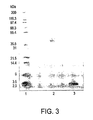
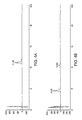
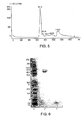


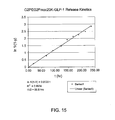


Classifications
-
- C—CHEMISTRY; METALLURGY
- C07—ORGANIC CHEMISTRY
- C07K—PEPTIDES
- C07K14/00—Peptides having more than 20 amino acids; Gastrins; Somatostatins; Melanotropins; Derivatives thereof
- C07K14/435—Peptides having more than 20 amino acids; Gastrins; Somatostatins; Melanotropins; Derivatives thereof from animals; from humans
- C07K14/575—Hormones
- C07K14/605—Glucagons
-
- C—CHEMISTRY; METALLURGY
- C07—ORGANIC CHEMISTRY
- C07K—PEPTIDES
- C07K17/00—Carrier-bound or immobilised peptides; Preparation thereof
- C07K17/02—Peptides being immobilised on, or in, an organic carrier
- C07K17/08—Peptides being immobilised on, or in, an organic carrier the carrier being a synthetic polymer
-
- A—HUMAN NECESSITIES
- A61—MEDICAL OR VETERINARY SCIENCE; HYGIENE
- A61K—PREPARATIONS FOR MEDICAL, DENTAL OR TOILETRY PURPOSES
- A61K47/00—Medicinal preparations characterised by the non-active ingredients used, e.g. carriers or inert additives; Targeting or modifying agents chemically bound to the active ingredient
- A61K47/50—Medicinal preparations characterised by the non-active ingredients used, e.g. carriers or inert additives; Targeting or modifying agents chemically bound to the active ingredient the non-active ingredient being chemically bound to the active ingredient, e.g. polymer-drug conjugates
- A61K47/51—Medicinal preparations characterised by the non-active ingredients used, e.g. carriers or inert additives; Targeting or modifying agents chemically bound to the active ingredient the non-active ingredient being chemically bound to the active ingredient, e.g. polymer-drug conjugates the non-active ingredient being a modifying agent
- A61K47/56—Medicinal preparations characterised by the non-active ingredients used, e.g. carriers or inert additives; Targeting or modifying agents chemically bound to the active ingredient the non-active ingredient being chemically bound to the active ingredient, e.g. polymer-drug conjugates the non-active ingredient being a modifying agent the modifying agent being an organic macromolecular compound, e.g. an oligomeric, polymeric or dendrimeric molecule
- A61K47/59—Medicinal preparations characterised by the non-active ingredients used, e.g. carriers or inert additives; Targeting or modifying agents chemically bound to the active ingredient the non-active ingredient being chemically bound to the active ingredient, e.g. polymer-drug conjugates the non-active ingredient being a modifying agent the modifying agent being an organic macromolecular compound, e.g. an oligomeric, polymeric or dendrimeric molecule obtained otherwise than by reactions only involving carbon-to-carbon unsaturated bonds, e.g. polyureas or polyurethanes
- A61K47/60—Medicinal preparations characterised by the non-active ingredients used, e.g. carriers or inert additives; Targeting or modifying agents chemically bound to the active ingredient the non-active ingredient being chemically bound to the active ingredient, e.g. polymer-drug conjugates the non-active ingredient being a modifying agent the modifying agent being an organic macromolecular compound, e.g. an oligomeric, polymeric or dendrimeric molecule obtained otherwise than by reactions only involving carbon-to-carbon unsaturated bonds, e.g. polyureas or polyurethanes the organic macromolecular compound being a polyoxyalkylene oligomer, polymer or dendrimer, e.g. PEG, PPG, PEO or polyglycerol
-
- A—HUMAN NECESSITIES
- A61—MEDICAL OR VETERINARY SCIENCE; HYGIENE
- A61P—SPECIFIC THERAPEUTIC ACTIVITY OF CHEMICAL COMPOUNDS OR MEDICINAL PREPARATIONS
- A61P3/00—Drugs for disorders of the metabolism
- A61P3/08—Drugs for disorders of the metabolism for glucose homeostasis
- A61P3/10—Drugs for disorders of the metabolism for glucose homeostasis for hyperglycaemia, e.g. antidiabetics
Definitions
- the present invention relates generally to pharmaceuticals.
- the present invention relates to conjugates comprising a GLP-1 (glucagon-like peptide-1) moiety covalently attached to one or more water-soluble polymers.
- the invention additionally relates to methods for synthesizing GLP-1 polymer conjugates, compositions comprising such conjugates, and methods for treating patients by administering GLP-1 conjugates.
- GLP-1 Glucagon-like-peptide-1
- GLP-1 acts as an incretin to stimulate the release of insulin from pancreatic beta cells in conjunction with carbohydrates that are absorbed from the gut.
- GLP-1 also exerts actions independent of islet hormone secretion, including inhibition of both gastric emptying and food intake and stimulation of ⁇ -cell proliferation.
- GLP-1 possesses the ability to rapidly lower glucose levels in both normal and diabetic subjects ( Gutniak, M., et al., N Engl J Med 326:1316-1322, 1992 ; Nauck MA, et al., J Clin Invest 91:301-307, 1993 ).
- continuous subcutaneous infusion of native GLP-1 significantly decreased blood glucose and HbA 1c in patients with type 2 diabetes ( Zander M, et al., Lancet 359:824-830, 2002 ). Based on results such as these, there has been considerable interest in developing GLP-1 based pharmaceutical agents for the treatment of type-2 diabetes and the like.
- native GLP-1 effectively lowers blood glucose following administration, its usefulness as a therapeutic agent is severely hampered due to the fact that native GLP-1 (amino acids 1-37) is poorly active, and its two naturally-occurring truncated versions, GLP-1 (7-37) and GLP-1 (7-36)NH 2 , have extremely short in vivo half-lives.
- the short in vivo half-life of GLP-1 is due primarily to NH 2 -terminal cleavage and inactivation by the enzyme, dipeptidyl peptidase, DPP-IV ( Kieffer TJ et al., Endocrinology 136:3585-3596, 1995 ).
- GLP-1 analogs having one or more amino acid substitutions aimed at reducing the affinity of GLP-1 for DPP-IV to attenuate its cleavage have been prepared ( Drucker DJ, Curr Pharm Des 7:1399-1412, 2001 ; Drucker DJ, Gastroenterology 122:531-544, 2002 ).
- the naturally-occurring lizard peptide, exendin-4 has been found to be a potent GLP-1 R agonist that exhibits reduced DPP-IV mediated cleavage and possesses a longer duration of action than GLP-1 ( Young, AA, et al., Diabetes 48:1026-1034, 1999 ; Edwards CM, et al., Am J Physiol Endicrinol Metab 281:E155-161, 2001 ).
- GLP-1 derivatives having a short covalent chemical linker designed to interact with a specific cysteine residue in albumin following administration have also been developed ( Kim, JG, et al., Diabetes 52, 751, 2003 ), as have GLP-1 analogs having several modifications including a modified N-terminus, an octanoic acid acylated at lysine-34, and a substitution of arginine at position 26 ( Chou, J., et al., J. Pharm Sci, 86 (7), 768-773, 2000 ). Additionally, stable covalent attachment of polyethylene glycol to GLP-1 has been described (See, e.g., WO 2004/093823 ).
- one or more embodiments of the present invention are therefore directed to such conjugates as well as compositions comprising the conjugates and related methods as described herein.
- the present invention provides GLP-1 conjugates.
- Other features and advantages of the present invention will be set forth in the description of invention that follows, and in part will be apparent from the description or may be learned by practice of the invention. The invention will be realized and attained by the compositions and methods particularly pointed out in the written description and claims hereof.
- One aspect of the present invention is directed to a GLP-1 polymer conjugate comprising a GLP-1 moiety releasably attached at its N-terminus to a water-soluble polymer.
- Another aspect of the present invention is directed to a pharmaceutical composition
- a pharmaceutical composition comprising at least an effective amount of a mixture of positional isomers of GLP-1 mono-polymer conjugates having a single water-soluble polymer releasably attached to a GLP-1 moiety, wherein one of the mono-polymer conjugates possesses the water-soluble polymer covalently attached to the N-terminus of the GLP-1 moiety.
- Yet another aspect of the present invention is directed to a pharmaceutical composition
- a pharmaceutical composition comprising at least an effective amount of a mixture of GLP-1 polymers conjugates, wherein at least one GLP-1 polymer conjugate possesses a water-soluble polymer releasably attached to a GLP-1 moiety at its N-terminus.
- Still another aspect of the present invention is directed to a method for preparing a GLP-1 polymer conjugate, the method comprising contacting a GLP-1 moiety with a water-soluble polymer reagent comprising an amino-reactive functional group suitable to form a hydrolyzable linkage, under conjugation conditions effective to promote reaction of the N-terminal amino group of the GLP-1 moiety with the amino-reactive functional group of the water-soluble polymer reagent, to thereby form a GLP-1 polymer conjugate comprising the GLP-1 moiety releasably attached at its N-terminus to the water-soluble polymer.
- the present invention is directed to a method for treating a condition in a mammalian subject responsive to treatment with GLP-1, the method comprising administering to the subject, a GLP-1 polymer conjugate comprising a GLP-1 moiety releasably attached to a water-soluble polymer, wherein the conjugate lacks bioactivity prior to the administering, and whereby, as a result of the administering, the GLP-1 moiety is released from the conjugate and is effective to result in a reduction in blood glucose level in the subject over a period of time prolonged over that observed for native GLP-1.
- the present invention is directed to a GLP-1 polymer conjugate comprising a GLP-1 moiety covalently attached to a water-soluble polymer, wherein the GLP-1 moiety possesses an N-methyl substituent.
- the present invention is directed to a GLP-1 polymer conjugate comprising a GLP-1 moiety covalently attached at a polymer attachment site to a water-soluble polymer, wherein the GLP-1 moiety is glycosylated at a site separate from the polymer attachment site.
- the present invention is directed to a composition, comprising a glycosylated and pegylated GLP-1 conjugate made by stepwise solid phase peptide synthesis involving contacting a growing peptide chain with protected amino acids in a stepwise manner, wherein at least one of the protected amino acids is glycosylated, followed by pegylation, and wherein the composition has a purity of at least about 95% of a single species of the glycosylated and pegylated GLP-1 conjugate.
- the present invention is directed to a method of making a glycosylated GLP-1 polymer conjugate.
- the method includes contacting a growing peptide chain with protected amino acids in a stepwise manner, wherein at least one of the protected amino acids is glycosylated prior to contacting, under conditions effective to form a glycosylated GLP-1.
- the method also includes contacting the glycosylated GLP-1 with a water-soluble polymer reagent under conjugation conditions effective to form the glycosylated GLP-1 polymer conjugate comprising a glycosylated GLP-1 moiety attached to the water-soluble polymer.
- the present invention is directed to a GLP-1 polymer conjugate having the structure: wherein:
- the present invention is directed to a GLP-1 polymer conjugate having the structure: wherein:
- the present invention is directed to a GLP-1 polymer conjugate having the structure: wherein:
- the present invention is directed to a GLP-1 polymer conjugate having the structure: wherein:
- the invention provides extended delivery compositions comprising a GLP-1 moiety.
- the conjugates and compositions of the invention typically possess extended release properties in vitro and in vivo.
- In vivo animal model data presented herein suggests that the GLP-1 conjugates of the invention can possess a longer circulating half-life in the bloodstream than native GLP-1, thereby overcoming some of the drawbacks associated with therapeutic administration of native GLP-1 due to its rapid clearance.
- conjugates and compositions described herein may facilitate a decreased frequency of dosing compared to native GLP-1.
- a GLP-1 polymer conjugate of the invention is releasable, e.g., is effective to release the GLP-1 moiety, e.g., by a degradative process such as hydrolysis.
- releasable conjugates will comprise at least one degradable linkage, such as a hydrolyzable linkage, between the GLP-1 moiety and the water-soluble polymer.
- the water-soluble polymer is selected from the group consisting ofpoly(alkylene glycols), poly(oxyethylated polyols), poly(olefinic alcohols), poly(vinylpyrrolidone), poly(hydroxyalkylmethacrylamide), poly(hydroxyalkylmethacrylate), poly(saccharides), poly( ⁇ -hydroxy acid), poly(vinyl alcohol), polyphosphazene, polyoxazoline, poly(N-acryloylmorpholine), and copolymers and terpolymers thereof.
- the water-soluble polymer is a polyethylene glycol.
- a GLP-1 polymer conjugate of the invention may additionally comprise at least one additional water-soluble polymer such as polyethylene glycol releasably attached to a number of sites on the GLP-1 moiety selected from one and two.
- additional water-soluble polymer such as polyethylene glycol releasably attached to a number of sites on the GLP-1 moiety selected from one and two.
- sites on the GLP-1 moiety include Lys26 and Lys34, among others.
- the GLP-1 polymer conjugate possesses the water-soluble polymer, e.g., polyethylene glycol, releasably attached to a single site of the GLP-1 moiety.
- the water-soluble polymer e.g., polyethylene glycol
- the water-soluble polymer is releasably attached to the GLP-1 moiety via a linker comprising a hydrolyzable linkage selected from carbamate, carboxylate ester, phosphate ester, anhydride, acetal, ketal, acyloxyalkyl ether, imine, orthoester, thioester, thiolester, and carbonate.
- linkages include carbamate, carboxylate ester, and carbonate.
- a GLP-1 conjugate of the invention comprises a GLP-1 moiety releasably attached, e.g., via a hydrolyzable linkage, to a water-soluble polymer such as PEG, such that upon hydrolysis either in vitro or in vivo, the unconjugated GLP-1 moiety is released. Due to the hydrolyzable nature of such conjugates, a GLP-1 conjugate of the invention may or may not be bioactive.
- a GLP-1 polymer conjugate where the conjugate essentially lacks bioactivity, yet is still effective, when administered in vivo to a mammalian subject in need thereof, to provide a blood glucose-lowering effect.
- Such blood glucose lowering is achieved by release of the GLP-1 moiety subsequent to administration.
- the water-soluble polymer has a molecular weight ranging from about 500 daltons to about 80,000 daltons, such as from about 1000 daltons to about 40,000 daltons.
- the water-soluble polymer has a structure selected from linear, branched, forked, and multi-armed.
- the GLP-1 moiety is glycosylated.
- the glycosylated GLP-1 possesses a mono-, di-, or trisaccharide covalently attached to one or more of its amino acid sites.
- the mono-, di-, or trisaccharide may be covalently attached to one or more sites of the GLP-1 moiety, wherein the one or more sites each comprise one of Asp, Asn, Ser, and Thr that is naturally occurring or substituted at one or more sites selected from the N-terminus (His7), Ala8, Glu9, Thr11, Thr13, Ser14, Ser17, Ser18, Glu21, Gly22, Gln23, Lys26, and Lys34.
- a GLP-1 polymer conjugate possesses a mono-, di-, or trisaccharide covalently attached to one of Asp, Asn, Ser, and Thr that is substituted at the Ala8 site of the GLP-1 moiety.
- Illustrative saccharides include glucose, mannose, xylose, lactose, maltose, melibiose, and maltotriose.
- Such GLP-1 polymer conjugates may further comprise a mono-, di- or trisaccharide covalently attached at one or both of positions Glu21 and Gln23.
- the GLP-1 polymer conjugate possesses an N-methyl substituent at any one or more of positions 7-His, 8-Ala, and 9-glutamic acid of the GLP-1 moiety.
- a GLP-1 polymer conjugate possesses the following structure: where POLY is a water-soluble polymer, L D is a degradable linkage, e.g., a hydrolyzable linkage, and k corresponds to the number of reactive sites on GLP-1 to which an independent polymer segment (POLY-L D ) is covalently attached.
- GLP-1 is a GLP-1 moiety.
- Each of the polymer segments is independently selected, although typically, each of the polymer segments covalently attached to the GLP-1 moiety is the same.
- k ranges from about 1 to about 4, that is to say, is selected from the group consisting of 1, 2, 3, and 4.
- k is 1, 2, or 3.
- L D is -O-C(O)-NH-.
- the L D in the above structure possesses a length such as from about 1 to about 20 atoms, from about 2 to about 15 atoms, or from about 3 to about 10 atoms. That is to say, typically, L D has an overall atom length selected from the group consisting of 1, 2, 3, 4, 5, 6, 7, 8, 9, 10, 11, 12, 13, 14, 15, 16, 17, 18, 19, and 20.
- a GLP-1 polymer conjugate possesses the following structure: where mPEG is CH 3 O-(CH 2 CH 2 O) n CH 2 CH 2 -,
- p is 1 and R 1 and R 2 are both H.
- X 1 and X 2 each comprise at least one amide bond.
- X 1 and X 2 are the same.
- X 1 and X 2 may, in certain embodiments, each independently possess a structure selected from -NH-C(O)-CH 2 -O-, NH-C(O)-(CH 2 ) q -O-, -NH-C(O)-(CH 2 ) q -C(O)-NH-, -NH-C(O)-(CH 2 ) q -, and - C(O)-NH-, where q is selected from 2, 3, 4, and 5.
- Ar is selected from pentalene, indene, naphthalene, indacene, acenaphthylene, and fluorene.
- Illustrative GLP-1 polymer conjugates of the invention include the following releasable conjugates: and
- a releasable GLP-1 polymer conjugate of the invention possesses the following generalized structure: where L D1 is either-O- or -NH-C(O)-, Ar 1 is an aromatic group, -NH-GLP-1 is a GLP-1 moiety, wherein the -NH- of -NH-GLP-1 represents an amino group of the GLP-1 moiety, and k is selected from 1, 2, and 3.
- Ar 1 is selected from ortho, meta, and para -substituted phenyl.
- Illustrative conjugates of this type include: and
- a GLP-1 polymer conjugate of the invention is characterized by the following structure: where n ranges from about 10 to about 1800.
- the GLP-1 moiety possesses an N-methyl substituent at any one or more of positions 7-His, 8-Ala, and 9-Glu.
- composition comprising any one or more of the herein described GLP-1 polymer conjugates, e.g., in combination with a pharmaceutically acceptable excipient.
- the pharmaceutical composition comprises, in addition to the GLP-1 conjugate, insulin and/or basal insulin.
- the pharmaceutical composition comprises, in addition to the GLP-1 conjugate, GLP-1.
- compositions include those suitable for parenteral or pulmonary administration.
- a pharmaceutical composition of the invention is in dry powder form.
- the composition as described above comprises a GLP-1 polymer conjugate having the water-soluble polymer covalently attached, either releasably or stably, to the GLP-1 moiety at the side chain of His7 at the imidazole nitrogen.
- the invention provides a method for preparing a GLP-1 polymer conjugate.
- the method further comprises isolating the GLP-1 polymer conjugate.
- the method further comprises purifying the GLP-1 polymer conjugate.
- purifying can be by chromatography or membrane separation.
- the GLP-1 moiety employed in the contacting step comprises protected ⁇ -amino lysines.
- the method may further comprise subsequent to the contacting, deprotecting the protected ⁇ -amino lysines of the GLP-1 polymer conjugate.
- the invention provides a method for delivery of a GLP-1 polymer conjugate to a mammalian subject in need thereof.
- the administering is by a route selected from subcutaneous and inhalation.
- the administering is by inhalation and the GLP-1 polymer conjugate is in aerosolized form.
- the invention provides a method for delivery of a GLP-1 moiety to a mammalian subject in need thereof, where the method comprises pulmonarily administering to the subject a therapeutically effective amount of a GLP-1 polymer conjugate.
- a method for delivering a GLP-1 moiety to a mammalian subject comprises the steps of aerosolizing a pharmaceutical composition comprising a GLP-1 polymer conjugate to form an aerosolized composition, and administering the aerosolized composition to the lungs of the subject by inhalation.
- a method for treating a condition in a mammalian subject responsive to treatment with GLP-1 comprises administering to the subject, a GLP-1 polymer conjugate comprising a GLP-1 moiety releasably attached to a water-soluble polymer, wherein the conjugate lacks bioactivity prior to the administering, and whereby, as a result of the administering, the GLP-1 moiety is released from the conjugate and is effective to result in a reduction in blood glucose level in the subject over a period of time prolonged over that observed for native GLP-1.
- a method of lowering the blood glucose level in a mammalian subject in need thereof comprising administering to the subject a therapeutically effective amount of a GLP-1 polymer conjugate, to thereby produce lowered blood glucose levels in the subject over an extended period of at least about 8 hours post-administering.
- the method comprises administering a GLP-1 polymer conjugate to such a subject, wherein upon administration, the conjugate is hydrolyzed over a period of several days (e.g., 2-7 days, 2-6 days, 3-6 days, 3-4 days) to thereby release GLP-1 into the bloodstream.
- the releasable, e.g., hydrolyzable, conjugates are effective, in certain embodiments, to lower blood glucose levels over an extended period of greater than about 48 hours (e.g., for about 1-3 days or so, or for about 1-2.5 days or so).
- GLP-1 conjugate for the preparation of a medicament to be delivered to the lungs of a mammalian subject, wherein delivery comprises administering the medicament by inhalation for deposition in and absorption from the lung of the subject, for the treatment of diabetes.
- the present invention further encompasses a method of stimulating the GLP-1 receptor in a mammalian subject.
- the method comprises administering to the subject a therapeutically effective amount of a GLP-1 conjugate.
- the method may be used to treat subjects having a condition selected from non-insulin dependent diabetes, stress-induced hyperglycemia, obesity, gastric and/or intestinal motility or emptying disorders.
- FIG. 1 corresponds to an SDS-PAGE analysis of a G2PEG2Fmoc 20K -GLP-1 reaction mixture as described in Example 3.
- Lane 1 Invitrogen Mark 12 unstained standard.
- Lane 2 G2PEG2Fmoc 20K - N ter -GLP-1 reaction mixture.
- FIG. 2 demonstrates the results of purification of monoPEGylated G2PEG2Fmoc 20k - N ter -GLP-1 by cation exchange chromatography as described in Example 3.
- FIG. 3 corresponds to an SDS-PAGE analysis of monoPEGylated G2PEG2FmoC 20k - N ter -GLP-1 before and after the release of GLP-1 (Example 3).
- Lane 1 Invitrogen Mark 12 unstained standard.
- Lane 2 MonoPEGylated G2PEG2-Fmoc 20k - N ter -GLP-1 conjugate following purification by ion exchange chromatography.
- Lane 3 Following complete release of GLP-1 from the G2PEG2Fmoc 20k - N te r -GLP-1 conjugate.
- FIGS. 4A, 4B demonstrate a reverse phase HPLC analysis of monoPEGylated G2PEG2Fmoc 20k - N ter -GLP-1 conjugate following purification by ion exchange chromatography ( FIG. 4A ) and after release of GLP-1 from the G2PEG2Fmoc 20k - N ter -GLP-1 conjugate ( FIG. 4B ), as described in Example 3.
- FIG. 5 illustrates the results of purification of monoPEGylated G2PEG2Fmoc 40k - N ter -GLP-1 by cation exchange chromatography as described in Example 4.
- FIG. 6 shows the results of an SDS-PAGE analysis of monoPEGylated G2PEG2FmOC 40k - N ter -GLP-1 before and after release of GLP-1 (Example 4).
- Lane 1 Invitrogen Mark 12 unstained standard.
- Lane 2 MonoPEGylated G2PEG2Fmoc 40k - N ter -GLP-1 conjugate following purification by ion exchange chromatography.
- Lane 3 Following release of GLP-1 from the G2PEG2-Fmoc 40k - N ter -GLP-1 conjugate.
- FIG. 7 demonstrates purification of monoPEGylated G2PEG2Fmoc 20k - Lys -GLP-1 by cation exchange chromatography (Example 5).
- FIG. 8 corresponds to an SDS-PAGE analysis of monoPEGylated G2PEG2Fmoc 20k - Lys -GLP-1 purified by cation exchange chromatography (Example 5).
- Lane 1 Invitrogen Mark 12 unstained standard.
- Lanes 2 through 6 Fractions containing monoPEGylated G2PEG2Fmoc 20k - Lys -GLP-1 conjugate following five individual purifications by ion exchange chromatography.
- FIG. 9 illustrates the results of purification of monoPEGylated G2PEG2Fmoc 40k - Lys -GLP-1 by cation exchange chromatography (Example 6).
- FIG. 10 represents an SDS-PAGE analysis of G2PEG2Fmoc 40k - Lys- GLP-1 reaction mixture and fractions from one cation exchange chromatographic purification as described in Example 6.
- Lane 1 Invitrogen Mark 12 unstained standard.
- Lane 2 Reaction mixture of G2PEG2Fmoc 4ok - Lys -GLP-1.
- Lanes 3-5 Fractions from the peak at retention volume of 9.37 mL.
- Lanes 6-10 Fractions of monoPEGylated G2PEG2Fmoc 40k - Lys -GLP-1 collected from the peak at retention volume of 158.3 mL.
- FIG. 11 demonstrates the results of purification of monoPEGylated mPEG 2k - Lys -GLP-1 by cation exchange chromatography as described in Example 7.
- FIG. 12 corresponds to an SDS-PAGE analysis of purified mPEG 2k - Lys- GLP-1 (Example 7).
- Lane 1 MonoPEGylated mPEG 2k - Lys -GLP-1 after chromatographic purification.
- Lane 2 Invitrogen Mark 12 unstained standard.
- FIG. 13 is a plot demonstrating the comparative blood glucose-lowering effects over time of GLP-1, G2PEG2Fmoc 20k -Lys-GLP-1 conjugate and G2PEG2Fmoc 40k -Lys-GLP-1 conjugate when subcutaneously administered to db/db mice as described in Example 8.
- FIG. 14 is a plot demonstrating the comparative blood glucose-lowering effects over time of GLP-1, G2PEG2Fmoc 20k -N ter -GLP-1 conjugate and G2PEG2Fmoc 4ok -N ter -GLP-1 conjugate when subcutaneously administered to db/db mice as described in Example 8.
- FIG. 15 is a plot showing the in vitro release profile of G2PEG2Fmoc 20k -N ter -GLP-1 as described in Example 21.
- FIG. 16 is a plot of group mean blood glucose concentrations in mice administered exenatide (subcutaneous), PEG2-CAC-Fmoc 4k -N ter -GLP-1 (intratracheal) or vehicle (intratracheal). Blood glucose concentrations are expressed as % of value measured at 24 hours pre-dose as described in Example 25.
- FIG. 17 is a plot of group mean blood glucose concentrations in mice administered exenatide (subcutaneous), mPEGSPC 5k -N ter -GLP-1 (intratracheal) or vehicle (intratracheal) as described in Example 26.
- a reference to a compound or component includes the compound or component by itself, as well as in combination with other compounds or components, such as mixtures of compounds.
- a polymer includes a single polymer as well as two or more of the same or different polymers
- a pharmaceutically acceptable excipient refers to a single pharmaceutically acceptable excipient as well as two or more of the same or different pharmaceutically acceptable excipients, and the like.
- PEG polyethylene glycol
- poly(ethylene glycol) poly(ethylene glycol)
- PEGs for use in accordance with the invention comprise the following structure: "-(OCH 2 CH 2 ) n -" where (n) is 2 to 4000.
- PEG also includes "-CH 2 CH 2 -O(CH 2 CH 2 O) n -CH 2 CH 2 -” and “-(OCH 2 CH 2 ) n O-,” depending upon whether or not the terminal oxygens have been displaced.
- the PEG further comprises a spacer moiety or a linker covalently attached thereto (to be described in greater detail below), the atoms comprising the spacer moiety or linker, when covalently attached to PEG, do not result in the formation of an oxygen-oxygen bond (i.e., an "-O-O-" or peroxide linkage).
- an oxygen-oxygen bond i.e., an "-O-O-" or peroxide linkage.
- PEG includes structures having various terminal or "end capping" groups.
- the term “PEG” also means a polymer that contains a majority, that is to say, greater than 50%, of -OCH 2 CH 2 - or -CH 2 CH 2 O-repeating subunits.
- the PEG can take any number of a variety of molecular weights, as well as structures or geometries such as “branched,” “linear,” “forked,” “multifunctional,” and the like, to be described in greater detail herein.
- end-capped and terminal capped are interchangeably used herein to refer to a terminal or endpoint of a polymer having an end-capping moiety.
- the end-capping moiety comprises a hydroxy or C 1-20 alkoxy group, such as a C 1-10 alkoxy group or a C 1-5 alkoxy group.
- examples of end-capping moieties include alkoxy (e.g., methoxy, ethoxy), benzyloxy, as well as aryl, heteroaryl, cyclo, heterocyclo, and the like.
- the end-capping moiety may include one or more atoms of the terminal monomer in the polymer [e.g., the end-capping moiety "methoxy" in CH 3 (OCH 2 CH 2 ) n -].
- the end-capping group can also be a silane.
- the end-capping group can also advantageously comprise a detectable label. When the polymer has an end-capping group comprising a detectable label, the amount and/or location of the polymer and/or the moiety (e.g., active agent) to which the polymer is coupled can be determined by using a suitable detector.
- Such labels include, without limitation, fluorescers, chemiluminescers, moieties used in enzyme labeling, colorimetric moieties (e.g., dyes), metal ions, radioactive moieties, and the like.
- Suitable detectors include photometers, films, spectrometers, and the like.
- Non-naturally occurring with respect to a polymer as described herein, means a polymer that in its entirety is not found in nature, i.e., is synthetic.
- a non-naturally occurring polymer may, however, contain one or more monomers or segments of monomers that are naturally occurring, so long as the overall polymer structure is not found in nature.
- water soluble as in a “water-soluble polymer” is any polymer that is soluble in water at room temperature.
- the water-soluble polymer is a polymer having a solubility of 1 % (w/v) or more in water at 25°C.
- a water-soluble polymer will transmit at least about 75%, such as at least about 95%, of light transmitted by the same solution after filtering.
- a water-soluble polymer will often be at least about 35% (w/v) soluble in water, such as at least about 50% (w/v) soluble in water, at least about 70% (w/v) soluble in water, or at least about 85% (w/v) soluble in water, at 25°C.
- the water-soluble polymer is at least about 95% (w/v) soluble in water or completely soluble in water.
- Hydrophilic e.g, in reference to a “hydrophilic polymer” refers to a polymer that is characterized by its solubility in and compatability with water. In non-cross linked form, a hydrophilic polymer is able to dissolve in, or be dispersed in water.
- a hydrophilic polymer possesses a polymer backbone composed of carbon and hydrogen, and generally possesses a high percentage of oxygen in either the main polymer backbone or in pendent groups substituted along the polymer backbone, thereby leading to its "water-loving" nature.
- the water-soluble polymers of the present invention are typically hydrophilic, e.g., non-naturally occurring hydrophilic.
- Molecular weight in the context of a water-soluble polymer, such as PEG can be expressed as either a number-average molecular weight or a weight-average molecular weight. Unless otherwise indicated, all references to molecular weight herein refer to the weight-average molecular weight. Both molecular weight determinations, number-average and weight-average, can be measured using gel permeation chromatographic or other liquid chromatographic techniques.
- polymers of the invention are typically polydisperse (i.e., number-average molecular weight and weight-average molecular weight of the polymers are not equal), possessing low polydispersity values such as less than about 1.2, less than about 1.15, less than about 1.10, less than about 1.05, and less than about 1.03.
- references will at times be made to a single water-soluble polymer having either a weight-average molecular weight or number-average molecular weight; such references will be understood to mean that the single water-soluble polymer was obtained from a composition of water-soluble polymers having the stated molecular weight.
- active when used in conjunction with a particular functional group, refer to a reactive functional group that reacts readily with an electrophile or a nucleophile on another molecule. This is in contrast to those groups that require strong catalysts or highly impractical reaction conditions in order to react (i.e., a "non-reactive” or “inert” group).
- spacer moiety refers to an atom or a collection of atoms used to link interconnecting moieties such as a terminus of a polymer and a GLP-1 moiety or an electrophile or nucleophile of a GLP-1 moiety.
- the spacer moiety may be hydrolytically stable or may include a physiologically hydrolyzable or enzymatically degradable linkage.
- Alkyl refers to a hydrocarbon chain, typically ranging from about 1 to 15 atoms in length. Such hydrocarbon chains are often not necessarily saturated and may be branched or straight chain. Straight chain is typcial. Exemplary alkyl groups include methyl, ethyl, propyl, butyl, pentyl, 1-methylbutyl, 1-ethylpropyl, 3-methylpentyl, and the like. As used herein, "alkyl” includes cycloalkyl as well as cycloalkylene-containing alkyl.
- Lower alkyl refers to an alkyl group containing from 1 to 6 carbon atoms, and may be straight chain or branched. Nonlimiting examples of lower alkyl include methyl, ethyl, n -butyl, i -butyl, and t -butyl.
- Cycloalkyl refers to a saturated or unsaturated cyclic hydrocarbon chain, including bridged, fused, or spiro cyclic compounds, such as those made up of 3 to about 12 carbon atoms, or 3 to about 8 carbon atoms.
- Cycloalkylene refers to a cycloalkyl group that is inserted into an alkyl chain by bonding of the chain at any two carbons in the cyclic ring system.
- Alkoxy refers to an -O-R group, wherein R is alkyl or substituted alkyl, such as C 1-6 alkyl (e.g., methoxy, ethoxy, propyloxy, and so forth).
- substituted refers to a moiety (e.g., an alkyl group) substituted with one or more noninterfering substituents, such as, but not limited to: alkyl, C 3-8 cycloalkyl, e.g., cyclopropyl, cyclobutyl, and the like; halo, e.g., fluoro, chloro, bromo, and iodo; cyano; alkoxy; lower phenyl; substituted phenyl; and the like.
- “Substituted aryl” is aryl having one or more noninterfering substituents. For substitutions on a phenyl ring, the substituents may be in any orientation (i.e., ortho, meta, or para).
- Noninterfering substituents are those groups that, when present in a molecule, are typically nonreactive with other functional groups contained within the molecule.
- Aryl means one or more aromatic rings, each of 5 or 6 core carbon atoms.
- Aryl includes multiple aryl rings that may be fused, as in naphthyl or unfused, as in biphenyl.
- Aryl rings may also be fused or unfused with one or more cyclic hydrocarbon, heteroaryl, or heterocyclic rings.
- aryl includes heteroaryl and heterocycle.
- Heteroaryl is an aryl group containing from one to four heteroatoms, such as sulfur, oxygen, or nitrogen, or a combination thereof. Heteroaryl rings may also be fused with one or more cyclic hydrocarbon, heterocyclic, aryl, or heteroaryl rings. As used herein, “heteroaryl” includes substituted heteroaryl.
- Heterocycle or “heterocyclic” means one or more rings of 5-12 atoms, such as 5-7 atoms, with or without unsaturation or aromatic character and having at least one ring atom that is not a carbon. Heteroatoms include, but are not limited to, sulfur, oxygen, and nitrogen. As used herein, “heterocycle” includes substituted heterocycle.
- Substituted heteroaryl is heteroaryl having one or more noninterfering groups as substituents.
- Substituted heterocycle is a heterocycle having one or more side chains formed from noninterfering substituents.
- An "organic radical” as used herein shall include alkyl, substituted alkyl, aryl, and substituted aryl.
- Electrophile and “electrophilic group” refer to an ion or atom or collection of atoms that may be ionic, having an electrophilic center, i.e., a center that is electron seeking, capable of reacting with a nucleophile.
- Nucleophile and “nucelophilic group” refer to an ion or atom or collection of atoms that may be ionic having a nucleophilic center, i.e., a center that is seeking an electrophilic center or capable of reacting with an electrophile.
- a “hydrolytically degradable” or “hydrolyzable” linkage or bond is a bond that reacts with water (i.e., is hydrolyzed) under physiological conditions. Examples include bonds that have a hydrolysis half-life at pH 8, 25 °C of less than about 30 minutes. The tendency of a bond to hydrolyze in water will depend not only on the general type of linkage connecting two given atoms but also on the substituents attached to the two given atoms.
- Hydrolytically unstable or degradable linkages include but are not limited to carbamate, carboxylate ester (referred to herein simply as "ester”), phosphate ester, anhydrides, acetals, ketals, acyloxyalkyl ether, imine, orthoester, peptide and oligonucleotide.
- Hydrolytically degradable linkages exclude linkages in which cleavage of a carrier group becomes effective only after unmasking an activating group, such as disclosed in WO 2005/099768 , which is incorporated herein by reference in its entirety. In other words, hydrolytically degradable linkages exclude linkages based on cascade cleavage mechanisms.
- Releasably attached e.g., in reference to a GLP-1 moiety releasably attached to a water-soluble polymer, refers to a moiety such as a GLP-1 moiety that is covalently attached via a linker that includes a hydrolytically degradable linkage as defined above, wherein upon hydrolysis, the GLP-1 moiety is released.
- the GLP-1 moiety thus released will typically correspond to the unmodified parent or native GLP-1 moiety, or may be slightly altered, e.g., to possess a short organic tag of no more than about 8 atoms or so, e.g., typically resulting from incomplete cleavage of the water-soluble polymer.
- the unmodified parent GLP-1 moiety is released.
- the water-soluble polymer includes or is covalently attached to the GLP-1 moiety via a linker comprising an aryl group
- release of the GLP-1 moiety occurs via a mechanism which involves neither a 1,4- nor a 1,6- elimination step.
- An “enzymatically degradable linkage” means a linkage that is subject to degradation by one or more enzymes.
- hydrolytically stable linkage or bond refers to a chemical bond, typically a covalent bond, which is substantially stable in water, that is to say, does not undergo hydrolysis under physiological conditions to any appreciable extent over an extended period of time.
- hydrolytically stable linkages include, but are not limited to, the following: carbon-carbon bonds (e.g., in aliphatic chains), ethers, amides, urethane, and the like.
- a hydrolytically stable linkage is one that exhibits a rate of hydrolysis of less than about 1-2% per day under physiological conditions. Hydrolysis rates of representative chemical bonds can be found in most standard chemistry textbooks.
- “Pharmaceutically acceptable excipient” refers to an excipient that may optionally be included in a composition and that causes no significant adverse toxicological effects to a patient upon administration.
- a “pharmaceutical composition” is a composition useful for pharmaceutical purposes.
- an effective amount refers to an amount covering both therapeutically effective amounts and prophylactically effective amounts.
- terapéuticaally effective amount refers to an amount that is effective to achieve the desired therapeutic result.
- an effective amount of a pharmaceutical composition to treat or ameliorate diabetes is an amount sufficient to reduce or eliminate the symptoms of diabetes, for example, an amount that is needed to provide a desired level of insulin in the bloodstream to result in reduced blood glucose.
- the pharmacologically effective amount of a given pharmaceutical composition will vary with factors such as the nature of the active component in the composition, the route of administration, the size and species of the animal to receive the composition, and the purpose of the administration. The suitable amount can be readily determined by one skilled in the art based upon available literature and the information provided herein.
- prophylactically effective amount refers to an amount that is effective to achieve the desired prophylactic result. Because a prophylactic dose is administered in patients prior to onset of disease, the prophylactically effective amount typically is less than the therapeutically effective amount.
- GLP-1 moiety refers to a moiety having GLP-1 activity.
- the GLP-1 moiety will also have at least one electrophilic group or nucleophilic group suitable for reaction with a water-soluble polymer as provided herein.
- GLP-1 moiety encompasses both the GLP-1 moiety prior to conjugation as well as the GLP-1 moiety residue following conjugation. As will be explained in further detail below, one of ordinary skill in the art can determine whether any given moiety has GLP-1 activity.
- GLP-1 moiety includes peptides modified deliberately, as for example, by site directed mutagenesis or accidentally through mutations.
- GLP-1 moiety includes native GLP-1 (GLP-1 (7-37)OH or GLP-1 (7-36)NH 2 ), GLP-1 analogs, GLP-1 derivatives, GLP-1 biologically active fragments, extended GLP-1 (see, for example, International Patent Publication No. WO 03/058203 , which is incorporated herein by reference, in particular with respect to the extended glucagon-like peptide-1 analogs described therein), and exendin-4 analogs and exendin-4 derivatives comprising one or two cysteine residues at particular positions within GLP-1 as described in WO 2004/093823 , which is incorporated herein by reference.
- GLP-1 refers to a compound having GLP-1 activity.
- GLP-1 includes peptides modified deliberately, as for example, by site directed mutagenesis or accidentally through mutations.
- GLP-1 includes native GLP-1 (GLP-1 (7-37)OH or GLP-1 (7-36)NH 2 ), GLP-1 analogs, GLP-1 derivatives, GLP-1 biologically active fragments, extended GLP-1 (see, for example, International Patent Publication No.
- WO 03/058203 which is incorporated herein by reference, in particular with respect to the extended glucagon-like peptide-1 analogs described therein), and exendin-4 analogs and exendin-4 derivatives comprising one or two cysteine residues at particular positions within GLP-1 as described in WO 2004/093823 , which is incorporated herein by reference.
- fragment means any peptide having the amino acid sequence of a portion of a GLP-1 moiety that retains some degree of GLP-1 activity. Fragments include peptides produced by proteolytic degradation of the GLP-1 or produced by chemical synthesis by methods routine in the art. Often, GLP-1 fragments are obtained after truncation of one or more amino acids from the N-terminus and/or C-terminus of a GLP-1 moiety, and possess a degree of GLP-1 activity.
- substantially homologous means that a particular subject sequence, for example, a mutant sequence, varies from a reference sequence by one or more substitutions, deletions, or additions, the net effect of which does not result in an adverse functional dissimilarity between the reference and subject sequences.
- sequences having greater than 95 percent homology, equivalent biological properties (although potentiality different degrees of activity), and equivalent expression characteristics are considered substantially homologous.
- truncation of the mature sequence should be disregarded.
- Sequences having lesser degrees of homology, comparable bioactivity, and equivalent expression characteristics are considered substantial equivalents.
- Exemplary GLP-1 moieties for use herein include those peptides having a sequence that is substantially homologous to, e.g., native GLP-1.
- a “deletion variant" of a GLP-1 moiety is a peptide in which one or more amino acid residues of the GLP-1 moiety have been deleted and the amino acid residues preceding and following the deleted amino acid residue are connected via an amide bond (except in instances where the deleted amino acid residue was located on a terminus of the peptide or protein).
- Deletion variants include instances where only a single amino acid residue has been deleted, as well as instances where two amino acids are deleted, three amino acids are deleted, four amino acids are deleted, and so forth. Each deletion retains some degree of GLP-1 activity.
- substitution variant of a GLP-1 moiety is peptide or protein in which one or more amino acid residues of the GLP-1 moiety have been deleted and a different amino acid residue has taken its place.
- Substitution variants include instances where only a single amino acid residue has been substituted, as well as instances where two amino acids are substituted, three amino acids are substituted, four amino acids are substituted, and so forth. Each substitution variant has some degree of GLP-1 activity.
- addition variant of a GLP-1 moiety is a peptide in which one or more amino acid residues of the GLP-1 have been added into an amino acid sequence and adjacent amino acid residues are attached to the added amino acid residue by way of amide bonds (except in instances where the added amino acid residue is located on a terminus of the peptide, wherein only a single amide bond attaches the added amino acid residue).
- Addition variants include instances where only a single amino acid residue has been added, as well as instances where two amino acids are added, three amino acids are added, four amino acids are added, and so forth. Each addition variant has some degree of GLP-1 activity.
- Insulinotropic activity refers to the ability to stimulate insulin secretion in response to elevated glucose levels, thereby causing glucose intake by cells and decresed plasma glucose levels. Insulinotropic activity can be measured by methods known in the art, such as by measuring GLP-1 receptor binding activity or activation, e.g., assays employing pancreatic islet cells or insulinoma cells, as described in EP 619 322 and U.S. Patent No. 5,120,712 , respectively, which are incorporated herein by reference. Insulinotropic activity is typically measured in humans by measuring insulin or C-peptide levels.
- subject refers to a vertebrate, preferably a mammal.
- Mammals include, but are not limited to, murines, rodents, simians, humans, farm animals, sport animals, and pets.
- substantially means nearly totally or completely, for instance, satisfying one or more of the following: greater than 50%, 51% or greater, 75% or greater, 80% or greater, 90% or greater, and 95% or greater of the condition.
- amino acid refers to any compound containing both an amino group and a carboxylic acid group. Although the amino group most commonly occurs at the position adjacent to the carboxy function, the amino group may be positioned at any location within the molecule.
- the amino acid may also contain additional functional groups, such as amino, thio, carboxyl, carboxamide, imidazole, etc.
- An amino acid may be synthetic or naturally occurring, and may be used in either its racemic or optically active (D-, or L-) form.
- Amino acid residues in peptides are abbreviated as follows: Phenylalanine is Phe or F; Leucine is Leu or L; Isoleucine is Ile or I; Methionine is Met or M; Valine is Val or V; Serine is Ser or S; Proline is Pro or P; Threonine is Thr or T; Alanine is Ala or A; Tyrosine is Tyr or Y; Histidine is His or H; Glutamine is Gln or Q; Asparagine is Asn or N; Lysine is Lys or K; Aspartic Acid is Asp or D; Glutamic Acid is Glu or E; Cysteine is Cys or C; Tryptophan is Trp or W; Arginine is Arg or R; and Glycine is Gly or G.
- a “sustained release composition” or an “extended release composition” is a composition that releases the active component slowly over a relatively longer period of time than an “immediate release” composition.
- the active component e.g., GLP-1 polymer conjugate
- the active component is released over at least about 3 hours, or at least about 4 hours, or at least about 5 hours, or at least about 6 hours, or at least about 8 hours.
- a "sustained plasma level" of a protein for a specified period of time means that the protein can be detected in the plasma for a duration specified.
- a protein can be detected by any methods for detecting such protein, e.g., immunological, biochemical, or functional methods.
- insulin can be detected by enzyme-linked immunosorbent assay (ELISA), mass spectrometry, or determination of blood glucose levels.
- a composition that is "suitable for pulmonary delivery” refers to a composition that is capable of being aerosolized and inhaled by a subject so that a portion of the aerosolized particles reaches the lungs to permit penetration into the alveoli. Such a composition may be considered “respirable” or “inhalable.”
- An "aerosolized" composition contains liquid or solid particles that are suspended in a gas (typically air), typically as a result of actuation (or firing) of an inhalation device such as a dry powder inhaler, an atomizer, a metered dose inhaler, or a nebulizer.
- a gas typically air
- an inhalation device such as a dry powder inhaler, an atomizer, a metered dose inhaler, or a nebulizer.
- a "jet nebulizer” is a system, such as a device, that forces compressed air through a solution of a drug so that a fine spray can be delivered to a facemask and inhaled. Nebulizers often are used to administer drugs to those who lack the ability to use a metered-dose or breath-activated inhaler.
- a “dry powder inhaler” is a device that is loaded with a unit dosage of the drug in powder form.
- the inhaler is activated by taking a breath.
- a capsule or blister is punctured and the powder is dispersed so that it can be inhaled in, e.g., a "Spinhaler” or “Rotahaler.”
- “Turbohalers” are fitted with canisters that deliver measured doses of the drug in powder form.
- a “metered dose inhaler” or “MDI” is a device that delivers a measured dose of a drug in the form of a suspension of extremely small liquid or solid particles, which is dispensed from the inhaler by a propellant under pressure. Such inhalers are placed into the mouth and depressed (activated) to release the drug as the individual takes a breath.
- the term "emitted dose” or "ED" refers to an indication of the delivery of dry powder from an inhaler device after an actuation or dispersion event from a powder unit or reservoir.
- ED is defined as the ratio of the dose delivered by an inhaler device to the nominal dose (i.e., the mass of powder per unit dose placed into a suitable inhaler device prior to firing).
- the ED is an experimentally determined amount, and may be determined using an in vitro device set-up which mimics patient dosing.
- dry powder is placed into a Pulmonary Delivery System (PDS) device (Nektar Therapeutics), described in U.S. Patent No.
- PDS Pulmonary Delivery System
- the PDS device is actuated, dispersing the powder.
- the resulting aerosol cloud is then drawn from the device by vacuum (30 L/min) for 2.5 seconds after actuation, where it is captured on a tared glass fiber filter (Gelman, 47 mm diameter) attached to the device mouthpiece.
- a composition in "dry powder form” is a powder composition that typically contains less than about 20 wt%, less than about 10 wt%, or less than about 5 wt%, of water.
- MMD mass median diameter
- powder samples are added directly to the feeder funnel of the Sympatec RODOS dry powder dispersion unit. This can be achieved manually or by agitating mechanically from the end of a VIBRI vibratory feeder element. Samples are dispersed to primary particles via application of pressurized air (2 to 3 bar), with vacuum depression (suction) maximized for a given dispersion pressure.
- Dispersed particles are probed with a 632.8 nm laser beam that intersects the dispersed particles' trajectory at right angles.
- Laser light scattered from the ensemble of particles is imaged onto a concentric array of photomultiplier detector elements using a reverse-Fourier lens assembly. Scattered light is acquired in time-slices of 5 ms. Particle size distributions are back-calculated from the scattered light spatial/intensity distribution using an algorithm.
- Mass median aerodynamic diameter is a measure of the aerodynamic size of a dispersed particle.
- the aerodynamic diameter is used to describe an aerosolized powder in terms of its settling behavior, and is the diameter of a unit density sphere having the same settling velocity, in air, as the particle.
- the aerodynamic diameter encompasses particle shape, density, and physical size of a particle.
- MMAD refers to the midpoint or median of the aerodynamic particle size distribution of an aerosolized powder determined by cascade impaction at standard conditions using a Pulmonary Delivery System (PDS) device (Nektar Therapeutics), described in U.S. Patent No. 6,257,233 , which is incorporated herein by reference in its entirety, unless otherwise indicated.
- PDS Pulmonary Delivery System
- Fine particle fraction is the fraction of particles with an aerodynamic diameter that is less than 5 microns. Where specified, the fine particle fraction may also refer to the fraction of particles with an aerodynamic diameter that is less than 3.3 microns.
- Treating or ameliorating a disease or medical condition means reducing or eliminating the symptoms of the disease or medical condition. In some embodiments, "treating or ameliorating" a disease or medical condition will be directed at addressing the cause of the disease or medical condition. Treating a disease may result in cure of the disease.
- Basal insulin refers to a long-acting insulin that is sufficient to sustain steady low levels of insulin effective to satisfy basal requirements. Generally, a basal insulin is one exhibiting a prolonged time of action of greater than about 8 hours in a standard model of diabetes.
- Commercially available basal insulins include neutral protamine Hagedorn (NPH), Lente, and Ultralente' - and analogs such as insulin glargine.
- a GLP-1 polymer conjugate which lacks bioactivity is one which, when evaluated in an assay suitable for assessing GLP-1 bioactivity, possesses a bioactivity of less than about 2% when compared to native GLP-1.
- Various assays may be used to assess bioactivity, including in-vitro and in-vivo assays that measure GLP-1 receptor binding activity or receptor activation, as described in greater detail herein.
- a receptor-signaling assay may also be used to assess GLP-1 activity (see, e.g., Zlokarnik et al, Science, 1998, 279:84-88 ).
- conjugates are provided, the conjugates typically comprising a GLP-1 moiety releasably attached, either directly via a hydrolyzable linkage or via a linker comprised of a hydrolyzable linkage, to a water-soluble polymer.
- the conjugates of the invention when administered in vivo, are usually effective not only in providing a significant reduction in blood glucose levels, but have been shown to possess extended release properties. That is to say, the blood glucose lowering ability of the present conjugates is typically effective over a duration of hours, and in some instances, days, in contrast to the rapid clearance and short activity of native GLP-1.
- the conjugates of the invention typically provide several notable advantages over native GLP-1.
- N-terminal modification of GLP-1 is ineffective to provide a GLP-1 derivative suitable for pharmacological use, see for example, International Patent Publication No. WO 04/078777 , the present invention provides, in one aspect, N-terminally modified water-soluble polymer conjugates that are not only effective, but indeed possess several advantages over native GLP-1, to be described in greater detail below.
- the conjugates of the invention comprise a GLP-1 moiety.
- GLP-1 moiety is meant to encompass the GLP-1 moiety prior to conjugation as well as following attachment to one or more water-soluble polymers. It will be understood, however, that when the GLP-1 moiety is covalently attached to a water-soluble polymer, the GLP-1 moiety is slightly altered due to the presence of one or more covalent bonds associated with linkage to the polymer (or linker that is attached to the polymer), due to reaction of one of more reactive groups of the GLP-1 moiety (e.g., an amino, carboxyl, etc.), with the water-soluble polymer. Often, this slightly altered form of the GLP-1 moiety attached to another molecule, such as a water-soluble polymer, is referred to as a "residue" of the GLP-1 moiety.
- a GLP-1 moiety for use in the invention is any GLP-1 moiety having GLP-1 activity. Numerous GLP-1 analogs, derivatives, and variants have been previously described, and are encompassed by the term, "GLP-1 moiety".
- GLP-1 moiety One preferred GLP-1 moiety for use in the invention is human GLP-1, a 37 amino acid peptide. Its naturally-occurring forms include GLP-1 (7-36)NH 2 , GLP-1 (7-37)OH and GLP-1 (7-37)NH 2 , where, according to conventional numbering, the N-terminal histidine is assigned as residue 7. Commercially-available forms also include GLP-1 (1-36).
- amino acid sequence of GLP-1(7-36) corresponds to: (SEQ ID NO:1).
- amino acid sequence of GLP-1 (7-37)OH corresponds to: (SEQ ID NO:2).
- GLP-1 moieties for use in the invention include GLP-1 peptide analogs such as those described in WO 91/11457 , N-terminal truncated fragments of GLP-1 as described in EP 0 699 686 , and cysteine-inserted GLP-1 sequences as described in WO 2004/093823 , among others.
- Cysteine-inserted GLP-1 variants for use in the invention include those having a cysteine inserted at positions selected from amino acid 11, 12, 16, 22, 23, 24, 25, 26, 27, 30, 34, 35, 36, and 37 of GLP-1. Such variants are typically designated as follows.
- a GLP-1 variant having a cysteine inserted at positions 22 and 35 is typically described as [Cys 22 Cys 35 ]GLP-1(7-37).
- Variants for use in preparing a conjugate of the invention often have no more than 1 or 2 cysteine amino acids per GLP-1 moiety.
- Exemplary locations for insertion of a cysteine include, but are not limited to, amino acids 22, 26, 34, 35, 36, and 37 of GLP-1.
- GLP-1 moieties are particulary useful for conjugation to a thiol-selective polymer reagent, such as a water-soluble polymer having one or more reactive maleimide functional groups.
- GLP-1 moieties suitable for use in the invention include GLP-1 moieties as described in U.S. Published Application No. 2004/0235710 , corresponding to Serial No. 10/486,333 .
- Exendins are GLP-1 analogs referred to as exendins.
- Exendins are peptides that were first isolated from the salivary secretions of the Gila-monster and the Mexican Beaded Lizard. The exendins have a degree of similarity to several members of the GLP family, with the highest homology, 53%, to GLP-1 (7-36)NH 2 ( Goke, et al., J. Biol. Chem., 268:19650-55, 1993 ).
- exendins for use in the present invention include exendin-3 and exendin-4 (synthetic extendin-4 is also known as Exenatide).
- Exendin-3 (1-39) has the following amino acid sequence: (SEQ ID NO:3).
- exendin-4 (1-39) corresponds to: (SEQ ID NO:4). wherein the C-terminus serine is amidated.
- the GLP-1 moiety may be obtained from either non-recombinant methods or from recombinant methods, and the invention is not limited in this regard.
- GLP-1 moieties are commercially available, e.g., hGLP-1, rExendin-4, and rHuGLP-1 are available from ProSpecTany Techno Gene LTD (Rehovot, Israel); and (Ser8)GLP-1(7-36)amide, hGLP-1 amide, hGLP-1(7-36)Lys(biotin)amide, (American Peptide Co., Sunnyvale, CA), among others.
- Methods for preparing GLP-1 moieties are well-known, and are described, e.g., in U.S. Patent Nos. 5,118,666 ; 5,120,712 ; and 5,523,549 .
- GLP-1 moieties can be prepared using standard methods of solution or solid phase peptide synthesis such as those described in Dugas H., Penny, C., Bioorganic Chemistry, Springer Verlag, New York, p. 54-92 (1981 ); Merrifield, J.M., Chem Soc., 85, 2149 (1962 ), and Stewart and Young, Solid Phase Peptide Synthesis, Freeman, San Francicso, p. 24-66 (1969 ). Peptide synthesizers are available from, e.g., Applied Biosystems, Foster City, CA. Solid phase synthesizers are typically used according to manufacturers' instructions for blocking interfering groups, protecting certain amino acids, coupling, decoupling, and capping unreacted amino acids.
- BOC-amino acids and other reagents are commercially available from Applied Biosystems.
- sequential BOC chemistry using double coupling protocols are applied to the starting p-methyl benzhydryl amine resins for the production of C-terminal carboxamides.
- the corresponding PAM resin is used for the production of C-terminal acids.
- Asn, Gln, and Arg are coupled using preformed hydroxybenzotriazole esters.
- Suitable side chain protecting groups include: Arg (tosyl), Asp (cyclohexyl), Glu (cyclohexyl), Ser (benzyl), Thr (benzyl), and Tyr (4-bromocarbobenzoxy).
- BOC deprotection may be carried out with trifluoroacetic acid in methylene chloride. Following synthesis, the resulting peptide may be deprotected and cleaved from the resin using, e.g., anhydrous HF containing 10% meta-cresol.
- a GLP-1 moiety as described herein is prepared by constructing the nucleic acid encoding the desired polypeptide or fragment, cloning the nucleic acid into an expression vector, transforming a host cell (e.g., plant, bacteria such as Escherichia coli , yeast such as Saccharomyces cerevisiae , or mammalian cell such as Chinese hamster ovary cell or baby hamster kidney cell), and expressing the nucleic acid to produce the desired polypeptide or fragment.
- a host cell e.g., plant, bacteria such as Escherichia coli , yeast such as Saccharomyces cerevisiae , or mammalian cell such as Chinese hamster ovary cell or baby hamster kidney cell
- the expression can occur via exogenous expression (when the host cell naturally contains the desired genetic coding) or via endogenous expression.
- Methods for producing and expressing recombinant polypeptides in vitro and in prokaryotic and eukaryotic host cells are known to those of ordinary skill in the art. See, for example, U.S. Patent No. 4,868,122 .
- nucleic acid sequences that encode an epitope tag or other affinity binding sequence can be inserted or added in-frame with the coding sequence, thereby producing a fusion protein comprised of the desired polypeptide and a polypeptide suited for binding.
- Fusion proteins can be identified and purified by first running a mixture containing the fusion protein through an affinity column bearing binding moieties (e.g., antibodies) directed against the epitope tag or other binding sequence in the fusion proteins, thereby binding the fusion protein within the column. Thereafter, the fusion protein can be recovered by washing the column with the appropriate solution (e.g., acid) to release the bound fusion protein.
- binding moieties e.g., antibodies
- the recombinant polypeptide can also be identified and purified by lysing the host cells, separating the polypeptide, e.g., by size exclusion chromatography, and collecting the polypeptide. These and other methods for identifying and purifying recombinant polypeptides are known to those of ordinary skill in the art.
- the GLP-1 moiety is not in the form of a fusion protein. See, for example, Dillon et al., Cloning and Functional Expression of the Human Glucagon-Like Peptide-1 Receptor, Endocrinology, 133:1907-1910 (1993 ).
- GLP-1 activity For any given moiety, it is possible to determine whether that moiety possesses GLP-1 activity.
- Various assays may be used to assess bioactivity, including in-vitro and in-vivo assays that measure GLP-1 receptor binding activity or receptor activation. See, for example, EP 619 322 and U.S. Patent No. 5,120,712 for descriptions of assessing GLP-1 activity.
- a receptor-signaling assay may also be used to assess GLP-1 activity, such as described in Zlokarnik et al, Science, 279, 84-88, 1998 .
- GLP-1 activity can also be used to determine whether a given moiety has GLP-1 activity. Such methods are useful for determining the GLP-1 activity of both the moiety itself (and therefore can be used as a "GLP-1 moiety"), as well as that of the corresponding polymer-moiety conjugate. For example, one can determine whether a given moiety is an agonist of the human GLP-1 receptor by assessing whether that moiety stimulates the formation of cAMP in a suitable medium containing the human GLP-1 receptor. The potency of such moiety is determined by calculating the EC50 value from a dose response curve.
- BHK cells baby hamster kidney cells
- expressing the cloned human GLP-1 receptor can be grown in DMEM media containing penicillin, streptomycin, calf serum, and Geneticin.
- the cells are then washed in phosphate buffered saline and harvested.
- Plasma membranes are then prepared from the cells by homogenization, and the homogenate is then centrifuged to produce a pellet.
- the resulting pellet is suspended by homogenization in a suitable buffer, centrifuged, and then washed.
- the cAMP receptor assay is then carried out by measuring cyclic AMP (cAMP) in response to the test insulinotropic moiety.
- cAMP can be quantified using the AlphaScreenTM cAMP Kit (Perkin Elmer).
- Incubations are typically carried out in microtiter plates in buffer, with addition of, e.g., ATP, GTP, IBMX (3-isobutyl-1-methylxanthine, Tween-20, BSA, acceptor beads, and donor beads incubated with biotinylated -cAMP.
- Counting may be carried out, e.g., using the FusionTM instrument (Perkin Elmer). Concentration-response curves are then plotted for the individual insulinotropic moieties under evaluation, and their EC 50 values determined.
- GLP-1 moieties include any of SEQ ID NO: 1, SEQ ID NO: 2 and SEQ ID NO: 3; and SEQ ID NO:4; truncated versions thereof; hybrid variants, and peptide mimetics having GLP-1 activity.
- Biologically active fragments, deletion variants, substitution variants or addition variants of any of the foregoing that maintain at least some degree of GLP-1 activity can also serve as a GLP-1 moiety in the conjugates of the invention.
- a GLP-1 moiety as described herein may also contain one or more additional modifications, e.g., the introduction of one or more glycosides, or methyl groups.
- a GLP-1 moiety may also possess one or more methyl or other lower alkyl groups at one or more positions of the GLP-1 sequence.
- groups include methyl, ethyl, propyl, isopropyl, butyl, isobutyl, pentyl, etc.
- Sites of modification include residues 7, 8, 9, and/or 10, with the 7 and/or 9 positions being preferred.
- Introduction of one or more methyl groups is expected to modify the dipeptidyl peptidase IV (DPP IV) recognition site, such that the modified GLP-1 is protected against degradation by DPP IV. While not wishing to be bound by theory, it is believed that N-methylation at positions other than 7, 8, 9, and/or 10 may disrupt the helicity of GLP-1 and thereby reduce its activity.
- the GLP-1 moieties described herein may also contain one or more glycosides.
- the GLP-1 moiety is preferably modified by introduction of either a monosaccharide, a disaccharide, or a trisaccharide.
- any site on the GLP-1 moiety may be modified by introduction of a saccharide, preferably, the saccharide is introduced at any one or more of positions 7, 8, or 9 to protect the peptide against DPP IV proteolysis.
- additional glycosides may be introduced, e.g., at any one or more of positions 11, 13, 14, 17, 18, 21, 22, 23, 24, 26, and 34 to increase the helicity through the central portion of the peptide, as well as provide additional resistance to proteolysis.
- Glycosylation may occur on a naturally occurring amino acid.
- a saccharide may be covalently attached to one or more sites of the GLP-1 moiety, wherein the one or more sites each comprise one of Asp, Asn, Ser, and Thr that is substituted at one or more sites selected from the N-terminus (His7), Ala8, Glu9, Thr11, Thr13, Ser14, Ser17, Ser18, Glu21, Gly22, Gln23, Lys26, and Lys34.
- Glycosylated GLP-1 moieties may be prepared using conventional Fmoc chemistry and solid phase peptide synthesis techniques, e.g., on resin, where the desired protected glycoamino acids are prepared prior to peptide synthesis and then introduced into the peptide chain at the desired position during peptide synthesis.
- the GLP-1 polymer conjugates may be conjugated in vitro. The glycosylation may occur before deprotection. Preparation of aminoacid glycosides is s described in U.S. Patent No. 5,767,254 , WO 2005/097158 , and Doores, K., et al., Chem. Commun., 1401-1403, 2006 , which are incorporated herein by reference in their entireties.
- alpha and beta selective glycosylations of serine and threonine residues are carried out using the Koenigs-Knorr reaction and Lemieux's in situ anomerization methodology with Schiffbase intermediates. Deprotection of the Schiff base glycoside is then carried out using mildly acidic conditions or hydrogenolysis.
- a composition comprising a glycosylated and pegylated GLP-1 conjugate made by stepwise solid phase peptide synthesis involving contacting a growing peptide chain with protected amino acids in a stepwise manner, wherein at least one of the protected amino acids is glycosylated, followed by pegylation, may have a purity of at least about 95%, such as at least about 97%, or at least about 98%, of a single species of the glycosylated and pegylated GLP-1 conjugate.
- Monosaccharides that may by used for introduction at one or more amino acid residues of GLP-1 include glucose (dextrose), fructose, galactose, and ribose. Additional monosaccharides suitable for use include glyceraldehydes, dihydroxyacetone, erythrose, threose, erythrulose, arabinose, lyxose, xylose, ribulose, xylulose, allose, altrose, mannose, as well as others. Glycosides, such as mono-, di-, and trisaccharides for use in modifying a GLP-1 moiety, may be naturally occurring or may be synthetic.
- Disaccharides that may by used for introduction at one or more amino acid residues of GLP-1 include sucrose, lactose, maltose, trehalose, melibiose, and cellobiose, among others.
- Trisaccharides include acarbose, raffinose, and melezitose.
- a conjugate of the invention comprises a GLP-1 moiety attached, preferably but not necessarily releasably, to a water-soluble polymer.
- the water-soluble polymer is typically hydrophilic, nonpeptidic, nontoxic, non-naturally occurring and biocompatible.
- a substance is considered biocompatible if the beneficial effects associated with use of the substance alone or with another substance (e.g., an active agent such a GLP-1 moiety) in connection with living tissues (e.g., administration to a patient) outweighs any deleterious effects as evaluated by a clinician, e.g., a physician.
- a substance is considered nonimmunogenic if the intended use of the substance in vivo does not produce an undesired immune response (e.g., the formation of antibodies) or, if an immune response is produced, that such a response is not deemed clinically significant or important as evaluated by a clinician.
- the water-soluble polymer is hydrophilic, biocompatible and nonimmunogenic.
- water-soluble polymer is typically characterized as having from 2 to about 300 termini, preferably from 2 to 100 termini, and more preferably from about 2 to 50 termini.
- poly(alkylene glycols) such as polyethylene glycol (PEG), poly(propylene glycol) ("PPG"), copolymers of ethylene glycol and propylene glycol and the like, poly(oxyethylated polyol), poly(olefinic alcohol), poly(vinylpyrrolidone), poly(hydroxyalkylmethacrylamide), poly(hydroxyalkylmethacrylate), poly(saccharides), poly( ⁇ -hydroxy acid), poly(vinyl alcohol), polyphosphazene, polyoxazoline, poly(N-acryloylmorpholine), and combinations of any of the foregoing, including copolymers and terpolymers thereof.
- PEG polyethylene glycol
- PPG poly(propylene glycol)
- the water-soluble polymer is not limited to a particular structure and may possess a linear architecture (e.g., alkoxy PEG or bifunctional PEG), or a non-linear architecture, such as branched, forked, multi-armed (e.g., PEGs attached to a polyol core), or dendritic.
- the polymer subunits can be organized in any number of different patterns and can be selected, e.g., from homopolymer, alternating copolymer, random copolymer, block copolymer, alternating tripolymer, random tripolymer, and block tripolymer.
- a PEG used to prepare a GLP-1 polymer conjugate of the invention is "activated” or reactive. That is to say, the activated PEG (and other activated water-soluble polymers collectively referred to herein as "polymeric reagents") used to form a GLP-1 conjugate comprises an activated functional group suitable for coupling to a desired site or sites on the GLP-1 moiety.
- a polymeric reagent for use in preparing a GLP-1 conjugate includes a functional group for reaction with the GLP-moiety.
- Representative polymeric reagents and methods for conjugating such polymers to an active moiety are known in the art, and are, e.g., described in Harris, J.M. and Zalipsky, S., eds, Poly(ethylene glycol), Chemistry and Biological Applications, ACS, Washington, 1997 ; Veronese, F., and J.M Harris, eds., Peptide and Protein PEGylation, Advanced Drug Delivery Reviews, 54(4); 453-609 (2002 ); Zalipsky, S., et al., "Use of Functionalized Poly(Ethylene Glycols) for Modification of Polypeptides" in Polyethylene Glycol Chemistry: Biotechnical and Biomedical Applications, J. M. Harris, ed., Plenus Press, New York (1992 ); Zalipsky (1995) Advanced Drug Reviews16:157-182 , and in Roberts, et al., Adv. Drug Delivery Reviews, 54, 459-476 (2002 ).
- PEG reagents suitable for use in forming a conjugate of the invention are described in the Nektar Advanced PEGylation Catalogs, 2005-2006; 2004; 2003; and in Shearwater Corporation, Catalog 2001; Shearwater Polymers, Inc., Catalogs, 2000 and 1997-1998, and in Pasut. G., et al., Expert Opin. Ther. Patents (2004), 14(5 ).
- PEG reagents suitable for use in the present invention also include those available from NOF Corporation, as described generally on the NOF website (2006) under Products, High Purity PEGs and Activated PEGs. Products listed therein and their chemical structures are expressly incorporated herein by reference.
- Additional PEGs for use in forming a GLP-1 conjugate of the invention include those available from Polypure (Norway) and from QuantaBioDesign LTD (Ohio), where the contents of their online catalogs (2006) with respect to available PEG reagents are expressly incorporated herein by reference.
- the weight-average molecular weight of the water-soluble polymer in the conjugate is from about 100 Daltons to about 150,000 Daltons.
- a molecular weight in one or more of these ranges is typical.
- a GLP-1 conjugate in accordance with the invention when intended for subcutaneous or intravenous administration, will comprise a PEG or other suitable water-soluble polymer having a weight average molecular weight of about 20,000 Daltons or greater, while a GLP-1 conjugate intended for pulmonary administration will generally, although not necessarily, comprise a PEG polymer having a weight average molecular weight of about 20,000 Daltons or less.
- Examples 25 and 26 provide intratracheal instillation data in mice for an illustrative branched PEG having an overall molecular weight of about 8 kD.
- Exemplary weight-average molecular weights for the water-soluble polymer include about 100 Daltons, about 200 Daltons, about 300 Daltons, about 400 Daltons, about 500 Daltons, about 600 Daltons, about 700 Daltons, about 750 Daltons, about 800 Daltons, about 900 Daltons, about 1,000 Daltons, about 1,500 Daltons, about 2,000 Daltons, about 2,200 Daltons, about 2,500 Daltons, about 3,000 Daltons, about 4,000 Daltons, about 4,400 Daltons, about 4,500 Daltons, about 5,000 Daltons, about 5,500 Daltons, about 6,000 Daltons, about 7,000 Daltons, about 7,500 Daltons, about 8,000 Daltons, about 9,000 Daltons, about 10,000 Daltons, about 11,000 Daltons, about 12,000 Daltons, about 13,000 Daltons, about 14,000 Daltons, about 15,000 Daltons, about 20,000 Daltons, about 22,500 Daltons, about 25,000 Daltons, about 30,000 Daltons, about 35,000 Daltons, about 40,000 Daltons, about 45,000 Daltons, about 50,000 Daltons, about 55,000 Daltons,
- Branched versions of the water-soluble polymer e.g., a branched 40,000 Dalton water-soluble polymer comprised of two 20,000 Dalton polymers or the like
- the conjugate is one that does not have one or more attached PEG moieties having a weight-average molecular weight of less than about 6,000 Daltons.
- the PEG will typically comprise a number of (OCH 2 CH 2 ) monomers [or (CH 2 CH 2 O) monomers, depending on how the PEG is defined].
- the number of repeat units is typically identified by the subscript " n " in, for example, "(OCH 2 CH 2 ) n .”
- the value of (n) typically falls within one or more of the following ranges: from 2 to about 3400, from about 100 to about 2300, from about 100 to about 2270, from about 136 to about 2050, from about 225 to about 1930, from about 450 to about 1930, from about 1200 to about 1930, from about 568 to about 2727, from about 660 to about 2730, from about 795 to about 2730, from about 795 to about 2730, from about 909 to about 2730, and from about 1,200 to about 1,900.
- n examples include from about 10 to about 700, and from about 10 to about 1800.
- n the number of repeating units
- the conjugate comprises a GLP-1 moiety covalently attached to a water-soluble polymer having a molecular weight greater than about 2,000 Daltons.
- a polymer for use in the invention may be end-capped, that is, a polymer having at least one terminus capped with a relatively inert group, such as a lower alkoxy group (i.e., a C 1-6 alkoxy group) or a hydroxyl group.
- a relatively inert group such as a lower alkoxy group (i.e., a C 1-6 alkoxy group) or a hydroxyl group.
- mPEG methoxy-PEG
- -OCH 3 methoxy
- the -PEG-symbol used in the foregoing generally represents the following structural unit: - CH 2 CH 2 O-(CH 2 CH 2 O) n -CH 2 CH 2 -, where (n) generally ranges from about zero to about 4,000.
- Multi-armed or branched PEG molecules are also suitable for use in the present invention.
- the PEG may be described generally according to the structure: where poly a and poly b are PEG backbones (either the same or different), such as methoxy poly(ethylene glycol); R" is a non-reactive moiety, such as H, methyl or a PEG backbone; and P and Q are non-reactive linkages.
- the branched PEG molecule is one that includes a lysine residue, such as the following reactive PEG suitable for use in forming a GLP-1 conjugate. See, e.g, the Shearwater Corporation Catalog, 2001, page 6.
- the branched PEG below is shown with a reactive succinimidyl group, this represents only one of a myriad of reactive functional groups suitable for reacting with a GLP-1 moiety.
- the polymeric reagent (as well as the corresponding conjugate prepared from the polymeric reagent) may lack a lysine residue in which the polymeric portions are connected to amine groups of the lysine via a "-OCH 2 CONHCH 2 CO-" group.
- the polymeric reagent (as well as the corresponding conjugate prepared from the polymeric reagent) may lack a branched water-soluble polymer that includes a lysine residue (wherein the lysine residue is used to effect branching).
- Additional branched PEGs for use in forming a GLP-1 conjugate of the present invention include those described in co-owned U.S. Patent Application Publication No. 2005/0009988 .
- Representative branched polymers described therein include those having the following generalized structure: where POLY 1 is a water-soluble polymer; POLY 2 is a water-soluble polymer; (a) is 0, 1, 2 or 3; (b) is 0, 1, 2 or 3; (e) is 0, 1, 2 or 3; (f') is 0, 1, 2 or 3; (g') is 0, 1, 2 or 3; (h) is 0, 1, 2 or 3; (j) is 0 to 20; each R 1 is independently H or an organic radical selected from alkyl, substituted alkyl, alkenyl, substituted alkenyl, alkynyl, substituted alkynyl, aryl and substituted aryl; X 1 , when present, is a spacer moiety; X 2 , when present, is a spacer moiety;
- a preferred branched polymer falling into the above classification suitable for use in the present invention is: where (m) is 2 to 4000, and (f) is 0 to 6 and (n) is 0 to 20.
- Branched polymers suitable for preparing a conjugate of the invention also include those represented more generally by the formula R(POLY) y , where R is a central or core molecule from which extends 2 or more POLY arms such as PEG.
- the variable y represents the number of POLY arms, where each of the polymer arms can independently be end-capped or alternatively, possess a reactive functional group at its terminus.
- a more explicit structure in accordance with this embodiment of the invention possesses the structure, R(POLY-Z) y , where each Z is independently an end-capping group or a reactive group, e.g., suitable for reaction with a GLP-1 moiety.
- the resulting linkage can be hydrolytically stable, or alternatively, may be degradable, i.e., hydrolyzable.
- at least one polymer arm possesses a terminal functional group suitable for reaction with, e.g., a GLP-1 moiety.
- Branched PEGs such as those represented generally by the formula, R(PEG) y above possess 2 polymer arms to about 300 polymer arms (i.e., n ranges from 2 to about 300).
- such branched PEGs typically possess from 2 to about 25 polymer arms, such as from 2 to about 20 polymer arms, from 2 to about 15 polymer arms, or from 3 to about 15 polymer arms.
- Multi-armed polymers include those having 3, 4, 5, 6, 7 or 8 arms.
- Core molecules in branched PEGs as described above include polyols, which are then further functionalized.
- Such polyols include aliphatic polyols having from 1 to 10 carbon atoms and from 1 to 10 hydroxyl groups, including ethylene glycol, alkane diols, alkyl glycols, alkylidene alkyl diols, alkyl cycloalkane diols, 1,5-decalindiol, 4,8-bis(hydroxymethyl)tricyclodecane, cycloalkylidene diols, dihydroxyalkanes, trihydroxyalkanes, and the like.
- Cycloaliphatic polyols may also be employed, including straight chained or closed-ring sugars and sugar alcohols, such as mannitol, sorbitol, inositol, xylitol, quebrachitol, threitol, arabitol, erythritol, adonitol, ducitol, facose, ribose, arabinose, xylose, lyxose, rhamnose, galactose, glucose, fructose, sorbose, mannose, pyranose, altrose, talose, tagitose, pyranosides, sucrose, lactose, maltose, and the like.
- sugar alcohols such as mannitol, sorbitol, inositol, xylitol, quebrachitol, threitol, arabitol, erythritol,
- Additional aliphatic polyols include derivatives of glyceraldehyde, glucose, ribose, mannose, galactose, and related stereoisomers.
- Other core polyols that may be used include crown ether, cyclodextrins, dextrins and other carbohydrates such as starches and amylose.
- Typical polyols include glycerol, pentaerythritol, sorbitol, and trimethylolpropane.
- linkage is degradable, designated herein as L D , that is to say, contains at least one bond or moiety that hydrolyzes under physiological conditions, e.g., an ester, hydrolyzable carbamate, carbonate, or other such group.
- Multi-armed activated polymers for use in the method of the invention include those corresponding to the following structure, where E represents a reactive group suitable for reaction with a reactive group on the GLP-1 moiety.
- E represents a reactive group suitable for reaction with a reactive group on the GLP-1 moiety.
- E is an -OH (for reaction with a GLP-1 carboxy group or equivalent), a carboxylic acid or equivalaent (such as an active ester), a carbonic acid (for reaction with GLP-1 -OH groups), or an amino group.
- PEG is -(CH 2 CH 2 O) n CH 2 CH 2 -, and m is selected from 3, 4, 5, 6, 7, and 8.
- typical linkages are ester, carboxyl and hydrolyzable carbamate, such that the polymer-portion of the conjugate is hydrolyzed in vivo to release the GLP-1 moiety from the intact polymer conjugate.
- the linker L is designated as L D .
- the polymer may possess an overall forked structure as described in U.S. Patent No. 6,362,254 .
- This type of polymer segment is useful for reaction with two GLP-1 moieties, where the two GLP-1 moieties are positioned a precise or predetermined distance apart.
- one or more degradable linkages may additionally be contained in the polymer segment, POLY, to allow generation in vivo of a conjugate having a smaller PEG chain than in the initially administered conjugate.
- Appropriate physiologically cleavable (i.e., releasable) linkages include but are not limited to ester, carbonate ester, carbamate, sulfate, phosphate, acyloxyalkyl ether, acetal, and ketal. Such linkages when contained in a given polymer segment will often be stable upon storage and upon initial administration.
- the PEG polymer used to prepare a GLP-1 polymer conjugate may comprise a pendant PEG molecule having reactive groups, such as carboxyl or amino, covalently attached along the length of the PEG rather than at the end of the PEG chain(s).
- the pendant reactive groups can be attached to the PEG directly or through a spacer moiety, such as an alkylene group.
- Additional representative PEGs having either linear or branched structures for use in forming a conjugate of the invention may be purchased from Nektar Therapeutics (formerly Shearwater Corporation, Huntsville, Alabama). Illustrative PEG reagaents are described in Nektar's 2005-2006 catalogue entitled, “Polyethylene Glycol and Derivatives for Advanced PEGylation,” the contents of which is expressly incorporated herein by reference.
- a GLP-1 polymer conjugate according to one aspect of the invention is one comprising a GLP-1 moiety releasably attached, preferably at its N-terminus, to a water-soluble polymer.
- Hydrolytically degradable linkages useful not only as a degradable linkage within a polymer backbone, but also, in the case of certain preferred embodiments of the invention, for covalently attaching a water-soluble polymer to a GLP-1 moiety, include: carbonate; imine resulting, for example, from reaction of an amine and an aldehyde (see, e.g ., Ouchi et al.
- phosphate ester formed, for example, by reacting an alcohol with a phosphate group
- hydrazone e.g., formed by reaction of a hydrazide and an aldehyde
- acetal e.g., formed by reaction of an aldehyde and an alcohol
- orthoester formed, for example, by reaction between a formate and an alcohol
- esters and certain urethane (carbamate) linkages.
- Additional PEG reagents for use in the invention include hydrolyzable or releasable PEGs and linkers such as those described in U.S. Patent Application No. 11/454,971, filed June 16, 2006 .
- the GLP-1 moiety and the polymer are each covalently attached to different positions of the scaffold aromatic, e.g., Fmoc or FMS, structure, and are releasable under physiological conditions.
- Generalized structures corresponding to the polymers described therein are provided below.
- one such polymeric reagent comprises the following structure: where POLY 1 is a first water-soluble polymer; POLY 2 is a second water-soluble polymer; X 1 is a first spacer moiety; X 2 is a second spacer moiety; is an aromatic-containing moiety bearing an ionizable hydrogen atom, H ⁇ ; R 1 is H or an organic radical; R 2 is H or an organic radical; and (FG) is a functional group capable of reacting with an amino group of an active agent to form a degradable linkage, such as a carbamate linkage (such as N-succinimidyloxy, 1-benzotriazolyloxy, oxycarbonylimidazole, -O-C(O)-Cl, O-C(O)-Br, unsubstituted aromatic carbonate radicals and substituted aromatic carbonate radicals).
- the polymeric reagent can include one, two, three, four or more electron altering groups attached to the aromatic-containing moiety.
- Preferred aromatic-containing moieties are bicyclic and tricyclic aromatic hydrocarbons.
- Fused bicyclic and tricyclic aromatics include pentalene, indene, naphthalene, azulene, heptalene, biphenylene, as-indacene, s-indacene, acenaphthylene, fluorene, phenalene, phenanthrene, anthracene, and fluoranthene.
- a preferred polymer reagent possesses the following structure, where mPEG corresponds to CH 3 O-(CH 2 CH 2 O) n CH 2 CH 2 -, X 1 and X 1 are each independently a spacer moiety having an atom length of from about 1 to about 18 atoms, n ranges from 10 to 1800, p is an integer ranging from 1 to 8, R 1 is H or lower alkyl, R 2 is H or lower alkyl, and Ar is an aromatic hydrodrocarbon, preferably a bicyclic or tricyclic aromatic hydrocarbon.
- FG is as defined above.
- FG corresponds to an activated carbonate ester suitable for reaction with an amino group on GLP-1.
- Preferred spacer moieties, X 1 and X 2 include -NH-C(O)-CH 2 -O-, -NH-C(O)-(CH 2 ) q -O-, -NH-C(O)-(CH 2 ) q -C(O)-NH-, -NH-C(O)-(CH 2 ) q -, and -C(O)-NH-, where q is selected from 2, 3, 4, and 5.
- the nitrogen in the preceding spacers is proximal to the PEG rather than to the aromatic moiety.
- Another such branched (2-armed) polymeric reagent comprised of two electron altering groups comprises the following structure: wherein each of POLY 1 , POLY 2 , X 1 , X 2 , R 1 , R 2 , and (FG) is as defined immediately above, and R e1 is a first electron altering group; and R e2 is a second electron altering group.
- An electron altering group is a group that is either electron donating (and therefore referred to as an "electron donating group"), or electron withdrawing (and therefore referred to as an "electron withdrawing group").
- an electron donating group is a group having the ability to position electrons away from itself and closer to or within the aromatic-containing moiety.
- an electron withdrawing group is a group having the ability to position electrons toward itself and away from the aromatic-containing moiety. Hydrogen is used as the standard for comparison in the determination of whether a given group positions electrons away or toward itself.
- Preferred electron altering groups include, but are not limited to, - CF 3 , -CH 2 CF 3 , -CH 2 C 6 F 5 , -CN, -NO 2 , -S(O)R, -S(O)Aryl, -S(O 2 )R, -S(O 2 )Aryl, - S(O 2 )OR, -S(O 2 )OAryl, , -S(O 2 )NHR, -S(O 2 )NHAryl, -C(O)R, -C(O)Aryl, -C(O)OR, -C(O)NHR, and the like, wherein R is H or an organic radical.
- An additional branched polymeric reagent suitable for use in the present invention comprises the following structure: where POLY 1 is a first water-soluble polymer; POLY 2 is a second water-soluble polymer; X 1 is a first spacer moiety; X 2 is a second spacer moiety; Ar 1 is a first aromatic moiety; Ar 2 is a second aromatic moiety; H ⁇ is an ionizable hydrogen atom; R 1 is H or an organic radical; R 2 is H or an organic radical; and (FG) is a functional group capable of reacting with an amino group of GLP-1 to form a degradable linkage, such as carbamate linkage.
- Another exemplary polymeric reagent comprises the following structure: wherein each of POLY 1 , POLY 2 , X 1 , X 2 , Ar 1 , Ar 2 , H ⁇ , R 1 , R 2 , and (FG) is as previously defined, and R e1 is a first electron altering group. While stereochemistry is not specifically shown in any structure provided herein, the provided structures contemplate both enantiomers, as well as compositions comprising mixtures of each enantiomer in equal amounts (i.e., a racemic mixture) and unequal amounts.
- an additional polymeric reagent for use in preparing a GLP-1 conjugate possesses the following structure: wherein each of POLY 1 , POLY 2 , X 1 , X 2 , Ar 1 , Ar 2 , H ⁇ , R 1 , R 2 , and (FG) is as previously defined, and R e1 is a first electron altering group; and R e2 is a second electron altering group.
- a preferred polymeric reagent comprises the following structure: wherein each of POLY 1 , POLY 2 , X 1 , X 2 , R 1 , R 2 , H ⁇ and (FG) is as previously defined, and, as can be seen from the structure above, the aromatic moiety is a fluorene.
- the POLY arms substituted on the fluorene can be in any position in each of their respective phenyl rings, i.e., POLY 1 -X 1 - can be positioned at any one of carbons 1, 2, 3, and 4, and POLY 2 -X 2 - can be in any one of positions 5, 6, 7, and 8.
- Yet another preferred fluorene-based polymeric reagent comprises the following structure: wherein each of POLY 1 , POLY 2 , X 1 , X 2 , R 1 , R 2 , H ⁇ and (FG) is as previously defined, and R e1 is a first electron altering group; and R e2 is a second electron altering group as described above.
- Yet another exemplary polymeric reagent for conjugating to a GLP-1 moiety comprises the following fluorene-based structure: wherein each of POLY 1 , POLY 2 , X 1 , X 2 , R 1 , R 2 , H ⁇ and (FG) is as previously defined, and R e1 is a first electron altering group; and R e2 is a second electron altering group.
- fluorene-based polymer reagents for forming a releasable GLP-1 polymer conjugate in accordance with the invention include the following: and
- Still another exemplary polymeric reagent comprises the following structure: wherein each of POLY 1 , POLY 2 , X 1 , X 2 , R 1 , R 2 , H ⁇ and (FG) is as previously defined, and R e1 is a first electron altering group; and R e2 is a second electron altering group.
- the syntheses and chemical structures of preferred branched releasable polymer reagents containing a fluorene scaffold, as well as their covalent attachment to GLP-1 are provided in Examples 1, 2, 3, 4, 5, 6, and 24.
- Such branched reagents suitable for preparing a releasable GLP-1 conjugate include N- ⁇ di(mPEG(20,000)oxymethylcarbonylamino)fluoren-9-ylmethoxycarbonyloxy ⁇ succinimide, N-[2,7 di(4mPEG(10,000)aminocarbonylbutyrylamino)fluoren-9 ylmethoxycarbonyloxy]-succinimide ("G2PEG2Fmoc 20k -NHS”), and PEG2-CAC-Fmoc 4k -BTC (Example 24).
- PEGs of any molecular weight as set forth herein may be employed in the above structures, and the particular activating groups described above are not meant to be limiting in any respect, and may be substituted by any other suitable activating group suitable for reaction with a reactive group present on the GLP-1 moiety.
- polymeric reagent generally refers to an entire molecule, which can comprise a water-soluble polymer segment, as well as additional spacers and functional groups.
- a conjugate of the invention comprises a water-soluble polymer covalently attached (either directly or through a spacer or linker moiety) to a GLP-1 moiety.
- a water-soluble polymer covalently attached (either directly or through a spacer or linker moiety) to a GLP-1 moiety.
- there will be one to four water-soluble polymers covalently attached to a GLP-1 moiety wherein for each water-soluble polymer, the water-soluble polymer can be attached either directly to the GLP-1 moiety or through a spacer moiety).
- a GLP-1 conjugate of the invention typically has 1, 2, 3, or 4 water-soluble polymers individually attached to a GLP-1 moiety. That is to say, in certain embodiments, a conjugate of the invention will possess not more than 4 water-soluble polymers individually attached to a GLP-1 moiety, or not more than 3 water-soluble polymers individually attached to a GLP-1 moiety, or not more than 2 water-soluble polymers individually attached to a GLP-1 moiety, or not more than 1 water-soluble polymer attached to a GLP-1 moiety.
- the structure of each of the water-soluble polymers attached to the GLP-1 moiety is the same.
- One particularly preferred GLP-1 conjugate in accordance with the invention is one having a water-soluble polymer releasably attached to the N-terminus of GLP-1. Additional water-soluble polymers may be releasably attached to other sites on the GLP-1 moiety, e.g., such as one or two additional sites.
- a GLP-1 conjugate having a water-soluble polymer releasably attached to the N-terminus may additionally possess a water-soluble polymer releasably attached Lys26, and/or to Lys34.
- Another particular preferred conjugate of the present invention is a mono-GLP-1 polymer conjugate, i.e., a GLP-1 moiety having one water-soluble polymer covalently attached thereto. Even more preferably, the water-soluble polymer is one that is releasably attached to the GLP-1 moiety at its N-terminus.
- a GLP-1 polymer conjugate of the invention is absent a metal ion, i.e., the GLP-1 moiety is not chelated to a metal ion.
- the GLP-1 moiety may optionally possess one or more N-methyl substituents, e.g., at any one or more of positions 7-His, 8-Ala, and 9-Glutamic Acid.
- the GLP-1 moiety may be glycosylated, e.g., having a mono- or disaccharide covalently described to one or more sites thereof. Particularly preferred glycosylation sites include the N-terminus, Ala8, Glu9, Thr11, Thr13, Ser14, Ser17, Ser18, Glu21, Gly22, Gln23, Lys26, and Lys34.
- the compounds of the present invention may be made by any of the various methods and techniques known and available to those skilled in the art.
- the particular linkage between the GLP-1 moiety and the water-soluble polymer depends on a number of factors. Such factors include, for example, the particular linkage chemistry employed, the particular GLP-1 moiety, the available functional groups within the GLP-1 moiety (either for attachment to a polymer or conversion to a suitable attachment site), the possible presence of additional reactive functional groups within the GLP-1 moiety due to methylation and/or glycosylation, and the like.
- the linkage between the GLP-1 moiety and the water-soluble polymer is a releasable linkage. That is, the water-soluble polymer is cleaved (either through hydrolysis, an enzymatic processes, or otherwise), thereby resulting in the native or an unconjugated GLP-1 moiety.
- the releasable linkage is a hydrolytically degradable linkage, where upon hydrolysis, the native GLP-1 moiety, or a slightly modified version thereof, is released.
- the releasable linkage may result in the water-soluble polymer (and any spacer moiety) detaching from the GLP-1 moiety in vivo (and in vitro) without leaving any fragment of the water-soluble polymer (and/or any spacer or linker moiety) attached to the GLP-1 moiety.
- exemplary releasable linkages include carbonate, carboxylate ester, phosphate ester, thiolester, anhydrides, acetals, ketals, acyloxyalkyl ether, imines, carbamates, and orthoesters. Such linkages can be readily formed by reaction of the GLP-1 moiety and/or the polymeric reagent using coupling methods commonly employed in the art.
- Hydrolyzable linkages are often readily formed by reaction of a suitably activated polymer with a non-modified functional group contained within the GLP-1 moiety.
- Preferred positions for covalent attachment of a water-soluble polymer includece the N-terminal, the C-terminal, as well as the internal lysines.
- Preferred releasable linkages include carbamate and ester.
- a preferred GLP-1 conjugate of the invention will possess the following generalized structure: where POLY is a water-soluble polymer such as any of the illustrative polymer reagents provided in the tables herein, L D is a hydrolyzable linkage, and k is an integer selected from 1, 2, and 3.
- L D refers to the hydrolyzable linkage per se (e.g., a carbamate or an ester linkage), while "POLY" is meant to include the polymer repeat units, e.g., CH 3 (OCH 2 CH 2 ) n , as well as any additional linker or spacer atoms interposed between the polymer repeat units and the hyrolyzable linkage.
- At least one of the water-soluble polymer molecules is covalently attached to the N-terminus of GLP-1.
- k equals 1 and L D is -O-C(O)-NH-, where the - NH- is part of the GLP-1 residue and represents an amino group thereof.
- the linkage between the GLP-1 moiety and the water-soluble polymer (or the linker moiety that is attached to the polymer) may be a hydrolytically stable linkage, such as an amide, a urethane (also known as carbamate), amine, thioether (also known as sulfide), or urea (also known as carbamide).
- a hydrolytically stable linkage such as an amide, a urethane (also known as carbamate), amine, thioether (also known as sulfide), or urea (also known as carbamide).
- One such embodiment of the invention comprises GLP-1 having a water-soluble polymer such as PEG covalently attached at the N-terminus of GLP-1. In such instances, alkylation of the N-terminal residue permits retention of the charge on the N-terminal nitrogen.
- a conjugate in one more embodiments of the invention, comprises a GLP-1 moiety covalently attached at an amino acid residue, either directly or through a linker comprised of one or more atoms, to a water-soluble polymer.
- the conjugates may or may not possess a measurable degree of GLP-1 activity. That is to say, a conjugate in accordance with the invention will typically possess anywhere from about 0% to about 100% or more of the bioactivity of the unmodified parent GLP-1 moiety.
- compounds possessing little or no GLP-1 activity contain a releasable linkage connecting the polymer to the GLP-1 moiety, so that regardless of the lack of activity in the conjugate, the active parent molecule (or a derivative thereof having GLP-1 activity) is released by degradation of the linkage (e.g., hydrolysis upon aqueous-induced cleavage of the linkage).
- Such activity may be determined using a suitable in vivo or in vitro model, depending upon the known activity of the particular moiety having GLP-1 activity employed.
- hydrolytically cleavable and/or enzymatically degradable linkages such as urethane, amide, certain carbamate, carbonate or ester-containing linkages.
- clearance of the conjugate via cleavage of individual water-soluble polymer(s) can be modulated by selecting the polymer molecular size and the type of functional group for providing the desired clearance properties.
- a mixture of polymer conjugates is employed where the polymers possess structural or other differences effective to alter the release (hydrolysis rate) of the GLP-1 moiety, such that one can achieve a desired sustained delivery profile.
- One of ordinary skill in the art can determine the proper molecular size of the polymer as well as the cleavable functional group, depending upon several factors including the mode of administration. For example, one of ordinary skill in the art, using routine experimentation, can determine a proper molecular size and cleavable functional group by first preparing a variety of polymer-(GLP-1) conjugates with different weight-average molecular weights, degradable functional groups, and chemical structures, and then obtaining the clearance profile for each conjugate by administering the conjugate to a patient and taking periodic blood and/or urine samples. Once a series of clearance profiles has been obtained for each tested conjugate, a conjugate or mixture of conjugates having the desired clearance profile(s) can be determined.
- conjugates possessing a hydrolytically stable linkage that couples the GLP-1 moiety to the water-soluble polymer will typically possess a measurable degree of GLP-1 activity.
- such conjugates are typically characterized as having a bioactivity satisfying one or more of the following percentages relative to that of the unconjugated GLP-1 moiety: at least about 2%, at least about 5%, at least about 10%, at least about 15%, at least about 25%, at least about 30%, at least about 40%, at least about 50%, at least about 60%, at least about 80%, at least about 85%, at least about 90%, at least about 95%, at least about 97%, at least about 100%, and more than 105% (when measured in a suitable model, such as those presented here and/or known in the art).
- conjugates having a hydrolytically stable linkage e.g., an amide linkage
- conjugates having a hydrolytically stable linkage will possess at least some degree of the bioactivity of the unmodified parent GLP-1 moiety. Due to their extended half-
- the GLP-1 moiety is expected to share (at least in part) an amino acid sequence similar or related to a human GLP-1.
- an amino acid sequence similar or related to a human GLP-1 is for convenience only and one having ordinary skill in the art will be able to readily determine the corresponding location or atom in other moieties having GLP-1 activity.
- the description provided herein for a human GLP-1 is also often applicable not only to a human GLP-1, but to fragments, deletion variants, substation variants and addition variants of any of the foregoing.
- Amino groups on a GLP-1 moiety provide a point of attachment between the GLP-1 moiety and the water-soluble polymer.
- SEQ ID NOS. 1 and 2 each comprise two lysine residues, each lysine residue containing an ⁇ -amino group that may be available for conjugation, as well as one amino terminus.
- exemplary attachment points include attachment at an amino acid (through the amine-containing side chain of a lysine residue) at either or both of positions 26 and 34.
- Typical attachment points of GLP-1 include attachment at any one of positions 26, 34, and the N-terminus. In one or more embodiments, attachment is a single attachment at one of positions 26, 34 or the N-terminus (His 7).
- the amino group extending from the GLP-1 designation " ⁇ NH -GLP-1" represents the residue of the GLP-1 moiety itself in which the ⁇ NH- is an amino group of the GLP-1 moiety.
- One preferred site of attachment for the polymer reagents shown below is the N-terminus.
- conjugates in the Tables herein illustrate a single water-soluble polymer covalently attached to a GLP-1 moiety
- the conjugate structures on the right are meant to also encompass conjugates having more than one of such water-soluble polymer molecules covalently attached to GLP-1, e.g., 2, 3, or 4 water-soluble polymer molecules.
- Conjugation of a polymeric reagent to an amine group of a GLP-1 moiety can be accomplished by a variety of techniques.
- a GLP-1 moiety is conjugated to a polymeric reagent functionalized with an active ester such as a succinimidyl derivative (e.g., an N-hydroxysuccinimide ester).
- an active ester such as a succinimidyl derivative (e.g., an N-hydroxysuccinimide ester).
- the polymeric reagent bearing the reactive ester is reacted with the GLP-1 moiety in aqueous media under appropriate pH conditions, e.g., from pHs ranging from about 3 to about 8, about 3 to about 7, or about 4 to about 6.5.
- Most polymer active esters can couple to a target protein such as GLP-1 at physiological pH, e.g., at 7.0.
- activated PEGs can be attached to a protein such as GLP-1 at pHs from about 7.0 to about 10.0 for covalent attachment to an internal lysine.
- lower pHs are used, e.g., 4 to about 5.75, for preferential covalent attachment to the N-terminus.
- different reaction conditions e.g., different pHs or different temperatures
- PEG polymer
- different locations on the GLP-1 moiety e.g., internal lysines versus the N-terminus.
- Coupling reactions can often be carried out at room temperature, although lower temperatures may be required for particularly labile GLP-1 moieties.
- Reaction times are typically on the order of minutes, e.g., 30 minutes, to hours, e.g., from about 1 to about 36 hours), depending upon the pH and temperature of the reaction.
- N-terminal PEGylation e.g., with a PEG reagent bearing an aldehyde group, is typically conducted under mild conditions, pHs from about 5-10, for about 6 to 36 hours.
- Varying ratios of polymer reagent to GLP-1 moiety may be employed, e.g., from an equimolar ratio up to a 10-fold molar excess of polymer reagent. Typically, up to a 5-fold molar excess of polymer reagent will suffice.
- the PEG reagent may be incorporated at a desired position of the GLP-1 moiety during peptide synthesis.
- site-selective introduction of one or more PEGs can be achieved. See, e.g., International Patent Publication No. WO 95/00162 , which describes the site selective synthesis of conjugated peptides.
- Exemplary conjugates that can be prepared using, for example, polymeric reagents containing a reactive ester for coupling to an amino group of GLP-1, comprise the following alpha-branched structure: where POLY is a water-soluble polymer, (a) is either zero or one; X 1 , when present, is a spacer moiety comprised of one or more atoms; R 1 is hydrogen an organic radical; and " ⁇ NH -GLP-1" represents a residue of a GLP-1 moiety, where the underlined amino group represents an amino group of the GLP-1 moiety.
- any of the water-soluble polymers provided herein can be defined as POLY
- any of the spacer moieties provided herein can be defined as X 1 (when present)
- any of the organic radicals provided herein can be defined as R 1 (in instances where R 1 is not hydrogen)
- any of the GLP-1 moieties provided herein can be defined as GLP-1.
- POLY is a poly(ethylene glycol) such as H 3 CO(CH 2 CH 2 O) n -, wherein (n) is an integer having a value of from 3 to 4000, more preferably from 10 to about 1800; (a) is one; X 1 is a C 1-6 alkylene, such as one selected from methylene (i.e., -CH 2 -), ethylene (i.e., -CH 2 -CH 2 -) and propylene (i.e., -CH 2 -CH 2 -CH 2 -); R 1 is H or lower alkyl such as methyl or ethyl; and GLP-1 corresponds to SEQ ID NO:1 or SEQ ID NO:2.
- Typical of another approach for conjugating a GLP-1 moiety to a polymeric reagent is reductive amination.
- reductive amination is employed to conjugate a primary amine of a GLP-1 moiety with a polymeric reagent functionalized with a ketone, aldehyde or a hydrated form thereof (e.g., ketone hydrate and aldehyde hydrate).
- the primary amine from the GLP-1 moiety e.g., the N-terminus
- the Schiffbase in turn, is then reductively converted to a stable conjugate through use of a reducing agent such as sodium borohydride or any other suitable reducing agent.
- a reducing agent such as sodium borohydride or any other suitable reducing agent.
- Selective reactions are possible, particularly with a polymer functionalized with a ketone or an alpha-methyl branched aldehyde and/or under specific reaction conditions (e.g., reduced pH).
- Exemplary conjugates that can be prepared using, for example, polymeric reagents containing an aldehyde (or aldehyde hydrate) or ketone or (ketone hydrate) possess the following structure: where POLY is a water-soluble polymer; (d) is either zero or one; X 2 , when present, is a spacer moiety comprised of one or more atoms; (b) is an integer having a value of one through ten; (c) is an integer having a value of one through ten; R 2 , in each occurrence, is independently H or an organic radical; R 3 , in each occurrence, is independently H or an organic radical; and " ⁇ NH -GLP-1" represents a residue of a GLP-1 moiety, where the underlined amino group represents an amino group of the GLP-1 moiety.
- Yet another illustrative conjugate of the invention possesses the structure: where k ranges from 1 to 3, and n ranges from 10 to about 1800.
- any of the water-soluble polymers provided herein can be defined as POLY
- any of the spacer moieties provided herein can be defined as X 2 (when present)
- any of the organic radicals provided herein can be independently defined as R 2 and R 3 (in instances where R 2 and R 3 are independently not hydrogen)
- any of the GLP-1 moieties provided herein can be defined as GLP-1.
- POLY is a poly(ethylene glycol) such as H 3 CO(CH 2 CH 2 O) n -, wherein (n) is an integer having a value of from 3 to 4000, more preferably from 10 to about 1800; (d) is one; X 1 is amide [e.g., -C(O)NH-]; (b) is 2 through 6, such as 4; (c) is 2 through 6, such as 4; each of R 2 and R 3 are independently H or lower alkyl, such as methyl when lower alkyl; and GLP-1 is human GLP-1.
- GLP-1 conjugate in accordance with the invention has the following structure: wherein each (n) is independently an integer having a value of from 3 to 4000, preferably from 10 to 1800; X 2 is as previously defined; (b) is 2 through 6; (c) is 2 through 6; R 2 , in each occurrence, is independently H or lower alkyl; and " ⁇ NH- GLP-1" represents a residue of a GLP-1 moiety, where the underlined amino group represents an amino group of the GLP-1 moiety.
- GLP-1 polymer conjugates resulting from reaction of a water-soluble polymer with an amino group of GLP-1 are provided below.
- the following conjugate structures are releasable.
- One such structure corresponds to: where mPEG is CH 3 O-(CH 2 CH 2 O) n CH 2 CH 2 -, n ranges from 10 to 1800, p is an integer ranging from 1 to 8, R 1 is H or lower alkyl, R 2 is H or lower alkyl, Ar is an aromatic hydrocarbon, such as a fused bicyclic or tricyclic aromatic hydrocarbon, X 1 and X 2 are each independently a spacer moiety having an atom length of from about 1 to about 18 atoms, ⁇ NH-GLP-1 is as previously described, and k is an integer selected from 1, 2, and 3.
- the value of k indicates the number of water-soluble polymer molecules attached to different sites on the GLP-1 moiety.
- R 1 and R 2 are both H.
- the spacer moieties, X 1 and X 2 preferably each contain one amide bond.
- X 1 and X 2 are the same.
- Preferred spacers include -NH-C(O)-CH 2 -O-, -NH-C(O)-(CH 2 ) q -O-, -NH-C(O)-(CH 2 ) q -C(O)-NH-, -NH-C(O)-(CH 2 ) q -, and -C(O)-NH-, where q is selected from 2, 3, 4, and 5.
- the spacers can be in either orientation, preferably, the nitrogen is proximal to the PEG rather than to the aromatic moiety.
- Illustrative aromatic moieties include pentalene, indene, naphthalene, indacene, acenaphthylene, and fluorene.
- Additional GLP-1 conjugates resulting from covalent attachment to amino groups of GLP-1 that are also releasable include the following: where L D1 is either -O- or -NH-C(O)-, Ar 1 is an aromatic group, e.g., ortho , meta, or para -substituted phenyl, and k is an integer selected from 1, 2, and 3.
- Particular conjugates of this type include: where n ranges from about 10 to about 1800.
- Additional releasable conjugates in accordance with the invention are prepared using water-soluble polymer reagents such as those described in U.S. Patent No. 6,214,966 .
- water-soluble polymers are degradable, and possess at least one hydrolytically degradable ester linkage close to the covalent attachment to the active agent.
- the resulting released active agent e.g., GLP-1, will possess a short tag resulting from hydrolysis of the ester functionality of the polymer reagent.
- Illustrative releasable conjugates of this type include: mPEG-O-(CH 2 ) b -COOCH 2 C(O)-NH-GLP-1, and mPEG-O-(CH 2 ) b -COO-CH(CH 3 )-CH 2 -C(O)-NH-GLP-1, where the number of water-soluble polymers attached to GLP-1 can be anywhere from 1 to 4, or more preferably, from 1 to 3.
- Carboxyl groups represent another functional group that can serve as a point of attachment to the GLP-1 moiety.
- the conjugate will comprise the following: (GLP-1)- C(O ) -X-POLY where GLP-1-C(O) ⁇ corresponds to a residue of a GLP-1 moiety where the carbonyl is a carbonyl (derived from the carboxy group) of the GLP-1 moiety, X is a spacer moiety, such as a heteroatom selected from O, N(H), and S, and POLY is a water-soluble polymer such as PEG, optionally terminating in an end-capping moiety.
- the C(O)-X linkage results from the reaction between a polymeric derivative bearing a terminal functional group and a carboxyl-containing GLP-1 moiety.
- the specific linkage will depend on the type of functional group utilized. If the polymer is end-functionalized or "activated" with a hydroxyl group, the resulting linkage will be a carboxylic acid ester and X will be O. If the polymer backbone is functionalized with a thiol group, the resulting linkage will be a thioester and X will be S.
- the C(O)X moiety, and in particular the X moiety may be relatively more complex and may include a longer linker structure.
- Polymer reagents containing a hydrazide moiety are also suitable for conjugation at a carbonyl.
- a carbonyl moiety can be introduced by reducing any carboxylic acid functionality (e.g., the C-terminal carboxylic acid).
- carboxylic acid functionality e.g., the C-terminal carboxylic acid.
- any polymeric reagent comprising an activated ester e.g., a succinimidyl group
- an activated ester e.g., a succinimidyl group
- a hydrazide moiety by reacting the polymer activated ester with hydrazine (NH 2 -NH 2 ) or tert-butyl carbazate [NH 2 NHCO 2 C(CH 3 ) 3 ].
- the hydrazone linkage can be reduced using a suitable reducing agent.
- Thiol groups contained within the GLP-1 moiety can serve as effective sites of attachment for the water-soluble polymer.
- the thiol groups contained in cysteine residues of the GLP-1 moiety can be reacted with an activated PEG that is specific for reaction with thiol groups, e.g., an N-maleimidyl polymer or other derivative, as described in, for example, U.S. Patent No. 5,739,208 , WO 01/62827 , and in Table 3 below.
- GLP-1 moieties for use in this embodiment of the invention include those described in WO 2004/093823 .
- the corresponding maleamic acid form(s) of the water-soluble polymer can also react with the GLP-1 moiety. Under certain conditions (e.g., a pH of about 7-9 and in the presence of water), the maleimide ring will "open" to form the corresponding maleamic acid.
- the maleamic acid in turn, can react with an amine or thiol group of a GLP-1 moiety.
- Exemplary maleamic acid-based reactions are schematically shown below.
- POLY represents the water-soluble polymer
- ⁇ S-GLP-1 represents a residue of a GLP-1 moiety, where the S is derived from a thiol group of the GLP-1.
- Thiol PEGylation is specific for free thiol groups on the GLP-1 moiety.
- a polymer maleimide is conjugated to a sulfhydryl-containing GLP-1 at pHs ranging from about 6-9 (e.g., at 6, 6.5, 7, 7.5, 8, 8.5, or 9), more preferably at pHs from about 7-9, and even more preferably at pHs from about 7 to 8.
- a slight molar excess of polymer maleimide is employed, for example, a 1.5 to 15-fold molar excess, preferably a 2-fold to 10 fold molar excess.
- Reaction times generally range from about 15 minutes to several hours, e.g., 8 or more hours, at room temperature.
- Thiol-selective conjugation is preferably conducted at pHs around 7. Temperatures for conjugation reactions are typically, although not necessarily, in the range of from about 0 °C to about 40 °C; conjugation is often carried out at room temperature or less. Conjugation reactions are often carried out in a buffer such as a phosphate or acetate buffer or similar system.
- an excess of the polymeric reagent is typically combined with the GLP-1 moiety.
- the conjugation reaction is allowed to proceed until substantially no further conjugation occurs, which can generally be determined by monitoring the progress of the reaction over time.
- the reaction can be monitored by withdrawing aliquots from the reaction mixture at various time points and analyzing the reaction mixture by SDS-PAGE or MALDI-TOF mass spectrometry or any other suitable analytical method. Once a plateau is reached with respect to the amount of conjugate formed or the amount of unconjugated polymer remaining, the reaction is assumed to be complete. Typically, the conjugation reaction takes anywhere from minutes to several hours (e.g., from 5 minutes to 24 hours or more).
- the resulting product mixture is preferably, but not necessarily purified, to separate out excess reagents, unconjugated reactants (e.g., GLP-1) undesired multi-conjugated species, and free or unreacted polymer.
- the resulting conjugates can then be further characterized using analytical methods such as MALDI, capillary electrophoresis, gel electrophoresis, and/or chromatography.
- An illustrative GLP-1 conjugate formed by reaction with one or more GLP-1 thiol groups may possess the following structure: POLY-L 0,1 -C(O)Z-Y-S-S-(GLP-1) where POLY is a water-soluble polymer, L is an optional linker, Z is a heteroatom selected from the group consisting of O, NH, and S, and Y is selected from the group consisting O f C 2-10 alkyl, C 2-10 substituted alkyl, aryl, and substituted aryl, and -S-GLP-1 is a residue of a GLP-1 moiety, where the S represents the residue of a GLP-1 thiol group.
- Such polymeric reagents suitable for reaction with a GLP-1 moiety to result in this type of conjugate are described in U.S. Patent Application Publication No. 2005/0014903 , which is incorporated herein by reference.
- polymeric reagents suitable for reacting with a GLP-1 thiol group those described here and elsewhere can be obtained from commercial sources (e.g., Nektar Therapeutics, Huntsville AL). In addition, methods for preparing polymeric reagents are described in the literature.
- the attachment between the GLP-1 moiety and water-soluble polymer can be direct, wherein no intervening atoms are located between the GLP-1 moiety and the polymer, or indirect, wherein one or more atoms are located between the GLP-1 moiety and polymer.
- a "spacer or linker moiety" serves as a link between the GLP-1 moiety and the water-soluble polymer.
- the one or more atoms making up the spacer moiety can include one or more of carbon atoms, nitrogen atoms, sulfur atoms, oxygen atoms, and combinations thereof.
- the spacer moiety can comprise an amide, secondary amine, carbamate, thioether, and/or disulfide group.
- specific spacer moieties include those selected from the group consisting of -O-C(O)-NH-[CH 2 ] h -(OCH 2 CH 2 ) j -, bivalent cycloalkyl group, -O-, -S-, an amino acid, -N(R 6 )-, and combinations of two or more of any of the foregoing, wherein R 6 is H or an organic radical selected from the group consisting of alkyl, substituted alkyl, alkenyl, substituted alkenyl, alkynyl, substituted alkynyl, aryl and substituted aryl, (h) is zero to six, and (j) is zero to 20.
- spacer moieties have the following structures: -C(O)-NH-(CH 2 ) 1-6 -NH-C(O)-, -NH-C(O)-NH-(CH 2 ) 1-6 -NH-C(O)-, and -O-C(O)-NH-(CH 2 ) 1-6 -NH-C(O)-, wherein the subscript values following each methylene indicate the number of methylenes contained in the structure, e.g., (CH 2 ) 1-6 means that the structure can contain 1, 2, 3,4, 5 or 6 methylenes.
- any of the above spacer moieties may further include an ethylene oxide oligomer chain comprising 1 to 20 ethylene oxide monomer units [i.e., -(CH 2 CH 2 O) 1-20 ]. That is, the ethylene oxide oligomer chain can occur before or after the spacer moiety, and optionally in between any two atoms of a spacer moiety comprised of two or more atoms. Also, the oligomer chain would not be considered part of the spacer moiety if the oligomer is adjacent to a polymer segment and merely represent an extension of the polymer segment.
- the water-soluble polymer-(GLP-1) conjugate will include a non-linear water-soluble polymer.
- a non-linear water-soluble polymer encompasses a branched water-soluble polymer (although other non linear water-soluble polymers are also contemplated).
- the conjugate comprises a GLP-1 moiety comprising an internal or N-terminal amine covalently attached, either directly or through a spacer moiety comprised of one or more atoms, to a branched water-soluble polymer.
- an internal amine is an amine that is not part of the N-terminal amino acid (meaning not only the N-terminal amine, but any amine on the side chain of the N-terminal amino acid).
- conjugates include a branched water-soluble polymer attached (either directly or through a spacer moiety) to a GLP-1 moiety at an internal amino acid of the GLP-1 moiety
- additional branched water-soluble polymers can also be attached to the same GLP-1 moiety at other locations as well.
- a conjugate including a branched water-soluble polymer attached (either directly or through a spacer moiety) to a GLP-1 moiety at an internal amino acid of the GLP-1 moiety can further include an additional branched water-soluble polymer covalently attached, either directly or through a spacer moiety comprised of one or more atoms, to the N-terminal amino acid residue, such as at the N-terminal amine.
- the branched water-soluble polymer may lack a lysine residue in which the polymeric portions are connected to amine groups of the lysine via a "-OCH 2 CONHCH 2 CO-" group.
- the branched water-soluble polymer lacks a lysine residue (wherein the lysine residue is used to effect branching).
- One preferred branched water-soluble polymer comprises the following structure: wherein each (n) is independently an integer having a value of from 3 to 4000, or more preferably, from about 10 to 1800.
- multi-armed polymer conjugates comprising a polymer scaffold having 3 or more polymer arms each suitable for capable of covalent attachment of a GLP-1 moiety.
- Exemplary conjugates in accordance with this embodiment of the invention will generally comprise the following structure: wherein R is a core molecule as previously described, POLY is a water-soluble polymer, L D is a degradable, e.g., hydrolyzable linkage, and y ranges from about 3 to 15.
- such a conjugate may comprise the structure: where m is selected from 3, 4, 5, 6, 7, and 8.
- the GLP-1 conjugate may correspond to the structure: where R is a core molecule as previously described, P is a spacer, Z is -O-, -NH-, or -CH 2 -, -O-GLP-1 is a hydroxyl residue of a GLP-1 moiety, and y is 3 to 15.
- R is a core molecule as previously described
- P is a spacer
- Z is -O-, -NH-, or -CH 2 -
- -O-GLP-1 is a hydroxyl residue of a GLP-1 moiety
- y is 3 to 15.
- -NH-P-Z-C(O)- is a residue of a naturally or non-naturally occurring amino acid.
- the GLP-1 polymer conjugates described herein can be purified to obtain/isolate different conjugate species. Specifically, a product mixture can be purified to obtain an average of anywhere from one, two, or three or even more PEGs per GLP-1 moiety. In one embodiment of the invention, preferred GLP-1 conjugates are mono-conjugates.
- the strategy for purification of the final conjugate reaction mixture will depend upon a number of factors, including, for example, the molecular weight of the polymeric reagent employed, the GLP-1 moiety, and the desired characteristics of the product - e.g., monomer, dimer, particular positional isomers, etc.
- conjugates having different molecular weights can be isolated using gel filtration chromatography and/or ion exchange chromatography.
- Gel filtration chromatography may be used to fractionate different GLP-1 conjugates (e.g ., 1-mer, 2-mer, 3-mer, and so forth, wherein “1-mer” indicates one polymer molecule per GLP-1, "2-mer” indicates two polymers attached to GLP-1, and so on) on the basis of their differing molecular weights (where the difference corresponds essentially to the average molecular weight of the water-soluble polymer.
- Gel filtration columns suitable for carrying out this type of separation include SuperdexTM and SephadexTM columns available from Amersham Biosciences (Piscataway, NJ). Selection of a particular column will depend upon the desired fractionation range desired. Elution is generally carried out using a suitable buffer, such as phosphate, acetate, or the like.
- the collected fractions may be analyzed by a number of different methods, for example, (i) optical density (OD) at 280 nm for protein content, (ii) bovine serum albumin (BSA) protein analysis, (iii) iodine testing for PEG content ( Sims et al. (1980) Anal. Biochem, 107:60-63 ), and (iv) sodium dodecyl sulfate polyacrylamide gel electrophoresis (SDS PAGE), followed by staining with barium iodide.
- OD optical density
- BSA bovine serum albumin
- SDS PAGE sodium dodecyl sulfate poly
- Separation of positional isomers is typically carried out by reverse phase chromatography using a reverse phase-high performance liquid chromatography (RP-HPLC) C18 column (Amersham Biosciences or Vydac) or by ion exchange chromatography using an ion exchange column, e.g ., a SepharoseTM ion exchange column available from Amersham Biosciences. Either approach can be used to separate polymer-GLP-1 isomers having the same molecular weight (positional isomers).
- RP-HPLC reverse phase-high performance liquid chromatography
- ion exchange column e.g ., a SepharoseTM ion exchange column available from Amersham Biosciences. Either approach can be used to separate polymer-GLP-1 isomers having the same molecular weight (positional isomers).
- compositions are preferably substantially free of the non-conjugated GLP-1 moiety.
- compositions preferably are substantially free of all other non-covalently attached water-soluble polymers.
- compositions comprising any one or more of the GLP-1 polymer conjugates described herein.
- the composition will comprise a plurality of GLP-1 polymer conjugates.
- such a composition may comprise a mixture of GLP-1 polymer conjugates having one, two, three and/or even four water-soluble polymer molecules covalently attached to sites on the GLP-1 moiety.
- a composition of the invention may comprise a mixture of monomer, dimer, and possibly even trimer or 4-mer.
- the composition may possess only mono-conjugates, or only diconjugates, etc.
- a mono-conjugate GLP-1 composition will typically comprise GLP-1 moieties having only a single polymer covalently attached thereto, e.g., preferably releasably attached.
- a mono-conjugate composition may comprise only a single positional isomer, or may comprise a mixture of different positional isomers having polymer covalently attached to different sites within the GLP-1 moiety.
- a mono-conjugate GLP-1 composition may contain a mixture of mono-conjugated GLP-1 species having water-soluble polymer attached to either lysine26 or lysine34.
- a mono-conjugate composition may possess the water-soluble polymer attached to only lysine 26, or only lysine34, or only the N-terminus.
- a GLP-1 conjugate may possess multiple GLP-1 moieties covalently attached to a single multi-armed polymer having 3 or more polymer arms.
- the GLP-1 moieties are each attached at the same GLP-1 amino acid site, e.g., the N-terminus.
- the composition will typically satisfy one or more of the following characteristics: at least about 85% of the conjugates in the composition will have from one to four polymers attached to the GLP-1 moiety; at least about 85% of the conjugates in the composition will have from one to three polymers attached to the GLP-1 moiety; at least about 85% of the conjugates in the composition will have from one to two polymers attached to the GLP-1 moiety; or at least about 85% of the conjugates in the composition will have one polymer attached to the GLP-1 moiety (i.e., be monoPEGylated); at least about 95% of the conjugates in the composition will have from one to four polymers attached to the GLP-1 moiety; at least about 95% of the conjugates in the composition will have from one to three polymers attached to the GLP-1 moiety; at least about 95% of the conjugates in the composition will have from one to two polymers attached to the GLP-1 moiety; at least about 95% of the conjugates in the composition will have one polymers attached
- the conjugate-containing composition is free or substantially free of albumin.
- a pharmaceutical composition comprising a conjugate comprising a GLP-1 moiety covalently attached, e.g., releasably, to a water-soluble polymer, wherein the water-soluble polymer has a weight-average molecular weight of greater than about 2,000 Daltons; and a pharmaceutically acceptable excipient.
- Control of the desired number of polymers for covalent attachment to GLP-1 is achieved by selecting the proper polymeric reagent, the ratio of polymeric reagent to the GLP-1 moiety, temperature, pH conditions, and other aspects of the conjugation reaction.
- reduction or elimination of the undesired conjugates can be achieved through purification mean as previously described.
- the water-soluble polymer-(GLP-1) moiety conjugates can be purified to obtain/isolate different conjugated species.
- the product mixture can be purified to obtain an average of anywhere from one, two, three, or four PEGs per GLP-1 moiety, typically one, two or three PEGs per GLP-1 moiety.
- the product mixture contains one PEG per GLP-1, where PEG is releasably (via hydrolysis) attached to PEG polymer, e.g., a branched or straight chain PEG polymer.
- a GLP-1 conjugate composition of the invention will comprise, in addition to the GLP-1 conjugate, a pharmaceutically acceptable excipient. More specifically, the composition may further comprise excipients, solvents, stabilizers, membrane penetration enhancers, etc., depending upon the particular mode of administration and dosage form.
- compositions of the invention encompass all types of formulations and in particular those that are suited for injection, e.g., powders or lyophilates that can be reconstituted as well as liquids, as well as for inhalation.
- suitable diluents for reconstituting solid compositions prior to injection include bacteriostatic water for injection, dextrose 5% in water, phosphate-buffered saline, Ringer's solution, saline, sterile water, deionized water, and combinations thereof.
- liquid pharmaceutical compositions solutions and suspensions are envisioned.
- Compositions suitable for pulmonary administration will be described in greater detail below.
- Exemplary pharmaceutically acceptable excipients include, without limitation, carbohydrates, inorganic salts, antimicrobial agents, antioxidants, surfactants, buffers, acids, bases, and combinations thereof.
- Representative carbohydrates for use in the compositions of the present invention include sugars, derivatized sugars such as alditols, aldonic acids, esterified sugars, and sugar polymers.
- Exemplary carbohydrate excipients suitable for use in the present invention include, for example, monosaccharides such as fructose, maltose, galactose, glucose, D-mannose, sorbose, and the like; disaccharides, such as lactose, sucrose, trehalose, cellobiose, and the like; polysaccharides, such as raffinose, melezitose, maltodextrins, dextrans, starches, and the like; and alditols, such as mannitol, xylitol, maltitol, lactitol, xylitol sorbitol (glucitol), pyranosyl sorbitol, myoinositol and the like
- non-reducing sugars are non-reducing sugars, sugars that can form a substantially dry amorphous or glassy phase when combined with the composition of the present invention, and sugars possessing relatively high glass transition temperatures, or Tgs (e.g., Tgs greater than 40°C, or greater than 50°C, or greater than 60°C, or greater than 70°C, or having Tgs of 80°C and above).
- Tgs glass transition temperatures
- Such excipients may be considered glass-forming excipients.
- Additional excipients include amino acids, peptides and particularly oligomers comprising 2-9 amino acids, or 2-5 mers, and polypeptides, all of which may be homo or hetero species.
- Representative amino acids include glycine (gly), alanine (ala), valine (val), leucine (leu), isoleucine (ile), methionine (met), proline (pro), phenylalanine (phe), tryptophan (trp), serine (ser), threonine (thr), cysteine (cys), tyrosine (tyr), asparagine (asp), glutamic acid (glu), lysine (lys), arginine (arg), histidine (his), norleucine (nor), and modified forms thereof.
- excipients e.g., in inhalable compositions
- di- and tripeptides containing two or more leucyl residues are also useful as excipients, e.g., in inhalable compositions.
- di- and tripeptides having a glass transition temperature greater than about 40°C, or greater than 50°C, or greater than 60°C, or greater than 70°C.
- additional stability and aerosol performance-enhancing peptides for use in compositions for pulmonary administration include 4-mers and 5-mers containing any combination of amino acids as described above.
- the 4-mer or 5-mer may comprise two or more leucine residues.
- the leucine residues may occupy any position within the peptide, while the remaining (i.e., non-leucyl) amino acids positions are occupied by any amino acid as described above, provided that the resulting 4-mer or 5-mer has a solubility in water of at least about 1 mg/ml.
- the non-leucyl amino acids in a 4-mer or 5-mer are hydrophilic amino acids such as lysine, to thereby increase the solubility of the peptide in water.
- Exemplary protein excipients include albumins such as human serum albumin (HSA), recombinant human albumin (rHA), gelatin, casein, hemoglobin, and the like.
- the compositions may also include a buffer or a pH-adjusting agent, typically but not necessarily a salt prepared from an organic acid or base.
- Representative buffers include organic acid salts of citric acid, ascorbic acid, gluconic acid, carbonic acid, tartaric acid, succinic acid, acetic acid, or phthalic acid.
- Other suitable buffers include Tris, tromethamine hydrochloride, borate, glycerol phosphate, and phosphate. Amino acids such as glycine are also suitable.
- compositions of the present invention may also include one or more additional polymeric excipients/additives, e.g., polyvinylpyrrolidones, derivatized celluloses such as hydroxymethylcellulose, hydroxyethylcellulose, and hydroxypropylmethylcellulose, Ficolls (a polymeric sugar), hydroxyethylstarch (HES), dextrates (e.g., cyclodextrins, such as 2-hydroxypropyl- ⁇ -cylodextrin and sulfobutylether- ⁇ -cyclodextrin), polyethylene glycols, and pectin.
- additional polymeric excipients/additives e.g., polyvinylpyrrolidones, derivatized celluloses such as hydroxymethylcellulose, hydroxyethylcellulose, and hydroxypropylmethylcellulose, Ficolls (a polymeric sugar), hydroxyethylstarch (HES), dextrates (e.g
- compositions may further include flavoring agents, taste-masking agents, inorganic salts (e.g., sodium chloride), antimicrobial agents (e.g., benzalkonium chloride), sweeteners, antioxidants, antistatic agents, surfactants (e.g., polysorbates such as "TWEEN 20" and “TWEEN 80,” and pluronics such as F68 and F88, available from BASF), sorbitan esters, lipids (e.g., phospholipids such as lecithin and other phosphatidylcholines, phosphatidylethanolamines, although preferably not in liposomal form), fatty acids and fatty esters, steroids (e.g., cholesterol), and chelating agents (e.g., zinc and other such suitable cations).
- inorganic salts e.g., sodium chloride
- antimicrobial agents e.g., benzalkonium chloride
- sweeteners e.g., pepperminophene, peppermin
- compositions according to the present invention are listed in “ Remington: The Science & Practice of Pharmacy,” 21st ed., Williams & Williams, (2005 ), and in the “ Physician's Desk Reference,” 60th ed., Medical Economics, Montvale, N.J. (2006 ).
- the amount of the GLP-1 conjugate (i.e., the conjugate formed between the active agent and the polymeric reagent) in the composition will vary depending on a number of factors, but will optimally be a therapeutically effective amount when the composition is stored in a unit dose container (e.g., a vial).
- a pharmaceutical preparation if in solution form, can be housed in a syringe.
- a therapeutically effective amount can be determined experimentally by repeated administration of increasing amounts of the conjugate in order to determine which amount produces a clinically desired endpoint.
- the amount of any individual excipient in the composition will vary depending on the activity of the excipient and particular needs of the composition.
- the optimal amount of any individual excipient is determined through routine experimentation, i.e., by preparing compositions containing varying amounts of the excipient (ranging from low to high), examining the stability and other parameters, and then determining the range at which optimal performance is attained with no significant adverse effects.
- the excipient or excipients will be present in the composition in an amount of about 1% to about 99% by weight, from about 5% to about 98% by weight, from about 15 to about 95% by weight of the excipient, or with concentrations less than 30% by weight.
- concentrations less than 30% by weight In general, a high concentration of the GLP-1 moiety is desired in the final pharmaceutical formulation.
- a composition of the invention may also comprise a mixture of water-soluble polymer-(GLP-1) moiety conjugates and unconjugated GLP-1, to thereby provide a mixture of fast-acting and long-acting GLP-1.
- the composition may also comprise, in addition to a GLP-1 water-soluble polymer conjugate, insulin, e.g., a basal insulin such as an acylated basal insulin or a pI-shifted basal insulin.
- a basal insulin is one exhibiting a prolonged time of action of greater than about 8 hours in a standard model of diabetes.
- Exemplary basal insulins include NPH, NPL, PZI, Ultralente, and insulin glargine.
- Additional pharmaceutical compositions in accordance with the invention include those comprising, in addition to an extended-action GLP-1 water-soluble polymer conjugate as described herein, a rapid acting GLP-1 polymer conjugate where the water-soluble polymer is releasably attached to the side-chain of the terminal histidine (His7) at the imidazole nitrogen.
- His7 terminal histidine
- compositions comprising a GLP-1 polymer conjugate include those suitable for pulmonary administration.
- the preparation and features of such inhalable compositions will now be described.
- Dry powder compositions of the present invention may be prepared by any of a number of drying techniques, including by spray drying. Spray drying of the compositions is carried out, for example, as described generally in the " Spray Drying Handbook," 5th ed., K. Masters, John Wiley & Sons, Inc., NY, N.Y. (1991 ), and in Platz, R., et al., International Patent Publication Nos. WO 97/41833 (1997 ) and WO 96/32149 (1996 ).
- a suspension or solution comprising a GLP-1 conjugate of the present invention can be spray-dried in a conventional spray drier, such as those available from commercial suppliers such as Niro A/S (Denmark), Buchi (Switzerland) and the like, resulting in a dispersible, dry powder. Desirable conditions for spray drying will vary depending upon the composition components, and are generally determined experimentally.
- the gas used to spray dry the material is typically air, although inert gases such as nitrogen or argon are also suitable.
- the temperature of both the inlet and outlet of the gas used to dry the sprayed material is such that it does not cause degradation of the pharmaceutical protein in the sprayed material.
- Such temperatures are typically determined experimentally, although in general the inlet temperature will range from about 50°C to about 200°C, while the outlet temperature will range from about 30°C to about 150°C.
- Parameters may include atomization pressures ranging from about 20-150 psi, or from about 30-100 psi. Typically the atomization pressure employed will be one of the following (psi): 20, 30, 40, 50, 60, 70, 80, 90, 100, 110, or 120 or above.
- Respirable compositions of the present invention having the features described herein may also be produced by drying certain composition components, which result in formation of a perforated microstructure powder as described in WO 99/16419 .
- the perforated microstructure powders typically comprise spray-dried, hollow microspheres having a relatively thin porous wall defining a large internal void.
- the perforated microstructure powders may be dispersed in a selected suspension media (such as a non-aqueous and/or fluorinated blowing agent) to provide stabilized dispersions prior to drying.
- powders may be prepared by lyophilization, vacuum drying, spray freeze drying, super critical fluid processing (e.g., as described in Hanna, et al., U.S. Pat. No. 6,063,138 ), air drying, or other forms of evaporative drying.
- Dry powders may also be prepared by blending, grinding, sieving, or jet milling composition components in dry powder form.
- the dry powder compositions are preferably maintained under dry (i.e., relatively low humidity) conditions during manufacture, processing, and storage. Irrespective of the drying process employed, the process will preferably result in inhalable, highly dispersible particles comprising the GLP-1 conjugates of the present invention.
- powders of the present invention may be characterized by several features, most notably, (i) consistently high dispersibilities, which are maintained, even upon storage, (ii) small aerodynamic particles sizes (MMADs), (iii) improved fine particle dose values, i.e., powders having particles sized less than 10 microns, all of which contribute to the improved ability of the powder to penetrate to the tissues of the lower respiratory tract (i.e., the alveoli) for delivery to the systemic circulation.
- MMADs small aerodynamic particles sizes
- improved fine particle dose values i.e., powders having particles sized less than 10 microns, all of which contribute to the improved ability of the powder to penetrate to the tissues of the lower respiratory tract (i.e., the alveoli) for delivery to the systemic circulation.
- the particles of the present invention may generally have a mass median diameter (MMD), or volume median geometric diameter (VMGD), or mass median envelope diameter (MMED), or a mass median geometric diameter (MMGD), of less than about 20 ⁇ m, or less than about 10 ⁇ m, or less than about 7.5 ⁇ m, or less than about 4 ⁇ m, or less than about 3.3 ⁇ m, and usually are in the range of 0.1 ⁇ m to 5 ⁇ m in diameter.
- Preferred powders are composed of particles having an MMD, VMGD, MMED, or MMGD from about 1 to 5 ⁇ m. In some cases, the powder will also contain non-respirable carrier particles such as lactose, where the non-respirable particles are typically greater than about 40 microns in size.
- the powders of the present invention may also be characterized by an aerosol particle size distribution - mass median aerodynamic diameter (MMAD) - typically having MMADs less than about 10 ⁇ m, such as less than 5 ⁇ m, less than 4.0 ⁇ m, less than 3.3 ⁇ m, or less than 3 ⁇ m.
- the mass median aerodynamic diameters of the powders will typically range from about 0.1-5.0 ⁇ m, or from about 0.2-5.0 ⁇ m MMAD, or from about 1.0-4.0 ⁇ m MMAD, or from about 1.5 to 3.0 ⁇ m. Small aerodynamic diameters may be achieved by a combination of optimized spray drying conditions and choice and concentration of excipients.
- the powders of the present invention may also be characterized by their densities.
- the powder will generally possess a bulk density from about 0.1 to 10 g/cubic centimeter, or from about 0.1-2 g/cubic centimeter, or from about 0.15-1.5 g/cubic centimeter.
- the powders have big and fluffy particles with a density of less than about 0.4 g/cubic centimeter and an MMD between 5 and 30 microns. It is worth noting that the relationship of diameter, density and aerodynamic diameter can be determined by the following formula ( Gonda, "Physico-chemical principles in aerosol delivery," in Topics in Pharmaceutical Sciences 1991, Crommelin, D.J. and K.K. Midha, Eds., Medpharm Scientific Publishers, Stuttgart, pp. 95-117, 1992 ).
- the powders may have a moisture content below about 20% by weight, usually below about 10% by weight, or below about 5% by weight. Such low moisture-containing solids tend to exhibit a greater stability upon packaging and storage.
- the spray drying methods and stabilizers described herein are generally effective to provide highly dispersible compositions.
- the emitted dose (ED) of these powders is greater than 30%, and usually greater than 40%.
- the ED of the powders of the present invention is greater than 50%, 60%, 70%, or higher.
- rugosity is the ratio of the specific area (e.g., as measured by BET, molecular surface adsorption, or other conventional technique) and the surface area calculated from the particle size distribution (e.g., as measured by centrifugal sedimentary particle size analyzer, Horiba Capa 700) and particle density (e.g., as measured by pycnometry), assuming non-porous spherical particles.
- rugosity may also be measured by air permeametry. If the particles are known to be generally nodular in shape, as is the case in spray drying, rugosity is a measure of the degree of convolution or folding of the surface.
- a rugosity of 1 indicates that the particle surface is spherical and non-porous. Rugosity values greater than 1 indicate that the particle surface is non-uniform and convoluted to at least some extent, with higher numbers indicating a higher degree of nonuniformity.
- the powders of the present invention typically have a rugosity of at least about 2, such as at least about 3, at least about 4, or at least about 5, and may range from 2 to 10, such as from 4 to 8, or from 4 to 6.
- powder surface area measured by nitrogen adsorption, typically ranges from about 6 m 2 /g to about 13 m 2 /g, such as from about 7 m 2 /g to about 10 m 2 /g.
- the particles often have a convoluted "raisin" structure rather than a smooth spherical surface.
- a particularly preferred embodiment of the present invention is one where at least the outermost regions, including the outer surface, of the powder particles are in an amorphous glassy state. It is thought that when the particles have a high T g material at their surfaces, the powder will be able to take up considerable amounts of moisture before lowering the T g to the point of instability (T g -T s of less than about 10°C).
- compositions described herein typically possess good stability with respect to both chemical stability and physical stability, i.e., aerosol performance over time.
- the GLP-1 conjugate contained in the composition will degrade by no more than about 10% upon spray drying. That is to say, the powder will generally possess at least about 90%, or about 95%, or at least about 97% or greater of the intact pharmaceutical protein.
- compositions of the present invention are generally characterized by a drop in emitted dose of no more than about 20%, or no more than about 15%, or no more than about 10%, when stored under ambient conditions for a period of three months.
- the GLP-1 polymer conjugates of the present invention can be formulated into perforated microstructures.
- Such microstructures, and methods of their manufacture, are described in U.S. Patent No. 6,565,885 .
- such perforated microstructures generally comprise a structural matrix that exhibits, defines, or comprises voids, pores, defects, hollows, spaces, interstitial spaces, apertures, perforations, or holes.
- the absolute shape (as opposed to the morphology) of the perforated microstructure is generally not critical and any overall configuration that provides the desired characteristics is contemplated as being within the scope of the invention. Accordingly, some embodiments comprise approximately microspherical shapes.
- the GLP-1 conjugates of the invention can be administered by any of a number of routes including without limitation, oral, rectal, nasal, topical (including transdermal, aerosol, buccal and sublingual), vaginal, parenteral (including subcutaneous, intramuscular, intravenous and intradermal), intrathecal, and pulmonary.
- routes including without limitation, oral, rectal, nasal, topical (including transdermal, aerosol, buccal and sublingual), vaginal, parenteral (including subcutaneous, intramuscular, intravenous and intradermal), intrathecal, and pulmonary.
- Preferred forms of administration include parenteral and pulmonary.
- Suitable formulation types for parenteral administration include ready-for-injection solutions, dry powders for combination with a solvent prior to use, suspensions ready for injection, dry insoluble compositions for combination with a vehicle prior to use, and emulsions and liquid concentrates for dilution prior to administration, among others.
- Example 8 In-vivo data provided in Example 8 demonstrates the blood glucose lowering effect of an exemplary releasable GLP-1 conjugate of the invention, as well as its ability to provide such an effect over an extended period of time, i.e., for more than 48 hours, when administered by injection.
- native GLP-1 underwent rapid clearance. See, for example, FIGs. 13 and 14 .
- the GLP-1 polymer conjugate compositions are administered pulmonarily, preferably by inhalation.
- In vivo data in support of this aspect of the invention are provided in Examples 25 and 26, in which certain exemplary releasable GLP-1 conjugates were administered by intratracheal administration. Both sets of data indicate that pulmonary administration of a releasable GLP-1 polymer conjugate is effective to result in suppression of blood glucose levels over a period of time substantially extended over that observed for unconjugated GLP-1.
- the dry powder compositions as described herein may be delivered pulmonarily using any suitable dry powder inhaler (DPI), i.e., an inhaler device that utilizes the patient's inhaled breath as a vehicle to transport the dry powder drug to the lungs.
- DPI dry powder inhaler
- Nektar Therapeutics' dry powder inhalation devices as described in Patton, J. S., et al., U.S. Pat. No. 5,458,135, Oct. 17, 1995 ; Smith, A. E., et al., U.S. Pat. No. 5,740,794, Apr. 21, 1998 ; and in Smith, A. E., et al., U.S. Pat. No. 5,785,049, Jul.
- the powdered medicament is contained in a receptacle having a puncturable lid or other access surface, preferably a blister package or cartridge, where the receptacle may contain a single dosage unit or multiple dosage units.
- a receptacle having a puncturable lid or other access surface preferably a blister package or cartridge
- the receptacle may contain a single dosage unit or multiple dosage units.
- Convenient methods for filling large numbers of cavities (i.e., unit dose packages) with metered doses of dry powder medicament are described, e.g., in Parks, D. J., et al., International Patent Publication WO 97/41031, Nov. 6, 1997 , incorporated herein by reference.
- dry powder dispersion devices for pulmonary administration of dry powders include those described, for example, in Newell, R. E., et al, European Patent No. EP 129985, Sep. 7, 1988 ); in Hodson, P. D., et al., European Patent No. EP472598, Jul. 3, 1996 ; in Cocozza, S., et al., European Patent No. EP 467172, Apr. 6, 1994 , and in Lloyd, L. J. et al., U.S. Pat. No. 5,522,385, Jun. 4, 1996 , incorporated herein by reference.
- inhalation devices such as the Astra-Draco "TURBUHALER.”
- This type of device is described in detail in Virtanen, R., U.S. Pat. No. 4,668,218, May 26, 1987 ; in Wetterlin, K., et al., U.S. Pat. No. 4,667,668, May 26, 1987 ; and in Wetterlin, K., et al., U.S. Pat. No. 4,805,811, Feb. 21, 1989 , all of which are incorporated herein by reference.
- Suitable devices include dry powder inhalers such as RotahalerTM (Glaxo), DiscusTM (Glaxo), SpirosTM inhaler (Dura Pharmaceuticals), and the SpinhalerTM (Fisons).
- dry powder inhalers such as RotahalerTM (Glaxo), DiscusTM (Glaxo), SpirosTM inhaler (Dura Pharmaceuticals), and the SpinhalerTM (Fisons).
- devices which employ the use of a piston to provide air for either entraining powdered medicament, lifting medicament from a carrier screen by passing air through the screen, or mixing air with powder medicament in a mixing chamber with subsequent introduction of the powder to the patient through the mouthpiece of the device, such as described in Mulhauser, P., et al, U.S. Pat. No. 5,388,572, Sep. 30, 1997 , incorporated herein by reference.
- compositions of the present invention may also be delivered using a pressurized, metered dose inhaler (MDI), e.g., the VentolinTM metered dose inhaler, containing a solution or suspension of drug in a pharmaceutically inert liquid propellant, e.g., a chlorofluorocarbon or fluorocarbon, as described in Laube, et al., U.S. Pat. No. 5,320,094 , and in Rubsamen, R. M., et al, U.S. Pat. No. 5,672,581 .
- MDI pressurized, metered dose inhaler
- a pharmaceutically inert liquid propellant e.g., a chlorofluorocarbon or fluorocarbon
- compositions described herein may be dissolved or suspended in a solvent, e.g., water or saline, and administered by nebulization.
- a solvent e.g., water or saline
- Nebulizers for delivering an aerosolized solution include the AERxTM (Aradigm), the UltraventTM (Mallinkrodt), the Pari LC PlusTM or the Pari LC StarTM (Pari GmbH, Germany), the DeVilbiss Pulmo-Aide, and the Acorn IITM (Marquest Medical Products).
- a method comprising delivering a conjugate to a patient, the method comprising the step of administering to the patient a pharmaceutical composition comprising a GLP-1 polymer conjugate as provided herein.
- Admistration can be effected by any of the routes herein described.
- the method may be used to treat a patient suffering from a condition that is responsive to treatment with GLP-1 by administering a therapeutically effective amount of the pharmaceutical composition.
- the method of delivering a GLP-1 polymer conjugate as provided herein may be used to treat a patient having a condition that can be remedied or prevented by administration of GLP-1.
- Subjects in need of treatment with GLP-1 or a GLP-1 conjugate of the invention include those with non-insulin dependent diabetes, insulin dependent diabetes, stroke, myocardial infarction, obesity, catabolic changes after surgery, functional dyspepsia, and irritable bowel syndrome. Also included are subjects requiring prophylactic treatment, e.g., subjects at risk for developing non-insulin dependent diabetes. Additional subjects include those with impaired glucose tolerance or impaired fasting glucose.
- Certain conjugates of the invention include those effective to release the GLP-1 moiety, e.g., by hydrolysis, over a period of several hours or even days days (e.g., 2-7 days, 2-6 days, 3-6 days, 3-4 days) when evaluated in a suitable in-vivo model.
- Releasable conjugates of the invention include those effective to lower blood glucose levels over an extended period of time, e.g., for at least about 8 hours, for at least about 10 hours, for about 1-3 days or so, or for about 1-2.5 days.
- the blood glucose of the patient may reach a minimum at a time ranging from about 2 hours to about 30 hours, such as about 4 hours to about 24 hours, 6 hours to about 18 hours, or about 8 hours to about 12 hours, after administration.
- the blood glucose of the patient may reach a minimum at a time ranging from about 2 hours to about 12 hours, such as about 4 hours to about 10 hours or about 6 hourst to about 8 hours.
- the blood glucose of the patient reaches a minimum at a time ranging from about 2 hours to about 30 hours, such as about 4 hours to about 24 hours, 6 hours to about 18 hours, or about 8 hours to about 12 hours.
- the blood glucose of the patient may reach a minimum that ranges from about 25% to about 60%, such as about 30% to about 55%, 35% to about 50%, or about 40% to about 45%, of blood glucose before administration, e.g., by subcutaneous or pulmonary administration.
- the patient may have a blood glucose level of less than about 126 mg/dl, such as less than about 120 mg/dl, less than about 110 mg/dl, or less than 100 mg/dl, after administration, e.g., by subcutaneous or pulmonary administration.
- the patient may have reduced blood glucose up to about 160 hours, such as up to about 140 hours, up to about 120 hours, up to about 100 hours, up to about 80 hours, up to about 60 hours, up to about 40 hours, up to about 24 hours, or up to about 12 hours, after administration.
- the patient may have reduced blood glucose up to about 60 hours, up to about 50 hours, up to about 40 hours, up to about 30 hours, up to about 24 hours, or up to about 12 hours.
- the actual dose of the GLP-1 conjugate to be administered will vary depending upon the age, weight, and general condition of the subject as well as the severity of the condition being treated, the judgment of the health care professional, and conjugate being administered. Therapeutically effective amounts are known to those skilled in the art and/or are described in the pertinent reference texts and literature.
- a conjugate of the invention will be delivered such that plasma levels of a GLP-1 moiety are within a range of about 5 picomoles/liter to about 200 picomoles/liter.
- a therapeutically effective dosage amount of a GLP-1 conjugate as described herein will range from about 0.01 mg per day to about 1000 mg per day for an adult.
- dosages may range from about 0.1 mg per day to about 100 mg per day, or from about 1.0 mg per day to about 10 mg/day.
- corresponding doses based on international units of activity can be calculated by one of ordinary skill in the art.
- the unit dosage of any given conjugate (again, such as provided as part of a pharmaceutical composition) can be administered in a variety of dosing schedules depending on the judgment of the clinician, needs of the patient, and so forth.
- the specific dosing schedule will be known by those of ordinary skill in the art or can be determined experimentally using routine methods.
- Exemplary dosing schedules include, without limitation, administration five times a day, four times a day, three times a day, twice daily, once daily, three times weekly, twice weekly, once weekly, twice monthly, once monthly, and any combination thereof. Once the clinical endpoint has been achieved, dosing of the composition is halted.
- ABBREVIATIONS mPEG-SPA mPEG-succinimidyl propionate mPEG-SBA mPEG-succinimidyl butanoate mPEG-OPSS mPEG-orthopyridyl-disulfide mPEG-MAL mPEG-maleimide, CH 3 O-(CH 2 CH 2 O) n -CH 2 CH 2 -MAL mPEG-SMB mPEG-succinimidyl ⁇ -methylbutanoate, CH 3 O-(CH 2 CH 2 O) n -CH 2 CH 2 -CH(CH 3 )-C(O)-O-succinimide mPEG-ButyrALD H 3 O-(CH 2 CH 2 O) n -CH 2 CH 2 -O-C(O)-NH-(CH 2 CH 2 O) 4 -CH 2 CH 2 CH 2 C(O)H mPEG-PIP CH 3 O-
- the solids were dissolved in anhydrous dichloromethane (40 mL) under an argon atmosphere followed by addition ofN-hydroxybenzotriazole (HOBt) anhydrous (3.5 eq, 1.03 mmol, 139 mg) and 1,3-dicyclohexylcarbodiimide (DCC) (3.7 eq, 1.09 mmol, 224 mg).
- HOBt N-hydroxybenzotriazole
- DCC 1,3-dicyclohexylcarbodiimide
- the crude product (18.3g) was dissolved in deionized water and adjusted to pH 12 ⁇ 0.1 with NaOH 1M.
- the hydrolysis reaction mixture was stirred at room temperature for three hours.
- the pH was adjusted to 3.0 with 10% phosphoric acid.
- NaCl 60g was dissolved into the aqueous solution and then extracted with dichloromethane (2 X 150 mL).
- the combined organic layers were dried over MgSO 4 , filtered and evaporated at reduced pressure.
- the crude product was dissolved in deionized water and desalted with ion exchange resin.
- polymeric reagents having other molecular weights can be prepared by substituting an mPEG-CM polymeric reagent having a molecular weight other than 20,000 daltons.
- 9-hydroxymethyl-2,7-diaminofluorene dihydrochloride (preparation described in steps A through D in Example 1) was dissolved in deionized water and adjusted to pH 8 with saturated NaHCO 3 . The mixture was diluted in half with brine and the precipitate was extracted with ethyl acetate. The ethyl acetate layers were dried over Na 2 SO 4 , filtered and evaporated for 9-hydroxymethyl-2,7-diaminofluorene (brown powder, 84% isolated yield).
- the PEG product precipitated on standing at room temperature.
- the precipitate was cooled to 10 oC for ten minutes, filtered and washed with cold isopropyl alcohol (200 mL) and then diethyl ether (200 mL).
- the crude product (off-white powder) was dried under hi-vacuum and then dissolved in deionized water.
- Ion exchange chromatography of the PEG solution was preformed on POROS media (0.1L, Boehringer-Mannheim, GmbH, Mannheim Germany) eluting with water. Fractions containing neutral PEG were collected.
- the purified product contained no mPEG-NH2(10,000) (HPLC analysis). Yield 5.5g, 53%, substitution 85% or better.
- polymeric reagent was prepared using this same approach except mPEG-NH 2 (chromatographically purified) having a weight average molecular weight of about 20,000 was substituted for mPEG-NH 2 (10,000). The resulting polymeric reagent had a total molecular weight of about 40,000 Daltons.
- the name of polymeric reagent so prepared is 9- yydroxymethyl-2,7-di(4mPEG(20,000)-aminocarbonylbutyrylamino)fluorene (or "G2PEG2Fmoc 40k -NHS").
- polymeric reagent was prepared using this same approach except mPEG-NH 2 (prepared in high purity using conventional methods) having a weight average molecular weight of about 30,000 was substituted for mPEG-NH 2 (10,000). The resulting polymeric reagent had a total molecular weight of about 60,000 Daltons.
- the name of polymeric reagent so prepared is 9- hydroxymethyl-2,7-di(4mPEG(30,000)-aminocarbonylbutyrylamino)fluorene (or "G2PEG2Fmoc 60k -NHS").
- G2PEG2Fmoc20k-NHS An illustrative polymeric reagent, G2PEG2Fmoc20k-NHS, was covalently attached to the N-terminus of GLP-1, to provide a prodrug form of the protein wherein the PEG-moiety is releasably attached.
- the two-arm nature of the polymeric reagent provides increased stability to the GLP-1 moiety subsequent to administration, to thereby provide a sustained release formulation whereby GLP-1 is released from the conjugate via hydrolysis to provide the native or unmodified GLP-1 precursor.
- the structure of G2PEG2Fmoc 20k - N ter -GLP-1 is provided below (in the structure, "GLP-1" represents a residue of GLP-1).
- the polymeric reagent, G2PEG2Fmoc 20K -NHS, was prepared as described above in Example 2.
- the G2PEG2Fmoc 20k - N ter -GLP-1 was purified to obtain the monoPEGylated conjugate of GLP-1 by cation exchange chromatography on an ⁇ KTA Basic System ( FIG. 2 ) using a mobile phase of 20 mM sodium acetate buffer at pH 4.30 (Solution A) and 20 mM sodium acetate buffer with 1 M NaCl at pH 4.30 (Solution B).
- the column was a Vantage L Laboratory Column VL (Milllipore) packed with SP Sepharose High Performance ion exchange media available from Amersham Biosciences. The flow rate was 14 mL/min.
- the solution to be purified was first loaded onto the column.
- the loaded product was then eluted by the mobile phase using a gradient.
- the following gradient was used: for retention volumes 0 mL to 550 mL, 0% of the mobile phase contained solution B; for retention volumes 550 mL to 1041 mL, 0% of the mobile phase contained solution B; for retention volumes 1041 mL to 1093 mL, 10% of the mobile phase contained solution B; for retention volumes 1093 mL to 1338 mL, 100% of the mobile phase contained solution B; for retention volumes 1338 mL to 1486 mL, 100% of the mobile phase contained solution B; for retention volumes 1486 mL and higher, 0% of the mobile phase contained solution B.
- the UV absorbance of the eluent was monitored at 215 nm.
- the fraction corresponding to the G2PEG2Fmoc 20k - N ter -GLP-1 (monoPEGylated form) peak at a retention volume of 689.3 mL was collected ( FIG. 2 ) and lyophilized.
- the lyophilized powder was dissolved in 25 mL 20mM sodium acetate buffer at pH 4.3, and the purification process was repeated again under the same cation exchange chromatographic conditions. Yield: 179.4 mg.
- the purified G2PEG2Fmoc 20k - N ter -GLP-1 was analyzed by SDS-PAGE ( FIG. 3 , Lane 2) and reverse phase HPLC ( FIG. 4A ).
- the cleavable nature of the G2PEG2Fmoc 20k - N ter -GLP-1 conjugate in aqueous media [50 mM tris(hydroxymethyl)aminomethane (Tris) solution, pH 10, overnight at 50 °C] was also studied by both SDS-PAGE analysis ( FIG. 3 , Lane 3) and reverse phase HPLC ( FIG. 4B ), from which the complete release of GLP-1 from the conjugate was observed.
- the column was a 100 mm X 2.1 mm ID Betasil C18 column with 5 ⁇ m particles, available from Thermo Electron Corp.
- Reverse phase HPLC used a mobile phase of 0.1% TFA in deionized water (solution C) and 0.1% TFA in acetonitrile (solution D) conducted at 37°C.
- the gradient used for reverse phase HPLC was as follows: for time 0.00 to 20.00 minutes, 35% of the mobile phase contained solution D; for time 20.00 to 21.00 minutes, 55% of the mobile phase contained solution D; for time 21.00 to 23.00 minutes, 80% of the mobile phase contained solution D; for time 23.00 to 24.00 minutes, 80% of the mobile phase contained solution D; for time 24.00 to 25.00 minutes, 35% of the mobile phase contained solution D; for time 25.00 and above, 35% of mobile phase contained solution D.
- N-terminal PEGylation site ( His 7 ) of the G2PEG2Fmoc 20k - N ter -GLP-1 conjugate was confirmed by MALDI-TOF analysis following protease digestion of the conjugate using Endoproteinase Glu-C from Straphylococcus aureus V8.
- the polymeric reagent, G2PEG2Fmoc 40k -NHS, was prepared as described above in Example 2.
- the G2PEG2Fmoc 40k - N ter -GLP-1 was purified to obtain the monoPEGylated conjugate of GLP-1 by cation exchange chromatography on an ⁇ KTA Basic System ( FIG. 5 ).
- the column was a Vantage L Laboratory Column VL (Millipore) packed with SP Sepharose High Performance ion exchange media (Amersham Biosciences). The flow rate in the column was 14 mL/min.
- the mobile phase used for the purification consisted 20 mM sodium acetate buffer at pH 4.00 (solution A) and 20 mM sodium acetate buffer with 1 M NaCl at pH 4.00 (solution B). The solution to be purified was first loaded onto the column.
- the loaded product was then eluted by the mobile phase using a gradient.
- the following gradient was used: for retention volumes 0 mL to 550 mL, 0% of the mobile phase contained solution B; for retention volumes 550 mL to 1041 mL, 0% of the mobile phase contained solution B; for retention volumes 1041 mL to 1093 mL, 10% of the mobile phase contained solution B; for retention volumes 1093 mL to 1338 mL, 100% of the mobile phase contained solution B; for retention volumes 1338 mL to 1486 mL, 100% of the mobile phase contained solution B; for retention volumes 1486 mL and higher, 0% of the mobile phase contained solution B.
- the UV absorbance of the eluent was monitored at 215 nm.
- the fraction corresponding to mono G2PEG2Fmoc 40k - N ter -GLP-1 peak at retention volume of 668.4 mL was collected ( FIG. 5 ) and lyophilized.
- the lyophilized powder was dissolved in 25 mL 20 mM sodium acetate buffer at pH 4.0, and the purification process was repeated again under the same cation exchange chromatographic conditions.
- the collection fraction at 668 mL was lyophilized.
- the purified G2PEG2Fmoc 40k - N ter -GLP-1 was analyzed by SDS-PAGE ( FIG. 6 , Lane 2).
- the cleavable nature of the G2PEG2Fmoc 40k - N ter -GLP-1 conjugate in aqueous media The cleavable nature of the G2PEG2Fmoc 20k - N ter -GLP-1 conjugate in aqueous media [50 mM tris(hydroxymethyl)aminomethane (Tris) solution, pH 10, overnight at 50 °C] was also studied by SDS-PAGE analysis ( FIG. 6 , Lane 3), from which the complete release of GLP-1 from the conjugate was observed.
- the exemplary releasable polymeric reagent, G2PEG2Fmoc 20k -NHS, was covalently and releasably attached to a lysine position of GLP-1, referred to herein as "internal" PEGylation of GLP-1.
- the reaction mixture was divided into five aliquots, and each aliquot was individually purified by cation exchange chromatography on an ⁇ KTA Basic System.
- the column was a 5 mL resin-packed HiTrapTM SP HP, available from Amersham Biosciences, and the flow rate in the column was 5 mL/min.
- the mobile phase used for the purification was 20 mM sodium acetate buffer at pH 4.30 (solution A) and 20 mM sodium acetate buffer with 1 M NaCl at pH 4.30 (solution B). The mobile phase was run using a gradient.
- the following gradient was used: 0 mL to 118.6 mL, 0% of the mobile phase contained solution B; for retention volumes 118.6 mL to 219.1 mL, 0% of the mobile phase contained solution B; for retention volumes 219.1 mL to 229.2 mL, 10% of the mobile phase contained solution B; for retention volumes 229.2 mL to 269.4 mL, 100% of the mobile phase contained solution B; for retention volumes 269.4 mL to 279.4 mL, 100% of the mobile phase contained solution B; for retention volumes 279.4 mL and higher, 0% of the mobile phase contained solution B.
- the UV absorbance of the eluent was monitored at 215 nm.
- the monoPEGylated GLP-1 fraction corresponding to the G2PEG2-Fmoc 20k - Lys -GLP-1 peak at a retention volume of 150.4 mL was collected ( FIG. 7 ) during each purification run.
- the purified G2PEG2Fmoc 20k - Lys -GLP-1 (in the monoPEGylated GLP-1 form) from each purification run was then analyzed by SDS-PAGE ( FIG. 8 ). The collected fractions were combined and lyophilized. Yield: 41 mg.
- the exemplary releasable polymeric reagent, G2PEG2Fmoc 40k -NHS, was covalently and releasably attached to a lysine position of GLP-1, referred to herein as "internal" PEGylation of GLP-1.
- the acidified reaction mixture (50 mL), was divided into 10 aliquots, and each 5 mL aliquot was purified by cation exchange chromatography on an ⁇ KTA Basic System.
- the column was a 5 mL resin-packed HiTrapTM SP HP, available from Amersham Biosciences, and the flow rate in the column was 5 mL/min.
- the mobile phase used for the purification was 20 mM sodium acetate buffer at pH 4.00 (A) and 20 mM sodium acetate buffer with 1 M NaCl at pH 4.00 (B). The mobile phase was run using a gradient.
- the following gradient was used: 0 mL to 118.6 mL, 0% of the mobile phase contained solution B; for retention volumes 118.6 mL to 219.1 mL, 0% of the mobile phase contained solution B; for retention volumes 219.1 mL to 229.2 mL, 10% of the mobile phase contained solution B; for retention volumes 229.2 mL to 269.4 mL, 100% of the mobile phase contained solution B; for retention volumes 269.4 mL to 279.4 mL, 100% of the mobile phase contained solution B; for retention volumes 279.4 mL and higher, 0% of the mobile phase contained solution B.
- the UV absorbance of the eluent was monitored at 215 nm.
- the monoPEGylated GLP-1 fraction corresponding to the G2PEG2-Fmoc 40k - Lys -GLP-1 peak at a retention volume of 158.3 mL was collected ( FIG. 9 ) during each purification run.
- the purified G2PEG2Fmoc 40k - Lys -GLP-1 (in the mono-PEGylated GLP-1 form) from each purification run was analyzed by SDS-PAGE ( FIG. 10 ). The collected fractions were combined, concentrated by ultrafiltration and lyophilized. Yield: 187.5 mg.
- the monoPEGylated mPEG 2k -Lys-GLP-1 described in this example is an mPEG-GLP-1 conjugate formed by a stable amide stable linkage on one GLP-1's lysine residues. A preparation method is described below.
- This monoPEGylated form of GLP-1 so formed was purified by cation exchange chromatography on an ⁇ KTA Basic System.
- the column was a Vantage L Laboratory Column VL (Millipore) packed with SP Sepharose High Performance ion exchange media (Amersham Biosciences). The flow rate was 14 mL/min.
- the mobile phase used for the purification was 20 mM sodium acetate buffer at pH 4.30 (solution A) and 20 mM sodium acetate buffer with 1M NaCl at pH 4.30 (solution B).
- the solution to be purified was first loaded onto the column. The loaded product was then eluted using a gradient mobile phase.
- the following gradient was used: for retention volumes 0 mL to 550 mL, 0% of the mobile phase contained solution B; for retention volumes 550 mL to 1041 mL, 0% of the mobile phase contained solution B; for retention volumes 1041 mL to 1093 mL, 10% of the mobile phase contained solution B; for retention volumes 1093 mL to 1338 mL, 100% of the mobile phase contained solution B; for retention volumes 1338 mL to 1486 mL, 100% of the mobile phase contained solution B; for retention volumes 1486 mL and higher, 0% of the mobile phase contained solution B.
- the UV absorbance of the eluent was monitored at 215 nm.
- the purified monoPEGylated mPEG 2k - Lys -GLP-1 was analyzed by SDS-PAGE ( FIG. 12 , Lane 1). Its molecular weight was determined by MALDI-TOF as 5499 Da.
- mice Male diabetic mice (BKS.Cg-+Lepr db/+Lepr db/01aHsd) were purchased from Harlan Laboratories, Ltd. (Jerusalem, Israel). The 8-9 week old animals (30-40 gm) were placed in mouse cages (two animals per cage), and allowed at least 48 hours of acclimatization before the start of the study.
- G2PEG2Fmoc 20k - N ter -GLP-1 (Example 3), G2PEG2Fmoc40k- N ter -GLP-1 (Example 4), G2PEG2Fmoc 20k - Lys -GLP-1 (Example 5), and G2PEG2FmoC 40k - Lys -GLP-1 (Example 6), is described in the preceding examples.
- Each compound was accurately weighed into a glass vial and dissolved in normal saline in order to prepare a concentration that would accommodate for the dose (based on GLP-1 equivalents) and the injection volume of 100 ⁇ L.
- the feasibility phase the feasibility of using diabetic db/db mice to test the effectiveness of GLP-1 was first evaluated.
- several groups of mice were used wherein four mice were used in each group. Data on the baseline glucose levels were gathered for each mouse for 2-3 days prior to drug dosing. This was performed to identify any outliers in the group of animals.
- SC subcutaneously
- test article and the dose (60 and 120 ⁇ g/mouse) administered was based on the average body weight of the animal, and the total volume of the dose did not exceed 10 mL/kg.
- the animals were then allowed to return into their cages. Blood samples of 5 to 10 ⁇ L ( ⁇ 0.5% of 2 mL blood volume for a 35 g mouse) were removed through a needle prick/capillary tube at the following time points: -3, -2, -1, 0, 0.04, 0.16, 0.33, 1.0, 1.16 days. Each collected blood sample was tested for its glucose level. At the end of the study, the animals were humanely euthanized by carbon-dioxide asphyxiation.
- mice were used in each group. Data on the baseline glucose levels were gathered for each mouse three days prior to drug dosing. On the day of treatment (Day 0) each animal was weighed. A time 0 day blood sample (5 to 10 ⁇ L) was collected from the tail vein. The glucose level (mg/dL) was measured using a glucose analyzer. Each animal was then dosed subcutaneously (SC) below the skin on the back. The amount of test article administered was based on the average body weight of the animal, and the total volume of the dose did not exceed 10 mL/kg.
- Table 4 below describes the test compounds and the dose for each group of animals.
- mice in ⁇ g
- Negative control (saline) Baxter lot C645028 8 - Positive control 2 (GLP-1) American Peptide, lot T05128191 8 60,120
- G2PEG2FmoC 40K -Lys( 26 or 34 )-GLP1 ZH 072305 8
- the exemplary GLP-1 degradable conjugates of the invention function somewhat like a molecular pump, releasing intact GLP-1 over time by in-vivo hydrolysis.
- the covalently attached hydrophilic polymer i.e., PEG
- PEG functions not only to stabilize the GLP-1 in-vivo (i.e., by protecting the protein from enzymatic degradation), but also to extend its circulating half-life by slowly releasing the protein into the bloodstream over an extended period of 3 to 4 days.
- the 40 kilodalton PEG conjugate was also observed to have a small but extended PD effect when compared to the 20 kilodalton PEG conjugate.
- the data from FIG. 13 suggest that: (a) GLP-1 is released into the mouse blood from the site of injection by diffusion and by hydrolysis from the PEGylated conjugate; and (b) the blood glucose-lowering activity of the lysine conjugated PEG-GLP1 may be due to the combination of the activity of the intact conjugates and the apparent in-vivo release of the peptide from the subject conjugates.
- FIG. 14 illustrates the blood glucose-lowering effect of GLP-1 and G2PEG2Fmoc 20k - N ter -GLP-1 and G2PEG2Fmoc40K- N ter -GLP-1. It is evident from the pharmacodynamic (PD) measurements that GLP-1 is cleared rapidly from the mouse, but the PEG GLP-1 conjugates release the peptide over a period of 3 to 4 days. It is also observed that the PEG 40 kilodalton conjugate had a small but extended PD effect when compared to the PEG 20 kilodalton conjugate.
- PD pharmacodynamic
- This study demonstrates that one injection of PEGylated GLP-1 as described herein can be used to control diabetes over an extended period of more than 48 hours. This study also demonstrates the sustained release property of the G2PEG2Fmoc reagents when conjugated to GLP-1. This study also showed that GLP-1 can be PEGylated at the N-terminus to provide a product suitable for parenteral administration.
- mPEG2-NHS Branched mPEG-N-Hydroxysuccinimide Derivative, 40kDa,
- mPEG2-NHS, 40kDa, stored at -20°C under argon, is warmed to ambient temperature.
- a five-fold excess (relative to the amount of GLP-1 in a measured aliquot of the stock GLP-1 solution) of the warmed mPEG2-NHS is dissolved in 2mM HCl to form a 10% reagent solution.
- the 10% reagent solution is quickly added to the aliquot of stock GLP-1 solution (1mg/mL in sodium phosphate buffer, pH 7.0) and mixed well. After the addition of the PEG reagent, the pH of the reaction mixture is determined and adjusted to 7.0.
- the reaction solution is placed on a Slow Speed Lab Rotator overnight to facilitate conjugation at room temperature.
- the reaction is quenched with Tris buffer.
- the conjugate solution is characterized by SEC-HPLC to determine the components of the conjugate mixture. Ion-exchange chromatography is used to purify the conjugates.
- Glp-1 conjugates of varying molecular weights are similarly prepared using mPEG2-NHS reagents of differing molecular weights: 10kDa, 15kDA, 20kDa, 30kDa, 50 kDa, 60kDa, etc.
- mPEG-SMB Linear mPEG-Succinimidyl ⁇ -Methylbutanoate Derivative, 30kDa
- mPEG-SMB 30kDa, stored at -20 °C under argon, is warmed to ambient temperature.
- a ten-fold excess (relative to the amount of GLP-1 in a measured aliquot of the stock GLP-1 solution) of the warmed mPEG-SMB is dissolved in 2 mM HCl to form a 10% reagent solution.
- the 10% reagent solution is quickly added to the aliquot of stock GLP-1 solution (1 mg/mL in sodium phosphate buffer, pH 7.0) and mixed well.
- the pH of the reaction mixture is determined and adjusted to 7.0.
- the reaction solution is placed on a Slow Speed Lab Rotator overnight to facilitate conjugation at room temperature. The reaction is quenched with Tris buffer.
- the conjugate solution is characterized by SEC-HPLC. Ion-exchange is used to purify the conjugates.
- conjugates are prepared using mPEG-SMB having other weight average molecular weights, e.g., 2 kD, 5 kD, 10 kD, 20 kD, 40 kD, etc.
- mPEG-Piperidone having a molecular weight of 20,000 Daltons is obtained from Nektar Therapeutics (Huntsville, AL).
- Nektar Therapeutics Hauntsville, AL.
- the basic structure of the polymeric reagent is provided below:
- mPEG-PIP Linear mPEG-Piperidone Derivative, 20kDa
- mPEG-PIP 20kDa, stored at -20 °C under argon, is warmed to ambient temperature.
- a fifty to one hundred-fold excess (relative to the amount of GLP-1 in a measured aliquot of the stock GLP-1) of the warmed mPEG-PIP is dissolved in 10mM sodium phosphate (pH 7.0) to form a 10% reagent solution.
- the 10% reagent solution is quickly added to the aliquot of stock GLP-1 solution (1 mg/mL in sodium phosphate buffer, pH 7.0) and mixed well.
- the pH of the reaction mixture is determined and adjusted to 7.0, followed by mixing for thirty minutes.
- a reducing agent, sodium cyanoborohydride is then added to make 13 mM NaCNBH 3 .
- the reaction solution is placed on a Slow Speed Lab Rotator overnight to facilitate conjugation at room temperature. The reaction is quenched with Tris buffer.
- the conjugate solution is characterized by SEC-HPLC. Ion-exchange is used to purify the conjugates.
- conjugates can be prepared using mPEG-PIP having other weight average molecular weights, e.g., 2 kD, 5 kD, 10 kD, 30 kD, 40 kD, etc.
- mPEG-ButyrALD 20kDa, stored at -20 °C under argon, is warmed to ambient temperature.
- a thirty-fold excess (relative to the amount of GLP-1 in a measured aliquot of the stock GLP-1) of the warmed mPEG-ButryALD is dissolved in Milli-Q H 2 O to form a 10% reagent solution.
- the 10% reagent solution is quickly added to the aliquot of stock GLP-1 solution (1 mg/mL in sodium phosphate buffer, pH 7.0) and mixed well.
- the pH of the reaction mixture is determined and adjusted to 6.0, followed by mixing for thirty minutes.
- a reducing agent sodium cyanoborohydride
- the reaction solution is placed on a Slow Speed Lab Rotator overnight to facilitate conjugation at room temperature.
- the reaction is quenched with Tris buffer.
- the conjugate solution is characterized by SEC-HPLC and anion-exchange chromatography.
- conjugates can be prepared using mPEG-ButyrALD having other weight average molecular weights, e.g., 2 kD, 5 kD, 10 kD, 30 kD, 40 kD, etc.
- mPEG2-ButyrALD Branched mPEG-Butyraldehyde Derivative, 40kDa
- mPEG2-ButyrALD 40kDa, stored at -20 °C under argon, is warmed to ambient temperature.
- a thirty-fold excess (relative to the amount of GLP-1 in a measured aliquot of the stock GLP-1) of the warmed mPEG2-ButryALD was dissolved in Milli-Q H 2 O to form a 10% reagent solution.
- the 10% reagent solution is quickly added to the aliquot of stock GLP-1 solution (1mg/mL in sodium phosphate buffer, pH 7.0) and mixed well.
- the pH of the reaction mixture is determined and adjusted to 6.0 using conventional techniques, followed by mixing for thirty minutes.
- a reducing agent, sodium cyanoborohydride is then added to make 9 mM NaCNBH 3 .
- the reaction solution is placed on a Slow Speed Lab Rotator overnight to facilitate conjugation at room temperature. The reaction is quenched with Tris buffer.
- the conjugate solution is characterized by SEC-HPLC and ion-exchange chromatography method.
- conjugates can be prepared using mPEG2-ButyrALD having other weight average molecular weights, e.g., 10 kD, 15 kD, 20 kD, 30 kD, 50 kD, 60 kD, etc.
- mPEG-Succinimidyl butanoate having a molecular weight of 20,000 Daltons is obtained from Nektar Therapeutics, (Huntsville, AL).
- the basic structure of the polymer reagent is provided below:
- GLP-1 is dissolved in aqueous solution (1 mg/mL phosphate buffered solution). To this solution is then added a 1.5 to 10-fold molar excess of mPEG-SBA. After the addition of the mPEG-SBA, the pH of the reaction mixture is determined and adjusted to 7.0 to 7.5. The resulting mixture is stirred at room temperature for several hours.
- the reaction mixture is analyzed by SDS-PAGE to determine the degree of PEGylation of the protein.
- GLP-1 is inserted with one or more cysteine residues according as described in U.S. Patent Application Serial Nos. 60/346,474 and 60/405,097 .
- Illustrative cysteine-modified GLP-1 compounds are described in WO 2004/093823 .
- mPEG-MAL, 20K stored at -20 °C under argon, is warmed to ambient temperature. A five- to twenty-fold excess of the warmed mPEG-MAL, 20K, is dissolved in deionized water to make a 10% mPEG MAL solution. The mPEG MAL solution is quickly added to an aliquot of stock cysteine-modified GLP-1 solution (1mg/mL in 50 mM HEPES, pH 7.0) and is mixed well. After one hour of reaction at room temperature, the reaction vial is transferred to the cold room and the reaction is allowed to proceed overnight at 4 °C on Rotomix (slow speed, Thermolyne).
- the conjugate mixture is purified using gel filtration chromatography.
- a size exclusion chromatography method is developed for analyzing the reaction mixtures, and the final products.
- SDS-PAGE analysis is also used for the characterization of the samples.
- Cysteine-modified GLP-1 is obtained as described in Example 16 above.
- mPEG-MAL, 30K stored at -20 °C under argon, is warmed to ambient temperature. A five- to twenty-fold excess of the warmed mPEG-MAL, 30K, is dissolved in deionized water to make a 10% mPEG MAL solution. The mPEG MAL solution is quickly added to an aliquot of stock cysteine-inserted GLP-1 solution (1mg/mL in 50 mM HEPES, pH 7.0) and is mixed well. After one hour of reaction at room temperature, the reaction vial is transferred to the cold room and the reaction is allowed to proceed overnight at 4 °C on Rotomix (slow speed, Thermolyne).
- the conjugate mixture is purified using gel filtration chromatography.
- a size exclusion chromatography method is developed for analyzing the reaction mixtures, and the final products.
- SDS-PAGE analysis is also used for the characterization of the samples.
- mPEG-SBC 20 kDa available from Nektar Therapeutics (Huntsville, Alabama), stored at -20 °C under argon, is warmed to ambient temperature. The reaction is performed at room temperature. The calculated quantity of the warmed mPEG-SBC 20 kDa (414 mg, to obtain an 8-fold molar excess ofmPEG-SBC 20kDa based upon absolute GLP-1 content) is weighed into a 5 mL glass vial. 1.1 mL of DMSO is added to PEG, and it is heated in a 40 °C water bath until the PEG is dissolved. It is then allowed to equilibrate back to room temperature.
- the protein is stirred using a magnetic stirrer at a moderate speed.
- the PEG is added to the protein via a syringe infusion at a rate of approximately 1 mL/min. The reaction is allowed to proceed for 10 minutes. It is then quenched by dropping the pH to 5.5 with 1 M HCl.
- the conjugate solution is analyzed by SDS-PAGE and RP-HPLC.
- GLP-1 is PEGylated as described in Example 18 above with the exception that the PEG reagent employed possesses a molecular weight of 30 kDa.
- mPEG-SPC 20 kDa available from Nektar Therapeutics (Huntsville, Alabama), stored at -20 °C under argon, is warmed to ambient temperature. The reaction is performed at room temperature. An absolute 8-fold molar excess of mPEG-SPC reagent is used, based upon absolute peptide content. The PEG reagent is weighed into a 5 mL glass vial containing a magnetic stirrer bar. A 2.0 mL aliquot of a 4.5 mg/mL solution of GLP-1 prepared in phosphate buffered saline, PBS, pH 7.4 is added and the volume brought to 4.5 mL with additional PBS.
- the mixture is stirred at maximum speed using a magnetic stirrer until the PEG is fully dissolved.
- the stirring speed is reduced to 50% and the reaction is allowed to proceed to formation of conjugate product.
- the pH of the conjugate solution at the end of the reaction is measured and further acidified by addition of 0.1M HCl, if necessary, to bring the pH of the final solution to about 5.5.
- the conjugate solution is then analyzed by SDS-PAGE and RP-HPLC (C18) to determine the extent of reaction (i.e., whether the reaction has gone to completion).
- HEK-293 cells expressing the human GLP-1 receptor using the PanVera LLC CRE-BLAM system, are seeded at 20,000 to 40,000 cells/well/100 ⁇ l DMEM medium with 10% FBS into a poly-d-lysine coated 96 well plate. The day after seeding, the medium is flicked off and 80 ⁇ l plasma-free DMEM medium is added. On the third day after seeding, 20 ⁇ l of plasma-free DMEM medium with 0.5% BSA containing different concentrations of PEG-GLP-1 conjugate is added to each well to generate a dose-response curve.
- ⁇ -lactamase substrate CCF2/AM, Pan Vera LLC
- G2PEG2Fmoc 20K - N ter -GLP-1 (in the form of mono-PEGylated GLP-1) was prepared as described in Example 3 and was used to evaluate the release of GLP-1 under hydrolysis conditions.
- G2PEG2Fmoc 20K - N ter -GLP-1 The conditions used to determine the in vitro release profile G2PEG2Fmoc 20K - N ter -GLP-1 included: 2 mg/mL G2PEG2Fmoc 20K - N ter -GLP-1 (monoPEGylated GLP-1 form) in phosphate-buffered saline, pH 7.4, 37 °C with samples taken at various time points and tested for the presence of "free" or unconjugated GLP-1. The release of GLP-1 was monitored by reverse phase HPLC at 215 nm.
- mPEG2k-butyrALD (259.2 mg, 130 ⁇ mol) was added with stirring and the reaction was maintained at room temperature for 20 min.
- Solid NaCNBH3 ( ⁇ 5-8 mg, 7-10 eq) was then added and the reduction reaction was monitored by analytical HPLC. After allowing to react overnight (16h), the product was purified by FPLC (fast protein liquid chromatography) using an ⁇ KTATM Basic System (Pharmacia) and a gradient of 36.3-56% CH3CN in 0.1% TFA Milli-Q water in 0.76 CV (column volume). Fractions corresponding to mono mPEG2k-O(CH2)4-Nter-GLP-1 were collected. The product was lyophilized and obtained as a white powder. Yield: 64.5mg.
- mPEG 5K -SPC (556 mg, 111 ⁇ mol) was added in several different portions while the reaction progress was monitored by analytical HPLC. After the maximum peak area of product was reached, the product mixture was purified immediately using an ⁇ KTATM Basic System (Pharmacia) with a gradient of 37.8-60% CH 3 CN in 0.1% TFA Milli-Q water in 5 CV. The fractions corresponding to mono mPEG 5k -SPC-N ter -GLP-1 were collected (14 mL/fraction), and the product was lyophilized and obtained as a white powder. Yield: 75 mg.
- the hydrolysis was monitored by analytical HPLC. The half-life was determined to be about 8 hrs according to MS detector.
- the PEGylated GLP-1 was completely hydrolyzed after 3 days, leaving 6% of unknown product. Although native GLP-1 was released upon hydrolysis, the major hydrolysis product was not free GLP-1 but rather a His-carbamate compound as shown below. This result was further confirmed by LC-MS.
- An illustrative polymeric reagent PEG2-CAC-Fmoc 4k -BTC (structure provided below), was covalently attached to the N-terminus of GLP-1 to provide a prodrug form of the protein wherein the PEG-moiety is releasably attached.
- the two-arm nature of the polymeric reagent provides increased stability to the GLP-1 moiety subsequent to administration, to thereby provide a sustained release formulation whereby GLP-1 is released from the conjugate via hydrolysis to provide the native or unmodified GLP-1 precursor.
- GLP-1 represents a residue of GLP-1 corresponding to amino acids 8-36; the N-terminal histidine of GLP-1 is shown explicitly to illustrate conjugation at the alpha amine rather than of the imidazole ring).
- the solution pH was adjusted to 7.0 by 0.5 N NaOH.
- the reaction mixture was allowed to stir at room temperature for another 2 hours.
- the quenched reaction mixture was then acidified to pH 4.0 by addition of 20 mM HAc.
- the reaction was monitored by reversed phase HPLC, using a 100 mm ⁇ 4.6 mm ID Onyx monolithic C8 column with Mesopores of 130 ⁇ and Macropores of 2 ⁇ m, available from Phenomenex.
- a mobile phase of 0.1% TFA in deionized water (solution C) and 0.1% TFA in acetonitrile (solution D) at 25°C was employed using a linear gradient from 35 % B to 55 % B over 4 minutes.
- the acidified reaction mixture (125 mL) was divided into 3 aliquots, and each aliquot was individually purified by cation exchange chromatography on an ⁇ KTA Basic System using a mobile phase of 20 mM sodium acetate buffer at pH 4.30 (Solution A) and 20 mM sodium acetate buffer with 1 M NaCl at pH 4.30 (Solution B).
- the column utilized was a Vantage L Laboratory Column VL (Millipore) packed with 160 mL column volume of SP Sepharose High Performance column media (Amersham) with a flow rate of 30 mL/min.
- the crude solution was first diluted by addition of sodium acetate buffer at pH 4.30, and was then loaded onto the column. The UV absorbance of the eluent was monitored at 215 nm. The fraction corresponding to the PEG2-CAC-Fmoc 4k - N ter -GLP-1 (monoPEGylated form) peak was collected. Purification of the remaining crude product was conducted, and the fractions corresponding to the PEG2-CAC-Fmoc 4k - N ter -GLP-1 (monoPEGylated form) peak were combined, analyzed by reversed phase HPLC, and concentrated by ultrafiltration. The concentrated solution was buffer exchanged into 20 mM sodium citrate buffer at pH 4.3. The solution was then lyophilized. Yield: 163.2 mg.
- the purified PEG2-CAC-Fmoc 4k -N ter -GLP-1 was analyzed by SDS-PAGE. Its molecular weight was determined by MALDI-TOF as 7831.6 Da.
- the cleavable nature of the G2PEG2Fmoc 20k -N ter -GLP-1 conjugate in aqueous media [1:2 v/v mixture of 20 mM sodium citrate buffer at pH 4.30 with 200 mM tris(hydroxymethyl)aminomethane (Tris) solution, incubated 16 hours at 37 °C] was also investigated by reversed phase HPLC, from which the complete release of GLP-1 from the conjugate was observed.
- the objective of the study was to demonstrate the pharmacological activity of an illustrative GLP-1 conjugate, PEG2-CAC-Fmoc 4k -N ter -GLP-1, administered intratracheally (IT) in the mouse.
- a male diabetic mouse (BKS.Cg-+Lepr db/+Lepr db/01aHsd) model was used in the study.
- the test system included 21 male diabetic mice (BKS.Cg-+Lepr db/+Lepr db/01aHsd) approximately 8-9 weeks of age (Harlan Labs). See Table 5.
- the mice were anesthetized and then suspended vertically by their upper incisors. Approaching the suspended animal from the dorsal position, a 1 mL syringe fitted with a gavage needle was inserted orally into the mouse and descended into the trachea just above the carina. The dose was instilled into the lungs and the gavage needle was then immediately removed.
- Exenatide was administered by subcutaneous (SC) injection using a 20 G 1 inch 1 mL tuberculin syringe. Blood samples of approximately 0.07 mL were collected from the tail vein at each time point. These samples were tested for concentrations of glucose. The glucose measurement was made in duplicate with Glucometer Elite (Bayer Corp., Elkart, IN) glucose monitors. The upper limit of quantitation (ULOQ) of these glucometers is 600 mg/dl. This value (600mg/dl) was used for calculation of descriptive statistics when the ULOQ was exceeded. Group mean blood glucose concentrations, expressed as % of baseline, are given in FIG. 16 . These values were calculated for each individual animal using its 24-hour pre-dose blood glucose measurement as baseline.
- SC subcutaneous
- mice were administered PEG2-CAC-Fmoc 4k - N ter -GLP-1 or vehicle intratracheally and were tested for blood glucose concentrations at various time points post-administration. Exenatide administered SC was used as a positive control.
- PEG2-CAC-Fmoc 4k - N ter -GLP-1 caused a substantial reduction in blood glucose at 4 and 8 hours after administration.
- Intact PEG2-CAC-Fmoc 4k - N ter -GLP-1 is thought not to have pharmacological activity. This is presumably due to the interference of the N-terminal PEG with the interaction of the GLP-1 ligand to its receptor.
- the observation of in vivo pharmacological activity and the occurrence of the activity maximum 8 hours after administration are consistent with in vivo cleavage of PEG2-CAC-Fmoc 4k - N ter -GLP-1 and release of active GLP-1.
- the objective of this study was to demonstrate the pharmacological activity of the exemplary, releasable GLP-1 conjugate, mPEGSPC 5k - N ter -GLP-1, when administered intratracheally (IT) in the mouse.
- a male diabetic mouse (BKS.Cg-+Lepr db/+Lepr db/01aHsd) model was used in the study.
- the conjugate administered, mPEGSPC 5k - N ter -GLP-1 is cleavable and was expected to release active GLP-1 in vivo.
- the released GLP-1 moiety was expected to have an approximately 200-fold reduced activity due to a residual carbonyl residue at the N-terminus (See, e.g., Example 23 above).
- the test system included 18 male diabetic mice (BKS.Cg-+Lepr db/+Lepr db/01aHsd) approximately 8-9 weeks of age (Harlan Labs).
- the mice were anesthetized and then suspended vertically by their upper incisors. Approaching the suspended animal from the dorsal position, a 1 mL syringe fitted with a gavage needle was inserted orally into the mouse and descended into the trachea just above the carina. The dose was instilled into the lungs and the gavage needle was then immediately removed.
- Exenatide was administered by subcutaneous (SC) injection using a 20 G 1 inch 1 mL tuberculin syringe.
- mice were administered mPEGSPC 5k - N ter -GLP-1 or vehicle intratracheally and were tested for blood glucose and plasma insulin concentrations at various time points post administration. Exenatide administered SC was used as a positive control.
- mPEGSPC 5k - N ter -GLP-1 caused an overall reduction in blood glucose profile from the 2 hour time point to the 31 hour (last) time point when compared to the vehicle ( FIG. 17 ).
- group means at individual time points were compared to pre-dose values glucose suppression at 2 and 4 hours reached statistical significance. This was true whether the -24 or 0 hour pre-dose values were used for the comparison. Glucose reduction at these time points did not reach significance when compared to the values for the vehicle group at the corresponding time point. It should be noted that there were only 3 mice per non pre-dose time point and that there is considerable variation between individual mouse values.
- Intact mPEGSPC 5k - N ter -GLP-1 is assumed not to have pharmacological activity. This is presumed because of the interference of the N-terminal PEG with the interaction of the GLP-1 ligand to its receptor.
- the released GLP-1 moiety is expected to have a low level of pharmacological activity when compared to native GLP-1 due to a residual carbonyl moiety at the N-terminus (which would likely also interfere with receptor-ligand binding).
- This lower intrinsic activity of the cleavage product may have contributed to the less pronounced pharmacological effect of the mPEGSPC 5k - N ter -GLP-1 relative to that of PEG2-CAC-Fmoc 4k - N ter -GLP-1.
- IT administration of mPEGSPC 5k - N ter -GLP-1 results in an apparent continued glucose suppression after the 4 hour time points relative to the vehicle group.
Landscapes
- Health & Medical Sciences (AREA)
- Chemical & Material Sciences (AREA)
- Life Sciences & Earth Sciences (AREA)
- Organic Chemistry (AREA)
- General Health & Medical Sciences (AREA)
- Medicinal Chemistry (AREA)
- Biochemistry (AREA)
- Biophysics (AREA)
- Genetics & Genomics (AREA)
- Molecular Biology (AREA)
- Proteomics, Peptides & Aminoacids (AREA)
- Public Health (AREA)
- Endocrinology (AREA)
- Pharmacology & Pharmacy (AREA)
- Bioinformatics & Cheminformatics (AREA)
- Animal Behavior & Ethology (AREA)
- Engineering & Computer Science (AREA)
- Veterinary Medicine (AREA)
- Diabetes (AREA)
- Zoology (AREA)
- Toxicology (AREA)
- Gastroenterology & Hepatology (AREA)
- Epidemiology (AREA)
- Chemical Kinetics & Catalysis (AREA)
- General Chemical & Material Sciences (AREA)
- Nuclear Medicine, Radiotherapy & Molecular Imaging (AREA)
- Emergency Medicine (AREA)
- Obesity (AREA)
- Hematology (AREA)
- Peptides Or Proteins (AREA)
- Medicinal Preparation (AREA)
- Medicines That Contain Protein Lipid Enzymes And Other Medicines (AREA)
- Other Resins Obtained By Reactions Not Involving Carbon-To-Carbon Unsaturated Bonds (AREA)
Applications Claiming Priority (3)
| Application Number | Priority Date | Filing Date | Title |
|---|---|---|---|
| US75108205P | 2005-12-16 | 2005-12-16 | |
| US75112105P | 2005-12-16 | 2005-12-16 | |
| EP06847728A EP1968644B1 (fr) | 2005-12-16 | 2006-12-18 | Conjugues polymeres de glp-1 |
Related Parent Applications (1)
| Application Number | Title | Priority Date | Filing Date |
|---|---|---|---|
| EP06847728.0 Division | 2006-12-18 |
Publications (2)
| Publication Number | Publication Date |
|---|---|
| EP2364735A2 true EP2364735A2 (fr) | 2011-09-14 |
| EP2364735A3 EP2364735A3 (fr) | 2012-04-11 |
Family
ID=38039133
Family Applications (2)
| Application Number | Title | Priority Date | Filing Date |
|---|---|---|---|
| EP11165922A Withdrawn EP2364735A3 (fr) | 2005-12-16 | 2006-12-18 | Conjugé de GLP-1 et de PEG ramafié |
| EP06847728A Active EP1968644B1 (fr) | 2005-12-16 | 2006-12-18 | Conjugues polymeres de glp-1 |
Family Applications After (1)
| Application Number | Title | Priority Date | Filing Date |
|---|---|---|---|
| EP06847728A Active EP1968644B1 (fr) | 2005-12-16 | 2006-12-18 | Conjugues polymeres de glp-1 |
Country Status (5)
| Country | Link |
|---|---|
| US (2) | US8293869B2 (fr) |
| EP (2) | EP2364735A3 (fr) |
| JP (1) | JP5096363B2 (fr) |
| ES (1) | ES2390286T3 (fr) |
| WO (1) | WO2007075534A2 (fr) |
Cited By (1)
| Publication number | Priority date | Publication date | Assignee | Title |
|---|---|---|---|---|
| US8492488B2 (en) | 2004-12-21 | 2013-07-23 | Nektar Therapeutics | Stabilized polymeric thiol reagents |
Families Citing this family (108)
| Publication number | Priority date | Publication date | Assignee | Title |
|---|---|---|---|---|
| US9006175B2 (en) | 1999-06-29 | 2015-04-14 | Mannkind Corporation | Potentiation of glucose elimination |
| WO2003080149A2 (fr) | 2002-03-20 | 2003-10-02 | Mannkind Corporation | Appareil d'inhalation |
| US20120225033A1 (en) | 2010-11-24 | 2012-09-06 | Durect Corporation | Biodegradable Drug Delivery Composition |
| US7731947B2 (en) | 2003-11-17 | 2010-06-08 | Intarcia Therapeutics, Inc. | Composition and dosage form comprising an interferon particle formulation and suspending vehicle |
| US20060182692A1 (en) | 2003-12-16 | 2006-08-17 | Fishburn C S | Chemically modified small molecules |
| PL1786784T3 (pl) | 2004-08-20 | 2011-04-29 | Mannkind Corp | Kataliza syntezy diketopiperazyn |
| KR101644250B1 (ko) | 2004-08-23 | 2016-07-29 | 맨카인드 코포레이션 | 약물 전달용 디케토피페라진염, 디케토모르포린염 또는 디케토디옥산염 |
| WO2006083761A2 (fr) | 2005-02-03 | 2006-08-10 | Alza Corporation | Solutions de solvant/polymere utilisees comme vehicules de suspension |
| US11246913B2 (en) | 2005-02-03 | 2022-02-15 | Intarcia Therapeutics, Inc. | Suspension formulation comprising an insulinotropic peptide |
| CN104324362B (zh) | 2005-09-14 | 2018-04-24 | 曼金德公司 | 以提高活性试剂对结晶微粒表面的亲和力为基础的药物配制方法 |
| EP2364735A3 (fr) | 2005-12-16 | 2012-04-11 | Nektar Therapeutics | Conjugé de GLP-1 et de PEG ramafié |
| IN2015DN00888A (fr) | 2006-02-22 | 2015-07-10 | Mannkind Corp | |
| EP3222142A1 (fr) | 2006-02-28 | 2017-09-27 | Kodiak Sciences Inc. | Conjugués de polymères contenant de l'acryloyloxyéthylphosphorylcholine et leur préparation |
| KR101106510B1 (ko) | 2006-05-30 | 2012-01-20 | 인타르시아 세라퓨틱스 인코포레이티드 | 투피스, 내부채널 삼투압 전달 시스템 유동 조절기 |
| EP2359808B1 (fr) | 2006-08-09 | 2013-05-22 | Intarcia Therapeutics, Inc | Système de libération osmotique avec ensemble de piston |
| EP2114458B1 (fr) * | 2006-12-27 | 2014-02-26 | Nektar Therapeutics | Conjugués polymère-facteur viii et facteur von willebrand comprenant une liaison dégradable |
| JP5606738B2 (ja) | 2006-12-27 | 2014-10-15 | ウェルズ ファーゴ バンク ナショナル アソシエイション | 解離可能な連結を有する第ix因子部分−ポリマー共役体 |
| WO2008133908A2 (fr) | 2007-04-23 | 2008-11-06 | Intarcia Therapeutics, Inc. | Formulations en suspension de peptides insulinotropes et leurs utilisations |
| CA2689909C (fr) | 2007-06-08 | 2016-04-05 | Ascendis Pharma As | Conjugues polymeres transitoires longue duree de l'exendine |
| JP2011500850A (ja) * | 2007-10-24 | 2011-01-06 | マンカインド コーポレイション | Glp−1による副作用を防止する方法 |
| CA2726861C (fr) | 2008-02-13 | 2014-05-27 | Intarcia Therapeutics, Inc. | Dispositifs, formulations et methodes d'administration de plusieurs agents benefiques |
| MX344559B (es) | 2008-04-29 | 2016-12-20 | Ascendis Pharma As | Compuestos de hormona de crecimiento humana recombinante unidos al peg. |
| TWI451876B (zh) * | 2008-06-13 | 2014-09-11 | Lilly Co Eli | 聚乙二醇化之離脯胰島素化合物 |
| US8485180B2 (en) | 2008-06-13 | 2013-07-16 | Mannkind Corporation | Dry powder drug delivery system |
| ES2929343T3 (es) | 2008-06-13 | 2022-11-28 | Mannkind Corp | Inhalador de polvo seco accionado por aspiración para la administración de fármacos |
| KR101628410B1 (ko) | 2008-06-20 | 2016-06-08 | 맨카인드 코포레이션 | 흡입 활동에 관한 실시간 프로파일링을 위한 대화형 장치 및 방법 |
| WO2010014258A2 (fr) | 2008-08-01 | 2010-02-04 | Nektar Therapeutics Al, Corporation | Conjugués possédant une liaison libérable |
| TWI614024B (zh) | 2008-08-11 | 2018-02-11 | 曼凱公司 | 超快起作用胰島素之用途 |
| WO2010033240A2 (fr) | 2008-09-19 | 2010-03-25 | Nektar Therapeutics | Polymères à base de glucide pour administration de médicaments et leurs conjugués |
| WO2010033221A1 (fr) | 2008-09-19 | 2010-03-25 | Nektar Therapeutics | Conjugués polymères de peptides de protégrine |
| RS59913B1 (sr) | 2008-10-17 | 2020-03-31 | Sanofi Aventis Deutschland | Kombinacija insulina i glp-1-agonista |
| US8314106B2 (en) | 2008-12-29 | 2012-11-20 | Mannkind Corporation | Substituted diketopiperazine analogs for use as drug delivery agents |
| DK2405963T3 (da) | 2009-03-11 | 2013-12-16 | Mannkind Corp | Apparat, system og fremgangsmåde til at måle modstand i en inhalator |
| CN104721825B (zh) | 2009-06-12 | 2019-04-12 | 曼金德公司 | 具有确定比表面积的二酮哌嗪颗粒 |
| RU2547990C2 (ru) | 2009-09-28 | 2015-04-10 | Интарсия Терапьютикс, Инк. | Быстрое достижение и/или прекращение существенной стабильной доставки лекарственного средства |
| WO2011056889A1 (fr) | 2009-11-03 | 2011-05-12 | Mannkind Corporation | Appareil et méthode de simulation d'efforts d'inhalation |
| MY180661A (en) | 2009-11-13 | 2020-12-04 | Sanofi Aventis Deutschland | Pharmaceutical composition comprising a glp-1 agonist, an insulin and methionine |
| JP5980466B2 (ja) * | 2009-11-13 | 2016-08-31 | サノフィ−アベンティス・ドイチュラント・ゲゼルシャフト・ミット・ベシュレンクテル・ハフツング | インスリングラルギン及びメトホルミンへの付加療法を含む2型糖尿病の治療方法 |
| PT3345593T (pt) | 2009-11-13 | 2023-11-27 | Sanofi Aventis Deutschland | Composição farmacêutica compreendendo despro36exendina- 4(1-39)-lys6-nh2 e metionina |
| MX337432B (es) | 2009-12-15 | 2016-03-04 | Ascendis Pharma As | Composicion de la hormona del crecimiento seca enlazada transitoriamente a un portador del polimero. |
| WO2011075185A1 (fr) | 2009-12-18 | 2011-06-23 | Oligasis | Conjugués de polymère de phosphorylcholine à médicament ciblé |
| IL223742A (en) | 2010-06-21 | 2016-06-30 | Mannkind Corp | A dry powder inhaler and preparation for it |
| EP2590997B1 (fr) * | 2010-07-09 | 2018-04-04 | Dana-Farber Cancer Institute, Inc. | Peptides insulinotropes stabilisés et procédés d'utilisation |
| PL2611458T3 (pl) | 2010-08-30 | 2017-02-28 | Sanofi-Aventis Deutschland Gmbh | Zastosowanie AVE0010 do produkcji leku do leczenia cukrzycy typu 2 |
| WO2012054822A1 (fr) * | 2010-10-22 | 2012-04-26 | Nektar Therapeutics | Conjugués polymère-glp 1 pharmacologiquement actifs |
| WO2012054861A1 (fr) * | 2010-10-22 | 2012-04-26 | Nektar Therapeutics | Conjugués glp-1-polymère ayant une liaison pouvant être rompue |
| WO2012065086A1 (fr) | 2010-11-12 | 2012-05-18 | Nektar Therapeutics | Conjugués d'une fraction il-2 et d'un polymère |
| US20120208755A1 (en) | 2011-02-16 | 2012-08-16 | Intarcia Therapeutics, Inc. | Compositions, Devices and Methods of Use Thereof for the Treatment of Cancers |
| AU2012236150B2 (en) | 2011-04-01 | 2016-03-31 | Mannkind Corporation | Blister package for pharmaceutical cartridges |
| US9821032B2 (en) | 2011-05-13 | 2017-11-21 | Sanofi-Aventis Deutschland Gmbh | Pharmaceutical combination for improving glycemic control as add-on therapy to basal insulin |
| CN102786590A (zh) * | 2011-05-19 | 2012-11-21 | 江苏豪森药业股份有限公司 | 分枝型peg修饰的glp-1类似物及其可药用盐 |
| WO2012174472A1 (fr) | 2011-06-17 | 2012-12-20 | Mannkind Corporation | Microparticules de dicétopipérazine de capacité élevée |
| KR101357117B1 (ko) | 2011-06-28 | 2014-02-06 | 비앤엘델리팜 주식회사 | 폴리에틸렌글라이콜 또는 이의 유도체로 페길화된 엑센딘-4 유사체, 이의 제조방법 및 이를 유효성분으로 함유하는 당뇨병 예방 또는 치료용 약학적 조성물 |
| AR087693A1 (es) | 2011-08-29 | 2014-04-09 | Sanofi Aventis Deutschland | Combinacion farmaceutica para uso en el control glucemico en pacientes con diabetes de tipo 2 |
| EP2750681B1 (fr) * | 2011-08-30 | 2020-05-27 | Quanta Biodesign, Ltd. | Constructions de peg discret ramifié |
| TWI559929B (en) | 2011-09-01 | 2016-12-01 | Sanofi Aventis Deutschland | Pharmaceutical composition for use in the treatment of a neurodegenerative disease |
| BR112014009686A2 (pt) | 2011-10-24 | 2018-08-07 | Mannkind Corp | composição analgésica inalável, pó seco e método para tratar dor |
| EP2782590A4 (fr) | 2011-11-23 | 2016-08-03 | Durect Corp | Compositions de transport de medicaments biodégradables, stérilisées par un rayonnement |
| CN104619369B (zh) | 2012-07-12 | 2018-01-30 | 曼金德公司 | 干粉药物输送系统和方法 |
| UA116217C2 (uk) | 2012-10-09 | 2018-02-26 | Санофі | Пептидна сполука як подвійний агоніст рецепторів glp1-1 та глюкагону |
| US10159644B2 (en) | 2012-10-26 | 2018-12-25 | Mannkind Corporation | Inhalable vaccine compositions and methods |
| WO2014093640A1 (fr) | 2012-12-12 | 2014-06-19 | Mersana Therapeutics,Inc. | Conjugués hydroxy-polymère-médicament-protéine |
| AU2013366692B2 (en) | 2012-12-21 | 2017-11-23 | Sanofi | Dual GLP1/GIP or trigonal GLP1/GIP/Glucagon agonists |
| AU2014228415B2 (en) | 2013-03-15 | 2018-08-09 | Mannkind Corporation | Microcrystalline diketopiperazine compositions and methods |
| MX375448B (es) | 2013-07-18 | 2025-03-06 | Mannkind Corp | Composiciones farmacéuticas en polvo seco estables al calor y métodos. |
| US11446127B2 (en) | 2013-08-05 | 2022-09-20 | Mannkind Corporation | Insufflation apparatus and methods |
| WO2015035342A2 (fr) | 2013-09-08 | 2015-03-12 | Oligasis Llc | Conjugués polymère zwittérionique-facteur viii |
| EP3079668A1 (fr) | 2013-12-09 | 2016-10-19 | Durect Corporation | Complexes de principes pharmaceutiquement actifs, complexes de polymères, et compositions et procédés les impliquant |
| WO2015086728A1 (fr) | 2013-12-13 | 2015-06-18 | Sanofi | Analogues peptidiques de l'exendine 4 en tant qu'agonistes mixtes des récepteurs glp-1/gip |
| EP3080154B1 (fr) | 2013-12-13 | 2018-02-07 | Sanofi | Agonistes doubles du récepteur glp-1/gip |
| WO2015086733A1 (fr) | 2013-12-13 | 2015-06-18 | Sanofi | Agonistes mixtes des récepteurs du glp-1/glucagon |
| EP3080152A1 (fr) | 2013-12-13 | 2016-10-19 | Sanofi | Analogues peptidiques de l'exendine 4 non acylés |
| WO2015138638A1 (fr) | 2014-03-11 | 2015-09-17 | Theraly Pharmaceuticals, Inc. | Agonistes de récepteur de protéine trail à action prolongée pour le traitement de maladies auto-immunes |
| US10307464B2 (en) | 2014-03-28 | 2019-06-04 | Mannkind Corporation | Use of ultrarapid acting insulin |
| TW201625668A (zh) | 2014-04-07 | 2016-07-16 | 賽諾菲公司 | 作為胜肽性雙重glp-1/昇糖素受體激動劑之艾塞那肽-4衍生物 |
| TW201625670A (zh) | 2014-04-07 | 2016-07-16 | 賽諾菲公司 | 衍生自exendin-4之雙重glp-1/升糖素受體促效劑 |
| TW201625669A (zh) | 2014-04-07 | 2016-07-16 | 賽諾菲公司 | 衍生自艾塞那肽-4(Exendin-4)之肽類雙重GLP-1/升糖素受體促效劑 |
| US9932381B2 (en) | 2014-06-18 | 2018-04-03 | Sanofi | Exendin-4 derivatives as selective glucagon receptor agonists |
| US9840553B2 (en) | 2014-06-28 | 2017-12-12 | Kodiak Sciences Inc. | Dual PDGF/VEGF antagonists |
| US9889085B1 (en) | 2014-09-30 | 2018-02-13 | Intarcia Therapeutics, Inc. | Therapeutic methods for the treatment of diabetes and related conditions for patients with high baseline HbA1c |
| US10561806B2 (en) | 2014-10-02 | 2020-02-18 | Mannkind Corporation | Mouthpiece cover for an inhaler |
| KR20210013299A (ko) | 2014-10-17 | 2021-02-03 | 코디악 사이언시스 인코포레이티드 | 부티릴콜린에스테라제 양성이온성 중합체 컨쥬게이트 |
| SG11201703870UA (en) | 2014-11-18 | 2017-06-29 | Ascendis Pharma Endocrinology Div As | Novel polymeric hgh prodrugs |
| PT3220892T (pt) | 2014-11-21 | 2021-11-05 | Ascendis Pharma Endocrinology Div A/S | Formas de dosagem de hormona do crescimento de longa ação |
| EP3229828B1 (fr) | 2014-12-12 | 2023-04-05 | Sanofi-Aventis Deutschland GmbH | Formulation à rapport fixe d'insuline glargine/lixisenatide |
| TWI748945B (zh) | 2015-03-13 | 2021-12-11 | 德商賽諾菲阿凡提斯德意志有限公司 | 第2型糖尿病病患治療 |
| TW201705975A (zh) | 2015-03-18 | 2017-02-16 | 賽諾菲阿凡提斯德意志有限公司 | 第2型糖尿病病患之治療 |
| RU2730996C2 (ru) | 2015-06-03 | 2020-08-26 | Интарсия Терапьютикс, Инк. | Системы установки и извлечения имплантата |
| AR105319A1 (es) | 2015-06-05 | 2017-09-27 | Sanofi Sa | Profármacos que comprenden un conjugado agonista dual de glp-1 / glucagón conector ácido hialurónico |
| TW201706291A (zh) | 2015-07-10 | 2017-02-16 | 賽諾菲公司 | 作為選擇性肽雙重glp-1/升糖素受體促效劑之新毒蜥外泌肽(exendin-4)衍生物 |
| WO2017062832A1 (fr) | 2015-10-08 | 2017-04-13 | Nektar Therapeutics | Combinaison d'un agoniste sélectif de l'il-2rbeta et d'un agoniste de l'il-15 à action prolongée |
| US11007251B2 (en) | 2015-12-17 | 2021-05-18 | The Johns Hopkins University | Ameliorating systemic sclerosis with death receptor agonists |
| CN108697768B (zh) | 2015-12-23 | 2022-07-22 | 约翰霍普金斯大学 | 长效glp-1r激动剂作为神经系统病状和神经退行性病状的治疗方法 |
| KR20250057128A (ko) | 2015-12-30 | 2025-04-28 | 코디악 사이언시스 인코포레이티드 | 항체 및 이의 접합체 |
| EA201892260A1 (ru) | 2016-04-07 | 2019-03-29 | Дзе Джонс Хопкинс Юниверсити | Композиции и способы для лечения панкреатита и боли с применением агонистов рецептора смерти |
| KR102574993B1 (ko) | 2016-05-16 | 2023-09-06 | 인타르시아 세라퓨틱스 인코포레이티드 | 글루카곤-수용체 선택적 폴리펩티드 및 이들의 이용 방법 |
| USD860451S1 (en) | 2016-06-02 | 2019-09-17 | Intarcia Therapeutics, Inc. | Implant removal tool |
| USD840030S1 (en) | 2016-06-02 | 2019-02-05 | Intarcia Therapeutics, Inc. | Implant placement guide |
| JP7286542B2 (ja) | 2017-01-03 | 2023-06-05 | インターシア セラピューティクス,インコーポレイティド | Glp-1受容体アゴニストの持続的投与及び薬物の同時投与を含む方法 |
| KR20190125310A (ko) | 2017-03-10 | 2019-11-06 | 퀴아펙 파마슈티칼스 에이비 | 방출가능한 접합체 |
| EP3758737A4 (fr) | 2018-03-02 | 2022-10-12 | Kodiak Sciences Inc. | Anticorps anti-il-6 et constructions de fusion et conjugués associés |
| CA3112473A1 (fr) * | 2018-09-12 | 2020-03-19 | Quiapeg Pharmaceuticals Ab | Conjugues de glp-1 liberables |
| WO2020077289A2 (fr) * | 2018-10-11 | 2020-04-16 | Nektar Therapeutics | Procédé de production de réactifs polymères libérables |
| CN111269309B (zh) * | 2018-12-04 | 2022-03-08 | 翰宇药业(武汉)有限公司 | 一种glp-1类似多肽的纯化方法 |
| CA3129576A1 (fr) * | 2019-02-11 | 2020-08-20 | Opko Biologics Ltd. | Analogues de glp-2 a action prolongee |
| AU2020233198B2 (en) | 2019-03-04 | 2025-05-15 | Ascendis Pharma Endocrinology Division A/S | Long-acting growth hormone dosage forms with superior efficacy to daily somatropin |
| CA3157509A1 (fr) | 2019-10-10 | 2021-04-15 | Kodiak Sciences Inc. | Procedes de traitement d'un trouble oculaire |
| BR112022025141A2 (pt) * | 2020-06-09 | 2023-04-25 | Vectivbio Ag | Fabricação, formulação e dosagem de apraglutida |
Citations (51)
| Publication number | Priority date | Publication date | Assignee | Title |
|---|---|---|---|---|
| EP0129985A1 (fr) | 1983-05-24 | 1985-01-02 | Glaxo Group Limited | Inhalateur |
| US4667668A (en) | 1981-07-08 | 1987-05-26 | Aktiebolaget Draco | Dosage inhalator |
| US4668218A (en) | 1985-04-12 | 1987-05-26 | Aktiebolaget Draco | Indicating means for a dosage dispensing device |
| US4805811A (en) | 1985-03-29 | 1989-02-21 | Aktiebolaget Draco | Dosage device |
| US4868122A (en) | 1987-03-05 | 1989-09-19 | Vogelbusch Gesellschaft M.B.H. | Arrangement for growing permanent forms of microorganisms |
| WO1991011457A1 (fr) | 1990-01-24 | 1991-08-08 | Buckley Douglas I | Analogues de glp-1 utiles dans le traitement du diabete |
| EP0467172A1 (fr) | 1990-07-16 | 1992-01-22 | Promo Pack Sa | Inhalateur à doses multiples pour médicaments en poudre |
| EP0472598A1 (fr) | 1989-04-28 | 1992-03-04 | Riker Laboratories Inc | Dispositif d'inhalation de poudres seches. |
| US5118666A (en) | 1986-05-05 | 1992-06-02 | The General Hospital Corporation | Insulinotropic hormone |
| US5120712A (en) | 1986-05-05 | 1992-06-09 | The General Hospital Corporation | Insulinotropic hormone |
| US5320094A (en) | 1992-01-10 | 1994-06-14 | The Johns Hopkins University | Method of administering insulin |
| EP0619322A2 (fr) | 1993-04-07 | 1994-10-12 | Pfizer Inc. | Libération prolonguée des peptides |
| WO1995000162A1 (fr) | 1993-06-21 | 1995-01-05 | Enzon, Inc. | Synthese de peptides conjuges modifies, sur des sites specifiques |
| US5388572A (en) | 1993-10-26 | 1995-02-14 | Tenax Corporation (A Connecticut Corp.) | Dry powder medicament inhalator having an inhalation-activated piston to aerosolize dose and deliver same |
| US5458135A (en) | 1991-07-02 | 1995-10-17 | Inhale Therapeutic Systems | Method and device for delivering aerosolized medicaments |
| EP0699686A2 (fr) | 1994-08-30 | 1996-03-06 | Eli Lilly And Company | Fragments biologiquement actifs de peptide insalinotrope de type glucagon |
| US5522385A (en) | 1994-09-27 | 1996-06-04 | Aradigm Corporation | Dynamic particle size control for aerosolized drug delivery |
| US5523549A (en) | 1994-05-25 | 1996-06-04 | Ceramic Powders, Inc. | Ferrite compositions for use in a microwave oven |
| WO1996032149A1 (fr) | 1995-04-14 | 1996-10-17 | Inhale Therapeutic Systems | Administration par voie pulmonaire de medicaments en aerosols |
| US5612460A (en) | 1989-04-19 | 1997-03-18 | Enzon, Inc. | Active carbonates of polyalkylene oxides for modification of polypeptides |
| US5672581A (en) | 1993-01-29 | 1997-09-30 | Aradigm Corporation | Method of administration of insulin |
| WO1997041031A1 (fr) | 1996-04-26 | 1997-11-06 | Inhale Therapeutic Systems | Systemes, appareils et procedes pour remplir des recipients de poudres |
| WO1997041833A1 (fr) | 1996-05-08 | 1997-11-13 | Inhale Therapeutic Systems | Compositions dispersibles a base de macromolecules, procedes de preparation et techniques d'utilisation |
| US5739208A (en) | 1993-11-12 | 1998-04-14 | Shearwater Polymers, Inc. | Isolatable, water soluble, and hydrolytically stable active sulfones of poly(ethylene glycol) and related polymers for modification of surfaces and molecules |
| US5740794A (en) | 1994-09-21 | 1998-04-21 | Inhale Therapeutic Systems | Apparatus and methods for dispersing dry powder medicaments |
| US5767254A (en) | 1992-12-15 | 1998-06-16 | The Arizona Board Of Regents On Behalf Of The University Of Arizona | Method for making amino acid glycosides and glycopeptides |
| US5840900A (en) | 1993-10-20 | 1998-11-24 | Enzon, Inc. | High molecular weight polymer-based prodrugs |
| US5880131A (en) | 1993-10-20 | 1999-03-09 | Enzon, Inc. | High molecular weight polymer-based prodrugs |
| WO1999016419A1 (fr) | 1997-09-29 | 1999-04-08 | Inhale Therapeutic Systems, Inc. | Microparticules perforees et procedes d'utilisation |
| US5932462A (en) | 1995-01-10 | 1999-08-03 | Shearwater Polymers, Inc. | Multiarmed, monofunctional, polymer for coupling to molecules and surfaces |
| US6063138A (en) | 1994-06-30 | 2000-05-16 | Bradford Particle Design Limited | Method and apparatus for the formation of particles |
| WO2000034332A1 (fr) | 1998-12-07 | 2000-06-15 | Societe De Conseils De Recherches Et D'applications Scientifiques Sas | Analogues glp-1 |
| US6214966B1 (en) | 1996-09-26 | 2001-04-10 | Shearwater Corporation | Soluble, degradable poly(ethylene glycol) derivatives for controllable release of bound molecules into solution |
| WO2001032144A1 (fr) | 1999-10-29 | 2001-05-10 | Inhale Therapeutic Systems, Inc. | Compositions de poudre seche a dispersivite amelioree |
| US6257233B1 (en) | 1998-06-04 | 2001-07-10 | Inhale Therapeutic Systems | Dry powder dispersing apparatus and methods for their use |
| WO2001062827A2 (fr) | 2000-02-22 | 2001-08-30 | Shearwater Corporation | Derives de polymere n-maleimidyle |
| US6348558B1 (en) | 1999-12-10 | 2002-02-19 | Shearwater Corporation | Hydrolytically degradable polymers and hydrogels made therefrom |
| US6362254B2 (en) | 1998-03-12 | 2002-03-26 | Shearwater Corporation | Poly(ethylene glycol) derivatives with proximal reactive groups |
| US6376470B1 (en) | 1999-09-23 | 2002-04-23 | Enzon, Inc. | Polymer conjugates of ara-C and ara-C derivatives |
| US6565885B1 (en) | 1997-09-29 | 2003-05-20 | Inhale Therapeutic Systems, Inc. | Methods of spray drying pharmaceutical compositions |
| WO2003058203A2 (fr) | 2002-01-08 | 2003-07-17 | Eli Lilly And Company | Analogues de peptide-1 de type glucagon d'extension |
| WO2004007427A1 (fr) | 2002-07-11 | 2004-01-22 | Ubiquitous Technologies Pty Ltd | Acides n-methyl amines |
| WO2004074315A2 (fr) | 2003-02-19 | 2004-09-02 | Societe De Conseils De Recherches Et D'applications Scientifiques (S.C.R.A.S.) | Analogues de glp-1 |
| WO2004078777A2 (fr) | 2003-03-04 | 2004-09-16 | Biorexis Pharmaceutical Corporation | Proteines protegees contre la dipeptidylpeptidase |
| WO2004093823A2 (fr) | 2003-03-19 | 2004-11-04 | Eli Lilly And Company | Composes glp-1 a liaison polyethylene glycol |
| US20040235710A1 (en) | 2001-08-28 | 2004-11-25 | Defelippis Michael Rosario | Pre-mixes of glp-1 and basal insulin |
| US20050009988A1 (en) | 2003-05-23 | 2005-01-13 | Harris J. Milton | Polymer derivatives having particular atom arrangements |
| US20050014903A1 (en) | 2003-01-06 | 2005-01-20 | Antoni Kozlowski | Thiol selective water soluble polymer derivatives |
| WO2005058955A1 (fr) | 2003-12-16 | 2005-06-30 | Societe De Conseils De Recherches Et D'applications Scientifiques S.A.S. | Analogues du glp-1 |
| WO2005097158A1 (fr) | 2004-03-29 | 2005-10-20 | The Arizona Board Of Regents On Behalf Of The University Of Arizona | Glycopeptides amphipathiques |
| WO2005099768A2 (fr) | 2004-03-23 | 2005-10-27 | Complex Biosystems Gmbh | Lieur de promedicaments |
Family Cites Families (46)
| Publication number | Priority date | Publication date | Assignee | Title |
|---|---|---|---|---|
| US6849708B1 (en) * | 1986-05-05 | 2005-02-01 | The General Hospital Corporation | Insulinotropic hormone and uses thereof |
| US6565841B1 (en) * | 1991-03-15 | 2003-05-20 | Amgen, Inc. | Pulmonary administration of granulocyte colony stimulating factor |
| US6284727B1 (en) * | 1993-04-07 | 2001-09-04 | Scios, Inc. | Prolonged delivery of peptides |
| US5512459A (en) * | 1993-07-20 | 1996-04-30 | Bionebraska, Inc. | Enzymatic method for modification or recombinant polypeptides |
| IL128332A0 (en) * | 1996-08-30 | 2000-01-31 | Novo Nordisk As | GLP-1 derivatives |
| US5908830A (en) * | 1996-10-31 | 1999-06-01 | Merck & Co., Inc. | Combination therapy for the treatment of diabetes and obesity |
| UA65549C2 (uk) | 1996-11-05 | 2004-04-15 | Елі Ліллі Енд Компані | Спосіб регулювання ожиріння шляхом периферійного введення аналогів та похідних glp-1 (варіанти) та фармацевтична композиція |
| DE69732572T2 (de) | 1996-11-12 | 2005-12-29 | Novo Nordisk A/S | Verwendung von glp-1 peptiden |
| EP1049486A4 (fr) | 1997-12-05 | 2006-01-04 | Lilly Co Eli | Formulations de glp-1 |
| JP2002506792A (ja) * | 1998-02-27 | 2002-03-05 | ノボ ノルディスク アクティーゼルスカブ | N末端修飾glp−1誘導体 |
| BR9913284A (pt) | 1998-08-28 | 2001-05-15 | Lilly Co Eli | Métodos para administrar peptìdeos insulinotrópicos |
| US6720407B1 (en) * | 1998-08-28 | 2004-04-13 | Eli Lilly And Company | Method for administering insulinotropic peptides |
| JP2002524514A (ja) * | 1998-09-17 | 2002-08-06 | イーライ・リリー・アンド・カンパニー | タンパク質製剤 |
| ES2278589T3 (es) | 1999-01-14 | 2007-08-16 | Amylin Pharmaceuticals, Inc. | Excendinas destinadas a la inhibicion de glucagon. |
| CA2372214A1 (fr) | 1999-04-30 | 2000-11-09 | Amylin Pharmaceuticals, Inc. | Exendines modifiees et agonistes de l'exendine |
| KR100345214B1 (ko) | 1999-08-17 | 2002-07-25 | 이강춘 | 생체적합성 고분자가 수식된 펩타이드의 비점막 전달 |
| IL155812A0 (en) | 2000-12-07 | 2003-12-23 | Lilly Co Eli | Glp-1 fusion proteins |
| JP4142569B2 (ja) | 2001-06-22 | 2008-09-03 | 協和醗酵工業株式会社 | 軟膏剤 |
| EP1446438A2 (fr) * | 2001-11-07 | 2004-08-18 | Nektar Therapeutics Al, Corporation | Polymeres ramifies et conjugues associes |
| ES2280596T3 (es) * | 2001-12-29 | 2007-09-16 | Novo Nordisk A/S | Uso combinado de un compuesto de glp-1 y un inhibidor de una aldosa reductasa. |
| ES2304501T3 (es) | 2002-02-15 | 2008-10-16 | Nektar Therapeutics Al, Corporation | Polimeros a base de oxido de alquileno degradables hidroliticamente. |
| US20030191056A1 (en) * | 2002-04-04 | 2003-10-09 | Kenneth Walker | Use of transthyretin peptide/protein fusions to increase the serum half-life of pharmacologically active peptides/proteins |
| JP2006501820A (ja) | 2002-09-06 | 2006-01-19 | バイエル・フアーマシユーチカルズ・コーポレーシヨン | 修飾glp−1受容体アゴニストおよびそれらの薬理学的使用法 |
| KR20050093856A (ko) | 2002-09-09 | 2005-09-23 | 넥타르 테라퓨틱스 에이엘, 코포레이션 | 수용성 중합체 알카날 |
| ATE412684T1 (de) | 2002-09-09 | 2008-11-15 | Nektar Therapeutics Al Corp | Verfahren zur herstellung von wasserlöslichen polymerderivaten mit terminalen carboxylgruppen |
| WO2004029081A2 (fr) | 2002-09-25 | 2004-04-08 | Theratechnologies Inc. | Peptides glp-1 modifies a activite biologique accrue |
| GB0223424D0 (en) | 2002-10-09 | 2002-11-13 | Imp College Innovations Ltd | Disease-associated gene |
| JP4490369B2 (ja) | 2002-12-31 | 2010-06-23 | ネクター セラピューティクス アラバマ,コーポレイション | マレアミド酸ポリマー誘導体及びこれらの生物学的複合体 |
| MXPA05007151A (es) | 2002-12-31 | 2005-09-21 | Nektar Therapeutics Al Corp | Polimeros terminados en maleimida hidroliticamente estables. |
| DE60322111D1 (de) | 2002-12-31 | 2008-08-21 | Nektar Therapeutics Al Co | Verfahren zur herstellung von hydrogelen aus thiosulfonat-zusammensetzungen und ihre verwendungen |
| EP1581260B1 (fr) | 2002-12-31 | 2014-09-17 | Nektar Therapeutics | Reactifs polymeres comprenant une cetone ou un groupe fonctionnel apparente |
| PL1620118T3 (pl) * | 2003-04-08 | 2014-11-28 | Yeda Res & Dev | Leki odwracalnie pegylowane |
| WO2005014049A2 (fr) * | 2003-08-08 | 2005-02-17 | Novo Nordisk A/S | Synthese et utilisation de nouveaux polymeres ramifies structuraux bien definis comme agents de conjugaison de peptides |
| BR122019021416A2 (fr) | 2003-09-19 | 2019-12-21 | ||
| US20050118718A1 (en) * | 2003-09-22 | 2005-06-02 | University Of Utah Research Foundation | Stabilization and controlled delivery of ionic biopharmaceuticals |
| ATE461217T1 (de) | 2003-12-18 | 2010-04-15 | Novo Nordisk As | Glp-1-verbindungen |
| US20050143303A1 (en) | 2003-12-26 | 2005-06-30 | Nastech Pharmaceutical Company Inc. | Intranasal administration of glucose-regulating peptides |
| WO2005112977A2 (fr) * | 2004-04-23 | 2005-12-01 | Pharmain, Ltd. | Compositions de traitement avec un peptide de type glucagon, et procede de fabrication et d'utilisation de ces compositions |
| US20080300173A1 (en) | 2004-07-13 | 2008-12-04 | Defrees Shawn | Branched Peg Remodeling and Glycosylation of Glucagon-Like Peptides-1 [Glp-1] |
| RU2527893C2 (ru) | 2004-07-19 | 2014-09-10 | Биокон Лимитед | Инсулин-олигомерные конъюгаты, их препараты и применения |
| WO2006037810A2 (fr) | 2004-10-07 | 2006-04-13 | Novo Nordisk A/S | Composes de glp-1 a action prolongee |
| WO2006091506A2 (fr) | 2005-02-24 | 2006-08-31 | Bayer Pharmaceuticals Corporation | Agonistes du recepteur y4 de neuropeptide |
| CA2608311C (fr) | 2005-05-13 | 2012-11-27 | Eli Lilly And Company | Composes glp-1 pegyles |
| HUE025208T2 (en) * | 2005-06-16 | 2016-03-29 | Nektar Therapeutics | Conjugates with degradable binding and polymer reagents useful in the preparation of such conjugates |
| WO2007061148A1 (fr) * | 2005-11-24 | 2007-05-31 | Pegsphere Co., Ltd. | Conjugues peg - glp-1 a liaison dirigee et procede permettant de produire ces conjugues |
| EP2364735A3 (fr) | 2005-12-16 | 2012-04-11 | Nektar Therapeutics | Conjugé de GLP-1 et de PEG ramafié |
-
2006
- 2006-12-18 EP EP11165922A patent/EP2364735A3/fr not_active Withdrawn
- 2006-12-18 US US12/086,687 patent/US8293869B2/en not_active Expired - Fee Related
- 2006-12-18 WO PCT/US2006/048181 patent/WO2007075534A2/fr not_active Ceased
- 2006-12-18 ES ES06847728T patent/ES2390286T3/es active Active
- 2006-12-18 JP JP2008545882A patent/JP5096363B2/ja not_active Expired - Fee Related
- 2006-12-18 EP EP06847728A patent/EP1968644B1/fr active Active
-
2012
- 2012-09-14 US US13/617,756 patent/US8580919B2/en not_active Expired - Fee Related
Patent Citations (52)
| Publication number | Priority date | Publication date | Assignee | Title |
|---|---|---|---|---|
| US4667668A (en) | 1981-07-08 | 1987-05-26 | Aktiebolaget Draco | Dosage inhalator |
| EP0129985A1 (fr) | 1983-05-24 | 1985-01-02 | Glaxo Group Limited | Inhalateur |
| US4805811A (en) | 1985-03-29 | 1989-02-21 | Aktiebolaget Draco | Dosage device |
| US4668218A (en) | 1985-04-12 | 1987-05-26 | Aktiebolaget Draco | Indicating means for a dosage dispensing device |
| US5118666A (en) | 1986-05-05 | 1992-06-02 | The General Hospital Corporation | Insulinotropic hormone |
| US5120712A (en) | 1986-05-05 | 1992-06-09 | The General Hospital Corporation | Insulinotropic hormone |
| US4868122A (en) | 1987-03-05 | 1989-09-19 | Vogelbusch Gesellschaft M.B.H. | Arrangement for growing permanent forms of microorganisms |
| US5612460A (en) | 1989-04-19 | 1997-03-18 | Enzon, Inc. | Active carbonates of polyalkylene oxides for modification of polypeptides |
| EP0472598A1 (fr) | 1989-04-28 | 1992-03-04 | Riker Laboratories Inc | Dispositif d'inhalation de poudres seches. |
| WO1991011457A1 (fr) | 1990-01-24 | 1991-08-08 | Buckley Douglas I | Analogues de glp-1 utiles dans le traitement du diabete |
| EP0467172A1 (fr) | 1990-07-16 | 1992-01-22 | Promo Pack Sa | Inhalateur à doses multiples pour médicaments en poudre |
| US5458135A (en) | 1991-07-02 | 1995-10-17 | Inhale Therapeutic Systems | Method and device for delivering aerosolized medicaments |
| US5320094A (en) | 1992-01-10 | 1994-06-14 | The Johns Hopkins University | Method of administering insulin |
| US5767254A (en) | 1992-12-15 | 1998-06-16 | The Arizona Board Of Regents On Behalf Of The University Of Arizona | Method for making amino acid glycosides and glycopeptides |
| US5672581A (en) | 1993-01-29 | 1997-09-30 | Aradigm Corporation | Method of administration of insulin |
| EP0619322A2 (fr) | 1993-04-07 | 1994-10-12 | Pfizer Inc. | Libération prolonguée des peptides |
| WO1995000162A1 (fr) | 1993-06-21 | 1995-01-05 | Enzon, Inc. | Synthese de peptides conjuges modifies, sur des sites specifiques |
| US5840900A (en) | 1993-10-20 | 1998-11-24 | Enzon, Inc. | High molecular weight polymer-based prodrugs |
| US5880131A (en) | 1993-10-20 | 1999-03-09 | Enzon, Inc. | High molecular weight polymer-based prodrugs |
| US5388572A (en) | 1993-10-26 | 1995-02-14 | Tenax Corporation (A Connecticut Corp.) | Dry powder medicament inhalator having an inhalation-activated piston to aerosolize dose and deliver same |
| US5739208A (en) | 1993-11-12 | 1998-04-14 | Shearwater Polymers, Inc. | Isolatable, water soluble, and hydrolytically stable active sulfones of poly(ethylene glycol) and related polymers for modification of surfaces and molecules |
| US5523549A (en) | 1994-05-25 | 1996-06-04 | Ceramic Powders, Inc. | Ferrite compositions for use in a microwave oven |
| US6063138A (en) | 1994-06-30 | 2000-05-16 | Bradford Particle Design Limited | Method and apparatus for the formation of particles |
| EP0699686A2 (fr) | 1994-08-30 | 1996-03-06 | Eli Lilly And Company | Fragments biologiquement actifs de peptide insalinotrope de type glucagon |
| US5740794A (en) | 1994-09-21 | 1998-04-21 | Inhale Therapeutic Systems | Apparatus and methods for dispersing dry powder medicaments |
| US5785049A (en) | 1994-09-21 | 1998-07-28 | Inhale Therapeutic Systems | Method and apparatus for dispersion of dry powder medicaments |
| US5522385A (en) | 1994-09-27 | 1996-06-04 | Aradigm Corporation | Dynamic particle size control for aerosolized drug delivery |
| US5932462A (en) | 1995-01-10 | 1999-08-03 | Shearwater Polymers, Inc. | Multiarmed, monofunctional, polymer for coupling to molecules and surfaces |
| WO1996032149A1 (fr) | 1995-04-14 | 1996-10-17 | Inhale Therapeutic Systems | Administration par voie pulmonaire de medicaments en aerosols |
| WO1997041031A1 (fr) | 1996-04-26 | 1997-11-06 | Inhale Therapeutic Systems | Systemes, appareils et procedes pour remplir des recipients de poudres |
| WO1997041833A1 (fr) | 1996-05-08 | 1997-11-13 | Inhale Therapeutic Systems | Compositions dispersibles a base de macromolecules, procedes de preparation et techniques d'utilisation |
| US6214966B1 (en) | 1996-09-26 | 2001-04-10 | Shearwater Corporation | Soluble, degradable poly(ethylene glycol) derivatives for controllable release of bound molecules into solution |
| WO1999016419A1 (fr) | 1997-09-29 | 1999-04-08 | Inhale Therapeutic Systems, Inc. | Microparticules perforees et procedes d'utilisation |
| US6565885B1 (en) | 1997-09-29 | 2003-05-20 | Inhale Therapeutic Systems, Inc. | Methods of spray drying pharmaceutical compositions |
| US6362254B2 (en) | 1998-03-12 | 2002-03-26 | Shearwater Corporation | Poly(ethylene glycol) derivatives with proximal reactive groups |
| US6257233B1 (en) | 1998-06-04 | 2001-07-10 | Inhale Therapeutic Systems | Dry powder dispersing apparatus and methods for their use |
| WO2000034332A1 (fr) | 1998-12-07 | 2000-06-15 | Societe De Conseils De Recherches Et D'applications Scientifiques Sas | Analogues glp-1 |
| US6376470B1 (en) | 1999-09-23 | 2002-04-23 | Enzon, Inc. | Polymer conjugates of ara-C and ara-C derivatives |
| WO2001032144A1 (fr) | 1999-10-29 | 2001-05-10 | Inhale Therapeutic Systems, Inc. | Compositions de poudre seche a dispersivite amelioree |
| US6348558B1 (en) | 1999-12-10 | 2002-02-19 | Shearwater Corporation | Hydrolytically degradable polymers and hydrogels made therefrom |
| WO2001062827A2 (fr) | 2000-02-22 | 2001-08-30 | Shearwater Corporation | Derives de polymere n-maleimidyle |
| US20040235710A1 (en) | 2001-08-28 | 2004-11-25 | Defelippis Michael Rosario | Pre-mixes of glp-1 and basal insulin |
| WO2003058203A2 (fr) | 2002-01-08 | 2003-07-17 | Eli Lilly And Company | Analogues de peptide-1 de type glucagon d'extension |
| WO2004007427A1 (fr) | 2002-07-11 | 2004-01-22 | Ubiquitous Technologies Pty Ltd | Acides n-methyl amines |
| US20050014903A1 (en) | 2003-01-06 | 2005-01-20 | Antoni Kozlowski | Thiol selective water soluble polymer derivatives |
| WO2004074315A2 (fr) | 2003-02-19 | 2004-09-02 | Societe De Conseils De Recherches Et D'applications Scientifiques (S.C.R.A.S.) | Analogues de glp-1 |
| WO2004078777A2 (fr) | 2003-03-04 | 2004-09-16 | Biorexis Pharmaceutical Corporation | Proteines protegees contre la dipeptidylpeptidase |
| WO2004093823A2 (fr) | 2003-03-19 | 2004-11-04 | Eli Lilly And Company | Composes glp-1 a liaison polyethylene glycol |
| US20050009988A1 (en) | 2003-05-23 | 2005-01-13 | Harris J. Milton | Polymer derivatives having particular atom arrangements |
| WO2005058955A1 (fr) | 2003-12-16 | 2005-06-30 | Societe De Conseils De Recherches Et D'applications Scientifiques S.A.S. | Analogues du glp-1 |
| WO2005099768A2 (fr) | 2004-03-23 | 2005-10-27 | Complex Biosystems Gmbh | Lieur de promedicaments |
| WO2005097158A1 (fr) | 2004-03-29 | 2005-10-20 | The Arizona Board Of Regents On Behalf Of The University Of Arizona | Glycopeptides amphipathiques |
Non-Patent Citations (34)
| Title |
|---|
| "Chemistry and Biological Applications", 1997, ACS, article "Poly(ethylene glycol" |
| "Peptide and Protein PEGylation, Advanced Drug Delivery Reviews", vol. 54, 2002, pages: 453 - 609 |
| "Physician's Desk Reference", 2006, MEDICAL ECONOMICS |
| "Remington: The Science & Practice of Pharmacy", 2005, WILLIAMS & WILLIAMS |
| CHOU, J. ET AL., J. PHARM SCI, vol. 86, no. 7, 2000, pages 768 - 773 |
| DILLON ET AL.: "Cloning and Functional Expression of the Human Glucagon-Like Peptide- Receptor", ENDOCRINOLOGY, vol. 133, 1993, pages 1907 - 1910 |
| DOORES, K. ET AL., CHEM. COMMUN., 2006, pages 1401 - 1403 |
| DRUCKER DJ, CURR PHARM DES, vol. 7, 2001, pages 1399 - 1412 |
| DRUCKER DJ, GASTROENTEROLOGY, vol. 122, 2002, pages 531 - 544 |
| DRUCKER, DJ: "The Glucagon-Like Peptides", DIABETES, vol. 47, 1998, pages 159 - 169 |
| DUGAS H., PENNY, C.: "Bioorganic Chemistry", 1981, SPRINGER VERLAG, pages: 54 - 92 |
| EDWARDS CM ET AL., AM J PHYSIOL ENDICRINOL METAB, vol. 281, 2001, pages E155 - 161 |
| GALLWITZ, B. ET AL., REGULATORY PEPTIDES, vol. 86, no. 1-3, 2000, pages 103 - 111 |
| GOKE ET AL., J. BIOL. CHEM., vol. 268, 1993, pages 19650 - 55 |
| GONDA: "Topics in Pharmaceutical Sciences", 1992, SCIENTIFIC PUBLISHERS, article "Physico-chemical principles in aerosol delivery", pages: 95 - 117 |
| GUTNIAK, M. ET AL., N ENGL JMED, vol. 326, 1992, pages 1316 - 1322 |
| J. MARCH: "Advanced Organic Chemistry: Reactions Mechanisms and Structure", 1992, WILEY-INTERSCIENCE |
| K. MASTERS: "Spray Drying Handbook", 1991, JOHN WILEY & SONS, INC. |
| KIEFFER TJ ET AL., ENDOCRINOLOGY, vol. 136, 1995, pages 3585 - 3596 |
| KIM, JG ET AL., DIABETES, vol. 52, 2003, pages 751 |
| MERRIFIELD, J.M., CHEM SOC., vol. 85, 1962, pages 2149 |
| NAUCK MA ET AL., J CLIN INVEST, vol. 91, 1993, pages 301 - 307 |
| OUCHI ET AL., POLYMER PREPRINTS, vol. 38, no. 1, 1997, pages 582 - 3 |
| PASUT. G. ET AL., EXPERT OPIN. THER. PATENTS, vol. 14, no. 5, 2004 |
| ROBERTS ET AL., ADV. DRUG DELIVERY REVIEWS, vol. 54, 2002, pages 459 - 476 |
| SIMS ET AL., ANAL. BIOCHEM, vol. 107, 1980, pages 60 - 63 |
| STEWART, YOUNG: "Solid Phase Peptide Synthesis", 1969, FREEMAN, pages: 24 - 66 |
| YOUNG, AA, DIABETES, vol. 48, 1999, pages 1026 - 1034 |
| ZALIPSKY, ADVANCED DRUG REVIEWS, vol. 16, 1995, pages 157 - 182 |
| ZALIPSKY, S. ET AL.: "Polyethylene Glycol Chemistry: Biotechnical and Biomedical Applications", 1992, PLENUS PRESS, article "Use offunctionalized Poly(Ethylene Glycols ) for modification ofPolypeptides" |
| ZANDER M ET AL., LANCET, vol. 359, 2002, pages 824 - 830 |
| ZIOKAMIK ET AL., SCIENCE, vol. 279, 1998, pages 84 - 88 |
| ZLOKAMIK ET AL., SCIENCE, vol. 279, 1998, pages 84 - 88 |
| ZLOKARNIK ET AL., SCIENCE, vol. 279, 1998, pages 84 - 88 |
Cited By (4)
| Publication number | Priority date | Publication date | Assignee | Title |
|---|---|---|---|---|
| US8492488B2 (en) | 2004-12-21 | 2013-07-23 | Nektar Therapeutics | Stabilized polymeric thiol reagents |
| EP1827501B2 (fr) † | 2004-12-21 | 2013-11-20 | Nektar Therapeutics | Reactifs de type thiol polymeres stabilises |
| US8765883B2 (en) | 2004-12-21 | 2014-07-01 | Nektar Therapeutics | Stabilized polymeric thiol reagents |
| US9308274B2 (en) | 2004-12-21 | 2016-04-12 | Nektar Therapeutics | Stabilized polymeric thiol reagents |
Also Published As
| Publication number | Publication date |
|---|---|
| JP2009519961A (ja) | 2009-05-21 |
| EP1968644B1 (fr) | 2012-06-27 |
| US8580919B2 (en) | 2013-11-12 |
| ES2390286T3 (es) | 2012-11-08 |
| WO2007075534A2 (fr) | 2007-07-05 |
| US8293869B2 (en) | 2012-10-23 |
| WO2007075534A3 (fr) | 2007-11-08 |
| EP1968644A2 (fr) | 2008-09-17 |
| JP5096363B2 (ja) | 2012-12-12 |
| US20100210505A1 (en) | 2010-08-19 |
| US20130096258A1 (en) | 2013-04-18 |
| EP2364735A3 (fr) | 2012-04-11 |
Similar Documents
| Publication | Publication Date | Title |
|---|---|---|
| EP1968644B1 (fr) | Conjugues polymeres de glp-1 | |
| WO2010033220A2 (fr) | Peptides thérapeutiques modifiés, procédés pour les préparer et les utiliser | |
| US6890518B2 (en) | Compositions of chemically modified insulin | |
| US20110165111A1 (en) | Polymer conjugates of nesiritide peptides | |
| AU2002303869A1 (en) | Pulmonary administration of chemically modified insulin | |
| US20110171164A1 (en) | Polymer conjugates of glp-2-like peptides | |
| JP6626045B2 (ja) | コリンエステラーゼ部分とポリマーとのコンジュゲート | |
| US20120195847A1 (en) | Polymer conjugates of biphalin peptides | |
| WO2013020079A2 (fr) | Conjugués d'une fraction il-11 et d'un polymère | |
| US20110171165A1 (en) | Polymer conjugates of opioid growth factor peptides | |
| US20110165112A1 (en) | Polymer conjugates of c-peptides | |
| EP2340045B1 (fr) | Conjugués polymères de peptides de protégrine | |
| EP2334336A1 (fr) | Conjugués polymères de peptides d ostéocalcine | |
| WO2012054822A1 (fr) | Conjugués polymère-glp 1 pharmacologiquement actifs | |
| US20110171162A1 (en) | Polymer conjugates of thymosin alpha 1 peptides | |
| US20110237524A1 (en) | Polymer conjugates of aod-like peptides | |
| US20110165113A1 (en) | Polymer conjugates of v681-like peptides |
Legal Events
| Date | Code | Title | Description |
|---|---|---|---|
| PUAI | Public reference made under article 153(3) epc to a published international application that has entered the european phase |
Free format text: ORIGINAL CODE: 0009012 |
|
| 17P | Request for examination filed |
Effective date: 20110512 |
|
| AC | Divisional application: reference to earlier application |
Ref document number: 1968644 Country of ref document: EP Kind code of ref document: P |
|
| AK | Designated contracting states |
Kind code of ref document: A2 Designated state(s): AT BE BG CH CY CZ DE DK EE ES FI FR GB GR HU IE IS IT LI LT LU LV MC NL PL PT RO SE SI SK TR |
|
| AX | Request for extension of the european patent |
Extension state: AL BA HR MK RS |
|
| PUAL | Search report despatched |
Free format text: ORIGINAL CODE: 0009013 |
|
| AK | Designated contracting states |
Kind code of ref document: A3 Designated state(s): AT BE BG CH CY CZ DE DK EE ES FI FR GB GR HU IE IS IT LI LT LU LV MC NL PL PT RO SE SI SK TR |
|
| AX | Request for extension of the european patent |
Extension state: AL BA HR MK RS |
|
| RIC1 | Information provided on ipc code assigned before grant |
Ipc: A61P 3/10 20060101ALI20120302BHEP Ipc: C07K 14/605 20060101ALI20120302BHEP Ipc: C07D 213/70 20060101ALI20120302BHEP Ipc: C07C 323/12 20060101ALI20120302BHEP Ipc: A61K 47/48 20060101AFI20120302BHEP |
|
| STAA | Information on the status of an ep patent application or granted ep patent |
Free format text: STATUS: THE APPLICATION IS DEEMED TO BE WITHDRAWN |
|
| 18D | Application deemed to be withdrawn |
Effective date: 20121012 |