EP2369814A1 - System und Verfahren zur drahtlosen Netzwerkselektion durch Geräte mit mehreren Betriebsarten - Google Patents
System und Verfahren zur drahtlosen Netzwerkselektion durch Geräte mit mehreren Betriebsarten Download PDFInfo
- Publication number
- EP2369814A1 EP2369814A1 EP11164264A EP11164264A EP2369814A1 EP 2369814 A1 EP2369814 A1 EP 2369814A1 EP 11164264 A EP11164264 A EP 11164264A EP 11164264 A EP11164264 A EP 11164264A EP 2369814 A1 EP2369814 A1 EP 2369814A1
- Authority
- EP
- European Patent Office
- Prior art keywords
- mobile device
- wireless network
- service
- scanning
- gsm
- Prior art date
- Legal status (The legal status is an assumption and is not a legal conclusion. Google has not performed a legal analysis and makes no representation as to the accuracy of the status listed.)
- Granted
Links
- 238000000034 method Methods 0.000 title claims abstract description 61
- 230000004044 response Effects 0.000 claims description 19
- 238000005516 engineering process Methods 0.000 claims description 11
- 238000010295 mobile communication Methods 0.000 claims description 5
- 238000004891 communication Methods 0.000 description 47
- 238000001994 activation Methods 0.000 description 13
- 230000004913 activation Effects 0.000 description 12
- 230000006870 function Effects 0.000 description 12
- 238000012545 processing Methods 0.000 description 12
- 230000000737 periodic effect Effects 0.000 description 11
- 230000010354 integration Effects 0.000 description 7
- 238000006243 chemical reaction Methods 0.000 description 5
- 241000700159 Rattus Species 0.000 description 4
- 238000010586 diagram Methods 0.000 description 4
- 238000004519 manufacturing process Methods 0.000 description 3
- 230000003321 amplification Effects 0.000 description 2
- 238000013459 approach Methods 0.000 description 2
- 230000005540 biological transmission Effects 0.000 description 2
- 238000001914 filtration Methods 0.000 description 2
- 238000003199 nucleic acid amplification method Methods 0.000 description 2
- 238000013475 authorization Methods 0.000 description 1
- 230000008859 change Effects 0.000 description 1
- 230000001419 dependent effect Effects 0.000 description 1
- 238000013461 design Methods 0.000 description 1
- 230000009977 dual effect Effects 0.000 description 1
- 230000007246 mechanism Effects 0.000 description 1
- 238000012986 modification Methods 0.000 description 1
- 230000004048 modification Effects 0.000 description 1
- 238000012544 monitoring process Methods 0.000 description 1
- 230000002085 persistent effect Effects 0.000 description 1
- 238000001228 spectrum Methods 0.000 description 1
- 230000001360 synchronised effect Effects 0.000 description 1
Images



Classifications
-
- H—ELECTRICITY
- H04—ELECTRIC COMMUNICATION TECHNIQUE
- H04W—WIRELESS COMMUNICATION NETWORKS
- H04W48/00—Access restriction; Network selection; Access point selection
- H04W48/16—Discovering, processing access restriction or access information
-
- H—ELECTRICITY
- H04—ELECTRIC COMMUNICATION TECHNIQUE
- H04W—WIRELESS COMMUNICATION NETWORKS
- H04W48/00—Access restriction; Network selection; Access point selection
- H04W48/18—Selecting a network or a communication service
-
- H—ELECTRICITY
- H04—ELECTRIC COMMUNICATION TECHNIQUE
- H04L—TRANSMISSION OF DIGITAL INFORMATION, e.g. TELEGRAPHIC COMMUNICATION
- H04L67/00—Network arrangements or protocols for supporting network services or applications
- H04L67/01—Protocols
- H04L67/04—Protocols specially adapted for terminals or networks with limited capabilities; specially adapted for terminal portability
-
- H—ELECTRICITY
- H04—ELECTRIC COMMUNICATION TECHNIQUE
- H04L—TRANSMISSION OF DIGITAL INFORMATION, e.g. TELEGRAPHIC COMMUNICATION
- H04L67/00—Network arrangements or protocols for supporting network services or applications
- H04L67/50—Network services
- H04L67/51—Discovery or management thereof, e.g. service location protocol [SLP] or web services
-
- H—ELECTRICITY
- H04—ELECTRIC COMMUNICATION TECHNIQUE
- H04W—WIRELESS COMMUNICATION NETWORKS
- H04W88/00—Devices specially adapted for wireless communication networks, e.g. terminals, base stations or access point devices
- H04W88/02—Terminal devices
- H04W88/06—Terminal devices adapted for operation in multiple networks or having at least two operational modes, e.g. multi-mode terminals
-
- H—ELECTRICITY
- H04—ELECTRIC COMMUNICATION TECHNIQUE
- H04W—WIRELESS COMMUNICATION NETWORKS
- H04W4/00—Services specially adapted for wireless communication networks; Facilities therefor
Definitions
- the application relates generally to wireless communication, and more particularly to mobile devices supporting multi modes, such as CDMA (Code Division Multiple Access) and GSM (Global System for Mobile Communications).
- CDMA Code Division Multiple Access
- GSM Global System for Mobile Communications
- Wireless communication systems may be based on Code Division Multiple Access (CDMA), Time Division Multiple Access (TDMA), Frequency Division Multiple Access (FDMA) or some other multiple access schemes.
- CDMA-based wireless network may implement one or more standards such as 3GPP2 IS-2000 (commonly referred to as CDMA 1x), 3GPP2 IS-856 (commonly referred to as CDMA 1xEV-DO), and 3GPP UMTS (Universal Mobile Telecommunications System).
- a TDMA/FDMA-based wireless network may implement one or more standards such as 3GPP Global System for Mobile Communications (GSM).
- GSM Global System for Mobile Communications
- GPRS General Packet Radio Service
- a radio access technology (RAT) indicates the type of radio technology to access the associated wireless core network.
- Each of the systems is used to provide wireless radio coverage in a given geographical area as defined by the wireless network operators who own the radio spectrum and the access technology. In some areas, only one radio access technology is available. In other areas, multiple radio access technologies are available. To allow for more comprehensive roaming, mobile devices have been implemented that support multiple RATs.
- a mobile device supporting both GSM and CDMA faces a number of challenges in terms of scanning, acquisition, and selection of a proper wireless network of a given RAT. Multiple RAT acquisition cannot take place simultaneously on a mobile device that has a single receiver. It becomes even more challenging if the device is to provide a "global" wireless network scan mode that automatically selects a RAT (CDMA or GSM) that provides preferred service (based on primary services expected of the mobile device) without any user intervention.
- CDMA or GSM Global System for Mobile communications
- Preferred Roaming List Preferred Roaming List
- PLMN Public Land Mobile Network
- SIM Subscriber Identity Module
- the PRL used for CDMA scanning and the PLMN list used for GSM scanning are quite disjoint.
- the mobile device has no a-priori knowledge of whether there is a GSM/CDMA overlay in a given geographical area and whether the mobile device can acquire services using either of GSM and CDMA or both.
- Roaming agreements between a home wireless network operator and its roaming partners do not necessarily converge on using the same RAT due a variety of reasons which can be broadly categorised as financial (e.g. cost of roaming, revenue sharing) or technical (lack of same RAT support).
- a CDMA carrier "X” may have both voice and data roaming agreement with another CDMA wireless network operator “Y” in country “A”.
- same CDMA carrier "X” may have only voice roaming with CDMA wireless network operators in country “B” whereas it may have both voice and data roaming with a GSM carrier "Z" in country “B”.
- the mobile device may perform a periodic scan to find a more preferred system.
- periodic scanning for a more preferred system may also be limited to the currently acquired RAT.
- system acquisition does not take into account primary service expected of the mobile device as neither PRL nor PLMN list provides any information regarding service availability (such as voice, data, voice and data etc.).
- a CDMA/GSM dual-mode mobile device that is supposed to provide voice and packet data service to the end user may end up staying on a voice-only CDMA wireless network and be totally oblivious of the fact that there may be a GPRS wireless network that could have provided both voice and data and vice versa. Because of all these reasons, currently available dual mode CDMA/GSM mobile devices do not provide a "global" scan mode. Instead, the user manually sets it to CDMA-only or GSM-only mode.
- a mobile device comprising: a wireless access radio operable to communicate with wireless networks; and a RAT selection function operable to: (a) maintain an indication of wireless network services, if any, currently provided to the mobile device; and (b) automatically determine whether to scan for a wireless network based on at least the indication of wireless network services; and (c) if it has been determined to scan for a wireless network, automatically scan for both GSM networks and CDMA wireless networks in order to acquire a wireless network that can provide a service that is not currently provided to the mobile device.
- the mobile device 10 has a wireless access radio 16, a processor 17, and a RAT integration function 15; the mobile device 10 may have other components, but they are not shown for sake of simplicity.
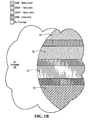
- the mobile device 10 might move from an area in which it had partial service in a GSM wireless network to another area in which better services are available in a CDMA wireless network. With reference to Figure 1B , this would occur should the mobile device 10 move from area 55 to area 54. Similarly, the mobile device 10 might be in GSM coverage that denies service to the mobile device due to subscription issues although the wireless network is capable of such services, but the mobile device still finds a CDMA system that provides better service in the same area. With reference to Figure 1B , this would occur should the mobile device 10 first select GSM RAT in overlapping area between 50 and 52, and then select CDMA RAT upon entering limited service state in GSM. Also, the mobile device 10 might move from an area in which it had no services to another area in which services are available. With reference to Figure 1B , this would occur should the mobile device 10 move from area 56 to any one of areas 50,52,54,55.
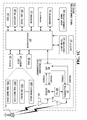
- FIG. 1C shown is a block diagram of another mobile device 100 that may implement any of the mobile device methods described herein.
- the mobile device 100 is shown with specific components for implementing features similar to those of the mobile device 10 of Figure 1A . It is to be understood that the mobile device 100 is shown with very specific details for example purposes only.
- a communications subsystem 170 In addition to the microprocessor 128, other parts of the mobile device 100 are shown schematically. These include: a communications subsystem 170; a short-range communications subsystem 102; the keyboard 114 and the display 126, along with other input/output devices including a set of LEDS 104, a set of auxiliary I/O devices 106, a serial port 108, a speaker 111 and a microphone 112; as well as memory devices including a flash memory 116 and a Random Access Memory (RAM) 118; and various other device subsystems 120.
- the mobile device 100 may have a battery 121 to power the active elements of the mobile device 100.
- the mobile device 100 is in some embodiments a two-way radio frequency (RF) communication device having voice and data communication capabilities.
- the mobile device 100 in some embodiments has the capability to communicate with other computer systems via the Internet.
- RF radio frequency
- Operating system software executed by the microprocessor 128 is in some embodiments stored in a persistent store, such as the flash memory 116, but may be stored in other types of memory devices, such as a read only memory (ROM) or similar storage element.
- system software, specific device applications, or parts thereof may be temporarily loaded into a volatile store, such as the RAM 118.
- Communication signals received by the mobile device 100 may also be stored to the RAM 118.
- a personal information manager (PIM) application module 130C may also be installed on the mobile device 100 during manufacture.
- the PIM application is in some embodiments capable of organizing and managing data items, such as e-mail, calendar events, voice mails, appointments, and task items.
- the PIM application is also in some embodiments capable of sending and receiving data items via a wireless network 110.
- the data items managed by the PIM application are seamlessly integrated, synchronized and updated via the wireless network 110 with the device user's corresponding data items stored or associated with a host computer system.
- additional software modules illustrated as another software module 130N, may be installed during manufacture.
- the communication subsystem 170 includes a receiver 150, a transmitter 152 and one or more antennas, illustrated as a receive antenna 154 and a transmit antenna 156.
- the communication subsystem 170 is configured based on the RAT (e.g. CDMA or GSM) selected by the microprocessor 128.
- the communication subsystem 170 also includes a processing module, such as a digital signal processor (DSP) 158, and local oscillators (LOs) 160.
- DSP digital signal processor
- LOs local oscillators
- the communication subsystem 170 having the transmitter 152 and the receiver 150 is an implementation of a wireless access radio with features similar to those of the wireless access radio 16 of the mobile device 10 shown in Figure 1A .
- One or more of the modules 150, 160, 152, 158 can be configured for RAT searching and acquisition as per instruction from microprocessor 128 in order to provide functionality similar to that of the RAT integration function 15 of the mobile device 10 shown in Figure 1A .
- the specific design and implementation of the communication subsystem 170 is dependent upon the communication network in which the mobile device 100 is intended to operate.
- the communication subsystem 170 of the mobile device 100 may be designed to operate with the MobitexTM, DataTACTM or General Packet Radio Service (GPRS) mobile data communication networks and also designed to operate with any of a variety of voice communication networks, such as Advanced Mobile Phone Service (AMPS), Time Division Multiple Access (TDMA), Code Division Multiple Access CDMA, Personal Communications Service (PCS), Global System for Mobile Communications (GSM), etc.
- AMPS Advanced Mobile Phone Service
- TDMA Time Division Multiple Access
- CDMA Code Division Multiple Access CDMA
- PCS Personal Communications Service
- GSM Global System for Mobile Communications
- Other types of data and voice networks, both separate and integrated, may also be utilized with the mobile device 100.
- Wireless network access may vary depending upon the type of communication system. For example, in the MobitexTM and DataTACTM wireless networks, mobile devices are registered on the wireless network using a unique Personal Identification Number (PIN) associated with each device. In GPRS wireless networks, however, wireless network access is typically associated with a subscriber or user of a device. A GPRS device therefore typically has a subscriber identity module, commonly referred to as a Subscriber Identity Module (SIM) card, in order to operate on a GPRS wireless network.
- SIM Subscriber Identity Module
- the mobile device 100 may send and receive communication signals over the wireless network 110.
- Signals received from the wireless network 110 by the receive antenna 154 are routed to the receiver 150, which provides for signal amplification, frequency down conversion, filtering, channel selection, etc., and may also provide analog to digital conversion. Analog-to-digital conversion of the received signal allows the DSP 158 to perform more complex communication functions, such as demodulation and decoding.
- signals to be transmitted to the wireless network 110 are processed (e.g., modulated and encoded) by the DSP 158 and are then provided to the transmitter 152 for digital to analog conversion, frequency up conversion, filtering, amplification and transmission to the wireless network 110 (or wireless networks) via the transmit antenna 156.
- signals to be transmitted to the wireless network 110 are processed (e.g., modulated and encoded) by the DSP 158 and are then provided to the transmitter 152 for digital to analog conversion, frequency up conversion, filtering, amplification and transmission to the wireless network 110 (or wireless networks) via the transmit antenna 156.
- the DSP 158 provides for control of the receiver 150 and the transmitter 152. For example, gains applied to communication signals in the receiver 150 and the transmitter 152 may be adaptively controlled through automatic gain control algorithms implemented in the DSP 158.
- a received signal such as a text message or web page download
- the communication subsystem 170 is input to the microprocessor 128.
- the received signal is then further processed by the microprocessor 128 for an output to the display 126, or alternatively to some other auxiliary I/O devices 106.
- a device user may also compose data items, such as e-mail messages, using the keyboard 114 and/or some other auxiliary I/O device 106, such as a touchpad, a rocker switch, a thumb-wheel, or some other type of input device.
- the composed data items may then be transmitted over the wireless network 110 via the communication subsystem 170.
- a voice communication mode In a voice communication mode, overall operation of the device is substantially similar to the data communication mode, except that received signals are output to a speaker 111, and signals for transmission are generated by a microphone 112.
- Alternative voice or audio I/O subsystems such as a voice message recording subsystem, may also be implemented on the mobile device 100.
- the display 126 may also be utilized in voice communication mode, for example, to display the identity of a calling party, the duration of a voice call, or other voice call related information.
- the mobile device determines whether the scanning would result in disruption to a current service. Accordingly, if the scanning would result in disruption to a current service, then the mobile device waits at step 2-4 before scanning so as to avoid disruption to the current service. For example, the mobile device might start scanning only when the mobile device is not monitoring its paging cycle. In other implementations, the mobile device does not bother waiting before scanning and proceeds directly to step 2-5. At step 2-5, the mobile device automatically scans for both GSM wireless networks and CDMA wireless networks in order to acquire a wireless network that can provide a service that is not currently provided to the mobile device.
- the mobile device refrains from automatic scanning.
- the mobile device does not scan for a wireless network because it has determined that the wireless network services currently provided to the mobile device are satisfactory.
- the mobile device might have both circuit switched service and packet switched service.
- the mobile device determines how to perform the scanning based on maintained history information of acquired wireless networks.
- An example is provided with reference to Figure 4 .
- the mobile device maintains history information for wireless networks that the mobile device has acquired. Based on the history information, the mobile device determines at step 4-2 how to initiate scanning in terms of scanning frequency and/or scanning order. The scanning is therefore executed according to the scanning frequency and scanning order. Further details of the scanning in terms of scanning frequency and/or scanning order are provided below.
- scanning of GSM wireless networks and CDMA wireless networks involves a back-off timer.
- a back-off timer can be used in order to reduce the frequency of scanning over time so that unnecessary scanning is reduced. Reducing the frequency of scanning helps conserve resources, such as battery resources of the mobile device.
- the time between scans can be based on the back-off timer, which is initially set to a small value. With each subsequent scan, the back-off timer is incremented so that the time between scans becomes greater. Once the back-off timer approaches a predefined saturation limit, then the back-off timer is not incremented.
- the back-off timer might be reset to the small value upon certain events, for example by the mobile device acquiring a new wireless network or being powered on.
- the services provided to the mobile device depend on the core wireless network associated with the RAT acquired by the mobile device.
- the mobile device determines which services are provided by the wireless network that has been acquired. Based on service limitations (if any), the mobile device scans for a better wireless network that can provide services that are not provided by the current wireless network.
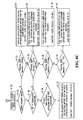
- Example implementations are provided below with reference to Figures 5A through 5C . Other implementations are possible.
- the mobile device attempts to acquire a CDMA wireless network because either the indication of the last RAT obtained is CDMA at step 8-6 or the mobile device cannot find a GSM wireless network at step 8-8. If at step 8-22 the mobile device does not find a CDMA wireless network, then at step 8-23 the mobile device performs multi-mode out of coverage processing with a bias towards CDMA. This involves the mobile device periodically searching for both GSM and CDMA wireless networks. However, if at step 8-22 the mobile device does find a CDMA wireless network, then at step 8-24 the mobile device determines whether IS-41 registration is successful. IS-41 registration is performed for identification and authentication purposes in CDMA wireless network.
- the mobile device performs multi-mode out of coverage processing with a bias towards CDMA. However, if IS-41 registration is successful, then at step 2-25 the mobile determines whether primary packet data service activation is successful.
- the primary data service activation may be for either SIP (Simple Internet Protocol) or MIP (Mobile Internet Protocol) wireless IP network as per 3GPP2 specifications TIA-835. If the primary data service activation is successful, then at step 8-26 the mobile device stays with the current CDMA wireless network, but performs periodic scans for more preferred CDMA wireless networks as appropriate. The mobile device also maintains the indication that the last RAT obtained is CDMA.
- the mobile device attempts to acquire a CDMA wireless network because capabilities provided by the GSM wireless network are limited. If at step 8-29 the mobile device finds a CDMA wireless network, then at step 8-30 the mobile device determines whether IS-41 registration is successful. If the IS-41 registration is successful, then at step 8-31 the mobile determines whether primary data service activation is successful. The primary data service activation may be for either SIP or MIP wireless IP network as defined in 3GPP2 specifications IS-835. If the primary data service activation is successful, then at step 8-32 the mobile device stays with the current CDMA wireless network, but performs periodic scans for more preferred CDMA wireless networks as appropriate. The mobile device also maintains the indication that the last RAT obtained is CDMA.
- step 8-34 the mobile device determines that overlay GSM service includes circuit switched service or both circuit switched service and packet switched service, then at step 8-38 the mobile device tunes to overlay GSM with circuit switched service (or both circuit switched service and packet switched service) and performs multi-mode periodic scans for GSM/CDMA wireless networks in order to acquire a better wireless network. If at step 8-35 the mobile device determines that overlay GSM service includes only circuit switched service, then at step 8-39 the mobile device stays on GSM and performs multi-mode periodic scans for GSM/CDMA wireless networks in order to acquire a better wireless network.
Landscapes
- Engineering & Computer Science (AREA)
- Computer Networks & Wireless Communication (AREA)
- Signal Processing (AREA)
- Computer Security & Cryptography (AREA)
- Mobile Radio Communication Systems (AREA)
- Telephone Function (AREA)
Priority Applications (1)
| Application Number | Priority Date | Filing Date | Title |
|---|---|---|---|
| EP11164264.1A EP2369814B1 (de) | 2007-03-09 | 2007-03-09 | System und Verfahren zur drahtlosen Netzwerkselektion durch Geräte mit mehreren Betriebsarten |
Applications Claiming Priority (2)
| Application Number | Priority Date | Filing Date | Title |
|---|---|---|---|
| EP07103853A EP1968283B1 (de) | 2007-03-09 | 2007-03-09 | System und Verfahren zur drahtlosen Netzwerkselektion durch Geräte mit mehreren Betriebsarten |
| EP11164264.1A EP2369814B1 (de) | 2007-03-09 | 2007-03-09 | System und Verfahren zur drahtlosen Netzwerkselektion durch Geräte mit mehreren Betriebsarten |
Related Parent Applications (2)
| Application Number | Title | Priority Date | Filing Date |
|---|---|---|---|
| EP07103853.3 Division | 2007-03-09 | ||
| EP07103853A Division EP1968283B1 (de) | 2007-03-09 | 2007-03-09 | System und Verfahren zur drahtlosen Netzwerkselektion durch Geräte mit mehreren Betriebsarten |
Publications (2)
| Publication Number | Publication Date |
|---|---|
| EP2369814A1 true EP2369814A1 (de) | 2011-09-28 |
| EP2369814B1 EP2369814B1 (de) | 2017-07-19 |
Family
ID=38616550
Family Applications (2)
| Application Number | Title | Priority Date | Filing Date |
|---|---|---|---|
| EP07103853A Active EP1968283B1 (de) | 2007-03-09 | 2007-03-09 | System und Verfahren zur drahtlosen Netzwerkselektion durch Geräte mit mehreren Betriebsarten |
| EP11164264.1A Active EP2369814B1 (de) | 2007-03-09 | 2007-03-09 | System und Verfahren zur drahtlosen Netzwerkselektion durch Geräte mit mehreren Betriebsarten |
Family Applications Before (1)
| Application Number | Title | Priority Date | Filing Date |
|---|---|---|---|
| EP07103853A Active EP1968283B1 (de) | 2007-03-09 | 2007-03-09 | System und Verfahren zur drahtlosen Netzwerkselektion durch Geräte mit mehreren Betriebsarten |
Country Status (7)
| Country | Link |
|---|---|
| EP (2) | EP1968283B1 (de) |
| KR (1) | KR101120321B1 (de) |
| CN (2) | CN101669391B (de) |
| AT (1) | ATE543322T1 (de) |
| CA (1) | CA2680220C (de) |
| ES (1) | ES2381691T3 (de) |
| WO (1) | WO2008109989A1 (de) |
Families Citing this family (13)
| Publication number | Priority date | Publication date | Assignee | Title |
|---|---|---|---|---|
| US7848756B2 (en) | 2008-09-22 | 2010-12-07 | Telefonaktiebolaget L M Ericsson (Publ) | Radio access technology selection |
| CN102291792A (zh) * | 2011-08-15 | 2011-12-21 | 中兴通讯股份有限公司 | 一种移动终端及其切换网络方法 |
| CN102413547A (zh) * | 2011-12-05 | 2012-04-11 | 中兴通讯股份有限公司 | 多模终端的选网方法及装置 |
| US9071956B2 (en) * | 2012-12-03 | 2015-06-30 | Qualcomm Incorporated | Systems and methods for dynamic enablement of wireless communication device functionalities |
| US8903372B1 (en) * | 2013-05-18 | 2014-12-02 | Qualcomm Incorporated | Performing neighbor cell activities in a multi-stack device |
| WO2015092495A1 (en) * | 2013-12-20 | 2015-06-25 | Sony Corporation | Electronic device with frequency band scanning order |
| CN105813063B (zh) * | 2014-12-31 | 2020-06-23 | 上海晨兴希姆通电子科技有限公司 | 手机获取基站信息的方法及手机 |
| US9681452B2 (en) * | 2015-05-29 | 2017-06-13 | Apple Inc. | Carrier network access for multi-SIM devices |
| US11006274B2 (en) | 2015-11-30 | 2021-05-11 | Qualcomm Incorporated | Service-based network selection |
| KR102394947B1 (ko) | 2016-02-04 | 2022-05-09 | 삼성전자주식회사 | 무선 통신 시스템에서 모바일 디바이스의 신호 검출을 위한 스캔 주기를 제어하는 방법 및 모바일 디바이스 |
| CN110536348B (zh) | 2019-05-16 | 2021-05-11 | Oppo广东移动通信有限公司 | 一种终端的功耗控制方法、装置及存储介质 |
| CN111698744A (zh) * | 2020-06-23 | 2020-09-22 | 广州三星通信技术研究有限公司 | 用于终端快速返回优选网络的方法和使用该方法的装置 |
| CN114666851A (zh) * | 2020-12-22 | 2022-06-24 | 展讯半导体(南京)有限公司 | 漫游网络选择方法、系统、电子设备及存储介质 |
Citations (4)
| Publication number | Priority date | Publication date | Assignee | Title |
|---|---|---|---|---|
| WO2002037874A1 (en) * | 2000-11-06 | 2002-05-10 | Motorola Inc., A Corporation Of The State Of Delaware | Method for a radiotelephone to scan for alternate radiotelephone systems |
| US20040058679A1 (en) * | 2000-07-25 | 2004-03-25 | Markus Dillinger | Method for the improved cell selection for multi-mode radio stations in the idle state |
| WO2005117463A2 (en) * | 2004-05-27 | 2005-12-08 | Nokia Corporation | Managing multimode roaming mobile devices |
| US20070042775A1 (en) * | 2005-08-18 | 2007-02-22 | Umatt Bhupesh M | System search to detect for a wireless communication network in a crowded frequency band |
Family Cites Families (11)
| Publication number | Priority date | Publication date | Assignee | Title |
|---|---|---|---|---|
| AU2001263472A1 (en) * | 2000-06-28 | 2002-01-08 | Broadcom Corporation | Multi-mode controller |
| CN1709007B (zh) * | 2002-10-30 | 2010-05-26 | 捷讯研究有限公司 | 用于选择通信网络的方法和装置 |
| US6993336B2 (en) * | 2003-12-15 | 2006-01-31 | Motorola, Inc. | Roaming indicators for multi-mode wireless communication devices |
| CA2559268A1 (en) * | 2004-03-12 | 2005-09-29 | Interdigital Technology Corporation | Method and system for switching a radio access technology between wireless communicaiton systems with a multi-mode wireless transmit/receive unit |
| CN100431383C (zh) * | 2005-02-18 | 2008-11-05 | 大唐移动通信设备有限公司 | 一种提高多模终端搜索公众陆地移动网速度的方法 |
| CN100474968C (zh) * | 2005-03-11 | 2009-04-01 | 华为技术有限公司 | 控制终端接入的方法 |
| CN100442887C (zh) * | 2005-03-18 | 2008-12-10 | 上海华为技术有限公司 | 多模无线终端选择接入模式的方法 |
| GB2425233B (en) * | 2005-04-15 | 2007-06-20 | Nec Technologies | An apparatus for accelerating a network search in a mobile communication device |
| US8060084B2 (en) * | 2005-04-28 | 2011-11-15 | Research In Motion Limited | Network selection scheme using a roaming broker (RB) |
| US20060268711A1 (en) * | 2005-05-27 | 2006-11-30 | Doradla Anil K | Network selection terminal |
| CN1917679A (zh) * | 2005-08-18 | 2007-02-21 | 中兴通讯股份有限公司 | Phs及gsm双模手机中gsm模块择网的方法 |
-
2007
- 2007-03-09 AT AT07103853T patent/ATE543322T1/de active
- 2007-03-09 EP EP07103853A patent/EP1968283B1/de active Active
- 2007-03-09 ES ES07103853T patent/ES2381691T3/es active Active
- 2007-03-09 EP EP11164264.1A patent/EP2369814B1/de active Active
-
2008
- 2008-03-07 KR KR1020097020497A patent/KR101120321B1/ko active Active
- 2008-03-07 WO PCT/CA2008/000433 patent/WO2008109989A1/en not_active Ceased
- 2008-03-07 CN CN2008800076569A patent/CN101669391B/zh active Active
- 2008-03-07 CN CN201310228465.8A patent/CN103338498B/zh active Active
- 2008-03-07 CA CA2680220A patent/CA2680220C/en active Active
Patent Citations (4)
| Publication number | Priority date | Publication date | Assignee | Title |
|---|---|---|---|---|
| US20040058679A1 (en) * | 2000-07-25 | 2004-03-25 | Markus Dillinger | Method for the improved cell selection for multi-mode radio stations in the idle state |
| WO2002037874A1 (en) * | 2000-11-06 | 2002-05-10 | Motorola Inc., A Corporation Of The State Of Delaware | Method for a radiotelephone to scan for alternate radiotelephone systems |
| WO2005117463A2 (en) * | 2004-05-27 | 2005-12-08 | Nokia Corporation | Managing multimode roaming mobile devices |
| US20070042775A1 (en) * | 2005-08-18 | 2007-02-22 | Umatt Bhupesh M | System search to detect for a wireless communication network in a crowded frequency band |
Also Published As
| Publication number | Publication date |
|---|---|
| EP1968283A1 (de) | 2008-09-10 |
| WO2008109989A8 (en) | 2008-12-04 |
| WO2008109989A1 (en) | 2008-09-18 |
| CN101669391A (zh) | 2010-03-10 |
| CN103338498B (zh) | 2016-09-14 |
| EP2369814B1 (de) | 2017-07-19 |
| CN101669391B (zh) | 2013-06-26 |
| ATE543322T1 (de) | 2012-02-15 |
| CA2680220A1 (en) | 2008-09-18 |
| EP1968283B1 (de) | 2012-01-25 |
| CN103338498A (zh) | 2013-10-02 |
| CA2680220C (en) | 2013-12-31 |
| KR101120321B1 (ko) | 2012-03-07 |
| KR20090126284A (ko) | 2009-12-08 |
| ES2381691T3 (es) | 2012-05-30 |
| HK1122152A1 (en) | 2009-05-08 |
Similar Documents
| Publication | Publication Date | Title |
|---|---|---|
| US8107954B2 (en) | System and method for wireless network selection by multi-mode devices | |
| EP2369814B1 (de) | System und Verfahren zur drahtlosen Netzwerkselektion durch Geräte mit mehreren Betriebsarten | |
| KR102839157B1 (ko) | 홈 네트워크로부터 떨어져 로밍하는 동안의 슬라이스-지원 plmn들의 개선된 선택 | |
| CN1902976B (zh) | 在数据服务中具有减少的延迟的能够使用数据的网络优先化 | |
| CN101951670B (zh) | 通过拒绝代码处理进行的能够使用数据的网络优先化 | |
| US8995989B2 (en) | UE enhancement for service recovery in mobile communications network | |
| US20230073757A1 (en) | Guti reallocation for mt-edt | |
| JP2010081628A (ja) | 国境地域において、国内ネットワークを優先化するネットワーク選択方法および装置 | |
| US20240284320A1 (en) | Network slicing based vplmn prioritization | |
| CN112314000B (zh) | 归属网络中移动设备的业务恢复 | |
| TWI364976B (en) | System and method of handset configuration between cellular and private wireless network modes | |
| US20090196285A1 (en) | Method and apparatus for provisioning dual mode wireless client devices in a telecommunications system | |
| WO2018170697A1 (zh) | 一种网络接入方法及设备 | |
| US8479269B1 (en) | Method and system for redirecting unauthorized wireless communication devices away from a femtocell | |
| CN113825213B (zh) | 附件设备的减小功率漫游 | |
| HK1122152B (en) | System and method for wireless network selection by multi-mode devices | |
| US8868033B1 (en) | Method and system for avoiding unauthorized wireless communication devices at a femtocell | |
| WO2025016968A1 (en) | Enhancement on the smf selection based on subscription | |
| CN118828731A (zh) | 一种通信方法、终端设备及网络设备 | |
| JP2009278358A (ja) | 移動通信端末装置、通信システム、移動通信端末制御方法 | |
| HK1151159B (en) | Data-capable network prioritization with reject code handling |
Legal Events
| Date | Code | Title | Description |
|---|---|---|---|
| PUAI | Public reference made under article 153(3) epc to a published international application that has entered the european phase |
Free format text: ORIGINAL CODE: 0009012 |
|
| 17P | Request for examination filed |
Effective date: 20110429 |
|
| AC | Divisional application: reference to earlier application |
Ref document number: 1968283 Country of ref document: EP Kind code of ref document: P |
|
| AK | Designated contracting states |
Kind code of ref document: A1 Designated state(s): AT BE BG CH CY CZ DE DK EE ES FI FR GB GR HU IE IS IT LI LT LU LV MC MT NL PL PT RO SE SI SK TR |
|
| AX | Request for extension of the european patent |
Extension state: AL BA HR MK RS |
|
| RAP1 | Party data changed (applicant data changed or rights of an application transferred) |
Owner name: BLACKBERRY LIMITED |
|
| RAP1 | Party data changed (applicant data changed or rights of an application transferred) |
Owner name: BLACKBERRY LIMITED |
|
| 17Q | First examination report despatched |
Effective date: 20140411 |
|
| GRAP | Despatch of communication of intention to grant a patent |
Free format text: ORIGINAL CODE: EPIDOSNIGR1 |
|
| STAA | Information on the status of an ep patent application or granted ep patent |
Free format text: STATUS: GRANT OF PATENT IS INTENDED |
|
| INTG | Intention to grant announced |
Effective date: 20170221 |
|
| GRAS | Grant fee paid |
Free format text: ORIGINAL CODE: EPIDOSNIGR3 |
|
| GRAA | (expected) grant |
Free format text: ORIGINAL CODE: 0009210 |
|
| STAA | Information on the status of an ep patent application or granted ep patent |
Free format text: STATUS: THE PATENT HAS BEEN GRANTED |
|
| AC | Divisional application: reference to earlier application |
Ref document number: 1968283 Country of ref document: EP Kind code of ref document: P |
|
| AK | Designated contracting states |
Kind code of ref document: B1 Designated state(s): AT BE BG CH CY CZ DE DK EE ES FI FR GB GR HU IE IS IT LI LT LU LV MC MT NL PL PT RO SE SI SK TR |
|
| REG | Reference to a national code |
Ref country code: GB Ref legal event code: FG4D |
|
| REG | Reference to a national code |
Ref country code: CH Ref legal event code: EP |
|
| REG | Reference to a national code |
Ref country code: IE Ref legal event code: FG4D |
|
| REG | Reference to a national code |
Ref country code: AT Ref legal event code: REF Ref document number: 911417 Country of ref document: AT Kind code of ref document: T Effective date: 20170815 |
|
| REG | Reference to a national code |
Ref country code: DE Ref legal event code: R096 Ref document number: 602007051730 Country of ref document: DE |
|
| REG | Reference to a national code |
Ref country code: NL Ref legal event code: MP Effective date: 20170719 |
|
| REG | Reference to a national code |
Ref country code: LT Ref legal event code: MG4D |
|
| REG | Reference to a national code |
Ref country code: AT Ref legal event code: MK05 Ref document number: 911417 Country of ref document: AT Kind code of ref document: T Effective date: 20170719 |
|
| PG25 | Lapsed in a contracting state [announced via postgrant information from national office to epo] |
Ref country code: NL Free format text: LAPSE BECAUSE OF FAILURE TO SUBMIT A TRANSLATION OF THE DESCRIPTION OR TO PAY THE FEE WITHIN THE PRESCRIBED TIME-LIMIT Effective date: 20170719 Ref country code: FI Free format text: LAPSE BECAUSE OF FAILURE TO SUBMIT A TRANSLATION OF THE DESCRIPTION OR TO PAY THE FEE WITHIN THE PRESCRIBED TIME-LIMIT Effective date: 20170719 Ref country code: LT Free format text: LAPSE BECAUSE OF FAILURE TO SUBMIT A TRANSLATION OF THE DESCRIPTION OR TO PAY THE FEE WITHIN THE PRESCRIBED TIME-LIMIT Effective date: 20170719 Ref country code: AT Free format text: LAPSE BECAUSE OF FAILURE TO SUBMIT A TRANSLATION OF THE DESCRIPTION OR TO PAY THE FEE WITHIN THE PRESCRIBED TIME-LIMIT Effective date: 20170719 Ref country code: SE Free format text: LAPSE BECAUSE OF FAILURE TO SUBMIT A TRANSLATION OF THE DESCRIPTION OR TO PAY THE FEE WITHIN THE PRESCRIBED TIME-LIMIT Effective date: 20170719 |
|
| PG25 | Lapsed in a contracting state [announced via postgrant information from national office to epo] |
Ref country code: ES Free format text: LAPSE BECAUSE OF FAILURE TO SUBMIT A TRANSLATION OF THE DESCRIPTION OR TO PAY THE FEE WITHIN THE PRESCRIBED TIME-LIMIT Effective date: 20170719 Ref country code: IS Free format text: LAPSE BECAUSE OF FAILURE TO SUBMIT A TRANSLATION OF THE DESCRIPTION OR TO PAY THE FEE WITHIN THE PRESCRIBED TIME-LIMIT Effective date: 20171119 Ref country code: LV Free format text: LAPSE BECAUSE OF FAILURE TO SUBMIT A TRANSLATION OF THE DESCRIPTION OR TO PAY THE FEE WITHIN THE PRESCRIBED TIME-LIMIT Effective date: 20170719 Ref country code: GR Free format text: LAPSE BECAUSE OF FAILURE TO SUBMIT A TRANSLATION OF THE DESCRIPTION OR TO PAY THE FEE WITHIN THE PRESCRIBED TIME-LIMIT Effective date: 20171020 Ref country code: PL Free format text: LAPSE BECAUSE OF FAILURE TO SUBMIT A TRANSLATION OF THE DESCRIPTION OR TO PAY THE FEE WITHIN THE PRESCRIBED TIME-LIMIT Effective date: 20170719 Ref country code: BG Free format text: LAPSE BECAUSE OF FAILURE TO SUBMIT A TRANSLATION OF THE DESCRIPTION OR TO PAY THE FEE WITHIN THE PRESCRIBED TIME-LIMIT Effective date: 20171019 |
|
| REG | Reference to a national code |
Ref country code: FR Ref legal event code: PLFP Year of fee payment: 12 |
|
| REG | Reference to a national code |
Ref country code: DE Ref legal event code: R097 Ref document number: 602007051730 Country of ref document: DE |
|
| PG25 | Lapsed in a contracting state [announced via postgrant information from national office to epo] |
Ref country code: RO Free format text: LAPSE BECAUSE OF FAILURE TO SUBMIT A TRANSLATION OF THE DESCRIPTION OR TO PAY THE FEE WITHIN THE PRESCRIBED TIME-LIMIT Effective date: 20170719 Ref country code: CZ Free format text: LAPSE BECAUSE OF FAILURE TO SUBMIT A TRANSLATION OF THE DESCRIPTION OR TO PAY THE FEE WITHIN THE PRESCRIBED TIME-LIMIT Effective date: 20170719 Ref country code: DK Free format text: LAPSE BECAUSE OF FAILURE TO SUBMIT A TRANSLATION OF THE DESCRIPTION OR TO PAY THE FEE WITHIN THE PRESCRIBED TIME-LIMIT Effective date: 20170719 |
|
| PLBE | No opposition filed within time limit |
Free format text: ORIGINAL CODE: 0009261 |
|
| STAA | Information on the status of an ep patent application or granted ep patent |
Free format text: STATUS: NO OPPOSITION FILED WITHIN TIME LIMIT |
|
| PG25 | Lapsed in a contracting state [announced via postgrant information from national office to epo] |
Ref country code: EE Free format text: LAPSE BECAUSE OF FAILURE TO SUBMIT A TRANSLATION OF THE DESCRIPTION OR TO PAY THE FEE WITHIN THE PRESCRIBED TIME-LIMIT Effective date: 20170719 Ref country code: SK Free format text: LAPSE BECAUSE OF FAILURE TO SUBMIT A TRANSLATION OF THE DESCRIPTION OR TO PAY THE FEE WITHIN THE PRESCRIBED TIME-LIMIT Effective date: 20170719 Ref country code: IT Free format text: LAPSE BECAUSE OF FAILURE TO SUBMIT A TRANSLATION OF THE DESCRIPTION OR TO PAY THE FEE WITHIN THE PRESCRIBED TIME-LIMIT Effective date: 20170719 |
|
| 26N | No opposition filed |
Effective date: 20180420 |
|
| PG25 | Lapsed in a contracting state [announced via postgrant information from national office to epo] |
Ref country code: SI Free format text: LAPSE BECAUSE OF FAILURE TO SUBMIT A TRANSLATION OF THE DESCRIPTION OR TO PAY THE FEE WITHIN THE PRESCRIBED TIME-LIMIT Effective date: 20170719 |
|
| REG | Reference to a national code |
Ref country code: CH Ref legal event code: PL |
|
| PG25 | Lapsed in a contracting state [announced via postgrant information from national office to epo] |
Ref country code: MC Free format text: LAPSE BECAUSE OF FAILURE TO SUBMIT A TRANSLATION OF THE DESCRIPTION OR TO PAY THE FEE WITHIN THE PRESCRIBED TIME-LIMIT Effective date: 20170719 |
|
| REG | Reference to a national code |
Ref country code: BE Ref legal event code: MM Effective date: 20180331 |
|
| REG | Reference to a national code |
Ref country code: IE Ref legal event code: MM4A |
|
| PG25 | Lapsed in a contracting state [announced via postgrant information from national office to epo] |
Ref country code: LU Free format text: LAPSE BECAUSE OF NON-PAYMENT OF DUE FEES Effective date: 20180309 |
|
| PG25 | Lapsed in a contracting state [announced via postgrant information from national office to epo] |
Ref country code: IE Free format text: LAPSE BECAUSE OF NON-PAYMENT OF DUE FEES Effective date: 20180309 |
|
| PG25 | Lapsed in a contracting state [announced via postgrant information from national office to epo] |
Ref country code: LI Free format text: LAPSE BECAUSE OF NON-PAYMENT OF DUE FEES Effective date: 20180331 Ref country code: BE Free format text: LAPSE BECAUSE OF NON-PAYMENT OF DUE FEES Effective date: 20180331 Ref country code: CH Free format text: LAPSE BECAUSE OF NON-PAYMENT OF DUE FEES Effective date: 20180331 |
|
| PG25 | Lapsed in a contracting state [announced via postgrant information from national office to epo] |
Ref country code: MT Free format text: LAPSE BECAUSE OF NON-PAYMENT OF DUE FEES Effective date: 20180309 |
|
| PG25 | Lapsed in a contracting state [announced via postgrant information from national office to epo] |
Ref country code: TR Free format text: LAPSE BECAUSE OF FAILURE TO SUBMIT A TRANSLATION OF THE DESCRIPTION OR TO PAY THE FEE WITHIN THE PRESCRIBED TIME-LIMIT Effective date: 20170719 |
|
| PG25 | Lapsed in a contracting state [announced via postgrant information from national office to epo] |
Ref country code: PT Free format text: LAPSE BECAUSE OF FAILURE TO SUBMIT A TRANSLATION OF THE DESCRIPTION OR TO PAY THE FEE WITHIN THE PRESCRIBED TIME-LIMIT Effective date: 20170719 Ref country code: HU Free format text: LAPSE BECAUSE OF FAILURE TO SUBMIT A TRANSLATION OF THE DESCRIPTION OR TO PAY THE FEE WITHIN THE PRESCRIBED TIME-LIMIT; INVALID AB INITIO Effective date: 20070309 |
|
| PG25 | Lapsed in a contracting state [announced via postgrant information from national office to epo] |
Ref country code: CY Free format text: LAPSE BECAUSE OF FAILURE TO SUBMIT A TRANSLATION OF THE DESCRIPTION OR TO PAY THE FEE WITHIN THE PRESCRIBED TIME-LIMIT Effective date: 20170719 |
|
| REG | Reference to a national code |
Ref country code: DE Ref legal event code: R079 Ref document number: 602007051730 Country of ref document: DE Free format text: PREVIOUS MAIN CLASS: H04L0029080000 Ipc: H04L0065000000 |
|
| REG | Reference to a national code |
Ref country code: DE Ref legal event code: R082 Ref document number: 602007051730 Country of ref document: DE Ref country code: DE Ref legal event code: R081 Ref document number: 602007051730 Country of ref document: DE Owner name: MALIKIE INNOVATIONS LTD., IE Free format text: FORMER OWNER: BLACKBERRY LIMITED, WATERLOO, ONTARIO, CA |
|
| PGFP | Annual fee paid to national office [announced via postgrant information from national office to epo] |
Ref country code: DE Payment date: 20250327 Year of fee payment: 19 |
|
| PGFP | Annual fee paid to national office [announced via postgrant information from national office to epo] |
Ref country code: FR Payment date: 20250324 Year of fee payment: 19 |
|
| PGFP | Annual fee paid to national office [announced via postgrant information from national office to epo] |
Ref country code: GB Payment date: 20250325 Year of fee payment: 19 |