EP2370109B1 - Proliferationsassoziierte modulation des spleissens von integrin-alpha-6-isoformen - Google Patents
Proliferationsassoziierte modulation des spleissens von integrin-alpha-6-isoformen Download PDFInfo
- Publication number
- EP2370109B1 EP2370109B1 EP09831355.4A EP09831355A EP2370109B1 EP 2370109 B1 EP2370109 B1 EP 2370109B1 EP 09831355 A EP09831355 A EP 09831355A EP 2370109 B1 EP2370109 B1 EP 2370109B1
- Authority
- EP
- European Patent Office
- Prior art keywords
- cells
- cell
- integrin
- expression
- subunit
- Prior art date
- Legal status (The legal status is an assumption and is not a legal conclusion. Google has not performed a legal analysis and makes no representation as to the accuracy of the status listed.)
- Not-in-force
Links
Images




Classifications
-
- C—CHEMISTRY; METALLURGY
- C12—BIOCHEMISTRY; BEER; SPIRITS; WINE; VINEGAR; MICROBIOLOGY; ENZYMOLOGY; MUTATION OR GENETIC ENGINEERING
- C12N—MICROORGANISMS OR ENZYMES; COMPOSITIONS THEREOF; PROPAGATING, PRESERVING, OR MAINTAINING MICROORGANISMS; MUTATION OR GENETIC ENGINEERING; CULTURE MEDIA
- C12N15/00—Mutation or genetic engineering; DNA or RNA concerning genetic engineering, vectors, e.g. plasmids, or their isolation, preparation or purification; Use of hosts therefor
- C12N15/09—Recombinant DNA-technology
- C12N15/87—Introduction of foreign genetic material using processes not otherwise provided for, e.g. co-transformation
-
- A—HUMAN NECESSITIES
- A61—MEDICAL OR VETERINARY SCIENCE; HYGIENE
- A61K—PREPARATIONS FOR MEDICAL, DENTAL OR TOILETRY PURPOSES
- A61K31/00—Medicinal preparations containing organic active ingredients
-
- A—HUMAN NECESSITIES
- A61—MEDICAL OR VETERINARY SCIENCE; HYGIENE
- A61K—PREPARATIONS FOR MEDICAL, DENTAL OR TOILETRY PURPOSES
- A61K31/00—Medicinal preparations containing organic active ingredients
- A61K31/70—Carbohydrates; Sugars; Derivatives thereof
- A61K31/7088—Compounds having three or more nucleosides or nucleotides
-
- A—HUMAN NECESSITIES
- A61—MEDICAL OR VETERINARY SCIENCE; HYGIENE
- A61K—PREPARATIONS FOR MEDICAL, DENTAL OR TOILETRY PURPOSES
- A61K38/00—Medicinal preparations containing peptides
- A61K38/16—Peptides having more than 20 amino acids; Gastrins; Somatostatins; Melanotropins; Derivatives thereof
- A61K38/17—Peptides having more than 20 amino acids; Gastrins; Somatostatins; Melanotropins; Derivatives thereof from animals; from humans
- A61K38/177—Receptors; Cell surface antigens; Cell surface determinants
- A61K38/1777—Integrin superfamily
-
- A—HUMAN NECESSITIES
- A61—MEDICAL OR VETERINARY SCIENCE; HYGIENE
- A61P—SPECIFIC THERAPEUTIC ACTIVITY OF CHEMICAL COMPOUNDS OR MEDICINAL PREPARATIONS
- A61P35/00—Antineoplastic agents
-
- C—CHEMISTRY; METALLURGY
- C12—BIOCHEMISTRY; BEER; SPIRITS; WINE; VINEGAR; MICROBIOLOGY; ENZYMOLOGY; MUTATION OR GENETIC ENGINEERING
- C12N—MICROORGANISMS OR ENZYMES; COMPOSITIONS THEREOF; PROPAGATING, PRESERVING, OR MAINTAINING MICROORGANISMS; MUTATION OR GENETIC ENGINEERING; CULTURE MEDIA
- C12N15/00—Mutation or genetic engineering; DNA or RNA concerning genetic engineering, vectors, e.g. plasmids, or their isolation, preparation or purification; Use of hosts therefor
- C12N15/09—Recombinant DNA-technology
- C12N15/11—DNA or RNA fragments; Modified forms thereof; Non-coding nucleic acids having a biological activity
- C12N15/113—Non-coding nucleic acids modulating the expression of genes, e.g. antisense oligonucleotides; Antisense DNA or RNA; Triplex- forming oligonucleotides; Catalytic nucleic acids, e.g. ribozymes; Nucleic acids used in co-suppression or gene silencing
-
- G—PHYSICS
- G01—MEASURING; TESTING
- G01N—INVESTIGATING OR ANALYSING MATERIALS BY DETERMINING THEIR CHEMICAL OR PHYSICAL PROPERTIES
- G01N33/00—Investigating or analysing materials by specific methods not covered by groups G01N1/00 - G01N31/00
- G01N33/48—Biological material, e.g. blood, urine; Haemocytometers
- G01N33/50—Chemical analysis of biological material, e.g. blood, urine; Testing involving biospecific ligand binding methods; Immunological testing
- G01N33/53—Immunoassay; Biospecific binding assay; Materials therefor
- G01N33/575—Immunoassay; Biospecific binding assay; Materials therefor for cancer
-
- C—CHEMISTRY; METALLURGY
- C12—BIOCHEMISTRY; BEER; SPIRITS; WINE; VINEGAR; MICROBIOLOGY; ENZYMOLOGY; MUTATION OR GENETIC ENGINEERING
- C12N—MICROORGANISMS OR ENZYMES; COMPOSITIONS THEREOF; PROPAGATING, PRESERVING, OR MAINTAINING MICROORGANISMS; MUTATION OR GENETIC ENGINEERING; CULTURE MEDIA
- C12N2310/00—Structure or type of the nucleic acid
- C12N2310/10—Type of nucleic acid
- C12N2310/14—Type of nucleic acid interfering nucleic acids [NA]
-
- C—CHEMISTRY; METALLURGY
- C12—BIOCHEMISTRY; BEER; SPIRITS; WINE; VINEGAR; MICROBIOLOGY; ENZYMOLOGY; MUTATION OR GENETIC ENGINEERING
- C12N—MICROORGANISMS OR ENZYMES; COMPOSITIONS THEREOF; PROPAGATING, PRESERVING, OR MAINTAINING MICROORGANISMS; MUTATION OR GENETIC ENGINEERING; CULTURE MEDIA
- C12N2799/00—Uses of viruses
- C12N2799/02—Uses of viruses as vector
- C12N2799/021—Uses of viruses as vector for the expression of a heterologous nucleic acid
- C12N2799/027—Uses of viruses as vector for the expression of a heterologous nucleic acid where the vector is derived from a retrovirus
-
- G—PHYSICS
- G01—MEASURING; TESTING
- G01N—INVESTIGATING OR ANALYSING MATERIALS BY DETERMINING THEIR CHEMICAL OR PHYSICAL PROPERTIES
- G01N2333/00—Assays involving biological materials from specific organisms or of a specific nature
- G01N2333/435—Assays involving biological materials from specific organisms or of a specific nature from animals; from humans
- G01N2333/705—Assays involving receptors, cell surface antigens or cell surface determinants
- G01N2333/70546—Integrin superfamily, e.g. VLAs, leuCAM, GPIIb/GPIIIa, LPAM
Definitions
- Integrins are a family of heterodimeric transmembrane receptors that, besides providing a physical link between the basement membrane (BM) and the cytoskeleton of epithelial cells, act as platforms for intracellular signaling as a consequence of ligand binding and cross talk with receptor tyrosine-kinases (RTKs) (Giancotti and Tarone, 2003).
- RTKs receptor tyrosine-kinases
- 18 ⁇ and 8 ⁇ subunits have been identified in the human, leading to the formation of at least 24 distinct functional receptors.
- extensive alternative splicing and post-translational modification of both groups of subunits leads to the generation of considerably more forms in vivo (de Melker and Sonnenberg, 1999).
- the ⁇ 6 subunit mRNA undergoes alternative splicing yielding two distinct isoforms (Hogervorst et al., 1991), termed ⁇ 6A and ⁇ 6B, with distinct cytoplasmic domains and dissimilar patterns of expression throughout the human organism (Hogervorst et al., 1993).
- the different isoforms result from alternative splicing of a single exon (Hogervorst et al., 1991).
- the inclusion of an alternatively spliced exon results in the formation of the ⁇ 6A variant, while exclusion leads to a reading frame shift, usage of an alternative stop codon and formation of the ⁇ 6B variant.
- the A variant has been reported to be the only variant expressed in the mammary gland, peripheral nerves and basal keratinocytes while the B variant is predominant in the kidney.
- the intestine was initially reported to express both variants (Hogervorst et al., 1993). These patterns of expression for ⁇ 6A and ⁇ 6B as well as their dissimilar temporal expression during embryonic development (Thorsteinsdottir et al., 1995) may imply that they serve different biological functions.
- the ⁇ 6A and -B subunits possess divergent capacities of initiating intracellular biochemical events, namely tyrosine phosphorylation of paxillin (Shaw et al., 1995) and activation of the Ras-MEK-ERK pathway (Wei et al., 1998).
- the ⁇ 6 subunit dimerizes with the ⁇ 4 subunit forming the ⁇ 6 ⁇ 4 integrin (Basora et al., 1999).
- the relatively simple structural and functional renewal unit of the small intestine, the crypt-villus axis, makes it an attractive model for the study of epithelial cell proliferation and maturation (Babyatsky and Podolsky, 1995).
- Positional control of the enterocytes and their subsequent function is controlled by cell-cell and cell-extracellular matrix (ECM) interactions with the underlying the basement membrane (BM) (Teller and Beaulieu, 2001).
- ECM cell-cell and cell-extracellular matrix
- ⁇ 6 ⁇ 4 integrin has been shown to be an important player in mediating migration and invasion of colon cancer cells (Lohi et al., 2000; Mercurio and Rabinovitz, 2001; Ni et al., 2005; Pouliot et al., 2001).
- Integrins do not possess intrinsic signaling capacities, but rather mediate positional information by interacting with a large range of scaffolding proteins resulting in activation of several signaling molecules, such as Ras and PI3K, leading to subsequent activation of, among other molecules, JNK, Jun, Erk and CyclinD (Giancotti et al., 2003).
- the net result of this integrin mediated intracellular signaling is control of cellular functions such as proliferation, migration, invasion and survival, all of which are pivotal events in cancer progression (Guo and Giancotti, 2004).
- the B:A ratio of the isoforms of the integrin ⁇ 6 are tightly linked to the regulation of the cell cycle. Therefore, the present application concerns the modulation of that ratio for diagnosing an hyper or hypoproliferative state.
- the present application provides a method of diagnosing a hyperproliferative state in an individual.
- the method comprises determining a ratio between an isoform B and an isoform A of an integrin ⁇ 6 subunit in a cell from said individual, wherein a ratio being lower than a control ratio is indicative of the presence of the hyperproliferative state in said individual.
- the ratio between the isoform B and the isoform A of the integrin ⁇ 6 subunit is determined by quantifying the mRNA specific for the isoform B and the mRNA specific for the isoform A in said cell.
- the determination can be done by PCR and/or real-time PCR.
- the ratio between the isoform B and the isoform A of the integrin ⁇ 6 subunit is determined by quantifying the polypeptide specific for the isoform B and the polypeptide specific for the isoform A in said cell.
- the determination can be done with an antibody and/or an ELISA assay.
- the control ratio is a ratio between the isoform B and the isoform A of an integrin ⁇ 6 subunit in a cell from a healthy control patient or a healthy tissue free of hyperproliferation (e.g. abnormally elevated proliferation).
- the control ratio is of about 1.5.
- the hyperproliferative state is cancer, such as a cancer associated with a gastro-intestinal tract, a carcinoma and/or a colon cancer.
- the hyperproliferative state is a colon cancer, and even more specifically, the colon cancer is a carcinoma.
- the ratio between the B and A isoforms of the integrin ⁇ 6 subunit is tied to cellular proliferation. This ratio is elevated in quiescent (e.g. differentiated) cells and low in proliferative (e.g. malignant) cells and thus can be used for the evaluation of cellular proliferation. This ratio can also be modulated to decrease or increase cellular proliferation.
- the ITGA6 protein product is the integrin alpha chain alpha 6.
- Alpha 6 integrin subunit may combine with beta 4 in the integrin referred to as TSP180, or with beta 1 in the integrin VLA-6. It is mostly expressed in epithelial cells.
- Two transcript variants encoding different isoforms have been found for this gene: the B isoform (e.g. coding sequence accession number NM_000210 or SEQ ID NO: 1; polypeptide sequence accession number NP_000201 or SEQ ID NO: 2) and the A isoform (e.g. coding sequence accession number NM_001079818 or SEQ ID NO: 3; polypeptide sequence accession number NP_001073286 or SEQ ID NO: 4).
- the present application provides suprising evidence that the ratio of the B and A isoforms is also modulated during cellular proliferation and can be modified to induce cellular proliferation or cellular quiescence.
- the present application also shows that the ratio between the two isoforms is an indicator of cellular proliferation and could successfully be used in the diagnosis of cancer or any other hypeproliferative state.
- the present application describes a method of limiting the proliferation of a cell.
- the term “inhibiting” refers to the ability of the method to lower or slow down the proliferation of a cell.
- the method is also capable of halting the proliferation of a cell by allowing the cell to exit the cellular cycle (e.g. G1 exit).
- the term “proliferation” refers to the ability of a cell to complete a cell cycle.
- the proliferation of a cell can be assessed by determining the proliferation rate of a cell, e.g. the number of cell cycles completed by a cell in a definite amount of time (e.g. hours, days, weeks). Since the proliferation rate is not uniform between every cell type, care should be taken to determine if an "inhibition of the proliferation of a cell” has occurred by comparing the proliferation rate of the cell before and after the treatment or to a similar cell that has not been treated.
- the method comprises increasing the ratio B:A ratio of the ⁇ 6 integrin in the cell. This is achieved by increasing the net amount of the B isoform of the integrin ⁇ 6 subunit in the cell. In another embodiment, this can also be achieved by overexpressing the mRNA encoding the B isoform and/or increasing the stability of the mRNA encoding the B isoform in a cell. It can also be done by increasing the activity of the B isoform. It can further be achieved by reducing the amounts of the A isoform.
- the modulation of expression of the B and A isoforms can be achieved using genetic engineering means.
- Such genetic means can be an vector appropriate for gene therapy that, when introduced in a cell, favors the expression of one isoform and consequently increases the B:A ratio balance of the ⁇ 6 integrins in the cell.
- Another genetic means can be a vector appropriate for gene therapy that, when introduced in a cell, limits the expression of one isoform and consequently increases the B:A ratio balance of the ⁇ 6 integrins in the cell (shRNA methodology for example).
- shRNA methodology for example
- the modulation of expression of the B and A isoforms can be also be achieved using a small molecule (e.g. agent) that is capable of favoring or inhibiting the expression of one of the two (or both) isoforms or the activity of one (or both) isoforms.
- a small molecule e.g. agent
- the increase of the B:A ratio of the isoform of integrin ⁇ 6 subunit can also lead to the down-regulation of the activity of c-Myc in the treated cell.
- the c-Myc oncogene is a transcription factor that is upregulated in various hyperproliferative state, such as cancer.
- the methods presented herein can advantageously be used in cells (or conditions related thereto) overexpressing c-Myc or having an enhanced c-Myc activity (with respect to a control healthy cell or control healthy tissue) to lower c-Myc expression and/or activity.
- the method described herein can be preferably applied to cells (from human or animal origin) that express (either endogenously or recombinantly) the A and B isoforms of the integrin ⁇ 6 subunit. As indicated above, some epithelial cells endogenously express both isoform and can be advantageously used in this method.
- Epithelial cells compose the epithelium, a tissue that lines the cavities and surfaces of structures throughout the body. Epithelial cells usually lie on top of connective tissue, and the two layers are separated and linked by a basement membrane. Epithelial tissue can be divided into two groups depending on the number of layers of which it is composes. Epithelial tissue which is only one cell thick is known as simple epithelium. If it is two or more cells thick, it is known as stratified epithelium. Simple epithelium can be subdivided according to the shape and function of its cells:
- Epithelial cells can be derived, for example, from blood vessels, gingiva, tongue, digestive ducts of submandibular glands, gallbladder, hard palate, large intestine, oesophagus, rectum, small intestine, stomach, thyroid follicles, mesothelium of body cavities, skin ,sweat gland ducts, lymph vessel, ependyma, cervix (ectocervix and endocervix), endometrium, Fallopian tubes, labia majora, ovaries, uterus, vagina, ductuli efferentes, ejaculatory duct, epididymis, rete testis, tubuli recti, vas deferens, seminal vesicle, larynx, oropharynx, bronchioles, trachea, respiratory epithelium, cornea, olfactory epithelium, urethral orifice, kidney, pro
- the methods described herein can be applied to cells derived from the gastro-intestinal tract such as, for example, those of the colon. Even though the methods described herein can be applied to any type of cells, because a low B:A ratio is indicative of an hyperproliferative state, the treatment method described herein can be advantageously used for the inhibition of proliferation of a malignant cell.
- the malignant cell can be from either a primary tumor or a metastasis.
- a low B:A ratio of the ⁇ 6 integrin is associated with an hyperproliferative state.
- the present application also provides a method of increasing the proliferation of a cell. This method comprises decreasing the ratio B:A ratio of the ⁇ 6 integrin. This is achieved by expressing preferably the A isoform of the integrin ⁇ 6 subunit in the cell. This can also be achieved by increasing the stability of the mRNA encoding the A of the integrin ⁇ 6 subunit in a cell.
- the modulation of expression of the B and A isoforms can be achieved using genetic engineering means.
- Such genetic means can be an vector appropriate for gene therapy that, when introduced in a cell, favors the expression of one isoform and consequently decreases the B:A ratio balance of the ⁇ 6 integrins in the cell.
- Another genetic means can be a vector appropriate for gene therapy that, when introduced in a cell, limits the expression of one isoform and consequently decreases the B:A ratio balance of the ⁇ 6 integrins in the cell.
- a combination of both types of vectors is also contemplated herein.
- the modulation of expression of the B and A isoforms can be also be achieved using a small molecule (e.g. agent) that is capable of favoring or inhibiting the expression of one of the two (or both) isoforms or the activity of one (or both) isoforms.
- a small molecule e.g. agent
- Cells (animal or human) having a specific need for augmenting their proliferation rate can be submitted to the method described herein. Care should be taken in applying this methods not to dysregulate cellular proliferation and cause a cancer or augment the predisposition of cancer to the treated cells. It is also contemplated that the method described herein may favor the up-regulation of the activity of c-Myc in the treated cells.
- the method contemplates either overstranscribing or increasing the stability an mRNA encoding the isoform A so as to increase the expression of the isoform A of the integrin ⁇ 6 subunit.
- the mRNA is encoded by a recombinant nucleic acid that can, optionally, be introduced into the cell.
- the method also contemplates increasing the activity or stability of the isoform A so as to increase the expression of the isoform A (endogenous or recombinantly introduced) of the integrin ⁇ 6 subunit.
- an agent capable of increasing the expression or transcription of the B isoform for the inhibition of proliferation as well as for the manufacture of a medicament for the inhibition of proliferation of a cell Such agent augments the ratio between the B and A isoforms.
- an agent capable of increasing the expression or transcription of the A isoform for the promotion of proliferation as well as for the manufacture of a medicament for the promotion of proliferation of a cell is also described. In that case the agent preferably lowers the ratio between the B and A isoforms.
- the B:A ration of the isoforms of the integrin ⁇ 6 subunit is linked to the proliferation state of a cell, it can also be successfully used to as an indicator of cellular proliferation (e.g. proliferative state vs. quiescence). In return, this indicator can be used to determine the risk associated with the onset of an hyperproliferative cellular condition (such as cancer).
- the invention relates to a method of diagnosing an hyperpoliferative state in an individual is contemplated herewith.
- the method comprises determining a ratio between the isoform B and the isoform A of an integrin ⁇ 6 subunit in a cell (such as an epithelial cell) from the individual. This determination can either be made at the genomic level, transcript level and/or at the polypeptide level. In an embodiment, the determination can be made at a first level (transcript of polypeptide) and confirmed at a second level (transcript or polypeptide).
- This diagnostic method can be embodied in a diagnostic system designed to perform the required steps.
- This diagnostic system comprises at least two modules: a first module for performing the determination of the ratio between the ⁇ 6B and ⁇ 6A isoforms and a second module for correlating the ratio to an hyperproliferative or an hypoproliferative state.
- the first module can comprise a detection module for determining the amount of ⁇ 6B and ⁇ 6A isoforms as well as a processor to calculate the ratio between the isoforms. As indicated above, this detection can be made either at the RNA level and/or the polypeptide level.
- the detection module relies on the addition of a label to the sample and the quantification of the signal from the label for determining the amount of the ⁇ 6B and ⁇ 6A isoforms.
- the signal of the label is quantified by the detection module and is linked to the amount of the ⁇ 6B and ⁇ 6A isoforms.
- This label can directly or indirectly be linked to a quantifier specific for the two isoforms.
- the detection module then processes the amounts obtained to generate a ratio of the two isoforms.
- the information (e.g. amount and ratio) gathered by the detection module is then processed by the second module for determining the correlation.
- This second module can use a processor for comparing the ratio obtained with the first module to a reference or control ratio (predetermined or obtained from an individual (or group of individuals) that are not afflicted with a proliferative disease and are thus considered healthy).
- the correlation module can then determine if the ratio obtained from the determination module is more likely associated with hyperproliferation, hypoproliferation or homeostasis and as such, the individual's susceptibility of having or developing the disease associated with proliferation.
- the determination of the ratio can include the addition of a quantifier to the sample from the individual.
- the quantifier is a physical entity that enables the sample to be quantified.
- the sample can be purified or isolated prior to the addition of the quantifier.
- the quantifier can be, for example, an oligonucleotide specific for the isoform to be quantified, an antibody specific for the polypeptide to be quantified or a ligand specific for the enzyme to be quantified.
- the addition of the quantifier generates a quantifiable sample that can then be submitted to an assay for the determination of the quantity of nucleic acid and/or polypeptide.
- the quantifier is either directly linked to a label or adapted to be indirectly linked to a label for its processing in the detection module.
- a ratio between the B and A isoform can be calculated and compared to a control ratio between the B and A isoform.
- a control ratio between the B and A isoform of the ⁇ 6 integrin is either a value of about 1.5 (e.g. between 1.3 and 1.7) or the B:A ratio that has been determined in a cell type similar to the one of the cells of the sample and that is considered to have a normal proliferation rate.
- a control ratio of epithelial cells can be calculated by first determining the amount or concentration of the B and A isoforms of the ⁇ 6 integrin in a sample of a cell derived from a healthy individual known not be afflicted with a hyperproliferative state such as cancer (e.g. an individual free of cancer).
- the control ratio could also be calculated in cells/tissues from an individual experiencing cancer but derived from a healthy section of a tissue which is not associated with an hyperpoliferative disease (such as a resection margin).
- a B:A ratio associated with an hyperproliferative disease, especially for colon cancer cells is lower than 1.5 and is usually of about 1.1 (e.g. between 0.9 and 1.3).
- This diagnostic method is particularly useful in the determination of cancer and, in an embodiment, carcinoma (cancer associated with epithelial cells).
- carcinoma cancer associated with epithelial cells.
- the diagnostic method described herein is not limited to any type of cancer. However, it can be successfully used in the diagnosis of cancers associated with the gastro-intestinal tract, such as colon cancer.
- Tissues Primary tissues of healthy adult ileum were obtained from Quebec Transplant (Quebec, Canada). Primary extracts of fully differentiated villus enterocytes were obtained according to a previously published protocol (Perreault and Beaulieu, 1998). All tissues were obtained in accordance with protocols approved by the local Institutional Human Research Review Committee. The preparation and embedding of tissues for cryosectioning and RNA extraction was performed as described previously (Ni et al., 2005).
- ⁇ 6-cytoA A rabbit polyclonal ⁇ 6A ( ⁇ 6-cytoA) (de Curtis and Reichardt, 1993) was obtained from Dr. de Curtis (Department of Molecular Pathology and Medicine, San Raffaele Scientific Institute, Milan, Italy), anti-Ki67 (KiS5, ChemiconTM), anti-lysozyme (DAKOCytomationTM) and anti ⁇ -actin (C4, ChemiconTM) were also used.
- Western blot Western blots were performed as SDS-PAGE under non-denaturing conditions as previously described (Ni et al., 2005). After transfer of the separated samples to a nitrocellulose membrane (BioRadTM, Hercules, CA) unspecific protein binding to the membrane was blocked by 2% BSA/0.1% TweenTM followed by incubation with the ⁇ 6A 1A10 monoclonal antibody. Following detection, the membrane was stripped of antibody by incubation in stripping solution (50mM Tris (pH 6.8), 2% SDS, 100mM ⁇ -mercaptoethanol) at 50°C for 20 minutes after which the membrane was reprobed with the ⁇ 6B 6B4 antibody using 2% BSA/0.1% TweenTM as blocking solution. Finally, the membrane was restripped and reprobed with a ⁇ -actin antibody in 5% skim milk powder/0.1 % TweenTM as an input control.
- stripping solution 50mM Tris (pH 6.8), 2% SDS, 100mM
- Plasmids and plasmid construction Plasmids and plasmid construction.
- the ⁇ -catenin/TCF4 responsive luciferase reporter plasmid, TOPFlashTM (Upstate, Charlottesville, VA) has been characterized elsewhere (Korinek et al., 1997).
- lactase-phlorizin hydrolase pGL3-LPH1085-13910T
- pALPI_566 intestinal alkaline phosphatase
- sucrase-isomaltase pSI-202/+54
- the dipeptidyl peptidase IV (DPPIV) promoter plasmid was generated in our lab by PCR-amplification of 1382 bp of the immediate 5' promoter of DPPIV (sense primer: 5'- CGG GGTACC TTGGAAGAGGGAGGAGGAG -3' (SEQ ID NO: 5), antisense primer: 5'- GA AGATCT AGTCACTCGCCGCTGGCA -3' (SEQ ID NO: 6)) followed by Kpn I and Bgl II (underlined sequences) mediated insertion into pGL3, yielding the plasmid pGL3/Prom.dppIV.
- DPPIV dipeptidyl peptidase IV
- ⁇ 6A and ⁇ 6B transcripts were sense: 5'-CTAACGGAGTCTCACAACTC-3' (SEQ ID NO: 7) and antisense: 5'-AGTTAAAACTGTAGGTTCG -3' (SEQ ID NO: 8).
- Each cycle was composed of template denaturation at 94°C for 1 minute, primer annealing at 65°C for 1 minute and elongation at 72°C for 1 minute.
- the primer annealing temperature was decreased by 0.5°C after each round of amplification for 40 cycles followed by a final 15 cycles at an annealing temperature of 45°C.
- a competitive RT-PCR was then performed using primers that amplify the transcripts of both ⁇ 6 variants from cDNA originating from the normal crypt-like human cell line HIEC and primary human villus epithelial cells, as well as from the Caco-2/15 cell line that undergoes an intestinal differentiation program at postconfluence.
- Caco-2/15 cells were co-transfected with reporter vectors carrying promoters of the enterocytic differentiation markers sucrase-isomaltase, intestinal alkaline phosphatase, lactase-phlorizin hydrolase or dipeptidyl peptidase IV (DPPIV) and expression vectors encoding ⁇ 6A (pRc/CMV- ⁇ 6A) or ⁇ 6B (pRc/CMV- ⁇ 6B).
- DPPIV dipeptidyl peptidase IV
- the ability of the two variants to differentially affect intracellular pathways associated with enterocytic proliferation was performed by co-transfecting the two integrin ⁇ 6 variants with a reporter plasmid responding to ⁇ -catenin/TCF (TOPFlashTM) activity. This activity is associated with cell-cycle progression (Korinek et al., 1997).
- the ⁇ -catenin/TCF complex was found to be significantly and specifically stimulated by ⁇ 6A ( Fig. 6 ) suggesting a link between ⁇ 6A expression and promotion of cell proliferation.
- ⁇ 6 ⁇ 4 integrin is the only ⁇ 6 containing integrin in the human intestine (Basora et al., 1999).
- ⁇ 6A ⁇ 1 and ⁇ 6B ⁇ 1 integrins there is substantial evidence for the differential capacity of the ⁇ 6A ⁇ 1 and ⁇ 6B ⁇ 1 integrins to initiate intracellular signaling (Shaw et al., 1995; Wei et al., 1998) and facilitate migration on laminin (Shaw and Mercurio, 1995).
- no study has ever demonstrated a functional difference between the ⁇ 6A ⁇ 4 and ⁇ 6B ⁇ 4 integrins.
- the finding that the ⁇ 6A ⁇ 4 integrin is predominant in intestinal proliferative cells both in the intact intestine and in established intestinal cell lines suggests that the ⁇ 6A/ ⁇ 6B ratio plays an important role in intestinal homeostasis.
- Tissues Samples of adult colon were obtained from patients between the ages of 49 and 86 years who had undergone surgical treatment for colon adenocarcinoma. For each patient, samples from the primary tumor and from non-diseased areas (at least 10 cm distant from the lesion) corresponding to the resection margin were obtained. Diagnoses of adenocarcinoma were confirmed by pathologists. Staging of the carcinomas was according to Astler and Coller (1954). Resection margins of colon specimens obtained from patients undergoing surgery for pathologies other than colon cancer (bowel obstructions, diverticulosis, etc.) were also used for immunofluorescence. All tissues were obtained in accordance with protocols approved by the local Institutional Human Research Review Committee for the use of human material.
- the slides were stained with Evans Blue (0.01% in PBS) before being mounted in glycerol:PBS (9:1) containing 0.1% paraphenylenediamine and observed for fluorescence with a Leica Reichart Polyvar 2TM microscope (Leica Canada, Saint-Laurent, QC) equipped with a Leica DFC300 FX TM digital color camera. In all cases, no immunofluorescent staining was observed when a mix of mouse and rabbit non-immune sera replaced primary antibodies.
- 6B4 and a rabbit polyclonal ⁇ 6A ( ⁇ 6-cytoA) (de Curtis and Reichardt, 1993) antibody was obtained and employed in place of 1A10.
- This antibody was obtained from Dr. de Curtis (Department of Molecular Pathology and Medicine, San Raffaele Scientific Institute, Milan, Italy).
- the anti-Ki67 monoclonal antibody KiS5 and the polyclonal anti-lysozyme antiserum were from ChemiconTM and DAKOCytomationTM (Glostrup, Denmark).
- the anti-progenitor cells Rbm19 antibody (Lorenzen et al., 2005) was obtained from Dr. Alan M. Mayer (Department of Pediatrics, Medical College of Wisconsin, WI). Bin1 was detected using 99D from Santa CruzTM (Santa Cruz, CA). To probe for ⁇ -actin, the antibody C4 from ChemiconTM was employed.
- Plasmids and plasmid construction Plasmids and plasmid construction.
- the c-Myc responsive luciferase reporter plasmid, pMyc-TA-LucTM (Clontech, Mountain View, CA) carrys six c-Myc binding sequences in front of the minimal TATA box from the herpes simplex thymidine kinase (HSV-TK) promoter.
- HSV-TK herpes simplex thymidine kinase
- An Rb responsive luciferase reported plasmid, pRb-TA-LucTM (Clontech) was also used.
- An expression vector containing the cDNA of integrin ⁇ 6A, pRc/CMV- ⁇ 6A was obtained from Dr.
- ⁇ 6A cDNA was subcloned into the viral expression vector pLPCXTM (BD Bioscience Clontech, Mississauga, ON) by a non-directional strategy using HindIII. Correct orientation was verified by restriction enzyme analysis.
- the upstream primer (5' TGCTGAAAGAAAATACCAGA 3' (SEQ ID NO: 9)) spanned an endogenous XbaI site, while the downstream primer (5' GC TCTAGA GAAAAAGCAGTTTGGGTACT 3' (SEQ ID NO: 10)) introduced another (underlined sequence).
- the amplified DNA was ligated into pPCR-ScriptTM (Stratagene, La Jolla, CA) and verified for fidelity by sequencing.
- the cDNA encoding the cytoplasmic tail of the integrin ⁇ 6A subunit in pRc/CMV- ⁇ 6A was replaced by the cDNA encoding the cytoplasmic tail of the integrin ⁇ 6B subunit by XbaI digestion of the recipient (pRc/CMV- ⁇ 6A) and donor (pPCR-Script- ⁇ 6B) vectors followed by ligation, generating pRc/CMV- ⁇ 6B.
- the cDNA encoding the integrin ⁇ 6B subunit was subcloned into the pLPCX vector using the same strategy as for ⁇ 6A.
- a mammalian episomal expression vector, pEEP1TM was used to generate populations of Caco-2/15 cells over-expressing the two integrin ⁇ 6 splice variants.
- Integrin ⁇ 6A or ⁇ 6B subunit cDNA was excised from pRc/CMV- ⁇ 6A and pRc/CMV- ⁇ 6B, respectively, using HindIII, Klenow filled and blunt-end ligated into a Klenow filled NotI site in pEEP1, generating pEEP1- ⁇ 6A and pEEP1- ⁇ 6B.
- the colon cancer cell line, Caco-2/15 was grown in DMEMTM (GIBCO, Burlington, ON) supplemented with 10% fetal bovine serum (ICN Biomedicals, Aurora, OH), 1% HEPES and 1% GlutamaxTM (both from GIBCO, Burlington, ON) as described previously (Beaulieu and Quaroni, 1991).
- the colon cancer cell lines HT-29, COLO 201, DLD-1, HCT 116, T84, SW480 and SW620 were grown in accordance with instructions provided by the ATCC (Rockville, MD). All cells were grown in an atmosphere of 95% air and 5% CO 2 at 37°C.
- the pEEP1- ⁇ 6A and pEEP1- ⁇ 6B plasmids were introduced into 1x10 6 Caco-2/15 cells by nucleofection using the Amaxa Biosystem Nucleofection kitTM (ESBE Scientific, St.-Laurent, QC) using the T-20 setting. Immediately following nucleofection, the cells were seeded onto collagen coated cell culture dishes (Falcon, Franklin Lakes, NJ). 24 hours post-nucleofection the cells were subjected to hygromycin (Multicell, St.-Bruno, QC) selection at a concentration of 200 ⁇ g/ml. This selection pressure was maintained throughout the experimental period to ensure continuous replication and transfer of the episomal plasmid. Forced expression of the ⁇ 6A and ⁇ 6B subunits was monitored by western blot.
- BrdU incorporation and staining were performed according to the manufacturer's (Roche Applied Science, Laval, QC) instructions. Briefly, 24 hours after plating of cells in LabTeksTM (Nalgene Nunc, Rochester, NY) the cells were incubated for two hours with normal medium containing BrdU then immediately subjected to BrdU and DAPI staining. For each condition, two random fields per well were counted for DAPI and BrdU positive cells and the BrdU positive cell population was determined as a percentage of total DAPI positive cells. All experiments were performed in quadruplicate and repeated three times.
- Western blot and immunoprecipitation Western blot and immunoprecipitation.
- Western blots were performed as SDS-PAGE under non-denaturing conditions using 120 ⁇ g of whole cell lysate per lane. After transfer of the separated samples to a nitrocellulose membrane (BioRad, Hercules, CA) unspecific protein binding to the membrane was blocked by 5% skim milk-powder in Pubs-0.1% TweenTM followed by incubation with the ⁇ 6A 1A10 monoclonal antibody.
- nitrocellulose membrane BioRad, Hercules, CA
- the membrane was stripped of antibody by incubation in stripping solution (50mM Tris (pH 6.8), 2% SDS, 100mM ⁇ -mercaptoethanol) at 50°C for 20 minutes after which the membrane was reprobed with the ⁇ 6B 6B4 antibody using 2% BSA/0.1% TweenTM as blocking solution. Finally, the membrane was restripped and reprobed with an ⁇ -actin antibody as an input control.
- stripping solution 50mM Tris (pH 6.8), 2% SDS, 100mM ⁇ -mercaptoethanol
- RNA synthesis was performed with 2 ⁇ g total RNA using oligo(dT) 12-18 TM (Amersham Pharmacia, Bay d'Urfé, QC) as primer and Omniscript reverse transcriptaseTM (Qiagen, Mississauga, ON) for synthesis.
- Primers used to co-amplify the ⁇ 8A and ⁇ 6B transcripts using 1/50 of the synthesized cDNA above were sense: 5'-CTAACGGAGTCTCACAACTC-3' (SEQ ID NO: 7) and antisense: 5'-AGTTAAAACTGTAGGTTCG -3' (SEQ ID NO: 8).
- Each cycle was composed of template denaturation at 94°C for 1 minute, primer annealing at 65°C for 1 minute and elongation at 72°C for 1 minute.
- the primer annealing temperature was decreased by 0.5°C after each round of amplification for 40 cycles followed by a final 15 cycles at an annealing temperature of 45°C.
- RT-PCR Real-time quantitative RT-PCR. Quantitative RT-PCR was performed as previously described (Dydensborg et al., 2006). Three different primer pairs for the integrin ⁇ 6 subunit were tested for amplification efficiency and fidelity. The primer pair termed ⁇ 6PD-2 was chosen for amplification of cDNA coding for the integrin ⁇ 6 subunit based on a superior amplification efficiency and lack of primer dimer formation as assessed by melting curve analysis.
- the C t -values were converted into relative expression values compared to a pooled RNA standard (QPCR Human Reference Total RNATM, Stratagene, La Jolla, CA) before normalization of ⁇ 6 expression against a weighted average of three normalizing genes (B2M, MTR & MAN1B1) using the geNorm applet (Vandesompele et al., 2002). Briefly, this algorithm normalizes a gene of interest against several normalizing genes, rather than against a single gene, thus obtaining an analysis of expression that is less likely to be impacted by any random fluctuations in the expression level of the normalizing gene(s).
- the sequences of the ⁇ 6PD-2 primer pairs were: sense 5' TGGGATATGCCTCCAGGTT 3' (SEQ ID NO: 11), antisense 5' TGTAGCCACAGGGTTTCCTC 3' (SEQ ID NO: 12).
- Primer pairs for B2M, MAN1B1, and MTR have been described previously (Dydensborg et al., 2006).
- the annealing temperatures of the reactions were 57°C ( ⁇ 6) or 58°C (B2M, MAN1B1 and MTR) and the amplification efficiencies of the reactions were 100.7%, 105.7%, 98.9% and 96.8% for ⁇ 6, B2M, MTR and MAN1B1, respectively, as determined by standard curve analysis.
- Firefly and renilla luciferase activity was measured using the Dual-Luciferase® Reporter Assay System (Promega Corporation, Madison, WI) according to the manufacturer's instructions using an Orion microplate luminometerTM from Berthold (Montreal Biotech, Kirkland, QC) for detection of the chemiluminescent signal. Individual experimental results were normalized to the average of the RLU of the empty vector cotransfectant in the corresponding experiment.
- ⁇ 6 subunit variants in the normal colon The ubiquitous presence of the ⁇ 6 dimerization partner ⁇ 4 along the glandular unit of the human colon has already been shown (Ni et al., 2005). The delineation of the specific expression patterns of the ⁇ 6A and ⁇ 6B splice variants in the normal human adult colonic mucosa was thus performed ( Fig. 7 ).
- the ⁇ 6A subunit was expressed in the basal membrane of epithelial cells concentrated in the lower half of the glands ( Fig. 7A ), a region that contains the progenitor cells as identified by co-immunodetection with the proliferative antigens Ki67 and Rbm19 ( Fig.
- a6 is up-regulated in colon cancer cells and undergoes a shift away from the ⁇ 6B variant.
- the ⁇ 6 ⁇ 4 integrin is frequently up-regulated in several cancer types (Guo and Giancotti, 2004).
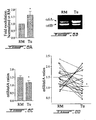
- PCR quantitative PCR, it was observed that a significant up-regulation of total ⁇ 6 expression in paired primary tumor samples versus patient matched normal resection margins (RM) ( Fig. 8A ) (Ni et al., 2005). It was then assessed whether modulation of ⁇ 6 splice-variant expression accompanied the overall up-regulation of total ⁇ 8 in primary tumors.
- a predominant expression of the ⁇ 6B variant in normal colonic tissue is in accordance with the fact that the quiescent cell population outsizes the proliferative cell population in the normal colon.
- a shift towards higher expression of the A variant in hyperproliferative colon carcinomas is in accordance with the association of this variant with the proliferative compartment of the healthy colon.
- ⁇ 6A and B variants Two intestinal cell models were used (Caco-2/15 and HT-29) to monitor the expression of the ⁇ 6A and B variants during the course of proliferation arrest accompanied by the induction of differentiation.
- Competitive RT-PCR revealed that the ratio of ⁇ 6A to ⁇ 6B was altered as a function of cell state, reflecting the situation in vivo. Higher levels of ⁇ 6A were associated with actively growing cells and a subsequent switch in favor of ⁇ 6B was found to be associated with cells that had undergone cell cycle arrest ( Fig. 10C ). This trend was mirrored in protein levels as well when detected with variant specific antibodies ( Fig. 10D, E ).
- a6B inhibits proliferation in colon cancer cells.
- the well-characterized colon cancer cell line Caco-2/15 which has the ability to constitutively deposit significant amounts of laminins (Vachon and Beaulieu, 1995) (the ⁇ 6 ⁇ 4 ligand), was used to evaluate the hypothesis that an altered ⁇ 6A/ ⁇ 6B ratio could be of functional importance for the proliferative status of colon cancer cells.
- the creation of a stable cell lines overexpressing ⁇ 6A and ⁇ 6B was attempted. However, the maintenance of the ⁇ 6B cells in long term cultures was not possible, suggesting that overexpression of the ⁇ 6B variant impaired cell proliferation.
- ⁇ 6B inhibits c-Myc activity in colon cancer cells.
- Colon cancer cells and glandular proliferative cells require the activity of the proto-oncogene c-Myc for proliferation (van de Wetering et al., 2002).
- the ability of the ⁇ 6B subunit to modulate c-Myc activity was then evaluated by performing co-transfections of the two integrin ⁇ 6 variants with a luciferase reporter plasmid responding to c-Myc activity (pMyc-Ta-Luc).
- pMyc-Ta-Luc luciferase reporter plasmid responding to c-Myc activity
- Experiments performed in colon cancer cells (Caco-2/15) demonstrated that pMyc-TA-luc activity was significantly down-regulated by ⁇ 6B overexpression ( Fig. 12B ), but was not altered by ⁇ 6A.
- the decrease in c-Myc activity in the ⁇ 6B co-transfections was not due to any changes in
- Colon cancer is the third leading cause of cancer related mortality in the United States (Jemal et al., 2008). The occurrence and development of most colon cancers follows a stereotypical pattern of a progressive accumulation of gainand loss of function mutations of oncogenes and tumor suppressor genes (Radke and Clevers, 2005). It is also clear that neoplastic cells tend to up-regulate the expression of integrins favoring their migration, survival and proliferation during the complex multistep generation of tumors (Guo and Giancotti, 2004).
- c-Myc is a key player in cancer formation and progression due to the numerous roles it plays in proliferation control and apoptosis (Adhikary and Eilers, 2005). Indeed, c-Myc expression has been demonstrated to be upregulated in 70% of colon cancers (Erisman et al., 1985) and its well documented effects include stimulation of cyclinD expression, inhibition of p21CIP1 and p27KIP1 expression and inactivation of Rb, leading to enhanced G1 to S-phase transition (Adhikary and Eilers, 2005). Given the central role of c-Myc in the control of critical cellular events, its transcriptional functions are tightly regulated by several molecular pathways (Cole and Nikiforov, 2006).
- c-Myc levels are largely attributed to the canonical activity of the Wnt-pathway (Clevers, 2006).
- the activity and expression levels of c-Myc are regulated by several other molecular mechanisms including distinct signaling pathways and interaction with binding partners (Adhikary and Eilers, 2005, Sakamuro and Prendergast, 1999).
- the nucleoshuttling scaffold protein Bridging Integrator-1 (Bin1) has been shown to strongly inhibit c-Myc transcriptional activity in a Wnt-pathway independent manner (Elliot et al, 1999; Kinney et al., 2008).
- Bin1 can selectively interact with the cytoplasmic domain of the ⁇ 6B integrin subunit in yeast two-hybrid studies (Wixler et al., 1999) and its expression has been reported to be associated with the non-proliferative cell population in the normal intestine (DuHadaway et al., 2003) suggesting a possible mechanism for the inhibitory effect of ⁇ 6B ⁇ 4 on c-Myc activity.
- ⁇ 6A/B splice variants can dimerize with both the ⁇ 1 and the ⁇ 4 subunits to form two distinct functional integrins, ⁇ 6 ⁇ 1 and ⁇ 6 ⁇ 4, but that the ⁇ 6 subunit preferentially dimerizes with the ⁇ 4 subunit (Basora et al., 1999; Hogervost et al., 1993; Hemler et al., 1989), as confirmed herein.
- the specific ability of the ⁇ 6B subunit to inhibit proliferation in accordance with its predominant expression in the quiescent compartment of the normal colon and its down regulation in primary colon cancers and adenocarcinoma cell lines, strongly suggests that the expression and ratio of the ⁇ 6A and ⁇ 6B splice variants are inherent to normal intestinal homeostasis and exploited by colon cancer cells.
- Caco-2/15 cells have been infected with a lentiviral-based system (MISSIONTM from Sigma) containing the shRNA sequence GATCATTATGATGCCACATATC (SEQ ID NO: 13) for silencing exon A of the ⁇ 6A isoform (Sh ⁇ 6A cells) or a control lentivirus (Shc cells).
- the TCF/ ⁇ -catenin activity of these cells was then assessed using the TOP/FOP flash luciferase assay as described in Example II. Proliferation of these cells was also quantified with the BrdU assay, as described in Example II.
- these cells have been injected into immuno-compromised mice and the size of the tumor they generate has been measured as a function of time.
- the mRNA expression of the ⁇ 6A isoform is abolished in Sh ⁇ 6A cells when compared to the Shc cells. Further, the lack of expression of the ⁇ 6A isoform reduces the TCF/b-catenin activity as well as their proliferation rate ( Fig. 13B and C , respectively). In addition, the reduced expression of the ⁇ 6A isoform in the Sh ⁇ 6A cells reduces the size of the tumor as well as the time of appearance of those tumors ( Fig. 13D ).
Landscapes
- Health & Medical Sciences (AREA)
- Life Sciences & Earth Sciences (AREA)
- Engineering & Computer Science (AREA)
- Chemical & Material Sciences (AREA)
- General Health & Medical Sciences (AREA)
- Genetics & Genomics (AREA)
- Biomedical Technology (AREA)
- Molecular Biology (AREA)
- Medicinal Chemistry (AREA)
- Immunology (AREA)
- Biotechnology (AREA)
- Zoology (AREA)
- Bioinformatics & Cheminformatics (AREA)
- Public Health (AREA)
- Veterinary Medicine (AREA)
- Pharmacology & Pharmacy (AREA)
- Animal Behavior & Ethology (AREA)
- Organic Chemistry (AREA)
- Epidemiology (AREA)
- Wood Science & Technology (AREA)
- General Engineering & Computer Science (AREA)
- Biochemistry (AREA)
- Microbiology (AREA)
- Physics & Mathematics (AREA)
- Urology & Nephrology (AREA)
- Hematology (AREA)
- Cell Biology (AREA)
- Biophysics (AREA)
- Plant Pathology (AREA)
- Gastroenterology & Hepatology (AREA)
- Proteomics, Peptides & Aminoacids (AREA)
- Food Science & Technology (AREA)
- Analytical Chemistry (AREA)
- General Physics & Mathematics (AREA)
- Pathology (AREA)
- General Chemical & Material Sciences (AREA)
- Nuclear Medicine, Radiotherapy & Molecular Imaging (AREA)
- Chemical Kinetics & Catalysis (AREA)
- Medicines That Contain Protein Lipid Enzymes And Other Medicines (AREA)
- Medicines Containing Material From Animals Or Micro-Organisms (AREA)
Claims (4)
- Ex-vivo-Verfahren zur Diagnose eines Kolonkrebses in einem Individuum, wobei das Verfahren Folgendes umfasst: Bestimmen eines Verhältnisses zwischen einer Isoform B und einer Isoform A einer Integrin-α6-Untereinheit in einer Zelle des Individuums, wobei der Kolonkrebs in dem Individuum dann diagnostiziert wird, wenn das Verhältnis unter einem Kontrollverhält-nis liegt.
- Verfahren nach Anspruch 1, wobei das Verhältnis zwischen der Isoform B und der Isoform A der Integrin-α6-Untereinheit bestimmt wird, indem die mRNA, die spezifisch für die Isoform B ist, und die mRNA, die spezifisch für die Isoform A ist, in der Zelle quantifiziert werden, oder indem das Polypeptid, das spezifisch für die Isoform B ist, und das Polypeptid, das spezifisch für die Isoform A ist, in der Zelle quantifiziert werden.
- Verfahren nach Anspruch 1, wobei das Kontrollverhältnis ein Verhältnis zwischen der Isoform B und der Isoform A der Integrin-α6-Untereinheit in einer Zelle von einem gesunden Kontroll-patienten oder einem gesunden, krebsfreien Gewebe ist.
- Verfahren nach Anspruch 1, wobei der Kolonkrebs ein Karzinom ist.
Applications Claiming Priority (3)
| Application Number | Priority Date | Filing Date | Title |
|---|---|---|---|
| US12133708P | 2008-12-10 | 2008-12-10 | |
| US17739809P | 2009-05-12 | 2009-05-12 | |
| PCT/CA2009/001802 WO2010066046A1 (en) | 2008-12-10 | 2009-12-10 | Proliferation-associated modulation of the splicing of the integrin alpha 6 isoforms |
Publications (3)
| Publication Number | Publication Date |
|---|---|
| EP2370109A1 EP2370109A1 (de) | 2011-10-05 |
| EP2370109A4 EP2370109A4 (de) | 2012-09-26 |
| EP2370109B1 true EP2370109B1 (de) | 2014-02-26 |
Family
ID=42242278
Family Applications (1)
| Application Number | Title | Priority Date | Filing Date |
|---|---|---|---|
| EP09831355.4A Not-in-force EP2370109B1 (de) | 2008-12-10 | 2009-12-10 | Proliferationsassoziierte modulation des spleissens von integrin-alpha-6-isoformen |
Country Status (4)
| Country | Link |
|---|---|
| US (1) | US20110301227A1 (de) |
| EP (1) | EP2370109B1 (de) |
| CA (1) | CA2746339A1 (de) |
| WO (1) | WO2010066046A1 (de) |
Families Citing this family (7)
| Publication number | Priority date | Publication date | Assignee | Title |
|---|---|---|---|---|
| EP2703005A1 (de) * | 2012-09-04 | 2014-03-05 | Università Degli Studi Di Torino | Hemmer des Alpha-6-Integrin/E-Cadherinkomplexes |
| WO2014037332A1 (en) * | 2012-09-04 | 2014-03-13 | Università Degli Studi Di Torino | Inhibitors of alpha6 integrin/e-cadherin complex and their therapeutic and diagnostic use in cancer |
| EP4463135A2 (de) | 2022-01-10 | 2024-11-20 | Sana Biotechnology, Inc. | Verfahren zur ex-vivo-dosierung und -verabreichung von lipidpartikeln oder viralen vektoren sowie entsprechende systeme und verwendungen |
| WO2024081820A1 (en) | 2022-10-13 | 2024-04-18 | Sana Biotechnology, Inc. | Viral particles targeting hematopoietic stem cells |
| WO2024119157A1 (en) | 2022-12-02 | 2024-06-06 | Sana Biotechnology, Inc. | Lipid particles with cofusogens and methods of producing and using the same |
| EP4716750A1 (de) | 2023-05-23 | 2026-04-01 | Sana Biotechnology, Inc. | Tandem-fusogene und verwandte lipidpartikel |
| WO2025184529A1 (en) | 2024-03-01 | 2025-09-04 | Sana Biotechnology, Inc. | Viral particles with fusogen display and related compositions and methods |
-
2009
- 2009-12-10 EP EP09831355.4A patent/EP2370109B1/de not_active Not-in-force
- 2009-12-10 CA CA2746339A patent/CA2746339A1/en not_active Abandoned
- 2009-12-10 WO PCT/CA2009/001802 patent/WO2010066046A1/en not_active Ceased
- 2009-12-10 US US13/139,262 patent/US20110301227A1/en not_active Abandoned
Also Published As
| Publication number | Publication date |
|---|---|
| WO2010066046A1 (en) | 2010-06-17 |
| CA2746339A1 (en) | 2010-06-17 |
| EP2370109A1 (de) | 2011-10-05 |
| WO2010066046A8 (en) | 2010-08-05 |
| EP2370109A4 (de) | 2012-09-26 |
| US20110301227A1 (en) | 2011-12-08 |
Similar Documents
| Publication | Publication Date | Title |
|---|---|---|
| EP2370109B1 (de) | Proliferationsassoziierte modulation des spleissens von integrin-alpha-6-isoformen | |
| Berchtold et al. | Collagen type V promotes the malignant phenotype of pancreatic ductal adenocarcinoma | |
| Xu et al. | Sonic hedgehog-glioma associated oncogene homolog 1 signaling enhances drug resistance in CD44+/Musashi-1+ gastric cancer stem cells | |
| Dydensborg et al. | Integrin α6Bβ4 inhibits colon cancer cell proliferation and c-Myc activity | |
| Mitchell et al. | Suppression of integrin α3β1 in breast cancer cells reduces cyclooxygenase-2 gene expression and inhibits tumorigenesis, invasion, and cross-talk to endothelial cells | |
| US8110373B2 (en) | Methods and compositions for treating and diagnosing diseases | |
| Kondo et al. | Epigenetically controlled fibroblast growth factor receptor 2 signaling imposes on the RAS/BRAF/mitogen-activated protein kinase pathway to modulate thyroid cancer progression | |
| Slorach et al. | Zeppo1 is a novel metastasis promoter that represses E-cadherin expression and regulates p120-catenin isoform expression and localization | |
| Sastre-Perona et al. | ß-catenin signaling is required for RAS-driven thyroid cancer through PI3K activation | |
| Lee et al. | N-myc downstream-regulated gene 1 downregulates cell proliferation, invasiveness, and tumorigenesis in human oral squamous cell carcinoma | |
| Cho et al. | Dickkopf-1 inhibits thyroid cancer cell survival and migration through regulation of β-catenin/E-cadherin signaling | |
| Li et al. | Involvement of estrogen receptor β5 in the progression of glioma | |
| Song et al. | Sinomenine reduces growth and metastasis of breast cancer cells and improves the survival of tumor-bearing mice through suppressing the SHh pathway | |
| Sacilotto et al. | Growth arrest specific 1 (Gas1) gene overexpression in liver reduces the in vivo progression of murine hepatocellular carcinoma and partially restores gene expression levels | |
| Povlsen et al. | In vivo experimental stroke and in vitro organ culture induce similar changes in vasoconstrictor receptors and intracellular calcium handling in rat cerebral arteries | |
| Sadej et al. | Tenascin C interacts with ecto-5′-nucleotidase (eN) and regulates adenosine generation in cancer cells | |
| Song et al. | Ski modulate the characteristics of pancreatic cancer stem cells via regulating sonic hedgehog signaling pathway | |
| Dydensborg et al. | Differential expression of the integrins α6Aβ4 and α6Bβ4 along the crypt–villus axis in the human small intestine | |
| Li et al. | HSulf‐1 inhibits cell proliferation and invasion in human gastric cancer | |
| US20100160348A1 (en) | Materials and methods for detecting and treating peritoneal ovarian tumor dissemination involving tissue transglutaminase | |
| EP2699599B1 (de) | Gpr177 als target und marker bei tumoren | |
| US20150276743A1 (en) | Proliferation-associated modulation of the splicing of the integrin alpha 6 isoforms | |
| Inuzuka et al. | Integral role of transcription factor 8 in the negative regulation of tumor angiogenesis | |
| WO2021015218A1 (ja) | 転写関連因子を標的とする線維化疾患の予防または治療 | |
| JP5697010B2 (ja) | 腫瘍新生血管血管内皮細胞の新しいバイオマーカーとそれを標的とした癌治療薬 |
Legal Events
| Date | Code | Title | Description |
|---|---|---|---|
| PUAI | Public reference made under article 153(3) epc to a published international application that has entered the european phase |
Free format text: ORIGINAL CODE: 0009012 |
|
| 17P | Request for examination filed |
Effective date: 20110629 |
|
| AK | Designated contracting states |
Kind code of ref document: A1 Designated state(s): AT BE BG CH CY CZ DE DK EE ES FI FR GB GR HR HU IE IS IT LI LT LU LV MC MK MT NL NO PL PT RO SE SI SK SM TR |
|
| DAX | Request for extension of the european patent (deleted) | ||
| A4 | Supplementary search report drawn up and despatched |
Effective date: 20120829 |
|
| RIC1 | Information provided on ipc code assigned before grant |
Ipc: G01N 33/68 20060101ALI20120823BHEP Ipc: C12N 15/63 20060101ALI20120823BHEP Ipc: A61K 48/00 20060101AFI20120823BHEP Ipc: A61K 38/17 20060101ALI20120823BHEP Ipc: A61P 35/00 20060101ALI20120823BHEP Ipc: C12Q 1/68 20060101ALI20120823BHEP Ipc: A61K 31/7088 20060101ALI20120823BHEP Ipc: G01N 33/567 20060101ALI20120823BHEP Ipc: G01N 33/574 20060101ALI20120823BHEP Ipc: A61K 45/00 20060101ALI20120823BHEP Ipc: C12N 15/85 20060101ALI20120823BHEP |
|
| 17Q | First examination report despatched |
Effective date: 20130411 |
|
| REG | Reference to a national code |
Ref country code: DE Ref legal event code: R079 Ref document number: 602009022102 Country of ref document: DE Free format text: PREVIOUS MAIN CLASS: A61K0048000000 Ipc: A61K0031708800 |
|
| GRAP | Despatch of communication of intention to grant a patent |
Free format text: ORIGINAL CODE: EPIDOSNIGR1 |
|
| RIC1 | Information provided on ipc code assigned before grant |
Ipc: A61K 38/17 20060101ALI20130826BHEP Ipc: A61P 35/00 20060101ALI20130826BHEP Ipc: G01N 33/574 20060101ALI20130826BHEP Ipc: G01N 33/68 20060101ALI20130826BHEP Ipc: C12Q 1/68 20060101ALI20130826BHEP Ipc: C12N 15/113 20100101ALI20130826BHEP Ipc: A61K 31/7088 20060101AFI20130826BHEP |
|
| INTG | Intention to grant announced |
Effective date: 20131001 |
|
| GRAS | Grant fee paid |
Free format text: ORIGINAL CODE: EPIDOSNIGR3 |
|
| GRAA | (expected) grant |
Free format text: ORIGINAL CODE: 0009210 |
|
| AK | Designated contracting states |
Kind code of ref document: B1 Designated state(s): AT BE BG CH CY CZ DE DK EE ES FI FR GB GR HR HU IE IS IT LI LT LU LV MC MK MT NL NO PL PT RO SE SI SK SM TR |
|
| REG | Reference to a national code |
Ref country code: GB Ref legal event code: FG4D |
|
| REG | Reference to a national code |
Ref country code: CH Ref legal event code: EP |
|
| REG | Reference to a national code |
Ref country code: AT Ref legal event code: REF Ref document number: 653150 Country of ref document: AT Kind code of ref document: T Effective date: 20140315 |
|
| REG | Reference to a national code |
Ref country code: IE Ref legal event code: FG4D |
|
| REG | Reference to a national code |
Ref country code: DE Ref legal event code: R096 Ref document number: 602009022102 Country of ref document: DE Effective date: 20140410 |
|
| REG | Reference to a national code |
Ref country code: NL Ref legal event code: VDEP Effective date: 20140226 |
|
| REG | Reference to a national code |
Ref country code: AT Ref legal event code: MK05 Ref document number: 653150 Country of ref document: AT Kind code of ref document: T Effective date: 20140226 |
|
| REG | Reference to a national code |
Ref country code: LT Ref legal event code: MG4D |
|
| PG25 | Lapsed in a contracting state [announced via postgrant information from national office to epo] |
Ref country code: NO Free format text: LAPSE BECAUSE OF FAILURE TO SUBMIT A TRANSLATION OF THE DESCRIPTION OR TO PAY THE FEE WITHIN THE PRESCRIBED TIME-LIMIT Effective date: 20140526 Ref country code: LT Free format text: LAPSE BECAUSE OF FAILURE TO SUBMIT A TRANSLATION OF THE DESCRIPTION OR TO PAY THE FEE WITHIN THE PRESCRIBED TIME-LIMIT Effective date: 20140226 Ref country code: IS Free format text: LAPSE BECAUSE OF FAILURE TO SUBMIT A TRANSLATION OF THE DESCRIPTION OR TO PAY THE FEE WITHIN THE PRESCRIBED TIME-LIMIT Effective date: 20140626 |
|
| PG25 | Lapsed in a contracting state [announced via postgrant information from national office to epo] |
Ref country code: AT Free format text: LAPSE BECAUSE OF FAILURE TO SUBMIT A TRANSLATION OF THE DESCRIPTION OR TO PAY THE FEE WITHIN THE PRESCRIBED TIME-LIMIT Effective date: 20140226 Ref country code: PT Free format text: LAPSE BECAUSE OF FAILURE TO SUBMIT A TRANSLATION OF THE DESCRIPTION OR TO PAY THE FEE WITHIN THE PRESCRIBED TIME-LIMIT Effective date: 20140626 Ref country code: SE Free format text: LAPSE BECAUSE OF FAILURE TO SUBMIT A TRANSLATION OF THE DESCRIPTION OR TO PAY THE FEE WITHIN THE PRESCRIBED TIME-LIMIT Effective date: 20140226 Ref country code: FI Free format text: LAPSE BECAUSE OF FAILURE TO SUBMIT A TRANSLATION OF THE DESCRIPTION OR TO PAY THE FEE WITHIN THE PRESCRIBED TIME-LIMIT Effective date: 20140226 Ref country code: CY Free format text: LAPSE BECAUSE OF FAILURE TO SUBMIT A TRANSLATION OF THE DESCRIPTION OR TO PAY THE FEE WITHIN THE PRESCRIBED TIME-LIMIT Effective date: 20140226 Ref country code: NL Free format text: LAPSE BECAUSE OF FAILURE TO SUBMIT A TRANSLATION OF THE DESCRIPTION OR TO PAY THE FEE WITHIN THE PRESCRIBED TIME-LIMIT Effective date: 20140226 |
|
| PG25 | Lapsed in a contracting state [announced via postgrant information from national office to epo] |
Ref country code: HR Free format text: LAPSE BECAUSE OF FAILURE TO SUBMIT A TRANSLATION OF THE DESCRIPTION OR TO PAY THE FEE WITHIN THE PRESCRIBED TIME-LIMIT Effective date: 20140226 Ref country code: LV Free format text: LAPSE BECAUSE OF FAILURE TO SUBMIT A TRANSLATION OF THE DESCRIPTION OR TO PAY THE FEE WITHIN THE PRESCRIBED TIME-LIMIT Effective date: 20140226 Ref country code: BE Free format text: LAPSE BECAUSE OF FAILURE TO SUBMIT A TRANSLATION OF THE DESCRIPTION OR TO PAY THE FEE WITHIN THE PRESCRIBED TIME-LIMIT Effective date: 20140226 |
|
| PG25 | Lapsed in a contracting state [announced via postgrant information from national office to epo] |
Ref country code: CZ Free format text: LAPSE BECAUSE OF FAILURE TO SUBMIT A TRANSLATION OF THE DESCRIPTION OR TO PAY THE FEE WITHIN THE PRESCRIBED TIME-LIMIT Effective date: 20140226 Ref country code: DK Free format text: LAPSE BECAUSE OF FAILURE TO SUBMIT A TRANSLATION OF THE DESCRIPTION OR TO PAY THE FEE WITHIN THE PRESCRIBED TIME-LIMIT Effective date: 20140226 Ref country code: EE Free format text: LAPSE BECAUSE OF FAILURE TO SUBMIT A TRANSLATION OF THE DESCRIPTION OR TO PAY THE FEE WITHIN THE PRESCRIBED TIME-LIMIT Effective date: 20140226 Ref country code: RO Free format text: LAPSE BECAUSE OF FAILURE TO SUBMIT A TRANSLATION OF THE DESCRIPTION OR TO PAY THE FEE WITHIN THE PRESCRIBED TIME-LIMIT Effective date: 20140226 |
|
| REG | Reference to a national code |
Ref country code: DE Ref legal event code: R097 Ref document number: 602009022102 Country of ref document: DE |
|
| PG25 | Lapsed in a contracting state [announced via postgrant information from national office to epo] |
Ref country code: ES Free format text: LAPSE BECAUSE OF FAILURE TO SUBMIT A TRANSLATION OF THE DESCRIPTION OR TO PAY THE FEE WITHIN THE PRESCRIBED TIME-LIMIT Effective date: 20140226 Ref country code: SK Free format text: LAPSE BECAUSE OF FAILURE TO SUBMIT A TRANSLATION OF THE DESCRIPTION OR TO PAY THE FEE WITHIN THE PRESCRIBED TIME-LIMIT Effective date: 20140226 Ref country code: PL Free format text: LAPSE BECAUSE OF FAILURE TO SUBMIT A TRANSLATION OF THE DESCRIPTION OR TO PAY THE FEE WITHIN THE PRESCRIBED TIME-LIMIT Effective date: 20140226 |
|
| PLBE | No opposition filed within time limit |
Free format text: ORIGINAL CODE: 0009261 |
|
| STAA | Information on the status of an ep patent application or granted ep patent |
Free format text: STATUS: NO OPPOSITION FILED WITHIN TIME LIMIT |
|
| PGFP | Annual fee paid to national office [announced via postgrant information from national office to epo] |
Ref country code: GB Payment date: 20141212 Year of fee payment: 6 |
|
| 26N | No opposition filed |
Effective date: 20141127 |
|
| REG | Reference to a national code |
Ref country code: DE Ref legal event code: R097 Ref document number: 602009022102 Country of ref document: DE Effective date: 20141127 |
|
| PG25 | Lapsed in a contracting state [announced via postgrant information from national office to epo] |
Ref country code: IT Free format text: LAPSE BECAUSE OF FAILURE TO SUBMIT A TRANSLATION OF THE DESCRIPTION OR TO PAY THE FEE WITHIN THE PRESCRIBED TIME-LIMIT Effective date: 20140226 |
|
| PGFP | Annual fee paid to national office [announced via postgrant information from national office to epo] |
Ref country code: DE Payment date: 20141223 Year of fee payment: 6 |
|
| PG25 | Lapsed in a contracting state [announced via postgrant information from national office to epo] |
Ref country code: SI Free format text: LAPSE BECAUSE OF FAILURE TO SUBMIT A TRANSLATION OF THE DESCRIPTION OR TO PAY THE FEE WITHIN THE PRESCRIBED TIME-LIMIT Effective date: 20140226 |
|
| PGFP | Annual fee paid to national office [announced via postgrant information from national office to epo] |
Ref country code: FR Payment date: 20141215 Year of fee payment: 6 |
|
| PG25 | Lapsed in a contracting state [announced via postgrant information from national office to epo] |
Ref country code: LU Free format text: LAPSE BECAUSE OF FAILURE TO SUBMIT A TRANSLATION OF THE DESCRIPTION OR TO PAY THE FEE WITHIN THE PRESCRIBED TIME-LIMIT Effective date: 20141210 |
|
| REG | Reference to a national code |
Ref country code: CH Ref legal event code: PL |
|
| REG | Reference to a national code |
Ref country code: IE Ref legal event code: MM4A |
|
| PG25 | Lapsed in a contracting state [announced via postgrant information from national office to epo] |
Ref country code: CH Free format text: LAPSE BECAUSE OF NON-PAYMENT OF DUE FEES Effective date: 20141231 Ref country code: LI Free format text: LAPSE BECAUSE OF NON-PAYMENT OF DUE FEES Effective date: 20141231 Ref country code: IE Free format text: LAPSE BECAUSE OF NON-PAYMENT OF DUE FEES Effective date: 20141210 |
|
| PG25 | Lapsed in a contracting state [announced via postgrant information from national office to epo] |
Ref country code: SM Free format text: LAPSE BECAUSE OF FAILURE TO SUBMIT A TRANSLATION OF THE DESCRIPTION OR TO PAY THE FEE WITHIN THE PRESCRIBED TIME-LIMIT Effective date: 20140226 |
|
| PG25 | Lapsed in a contracting state [announced via postgrant information from national office to epo] |
Ref country code: MC Free format text: LAPSE BECAUSE OF FAILURE TO SUBMIT A TRANSLATION OF THE DESCRIPTION OR TO PAY THE FEE WITHIN THE PRESCRIBED TIME-LIMIT Effective date: 20140226 |
|
| PG25 | Lapsed in a contracting state [announced via postgrant information from national office to epo] |
Ref country code: GR Free format text: LAPSE BECAUSE OF FAILURE TO SUBMIT A TRANSLATION OF THE DESCRIPTION OR TO PAY THE FEE WITHIN THE PRESCRIBED TIME-LIMIT Effective date: 20140527 Ref country code: BG Free format text: LAPSE BECAUSE OF FAILURE TO SUBMIT A TRANSLATION OF THE DESCRIPTION OR TO PAY THE FEE WITHIN THE PRESCRIBED TIME-LIMIT Effective date: 20140226 |
|
| REG | Reference to a national code |
Ref country code: DE Ref legal event code: R119 Ref document number: 602009022102 Country of ref document: DE |
|
| PG25 | Lapsed in a contracting state [announced via postgrant information from national office to epo] |
Ref country code: TR Free format text: LAPSE BECAUSE OF FAILURE TO SUBMIT A TRANSLATION OF THE DESCRIPTION OR TO PAY THE FEE WITHIN THE PRESCRIBED TIME-LIMIT Effective date: 20140226 Ref country code: HU Free format text: LAPSE BECAUSE OF FAILURE TO SUBMIT A TRANSLATION OF THE DESCRIPTION OR TO PAY THE FEE WITHIN THE PRESCRIBED TIME-LIMIT; INVALID AB INITIO Effective date: 20091210 Ref country code: MT Free format text: LAPSE BECAUSE OF FAILURE TO SUBMIT A TRANSLATION OF THE DESCRIPTION OR TO PAY THE FEE WITHIN THE PRESCRIBED TIME-LIMIT Effective date: 20140226 |
|
| GBPC | Gb: european patent ceased through non-payment of renewal fee |
Effective date: 20151210 |
|
| REG | Reference to a national code |
Ref country code: FR Ref legal event code: ST Effective date: 20160831 |
|
| PG25 | Lapsed in a contracting state [announced via postgrant information from national office to epo] |
Ref country code: GB Free format text: LAPSE BECAUSE OF NON-PAYMENT OF DUE FEES Effective date: 20151210 Ref country code: DE Free format text: LAPSE BECAUSE OF NON-PAYMENT OF DUE FEES Effective date: 20160701 |
|
| PG25 | Lapsed in a contracting state [announced via postgrant information from national office to epo] |
Ref country code: FR Free format text: LAPSE BECAUSE OF NON-PAYMENT OF DUE FEES Effective date: 20151231 |
|
| PG25 | Lapsed in a contracting state [announced via postgrant information from national office to epo] |
Ref country code: MK Free format text: LAPSE BECAUSE OF FAILURE TO SUBMIT A TRANSLATION OF THE DESCRIPTION OR TO PAY THE FEE WITHIN THE PRESCRIBED TIME-LIMIT Effective date: 20140226 |