EP2371094B1 - Procédé et appareil pour la génération de paramètres de topologie résumé de réseau - Google Patents
Procédé et appareil pour la génération de paramètres de topologie résumé de réseau Download PDFInfo
- Publication number
- EP2371094B1 EP2371094B1 EP08875411.4A EP08875411A EP2371094B1 EP 2371094 B1 EP2371094 B1 EP 2371094B1 EP 08875411 A EP08875411 A EP 08875411A EP 2371094 B1 EP2371094 B1 EP 2371094B1
- Authority
- EP
- European Patent Office
- Prior art keywords
- network
- path
- nodes
- bandwidth
- summarised
- Prior art date
- Legal status (The legal status is an assumption and is not a legal conclusion. Google has not performed a legal analysis and makes no representation as to the accuracy of the status listed.)
- Not-in-force
Links
- 238000004891 communication Methods 0.000 title claims description 53
- 238000000034 method Methods 0.000 title claims description 51
- 230000005540 biological transmission Effects 0.000 claims description 73
- 230000001419 dependent effect Effects 0.000 claims description 13
- 238000012544 monitoring process Methods 0.000 claims description 5
- 230000003287 optical effect Effects 0.000 claims description 5
- 239000006185 dispersion Substances 0.000 claims description 3
- 230000010363 phase shift Effects 0.000 claims description 3
- 230000010287 polarization Effects 0.000 claims description 3
- 230000001186 cumulative effect Effects 0.000 description 6
- 230000008901 benefit Effects 0.000 description 4
- 239000003086 colorant Substances 0.000 description 3
- 230000008569 process Effects 0.000 description 3
- 238000013459 approach Methods 0.000 description 2
- 230000008859 change Effects 0.000 description 2
- 238000004590 computer program Methods 0.000 description 2
- 238000005516 engineering process Methods 0.000 description 2
- 230000009467 reduction Effects 0.000 description 2
- 230000004044 response Effects 0.000 description 2
- 102100027708 Astrotactin-1 Human genes 0.000 description 1
- 101000936741 Homo sapiens Astrotactin-1 Proteins 0.000 description 1
- 230000002457 bidirectional effect Effects 0.000 description 1
- 238000001914 filtration Methods 0.000 description 1
- 230000006870 function Effects 0.000 description 1
- 238000013507 mapping Methods 0.000 description 1
- 238000013138 pruning Methods 0.000 description 1
- 238000010845 search algorithm Methods 0.000 description 1
- 230000003068 static effect Effects 0.000 description 1
- 230000001360 synchronised effect Effects 0.000 description 1
Images



Classifications
-
- H—ELECTRICITY
- H04—ELECTRIC COMMUNICATION TECHNIQUE
- H04L—TRANSMISSION OF DIGITAL INFORMATION, e.g. TELEGRAPHIC COMMUNICATION
- H04L41/00—Arrangements for maintenance, administration or management of data switching networks, e.g. of packet switching networks
- H04L41/12—Discovery or management of network topologies
-
- H—ELECTRICITY
- H04—ELECTRIC COMMUNICATION TECHNIQUE
- H04L—TRANSMISSION OF DIGITAL INFORMATION, e.g. TELEGRAPHIC COMMUNICATION
- H04L12/00—Data switching networks
- H04L12/28—Data switching networks characterised by path configuration, e.g. LAN [Local Area Networks] or WAN [Wide Area Networks]
- H04L12/40—Bus networks
- H04L12/4013—Management of data rate on the bus
-
- H—ELECTRICITY
- H04—ELECTRIC COMMUNICATION TECHNIQUE
- H04L—TRANSMISSION OF DIGITAL INFORMATION, e.g. TELEGRAPHIC COMMUNICATION
- H04L45/00—Routing or path finding of packets in data switching networks
- H04L45/02—Topology update or discovery
- H04L45/028—Dynamic adaptation of the update intervals, e.g. event-triggered updates
-
- H—ELECTRICITY
- H04—ELECTRIC COMMUNICATION TECHNIQUE
- H04L—TRANSMISSION OF DIGITAL INFORMATION, e.g. TELEGRAPHIC COMMUNICATION
- H04L45/00—Routing or path finding of packets in data switching networks
- H04L45/02—Topology update or discovery
- H04L45/033—Topology update or discovery by updating distance vector protocols
-
- H—ELECTRICITY
- H04—ELECTRIC COMMUNICATION TECHNIQUE
- H04L—TRANSMISSION OF DIGITAL INFORMATION, e.g. TELEGRAPHIC COMMUNICATION
- H04L45/00—Routing or path finding of packets in data switching networks
- H04L45/02—Topology update or discovery
- H04L45/04—Interdomain routing, e.g. hierarchical routing
-
- H—ELECTRICITY
- H04—ELECTRIC COMMUNICATION TECHNIQUE
- H04L—TRANSMISSION OF DIGITAL INFORMATION, e.g. TELEGRAPHIC COMMUNICATION
- H04L45/00—Routing or path finding of packets in data switching networks
- H04L45/24—Multipath
-
- H—ELECTRICITY
- H04—ELECTRIC COMMUNICATION TECHNIQUE
- H04L—TRANSMISSION OF DIGITAL INFORMATION, e.g. TELEGRAPHIC COMMUNICATION
- H04L45/00—Routing or path finding of packets in data switching networks
- H04L45/24—Multipath
- H04L45/245—Link aggregation, e.g. trunking
-
- H—ELECTRICITY
- H04—ELECTRIC COMMUNICATION TECHNIQUE
- H04L—TRANSMISSION OF DIGITAL INFORMATION, e.g. TELEGRAPHIC COMMUNICATION
- H04L45/00—Routing or path finding of packets in data switching networks
- H04L45/30—Routing of multiclass traffic
-
- H—ELECTRICITY
- H04—ELECTRIC COMMUNICATION TECHNIQUE
- H04L—TRANSMISSION OF DIGITAL INFORMATION, e.g. TELEGRAPHIC COMMUNICATION
- H04L12/00—Data switching networks
- H04L12/28—Data switching networks characterised by path configuration, e.g. LAN [Local Area Networks] or WAN [Wide Area Networks]
- H04L12/2854—Wide area networks, e.g. public data networks
- H04L12/2856—Access arrangements, e.g. Internet access
- H04L12/2863—Arrangements for combining access network resources elements, e.g. channel bonding
- H04L12/2865—Logical combinations
-
- H—ELECTRICITY
- H04—ELECTRIC COMMUNICATION TECHNIQUE
- H04L—TRANSMISSION OF DIGITAL INFORMATION, e.g. TELEGRAPHIC COMMUNICATION
- H04L12/00—Data switching networks
- H04L12/28—Data switching networks characterised by path configuration, e.g. LAN [Local Area Networks] or WAN [Wide Area Networks]
- H04L12/2854—Wide area networks, e.g. public data networks
- H04L12/2856—Access arrangements, e.g. Internet access
- H04L12/2863—Arrangements for combining access network resources elements, e.g. channel bonding
- H04L12/2867—Physical combinations
-
- Y—GENERAL TAGGING OF NEW TECHNOLOGICAL DEVELOPMENTS; GENERAL TAGGING OF CROSS-SECTIONAL TECHNOLOGIES SPANNING OVER SEVERAL SECTIONS OF THE IPC; TECHNICAL SUBJECTS COVERED BY FORMER USPC CROSS-REFERENCE ART COLLECTIONS [XRACs] AND DIGESTS
- Y02—TECHNOLOGIES OR APPLICATIONS FOR MITIGATION OR ADAPTATION AGAINST CLIMATE CHANGE
- Y02D—CLIMATE CHANGE MITIGATION TECHNOLOGIES IN INFORMATION AND COMMUNICATION TECHNOLOGIES [ICT], I.E. INFORMATION AND COMMUNICATION TECHNOLOGIES AIMING AT THE REDUCTION OF THEIR OWN ENERGY USE
- Y02D30/00—Reducing energy consumption in communication networks
- Y02D30/50—Reducing energy consumption in communication networks in wire-line communication networks, e.g. low power modes or reduced link rate
Definitions
- the invention relates to a method of generating summarised network topology parameters of a communications network domain and a communications monitoring apparatus for monitoring a communications network domain.
- automatic switched optical communications networks comprising a plurality of network nodes with interconnecting links between respective pairs of nodes
- topology information in automatic switched transport networks (ASTN) this is carried out using a routing protocol such as open shortest path first (OSPF).
- OSPF open shortest path first
- the topology information is required by path computation elements within the network domains for computing paths through the network, including alternative paths to restore failed circuits in case a fault is detected in the network and the fault affects the route of one or more signaled paths.
- OSPF open shortest path first
- the topology information is required by path computation elements within the network domains for computing paths through the network, including alternative paths to restore failed circuits in case a fault is detected in the network and the fault affects the route of one or more signaled paths.
- the reachability of resources is taken into account together with the characteristics of each interconnecting link reported by the routing protocol.
- the time required to carry out a path computation is a function of the number of nodes and interconnecting links in the network.
- the paths may be determined using a modified Dijkstra algorithm, using the Landau notation, which has a running time equal to O(L 2 ), where L is the number of interconnecting links. This means that in big networks the running time of the algorithm can become long, causing higher traffic loss intervals and resulting in the non-achievement of Service Level Agreements stipulated between a network operator and its customers.
- ASTNs owned and operated by different operators are often required to be interconnected, and each operator needs to disclose network topology information to the other operators in order to enable the other operators to route traffic through that network. It is often commercially desirable not to have to disclose network topology information to other network operators in order not to reveal business critical information, particularly regarding the physical structure of the network.
- S.Uludag "Analysis of Topology Aggregation Techniques for Qos Routing" discloses full mesh topology aggregation. Multipath routing between domains is disclosed in Chen et al. "Multipath routing with topology aggregation for scalable inter-domain service provisioning in optical networks.”
- a method of generating summarised network topology parameters of a communications network domain comprising a plurality of network nodes and a plurality of interconnecting links.
- the method comprises identifying a plurality of network nodes configured to interface with one or more other network domains as summarized nodes. Each available network domain path between each pair of the summarized nodes is identified. At least one said network domain path between each said pair of summarized nodes comprises at least one other network node and respective interconnecting links.
- the method further comprises generating summarised network topology parameters for each said pair of summarized nodes. Each summarised network topology parameter is dependent on a respective transmission parameter of the said available network domain paths.
- the method further comprises: determining whether a transmission parameter of a first said path would allow the path to be bundled with another said path; comparing any such transmission parameter with the or each transmission parameter of any previously determined paths to determine whether there exists a previously determined path which has a matching transmission parameter; and, if a matching transmission parameter is found, adding the bandwidth of the first path to the bandwidth of the said other path to form a bundled path and comparing the bandwidth of each interconnecting link of the bundled path with a maximum available bandwidth of said interconnecting link, and if the bandwidth of said interconnecting link is greater than its maximum available bandwidth, reducing a bandwidth of one of the first path and the said other path such that the bandwidth of said interconnecting link is not greater than its maximum available bandwidth.
- the method further comprises advertising said summarised network topology parameters to another network domain.
- the method of the invention allows the generation of summarised network topology parameters for a network domain which preserve the transmission parameters of network domain but which represent the topology of the network domain as comprising a lower number of links and nodes.
- the summarised network topology parameters can be used by other network domains to carry out path computations across a network including the said network domain. This enables an operator to share sufficient information about its network domain with other operators, in order to allow them to route traffic through it, without revealing the full details of the network domain topology to the other operators.
- the summarised network topology parameters generated by the method reduce the number of nodes and links which must be considered by other network domains when carrying out path computations across the said network domain, but preserves the transmission parameter data of the said network domain. This enables the time to carry out path computations across a network including the said network domain to be reduced, and increases the computational efficiency, providing the operator with the benefit of shorter traffic disruption in case of rerouting after a network failure.
- the network domain topology By representing the network domain topology with a lower number of nodes and links, and thus a lower path computation time, the scalability of a network comprising network domains having the said network topology parameters is increased.
- the summarised network topology parameters are dependent on the corresponding transmission parameters of the said one or more available paths.
- the summarised network topology parameters therefore fully represent the said one or more paths.
- a said transmission parameter may comprise one of administrative colour, administrative cost, traffic engineering cost, optical signal to noise ratio (OSNR), polarization mode dispersion (PMD) and nonlinear phase shift (NLPS).
- OSNR optical signal to noise ratio
- PMD polarization mode dispersion
- NLPS nonlinear phase shift
- Administrative colour is an administratively assigned attribute ("resource class") which express some notion of "class” for network resourced and are used to constrain the routing of traffic through specific network resources ( Internet Engineering Task Force (IETF) RFC 2702 6.2 ) .
- resource class express some notion of "class” for network resourced and are used to constrain the routing of traffic through specific network resources ( Internet Engineering Task Force (IETF) RFC 2702 6.2 ) .
- the method comprises setting the administrative cost or traffic engineering cost of the bundled path to the lower of the said cost of the path and the previously determined path.
- Bundling is a process that alters the representation of a group of resources. From a group of N resources which share a common parameter one can obtain a single resource with similiar parameters. The advantage of this approach is that it reduces the amount of data needed to describe a set of resources.
- the method additionally comprises storing the identified paths and associating the said paths with the target node.
- identifying the or each available network domain path and generating summarised network topology parameters for a said pair of summarized nodes by applying the Bellman-Ford algorithm.
- the Bellman-Ford algorithm performs a number of relaxation steps dependent on the number of network nodes. Using the Bellman-Ford algorithm, which does not apply any filtering to the relaxation steps, ensures a comprehensive traverse of the network domain is undertaken and all of the potential paths through the network domain are identified and their transmission parameters returned.
- each relaxation step of the Bellman-Ford algorithm returns one or more transmission parameters of the path being determined. Transmission parameters are thereby obtained for each identified path.
- the method may further comprise generating the summarised network topology parameters by comparing the said returned transmission parameters with network domain resource parameters and if a network domain resource parameter has a lower value than the respective transmission parameter, setting the transmission parameter to the network domain resource parameter value.
- the administrative cost or traffic engineering cost is a cumulative cost, and is most preferably determined by summing the respective costs of each network link comprising the path.
- the administrative colour may comprise a colour mask comprising the administrative colours of the network links comprising the path.
- the method may further comprise comparing the said cumulative cost to a predetermined maximum cost and if the said cumulative cost is higher than the maximum cost setting the cumulative cost to the maximum cost. This prevents a path being determined with a cumulative cost that is higher than a maximum acceptable value.
- the bandwidth of the path is set to the lowest bandwidth of the network links comprising the path.
- the method may comprise setting the bandwidth of the path by: (i) setting the bandwidth of the path to the bandwidth of a first network link of the path; (ii) selecting the next network link of the path as the current link and comparing the bandwidth of the current link to the bandwidth of the path; (iii) if the bandwidth of the current link is lower than the bandwidth of the path, setting the bandwidth of the path to the bandwidth of the current link; and (iv) repeating steps (ii) and (iii) for each network link of the path.
- each network node is provided with a transport network assigned address
- the method comprises at least one summarized node having the transport network assigned address of one or more of the network nodes associated with it.
- a single summarized node may have the transport network assigned addresses of all of the network nodes associated with it.
- a plurality of summarized nodes may each have the transport network assigned addresses of a sub-set of the network nodes associated to them.
- communications apparatus for generating summarised network topology parameters of a communications network domain comprising a plurality of network nodes and a plurality of interconnecting links.
- the apparatus comprises a processor and memory and is arranged to:
- the communications apparatus of the invention is operable to generate summarised network topology parameters for a network domain which preserve the transmission parameters of network domain but which represent the topology of the network domain as comprising a lower number of links and nodes.
- the summarised network topology parameters can be used by other network domains to carry out path computations across a network including the said network domain. This enables an operator to share sufficient information about its network domain with other operators, in order to allow them to route traffic through it, without revealing the full details of the network domain topology to the other operators.
- the communications apparatus is operable to generate summarised network topology parameters which reduce the number of nodes and links which must be considered by other network domains when carrying out path computations across the said network domain, but preserve the transmission parameter data of the said network domain. This enables the time to carry out path computations across a network including the said network domain to be reduced, and increases the computational efficiency, providing the operator with the benefit of shorter traffic disruption in case of rerouting after a network failure. Reducing the number of nodes and links, and thus the path computation time, also increases the scalability of a network comprising the said communications apparatus.
- the summarised network topology parameters are dependent on the corresponding transmission parameters of the said one or more identified paths.
- the communications apparatus may comprise one of a path computation element, a router controller and a network node.
- the network node may comprise a dense wavelength division multiplexed automatic switched optical network enabled node configured to interact with a synchronous digital hierarchy network node.
- the communications apparatus may be configured to provide an output signal comprising said summarised network topology parameters, for delivery to an external network or another communications monitoring apparatus.
- the communications apparatus may be further arranged to advertise said network topology parameters to another network domain or another communications monitoring apparatus.
- the communications apparatus is further arranged to receive summarised network topology parameters relating to another communications network domain.
- each network node is provided with a transport network assigned address
- the communications apparatus is further arranged to associate the transport network assigned address of one or more of the network nodes with at least one summarized node and to advertise to another communications apparatus the said transport network assigned addresses associated with the or each said summarized node.
- the communications apparatus may further be configured to select the transport network assigned addresses to be advertised as associated with the summarized node.
- the communications apparatus may be arranged to identify network nodes configured to interface with one or more other network domains as summarized nodes and generate summarised network topology parameters each time the network domain is modified.
- the communications apparatus may be arranged to identify network nodes configured to interface with one or more other network domains as summarized nodes and generate summarised network topology parameters at a predetermined frequency.
- a computer programme product comprising programme code for performing any of the above steps of the method of generating summarised network topology parameters of a communications network domain comprising a plurality of network nodes and a plurality of interconnecting links.
- a data carrier having computer readable instructions embodied therein for providing access to resources available on a processor, the computer readable instructions comprising instructions to cause the processor to perform any of the above steps of the method of generating summarised network topology parameters of a communications network domain comprising a plurality of network nodes and a plurality of interconnecting links.
- a communications network path computation engine configured to implement any of the above steps of the method of generating summarised network topology parameters of a communications network domain comprising a plurality of network nodes and a plurality of interconnecting links.
- a first embodiment of the invention provides a method 30 of generating summarised network topology parameters of a communications network domain 10, 20.
- the communications network domain 10 shown in Figure 1(a) comprises five network nodes 12, 14 and seven interconnecting links 16, each interconnecting link 16 connecting two nodes 12, 14, e.g. AB, CD, DE etc.
- a second communications network domain 20 is shown in Figure 1(b) and comprises nine network nodes 22, 24 and thirteen interconnecting links 26.
- Each interconnecting link 16 has transmission parameters associated with it, which in this example comprise a label identifying the administrative colour of the link 16, the bandwidth of the link and the traffic engineering cost of the link. This information is typically stored centrally, for example in the memory of a router or path computation engine of the network domain 10.
- the method 30 identifies network nodes 12, 22 configured to interface with one or more other network domains (often referred to as border nodes) as summarized nodes 32, and generates summarised network topology parameters for each pair of summarized nodes 34-52.
- the generated summarised network topology parameters can by represented by an equivalent summarized topology 60, 70, as shown in Figures 3(a) and 3(b) , which is what the domains 10, 20 look like to the outside world, i.e. other network domains.
- the summarised network topology parameters for each pair of summarized nodes 12, 22 are represented by summarized links 62, 72 in the figures.
- the summarised network topology parameters are dependent on the transmission parameters of the available paths between each pair of summarized nodes 12, 22 through the respective network domain 10, 20.
- Each path between the summarized nodes 12, 22 comprises at least one other ("intermediate") network node 14, 24 and respective interconnecting links 16, 26 of the network domain 10,20.
- the number of equivalent summarized nodes 12, 22 and equivalent summarized links 62, 72 in the equivalent summarized topology 60, 70 is therefore less than the number of actual network nodes 12, 14, 22, 24 and interconnecting links 16, 26.
- the method uses the Bellman-Ford algorithm which is a well known graph search algorithm which computes single source shortest-paths in a weighted directed graph (digraph) and is often used in routing.
- the network domain 10,20 is considered as a weighted digraph in which the network nodes 12, 14, 22, 24 comprise the vertices of the weighted digraph and the interconnecting links 16, 26 comprise the edges of the weighted digraph. Each edge has one or more labels ("weights" or "costs") associated with it, which in the case of a network domain comprise the transmission parameters of the interconnecting links 16, 26.
- the Bellman-Ford algorithm generates a table of all available paths between two summarized nodes 12, 22 within a network domain 10, 20 by identifying a first path between the summarized nodes 12, 22 through the network domain 10, 20 and returning the transmission parameters (weights) of the interconnecting links 16, 26 (edges) comprising the path.
- the transmission parameters are returned from the central store of transmission parameters.
- the algorithm is then "relaxed", i.e. repeated/iterated, to thereby identify a second, different path between the summarized nodes 12, 22 through the domain 10, 20 and the transmission parameters of the links comprising the second path are returned by the algorithm.
- the algorithm is run repeatedly for a number of relaxation steps (iterations), the number being equal to the number of vertices (nodes) minus 1, each relaxation step identifying a different path between the summarized nodes 12, 22 through the network domain and returning the transmission parameters of the network links 16, 26 comprising the path.
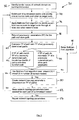
- the summarised network topology parameters are created as follows for each pair of summarized nodes 12, 22.
- a pair of summarized nodes 12, 22 is selected and one summarized node 12, 22 is identified as the source node of the pair and the other as the target node of the pair 34.
- the Bellman-Ford algorithm is then run on/applied to 36 the pair of summarized nodes 12, 22, running
- Each relaxation step of the Bellman-Ford algorithm returns the transmission parameters for each network node and each interconnecting link in the path 38.
- the transmission parameter information includes the cumulative administrative cost (label) or traffic engineering (TE) cost (label) of the path, the administrative colour of the path (or of each of the interconnecting links in the path), and the bandwidth of the path, which is set to the bandwidth of the lowest bandwidth link in the path.
- the transmission parameter information may also include one or more of optical signal to noise ratio (OSNR), polarization mode dispersion (PMD) and nonlinear phase shift (NLPS).
- OSNR optical signal to noise ratio
- PMD polarization mode dispersion
- NLPS nonlinear phase shift
- the transmission parameters relating to each identified path are centrally stored in random access memory (RAM) accessible by the alogorithm and associated with the target summarized node 12, 22.
- the transmission parameters of each path (the "current path") is compared with the transmission parameters of all previously identified, and stored, paths 40, in order to determine if any of the technology specific transmission parameters which would allow path bundling, such as administrative colour, matches that of a previously determined path 42. If a match is found, the bandwidth of the current path is bundled with the bandwidth of the previously determined path, to generate a bundled path, and the administrative cost of the bundled path is set to the lower of the administrative cost of the previously determined path and the current path 42. If a match is not found 44, the current path is stored separately.
- Bundling is a process that alters the representation of a group of resources. From a group of N resources which share a common parameter, such as administrative colour, one can obtain a single resource with similiar parameters.
- the advantage of this approach is it reduces the amount of data needed to describe a set of resources. For example, if there are two different possible paths between two nodes, that have the same administrative colour, the paths can summarized ("bundled") into a single path having a bandwidth equal to the sum of the bandwidths of the two paths, with the same colour. Where the TE costs are different, the TE cost of the summarized resource can be set to the lower/higher of the two TE costs, or their average, as desired.
- the target summarized node After applying the Bellman-Ford algorithm, the target summarized node has a table comprising a number of paths between the source and target summarized nodes, each path having associated transmission parameters. The transmission parameters are then reviewed to determine whether the bandwidths obtained for the paths can be implemented, as will be described in more detail below. The resulting, potentially modified, transmission parameters become the summarised network topology parameters for the selected summarized nodes 50.
- the summarised network topology parameters for each pair of summarized nodes 52 are stored in memory and transmitted to other entities.
- the Bellman-Ford algorithm is applied as follows, in respect of the network topology 10 of Figure 1(a) .
- the application of the algorithm has been partially simplified compared to a standard Bellman-Ford algorithm because none of the interconnecting links have a negative weight, since both administrative cost and TE cost are defined as positive.
- the transmission parameters are reviewed in a path pruning step, to determine whether the available resources, such as bandwidth, within the network domain (provided as network resource parameters) allow the bandwidths of the paths to be implemented.
- a and B are summarized nodes (border nodes) and C, D and E are intermediate network nodes.
- the links in the network domain 10 have the following names and transmission parameters (TE cost (TEM), free Bandwidth, administrative colour):
- each link is considered as unidirectional in order to make the example simpler. It will be appreciated that in a real network links may be bidirectional, so for example link BA will exist in addition to AB.
- the paths are ordered based according to cost criteria (lowest TE cost and lowest number of network links).
- node A can summarize its connectivity to node B with the following paths:
- Summarised network topology parameters for summarized nodes A and B 12 are created from these three paths, resulting in summarised network topology parameters which are dependent on the transmission parameters of the above three paths.
- the summarised network topology parameters are dependent on the transmission parameters of the available paths, they may are not always a direct mapping of the transmission parameters of the interconnecting links comprising the paths, as network resource parameters, such as remaining available bandwidth, may need to be taken into consideration.
- the summarised network topology parameters are created, as described above, every time that a change occurs in the topology or transmission parameters of the network domain 10.
- the summarised network topology parameters can be created at a predetermined frequency, or can be created in response to a request or instruction, with the summarised network topology parameters remaining static in between times.
- Each network node is provided with a transport network assigned (TNA) address.
- TNA transport network assigned
- Summarized node A 12 has the TNA address of each of the network nodes 12, 14 associated with it.
- each of the summarized nodes A and B 12 can have the TNA addresses of a sub-set of the network nodes 14 associated to them.
- the summarised network topology parameters are represented by equivalent summarized links 62, 72 within an equivalent summarized topology 60, 70.
- the equivalent summarized links in the summarized topology 70 shown in Figure 3(b) are arranged in a full mesh network.
- the equivalent summarized topology is what the network domains 10, 20 look like to the outside world.
- the summarised network topology parameters and the TNA addresses associated with summarized node A 12 are advertised to other network domains connected to the said network domain 10.
- the summarised network topology parameters and the TNA addresses may be advertised by being broadcast following creation to the said other network domains or may be provided to one or more said other network domains in response to a request from said other network domain.
- the method 30 therefore provides summarised network topology parameters for the network domain 10, 20 being considered which may be provided to other network domains.
- the other network domains are thereby provided with the necessary information to enable the operators of the other network domains to route traffic across the said network domains 10, 20, but the true topology of the network domains 10, 20 is not disclosed, thereby preserving commercially sensitive information relating to the actual network architecture of the network domains 10, 20.
- the summarised network topology parameters also result in a reduction in the number of nodes and links, while preserving all of the necessary transmission parameter information, which must be considered when making path computations including the said network domains 10, 20, thereby reducing the time taken to make the path computations.
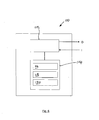
- a second embodiment of the invention provides communications apparatus 110, as shown in Figure 6 , for generating summarised network topology parameters of a communications network domain, such as those shown in Figure 1(a) and 1(b) , comprising a plurality of network nodes 12, 14, 22, 24 and a plurality of interconnecting links 16, 26.
- the communications apparatus comprises a router controller 110 comprising a processor 112 and memory 114, 116, 118, 120 and is arranged to identify network nodes 12, 22 configured to interface with one or more other network domains as summarized nodes and generate summarised network topology parameters for respective pairs of summarized nodes 12, 22.
- the summarised network topology parameters are dependent on the transmission parameters of identified paths between each respective pair of summarized nodes 12, 22. Each path comprises at least one other (intermediate) network node 14, 24 and respective interconnecting links 16, 26.
- the processor 112 is arranged to implement the steps of the method 30 described above.
- the Bellman-Ford algorithm is stored within the memory 116 of the router controller 110.
- the transmission parameters of the interconnecting links 16, 26 are stored within the memory 118 of the router controller 110 and the network topology parameters generated by the method 30 and the TNA addresses of the nodes are stored in the memory 120 of the router controller 110.
- the summarised network topology parameters for each pair of summarized nodes are associated with the target node of each pair.
- the processor 112 is further arranged to generate an output signal O comprising the summarised network topology parameters and TNA addresses, to advertise the summarised network topology parameters and TNA addresses in broadcast mode or on request, as described above.
- the processor 112 is further arranged to receive corresponding input signal I from one or more other network domains or router controllers to which it is connected.
- a communications network 80 comprising four network domains A 90, B 10, C 20 and D each comprising a router controller 110 will appear, as from the router controller 110 in domain D, to comprise a network topology as shown in Figure 5 (the communications network 80 is shown as viewed from within network domain D, and its topology therefore does not appear summarized).
- the transmission parameters of each interconnecting link 16, 26, 86, 92 are stored within the memory 118 of the respective router controller 110.
- the summarised network topology parameters generated for each domain A 90, B 10, C 20 and D, and the TNA addresses of the nodes, are also stored within the memory 120 of the respective router controller 110.
- the summarised network topology parameters are then used (read copied and adapted) in routing messages to be exchanged between the nodes of the network domains.
- the summarized view of the communications network 80 comprises summarised network topology parameters for each network domain A-C, represented by equivalent summarized topologies 100, 60, 70 in the Figures, plus the real topology of domain D.
- Path computations performed by the router controller 110 within domain D therefore only have to consider the summarised network topology parameters of domains A-C plus the transmission parameters for domain D, that is to say ten summarized nodes 12, 22, 88 plus the network nodes 82, 84 of domain D, summarised network topology parameters (illustrated by the ten equivalent summarized links 62, 72, 102) plus the interconnecting links 86 of domain D, and inter-domain links 94, rather than twenty-seven nodes 12, 14, 22, 24, 82, 84, 88, 90 and forty-one interconnecting links 16, 26, 86, 92 plus the inter-domain links 94.
- the reduction in the number of links and nodes to be considered results in the time required to carry out path computations from within domain D being significantly reduced.
- the router controller may alternatively comprise a path computation element or a network node.
- a third embodiment of the invention provides a computer program product comprising program code for performing the steps of the method 30 of generating summarised network topology parameters of a communications network domain 10, 20 comprising a plurality of network nodes 12, 14, 22, 24 and a plurality of interconnecting links 16, 26.
- a fourth embodiment of the invention provides a data carrier having computer readable instructions embodied therein for providing access to resources available on a processor 112, the computer readable instructions comprising instructions to cause the processor 112 to perform the steps of the method 30 of generating summarised network topology parameters of a communications network domain 10, 20 comprising a plurality of network nodes 12, 14, 22, 24 and a plurality of interconnecting links 16, 26.
- a fifth embodiment of the invention provides a communications network path computation engine configured to implement the method 30 of generating summarised network topology parameters of a communications network domain 10, 20 comprising a plurality of network nodes 12, 14, 22, 24 and a plurality of interconnecting links 16, 26.
Landscapes
- Engineering & Computer Science (AREA)
- Computer Networks & Wireless Communication (AREA)
- Signal Processing (AREA)
- Quality & Reliability (AREA)
- Data Exchanges In Wide-Area Networks (AREA)
Claims (11)
- Procédé de génération de paramètres de topologie de réseau résumés d'un domaine de réseau de communication comprenant une pluralité de noeuds réseau (12,14,16) et une pluralité de trajet de domaine de réseau d'interconnexion, le procédé comprenant de :identifier une pluralité de noeud de réseau configurés pour s'interfacer avec un ou plusieurs autres domaines de réseau que les noeuds résumés (12) ;identifier chaque trajet de domaine de réseau disponible entre chaque paire de noeuds résumés à l'intérieur de réseau, au moins un trajet de domaine de réseau entre chaque paire de noeud résumé comprenant au moins un autre noeud de réseau et des liaisons d'interconnexions respectives,et générer des paramètres de topologie de réseau résumés pour chaque dite paire de noeuds résumés, chaque paramètre de topologie de réseau résumé étant dépendant d'un paramètre de transmission respectif desdits trajet de domaine de réseau disponible ; dans lequel, là où il y a une pluralité de trajets de domaine de réseau disponibles entre une paire de noeuds résumés, le procédé comprend en outre les étapes consistant à :déterminer si un paramètre de transmission d'un premier trajet permettrait de grouper le trajet avec un autre dit trajet ;comparer n'importe quelle tel paramètre de transmission avec le ou chaque paramètre de transmission de n'importe quel trajet précédemment déterminé pour déterminer si il existe un trajet précédemment déterminé qui a un paramètre de transmission concordant,et, si un paramètre de transmission concordant est trouvé, ajouter la bande passante du premier trajet à la bande passante de l'autre trajet pour former un trajet groupé et comparer la bande passante de chaque liaison d'interconnexion du trajet groupé avec une bande passante disponible maximale de ladite liaison d'interconnexion, et si la bande passante de ladite liaison d'interconnexion est supérieure à sa bande passante disponible maximale, réduire une bande passante d'un du premier trajet et de l'autre trajet de sorte que la bande passante de ladite liaison d'interconnexion ne soit pas supérieure à sa bande passante maximale disponible ;dans lequel le procédé comprend en outre d'annoncer lesdits paramètres de topologie de réseau résumés à un autre domaine de réseau.
- Procédé selon la revendication 1, dans lequel le procédé comprend d'identifier le ou chaque trajet le domaine de réseau disponible et de générer des paramètres de topologie de réseau résumés pour une dite paire de noeuds résumés en appliquant l'algorithme de Bellman-Ford.
- Procédé selon la revendication 2, dans lequel l'algorithme de Bellman-Ford effectue un nombre d'étapes de détente en fonction du nombre de noeuds de réseau.
- Procédé selon la revendication 3, dans lequel le procédé comprend de générer les paramètres de topologie de réseau résumés par l'algorithme de Bellman-Ford renvoyant un ou plusieurs paramètres de transmission pour le trajet étant identifié pendant chaque dite étape de détente.
- Procédé selon une quelconque des revendications précédentes, dans lequel un dit paramètre de transmission comprend un d'une couleur administrative, un coût administratif, un coût d'ingénieries de trafic, un rapport signal sur bruit (OSNR), une dispersion de mode de polarisation (PMD) et un décalage de phase non linéaire (NLPS).
- Procédé selon les revendications 4 ou 5, dans lequel le procédé comprend en outre de générer des paramètres de topologie de réseau résumés en comparant lesdits paramètres de transmission renvoyés avec les paramètres de ressources de domaine de réseau prédéterminé et si un paramètre de ressources de domaine de réseau a une valeur inférieure au paramètre de transmission respectif, régler les paramètres de transmission sur la valeur des paramètres de ressources de domaine de réseau.
- Procédé selon une quelconque des revendications précédentes, dans lequel chaque noeud de réseau à l'intérieur du domaine de réseau est pourvu d'une adresse assignée de réseau de transport, le réseau de transport comprenant d'autres domaines de réseau et le procédé comprend au moins un noeud résumé ayant l'adresse assignée de réseau de transport d'un ou plusieurs des de réseaux qui lui sont associés.
- Dispositif de communication pour générer des paramètres de topologie de réseau résumés d'un domaine de réseau de communication comprenant une pluralité de noeuds de réseau (12,14,16) et une pluralité de trajets de domaine de réseau d'interconnexion, le dispositif comprenant un processeur et une mémoire et étant agencé pour :identifier une pluralité de noeud de réseau configurés pour s'interfacer avec un ou plusieurs autres domaines de réseau que les noeuds résumés (12);identifier chaque trajet de domaine de réseau disponible entre chaque paire de noeuds résumés à l'intérieur de réseau, au moins un trajet de domaine de réseau entre chaque paire de noeud résumé comprenant au moins un autre noeud de réseau et des liaisons d'interconnexions respectives,générer des paramètres de topologie de réseau résumés pour chaque dite paire de noeuds résumés, les paramètres de topologie de réseau résumés étant dépendant des paramètres de transmission d'un ou plusieurs trajets disponibles entre chaque dite paire respective de noeud résumés, au moins un dit trajet comprenant au moins un autre noeud de réseau et des liaisons d'interconnexions respectives ;dans lequel le dispositif est agencé pour, là où il y a une pluralité de trajets de domaine de réseau disponibles entre une dite paire de noeuds résumés :déterminer si un paramètre de transmission d'un premier trajet permettrait de grouper le trajet avec un autre dit trajet ;comparer n'importe quelle tel paramètre de transmission avec le ou chaque paramètre de transmission de n'importe quel trajet précédemment déterminé pour déterminer si il existe un trajet précédemment déterminé qui a un paramètre de transmission concordant,et, si un paramètre de transmission concordant est trouvé, ajouter la bande passante du premier trajet à la bande passante de l'autre trajet pour former un trajet groupé et comparer la bande passante de chaque liaison d'interconnexion du trajet groupé avec une bande passante disponible maximale de ladite liaison d'interconnexion, et si la bande passante de ladite liaison d'interconnexion est supérieure à sa bande passante disponible maximale, réduire une bande passante d'un du premier trajet et de l'autre trajet de sorte que la bande passante de ladite liaison d'interconnexion ne soit pas supérieure à sa bande passante maximale disponible ;le dispositif étant en outre agencé afin d'annoncer lesdits paramètres de topologie de réseau résumés à un autre domaine de réseau.
- Dispositif de communication selon la revendication 8, dans lequel les paramètres de topologie de réseau résumés sont dépendants des paramètres de transmission correspondant desdits un ou plusieurs trajets disponibles.
- Dispositif de communication selon les revendications 8 ou 9, dans lequel le dispositif de surveillance de communication comprend un d'un élément de calcul informatique de trajet, un contrôleur de routeur et un noeud de réseau.
- Produit de programme informatique comprenant du code de programme pour effectuer les étapes du procédé de génération de paramètres de topologie de réseau résumés d'un domaine de réseau de communication comprenant une pluralité de noeuds de réseau et une pluralité de liaisons d'interconnexion tel que revendiqué dans une quelconque des revendications 1 à 7.
Applications Claiming Priority (1)
| Application Number | Priority Date | Filing Date | Title |
|---|---|---|---|
| PCT/EP2008/066738 WO2010063321A1 (fr) | 2008-12-03 | 2008-12-03 | Génération de paramètres de topologie de réseau et surveillance d'un domaine de réseau de communication |
Publications (2)
| Publication Number | Publication Date |
|---|---|
| EP2371094A1 EP2371094A1 (fr) | 2011-10-05 |
| EP2371094B1 true EP2371094B1 (fr) | 2015-02-18 |
Family
ID=40786534
Family Applications (1)
| Application Number | Title | Priority Date | Filing Date |
|---|---|---|---|
| EP08875411.4A Not-in-force EP2371094B1 (fr) | 2008-12-03 | 2008-12-03 | Procédé et appareil pour la génération de paramètres de topologie résumé de réseau |
Country Status (3)
| Country | Link |
|---|---|
| US (1) | US8711719B2 (fr) |
| EP (1) | EP2371094B1 (fr) |
| WO (1) | WO2010063321A1 (fr) |
Families Citing this family (23)
| Publication number | Priority date | Publication date | Assignee | Title |
|---|---|---|---|---|
| US8681654B2 (en) * | 2009-10-14 | 2014-03-25 | At&T Intellectual Property I, L.P. | Methods and apparatus to design a survivable internet protocol link topology |
| US9497120B1 (en) * | 2010-03-31 | 2016-11-15 | EMC IP Holding Company, LLC | Automated top-down multi-abstraction infrastructure performance analytics-network infrastructure-as-a-service |
| EP2501065A1 (fr) * | 2011-03-17 | 2012-09-19 | Telefonaktiebolaget LM Ericsson (publ) | Procédé et appareil pour validation de chemin optique dans un réseau optique |
| EP2509266A1 (fr) * | 2011-04-05 | 2012-10-10 | Alcatel Lucent | Procédé de regroupement des ressources d'un réseau informatique |
| US9130870B1 (en) * | 2011-04-15 | 2015-09-08 | Big Switch Networks, Inc. | Methods for determining network topologies |
| WO2013120512A1 (fr) | 2012-02-14 | 2013-08-22 | Telefonaktiebolaget L M Ericsson (Publ) | Procédé et appareil de routage dans un réseau de communication multizone |
| US9124960B2 (en) * | 2012-05-16 | 2015-09-01 | Ciena Corporation | Intelligent and scalable routing in multi-domain optical networks |
| US9118421B2 (en) * | 2012-05-16 | 2015-08-25 | Ciena Corporation | Extending control plane functions to the network edge in an optical transport network |
| US9270597B2 (en) * | 2012-07-10 | 2016-02-23 | Futurewei Technologies, Inc. | Representing bandwidth constraints in partially controlled environments |
| US20140112350A1 (en) * | 2012-10-19 | 2014-04-24 | Electronics And Telecommunications Research Institute | Apparatus and method for controlling uni path |
| US9647876B2 (en) * | 2012-10-22 | 2017-05-09 | Futurewei Technologies, Inc. | Linked identifiers for multiple domains |
| US9374285B1 (en) | 2013-02-07 | 2016-06-21 | Big Switch Networks, Inc. | Systems and methods for determining network topologies |
| CN103780515B (zh) * | 2014-02-12 | 2017-02-08 | 华为技术有限公司 | 一种通告集群系统带宽的方法及控制器 |
| WO2015120912A1 (fr) * | 2014-02-17 | 2015-08-20 | Telefonaktiebolaget L M Ericsson (Publ) | Procédé et appareil pour attribuer des ressources physiques à une ressource agrégée |
| JP6443925B2 (ja) * | 2015-03-20 | 2018-12-26 | 日本電気株式会社 | 制御装置、通信システム、制御方法、および、プログラム |
| US10560367B2 (en) * | 2016-01-18 | 2020-02-11 | Nokia Of America Corporation | Bidirectional constrained path search |
| US10594564B2 (en) * | 2016-10-31 | 2020-03-17 | International Business Machines Corporation | Network topology-preserving internet protocol address anonymization |
| EP3815339B1 (fr) | 2018-07-24 | 2025-01-22 | Huawei Technologies Co., Ltd. | Exposition d'informations de topologie en périphérie de réseau |
| US11178067B2 (en) * | 2019-10-07 | 2021-11-16 | Cisco Technology, Inc. | Service allocation across multi-managed heterogeneous networks |
| CN113630274A (zh) * | 2021-08-12 | 2021-11-09 | 中电积至(海南)信息技术有限公司 | 一种软件定义匿名通信网络的传输路径可视化表示方法 |
| CN113868813B (zh) * | 2021-09-13 | 2022-06-03 | 广东工业大学 | 电力信息系统的性能评估方法、电子设备和存储介质 |
| CN114844784B (zh) * | 2022-04-11 | 2023-08-08 | 桂林电子科技大学 | 一种可重构扫描网络的拓扑建模方法 |
| US12626811B2 (en) * | 2024-06-04 | 2026-05-12 | Lior Tamir | System and method for AI-based prioritization of patients |
Family Cites Families (6)
| Publication number | Priority date | Publication date | Assignee | Title |
|---|---|---|---|---|
| US7042846B2 (en) * | 2000-01-27 | 2006-05-09 | International Business Machines Corporation | Restrictive costs in network systems |
| US6744740B2 (en) * | 2001-12-21 | 2004-06-01 | Motorola, Inc. | Network protocol for wireless devices utilizing location information |
| EP1463235B1 (fr) * | 2003-03-24 | 2005-03-16 | Alcatel | Moniteur d'OSPF et procédé de monitorage |
| US8312145B2 (en) * | 2003-12-22 | 2012-11-13 | Rockstar Consortium US L.P. | Traffic engineering and bandwidth management of bundled links |
| WO2008055539A1 (fr) * | 2006-11-06 | 2008-05-15 | Telefonaktiebolaget Lm Ericsson (Publ) | Reseau multi-domaine et procede associe |
| US8000323B2 (en) * | 2008-04-30 | 2011-08-16 | Verizon Patent And Licensing Inc. | Method and system for announcing traffic engineering parameters of composite transport groups |
-
2008
- 2008-12-03 US US13/132,904 patent/US8711719B2/en active Active
- 2008-12-03 WO PCT/EP2008/066738 patent/WO2010063321A1/fr not_active Ceased
- 2008-12-03 EP EP08875411.4A patent/EP2371094B1/fr not_active Not-in-force
Non-Patent Citations (8)
| Title |
|---|
| "OIF-ENNI-OSPF-01.0", ITU-T DRAFT ; STUDY PERIOD 2005-2008, INTERNATIONAL TELECOMMUNICATION UNION, GENEVA ; CH, vol. Study Group 15, 17 January 2007 (2007-01-17), pages 1 - 45, XP017537299 * |
| JINGJUN ZHANG ET AL: "New QoS approximation approach for topology aggregation", TENCON 2008 - 2008, TENCON 2008. IEEE REGION 10 CONFERENCE, IEEE, PISCATAWAY, NJ, USA, 19 November 2008 (2008-11-19), pages 1 - 5, XP031414492, ISBN: 978-1-4244-2408-5, DOI: 10.1109/TENCON.2008.4766752 * |
| KOMPELLA Y REKHTER JUNIPER NETWORKS K: "Label Switched Paths (LSP) Hierarchy with Generalized Multi-Protocol Label Switching (GMPLS) Traffic Engineering (TE); rfc4206.txt", 20051001, 1 October 2005 (2005-10-01), XP015054887, ISSN: 0000-0003 * |
| KYANG TAEK CHUNG ET AL: "Performance evaluation of topology aggregation in PNNI network", TENCON 2001. PROCEEDINGS OF IEEE REGION 10 INTERNATIONAL CONFERENCE ON ELCTRICAL AND ELECTRONIC TECHNOLOGY. SINGAPORE, AUG. 19 - 22, 2001; [IEEE REGION 10 ANNUAL CONFERENCE], NEW YORK , NY : IEEE, US, vol. 1, 19 August 2001 (2001-08-19), pages 261 - 264, XP010556245, ISBN: 978-0-7803-7101-9 * |
| LEE W C: "TOPOLOGY AGGREGATION FOR HIERARCHICAL ROUTING IN ATM NETWORKS", COMPUTER COMMUNICATION REVIEW, ACM, NEW YORK, NY, US, vol. 25, no. 2, 1 April 1995 (1995-04-01), pages 82 - 92, XP000570739, ISSN: 0146-4833, DOI: 10.1145/210613.210625 * |
| SULEYMAN ULUDAG ET AL: "Analysis of Topology Aggregation techniques for QoS routing", ACM COMPUTING SURVEYS, vol. 39, no. 3, 3 September 2007 (2007-09-03), pages 7 - es, XP055031194, ISSN: 0360-0300, DOI: 10.1145/1267070.1267071 * |
| WHAY CHIOU LEE: "Minimum equivalent subspanner algorithms for topology aggregation in ATM networks", ATM, 1999. ICATM '99. 1999 2ND INTERNATIONAL CONFERENCE ON COLMAR, FRANCE 21-23 JUNE 1999, PISCATAWAY, NJ, USA,IEEE, US, 21 June 1999 (1999-06-21), pages 351 - 359, XP010346209, ISBN: 978-0-7803-5428-9 * |
| XIAOMIN CHEN ET AL: "Multipath routing with topology aggregation for scalable inter-domain service provisioning in optical networks", OPTICAL SWITCHING AND NETWORKING, ELSEVIER, NL, vol. 9, no. 4, 26 January 2012 (2012-01-26), pages 314 - 322, XP028398934, ISSN: 1573-4277, [retrieved on 20120516], DOI: 10.1016/J.OSN.2012.01.002 * |
Also Published As
| Publication number | Publication date |
|---|---|
| US8711719B2 (en) | 2014-04-29 |
| WO2010063321A1 (fr) | 2010-06-10 |
| EP2371094A1 (fr) | 2011-10-05 |
| US20110292832A1 (en) | 2011-12-01 |
Similar Documents
| Publication | Publication Date | Title |
|---|---|---|
| US8711719B2 (en) | Generating network topology parameters and monitoring a communications network domain | |
| US8611232B2 (en) | Method of simple and efficient failure resilient load balancing | |
| US7889675B2 (en) | Method and system for multi-layer network routing | |
| Ramamurthy et al. | Capacity performance of dynamic provisioning in optical networks | |
| US7113481B2 (en) | Informed dynamic path protection for optical networks | |
| Chowdhury et al. | Dedicated protection for survivable virtual network embedding | |
| CA2470637C (fr) | Procede et appareil relatifs a un reseau multicouche dans un reseau sonet/sdh (reseau optique synchrone a hierarchie numerique synchrone) | |
| US9559944B2 (en) | Method and related apparatus for establishing link-diverse traffic paths in a telecommunications network | |
| US7382738B2 (en) | Method and apparatus for computing metric information for abstracted network links | |
| US7366112B2 (en) | Communication network control system, control method, node and program | |
| Shahriar et al. | Virtual network embedding with guaranteed connectivity under multiple substrate link failures | |
| KR101674177B1 (ko) | 멀티노드간 이더넷 가상연결서비스를 제공하는 트랜스포트 sdn 컨트롤러 및 멀티노드간 이더넷 가상연결서비스 제공 방법 | |
| Shahriar et al. | Connectivity-aware virtual network embedding | |
| Yoo et al. | Adaptive routing considering the number of available wavelengths in WDM networks | |
| Bhatia et al. | Bandwidth guaranteed routing with fast restoration against link and node failures | |
| US6731608B2 (en) | Complex node representations in PNNI systems | |
| JP2006135686A (ja) | 網障害復旧管理方法及び網障害復旧管理装置 | |
| Maier et al. | Multi-domain routing techniques with topology aggregation in ASON networks | |
| Koo et al. | Dynamic LSP routing in IP/MPLS over WDM networks | |
| Segovia et al. | Availability analysis of GMPLS connections based on physical network topology | |
| Karasan et al. | Robust path design algorithms for traffic engineering with restoration in MPLS networks | |
| Singh et al. | Minimum connection count wavelength assignment strategy for WDM optical networks | |
| Saad et al. | Inter-domain wavelength routing in optical WDM networks | |
| Jaekel et al. | Strategies for traffic grooming over logical topologies | |
| Vlachos et al. | A service-transparent and self-organized optical network architecture |
Legal Events
| Date | Code | Title | Description |
|---|---|---|---|
| PUAI | Public reference made under article 153(3) epc to a published international application that has entered the european phase |
Free format text: ORIGINAL CODE: 0009012 |
|
| 17P | Request for examination filed |
Effective date: 20110511 |
|
| AK | Designated contracting states |
Kind code of ref document: A1 Designated state(s): AT BE BG CH CY CZ DE DK EE ES FI FR GB GR HR HU IE IS IT LI LT LU LV MC MT NL NO PL PT RO SE SI SK TR |
|
| DAX | Request for extension of the european patent (deleted) | ||
| 17Q | First examination report despatched |
Effective date: 20120913 |
|
| REG | Reference to a national code |
Ref country code: DE Ref legal event code: R079 Ref document number: 602008036725 Country of ref document: DE Free format text: PREVIOUS MAIN CLASS: H04L0012560000 Ipc: H04L0012280000 |
|
| GRAP | Despatch of communication of intention to grant a patent |
Free format text: ORIGINAL CODE: EPIDOSNIGR1 |
|
| INTG | Intention to grant announced |
Effective date: 20140708 |
|
| RIC1 | Information provided on ipc code assigned before grant |
Ipc: H04L 12/751 20130101ALI20140627BHEP Ipc: H04L 12/725 20130101ALI20140627BHEP Ipc: H04L 12/28 20060101AFI20140627BHEP Ipc: H04L 12/40 20060101ALI20140627BHEP Ipc: H04L 12/24 20060101ALI20140627BHEP Ipc: H04L 12/759 20130101ALI20140627BHEP Ipc: H04L 12/709 20130101ALI20140627BHEP Ipc: H04L 12/707 20130101ALI20140627BHEP Ipc: H04L 12/715 20130101ALI20140627BHEP |
|
| GRAS | Grant fee paid |
Free format text: ORIGINAL CODE: EPIDOSNIGR3 |
|
| GRAA | (expected) grant |
Free format text: ORIGINAL CODE: 0009210 |
|
| AK | Designated contracting states |
Kind code of ref document: B1 Designated state(s): AT BE BG CH CY CZ DE DK EE ES FI FR GB GR HR HU IE IS IT LI LT LU LV MC MT NL NO PL PT RO SE SI SK TR |
|
| REG | Reference to a national code |
Ref country code: GB Ref legal event code: FG4D |
|
| REG | Reference to a national code |
Ref country code: CH Ref legal event code: EP |
|
| REG | Reference to a national code |
Ref country code: AT Ref legal event code: REF Ref document number: 711035 Country of ref document: AT Kind code of ref document: T Effective date: 20150315 |
|
| REG | Reference to a national code |
Ref country code: IE Ref legal event code: FG4D |
|
| REG | Reference to a national code |
Ref country code: DE Ref legal event code: R096 Ref document number: 602008036725 Country of ref document: DE Effective date: 20150326 |
|
| REG | Reference to a national code |
Ref country code: NL Ref legal event code: VDEP Effective date: 20150218 |
|
| REG | Reference to a national code |
Ref country code: AT Ref legal event code: MK05 Ref document number: 711035 Country of ref document: AT Kind code of ref document: T Effective date: 20150218 |
|
| REG | Reference to a national code |
Ref country code: LT Ref legal event code: MG4D |
|
| PG25 | Lapsed in a contracting state [announced via postgrant information from national office to epo] |
Ref country code: SE Free format text: LAPSE BECAUSE OF FAILURE TO SUBMIT A TRANSLATION OF THE DESCRIPTION OR TO PAY THE FEE WITHIN THE PRESCRIBED TIME-LIMIT Effective date: 20150218 Ref country code: LT Free format text: LAPSE BECAUSE OF FAILURE TO SUBMIT A TRANSLATION OF THE DESCRIPTION OR TO PAY THE FEE WITHIN THE PRESCRIBED TIME-LIMIT Effective date: 20150218 Ref country code: ES Free format text: LAPSE BECAUSE OF FAILURE TO SUBMIT A TRANSLATION OF THE DESCRIPTION OR TO PAY THE FEE WITHIN THE PRESCRIBED TIME-LIMIT Effective date: 20150218 Ref country code: FI Free format text: LAPSE BECAUSE OF FAILURE TO SUBMIT A TRANSLATION OF THE DESCRIPTION OR TO PAY THE FEE WITHIN THE PRESCRIBED TIME-LIMIT Effective date: 20150218 Ref country code: HR Free format text: LAPSE BECAUSE OF FAILURE TO SUBMIT A TRANSLATION OF THE DESCRIPTION OR TO PAY THE FEE WITHIN THE PRESCRIBED TIME-LIMIT Effective date: 20150218 Ref country code: NO Free format text: LAPSE BECAUSE OF FAILURE TO SUBMIT A TRANSLATION OF THE DESCRIPTION OR TO PAY THE FEE WITHIN THE PRESCRIBED TIME-LIMIT Effective date: 20150518 |
|
| PG25 | Lapsed in a contracting state [announced via postgrant information from national office to epo] |
Ref country code: AT Free format text: LAPSE BECAUSE OF FAILURE TO SUBMIT A TRANSLATION OF THE DESCRIPTION OR TO PAY THE FEE WITHIN THE PRESCRIBED TIME-LIMIT Effective date: 20150218 Ref country code: LV Free format text: LAPSE BECAUSE OF FAILURE TO SUBMIT A TRANSLATION OF THE DESCRIPTION OR TO PAY THE FEE WITHIN THE PRESCRIBED TIME-LIMIT Effective date: 20150218 Ref country code: IS Free format text: LAPSE BECAUSE OF FAILURE TO SUBMIT A TRANSLATION OF THE DESCRIPTION OR TO PAY THE FEE WITHIN THE PRESCRIBED TIME-LIMIT Effective date: 20150618 Ref country code: NL Free format text: LAPSE BECAUSE OF FAILURE TO SUBMIT A TRANSLATION OF THE DESCRIPTION OR TO PAY THE FEE WITHIN THE PRESCRIBED TIME-LIMIT Effective date: 20150218 Ref country code: GR Free format text: LAPSE BECAUSE OF FAILURE TO SUBMIT A TRANSLATION OF THE DESCRIPTION OR TO PAY THE FEE WITHIN THE PRESCRIBED TIME-LIMIT Effective date: 20150519 |
|
| PG25 | Lapsed in a contracting state [announced via postgrant information from national office to epo] |
Ref country code: SK Free format text: LAPSE BECAUSE OF FAILURE TO SUBMIT A TRANSLATION OF THE DESCRIPTION OR TO PAY THE FEE WITHIN THE PRESCRIBED TIME-LIMIT Effective date: 20150218 Ref country code: EE Free format text: LAPSE BECAUSE OF FAILURE TO SUBMIT A TRANSLATION OF THE DESCRIPTION OR TO PAY THE FEE WITHIN THE PRESCRIBED TIME-LIMIT Effective date: 20150218 Ref country code: DK Free format text: LAPSE BECAUSE OF FAILURE TO SUBMIT A TRANSLATION OF THE DESCRIPTION OR TO PAY THE FEE WITHIN THE PRESCRIBED TIME-LIMIT Effective date: 20150218 Ref country code: RO Free format text: LAPSE BECAUSE OF FAILURE TO SUBMIT A TRANSLATION OF THE DESCRIPTION OR TO PAY THE FEE WITHIN THE PRESCRIBED TIME-LIMIT Effective date: 20150218 Ref country code: CZ Free format text: LAPSE BECAUSE OF FAILURE TO SUBMIT A TRANSLATION OF THE DESCRIPTION OR TO PAY THE FEE WITHIN THE PRESCRIBED TIME-LIMIT Effective date: 20150218 |
|
| REG | Reference to a national code |
Ref country code: DE Ref legal event code: R097 Ref document number: 602008036725 Country of ref document: DE |
|
| PG25 | Lapsed in a contracting state [announced via postgrant information from national office to epo] |
Ref country code: PL Free format text: LAPSE BECAUSE OF FAILURE TO SUBMIT A TRANSLATION OF THE DESCRIPTION OR TO PAY THE FEE WITHIN THE PRESCRIBED TIME-LIMIT Effective date: 20150218 |
|
| PLBE | No opposition filed within time limit |
Free format text: ORIGINAL CODE: 0009261 |
|
| STAA | Information on the status of an ep patent application or granted ep patent |
Free format text: STATUS: NO OPPOSITION FILED WITHIN TIME LIMIT |
|
| PG25 | Lapsed in a contracting state [announced via postgrant information from national office to epo] |
Ref country code: IT Free format text: LAPSE BECAUSE OF FAILURE TO SUBMIT A TRANSLATION OF THE DESCRIPTION OR TO PAY THE FEE WITHIN THE PRESCRIBED TIME-LIMIT Effective date: 20150218 |
|
| 26N | No opposition filed |
Effective date: 20151119 |
|
| PG25 | Lapsed in a contracting state [announced via postgrant information from national office to epo] |
Ref country code: SI Free format text: LAPSE BECAUSE OF FAILURE TO SUBMIT A TRANSLATION OF THE DESCRIPTION OR TO PAY THE FEE WITHIN THE PRESCRIBED TIME-LIMIT Effective date: 20150218 |
|
| PG25 | Lapsed in a contracting state [announced via postgrant information from national office to epo] |
Ref country code: BE Free format text: LAPSE BECAUSE OF FAILURE TO SUBMIT A TRANSLATION OF THE DESCRIPTION OR TO PAY THE FEE WITHIN THE PRESCRIBED TIME-LIMIT Effective date: 20150218 |
|
| PG25 | Lapsed in a contracting state [announced via postgrant information from national office to epo] |
Ref country code: MC Free format text: LAPSE BECAUSE OF FAILURE TO SUBMIT A TRANSLATION OF THE DESCRIPTION OR TO PAY THE FEE WITHIN THE PRESCRIBED TIME-LIMIT Effective date: 20150218 Ref country code: LU Free format text: LAPSE BECAUSE OF FAILURE TO SUBMIT A TRANSLATION OF THE DESCRIPTION OR TO PAY THE FEE WITHIN THE PRESCRIBED TIME-LIMIT Effective date: 20151203 |
|
| REG | Reference to a national code |
Ref country code: CH Ref legal event code: PL |
|
| REG | Reference to a national code |
Ref country code: IE Ref legal event code: MM4A |
|
| REG | Reference to a national code |
Ref country code: FR Ref legal event code: ST Effective date: 20160831 |
|
| PG25 | Lapsed in a contracting state [announced via postgrant information from national office to epo] |
Ref country code: IE Free format text: LAPSE BECAUSE OF NON-PAYMENT OF DUE FEES Effective date: 20151203 Ref country code: LI Free format text: LAPSE BECAUSE OF NON-PAYMENT OF DUE FEES Effective date: 20151231 Ref country code: CH Free format text: LAPSE BECAUSE OF NON-PAYMENT OF DUE FEES Effective date: 20151231 |
|
| PG25 | Lapsed in a contracting state [announced via postgrant information from national office to epo] |
Ref country code: FR Free format text: LAPSE BECAUSE OF NON-PAYMENT OF DUE FEES Effective date: 20151231 |
|
| PG25 | Lapsed in a contracting state [announced via postgrant information from national office to epo] |
Ref country code: HU Free format text: LAPSE BECAUSE OF FAILURE TO SUBMIT A TRANSLATION OF THE DESCRIPTION OR TO PAY THE FEE WITHIN THE PRESCRIBED TIME-LIMIT; INVALID AB INITIO Effective date: 20081203 Ref country code: BG Free format text: LAPSE BECAUSE OF FAILURE TO SUBMIT A TRANSLATION OF THE DESCRIPTION OR TO PAY THE FEE WITHIN THE PRESCRIBED TIME-LIMIT Effective date: 20150218 |
|
| PG25 | Lapsed in a contracting state [announced via postgrant information from national office to epo] |
Ref country code: CY Free format text: LAPSE BECAUSE OF FAILURE TO SUBMIT A TRANSLATION OF THE DESCRIPTION OR TO PAY THE FEE WITHIN THE PRESCRIBED TIME-LIMIT Effective date: 20150218 |
|
| PG25 | Lapsed in a contracting state [announced via postgrant information from national office to epo] |
Ref country code: MT Free format text: LAPSE BECAUSE OF FAILURE TO SUBMIT A TRANSLATION OF THE DESCRIPTION OR TO PAY THE FEE WITHIN THE PRESCRIBED TIME-LIMIT Effective date: 20150218 Ref country code: TR Free format text: LAPSE BECAUSE OF FAILURE TO SUBMIT A TRANSLATION OF THE DESCRIPTION OR TO PAY THE FEE WITHIN THE PRESCRIBED TIME-LIMIT Effective date: 20150218 |
|
| PG25 | Lapsed in a contracting state [announced via postgrant information from national office to epo] |
Ref country code: PT Free format text: LAPSE BECAUSE OF FAILURE TO SUBMIT A TRANSLATION OF THE DESCRIPTION OR TO PAY THE FEE WITHIN THE PRESCRIBED TIME-LIMIT Effective date: 20150218 |
|
| PGFP | Annual fee paid to national office [announced via postgrant information from national office to epo] |
Ref country code: GB Payment date: 20181227 Year of fee payment: 11 |
|
| PGFP | Annual fee paid to national office [announced via postgrant information from national office to epo] |
Ref country code: DE Payment date: 20181231 Year of fee payment: 11 |
|
| REG | Reference to a national code |
Ref country code: DE Ref legal event code: R119 Ref document number: 602008036725 Country of ref document: DE |
|
| GBPC | Gb: european patent ceased through non-payment of renewal fee |
Effective date: 20191203 |
|
| PG25 | Lapsed in a contracting state [announced via postgrant information from national office to epo] |
Ref country code: GB Free format text: LAPSE BECAUSE OF NON-PAYMENT OF DUE FEES Effective date: 20191203 Ref country code: DE Free format text: LAPSE BECAUSE OF NON-PAYMENT OF DUE FEES Effective date: 20200701 |