EP2371103B1 - Procédé et équipement d'utilisateur mobile pour gérer des types de supports d'une session de communication dans un système de communication ims et un n ud ims - Google Patents
Procédé et équipement d'utilisateur mobile pour gérer des types de supports d'une session de communication dans un système de communication ims et un n ud ims Download PDFInfo
- Publication number
- EP2371103B1 EP2371103B1 EP08875052.6A EP08875052A EP2371103B1 EP 2371103 B1 EP2371103 B1 EP 2371103B1 EP 08875052 A EP08875052 A EP 08875052A EP 2371103 B1 EP2371103 B1 EP 2371103B1
- Authority
- EP
- European Patent Office
- Prior art keywords
- ims
- mobile
- session
- terminal equipment
- identification data
- Prior art date
- Legal status (The legal status is an assumption and is not a legal conclusion. Google has not performed a legal analysis and makes no representation as to the accuracy of the status listed.)
- Active
Links
Images


Classifications
-
- H—ELECTRICITY
- H04—ELECTRIC COMMUNICATION TECHNIQUE
- H04L—TRANSMISSION OF DIGITAL INFORMATION, e.g. TELEGRAPHIC COMMUNICATION
- H04L65/00—Network arrangements, protocols or services for supporting real-time applications in data packet communication
- H04L65/1066—Session management
- H04L65/1069—Session establishment or de-establishment
-
- H—ELECTRICITY
- H04—ELECTRIC COMMUNICATION TECHNIQUE
- H04L—TRANSMISSION OF DIGITAL INFORMATION, e.g. TELEGRAPHIC COMMUNICATION
- H04L65/00—Network arrangements, protocols or services for supporting real-time applications in data packet communication
- H04L65/1066—Session management
- H04L65/1083—In-session procedures
- H04L65/1093—In-session procedures by adding participants; by removing participants
-
- H—ELECTRICITY
- H04—ELECTRIC COMMUNICATION TECHNIQUE
- H04L—TRANSMISSION OF DIGITAL INFORMATION, e.g. TELEGRAPHIC COMMUNICATION
- H04L65/00—Network arrangements, protocols or services for supporting real-time applications in data packet communication
- H04L65/10—Architectures or entities
- H04L65/1016—IP multimedia subsystem [IMS]
-
- H—ELECTRICITY
- H04—ELECTRIC COMMUNICATION TECHNIQUE
- H04L—TRANSMISSION OF DIGITAL INFORMATION, e.g. TELEGRAPHIC COMMUNICATION
- H04L65/00—Network arrangements, protocols or services for supporting real-time applications in data packet communication
- H04L65/1066—Session management
- H04L65/1101—Session protocols
- H04L65/1104—Session initiation protocol [SIP]
-
- H—ELECTRICITY
- H04—ELECTRIC COMMUNICATION TECHNIQUE
- H04L—TRANSMISSION OF DIGITAL INFORMATION, e.g. TELEGRAPHIC COMMUNICATION
- H04L67/00—Network arrangements or protocols for supporting network services or applications
- H04L67/14—Session management
-
- H—ELECTRICITY
- H04—ELECTRIC COMMUNICATION TECHNIQUE
- H04L—TRANSMISSION OF DIGITAL INFORMATION, e.g. TELEGRAPHIC COMMUNICATION
- H04L67/00—Network arrangements or protocols for supporting network services or applications
- H04L67/14—Session management
- H04L67/141—Setup of application sessions
-
- H—ELECTRICITY
- H04—ELECTRIC COMMUNICATION TECHNIQUE
- H04W—WIRELESS COMMUNICATION NETWORKS
- H04W4/00—Services specially adapted for wireless communication networks; Facilities therefor
- H04W4/02—Services making use of location information
- H04W4/025—Services making use of location information using location based information parameters
-
- H—ELECTRICITY
- H04—ELECTRIC COMMUNICATION TECHNIQUE
- H04W—WIRELESS COMMUNICATION NETWORKS
- H04W76/00—Connection management
- H04W76/10—Connection setup
-
- H—ELECTRICITY
- H04—ELECTRIC COMMUNICATION TECHNIQUE
- H04W—WIRELESS COMMUNICATION NETWORKS
- H04W4/00—Services specially adapted for wireless communication networks; Facilities therefor
Definitions
- the present invention relates to call handling in mobile communications and, more particularly, to the handling of media types of a communication session in an Internet Protocol (IP) Multimedia Subsystem (IMS), for supporting multi media communication with mobile User Equipment, UE, as well as to an IMS node for supporting the handling of media types.
- IP Internet Protocol
- IMS Internet Multimedia Subsystem
- IMS is a communications platform for supporting rich multimedia communications with a mobile UE operating in a radio access network, such as GSM (Global System for Mobile communications), GPRS (General Packet Radio Service), or UMTS (Universal Mobile Telecommunications System), for the handling of media types such as video, including streaming video, images, audio, voice and data sharing.
- GSM Global System for Mobile communications
- GPRS General Packet Radio Service
- UMTS Universal Mobile Telecommunications System
- IMS applies applications that are based on SIP (Session Initiation Protocol) signalling enabling multimedia sessions.
- SIP Session Initiation Protocol
- terminal equipment such as (large) displays or screens are available, connected to an IP communication infrastructure, such as a wired or high speed wireless data network, which terminal equipment can be (temporary) seized by the mobile UE to handle media types of a multimedia communication session of an IMS client of the mobile UE as to display video content of such a communication session, for example.
- IP communication infrastructure such as a wired or high speed wireless data network
- Other media types, such as audio, may also be directed or routed to suitable terminal equipment, such as loudspeakers belonging to a display or screen, for example.
- an IMS client When an IMS client is registered on a mobile UE, such as a mobile telephone, arriving media, such as video, is presented on the display of the telephone. For some communications or applications the display of the mobile user equipment is too small.
- Prior art suggests to receive, using GSM or UMTS, for example, the video content at the mobile user equipment, and to redirect this video content, using a short range wireless communication technology, such as Bluetooth or Wireless Local Area Network (WLAN), from the mobile UE to a nearby display or remote terminal equipment suited for completely viewing the video content, for example.
- a short range wireless communication technology such as Bluetooth or Wireless Local Area Network (WLAN)
- WLAN Wireless Local Area Network
- the short range wireless communication technology from its limited range and transmission capacity, poses limitations on the geographic distance between the mobile UE and the nearby display or remote terminal equipment, as well as on the quality of the video content to be displayed.
- An incoming call may be distributed between remote terminal equipment.
- a called PC user may prefer to receive speech at a desk phone instead of earpieces that connect to the PC sound card.
- the mobility architecture disclosed it is the called PC that sends an INVITE request to the desk phone and it is the PC that act as a controller and transfer the speech content in a session with the desk phone. Accordingly, the mobility architecture disclosed requires signalling and communication between the called PC or User Equipment and the several remote devices.
- the present invention provides a method of handling media types of an Internet Protocol, IP, multimedia communication session in an IP Multimedia communication Subsystem, IMS, by calling User Equipment, UE, and called mobile UE comprising an IMS client supporting Session Initiation Protocol, SIP, signalling, the IMS comprising an IMS node having processing means connected to communication means for initiating a multimedia communications session in the IMS, and remote terminal equipment arranged for exchanging multimedia content with the IMS node, the method comprising:
- an IMS client on a mobile UE processes a request for setting up a multimedia communication session with a calling user or calling party
- media type handling options or possibilities are presented, for example displayed, by the receiving mobile UE to the user thereof, i.e. the called party.
- Examples of such media type handling options in a multimedia communication call comprising video and audio media type content are, for example:
- the called user can decide that the audio content is to be terminated at the mobile UE (as usual) and that the video content is to be terminated at terminal equipment remote from the mobile UE, such as a nearby (public) display or screen, i.e. option 3.
- the IMS client on the mobile UE processes the selected option, for example inputted by the called user at a keypad of the mobile UE, as media type handling instructions, and initiates in response to the SIP session set up request message, transmission of a SIP session accept message reflecting the received media type handling instructions.
- a second or even third or further multimedia communication session may be set up via the IMS with remote terminal equipment for handling the media type content of the first multimedia communication session in accordance with the media type handling instructions forwarded by the mobile UE of the called user.
- video content belonging to the first communication session is directed or routed by the IMS communication system to the nearby screen in a second multimedia communication session with the screen.
- the second, third or further communication sessions may be set up using standardised SIP signalling.
- the media type content to be displayed and/or audibly presented by the remote terminal equipment is directly forwarded from the IMS communication system, thereby not occupying additional processing and battery power of and communication resources to the called mobile UE.
- the remote terminal equipment may communicate with the IMS communication system by wired or high speed wireless data connections, like the Internet, such that data transmission capacity should not be a problem.
- streaming media types for example streaming video, wherein an even richer content display or presentation may be provided.
- Identification data of remote terminal equipment may comprise a URL or an IP-address of the terminal equipment, for example, as is well known in practice.
- the IMS client on the mobile UE may process identification data of remote terminal equipment available to the mobile UE by inputting these data, by the called user, on input means of the mobile UE, such as a keypad, touch screen, or the like.
- the identification data may be visually indicated on a display or screen to be used, for example.
- identification data of remote terminal equipment may be received by the mobile UE and processed by its IMS client, in the course of the communication session, from identification data stored in a database, such as a database available in or to the IMS communication network, or from a database directly available to the mobile UE, or identification data directly received by the mobile UE from remote terminal equipment available to the mobile UE, using any communication technology available to the mobile UE.
- a database such as a database available in or to the IMS communication network
- identification data directly received by the mobile UE from remote terminal equipment available to the mobile UE using any communication technology available to the mobile UE.
- the expression 'remote terminal equipment available to the mobile UE' should be construed in that the user of the mobile UE may have access to the remote terminal equipment, for viewing or listening purposes or otherwise.
- identification data of remote terminal equipment may be processed by the IMS client on the mobile UE received in an extended SIP session set up request message.
- the SIP set up request may be extended using the standardised Session Description Protocol (SDP), which is used to negotiate the media type (e.g. voice, video) that is going to be used during a (SIP) session.
- SDP Session Description Protocol
- identification data of remote terminal equipment are processed by the IMS client on the mobile UE based on a momentary geographic location of the mobile UE. That is, only identification data are presented, e.g. displayed, by the mobile UE, of remote terminal equipment which might be available to the mobile UE.
- the momentary geographic location of the mobile UE is established using, for example, known techniques such as GSM location, GPS, local radio beacons, or others.
- the mobile UE may only receive identification data of available remote terminal equipment, which makes the selection of suitable remote terminal equipment convenient to the user of mobile UE while avoiding exchange of excess information.
- Location data may be determined by the IMS communication system and/or the mobile UE itself, or even inputted by the called user from a displayed map or other characteristics, signs, and the like.
- identification data of remote terminal equipment may be processed by the IMS client from data received at the mobile UE and autonomously transmitted, for example broadcasted, by the remote terminal equipment or upon request of the mobile UE.
- identification data may be exchanged using any of a wireless short range communication technology, such as Bluetooth, WLAN, optical (IR) transmission and the like.
- the mobile UE has to be, of course, equipped for such communications.
- the selection of suitable terminal equipment is under the control of the called mobile UE, i.e. the called user.
- the media type handling options presented by the mobile UE may reflect available terminal equipment directly or in a second step, for example, when the user of the mobile UE first has indicated what media type should be directed to remote terminal equipment, for example.
- the skilled person will appreciate that a variety of media type handling options may be presented and in a variety of ways, which are construed to be encompassed by the present disclosure.
- just one alternative remote terminal equipment is available to a mobile UE, it will be appreciated that the identification data of such terminal equipment may be directly included in the media type handling options presented.
- a typical characteristic of mobile UE is that, in an ongoing multimedia communication session, same may be moving.
- the IMS client processes updated identification data of remote terminal equipment available to the mobile UE.
- the updated identification data may be received at the mobile UE directly, or via the IMS system, or inputted by the called user, as elucidated above.
- Updated identification data may be processed by the IMS client in a SIP INFORMATION or UPDATE message, for example, populated with suitable SDP information.
- the updated identification data for receiving the at least one media type of the multimedia are processed by the IMS client of the called UE and forwarded to the IMS system for setting up a session with another remote terminal based on the updated handling instructions received at the mobile UE.
- this can be done using suitable SIP signalling commands, such as UPDATE, for setting up a new session and terminating an existing session.
- identification data of remote terminal equipment may not only occur for moving mobile UE, but also for moving remote terminal equipment, for example a mobile screen mounted on a car. Not only the availability to the mobile UE should be updated but also the location data of such moving terminal equipment in a database maintaining identification data of terminal equipment in relation to the geographic location thereof. Such a database update may occur, in accordance with the invention, under control of and from the mobile UE.
- the application also provides mobile UE comprising processing means connected to input means, output means and communication means, the mobile UE is arranged for supporting calls in a radio access network and communication sessions in an IMS, wherein the processing means are arranged for executing an IMS client supporting SIP signalling for handling media types of a multimedia communication session, the IMS client is arranged for processing a SIP session set up request message received via the communication means, characterized in that the IMS client is further arranged for:
- the IMS client executed by the processing means is further arranged for processing identification data of remote terminal equipment and extending the SIP session accept message with identification data of remote terminal equipment for receiving at least one media type of the multimedia communication session.
- the identification data being received via at least one of:
- the mobile UE is arranged for supporting communications in a short-range wireless transmission technology for receiving identification data autonomously transmitted by the remote terminal equipment or upon request of the mobile UE.
- the invention provides an IMS node comprising processing means connected to communication means, the IMS node is arranged for supporting multimedia communication sessions with calling UE, called mobile UE in a radio access network, and SIP signalling for handling media types in a first multimedia communication session in an IMS communication system, wherein the processing means of the IMS node are arranged for initiating a second multimedia communication session with remote terminal equipment identified by identification data received via the communication means in the first communication session, and arranged for initiating a forwarding, via the communication means, of at least one media type of the first multimedia communication session to the remote terminal equipment, characterized in that the processing means of the IMS node are arranged for initiating a forwarding via the communication means of the at least one media type to the remote terminal equipment based on handling instructions received via the communication means from the calling UE.
- the processing means of the IMS node are arranged for initiating a transmission, via the communication means of the IMS node, to the mobile UE, of identification data of remote terminal equipment available to the mobile UE.
- the processing means of the IMS node may be arranged for initiating an establishment of a momentary geographic location of the mobile UE, and for initiating a transmission via the communication means of the identification data to the mobile UE based on the geographic location of the mobile UE.
- the processing means of the IMS node may be arranged for accessing, via the communication means, a database in or available to the IMS communication system, comprising identification data of remote terminal equipment.
- the processing means of the IMS node may be further arranged for updating the database by remote terminal equipment identification data received via the communication means of the IMS node from the mobile UE.
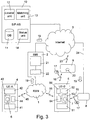
- the present invention will be illustrated by way of example and not by way of limitation in a Radio Access Network (RAN), such as a GSM, GPRS or UMTS mobile radio communication network, wherein a call and a session in an IMS multimedia communication system are established for supporting the handling of multimedia content to user equipment supported by the RAN and IMS.
- RAN Radio Access Network
- reference numeral 1 indicates an RAN
- reference numeral 2 indicates an IMS communication platform comprising or constituted by an IMS node to support multimedia communication in the RAN 1.
- the IMS platform 2 comprises processing means 21 which connect to communication means 22 connecting to the public Internet 3 and/or any other data network supporting Internet Protocol (IP) data exchange.
- IP Internet Protocol
- Reference numerals 4; 5 denote mobile UE, such as a mobile telephone or any other mobile communication device equipped for radio communication 45; 55 with the RAN 1.
- the mobile UE 4; 5 each comprise an input unit or input means 41; 51, such as a key pad, a touch screen and the like, an output unit or output means 42; 52, such as a display, and communication means 44; 54 comprising transceiver means for wireless communication with the RAN 1, each connecting to processing means 43; 53 such as a microprocessor.
- the processing means 43; 53 execute an IMS client 6; 7, respectively, for supporting SIP signalling and multimedia communication with the IMS platform 2.
- Reference numerals 8, 9 denote remote terminal equipment connected to the Internet 3, by respectively a wired 24 or wireless 23 transmission link, such as (public) screens or displays, audio equipment such as (stereo) loudspeakers, etc.
- the terminal equipment 8, 9 is arranged for exchange of multimedia content or, in short, media types, via IP-protocol data transfer with the Internet 3 and the IMS platform 2.
- UE 4, 5 For the sake of simplicity, just two UE 4, 5 have been shown in figure 2 , connected by a radio link 45; 55 to the RAN 1.
- a plurality of UE 4, 5 connects to the RAN 1 and a plurality of terminal equipment 8, 9 may connect to the Internet 3.
- Each UE 4, 5 and terminal equipment 8, 9 comprises identification data 20, such as a URL or an IP-address.
- UE 4 also called the calling party, A-Party or UE-A
- UE-A would like to send a multimedia type, such as video
- mobile UE 5 also called the called party, B-party or UE-B
- the calling UE 4 is depicted as a mobile entity, connected to the RAN 1, UE 4 can also be a wired entity, such as a wired Voice over IP (VoIP) telephone or a Plain Old Telephone System (POTS) telephone, or any other suitable communication device equipped for SIP signalling.
- VoIP Voice over IP
- POTS Plain Old Telephone System
- a communication session supported by the IMS platform 2 has to be established.
- UE-A sends a session set-up request message, SIP INVITE, initiated by the IMS client 6, inviting UE-B for setting up a session.
- SIP INVITE session set-up request message
- This session set-up request message is populated with SDP parameters, to describe the media type or types to be communicated, i.e. indicated as INVITE + SDP media (F1).
- the SIP-INVITE comprises a request Universal Resource Indicator (URI) being an indication of the delivery address for the multimedia content.
- URI Universal Resource Indicator
- the SDP parameters may further comprise connection information, including identification data of the IMS client 6 of a UE 4, generally the IP-address of the IMS client of the UE, and others such as capabilities of UE 4. Receipt of the session set-up request message (F1) is acknowledged by UE-B, i.e. the IMS client 7, by forwarding SIP message 180 Ringing (F2).
- connection information including identification data of the IMS client 6 of a UE 4, generally the IP-address of the IMS client of the UE, and others such as capabilities of UE 4.
- Receipt of the session set-up request message (F1) is acknowledged by UE-B, i.e. the IMS client 7, by forwarding SIP message 180 Ringing (F2).
- the IMS client 7 of UE-B initiates a transmission of a SIP session accept message, SIP 200 OK, by which UE-B also indicates how multimedia content can be forwarded by UE-A to UE-B.
- SIP 200 OK a SIP session accept message
- the URI address of UE-B will be indicated as the address for delivering the multimedia content.
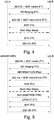
- a communication session is established supported by the IMS platform 2 for communication of one or several media types between UE-A and UE-B, i.e. indicated in figure 4 as 'Both Way Media'.
- a SIP BYE message (F5) is initiated by IMS client 7 and forwarded via the communication means 54 of UE-B, indicating that the session can be terminated. Receipt of this SIP BYE message is acknowledged by UE-A by sending a message SIP 200 OK (F6) initiated by the IMS client 6. This terminates the exchange of multimedia content between UE-A and UE-B.
- UE-B i.e. the output means 52 of the called mobile UE 5
- present media type handling options 57 figure 1 , based on the SDP media parameters included in the session set-up request message F1.
- the session set-up request message F1 indicates that UE-A would like to send video content to UE-B.
- the IMS client 7 of the mobile UE 5 initiates a presentation at the output means 52 of the mobile UE 5 of one or several media type handling options 57 for handling the video content by the called user of the mobile UE 5 (i.e. UE-B).
- a screen X for displaying the video content is, for example, remote terminal equipment 8, 9 in figure 1 .
- the called user or B-party now has to select a respective presented call handling option, which selection is received as a media type handling instruction by the mobile UE 5, i.e. UE-B, for example by inputting the selected option via a User Interface (UI), i.e. via the input means 51, available at the mobile UE 5, such as a keypad, touch screen, voice recognition unit, and the like.
- UI User Interface
- arrow 58 Schematically indicated by arrow 58.
- the media type handling instructions 58 received by the mobile UE 5 are transferred by the processing means 53, i.e. the IMS client 7, into suitable SDP parameters by which the session accept message SIP 200 OK is extended and transmitted from UE-B 5, shown as SIP 200 OK + SDP instructions (F3).
- This session accept message F3 may indicate that the audio type content is to be terminated at the output means 52 of mobile UE 5 while the video type content is to be terminated at a nearby screen or display, i.e. remote terminal equipment 8, 9 other than the display of mobile UE 5, i.e. option 3 above.
- Receipt of the session accept message F3 by the IMS client 6 of UE-A 4 will result therein that, initiated by the IMS client 6, a further or second communication session is set up, in the IMS platform or node 2, i.e. the processing means 21 thereof, with remote terminal equipment 8, 9 for delivering the video content.
- the IMS platform or node 2 i.e. the processing means 21 thereof, with remote terminal equipment 8, 9 for delivering the video content.
- the identification data 20 such as a Uniform resource Locator (URL) of the remote terminal equipment to which the video content is to be directed, for example http://screen9.public.com:5678
- he or she may input these identification data 20 via the input means 51 into the mobile UE 5 directly at the selection of a particular call handling option 57.
- the thus provided identification data will be put into the session accept message F3, and will be used in the processing means 21 of the IMS 2 for setting up the required session(s) and routing 19 of the video content to the respective remote terminal equipment 8, 9.
- the URL address of the remote terminal equipment 8, 9 may be known, for example, because it is visually displayed at or on the screen thereof.
- the called user i.e. UE-B, keeps control over the session or sessions, to stop the display at the remote terminal 8, 9, for example, which can be provided by the standard SIP message UPDATE (F7), as indicated in figure 5 .
- F7 SIP message UPDATE
- the identification data 20 of the remote terminal equipment 8, 9 is not known to the called user, same may be provided to the called UE-B with the session setup message F1 or in a separate SIP INFORMATION (F8a), (F8b) message, for example, shown in Figure 5 .
- the session setup message F1 is initialized towards UE-B 5 by a network entity such as the UE-A 4, an IMS node within the IMS platform 2 or a network service executed at the SIP-AS 10.
- the identification data may be retrieved from a database, DB, in or available to the IMS platform 2, such as database 11 shown in Figure 2 .
- a SIP-Application Server (SIP-AS) 10 is shown, connected to the Internet 3, and arranged for providing service to IMS platform or node 2.
- database 11 is arranged in SIP-AS 10.
- the database may also recite in the UE 4, 5 or may be directly available to a UE, for example via the RAN 1 or another communication technology available to the UE, such as WLAN, Bluetooth, IR, or the like.
- the SIP-AS 10 and the IMS platform or node 2 may be combined.
- SIP-AS 10 is provided with a locator unit 12 for determining the geographic location of the called user, i.e. mobile UE 5.
- Any suitable geographic location determination means may be used, such as GPS position signals 61 from a GPS satellite system 60, or other positioning system, GSM location, wireless communication beacons or the like.
- the location may also be determined from input provided by a user via the mobile UE 5, for example from a map displayed at the mobile UE or from a positioning unit in the mobile UE.
- identification data 20 are arranged dependent on geographic location information of the corresponding remote terminal equipment 8, 9. Only those identification data 20 are provided which are available to the called mobile UE 5 based on the determined location information and provided that the remote terminal equipment 8, 9 is not seized by another session.
- status unit 14 in SIP-AS 10 is provided, which keeps track of terminal equipment encountered in an ongoing session. Further, terminal equipment to which the mobile UE may have no access to, from technical perspective, for example, or which do not meet the received call handling instructions, may also be excluded.
- a matching unit 13 is provided in the SIP-AS 10.
- identification data of remote terminal equipment 8, 9 may also be directly received at the mobile UE, such as mobile UE 5, from the remote terminal equipment 8, 9 via any of an available short range (a few meters and up) wireless communication technology, like WLAN, Bluetooth, IR, etc.
- the remote terminal equipment 8, 9 may be arranged for autonomously transmission of their identification data 20, such as their URL, and other information via a short range communication link 15, 16 in broadcast form, for example, and received by the radio communication means of the mobile UE 5, such as a special short range radio communication unit or means 56 of the mobile UE 5.
- identification data 20 may also be provided upon request of the mobile UE 5, as indicated by a request (R) message box 17.
- the thus received identification data may be exchanged with the SIP-AS 10, via the UE 4, using SIP signalling, to update the database 11, for example.
- the SIP UPDATE message (F7) shown in Figure 5 may be used, populated with the appropriate SDP parameters.
- SIP UPDATE (F7) and SIP INFORMATION (F8a), (F8b) can also be used for updating the database 11 and informing the called mobile UE 5 and/or the calling UE 4 when remote terminal equipment is moving out of the availability of mobile UE 5, such as the mobile remote terminal equipment 9, or the other way around if the mobile UE 5 moves out of the reach of terminal equipment 8, 9 for example, by which content is handled in connection with an ongoing session. This to provide for "handover" of content from terminal equipment. However, the decision to seize or occupy terminal equipment remains with the called user UE-B, who keeps control over the session with respect to the delivery or routing of media type content.
- IMS platform 2 and SIP-AS 10 may recite in one or several IMS supporting nodes or servers, such as termed S-CSCF, I-CSCF, P-CSCF (Call Session Control Function) or an IMS gateway or other server.
- S-CSCF Session Control Function
- I-CSCF All Session Control Function
- P-CSCF Call Session Control Function
Landscapes
- Engineering & Computer Science (AREA)
- Computer Networks & Wireless Communication (AREA)
- Signal Processing (AREA)
- Multimedia (AREA)
- Business, Economics & Management (AREA)
- General Business, Economics & Management (AREA)
- Mobile Radio Communication Systems (AREA)
- Telephonic Communication Services (AREA)
Claims (15)
- Procédé de gestion des types de média d'une session de communication multimédia de Protocole Internet, IP, dans un Sous-système de communication Multimédia IP, IMS, par un équipement Utilisateur, UE, appelant (4) et un UE mobile appelé (5) comprenant un client IMS (6, 7) prenant en charge une signalisation de Protocole d'Initiation de Session, SIP, ledit IMS comprenant un noeud IMS (2) ayant des moyens de traitement (21) connectés à des moyens de communication (22) pour prendre en charge une session de communication multimédia dans ledit IMS, et un équipement terminal distant (8, 9) agencé pour échanger un contenu multimédia par l'intermédiaire dudit IMS, ledit procédé comprenant :- la réception d'un message de demande d'établissement de session SIP (F1), en provenance dudit UE appelant (4), par ledit UE mobile appelé (5) pour établir une première session de communication multimédia dans ledit système de communication IMS avec ledit UE appelant (4) prise en charge par ledit noeud IMS (2), et- le traitement dudit message de demande d'établissement de session SIP (F1) reçu par ledit client IMS (7) dudit UE mobile appelé (5),ledit procédé étant caractérisé par les étapes qui consistent :- à initier, par ledit client IMS (7) dudit UE mobile appelé (5), une présentation d'options de gestion de types de média (57) par ledit UE mobile appelé (5) sur la base dudit message de demande d'établissement de session SIP (F1) traité,- à recevoir des instructions de gestion de types de média (58) par ledit UE mobile appelé (5) sur la base desdites options de gestion de types de média (57) présentées,- à initier, par ledit client IMS (7) dudit UE mobile appelé (5), en réponse audit message de demande d'établissement de session SIP (F1) traité, une transmission d'un message d'acceptation de session SIP (F3) audit UE appelant (4) conformément auxdites instructions de gestion de types de média (58) reçues,- à initier, par ledit client IMS (6) dudit UE appelant (4), une deuxième session de communication multimédia avec l'équipement terminal distant (8, 9) prise en charge par ledit noeud IMS (2) sur la base dudit message d'acceptation de session SIP (F3), et- à transférer, dans ladite deuxième session de communication multimédia, par ledit noeud IMS (2) audit équipement terminal distant (8, 9), au moins un type de média (19) de ladite première session de communication multimédia.
- Procédé selon la revendication 1, dans lequel ledit message d'acceptation de session SIP (F3) est étendu par ledit client IMS (7) dudit UE appelé (5) avec des données d'identification (20) d'un équipement terminal distant (8, 9) pour recevoir au moins un type de média de ladite session de communication multimédia.
- Procédé selon la revendication 2, dans lequel ledit client IMS (7) dudit UE appelé (5) traite les données d'identification (20) dudit équipement terminal distant (8, 9) disponible pour ledit UE mobile appelé (5).
- Procédé selon la revendication 3, dans lequel lesdites données d'identification (20) sont reçues par ledit UE mobile appelé (5) à partir de :- données d'entrée (20) fournies au niveau de moyens d'entrée utilisateur (51) dudit UE mobile appelé (5), et/ou- données d'identification (20) stockées dans une base de données (11), et/ou- données d'identification (20) reçues (15, 16, 17) par ledit UE mobile appelé (5) en provenance dudit équipement terminal distant (8, 9).
- Procédé selon la revendication 4, dans lequel ladite base de données (11) est une base de données distante et lesdites données d'identification (20) sont reçues par ledit UE mobile appelé (5) à partir de ladite base de données (11) dans un message de demande d'établissement de session SIP (F1) étendu.
- Procédé selon la revendication 4 ou 5, dans lequel lesdites données d'identification (20) sont reçues par ledit UE mobile appelé (5) sur la base d'un emplacement géographique momentané dudit UE mobile appelé (5).
- Procédé selon la revendication 4, dans lequel lesdites données d'identification (20) sont reçues par ledit UE mobile appelé (5) à partir d'une transmission autonome (15, 16), par ledit équipement terminal distant (8, 9) ou sur demande (17) dudit UE mobile appelé (5).
- Procédé selon la revendication 3, 4, 5, 6 ou 7, dans lequel ledit client IMS (7) dudit UE mobile appelé (5), dans une session de communication multimédia en cours, traite des données d'identification (20) mises à jour dudit équipement terminal distant (8, 9) disponible pour ledit UE mobile appelé (5).
- Procédé selon la revendication 8, dans lequel lesdites données d'identification (20) mises à jour sont reçues par ledit UE mobile appelé (5) tandis que ledit UE mobile appelé (5) se déplace.
- Procédé selon la revendication 8 ou 9, dans lequel lesdites données d'identification (20) mises à jour sont traitées par ledit UE mobile appelé (5) dans un message d'INFORMATION SIP (F8a), (F8b) ou de MISE À JOUR (F7).
- Procédé selon la revendication 8, 9 ou 10, dans lequel lesdites données d'identification (20) mises à jour sont affichées (57) par ledit UE mobile appelé (5), et dans lequel ledit client IMS (7) dudit UE mobile appelé (5) initie une transmission (F7) desdites données d'identification (20) mises à jour pour recevoir ledit au moins un type de média (19) de ladite session de communication multimédia sur la base d'instructions de gestion (58) reçues au niveau dudit UE mobile appelé (5).
- Équipement Utilisateur, UE, Mobile (5) comprenant des moyens de traitement (53) connectés à des moyens d'entrée (51), des moyens de sortie (52) et des moyens de communication (54), ledit UE mobile (5) est agencé pour prendre en charge des appels dans un réseau d'accès radio (1) et des sessions de communication dans un Sous-système de communication Multimédia de Protocole Internet, IP, IMS, (2) où les moyens de traitement (53) sont agencés pour exécuter un client IMS (7) prenant en charge une signalisation de Protocole d'Initiation de Session, SIP, pour gérer des types de média d'une session de communication multimédia, ledit client IMS (7) est agencé pour traiter un message de demande d'établissement de session SIP (F1) reçu en provenance d'un Équipement Utilisateur, UE, appelant (4) par l'intermédiaire desdits moyens de communication (54) dans une première session de communication multimédia, caractérisé en ce que ledit client IMS (7) est en outre agencé pour :- initier une présentation d'options de gestion de types de média (57) par l'intermédiaire desdits moyens de sortie (52), sur la base dudit message de demande d'établissement de session SIP (F1) traité par ledit client IMS (7),- traiter des instructions de gestion de types de média (58) reçues par l'intermédiaire desdits moyens d'entrée (51), sur la base desdites options de gestion de types de média (57), et- initier une transmission d'un message d'acceptation de session SIP (F3) audit UE appelant (4) par l'intermédiaire desdits moyens de communication (54) par ledit client IMS (7) en réponse audit message de demande d'établissement de session SIP (F1) traité conformément auxdites instructions de gestion de types de média (58), pour transférer au niveau d'un noeud IMS au moins un type de média (19) de ladite première session de communication multimédia par ledit UE appelant (4) dans une deuxième session de communication multimédia avec un équipement terminal distant (8, 9) prise en charge par ledit noeud IMS sur la base dudit message d'acceptation de session SIP (F3).
- UE mobile (5) selon la revendication 12, dans lequel lesdits moyens de communication comprennent des moyens de communication (56) supplémentaires, agencés pour prendre en charge des communications dans une technologie de transmission sans fil à courte portée pour recevoir (15, 16) des données d'identification (20) transmises de manière autonome par ledit équipement terminal distant (8, 9) ou sur demande (17) dudit UE mobile (5).
- Noeud de Sous-système Multimédia de Protocole Internet, IP, IMS, (2) comprenant des moyens de traitement (21) connectés à des moyens de communication (22), ledit noeud IMS (2) est agencé pour prendre en charge des sessions de communication multimédia avec un Équipement Utilisateur, UE, appelant (4), un UE mobile appelé (5) dans un réseau d'accès radio (1), et une signalisation de Protocole d'Initiation de Session, SIP, pour gérer des types de média dans une première session de communication multimédia dans un système de communication IMS, où lesdits moyens de traitement (21) dudit noeud IMS (2) sont agencés pour traiter un message d'acceptation de session SIP (F3) reçu initié par ledit UE appelé (5) audit UE appelant (4) en réponse à un message de demande d'établissement de session SIP (F1) reçu en provenance dudit UE appelant (5) et pour traiter l'initiation, par ledit UE appelant (4), d'une deuxième session de communication multimédia avec un équipement terminal distant (8, 9) identifié par des données d'identification (20) reçues par l'intermédiaire desdits moyens de communication (22) dans ladite première session de communication, et agencés pour échanger (19), par l'intermédiaire desdits moyens de communication (22), au moins un type de média (19) de ladite première session de communication multimédia par ledit UE appelant (5) avec ledit équipement terminal distant (8, 9),
caractérisé en ce que lesdits moyens de traitement (21) dudit noeud IMS (2) sont agencés pour échanger (19), par l'intermédiaire desdits moyens de communication (22), ledit au moins un type de média (19) de ladite première session de communication multimédia par ledit UE appelant (5) avec ledit équipement terminal distant (8, 9) conformément auxdites instructions de gestion reçues par l'intermédiaire desdits moyens de communication (22) en provenance dudit UE appelé (5) sur la base dudit message d'acceptation de session SIP (F3). - Noeud IMS (2) selon la revendication 14, dans lequel lesdits moyens de traitement (21) sont agencés pour initier une transmission, par l'intermédiaire desdits moyens de communication (22) audit UE mobile (5), de données d'identification (20) dudit équipement terminal distant (8, 9) disponible pour ledit UE mobile (5).
Applications Claiming Priority (1)
| Application Number | Priority Date | Filing Date | Title |
|---|---|---|---|
| PCT/EP2008/010179 WO2010063295A1 (fr) | 2008-12-01 | 2008-12-01 | Procédé et équipement d'utilisateur mobile pour gérer des types de supports d'une session de communication dans un système de communication ims et un noeud ims |
Publications (2)
| Publication Number | Publication Date |
|---|---|
| EP2371103A1 EP2371103A1 (fr) | 2011-10-05 |
| EP2371103B1 true EP2371103B1 (fr) | 2017-02-22 |
Family
ID=41066739
Family Applications (1)
| Application Number | Title | Priority Date | Filing Date |
|---|---|---|---|
| EP08875052.6A Active EP2371103B1 (fr) | 2008-12-01 | 2008-12-01 | Procédé et équipement d'utilisateur mobile pour gérer des types de supports d'une session de communication dans un système de communication ims et un n ud ims |
Country Status (4)
| Country | Link |
|---|---|
| US (2) | US9584552B2 (fr) |
| EP (1) | EP2371103B1 (fr) |
| CN (1) | CN102227898B (fr) |
| WO (1) | WO2010063295A1 (fr) |
Families Citing this family (2)
| Publication number | Priority date | Publication date | Assignee | Title |
|---|---|---|---|---|
| WO2015145494A1 (fr) * | 2014-03-25 | 2015-10-01 | パナソニックIpマネジメント株式会社 | Système d'affichage d'informations et procédé d'affichage d'informations |
| CN112866253B (zh) * | 2021-01-20 | 2023-02-17 | 维沃移动通信有限公司 | 信息传输方法、装置、电子设备 |
Family Cites Families (15)
| Publication number | Priority date | Publication date | Assignee | Title |
|---|---|---|---|---|
| US7483989B2 (en) * | 2001-03-13 | 2009-01-27 | Telefonaktiebolaget Lm Ericsson (Publ) | Method and apparatus for establishing a protocol proxy for a mobile host terminal in a multimedia session |
| US6879828B2 (en) * | 2002-09-09 | 2005-04-12 | Nokia Corporation | Unbroken primary connection switching between communications services |
| US20040048512A1 (en) | 2002-09-11 | 2004-03-11 | Carl Chen | Quick coupler for cylindrical battery terminal |
| US20050060411A1 (en) * | 2003-09-16 | 2005-03-17 | Stephane Coulombe | System and method for adaptation of peer-to-peer multimedia sessions |
| US7359373B2 (en) * | 2003-10-17 | 2008-04-15 | Nokia Corporation | System, apparatus, and method for establishing circuit-switched communications via packet-switched network signaling |
| US20060095590A1 (en) * | 2004-11-04 | 2006-05-04 | Nokia Corporation | Exchange of encoded data packets |
| US20070058637A1 (en) * | 2005-09-14 | 2007-03-15 | Tun Han Felix Lo | Method for multi-channel multi-device call transfer |
| US7752315B2 (en) * | 2005-12-01 | 2010-07-06 | International Business Machines Corporation | Method for extending the use of SIP (session initiated protocol) for providing debug services |
| US20070140299A1 (en) * | 2005-12-15 | 2007-06-21 | Hofmann Markus A | Method and network for providing service blending to a subscriber |
| US20070156909A1 (en) * | 2005-12-29 | 2007-07-05 | Osborn William R | Proxy for extending IMS services to mobile terminals with SMS capabilities |
| US7680490B2 (en) * | 2006-06-30 | 2010-03-16 | Sony Ericsson Mobile Communications Ab | System and method for multimedia networking with mobile telephone and headset |
| KR100809419B1 (ko) * | 2006-09-29 | 2008-03-05 | 한국전자통신연구원 | HSS를 이용한 위치기반 VoIP 서비스 시스템 및 방법 |
| US7751354B2 (en) * | 2006-10-17 | 2010-07-06 | Alcatel-Lucent Usa Inc. | Methods of network-initiated partial session transfer |
| JP2010533995A (ja) * | 2007-07-27 | 2010-10-28 | 日本電気株式会社 | 通信システム、ユーザ装置登録方法、交換装置、およびユーザ装置登録システム |
| CN102077544B (zh) * | 2008-06-30 | 2014-03-26 | 爱立信电话股份有限公司 | 在ip多媒体子系统网络中提供位置信息 |
-
2008
- 2008-12-01 EP EP08875052.6A patent/EP2371103B1/fr active Active
- 2008-12-01 WO PCT/EP2008/010179 patent/WO2010063295A1/fr not_active Ceased
- 2008-12-01 CN CN200880132125.2A patent/CN102227898B/zh active Active
- 2008-12-01 US US13/132,276 patent/US9584552B2/en active Active
-
2017
- 2017-02-03 US US15/424,287 patent/US10069874B2/en active Active
Non-Patent Citations (1)
| Title |
|---|
| None * |
Also Published As
| Publication number | Publication date |
|---|---|
| WO2010063295A1 (fr) | 2010-06-10 |
| CN102227898A (zh) | 2011-10-26 |
| US9584552B2 (en) | 2017-02-28 |
| CN102227898B (zh) | 2015-07-22 |
| EP2371103A1 (fr) | 2011-10-05 |
| US20110238846A1 (en) | 2011-09-29 |
| US20170149845A1 (en) | 2017-05-25 |
| US10069874B2 (en) | 2018-09-04 |
Similar Documents
| Publication | Publication Date | Title |
|---|---|---|
| US11206291B2 (en) | Session control logic with internet protocol (IP)-based routing | |
| EP2704394B1 (fr) | Traitement de sessions de communication | |
| US8724618B2 (en) | System for connecting information processing devices associated with IP telephones | |
| CN101491156B (zh) | 来自移动终端的多媒体会话的交换 | |
| US20200396271A1 (en) | Method, User Equipment and Application Server for Adding Media Stream of Multimedia Session | |
| CN103812757A (zh) | 一种实时通信的浏览器紧急呼叫方法、系统和移动装置 | |
| CA2650262A1 (fr) | Procede et appareil de traitement de messages de protocole d'initiation de session a terminal voix sur ip | |
| EP3172880B1 (fr) | Procédé et équipement de gestion de communications permettant de commander l'établissement d'une session de communication dans un réseau de communications multimédia | |
| US20160113042A1 (en) | Method and apparatus for processing a communication request from a roaming voice over ip terminal | |
| WO2007136490A2 (fr) | Système et procédé de déclenchement de transfert de fichiers depuis des points d'extrémité vocaux | |
| US10069874B2 (en) | Method of and mobile user equipment for handling media types of a communication session in an IMS communication system and an IMS node | |
| KR101476281B1 (ko) | N-스크린 서비스를 위한 멀티미디어 스트림의 이기종 디바이스 간 핸드오버 시스템 및 그 방법 | |
| US9049310B2 (en) | Data communication | |
| KR20170019981A (ko) | 통화 및 웹 서비스의 연동방법 및 이를 위한 통신서버 | |
| KR20150086981A (ko) | 복합 ars 서비스 방법 및 장치 | |
| CN104954382B (zh) | 用于处理媒体类型的方法和移动用户设备及ims节点 | |
| US9237239B2 (en) | Method for augmenting a voice call | |
| JP2006270558A (ja) | 発信中にコンテンツを再生するip電話装置の発信方法及びプログラム | |
| KR20150137935A (ko) | 비즈 레터링 서비스 제공 시스템 및 그 방법 | |
| JP2020141162A (ja) | プログラム、情報処理方法、及び情報処理装置 | |
| KR20120064275A (ko) | 통신 장치 및 방법 | |
| JP2012248932A (ja) | サービス選択制御装置及びサービス選択制御システム | |
| JP2010232830A (ja) | 呼制御サーバー装置及びその方法 | |
| JP2013038740A (ja) | 通信システム及び通信方法 |
Legal Events
| Date | Code | Title | Description |
|---|---|---|---|
| PUAI | Public reference made under article 153(3) epc to a published international application that has entered the european phase |
Free format text: ORIGINAL CODE: 0009012 |
|
| 17P | Request for examination filed |
Effective date: 20110629 |
|
| AK | Designated contracting states |
Kind code of ref document: A1 Designated state(s): AT BE BG CH CY CZ DE DK EE ES FI FR GB GR HR HU IE IS IT LI LT LU LV MC MT NL NO PL PT RO SE SI SK TR |
|
| DAX | Request for extension of the european patent (deleted) | ||
| 17Q | First examination report despatched |
Effective date: 20150625 |
|
| GRAP | Despatch of communication of intention to grant a patent |
Free format text: ORIGINAL CODE: EPIDOSNIGR1 |
|
| RIC1 | Information provided on ipc code assigned before grant |
Ipc: H04L 29/06 20060101AFI20160811BHEP Ipc: H04W 4/00 20090101ALN20160811BHEP Ipc: H04L 29/08 20060101ALI20160811BHEP Ipc: H04W 76/02 20090101ALN20160811BHEP |
|
| RIC1 | Information provided on ipc code assigned before grant |
Ipc: H04L 29/06 20060101AFI20160812BHEP Ipc: H04W 4/00 20090101ALN20160812BHEP Ipc: H04L 29/08 20060101ALI20160812BHEP Ipc: H04W 76/02 20090101ALN20160812BHEP |
|
| INTG | Intention to grant announced |
Effective date: 20160906 |
|
| RIN1 | Information on inventor provided before grant (corrected) |
Inventor name: DEN HARTOG, JOS |
|
| GRAS | Grant fee paid |
Free format text: ORIGINAL CODE: EPIDOSNIGR3 |
|
| GRAA | (expected) grant |
Free format text: ORIGINAL CODE: 0009210 |
|
| AK | Designated contracting states |
Kind code of ref document: B1 Designated state(s): AT BE BG CH CY CZ DE DK EE ES FI FR GB GR HR HU IE IS IT LI LT LU LV MC MT NL NO PL PT RO SE SI SK TR |
|
| REG | Reference to a national code |
Ref country code: GB Ref legal event code: FG4D |
|
| REG | Reference to a national code |
Ref country code: CH Ref legal event code: EP |
|
| REG | Reference to a national code |
Ref country code: AT Ref legal event code: REF Ref document number: 870065 Country of ref document: AT Kind code of ref document: T Effective date: 20170315 |
|
| REG | Reference to a national code |
Ref country code: IE Ref legal event code: FG4D |
|
| REG | Reference to a national code |
Ref country code: NL Ref legal event code: FP |
|
| REG | Reference to a national code |
Ref country code: DE Ref legal event code: R096 Ref document number: 602008048879 Country of ref document: DE |
|
| REG | Reference to a national code |
Ref country code: LT Ref legal event code: MG4D |
|
| REG | Reference to a national code |
Ref country code: AT Ref legal event code: MK05 Ref document number: 870065 Country of ref document: AT Kind code of ref document: T Effective date: 20170222 |
|
| PG25 | Lapsed in a contracting state [announced via postgrant information from national office to epo] |
Ref country code: LT Free format text: LAPSE BECAUSE OF FAILURE TO SUBMIT A TRANSLATION OF THE DESCRIPTION OR TO PAY THE FEE WITHIN THE PRESCRIBED TIME-LIMIT Effective date: 20170222 Ref country code: HR Free format text: LAPSE BECAUSE OF FAILURE TO SUBMIT A TRANSLATION OF THE DESCRIPTION OR TO PAY THE FEE WITHIN THE PRESCRIBED TIME-LIMIT Effective date: 20170222 Ref country code: FI Free format text: LAPSE BECAUSE OF FAILURE TO SUBMIT A TRANSLATION OF THE DESCRIPTION OR TO PAY THE FEE WITHIN THE PRESCRIBED TIME-LIMIT Effective date: 20170222 Ref country code: GR Free format text: LAPSE BECAUSE OF FAILURE TO SUBMIT A TRANSLATION OF THE DESCRIPTION OR TO PAY THE FEE WITHIN THE PRESCRIBED TIME-LIMIT Effective date: 20170523 Ref country code: NO Free format text: LAPSE BECAUSE OF FAILURE TO SUBMIT A TRANSLATION OF THE DESCRIPTION OR TO PAY THE FEE WITHIN THE PRESCRIBED TIME-LIMIT Effective date: 20170522 |
|
| PG25 | Lapsed in a contracting state [announced via postgrant information from national office to epo] |
Ref country code: BG Free format text: LAPSE BECAUSE OF FAILURE TO SUBMIT A TRANSLATION OF THE DESCRIPTION OR TO PAY THE FEE WITHIN THE PRESCRIBED TIME-LIMIT Effective date: 20170522 Ref country code: LV Free format text: LAPSE BECAUSE OF FAILURE TO SUBMIT A TRANSLATION OF THE DESCRIPTION OR TO PAY THE FEE WITHIN THE PRESCRIBED TIME-LIMIT Effective date: 20170222 Ref country code: ES Free format text: LAPSE BECAUSE OF FAILURE TO SUBMIT A TRANSLATION OF THE DESCRIPTION OR TO PAY THE FEE WITHIN THE PRESCRIBED TIME-LIMIT Effective date: 20170222 Ref country code: AT Free format text: LAPSE BECAUSE OF FAILURE TO SUBMIT A TRANSLATION OF THE DESCRIPTION OR TO PAY THE FEE WITHIN THE PRESCRIBED TIME-LIMIT Effective date: 20170222 Ref country code: SE Free format text: LAPSE BECAUSE OF FAILURE TO SUBMIT A TRANSLATION OF THE DESCRIPTION OR TO PAY THE FEE WITHIN THE PRESCRIBED TIME-LIMIT Effective date: 20170222 Ref country code: PT Free format text: LAPSE BECAUSE OF FAILURE TO SUBMIT A TRANSLATION OF THE DESCRIPTION OR TO PAY THE FEE WITHIN THE PRESCRIBED TIME-LIMIT Effective date: 20170622 |
|
| PG25 | Lapsed in a contracting state [announced via postgrant information from national office to epo] |
Ref country code: EE Free format text: LAPSE BECAUSE OF FAILURE TO SUBMIT A TRANSLATION OF THE DESCRIPTION OR TO PAY THE FEE WITHIN THE PRESCRIBED TIME-LIMIT Effective date: 20170222 Ref country code: IT Free format text: LAPSE BECAUSE OF FAILURE TO SUBMIT A TRANSLATION OF THE DESCRIPTION OR TO PAY THE FEE WITHIN THE PRESCRIBED TIME-LIMIT Effective date: 20170222 Ref country code: RO Free format text: LAPSE BECAUSE OF FAILURE TO SUBMIT A TRANSLATION OF THE DESCRIPTION OR TO PAY THE FEE WITHIN THE PRESCRIBED TIME-LIMIT Effective date: 20170222 Ref country code: SK Free format text: LAPSE BECAUSE OF FAILURE TO SUBMIT A TRANSLATION OF THE DESCRIPTION OR TO PAY THE FEE WITHIN THE PRESCRIBED TIME-LIMIT Effective date: 20170222 Ref country code: CZ Free format text: LAPSE BECAUSE OF FAILURE TO SUBMIT A TRANSLATION OF THE DESCRIPTION OR TO PAY THE FEE WITHIN THE PRESCRIBED TIME-LIMIT Effective date: 20170222 |
|
| REG | Reference to a national code |
Ref country code: DE Ref legal event code: R097 Ref document number: 602008048879 Country of ref document: DE |
|
| PG25 | Lapsed in a contracting state [announced via postgrant information from national office to epo] |
Ref country code: DK Free format text: LAPSE BECAUSE OF FAILURE TO SUBMIT A TRANSLATION OF THE DESCRIPTION OR TO PAY THE FEE WITHIN THE PRESCRIBED TIME-LIMIT Effective date: 20170222 Ref country code: PL Free format text: LAPSE BECAUSE OF FAILURE TO SUBMIT A TRANSLATION OF THE DESCRIPTION OR TO PAY THE FEE WITHIN THE PRESCRIBED TIME-LIMIT Effective date: 20170222 |
|
| PLBE | No opposition filed within time limit |
Free format text: ORIGINAL CODE: 0009261 |
|
| STAA | Information on the status of an ep patent application or granted ep patent |
Free format text: STATUS: NO OPPOSITION FILED WITHIN TIME LIMIT |
|
| 26N | No opposition filed |
Effective date: 20171123 |
|
| PG25 | Lapsed in a contracting state [announced via postgrant information from national office to epo] |
Ref country code: SI Free format text: LAPSE BECAUSE OF FAILURE TO SUBMIT A TRANSLATION OF THE DESCRIPTION OR TO PAY THE FEE WITHIN THE PRESCRIBED TIME-LIMIT Effective date: 20170222 |
|
| REG | Reference to a national code |
Ref country code: CH Ref legal event code: PL |
|
| REG | Reference to a national code |
Ref country code: IE Ref legal event code: MM4A |
|
| PG25 | Lapsed in a contracting state [announced via postgrant information from national office to epo] |
Ref country code: MT Free format text: LAPSE BECAUSE OF NON-PAYMENT OF DUE FEES Effective date: 20171201 Ref country code: LU Free format text: LAPSE BECAUSE OF NON-PAYMENT OF DUE FEES Effective date: 20171201 |
|
| REG | Reference to a national code |
Ref country code: FR Ref legal event code: ST Effective date: 20180831 |
|
| REG | Reference to a national code |
Ref country code: BE Ref legal event code: MM Effective date: 20171231 |
|
| PG25 | Lapsed in a contracting state [announced via postgrant information from national office to epo] |
Ref country code: FR Free format text: LAPSE BECAUSE OF NON-PAYMENT OF DUE FEES Effective date: 20180102 Ref country code: IE Free format text: LAPSE BECAUSE OF NON-PAYMENT OF DUE FEES Effective date: 20171201 |
|
| PG25 | Lapsed in a contracting state [announced via postgrant information from national office to epo] |
Ref country code: CH Free format text: LAPSE BECAUSE OF NON-PAYMENT OF DUE FEES Effective date: 20171231 Ref country code: BE Free format text: LAPSE BECAUSE OF NON-PAYMENT OF DUE FEES Effective date: 20171231 Ref country code: LI Free format text: LAPSE BECAUSE OF NON-PAYMENT OF DUE FEES Effective date: 20171231 |
|
| PG25 | Lapsed in a contracting state [announced via postgrant information from national office to epo] |
Ref country code: HU Free format text: LAPSE BECAUSE OF FAILURE TO SUBMIT A TRANSLATION OF THE DESCRIPTION OR TO PAY THE FEE WITHIN THE PRESCRIBED TIME-LIMIT; INVALID AB INITIO Effective date: 20081201 Ref country code: MC Free format text: LAPSE BECAUSE OF FAILURE TO SUBMIT A TRANSLATION OF THE DESCRIPTION OR TO PAY THE FEE WITHIN THE PRESCRIBED TIME-LIMIT Effective date: 20170222 |
|
| PG25 | Lapsed in a contracting state [announced via postgrant information from national office to epo] |
Ref country code: CY Free format text: LAPSE BECAUSE OF NON-PAYMENT OF DUE FEES Effective date: 20170222 |
|
| PG25 | Lapsed in a contracting state [announced via postgrant information from national office to epo] |
Ref country code: TR Free format text: LAPSE BECAUSE OF FAILURE TO SUBMIT A TRANSLATION OF THE DESCRIPTION OR TO PAY THE FEE WITHIN THE PRESCRIBED TIME-LIMIT Effective date: 20170222 |
|
| PG25 | Lapsed in a contracting state [announced via postgrant information from national office to epo] |
Ref country code: IS Free format text: LAPSE BECAUSE OF FAILURE TO SUBMIT A TRANSLATION OF THE DESCRIPTION OR TO PAY THE FEE WITHIN THE PRESCRIBED TIME-LIMIT Effective date: 20170622 |
|
| REG | Reference to a national code |
Ref country code: DE Ref legal event code: R079 Ref document number: 602008048879 Country of ref document: DE Free format text: PREVIOUS MAIN CLASS: H04L0029060000 Ipc: H04L0065000000 |
|
| PGFP | Annual fee paid to national office [announced via postgrant information from national office to epo] |
Ref country code: GB Payment date: 20251229 Year of fee payment: 18 |
|
| PGFP | Annual fee paid to national office [announced via postgrant information from national office to epo] |
Ref country code: NL Payment date: 20251226 Year of fee payment: 18 |
|
| PGFP | Annual fee paid to national office [announced via postgrant information from national office to epo] |
Ref country code: DE Payment date: 20251229 Year of fee payment: 18 |