EP2371878B1 - Polymerverbindung und organische lichtemittierende vorrichtung enthaltend diesselbe - Google Patents
Polymerverbindung und organische lichtemittierende vorrichtung enthaltend diesselbe Download PDFInfo
- Publication number
- EP2371878B1 EP2371878B1 EP11160612.5A EP11160612A EP2371878B1 EP 2371878 B1 EP2371878 B1 EP 2371878B1 EP 11160612 A EP11160612 A EP 11160612A EP 2371878 B1 EP2371878 B1 EP 2371878B1
- Authority
- EP
- European Patent Office
- Prior art keywords
- group
- polymer
- substituted
- unsubstituted
- organic light
- Prior art date
- Legal status (The legal status is an assumption and is not a legal conclusion. Google has not performed a legal analysis and makes no representation as to the accuracy of the status listed.)
- Active
Links
- 0 C*1C(C[*+]=*2CC2)=[*+]CCC1 Chemical compound C*1C(C[*+]=*2CC2)=[*+]CCC1 0.000 description 8
Images


Classifications
-
- H—ELECTRICITY
- H10—SEMICONDUCTOR DEVICES; ELECTRIC SOLID-STATE DEVICES NOT OTHERWISE PROVIDED FOR
- H10K—ORGANIC ELECTRIC SOLID-STATE DEVICES
- H10K85/00—Organic materials used in the body or electrodes of devices covered by this subclass
- H10K85/10—Organic polymers or oligomers
- H10K85/151—Copolymers
-
- C—CHEMISTRY; METALLURGY
- C09—DYES; PAINTS; POLISHES; NATURAL RESINS; ADHESIVES; COMPOSITIONS NOT OTHERWISE PROVIDED FOR; APPLICATIONS OF MATERIALS NOT OTHERWISE PROVIDED FOR
- C09K—MATERIALS FOR MISCELLANEOUS APPLICATIONS, NOT PROVIDED FOR ELSEWHERE
- C09K11/00—Luminescent materials, e.g. electroluminescent or chemiluminescent
- C09K11/06—Luminescent materials, e.g. electroluminescent or chemiluminescent containing organic luminescent materials
-
- C—CHEMISTRY; METALLURGY
- C08—ORGANIC MACROMOLECULAR COMPOUNDS; THEIR PREPARATION OR CHEMICAL WORKING-UP; COMPOSITIONS BASED THEREON
- C08G—MACROMOLECULAR COMPOUNDS OBTAINED OTHERWISE THAN BY REACTIONS ONLY INVOLVING UNSATURATED CARBON-TO-CARBON BONDS
- C08G61/00—Macromolecular compounds obtained by reactions forming a carbon-to-carbon link in the main chain of the macromolecule
- C08G61/12—Macromolecular compounds containing atoms other than carbon in the main chain of the macromolecule
-
- C—CHEMISTRY; METALLURGY
- C08—ORGANIC MACROMOLECULAR COMPOUNDS; THEIR PREPARATION OR CHEMICAL WORKING-UP; COMPOSITIONS BASED THEREON
- C08G—MACROMOLECULAR COMPOUNDS OBTAINED OTHERWISE THAN BY REACTIONS ONLY INVOLVING UNSATURATED CARBON-TO-CARBON BONDS
- C08G61/00—Macromolecular compounds obtained by reactions forming a carbon-to-carbon link in the main chain of the macromolecule
- C08G61/12—Macromolecular compounds containing atoms other than carbon in the main chain of the macromolecule
- C08G61/122—Macromolecular compounds containing atoms other than carbon in the main chain of the macromolecule derived from five- or six-membered heterocyclic compounds, other than imides
-
- C—CHEMISTRY; METALLURGY
- C08—ORGANIC MACROMOLECULAR COMPOUNDS; THEIR PREPARATION OR CHEMICAL WORKING-UP; COMPOSITIONS BASED THEREON
- C08G—MACROMOLECULAR COMPOUNDS OBTAINED OTHERWISE THAN BY REACTIONS ONLY INVOLVING UNSATURATED CARBON-TO-CARBON BONDS
- C08G73/00—Macromolecular compounds obtained by reactions forming a linkage containing nitrogen with or without oxygen or carbon in the main chain of the macromolecule, not provided for in groups C08G12/00 - C08G71/00
- C08G73/02—Polyamines
- C08G73/0273—Polyamines containing heterocyclic moieties in the main chain
-
- C—CHEMISTRY; METALLURGY
- C08—ORGANIC MACROMOLECULAR COMPOUNDS; THEIR PREPARATION OR CHEMICAL WORKING-UP; COMPOSITIONS BASED THEREON
- C08G—MACROMOLECULAR COMPOUNDS OBTAINED OTHERWISE THAN BY REACTIONS ONLY INVOLVING UNSATURATED CARBON-TO-CARBON BONDS
- C08G73/00—Macromolecular compounds obtained by reactions forming a linkage containing nitrogen with or without oxygen or carbon in the main chain of the macromolecule, not provided for in groups C08G12/00 - C08G71/00
- C08G73/06—Polycondensates having nitrogen-containing heterocyclic rings in the main chain of the macromolecule
-
- C—CHEMISTRY; METALLURGY
- C08—ORGANIC MACROMOLECULAR COMPOUNDS; THEIR PREPARATION OR CHEMICAL WORKING-UP; COMPOSITIONS BASED THEREON
- C08L—COMPOSITIONS OF MACROMOLECULAR COMPOUNDS
- C08L79/00—Compositions of macromolecular compounds obtained by reactions forming in the main chain of the macromolecule a linkage containing nitrogen with or without oxygen or carbon only, not provided for in groups C08L61/00 - C08L77/00
- C08L79/02—Polyamines
-
- C—CHEMISTRY; METALLURGY
- C08—ORGANIC MACROMOLECULAR COMPOUNDS; THEIR PREPARATION OR CHEMICAL WORKING-UP; COMPOSITIONS BASED THEREON
- C08L—COMPOSITIONS OF MACROMOLECULAR COMPOUNDS
- C08L79/00—Compositions of macromolecular compounds obtained by reactions forming in the main chain of the macromolecule a linkage containing nitrogen with or without oxygen or carbon only, not provided for in groups C08L61/00 - C08L77/00
- C08L79/04—Polycondensates having nitrogen-containing heterocyclic rings in the main chain; Polyhydrazides; Polyamide acids or similar polyimide precursors
-
- H—ELECTRICITY
- H05—ELECTRIC TECHNIQUES NOT OTHERWISE PROVIDED FOR
- H05B—ELECTRIC HEATING; ELECTRIC LIGHT SOURCES NOT OTHERWISE PROVIDED FOR; CIRCUIT ARRANGEMENTS FOR ELECTRIC LIGHT SOURCES, IN GENERAL
- H05B33/00—Electroluminescent light sources
- H05B33/12—Light sources with substantially two-dimensional [2D] radiating surfaces
- H05B33/14—Light sources with substantially two-dimensional [2D] radiating surfaces characterised by the chemical or physical composition or the arrangement of the electroluminescent material, or by the simultaneous addition of the electroluminescent material in or onto the light source
-
- H—ELECTRICITY
- H10—SEMICONDUCTOR DEVICES; ELECTRIC SOLID-STATE DEVICES NOT OTHERWISE PROVIDED FOR
- H10K—ORGANIC ELECTRIC SOLID-STATE DEVICES
- H10K50/00—Organic light-emitting devices
- H10K50/10—OLEDs or polymer light-emitting diodes [PLED]
- H10K50/11—OLEDs or polymer light-emitting diodes [PLED] characterised by the electroluminescent [EL] layers
-
- H—ELECTRICITY
- H10—SEMICONDUCTOR DEVICES; ELECTRIC SOLID-STATE DEVICES NOT OTHERWISE PROVIDED FOR
- H10K—ORGANIC ELECTRIC SOLID-STATE DEVICES
- H10K50/00—Organic light-emitting devices
- H10K50/10—OLEDs or polymer light-emitting diodes [PLED]
- H10K50/14—Carrier transporting layers
- H10K50/15—Hole transporting layers
-
- H—ELECTRICITY
- H10—SEMICONDUCTOR DEVICES; ELECTRIC SOLID-STATE DEVICES NOT OTHERWISE PROVIDED FOR
- H10K—ORGANIC ELECTRIC SOLID-STATE DEVICES
- H10K85/00—Organic materials used in the body or electrodes of devices covered by this subclass
- H10K85/10—Organic polymers or oligomers
- H10K85/111—Organic polymers or oligomers comprising aromatic, heteroaromatic, or aryl chains, e.g. polyaniline, polyphenylene or polyphenylene vinylene
-
- H—ELECTRICITY
- H10—SEMICONDUCTOR DEVICES; ELECTRIC SOLID-STATE DEVICES NOT OTHERWISE PROVIDED FOR
- H10K—ORGANIC ELECTRIC SOLID-STATE DEVICES
- H10K85/00—Organic materials used in the body or electrodes of devices covered by this subclass
- H10K85/10—Organic polymers or oligomers
- H10K85/111—Organic polymers or oligomers comprising aromatic, heteroaromatic, or aryl chains, e.g. polyaniline, polyphenylene or polyphenylene vinylene
- H10K85/113—Heteroaromatic compounds comprising sulfur or selene, e.g. polythiophene
-
- H—ELECTRICITY
- H10—SEMICONDUCTOR DEVICES; ELECTRIC SOLID-STATE DEVICES NOT OTHERWISE PROVIDED FOR
- H10K—ORGANIC ELECTRIC SOLID-STATE DEVICES
- H10K85/00—Organic materials used in the body or electrodes of devices covered by this subclass
- H10K85/10—Organic polymers or oligomers
- H10K85/111—Organic polymers or oligomers comprising aromatic, heteroaromatic, or aryl chains, e.g. polyaniline, polyphenylene or polyphenylene vinylene
- H10K85/115—Polyfluorene; Derivatives thereof
-
- C—CHEMISTRY; METALLURGY
- C08—ORGANIC MACROMOLECULAR COMPOUNDS; THEIR PREPARATION OR CHEMICAL WORKING-UP; COMPOSITIONS BASED THEREON
- C08G—MACROMOLECULAR COMPOUNDS OBTAINED OTHERWISE THAN BY REACTIONS ONLY INVOLVING UNSATURATED CARBON-TO-CARBON BONDS
- C08G2261/00—Macromolecular compounds obtained by reactions forming a carbon-to-carbon link in the main chain of the macromolecule
- C08G2261/30—Monomer units or repeat units incorporating structural elements in the main chain
- C08G2261/31—Monomer units or repeat units incorporating structural elements in the main chain incorporating aromatic structural elements in the main chain
- C08G2261/314—Condensed aromatic systems, e.g. perylene, anthracene or pyrene
- C08G2261/3142—Condensed aromatic systems, e.g. perylene, anthracene or pyrene fluorene-based, e.g. fluorene, indenofluorene, or spirobifluorene
-
- C—CHEMISTRY; METALLURGY
- C08—ORGANIC MACROMOLECULAR COMPOUNDS; THEIR PREPARATION OR CHEMICAL WORKING-UP; COMPOSITIONS BASED THEREON
- C08G—MACROMOLECULAR COMPOUNDS OBTAINED OTHERWISE THAN BY REACTIONS ONLY INVOLVING UNSATURATED CARBON-TO-CARBON BONDS
- C08G2261/00—Macromolecular compounds obtained by reactions forming a carbon-to-carbon link in the main chain of the macromolecule
- C08G2261/30—Monomer units or repeat units incorporating structural elements in the main chain
- C08G2261/31—Monomer units or repeat units incorporating structural elements in the main chain incorporating aromatic structural elements in the main chain
- C08G2261/316—Monomer units or repeat units incorporating structural elements in the main chain incorporating aromatic structural elements in the main chain bridged by heteroatoms, e.g. N, P, Si or B
- C08G2261/3162—Arylamines
-
- C—CHEMISTRY; METALLURGY
- C08—ORGANIC MACROMOLECULAR COMPOUNDS; THEIR PREPARATION OR CHEMICAL WORKING-UP; COMPOSITIONS BASED THEREON
- C08G—MACROMOLECULAR COMPOUNDS OBTAINED OTHERWISE THAN BY REACTIONS ONLY INVOLVING UNSATURATED CARBON-TO-CARBON BONDS
- C08G2261/00—Macromolecular compounds obtained by reactions forming a carbon-to-carbon link in the main chain of the macromolecule
- C08G2261/30—Monomer units or repeat units incorporating structural elements in the main chain
- C08G2261/32—Monomer units or repeat units incorporating structural elements in the main chain incorporating heteroaromatic structural elements in the main chain
- C08G2261/324—Monomer units or repeat units incorporating structural elements in the main chain incorporating heteroaromatic structural elements in the main chain condensed
- C08G2261/3245—Monomer units or repeat units incorporating structural elements in the main chain incorporating heteroaromatic structural elements in the main chain condensed containing nitrogen and oxygen as heteroatoms
-
- C—CHEMISTRY; METALLURGY
- C08—ORGANIC MACROMOLECULAR COMPOUNDS; THEIR PREPARATION OR CHEMICAL WORKING-UP; COMPOSITIONS BASED THEREON
- C08G—MACROMOLECULAR COMPOUNDS OBTAINED OTHERWISE THAN BY REACTIONS ONLY INVOLVING UNSATURATED CARBON-TO-CARBON BONDS
- C08G2261/00—Macromolecular compounds obtained by reactions forming a carbon-to-carbon link in the main chain of the macromolecule
- C08G2261/50—Physical properties
- C08G2261/51—Charge transport
- C08G2261/512—Hole transport
-
- C—CHEMISTRY; METALLURGY
- C09—DYES; PAINTS; POLISHES; NATURAL RESINS; ADHESIVES; COMPOSITIONS NOT OTHERWISE PROVIDED FOR; APPLICATIONS OF MATERIALS NOT OTHERWISE PROVIDED FOR
- C09K—MATERIALS FOR MISCELLANEOUS APPLICATIONS, NOT PROVIDED FOR ELSEWHERE
- C09K2211/00—Chemical nature of organic luminescent or tenebrescent compounds
- C09K2211/14—Macromolecular compounds
- C09K2211/1408—Carbocyclic compounds
- C09K2211/1433—Carbocyclic compounds bridged by heteroatoms, e.g. N, P, Si or B
-
- C—CHEMISTRY; METALLURGY
- C09—DYES; PAINTS; POLISHES; NATURAL RESINS; ADHESIVES; COMPOSITIONS NOT OTHERWISE PROVIDED FOR; APPLICATIONS OF MATERIALS NOT OTHERWISE PROVIDED FOR
- C09K—MATERIALS FOR MISCELLANEOUS APPLICATIONS, NOT PROVIDED FOR ELSEWHERE
- C09K2211/00—Chemical nature of organic luminescent or tenebrescent compounds
- C09K2211/14—Macromolecular compounds
- C09K2211/1441—Heterocyclic
- C09K2211/1475—Heterocyclic containing nitrogen and oxygen as heteroatoms
-
- C—CHEMISTRY; METALLURGY
- C09—DYES; PAINTS; POLISHES; NATURAL RESINS; ADHESIVES; COMPOSITIONS NOT OTHERWISE PROVIDED FOR; APPLICATIONS OF MATERIALS NOT OTHERWISE PROVIDED FOR
- C09K—MATERIALS FOR MISCELLANEOUS APPLICATIONS, NOT PROVIDED FOR ELSEWHERE
- C09K2211/00—Chemical nature of organic luminescent or tenebrescent compounds
- C09K2211/14—Macromolecular compounds
- C09K2211/1441—Heterocyclic
- C09K2211/1483—Heterocyclic containing nitrogen and sulfur as heteroatoms
-
- H—ELECTRICITY
- H10—SEMICONDUCTOR DEVICES; ELECTRIC SOLID-STATE DEVICES NOT OTHERWISE PROVIDED FOR
- H10K—ORGANIC ELECTRIC SOLID-STATE DEVICES
- H10K50/00—Organic light-emitting devices
- H10K50/10—OLEDs or polymer light-emitting diodes [PLED]
- H10K50/14—Carrier transporting layers
Definitions
- the present invention relates to a polymer compound and an organic light-emitting device including the same.
- Organic electroluminescent devices may be made light-weight and thin, realize various colors, have a fast switching speed, and achieve high brightness at a low driving voltage. As a result, outstanding achievements have been accomplished in a short period of time with regard to the performances of such devices such as balanced charge injection by a multi-layered structure, improvements in color adjustment through doping and quantum efficiency, and development of new electrode materials using alloys.
- the ⁇ -conjugated polymer has a chemical structure in which single bonds (or ⁇ -bond) or double bonds (or ⁇ -bond) alternately exist and thus has ⁇ -electrons that are not lateralized and may freely move along bond chains. According to such a characteristic of a semiconductor, the ⁇ -conjugated polymers may be applied to an emission layer of an organic electroluminescent device, and light in the entire visible light area that corresponds to the HOMO-LUMO band-gap may be easily obtained by a molecular design.
- a thin film may be simply formed by spin coating or printing so that a process of manufacturing the devices is simple and cost thereof is low.
- the ⁇ -conjugated polymers have high glass transition temperature, and thus, a thin film having excellent mechanical properties may be provided.
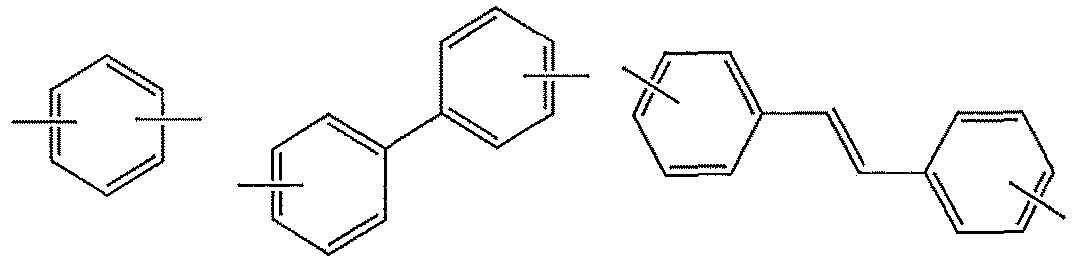
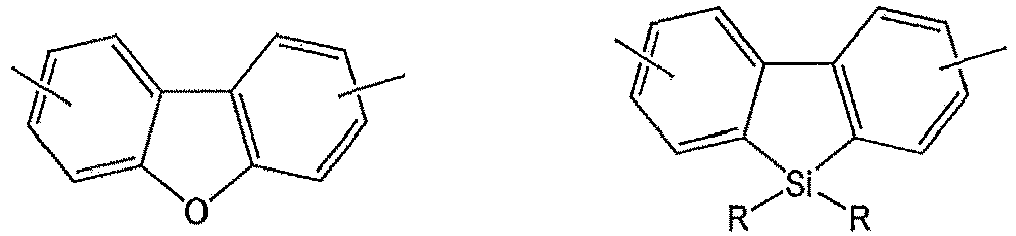
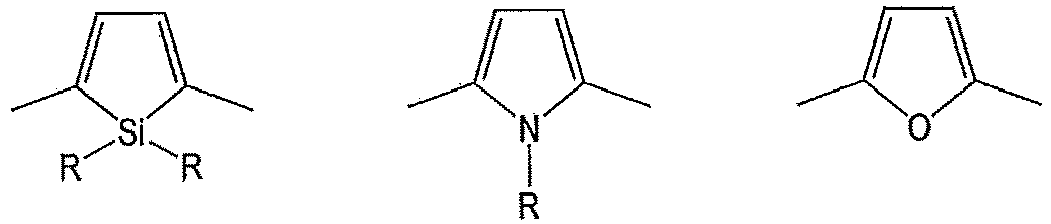
- Ar may be one of the groups represented by Formula 2 below: wherein, m is a positive number in the range of about 1 to about 4 and R is a C 1 -C 20 alkyl group.
- R 1 , R 2 , and R 3 may be each independently a phenyl group.
- the weight-average molecular weight of the polymer may be in the range of about 10,000 to about 300,000.
- the polymer may be represented by one of Formulae 3 through 9 below:
- the molecular weight dispersion of the polymer may be in the range of about 1.5 to about 4.
- the polymer may be used in an organic light-emitting device.
- the polymer is represented by formula 3 below:
- the polymer is represented by formula 4 below:
- an organic light-emitting device including: a first electrode; a second electrode; and an organic layer interposed between the first electrode and the second electrode, wherein the organic layer comprises at least one layer comprising the polymer above.
- the organic layer may include a hole transport layer.
- the organic layer may include an emission layer.
- a polymer according to the invention in its first aspect in an organic light-emitting device.
- a polymer according to the invention may be represented by Formula 1 below:
- R 2 and R 3 may be the same as each other or R 1 , R 2 , and R 3 may be the same as each other.
- substituents described with reference to Formula 1 will now be defined.
- examples of the linear or branched C 1 -C 20 alkyl group may include, but are not limited to, a methyl group, an ethyl group, a propyl group, an isobutyl group, a sec-butyl group, a pentyl group, an iso-amyl group, a hexyl group, a heptyl group, an octyl group, a nonyl group, or dodecyl group.
- At least one hydrogen atom in the alkyl group may be substituted with a deuterium atom, a tritium atom, a halogen atom, a hydroxyl group, a nitro group, a cyano group, an amino group, an amidino group, hydrazine, hydrazone, a carboxyl group or a salt thereof, a sulfonic acid group or a salt thereof, a phosphoric acid or a salt thereof, a C 1 -C 10 alkyl group, a C 1 -C 10 alkoxy group, a C 2 -C 10 alkenyl group, a C 2 -C 10 alkynyl group, a C 6 -C 16 aryl group, and a C 4 -C 16 heteroaryl group.
- At least one hydrogen atom in the cyclic C 3 -C 20 alkyl group may be substituted with a deuterium atom, a tritium atom, a halogen atom, a hydroxyl group, a nitro group, a cyano group, an amino group, an amidino group, hydrazine, hydrazone, a carboxyl group or a salt thereof, a sulfonic acid group or a salt thereof, a phosphoric acid or a salt thereof, a C 1 -C 10 alkyl group, a C 1 -C 10 alkoxy group, a C 2 -C 10 alkenyl group, a C 2 -C 10 alkynyl group, a C 6 -C 16 aryl group, and a C 4 -C 16 heteroaryl group.
- Ar may be a linear or branched substituted or unsubstituted C 1 -C 20 alkyl group, or a substituted or unsubstituted C 6 -C 26 aromatic group or a heteroaromatic group, wherein the aromatic group or the heteroaromatic group may be substituted with a C 1 -C 20 alkyl group or a substituted or unsubstituted C 1 -C 20 alkoxy group.
- the aromatic group refers to a carbocyclic aromatic system containing at least one ring.
- the carbocyclic aromatic system includes at least two rings, the at least two rings may be fused to each other or linked to each other by a single bond.
- the term 'aromatic' includes an aromatic system, such as, for example, phenyl, naphthyl, or anthracenyl.
- At least one hydrogen atom in the aromatic group may be substituted with a deuterium atom, a tritium atom, a halogen atom, a hydroxyl group, a nitro group, a cyano group, an amino group, an amidino group, hydrazine, hydrazone, a carboxyl group or a salt thereof, a sulfonic acid group or a salt thereof, a phosphoric acid or a salt thereof, a C 1 -C 10 alkyl group, a C 1 -C 10 alkoxy group, a C 2 -C 10 alkenyl group, a C 2 -C 10 alkynyl group, a C 6 -C 16 aryl group, and a C 4 -C 16 heteroaryl group.
- aromatic group examples include, but are not limited to, a phenyl group, a C 1 -C 10 alkylphenyl group (for example, ethylphenyl group), a halophenyl group (for example, o-, m-, and p-fluorophenyl group, dichlorophenyl group), a cyanophenyl group, dicyanophenyl group, a trifluoromethoxyphenyl group, a biphenyl group, a halobiphenyl group, a cyanobiphenyl group, a C 1 -C 10 alkyl biphenyl group, a C 1 -C 10 alkoxybiphenyl group, a o-, m-, and p-toryl group, an o-, m-, and p-cumenyl group, a mesityl group, a phenoxyphenyl group, a ( ⁇ , ⁇ -dimethylbenzene)phen
- the hetero aromatic group includes one, two or three hetero atoms selected from N, O, P and S. At least two rings may be fused to each other or linked to each other by a single bond.
- the hetero aromatic group may include a pyrazolyl group, an imidazolyl group, an oxyzolyl group, a thiazolyl group, a triazolyl group, a tetrazolyl group, an oxadiazolyl group, a pyridinyl group, a pyridazinyl group, a pyrimidinyl group, a triazinyl group, a carbazolyl group, an indolyl group, a quinolinyl group, an isoquinolinyl group, and the like.
- At least one hydrogen atom in the hetero aromatic group may be substituted with a deuterium atom, a tritium atom, a halogen atom, a hydroxyl group, a nitro group, a cyano group, an amino group, an amidino group, hydrazine, hydrazone, a carboxyl group or a salt thereof, a sulfonic acid group or a salt thereof, a phosphoric acid or a salt thereof, a C 1 -C 10 alkyl group, a C 1 -C 10 alkoxy group, a C 2 -C 10 alkenyl group, a C 2 -C 10 alkynyl group, a C 6 -C 16 aryl group, and a C 4 -C 16 heteroaryl group.
- the alkoxy group used herein is a group having a structure of -OA, wherein A is a linear or branched C 1 -C 20 alkyl group as described above. Examples thereof may include, but are not limited to, a methoxy group, an ethoxy group, a propoxy group, an isopropyloxy group, a butoxy group, and a pentoxy group.
- At least one hydrogen atom of the alkoxy group may be substituted with a deuterium atom, a tritium atom, a halogen atom, a hydroxyl group, a nitro group, a cyano group, an amino group, an amidino group, hydrazine, hydrazone, a carboxyl group or a salt thereof, a sulfonic acid group or a salt thereof, a phosphoric acid or a salt thereof, a C 1 -C 10 alkyl group, a C 1 -C 10 alkoxy group, a C 2 -C 10 alkenyl group, a C 2 -C 10 alkynyl group, a C 6 -C 16 aryl group, and a C 4 -C 16 heteroaryl group.
- Ar may be one of the groups represented by Formula 2 below:
- m is a positive number from about 1 to about 4 and R is a C 1 -C 20 alkyl group.
- R 1 , R 2 , and R 3 may each independently be a phenyl group.
- the weight-average molecular weight of the polymer may be from about 10,000 to about 300,000.
- the molecular weight dispersion of the polymer may be from about 1.5 to about 4.
- the polymer compound is represented by one of Formulae 3 through 9 below:
- n is as described above.
- the polymer may include an amine group directly connected to phenoxazine in a main chain.
- the polymer includes an amine group directly connected to phenoxazine in a main chain, the polymer is stable and has excellent hole transport capability due to the amine group. Accordingly, the polymer may be efficiently used in an organic light-emitting device.
- An organic light-emitting device includes a first electrode, a second electrode, and an organic layer disposed between the first electrode and the second electrode, the organic layer including the polymer of Formula 1 described above.
- the organic layer including the polymer of Formula 1 may be a hole transport layer or an emission layer.
- the first electrode may be an anode and the second electrode may be a cathode, but the reverse is also possible.
- Figure 1 illustrates a structure of a general organic light-emitting device.
- the general organic light-emitting device includes a substrate, a first electrode (e.g., anode), a hole injection layer (HIL), a hole transport layer (HTL), an emission layer (EML), an electron transport layer (ETL), an electron injection layer (EIL), and a second electrode (e.g., cathode).
- a first electrode e.g., anode
- HIL hole injection layer
- HTL hole transport layer
- EML emission layer
- ETL electron transport layer
- EIL electron injection layer
- cathode e.g., cathode
- the first electrode is formed on the substrate by using a deposition or sputtering method.
- the first electrode may comprise a first electrode material having a high work function.
- the first electrode may be an anode or a cathode.
- the substrate may be a substrate generally used in organic light-emitting devices, and may include, for example, a glass substrate or a transparent plastic substrate, which has excellent mechanical strength, thermal stability, transparency, surface planarity, handling convenience, and water resistance.
- the first electrode material may include materials, such as indium tin oxide (ITO), indium zinc oxide (IZO), tin oxide (SnO 2 ), zinc oxide (ZnO), aluminum (Al), silver (Ag), and magnesium (Mg), which have excellent conductivity, and may form a transparent or reflective electrode. Then, a HIL may be formed on the first electrode by using spin coating, casting, Langmuir Blodgett (LB) deposition, or the like.
- ITO indium tin oxide
- IZO indium zinc oxide
- SnO 2 tin oxide
- ZnO zinc oxide
- Al aluminum
- silver Ag
- Mg magnesium
- coating conditions may vary according to the compound that is used to form the HIL, and the structure and thermal properties of the HIL to be formed.
- the coating conditions may include a coating speed of about 1000 rpm to about 5000 rpm, and a thermal treatment temperature of about 80°C to about 250°C, wherein the thermal treatment is for removing a solvent after coating.
- the HIL may comprise any material that is commonly used to form a HIL.
- the material that can be used to form the HIL may include a phthalocyanine compound such as copperphthalocyanine; 4,4',4"-tris (3-methylphenylphenylamino) triphenylamine (m-MTDATA); N,N'-di(1-naphthyl)-N,N'-diphenylbenzidine (NPB); TDATA; 2-TNATA; polyaniline/dodecylbenzenesulfonic acid (Pani/DBSA); poly(3,4-ethylenedioxythiophene)/poly(4-styrenesulfonate) (PEDOT/PSS); polyaniline/camphor sulfonic acid (Pani/CSA); and polyaniline/poly(4-styrenesulfonate (PANI/PSS), but are not limited thereto.
- a phthalocyanine compound such as copperphthalocyanine; 4,4
- the HIL may have a thickness of about 100 ⁇ to about 10000 ⁇ .
- the HIL may have a thickness of about 100 ⁇ to about 1000 ⁇ .
- the HIL may have excellent hole injection characteristics without an increase in a driving voltage.
- a HTL may be formed on the HIL by using spin coating, casting, Langmuir-Blodgett (LB) deposition, or the like.
- LB Langmuir-Blodgett
- the conditions for deposition and coating are similar to those for the formation of the HIL, though the conditions for the deposition and coating may vary according to the material that is used to form the HTL.
- the HTL material may include the polymer of Formula 1 described above.
- a well-known HTL material may be used together with the polymer of Formula 1.
- the HTL materials may include, but are not limited to, carbazol derivatives such as N-phenylcarbazol or polyvinylcarbazol, and amine derivatives having an aromatic condensed ring, such as NPB; N,N'-bis(3-methylphenyl)- N,N'-diphenyl-[1,1-biphenyl]-4,4'-diamine (TPD); or N,N'-di(naphthalene-1-yl).
- carbazol derivatives such as N-phenylcarbazol or polyvinylcarbazol
- amine derivatives having an aromatic condensed ring such as NPB; N,N'-bis(3-methylphenyl)- N,N'-diphenyl-[1,1-biphenyl]-4,4'-diamine (TPD); or N,
- the HTL may have a thickness of about 50 ⁇ to about 1000 ⁇ .
- the HTL may have a thickness of 100 ⁇ to about 600 ⁇ .
- the HTL may have excellent hole transport characteristics without a substantial increase in a driving voltage.
- an EML may be formed on the HTL by using spin coating, casting, LB, or the like.
- the conditions for deposition are similar to those for the formation of the HIL, although the conditions for deposition may vary according to the material that is used to form the EML.
- the EML may include the polymer represented by Formula 1 described above.
- the polymer represented by Formula 1 may be used as a host or a dopant in a blue EML.
- the EML may be formed using a variety of well-known light-emitting materials in addition to the polymer represented by Formula 1, and may also be formed using a well-known host and a dopant.
- Dopants used to form the EML may include either a fluorescent dopant or a phosphorescent dopant, which are widely known in the art.
- Examples of the host may include, but are not limited to, Alq 3 , 4,4'-N,N'-dicarbazole-biphenyl (CPB), 9,10-di(naphthalene-2-yl)anthracene (ADN), and distyrylarylene (DSA).
- CNB 4,4'-N,N'-dicarbazole-biphenyl
- ADN 9,10-di(naphthalene-2-yl)anthracene
- DSA distyrylarylene
- red dopants may include, but are not limited to, platinum(II) octaethylporphyrin (PtOEP), Ir(piq) 3 , Btp 2 Ir(acac), and DCJTB.
- green dopants may include, but are not limited to, Ir(ppy) 3 (where "ppy” denotes phenylpyridine), Ir(ppy) 2 (acac), Ir(mpyp) 3 , and C545T.
- blue dopants may include, but are not limited to, F 2 Irpic, (F 2 ppy) 2 Ir(tmd), Ir(dfppz) 3 , ter-fluorene, 4,4'-bis(4-diphenylaminostyryl)biphenyl (DPAVBi), and 2,5,8,11-tetra-t-butyl pherylene (TBP).
- the amount of the dopant may be from about 0.1 to about 20 parts by weight.
- the amount of the dopant may be from about 0.5 to about 12 parts by weight, based on 100 parts by weight of the EML material, which is equivalent to the total weight of the host and the dopant.
- concentration quenching may be substantially prevented.
- the EML may have a thickness of about 100 ⁇ to about 1000 ⁇ .
- the EML may have a thickness of about 200 ⁇ to about 600 ⁇ .
- the EML may have excellent light-emitting characteristics without a substantial increase in a driving voltage.
- a hole blocking layer (HBL, not shown in Figure 1 ) may be formed on the EML in order to prevent diffusion of triplet excitons or holes into the ETL.
- HBL may comprise any material that is commonly used to form a HBL. Examples of such HBL materials may include, but are not limited to, oxadiazole derivatives, triazole derivatives, phenathroline derivatives, BAlq, and BCP.
- the HBL may have a thickness of about 50 ⁇ to about 1,000 ⁇ .
- the HBL may have a thickness of about 100 ⁇ to about 300 ⁇ .
- the thickness of the HBL is less than about 50 ⁇ , hole blocking characteristics may be degraded.
- the thickness of the HBL is greater than about 1000 ⁇ , the driving voltage of the organic light emitting device may be increased.
- an ETL may be formed on the HBL or EML by using spin coating, casting, or the like.
- the deposition or coating conditions may be similar to those used to form the HIL, though the deposition and coating conditions may vary according to the material that is used to form the ETL.
- the ETL material may include the heterocyclic compound of Formula 1 described above.
- the ETL may comprise any material that is widely known in the art.
- Examples of the ETL material may include, but are not limited to, quinoline derivatives, such as tris(8-quinolinolate)aluminum (Alq 3 ), TAZ, and BAlq.
- the ETL may have a thickness of about 100 ⁇ to about 1000 ⁇ .
- the ETL may have a thickness of about 100 ⁇ to about 500 ⁇ .
- the ETL may have excellent electron transport characteristics without a substantial increase in a driving voltage.
- an EIL which facilitates injection of electrons from the cathode, may be formed on the ETL.
- An EIL material may include the heterocyclic compound of Formula 1 described above.
- well-known EIL materials such as LiF, NaCl, CsF, Li 2 O, or BaO, may be used to form the EIL.
- the deposition or coating conditions for forming the EIL may be similar to those applied to form the HIL, although the deposition and coating conditions may vary according to the material that is used to form the EIL.
- the EIL may have a thickness of about 1 ⁇ to about 100 ⁇ .
- the EIL may have a thickness of about 5 ⁇ to about 90 ⁇ .
- the EIL may have excellent electron injection characteristics without a substantial increase in a driving voltage.
- the second electrode may be formed on the EIL using, for example, vacuum deposition, sputtering, or the like.
- the second electrode may constitute a cathode or an anode.
- a second electrode material may include a metal, an alloy, an electrically conductive compound, or mixtures thereof, all of which have a low work function. Examples of such materials may include, but are not limited to, lithium (Li), magnesium (Mg), aluminum (Al), aluminum-lithium (Al-Li), calcium (Ca), magnesium-indium(Mg-In), and magnesium-silver (Mg-Ag).
- a transparent cathode comprising a transparent material such as ITO or IZO may be used as the second electrode.
- the organic light-emitting device may be included in various types of flat panel display devices, such as in a passive matrix organic light-emitting display device or in an active matrix organic light-emitting display device.
- the first electrode on the substrate may function as a pixel electrode electrically connected to a source electrode or a drain electrode of the thin-film transistor.
- the organic light-emitting device may also be included in a flat panel display device having a double-sided screen.
- reaction mixture was cooled to room temperature and then extracted by adding 200 mL of distilled water in a volume ratio of xylene to water of 1:1.
- the organic phase was collected, dried using MgSO 4 , and then concentrated.
- the concentrated product was refined using silica gel column chromatography in which a mixture of toluene and hexane in a volume ratio of 1:2 was used as an eluant. Then, the resulting effluent was concentrated and dried to obtain 15.2 g of Compound with a yield of 71%.
- a phenothiazine monomer d may be also manufactured as in the method above.
- the reaction mixture was cooled to room temperature and then extracted by adding 200 mL of distilled water in a volume ratio of xylene to water of 1:1.
- the organic phase was collected, dried using MgSO 4 , and then concentrated.
- the concentrated product was refined using silica gel column chromatography in which toluene was used as an eluant.
- the resulting effluent was dissolved in toluene and precipitated in 4 L of MeOH.
- the precipitated resultant was washed, dried under reduced pressure, and precipitated in toluene/MeOH three times. Accordingly, 8.8 g of the polymer represented by Formula 3 was obtained in the form of a light yellow solid.
- the resulting polymer was analyzed using gas permeation chromatography (GPC). As a result, the polymer had a weight-average molecular weight (Mw) of 38,000, and a molecular weight dispersion of 2.8.
- Mw weight-average molecular weight
- the reaction mixture was cooled to room temperature and then extracted by adding 200 mL of distilled water in a volume ratio of xylene to water of 1:1.
- the organic phase was collected, dried using MgSO 4 , and then concentrated.
- the concentrated product was refined using silica gel column chromatography in which toluene was used as an eluant.
- the resulting effluent was precipitated by adding 800 mL of ethanol.
- An organic material obtained as above was condensed, dissolved in 100 mL of THF, and precipitated in 2 L of MeOH.
- the precipitated resultant was washed, dried under reduced pressure, and precipitated in toluene/MeOH three times. Accordingly, 3.1 g of the polymer represented by Formula 4 was obtained in the form of a light yellow solid.
- the resulting polymer was analyzed using gas permeation chromatography (GPC). As a result, the polymer had a weight-average molecular weight (Mw) of 40,000, and a molecular weight dispersion of 3.2.
- Mw weight-average molecular weight
- An organic light emitting device was manufactured as in Figure 3 .
- a 15 ⁇ /cm 2 (1,200 ⁇ ) ITO glass substrate (available from Corning Co.) was cut to a size of 50 mm x 50 mm x 0.5 mm, ultrasonically washed with isopropyl alcohol for 5 minutes and then with pure water for 5 minutes, and washed again with UV ozone for 20 minutes. Then, CH8000 from H.C.Stark Co. as a conductive buffer layer was coated to a thickness of about 600 ⁇ on the ITO film and then baked for about 20 minutes at 200°C.
- LiF having a thickness of about 80 ⁇ and Al having a thickness of about 3000 ⁇ were sequentially vacuum deposited on the ETL to form a LiF/Al electrode.
- a crystal sensor was used in regulating a thickness of the layer and growing speed of the layer during deposition.
- An organic light emitting device was manufactured in the same manner as in Example 1, except that the polymer represented by Formula 4 was used as a HTL.
- An organic light emitting device was manufactured as in Figure 2 .
- the organic light emitting device was manufactured in the same manner as in Example 1, except that the HTL was not formed.
- An organic light emitting device was manufactured in the same manner as in Example 1, except that the polymer represented by Formula 10 was used as a HTL.
- an interlayer is not disposed on the buffer layer in the organic light emitting device of Comparative Example 1.
- the organic light emitting device of Comparative Example 1 has low luminescent efficiency and reduced lifetime compared with the organic light emitting devices of Examples 1 and 2 and Comparative Example 2 which have an interlayer. Accordingly, the interlayer is required.
- the polymer compound (Example 1) including an arylamine group in phenoxazine has excellent hole transport capability and high stability, compared with the phenoxazine polymer (Comparative Example 2) without an arylamine group, and thus have excellent efficiency and long lifetime.
- Phenoxazine or phenothiazine used herein has great charge mobility and energy gap and thus may improve performance of the organic light-emitting device as a material for forming the blue EML, HIL, HTL, ETL, or EIL.
- aryl amine is included at both sides of the phenoxazine monomer so as to improve hole mobility and thus is excellent as a material for forming an HTL.
Landscapes
- Chemical & Material Sciences (AREA)
- Organic Chemistry (AREA)
- Health & Medical Sciences (AREA)
- Chemical Kinetics & Catalysis (AREA)
- Medicinal Chemistry (AREA)
- Polymers & Plastics (AREA)
- Engineering & Computer Science (AREA)
- Materials Engineering (AREA)
- Physics & Mathematics (AREA)
- Optics & Photonics (AREA)
- Electroluminescent Light Sources (AREA)
- Macromolecular Compounds Obtained By Forming Nitrogen-Containing Linkages In General (AREA)
Claims (13)
- Polymer, dargestellt durch die nachstehende Formel 1:
 n eine reelle Zahl im Bereich von etwa 0,01 bis etwa 0,99 ist,X O oder S ist,R1 H, eine lineare oder verzweigte substituierte oder nicht substituierte C1-C20-Alkylgruppe, eine substituierte oder nicht substituierte cyclische C3-C20-Alkylgruppe oder eine substituierte oder nicht substituierte aromatische C6-C14-Gruppe ist, wobei die aromatische Gruppe mit einer substituierten oder nicht substituierten C1-C20-Alkylgruppe oder einer substituierten oder nicht substituierten C1-C20-Alkoxygruppe substituiert sein kann,R2 und R3 jeweils unabhängig eine substituierte oder nicht substituierte aromatische C6-C26-Gruppe oder eine heteroaromatische Gruppe sind, wobei die aromatische Gruppe oder die heteroaromatische Gruppe mit einer substituierten oder nicht substituierten C1-C20-Alkylgruppe oder einer substituierten oder nicht substituierten C1-C20-Alkoxygruppe substituiert sein kann, undAr eine lineare oder verzweigte substituierte oder nicht substituierte C1-C20-Alkylgruppe, eine substituierte oder nicht substituierte aromatische C6-C26-Gruppe oder eine heteroaromatische Gruppe ist, wobei die aromatische Gruppe oder die heteroaromatische Gruppe mit einer substituierten oder nicht substituierten C1-C20-Alkylgruppe oder einer substituierten oder nicht substituierten C1-C20-Alkoxygruppe substituiert sein kann.
 - Polymer nach Anspruch 1, wobei Ar eine der nachstehend dargestellten Gruppen ist:





- Polymer nach Anspruch 1 oder Anspruch 2, wobei R1, R2 und R3 jeweils unabhängig eine Phenylgruppe sind.
- Polymer nach einem vorhergehenden Anspruch, wobei das Gewichtsmittel des Molekulargewichts des Polymers 10.000 bis 300.000 beträgt.
- Polymer nach einem vorhergehenden Anspruch, wobei das Polymer durch eine der nachstehenden Formeln 3 bis 9 dargestellt wird:


- Polymer nach einem vorhergehenden Anspruch, wobei die Molekulargewichtsdispersion des Polymers 1,5 bis 4 beträgt.
- Polymer nach einem vorhergehenden Anspruch zur Verwendung in einer organischen lichtemittierenden Vorrichtung.
- Polymer nach Anspruch 1, wobei das Polymer durch die nachstehende Formel 3 dargestellt wird:

- Polymer nach Anspruch 1, wobei das Polymer durch die nachstehende Formel 4 dargestellt wird:

- Organische lichtemittierende Vorrichtung, umfassend:eine erste Elektrode;eine zweite Elektrode; undeine organische Schicht, die zwischen der ersten Elektrode und der zweiten Elektrode angeordnet ist,wobei die organische Schicht wenigstens eine Schicht umfasst, die das Polymer nach einem der Ansprüche 1 bis 9 umfasst.
- Organische lichtemittierende Vorrichtung nach Anspruch 10, wobei die organische Schicht eine Lochtransportschicht umfasst.
- Organische lichtemittierende Vorrichtung nach Anspruch 10, wobei die organische Schicht eine Emissionsschicht umfasst.
- Verwendung eines Polymers nach einem der Ansprüche 1 bis 9 in einer organischen lichtemittierenden Vorrichtung.
Applications Claiming Priority (1)
| Application Number | Priority Date | Filing Date | Title |
|---|---|---|---|
| KR1020100030501A KR101174880B1 (ko) | 2010-04-02 | 2010-04-02 | 고분자 화합물 및 이를 포함하는 유기 발광 소자 |
Publications (2)
| Publication Number | Publication Date |
|---|---|
| EP2371878A1 EP2371878A1 (de) | 2011-10-05 |
| EP2371878B1 true EP2371878B1 (de) | 2017-03-01 |
Family
ID=44121655
Family Applications (1)
| Application Number | Title | Priority Date | Filing Date |
|---|---|---|---|
| EP11160612.5A Active EP2371878B1 (de) | 2010-04-02 | 2011-03-31 | Polymerverbindung und organische lichtemittierende vorrichtung enthaltend diesselbe |
Country Status (5)
| Country | Link |
|---|---|
| US (1) | US8691930B2 (de) |
| EP (1) | EP2371878B1 (de) |
| JP (1) | JP2011219731A (de) |
| KR (1) | KR101174880B1 (de) |
| CN (1) | CN102212193B (de) |
Families Citing this family (4)
| Publication number | Priority date | Publication date | Assignee | Title |
|---|---|---|---|---|
| JP6786858B2 (ja) * | 2015-06-19 | 2020-11-18 | 株式会社リコー | エレクトロクロミック化合物及びエレクトロクロミック組成物 |
| WO2017179661A1 (ja) * | 2016-04-15 | 2017-10-19 | 日立化成株式会社 | 電荷輸送性材料、該材料を用いたインク組成物、有機エレクトロニクス素子、有機エレクトロルミネセンス素子、表示素子、照明装置、及び表示装置 |
| JP6772623B2 (ja) * | 2016-07-28 | 2020-10-21 | 日産化学株式会社 | 電荷輸送性組成物 |
| KR102193068B1 (ko) * | 2019-04-02 | 2020-12-18 | 한국교통대학교 산학협력단 | 유기전계발광소자용 정공수송재료 및 그를 포함하는 유기전계발광소자 |
Family Cites Families (9)
| Publication number | Priority date | Publication date | Assignee | Title |
|---|---|---|---|---|
| KR100552683B1 (ko) | 2002-06-21 | 2006-02-20 | 삼성에스디아이 주식회사 | 청색 전계발광 고분자 및 이를 이용한 유기 전계발광 소자 |
| US6916902B2 (en) * | 2002-12-19 | 2005-07-12 | Dow Global Technologies Inc. | Tricyclic arylamine containing polymers and electronic devices therefrom |
| DE102004057073A1 (de) | 2004-11-25 | 2006-06-08 | Basf Ag | Verwendung von Phenothiazin-S-oxiden und -S,S-dioxiden als Matrixmaterialien für organische Leuchtdioden |
| KR101193178B1 (ko) | 2005-06-29 | 2012-10-19 | 삼성디스플레이 주식회사 | 유기 발광 소자 및 이의 제조 방법 |
| KR101328972B1 (ko) | 2006-01-26 | 2013-11-13 | 삼성디스플레이 주식회사 | 전계발광 고분자 및 이를 이용한 유기 전계발광 소자 |
| KR101223720B1 (ko) * | 2006-06-05 | 2013-01-17 | 삼성디스플레이 주식회사 | 고분자 화합물 및 이를 이용한 유기 발광 소자 |
| JP5251043B2 (ja) | 2006-09-13 | 2013-07-31 | 住友化学株式会社 | 高分子化合物および高分子発光素子 |
| KR101407578B1 (ko) | 2007-07-24 | 2014-06-13 | 삼성디스플레이 주식회사 | 페닐페녹사진 또는 페닐페노시아진계 화합물 및 이를이용한 유기 전계 발광 소자 |
| US20100207516A1 (en) | 2007-10-10 | 2010-08-19 | Shota Moriwaki | Polymer compound and polymer light-emitting device using the same |
-
2010
- 2010-04-02 KR KR1020100030501A patent/KR101174880B1/ko active Active
- 2010-12-27 JP JP2010289799A patent/JP2011219731A/ja active Pending
-
2011
- 2011-03-30 US US13/076,160 patent/US8691930B2/en active Active
- 2011-03-31 EP EP11160612.5A patent/EP2371878B1/de active Active
- 2011-04-06 CN CN201110087383.7A patent/CN102212193B/zh active Active
Non-Patent Citations (1)
| Title |
|---|
| None * |
Also Published As
| Publication number | Publication date |
|---|---|
| EP2371878A1 (de) | 2011-10-05 |
| CN102212193A (zh) | 2011-10-12 |
| US8691930B2 (en) | 2014-04-08 |
| JP2011219731A (ja) | 2011-11-04 |
| CN102212193B (zh) | 2014-12-17 |
| US20110240975A1 (en) | 2011-10-06 |
| KR20110111102A (ko) | 2011-10-10 |
| KR101174880B1 (ko) | 2012-08-17 |
Similar Documents
| Publication | Publication Date | Title |
|---|---|---|
| EP2292603B1 (de) | Organische lichtemittierende Vorrichtung | |
| EP2289877B1 (de) | Polycyclishe Heteroaryl Verbindungen enthaltend organische lichtemittierende Vorrichtung | |
| EP2292618B1 (de) | Polycyclische Heteroaryl Verbindungen enthaltenden organische lichtemittierende Vorrichtung | |
| EP2298739B1 (de) | Polycyclische Heteroaryl Verbindungen enthaltende organische lichtemittierende Vorrichtung | |
| EP2292601B1 (de) | Phenanthro[2,3-b]pyrrole und Phenanthro[3,2-b]pyrrole für organische lichtemittierende Vorrichtungen | |
| EP2407502B1 (de) | Dendrimer und organische lichtemittierende Vorrichtung damit | |
| EP2308911A2 (de) | Polymer und organische lichtemittierende Vorrichtung damit | |
| US8384074B2 (en) | Heterocyclic compound and organic light-emitting device including the same | |
| EP2392563B1 (de) | Stickstoffhaltige polyzyklische derivate verwendbar in organischen lichtemitterende vorrichtungen | |
| US8993128B2 (en) | Heterocyclic compound and organic light-emitting device containing same | |
| EP2298771B1 (de) | Organische lichtemittierende Vorrichtung | |
| US7754349B2 (en) | Silanylamine-based compound and organic light-emitting device including organic layer including the silanylamine-based compound | |
| US20090230855A1 (en) | Novel organic compound and organic light emitting device comprising the same | |
| EP2301920B1 (de) | Naphthoindol Derivate enthaltende organische lichtemittierende Vorrichtung | |
| EP2371878B1 (de) | Polymerverbindung und organische lichtemittierende vorrichtung enthaltend diesselbe | |
| US8455866B2 (en) | Heterocyclic compound and organic light-emitting device including the same | |
| KR20090018503A (ko) | 옥사디아졸 유도체 화합물 및 이를 구비한 유기 발광 소자 |
Legal Events
| Date | Code | Title | Description |
|---|---|---|---|
| PUAI | Public reference made under article 153(3) epc to a published international application that has entered the european phase |
Free format text: ORIGINAL CODE: 0009012 |
|
| AK | Designated contracting states |
Kind code of ref document: A1 Designated state(s): AL AT BE BG CH CY CZ DE DK EE ES FI FR GB GR HR HU IE IS IT LI LT LU LV MC MK MT NL NO PL PT RO RS SE SI SK SM TR |
|
| AX | Request for extension of the european patent |
Extension state: BA ME |
|
| 17P | Request for examination filed |
Effective date: 20111010 |
|
| RAP1 | Party data changed (applicant data changed or rights of an application transferred) |
Owner name: SAMSUNG DISPLAY CO., LTD. |
|
| RAP1 | Party data changed (applicant data changed or rights of an application transferred) |
Owner name: SAMSUNG DISPLAY CO., LTD. |
|
| GRAP | Despatch of communication of intention to grant a patent |
Free format text: ORIGINAL CODE: EPIDOSNIGR1 |
|
| INTG | Intention to grant announced |
Effective date: 20160906 |
|
| RIN1 | Information on inventor provided before grant (corrected) |
Inventor name: LEE, JAE-YONG Inventor name: KWAK, YOON-HYUN Inventor name: YI, JEOUNG-IN Inventor name: YANG, SEUNG-GAK Inventor name: KIM, HEE-YEON |
|
| STAA | Information on the status of an ep patent application or granted ep patent |
Free format text: STATUS: GRANT OF PATENT IS INTENDED |
|
| GRAS | Grant fee paid |
Free format text: ORIGINAL CODE: EPIDOSNIGR3 |
|
| GRAA | (expected) grant |
Free format text: ORIGINAL CODE: 0009210 |
|
| STAA | Information on the status of an ep patent application or granted ep patent |
Free format text: STATUS: THE PATENT HAS BEEN GRANTED |
|
| AK | Designated contracting states |
Kind code of ref document: B1 Designated state(s): AL AT BE BG CH CY CZ DE DK EE ES FI FR GB GR HR HU IE IS IT LI LT LU LV MC MK MT NL NO PL PT RO RS SE SI SK SM TR |
|
| REG | Reference to a national code |
Ref country code: GB Ref legal event code: FG4D |
|
| REG | Reference to a national code |
Ref country code: CH Ref legal event code: EP Ref country code: AT Ref legal event code: REF Ref document number: 871266 Country of ref document: AT Kind code of ref document: T Effective date: 20170315 |
|
| REG | Reference to a national code |
Ref country code: IE Ref legal event code: FG4D |
|
| REG | Reference to a national code |
Ref country code: FR Ref legal event code: PLFP Year of fee payment: 7 |
|
| REG | Reference to a national code |
Ref country code: DE Ref legal event code: R096 Ref document number: 602011035358 Country of ref document: DE |
|
| REG | Reference to a national code |
Ref country code: NL Ref legal event code: MP Effective date: 20170301 |
|
| REG | Reference to a national code |
Ref country code: LT Ref legal event code: MG4D |
|
| REG | Reference to a national code |
Ref country code: AT Ref legal event code: MK05 Ref document number: 871266 Country of ref document: AT Kind code of ref document: T Effective date: 20170301 |
|
| PG25 | Lapsed in a contracting state [announced via postgrant information from national office to epo] |
Ref country code: FI Free format text: LAPSE BECAUSE OF FAILURE TO SUBMIT A TRANSLATION OF THE DESCRIPTION OR TO PAY THE FEE WITHIN THE PRESCRIBED TIME-LIMIT Effective date: 20170301 Ref country code: GR Free format text: LAPSE BECAUSE OF FAILURE TO SUBMIT A TRANSLATION OF THE DESCRIPTION OR TO PAY THE FEE WITHIN THE PRESCRIBED TIME-LIMIT Effective date: 20170602 Ref country code: NO Free format text: LAPSE BECAUSE OF FAILURE TO SUBMIT A TRANSLATION OF THE DESCRIPTION OR TO PAY THE FEE WITHIN THE PRESCRIBED TIME-LIMIT Effective date: 20170601 Ref country code: LT Free format text: LAPSE BECAUSE OF FAILURE TO SUBMIT A TRANSLATION OF THE DESCRIPTION OR TO PAY THE FEE WITHIN THE PRESCRIBED TIME-LIMIT Effective date: 20170301 Ref country code: HR Free format text: LAPSE BECAUSE OF FAILURE TO SUBMIT A TRANSLATION OF THE DESCRIPTION OR TO PAY THE FEE WITHIN THE PRESCRIBED TIME-LIMIT Effective date: 20170301 |
|
| PG25 | Lapsed in a contracting state [announced via postgrant information from national office to epo] |
Ref country code: ES Free format text: LAPSE BECAUSE OF FAILURE TO SUBMIT A TRANSLATION OF THE DESCRIPTION OR TO PAY THE FEE WITHIN THE PRESCRIBED TIME-LIMIT Effective date: 20170301 Ref country code: LV Free format text: LAPSE BECAUSE OF FAILURE TO SUBMIT A TRANSLATION OF THE DESCRIPTION OR TO PAY THE FEE WITHIN THE PRESCRIBED TIME-LIMIT Effective date: 20170301 Ref country code: AT Free format text: LAPSE BECAUSE OF FAILURE TO SUBMIT A TRANSLATION OF THE DESCRIPTION OR TO PAY THE FEE WITHIN THE PRESCRIBED TIME-LIMIT Effective date: 20170301 Ref country code: BG Free format text: LAPSE BECAUSE OF FAILURE TO SUBMIT A TRANSLATION OF THE DESCRIPTION OR TO PAY THE FEE WITHIN THE PRESCRIBED TIME-LIMIT Effective date: 20170601 Ref country code: SE Free format text: LAPSE BECAUSE OF FAILURE TO SUBMIT A TRANSLATION OF THE DESCRIPTION OR TO PAY THE FEE WITHIN THE PRESCRIBED TIME-LIMIT Effective date: 20170301 Ref country code: RS Free format text: LAPSE BECAUSE OF FAILURE TO SUBMIT A TRANSLATION OF THE DESCRIPTION OR TO PAY THE FEE WITHIN THE PRESCRIBED TIME-LIMIT Effective date: 20170301 |
|
| PG25 | Lapsed in a contracting state [announced via postgrant information from national office to epo] |
Ref country code: NL Free format text: LAPSE BECAUSE OF FAILURE TO SUBMIT A TRANSLATION OF THE DESCRIPTION OR TO PAY THE FEE WITHIN THE PRESCRIBED TIME-LIMIT Effective date: 20170301 |
|
| PG25 | Lapsed in a contracting state [announced via postgrant information from national office to epo] |
Ref country code: RO Free format text: LAPSE BECAUSE OF FAILURE TO SUBMIT A TRANSLATION OF THE DESCRIPTION OR TO PAY THE FEE WITHIN THE PRESCRIBED TIME-LIMIT Effective date: 20170301 Ref country code: CZ Free format text: LAPSE BECAUSE OF FAILURE TO SUBMIT A TRANSLATION OF THE DESCRIPTION OR TO PAY THE FEE WITHIN THE PRESCRIBED TIME-LIMIT Effective date: 20170301 Ref country code: IT Free format text: LAPSE BECAUSE OF FAILURE TO SUBMIT A TRANSLATION OF THE DESCRIPTION OR TO PAY THE FEE WITHIN THE PRESCRIBED TIME-LIMIT Effective date: 20170301 Ref country code: EE Free format text: LAPSE BECAUSE OF FAILURE TO SUBMIT A TRANSLATION OF THE DESCRIPTION OR TO PAY THE FEE WITHIN THE PRESCRIBED TIME-LIMIT Effective date: 20170301 Ref country code: SK Free format text: LAPSE BECAUSE OF FAILURE TO SUBMIT A TRANSLATION OF THE DESCRIPTION OR TO PAY THE FEE WITHIN THE PRESCRIBED TIME-LIMIT Effective date: 20170301 |
|
| REG | Reference to a national code |
Ref country code: CH Ref legal event code: PL |
|
| PG25 | Lapsed in a contracting state [announced via postgrant information from national office to epo] |
Ref country code: IS Free format text: LAPSE BECAUSE OF FAILURE TO SUBMIT A TRANSLATION OF THE DESCRIPTION OR TO PAY THE FEE WITHIN THE PRESCRIBED TIME-LIMIT Effective date: 20170701 Ref country code: PL Free format text: LAPSE BECAUSE OF FAILURE TO SUBMIT A TRANSLATION OF THE DESCRIPTION OR TO PAY THE FEE WITHIN THE PRESCRIBED TIME-LIMIT Effective date: 20170301 Ref country code: SM Free format text: LAPSE BECAUSE OF FAILURE TO SUBMIT A TRANSLATION OF THE DESCRIPTION OR TO PAY THE FEE WITHIN THE PRESCRIBED TIME-LIMIT Effective date: 20170301 Ref country code: PT Free format text: LAPSE BECAUSE OF FAILURE TO SUBMIT A TRANSLATION OF THE DESCRIPTION OR TO PAY THE FEE WITHIN THE PRESCRIBED TIME-LIMIT Effective date: 20170703 |
|
| REG | Reference to a national code |
Ref country code: DE Ref legal event code: R097 Ref document number: 602011035358 Country of ref document: DE |
|
| REG | Reference to a national code |
Ref country code: IE Ref legal event code: MM4A |
|
| PLBE | No opposition filed within time limit |
Free format text: ORIGINAL CODE: 0009261 |
|
| STAA | Information on the status of an ep patent application or granted ep patent |
Free format text: STATUS: NO OPPOSITION FILED WITHIN TIME LIMIT |
|
| PG25 | Lapsed in a contracting state [announced via postgrant information from national office to epo] |
Ref country code: LU Free format text: LAPSE BECAUSE OF NON-PAYMENT OF DUE FEES Effective date: 20170331 Ref country code: DK Free format text: LAPSE BECAUSE OF FAILURE TO SUBMIT A TRANSLATION OF THE DESCRIPTION OR TO PAY THE FEE WITHIN THE PRESCRIBED TIME-LIMIT Effective date: 20170301 Ref country code: MC Free format text: LAPSE BECAUSE OF FAILURE TO SUBMIT A TRANSLATION OF THE DESCRIPTION OR TO PAY THE FEE WITHIN THE PRESCRIBED TIME-LIMIT Effective date: 20170301 |
|
| 26N | No opposition filed |
Effective date: 20171204 |
|
| REG | Reference to a national code |
Ref country code: FR Ref legal event code: PLFP Year of fee payment: 8 |
|
| PG25 | Lapsed in a contracting state [announced via postgrant information from national office to epo] |
Ref country code: LI Free format text: LAPSE BECAUSE OF NON-PAYMENT OF DUE FEES Effective date: 20170331 Ref country code: CH Free format text: LAPSE BECAUSE OF NON-PAYMENT OF DUE FEES Effective date: 20170331 Ref country code: IE Free format text: LAPSE BECAUSE OF NON-PAYMENT OF DUE FEES Effective date: 20170331 Ref country code: SI Free format text: LAPSE BECAUSE OF FAILURE TO SUBMIT A TRANSLATION OF THE DESCRIPTION OR TO PAY THE FEE WITHIN THE PRESCRIBED TIME-LIMIT Effective date: 20170301 |
|
| REG | Reference to a national code |
Ref country code: BE Ref legal event code: MM Effective date: 20170331 |
|
| PG25 | Lapsed in a contracting state [announced via postgrant information from national office to epo] |
Ref country code: BE Free format text: LAPSE BECAUSE OF NON-PAYMENT OF DUE FEES Effective date: 20170331 |
|
| PG25 | Lapsed in a contracting state [announced via postgrant information from national office to epo] |
Ref country code: MT Free format text: LAPSE BECAUSE OF NON-PAYMENT OF DUE FEES Effective date: 20170331 |
|
| PG25 | Lapsed in a contracting state [announced via postgrant information from national office to epo] |
Ref country code: HU Free format text: LAPSE BECAUSE OF FAILURE TO SUBMIT A TRANSLATION OF THE DESCRIPTION OR TO PAY THE FEE WITHIN THE PRESCRIBED TIME-LIMIT; INVALID AB INITIO Effective date: 20110331 |
|
| PG25 | Lapsed in a contracting state [announced via postgrant information from national office to epo] |
Ref country code: CY Free format text: LAPSE BECAUSE OF NON-PAYMENT OF DUE FEES Effective date: 20170301 |
|
| PG25 | Lapsed in a contracting state [announced via postgrant information from national office to epo] |
Ref country code: MK Free format text: LAPSE BECAUSE OF FAILURE TO SUBMIT A TRANSLATION OF THE DESCRIPTION OR TO PAY THE FEE WITHIN THE PRESCRIBED TIME-LIMIT Effective date: 20170301 |
|
| PG25 | Lapsed in a contracting state [announced via postgrant information from national office to epo] |
Ref country code: TR Free format text: LAPSE BECAUSE OF FAILURE TO SUBMIT A TRANSLATION OF THE DESCRIPTION OR TO PAY THE FEE WITHIN THE PRESCRIBED TIME-LIMIT Effective date: 20170301 |
|
| PG25 | Lapsed in a contracting state [announced via postgrant information from national office to epo] |
Ref country code: AL Free format text: LAPSE BECAUSE OF FAILURE TO SUBMIT A TRANSLATION OF THE DESCRIPTION OR TO PAY THE FEE WITHIN THE PRESCRIBED TIME-LIMIT Effective date: 20170301 |
|
| P01 | Opt-out of the competence of the unified patent court (upc) registered |
Effective date: 20230515 |
|
| PGFP | Annual fee paid to national office [announced via postgrant information from national office to epo] |
Ref country code: GB Payment date: 20260224 Year of fee payment: 16 |
|
| PGFP | Annual fee paid to national office [announced via postgrant information from national office to epo] |
Ref country code: DE Payment date: 20260220 Year of fee payment: 16 |
|
| PGFP | Annual fee paid to national office [announced via postgrant information from national office to epo] |
Ref country code: FR Payment date: 20260224 Year of fee payment: 16 |