EP2372796A2 - Boîtier pour diode électroluminescente et unité d'éclairage l'incorporant - Google Patents
Boîtier pour diode électroluminescente et unité d'éclairage l'incorporant Download PDFInfo
- Publication number
- EP2372796A2 EP2372796A2 EP11160775A EP11160775A EP2372796A2 EP 2372796 A2 EP2372796 A2 EP 2372796A2 EP 11160775 A EP11160775 A EP 11160775A EP 11160775 A EP11160775 A EP 11160775A EP 2372796 A2 EP2372796 A2 EP 2372796A2
- Authority
- EP
- European Patent Office
- Prior art keywords
- light emitting
- emitting device
- light
- ceramic substrate
- resin layer
- Prior art date
- Legal status (The legal status is an assumption and is not a legal conclusion. Google has not performed a legal analysis and makes no representation as to the accuracy of the status listed.)
- Granted
Links
Images



Classifications
-
- H—ELECTRICITY
- H10—SEMICONDUCTOR DEVICES; ELECTRIC SOLID-STATE DEVICES NOT OTHERWISE PROVIDED FOR
- H10H—INORGANIC LIGHT-EMITTING SEMICONDUCTOR DEVICES HAVING POTENTIAL BARRIERS
- H10H20/00—Individual inorganic light-emitting semiconductor devices having potential barriers, e.g. light-emitting diodes [LED]
- H10H20/80—Constructional details
- H10H20/85—Packages
- H10H20/852—Encapsulations
- H10H20/853—Encapsulations characterised by their shape
-
- H—ELECTRICITY
- H10—SEMICONDUCTOR DEVICES; ELECTRIC SOLID-STATE DEVICES NOT OTHERWISE PROVIDED FOR
- H10H—INORGANIC LIGHT-EMITTING SEMICONDUCTOR DEVICES HAVING POTENTIAL BARRIERS
- H10H20/00—Individual inorganic light-emitting semiconductor devices having potential barriers, e.g. light-emitting diodes [LED]
- H10H20/80—Constructional details
- H10H20/85—Packages
- H10H20/851—Wavelength conversion means
- H10H20/8515—Wavelength conversion means not being in contact with the bodies
-
- G—PHYSICS
- G02—OPTICS
- G02F—OPTICAL DEVICES OR ARRANGEMENTS FOR THE CONTROL OF LIGHT BY MODIFICATION OF THE OPTICAL PROPERTIES OF THE MEDIA OF THE ELEMENTS INVOLVED THEREIN; NON-LINEAR OPTICS; FREQUENCY-CHANGING OF LIGHT; OPTICAL LOGIC ELEMENTS; OPTICAL ANALOGUE/DIGITAL CONVERTERS
- G02F1/00—Devices or arrangements for the control of the intensity, colour, phase, polarisation or direction of light arriving from an independent light source, e.g. switching, gating or modulating; Non-linear optics
- G02F1/01—Devices or arrangements for the control of the intensity, colour, phase, polarisation or direction of light arriving from an independent light source, e.g. switching, gating or modulating; Non-linear optics for the control of the intensity, phase, polarisation or colour
- G02F1/13—Devices or arrangements for the control of the intensity, colour, phase, polarisation or direction of light arriving from an independent light source, e.g. switching, gating or modulating; Non-linear optics for the control of the intensity, phase, polarisation or colour based on liquid crystals, e.g. single liquid crystal display cells
- G02F1/133—Constructional arrangements; Operation of liquid crystal cells; Circuit arrangements
- G02F1/1333—Constructional arrangements; Manufacturing methods
- G02F1/1335—Structural association of cells with optical devices, e.g. polarisers or reflectors
- G02F1/1336—Illuminating devices
- G02F1/133602—Direct backlight
- G02F1/133603—Direct backlight with LEDs
-
- H—ELECTRICITY
- H10—SEMICONDUCTOR DEVICES; ELECTRIC SOLID-STATE DEVICES NOT OTHERWISE PROVIDED FOR
- H10H—INORGANIC LIGHT-EMITTING SEMICONDUCTOR DEVICES HAVING POTENTIAL BARRIERS
- H10H20/00—Individual inorganic light-emitting semiconductor devices having potential barriers, e.g. light-emitting diodes [LED]
- H10H20/80—Constructional details
- H10H20/85—Packages
- H10H20/8506—Containers
-
- H—ELECTRICITY
- H10—SEMICONDUCTOR DEVICES; ELECTRIC SOLID-STATE DEVICES NOT OTHERWISE PROVIDED FOR
- H10H—INORGANIC LIGHT-EMITTING SEMICONDUCTOR DEVICES HAVING POTENTIAL BARRIERS
- H10H20/00—Individual inorganic light-emitting semiconductor devices having potential barriers, e.g. light-emitting diodes [LED]
- H10H20/80—Constructional details
- H10H20/85—Packages
- H10H20/851—Wavelength conversion means
- H10H20/8514—Wavelength conversion means characterised by their shape, e.g. plate or foil
-
- H—ELECTRICITY
- H10—SEMICONDUCTOR DEVICES; ELECTRIC SOLID-STATE DEVICES NOT OTHERWISE PROVIDED FOR
- H10H—INORGANIC LIGHT-EMITTING SEMICONDUCTOR DEVICES HAVING POTENTIAL BARRIERS
- H10H20/00—Individual inorganic light-emitting semiconductor devices having potential barriers, e.g. light-emitting diodes [LED]
- H10H20/80—Constructional details
- H10H20/85—Packages
- H10H20/857—Interconnections, e.g. lead-frames, bond wires or solder balls
-
- H—ELECTRICITY
- H10—SEMICONDUCTOR DEVICES; ELECTRIC SOLID-STATE DEVICES NOT OTHERWISE PROVIDED FOR
- H10H—INORGANIC LIGHT-EMITTING SEMICONDUCTOR DEVICES HAVING POTENTIAL BARRIERS
- H10H20/00—Individual inorganic light-emitting semiconductor devices having potential barriers, e.g. light-emitting diodes [LED]
- H10H20/80—Constructional details
- H10H20/85—Packages
- H10H20/858—Means for heat extraction or cooling
-
- H—ELECTRICITY
- H10—SEMICONDUCTOR DEVICES; ELECTRIC SOLID-STATE DEVICES NOT OTHERWISE PROVIDED FOR
- H10H—INORGANIC LIGHT-EMITTING SEMICONDUCTOR DEVICES HAVING POTENTIAL BARRIERS
- H10H20/00—Individual inorganic light-emitting semiconductor devices having potential barriers, e.g. light-emitting diodes [LED]
- H10H20/80—Constructional details
- H10H20/85—Packages
- H10H20/858—Means for heat extraction or cooling
- H10H20/8581—Means for heat extraction or cooling characterised by their material
-
- H—ELECTRICITY
- H10—SEMICONDUCTOR DEVICES; ELECTRIC SOLID-STATE DEVICES NOT OTHERWISE PROVIDED FOR
- H10W—GENERIC PACKAGES, INTERCONNECTIONS, CONNECTORS OR OTHER CONSTRUCTIONAL DETAILS OF DEVICES COVERED BY CLASS H10
- H10W90/00—Package configurations
- H10W90/701—Package configurations characterised by the relative positions of pads or connectors relative to package parts
- H10W90/751—Package configurations characterised by the relative positions of pads or connectors relative to package parts of bond wires
- H10W90/754—Package configurations characterised by the relative positions of pads or connectors relative to package parts of bond wires between a chip and a stacked insulating package substrate, interposer or RDL
Definitions
- the embodiment relates to a light emitting device package and a light unit having the same.
- a light emitting diode may constitute a light source for generating light by using GaAs, AlGaAs, GaN, InGaN, and InGaAIP-based compound semiconductor materials.
- Such an LED is packaged so as to be used as a light emitting device that emits lights having various colors.
- the light emitting device is used as a light source in various products such as a lighting indicator, a character indicator, and an image display.
- the embodiment provides a light emitting device package having a novel structure.
- the embodiment provides a light emitting device package including a ceramic substrate, a light emitting device on the ceramic substrate, a light-transmissive resin layer on the light emitting device, and a phosphor layer on the light-transmissive resin layer.
- the embodiment provides a light emitting device package including a phosphor layer disposed between light-transmissive resin layers.
- the embodiment provides a light emitting device package capable of preventing moisture from penetrating into the light emitting device package through an interfacial surface between a planar type substrate and a resin layer.
- the embodiment provides a light emitting device package including a moisture barrier layer provided at an outer portion of the substrate.
- the embodiment can improve the reliability of a lighting system, such as a display device, an indicator or a lighting device having the light emitting device package.
- a light emitting device package includes a ceramic substrate; a light emitting device on the ceramic substrate; a first light-transmissive resin layer on the ceramic substrate to cover the light emitting device; and a phosphor layer on the first light-transmissive resin layer, wherein the first light-transmissive resin layer has a same width that of the ceramic substrate.
- a light emitting device package includes a substrate; a light emitting device on the substrate; a resin layer on the substrate; and a moisture barrier layer on the substrate and an outer portion of the resin layer.
- a light unit includes a light emitting device package including a planar type ceramic substrate, a light emitting device on the ceramic substrate, a first light-transmissive resin layer on the ceramic substrate to seal the light emitting device, and a phosphor layer on the first light-transmissive resin layer; a module substrate on which the light emitting device package is arrayed; and a light guide plate or an optical sheet at one side of the light emitting device package.
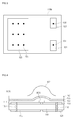
- FIG. 1 is a side sectional view showing a light emitting device package according to the first embodiment
- FIG. 2 is a perspective view showing a top surface pattern of a ceramic substrate shown in FIG. 1 ;
- FIG. 3 is a bottom view showing a lower surface pattern of a ceramic substrate shown in FIG. 1 ;
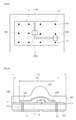
- FIG. 5 is a plan view showing a top surface pattern of a ceramic substrate shown in FIG. 4 ;
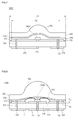
- FIG. 6 is a side sectional view showing a light emitting device package according to the third embodiment.
- FIG. 7 is a side sectional view showing a light emitting device package according to the fourth embodiment.
- FIG. 8 is a side sectional view showing a light emitting device package according to the fifth embodiment.
- FIG. 9 is a plan view showing a top surface pattern of a ceramic substrate shown in FIG. 8 ;
- FIGS. 11 and 12 are side views showing an external appearance of a package according to the embodiment.
- FIG. 13 is a side sectional view showing a display device according to the sixth embodiment.
- FIG. 14 is a view showing another arrangement of the light emitting device package shown in FIG. 13 ;
- FIG. 15 is a side sectional view showing a light emitting device package according to the seventh embodiment.
- FIG. 16 is a plan view showing a top surface pattern of a ceramic substrate shown in FIG. 15 ;
- FIG. 17 is a bottom view showing a lower surface pattern of a ceramic substrate shown in FIG. 15 ;
- FIGS. 18 to 21 are sectional views showing the procedure for manufacturing a light emitting device package according to the seventh embodiment
- FIG. 22 is a side sectional view showing a light emitting device package according to the eighth embodiment.
- FIG. 24 is a view showing a display device including a light emitting device package according to the embodiment.
- each layer shown in the drawings may be exaggerated, omitted or schematically drawn for the purpose of convenience or clarity.
- the size of elements does not utterly reflect an actual size.
- FIG. 1 is a side sectional view showing a light emitting device package according to the first embodiment
- FIG. 2 is a perspective view showing a top surface pattern of a ceramic substrate shown in FIG. 1
- FIG. 3 is a bottom view showing a lower surface pattern of the ceramic substrate shown in FIG. 1 .
- the light emitting device package 100 includes a substrate 110, first and second electrode patterns 111 and 113, third and fourth electrode patterns 121 and 123, a heat radiation pattern 125, conductive vias 131, 133 and 135, a light emitting device 140, a first light-transmissive resin layer 150 and a phosphor layer 155.
- the substrate 110 has a superior heat-resistant property and a superior tarnish-resistant property against heat.
- the substrate 110 may include alumina, quartz, calcium zirconate, forsterite, SiC, graphite, fused silica, mullite, cordierite, zirconia, beryllia, aluminum nitride, or LTCC (low temperature co-fired ceramic).
- LTCC low temperature co-fired ceramic
- the ceramic substrate 110 may be prepared as a single-layer substrate or a multiple-layer substrate by using the structure of a single-side copper foil layer or a dual-side copper foil layer.
- the copper foil layer may be prepared as a metal plate by selectively using a conductive metal, such as Cu, Ag, Al, Ni, or Au and may have a predetermined pattern formed through an etching process.
- the ceramic substrate 110 may have a circular shape or a polygonal shape, but the embodiment is not limited thereto.
- the first and second electrode patterns 111 and 113 are formed on a top surface 110A of the ceramic substrate 110, and the third and fourth electrode patterns 121 and 123 and the heat radiation pattern 125 are formed on a lower surface 110B of the ceramic substrate 110.
- the first electrode pattern 111 is connected to the third electrode pattern 121 through at least one conductive via 131 such that a part of the first electrode pattern 111 may correspond to a part of the third electrode pattern 121.
- the second electrode pattern 113 is connected to the fourth electrode pattern 123 through at least one conductive via 133 such that a part of the second electrode pattern 113 may correspond to a part of the fourth electrode pattern 123.
- the heat radiation pattern 125 may be formed on the lower surface 110B of the ceramic substrate 110 corresponding to the first electrode pattern 111.
- the first electrode pattern 111 is connected to the heat radiation pattern 125 through at least one third conductive via 135 such that a part of the first electrode pattern 111 may correspond to a part of the heat radiation pattern 125.
- the heat radiation pattern 125 may have a size larger than that of the third and fourth electrode patterns 121 and 123.
- the light emitting device 140 is formed on the first electrode pattern 111.
- the light emitting device 140 is mounted on the first electrode pattern 111 by using a conductive adhesive or a solder.
- the second electrode pattern 113 is spaced apart from the first electrode pattern 111 and connected to the light emitting device 140 through a wire 142.
- the first and second electrode patterns 111 and 113 are positioned corresponding to the center region of the ceramic substrate 110 and electrically connected to the light emitting device 140.
- the light emitting device 140 can be connected to the first and second electrode patterns 111 and 113 through a die bonding scheme, a flip chip bonding scheme or a wire bonding scheme according to the position of an electrode of a chip or a type of the chip, but the embodiment is not limited thereto.
- the first to third conductive vias 131, 133 and 135 are formed through the ceramic substrate 110 such that the patterns formed on the ceramic substrate 110 can be connected to the patterns formed under the ceramic substrate 110.
- the first to third conductive vias 131, 133 and 135 of the ceramic substrate 110 can be formed by filling via holes or through holes with conductive materials, such as Ag, or coating the conductive materials around the via holes or through holes.
- the third electrode pattern 121 can be integrally formed with the heat radiation pattern 125. Such a configuration of the patterns may vary depending on the heat radiation efficiency.
- the conductive vias 131, 133 and 135 are a conductive connective member.
- the light emitting device 140 is an LED (light emitting diode) chip including a color LED chip, such as blue LED chip, a green LED chip, or a red LED chip, or a UV LED chip. At least one light emitting device 140 may be disposed on the ceramic substrate 110.
- LED light emitting diode
- a resin layer having a refractive index lower than that of a semiconductor medium of the light emitting device 140 may be formed on the ceramic substrate 110.
- the resin layer is an encapsulant layer to cover the light emitting device 140 and may include a phosphor material.
- the resin layer may include the first light-transmissive resin layer 150 and the phosphor layer 155.
- the first light-transmissive resin layer 150 is formed on the ceramic substrate 110, and the phosphor layer 155 is formed on the first light-transmissive resin layer 150.
- the first light-transmissive resin layer 150 and the phosphor layer 155 may include a resin material, such as silicon, epoxy, or hybrid resin, but the embodiment is not limited thereto.
- the first light-transmissive resin layer 150 encapsulants the light emitting device 140 and the first and second electrode patterns 111 and 113.
- the first light-transmissive resin layer 150 may have a predetermined thickness larger than a thickness of the light emitting device 140.
- the first light-transmissive resin layer 150 may be uniformly formed on the ceramic substrate 110 or may be unevenly formed on the ceramic substrate 110 according to the configuration of the structure.
- the phosphor layer 155 may be formed on the first light-transmissive resin layer 150 through a molding process or a coating process.
- the phosphor layer 155 may include at least one type of phosphor materials, but the embodiment is not limited thereto.
- the phosphor layer 155 can be formed over the whole area of the first light-transmissive resin layer 150 with a predetermined thickness.
- the first light-transmissive resin layer 150 is disposed between the phosphor layer 155 and the light emitting device 140, the light emitted from the light emitting device 140 is diffused by the first light-transmissive resin layer 150 and a part of the diffused light may be absorbed in the phosphor layer 155 and then emitted to the outside. Thus, the light emitted through the phosphor layer 155 may have a uniform color distribution.
- the phosphor layer 155 may have a same width that of the first light-transmissive resin layer 150 and have a thickness thinner than that of the first light-transmissive resin layer 150.
- the first light-transmissive resin layer 150 has a same width that of at least one of a lower surface and a top surface of the ceramic substrate 110.
- the light emitting device 140 Since the light emitting device 140 is disposed on the planar type ceramic substrate 110, the light emitting device 140 may emit the light with an orientation angle of about 120° or above. In addition, since the phosphor layer 155 is formed over the whole area of the ceramic substrate 110, the light emitting device package 100 can emit the light at the above orientation angle with the uniform color distribution.
- FIG. 4 is a side sectional view showing a light emitting device package according to the second embodiment
- FIG. 5 is a plan view showing the light emitting device and a protective pattern formed on a pattern of a ceramic substrate shown in FIG. 4 .
- the following description of the second embodiment will be made with reference to the first embodiment.
- the light emitting device package 100A includes a light emitting device 140A, a first light-transmissive resin layer 150, a phosphor layer 155 and a second light-transmissive resin layer 160.
- the light emitting device 140A can be mounted on the first and second electrode patterns 111 and 113, which correspond to each other, through a flip chip scheme by using a conductive bump.
- the second light-transmissive resin layer 160 is formed on the phosphor layer 155.
- the second light-transmissive resin layer 160 covers the whole top surface of the phosphor layer 155 and is injection-molded by using a same material that of the first light-transmissive resin layer 150.
- the second light-transmissive resin layer 160 includes a lens unit 162.
- the center of the lens unit 162 corresponds to an optical axis perpendicular to the light emitting device 140A.
- the lens unit 162 has a hemispherical shape protruding upward from the light emitting device 140A.
- a maximum diameter of the lens unit 162 is 120 ⁇ m or above.
- the lens unit 162 may be formed of a convex lens.
- end portions of the first and second electrode patterns 111 and 113 are disposed at an outer peripheral region of the ceramic substrate 110.
- a protective device such as a Zener diode or a TVS (transient voltage suppression) diode, is electrically connected to the first and second electrode patterns 111 and 113.
- the protective device can be mounted through a flip chip scheme. When comparing the position of the protective device with that of the light emitting device 140A, the protective device is closer to the outer peripheral portion of the ceramic substrate 110, so that the light loss of the light emitting device 140A can be reduced.
- the protective device 145 can be connected through at least one wire, and the embodiment is not limited thereto.
- the lens unit 162 of the second light-transmissive resin layer 160 is disposed on the light emitting device 140A. Other regions of the second light-transmissive resin layer 160 except for the lens unit 162 are flat, so the second light-transmissive resin layer 160 can be formed on the phosphor layer 155 with a uniform thickness.
- FIG. 6 is a side sectional view showing a light emitting device package according to the third embodiment. The following description of the third embodiment will be made with reference to the first embodiment.
- the light emitting device package 100B includes a first light-transmissive resin layer 150A having a third width A3, a phosphor layer 155A having a second width A2 and a second light-transmissive resin layer 160A having a first width A1, which are formed on a top surface of the ceramic substrate 110.
- the first to third widths satisfy A1 ⁇ A2 ⁇ A3.
- the first to third widths A1, A2 and A3 are defined on the basis of one lateral side of the ceramic substrate 110.
- the phosphor layer 155A surrounds the top surface and the outer lateral sides of the first light-transmissive resin layer 150A
- the second light-transmissive resin layer 160A surrounds the top surface and the outer lateral sides of the phosphor layer 155A.
- the first light-transmissive resin layer 150A, the phosphor layer 155A and the second light-transmissive resin layer 160A are bonded to the top surface of the ceramic substrate 110, respectively, so that the moisture can be prevented from penetrating into the light emitting device package 100B through the interfacial surface between the ceramic substrate 110 and the above layers.
- FIG. 7 is a side sectional view showing a light emitting device package according to the fourth embodiment. The following description of the fourth embodiment will be made with reference to the first embodiment.
- the light emitting device package 100C includes a first light-transmissive resin layer 150 on an entire top surface of the ceramic substrate 110, a phosphor layer 155B on the first light-transmissive resin layer 150, and a second light-transmissive resin layer 160 on the phosphor layer 155B.
- a width A2 of the phosphor layer 155B is less than a width A1 of the first light-transmissive resin layer 150 and a width of the second light-transmissive resin layer 160 is equal to the width A1 of the first light-transmissive resin layer 150. Accordingly, the second light-transmissive resin layer 160 makes contact with an outer portion of the top surface of the first light-transmissive resin layer 150, so that the phosphor layer 155B is sealed between the first light-transmissive resin layer 150 and the second light-transmissive resin layer 160.
- the widths A1 and A2 are a length or width defined on the basis of one lateral side of the ceramic substrate.
- FIG. 8 is a side sectional view showing a light emitting device package according to the fifth embodiment
- FIG. 9 is a plan view showing a pattern formed on a top surface of a ceramic substrate shown in FIG. 8
- FIG. 10 is a bottom view showing a pattern formed on a lower surface of the ceramic substrate shown in FIG. 8 .
- the following description of the fifth embodiment will be made with reference to the first embodiment.
- a first electrode pattern 111, a second electrode pattern 113 and a first heat radiation pattern 115 are formed on the top surface of the ceramic substrate 110, and a third electrode pattern 121, a fourth electrode pattern 123 and a second heat radiation pattern 125 are formed on the lower surface of the ceramic substrate 110.
- a plurality of conductive vias 131, 133 and 135 are formed in the ceramic substrate 110.
- the first heat radiation pattern 115 is disposed between the first electrode pattern 111 and the second electrode pattern 113, and the second heat radiation pattern 125 is disposed between the third electrode pattern 121 and the fourth electrode pattern 123.
- the light emitting device 140B is attached onto the first heat radiation pattern 115 and the light emitting device 140 is connected to the first and second electrode patterns 111 and 114 through a wire 142.
- the first electrode pattern 111 is opposite to the third electrode pattern 121 and connected to the third electrode pattern 121 through the first conductive via 131.
- the second electrode pattern 113 is opposite to the fourth electrode pattern 123 and connected to the fourth electrode pattern 123 through the second conductive via 133.
- the first heat radiation pattern 115 is connected to the second heat radiation pattern 125 through the third conductive via 135.
- a plurality of first to third conductive vias 131, 133 and 135 are provided to improve the conductive efficiency, but the embodiment is not limited thereto.
- Heat generated from the light emitting device 140 is transferred to the first and second heat radiation patterns 115 and 125 through the third conductive via 135 and then dissipated to the outside.
- the first light-transmissive resin layer 150, the phosphor layer 155 and the second light-transmissive resin layer 160 are formed on the ceramic substrate 110.
- the height of the phosphor layer 155 may be equal to or higher than the highest point of the wire 142 connected to the light emitting device 140B based on the height T1 of the wire 142. If the wire 142 has the height T1, the wire 142 may not make contact with the second light-transmissive resin layer 160, so that the particles of the phosphor material can be prevented from moving to the second light-transmissive resin layer 160 through the wire 142.
- FIGS. 11 and 12 are side views showing an external appearance of a package according to the embodiment.
- FIG. 11 is a side view obtained from the first direction Z of the package and
- FIG. 12 is a side view obtained from the second direction X of the package, which is rotated by the right angle from the first direction X.
- the light emitting device 140A when viewed in the first direction Z of the light emitting device package 101, the light emitting device 140A is biased to one side in the extension line of the second direction X (L1 ⁇ L2). For instance, the light emitting device package 101 is located at the left region of the ceramic substrate 110, so other patterns or a protective device can be additionally formed at the right region of the ceramic substrate 110.
- the lens unit 162 of the resin layer 170 formed on the light emitting device 140A is disposed at one region in the first direction Z, so the light may be mainly distributed over the one region.
- the resin layer 170 can be formed by sequentially stacking the first light-transmissive resin layer 150, the phosphor layer 155 and the second light-transmissive resin layer 160.
- FIG. 12 shows the package, which is rotated by the right angle from FIG. 11 , in the second direction X perpendicular to the first direction Z.
- the light emitting device 140A is located at the center of the extension line in the first direction Z.
- the lens unit 162 of the resin layer 170 is located at the center of the package.
- the width of the ceramic substrate 110 in the first direction Z is the same width that of the ceramic substrate 110 in the second direction X in FIGS. 11 and 12 , the width of the ceramic substrate 110 in the first direction Z may be different from the width of the ceramic substrate 110 in the second direction X, and the embodiment is not limited thereto.
- FIG. 13 is a view showing a display device according to the sixth embodiment.
- the package shown in FIG. 13 is same with the package shown in FIGS. 11 and 12 .
- the display device 10 includes a bottom cover 11, a module substrate 12 on which a plurality of light emitting device packages 101 are arrayed, an optical member 15 and a display panel 16.
- the module substrate 12 and the light emitting device packages 101 may constitute a light emitting module and the bottom cover 11, at least one light emitting module and the optical member 15 may constitute a light unit.
- the light emitting device packages 101 are arrayed on the module substrate 12 such that lens units of the resin layers 170 are spaced apart from each other at a regular interval, so that the light can be emitted over the whole area with a uniform brightness distribution. That is, the light emitting device packages 101 as shown in FIG. 12 are arrayed on the module substrate 12.
- the bottom cover 11 includes a same material with a material of a chassis or a mold frame, and the module substrate 12 is received in the bottom cover 11.
- the light emitting device packages 101 are arrayed on the module substrate 12.
- the light emitting device packages 101 are solder-bonded to the module substrate 12.
- a circuit pattern is formed on the module substrate 12 and the ceramic substrate 110 is mounted on the module substrate 12 such that the light emitting device packages 101 can be selectively connected to each other.
- the light emitting device package 101 outputs the light emitted from the light emitting device as well as the light emitted from the phosphor material of the phosphor layer.
- the lights are mixed with each other into a target light and the target light is irradiated through the optical member 15 and the display panel 16.
- the optical member 15 may include at least one of a light guide plate, a diffusion sheet, a horizontal/vertical prism sheet, and a brightness enhancement film.
- the light guide plate may include a PC material or a PMMA (poly methyl methacrylate) material. Such a light guide plate may be omitted.
- the diffusion sheet diffuses the incident light
- the horizontal/vertical prism sheet concentrates the incident light onto the display region
- the brightness enhancement sheet improves the brightness of light by reusing the wasted light.
- the display panel 16 is disposed on the optical member 15.
- the display panel 16 may be an LCD panel including first and second transparent substrates and a liquid crystal layer interposed between the first and second substrates.
- a polarizing plate can be attached to at least one surface of the display panel 16, but the embodiment is not limited thereto.
- the display panel 16 displays information by using the light passing through the optical member 15.
- Such a display device 10 can be applied to a portable terminal, a monitor of a notebook computer or a laptop computer, and a television.
- FIG. 14 is a view showing another example of the display device shown in FIG. 13 , in which the arrangement of the light emitting device package is modified.
- the display device 10A includes a module substrate 12 and light emitting device packages 101 arrayed on the module substrate 12, which are arranged differently from the light emitting device packages 101 shown in FIG. 13 .
- a lens unit of the light emitting device package 101 disposed at the center region C0 is aligned in the same direction with the lens unit shown in FIG. 12 , and the remaining lens units of the light emitting device packages 101 are aligned in the direction as shown in FIG. 11 .
- the interval between the lens units of the light emitting device packages 101 may be increased at the center region C0.
- the interval D1 between the center lens unit and the lens unit adjacent to the center lens unit may be larger than the interval D1 between two other lens units.
- the embodiment can represent various light distributions using one type of package by utilizing the feature of the light emitting device and the lens unit, which are biased in one direction on the package as shown in FIGS. 11 and 12 .
- the lens unit is formed on the light emitting device as shown in FIGS. 12 and 13 .
- the light can be supplied to at least one lateral side of the light guide plate in the side-view scheme by vertically erecting the module substrate 12.
- the module substrate can be disposed corresponding to one lateral side, both lateral sides or two adjacent lateral sides of the light guide plate, but the embodiment is not limited thereto.
- a reflective plate is disposed below the light guide plate and the optical sheet is disposed above the light guide plate, but the embodiment is not limited thereto.
- FIG. 15 is a side sectional view of the light emitting device package
- FIG. 16 is a plan view showing a pattern formed on a top surface of the ceramic substrate shown in FIG. 15
- FIG. 17 is a bottom view of the ceramic substrate shown in FIG. 15 .
- the substrate 210 has a superior heat-resistant property and a superior tarnish-resistant property against heat.
- the substrate 210 may include alumina, quartz, calcium zirconate, forsterite, SiC, graphite, fused silica, mullite, cordierite, zirconia, beryllia, aluminum nitride, or LTCC (low temperature co-fired ceramic).
- LTCC low temperature co-fired ceramic
- the ceramic substrate 210 may be prepared as a single-layer substrate or a multiple-layer substrate by using the structure of a single-side copper foil layer or a dual-side copper foil layer.
- the copper foil layer may be prepared as a metal plate by selectively using a conductive metal, such as Cu, Ag, Al, Ni, or Au and may have a predetermined pattern formed through an etching process.
- the ceramic substrate 210 may have a circular shape or a polygonal shape, but the embodiment is not limited thereto.
- the first and second electrode patterns 211 and 213 are formed on a top surface 210A of the ceramic substrate 210, and the third and fourth electrode patterns 221 and 223 and the heat radiation pattern 225 are formed on a lower surface 210B of the ceramic substrate 210.
- the first electrode pattern 211 is connected to the third electrode pattern 221 through at least one conductive via 231 such that a part of the first electrode pattern 211 may correspond to a part of the third electrode pattern 221.
- the second electrode pattern 213 is connected to the fourth electrode pattern 223 through at least one conductive via 233 such that a part of the second electrode pattern 213 may correspond to a part of the fourth electrode pattern 223.
- a size of the first electrode pattern 211 may be larger than that of the second electrode pattern 213 and the first electrode pattern 211 may branch in various directions to dissipate heat generated from the light emitting device 240.
- the heat radiation pattern 225 may be formed on the lower surface 210B of the ceramic substrate 210 corresponding to the first electrode pattern 211.
- the first electrode pattern 211 is connected to the heat radiation pattern 225 through at least one third conductive via 235 such that a part of the first electrode pattern 211 may correspond to a part of the heat radiation pattern 225.
- the heat radiation pattern 225 may have a size larger than that of the third and fourth electrode patterns 221 and 223.
- the second electrode pattern 213 is spaced apart from the first electrode pattern 211 and connected to the light emitting device 240 through a wire 242.
- the first and second electrode patterns 211 and 213 are positioned corresponding to the center region of the ceramic substrate 210 and electrically connected to the light emitting device 240.
- a part of the first electrode pattern 211 may correspond to a part of the second electrode pattern 213 at the other region and a protective device, such as the Zener diode or the TVS (transient voltage suppression), may be electrically connected to the first and second electrode patterns 211 and 213.
- the light emitting device 240 can be connected to the first and second electrode patterns 211 and 213 through a die bonding scheme, a flip chip bonding scheme or a wire bonding scheme according to the position of an electrode of a chip or a type of the chip.
- the first to third conductive vias 231, 233 and 235 are formed through the ceramic substrate 210 such that the patterns formed on the ceramic substrate 210 can be connected to the patterns formed under the ceramic substrate 210.
- the first to third conductive vias 231, 233 and 235 of the ceramic substrate 210 can be formed by filling via holes or through holes with conductive materials, such as Ag, or coating the conductive materials around the via holes or through holes.
- the third electrode pattern 221 can be integrally formed with the heat radiation pattern 225. Such a configuration of the patterns may vary depending on the heat radiation efficiency.
- the light emitting device 240 is an LED chip including a color LED chip, such as blue LED chip, a green LED chip, or a red LED chip, or a UV LED chip. At least one light emitting device 240 may be disposed on the ceramic substrate 210.
- a resin layer may be formed on the ceramic substrate 210.
- the resin layer is an encapsulant layer to cover the light emitting device 240 and may include a phosphor material.
- the resin layer may include the first light-transmissive resin layer 250, the phosphor layer 255 and the second light-transmissive resin layer 260.
- the first light-transmissive resin layer 250 is formed on the ceramic substrate 210, and the phosphor layer 255 is formed on the first light-transmissive resin layer 250.
- the second light-transmissive resin layer 260 is formed on the phosphor layer 255.
- the first light-transmissive resin layer 250, the phosphor layer 255 and the second light-transmissive resin layer 260 may include a resin material, such as silicon, epoxy, or hybrid resin, but the embodiment is not limited thereto.
- the first light-transmissive resin layer 250 encapsulants the light emitting device 240 and the first and second electrode patterns 211 and 213.
- the first light-transmissive resin layer 250 may have a predetermined thickness larger than a thickness of the light emitting device 240.
- the first light-transmissive resin layer 250 may be uniformly formed on the ceramic substrate 210 or may be unevenly formed on the ceramic substrate 210 according to the configuration of the structure.
- the phosphor layer 255 may be formed on the first light-transmissive resin layer 250 through a molding process or a coating process.
- the phosphor layer 255 may include at least one type of phosphor materials, but the embodiment is not limited thereto.
- the phosphor layer 255 can be formed over the whole area of the first light-transmissive resin layer 250 with a predetermined thickness.
- the second light-transmissive resin layer 260 may be formed on the phosphor layer 255.
- the second light-transmissive resin layer 260 can be formed through the injection molding process.
- the second light-transmissive resin layer 260 includes a lens unit 262.
- the lens unit 262 has a convex lens shape and protrudes upward of the light emitting device 240.
- the lens unit may be omitted.
- the distance L5 between the center and the outer portion of the lens unit 262 corresponds to the radius of a lower circle 262A and has a size of about 600 ⁇ m or more.
- the distance L5 may vary depending on the chip size.
- An area of the electrode patterns 211 and 213 in the lower circle 262A may be 70% or above, so the light reflection efficiency can be improved.
- the moisture barrier layer 270 is formed at an outer portion of the ceramic substrate 210 by using spray equipment or sputtering equipment.
- the moisture barrier layer 270 prevents the moisture from penetrating into the interfacial surfaces between the ceramic substrate 210 and the resin layers 250, 255 and 260.
- the moisture barrier layer 270 may be formed on at least one side or the entire surface of the ceramic substrate 210 and outer portions of the resin layers 250, 255 and 260.
- the moisture barrier layer 270 may include a same material with a material of the resin layers 250, 255 and 260 or the ceramic substrate 210.
- the moisture barrier layer 270 may include one selected from the group consisting of silicon, epoxy, sapphire, and nitride aluminum.
- the adhesive strength between the moisture barrier layer 270 and the resin layers 250, 255 and 260 or between the moisture barrier layer 270 and the ceramic substrate 210 may be reinforced and the thermal deformation can be reduced.
- the moisture barrier layer 270 can be formed along an outer contour profile of the ceramic substrate 210 and the resin layers 250, 255 and 260.
- the moisture barrier layer 270 may have an irregular concavo-convex shape.
- the adhesive strength may be increased at the contact surface between the moisture barrier layer 270 and the resin layers 250, 255 and 260 or between the moisture barrier layer 270 and the ceramic substrate 210 and the travelling direction of the light can be changed at the outside of the resin layers 250, 255 and 260.
- FIGS. 18 to 21 are sectional views showing the procedure for manufacturing the light emitting device package.
- the first and second electrode patterns 211 and 213 are formed on the ceramic substrate 210 and the third and fourth electrode patterns 221 and 223 and the heat radiation pattern 225 are formed under the ceramic substrate 210.
- the first electrode pattern 211 is connected to the third electrode pattern 221 (see, FIG. 17 ) and the heat radiation pattern 225 through the first and third conductive vias 231 and 235, respectively, and the second electrode pattern 213 is connected to the fourth electrode pattern 223 through the second conductive via 233.
- the light emitting device 240 is disposed on the first electrode pattern 211.
- the light emitting device 240 is electrically connected to the first electrode pattern 211 through the die bonding scheme, and connected to the second electrode pattern 213 through a wire.
- the light emitting device 240 can be electrically connected to the first and second electrode patterns 211 and 213 through one wire, plural wires, a flip bonding scheme or the die bonding scheme according to the type of the chip or the mounting scheme for the light emitting device 240.
- the light emitting device 240 is an LED chip including a color LED chip, such as blue LED chip, a green LED chip, or a red LED chip, or a UV LED chip, but the embodiment is not limited thereto.
- One or plural light emitting devices 240 can be installed in each package unit (2P) and a plurality of LED chips are connected to each other in series or parallel.
- the light emitting device 240 is disposed on the first electrode pattern 211 formed on the top surface of the ceramic substrate 210, so the first electrode pattern 211 may have a relatively large area to effectively reflect the light and dissipate the heat.
- a photo solder resistor (PSR) is coated on the top surface of the ceramic substrate 210 except for the region of the first and second electrode patterns 211 and 213 to improve the reflectivity of the light.
- the resin layers 250, 255 and 260 may be formed on the ceramic substrate 210 and the resin layers 250, 255 and 260 may include phosphor materials.
- the first light-transmissive resin layer 250, the phosphor layer 255 and the second light-transmissive resin layer 260 are formed on the ceramic substrate 210 and the resin layers 250, 255 and 260 may include a resin material, such as silicon, epoxy, or hybrid resin, but the embodiment is not limited thereto.
- the first light-transmissive resin layer 250, the phosphor layer 255 and the second light-transmissive resin layer 260 may have the same refractive index. Otherwise, the first light-transmissive resin layer 250, the phosphor layer 255 and the second light-transmissive resin layer 260 may include materials having refractive indexes which are gradually lowered. The materials for the resin layers 250, 255 and 260 have the refractive index in the range of 1 to 2.
- the first light-transmissive resin layer 250 may have the uniform thickness or the variable thickness depending on the regions thereof.
- the first light-transmissive resin layer 250 may have the injection-molded structure and may have an irregular shape due to the structural shape of the top surface of the ceramic substrate 210.
- the wire connected to the light emitting device 240 is disposed below the first light-transmissive resin layer 250 and a part of the wire may be disposed on the first light-transmissive resin layer 250, but the embodiment is not limited thereto.
- the phosphor layer 255 can be prepared by adding a phosphor material to a resin material and coated on the first light-transmissive resin layer 250 with a uniform thickness, but the embodiment is not limited thereto.
- the phosphor layer 255 can be formed over the whole top surface of the first light-transmissive resin layer 250.
- the phosphor material added to the phosphor layer 255 may include at least one of the blue phosphor material, the green phosphor material, the yellow phosphor material and the red phosphor material, but the embodiment is not limited thereto.
- the second light-transmissive resin layer 260 can be formed on the phosphor layer 255 through the injection molding process.
- the second light-transmissive resin layer 260 includes the lens unit 262 formed on the light emitting device 240.
- the lens unit 262 includes a convex lens formed on the light emitting device 240.
- the distance L5 between the center and the outer portion of the lens unit 262 corresponds to the radius of a largest circle in the lens unit 262 and has a size of about 600 ⁇ m or more.
- the second light-transmissive resin layer 260 is disposed on the phosphor layer 255. Other regions of the second light-transmissive resin layer 260 except for the lens unit 262 may have a planar shape or a concavo-convex shape.
- the ceramic substrate 210 is divided into a package unit.
- the dicing process using a blade can be employed to divide the ceramic substrate 210 into the package unit.
- the ceramic substrate 210 can be divided into the package unit through the breaking process, in which a groove (for instance, a V-groove) is formed in a package boundary of the ceramic substrate 210 to divide the ceramic substrate 210.
- a groove for instance, a V-groove
- the ceramic substrate 210 may have a circular shape or a polygonal shape, but the embodiment is not limited thereto.
- a gap may be formed between the ceramic substrate 210 and the resin layers.
- the gap may be formed at an interfacial surface 205 between the ceramic substrate 210 and the first light-transmissive resin layer 250 due to the above dicing process or the breaking process and moisture may penetrate into the gap.
- the moisture may oxidize the electrode patterns 211 and 213 and cause electric short between the electrode patterns 211 and 213, thereby shortening the life span of the light emitting device 240.
- the moisture barrier layer 270 is formed at an outer portion of the ceramic substrate 210.
- the moisture barrier layer 270 may include silicon, epoxy, alumina, or nitride alumina.
- the moisture barrier layer 270 may include the material the same as that of the resin layers 250, 255 and 260 or the ceramic substrate 210.
- the moisture barrier layer 270 may be formed on at least one side or the entire surface of the ceramic substrate 210 and outer portions of the resin layers 250, 255 and 260. The embodiment does not limit the thickness of the moisture barrier layer 270.
- the moisture barrier layer 270 can be formed along an outer contour profile of the ceramic substrate 210 and the resin layers.
- the moisture barrier layer 270 may have an irregular concavo-convex shape.
- the light emitting device package can emit the light having a color, such as white, red, green or blue.
- the light emitting device package including the ceramic substrate 210 may represent the superior property against the moisture.
- FIG. 22 is a side sectional view showing a light emitting device package according to the eighth embodiment. The following description of the eighth embodiment will be made with reference to the seventh embodiment.
- the light emitting device package 200A is bonded to the first and second electrode patterns 211 and 213 of the ceramic substrate 210 through the flip scheme.
- the protective device such as a Zener diode or the TVS (transient voltage suppression) diode, may be bonded to the first and second electrode patterns 211 and 213 through the flip scheme.
- a phosphor layer 255A is formed on the ceramic substrate 210.
- the phosphor layer 255A may be formed on the light emitting device 240 or on the region covering the first and second electrode patterns 211 and 213.
- phosphor layer 255A can be formed at an outer portion of the ceramic substrate 210 such that the phosphor layer 255A may not be exposed.
- the second light-transmissive resin layer 260 is formed on the phosphor layer 255A.
- the second light-transmissive resin layer 260 includes the lens unit 262 protruding upward of the light emitting device 240.
- the second light-transmissive resin layer 260 makes contact with the phosphor layer 255A and an outer portion of the top surface of the ceramic substrate 210 to surround the whole surface of the phosphor layer 255A.
- the moisture barrier layer 270 is formed between the ceramic substrate 210 and the outer surface of the second light-transmissive resin layer 260.
- the moisture barrier layer 270 is formed at the interfacial surface between the ceramic substrate 210 and the second light-transmissive resin layer 260.
- the moisture is prevented from penetrating into the gap between the ceramic substrate 210 and the second light-transmissive resin layer 260.
- FIG. 23 is a side sectional view showing a light emitting device package according to the ninth embodiment. The following description of the ninth embodiment will be made with reference to the seventh embodiment.
- the first electrode pattern 311, the second electrode pattern 313 and the first heat radiation pattern 315 are formed on the top surface of the ceramic substrate 310, and the third electrode pattern 321, the fourth electrode pattern 323 and the second heat radiation pattern 325 are formed on the lower surface of the ceramic substrate 310.
- a plurality of conductive vias 331, 333 and 335 are formed in the ceramic substrate 310.
- the first heat radiation pattern 315 is disposed between the first electrode pattern 311 and the second electrode pattern 313 and the second heat radiation pattern 325 is disposed between the third electrode pattern 321 and the fourth electrode pattern 323.
- the light emitting device 340 is attached onto the first heat radiation pattern 315 and the light emitting device 340 is connected to the first and second electrode patterns 311 and 313 through the wire 342.
- the first electrode pattern 311 is opposite to the third electrode pattern 321 and connected to the third electrode pattern 321 through the first conductive via 331.
- the second electrode pattern 313 is opposite to the fourth electrode pattern 323 and connected to the fourth electrode pattern 323 through the second conductive via 333.
- the first heat radiation pattern 315 is connected to the second heat radiation pattern 325 through the third conductive via 335.
- a plurality of first to third conductive vias 331, 333 and 335 are provided to improve the conductive efficiency, but the embodiment is not limited thereto.
- Heat generated from the light emitting device 340 is transferred to the first and second heat radiation patterns 315 and 325 through the third conductive via 335 and then dissipated to the outside.
- the first light-transmissive resin layer 350, the phosphor layer 355 and the second light-transmissive resin layer 360 are formed on the ceramic substrate 310.
- the resin layers 350, 355 and 360 are formed on an inner portion of the top surface of the ceramic substrate 310.
- An outer portion of the top surface of the ceramic substrate 310 is exposed because there are no resin layers 350, 355 and 360.
- the moisture barrier layer 370 is formed at an outer portion of the ceramic substrate 310, the outer portion of the top surface of the ceramic substrate 310, and an outer portion of the resin layers 350, 355 and 360.
- the moisture barrier layer 370 is formed along the contour profile of the light emitting device package 300. For instance, the moisture barrier layer 370 may have the stepped structure.
- the moisture barrier layer 370 is formed at the outer portion of the ceramic substrate 310, a contact area between the moisture barrier layer 370 and the top surface of the ceramic substrate 310 may be enlarged, so that the moisture is prevented from penetrating into the gap between the ceramic substrate 310 and the resin layers.
- the moisture barrier layer 370 is formed of a same material that of the resin layer 350, 355 and 360 or the ceramic substrate 310 and the resin layer 350, 355 and 360 has a width equal to or less that of the ceramic substrate 310.
- the light emitting device package according to the embodiments can be used as the light source for the indicator, the lighting device and the display device. In addition, one embodiment may be selectively applicable to other embodiments.
- the light emitting device package according to the embodiments can be used for the light unit having the structure provided with a plurality of light emitting device packages.
- the light unit may be applicable to a lighting lamp, a signal lamp, a headlight of a vehicle, and an electric signboard.
- FIG. 24 is a view showing a display device according to the embodiment.
- the package shown in FIG. 24 is same with the package described above.
- the display device 400 includes a bottom cover 401, a module substrate 410 on which a plurality of light emitting device packages 200 are arrayed, an optical member 50 and a display panel 460.
- the module substrate 410 and the light emitting device packages 200 may constitute a light emitting module and the bottom cover 401, at least one light emitting module and the optical member 450 may constitute a light unit.
- the light emitting device packages 200 are arrayed on the module substrate 410 such that lens units of the resin layers 260 are spaced apart from each other at a regular interval, so that the light can be emitted over the whole area with a uniform brightness distribution. That is, the light emitting device packages 200 as shown in FIG. 15 are arrayed on the module substrate 410.
- the bottom cover 401 includes a same material with a material of a chassis or a mold frame, and the module substrate 410 is received in the bottom cover 401.
- the light emitting device packages 200 are arrayed on the module substrate 410.
- the light emitting device packages 200 are solder-bonded to the module substrate 410.
- a circuit pattern is formed on the module substrate 410 and the ceramic substrate 210 is mounted on the module substrate 410 such that the light emitting device packages 200 can be selectively connected to each other.
- the light emitting device package 200 outputs the light emitted from the light emitting device as well as the light emitted from the phosphor material of the phosphor layer.
- the lights are mixed with each other into a target light and the target light is irradiated through the optical member 450 and the display panel 460.
- the optical member 450 may include at least one of a light guide plate, a diffusion sheet, a horizontal/vertical prism sheet, and a brightness enhancement film.
- the light guide plate may include a PC material or a PMMA (poly methyl methacrylate) material. Such a light guide plate may be omitted.
- the diffusion sheet diffuses the incident light
- the horizontal/vertical prism sheet concentrates the incident light onto the display region
- the brightness enhancement sheet improves the brightness of light by reusing the wasted light.
- the display panel 460 is disposed on the optical member 450.
- the display panel 460 may be an LCD panel including first and second transparent substrates and a liquid crystal layer interposed between the first and second substrates.
- a polarizing plate can be attached to at least one surface of the display panel 460, but the embodiment is not limited thereto.
- the display panel 460 displays information by using the light passing through the optical member 450.
- Such a display device 400 can be applied to a portable terminal, a monitor of a notebook computer or a laptop computer, and a television.
- a method of manufacturing a light emitting device package includes the steps of mounting a light emitting device on a ceramic substrate; forming a resin layer on the ceramic substrate to seal the light emitting device; dividing the ceramic substrate into package units; and forming a moisture barrier layer at an interfacial surface between the divided ceramic substrate and the resin layer.
- the embodiment can prevent moisture from penetrating into the package employing the ceramic substrate.
- the embodiment can provide the light emitting device package capable of effectively dissipating heat generated from the light emitting device.
- the embodiment can improve the reliability of the light emitting device package.
- the embodiment can provide the light emitting device package employing a planar type ceramic substrate.
- the embodiment can improve the light distribution by disposing the light-transmissive resin layer between the phosphor layer and the light emitting device such that the phosphor layer can be spaced apart from the light emitting device.
- the embodiment can effectively dissipate heat generated from the light emitting device by using the ceramic substrate.
- any reference in this specification to "one embodiment,” “an embodiment,” “example embodiment,” etc. means that a particular feature, structure, or characteristic described in connection with the embodiment is included in at least one embodiment of the invention.
- the appearances of such phrases in various places in the specification are not necessarily all referring to the same embodiment.
Landscapes
- Led Device Packages (AREA)
Applications Claiming Priority (2)
| Application Number | Priority Date | Filing Date | Title |
|---|---|---|---|
| KR1020100030019A KR101081170B1 (ko) | 2010-04-01 | 2010-04-01 | 발광 소자 패키지 및 그 제조방법 |
| KR1020100030020A KR20110110609A (ko) | 2010-04-01 | 2010-04-01 | 발광 소자 패키지 및 이를 구비한 라이트 유닛 |
Publications (3)
| Publication Number | Publication Date |
|---|---|
| EP2372796A2 true EP2372796A2 (fr) | 2011-10-05 |
| EP2372796A3 EP2372796A3 (fr) | 2015-02-11 |
| EP2372796B1 EP2372796B1 (fr) | 2019-08-28 |
Family
ID=44065341
Family Applications (1)
| Application Number | Title | Priority Date | Filing Date |
|---|---|---|---|
| EP11160775.0A Active EP2372796B1 (fr) | 2010-04-01 | 2011-04-01 | Boîtier de diode électroluminescente et unité lumineuse l'incorporant |
Country Status (3)
| Country | Link |
|---|---|
| US (1) | US9039216B2 (fr) |
| EP (1) | EP2372796B1 (fr) |
| CN (1) | CN102214774B (fr) |
Cited By (2)
| Publication number | Priority date | Publication date | Assignee | Title |
|---|---|---|---|---|
| EP2980869A1 (fr) * | 2014-08-02 | 2016-02-03 | Linxens Holding | Procédé de fabrication de circuits intégrés à diodes électro- luminescentes et circuits intégrés obtenus par ce procédé |
| WO2025237906A1 (fr) * | 2024-05-13 | 2025-11-20 | Ams-Osram International Gmbh | Dispositif électroluminescent, unité d'éclairage et écran d'affichage à cristaux liquides |
Families Citing this family (27)
| Publication number | Priority date | Publication date | Assignee | Title |
|---|---|---|---|---|
| KR101752447B1 (ko) * | 2011-06-01 | 2017-07-05 | 서울반도체 주식회사 | 발광 다이오드 어셈블리 |
| US8773006B2 (en) * | 2011-08-22 | 2014-07-08 | Lg Innotek Co., Ltd. | Light emitting device package, light source module, and lighting system including the same |
| CN103078040B (zh) | 2011-08-22 | 2016-12-21 | Lg伊诺特有限公司 | 发光器件封装件和光装置 |
| EP2639491A1 (fr) * | 2012-03-12 | 2013-09-18 | Panasonic Corporation | Dispositif électroluminescent, appareil d'éclairage et luminaire utilisant celui-ci |
| JP6553143B2 (ja) * | 2012-05-09 | 2019-07-31 | ローム株式会社 | 半導体発光装置 |
| TW201422352A (zh) * | 2012-12-13 | 2014-06-16 | Viking Tech Corp | 基板製法 |
| TWI602322B (zh) * | 2013-06-27 | 2017-10-11 | 晶元光電股份有限公司 | 發光二極體組件及製作方法 |
| TWI711188B (zh) * | 2013-06-27 | 2020-11-21 | 晶元光電股份有限公司 | 發光二極體組件 |
| TWI580079B (zh) * | 2013-12-26 | 2017-04-21 | 新世紀光電股份有限公司 | 發光二極體封裝結構及發光二極體模組 |
| US9997676B2 (en) | 2014-05-14 | 2018-06-12 | Genesis Photonics Inc. | Light emitting device and manufacturing method thereof |
| US10797204B2 (en) * | 2014-05-30 | 2020-10-06 | Cree, Inc. | Submount based light emitter components and methods |
| US20170138562A1 (en) * | 2014-06-12 | 2017-05-18 | Westland Joaus Technologies, Llc | System, devices, and methods for illumination including solid-state light emitting devices |
| TWI641285B (zh) | 2014-07-14 | 2018-11-11 | 新世紀光電股份有限公司 | 發光模組與發光單元的製作方法 |
| CN105428496A (zh) * | 2014-09-19 | 2016-03-23 | 深圳市晶台股份有限公司 | 一种新型基板封装led全彩方法 |
| DE102015105692A1 (de) * | 2015-04-14 | 2016-10-20 | Osram Opto Semiconductors Gmbh | Halbleiterbauelement und Verfahren zur Herstellung einer Mehrzahl von Halbleiterbauelementen |
| EP3351062A1 (fr) * | 2015-09-15 | 2018-07-25 | Philips Lighting Holding B.V. | Couche barrière retardant l'appauvrissement en oxygène dans des lampes à del étanches remplies de gaz |
| US10627672B2 (en) | 2015-09-22 | 2020-04-21 | Samsung Electronics Co., Ltd. | LED package, backlight unit and illumination device including same, and liquid crystal display including backlight unit |
| EP3147956B1 (fr) * | 2015-09-22 | 2023-05-03 | Samsung Electronics Co., Ltd. | Boîtier à del, unité de rétroéclairage et dispositif d'éclairage le comprenant, et dispositif d'affichage à cristaux liquides |
| CN106324905A (zh) * | 2016-08-31 | 2017-01-11 | 张家港康得新光电材料有限公司 | 一种量子点发光器件及背光模组 |
| JP2018155968A (ja) * | 2017-03-17 | 2018-10-04 | 日亜化学工業株式会社 | 透光性部材の製造方法及び発光装置の製造方法 |
| JP2018195778A (ja) * | 2017-05-22 | 2018-12-06 | シチズン電子株式会社 | 発光装置 |
| CN108598070B (zh) * | 2018-06-25 | 2023-07-18 | 江苏罗化新材料有限公司 | 一种双芯片的芯片级led封装结构及其制作方法 |
| CN108803149B (zh) * | 2018-07-20 | 2021-05-25 | 京东方科技集团股份有限公司 | 面光源及其制作方法以及液晶显示装置 |
| CN109459827B (zh) * | 2018-10-29 | 2021-02-02 | 西安微电子技术研究所 | 一种光电模块气密性组装方法 |
| CN112864143B (zh) * | 2019-11-27 | 2024-11-08 | 群创光电股份有限公司 | 电子装置 |
| JP7239840B2 (ja) | 2020-08-31 | 2023-03-15 | 日亜化学工業株式会社 | 発光装置の製造方法 |
| JP7505421B2 (ja) * | 2021-03-11 | 2024-06-25 | 豊田合成株式会社 | 紫外発光装置とその製造方法 |
Family Cites Families (24)
| Publication number | Priority date | Publication date | Assignee | Title |
|---|---|---|---|---|
| JP2004363380A (ja) | 2003-06-05 | 2004-12-24 | Sanyo Electric Co Ltd | 光半導体装置およびその製造方法 |
| JP2006049624A (ja) | 2004-08-05 | 2006-02-16 | Sharp Corp | 発光素子 |
| JP2006140362A (ja) | 2004-11-15 | 2006-06-01 | Nitto Denko Corp | 光半導体素子封止用シートおよび該シートを用いた光半導体装置の製造方法 |
| JP4492378B2 (ja) | 2005-02-03 | 2010-06-30 | 豊田合成株式会社 | 発光装置およびその製造方法 |
| US8097221B2 (en) * | 2005-01-21 | 2012-01-17 | Multisorb Technologies, Inc. | Lamp assembly |
| JP4720978B2 (ja) | 2005-02-18 | 2011-07-13 | ミネベア株式会社 | 面状照明装置 |
| JP4953578B2 (ja) | 2005-02-18 | 2012-06-13 | 日亜化学工業株式会社 | 発光装置 |
| TW201403859A (zh) * | 2005-02-18 | 2014-01-16 | 日亞化學工業股份有限公司 | 具備控制配光特性用之透鏡之發光裝置 |
| JP2007081234A (ja) * | 2005-09-15 | 2007-03-29 | Toyoda Gosei Co Ltd | 照明装置 |
| KR100724591B1 (ko) * | 2005-09-30 | 2007-06-04 | 서울반도체 주식회사 | 발광 소자 및 이를 포함한 led 백라이트 |
| JP5268082B2 (ja) * | 2006-02-22 | 2013-08-21 | シチズン電子株式会社 | 光半導体装置 |
| JP2007273562A (ja) * | 2006-03-30 | 2007-10-18 | Toshiba Corp | 半導体発光装置 |
| JP2008027999A (ja) | 2006-07-19 | 2008-02-07 | Matsushita Electric Ind Co Ltd | 発光装置の製造方法および発光装置 |
| JP4979299B2 (ja) * | 2006-08-03 | 2012-07-18 | 豊田合成株式会社 | 光学装置及びその製造方法 |
| US7808013B2 (en) | 2006-10-31 | 2010-10-05 | Cree, Inc. | Integrated heat spreaders for light emitting devices (LEDs) and related assemblies |
| US7964888B2 (en) * | 2007-04-18 | 2011-06-21 | Cree, Inc. | Semiconductor light emitting device packages and methods |
| JP5006102B2 (ja) * | 2007-05-18 | 2012-08-22 | 株式会社東芝 | 発光装置およびその製造方法 |
| US8058088B2 (en) * | 2008-01-15 | 2011-11-15 | Cree, Inc. | Phosphor coating systems and methods for light emitting structures and packaged light emitting diodes including phosphor coating |
| CN101493216B (zh) * | 2008-01-24 | 2011-11-09 | 富士迈半导体精密工业(上海)有限公司 | 发光二极管光源模组 |
| KR101442146B1 (ko) * | 2008-02-25 | 2014-09-23 | 삼성디스플레이 주식회사 | 광원 유닛, 이를 포함하는 액정 표시 장치 및 이의 제조방법 |
| KR20100003335A (ko) | 2008-06-26 | 2010-01-08 | 서울반도체 주식회사 | 발광소자 패키지 및 이의 제조방법 |
| JP5040863B2 (ja) * | 2008-09-03 | 2012-10-03 | 豊田合成株式会社 | 半導体発光装置 |
| KR100982994B1 (ko) * | 2008-10-15 | 2010-09-17 | 삼성엘이디 주식회사 | Led 패키지 모듈 |
| TWI411142B (zh) * | 2009-06-23 | 2013-10-01 | 台達電子工業股份有限公司 | 發光裝置及其封裝方法 |
-
2011
- 2011-03-30 US US13/075,354 patent/US9039216B2/en active Active
- 2011-04-01 EP EP11160775.0A patent/EP2372796B1/fr active Active
- 2011-04-01 CN CN201110086633.5A patent/CN102214774B/zh active Active
Non-Patent Citations (1)
| Title |
|---|
| None |
Cited By (3)
| Publication number | Priority date | Publication date | Assignee | Title |
|---|---|---|---|---|
| EP2980869A1 (fr) * | 2014-08-02 | 2016-02-03 | Linxens Holding | Procédé de fabrication de circuits intégrés à diodes électro- luminescentes et circuits intégrés obtenus par ce procédé |
| FR3024592A1 (fr) * | 2014-08-02 | 2016-02-05 | Linxens Holding | Procede de fabrication de circuits integres a diodes electro-luminescentes et circuits integres obtenus par ce procede |
| WO2025237906A1 (fr) * | 2024-05-13 | 2025-11-20 | Ams-Osram International Gmbh | Dispositif électroluminescent, unité d'éclairage et écran d'affichage à cristaux liquides |
Also Published As
| Publication number | Publication date |
|---|---|
| EP2372796A3 (fr) | 2015-02-11 |
| US20110211334A1 (en) | 2011-09-01 |
| CN102214774B (zh) | 2014-08-13 |
| EP2372796B1 (fr) | 2019-08-28 |
| US9039216B2 (en) | 2015-05-26 |
| CN102214774A (zh) | 2011-10-12 |
Similar Documents
| Publication | Publication Date | Title |
|---|---|---|
| EP2372796B1 (fr) | Boîtier de diode électroluminescente et unité lumineuse l'incorporant | |
| US11982903B2 (en) | Light-emitting device and liquid crystal display device | |
| TW201830101A (zh) | 發光裝置 | |
| JP7460634B2 (ja) | 照明モジュール、照明装置およびその製造方法 | |
| CN113167443B (zh) | 照明模块及包括其的照明装置 | |
| KR102660451B1 (ko) | 조명 모듈 및 이를 구비한 조명 장치 | |
| JP2024167437A (ja) | 面状光源 | |
| EP2813758B1 (fr) | Module électroluminescent | |
| JP7560730B2 (ja) | 面状光源、液晶表示装置 | |
| KR101081170B1 (ko) | 발광 소자 패키지 및 그 제조방법 | |
| US12328977B2 (en) | Light emitting device pakage | |
| KR102142718B1 (ko) | 발광 소자 및 이를 구비한 조명 장치 | |
| KR20110110609A (ko) | 발광 소자 패키지 및 이를 구비한 라이트 유닛 |
Legal Events
| Date | Code | Title | Description |
|---|---|---|---|
| PUAI | Public reference made under article 153(3) epc to a published international application that has entered the european phase |
Free format text: ORIGINAL CODE: 0009012 |
|
| AK | Designated contracting states |
Kind code of ref document: A2 Designated state(s): AL AT BE BG CH CY CZ DE DK EE ES FI FR GB GR HR HU IE IS IT LI LT LU LV MC MK MT NL NO PL PT RO RS SE SI SK SM TR |
|
| AX | Request for extension of the european patent |
Extension state: BA ME |
|
| 17P | Request for examination filed |
Effective date: 20140331 |
|
| RBV | Designated contracting states (corrected) |
Designated state(s): AL AT BE BG CH CY CZ DE DK EE ES FI FR GB GR HR HU IE IS IT LI LT LU LV MC MK MT NL NO PL PT RO RS SE SI SK SM TR |
|
| RIC1 | Information provided on ipc code assigned before grant |
Ipc: H01L 33/62 20100101ALN20140826BHEP Ipc: H01L 33/54 20100101ALI20140826BHEP Ipc: G02F 1/13357 20060101ALN20140826BHEP Ipc: H01L 33/50 20100101AFI20140826BHEP Ipc: H01L 33/48 20100101ALN20140826BHEP Ipc: H01L 33/64 20100101ALN20140826BHEP |
|
| PUAL | Search report despatched |
Free format text: ORIGINAL CODE: 0009013 |
|
| AK | Designated contracting states |
Kind code of ref document: A3 Designated state(s): AL AT BE BG CH CY CZ DE DK EE ES FI FR GB GR HR HU IE IS IT LI LT LU LV MC MK MT NL NO PL PT RO RS SE SI SK SM TR |
|
| AX | Request for extension of the european patent |
Extension state: BA ME |
|
| RIC1 | Information provided on ipc code assigned before grant |
Ipc: H01L 33/62 20100101ALN20150106BHEP Ipc: H01L 33/50 20100101AFI20150106BHEP Ipc: H01L 33/64 20100101ALN20150106BHEP Ipc: G02F 1/13357 20060101ALN20150106BHEP Ipc: H01L 33/48 20100101ALN20150106BHEP Ipc: H01L 33/54 20100101ALI20150106BHEP |
|
| RAP1 | Party data changed (applicant data changed or rights of an application transferred) |
Owner name: LG INNOTEK CO., LTD. |
|
| GRAP | Despatch of communication of intention to grant a patent |
Free format text: ORIGINAL CODE: EPIDOSNIGR1 |
|
| STAA | Information on the status of an ep patent application or granted ep patent |
Free format text: STATUS: GRANT OF PATENT IS INTENDED |
|
| RIC1 | Information provided on ipc code assigned before grant |
Ipc: H01L 33/48 20100101ALN20190319BHEP Ipc: G02F 1/13357 20060101ALN20190319BHEP Ipc: H01L 33/50 20100101ALI20190319BHEP Ipc: H01L 33/62 20100101ALN20190319BHEP Ipc: H01L 33/54 20100101AFI20190319BHEP Ipc: H01L 33/64 20100101ALN20190319BHEP |
|
| INTG | Intention to grant announced |
Effective date: 20190411 |
|
| GRAS | Grant fee paid |
Free format text: ORIGINAL CODE: EPIDOSNIGR3 |
|
| GRAA | (expected) grant |
Free format text: ORIGINAL CODE: 0009210 |
|
| STAA | Information on the status of an ep patent application or granted ep patent |
Free format text: STATUS: THE PATENT HAS BEEN GRANTED |
|
| AK | Designated contracting states |
Kind code of ref document: B1 Designated state(s): AL AT BE BG CH CY CZ DE DK EE ES FI FR GB GR HR HU IE IS IT LI LT LU LV MC MK MT NL NO PL PT RO RS SE SI SK SM TR |
|
| REG | Reference to a national code |
Ref country code: GB Ref legal event code: FG4D |
|
| REG | Reference to a national code |
Ref country code: CH Ref legal event code: EP |
|
| REG | Reference to a national code |
Ref country code: AT Ref legal event code: REF Ref document number: 1173487 Country of ref document: AT Kind code of ref document: T Effective date: 20190915 |
|
| REG | Reference to a national code |
Ref country code: IE Ref legal event code: FG4D |
|
| REG | Reference to a national code |
Ref country code: DE Ref legal event code: R096 Ref document number: 602011061557 Country of ref document: DE |
|
| REG | Reference to a national code |
Ref country code: NL Ref legal event code: MP Effective date: 20190828 |
|
| REG | Reference to a national code |
Ref country code: LT Ref legal event code: MG4D |
|
| PG25 | Lapsed in a contracting state [announced via postgrant information from national office to epo] |
Ref country code: BG Free format text: LAPSE BECAUSE OF FAILURE TO SUBMIT A TRANSLATION OF THE DESCRIPTION OR TO PAY THE FEE WITHIN THE PRESCRIBED TIME-LIMIT Effective date: 20191128 Ref country code: NO Free format text: LAPSE BECAUSE OF FAILURE TO SUBMIT A TRANSLATION OF THE DESCRIPTION OR TO PAY THE FEE WITHIN THE PRESCRIBED TIME-LIMIT Effective date: 20191128 Ref country code: LT Free format text: LAPSE BECAUSE OF FAILURE TO SUBMIT A TRANSLATION OF THE DESCRIPTION OR TO PAY THE FEE WITHIN THE PRESCRIBED TIME-LIMIT Effective date: 20190828 Ref country code: HR Free format text: LAPSE BECAUSE OF FAILURE TO SUBMIT A TRANSLATION OF THE DESCRIPTION OR TO PAY THE FEE WITHIN THE PRESCRIBED TIME-LIMIT Effective date: 20190828 Ref country code: PT Free format text: LAPSE BECAUSE OF FAILURE TO SUBMIT A TRANSLATION OF THE DESCRIPTION OR TO PAY THE FEE WITHIN THE PRESCRIBED TIME-LIMIT Effective date: 20191230 Ref country code: NL Free format text: LAPSE BECAUSE OF FAILURE TO SUBMIT A TRANSLATION OF THE DESCRIPTION OR TO PAY THE FEE WITHIN THE PRESCRIBED TIME-LIMIT Effective date: 20190828 Ref country code: FI Free format text: LAPSE BECAUSE OF FAILURE TO SUBMIT A TRANSLATION OF THE DESCRIPTION OR TO PAY THE FEE WITHIN THE PRESCRIBED TIME-LIMIT Effective date: 20190828 Ref country code: SE Free format text: LAPSE BECAUSE OF FAILURE TO SUBMIT A TRANSLATION OF THE DESCRIPTION OR TO PAY THE FEE WITHIN THE PRESCRIBED TIME-LIMIT Effective date: 20190828 |
|
| PG25 | Lapsed in a contracting state [announced via postgrant information from national office to epo] |
Ref country code: AL Free format text: LAPSE BECAUSE OF FAILURE TO SUBMIT A TRANSLATION OF THE DESCRIPTION OR TO PAY THE FEE WITHIN THE PRESCRIBED TIME-LIMIT Effective date: 20190828 Ref country code: GR Free format text: LAPSE BECAUSE OF FAILURE TO SUBMIT A TRANSLATION OF THE DESCRIPTION OR TO PAY THE FEE WITHIN THE PRESCRIBED TIME-LIMIT Effective date: 20191129 Ref country code: RS Free format text: LAPSE BECAUSE OF FAILURE TO SUBMIT A TRANSLATION OF THE DESCRIPTION OR TO PAY THE FEE WITHIN THE PRESCRIBED TIME-LIMIT Effective date: 20190828 Ref country code: IS Free format text: LAPSE BECAUSE OF FAILURE TO SUBMIT A TRANSLATION OF THE DESCRIPTION OR TO PAY THE FEE WITHIN THE PRESCRIBED TIME-LIMIT Effective date: 20191228 Ref country code: LV Free format text: LAPSE BECAUSE OF FAILURE TO SUBMIT A TRANSLATION OF THE DESCRIPTION OR TO PAY THE FEE WITHIN THE PRESCRIBED TIME-LIMIT Effective date: 20190828 Ref country code: ES Free format text: LAPSE BECAUSE OF FAILURE TO SUBMIT A TRANSLATION OF THE DESCRIPTION OR TO PAY THE FEE WITHIN THE PRESCRIBED TIME-LIMIT Effective date: 20190828 |
|
| REG | Reference to a national code |
Ref country code: AT Ref legal event code: MK05 Ref document number: 1173487 Country of ref document: AT Kind code of ref document: T Effective date: 20190828 |
|
| PG25 | Lapsed in a contracting state [announced via postgrant information from national office to epo] |
Ref country code: TR Free format text: LAPSE BECAUSE OF FAILURE TO SUBMIT A TRANSLATION OF THE DESCRIPTION OR TO PAY THE FEE WITHIN THE PRESCRIBED TIME-LIMIT Effective date: 20190828 |
|
| PG25 | Lapsed in a contracting state [announced via postgrant information from national office to epo] |
Ref country code: IT Free format text: LAPSE BECAUSE OF FAILURE TO SUBMIT A TRANSLATION OF THE DESCRIPTION OR TO PAY THE FEE WITHIN THE PRESCRIBED TIME-LIMIT Effective date: 20190828 Ref country code: RO Free format text: LAPSE BECAUSE OF FAILURE TO SUBMIT A TRANSLATION OF THE DESCRIPTION OR TO PAY THE FEE WITHIN THE PRESCRIBED TIME-LIMIT Effective date: 20190828 Ref country code: DK Free format text: LAPSE BECAUSE OF FAILURE TO SUBMIT A TRANSLATION OF THE DESCRIPTION OR TO PAY THE FEE WITHIN THE PRESCRIBED TIME-LIMIT Effective date: 20190828 Ref country code: PL Free format text: LAPSE BECAUSE OF FAILURE TO SUBMIT A TRANSLATION OF THE DESCRIPTION OR TO PAY THE FEE WITHIN THE PRESCRIBED TIME-LIMIT Effective date: 20190828 Ref country code: AT Free format text: LAPSE BECAUSE OF FAILURE TO SUBMIT A TRANSLATION OF THE DESCRIPTION OR TO PAY THE FEE WITHIN THE PRESCRIBED TIME-LIMIT Effective date: 20190828 Ref country code: EE Free format text: LAPSE BECAUSE OF FAILURE TO SUBMIT A TRANSLATION OF THE DESCRIPTION OR TO PAY THE FEE WITHIN THE PRESCRIBED TIME-LIMIT Effective date: 20190828 |
|
| PG25 | Lapsed in a contracting state [announced via postgrant information from national office to epo] |
Ref country code: CZ Free format text: LAPSE BECAUSE OF FAILURE TO SUBMIT A TRANSLATION OF THE DESCRIPTION OR TO PAY THE FEE WITHIN THE PRESCRIBED TIME-LIMIT Effective date: 20190828 Ref country code: SM Free format text: LAPSE BECAUSE OF FAILURE TO SUBMIT A TRANSLATION OF THE DESCRIPTION OR TO PAY THE FEE WITHIN THE PRESCRIBED TIME-LIMIT Effective date: 20190828 Ref country code: SK Free format text: LAPSE BECAUSE OF FAILURE TO SUBMIT A TRANSLATION OF THE DESCRIPTION OR TO PAY THE FEE WITHIN THE PRESCRIBED TIME-LIMIT Effective date: 20190828 Ref country code: IS Free format text: LAPSE BECAUSE OF FAILURE TO SUBMIT A TRANSLATION OF THE DESCRIPTION OR TO PAY THE FEE WITHIN THE PRESCRIBED TIME-LIMIT Effective date: 20200224 |
|
| REG | Reference to a national code |
Ref country code: DE Ref legal event code: R097 Ref document number: 602011061557 Country of ref document: DE |
|
| PLBE | No opposition filed within time limit |
Free format text: ORIGINAL CODE: 0009261 |
|
| STAA | Information on the status of an ep patent application or granted ep patent |
Free format text: STATUS: NO OPPOSITION FILED WITHIN TIME LIMIT |
|
| PG2D | Information on lapse in contracting state deleted |
Ref country code: IS |
|
| 26N | No opposition filed |
Effective date: 20200603 |
|
| PG25 | Lapsed in a contracting state [announced via postgrant information from national office to epo] |
Ref country code: SI Free format text: LAPSE BECAUSE OF FAILURE TO SUBMIT A TRANSLATION OF THE DESCRIPTION OR TO PAY THE FEE WITHIN THE PRESCRIBED TIME-LIMIT Effective date: 20190828 |
|
| PG25 | Lapsed in a contracting state [announced via postgrant information from national office to epo] |
Ref country code: MC Free format text: LAPSE BECAUSE OF FAILURE TO SUBMIT A TRANSLATION OF THE DESCRIPTION OR TO PAY THE FEE WITHIN THE PRESCRIBED TIME-LIMIT Effective date: 20190828 |
|
| REG | Reference to a national code |
Ref country code: CH Ref legal event code: PL |
|
| PG25 | Lapsed in a contracting state [announced via postgrant information from national office to epo] |
Ref country code: LU Free format text: LAPSE BECAUSE OF NON-PAYMENT OF DUE FEES Effective date: 20200401 Ref country code: FR Free format text: LAPSE BECAUSE OF NON-PAYMENT OF DUE FEES Effective date: 20200430 Ref country code: CH Free format text: LAPSE BECAUSE OF NON-PAYMENT OF DUE FEES Effective date: 20200430 Ref country code: LI Free format text: LAPSE BECAUSE OF NON-PAYMENT OF DUE FEES Effective date: 20200430 |
|
| REG | Reference to a national code |
Ref country code: BE Ref legal event code: MM Effective date: 20200430 |
|
| PG25 | Lapsed in a contracting state [announced via postgrant information from national office to epo] |
Ref country code: BE Free format text: LAPSE BECAUSE OF NON-PAYMENT OF DUE FEES Effective date: 20200430 |
|
| GBPC | Gb: european patent ceased through non-payment of renewal fee |
Effective date: 20200401 |
|
| PG25 | Lapsed in a contracting state [announced via postgrant information from national office to epo] |
Ref country code: GB Free format text: LAPSE BECAUSE OF NON-PAYMENT OF DUE FEES Effective date: 20200401 Ref country code: IE Free format text: LAPSE BECAUSE OF NON-PAYMENT OF DUE FEES Effective date: 20200401 |
|
| REG | Reference to a national code |
Ref country code: DE Ref legal event code: R081 Ref document number: 602011061557 Country of ref document: DE Owner name: SUZHOU LEKIN SEMICONDUCTOR CO. LTD., TAICANG, CN Free format text: FORMER OWNER: LG INNOTEK CO., LTD., SEOUL, KR |
|
| PG25 | Lapsed in a contracting state [announced via postgrant information from national office to epo] |
Ref country code: MT Free format text: LAPSE BECAUSE OF FAILURE TO SUBMIT A TRANSLATION OF THE DESCRIPTION OR TO PAY THE FEE WITHIN THE PRESCRIBED TIME-LIMIT Effective date: 20190828 Ref country code: CY Free format text: LAPSE BECAUSE OF FAILURE TO SUBMIT A TRANSLATION OF THE DESCRIPTION OR TO PAY THE FEE WITHIN THE PRESCRIBED TIME-LIMIT Effective date: 20190828 |
|
| PG25 | Lapsed in a contracting state [announced via postgrant information from national office to epo] |
Ref country code: MK Free format text: LAPSE BECAUSE OF FAILURE TO SUBMIT A TRANSLATION OF THE DESCRIPTION OR TO PAY THE FEE WITHIN THE PRESCRIBED TIME-LIMIT Effective date: 20190828 |
|
| REG | Reference to a national code |
Ref country code: DE Ref legal event code: R079 Ref document number: 602011061557 Country of ref document: DE Free format text: PREVIOUS MAIN CLASS: H01L0033540000 Ipc: H10H0020853000 |
|
| PGFP | Annual fee paid to national office [announced via postgrant information from national office to epo] |
Ref country code: DE Payment date: 20250305 Year of fee payment: 15 |