EP2372967A1 - Registrierungsverfahren, ausgehender proxy-server und kommunikationssystem - Google Patents
Registrierungsverfahren, ausgehender proxy-server und kommunikationssystem Download PDFInfo
- Publication number
- EP2372967A1 EP2372967A1 EP09834082A EP09834082A EP2372967A1 EP 2372967 A1 EP2372967 A1 EP 2372967A1 EP 09834082 A EP09834082 A EP 09834082A EP 09834082 A EP09834082 A EP 09834082A EP 2372967 A1 EP2372967 A1 EP 2372967A1
- Authority
- EP
- European Patent Office
- Prior art keywords
- registration
- core network
- duration
- network element
- response message
- Prior art date
- Legal status (The legal status is an assumption and is not a legal conclusion. Google has not performed a legal analysis and makes no representation as to the accuracy of the status listed.)
- Withdrawn
Links
Images



Classifications
-
- H—ELECTRICITY
- H04—ELECTRIC COMMUNICATION TECHNIQUE
- H04W—WIRELESS COMMUNICATION NETWORKS
- H04W60/00—Affiliation to network, e.g. registration; Terminating affiliation with the network, e.g. de-registration
- H04W60/02—Affiliation to network, e.g. registration; Terminating affiliation with the network, e.g. de-registration by periodical registration
-
- H—ELECTRICITY
- H04—ELECTRIC COMMUNICATION TECHNIQUE
- H04L—TRANSMISSION OF DIGITAL INFORMATION, e.g. TELEGRAPHIC COMMUNICATION
- H04L65/00—Network arrangements, protocols or services for supporting real-time applications in data packet communication
- H04L65/10—Architectures or entities
- H04L65/1045—Proxies, e.g. for session initiation protocol [SIP]
-
- H—ELECTRICITY
- H04—ELECTRIC COMMUNICATION TECHNIQUE
- H04L—TRANSMISSION OF DIGITAL INFORMATION, e.g. TELEGRAPHIC COMMUNICATION
- H04L65/00—Network arrangements, protocols or services for supporting real-time applications in data packet communication
- H04L65/1066—Session management
- H04L65/1073—Registration or de-registration
-
- H—ELECTRICITY
- H04—ELECTRIC COMMUNICATION TECHNIQUE
- H04W—WIRELESS COMMUNICATION NETWORKS
- H04W12/00—Security arrangements; Authentication; Protecting privacy or anonymity
- H04W12/08—Access security
Definitions
- the present invention relates to communications technologies, and in particular, to a registration method, an Outbound-Proxy, and a communication system.
- the terminals located in the same home domain access the IMS domain through different Outbound-Proxies in a visited domain, for example, through a Proxy Call Session Control Function (P-CSCF), and register with a core network element such as a Serving Call Session Control Function (S-CSCF). Meanwhile, the terminal initiates re-registration periodically after the registration. Many terminals initiate re-registration frequently for the purpose of Network Address Translation (NAT) keep-alive or other purposes, which leads to a great increase of the re-registration messages processed by the core network element and becomes a performance bottleneck of the core network element.
- NAT Network Address Translation
- a solution to the performance bottleneck of the core network element caused by frequent re-registration of the terminal in the prior art is:
- the core network element checks the registration duration carried in the re-registration message, and judges whether the registration duration is less than the minimum registration duration acceptable to the core network element; if so, the core network element returns a "423" message to the terminal, where the message carries the minimum registration duration acceptable to the core network element and instructs the terminal to perform re-registration according to the minimum registration duration returned by the core network element.
- the Outbound-Proxy is responsible for forwarding information between the terminal and the core network element.
- the embodiments of the present invention provide a registration method, an Outbound-Proxy and a communication system to relieve the load on a core network element when a terminal initiates re-registration frequently in an IMS network.
- the method is applicable to all types of terminal.
- a registration method includes:
- An Outbound-Proxy includes:
- a communication system includes any Outbound-Proxy provided in an embodiment of the present invention.
- the Outbound-Proxy receives a re-registration request sent by the terminal, and judges, according to the re-registration request received by the re-registration receiving unit, whether re-registration with the core network element is required; if determining that re-registration is required, the Outbound-Proxy modifies the user registration duration carried in the re-registration request to the preset core network registration duration, namely, to the registration duration which is longer, and then sends the modified re-registration request to the core network element to perform re-registration, therefore reducing the information amount of the re-registration requests received by the core network element, and slashing the load on the core network element caused by frequent re-registration of the terminal.
- a registration method, an Outbound-Proxy, and a communication system are provided in the embodiments of the present invention, as detailed below.
- a registration method provided in this embodiment includes: An Outbound-Proxy receives a re-registration request sent by a terminal, and judges, according to the re-registration request received by the re-registration receiving unit, whether re-registration with a core network element is required; if so, the Outbound-Proxy modifies the user registration duration carried in the re-registration request to a core network registration duration which is preset, sends the modified re-registration request to the core network element, and receives a response message returned by the core network element and forwards the response message to the terminal; or if not, the Outbound-Proxy returns a response message to the terminal directly.
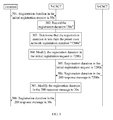
- FIG. 1 is a flowchart of the re-registration method provided in this embodiment. The method includes the following steps:
- a margin may be set on the basis of method 2, and the judgment method is to judge whether a sum of the user registration duration carried in the re-registration request, the time counted on the timer, and the margin is greater than the preset core network registration duration.
- Method 3 A judgment is made about whether the user registration duration carried in the re-registration request is greater than a duration counted on the timer; if so, it indicates that the re-registration with the core network element is required; if not, it indicates that re-registration with the core network element is not required.
- the timer is a decreasing timer, and the initial duration may be set to the core network registration duration or the difference between the core network registration duration and a margin. The timer starts counting down when the timer succeeds in initially registering on the terminal, and the initial duration of the timer is reset after success of each re-registration.
- the margin may be set or configured according to a policy of an operator.
- the Outbound-Proxy modifies the user registration duration carried in the re-registration request to the preset core network registration duration, sends the modified re-registration request to the core network element, and receives a response message returned by the core network element and forwards the response message to the terminal.
- the response message After the Outbound-Proxy receives the response message returned by the core network element, the response message carries the core network registration duration. At this time, the Outbound-Proxy may send a response message that carries the core network registration duration to the terminal. Furthermore, the terminal may perform re-registration according to the core network registration duration carried in the response message, therefore reducing the attempts of re-registration initiated by the terminal and relieving the load on the Outbound-Proxy. Alternatively, the core network registration duration carried in the response message may be modified to the user registration duration originally carried in the re-registration request, which ensures stability of the terminal performance without affecting the frequency of re-registration of the terminal. However, this requires that the user registration duration should be recorded beforehand. Therefore, after step 101, namely, after receiving the re-registration request sent by the terminal, the Outbound-Proxy may record the user registration duration carried in the re-registration request.
- the Outbound-Proxy returns a response message such as a 200 response message to the terminal directly.
- the Outbound-Proxy may be a P-CSCF, a Session Border Controller (SBC), an Interconnect Bounder Control Function (IBCF) or another network element that is capable of implementing similar functions;
- the core network element may be an S-CSCF, an Application System (AS), or a combination of the S-CSCF and other network elements, or may be another network element capable of implementing registration.
- the present invention specifies no special requirements on the core network element.
- an Outbound-Proxy receives a re-registration request sent by the terminal, and judges, according to the re-registration request, whether re-registration with the core network element is required; if determining that re-registration is required, the Outbound-Proxy modifies the user registration duration carried in the re-registration request to the preset core network registration duration, namely, to the registration duration which is longer, and then sends the modified re-registration request to the core network element to perform re-registration, therefore reducing the signaling traffic between the Outbound-Proxy and the core network element, namely, reducing the information amount of the re-registration requests received by the core network element, and slashing the load on the core network element caused by frequent re-registration of the terminal.
- the response message returned to the terminal is an ordinary response message such as a 200 response message, no special requirement is imposed on the terminal.
- the core network element is an S-CSCF and the Outbound-Proxy is a P-CSCF.
- the P-CSCF receives a re-registration request sent by the terminal, and judges whether the sum of the user registration duration carried in the re-registration request and the time counted on the timer is greater than the preset core network registration duration; if so, the P-CSCF modifies the user registration duration carried in the re-registration request to the preset core network registration duration, then sends the modified re-registration request to the core network element, and finally receives a response message returned by the core network element and forwards the response message to the terminal; if not, the P-CSCF returns a response message to the terminal directly.
- the timer is started when the timer succeeds in initially registering on the terminal, and the timer is reset to zero to count time again after success of each re-registration.
- the re-registration procedure may be as follows:
- the P-CSCF judges whether the sum of the registration duration (30s) identified by the expire header field carried in the re-registration request and the time counted on the timer is greater than the preset core network registration duration; if so, it indicates that the re-registration with the S-CSCF is required; if not, it indicates that re-registration with the S-CSCF is not required.
- the timer is started when the timer succeeds in initially registering on the terminal. The initial value of the timer is set to 0. The timer is an increasing timer, and is reset to zero to start counting time again after success of each re-registration.
- the core network registration duration is 7200s (the same is applicable hereinafter).
- the time counted on the timer is 12s, because the sum of 30s and 12s is less than 7200s, re-registration with the S-CSCF is not required, and the procedure proceeds to step 209; if the time counted on the timer is 7180s, because the sum of 30s and 7180s is greater than 7200s, re-registration with the S-CSCF is required, and the procedure proceeds to step 204.
- a margin such as 50s may be set, and the judging method is: The P-CSCF judges whether the sum of the registration duration (30s) identified by the expire header field carried in the re-registration request, the time counted on the timer, and the margin is greater than the preset core network registration duration.
- the judging method may be other methods described in the first embodiment. For example, a fixed duration is set, and the fixed duration is equal to the core network registration duration (7200s). The Outbound-Proxy checks whether the duration between the previous core network registration to the current re-registration is greater than the preset fixed duration (7200s). If so, the Outbound-Proxy determines that re-registration with the core network element is required; if not, the re-registration with the core network element is not required.
- the fixed duration may be monitored by a timer, and the timer is started upon success of initial registration or re-registration of a user.
- the Outbound-Proxy checks whether the current time counted by the timer is greater than the fixed duration (7200s); if so, the Outbound-Proxy determines that re-registration with the core network element is required, and the timer is reset to zero to start counting time again after success of the re-registration; if not, the Outbound-Proxy determines that re-registration with the core network element is not required.
- a margin such as 50s may be set, and the fixed duration is set to the difference between the core network registration duration (7200s) and the margin (50s), namely, 7150s.
- the Outbound-Proxy judges whether the registration with the core network element is required by comparing the current time counted on the timer with the fixed duration (7150s).
- a decreasing timer may be used for judgment.
- the initial duration of a timer may be set to the core network registration duration (7200s) or the difference between the core network registration duration (7200s) and the margin (50s).
- the Outbound-Proxy judges whether the user registration duration (30s) carried in the re-registration request is greater than the duration counted on the timer; if so, it indicates that the re-registration with the core network element is required; if not, it indicates that re-registration with the core network element is not required.
- the timer is a decreasing timer, and the initial duration may be set to the core network registration duration or the difference between the core network registration duration and the margin. The timer starts counting down when the timer succeeds in initially registering on the terminal, and the initial duration of the timer is reset after success of each re-registration.
- the P-CSCF modifies the registration duration (30s) identified by the expire header field carried in the re-registration request to the preset core network registration duration (7200s).
- the P-CSCF sends the modified re-registration request to the S-CSCF.
- the registration duration identified by the expire header field carried in the modified re-registration request is 7200s.
- the S-CSCF returns a response message such as a 200 response message to the P-CSCF.
- the registration time identified by the expire header field carried in the response message returned by the S-CSCF is consistent with the registration time identified by the expire header field carried in the re-registration request received by the S-CSCF, namely, in step 204, the P-CSCF modifies the registration duration identified by the expire header field carried in the re-registration request to the preset core network registration duration. Therefore, the registration time identified by the expire header field carried in the response message is the core network registration duration, namely, 7200s.
- the P-CSCF may modify the registration duration (7200s) identified by the expire header field carried in the response message to the registration duration (30s) identified by the expire header field carried in the original re-registration request to prevent affecting the frequency of re-registration of the terminal and ensure stability of performance of the terminal.
- the P-CSCF may send the response message that carries the core network registration duration to the user terminal directly. In this case, step 202 is optional.
- the P-CSCF sends the modified response message to the terminal, therefore finishing the re-registration process.
- the P-CSCF returns a response message such as a 200 response message to the terminal directly.
- the core network element is an S-CSCF and the Outbound-Proxy is a P-CSCF.
- the core network element may be an AS, a combination of the S-CSCF and other network elements, or another network element capable of implementing registration; and the Outbound-Proxy may be an SBC, an IBCF, or other network elements that are capable of implementing similar functions.
- the core network registration duration may be set on the core network element according to a policy of an operator, and then the Outbound-Proxy obtains the core network registration duration from the core network element.
- the Outbound-Proxy may not obtain the core network registration duration from the core network element, but the core network registration duration is preset on the Outbound-Proxy manually. Generally, the core network registration duration is generally greater than or equal to the user registration duration.
- the core network registration duration includes the registration duration of initial registration and registration duration of re-registration.
- the registration duration of re-registration is half of the registration duration of initial registration.
- the core network registration duration mentioned in this embodiment may be the registration duration of initial registration or registration duration of re-registration, depending on a specific scenario.
- the P-CSCF receives a re-registration request sent by the terminal, and judges whether re-registration with the S-CSCF is required according to the expire header field carried in the re-registration request; if determining that re-registration is required, the P-CSCF modifies the registration duration identified by the expire header field carried in the re-registration request to the preset core network registration duration, namely, to the registration duration which is longer, and then sends the modified re-registration request to the S-CSCF to perform re-registration, therefore reducing the signaling traffic between the P-CSCF and the S-CSCF, namely, reducing the information amount of the re-registration requests received by the S-CSCF, and slashing the load on the S-CSCF caused by frequent re-registration of the terminal.
- the response message returned to the terminal is an ordinary response message such as a 200 response message, no special requirement is imposed on the terminal.
- the P-CSCF can modify the registration duration identified by the expire header field carried in the response message returned by the S-CSCF to the registration duration identified by the expire header field carried in the original re-registration request and then send the modified response message to the terminal, the impact on the frequency of re-registration of the terminal is avoided, and the performance of the terminal is maintained.
- the solution provided in this embodiment involves no change to the terminal.
- the first embodiment and the second embodiment describe the re-registration process in detail.
- the third embodiment improves the initial registration procedure, as detailed below.
- the Outbound-Proxy receives an initial re-registration request sent by the terminal, and judges whether the user registration duration carried in the initial registration request is less than the preset core network registration duration; if so, the Outbound-Proxy modifies the user registration duration carried in the initial registration request to the core network registration duration, then sends the modified initial registration request to the core network element; if not, the Outbound-Proxy forwards the initial registration request to the core network element; finally, the Outbound-Proxy receives a response message that indicates success and is returned by the core network element, and forwards the response message to the terminal.
- the Outbound-Proxy may record the user registration duration carried in the initial registration request. In this way, after receiving the response message that indicates success and is returned by the core network element, the Outbound-Proxy may modify the core network registration duration carried in the response message to the recorded user registration duration, and then forward the response message to the terminal, therefore avoiding the impact on the frequency of subsequent re-registration of the terminal, namely, keeping the existing registration duration of the terminal.
- the core network element is an S-CSCF and that the Outbound-Proxy is a P-CSCF.
- the initial registration procedure may be as follows:
- the terminal sends an initial registration request to the P-CSCF.
- the initial registration request carries an expire header field, namely, a user registration duration.
- an expire header field namely, a user registration duration.
- the registration duration identified by the expire header field is 30s.
- the P-CSCF may record the registration duration identified by the expire header field carried in the initial registration request, namely, 30s.
- the P-CSCF judges whether the user registration duration carried in the initial registration request is less than the preset core network registration duration; if so, the procedure proceeds to step 304; if not, the P-CSCF forwards the initial registration request to the S-CSCF directly, and receives a response message such as a 200 response message returned by the S-CSCF and forwards the response message to the terminal, therefore finishing the initial registration.
- the core network registration duration may be preset according to the policy of the operator. Generally, the core network registration duration is greater than or equal to the user registration duration. But it is still possible that the user registration duration is greater than the core network registration duration.
- step 304 is performed.
- the P-CSCF modifies the registration duration (30s) identified by the expire header field carried in the initial registration request to the preset core network registration duration (7200s).
- the P-CSCF sends the modified initial registration request to the S-CSCF.
- the registration duration identified by the expire header field carried in the modified initial registration request is 7200s.
- the S-CSCF If the initial registration succeeds, the S-CSCF returns a response message such as a 200 response message indicating success to the P-CSCF (in the following description, it is still assumed that the response message indicating success is a 200 response message).
- the registration time identified by the expire header field carried in the 200 response message returned by the S-CSCF is consistent with the registration time identified by the expire header field carried in the initial registration request received by the S-CSCF, namely, in step 304, the P-CSCF modifies the registration duration identified by the expire header field carried in the initial registration request to the preset core network registration duration. Therefore, the registration time identified by the expire header field carried in the 200 response message is the core network registration duration, namely, 7200s.
- the P-CSCF After receiving the 200 response message returned by the S-CSCF, the P-CSCF starts a timer to count time.
- the P-CSCF may modify the registration duration (7200s) identified by the expire header field carried in the 200 response message to the registration duration (30s) identified by the expire header field carried in the original initial registration request to prevent affecting the frequency of subsequent re-registration of the terminal and ensure stability of performance of the terminal.
- the P-CSCF sends the modified 200 response message to the terminal, therefore finishing the initial registration process.
- the terminal After success of the initial registration, the terminal initiates a re-registration request periodically to keep the link active or for other purposes.
- the P-CSCF may start a timer after success of registration of the terminal.
- the method of setting the timer depends on the mode of subsequent judgment. For the detailed setting method. For a specific setting method, refer to the detailed description about various judgment methods in the embodiments above.
- the Outbound-Proxy may check the received initial registration request. If determining that the user registration duration carried in the initial registration request is less than the preset core network registration duration, the Outbound-Proxy modifies the user registration duration carried in the initial registration request to the core network registration duration, and then forwards the request to the core network element, therefore prolonging the user registration duration stored in the core network element and getting ready for processing the re-registration request sent by the terminal subsequently at intervals, reducing the information amount of re-registration requests received by the core network element subsequently and relieving the load on the core network element.
- the embodiment provides an Outbound-Proxy.
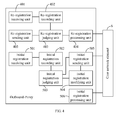
- the Outbound-Proxy includes:
- the Outbound-Proxy may further include:
- the re-registration processing unit 404 may include:
- the Outbound-Proxy may further include:
- the initial registration processing unit 506 may include:
- the Outbound-Proxy may be a P-CSCF, an SBC, an IBCF or another network element that is capable of implementing similar functions; the core network element may be an S-CSCF, an AS, a combination of the S-CSCF and other network elements, or may be another network element capable of implementing registration.
- FIG. 4 , FIG. 5 and FIG. 6 show another network element, namely, a core network element 6.
- the core network element 6 is not a part of the Outbound-Proxy provided herein.
- a communication system provided in an embodiment of the present invention includes any Outbound-Proxy disclosed herein.
- the Outbound-Proxy receives a re-registration request sent by the terminal, and judges whether re-registration with the core network element is required according to the user registration duration carried in the re-registration request; if determining that re-registration is required, the Outbound-Proxy modifies the user registration duration carried in the re-registration request to the preset core network registration duration, namely, to the registration duration which is longer, and then sends the modified re-registration request to the core network element to perform re-registration, therefore reducing signaling traffic between the Outbound-Proxy and the core network element, namely, reducing information amount of the re-registration requests received by the core network element, and slashing the load on the core network element caused by frequent re-registration of the terminal. Because the response message returned to the terminal is an ordinary response message such as a 200 response message, no special requirement is imposed on the type of terminal.
- the Outbound-Proxy can modify the core network registration duration carried in the response message returned by the core network element to the user registration duration carried in the original re-registration request and then send the modified response message to the terminal, the impact on the frequency of re-registration of the terminal is avoided, and the performance of the terminal is maintained.
- the solution provided in this embodiment involves no change to the terminal.
- the Outbound-Proxy may check the received initial registration request. If determining that the user registration duration carried in the initial registration request is less than the preset core network registration duration, the Outbound-Proxy modifies the user registration duration carried in the initial registration request to the core network registration duration, and then forwards the request to the core network element, therefore prolonging the user registration duration stored in the core network element and getting ready for processing the re-registration request sent by the terminal subsequently at intervals, reducing the information amount of re-registration requests received by the core network element and relieving the load on the core network element.
- the Outbound-Proxy may modify the core network registration duration carried in the response message returned by the core network element to the user registration duration carried in the original re-registration request and then send the modified response message to the terminal, the impact on the frequency of re-registration of the terminal is avoided, and the performance of the terminal is maintained.
- the solution provided in this embodiment involves no change to the terminal.
- the program may be stored in a computer readable storage medium.
- the storage medium may be a Read Only Memory (ROM), a Random Access Memory (RAM), a magnetic disk, or a Compact Disk-Read Only Memory (CD-ROM).
Landscapes
- Engineering & Computer Science (AREA)
- Computer Networks & Wireless Communication (AREA)
- Signal Processing (AREA)
- Computer Security & Cryptography (AREA)
- Multimedia (AREA)
- Business, Economics & Management (AREA)
- General Business, Economics & Management (AREA)
- Mobile Radio Communication Systems (AREA)
Applications Claiming Priority (2)
| Application Number | Priority Date | Filing Date | Title |
|---|---|---|---|
| CN2008101865183A CN101448318B (zh) | 2008-12-22 | 2008-12-22 | 一种注册方法、边界代理设备及通信系统 |
| PCT/CN2009/075745 WO2010072129A1 (zh) | 2008-12-22 | 2009-12-21 | 一种注册方法、边界代理设备及通信系统 |
Publications (2)
| Publication Number | Publication Date |
|---|---|
| EP2372967A1 true EP2372967A1 (de) | 2011-10-05 |
| EP2372967A4 EP2372967A4 (de) | 2012-09-26 |
Family
ID=40743633
Family Applications (1)
| Application Number | Title | Priority Date | Filing Date |
|---|---|---|---|
| EP09834082A Withdrawn EP2372967A4 (de) | 2008-12-22 | 2009-12-21 | Registrierungsverfahren, ausgehender proxy-server und kommunikationssystem |
Country Status (3)
| Country | Link |
|---|---|
| EP (1) | EP2372967A4 (de) |
| CN (1) | CN101448318B (de) |
| WO (1) | WO2010072129A1 (de) |
Families Citing this family (10)
| Publication number | Priority date | Publication date | Assignee | Title |
|---|---|---|---|---|
| CN101448318B (zh) * | 2008-12-22 | 2010-08-18 | 华为技术有限公司 | 一种注册方法、边界代理设备及通信系统 |
| CN103220636B (zh) * | 2012-01-19 | 2016-09-21 | 华为终端有限公司 | 终端应用客户端注册方法和系统、以及设备 |
| CN103607390A (zh) * | 2013-11-19 | 2014-02-26 | 大唐移动通信设备有限公司 | 一种第三方重注册的方法及装置 |
| CN106455043A (zh) * | 2015-08-10 | 2017-02-22 | 中国电信股份有限公司 | VoLTE用户状态检测方法及装置、SBC |
| CN106911713B (zh) * | 2017-03-31 | 2021-01-15 | 宇龙计算机通信科技(深圳)有限公司 | Ims注册方法、s-cscf及终端 |
| CN111988841B (zh) * | 2019-05-21 | 2023-02-07 | 海能达通信股份有限公司 | 注册、注册请求发送方法、装置、通信设备及存储介质 |
| CN112738848B (zh) * | 2019-10-14 | 2022-12-06 | 中国移动通信集团安徽有限公司 | 核心网负荷调整方法、装置、设备及计算机可读存储介质 |
| CN111770096B (zh) * | 2020-06-29 | 2022-04-15 | 西安抱朴通信科技有限公司 | 一种注册状态恢复的方法及设备 |
| CN112738882A (zh) * | 2021-03-31 | 2021-04-30 | 四川创智联恒科技有限公司 | 一种基于5g通信的nr网络注册方法、系统及nr制式终端 |
| WO2024026619A1 (en) * | 2022-08-01 | 2024-02-08 | Mediatek Singapore Pte. Ltd. | Improvement on start condition of t318 in iot ntn |
Family Cites Families (12)
| Publication number | Priority date | Publication date | Assignee | Title |
|---|---|---|---|---|
| US7434258B2 (en) * | 2002-05-07 | 2008-10-07 | Nokia Corporation | Method and communication system for controlling security association lifetime |
| CN100382503C (zh) * | 2005-06-20 | 2008-04-16 | 华为技术有限公司 | 一种在用户注册过程中注册异常的处理方法 |
| KR100737564B1 (ko) * | 2006-06-16 | 2007-07-10 | 주식회사 팬택앤큐리텔 | 이동통신 단말기의 모바일 아이피 등록 방법 |
| CN100455138C (zh) * | 2006-08-01 | 2009-01-21 | 上海华为技术有限公司 | 核心网故障恢复后业务重分担的方法 |
| CN101155176A (zh) * | 2006-09-29 | 2008-04-02 | 华为技术有限公司 | 一种移动ip注册方法及系统 |
| CN1968097A (zh) * | 2006-10-23 | 2007-05-23 | 华为技术有限公司 | 一种注册设备的方法和系统 |
| CN101217388B (zh) * | 2007-01-05 | 2011-01-05 | 中兴通讯股份有限公司 | 一种紧急呼叫注册的实现方法 |
| WO2008117165A2 (en) * | 2007-03-28 | 2008-10-02 | Nokia Corporation | Methods, apparatuses and computer program product for forwarding emergency registration request to a home network |
| CN101291320B (zh) * | 2007-04-18 | 2011-07-13 | 中兴通讯股份有限公司 | Ip多媒体子系统集中业务重注册的实现方法 |
| CN101299697B (zh) * | 2007-04-30 | 2012-09-05 | 华为技术有限公司 | 注销无线ip接入网联系地址的方法和设备 |
| CN101127786B (zh) * | 2007-09-25 | 2011-12-07 | 中兴通讯股份有限公司 | 一种移动ip多重注册时分配ip地址的方法 |
| CN101448318B (zh) * | 2008-12-22 | 2010-08-18 | 华为技术有限公司 | 一种注册方法、边界代理设备及通信系统 |
-
2008
- 2008-12-22 CN CN2008101865183A patent/CN101448318B/zh not_active Expired - Fee Related
-
2009
- 2009-12-21 EP EP09834082A patent/EP2372967A4/de not_active Withdrawn
- 2009-12-21 WO PCT/CN2009/075745 patent/WO2010072129A1/zh not_active Ceased
Also Published As
| Publication number | Publication date |
|---|---|
| EP2372967A4 (de) | 2012-09-26 |
| CN101448318A (zh) | 2009-06-03 |
| CN101448318B (zh) | 2010-08-18 |
| WO2010072129A1 (zh) | 2010-07-01 |
Similar Documents
| Publication | Publication Date | Title |
|---|---|---|
| EP2372967A1 (de) | Registrierungsverfahren, ausgehender proxy-server und kommunikationssystem | |
| US9432897B2 (en) | Handling of access capability information in a mobile network | |
| EP2114047B1 (de) | Reduzierung des auftretens von benutzergeräteregistrierungsablauf bei anrufen | |
| US9130956B2 (en) | De-registration method and system for IP multimedia subsystem centralized service | |
| US8417240B2 (en) | Method, system and apparatus for using IMS communication service identifier | |
| US20150120947A1 (en) | Method and a proxy-call session control function node for deregistration of a user equipment from an internet multimedia subsystem | |
| TW200807962A (en) | Allocation of a call state control function to a subscriber | |
| CN102075545B (zh) | 一种客户端注册指示方法、注册方法及其设备 | |
| CN103037501B (zh) | 一种网际协议多媒体子系统终端的注册方法、设备及系统 | |
| CN113542205B (zh) | 注册关联业务的控制、处理方法及网元、计算机可读介质 | |
| US20120177194A1 (en) | Method for connecting call | |
| EP2375794A1 (de) | Dienstmigrationsverfahren, vorrichtung und system dafür | |
| EP2372966A1 (de) | Verfahren und vorrichtung zur entfernung von multimediasubsystemdiensten und multimediasubsystem | |
| KR101620809B1 (ko) | Sip 프록시 장애 극복을 위한 방법 | |
| US9077722B2 (en) | Method and system for controlling the restart traffic in a telecommunication network | |
| US20120127851A1 (en) | Method and System for Managing Signalling in a Telecommunication Network | |
| KR101100316B1 (ko) | Ip 멀티미디어 서브시스템 네트워크에서 등록 제어방법및 그 방법을 사용하는 통신시스템 | |
| CN112738848A (zh) | 核心网负荷调整方法、装置、设备及计算机可读存储介质 | |
| US20150085856A1 (en) | REGISTERING A DEVICE WITH A VoIP CORE NETWORK | |
| EP1720320A1 (de) | Verfahren und Vorrichtung zum Abhandeln von Informationen den Client betreffend in einem Applikationsserver | |
| CN102045364A (zh) | Ims网络中用户注册的方法、装置及通信系统 | |
| EP3878147B1 (de) | Verfahren, vorrichtung und computerprogramm | |
| US20220141293A1 (en) | Mobile client recovery using push notifications to execute exponential back-off procedure | |
| CN101340720B (zh) | 用于ip多媒体子系统对用户终端进行两级位置管理的方法 | |
| US12206714B1 (en) | Methods, systems, and computer readable media for handling internet protocol (IP) multimedia subsystem (IMS) registration at proxy call session control function (P-CSCF) for roaming users after policy and charging rules function (PCRF) database failure |
Legal Events
| Date | Code | Title | Description |
|---|---|---|---|
| PUAI | Public reference made under article 153(3) epc to a published international application that has entered the european phase |
Free format text: ORIGINAL CODE: 0009012 |
|
| 17P | Request for examination filed |
Effective date: 20110630 |
|
| AK | Designated contracting states |
Kind code of ref document: A1 Designated state(s): AT BE BG CH CY CZ DE DK EE ES FI FR GB GR HR HU IE IS IT LI LT LU LV MC MK MT NL NO PL PT RO SE SI SK SM TR |
|
| DAX | Request for extension of the european patent (deleted) | ||
| STAA | Information on the status of an ep patent application or granted ep patent |
Free format text: STATUS: THE APPLICATION HAS BEEN WITHDRAWN |
|
| A4 | Supplementary search report drawn up and despatched |
Effective date: 20120827 |
|
| RIC1 | Information provided on ipc code assigned before grant |
Ipc: H04L 29/06 20060101ALI20120821BHEP Ipc: H04W 60/02 20090101AFI20120821BHEP Ipc: H04L 12/00 20060101ALI20120821BHEP |
|
| 18W | Application withdrawn |
Effective date: 20120822 |