EP2373348B1 - Abgabesystem zur abgabe einer substanz in die mundhöhle - Google Patents
Abgabesystem zur abgabe einer substanz in die mundhöhle Download PDFInfo
- Publication number
- EP2373348B1 EP2373348B1 EP09833756.1A EP09833756A EP2373348B1 EP 2373348 B1 EP2373348 B1 EP 2373348B1 EP 09833756 A EP09833756 A EP 09833756A EP 2373348 B1 EP2373348 B1 EP 2373348B1
- Authority
- EP
- European Patent Office
- Prior art keywords
- carrier
- link
- sugar
- delivery system
- bonded
- Prior art date
- Legal status (The legal status is an assumption and is not a legal conclusion. Google has not performed a legal analysis and makes no representation as to the accuracy of the status listed.)
- Not-in-force
Links
- 239000000126 substance Substances 0.000 title claims description 59
- 210000000214 mouth Anatomy 0.000 title claims description 28
- 235000000346 sugar Nutrition 0.000 claims description 90
- 230000000975 bioactive effect Effects 0.000 claims description 49
- 102000004190 Enzymes Human genes 0.000 claims description 19
- 108090000790 Enzymes Proteins 0.000 claims description 19
- 210000003296 saliva Anatomy 0.000 claims description 17
- QVGXLLKOCUKJST-UHFFFAOYSA-N atomic oxygen Chemical compound [O] QVGXLLKOCUKJST-UHFFFAOYSA-N 0.000 claims description 16
- 229910052760 oxygen Inorganic materials 0.000 claims description 16
- 239000001301 oxygen Substances 0.000 claims description 16
- 150000002972 pentoses Chemical group 0.000 claims description 14
- 229920002472 Starch Polymers 0.000 claims description 12
- 239000000463 material Substances 0.000 claims description 12
- 239000008107 starch Substances 0.000 claims description 12
- 235000019698 starch Nutrition 0.000 claims description 12
- 125000001424 substituent group Chemical group 0.000 claims description 10
- 229920002678 cellulose Polymers 0.000 claims description 8
- 239000001913 cellulose Substances 0.000 claims description 8
- 238000000034 method Methods 0.000 claims description 8
- 239000000020 Nitrocellulose Substances 0.000 claims description 7
- 229920001220 nitrocellulos Polymers 0.000 claims description 7
- LCTORNIWLGOBPB-GASJEMHNSA-N (3r,4s,5s,6r)-2-amino-6-(hydroxymethyl)oxane-2,3,4,5-tetrol Chemical compound NC1(O)O[C@H](CO)[C@@H](O)[C@H](O)[C@H]1O LCTORNIWLGOBPB-GASJEMHNSA-N 0.000 claims description 5
- 239000007864 aqueous solution Substances 0.000 claims description 3
- 229910052799 carbon Inorganic materials 0.000 claims description 3
- 150000004676 glycans Chemical class 0.000 claims description 3
- 238000004519 manufacturing process Methods 0.000 claims description 3
- 229910052757 nitrogen Inorganic materials 0.000 claims description 3
- 229920001542 oligosaccharide Polymers 0.000 claims description 3
- 150000002482 oligosaccharides Chemical class 0.000 claims description 3
- 229910052698 phosphorus Inorganic materials 0.000 claims description 3
- 229920001282 polysaccharide Polymers 0.000 claims description 3
- 239000005017 polysaccharide Substances 0.000 claims description 3
- 229910052717 sulfur Inorganic materials 0.000 claims description 3
- KYZAJWXTXOPVRA-RKGTWFHHSA-N (2R,3S,4S,5R)-2,3,4,5,6-pentahydroxyhexanal (2R,3S,4R,5R)-2,3,4,5,6-pentahydroxyhexanal (2R,3S,4R)-2,3,4,5-tetrahydroxypentanal Chemical compound OC[C@@H](O)[C@H](O)[C@@H](O)C=O.OC[C@@H](O)[C@H](O)[C@H](O)[C@@H](O)C=O.OC[C@@H](O)[C@H](O)[C@H](O)[C@@H](O)C=O.OC[C@@H](O)[C@@H](O)[C@H](O)[C@@H](O)C=O KYZAJWXTXOPVRA-RKGTWFHHSA-N 0.000 claims description 2
- 230000001747 exhibiting effect Effects 0.000 claims 2
- 239000003814 drug Substances 0.000 description 24
- 239000013543 active substance Substances 0.000 description 21
- 238000012360 testing method Methods 0.000 description 21
- 229940079593 drug Drugs 0.000 description 20
- 229940088598 enzyme Drugs 0.000 description 17
- 241000700159 Rattus Species 0.000 description 15
- WSEQXVZVJXJVFP-HXUWFJFHSA-N (R)-citalopram Chemical compound C1([C@@]2(C3=CC=C(C=C3CO2)C#N)CCCN(C)C)=CC=C(F)C=C1 WSEQXVZVJXJVFP-HXUWFJFHSA-N 0.000 description 13
- 229960001653 citalopram Drugs 0.000 description 13
- 230000000694 effects Effects 0.000 description 13
- 239000003826 tablet Substances 0.000 description 12
- 229930000680 A04AD01 - Scopolamine Natural products 0.000 description 9
- STECJAGHUSJQJN-GAUPFVANSA-N Hyoscine Natural products C1([C@H](CO)C(=O)OC2C[C@@H]3N([C@H](C2)[C@@H]2[C@H]3O2)C)=CC=CC=C1 STECJAGHUSJQJN-GAUPFVANSA-N 0.000 description 9
- STECJAGHUSJQJN-UHFFFAOYSA-N N-Methyl-scopolamin Natural products C1C(C2C3O2)N(C)C3CC1OC(=O)C(CO)C1=CC=CC=C1 STECJAGHUSJQJN-UHFFFAOYSA-N 0.000 description 9
- 239000000969 carrier Substances 0.000 description 9
- 210000004379 membrane Anatomy 0.000 description 9
- 239000012528 membrane Substances 0.000 description 9
- 229960002646 scopolamine Drugs 0.000 description 9
- STECJAGHUSJQJN-FWXGHANASA-N scopolamine Chemical compound C1([C@@H](CO)C(=O)O[C@H]2C[C@@H]3N([C@H](C2)[C@@H]2[C@H]3O2)C)=CC=CC=C1 STECJAGHUSJQJN-FWXGHANASA-N 0.000 description 8
- 210000004556 brain Anatomy 0.000 description 6
- 239000011159 matrix material Substances 0.000 description 6
- 230000002503 metabolic effect Effects 0.000 description 6
- 201000003152 motion sickness Diseases 0.000 description 6
- 210000002200 mouth mucosa Anatomy 0.000 description 6
- 102000016611 Proteoglycans Human genes 0.000 description 5
- 108010067787 Proteoglycans Proteins 0.000 description 5
- 238000010586 diagram Methods 0.000 description 5
- 239000008177 pharmaceutical agent Substances 0.000 description 5
- SRBFZHDQGSBBOR-IOVATXLUSA-N D-xylopyranose Chemical compound O[C@@H]1COC(O)[C@H](O)[C@H]1O SRBFZHDQGSBBOR-IOVATXLUSA-N 0.000 description 4
- 230000015556 catabolic process Effects 0.000 description 4
- 238000005119 centrifugation Methods 0.000 description 4
- 150000001875 compounds Chemical class 0.000 description 4
- 210000004877 mucosa Anatomy 0.000 description 4
- 241000282414 Homo sapiens Species 0.000 description 3
- 230000008901 benefit Effects 0.000 description 3
- 239000012876 carrier material Substances 0.000 description 3
- 210000002808 connective tissue Anatomy 0.000 description 3
- 238000012377 drug delivery Methods 0.000 description 3
- 230000002209 hydrophobic effect Effects 0.000 description 3
- 239000007924 injection Substances 0.000 description 3
- 238000002347 injection Methods 0.000 description 3
- 230000007246 mechanism Effects 0.000 description 3
- 239000000203 mixture Substances 0.000 description 3
- 125000003607 serino group Chemical group [H]N([H])[C@]([H])(C(=O)[*])C(O[H])([H])[H] 0.000 description 3
- 150000008163 sugars Chemical class 0.000 description 3
- 230000009747 swallowing Effects 0.000 description 3
- 102000005369 Aldehyde Dehydrogenase Human genes 0.000 description 2
- 108020002663 Aldehyde Dehydrogenase Proteins 0.000 description 2
- 239000004382 Amylase Substances 0.000 description 2
- 102000013142 Amylases Human genes 0.000 description 2
- 108010065511 Amylases Proteins 0.000 description 2
- CURLTUGMZLYLDI-UHFFFAOYSA-N Carbon dioxide Chemical compound O=C=O CURLTUGMZLYLDI-UHFFFAOYSA-N 0.000 description 2
- 102000004237 Decorin Human genes 0.000 description 2
- 108090000738 Decorin Proteins 0.000 description 2
- 241000282412 Homo Species 0.000 description 2
- 241001465754 Metazoa Species 0.000 description 2
- 102000016943 Muramidase Human genes 0.000 description 2
- 108010014251 Muramidase Proteins 0.000 description 2
- 108010062010 N-Acetylmuramoyl-L-alanine Amidase Proteins 0.000 description 2
- 101001064310 Rattus norvegicus Gastric triacylglycerol lipase Proteins 0.000 description 2
- FAPWRFPIFSIZLT-UHFFFAOYSA-M Sodium chloride Chemical compound [Na+].[Cl-] FAPWRFPIFSIZLT-UHFFFAOYSA-M 0.000 description 2
- 235000019418 amylase Nutrition 0.000 description 2
- PYMYPHUHKUWMLA-UHFFFAOYSA-N arabinose Natural products OCC(O)C(O)C(O)C=O PYMYPHUHKUWMLA-UHFFFAOYSA-N 0.000 description 2
- SRBFZHDQGSBBOR-UHFFFAOYSA-N beta-D-Pyranose-Lyxose Natural products OC1COC(O)C(O)C1O SRBFZHDQGSBBOR-UHFFFAOYSA-N 0.000 description 2
- 230000015572 biosynthetic process Effects 0.000 description 2
- 210000003169 central nervous system Anatomy 0.000 description 2
- 230000000052 comparative effect Effects 0.000 description 2
- 230000007812 deficiency Effects 0.000 description 2
- 210000001035 gastrointestinal tract Anatomy 0.000 description 2
- 150000002402 hexoses Chemical class 0.000 description 2
- 210000003734 kidney Anatomy 0.000 description 2
- 210000004185 liver Anatomy 0.000 description 2
- 229960000274 lysozyme Drugs 0.000 description 2
- 239000004325 lysozyme Substances 0.000 description 2
- 235000010335 lysozyme Nutrition 0.000 description 2
- 239000002207 metabolite Substances 0.000 description 2
- 230000001737 promoting effect Effects 0.000 description 2
- 235000020095 red wine Nutrition 0.000 description 2
- 239000000243 solution Substances 0.000 description 2
- 239000007921 spray Substances 0.000 description 2
- 239000006190 sub-lingual tablet Substances 0.000 description 2
- 208000024891 symptom Diseases 0.000 description 2
- 238000010998 test method Methods 0.000 description 2
- 238000011287 therapeutic dose Methods 0.000 description 2
- RHQQHZQUAMFINJ-GKWSUJDHSA-N 1-[(3s,5s,8s,9s,10s,11s,13s,14s,17s)-3,11-dihydroxy-10,13-dimethyl-2,3,4,5,6,7,8,9,11,12,14,15,16,17-tetradecahydro-1h-cyclopenta[a]phenanthren-17-yl]-2-hydroxyethanone Chemical group C1[C@@H](O)CC[C@]2(C)[C@H]3[C@@H](O)C[C@](C)([C@H](CC4)C(=O)CO)[C@@H]4[C@@H]3CC[C@H]21 RHQQHZQUAMFINJ-GKWSUJDHSA-N 0.000 description 1
- RZVAJINKPMORJF-UHFFFAOYSA-N Acetaminophen Chemical compound CC(=O)NC1=CC=C(O)C=C1 RZVAJINKPMORJF-UHFFFAOYSA-N 0.000 description 1
- 102000013563 Acid Phosphatase Human genes 0.000 description 1
- 108010051457 Acid Phosphatase Proteins 0.000 description 1
- 241000894006 Bacteria Species 0.000 description 1
- 241000283690 Bos taurus Species 0.000 description 1
- 101710132601 Capsid protein Proteins 0.000 description 1
- 102000005731 Glucose-6-phosphate isomerase Human genes 0.000 description 1
- 108010070600 Glucose-6-phosphate isomerase Proteins 0.000 description 1
- 102000005720 Glutathione transferase Human genes 0.000 description 1
- 108010070675 Glutathione transferase Proteins 0.000 description 1
- 206010019233 Headaches Diseases 0.000 description 1
- HEFNNWSXXWATRW-UHFFFAOYSA-N Ibuprofen Chemical compound CC(C)CC1=CC=C(C(C)C(O)=O)C=C1 HEFNNWSXXWATRW-UHFFFAOYSA-N 0.000 description 1
- 101710176219 Kallikrein-1 Proteins 0.000 description 1
- 108010023244 Lactoperoxidase Proteins 0.000 description 1
- 102000045576 Lactoperoxidases Human genes 0.000 description 1
- 108090001060 Lipase Proteins 0.000 description 1
- 102000004882 Lipase Human genes 0.000 description 1
- 239000004367 Lipase Substances 0.000 description 1
- 208000019695 Migraine disease Diseases 0.000 description 1
- 101710126437 N-acetylmuramyl-L-alanine amidase Proteins 0.000 description 1
- 206010028980 Neoplasm Diseases 0.000 description 1
- 229940127450 Opioid Agonists Drugs 0.000 description 1
- 229910019142 PO4 Inorganic materials 0.000 description 1
- 208000002193 Pain Diseases 0.000 description 1
- 108091005804 Peptidases Proteins 0.000 description 1
- 102000035195 Peptidases Human genes 0.000 description 1
- MTCFGRXMJLQNBG-UHFFFAOYSA-N Serine Natural products OCC(N)C(O)=O MTCFGRXMJLQNBG-UHFFFAOYSA-N 0.000 description 1
- 208000021386 Sjogren Syndrome Diseases 0.000 description 1
- 241000282887 Suidae Species 0.000 description 1
- 102000019197 Superoxide Dismutase Human genes 0.000 description 1
- 108010012715 Superoxide dismutase Proteins 0.000 description 1
- 102000057032 Tissue Kallikreins Human genes 0.000 description 1
- 206010047700 Vomiting Diseases 0.000 description 1
- 238000010521 absorption reaction Methods 0.000 description 1
- 230000002378 acidificating effect Effects 0.000 description 1
- 239000000654 additive Substances 0.000 description 1
- 102000004139 alpha-Amylases Human genes 0.000 description 1
- 108090000637 alpha-Amylases Proteins 0.000 description 1
- 229940024171 alpha-amylase Drugs 0.000 description 1
- -1 anal delivery Substances 0.000 description 1
- 230000003288 anthiarrhythmic effect Effects 0.000 description 1
- 230000000844 anti-bacterial effect Effects 0.000 description 1
- 239000003416 antiarrhythmic agent Substances 0.000 description 1
- 229940030600 antihypertensive agent Drugs 0.000 description 1
- 239000002220 antihypertensive agent Substances 0.000 description 1
- 229940049706 benzodiazepine Drugs 0.000 description 1
- 150000001557 benzodiazepines Chemical class 0.000 description 1
- 230000035587 bioadhesion Effects 0.000 description 1
- 239000012620 biological material Substances 0.000 description 1
- 239000008280 blood Substances 0.000 description 1
- 210000004369 blood Anatomy 0.000 description 1
- 210000004204 blood vessel Anatomy 0.000 description 1
- 229910021538 borax Inorganic materials 0.000 description 1
- 229940124630 bronchodilator Drugs 0.000 description 1
- 239000000168 bronchodilator agent Substances 0.000 description 1
- FFSAXUULYPJSKH-UHFFFAOYSA-N butyrophenone Chemical class CCCC(=O)C1=CC=CC=C1 FFSAXUULYPJSKH-UHFFFAOYSA-N 0.000 description 1
- 239000001569 carbon dioxide Substances 0.000 description 1
- 229910002092 carbon dioxide Inorganic materials 0.000 description 1
- 230000008859 change Effects 0.000 description 1
- 238000006243 chemical reaction Methods 0.000 description 1
- 235000021310 complex sugar Nutrition 0.000 description 1
- 230000009089 cytolysis Effects 0.000 description 1
- 230000007850 degeneration Effects 0.000 description 1
- 238000002716 delivery method Methods 0.000 description 1
- 230000002542 deteriorative effect Effects 0.000 description 1
- 230000029087 digestion Effects 0.000 description 1
- 150000002016 disaccharides Chemical class 0.000 description 1
- 239000002934 diuretic Substances 0.000 description 1
- 229940030606 diuretics Drugs 0.000 description 1
- 230000002526 effect on cardiovascular system Effects 0.000 description 1
- 239000003792 electrolyte Substances 0.000 description 1
- 239000003623 enhancer Substances 0.000 description 1
- 238000002474 experimental method Methods 0.000 description 1
- 239000000945 filler Substances 0.000 description 1
- 239000000796 flavoring agent Substances 0.000 description 1
- 235000019634 flavors Nutrition 0.000 description 1
- 235000013305 food Nutrition 0.000 description 1
- 230000037406 food intake Effects 0.000 description 1
- 210000005095 gastrointestinal system Anatomy 0.000 description 1
- 231100000869 headache Toxicity 0.000 description 1
- 238000003384 imaging method Methods 0.000 description 1
- 238000001727 in vivo Methods 0.000 description 1
- 208000014674 injury Diseases 0.000 description 1
- 230000000968 intestinal effect Effects 0.000 description 1
- 229940057428 lactoperoxidase Drugs 0.000 description 1
- 235000019421 lipase Nutrition 0.000 description 1
- 235000012054 meals Nutrition 0.000 description 1
- 230000004060 metabolic process Effects 0.000 description 1
- 230000001035 methylating effect Effects 0.000 description 1
- 239000011325 microbead Substances 0.000 description 1
- 150000002772 monosaccharides Chemical class 0.000 description 1
- 210000003097 mucus Anatomy 0.000 description 1
- 239000003887 narcotic antagonist Substances 0.000 description 1
- 210000003928 nasal cavity Anatomy 0.000 description 1
- 125000000449 nitro group Chemical group [O-][N+](*)=O 0.000 description 1
- 231100000252 nontoxic Toxicity 0.000 description 1
- 230000003000 nontoxic effect Effects 0.000 description 1
- 210000000056 organ Anatomy 0.000 description 1
- 229940124641 pain reliever Drugs 0.000 description 1
- 229960005489 paracetamol Drugs 0.000 description 1
- 239000008188 pellet Substances 0.000 description 1
- 230000035699 permeability Effects 0.000 description 1
- 239000012466 permeate Substances 0.000 description 1
- 229920000642 polymer Polymers 0.000 description 1
- 238000000079 presaturation Methods 0.000 description 1
- 235000019833 protease Nutrition 0.000 description 1
- 102000004169 proteins and genes Human genes 0.000 description 1
- 108090000623 proteins and genes Proteins 0.000 description 1
- 238000011084 recovery Methods 0.000 description 1
- 230000004044 response Effects 0.000 description 1
- 210000003079 salivary gland Anatomy 0.000 description 1
- 229920006395 saturated elastomer Polymers 0.000 description 1
- 238000009738 saturating Methods 0.000 description 1
- 238000000926 separation method Methods 0.000 description 1
- 239000012279 sodium borohydride Substances 0.000 description 1
- 229910000033 sodium borohydride Inorganic materials 0.000 description 1
- 239000011780 sodium chloride Substances 0.000 description 1
- 235000010339 sodium tetraborate Nutrition 0.000 description 1
- 230000002194 synthesizing effect Effects 0.000 description 1
- 230000008685 targeting Effects 0.000 description 1
- 239000003053 toxin Substances 0.000 description 1
- 230000008733 trauma Effects 0.000 description 1
- BSVBQGMMJUBVOD-UHFFFAOYSA-N trisodium borate Chemical compound [Na+].[Na+].[Na+].[O-]B([O-])[O-] BSVBQGMMJUBVOD-UHFFFAOYSA-N 0.000 description 1
- 238000009827 uniform distribution Methods 0.000 description 1
- 230000002792 vascular Effects 0.000 description 1
- 230000002747 voluntary effect Effects 0.000 description 1
- XLYOFNOQVPJJNP-UHFFFAOYSA-N water Substances O XLYOFNOQVPJJNP-UHFFFAOYSA-N 0.000 description 1
- 235000014101 wine Nutrition 0.000 description 1
- HEBKCHPVOIAQTA-SCDXWVJYSA-N xylitol Chemical group OC[C@H](O)[C@@H](O)[C@H](O)CO HEBKCHPVOIAQTA-SCDXWVJYSA-N 0.000 description 1
- 125000000969 xylosyl group Chemical group C1([C@H](O)[C@@H](O)[C@H](O)CO1)* 0.000 description 1
Images


Classifications
-
- A—HUMAN NECESSITIES
- A61—MEDICAL OR VETERINARY SCIENCE; HYGIENE
- A61K—PREPARATIONS FOR MEDICAL, DENTAL OR TOILETRY PURPOSES
- A61K9/00—Medicinal preparations characterised by special physical form
- A61K9/0012—Galenical forms characterised by the site of application
- A61K9/0053—Mouth and digestive tract, i.e. intraoral and peroral administration
- A61K9/0056—Mouth soluble or dispersible forms; Suckable, eatable, chewable coherent forms; Forms rapidly disintegrating in the mouth; Lozenges; Lollipops; Bite capsules; Baked products; Baits or other oral forms for animals
-
- A—HUMAN NECESSITIES
- A61—MEDICAL OR VETERINARY SCIENCE; HYGIENE
- A61K—PREPARATIONS FOR MEDICAL, DENTAL OR TOILETRY PURPOSES
- A61K47/00—Medicinal preparations characterised by the non-active ingredients used, e.g. carriers or inert additives; Targeting or modifying agents chemically bound to the active ingredient
- A61K47/50—Medicinal preparations characterised by the non-active ingredients used, e.g. carriers or inert additives; Targeting or modifying agents chemically bound to the active ingredient the non-active ingredient being chemically bound to the active ingredient, e.g. polymer-drug conjugates
- A61K47/51—Medicinal preparations characterised by the non-active ingredients used, e.g. carriers or inert additives; Targeting or modifying agents chemically bound to the active ingredient the non-active ingredient being chemically bound to the active ingredient, e.g. polymer-drug conjugates the non-active ingredient being a modifying agent
- A61K47/56—Medicinal preparations characterised by the non-active ingredients used, e.g. carriers or inert additives; Targeting or modifying agents chemically bound to the active ingredient the non-active ingredient being chemically bound to the active ingredient, e.g. polymer-drug conjugates the non-active ingredient being a modifying agent the modifying agent being an organic macromolecular compound, e.g. an oligomeric, polymeric or dendrimeric molecule
- A61K47/61—Medicinal preparations characterised by the non-active ingredients used, e.g. carriers or inert additives; Targeting or modifying agents chemically bound to the active ingredient the non-active ingredient being chemically bound to the active ingredient, e.g. polymer-drug conjugates the non-active ingredient being a modifying agent the modifying agent being an organic macromolecular compound, e.g. an oligomeric, polymeric or dendrimeric molecule the organic macromolecular compound being a polysaccharide or a derivative thereof
-
- A—HUMAN NECESSITIES
- A61—MEDICAL OR VETERINARY SCIENCE; HYGIENE
- A61K—PREPARATIONS FOR MEDICAL, DENTAL OR TOILETRY PURPOSES
- A61K47/00—Medicinal preparations characterised by the non-active ingredients used, e.g. carriers or inert additives; Targeting or modifying agents chemically bound to the active ingredient
- A61K47/30—Macromolecular organic or inorganic compounds, e.g. inorganic polyphosphates
- A61K47/36—Polysaccharides; Derivatives thereof, e.g. gums, starch, alginate, dextrin, hyaluronic acid, chitosan, inulin, agar or pectin
- A61K47/38—Cellulose; Derivatives thereof
-
- A—HUMAN NECESSITIES
- A61—MEDICAL OR VETERINARY SCIENCE; HYGIENE
- A61K—PREPARATIONS FOR MEDICAL, DENTAL OR TOILETRY PURPOSES
- A61K9/00—Medicinal preparations characterised by special physical form
- A61K9/0012—Galenical forms characterised by the site of application
- A61K9/0053—Mouth and digestive tract, i.e. intraoral and peroral administration
Definitions
- the invention pertains to a delivery system for use in the oral cavity, the system comprising a carrier for a bioactive substance.
- Metabolic processes may cause the drug to break down into non-active or even harmful metabolites. This means that the required therapeutic dose will be unnecessarily large and that unwanted side effects may occur.
- a further disadvantage is that it is difficult to optimize the dose on an individual basis.
- metabolic breakdown makes it unsuitable to use oral delivery.
- An orally ingested drug will also require a relatively long time before any effect of the drug is noticed. This means that where a quick response is particularly important such as with pain killers or drugs for motion sickness, there is a strong need for a better delivery system.
- Migraines and motion sickness which are accompanied by such symptoms are examples of conditions where it is often too late for ingested drugs to have an effect once the symptoms have set in.
- JP 8 104651 discloses a drug delivery material comprising a polymer having a reduced-type sugar on the side chain.
- the carrier is an inert carrier comprising a cellulose based material or a starch based material having a surface comprising oxygen-binding sites (X), and at least one link comprising a pentose group and one or more additional sugar groups, the pentose group being bonded to one of said oxygen binding sites (X) and one or more bioactive substances (R) are bonded directly to one of the sugar groups of the at least one link or to one or more substituents on one or more sugar groups in the at least one link.
- X oxygen-binding sites
- R bioactive substances
- the further sugar group or groups on the sugar link may be pentose or hexose as desired.
- the invention offers several advantages over previously used drug delivery systems such as ingestion of drugs, injections, anal delivery, spray dose delivery, sublingual tablets and dose inhalation.
- bioactive substance (R) When the carrier is placed in the oral cavity and comes into contact with saliva, enzymes in the saliva break the bonds in the sugar link thereby releasing the bioactive substance (R) into the oral cavity.
- the bioactive substance is released directly into the oral cavity as a bioactive molecule having a sugar group coupled to the bioactive substance (R).
- the hydrophilic sugar group that is bonded to the active substance (R) acts as a promoter that facilitates permeation and immediate uptake of the bioactive molecules through the mucosal membranes in the oral cavity. Accordingly, the bioactive molecules are directly transported into the blood vessels of the mucosa and transported into the blood stream directly to the brain thus bypassing the gastro-intestinal tract.
- bioactive substances have a hydrophobic character, they are generally not taken up through the hydrophilic oral mucosa or are taken up only at a very low rate such that a large proportion of the administered dose is lost to swallowing of the bioactive substance before it can permeate the mucosa.
- the delivery system in accordance with the invention the risk of loosing active substance to swallowing is eliminated due to the release mechanism which is activated by saliva when the non-dissolving carrier with the active substance is placed in contact with the oral mucosa so that the release takes place exactly where intended.
- the permeation promoting effect of the hydrophilic sugar group in the bioactive molecule released from the carrier ascertains rapid and almost complete uptake of the released substance regardless of whether it is hydrophilic or hydrophobic. Generally, as much as 98% or more of the active substance will be taken up through the oral mucosa.
- the delivery system according to the invention allows for a wider range of bioactive substances to be administered orally than has been possible with the previously known tablets and compositions that merely dissolve and release the substance in the oral cavity.
- the carrier itself is not dissolved in the oral cavity but stays intact and remains in place in contact with the mucosa until it is removed after the treatment has been completed.
- Saliva is produced in the salivary glands.
- the human saliva contains 98% water, but it also contains substances, including electrolytes, mucus, antibacterial compounds and various enzymes.
- the delivery system in accordance with the invention makes it possible to use considerably lower doses than with per-oral delivery without loosing effect of the active component.
- the doses may be reduced to as much as 1/10 of a swallowed dose.
- the delivery mechanism is quick, highly effective, simple and painless and involves only bio-compatible components and substances such as sugars that even when broken down produce metabolites which are harmless to the human body. Any substituents on the sugar links or on the carrier materials according to the invention should also be chosen so that they produce only non-toxic metabolites.
- the delivery system according to the invention is superior to conventional sublingual tablets or other intraorally placed delivery devices that are designed to dissolve in the oral cavity.
- the delivery system in accordance with the invention can be made to precision to carry and transfer a well-defined and very low dose of a bioactive substance.
- the carrier structure is placed in the oral cavity and will stay in its intended place, without dissolving or otherwise deteriorating until it is eventually removed by the treated individual or a care-taker after the treatment has been completed. Once the biomolecules consisting of the sugar group coupled to the bioactive substance are released from the carrier they will immediately be transported into the oral mucosa as a result of the hydrophilic character of the sugar group. Consequently, the risk of loosing any of the bioactive substance to inadvertent swallowing is eliminated.
- the sugar links on the carrier can be designed with regard to their length, branching and substituents to specifically bind to one or more bioactive substances. It is also possible to create bonds that may be broken by means of additives thus allowing further possibilities of designing the sugar links in order to obtain a higher degree of control of the release mechanism.
- the length of the sugar links may vary from the simplest links containing only the carrier-binding pentose and a single additional sugar group to longer and more complex sugar chains.
- the length of the sugar links determines the amount of bioactive substance or substances that can be bonded to the carrier.
- longer chains are preferably used in order to obtain sufficient spacing from the surface of the carrier and between individual molecules coupled to the link.
- the sugar links may be monosaccharides, disaccharides, etc. but are preferably non-branched oligosaccharides or polysaccharides.
- a particularly preferred sugar link is a sugar chain consisting of: xylose - galactose - galactose - glucose amine.
- the link is bonded with the xylose-end to the carrier.
- a sugar link of this kind is highly bio-compatible as it is naturally occurring in the connective tissue of animals and humans where it acts as a promoter for transporting hydrophobic molecules through biological membranes.
- the enzymes in the saliva will start breaking off the sugar groups from the free end of the chain. Accordingly, the first bond that will be broken is the bond between the glucose amine and the following galactose group. If a bioactive substance is bonded to the glucose amine, the resulting bioactive molecule will be composed of the bioactive substance and the glucose amine with the glucose amine constituting a hydrophilic end on the bioactive molecule.
- Such sugar links may be obtained from proteoglycans isolated from connective tissue such as connective tissue from cows or pigs.
- Proteoglycans are compounds comprising a core protein and one or more sugar chains covalently attached, usually via a serine residue. If desired, the protein can be removed from the serine residue by using a proteinase before separating the sugar links from the serine.
- the sugar links may be enzymatically released from the proteoglycans by subjecting an aqueous solution of the proteoglycans to treatment with a chondritinase and subsequent separation of the sugar links from the solution by centrifugation.
- the xylose group at the end of the chain is simultaneously opened up, the oxygen in the resulting xylitol group thereby being exposed to preferential binding to an oxygen binding group such as a nitro-group on the surface of a carrier.
- the biologically derived sugar links may be shortened using chondritrinases to obtain links having fewer sugar groups following on the initial xylose.
- the chondritrinases are enzymes that are specific for different sugars.
- Proteoglycans and their composition are disclosed in Moses et al, 1997 a, 1997, b, 1998, and 1999, a and b (Doctoral Dissertation, Medical Faculty of Lund University, titled "Biosynthesis of the Proteoglycan Decorin, published 1999 )
- a further way to obtain sugar links for use in the invention is by synthetization.
- synthesizing the sugar links they can be designed to have any composition and length desired.
- the synthesized sugar links may be bound to a carrier having oxygen binding groups by opening a terminal pentose group for instance with a an aqueous solution of sodium borate, NaBH 4 or by treatment with an aqueous NaCl solution as is well known in the art.
- the additional sugar groups may be any pentose or hexose.
- the reactions are preferably carried out at a pH of 5.6 or lower.
- the bonds in the sugar links will be broken by enzymes which are present in the saliva of most human beings. Notable exceptions are individuals suffering from Sjögren's Syndrome who lack the right kind of amylase and thereby are unable to break down the sugar links.
- Other conditions changing the saliva content or affecting saliva production may also affect the enzyme activity. Such conditions may, for instance, be caused by medication, by trauma or by tumours.
- the delivery system according to the invention will not be completely inefficient even for persons suffering from an enzyme deficiency as the bonds in the sugar links will break apart at low pH, such as at a pH below approximately 5.6. A lowering of the pH in the oral cavity to levels sufficient to break up the sugar links will often take place after a meal and will lead to a release of the bioactive substance from the delivery system.
- the delivery system according to the invention has several advantages over prior art delivery systems such as tablets, injections, etc.
- a major advantage is that it is easy to interrupt the treatment when the desired effect has been achieved by simply removing the carrier from the oral cavity. This means that medication can be tailored on an individual basis.
- the risk of overdosing is virtually non-existing as the carrier with the bioactive substance can be removed from the oral cavity at any time.
- the dose needed to obtain the desired effect of the bioactive substance is so low that it is impossible to obtain harmful levels of the substance.
- the invention can be used with all kinds of drugs and substances acting on the central nervous system and triggering a signal from the brain. Accordingly, locally acting drugs are not suitable for delivery by means of the system according to the invention unless the drug is active locally in the oral cavity. Moreover, drugs that are broken down by saliva such as paracetamol are not suitable for delivery by means of the system according to the invention. A prerequisite is that the bioactive molecule has an active group that is capable of forming a bond to the sugar link.
- CNS-acting drugs are found among opioid agonists and opioid antagonists, butyrophenones, benzodiazepines. Further drugs are those having effects on the cardiovascular and renal vascular systems.
- pain relievers such as ibumetin, codeines, morphines and tramadoles, antihypertensives, antiarrhythmics, sychopharmaceuticals, centrally acting diuretics, bronchodilators, etc.
- the carrier is a cellulose-based carrier such as nitrocellulose or a starchbased carrier.
- the starch may be synthetically, biochemically or biosynthetically derived.
- Cellulose-based carriers and starch-based carriers are preferred as they are low-cost, readily available materials.
- the carrier material stays inert in the oral cavity and does not dissolve or otherwise deteriorate at least for the duration of the treatment.
- the carrier with the sugar links and the active substance may be very small and still contain a sufficient dose of the active substance.
- the carrier may be provided on or in a handling device. Accordingly, the carrier may be attached to a material having a practical size.
- the physical form of the delivery system may be a film, a pad, a patch, a pellet, a tape, etc. to which the carrier has been attached. It is also conceivably to use micro-beads, etc. contained in a saliva permeable wrapping.
- the delivery system may further comprise drug enhancers and/or permeability facilitators and/or flavours.
- the bioactive substance was citalopram and the carrier was a nitrocellulose-matrix carrier with and without sugar chains bonded to the carrier. All carriers in samples A, B, C and D were treated with the same amount of active substance (R) in relation to the carrier surface. The substance-treated carriers were subsequently subjected to treatment with salivary enzyme to recover any substance that had been bound to the carriers.
- FIG. 1 Column A in the diagram in Fig. 1 illustrates binding of citalopram to a nitrocellulose/sugar-link carrier according to the invention.
- the carrier was saturated with citalopram implying that all available bond sites were occupied by citalopram, as shown by a more than 99,6 % recovery of citalopram when released again by treatment with salivary enzyme. Accordingly, virtually all citalopram was recovered from the nitrocellulose/sugar chain membrane.
- Column C shows the result of an attempt to bind and release substance from a nitrocellulose/sugar-chain carrier having the sugar links blocked by pre-saturation with another substance.
- a useful way of pre-saturating the membrane is by means of methylating the sugar groups in the sugar links.
- Example 2 was performed to show the effect of in vivo release of scopolamine when using a delivery system according to the invention.
- White/white laboratory standard rats were used for the tests.
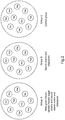
- the animals were divided into three test groups A, B, C with 10 rats in each group, as shown in Fig. 2 .
- test group A the rats were given scopolamine.
- the active substance was bound to sugar chains which in turn were bound to a simple starch matrix in accordance with the invention.
- the matrix had been fixated in a column and the sugar chains had been labelled with tritiated xylose as described in Moses et al, 1997 a, 1997, b, 1998, and 1999, a and b (Doctoral Dissertation, Medical Faculty of Lund University, titled "Biosynthesis of the Proteoglycan Decorin, published 1999 ) allowing the sugar chains to be subsequently traced within the rat body.
- Group B served as a control and was treated with uncoupled scopolamine and a starch matrix carrier without sugar chains.
- Group C received no carrier or active substance.
- the membrane size was 1x1 mm made out of starch. To this the labelled sugar chains were coupled and one membrane was put under the upper lip of each rat.
- centrifuges were used in the test, one for each group of rats A, B, C. Each centrifuge was placed in a box having an entrance/exit through which the rats could move freely between their cage and the centrifuge box. The rats were first allowed to find their way into the centrifuge box before they were lifted up and placed in the centrifuge.
- the rats were subsequently spun in the centrifuges at 3 G during 30 seconds.
- Group A who had received 1/10 of a normal dose of scopolamine bond to a carrier according to the invention showed no change in normal behaviour such as signs of motion sickness and managed to directly locate the exit in the centrifuge box.
- Group C who received neither matrix nor substance, behaved in a similar manner as described for group B.
- the test was repeated with new groups A, B and C but with citalopram instead of scopolamine.
- the results of the second test were similar to the results of the first test. Accordingly, the group A rats were not affected by centrifugation while the group B and C rats showed clear signs of motion sickness.
- the rats were terminated by carbon-dioxide 4 h after centrifugation and the intestinal organs were examined.
- the presence of scopolamine or citalopram in the rat bodies was detected by spectrophotometrics and digital imaging as described in Goncalves, Diaz and Moses et al.
- the kidneys contained less than 0.1 %, the liver less than 0.2 % and the brain 99% of the active substance. The remainder of the drug was dispersed throughout other parts of the body.
- Group B had less than 4 % active substance in the brain, over 75 % in kidney or liver and the rest dispersed throughout the body.
- group C had no active substance found anywhere.
- the test was performed on a group of 19 persons. Each test person was given 2 L of red wine without gender discrimination. The wine was consumed during 3 hours the evening before testing. The following morning the individuals were divided into two groups A and B, respectively.
- Group A received 40 mg (1/10 of a normal orally administered dose) of ibumetine bonded to a carrier according to the invention.
- Group B where given an empty membrane with only sugar chains and no active substance.
- Group A felt a total relief of the headache caused by the red wine within 5 minutes, whereas group B felt no relief at all from the bare membrane with sugar chains.
- Group B where therefore treated with 400 mg ibumetine by conventional oral delivery.
- Various degrees of relief were noted after 45 min-1 h.
- the test procedure is diagrammatically illustrated in Fig. 3 .
- the experiments showed that the delivery system according to the invention is fast-acting and accurate. Moreover, the released substance is rapidly taken up through the oral mucosa and is transported directly to the brain without metabolic loss of substance.
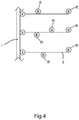
- Figure 4 shows schematically the structure of a carrier (membrane) 1, having sugar links 2, bonded to oxygen binding sites (X) on the carrier 1.
- the oxygen binding sites (X) may be P, C, S or N.
- the sugar links have substituents such as OH, NH, SO 4 or PO 4 , forming bond sites (B) for bonding a bioactive substance (R) to the sugar links.
- the carrier is cellulose-based or starch based.
- the starch may be synthetically, biochemically or biosynthetically derived.
- Cellulose-based carriers, such as nitrocellulose are preferred for being low-cost readily available materials.
- the carrier is preferably substantially non-soluble or non-dissolvable in saliva, at least during a time period corresponding to an expected period of treatment.
- the bond sites (B) on the sugar links 2 have a bioactive substance R bonded thereto.
- the bioactive substance may be any pharmaceutical or other substance acting on the central nervous system and triggering a signal from the brain, as set out herein.
- the sugar links may comprise one or more sugar groups. Depending on the number of bond sites (B) that are desired and the size and stereochemistry of the bioactive molecules bonded to the sugar chain, specific sugar links can be designed for each purpose.
- the salivary enzymes When put in the oral cavity of a healthy individual, the salivary enzymes will act on the sugar chains and break the bonds between the sugar groups, thus releasing the bonded bioactive molecules comprising a sugar moiety and a bioactive substance (R) in the oral cavity where the bioactive molecules can be directly taken up through the mucosa as described herein.
Landscapes
- Health & Medical Sciences (AREA)
- Chemical & Material Sciences (AREA)
- Life Sciences & Earth Sciences (AREA)
- Veterinary Medicine (AREA)
- Animal Behavior & Ethology (AREA)
- Public Health (AREA)
- Epidemiology (AREA)
- Medicinal Chemistry (AREA)
- Pharmacology & Pharmacy (AREA)
- General Health & Medical Sciences (AREA)
- Bioinformatics & Cheminformatics (AREA)
- Engineering & Computer Science (AREA)
- Nutrition Science (AREA)
- Physiology (AREA)
- Inorganic Chemistry (AREA)
- Zoology (AREA)
- Medicinal Preparation (AREA)
- Pharmaceuticals Containing Other Organic And Inorganic Compounds (AREA)
Claims (15)
- Abgabesystem zur Verwendung in der Mundhöhle, wobei das System einen Träger (1) für eine bioaktive Substanz umfasst, dadurch gekennzeichnet, dass der Träger (1) ein inerter Träger ist, umfassend eine Zellulose-basiertes Material oder ein Stärke-basiertes Material, und eine Oberfläche hat, umfassend Sauerstoff-bindende Stellen (X), und mindestens eine Verbindung (2), umfassend eine Pentosegruppe und eine oder mehrere zusätzliche Zuckergruppen, wobei die Pentosegruppe an eine der Sauerstoff-bindenden Stellen (X) gebunden ist, und wobei das eine oder die mehreren bioaktiven Moleküle (R) direkt an eine der Zuckergruppen der mindestens einen Verbindung oder an einen oder mehrere Substituenten auf einer oder mehreren Zuckergruppen in der mindestens einen Verbindung (2) gebunden sind.
- Abgabesystem nach Anspruch 1, wobei die Sauerstoff-bindenden Stellen (X) auf dem Träger (1) ausgewählt sind aus: P, C, S oder N.
- Abgabesystem nach Anspruch 1, wobei der Träger (1) Nitrocellulose umfasst.
- Abgabesystem nach einem der vorstehenden Ansprüche, wobei die Verbindung (2) ein nicht verzweigtes Oligosaccharid oder Polysaccharid ist.
- Abgabesystem nach einem der vorstehenden Ansprüche, wobei die mindestens eine Verbindung (2) ein erstes Ende hat, das an eine Sauerstoff-bindende Gruppe auf dem Träger (1) mit Hilfe der Pentosegruppe gebunden ist, und ein zweites Ende, das mit einem Glucoseamin terminiert ist.
- Abgabesystem nach Anspruch 5, wobei die Verbindung (2) eine Zuckerkette mit der folgenden Formel ist: Xylose - Galactose - Galactose - Glucoseamin.
- Abgabesystem nach einem der vorstehenden Ansprüche, wobei die mindestens eine Zuckerverbindung (2) mindestens einen Substituenten umfasst, ausgewählt aus OH, NH, SO4 und PO4, der eine Bindungsstelle (B) für die bioaktive Substanz (R) darstellt.
- Verfahren zur Freigabe einer bioaktiven Substanz in die Mundhöhle, dadurch gekennzeichnet, dass die bioaktive Substanz an einen Träger (1) gebunden ist, der ein inerter Träger ist, umfassend eine Zellulose-basiertes Material oder ein Stärke-basiertes Material, und mit einer Oberfläche, die Sauerstoff-bindende Stellen (X) aufweist, und mindestens eine Verbindung (2), gebunden an den Träger (1), wobei die Verbindung eine Pentosegruppe und eine oder mehrere Zuckergruppen umfasst, wobei die Pentosegruppe an eine der Sauerstoff-bindenden Stellen (X) gebunden ist, und wobei die eine oder die mehreren bioaktiven Substanzen (R) direkt an die eine oder mehreren Zuckergruppen oder an einen oder mehreren Substituenten auf der einen oder mehreren Zuckergruppen in der Verbindung (2) gebunden sind, wobei der Träger (1) mit der bioaktiven Substanz (R) in der Mundhöhle platziert und angeordnet ist, um die bioaktive Substanz (R) bei Kontakt mit Speichelenzymen freizusetzen.
- Verfahren nach Anspruch 8, wobei Enzyme, die vom Speichel abgeleitet sind, die Bindungen zwischen den Zuckergruppen in der Verbindung (2) aufbrechen und dadurch mindestens ein bioaktives Molekül freisetzen, umfassend die bioaktive Substanz (R), die an eine Zuckergruppe von der Verbindung (2) gebunden ist.
- Verfahren zur Herstellung eines Abgabesystem zur Freigabe einer bioaktiven Substanz (R) in die Mundhöhle, gekennzeichnet durcha) Bereitstellen eines Trägers (1), der ein inerter Träger ist, umfassend eine Zellulose-basiertes Material oder ein Stärke-basiertes Material, und mit einer Oberfläche, die Sauerstoff-bindende Stellen (X) aufweist; b) Binden von mindestens einer Verbindung (2) an den Träger (1), wobei die Verbindung (2) ein erstes Ende aufweist, das mit einer Pentosegruppe terminiert ist, und umfassend eine oder mehrere Zuckergruppen, und wobei die Pentosegruppe an eine der Sauerstoff-bindenden Stellen (X) gebunden ist; c) Binden von einem oder mehreren bioaktiven Molekülen (R) direkt an die eine oder mehreren Zuckergruppen oder an einen oder mehreren Substituenten auf der einen oder mehreren Zuckergruppen in der mindestens einen Verbindung (2).
- Verfahren nach Anspruch 10, wobei das Binden der mindestens einen Verbindung (2) an den Träger (1) in einer wässrigen Lösung mit einem pH von 5,6 oder weniger durchgeführt wird.
- Verfahren nach Anspruch 10 oder 11, wobei die Sauerstoff-bindenden Stellen (X) auf dem Träger (1) ausgewählt sind aus P, C, S und N.
- Verfahren nach einem der Ansprüche 10 bis 12, wobei der Träger (1) Nitrocellulose umfasst.
- Verfahren nach einem der Ansprüche 10 bis 13, wobei die Verbindung (2) ein nicht verzweigtes Oligosaccharid oder Polysaccharid ist.
- Verfahren nach einem der Ansprüche 10 bis 14, wobei die Zuckerverbindungen (2) mindestens einen Substituenten umfassen, ausgewählt aus: OH, NH, SO4 oder PO4, der eine Bindungsstelle (B) für die bioaktive Substanz (R) darstellt.
Applications Claiming Priority (2)
| Application Number | Priority Date | Filing Date | Title |
|---|---|---|---|
| SE0802632A SE533540C2 (sv) | 2008-12-19 | 2008-12-19 | Administrerinssystem för administrering av en substans i munhålan |
| PCT/SE2009/051478 WO2010071593A1 (en) | 2008-12-19 | 2009-12-21 | Delivery system for delivery of a substance into the oral cavity |
Publications (3)
| Publication Number | Publication Date |
|---|---|
| EP2373348A1 EP2373348A1 (de) | 2011-10-12 |
| EP2373348A4 EP2373348A4 (de) | 2015-05-27 |
| EP2373348B1 true EP2373348B1 (de) | 2018-08-01 |
Family
ID=42269046
Family Applications (1)
| Application Number | Title | Priority Date | Filing Date |
|---|---|---|---|
| EP09833756.1A Not-in-force EP2373348B1 (de) | 2008-12-19 | 2009-12-21 | Abgabesystem zur abgabe einer substanz in die mundhöhle |
Country Status (11)
| Country | Link |
|---|---|
| US (1) | US9987376B2 (de) |
| EP (1) | EP2373348B1 (de) |
| JP (2) | JP5766121B2 (de) |
| KR (1) | KR101735717B1 (de) |
| CN (1) | CN102256626B (de) |
| BR (1) | BRPI0922342A2 (de) |
| CA (1) | CA2746052C (de) |
| IL (1) | IL213654A (de) |
| RU (1) | RU2553351C2 (de) |
| SE (1) | SE533540C2 (de) |
| WO (1) | WO2010071593A1 (de) |
Families Citing this family (1)
| Publication number | Priority date | Publication date | Assignee | Title |
|---|---|---|---|---|
| SE533540C2 (sv) | 2008-12-19 | 2010-10-19 | Neoinvent Medical Engineering Ab | Administrerinssystem för administrering av en substans i munhålan |
Family Cites Families (15)
| Publication number | Priority date | Publication date | Assignee | Title |
|---|---|---|---|---|
| PT88490B (pt) * | 1987-09-14 | 1992-11-30 | Novo Nordisk As | Processo para a preparacao de composicoes farmaceuticas para libertacao nao-enterica trans-mucosa contendo monossacaridos ou oligossacaridos |
| JPH08104651A (ja) | 1993-03-10 | 1996-04-23 | Yoshiyuki Koyama | 経粘膜薬物運搬体及び高分子医薬複合体 |
| DE19524515A1 (de) * | 1995-07-05 | 1997-01-09 | Deutsches Krebsforsch | Saccharid-Konjugate |
| TW580397B (en) | 1997-05-27 | 2004-03-21 | Takeda Chemical Industries Ltd | Solid preparation |
| SE9803240D0 (sv) | 1998-09-24 | 1998-09-24 | Diabact Ab | A pharmaceutical composition having a rapid action |
| US20030119761A1 (en) * | 2000-04-12 | 2003-06-26 | Christian Samuel T. | Novel pharmaceutical agents containing carbohydrate moieties and methods of their preparation and use |
| AU2001267865A1 (en) * | 2000-06-30 | 2002-01-14 | Yamanouchi Pharmaceutical Co..Ltd. | Tablet rapidly disintegrating in mouth and process for producing the same |
| GB2381194A (en) * | 2001-09-07 | 2003-04-30 | Gw Pharmaceuticals Ltd | Pharmaceutical formulations |
| DE10209822A1 (de) * | 2002-03-06 | 2003-09-25 | Biotechnologie Ges Mittelhesse | Kopplung niedermolekularer Substanzen an ein modifiziertes Polysaccharid |
| US20040116348A1 (en) * | 2002-09-23 | 2004-06-17 | Ying Chau | Polymer-linker-drug conjugates for targeted drug delivery |
| WO2004064810A1 (ja) * | 2003-01-21 | 2004-08-05 | Nippon Shinyaku Co., Ltd. | 口腔内速崩性錠剤 |
| ITMI20061117A1 (it) * | 2006-06-09 | 2007-12-10 | Michele Bonanomi | Una composizione farmaceutica per la somministrazione sublinguale di vaccini metodo per la sua preparazione e sui usi |
| WO2008081463A2 (en) * | 2007-01-04 | 2008-07-10 | Hepacore Ltd. | Water soluble reactive derivatives of carboxy polysaccharides and fibrinogen conjugates thereof |
| JP2008231013A (ja) | 2007-03-20 | 2008-10-02 | Kaneka Corp | 固定化糖鎖体 |
| SE533540C2 (sv) | 2008-12-19 | 2010-10-19 | Neoinvent Medical Engineering Ab | Administrerinssystem för administrering av en substans i munhålan |
-
2008
- 2008-12-19 SE SE0802632A patent/SE533540C2/sv not_active IP Right Cessation
-
2009
- 2009-12-21 EP EP09833756.1A patent/EP2373348B1/de not_active Not-in-force
- 2009-12-21 KR KR1020117016916A patent/KR101735717B1/ko not_active Expired - Fee Related
- 2009-12-21 US US13/139,694 patent/US9987376B2/en not_active Expired - Fee Related
- 2009-12-21 BR BRPI0922342A patent/BRPI0922342A2/pt not_active Application Discontinuation
- 2009-12-21 CN CN200980151061.5A patent/CN102256626B/zh not_active Expired - Fee Related
- 2009-12-21 RU RU2011129759/15A patent/RU2553351C2/ru not_active IP Right Cessation
- 2009-12-21 CA CA2746052A patent/CA2746052C/en not_active Expired - Fee Related
- 2009-12-21 WO PCT/SE2009/051478 patent/WO2010071593A1/en not_active Ceased
- 2009-12-21 JP JP2011542073A patent/JP5766121B2/ja not_active Expired - Fee Related
-
2011
- 2011-06-19 IL IL213654A patent/IL213654A/en not_active IP Right Cessation
-
2015
- 2015-02-16 JP JP2015027914A patent/JP2015098478A/ja active Pending
Non-Patent Citations (1)
| Title |
|---|
| None * |
Also Published As
| Publication number | Publication date |
|---|---|
| CA2746052C (en) | 2017-02-28 |
| WO2010071593A1 (en) | 2010-06-24 |
| RU2011129759A (ru) | 2013-01-27 |
| IL213654A (en) | 2017-02-28 |
| SE0802632A1 (sv) | 2010-06-20 |
| KR101735717B1 (ko) | 2017-05-15 |
| US20120065160A1 (en) | 2012-03-15 |
| CN102256626B (zh) | 2015-04-29 |
| SE533540C2 (sv) | 2010-10-19 |
| RU2553351C2 (ru) | 2015-06-10 |
| BRPI0922342A2 (pt) | 2016-01-12 |
| KR20110104068A (ko) | 2011-09-21 |
| CN102256626A (zh) | 2011-11-23 |
| JP5766121B2 (ja) | 2015-08-19 |
| EP2373348A1 (de) | 2011-10-12 |
| IL213654A0 (en) | 2011-07-31 |
| JP2012512869A (ja) | 2012-06-07 |
| JP2015098478A (ja) | 2015-05-28 |
| US9987376B2 (en) | 2018-06-05 |
| CA2746052A1 (en) | 2010-06-24 |
| EP2373348A4 (de) | 2015-05-27 |
Similar Documents
| Publication | Publication Date | Title |
|---|---|---|
| CN1140264C (zh) | 含有胶态碱式柠檬酸铋的口香糖 | |
| TW201043280A (en) | Pharmaceutical system for trans-membrane delivery | |
| EP2575789A1 (de) | Ablenkungsresistente mikrokörner und mikrotabletten | |
| FR2832635A1 (fr) | Composition a base de cefuroxime axetil et son utilisation | |
| CN112402397A (zh) | 口腔粘膜附着力优异的缓释型口腔崩解用膜及其制备方法 | |
| JPH05508631A (ja) | 結腸用薬物送達システム | |
| EP4523683A1 (de) | Zusammensetzungen und verfahren zur behandlung von epilepsie | |
| FR2577136A1 (fr) | Preparations pharmaceutiques a activite analgesique comportant des sels de diclofenac et de codeine, ainsi que leur fabrication et leur utilisation | |
| US9987376B2 (en) | Delivery system for delivery of a substance into the oral cavity | |
| CN101891751B (zh) | 一种河豚毒素的制备方法 | |
| US20150064263A1 (en) | Compositions and methods for reduction of mercury toxicity | |
| JPS63250318A (ja) | 口腔内に適用する製剤 | |
| US20030118663A1 (en) | Method and composition for treating diabetes | |
| WO2016021975A1 (ko) | Pde-5 저해제를 포함하는 설하분무제의 제조방법 및 이에 의하여 제조된 설하분무용 조성물 | |
| EP4699600A2 (de) | Zusammensetzungen und verfahren zur behandlung von epilepsie | |
| CN1136849C (zh) | 替硝唑胃漂浮缓释胶囊及其制备方法 | |
| JP4695629B2 (ja) | 難消化剤 | |
| KR20190036370A (ko) | 약물의 서방성 제형을 위한 약물전달체 | |
| US20100255084A1 (en) | Medicinal melting capsules for oral mucosal absorption | |
| RU2695135C1 (ru) | Двухуровневая микрогранулированная форма терапевтического пептида для перорального применения и способ ее получения | |
| CN1500514A (zh) | 雷公藤口服结肠定位给药组合物及用途 | |
| CN1679914A (zh) | 还原型谷胱甘肽和依布硒啉的组合药物 | |
| DE3745075C2 (de) | Mikroverkapselung für pharmakologische Mittel | |
| CN121445704A (zh) | 一种药用胶囊结构 | |
| DE3790487C2 (de) | Mikroverkapselung für pharmakologische Mittel |
Legal Events
| Date | Code | Title | Description |
|---|---|---|---|
| PUAI | Public reference made under article 153(3) epc to a published international application that has entered the european phase |
Free format text: ORIGINAL CODE: 0009012 |
|
| 17P | Request for examination filed |
Effective date: 20110707 |
|
| AK | Designated contracting states |
Kind code of ref document: A1 Designated state(s): AT BE BG CH CY CZ DE DK EE ES FI FR GB GR HR HU IE IS IT LI LT LU LV MC MK MT NL NO PL PT RO SE SI SK SM TR |
|
| DAX | Request for extension of the european patent (deleted) | ||
| RA4 | Supplementary search report drawn up and despatched (corrected) |
Effective date: 20150423 |
|
| RIC1 | Information provided on ipc code assigned before grant |
Ipc: A61K 47/48 20060101AFI20150417BHEP Ipc: A61K 9/20 20060101ALI20150417BHEP |
|
| RAP1 | Party data changed (applicant data changed or rights of an application transferred) |
Owner name: NORINVENT AB |
|
| STAA | Information on the status of an ep patent application or granted ep patent |
Free format text: STATUS: EXAMINATION IS IN PROGRESS |
|
| 17Q | First examination report despatched |
Effective date: 20170322 |
|
| REG | Reference to a national code |
Ref country code: DE Ref legal event code: R079 Ref document number: 602009053635 Country of ref document: DE Free format text: PREVIOUS MAIN CLASS: A61K0047480000 Ipc: A61K0047610000 |
|
| GRAP | Despatch of communication of intention to grant a patent |
Free format text: ORIGINAL CODE: EPIDOSNIGR1 |
|
| STAA | Information on the status of an ep patent application or granted ep patent |
Free format text: STATUS: GRANT OF PATENT IS INTENDED |
|
| RIC1 | Information provided on ipc code assigned before grant |
Ipc: A61K 47/61 20170101AFI20180206BHEP Ipc: A61K 9/20 20060101ALI20180206BHEP |
|
| INTG | Intention to grant announced |
Effective date: 20180313 |
|
| GRAS | Grant fee paid |
Free format text: ORIGINAL CODE: EPIDOSNIGR3 |
|
| GRAA | (expected) grant |
Free format text: ORIGINAL CODE: 0009210 |
|
| STAA | Information on the status of an ep patent application or granted ep patent |
Free format text: STATUS: THE PATENT HAS BEEN GRANTED |
|
| RAP1 | Party data changed (applicant data changed or rights of an application transferred) |
Owner name: NORINVENT AB |
|
| AK | Designated contracting states |
Kind code of ref document: B1 Designated state(s): AT BE BG CH CY CZ DE DK EE ES FI FR GB GR HR HU IE IS IT LI LT LU LV MC MK MT NL NO PL PT RO SE SI SK SM TR |
|
| REG | Reference to a national code |
Ref country code: GB Ref legal event code: FG4D |
|
| REG | Reference to a national code |
Ref country code: CH Ref legal event code: EP Ref country code: AT Ref legal event code: REF Ref document number: 1023540 Country of ref document: AT Kind code of ref document: T Effective date: 20180815 |
|
| REG | Reference to a national code |
Ref country code: IE Ref legal event code: FG4D |
|
| REG | Reference to a national code |
Ref country code: DE Ref legal event code: R096 Ref document number: 602009053635 Country of ref document: DE |
|
| REG | Reference to a national code |
Ref country code: NL Ref legal event code: MP Effective date: 20180801 |
|
| REG | Reference to a national code |
Ref country code: LT Ref legal event code: MG4D |
|
| REG | Reference to a national code |
Ref country code: AT Ref legal event code: MK05 Ref document number: 1023540 Country of ref document: AT Kind code of ref document: T Effective date: 20180801 |
|
| PG25 | Lapsed in a contracting state [announced via postgrant information from national office to epo] |
Ref country code: PL Free format text: LAPSE BECAUSE OF FAILURE TO SUBMIT A TRANSLATION OF THE DESCRIPTION OR TO PAY THE FEE WITHIN THE PRESCRIBED TIME-LIMIT Effective date: 20180801 Ref country code: LT Free format text: LAPSE BECAUSE OF FAILURE TO SUBMIT A TRANSLATION OF THE DESCRIPTION OR TO PAY THE FEE WITHIN THE PRESCRIBED TIME-LIMIT Effective date: 20180801 Ref country code: NL Free format text: LAPSE BECAUSE OF FAILURE TO SUBMIT A TRANSLATION OF THE DESCRIPTION OR TO PAY THE FEE WITHIN THE PRESCRIBED TIME-LIMIT Effective date: 20180801 Ref country code: SE Free format text: LAPSE BECAUSE OF FAILURE TO SUBMIT A TRANSLATION OF THE DESCRIPTION OR TO PAY THE FEE WITHIN THE PRESCRIBED TIME-LIMIT Effective date: 20180801 Ref country code: BG Free format text: LAPSE BECAUSE OF FAILURE TO SUBMIT A TRANSLATION OF THE DESCRIPTION OR TO PAY THE FEE WITHIN THE PRESCRIBED TIME-LIMIT Effective date: 20181101 Ref country code: GR Free format text: LAPSE BECAUSE OF FAILURE TO SUBMIT A TRANSLATION OF THE DESCRIPTION OR TO PAY THE FEE WITHIN THE PRESCRIBED TIME-LIMIT Effective date: 20181102 Ref country code: FI Free format text: LAPSE BECAUSE OF FAILURE TO SUBMIT A TRANSLATION OF THE DESCRIPTION OR TO PAY THE FEE WITHIN THE PRESCRIBED TIME-LIMIT Effective date: 20180801 Ref country code: AT Free format text: LAPSE BECAUSE OF FAILURE TO SUBMIT A TRANSLATION OF THE DESCRIPTION OR TO PAY THE FEE WITHIN THE PRESCRIBED TIME-LIMIT Effective date: 20180801 Ref country code: IS Free format text: LAPSE BECAUSE OF FAILURE TO SUBMIT A TRANSLATION OF THE DESCRIPTION OR TO PAY THE FEE WITHIN THE PRESCRIBED TIME-LIMIT Effective date: 20181201 Ref country code: NO Free format text: LAPSE BECAUSE OF FAILURE TO SUBMIT A TRANSLATION OF THE DESCRIPTION OR TO PAY THE FEE WITHIN THE PRESCRIBED TIME-LIMIT Effective date: 20181101 |
|
| PGFP | Annual fee paid to national office [announced via postgrant information from national office to epo] |
Ref country code: DE Payment date: 20181213 Year of fee payment: 10 |
|
| PG25 | Lapsed in a contracting state [announced via postgrant information from national office to epo] |
Ref country code: ES Free format text: LAPSE BECAUSE OF FAILURE TO SUBMIT A TRANSLATION OF THE DESCRIPTION OR TO PAY THE FEE WITHIN THE PRESCRIBED TIME-LIMIT Effective date: 20180801 Ref country code: HR Free format text: LAPSE BECAUSE OF FAILURE TO SUBMIT A TRANSLATION OF THE DESCRIPTION OR TO PAY THE FEE WITHIN THE PRESCRIBED TIME-LIMIT Effective date: 20180801 Ref country code: LV Free format text: LAPSE BECAUSE OF FAILURE TO SUBMIT A TRANSLATION OF THE DESCRIPTION OR TO PAY THE FEE WITHIN THE PRESCRIBED TIME-LIMIT Effective date: 20180801 |
|
| PGFP | Annual fee paid to national office [announced via postgrant information from national office to epo] |
Ref country code: GB Payment date: 20181214 Year of fee payment: 10 Ref country code: FR Payment date: 20181221 Year of fee payment: 10 |
|
| PG25 | Lapsed in a contracting state [announced via postgrant information from national office to epo] |
Ref country code: EE Free format text: LAPSE BECAUSE OF FAILURE TO SUBMIT A TRANSLATION OF THE DESCRIPTION OR TO PAY THE FEE WITHIN THE PRESCRIBED TIME-LIMIT Effective date: 20180801 Ref country code: IT Free format text: LAPSE BECAUSE OF FAILURE TO SUBMIT A TRANSLATION OF THE DESCRIPTION OR TO PAY THE FEE WITHIN THE PRESCRIBED TIME-LIMIT Effective date: 20180801 Ref country code: RO Free format text: LAPSE BECAUSE OF FAILURE TO SUBMIT A TRANSLATION OF THE DESCRIPTION OR TO PAY THE FEE WITHIN THE PRESCRIBED TIME-LIMIT Effective date: 20180801 Ref country code: CZ Free format text: LAPSE BECAUSE OF FAILURE TO SUBMIT A TRANSLATION OF THE DESCRIPTION OR TO PAY THE FEE WITHIN THE PRESCRIBED TIME-LIMIT Effective date: 20180801 |
|
| REG | Reference to a national code |
Ref country code: DE Ref legal event code: R097 Ref document number: 602009053635 Country of ref document: DE |
|
| PG25 | Lapsed in a contracting state [announced via postgrant information from national office to epo] |
Ref country code: SK Free format text: LAPSE BECAUSE OF FAILURE TO SUBMIT A TRANSLATION OF THE DESCRIPTION OR TO PAY THE FEE WITHIN THE PRESCRIBED TIME-LIMIT Effective date: 20180801 Ref country code: DK Free format text: LAPSE BECAUSE OF FAILURE TO SUBMIT A TRANSLATION OF THE DESCRIPTION OR TO PAY THE FEE WITHIN THE PRESCRIBED TIME-LIMIT Effective date: 20180801 Ref country code: SM Free format text: LAPSE BECAUSE OF FAILURE TO SUBMIT A TRANSLATION OF THE DESCRIPTION OR TO PAY THE FEE WITHIN THE PRESCRIBED TIME-LIMIT Effective date: 20180801 |
|
| PLBE | No opposition filed within time limit |
Free format text: ORIGINAL CODE: 0009261 |
|
| STAA | Information on the status of an ep patent application or granted ep patent |
Free format text: STATUS: NO OPPOSITION FILED WITHIN TIME LIMIT |
|
| 26N | No opposition filed |
Effective date: 20190503 |
|
| REG | Reference to a national code |
Ref country code: CH Ref legal event code: PL |
|
| PG25 | Lapsed in a contracting state [announced via postgrant information from national office to epo] |
Ref country code: SI Free format text: LAPSE BECAUSE OF FAILURE TO SUBMIT A TRANSLATION OF THE DESCRIPTION OR TO PAY THE FEE WITHIN THE PRESCRIBED TIME-LIMIT Effective date: 20180801 Ref country code: LU Free format text: LAPSE BECAUSE OF NON-PAYMENT OF DUE FEES Effective date: 20181221 Ref country code: MC Free format text: LAPSE BECAUSE OF FAILURE TO SUBMIT A TRANSLATION OF THE DESCRIPTION OR TO PAY THE FEE WITHIN THE PRESCRIBED TIME-LIMIT Effective date: 20180801 |
|
| REG | Reference to a national code |
Ref country code: IE Ref legal event code: MM4A |
|
| REG | Reference to a national code |
Ref country code: BE Ref legal event code: MM Effective date: 20181231 |
|
| PG25 | Lapsed in a contracting state [announced via postgrant information from national office to epo] |
Ref country code: IE Free format text: LAPSE BECAUSE OF NON-PAYMENT OF DUE FEES Effective date: 20181221 |
|
| PG25 | Lapsed in a contracting state [announced via postgrant information from national office to epo] |
Ref country code: BE Free format text: LAPSE BECAUSE OF NON-PAYMENT OF DUE FEES Effective date: 20181231 |
|
| PG25 | Lapsed in a contracting state [announced via postgrant information from national office to epo] |
Ref country code: LI Free format text: LAPSE BECAUSE OF NON-PAYMENT OF DUE FEES Effective date: 20181231 Ref country code: CH Free format text: LAPSE BECAUSE OF NON-PAYMENT OF DUE FEES Effective date: 20181231 |
|
| PG25 | Lapsed in a contracting state [announced via postgrant information from national office to epo] |
Ref country code: MT Free format text: LAPSE BECAUSE OF NON-PAYMENT OF DUE FEES Effective date: 20181221 |
|
| PG25 | Lapsed in a contracting state [announced via postgrant information from national office to epo] |
Ref country code: TR Free format text: LAPSE BECAUSE OF FAILURE TO SUBMIT A TRANSLATION OF THE DESCRIPTION OR TO PAY THE FEE WITHIN THE PRESCRIBED TIME-LIMIT Effective date: 20180801 |
|
| PG25 | Lapsed in a contracting state [announced via postgrant information from national office to epo] |
Ref country code: PT Free format text: LAPSE BECAUSE OF FAILURE TO SUBMIT A TRANSLATION OF THE DESCRIPTION OR TO PAY THE FEE WITHIN THE PRESCRIBED TIME-LIMIT Effective date: 20180801 |
|
| PG25 | Lapsed in a contracting state [announced via postgrant information from national office to epo] |
Ref country code: HU Free format text: LAPSE BECAUSE OF FAILURE TO SUBMIT A TRANSLATION OF THE DESCRIPTION OR TO PAY THE FEE WITHIN THE PRESCRIBED TIME-LIMIT; INVALID AB INITIO Effective date: 20091221 Ref country code: MK Free format text: LAPSE BECAUSE OF NON-PAYMENT OF DUE FEES Effective date: 20180801 Ref country code: CY Free format text: LAPSE BECAUSE OF FAILURE TO SUBMIT A TRANSLATION OF THE DESCRIPTION OR TO PAY THE FEE WITHIN THE PRESCRIBED TIME-LIMIT Effective date: 20180801 |
|
| REG | Reference to a national code |
Ref country code: DE Ref legal event code: R119 Ref document number: 602009053635 Country of ref document: DE |
|
| GBPC | Gb: european patent ceased through non-payment of renewal fee |
Effective date: 20191221 |
|
| PG25 | Lapsed in a contracting state [announced via postgrant information from national office to epo] |
Ref country code: DE Free format text: LAPSE BECAUSE OF NON-PAYMENT OF DUE FEES Effective date: 20200701 Ref country code: GB Free format text: LAPSE BECAUSE OF NON-PAYMENT OF DUE FEES Effective date: 20191221 Ref country code: FR Free format text: LAPSE BECAUSE OF NON-PAYMENT OF DUE FEES Effective date: 20191231 |