EP2373746B2 - Procédé pour la fabrication de matériaux à base de carbonate de calcium ayant une surface de particules présentant des propriétés d'adsorption améliorées - Google Patents
Procédé pour la fabrication de matériaux à base de carbonate de calcium ayant une surface de particules présentant des propriétés d'adsorption améliorées Download PDFInfo
- Publication number
- EP2373746B2 EP2373746B2 EP09799058.4A EP09799058A EP2373746B2 EP 2373746 B2 EP2373746 B2 EP 2373746B2 EP 09799058 A EP09799058 A EP 09799058A EP 2373746 B2 EP2373746 B2 EP 2373746B2
- Authority
- EP
- European Patent Office
- Prior art keywords
- calcium carbonate
- weight
- dry
- process according
- containing compound
- Prior art date
- Legal status (The legal status is an assumption and is not a legal conclusion. Google has not performed a legal analysis and makes no representation as to the accuracy of the status listed.)
- Active
Links
Images

Classifications
-
- C—CHEMISTRY; METALLURGY
- C08—ORGANIC MACROMOLECULAR COMPOUNDS; THEIR PREPARATION OR CHEMICAL WORKING-UP; COMPOSITIONS BASED THEREON
- C08K—Use of inorganic or non-macromolecular organic substances as compounding ingredients
- C08K3/00—Use of inorganic substances as compounding ingredients
- C08K3/18—Oxygen-containing compounds, e.g. metal carbonyls
- C08K3/24—Acids; Salts thereof
- C08K3/26—Carbonates; Bicarbonates
-
- C—CHEMISTRY; METALLURGY
- C09—DYES; PAINTS; POLISHES; NATURAL RESINS; ADHESIVES; COMPOSITIONS NOT OTHERWISE PROVIDED FOR; APPLICATIONS OF MATERIALS NOT OTHERWISE PROVIDED FOR
- C09C—TREATMENT OF INORGANIC MATERIALS, OTHER THAN FIBROUS FILLERS, TO ENHANCE THEIR PIGMENTING OR FILLING PROPERTIES ; PREPARATION OF CARBON BLACK ; PREPARATION OF INORGANIC MATERIALS WHICH ARE NO SINGLE CHEMICAL COMPOUNDS AND WHICH ARE MAINLY USED AS PIGMENTS OR FILLERS
- C09C1/00—Treatment of specific inorganic materials other than fibrous fillers; Preparation of carbon black
- C09C1/02—Compounds of alkaline earth metals or magnesium
-
- C—CHEMISTRY; METALLURGY
- C08—ORGANIC MACROMOLECULAR COMPOUNDS; THEIR PREPARATION OR CHEMICAL WORKING-UP; COMPOSITIONS BASED THEREON
- C08K—Use of inorganic or non-macromolecular organic substances as compounding ingredients
- C08K3/00—Use of inorganic substances as compounding ingredients
- C08K3/16—Halogen-containing compounds
-
- C—CHEMISTRY; METALLURGY
- C08—ORGANIC MACROMOLECULAR COMPOUNDS; THEIR PREPARATION OR CHEMICAL WORKING-UP; COMPOSITIONS BASED THEREON
- C08K—Use of inorganic or non-macromolecular organic substances as compounding ingredients
- C08K3/00—Use of inorganic substances as compounding ingredients
- C08K3/30—Sulfur-, selenium- or tellurium-containing compounds
-
- C—CHEMISTRY; METALLURGY
- C08—ORGANIC MACROMOLECULAR COMPOUNDS; THEIR PREPARATION OR CHEMICAL WORKING-UP; COMPOSITIONS BASED THEREON
- C08K—Use of inorganic or non-macromolecular organic substances as compounding ingredients
- C08K3/00—Use of inorganic substances as compounding ingredients
- C08K3/32—Phosphorus-containing compounds
-
- C—CHEMISTRY; METALLURGY
- C08—ORGANIC MACROMOLECULAR COMPOUNDS; THEIR PREPARATION OR CHEMICAL WORKING-UP; COMPOSITIONS BASED THEREON
- C08K—Use of inorganic or non-macromolecular organic substances as compounding ingredients
- C08K5/00—Use of organic ingredients
- C08K5/04—Oxygen-containing compounds
- C08K5/09—Carboxylic acids; Metal salts thereof; Anhydrides thereof
- C08K5/098—Metal salts of carboxylic acids
-
- C—CHEMISTRY; METALLURGY
- C08—ORGANIC MACROMOLECULAR COMPOUNDS; THEIR PREPARATION OR CHEMICAL WORKING-UP; COMPOSITIONS BASED THEREON
- C08K—Use of inorganic or non-macromolecular organic substances as compounding ingredients
- C08K9/00—Use of pretreated ingredients
- C08K9/04—Ingredients treated with organic substances
-
- C—CHEMISTRY; METALLURGY
- C09—DYES; PAINTS; POLISHES; NATURAL RESINS; ADHESIVES; COMPOSITIONS NOT OTHERWISE PROVIDED FOR; APPLICATIONS OF MATERIALS NOT OTHERWISE PROVIDED FOR
- C09C—TREATMENT OF INORGANIC MATERIALS, OTHER THAN FIBROUS FILLERS, TO ENHANCE THEIR PIGMENTING OR FILLING PROPERTIES ; PREPARATION OF CARBON BLACK ; PREPARATION OF INORGANIC MATERIALS WHICH ARE NO SINGLE CHEMICAL COMPOUNDS AND WHICH ARE MAINLY USED AS PIGMENTS OR FILLERS
- C09C1/00—Treatment of specific inorganic materials other than fibrous fillers; Preparation of carbon black
- C09C1/02—Compounds of alkaline earth metals or magnesium
- C09C1/021—Calcium carbonates
-
- C—CHEMISTRY; METALLURGY
- C09—DYES; PAINTS; POLISHES; NATURAL RESINS; ADHESIVES; COMPOSITIONS NOT OTHERWISE PROVIDED FOR; APPLICATIONS OF MATERIALS NOT OTHERWISE PROVIDED FOR
- C09C—TREATMENT OF INORGANIC MATERIALS, OTHER THAN FIBROUS FILLERS, TO ENHANCE THEIR PIGMENTING OR FILLING PROPERTIES ; PREPARATION OF CARBON BLACK ; PREPARATION OF INORGANIC MATERIALS WHICH ARE NO SINGLE CHEMICAL COMPOUNDS AND WHICH ARE MAINLY USED AS PIGMENTS OR FILLERS
- C09C3/00—Treatment in general of inorganic materials, other than fibrous fillers, to enhance their pigmenting or filling properties
- C09C3/04—Physical treatment, e.g. grinding or treatment with ultrasonic vibrations
-
- C—CHEMISTRY; METALLURGY
- C09—DYES; PAINTS; POLISHES; NATURAL RESINS; ADHESIVES; COMPOSITIONS NOT OTHERWISE PROVIDED FOR; APPLICATIONS OF MATERIALS NOT OTHERWISE PROVIDED FOR
- C09C—TREATMENT OF INORGANIC MATERIALS, OTHER THAN FIBROUS FILLERS, TO ENHANCE THEIR PIGMENTING OR FILLING PROPERTIES ; PREPARATION OF CARBON BLACK ; PREPARATION OF INORGANIC MATERIALS WHICH ARE NO SINGLE CHEMICAL COMPOUNDS AND WHICH ARE MAINLY USED AS PIGMENTS OR FILLERS
- C09C3/00—Treatment in general of inorganic materials, other than fibrous fillers, to enhance their pigmenting or filling properties
- C09C3/04—Physical treatment, e.g. grinding or treatment with ultrasonic vibrations
- C09C3/041—Grinding
-
- D—TEXTILES; PAPER
- D21—PAPER-MAKING; PRODUCTION OF CELLULOSE
- D21H—PULP COMPOSITIONS; PREPARATION THEREOF NOT COVERED BY SUBCLASSES D21C OR D21D; IMPREGNATING OR COATING OF PAPER; TREATMENT OF FINISHED PAPER NOT COVERED BY CLASS B31 OR SUBCLASS D21G; PAPER NOT OTHERWISE PROVIDED FOR
- D21H17/00—Non-fibrous material added to the pulp, characterised by its constitution; Paper-impregnating material characterised by its constitution
- D21H17/63—Inorganic compounds
- D21H17/67—Water-insoluble compounds, e.g. fillers, pigments
- D21H17/675—Oxides, hydroxides or carbonates
-
- D—TEXTILES; PAPER
- D21—PAPER-MAKING; PRODUCTION OF CELLULOSE
- D21H—PULP COMPOSITIONS; PREPARATION THEREOF NOT COVERED BY SUBCLASSES D21C OR D21D; IMPREGNATING OR COATING OF PAPER; TREATMENT OF FINISHED PAPER NOT COVERED BY CLASS B31 OR SUBCLASS D21G; PAPER NOT OTHERWISE PROVIDED FOR
- D21H17/00—Non-fibrous material added to the pulp, characterised by its constitution; Paper-impregnating material characterised by its constitution
- D21H17/63—Inorganic compounds
- D21H17/67—Water-insoluble compounds, e.g. fillers, pigments
- D21H17/69—Water-insoluble compounds, e.g. fillers, pigments modified, e.g. by association with other compositions prior to incorporation in the pulp or paper
-
- D—TEXTILES; PAPER
- D21—PAPER-MAKING; PRODUCTION OF CELLULOSE
- D21H—PULP COMPOSITIONS; PREPARATION THEREOF NOT COVERED BY SUBCLASSES D21C OR D21D; IMPREGNATING OR COATING OF PAPER; TREATMENT OF FINISHED PAPER NOT COVERED BY CLASS B31 OR SUBCLASS D21G; PAPER NOT OTHERWISE PROVIDED FOR
- D21H19/00—Coated paper; Coating material
- D21H19/36—Coatings with pigments
- D21H19/38—Coatings with pigments characterised by the pigments
- D21H19/385—Oxides, hydroxides or carbonates
-
- D—TEXTILES; PAPER
- D21—PAPER-MAKING; PRODUCTION OF CELLULOSE
- D21H—PULP COMPOSITIONS; PREPARATION THEREOF NOT COVERED BY SUBCLASSES D21C OR D21D; IMPREGNATING OR COATING OF PAPER; TREATMENT OF FINISHED PAPER NOT COVERED BY CLASS B31 OR SUBCLASS D21G; PAPER NOT OTHERWISE PROVIDED FOR
- D21H3/00—Paper or cardboard prepared by adding substances to the pulp or to the formed web on the paper-making machine and by applying substances to finished paper or cardboard (on the paper-making machine), also when the intention is to impregnate at least a part of the paper body
-
- C—CHEMISTRY; METALLURGY
- C01—INORGANIC CHEMISTRY
- C01P—INDEXING SCHEME RELATING TO STRUCTURAL AND PHYSICAL ASPECTS OF SOLID INORGANIC COMPOUNDS
- C01P2002/00—Crystal-structural characteristics
- C01P2002/70—Crystal-structural characteristics defined by measured X-ray, neutron or electron diffraction data
- C01P2002/72—Crystal-structural characteristics defined by measured X-ray, neutron or electron diffraction data by d-values or two theta-values, e.g. as X-ray diagram
-
- C—CHEMISTRY; METALLURGY
- C01—INORGANIC CHEMISTRY
- C01P—INDEXING SCHEME RELATING TO STRUCTURAL AND PHYSICAL ASPECTS OF SOLID INORGANIC COMPOUNDS
- C01P2004/00—Particle morphology
- C01P2004/60—Particles characterised by their size
- C01P2004/61—Micrometer sized, i.e. from 1-100 micrometer
-
- C—CHEMISTRY; METALLURGY
- C01—INORGANIC CHEMISTRY
- C01P—INDEXING SCHEME RELATING TO STRUCTURAL AND PHYSICAL ASPECTS OF SOLID INORGANIC COMPOUNDS
- C01P2004/00—Particle morphology
- C01P2004/60—Particles characterised by their size
- C01P2004/62—Submicrometer sized, i.e. from 0.1-1 micrometer
-
- C—CHEMISTRY; METALLURGY
- C01—INORGANIC CHEMISTRY
- C01P—INDEXING SCHEME RELATING TO STRUCTURAL AND PHYSICAL ASPECTS OF SOLID INORGANIC COMPOUNDS
- C01P2006/00—Physical properties of inorganic compounds
- C01P2006/12—Surface area
-
- C—CHEMISTRY; METALLURGY
- C01—INORGANIC CHEMISTRY
- C01P—INDEXING SCHEME RELATING TO STRUCTURAL AND PHYSICAL ASPECTS OF SOLID INORGANIC COMPOUNDS
- C01P2006/00—Physical properties of inorganic compounds
- C01P2006/22—Rheological behaviour as dispersion, e.g. viscosity, sedimentation stability
-
- C—CHEMISTRY; METALLURGY
- C01—INORGANIC CHEMISTRY
- C01P—INDEXING SCHEME RELATING TO STRUCTURAL AND PHYSICAL ASPECTS OF SOLID INORGANIC COMPOUNDS
- C01P2006/00—Physical properties of inorganic compounds
- C01P2006/60—Optical properties, e.g. expressed in CIELAB-values
-
- C—CHEMISTRY; METALLURGY
- C08—ORGANIC MACROMOLECULAR COMPOUNDS; THEIR PREPARATION OR CHEMICAL WORKING-UP; COMPOSITIONS BASED THEREON
- C08K—Use of inorganic or non-macromolecular organic substances as compounding ingredients
- C08K3/00—Use of inorganic substances as compounding ingredients
- C08K3/18—Oxygen-containing compounds, e.g. metal carbonyls
- C08K3/24—Acids; Salts thereof
- C08K3/26—Carbonates; Bicarbonates
- C08K2003/265—Calcium, strontium or barium carbonate
Definitions
- the present invention relates to the technical sector of suspensions of carbonate-containing material or dried mineral materials and their applications in the fields of paper, paint and plastics and more particularly their applications in the paper industry, like the manufacturing or the production and/or coating of paper sheets.
- This calcium carbonate-containing material comprises, for example natural calcium carbonate (GCC) such as marble, calcite, limestone and/or chalk, and/or synthetic calcium carbonate (PCC) such as scalenohedral and/or rhombohedral and/or calcitic and/or vateritic crystal forms and miscellaneous analogous fillers containing calcium carbonates such as dolomite or mixed carbonate based fillers of various metals such as, in particular, calcium associated with magnesium and analogues, various matter such as talc or analogues, and mixtures of these fillers, such as, for example talc-calcium carbonate or calcium carbonate-kaolin mixtures, or mixtures of natural calcium carbonate with aluminium hydroxide, mica or with synthetic or natural fibres or co-structures of minerals such as talc-calcium carbonate or talc-titanium dioxide co-structures.
- GCC natural calcium carbonate
- PCC synthetic calcium carbonate
- grinding aid agents water soluble polymers based on partially or totally neutralised polyacrylic acid or its derivatives (EP 0 046 573 , EP 0 100 947 , EP 0 100 948 , EP 0 129 329 , EP 0 261 039 , EP 0 516 656 , EP 0 542 643 , EP 0 542 644 ) to provide aqueous mineral suspensions, but these grinding aid agents do not allow to obtain the requested above-mentioned refinement and viscosity criteria or do not allow to obtain the requested stability of the pH of the aqueous mineral suspensions over time or do not have sufficient capability of developing scattering visible light as required by the end user in paper application.
- one object of the present invention is to provide a process for manufacturing calcium carbonate materials having a particle surface with improved adsorption properties of dispersants for high stability suspensions.
- ionic compounds which tend to form water insoluble salts, hydroxides or oxides or complexes with further compounds in certain pH ranges.
- the Applicant found surprisingly that certain lithium ion-containing compounds act as adsorption properties modifier of the surface of the calcium carbonate particles permitting to obtain aqueous calcium carbonate-containing material suspensions having a pH stable over time, and which can have a high dry solids content and a low and stable Brookfield viscosity.
- the lithium salts of di- or tribasic monomeric acids can also be mixed salts, e.g. of lithium and sodium such as in (Na,Li) 3 PO 4 , e.g. Olympite or Nalipoite.
- the resulting calcium carbonate material may be in a dry form or in the form of a suspension. They may be dried or resuspended after having been dried, as can be taken from any of the following preferred embodiments.
- the at least one calcium carbonate comprising material for use in the present invention preferably is provided in the form of synthetic calcium carbonate (PCC) obtained from at least one calcium ion source and at least one carbonate, hydrogen carbonate and/or CO 2 source, or in the form of a natural carbonate containing mineral material (GCC).
- PCC synthetic calcium carbonate
- GCC natural carbonate containing mineral material
- Especially suitable calcium carbonate containing material is selected from the group comprising natural calcium carbonate (GCC) such as marble, calcite, limestone and/or chalk; precipitated calcium carbonate (PCC) like vaterite and/or calcite; and calcium carbonate-containing minerals such as dolomite or mixed carbonate based fillers such as, in particular, calcium associated with magnesium and analogues or derivatives, various matter such as clay or talc or analogues or derivatives, and mixtures thereof such as, for example, talc-calcium carbonate or calcium carbonate-kaolin mixtures, or mixtures of natural calcium carbonate with aluminium hydroxide, mica or with synthetic or natural fibres or co-structures of minerals such as talc-calcium carbonate or talc-titanium dioxide co-structures.
- GCC natural calcium carbonate
- PCC precipitated calcium carbonate
- calcium carbonate-containing minerals such as dolomite or mixed carbonate based fillers such as, in particular, calcium associated with magnesium and analogues
- the at least one calcium carbonate material is a natural calcium carbonate (GCC) or a precipitated calcium carbonate (PCC) or a mixture of GCC and PCC, or a mixture of GCC and PCC and clay, or a mixture of GCC and PCC and talc, and most preferably is a GCC chosen among marble, chalk, calcite or limestone or a PCC chosen among calcitic PCC like rhombohedral PCC or scalenohedral PCC.
- GCC natural calcium carbonate
- PCC precipitated calcium carbonate
- the at least one calcium carbonate material is ground, optionally in the presence of dispersants and/or grinding aids (step d).
- the above process can be improved by a number of optional steps:
- Dispersants or grinding aids used according to the present invention may be any conventional organic dispersants such as sodium polyacrylate homopolymers and/or copolymers and polymaleinates, etc. They are preferably in the non-neutralised and/or partially neutralized form. Preferred dispersants are, e.g. partially neutralised, totally neutralised, and especially non-neutralized polyacrylic acids. "Non-neutralised” means that all of the carboxylic groups are present as the free acids, while partially neutralised means that a part of the carboxylic acid groups are transformed into a salt, and totally neutralized means that all carboxylic acid groups are neutralised. Neutralized groups may be present in a dissociated, partially dissociated or non-dissociated form.
- step d) the at least one lithium ion containing compound is present.
- step d it may be preferred to subject the wet ground natural calcium carbonate to a wet beneficiation step prior to step d), allowing the removal of impurities, such as silicate impurities, for instance by froth flotation.
- impurities such as silicate impurities
- step d) is screened and/or concentrated (step e).
- Screening in the context of the present invention is implemented by the well known devices for “screening” like sieves, grit centrifuges, etc..
- Screening it has to be understood a beneficiation by removing coarse particles having a particle size of more than 45 ⁇ m.
- Upconcentration is conducted, e.g. by a thermal concentration or a mechanical concentration such as by means of a centrifuge, filter-press, tube-press or a mixture thereof.
- step e If the ground material is screened and/or concentrated according to step e), it may be preferred to disperse the material in an aqueous medium subsequent to screening and/or concentrating (step f), wherein it is even more preferred, if dispersing is performed in the presence of the at least one lithium ion containing compound, which can be different or the same as the one used for step d).
- the ground material obtained from any one of steps d) or e) or f) may be dried, if the calcium carbonate material of step a) is provided in the form of an aqueous suspension (step g).
- step h the ground material obtained from step d) can be dispersed in an aqueous medium (step h).
- the aqueous suspension obtained from step h may be ground (step i).
- step g may be redispersed in an aqueous medium (step j).
- step i) and/or step j) is performed in the presence of at least one lithium ion-containing compound.
- the at least one lithium ion-containing compound can be added before and/or during and/or after step a), if the at least one calcium carbonate material is PCC.
- the lithium compound can also be added before, during or after the precipitation of the synthetic calcium carbonate.
- the lithium compound can be added prior to the carbonisation step.
- the at least one calcium carbonate material is GCC
- the at least one lithium ion containing compound is preferably added before and/or during and/or after grinding step d), if steps e) and f) are not carried out.
- the at least one lithium ion containing compound may however also be added after grinding step d) and before and/or during and/or after screening and/or concentrating step e), if step e) is performed alone.
- step a) If the calcium carbonate material is provided in the dry form in step a) followed successively by steps d) and h), it is preferred that the addition of the lithium ion-containing compound is performed in a single addition before, during or after step d) or is made in multiple additions, each of them before, during or after the step h).
- the lithium ion-containing compound is preferably added before and/or during and/or after the step d).
- the aqueous calcium carbonate-containing material suspensions obtained by the process of manufacturing according to the present invention have a good pH buffer capacity, i.e. a pH stable over time, a high dry solid content, and a low Brookfield TM viscosity that remains stable over time.
- a high dry solids content means an aqueous calcium carbonate containing material suspension or slurry having a solid content of from 10 wt% to 82 wt%, preferably from 50 wt% to 81wt% and most preferably of from 65 wt% to 80 wt%, for example from 70 wt% to 78 wt% based on the total weight of the suspension or slurry.
- pH stable over time in the context of the present invention means that the mineral suspension will keep the pH value in a narrow range of preferably 8.5 to 10.5, more preferably 9 to 10, e.g. 9.5 during preferably at least 6 days, more preferably at least 7 days, most preferably at least 8 days of storage.
- step d) of the process of the present invention is performed at a pH of above 7, preferably above 7.5, more preferably between 8.5 and 10.5, and most preferably between 9 and 10, e.g. 9.5.
- the skilled man will easily determine that the pH value will have suitable values in function of the properties he wishes to achieve, knowing that it is influenced by the addition of a base, preferably of a base of a mono or divalent cation, most preferably of sodium or calcium, e.g. by the addition of an alkaline preparation of a biocide, or by the release of hydroxide, such a Ca(OH) 2 , during grinding of a material, such as during the co-grinding of precipitated calcium carbonate and natural calcium carbonate.
- a base preferably of a base of a mono or divalent cation, most preferably of sodium or calcium
- hydroxide such as Ca(OH) 2
- the value of the pH is measured at room temperature (21 °C ⁇ 1) with an accuracy of ⁇ 0.3 pH units.
- the lithium ion concentration in respect to the total dry calcium carbonate preferably is from 10 to 2000 ppm, more preferably 100 to 1000 ppm, most preferably 200 to 800 ppm.
- the at least one lithium ion-containing compound which may be added before, during and/or after step d), is preferably present in an amount of from 0.0035 wt% to 0.5 wt%, and most preferably from 0.02 wt% to 0.2 wt%, relative to the total dry calcium carbonate.
- Such lithium ion-containing compounds are added to obtain an aqueous suspension of material with a low Brookfield TM viscosity stable over time, that means that the initial Brookfield TM viscosity of the aqueous calcium carbonate-containing mineral material suspension after 1 hour of production preferably is below 4000 mPa ⁇ s, more preferably below 2000 mPa ⁇ s, most preferably below 500 mPa ⁇ s measured after 1 minute of stirring by the use of a DV-III model Brookfield TM viscosimeter at room temperature (21 °C ⁇ 1) and a rotation speed of 100 rpm (revolutions per minute) with the appropriate spindle of an RV Spindle Set, and that the Brookfield TM viscosity of the aqueous calcium carbonate material suspension after 8 days of unstirred storage is below 4000 mPa ⁇ s, preferably below 2000 mPa ⁇ s, very preferably below 500 mPa ⁇ s measured after 1 minute by the use of a DV-III model Brookfield
- the viscosity is below 1000 mPa ⁇ s, very preferably below 500 mPa ⁇ s measured after 1 minute of stirring by the use of a DV-III model Brookfield TM viscosimeter at room temperature (21°C ⁇ 1) and a rotation speed of 100 rpm with the appropriate spindle of an RV Spindle Set.
- the calcium carbonate material comprises GCC and PCC, wherein the PCC is present in amount of from 10 to 90 wt%, preferably from 20 to 80 wt%, and most preferably from 30 to 70 wt%, based on the total weight of PCC and GCC.
- step e) When there is no step e), f) or g), all of the quantity of the at least one lithium ion-containing compound preferably is used before grinding step d), a part of the at least one lithium ion-containing compound is used before grinding step d), while the remaining quantity is added during step d).
- Grinding step d) of the process according to the present invention preferably is performed at a temperature of above 5°C, more preferably of from 20°C to 120°C, for example of from 45°C to 105°C, for example of from 85°C to 100°C.
- the solids concentration of material in the form of an aqueous suspension to be ground in grinding step d) is from 10 to 82 % (by dry weight of calcium carbonate material), preferably from 50 to 81 %, most preferably from 60 to 80 %, and especially preferably between 65% and 72%.
- the ground material obtained from step d) comprises a fraction of particles finer than 1 ⁇ m of more than 20 wt%, preferably of more than 60 wt%, even more preferably of more than 75 wt%, and most preferably of more than 85 wt%, especially of more than 95 wt%, based on the total weight of ground material, using a Sedigraph 5100 TM .
- the d 50 (value of the diameter of 50 w% of the particles, or median particle size) of the ground material preferably is from about 0.2 to 5 ⁇ m, preferably from 0.2 to 1.5 ⁇ m, and most preferably from 0.25 to 1 ⁇ m, for example 0.45 to 0.7 ⁇ m. This d 50 value is determined using a Sedigraph 5100 TM .
- the calcium carbonate-containing material is preferably provided as an aqueous suspension comprising from 15 wt% to 81 wt%, and most preferably from 40 wt% to 80 wt% of dry GCC and/or PCC, for example 63 wt% to 72 wt% of dry GCC or 47 to 72 wt% of dry PCC.
- Said aqueous suspension may result from the dispersion of material in the form of a filter-cake.
- step d) is performed at a solids content of from 10 wt% to 35 wt%, based on the total weight of the suspension, in the absence of any dispersants or grinding aids, and is performed at a solids content of from 60 wt% to 82 wt%, based on the total weight of the suspension, in the presence of dispersants and/or grinding aids.
- the final solids content of the calcium carbonate containing suspension ranges between 45 wt% and 82 wt%.
- the calcium carbonate materials have a high final solids content ranges between 45 wt% and 75 wt%, more preferably between 68 wt% and 73 wt%, if grinding step d) is performed without any dispersant nor grinding aid, and ranges between 65 wt% and 82 wt%, preferably between 72 wt% and 78 wt%, if grinding step d) is performed in the presence of dispersants or grinding aids.
- a calcium carbonate containing material is obtained by the process according to the invention.
- such calcium carbonate containing materials not only the have the above properties such as a pH stable over time, a high dry solids content and a low and stable Brookfield viscosity, but also have excellent optical properties, e.g. a high capability of scattering visible light.
- a measure for the scattering of light is the scattering coefficient S.
- S should be greater than 110 m 2 /kg for a coating weight of 20 g/m 2 reflecting the ability of a coating to scatter visible light. It might be measured e.g. according to the method described in WO 02/49766 (p. 8 to 10). Accordingly, the ability to scatter light is expressed by the Kubelka-Munk light scattering coefficient, determined by the method, well-known to experts, described in the publications of Kubelka and Munk (Zeitschrift für Technische Physik 12,539, (1931 )), de Kubelka (J.Optical Soc.Am. 38(5),448, (1948 ) et J.Optical Soc.Am. 44(4),330,(1954 )).
- the calcium carbonate material obtained by the process of the present invention has a scattering coefficient S of ⁇ 120 m 2 /kg for a coating weight of 20 g/m 2 and a Brookfield TM viscosity of ⁇ 1000 mPa ⁇ s, preferably a scattering coefficient S of ⁇ 140 m 2 /kg for a coating weight of 20 g/m 2 and a Brookfield TM viscosity of ⁇ 500 mPa ⁇ s.
- the lithium ion concentration of such calcium carbonate containing materials in respect to the total dry calcium carbonate preferably is from 10 to 2000 ppm, preferably 100 to 1000 ppm, most preferably 200 to 800 ppm.
- this material contains at least one lithium ion-containing compound in an amount of from 0.0035 wt% to 0.5 wt%, and most preferably from 0.02 wt% to 0.2 wt%, in particular 0.05%, relative to the total dry calcium carbonate.
- the final calcium carbonate containing material may comprise a fraction of particles finer than 1 ⁇ m of more than 50 wt%, preferably of more than 80 wt%, more preferably of more than 85 wt%, even more preferably of more than 90 wt%, and most preferably of more than 95 wt%, based on the total weight of ground material.
- the final calcium carbonate containing material has a d 50 of from about 0.2 to 5 ⁇ m, preferably from 0.2 to 1.5 ⁇ m, and most preferably from 0.25 to 1 ⁇ m, for example 0.45 to 0.7 ⁇ m.
- the d 50 value is determined using a Sedigraph 5106 TM .
- Ground material in a dry form after step g) preferably comprises calcium carbonate selected from the group comprising natural calcium carbonate (GCC) such as marble, chalk, limestone or calcite or precipitated calcium carbonate (PCC) like vaterite and/or calcite, and calcium carbonate containing minerals such as dolomite or mixed carbonate based fillers such as, in particular, calcium associated with magnesium and analogues or derivatives, various matter such as clay or talc or analogues or derivatives, and mixtures of these fillers, such as, for example talc-calcium carbonate or calcium carbonate-kaolin mixtures, or mixtures of natural calcium carbonate with aluminium hydroxide, mica or with synthetic or natural fibres or co-structures of minerals such as talc-calcium carbonate or talc-titanium dioxide co-structures.
- GCC natural calcium carbonate
- PCC precipitated calcium carbonate
- the material is a GCC or a precipitated calcium carbonate (PCC) or a mixture of GCC and PCC, or a mixture of GCC and PCC and clay, or a mixture of GCC and PCC and talc.
- PCC precipitated calcium carbonate
- GCC chosen among marble, chalk, calcite or limestone or a PCC chosen among calcitic PCC like rhombohedral PCC or scalenohedral PCC.
- the ground material in dry form may also feature a d 50 of from about 0.2 to 5 ⁇ m, preferably from 0.2 to 1.5 ⁇ m, and most preferably from 0.25 to 1 ⁇ m, for example 0.45 to 0.7 ⁇ m.
- the aqueous calcium carbonate-containing material suspensions and/or dried calcium carbonate-containing material may be used, in any sector making use of mineral material, and notably in the field of paper, paint and plastics and any other field using said suspensions and/or powders. It may be used as slurries in paper applications such as paper making and/or paper coating and/or surface treatment of the paper or such as the filler during the manufacture of the paper, cardboard, or analogous sheets.
- the dried powders may be used in plastic and/or paints but also be re-suspended in water to form a suspension again.
- the use as filler can be direct as composition of filler during manufacture of the paper, cardboard, or analogous sheets or indirect as recycling composite of coating brokes, if the recycling composites of coating brokes are used in the manufacturing process of the paper, cardboard, or analogous sheets.
- the papers, the paints and the plastics contain said ground mineral materials.
- the at least one lithium ion-containing compound may be used in the process for manufacturing calcium carbonate materials having a particle surface with improved adsorption properties.
- This example relates to the preparation of the material to be processed according to the present invention.
- Brookfield TM viscosities were measured using a DV-III model Brookfield TM viscosimeter at room temperature (21 °C ⁇ 1) and stirring at a rotation speed of 100 rpm (revolutions per minute) with the appropriate spindle of an RV Spindle Set.
- All weight molecular weights (Mw), number molecular weights (Mn) and corresponding polydispersity and weight fraction below 1500 Dalton of the different polymers are measured as 100 mol% sodium salt at pH 8 according to an aqueous Gel Permeation Chromatography (GPC) method calibrated with a series of five sodium polyacrylate standards supplied by Polymer Standard Service with references PSS-PAA 18 K, PSS-PAA 8K, PSS-PAA 5K, PSS-PAA 4K and PSS-PAA 3K.
- GPC Gel Permeation Chromatography
- the BET specific surface area in m 2 /g is measured according to the standard ISO 4652.
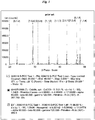
- the X-ray diffraction (XRD) pattern of modified PCC and GCC is performed according to the following method.
- the mineralogical phases present in the above-mentioned calcium carbonates are determined by means of X-ray diffraction (XRD) using a Bruker D8 Advance diffractometer, according to the diffraction powder method.
- This diffractometer consists of a 2.2 kW X-ray tube, a 9-position sample holder, a Theta-Theta ( ⁇ - ⁇ ) goniometer, and a V ⁇ NTEC-1 detector. Ni-filtered Cu K ⁇ radiation is employed in all experiments.
- the profiles are chart recorded automatically using a 0.01° 2 ⁇ increment and a 1 s/step scan speed from 20 to 50° 2 ⁇ .
- Table 1 Lattice parameters of measured calcium carbonate powders compared to their corresponding ICDD reference material.
- This test concerns the preparation of a rhombohedral PCC of a d 50 of 0.3 ⁇ m.
- the calcium carbonate precipitation is conducted in a 1800 litre cylindrical stainless steel reactor equipped with an agitator and probes for monitoring the pH and conductivity of the suspension.
- a gas of 20-30% by volume of CO 2 in air is then bubbled upwards through the suspension at a rate of 200 m 3 /h under a suspension agitation between 200 and 300 rpm.
- Overpressure in gas feed is 150-200 mbar, corresponding to hydrostatic pressure of Ca(OH) 2 suspension in the reactor.
- the temperature of the suspension is not controlled and allowed to rise due to the heat generated in the exothermic precipitation reaction. After conductivity reached a minimum gassing is continued for another 4 minutes and then stopped.
- the 16.7% w/w solids aqueous slurry of precipitated calcium carbonate obtained by this carbonation step is subsequently screened on a 45 ⁇ m screen and fed to a centrifuge for mechanical dewatering.
- the filter cake discharged by the centrifuge is redispersed in water and made-down into a 47.2% w/w slurry.
- slurry make-down 1.0% w/w (calculated as dry matter on dry calcium carbonate) of a sodium polyacrylate-based anionic dispersing aid having an Mw of 12500 and a polydispersity of 2.8 is added to the mixture.
- the slurry is then forced to pass through a vertical attritor mill (1.4 litre Dynomill TM ), containing 0.6-1.2 mm ZrO beads as media, to de-agglomerate the primarily clustered precipitated calcium carbonate into discrete particles in order to obtain an average particle size d 50 of about 0.3 ⁇ m (Micromeritics Sedigraph TM 5100) after milling.
- a vertical attritor mill 1.4 litre Dynomill TM
- Dynomill TM containing 0.6-1.2 mm ZrO beads as media
- the resulting slurry of discrete ultrafine precipitated calcium carbonate is then further upconcentrated in a vacuum evaporator to obtain final slurry solids of 66.7% w/w solids.
- Table 2a Physical properties of the final product are given in Table 2a below.
- Table 2a PCC suspension solid content (%) PCC suspension viscosity (mPa ⁇ s) (Brookfield DV II, 100 rpm, Spindle 3) PCC polymorph d50 ( ⁇ m) SSA BET (m 2 /g) 66.7 850 rhombohedral calcite (R-PCC) 0.27 16.5
- the mineral slurry so obtained is then spray-dried to a solid content > 99.5 weight% (w%) and is named Mineral 1a according to the prior art.
- the resulting slurry of discrete ultrafine precipitated calcium carbonate is then further upconcentrated in a vacuum evaporator to obtain a final slurry solids of 67.7% w/w solids.
- Table 2b Physical properties of the final product are given in Table 2b below.
- Table 2b PCC suspension solid content (%) PCC suspension viscosity (mPa ⁇ s) (Brookfield DV II, 100 rpm, Spindle 3) PCC polymorph d50 ( ⁇ m) SSA BET (m2/g) 67.7 230 rhombohedral calcite (R-PCC) 0.29 15.8
- the slurry is then spray-dried > 99.5 weight % solids and is named comparative Mineral 1b.
- This test concerns the preparation of a natural ground calcium carbonate from Norway with a d 50 of 45 ⁇ m.
- This test concerns the preparation of a natural ground calcium carbonate from Norway with a d 50 of 0.8 ⁇ m.
- Mineral 2 is wet ground at 20 weight% solids in tap water in a vertical attritor mill (Dynomill TM ) in a recirculation mode without adding additives, such as dispersing and/or grinding aids to a fineness till 60 weight% of the particle having a diameter ⁇ 1 ⁇ m. After grinding the product has a median diameter d 50 of 0.8 ⁇ m.
- Dynomill TM vertical attritor mill
- Mineral 2 is wet ground at 15 - 25 weight% solids in tap water in a vertical attritor mill (Dynomill TM ) in a recirculation mode without adding additives, such as dispersing and/or grinding aids to a fineness until 75 weight% of the particle having a diameter ⁇ 1 ⁇ m. After grinding the product has a median diameter d 50 of 0.6 ⁇ m.
- the mineral so obtained is named Mineral 4a.
- the mineral so obtained is named Mineral 4b.
- This test concerns the preparation of a natural ground calcium carbonate from Norway with a d 50 of 0.4 ⁇ m.
- Mineral 2 is wet ground at 20 weight% solids in tap water in a vertical attritor mill (Dynomill TM ) in a recirculation mode without adding additives, such as dispersing and/or grinding aids to a fineness until 85 weight% of the particle having a diameter ⁇ 1 ⁇ m. After grinding the product has a median diameter of 0.4 ⁇ m.
- Dynomill TM vertical attritor mill
- the mineral so obtained is named Mineral 5.
- Mineral 2 is wet ground at 35 weight% solids in tap water in a vertical attritor mill (Dynomill TM ) in a recirculation mode by using 0.25 weight% of polyacrylic acid of Mw 6000 and a polydispersity of 2.6 as grinding aid to a fineness until 75 weight% of the particles having a diameter ⁇ 1 ⁇ m. After grinding the product has a median diameter d 50 of 0.6 ⁇ m.
- the mineral so obtained is named Mineral 6.
- This test concerns the preparation of a natural ground calcium carbonate from Italy with a d 50 of 1.5 ⁇ m.
- the resulting marble is fed into a Hosokawa TM Ball Mill S.O. 80/32 using 100 kg of Cylpeb iron, barrel-shaped grinding beads with a median diameter of 0.25 mm.
- the dry grinding is performed in a continuous manner.
- the grinding chamber outflow pass through an opening of 20 x 6 mm reaching an Alpine Turboplex TM 100 ATP Classifier.
- the classifier compressor is set to 300 m 3 /h and the classifier rotation speed and air flow to appropriate values to extract ground material featuring a diameter less than or equal to a given value (hereafter referred to as "valuable material"); all remaining ground material of diameter greater than this given value is re-circulated as feed to the grinder.
- the grinding is performed such that 15 kg of material is present in the system at all times.
- the feed is continuously supplemented with a weight quantity of fresh material corresponding to the valuable material removed from the process in order to maintain 15 kg in the system.
- the test 7a corresponds to an introduction of the dry grinding additive into the grinding system such that the quantity of sodium carbonate is maintained constant.
- the mineral so obtained is noted Mineral 7a.
- the test 7b corresponds to an introduction of the dry grinding additive into the grinding system such that the quantity of lithium carbonate is maintained constant.
- the mineral so obtained is noted Mineral 7b.
- This test concerns the preparation of a scalenohedral PCC of a d 50 of 2.3 ⁇ m.
- the calcium carbonate precipitation is conducted in a 1800 litre cylindrical stainless steel reactor equipped with an agitator and probes for monitoring the pH and conductivity of the suspension.
- a gas of 20-30% by volume of CO 2 in air is then bubbled upwards through the suspension at a rate of 200 m 3 /h under a suspension agitation of between 200 and 300 rpm.
- Overpressure in gas feed is 150-200 mbar, corresponding to hydrostatic pressure of Ca(OH) 2 suspension in the reactor.
- the temperature of the suspension is not controlled and allowed to rise due to the heat generated in the exothermic precipitation reaction.
- Table 4a Physical properties of the precipitated calcium carbonate product after carbonation are given in Table 4a below.
- Table 4a PCC suspension solid content (%) PCC suspension viscosity (mPa ⁇ s) (Brookfield DV II, 100 rpm, Spindle 2)
- the mineral slurry so obtained is then spray-dried at a solid content of > 99.5 weight% (w%) and is named Mineral 8a according to the prior art.
- This example illustrates the use of a lithium ion-containing compound as an adsorption properties modifier, which allows achieving aqueous calcium carbonate suspensions with a dry solid concentration that can be high, while having at once a low Brookfield TM viscosity that remains stable over time, and a good pH buffer capacity.
- this example illustrates the introduction of lithium carbonate after wet grinding in view of modifying adsorption on the surface of the calcium carbonate particle and consequently improving dispersing wet ground marble of median diameter d 50 of 0.6 ⁇ m.
- the scattering coefficient S greater than 110 m 2 /kg for a coating weight of 20 g/m 2 reflecting the ability of a coating to scatter visible light is measured according to the method described in WO 02/49766 (p. 8 to 10). Accordingly, the ability to scatter light is expressed by the Kubelka-Munk light scattering coefficient, determined by the method, well-known to experts, described in the publications of Kubelka and Munk (Zeitschrift für Technische Physik 12,539, (1931 )), de Kubelka (J.Optical Soc.Am. 38(5),448, (1948 ) et J.Optical Soc.Am. 44(4),330,(1954 )).
- the initial Brookfield viscosity is then measured after one hour of production and after one minute of stirring at room temperature (21°C ⁇ 1) and at 100 rpm by the use of a Brookfield viscosimeter type DV-III equipped with the spindle 3.
- the Brookfield viscosity after 8 days of storage at room temperature (21 °C ⁇ 1) without stirring is measured after one minute of stirring at room temperature (21°C ⁇ 1) and at 100 rpm by the use of a Brookfield viscosimeter type DV-III equipped with the spindle 3.
- the initial Brookfield viscosity is then measured after one hour of production and after one minute of stirring at room temperature (21°C ⁇ 1) and at 100 rpm by the use of a Brookfield viscosimeter type DV-III equipped with the spindle 3.
- the Brookfield viscosity after 8 days of storage at room temperature (21°C ⁇ 1) without stirring is measured after one minute of stirring at room temperature (21 °C ⁇ 1) and at 100 rpm by the use of a Brookfield viscosimeter type DV-III equipped with the spindle 3.
- the initial Brookfield viscosity is then measured after one hour of production and after one minute of stirring at room temperature (21°C ⁇ 1) and at 100 rpm by the use of a Brookfield viscosimeter type DV-III equipped with the spindle 3.
- the Brookfield viscosity after 8 days of storage at room temperature (21°C ⁇ 1) without stirring is measured after one minute of stirring at room temperature (21°C ⁇ 1) and at 100 rpm by the use of a Brookfield viscosimeter type DV-III equipped with the spindle 3.
- the initial Brookfield viscosity is then measured after one hour of production and after one minute of stirring at room temperature (21°C ⁇ 1) and at 100 rpm by the use of a Brookfield viscosimeter type DV-III equipped with the spindle 3.
- the Brookfield viscosity after 8 days of storage at room temperature (21°C ⁇ 1) without stirring is measured after one minute of stirring at room temperature (21°C ⁇ 1) and at 100 rpm by the use of a Brookfield viscosimeter type DV-III equipped with the spindle 3.
- the support in improving adsorption and consequently improving dispersing by the use of lithium ion-containing compound, in particular lithium carbonate is clearly shown by the here-above table at high scattering potential.
- This example relates to the introduction of a lithium salt in combination with a conventional polymer after the mechanical upconcentration step in view of dispersing a filter-cake issued from an upconcentrated wet ground marble of median diameter d 50 of 0.6 ⁇ m.
- Brookfield viscosity is then measured at room temperature (21°C ⁇ 1) and at 100 rpm by the use of a Brookfield viscosimeter type DV-III equipped with the spindle 3.
- the initial Brookfield viscosity is then measured after one hour of production and after one minute of stirring at room temperature (21°C ⁇ 1) and at 100 rpm by the use of a Brookfield viscosimeter type DV-III equipped with the spindle 3.
- the initial Brookfield viscosity is then measured after one hour of production and after one minute of stirring at room temperature (21°C ⁇ 1) and at 100 rpm by the use of a Brookfield viscosimeter type DV-III equipped with the spindle 3.
- the Brookfield viscosity after 8 days of storage at room temperature (21°C ⁇ 1) without stirring is measured after one minute of stirring at room temperature (21°C ⁇ 1) and at 100 rpm by the use of a Brookfield viscosimeter type DV-III equipped with the spindle 3.
- the initial Brookfield viscosity is then measured after one hour of production and after one minute of stirring at room temperature (21°C ⁇ 1) and at 100 rpm by the use of a Brookfield viscosimeter type DV-III equipped with the spindle 3.
- the Brookfield viscosity after 8 days of storage at room temperature (21°C ⁇ 1) without stirring is measured after one minute of stirring at room temperature (21°C ⁇ 1) and at 100 rpm by the use of a Brookfield viscosimeter type DV-III equipped with the spindle 3.
- the initial Brookfield viscosity is then measured after one hour of production and after one minute of stirring at room temperature (21°C ⁇ 1) and at 100 rpm by the use of a Brookfield viscosimeter type DV-III equipped with the spindle 3.
- the Brookfield viscosity after 8 days of storage at room temperature (21°C ⁇ 1) without stirring is measured after one minute of stirring at room temperature (21°C ⁇ 1) and at 100 rpm by the use of a Brookfield viscosimeter type DV-III equipped with the spindle 3.
- the table shows clearly, by comparison between a conventional polymer and a lithium carbonate combined with the same conventional polymer, the efficiency of the process using lithium carbonate in order to disperse a filter-cake issued from an upconcentrated wet ground marble of median diameter d 50 of 0.6 ⁇ m.
- This example illustrates the use of lithium carbonate in dry grinding and preparation of a high solids suspension of the dry ground calcium carbonate.
- the initial Brookfield viscosity is then measured after one hour of production and after one minute of stirring at room temperature (21°C ⁇ 1) and at 100 rpm by the use of a Brookfield viscosimeter type DV-III equipped with the spindle 3.
- the initial Brookfield viscosity is then measured after one hour of production and after one minute of stirring at room temperature (21°C ⁇ 1) and at 100 rpm by the use of a Brookfield viscosimeter type DV-III equipped with the spindle 3.
- Table 7 Test number Solid Content (weight%) Dispersant on dry mineral (weight%) Initial Brookfield Viscosity 100 rpm. Spindle 3 After 8 days Brookfield Viscosity 100 rpm. Spindle 3 pH 1hour /8days Prior art 19 68.5 % 0.23 % 1384mPa ⁇ s 2140 mPa ⁇ s 10.2/9.9 not according to the Invention 20 68.5 % 0.23 % 609 mPa ⁇ s 720 mPa ⁇ s 10.1/9.9
- Li 2 CO 3 shows the advantage over the use of prior art Na 2 CO 3 added during dry grinding.
- This example illustrates the use of different lithium salts for the preparation of a high solids suspension of natural, ground calcium carbonate.
- the initial Brookfield viscosity is then measured after one hour of production and after one minute of stirring at room temperature (21 °C ⁇ 1) and at 100 rpm by the use of a Brookfield viscosimeter type DV-III equipped with the spindle 4.
- the initial Brookfield viscosity is then measured after one hour of production and after one minute of stirring at room temperature (21°C ⁇ 1) and at 100 rpm by the use of a Brookfield viscosimeter type DV-III equipped with the spindle 3.
- This example illustrates the use of high polydispersity polyacrylate in combination with lithium salts for the preparation of a high solids suspension of natural, ground calcium carbonate.
- the Mineral 7a is dispersed at a solid content of 66 weight % using a Pendraulik toothed disc stirrer (speed of 3000 rpm during 5 to 10 minutes) and different amount in respect to weight% on dry matter of "preparation additive C" was used to control the Brookfield viscosity.
- the initial Brookfield viscosity is then measured after one hour of production and after one minute of stirring at room temperature (21°C ⁇ 1) and at 100 rpm by the use of a Brookfield viscosimeter type DV-III equipped with the spindle 3.
- the Mineral 7a is dispersed at a solid content of 66 weight % using a Pendraulik toothed disc stirrer (speed of 3000 rpm during 5 to 10 minutes) and different amount in respect to weight% on dry matter of "preparation additive C" in combination with lithium carbonate was used to control the Brookfield viscosity.
- the initial Brookfield viscosity is then measured after one hour of production and after one minute of stirring at room temperature (21°C ⁇ 1) and at 100 rpm by the use of a Brookfield viscosimeter type DV-III equipped with the spindle 3.
- the Mineral 4b is dispersed at a solid content of 55 weight % using a Pendraulik toothed disc stirrer (speed of 3000 rpm during 5 to 10 minutes) and 1.05 weight% on dry matter of sodium magnesium polyacrylate having an Mw 1500, and a fraction > 1500 of 65 weight% was used to control the Brookfield viscosity.
- the initial Brookfield viscosity is then measured after one hour of production and after one minute of stirring at room temperature (21°C ⁇ 1) and at 100 rpm by the use of a Brookfield viscosimeter type DV-III equipped with the spindle 3.
- the Mineral 4b is dispersed at a solid content of 60 weight % using a Pendraulik toothed disc stirrer (speed of 3000 rpm during 5 to 10 minutes) and 0.45 weight% on dry matter of sodium magnesium polyacrylate having an Mw 1500, and a fraction > Mw 1500 of 65 weight% was used to control the Brookfield viscosity in combination with 0.5 weight% in respect to dry matter on calcium carbonate of lithium carbonate.
- the initial Brookfield viscosity is then measured after one hour of production and after one minute of stirring at room temperature (21°C ⁇ 1) and at 100 rpm by the use of a Brookfield viscosimeter type DV-III equipped with the spindle 3.
- This example illustrates the use of a lithium ion-containing compound as an adsorption properties modifier, which allows achieving aqueous S-PCC suspensions with a dry solid concentration that can be high, while having at once a low Brookfield TM viscosity that remains stable over time, and a good pH buffer capacity.
- Brookfield viscosity is then measured at room temperature (21°C ⁇ 1) and at 100 rpm by the use of a Brookfield viscosimeter type DV-III equipped with the spindle 3.
- Brookfield viscosity is then measured at room temperature (21°C ⁇ 1) and at 100 rpm by the use of a Brookfield viscosimeter type DV-III equipped with the spindle 3.
- Brookfield viscosity is then measured at room temperature (21°C ⁇ 1) and at 100 rpm by the use of a Brookfield viscosimeter type DV-III equipped with the spindle 3.
- Brookfield viscosity is then measured at room temperature (21°C ⁇ 1) and at 100 rpm by the use of a Brookfield viscosimeter type DV-III equipped with the spindle 3. It has to be noted that a 60.0 weight % solid has been impossible to achieve due to a too much high Brookfield viscosity.
- Brookfield viscosity is then measured at room temperature (21°C ⁇ 1) and at 100 rpm by the use of a Brookfield viscosimeter type DV-III equipped with the spindle 3.
- Brookfield viscosity is then measured at room temperature (21°C ⁇ 1) and at 100 rpm by the use of a Brookfield viscosimeter type DV-III equipped with the spindle 3.
- Brookfield viscosity is then measured at room temperature (21°C ⁇ 1) and at 100 rpm by the use of a Brookfield viscosimeter type DV-III equipped with the spindle 3.
- Brookfield viscosity is then measured at room temperature (21°C ⁇ 1) and at 100 rpm by the use of a Brookfield viscosimeter type DV-III equipped with the spindle 3.
- This example illustrates the use of a lithium ion-containing compound as an adsorption properties modifier, which allows achieving aqueous calcium carbonate suspensions with a dry solid concentration that is high, while having at once a low Brookfield TM viscosity that remains stable over time, and a good pH buffer capacity.
- this example illustrates the introduction of lithium carbonate during high solids wet grinding.
- Mineral 2 was dispersed at 76 weight% solids using 0.55 weight% dry on dry of a common sodium magnesium polyacrylate, Mw 6000, polydispersity (Mw/Mn) of 2.5 and wet ground in a 1.5 litre attritor mill median (Dynomill) in recirculation to a median diameter d 50 of 0.85 ⁇ m, 91 weight% ⁇ 2 ⁇ m, 63 weight% ⁇ 1 ⁇ m, 21 weight% ⁇ 0.2 ⁇ m.
- the initial Brookfield viscosity after grinding is then measured after one hour of production and after one minute of stirring at room temperature (21°C ⁇ 1) and at 100 rpm by the use of a Brookfield viscosimeter type DV-III equipped with the spindle 3.
- Mineral 2 was dispersed at 78 weight% solids using 0.55 weight% dry on dry of a common sodium magnesium polyacrylate, Mw 6000, polydispersity (Mw/Mn) of 2.5 and 500 ppm of Li ions as Li 2 CO 3 then wet ground in a 1.5 litre attritor mill median (Dynomill) in recirculation to a median diameter d 50 of 0.87 ⁇ m, 90 weight% ⁇ 2 ⁇ m, 62 weight% ⁇ 1 ⁇ m, 22 weight% ⁇ 0.2 ⁇ m.
- Mw 6000 common sodium magnesium polyacrylate
- Mw/Mn polydispersity
- Li ions Li 2 CO 3
- the initial Brookfield viscosity after grinding is then measured after one hour of production and after one minute of stirring at room temperature (21°C ⁇ 1) and after long term storage at 60°C at 100 rpm by the use of a Brookfield viscosimeter type DV-III equipped with the spindle 3.
- Mineral 2 was dispersed at 76 weight% solids using 0.55 weight% dry on dry of a common sodium magnesium polyacrylate, Mw 6000, polydispersity (Mw/Mn) of 2.5 and 500 ppm of Li ions as LiOHxH 2 O then wet ground in a 1.5 litre attritor mill median (Dynomill) in recirculation to a median diameter d 50 of 0.81 ⁇ m, 93 weight% ⁇ 2 ⁇ m, 65 weight% ⁇ 1 ⁇ m, 23 weight% ⁇ 0.2 ⁇ m.
- Mw 6000 common sodium magnesium polyacrylate
- Mw/Mn polydispersity
- the initial Brookfield viscosity after grinding is then measured after one hour of production and after one minute of stirring at room temperature (21°C ⁇ 1) and after long term storage at 60°C and measured at 20°C at 100 rpm by the use of a Brookfield viscosimeter type DV-III equipped with the spindle 3.
- the initial Brookfield viscosity after grinding is then measured after one hour of production and after one minute of stirring at room temperature (21°C ⁇ 1) and after long term storage at 60°C and measured at 20°C at 100 rpm by the use of a Brookfield viscosimeter type DV-III equipped with the spindle 3.
- This example illustrates the use of a lithium ion-containing compound as an adsorption properties modifier, which allows to achieve aqueous calcium carbonate suspensions with a dry solid concentration that is high, while having at once a low Brookfield TM viscosity that remains stable over time, and a good pH buffer capacity as well as a good scattering potential compared to other alkali carbonate additions.
- this example illustrates the introduction of lithium carbonate after high solids wet grinding using 0.55 weight% dry on dry of a common sodium magnesium polyacrylate, Mw 6000, polydispersity (Mw/Mn) of 2.5 in view of modifying adsorption on the surface of the calcium carbonate particle and consequently improving dispersing wet ground marble of median diameter d 50 of 0.8 ⁇ m, corresponding to 91 weight% ⁇ 2 ⁇ m, 63 weight% ⁇ 1 ⁇ m, 21 weight% ⁇ 0.2 ⁇ m.
- the solids of the suspension during grinding was 63 weight%.
- the scattering coefficient S greater than 110 m 2 /kg for a coating weight of 20 g/m 2 reflecting the ability of a coating to scatter visible light is measured according to the method described in WO 02/49766 (p. 8 to 10). Accordingly, the ability to scatter light is expressed by the Kubelka-Munk light scattering coefficient, determined by the method, well-known to experts, described in the publications of Kubelka and Munk (Zeitschrift für Technische Physik 12,539, (1931 )), de Kubelka (J.Optical Soc.Am. 38(5),448, (1948 ) et J.Optical Soc.Am. 44(4),330,(1954 )).
- Brookfield viscosity is then measured after one minute of stirring at room temperature (21°C ⁇ 1) and at 100 rpm by the use of a Brookfield viscosimeter type DV-III equipped with the spindle 3. Further the viscosity and scattering potential was measured after storage.
- Brookfield viscosity is then measured after one minute of stirring at room temperature (21°C ⁇ 1) and at 100 rpm by the use of a Brookfield viscosimeter type DV-III equipped with the spindle 3. Further the viscosity and scattering potential was measured after storage.
- Brookfield viscosity is then measured after one minute of stirring at room temperature (21°C ⁇ 1) and at 100 rpm by the use of a Brookfield viscosimeter type DV-III equipped with the spindle 3. Further the viscosity and scattering potential was measured after storage.
- Table 10 Test number Solid Content (wt%) Additive on dry mineral (wt%) Scattering m 2 /kg at 20g/m 2 of coating level 15 days Brookfield Viscosity 100 rpm. Spindle 3 30 days Brookfield Viscosity 100 rpm.
- the scattering potential can be improved vs. standard product and good viscosity over time.
Landscapes
- Chemical & Material Sciences (AREA)
- Organic Chemistry (AREA)
- Health & Medical Sciences (AREA)
- Chemical Kinetics & Catalysis (AREA)
- Medicinal Chemistry (AREA)
- Polymers & Plastics (AREA)
- Inorganic Chemistry (AREA)
- Compounds Of Alkaline-Earth Elements, Aluminum Or Rare-Earth Metals (AREA)
- Pigments, Carbon Blacks, Or Wood Stains (AREA)
- Paper (AREA)
- Compositions Of Macromolecular Compounds (AREA)
- Paints Or Removers (AREA)
Claims (22)
- Procédé pour fabriquer des matériaux carbonate de calcium ayant une surface de particule avec des propriétés d'adsorption de dispersant améliorées comprenant les étapes de:a. fournir au moins un matériau comprenant du carbonate de calcium sous la forme d'une suspension aqueuse ou sous forme sèche,b. fournir au moins un composé contenant l'ion lithium sélectionné parmi le groupe consistant en oxyde de lithium ou en sels monomères inorganiques et/ou organiques de lithium sélectionnés dans le groupe comprenant les sels d'acide monovalents et/ou polyvalents tels que le carbonate de lithium, les sulfates de lithium, le citrate de lithium, l'hydrogéno-carbonate de lithium, l'acétate de lithium, le chlorure de lithium, les phosphates de lithium, sous forme sèche ou en solution aqueuse et leurs mélanges,c. combiner le au moins un composé contenant l'ion lithium de l'étape b) avec le au moins un matériau carbonate de calcium de l'étape a),d. broyer le au moins un matériau carbonate de calcium (étape d),caractérisé en ce que le au moins un composé contenant l'ion lithium est présent en quantité allant de 0,0035 % en poids à 0,8 % en poids, par rapport au carbonate de calcium sec total,et en ce que le au moins un matériau carbonate de calcium est fourni sous la forme de carbonate de calcium synthétique (PCC) obtenu à partir d'au moins une source d'ion calcium et au moins un carbonate, un hydrogéno-carbonate et/ou d'une source de CO2, ou sous la forme d'un carbonate de calcium naturel (GCC),et en ce que la concentration en solide de matériau sous la forme d'une suspension aqueuse à broyer dans l'étape d) de broyage est comprise entre 10 et 82 % (par rapport au poids sec de matériau carbonate de calcium).
- Le procédé selon la revendication 1, caractérisé en ce que le au moins un matériau carbonate de calcium est broyé en présence de dispersants et/ou d'aides au broyage (étape d), et préférablement en présence d'au moins un composé contenant l'ion lithium.
- Le procédé selon l'une quelconque des revendications 1 ou 2, caractérisé en ce que le matériau broyé est passé au crible et/ou concentré (étape e).
- Le procédé selon la revendication 3 caractérisé en ce que le matériau est dispersé dans un milieu aqueux après l'étape e) de passage au crible et/ou de concentration (étape f), préférablement en présence du au moins un composé contenant l'ion lithium.
- Le procédé selon l'une quelconque des revendications 1 à 4, caractérisé en ce que le matériau broyé est séché (étape g).
- Le procédé selon l'une quelconque des revendications 1 ou 2,caractérisé en ce que le matériau carbonate de calcium broyé de l'étape d) est dispersé dans un milieu aqueux s'il est fourni sous forme sèche dans l'étape a) (étape h).
- Le procédé selon la revendication 6, caractérisé en ce que la suspension aqueuse obtenue à l'étape h) est broyée (étape i), préférablement en présence du au moins un composé contenant l'ion lithium.
- Le procédé selon la revendication 5, caractérisé en ce que le matériau séché de l'étape g) est redispersé dans un milieu aqueux (étape j), préférablement en présence du au moins un composé contenant l'ion lithium.
- Le procédé selon l'une quelconque des revendications 1 à 8, caractérisé en ce que le au moins un composé contenant l'ion lithium est ajouté avant et/ou pendant et/ou après l'étape a), si le au moins un matériau carbonate de calcium est du PCC.
- Le procédé selon l'une quelconque des revendications 1, 2 ou 5 à 8, caractérisé en ce que le au moins un composé contenant l'ion lithium est ajouté avant et/ou pendant et/ou après l'étape de broyage d), si le au moins un matériau carbonate de calcium est du GCC.
- Le procédé selon l'une quelconque des revendications 3 ou 5 à 8, caractérisé en ce que le au moins un composé contenant l'ion lithium est ajouté après l'étape de broyage d) et avant et/ou pendant et/ou après l'étape e) de passage au crible et/ou de concentration.
- Le procédé selon l'une quelconque des revendications 4 à 8, caractérisé en ce que le au moins un composé contenant l'ion lithium est ajouté avant et/ou pendant et/ou après l'étape f) de dispersion.
- Le procédé selon l'une quelconque des revendications 6 à 8, caractérisé en ce que l'addition du au moins un composé contenant l'ion lithium est effectuée en une seule addition avant, pendant ou après l'étape de broyage d), ou en multiples additions, chacune d'elles avant, pendant ou après l'étape h) de dispersion.
- Le procédé selon l'une quelconque des revendications 4 à 13 caractérisé en ce que toute ou partie de la quantité du au moins un composé contenant l'ion lithium est ajoutée avant l'étape f) de dispersion, le au moins un composé contenant l'ion lithium est ajouté avant et/ou pendant et/ou après l'étape d) de broyage.
- Le procédé selon l'une quelconque des revendications 1 à 14, caractérisé en ce que le au moins un composé contenant l'ion lithium est présent en quantité allant de 0,02 % en poids à 0,4 % en poids, par rapport au carbonate de calcium sec total.
- Le procédé selon l'une quelconque des revendications 1 à 14, caractérisé en ce que le au moins un matériau carbonate de calcium comprend du GCC et du PCC, où le PCC est présent en quantité de 10 à 90 % en poids, préférablement de 20 à 80 % en poids, et très préférablement de 30 à 70 % en poids, basé sur le poids total de PCC et GCC.
- Le procédé selon l'une quelconque des revendications 1, 2, 6 à 7, 9 à 10, 13, ou 15 à 16, caractérisé en ce que lorsqu'il n'y a pas d'étape e), f) ou g), toute la quantité du au moins un composé contenant l'ion lithium est utilisée avant l'étape d) de broyage, ou une partie du au moins un composé contenant l'ion lithium est utilisée avant l'étape d) de broyage, alors que la quantité restante est ajoutée pendant l'étape d).
- Le procédé selon l'une quelconque des revendications 1 à 17, caractérisé en ce que lorsqu'un agent dispersant est utilisé, la quantité du au moins un composé contenant l'ion lithium est comprise entre 0,01 % et 5 %, préférablement entre 0,05 % et 2 %, très préférablement entre 0,1 % et 1 %, en poids sec par rapport au poids sec du matériau carbonate de calcium.
- Le procédé selon l'une quelconque des revendications 1 à 18, caractérisé en ce que la concentration en solide de matériau sous la forme d'une suspension aqueuse à broyer dans l'étape d) de broyage est comprise entre 50 et 81 % (par rapport au poids sec de matériau carbonate de calcium), préférablement entre 60 et 80 %, et en particulier préférablement entre 65 % et 72 %.
- Le procédé selon l'une quelconque des revendications 1 à 19, caractérisé en ce que le au moins un matériau carbonate de calcium est fourni sous la forme d'une suspension aqueuse comprenant entre 1 % en poids et 82 % en poids, préférablement entre 15 % en poids et 81 % en poids, et très préférablement entre 40 % en poids et 80 % en poids de GCC et/ou PCC sec, et en particulier entre 63 % en poids et 72 en poids de GCC sec, et/ou entre 47 % en poids et 72 % en poids de PCC sec.
- Le procédé selon l'une quelconque des revendications 1 à 20, caractérisé en ce que l'étape d) de broyage est effectuée à une teneur en solide comprise entre comprise entre 10 % en poids et 35 % en poids par rapport au poids total de la suspension en l'absence de tout dispersant ou d'aide au broyage, et est effectuée à une teneur en solide comprise entre comprise entre 60 % en poids et 82 % en poids par rapport au poids total de la suspension en présence de dispersants et/ou d'aides au broyage.
- Le procédé selon l'une quelconque des revendications 1 à 21, caractérisé en ce que la teneur en solide de la suspension finale de matériau carbonate de calcium est généralement comprise entre 45 % en poids et 82 % en poids, et préférablement comprise entre 45 % en poids et 75 % en poids, très préférablement entre 68 % en poids et 73 % en poids si l'étape d) de broyage est effectuée sans dispersant ou aide au broyage, et est comprise entre 65 % en poids et 82 % en poids, et plus préférablement comprise entre 72 % en poids et 78 % en poids si l'étape d) de broyage est effectuée en présence de dispersants ou d'aides au broyage.
Priority Applications (2)
| Application Number | Priority Date | Filing Date | Title |
|---|---|---|---|
| SI200930712T SI2373746T1 (sl) | 2008-12-04 | 2009-12-02 | Postopek za izdelavo kalcijevih karbonatnih materialov, ki imajo površinske delce z izboljšanimi adsorbcijskimi lastnostmi |
| PL09799058T PL2373746T3 (pl) | 2008-12-04 | 2009-12-02 | Sposób wytwarzania materiałów zawierających węglan wapnia mających powierzchnię cząstek o polepszonych właściwościach adsorpcyjnych |
Applications Claiming Priority (3)
| Application Number | Priority Date | Filing Date | Title |
|---|---|---|---|
| EP08170747A EP2194103A1 (fr) | 2008-12-04 | 2008-12-04 | Procédé de fabrication de matériaux à base de carbonate de calcium dotés de surfaces de particules à propriétés d'adsorption améliorées |
| US20520609P | 2009-01-16 | 2009-01-16 | |
| PCT/EP2009/066223 WO2010063757A1 (fr) | 2008-12-04 | 2009-12-02 | Procédé pour la fabrication de matériaux à base de carbonate de calcium ayant une surface de particules présentant des propriétés d'adsorption améliorées |
Publications (3)
| Publication Number | Publication Date |
|---|---|
| EP2373746A1 EP2373746A1 (fr) | 2011-10-12 |
| EP2373746B1 EP2373746B1 (fr) | 2013-06-19 |
| EP2373746B2 true EP2373746B2 (fr) | 2022-01-12 |
Family
ID=40723198
Family Applications (2)
| Application Number | Title | Priority Date | Filing Date |
|---|---|---|---|
| EP08170747A Withdrawn EP2194103A1 (fr) | 2008-12-04 | 2008-12-04 | Procédé de fabrication de matériaux à base de carbonate de calcium dotés de surfaces de particules à propriétés d'adsorption améliorées |
| EP09799058.4A Active EP2373746B2 (fr) | 2008-12-04 | 2009-12-02 | Procédé pour la fabrication de matériaux à base de carbonate de calcium ayant une surface de particules présentant des propriétés d'adsorption améliorées |
Family Applications Before (1)
| Application Number | Title | Priority Date | Filing Date |
|---|---|---|---|
| EP08170747A Withdrawn EP2194103A1 (fr) | 2008-12-04 | 2008-12-04 | Procédé de fabrication de matériaux à base de carbonate de calcium dotés de surfaces de particules à propriétés d'adsorption améliorées |
Country Status (16)
| Country | Link |
|---|---|
| US (2) | US9879139B2 (fr) |
| EP (2) | EP2194103A1 (fr) |
| JP (3) | JP2012511073A (fr) |
| KR (2) | KR20150085107A (fr) |
| CN (1) | CN102264847B (fr) |
| CA (1) | CA2744927C (fr) |
| DK (1) | DK2373746T3 (fr) |
| ES (1) | ES2427867T5 (fr) |
| HR (1) | HRP20130818T1 (fr) |
| MX (1) | MX2011005665A (fr) |
| PL (1) | PL2373746T3 (fr) |
| PT (1) | PT2373746E (fr) |
| RU (1) | RU2499016C2 (fr) |
| SI (1) | SI2373746T1 (fr) |
| TW (1) | TWI490278B (fr) |
| WO (1) | WO2010063757A1 (fr) |
Families Citing this family (26)
| Publication number | Priority date | Publication date | Assignee | Title |
|---|---|---|---|---|
| SI2374353T1 (sl) * | 2010-04-09 | 2013-02-28 | Omya Development Ag | Postopek za konzerviranje vodnih pripravkov mineralnih materialov, konzervirani vodni pripravki mineralnih materialov in uporaba konzervirnih spojin v vodnih pripravkih mineralnih materialov |
| ES2383589T5 (es) | 2010-05-28 | 2017-08-28 | Omya International Ag | Procedimiento de fabricación de suspensiones de materiales minerales con alto contenido de sólidos |
| DK2455429T3 (da) | 2010-11-19 | 2013-11-25 | Omya Int Ag | Fremgangsmåde til at fremstille vandige suspensioner af mineralmaterialer ved at anvende aminer kombineret med vinyl karboxyl polymerer |
| WO2012092986A1 (fr) | 2011-01-07 | 2012-07-12 | Omya Development Ag | Procédé de blanchiment de la surface d'une boue minérale à base d'eau |
| EP2702009A4 (fr) * | 2011-04-28 | 2015-02-18 | Calera Corp | Procédés et compositions utilisant le carbonate de calcium et un stabilisant |
| EP2623467B1 (fr) * | 2012-02-03 | 2016-04-27 | Omya International AG | Procédé pour la préparation d'une solution aqueuse comprenant au moins un carbonate d'hydrogène alcalin à la terre et son utilisation |
| EP2929781A1 (fr) | 2014-04-10 | 2015-10-14 | Omya International AG | Réduction de MIC avec des ions lithium |
| EP2939980B1 (fr) * | 2014-04-30 | 2018-03-21 | Omya International AG | Préparation de carbonate de calcium précipité |
| CN104031418B (zh) * | 2014-05-20 | 2016-01-06 | 凤台县精华助剂有限公司 | 一种分散度高的改性碳酸钙及其制备方法 |
| US10647143B2 (en) | 2014-05-26 | 2020-05-12 | Omya International Ag | Calcium carbonate for rotogravure printing medium |
| RS55981B1 (sr) * | 2014-05-26 | 2017-09-29 | Omya Int Ag | Postupak za pripremu mrvica koje sadrže kalcijum karbonat |
| EP2995654A1 (fr) | 2014-09-15 | 2016-03-16 | Omya International AG | Procédé à sec pour préparer un carbonate d'un matériau alcalino-terreux modifié en surface |
| ES2728380T3 (es) * | 2015-01-07 | 2019-10-24 | Omya Int Ag | Proceso para obtener un CCM ultrafino con propiedades de elevada dispersión de luz y elevado contenido de sólidos |
| EP3124436A1 (fr) * | 2015-07-31 | 2017-02-01 | Omya International AG | Carbonate de calcium précipité à résistance améliorée à la dissociation structurelle |
| CN105623315A (zh) * | 2016-02-02 | 2016-06-01 | 安徽恒昊科技有限公司 | 一种新材料用粉体的制备方法 |
| US11014858B2 (en) | 2016-03-30 | 2021-05-25 | Gcp Applied Technologies Inc. | Mineral grinding |
| ES2697908T3 (es) * | 2016-06-24 | 2019-01-29 | Omya Int Ag | Carbonato de calcio tratado en superficie como adyuvante de extrusión |
| CN109957997A (zh) * | 2017-12-14 | 2019-07-02 | 东升新材料(山东)有限公司 | 一种改善印刷效果的微涂涂料及其应用 |
| CN108929570A (zh) * | 2018-05-10 | 2018-12-04 | 桂林永福恒达实业有限公司 | 一种湿法生产超微细碳酸钙的方法 |
| CN109024047A (zh) * | 2018-08-03 | 2018-12-18 | 广州市宏晓包装制品有限公司 | 一种去金属纸浆生产工艺 |
| KR102858549B1 (ko) | 2019-02-26 | 2025-09-12 | 옴야 인터내셔널 아게 | 표면-처리된 탄산칼슘 물질을 제조하는 방법 |
| FR3093012B1 (fr) * | 2019-02-26 | 2021-01-22 | Coatex Sas | Réduction de l’hygroscopicité d’un matériau minéral |
| KR102849861B1 (ko) * | 2019-02-26 | 2025-08-26 | 옴야 인터내셔널 아게 | 분쇄된 탄산칼슘-포함 물질을 포함하는 수성 현탁액을 제조하는 방법 |
| EP3931265B1 (fr) * | 2019-02-26 | 2025-06-25 | Omya International AG | Procédé de préparation d'une matière de carbonate de calcium traitée en surface |
| WO2021228928A1 (fr) | 2020-05-13 | 2021-11-18 | Basf Se | Dispersions de pigment exemptes de biocide et leurs méthodes de préparation |
| US20240228787A1 (en) | 2021-04-09 | 2024-07-11 | Basf Se | Use of polyethers for pigment dispersions |
Citations (2)
| Publication number | Priority date | Publication date | Assignee | Title |
|---|---|---|---|---|
| US3006779A (en) † | 1959-01-09 | 1961-10-31 | Wyandotte Chemicals Corp | Continuous calcium carbonate slurry process |
| US20060162884A1 (en) † | 2003-03-18 | 2006-07-27 | Patrick Gane | Novel inorganic pigment containing calcium carbonate, aqueous suspension containing same, and uses thereof |
Family Cites Families (28)
| Publication number | Priority date | Publication date | Assignee | Title |
|---|---|---|---|---|
| US2750299A (en) * | 1953-03-30 | 1956-06-12 | Calgon Inc | Calcium carbonate dispersions and method of making same |
| JPS5367729A (en) * | 1976-11-30 | 1978-06-16 | Dainichi Seika Kogyo Kk | Aqueous pigment dispersion |
| FR2488814A1 (fr) | 1980-08-21 | 1982-02-26 | Coatex Sa | Agent de broyage pour suspension aqueuse de materiaux mineraux en vue d'applications pigmentaires |
| FR2531444A1 (fr) | 1982-08-06 | 1984-02-10 | Coatex Sa | Agent de broyage a base de polymeres et/ou copolymeres acryliques pour suspension aqueuse de materiaux mineraux grossiers en vue d'applications pigmentaires |
| FR2539137A1 (fr) | 1982-08-06 | 1984-07-13 | Coatex Sa | Agent de broyage a base de polymeres et/ou copolymeres acryliques neutralises pour suspension aqueuse de materiaux mineraux grossiers en vue d'applications pigmentaires |
| EP0129329B2 (fr) | 1983-05-20 | 1998-04-01 | Ciba Specialty Chemicals Water Treatments Limited | Polymères solubles dans l'eau et dispersions les contenant |
| FR2603042B1 (fr) | 1986-08-22 | 1988-11-10 | Coatex Sa | Compositions pigmentaires complexes pour l'enduction du papier |
| JPH028261A (ja) * | 1988-06-27 | 1990-01-11 | Sanyo Chem Ind Ltd | 無機顔料用分散剤 |
| US5181662A (en) * | 1989-01-27 | 1993-01-26 | Coatex S.A. | Process for grinding calcium carbonate in aqueous media |
| DE4004953C3 (de) | 1990-02-19 | 1998-01-29 | Stockhausen Chem Fab Gmbh | Verfahren zur Herstellung von neutralisierten Polyacrylsäuren und ihre Verwendung als Mahl- und Dispergierhilfsmittel |
| JPH04209661A (ja) * | 1990-12-02 | 1992-07-31 | Sanyo Chem Ind Ltd | 無機顔料の湿式粉砕用分散剤 |
| JPH05201725A (ja) * | 1991-09-05 | 1993-08-10 | Nitsuchitsu:Kk | 超高濃度炭酸カルシウムスラリー |
| CA2080961C (fr) | 1991-11-12 | 2002-04-02 | Jean-Bernard Egraz | Agent de broyage et/ou de dispersion a base de polymeres et/ou copolymeres neutralises en partie par du magnesium pour suspensions aqueuses de materiaux mineraux en vue d'applications pigmentaires |
| ES2113933T3 (es) | 1991-11-12 | 1998-05-16 | Coatex Sa | Agente de trituracion y/o dispersion a base de polimeros y/o copolimeros neutralizados parcialmente por magnesio para suspensiones acuosas de materiales minerales para la aplicacion de pigmentos. |
| JP3160400B2 (ja) * | 1992-12-22 | 2001-04-25 | 三井化学株式会社 | 塗被紙用組成物 |
| GB9622905D0 (en) * | 1996-11-02 | 1997-01-08 | Ecc Int Ltd | Dispersing agents and their use |
| GB9627002D0 (en) | 1996-12-27 | 1997-02-12 | Ecc Int Ltd | Dispersed aqueous suspensions |
| FR2787802B1 (fr) * | 1998-12-24 | 2001-02-02 | Pluss Stauffer Ag | Nouvelle charge ou pigment ou mineral traite pour papier, notamment pigment contenant du caco3 naturel, son procede de fabrication, compositions les contenant, et leurs applications |
| FR2802830B1 (fr) * | 1999-12-27 | 2002-06-07 | Coatex Sa | Utilisation de polymeres hydrosolubles comme agent de dispersion de suspension aqueuse de carbonate de calcium suspensions aqueuses obtenues et leurs utilisations |
| FR2818165B1 (fr) | 2000-12-20 | 2003-10-31 | Coatex Sas | Agent d'aide au broyage de materiaux mineraux en suspension aqueuse. suspensions aqueuses obtenues et leurs utilisations |
| GB0221632D0 (en) * | 2002-09-17 | 2002-10-30 | Imerys Minerals Ltd | Grinding method |
| US20080146715A1 (en) * | 2005-01-27 | 2008-06-19 | Imerys Pigments, Inc. | Aqueous Mineral Suspensions |
| FR2894846B1 (fr) | 2005-12-20 | 2008-02-01 | Coatex Sas | Utilisation de dispersants pour concentrer des matieres minerales dans l'eau, dispersions obtenues et leurs utilisations. |
| GB0611154D0 (en) | 2006-06-06 | 2006-07-19 | Glaxo Group Ltd | Novel receptor antagonists and their methods of use |
| DE102006026965A1 (de) * | 2006-06-09 | 2007-12-13 | Omya Development Ag | Komposits aus anorganischen und/oder organischen Mikropartikeln und Nano-Calciumcarbonatpartikeln |
| FR2903618B1 (fr) | 2006-07-12 | 2008-10-31 | Coatex Sas | Agent de dispersion et/ou d'aide au broyage pour dispersion et suspension aqueuse de matieres minerales, dispersion et suspension obtenues et leurs utilisations. |
| DK2070991T3 (da) * | 2007-12-12 | 2010-12-20 | Omya Development Ag | Fremgangsmåde til frembringelse af overflademodificeret, udfældet calciumcarbonat |
| FR2940141B1 (fr) * | 2008-12-19 | 2010-12-17 | Coatex Sas | Utilisation de polymeres acryliques neutralises par le lithium comme agents dispersants ou d'aide au broyage en milieu aqueux de matieres minerales |
-
2008
- 2008-12-04 EP EP08170747A patent/EP2194103A1/fr not_active Withdrawn
-
2009
- 2009-12-02 KR KR1020157017542A patent/KR20150085107A/ko not_active Ceased
- 2009-12-02 SI SI200930712T patent/SI2373746T1/sl unknown
- 2009-12-02 US US12/998,722 patent/US9879139B2/en active Active
- 2009-12-02 DK DK09799058.4T patent/DK2373746T3/da active
- 2009-12-02 RU RU2011127182/05A patent/RU2499016C2/ru active
- 2009-12-02 JP JP2011539015A patent/JP2012511073A/ja not_active Withdrawn
- 2009-12-02 HR HRP20130818AT patent/HRP20130818T1/hr unknown
- 2009-12-02 PL PL09799058T patent/PL2373746T3/pl unknown
- 2009-12-02 KR KR1020117015485A patent/KR101706396B1/ko active Active
- 2009-12-02 CN CN200980152001.5A patent/CN102264847B/zh active Active
- 2009-12-02 CA CA2744927A patent/CA2744927C/fr active Active
- 2009-12-02 PT PT97990584T patent/PT2373746E/pt unknown
- 2009-12-02 MX MX2011005665A patent/MX2011005665A/es active IP Right Grant
- 2009-12-02 EP EP09799058.4A patent/EP2373746B2/fr active Active
- 2009-12-02 ES ES09799058T patent/ES2427867T5/es active Active
- 2009-12-02 WO PCT/EP2009/066223 patent/WO2010063757A1/fr not_active Ceased
- 2009-12-04 TW TW098141449A patent/TWI490278B/zh not_active IP Right Cessation
-
2013
- 2013-04-23 US US13/868,527 patent/US9896567B2/en active Active
-
2014
- 2014-12-26 JP JP2014264828A patent/JP6114252B2/ja active Active
-
2016
- 2016-02-03 JP JP2016018616A patent/JP2016176054A/ja active Pending
Patent Citations (2)
| Publication number | Priority date | Publication date | Assignee | Title |
|---|---|---|---|---|
| US3006779A (en) † | 1959-01-09 | 1961-10-31 | Wyandotte Chemicals Corp | Continuous calcium carbonate slurry process |
| US20060162884A1 (en) † | 2003-03-18 | 2006-07-27 | Patrick Gane | Novel inorganic pigment containing calcium carbonate, aqueous suspension containing same, and uses thereof |
Non-Patent Citations (1)
| Title |
|---|
| S. Vlasov and A.A Poroskova, Glass and Ceramics, Vol. 54. no 11-12.1997,387-389 † |
Also Published As
| Publication number | Publication date |
|---|---|
| RU2011127182A (ru) | 2013-01-10 |
| CA2744927C (fr) | 2018-03-27 |
| CN102264847A (zh) | 2011-11-30 |
| JP2012511073A (ja) | 2012-05-17 |
| WO2010063757A1 (fr) | 2010-06-10 |
| US20130237657A1 (en) | 2013-09-12 |
| TW201030105A (en) | 2010-08-16 |
| US9896567B2 (en) | 2018-02-20 |
| TWI490278B (zh) | 2015-07-01 |
| KR101706396B1 (ko) | 2017-02-13 |
| ES2427867T5 (es) | 2022-04-19 |
| PL2373746T3 (pl) | 2013-11-29 |
| ES2427867T3 (es) | 2013-11-04 |
| RU2499016C2 (ru) | 2013-11-20 |
| JP2016176054A (ja) | 2016-10-06 |
| US20110297043A1 (en) | 2011-12-08 |
| HRP20130818T1 (hr) | 2013-11-08 |
| KR20150085107A (ko) | 2015-07-22 |
| EP2194103A1 (fr) | 2010-06-09 |
| JP2015120916A (ja) | 2015-07-02 |
| SI2373746T1 (sl) | 2013-11-29 |
| DK2373746T3 (da) | 2013-09-23 |
| JP6114252B2 (ja) | 2017-04-12 |
| CN102264847B (zh) | 2014-05-07 |
| US9879139B2 (en) | 2018-01-30 |
| CA2744927A1 (fr) | 2010-06-10 |
| KR20110100262A (ko) | 2011-09-09 |
| MX2011005665A (es) | 2011-06-16 |
| PT2373746E (pt) | 2013-09-24 |
| EP2373746A1 (fr) | 2011-10-12 |
| EP2373746B1 (fr) | 2013-06-19 |
Similar Documents
| Publication | Publication Date | Title |
|---|---|---|
| EP2373746B2 (fr) | Procédé pour la fabrication de matériaux à base de carbonate de calcium ayant une surface de particules présentant des propriétés d'adsorption améliorées | |
| EP2379648B1 (fr) | Procédé pour la fabrication de suspensions aqueuses de matières minérales ou de matières minérales séchées, produits ainsi obtenus et leurs utilisations | |
| US9944535B2 (en) | Precipitated calcium carbonate from pulp mill waste having an improved brightness, method for the production and use thereof |
Legal Events
| Date | Code | Title | Description |
|---|---|---|---|
| PUAI | Public reference made under article 153(3) epc to a published international application that has entered the european phase |
Free format text: ORIGINAL CODE: 0009012 |
|
| 17P | Request for examination filed |
Effective date: 20110704 |
|
| AK | Designated contracting states |
Kind code of ref document: A1 Designated state(s): AT BE BG CH CY CZ DE DK EE ES FI FR GB GR HR HU IE IS IT LI LT LU LV MC MK MT NL NO PL PT RO SE SI SK SM TR |
|
| AX | Request for extension of the european patent |
Extension state: AL BA RS |
|
| 17Q | First examination report despatched |
Effective date: 20120622 |
|
| GRAP | Despatch of communication of intention to grant a patent |
Free format text: ORIGINAL CODE: EPIDOSNIGR1 |
|
| GRAS | Grant fee paid |
Free format text: ORIGINAL CODE: EPIDOSNIGR3 |
|
| GRAA | (expected) grant |
Free format text: ORIGINAL CODE: 0009210 |
|
| AK | Designated contracting states |
Kind code of ref document: B1 Designated state(s): AT BE BG CH CY CZ DE DK EE ES FI FR GB GR HR HU IE IS IT LI LT LU LV MC MK MT NL NO PL PT RO SE SI SK SM TR |
|
| AX | Request for extension of the european patent |
Extension state: AL BA RS |
|
| REG | Reference to a national code |
Ref country code: GB Ref legal event code: FG4D |
|
| REG | Reference to a national code |
Ref country code: CH Ref legal event code: EP |
|
| REG | Reference to a national code |
Ref country code: AT Ref legal event code: REF Ref document number: 617651 Country of ref document: AT Kind code of ref document: T Effective date: 20130715 |
|
| REG | Reference to a national code |
Ref country code: IE Ref legal event code: FG4D |
|
| REG | Reference to a national code |
Ref country code: DE Ref legal event code: R096 Ref document number: 602009016596 Country of ref document: DE Effective date: 20130814 |
|
| REG | Reference to a national code |
Ref country code: HR Ref legal event code: TUEP Ref document number: P20130818 Country of ref document: HR |
|
| REG | Reference to a national code |
Ref country code: DK Ref legal event code: T3 |
|
| REG | Reference to a national code |
Ref country code: PT Ref legal event code: SC4A Free format text: AVAILABILITY OF NATIONAL TRANSLATION Effective date: 20130917 |
|
| REG | Reference to a national code |
Ref country code: SE Ref legal event code: TRGR |
|
| REG | Reference to a national code |
Ref country code: NL Ref legal event code: T3 |
|
| PG25 | Lapsed in a contracting state [announced via postgrant information from national office to epo] |
Ref country code: LT Free format text: LAPSE BECAUSE OF FAILURE TO SUBMIT A TRANSLATION OF THE DESCRIPTION OR TO PAY THE FEE WITHIN THE PRESCRIBED TIME-LIMIT Effective date: 20130619 Ref country code: GR Free format text: LAPSE BECAUSE OF FAILURE TO SUBMIT A TRANSLATION OF THE DESCRIPTION OR TO PAY THE FEE WITHIN THE PRESCRIBED TIME-LIMIT Effective date: 20130920 |
|
| REG | Reference to a national code |
Ref country code: NO Ref legal event code: T2 Effective date: 20130619 Ref country code: ES Ref legal event code: FG2A Ref document number: 2427867 Country of ref document: ES Kind code of ref document: T3 Effective date: 20131104 |
|
| REG | Reference to a national code |
Ref country code: HR Ref legal event code: T1PR Ref document number: P20130818 Country of ref document: HR |
|
| REG | Reference to a national code |
Ref country code: LT Ref legal event code: MG4D |
|
| PG25 | Lapsed in a contracting state [announced via postgrant information from national office to epo] |
Ref country code: BG Free format text: LAPSE BECAUSE OF FAILURE TO SUBMIT A TRANSLATION OF THE DESCRIPTION OR TO PAY THE FEE WITHIN THE PRESCRIBED TIME-LIMIT Effective date: 20130919 |
|
| REG | Reference to a national code |
Ref country code: PL Ref legal event code: T3 |
|
| REG | Reference to a national code |
Ref country code: SK Ref legal event code: T3 Ref document number: E 14947 Country of ref document: SK |
|
| REG | Reference to a national code |
Ref country code: NO Ref legal event code: CHAD Owner name: OMYA INTERNATIONAL AG, CH |
|
| PG25 | Lapsed in a contracting state [announced via postgrant information from national office to epo] |
Ref country code: LV Free format text: LAPSE BECAUSE OF FAILURE TO SUBMIT A TRANSLATION OF THE DESCRIPTION OR TO PAY THE FEE WITHIN THE PRESCRIBED TIME-LIMIT Effective date: 20130619 |
|
| REG | Reference to a national code |
Ref country code: NL Ref legal event code: TD Effective date: 20131230 |
|
| REG | Reference to a national code |
Ref country code: ES Ref legal event code: PC2A Owner name: OMYA INTERNATIONAL AG Effective date: 20140113 |
|
| REG | Reference to a national code |
Ref country code: DE Ref legal event code: R082 Ref document number: 602009016596 Country of ref document: DE Representative=s name: MAIWALD PATENTANWALTSGESELLSCHAFT MBH, DE |
|
| PG25 | Lapsed in a contracting state [announced via postgrant information from national office to epo] |
Ref country code: IS Free format text: LAPSE BECAUSE OF FAILURE TO SUBMIT A TRANSLATION OF THE DESCRIPTION OR TO PAY THE FEE WITHIN THE PRESCRIBED TIME-LIMIT Effective date: 20131019 Ref country code: CY Free format text: LAPSE BECAUSE OF FAILURE TO SUBMIT A TRANSLATION OF THE DESCRIPTION OR TO PAY THE FEE WITHIN THE PRESCRIBED TIME-LIMIT Effective date: 20130619 Ref country code: EE Free format text: LAPSE BECAUSE OF FAILURE TO SUBMIT A TRANSLATION OF THE DESCRIPTION OR TO PAY THE FEE WITHIN THE PRESCRIBED TIME-LIMIT Effective date: 20130619 |
|
| REG | Reference to a national code |
Ref country code: SI Ref legal event code: SP73 Owner name: OMYA INTERNATIONAL AG; CH Effective date: 20131224 |
|
| REG | Reference to a national code |
Ref country code: HR Ref legal event code: PNAN Ref document number: P20130818 Country of ref document: HR Owner name: OMYA INTERNATIONAL AG, CH |
|
| REG | Reference to a national code |
Ref country code: FR Ref legal event code: CD Owner name: OMYA INTERNATIONAL AG, CH Effective date: 20140120 |
|
| REG | Reference to a national code |
Ref country code: DE Ref legal event code: R082 Ref document number: 602009016596 Country of ref document: DE Representative=s name: MAIWALD PATENTANWALTS- UND RECHTSANWALTSGESELL, DE Effective date: 20140120 Ref country code: DE Ref legal event code: R082 Ref document number: 602009016596 Country of ref document: DE Representative=s name: MAIWALD PATENTANWALTSGESELLSCHAFT MBH, DE Effective date: 20140120 Ref country code: DE Ref legal event code: R081 Ref document number: 602009016596 Country of ref document: DE Owner name: OMYA INTERNATIONAL AG, CH Free format text: FORMER OWNER: OMYA DEVELOPMENT AG, OFTRINGEN, CH Effective date: 20140120 |
|
| PG25 | Lapsed in a contracting state [announced via postgrant information from national office to epo] |
Ref country code: RO Free format text: LAPSE BECAUSE OF FAILURE TO SUBMIT A TRANSLATION OF THE DESCRIPTION OR TO PAY THE FEE WITHIN THE PRESCRIBED TIME-LIMIT Effective date: 20130619 |
|
| REG | Reference to a national code |
Ref country code: HU Ref legal event code: HC9C Owner name: OMYA INTERNATIONAL AG, CH Free format text: FORMER OWNER(S): OMYA DEVELOPMENT AG, CH |
|
| PLBI | Opposition filed |
Free format text: ORIGINAL CODE: 0009260 |
|
| REG | Reference to a national code |
Ref country code: HU Ref legal event code: AG4A Ref document number: E018606 Country of ref document: HU |
|
| 26 | Opposition filed |
Opponent name: SCHAEFER KALK GMBH & CO. KG Effective date: 20140318 |
|
| PLAX | Notice of opposition and request to file observation + time limit sent |
Free format text: ORIGINAL CODE: EPIDOSNOBS2 |
|
| REG | Reference to a national code |
Ref country code: SK Ref legal event code: TC4A Ref document number: E 14947 Country of ref document: SK Owner name: OMYA INTERNATIONAL AG, OFTRINGEN, CH Effective date: 20140410 |
|
| REG | Reference to a national code |
Ref country code: DE Ref legal event code: R026 Ref document number: 602009016596 Country of ref document: DE Effective date: 20140318 |
|
| REG | Reference to a national code |
Ref country code: AT Ref legal event code: HC Ref document number: 617651 Country of ref document: AT Kind code of ref document: T Owner name: OMYA INTERNATIONAL AG, CH Effective date: 20140416 |
|
| PG25 | Lapsed in a contracting state [announced via postgrant information from national office to epo] |
Ref country code: LU Free format text: LAPSE BECAUSE OF FAILURE TO SUBMIT A TRANSLATION OF THE DESCRIPTION OR TO PAY THE FEE WITHIN THE PRESCRIBED TIME-LIMIT Effective date: 20131202 |
|
| PLBB | Reply of patent proprietor to notice(s) of opposition received |
Free format text: ORIGINAL CODE: EPIDOSNOBS3 |
|
| REG | Reference to a national code |
Ref country code: IE Ref legal event code: MM4A |
|
| REG | Reference to a national code |
Ref country code: CH Ref legal event code: PFA Owner name: OMYA INTERNATIONAL AG, CH Free format text: FORMER OWNER: OMYA DEVELOPMENT AG, CH |
|
| RAP2 | Party data changed (patent owner data changed or rights of a patent transferred) |
Owner name: OMYA INTERNATIONAL AG |
|
| PG25 | Lapsed in a contracting state [announced via postgrant information from national office to epo] |
Ref country code: IE Free format text: LAPSE BECAUSE OF NON-PAYMENT OF DUE FEES Effective date: 20131202 |
|
| PG25 | Lapsed in a contracting state [announced via postgrant information from national office to epo] |
Ref country code: MC Free format text: LAPSE BECAUSE OF FAILURE TO SUBMIT A TRANSLATION OF THE DESCRIPTION OR TO PAY THE FEE WITHIN THE PRESCRIBED TIME-LIMIT Effective date: 20130619 |
|
| PG25 | Lapsed in a contracting state [announced via postgrant information from national office to epo] |
Ref country code: SM Free format text: LAPSE BECAUSE OF FAILURE TO SUBMIT A TRANSLATION OF THE DESCRIPTION OR TO PAY THE FEE WITHIN THE PRESCRIBED TIME-LIMIT Effective date: 20130619 |
|
| PG25 | Lapsed in a contracting state [announced via postgrant information from national office to epo] |
Ref country code: MK Free format text: LAPSE BECAUSE OF FAILURE TO SUBMIT A TRANSLATION OF THE DESCRIPTION OR TO PAY THE FEE WITHIN THE PRESCRIBED TIME-LIMIT Effective date: 20130619 |
|
| PG25 | Lapsed in a contracting state [announced via postgrant information from national office to epo] |
Ref country code: MT Free format text: LAPSE BECAUSE OF FAILURE TO SUBMIT A TRANSLATION OF THE DESCRIPTION OR TO PAY THE FEE WITHIN THE PRESCRIBED TIME-LIMIT Effective date: 20130619 |
|
| RDAF | Communication despatched that patent is revoked |
Free format text: ORIGINAL CODE: EPIDOSNREV1 |
|
| REG | Reference to a national code |
Ref country code: FR Ref legal event code: PLFP Year of fee payment: 7 |
|
| APAH | Appeal reference modified |
Free format text: ORIGINAL CODE: EPIDOSCREFNO |
|
| APBM | Appeal reference recorded |
Free format text: ORIGINAL CODE: EPIDOSNREFNO |
|
| APBP | Date of receipt of notice of appeal recorded |
Free format text: ORIGINAL CODE: EPIDOSNNOA2O |
|
| APBQ | Date of receipt of statement of grounds of appeal recorded |
Free format text: ORIGINAL CODE: EPIDOSNNOA3O |
|
| REG | Reference to a national code |
Ref country code: FR Ref legal event code: PLFP Year of fee payment: 8 |
|
| REG | Reference to a national code |
Ref country code: HR Ref legal event code: ODRP Ref document number: P20130818 Country of ref document: HR Payment date: 20171122 Year of fee payment: 9 |
|
| REG | Reference to a national code |
Ref country code: FR Ref legal event code: PLFP Year of fee payment: 9 |
|
| PGFP | Annual fee paid to national office [announced via postgrant information from national office to epo] |
Ref country code: HU Payment date: 20171212 Year of fee payment: 9 Ref country code: DK Payment date: 20171215 Year of fee payment: 9 |
|
| PGFP | Annual fee paid to national office [announced via postgrant information from national office to epo] |
Ref country code: HR Payment date: 20171122 Year of fee payment: 9 |
|
| RIN2 | Information on inventor provided after grant (corrected) |
Inventor name: PUDACK, CLAUDIA Inventor name: GANE, PATRICK A.C. Inventor name: KARTH, BEAT Inventor name: BURI, MATTHIAS |
|
| APBU | Appeal procedure closed |
Free format text: ORIGINAL CODE: EPIDOSNNOA9O |
|
| REG | Reference to a national code |
Ref country code: HR Ref legal event code: PBON Ref document number: P20130818 Country of ref document: HR Effective date: 20181202 |
|
| REG | Reference to a national code |
Ref country code: DK Ref legal event code: EBP Effective date: 20181231 |
|
| PG25 | Lapsed in a contracting state [announced via postgrant information from national office to epo] |
Ref country code: HR Free format text: LAPSE BECAUSE OF NON-PAYMENT OF DUE FEES Effective date: 20181202 |
|
| PG25 | Lapsed in a contracting state [announced via postgrant information from national office to epo] |
Ref country code: HU Free format text: LAPSE BECAUSE OF NON-PAYMENT OF DUE FEES Effective date: 20181203 |
|
| PG25 | Lapsed in a contracting state [announced via postgrant information from national office to epo] |
Ref country code: DK Free format text: LAPSE BECAUSE OF NON-PAYMENT OF DUE FEES Effective date: 20181231 |
|
| PGFP | Annual fee paid to national office [announced via postgrant information from national office to epo] |
Ref country code: FI Payment date: 20191220 Year of fee payment: 11 Ref country code: SK Payment date: 20191127 Year of fee payment: 11 Ref country code: SE Payment date: 20191219 Year of fee payment: 11 Ref country code: CZ Payment date: 20191202 Year of fee payment: 11 Ref country code: PT Payment date: 20191202 Year of fee payment: 11 Ref country code: NL Payment date: 20191219 Year of fee payment: 11 |
|
| PGFP | Annual fee paid to national office [announced via postgrant information from national office to epo] |
Ref country code: BE Payment date: 20191219 Year of fee payment: 11 Ref country code: PL Payment date: 20191129 Year of fee payment: 11 Ref country code: SI Payment date: 20191121 Year of fee payment: 11 |
|
| PGFP | Annual fee paid to national office [announced via postgrant information from national office to epo] |
Ref country code: CH Payment date: 20191219 Year of fee payment: 11 |
|
| PGFP | Annual fee paid to national office [announced via postgrant information from national office to epo] |
Ref country code: NO Payment date: 20191223 Year of fee payment: 11 |
|
| PLAB | Opposition data, opponent's data or that of the opponent's representative modified |
Free format text: ORIGINAL CODE: 0009299OPPO |
|
| R26 | Opposition filed (corrected) |
Opponent name: SCHAEFER KALK GMBH & CO. KG Effective date: 20140318 |
|
| REG | Reference to a national code |
Ref country code: CH Ref legal event code: PK Free format text: BERICHTIGUNGEN |
|
| RIC2 | Information provided on ipc code assigned after grant |
Ipc: D21H 19/38 20060101ALI20210531BHEP Ipc: D21H 17/69 20060101ALI20210531BHEP Ipc: D21H 17/67 20060101ALI20210531BHEP Ipc: C08K 9/04 20060101ALI20210531BHEP Ipc: C08K 3/26 20060101ALI20210531BHEP Ipc: C09C 3/04 20060101ALI20210531BHEP Ipc: C09C 1/02 20060101AFI20210531BHEP |
|
| REG | Reference to a national code |
Ref country code: FI Ref legal event code: MAE |
|
| REG | Reference to a national code |
Ref country code: NO Ref legal event code: MMEP |
|
| PG25 | Lapsed in a contracting state [announced via postgrant information from national office to epo] |
Ref country code: FI Free format text: LAPSE BECAUSE OF NON-PAYMENT OF DUE FEES Effective date: 20201202 Ref country code: CZ Free format text: LAPSE BECAUSE OF NON-PAYMENT OF DUE FEES Effective date: 20201202 Ref country code: PT Free format text: LAPSE BECAUSE OF NON-PAYMENT OF DUE FEES Effective date: 20210602 |
|
| REG | Reference to a national code |
Ref country code: CH Ref legal event code: PL |
|
| REG | Reference to a national code |
Ref country code: SE Ref legal event code: EUG |
|
| REG | Reference to a national code |
Ref country code: NL Ref legal event code: MM Effective date: 20210101 |
|
| REG | Reference to a national code |
Ref country code: SK Ref legal event code: MM4A Ref document number: E 14947 Country of ref document: SK Effective date: 20201202 |
|
| PG25 | Lapsed in a contracting state [announced via postgrant information from national office to epo] |
Ref country code: SI Free format text: LAPSE BECAUSE OF NON-PAYMENT OF DUE FEES Effective date: 20201203 |
|
| REG | Reference to a national code |
Ref country code: BE Ref legal event code: MM Effective date: 20201231 |
|
| PG25 | Lapsed in a contracting state [announced via postgrant information from national office to epo] |
Ref country code: NL Free format text: LAPSE BECAUSE OF NON-PAYMENT OF DUE FEES Effective date: 20210101 |
|
| REG | Reference to a national code |
Ref country code: SI Ref legal event code: KO00 Effective date: 20210811 |
|
| PG25 | Lapsed in a contracting state [announced via postgrant information from national office to epo] |
Ref country code: SE Free format text: LAPSE BECAUSE OF NON-PAYMENT OF DUE FEES Effective date: 20201203 Ref country code: LI Free format text: LAPSE BECAUSE OF NON-PAYMENT OF DUE FEES Effective date: 20201231 Ref country code: SK Free format text: LAPSE BECAUSE OF NON-PAYMENT OF DUE FEES Effective date: 20201202 Ref country code: NO Free format text: LAPSE BECAUSE OF NON-PAYMENT OF DUE FEES Effective date: 20201231 Ref country code: CH Free format text: LAPSE BECAUSE OF NON-PAYMENT OF DUE FEES Effective date: 20201231 |
|
| PUAH | Patent maintained in amended form |
Free format text: ORIGINAL CODE: 0009272 |
|
| STAA | Information on the status of an ep patent application or granted ep patent |
Free format text: STATUS: PATENT MAINTAINED AS AMENDED |
|
| 27A | Patent maintained in amended form |
Effective date: 20220112 |
|
| AK | Designated contracting states |
Kind code of ref document: B2 Designated state(s): AT BE BG CH CY CZ DE DK EE ES FI FR GB GR HR HU IE IS IT LI LT LU LV MC MK MT NL NO PL PT RO SE SI SK SM TR |
|
| REG | Reference to a national code |
Ref country code: DE Ref legal event code: R102 Ref document number: 602009016596 Country of ref document: DE |
|
| REG | Reference to a national code |
Ref country code: ES Ref legal event code: DC2A Ref document number: 2427867 Country of ref document: ES Kind code of ref document: T5 Effective date: 20220419 |
|
| PG25 | Lapsed in a contracting state [announced via postgrant information from national office to epo] |
Ref country code: PT Free format text: LAPSE BECAUSE OF FAILURE TO SUBMIT A TRANSLATION OF THE DESCRIPTION OR TO PAY THE FEE WITHIN THE PRESCRIBED TIME-LIMIT Effective date: 20220520 Ref country code: BE Free format text: LAPSE BECAUSE OF NON-PAYMENT OF DUE FEES Effective date: 20201231 |
|
| P01 | Opt-out of the competence of the unified patent court (upc) registered |
Effective date: 20230517 |
|
| PG25 | Lapsed in a contracting state [announced via postgrant information from national office to epo] |
Ref country code: PT Free format text: LAPSE BECAUSE OF FAILURE TO SUBMIT A TRANSLATION OF THE DESCRIPTION OR TO PAY THE FEE WITHIN THE PRESCRIBED TIME-LIMIT Effective date: 20220112 |
|
| PG25 | Lapsed in a contracting state [announced via postgrant information from national office to epo] |
Ref country code: PT Free format text: LAPSE BECAUSE OF FAILURE TO SUBMIT A TRANSLATION OF THE DESCRIPTION OR TO PAY THE FEE WITHIN THE PRESCRIBED TIME-LIMIT Effective date: 20220112 |
|
| PG25 | Lapsed in a contracting state [announced via postgrant information from national office to epo] |
Ref country code: PT Free format text: LAPSE BECAUSE OF NON-PAYMENT OF DUE FEES Effective date: 20201202 |
|
| PG25 | Lapsed in a contracting state [announced via postgrant information from national office to epo] |
Ref country code: PT Free format text: LAPSE BECAUSE OF NON-PAYMENT OF DUE FEES Effective date: 20201202 |
|
| PG25 | Lapsed in a contracting state [announced via postgrant information from national office to epo] |
Ref country code: PL Free format text: LAPSE BECAUSE OF NON-PAYMENT OF DUE FEES Effective date: 20201202 |
|
| PG25 | Lapsed in a contracting state [announced via postgrant information from national office to epo] |
Ref country code: PL Free format text: LAPSE BECAUSE OF NON-PAYMENT OF DUE FEES Effective date: 20201202 |
|
| REG | Reference to a national code |
Ref country code: AT Ref legal event code: UEP Ref document number: 617651 Country of ref document: AT Kind code of ref document: T Effective date: 20220112 |
|
| PG25 | Lapsed in a contracting state [announced via postgrant information from national office to epo] |
Ref country code: IS Free format text: LAPSE BECAUSE OF NON-PAYMENT OF DUE FEES Effective date: 20131019 |
|
| PGFP | Annual fee paid to national office [announced via postgrant information from national office to epo] |
Ref country code: DE Payment date: 20251211 Year of fee payment: 17 |
|
| PGFP | Annual fee paid to national office [announced via postgrant information from national office to epo] |
Ref country code: GB Payment date: 20251219 Year of fee payment: 17 |
|
| PGFP | Annual fee paid to national office [announced via postgrant information from national office to epo] |
Ref country code: AT Payment date: 20251222 Year of fee payment: 17 |
|
| PGFP | Annual fee paid to national office [announced via postgrant information from national office to epo] |
Ref country code: IT Payment date: 20251223 Year of fee payment: 17 |
|
| PGFP | Annual fee paid to national office [announced via postgrant information from national office to epo] |
Ref country code: FR Payment date: 20251222 Year of fee payment: 17 |
|
| PGFP | Annual fee paid to national office [announced via postgrant information from national office to epo] |
Ref country code: TR Payment date: 20251125 Year of fee payment: 17 |
|
| PGFP | Annual fee paid to national office [announced via postgrant information from national office to epo] |
Ref country code: ES Payment date: 20260130 Year of fee payment: 17 |