EP2373790B1 - Farnesen-Synthase - Google Patents
Farnesen-Synthase Download PDFInfo
- Publication number
- EP2373790B1 EP2373790B1 EP09771418.2A EP09771418A EP2373790B1 EP 2373790 B1 EP2373790 B1 EP 2373790B1 EP 09771418 A EP09771418 A EP 09771418A EP 2373790 B1 EP2373790 B1 EP 2373790B1
- Authority
- EP
- European Patent Office
- Prior art keywords
- farnesene
- alpha
- polynucleotide
- beta
- polypeptide
- Prior art date
- Legal status (The legal status is an assumption and is not a legal conclusion. Google has not performed a legal analysis and makes no representation as to the accuracy of the status listed.)
- Not-in-force
Links
Images



Classifications
-
- C—CHEMISTRY; METALLURGY
- C12—BIOCHEMISTRY; BEER; SPIRITS; WINE; VINEGAR; MICROBIOLOGY; ENZYMOLOGY; MUTATION OR GENETIC ENGINEERING
- C12N—MICROORGANISMS OR ENZYMES; COMPOSITIONS THEREOF; PROPAGATING, PRESERVING, OR MAINTAINING MICROORGANISMS; MUTATION OR GENETIC ENGINEERING; CULTURE MEDIA
- C12N9/00—Enzymes; Proenzymes; Compositions thereof; Processes for preparing, activating, inhibiting, separating or purifying enzymes
- C12N9/88—Lyases (4.)
-
- C—CHEMISTRY; METALLURGY
- C12—BIOCHEMISTRY; BEER; SPIRITS; WINE; VINEGAR; MICROBIOLOGY; ENZYMOLOGY; MUTATION OR GENETIC ENGINEERING
- C12N—MICROORGANISMS OR ENZYMES; COMPOSITIONS THEREOF; PROPAGATING, PRESERVING, OR MAINTAINING MICROORGANISMS; MUTATION OR GENETIC ENGINEERING; CULTURE MEDIA
- C12N15/00—Mutation or genetic engineering; DNA or RNA concerning genetic engineering, vectors, e.g. plasmids, or their isolation, preparation or purification; Use of hosts therefor
- C12N15/09—Recombinant DNA-technology
- C12N15/63—Introduction of foreign genetic material using vectors; Vectors; Use of hosts therefor; Regulation of expression
- C12N15/79—Vectors or expression systems specially adapted for eukaryotic hosts
- C12N15/82—Vectors or expression systems specially adapted for eukaryotic hosts for plant cells, e.g. plant artificial chromosomes (PACs)
- C12N15/8241—Phenotypically and genetically modified plants via recombinant DNA technology
- C12N15/8242—Phenotypically and genetically modified plants via recombinant DNA technology with non-agronomic quality (output) traits, e.g. for industrial processing; Value added, non-agronomic traits
- C12N15/8243—Phenotypically and genetically modified plants via recombinant DNA technology with non-agronomic quality (output) traits, e.g. for industrial processing; Value added, non-agronomic traits involving biosynthetic or metabolic pathways, i.e. metabolic engineering, e.g. nicotine, caffeine
-
- C—CHEMISTRY; METALLURGY
- C12—BIOCHEMISTRY; BEER; SPIRITS; WINE; VINEGAR; MICROBIOLOGY; ENZYMOLOGY; MUTATION OR GENETIC ENGINEERING
- C12P—FERMENTATION OR ENZYME-USING PROCESSES TO SYNTHESISE A DESIRED CHEMICAL COMPOUND OR COMPOSITION OR TO SEPARATE OPTICAL ISOMERS FROM A RACEMIC MIXTURE
- C12P5/00—Preparation of hydrocarbons or halogenated hydrocarbons
- C12P5/007—Preparation of hydrocarbons or halogenated hydrocarbons containing one or more isoprene units, i.e. terpenes
Definitions
- a new farnesene synthase was isolated from tomato.
- the farnesene synthase shows surprising properties with regard to the end products formed and its gene has, on a nucleotide level, low sequence identity with known farnesene synthase genes from other sources.
- the invention relates to isolated polynucleotides, polypeptides encoded by said polynucleotides, genetic constructs, vectors, hosts, in particular plants, harbouring such polynucleotides, polypeptides and genetic constructs, and seed derived from such plants.
- the present invention relates to a farnesene synthase enzyme, in particular to an alpha-farnesene synthase and/or a beta-farnesene synthase. It also relates to polynucleotide sequences encoding such enzyme. The invention also relates to nucleic acid (or genetic) constructs, vectors and host cells incorporating the polynucleotide sequences. It further relates to the production of alpha-farnesene and/or beta-farnesene, and the use thereof.
- farnesene refers to a set of six closely related chemical compounds which all are sesquiterpenes.
- Alpha-Farnesene and beta-farnesene are isomers, differing by the location of one double bond.
- Alpha-Farnesene is 3,7,11-trimethyl-1,3,6,10-dodecatetraene and beta-farnesene is 7,11-dimethyl-3-methylene-1,6,10-dodecatriene.
- Alpha-farnesene can exist as four stereoisomers that differ in the geometry of two of its three internal double bonds (the stereoisomers of the third internal double bond are identical).
- Beta-farnesene exists as two stereoisomers in the geometry of its central double bond.
- Alpha-farnesene is either constitutively present or induced in a wide range of species ( Gapper et al., Postharvest Biology and Technology 42: (2006) 225-233 ). Alpha-farnesene is believed to be synthesised from farnesyl diphosphate (FDP) in a reaction that proceeds through a carbocation intermediate, and is reported to be catalysed by the enzyme alpha-farnesene synthase ( Rupasinghe, et al., J. Am. Soc. Hortic. Sci. 123,882-886 (1998 )). Beta-farnesene occurs in a wide range of both plant and animal taxa. Various papers have been published on the occurrence of this natural product and its deployment as an important courier in chemical communication.
- FDP farnesyl diphosphate
- Beta-farnesene is found in the essential oil of many species of both gymnosperms and angiosperms, including Chamomilla recutita, Vitis vinifera, Zea mays, and Piper nigrum.
- (E)-beta-farnesene synthase is being induced by Egyptian cotton leafworm (Spodoptera littoralis) herbivory in maize sheath and leaf tissue, but not in root tissues ( Schnee et al., Plant Physiol., 2002, 130: 2049-2060 ).
- Beta-famesene is believed to be synthesized from FDP, in a reaction involving divalent metal ion-assisted ionization of the diphosphate ester and deprotonation from the C-3 methyl of the resulting carbocation, as disclosed in WO1999/18118 .
- alpha-farnesene is described as an insect attractant and acts as a sex pheromone in mice and insects. It acts as an alarm pheromone in Prorhinotermes canalifrons ( Sobotnik et al. (2008) J. Chem. Ecol. 34(4):478-86 ).
- Other uses for alpha- farnesene and its derivatives are as potent cancer prevention agents, and in plastic film synthesis ( US20060137032 .
- Hernández-ceruelos et al. (Toxicol. Lett. 135: 103-110, 2005 ) report on the antimutagenic effects of ß-farnesene, the major component of essential chamonile oil, on mouse bone marrow cells after mutagenic treatments.
- Beta-farnesene has been described as a major component of pollen odour in Lupinus and stimulates pollination behaviour in bumblebees ( Dobson et al. (1996) Am. J. Bot. 83, 877-885 ). More importantly, the use of beta-farnesene by aphid species as an alarm pheromone has been described, e.g. for Aphis gossypii (cotton aphid) ( Jianwei et al., 2006, J. Econ. Entomol. 99 (5): 1636-1640 ; Kislow and Edwards, 1972, Nature 235: 108-109 ; Pickett and Griffiths, 1980, J. Chem. Ecol.
- Beta-farnesene is acutely toxic to aphids at a dose of 100 ng/aphid ( van Oosten et al. (1990) Acta Phytopathol. Entomol. Hung. 25, 331-342 ). Also of interest is the notion that beta-farnesene vapour is toxic to whiteflies ( Klijnstra et al.
- Green et al (2007, Phytochemistry 68; 176-188) discloses a farnesene synthase from apple which has alpha-and beta-farnesene synthase activity .
- WO2004/035791A1 discloses an isolated alpha-farnesene synthase and polynucleotide sequences encoding the enzyme.
- a polynucleotide according to SEQ ID NO:1., and homologues thereof.
- the nucleotide can encode a polypeptide with farnesene synthase activity, in particular alpha-farnesene synthase activity and/or beta-farnesene synthase activity.
- the invention provides for a polypeptide according to SEQ. ID. NO:2., and homologues thereof.
- the polypeptide can have farnesene synthase activity, in particular alpha-farnesene synthase activity and/or beta-farnesene synthase activity.
- the invention provides for a genetic construct, a vector comprising such genetic construct, and a host cell comprising such genetic construct, wherein the genetic construct comprises a polynucleotide according to the invention.
- the invention provides for a transgenic plant or plant cell comprising such genetic construct, and seed derived from such plants or plant cells.
- a method for modulating the alpha-farnesene and/or beta-farnesene production of a plant comprising regulation of the expression level of polypeptides encoded by the polynucleotides according to the invention.
- Frnesene synthase refers to an enzyme that is capable of converting farnesyl diphosphate to alpha-farnesene and/or beta-farnesene.
- “Farnesene synthase activity” refers to the ability of the farnesene synthase of the present invention to catalyze the formation of alpha-farnesene, beta-farnesene or both from farnesyl diphosphate. Activity is measured in an enzyme activity assay, such as the assay described in the example. Amino acid sequence variants of the farnesene synthases of the present invention may have desirable altered biological activity including, for example, altered reaction kinetics, substrate utilization, product distribution or other characteristics such as stereochemistry.
- Genetic construct refers to a polynucleotide molecule, usually double-stranded DNA, which may have inserted into it another polynucleotide molecule (the insert polynucleotide molecule) such as, but not limited to, a cDNA molecule.
- a genetic construct may contain the necessary elements that permit transcribing the insert polynucleotide molecule, and, optionally, translating the transcript into a polypeptide.
- the insert polynucleotide molecule may be derived from the host cell, or may be derived from a different cell or organism and/or may be a recombinant polynucleotide. Once inside the host cell the genetic construct may become integrated in the host chromosomal DNA.
- the genetic construct may be linked to a vector.
- gene means a DNA sequence comprising a region (transcribed region), which is transcribed into an RNA molecule (e.g. an mRNA) in a cell, operably linked to suitable regulatory regions (e.g. a promoter).
- a gene may thus comprise several operably linked sequences, such as a promoter, a 5' leader sequence comprising e.g. sequences involved in translation initiation, a (protein) coding region (cDNA or genomic DNA) and a 3'non-translated sequence comprising e.g. transcription termination sites.
- “Host cell” refers to a prokaryotic or a eukaryotic cell.
- Typical prokaryotic host cells include various strains of E. coli.
- Typical eukaryotic host cells are plant cells, yeast cells, insect cells or animal cells.
- Percent sequence identity means the percentage of amino acids or nucleotides that occupy the same relative position when two amino acid sequences, or two nucleic acid sequences, are aligned side by side.
- the length of sequences to be compared for nucleic acids is generally at least 120 nucleotides, preferably 200 nucleotides and more preferably 300 nucleotides and the length of sequences to be compared for polypeptides is generally at least 40 amino acid residues, preferably 65 amino acid residues and more preferably 100 amino acid residues.
- percent sequence identity is deterimend by using Clustal W alignments.vClustalW alignments were carried out using the software program "CLC Free Workbench 3" of the company CLC Bio, Cambridge, MA, USA. This program is freely available from the website http://www.clcbio.com. The parameters used for both nucleotide and amino acid alignments are a gap open penalty of 10 and a gap extension penalty of 1. Gap-ends were regarded as all other gaps.
- Polynucleotide(s) as used herein means a single or double-stranded polymer of deoxyribonucleotide or ribonucleotide bases and includes DNA and corresponding RNA molecules, both sense and anti-sense orientations, and comprehends cDNA, genomic DNA and recombinant DNA, as well as wholly or partially synthesized polynucleotides.
- a polynucleotide may consist of an entire gene, or any portion thereof.
- Operable anti-sense polynucleotides may comprise a fragment of the corresponding polynucleotide, and the definition of "polynucleotide” therefore includes all such operable anti-sense fragments.
- isolated polynucleotide is a nucleotide molecule that is identified and separated from at least one contaminant polynucleotide with which it is ordinarily associated.
- Polypeptide(s) as used herein includes peptides, polypeptides and proteins.
- isolated polypeptide is a polypeptide that has been identified and separated or recovered to be largely free of components of its natural environment. It includes polypeptides in situ within recombinant cells. However, generally isolated polypeptides are prepared by at least one purification step.
- genetic marker or “polymorphic marker” or “molecular marker” refers to a region on the genomic DNA which can be used to "mark” a particular location on the chromosome. If a genetic marker is tightly linked to a gene or is 'in' a gene it "marks” the DNA on which the gene is found and can therefore be used in a (molecular) marker assay (see below) to select for or against the presence of the gene, e.g. in marker assisted breeding/selection (MAS) methods.
- MAS marker assisted breeding/selection
- genetic markers are AFLP (amplified fragment length polymorphism), microsatellite, RFLP (restriction fragment length polymorphism), STS (sequence tagged site), SNP (Single Nucleotide Polymorphism), SFP (Single Feature Polymorphism; see Borevitz et al. 2003, Genome Research 13: 513-523 ), SCAR (sequence characterized amplified region), CAPS markers (cleaved amplified polymorphic sequence) and the like. The further away the marker is from the gene, the more likely it is that recombination (crossing over) takes place between the marker and the gene, whereby the linkage (and co-segregation of marker and gene) is lost.
- AFLP amplified fragment length polymorphism
- microsatellite RFLP (restriction fragment length polymorphism)
- STS sequence tagged site
- SNP Single Nucleotide Polymorphism
- SFP Single
- the distance between genetic loci is measured in terms of recombination frequencies and is given in cM (centiMorgans; 1 cM is a meiotic recombination frequency between two markers of 1%).
- cM centiMorgans
- 1 cM is a meiotic recombination frequency between two markers of 1%.
- a “molecular marker assay” refers to a (DNA based) assay that indicates (directly or indirectly) the presence or absence of a polynucleotide according to the invention in a plant or plant part.
- an isolated polynucleotide according to SEQ ID No: 1 or a polynucleotide that has at least 50%, preferably at least 60%, more preferably at least 70%, even more preferably at least 90%, most preferably at least 95% sequence identity to the nucleotide sequence of SEQ ID NO : 1.
- said polynucleotide encodes a farnsene synthase, i.e. for an enzyme that can synthesize a alpha-farnesene and/or a beta-farnesene from an suitable substrate. Therefore, in another embodiment there is provided a polynucleotide according to the invention, wherein said polynucleotide encodes a polypeptide with farnesene synthase activity.
- the nucleotide of SEQ ID NO: 1, and according to the invention, is the coding sequence of a farnesene synthase gene encoding a farnesene synthase obtained from a tomato plant, Solanum lycopersicon cultivar Money Maker, as described in detail in the methods.
- the farnesene synthase according to the invention has surprising characteristics in comparison to farnesene synthases known in the art, not only with respect to differences in sequence identity of the polynucleotides, but, importantly, with respect to the activity of the farnesene synthase encoded by such polynucleotide.
- polynucleotides that have at least 50%, preferably at least 60%, more preferably at least 70%, even more preferably at least 90%, most preferably at least 95% sequence identity to the nucleotide sequence of SEQ ID NO : 1.
- sequence identity can be and was determined by using ClustalW alignment.
- ClustalW alignments were carried out using the software program "CLC Free Workbench 3" of the company CLC Bio, Cambridge, MA, USA. This program is freely available from the website http://www.clcbio.com.
- the parameters used for both nucleotide and amino acid alignments are a gap open penalty of 10 and a gap extension penalty of 1. Gap-ends were regarded as all other gaps.
- polynucleotide according to SEQ. ID. NO:1 shows (only) 36% identity with a known E-beta-farnesene synthase isolated from Zea mays (Schee et al.2002), 46% identity with a known alpha-farnesene synthase isolated from Malus domesticus ( WO2004/035791 ), and 48% identity with a known E-beta-farnesene synthase from Mentha x piperita ( WO99/18118 ).
- the current invention also provides for polynucleotides that differ from the polynucleotide according to SEQ. ID. NO:1 with respect to 20, 15, 10, 9, 8, 7, 6, 5, 4, 3, 2, or 1 nucleotide(s), by insertion, deletion or substitution in the polynucleotide sequence according to SEQ. ID. NO:1.
- Such insertions, deletions or substitutions can be with respect to adjacent nucleotides, but can also be present on different, for example 2,3,4, or 5, positions within the polynucleotide according to SEQ. ID. NO:1.
- a nucleotide at a first position can be deleted, two nucleotides at a second position can be substituted, whereas at a third position within the polynucleotide according to SEQ.ID.NO:1 one or more nucleotides are inserted.
- the (isolated) polynucleotide according to the invention can be in the form of a cDNA, or the corresponding RNA, a synthetic polynucleotide, but also includes a polynucleotide comprising both introns and exons.
- the polynucleotide according to the invention can further comprise, in addition to a region encoding for a farnesene synthase according to the invention, regulatory sequences, including, preferably a promoter region, for example a promoter region of the farnesene synthase according to the invention.
- fragments of a polynucleotide according to the invention encodes a polypeptide having farnesene activity.
- Farnesene activity can be determined by various methods known in the art, but is preferably determined as described in detail in the enclosed examples.
- the polynucleotide according to the invention encodes a polypeptide with farnesene activity.
- the polypeptide according to the invention encodes a polypeptide capable of forming alpha-farnesene and/or beta-farnesene.
- the polynucleotide according to the invention can, in this embodiment, thus be used for forming alpha-farnesene and/or beta-farnesene.
- Alpha-farnesene can exist in the form of four different stereoisomers: (Z,E)-alpha-farnesene, (Z,Z)-alpha-farnesene, (E,Z)-alpha-farnesene and (E,E)-alpha-farnesene.
- Beta-farnesene can exist in two different stereoisomers: (E)-beta-farnesene and (Z)-beta-farnesene.
- polynucleotide in a further embodiment there is provided a polynucleotide according to the invention wherein the polynucleotide encodes a polypeptide with alpha-farnesene synthase activity and beta-farnesene synthase activity.
- polynucleotide(s) according to the invention can encode polynucleotide(s) according to the invention that are capable of both synthesizing alpha-farnesene and beta-farnesene, as shown in the examples.
- other farnesene synthases known to the applicant for example, those disclosed in WO2004/035791 and WO99/18118 , have only been described as forming either alpha-farnesenes or beta-farnesenes.
- the polynucleotide(s) according to the invention can encode polynucleotide(s) according to the invention that are capable of synthesizing (E)-beta-farnesene, (Z,E)-alpha-farnesene, (E,E)-alpha-farnesene and (Z,Z)-alpha-farnesene.
- polypeptide encoded by a polynucleotide according to SEQ.ID.NO:1 has activity towards both the synthesis of alpha-farnesene and beta-farnesene (in particular (E)-beta-farnesene, (Z,E)-alpha-farnesene, (E,E)-alpha-farnesene and (Z,Z)-alpha-farnesene).
- a polynucleotide according to the invention for example isolated from tomato plant (Solanum lycopersicon cultivar Money Maker), encodes a polypeptide having the property of synthesizing both different stereoisomers of alpha-farnesene and beta-farnesene. Indeed, the synthesis of both alpha-farnesene and beta-farnesene in such tomato plant, e.g. Solanum lycopersicon cultivar Money Maker, has not been described before and is surprising.
- polynucleotides and polypeptides according to the invention it has now become possible to synthesize specific mixtures or blends of alpha-farnesene and/or beta-farnesene, both in vivo and in vitro, while using only one polynucleotide or polypeptide.
- the polynucleotide according to the invention can be introduced in a plant or bacteria, or a polypeptide according to the invention can be used in an in vitro system for synthesising alpha-farnesene and/or beta-farnesene.
- the gene can be used for transforming, for example, susceptible plant genotypes thereby producing genetically transformed plants having an altered synthesis of different types of farnesenes.
- polynucleotide in a preferred embodiment, there is provided for an isolated polynucleotide encoding a polypeptide according to SEQ ID NO:2, or a polypeptide that has at least 70%, preferably at least 90%, most preferably at least 95% sequence identity with the amino acid sequence according to SEQ ID NO:2.
- polynucleotide encoding a polypeptide according to SEQ ID NO:2 or a polypeptide that has at least 70%, preferably at least 90%, most preferably at least 95% sequence identity with the amino acid sequence according to SEQ ID NO:2, can advantageously be used within the context of the current invention.
- a fragment of a polynucleotide according to the invention wherein the fragment encodes a polypeptide with alpha-farnesene synthase activity and beta-farnesene synthase activity.
- the polynucleotide according to the invention can comprise such modifications like deletions, substitutions and insertions without substantially interfering with the activity of the encoded polypeptide. Therefore also fragments of the polynucleotides according to the invention that encode polypeptides which show alpha-farnesene activity and beta-farnesene synthase activity, are provided in the current invention.
- Such fragment is not constrained to a particular size or part of the polynucleotide according to the invention as long as it has alpha-farnesene activity and beta-farnesene synthase activity.
- the skilled person can easily establish whether such fragment of the polynucleotide according to the invention has the required activity by applying the methods given in the examples, or by any other suitable method known in the art.
- the invention relates to the polypeptides encoded by the polynucleotides according to the invention.
- a polypeptide according to SEQ ID NO: 2 or a polypeptide that has at least 50%, preferably at least 60%, more preferably at least 70%, even more preferably at least 90%, most preferably at least 95% sequence identity to the amino acid sequence according to SEQ ID NO:2., as can be determined by ClustalW alignment as described above.
- the current invention also provides for such polypeptides that differ from the polypeptide according to SEQ. ID. NO:2 with respect to 20, 15, 10, 9, 8, 7, 6, 5, 4, 3, 2, or 1 amino acid(s), by insertion, deletion or substitution in the polypeptide sequence according to SEQ. ID. NO:2.
- Such insertions, deletions or substitutions can be with respect to adjacent amino acids, but can also be present on different, for example 2,3,4, or 5, positions within the polypeptide according to SEQ. ID. NO:2.
- an amino acid at a first position can be deleted, one amino acid at a second position can be substituted, whereas at a third position within the polypeptide according to the SEQ.ID.NO:2 one or more nucleotides are inserted.
- polypeptides according to the invention have alpha-farnesene activity and beta-farnesene synthase activity.
- an isolated alpha-farnesene and beta-farnesene synthase polypeptide is provided.
- Such polypeptide according to the invention is active towards both the synthesis of alpha-farnesene and beta-farnesene, for example as can be determined as described in the examples.
- polypeptide has been isolated (from a tomato plant (Solanum lycopersicon cultivar Money Maker)), and which polypeptide can advantageously be employed as described herein.
- a fragment of a polypeptide according to the invention wherein the fragment has alpha-farnesene synthase activity and beta-farnesene synthase activity.
- the polypeptide according to the invention can comprise such modifications like deletions, substitutions and insertions of amino acids without substantially interfering with the activity of the polypeptide. Therefore also fragments of the polypeptides according to the invention and which have alpha-farnesene activity and beta-farnesene synthase activity, are provided by the current invention.
- Such fragment is not constrained to a particular size of part of the polypeptide according to the invention as long as it has alpha-farnesene activity and beta-farnesene-synthase activity.
- the skilled person can easily establish whether such fragment according to the invention has the required activity by applying the methods given in the examples, or by any other suitable method known in the art.
- polypeptide according to the invention can, in addition to its farnesene synthase activity, for example be used for raising antibodies against it and which antibodies can be used for the detection of a polypeptide according to the invention, for example in plants.
- the polynucleotides according to the invention can be used for the design of oligonucleotides which are complementary to one strand of the DNA sequence of a polynucleotide according to the invention, preferably a polynucleotide sequence according to SEQ.ID.NO:1, or part thereof, and which can be used as hybridization probes, being labelled to allow detection, for the screening of genomic DNA or cDNA libraries for homologous genes.
- Homologous sequences which can hybridize to the probe under high stringent hybridization conditions, and which encode a gene product that is involved in farnesene synthase, preferably having alpha-farnesene synthase and/or beta-farnesene synthase activity are disclosed.
- high stringent conditions refer to the (Southern) hybridization conditions which allow a nucleic acid sequence of at least 50 nucleotides and preferably about 200 or more nucleotides to hybridize to a particular sequence at about 65 °C in a solution comprising about 1 M salt, preferably 6 x SSC or any other solution having a comparable ionic strength, and washing at 65 C in a solution comprising about 0.1 M salt, or less, preferably 0.2 x SSC or any other solution having a comparable ionic strength ( Sambrook, Maniatis, Fritsch, Molecular Cloning, A Laboratory Manual, CSHL Press, USA, 1987 )). These conditions allow the detection of sequences having about 90 % or more sequence identity.
- oligonucleotides are designed based on the polynucleotide according to the invention, such that they can be used as hybridization probes in Southern analysis. These probes can be used as molecular markers to distinguish plant genotypes having a farnesene synthase according to the invention and plant genotypes lacking such farnesene synthase. Such a probe can be used as an additional tool in selection.
- nucleotide sequence encoding a polypeptide according to the invention in a plant tissue or nucleic acid sample thereof comprising:
- oligonucleotides are designed based on the polynucleotide according to the invention, such that they can be used as primers in an amplification reaction, such as polymerase chain reaction (PCR), whereby the formation of an amplification product indicates the presence of a farnesene synthase, preferably a farnesene synthase according to the invention, in a certain plant genotype.
- amplification reaction such as polymerase chain reaction (PCR)
- said primers are used in selective restriction fragment amplification to identify AFLP markers, which are closely linked to a farnesene synthase gene according to the invention.
- AFLP technique as described by Vos, P. et al., in Nucleic Acids Research, 1995, Vol. 23, No. 21: 4407-4414 .
- nucleotide sequences can be applied as genetic markers for use in molecular breeding methods and germplasm screening and/or characterization. Such makers can be used in marker assisted selection of plants having or not having a polynucleotide or polypeptide according to the invention.
- nucleotides of SEQ ID NO: 1, or a sequence comprising at least 90% nucleotide identity thereto as a molecular marker, preferably as a molecular marker for an isolated polynucleotide according to SEQ ID No: 1, or a polynucleotide that has at least 50%, preferably at least 60%, more preferably at least 70%, even more preferably at least 90%, most preferably at least 95% sequence identity to the nucleotide sequence of SEQ ID NO : 1, or as a molecular marker for a polynucleotide according to any of the claims 7-10, preferably having alpha-farnesene synthase activity and/or beta-farnesene synthase activity.
- a polynucleotide according to SEQ ID No: 1 or a polynucleotide that has at least 50%, preferably at least 60%, more preferably at least 70%, even more preferably at least 90%, most preferably at least 95% sequence identity to the nucleotide sequence of SEQ ID NO : 1. for mapping a molecular (DNA) marker linked to the nucleotide sequence according to the invention.
- a genetic (or molecular) marker is a gene or DNA sequence with a known location on a chromosome and associated with a particular gene or trait. It can be described as a variation, which may arise due to mutation or alteration in the genomic loci, that can be observed.
- a genetic marker may be a short DNA sequence, such as a sequence surrounding a single base-pair change (single nucleotide polymorphism, SNP), or a long one, like minisatellites.
- the marker can be (a fragment of) the polynucleotide according to SEQ ID No: 1, or a polynucleotide that has at least 50%, preferably at least 60%, more preferably at least 70%, even more preferably at least 90%, most preferably at least 95% sequence identity to the nucleotide sequence of SEQ ID NO : 1.
- Mapping of genetic markers in or in the vicinity of a gene is a procedure which can be performed quite easily by the average molecular-biological skilled person and which is for instance described in Lefebvre, V. & A. M. Chevre. Tools for marking plant disease and pest resistance genes: a review. Agronomie 15, 1995 (1): 3-19 ; Michelmore, R.W. Molecular approaches to manipulation of disease resistance genes. Annual Review of Phytopathology 33 (1995): 393-427 ; Michelmore, R.W., R.V. Kesseli & E.J. Ryder. Genetic mapping in lettuce. In: R.L. Phillips & I.K. Vasil (eds.) DNA-based markers in plants, Kluwer Acad. Publishers, Dordrecht, 1994, pp. 223-239 ; Winter,P. & G. Kahl. Molecular marker technologies for plant improvement. World Journal of Microbiology & Biotechnology, 1995, 11 (4): 438-448 .
- diagnostic kits comprising oligonucleotides according to the invention, for the detection of the presence or absence of a farnesene synthase gene according to the invention within a genotype under study.
- Such a diagnostic kit circumvents the use of laborious assays to screen for genotypes forming for example alpha-farnesene and/or beta-farnesene or not.
- the invention relates to genetic constructs comprising a polynucleotide sequence according to the invention, preferably encoding a farnesene synthase according to the invention having alpha-farnesene synthase activity and beta-farnesene activity.
- Such genetic construct preferably further comprise regulatory sequences functional in plant cells, said regulatory sequences, like promoters, being either homologous or heterologous to the coding sequences of the polynucleotides, for example a polynucleotide according to SEQ.ID.NO:1, according to the invention.
- the genetic construct comprises in the 5'-3'direction an open reading frame polynucleotide encoding a polypeptide according to the invention. In a further embodiment, the genetic construct comprises in the 5'-3'direction a polynucleotide that hybridizes to a polynucleotide encoding a polypeptide according to the invention, preferably under stringent conditions.
- the invention relates also to a DNA vector comprising a DNA construct according to the invention.
- Suitable vectors can be cloning vectors, transformation vectors, expression vectors, and so on, and which are well known to those skilled in the art.
- cells harbouring a vector comprising a genetic construct as described above, for example comprising a polynucleotide according to SEQ.ID.NO:1, or part thereof, or homologous thereto, are within the scope of the invention.
- cells carrying a genetic construct according to the invention are within the scope of this invention.
- a genetically transformed plant is obtained by introducing a polynucleotide according to the invention within the genome of said plant, using standard transformation techniques.
- said genetically transformed plant functionally expresses the farnesene synthase according to the invention, e.g. a farnesene synthase having an amino acid sequence according to SEQ.ID.NO:2.
- the polynucleotide according to the invention can be transferred, using generally known transformation techniques, to heterologous systems, such as but not limited to melon, tobacco, Arabidopsis thaliana, potato, sugar beet, rapeseed, cucumber, pepper, eggplant, cotton, maize, squash, watermelon and lettuce. Also included are such systems like bacteria and yeasts. Introducing a polynucleotide according to the invention into such systems allows for the production of, for example, polypeptides according to the invention, and, either in vivo or in vitro utilisation of such peptides for the production of farnesene, preferably alpha-farnesenes and beta-farnesenes.
- farnesene preferably alpha-farnesenes and beta-farnesenes.
- the seeds derived from a transgenic plant or plant cell according to the invention and for example comprising a polynucleotide according to the invention, for example according to SEQ.ID.NO1.
- a method of preparing alpha-farnesene and/or beta-farnesene comprising the steps of culturing a cell which has been genetically modified with a polynucleotide according to the invention to provide increased alpha-farnesene synthase and/or beta-farnesene synthase activity; optionally, providing the cell with farnesyl diphosphate; and separating the alpha-farnesene and/or beta-farnesene produced. Also included is this method is culturing a cell derived from tomato, in particular the tomato used in the Examples.
- a method for modulating the alpha-farnesene and beta-farnesene production of a plant comprising increasing or decreasing the expression of a farnesene synthase having a polypeptide sequence according to the invention, wherein said increasing or decreasing is achieved by genetic modification to alter the expression of a polynucleotide encoding for said polypeptide.
- polynucleotides and polypeptides, and fragments thereof, and preferably encoding for or having farnesene synthase activity, preferably alpha-farnesene activity and/or beta-farnesene activity, as described herein, have various applications of which some are described herein but which are not limiting the scope of the invention.
- the polynucleotides according to the invention can be used for creating plant (over)expressing a farnesene synthase according to the invention, and which can confer improved control of aphid behaviour and towards repelling herbivorous insects, for example white flies.
- a tomato plant (Solanum lycopersicon cultivar Money Maker) was grown in soil in a greenhouse with day/night temperatures of 23 °C to 18 °C and a 16 / 8 h light / dark regime for 4 weeks. Cuttings of stems with meristematic tissue from the same plant were made, which were placed in soil and grown again for another 3 weeks. Trichomes of the stem and petioles were collected at the bottom of a 50 ml tube by vortexing petiole and stem segments frozen in liquid nitrogen.
- RNA of trichomes was isolated using Qiagen RNeasy plant Mini kit (Düsseldorf, Germany) according to the manufacturer's protocol for plant cells and tissue. Lysis was carried out using the supplied RLT buffer. Messenger RNA was isolated from the pool of total RNA using Promega's (Madison, Wisconsin, USA) PolyAtract mRNA isolation system III according to the manufacturer's protocol. mRNA was isolated from total RNA with an efficiency of 0.71%.
- RNA amplification kit from Ambion (Austin, Texas, USA) was used to amplify trichome mRNA. 100 ng of mRNA was used as input for amplification. Amplification was carried out according to the manufacturer's protocol. The yield of amplified RNA was 171 ⁇ g and the size distribution was as expected, ranging from ⁇ 400 to 3.000 bases.
- Random hexamer primers (ordered from MWG Operon, Ebersberg, Germany) were used to synthesize first strand cDNA from this amplified RNA in batches using 10 ⁇ g of RNA in 20 ⁇ l reactions. Random primers at a final concentration of 62.5 nM were combined with amplified RNA and incubated at 70 °C for 5 minutes after which it was stored on ice. RevertAid M-MuIV reverse transcriptase (200 units) from Fermentas Life Sciences (St.Leon-Rot, Germany) in combination with supplied buffer was added. Nucleotides were added to a final concentration of 1 mM. cDNA synthesis was carried out 42 °C for 90 minutes.
- tubes were transferred to ice and second-strand synthesis was performed using Fermentas RNase H and DNA polymerase I from E.coli.
- WO 03/004690 WO 03/054142 , WO 2004/069849 , WO 2004/070005 , WO 2004/070007 , and WO 2005/003375 (all in the name of 454 Life Sciences), which are herein incorporated by reference.
- Methods of alignment of sequences for comparison purposes are well known in the art.
- Various programs and alignment algorithms are described in: Smith and Waterman (1981) Adv. Appl . Math. 2:482 ; Needleman and Wunsch (1970) J. Mol. Biol. 48:443 ; Pearson and Lipman (1988) Proc. Natl. Acad. Sci.
- the size of the primary cDNA library was 2.5x10⁶ Plaque Forming Units (PFU)/ ⁇ g phage arm.
- the primary library was amplified according to the manufacturer's protocol. This amplified cDNA library was excised using the Mass Excision Protocol described by the manufacturer. This excised library was used to PCR amplify 3' and 5' parts of the cDNA fragment using primers 1-6 (see primer list in Table 1 below).
- a PCR was performed with primer 6R5E and pActF (see primer list) and for the 3' part of this cDNA primers 6F4E and T7long was used.
- the excised cDNA library was used as template with 0.25 units of Phusion Hot Start polymerase from Finnzymes (Espoo, Finland) along, with supplied buffer, each primer in a concentration of 0.4 mM and dNTPs in a concentration of 0.2 mM in a reaction volume of 25 ⁇ l.
- MgCl2 was added to the PCR mix in an end concentration of 0.3 mM.
- the T1 thermocycler from Biometra (Göttingen, Germany) was used with the following program:
- reaction products were diluted 20 times with water to use as template for re-amplification.
- Re-amplification of the 5' part was carried out using primers 6R4E and pActF and for re-amplification of the 3' part primers 6F3E and T7long were used.
- PCR conditions were the same as for the primary PCRs.
- PCR products of the re-amplification reactions were cut from gel and isolated using Gel Extraction Kit from QIAGEN according to the manufacturer's protocol. PCR products were sequenced using ABI Prism BigDye Terminator v1.1 Cycle Sequencing Kit.
- the contig obtained from the 454-sequences could be expanded to full coding sequence by assembling overlapping sequence fragments.
- New primers were designed (primer E6flR2 and E6flF, see primer list) which were used to PCR amplify full coding sequence from the excised cDNA library. Full-length amplification was performed with Phusion Hot Start polymerase from Finnzymes as described above.
- PCR fragment obtained in this PCR reaction was excised from gel and isolated using Gel Extraction Kit from QIAGEN according to the manufacturer's protocol. Subsequently, this purified fragment was cloned into pCR2.1 cloning vector using the TA cloning kit from Invitrogen (Carlsbad, California, USA) according to the manufacturer's protocol. Plasmid was transferred to One Shot TOP10 chemically competent E.coli cells (supplied with the kit). A liquid culture was started from which plasmid was isolated using GeneJET Plasmid Miniprep Kit from Fermentas, according to the manufacturer's protocol and plasmid insert was sequenced. Figure 1 shows this sequence and the position of all primers.
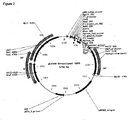
- Full length coding sequence was amplified from the plasmid with primer E6TopoF and E6TopoR using Phusion Taq Polymerase as described above. The PCR fragment was isolated from gel as described above. This full-length cDNA was cloned into pET TOPO vector using the Champion pET200 Directional TOPO Expression Kit from Invitrogen as described in the manufacturer's protocol. A map of the expression vector is depicted in figure 2 .
- Plasmids were isolated and sequenced. The sequence was identical to the first full-length cDNA as sequenced from the pCR2.1 cloning vector.
- the coding sequence of SISST3 is shown in SEQ. ID. No:1.
- SEQ. ID. No:2 shows the deduced amino acid sequence.
- the pET200 plasmid containing SISST3 was transformed to BL21 Star (DE3) One Shot Chemically competent E.coli cells. Liquid cultures were grown overnight at 37 °C. The following day a 50 ml culture was inoculated with 2.5 ml of the overnight culture and grown to optical density at 600 nm of 0.5. The culture was transferred to room temperature and induced with isopropyl beta-D-1-thiogalactopyranoside (IPTG) from Roche (Basel, Switzerland) at a final concentration of 1 mM.
- IPTG isopropyl beta-D-1-thiogalactopyranoside
- a culture with a dummy insert in the pET200 vector (an R2R3-type MYB transcription factor (Genebank accession number AY705977) with no terpene synthase activity) was used. Uninduced controls of both cultures were taken along. After 3 hours of induction, two aliquots of 1 ml were taken from each culture after which the remainder of the cells was collected by centrifugation at 4 °C at 2.000 g for 15 minutes and subsequent aspiration of the medium. Cell pellets were frozen in liquid nitrogen and stored at -80 °C until enzyme assays were performed.
- Optical density of the 1 ml aliquots was determined at 600 nm. Cells were collected by centrifugation at 2.000 g at 4 °C for 10 minutes and aspiration of the medium. Cells of one of the induced and one of the uninduced aliquot were resuspended in 50 ⁇ l per OD unit terpene synthase buffer (as described by Van Schie et al. Plant Mol Biol. 2007 Jun;64(3):251-63 ). After disruption of the cells by incubation with 1 ⁇ g lysozyme on ice for 30 minutes and sonification, soluble protein fraction was collected by centrifugation at 12.000 g for 30 minutes at 4 °C.
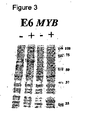
- a 15 ⁇ l protein sample was electrophoresed on a 10% acryl amide gel.
- An acryl amide gel of total proteins from induced and uninduced cells with plasmid containing SISST3 and MYB transcription factor was stained with Coomassie Brilliant Blue (0.25% CBB (w/v), 30% methanol (v/v) and 10% acetic acid).
- a scan of this stained gel is shown in figure 3 .
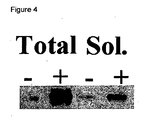
- the blot was washed 3 times with PBST and subsequently incubated for one hour in PBST with 5% (w/v) powdery milk and horseradish peroxidase-coupled goat anti-mouse IGG antibody from Pierce, Rockford, IL, USA after which it was washed 3 times in PBST.
- Peroxidase activity was detected by enhanced chemoluminecence (Amersham, Buckinghamshire, UK). A picture of the chemoluminecence can be seen in figure 4 .
- Sesquiterpene synthase assays were performed as described by Van Schie et al. Plant Mol Biol. 2007 Jun;64(3):251-63 , and incorporated herewith by reference.
- Figure 5 shows GC-MS spectra of ion 69 for Ni-purified SISST3 and Myb transcription factor protein assayed with FPP zoomed in on retention time 402 seconds till 436 seconds.
- Peak 1, 2, 3 and 4 Products of peak 1, 2, 3 and 4 were identified as (E) beta-farnesene (peak 1), (Z,E) alpha-farnesene (peak 2), (E,E) alpha-farnesene and (Z,Z) alpha-farnesene (both in peak 3) and (E)-nerolidol (peak 4), using authentic standards and comparison of ion spectra and retention times.
- Figure 7 shows a further GC-MC chromatogram of protein extracts from E.coli cells expressing tomato farnesene synthase assayed with FPP. Peak 1. beta-elemene (*). 2. (E) beta-farnesene. 3. unknown sesquiterpene (*). 4. (Z,E) alpha-farnesene. 5. (+)-valencene (*). 6. (E,E) alpha-farnesene. 7. unknown sesquiterpene (*). (*). Peaks indicated with (*) are identified on basis of mass spectra, all others based on mass spectra and comparison of retention time of pure standards.
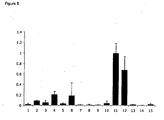
- FIG 8 the spatial expression of the farnesene synthase (according to the invention) in Solanum lycopersicum as determined by quantitative RT-PCR and corrected for the constitutive RCE1 expression on cDNA from different tissues of Solanum lycopersicum is shown. Bar graphs represent the average of two independent predicates. Maximum is indicated by error bars.
- cDNA is synthesized from RNA isolated from 1. Roots 2. Flower buds 3. Stamens 4. Petals 5. Sepals 6. Immature green fruits 7. Breaker fruits 8. Turning fruits 9. Red fruit s10. Petioles 11.Stems12. Plant tops 13. Young leaves 14. Mature leaves 15. Senescent leaves.
Landscapes
- Life Sciences & Earth Sciences (AREA)
- Health & Medical Sciences (AREA)
- Genetics & Genomics (AREA)
- Chemical & Material Sciences (AREA)
- Engineering & Computer Science (AREA)
- Organic Chemistry (AREA)
- Wood Science & Technology (AREA)
- Zoology (AREA)
- Bioinformatics & Cheminformatics (AREA)
- Biotechnology (AREA)
- General Engineering & Computer Science (AREA)
- General Health & Medical Sciences (AREA)
- Biochemistry (AREA)
- Microbiology (AREA)
- Biomedical Technology (AREA)
- Molecular Biology (AREA)
- Nutrition Science (AREA)
- Chemical Kinetics & Catalysis (AREA)
- Cell Biology (AREA)
- Physics & Mathematics (AREA)
- General Chemical & Material Sciences (AREA)
- Biophysics (AREA)
- Plant Pathology (AREA)
- Medicinal Chemistry (AREA)
- Enzymes And Modification Thereof (AREA)
- Micro-Organisms Or Cultivation Processes Thereof (AREA)
- Breeding Of Plants And Reproduction By Means Of Culturing (AREA)
- Measuring Or Testing Involving Enzymes Or Micro-Organisms (AREA)
- Preparation Of Compounds By Using Micro-Organisms (AREA)
Claims (16)
- Isoliertes Polynukleotid gemäß SEQ ID Nr: 1 oder ein Polynukleotid, das mindestens 70% Sequenzidentität mit der Nukleotidsequenz von SEQ ID Nr: 1 hat, wobei das Polynukleotid für ein Polypeptid mit α-Farnesen-Synthaseaktivität und β-Farnesen-Synthaseaktivität kodiert.
- Fragment eines Polynukleotids nach Anspruch 1, wobei das Fragment für ein Polypeptid mit α-Farnesen-Aktivität und β-Farnesen-Synthaseaktivität kodiert.
- Polypeptid gemäß SEQ ID Nr: 2 oder ein Polypeptid, das mindestens 70% Sequenzidentität mit der Aminosäuresequenz gemäß SEQ ID Nr: 2 hat, wobei das Polypeptid α-Farnesen-Synthaseaktivität und β-Farnesen-Synthaseaktivität aufweist.
- Fragment eines Polypeptids nach Anspruch 3, wobei das Fragment α-Farnesen- und β-Farnesen-Synthaseaktivität aufweist.
- Genetisches Konstrukt, umfassend ein Polynukleotid nach einem der Ansprüche 1-2.
- Genetisches Konstrukt, umfassend in der 5'-3'-Richtung ein Polynukleotid, das in seinem offenen Leserahmen für ein Polypeptid nach einem der Ansprüche 3-4 kodiert.
- Genetisches Konstrukt, umfassend in der 5'-3'-Richtung ein Polynukleotid, das komplementär zu einem Polynukleotid ist, das für ein Polypeptid nach einem der Ansprüche 3-4 kodiert.
- Vektor, umfassend ein genetisches Konstrukt nach einem der Ansprüche 5-7.
- Wirtszelle, umfassend ein genetisches Konstrukt nach einem der Ansprüche 5-7.
- Transgene Pflanze oder Pflanzenzelle, umfassend ein genetisches Konstrukt nach einem der Ansprüche 5-7.
- Samen, die von einer transgenen Pflanze oder Pflanzenzelle nach Anspruch 10 stammen, umfassend ein genetisches Konstrukt nach einem der Ansprüche 5-7.
- Verfahren zur Herstellung von α-Farnesen und β-Farnesen, umfassend die Schritte des Kultivierens einer Zelle, die mit einem Polynukleotid nach einem der Ansprüche 1-2 genetisch modifiziert wurde, um eine erhöhte α-Farnesen-Synthase- und β-Farnesen-Synthaseaktivität bereitzustellen; und optional die Versorgung der Zelle mit Farnesyl-Diphosphat; und das Trennen des hergestellten α-Farnesens und β-Farnesens.
- Verfahren zum Modulieren der α-Farnesen- und β-Farnesen-Produktion einer Pflanze, wobei das Verfahren das Erhöhen oder Verringern der Expression einer α-Farnesen-Synthase und β-Farnesen-Synthase mit einer Polypeptidsequenz nach einem der Ansprüche 3-4 umfasst, wobei die Erhöhung oder Verringerung durch genetische Modifikation erreicht wird, um die Expression eines für das Polypeptid kodierenden Polynukleotids zu ändern.
- Verfahren zum Nachweis der Anwesenheit oder Abwesenheit einer Nukleotidsequenz, die für ein Polypeptid nach einem der Ansprüche 3-4 kodiert, in einem Pflanzengewebe oder einer Nukleinsäureprobe derselben, umfassend:a. Beschaffung einer Pflanzengewebeprobe oder einer Nukleinsäureprobe,b. Analyse der Probe unter Verwendung eines molekularen Marker-Assays auf die Anwesenheit oder Abwesenheit von einem oder mehreren Markern, die mit dem Polypeptid nach einem der Ansprüche 3-4 gekoppelt sind, wobei der Marker-Assay eine Sequenz gemäß SEQ ID Nr: 1 oder eine Sequenz, die mindestens 70% Sequenzidentität zu der Nukleotidsequenz von SEQ ID Nr: 1 hat, detektiert.
- Verwendung eines Polynukleotids gemäß SEQ ID Nr: 1 oder eines Polynukleotids, das mindestens 70% Sequenzidentität mit der Nukleotidsequenz von SEQ ID Nr: 1 hat, zum Abbilden eines molekularen (DNA)-Markers, der mit der Nukleotidsequenz gemäß SEQ ID Nr: 1 oder einer Nukleotidsequenz, die mindestens 70% Sequenzidentität zu der Nukleotidsequenz von SEQ ID Nr: 1 hat, gekoppelt ist, wobei die Nukleotidsequenz für ein Polypeptid mit α-Farnesen-Synthaseaktivität und β-Farnesen-Synthaseaktivität kodiert.
- Verwendung von mindestens 15 aufeinanderfolgenden Nukleotiden der SEQ ID Nr: 1 oder einer Sequenz, die mindestens 90% Nukleotid-Identität dazu umfasst, als molekularen Marker für ein isoliertes Polynukleotid gemäß SEQ ID Nr: 1, oder für ein Polynukleotid, das mindestens 70% Sequenzidentität mit der Nukleotidsequenz von SEQ ID Nr: 1 hat, wobei das Polynukleotid für ein Polypeptid mit α-Farnesen-Synthaseaktivität und β-Farnesen-Synthaseaktivität kodiert, oder als molekularen Marker für ein Polypeptid nach einem der Ansprüche 3-4, wobei das Polypeptid α-Farnesen-Synthaseaktivität und β-Farnesen-Synthaseaktivität aufweist.
Applications Claiming Priority (2)
| Application Number | Priority Date | Filing Date | Title |
|---|---|---|---|
| US12017908P | 2008-12-05 | 2008-12-05 | |
| PCT/NL2009/000244 WO2010064897A1 (en) | 2008-12-05 | 2009-12-02 | Farmesene synthase |
Publications (2)
| Publication Number | Publication Date |
|---|---|
| EP2373790A1 EP2373790A1 (de) | 2011-10-12 |
| EP2373790B1 true EP2373790B1 (de) | 2015-02-11 |
Family
ID=41683059
Family Applications (1)
| Application Number | Title | Priority Date | Filing Date |
|---|---|---|---|
| EP09771418.2A Not-in-force EP2373790B1 (de) | 2008-12-05 | 2009-12-02 | Farnesen-Synthase |
Country Status (13)
| Country | Link |
|---|---|
| US (1) | US8674175B2 (de) |
| EP (1) | EP2373790B1 (de) |
| JP (1) | JP5777523B2 (de) |
| KR (1) | KR101696173B1 (de) |
| CN (2) | CN102317452B (de) |
| AU (1) | AU2009323128B2 (de) |
| CA (1) | CA2745853A1 (de) |
| ES (1) | ES2535722T3 (de) |
| IL (1) | IL213393A (de) |
| MX (1) | MX2011005872A (de) |
| MY (1) | MY159141A (de) |
| RU (1) | RU2546877C2 (de) |
| WO (1) | WO2010064897A1 (de) |
Families Citing this family (1)
| Publication number | Priority date | Publication date | Assignee | Title |
|---|---|---|---|---|
| US20150059018A1 (en) | 2011-10-19 | 2015-02-26 | Keygene N.V. | Methods and compositions for producing drimenol |
Family Cites Families (10)
| Publication number | Priority date | Publication date | Assignee | Title |
|---|---|---|---|---|
| EP1021459A4 (de) | 1997-10-06 | 2004-08-11 | Univ Washington | Isolierung und expression der farnesylsynthase aus der pfefferminze, (mentha x piperita, l.) |
| WO2003004690A2 (en) | 2001-07-06 | 2003-01-16 | 454$m(3) CORPORATION | Method for isolation of independent, parallel chemical micro-reactions using a porous filter |
| US6902921B2 (en) | 2001-10-30 | 2005-06-07 | 454 Corporation | Sulfurylase-luciferase fusion proteins and thermostable sulfurylase |
| WO2004031376A2 (en) * | 2002-10-04 | 2004-04-15 | Firmenich Sa | Sesquiterpene synthases and methods of use |
| AU2003278632A1 (en) * | 2002-10-15 | 2004-05-04 | The Horticulture And Food Research Institute Of New Zealand Limited | Plant alpha farnesene synthase and polynucleotides encoding same |
| NZ523384A (en) * | 2002-12-24 | 2005-12-23 | Horticulture & Food Res Inst | Enzymes and polynucleotides encoding the same |
| CA2513899C (en) | 2003-01-29 | 2013-03-26 | 454 Corporation | Methods of amplifying and sequencing nucleic acids |
| WO2007037678A2 (en) | 2005-09-29 | 2007-04-05 | Keygene N.V. | High throughput screening of mutagenized populations |
| CN103937899B (zh) | 2005-12-22 | 2017-09-08 | 凯津公司 | 用于基于aflp的高通量多态性检测的方法 |
| FR2914652B1 (fr) * | 2007-04-03 | 2013-01-18 | Librophyt | Genes codant pour z,z-farnesyl diphosphate synthase et une sesquiterpene synthase a produits multiples et leurs utilisations |
-
2009
- 2009-12-02 EP EP09771418.2A patent/EP2373790B1/de not_active Not-in-force
- 2009-12-02 US US13/132,702 patent/US8674175B2/en not_active Expired - Fee Related
- 2009-12-02 CN CN200980148985.XA patent/CN102317452B/zh not_active Expired - Fee Related
- 2009-12-02 AU AU2009323128A patent/AU2009323128B2/en not_active Ceased
- 2009-12-02 MX MX2011005872A patent/MX2011005872A/es active IP Right Grant
- 2009-12-02 KR KR1020117015524A patent/KR101696173B1/ko not_active Expired - Fee Related
- 2009-12-02 ES ES09771418.2T patent/ES2535722T3/es active Active
- 2009-12-02 JP JP2011539461A patent/JP5777523B2/ja not_active Expired - Fee Related
- 2009-12-02 MY MYPI2011002468A patent/MY159141A/en unknown
- 2009-12-02 CN CN201510006775.4A patent/CN104611360B/zh not_active Expired - Fee Related
- 2009-12-02 CA CA2745853A patent/CA2745853A1/en not_active Abandoned
- 2009-12-02 WO PCT/NL2009/000244 patent/WO2010064897A1/en not_active Ceased
- 2009-12-02 RU RU2011127438/10A patent/RU2546877C2/ru not_active IP Right Cessation
-
2011
- 2011-06-05 IL IL213393A patent/IL213393A/en not_active IP Right Cessation
Non-Patent Citations (2)
| Title |
|---|
| DATABASE GENESEQ [online] 4 May 2006 (2006-05-04), "Human TTN PCR primer #205.", retrieved from EBI accession no. GSN:AEG25289 Database accession no. AEG25289 * |
| SHARKEY THOMAS D ET AL: "Evolution of the isoprene biosynthetic pathway in Kudzu", PLANT PHYSIOLOGY (ROCKVILLE), vol. 137, no. 2, February 2005 (2005-02-01), pages 700 - 712, XP002552522, ISSN: 0032-0889, DOI: doi:10.1104/pp.104.054445 * |
Also Published As
| Publication number | Publication date |
|---|---|
| CA2745853A1 (en) | 2010-06-10 |
| CN104611360A (zh) | 2015-05-13 |
| AU2009323128A1 (en) | 2010-06-10 |
| WO2010064897A1 (en) | 2010-06-10 |
| MX2011005872A (es) | 2011-08-17 |
| EP2373790A1 (de) | 2011-10-12 |
| MY159141A (en) | 2016-12-15 |
| AU2009323128B2 (en) | 2015-01-22 |
| RU2011127438A (ru) | 2013-01-10 |
| KR20110097924A (ko) | 2011-08-31 |
| CN104611360B (zh) | 2017-06-30 |
| CN102317452A (zh) | 2012-01-11 |
| KR101696173B1 (ko) | 2017-01-13 |
| IL213393A (en) | 2017-10-31 |
| US20110307972A1 (en) | 2011-12-15 |
| JP5777523B2 (ja) | 2015-09-09 |
| US8674175B2 (en) | 2014-03-18 |
| IL213393A0 (en) | 2011-07-31 |
| JP2012510811A (ja) | 2012-05-17 |
| ES2535722T3 (es) | 2015-05-14 |
| RU2546877C2 (ru) | 2015-04-10 |
| CN102317452B (zh) | 2015-02-04 |
| WO2010064897A8 (en) | 2010-09-02 |
Similar Documents
| Publication | Publication Date | Title |
|---|---|---|
| US7790413B2 (en) | Sesquiterpene synthases and methods of their use | |
| EP3140409B1 (de) | Drimenolsynthase und verfahren zur herstellung von drimenol | |
| JPH08507923A (ja) | Dna、dna構築物、細胞及びそれから誘導された植物 | |
| US20170247713A1 (en) | Trichome-specific transcription factor modulating terpene biosynthesis | |
| EP2373790B1 (de) | Farnesen-Synthase | |
| WO2005048692A2 (en) | Tomatoes having reduced deoxyhypusine synthase activity caused by non-transgenic alterations in a deoxyhypusine synthase gene | |
| US10550409B2 (en) | Drimenol synthases III | |
| CN107849586B (zh) | 芳香化合物的生产 | |
| CA2537505A1 (en) | Citrus sesquiterpene synthase, methods of production and uses thereof | |
| JP2009000046A (ja) | トチュウのメバロン酸経路の酵素をコードする遺伝子 | |
| Podolyan | A study of the green leaf volatile biochemical pathway as a source of important flavour and aroma precursors in Sauvignon blanc grape berries | |
| Richter et al. | Characterization of Biosynthetic Pathways for the Production of the Volatile Homoterpenes DMNT and |
Legal Events
| Date | Code | Title | Description |
|---|---|---|---|
| PUAI | Public reference made under article 153(3) epc to a published international application that has entered the european phase |
Free format text: ORIGINAL CODE: 0009012 |
|
| 17P | Request for examination filed |
Effective date: 20110704 |
|
| AK | Designated contracting states |
Kind code of ref document: A1 Designated state(s): AT BE BG CH CY CZ DE DK EE ES FI FR GB GR HR HU IE IS IT LI LT LU LV MC MK MT NL NO PL PT RO SE SI SK SM TR |
|
| DAX | Request for extension of the european patent (deleted) | ||
| 17Q | First examination report despatched |
Effective date: 20120404 |
|
| GRAP | Despatch of communication of intention to grant a patent |
Free format text: ORIGINAL CODE: EPIDOSNIGR1 |
|
| INTG | Intention to grant announced |
Effective date: 20140417 |
|
| GRAP | Despatch of communication of intention to grant a patent |
Free format text: ORIGINAL CODE: EPIDOSNIGR1 |
|
| INTG | Intention to grant announced |
Effective date: 20140910 |
|
| GRAS | Grant fee paid |
Free format text: ORIGINAL CODE: EPIDOSNIGR3 |
|
| GRAA | (expected) grant |
Free format text: ORIGINAL CODE: 0009210 |
|
| AK | Designated contracting states |
Kind code of ref document: B1 Designated state(s): AT BE BG CH CY CZ DE DK EE ES FI FR GB GR HR HU IE IS IT LI LT LU LV MC MK MT NL NO PL PT RO SE SI SK SM TR |
|
| REG | Reference to a national code |
Ref country code: GB Ref legal event code: FG4D |
|
| REG | Reference to a national code |
Ref country code: CH Ref legal event code: EP |
|
| REG | Reference to a national code |
Ref country code: IE Ref legal event code: FG4D |
|
| REG | Reference to a national code |
Ref country code: AT Ref legal event code: REF Ref document number: 709934 Country of ref document: AT Kind code of ref document: T Effective date: 20150315 |
|
| REG | Reference to a national code |
Ref country code: DE Ref legal event code: R096 Ref document number: 602009029354 Country of ref document: DE Effective date: 20150326 |
|
| REG | Reference to a national code |
Ref country code: ES Ref legal event code: FG2A Ref document number: 2535722 Country of ref document: ES Kind code of ref document: T3 Effective date: 20150514 |
|
| REG | Reference to a national code |
Ref country code: NL Ref legal event code: T3 |
|
| REG | Reference to a national code |
Ref country code: GR Ref legal event code: EP Ref document number: 20150400885 Country of ref document: GR Effective date: 20150518 |
|
| REG | Reference to a national code |
Ref country code: AT Ref legal event code: MK05 Ref document number: 709934 Country of ref document: AT Kind code of ref document: T Effective date: 20150211 |
|
| REG | Reference to a national code |
Ref country code: LT Ref legal event code: MG4D |
|
| PG25 | Lapsed in a contracting state [announced via postgrant information from national office to epo] |
Ref country code: LT Free format text: LAPSE BECAUSE OF FAILURE TO SUBMIT A TRANSLATION OF THE DESCRIPTION OR TO PAY THE FEE WITHIN THE PRESCRIBED TIME-LIMIT Effective date: 20150211 Ref country code: FI Free format text: LAPSE BECAUSE OF FAILURE TO SUBMIT A TRANSLATION OF THE DESCRIPTION OR TO PAY THE FEE WITHIN THE PRESCRIBED TIME-LIMIT Effective date: 20150211 Ref country code: SE Free format text: LAPSE BECAUSE OF FAILURE TO SUBMIT A TRANSLATION OF THE DESCRIPTION OR TO PAY THE FEE WITHIN THE PRESCRIBED TIME-LIMIT Effective date: 20150211 Ref country code: NO Free format text: LAPSE BECAUSE OF FAILURE TO SUBMIT A TRANSLATION OF THE DESCRIPTION OR TO PAY THE FEE WITHIN THE PRESCRIBED TIME-LIMIT Effective date: 20150511 Ref country code: HR Free format text: LAPSE BECAUSE OF FAILURE TO SUBMIT A TRANSLATION OF THE DESCRIPTION OR TO PAY THE FEE WITHIN THE PRESCRIBED TIME-LIMIT Effective date: 20150211 |
|
| PG25 | Lapsed in a contracting state [announced via postgrant information from national office to epo] |
Ref country code: IS Free format text: LAPSE BECAUSE OF FAILURE TO SUBMIT A TRANSLATION OF THE DESCRIPTION OR TO PAY THE FEE WITHIN THE PRESCRIBED TIME-LIMIT Effective date: 20150611 Ref country code: AT Free format text: LAPSE BECAUSE OF FAILURE TO SUBMIT A TRANSLATION OF THE DESCRIPTION OR TO PAY THE FEE WITHIN THE PRESCRIBED TIME-LIMIT Effective date: 20150211 Ref country code: LV Free format text: LAPSE BECAUSE OF FAILURE TO SUBMIT A TRANSLATION OF THE DESCRIPTION OR TO PAY THE FEE WITHIN THE PRESCRIBED TIME-LIMIT Effective date: 20150211 |
|
| PG25 | Lapsed in a contracting state [announced via postgrant information from national office to epo] |
Ref country code: CZ Free format text: LAPSE BECAUSE OF FAILURE TO SUBMIT A TRANSLATION OF THE DESCRIPTION OR TO PAY THE FEE WITHIN THE PRESCRIBED TIME-LIMIT Effective date: 20150211 Ref country code: SK Free format text: LAPSE BECAUSE OF FAILURE TO SUBMIT A TRANSLATION OF THE DESCRIPTION OR TO PAY THE FEE WITHIN THE PRESCRIBED TIME-LIMIT Effective date: 20150211 Ref country code: EE Free format text: LAPSE BECAUSE OF FAILURE TO SUBMIT A TRANSLATION OF THE DESCRIPTION OR TO PAY THE FEE WITHIN THE PRESCRIBED TIME-LIMIT Effective date: 20150211 Ref country code: DK Free format text: LAPSE BECAUSE OF FAILURE TO SUBMIT A TRANSLATION OF THE DESCRIPTION OR TO PAY THE FEE WITHIN THE PRESCRIBED TIME-LIMIT Effective date: 20150211 Ref country code: RO Free format text: LAPSE BECAUSE OF FAILURE TO SUBMIT A TRANSLATION OF THE DESCRIPTION OR TO PAY THE FEE WITHIN THE PRESCRIBED TIME-LIMIT Effective date: 20150211 |
|
| REG | Reference to a national code |
Ref country code: DE Ref legal event code: R097 Ref document number: 602009029354 Country of ref document: DE |
|
| PG25 | Lapsed in a contracting state [announced via postgrant information from national office to epo] |
Ref country code: PL Free format text: LAPSE BECAUSE OF FAILURE TO SUBMIT A TRANSLATION OF THE DESCRIPTION OR TO PAY THE FEE WITHIN THE PRESCRIBED TIME-LIMIT Effective date: 20150211 |
|
| PLBE | No opposition filed within time limit |
Free format text: ORIGINAL CODE: 0009261 |
|
| STAA | Information on the status of an ep patent application or granted ep patent |
Free format text: STATUS: NO OPPOSITION FILED WITHIN TIME LIMIT |
|
| REG | Reference to a national code |
Ref country code: FR Ref legal event code: PLFP Year of fee payment: 7 |
|
| 26N | No opposition filed |
Effective date: 20151112 |
|
| PG25 | Lapsed in a contracting state [announced via postgrant information from national office to epo] |
Ref country code: SI Free format text: LAPSE BECAUSE OF FAILURE TO SUBMIT A TRANSLATION OF THE DESCRIPTION OR TO PAY THE FEE WITHIN THE PRESCRIBED TIME-LIMIT Effective date: 20150211 |
|
| PG25 | Lapsed in a contracting state [announced via postgrant information from national office to epo] |
Ref country code: MC Free format text: LAPSE BECAUSE OF FAILURE TO SUBMIT A TRANSLATION OF THE DESCRIPTION OR TO PAY THE FEE WITHIN THE PRESCRIBED TIME-LIMIT Effective date: 20150211 Ref country code: LU Free format text: LAPSE BECAUSE OF FAILURE TO SUBMIT A TRANSLATION OF THE DESCRIPTION OR TO PAY THE FEE WITHIN THE PRESCRIBED TIME-LIMIT Effective date: 20151202 |
|
| REG | Reference to a national code |
Ref country code: CH Ref legal event code: PL |
|
| REG | Reference to a national code |
Ref country code: IE Ref legal event code: MM4A |
|
| PG25 | Lapsed in a contracting state [announced via postgrant information from national office to epo] |
Ref country code: IE Free format text: LAPSE BECAUSE OF NON-PAYMENT OF DUE FEES Effective date: 20151202 Ref country code: CH Free format text: LAPSE BECAUSE OF NON-PAYMENT OF DUE FEES Effective date: 20151231 Ref country code: LI Free format text: LAPSE BECAUSE OF NON-PAYMENT OF DUE FEES Effective date: 20151231 |
|
| REG | Reference to a national code |
Ref country code: FR Ref legal event code: PLFP Year of fee payment: 8 |
|
| PG25 | Lapsed in a contracting state [announced via postgrant information from national office to epo] |
Ref country code: BG Free format text: LAPSE BECAUSE OF FAILURE TO SUBMIT A TRANSLATION OF THE DESCRIPTION OR TO PAY THE FEE WITHIN THE PRESCRIBED TIME-LIMIT Effective date: 20150211 Ref country code: SM Free format text: LAPSE BECAUSE OF FAILURE TO SUBMIT A TRANSLATION OF THE DESCRIPTION OR TO PAY THE FEE WITHIN THE PRESCRIBED TIME-LIMIT Effective date: 20150211 Ref country code: HU Free format text: LAPSE BECAUSE OF FAILURE TO SUBMIT A TRANSLATION OF THE DESCRIPTION OR TO PAY THE FEE WITHIN THE PRESCRIBED TIME-LIMIT; INVALID AB INITIO Effective date: 20091202 |
|
| PG25 | Lapsed in a contracting state [announced via postgrant information from national office to epo] |
Ref country code: CY Free format text: LAPSE BECAUSE OF FAILURE TO SUBMIT A TRANSLATION OF THE DESCRIPTION OR TO PAY THE FEE WITHIN THE PRESCRIBED TIME-LIMIT Effective date: 20150211 |
|
| PG25 | Lapsed in a contracting state [announced via postgrant information from national office to epo] |
Ref country code: MT Free format text: LAPSE BECAUSE OF FAILURE TO SUBMIT A TRANSLATION OF THE DESCRIPTION OR TO PAY THE FEE WITHIN THE PRESCRIBED TIME-LIMIT Effective date: 20150211 |
|
| REG | Reference to a national code |
Ref country code: FR Ref legal event code: PLFP Year of fee payment: 9 |
|
| PGFP | Annual fee paid to national office [announced via postgrant information from national office to epo] |
Ref country code: NL Payment date: 20171213 Year of fee payment: 9 Ref country code: FR Payment date: 20171229 Year of fee payment: 9 Ref country code: TR Payment date: 20171115 Year of fee payment: 9 |
|
| PGFP | Annual fee paid to national office [announced via postgrant information from national office to epo] |
Ref country code: BE Payment date: 20171221 Year of fee payment: 9 Ref country code: GR Payment date: 20171227 Year of fee payment: 9 Ref country code: GB Payment date: 20171228 Year of fee payment: 9 |
|
| PGFP | Annual fee paid to national office [announced via postgrant information from national office to epo] |
Ref country code: ES Payment date: 20180124 Year of fee payment: 9 Ref country code: DE Payment date: 20180228 Year of fee payment: 9 |
|
| PGFP | Annual fee paid to national office [announced via postgrant information from national office to epo] |
Ref country code: IT Payment date: 20171220 Year of fee payment: 9 |
|
| PG25 | Lapsed in a contracting state [announced via postgrant information from national office to epo] |
Ref country code: PT Free format text: LAPSE BECAUSE OF FAILURE TO SUBMIT A TRANSLATION OF THE DESCRIPTION OR TO PAY THE FEE WITHIN THE PRESCRIBED TIME-LIMIT Effective date: 20150211 Ref country code: MK Free format text: LAPSE BECAUSE OF FAILURE TO SUBMIT A TRANSLATION OF THE DESCRIPTION OR TO PAY THE FEE WITHIN THE PRESCRIBED TIME-LIMIT Effective date: 20150211 |
|
| REG | Reference to a national code |
Ref country code: DE Ref legal event code: R119 Ref document number: 602009029354 Country of ref document: DE |
|
| REG | Reference to a national code |
Ref country code: NL Ref legal event code: MM Effective date: 20190101 |
|
| GBPC | Gb: european patent ceased through non-payment of renewal fee |
Effective date: 20181202 |
|
| PG25 | Lapsed in a contracting state [announced via postgrant information from national office to epo] |
Ref country code: NL Free format text: LAPSE BECAUSE OF NON-PAYMENT OF DUE FEES Effective date: 20190101 |
|
| REG | Reference to a national code |
Ref country code: BE Ref legal event code: MM Effective date: 20181231 |
|
| PG25 | Lapsed in a contracting state [announced via postgrant information from national office to epo] |
Ref country code: DE Free format text: LAPSE BECAUSE OF NON-PAYMENT OF DUE FEES Effective date: 20190702 Ref country code: IT Free format text: LAPSE BECAUSE OF NON-PAYMENT OF DUE FEES Effective date: 20181202 Ref country code: FR Free format text: LAPSE BECAUSE OF NON-PAYMENT OF DUE FEES Effective date: 20181231 |
|
| PG25 | Lapsed in a contracting state [announced via postgrant information from national office to epo] |
Ref country code: GR Free format text: LAPSE BECAUSE OF NON-PAYMENT OF DUE FEES Effective date: 20190702 Ref country code: BE Free format text: LAPSE BECAUSE OF NON-PAYMENT OF DUE FEES Effective date: 20181231 |
|
| PG25 | Lapsed in a contracting state [announced via postgrant information from national office to epo] |
Ref country code: GB Free format text: LAPSE BECAUSE OF NON-PAYMENT OF DUE FEES Effective date: 20181202 |
|
| REG | Reference to a national code |
Ref country code: ES Ref legal event code: FD2A Effective date: 20200131 |
|
| PG25 | Lapsed in a contracting state [announced via postgrant information from national office to epo] |
Ref country code: ES Free format text: LAPSE BECAUSE OF NON-PAYMENT OF DUE FEES Effective date: 20181203 |
|
| PG25 | Lapsed in a contracting state [announced via postgrant information from national office to epo] |
Ref country code: TR Free format text: LAPSE BECAUSE OF NON-PAYMENT OF DUE FEES Effective date: 20181202 |