EP2375385A1 - Procédé et système d'évaluation du comportement de conduite d'un conducteur de véhicule automobile - Google Patents
Procédé et système d'évaluation du comportement de conduite d'un conducteur de véhicule automobile Download PDFInfo
- Publication number
- EP2375385A1 EP2375385A1 EP10185884A EP10185884A EP2375385A1 EP 2375385 A1 EP2375385 A1 EP 2375385A1 EP 10185884 A EP10185884 A EP 10185884A EP 10185884 A EP10185884 A EP 10185884A EP 2375385 A1 EP2375385 A1 EP 2375385A1
- Authority
- EP
- European Patent Office
- Prior art keywords
- vehicle
- motor vehicle
- accelerations
- limit values
- travel
- Prior art date
- Legal status (The legal status is an assumption and is not a legal conclusion. Google has not performed a legal analysis and makes no representation as to the accuracy of the status listed.)
- Withdrawn
Links
- 238000000034 method Methods 0.000 title claims abstract description 17
- 230000001133 acceleration Effects 0.000 claims abstract description 71
- 230000001934 delay Effects 0.000 claims abstract description 5
- 230000006399 behavior Effects 0.000 claims description 36
- 238000011156 evaluation Methods 0.000 claims description 12
- 230000001419 dependent effect Effects 0.000 claims description 7
- 230000007774 longterm Effects 0.000 claims description 6
- 238000001514 detection method Methods 0.000 claims description 5
- 230000003287 optical effect Effects 0.000 claims description 5
- 238000004364 calculation method Methods 0.000 claims description 4
- 238000011511 automated evaluation Methods 0.000 claims description 3
- 238000004458 analytical method Methods 0.000 claims description 2
- 230000008859 change Effects 0.000 claims description 2
- 238000004891 communication Methods 0.000 claims description 2
- 230000011664 signaling Effects 0.000 claims 1
- 238000012423 maintenance Methods 0.000 abstract description 3
- 230000005484 gravity Effects 0.000 abstract description 2
- 239000000446 fuel Substances 0.000 description 13
- 230000000875 corresponding effect Effects 0.000 description 5
- 238000011161 development Methods 0.000 description 5
- 230000018109 developmental process Effects 0.000 description 5
- 230000004913 activation Effects 0.000 description 3
- 230000006378 damage Effects 0.000 description 3
- 238000012549 training Methods 0.000 description 3
- 238000013459 approach Methods 0.000 description 2
- 230000003750 conditioning effect Effects 0.000 description 2
- 230000009467 reduction Effects 0.000 description 2
- 230000000007 visual effect Effects 0.000 description 2
- 208000010201 Exanthema Diseases 0.000 description 1
- 230000009471 action Effects 0.000 description 1
- 239000003795 chemical substances by application Substances 0.000 description 1
- 230000002596 correlated effect Effects 0.000 description 1
- 238000007405 data analysis Methods 0.000 description 1
- 230000009189 diving Effects 0.000 description 1
- 230000000694 effects Effects 0.000 description 1
- 230000007613 environmental effect Effects 0.000 description 1
- 201000005884 exanthem Diseases 0.000 description 1
- 230000006872 improvement Effects 0.000 description 1
- 238000009434 installation Methods 0.000 description 1
- 239000000463 material Substances 0.000 description 1
- 238000005259 measurement Methods 0.000 description 1
- 230000008450 motivation Effects 0.000 description 1
- 238000012545 processing Methods 0.000 description 1
- 206010037844 rash Diseases 0.000 description 1
- 230000008439 repair process Effects 0.000 description 1
- 230000002459 sustained effect Effects 0.000 description 1
- 230000002123 temporal effect Effects 0.000 description 1
- 238000012360 testing method Methods 0.000 description 1
Images


Classifications
-
- G—PHYSICS
- G07—CHECKING-DEVICES
- G07C—TIME OR ATTENDANCE REGISTERS; REGISTERING OR INDICATING THE WORKING OF MACHINES; GENERATING RANDOM NUMBERS; VOTING OR LOTTERY APPARATUS; ARRANGEMENTS, SYSTEMS OR APPARATUS FOR CHECKING NOT PROVIDED FOR ELSEWHERE
- G07C5/00—Registering or indicating the working of vehicles
- G07C5/008—Registering or indicating the working of vehicles communicating information to a remotely located station
-
- B—PERFORMING OPERATIONS; TRANSPORTING
- B60—VEHICLES IN GENERAL
- B60W—CONJOINT CONTROL OF VEHICLE SUB-UNITS OF DIFFERENT TYPE OR DIFFERENT FUNCTION; CONTROL SYSTEMS SPECIALLY ADAPTED FOR HYBRID VEHICLES; ROAD VEHICLE DRIVE CONTROL SYSTEMS FOR PURPOSES NOT RELATED TO THE CONTROL OF A PARTICULAR SUB-UNIT
- B60W40/00—Estimation or calculation of non-directly measurable driving parameters for road vehicle drive control systems not related to the control of a particular sub unit, e.g. by using mathematical models
- B60W40/08—Estimation or calculation of non-directly measurable driving parameters for road vehicle drive control systems not related to the control of a particular sub unit, e.g. by using mathematical models related to drivers or passengers
- B60W40/09—Driving style or behaviour
-
- B—PERFORMING OPERATIONS; TRANSPORTING
- B60—VEHICLES IN GENERAL
- B60W—CONJOINT CONTROL OF VEHICLE SUB-UNITS OF DIFFERENT TYPE OR DIFFERENT FUNCTION; CONTROL SYSTEMS SPECIALLY ADAPTED FOR HYBRID VEHICLES; ROAD VEHICLE DRIVE CONTROL SYSTEMS FOR PURPOSES NOT RELATED TO THE CONTROL OF A PARTICULAR SUB-UNIT
- B60W2520/00—Input parameters relating to overall vehicle dynamics
- B60W2520/10—Longitudinal speed
- B60W2520/105—Longitudinal acceleration
-
- B—PERFORMING OPERATIONS; TRANSPORTING
- B60—VEHICLES IN GENERAL
- B60W—CONJOINT CONTROL OF VEHICLE SUB-UNITS OF DIFFERENT TYPE OR DIFFERENT FUNCTION; CONTROL SYSTEMS SPECIALLY ADAPTED FOR HYBRID VEHICLES; ROAD VEHICLE DRIVE CONTROL SYSTEMS FOR PURPOSES NOT RELATED TO THE CONTROL OF A PARTICULAR SUB-UNIT
- B60W2520/00—Input parameters relating to overall vehicle dynamics
- B60W2520/12—Lateral speed
- B60W2520/125—Lateral acceleration
-
- B—PERFORMING OPERATIONS; TRANSPORTING
- B60—VEHICLES IN GENERAL
- B60W—CONJOINT CONTROL OF VEHICLE SUB-UNITS OF DIFFERENT TYPE OR DIFFERENT FUNCTION; CONTROL SYSTEMS SPECIALLY ADAPTED FOR HYBRID VEHICLES; ROAD VEHICLE DRIVE CONTROL SYSTEMS FOR PURPOSES NOT RELATED TO THE CONTROL OF A PARTICULAR SUB-UNIT
- B60W2540/00—Input parameters relating to occupants
- B60W2540/10—Accelerator pedal position
- B60W2540/103—Accelerator thresholds, e.g. kickdown
-
- B—PERFORMING OPERATIONS; TRANSPORTING
- B60—VEHICLES IN GENERAL
- B60W—CONJOINT CONTROL OF VEHICLE SUB-UNITS OF DIFFERENT TYPE OR DIFFERENT FUNCTION; CONTROL SYSTEMS SPECIALLY ADAPTED FOR HYBRID VEHICLES; ROAD VEHICLE DRIVE CONTROL SYSTEMS FOR PURPOSES NOT RELATED TO THE CONTROL OF A PARTICULAR SUB-UNIT
- B60W2552/00—Input parameters relating to infrastructure
- B60W2552/15—Road slope, i.e. the inclination of a road segment in the longitudinal direction
-
- B—PERFORMING OPERATIONS; TRANSPORTING
- B60—VEHICLES IN GENERAL
- B60W—CONJOINT CONTROL OF VEHICLE SUB-UNITS OF DIFFERENT TYPE OR DIFFERENT FUNCTION; CONTROL SYSTEMS SPECIALLY ADAPTED FOR HYBRID VEHICLES; ROAD VEHICLE DRIVE CONTROL SYSTEMS FOR PURPOSES NOT RELATED TO THE CONTROL OF A PARTICULAR SUB-UNIT
- B60W50/00—Details of control systems for road vehicle drive control not related to the control of a particular sub-unit, e.g. process diagnostic or vehicle driver interfaces
- B60W50/08—Interaction between the driver and the control system
- B60W50/14—Means for informing the driver, warning the driver or prompting a driver intervention
Definitions
- the present invention relates to a method for the automated evaluation of the driving behavior of a motor vehicle driver. It further relates to a system for evaluating the driving behavior of a motor vehicle driver.
- Tachographs have been used recently, the course of the rashes of the speedometer in time on a so-called tachometer disc co-written or have shown in a graphically displayed curve. Today, such tachographs are electronic.
- acceleration sensors are coupled to a computing unit and a memory and optionally a display and / or audio device. After installation of the acceleration sensor, the orientation of the sensor is detected relative to the motor vehicle and communicated to the arithmetic unit.
- the inventors have the task to provide a method for automated evaluation of the driving behavior of a motor vehicle driver and to provide a system for evaluating the driving behavior of a motor vehicle driver that works reliably even when driving inclined lanes and / or gradients.
- the inventors have found that the above-described problems are due to the gravitational acceleration involved in the detection of accelerations and decelerations. This can be calculated with knowledge of the inclination of the vehicle or at a largely constant inclination of the vehicle in the room. However, if you drive up gradients and / or slopes, this is not possible anymore. For this purpose, the inventors have combined the acceleration and deceleration sensor with a tilt sensor. Thus, the direction of the gravitational acceleration relative to the vehicle can be determined and the acceleration due to gravity can be eliminated by calculation. As inclination sensors, for example, gyroscopes or laser gyroscope come into question.
- the detection of the mounting position in particular when the acceleration sensors and inclination sensors are in a known spatial arrangement, take place by briefly stopping the vehicle successively on two surfaces with different and known inclination, with at least one surface longest and at least one inclined transversely to the direction of travel got to.
- the basic idea of the invention is to equip a vehicle whose motor vehicle driver is to be evaluated with regard to its driving behavior with a sensor which can detect, with time resolution and direction-resolved acceleration and deceleration, detached from the ever acting gravitational acceleration and supply it to a computer device for evaluation.
- the acceleration and deceleration forces are thereby resolved with respect to the direction in three different (linearly independent) directions, firstly in the direction of travel of the vehicle, secondly in a direction transverse to the direction of travel and within a plane parallel to a travel path on which the vehicle moves and third, in a direction transverse to the direction of travel and transverse to the plane of travel.
- the inclination of the vehicle is detected in the room.
- two linearly independent inclination angles in particular the angle in the direction of travel between the vehicle and horizontal and the angle is detected transversely to the direction of travel between the vehicle and the horizontal.
- the direction of gravitational acceleration relative to the vehicle can be determined and the gravitational acceleration subtracted from the measured acceleration and deceleration values.
- the gravitational acceleration acting on the vehicle can be eliminated from the measured values.
- the gravitational acceleration acting at the current location may also be used based on the position of the vehicle, such as may be determined via GPS and a corresponding database or calculation method.
- these corrected measured values of acceleration and deceleration are then compared in the computer device with vehicle-specific predefinable limit values, and defensive driving is observed if the limit values are adhered to, and offensive driving as a rating when the limit values are exceeded.
- This approach is based on the finding that offensive driving behavior in corresponding acceleration forces or deceleration forces in the direction of travel, in the transverse direction to within a plane parallel to the track and transversely to the direction of travel and transversely to this plane (especially perpendicular thereto) expresses.
- an offensive driver often accelerate his vehicle rapidly within a short time intervals and then greatly delay, for example when approaching at a traffic light switching on green and strong acceleration and then strong deceleration before a subsequent, still switched to red or on the stop signal umspringenden another traffic light.
- a defensive driver on the other hand, will approach the green at the first set of traffic lights, will not achieve such high acceleration values and either reach the next traffic light when switching to the driving signal "green" and thus will not have to slow down or if he will be Vehicle must brake, accordingly delay gently.
- accelerations and decelerations in a direction transverse to the direction of travel and transverse to the roadway plane are also characteristic of the driving behavior.
- offensive vehicle drivers will travel much more frequently with comparatively high speed over sleepers typically deployed in traffic-calmed zones on the roadway and thus achieve higher acceleration values in the latter direction than defensive-oriented vehicle drivers.
- Even with strong braking, as they are characteristic of an offensive driving there is a significantly higher acceleration or deceleration in this spatial direction by the "diving" of the vehicle during braking.
- a pattern is obtained from the determined acceleration values correlated over the temporal distribution, which can make a statement by comparison with the vehicle-dependent predefinable limits, whether it is the respective driver to an aggressively designed in his driving style or a defensive driving driver is.
- the limit values with which the determined acceleration values are to be compared are of course vehicle-dependent, they correlate e.g. with the vehicle weight and other technical data.
- the system may have an optical and / or acoustic signal. So if, for example, due to a strong acceleration and subsequent braking maneuver in city traffic, which suggests an offensive driving behavior, the driver of a vehicle exceeds certain limits, so he does this according to this development indicated by a signal. The driver learns that his last shown driving behavior was "offensive" and could be improved. In this way, the driver is encouraged to adjust his driving behavior.
- limit values for individual drivers and / or their training levels can also be specifically set and / or modified.
- these limit values can advantageously be designed dynamically. For this, e.g. be provided that in several stages, e.g. in three, the limits above which a signal is issued, that is rated offensive driving, initially set comparatively high and stored accordingly, later, if these limits are rarely exceeded, be corrected downwards.
- the adjustment of the limit values can be done either manually by entering the lower limits via an interface, it can also be generated automatically from the system itself.
- the time-resolved measured acceleration and deceleration forces in a long-term course get saved.
- This storage can be done, for example, in the memory of the system in which the limits are stored.
- Such storage of the long-term course allows, for example, an operator of a vehicle fleet to carry out evaluations of individual vehicles or drivers. This is possible in particular if, when the vehicle is being guided by the system, the respectively driven vehicle driver is also detected and recorded in the memory and assigned to the recorded data. Storing the long-term course of this data is also of interest if it is to be used as proof and proof of a defensive driving behavior towards an insurer.
- an insurance company If, as already explained, an insurance company considers making an insurance premium for a certain insurance cover dependent on the driving behavior of a motor vehicle driver, the insurance company will demand data to prove the actually correct classification of a driving behavior as defensive.
- data for example, the time-resolved evaluated signals of the acceleration sensors can be used.
- An evaluation of the measured acceleration and deceleration forces can also take place centrally outside the vehicle according to an advantageous development of the invention; for this purpose, a corresponding central computer-controlled evaluation unit can be provided in the system.
- Such an evaluation can, as already mentioned, e.g. be carried out by a fleet manager, or in the context of a data analysis with an insurance company.
- the access should advantageously be password-protected or otherwise limited to such a group of authorized users.
- the limit values and / or driver-specific values via which the limit values are changed are located on an exchangeable memory card.
- each driver can have a memory card that he coupled when using a vehicle with the computing unit located therein. This can be done by deposits in a card reader or via radio.
- the acceleration and deceleration measured values are also stored on the map.
- the additionally recorded values or their changes can be stored, if necessary condensed.
- rescue workers can be automatically alerted to accident-indicating measurements. It is also possible to transmit to it the acceleration and deceleration and inclination values previously measured and / or estimates of the accident situation and / or the current position determined therefrom. In addition, it could also be a relief for the police to achieve, in which this only disengages when the accident has exceeded a certain severity on the basis of measured accelerations, decelerations and inclinations.
- a motor vehicle 1 is shown with a seated therein motor vehicle driver 2, wherein in the motor vehicle, a system for evaluating the driving behavior of the motor vehicle driver is integrated.
- the system includes a designated by the reference numeral 3 sensor and control unit with display, in which a sensor arrangement for temporally resolved detection of accelerations and decelerations directionally resolved in directions in the direction of travel, transverse to the direction of travel in a plane parallel to the track and transverse to the direction and transverse to the plane of the track and the inclination, a computer connected to the sensor assembly and a device connected to the computer device display in the form of an audible and / or visual display for the motor vehicle driver 2.
- the unit 3 comprises an interface with which this wirelessly with a external interface for digital data exchange can be connected and a memory that communicates with the computer unit.
- the unit 3 with the sensor arrangement detects accelerations and decelerations in the direction of travel, in the transverse direction parallel to the roadway plane as well as acceleration and deceleration values transversely to the roadway plane and transversely to the direction of travel as well as the inclination of the vehicle in space. These are evaluated after computational deduction of gravitational acceleration in the computer unit and compared with stored in the memory limits. If the detected values exceed the limit values, the display is used to output a corresponding signal to the motor vehicle driver 2.
- the driving behavior of the motor vehicle driver is first evaluated, and it is determined when "detected" a signal output as a feedback to the motor vehicle driver 2, which then adapts its behavior.
- the limit values in the memory can first be stored in the memory with a comparatively high tolerance (ie, relatively high accelerations or delays permitting limit values). If an improvement in driving behavior and the number of output signals is reduced, then a reduction and tightening of the limit values can be carried out step by step in order to continue to stop the motor vehicle driver 2 to a more defensive driving style.
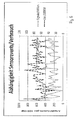
- FIG. 3 another illustration is shown, which allows a comparison between individual drivers. While initially a first driver in the period between the 5.12. and the 15.12. had been instructed and learned with the system, this driver behaved in the period between the 15.12. and the 11.01. extremely defensive. Subsequently, the vehicle was handed over to another driver, who in the period 11.01. until 02.03. has moved. It can be clearly seen that in this period much higher Acceleration and deceleration values occur, which speaks for a significantly more offensive driving style of this driver. With the return change to the first driver on 02.03. then again the previously shown picture of low excursions as an indication of a passive driving style.
- driver can be assessed individually in their driving style, which allows eg for motor insurance conclusions on the driving behavior and thus a classification in certain groups of risks and premium classes, if the vehicle owners agree to a corresponding classification , Then only either the driver or it would have employees or agents of the insurance read the data from the system, eg using the wireless interface to evaluate them and the correct classification of the policyholder with regard to his driving or driving the motor vehicle moving To check people.
- FIG. 4 A further illustration is given which shows that there is a correlation between acceleration and deceleration values in that high acceleration values usually also cause high deceleration values. From this it is very easy to read that high accelerations with correlatively high delays are a clear signal for an offensive driving style with especially the negative effects of an increased fuel consumption.
Landscapes
- Engineering & Computer Science (AREA)
- Physics & Mathematics (AREA)
- General Physics & Mathematics (AREA)
- Automation & Control Theory (AREA)
- Mathematical Physics (AREA)
- Transportation (AREA)
- Mechanical Engineering (AREA)
- Electric Propulsion And Braking For Vehicles (AREA)
Priority Applications (2)
| Application Number | Priority Date | Filing Date | Title |
|---|---|---|---|
| EP10185884A EP2375385A1 (fr) | 2010-04-06 | 2010-10-01 | Procédé et système d'évaluation du comportement de conduite d'un conducteur de véhicule automobile |
| PCT/EP2011/055187 WO2011124546A1 (fr) | 2010-04-06 | 2011-04-04 | Procédé et système d'évaluation du comportement de conduite d'un conducteur de véhicule automobile |
Applications Claiming Priority (2)
| Application Number | Priority Date | Filing Date | Title |
|---|---|---|---|
| EP10159136 | 2010-04-06 | ||
| EP10185884A EP2375385A1 (fr) | 2010-04-06 | 2010-10-01 | Procédé et système d'évaluation du comportement de conduite d'un conducteur de véhicule automobile |
Publications (1)
| Publication Number | Publication Date |
|---|---|
| EP2375385A1 true EP2375385A1 (fr) | 2011-10-12 |
Family
ID=42341611
Family Applications (1)
| Application Number | Title | Priority Date | Filing Date |
|---|---|---|---|
| EP10185884A Withdrawn EP2375385A1 (fr) | 2010-04-06 | 2010-10-01 | Procédé et système d'évaluation du comportement de conduite d'un conducteur de véhicule automobile |
Country Status (2)
| Country | Link |
|---|---|
| EP (1) | EP2375385A1 (fr) |
| WO (1) | WO2011124546A1 (fr) |
Cited By (4)
| Publication number | Priority date | Publication date | Assignee | Title |
|---|---|---|---|---|
| WO2014062812A1 (fr) * | 2012-10-16 | 2014-04-24 | Ims Solutions Inc. | Système de classification d'événements de conduite |
| EP2845780A1 (fr) * | 2013-08-02 | 2015-03-11 | Savecode | Procédé d'assistance à la conduite, procédé de génération d'un indicateur de trajet, équipement d'aide à la conduite, système associé. |
| WO2015113573A1 (fr) * | 2014-01-28 | 2015-08-06 | Volvo Truck Corporation | Système de rétroaction pour conducteur de véhicule et procédé correspondant |
| EP2913792A1 (fr) * | 2014-02-28 | 2015-09-02 | Deutsche Telekom AG | Procédé de détection d'une caractéristique de mouvement d'un véhicule |
Families Citing this family (1)
| Publication number | Priority date | Publication date | Assignee | Title |
|---|---|---|---|---|
| DE102017214241A1 (de) * | 2017-08-16 | 2019-02-21 | Robert Bosch Gmbh | Verfahren und Vorrichtung zum Ermitteln eines Fahrverhaltens |
Citations (5)
| Publication number | Priority date | Publication date | Assignee | Title |
|---|---|---|---|---|
| DE19533515A1 (de) * | 1995-08-30 | 1997-03-06 | Peter Spende | Fahrtschreiberanordnung |
| US20040153362A1 (en) * | 1996-01-29 | 2004-08-05 | Progressive Casualty Insurance Company | Monitoring system for determining and communicating a cost of insurance |
| EP1968029A2 (fr) * | 2007-03-06 | 2008-09-10 | Meta System S.p.A. | Système et procédé pour détecter des moyens d'utilisation d'un véhicule, particulièrement pour des applications dans le domaine des assurances |
| WO2009063400A2 (fr) * | 2007-11-13 | 2009-05-22 | Koninklijke Philips Electronics N.V. | Mesure de l'orientation d'un objet |
| WO2009068983A2 (fr) | 2007-11-30 | 2009-06-04 | Claudio Gariglio | Dispositif permettant de contrôler et d'analyser la conduite d'un véhicule automobile |
-
2010
- 2010-10-01 EP EP10185884A patent/EP2375385A1/fr not_active Withdrawn
-
2011
- 2011-04-04 WO PCT/EP2011/055187 patent/WO2011124546A1/fr not_active Ceased
Patent Citations (5)
| Publication number | Priority date | Publication date | Assignee | Title |
|---|---|---|---|---|
| DE19533515A1 (de) * | 1995-08-30 | 1997-03-06 | Peter Spende | Fahrtschreiberanordnung |
| US20040153362A1 (en) * | 1996-01-29 | 2004-08-05 | Progressive Casualty Insurance Company | Monitoring system for determining and communicating a cost of insurance |
| EP1968029A2 (fr) * | 2007-03-06 | 2008-09-10 | Meta System S.p.A. | Système et procédé pour détecter des moyens d'utilisation d'un véhicule, particulièrement pour des applications dans le domaine des assurances |
| WO2009063400A2 (fr) * | 2007-11-13 | 2009-05-22 | Koninklijke Philips Electronics N.V. | Mesure de l'orientation d'un objet |
| WO2009068983A2 (fr) | 2007-11-30 | 2009-06-04 | Claudio Gariglio | Dispositif permettant de contrôler et d'analyser la conduite d'un véhicule automobile |
Cited By (7)
| Publication number | Priority date | Publication date | Assignee | Title |
|---|---|---|---|---|
| WO2014062812A1 (fr) * | 2012-10-16 | 2014-04-24 | Ims Solutions Inc. | Système de classification d'événements de conduite |
| US10417838B2 (en) | 2012-10-16 | 2019-09-17 | Appy Risk Technologies Limited | Driving event classification system |
| EP2845780A1 (fr) * | 2013-08-02 | 2015-03-11 | Savecode | Procédé d'assistance à la conduite, procédé de génération d'un indicateur de trajet, équipement d'aide à la conduite, système associé. |
| WO2015113573A1 (fr) * | 2014-01-28 | 2015-08-06 | Volvo Truck Corporation | Système de rétroaction pour conducteur de véhicule et procédé correspondant |
| EP3444160A1 (fr) * | 2014-01-28 | 2019-02-20 | Volvo Truck Corporation | Système de rétroaction de conducteur de véhicule et procédé correspondant |
| US11302209B2 (en) | 2014-01-28 | 2022-04-12 | Volvo Truck Corporation | Vehicle driver feedback system and corresponding method |
| EP2913792A1 (fr) * | 2014-02-28 | 2015-09-02 | Deutsche Telekom AG | Procédé de détection d'une caractéristique de mouvement d'un véhicule |
Also Published As
| Publication number | Publication date |
|---|---|
| WO2011124546A1 (fr) | 2011-10-13 |
Similar Documents
| Publication | Publication Date | Title |
|---|---|---|
| EP0700009B1 (fr) | Procédé et système d'évaluation individuelle du risque véhicule automobile | |
| AT507033B1 (de) | Verfahren und system zur simultanen fahrzeug- und fahrprofilüberwachung | |
| DE102012214464A1 (de) | System zur Überwachung und Analyse des Fahrverhaltens eines Fahrers in einem Kraftfahrzeug | |
| DE102018211047A1 (de) | Sensorvorrichtung und Verfahren zur Überwachung des fahrbetriebsbedingten Zustandes eines Fahrzeugs | |
| DE202015009955U1 (de) | Vorrichtung zum Überwachen des Betriebs eines Fahrzeugbremssystems | |
| DE102012219631A1 (de) | Verfahren und Vorrichtung zum Detektieren von zumindest einer Fahrbahnunebenheit | |
| DE102011117850A1 (de) | Verfahren zum Betrieb eines Fahrzeugsystems eines Kraftfahrzeugs und Kraftfahrzeug | |
| DE102015015944A1 (de) | Verfahren zur Unterstützung eines Fahrers eines Kraftfahrzeugs hinsichtlich bevorstehender Überholmanöver und Kraftfahrzeug | |
| DE102021112804A1 (de) | Verfahren, Fahrzeugsteuergerät und Fahrzeug zur vorausschauenden Datenerhebung von vernetzten Verkehrsteilnehmern | |
| EP1979886B1 (fr) | Procédé et dispositif de détection du trafic traversant une zone | |
| WO2011124546A1 (fr) | Procédé et système d'évaluation du comportement de conduite d'un conducteur de véhicule automobile | |
| DE102018006281A1 (de) | Verfahren zum Betrieb eines Assistenzsystems eines Fahrzeuges | |
| DE102005055663B4 (de) | Verfahren und Anlage zur Ermittlung und Überwachung des Beladungszustandes von Kraftfahrzeugen im fließenden Verkehr und zur fallweisen eichfähigen Nachverwägung von überladenen Kraftfahrzeugen | |
| EP3109835B1 (fr) | Procédé et système de saisie de données de véhicule et de conducteur | |
| DE102021206634A1 (de) | Verfahren und Warneinrichtung zur Warnung eines Nutzers eines Fahrzeugs vor einer potentiellen Gefahrensituation | |
| DE102020204964A1 (de) | Verfahren zum Überwachen einer aktuellen Aufmerksamkeit eines Fahrers während eines Betriebs eines Fahrzeugs | |
| DE102020206128A1 (de) | Verfahren zum Steuern einer flottenbasierten Zustandsüberwachung eines Straßenabschnitts eines Straßennetzes sowie zugehöriges System und Kraftfahrzeug und zugehörige Servereinrichtung | |
| Yasmin et al. | Effects of drivers’ actions on severity of emergency vehicle collisions | |
| Williams et al. | Exploratory analysis of motorcycle incidents using naturalistic riding data | |
| DE102013002284B4 (de) | Verfahren zum aktiven Kollisionsschutz eines nichtmotorisierten Verkehrsteilnehmers | |
| DE102018201273A1 (de) | Verfahren zum Überwachen eines Fahrstils eines Fahrers eines Kraftfahrzeugs und Kraftfahrzeug | |
| DE102016006493A1 (de) | Verfahren und System zum Beurteilen des Fahrens eines Fahrzeugs unter Berücksichtigung des Fahrzeugniveaus gemäß einer Ausführungsform der vorliegenden Erfindung | |
| EP2195788A1 (fr) | Procédé et dispositif de détermination des données relatives aux performances d'un ou de plusieurs véhicules | |
| EP1527940B1 (fr) | Méthode et dispositif de réglage de la vitesse d'un véhicule automobile en fonction des risques | |
| DE102010062841A1 (de) | Vorrichtung, Verfahren und System zur Dokumentation von Verkehrssituationen, Fahrerassistenzvorrichtung und Kraftfahrzeug |
Legal Events
| Date | Code | Title | Description |
|---|---|---|---|
| PUAI | Public reference made under article 153(3) epc to a published international application that has entered the european phase |
Free format text: ORIGINAL CODE: 0009012 |
|
| AK | Designated contracting states |
Kind code of ref document: A1 Designated state(s): AL AT BE BG CH CY CZ DE DK EE ES FI FR GB GR HR HU IE IS IT LI LT LU LV MC MK MT NL NO PL PT RO RS SE SI SK SM TR |
|
| AX | Request for extension of the european patent |
Extension state: BA ME |
|
| 17P | Request for examination filed |
Effective date: 20111005 |
|
| 17Q | First examination report despatched |
Effective date: 20150409 |
|
| STAA | Information on the status of an ep patent application or granted ep patent |
Free format text: STATUS: THE APPLICATION IS DEEMED TO BE WITHDRAWN |
|
| 18D | Application deemed to be withdrawn |
Effective date: 20150820 |