EP2377968B1 - Galvanisiertes stahlblech und herstellungsverfahren dafür - Google Patents
Galvanisiertes stahlblech und herstellungsverfahren dafür Download PDFInfo
- Publication number
- EP2377968B1 EP2377968B1 EP09833250.5A EP09833250A EP2377968B1 EP 2377968 B1 EP2377968 B1 EP 2377968B1 EP 09833250 A EP09833250 A EP 09833250A EP 2377968 B1 EP2377968 B1 EP 2377968B1
- Authority
- EP
- European Patent Office
- Prior art keywords
- steel sheet
- zinc
- oxide layer
- galvanized steel
- aqueous solution
- Prior art date
- Legal status (The legal status is an assumption and is not a legal conclusion. Google has not performed a legal analysis and makes no representation as to the accuracy of the status listed.)
- Not-in-force
Links
Images
Classifications
-
- C—CHEMISTRY; METALLURGY
- C23—COATING METALLIC MATERIAL; COATING MATERIAL WITH METALLIC MATERIAL; CHEMICAL SURFACE TREATMENT; DIFFUSION TREATMENT OF METALLIC MATERIAL; COATING BY VACUUM EVAPORATION, BY SPUTTERING, BY ION IMPLANTATION OR BY CHEMICAL VAPOUR DEPOSITION, IN GENERAL; INHIBITING CORROSION OF METALLIC MATERIAL OR INCRUSTATION IN GENERAL
- C23C—COATING METALLIC MATERIAL; COATING MATERIAL WITH METALLIC MATERIAL; SURFACE TREATMENT OF METALLIC MATERIAL BY DIFFUSION INTO THE SURFACE, BY CHEMICAL CONVERSION OR SUBSTITUTION; COATING BY VACUUM EVAPORATION, BY SPUTTERING, BY ION IMPLANTATION OR BY CHEMICAL VAPOUR DEPOSITION, IN GENERAL
- C23C2/00—Hot-dipping or immersion processes for applying the coating material in the molten state without affecting the shape; Apparatus therefor
- C23C2/04—Hot-dipping or immersion processes for applying the coating material in the molten state without affecting the shape; Apparatus therefor characterised by the coating material
- C23C2/12—Aluminium or alloys based thereon
-
- C—CHEMISTRY; METALLURGY
- C23—COATING METALLIC MATERIAL; COATING MATERIAL WITH METALLIC MATERIAL; CHEMICAL SURFACE TREATMENT; DIFFUSION TREATMENT OF METALLIC MATERIAL; COATING BY VACUUM EVAPORATION, BY SPUTTERING, BY ION IMPLANTATION OR BY CHEMICAL VAPOUR DEPOSITION, IN GENERAL; INHIBITING CORROSION OF METALLIC MATERIAL OR INCRUSTATION IN GENERAL
- C23C—COATING METALLIC MATERIAL; COATING MATERIAL WITH METALLIC MATERIAL; SURFACE TREATMENT OF METALLIC MATERIAL BY DIFFUSION INTO THE SURFACE, BY CHEMICAL CONVERSION OR SUBSTITUTION; COATING BY VACUUM EVAPORATION, BY SPUTTERING, BY ION IMPLANTATION OR BY CHEMICAL VAPOUR DEPOSITION, IN GENERAL
- C23C18/00—Chemical coating by decomposition of either liquid compounds or solutions of the coating forming compounds, without leaving reaction products of surface material in the coating; Contact plating
- C23C18/02—Chemical coating by decomposition of either liquid compounds or solutions of the coating forming compounds, without leaving reaction products of surface material in the coating; Contact plating by thermal decomposition
- C23C18/12—Chemical coating by decomposition of either liquid compounds or solutions of the coating forming compounds, without leaving reaction products of surface material in the coating; Contact plating by thermal decomposition characterised by the deposition of inorganic material other than metallic material
- C23C18/1204—Chemical coating by decomposition of either liquid compounds or solutions of the coating forming compounds, without leaving reaction products of surface material in the coating; Contact plating by thermal decomposition characterised by the deposition of inorganic material other than metallic material inorganic material, e.g. non-oxide and non-metallic such as sulfides, nitrides based compounds
- C23C18/1208—Oxides, e.g. ceramics
- C23C18/1216—Metal oxides
-
- C—CHEMISTRY; METALLURGY
- C23—COATING METALLIC MATERIAL; COATING MATERIAL WITH METALLIC MATERIAL; CHEMICAL SURFACE TREATMENT; DIFFUSION TREATMENT OF METALLIC MATERIAL; COATING BY VACUUM EVAPORATION, BY SPUTTERING, BY ION IMPLANTATION OR BY CHEMICAL VAPOUR DEPOSITION, IN GENERAL; INHIBITING CORROSION OF METALLIC MATERIAL OR INCRUSTATION IN GENERAL
- C23C—COATING METALLIC MATERIAL; COATING MATERIAL WITH METALLIC MATERIAL; SURFACE TREATMENT OF METALLIC MATERIAL BY DIFFUSION INTO THE SURFACE, BY CHEMICAL CONVERSION OR SUBSTITUTION; COATING BY VACUUM EVAPORATION, BY SPUTTERING, BY ION IMPLANTATION OR BY CHEMICAL VAPOUR DEPOSITION, IN GENERAL
- C23C18/00—Chemical coating by decomposition of either liquid compounds or solutions of the coating forming compounds, without leaving reaction products of surface material in the coating; Contact plating
- C23C18/02—Chemical coating by decomposition of either liquid compounds or solutions of the coating forming compounds, without leaving reaction products of surface material in the coating; Contact plating by thermal decomposition
- C23C18/12—Chemical coating by decomposition of either liquid compounds or solutions of the coating forming compounds, without leaving reaction products of surface material in the coating; Contact plating by thermal decomposition characterised by the deposition of inorganic material other than metallic material
- C23C18/1229—Composition of the substrate
- C23C18/1241—Metallic substrates
-
- C—CHEMISTRY; METALLURGY
- C23—COATING METALLIC MATERIAL; COATING MATERIAL WITH METALLIC MATERIAL; CHEMICAL SURFACE TREATMENT; DIFFUSION TREATMENT OF METALLIC MATERIAL; COATING BY VACUUM EVAPORATION, BY SPUTTERING, BY ION IMPLANTATION OR BY CHEMICAL VAPOUR DEPOSITION, IN GENERAL; INHIBITING CORROSION OF METALLIC MATERIAL OR INCRUSTATION IN GENERAL
- C23C—COATING METALLIC MATERIAL; COATING MATERIAL WITH METALLIC MATERIAL; SURFACE TREATMENT OF METALLIC MATERIAL BY DIFFUSION INTO THE SURFACE, BY CHEMICAL CONVERSION OR SUBSTITUTION; COATING BY VACUUM EVAPORATION, BY SPUTTERING, BY ION IMPLANTATION OR BY CHEMICAL VAPOUR DEPOSITION, IN GENERAL
- C23C2/00—Hot-dipping or immersion processes for applying the coating material in the molten state without affecting the shape; Apparatus therefor
- C23C2/26—After-treatment
-
- C—CHEMISTRY; METALLURGY
- C23—COATING METALLIC MATERIAL; COATING MATERIAL WITH METALLIC MATERIAL; CHEMICAL SURFACE TREATMENT; DIFFUSION TREATMENT OF METALLIC MATERIAL; COATING BY VACUUM EVAPORATION, BY SPUTTERING, BY ION IMPLANTATION OR BY CHEMICAL VAPOUR DEPOSITION, IN GENERAL; INHIBITING CORROSION OF METALLIC MATERIAL OR INCRUSTATION IN GENERAL
- C23C—COATING METALLIC MATERIAL; COATING MATERIAL WITH METALLIC MATERIAL; SURFACE TREATMENT OF METALLIC MATERIAL BY DIFFUSION INTO THE SURFACE, BY CHEMICAL CONVERSION OR SUBSTITUTION; COATING BY VACUUM EVAPORATION, BY SPUTTERING, BY ION IMPLANTATION OR BY CHEMICAL VAPOUR DEPOSITION, IN GENERAL
- C23C2/00—Hot-dipping or immersion processes for applying the coating material in the molten state without affecting the shape; Apparatus therefor
- C23C2/34—Hot-dipping or immersion processes for applying the coating material in the molten state without affecting the shape; Apparatus therefor characterised by the shape of the material to be treated
- C23C2/36—Elongated material
- C23C2/40—Plates; Strips
-
- C—CHEMISTRY; METALLURGY
- C23—COATING METALLIC MATERIAL; COATING MATERIAL WITH METALLIC MATERIAL; CHEMICAL SURFACE TREATMENT; DIFFUSION TREATMENT OF METALLIC MATERIAL; COATING BY VACUUM EVAPORATION, BY SPUTTERING, BY ION IMPLANTATION OR BY CHEMICAL VAPOUR DEPOSITION, IN GENERAL; INHIBITING CORROSION OF METALLIC MATERIAL OR INCRUSTATION IN GENERAL
- C23C—COATING METALLIC MATERIAL; COATING MATERIAL WITH METALLIC MATERIAL; SURFACE TREATMENT OF METALLIC MATERIAL BY DIFFUSION INTO THE SURFACE, BY CHEMICAL CONVERSION OR SUBSTITUTION; COATING BY VACUUM EVAPORATION, BY SPUTTERING, BY ION IMPLANTATION OR BY CHEMICAL VAPOUR DEPOSITION, IN GENERAL
- C23C22/00—Chemical surface treatment of metallic material by reaction of the surface with a reactive liquid, leaving reaction products of surface material in the coating, e.g. conversion coatings, passivation of metals
- C23C22/05—Chemical surface treatment of metallic material by reaction of the surface with a reactive liquid, leaving reaction products of surface material in the coating, e.g. conversion coatings, passivation of metals using aqueous solutions
- C23C22/06—Chemical surface treatment of metallic material by reaction of the surface with a reactive liquid, leaving reaction products of surface material in the coating, e.g. conversion coatings, passivation of metals using aqueous solutions using aqueous acidic solutions with pH less than 6
- C23C22/48—Chemical surface treatment of metallic material by reaction of the surface with a reactive liquid, leaving reaction products of surface material in the coating, e.g. conversion coatings, passivation of metals using aqueous solutions using aqueous acidic solutions with pH less than 6 not containing phosphates, hexavalent chromium compounds, fluorides or complex fluorides, molybdates, tungstates, vanadates or oxalates
- C23C22/53—Treatment of zinc or alloys based thereon
-
- C—CHEMISTRY; METALLURGY
- C23—COATING METALLIC MATERIAL; COATING MATERIAL WITH METALLIC MATERIAL; CHEMICAL SURFACE TREATMENT; DIFFUSION TREATMENT OF METALLIC MATERIAL; COATING BY VACUUM EVAPORATION, BY SPUTTERING, BY ION IMPLANTATION OR BY CHEMICAL VAPOUR DEPOSITION, IN GENERAL; INHIBITING CORROSION OF METALLIC MATERIAL OR INCRUSTATION IN GENERAL
- C23C—COATING METALLIC MATERIAL; COATING MATERIAL WITH METALLIC MATERIAL; SURFACE TREATMENT OF METALLIC MATERIAL BY DIFFUSION INTO THE SURFACE, BY CHEMICAL CONVERSION OR SUBSTITUTION; COATING BY VACUUM EVAPORATION, BY SPUTTERING, BY ION IMPLANTATION OR BY CHEMICAL VAPOUR DEPOSITION, IN GENERAL
- C23C22/00—Chemical surface treatment of metallic material by reaction of the surface with a reactive liquid, leaving reaction products of surface material in the coating, e.g. conversion coatings, passivation of metals
- C23C22/05—Chemical surface treatment of metallic material by reaction of the surface with a reactive liquid, leaving reaction products of surface material in the coating, e.g. conversion coatings, passivation of metals using aqueous solutions
- C23C22/60—Chemical surface treatment of metallic material by reaction of the surface with a reactive liquid, leaving reaction products of surface material in the coating, e.g. conversion coatings, passivation of metals using aqueous solutions using alkaline aqueous solutions with pH greater than 8
-
- C—CHEMISTRY; METALLURGY
- C23—COATING METALLIC MATERIAL; COATING MATERIAL WITH METALLIC MATERIAL; CHEMICAL SURFACE TREATMENT; DIFFUSION TREATMENT OF METALLIC MATERIAL; COATING BY VACUUM EVAPORATION, BY SPUTTERING, BY ION IMPLANTATION OR BY CHEMICAL VAPOUR DEPOSITION, IN GENERAL; INHIBITING CORROSION OF METALLIC MATERIAL OR INCRUSTATION IN GENERAL
- C23C—COATING METALLIC MATERIAL; COATING MATERIAL WITH METALLIC MATERIAL; SURFACE TREATMENT OF METALLIC MATERIAL BY DIFFUSION INTO THE SURFACE, BY CHEMICAL CONVERSION OR SUBSTITUTION; COATING BY VACUUM EVAPORATION, BY SPUTTERING, BY ION IMPLANTATION OR BY CHEMICAL VAPOUR DEPOSITION, IN GENERAL
- C23C22/00—Chemical surface treatment of metallic material by reaction of the surface with a reactive liquid, leaving reaction products of surface material in the coating, e.g. conversion coatings, passivation of metals
- C23C22/05—Chemical surface treatment of metallic material by reaction of the surface with a reactive liquid, leaving reaction products of surface material in the coating, e.g. conversion coatings, passivation of metals using aqueous solutions
- C23C22/68—Chemical surface treatment of metallic material by reaction of the surface with a reactive liquid, leaving reaction products of surface material in the coating, e.g. conversion coatings, passivation of metals using aqueous solutions using aqueous solutions with pH between 6 and 8
-
- C—CHEMISTRY; METALLURGY
- C23—COATING METALLIC MATERIAL; COATING MATERIAL WITH METALLIC MATERIAL; CHEMICAL SURFACE TREATMENT; DIFFUSION TREATMENT OF METALLIC MATERIAL; COATING BY VACUUM EVAPORATION, BY SPUTTERING, BY ION IMPLANTATION OR BY CHEMICAL VAPOUR DEPOSITION, IN GENERAL; INHIBITING CORROSION OF METALLIC MATERIAL OR INCRUSTATION IN GENERAL
- C23C—COATING METALLIC MATERIAL; COATING MATERIAL WITH METALLIC MATERIAL; SURFACE TREATMENT OF METALLIC MATERIAL BY DIFFUSION INTO THE SURFACE, BY CHEMICAL CONVERSION OR SUBSTITUTION; COATING BY VACUUM EVAPORATION, BY SPUTTERING, BY ION IMPLANTATION OR BY CHEMICAL VAPOUR DEPOSITION, IN GENERAL
- C23C28/00—Coating for obtaining at least two superposed coatings either by methods not provided for in a single one of groups C23C2/00 - C23C26/00 or by combinations of methods provided for in subclasses C23C and C25C or C25D
- C23C28/04—Coating for obtaining at least two superposed coatings either by methods not provided for in a single one of groups C23C2/00 - C23C26/00 or by combinations of methods provided for in subclasses C23C and C25C or C25D only coatings of inorganic non-metallic material
Definitions
- the present invention relates to a method for stably producing a galvanized steel sheet having low sliding resistance and excellent press formability during press molding and also relates to a galvanized steel sheet.
- Galvanized steel sheets are widely used for various applications such as automotive bodies. For such applications, the galvanized steel sheets are press-molded for use.
- the galvanized steel sheets however, have a disadvantage that the galvanized steel sheets are inferior in press formability to cold-rolled steel sheets. This is because the sliding resistance of the galvanized steel sheets to press molds is greater than that of the cold-rolled steel sheets. That is, the galvanized steel sheets have portions with high sliding resistance to press molds and beads and therefore are unlikely to be provided in the press molds; hence, the galvanized steel sheets are likely to be broken.
- Galvannealed steel sheets produced through hot-dip galvanizing and then alloying are more excellent in weldability and coatability as compared with other galvanized steel sheets and are widely used for automotive bodies.
- a galvannealed steel sheet is one obtained as follows: a steel sheet is galvanized and is then heat-treated such that an alloying reaction occurs due to the interdiffusion of Fe in the steel sheet and Zn in a plating layer to create an Fe-Zn alloy phase.
- the Fe-Zn alloy phase is usually a coating consisting of a ⁇ phase, a ⁇ 1 phase, and a ⁇ phase. Hardness and melting point tend to decrease with a reduction in Fe concentration, that is, in the order of the ⁇ phase, the ⁇ 1 phase, and the ⁇ phase. Therefore, high-Fe concentration coatings are useful in view of slidability because the coatings have high hardness and a high melting point and are unlikely to be adhesive. Since press formability is one of important properties of the galvannealed steel sheet, the galvannealed steel sheet is produced so as to include a coating with a slightly increased Fe concentration.
- the high-Fe concentration coatings have a problem that ⁇ phases which are hard and brittle are likely to be formed at plating-steel sheet interfaces to cause a phenomenon in which peeling occurs at the interfaces, that is, so called powdering, during machining.
- Patent Documents 1 and 2 disclose techniques for solving the problem.
- a galvanized steel sheet is improved in weldability and workability in such a manner that an oxide film made of ZnO is formed on the galvanized steel sheet by electrolysis, dipping, coating oxidation, or heating.
- the application of the techniques disclosed in the Patent Documents 1 and 2 to the galvannealed steel sheet is not effective in achieving an improvement in press formability because the galvannealed steel sheet has low surface reactivity and large surface irregularities because of the presence of Al oxides. Since the galvannealed steel sheet has low surface reactivity, it is difficult to form a desired coating on the galvannealed steel sheet by electrolysis, dipping, coating oxidation, or heating and a portion with low reactivity, that is, a portion containing a large amount of the Al oxides, is reduced in thickness. Since the surface irregularities are large, surface protrusions are brought into direct contact with a press mold during press molding and contacts between the press mold and thin portions of the surface protrusions have high sliding resistance; hence, a sufficient improvement in press formability cannot be achieved.
- Patent Document 3 discloses a technique in which a steel sheet is galvanized by hot dipping, alloyed by heating, temper-tolled, contacted with an acidic solution with pH buffering action, held for one to 30 seconds, and then washed with water, whereby an oxide layer is formed on a plating surface layer.
- Patent Document 4 discloses a method for forming an oxide layer on a flat surface portion of an unalloyed hot-dip galvanized steel sheet.
- the hot-dip galvanized steel sheet is temper-rolled, contacted with an acidic solution with pH buffering action, held for a predetermined time in such a state that a film of the acidic solution is disposed on the steel sheet, washed with water, and then dried.
- a method disclosed in Patent Document 5 is effective in uniformly forming an oxide layer on an electrogalvanized steel sheet.
- the electrogalvanized steel sheet is contacted with an acidic solution with pH buffering action or an acidic electrogalvanizing bath, held for a predetermined time, washed with water, and then dried.
- the present invention has an object to provide a method capable of stably producing a galvanized steel sheet having excellent press formability in a reduced space under high-speed conditions and an object to provide a galvanized steel sheet having excellent press formability.
- Document EP 0 744 475 A1 discloses a post plating or post coating method for improving formability and weldability properties in a sheet steel product, having a protective zinc or zinc alloy layer formed on at least one surface thereof.
- the steps of the method comprise immersing the sheet steel product into a bath containing at least zinc to apply the protective layer, removing the sheet steel product from the bath, the sheet steel product having a protective zinc or zinc alloy layer formed on at least one surface thereof, and applying an alkaline solution to the protective layer to form a zinc oxide layer thereon, the alkaline solution being applied at a location outside the bath.
- the present invention is based on the above finding.
- the scope of the present invention is as described below.
- galvanized steel sheet refers to a plated steel sheet having a coating which is made of zinc and which is disposed thereon and includes a hot-dip galvanized steel sheet (hereinafter simply referred to as a GI steel sheet); a galvannealed steel sheet (hereinafter simply referred to as a GA steel sheet); an electrogalvanized steel sheet (hereinafter simply referred to as an EG steel sheet); a zinc-deposited steel sheet; a zinc alloy-plated steel sheet containing an alloy element such as Fe, Al, Ni, Mg, or Co; and the like.
- a GI steel sheet hot-dip galvanized steel sheet
- GA steel sheet galvannealed steel sheet
- an electrogalvanized steel sheet hereinafter simply referred to as an EG steel sheet
- zinc-deposited steel sheet a zinc alloy-plated steel sheet containing an alloy element such as Fe, Al, Ni, Mg, or Co; and the like.
- a galvanized steel sheet having excellent press formability and low sliding resistance during press molding can be produced in a reduced space under high-speed conditions.
- a steel sheet is galvanized by hot dipping and is then alloyed by heating.
- the GA steel sheet has surface irregularities due to the difference in reactivity between steel sheet-plating interfaces during alloying.
- the alloyed steel sheet is usually temper-rolled for the purpose of material achievement.
- a plating surface is smoothed by the contact with rollers during temper-rolling and the irregularities are reduced.
- the force necessary for a mold to crush plating surface protrusions is reduced during press molding and therefore sliding properties can be improved.
- the presence of a hard refractory substance capable of preventing the adhesion to the mold is important in improving slidability.
- the presence of an oxide layer on a surface layer is effective in improving slidability because the oxide layer prevents the adhesion to the mold.
- Good slidability can be stably achieved by forming a uniform oxide layer on the temper-rolled GA steel sheet, particularly on a plating surface flat portion.
- the following technique is effective in uniformly forming a oxide layer on a zinc plating: a technique in which a galvanized steel sheet is contacted with an acidic solution with pH buffering action, held for a predetermined time in such a state that a film of the acidic solution is disposed on the steel sheet, washed with water, and then dried.
- the formed oxide layer is thin because the time for which the steel sheet is held subsequently to the contact with the acidic solution is not sufficiently secured under recent high-speed conditions as described above; hence, good press formability cannot be achieved in some cases. It is effective in solving this problem to increase the distance from the contact with the acidic solution to water washing. However, this needs to secure a space therebetween, leading to spatial restriction.
- a galvanized steel sheet is contacted with an aqueous solution containing zinc ions and is further contacted with a weak alkali aqueous solution such that an increase in pH is caused.
- the galvanized steel sheet is contacted with the zinc ion-containing aqueous solution and is further contacted with the weak alkali aqueous solution. This allows an oxide layer sufficient to secure good press formability to be formed in a reduced space without suffering from spatial restriction.
- a mechanism for forming the oxide layer is not clear but is probably as described below. Since the galvanized steel sheet is contacted with the zinc ion-containing aqueous solution and is then contacted with the weak alkali aqueous solution in such a state that the steel sheet is covered with the zinc ion-containing aqueous solution, the pH of the zinc ion-containing aqueous solution on the steel sheet is increased to a pH level where oxides (hydroxides) are stable. This probably results in the formation of the oxide layer, which is stable, on the galvanized steel sheet.
- the oxide layer is formed on the galvanized steel sheet in such a manner that the steel sheet is contacted with the zinc-containing aqueous solution, contacted with the weak alkali aqueous solution, that is, an aqueous solution with a pH of 6 to 14, washed with water, and then dried.
- the weak alkali aqueous solution that is, an aqueous solution with a pH of 6 to 14, washed with water, and then dried.
- the weak alkali aqueous solution has a pH of 6 to 14.
- Zinc is an amphoteric metal and therefore is soluble in extremely low and high pH solutions.
- the aqueous solution on the galvanized steel sheet needs to be rendered alkaline.
- the pH thereof is preferably 7 to 13 and more preferably 9 to 11.
- the concentration of zinc in the aqueous solution is within a range from 1 to 100 g/l in the form of zinc ions.
- concentration of the zinc ions is less than 1 g/l, a sufficient amount of zinc is not supplied and therefore the oxide layer is unlikely to be formed.
- concentration thereof is greater than 100 g/l, the concentration of sulfuric acid in the oxide layer is high and therefore it is concerned that the oxide layer is dissolved in a subsequent chemical conversion step to contaminate a conversion solution.
- the concentration is preferably within a range from 5 to 100 g/l.
- the zinc ions are preferably used in the form of a sulfate.
- the sulfate there is probably an advantage that sulfate ions are captured in the oxide layer to stabilize the oxide layer.
- the pH of the zinc-containing aqueous solution is is 4 to 6.
- the pH thereof is greater than 6, the zinc ions form precipitates in the aqueous solution (the formation of a hydroxide) and are not provided on the steel sheet in the form of an oxide.
- the pH thereof is less than 1, the dissolution of zinc is promoted; hence, the mass per unit area of plating is reduced and a plating film has cracks and therefore is likely to be stripped off during machining.
- the pH thereof is high, the pH thereof quickly increases to a level where oxides are stable upon the contact with the weak alkali aqueous solution. This is advantageous in forming the oxides. Therefore, the pH thereof is within the range of 4 to 6.
- the solution disclosed in Patent Document 3 is characterized by being acidic and by having a pH buffering action.
- the zinc ion-containing aqueous solution is used herein and therefore the oxide layer can be sufficiently formed even if Zn is not sufficiently dissolved by reducing the pH of the aqueous solution. It is advantageous in forming the oxides that the pH thereof quickly increases upon the contact with the weak alkali aqueous solution. Therefore, any pH buffering action is not necessarily essential.
- the oxide layer which has excellent slidability, can be stably formed when an aqueous solution contacted with the steel sheet contains zinc. Therefore, even if impurities such as other metal ions and inorganic compounds are accidentally or deliberately contained in the aqueous solution, advantages of the present invention are not reduced.
- N, P, B, Cl, Na, Mn, Ca, Mg, Ba, Sr, and Si can be used as far as advantages of the present invention are not reduced even if these elements are captured in the oxide layer.
- the oxide layer is formed on the galvanized steel sheet as described above.
- the oxide layer contains zinc, which is an essential component, and has a thickness of 10 nm or more.
- oxide layer refers to a layer made of an oxide and/or hydroxide principally containing zinc, which is a metal component.
- the oxide layer which principally contains such a component as zinc, needs to have an average thickness of 10 nm or more. When the thickness of the oxide layer less than 10 nm, an effect of reducing slidability is insufficient. When the thickness of the oxide layer, which contains such an essential component as Zn, is greater than 100 nm, a coating is broken during pressing to cause an increase in slidability and weldability is likely to be reduced. This is not preferred.
- a process for contacting the galvanized steel sheet with the zinc-containing aqueous solution is not particularly limited. Examples of such a process include a process for dipping a plated steel sheet in an aqueous solution, a process for spraying an aqueous solution onto a plated steel sheet, a process for applying an aqueous solution to a plated steel sheet with a coating roller, and the like.
- the aqueous solution is preferably finally present on the steel sheet in the form of a thin liquid film. This is because when the amount of the aqueous solution present on the steel sheet is large, the pH of a plating surface is unlikely to be uniformly and quickly increased by alkali treatment in the next step. In this viewpoint, it is preferable and effective that the amount of an acidic solution film formed on a steel sheet is adjusted to 50 g/m 2 or less. The amount of the solution film can be adjusted by roll drawing, air wiping, or the like.
- Examples of the galvanized steel sheet according to the present invention include those produced by various methods such as a hot-dip plating method, an electroplating method, a vapor deposition plating method, and a spraying method.
- Examples of a plating composition include pure Zn, Zn-Fe, Zn-Al, Zn-Ni, and Zn-Mg.
- the type of plating is not limited because the dissolution of Zn occurs in the galvanized steel sheet, which principally contains Zn, and the oxide layer can be formed.
- Plating films having a mass per unit area of 45 g/m 2 and an Al concentration of 0.20 mass percent were formed on cold-rolled steel sheets with a thickness of 0.8 mm by hot dip galvanizing and the cold-rolled steel sheets were then temper-rolled, whereby GI steel sheets were prepared.
- Plating films having a mass per unit area of 45 g/m 2 , an Fe concentration of ten mass percent, and an Al concentration of 0.20 mass percent were formed on cold-rolled steel sheets with a thickness of 0.8 mm by an ordinary galvannealing method and the cold-rolled steel sheets were then temper-rolled, whereby GA steel sheets were prepared.
- EG steel sheets including plating films having a mass per unit area of 30 g/m 2 were prepared, the plating films being formed on cold-rolled steel sheets with a thickness of 0.8 mm by an ordinary electrogalvanizing method.
- the GI steel sheets, GA steel sheets, and EG steel sheets obtained as described above were dipped in zinc sulfate solutions with various concentrations shown in Table 1.
- the steel sheets were dipped in aqueous sodium hydroxide solutions adjusted in pH or the aqueous sodium hydroxide solutions were sprayed onto the steel sheets.
- the time taken to dip the steel sheets in the aqueous sodium hydroxide solutions or taken to spray the aqueous sodium hydroxide solutions onto the steel sheets was one second.
- the steel sheets were washed with water within one second after dipping or spraying was finished.
- the steel sheets were tested in such a manner that the zinc sulfate solutions remaining thereon were wiped with rubber rollers.
- the following test was performed as a conventional technique: a test in which the steel sheets were dipped in a 50°C aqueous solution which contained 30 g/l sodium acetate and which had a pH of 1.5 was performed, the amount of the aqueous solution remaining thereon was adjusted to 10 g/m 2 after dipping was finished, and the steel sheets were held for one to 30 seconds.
- oxide layers of tempered portions and untempered portions of plating surface layers were measured for thickness and also measured for coefficient of friction for the purpose of simply evaluating press formability. Measurement methods were as described below.
- each test piece was measured for coefficient of friction as described below.
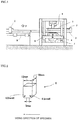
- Fig. 1 is a schematic front view of a coefficient-of-friction tester.
- a coefficient-of-friction measurement specimen 1 taken from the test piece is fixed on a stage 2 and the stage 2 is fixed on the upper surface of a sliding table 3 which is horizontally movable.
- the lower surface of the sliding table 3 overlies a sliding table support 5 which includes rollers 4 in contact with the lower surface thereof and which is vertically movable.
- the sliding table support 5 is attached to a first load cell 7 for measuring the pressing load N applied to the coefficient-of-friction measurement specimen 1 from a bead 6 by raising the sliding table support 5.
- the sliding table 3 has an end portion attached to a second load cell 8 for measuring the sliding resistance force F required to horizontally move the sliding table 3 along a rail 9 in such a state that the pressing load is applied thereto.
- the specimen 1 was coated with lubricating oil, that is, washing oil, PRETON R352L, available from Sugimura Chemical Industrial Co., Ltd. and was then tested.
- Fig. 2 is a schematic perspective view showing the shape and size of the bead used.
- the bead 6 slides on the specimen 1 in such a state that the lower surface of the bead 6 is pressed against the specimen 1.
- the bead 6 has a width of 10 mm and a length of 12 mm in the sliding direction of the specimen and includes lower end portions, spaced in the sliding direction thereof, having curved surfaces with a curvature of 4.5 mm R as shown in Fig. 2 .
- the bead lower surface, against which the specimen is pressed has a flat area having a width of 10 mm and a length of 3 mm in the sliding direction thereof.
- a coefficient-of-friction measurement test was performed under two conditions below.
- the bead shown in Fig. 2 was used, the pressing load N was 400 kgf, and the drawing rate of the specimen (the horizontal movement speed of the sliding table 3) was 100 cm/min.
- the bead shown in Fig. 2 was used, the pressing load N was 400 kgf, and the drawing rate of the specimen (the horizontal movement speed of the sliding table 3) was 20 cm/min.
- An Si wafer having an SiO 2 film, formed by thermal oxidation, having a thickness of 96 nm was used as a reference and an O ⁇ K ⁇ x-ray was measured with an X-ray fluorescence spectrometer, whereby the average thickness of the oxide layer was determined in terms of SiO 2 .
- the analysis area was 30 mm ⁇ .
- Nos. 10 to 13, 15 to 26, 28, 29, and 31 to 54 are examples of the present invention that use aqueous solutions having a zinc ion concentration within the scope of the present invention.
- Oxide layers with a thickness of 10 nm or more are formed and low coefficients of friction are exhibited. A reduction in coefficient of friction is caused independently of whether a process for contacting a weak alkali aqueous solution is dipping or spraying.
- Nos. 28, 29, 31, and 32 are comparative examples that use sulfuric acid to reduce the pH of aqueous solutions containing zinc ions. Sufficient oxide layers are formed even at low pH and a reduction in coefficient of friction is verified.
- Nos. 21, 22, 41, 42, 51, and 52 are examples in which aqueous solutions containing Zn ions are wiped with rubber rollers prior to the contact with weak alkali aqueous solutions. Oxide layers are formed by the contact with the Zn ion-containing aqueous solutions independently of whether roller wiping is performed or not, resulting in a reduction in coefficient of friction.
- No. 1 has a high coefficient of friction because No. 1 is treated with no solution and therefore an oxide layer sufficient to enhance slidability is not formed in a flat portion.
- Nos. 2 to 6 are results due to conventional techniques (comparative examples) in which holding was performed for one to 30 seconds after dipping in a treatment solution is finished.
- Oxide layers grow with the holding time, so that oxide layers with a thickness of 20 nm or more are obtained at a holding time of five seconds or more and oxide layers with a thickness of 30 nm or more are obtained at a holding time of 30 seconds or more.
- Nos. 7 to 9 are comparative examples using a Zn-free solution (a sodium acetate solution).
- Oxide layers have a thickness of less than 10 nm, which is outside the scope of the present invention, and have a high coefficient of friction.
- Nos. 14, 27, and 30 are comparative examples performing no treatment with a weak alkali aqueous solution. Sufficient oxide layers are not formed only by the contact with aqueous solutions containing zinc ions and therefore no advantage is obtained.
- the alkali solution-dipping or -spraying time which corresponds to the holding time taken in each conventional technique, can be significantly reduced to one second.
- the present invention is applied to a facility for continuously producing a steel strip at high speed and the rate of producing the steel strip is about 180 m per minute in terms of the movement speed of the steel strip.
- the length of a holding facility used subsequently to dipping in a treatment solution needs to be 15 to 90 m; however, in the present invention, only an alkali solution-dipping or - spraying facility with a size of about 3 m at minimum is necessary. This allows a compact facility to be used.
- a galvanized steel sheet according to the present invention has excellent press formability and therefore can be used for various applications such as automotive bodies.
- a method for producing a galvanized steel sheet according to the present invention is capable of forming an oxide layer with a desired thickness in a short treatment time. This allows a compact production facility to be used.
Landscapes
- Chemical & Material Sciences (AREA)
- Engineering & Computer Science (AREA)
- Chemical Kinetics & Catalysis (AREA)
- Organic Chemistry (AREA)
- Metallurgy (AREA)
- Mechanical Engineering (AREA)
- Materials Engineering (AREA)
- General Chemical & Material Sciences (AREA)
- Inorganic Chemistry (AREA)
- Thermal Sciences (AREA)
- Physics & Mathematics (AREA)
- Ceramic Engineering (AREA)
- Coating With Molten Metal (AREA)
- Other Surface Treatments For Metallic Materials (AREA)
- Chemical Treatment Of Metals (AREA)
Claims (2)
- Verfahren zum Herstellen einer Oxidschicht auf einem galvanisierten Stahlblech, wobei die Oxidschicht Zink enthält und eine durchschnittliche Dicke von 10 nm oder mehr hat und das Verfahren umfasst, dass das galvanisierte Stahlblech mit einer zinkhaltigen wässrigen Lösung in Kontakt gebracht wird, die eine Zinkionen-Konzentration von 1 bis 100 g/l sowie einen pH-Wert von 4 bis 6 hat, dass das galvanisierte Stahlblech mit einer wässrigen Lösung mit einem pH-Wert von 6 bis 14 in Kontakt gebracht wird, das Stahlblech mit Wasser gespült wird und anschließend das Stahlblech getrocknet wird.
- Verfahren zum Herstellen von galvanisiertem Stahlblech nach Anspruch 1, wobei die Zinkionen-Konzentration in einem Bereich von 5 bis 100 g/l liegt und die wässrige Lösung einem pH-Wert von 7 bis 13 hat.
Applications Claiming Priority (2)
| Application Number | Priority Date | Filing Date | Title |
|---|---|---|---|
| JP2008319132A JP5354166B2 (ja) | 2007-12-27 | 2008-12-16 | 亜鉛系めっき鋼板の製造方法 |
| PCT/JP2009/058427 WO2010070943A1 (ja) | 2008-12-16 | 2009-04-22 | 亜鉛系めっき鋼板およびその製造方法 |
Publications (3)
| Publication Number | Publication Date |
|---|---|
| EP2377968A1 EP2377968A1 (de) | 2011-10-19 |
| EP2377968A4 EP2377968A4 (de) | 2012-05-02 |
| EP2377968B1 true EP2377968B1 (de) | 2017-12-27 |
Family
ID=42269469
Family Applications (1)
| Application Number | Title | Priority Date | Filing Date |
|---|---|---|---|
| EP09833250.5A Not-in-force EP2377968B1 (de) | 2008-12-16 | 2009-04-22 | Galvanisiertes stahlblech und herstellungsverfahren dafür |
Country Status (6)
| Country | Link |
|---|---|
| EP (1) | EP2377968B1 (de) |
| KR (1) | KR101360802B1 (de) |
| CN (1) | CN102245809A (de) |
| CA (1) | CA2745332C (de) |
| TW (1) | TWI447263B (de) |
| WO (1) | WO2010070943A1 (de) |
Families Citing this family (3)
| Publication number | Priority date | Publication date | Assignee | Title |
|---|---|---|---|---|
| DE102011001140A1 (de) * | 2011-03-08 | 2012-09-13 | Thyssenkrupp Steel Europe Ag | Stahlflachprodukt, Verfahren zum Herstellen eines Stahlflachprodukts und Verfahren zum Herstellen eines Bauteils |
| CN105697119A (zh) * | 2016-03-04 | 2016-06-22 | 重庆长安汽车股份有限公司 | 一种发动机活塞冷却喷嘴总成 |
| US10907255B2 (en) | 2017-03-30 | 2021-02-02 | Jfe Steel Corporation | Galvanized steel sheet and manufacturing method therefor |
Family Cites Families (8)
| Publication number | Priority date | Publication date | Assignee | Title |
|---|---|---|---|---|
| JPS6043428B2 (ja) | 1976-11-10 | 1985-09-27 | 新日本製鐵株式会社 | 溶接性に優れた合金化亜鉛鉄板 |
| JPH02190483A (ja) | 1989-01-19 | 1990-07-26 | Nippon Steel Corp | プレス成形性に優れた亜鉛めっき鋼板 |
| CA2175105C (en) | 1995-05-23 | 1999-09-21 | C. Ramadeva Shastry | Process for improving the formability and weldability properties of zinc coated steel sheet |
| JP3346338B2 (ja) * | 1999-05-18 | 2002-11-18 | 住友金属工業株式会社 | 亜鉛系めっき鋼板およびその製造方法 |
| JP4329387B2 (ja) | 2002-04-18 | 2009-09-09 | Jfeスチール株式会社 | プレス成形性に優れた溶融亜鉛めっき鋼板とその製造方法 |
| JP3807341B2 (ja) | 2002-04-18 | 2006-08-09 | Jfeスチール株式会社 | 合金化溶融亜鉛めっき鋼板の製造方法 |
| JP2005248262A (ja) | 2004-03-04 | 2005-09-15 | Jfe Steel Kk | 電気亜鉛めっき鋼板、その製造方法及び製造装置 |
| US7660054B2 (en) * | 2007-06-29 | 2010-02-09 | Intel Corporation | Thermally controlled sold immersion lens fixture |
-
2009
- 2009-04-22 CN CN200980150372XA patent/CN102245809A/zh active Pending
- 2009-04-22 CA CA2745332A patent/CA2745332C/en not_active Expired - Fee Related
- 2009-04-22 EP EP09833250.5A patent/EP2377968B1/de not_active Not-in-force
- 2009-04-22 WO PCT/JP2009/058427 patent/WO2010070943A1/ja not_active Ceased
- 2009-04-22 KR KR1020117011656A patent/KR101360802B1/ko not_active Expired - Fee Related
- 2009-04-28 TW TW098113980A patent/TWI447263B/zh not_active IP Right Cessation
Non-Patent Citations (1)
| Title |
|---|
| None * |
Also Published As
| Publication number | Publication date |
|---|---|
| EP2377968A4 (de) | 2012-05-02 |
| EP2377968A1 (de) | 2011-10-19 |
| CA2745332A1 (en) | 2010-06-24 |
| WO2010070943A1 (ja) | 2010-06-24 |
| KR20110083682A (ko) | 2011-07-20 |
| CN102245809A (zh) | 2011-11-16 |
| KR101360802B1 (ko) | 2014-02-10 |
| TW201024458A (en) | 2010-07-01 |
| CA2745332C (en) | 2017-07-18 |
| TWI447263B (zh) | 2014-08-01 |
Similar Documents
| Publication | Publication Date | Title |
|---|---|---|
| JP3807341B2 (ja) | 合金化溶融亜鉛めっき鋼板の製造方法 | |
| EP1616973B1 (de) | Feuerverzinktes stahlblech mit hervorragender pressumformbarkeit und herstellungsverfahren dafür | |
| EP2014783B1 (de) | Verfahren zur herstellung von feuerverzinktem stahlblech und feuerverzinktes stahlblech | |
| EP2186925B1 (de) | Galvannealed-stahlblech | |
| JP3608519B2 (ja) | 合金化溶融亜鉛めっき鋼板の製造方法および合金化溶融亜鉛めっき鋼板 | |
| EP1288325B1 (de) | Verfahren zur herstellung eines galvanisierten stahlbleches | |
| US20110226387A1 (en) | Galvanized steel sheet and method for manufacturing the same | |
| EP2947180B1 (de) | Herstellungsverfahren für ein verzinktes stahlblech | |
| EP2366812B1 (de) | Herstellungsverfahren für ein galvanisiertes stahlblech | |
| EP3428315B1 (de) | Verfahren zur herstellung einer galvanisierten stahlplatte | |
| CA2745332C (en) | Galvanized steel sheet and method for producing the same | |
| US20110236677A1 (en) | Galvanized steel sheet and method for producing the same | |
| JP5386842B2 (ja) | 亜鉛系めっき鋼板およびその製造方法 | |
| JP4525252B2 (ja) | 合金化溶融亜鉛めっき鋼板の製造方法 | |
| JP4517887B2 (ja) | 溶融亜鉛めっき鋼板の製造方法および溶融亜鉛めっき鋼板 | |
| JP4604712B2 (ja) | 溶融亜鉛めっき鋼板の製造方法および溶融亜鉛めっき鋼板 | |
| JP5163218B2 (ja) | 亜鉛系めっき鋼板の製造方法 | |
| JP5163217B2 (ja) | 亜鉛系めっき鋼板の製造方法 |
Legal Events
| Date | Code | Title | Description |
|---|---|---|---|
| PUAI | Public reference made under article 153(3) epc to a published international application that has entered the european phase |
Free format text: ORIGINAL CODE: 0009012 |
|
| 17P | Request for examination filed |
Effective date: 20110714 |
|
| AK | Designated contracting states |
Kind code of ref document: A1 Designated state(s): AT BE BG CH CY CZ DE DK EE ES FI FR GB GR HR HU IE IS IT LI LT LU LV MC MK MT NL NO PL PT RO SE SI SK TR |
|
| DAX | Request for extension of the european patent (deleted) | ||
| A4 | Supplementary search report drawn up and despatched |
Effective date: 20120329 |
|
| RIC1 | Information provided on ipc code assigned before grant |
Ipc: C23C 2/26 20060101ALI20120323BHEP Ipc: C23C 22/53 20060101ALI20120323BHEP Ipc: C23C 22/60 20060101ALI20120323BHEP Ipc: C23C 18/12 20060101ALI20120323BHEP Ipc: C23C 22/68 20060101ALI20120323BHEP Ipc: C23C 28/00 20060101AFI20120323BHEP |
|
| 17Q | First examination report despatched |
Effective date: 20130122 |
|
| GRAP | Despatch of communication of intention to grant a patent |
Free format text: ORIGINAL CODE: EPIDOSNIGR1 |
|
| INTG | Intention to grant announced |
Effective date: 20170811 |
|
| GRAS | Grant fee paid |
Free format text: ORIGINAL CODE: EPIDOSNIGR3 |
|
| GRAA | (expected) grant |
Free format text: ORIGINAL CODE: 0009210 |
|
| AK | Designated contracting states |
Kind code of ref document: B1 Designated state(s): AT BE BG CH CY CZ DE DK EE ES FI FR GB GR HR HU IE IS IT LI LT LU LV MC MK MT NL NO PL PT RO SE SI SK TR |
|
| REG | Reference to a national code |
Ref country code: GB Ref legal event code: FG4D |
|
| REG | Reference to a national code |
Ref country code: CH Ref legal event code: EP |
|
| REG | Reference to a national code |
Ref country code: AT Ref legal event code: REF Ref document number: 958376 Country of ref document: AT Kind code of ref document: T Effective date: 20180115 |
|
| REG | Reference to a national code |
Ref country code: IE Ref legal event code: FG4D |
|
| REG | Reference to a national code |
Ref country code: DE Ref legal event code: R096 Ref document number: 602009050158 Country of ref document: DE |
|
| PG25 | Lapsed in a contracting state [announced via postgrant information from national office to epo] |
Ref country code: NO Free format text: LAPSE BECAUSE OF FAILURE TO SUBMIT A TRANSLATION OF THE DESCRIPTION OR TO PAY THE FEE WITHIN THE PRESCRIBED TIME-LIMIT Effective date: 20180327 Ref country code: FI Free format text: LAPSE BECAUSE OF FAILURE TO SUBMIT A TRANSLATION OF THE DESCRIPTION OR TO PAY THE FEE WITHIN THE PRESCRIBED TIME-LIMIT Effective date: 20171227 Ref country code: LT Free format text: LAPSE BECAUSE OF FAILURE TO SUBMIT A TRANSLATION OF THE DESCRIPTION OR TO PAY THE FEE WITHIN THE PRESCRIBED TIME-LIMIT Effective date: 20171227 |
|
| REG | Reference to a national code |
Ref country code: NL Ref legal event code: MP Effective date: 20171227 |
|
| REG | Reference to a national code |
Ref country code: FR Ref legal event code: PLFP Year of fee payment: 10 |
|
| REG | Reference to a national code |
Ref country code: LT Ref legal event code: MG4D |
|
| REG | Reference to a national code |
Ref country code: AT Ref legal event code: MK05 Ref document number: 958376 Country of ref document: AT Kind code of ref document: T Effective date: 20171227 |
|
| PG25 | Lapsed in a contracting state [announced via postgrant information from national office to epo] |
Ref country code: BG Free format text: LAPSE BECAUSE OF FAILURE TO SUBMIT A TRANSLATION OF THE DESCRIPTION OR TO PAY THE FEE WITHIN THE PRESCRIBED TIME-LIMIT Effective date: 20180327 Ref country code: LV Free format text: LAPSE BECAUSE OF FAILURE TO SUBMIT A TRANSLATION OF THE DESCRIPTION OR TO PAY THE FEE WITHIN THE PRESCRIBED TIME-LIMIT Effective date: 20171227 Ref country code: GR Free format text: LAPSE BECAUSE OF FAILURE TO SUBMIT A TRANSLATION OF THE DESCRIPTION OR TO PAY THE FEE WITHIN THE PRESCRIBED TIME-LIMIT Effective date: 20180328 Ref country code: HR Free format text: LAPSE BECAUSE OF FAILURE TO SUBMIT A TRANSLATION OF THE DESCRIPTION OR TO PAY THE FEE WITHIN THE PRESCRIBED TIME-LIMIT Effective date: 20171227 |
|
| PG25 | Lapsed in a contracting state [announced via postgrant information from national office to epo] |
Ref country code: NL Free format text: LAPSE BECAUSE OF FAILURE TO SUBMIT A TRANSLATION OF THE DESCRIPTION OR TO PAY THE FEE WITHIN THE PRESCRIBED TIME-LIMIT Effective date: 20171227 |
|
| PG25 | Lapsed in a contracting state [announced via postgrant information from national office to epo] |
Ref country code: CY Free format text: LAPSE BECAUSE OF FAILURE TO SUBMIT A TRANSLATION OF THE DESCRIPTION OR TO PAY THE FEE WITHIN THE PRESCRIBED TIME-LIMIT Effective date: 20171227 Ref country code: EE Free format text: LAPSE BECAUSE OF FAILURE TO SUBMIT A TRANSLATION OF THE DESCRIPTION OR TO PAY THE FEE WITHIN THE PRESCRIBED TIME-LIMIT Effective date: 20171227 Ref country code: ES Free format text: LAPSE BECAUSE OF FAILURE TO SUBMIT A TRANSLATION OF THE DESCRIPTION OR TO PAY THE FEE WITHIN THE PRESCRIBED TIME-LIMIT Effective date: 20171227 Ref country code: CZ Free format text: LAPSE BECAUSE OF FAILURE TO SUBMIT A TRANSLATION OF THE DESCRIPTION OR TO PAY THE FEE WITHIN THE PRESCRIBED TIME-LIMIT Effective date: 20171227 Ref country code: SK Free format text: LAPSE BECAUSE OF FAILURE TO SUBMIT A TRANSLATION OF THE DESCRIPTION OR TO PAY THE FEE WITHIN THE PRESCRIBED TIME-LIMIT Effective date: 20171227 |
|
| PG25 | Lapsed in a contracting state [announced via postgrant information from national office to epo] |
Ref country code: AT Free format text: LAPSE BECAUSE OF FAILURE TO SUBMIT A TRANSLATION OF THE DESCRIPTION OR TO PAY THE FEE WITHIN THE PRESCRIBED TIME-LIMIT Effective date: 20171227 Ref country code: PL Free format text: LAPSE BECAUSE OF FAILURE TO SUBMIT A TRANSLATION OF THE DESCRIPTION OR TO PAY THE FEE WITHIN THE PRESCRIBED TIME-LIMIT Effective date: 20171227 Ref country code: RO Free format text: LAPSE BECAUSE OF FAILURE TO SUBMIT A TRANSLATION OF THE DESCRIPTION OR TO PAY THE FEE WITHIN THE PRESCRIBED TIME-LIMIT Effective date: 20171227 Ref country code: IS Free format text: LAPSE BECAUSE OF FAILURE TO SUBMIT A TRANSLATION OF THE DESCRIPTION OR TO PAY THE FEE WITHIN THE PRESCRIBED TIME-LIMIT Effective date: 20180427 Ref country code: IT Free format text: LAPSE BECAUSE OF FAILURE TO SUBMIT A TRANSLATION OF THE DESCRIPTION OR TO PAY THE FEE WITHIN THE PRESCRIBED TIME-LIMIT Effective date: 20171227 |
|
| REG | Reference to a national code |
Ref country code: DE Ref legal event code: R097 Ref document number: 602009050158 Country of ref document: DE |
|
| PLBE | No opposition filed within time limit |
Free format text: ORIGINAL CODE: 0009261 |
|
| STAA | Information on the status of an ep patent application or granted ep patent |
Free format text: STATUS: NO OPPOSITION FILED WITHIN TIME LIMIT |
|
| PG25 | Lapsed in a contracting state [announced via postgrant information from national office to epo] |
Ref country code: DK Free format text: LAPSE BECAUSE OF FAILURE TO SUBMIT A TRANSLATION OF THE DESCRIPTION OR TO PAY THE FEE WITHIN THE PRESCRIBED TIME-LIMIT Effective date: 20171227 Ref country code: MC Free format text: LAPSE BECAUSE OF FAILURE TO SUBMIT A TRANSLATION OF THE DESCRIPTION OR TO PAY THE FEE WITHIN THE PRESCRIBED TIME-LIMIT Effective date: 20171227 |
|
| REG | Reference to a national code |
Ref country code: CH Ref legal event code: PL |
|
| 26N | No opposition filed |
Effective date: 20180928 |
|
| REG | Reference to a national code |
Ref country code: BE Ref legal event code: MM Effective date: 20180430 |
|
| GBPC | Gb: european patent ceased through non-payment of renewal fee |
Effective date: 20180422 |
|
| REG | Reference to a national code |
Ref country code: IE Ref legal event code: MM4A |
|
| PG25 | Lapsed in a contracting state [announced via postgrant information from national office to epo] |
Ref country code: LU Free format text: LAPSE BECAUSE OF NON-PAYMENT OF DUE FEES Effective date: 20180422 |
|
| PG25 | Lapsed in a contracting state [announced via postgrant information from national office to epo] |
Ref country code: SI Free format text: LAPSE BECAUSE OF FAILURE TO SUBMIT A TRANSLATION OF THE DESCRIPTION OR TO PAY THE FEE WITHIN THE PRESCRIBED TIME-LIMIT Effective date: 20171227 Ref country code: GB Free format text: LAPSE BECAUSE OF NON-PAYMENT OF DUE FEES Effective date: 20180422 Ref country code: LI Free format text: LAPSE BECAUSE OF NON-PAYMENT OF DUE FEES Effective date: 20180430 Ref country code: CH Free format text: LAPSE BECAUSE OF NON-PAYMENT OF DUE FEES Effective date: 20180430 Ref country code: BE Free format text: LAPSE BECAUSE OF NON-PAYMENT OF DUE FEES Effective date: 20180430 |
|
| PG25 | Lapsed in a contracting state [announced via postgrant information from national office to epo] |
Ref country code: IE Free format text: LAPSE BECAUSE OF NON-PAYMENT OF DUE FEES Effective date: 20180422 |
|
| PG25 | Lapsed in a contracting state [announced via postgrant information from national office to epo] |
Ref country code: MT Free format text: LAPSE BECAUSE OF NON-PAYMENT OF DUE FEES Effective date: 20180422 |
|
| PG25 | Lapsed in a contracting state [announced via postgrant information from national office to epo] |
Ref country code: TR Free format text: LAPSE BECAUSE OF FAILURE TO SUBMIT A TRANSLATION OF THE DESCRIPTION OR TO PAY THE FEE WITHIN THE PRESCRIBED TIME-LIMIT Effective date: 20171227 |
|
| PG25 | Lapsed in a contracting state [announced via postgrant information from national office to epo] |
Ref country code: PT Free format text: LAPSE BECAUSE OF FAILURE TO SUBMIT A TRANSLATION OF THE DESCRIPTION OR TO PAY THE FEE WITHIN THE PRESCRIBED TIME-LIMIT Effective date: 20171227 Ref country code: HU Free format text: LAPSE BECAUSE OF FAILURE TO SUBMIT A TRANSLATION OF THE DESCRIPTION OR TO PAY THE FEE WITHIN THE PRESCRIBED TIME-LIMIT; INVALID AB INITIO Effective date: 20090422 |
|
| PG25 | Lapsed in a contracting state [announced via postgrant information from national office to epo] |
Ref country code: SE Free format text: LAPSE BECAUSE OF FAILURE TO SUBMIT A TRANSLATION OF THE DESCRIPTION OR TO PAY THE FEE WITHIN THE PRESCRIBED TIME-LIMIT Effective date: 20171227 Ref country code: MK Free format text: LAPSE BECAUSE OF NON-PAYMENT OF DUE FEES Effective date: 20171227 |
|
| PGFP | Annual fee paid to national office [announced via postgrant information from national office to epo] |
Ref country code: FR Payment date: 20240308 Year of fee payment: 16 |
|
| PGFP | Annual fee paid to national office [announced via postgrant information from national office to epo] |
Ref country code: DE Payment date: 20240227 Year of fee payment: 16 |
|
| REG | Reference to a national code |
Ref country code: DE Ref legal event code: R119 Ref document number: 602009050158 Country of ref document: DE |
|
| PG25 | Lapsed in a contracting state [announced via postgrant information from national office to epo] |
Ref country code: DE Free format text: LAPSE BECAUSE OF NON-PAYMENT OF DUE FEES Effective date: 20251104 |
|
| PG25 | Lapsed in a contracting state [announced via postgrant information from national office to epo] |
Ref country code: FR Free format text: LAPSE BECAUSE OF NON-PAYMENT OF DUE FEES Effective date: 20250430 |