EP2378596A1 - Übergangsmetalloxidnitride - Google Patents
Übergangsmetalloxidnitride Download PDFInfo
- Publication number
- EP2378596A1 EP2378596A1 EP11161856A EP11161856A EP2378596A1 EP 2378596 A1 EP2378596 A1 EP 2378596A1 EP 11161856 A EP11161856 A EP 11161856A EP 11161856 A EP11161856 A EP 11161856A EP 2378596 A1 EP2378596 A1 EP 2378596A1
- Authority
- EP
- European Patent Office
- Prior art keywords
- electrode
- transition metal
- moo
- nitrogen
- lithium
- Prior art date
- Legal status (The legal status is an assumption and is not a legal conclusion. Google has not performed a legal analysis and makes no representation as to the accuracy of the status listed.)
- Granted
Links
Images




Classifications
-
- H—ELECTRICITY
- H01—ELECTRIC ELEMENTS
- H01M—PROCESSES OR MEANS, e.g. BATTERIES, FOR THE DIRECT CONVERSION OF CHEMICAL ENERGY INTO ELECTRICAL ENERGY
- H01M4/00—Electrodes
- H01M4/02—Electrodes composed of, or comprising, active material
- H01M4/36—Selection of substances as active materials, active masses, active liquids
- H01M4/58—Selection of substances as active materials, active masses, active liquids of inorganic compounds other than oxides or hydroxides, e.g. sulfides, selenides, tellurides, halogenides or LiCoFy; of polyanionic structures, e.g. phosphates, silicates or borates
- H01M4/5825—Oxygenated metallic salts or polyanionic structures, e.g. borates, phosphates, silicates, olivines
-
- H—ELECTRICITY
- H01—ELECTRIC ELEMENTS
- H01M—PROCESSES OR MEANS, e.g. BATTERIES, FOR THE DIRECT CONVERSION OF CHEMICAL ENERGY INTO ELECTRICAL ENERGY
- H01M4/00—Electrodes
- H01M4/02—Electrodes composed of, or comprising, active material
- H01M4/13—Electrodes for accumulators with non-aqueous electrolyte, e.g. for lithium-accumulators; Processes of manufacture thereof
-
- C—CHEMISTRY; METALLURGY
- C01—INORGANIC CHEMISTRY
- C01B—NON-METALLIC ELEMENTS; COMPOUNDS THEREOF; METALLOIDS OR COMPOUNDS THEREOF NOT COVERED BY SUBCLASS C01C
- C01B21/00—Nitrogen; Compounds thereof
- C01B21/20—Nitrogen oxides; Oxyacids of nitrogen; Salts thereof
-
- H—ELECTRICITY
- H01—ELECTRIC ELEMENTS
- H01M—PROCESSES OR MEANS, e.g. BATTERIES, FOR THE DIRECT CONVERSION OF CHEMICAL ENERGY INTO ELECTRICAL ENERGY
- H01M10/00—Secondary cells; Manufacture thereof
- H01M10/05—Accumulators with non-aqueous electrolyte
- H01M10/052—Li-accumulators
-
- H—ELECTRICITY
- H01—ELECTRIC ELEMENTS
- H01M—PROCESSES OR MEANS, e.g. BATTERIES, FOR THE DIRECT CONVERSION OF CHEMICAL ENERGY INTO ELECTRICAL ENERGY
- H01M10/00—Secondary cells; Manufacture thereof
- H01M10/05—Accumulators with non-aqueous electrolyte
- H01M10/052—Li-accumulators
- H01M10/0525—Rocking-chair batteries, i.e. batteries with lithium insertion or intercalation in both electrodes; Lithium-ion batteries
-
- H—ELECTRICITY
- H01—ELECTRIC ELEMENTS
- H01M—PROCESSES OR MEANS, e.g. BATTERIES, FOR THE DIRECT CONVERSION OF CHEMICAL ENERGY INTO ELECTRICAL ENERGY
- H01M4/00—Electrodes
- H01M4/02—Electrodes composed of, or comprising, active material
- H01M4/62—Selection of inactive substances as ingredients for active masses, e.g. binders, fillers
-
- Y—GENERAL TAGGING OF NEW TECHNOLOGICAL DEVELOPMENTS; GENERAL TAGGING OF CROSS-SECTIONAL TECHNOLOGIES SPANNING OVER SEVERAL SECTIONS OF THE IPC; TECHNICAL SUBJECTS COVERED BY FORMER USPC CROSS-REFERENCE ART COLLECTIONS [XRACs] AND DIGESTS
- Y02—TECHNOLOGIES OR APPLICATIONS FOR MITIGATION OR ADAPTATION AGAINST CLIMATE CHANGE
- Y02E—REDUCTION OF GREENHOUSE GAS [GHG] EMISSIONS, RELATED TO ENERGY GENERATION, TRANSMISSION OR DISTRIBUTION
- Y02E60/00—Enabling technologies; Technologies with a potential or indirect contribution to GHG emissions mitigation
- Y02E60/10—Energy storage using batteries
Definitions
- the present invention regards oxidenitrides and nitrogen-doped oxides as electrode material in lithium ion batteries, in particular oxidenitrides and nitrogen-doped oxides with transition metals in high oxidation state.
- the present invention also relates to a method for manufacturing efficient battery materials.
- LiMnPO 4 Its analogues, for example LiMnPO 4 are also good candidates for electrode materials (more specifically for positive electrode materials). Silicates of similar composition and crystal structure have also been considered for positive electrode materials. Most of the silicates investigated are of the form Li 2 MSiO 4 where M 2+ is a transition metal. Li 2 FeSiO 4 may become another promising electrode material. But compared to LiFePO 4 it has a lower electronic conductivity and a lower electrode potential 2 .
- PPy coating improves the conductivity of LiFePO 4 and increases the specific surface area of electrodes, PPy/PEG coating allows for easier access of ions and electrons to deeper lying LiFePO 4 structure and improved electrochemical activity and charge-transfer reaction of cathodes 39 . A high increase of electrochemical performance was achieved for materials prepared with amorphous carbon coatings.
- LiFePO 4 becomes a promising cathode material when cation-doping is used to make it a good conductor of both electrons and Li-ions.
- a Ni doped LiFePO 4 /C nanocomposite exhibits excellent electrochemical performance 40 Improvements in reversible capacity have also been achieved when the iron phosphate was doped with Mg. This has been attributed to an improvement in electronic conductivity within the active material particles 41 .
- large series of optimization experiments are still needed in order to determine the proper types of cations and the proper concentrations.
- nitrides have low work potentials because of the feature of covalent (or metallic) bonding between transition metal and nitrogen.
- the Nb 5+ /Nb 4+ couple had a potential around 1.5V vs. Li + /Li 0 in niobates, and the further reduction to a Nb 4+ /Nb 3+ couple may further increase the lithiation capacity of compounds.
- Nb 2 O 5 and various niobates like AlNbO 4 , KNb 5 O 13 and K 6 Nb 10 . 8 O 30 exhibited outstanding electrochemical properties as anodes of Li-ion batteries. 15-18
- transition metal oxidenitrides within various applications such as ionic conductivity, catalysis, pigment and thermoelectric. 19-21 However, only a few of them were investigated as electrodes in Li-ion batteries. The first case that indeed a transition metal oxidenitride was used as an electrodes in Li-ion batteries was Li 7.9 MnN 3 . 2 O 1 . 6 , which exhibited a similar electrochemical behavior as Li 7 MnN 4 but shows an improved chemical stability. 22-23 It must be realized that, in principle, transition metal oxidenitrides are supposed to have higher theoretical capacity than the corresponding oxides because of their higher lithiation ability per unit weight.
- transition metal oxidenitride Unfortunately, the number of transition metal oxidenitride is quite limited due to the restricted ceramics sinter synthesis methods and difficult determination of N/O in structure. Up to now, the electrochemical investigation of transition metal oxidenitrides has mostly been focused on IVB, VB and VIB metals . 24-25
- TaNO was documented in 1966 by Brauer for the first time and studied as new pigment recently. 26 The oxidenitride anion of vanadium with 5+ oxidation state was discovered by ammonolysis only when Ba existed in structure. 27 In contrast to that, NbNO was not accessible through a simple ammonolysis reaction. In 1977, single crystals of NbNO were grown by reacting NbOCl 3 and excess NH 4 Cl at 900-1000°C and used to identify its crystal structure. 28 Also, it was reported that black powder of NbNO could be obtained by decomposition of niobium oxychloride amide.
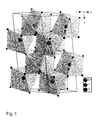
- NbNO is iso-structural to TaNO: both compounds have the baddeleyite (ZrO 2 ) structure with monoclinic symmetry( space group P 2 1 / c ). As shown in figure 1 , Nb atoms are surrounded by three oxygen and four nitrogen atoms to form irregular octahedral [NbO 3 N 4 ] which are connected by edge-sharing N and corner-sharing O atoms. Electronically, Nb(V) oxidenitride owns semiconductor-like characteristics due to the fully empty d-band of niobium. NbNO has a calculated band gap of 1.7eV and is supposed to show blue color. 29
- Electrodematerials The electrochemical performance of electrodematerials is still a crucial limiting factor for high energy density batteries and an increase of capacity is pivotal.
- an improved electrode material and an improved rechargeable battery comprising such an electrode material, in particular a battery with high stability over many charging-discharging cycles and/or improved capacity.
- batteries comprising such electrodes and methods for producing such materials and electrodes.
- T I is a 4d or 5d transition metal, in particular a 4d transition metal and T II is a 3d transition metal. If T I and T II are in their highest oxidation stage, x preferably is 0.
- Preferred transition metals are Zr, Nb, Mo, Ti, V, Cr, W, Mn, Ni, Co, Fe and Cu.
- Li may be present in lattice places as substitute for T or intercalated within interstitial sites.
- such materials may be used as anode materials or as cathode materials, respectively.
- oxidenitrides in general are assumed to have better electronic and ionic conductance due to the larger polarizability of the nitride anion and smaller band gaps.
- the nitride anion has higher negative charge than the oxide with simultaneously lower molecular weight, thereby improving the capacity per weight unit.
- a common method for obtaining nitrides, oxynitrides and nitrogen-doped compounds is ammolysis 27,35,42 .
- the method consists in putting a starting material in a horizontal furnace and then heating up it up under a continuous NH 3 or NH 3 mixed with N 2 (or Ar) gas flow. After a few hours, Nitrogen containing samples are obtained.
- Figure 14 is a schematic representation of the ammolysis setup.
- the temperature program has a significant influence on the kind of products that are obtained. Compounds change from oxides, through Nitrogen-doped oxides (maybe other oxides with low valence states), and then oxydenitrides, and finally to nitrides, as the temperature increases.
- the speed of the NH3 flow also relates to the obtained compounds.
- oxygen in electrode materials can be partly replaced by nitrogen without destroying the initial crystal structure, and thus, without imposing significant stochiometric tension on the electroactive compounds. It is therefore crucial to use the right reaction conditions with this process.
- Preferred starting electrode materials contain oxides of transition metal such as MoO 3 , V 2 O 5 , CrO 3 , WO 3 , TiO 2 , MnO 2 , NiO 2 , CoO 2 and their lithium containing oxides.
- the size of the particles of the starting electrode material is preferably less than 100nm in one dimension at least.
- the starting electrode materials do not necessarily contain only the above mentioned oxides. Indeed, the starting electrode materials can possibly contain, mixed with the above-mentioned oxides, other conductors like carbon black (graphite), nitrides, carbides, sulfides and/or conducting polymers.
- oxidenitrides can also be obtained by first performing nitridation of another type of starting material (for example by ammolysis reaction)followed by selective oxidation.
- oxidenitride of niobium (Nb) was obtained and tested as electrode material in a new anode for Li-ion batteries.
- TaNO was also obtained and tested. This oxidenitride was the first ternary compound obtainable through an ammonolysis method.
- the performed investigations further suggest that preferably a nitridation is performed first, i.e. through ammonolysis reaction with e.g. urea, followed by selective oxidation.
- conductive coatings e.g. carbon and/or graphene coatings or coatings obtained by pyrolysis of various organic precursors, such as e.g. sugars, may be applied to the particles.
- Such coatings proved suitable for producing cathodes and also anodes that quickly gain the optimal features and retain them over many charging/discharging cycles.
- Electrodes with such nanoparticulate materials can be prepared by mixing such nanoparticles with electronically conducting particles such as carbon black and/or graphite and a binder or - in an alternative embodiment - with a nanoparticulate electronically conducting binder, optionally in the presence of further conducting particles such as carbon black and/or graphite, or by applying a pyrolysis reaction performed such that the nanoparticulate EAM is conductively coated and simultaneously bonded.
- electronically conducting particles such as carbon black and/or graphite and a binder or - in an alternative embodiment - with a nanoparticulate electronically conducting binder, optionally in the presence of further conducting particles such as carbon black and/or graphite, or by applying a pyrolysis reaction performed such that the nanoparticulate EAM is conductively coated and simultaneously bonded.
- the electrodes are formed from a nanocomposite, that is
- the electrodes comprising the inventive nanoparticulate electrode material comprise the nanopariculate electronically active material (EAM) and nanoparticulate electrically conducting binder material (CB) homogeneously distributed.
- the mean particle sizes of the nanoparticles of the electronically active material and the average particle sizes of the nanoparticulate binder material both have similar sizes and/or both are in the range of ⁇ 500 nm (mean particle size), in particular in the range of 5 to 500 nm, preferably in the range of 5 to 400 nm, more preferred in the range of 20 to 100 nm.
- the electrodes may optionally and preferably comprise additional conductive particles such as carbon black and/or graphite.
- Similar size means differing not more than 100 %, preferably not more than 50 %, more preferred differing not more than 20 %.
- the electrode coatings preferably are open porous materials.
- An open porous material means that the pores are so large and so interconnected that electrolyte and Li + -diffusion is easily possible.
- the nanocomposite electrode comprises the EAM and the CB nanoparticles intimately mixed with each other and preferably stabilized either due to sufficient stickiness of the binder at mixing, storage and usage temperature or by a pressure treatment with or without heating.
- a thermoplastic material with low glass transition point of the conductive binder is preferred not only for binding the particles but also for binding the nanocomposite to the conductor, usually an aluminium electrode/substrate.
- Electrically conductive polymers encompass polyacetylene, polyaniline, polypyrrol and polythiophen. These polymers can be substituted or unsubstituted dependent on the desired features.
- a presently preferred binder is poly(3,4-ethylenedioxythiophene) referred to below as PEDOT. This polymer is conductive, has suitable stickiness and can readily be produced in nanoparticular form.
- the CB nanoparticles are present in an amount of 4 to 10 % based on the weight of the nanocomposite.
- the nanoparticles are coated with a conductive layer, in particular with a carbon or graphite or graphene layer.
- the nanoparticulate cathode material and/or the nanoparticulate anode material may be bonded by a pyrolyzed layer that simultaneously acts as conductive coating and as binder.
- a pyrolyzed layer that simultaneously acts as conductive coating and as binder.
- Such pyrolysis may be performed in that the EAM, a pyrolysis precursor such as a sugar, and a soluble lithium source are suspended or dissolved in a suitable solvent such as e.g. water and/or alcohols. The solvents are evaporated at mild conditions and then the dried product is pyrolized at temperatures of 250 to 700°C, in particular 400-600°C.
- This method may analogeously be applied for producing conductively coated nanoparticulate EAM that are bonded by other methods.
- Nanoparticulate electrically conductive polymers such as Poly (3,4-ethylenedioxythiophene) (PEDOT) may be prepared using the reverse microemulsion technique as described by Sun et al. 38 .
- PEDOT Poly (3,4-ethylenedioxythiophene)
- a microemulsion is prepared comprising emulsified oxidant comprising particles/droplets such as FeCl 3 /bis(2-ethylhexyl) sulfosuccinate particles as polymerization aid.
- the nanoparticulate CB is preferably suspended in a suitable solvent such as acetonitril, and the nanoparticulate, carbon coated EAM is then added and the mixture homogenized, dried and optionally pressed with or without heating. If desired, additionally a conductive nanoparticulate filler such as carbon black may be added.
- PEDOT is an attractive candidate as a nanoparticulate conductive polymeric binder. Its advantages are high chemical and environmental stability, easy synthesis in various particle sizes and its stickiness that leads to a good interparticular adhesion and sufficient substrate adhesion upon pressurizing with a pressure of 0.5 to 2 bar or 5 ⁇ 10 4 to 2 ⁇ 10 5 Pa, respectively, at room temperature.
- heating can be absent since the small particles are sticky due to Van-der-Waals forces.
- Preferred starting electrode materials are MoO 3 , V 2 O 5 , CrO 3 , WO 3 , TiO 2 MnO 2 , NiO 2 , CoO 2 more particularly MoO 32 .
- MoO 3 has been considering a potential electrode material for many years because of its attractive Mo 6+ /Mo 4+ redox couple. Capacity of electrodes made of MoO 3 nanofibers can reach as high as 350 mAh/g in the first discharge, which is near to the theoretical capacity of MoO 3 , 380mAh/g (insertion of 2 Li + per Mo atom). However, after the first cycle, capacity decreases dramatically.
- Powder X-ray diffraction (PXRD) pattern of obtained samples is showed in Fig. 15 . All peaks of obtained sample match with orthorhombic MoO 3 . Due to the two dimensional nanometric structure, peaks turn out to be wider.
- the size of MoO 3 is 50-200 nanometers in one dimension, thickness is about a few nanometers and the length is in the micrometer scale.
- Powder XRD patterns are presented in Fig. 16 .
- the stared peak in Fig. 16 indicates unknown impurity produced, and main phase still maintains the structure of starting orthorhombic MoO 3 .
- a slight shift of peaks to large angle suggests that the MoO 3 is partly reduced from Mo 6+ to Mo 5+ and oxygen vacancies shrink the lattice constants.
- the reaction might be described as follows: MoO 3 +(2x/3)NH 3 ⁇ MoO 3 - X +xH 2 O+(x/3)N 2 (x ⁇ 1) (3)
- Electrochemical measurement was performed using lithium metal (ribbon 0.75mm-thick, Aldrich) as reference electrode and Merck Selectipur LP30, which consists of 1 M solution of LiPF 6 in a mixture of ethylene carbonate and dimethyl carbonate 1:1 (w/w) as electrolyte.
- Electrode materials / Super P carbon / PVDF 80:10:10 wt.-%) were ground and then ultrasonically dispersed in N-methyl-2-pyrrolidone (NMP) for 30 min at 40°C.
- NMP N-methyl-2-pyrrolidone
- the obtained slurry was printed on titanium current collectors using dropper, and then the solvent was evaporated at 150°C for 1h and 120°C overnight.
- the typical weight of such electrodes is around 5mg.
- GITT has been used as a standard method for obtaining chemical diffusion coefficients D GITT of Li + in Li-ion battery electrode materials.
- ⁇ denotes the constant current pulse time
- m B V m and M B are the mass, the molar volume, and the molar mass of the insertion electrode material
- S is the area of the electrode-electrolyte interface respectively.
- ⁇ E s is the change of the steady-state voltage during a single-step GITT experiment
- ⁇ E t is the total change of cell voltage during a constant current pulse ⁇ of a single-step GITT experiment neglecting the IR-drop 45 .
- the GITT method allows the evaluation of D GITT as a function of the potential.
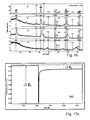
- Sample No. 1 and No. 3 were used to perform GITT measurements. During the first discharge, current pulse Ip was given as 300 A/kg until 5Ah/kg, namely ⁇ equals to 1 minute, and then stopped the current, kept the cell at open circuit for 10 hours. Fig, 17b presents several periods for these two samples, up side is for sample No. 1 and bottom is for sample No. 3.
- M B 2 ( ⁇ E s / ⁇ E t ) 2 tells us the quantity of lithium ion diffusion coefficient D GITT .
- Fig. 17c plots the functions of coefficient m B 2 ( ⁇ E s / ⁇ Et) 2 against potential. When potential decreases, insertion of more lithium into structure results in lower lithium diffusion in the material. Comparing the MoO 3 and nitrogen doped MoO 3 obviously the latter has higher lithium conductivity during the whole discharge process.
- Fig. 18 shows Galvanostatic cycling performances of samples No. 1, 2 and 3.
- MoO 3 has capacity as high as 350 Ah/kg, and then decays dramatically, after 10 cycles, only 170 Ah/kg of capacity is reversible.
- Fig 18b partly reduced MoO 3 has worse cycling performance.
- nitrogen doped MoO 3 Fig. 18c
- the initial capacity is only 180 Ah/kg, this material has much more stable electrochemical behaviour. We believe that the nitrogen doping helps to stabilize the electrochemical properties since successful substitution of oxygen with nitrogen triggers the insulator-conductor transfer, as well as enhancement of lithium diffusion in the materials.
- Preferred starting electrode materials are Li x MoO y , Li x V 2 O y , Li x CrO y , Li x WO y , Li x TiO y , Li x MnO y , Li x NiO y , Li x CoO y , more particularly Li 2 MoO 4 .
- ammolysis of Li 2 MoO 4 is taken as an example.
- the starting material is commercial chemical Li 2 MoO 4 from Alfa Aesar (99+ % purity).
- Table 2 lists the products obtained from ammolysis of Li 2 MoO 4 under different temperature programs.
- Table 2 Temperature programs and products for ammolysis of Li 2 MoO 4 No.
- Li 2 MoO 4 is water soluble, white color and an insulator compound. After treating with NH3, it turns a dark color and becomes semiconductor (measured in physical properties measurement system).
- Fig. 19 shows the evolution of powder XRD patterns of commercial Li 2 MoO 4 and samples A-F. As temperature increases, firstly lattice constants of products start to expand, relative intensity of patterns changes and also some additional peaks appear, as seen in pattern of sample B. These features could explain that nitrogen was doped into Li 2 MoO 4 successfully. However, further heating could destroy the original structure of Li 2 MoO 4 and ⁇ -Mo 2 N starts to turn out. In order to clearly illustrate the nitrogen doping phase, Fig. 20 allows to compare the patterns of commercial chemical Li 2 MoO 4 and of sample B.
- examples 1 and 2 focus on the case of nitrogen doping on molybdates and their use on rechargeable li-ion batteries, according to the discussion and description, the electrode materials are note restricted only on molybdates, candidates can be any of transition metal compounds, which are working as electrode materials in batteries. By gently controlling of synthesis process, oxygen in electrode materials is replaced by nitrogen partly but without destroying the initial crystal structure when NH 3 is employed as nitrogen source.
- NbOCl 3 was prepared by gas transport reaction. Nb 2 O 5 (>99%, JMC) and NbCl 5 (99.8%, Acros) were mixed in molar ratio 1:3, sealed in Pyrex tube and heated up to 400 °C in 4 hours and keep at this temperature for 40 hours. Deep green needle-shaped crystals of NbOCl 3 were produced. These were then ground into a fine white powder and reacted with ammonia at room temperature until the color changed into bright yellowish niobium oxychloride amide NbOCl 3 (NH 3 ) x . To make sure the reaction was carried out completely, a second grinding was necessary. Considering that NbCl 5 and NbOCl 3 are both water sensitive, the experiments were carried out in a glove box under protective Ar atmosphere.
- NbNO was synthesized by decomposition of niobium oxychloride amide.
- 0.8g NbOCl 3 (NH 3 ) x were sealed in a Pyrex tube (8mm inner diameter and 1m length) which was put in a vertical tube furnace so that ca. 20cm of the tube are outside of furnace.
- the temperature was set to 500 °C for 10-30 h.
- a black NbNO powder was obtained at the bottom and white NH 4 Cl separately precipitated at the top of Pyrex tube.
- Carbon coated samples were prepared by mixing pure NbNO and 15 weight-% of lactose in a little water and subsequent drying at 100°C. Then, the residue was put in a N 2 flow furnace. The temperature was increased to 300°C very slowly (10 °C/ h) and then up to 500°C in one hour, kept at 500 °C for 5 hours and cooled down as the furnace was switched off. 4.6 weight-% of carbon content was detected in the final sample.
- TG Thermal gravimetry
- DTA differential thermal analysis
- the data for structure refinement were collected at the step of 0.015° in each 10s over the 2 theta range from 15 to 120 degree.
- Temperature dependent XRD was done at steps of 0.015° in each 0.2s over the 2 theta range from 5 to 90 degree. Heating was done at the rate of 0.5°C/s.
- Neutron Powder Diffraction (NPD) data was collected with the PUS two-axis diffractometer at the JEEP-II reactor at Kjeller, Norway. A neutron wave-length of 1.5561 A was used. The step size was 0.05 over the 10 to 135 degree range (2theta). The sample was contained in a vanadium can. Both Rietveld refinements for XRD and NPD were performed with the GSAS software. 30
- Scanning electron microscopy (SEM) analysis was performed using a Zeiss Gemini 1530 operated at 1 kV.
- TEM transmission electron microscopy
- the material was deposited onto a holey carbon foil supported on a copper grid.
- TEM investigations were performed using a CM30ST microscope (FEI; LaB 6 cathode) or a Tecnai F30 microscope (both operated at 300 kV, point resolution - 2 ⁇ ).
- Electrochemical measurement was performed using lithium metal (ribbon 0.75 mm thick, Aldrich) as reference electrode and Merck Selectipur LP30, which consists of 1 M solution of LiPF 6 in a mixture of ethylene carbonate and dimethyl carbonate 1:1 (w/w) as electrolyte. Electrodes of NbNO/ Super P carbon/ PVDF (80:10:10 wt %) were ground and then ultrasonically dispersed in N-methyl-2-pyrrolidone (NMP) for 30 min at 40 °C. The obtained slurry was printed on titanium current collectors using a dropper, and then the solvent was evaporated at 150 °C for 1h and 100 °C overnight. The typical weight of such electrodes is around 5 mg. Galvanostatic discharge/charge curves were measured using a current of 10Ah/kg.
- the measurements of magnetism were made using a Quantum Design SQUID (Superconducting Quantum Interference Device) magnetometer MPMS 5S.
- the applicable field is in the range of +-5T and temperature 1.7-400K.
- Sample No.3 (see table 3) was measured in a T-loop, changing temperature from 2K - 300K - 2K at constant external field at 50, 1000, and 5000 Oe. Firstly sample was cooled down to 2K at zero field (ZFC), then the field was set and measured while warming. Then the temperature decreased to 2K and kept the field at the same level (FC).
- ZFC zero field
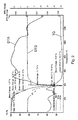
- Niobium oxychlorite amide NbOCl 3 (NH 3 ) x was prepared by ammonolysis of NbOCl 3 at room temperature. Thermal analysis curves of this compound ( figure 2 ) exhibit that the decomposition of NbOCl 3 (NH 3 ) x starts at 200 °C and proceeds violently when temperature reaches 400 °C. Meanwhile a quite high amount of heat is releaseed during this reaction. NH 4 Cl was detected in the decomposition product obtained at 200 °C by XRD. According to the weight loss during the decomposition, the molecular formula of the yellow niobium oxychlorite amine can be calculated as NbOCl 3 (NH 3 ) 4 .
- Equation 1 is working at room temperature. When the temperature is increased to 500 °C, reaction 2 takes place.
- Li ions preferably combine with Cl rather than I - , and the products NH 4 I and LiCl may become eutectic below 500 °C.
- Such eutectic composition provided a homogenous and soft environment for the reaction.
- Reacting conditions No.0 No.1 No.2 No.3 No.4 NbOCl 3 (NH 3 ) 4 LiI (mol) 1:3 1:0 1:6 1:6 1:6 Temperature (°C) 500 500 500 500 500 500 Time (hours) 20 20 5 20 40
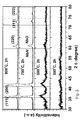
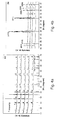
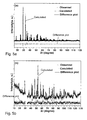
- Figure 4 presents the XRD patterns of the five different samples. It can clearly be seen that excess LiI helps to get rid of LiNbO 3 impurities. This could be explained in the following way: Excess LiI can form eutectic mixtures with LiCl/NH 4 I and works as proper flux to provide homogeneous atmosphere for the reaction. In this case, unlike the direct decomposition reaction of NbOCl 3 (NH 3 ) 4 , only few gas is released and an overly high pressure in the reactors can be avoided.
- Figure 4b zooms in the specific diffraction angle range of these XRD patterns.
- the patterns of the samples obtained here do not match the data collected in 1977. 28 Although both samples obviously have the same monoclinic structure, different phases have been formed.
- the oxygen and nitrogen ratio in the NbNO phase obtained here is likely to be larger than 1:1 with the Nb valence being between +4 and +5.
- element analysis and refinement of crystal structure were carried out.
- the following Rietveld refinements were carried out with a fixed O/N ratio of 1.3/0.7.This value was verified in such a way that 1 of 1.3 O atoms occupy the oxygen positions in the structural model of NbNO from reference 28 whereas the nitrogen positions are occupied by 0.3 O and 0.7 N
- Table 4 The comparative results of crystal structure information between ref. 28 and our refinements are summarized in Table 4. Table 4.
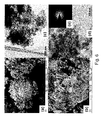
- Figures 6-8 show the SEM, TEM and ED pictures on pure NbN 0.7(1) O 1.3(1) and lactose treated samples.
- SEM images ( Figures 6a-b ) reveal micrometric single crystals that are embedded in fine powders, whose particle size is determined as 5-10 nm by TEM images ( Figures 6c-d , 8a-b ).
- Figure 7 it appears clearly that, due to the existence of liquid melted salts, single crystals grow larger when LiI is used as assistant flux.
- the sample is completely covered by carbon when NbN 0.7 O 1.3 is treated with lactose.
- TEM Figures 8a and c point out this difference between naked and 4.6 % by weight of carbon coated samples.
- NbN 0.7(1) O 1.3(1) only has a Nb 4+ /Nb 3+ redox couple in the first cycling which then disappears gradually.
- Setting the potential cutoff as 1.0 V, as shown in Figures 11c and 12c the (de)lithiation performance is much more stable and reversible than in the potential range 3-0.05 V. Due to the improved electronic conductivity, a carbon-coated sample expectedly had better electrochemical behavior and still kept a capacity of 70-80 Ah/kg in stable running.
- the oxidation peaks were found to shift to smaller potential as charge continues. Simultaneously the peaks corresponding to the Nb 4+ /Nb 3+ reduction start to fade. This could be explained by the lithium insertion reaction in various environments of the crystal structure. Firstly, lithium is inserted into different voids formed by N/O anions during discharge, and then as more and more lithium is remaining in these specific positions, a different potential is needed to pull out the rest of lithium ions during charging.
- NbN 0.7 ( 1 )O 1.3(1) and Nb 2 O 5 have similar oxidation-reduction peaks but there is a wide gap concerning the ability of lithium insertion.
- the space formed among asymmetric [NbO 3 N 4 ] is irregular, small and hardly fitting lithium ions.
- Oxidenitrides of niobium with 4.7+ oxidation valence were synthesized by decomposition of niobium chloride amide. Two methods were examined, namely the direct decomposition of NbOCl 3 (NH 3 ) 4 and a LiI assisted method. In both ways, pure compounds were obtained and used to characterize their crystal structure, morphoplogy and electrochemical performance against lithium. By using elemental analysis and neutron diffraction, the compound produced was determined to be NbN 07(1) O 1.3(1) instead of NbNO. Morphologically samples exhibited the feature as 3-5 nm nano-sized particles, in which some micrometric single crystals were found as well.
- NbN 0.7(1) 0 1.3(1) owned unusual thermal properties, increasing temperature left the lattice parameters nearly constant because of N 2 escape from the lattice.
- the obtained sample NbN 0.7(1) O 1.3(1) was investigated with regard to its electrochemical performance in Li-ion batteries as the first example of a lithium-free transition metal oxidenitride.
- the experiments support that NbN 0.7(1) O 1.3(1) coated with carbon (e.g. 4.6 weight-% of carbon) had much more stable and revisable cycling performance than the pure, uncoated sample.
- the cutoff potential was set at 0.05V and 1V, respectively, the measured capacities reached 500 Ah/kg and 100 Ah/kg during the first discharge and then stabilized at 250 Ah/kg and 80 Ah/kg in subsequent cycling, respectively.
- Nanoparticulate Conductive Binder i.e.PEDOT nanostubs
- reverse emulsion directed synthesis
- EDOT ethylenedioxythiophene
Landscapes
- Chemical & Material Sciences (AREA)
- Chemical Kinetics & Catalysis (AREA)
- Electrochemistry (AREA)
- General Chemical & Material Sciences (AREA)
- Engineering & Computer Science (AREA)
- Inorganic Chemistry (AREA)
- Manufacturing & Machinery (AREA)
- Crystallography & Structural Chemistry (AREA)
- Organic Chemistry (AREA)
- Materials Engineering (AREA)
- Battery Electrode And Active Subsutance (AREA)
Priority Applications (1)
| Application Number | Priority Date | Filing Date | Title |
|---|---|---|---|
| EP11161856.7A EP2378596B1 (de) | 2010-04-12 | 2011-04-11 | Übergangsmetalloxidnitride |
Applications Claiming Priority (2)
| Application Number | Priority Date | Filing Date | Title |
|---|---|---|---|
| EP10003852 | 2010-04-12 | ||
| EP11161856.7A EP2378596B1 (de) | 2010-04-12 | 2011-04-11 | Übergangsmetalloxidnitride |
Publications (2)
| Publication Number | Publication Date |
|---|---|
| EP2378596A1 true EP2378596A1 (de) | 2011-10-19 |
| EP2378596B1 EP2378596B1 (de) | 2017-02-22 |
Family
ID=42224802
Family Applications (1)
| Application Number | Title | Priority Date | Filing Date |
|---|---|---|---|
| EP11161856.7A Active EP2378596B1 (de) | 2010-04-12 | 2011-04-11 | Übergangsmetalloxidnitride |
Country Status (8)
| Country | Link |
|---|---|
| US (1) | US9929405B2 (de) |
| EP (1) | EP2378596B1 (de) |
| JP (1) | JP2011222521A (de) |
| KR (1) | KR20110114483A (de) |
| CN (1) | CN102263228A (de) |
| AU (1) | AU2011201595A1 (de) |
| IL (1) | IL212269A0 (de) |
| TW (1) | TW201212350A (de) |
Cited By (3)
| Publication number | Priority date | Publication date | Assignee | Title |
|---|---|---|---|---|
| EP2634845A1 (de) | 2012-02-29 | 2013-09-04 | Belenos Clean Power Holding AG | Beschichtung und Lithiierung von anorganischen Oxidantien durch Reaktion mit lithiierten Reduktionsmitteln |
| EP2659969A4 (de) * | 2010-12-28 | 2015-08-19 | Panasonic Ip Man Co Ltd | Optischer halbleiter und herstellungsverfahren dafür sowie optisches halbleiterbauelement, photokatalysator, wasserstofferzeugungsvorrichtung und energiesystem |
| EP2919298A1 (de) | 2014-03-12 | 2015-09-16 | Belenos Clean Power Holding AG | Si/C-Kompositanoden für Lithium-Ionen-Batterien mit anhaltender hoher Kapazität pro Flächeneinheit |
Families Citing this family (25)
| Publication number | Priority date | Publication date | Assignee | Title |
|---|---|---|---|---|
| JP5682955B2 (ja) * | 2010-08-04 | 2015-03-11 | Necエナジーデバイス株式会社 | リチウム二次電池の制御システム、およびリチウム二次電池の状態検出方法 |
| JP5565391B2 (ja) * | 2011-08-11 | 2014-08-06 | トヨタ自動車株式会社 | 電極活物質、当該電極活物質の製造方法、及び当該電極活物質を含むリチウム二次電池 |
| WO2013129376A1 (ja) * | 2012-02-29 | 2013-09-06 | 三洋電機株式会社 | 非水電解質二次電池用活物質、非水電解質二次電池用電極、非水電解質二次電池、及び非水電解質二次電池用活物質の製造方法 |
| JP6159228B2 (ja) | 2012-11-07 | 2017-07-05 | 株式会社半導体エネルギー研究所 | 非水系二次電池用正極の製造方法 |
| JP6241996B2 (ja) * | 2012-12-26 | 2017-12-06 | 昭和電工株式会社 | マグネシウムイオン二次電池用正極活物質及びその製造方法並びにマグネシウムイオン二次電池 |
| US10076737B2 (en) | 2013-05-06 | 2018-09-18 | Liang-Yuh Chen | Method for preparing a material of a battery cell |
| CN104577088A (zh) * | 2013-10-16 | 2015-04-29 | 中国科学院物理研究所 | 二次电池电极材料钼酸锂 |
| CN104377352B (zh) * | 2014-10-22 | 2016-01-13 | 广东天劲新能源科技股份有限公司 | 一种锂离子动力电池负极材料制备方法和应用 |
| JP2018502028A (ja) * | 2014-11-14 | 2018-01-25 | パナソニックIpマネジメント株式会社 | 単結晶ニオブ酸窒化物膜を製造する方法、および単結晶ニオブ酸窒化物膜を用いて水素を生成する方法 |
| EP3353844B1 (de) | 2015-03-27 | 2022-05-11 | Mason K. Harrup | Vollständig anorganische lösungsmittel für elektrolyte |
| DE102015217747A1 (de) * | 2015-09-16 | 2017-03-16 | Robert Bosch Gmbh | Aktivmaterial für eine positive Elektrode einer Batteriezelle, postitive Elektrode und Batteriezelle |
| CN105206427B (zh) * | 2015-09-24 | 2017-10-31 | 哈尔滨工程大学 | MoN纳米材料及对电极的制备方法 |
| US10707531B1 (en) | 2016-09-27 | 2020-07-07 | New Dominion Enterprises Inc. | All-inorganic solvents for electrolytes |
| JP2018107117A (ja) * | 2016-12-26 | 2018-07-05 | パナソニックIpマネジメント株式会社 | 負極活物質、および、電気化学デバイス |
| CN109254036A (zh) * | 2017-07-14 | 2019-01-22 | 上海杉杉科技有限公司 | 一种电极材料快充性能的电化学评价方法 |
| JP6965849B2 (ja) * | 2018-08-28 | 2021-11-10 | トヨタ自動車株式会社 | 正極活物質の製造方法 |
| CN109301211B (zh) * | 2018-09-29 | 2021-09-17 | 陕西科技大学 | 一种自组装花球状氮掺杂Mo4O11的锂离子电池负极材料及其制备方法 |
| US11376559B2 (en) | 2019-06-28 | 2022-07-05 | eJoule, Inc. | Processing system and method for producing a particulate material |
| TWI785881B (zh) | 2019-06-28 | 2022-12-01 | 美商壹久公司 | 具有輔助氣體流的處理系統與方法及所製成用於電池的材料 |
| US11673112B2 (en) | 2020-06-28 | 2023-06-13 | eJoule, Inc. | System and process with assisted gas flow inside a reaction chamber |
| US11121354B2 (en) | 2019-06-28 | 2021-09-14 | eJoule, Inc. | System with power jet modules and method thereof |
| CN110935483B (zh) * | 2019-11-20 | 2021-10-29 | 华南农业大学 | 半导体NbNO纳米棒及其制备方法与应用 |
| CN111769290A (zh) * | 2020-08-11 | 2020-10-13 | 天津瑞晟晖能科技有限公司 | 氮掺杂的五氧化二铌在二次电池中的应用、全固态薄膜锂离子电池及其制备方法、用电设备 |
| JP2023154800A (ja) * | 2022-04-08 | 2023-10-20 | 真志 廣岡 | 電極、電解層、二次電池 |
| CN115818589B (zh) * | 2022-12-07 | 2024-07-26 | 中国科学技术大学 | 一种通过反应气体流速调控合成具有室温铁磁性的二维过渡金属氮化物材料的方法 |
Citations (2)
| Publication number | Priority date | Publication date | Assignee | Title |
|---|---|---|---|---|
| EP1702683A1 (de) * | 2003-12-02 | 2006-09-20 | Japan Science and Technology Agency | Metalloxidnitridelektrodenkatalysator |
| US20080187831A1 (en) * | 2007-02-07 | 2008-08-07 | Valence Technology, Inc. | Oxynitride-Based Electrode Active Materials For Secondary Electrochemical Cells |
Family Cites Families (9)
| Publication number | Priority date | Publication date | Assignee | Title |
|---|---|---|---|---|
| CA2270771A1 (fr) * | 1999-04-30 | 2000-10-30 | Hydro-Quebec | Nouveaux materiaux d'electrode presentant une conductivite de surface elevee |
| US7754382B2 (en) * | 2003-07-30 | 2010-07-13 | Tdk Corporation | Electrochemical capacitor having at least one electrode including composite particles |
| CN100344019C (zh) * | 2004-06-16 | 2007-10-17 | 松下电器产业株式会社 | 活性物质材料、其制造方法及含该材料的非水电解质二次电池 |
| JP2006032321A (ja) * | 2004-06-16 | 2006-02-02 | Matsushita Electric Ind Co Ltd | 活物質材料、その製造方法、およびそれを含む非水電解質二次電池 |
| KR101397021B1 (ko) * | 2007-11-27 | 2014-05-21 | 삼성에스디아이 주식회사 | 양극 활물질, 그 제조 방법 및 이를 채용한 양극과 리튬전지 |
| US8344438B2 (en) * | 2008-01-31 | 2013-01-01 | Qimonda Ag | Electrode of an integrated circuit |
| KR101463114B1 (ko) * | 2008-02-15 | 2014-11-20 | 삼성에스디아이 주식회사 | 음극 활물질, 그 제조 방법 및 이를 채용한 음극과 리튬전지 |
| JP2010040480A (ja) * | 2008-08-08 | 2010-02-18 | Oita Univ | 電極用材料、電極、リチウムイオン電池、電気二重層キャパシタ、電極用材料の製造方法 |
| US9099756B2 (en) * | 2009-02-17 | 2015-08-04 | Samsung Sdi Co., Ltd. | Flame retardant electrolyte for rechargeable lithium battery and rechargeable lithium battery including the same |
-
2011
- 2011-04-08 AU AU2011201595A patent/AU2011201595A1/en not_active Abandoned
- 2011-04-11 EP EP11161856.7A patent/EP2378596B1/de active Active
- 2011-04-11 US US13/084,118 patent/US9929405B2/en active Active
- 2011-04-11 TW TW100112467A patent/TW201212350A/zh unknown
- 2011-04-12 CN CN2011101416701A patent/CN102263228A/zh active Pending
- 2011-04-12 JP JP2011088038A patent/JP2011222521A/ja active Pending
- 2011-04-12 KR KR1020110033805A patent/KR20110114483A/ko not_active Abandoned
- 2011-04-12 IL IL212269A patent/IL212269A0/en unknown
Patent Citations (2)
| Publication number | Priority date | Publication date | Assignee | Title |
|---|---|---|---|---|
| EP1702683A1 (de) * | 2003-12-02 | 2006-09-20 | Japan Science and Technology Agency | Metalloxidnitridelektrodenkatalysator |
| US20080187831A1 (en) * | 2007-02-07 | 2008-08-07 | Valence Technology, Inc. | Oxynitride-Based Electrode Active Materials For Secondary Electrochemical Cells |
Non-Patent Citations (47)
| Title |
|---|
| ARIYOSHI, K., MAKIMURA, Y., OHZUKU, T.: "Lithium Ion Rechargeable Batteries", 2009, WILEY-VCH VERLAG GMBH & CO. KGAA |
| BEDANTA, S., KLEEMANN, W., J. PHYS. D: APPL. PHYS., vol. 42, 2009, pages 013001 |
| BORGHOLS, W. J. H., WAGEMAKER, M., LAFONT, U., KELDER, E. M., MULDER, F. M., J. AM. CHEM. SOC., vol. 131, 2009, pages 17786 |
| BRAUER, G., WEIDLEIN J., STRAHLE, J. Z., ANORG. ALLG. CHEM., vol. 348, 1966, pages 298 |
| CABANA, J., DUPRE, N., GREY, C. P., SUBIAS, G., CALDES, M. T., MARIE, A. -M., PALACIN, M. R., J. ELECTROCHEM. SOC., vol. 152, 2005, pages A2246 |
| CABANA, J., ROUSSE, G., FUERTES, A., PALACIN, M. R., J. MATER. CHEM., vol. 13, 2003, pages 2402 |
| CABANA, J., STOEVA, Z., TITMAN, J. J., GREGORY, D. H., PALACIN, M. R., CHEM. MATER., vol. 20, 2008, pages 1676 |
| CLARKE, S. J., CHALKER, P. R., HOLMAN, J. H., MICHIE, C. W., PUYET, M., ROSSEINSKY, J., J. AM. CHEM. SOC., vol. 124, 2002, pages 3337 |
| DAS, B., REDDY, M. V., MALAR, P., OSIPOWICZ, T., RAO, G. V. S., CHOWDARI, B. V. R., SOLID STATE ION., vol. 180, 2009, pages 1061 |
| DEISS, E., ELECTOCHIMIA ACTA, vol. 50, 2005, pages 2927 |
| ELDER, S. H., DISALVO, F. J., CHEM. MATER., vol. 5, 1993, pages 1545 |
| ELLIS, B. L., LEE, K. T., NAZAR, L. F., CHEM. MATER., vol. 22, 2010, pages 691 |
| FEDORKOVAA, A., ORINAKOVAB, R., ORINAKB, A., TALIANA, I., HEILEC, A., WIEMHÖFERD, H.D., KANIANSKYA, D., ARLINGHAUSC, H.F., JOURNAL OF POWER SOURCES, vol. 195, 2010, pages 3907 |
| GAO, X. P., BAO, J. L., PAN, G. L., ZHU, H. Y., HUANG, P. X., WU, F., SONG, D. Y., J. PHYS. CHEM. B, vol. 108, 2004, pages 5547 |
| GE, Y., YAN. X., LIU, J., ZHANG, X., WANG, J., HE, X., WANG, R., XIE, H., ELECTROCHIMICA ACTA, vol. 55, 2010, pages 5886 |
| GOODENOUGH, J. B., KIM, Y., CHEM. MATER., vol. 22, 2010, pages 587 |
| HAN, J. -T., LIU, D. -Q., SONG, S. -H., KIM, Y., GOODENOUGH, J. B., CHEM. MATER., vol. 21, 2009, pages 4753 |
| J. CABANA, G. ROUSSE, A. FUERTES, M.R. PALACIN: "The first lithium manganese oxynitride, Li7.9MnN5-yOy: preparation and use as electrode material in lithium batteries.", JOURNAL OF MATERIALS CHEMISTRY COMMUNICATION, vol. 13, 26 August 2003 (2003-08-26), online, pages 2402 - 2404, XP002590453 * |
| J. CABANA, N. DUPRÉ, C.P. GREY, G. SUBIAS, M.T. CALDÉS, A.-M. MARIE, M.R. PALACIN: "Oxynitrides as electrode materials for lithium-ion batteries", JOURNAL OF THE ELECTROCHEMICAL SOCIETY, vol. 152, no. 11, 7 October 2005 (2005-10-07), online, pages A2246 - A2255, XP002590452 * |
| KIM, S. -S., OGURA, S., IKUTA, H., UCHIMOTO, Y., WAKIHARA, M., SOLID STATE ION., vol. 146, 2002, pages 249 |
| KIM, Y., WOODWARD, P. M., BABA-KISHI, K. Z., TAI, C. W., CHEM. MATER., vol. 16, 2004, pages 1267 |
| KIM, Y., WOODWARD, P.M., JOURNAL OF SOLID STATE CHEMISTRY, vol. 180, 2007, pages 3224 |
| KODAMA, R., TERADA, Y., NAKAI, I., KOMABA, S., KUMAGAI, N., J. ELECTROCHEM. SOC., vol. 153, 2006, pages A583 |
| KUBIAK, P., PFANZELT, M., GESERICK, J., H6RMANN, U., HUSING, N., KAISER, U., WOHLFAHRT-MEHRENS, M., J. POWER SOUR., vol. 194, 2009, pages 1099 |
| LARSON, A. C., VON DREELE, R. B.: "General Structure Analysis System", 1994, LOS ALAMOS NATIONAL LABORATORY |
| LOGVINOVICH, D., HEJTMANEK, J., KNIZEK, K., MARYSKO, M., HOMAZAVA, N., TOMES, P., AGUIAR, R., EBBINGHAUS, S. G., RELLER, A., WEIDE, J. APPL. PHYS., vol. 105, 2009, pages 023522 |
| LUMMEY, M. -W., DRONSKOWSKI, R., Z. ANORG. ALLG. CHEM., vol. 629, 2003, pages 2173 |
| MEGAW, H. D., MATER. RES. BULL., vol. 6, 1971, pages 1007 |
| NIEWA, R., JACOBS, H., CHEM. REV., vol. 96, 1996, pages 2053 |
| NISHIJIMA, M., KAGOHASHI, T., TAKEDA, Y., IMANISHI, M., YAMAMOTO, 0., J. POWER SOUR., vol. 68, 1997, pages 510 |
| NISHIJIMA, M., TADOKORO, N., TAKEDA, Y., IMANISHI, N., YAMAMOTO, 0., J. ELECTROCHEM. SOC., vol. 141, 1994, pages 2966 |
| NISHIJIMA, M., TAKEDA, Y., IMANISHI, N., YAMAMOTO, 0., J. SOL. STAT. CHEM., vol. 113, 1994, pages 205 |
| ORHAN, E., TESSIER, F., MARCHAND, R., SOLID STATE SCI., vol. 4, 2002, pages 1071 |
| PAPAKONDYLIS, A., SAUTET, P., JOURNAL OF PHYSICAL CHEMISTRY, vol. 100, 1996, pages 10681 |
| REDDY, M. A., VARADARAJU. U. V., CHEM. MATER., vol. 20, 2008, pages 4557 |
| ROBERTSA, M.R., VITINSB, G., WOWEN, J.R., JOURNAL OF POWER SOURCES, vol. 179, 2008, pages 754 |
| ROWSELL, J. L. C., PRALONG, V., NAZAR, L. F., J. AM. CHEM. SOC., vol. 123, 2001, pages 8598 |
| SCHILLING, H., LERCH, M., BORGER, A., BERKER, K. -D., WOLFF, H., DRONSKOWSKI, R., BREDOW, T., TOVAR, M., BAEHTZ, C., J. SOL. STAT. CHEM., vol. 179, 2006, pages 2416 |
| SHARMA, N., SHAJU, K.M., RAO, G. V. S., CHOWDARI, B. V. R., DONG, Z. L., WHITE, T. J., CHEM. MATER., vol. 16, 2004, pages 504 |
| SUN, Q., FU, Z. -W., ELECTROCHEMICAL AND SOLID-STATE LETTERS, vol. 11, 2008, pages A233 |
| WANG, Y., LESTERB, E., GREGORY, D. H., J. MATER. SCI., vol. 42, 2007, pages 6779 |
| WEI, M., WEI, K., ICHIHARA, M., ZHOU, H., ELECTROCHEM. COMMUN., vol. 10, 2008, pages 980 |
| WEISHAUPT M., STRÄHLE, J., Z. ANORG. ALLG. CHEM., vol. 429, 1977, pages 261 |
| WENDEL, J., LERCH, M., LAQUA, W., J. SOLID STATE CHEM., vol. 142, 1999, pages 163 |
| YONG-JUN LI, WEI-JUN HUANG, SHI-GANG SUN, ANGEWANDTE CHEMIE, vol. 118, 2006, pages 2599 |
| ZHANG, L., XU, Y., JIN, D., XIE, Y., CHEMISTRY OF MATERIALS, vol. 21, 2009, pages 5681 |
| ZHANG, W. -M., WU, X. -L., HU, J. -S., GUO, Y. -G., WAN, L. -J., ADV. FUNCT. MATER., vol. 18, 2008, pages 3941 |
Cited By (3)
| Publication number | Priority date | Publication date | Assignee | Title |
|---|---|---|---|---|
| EP2659969A4 (de) * | 2010-12-28 | 2015-08-19 | Panasonic Ip Man Co Ltd | Optischer halbleiter und herstellungsverfahren dafür sowie optisches halbleiterbauelement, photokatalysator, wasserstofferzeugungsvorrichtung und energiesystem |
| EP2634845A1 (de) | 2012-02-29 | 2013-09-04 | Belenos Clean Power Holding AG | Beschichtung und Lithiierung von anorganischen Oxidantien durch Reaktion mit lithiierten Reduktionsmitteln |
| EP2919298A1 (de) | 2014-03-12 | 2015-09-16 | Belenos Clean Power Holding AG | Si/C-Kompositanoden für Lithium-Ionen-Batterien mit anhaltender hoher Kapazität pro Flächeneinheit |
Also Published As
| Publication number | Publication date |
|---|---|
| US9929405B2 (en) | 2018-03-27 |
| JP2011222521A (ja) | 2011-11-04 |
| IL212269A0 (en) | 2011-07-31 |
| AU2011201595A1 (en) | 2011-10-27 |
| CN102263228A (zh) | 2011-11-30 |
| EP2378596B1 (de) | 2017-02-22 |
| KR20110114483A (ko) | 2011-10-19 |
| US20110305949A1 (en) | 2011-12-15 |
| TW201212350A (en) | 2012-03-16 |
Similar Documents
| Publication | Publication Date | Title |
|---|---|---|
| EP2378596B1 (de) | Übergangsmetalloxidnitride | |
| Chen et al. | Oxygen vacancies in SnO2 surface coating to enhance the activation of layered Li-Rich Li1. 2Mn0. 54Ni0. 13Co0. 13O2 cathode material for Li-ion batteries | |
| Zhu et al. | Zinc niobate materials: crystal structures, energy-storage capabilities and working mechanisms | |
| Criado et al. | Effect of chromium doping on Na3V2 (PO4) 2F3@ C as promising positive electrode for sodium-ion batteries | |
| EP3070056B1 (de) | Aktivmaterial, batterie mit nichtwässrigem elektrolyten, batteriepack und batteriemodul | |
| US10056615B2 (en) | Active substance, nonaqueous electrolyte battery, and battery pack | |
| Prabu et al. | (Li, Al)-co-doped spinel, Li (Li0. 1Al0. 1Mn1. 8) O4 as high performance cathode for lithium ion batteries | |
| EP3145000B1 (de) | Elektrode, batterie mit nichtwässrigem elektrolyt, batteriepack und fahrzeug | |
| EP3220453B1 (de) | Aktivmaterial, batterie mit nichtwässrigem elektrolyt, batteriepack und fahrzeug | |
| JP6659282B2 (ja) | 電池用活物質、負極、非水電解質電池、電池パック及び車 | |
| CN105122513B (zh) | 非水电解质电池用活性物质、非水电解质电池及电池包 | |
| Poyraz et al. | Tunnel structured α-MnO2 with different tunnel cations (H+, K+, Ag+) as cathode materials in rechargeable lithium batteries: The role of tunnel cation on electrochemistry | |
| KR20200083825A (ko) | 나트륨 원자층에 아연이 치환된 양극활물질, 이의 제조방법 및 이를 포함하는 나트륨 이차전지 | |
| Kuwahara et al. | Hydrothermal synthesis of LiFePO4 with small particle size and its electrochemical properties | |
| Wang et al. | Niobium (V) Oxynitride: Synthesis, Characterization, and Feasibility as Anode Material for Rechargeable Lithium‐Ion Batteries | |
| Deng et al. | Enhancing the electrochemical performances of LiNi0. 5Mn1. 5O4 by Co3O4 surface coating | |
| Long et al. | Co-coating ZnCo2O4 and carbon on a biomimetic sea anemone-shaped SnO2 mesostructure for high-performance lithium-ion batteries and semi-solid lithium slurry batteries | |
| Liang et al. | Electrochemical properties and kinetics of Li–Cu co-doping LiMn2O4 cathode materials | |
| EP4059892B1 (de) | Aktivmaterial, elektrode, sekundärbatterie, batteriesatz und fahrzeug | |
| EP3219675B1 (de) | Aktivmaterial, batterie mit wasserfreiem elektrolyt, batteriepack und fahrzeug | |
| KR20120112764A (ko) | 복합 산화물의 제조 방법, 리튬 이온 2차 전지용 정극 활물질, 리튬 이온 2차 전지 및 차량 | |
| Wei et al. | One-pot hydrothermal synthesis of peony-like Ag/Ag 0.68 V 2 O 5 hybrid as high-performance anode and cathode materials for rechargeable lithium batteries | |
| CN117720127A (zh) | 活性物质、电极、二次电池、电池包及车辆 | |
| Cheng et al. | A V-doped W 3 Nb 14 O 44 anode in a Wadsley–Roth structure for ultra-fast lithium-ion half/full batteries | |
| Xu et al. | High-entropy-doping effect in a rapid-charging lithium-ion anode Nb2O5 |
Legal Events
| Date | Code | Title | Description |
|---|---|---|---|
| AK | Designated contracting states |
Kind code of ref document: A1 Designated state(s): AL AT BE BG CH CY CZ DE DK EE ES FI FR GB GR HR HU IE IS IT LI LT LU LV MC MK MT NL NO PL PT RO RS SE SI SK SM TR |
|
| AX | Request for extension of the european patent |
Extension state: BA ME |
|
| PUAI | Public reference made under article 153(3) epc to a published international application that has entered the european phase |
Free format text: ORIGINAL CODE: 0009012 |
|
| 17P | Request for examination filed |
Effective date: 20120419 |
|
| 17Q | First examination report despatched |
Effective date: 20160406 |
|
| GRAP | Despatch of communication of intention to grant a patent |
Free format text: ORIGINAL CODE: EPIDOSNIGR1 |
|
| INTG | Intention to grant announced |
Effective date: 20161121 |
|
| GRAS | Grant fee paid |
Free format text: ORIGINAL CODE: EPIDOSNIGR3 |
|
| GRAA | (expected) grant |
Free format text: ORIGINAL CODE: 0009210 |
|
| AK | Designated contracting states |
Kind code of ref document: B1 Designated state(s): AL AT BE BG CH CY CZ DE DK EE ES FI FR GB GR HR HU IE IS IT LI LT LU LV MC MK MT NL NO PL PT RO RS SE SI SK SM TR |
|
| REG | Reference to a national code |
Ref country code: GB Ref legal event code: FG4D |
|
| REG | Reference to a national code |
Ref country code: CH Ref legal event code: EP Ref country code: CH Ref legal event code: NV Representative=s name: ICB INGENIEURS CONSEILS EN BREVETS SA, CH |
|
| REG | Reference to a national code |
Ref country code: AT Ref legal event code: REF Ref document number: 869906 Country of ref document: AT Kind code of ref document: T Effective date: 20170315 |
|
| REG | Reference to a national code |
Ref country code: IE Ref legal event code: FG4D Ref country code: FR Ref legal event code: PLFP Year of fee payment: 7 |
|
| REG | Reference to a national code |
Ref country code: DE Ref legal event code: R096 Ref document number: 602011035155 Country of ref document: DE |
|
| REG | Reference to a national code |
Ref country code: LT Ref legal event code: MG4D |
|
| REG | Reference to a national code |
Ref country code: NL Ref legal event code: MP Effective date: 20170222 |
|
| REG | Reference to a national code |
Ref country code: AT Ref legal event code: MK05 Ref document number: 869906 Country of ref document: AT Kind code of ref document: T Effective date: 20170222 |
|
| PG25 | Lapsed in a contracting state [announced via postgrant information from national office to epo] |
Ref country code: GR Free format text: LAPSE BECAUSE OF FAILURE TO SUBMIT A TRANSLATION OF THE DESCRIPTION OR TO PAY THE FEE WITHIN THE PRESCRIBED TIME-LIMIT Effective date: 20170523 Ref country code: LT Free format text: LAPSE BECAUSE OF FAILURE TO SUBMIT A TRANSLATION OF THE DESCRIPTION OR TO PAY THE FEE WITHIN THE PRESCRIBED TIME-LIMIT Effective date: 20170222 Ref country code: FI Free format text: LAPSE BECAUSE OF FAILURE TO SUBMIT A TRANSLATION OF THE DESCRIPTION OR TO PAY THE FEE WITHIN THE PRESCRIBED TIME-LIMIT Effective date: 20170222 Ref country code: NO Free format text: LAPSE BECAUSE OF FAILURE TO SUBMIT A TRANSLATION OF THE DESCRIPTION OR TO PAY THE FEE WITHIN THE PRESCRIBED TIME-LIMIT Effective date: 20170522 Ref country code: HR Free format text: LAPSE BECAUSE OF FAILURE TO SUBMIT A TRANSLATION OF THE DESCRIPTION OR TO PAY THE FEE WITHIN THE PRESCRIBED TIME-LIMIT Effective date: 20170222 |
|
| PG25 | Lapsed in a contracting state [announced via postgrant information from national office to epo] |
Ref country code: ES Free format text: LAPSE BECAUSE OF FAILURE TO SUBMIT A TRANSLATION OF THE DESCRIPTION OR TO PAY THE FEE WITHIN THE PRESCRIBED TIME-LIMIT Effective date: 20170222 Ref country code: RS Free format text: LAPSE BECAUSE OF FAILURE TO SUBMIT A TRANSLATION OF THE DESCRIPTION OR TO PAY THE FEE WITHIN THE PRESCRIBED TIME-LIMIT Effective date: 20170222 Ref country code: AT Free format text: LAPSE BECAUSE OF FAILURE TO SUBMIT A TRANSLATION OF THE DESCRIPTION OR TO PAY THE FEE WITHIN THE PRESCRIBED TIME-LIMIT Effective date: 20170222 Ref country code: BG Free format text: LAPSE BECAUSE OF FAILURE TO SUBMIT A TRANSLATION OF THE DESCRIPTION OR TO PAY THE FEE WITHIN THE PRESCRIBED TIME-LIMIT Effective date: 20170522 Ref country code: PT Free format text: LAPSE BECAUSE OF FAILURE TO SUBMIT A TRANSLATION OF THE DESCRIPTION OR TO PAY THE FEE WITHIN THE PRESCRIBED TIME-LIMIT Effective date: 20170622 Ref country code: LV Free format text: LAPSE BECAUSE OF FAILURE TO SUBMIT A TRANSLATION OF THE DESCRIPTION OR TO PAY THE FEE WITHIN THE PRESCRIBED TIME-LIMIT Effective date: 20170222 Ref country code: SE Free format text: LAPSE BECAUSE OF FAILURE TO SUBMIT A TRANSLATION OF THE DESCRIPTION OR TO PAY THE FEE WITHIN THE PRESCRIBED TIME-LIMIT Effective date: 20170222 Ref country code: NL Free format text: LAPSE BECAUSE OF FAILURE TO SUBMIT A TRANSLATION OF THE DESCRIPTION OR TO PAY THE FEE WITHIN THE PRESCRIBED TIME-LIMIT Effective date: 20170222 |
|
| PG25 | Lapsed in a contracting state [announced via postgrant information from national office to epo] |
Ref country code: EE Free format text: LAPSE BECAUSE OF FAILURE TO SUBMIT A TRANSLATION OF THE DESCRIPTION OR TO PAY THE FEE WITHIN THE PRESCRIBED TIME-LIMIT Effective date: 20170222 Ref country code: CZ Free format text: LAPSE BECAUSE OF FAILURE TO SUBMIT A TRANSLATION OF THE DESCRIPTION OR TO PAY THE FEE WITHIN THE PRESCRIBED TIME-LIMIT Effective date: 20170222 Ref country code: RO Free format text: LAPSE BECAUSE OF FAILURE TO SUBMIT A TRANSLATION OF THE DESCRIPTION OR TO PAY THE FEE WITHIN THE PRESCRIBED TIME-LIMIT Effective date: 20170222 Ref country code: SK Free format text: LAPSE BECAUSE OF FAILURE TO SUBMIT A TRANSLATION OF THE DESCRIPTION OR TO PAY THE FEE WITHIN THE PRESCRIBED TIME-LIMIT Effective date: 20170222 Ref country code: IT Free format text: LAPSE BECAUSE OF FAILURE TO SUBMIT A TRANSLATION OF THE DESCRIPTION OR TO PAY THE FEE WITHIN THE PRESCRIBED TIME-LIMIT Effective date: 20170222 |
|
| REG | Reference to a national code |
Ref country code: DE Ref legal event code: R097 Ref document number: 602011035155 Country of ref document: DE |
|
| PG25 | Lapsed in a contracting state [announced via postgrant information from national office to epo] |
Ref country code: DK Free format text: LAPSE BECAUSE OF FAILURE TO SUBMIT A TRANSLATION OF THE DESCRIPTION OR TO PAY THE FEE WITHIN THE PRESCRIBED TIME-LIMIT Effective date: 20170222 Ref country code: PL Free format text: LAPSE BECAUSE OF FAILURE TO SUBMIT A TRANSLATION OF THE DESCRIPTION OR TO PAY THE FEE WITHIN THE PRESCRIBED TIME-LIMIT Effective date: 20170222 Ref country code: SM Free format text: LAPSE BECAUSE OF FAILURE TO SUBMIT A TRANSLATION OF THE DESCRIPTION OR TO PAY THE FEE WITHIN THE PRESCRIBED TIME-LIMIT Effective date: 20170222 |
|
| PLBE | No opposition filed within time limit |
Free format text: ORIGINAL CODE: 0009261 |
|
| STAA | Information on the status of an ep patent application or granted ep patent |
Free format text: STATUS: NO OPPOSITION FILED WITHIN TIME LIMIT |
|
| GBPC | Gb: european patent ceased through non-payment of renewal fee |
Effective date: 20170522 |
|
| REG | Reference to a national code |
Ref country code: IE Ref legal event code: MM4A |
|
| 26N | No opposition filed |
Effective date: 20171123 |
|
| PG25 | Lapsed in a contracting state [announced via postgrant information from national office to epo] |
Ref country code: MC Free format text: LAPSE BECAUSE OF FAILURE TO SUBMIT A TRANSLATION OF THE DESCRIPTION OR TO PAY THE FEE WITHIN THE PRESCRIBED TIME-LIMIT Effective date: 20170222 |
|
| PG25 | Lapsed in a contracting state [announced via postgrant information from national office to epo] |
Ref country code: SI Free format text: LAPSE BECAUSE OF FAILURE TO SUBMIT A TRANSLATION OF THE DESCRIPTION OR TO PAY THE FEE WITHIN THE PRESCRIBED TIME-LIMIT Effective date: 20170222 Ref country code: LU Free format text: LAPSE BECAUSE OF NON-PAYMENT OF DUE FEES Effective date: 20170411 |
|
| REG | Reference to a national code |
Ref country code: BE Ref legal event code: MM Effective date: 20170430 |
|
| REG | Reference to a national code |
Ref country code: FR Ref legal event code: PLFP Year of fee payment: 8 |
|
| PG25 | Lapsed in a contracting state [announced via postgrant information from national office to epo] |
Ref country code: IE Free format text: LAPSE BECAUSE OF NON-PAYMENT OF DUE FEES Effective date: 20170411 Ref country code: GB Free format text: LAPSE BECAUSE OF NON-PAYMENT OF DUE FEES Effective date: 20170522 |
|
| PG25 | Lapsed in a contracting state [announced via postgrant information from national office to epo] |
Ref country code: BE Free format text: LAPSE BECAUSE OF NON-PAYMENT OF DUE FEES Effective date: 20170430 |
|
| PG25 | Lapsed in a contracting state [announced via postgrant information from national office to epo] |
Ref country code: MT Free format text: LAPSE BECAUSE OF NON-PAYMENT OF DUE FEES Effective date: 20170411 |
|
| PG25 | Lapsed in a contracting state [announced via postgrant information from national office to epo] |
Ref country code: HU Free format text: LAPSE BECAUSE OF FAILURE TO SUBMIT A TRANSLATION OF THE DESCRIPTION OR TO PAY THE FEE WITHIN THE PRESCRIBED TIME-LIMIT; INVALID AB INITIO Effective date: 20110411 |
|
| PG25 | Lapsed in a contracting state [announced via postgrant information from national office to epo] |
Ref country code: CY Free format text: LAPSE BECAUSE OF NON-PAYMENT OF DUE FEES Effective date: 20170222 |
|
| PG25 | Lapsed in a contracting state [announced via postgrant information from national office to epo] |
Ref country code: MK Free format text: LAPSE BECAUSE OF FAILURE TO SUBMIT A TRANSLATION OF THE DESCRIPTION OR TO PAY THE FEE WITHIN THE PRESCRIBED TIME-LIMIT Effective date: 20170222 |
|
| PG25 | Lapsed in a contracting state [announced via postgrant information from national office to epo] |
Ref country code: TR Free format text: LAPSE BECAUSE OF FAILURE TO SUBMIT A TRANSLATION OF THE DESCRIPTION OR TO PAY THE FEE WITHIN THE PRESCRIBED TIME-LIMIT Effective date: 20170222 |
|
| PG25 | Lapsed in a contracting state [announced via postgrant information from national office to epo] |
Ref country code: AL Free format text: LAPSE BECAUSE OF FAILURE TO SUBMIT A TRANSLATION OF THE DESCRIPTION OR TO PAY THE FEE WITHIN THE PRESCRIBED TIME-LIMIT Effective date: 20170222 Ref country code: IS Free format text: LAPSE BECAUSE OF FAILURE TO SUBMIT A TRANSLATION OF THE DESCRIPTION OR TO PAY THE FEE WITHIN THE PRESCRIBED TIME-LIMIT Effective date: 20170622 |
|
| P01 | Opt-out of the competence of the unified patent court (upc) registered |
Effective date: 20230718 |
|
| PGFP | Annual fee paid to national office [announced via postgrant information from national office to epo] |
Ref country code: DE Payment date: 20250319 Year of fee payment: 15 |
|
| PGFP | Annual fee paid to national office [announced via postgrant information from national office to epo] |
Ref country code: CH Payment date: 20250501 Year of fee payment: 15 |
|
| PGFP | Annual fee paid to national office [announced via postgrant information from national office to epo] |
Ref country code: FR Payment date: 20260320 Year of fee payment: 16 |