EP2380324B1 - Sichere zuweisung eines netzwerkknotenidentifikators in einem verteilten hash-tabelle für peer-to-peer-netzwerke - Google Patents
Sichere zuweisung eines netzwerkknotenidentifikators in einem verteilten hash-tabelle für peer-to-peer-netzwerke Download PDFInfo
- Publication number
- EP2380324B1 EP2380324B1 EP09799461.0A EP09799461A EP2380324B1 EP 2380324 B1 EP2380324 B1 EP 2380324B1 EP 09799461 A EP09799461 A EP 09799461A EP 2380324 B1 EP2380324 B1 EP 2380324B1
- Authority
- EP
- European Patent Office
- Prior art keywords
- node
- contribution
- nodes
- contributor
- commitment
- Prior art date
- Legal status (The legal status is an assumption and is not a legal conclusion. Google has not performed a legal analysis and makes no representation as to the accuracy of the status listed.)
- Not-in-force
Links
Images






Classifications
-
- H—ELECTRICITY
- H04—ELECTRIC COMMUNICATION TECHNIQUE
- H04L—TRANSMISSION OF DIGITAL INFORMATION, e.g. TELEGRAPHIC COMMUNICATION
- H04L12/00—Data switching networks
- H04L12/02—Details
- H04L12/22—Arrangements for preventing the taking of data from a data transmission channel without authorisation
-
- H—ELECTRICITY
- H04—ELECTRIC COMMUNICATION TECHNIQUE
- H04L—TRANSMISSION OF DIGITAL INFORMATION, e.g. TELEGRAPHIC COMMUNICATION
- H04L63/00—Network architectures or network communication protocols for network security
- H04L63/12—Applying verification of the received information
- H04L63/126—Applying verification of the received information the source of the received data
-
- H—ELECTRICITY
- H04—ELECTRIC COMMUNICATION TECHNIQUE
- H04L—TRANSMISSION OF DIGITAL INFORMATION, e.g. TELEGRAPHIC COMMUNICATION
- H04L63/00—Network architectures or network communication protocols for network security
- H04L63/14—Network architectures or network communication protocols for network security for detecting or protecting against malicious traffic
- H04L63/1441—Countermeasures against malicious traffic
- H04L63/1458—Denial of Service
-
- H—ELECTRICITY
- H04—ELECTRIC COMMUNICATION TECHNIQUE
- H04L—TRANSMISSION OF DIGITAL INFORMATION, e.g. TELEGRAPHIC COMMUNICATION
- H04L63/00—Network architectures or network communication protocols for network security
- H04L63/14—Network architectures or network communication protocols for network security for detecting or protecting against malicious traffic
- H04L63/1441—Countermeasures against malicious traffic
- H04L63/1466—Active attacks involving interception, injection, modification, spoofing of data unit addresses, e.g. hijacking, packet injection or TCP sequence number attacks
-
- H—ELECTRICITY
- H04—ELECTRIC COMMUNICATION TECHNIQUE
- H04L—TRANSMISSION OF DIGITAL INFORMATION, e.g. TELEGRAPHIC COMMUNICATION
- H04L65/00—Network arrangements, protocols or services for supporting real-time applications in data packet communication
-
- H—ELECTRICITY
- H04—ELECTRIC COMMUNICATION TECHNIQUE
- H04L—TRANSMISSION OF DIGITAL INFORMATION, e.g. TELEGRAPHIC COMMUNICATION
- H04L67/00—Network arrangements or protocols for supporting network services or applications
- H04L67/01—Protocols
- H04L67/10—Protocols in which an application is distributed across nodes in the network
- H04L67/104—Peer-to-peer [P2P] networks
-
- H—ELECTRICITY
- H04—ELECTRIC COMMUNICATION TECHNIQUE
- H04L—TRANSMISSION OF DIGITAL INFORMATION, e.g. TELEGRAPHIC COMMUNICATION
- H04L67/00—Network arrangements or protocols for supporting network services or applications
- H04L67/01—Protocols
- H04L67/10—Protocols in which an application is distributed across nodes in the network
- H04L67/104—Peer-to-peer [P2P] networks
- H04L67/1044—Group management mechanisms
- H04L67/1046—Joining mechanisms
-
- H—ELECTRICITY
- H04—ELECTRIC COMMUNICATION TECHNIQUE
- H04L—TRANSMISSION OF DIGITAL INFORMATION, e.g. TELEGRAPHIC COMMUNICATION
- H04L67/00—Network arrangements or protocols for supporting network services or applications
- H04L67/01—Protocols
- H04L67/10—Protocols in which an application is distributed across nodes in the network
- H04L67/104—Peer-to-peer [P2P] networks
- H04L67/1044—Group management mechanisms
- H04L67/1053—Group management mechanisms with pre-configuration of logical or physical connections with a determined number of other peers
- H04L67/1057—Group management mechanisms with pre-configuration of logical or physical connections with a determined number of other peers involving pre-assessment of levels of reputation of peers
-
- H—ELECTRICITY
- H04—ELECTRIC COMMUNICATION TECHNIQUE
- H04L—TRANSMISSION OF DIGITAL INFORMATION, e.g. TELEGRAPHIC COMMUNICATION
- H04L9/00—Cryptographic mechanisms or cryptographic arrangements for secret or secure communications; Network security protocols
-
- H—ELECTRICITY
- H04—ELECTRIC COMMUNICATION TECHNIQUE
- H04L—TRANSMISSION OF DIGITAL INFORMATION, e.g. TELEGRAPHIC COMMUNICATION
- H04L2463/00—Additional details relating to network architectures or network communication protocols for network security covered by H04L63/00
- H04L2463/142—Denial of service attacks against network infrastructure
Definitions
- Various features pertain to wireless communication systems. At least one aspect pertains to methods for generating and/or assigning node identifiers in a peer-to-peer overlay network.
- DHT Distributed Hash Tables
- DHTs Distributed Hash tables
- node name, identifier value pairs are stored in the DHT, and any participating node can efficiently retrieve the identifier value associated with a given node name.
- Each node has a unique identity in the DHT and likewise each service or object stored in the network has a unique identity. All the identities are part of the same identifier space, which is usually very large to avoid collisions.
- DHTs responsibility for maintaining the identities (e.g., mapping from node names to identifier values ID) is distributed among the nodes, in such a way that a change in the set of participating nodes causes a minimal amount of disruption. This allows DHTs to scale to extremely large numbers of nodes and to handle continual node arrivals, departures, and failures. DHTs form an infrastructure that can be used to build more complex services, such as distributed file systems, peer-to-peer file sharing and content distribution systems, cooperative web caching, multicast, anycast, domain name services, and instant messaging.
- complex services such as distributed file systems, peer-to-peer file sharing and content distribution systems, cooperative web caching, multicast, anycast, domain name services, and instant messaging.
- DHTs have no built-in mechanisms for access control. Any node may obtain multiple IDs (i.e., a Sybil attack where a node may forge multiple identities to subvert the security of a network), join the network in multiple places, and/or disrupt overlay routing, storage and other services. Consequently, malicious nodes may disrupt the efficient operation of DHT network topologies. If the fraction of malicious nodes is f, the probability that a given path in the overlay network is free of malicious nodes is (1-f) h , where h is the path length. This decreases rapidly as the path length h increases, even if f (i.e., fraction of malicious nodes) is very small. For example, in a network of 2 20 nodes (about 1 million nodes), if 3 percent of nodes are malicious, the probability that a given path of 20 hops is free of malicious nodes is about 54 percent.
- node identities must be independently verifiable by an impartial third party.
- An adversary may choose to join a specific region within the overlay network with a small amount of computational work by carefully choosing bits within the input.
- the adversary would perform O(2 160- x ) offline computations, where O(f( x )) denotes a computation complexity in the order of f( x ).
- O(f( x )) denotes a computation complexity in the order of f( x ).
- the offline computational work needs to land between two selected nodes within an overlay network containing 2 m nodes is O(2 m ).
- chosen location attacks are quite feasible.
- a chosen location allows the adversary to take control over a region between two nodes or a region within the network. The adversary can then disrupt the communications of selected nodes or control access to objects and services that map to the location. In other words, the impact of chosen location attacks is also high. Given the feasibility and potential impact of these attacks, it is imperative that we protect against them.
- US 2008/137663 A1 describing an identifier verification method for determining whether an identifier of a second peer node is reliable, at first peer node, in a distributed peer to peer network without a server, the network having a plurality of peer nodes connected to an Internet, the identifier verification method including: obtaining the identifier of the second peer node; requesting identifier verification for checking whether the identifier of the second peer node is forged, by using a cryptographic method via a third peer node randomly selected, when receiving a request for the identifier verification from a user; and verifying reliability of the identifier of the second peer node depending on a result of the identifier verification request.
- WO 2008/102195 A1 describing a peer-to-peer (P2P) system which has a distributed hash table (DHT) overlay network containing multiple DHT nodes each of which has a complete distributed DHT hash table which contains information identifying a specific range of hashes for each of the DHT nodes such that when anyone of the DHT nodes receives a query asking for a specific key then the queried DHT node interacts with their respective DHT table to determine which one of the DHT nodes is storing the specific key and to forward the query in one network hop to the particular DHT node which is storing the specific key.
- the P2P system can also implement one or more data-related mechanisms including a bootstrap mechanism, a replication mechanism, an update mechanism and a recover mechanism which enable fault-tolerant DHT nodes.
- a network node comprises storage means for storing a plurality of unique identifiers allocated to nodes in the network, wherein information about each allocated identifier is distributed over multiple network nodes; candidate identifier generating means for generating a candidate identifier for a node which requests the allocation of a unique identifier; and communication means for communicating, via the communication network, with other network nodes, the communication means being configured to distribute the generated candidate identifier to other nodes in order to inquire the other nodes whether the candidate identifier is unique.
- a multi-party commitment method whereby a joining node uses contributions provided by contributor nodes in a peer-to-peer overlay network to generate a node identifier for the joining node.
- the joining node generates a first contribution and sends a join request to an introducer node (or a plurality of contributor nodes), where the join request seeks to obtain one or more contributions for generating the node identifier within an identifier space of the overlay network.
- a hash of the first contribution may be included as part of the join request.
- the joining node may receive a plurality of contributions, wherein the contributions are bound to each other and the first contribution by a prior external multi-node commitment operation.
- the joining node can then generate its node identifier as a function of the first contribution and the received contributions. In this manner, collusion between nodes can be prevented.
- a method operational on a joining node for generating a node identifier for a peer-to-peer overlay network.
- a first contribution is generated by the joining node.
- a first hash value may be generated by the joining node based on the first contribution, where the join request includes the first hash value that is used by a plurality of contributor nodes in calculating verification signatures.
- the joining node then sends a join request to an introducer node, where the join request seeks to obtain one or more contributions for generating the node identifier within an identifier space of the overlay network.
- the join request may include the first hash value of the first contribution, where the first hash value is subsequently provided to a plurality of contributor nodes and used in calculating" verification signatures.
- the joining node may receive a plurality of contributions from the introducer node, wherein the contributions are bound to each other and the first contribution by a prior external multi-node commitment operation.
- the contributions may one of either random or pseudorandom values.
- the joining node may also receive a plurality of verification signatures from the introducer node, wherein each verification signature is a function of a plurality of commitment values generated by a plurality of contributor nodes, and the commitment values are a function of the contributions provided by the contributor nodes.
- Each verification signature may bind the commitment values, and consequently the contributions, together prior to each contributor node actually disclosing its contribution.
- the joining node may then generate the node identifier as a function of the first contribution and the received contributions.
- This node identifier may be distributed to one or more neighboring nodes in the overlay network, wherein the validity of the node identifier can be independently verified by the one or more neighboring nodes.
- a method operational on an introducer node for assisting a joining node in generating a node identifier for a peer-to-peer overlay network.
- a join request is received from the joining node seeking to obtain one or more contributions for generating a new node identifier within an identifier space for the overlay network.
- the join request may include a first hash value of a first contribution, where the first hash value is provided to the contributor nodes and used in calculating the verification signatures.
- the introducer node may send a plurality of contribution requests to a plurality of contributor nodes in the overlay network.
- the number of contributor nodes to which the contribution requests are sent may be at least one more than a number of adversarial nodes in the overlay network.
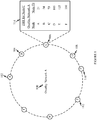
- each service or object stored in the network 100 may have a unique identifier, also selected from the identifier space. All the Node IDs may be part of the same identifier space, which is usually very large to avoid collisions.
- Responsibility for maintaining the Node IDs is distributed among the nodes, in such a way that a change in the set of participating nodes causes a minimal amount of disruption.
- Each node may be responsible for a portion of the identifier space, typically starting from its own Node ID to the Node ID of one or more of its neighbors.
- the node may be responsible for storing objects and/or responding to queries for objects that map to any location within the range for which it is responsible.
- Each node may maintain a set of links to other nodes (its neighbors or routing table). Together, these links form the overlay network.
- a node picks its neighbors according to a certain structure, called the network's topology.
- Centralized registrars may restrict the number of node IDs that a single entity or node can obtain. For instance, in the case of an operator-owned centralized registrar, node IDs may be tied to service subscriptions. Alternatively, a node IDs may be tied to something of value, such as a credit card number. If a centralized registrar assigns a node ID without tying it to anything of value, or if the node IDs are only tied to non-valuable information (e.g., email addresses, IP addresses or MAC addresses, etc.), it makes it easier for an attacker to obtain several node IDs. This fosters Sybil attacks and allows an attacker to obtain several node IDs until a desired one is obtained.
- non-valuable information e.g., email addresses, IP addresses or MAC addresses, etc.
- FIG. 5 is a diagram illustrating the verification of node IDs prior to allowing a joining node to join a DHT of an overlay network.
- the joining node 502 sends a request 506 to become a neighbor of the verifier 504.
- the "verifier" may be another node in the overlay network. Usually, such verification is triggered when a node tries to form a DHT neighbor relationship with another node.
- the joining node may send a first nonce (Nonce-J). It could send its certificate (CERT-J) as well, but the verifier 504 may want to be stateless at this stage.
- Nonce-J Once-J
- CERT-J certificate
- the verifier node 504 then verifies the response 514 by, for example, by validating the certificate CERT-J and signature SIG-J. Additionally, the verifier node 504 may verify the joining nodes ID (Node ID-J). To do this, the verifier node 504 uses Rand-J and Rand-CR (e.g., obtained from CERT-J) and computes the joining node ID and compares it to the received Node ID-J. Note that, the joining node's certificate CERT-J is signed by a trusted certificate authority (e.g., centralized registrar 404) so the verifier node 504 can extract data (e.g., Rand-CR) in CERT-J by using the centralized registrar's public key PuK-CR for verification.
- a trusted certificate authority e.g., centralized registrar 404
- some of the nodes in the peer-to-peer overlay network may act as distributed registrars for the overlay network and have the responsibility of assigning the node IDs in such a manner that the nodes are approximately uniformly distributed in the overlay network.
- the node ID assignment process is similar to that in the case of the centralized registrar (illustrated in FIG. 3 ).
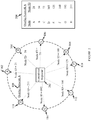
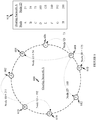
- node IDs may be generated using a well-known algorithm by a joining node itself but with input contributions from a plurality of other nodes in the overlay network. In this model, all nodes are considered equals from the point of view of ID space management.
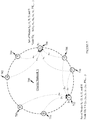
- This set S includes at least one more node than the maximum number of adversarial nodes in the overlay network 700.
- set S C four inputs from other nodes (e.g., nodes A, B, D, and E) are chosen while the maximum number of adversarial nodes is three (nodes A, E and G). This ensures that there is at least one truly random input when calculating Node ID C , even if all the rest of the nodes were colluding with the joining node C.
- the joining node's C public key PKc along with all the random numbers (x A , x B , x D , and x E ) are inputs to the hash function h to generates the node ID C in the overlay network 700.
- the verification of a node ID may be an online process where a verifying node obtains the supposed inputs used to originally calculate the node ID and verifies that the node ID is the correct. However, at any given time some of the nodes may be offline (e.g., the node may be off). Assuming that, on average, a fraction f 2 of the nodes (i.e., out of the nodes that provided input numbers for calculating a node ID) will be offline at any one time, this implies that the size of the set S is at least (f 1 * N + 1)/f 2 nodes to ensure online verifiability.
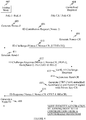
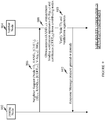
- the joining node n J 802 then sends a join request 810, including a hash of the random number h(RAND J ), a joining node certificate CERT J and, for security, may sign the join request message as well as a signature (SIG J ), to an introducer node n I 804 (e.g., n J ⁇ n I : Join Request (h(RAND J ), CERT J , SIG J ), where CERT J is a digital certificate of the joining node and contains its certified public key Pu J ).
- the join request message 810 may be signed using the joining node's private key Pr J and its public key Pu J is distributed so that the signed message can be verified by the receiving node.
- Such message signature SIG J may cover the hashed random number h(RAND J ).
- the introducer node n I 804 then sends a randomness contribution request 812 to
- -1 randomly selected nodes n CX 814 in the overlay network, where the contribution request 812 includes the joining node's request message 810 (h(RAND J ), CERT J , SIG J ) after adding its own signature SIG I (e.g., n I ⁇ n CX for x ⁇ 0, 1, ...,
- ID CX is the node identifier for the contributing node n CX
- CERT CX is the certificate of the contributing node n CX ).
- each of the contributor nodes n CX 814 After receiving the S randomness contributions (e.g.,
- -1 from the contributor nodes 814 and one from the joining node 802), each of the contributor nodes n CX 814 computes a commitment binding verification signature V-Sig CX 820 by signing all the hashed random number contributions h(RAND CX ) including the joining node's contribution h(RAND J ) and the hash of the joining node's public key Pu J (e.g., each node n CX computes multi-party commitment binding verification signature: V-Sig CX SIG CX (h(Pu I ) ⁇ h(RAND J ) ⁇ h(RAND C0 ) ⁇ ... ⁇ h(RAND C(
- commitment binding verification signatures V-Sig CX may be referred to as multi-party (or multi-node) verification signatures and ensure that all the random number contributions (from the different contributor nodes) are tied to each other. These commitment binding verification signatures V-Sig CX are provided or distributed by all
- These messages 822 may be signed SIG CX (for protection) as with all other messages.
- the introducer node 814 may verify the contribution responses 816 (using the received random inputs/contributions RAND CX ) and also verifies the binding signatures (i.e., verification signatures V-Sig CX ) 824 to ensure that the messages are compliant to the protocol.
- the introducer node 804 may verify that the received random inputs/contributions RAND CX are those used in each of the commitment binding verification signatures V-Sig CX After successful verification, the introducer node 804 may send a join response 826 including the random numbers RAND CX , binding verification signatures V-Sig CX to the joining node 802 (e.g., n I ⁇ n J : Join Response ( ⁇ ID CX , RAND CX , [CERT CX ], V-Sig CX ⁇
- x ⁇ 0, 1, ...,
- x ⁇ 0, 1, ...,
- -1 ⁇ " denotes concatenation of f(x) for x ⁇ 0, 1, ...,
- FIG. 9 is a diagram illustrating the verification of a node ID in a multi-party commitment model.
- the joining node may have undergone a procedure (similar to FIG. 8 ) in which multiple other nodes contribute random numbers used by the joining node to generate its node ID.
- the joining node may send its node identifier Node ID J , a first input/contribution RAND J (generated by the joining node and used for node ID generation), a plurality of contributor inputs/values RAND CX , and the corresponding verification signatures V-Sig CX from the contributor nodes.
- the response message 918 indicates that the neighbor request is granted; otherwise it is denied.
- the verifier node 904 may also contact some or all contributor nodes n CX to verify their presence. This may be done by using the contributor node identifiers ID CX to determine which nodes contributed to the node ID generation.
- each message may include a secure signature SIG K over the content of the message using the sending node's private key Pr K .
- a receiving node can verify the content of the message using the sending node's public key Pu K , which may be know or obtainable by the receiving node.
- the joining node n J is used its public key Pu J (or derivative thereof) as its random input RAND J (used in FIGs. 8 and 9 ).
- Table 1 Node(s) Operation Calculation of Node ID n J Generate public/private key pair (Pu J , Pr J ) n J ⁇ n I Join Request (h(RAND J ), CERT J , SIG J ) where CERT J contains Pu J n I ⁇ n CX Contribution Request (h(RAND J ), CERT J , SIG J , ⁇ ID CX ⁇ , [CERT I ], SIG I ) n CX ⁇ n I , n CY Contribution Responses (ID CX , h(RAND J ), h(RAND CX ), [CERT CX ], SIG CX ), where n CY are the other contributing nodes.
- n CX Compute Verification Signature
- V-Sig CX SIG CX ( h(Pu J ) ⁇ h(RAND J ) ⁇ h(RAND C0 ) ⁇ ... ⁇ h(RAND C(
- x ⁇ 0, 1, ...,
- -1 ⁇ , [CERT I ], SIG I ) n J Generate node ID J h(Pu J ⁇ RAND J ⁇ RAND C0 ⁇ ... ⁇ RAND C(
- This multi-party commitment method is completely decentralized and does not rely on any special trusted entities. It ensures the same level of identity strength as in the case of centrally assigned node IDs. All nodes are treated equal from a trust perspective and hence, this method handles various kinds of true peer-to-peer overlay networks. Threats from adversarial nodes (e.g., colluding nodes) are thwarted, as long as the fraction of adversaries in the network does not exceed the number of contributing nodes.
- adversarial nodes e.g., colluding nodes
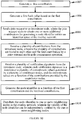
- FIG. 10 illustrates an example of a method operational in a joining node for generating a node identifier for a peer-to-peer overlay network.
- the joining node may seek to obtain a node identifier in a manner that reduces or minimizes the opportunities for adversarial nodes to collude in selecting their own node identifier.
- the joining node may generate a first contribution 1002 (e.g., joining node random input value). Additionally, a first hash value may be generated based on the first contribution, where the subsequent join request may include the first hash value that can be used by a plurality of contributor nodes in calculating verification signatures 1004.
- a join request may be sent to an introducer node, where the join request seeks to obtain one or more additional contributions for generating a node identifier within an identifier space of the overlay network 1006.
- the join request may include the first hash value of the first contribution, where the first hash value is provided to a plurality of contributor nodes and used in calculating verification signatures.
- the introducer node may be a randomly or pseudo-randomly selected node in the overlay network or it may be an assigned or trusted node within the overlay network.
- the joining node may receive a plurality of contributions (e.g., random input values) from the introducer node, wherein the plurality of contributions are bound to each other and the first contribution by a prior external multi-node commitment operation 1008.
- the joining node may also receive a plurality of verification signatures from the introducer node, wherein each verification signature is a function of a plurality of commitment values generated by a plurality of contributor nodes, and the commitment values are a function of the contributions provided by the contributor nodes 1010. Consequently, each verification signature binds the commitment values, and consequently the contributions, together prior to each contributor node actually disclosing its contribution.
- the contributions may be either random or pseudorandom values.
- the node identifier may then be generated as a function of the first contribution and the received contributions 1012.
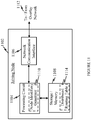
- FIG. 11 is a block diagram illustrating an example of a device that may be seeking to operate as a node of an overlay network.
- the node device 1102 may include a processing circuit 1104 coupled to a network communication interface 1106, and (optionally) a storage device 1108.
- the processing circuit 1104 may include a node identifier generator 1110 configured to perform the method illustrated in FIG. 10 . That is, the node identifier generator 1110 may be configured to request one or more contributions or input values from other nodes in the network (via the network communication interface 1106) which it then uses to generate its own node identifier. This node identifier may then be provided to neighboring nodes in the overlay network via the network communication interface 1106.
- the storage device 1108 may include a distributed routing table 1114 in which the node device 1102 may maintain routing (e.g., node identifier) information for one or more of its neighboring nodes.
- routing e.g., node identifier
- Such neighboring nodes are "neighboring" in the sense that their node identifiers are close in value to the node identifier for the node device 1102 (not necessarily physically close).
- a contribution collection module 1214 may receive (in response to the request) one or more contributions, inputs, or values RAND CX 1213 and/or one or more corresponding commitment binding verification signatures V-Sig CX 1215 from a plurality of nodes of the overlay network 1212.
- the one or more contributions RAND CX 1213 and the contribution RAND J 1205 then serve as inputs to a node identifier generator 1216 that generates a node identifier (Node ID) 1217 that the joining device 1202 can use.
- a node identifier distribution module 1218 may then send the node identifier Node ID 1217 to one or more neighboring nodes 1220 in the overlay network so the joining node can be added to their distributed routing tables.
- the neighboring nodes may be nodes that have node identifiers that are close in value to the node identifier 1217.
- FIG. 13 illustrates an example of a method operational in an introducer node to facilitate a joining node to obtain a node identifier in a peer-to-peer overlay network.
- a join request may be received from the joining node seeking to obtain one or more contributions for generating a new node identifier within an identifier space for the overlay network 1302.
- the join request may include a first hash value of a first contribution, where the first hash value may be subsequently provided to contributor nodes and used in calculating verification signatures.
- the introducer node may send a plurality of contribution requests to a plurality of contributor nodes in the overlay network 1304.
- the number of contributor nodes to which the contribution requests are sent is at least one more than a number of (expected, possible, or anticipated) adversarial nodes in the overlay network. Additionally, the contributor nodes to which the contribution requests are sent may be either randomly or pseudo-randomly selected.
- a plurality of commitment values may be received from the contributor nodes, wherein each commitment value is a function of a corresponding contribution generated at each of the contributor nodes 1306.
- the plurality of commitment values may then be distributed to the contributor nodes 1308.
- the plurality of commitment values may be distributed directly by the contributor nodes to other contributor nodes. However, by first sending the commitment values to the introducer node, all the commitment values can be collected prior to any contributor node receiving a commitment value from another contributed node, thus preventing an adversarial contributor node from modifying its own commitment value to achieve a particular node identifier.
- each verification signature is a function of the plurality of commitment values 1310.
- the introducer node may receive a verification signature from each of the contributor nodes, wherein each verification signature is a function of the plurality of commitment values.
- Each verification signature may bind the commitment values (and consequently the contributions) together prior to each contributor node actually disclosing its contribution. Additionally, each verification signature may also be a function of a first value (e.g., a hash of a joining node contribution) from the joining node.
- the introducer node may verify the commitment values and verification signatures prior to sending the contributions to the joining node 1312.
- the plurality of contributions may then be sent to the joining node, where a node identifier is generated by the joining node as a function of the plurality of contributions 1314 and, possibly, the joining node's own contribution and/or public key.
- the contributions may be random or pseudorandom values.
- the verification signatures may also be sent to the joining node 1316.
- FIG. 14 is a block diagram illustrating an example of a device that may operate as an introducer node of an overlay network to facilitate the generation of a node identifier by a joining node.
- the node device 1402 may include a processing circuit 1404 coupled to a network communication interface 1406, and (optionally) a storage device 1408.
- the processing circuit 1404 may include a node join request module 1410 configured to assist another node in generating its own node identifier as illustrated in the method of FIG. 13 . That is, the node join request module 1410 may receive a request from a node (via the network communication interface 1406) for assistance in obtaining contributions to generate a node identifier.
- the node join request module 1410 may be configured to send a commitment request (via the network communication interface 1406) to one or more contributor nodes in the overlay network and receive one or more contributions from the contributor nodes. The node join request module 1410 then passes the one or more contributions to the requesting node.
- the storage device 1408 may include a distributed routing table 1414 in which the node device 1402 may maintain routing (e.g., node identifier) information for one or more of its neighboring nodes.
- FIG. 15 is a block diagram illustrating an example of the functional components of an introducer node.
- the introducer node 1502 may include a join request receiver 1506 that receives join request messages 1505 from a joining node 1504.
- the join request message 1505 may include a hash value h(RAND J ) of a nonce RAND J from the joining node.
- a contribution request module 1508 may send out one or more requests 1509 to one or more contributor nodes 1510 in the overlay network.
- Each of the contributor nodes may provide a commitment value h(RAND CX ) 1512 that may be a function of the actual contribution RAND CX it intends to make.
- the commitment value 1512 may be a hash of the actual contribution so the actual contribution is not disclosed at this point.
- a commitment distribution module 1516 may distribute the received commitment values to all contributor nodes 1518.
- a contribution collection module 1520 may receive the contribution RAND CX 1519, and possibly the verification signature V-Sig(h(RAND CX )) 1521 from each contributor node.
- a verification module 1523 may verifying the commitment values and verification signatures prior to sending the contributions to the joining node.
- a contribution distribution module 1524 may then send the received contributions RAND CX and also the verification signatures V-Sig to the joining node 1504.
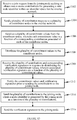
- FIG. 16 illustrates an example of a method operational in a contributor node to facilitate a joining node to obtain a node identifier in a peer-to-peer overlay network.
- a contribution request for a contribution may be received, where the contribution request includes a hashed initial contribution from the joining node 1602.
- the contributor node may obtain a first contribution 1604 and generates a commitment value from the first contribution 1606.
- the contributor node then sends the commitment value to at least one other contributor node 1608.
- Other commitment values may then be received from the at least one other contributor node 1610.
- a verification signature may be generated based on the received commitment values and the hashed initial contribution 1612.
- the first contribution and the verification signature may be sent to the joining node after receiving the other commitment values, where the node identifier is generated by the joining node as a function of at least the first contribution and the initial contribution 1614.
- the first contribution may be one of either a random or pseudorandom value.
- the verification signature binds the commitment values and hashed initial contribution from the joining node, thereby allowing other nodes to subsequently verify the authenticity of the node identifier.
- the commitment value may first be sent to an introducer node that collects the commitment values and then distributes them to the contributor node.
- FIG. 17 is a block diagram illustrating an example of a device that may operate as a contributor node in an overlay network to facilitate the generation of a node identifier by a joining node.
- the node device 1702 may include a processing circuit 1704 coupled to a network communication interface 1706, and (optionally) a storage device 1708.
- the processing circuit 1704 may include a contribution generator 1710 configured to assist another node in generating its own node identifier as illustrated in the method of FIG. 16 . That is, the contribution generator 1710 may receive a contribution request from a node (via the network communication interface 1706) for obtaining a contribution to generate a node identifier.
- the contribution generator 1710 may be configured to calculate a commitment value based on a first contribution.
- the commitment value is then sent (via the network communication interface 1706) to one or more other contributor nodes in the overlay network.
- the contributor node 1702 may then receive one or more commitment values from other contributor nodes. These commitment values are then combined to generate a verification signature which is sent to the joining node along with the first contribution.
- FIG. 18 is a block diagram illustrating an example of the functional components of a contributor node.
- the contributor node 1802 may include a contributor request receiver 1806 for receiving a contribution request 1805 for a contribution, the contribution request including a hashed initial contribution h(RAND J ) from the joining node or introducer node 1804.
- a number generator 1808 e.g., contribution generator
- a commitment generator 1814 then generates a commitment value h(RAND C ) from the first contribution RAND C .
- a commitment distributor 1816 may send the commitment value h(RAND C ) to at least one other contributor node 1818.
- a contribution collection module 1820 may receive other commitment values h(RAND CX ) from the at least one other contributor nodes.
- a verification signature generator 1822 may generate a verification signature V-Sig C based on the received commitment values h(RAND CX ) and the hashed nonce h(RAND J ).
- a contribution distribution module 1824 may send the first contribution RAND C and the verification signature V-Sig C to the joining node 1804 after receiving the other commitment values h(RAND CX ), where the node identifier is generated by the joining node as a function of at least the first contribution and the initial contribution. Consequently, the verification signature binds the commitment values and hashed nonce, thereby allowing other nodes to subsequently verify the authenticity of the node identifier.
- the multi-party commitment method of FIGs. 8 and 9 may be further optimized by attempting to reduce the number of contributing nodes that are contacted to obtain random inputs for node ID generation.
- a significant complexity in the multi-party commitment method comes from the fact that the number of contributor nodes should be at least one more than the number of adversarial node in the network. In a system with a reasonably large number of overlay nodes, this causes unacceptable number of messages and signatures at the time that a node joins. If the rate of node joins is high, this could lead to a lot of undesirable overlay network traffic. Also, outside the fact that it is tough to accurately estimate the number of adversarial nodes in a practical system, it also places a limit on that not-so-accurate number beyond which the scheme cannot be guaranteed to produce genuinely random identities.
- the number of such contributor nodes can be reduced to a just a few. This would ensure with high probability that the input was not provided by a colluding node in the system.
- Several approaches are possible for optimizing the multi-party commitment method above.
- One approach is to use a hash chain of the joining node's public key, or a predefined pseudorandom generation function with the joining node's public key as seed, to provide a set of node IDs that would act as contributor nodes.
- Another approach is to use the node IDs resulting from such a hash chain or pseudorandom function as direct inputs to the joiner's node ID algorithm to keep the number of messages low. In both of these cases, given that the joining node can create various public keys to arrive at convenient node IDs, a chosen location attack is not protected against effectively.
- Another approach provides for using the introducer node's public key Pu I to find the contributor nodes.
- the value x is used to find a node n c that is responsible for that point (i.e., value x) in the overlay network.
- the node n c is then used to determine nodes n c-prev and n c-next which are the predecessor and successor nodes to node n c in the overlay network respectively.
- These nodes n c-prev and n c-next are chosen as the randomness contributors for generating a new node identifier for a joining node.
- the multi-party randomness contribution is run with these nodes as the contributors.
- the values x, y, and z may be used to find a plurality of nodes n X , n Y , and n Z that are responsible for the corresponding points (i.e., values x, y, and z) in the overlay network.
- these nodes n X , n Y , and n Z may be used as the contributors nodes that provide input values to a joining node.
- a neighboring node upon receiving a request (with a new node identifier) from a joining node to be added as a neighboring node, a neighboring node should be able to independently verify the new node identifier. To do this, the neighboring node obtains the information as illustrated in FIG. 9 as a verifier.
- circuit(s) or circuit sections may be implemented alone or in combination as part of an integrated circuit with one or more processors.
- the one or more of the circuits may be implemented on an integrated circuit, an Advance RISC Machine (ARM) processor, a digital signal processor (DSP), a general purpose processor, etc.
- ARM Advance RISC Machine
- DSP digital signal processor
- the embodiments may be described as a process that is depicted as a flowchart, a flow diagram, a structure diagram, or a block diagram. Although a flowchart may describe the operations as a sequential process, many of the operations can be performed in parallel or concurrently. In addition, the order of the operations may be re-arranged.
- a process is terminated when its operations are completed.
- a process may correspond to a method, a function, a procedure, a subroutine, a subprogram, etc.
- a process corresponds to a function
- its termination corresponds to a return of the function to the calling function or the main function.
- a component may be, but is not limited to being, a process running on a processor, a processor, an object, an executable, a thread of execution, a program, and/or a computer.
- an application running on a computing device and the computing device can be a component.
- One or more components can reside within a process and/or thread of execution and a component may be localized on one computer and/or distributed between two or more computers.
- these components can execute from various computer readable media having various data structures stored thereon.
- a storage medium may represent one or more devices for storing data, including read-only memory (ROM), random access memory (RAM), magnetic disk storage mediums, optical storage mediums, flash memory devices and/or other machine readable mediums for storing information.
- ROM read-only memory
- RAM random access memory
- magnetic disk storage mediums magnetic disk storage mediums
- optical storage mediums flash memory devices and/or other machine readable mediums for storing information.
- machine readable medium includes, but is not limited to portable or fixed storage devices, optical storage devices, wireless channels and various other mediums capable of storing, containing or carrying instruction(s) and/or data.
- embodiments may be implemented by hardware, software, firmware, middleware, microcode, or any combination thereof.
- the program code or code segments to perform the necessary tasks may be stored in a machine-readable medium such as a storage medium or other storage(s).
- a processor may perform the necessary tasks.
- a code segment may represent a procedure, a function, a subprogram, a program, a routine, a subroutine, a module, a software package, a class, or any combination of instructions, data structures, or program statements.
- a code segment may be coupled to another code segment or a hardware circuit by passing and/or receiving information, data, arguments, parameters, or memory contents. Information, arguments, parameters, data, etc. may be passed, forwarded, or transmitted via any suitable means including memory sharing, message passing, token passing, network transmission, etc.
- FIGS. 1 , 2 , 3 , 4 , 5 , 6 , 7 , 8 , 9 , 10 , 11 , 12 , 13 , 14 , 15 , 16 , 17 and/or 18 may be rearranged and/or combined into a single component, step, or function or embodied in several components, steps, or functions. Additional elements, components, steps, and/or functions may also be added without departing from the invention.
- the apparatus, devices, and/or components illustrated in FIGS. 11 , 12 , 14 , 15 , 17 and/or 18 may be configured to perform one or more of the methods, features, or steps described in FIGS. 1 , 2 , 3 , 4 , 5 , 6 , 7 , 8 , 9 , 10 , 13 , and/or 16.
- the novel algorithms described herein may be efficiently implemented in software and/or embedded hardware.
Landscapes
- Engineering & Computer Science (AREA)
- Computer Security & Cryptography (AREA)
- Computer Networks & Wireless Communication (AREA)
- Signal Processing (AREA)
- Computing Systems (AREA)
- Computer Hardware Design (AREA)
- General Engineering & Computer Science (AREA)
- Physics & Mathematics (AREA)
- Mathematical Physics (AREA)
- Theoretical Computer Science (AREA)
- Multimedia (AREA)
- Computer And Data Communications (AREA)
- Data Exchanges In Wide-Area Networks (AREA)
- Information Transfer Between Computers (AREA)
Claims (15)
- Ein Verfahren, das auf einem beitretenden Knoten (802, 1102, 1202) zum Erzeugen eines Knotenidentifizierers für ein Peer-to-Peer-Overlay-Netzwerk betriebsfähig ist, das aufweist:Erzeugen (1002) eines ersten Beitrags (808);Senden (1006) einer Beitrittsanforderung (810) an einen Einführungs- bzw. Zuführknoten (804, 1402, 1502), wobei die Beitrittsanforderung versucht, einen oder mehrere Beiträge zum Erzeugen des Knotenidentifizierers innerhalb eines Identifiziererraums des Overlay- bzw. Überlagerungs-Netzwerks zu erlangen;Empfangen (1008) einer Vielzahl von Beiträgen (826) von dem Einführungsknoten, wobei die Beiträge miteinander und mit dem ersten Beitrag durch eine vorherige externe Mehrfachknoten-Commitment- bzw. Verpflichtungs-Operation verbunden sind; undErzeugen (1012) des Knotenidentifizierers (828) als eine Funktion des ersten Beitrags und der empfangenen Beiträge.
- Das Verfahren gemäß Anspruch 1, das weiter aufweist:
Erzeugen (1004) eines ersten Hash-Werts basierend auf dem ersten Beitrag, wobei die Beitrittsanforderung den ersten Hash-Wert umfasst, der von einer Vielzahl von Beitragsknoten (814, 1702, 1802) bei einem Berechnen von Verifizierungssignaturen verwendet wird, und/oder weiter aufweist:
Empfangen (1010) einer Vielzahl von Verifizierungssignaturen von dem Einführungsknoten, wobei jede Verifizierungssignatur eine Funktion einer Vielzahl von Commitment-Werten ist, die von einer Vielzahl von Beitragsknoten erzeugt werden, und die Commitment-Werte eine Funktion der Beiträge sind, die von den Beitragsknoten vorgesehen werden, und vorzugsweise wobei jede Verifizierungssignatur die Commitment-Werte miteinander verbindet und auch die Beiträge miteinander verbindet, bevor jeder Beitragsknoten seinen Beitrag offenbart. - Das Verfahren gemäß Anspruch 1, wobei die Beiträge eines aus entweder zufälligen oder pseudozufälligen Werten sind, und/oder wobei die Beitrittsanforderung einen ersten Hash-Wert des ersten Beitrags umfasst, wobei der erste Hash-Wert an eine Vielzahl von Beitragsknoten vorgesehen wird und bei einem Berechnen der Verifizierungssignaturen verwendet wird.
- Das Verfahren gemäß Anspruch 1, das weiter aufweist:
Verteilen (1014) des Knotenidentifizierers an einen oder mehrere benachbarte Knoten in dem Overlay-Netzwerk, wobei die Gültigkeit des Knotenidentifizierers unabhängig durch den einen oder mehrere benachbarte Knoten verifiziert werden kann. - Eine Netzwerkvorrichtung (802, 1102, 1202), die aufweist:Mittel zum Erzeugen (1002) eines ersten Beitrags (808);Mittel zum Senden (1006) einer Beitrittsanforderung (810) an einen Einführungsknoten (804, 1402, 1502), wobei die Beitrittsanforderung versucht, einen oder mehrere Beiträge zum Erzeugen des Knotenidentifizierers innerhalb eines Identifiziererraums eines Overlay-Netzwerks zu erlangen;Mittel zum Empfangen (1008) einer Vielzahl von Beiträgen (826) von dem Einführungsknoten, wobei die Beiträge miteinander und mit dem ersten Beitrag durch eine vorherige externe Mehrfachknoten-Commitment-Operation verbunden sind; undMittel zum Erzeugen (1012) eines Knotenidentifizierers (828) als eine Funktion des ersten Beitrags und der empfangenen Beiträge.
- Ein Verfahren, das auf einem Einführungsknoten (804, 1402, 1502) betriebsfähig ist, um einen beitretenden Knoten (802, 1102, 1202) bei einem Erzeugen eines Knotenidentifizierers für ein Peer-to-Peer-Overlay-Netzwerk zu unterstützen, das aufweist:Empfangen (1302) einer Beitrittsanforderung (810) von dem beitretenden Knoten, der versucht, einen oder mehrere Beiträge zum Erzeugen eines neuen Knotenidentifizierers innerhalb eines Identifiziererraums für das Overlay-Netzwerk zu erlangen;Senden (1304) einer Vielzahl von Beitragsanforderungen an eine Vielzahl von Beitragsknoten (814, 1702, 1802) in dem Overlay-Netzwerk;Empfangen (1306) einer Vielzahl von Commitment-Werten von den Beitragsknoten, wobei jeder Commitment-Wert eine Funktion eines entsprechenden Beitrags ist, der an jedem der Beitragsknoten erzeugt wird;Verteilen (1308) der Vielzahl von Commitment-Werten an die Beitragsknoten;Empfangen (1310) der Vielzahl von Beiträgen und entsprechender Verifizierungssignaturen in Reaktion auf ein Verteilen der Vielzahl von Commitment-Werten, wobei jede Verifizierungssignatur eine Funktion der Vielzahl von Commitment-Werten ist; undSenden (1314) der Vielzahl von Beiträgen an den beitretenden Knoten, wobei der Knotenidentifizierer von dem beitretenden Knoten als eine Funktion der Beiträge erzeugt wird.
- Das Verfahren gemäß Anspruch 6, wobei die Beiträge eines aus entweder zufälligen oder pseudozufälligen Werten sind; und/oder
wobei die Beitrittsanforderung einen ersten Hash-Wert eines ersten Beitrags umfasst, wobei der erste Hash-Wert an die Beitragsknoten vorgesehen wird und bei einem Berechnen der Verifizierungssignaturen verwendet wird; und/oder
wobei die Vielzahl von Commitment-Werten direkt durch die Beitragsknoten an andere Beitragsknoten verteilt werden; und/oder
wobei ein Beitrags- und Verifizierungssignatur-Paar von jedem der Vielzahl von Beitragsknoten empfangen wird. - Das Verfahren gemäß Anspruch 6, wobei jede Verifizierungssignatur auch eine Funktion eines ersten Werts von dem beitretenden Knoten ist; und vorzugsweise
wobei jede Verifizierungssignatur die Commitment-Werte miteinander verbindet und auch die Beiträge miteinander verbindet, bevor jeder Beitragsknoten seinen Beitrag offenbart. - Das Verfahren gemäß Anspruch 6, das weiter aufweist:
Verifizieren (1312) der Commitment-Werte und Verifizierungssignaturen vor einem Senden der Beiträge an den beitretenden Knoten; und/oder weiter aufweist:Senden (1316) der Verifizierungssignaturen an den beitretenden Knoten; und/oderwobei die Anzahl von Beitragsknoten, an die die Beitragsanforderungen gesendet werden, zumindest um eins größer ist als eine Anzahl von gegnerischen Knoten in dem Overlay-Netzwerk; und/oderwobei die Beitragsknoten, an die die Beitragsanforderungen gesendet werden, eines aus entweder zufällig oder pseudozufällig ausgewählt sind. - Das Verfahren gemäß Anspruch 6, das weiter aufweist:Reduzieren der Anzahl von Beitragsknoten, an die die Vielzahl von Beitragsanforderungen gesendet werden, wobei die Beitragsknoten ein reduzierter Satz von Knoten aus einem größeren Satz von Knoten in dem Peer-to-Peer-Overlay-Netzwerk sind, und vorzugsweisewobei der reduzierte Satz von Knoten zufällig ausgewählt wird, um die Möglichkeit einer Kollusion zwischen Knoten zu vermeiden; und/oder wobei die zufällige Auswahl von Beitragsknoten auf einem öffentlichen Schlüssel für den beitretenden Knoten basiert; oderwobei die zufällige Auswahl von Beitragsknoten auf einem öffentlichen Schlüssel für den Einführungsknoten beruht; oderwobei ein Wert x basierend auf dem öffentlichen Schlüssel für den Einführungsknoten erzeugt wird, dieser Wert x verwendet wird, um einen Knoten nC zu finden, der für diesen Punkt für den Wert x in dem Overlay-Netzwerk verantwortlich ist, wobei der Knoten nC dann verwendet wird, um einen vorherigen Knoten nC-PREV und einen nächsten Knoten nC-NEXT zu bestimmen, die die Vorgänger- bzw. Nachfolgerknoten zu dem Knoten nC in dem Overlay-Netzwerk sind, wobei der vorherige Knoten und der nächste Knoten als Beitragsknoten verwendet werden; oderwobei ein Wert x basierend auf dem öffentlichen Schlüssel für den Einführungsknoten und einer ersten Zeichenkette bzw. String erzeugt wird, ein Wert y basierend auf dem öffentlichen Schlüssel für den Einführungsknoten und einem zweiten String erzeugt wird, und ein Wert z basierend auf dem öffentlichen Schlüssel für den Einführungsknoten und einem dritten String erzeugt wird, wobei die Werte x, y und z dann verwendet werden, um eine Vielzahl von Knoten nX, nY und nZ zu finden, die für die entsprechenden Werte x, y und z in dem Overlay-Netzwerk verantwortlich sind, wobei diese Vielzahl von Knoten nX, nY und nZ als die Beitragsknoten verwendet werden.
- Eine Netzwerkvorrichtung (804, 1402, 1502), die aufweist:Mittel zum Empfangen (1302) einer Beitrittsanforderung von einem beitretenden Knoten (802, 1102, 1202), der versucht, einen oder mehrere Beiträge zum Erzeugen eines neuen Knotenidentifizierers innerhalb eines Identifiziererraums für ein Overlay-Netzwerk zu erlangen;Mittel zum Senden (1304) einer Vielzahl von Beitragsanforderungen an eine Vielzahl von Beitragsknoten (814, 1702, 1802) in dem Overlay-Netzwerk;Mittel zum Empfangen (1306) einer Vielzahl von Commitment-Werten von den Beitragsknoten, wobei jeder Commitment-Wert eine Funktion eines entsprechenden Beitrags ist, der an jedem der Beitragsknoten erzeugt wird;Mittel zum Verteilen (1308) der Vielzahl von Commitment-Werten an die Beitragsknoten;Mittel zum Empfangen (1310) der Vielzahl von Beiträgen und entsprechender Verifizierungssignaturen in Reaktion auf ein Verteilen der Vielzahl von Commitment-Werten, wobei jede Verifizierungssignatur eine Funktion der Vielzahl von Commitment-Werten ist; undMittel zum Senden (1314) der Vielzahl von Beiträgen an den beitretenden Knoten, wobei ein Knotenidentifizierer von dem beitretenden Knoten als eine Funktion der Beiträge erzeugt wird.
- Ein Verfahren, das auf einem Beitragsknoten (814, 1702, 1802) betriebsfähig ist, um einen beitretenden Knoten (802, 1102, 1202) bei einem Erzeugen eines Knotenidentifizierers für ein Peer-to-Peer-Overlay-Netzwerk zu unterstützen, das aufweist:Empfangen (1602) einer Beitragsanforderung für einen Beitrag, wobei die Beitragsanforderung einen Hash-Anfangsbeitrag von dem beitretenden Knoten umfasst;Erlangen (1604) eines ersten Beitrags;Erzeugen (1606) eines Commitment-Werts aus dem ersten Beitrag;Senden (1608) des Commitment-Werts an zumindest einen anderen Beitragsknoten;Empfangen (1610) anderer Commitment-Werte von dem zumindest einen anderen Beitragsknoten;Erzeugen (1612) einer Verifizierungssignatur basierend auf den empfangenen Commitment-Werten und dem Hash-Anfangsbeitrag; undSenden (1614) des ersten Beitrags und der Verifizierungssignatur an den beitretenden Knoten nach dem Empfangen der anderen Commitment-Werte, wobei der Knotenidentifizierer durch den beitretenden Knoten als eine Funktion zumindest des ersten Beitrags und des Anfangsbeitrags erzeugt wird.
- Das Verfahren gemäß Anspruch 12, wobei der erste Beitrag einer aus entweder einem zufälligen oder einem pseudozufälligen Wert ist; und/oder wobei die Verifizierungssignatur die Commitment-Werte und den Hash-Anfangsbeitrag verbindet, so dass andere Knoten anschließend die Authentizität des Knotenidentifizierers verifizieren können; und/oder
wobei der Commitment-Wert zuerst an einen Einführungsknoten gesendet wird, der die Commitment-Werte sammelt und sie dann an den Beitragsknoten verteilt. - Eine Beitragsknotenvorrichtung (814, 1702, 1802), die aufweist:Mittel zum Empfangen (1602) einer Beitragsanforderung für einen Beitrag, wobei die Beitragsanforderung einen Hash-Anfangsbeitrag von einem beitretenden Knoten (802, 1102, 1202) umfasst;Mittel zum Erlangen (1604) eines ersten Beitrags;Mittel zum Erzeugen (1606) eines Commitment-Werts aus dem ersten Beitrag;Mittel zum Senden (1608) des Commitment-Werts an zumindest einen anderen Beitragsknoten;Mittel zum Empfangen (1610) anderer Commitment-Werte von dem zumindest einen anderen Beitragsknoten;Mittel zum Erzeugen (1612) einer Verifizierungssignatur basierend auf den empfangenen Commitment-Werten und dem Hash-Anfangsbeitrag; undMittel zum Senden (1614) des ersten Beitrags und der Verifizierungssignatur an den beitretenden Knoten nach dem Empfangen der anderen Commitment-Werte, wobei der Knotenidentifizierer durch den beitretenden Knoten als eine Funktion zumindest des ersten Beitrags und des Anfangsbeitrags erzeugt wird.
- Ein maschinenlesbares Medium, das Anweisungen aufweist, die bei Ausführung durch einen oder mehrere Prozessoren bewirken, dass die Prozessoren das Verfahren gemäß einem der Ansprüche 1 bis 4, 6 bis 10 oder 12 bis 13 ausführen.
Applications Claiming Priority (2)
| Application Number | Priority Date | Filing Date | Title |
|---|---|---|---|
| US12/342,021 US9344438B2 (en) | 2008-12-22 | 2008-12-22 | Secure node identifier assignment in a distributed hash table for peer-to-peer networks |
| PCT/US2009/069113 WO2010075338A2 (en) | 2008-12-22 | 2009-12-22 | Secure node identifier assignment in a distributed hash table for peer-to-peer networks |
Publications (2)
| Publication Number | Publication Date |
|---|---|
| EP2380324A2 EP2380324A2 (de) | 2011-10-26 |
| EP2380324B1 true EP2380324B1 (de) | 2018-08-22 |
Family
ID=42267718
Family Applications (1)
| Application Number | Title | Priority Date | Filing Date |
|---|---|---|---|
| EP09799461.0A Not-in-force EP2380324B1 (de) | 2008-12-22 | 2009-12-22 | Sichere zuweisung eines netzwerkknotenidentifikators in einem verteilten hash-tabelle für peer-to-peer-netzwerke |
Country Status (7)
| Country | Link |
|---|---|
| US (1) | US9344438B2 (de) |
| EP (1) | EP2380324B1 (de) |
| JP (1) | JP5241926B2 (de) |
| KR (1) | KR101260188B1 (de) |
| CN (1) | CN102265581B (de) |
| TW (1) | TW201101767A (de) |
| WO (1) | WO2010075338A2 (de) |
Families Citing this family (119)
| Publication number | Priority date | Publication date | Assignee | Title |
|---|---|---|---|---|
| US20110082928A1 (en) * | 2004-10-22 | 2011-04-07 | Microsoft Corporation | Maintaining consistency within a federation infrastructure |
| US20080288659A1 (en) | 2006-11-09 | 2008-11-20 | Microsoft Corporation | Maintaining consistency within a federation infrastructure |
| US8874477B2 (en) | 2005-10-04 | 2014-10-28 | Steven Mark Hoffberg | Multifactorial optimization system and method |
| US8001381B2 (en) * | 2008-02-26 | 2011-08-16 | Motorola Solutions, Inc. | Method and system for mutual authentication of nodes in a wireless communication network |
| US9588806B2 (en) * | 2008-12-12 | 2017-03-07 | Sap Se | Cluster-based business process management through eager displacement and on-demand recovery |
| US8281134B2 (en) * | 2009-01-29 | 2012-10-02 | Symbol Technologies, Inc. | Methods and apparatus for layer 2 and layer 3 security between wireless termination points |
| DE102009024922A1 (de) * | 2009-06-15 | 2010-12-16 | Siemens Aktiengesellschaft | Verfahren zum Bereitstellen einer Knoten-ID in einem Peer-to-Peer-Netzwerk |
| KR101598886B1 (ko) | 2009-10-13 | 2016-03-03 | 삼성전자주식회사 | 이동통신 단말기에서 무선랜을 이용한 피어투피어 연결 방법 및 장치 |
| US8510562B2 (en) * | 2010-03-22 | 2013-08-13 | At&T Intellectual Property I, L.P. | Content distribution with mutual anonymity |
| JP5136585B2 (ja) * | 2010-03-30 | 2013-02-06 | ブラザー工業株式会社 | 情報通信システム、ノード装置、情報処理方法、及び情報処理プログラム |
| US8699708B2 (en) * | 2010-06-29 | 2014-04-15 | Alcatel Lucent | Light-weight security solution for host-based mobility and multihoming protocols |
| US20120008627A1 (en) * | 2010-07-09 | 2012-01-12 | Yung-Han Chen | Method and apparatus for assigning device identifier with collision avoidance |
| GB2495018B (en) | 2010-07-19 | 2017-02-22 | Owl Computing Tech Inc | Secure acknowledgment device for one-way data transfer system |
| US8978113B2 (en) | 2010-12-23 | 2015-03-10 | Qualcomm Incorporated | Allocation of identifiers for application discovery |
| US8935766B2 (en) * | 2011-01-19 | 2015-01-13 | Qualcomm Incorporated | Record creation for resolution of application identifier to connectivity identifier |
| US8688827B2 (en) * | 2011-02-10 | 2014-04-01 | Xvd Technology Holdings Limited | Overlay network |
| US8874990B2 (en) * | 2011-04-01 | 2014-10-28 | Cleversafe, Inc. | Pre-fetching data segments stored in a dispersed storage network |
| US10298684B2 (en) | 2011-04-01 | 2019-05-21 | International Business Machines Corporation | Adaptive replication of dispersed data to improve data access performance |
| US11418580B2 (en) | 2011-04-01 | 2022-08-16 | Pure Storage, Inc. | Selective generation of secure signatures in a distributed storage network |
| US9369285B2 (en) * | 2011-04-28 | 2016-06-14 | Qualcomm Incorporated | Social network based PKI authentication |
| EP2724446A4 (de) * | 2011-06-08 | 2014-10-22 | Socpra Sciences Et Génie S E C | Verfahren zur verwaltung einer verteilten elektrischen last und system zur steuerung gemeinsamer lasten |
| TW201251376A (en) * | 2011-06-09 | 2012-12-16 | Ind Tech Res Inst | Method and device for distribution of nodes, and computer program products thereof |
| KR101221531B1 (ko) | 2011-07-05 | 2013-01-11 | 서울대학교산학협력단 | 클러스터 기반의 분산 해쉬 테이블 기법을 이용한 효율적인 컨텐츠 검색 방법 및 장치 |
| US9092491B2 (en) * | 2011-07-11 | 2015-07-28 | International Business Machines Corporation | Searching documentation across interconnected nodes in a distributed network |
| US8607122B2 (en) * | 2011-11-01 | 2013-12-10 | Cleversafe, Inc. | Accessing a large data object in a dispersed storage network |
| US20130268755A1 (en) * | 2012-04-06 | 2013-10-10 | Microsoft Corporation | Cross-provider cross-certification content protection |
| US9628438B2 (en) * | 2012-04-06 | 2017-04-18 | Exablox | Consistent ring namespaces facilitating data storage and organization in network infrastructures |
| JP6009065B2 (ja) * | 2012-06-15 | 2016-10-19 | アルカテル−ルーセント | 推奨サービスのためのプライバシ保護システムのアーキテクチャ |
| US8707454B1 (en) | 2012-07-16 | 2014-04-22 | Wickr Inc. | Multi party messaging |
| US10904144B2 (en) * | 2012-12-27 | 2021-01-26 | Sitting Man, Llc | Methods, systems, and computer program products for associating a name with a network path |
| WO2014108356A2 (en) * | 2013-01-10 | 2014-07-17 | Telefonaktiebolaget L M Ericsson (Publ) | Connection mechanism for energy-efficient peer-to-peer networks |
| US9552382B2 (en) | 2013-04-23 | 2017-01-24 | Exablox Corporation | Reference counter integrity checking |
| JP2016526717A (ja) | 2013-06-12 | 2016-09-05 | エグザブロックス・コーポレーション | ハイブリッドガベージコレクション |
| WO2014205286A1 (en) | 2013-06-19 | 2014-12-24 | Exablox Corporation | Data scrubbing in cluster-based storage systems |
| US9866591B1 (en) | 2013-06-25 | 2018-01-09 | Wickr Inc. | Enterprise messaging platform |
| US9830089B1 (en) | 2013-06-25 | 2017-11-28 | Wickr Inc. | Digital data sanitization |
| US10567349B2 (en) | 2013-06-25 | 2020-02-18 | Wickr Inc. | Secure time-to-live |
| US10129260B1 (en) | 2013-06-25 | 2018-11-13 | Wickr Inc. | Mutual privacy management |
| RU2632166C2 (ru) * | 2013-07-09 | 2017-10-02 | Телефонактиеболагет Л М Эрикссон (Пабл) | Служба ближней зоны |
| US9934242B2 (en) | 2013-07-10 | 2018-04-03 | Exablox Corporation | Replication of data between mirrored data sites |
| US10248556B2 (en) | 2013-10-16 | 2019-04-02 | Exablox Corporation | Forward-only paged data storage management where virtual cursor moves in only one direction from header of a session to data field of the session |
| US9985829B2 (en) | 2013-12-12 | 2018-05-29 | Exablox Corporation | Management and provisioning of cloud connected devices |
| US9438628B2 (en) * | 2014-01-27 | 2016-09-06 | Honeywell International Inc. | Apparatus and method for securing a distributed control system (DCS) |
| US9774582B2 (en) | 2014-02-03 | 2017-09-26 | Exablox Corporation | Private cloud connected device cluster architecture |
| EP3103025B1 (de) | 2014-02-04 | 2019-07-10 | Exablox Corporation | Inhaltsbasierte organisation von dateisystemen |
| US9698976B1 (en) | 2014-02-24 | 2017-07-04 | Wickr Inc. | Key management and dynamic perfect forward secrecy |
| JP6167990B2 (ja) * | 2014-05-27 | 2017-07-26 | パナソニックIpマネジメント株式会社 | 署名検証システム、検証装置、及び署名検証方法 |
| US20150363769A1 (en) * | 2014-06-16 | 2015-12-17 | Bank Of America Corporation | Cryptocurrency Real-Time Conversion System |
| CN106105142B (zh) * | 2014-06-24 | 2017-12-15 | 谷歌公司 | 网状网络调试 |
| US9584530B1 (en) | 2014-06-27 | 2017-02-28 | Wickr Inc. | In-band identity verification and man-in-the-middle defense |
| SE538279C2 (sv) | 2014-09-23 | 2016-04-19 | Kelisec Ab | Förfarande och system för att fastställa förekomst av |
| US9608907B2 (en) | 2014-09-29 | 2017-03-28 | Vivint, Inc. | Systems and methods for centrally-assisted distributed hash table |
| SE540133C2 (en) | 2014-10-09 | 2018-04-10 | Kelisec Ab | Improved system for establishing a secure communication channel |
| SE539602C2 (en) | 2014-10-09 | 2017-10-17 | Kelisec Ab | Generating a symmetric encryption key |
| SE538304C2 (sv) | 2014-10-09 | 2016-05-03 | Kelisec Ab | Improved installation of a terminal in a secure system |
| SE542460C2 (en) | 2014-10-09 | 2020-05-12 | Kelisec Ab | Improved security through authenticaton tokens |
| SE539271C2 (en) | 2014-10-09 | 2017-06-07 | Kelisec Ab | Mutual authentication |
| US9654288B1 (en) | 2014-12-11 | 2017-05-16 | Wickr Inc. | Securing group communications |
| WO2016134769A1 (en) * | 2015-02-26 | 2016-09-01 | Telefonaktiebolaget Lm Ericsson (Publ) | Public key based network |
| EP3751875A1 (de) | 2015-04-02 | 2020-12-16 | Google LLC | Effizienter netzwerkstapel für drahtlosanwendungsprotokolle |
| US10142353B2 (en) | 2015-06-05 | 2018-11-27 | Cisco Technology, Inc. | System for monitoring and managing datacenters |
| US10536357B2 (en) | 2015-06-05 | 2020-01-14 | Cisco Technology, Inc. | Late data detection in data center |
| US10474654B2 (en) | 2015-08-26 | 2019-11-12 | Storagecraft Technology Corporation | Structural data transfer over a network |
| US9906513B2 (en) * | 2015-09-28 | 2018-02-27 | Bank Of America Corporation | Network authorization system |
| US10038552B2 (en) | 2015-11-30 | 2018-07-31 | Honeywell International Inc. | Embedded security architecture for process control systems |
| US9584493B1 (en) | 2015-12-18 | 2017-02-28 | Wickr Inc. | Decentralized authoritative messaging |
| US10291607B1 (en) * | 2016-02-02 | 2019-05-14 | Wickr Inc. | Providing real-time events to applications |
| US9591479B1 (en) | 2016-04-14 | 2017-03-07 | Wickr Inc. | Secure telecommunications |
| US9590958B1 (en) | 2016-04-14 | 2017-03-07 | Wickr Inc. | Secure file transfer |
| US9846553B2 (en) | 2016-05-04 | 2017-12-19 | Exablox Corporation | Organization and management of key-value stores |
| US10853482B2 (en) | 2016-06-03 | 2020-12-01 | Honeywell International Inc. | Secure approach for providing combined environment for owners/operators and multiple third parties to cooperatively engineer, operate, and maintain an industrial process control and automation system |
| US10855462B2 (en) | 2016-06-14 | 2020-12-01 | Honeywell International Inc. | Secure in-band upgrade using key revocation lists and certificate-less asymmetric tertiary key pairs |
| US10310467B2 (en) | 2016-08-30 | 2019-06-04 | Honeywell International Inc. | Cloud-based control platform with connectivity to remote embedded devices in distributed control system |
| US10212223B2 (en) * | 2016-09-30 | 2019-02-19 | Hewlett Packard Enterprise Development Lp | Overlay network management |
| KR101891125B1 (ko) * | 2016-12-07 | 2018-08-24 | 데이터얼라이언스 주식회사 | 분산된 네트워크 노드의 서비스 기여도 산출 시스템 및 방법 |
| CN106685979B (zh) * | 2017-01-09 | 2019-05-28 | 北京信息科技大学 | 基于STiP模型的安全终端标识及认证方法及系统 |
| US10587421B2 (en) | 2017-01-12 | 2020-03-10 | Honeywell International Inc. | Techniques for genuine device assurance by establishing identity and trust using certificates |
| US10749692B2 (en) | 2017-05-05 | 2020-08-18 | Honeywell International Inc. | Automated certificate enrollment for devices in industrial control systems or other systems |
| JP6834771B2 (ja) * | 2017-05-19 | 2021-02-24 | 富士通株式会社 | 通信装置および通信方法 |
| EP3664005B1 (de) | 2017-06-07 | 2021-12-08 | Nchain Holdings Limited | Verfahren und system zur erzeugung und verteilung von zugangsdaten für ein blockchain-netzwerk |
| US10616200B2 (en) | 2017-08-01 | 2020-04-07 | Oracle International Corporation | Methods, systems, and computer readable media for mobility management entity (MME) authentication for outbound roaming subscribers using diameter edge agent (DEA) |
| US11449864B2 (en) * | 2017-10-31 | 2022-09-20 | R3 Ltd. | Reissuing obligations to preserve privacy |
| US11237550B2 (en) | 2018-03-28 | 2022-02-01 | Honeywell International Inc. | Ultrasonic flow meter prognostics with near real-time condition based uncertainty analysis |
| US10931668B2 (en) * | 2018-06-29 | 2021-02-23 | Oracle International Corporation | Methods, systems, and computer readable media for network node validation |
| WO2020010270A1 (en) * | 2018-07-04 | 2020-01-09 | Neji, Inc. | Dynamic routing using a distributed hash table |
| GB201811672D0 (en) * | 2018-07-17 | 2018-08-29 | Nchain Holdings Ltd | Computer-implemented system and method |
| US12567981B2 (en) | 2018-08-01 | 2026-03-03 | Cable Television Laboratories, Inc. | Systems and methods for data authentication using composite keys and signatures |
| US10834045B2 (en) | 2018-08-09 | 2020-11-10 | Oracle International Corporation | Methods, systems, and computer readable media for conducting a time distance security countermeasure for outbound roaming subscribers using diameter edge agent |
| CN110825461B (zh) * | 2018-08-10 | 2024-01-05 | 北京百度网讯科技有限公司 | 数据处理方法和装置 |
| CN111833189A (zh) | 2018-10-26 | 2020-10-27 | 创新先进技术有限公司 | 数据处理方法及装置 |
| KR102146757B1 (ko) * | 2018-11-08 | 2020-08-21 | 한국스마트인증 주식회사 | 익명성 보장 및 시빌 공격 방지가 가능한, 의사 표시 확인 방법, 신원 확인 정보 저장 모듈의 등록 및 인증 방법 |
| US20190278765A1 (en) * | 2018-12-19 | 2019-09-12 | Alibaba Group Holding Limited | Shared secret-based blockchain storage |
| CA3058227C (en) * | 2019-03-18 | 2021-02-09 | Alibaba Group Holding Limited | Preventing misrepresentation of input data by participants in a secure multi-party computation |
| US10952063B2 (en) | 2019-04-09 | 2021-03-16 | Oracle International Corporation | Methods, systems, and computer readable media for dynamically learning and using foreign telecommunications network mobility management node information for security screening |
| WO2021022406A1 (zh) * | 2019-08-02 | 2021-02-11 | 华为技术有限公司 | 一种身份验证方法及装置 |
| US11411925B2 (en) | 2019-12-31 | 2022-08-09 | Oracle International Corporation | Methods, systems, and computer readable media for implementing indirect general packet radio service (GPRS) tunneling protocol (GTP) firewall filtering using diameter agent and signal transfer point (STP) |
| ES2987338T3 (es) * | 2020-06-30 | 2024-11-14 | Telefonica Iot & Big Data Tech S A | Procedimiento y sistema para rendimiento mejorado de redes de DLT |
| US12028324B1 (en) * | 2020-07-01 | 2024-07-02 | Cable Television Laboratories, Inc. | Systems and methods for advanced chained authentications and authorizations |
| US11553342B2 (en) | 2020-07-14 | 2023-01-10 | Oracle International Corporation | Methods, systems, and computer readable media for mitigating 5G roaming security attacks using security edge protection proxy (SEPP) |
| US12200122B1 (en) | 2020-08-06 | 2025-01-14 | Cable Television Laboratories, Inc. | Systems and methods for advanced quantum-safe PKI credentials for authentications |
| US11751056B2 (en) | 2020-08-31 | 2023-09-05 | Oracle International Corporation | Methods, systems, and computer readable media for 5G user equipment (UE) historical mobility tracking and security screening using mobility patterns |
| US11825310B2 (en) | 2020-09-25 | 2023-11-21 | Oracle International Corporation | Methods, systems, and computer readable media for mitigating 5G roaming spoofing attacks |
| US11832172B2 (en) | 2020-09-25 | 2023-11-28 | Oracle International Corporation | Methods, systems, and computer readable media for mitigating spoofing attacks on security edge protection proxy (SEPP) inter-public land mobile network (inter-PLMN) forwarding interface |
| US12470367B2 (en) * | 2020-10-07 | 2025-11-11 | Ntt, Inc. | Identifier change management apparatus, identifier change management method, and identifier change management program |
| WO2022074773A1 (ja) * | 2020-10-07 | 2022-04-14 | 日本電信電話株式会社 | 識別子変更管理装置、識別子変更管理方法及び識別子変更管理プログラム |
| US11622255B2 (en) | 2020-10-21 | 2023-04-04 | Oracle International Corporation | Methods, systems, and computer readable media for validating a session management function (SMF) registration request |
| US11528251B2 (en) | 2020-11-06 | 2022-12-13 | Oracle International Corporation | Methods, systems, and computer readable media for ingress message rate limiting |
| US11770694B2 (en) | 2020-11-16 | 2023-09-26 | Oracle International Corporation | Methods, systems, and computer readable media for validating location update messages |
| TWI752747B (zh) * | 2020-12-01 | 2022-01-11 | 洪啓淵 | 多媒體與完整檔案並行傳輸方法 |
| US11818570B2 (en) | 2020-12-15 | 2023-11-14 | Oracle International Corporation | Methods, systems, and computer readable media for message validation in fifth generation (5G) communications networks |
| US11812271B2 (en) | 2020-12-17 | 2023-11-07 | Oracle International Corporation | Methods, systems, and computer readable media for mitigating 5G roaming attacks for internet of things (IoT) devices based on expected user equipment (UE) behavior patterns |
| US11700510B2 (en) | 2021-02-12 | 2023-07-11 | Oracle International Corporation | Methods, systems, and computer readable media for short message delivery status report validation |
| US11516671B2 (en) | 2021-02-25 | 2022-11-29 | Oracle International Corporation | Methods, systems, and computer readable media for mitigating location tracking and denial of service (DoS) attacks that utilize access and mobility management function (AMF) location service |
| CN116783865A (zh) * | 2021-03-05 | 2023-09-19 | 塞皮奥有限责任公司 | 用于向多节点方认证用户的方法 |
| US11689912B2 (en) | 2021-05-12 | 2023-06-27 | Oracle International Corporation | Methods, systems, and computer readable media for conducting a velocity check for outbound subscribers roaming to neighboring countries |
| CN113255014B (zh) * | 2021-07-07 | 2021-09-28 | 腾讯科技(深圳)有限公司 | 一种基于区块链的数据处理方法以及相关设备 |
| US12381738B2 (en) * | 2023-04-20 | 2025-08-05 | HashiCorp | Zero-trust multi-hop authentication and authorization |
| US12531843B2 (en) * | 2023-12-18 | 2026-01-20 | Western Digital Technologies, Inc. | Secure peer-to-peer file sharing using distributed ownership data |
| US12572301B2 (en) | 2023-12-18 | 2026-03-10 | Western Digital Technologies, Inc. | Peer-to-peer file sharing using consistent hashing for distributing data among storage nodes |
Citations (3)
| Publication number | Priority date | Publication date | Assignee | Title |
|---|---|---|---|---|
| EP1655928A1 (de) * | 2004-11-05 | 2006-05-10 | Hitachi, Ltd. | Methode und Vorrichtung zur Zuweisung einer eindeutigen Kennzeichnung zu einem Netzknoten |
| US20080137663A1 (en) * | 2006-12-06 | 2008-06-12 | Electronics And Telecommunications Research Institute | Identifier verification method in peer-to-peer networks |
| WO2008102195A1 (en) * | 2007-02-22 | 2008-08-28 | Telefonaktiebolaget Lm Ericsson (Publ) | Consistent and fault tolerant distributed hash table (dht) overlay network |
Family Cites Families (23)
| Publication number | Priority date | Publication date | Assignee | Title |
|---|---|---|---|---|
| JP2003086233A (ja) | 2001-09-07 | 2003-03-20 | Mitsubishi Electric Corp | 平板型電池およびその製法 |
| US7493363B2 (en) * | 2001-09-19 | 2009-02-17 | Microsoft Corporation | Peer-to-peer group management and method for maintaining peer-to-peer graphs |
| US7613796B2 (en) | 2002-09-11 | 2009-11-03 | Microsoft Corporation | System and method for creating improved overlay network with an efficient distributed data structure |
| US7284127B2 (en) * | 2002-10-24 | 2007-10-16 | Telefonktiebolaget Lm Ericsson (Publ) | Secure communications |
| US7805448B2 (en) * | 2003-04-18 | 2010-09-28 | Hewlett-Packard Development Company, L.P. | Storing attribute values of computing resources in a peer-to-peer network |
| JP4569118B2 (ja) * | 2004-02-05 | 2010-10-27 | 株式会社日立製作所 | 署名検証ログを作成する検証結果記録方法とその装置 |
| US7603715B2 (en) * | 2004-07-21 | 2009-10-13 | Microsoft Corporation | Containment of worms |
| US20080130516A1 (en) * | 2004-12-21 | 2008-06-05 | Electronics And Telecommunications Research Institute | P2p Overplay Network Construction Method and Apparatus |
| JP4371056B2 (ja) | 2005-01-07 | 2009-11-25 | ブラザー工業株式会社 | ノード装置、ネットワーク参加処理プログラム、及びネットワーク参加処理方法等 |
| US20060190715A1 (en) * | 2005-02-22 | 2006-08-24 | Microsoft Corporation | Peer-to-peer network information retrieval |
| US7643458B1 (en) * | 2005-05-25 | 2010-01-05 | Hewlett-Packard Development Company, L.P. | Communicating between wireless communities |
| US7808971B2 (en) * | 2005-07-01 | 2010-10-05 | Miller John L | Routing cache for distributed hash tables |
| JP4548271B2 (ja) | 2005-08-16 | 2010-09-22 | ブラザー工業株式会社 | 情報通信システム、情報通信方法、ノード装置、及びコンピュータプログラム |
| JP2007193626A (ja) | 2006-01-20 | 2007-08-02 | Brother Ind Ltd | コンテンツ配信システム、ノード装置及びその情報処理方法並びにそのプログラム |
| JP2007235243A (ja) | 2006-02-27 | 2007-09-13 | Brother Ind Ltd | 情報通信システム、情報収集方法、ノード装置、及びノード処理プログラム |
| JP2007242801A (ja) * | 2006-03-07 | 2007-09-20 | Tdk Corp | 積層コンデンサ及びその実装構造 |
| US7664107B2 (en) * | 2006-04-05 | 2010-02-16 | Microsoft Corporation | Self-stabilizing and fast-convergent structured peer-to-peer overlays |
| US8041942B2 (en) * | 2006-09-05 | 2011-10-18 | Panasonic Corporation | Robust peer-to-peer networks and methods of use thereof |
| JP2008129694A (ja) * | 2006-11-17 | 2008-06-05 | Brother Ind Ltd | 情報配信システム、情報配信方法、配信装置及びノード装置等 |
| US9094416B2 (en) * | 2006-11-29 | 2015-07-28 | Thomson Licensing | Contribution aware peer-to-peer live streaming service |
| US20080288654A1 (en) * | 2007-05-17 | 2008-11-20 | Nokia Corporation | Node and method to provide and keep real-time up-to-date data in a distributed hash table |
| JP4770804B2 (ja) | 2007-07-03 | 2011-09-14 | ブラザー工業株式会社 | オーバレイネットワーク型通信システム、オーバレイネットワーク型ノード装置およびプログラム |
| PL2056563T3 (pl) | 2007-11-05 | 2013-04-30 | Alcatel Lucent | Sieć typu każdy z każdym |
-
2008
- 2008-12-22 US US12/342,021 patent/US9344438B2/en not_active Expired - Fee Related
-
2009
- 2009-12-18 TW TW098143725A patent/TW201101767A/zh unknown
- 2009-12-22 CN CN200980152949.0A patent/CN102265581B/zh not_active Expired - Fee Related
- 2009-12-22 EP EP09799461.0A patent/EP2380324B1/de not_active Not-in-force
- 2009-12-22 WO PCT/US2009/069113 patent/WO2010075338A2/en not_active Ceased
- 2009-12-22 KR KR1020117017386A patent/KR101260188B1/ko not_active Expired - Fee Related
- 2009-12-22 JP JP2011542559A patent/JP5241926B2/ja not_active Expired - Fee Related
Patent Citations (3)
| Publication number | Priority date | Publication date | Assignee | Title |
|---|---|---|---|---|
| EP1655928A1 (de) * | 2004-11-05 | 2006-05-10 | Hitachi, Ltd. | Methode und Vorrichtung zur Zuweisung einer eindeutigen Kennzeichnung zu einem Netzknoten |
| US20080137663A1 (en) * | 2006-12-06 | 2008-06-12 | Electronics And Telecommunications Research Institute | Identifier verification method in peer-to-peer networks |
| WO2008102195A1 (en) * | 2007-02-22 | 2008-08-28 | Telefonaktiebolaget Lm Ericsson (Publ) | Consistent and fault tolerant distributed hash table (dht) overlay network |
Also Published As
| Publication number | Publication date |
|---|---|
| KR101260188B1 (ko) | 2013-05-06 |
| KR20110098855A (ko) | 2011-09-01 |
| TW201101767A (en) | 2011-01-01 |
| US20100161817A1 (en) | 2010-06-24 |
| CN102265581A (zh) | 2011-11-30 |
| WO2010075338A3 (en) | 2010-10-07 |
| JP5241926B2 (ja) | 2013-07-17 |
| WO2010075338A2 (en) | 2010-07-01 |
| CN102265581B (zh) | 2014-10-08 |
| JP2012512617A (ja) | 2012-05-31 |
| EP2380324A2 (de) | 2011-10-26 |
| US9344438B2 (en) | 2016-05-17 |
Similar Documents
| Publication | Publication Date | Title |
|---|---|---|
| US9344438B2 (en) | Secure node identifier assignment in a distributed hash table for peer-to-peer networks | |
| Tran et al. | Optimal sybil-resilient node admission control | |
| EP2356792B1 (de) | Netzwerkknoten und Verfahren zur Datenautorisierung in verteilten Speichernetzwerken | |
| Omar et al. | Reliable and fully distributed trust model for mobile ad hoc networks | |
| CN112039872A (zh) | 基于区块链的跨域匿名认证方法及系统 | |
| US8041942B2 (en) | Robust peer-to-peer networks and methods of use thereof | |
| US9462464B2 (en) | Secure and simplified procedure for joining a social Wi-Fi mesh network | |
| Pradhan et al. | Blockchain based security framework for P2P filesharing system | |
| US20160142213A1 (en) | Authentication service and certificate exchange protocol in wireless ad hoc networks | |
| Faye et al. | A survey of access control schemes in wireless sensor networks | |
| Fernandes et al. | A self-organized mechanism for thwarting malicious access in ad hoc networks | |
| del Valle et al. | Overview the key management in ad hoc networks | |
| Wang et al. | Self-managed heterogeneous certification in mobile ad hoc networks | |
| Park et al. | Security-enhanced decentralized content sharing in publish/subscribe system | |
| Bruhadeshwar et al. | Routing protocol security using symmetric key based techniques | |
| Malik et al. | A Secure Authentication and Key Establishment Protocol for IoT Devices Using ECCMD | |
| Verma et al. | Progressive authentication in ad hoc networks | |
| Wang et al. | A CFL‐Based Key Management Scheme for Routing‐Driven Internet of Things | |
| Gasmi et al. | A Survey on Identity-based Key Management Schemes in Mobile Ad hoc networks | |
| Fernandes et al. | An efficient group key management for secure routing in ad hoc networks | |
| Lu et al. | Wheel of trust: A secure framework for overlay-based services | |
| Fernandes et al. | A lightweight group-key management protocol for secure ad-hoc-network routing | |
| Demertzis et al. | SOMA-E: Self-organized mesh authentication—Extended | |
| Gu et al. | Random visitor: A defense against identity attacks in P2P overlay networks | |
| Huang et al. | A new security architecture for SIP-based P2P computer networks |
Legal Events
| Date | Code | Title | Description |
|---|---|---|---|
| PUAI | Public reference made under article 153(3) epc to a published international application that has entered the european phase |
Free format text: ORIGINAL CODE: 0009012 |
|
| 17P | Request for examination filed |
Effective date: 20110722 |
|
| AK | Designated contracting states |
Kind code of ref document: A2 Designated state(s): AT BE BG CH CY CZ DE DK EE ES FI FR GB GR HR HU IE IS IT LI LT LU LV MC MK MT NL NO PL PT RO SE SI SK SM TR |
|
| DAX | Request for extension of the european patent (deleted) | ||
| RIC1 | Information provided on ipc code assigned before grant |
Ipc: H04L 29/08 20060101ALI20161031BHEP Ipc: H04L 29/06 20060101AFI20161031BHEP |
|
| 17Q | First examination report despatched |
Effective date: 20161116 |
|
| GRAP | Despatch of communication of intention to grant a patent |
Free format text: ORIGINAL CODE: EPIDOSNIGR1 |
|
| INTG | Intention to grant announced |
Effective date: 20180301 |
|
| GRAS | Grant fee paid |
Free format text: ORIGINAL CODE: EPIDOSNIGR3 |
|
| GRAA | (expected) grant |
Free format text: ORIGINAL CODE: 0009210 |
|
| AK | Designated contracting states |
Kind code of ref document: B1 Designated state(s): AT BE BG CH CY CZ DE DK EE ES FI FR GB GR HR HU IE IS IT LI LT LU LV MC MK MT NL NO PL PT RO SE SI SK SM TR |
|
| REG | Reference to a national code |
Ref country code: GB Ref legal event code: FG4D |
|
| REG | Reference to a national code |
Ref country code: FR Ref legal event code: PLFP Year of fee payment: 10 |
|
| REG | Reference to a national code |
Ref country code: CH Ref legal event code: EP |
|
| REG | Reference to a national code |
Ref country code: AT Ref legal event code: REF Ref document number: 1033789 Country of ref document: AT Kind code of ref document: T Effective date: 20180915 |
|
| REG | Reference to a national code |
Ref country code: IE Ref legal event code: FG4D |
|
| REG | Reference to a national code |
Ref country code: DE Ref legal event code: R096 Ref document number: 602009054052 Country of ref document: DE |
|
| REG | Reference to a national code |
Ref country code: NL Ref legal event code: MP Effective date: 20180822 |
|
| REG | Reference to a national code |
Ref country code: LT Ref legal event code: MG4D |
|
| PG25 | Lapsed in a contracting state [announced via postgrant information from national office to epo] |
Ref country code: FI Free format text: LAPSE BECAUSE OF FAILURE TO SUBMIT A TRANSLATION OF THE DESCRIPTION OR TO PAY THE FEE WITHIN THE PRESCRIBED TIME-LIMIT Effective date: 20180822 Ref country code: LT Free format text: LAPSE BECAUSE OF FAILURE TO SUBMIT A TRANSLATION OF THE DESCRIPTION OR TO PAY THE FEE WITHIN THE PRESCRIBED TIME-LIMIT Effective date: 20180822 Ref country code: BG Free format text: LAPSE BECAUSE OF FAILURE TO SUBMIT A TRANSLATION OF THE DESCRIPTION OR TO PAY THE FEE WITHIN THE PRESCRIBED TIME-LIMIT Effective date: 20181122 Ref country code: NL Free format text: LAPSE BECAUSE OF FAILURE TO SUBMIT A TRANSLATION OF THE DESCRIPTION OR TO PAY THE FEE WITHIN THE PRESCRIBED TIME-LIMIT Effective date: 20180822 Ref country code: NO Free format text: LAPSE BECAUSE OF FAILURE TO SUBMIT A TRANSLATION OF THE DESCRIPTION OR TO PAY THE FEE WITHIN THE PRESCRIBED TIME-LIMIT Effective date: 20181122 Ref country code: GR Free format text: LAPSE BECAUSE OF FAILURE TO SUBMIT A TRANSLATION OF THE DESCRIPTION OR TO PAY THE FEE WITHIN THE PRESCRIBED TIME-LIMIT Effective date: 20181123 Ref country code: IS Free format text: LAPSE BECAUSE OF FAILURE TO SUBMIT A TRANSLATION OF THE DESCRIPTION OR TO PAY THE FEE WITHIN THE PRESCRIBED TIME-LIMIT Effective date: 20181222 Ref country code: SE Free format text: LAPSE BECAUSE OF FAILURE TO SUBMIT A TRANSLATION OF THE DESCRIPTION OR TO PAY THE FEE WITHIN THE PRESCRIBED TIME-LIMIT Effective date: 20180822 |
|
| REG | Reference to a national code |
Ref country code: AT Ref legal event code: MK05 Ref document number: 1033789 Country of ref document: AT Kind code of ref document: T Effective date: 20180822 |
|
| PG25 | Lapsed in a contracting state [announced via postgrant information from national office to epo] |
Ref country code: ES Free format text: LAPSE BECAUSE OF FAILURE TO SUBMIT A TRANSLATION OF THE DESCRIPTION OR TO PAY THE FEE WITHIN THE PRESCRIBED TIME-LIMIT Effective date: 20180822 Ref country code: HR Free format text: LAPSE BECAUSE OF FAILURE TO SUBMIT A TRANSLATION OF THE DESCRIPTION OR TO PAY THE FEE WITHIN THE PRESCRIBED TIME-LIMIT Effective date: 20180822 Ref country code: LV Free format text: LAPSE BECAUSE OF FAILURE TO SUBMIT A TRANSLATION OF THE DESCRIPTION OR TO PAY THE FEE WITHIN THE PRESCRIBED TIME-LIMIT Effective date: 20180822 |
|
| PG25 | Lapsed in a contracting state [announced via postgrant information from national office to epo] |
Ref country code: AT Free format text: LAPSE BECAUSE OF FAILURE TO SUBMIT A TRANSLATION OF THE DESCRIPTION OR TO PAY THE FEE WITHIN THE PRESCRIBED TIME-LIMIT Effective date: 20180822 Ref country code: IT Free format text: LAPSE BECAUSE OF FAILURE TO SUBMIT A TRANSLATION OF THE DESCRIPTION OR TO PAY THE FEE WITHIN THE PRESCRIBED TIME-LIMIT Effective date: 20180822 Ref country code: PL Free format text: LAPSE BECAUSE OF FAILURE TO SUBMIT A TRANSLATION OF THE DESCRIPTION OR TO PAY THE FEE WITHIN THE PRESCRIBED TIME-LIMIT Effective date: 20180822 Ref country code: EE Free format text: LAPSE BECAUSE OF FAILURE TO SUBMIT A TRANSLATION OF THE DESCRIPTION OR TO PAY THE FEE WITHIN THE PRESCRIBED TIME-LIMIT Effective date: 20180822 Ref country code: CZ Free format text: LAPSE BECAUSE OF FAILURE TO SUBMIT A TRANSLATION OF THE DESCRIPTION OR TO PAY THE FEE WITHIN THE PRESCRIBED TIME-LIMIT Effective date: 20180822 Ref country code: RO Free format text: LAPSE BECAUSE OF FAILURE TO SUBMIT A TRANSLATION OF THE DESCRIPTION OR TO PAY THE FEE WITHIN THE PRESCRIBED TIME-LIMIT Effective date: 20180822 |
|
| REG | Reference to a national code |
Ref country code: DE Ref legal event code: R097 Ref document number: 602009054052 Country of ref document: DE |
|
| PG25 | Lapsed in a contracting state [announced via postgrant information from national office to epo] |
Ref country code: DK Free format text: LAPSE BECAUSE OF FAILURE TO SUBMIT A TRANSLATION OF THE DESCRIPTION OR TO PAY THE FEE WITHIN THE PRESCRIBED TIME-LIMIT Effective date: 20180822 Ref country code: SK Free format text: LAPSE BECAUSE OF FAILURE TO SUBMIT A TRANSLATION OF THE DESCRIPTION OR TO PAY THE FEE WITHIN THE PRESCRIBED TIME-LIMIT Effective date: 20180822 Ref country code: SM Free format text: LAPSE BECAUSE OF FAILURE TO SUBMIT A TRANSLATION OF THE DESCRIPTION OR TO PAY THE FEE WITHIN THE PRESCRIBED TIME-LIMIT Effective date: 20180822 |
|
| PLBE | No opposition filed within time limit |
Free format text: ORIGINAL CODE: 0009261 |
|
| STAA | Information on the status of an ep patent application or granted ep patent |
Free format text: STATUS: NO OPPOSITION FILED WITHIN TIME LIMIT |
|
| 26N | No opposition filed |
Effective date: 20190523 |
|
| REG | Reference to a national code |
Ref country code: CH Ref legal event code: PL |
|
| PG25 | Lapsed in a contracting state [announced via postgrant information from national office to epo] |
Ref country code: LU Free format text: LAPSE BECAUSE OF NON-PAYMENT OF DUE FEES Effective date: 20181222 Ref country code: MC Free format text: LAPSE BECAUSE OF FAILURE TO SUBMIT A TRANSLATION OF THE DESCRIPTION OR TO PAY THE FEE WITHIN THE PRESCRIBED TIME-LIMIT Effective date: 20180822 Ref country code: SI Free format text: LAPSE BECAUSE OF FAILURE TO SUBMIT A TRANSLATION OF THE DESCRIPTION OR TO PAY THE FEE WITHIN THE PRESCRIBED TIME-LIMIT Effective date: 20180822 |
|
| REG | Reference to a national code |
Ref country code: IE Ref legal event code: MM4A |
|
| REG | Reference to a national code |
Ref country code: BE Ref legal event code: MM Effective date: 20181231 |
|
| PG25 | Lapsed in a contracting state [announced via postgrant information from national office to epo] |
Ref country code: IE Free format text: LAPSE BECAUSE OF NON-PAYMENT OF DUE FEES Effective date: 20181222 |
|
| PG25 | Lapsed in a contracting state [announced via postgrant information from national office to epo] |
Ref country code: BE Free format text: LAPSE BECAUSE OF NON-PAYMENT OF DUE FEES Effective date: 20181231 |
|
| PG25 | Lapsed in a contracting state [announced via postgrant information from national office to epo] |
Ref country code: CH Free format text: LAPSE BECAUSE OF NON-PAYMENT OF DUE FEES Effective date: 20181231 Ref country code: LI Free format text: LAPSE BECAUSE OF NON-PAYMENT OF DUE FEES Effective date: 20181231 |
|
| PG25 | Lapsed in a contracting state [announced via postgrant information from national office to epo] |
Ref country code: MT Free format text: LAPSE BECAUSE OF NON-PAYMENT OF DUE FEES Effective date: 20181222 |
|
| PGFP | Annual fee paid to national office [announced via postgrant information from national office to epo] |
Ref country code: DE Payment date: 20191114 Year of fee payment: 11 |
|
| PGFP | Annual fee paid to national office [announced via postgrant information from national office to epo] |
Ref country code: FR Payment date: 20191122 Year of fee payment: 11 |
|
| PG25 | Lapsed in a contracting state [announced via postgrant information from national office to epo] |
Ref country code: TR Free format text: LAPSE BECAUSE OF FAILURE TO SUBMIT A TRANSLATION OF THE DESCRIPTION OR TO PAY THE FEE WITHIN THE PRESCRIBED TIME-LIMIT Effective date: 20180822 |
|
| PGFP | Annual fee paid to national office [announced via postgrant information from national office to epo] |
Ref country code: GB Payment date: 20191126 Year of fee payment: 11 |
|
| PG25 | Lapsed in a contracting state [announced via postgrant information from national office to epo] |
Ref country code: PT Free format text: LAPSE BECAUSE OF FAILURE TO SUBMIT A TRANSLATION OF THE DESCRIPTION OR TO PAY THE FEE WITHIN THE PRESCRIBED TIME-LIMIT Effective date: 20180822 |
|
| PG25 | Lapsed in a contracting state [announced via postgrant information from national office to epo] |
Ref country code: MK Free format text: LAPSE BECAUSE OF NON-PAYMENT OF DUE FEES Effective date: 20180822 Ref country code: HU Free format text: LAPSE BECAUSE OF FAILURE TO SUBMIT A TRANSLATION OF THE DESCRIPTION OR TO PAY THE FEE WITHIN THE PRESCRIBED TIME-LIMIT; INVALID AB INITIO Effective date: 20091222 Ref country code: CY Free format text: LAPSE BECAUSE OF FAILURE TO SUBMIT A TRANSLATION OF THE DESCRIPTION OR TO PAY THE FEE WITHIN THE PRESCRIBED TIME-LIMIT Effective date: 20180822 |
|
| REG | Reference to a national code |
Ref country code: DE Ref legal event code: R119 Ref document number: 602009054052 Country of ref document: DE |
|
| GBPC | Gb: european patent ceased through non-payment of renewal fee |
Effective date: 20201222 |
|
| PG25 | Lapsed in a contracting state [announced via postgrant information from national office to epo] |
Ref country code: FR Free format text: LAPSE BECAUSE OF NON-PAYMENT OF DUE FEES Effective date: 20201231 |
|
| PG25 | Lapsed in a contracting state [announced via postgrant information from national office to epo] |
Ref country code: GB Free format text: LAPSE BECAUSE OF NON-PAYMENT OF DUE FEES Effective date: 20201222 Ref country code: DE Free format text: LAPSE BECAUSE OF NON-PAYMENT OF DUE FEES Effective date: 20210701 |