EP2380946B1 - Resin-type lightguide plate composition, backlight unit including lightguide plate formed using the composition, and liquid crystal display including the backlight unit - Google Patents
Resin-type lightguide plate composition, backlight unit including lightguide plate formed using the composition, and liquid crystal display including the backlight unit Download PDFInfo
- Publication number
- EP2380946B1 EP2380946B1 EP11163632.0A EP11163632A EP2380946B1 EP 2380946 B1 EP2380946 B1 EP 2380946B1 EP 11163632 A EP11163632 A EP 11163632A EP 2380946 B1 EP2380946 B1 EP 2380946B1
- Authority
- EP
- European Patent Office
- Prior art keywords
- composition
- meth
- acrylate
- diisocyanate
- shrinkage rate
- Prior art date
- Legal status (The legal status is an assumption and is not a legal conclusion. Google has not performed a legal analysis and makes no representation as to the accuracy of the status listed.)
- Not-in-force
Links
- 0 **C(O*OC(**NC(O*OC(C(*)=C)=O)=O)=O)=O Chemical compound **C(O*OC(**NC(O*OC(C(*)=C)=O)=O)=O)=O 0.000 description 4
Images


Classifications
-
- C—CHEMISTRY; METALLURGY
- C09—DYES; PAINTS; POLISHES; NATURAL RESINS; ADHESIVES; COMPOSITIONS NOT OTHERWISE PROVIDED FOR; APPLICATIONS OF MATERIALS NOT OTHERWISE PROVIDED FOR
- C09K—MATERIALS FOR MISCELLANEOUS APPLICATIONS, NOT PROVIDED FOR ELSEWHERE
- C09K19/00—Liquid crystal materials
- C09K19/04—Liquid crystal materials characterised by the chemical structure of the liquid crystal components, e.g. by a specific unit
- C09K19/38—Polymers
- C09K19/3833—Polymers with mesogenic groups in the side chain
- C09K19/3885—Polyurethanes
-
- C—CHEMISTRY; METALLURGY
- C09—DYES; PAINTS; POLISHES; NATURAL RESINS; ADHESIVES; COMPOSITIONS NOT OTHERWISE PROVIDED FOR; APPLICATIONS OF MATERIALS NOT OTHERWISE PROVIDED FOR
- C09K—MATERIALS FOR MISCELLANEOUS APPLICATIONS, NOT PROVIDED FOR ELSEWHERE
- C09K19/00—Liquid crystal materials
- C09K19/04—Liquid crystal materials characterised by the chemical structure of the liquid crystal components, e.g. by a specific unit
- C09K19/06—Non-steroidal liquid crystal compounds
- C09K19/08—Non-steroidal liquid crystal compounds containing at least two non-condensed rings
- C09K19/30—Non-steroidal liquid crystal compounds containing at least two non-condensed rings containing saturated or unsaturated non-aromatic rings, e.g. cyclohexane rings
- C09K19/3001—Cyclohexane rings
- C09K19/3086—Cyclohexane rings in which at least two rings are linked by a chain containing nitrogen atoms
-
- C—CHEMISTRY; METALLURGY
- C09—DYES; PAINTS; POLISHES; NATURAL RESINS; ADHESIVES; COMPOSITIONS NOT OTHERWISE PROVIDED FOR; APPLICATIONS OF MATERIALS NOT OTHERWISE PROVIDED FOR
- C09K—MATERIALS FOR MISCELLANEOUS APPLICATIONS, NOT PROVIDED FOR ELSEWHERE
- C09K19/00—Liquid crystal materials
- C09K19/04—Liquid crystal materials characterised by the chemical structure of the liquid crystal components, e.g. by a specific unit
- C09K19/38—Polymers
- C09K19/3804—Polymers with mesogenic groups in the main chain
- C09K19/3809—Polyesters; Polyester derivatives, e.g. polyamides
-
- C—CHEMISTRY; METALLURGY
- C09—DYES; PAINTS; POLISHES; NATURAL RESINS; ADHESIVES; COMPOSITIONS NOT OTHERWISE PROVIDED FOR; APPLICATIONS OF MATERIALS NOT OTHERWISE PROVIDED FOR
- C09K—MATERIALS FOR MISCELLANEOUS APPLICATIONS, NOT PROVIDED FOR ELSEWHERE
- C09K19/00—Liquid crystal materials
- C09K19/04—Liquid crystal materials characterised by the chemical structure of the liquid crystal components, e.g. by a specific unit
- C09K19/38—Polymers
- C09K19/3833—Polymers with mesogenic groups in the side chain
- C09K19/3842—Polyvinyl derivatives
- C09K19/3852—Poly(meth)acrylate derivatives
-
- C—CHEMISTRY; METALLURGY
- C09—DYES; PAINTS; POLISHES; NATURAL RESINS; ADHESIVES; COMPOSITIONS NOT OTHERWISE PROVIDED FOR; APPLICATIONS OF MATERIALS NOT OTHERWISE PROVIDED FOR
- C09K—MATERIALS FOR MISCELLANEOUS APPLICATIONS, NOT PROVIDED FOR ELSEWHERE
- C09K19/00—Liquid crystal materials
- C09K19/04—Liquid crystal materials characterised by the chemical structure of the liquid crystal components, e.g. by a specific unit
- C09K2019/0444—Liquid crystal materials characterised by the chemical structure of the liquid crystal components, e.g. by a specific unit characterized by a linking chain between rings or ring systems, a bridging chain between extensive mesogenic moieties or an end chain group
- C09K2019/0448—Liquid crystal materials characterised by the chemical structure of the liquid crystal components, e.g. by a specific unit characterized by a linking chain between rings or ring systems, a bridging chain between extensive mesogenic moieties or an end chain group the end chain group being a polymerizable end group, e.g. -Sp-P or acrylate
Definitions
- the present invention relates to a resin-type light guide plate composition, a backlight unit including the light guide plate formed using the composition, and a liquid crystal display including the backlight unit. More particularly, the present invention relates to a resin-type light guide plate composition, which can fabricate a light guide plate useful for a module-type backlight unit exhibiting excellent adhesion to a base film and enabling local dimming while having a low shrinkage rate, by a simple curing process and can form a thick film, a backlight unit including the light guide plate formed using the composition, and a liquid crystal display including the backlight unit.
- Liquid crystal displays are used in a wide range of applications, including notebook type computer, monitors, televisions, or outdoor electronic displays, because they have various advantages of a slim size, a lightweight design, low electric power consumption, and so on.
- the liquid crystal display includes a liquid crystal panel and a backlight unit.
- the backlight unit supplies the liquid crystal panel with light, which is transmitted through the liquid crystal panel.
- the liquid crystal panel adjusts the transmittance of light to display an image.
- Backlight units are classified into edge-type backlight units and direct-type backlight units depending on the arrangement of light sources.
- a light source is arranged at either lateral side of a liquid crystal panel and a light guide plate is arranged in rear of the liquid crystal panel, so that light incident from the lateral side of the liquid crystal panel is guided to the rear side of the liquid crystal panel.
- a direct-type backlight unit In a direct-type backlight unit, a plurality of light sources are provided on a rear surface of the liquid crystal panel, and light emitted from the plurality of light sources is directly supplied to the rear surface of the liquid crystal panel.
- Examples of light sources for LCD include electroluminescence (EL) lamps, cold cathode fluorescent lamps (CCFLs), hot cathode fluorescent lamp (HCFLs), and light-emitting diodes (LEDs).
- EL electroluminescence
- CCFLs cold cathode fluorescent lamps
- HCFLs hot cathode fluorescent lamp
- LEDs light-emitting diodes
- the LEDs are increasingly used owing to their advantages including low power consumption and high emission efficiency.
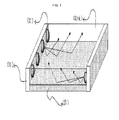
- FIG. 1 is a schematic configuration view that illustrates an edge-type LED backlight unit.
- a plurality of LEDs 30 are mounted on a printed circuit board 10 and fixed on a lateral side of a light guide plate 40-A.
- the light guide plate 40-A allows light that is incident from the plurality of LEDs 30 to be evenly spread over a wide area of the light guide plate 40-A due to total reflection occurring a repeated number of times while traveling the light guide plate 40-A, thereby providing a surface light source to a liquid crystal panel.
- the edge-type LED configuration is disadvantageous in that local dimming is not enabled, that is, unnecessary lamps cannot be turned off.
- a direct-type LED backlight unit as shown in FIG. 2 , a plurality of LEDs 30 are disposed in front of a printed circuit board 10 and a reflection plate 20, so that the LEDs are partially turned on/off, thereby enabling local dimming.
- the number of LEDs 30 may increase when it is intended to ensure brightness uniformity, making it difficult to effectuate a power consumption reducing effect of local dimming.
- the backlight unit shown in FIG. 3 is of an edge type, it is configured such that a plurality of LEDs 30 are disposed at regular intervals in front of a printed circuit board 10 and a reflection plate 20" like a direct-type backlight unit, thereby implementing a local dimming effect while reducing the number of LEDs 30.
- a light guide plate is required in order to evenly disperse light generated from the LEDs 30 to a lateral side.
- the light guide plate cannot be mounted in front of the printed circuit board.
- US 2010/085735 A1 discloses an optical sheet comprising a prism layer made by irradiation of a photosensitive composition which is composed of 75 parts by weight of urethane acrylate, 20 parts by weight of 2-phenylathylethyl methacrylate, 3 parts by weight of 1,6-hexaediol acrylate and 2 parts by weight of a BAPO-based photoinitiator.
- JP 2007 238819 A describes a radiation hardenable resin composition which is superior in transparency and surface hardness and which comprises a urethane(meth)acrylate obtained by reacting diisocyanate with a specified polyol mixture and methacrylate having a primary hydroxyl group and a second methacrylate, wherein the hydroxyl containing methacrylate is not more than 10 -4 mole/g.
- US 2006/077322 A1 discloses an optical film comprising a light focusing prism layer containing nano particles.
- US 2009/0279321 A1 discloses an optical device comprising a light guide having a plurality of light extraction structures, wherein the efficiency of the structures varies with distance from the light source.
- US 2008/119583 A1 describes a brightness enhancing film having a brightness enhancing polymerized structure comprising the reaction product of an organic phase having a glass transition temperature of less than 35°C and at least 10% inorganic nanoparticles, wherein the organic phase may comprise urethane acrylate oligomers and acrylate monomers.
- EP 407004 A2 discloses a radiation curable material comprising an aliphatic polyether-based urethane acrylate, a monomer having a plurality of acrylate or methacrylate moieties, an alkyl acrylate and a photoinitiator. This material is useful as matrix for optical fibers in a ribbon configuration.
- Embodiments of the present invention provide a resin-type light guide plate composition, which can fabricate a light guide plate useful for a module-type backlight unit exhibiting excellent adhesion to a base film and enabling local dimming while having a low shrinkage rate, by a simple curing process and can form a thick film, a backlight unit including the light guide plate formed using the composition, and a liquid crystal display including the backlight unit.
- a resin-type light guide plate composition according to claim 1 is provided.
- the urethane-(meth)acrylate oligomer may have a number average molecular weight ranging from 2,000 to 5,000.
- the hydrogen bond type (meth)acrylate may be represented by the formula 2 or 3: wherein R 1 independently represents alkyl or heteroalkyl having 1 to 10 carbon atoms, cycloalkyl having 3 to 8 carbon atoms, phenyl, alkylphenyl having 1 to 10 carbon atoms, or phosphorus, R 2 represents hydroxyl or carboxyl, and R 3 represents hydrogen or methyl.
- the hydrogen bond type (meth)acrylate may be acid-denatured (meth)acrylate oligomer prepared by reacting acid anhydride with (meth)acrylate monomer containing hydroxyl group.
- the acid-denatured (meth)acrylate oligomer may be represented by the formula 4: wherein R 1 independently represents hydrogen or methyl; R 2 independently represents n is an integer of 1 to 10; R 3 independently represents a radical selected from the group consisting of hydrogen, saturated or unsaturated alkyl having 1 to 10 carbon atoms, heteroalkyl, benzyl, carboxyl group, hydroxyl group, and halogen atom; and R 4 independently represents a radical selected from the group consisting of selected from saturated or unsaturated alkyl having 1 to 10 carbon atoms.
- the urethane-(meth)acrylate oligomer may be contained in the composition in an amount of 10 to 70 wt% based on the total weight of the composition.
- the hydrogen bond type (meth)acrylate may be contained in the composition in an amount of 10 to 40 wt% based on the total weight of the composition.
- the acrylic monomer may be contained in an amount of 10 to 60 wt% based on the total weight of the composition.
- the resin-type light guide plate composition may further include a tri- or higher-functional (meth)acrylate hardener having a maximum shrinkage rate of 20% or higher.
- the composition may further include an UV stabilizer or a thermal stabilizer.
- a backlight unit including a light emitting diode, and a light guide plate formed on a reflection plate using the composition of the present invention to cover the light emitting diode.
- the light guide plate may have a thickness of 0.2 to 2 mm.
- a liquid crystal display including the backlight unit.
- the composition of the present invention can form a thick film of 1 mm or greater, thereby forming a light guide plate converting a point light source into a surface light source by a simple curing process by coating the composition irrespective of the positions of LEDs.
- composition of the present invention can be used for forming a light guide plate in a module type backlight unit of a combination of edge and direct types, enabling local dimming.
- composition of the present invention can reduce curing shrinkage while having excellent adhesion and demonstrating little change in the color coordinates.
- the present invention provides a resin-type light guide plate composition including urethane-(meth)acrylate oligomer; hydrogen bond type (meth)acrylate; acrylic monomer; and a photoinitiator.
- composition of the present invention can form a thick film of 1 mm or greater and can reduce curing shrinkage while having excellent adhesion, a light guide plate covering LEDs in a module type backlight unit of a combination of edge and direct types enabling local dimming can be fabricated.
- the urethane-(meth)acrylate oligomer can control a shrinkage rate and has excellent transparency and mechanical properties.
- the urethane-(meth)acrylate oligomer may be prepared by allowing a compound to react with (meth)acrylate monomer containing hydroxyl group, the compound prepared by reacting divalent polyol with divalent isocyanate. That is to say, a compound having a terminal isocyanate group is prepared by reacting divalent polyol with excess divalent isocyanate, and the compound is reacted with (meth)acrylate monomer containing hydroxyl group.
- the divalent polyol preferably has a number average molecular weight ranging from 1,500 or greater.
- non-limiting examples of the divalent polyol may be selected, alone or in combination, from the group consisting of polyester polyol, polycaprolactone denatured polyol, polycarbonate polyol, polybutadiene polyol, polyisophorene polyol, polyethyleneglycol, polypropyleneglycol, polyethylene-propyleneglycol and polytetramethylglycol.
- non-limiting examples of the divalent isocyanate may be selected, alone or in combination, from the group consisting of toluene-2,4-diisocyanate, xylene diisocyanate, isophorone diisocyanate, tetramethylxylene diisocyanate, lysine diisocyanate, trimethylhexamethylene diisocyanate, 2,2-bisisocyanatopropane, 6-isopropyl-1,3-phenyldiisocyanate, bis(2-isocyanateethyl)-fumarate, 1,6-hexanediisocyanate, 4,4'-biphenylene diisocyanate, 3,3'-dimethylphenylene diisocyanate, 3,3'-dimethyl-4,4'-diphenylmethane diisocyanate, p-phenylene diisocyanate, m-phenylene diisocyanate, 1,5-naphthalene diisocyan
- the divalent isocyanate may be selected, alone or in combination, from the group consisting of 2,4-toluenediisocyanate and isomers thereof, isophoronediisocyanate, 1,5-naphthalene diisocyanate, 1,4-xylenediisocyanate, 1,3-xylenediisocyanate, 4,4-dicyclohexylmethane diisocyanate, and 1,6-hexamethylenediisocyanate.
- non-limiting examples of the acrylate monomer containing hydroxyl group may be selected, alone or in combination, from the group consisting of 2-hydroxyethyl (meth)acrylate, 2-hydroxypropyl (meth)acrylate, 4-hydroxybutyl (meth)acrylate, caprolactone-denatured (meth)acrylate, polyethyleneglycol mono(meth)acrylate and polypropyleneglycol mono(meth)acrylate.
- a catalyst in order to improve reactivity in a catalyst may be used.
- a polymerization inhibitor may be used.
- the catalyst may be at least one selected, alone or in combination, from the group consisting of tertiary amines including triethylamine, triethanolamine, 1,4-diazabiscyclo-(2,2,2)-octane, N,N-diethylcyclohexylamine, N-methylmorpholine, and N,N,N',N'-tetramethyl-methanediamine, or tin-based catalysts including dibutyl tin dilaurate, dibutyl tin dibutoxide, di-(2-ethylhexyl) tin oxide, dibutyl tin diisooctylmaleate, dibutyl tin bis-(acetylacetonate), but
- dibutyl tin dilaurate is used as the catalyst.
- a small amount of a phenol-type polymerization inhibitor, including methoxy hydroquinone, hydroquinone, and t-butyl hydroquinone may be used as the polymerization inhibitor.
- the urethane-(meth)acrylate oligomer is represented by the formula (1); wherein R 1 represents a structure excluding a terminal hydroxyl group from divalent polyol, R 2 represents a structure excluding a terminal isocyanate group from the divalent isocyanate, R 3 represents or n is an integer of 1 to 10, and R 4 represents hydrogen or methyl.
- the urethane-(meth)acrylate oligomer may have a number average molecular weight ranging from 2,000 to 5,000. If the number average molecular weight is smaller than 2,000, the curing shrinkage rate may increase. If the number average molecular weight is greater than 5,000, the composition may have increased viscosity, thereby lowering workability.
- the urethane-(meth)acrylate oligomer may be contained in the composition in an amount of 10 to 70 wt% based on the total weight of the composition. Preferably, the urethane-(meth)acrylate oligomer may be contained in an amount of 20 to 60 wt%. If the urethane-(meth)acrylate oligomer is contained in the composition in an amount of less than 10 wt%, a mechanical property of an adhesive agent after curing may be lowered. If the urethane-(meth)acrylate oligomer is contained in the composition in an amount of greater than 70 wt%, adhesion of the composition may be lowered and the viscosity thereof may increase, thereby lowering workability.
- the hydrogen bond type (meth)acrylate may form an ionic bond with a base film or a physical bond with the base film by melting part of the base film, thereby imparting adhesion to the composition.
- the hydrogen bond type (meth)acrylate may include, not limited to, (meth)acrylates as long as they are capable of forming hydrogen bonds.
- (meth)acrylate including hydroxyl group or carboxyl group may be used.
- the hydrogen bond type (meth)acrylate is preferably represented by the formula 2 or 3: wherein R 1 independently represents alkyl or heteroalkyl having 1 to 10 carbon atoms, cycloalkyl having 3 to 8 carbon atoms, phenyl, alkylphenyl having 1 to 10 carbon atoms, or phosphorus, R 2 represents hydroxyl or carboxyl, and R 3 represents hydrogen or methyl.
- specific examples of the (meth)acrylate containing hydroxyl group may include 2-hydroxyethyl (meth)acrylate, 2-hydroxypropyl (meth)acrylate, 4-hydroxybutyl (meth)acrylate, caprolactone-denatured (meth)acrylate, polyethyleneglycol mono(meth)acrylate, polypropyleneglycol mono(meth)acrylate, and phosphoric acid (meth)acrylate, and specific examples of the (meth)acrylate containing carboxyl group may include (meth)acrylic acid and (meth)acrylic acid dimer.
- the hydrogen bond type (meth)acrylate may be acid-denatured (meth)acrylate oligomer prepared by reacting acid anhydride with (meth)acrylate monomer containing hydroxyl group in the presence of a catalyst.
- the acid anhydride is preferably cyclic acid anhydride.
- non-limiting examples of the (meth)acrylate monomer containing the hydroxyl group may be selected, alone or in combination, from the group consisting of 2-hydroxyethyl(meth)acrylate, 2-hydroxypropyl (meth)acrylate, 4-hydroxybutyl (meth)acrylate, caprolactone-denatured (meth)acrylate, polyethyleneglycol mono(meth)acrylate and polypropyleneglycol mono(meth)acrylate.
- the acid-denatured (meth)acrylate oligomer may be represented by the formula 4: wherein R 1 independently represents hydrogen or methyl; R 2 independently represents n is an integer of 1 to 10; R 3 independently represents a radical selected from the group consisting of hydrogen, saturated or unsaturated alkyl having 1 to 10 carbon atoms, heteroalkyl, benzyl, carboxyl group, hydroxyl group, and halogen atom; and R 4 independently represents a radical selected from the group consisting of selected from saturated or unsaturated alkyl having 1 to 10 carbon atoms.
- the hydrogen bond type (meth)acrylate represented by the Formula 3 may be prepared by reacting a monomer having an epoxy functional group with (meth)acrylic acid.
- a mono-functional group is preferred as the epoxy functional group. However, if the monomer has a large molecular weight, multi-functional group may also be used.
- non-limiting examples of the monomer having an epoxy functional group may include ethyl glycidyl ether, propyl glycidyl ether, butyl glycidyl ether, polyethyleneglycol diglycidyl ether, polypropyleneglycol diglycidyl ether, phenol glycidyl ether, nonylphenol glycidyl ether, polybisphenol A diglycidyl ether, polybisphenol F diglycidyl ether, polybisphenolS diglycidyl ether, and polybisphenol AD diglycidyl ether.
- a catalyst may be used.
- the catalyst may include tertiary amines, quarternary ammoniums, inorganic alkali salts, phosphorus-based catalysts.
- the catalyst may include triethylamine, pyridine, trimethylamine, tributylamine, triethylamine benzylchloride, triethylamine benzylbromide, tributylamine benzylchloride, tributylamine benzylbromide, tetrabutylamine chloride, tetrabutylamine bromide, triphenylphosphine, and chrome octate.
- a compound represented by the formulas 2 to 4 may be used as the hydrogen bond type (meth)acrylate alone or in combination.
- the hydrogen bond type (meth)acrylate may be contained in an amount of 10 to 40 wt% based on the weight of the composition, preferably in an amount of 15 to 35 wt%. If the hydrogen bond type (meth)acrylate is contained in an amount of less than 10 wt%, sufficiently high adhesion may not be achieved. If the hydrogen bond type (meth)acrylate is contained in an amount of greater than 40 wt%, compatibility of the composition may be lowered.
- the acrylic monomer reduce the viscosity of the composition for improving workability while not adversely affecting physical properties of the composition.
- the acrylic monomer may have a maximum shrinkage rate ranging from 3 to 10%. If the maximum shrinkage rate of the acrylic monomer is less than 3%, the reactivity is too low to increase the curing degree. However, if the maximum shrinkage rate of the acrylic monomer is greater than 10%, the curing degree is low so that an appropriate physical property cannot be achieved although the curing speed is high.
- the maximum shrinkage rate represented in the equation (1) is based on the assumption that the curing degree is 100%.
- the shrinkage rate can be simply calculated using the equation (1), and the product of the maximum shrinkage rate represented in the equation (1) and the curing degree is equal to the shrinkage rate represented in the equation (A).
- acrylic monomer having the maximum shrinkage rate of not greater than 15% may include 2-phenoxyethylacrylate (13%), cyclictrimethylol propane formalacrylate (12.4%), tridecylacrylate (9.2%), octyldecylacrylate (12.6%), isobonylacrylate (11.8%), 2-(2-ethoxyethoxy)acrylate (13.4%), isodecylacrylate (11.6%), caprolactoneacrylate (6.1 %), laurylacrylate (9.9%), stearic acrylate (6.7%), methoxypolyethyleneglycol 600 monoacrylate (2.1 %), nonylphenolethylene oxide (4 mol) acrylate(4.1%), nonylphenolethylene oxide (8 mol) acrylate (2.2%), methoxypolyethyleneglycol 600 monoacrylate (1.8%), isodecylmethacrylate (10.7%), stearicmethacrylate (6.3%), 2-phenoxyethylmethacrylate (12%), iso
- the acrylic monomer may be contained in an amount of 10 to 60 wt% based on the weight of the composition. Preferably, the acrylic monomer is contained in an amount of 20 to 50 wt% based on the weight of the composition. If the acrylic monomer is contained in an amount of less than 10 wt%, the viscosity of the composition may increase, thereby lowering coating processibility and deteriorating external appearance. If the acrylic monomer is contained in an amount of greater than 60 wt%, a mechanical property may be reduced, thereby lowering adhesion.
- the photoinitiator changes a liquid type resin into a solid type resin by light irradiation.
- the photoinitiator can be classified into a Type 1 initiator that produces free radicals by molecular decomposition due to a difference in the chemical structure or molecular bonding energy, and a Type 2 initiator that is a hydrogen abstraction type initiator in cooperation with tertiary amine.
- Type 1 initiator may include acetophenones such as 4-phenoxydichloroacetophenone, 4-t-butyldichloroacetophenone, 4-t-butyltrichloroacetophenone, diethoxyacetophenone, 2-hydroxy-2-methyl-l-phenylpropane-1-one, 1-(4-isopropylphenyl)-2-hydroxy-2-methylpropane-l-one, 1-(4-dodecylphenyl)-2-hydroxy-2-methylpropane-1-one, 4-(2-hydroxyethoxy)-phenyl(2-hydroxy-2-propyl)ketone, or 1-hydroxycyclohexylphenylketone; benzoins such as benzoin, benzoinmethylether, benzoinethylether, benzyldimethylketal; acylphosphine oxides; and titanocene compounds.
- acetophenones such as 4-phenoxydichloroacetophenone, 4-t-buty
- Type 2 initiator may include benzophenones such as benzophenone, benzoylbenzoic acid, benzoylbenzoic acid methylether, 4-phenylbenzophenone, hydroxybenzophenone, 4-benzol-4'-methyldiphenylsulfide, 3,3'-methyl-4-methoxybenzophenone; and tioxantones such as tioxantone, 2-chlorotioxantone, 2-methyltioxantone, 2, 4-dimethyltioxantone, or isopropyltioxantone.
- the photoinitiator may be used alone or in combination of these compounds.
- a Type 1 initiator and a Type 2 initiator may be used in combination.
- the photoinitiator may be contained in an amount of 0.1 to 10 wt% based on the weight of the composition. Preferably, the photoinitiator is contained in an amount of 0.2 to 3 wt% based on the weight of the composition. If the photoinitiator is contained in the composition in an amount of less than 0.2 wt%, curing may not be sufficiently performed, thereby lowering a mechanical property and adhesion. If the photoinitiator is contained in the composition in an amount of greater than 3 wt%, poor adhesion or brittleness may be resulted due to curing shrinkage.
- the resin-type light guide plate composition according to the present invention may further include a tri- or higher-functional (meth)acrylate hardener.
- the tri- or higher-functional (meth)acrylate hardener may have the maximum shrinkage rate of 20% or greater, represented in the formula (1).
- Specific examples of the tri- or higher-functional (meth)acrylate hardener may include glycerol propyl added tri(meth)acrylate, ditrimethylol tetra(meth)acrylate, dipentaerythritol penta(meth)acrylate, pentaerythritol tri(meth)acrylateurethane oligomer reacting with diisocyanate, and dipenta(meth)acrylate urethane oligomer reacting with diisocyanate.
- the tri- or higher-functional (meth)acrylate hardener may be contained in an amount of 1 to 5 wt% based on the weight of the composition. If the tri- or higher-functional (meth)acrylate hardener is contained in an amount of less than 1 wt%, the curing efficiency may become poor. If the tri- or higher-functional (meth)acrylate hardener is contained in an amount of greater than 5 wt%, shrinkage becomes severe so that adhesion may be lowered, resulting in curling and mechanical damages.
- the resin-type light guide plate composition according to the present invention may further include an UV stabilizer and a thermal stabilizer when necessary.
- the UV stabilizer blocks or absorbs UV rays in order to prevent decomposition of the hardened composition by continuous UV exposure to the hardened composition.
- the UV stabilizer may be classified into an absorbent, a quencher, and a hindered amine light stabilizer (HALS) according to the reaction mechanism.
- the UV stabilizer may also be classified into phenyl salicylate (absorbent), benzophenone (absorbent), benzotriazole (absorbent), nickel derivatives (quencher), and a radical scavenger.
- any UV stabilizer can be used without restriction unless it considerably changes an initial color of the composition.
- Polyphenols, phosphites, and lactones which can be commercially available, may be used as the thermal stabilizer.
- the UV stabilizer and the thermal stabilizer can be used by appropriately adjusting amounts thereof while not affecting curing efficiency.
- the resin-type light guide plate composition according to the present invention may further include additives that are generally used in the related art unless the scope of the present invention is not impaired.
- the resin-type light guide plate composition according to the present invention may include two or more kinds of acrylic monomers.
- the maximum shrinkage rate calculated by the equation (2) may be in a range of 3 to 7%:
- the maximum shrinkage rate increases, the adhesion is reduced and the curing is facilitated. If the maximum shrinkage rate decreases, the adhesion is enhanced and the curing is moderated.
- the curing degree based on UV irradiation has the same propensity as the shrinkage rate. That is to say, the composition having the maximum shrinkage rate of less than 7% demonstrates the curing degree of greater than 90%. Accordingly, curling due to post-curing may be avoided during various tests carried out at high temperatures.
- the present invention also provides a backlight unit including LEDs, and a light guide plate formed on a reflection plate using the composition according to the present invention to cover the LEDs.
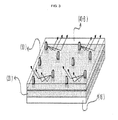
- FIG. 3 is a schematic configuration view that illustrates a local dimming enabling, module-type LED backlight unit, which is a combination type of edgeand direct-types.
- the backlight unit includes a printed circuit board 10, a reflection plate 20, LEDs 30, and a light guide plate 40-B.
- the backlight unit may further include a diffusion plate, a diffusion film, a focusing film, and a reflective polarizing film, which are stacked on a top surface of the light guide plate 40-B.
- LEDs are arranged on the entire surface of the printed circuit board 10 and the reflection plate 20, making it difficult to mount the light guide plate.
- the composition according to the present invention is evenly coated on a top surface of the reflection plate 20 to be higher than heights of the LEDs 30, and is hardened, thereby forming the light guide plate 40-B.
- the light guide plate 40-B may have a thickness in a range of 0.2 to 2 mm.
- the light guide plate 40-B converts a point light source into a surface light source, and has excellent adhesion while demonstrating reduced curing shrinkage and little change in the color coordinates.
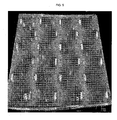
- FIG. 4 illustrates emission of light from LEDs in a state in which a composition according to the present invention is not used in forming a light guide plate
- FIG. 5 illustrates emission of light from LEDs in a state in which a composition according to the present invention is used in forming a light guide plate.
- the light guide plate formed using the composition according to the present invention serves to convert a point light source into a surface light source.
- the present invention also provides a liquid crystal display including the backlight unit.
- the liquid crystal display includes a backlight unit including a light guide plate formed using the composition according to the present invention.
- the liquid crystal display may take any configuration without restriction, and a configuration that is well known in the related art may be used for the liquid crystal display.
- Resin-type light guide plate compositions were prepared using resins prepared in the synthesis examples using compositional contents listed below in Table 1 by the method that is well known in the art.
- compositions prepared in examples and comparative examples were table coated on a structure shown in FIG. 4 to a thickness of 1.5 mm, primarily hardened by a black light lamp with intensity of 350 mJ/cm 2 under a nitrogen atmosphere, and secondarily hardened by a metal hydride lamp with intensity of 1 J/cm 2 , thereby fabricating test specimens.
- the fabricated test specimens were subjected to T tests using UTM manufactured by Instron Corp. The adhesion was measured at a rate of 2 mm/min. Adhesion between glass and metal was evaluated using the average of the measured adhesion values with the maximum and minimum values excluded, and the evaluation results are shown in Table 2.
- test specimen fabricated in the same manner as described in Experimental Example 1 was separated from a base film to then be adhered to a glass panel. Color values of the glass panel and the test specimen were measured using a spectrocolorimeter SE200 manufactured by Nippon Denshoku Ind. in a transmission mode to obtain ⁇ E*ab. The results are shown in Table 2.
- Test specimens were fabricated in the same manner as the specimens fabricated to measure elongation rates of compositions prepared in examples and comparative examples.
- the fabricated test specimens were placed in a temperature & humidity chamber (60°C, 95% humidity) and allowed to stand for 500 hours, followed by measuring color values. Differences between the initial color value and the color values measured after the test specimens were allowed to stand in the chamber were represented as ⁇ E*ab values. The results are shown in Table 2.
Landscapes
- Chemical & Material Sciences (AREA)
- Crystallography & Structural Chemistry (AREA)
- Engineering & Computer Science (AREA)
- Materials Engineering (AREA)
- Organic Chemistry (AREA)
- Macromonomer-Based Addition Polymer (AREA)
- Planar Illumination Modules (AREA)
- Organic Low-Molecular-Weight Compounds And Preparation Thereof (AREA)
- Light Guides In General And Applications Therefor (AREA)
- Liquid Crystal (AREA)
Applications Claiming Priority (1)
| Application Number | Priority Date | Filing Date | Title |
|---|---|---|---|
| KR1020100038023A KR101007769B1 (ko) | 2010-04-23 | 2010-04-23 | 수지형 도광판용 조성물, 이로 형성된 도광판을 포함하는 백라이트 유닛 및 상기 백라이트 유닛을 구비하는 액정표시장치 |
Publications (3)
| Publication Number | Publication Date |
|---|---|
| EP2380946A2 EP2380946A2 (de) | 2011-10-26 |
| EP2380946A3 EP2380946A3 (en) | 2013-04-10 |
| EP2380946B1 true EP2380946B1 (en) | 2014-08-20 |
Family
ID=43616207
Family Applications (1)
| Application Number | Title | Priority Date | Filing Date |
|---|---|---|---|
| EP11163632.0A Not-in-force EP2380946B1 (en) | 2010-04-23 | 2011-04-26 | Resin-type lightguide plate composition, backlight unit including lightguide plate formed using the composition, and liquid crystal display including the backlight unit |
Country Status (5)
| Country | Link |
|---|---|
| US (1) | US8319913B2 (ko) |
| EP (1) | EP2380946B1 (ko) |
| JP (1) | JP5397918B2 (ko) |
| KR (1) | KR101007769B1 (ko) |
| CN (1) | CN102234360B (ko) |
Families Citing this family (12)
| Publication number | Priority date | Publication date | Assignee | Title |
|---|---|---|---|---|
| KR101258453B1 (ko) * | 2010-12-09 | 2013-04-26 | 에스에스씨피 주식회사 | 자외선 경화형 blu 도광판 조성물 및 도광판 |
| KR101846210B1 (ko) | 2011-10-18 | 2018-04-09 | 동우 화인켐 주식회사 | 표면 보호 코팅액 조성물 및 이를 이용한 표면 보호 필름 |
| CN102816088B (zh) * | 2012-07-06 | 2014-05-07 | 华南理工大学 | 含叔胺结构不含双酚a结构的甲基丙烯酸酯大单体及其制法和应用 |
| WO2017052231A1 (ko) * | 2015-09-22 | 2017-03-30 | 주식회사 엘지화학 | 편광자 보호 필름, 편광판 및 편광판의 제조방법 |
| CN107531917B (zh) * | 2015-09-22 | 2020-07-14 | 株式会社Lg化学 | 偏光器保护膜、偏光板和用于制备偏光板的方法 |
| NL2016282B1 (en) | 2016-02-18 | 2017-08-24 | Trespa Int Bv | A decorative panel. |
| KR102552445B1 (ko) | 2016-09-19 | 2023-07-07 | 삼성디스플레이 주식회사 | 표시 장치 |
| KR102019587B1 (ko) * | 2018-01-16 | 2019-09-06 | 방현수 | 우레탄아크릴레이트 올리고머 및 이를 포함하는 접착용 조성물 |
| US11485818B2 (en) | 2018-04-20 | 2022-11-01 | Covestro (Netherlands) B.V. | Radiation curable compositions for additive fabrication |
| NL2021563B9 (en) | 2018-09-05 | 2020-07-17 | Trespa Int Bv | A decorative HPL panel |
| CN113999516B (zh) * | 2021-11-10 | 2023-05-16 | 广东电网有限责任公司 | 一种减振材料及其制备方法和应用 |
| NL2030172B1 (en) | 2021-12-17 | 2023-06-28 | Trespa Int Bv | Method for manufacturing a decorative laminate panel. |
Family Cites Families (15)
| Publication number | Priority date | Publication date | Assignee | Title |
|---|---|---|---|---|
| CA1341128C (en) * | 1989-06-27 | 2000-10-24 | Borden Chemical, Inc. | Optical fiber array |
| US5616630A (en) * | 1993-02-05 | 1997-04-01 | Lord Corporation | Ester/urethane acrylate hybrid oligomers |
| JPH1095640A (ja) * | 1996-09-19 | 1998-04-14 | Takeda Chem Ind Ltd | 光ファイバ被覆用光硬化型樹脂組成物 |
| JP3988267B2 (ja) | 1998-08-20 | 2007-10-10 | Jsr株式会社 | 光ディスク用接着剤 |
| JP2003183345A (ja) | 2001-12-17 | 2003-07-03 | Daicel Chem Ind Ltd | 硬化性ウレタンアクリレートオリゴマー、光硬化性樹脂組成物及び硬化物 |
| JP4275469B2 (ja) * | 2003-06-16 | 2009-06-10 | 大日本印刷株式会社 | 凹凸パターン形成材料、凹凸パターン受容体、凹凸パターン形成方法、転写箔、及び光学物品 |
| TWI317444B (en) * | 2004-09-03 | 2009-11-21 | Eternal Chemical Co Ltd | Optical film having high hardness and use thereof |
| JP4826094B2 (ja) | 2005-02-10 | 2011-11-30 | 日立化成工業株式会社 | 光硬化型樹脂組成物、およびこれを用いてなる回折型集光フィルム |
| KR20070103033A (ko) * | 2005-02-17 | 2007-10-22 | 쓰리엠 이노베이티브 프로퍼티즈 컴파니 | 낮은 유리 전이 온도를 가진 중합된 유기 상을 포함하는밝기 증진 필름 |
| JP2007238819A (ja) * | 2006-03-09 | 2007-09-20 | Mitsubishi Chemicals Corp | 放射線硬化性組成物及びその硬化物、並びにその積層体 |
| EP2018263B1 (en) * | 2006-05-18 | 2017-03-01 | 3M Innovative Properties Company | Process for making light guides with extraction structures |
| JPWO2007145246A1 (ja) * | 2006-06-14 | 2009-11-05 | 日立化成工業株式会社 | 樹脂組成物、およびこれを用いてなる積層型光学部材 |
| US8506149B2 (en) * | 2007-03-20 | 2013-08-13 | Kolon Industries, Inc. | Optical sheets |
| TW201009035A (en) * | 2008-06-30 | 2010-03-01 | Toagosei Co Ltd | Actinic ray curable adhesive composition |
| JP2011184588A (ja) | 2010-03-09 | 2011-09-22 | Hitachi Chem Co Ltd | 光硬化型樹脂組成物、及びこれを用いてなるフィルム導光板 |
-
2010
- 2010-04-23 KR KR1020100038023A patent/KR101007769B1/ko not_active Expired - Fee Related
-
2011
- 2011-04-21 US US13/091,463 patent/US8319913B2/en not_active Expired - Fee Related
- 2011-04-21 JP JP2011095321A patent/JP5397918B2/ja not_active Expired - Fee Related
- 2011-04-21 CN CN201110102527.1A patent/CN102234360B/zh not_active Expired - Fee Related
- 2011-04-26 EP EP11163632.0A patent/EP2380946B1/en not_active Not-in-force
Also Published As
| Publication number | Publication date |
|---|---|
| JP5397918B2 (ja) | 2014-01-22 |
| KR101007769B1 (ko) | 2011-01-14 |
| US20110261288A1 (en) | 2011-10-27 |
| JP2011252144A (ja) | 2011-12-15 |
| EP2380946A2 (de) | 2011-10-26 |
| EP2380946A3 (en) | 2013-04-10 |
| CN102234360B (zh) | 2014-08-27 |
| US8319913B2 (en) | 2012-11-27 |
| CN102234360A (zh) | 2011-11-09 |
Similar Documents
| Publication | Publication Date | Title |
|---|---|---|
| US8319913B2 (en) | Resin-type lightguide plate composition, backlight unit including lightguide plate formed using the composition, and liquid crystal display including the backlight unit | |
| KR101715672B1 (ko) | 경화성 조성물, 투명 내열 재료 및 그 용도 | |
| JP6643846B2 (ja) | ポリウレタン化合物及びそれを含有する樹脂組成物 | |
| KR20170047240A (ko) | 폴리우레탄 화합물 및 그것을 함유하는 수지 조성물 | |
| KR20170107462A (ko) | 감광성 수지 조성물 및 그 경화물 | |
| WO2013077082A1 (ja) | 層間充填用活性エネルギー線硬化性組成物 | |
| KR20120050069A (ko) | 수지형 도광판용 조성물, 이로 형성된 도광판을 포함하는 백라이트 유닛 및 상기 백라이트 유닛을 구비하는 액정표시장치 | |
| US20200299424A1 (en) | Curable composition, adhesive layer, transparent surface material, laminate and image display device | |
| CN105849146A (zh) | 聚氨酯化合物、感光性树脂组合物、感光性树脂组合物的制造方法及固化物 | |
| CN107001906A (zh) | 紫外线固化型粘合剂组合物、紫外线固化型粘合片的制造方法和层叠体的制造方法 | |
| KR101256456B1 (ko) | 무용매 자외선 경화형 코팅 조성물 및 이를 이용한 접착제 | |
| KR20130067532A (ko) | 수지형 도광판용 조성물, 이로 형성된 도광판을 포함하는 백라이트 유닛 및 상기 백라이트 유닛을 구비하는 액정표시장치 | |
| US8466208B2 (en) | Curable sheet composition | |
| JP2009221358A (ja) | 硬化性樹脂組成物、転写用フィルム積層体、及び衝撃吸収用積層体 | |
| JP6593640B2 (ja) | 紫外線硬化型粘着剤組成物、及び、粘着シートの製造方法 | |
| KR20130067774A (ko) | 수지형 도광판용 조성물, 이로 형성된 도광판을 포함하는 백라이트 유닛 및 상기 백라이트 유닛을 구비하는 액정표시장치 | |
| JP7564909B2 (ja) | 粘着フィルム、それを含む光学部材、およびそれを含む光学表示装置 | |
| KR20130015218A (ko) | 수지형 도광판용 조성물, 이를 이용하여 형성된 도광판을 포함하는 백라이트 유닛 및 상기 백라이트 유닛을 포함하는 액정표시장치 | |
| KR20240003278A (ko) | 고강도 신축성 필름 제조용 조성물 및 이를 이용하여 제조된 신축성 필름 | |
| KR101467394B1 (ko) | 물성 조절이 용이한 광경화성 광학용 수지 조성물 및 이를 이용하여 제조한 평판디스플레이 | |
| KR20110133261A (ko) | 수지형 도광판용 조성물, 이로 형성된 도광판을 포함하는 백라이트 유닛 및 상기 백라이트 유닛을 구비하는 액정표시장치 | |
| KR20120106025A (ko) | 광경화성 조성물, 이를 이용하여 형성된 격벽을 갖는 수지형 도광판을 포함하는 백라이트 유닛 및 액정표시장치 | |
| KR20130015219A (ko) | 수지형 도광판용 조성물, 이를 이용하여 형성된 도광판을 포함하는 백라이트 유닛 및 상기 백라이트 유닛을 포함하는 액정표시장치 | |
| US20220162359A1 (en) | Curable Composition | |
| KR20120131420A (ko) | 수지형 도광판용 조성물, 이를 이용하여 형성된 도광판을 포함하는 백라이트 유닛 및 상기 백라이트 유닛을 포함하는 액정표시장치 |
Legal Events
| Date | Code | Title | Description |
|---|---|---|---|
| 17P | Request for examination filed |
Effective date: 20110426 |
|
| AK | Designated contracting states |
Kind code of ref document: A2 Designated state(s): AL AT BE BG CH CY CZ DE DK EE ES FI FR GB GR HR HU IE IS IT LI LT LU LV MC MK MT NL NO PL PT RO RS SE SI SK SM TR |
|
| AX | Request for extension of the european patent |
Extension state: BA ME |
|
| PUAI | Public reference made under article 153(3) epc to a published international application that has entered the european phase |
Free format text: ORIGINAL CODE: 0009012 |
|
| PUAL | Search report despatched |
Free format text: ORIGINAL CODE: 0009013 |
|
| AK | Designated contracting states |
Kind code of ref document: A3 Designated state(s): AL AT BE BG CH CY CZ DE DK EE ES FI FR GB GR HR HU IE IS IT LI LT LU LV MC MK MT NL NO PL PT RO RS SE SI SK SM TR |
|
| AX | Request for extension of the european patent |
Extension state: BA ME |
|
| RIC1 | Information provided on ipc code assigned before grant |
Ipc: C09K 19/30 20060101ALI20130304BHEP Ipc: C09K 19/38 20060101AFI20130304BHEP |
|
| RBV | Designated contracting states (corrected) |
Designated state(s): AL AT BE BG CH CY CZ DE DK EE ES FI FR GB GR HR HU IE IS IT LI LT LU LV MC MK MT NL NO PL PT RO RS SE SI SK SM TR |
|
| GRAP | Despatch of communication of intention to grant a patent |
Free format text: ORIGINAL CODE: EPIDOSNIGR1 |
|
| RIC1 | Information provided on ipc code assigned before grant |
Ipc: C09K 19/38 20060101AFI20140211BHEP Ipc: C09K 19/04 20060101ALI20140211BHEP Ipc: C09K 19/30 20060101ALI20140211BHEP |
|
| INTG | Intention to grant announced |
Effective date: 20140306 |
|
| GRAS | Grant fee paid |
Free format text: ORIGINAL CODE: EPIDOSNIGR3 |
|
| GRAA | (expected) grant |
Free format text: ORIGINAL CODE: 0009210 |
|
| AK | Designated contracting states |
Kind code of ref document: B1 Designated state(s): AL AT BE BG CH CY CZ DE DK EE ES FI FR GB GR HR HU IE IS IT LI LT LU LV MC MK MT NL NO PL PT RO RS SE SI SK SM TR |
|
| REG | Reference to a national code |
Ref country code: GB Ref legal event code: FG4D Free format text: NOT ENGLISH |
|
| REG | Reference to a national code |
Ref country code: CH Ref legal event code: EP |
|
| REG | Reference to a national code |
Ref country code: AT Ref legal event code: REF Ref document number: 683488 Country of ref document: AT Kind code of ref document: T Effective date: 20140915 |
|
| REG | Reference to a national code |
Ref country code: IE Ref legal event code: FG4D |
|
| REG | Reference to a national code |
Ref country code: DE Ref legal event code: R096 Ref document number: 602011009217 Country of ref document: DE Effective date: 20141002 |
|
| REG | Reference to a national code |
Ref country code: CH Ref legal event code: NV Representative=s name: KATZAROV S.A., CH |
|
| REG | Reference to a national code |
Ref country code: AT Ref legal event code: MK05 Ref document number: 683488 Country of ref document: AT Kind code of ref document: T Effective date: 20140820 |
|
| REG | Reference to a national code |
Ref country code: NL Ref legal event code: VDEP Effective date: 20140820 |
|
| REG | Reference to a national code |
Ref country code: LT Ref legal event code: MG4D |
|
| PG25 | Lapsed in a contracting state [announced via postgrant information from national office to epo] |
Ref country code: PT Free format text: LAPSE BECAUSE OF FAILURE TO SUBMIT A TRANSLATION OF THE DESCRIPTION OR TO PAY THE FEE WITHIN THE PRESCRIBED TIME-LIMIT Effective date: 20141222 Ref country code: BG Free format text: LAPSE BECAUSE OF FAILURE TO SUBMIT A TRANSLATION OF THE DESCRIPTION OR TO PAY THE FEE WITHIN THE PRESCRIBED TIME-LIMIT Effective date: 20141120 Ref country code: ES Free format text: LAPSE BECAUSE OF FAILURE TO SUBMIT A TRANSLATION OF THE DESCRIPTION OR TO PAY THE FEE WITHIN THE PRESCRIBED TIME-LIMIT Effective date: 20140820 Ref country code: FI Free format text: LAPSE BECAUSE OF FAILURE TO SUBMIT A TRANSLATION OF THE DESCRIPTION OR TO PAY THE FEE WITHIN THE PRESCRIBED TIME-LIMIT Effective date: 20140820 Ref country code: SE Free format text: LAPSE BECAUSE OF FAILURE TO SUBMIT A TRANSLATION OF THE DESCRIPTION OR TO PAY THE FEE WITHIN THE PRESCRIBED TIME-LIMIT Effective date: 20140820 Ref country code: LT Free format text: LAPSE BECAUSE OF FAILURE TO SUBMIT A TRANSLATION OF THE DESCRIPTION OR TO PAY THE FEE WITHIN THE PRESCRIBED TIME-LIMIT Effective date: 20140820 Ref country code: NO Free format text: LAPSE BECAUSE OF FAILURE TO SUBMIT A TRANSLATION OF THE DESCRIPTION OR TO PAY THE FEE WITHIN THE PRESCRIBED TIME-LIMIT Effective date: 20141120 Ref country code: GR Free format text: LAPSE BECAUSE OF FAILURE TO SUBMIT A TRANSLATION OF THE DESCRIPTION OR TO PAY THE FEE WITHIN THE PRESCRIBED TIME-LIMIT Effective date: 20141121 |
|
| PG25 | Lapsed in a contracting state [announced via postgrant information from national office to epo] |
Ref country code: AT Free format text: LAPSE BECAUSE OF FAILURE TO SUBMIT A TRANSLATION OF THE DESCRIPTION OR TO PAY THE FEE WITHIN THE PRESCRIBED TIME-LIMIT Effective date: 20140820 Ref country code: LV Free format text: LAPSE BECAUSE OF FAILURE TO SUBMIT A TRANSLATION OF THE DESCRIPTION OR TO PAY THE FEE WITHIN THE PRESCRIBED TIME-LIMIT Effective date: 20140820 Ref country code: IS Free format text: LAPSE BECAUSE OF FAILURE TO SUBMIT A TRANSLATION OF THE DESCRIPTION OR TO PAY THE FEE WITHIN THE PRESCRIBED TIME-LIMIT Effective date: 20141220 Ref country code: HR Free format text: LAPSE BECAUSE OF FAILURE TO SUBMIT A TRANSLATION OF THE DESCRIPTION OR TO PAY THE FEE WITHIN THE PRESCRIBED TIME-LIMIT Effective date: 20140820 Ref country code: RS Free format text: LAPSE BECAUSE OF FAILURE TO SUBMIT A TRANSLATION OF THE DESCRIPTION OR TO PAY THE FEE WITHIN THE PRESCRIBED TIME-LIMIT Effective date: 20140820 |
|
| PG25 | Lapsed in a contracting state [announced via postgrant information from national office to epo] |
Ref country code: NL Free format text: LAPSE BECAUSE OF FAILURE TO SUBMIT A TRANSLATION OF THE DESCRIPTION OR TO PAY THE FEE WITHIN THE PRESCRIBED TIME-LIMIT Effective date: 20140820 |
|
| PG25 | Lapsed in a contracting state [announced via postgrant information from national office to epo] |
Ref country code: DK Free format text: LAPSE BECAUSE OF FAILURE TO SUBMIT A TRANSLATION OF THE DESCRIPTION OR TO PAY THE FEE WITHIN THE PRESCRIBED TIME-LIMIT Effective date: 20140820 Ref country code: SK Free format text: LAPSE BECAUSE OF FAILURE TO SUBMIT A TRANSLATION OF THE DESCRIPTION OR TO PAY THE FEE WITHIN THE PRESCRIBED TIME-LIMIT Effective date: 20140820 Ref country code: RO Free format text: LAPSE BECAUSE OF FAILURE TO SUBMIT A TRANSLATION OF THE DESCRIPTION OR TO PAY THE FEE WITHIN THE PRESCRIBED TIME-LIMIT Effective date: 20140820 Ref country code: EE Free format text: LAPSE BECAUSE OF FAILURE TO SUBMIT A TRANSLATION OF THE DESCRIPTION OR TO PAY THE FEE WITHIN THE PRESCRIBED TIME-LIMIT Effective date: 20140820 Ref country code: CZ Free format text: LAPSE BECAUSE OF FAILURE TO SUBMIT A TRANSLATION OF THE DESCRIPTION OR TO PAY THE FEE WITHIN THE PRESCRIBED TIME-LIMIT Effective date: 20140820 |
|
| REG | Reference to a national code |
Ref country code: DE Ref legal event code: R097 Ref document number: 602011009217 Country of ref document: DE |
|
| PG25 | Lapsed in a contracting state [announced via postgrant information from national office to epo] |
Ref country code: PL Free format text: LAPSE BECAUSE OF FAILURE TO SUBMIT A TRANSLATION OF THE DESCRIPTION OR TO PAY THE FEE WITHIN THE PRESCRIBED TIME-LIMIT Effective date: 20140820 |
|
| PLBE | No opposition filed within time limit |
Free format text: ORIGINAL CODE: 0009261 |
|
| STAA | Information on the status of an ep patent application or granted ep patent |
Free format text: STATUS: NO OPPOSITION FILED WITHIN TIME LIMIT |
|
| 26N | No opposition filed |
Effective date: 20150521 |
|
| PG25 | Lapsed in a contracting state [announced via postgrant information from national office to epo] |
Ref country code: LU Free format text: LAPSE BECAUSE OF FAILURE TO SUBMIT A TRANSLATION OF THE DESCRIPTION OR TO PAY THE FEE WITHIN THE PRESCRIBED TIME-LIMIT Effective date: 20150426 Ref country code: SI Free format text: LAPSE BECAUSE OF FAILURE TO SUBMIT A TRANSLATION OF THE DESCRIPTION OR TO PAY THE FEE WITHIN THE PRESCRIBED TIME-LIMIT Effective date: 20140820 Ref country code: MC Free format text: LAPSE BECAUSE OF FAILURE TO SUBMIT A TRANSLATION OF THE DESCRIPTION OR TO PAY THE FEE WITHIN THE PRESCRIBED TIME-LIMIT Effective date: 20140820 |
|
| GBPC | Gb: european patent ceased through non-payment of renewal fee |
Effective date: 20150426 |
|
| REG | Reference to a national code |
Ref country code: IE Ref legal event code: MM4A |
|
| PG25 | Lapsed in a contracting state [announced via postgrant information from national office to epo] |
Ref country code: GB Free format text: LAPSE BECAUSE OF NON-PAYMENT OF DUE FEES Effective date: 20150426 |
|
| REG | Reference to a national code |
Ref country code: FR Ref legal event code: ST Effective date: 20151231 |
|
| PG25 | Lapsed in a contracting state [announced via postgrant information from national office to epo] |
Ref country code: FR Free format text: LAPSE BECAUSE OF NON-PAYMENT OF DUE FEES Effective date: 20150430 |
|
| PG25 | Lapsed in a contracting state [announced via postgrant information from national office to epo] |
Ref country code: IE Free format text: LAPSE BECAUSE OF NON-PAYMENT OF DUE FEES Effective date: 20150426 |
|
| PG25 | Lapsed in a contracting state [announced via postgrant information from national office to epo] |
Ref country code: BE Free format text: LAPSE BECAUSE OF FAILURE TO SUBMIT A TRANSLATION OF THE DESCRIPTION OR TO PAY THE FEE WITHIN THE PRESCRIBED TIME-LIMIT Effective date: 20140820 |
|
| PG25 | Lapsed in a contracting state [announced via postgrant information from national office to epo] |
Ref country code: MT Free format text: LAPSE BECAUSE OF FAILURE TO SUBMIT A TRANSLATION OF THE DESCRIPTION OR TO PAY THE FEE WITHIN THE PRESCRIBED TIME-LIMIT Effective date: 20140820 |
|
| PG25 | Lapsed in a contracting state [announced via postgrant information from national office to epo] |
Ref country code: SM Free format text: LAPSE BECAUSE OF FAILURE TO SUBMIT A TRANSLATION OF THE DESCRIPTION OR TO PAY THE FEE WITHIN THE PRESCRIBED TIME-LIMIT Effective date: 20140820 Ref country code: HU Free format text: LAPSE BECAUSE OF FAILURE TO SUBMIT A TRANSLATION OF THE DESCRIPTION OR TO PAY THE FEE WITHIN THE PRESCRIBED TIME-LIMIT; INVALID AB INITIO Effective date: 20110426 |
|
| PG25 | Lapsed in a contracting state [announced via postgrant information from national office to epo] |
Ref country code: CY Free format text: LAPSE BECAUSE OF FAILURE TO SUBMIT A TRANSLATION OF THE DESCRIPTION OR TO PAY THE FEE WITHIN THE PRESCRIBED TIME-LIMIT Effective date: 20140820 |
|
| PGFP | Annual fee paid to national office [announced via postgrant information from national office to epo] |
Ref country code: CH Payment date: 20170412 Year of fee payment: 7 Ref country code: DE Payment date: 20170420 Year of fee payment: 7 |
|
| PG25 | Lapsed in a contracting state [announced via postgrant information from national office to epo] |
Ref country code: TR Free format text: LAPSE BECAUSE OF FAILURE TO SUBMIT A TRANSLATION OF THE DESCRIPTION OR TO PAY THE FEE WITHIN THE PRESCRIBED TIME-LIMIT Effective date: 20140820 |
|
| PGFP | Annual fee paid to national office [announced via postgrant information from national office to epo] |
Ref country code: IT Payment date: 20170420 Year of fee payment: 7 |
|
| REG | Reference to a national code |
Ref country code: CH Ref legal event code: PCAR Free format text: NEW ADDRESS: AVENUE DES MORGINES 12, 1213 PETIT-LANCY (CH) |
|
| PG25 | Lapsed in a contracting state [announced via postgrant information from national office to epo] |
Ref country code: MK Free format text: LAPSE BECAUSE OF FAILURE TO SUBMIT A TRANSLATION OF THE DESCRIPTION OR TO PAY THE FEE WITHIN THE PRESCRIBED TIME-LIMIT Effective date: 20140820 |
|
| PG25 | Lapsed in a contracting state [announced via postgrant information from national office to epo] |
Ref country code: AL Free format text: LAPSE BECAUSE OF FAILURE TO SUBMIT A TRANSLATION OF THE DESCRIPTION OR TO PAY THE FEE WITHIN THE PRESCRIBED TIME-LIMIT Effective date: 20140820 |
|
| REG | Reference to a national code |
Ref country code: DE Ref legal event code: R119 Ref document number: 602011009217 Country of ref document: DE |
|
| REG | Reference to a national code |
Ref country code: CH Ref legal event code: PL |
|
| PG25 | Lapsed in a contracting state [announced via postgrant information from national office to epo] |
Ref country code: DE Free format text: LAPSE BECAUSE OF NON-PAYMENT OF DUE FEES Effective date: 20181101 |
|
| PG25 | Lapsed in a contracting state [announced via postgrant information from national office to epo] |
Ref country code: LI Free format text: LAPSE BECAUSE OF NON-PAYMENT OF DUE FEES Effective date: 20180430 Ref country code: CH Free format text: LAPSE BECAUSE OF NON-PAYMENT OF DUE FEES Effective date: 20180430 |
|
| PG25 | Lapsed in a contracting state [announced via postgrant information from national office to epo] |
Ref country code: IT Free format text: LAPSE BECAUSE OF NON-PAYMENT OF DUE FEES Effective date: 20180426 |