EP2381694B1 - Système et procédé pour minimiser une renégociation indésirable d'une étiquette RFID passive - Google Patents
Système et procédé pour minimiser une renégociation indésirable d'une étiquette RFID passive Download PDFInfo
- Publication number
- EP2381694B1 EP2381694B1 EP11168483.3A EP11168483A EP2381694B1 EP 2381694 B1 EP2381694 B1 EP 2381694B1 EP 11168483 A EP11168483 A EP 11168483A EP 2381694 B1 EP2381694 B1 EP 2381694B1
- Authority
- EP
- European Patent Office
- Prior art keywords
- tag
- tags
- reader
- population
- state
- Prior art date
- Legal status (The legal status is an assumption and is not a legal conclusion. Google has not performed a legal analysis and makes no representation as to the accuracy of the status listed.)
- Expired - Lifetime
Links
Images



Classifications
-
- G—PHYSICS
- G06—COMPUTING OR CALCULATING; COUNTING
- G06K—GRAPHICAL DATA READING; PRESENTATION OF DATA; RECORD CARRIERS; HANDLING RECORD CARRIERS
- G06K7/00—Methods or arrangements for sensing record carriers, e.g. for reading patterns
- G06K7/10—Methods or arrangements for sensing record carriers, e.g. for reading patterns by electromagnetic radiation, e.g. optical sensing; by corpuscular radiation
- G06K7/10009—Methods or arrangements for sensing record carriers, e.g. for reading patterns by electromagnetic radiation, e.g. optical sensing; by corpuscular radiation sensing by radiation using wavelengths larger than 0.1 mm, e.g. radio-waves or microwaves
- G06K7/10019—Methods or arrangements for sensing record carriers, e.g. for reading patterns by electromagnetic radiation, e.g. optical sensing; by corpuscular radiation sensing by radiation using wavelengths larger than 0.1 mm, e.g. radio-waves or microwaves resolving collision on the communication channels between simultaneously or concurrently interrogated record carriers.
- G06K7/10029—Methods or arrangements for sensing record carriers, e.g. for reading patterns by electromagnetic radiation, e.g. optical sensing; by corpuscular radiation sensing by radiation using wavelengths larger than 0.1 mm, e.g. radio-waves or microwaves resolving collision on the communication channels between simultaneously or concurrently interrogated record carriers. the collision being resolved in the time domain, e.g. using binary tree search or RFID responses allocated to a random time slot
- G06K7/10039—Methods or arrangements for sensing record carriers, e.g. for reading patterns by electromagnetic radiation, e.g. optical sensing; by corpuscular radiation sensing by radiation using wavelengths larger than 0.1 mm, e.g. radio-waves or microwaves resolving collision on the communication channels between simultaneously or concurrently interrogated record carriers. the collision being resolved in the time domain, e.g. using binary tree search or RFID responses allocated to a random time slot interrogator driven, i.e. synchronous
-
- G—PHYSICS
- G06—COMPUTING OR CALCULATING; COUNTING
- G06K—GRAPHICAL DATA READING; PRESENTATION OF DATA; RECORD CARRIERS; HANDLING RECORD CARRIERS
- G06K17/00—Methods or arrangements for effecting co-operative working between equipments covered by two or more of main groups G06K1/00 - G06K15/00, e.g. automatic card files incorporating conveying and reading operations
-
- G—PHYSICS
- G06—COMPUTING OR CALCULATING; COUNTING
- G06K—GRAPHICAL DATA READING; PRESENTATION OF DATA; RECORD CARRIERS; HANDLING RECORD CARRIERS
- G06K7/00—Methods or arrangements for sensing record carriers, e.g. for reading patterns
- G06K7/0008—General problems related to the reading of electronic memory record carriers, independent of its reading method, e.g. power transfer
-
- G—PHYSICS
- G06—COMPUTING OR CALCULATING; COUNTING
- G06K—GRAPHICAL DATA READING; PRESENTATION OF DATA; RECORD CARRIERS; HANDLING RECORD CARRIERS
- G06K7/00—Methods or arrangements for sensing record carriers, e.g. for reading patterns
- G06K7/10—Methods or arrangements for sensing record carriers, e.g. for reading patterns by electromagnetic radiation, e.g. optical sensing; by corpuscular radiation
- G06K7/10009—Methods or arrangements for sensing record carriers, e.g. for reading patterns by electromagnetic radiation, e.g. optical sensing; by corpuscular radiation sensing by radiation using wavelengths larger than 0.1 mm, e.g. radio-waves or microwaves
- G06K7/10316—Methods or arrangements for sensing record carriers, e.g. for reading patterns by electromagnetic radiation, e.g. optical sensing; by corpuscular radiation sensing by radiation using wavelengths larger than 0.1 mm, e.g. radio-waves or microwaves using at least one antenna particularly designed for interrogating the wireless record carriers
- G06K7/10356—Methods or arrangements for sensing record carriers, e.g. for reading patterns by electromagnetic radiation, e.g. optical sensing; by corpuscular radiation sensing by radiation using wavelengths larger than 0.1 mm, e.g. radio-waves or microwaves using at least one antenna particularly designed for interrogating the wireless record carriers using a plurality of antennas, e.g. configurations including means to resolve interference between the plurality of antennas
Definitions
- the present invention is related to methods for communicating between radio frequency identification (RFID) tags and an RFID reader.
- RFID radio frequency identification
- Passive RFID tags obtain their operational power from radio frequency (RF) energy provided by the tag reader.
- RF radio frequency
- passive RFID tags are susceptible to power loss caused by conditions in their operating environment. For example, reflections of transmitted signals off surfaces in the operating vocation may cause multipath cancellation. This multipath cancellation causes RF nulls to be created at various points in the operating location.
- An RF null is a location where the signal drops-cut (e.g., the signal strength is essentially zero).
- a passive RFID tag may loose power and regain power when moving through an RF null.
- the use of frequency hopping procedures may also cause a tag to loose and regain power.
- FCC Federal Communication Commission
- the tag In a conventional passive RFID tag, the tag is unable to maintain its state after a loss of power. When power is restored to the tag, the tag is reset. Thus, the tag may enter a state indicating it has not been read. As a result, a tag may be re-negotiated by the reader even though the tag has already been successfully read.
- These superfluous negotiations of tags introduce inefficiency into the tag interrogation process. As the size of the tag population increases, the inefficiency introduced by unwanted re-negotiation of read tags also increases.
- a transient memory device such as a capacitor can be used to hold the state of a tag during power loss.
- the length of retention of the value in memory can vary from less than a second to a half-second or more. This variation is due to the fact that voltage drains from the capacitor over time.
- voltage amplitude can vary based on distance from the reader, also introducing variations in the length of transient storage.
- temperature often widely varies the characteristics of a silicon storage device which greatly adds to the operational range in length of retention.
- the reader has no control over the memory device in each tag.
- a tag retains knowledge of its persistent state until the memory device times-out. Therefore, a reader cannot re-negotiate all tags in a population of tags until the persistent "read" state stored in each tag has timed out.
- EP 0 777 194 A describes a procedure for interrogating cards at a distance, station and cards.
- the procedure has three stages, the first stage determines whether any tag is presenting one of the numbers possible in a group of codes. If a number exists it is stored and the other tags are temporarily blocked and passes to the next group of codes. On reaching the last group the code of the tag is reconstituted with the aid of stored numbers.
- each of the tags replies in a time window determined as a function of the numbers in its group.
- the second stage is initiated as soon as any response is received, without waiting for other responses.
- WO 99/45495 A describes An identification system for identifying a plurality of object-based transponders (14, 16, 18, 20) using an interrogator (10).
- the interrogator (10) includes a transmitter for transmitting an interrogation signal to the transponders, a receiver for receiving identification signals from the transponders, and processor means (21) for determining the individual and correct receipt of an identification signal.
- the RFID system includes one or more readers and a population of tags.
- Each tag includes an RF interface, a state machine, and a data storage section.
- the data storage section stores information used by the tag during communication with a reader.
- the stored information includes the tag identification number and the confirmed read flag.
- a confirmed read flag indicates whether the tag has been previously read.
- the memory storing the confirmed read flag retains the value of the flag during a loss of power to the tag.
- the reader upon successful negotiation of a tag, sends a symbol causing the tag to set the value of its confirmed read flag to "read."
- the symbol may be an implicit instruction or have multiple tag functions associated with it.
- the confirmed read flag allows the tag to remember for an indefinite period of time that it has been read.
- the reader has the capability to globally address a tag population.
- the reader sends a symbol which causes the entire population of tags to ignore the value stored in their confirmed read flag.
- This symbol may be an implicit instruction or have multiple tag functions associated with it.
- the tags clear any value stored in their confirmed read flag.
- the reader also has the capability to only address unread tags.
- the reader sends a symbol which causes each tag in the entire tag population to evaluate the value of its confirmed read flag. Those tags that have a confirmed read flag with a value indicating "read” will transition to dormant state and will not be re-negotiated. Those tags that have a confirmed read flag with a value indicating "not read” (e.g., flag not set) will continue to communicate with the reader.
- FIG. 1 illustrates an environment 100 where one or more RFID tag readers 104 communicate with an exemplary population of RFID tags 120, according to the present invention.
- the population of tags 120 includes seven tags 102a-102g.
- a population of tags 120 may include any number of tags 102.
- a very large numbers of tags 102 may be included in a population of tags 120, including hundreds, thousands, or even more.
- Exemplary environment 100 also includes one or more readers 104. These readers 104 may operate independently or may be coupled together to form a reader network, as shown in FIG. 2 .
- a reader 104 may be requested by an external application to address the population of tags 120. Alternatively, the reader may have internal logic that initiates communication. When the reader is not communicating with the population of tags, the reader 104 typically does not emit RF energy. This allows other readers to act upon the same population of tags, but from a different orientation, so as to achieve as complete of coverage with RF signals into the entire population of tags as possible. In addition, the same reader may act upon the same population of tags using a different frequency to increase tag coverage.
- signals 110 and 112 are exchanged between a reader 104 and the tags 102 according to one or more interrogation protocols.
- An exemplary interrogation protocol is the binary tree traversal protocol described below.
- Signals 110 and 112 are wireless signals, such as radio frequency (RF) transmissions.
- RF radio frequency
- a tag 102 may produce a responding signal 112 by alternatively reflecting and absorbing portions of signal 110 according to a time-based pattern or frequency. This technique for alternatively absorbing and reflecting signal 110 is referred to herein as backscatter modulation.
- the present invention is also applicable to RFID tags that communicate in other ways.
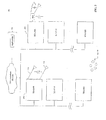
- FIG. 2 is a block diagram of an example RFID system 200 providing communications between one or more readers 104 and tags 102, according to an embodiment of the present invention.
- RFID system 200 includes a user application domain 250, a network of readers 104a-n, and one or more tags 102. Note that the invention is applicable to a single reader, as well as to a plurality of readers coupled in a network, as shown in FIG. 2 .
- readers is often referred to herein, it should be understood that the present invention is applicable to any number of readers in any configuration as required by a particular application.
- Each reader 104 communicates with a tag 102 via one or more antenna(e) 210.
- antenna(e) 210 A variety of antenna configurations are available.
- reader 104a can be directly connected to up to four antennas (e.g., antennas 210a-210d).
- reader 104b is coupled to and controls a multiplexer. A multiplexer allows for a greater number of antennas to be switched to a single antenna port of the reader. In this way reader 104b may accommodate a greater number of antennae.
- User application domain 290 may include one or more user applications. User applications may communicate with one or more readers 104 via a communication network or data link. A reader may receive requests regarding one or more tags 102 from the user application domain 250. For example, an application may request a reader 104 to interrogate a population of tags.
- the present invention can be implemented on a variety of reader platforms and reader network configurations.
- FIG. 3A is a block diagram of a tag 102, according to an example embodiment of the present invention.
- Tag 102 includes an RF interface portion 310, a state machine 320, and a data storage section 330.
- Data storage section 330 may include one or more memory elements as required by a particular application.
- Data storage section 330 stores information used by tag 102 to communicate with reader 104.
- information stored in data storage module 330 includes a tag identification number 332, a confirmed read flag 334, as well as optionally other information 336, if desired.
- each tag 102 is identified by a unique identification number.
- the unique tag identification number 332 may be permanently stored or may be temporarily stored in a memory in data storage section 330.
- FIG. 3B depicts an example of the layout of a unique tag identification number 350.
- Each unique tag identification number 350 has embedded tag identification bits 354 and error detection code bits 358.
- each unique tag identification number may have ninety-six (96) bit identification number and a 16-bit error detection code value.
- the present invention is applicable to other tag identification number lengths and error detection code lengths.
- the embedded tag identification number 354 is referred to as the tag identification number.
- the confirmed read flag 334 indicates whether the tag has been successfully read during a binary tree traversal.
- Flag 334 is stored in a memory in data storage section 330. In an embodiment of the present invention, flag 334 can be stored using similar or different technology than the data storage section 330.
- the confirmed read flag 334 retains its value for a period of time regardless of whether the tag experiences a power loss. The maximum length of time during which the confirmed read flag 334 is stored depends upon the memory used and often upon the environment in which the tag is operated.
- the confirmed read flag 334 is stored in a capacitor as a voltage. As long as the voltage is held in the capacitor, the value of the confirmed, read flag 334 is stored.
- the capacitor, or other storage device, analog and/or digital typically has a maximum storage time or duration. In an embodiment, this time is dictated by a time constant of the storage device, including a value C of capacitance of a capacitor (when present), a value R of resistance of a resistor (when present), and/or a value of any other element or combination thereof, such as an RC (resistor-capacitor) time constant.
- a time constant of the storage device including a value C of capacitance of a capacitor (when present), a value R of resistance of a resistor (when present), and/or a value of any other element or combination thereof, such as an RC (resistor-capacitor) time constant.
- digital logic storage elements such as flip-flops or "one-shot" devices, which may or may not have time constants, may be used.
- the confirmed read flag 334 may also be cleared by a reader 104 before the maximum storage time is reached. For example, upon receipt of a certain symbol from the reader, tag 102 may discharge the capacitor (or otherwise clear a storage element) storing the value of the confirmed read flag 334.
- RF interface portion 310 together with tag antennae (not shown), provides a bi-directional communications interface with reader 104.
- the RF interface receives RF signals from reader 104 and demodulates the signals into digital information symbols.
- the RF interface also modulates digital information symbols into RF signals.
- State machine 320 may include logic, a processor, and/or other components that control the operation of tag 102. State machine 320 receives demodulated information symbols from RF interface portion 310. State machine 320 also accesses information in data storage section 330 as needed. In an embodiment, state machine 320 is implemented with digital circuitry, such as logic gates. Further details regarding state machine 320 are provided below with reference to FIG. 4 .
- Tag 102 can exist in various operating states. Each of these operating states describes a mode of operation for tag 102. Upon the occurrence of certain events, tag 102 can transition from one operating state to another. For example, upon occurrence of an event, tag 102 can transition from a present operating state, which is the operating state that tag 102 is operating in when the event occurs, to a new operating state, as dictated by the combination of the present operating state and the event.
- Events can be triggered by detection of edges in the transmission from reader 104, by passage of a defined period of time, or by a combination of both edge detection and time passage. Examples of events include master reset event, master dormant event, and a data "NULL.”
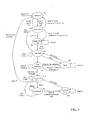
- FIG. 4 illustrates various operating states in a state diagram for tag 102, according to an embodiment of the present invention.
- each operating state is shown as an oval, and transitions between operating states are shown as connections between the ovals. The transitions are annotated with text that describes a corresponding event.
- the first state is a dormant state 402.
- tag 102 is largely inactive. Therefore, power is conserved while a tag 102 is in dormant state 402.
- Tag 102 enters dormant state upon powering up, after receipt of a master dormant event, and at other times described below.
- tag 102 transitions from dormant state 402 to calibration state 404 upon a master reset event 452.
- tag 102 can only transition to calibration state 404 from dormant state 402.
- master reset event 452 will result in a transition from dormant state 402.
- other events may cause transitions from dormant state.
- tag 102 In calibration state 404, tag 102 initializes its timing circuitry. In an embodiment, in calibration state 404, tag 102 will not generate logical symbols "0," or "1" as they have not yet been defined. Instead, in calibration 4, tag 102 performs an oscillator calibration procedure and a data calibration procedure.
- the oscillator calibration procedure involves tag 102 receiving multiple oscillator calibration pulses from reader 104, defined herein as edge transition (data) events. Specific timing is provided between edge transition events.
- the data calibration procedure involves tag 102 receiving multiple data calibration pulses from reader 104. Data calibration results in the definition of data symbols used in communication between the reader and the tag.
- tag 102 may transition from calibration state 404 to dormant state 402 upon the occurrence of an event 454.
- event 454 is defined by the reception of a signal that is not representative of timing signals expected by tag 102.
- oscillator calibration signals are defined as 8 pulses of equal length. If the oscillator calibration pulses received by tag 102 are significantly unequal or not within an expected range of lengths, the pulses may be considered invalid, causing occurrence of an event 454. Hence, when tag 102 receives signals that do not cause successful oscillator calibration or data calibration procedures, event 454 occurs.
- tag 102 After successful completion of the oscillator calibration procedure, which results in a tuned oscillator, and the data calibration procedure, which results in defined data symbols, tag 102 expects to receive defined, data symbols from the reader 104, The data symbols are defined as data "0,” data "1,” and data "NULL.” Master reset and master dormant events may occur at any time, and are immediately processed after occurring.
- tag 102 After successful completion of the calibration procedures, tag 102 receives a data element from the reader.
- the data element is a single bit.
- receipt of a logical "0" data element directs tag 102 to enter global mode set state 406.
- Receipt of a logical '"NULL” directs tag 102 to enter the tree start state 408, skipping global mode state 406.
- This receipt of a logical "0" , or "NULL” causes tag 102 to ignore its read status, as indicated by the continued read flag 334. In this way, the reader can address all tags in a population 120, even tags that have previously been read. However, receipt of a logical "1" directs tag 102 to evaluate the confirmed read flag 334.
- tag 102 transitions to dormant state 402. If the confirmed read flag 334 is not set, tag 102 transitions to global mode set state 406. Thus, by sending a logical "1," the reader can read only those tags that have not been read.
- global mode set state 406, tag 102 receives a sequence of bits from reader 104.
- tag 102 accepts and stores serial binary information into registers in a specific predefined order.
- Global modes are configured in a binary (on or off) configuration. Each bit, as received dynamically from reader 104, programs a register associated with a mode.
- the register is associated with a circuit or circuits controlling defined tag functions/modes.
- defined modes include modulator divisor control, backscatter harmonics limits control, and backscatter power regulator control.
- Modulator divisor control mode controls the frequency in which the tag will modulate back scatter. In an embodiment of the present invention, this mode is based on an initial frequency of 2.5 MHz for a data "0" and 3.75 MHz for a data "1.” Alternatively, other initial frequencies can be used as would be appreciated by persons skilled in the relevant art(s).
- Backscatter harmonic limiter mode when implemented, limits the energy of backscatter harmonics. This limitation reduces the effective emissions from the tag on frequencies above the fundamentals.
- Backscatter power regulator control mode limits the amount of backscatter power in the fundamental frequency of modulation that is reflected by the antenna attached to the tag.
- the modes are determined by the number in sequence, predefined during tag design. Future modes may be defined and assigned to open bits in the sequence, although these can alternatively be defined "on the fly.” In an embodiment, the tag will default (power on reset) to the bit value "0" for all modes prior to accepting the first bit in the sequence. In this way, global mode settings are a variable amount of bits. Global modes may be completely omitted in operation if all default values are acceptable for operation.
- Tag 102 transitions to tree start state 408 upon receipt of a logical "NULL" data element.
- tag 102 expects a command from reader 104 in the form of a data symbol.
- the command is a single bit.
- receipt of a logical "0" symbol directs tag 102 to enter tree traversal state 410.
- receipt of a logical "1” symbol directs tag 102 to enter mute state 412.
- receipt of a logical "NULL” symbol does not effect the state of tag 102 in tree start state.
- tag 102 When operating in tree traversal state 410, tag 102 transmits its identification number to reader 104 according to a binary traversal protocol that enables reader 104 to quickly interrogate a population of tags 120.
- a binary traversal protocol An example of a binary traversal protocol is described below.
- Tag 102 may enter mate state 412 from tree traversal state 410 or tree start state 408. For example, tag 102 may enter mute state 412 from tree traversal state after an unsuccessful negotiation of its tag identification number. In mute state 412, tag 102 receives data from reader 104. However, when in mute state 412, tag 102 provides no responses to reader 104. Thus, mute state 412 disables tag 102 from responding to a particular request for an identification number.
- tag 102 transitions from tree traversal state 410 to command start state 414 upon receipt of a "NULL" symbol from reader 104.
- a successful negotiation is indicated when tag 102 receives a "NULL” symbol at me tag identification length.
- command start mode 414 if a data "0" is received from reader 104, tag 102 enters dormant mode 402. This transition represents a confirmed read of tag 102. Prior to entering dormant state, tag 102 sets the confirmed read flag 334. This flag then indicates that the tag has been confirmed read by the reader.
- command start state 414 When in command start state 414, if a data "1" is received from reader 104, tag 102 enters command state 416. In an embodiment, receipt of a logical "NULL" symbol does not effect the state of tag 102 in command start state 414.
- tags 102 may be active and in tree traversal state 410, or temporarily inactive and in mute state 412. Any other tags that have been processed (i.e., confirmed read) will be in dormant state 402.
- Reader 104 may collectively address the full population of tags 120 through implicit instructions. This means that upon receipt of a certain symbol, a tag will determine the instruction based upon its current state. Thus, a tag does not have to receive a complete "explicit" instruction to perform functions, causing less data (e.g., long bit length explicit instructions) to need to be transferred and saving transfer time. For example, reader 104 may send a logical "NULL" symbol to the population of tags.
- tags that are in mute state 412 will transition to tree start state 408. If the "NULL" is received at the identification number length, then any tag in tree traversal state will transition to command start state 414. If the "NULL" is not received at the identification number length, then any tag in tree traversal state will transition to mute state 412. lmplicit instructions are also used when a fully negotiated tag is in command start state 414 or command state 416 and one or more tags are inactive and in mute state 412.
- tag 102 When operating in command state 416, tag 102 receives a command from reader 104.
- the command consists of multiple bits. ln an embodiment of the present invention, the command is 8 bits in length.
- Command state 416 allows reader 104 to initiate features and functions on a tag, after the tag has been identified via a successful binary tree traversal.
- Tag 102 may transition from command state 416 to command mute state 418 upon occurrence of an event 468.
- event 468 is defined as the detection of communications errors within a command or a request for an unknown or disabled function.
- Tag 102 returns to command start state 414 upon receipt of a logical "NULL" symbol from the reader.
- Command mute state 418 is similar in function to mute state 412. When operating in command mute state 418, tag 102 receives data but does not respond. Tag 102 may return to command start state 414 from command mute state 418 upon receipt of a data "NULL.”
- a binary tree traversal methodology is used in order to establish communication between a reader 104 and one of a population of tags 120 that are within the communication range of the reader. ln an embodiment, contention between the tags 102 is avoided by requiring transmissions from each tag 102 to the reader 104 to be unique in a separation of frequency, but can be avoided in other ways. Contention may be defined as communications by multiple transmissions in the same frequency, time, and/or phase that thereby destructively interfere with each other ⁇ s attempted transmission. Thus, in an example binary traversal algorithm, one bit of information is negotiated at a time between the reader 104 and the current population of tags 102 that the reader is addressing.
- Each tag response is defined by two frequencies, one frequency for 0, and the other frequency for 1. In such a manner, many tags can simultaneously and non-destructively communicate a data 0. It is not important that the reader cannot differentiate a single data 0 from multiple data O's, just that there exists a data 0.
- a tag response may be defined by two time periods, one time period for "0", and the other for "1.”
- the binary tree traversal process eliminates tags from communication until only one tag with a unique number is isolated and verified.
- each level in the binary tree represents a bit position in the tag identification number.
- the reader proceeds through nodes (and levels) in the binary tree, it directs a subset of the population of tags to remain active and a subset of the population of tags to go inactive. For example, tags that last sent a matching bit remain active; those that did not will go inactive. Statistically, on each bit exchange, one half of the tag population will go inactive. This process continues until the reader reaches a node in the last level of the binary tree and results in a unique tag isolation and elimination. This process is repeated until each tag in the population of tags is isolated.
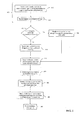
- FIG. 5 is a flowchart 500 illustrating an example operation of the binary tree traversal protocol from the perspective of a single tag 102, according to an embodiment of the present invention.
- tag 102 responds only when reader clears its confirmed read flag 334. Hence, re-negotiation of tag 102 is under control of reader 104.
- step 510 tag 102 is in dormant state 402.
- step 520 tag 102 receives a master reset signal from reader 104. Upon receipt of this signal, tag 102 moves from dormant state 402 to calibration state 404.
- step 530 tag 102 is synchronized with reader 104. Accordingly, for example, in step 530, tag 102 performs oscillator calibration and data calibration with reader 104.
- step 540 tag 102 determines whether a read status check symbol or symbols have been received from reader 104.
- the reader may also send the read status check as a command. If a read status check symbol is received in step 540, operation, proceeds to step 542. If a read status check symbol is not received in step 540, operation proceeds to step 541.
- step 541 tag 102 applies default read status processing.
- tag 102 evaluates the read flag 334 during default processing. In this embodiment, operation proceeds to step 544.
- step 542 tag 102 determines the value of the symbol received. If the value of the received symbol indicates a, read status check ' (e.g., data element "I" received), operation proceeds to step 544. By sending a symbol indicating a read status check, the reader will negotiate only with unread tags.
- read status check ' e.g., data element "I" received
- step 544 tag 102 determines whether the confirmed read flag 334 is set. If tag 102 determines that the confirmed read flag 334 is set in step 542, operation proceeds to step 546. In step 546, tag 102 enters dormant state 402 and operation proceeds to step 510. If tag 102 determines that the confirmed read flag 334 is not set in step 542, operation proceeds to step 550. Thus, read tags will remain dormant and unread tags will be negotiated.
- step 540 If the value of the symbol received in step 540 indicates read all tags (e.g., data element "0" received), operation proceeds to step 550. In this manner, reader 104 negotiates with all tags within the population, even those that had been read previously. In an embodiment of the present invention, reader 104 sends a symbol or symbols that causes tag 102 to clear any value stored in its confirmed read flag 334.
- step 550 tag 102 enters tree traversal mode (corresponding to example states 410, 412, and 414 in FIG. 4 ) and negotiates its complete identification number with reader 104.
- step 560 tag 102 receives a symbol from reader causing the tag to transition to dormant state 402.
- the tag also sets its confirmed read flag 334 to "read" prior to entering dormant state 402. This symbol may be an implicit instruction or have multiple tag functions associated with it. Operation then proceeds to step 510.
- FIG. 6 is a flowchart 600 illustrating an example operation of the binary tree traversal protocol from the perspective of reader 104, according to an embodiment of the present invention.
- reader 104 can elect to read all tags in the population 120, even those that have their confirmed read flag 334 set, or can elect to read only the unread tags.
- Flowchart 600 begins when the reader engages in start-up section process 605. Start-up signals are sent at the beginning of the interrogation of a population of tags 120. During the process, the reader emits signals to power the tags and to configure detailed timing points as required by the protocol. FIG. 6 depicts the start-up section as including two steps.
- step 610 reader 104 sends a master reset signal.
- the master reset signal causes tags 102 within the communication, range of reader 104 to transition to a calibration state 404.
- reader 104 calibrates tags 102.
- reader 104 and tags 102 undergo oscillator and data calibration, operations.
- other methods for start-up section process 605 can be used without departing from the scope of the present invention.
- reader 104 determines whether to interrogate the entire tag population 120, including previously read tags, or to interrogate only unread tags. If reader 104 elects to interrogate the entire tag population, operation proceeds to step 650. If reader 104 elects to interrogate only unread tags, operation proceeds to step 640.
- reader 104 sends a data symbol which causes all tags within its communication range to evaluate their confirmed read flags 334.
- This symbol may be an implicit instruction or have multiple tag functions associated with it.
- the reader may send a command which causes all tags within its communication range to evaluate their confirmed read flags.
- tags 102 having confirmed read flags set i.e., indicating tags previously read
- tags 102 having confirmed read flags that are not set will transition to global mode set state 408. Operation then proceeds to step 660.
- step 650 reader 104 sends a data symbol which causes all tags 102 within communication range of reader 104 to engage in communication with the reader. As a result, tags 102 will ignore the value of their confirmed read flags 334. In an embodiment, tags 102 may also clear any value stored in their confirmed read flag 334 in step 650.
- the reader can send either a data "0" or a data "NULL” symbol. A data "0" symbol causes all tags to transition to the global mode set state 406. If the default global mode values are acceptable, the reader may send a data "NULL” symbol. The "NULL” symbol causes all tags to skip global mode set state 406 and enter tree start state 408. Operation the proceeds to step 660.
- reader 104 sends one or more symbols causing active tags 102 to enter into tree traversal state 410. For example, if tags 102 are in global mode set state 406, reader 104 will have to send two symbols to cause the tags to enter into tree Traversal state 410. If tags 102 are in tree start state 408, the reader will only have to send one symbol to cause the tags to enter tree traversal state 410.
- step 670 reader 104 negotiates a complete tag identification number according to a binary tree traversal protocol such as the protocol described above. As a result of step 670, reader 104 is communicating with only one tag 102.
- reader 104 sends one or more symbols (e.g., data "NULL") causing the negotiated tag to enter into command start state 414.
- symbols e.g., data "NULL"
- reader 104 may send a single symbol to cause the negotiated tag to transition from tree traversal state 410 to command start state 414.
- reader 104 may send symbols causing tag 102 to first enter into command state 416 prior to transitioning to command start state 414.
- step 690 reader 104 sends a symbol causing the negotiated tag to set its confirmed read flag 334 and enter dormant mode 402. Operation then proceeds to step 698.
- step 698 reader 104 resumes interrogation of the tag population. This resumption can occur at various points in the interrogation protocol. For example, if additional tags in the tag population remain to be negotiated, reader 104 may proceed to step 660. The reader may alternatively choose to proceed to step 610 or to other points in the protocol.
Landscapes
- Engineering & Computer Science (AREA)
- Physics & Mathematics (AREA)
- Health & Medical Sciences (AREA)
- Toxicology (AREA)
- Theoretical Computer Science (AREA)
- General Physics & Mathematics (AREA)
- Artificial Intelligence (AREA)
- Computer Vision & Pattern Recognition (AREA)
- Computer Networks & Wireless Communication (AREA)
- Electromagnetism (AREA)
- General Health & Medical Sciences (AREA)
- Near-Field Transmission Systems (AREA)
- Mobile Radio Communication Systems (AREA)
- Communication Control (AREA)
Claims (15)
- Procédé mis en oeuvre dans un système d'identification par radiofréquence (RFID) pour minimiser une renégociation involontaire d'étiquettes (102) dans une population d'étiquettes (102), dans lequel chaque étiquette comprend un fanion de lecture confirmée indiquant si l'étiquette a été lue précédemment, comprenant les étapes ci-dessous consistant à :envoyer (610) un signal de réinitialisation maître (452) à la population d'étiquettes (102) ; etinterroger l'ensemble de la population d'étiquettes (102) ;
le procédé comprenant en outre les étapes consistant à :transmettre (650) un premier symbole qui amène la totalité de la population d'étiquettes à ignorer la valeur stockée dans leur fanion de lecture confirmée ;transmettre (640) au moins un deuxième symbole en vue d'amener une ou plusieurs étiquettes (102) dans la population d'étiquettes (102) à évaluer la valeur du fanion de lecture confirmée (334) ; etdans lequel les étiquettes présentant un fanion de lecture confirmée avec une valeur indiquant « lue » entrent (546) dans un état de sommeil (402), dans lequel chaque étiquette qui a été lue correctement précédemment répondra à une interrogation lorsqu'un lecteur RFID efface ledit fanion de lecture confirmée de chaque étiquette (334). - Procédé selon la revendication 1, dans lequel la transmission comprend les étapes ci-dessous consistant à :négocier (670) un numéro d'identification avec une ou plusieurs étiquettes (102) dans la population d'étiquettes (102) ; ettransmettre (680) au moins un troisième symbole pour amener ladite une ou lesdites plusieurs étiquettes (102) à entrer dans un premier état d'exploitation (414).
- Procédé selon la revendication 1, dans lequel l'étape d'envoi (610) inclut la transition d'étiquettes en sommeil, d'un état de sommeil (402) à un état d'étalonnage (404), suite à la réception du signal de réinitialisation maître (452).
- Procédé selon la revendication 3, dans lequel l'étiquette (102) passe également de l'état d'étalonnage (404) à l'état de sommeil (402) suite à la réception d'un signal (454) qui n'est pas représentatif de signaux de temporisation attendus par une étiquette (102).
- Procédé selon la revendication 1, comprenant en outre les étapes ci-dessous consistant à :négocier (670) un numéro d'identification global avec une première étiquette (102) dans la population d'étiquettes (102) ;transmettre (680) au moins un troisième symbole en vue d'amener la première étiquette (102) à entrer dans un premier état d'exploitation (414) ; ettransmettre (690) au moins un quatrième symbole en vue d'amener la première étiquette (102) à définir le fanion de lecture confirmée (334) et à entrer dans l'état de sommeil (402).
- Procédé selon la revendication 1, dans lequel l'étiquette passe également à un état de mise en sourdine de commande (418) suite à l'occurrence d'une détection (468) d'erreurs de communication dans une commande ou une demande pour une fonction inconnue ou désactivée.
- Procédé selon la revendication 1, comprenant en outre l'étape ci-dessous consistant à :envoyer (542) le deuxième symbole indiquant une vérification d'état de lecture, de sorte que le lecteur ne négocie qu'avec des étiquettes non lues.
- Procédé selon la revendication 1, comprenant en outre l'étape ci-dessous consistant à :amener (690) une étiquette (102) de la population d'étiquettes (102) à entrer dans l'état de sommeil (402).
- Procédé selon la revendication 1, comprenant en outre l'étape ci-dessous consistant à :négocier (670) un numéro d'identification d'étiquette avec une étiquette (102) de la population d'étiquettes (102).
- Procédé selon la revendication 1, comprenant en outre l'étape ci-dessous consistant à :amener (690) une étiquette négociée (102) de la population d'étiquettes (102) à définir le fanion de lecture confirmée (334) et à entrer dans l'état de sommeil (402).
- Système d'identification par radiofréquence (RFID) pour minimiser une renégociation involontaire d'étiquettes (102) dans une population d'étiquettes (102), apte à mettre en oeuvre le procédé selon la revendication 1.
- Système RFID selon la revendication 11, dans lequel chaque étiquette de la population d'étiquettes (102) comprend :une machine à états (320) ; etchaque étiquette est apte à répondre audit un ou auxdits plusieurs lecteurs RFID (104) sur la base du fanion de lecture confirmée (334) et de la machine à états (320).
- Système RFID selon la revendication 11, dans lequel au moins une étiquette de la population d'étiquettes (102) comprend une mémoire (330) qui est apte à :stocker la valeur de lecture confirmée (334) pendant une période de temps indépendamment du fait que l'étiquette subit ou non une perte de puissance.
- Système RFID selon la revendication 13, dans lequel la valeur de lecture confirmée (334) est effacée par le lecteur avant qu'un temps de stockage maximum ne soit atteint.
- Système RFID selon la revendication 13, dans lequel le fanion de lecture confirmée (334) est effacé par une temporisation de la mémoire.
Applications Claiming Priority (2)
| Application Number | Priority Date | Filing Date | Title |
|---|---|---|---|
| US41908202P | 2002-10-18 | 2002-10-18 | |
| EP03774875.3A EP1559278B1 (fr) | 2002-10-18 | 2003-10-20 | Systeme et procede de minimisation d'une re-negotiation non voulue d'une tiquette passive d'identification de frequences radio |
Related Parent Applications (2)
| Application Number | Title | Priority Date | Filing Date |
|---|---|---|---|
| EP03774875.3 Division | 2003-10-20 | ||
| EP03774875.3A Division EP1559278B1 (fr) | 2002-10-18 | 2003-10-20 | Systeme et procede de minimisation d'une re-negotiation non voulue d'une tiquette passive d'identification de frequences radio |
Publications (3)
| Publication Number | Publication Date |
|---|---|
| EP2381694A2 EP2381694A2 (fr) | 2011-10-26 |
| EP2381694A3 EP2381694A3 (fr) | 2012-03-07 |
| EP2381694B1 true EP2381694B1 (fr) | 2015-07-29 |
Family
ID=32108024
Family Applications (2)
| Application Number | Title | Priority Date | Filing Date |
|---|---|---|---|
| EP11168483.3A Expired - Lifetime EP2381694B1 (fr) | 2002-10-18 | 2003-10-20 | Système et procédé pour minimiser une renégociation indésirable d'une étiquette RFID passive |
| EP03774875.3A Expired - Lifetime EP1559278B1 (fr) | 2002-10-18 | 2003-10-20 | Systeme et procede de minimisation d'une re-negotiation non voulue d'une tiquette passive d'identification de frequences radio |
Family Applications After (1)
| Application Number | Title | Priority Date | Filing Date |
|---|---|---|---|
| EP03774875.3A Expired - Lifetime EP1559278B1 (fr) | 2002-10-18 | 2003-10-20 | Systeme et procede de minimisation d'une re-negotiation non voulue d'une tiquette passive d'identification de frequences radio |
Country Status (7)
| Country | Link |
|---|---|
| US (1) | US7284703B2 (fr) |
| EP (2) | EP2381694B1 (fr) |
| JP (1) | JP4719852B2 (fr) |
| KR (1) | KR101148653B1 (fr) |
| CN (1) | CN1706205B (fr) |
| AU (1) | AU2003282941B2 (fr) |
| WO (1) | WO2004036482A2 (fr) |
Families Citing this family (107)
| Publication number | Priority date | Publication date | Assignee | Title |
|---|---|---|---|---|
| US6988667B2 (en) | 2001-05-31 | 2006-01-24 | Alien Technology Corporation | Methods and apparatuses to identify devices |
| US7193504B2 (en) * | 2001-10-09 | 2007-03-20 | Alien Technology Corporation | Methods and apparatuses for identification |
| US7559352B2 (en) | 2002-01-15 | 2009-07-14 | Ernesto Rodriguez | Healing enhancement apparatus formed from multi-panel curtain with a calming image |
| US6933849B2 (en) | 2002-07-09 | 2005-08-23 | Fred Sawyer | Method and apparatus for tracking objects and people |
| US8102244B2 (en) | 2003-08-09 | 2012-01-24 | Alien Technology Corporation | Methods and apparatuses to identify devices |
| US7508296B2 (en) * | 2003-08-11 | 2009-03-24 | Hitachi, Ltd. | Reading method, responder, and interrogator |
| US7716160B2 (en) | 2003-11-07 | 2010-05-11 | Alien Technology Corporation | Methods and apparatuses to identify devices |
| US7357299B2 (en) * | 2004-10-12 | 2008-04-15 | Aristocrat Technologies, Inc. | Method and apparatus for synchronization of proximate RFID readers in a gaming environment |
| WO2006074518A1 (fr) | 2005-01-14 | 2006-07-20 | Matthew Henderson | Scelle de transpondeur, et logement pour transpondeur |
| US7728713B2 (en) * | 2005-05-06 | 2010-06-01 | Intelleflex Corporation | Accurate persistent nodes |
| JP5027398B2 (ja) * | 2005-09-27 | 2012-09-19 | ルネサスエレクトロニクス株式会社 | Icタグ識別方法 |
| US7439864B2 (en) * | 2006-02-21 | 2008-10-21 | International Business Machines Corporation | Method for automatic RFID attenuation and recovery |
| KR101299932B1 (ko) * | 2006-03-10 | 2013-08-27 | 가부시키가이샤 한도오따이 에네루기 켄큐쇼 | 반도체 장치 |
| CN101395617B (zh) | 2006-03-10 | 2012-05-30 | 株式会社半导体能源研究所 | 半导体器件及其操作方法 |
| CN101385039B (zh) | 2006-03-15 | 2012-03-21 | 株式会社半导体能源研究所 | 半导体器件 |
| EP2002383B1 (fr) | 2006-03-15 | 2012-04-25 | Semiconductor Energy Laboratory Co., Ltd. | Dispositif à semi-conducteurs |
| US8226003B2 (en) | 2006-04-27 | 2012-07-24 | Sirit Inc. | Adjusting parameters associated with leakage signals |
| EP1850267B1 (fr) | 2006-04-28 | 2011-11-30 | Semiconductor Energy Laboratory Co., Ltd. | Dispositif semi-conducteur et procédé de détection de la position utilisant le dispositif semi-conducteur |
| US7917685B2 (en) * | 2006-05-04 | 2011-03-29 | Micron Technology, Inc. | Method for reading a multilevel cell in a non-volatile memory device |
| WO2007136022A1 (fr) * | 2006-05-22 | 2007-11-29 | Semiconductor Energy Laboratory Co., Ltd. | Dispositif à semi-conducteur et système de détection de position utilisant le dispositif à semi-conducteur |
| CN101454788A (zh) | 2006-05-31 | 2009-06-10 | 株式会社半导体能源研究所 | 半导体器件以及具有这种半导体器件的ic标贴、ic标签和ic卡 |
| US8132026B2 (en) * | 2006-06-02 | 2012-03-06 | Semiconductor Energy Laboratory Co., Ltd. | Power storage device and mobile electronic device having the same |
| US9087226B2 (en) * | 2006-06-09 | 2015-07-21 | Intelleflex Corporation | System, method and computer program product for calibrating interrogator signal strength and/or tag response range setting |
| EP1881338B1 (fr) * | 2006-07-20 | 2011-09-07 | Semiconductor Energy Laboratory Co., Ltd. | Système de détection des informations de position et procédé de détection des informations de position |
| US8344888B2 (en) * | 2006-08-31 | 2013-01-01 | Semiconductor Energy Laboratory Co., Ltd. | Semiconductor device |
| US8463332B2 (en) | 2006-08-31 | 2013-06-11 | Semiconductor Energy Laboratory Co., Ltd. | Wireless communication device |
| US9022293B2 (en) * | 2006-08-31 | 2015-05-05 | Semiconductor Energy Laboratory Co., Ltd. | Semiconductor device and power receiving device |
| US8570172B2 (en) * | 2006-09-08 | 2013-10-29 | Intelleflex Corporation | RFID system with distributed transmitters |
| WO2008041662A1 (fr) | 2006-09-26 | 2008-04-10 | Semiconductor Energy Laboratory Co., Ltd. | Procédé de gestion d'article et système de gestion d'article |
| JP4952169B2 (ja) | 2006-09-26 | 2012-06-13 | 富士通株式会社 | 情報アクセス・システムおよびアクティブ型非接触情報記憶装置 |
| US7839124B2 (en) | 2006-09-29 | 2010-11-23 | Semiconductor Energy Laboratory Co., Ltd. | Wireless power storage device comprising battery, semiconductor device including battery, and method for operating the wireless power storage device |
| CN100555304C (zh) * | 2006-10-18 | 2009-10-28 | 中兴通讯股份有限公司 | 无线射频识别系统的标签清点方法 |
| US7808206B2 (en) | 2006-10-31 | 2010-10-05 | Semiconductor Energy Laboratory Co., Ltd. | Electric power charge and discharge system |
| US20120326844A1 (en) * | 2006-10-31 | 2012-12-27 | Blaignan Vincent B | Radio-frequency identification (rfid) tag event occurrence detection, reporting, and monitoring, and related rfid readers, systems, and methods |
| US20080104010A1 (en) * | 2006-10-31 | 2008-05-01 | Symbol Technologies, Inc. | Configuring initialized RFID readers using RFID tags |
| US7924141B2 (en) | 2006-12-01 | 2011-04-12 | Round Rock Research, Llc | RFID communication systems and methods, and RFID readers and systems |
| TWI325122B (en) * | 2006-12-04 | 2010-05-21 | Ind Tech Res Inst | Method and system for reading and identifying rfid tag |
| TWI333632B (en) * | 2006-12-14 | 2010-11-21 | Mstar Semiconductor Inc | Reading state retention circuit and associated method |
| EP2126779A4 (fr) | 2006-12-15 | 2010-03-31 | Bluebird Soft Co Ltd | Dispositif rfid et procédés permettant de commander l'alimentation électrique en fonction d'une connexion avec un hôte et d'un mode de fonctionnement |
| KR100848350B1 (ko) * | 2006-12-15 | 2008-07-25 | (주)블루버드 소프트 | 모드 상태에 따라 전원 공급을 제어하기 위한 rfid장치 |
| US7692999B2 (en) | 2006-12-25 | 2010-04-06 | Semiconductor Energy Laboratory Co., Ltd | Nonvolatile memory and semiconductor device including nonvolatile memory |
| JP5412034B2 (ja) * | 2006-12-26 | 2014-02-12 | 株式会社半導体エネルギー研究所 | 半導体装置 |
| JP5210613B2 (ja) | 2006-12-27 | 2013-06-12 | 株式会社半導体エネルギー研究所 | 半導体装置 |
| JP5178181B2 (ja) | 2006-12-27 | 2013-04-10 | 株式会社半導体エネルギー研究所 | 表示装置 |
| KR20080062052A (ko) * | 2006-12-29 | 2008-07-03 | 동부일렉트로닉스 주식회사 | 씨모스 이미지 센서 및 그 제조방법 |
| JP5179858B2 (ja) * | 2007-01-06 | 2013-04-10 | 株式会社半導体エネルギー研究所 | 半導体装置 |
| US8570151B2 (en) | 2007-01-10 | 2013-10-29 | Semiconductor Energy Laboratory Co., Ltd. | Semiconductor device |
| CN101308539B (zh) * | 2007-05-18 | 2012-07-04 | 华为技术有限公司 | 识别射频信号的方法和系统、接收射频信号的装置 |
| US8248212B2 (en) | 2007-05-24 | 2012-08-21 | Sirit Inc. | Pipelining processes in a RF reader |
| JP5331378B2 (ja) * | 2007-05-29 | 2013-10-30 | 株式会社半導体エネルギー研究所 | カードゲーム機 |
| US20080297319A1 (en) * | 2007-05-29 | 2008-12-04 | Semiconductor Energy Laboratory Co., Ltd. | Article management system |
| US8130780B2 (en) | 2007-06-15 | 2012-03-06 | Futurewei Technologies, Inc. | Method and apparatus for assigning resources in a wireless system with multiple regions |
| US8265029B2 (en) * | 2007-06-15 | 2012-09-11 | Futurewei Technologies, Inc. | Method and apparatus for assigning resources in a wireless system |
| US8614985B2 (en) * | 2007-06-15 | 2013-12-24 | Futurewei Technologies, Inc. | Method and apparatus for sharing a group resource in a wireless SDMA system |
| US20080310359A1 (en) * | 2007-06-15 | 2008-12-18 | Mcbeath Sean Michael | Method and Apparatus for Sharing Resources in a Wireless System |
| EP2019425A1 (fr) * | 2007-07-27 | 2009-01-28 | Semiconductor Energy Laboratory Co., Ltd. | Dispositif semi-conducteur et procédé de sa fabrication |
| US9544911B2 (en) * | 2007-08-10 | 2017-01-10 | Futurewei Technologies, Inc. | System and method for assigning communications resources in a wireless communications system |
| JP5248240B2 (ja) * | 2007-08-30 | 2013-07-31 | 株式会社半導体エネルギー研究所 | 半導体装置 |
| JP5164745B2 (ja) | 2007-09-03 | 2013-03-21 | 株式会社半導体エネルギー研究所 | 記憶装置 |
| JP5018378B2 (ja) * | 2007-09-28 | 2012-09-05 | ブラザー工業株式会社 | 無線タグ通信装置及び無線タグ通信システム |
| JP5023939B2 (ja) * | 2007-09-28 | 2012-09-12 | ブラザー工業株式会社 | 無線タグ通信装置及び無線タグ通信システム |
| US8254942B2 (en) * | 2007-11-27 | 2012-08-28 | Futurewei Technologies, Inc. | System and method for resource allocation in a wireless communications system |
| CN101919110A (zh) | 2008-01-11 | 2010-12-15 | 木加哈特控股公司 | 使用铁氧体芯增强去往/来自无源id电路的能量传递效率 |
| US8259662B2 (en) * | 2008-02-19 | 2012-09-04 | Futurewei Technologies | Method and apparatus for assigning persistent resources dynamically in a wireless communication system |
| US8395525B2 (en) | 2008-02-25 | 2013-03-12 | Magnet Consulting, Inc. | Extending the read range of passive RFID tags |
| US8427316B2 (en) | 2008-03-20 | 2013-04-23 | 3M Innovative Properties Company | Detecting tampered with radio frequency identification tags |
| US8446256B2 (en) | 2008-05-19 | 2013-05-21 | Sirit Technologies Inc. | Multiplexing radio frequency signals |
| US9805222B2 (en) * | 2009-01-08 | 2017-10-31 | Zest Labs, Inc. | RFID reader discipline |
| US8169312B2 (en) | 2009-01-09 | 2012-05-01 | Sirit Inc. | Determining speeds of radio frequency tags |
| US8416079B2 (en) | 2009-06-02 | 2013-04-09 | 3M Innovative Properties Company | Switching radio frequency identification (RFID) tags |
| WO2011066215A1 (fr) | 2009-11-30 | 2011-06-03 | Corning Incorporated | Verrouillage de condition rfid |
| DE112011102500T5 (de) | 2010-07-28 | 2013-06-20 | Semiconductor Energy Laboratory Co., Ltd. | Drahtloses Stromzufuhrsystem und drahtloses Stromzufuhrverfahren |
| JP5755067B2 (ja) | 2010-07-30 | 2015-07-29 | 株式会社半導体エネルギー研究所 | 無線給電システム、及び無線給電方法 |
| JP5755066B2 (ja) | 2010-07-30 | 2015-07-29 | 株式会社半導体エネルギー研究所 | 無線給電システム、及び無線給電方法 |
| US9391476B2 (en) | 2010-09-09 | 2016-07-12 | Semiconductor Energy Laboratory Co., Ltd. | Power feeding device, wireless power feeding system using the same and wireless power feeding method |
| DE112011103929B4 (de) | 2010-11-26 | 2025-11-13 | Semiconductor Energy Laboratory Co.,Ltd. | Leistungssendevorrichtung und System zur drahtlosen Übertragung von Leistung, das diese enthält |
| US9054544B2 (en) | 2010-12-22 | 2015-06-09 | Semiconductor Energy Laboratory Co., Ltd. | Power feeding device, power receiving device, and wireless power feed system |
| US9065302B2 (en) | 2010-12-24 | 2015-06-23 | Semiconductor Energy Laboratory Co., Ltd. | Wireless power feeding system |
| KR20120084659A (ko) | 2011-01-20 | 2012-07-30 | 가부시키가이샤 한도오따이 에네루기 켄큐쇼 | 급전 장치 및 비접촉 급전 시스템 |
| US9325205B2 (en) | 2011-03-04 | 2016-04-26 | Semiconductor Energy Laboratory Co., Ltd. | Method for driving power supply system |
| JP5780894B2 (ja) | 2011-09-16 | 2015-09-16 | 株式会社半導体エネルギー研究所 | 非接触給電システム |
| JP2013078171A (ja) | 2011-09-29 | 2013-04-25 | Semiconductor Energy Lab Co Ltd | 受電装置及び非接触給電システム |
| JP6016596B2 (ja) | 2011-12-07 | 2016-10-26 | 株式会社半導体エネルギー研究所 | 非接触給電システム |
| TWI613882B (zh) | 2011-12-16 | 2018-02-01 | 半導體能源研究所股份有限公司 | 直流對直流轉換器、受電裝置及供電系統 |
| JP6088234B2 (ja) | 2011-12-23 | 2017-03-01 | 株式会社半導体エネルギー研究所 | 受電装置、無線給電システム |
| US8844830B2 (en) | 2012-01-20 | 2014-09-30 | Alien Technology Corporation | Persistent nodes for RFID |
| US9405941B2 (en) * | 2012-01-20 | 2016-08-02 | Ruizhang Technology Limited Company | Simultaneous programming of selected tags |
| US10062025B2 (en) | 2012-03-09 | 2018-08-28 | Neology, Inc. | Switchable RFID tag |
| US8976030B2 (en) | 2012-04-24 | 2015-03-10 | Metrologic Instruments, Inc. | Point of sale (POS) based checkout system supporting a customer-transparent two-factor authentication process during product checkout operations |
| US9391674B2 (en) | 2012-04-26 | 2016-07-12 | Semiconductor Energy Laboratory Co., Ltd. | Power feeding system and power feeding method |
| US9165232B2 (en) | 2012-05-14 | 2015-10-20 | Corning Incorporated | Radio-frequency identification (RFID) tag-to-tag autoconnect discovery, and related methods, circuits, and systems |
| WO2013186815A1 (fr) * | 2012-06-14 | 2013-12-19 | Empire Technology Development Llc | Dispositifs et procédés de conservation de produit alimentaire |
| US9390850B2 (en) | 2012-07-13 | 2016-07-12 | Semiconductor Energy Laboratory Co., Ltd. | Power transmitting device, power feeding system, and power feeding method |
| US9239941B1 (en) | 2012-11-08 | 2016-01-19 | Impinj, Inc. | RFID integrated circuit identifier self-check |
| CN103902940A (zh) | 2012-11-08 | 2014-07-02 | 冀京秋 | 集成电路标识自检验 |
| AU2014214543A1 (en) * | 2013-02-07 | 2015-08-27 | SensaData Pty Limited | Improvements in RFID tracking |
| WO2014164919A1 (fr) * | 2013-03-11 | 2014-10-09 | Mojix, Inc. | Systèmes et procédés d'estimation d'une population de capteurs rfid passifs |
| US9251455B2 (en) * | 2013-08-22 | 2016-02-02 | Verily Life Sciences Llc | Using unique identifiers to retrieve configuration data for tag devices |
| US9711994B2 (en) | 2014-01-31 | 2017-07-18 | Semiconductor Energy Laboratory Co., Ltd. | Electronic device and its operation system |
| KR102293958B1 (ko) | 2014-02-28 | 2021-08-27 | 가부시키가이샤 한도오따이 에네루기 켄큐쇼 | 전자 기기 |
| US10740574B1 (en) * | 2016-09-27 | 2020-08-11 | Impinj, Inc. | RFID tags enforcing persistence while powered |
| US10373038B1 (en) * | 2016-09-27 | 2019-08-06 | Impinj, Inc. | RFID tags enforcing persistence while powered |
| DE112018000705T5 (de) | 2017-03-06 | 2019-11-14 | Cummins Filtration Ip, Inc. | Erkennung von echten filtern mit einem filterüberwachungssystem |
| US10095894B1 (en) * | 2017-12-21 | 2018-10-09 | Symbol Technologies, Llc | Systems and methods for density-based RFID network configuration |
| US10460137B1 (en) * | 2018-02-07 | 2019-10-29 | Amazon Technologies, Inc. | Dynamic RFID tag singulation using state information masking |
| US11585827B2 (en) | 2020-05-15 | 2023-02-21 | Zebra Technologies Corporation | Tilt sensor for an antenna |
| JP2025088973A (ja) * | 2023-12-01 | 2025-06-12 | 東芝テック株式会社 | 無線タグ通信装置、無線タグ通信システム及びプログラム |
Family Cites Families (26)
| Publication number | Priority date | Publication date | Assignee | Title |
|---|---|---|---|---|
| NL8901659A (nl) * | 1989-06-30 | 1991-01-16 | Nedap Nv | Multipassysteem. |
| AT395224B (de) * | 1990-08-23 | 1992-10-27 | Mikron Ges Fuer Integrierte Mi | Kontaktloses, induktives datenuebertragungssystem |
| JP3100716B2 (ja) * | 1991-01-04 | 2000-10-23 | シーエスアイアール | 識別装置 |
| JP2567809Y2 (ja) * | 1992-02-24 | 1998-04-08 | 神鋼電機株式会社 | 非接触icカード式ゲート装置 |
| US5525992A (en) * | 1994-11-14 | 1996-06-11 | Texas Instruments Deutschland Gmbh | Method and system for conserving power in a recognition system |
| FR2741979B1 (fr) * | 1995-12-01 | 1998-01-23 | Raimbault Pierre | Procede d'interrogation a distance d'etiquettes station et etiquette pour sa mise en oeuvre |
| US5856788A (en) * | 1996-03-12 | 1999-01-05 | Single Chips Systems Corp. | Method and apparatus for radiofrequency identification tags |
| US5777561A (en) * | 1996-09-30 | 1998-07-07 | International Business Machines Corporation | Method of grouping RF transponders |
| US6107910A (en) * | 1996-11-29 | 2000-08-22 | X-Cyte, Inc. | Dual mode transmitter/receiver and decoder for RF transponder tags |
| JPH10199171A (ja) | 1996-12-27 | 1998-07-31 | Toshiba Corp | 磁気ディスク装置に適用するヘッド位置決め制御システム |
| US5883582A (en) * | 1997-02-07 | 1999-03-16 | Checkpoint Systems, Inc. | Anticollision protocol for reading multiple RFID tags |
| US5986570A (en) * | 1997-09-03 | 1999-11-16 | Micron Communications, Inc. | Method for resolving signal collisions between multiple RFID transponders in a field |
| US6404325B1 (en) * | 1998-01-08 | 2002-06-11 | Intermec Ip Corp. | Method and system for storage and recovery of vital information on radio frequency transponders |
| GB9804584D0 (en) * | 1998-03-04 | 1998-04-29 | Trolley Scan Pty Limited | Identification of objects by a reader |
| FR2776094B1 (fr) * | 1998-03-12 | 2002-09-06 | Commissariat Energie Atomique | Procede et systeme de lecture multiple d'un ensemble d'etiquettes portant des codes d'identification distincts |
| GB9813371D0 (en) * | 1998-06-22 | 1998-08-19 | Powell George L | Anti-collision tag apparatus and system |
| JP2002064404A (ja) * | 2000-06-12 | 2002-02-28 | Supersensor Pty Ltd | 電子無線周波数識別システム |
| US6853294B1 (en) * | 2000-07-26 | 2005-02-08 | Intermec Ip Corp. | Networking applications for automated data collection |
| US7057511B2 (en) * | 2001-02-12 | 2006-06-06 | Symbol Technologies, Inc. | Method, system, and apparatus for communicating with a RFID tag population |
| US6763996B2 (en) * | 2001-09-18 | 2004-07-20 | Motorola, Inc. | Method of communication in a radio frequency identification system |
| US6812841B2 (en) | 2002-01-23 | 2004-11-02 | Intermec Ip Corp. | Passive RFID tag that retains state after temporary loss of power |
| US6707376B1 (en) * | 2002-08-09 | 2004-03-16 | Sensormatic Electronics Corporation | Pulsed power method for increased read range for a radio frequency identification reader |
| JP2004082007A (ja) | 2002-08-27 | 2004-03-18 | Honda Motor Co Ltd | 触媒粒子及びアルコールの脱水素触媒粒子 |
| US7256695B2 (en) * | 2002-09-23 | 2007-08-14 | Microstrain, Inc. | Remotely powered and remotely interrogated wireless digital sensor telemetry system |
| WO2004038644A2 (fr) * | 2002-10-25 | 2004-05-06 | Symbol Technologies, Inc. | Optimisation d'une traversee d'arbre binaire avec des communications sures |
| DE10251699A1 (de) | 2002-11-06 | 2004-06-03 | Robert Bosch Gmbh | Dosiereinrichtung |
-
2003
- 2003-10-20 US US10/688,535 patent/US7284703B2/en not_active Expired - Lifetime
- 2003-10-20 AU AU2003282941A patent/AU2003282941B2/en not_active Expired
- 2003-10-20 CN CN2003801016257A patent/CN1706205B/zh not_active Expired - Lifetime
- 2003-10-20 EP EP11168483.3A patent/EP2381694B1/fr not_active Expired - Lifetime
- 2003-10-20 WO PCT/US2003/033041 patent/WO2004036482A2/fr not_active Ceased
- 2003-10-20 KR KR1020057006553A patent/KR101148653B1/ko not_active Expired - Lifetime
- 2003-10-20 EP EP03774875.3A patent/EP1559278B1/fr not_active Expired - Lifetime
- 2003-10-20 JP JP2004545487A patent/JP4719852B2/ja not_active Expired - Lifetime
Also Published As
| Publication number | Publication date |
|---|---|
| KR101148653B1 (ko) | 2012-05-23 |
| KR20060008273A (ko) | 2006-01-26 |
| CN1706205B (zh) | 2012-04-25 |
| AU2003282941B2 (en) | 2009-03-12 |
| US20040145454A1 (en) | 2004-07-29 |
| EP1559278A4 (fr) | 2009-04-01 |
| JP2006503376A (ja) | 2006-01-26 |
| WO2004036482A3 (fr) | 2004-09-02 |
| JP4719852B2 (ja) | 2011-07-06 |
| CN1706205A (zh) | 2005-12-07 |
| EP1559278A2 (fr) | 2005-08-03 |
| EP2381694A2 (fr) | 2011-10-26 |
| AU2003282941A1 (en) | 2004-05-04 |
| EP2381694A3 (fr) | 2012-03-07 |
| US7284703B2 (en) | 2007-10-23 |
| WO2004036482A2 (fr) | 2004-04-29 |
| EP1559278B1 (fr) | 2013-05-15 |
Similar Documents
| Publication | Publication Date | Title |
|---|---|---|
| EP2381694B1 (fr) | Système et procédé pour minimiser une renégociation indésirable d'une étiquette RFID passive | |
| US7497384B2 (en) | Methods and systems for the negotiation of a population of RFID tags with improved security | |
| US8427315B2 (en) | Ahead-of-time scheduling of commands in RFID reader systems | |
| US6952157B1 (en) | System and method for concurrently addressing multiple radio frequency identification tags from a single reader | |
| US8717147B2 (en) | Passive RFID system and method | |
| US8063740B1 (en) | Interfacing to RFID reader utility that causes RFID tags to reply using changed reply timing | |
| US7733217B2 (en) | Method for data transmission in RFID or remote sensor systems | |
| US20080280560A1 (en) | Method and system of placing a rfid tag in a continuous transmission mode | |
| US7425888B2 (en) | Methods for optimizing communications between an RFID reader and a tag population using non-sequential masking | |
| WO2010014435A1 (fr) | Rfid à réglage automatique | |
| EP1914660A1 (fr) | Procédé d'identification d'une étiquette basée sur un arbre de demande dans des systèmes d'identification de la fréquence radio (RFID) | |
| US20070001812A1 (en) | Systems and methods for optimizing communications between an RFID reader and a tag population using partial binary tree traversal | |
| EP1818852B1 (fr) | Interrogateur, transpondeur et procédé d'identification du transpondeur | |
| KR20070042441A (ko) | Rfid 태그, rfid 리더·라이터, rfid 시스템 및rfid 시스템의 처리 방법 | |
| RU2388157C2 (ru) | Способ исключения конфликтов в технологии радиочастотной идентификации | |
| US7286041B2 (en) | Maintenance of an anticollision channel in an electronic identification system | |
| KR100858053B1 (ko) | 수동형 rfid 리더기 및 이의 동작 제어 방법 | |
| EP0831618A2 (fr) | Perfectionnements apportés aux systèmes de transfert d'information / de données | |
| KR100738485B1 (ko) | 전파식별 시스템에서의 충돌방지 방법 | |
| US20090002168A1 (en) | Wireless tag reader/writer device and signal transmission/reception method thereof | |
| JPH10111916A (ja) | 非接触処理装置 |
Legal Events
| Date | Code | Title | Description |
|---|---|---|---|
| AC | Divisional application: reference to earlier application |
Ref document number: 1559278 Country of ref document: EP Kind code of ref document: P |
|
| AK | Designated contracting states |
Kind code of ref document: A2 Designated state(s): AT BE BG CH CY CZ DE DK EE ES FI FR GB GR HU IE IT LI LU MC NL PT RO SE SI SK TR |
|
| PUAI | Public reference made under article 153(3) epc to a published international application that has entered the european phase |
Free format text: ORIGINAL CODE: 0009012 |
|
| PUAL | Search report despatched |
Free format text: ORIGINAL CODE: 0009013 |
|
| AK | Designated contracting states |
Kind code of ref document: A3 Designated state(s): AT BE BG CH CY CZ DE DK EE ES FI FR GB GR HU IE IT LI LU MC NL PT RO SE SI SK TR |
|
| RIC1 | Information provided on ipc code assigned before grant |
Ipc: H04Q 5/22 20060101AFI20120130BHEP Ipc: G06K 7/00 20060101ALI20120130BHEP |
|
| RAP1 | Party data changed (applicant data changed or rights of an application transferred) |
Owner name: SYMBOL TECHNOLOGIES, INC. |
|
| 17P | Request for examination filed |
Effective date: 20120709 |
|
| 17Q | First examination report despatched |
Effective date: 20140307 |
|
| GRAP | Despatch of communication of intention to grant a patent |
Free format text: ORIGINAL CODE: EPIDOSNIGR1 |
|
| INTG | Intention to grant announced |
Effective date: 20150226 |
|
| GRAS | Grant fee paid |
Free format text: ORIGINAL CODE: EPIDOSNIGR3 |
|
| GRAA | (expected) grant |
Free format text: ORIGINAL CODE: 0009210 |
|
| AC | Divisional application: reference to earlier application |
Ref document number: 1559278 Country of ref document: EP Kind code of ref document: P |
|
| AK | Designated contracting states |
Kind code of ref document: B1 Designated state(s): AT BE BG CH CY CZ DE DK EE ES FI FR GB GR HU IE IT LI LU MC NL PT RO SE SI SK TR |
|
| REG | Reference to a national code |
Ref country code: GB Ref legal event code: FG4D |
|
| REG | Reference to a national code |
Ref country code: CH Ref legal event code: EP |
|
| REG | Reference to a national code |
Ref country code: AT Ref legal event code: REF Ref document number: 740059 Country of ref document: AT Kind code of ref document: T Effective date: 20150815 |
|
| REG | Reference to a national code |
Ref country code: IE Ref legal event code: FG4D |
|
| REG | Reference to a national code |
Ref country code: DE Ref legal event code: R096 Ref document number: 60347883 Country of ref document: DE |
|
| REG | Reference to a national code |
Ref country code: AT Ref legal event code: MK05 Ref document number: 740059 Country of ref document: AT Kind code of ref document: T Effective date: 20150729 |
|
| REG | Reference to a national code |
Ref country code: FR Ref legal event code: PLFP Year of fee payment: 13 |
|
| REG | Reference to a national code |
Ref country code: NL Ref legal event code: MP Effective date: 20150729 |
|
| PG25 | Lapsed in a contracting state [announced via postgrant information from national office to epo] |
Ref country code: GR Free format text: LAPSE BECAUSE OF FAILURE TO SUBMIT A TRANSLATION OF THE DESCRIPTION OR TO PAY THE FEE WITHIN THE PRESCRIBED TIME-LIMIT Effective date: 20151030 Ref country code: FI Free format text: LAPSE BECAUSE OF FAILURE TO SUBMIT A TRANSLATION OF THE DESCRIPTION OR TO PAY THE FEE WITHIN THE PRESCRIBED TIME-LIMIT Effective date: 20150729 |
|
| REG | Reference to a national code |
Ref country code: DE Ref legal event code: R082 Ref document number: 60347883 Country of ref document: DE Representative=s name: LKGLOBAL | LORENZ & KOPF PARTG MBB PATENTANWAE, DE Ref country code: DE Ref legal event code: R082 Ref document number: 60347883 Country of ref document: DE Representative=s name: MAIWALD PATENTANWALTSGESELLSCHAFT MBH, DE Ref country code: DE Ref legal event code: R081 Ref document number: 60347883 Country of ref document: DE Owner name: SYMBOL TECHNOLOGIES, LLC (N.D. GES. D. STAATES, US Free format text: FORMER OWNER: SYMBOL TECHNOLOGIES, INC., HOLTSVILLE, N.Y., US Ref country code: DE Ref legal event code: R082 Ref document number: 60347883 Country of ref document: DE Representative=s name: KOPF, KORBINIAN, DIPL.-ING.UNIV., MA, DE |
|
| PG25 | Lapsed in a contracting state [announced via postgrant information from national office to epo] |
Ref country code: AT Free format text: LAPSE BECAUSE OF FAILURE TO SUBMIT A TRANSLATION OF THE DESCRIPTION OR TO PAY THE FEE WITHIN THE PRESCRIBED TIME-LIMIT Effective date: 20150729 Ref country code: ES Free format text: LAPSE BECAUSE OF FAILURE TO SUBMIT A TRANSLATION OF THE DESCRIPTION OR TO PAY THE FEE WITHIN THE PRESCRIBED TIME-LIMIT Effective date: 20150729 Ref country code: PT Free format text: LAPSE BECAUSE OF FAILURE TO SUBMIT A TRANSLATION OF THE DESCRIPTION OR TO PAY THE FEE WITHIN THE PRESCRIBED TIME-LIMIT Effective date: 20151130 Ref country code: SE Free format text: LAPSE BECAUSE OF FAILURE TO SUBMIT A TRANSLATION OF THE DESCRIPTION OR TO PAY THE FEE WITHIN THE PRESCRIBED TIME-LIMIT Effective date: 20150729 |
|
| PG25 | Lapsed in a contracting state [announced via postgrant information from national office to epo] |
Ref country code: NL Free format text: LAPSE BECAUSE OF FAILURE TO SUBMIT A TRANSLATION OF THE DESCRIPTION OR TO PAY THE FEE WITHIN THE PRESCRIBED TIME-LIMIT Effective date: 20150729 |
|
| PG25 | Lapsed in a contracting state [announced via postgrant information from national office to epo] |
Ref country code: SK Free format text: LAPSE BECAUSE OF FAILURE TO SUBMIT A TRANSLATION OF THE DESCRIPTION OR TO PAY THE FEE WITHIN THE PRESCRIBED TIME-LIMIT Effective date: 20150729 Ref country code: IT Free format text: LAPSE BECAUSE OF FAILURE TO SUBMIT A TRANSLATION OF THE DESCRIPTION OR TO PAY THE FEE WITHIN THE PRESCRIBED TIME-LIMIT Effective date: 20150729 Ref country code: DK Free format text: LAPSE BECAUSE OF FAILURE TO SUBMIT A TRANSLATION OF THE DESCRIPTION OR TO PAY THE FEE WITHIN THE PRESCRIBED TIME-LIMIT Effective date: 20150729 Ref country code: CZ Free format text: LAPSE BECAUSE OF FAILURE TO SUBMIT A TRANSLATION OF THE DESCRIPTION OR TO PAY THE FEE WITHIN THE PRESCRIBED TIME-LIMIT Effective date: 20150729 Ref country code: EE Free format text: LAPSE BECAUSE OF FAILURE TO SUBMIT A TRANSLATION OF THE DESCRIPTION OR TO PAY THE FEE WITHIN THE PRESCRIBED TIME-LIMIT Effective date: 20150729 |
|
| REG | Reference to a national code |
Ref country code: DE Ref legal event code: R097 Ref document number: 60347883 Country of ref document: DE |
|
| PG25 | Lapsed in a contracting state [announced via postgrant information from national office to epo] |
Ref country code: RO Free format text: LAPSE BECAUSE OF FAILURE TO SUBMIT A TRANSLATION OF THE DESCRIPTION OR TO PAY THE FEE WITHIN THE PRESCRIBED TIME-LIMIT Effective date: 20150729 Ref country code: LU Free format text: LAPSE BECAUSE OF FAILURE TO SUBMIT A TRANSLATION OF THE DESCRIPTION OR TO PAY THE FEE WITHIN THE PRESCRIBED TIME-LIMIT Effective date: 20151020 |
|
| PLBE | No opposition filed within time limit |
Free format text: ORIGINAL CODE: 0009261 |
|
| STAA | Information on the status of an ep patent application or granted ep patent |
Free format text: STATUS: NO OPPOSITION FILED WITHIN TIME LIMIT |
|
| PG25 | Lapsed in a contracting state [announced via postgrant information from national office to epo] |
Ref country code: MC Free format text: LAPSE BECAUSE OF FAILURE TO SUBMIT A TRANSLATION OF THE DESCRIPTION OR TO PAY THE FEE WITHIN THE PRESCRIBED TIME-LIMIT Effective date: 20150729 |
|
| 26N | No opposition filed |
Effective date: 20160502 |
|
| REG | Reference to a national code |
Ref country code: DE Ref legal event code: R082 Ref document number: 60347883 Country of ref document: DE Representative=s name: LKGLOBAL | LORENZ & KOPF PARTG MBB PATENTANWAE, DE Ref country code: DE Ref legal event code: R082 Ref document number: 60347883 Country of ref document: DE Representative=s name: KOPF, KORBINIAN, DIPL.-ING.UNIV., MA, DE Ref country code: DE Ref legal event code: R082 Ref document number: 60347883 Country of ref document: DE Representative=s name: LKGLOBAL LORENZ UND KOPF PATENTANWALT, ATTORNE, DE |
|
| PG25 | Lapsed in a contracting state [announced via postgrant information from national office to epo] |
Ref country code: SI Free format text: LAPSE BECAUSE OF FAILURE TO SUBMIT A TRANSLATION OF THE DESCRIPTION OR TO PAY THE FEE WITHIN THE PRESCRIBED TIME-LIMIT Effective date: 20150729 |
|
| REG | Reference to a national code |
Ref country code: FR Ref legal event code: PLFP Year of fee payment: 14 |
|
| PG25 | Lapsed in a contracting state [announced via postgrant information from national office to epo] |
Ref country code: BE Free format text: LAPSE BECAUSE OF FAILURE TO SUBMIT A TRANSLATION OF THE DESCRIPTION OR TO PAY THE FEE WITHIN THE PRESCRIBED TIME-LIMIT Effective date: 20150729 |
|
| PG25 | Lapsed in a contracting state [announced via postgrant information from national office to epo] |
Ref country code: HU Free format text: LAPSE BECAUSE OF FAILURE TO SUBMIT A TRANSLATION OF THE DESCRIPTION OR TO PAY THE FEE WITHIN THE PRESCRIBED TIME-LIMIT; INVALID AB INITIO Effective date: 20031020 Ref country code: BG Free format text: LAPSE BECAUSE OF FAILURE TO SUBMIT A TRANSLATION OF THE DESCRIPTION OR TO PAY THE FEE WITHIN THE PRESCRIBED TIME-LIMIT Effective date: 20150729 |
|
| PG25 | Lapsed in a contracting state [announced via postgrant information from national office to epo] |
Ref country code: CY Free format text: LAPSE BECAUSE OF FAILURE TO SUBMIT A TRANSLATION OF THE DESCRIPTION OR TO PAY THE FEE WITHIN THE PRESCRIBED TIME-LIMIT Effective date: 20150729 |
|
| PG25 | Lapsed in a contracting state [announced via postgrant information from national office to epo] |
Ref country code: TR Free format text: LAPSE BECAUSE OF FAILURE TO SUBMIT A TRANSLATION OF THE DESCRIPTION OR TO PAY THE FEE WITHIN THE PRESCRIBED TIME-LIMIT Effective date: 20150729 |
|
| REG | Reference to a national code |
Ref country code: FR Ref legal event code: PLFP Year of fee payment: 15 |
|
| REG | Reference to a national code |
Ref country code: DE Ref legal event code: R082 Ref document number: 60347883 Country of ref document: DE Representative=s name: LKGLOBAL | LORENZ & KOPF PARTG MBB PATENTANWAE, DE Ref country code: DE Ref legal event code: R082 Ref document number: 60347883 Country of ref document: DE Representative=s name: LKGLOBAL LORENZ UND KOPF PATENTANWALT, ATTORNE, DE |
|
| REG | Reference to a national code |
Ref country code: FR Ref legal event code: CA Effective date: 20171120 Ref country code: FR Ref legal event code: CD Owner name: SYMBOL TECHNOLOGIES, LLC, US Effective date: 20171120 Ref country code: FR Ref legal event code: CJ Effective date: 20171120 |
|
| REG | Reference to a national code |
Ref country code: FR Ref legal event code: PLFP Year of fee payment: 16 |
|
| REG | Reference to a national code |
Ref country code: CH Ref legal event code: PFA Owner name: SYMBOL TECHNOLOGIES, LLC, US Free format text: FORMER OWNER: SYMBOL TECHNOLOGIES, INC., US |
|
| PGFP | Annual fee paid to national office [announced via postgrant information from national office to epo] |
Ref country code: IE Payment date: 20220921 Year of fee payment: 20 Ref country code: GB Payment date: 20220921 Year of fee payment: 20 |
|
| PGFP | Annual fee paid to national office [announced via postgrant information from national office to epo] |
Ref country code: FR Payment date: 20220921 Year of fee payment: 20 |
|
| PGFP | Annual fee paid to national office [announced via postgrant information from national office to epo] |
Ref country code: DE Payment date: 20220920 Year of fee payment: 20 |
|
| PGFP | Annual fee paid to national office [announced via postgrant information from national office to epo] |
Ref country code: CH Payment date: 20221101 Year of fee payment: 20 |
|
| P01 | Opt-out of the competence of the unified patent court (upc) registered |
Effective date: 20230416 |
|
| REG | Reference to a national code |
Ref country code: DE Ref legal event code: R071 Ref document number: 60347883 Country of ref document: DE |
|
| REG | Reference to a national code |
Ref country code: CH Ref legal event code: PL |
|
| REG | Reference to a national code |
Ref country code: GB Ref legal event code: PE20 Expiry date: 20231019 |
|
| REG | Reference to a national code |
Ref country code: IE Ref legal event code: MK9A |
|
| PG25 | Lapsed in a contracting state [announced via postgrant information from national office to epo] |
Ref country code: GB Free format text: LAPSE BECAUSE OF EXPIRATION OF PROTECTION Effective date: 20231019 |
|
| PG25 | Lapsed in a contracting state [announced via postgrant information from national office to epo] |
Ref country code: IE Free format text: LAPSE BECAUSE OF EXPIRATION OF PROTECTION Effective date: 20231020 Ref country code: GB Free format text: LAPSE BECAUSE OF EXPIRATION OF PROTECTION Effective date: 20231019 |