EP2382288B1 - Herstellung von polyolesterschmierstoffen für kühlsysteme - Google Patents
Herstellung von polyolesterschmierstoffen für kühlsysteme Download PDFInfo
- Publication number
- EP2382288B1 EP2382288B1 EP10701981.2A EP10701981A EP2382288B1 EP 2382288 B1 EP2382288 B1 EP 2382288B1 EP 10701981 A EP10701981 A EP 10701981A EP 2382288 B1 EP2382288 B1 EP 2382288B1
- Authority
- EP
- European Patent Office
- Prior art keywords
- acid
- esters
- iso
- mixture
- ester composition
- Prior art date
- Legal status (The legal status is an assumption and is not a legal conclusion. Google has not performed a legal analysis and makes no representation as to the accuracy of the status listed.)
- Not-in-force
Links
- -1 polyol ester Chemical class 0.000 title claims description 59
- 229920005862 polyol Polymers 0.000 title claims description 51
- 239000000314 lubricant Substances 0.000 title description 29
- 238000005057 refrigeration Methods 0.000 title description 12
- 238000004519 manufacturing process Methods 0.000 title description 5
- 239000000203 mixture Substances 0.000 claims description 99
- 150000002148 esters Chemical class 0.000 claims description 48
- WXZMFSXDPGVJKK-UHFFFAOYSA-N pentaerythritol Chemical compound OCC(CO)(CO)CO WXZMFSXDPGVJKK-UHFFFAOYSA-N 0.000 claims description 42
- MNWFXJYAOYHMED-UHFFFAOYSA-N heptanoic acid Chemical compound CCCCCCC(O)=O MNWFXJYAOYHMED-UHFFFAOYSA-N 0.000 claims description 40
- TXBCBTDQIULDIA-UHFFFAOYSA-N 2-[[3-hydroxy-2,2-bis(hydroxymethyl)propoxy]methyl]-2-(hydroxymethyl)propane-1,3-diol Chemical compound OCC(CO)(CO)COCC(CO)(CO)CO TXBCBTDQIULDIA-UHFFFAOYSA-N 0.000 claims description 31
- 229940059574 pentaerithrityl Drugs 0.000 claims description 30
- 238000000034 method Methods 0.000 claims description 27
- 125000002887 hydroxy group Chemical group [H]O* 0.000 claims description 21
- 150000002763 monocarboxylic acids Chemical class 0.000 claims description 17
- 239000003507 refrigerant Substances 0.000 claims description 16
- GWYFCOCPABKNJV-UHFFFAOYSA-N isovaleric acid Chemical compound CC(C)CC(O)=O GWYFCOCPABKNJV-UHFFFAOYSA-N 0.000 claims description 14
- 239000012530 fluid Substances 0.000 claims description 12
- XZOYHFBNQHPJRQ-UHFFFAOYSA-N 7-methyloctanoic acid Chemical compound CC(C)CCCCCC(O)=O XZOYHFBNQHPJRQ-UHFFFAOYSA-N 0.000 claims description 10
- 239000003377 acid catalyst Substances 0.000 claims description 9
- 125000003178 carboxy group Chemical group [H]OC(*)=O 0.000 claims description 8
- NBVXSUQYWXRMNV-UHFFFAOYSA-N fluoromethane Chemical compound FC NBVXSUQYWXRMNV-UHFFFAOYSA-N 0.000 claims description 5
- 239000002253 acid Substances 0.000 description 50
- KWYUFKZDYYNOTN-UHFFFAOYSA-M Potassium hydroxide Chemical compound [OH-].[K+] KWYUFKZDYYNOTN-UHFFFAOYSA-M 0.000 description 30
- 230000000052 comparative effect Effects 0.000 description 28
- 238000006243 chemical reaction Methods 0.000 description 20
- XLYOFNOQVPJJNP-UHFFFAOYSA-N water Chemical compound O XLYOFNOQVPJJNP-UHFFFAOYSA-N 0.000 description 20
- 239000000047 product Substances 0.000 description 19
- 238000012360 testing method Methods 0.000 description 19
- NQPDZGIKBAWPEJ-UHFFFAOYSA-N valeric acid Chemical compound CCCCC(O)=O NQPDZGIKBAWPEJ-UHFFFAOYSA-N 0.000 description 16
- 239000011541 reaction mixture Substances 0.000 description 13
- LVGUZGTVOIAKKC-UHFFFAOYSA-N 1,1,1,2-tetrafluoroethane Chemical compound FCC(F)(F)F LVGUZGTVOIAKKC-UHFFFAOYSA-N 0.000 description 11
- 150000003077 polyols Chemical class 0.000 description 10
- OILUAKBAMVLXGF-UHFFFAOYSA-N 3,5,5-trimethyl-hexanoic acid Chemical compound OC(=O)CC(C)CC(C)(C)C OILUAKBAMVLXGF-UHFFFAOYSA-N 0.000 description 9
- RWRIWBAIICGTTQ-UHFFFAOYSA-N difluoromethane Chemical compound FCF RWRIWBAIICGTTQ-UHFFFAOYSA-N 0.000 description 9
- 239000000463 material Substances 0.000 description 9
- GTLACDSXYULKMZ-UHFFFAOYSA-N pentafluoroethane Chemical compound FC(F)C(F)(F)F GTLACDSXYULKMZ-UHFFFAOYSA-N 0.000 description 9
- 150000007513 acids Chemical class 0.000 description 8
- 230000000704 physical effect Effects 0.000 description 8
- 239000004698 Polyethylene Substances 0.000 description 7
- 229920000728 polyester Polymers 0.000 description 7
- IJGRMHOSHXDMSA-UHFFFAOYSA-N Atomic nitrogen Chemical compound N#N IJGRMHOSHXDMSA-UHFFFAOYSA-N 0.000 description 6
- 238000004378 air conditioning Methods 0.000 description 6
- 230000032050 esterification Effects 0.000 description 6
- 238000005886 esterification reaction Methods 0.000 description 6
- UJPMYEOUBPIPHQ-UHFFFAOYSA-N 1,1,1-trifluoroethane Chemical compound CC(F)(F)F UJPMYEOUBPIPHQ-UHFFFAOYSA-N 0.000 description 5
- 239000003513 alkali Substances 0.000 description 5
- 238000005461 lubrication Methods 0.000 description 5
- RTZKZFJDLAIYFH-UHFFFAOYSA-N Diethyl ether Chemical compound CCOCC RTZKZFJDLAIYFH-UHFFFAOYSA-N 0.000 description 4
- 239000003963 antioxidant agent Substances 0.000 description 4
- 230000015572 biosynthetic process Effects 0.000 description 4
- 125000004432 carbon atom Chemical group C* 0.000 description 4
- 239000003054 catalyst Substances 0.000 description 4
- 238000006073 displacement reaction Methods 0.000 description 4
- NNPPMTNAJDCUHE-UHFFFAOYSA-N isobutane Chemical compound CC(C)C NNPPMTNAJDCUHE-UHFFFAOYSA-N 0.000 description 4
- 239000011701 zinc Substances 0.000 description 4
- 229910052725 zinc Inorganic materials 0.000 description 4
- 229910019142 PO4 Inorganic materials 0.000 description 3
- 229910000831 Steel Inorganic materials 0.000 description 3
- 238000004458 analytical method Methods 0.000 description 3
- 239000007866 anti-wear additive Substances 0.000 description 3
- 150000001735 carboxylic acids Chemical class 0.000 description 3
- 150000001875 compounds Chemical class 0.000 description 3
- 238000005227 gel permeation chromatography Methods 0.000 description 3
- 239000011521 glass Substances 0.000 description 3
- 229930195733 hydrocarbon Natural products 0.000 description 3
- 150000002430 hydrocarbons Chemical class 0.000 description 3
- 230000003301 hydrolyzing effect Effects 0.000 description 3
- 229910052751 metal Inorganic materials 0.000 description 3
- 239000002184 metal Substances 0.000 description 3
- 229910052757 nitrogen Inorganic materials 0.000 description 3
- 239000003921 oil Substances 0.000 description 3
- 235000019198 oils Nutrition 0.000 description 3
- 235000021317 phosphate Nutrition 0.000 description 3
- 239000002994 raw material Substances 0.000 description 3
- 239000010959 steel Substances 0.000 description 3
- 238000012546 transfer Methods 0.000 description 3
- WXGNWUVNYMJENI-UHFFFAOYSA-N 1,1,2,2-tetrafluoroethane Chemical compound FC(F)C(F)F WXGNWUVNYMJENI-UHFFFAOYSA-N 0.000 description 2
- YXIWHUQXZSMYRE-UHFFFAOYSA-N 1,3-benzothiazole-2-thiol Chemical compound C1=CC=C2SC(S)=NC2=C1 YXIWHUQXZSMYRE-UHFFFAOYSA-N 0.000 description 2
- PTJWCLYPVFJWMP-UHFFFAOYSA-N 2-[[3-hydroxy-2-[[3-hydroxy-2,2-bis(hydroxymethyl)propoxy]methyl]-2-(hydroxymethyl)propoxy]methyl]-2-(hydroxymethyl)propane-1,3-diol Chemical compound OCC(CO)(CO)COCC(CO)(CO)COCC(CO)(CO)CO PTJWCLYPVFJWMP-UHFFFAOYSA-N 0.000 description 2
- VCIMZVUJVMTQMG-UHFFFAOYSA-N 7-methyloctanoic acid 3,5,5-trimethylhexanoic acid Chemical compound CC(C)CCCCCC(O)=O.OC(=O)CC(C)CC(C)(C)C VCIMZVUJVMTQMG-UHFFFAOYSA-N 0.000 description 2
- QGZKDVFQNNGYKY-UHFFFAOYSA-N Ammonia Chemical compound N QGZKDVFQNNGYKY-UHFFFAOYSA-N 0.000 description 2
- 229910001369 Brass Inorganic materials 0.000 description 2
- 239000004215 Carbon black (E152) Substances 0.000 description 2
- CURLTUGMZLYLDI-UHFFFAOYSA-N Carbon dioxide Chemical compound O=C=O CURLTUGMZLYLDI-UHFFFAOYSA-N 0.000 description 2
- VOPWNXZWBYDODV-UHFFFAOYSA-N Chlorodifluoromethane Chemical compound FC(F)Cl VOPWNXZWBYDODV-UHFFFAOYSA-N 0.000 description 2
- RYGMFSIKBFXOCR-UHFFFAOYSA-N Copper Chemical compound [Cu] RYGMFSIKBFXOCR-UHFFFAOYSA-N 0.000 description 2
- LCGLNKUTAGEVQW-UHFFFAOYSA-N Dimethyl ether Chemical compound COC LCGLNKUTAGEVQW-UHFFFAOYSA-N 0.000 description 2
- 239000005069 Extreme pressure additive Substances 0.000 description 2
- VEXZGXHMUGYJMC-UHFFFAOYSA-N Hydrochloric acid Chemical compound Cl VEXZGXHMUGYJMC-UHFFFAOYSA-N 0.000 description 2
- KFZMGEQAYNKOFK-UHFFFAOYSA-N Isopropanol Chemical compound CC(C)O KFZMGEQAYNKOFK-UHFFFAOYSA-N 0.000 description 2
- XQVWYOYUZDUNRW-UHFFFAOYSA-N N-Phenyl-1-naphthylamine Chemical compound C=1C=CC2=CC=CC=C2C=1NC1=CC=CC=C1 XQVWYOYUZDUNRW-UHFFFAOYSA-N 0.000 description 2
- KEQFTVQCIQJIQW-UHFFFAOYSA-N N-Phenyl-2-naphthylamine Chemical compound C=1C=C2C=CC=CC2=CC=1NC1=CC=CC=C1 KEQFTVQCIQJIQW-UHFFFAOYSA-N 0.000 description 2
- NINIDFKCEFEMDL-UHFFFAOYSA-N Sulfur Chemical compound [S] NINIDFKCEFEMDL-UHFFFAOYSA-N 0.000 description 2
- QAOWNCQODCNURD-UHFFFAOYSA-N Sulfuric acid Chemical compound OS(O)(=O)=O QAOWNCQODCNURD-UHFFFAOYSA-N 0.000 description 2
- HCHKCACWOHOZIP-UHFFFAOYSA-N Zinc Chemical compound [Zn] HCHKCACWOHOZIP-UHFFFAOYSA-N 0.000 description 2
- 239000000654 additive Substances 0.000 description 2
- 229910052782 aluminium Inorganic materials 0.000 description 2
- XAGFODPZIPBFFR-UHFFFAOYSA-N aluminium Chemical compound [Al] XAGFODPZIPBFFR-UHFFFAOYSA-N 0.000 description 2
- 150000001412 amines Chemical class 0.000 description 2
- IOJUPLGTWVMSFF-UHFFFAOYSA-N benzothiazole Chemical compound C1=CC=C2SC=NC2=C1 IOJUPLGTWVMSFF-UHFFFAOYSA-N 0.000 description 2
- 239000010951 brass Substances 0.000 description 2
- 239000003795 chemical substances by application Substances 0.000 description 2
- 229910052802 copper Inorganic materials 0.000 description 2
- 239000010949 copper Substances 0.000 description 2
- IYYZUPMFVPLQIF-UHFFFAOYSA-N dibenzothiophene Chemical compound C1=CC=C2C3=CC=CC=C3SC2=C1 IYYZUPMFVPLQIF-UHFFFAOYSA-N 0.000 description 2
- 238000006266 etherification reaction Methods 0.000 description 2
- 238000010438 heat treatment Methods 0.000 description 2
- 239000004615 ingredient Substances 0.000 description 2
- 239000001282 iso-butane Substances 0.000 description 2
- 235000013847 iso-butane Nutrition 0.000 description 2
- 239000006078 metal deactivator Substances 0.000 description 2
- 239000002480 mineral oil Substances 0.000 description 2
- KJFMBFZCATUALV-UHFFFAOYSA-N phenolphthalein Chemical compound C1=CC(O)=CC=C1C1(C=2C=CC(O)=CC=2)C2=CC=CC=C2C(=O)O1 KJFMBFZCATUALV-UHFFFAOYSA-N 0.000 description 2
- AQSJGOWTSHOLKH-UHFFFAOYSA-N phosphite(3-) Chemical class [O-]P([O-])[O-] AQSJGOWTSHOLKH-UHFFFAOYSA-N 0.000 description 2
- 150000003013 phosphoric acid derivatives Chemical class 0.000 description 2
- 229920013639 polyalphaolefin Polymers 0.000 description 2
- 229920000570 polyether Polymers 0.000 description 2
- GUEIZVNYDFNHJU-UHFFFAOYSA-N quinizarin Chemical compound O=C1C2=CC=CC=C2C(=O)C2=C1C(O)=CC=C2O GUEIZVNYDFNHJU-UHFFFAOYSA-N 0.000 description 2
- 238000005096 rolling process Methods 0.000 description 2
- 239000007858 starting material Substances 0.000 description 2
- 239000011593 sulfur Substances 0.000 description 2
- 229910052717 sulfur Inorganic materials 0.000 description 2
- 238000003786 synthesis reaction Methods 0.000 description 2
- TXEYQDLBPFQVAA-UHFFFAOYSA-N tetrafluoromethane Chemical compound FC(F)(F)F TXEYQDLBPFQVAA-UHFFFAOYSA-N 0.000 description 2
- PYOKUURKVVELLB-UHFFFAOYSA-N trimethyl orthoformate Chemical compound COC(OC)OC PYOKUURKVVELLB-UHFFFAOYSA-N 0.000 description 2
- IMYZYCNQZDBZBQ-UHFFFAOYSA-N (+-)-8-(cis-3-octyl-oxiranyl)-octanoic acid Chemical class CCCCCCCCC1OC1CCCCCCCC(O)=O IMYZYCNQZDBZBQ-UHFFFAOYSA-N 0.000 description 1
- PGJHURKAWUJHLJ-UHFFFAOYSA-N 1,1,2,3-tetrafluoroprop-1-ene Chemical compound FCC(F)=C(F)F PGJHURKAWUJHLJ-UHFFFAOYSA-N 0.000 description 1
- WNXJIVFYUVYPPR-UHFFFAOYSA-N 1,3-dioxolane Chemical compound C1COCO1 WNXJIVFYUVYPPR-UHFFFAOYSA-N 0.000 description 1
- AAKKZDBDOJWNQA-UHFFFAOYSA-N 1,4-dioctylcyclohexa-2,4-dien-1-amine Chemical compound C(CCCCCCC)C1(CC=C(C=C1)CCCCCCCC)N AAKKZDBDOJWNQA-UHFFFAOYSA-N 0.000 description 1
- WJFKNYWRSNBZNX-UHFFFAOYSA-N 10H-phenothiazine Chemical compound C1=CC=C2NC3=CC=CC=C3SC2=C1 WJFKNYWRSNBZNX-UHFFFAOYSA-N 0.000 description 1
- KGRVJHAUYBGFFP-UHFFFAOYSA-N 2,2'-Methylenebis(4-methyl-6-tert-butylphenol) Chemical compound CC(C)(C)C1=CC(C)=CC(CC=2C(=C(C=C(C)C=2)C(C)(C)C)O)=C1O KGRVJHAUYBGFFP-UHFFFAOYSA-N 0.000 description 1
- FXRLMCRCYDHQFW-UHFFFAOYSA-N 2,3,3,3-tetrafluoropropene Chemical compound FC(=C)C(F)(F)F FXRLMCRCYDHQFW-UHFFFAOYSA-N 0.000 description 1
- LBLYYCQCTBFVLH-UHFFFAOYSA-N 2-Methylbenzenesulfonic acid Chemical compound CC1=CC=CC=C1S(O)(=O)=O LBLYYCQCTBFVLH-UHFFFAOYSA-N 0.000 description 1
- WLAMNBDJUVNPJU-BYPYZUCNSA-N 2-Methylbutanoic acid Natural products CC[C@H](C)C(O)=O WLAMNBDJUVNPJU-BYPYZUCNSA-N 0.000 description 1
- WLAMNBDJUVNPJU-UHFFFAOYSA-N 2-methylbutyric acid Chemical compound CCC(C)C(O)=O WLAMNBDJUVNPJU-UHFFFAOYSA-N 0.000 description 1
- ODJQKYXPKWQWNK-UHFFFAOYSA-N 3,3'-Thiobispropanoic acid Chemical class OC(=O)CCSCCC(O)=O ODJQKYXPKWQWNK-UHFFFAOYSA-N 0.000 description 1
- STGFANHLXUILNY-UHFFFAOYSA-N 3,7-dioctyl-10h-phenothiazine Chemical compound C1=C(CCCCCCCC)C=C2SC3=CC(CCCCCCCC)=CC=C3NC2=C1 STGFANHLXUILNY-UHFFFAOYSA-N 0.000 description 1
- MDWVSAYEQPLWMX-UHFFFAOYSA-N 4,4'-Methylenebis(2,6-di-tert-butylphenol) Chemical compound CC(C)(C)C1=C(O)C(C(C)(C)C)=CC(CC=2C=C(C(O)=C(C=2)C(C)(C)C)C(C)(C)C)=C1 MDWVSAYEQPLWMX-UHFFFAOYSA-N 0.000 description 1
- CMGDVUCDZOBDNL-UHFFFAOYSA-N 4-methyl-2h-benzotriazole Chemical compound CC1=CC=CC2=NNN=C12 CMGDVUCDZOBDNL-UHFFFAOYSA-N 0.000 description 1
- RGCKGOZRHPZPFP-UHFFFAOYSA-N Alizarin Natural products C1=CC=C2C(=O)C3=C(O)C(O)=CC=C3C(=O)C2=C1 RGCKGOZRHPZPFP-UHFFFAOYSA-N 0.000 description 1
- NLZUEZXRPGMBCV-UHFFFAOYSA-N Butylhydroxytoluene Chemical compound CC1=CC(C(C)(C)C)=C(O)C(C(C)(C)C)=C1 NLZUEZXRPGMBCV-UHFFFAOYSA-N 0.000 description 1
- OKTJSMMVPCPJKN-UHFFFAOYSA-N Carbon Chemical compound [C] OKTJSMMVPCPJKN-UHFFFAOYSA-N 0.000 description 1
- 239000004593 Epoxy Substances 0.000 description 1
- LFQSCWFLJHTTHZ-UHFFFAOYSA-N Ethanol Chemical compound CCO LFQSCWFLJHTTHZ-UHFFFAOYSA-N 0.000 description 1
- AFVFQIVMOAPDHO-UHFFFAOYSA-N Methanesulfonic acid Chemical compound CS(O)(=O)=O AFVFQIVMOAPDHO-UHFFFAOYSA-N 0.000 description 1
- 241000557624 Nucifraga Species 0.000 description 1
- FQYUMYWMJTYZTK-UHFFFAOYSA-N Phenyl glycidyl ether Chemical class C1OC1COC1=CC=CC=C1 FQYUMYWMJTYZTK-UHFFFAOYSA-N 0.000 description 1
- DWAQJAXMDSEUJJ-UHFFFAOYSA-M Sodium bisulfite Chemical compound [Na+].OS([O-])=O DWAQJAXMDSEUJJ-UHFFFAOYSA-M 0.000 description 1
- YSMRWXYRXBRSND-UHFFFAOYSA-N TOTP Chemical compound CC1=CC=CC=C1OP(=O)(OC=1C(=CC=CC=1)C)OC1=CC=CC=C1C YSMRWXYRXBRSND-UHFFFAOYSA-N 0.000 description 1
- ATJFFYVFTNAWJD-UHFFFAOYSA-N Tin Chemical compound [Sn] ATJFFYVFTNAWJD-UHFFFAOYSA-N 0.000 description 1
- 230000032683 aging Effects 0.000 description 1
- HFVAFDPGUJEFBQ-UHFFFAOYSA-M alizarin red S Chemical compound [Na+].O=C1C2=CC=CC=C2C(=O)C2=C1C=C(S([O-])(=O)=O)C(O)=C2O HFVAFDPGUJEFBQ-UHFFFAOYSA-M 0.000 description 1
- 150000004996 alkyl benzenes Chemical class 0.000 description 1
- 125000000217 alkyl group Chemical class 0.000 description 1
- 229910021529 ammonia Inorganic materials 0.000 description 1
- 239000002518 antifoaming agent Substances 0.000 description 1
- 239000002199 base oil Substances 0.000 description 1
- SRSXLGNVWSONIS-UHFFFAOYSA-N benzenesulfonic acid Chemical compound OS(=O)(=O)C1=CC=CC=C1 SRSXLGNVWSONIS-UHFFFAOYSA-N 0.000 description 1
- 229940092714 benzenesulfonic acid Drugs 0.000 description 1
- QRUDEWIWKLJBPS-UHFFFAOYSA-N benzotriazole Chemical compound C1=CC=C2N[N][N]C2=C1 QRUDEWIWKLJBPS-UHFFFAOYSA-N 0.000 description 1
- 239000012964 benzotriazole Substances 0.000 description 1
- LUFPJJNWMYZRQE-UHFFFAOYSA-N benzylsulfanylmethylbenzene Chemical group C=1C=CC=CC=1CSCC1=CC=CC=C1 LUFPJJNWMYZRQE-UHFFFAOYSA-N 0.000 description 1
- 150000001639 boron compounds Chemical class 0.000 description 1
- 239000006227 byproduct Substances 0.000 description 1
- 239000001569 carbon dioxide Substances 0.000 description 1
- 229910002092 carbon dioxide Inorganic materials 0.000 description 1
- 230000003197 catalytic effect Effects 0.000 description 1
- 239000007795 chemical reaction product Substances 0.000 description 1
- UUAGAQFQZIEFAH-UHFFFAOYSA-N chlorotrifluoroethylene Chemical group FC(F)=C(F)Cl UUAGAQFQZIEFAH-UHFFFAOYSA-N 0.000 description 1
- 230000006835 compression Effects 0.000 description 1
- 238000007906 compression Methods 0.000 description 1
- 238000009833 condensation Methods 0.000 description 1
- 230000005494 condensation Effects 0.000 description 1
- 238000007796 conventional method Methods 0.000 description 1
- 239000002826 coolant Substances 0.000 description 1
- 238000001816 cooling Methods 0.000 description 1
- 238000005260 corrosion Methods 0.000 description 1
- 230000007797 corrosion Effects 0.000 description 1
- 238000000354 decomposition reaction Methods 0.000 description 1
- 230000001419 dependent effect Effects 0.000 description 1
- 238000013461 design Methods 0.000 description 1
- AFZSMODLJJCVPP-UHFFFAOYSA-N dibenzothiazol-2-yl disulfide Chemical compound C1=CC=C2SC(SSC=3SC4=CC=CC=C4N=3)=NC2=C1 AFZSMODLJJCVPP-UHFFFAOYSA-N 0.000 description 1
- 239000004205 dimethyl polysiloxane Substances 0.000 description 1
- 235000013870 dimethyl polysiloxane Nutrition 0.000 description 1
- 238000004821 distillation Methods 0.000 description 1
- JRBPAEWTRLWTQC-UHFFFAOYSA-N dodecylamine Chemical class CCCCCCCCCCCCN JRBPAEWTRLWTQC-UHFFFAOYSA-N 0.000 description 1
- CCIVGXIOQKPBKL-UHFFFAOYSA-N ethanesulfonic acid Chemical compound CCS(O)(=O)=O CCIVGXIOQKPBKL-UHFFFAOYSA-N 0.000 description 1
- 238000001914 filtration Methods 0.000 description 1
- 150000002222 fluorine compounds Chemical class 0.000 description 1
- 125000001153 fluoro group Chemical group F* 0.000 description 1
- 238000004817 gas chromatography Methods 0.000 description 1
- 150000002314 glycerols Chemical class 0.000 description 1
- 239000010439 graphite Substances 0.000 description 1
- 229910002804 graphite Inorganic materials 0.000 description 1
- 230000005484 gravity Effects 0.000 description 1
- 239000013529 heat transfer fluid Substances 0.000 description 1
- CBOIHMRHGLHBPB-UHFFFAOYSA-N hydroxymethyl Chemical group O[CH2] CBOIHMRHGLHBPB-UHFFFAOYSA-N 0.000 description 1
- 239000003317 industrial substance Substances 0.000 description 1
- 229910052500 inorganic mineral Inorganic materials 0.000 description 1
- 239000000543 intermediate Substances 0.000 description 1
- 238000011068 loading method Methods 0.000 description 1
- 239000003879 lubricant additive Substances 0.000 description 1
- 238000005259 measurement Methods 0.000 description 1
- QLOAVXSYZAJECW-UHFFFAOYSA-N methane;molecular fluorine Chemical compound C.FF QLOAVXSYZAJECW-UHFFFAOYSA-N 0.000 description 1
- 239000011707 mineral Substances 0.000 description 1
- 239000003607 modifier Substances 0.000 description 1
- CWQXQMHSOZUFJS-UHFFFAOYSA-N molybdenum disulfide Chemical compound S=[Mo]=S CWQXQMHSOZUFJS-UHFFFAOYSA-N 0.000 description 1
- 229910052982 molybdenum disulfide Inorganic materials 0.000 description 1
- 125000002950 monocyclic group Chemical group 0.000 description 1
- IJDNQMDRQITEOD-UHFFFAOYSA-N n-butane Chemical compound CCCC IJDNQMDRQITEOD-UHFFFAOYSA-N 0.000 description 1
- RQVGZVZFVNMBGS-UHFFFAOYSA-N n-octyl-n-phenylaniline Chemical compound C=1C=CC=CC=1N(CCCCCCCC)C1=CC=CC=C1 RQVGZVZFVNMBGS-UHFFFAOYSA-N 0.000 description 1
- 150000002894 organic compounds Chemical class 0.000 description 1
- 125000005010 perfluoroalkyl group Chemical group 0.000 description 1
- 239000010702 perfluoropolyether Substances 0.000 description 1
- 239000002530 phenolic antioxidant Substances 0.000 description 1
- 229950000688 phenothiazine Drugs 0.000 description 1
- 150000003014 phosphoric acid esters Chemical class 0.000 description 1
- 150000003018 phosphorus compounds Chemical class 0.000 description 1
- DOIRQSBPFJWKBE-UHFFFAOYSA-N phthalic acid di-n-butyl ester Natural products CCCCOC(=O)C1=CC=CC=C1C(=O)OCCCC DOIRQSBPFJWKBE-UHFFFAOYSA-N 0.000 description 1
- 229920000435 poly(dimethylsiloxane) Polymers 0.000 description 1
- 229920000172 poly(styrenesulfonic acid) Polymers 0.000 description 1
- 229920000642 polymer Polymers 0.000 description 1
- 229920001296 polysiloxane Polymers 0.000 description 1
- 229940005642 polystyrene sulfonic acid Drugs 0.000 description 1
- 239000005077 polysulfide Substances 0.000 description 1
- 229920001021 polysulfide Polymers 0.000 description 1
- 150000008117 polysulfides Polymers 0.000 description 1
- 229920001289 polyvinyl ether Polymers 0.000 description 1
- 230000003449 preventive effect Effects 0.000 description 1
- 125000002924 primary amino group Chemical group [H]N([H])* 0.000 description 1
- 238000000746 purification Methods 0.000 description 1
- 238000010992 reflux Methods 0.000 description 1
- 230000000717 retained effect Effects 0.000 description 1
- 150000003839 salts Chemical class 0.000 description 1
- 231100000241 scar Toxicity 0.000 description 1
- 150000003377 silicon compounds Chemical class 0.000 description 1
- 229920002545 silicone oil Polymers 0.000 description 1
- WBHQBSYUUJJSRZ-UHFFFAOYSA-M sodium bisulfate Chemical compound [Na+].OS([O-])(=O)=O WBHQBSYUUJJSRZ-UHFFFAOYSA-M 0.000 description 1
- 229910000342 sodium bisulfate Inorganic materials 0.000 description 1
- 235000010267 sodium hydrogen sulphite Nutrition 0.000 description 1
- 239000003381 stabilizer Substances 0.000 description 1
- 238000010186 staining Methods 0.000 description 1
- 150000003460 sulfonic acids Chemical class 0.000 description 1
- 150000003464 sulfur compounds Chemical class 0.000 description 1
- 238000010998 test method Methods 0.000 description 1
- 238000004448 titration Methods 0.000 description 1
- GKASDNZWUGIAMG-UHFFFAOYSA-N triethyl orthoformate Chemical compound CCOC(OCC)OCC GKASDNZWUGIAMG-UHFFFAOYSA-N 0.000 description 1
- 238000005292 vacuum distillation Methods 0.000 description 1
- 229940005605 valeric acid Drugs 0.000 description 1
- 235000015112 vegetable and seed oil Nutrition 0.000 description 1
- 239000008158 vegetable oil Substances 0.000 description 1
- 150000003752 zinc compounds Chemical class 0.000 description 1
Images

Classifications
-
- C—CHEMISTRY; METALLURGY
- C10—PETROLEUM, GAS OR COKE INDUSTRIES; TECHNICAL GASES CONTAINING CARBON MONOXIDE; FUELS; LUBRICANTS; PEAT
- C10M—LUBRICATING COMPOSITIONS; USE OF CHEMICAL SUBSTANCES EITHER ALONE OR AS LUBRICATING INGREDIENTS IN A LUBRICATING COMPOSITION
- C10M105/00—Lubricating compositions characterised by the base-material being a non-macromolecular organic compound
- C10M105/08—Lubricating compositions characterised by the base-material being a non-macromolecular organic compound containing oxygen
- C10M105/32—Esters
- C10M105/38—Esters of polyhydroxy compounds
-
- C—CHEMISTRY; METALLURGY
- C10—PETROLEUM, GAS OR COKE INDUSTRIES; TECHNICAL GASES CONTAINING CARBON MONOXIDE; FUELS; LUBRICANTS; PEAT
- C10M—LUBRICATING COMPOSITIONS; USE OF CHEMICAL SUBSTANCES EITHER ALONE OR AS LUBRICATING INGREDIENTS IN A LUBRICATING COMPOSITION
- C10M107/00—Lubricating compositions characterised by the base-material being a macromolecular compound
- C10M107/20—Lubricating compositions characterised by the base-material being a macromolecular compound containing oxygen
- C10M107/30—Macromolecular compounds obtained otherwise than by reactions only involving carbon-to-carbon unsaturated bonds
- C10M107/32—Condensation polymers of aldehydes or ketones; Polyesters; Polyethers
-
- C—CHEMISTRY; METALLURGY
- C10—PETROLEUM, GAS OR COKE INDUSTRIES; TECHNICAL GASES CONTAINING CARBON MONOXIDE; FUELS; LUBRICANTS; PEAT
- C10M—LUBRICATING COMPOSITIONS; USE OF CHEMICAL SUBSTANCES EITHER ALONE OR AS LUBRICATING INGREDIENTS IN A LUBRICATING COMPOSITION
- C10M171/00—Lubricating compositions characterised by purely physical criteria, e.g. containing as base-material, thickener or additive, ingredients which are characterised exclusively by their numerically specified physical properties, i.e. containing ingredients which are physically well-defined but for which the chemical nature is either unspecified or only very vaguely indicated
- C10M171/008—Lubricant compositions compatible with refrigerants
-
- C—CHEMISTRY; METALLURGY
- C10—PETROLEUM, GAS OR COKE INDUSTRIES; TECHNICAL GASES CONTAINING CARBON MONOXIDE; FUELS; LUBRICANTS; PEAT
- C10M—LUBRICATING COMPOSITIONS; USE OF CHEMICAL SUBSTANCES EITHER ALONE OR AS LUBRICATING INGREDIENTS IN A LUBRICATING COMPOSITION
- C10M2207/00—Organic non-macromolecular hydrocarbon compounds containing hydrogen, carbon and oxygen as ingredients in lubricant compositions
- C10M2207/28—Esters
- C10M2207/283—Esters of polyhydroxy compounds
- C10M2207/2835—Esters of polyhydroxy compounds used as base material
-
- C—CHEMISTRY; METALLURGY
- C10—PETROLEUM, GAS OR COKE INDUSTRIES; TECHNICAL GASES CONTAINING CARBON MONOXIDE; FUELS; LUBRICANTS; PEAT
- C10M—LUBRICATING COMPOSITIONS; USE OF CHEMICAL SUBSTANCES EITHER ALONE OR AS LUBRICATING INGREDIENTS IN A LUBRICATING COMPOSITION
- C10M2209/00—Organic macromolecular compounds containing oxygen as ingredients in lubricant compositions
- C10M2209/10—Macromolecular compoundss obtained otherwise than by reactions only involving carbon-to-carbon unsaturated bonds
- C10M2209/102—Polyesters
- C10M2209/1023—Polyesters used as base material
-
- C—CHEMISTRY; METALLURGY
- C10—PETROLEUM, GAS OR COKE INDUSTRIES; TECHNICAL GASES CONTAINING CARBON MONOXIDE; FUELS; LUBRICANTS; PEAT
- C10N—INDEXING SCHEME ASSOCIATED WITH SUBCLASS C10M RELATING TO LUBRICATING COMPOSITIONS
- C10N2030/00—Specified physical or chemical properties which is improved by the additive characterising the lubricating composition, e.g. multifunctional additives
- C10N2030/02—Pour-point; Viscosity index
-
- C—CHEMISTRY; METALLURGY
- C10—PETROLEUM, GAS OR COKE INDUSTRIES; TECHNICAL GASES CONTAINING CARBON MONOXIDE; FUELS; LUBRICANTS; PEAT
- C10N—INDEXING SCHEME ASSOCIATED WITH SUBCLASS C10M RELATING TO LUBRICATING COMPOSITIONS
- C10N2030/00—Specified physical or chemical properties which is improved by the additive characterising the lubricating composition, e.g. multifunctional additives
- C10N2030/06—Oiliness; Film-strength; Anti-wear; Resistance to extreme pressure
-
- C—CHEMISTRY; METALLURGY
- C10—PETROLEUM, GAS OR COKE INDUSTRIES; TECHNICAL GASES CONTAINING CARBON MONOXIDE; FUELS; LUBRICANTS; PEAT
- C10N—INDEXING SCHEME ASSOCIATED WITH SUBCLASS C10M RELATING TO LUBRICATING COMPOSITIONS
- C10N2040/00—Specified use or application for which the lubricating composition is intended
- C10N2040/30—Refrigerators lubricants or compressors lubricants
Definitions
- This invention relates to polyol ester compositions, the production of polyol ester lubricants and to the use of polyol esters in working fluids for refrigeration and air conditioning systems.
- Polyol esters are well known in the art as lubricants for displacement type refrigeration systems. Commonly used commercial POEs are derived from the reaction of a polyol (an alcohol containing 2 or more OH groups) with one or more monofunctional carboxylic acids. Such polyol esters are especially suited for use in systems utilizing hydrofluorocarbon refrigerants (HFCs), such as R-134a and related molecules, because their polar nature provides improved miscibility with the refrigerant in comparison to other lubricants such as mineral oils, poly-alpha-olefins, or alkylated aromatics.
- HFCs hydrofluorocarbon refrigerants
- R-134a hydrofluorocarbon refrigerants
- One example of such a polyol ester lubricant is disclosed in US Patent No. 6,221,272 .
- Dipentaerythritol is a key polyol ingredient in the manufacture of premium polyol esters for use as refrigeration lubricants.
- the supply of DiPE is highly dependent on the demand for monopentaerythritol (PE) since DiPE is a fractional by-product of PE manufacture. At certain times, the demand for PE drops and the supply of DiPE is very limited or non-existent. There is therefore a need to identify ways to reproduce the composition and performance of polyol esters derived from DiPE without having to use this expensive and possibly unavailable ingredient.
- a polyol ester composition which is produced from PE as the polyol starting material but which has similar composition and properties as a polyol ester derived from DiPE. Moreover, by controlling the composition of the carboxylic acid mixture used to react with the PE, it is possible to produce ester compositions over a range of kinematic viscosity values but all having a high viscosity index.
- U.S. Patent No. 3,670,013 discloses a process for making a partially esterified poly(neopentylpolyol) product, which comprises introducing neopentyl polyol material, aliphatic monocarboxylic acid material and a catalytic quantity of acid catalyst material into a reaction zone, whereby a reaction mixture is formed, said neopentyl polyol material consisting essentially of at least one neopentyl polyol represented by the structural formula: in which each R is independently selected from the group consisting of CH 3 , C 2 H 5 and CH 2 OH, said aliphatic monocarboxylic acid material consisting essentially of at least one aliphatic hydrocarbon monocarboxylic acid, and said acid catalyst material consisting essentially of at least one acid esterification catalyst, wherein the initial concentration of said aliphatic monocarboxylic acid material in said reaction mixture is such as to provide an initial mole ratio of carboxyl groups to hydroxyl groups in the reaction
- the resultant partial esters are said to be useful as intermediates in the synthesis of the corresponding poly(neopentyl polyols), such as dipentaerythritol, and in the synthesis of the corresponding fully esterified poly(neopentyl polyols).
- U.S. Patent No. 5,895,778 discloses a synthetic coolant/lubricant composition
- a synthetic coolant/lubricant composition comprising an ester mixture of: about 50 to 80 weight percent of polypentaerythritol ester formed by (i) reacting pentaerythritol with at least one linear monocarboxylic acid having from 7 to 12 carbon atoms in the presence of an excess of hydroxyl groups in a mole ratio of carboxyl groups to hydroxyl groups in the reaction mixture in a range from about 0.25:1 to about 0.50:1 and an acid catalyst to form partial polypentaerythritol esters and (ii) reacting the partial polypentaerythritol esters with an excess of at least one linear monocarboxylic acid having from 7 to 12 carbon atoms, and about 20 to 50 weight percent of a polyol ester formed by reacting a polyol having 5 to 8 carbon atoms and at least two hydroxyl groups with at least one
- the invention resides in a polyol ester composition
- a polyol ester composition comprising a mixture of esters of (a) monopentaerythritol, (b) dipentaerythritol and (c) tri- and higher pentaerythritols with at least one monocarboxylic acid, wherein the weight ratio of the esters is 55 to 65% of the monopentaerythritol esters, 15 to 25% of the dipentaerythritol esters and 15 to 25% of the tri- and higher pentaerythritol esters; wherein the polyol ester composition has a kinematic viscosity at 40°C of 46 cSt to 68 cSt and a viscosity index in excess of 120 and wherein said at least one monocarboxylic acid comprises a mixture of iso-pentanoic acid, n-heptanoic acid and iso-nonanoic acid comprising from 1.
- the invention also relates to a process for producing an ester composition according to the invention, said process comprising:
- the initial mole ratio of carboxyl groups to hydroxyl groups is 0.7:1 to 0.85:1.
- the at least one monocyclic acid comprises a mixture of iso-pentanoic acid, n-heptanoic acid and iso-nonanoic acid comprising from 1.75 to 2.25 moles, preferably from 1.9 to 2.1 moles, of iso-pentanoic acid and 0.75 to 1.25 moles, preferably from 0.9 to 1.1 moles, of n-heptanoic acid per mole of iso-nonanoic acid (3,5,5-trimethylhexanoic acid) and said polyol ester composition has a kinematic viscosity at 40°C of 46 cSt to 68 cSt, such as 55 cSt to about 57 cSt. Said polyol ester composition has a viscosity index in excess of 120.
- the invention resides in a working fluid comprising (a) a refrigerant and (b) the ester composition of the invention.
- the refrigerant is a hydrofluorocarbon, a fluorocarbon or a mixture thereof.
- the weight ratio of the esters in he claimed composition is 55 to 65% of the monopentaerythritolesters, 15 to 25% of the dipentaerythritol esters and 15 to 25% of the tri- and higher pentaerythritol esters, such as 60% of the monopentaerythritolesters, 20% of the dipentaerythritol esters and 20% of the tri-and higher pentaerythritol esters.
- the claimed polyol ester composition can be mixed with a refrigerant, such as a hydrofluorocarbon, a fluorocarbon or a mixture thereof, to form a working fluid for a refrigeration and/or an air conditioning system.
- a polyol ester composition which may be produced by a multi-stage process in which there is limited molar excess of hydroxyl groups in a first acid-catalyzed esterification and ether formation stage and additional monocarboxylic acid is added to a second stage to complete the esterification process.
- monopentaerythritol as the polyol starting material it is possible to produce a final polyol ester composition which has similar composition and properties as a polyol ester derived by conventional means from a mixture of pentaerythritol and dipentaerythritol.
- the claimed polyol ester composition is therefore a desirable lubricant or lubricant basestock for a refrigeration working fluid.
- the at least one monocarboxylic acid comprises a mixture iso-pentanoic acid, n-heptanoic acid and iso-nonanoic acid, in which the mixture comprises from 1.75 to 2.25 moles, preferably from 1.9 to 2.1 moles, and most preferably about 2 moles, of iso-pentanoic acid and from 0.75 to 1.25 moles, preferably from 0.9 to 1.1 moles, and most preferably about 1 mole, of n-heptanoic acid per mole of iso-nonanoic acid (3,5,5-trimethylhexanoic acid).
- iso-pentanoic acid refers to the industrial chemical product which is available under that name and which is actually a mixture of about 34% 2-methylbutanoic acid and 66% n-pentanoic acid.
- the polyol ester composition employed in the present working fluid may be formed by a multi-step process.
- pentaerythritol and at least one monocarboxylic acid are charged to a reaction vessel such that the mole ratio of carboxyl groups to hydroxyl groups is greater than 0.5:1 to 0.95:1, and typically is from 0.7:1 to 0.85:1.
- at least one acid etherification catalyst which typically is a strong acid catalyst, that is an acid having a pKa less than 1.
- suitable acid etherification catalysts include mineral acids, preferably, sulfuric acid, hydrochloric acid, and the like, acid salts such as, for example, sodium bisulfate, sodium bisulfite, and the like, sulfonic acids such as, for example, benzenesulfonic acid, toluenesulfonic acid, polystyrene sulfonic acid, methylsulfonic acid, ethylsulfonic acid, and the like.
- mineral acids preferably, sulfuric acid, hydrochloric acid, and the like
- acid salts such as, for example, sodium bisulfate, sodium bisulfite, and the like
- sulfonic acids such as, for example, benzenesulfonic acid, toluenesulfonic acid, polystyrene sulfonic acid, methylsulfonic acid, ethylsulfonic acid, and the like.
- the reaction mixture may then be heated to a temperature of between about 150°C and about 250°C, typically between about 170°C and about 200°C, while acid vapor and water vapor are continuously removed from the reaction vessel, generally by the application of a vacuum source.
- the carboxylic acid, but not the water, removed during this step of the reaction is returned to the reactor and the reaction is continued until the desired quantity of water is removed from the reaction mixture. This can be determined by experimentation or may be estimated by calculating the expected amount of water of reaction.
- the mixture includes partial esters of pentaerythritol, dipentaerythritol, tripentaerythritol, tetrapentaerythritol and higher oligomeric/polymeric polyneopentylpolyols.
- the acid catalyst may be neutralized with alkali at the end of the first reaction stage.
- additional at least one monocarboxylic acid and optionally an esterification catalyst is added to the reaction mixture.
- the additional acid mixture is the same monocarboxylic acid mixture used in the initial step and is generally added in amount to provide a 10 to 25 percent excess of carboxyl groups, with respect to hydroxyl groups.
- the reaction mixture may then be reheated to a temperature of between about 200°C and about 260°C, typically between about 230°C and about 245°C, with water of reaction being removed from the reaction vessel and acid being returned to the reactor. The use of vacuum will facilitate the reaction.
- the hydroxyl value is reduced to a sufficiently low level, typically less than 1.0 mg KOH/g, the bulk of the excess acid is removed by vacuum distillation. Any residual acidity is neutralized with an alkali and the resulting poly(neopentylpolyol) ester is recovered and dried.
- the resultant ester may be used without further purification or may be purified using conventional techniques such as distillation, treatment with acid scavengers to remove trace acidity, treatment with moisture scavengers to remove moisture and/or filtration to improve clarity.
- the ester composition produced using the method of the present invention will typically have the composition and properties of an equivalent ester produced from mixtures of monopentaerythritol and dipentaerythritol by a conventional process.
- a polyol ester with a kinematic viscosity at 40°C of 46 cSt to 68 cSt, such as 50 cSt to 60 cSt, and a viscosity index in excess of 120.
- the polyol composition produced comprises a mixture of esters of (a) monopentaerythritol, (b) dipentaerythritol and (c) tri- and higher pentaerythritols, wherein the weight ratio of the esters is 55 to 65%, such as 60%, of the monopentaerythritolesters, 15 to 25%, such as 20%, of the dipentaerythritol esters and 15 to 25%, such as 20%, of the tri- and higher pentaerythritol esters
- the present polyol esters are particularly intended for use as lubricants in working fluids for refrigeration and air conditioning systems, wherein the ester is combined with a heat transfer fluid, generally a fluoro-containing organic compound, such as a hydrofluorocarbon or fluorocarbon; a mixture of two or more hydrofluorocarbons or fluorocarbons; or any of the preceding in combination with a hydrocarbon.
- a heat transfer fluid generally a fluoro-containing organic compound, such as a hydrofluorocarbon or fluorocarbon; a mixture of two or more hydrofluorocarbons or fluorocarbons; or any of the preceding in combination with a hydrocarbon.
- Non-limiting examples of suitable fluorocarbon and hydrofluorocarbon compounds include carbon tetrafluoride (R-14), difluoromethane (R-32), 1,1,1,2-tetrafluoroethane (R-134a), 1,1,2,2-tetrafluoroethane (R-134), pentafluoroethane (R-125), 1,1,1-trifluoroethane (R-143a) and tetrafluoropropene (R-1234yf).
- Non-limiting examples of mixtures of hydrofluorocarbons, fluorocarbons, and/or hydrocarbons include R-404A (a mixture of 1,1,1-trifluoroethane, 1,1,1,2-tetrafluoroethane and pentafluoroethane), R-410A (a mixture of 50 wt% difluoromethane and 50 wt% pentafluoroethane), R-410B (a mixture of 45 wt% difluoromethane and 55 wt% pentafluoroethane), R-417A (a mixture of 1,1,1,2-tetrafluoroethane, pentafluoroethane and n-butane), R-422D (a mixture of 1,1,1,2-tetrafluoroethane, pentafluoroethane and iso-butane), R-427A (a mixture of difluoromethane, pentafluoroethane, 1,1,1-trifluoroe
- the present polyol esters can also be used with non-HFC refrigerants such as R-22 (chlorodifluoromethane), dimethylether, hydrocarbon refrigerants such as iso-butane, carbon dioxide and ammonia.
- non-HFC refrigerants such as R-22 (chlorodifluoromethane), dimethylether, hydrocarbon refrigerants such as iso-butane, carbon dioxide and ammonia.
- a working fluid containing the polyol ester described above as the base oil may further contain mineral oils and/or synthetic oils such as poly- ⁇ -olefins, alkylbenzenes, esters other than those described above, polyethers, polyvinyl ethers, perfluoropolyethers, phosphoric acid esters and/or mixtures thereof.
- mineral oils and/or synthetic oils such as poly- ⁇ -olefins, alkylbenzenes, esters other than those described above, polyethers, polyvinyl ethers, perfluoropolyethers, phosphoric acid esters and/or mixtures thereof.
- lubricant additives such as antioxidants, extreme-pressure additives, antiwear additives, friction reducing additives, defoaming agents, profoaming agents, metal deactivators, acid scavengers and the like.
- antioxidants examples include phenolic antioxidants such as 2,6-di-t-butyl-4-methylphenol and 4,4'-methylenebis(2,6-di-t-butylphenol); amine antioxidants such as p,p-dioctylphenylamine, monooctyldiphenylamine, phenothiazine, 3,7-dioctylphenothiazine, phenyl-1-naphthylamine, phenyl-2-naphthylamine, alkylphenyl-1-naphthylamine, and alkylphenyl-2 -naphthylamine; sulfur-containing antioxidants such as alkyl disulfide, thiodipropionic acid esters and benzothiazole; and zinc dialkyl dithiophosphate and zinc diaryl dithiophosphate.
- phenolic antioxidants such as 2,6-di-t-butyl-4-methylphenol and 4,4
- Examples of the extreme-pressure additives, antiwear additives, friction reducing additives that can be used include zinc compounds such as zinc dialkyl dithiophosphate and zinc diaryl dithiophosphate; sulfur compounds such as thiodipropinoic acid esters, dialkyl sulfide, dibenzyl sulfide, dialkyl polysulfide, alkylmercaptan, dibenzothiophene and 2,2'-dithiobis(benzothiazole); sulfur/nitrogen ashless antiwear additives such as dialkyldimercaptothiadiazoles and methylenebis(N,N-dialkyldithiocarbamates); phosphorus compounds such as triaryl phosphates such as tricresyl phosphate and trialkyl phosphates; dialkyl or diaryl phosphates; trialkyl or triaryl phosphites; amine salts of alkyl and dialkylphosphoric acid esters such as the dodecylamine
- defoaming and profoaming agents examples include silicone oils such as dimethylpolysiloxane and organosilicates such as diethyl silicate.
- metal deactivators examples include benzotriazole, tolyltriazole, alizarin, quinizarin and mercaptobenzothiazole.
- epoxy compounds such as phenyl glycidyl ethers, alkyl glycidyl ethers, alkylglycidyl esters, epoxystearic acid esters and epoxidized vegetable oil, organotin compounds and boron compounds may be added as acid scavengers or stabilizers.
- moisture scavengers examples include trialkylorthoformates such as trimethylorthoformate and triethylorthoformate, ketals such as 1,3-dioxacyclopentane, and amino ketals such as 2,2-dialkyloxazolidines.
- the working fluids comprising the esters of the invention and a refrigerant can be used in a wide variety of refrigeration and heat energy transfer applications.
- Examples include all ranges of air conditioning from small window air conditioners, centralized home air conditioning units to light industrial air conditioners and large industrial units for factories, office buildings, apartment buildings and warehouses.
- Refrigeration applications include small home appliances such as home refrigerators, freezers, water coolers and icemakers to large scale refrigerated warehouses and ice skating rinks. Also included in industrial applications would be cascade grocery store refrigeration and freezer systems.
- Heat energy transfer applications include heat pumps for house hold heating and hot water heaters.
- Transportation related applications include automotive and truck air conditioning, refrigerated semi-trailers as well as refrigerated marine and rail shipping containers.
- Positive displacement compressors increase refrigerant vapor pressure by reducing the volume of the compression chamber through work applied to the compressor's mechanism.
- Positive displacement compressors include many styles of compressors currently in use, such as reciprocating, rotary (rolling piston, rotary vane, single screw, twin screw), and orbital (scroll or trochoidal).
- Dynamic compressors increase refrigerant vapor pressure by continuous transfer of kinetic energy from the rotating member to the vapor, followed by conversion of this energy into a pressure rise. Centrifugal compressors function based on these principles. Details of the design and function of these compressors for refrigeration applications can be found in the 2008 ASHRAE Handbook, HVAC systems and Equipment, Chapter 37.
- the term "acid value" of a polyol ester composition refers to the amount of unreacted acid in the composition and is reported as amount in mg of potassium hydroxide required to neutralize the unreacted acid in 1 gram of the composition. The value is measured by ASTM D 974.
- pour point values were determined according to ASTM D 97 and flash point values were determined according to ASTM D 92.
- a reactor was equipped with a mechanical stirrer, thermocouple, thermoregulator, Dean Stark trap, condenser, nitrogen sparger, and vacuum source.
- pentaerythritol and a mixture of n-pentanoic acid, n-heptanoic acid and 3,5,5-trimethylhexanoic acid in the molar ratio indicated in Table 1 and in an amount so as to provide an acid:hydroxyl molar ratio of about 0.70:1.
- a strong acid catalyst as described by Leibfried in U.S. Patent No. 3,670,013 .
- the mixture was heated to a temperature of about 170°C and water of reaction was removed and collected in the trap. Vacuum was applied at temperature to obtain a reflux thereby removing the water and returning the acid collected in the trap to the reactor. The temperature was maintained at 170°C under vacuum the desired amount of water was collected. This amount of water collected included the theoretical amount of water due to esterification along with the water due to the condensation (ether formation) of partially esterified pentaerythritol. At this point the reaction mixture consisted mostly of partial esters of pentaerythritol and dipentaerythritol, with small amounts of tripentaerythritol, tetrapentaerythritol.
- the reaction mixture was then held at 240°C for about 3 additional hours, with vacuum being applied to remove excess acid overhead.
- the acid value was less than 1.0 mg KOH/g
- the mixture was cooled to 80°C and residual acidity was neutralized with alkali.
- the viscosity of the polyester product at 40°C was 30 cSt and at 100°C was 5.7 cSt.
- Other physical properties of the product are provided in Table 1.
- a polyol ester was produced from the reaction of a combination of technical grade pentaerythritol (90 wt% pentaerythritol and 10wt% dipentaerythritol) and dipentaerythritol with a mixture of n-pentanoic acid, n-heptanoic acid and 3,5,5-trimethylhexanoic acid using a conventional process.
- a reactor equipped with a mechanical stirrer, thermocouple, thermoregulator, Dean Stark trap, condenser, nitrogen sparger, and vacuum source was charged with the polyols and the acid mixture in the ratios shown in Table 1 such that there was an approximately 15 molar % excess of acid groups to hydroxyl groups.
- the reaction mixture was heated to 240 °C and held at that temperature while the water of reaction was removed via the Dean Stark trap and the acids were returned to the reaction. The heating at 240 °C was continued until the hydroxyl value dropped to below 2.5 mg KOH/gram. The reaction was then held at 240°C for about 3 additional hours, with vacuum being applied to remove excess acid overhead. When the acid value was less than 1.0 mg KOH/g, the mixture was cooled to 80°C and residual acidity was neutralized with alkali. The viscosity of the polyester product at 40°C was 30.1 cSt and at 100°C was 5.7 cSt. Other physical properties of the product are provided in Table 1.
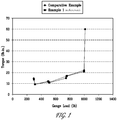
- This Pin-on-Vee Block Test measures the extreme pressure load carrying performance of a lubricant.
- a steel journal held in place by a brass shear pin is rotated against two stationary V-blocks to give a four-line contact.
- the test pieces and their supporting jaws are immersed in the oil sample cup for oil lubricants.
- the journal is driven at 250 rpm and load is applied to the V-blocks through a nutcracker action lever arm and spring gage.
- the load is actuated and ramped continuously during the test by means of a ratchet wheel mechanism.
- the load is ramped by the loading ratchet mechanism until the brass shear pin shears or the test pin breaks.
- the torque is reported in pounds from the gauge attached to a Falex lubricant tester.
- Comparative Example 1 The process of Comparative Example 1 was repeated but with the mixture of pentaerythritol and dipentaerythritol being replaced with mono-pentaerythritol alone in Comparative Example 1A and with technical pentaerythritol alone (90 wt% PE and 10 wt% diPE) in Comparative Example 1B.
- Comparative Example 1C the process of Comparative Example 1 was repeated but with the mixture of pentaerythritol and dipentaerythritol being replaced with mono-pentaerythritol alone and with a mixture of n-pentanoic acid, n-heptanoic acid and 3,5,5-trimethylhexanoic acid containing about 35 wt% of 3,5,5-trimethylhexanoic acid instead of the about 15 wt% employed in Table 1.
- Table 2 The results are summarized in Table 2.
- Example 1 The process of Example 1 was repeated but with the acid mixture comprising iso-pentanoic acid (as defined above), n-heptanoic acid and 3,5,5-trimethylhexanoic acid in the molar ratio indicated in Table 3 again in an amount so as to provide an acid:hydroxyl molar ratio of about 0.70:1.
- the viscosity of the polyester product at 40°C was 100.7 cSt and at 100°C was 11.25 cSt.
- the physical properties of the product are provided in Table 3.
- compositional analysis of the product by gel permeation chromatography showed a mixture of monopentaerythritol esters, dipentaerythritol esters and polypentaerythritol esters in a weight ratio of about 76:16:8.
- Comparative Example 1 The process of Comparative Example 1 was repeated but with the acid mixture comprising iso-pentanoic acid (as defined in Table 3), n-heptanoic acid and 3,5,5-trimethylhexanoic acid in the molar ratio indicated in Table 3 again in an amount so as to provide an approximately 15 molar % excess of acid groups to hydroxyl groups.
- the viscosity of the final polyester product at 40°C was 93.7 cSt and at 100°C was 11.0 cSt.
- the physical properties of the product are provided in Table 3.
- the thermal stability of the esters of Example 2 and Comparative Example 2 were evaluated using the ASHRAE 97 sealed tube test.
- the lubricant and refrigerant (0.7 mL each) are placed in a thick walled glass tube along with steel, copper and aluminum coupons.
- the aluminum coupon is placed in between the steel and copper.
- the tube is sealed under vacuum (after the proper amount of refrigerant has been condensed into the tube at low temperature) and the tubes are heated at 175 °C for 14 days.
- the coupons are evaluated for any staining or corrosion and the lubricant is evaluated by gas chromatography for any decomposition of the ester to acids. The results are reported in Table 3.
- the hydrolytic stability of the esters of Example 2 and Comparative Example 2 were evaluated by accelerated heat aging at 120 °C.
- the moisture content of a 100 gram aliquot of the lubricant is adjusted to contain 800 ⁇ 20 ppm water and placed in a 4 oz. (120 ml) glass jar with metal screw cap.
- a 50 gram aliquot is then placed in a 2 oz. (60 ml) glass jar which is then covered with tin foil and tightly sealed with a metal screw cap.
- the remaining sample in the 4 oz. (120 ml) jar is retained for later analysis.
- the 2 oz. (60 ml) jar is then placed in an oven at 120 °C for 7 days.
- the sample is cooled to room temperature.
- the acid value of both the heat aged and room temperature sample are measured by titration with 0.1 N KOH in isopropanol to a phenolphthalein endpoint.
- the difference between the acid value of the heat aged and room temperature sample is taken as the reported acid value for hydrolytic stability.
- Example 1 The process of Example 1 was repeated but with the acid mixture comprising 50 mole % iso-pentanoic acid (as defined above), 25 mole % n-heptanoic acid and 25 mole % 3,5,5-trimethylhexanoic acid again in an amount so as to provide an acid:hydroxyl molar ratio of about 0.70:1.
- the viscosity of the polyester product at 40°C was 55 cSt and at 100°C was 8.36 cSt.
- Compositional analysis of the product by gel permeation chromatography showed a mixture of monopentaerythritol esters, dipentaerythritol esters and polypentaerythritol esters in a weight ratio of about 60:20:20.
- Comparative Example 3 is a traditional premium ISO 68 polyol ester refrigeration lubricant commercially available from CPI Engineering Services under the tradename Emkarate RL 68H.
- Emkarate RL68H is the reaction product of an approximately 1:1 molar ratio of monopentaerythritol and dipentaerythritol with valeric acid, n-heptanoic acid and 3,5,5-trimethylhexanoic acid.
- Table 4 compares the physical properties of the product of Example 3 with those of Comparative Example 3.
- Table 4 Property Example 3 Comp.
- Example 3 Method ISO Viscosity Grade 55 68 ASTM 2422-86 Kinematic Viscosity @ 40 °C 55 685 ASTM D-445 Kinematic Viscosity @ 100 °C 8.36 9.8 ASTM D-445 Viscosity Index 125 120 ASTM D-2270 Water Content, ppm ⁇ 50 ⁇ 50 ASTM D-1533 Specific gravity 1.00 0.9847 ASTM D-4052 Density @ 15.6 °C, lbs/gal 8.332 (998 kg/m 3 ) 8.205 (983 kg/m 3 ) ASTM D-4052 Pour Point, °C -51 -39 ASTM D-97 Flash Point, °C 257 260 ASTM D-92 ASTM Color ⁇ 1.0 ⁇ 0.5 ASTM D-1500 Acid Number (mg KOH/g) ⁇ 0.05 0.02 ASTM D974-75 Miscibility with R-134a 5 volume% -
- Example 3 exhibits similar or improved miscibility with the refrigerant R-134a than the Comparative Example 3 material and in particular exhibits improved miscibility with the refrigerant R-410A at 30 volume % concentration.
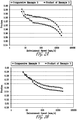
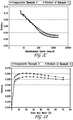
- the lubricity of the product of Example 3 was compared with that of Comparative Example 3 at temperatures of 40°C, 80°C and 120°C using a Mini Traction Machine supplied by PCS Instruments.
- This MTM test measures the lubricity/frictional properties of lubricants by two different techniques using a rotating ball-on-disk geometry.
- the lubricity of the lubricant is measured under full fluid film conditions (hydrodynamic lubrication).
- the speed of the ball and disk are ramped simultaneously at a slide-roll-ratio of 50% and the coefficient of friction is measured as a function of entrainment speed at constant load and temperature (Stribeck Curve).
- Stribeck Curve This means that the ball is always moving at 50% of the speed of the rotating disk as the speed of the disk is ramped.
- the speed of the disk and ball are increased there is a pressure build up at the front of the rolling/sliding contact due to the movement of the lubricant to either side of the metal-metal contact.
- the lubricity is measured over the total range of lubrication regimes (boundary, mixed film, elastrohydrodynamic and hydrodynamic).
- the coefficient of friction is measured at constant load and temperature at various slide/roll ratios (i.e., the ball and disk are rotated at different speeds relative to one another) (Traction Curve).
- Coefficient of friction is a direct measurement of the lubricity of the lubricant; the lower the coefficient of friction, the higher the lubricity of the lubricant. It is important to note that for this test it is only meaningful to compare lubricants of equivalent ISO viscosity grade.
Landscapes
- Chemical & Material Sciences (AREA)
- Chemical Kinetics & Catalysis (AREA)
- General Chemical & Material Sciences (AREA)
- Oil, Petroleum & Natural Gas (AREA)
- Organic Chemistry (AREA)
- Health & Medical Sciences (AREA)
- Emergency Medicine (AREA)
- Lubricants (AREA)
- Organic Low-Molecular-Weight Compounds And Preparation Thereof (AREA)
Claims (8)
- Polyolester-Zusammensetzung, umfassend ein Gemisch von Estern von (a) Monopentaerythritol, (b) Dipentaerythritol und (c) Tri- und höheren Pentaerythritolen mit wenigstens einer Monocarbonsäure, wobei das Gewichtsverhältnis der Ester 55 bis 65 % an den Monopentaerythritolestern, 15 bis 25 % an den Dipentaerythritolestern und 15 bis 25 % an den Tri- und höheren Pentaerythritolestern beträgt; wobei die Polyolester-Zusammensetzung eine kinematische Viskosität bei 40 °C von 46 cSt bis 68 cSt und einen Viskositätsindex von über 120 aufweist und wobei die wenigstens eine Monocarbonsäure ein Gemisch von Isopentansäure, n-Heptansäure und Isononansäure, umfassend von 1,75 bis 2,25 mol Isopentansäure und 0,75 bis 1,25 mol n-Heptansäure pro mol Isononansäure, umfasst.
- Esterzusammensetzung gemäß Anspruch 1, wobei das Gemisch von 1,9 bis 2,1 mol Isopentansäure und von 0,9 bis 1,1 mol n-Heptansäure pro mol Isononansäure umfasst.
- Esterzusammensetzung gemäß Anspruch 1 oder Anspruch 2, wobei die fertige Polyolester-Zusammensetzung eine kinematische Viskosität bei 40 °C von 50 cSt bis 60 cSt aufweist.
- Esterzusammensetzung gemäß einem der vorstehenden Ansprüche, umfassend 60 % Monopentaerythritolester, 20 % Dipentaerythritolester und 20 % Tri- oder höhere Pentaerythritolester.
- Arbeitsfluid, umfassend (a) ein Kältemittel und (b) die Esterzusammensetzung gemäß einem der vorstehenden Ansprüche.
- Arbeitsfluid gemäß Anspruch 5, wobei das Kältemittel ein Fluorkohlenwasserstoff, ein Fluorkohlenstoff oder ein Gemisch davon ist.
- Verfahren zum Herstellen einer Esterzusammensetzung gemäß einem der Ansprüche 1 bis 4, umfassend:(i) Umsetzen von Pentaerythritol mit der wenigstens einen Monocarbonsäure in Gegenwart eines Säurekatalysators und mit einem Anfangs-Molverhältnis von Carboxygruppen zu Hydroxygruppen von höher als 0,5:1 bis 0,95:1, um eine teilveresterte Zusammensetzung zu bilden; und(ii) Umsetzen der bei (i) hergestellten teilveresterten Zusammensetzung mit zusätzlicher der wenigstens einen Monocarbonsäure, um eine fertige Esterzusammensetzung zu bilden.
- Verfahren gemäß Anspruch 7, wobei das Anfangs-Molverhältnis von Carboxygruppen zu Hydroxygruppen 0,7:1 bis 0,85:1 beträgt.
Applications Claiming Priority (3)
| Application Number | Priority Date | Filing Date | Title |
|---|---|---|---|
| US14718209P | 2009-01-26 | 2009-01-26 | |
| US22425709P | 2009-07-09 | 2009-07-09 | |
| PCT/US2010/021619 WO2010085545A1 (en) | 2009-01-26 | 2010-01-21 | Production of polyol ester lubricants for refrigeration systems |
Publications (2)
| Publication Number | Publication Date |
|---|---|
| EP2382288A1 EP2382288A1 (de) | 2011-11-02 |
| EP2382288B1 true EP2382288B1 (de) | 2017-03-01 |
Family
ID=42035908
Family Applications (1)
| Application Number | Title | Priority Date | Filing Date |
|---|---|---|---|
| EP10701981.2A Not-in-force EP2382288B1 (de) | 2009-01-26 | 2010-01-21 | Herstellung von polyolesterschmierstoffen für kühlsysteme |
Country Status (8)
| Country | Link |
|---|---|
| US (1) | US8318647B2 (de) |
| EP (1) | EP2382288B1 (de) |
| JP (1) | JP5390638B2 (de) |
| KR (1) | KR101581070B1 (de) |
| CN (2) | CN102292420A (de) |
| BR (1) | BRPI1007257B1 (de) |
| RU (1) | RU2011135527A (de) |
| WO (1) | WO2010085545A1 (de) |
Families Citing this family (38)
| Publication number | Priority date | Publication date | Assignee | Title |
|---|---|---|---|---|
| JP5572284B2 (ja) * | 2007-02-27 | 2014-08-13 | Jx日鉱日石エネルギー株式会社 | 冷凍機油および冷凍機用作動流体組成物 |
| US8865015B2 (en) * | 2010-01-21 | 2014-10-21 | Chemtura Corporation | Production of polyol ester lubricants for refrigeration systems |
| JP5525877B2 (ja) * | 2010-03-17 | 2014-06-18 | Jx日鉱日石エネルギー株式会社 | 冷凍機油および冷凍機用作動流体組成物 |
| EP2556135B1 (de) * | 2010-04-06 | 2020-12-09 | LANXESS Corporation | Kühlöl und zusammensetzungen mit einem kohlendioxidkühlmittel |
| JP2012031239A (ja) * | 2010-07-29 | 2012-02-16 | Hitachi Appliances Inc | 冷凍空調用圧縮機及び冷凍空調装置 |
| JP5760218B2 (ja) * | 2010-11-17 | 2015-08-05 | 国立大学法人広島大学 | 分岐オキサアルキル鎖を有している化合物およびその利用 |
| TWI583784B (zh) * | 2011-08-19 | 2017-05-21 | Kh Neochem Co Ltd | Pentaerythritol tetra ester |
| KR101901482B1 (ko) * | 2011-12-27 | 2018-09-21 | 재팬 썬 오일 컴퍼니, 엘티디 | 냉동기유 조성물 |
| US8685271B2 (en) * | 2012-02-08 | 2014-04-01 | Chemtura Corporation | Refrigeration oil and compositions with hydrocarbon refrigerants |
| US9133380B2 (en) * | 2012-02-15 | 2015-09-15 | Chemtura Corporation | Polyester lubricant for working fluids comprising difluoromethane |
| SG11201405270UA (en) | 2012-02-28 | 2014-09-26 | Petroliam Nasional Berhad | Method for the production of polyols and uses thereof |
| JP6133908B2 (ja) | 2012-02-28 | 2017-05-24 | ペトロリアム ナショナル ブルハドPetroliam Nasional Berhad | 潤滑油の物質組成および生成方法 |
| KR102061375B1 (ko) | 2012-02-28 | 2019-12-31 | 페트롤리암 내셔널 버하드 (페트로나스) | 생물-윤활제 및 생물-폴리머용 생물-폴리올 및 그의 제조 방법 |
| EP2819988B1 (de) | 2012-02-28 | 2020-12-23 | Petroliam Nasional Berhad | Zusammensetzung aus massepolyolen für polyurethananwendungen |
| SG11201405265QA (en) | 2012-02-28 | 2014-09-26 | Petroliam Nasional Berhad | Method for the production of esters and uses thereof |
| JP5975262B2 (ja) * | 2012-04-26 | 2016-08-23 | 日油株式会社 | 冷凍機油用エステルの製造方法 |
| US9783721B2 (en) | 2012-08-20 | 2017-10-10 | Honeywell International Inc. | Low GWP heat transfer compositions |
| US8940180B2 (en) | 2012-11-21 | 2015-01-27 | Honeywell International Inc. | Low GWP heat transfer compositions |
| US9982180B2 (en) | 2013-02-13 | 2018-05-29 | Honeywell International Inc. | Heat transfer compositions and methods |
| EP2963098B1 (de) * | 2013-02-26 | 2024-03-27 | JX Nippon Oil & Energy Corporation | Verwendung eines kältemaschinenöls und arbeitsfluidzusammensetzung für kältemaschinen |
| MY169226A (en) | 2013-02-28 | 2019-03-19 | Petroliam Nasional Berhad | Preparation of biopolyol esters for lubricant application |
| CN103509520A (zh) * | 2013-08-01 | 2014-01-15 | 广东美芝制冷设备有限公司 | 组合物以及采用该组合物的压缩机和制冷设备 |
| JP6224965B2 (ja) | 2013-09-12 | 2017-11-01 | 出光興産株式会社 | 冷凍機用混合組成物 |
| WO2016010839A1 (en) | 2014-07-14 | 2016-01-21 | Chemtura Corporation | Working fluids comprising fluorinated olefins/fluorinated saturated hydrocarbon blends and polyol esters |
| CN105331422A (zh) * | 2014-08-08 | 2016-02-17 | 百达精密化学股份有限公司 | 高效能冷冻润滑油组成物 |
| TWI555838B (zh) * | 2015-02-10 | 2016-11-01 | 百達精密化學股份有限公司 | 迴轉式螺桿壓縮機的潤滑方法 |
| CN107109277B (zh) * | 2015-03-19 | 2019-10-25 | 日立江森自控空调有限公司 | 制冷空调用压缩机和制冷空调装置 |
| JP6575009B2 (ja) * | 2015-03-30 | 2019-09-18 | 出光興産株式会社 | 冷凍機潤滑油及び冷凍機用混合組成物 |
| WO2016171264A1 (ja) * | 2015-04-24 | 2016-10-27 | 旭硝子株式会社 | 熱サイクルシステム用組成物および熱サイクルシステム |
| US9683158B2 (en) | 2015-06-26 | 2017-06-20 | Lanxess Solutions Us, Inc. | Working fluids comprising fluorinated olefins and polyol esters |
| CN108291166B (zh) * | 2015-12-25 | 2021-05-28 | 日油株式会社 | 冷冻机油用酯 |
| CN107828460B (zh) * | 2017-10-20 | 2020-08-25 | 珠海格力节能环保制冷技术研究中心有限公司 | 冷冻油、其应用及压缩机 |
| FR3077773B1 (fr) | 2018-02-15 | 2023-05-26 | Arkema France | Procede de chauffage et / ou de climatisation d’un vehicule |
| CN111560285A (zh) * | 2020-05-25 | 2020-08-21 | 北京奈宝尼尔科贸有限公司 | 一种适用于多种冷媒的抗磨冷冻机油及其制备方法 |
| US11028300B1 (en) * | 2020-09-16 | 2021-06-08 | David L. Couchot | Environmentally friendly refrigerant compositions |
| US12098341B2 (en) | 2020-11-12 | 2024-09-24 | Kao Corporation | Lubricant base oil |
| CN112552977A (zh) * | 2020-12-30 | 2021-03-26 | 南京威尔药业集团股份有限公司 | 一种分步反应制备合成酯基础油的方法 |
| US12480030B2 (en) * | 2021-01-26 | 2025-11-25 | The Chemours Company Fc, Llc | Vapor compression systems containing lubricant-refrigerant compositions |
Family Cites Families (22)
| Publication number | Priority date | Publication date | Assignee | Title |
|---|---|---|---|---|
| BE576233A (de) * | 1958-02-28 | |||
| US3670013A (en) * | 1969-10-16 | 1972-06-13 | Hercules Inc | Synthesis of partial esters of certain poly(neopentyl polyols) and aliphatic monocarboxylic acids |
| JPS62592A (ja) * | 1985-06-27 | 1987-01-06 | Nippon Oil & Fats Co Ltd | 高粘度冷凍機油 |
| KR950005694B1 (ko) * | 1989-07-05 | 1995-05-29 | 가부시끼가이샤 교오세끼 세이힝기주쓰 겡뀨쇼 | 냉각윤활제 |
| EP0430657A1 (de) * | 1989-11-29 | 1991-06-05 | Asahi Denka Kogyo Kabushiki Kaisha | Schmiermittel für Kühlgeräte |
| JP3012907B2 (ja) * | 1989-12-28 | 2000-02-28 | 日石三菱株式会社 | 非塩素系フロン冷媒用冷凍機油 |
| JP3521216B2 (ja) * | 1992-06-03 | 2004-04-19 | コグニス コーポレーション | 高温で運転する冷凍コンプレッサー用ポリオールエステル潤滑剤 |
| CA2137252A1 (en) | 1992-06-03 | 1993-12-09 | Nicholas E. Schnur | Polyol ester lubricants for refrigerant heat transfer fluids |
| US6177387B1 (en) * | 1996-08-30 | 2001-01-23 | Exxon Chemical Patents Inc | Reduced odor and high stability aircraft turbine oil base stock |
| US5895778A (en) | 1997-08-25 | 1999-04-20 | Hatco Corporation | Poly(neopentyl polyol) ester based coolants and improved additive package |
| JP4564111B2 (ja) * | 1998-09-02 | 2010-10-20 | Jx日鉱日石エネルギー株式会社 | 冷凍機油 |
| JP5021865B2 (ja) * | 2000-03-09 | 2012-09-12 | Jx日鉱日石エネルギー株式会社 | 潤滑油組成物、作動流体及び冷凍装置 |
| US6551968B2 (en) * | 2001-01-05 | 2003-04-22 | Hatco Corporation | Biodegradable polyneopentyl polyol based synthetic ester blends and lubricants thereof |
| DE10164056B4 (de) * | 2001-12-29 | 2006-02-23 | Fuchs Petrolub Ag | Betriebsmittel für Kohlendioxid-Kälte- und Klimaanlagen |
| US6774093B2 (en) | 2002-07-12 | 2004-08-10 | Hatco Corporation | High viscosity synthetic ester lubricant base stock |
| CA2487587C (en) * | 2003-11-21 | 2012-04-24 | Nof Corporation | A polyol ester for use within a refrigeration lubricant composition compatible with chlorine-free hydrofluorocarbon refrigerants |
| JP4961666B2 (ja) * | 2004-12-02 | 2012-06-27 | 日油株式会社 | 冷凍機用潤滑油組成物 |
| EP2258798A3 (de) | 2005-03-04 | 2013-03-20 | E. I. du Pont de Nemours and Company | Zusammensetzungen mit einem Fluorolefin |
| JP5110240B2 (ja) * | 2005-05-27 | 2012-12-26 | 日油株式会社 | 冷凍機用潤滑油組成物 |
| JP2009518460A (ja) * | 2005-11-01 | 2009-05-07 | イー・アイ・デュポン・ドウ・ヌムール・アンド・カンパニー | フルオロオレフィンを含む組成物およびそれらの使用 |
| JP4000337B1 (ja) * | 2006-03-23 | 2007-10-31 | 新日本石油株式会社 | 二酸化炭素冷媒用冷凍機油用基油、二酸化炭素冷媒用冷凍機油 |
| JP4633765B2 (ja) * | 2006-06-07 | 2011-02-16 | 花王株式会社 | エステルの製造方法 |
-
2010
- 2010-01-21 EP EP10701981.2A patent/EP2382288B1/de not_active Not-in-force
- 2010-01-21 RU RU2011135527/04A patent/RU2011135527A/ru not_active Application Discontinuation
- 2010-01-21 CN CN2010800052720A patent/CN102292420A/zh active Pending
- 2010-01-21 BR BRPI1007257-8A patent/BRPI1007257B1/pt not_active IP Right Cessation
- 2010-01-21 WO PCT/US2010/021619 patent/WO2010085545A1/en not_active Ceased
- 2010-01-21 JP JP2011548097A patent/JP5390638B2/ja active Active
- 2010-01-21 US US12/691,300 patent/US8318647B2/en active Active
- 2010-01-21 CN CN201310703390.4A patent/CN103695129B/zh active Active
- 2010-01-21 KR KR1020117016314A patent/KR101581070B1/ko not_active Expired - Fee Related
Non-Patent Citations (1)
| Title |
|---|
| None * |
Also Published As
| Publication number | Publication date |
|---|---|
| US20100190672A1 (en) | 2010-07-29 |
| US8318647B2 (en) | 2012-11-27 |
| BRPI1007257A2 (pt) | 2016-10-25 |
| EP2382288A1 (de) | 2011-11-02 |
| JP2012515834A (ja) | 2012-07-12 |
| JP5390638B2 (ja) | 2014-01-15 |
| KR101581070B1 (ko) | 2015-12-29 |
| BRPI1007257B1 (pt) | 2018-06-19 |
| CN103695129B (zh) | 2017-01-18 |
| CN102292420A (zh) | 2011-12-21 |
| CN103695129A (zh) | 2014-04-02 |
| RU2011135527A (ru) | 2013-03-10 |
| KR20110111288A (ko) | 2011-10-10 |
| WO2010085545A1 (en) | 2010-07-29 |
Similar Documents
| Publication | Publication Date | Title |
|---|---|---|
| US8318647B2 (en) | Production of polyol ester lubricants for refrigeration systems | |
| US8865015B2 (en) | Production of polyol ester lubricants for refrigeration systems | |
| EP2379683B1 (de) | Auf kohlenstoffdioxid basierende arbeitsmedien für kühl- und klimatisierungssysteme | |
| EP2556135B1 (de) | Kühlöl und zusammensetzungen mit einem kohlendioxidkühlmittel | |
| AU2010303861B2 (en) | Lubricants for refrigeration systems | |
| EP2812420B1 (de) | Gefrieröl und zusammensetzungen mit kohlenwasserstoff und kältemitteln | |
| JP5848465B2 (ja) | 炭化水素冷媒を有する冷凍オイルおよび組成物 |
Legal Events
| Date | Code | Title | Description |
|---|---|---|---|
| PUAI | Public reference made under article 153(3) epc to a published international application that has entered the european phase |
Free format text: ORIGINAL CODE: 0009012 |
|
| 17P | Request for examination filed |
Effective date: 20110721 |
|
| AK | Designated contracting states |
Kind code of ref document: A1 Designated state(s): AT BE BG CH CY CZ DE DK EE ES FI FR GB GR HR HU IE IS IT LI LT LU LV MC MK MT NL NO PL PT RO SE SI SK SM TR |
|
| DAX | Request for extension of the european patent (deleted) | ||
| 17Q | First examination report despatched |
Effective date: 20120802 |
|
| GRAP | Despatch of communication of intention to grant a patent |
Free format text: ORIGINAL CODE: EPIDOSNIGR1 |
|
| INTG | Intention to grant announced |
Effective date: 20161201 |
|
| GRAS | Grant fee paid |
Free format text: ORIGINAL CODE: EPIDOSNIGR3 |
|
| GRAA | (expected) grant |
Free format text: ORIGINAL CODE: 0009210 |
|
| AK | Designated contracting states |
Kind code of ref document: B1 Designated state(s): AT BE BG CH CY CZ DE DK EE ES FI FR GB GR HR HU IE IS IT LI LT LU LV MC MK MT NL NO PL PT RO SE SI SK SM TR |
|
| REG | Reference to a national code |
Ref country code: GB Ref legal event code: FG4D |
|
| REG | Reference to a national code |
Ref country code: CH Ref legal event code: EP Ref country code: AT Ref legal event code: REF Ref document number: 871355 Country of ref document: AT Kind code of ref document: T Effective date: 20170315 |
|
| REG | Reference to a national code |
Ref country code: IE Ref legal event code: FG4D |
|
| REG | Reference to a national code |
Ref country code: DE Ref legal event code: R096 Ref document number: 602010040335 Country of ref document: DE |
|
| REG | Reference to a national code |
Ref country code: NL Ref legal event code: MP Effective date: 20170301 |
|
| REG | Reference to a national code |
Ref country code: LT Ref legal event code: MG4D |
|
| REG | Reference to a national code |
Ref country code: AT Ref legal event code: MK05 Ref document number: 871355 Country of ref document: AT Kind code of ref document: T Effective date: 20170301 |
|
| PG25 | Lapsed in a contracting state [announced via postgrant information from national office to epo] |
Ref country code: FI Free format text: LAPSE BECAUSE OF FAILURE TO SUBMIT A TRANSLATION OF THE DESCRIPTION OR TO PAY THE FEE WITHIN THE PRESCRIBED TIME-LIMIT Effective date: 20170301 Ref country code: HR Free format text: LAPSE BECAUSE OF FAILURE TO SUBMIT A TRANSLATION OF THE DESCRIPTION OR TO PAY THE FEE WITHIN THE PRESCRIBED TIME-LIMIT Effective date: 20170301 Ref country code: LT Free format text: LAPSE BECAUSE OF FAILURE TO SUBMIT A TRANSLATION OF THE DESCRIPTION OR TO PAY THE FEE WITHIN THE PRESCRIBED TIME-LIMIT Effective date: 20170301 Ref country code: NO Free format text: LAPSE BECAUSE OF FAILURE TO SUBMIT A TRANSLATION OF THE DESCRIPTION OR TO PAY THE FEE WITHIN THE PRESCRIBED TIME-LIMIT Effective date: 20170601 Ref country code: GR Free format text: LAPSE BECAUSE OF FAILURE TO SUBMIT A TRANSLATION OF THE DESCRIPTION OR TO PAY THE FEE WITHIN THE PRESCRIBED TIME-LIMIT Effective date: 20170602 |
|
| PG25 | Lapsed in a contracting state [announced via postgrant information from national office to epo] |
Ref country code: BG Free format text: LAPSE BECAUSE OF FAILURE TO SUBMIT A TRANSLATION OF THE DESCRIPTION OR TO PAY THE FEE WITHIN THE PRESCRIBED TIME-LIMIT Effective date: 20170601 Ref country code: ES Free format text: LAPSE BECAUSE OF FAILURE TO SUBMIT A TRANSLATION OF THE DESCRIPTION OR TO PAY THE FEE WITHIN THE PRESCRIBED TIME-LIMIT Effective date: 20170301 Ref country code: AT Free format text: LAPSE BECAUSE OF FAILURE TO SUBMIT A TRANSLATION OF THE DESCRIPTION OR TO PAY THE FEE WITHIN THE PRESCRIBED TIME-LIMIT Effective date: 20170301 Ref country code: LV Free format text: LAPSE BECAUSE OF FAILURE TO SUBMIT A TRANSLATION OF THE DESCRIPTION OR TO PAY THE FEE WITHIN THE PRESCRIBED TIME-LIMIT Effective date: 20170301 Ref country code: SE Free format text: LAPSE BECAUSE OF FAILURE TO SUBMIT A TRANSLATION OF THE DESCRIPTION OR TO PAY THE FEE WITHIN THE PRESCRIBED TIME-LIMIT Effective date: 20170301 |
|
| PG25 | Lapsed in a contracting state [announced via postgrant information from national office to epo] |
Ref country code: NL Free format text: LAPSE BECAUSE OF FAILURE TO SUBMIT A TRANSLATION OF THE DESCRIPTION OR TO PAY THE FEE WITHIN THE PRESCRIBED TIME-LIMIT Effective date: 20170301 |
|
| PG25 | Lapsed in a contracting state [announced via postgrant information from national office to epo] |
Ref country code: RO Free format text: LAPSE BECAUSE OF FAILURE TO SUBMIT A TRANSLATION OF THE DESCRIPTION OR TO PAY THE FEE WITHIN THE PRESCRIBED TIME-LIMIT Effective date: 20170301 Ref country code: SK Free format text: LAPSE BECAUSE OF FAILURE TO SUBMIT A TRANSLATION OF THE DESCRIPTION OR TO PAY THE FEE WITHIN THE PRESCRIBED TIME-LIMIT Effective date: 20170301 Ref country code: EE Free format text: LAPSE BECAUSE OF FAILURE TO SUBMIT A TRANSLATION OF THE DESCRIPTION OR TO PAY THE FEE WITHIN THE PRESCRIBED TIME-LIMIT Effective date: 20170301 Ref country code: CZ Free format text: LAPSE BECAUSE OF FAILURE TO SUBMIT A TRANSLATION OF THE DESCRIPTION OR TO PAY THE FEE WITHIN THE PRESCRIBED TIME-LIMIT Effective date: 20170301 |
|
| PG25 | Lapsed in a contracting state [announced via postgrant information from national office to epo] |
Ref country code: PT Free format text: LAPSE BECAUSE OF FAILURE TO SUBMIT A TRANSLATION OF THE DESCRIPTION OR TO PAY THE FEE WITHIN THE PRESCRIBED TIME-LIMIT Effective date: 20170703 Ref country code: SM Free format text: LAPSE BECAUSE OF FAILURE TO SUBMIT A TRANSLATION OF THE DESCRIPTION OR TO PAY THE FEE WITHIN THE PRESCRIBED TIME-LIMIT Effective date: 20170301 Ref country code: IS Free format text: LAPSE BECAUSE OF FAILURE TO SUBMIT A TRANSLATION OF THE DESCRIPTION OR TO PAY THE FEE WITHIN THE PRESCRIBED TIME-LIMIT Effective date: 20170701 Ref country code: PL Free format text: LAPSE BECAUSE OF FAILURE TO SUBMIT A TRANSLATION OF THE DESCRIPTION OR TO PAY THE FEE WITHIN THE PRESCRIBED TIME-LIMIT Effective date: 20170301 |
|
| REG | Reference to a national code |
Ref country code: DE Ref legal event code: R097 Ref document number: 602010040335 Country of ref document: DE |
|
| PLBE | No opposition filed within time limit |
Free format text: ORIGINAL CODE: 0009261 |
|
| STAA | Information on the status of an ep patent application or granted ep patent |
Free format text: STATUS: NO OPPOSITION FILED WITHIN TIME LIMIT |
|
| REG | Reference to a national code |
Ref country code: FR Ref legal event code: PLFP Year of fee payment: 9 |
|
| PG25 | Lapsed in a contracting state [announced via postgrant information from national office to epo] |
Ref country code: DK Free format text: LAPSE BECAUSE OF FAILURE TO SUBMIT A TRANSLATION OF THE DESCRIPTION OR TO PAY THE FEE WITHIN THE PRESCRIBED TIME-LIMIT Effective date: 20170301 |
|
| 26N | No opposition filed |
Effective date: 20171204 |
|
| PG25 | Lapsed in a contracting state [announced via postgrant information from national office to epo] |
Ref country code: SI Free format text: LAPSE BECAUSE OF FAILURE TO SUBMIT A TRANSLATION OF THE DESCRIPTION OR TO PAY THE FEE WITHIN THE PRESCRIBED TIME-LIMIT Effective date: 20170301 Ref country code: IT Free format text: LAPSE BECAUSE OF FAILURE TO SUBMIT A TRANSLATION OF THE DESCRIPTION OR TO PAY THE FEE WITHIN THE PRESCRIBED TIME-LIMIT Effective date: 20170301 |
|
| REG | Reference to a national code |
Ref country code: CH Ref legal event code: PL |
|
| PG25 | Lapsed in a contracting state [announced via postgrant information from national office to epo] |
Ref country code: LU Free format text: LAPSE BECAUSE OF NON-PAYMENT OF DUE FEES Effective date: 20180121 |
|
| REG | Reference to a national code |
Ref country code: IE Ref legal event code: MM4A |
|
| REG | Reference to a national code |
Ref country code: BE Ref legal event code: MM Effective date: 20180131 |
|
| PG25 | Lapsed in a contracting state [announced via postgrant information from national office to epo] |
Ref country code: LI Free format text: LAPSE BECAUSE OF NON-PAYMENT OF DUE FEES Effective date: 20180131 Ref country code: CH Free format text: LAPSE BECAUSE OF NON-PAYMENT OF DUE FEES Effective date: 20180131 Ref country code: BE Free format text: LAPSE BECAUSE OF NON-PAYMENT OF DUE FEES Effective date: 20180131 |
|
| PG25 | Lapsed in a contracting state [announced via postgrant information from national office to epo] |
Ref country code: IE Free format text: LAPSE BECAUSE OF NON-PAYMENT OF DUE FEES Effective date: 20180121 |
|
| PG25 | Lapsed in a contracting state [announced via postgrant information from national office to epo] |
Ref country code: MC Free format text: LAPSE BECAUSE OF FAILURE TO SUBMIT A TRANSLATION OF THE DESCRIPTION OR TO PAY THE FEE WITHIN THE PRESCRIBED TIME-LIMIT Effective date: 20170301 |
|
| PG25 | Lapsed in a contracting state [announced via postgrant information from national office to epo] |
Ref country code: MT Free format text: LAPSE BECAUSE OF NON-PAYMENT OF DUE FEES Effective date: 20180121 |
|
| PG25 | Lapsed in a contracting state [announced via postgrant information from national office to epo] |
Ref country code: TR Free format text: LAPSE BECAUSE OF FAILURE TO SUBMIT A TRANSLATION OF THE DESCRIPTION OR TO PAY THE FEE WITHIN THE PRESCRIBED TIME-LIMIT Effective date: 20170301 |
|
| PG25 | Lapsed in a contracting state [announced via postgrant information from national office to epo] |
Ref country code: HU Free format text: LAPSE BECAUSE OF FAILURE TO SUBMIT A TRANSLATION OF THE DESCRIPTION OR TO PAY THE FEE WITHIN THE PRESCRIBED TIME-LIMIT; INVALID AB INITIO Effective date: 20100121 |
|
| PG25 | Lapsed in a contracting state [announced via postgrant information from national office to epo] |
Ref country code: MK Free format text: LAPSE BECAUSE OF NON-PAYMENT OF DUE FEES Effective date: 20170301 Ref country code: CY Free format text: LAPSE BECAUSE OF FAILURE TO SUBMIT A TRANSLATION OF THE DESCRIPTION OR TO PAY THE FEE WITHIN THE PRESCRIBED TIME-LIMIT Effective date: 20170301 |
|
| REG | Reference to a national code |
Ref country code: DE Ref legal event code: R081 Ref document number: 602010040335 Country of ref document: DE Owner name: LANXESS CORPORATION (N.D.GES.D. STAATES DELAWA, US Free format text: FORMER OWNER: CHEMTURA CORPORATION, MIDDLEBURY, CONN., US |
|
| PGFP | Annual fee paid to national office [announced via postgrant information from national office to epo] |
Ref country code: GB Payment date: 20221201 Year of fee payment: 14 Ref country code: FR Payment date: 20221208 Year of fee payment: 14 |
|
| PGFP | Annual fee paid to national office [announced via postgrant information from national office to epo] |
Ref country code: DE Payment date: 20221130 Year of fee payment: 14 |
|
| P01 | Opt-out of the competence of the unified patent court (upc) registered |
Effective date: 20230608 |
|
| REG | Reference to a national code |
Ref country code: DE Ref legal event code: R119 Ref document number: 602010040335 Country of ref document: DE |
|
| GBPC | Gb: european patent ceased through non-payment of renewal fee |
Effective date: 20240121 |
|
| PG25 | Lapsed in a contracting state [announced via postgrant information from national office to epo] |
Ref country code: DE Free format text: LAPSE BECAUSE OF NON-PAYMENT OF DUE FEES Effective date: 20240801 |
|
| PG25 | Lapsed in a contracting state [announced via postgrant information from national office to epo] |
Ref country code: GB Free format text: LAPSE BECAUSE OF NON-PAYMENT OF DUE FEES Effective date: 20240121 |
|
| PG25 | Lapsed in a contracting state [announced via postgrant information from national office to epo] |
Ref country code: FR Free format text: LAPSE BECAUSE OF NON-PAYMENT OF DUE FEES Effective date: 20240131 |
|
| PG25 | Lapsed in a contracting state [announced via postgrant information from national office to epo] |
Ref country code: GB Free format text: LAPSE BECAUSE OF NON-PAYMENT OF DUE FEES Effective date: 20240121 Ref country code: FR Free format text: LAPSE BECAUSE OF NON-PAYMENT OF DUE FEES Effective date: 20240131 Ref country code: DE Free format text: LAPSE BECAUSE OF NON-PAYMENT OF DUE FEES Effective date: 20240801 |